Whilst I am a pacifist at heart the crimes and outrageous actions of IS & other Islamic Extremist has shocked and sickened me to the core and like many people I feel a sense of frustration that mostly their crimes seems to go unpunished.
Therefore I have put together this short compilation of these disgusting animals getting a taste of their own medicine.
Some of the clips did arouse an element of sympathy within me, briefly , but then I remembered Alan Henning , James Foley , David Haines and all those other innocent , good people that these scum killed and all thoughts of sympathy disappeared.
Some of these video contain scenes that may upset some people – you have been warned!
———————————————————————
Syrian army beating terrorist that killed Christians
———————————————————————
———————————————————————
ISIS spy caught by Iraq army..not a great interrogation
———————————————————————
———————————————————————
ISIS crying becuase Iraqi Special Forces beat’em up
———————————————————————
———————————————————————
Shia special forces capture 10 ISIS Terrorists
———————————————————————
———————————————————————
Mystery sniper kills three ISIS leaders in Libya in ten days
———————————————————————
———————————————————————
YPG sniper kill 50 Isis
———————————————————————
———————————————————————
The Moment an ISIS Fighter is Shot Dead by Syria Army
———————————————————————
———————————————————————
The moment of death of Islamist commander Saifullah al Shishani by mortar shrapnel
The Al-Khansaa Brigade, also spelled Al-Khanssaa Brigade, is an all-women police or religious enforcement unit of the jihadist Islamic State of Iraq and the Levant (ISIL), operating in its de facto capital of Raqqa and Mosul.[1] Formed in early 2014 and apparently named after Al-Khansa, a female Arabic poet from the earliest days of Islam, it is unclear how widespread and sustained the group is.
An ISIL official, Abu Ahmad, said in 2014, “We have established the brigade to raise awareness of our religion among women, and to punish women who do not abide by the law.”[2] The outfit has also been called ISIL’s ‘moral police’
ISIS ‘female Gestapo’ leading campaign of terror against own sex – and 60 are British
Al Khansaa brigade rule by terror
———————————————————–
Daesh Defectors – 3 women leave al-Khansaa brigade
———————————————————–
Islamic State’s ‘female Gestapo’ is conducting a sickening campaign of terror against their own sex.
The special brigade – set up to enforce the terror group’s strict Islamic views – bite and whip any woman who steps out of line and force girls to become sex slaves.
As many as 60 British women are thought to be members of the brigade, which operate in ISIS’ self-proclaimed capital Raqqa, in Syria.
The city is ruled by fear, with torture, stoning and crucifixions common.. All women are prohibited from going outside or travelling without a male relative.
———————————————————–
What It’s Like To Be A Woman In Islamic State
———————————————————–
ISIS imposes a strict dress code demanding all females from puberty upwards wear two gowns to hide their body shape, black gloves to cover their hands, and three veils so their faces cannot be seen, even in direct sunlight.
Women have been publicly buried alive in sand for breaking the code.
One former Syrian schoolteacher trapped in the city opened up to Channel 4 in a documentary, Escape From ISIS, to be aired next week.
She said: “We have no freedom. We cannot go out on the balcony or look through the window. They will arrest a woman if she wears perfume or raises her voice. A woman’s voice cannot be heard.”
The teacher told of her horrifying capture by the city’s ruthless all-women police unit, the Al-Khansa brigade.
“They said my eyes were visible through my veil. I was tortured. They lashed me. Now some of them punish women by biting. They give you the option between getting bitten or lashed.”
———————————————————–
ISIS: Women’s Role In The Islamic State |
———————————————————–
Brigade member: Aqsa Mahmood, 20, from Glasgow
British women in the brigade are thought to include Aqsa Mahmood, the 20-year-old Glaswegian woman who left her family to join ISIS last year.
They are paid up to £100 a month, a relative fortune.
Marriage: Many women who join ISIS become jihadi brides
One former Al-Khansa enforcer, a young Syrian woman called Umm Abaid, told the filmmakers how she had led a normal life until the arrival of ISIS and the imposition of Sharia law in Raqqa.
“I went to school, to coffee shops,” she said, “but slowly, slowly my husband [a Saudi Arabian IS fighter killed in a suicide bomb attack] convinced me about Islamic State and its ideas. I joined the brigade and was responsible for enforcing the clothing regulations.
“Anyone who broke the rules, we would lash. Then we would take her male guardian, her brother, father or husband, and lash him, too.”
The brigade even stops buses to check women passengers.
If one is found breaking the code, all the passengers are forced to get off and the bus is refused permission to proceed. The driver can be lashed because he let the woman on board.
Some of the Al-Khansa members operate undercover, posing as housewives and mingling in the crowds to listen for any dissent.
They also run brothels where kidnapped girls are expected to satisfy fighters returning from battle.
———————————————————–
ISIS Sex Slave Operation
———————————————————–
Those who have escaped the brothels say they have slept with 100 different fighters in a few weeks.
Emily Dyer, a research fellow with the Henry Jackson Society, spends hours tracking social media messages sent to the West by jihadi brides.
She says many Muslim British women see joining ISIS as an “attractive option” but once they arrive in Syria the reality of their situation is wholly different from the propaganda they are fed.
Under ISIS prohibitions, single women live in all-female safe houses called maqqars. If they are married, they must be only mothers or housewives unless selected to be IS ‘enforcers’ or fighters.
A girl tracked by Emily on Twitter said: “I’m fed up. They make me do the washing up.”
Another said: “I’ve done nothing except hand out clothes and food. I help clean weapons and transport dead bodies from the front. It’s beginning to get really hard.’
One complained: ‘My iPod doesn’t work any more. I have to come back [to the West
Women in maqqars are forbidden access to mobile phones or the internet.. They are then prepared to become jihadi brides, even if they are young teenagers.
But girls who marry one fighter, have found they are expected to spend a week with their new ‘spouse’ before they are ‘divorced’ by an Islamic cleric and married to another fighter for a week.
Yet more Muslim girls and women from Europe, and notably the UK, arrive in Raqqa each month to join ISIS.
It’s just one of the reasons politicians view the threat from ISIS so seriously
Key Events & Deaths on this day in Northern Ireland Troubles
21st October
————————————–
Tuesday 21 October 1969
Thomas McDowell (45), a member of the Ulster Volunteer Force (UVF), died from injuries he received when a bomb he was planting exploded prematurely at a power station near Ballyshannon, County Donegal, on 19 October 1969.
Wednesday 21 October 1970
Bernadette Devlin was released from prison having served four months of her six month sentence for riotous behaviour.
Monday 21 October 1974
Two Catholic civilians, Michael Loughran (18) and Edward Morgan (27), were shot dead by the Ulster Volunteer Force (UVF) at the junction of Falls Road and Northumberland Street in Belfast.
Billy Hutchinson
See below for more details on Billy Hutchinson
[Billy Hutchinson was later convicted for his part in these killings. Hutchinson was to become a leading spokesman for the Progressive Unionist Party and helped negotiate the ‘Good Friday’ Peace Agreement on 10 April 1998.]
A member of the Territorial Army (TA) was shot dead by the Irish Republican Army (IRA) in Belfast. John Hume, then deputy leader of the Social Democratic and Labour Party (SDLP), said that his party had lost confidence in Merlyn Rees, then Secretary of Sate for Northern Ireland.
Tuesday 21 October 1975
Gardaí surrounded a house in Monasterevin, County Kildare, where Tiede Herrema, then a Dutch industrialist, was being held hostage. A siege began which was to last until 6 November 1975.
Monday 21 October 1991
A programme in the British Broadcasting Corporation (BBC) series Panorama laid the blame for the failure of the recent political talks (later known as the Brooke / Mayhew talks) at the feet of Unionists.
Wednesday 21 October 1992
The Irish Republican Army (IRA) exploded a bomb, estimated at 200 pounds, in the main street of Bangor, County Down. The bomb caused extensive damage to property in the area.
Thursday 21 October 1993
John Gibson (51), a Protestant civilian, was shot dead by the Irish Republican Army (IRA) in Glengormley near Belfast. Gibson was believed to have been targeted because he was doing building work for the Royal Ulster Constabulary (RUC).
Patrick Mayhew, then Secretary of State for Northern Ireland, informed the House of Commons that bilateral talks were taking place with the political parties.
Friday 21 October 1994
John Major, then British Prime Minister, speaking in Belfast said that he was making a “working assumption” that the Irish Republican Army (IRA) intended its ceasefire to be permanent. He also announced that exclusion orders on Gerry Adams, then President of Sinn Féin (SF) and Martin McGuinness, then Vice-President of SF, would be lifted, all border roads would be reopened, and that exploratory talks between the British Government and SF would begin before Christmas. Major also promised to review the role of the British Army in Northern Ireland. [Major was on a two-day visit to Northern Ireland.]
Saturday 21 October 1995
The Ulster Unionist Party (UUP) met for its annual conference. David Trimble, then leader of the UUP, outlined a plan to end the right of the Orange Order to directly appoint delegates to the Ulster Unionist Council (UUC). Statistics produced by the Royal Ulster Constabulary (RUC) showed that since the ceasefires Catholics comprised 16.5 per cent of new appointments to the police.
Wednesday 21 October 1998
Adam Ingram, then Security Minister at the Northern Ireland Office (NIO), stated in the House of Commons that there had been 54 people killed as a result of the conflict in the period 1 January 1998 to 16 October 1998. 38 of the deaths were the responsibility of Republican paramilitaries and 16 by Loyalist paramilitaries.
Thursday 21 October 1999
Gerry Adams, then President of Sinn Féin (SF), made a statement on recent political talks at a lunch time meeting in New York, USA. Adams told the audience that he thought the review would probably end in failure.
Sunday 21 October 2001
There were sectarian clashes in a number of interface areas of north Belfast. During disturbances in the Limestone Road and Halliday’s Road area a Protestant man (20s) was shot and injured by Republicans.
[The Royal Ulster Constabulary (RUC) said it was not clear which organisation was responsible for the shooting.]
Later in the day two young Catholic girls were injured when Loyalists threw a blast-bomb into the Limestone Road, of north Belfast. One of the girls, aged 8, received shrapnel wounds and the other girl aged 11 suffered from extensive shock and both were taken to hospital. The bomb had been thrown over the rooftops of a row of terraced houses at approximately 8.30pm (2030BST). John Reid, then Secretary of State for Northern Ireland, described those responsible for the attack as: “quite simply, scum”.
Gerry Adams, then President of Sinn Féin (SF), confirmed on Radio Telefis Éireann (RTE) that he had been in contact with the Irish Republican Army (IRA) on the issue of arms decommissioning. He said: “If the IRA is persuaded to make some move on this issue, it will because it wants to rescue the process. The decision has to be theirs”.
[On Monday 22 October 2001 Adams publically called on the IRA to make: “a ground-breaking move on the arms issue”, which it did on 23 October 2001.]
Martin McGuinness, then Vice-President of Sinn Féin (SF), travelled to Washington, USA, for meetings with senior members of the American government and also members of the Irish-American community.
[There was continuing media speculation over the weekend that the IRA was considering a significant act of weapons decommissioning; the speculation proved to be correct.]
———————————————————————————
Remembering all innocent victims of the Troubles
Today is the anniversary of the death of the following people killed as a results of the conflict in Northern Ireland
“To live in hearts we leave behind is not to die.” ― Thomas Campbell
To the innocent on the list – Your memory will live forever
– To the Paramilitaries –
There are many things worth living for, a few things worth dying for, but nothing worth killing for.
7 People lost their lives on the 21st October between 1969 – 1993
————————————————————–
21 October 1969 Thomas McDowell, (45)
Protestant Status: Ulster Volunteer Force (UVF),
Killed by: Ulster Volunteer Force (UVF) Died two days after being injured in premature bomb explosion at hydroelectric power station near Ballyshannon, County Donegal.
————————————————————–
21 October 1972
Gordon Harron, (32)
Protestant Status: Royal Ulster Constabulary (RUC),
Killed by: Ulster Defence Association (UDA) Died four days after being shot after stopping car on Shore Road, by Mount Vernon, Belfast.
————————————————————–
21 October 1974
Michael Loughran, (18)
Catholic Status: Civilian (Civ),
Killed by: Ulster Volunteer Force (UVF) Shot from passing car, at the junction of Falls Road and Northumberland Street, Belfast.
————————————————————–
21 October 1974
Edward Morgan, (27)
Catholic Status: Civilian (Civ),
Killed by: Ulster Volunteer Force (UVF) Shot from passing car, at the junction of Falls Road and Northumberland Street, Belfast
————————————————————–
21 October 1974
Malcolm Gibson, (28)
Protestant Status: British Army Territorial Army (TA),
Killed by: Irish Republican Army (IRA) Off duty. Found shot in derelict house, shortly after being abducted while driving laundry van, Velsheda Park, Ardoyne, Belfast.
————————————————————–
21 October 1981
Julian Connolly, (49)
Protestant Status: Ulster Defence Regiment (UDR),
Killed by: Irish Republican Army (IRA) Off duty. Shot outside his home at the Zoological Gardens, Antrim Road, Bellevue, Belfast.
————————————————————–
21 October 1993
John Gibson, (51)
Protestant Status: Civilian (Civ),
Killed by: Irish Republican Army (IRA) Shot outside his home, Carnvue Park, Glengormley, near Belfast, County Antrim. Contractor to British Army (BA) / Royal Ulster Constabulary (RUC).
————————————————————–
This is simply the story of a boy trying to grow up, survive, thrive, have fun & discover himself against a backdrop of events that might best be described as ‘explosive’, captivating & shocking the world for thirty long years.
Pop culture echoes Trigger warning: ⚠️This post touches on my deep pride and love of my loyalist culture and traditions and if this is not of interest or offends you , please feel free to continue scrolling. Who Do You Think I Am? It’s a question that divides opinion, and I’m acutely aware that many … Continue reading Who do you think I am ?→
Well hello there…. Please check back soon—I’m still working on this post, and I’ll publish it once it’s finished. In the meantime, please subscribe to my blog to receive email notifications whenever I publish new content. Thank you.
Well hello there…. Please check back soon—I’m still working on this post, and I’ll publish it once it’s finished. In the meantime, please subscribe to my blog to receive email notifications whenever I publish new content. Thank you.
Evening all , Im heading home to Belfast tomorrow for the Easter period and hopefully a trip down south to visit my bro and his family in County Meath , depending on a few factors which are out of my control 😜 Belfast will always be my home and although I look forward to visiting … Continue reading Belfast & Meath trip starts tomorrow→
Hi folks, Just a shortish blog post to wish you all a wonderful evening and a fantastic Xmas day. Some of you guys have followed me and my story for years now and during recent tragic soul destroying lows to a few joy filled epic highs you have been there to support , comfort and … Continue reading Merry Christmas to all my friends out there X→
Last chance to order before Xmas delivery cut-off period nxt Wednesday . A personally signed copy of my No.1 Best Selling book : A Belfast Child , which may be worth a few quid if my story is made into a movie – watch this space ! UK Orders Free postage for UK orders only … Continue reading A singed copy of my book for Xmas ?→
And Im happy to bribe you with a free giveaway 🎁 Read on for more detail… Ive doing a soft launch of my online shop : https://deadongifts.co.uk/ which I set up with my sister Mags and I need to drive some traffic to the store and start creating an online presence. The shop will be … Continue reading I need some help folks 😜→
The Portadown massacre took place in November 1641 at Portadown, County Armagh, during the Irish Rebellion of 1641. Irish Catholic rebels, likely under the command of Toole McCann, killed about 100 Protestant settlers by forcing them off the bridge into the River Bann and shooting those who tried to swim to safety
Who are the Olympic medallists from Northern Ireland? Daniel Wiffen Gold: Men’s 800m freestyle Bronze: Men’s 1500m freestyle Hails From: Armagh via Leeds Daniel Wiffen (born 14 July 2001) is an Irish swimmer who competes at the Olympic Games, world championships and European championships for Ireland and at the Commonwealth Games for Northern Ireland. He is the Olympic and world champion at 800 metres. Wiffen won gold … Continue reading Norn Iron Olympic Winners 2024 👏👏👏→
Should I Stay or Should I Go ? I’m torn between going or staying . Throughout my time living and working in London and recent years in and around the North West of England it was always my long term intention that when I reached a ripe old age and my kids had settled into … Continue reading Should I Stay or Should I Go – Back to Belfast ?→
my site now includes a comprehensive searchable database of every major event and killings during the Troubles. Donate- The least visited page on my Blog
I’m in the process of trying to complete a script based on my number one bestselling book A Belfast Child and to be completely honest I’m seriously struggling and becoming disillusioned with the whole process. Recently I feel like just admitting defeat, throwing the towel in and consigning the idea to the long grass. But … Continue reading Belfast Child The Movie ?→
Becoming a mod in the early 80s during some of the worst years of the Troubles was a life shaping moment for me and for the first time ever I began moving away from the paramilitary run clubs and discos of my youth and meeting and socialising with my catholic counterparts in the city centre … Continue reading Belfast Mods – In the 80s we give Peace a chance !→
12 June 2023 Well, it’s a big day for me tomorrow and to be honest I’m getting a little nervous, and a teeny-weeny tad stressed about it all. But I suppose that is all perfectly normal. Right? It’s not helping that there’s a thunderstorm brewing outside and I’m finding hidden meaning and dark portents as … Continue reading Is it Time to Panic ?→
A native of the Shankill Road, Belfast, Hutchinson took part in a series of riots in the area, during which Shankill dwellers clashed with residents of the neighbouring nationalist Unity Flats area. Members of the UVF fired shots at Unity Flats and it was around this time Hutchinson became a member of the organisation, describing his part in the rioting as “my initiation” into the UVF.[1] A strong supporter of Linfield F.C., Hutchinson would often lead his fellow Shankill-based supporters in throwing stones and singing loyalist songs at the Unity Flats as they returned from the club’s Windsor Park home off the Lisburn Road. These young loyalists formed the basis of the reformed YCV, which Hutchinson played a leading role in re-establishing in the early 1970s.[2] Hutchinson was in charge of recruitment for this group in its early years, aided by Billy Spence.[3]
In October 1974 Hutchinson and a fellow YCV member, Thomas Winstone, drove up Northumberland Street (which links the Shankill to the neighbouring Falls Road, Belfast, a republican area) at 7:30 in the morning. They came upon two Catholic men, Michael Loughran and Edward Morgan, walking to work and shot and killed them both. Both men were arrested soon afterwards and were both charged with murder to which they pleaded guilty, receiving life sentences. Hutchinson had been the driver of the car whilst Winstone was the shooter. Both men were aged nineteen at the time of their attack.[4]
In prison
Sent to prison in Long Kesh in 1975, Hutchinson, like many other young UVF inmates, came under the influence of Gusty Spence, a founder of the modern UVF who had begun a conversion to political methods. Hutchinson had already known Spence as the two had spoken on a few occasions during 1972 when Spence, aided by his nephew Frankie Curry, had escaped from prison for a few months.[5] Hutchinson had served as Spence’s bodyguard briefly and had been in his company the day Spence was recaptured.[6] In the prison Hutchinson, along with the likes of David Ervine, Eddie Kinner, Billy Mitchell and William “Plum” Smith, was convinced by Spence that loyalism needed to develop a more political side to its agenda and Spence encouraged these younger members to become involved in this development.[7] In 1977 when Spence advocated a policy of dialogue with republicans, Hutchinson and Mitchell co-authored a letter to UVF members on the outside endorsing Spence’s call.[8] Whilst in prison Hutchinson took a degree in social sciences and a diploma in town planning.[4]
Spence resigned from the UVF in 1978 and, after a period of collective leadership by the “officers commanding” of each prison compound, Hutchinson succeeded him as leader of the UVF in Long Kesh. This arrangement did not last long, as the UVF prisoners had grown tired of the strict disciplinary regime initiated by Spence which Hutchinson attempted to continue.[9] However, before long the extreme lack of discipline that then ensued became too much for a number of senior figures to stand and as a consequence in 1984 Hutchinson took control again, holding the post until his release from prison in 1990.[10]
Hutchinson was also nominated by the UVF as their point of contact with John de Chastelain and the Independent International Commission on Decommissioning and he helped to ensure the eventual decommissioning of some UVF weapons in 2009.[11] This was despite the fact that Hutchinson had been a noted sceptic on the issue and had criticised David Trimble because of it, arguing that his insistence on republican decommissioning was in fact damaging the peace process.[12]
Progressive Unionist Party
Soon after his release from prison Hutchinson became active in the Progressive Unionist Party (PUP) and began working towards the establishment of the Northern Ireland peace process. During the early 1990s Hutchinson and David Ervine became more familiar faces in the media, presenting loyalist political demands. Both men were influenced by the example of Sinn Féin, who had demonstrated that an articulate media presence could ensure that paramilitary groups’ demands might be heard.[13] Hutchinson and Ervine in particular became close personal friends as well as colleagues and also enjoyed a friendly rivalry with Hutchinson being a Linfield-supporting west Belfast man and Ervine from the east of the city and a Glentoran F.C. fan.[14] Along with Spence and Ervine, Hutchinson was a strong advocate of moves towards peace and he played a leading role in helping to convince UVF commanders to endorse the Combined Loyalist Military Command ceasefire in 1994.[15] Following the announcement of the ceasefire Hutchinson was part of a six-man delegation representing the PUP and the Ulster Democratic Party (UDP) that toured the United States.[16]
Hutchinson became known as a strong supporter of the peace process, not least during an incident in Northwest Belfast in the summer of 1996. Protestants in the loyalist enclave of Torrens – a small area between the mainly nationalist Oldpark and Cliftonville roads – had been involved in a stand-off with Catholics in neighbouring Ardoyne and this had escalated when a number of Provisional IRA members entered Ardoyne to protect residents.[according to whom?] Members of the UVF then entered Torrens, having retrieved weapons (including an AK-47) from an arms dump, and a clash between the two groups looked imminent. When Hutchinson learned of this he entered Torrens and convinced the UVF members to put down their weapons, even standing in front of the AK-47 wielder to prevent him approaching Ardoyne. The weapon was removed and the UVF left the area with the incident defusing as a result.[17] He also spoke at an event in the nationalist Bogside area of Derry, during which he expressed support for the possibility of non-executive cross-border bodies before posing for pictures with local Sinn Féin activist Robin Perceval.[18]
In 2000 Hutchinson was caught up in a loyalist feud that broke out between the UVF and the West Belfast Brigade of the Ulster Defence Association (UDA). The roots of Hutchinson’s involvement lay three years earlier in the immediate aftermath of the killing of Loyalist Volunteer Force (LVF) leader Billy Wright by the Irish National Liberation Army. Wright had been close to the West Belfast UDA and as a result their leading hitman Stephen McKeag shot up a Catholic bar in the Cliftonville Road in retaliation. The UDA encouraged the LVF to claim the attack but when the claim was made Hutchinson refuted it and placed the blame on the UDA. He received a strong rebuke for this from the UDP’s John White, who accused Hutchinson of working with Sinn Féin and the Social Democratic and Labour Party against the UDA.[23] The war of words had ignited despite the fact that Hutchinson and White had enjoyed a close friendship in prison.[24]
After violent clashes between members of both groups on the Shankill Road the UVF shot and killed two men close to the UDA’s West Belfast leadership, Jackie Coulter and Bobby Mahood. The UDA Brigadier Johnny Adair was enraged by this development and, seeing Hutchinson being interviewed about the feud on television, phoned one of his deputies Jim Spence, who lived near Hutchinson, and allegedly told him to “go and shoot him right now”. Spence told Adair he would but delayed as he wanted to end the feud with as little bloodshed as possible whilst his phone had been tapped by RUC Special Branch who were able to warn Hutchinson. As a result, the attack did not occur.[25] 31 October of that same year Bertie Rice, a friend of Hutchinson and a voluntary worker at his constituency office, was shot and killed by members of the UDA’s North Belfast Brigade who were close to Adair.[26]
Subsequent activity
In October 2007 Hutchinson was arrested in connection with the August 2005 murder of Catholic teenager Thomas Devlin. A protest followed outside the police station in which he was being held although ultimately Hutchinson was released without charge. Hutchinson was at the time a community worker in the Mount Vernon estate on Belfast’s Shore Road, the area in which it was thought the killers were based.[27]
In July 2010 he attended a protest at an Asda store on the Shore Road, Belfast regarding the sacking of an employee. The employee was dismissed due to a complaint about him making a remark construed as promoting the loyalist song, The Sash. After an appeal the employee was reinstated.[28][29]
In March 2014, in an interview with the Belfast Newsletter, Hutchinson was quoted as saying that he had “no regrets” about his past in relation to the random murders of his two Catholic victims in 1974, claiming that he had helped to prevent a united Ireland by his actions.[30]
PUP leader
In October 2011 Billy Hutchinson was elected leader of the Progressive Unionist Party at the party’s annual conference in succession to Brian Ervine.[31] In this role Hutchinson took a leading role in the December 2012 campaign of protests and road blockades by loyalists following Belfast City Council passing a resolution to end the practice of flying the Union flag from Belfast City Hall all year round and instead to limit its use to certain designated days. Hutchinson suggested that the process by which the vote was held may not have been legal and on 15 December stated that he would make an announcement about a legal challenge in the “next few days”.[32]
In 2013 Hutchinson announced his intention to run in both forthcoming council and parliamentary elections. He claimed that he would focus his attentions on South Antrim.[33]
Beliefs
Hutchinson has often stressed the importance of the working class nature of loyalism and has argued in favour of socialism, although other socialists have criticised the exclusionary nature of his ideas, arguing that it does not constitute true socialism as it only applies to one community.[34] His declared support for socialism also came in for strong criticism from then UVF Mid-Ulster Brigade commander Billy Wright whose virulent opposition to left-wing politics helped to push him away from the mainstream UVF.[35]John “Grugg” Gregg, Brigadier of the UDA South East Antrim Brigade and, like Wright, a man with close links to far right groups in England, was also a strong critic of Hutchinson and accused him of thinking “like a republican”.[36] Hutchinson has conceded that some of his ideas were influenced by contact with Official IRA members with whom he studied in prison.[37]
Key Events & Deaths on this day in Northern Ireland Troubles
20th October
———————–
Wednesday 20 October 1971
Edward Kennedy, then a Senator in the United States Congress, called for a withdrawal of British troops from Northern Ireland and all-party negotiations to establish a United Ireland.
Thursday 20 October 1977
Roy Jenkins, then the European Commission President, paid a visit to Belfast and confirmed the (then) European Community (EC) would open a Northern Ireland information office.
Wednesday 20 October 1982
Assembly Elections
Elections to the new 78 seat Northern Ireland Assembly took place across Northern Ireland. This was the first election in Northern Ireland since the beginning of ‘the Troubles’ to be contested by Sinn Féin (SF) which won 10.1 per cent of the first preference votes and secured 5 of the seats.
The Social Democratic and Labour Party’s (SDLP) performance was relatively poor and it obtained 18.8 per cent of the vote and 14 seats. Both the SDLP and SF had adopted a policy of abstentionism and therefore refused to take their seats. The largest vote went to the Ulster Unionist Party (UUP); 29.7 per cent and 26 seats. The Democratic Unionist Party (DUP) obtained 23.0 per cent and 21 seats. The Alliance Party of Northern Ireland (APNI) obtained 9.3 per cent of the vote, which was less than SF, but got 10 seats, double that of SF.
[The emergence of SF as a political force in Northern Ireland was to cause almost panic in British establishment circles. Many commentators speculated that SF would replace the SDLP as the main voice of Nationalists in Northern Ireland. It was to counter the rise of SF that the British government went on to sign the Anglo-Irish Agreement on 15 November 1985.]
Tuesday 20 October 1987
Unionist councillors in Belfast City Council agreed to pay the fine imposed on 23 February 1987 for action taken as part of their protest against the Anglo-Irish Agreement (AIA).
Thursday 20 October 1988
Tom King, then Secretary of State for Northern Ireland, announced the introduction of legislation that had the effect of allowing a court to draw an inference from an accused person’s decision to remain silent when questioned by the police. The announcement caused controversy.
Tuesday 20 October 1992
Robert Irvine (43), then a member of the Royal Irish Regiment (RIR), was shot dead by the Irish Republican Army (IRA) at his home in Rasharkin, County Antrim. Irvine was the first member of the newly formed RIR to be killed.
Wednesday 20 October 1993
John Alderdice, then leader of the Alliance Party of Northern Ireland (APNI), said that the Hume-Adams Initiative had cast a shadow over efforts to get political talks going again. The Institute for Public Policy Research (IPPR) published a report that advocated shared, or joint, authority as a political solution to the conflict.
Thursday 20 October 1994
Tim Smith, then a Northern Ireland Office (NIO) minister, resigned following a controversy surrounding payments to MPs by political lobbyists (‘payment for questions’). It was announced that Malcolm Moss would replace Smith at the NIO. The Labour Party announced that Marjorie (Mo) Mowlam would replace Kevin McNamara as the party’s spokesperson on Northern Ireland.
Monday 20 October 1997
There were disturbances during an inquest at the Coroners Court in Derry into the killing on 12 November 1990 of Alex Patterson (31), then a member of the Irish National Liberation Army (INLA), by members of an undercover British Army unit.
[It was believed that the soldiers responsible were members of the Special Air Service (SAS).]
The Royal Ulster Constabulary (RUC) were called to clear the court and the police used their batons during scuffles. The Ulster Unionist Party (UUP) walked out of the talks at Stormont, Belfast, in protest at the refusal of the Irish government to change Articles Two and Three of the Irish Constitution.
Tuesday 20 October 1998
Three members of the Irish National Liberation Army (INLA) were given life sentences for the murder of Billy Wright, who had been the leader of the Loyalist Volunteer Force (LVF), in the Maze Prison on 27 December 1997. Robert Eames, then Church of Ireland Primate, called upon Portadown Orangemen to honour three pledges, relating to respecting the law and the church, before they would be welcomed at Sunday service in Drumcree in July 1999.
Jack Lynch, a former Taoiseach, died at the age of 82 in Cork following a long illness. After an early career marked by distinction in hurling and Gaelic football, he later become known as “the real Taoiseach” in his native Cork, regardless of whether or not his party was in government. He joined Fianna Fáil (FF) in 1948 and led the party from 1966 through the early days of violence in Northern Ireland, the arms crisis and entry to the EEC in 1973. He resigned from politics in 1979.
[Described as a modest, self deprecating man of integrity and kindness, he was widely acclaimed as the most popular leader in the history of Fianna Fáil.]
Garda Síochána (the Irish police) arrested 10 men in Herbertstown, County Meath. The men were accused of being at a “real” Irish Republican Army (rIRA) training camp. Gerry Adams, then President of Sinn Féin (SF), left the Mitchell Review talks in London to speak at a fund-raising event for SF.
Saturday 20 October 2001
A gunman fired two shots at two men in Mountcrescent, Downpatrick, County Down. The attack happened at approximately 9.30am (0930BST). There were no injuries. The gunman ran off and escaped in a waiting vehicle. There was rioting on the Ardoyne Road, north Belfast, at approximately 2.00pm (1400BST). A number of civilians and three Royal Ulster Constabulary (RUC) officers were injured during sectarian clashes.
———————————————————————————
Remembering all innocent victims of the Troubles
Today is the anniversary of the death of the following people killed as a results of the conflict in Northern Ireland
“To live in hearts we leave behind is not to die.”
― Thomas Campbell
To the innocent on the list – Your memory will live forever
– To the Paramilitaries –
There are many things worth living for, a few things worth dying for, but nothing worth killing for.
3 People lost their lives on the 20th October between 1989 – 1992
————————————————————–
————————————————————-
20 October 1989
Michael Marshall, (25)
Protestant Status: Royal Ulster Constabulary (RUC),
Killed by: Irish Republican Army (IRA)
Shot during gun attack on Royal Ulster Constabulary (RUC) armoured patrol car, Belleek, near Newtownhamilton, County Armagh.
Killed by: Irish Republican Army (IRA)
Shot by sniper, while driving his car along Melmount Road, Strabane, County Tyrone.
————————————————————-
20 October 1992
Robert Irvine, (43)
Protestant Status: Royal Irish Regiment (RIR),
Killed by: Irish Republican Army (IRA)
Off duty. Shot at his temporary home, Tamlaght Road, Rasharkin, County Antrim.
————————————————————-
This is simply the story of a boy trying to grow up, survive, thrive, have fun & discover himself against a backdrop of events that might best be described as ‘explosive’, captivating & shocking the world for thirty long years.
Pop culture echoes Trigger warning: ⚠️This post touches on my deep pride and love of my loyalist culture and traditions and if this is not of interest or offends you , please feel free to continue scrolling. Who Do You Think I Am? It’s a question that divides opinion, and I’m acutely aware that many … Continue reading Who do you think I am ?→
Well hello there…. Please check back soon—I’m still working on this post, and I’ll publish it once it’s finished. In the meantime, please subscribe to my blog to receive email notifications whenever I publish new content. Thank you.
Well hello there…. Please check back soon—I’m still working on this post, and I’ll publish it once it’s finished. In the meantime, please subscribe to my blog to receive email notifications whenever I publish new content. Thank you.
Evening all , Im heading home to Belfast tomorrow for the Easter period and hopefully a trip down south to visit my bro and his family in County Meath , depending on a few factors which are out of my control 😜 Belfast will always be my home and although I look forward to visiting … Continue reading Belfast & Meath trip starts tomorrow→
Key Events & Deaths on this day in Northern Ireland Troubles
19th October
———————————————
Saturday 19 October 1968
Derry Citizen’s Action Committee (DCAC; established on 9 October 1968) organised an illegal sit-down at Guildhall Square as part of large civil disobedience campaign. The event passed off peacefully.
Sunday 19 October 1969
Loyalist Bomb
Thomas McDowell (45), a member of the Ulster Volunteer Force (UVF), was severely injured when a bomb he was planting exploded prematurely at a power station near Ballyshannon in County Donegal. [McDowell died from his injuries on 21 October 1969. McDowell was also a member of the Ulster Protestant Volunteers (UPV) a paramilitary style organisation formed by Ian Paisley (Holland, 1999: p23).
Tuesday 19 October 1971
A group of five Northern Ireland Members of Parliament (MPs) began a 48 hour hunger strike against Internment. The protest took place near to 10 Downing Street in London. Among those taking part were John Hume, Austin Currie, and Bernadette Devlin.
Thursday 19 October 1972
William Craig, then leader of Ulster Vanguard, spoke a meeting of right-wing Members of Parliament (MPs) at Westminster. He said that he could mobilise 80,000 men to oppose the British government: “We are prepared to come out and shoot and kill. I am prepared to come out and shoot and kill. … I am prepared to kill, and those behind me will have my full support.”
Thursday 19 October 1978
Hunger Strike. Public Record Click to read [
Monday 19 October 1981
Hunger Strike. Public Record Click to read [
Tuesday 19 October 1982
The Irish National Liberation Army (INLA) carried out a bomb attack on the headquarters of the Ulster Unionist Party (UUP) in Glengall Street, Belfast. The building was badly damaged by the blast.
Friday 19 October 1984
A British soldier and a Protest civilian were shot dead in separate incidents.
Wednesday 19 October 1988
Broadcasting Ban The British government introduced broadcasting restrictions (‘broadcasting ban’) on those organisations proscribed in Northern Ireland and Britain. Douglas Hurd, then British Home Secretary, announced restrictions on the broadcasting of direct statements by members of specific proscribed organisations. The organisations affected were; Sinn Féin (SF), Republican Sinn Féin (RSF) and the Ulster Defense Association (UDA). The restrictions also applied to individuals who were canvassing support for the named organisations. [Media organisations eventually used a number of methods to try to overcome the effects of the ban. One approach was to employ actors to mimic the voices of those being interviewed.]
Thursday 19 October 1989
Guildford Four Released Three of the ‘Guildford Four’ were released by the Court of Appeal after they had spent 14 years in jail. Those released were Patrick Armstrong, Gerard Conlon, and Carole Richardson. Paul Hill was held in custody pending a hearing in another case but was released later. The court decided that the original confessions had been fabricated by the police. [John May was later appointed to head an inquiry into the circumstances of the Maguire family and the ‘Guildford Four’. However, no police officers were ever prosecuted for their part in the fabrication of confessions.]
Tuesday 19 October 1993
James Molyneaux, then leader of the Ulster Unionist Party (UUP), held a meeting in London with John Major, then British Prime Minister, and repeated his party’s opposition to the Hume-Adams Initiative. Major told the House of Commons that he “knew nothing” of the details of the Hume-Adams Initiative. Michael Howard, then British Home Secretary, signed an ‘exclusion order’ which banned Gerry Adams, then President of Sinn Féin (SF), from entering Britain. Adams had been invited by Tony Benn, then a Member of Parliament (MP), to address a meeting at Westminster, London.
Saturday 19 October 1996
The march by the Apprentice Boys of Derry around the city’s walls passed off without trouble. The Ulster Unionist Party (UUP) held its annual conference. In his address to the conference, David Trimble, then leader of the Ulster Unionist Party (UUP), blamed the Drumcree crisis on the Anglo-Irish Secretariat.
Sunday 19 October 1997
A number of newspapers in the Republic of Ireland carried further leaked memos from an unknown civil servant in the Department of Foreign Affairs about Mary McAleese, then Fianna Fáil (FF) candidate for President of the Republic of Ireland. The Irish government announced that there would be a Garda Síochána (the Irish police) investigation into the leaks.
Monday 19 October 1998
Both David Trimble, then leader of the Ulster Unionist Party (UUP) and First Minister designate, and Martin McGuinness, then Vice-President of Sinn Féin (SF), travelled to London for separate meetings with Tony Blair, then British Prime Minister. Trimble told the Prime Minister that SF should not be given seats on the Executive without prior decommissioning of weapons. Both McGuinness and Trimble blamed the other for the impasse over decommissioning.
Tuesday 19 October 1999
A joint Garda Síochána (the Irish police) / Royal Ulster Constabulary (RUC) investigation uncovered a cross-Border money-laundering operation located in a bureau de change. Gardaí recovered more than £1 million in cash and as much as £100 million is believed to have been laundered from drug trafficking and other crimes over the last six years for gangs operating in Belfast and Dublin.
George Mitchell chaired talks that formed part of the review of the Good Friday Agreement in the US Ambassador’s residence of Winfield House in Regent’s Park, London. Peter Mandelson, then Secretary of State for Northern Ireland, held talks in Dublin with David Andrews, then Minister for Foreign Affairs. Both men said they were “very optimistic” about the prospects for the outcome of the Mitchell Review of the Agreement.
Mark Fulton, then leader of the Loyalist Volunteer Force (LVF), began an action in the High Court, Belfast, to obtain a transfer from Maghaberry Prison to the Maze Prison. Fulton was serving a four year sentence for firearms offences.
John Reid, then Secretary of State for Northern Ireland, travelled to Dublin for a meeting with Brian Cowen, then Irish Minister for Foreign Affairs. The two men discussed the decision of the Unionist ministers to withdraw from the Northern Ireland Executive. Both were heartened that the Ulster Unionist Party (UUP) had stated its willingness to return to office if there was a start to the decommissioning of Irish Republican Army (IRA) weapons.
Tony Blair, then British Prime Minister, and Bertie Ahern, then Taoiseach (Irish Prime Minister), are expected to hold a meeting to discuss the latest setbacks in the peace process. The two leaders are attending a European Union summit in Belgium. The High Court in Belfast rejected an attempt by James Cooper, then chairman of the Ulster Unionist Party (UUP), to have the result of the election in the Fermanagh / South Tyrone seat on 7 June 2001 declared invalid. The judge in the case decided that the number of votes cast after the offical closing time of 10.00pm (22.00BST) would not have materially affected the outcome of the election. The case had been heard on 17 September 2001.
———————————————————————————
Remembering all innocent victims of the Troubles
Today is the anniversary of the death of the following people killed as a results of the conflict in Northern Ireland
“To live in hearts we leave behind is not to die.” ― Thomas Campbell
To the innocent on the list – Your memory will live forever
– To the Paramilitaries –
There are many things worth living for, a few things worth dying for, but nothing worth killing for.
6 People lost their lives on the 19th October between 1975 – 1984
————————————————————–
19 October 1975 Billy Wright, (34) nfNIRI Status: Civilian (Civ),
Killed by: Official Irish Republican Army (OIRA) Died two weeks after being shot at his hairdresser’s shop, Cabra Road, Dublin.
————————————————————–
19 October 1977 George Wilson, (64)
Protestant Status: Civilian (Civ),
Killed by: Irish Republican Army (IRA) Shot at his home, Ainsworth Pass, Shankill, Belfast.
————————————————————–
19 October 1979 James Robinson, (20)
Protestant Status: Ulster Defence Regiment (UDR),
Killed by: Irish Republican Army (IRA) Off duty. Shot while driving milk van along Blackfort Road, near Fintona, County Tyrone.
————————————————————–
19 October 1981
Stephen Hamilton, (24)
Protestant Status: Ulster Defence Association (UDA),
Killed by: Royal Ulster Constabulary (RUC) Shot while travelling in stolen car at the junction of Ballygomartin Road and Woodvale Road, Belfast
————————————————————–
19 October 1984
Fred Jackson, (48)
Protestant Status: Civilian (Civ),
Killed by: British Army (BA) Shot by undercover British Army (BA) member, during attempted ambush of Irish Republican Army (IRA) unit, Tamnamore, near Dungannon, County Tyrone.
————————————————————–
19 October 1984 Timothy Utteridge, (19) nfNI Status: British Army (BA),
Killed by: Irish Republican Army (IRA) Shot by sniper while on British Army (BA), foot patrol, Norglen Road, Turf Lodge, Belfast.
This is simply the story of a boy trying to grow up, survive, thrive, have fun & discover himself against a backdrop of events that might best be described as ‘explosive’, captivating & shocking the world for thirty long years.
Pop culture echoes Trigger warning: ⚠️This post touches on my deep pride and love of my loyalist culture and traditions and if this is not of interest or offends you , please feel free to continue scrolling. Who Do You Think I Am? It’s a question that divides opinion, and I’m acutely … Continue reading Who do you think I am ?→
Well hello there…. Please check back soon—I’m still working on this post, and I’ll publish it once it’s finished. In the meantime, please subscribe to my blog to receive email notifications whenever I publish new content. Thank you.
Well hello there…. Please check back soon—I’m still working on this post, and I’ll publish it once it’s finished. In the meantime, please subscribe to my blog to receive email notifications whenever I publish new content. Thank you.
Evening all , Im heading home to Belfast tomorrow for the Easter period and hopefully a trip down south to visit my bro and his family in County Meath , depending on a few factors which are out of my control 😜 Belfast will always be my home and although I look … Continue reading Belfast & Meath trip starts tomorrow→
History Documentary – The Battle of Agincourt, a Hundred Years of War
—————————————————–
The Battle of Agincourt was a major English victory in the Hundred Years’ War.[a] The battle took place on Friday, 25 October 1415 (Saint Crispin’s Day), near modern-day Azincourt, in northern France.[5][b]Henry V‘s victory at Agincourt, against a numerically superior French army, crippled France and started a new period in the war during which Henry V married the French king’s daughter, and their son, later Henry VI of England and Henry II of France, was made heir to the throne of France as well as of England.
Henry V led his troops into battle and participated in hand-to-hand fighting. The French king of the time, Charles VI, did not command the French army himself as he suffered from severe, repeating illnesses and moderate mental incapacitation. Instead, the French were commanded by ConstableCharles d’Albret and various prominent French noblemen of the Armagnac party.
This battle is notable for the use of the English longbow in very large numbers, with English and Welsh archers forming most of Henry’s army. The battle is the centrepiece of the play Henry V by William Shakespeare.
Modern estimates range from 6,000[1] to 9,000[2]
(see Numbers at Agincourt.) About 5⁄6 longbow archers, 1⁄6 dismounted knights and men-at-arms in heavy armour.
Modern estimates range from 12,000 (outnumbering the English 4–3).[2] to 36,000 (outnumbering the English 6–1;[3] see Numbers at Agincourt.)
About 10,000 knights and men-at-arms (of which about 1,200 were mounted), unknown thousands of other infantry, crossbowmen and archers.
7,000–10,000 (mostly killed) and about 1,500 noble prisoners[
Contemporary accounts
The battle of Agincourt is well documented by at least seven contemporary accounts, three of them by eyewitnesses. The approximate location of the battle has never been in dispute and the place remains relatively unaltered even after 600 years. Immediately after the battle, Henry summoned the heralds of the two armies who had watched the battle together, and with the principal French herald, Montjoie, settled on the name of the battle as Agincourt, after the nearest fortified place.[6] Two of the most frequently cited accounts come from Burgundian sources: one from Jean Le Fevre de Saint-Remy, who was present at the battle, and the other from Enguerrand de Monstrelet. The English eyewitness account comes from the anonymous Gesta Henrici Quinti, believed to have been written by a chaplain in the King’s household, who would have been in the baggage train at the battle.[7] A recent reappraisal of Henry’s strategy of the Agincourt campaign incorporates these three accounts, and argues that war was seen as a legal due process for solving the disagreement over claims to the French throne.[8]
Henry V invaded France following the failure of negotiations with the French. He claimed the title of King of France through his great-grandfather Edward III, although in practice the English kings were generally prepared to renounce this claim if the French would acknowledge the English claim on Aquitaine and other French lands (the terms of the Treaty of Brétigny).[9] He initially called a Great Council in the spring of 1414 to discuss going to war with France, but the lords insisted that he should negotiate further and moderate his claims. In the following negotiations Henry said that he would give up his claim to the French throne if the French would pay the 1.6 million crowns outstanding from the ransom of John II (who had been captured at the Battle of Poitiers in 1356), and concede English ownership of the lands of Normandy, Touraine, Anjou, Brittany and Flanders, as well as Aquitaine. Henry would marry Treaty of Brétigny the young daughter of Charles VI, and receive a dowry of 2 million crowns. The French responded with what they considered the generous terms of marriage with Princess Catherine, a dowry of 600,000 crowns, and an enlarged Aquitaine. By 1415, negotiations had ground to a halt, with the English claiming that the French had mocked their claims and ridiculed Henry himself.[10] In December 1414, the English parliament was persuaded to grant Henry a “double subsidy”, a tax at twice the traditional rate, to recover his inheritance from the French. On 19 April 1415, Henry again asked the Great Council to sanction war with France, and this time they agreed.[11]
Henry’s army landed in northern France on 13 August 1415, carried by a fleet described by Shakespeare as “a city on the inconstant billows dancing / For so appears this fleet majestical”, often reported to comprise 1,500 ships, but probably far smaller, and besieged the port of Harfleur with an army of about 12,000, and up to 20,000 horses.[12] The siege took longer than expected. The town surrendered on 22 September, and the English army did not leave until 8 October. The campaign season was coming to an end, and the English army had suffered many casualties through disease. Rather than retire directly to England for the winter, with his costly expedition resulting in the capture of only one town, Henry decided to march most of his army (roughly 9,000) through Normandy to the port of Calais, the English stronghold in northern France, to demonstrate by his presence in the territory at the head of an army that his right to rule in the duchy was more than a mere abstract legal and historical claim.[13] He also intended the manoeuvre as a deliberate provocation to battle aimed at the dauphin, who had failed to respond to Henry’s personal challenge to combat at Harfleur.[14]
The French had raised an army during the siege which assembled around Rouen. This was not strictly a feudal army, but an army paid through a system similar to the English. The French hoped to raise 9,000 troops, but the army was not ready in time to relieve Harfleur. After Henry V marched to the north the French moved to blockade them along the River Somme. They were successful for a time, forcing Henry to move south, away from Calais, to find a ford. The English finally crossed the Somme south of Péronne, at Béthencourt and Voyennes[15][16] and resumed marching north. Without the river protection, the French were hesitant to force a battle. They shadowed Henry’s army while calling a semonce des nobles,[17] calling on local nobles to join the army. By 24 October both armies faced each other for battle, but the French declined, hoping for the arrival of more troops. The two armies spent the night of 24 October on open ground. The next day the French initiated negotiations as a delaying tactic, but Henry ordered his army to advance and to start a battle that, given the state of his army, he would have preferred to avoid, or to fight defensively: that was how Crécy and the other famous longbow victories had been won. The English had very little food, had marched 260 miles (420 km) in two and a half weeks, were suffering from sickness such as dysentery, and faced much larger numbers of well equipped French men at arms. The French army blocked Henry’s way to the safety of Calais, however, and delaying battle would only further weaken his tired army and allow more French troops to arrive.[18]
Battle
Preparations
The battle was fought in the narrow strip of open land formed between the woods of Tramecourt and Agincourt (close to the modern village of Azincourt).
The battle of Agincourt
English deployment
Early on the 25th, Henry deployed his army (approximately 1,500 men-at-arms and 7,000 longbowmen; see Numbers at Agincourt) across a 750-yard (690 m) part of the defile. The army was organised into three “battles” or divisions: the vanguard, led by the Duke of York; the main battle led by Henry himself; and the rearguard, led by Lord Camoys. In addition, Sir Thomas Erpingham, one of Henry’s most experienced household knights, had a role in marshalling the archers.[19] It is likely that the English adopted their usual battle line of longbowmen on either flank, with men-at-arms and knights in the centre. They may also have deployed some archers in the centre of the line. The English men-at-arms in plate and mail were placed shoulder to shoulder four deep. The English and Welsh archers on the flanks drove pointed wooden stakes, or palings, into the ground at an angle to force cavalry to veer off. This use of stakes may have been inspired by the Battle of Nicopolis of 1396, where forces of the Ottoman Empire used the tactic against French cavalry.[c]
The English made their confessions before the battle, as was customary.[20] Henry, worried about the enemy launching surprise raids, and wanting his troops to remain focused, ordered all his men to spend the night before the battle in silence, on pain of having an ear cut off. He told his men that he would rather die in the coming battle than be captured and ransomed.[21]
Henry made a speech emphasising the justness of his cause, and reminding his army of previous great defeats the kings of England had inflicted on the French. The Burgundian sources have him concluding the speech by telling his men that the French had boasted that they would cut off two fingers from the right hand of every archer, so that he could never draw a longbow again. Whether this was true is open to question; as previously noted, death was the normal fate of any soldier who could not be ransomed.[22]
French deployment
The French force was not only larger than the English, their noble men-at-arms would have considered themselves superior to the large number of archers in the English army, whom the French (based on their experience in recent memory of using and facing archers) considered relatively insignificant.[23] For example, the chronicler Edmond de Dyntner stated that there were “ten French nobles against one English”, ignoring the archers completely.[23] Several French accounts emphasise that the French leaders were so eager to defeat the English (and win the ransoms of the English men-at-arms) that they insisted on being in the first line; as one of the contemporary accounts put it: “All the lords wanted to be in the vanguard, against the opinion of the constable and the experienced knights.”[24]
The French were arrayed in three lines or “battles”. The first line was led by Constable d’Albret, MarshalBoucicault, and the Dukes of Orléans and Bourbon, with attached cavalry wings under the Count of Vendôme and Sir Clignet de Brebant. The second line was commanded by the Dukes of Bar and Alençon and the Count of Nevers. The third line was under the Counts of Dammartin and Fauconberg.[25] The Burgundian chronicler, Jean de Wavrin, writes that there were 8,000 men-at-arms, 4,000 archers and 1,500 crossbowmen in the vanguard, with two wings of 600 and 800 mounted men-at-arms, and the main battle having “as many knights, esquires and archers as in the vanguard”, with the rearguard containing “all of the rest of the men-at-arms”.[26] The Herald of Berry uses somewhat different figures of 4,800 men-at-arms in the first line, 3,000 men in the second line, with two “wings” containing 600 mounted men-at-arms each, and a total of “10,000 men-at-arms”,[27] but does not mention a third line.
Thousands of troops appear to have been in the rearguard, containing servants and commoners whom the French were either unable or unwilling to deploy. Wavrin gives the total French army size as 50,000: “They had plenty of archers and crossbowmen but nobody wanted to let them fire [sic]. The reason for this was that the site was so narrow that there was only enough room for the men-at-arms.”[28] A different source says that the French did not even deploy 4,000 of the best crossbowmen “on the pretext they had no need of their help”.[29]
Terrain
The field of battle was arguably the most significant factor in deciding the outcome. The recently ploughed land hemmed in by dense woodland favoured the English, both because of its narrowness, and because of the thick mud through which the French knights had to walk.[30][31] An analysis by Battlefield Detectives has looked at the crowd dynamics of the battlefield.[32]
The Battlefield Detectives episode states that when the density reached four men per square metre, soldiers would not even be able to take full steps forward, slowing the speed of the advance by 70%.[32] Accounts of the battle describe the French engaging the English men-at-arms before being rushed from the sides by the longbowmen as the mêlée developed. The English account in the Gesta Henrici says: “For when some of them, killed when battle was first joined, fall at the front, so great was the undisciplined violence and pressure of the mass of men behind them that the living fell on top of the dead, and others falling on top of the living were killed as well.”[33]
Although the French initially pushed the English back, they became so closely packed that they are described as having trouble using their weapons properly. The French monk of St. Denis says: “Their vanguard, composed of about 5,000 men, found itself at first so tightly packed that those who were in the third rank could scarcely use their swords,”[34] and the Burgundian sources have a similar passage.
As the battle was fought on a recently ploughed field, and there had recently been heavy rain leaving it very muddy, it proved very tiring to walk through in full plate armour. The French monk of St. Denis describes the French troops as “marching through the middle of the mud where they sank up to their knees. So they were already overcome with fatigue even before they advanced against the enemy”. The deep, soft mud particularly favoured the English force because, once knocked to the ground, the heavily armoured French knights had a hard time getting back up to fight in the mêlée. Barker states that some knights, encumbered by their armour, actually drowned in their helmets.[35]
Fighting
Opening moves
“Morning of the Battle of Agincourt, 25th October 1415”, painted by Sir John Gilbert in the 19th century.
On the morning of 25 October, the French were still waiting for additional troops to arrive. The Duke of Brabant (about 2,000 men),[36] the Duke of Anjou (about 600 men),[36] and the Duke of Brittany (6,000 men, according to Monstrelet),[37] were all marching to join the army.
For three hours after sunrise there was no fighting. Military textbooks of the time stated: “Everywhere and on all occasions that foot soldiers march against their enemy face to face, those who march lose and those who remain standing still and holding firm win.”[38] On top of this, the French were expecting thousands of men to join them if they waited. They were blocking Henry’s retreat, and were perfectly happy to wait for as long as it took. There had even been a suggestion that the English would run away rather than give battle when they saw that they would be fighting so many French princes.[39]
Henry’s men, on the other hand, were already very weary from hunger, illness and marching. Even though Henry knew as well as the French did that his army would perform better on the defensive, he was eventually forced to take a calculated risk, and move his army further forward to start the battle.[18] This entailed abandoning his chosen position and pulling out, advancing, and then re-installing the long sharpened wooden stakes pointed outwards toward the enemy, which helped protect the longbowmen from cavalry charges.[40] (The use of stakes was an innovation for the English: during the Battle of Crécy, for example, the archers had been instead protected by pits and other obstacles.[41])
The tightness of the terrain also seems to have restricted the planned deployment of the French forces. The French had originally drawn up a battle plan that had archers and crossbowmen in front of their men-at-arms, with a cavalry force at the rear specifically designed to “fall upon the archers, and use their force to break them,”[42] but in the event, the French archers and crossbowmen were deployed behind and to the sides of the men-at-arms (where they seem to have played almost no part, except possibly for an initial volley of arrows at the start of the battle). The cavalry force, which could have devastated the English line if it had attacked while they moved their stakes, charged only after the initial volley of arrows from the English. It is unclear whether the delay occurred because the French were hoping the English would launch a frontal assault (and were surprised when the English instead started shooting from their new defensive position), or whether the French mounted knights instead did not react quickly enough to the English advance. French chroniclers agree that when the mounted charge did come, it did not contain as many men as it should have; Gilles le Bouvier states that some had wandered off to warm themselves and others were walking or feeding their horses[43]
French cavalry attac
The French cavalry, despite being somewhat disorganised and not at full numbers, charged towards the longbowmen, but it was a disaster, with the French knights unable to outflank the longbowmen (because of the encroaching woodland) and unable to charge through the forest of sharpened stakes that protected the archers. John Keegan argues that the longbows’ main influence on the battle at this point was injuries to horses: armoured only on the head, many horses would have become dangerously out of control when struck in the back or flank from the high-elevation long range shots used as the charge started.[44] The mounted charge and subsequent retreat churned up the already muddy terrain between the French and the English. Juliet Barker quotes a contemporary account by a monk of St. Denis who reports how the wounded and panicking horses galloped through the advancing infantry, scattering them and trampling them down in their headlong flight from the battlefield.[45]
Main French assault
King Henry V at the Battle of Agincourt, 1415, by Sir John Gilbert in the 19th century.
The plate armour of the French men-at-arms allowed them to close the 300 yards or so to the English lines while being under what the French monk of Saint Denis described as “a terrifying hail of arrow shot”. A complete coat of plate was considered such good protection that shields were generally not used,[46] although the Burgundian contemporary sources specifically distinguish between Frenchmen who used shields and those who did not, and Rogers has suggested that the front elements of the French force may have used axes and shields.[47] Modern historians are somewhat divided on how effective the longbow fire would have been against plate armour of the time, with some modern texts suggesting that arrows could not penetrate, especially the better quality steel armour, but others suggesting arrows could penetrate, especially the poorer quality wrought iron armour. Rogers suggests that the longbow could penetrate a wrought iron breastplate at short range and penetrate the thinner armour on the limbs even at 220 yards (200 m). He considers a knight in the best quality steel armour would have been more or less invulnerable to an arrow on the breastplate or top of the helmet, but would still have been vulnerable to shots hitting the limbs, particularly at close range.[48] In any case, to protect themselves as much as possible from the arrows the French had to lower their visors and bend their helmeted heads to avoid being shot in the face—the eye and air-holes in their helmets were among the weakest points in the armour. This head lowered position restricted both their breathing and their vision. Then they had to walk a few hundred yards through thick mud, a press of comrades and wearing armour weighing 50–60 pounds (23–27 kg), gathering sticky clay all the way. Increasingly they had to walk around or over fallen comrades.[49]
The surviving French men-at-arms reached the front of the English line and pushed it back, with the longbowmen on the flanks continuing to shoot at point blank range. When the archers ran out of arrows they dropped their bows and using hatchets, swords and the mallets they had used to drive their stakes in, attacked the now disordered, fatigued and wounded French men-at-arms massed in front of them. The French could not cope with the thousands of lightly armoured longbowmen assailants (who were much less hindered by the mud and weight of their armour) combined with the English men-at-arms. The impact of thousands of arrows, combined with the slog in heavy armour through the mud, the heat and lack of oxygen in plate armour with the visor down, and the crush of their numbers meant the French men-at-arms could “scarcely lift their weapons” when they finally engaged the English line.[50] The exhausted French men-at-arms are described as being knocked to the ground by the English and then unable to get back up. As the mêlée developed, the French second line also joined the attack, but they too were swallowed up, with the narrow terrain meaning the extra numbers could not be used effectively. Rogers suggests that the French at the back of their deep formation would have been attempting to push forward and quite literally add their weight to the advance, without realising that they were hindering the ability of those at the front to manoeuvre and fight, actually pushing them into the English formation of lancepoints. After the initial wave, the French would have had to fight over and on the bodies of those who had fallen before them. In such a “press” of thousands of men, Rogers finds it plausible that a significant number could have suffocated in their armour, as is described by several sources, and is also known to have happened in other battles.[51]
The French men-at-arms were taken prisoner or killed in their thousands. The fighting lasted about three hours, but eventually the leaders of the second line were killed or captured, as those of the first line had been. The English Gesta Henrici describes three great heaps of the slain around the three main English standards.[33] According to contemporary English accounts, Henry was directly involved in the hand-to-hand fighting. Upon hearing that his youngest brother Humphrey, Duke of Gloucester had been wounded in the groin, Henry took his household guard and stood over his brother, in the front rank of the fighting, until Humphrey could be dragged to safety. The king received an axe blow to the head which knocked off a piece of the crown that formed part of his helmet.[52]
Attack on the English baggage train
1915 depiction of Henry V at the Battle of Agincourt : The King wears on this surcoat the Royal Arms of England, quartered with the Fleur de Lys of France as a symbol of his claim to the throne of France.
The only French success was an attack on the lightly protected English baggage train, with Ysembart d’Azincourt (leading a small number of men-at-arms and varlets plus about 600 peasants) seizing some of Henry’s personal treasures, including a crown.[53] Whether this was part of a deliberate French plan or an act of local brigandage is unclear from the sources. Certainly, d’Azincourt was a local knight but he may have been chosen to lead the attack because of his local knowledge and the lack of availability of a more senior soldier.[54] In some accounts the attack happened towards the end of the battle, and led the English to think they were being attacked from the rear. Barker, following the Gesta Henrici, believed to have been written by an English chaplain who was actually in the baggage train, concludes that the attack happened at the start of the battle.[54]
Henry orders the killing of the prisoners
Regardless of when the baggage assault happened, at some point after the initial English victory Henry became alarmed that the French were regrouping for another attack. The Gesta Henrici places this after the English had overcome the onslaught of the French men-at-arms and the weary English troops were eyeing the French rearguard (“in incomparable number and still fresh”[33]). Le Fevre and Wavrin similarly say that it was signs of the French rearguard regrouping and “marching forward in battle order” which made the English think they were still in danger.[55]
In any event, Henry ordered the slaughter of what were perhaps several thousand French prisoners, sparing only the most high ranked (presumably those most likely to fetch a large ransom under the chivalric system of warfare). According to most chroniclers, Henry’s fear was that the prisoners (who, in an unusual turn of events, actually outnumbered their captors) would realize their advantage in numbers, rearm themselves with the weapons strewn about the field and overwhelm the exhausted English forces. Although ruthless, Henry’s decision was thus arguably justifiable given the situation of the battle; even the French chroniclers do not criticise him for it.[56] In his study of the battle, John Keegan [57] argued that the main aim was not to actually kill the French knights but rather to terrorise them into submission and quell any possibility they might resume the fight, which would probably have caused the uncommitted French reserve forces to join the fray, as well. Such an event would have posed a mortal risk to the still-outnumbered English and could have easily turned a stunning victory into a mutually-destructive defeat, as the English forces were now largely intermingled with the French and would have suffered grievously from the arrows of their own longbowmen had they needed to resume shooting. Keegan also speculated that due to the relatively low number of archers actually involved in killing the French knights (roughly 200 by his estimate), together with the refusal of the English knights to assist in a duty they saw as distastefully unchivalrous and combined with the sheer difficulty of killing such a large number of prisoners in such a short space of time, the actual number of French knights killed might not have even reached the hundreds before the reserves fled the field and Henry called an end to the slaughter.[58]
Aftermath
The lack of reliable sources makes it impossible to give a precise figure for the French and English casualties (dead, wounded, taken prisoner). However, it is clear that though the English were outnumbered, their losses were far lower than those of the French. The French sources all give 4,000–10,000 French dead, with up to 1,600 English dead. The lowest ratio in these French sources has the French losing six times more men than the English. The English sources vary between about 1,500 and 11,000 for the French dead, with English dead put at no more than 100.[59] Barker identifies from the available records “at least” 112 Englishmen killed in the fighting, including Edward of Norwich, 2nd Duke of York, a grandson of Edward III.[3]
One widely used estimate puts the English casualties at 450, not an insignificant number in an army of about 8,500, but far fewer than the thousands the French lost, nearly all of whom were killed or captured. Using the lowest French estimate of their own dead of 4,000 would imply a ratio of nearly 9 to 1 in favour of the English, or over 10 to 1 if the prisoners are included.[60]
The French suffered heavily. Three dukes, at least eight counts, a viscount, and an archbishop died, along with numerous other nobles. Of the great royal office holders, France lost her Constable, Admiral, Master of the Crossbowmen and prévôt of the marshals.[61] The baillis of nine major northern towns were killed, often along with their sons, relatives and supporters. In the words of Juliet Barker, the battle “cut a great swath through the natural leaders of French society in Artois, Ponthieu, Normandy, Picardy.” [62] Estimates of the number of prisoners vary between 700 and 2,200, amongst them the Duke of Orléans (the famous poet Charles d’Orléans) and Jean Le Maingre (known as Boucicault) Marshal of France.[63]
Although the victory had been militarily decisive, its impact was complex. It did not lead to further English conquests immediately as Henry’s priority was to return to England, which he did on 16 November, to be received in triumph in London on the 23rd.[64] Henry returned a conquering hero, in the eyes of his subjects and European powers outside France, blessed by God. It established the legitimacy of the Lancastrian monarchy and the future campaigns of Henry to pursue his “rights and privileges” in France.[65] Other benefits to the English were longer term. Very quickly after the battle, the fragile truce between the Armagnac and Burgundian factions broke down. The brunt of the battle had fallen on the Armagnacs and it was they who suffered the majority of senior casualties and carried the blame for the defeat. The Burgundians seized on the opportunity and within 10 days of the battle had mustered their armies and marched on Paris.[66] This lack of unity in France allowed Henry eighteen months to prepare militarily and politically for a renewed campaign. When that campaign took place, it was made easier by the damage done to the political and military structures of Normandy by the battle.[67]
Anne Curry in her 2005 book Agincourt: A New History, argues (based on research into the surviving administrative records) that the French army was about 12,000 strong, and the English army about 9,000, giving odds of 4–3.[2] By contrast, Juliet Barker in her Agincourt: The King, the Campaign, the Battle (also published in 2005) argues the English and Welsh were outnumbered “at least four to one and possibly as much as six to one”.[75] She suggests figures of about 6,000 for the English and 36,000 for the French, based on the Gesta Henrici ’s figures of 5,000 archers and 900 men-at-arms for the English, and Jean de Wavrin‘s statement “that the French were six times more numerous than the English”.[76] The 2009 Encyclopædia Britannica uses the figures of about 6,000 for the English and 20,000 to 30,000 for the French. The 1911 Britannica used somewhat different figures of 6,000 archers, 1,000 men-at-arms and “a few thousands of other foot” for the English, with the French outnumbering them by “at least four times”.[77]
With one of the lowest estimates for the size of the French army and also one of the highest estimates for the size of the English army, Curry is currently in a minority in suggesting that the odds were as near equal as 4–3. While not necessarily agreeing with the exact numbers Curry uses, some historians have however given support to her assertion that the French army was much smaller than traditionally thought, and the English somewhat bigger. Bertrand Schnerb, a professor of medieval history at the University of Lille, has said that he thinks the French probably had 12,000–15,000 troops.[78] Ian Mortimer, in his 2009 book 1415: Henry V’s Year of Glory, notes how Curry “minimises French numbers (by limiting her figures to those in the basic army and a few specific additional companies) and maximises English numbers (by assuming the numbers sent home from Harfleur were no greater than sick lists)”, but agrees that previous estimates have exaggerated the odds, and suggests that “the most extreme imbalance which is credible is fifteen thousand French troops against 8,100 English: a ratio of about two-to-one”.[79]
However, Clifford J. Rogers, professor of history at the United States Military Academy at West Point, has recently argued that archival records are too incomplete to substantially change his view that the English were outnumbered about 4–1.[78][80] Juliet Barker also disagrees with Curry’s arguments in the acknowledgements section of her 2005 book on Agincourt, saying: “Surviving administrative records on both sides, but especially the French, are simply too incomplete to support [Curry’s] assertion that nine thousand English were pitted against an army only twelve thousand strong. And if the differential really was as low as three to four then this makes a nonsense of the course of the battle as described by eyewitnesses and contemporaries.”[81]
Those supporting a greater imbalance have generally put more store by contemporary (and especially eyewitness) accounts. The Gesta Henrici gives plausible figures for the English of 5,000 archers and 900 men-at-arms, but Mortimer notes it is “wildly inaccurate” in stating the English were outnumbered 30–1, and there have also been doubts as to how much it was written as propaganda for Henry V. The proportions also seem incorrect, as from surviving records we know that Henry set out with about four times as many archers as men-at-arms, not five and a half times as many. Those who have supported the Gesta figures for the English army have generally thought that although the English army may have left Harfleur with eight or nine thousand men, it is plausible that after weeks of campaigning and disease in hostile territory they would have lost two or three thousand fighting men; however Mortimer states: “Despite the trials of the march, Henry had lost very few men to illness or death; and we have independent testimony that no more than 160 had been captured on the way.” [82]
As Mortimer notes, the Burgundian numbers for the size of the French vanguard of 8,000 men-at-arms in the vanguard with 1,400 (or 2,400) men-at-arms in the wings correspond roughly with the figures of ten thousand men-at-arms recorded by the duke of Berry’s herald. The Burgundians also recorded 4,000 archers and 1,500 crossbowmen in the “vanguard”, which would suggest “fourteen or fifteen thousand fighting men”.[82] (It should be noted that the Burgundians actually give the total size of the French army as an implausible 50,000,[83] and the numbers they use do not correspond closely to the odds they describe. Using very similar numbers, Jean Le Fevre states that the English were outnumbered 3–1, whereas Wavrin states that the English were outnumbered 6–1.[84])
One particular cause of confusion may have been the number of servants on both sides. Mortimer suggests that because there were a much higher proportion of men-at-arms on the French side, the number of non-combatants was much higher. Each man-at-arms could be expected to have a page, who would have ridden one of his spare horses. If the French army had an extra 10,000 mounted men (as opposed to only 1,500 extra for the English), then “the English probably did see an army about three times the size of their own fighting force”.[85]
It is open to debate whether these should all be counted as non-combatants; Rogers (for example) accepts that the French probably had about 10,000 men-at-arms, but explicitly includes one “gros valet” (an armed, armoured and mounted military servant) per French man-at-arms in his calculation of the odds.[86]
Soon after the English victory at Agincourt, a number of popular folk songs were created about the battle, the most famous being the Agincourt Carol, produced in the first half of the 15th century.[87] Other ballads followed, including King Henry Fifth’s Conquest of France, raising the popular prominence of particular events mentioned only in passing by the original chroniclers, such as the gift of tennis balls before the campaign.[88]
The most famous cultural depiction of the battle today, however, is through William Shakespeare‘s Henry V, written in 1599. The play focuses on the pressures of kingship, the tensions between how a king should appear – chivalric, honest and just – and how a king must sometimes act – Machiavellian and ruthless.[89] These tensions are illustrated in the play by Shakespeare’s depiction of Henry’s decision to kill some of the French prisoners, whilst attempting to justify it and distance himself from the event – this moment of the battle is portrayed both as a break with the traditions of chivalry, and as key example of the paradox of kingship.[90] Shakespeare’s depiction of the battle also plays on the theme of modernity – Shakespeare contrasts the modern, English king and his army with the medieval, chivalric, older model of the French.[91] Shakespeare’s play presented Henry as leading a truly English force into battle, playing on the importance of the link between the monarch and the common soldiers in the fight.[92] The original play does not, however, feature any scenes of the actual battle itself, leading critic Rose Zimbardo to characterise it as “full of warfare, yet empty of conflict.”[93]
The play introduced the famous St Crispin’s Day Speech; Shakespeare has Henry give a moving narration to his soldiers just before the battle, urging his “band of brothers” to stand together in the forthcoming fight.[94] One of Shakespeare’s most heroic speeches, critic David Margolies describes how it “oozes honour, military glory, love of country and self-sacrifice”, and it forms one of the first instances of English literature linking solidarity and comradeship to success in battle.[94][95] Partially as a result, the battle was used as a metaphor at the beginning of the First World War, when the British Expeditionary Force‘s attempts to stop the German advances were widely likened to it.[96]
Shakespeare’s version of the battle of Agincourt has been turned into (several minor and) two major films – by Laurence Olivier in 1944, and by Kenneth Branagh in 1989. Made just prior to the invasion of Normandy, Olivier’s gives the battle what Sarah Hatchuel has termed an “exhilarating and heroic” tone, with an artificial, cinematic look to the battle scenes.[97] Branagh’s version gives a longer, more Realist portrayal of the battle itself, drawing on both historical sources and images from the Vietnam and Falkland Wars.[98] In his film adaptation, Peter Babakitis uses digital effects to exaggerate realist features during his battle scenes, producing a more avant-garde interpretation of the fighting at Agincourt.[99][clarification needed]
The battle remains an important symbol in popular culture. For example, a mock trial of Henry V for the crimes associated with the slaughter of the prisoners was held in Washington, D.C. in March 2010, drawing from both the historical record and Shakespeare’s play. Participating as judges were Justices Samuel Alito and Ruth Bader Ginsburg. The trial ranged widely over whether there was just cause for war and not simply the prisoner issue. Although an audience vote was “too close to call”, Henry was unanimously found guilty by the court on the basis of “evolving standards of civil society”.[100][101][102]
Key Events & Deaths on this day in Northern Ireland Troubles
18th October
—————————————————-
Tuesday 18 October 1977
William Craig, then a Member of Parliament (MP) and a member of the Council of Europe, was appointed by the council to report on the updating of the European Convention on Human Rights.
[This appointment was criticised by some of those associated with the civil rights movement in Northern Ireland.]
Thursday 18 October 1979
Hunger Strike. Public Record Click to read
Friday 18 October 1996
David Trimble, then leader of the Ulster Unionist Party (UUP), met with Loyalist prisoners in the Maze Prison.
Monday 18 October 1999
Gerry Adams, then President of Sinn Féin (SF), issued a statement on his party’s commitment to the Good Friday Agreement. In the Republic of Ireland the Equality Act outlawing discrimination in the workplace was signed into law at the official opening of the building designed to house the new Equality Authority and the Director of Equality Investigations. Bertie Ahern, then Taoiseach (Irish Prime Minister), stressed the commitment of the State to eliminating discrimination.
John O’Donoghue, then Minister for Justice, Equality and Law Reform, proposed regulations which would allow asylum-seekers to be deported to the European Union country first entered. Included in the proposals were mechanisms to house asylum-seekers outside Dublin plus the introduction of food, clothing and housing support rather than social welfare payments. The funeral of Josef Locke, the singer born in Derry, took place in Clane parish church, County Kildare, Republic of Ireland.
Thursday 18 October 2001Unionist Ministers Resign
There was a pipe-bomb attack on a public house in Newtownards, County Down, at approximately 12.15am (00.15BST). The explosion caused minor damage to the pub.
[Loyalist paramilitaries were believed to be responsible.]
David Trimble, then leader of the Ulster Unionist Party (UUP), held a meeting at Stormont with Gerry Adams, then President of Sinn Féin (SF).
[The meeting discussed the possibility of the decommissioning of Irish Republican Army (IRA) weapons and what political steps would be likely to follow. It appears that this meeting failed to resolve outstanding issues.]
Trimble also had meetings with representatives of the other main political parties. The three Ulster Unionist Party (UUP) ministers formally resigned from the Northern Ireland Executive at midnight. The two Democratic Unionist Party (DUP) ministers also resigned at the same time. The move was taken because the UUP no longer wished to share power with SF in the absence of decommissioning by the IRA. Dermot Nesbitt, then a UUP Junior Minister, remained in his position within the Office of the First Minster and Deputy First Minister. This prompted Mark Durkan, then leader in-waiting of the SDLP, to say that: “David Trimble has taken his team off the field, but left behind the mascot”.
[John Reid, then Secretary of State for Northern Ireland, has seven days in which to decide what action to take. He could decide to call for a review of the Good Friday Agreement which would involve an indefinite suspension of the power-sharing government. Alternatively, and less likely, he could opt for fresh Assembly elections.]
———————————————————————————
Remembering all innocent victims of the Troubles
Today is the anniversary of the death of the following people killed as a results of the conflict in Northern Ireland
“To live in hearts we leave behind is not to die.”
― Thomas Campbell
To the innocent on the list – Your memory will live forever
– To the Paramilitaries –
There are many things worth living for, a few things worth dying for, but nothing worth killing for.
5 People lost their lives on the 18th October between 1972– 1989
————————————————————–
18 October 1972 Anthony David, (27) nfNI Status: British Army (BA),
Killed by: Irish Republican Army (IRA)
Died four weeks after being shot while on British Army (BA) mobile patrol, Falls Road, Belfast.
————————————————————–
18 October 1974
Michael Hughes, (16)
Catholic Status: Irish Republican Army (IRA),
Killed by: British Army (BA)
Shot during attempted hijacking of bus, Derrybeg, Newry, County Down.
Killed by: Irish Republican Army (IRA)
Shot while driving his car, Girvan’s Bridge, near Keady, County Armagh.
————————————————————–
18 October 1986
William Dickson, (39)
Protestant Status: Ulster Defence Association (UDA),
Killed by: Ulster Defence Association (UDA)
Shot while in Kimberley Inn, Kimberley Street, Ballynafeigh, Belfast. Internal Ulster Defence Association (UDA) dispute.
————————————————————–
18 October 1989 Robert Metcalfe, (40)
Protestant Status: Civilian Political Activist (CivPA),
Killed by: Irish Republican Army (IRA)
Member of Ulster Resistance. Shot at his home, Drumnabreeze Road, Magheralin, near Lurgan, County Down.
————————————————————–
This is simply the story of a boy trying to grow up, survive, thrive, have fun & discover himself against a backdrop of events that might best be described as ‘explosive’, captivating & shocking the world for thirty long years.
Pop culture echoes Trigger warning: ⚠️This post touches on my deep pride and love of my loyalist culture and traditions and if this is not of interest or offends you , please feel free to continue scrolling. Who Do You Think I Am? It’s a question that divides opinion, and I’m acutely aware that many … Continue reading Who do you think I am ?→
Well hello there…. Please check back soon—I’m still working on this post, and I’ll publish it once it’s finished. In the meantime, please subscribe to my blog to receive email notifications whenever I publish new content. Thank you.
Well hello there…. Please check back soon—I’m still working on this post, and I’ll publish it once it’s finished. In the meantime, please subscribe to my blog to receive email notifications whenever I publish new content. Thank you.
Evening all , Im heading home to Belfast tomorrow for the Easter period and hopefully a trip down south to visit my bro and his family in County Meath , depending on a few factors which are out of my control 😜 Belfast will always be my home and although I look forward to visiting … Continue reading Belfast & Meath trip starts tomorrow→
Key Events & Deaths on this day in Northern Ireland Troubles
17th October
Sunday 17 October 1971
A British soldier was killed by the Irish Republican Army (IRA) in Belfast. Another soldier died two days after he was mortally wounded.
A Catholic man was shot dead by the British Army in Belfast. It was estimated that approximately 16,000 households were withholding rent and rates for council houses as part of the campaign of civil disobedience organised by the Social Democratic and Labour Party (SDLP). The campaign was in protest against Internment and had begun on 15 August 1971.
Tuesday 17 October 1972
The Ulster Defence Association (UDA) opened fire on the British Army in several areas of Belfast.
Saturday 17 October 1981
Stewart Pringle
Stewart Pringle, then Commandant-General of the Royal Marines, was badly injured when the Irish Republican Army (IRA) exploded a bomb under his car.
Tuesday 17 October 1995
Anthony Lake, then United States National Security Adviser, held a meeting with Patrick Mayhew, then Secretary of State for Northern Ireland, and Michael Ancram, then Political Development Minister at the Northern Ireland Office (NIO). Patrica Campbell, then a Catholic member of the Ulster Unionist Party (UUP) who had been a former assistant to James Molyneaux, lodged an employment discrimination case with the Fair Employment Commission (FEC) against the UUP.
Thursday 17 October 1996
David Trimble, then leader of the Ulster Unionist Party (UUP), met with John Major, then British Prime Minister, at Downing Street, London.
Friday 17 October 1997
Parades Commission Announced Marjorie (Mo) Mowlam, then Secretary of State for Northern Ireland, gave a speech at the Jordanstown campus of the University of Ulster during which she outlined the remit of the Parades Commission. Despite early speculation it was announced that the new commission would not cover other expressions of cultural identity such as Gaelic Athletic Association (GAA) sporting activities. Resident groups and the Loyal Orders criticised various aspects of the Parades Commission in particular the membership of the commission and its powers.
David Ervine, then a spokesperson for the Progressive Unionist Party (PUP), and Garry McMichael, then spokesperson for the Ulster Democratic Party (UDP), began a speaking tour of the United States of America (USA).
Sunday 17 October 1999
A number of homes were evacuated in the Cliftondene Crescent area of north Belfast as part of a security alert. A pipe-bomb was later found and made safe. Lord Grey of Naunton died aged 89. He had been the last British Governor of Northern Ireland and had served in the post from 1968 until direct rule was imposed on 30 March 1972.
Wednesday 17 October 2001
Loyalist paramilitaries exploded a bomb close to where parents and children were returning from the Holy Cross Girls’ Primary School on the Ardoyne Road, north Belfast. The bomb had been placed at the rear of a house on Alliance Avenue and it exploded at 3.10pm (15.10BST) causing extensive damage to the house. No one was injured but the householder, and a number of parents and children, were described as being in “shock”.
———————————————————————————
Remembering all innocent victims of the Troubles
Today is the anniversary of the death of the following people killed as a results of the conflict in Northern Ireland
“To live in hearts we leave behind is not to die.”
― Thomas Campbell
To the innocent on the list – Your memory will live forever
– To the Paramilitaries –
There are many things worth living for, a few things worth dying for, but nothing worth killing for.
8 People lost their lives on the 17th October between 1971– 1988
————————————————————–
17 October 1971
Graham Cox, (35) nfNI Status: British Army (BA),
Killed by: Irish Republican Army (IRA)
Died two days after being shot by sniper while travelling in British Army (BA) Armoured Personnel Carrier, Oldpark Road, Belfast.
————————————————————–
17 October 1971
George Hamilton, (21) nfNI Status: British Army (BA),
Killed by: Irish Republican Army (IRA)
Shot by sniper while on British Army (BA) foot patrol, Glenalina Park, Ballymurphy, Belfast.
————————————————————–
17 October 1971
David Thompson, (38)
Catholic Status: Civilian (Civ),
Killed by: British Army (BA)
Shot as he stood at the corner of Seaforde Street and Sheriff Street, Short Strand, Belfast.
————————————————————–
17 October 1972 Eleanor Cooke, (32)
Protestant Status: Civilian (Civ),
Killed by: British Army (BA)
Shot during street disturbances near to her home, Bracken Street, Shankill, Belfast.
————————————————————–
17 October 1972 John Todd, (23)
Protestant Status: Ulster Defence Association (UDA),
Killed by: British Army (BA)
Also off duty Ulster Defence Regiment (UDR) member. Shot during street disturbances, Wilton Street, Shankill, Belfast.
————————————————————–
17 October 1975
John Greer, (30)
Protestant Status: Civilian (Civ),
Killed by: Ulster Volunteer Force (UVF)
Taxi driver. Shot when he arrived at house to pick up passenger, Cavehill Road, Belfast. Assumed to be a Catholic.
————————————————————–
17 October 1976 Bernard McCarron, (45)
Catholic Status: Civilian (Civ),
Killed by: non-specific Loyalist group (LOY)
Found shot and badly beaten, Richmond Street, Shankill, Belfast
————————————————————–
17 October 1988 Norman McKeown, (39)
Protestant Status: Civilian (Civ),
Killed by: Irish Republican Army (IRA)
Killed by booby trap bomb attached to his car outside his home, Dunleady Park, Dundonald, Belfast. His employer contractor to Royal Ulster Constabulary (RUC).
————————————————————–
This is simply the story of a boy trying to grow up, survive, thrive, have fun & discover himself against a backdrop of events that might best be described as ‘explosive’, captivating & shocking the world for thirty long years.
Pop culture echoes Trigger warning: ⚠️This post touches on my deep pride and love of my loyalist culture and traditions and if this is not of interest or offends you , please feel free to continue scrolling. Who Do You Think I Am? It’s a question that divides opinion, and I’m acutely aware that many … Continue reading Who do you think I am ?→
Well hello there…. Please check back soon—I’m still working on this post, and I’ll publish it once it’s finished. In the meantime, please subscribe to my blog to receive email notifications whenever I publish new content. Thank you.
Well hello there…. Please check back soon—I’m still working on this post, and I’ll publish it once it’s finished. In the meantime, please subscribe to my blog to receive email notifications whenever I publish new content. Thank you.
Evening all , Im heading home to Belfast tomorrow for the Easter period and hopefully a trip down south to visit my bro and his family in County Meath , depending on a few factors which are out of my control 😜 Belfast will always be my home and although I look forward to visiting … Continue reading Belfast & Meath trip starts tomorrow→
A BRITISH mother who travelled to Syria with her five young children to live among ISIS fighters described the experience as
“Not my cup of tea.”
——————————————————
Former Guantanamo detainee Jamal Al Harith joins Islamic State
——————————————————
Shukee Begum, 33, said she went to the war-torn country to find her husband Jamal al-Harith, a former Guantánamo Bay detainee who left Britain 18 months ago to join the group.
Jamal al-Harith – ISIS Fighter
Harith, a Muslim convert born Ronald Fiddler, was released from Guantánamo Bay and repatriated to Britain in 2004 after lobbying by the British government.
see Below for more details Jamal al-Harith
———————————————————————————–
‘Isis…it was just not my cup of tea’: British mum speaks
———————————————————————————–
A law graduate from northern England, Ms Begum insists she only travelled to persuade her husband to return and never supported the ISIS militants, who have carved out regions of control in Iraq and Syria.
“I was seeing on the news at this point that ISIS was going from bad to worse … So I decided that I was going to try and speak some sense into him,” she told Channel 4 in an exclusive interview.
Shukee Begum, 33, claimed she and her children, who were all under nine years old, found themselves in crowded and uncomfortable conditions.
Ms Begum, from Oldham, described the conditions in the ISIS stronghold of Raqqa as “worse than I expected”,
She said: “You’ve got hundreds of families living in one hall, sharing perhaps one or two bathrooms between them, one or two kitchens between them.
“My husband is a family man. I’ve always known him. I’ve been married to him for 11 years. I’ve always known him to be a good man with good characteristics.”
At first, Ms Begum lived in an overcrowded safe house in the ISIS-controlled city of Raqqa with “hundreds of families living in one hall”, many “crying” and “sick”, who were sharing one or two bathrooms.
“There was a gangster-kind-of mentality among single women there. Violent talk, talking about war, killing,” Ms Begum said.
“They would sit together and huddle around their laptops and watch ISIS videos together and discuss them and everything. It was just not my cup of tea.”
After she was reunited with her husband, who refused to help her leave, ISIS authorities would not allow her to go, Ms Begum added.
“This is what I want to make clear as well to other women thinking of coming into ISIS territory — that you can’t just expect to come into ISIS territory and then expect that you can just leave again easily,” she said. “There is no personal autonomy there at all.”
She was smuggled out of the territory before being held captive in the city of Aleppo, and is now living close to the border with Turkey and hopes to move back to Britain.
“I’d love to go back to the UK. The UK is my home. I grew up there. My friends are there. My family are there. That’s where I consider to be home,” she said.
“But I’m just not sure at the moment, with the track record of the current government, if the UK is somewhere I can achieve justice. I hope I’m wrong.”
Hundreds of Britons have travelled to join Islamic State.
A report released last month indicated dozens of fighters have defected from the group, notorious for beheadings and blowing up ancient monuments, due to disillusionment over killing fellow Sunni Muslims and civilians.
Together with the Tipton Three, he was among five British citizens repatriated in March 2004 and the next day released by British authorities without charge.[1] That year, he was a party to Rasul v. Rumsfeld, which sued the United States government and the military chain of command for its interrogation tactics. The case was finally dismissed in 2009 after being remanded by the United States Supreme Court to the US District Court for the District of Columbia, on grounds of the government officials having had “limited immunity” at the time. In December 2009, the US Supreme Court declined to accept the case for hearing on appeal.
Early life and education
He was born Ronald Fiddler in 1966 in Manchester, England, to parents who had migrated from Jamaica. He has a sister Maxine Fiddler.[3] Fiddler attended local schools. He became a web designer, working in Manchester.[1]
Conversion and travels
About 1994, Fiddler converted to Islam and officially changed his name to Jamal Udeen Al-Harith.[1]
Australia
Several years later, Al-Harith started an Internet relationship with Samantha Cook, who lived in Perth, Australia. He traveled there in early 2000 to meet her in person. She is the daughter of the Australian Senator Peter Cook. After their relationship ended in July 2000,[1] he returned to Manchester and his work.
Travel and detention
After some time back in Manchester, in 2002 Al-Harith traveled to Pakistan for a backpacking trip. While there, he paid a truck driver to take him to Iran. The truck was stopped when he passed near the Afghan border. Taliban guards, seeing his British passport, arrested him as a British spy, which was typical of their treatment of foreigners.[1]
American troops discovered Al-Harith among numerous foreigners held by the Taliban in jail in Kandahar and released him. He was being aided by the Red Cross to make arrangements to return to Britain. They enabled him to call his family in Britain, whom he told he would be soon flying home. The Red Cross had arranged with the British embassy to fly him out from the American airbase to Kabul to meet the British representative.
But, Al-Harith was not allowed to leave Kabul because Americans had become suspicious about the purpose of his travels in the region. Not believing his explanations, they arrested him as a suspected enemy combatant and transported him to Guantanamo Bay detention camp. The military held him there and interrogated him for more than two years without charges. He said he suffered “cruel, inhumane and degrading treatment”.[1]
The Americans notified the Australian government of Al-Harith’s detention because he had recently been in the country. The ASIO carried out an investigation of his activities while in the country and concluded that he was not a security risk.[1]
He was among nine British citizens who were held as detainees at Guantanamo. Eventually he was interviewed by MI5 and the British Foreign Office, as well as American officials.
Repatriation and release
In March 2004, Al-Harith was among five British citizens, including the Tipton Three, who were released and repatriated to the United Kingdom.[1] The next day, all were released by British authorities without charges.[1]
After being released, Al-Harith joined the British plaintiffs Shafiq Rasul, Asif Iqbal, and Ruhal Ahmed (the Tipton Three), all former Guantánamo Bay detainees, in Rasul v. Rumsfeld, to sue Secretary of Defense Donald Rumsfeld in 2004. They charged that illegal interrogation tactics, including torture and religious abuse, were permitted to be used against them by Secretary Rumsfeld and the military chain of command. They were aided by representation by the Center for Constitutional Rights and a private law firm.
The case went through several levels of hearings: the US District Court, the Court of Appeals, and the US Supreme Court. Following the US Supreme Court’s decision of Boumediene v. Bush (2008), which ruled that detainees had the right to access federal courts directly, the Supreme Court remanded the case to the US District Court. It dismissed the case in 2009 on the grounds of “limited immunity” for government officials, holding that at the time in question, the courts had not clearly established that torture was prohibited in the treatment of detainees at Guantánamo. (This was established by law in the Detainee Treatment Act of 2005.) In December 2009, the US Supreme Court declined to accept the case for hearing on appeal.
Because of his imprisonment as a “terrorist,” Al-Harith has had difficulty getting work in Britain. His sister has said that he is struggling to get back to his life.[3]
Al-Harith and other former Taliban prisoners
Al-Harith was one of nine former Taliban prisoners whom the Associated Press identified as having been freed from Taliban custody only to be taken up into United States military custody. He was among the Kandahar Five, detainees who had all been jailed previously in the Kandahar prison. When the Northern Alliance liberated the prison in December 2001, they freed 1500 men.[4]
ISIL
In 2014, al-Harith travelled to Syria to enlist in the Islamic State of Iraq and the Levant[1]. His wife, with their five children, joined him for some months in 2015 before fleeing from the Isis-controlled territory.[2]
The People’s Democracy (PD) organised a march of 1,300 students from the Queen’s University of Belfast to the City Hall in the centre of the city. [ Civil Rights Campaign; People’s Democracy; Derry March. ]
Saturday 16 October 1971
A British soldier was killed by the Irish Republican Army (IRA) in Derry.
Monday 16 October 1972
Two members of the Offical IRA were shot dead by the British Army in County Tyrone.
A 15 year-old Protestant youth member of the Ulster Defence Association (UDA), and a 26 year-old UDA member were killed when run over by British Army vehicles during riots in east Belfast. The UDA said that following the incidents the British Army and British government are “now our enemies”.
Tuesday 16 October 1973
Representatives of the Ulster Unionist Party (UUP), the Alliance Party of Northern Ireland (APNI), and the Social Democratic and Labour Party (SDLP), met again at Stormont Castle, Belfast, for additional talks on the possibility of devolved government for Northern Ireland. The position of the parties on matters related to law and order were beginning to move closer to each other although there remained serious differences of opinion on specific issues.
Wednesday 16 October 1974
Merlyn Rees, then Secretary of Sate for Northern Ireland, announced that nine Republican prisoners from the Maze Prison had been hospitalised following disturbances at the prison the previous day.
Fifteen prison officers and 16 soldiers were also hurt during the disturbances. The unrest spread to Magilligan Prison where a number of huts were destroyed.
[Damage at Magilligan Prison on 16 October 1974 was estimated at £200,000.] In Armagh Women’s Prison the governor and three women prison officers were held captive before being released following mediation by clergymen.
Saturday 16 October 1976
Michael Clerkin (24), then a member of the Garda (Irish police), was killed by a booby-trap bomb near Portlaoise, County Laois, Republic of Ireland. The bomb was planted by the Irish Republican Army (IRA). Three members of the IRA were killed when a bomb they were planting exploded prematurely at Belfast Gas Works, Ormeau Road, Belfast.
Friday 16 October 1981 [ 1981 Hunger Strike.]
Public Record [ 1981 Hunger Strike.]
Tuesday 16 October 1984
Margaret Thatcher, then British Prime Minister, said that she was not in favour of any “sudden new initiative” on Northern Ireland.
Thursday 16 October 1986
Terence Mullan (31), a Catholic civilian, and his mother Kathleen Mullan (79), were shot dead at the family house in Ballynahinch, County Down. The Ulster Freedom Fighters (UFF), a covername used by the Ulster Defence Association (UDA), carried out the attack.
An article in the republican newspaper An Phoblacht / Republican News confirmed that sometime in the previous weeks the Provisional Irish Republican Army (PIRA) had held a meeting of the General Army Convention, the organisation’s supreme decision-making body. This was the first gathering of the General Army Convention that had taken place in 16 years.
The meeting was held in secret and debated those aspects of the PIRA’s constitution that dealt with its opposition to the taking of seats in Dáil Éireann – its policy on abstentionsim. Motions were accepted (by the necessary two-thirds majority) allowing members of the PIRA to discuss and debate the taking of parliamentary seats, and the removal of the ban on members of the PIRA from supporting any successful republican candidate who took their seat in Dáil Éireann.
Tuesday 16 October 1990
The Ulster Freedom Fighters (UFF) shot dead a Catholic man, Dermot McGuinness, in north Belfast. Later the Irish Republican Army (IRA) killed a former police reservist, Steven Craig, in the same area.
Wednesday 16 October 1991
The Anglo-Irish Intergovernmental Conference (AIIC) held a meeting in London.
Friday 16 October 1992
Sheena Campbell (29), a law student who had been a Sinn Féin (SF) candidate in the Upper Bann by-election in 1990, was shot dead by the Ulster Volunteer Force (UVF) while in the York Hotel, Botanic Avenue, Belfast.
Saturday 16 October 1993
James Molyneaux, then leader of the Ulster Unionist Party (UUP), addressed the UUP annual conference in Craigavon, County Armagh. He repeated his criticism of the Hume-Adams Initiative. He also stated that there would have to be a lengthy period of “quarantine” following the end of violence before representatives of the Irish Republican Army (IRA) could be included in political talks.
Monday 16 October 1995
John Hume, then leader of the Social Democratic and Labour Party (SDLP), and David Trimble, then leader of the Ulster Unionist Party (UUP), held separate meetings with Anthony Lake, then United States National Security Adviser, in London.
Thursday 16 October 1997
A bomb was delivered by post to the constituency office of David Trimble, then leader of the Ulster Unionist Party (UUP). The device was defused by the British Army.
[A group called the Revolutionary Republican Strike Force (RRSF) later claimed responsibility for the bomb and a number of previous similar devices.]
Peter Robinson, then Democratic Unionist Party (DUP) Member of Parliament (MP), and Robert McCartney, then leader of the United Kingdom Unionist Party (UKUP), addressed a public meeting in Carryduff, east Belfast. A number of Progressive Unionist Party (PUP) members were present and they heckled the speakers.
Saturday 16 October 1999
Bertie Ahern, then Taoiseach (Irish Prime Minister), addressed the annual Fianna Fáil (FF) Wolfe Tone commemoration at Bodenstown in County Kildare, Republic of Ireland. Ahern praised Sinn Féin (SF) and Loyalist parties for their courageous political leadership in recent years and called for their efforts to be recognised.
The Progressive Unionist Party’s (PUP) annual conference in east Belfast heard Hugh Smyth, then leader of the PUP, ask SF to state that the ‘war is over’ and there would be no first strike from Republicans. Mr Smyth said this would match what the loyalist paramilitaries had said.
Billy Hutchinson, who acts as interlocutor for the Ulster Volunteer Force (UVF) and the Red Hand Commando (RHC) with the Independent International Commission on Decommissioning (IICD), made a similar plea to Republicans. The Guardian (a London based newspaper) carried a story claiming that Margaret Thatcher, former British Prime Minister, had authorised secret talks between government officials (and MI5 officers) and the Irish Republican Army (IRA). Thatcher’s approval for the reopening of the ‘back channel’ (the name given to the system of contact which involved a go-between called the ‘mountain climber’) was given in late 1990. [The story of Thatcher’s involvement was at odds with her often publicly stated assertion that she never talked to terrorists.]
Tuesday 16 October 2001
A home-made bomb, estimated at 130 pounds, was discovered by the Royal Ulster Constabulary (RUC) near Sixmilebridge, County Tyrone, at 8.00pm (20.00BST).
The device was made safe by the British Army. A man and woman were arrested in connection with the device.
[Dissident Republican paramilitaries were believed to be responsible for the incident. Four other people, two men and two women, were arrested later in connection with the bomb.]
Two pipe-bombs were thrown at Catholic homes in Hallidays Road, north Belfast, at around 11.00pm (23.00BST). Loyalist paramilitaries were believed to be responsible. A pipe-bomb was thrown at a house in Glencollier Street, north Belfast at around 7.30pm (19.30BST).
There was fighting among rival groups of Catholics and Protestants in the Serpentine area of Belfast at around 8.45pm (20.45BST). One Royal Ulster Constabulary (RUC) officer was injured during the disturbances.
A man (18) was shot in both ankles in a paramilitary ‘punishment’ attack in Belfast. He was abducted and taken by car to Mica Drive where he was shot. John Reid, then Secretary of State for Northern Ireland, announced that the name of the Royal Ulster Constabulary (RUC) would change to the Police Service of Northern Ireland (PSNI) on 4 November 2001
. [The new arrangements for policing were outlined in the Police Act which itself was based on the recommendations of the Patten Report.]
There was continuing media speculation that the Irish Republican Army (IRA) was considering another step on the issue of decommissioning. In an interview on the British Broadcasting Corporation (BBC) David Trimble, then leader of the Ulster Unionist Party (UUP), said that he would be willing to accept the determination of the Independent International Commission on Decommissioning (IICD) with regard to any IRA move on weapons. If the IICD accepted and verified that a start had begun to decommissioning Trimble said he would seek re-election as First Minister.
———————————————————————————
Remembering all innocent victims of the Troubles
Today is the anniversary of the death of the following people killed as a results of the conflict in Northern Ireland
“To live in hearts we leave behind is not to die.”
― Thomas Campbell
To the innocent on the list – Your memory will live forever
– To the Paramilitaries –
There are many things worth living for, a few things worth dying for, but nothing worth killing for.
18 People lost their lives on the 16th October between 1971– 1992
————————————————————–
16 October 1971
Joseph Hill, (24) nfNI Status: British Army (BA),
Killed by: Irish Republican Army (IRA)
Shot by sniper during street disturbances, Columcille Court, Bogside, Derry.
————————————————————–
16 October 1972
Patrick Mullan, (34)
Catholic Status: Official Irish Republican Army (OIRA),
Killed by: British Army (BA)
Shot while travelling in car at British Army (BA) Vehicle Check Point (VCP), outside St Patrick’s Hall, Coagh, County Tyrone
————————————————————–
16 October 1972
Hugh Herron, (38)
Catholic Status: Official Irish Republican Army (OIRA),
Killed by: British Army (BA)
Shot while travelling in car at British Army (BA) Vehicle Check Point (VCP), outside St Patrick’s Hall, Coagh, County Tyrone.
————————————————————–
16 October 1972 John Clarke, (26)
Protestant Status: Ulster Defence Association (UDA),
Killed by: British Army (BA)
Knocked down by British Army (BA) Armoured Personnel Carrier, which mounted pavement during street disturbances, Hornby Street, off Newtownards Road, Belfast.
————————————————————–
16 October 1972 William Warnock, (15)
Protestant Status: Ulster Defence Association (UDA),
Killed by: British Army (BA)
Knocked down by British Army (BA) Armoured Personnel Carrier, while at barricade during street disturbances, Newtownards Road, Belfast.
————————————————————–
16 October 1973
William Campbell, (27)
Protestant Status: Royal Ulster Constabulary (RUC),
Killed by: Irish Republican Army (IRA)
Shot while on Royal Ulster Constabulary (RUC) foot patrol, near Capital Cinema, Antrim Road, Belfast.
————————————————————–
16 October 1976 Michael Clerkin, (24) nfNIRI Status: Garda Siochana (GS),
Killed by: Irish Republican Army (IRA)
Killed by booby trap bomb in derelict house, Mountmellick, near Portlaoise, County Laois.
————————————————————–
16 October 1976
Paul Marlowe (31)
Catholic Status: Irish Republican Army (IRA),
Killed by: Irish Republican Army (IRA)
Died in premature bomb explosion at Belfast Gas Works, Ormeau Road, Belfast.
————————————————————–
16 October 1976
Francis Fitzsimmons, (28)
Catholic Status: Irish Republican Army (IRA),
Killed by: Irish Republican Army (IRA)
Died in premature bomb explosion at Belfast Gas Works, Ormeau Road, Belfast
————————————————————–
16 October 1976
Joseph Surgenor, (23)
Catholic Status: Irish Republican Army (IRA),
Killed by: Irish Republican Army (IRA)
Died in premature bomb explosion at Belfast Gas Works, Ormeau Road,Belfast.
————————————————————–
16 October 1981 Billy McCullough, (32)
Protestant Status: Ulster Defence Association (UDA),
Killed by: Irish National Liberation Army (INLA)
Shot outside his home, Denmark Street, Shankill, Belfast.
————————————————————–
16 October 1982 Karen McKeown, (20)
Protestant Status: Civilian (Civ),
Killed by: Irish National Liberation Army (INLA)
Died three weeks after being shot outside church hall, off Albertbridge Road, Belfast
————————————————————–
16 October 1986 Terence Mullan, (31)
Catholic Status: Civilian (Civ),
Killed by: Ulster Freedom Fighters (UFF)
Shot at his home, Dromore Road, Ballynahinch, County Down.
————————————————————–
16 October 1986 Kathleen Mullan, (79)
Catholic Status: Civilian (Civ),
Killed by: Ulster Freedom Fighters (UFF)
Shot at her home, Dromore Road, Ballynahinch, County Down.
————————————————————–
16 October 1990
Dermot McGuinness, (42)
Catholic Status: Civilian (Civ),
Killed by: Ulster Freedom Fighters (UFF)
Shot while walking along Rosapenna Street, off Oldpark Road, Belfast.
Killed by: Irish Republican Army (IRA)
Shot while in car park of Chester Park Inn, Antrim Road, Belfast.
————————————————————–
16 October 1991
Brian McCabe, (33)
Catholic Status: Civilian (Civ),
Killed by: Ulster Freedom Fighters (UFF)
Died two days after found shot in abandoned car, Tamar Street, Belfast.
————————————————————–
16 October 1992
Sheena Campbell, (29)
Catholic Status: Civilian Political Activist (CivPA),
Killed by: Ulster Volunteer Force (UVF)
Sinn Fein (SF) member. Shot while in York Hotel, Botanic Avenue, Belfast.
————————————————————–
This is simply the story of a boy trying to grow up, survive, thrive, have fun & discover himself against a backdrop of events that might best be described as ‘explosive’, captivating & shocking the world for thirty long years.
Pop culture echoes Trigger warning: ⚠️This post touches on my deep pride and love of my loyalist culture and traditions and if this is not of interest or offends you , please feel free to continue scrolling. Who Do You Think I Am? It’s a question that divides opinion, and I’m acutely aware that many … Continue reading Who do you think I am ?→
Well hello there…. Please check back soon—I’m still working on this post, and I’ll publish it once it’s finished. In the meantime, please subscribe to my blog to receive email notifications whenever I publish new content. Thank you.
Well hello there…. Please check back soon—I’m still working on this post, and I’ll publish it once it’s finished. In the meantime, please subscribe to my blog to receive email notifications whenever I publish new content. Thank you.
Evening all , Im heading home to Belfast tomorrow for the Easter period and hopefully a trip down south to visit my bro and his family in County Meath , depending on a few factors which are out of my control 😜 Belfast will always be my home and although I look forward to visiting … Continue reading Belfast & Meath trip starts tomorrow→



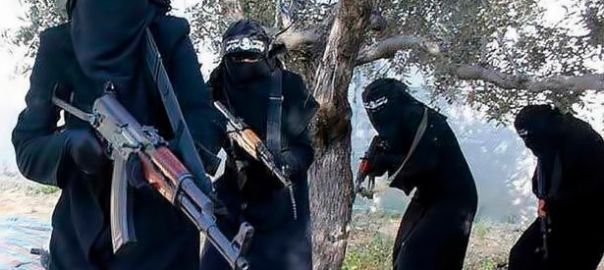


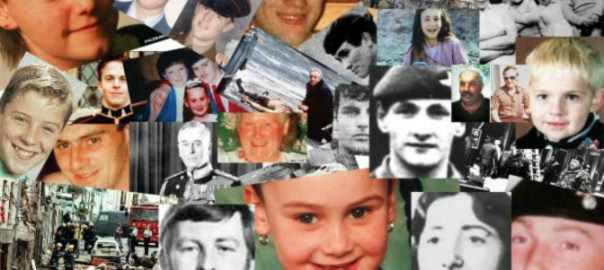




.jpg)


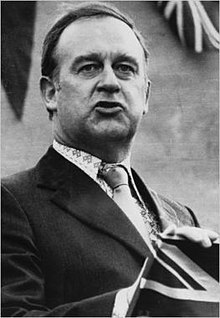


.svg)


.svg)




 belfastchildis.com