Key Events & Deaths on this day in Northern Ireland Troubles
17th September
Monday 17 September 1973
Liam Cosgrave, then Taoiseach (Irish Prime Minister), and Edward Heath, then British Prime Minister, met at Baldonnell, Co Dublin.
Thursday 17 September 1981
James Prior, then Secretary of State for Northern Ireland, arrived in Northern Ireland and went to the Maze Prison where he had a three hour meeting with those on hunger strike.
Friday 17 September 1993
Ian Paisley, then leader of the Democratic Unionist Party (DUP), travelled to Downing Street, London, for a meeting with John Major, then British Prime Minister. In an interview following the meeting Paisley criticised John Hume, then leader of the Social Democratic and Labour Party (SDLP), as being the voice of “pan-Nationalism”.
Monday 17 September 1994
There were clashes between Nationalists and Royal Ulster Constabulary (RUC) officers in Ballymurphy, west Belfast.
Wednesday 17 September 1997
The talks delegation of the Ulster Unionist Party (UUP) entered Stormont, Belfast, flanked by the delegations of the Progressive Unionist Party (PUP), and the Ulster Democratic Party (UDP). The three parties said that they would not directly engage with Sinn Féin (SF) but would attend plenary sessions. Mary McAleese, then a Pro-Vice Chancellor at Queen’s University of Belfast, secured the Fianna Fáil (FF) nomination for the election for President of the Republic of Ireland. McAleese beat Albert Reynolds, formerly Taoiseach (Irish Prime Minister), by 62 votes to 48. [McAleese went on to win the Presidential election.]
Monday 17 September 2001
John Hume, then leader of the Social Democratic and Labour Party (SDLP), announced that he would stand down as leader of the party. Hume (64), who had been leader of the party since 1979, made the announcement at a media briefing at Stormont. He said he had suffered from serious health problems and would be cutting down on his workload. It is thought he will officially stand down at the annual conference of the party scheduled for November 2001.
[Hume stepped down as a Member of the Legislative Assembly (MLA) at Stormont, also on health reasons, on 4 December 2000. He is currently a Member of Parliament (MP) and a Member of the European Parliament (MEP).]
The Loyalist protest at the Holy Cross Girls’ Primary School week began its third week.
John Reid, then Secretary of State for Northern Ireland, wrote to the Ulster Unionist Party (UUP), the Democratic Unionist Party (DUP), and Sinn Féin (SF), to ask the parties to nominate members to the proposed new Policing Board. Only the Social Democratic and Labour Party (SDLP) has so far indicated that it is willing to support the new Board.
A case was heard at Belfast High Court into the result of the Westminster election result in the Fermanagh / South Tyrone seat on 7 June 2001. James Cooper, then chairman of the Ulster Unionist Party (UUP), argued that the rules were breached when a polling station in the village of Garrison, County Fermanagh, remained open for 10 minutes after the official closing time of 10.00pm (22.00BST).
Michelle Gildernew, then a member of Sinn Féin (SF), won the contest by 53 votes.
[Cooper has alleged that a large number of SF members “invaded” the polling station and forced the presiding officer to remain open. The case was resumed on Tuesday after which judgement was reserved to a future date.]
Remembering all innocent victims of the Troubles
Today is the anniversary of the follow people killed as a results of the conflict in Northern Ireland
To the innocent on the list – Your memory will live forever
– To the Paramilitaries –
“There are many things worth living for, a few things worth dying for, but nothing worth killing for.
6 People lost their lives on the 17th September between 1971 – 1991
————————————————————–
17 September 1971
Peter Herrington, (28) nfNI Status: British Army (BA),
Killed by: Irish Republican Army (IRA)
Shot by sniper, while on British Army (BA) foot patrol, Brompton Park, Ardoyne, Belfast.
————————————————————–
17 September 1972
Michael Quigley, (19)
Catholic Status: Irish Republican Army (IRA),
Killed by: British Army (BA)
Shot during street disturbances, Central Drive, Creggan, Derry.
————————————————————–
17 September 1976
Peter Johnston, (28)
Catholic Status: Civilian (Civ),
Killed by: Ulster Defence Association (UDA)
Found shot at his home, Cooldarragh Park, off Cavehill Road, Belfast.
————————————————————–
17 September 1986
Joseph Webb, (28)
Catholic Status: Civilian (Civ),
Killed by: Protestant Action Force (PAF)
Shot at his amusement arcade, Smithfield, Belfast.
————————————————————–
17 September 1987
Steven Megrath, (20)
Protestant Status: Ulster Defence Regiment (UDR),
Killed by: Irish Republican Army (IRA)
Off duty. Shot while in relative’s home, Halliday’s Road, Tiger’s Bay, Belfast.
————————————————————–
17 September 1991
Erik Clarke, (37)
Protestant Status: Royal Ulster Constabulary (RUC),
Killed by: Irish Republican Army (IRA)
Killed in horizontal mortar attack on British Army (BA) / Royal Ulster Constabulary (RUC) mobile patrol, Swatragh, County Derry.
————————————————————–
This is simply the story of a boy trying to grow up, survive, thrive, have fun & discover himself against a backdrop of events that might best be described as ‘explosive’, captivating & shocking the world for thirty long years.
Key Events & Deaths on this day in Northern Ireland Troubles
16th September
Thursday 16 September 1971
A number of Unionists resigned over the proposed tripartite talks involving Northern Ireland, Britain, and the Republic of Ireland. The body of a man was found in Belfast; he had been shot.
Sunday 16 September 1973
Tommy Herron
———————————————————-
INTERVIEW WITH TOMMY HERRON AND MEMBERS OF UDA
———————————————————-
See below for more details on Tommy Herron
Tommy Herron, then vice-chairman of the Ulster Defence Association (UDA), was found shot dead at Drumbo, near Lisburn.
[Various claims were later made about who was responsible for his killing. Some people suggested that he may have been killed by elements within the UDA because of his alleged involvement in racketeering. Others suggested that a branch of British Army intelligence may have been involved.]
Monday 16 September 1974
The Irish Republican Army (IRA) shot and killed a Judge, Rory Conaghan, and a Resident Magistrate, Martin McBirney, in separate incidents in Belfast. A Catholic civilian was killed by a booby trap bomb planted by Loyalists in Pomeroy, County Tyrone.
[Public Records 1974 – Released 1 January 2005: Memo from Merlyn Rees, then Secretary of Sate for Northern Ireland, to Harold Wilson, then British Prime Minister. The memo is entitled ‘Northern Ireland: Extremist Groups’. The memo begins by mentioning the efforts of the Northern Ireland Office (NIO) to promote contacts between Loyalist and Republican paramilitary groups.]
Thursday 16 September 1982
The Irish National Liberation Army (INLA) carried out a booby-trap bomb attack on a British Army patrol in the Divis Flats in Belfast and killed two Catholic children, Stephen Bennett (14) and Kevin Valliday (12), and one soldier, Kevin Waller (20).
Tuesday 16 September 1986
A number of Ulster Unionist Party (UUP) and Democratic Unionist Party (DUP) Members of Parliament (MPs) attended the funeral of John Bingham (33) who had been a leading member of the Ulster Volunteer Force (UVF). [Bingham was shot dead by the Irish Republican Army (IRA) on 14 September 1986 who claimed he had been behind the recent killings of a number of Catholic civilians.]
Monday 16 September 1991
Bernard O’Hagan (37), then a Sinn Féin (SF) Councillor, was shot dead by the Ulster Freedom Fighters (UFF), a cover name (pseudonym) used by the Ulster Defence Association (UDA), at his place of work, Magherafelt College of Further Education, County Derry. Peter Brooke, then Secretary of State for Northern Ireland, held a series of meetings (16 September – 20 September) with leaders of the political parties in Northern Ireland in an effort to restart the talks process (later known as the Brooke / Mayhew talks). However, with renewed speculation about the date of the next Westminster general election no progress was made towards setting a date for a resumption of the discussions halted in July 1991.
Thursday 16 September 1993
John Hume, then leader of the Social Democratic and Labour Party (SDLP), travelled to Downing Street, London, for a meeting with John Major, then British Prime Minister. Following the meeting Hume stated that he did not “give two balls of roasted snow” for those who were criticising his continuing talks with Gerry Adams, then President of Sinn Féin (SF).
Friday 16 September 1994British Broadcast Ban Lifted
John Major, then British Prime Minister, paid a visit to Belfast. He said that any political agreement would be subject to the will of the people of Northern Ireland in a referendum. Major also announced the end of the broadcasting ban on prescribed organisations including Sinn Féin (SF). [The broadcasting ban had been introduced on 19 October 1988. The corresponding Irish broadcasting ban had been ended on 19 January 1994.] Albert Reynolds, then Taoiseach (Irish Prime Minister), pledged there would be referenda north and south on any constitutional settlement. Patrick Mayhew, then Secretary of State for Northern Ireland, announced that 10 border roads would be reopened. [On 22 September 1994 Mayhew also announced the opening of a further six roads.]
Saturday 16 September 1995
Gerry Adams, then President of Sinn Féin (SF), returned from a one-week long visit to the United States of America (USA). During his visit he met with Al Gore, then Vice-President, and Anthony Lake, then National Security Adviser. It was revealed that Friends of SF had raised almost $900,000 between 24 February 1995 and 30 June 1995.
Monday 16 September 1996
Seán Devlin (30), a Catholic man, was shot dead in the Markets area of Belfast. Responsibility for the killing was later claimed by Direct Action Against Drugs (DAAD) which was believed by many people to be a cover name used by the Irish Republican Army (IRA).
In the Stormont talks the Alliance Party of Northern Ireland (APNI) brought a complaint against the Ulster Unionist Party (UUP) and the Democratic Unionist Party (DUP) stating that their actions during the ‘Drumcree standoff’ (7 July 1996 to 11 July 1996) were a breach of the ‘Mitchell Principles’.
The Alliance Party also complained of the attendance of William McCrea (DUP Member of Parliament) at a rally in support of Billy Wright (a prominent Loyalist) in Portadown, County Armagh.
Tuesday 16 September 1997
A bomb estimated at 400 pounds exploded in Markethill, County Armagh, and caused extensive damage to buildings.
[The Continuity Irish Republican Army (CIRA) later claimed responsibility for the bombing.]
Ivan Kilpatrick, who had taken part in pickets at Harryville Catholic church, was sentenced to 15 months imprisonment for disorderly behaviour during one of the pickets. Six other men were also received shorter sentences in connection with the picket.
. Thursday 16 September 1999
There was forensic evidence presented to the Bloody Sunday Inquiry which indicated that Jim Wray, one of those killed on 30 January 1972, had been shot in the back as he lay wounded on the ground.
Sunday 16 September 2001
A man (41) was shot in a paramilitary ‘punishment’ attack in Spelga Park, Lurgan, County Armagh. The man was shot in the legs. A man (43) was shot at a house in Matilda Avenue, near Donegall Road, south Belfast. A gunman entered the house and fired a single shot on Sunday evening. The man was treated for injuries which were not said to be life threatening.
A man was shot in the arms and legs in the Glenfield estate, Carrickfergus, County Antrim. The attack happened at 9.00pm (21.00BST).
Remembering all innocent victims of the Troubles
Today is the anniversary of the follow people killed as a results of the conflict in Northern Ireland
To the innocent on the list – Your memory will live forever
– To the Paramilitaries –
“There are many things worth living for, a few things worth dying for, but nothing worth killing for.
13 People lost their lives on the 16th September between 1971 – 1996
————————————————————–
16 September 1971 Samuel Nelson, (46)
Protestant Status: Civilian (Civ),
Killed by: non-specific Loyalist group (LOY)
Found shot in abandoned car, Downing Street, Shankill, Belfast.
————————————————————–
16 September 1972
Sinclair Johnston, (27)
Protestant Status: Ulster Volunteer Force (UVF),
Killed by: British Army (BA)
Shot during street disturbances, St John’s Place, Larne, County Antrim.
————————————————————–
16 September 1973
Tommy Herron, (36)
Protestant Status: Ulster Defence Association (UDA),
Killed by: non-specific Loyalist group (LOY)
Ulster Defence Association (UDA) leader. Found shot in ditch, Drumbo, near Lisburn, County Antrim
See below for more information on Tommy Herron
————————————————————–
16 September 1974
Martin McBirney, (55)
Protestant Status: Civilian (Civ),
Killed by: Irish Republican Army (IRA)
Resident Magistrate. Shot at his home, Belmont Road, Belmont, Belfast.
————————————————————–
16 September 1974
Rory Conaghan, (54)
Catholic Status: Civilian (Civ),
Killed by: Irish Republican Army (IRA)
Judge. Shot at his home, Beechlands, off Malone Road, Belfast.
————————————————————–
16 September 1974 Michael McCourt, (28)
Catholic Status: Civilian (Civ),
Killed by: Ulster Volunteer Force (UVF)
Killed by booby trap bomb left in parcel at entrance to his factory, Pomeroy, County Tyrone.
————————————————————–
16 September 1982 Kevin Waller, (20) nfNI Status: British Army (BA),
Killed by: Irish National Liberation Army (INLA)
Killed by remote controlled bomb, hidden in drainpipe, detonated when British Army (BA) foot patrol passsed Cullingtree Walk, Divis Flats, Belfast.
————————————————————–
16 September 1982
Stephen Bennett, (14) Catholic Status: Civilian (Civ),
Killed by: Irish National Liberation Army (INLA)
Killed by remote controlled bomb, hidden in drainpipe, aimed at nearby British Army (BA) foot patrol, Cullingtree Walk, Divis Flats, Belfast.
————————————————————–
16 September 1982
Kevin Valliday, (12)
Catholic Status: Civilian (Civ),
Killed by: Irish National Liberation Army (INLA)
Killed by remote controlled bomb, hidden in drainpipe, aimed at nearby British Army (BA) foot patrol, Cullingtree Walk, Divis Flats, Belfast.
————————————————————–
16 September 1986
Raymond Mooney, (33)
Catholic Status: Civilian (Civ),
Killed by: Protestant Action Force (PAF)
Shot, while in the grounds of Holy Cross Roman Catholic Church, Crumlin Road, Ardoyne, Belfast.
————————————————————–
16 September 1989 Kevin Froggett, (35) nfNI Status: British Army (BA),
Killed by: Irish Republican Army (IRA)
Shot by sniper while repairing radio mast, Coalisland British Army (BA) / Royal Ulster Constabulary (RUC) base, County Tyrone.
————————————————————–
16 September 1991
Bernard O’Hagan, (37)
Catholic Status: Civilian Political Activist (CivPA),
Killed by: Ulster Freedom Fighters (UFF)
Sinn Fein (SF) Councillor. Shot at his workplace, Magherafelt College of Further Education, County Derry.
————————————————————–
16 September 1996
John Devlin, (30)
Catholic Status: Civilian (Civ),
Killed by: Direct Action Against Drugs (DAAD)
Shot, while in friends home, Friendly Street, Markets, Belfast.
Tommy Herron (1938 – 15 September 1973) was a loyalist from Northern Ireland, and a leading member of the Ulster Defence Association (UDA) up until his fatal shooting. Herron controlled the UDA in East Belfast, one of its two earliest strongholds. From 1972, he was the organisation’s vice-chairman and most prominent spokesperson,[2] and was the first person to receive a salary from the UDA
Early life
Herron was born in 1938 in Newcastle, County Down to a Protestant father and a Roman Catholic mother.[4] According to Martin Dillon, Herron was baptised in St Anthony’s Catholic Church on Belfast’s Newtownards Road as a baby.[1]Gusty Spence has suggested that Herron, like Shankill ButcherLenny Murphy, took on the mantle of a “Super Prod”, or individual who acts in an affectedly extreme Ulster Protestant loyalist way, to deflect any potential criticism of his Catholic roots.[1] He worked as a car salesman[2] in East Belfast[3] and was married to Hilary Wilson, by whom he had five children.
UDA leadership
Herron was a leading member of the UDA, which was the largest loyalist paramilitary organisation in Northern Ireland, from its formation and emerged at the group’s top man in East Belfast. A thirteen-member Security Council was established in January 1972 with Herron a charter member of this group, although control lay in the west of city with Charles Harding Smith emerging as chairman of the new body.[5] Along with the likes of Billy Hull Herron was one of a handful of UDA leaders to be invited to meetings with Secretary of State for Northern IrelandWilliam Whitelaw after the suspension of the Parliament of Northern Ireland in March 1972.[6]
By this time Herron had come to see himself as the most powerful figure in the UDA and had begun to make statements on behalf of the movement unilaterally.[7] In September 1972, the British Army intervened to defend a Catholic area of Larne against loyalists. British Army vehicles ran down two civilians in East Belfast,[8] one of whom was believed to be a UDA member.[9] Under the name of the Ulster Citizen Army, Herron declared war on the British Army. He called this off after two days of gunfire due to a lack of support,[2][10] two more loyalists having been killed.
Herron’s decision to go against the British Army, as brief as it was, as well as the looting and rioting that was taking place in Belfast under the direction of Herron and his close ally Jim Anderson as a reaction to the loyalists’ deaths, saw both his stock and that of the Belfast UDA fall somewhat locally. Protestant clergymen petitioned the UDA to end the street violence whilst middle class Protestants, as well as politicians such as Roy Bradford, loudly condemned the attacks on the British Army, which traditionally enjoyed a high reputation amongst Northern Irish Protestants.[11] On 20 October 1972 Herron sent word to Colonel Sandy Boswell, the army commander in Belfast, that the trouble would end and it was to the relief of many that Herron left Belfast the following month, in the company of Billy Hull, to launch a tour of Canada promoting loyalism.[12]
Herron and Harding Smith
For much of 1972 Herron’s main rival Charles Harding Smith, the leader of the West Belfast UDA, was absent from the scene after being arrested in England on gun-running charges. During his absence control on West Belfast went into the hands of Davy Fogel and his ally Ernie Elliott, both of whom had been influenced to varying degrees by left-wing rhetoric. Whilst Herron was not involved in initiatives by both men that saw dialogue with the Catholic Ex-Servicemen’s Association of Ardoyne or the Official IRA he did accompany them to a meeting with representatives of the British & Irish Communist Organisation which, unusually for communist groups, followed a staunchly unionist position with regards Northern Ireland.[13]
Herron also garnered a reputation for his involvement in racketeering, something that Harding Smith had strongly condemned. In early 1973 an east Belfast publican was interviewed anonymously by The Sunday Times and he claimed that Herron would regularly send one of his men to the pub to ask for a contribution to the “UDA prisoners’ welfare fund”. The publican stated that he knew if he refused to contribute his windows would be smashed or the pub shot at, making the fund simply a protection racket.[14] Herron was apparently asking as much as £50 per week from each pub with shop owners expected to pay half that amount.[15]
After his return from England Harding Smith immediately clashed with Fogel but, somewhat surprisingly given their personal enmity, Herron sided with Harding Smith in the struggle. On 13 January 1973 Herron summoned Fogel to his east Belfast office and when Fogel arrived he was placed under arrest and detained for several hours. Herron told Fogel that he could only remain in charge of Woodvale if he agreed to accept Harding Smith’s leadership in West Belfast as a whole. Fogel would leave Belfast altogether soon after this episode.[16] In February, Herron called for a general strike against the British Government‘s decision to introduce internment for suspected loyalist parliamilitaries, mirroring the existing internment for suspected republican paramilitaries. This led to a day’s fighting on the streets.[17]
Soon after the meeting with Fogel, and to many people’s surprise, Herron called for “both sides” – loyalists and republicans – to stop assassinations, claiming that if they did not, they would face “the full wrath of the UDA”. This temporarily halted killings in East Belfast.[8] Herron’s decision to stop the random killings, as well as his meeting with communists and rumours about his Catholic background, led to criticism within the UDA and he was criticised strongly in the pages of Ulster Militant, one of the UDA’s publications at the time.[18] Herron’s position came under increasing pressure and, in an attempt to save face, he again threw his weight behind a new Harding Smith initiative. This time Harding Smith had decided to not only return to sectarian killings but to set up a group within the UDA, the Ulster Freedom Fighters (UFF), to be dedicated solely to this aim.[19] In the meantime Herron’s leading hitman Albert Walker Baker had already been sent back on sectarian killing duty, launching a grenade attack on Catholic workers in East Belfast before shooting up a bus of Catholics in the Cherryvalley area.[20]
Fall from grace
In the summer of 1973 it was decided to choose a chairman of the UDA after the resignation of joint chairman Jim Anderson, who shared his duties with Harding Smith but who had been effective leader during the latter’s absence, had left a power vacuum. Fears were raised that the issue might bring about the much feared Harding Smith and Herron feud but in the end a compromise candidate, Andy Tyrie, was chosen in an effort to avert the war.[21]
Herron however remained in an unsafe position and on 15 June 1973 masked gunmen broke into his Braniel home and shot and killed his brother-in-law, 18-year-old Michael Wilson. Herron had been out of the house at the time but Michael Stone, a young UDA member who ran errands for Herron, had been near the house and afterwards asked Herron if he wanted him to kill a Provisional IRA (PIRA) member in retaliation. Herron told Stone “wrong side, kid” indicating that he believed the murder had been perpetrated by the rival faction of the UDA.[21]
According to Martin Dillon, the attack had been directed against Herron and had been ordered by Harding Smith, who hoped that it would be blamed on the PIRA.[22] Certainly Harding Smith had made it clear in the summer of 1973 that he wanted Herron and the rest of the criminal element out of the UDA.[23] Although Herron did not publicly speak about the killing he placed information in the press that he believed it had been the work of rivals within the UDA and also accused the UFF, and by extension Harding Smith, of being too close to the rival Ulster Volunteer Force in these same news stories.[24]
Herron was arrested in August 1973 under the terms of the Emergency Powers Act and a considerable sum of money, reported to be between £2000 and £9000, was found in his coat. Herron was released soon afterwards but the story of the money was widely circulated in the press and it increased the growing discontent with his leadership in East Belfast, where many felt that he was increasingly using his role in the UDA to personally enrich himself.[25] Herron’s personality and actions also fed into this animosity. He was known for swaggering around in the style of a mafia don, visibly carrying his legally held handgun, as well as for his short temper and sudden changes in mood.[26]
Politics
Despite narrowly missing death Herron was also involved in a political campaign as he was the candidate for the Vanguard Progressive Unionist Party (VPUP) candidate in East Belfast at the Northern Ireland Assembly election, 1973. One of the founding principles of the UDA had been that it should not be tied to a single political party but Herron was an enthusiastic supporter of Bill Craig and when he established the VPUP Herron declared as UDA spokesman that “we will be supporting the new party 100% and using every means within our power to ensure its success”.[27]
Herron had argued that those who had joined or supported the UDA should be able to vote for its members although in the event Herron struggled to convert his reputation as a loyalist hard case into that of a political figure.[28] Criticism came from Brian Faulkner and other moderate unionists when on 10 June a UDA member exchanging gunfire with soldiers on the Beersbridge Road, East Belfast, shot and killed a Protestant bus driver.[27] Herron’s campaign was again hit in June when his East Belfast UDA headquarters were raided by the Royal Ulster Constabulary (RUC) and two illegal guns and a quantity of ammunition were seized with two men arrested.[29] He took 2,480 votes, but was not elected.[30]
Death
Herron was kidnapped in September and killed with one gunshot to the head.[2][31] His body was found in a ditch near Drumbo, County Antrim. His death has often been ascribed to other members of the UDA, either in protest at his involvement in racketeering or as part of the ongoing feud,[32] while the UDA itself has claimed that the Special Air Service was responsible.[8] It has even been suggested that local rival Ned McCreery organised the killing in a dispute over money and had used a “honey trap” to lure Herron to his death.[33]
Herron received a paramilitary funeral which was presided over by Rev. Ian Paisley. It was attended by 25,000 mourners. He was buried at Roselawn Cemetery as a piper played “Amazing Grace“.[33]
Sammy McCormick took over Herron’s East Belfast Brigade and this much more low-key figure was tasked with returning a sense of discipline to the increasingly chaotic brigade
This is simply the story of a boy trying to grow up, survive, thrive, have fun & discover himself against a backdrop of events that might best be described as ‘explosive’, captivating & shocking the world for thirty long years.
Triple Aces were pilots who were credited with shooting down 15 or more enemy aircraft. The Battle of Britain produced many aces (men who shot down 5 or more enemy aircraft) but triple aces were very rare. The figures below for triple ace kills are from July 1st 1940 to October 31st 1940 and include where necessary, where a pilot was in more than one squadron
—————————————–
The views and opinions expressed in this page and documentaries are soley intended to educate and provide background information to those interested in The Battle of Britain They in no way reflect my own opinions and I take no responsibility for any inaccuracies or factual errors.
Scotland was far away from the more accessible targets in the south of England, but was in range for the Luftwaffe’s long range bombers and reconnaissance aircraft shadowing the Royal Navy’s Home Fleet in Northern Scotland and the North Sea. On 16 October a section of 603 was scrambled and shot down a Junkers Ju-88 bomber into the North Sea east of Dalkeith, the first German aircraft to be shot down over British territory since 1918. Carbury probably destroyed an Heinkel He 111 on 7 December, and claimed a third share in the destruction of another He 111 during January 1940. Carbury was promoted to Flying Officer on 27 April 1940.[5]
August 1940 – October 1940
In light of RAF Fighter Command‘s dire need for pilots in the battles over southern England during August 1940, No. 603 redeployed to RAF Hornchurch, becoming active in the Battle of Britain from 27 August 1940.
Carbury claimed his first victory on 29 August, a Messerschmitt Bf 109 fighter. He claimed another on the 30th, and three more on the 31st, together with two He 111’s[6] – taking his total to 8 and 1/3, and making him a fighter ace. Hillary was shot down on 3 September in combat with Bf 109’s of Jagdgeschwader 26 off Margate at 10:04hrs – rescued by the Margate lifeboat, he was severely burned and spent the next three years in hospital.[7] In September Carbury claimed three more Bf 109’s, and after sustaining wounds to his feet during actions in September, his efforts were recognised by the award of the Distinguished Flying Cross (DFC). The award was gazetted on 24 September 1940:[8]
“
Air Ministry, 24th September, 1940.ROYAL AIR FORCE
The KING has been graciously pleased to approve the undermentioned appointment and awards in recognition of gallantry displayed in flying operations against the enemy : —
Awarded the Distinguished Flying Cross.
Flying Officer Brian John George CARBURY (40288).
During operations on the North East coast Flying Officer Carbury led his section in an attack on two enemy aircraft. Both were destroyed. From 28th August, 1940, to 2nd September, 1940, he has, with his squadron, been almost continuously engaged against large enemy raids over Kent, and has destroyed eight enemy aircraft. Five of these were shot down during three successive engagements in one day.
”
Carbury continued his toll of victories in October, as the German’s intensified their high-level fighter-bomber attacks on London. His first two victories for the month were a Bf109 over the Thames Estuary on the 2nd, and another in southeast London on 7 October. Based at RAF Manston on the 10th, Carbury noticed three Bf 109’s returning to northern France—leading three Spitfires into attack, he shot the first in to the English Channel, and a second on to the beach at Dunkirk. On 14 October, he damaged a Junkers Ju 88.
The official end of the Battle of Britain came at the end of October, when Carbury was awarded a Bar to the DFC—one of fewer than five pilots given the double award for victories claimed during the period of the Battle of Britain. With destruction of 15 enemy aircraft destroyed (and 2 victories shared destroyed), 2 probables and 5 damaged,[9] Carbury was among the five top-scoring pilots in RAF Fighter Command and the top scorer against Bf 109s [10] during the Battle of Britain along with Eric Lock. The award of the bar to his DFC was gazetted on 25 October 1940:[11]
“
Air Ministry, 25th October, 1940.ROYAL AIR FORCE.
The KING has been graciously pleased to approve the following appointment and awards in recognition of gallantry displayed in flying operations against the enemy:—
Awarded a Bar to the Distinguished Flying Cross
Flying Officer Brian John George CARBURY, D.F.C. (40288).
Flying Officer Carbury has displayed outstanding gallantry and skill in engagements against the enemy. Previous to 8th September, 1940, this officer shot down eight enemy aircraft, and shared in the destruction of two others. Since that date he has destroyed two Messerschmitt 109-5 and two Heinkel 113’s, and, in company with other pilots of his squadron, also assisted in the destruction of yet another two enemy aircraft. His cool courage in the face of the enemy has been a splendid example to other pilots of his squadron.
”
December 1940 onwards
No. 603 Squadron and Carbury returned to Scotland on scheduled rotation in December 1940. On Christmas Day Carbury was scrambled to intercept a Junker Ju 88 reported off St Abb’s Head, inflicting damage before the German aircraft turned for home.
Early in 1941 Carbury was posted to be an instructor at the Central Flying School and then 58 OTU at Grangemouth, and did not fly operationally in combat again. Unfortunately later that year he was charged with fraud after being accused of passing between 9 and 17 false cheques, an offence that at the time could attract a prison sentence. At his RAF court martial, he was found guilty and on 21 October 1941 the London Gazette announced: “Flg. Off. B. J. G. CARBURY, DFC (40288), to be dismissed the Service by sentence of General Court-Martial. 1 Oct 1941.” [12]
I thought of the men I had known, of the men who were living and the men who were dead; and I came to this conclusion. It was to the Carburys and the Berrys [Alan Berry] of this war that Britain must look, to the tough practical men who had come up the hard way, who were not fighting this war for any philosophical principles or economic ideals; who, unlike the average Oxford undergraduate, were not flying for aesthetic reasons, but because of an instinctive knowledge that this was the job for which they were most suited. These were the men who had blasted and would continue to blast the Luftwaffe out of the sky while their more intellectual comrades would, alas, in the main be killed. They might answer, if asked why they fought, ‘To smash Hitler!’ But instinctively, inarticulately, they too were fighting for the things that Peter had died to preserve.
After leaving the RAF, he lived in England until his death in July 1962.[14] In 1949, he along with three others, in a trial at Princes RisboroughMagistrates’ Court, was found guilty of two offences relating to the illegal export of Bristol Beaufighters to Palestine.[15] Each man was fined a total of £100.[15] The defence solicitor described the four as “stooges” of a fifth man who had remained in Palestine.[15]
Death
In 1961, Carbury was diagnosed with terminal acute leukaemia and died soon after in High Wycombe Hospital (then the War Memorial Hospital). He was later cremated at Breakspear crematorium near Ruislip. A memorial to his memory was erected in his home town of Wellington, New Zealand.
Born in Otaslavice in 1913, Josef František joined the Czechoslovak Air Force in 1934. After basic training he joined the Czechoslovak Air Force Air Regiment 2. In 1935 he was a Corporal in Air Regiment 1 and returned to Air Regiment 2 as a Sergeant in 1937. In June 1938 he became a fighter pilot serving in the 40th squadron in Prague flying the Avia B-534 and Bk-534 fighter. After Czechoslovakia fell under German occupation (15 March 1939) like many other Czechoslovak airmen he escaped to Poland. Most Czechoslovak airmen then left Poland for France before the start of the Second World War, though František decided to stay and serve with the Polish Air Force.
During the German invasion of Poland in September 1939, František initially evacuated training aircraft from the air base at Dęblin. From 7 September he flew reconnaissance missions in an unarmed training plane, a RWD-8. On 19–20 September he attacked enemy columns near Kamionka Strumiłowa, throwing hand grenades on the troops below. On 20 September he was shot down near Złoczów, but was saved by a Polish crew that landed nearby. On 22 September František’s unit was ordered to withdraw with their remaining aircraft to Romania. František managed to abscond from an internment camp in Romania and reached France via North Africa in October 1939.
In France František elected to remain with the Poles instead of joining the exiled Czechoslovak air force (a probable reason for this decision was a conflict with a Czech officer, who tried to arrest him for insubordination.)
He was flying only old fashioned planes with fixed undercarriage and there are no official French records to confirm he flew combat missions during the Battle of France. After the fall of France František fled to Britain and after training on 2 August was assigned to No. 303 Polish Squadron based at RAF Northolt, flying Hawker Hurricane fighters. The squadron entered action in the last phase of the Battle of Britain. The first confirmed victory of Sgt. František was a German Bf 109E fighter on 2 September 1940.
A very ill-disciplined pilot,[1] he was seen by his commanding officers as a danger to his colleagues when flying in formation. His British CO Squadron LeaderR. Kellett, offered to arrange for František’s transfer to a Czech squadron, but František preferred to stay and fight alongside his Polish colleagues. As all pilots were valuable, a compromise was created whereby František was allotted a “spare” aircraft so he could fly as a “guest” of the Squadron as and when he wanted to. Thus, František fought his own private war – accompanying the squadron into the air, but peeling off to fly a lone patrol over Kent, patrolling in the area through which he knew the German aircraft being intercepted would fly on their way back to base, possibly damaged and low on fuel and ammo. During the following month he shot down 17 German aircraft and 1 probable, of which 9 were Bf 109s, becoming one of the top scoring Allied fighter pilots of the Battle of Britain. His last victory was on 30 September 1940 and he was awarded the Distinguished Flying Medal.
On 8 October 1940, František’s Hurricane crashed in Ewell, Surrey during a landing approach after a patrol. Reasons for the crash are not known, but according to some theories, he may have been making aerobatic figures to impress his girlfriend,[citation needed] or it might have been a result of battle fatigue and physical exhaustion.
He was buried in a Polish military cemetery. He was awarded several decorations, among them the Virtuti Militari 5th class and he was the first foreigner awarded the Distinguished Flying Medal with Bar.
Born in 1914, Gray was accepted into the Royal Air Force (RAF) in 1939 after two previous attempts failed on medical grounds. He flew with No. 54 Squadron during the Battles of France and Battle of Britain, and had shot down 14 aircraft and had a half share in another by September 1940. He later added another 13 kills while leading fighter squadrons and wings in the North African and Italian Campaigns, and finished the war with a confirmed 27½ kills. After the war he held a number of staff and command positions in the RAF before his eventual retirement in 1961. He returned to New Zealand to work for Unilever. He died in 1995 at the age of 80.
Early life
Colin Falkland Gray and his twin brother Ken were born in Christchurch, New Zealand on 9 November 1914, the sons of an electrical engineer and his wife. He attended schools in the lower North Island and in Christchurch. He gained employment as a stock clerk in 1933, working at Dalgety and Company. In 1937, Gray, along with Ken, attempted to join the Royal Air Force (RAF) in 1937. While Ken was accepted, Colin failed for medical reasons.[1]
A second attempt also resulted in failure on medical grounds and after this, to improve his fitness, Gray took up sheep mustering. He was successful on a third application to join the RAF and was granted a short-term commission at the beginning of 1939. His flight training was conducted at the de Havilland flying school at Hatfield in Hertfordshire, England. He was posted to No 11 Flying Training School from which he graduated as a probationary pilot officer in October 1939.[1]
Second World War
Gray was posted to No. 54 Squadron, at the time equipped with Supermarine Spitfires and based at Hornchurch, in November.[1] He was confirmed in his rank of pilot officer on 17 January 1940.[2] During the Phoney War he participated in patrols over the English Channel up until May 1940. The death of his brother Ken, in a flying accident on 1 May 1940, affected his morale.[1]
After initial combat on 24 May (claiming two ‘probable’ victories), Gray had a share in his first confirmed enemy aircraft, a Messerschmitt Bf 109, on 25 May 1940, while escorting a formation of Fairey Swordfish to dive-bomb Gravelines. His Spitfire was badly damaged in the engagement, and damage to the port aileron forced the aircraft into a dive that was controlled only with great difficulty. His aircraft had also lost its airspeed indicator and control of guns, flaps or brakes.[3] Despite this damage, Gray managed to force land safely at Hornchurch.[1]
On 13 July 1940, Gray shot down his second Bf 109 near Calais after a long chase at sea level. The pilot, Leutnant Hans-Joachim Lange of III./JG 51, was killed.[4] 54 Squadron was heavily engaged in the Battle of Britain, tasked with the defence of the approaches to London. On 24 July, he shot down Staffelkapitän Lothar Ehrlich of 8./JG 52. Gray observed Ehrlich to bail out into the Channel and swim for what Gray believed to be a dingy. He radioed the man’s position, but the pilot did not survive the water conditions.[5] Alternately, it is possible his victim was Leutnant Schauff from III./JG 26.[6] On 16 August, he claimed two Bf 109s destroyed. No. 54’s opponents were JG 54. I./JG 54 lost one Bf 109—the unnamed pilot being killed in a crash at Saint-Inglevert airfield after returning from the battle. 3./JG 54 and 9./JG 54 suffered the loss of one Bf 109 each and their pilots (one killed and one missing) over English territory. Their names are unknown.[7] On 24 August, his flight was attacked by elements of I./JG 54 near RAF Manston. During the battle, he shot down Oberleutnant Heinrich Held.[8] On 31 August, he downed Oberleutnant Karl Westerhof from 6./JG 3.[9] Another source identifies 9./JG 26 pilot Oberleunant Willy Fronhöfer as his victim.[10] By early September, Gray had claimed 14½ kills, and his squadron was sent north to rest and re-equip. He was awarded the Distinguished Flying Cross (DFC) on 15 August 1940.[1]
Gray was promoted to flying officer on 23 October 1940.[11] He then served with 43 Squadron, before returning to 54 Squadron. Gray remained with the squadron until he was posted to 1 Squadron.[12] He was promoted to flight lieutenant in August 1941[13] and the following month was awarded a Bar to his DFC. The same month, he was posted to No. 616 Squadron to serve as its commander until February 1942, at which time he took up a staff posting at 9 Group.[1]
Returning to operations in September 1942, Gray, promoted to acting squadron leader, took over No. 64 Squadron, which operated over the English Channel and France. At the end of the year, he was posted to the Mediterranean Theatre,[1] firstly to 333 Group[12] and then in January 1943, to command of No. 81 Squadron, based in Algeria, the first unit to fly the Spitfire Mk. IX in the Middle East. During his service with the squadron, he shot down a further eight aircraft bring his personal tally to 22.[1] For his leadership and actions during this period, Gray was awarded the Distinguished Service Order.[12]
Gray was promoted to acting wing commander on 1 June 1943 and took over No. 322 Wing, which at the time was based on Malta. Conducting patrols over the Italian coast and supporting the Allied invasion of Sicily, he shot down a further five aircraft. His final kills came on 25 July 1943, when he shot down two Junkers Ju 52 transports.[1] He was promoted to war substantive squadron leader on 1 September 1943.[14] Later that month, he returned to England for a rest from active duty.[1]
A second Bar to Gray’s DFC was awarded in November.[1] He returned to operational duty in England, with 9 Group.[12] In August 1944, he was appointed Wing Commander of the Lympne Wing, which carried out operations over France and the occupied Netherlands.[1] He did not increase his tally of kills and finished the war with 27 aerial kills, two shared destroyed, six probable kills, with a further four shared probables,[15] the top New Zealand fighter ace of the Second World War.[16]
Post-war
Gray returned to New Zealand on secondment to the Royal New Zealand Air Force from July 1945 to March 1946.[12] He was retroactively promoted to the permanent rank of flight lieutenant from 23 January 1943,[17] and received a retroactive promotion to temporary squadron leader from 1 July 1945.[18] He was promoted to the substantive rank of squadron leader on 1 September 1945.[19] Back in England after the end of his secondment, he was promoted to wing commander on 1 July 1947.[20] He served in the Air Ministry until 1949.[12] He then served in Washington, D.C. on the Joint Services Mission United States as an air liaison officer.[1] In 1954, after a period of time training in the Gloster Meteor, he commanded RAF Church Fenton in Yorkshire for two years,[12] during which he was promoted to group captain on 1 January 1955.[21] He was posted to HQ Far East Air Force in Singapore for three years before a return to the Air Ministry in 1959 and his subsequent retirement in March 1961.[12]
Later life
Gray returned to New Zealand to work for Unilever in Petone as its personnel director until 1979, at which time he retired. He settled in Waikanae and in his later years, he wrote Spitfire Patrol, an autobiography detailing his time in the RAF and which was published in 1990.
Gray died in Kenepuru Hospital, Porirua, on 1 August 1995, survived by his wife, Betty, whom he had married in October 1945, and his four children and a stepdaughter.
Lacey left King James Grammar School, Knaresborough[2] in 1933 continuing his education at Leeds Technical College.[3] After four years as an apprentice pharmacist, he joined the RAFVR (Royal Air Force Volunteer Reserve) in January 1937 as a trainee pilot at Perth, Scotland. In 1938, he then took an instructor’s course, becoming an instructor at the Yorkshire Flying School, accumulating 1,000 hours of flight time before the war.[4] Called up at the outbreak of war, he joined No. 501 Squadron RAF.
Second World War
Battle of France
On 10 May 1940, the Squadron moved to Bétheniville in France where Lacey experienced his first combat. On the afternoon of 13 May over Sedan, he destroyed a Heinkel He 111 of KG 53[5] and an escorting Messerschmitt Bf 109 on one sortie, followed by a Messerschmitt Bf 110 later in the afternoon.[6] He claimed two more He 111s on 27 May, before the squadron was withdrawn to England on 19 June, having claimed nearly 60 victories. On 9 June, he crash landed and was almost drowned in a swamp. During his operational duties in France, he was awarded the French Croix de guerre.
Battle of Britain
Flying throughout the Battle of Britain with No. 501 based at Gravesend or Croydon, Lacey became one of the highest scoring pilots of the battle. His first kill of the battle was on 20 July 1940, when he shot down a Bf 109E of Jagdgeschwader 27. He then claimed a destroyed Ju 87 and a “probable” Ju 87 on 12 August along with a damaged Bf 110 and damaged Do 17 on 15 August, a probable Bf 109 on 16 August. He destroyed a Ju 88, damaged a Dornier Do 17 on 24 August and shot down a Bf 109 of Jagdgeschwader 3 on 29 August. He bailed out unharmed after being hit by return fire from a Heinkel He 111 on 13 August.
On 30 August 1940, during combat over the Thames Estuary, Lacey shot down a He 111 and damaged a Bf 110 before his Hurricane was badly hit from enemy fire. His engine stopped and he decided to glide the stricken aircraft back to the airfield at Gravesend instead of bailing out into the Estuary.
A highly successful August was completed when he destroyed a Bf 109 on 31 August.
On 2 September 1940, Lacey shot down two Bf 109s and damaged a Do 17. He then shot down another two Bf 109s on 5 September. During a heavy raid on 13 September, he engaged a formation of Kampfgeschwader 55 He 111s over London where he shot down one of the bombers that had just bombed Buckingham Palace. He then bailed out of his aircraft, sustaining slight injuries, as he could not find his airfield in the worsening visibility.
Returning to the action shortly thereafter, he shot down a He 111, three Bf 109s and damaged another on 15 September 1940, one of the heaviest days of fighting during the whole battle, which later became known as “Battle of Britain Day”. During the battle he attacked a formation of 12 Bf 109s, shooting down two before the other had noticed before escaping into cloud[8]
Two days later on 17 September, he was shot down over Ashford, Kent during a dogfight with Bf 109s and bailed out without injury. On 27 September, he destroyed a Bf 109 and damaged a Junkers Ju 88 on 30 September. During October he claimed a probable Bf 109 on 7 October, shot down a Bf 109 on 12 October, another on 26 October and on 30 October, he destroyed a Bf 109 before damaging another.
During the Battle of France and the Battle of Britain, Lacey had been shot down or forced to land due to combat no less than nine times.
On 26 November 1940, with 23 claims (18 made during the Battle of Britain) Lacey received a Bar to his Distinguished Flying Medal [9] for his continued outstanding courage and bravery during the Battle of Britain. The citation in the London Gazette stated:
“Awarded a Bar to the Distinguished Flying Medal. 740042 Sergeant James Harry LACEY, D.F.M., Royal Air Force Volunteer Reserve, No. 501 Squadron. Sergeant Lacey has shown consistent efficiency and great courage. He has led his section on many occasions and his splendid qualities as a fighter pilot have enabled him to destroy at least 19 enemy aircraft”.
After 1940
Lacey works on a model aeroplane in No 501 Squadron’s dispersal hut at Colerne on 30 May 1941
His final award for outstanding service during 1940 was a Mention in Dispatches announced on 1 January 1941.[10] Lacey was commissioned a pilot officer (on probation) on 25 January 1941 (seniority from 15 January)[11] and promoted to acting flight lieutenant in June. On 10 July 1941, as “A” flight commander, he shot down a Bf 109 and damaged another a few days later on 14 July. On 17 July, he claimed a Heinkel He 59 seaplane shot down and on 24 July, two Bf 109s (by causing them to collide). He was posted away from combat operations during August 1941, serving as a flight instructor with 57 Operational Training Unit. He was promoted to war substantive flying officer on 22 September.[12]
During March 1942, Lacey joined No. 602 Squadron, based at Kenley flying the Spitfire Mk V and by 24 March had claimed a Fw 190 as damaged. He damaged another Fw 190 on 25 April 1942 before a posting to 81 Group as a tactics officer. Promoted to war substantive flight lieutenant on 27 August,[13] in November he was posted as Chief Instructor at the No. 1 Special Attack Instructors School, Milfield.
In March 1943, Lacey was posted to No. 20 Squadron, Kaylan in India before joining 1572 Gunnery Flight in July of the same year to convert from Blenheims to Hurricanes and then to Republic P-47 Thunderbolts. He stayed in India, being posted to command 155 Squadron flying the Spitfire VIII in November 1944 and then as CO No. 17 Squadron later that month. While based in India, Lacey claimed his last aircraft on 19 February 1945, shooting down a Japanese Army Air Force Nakajima Ki 43 “Oscar” with only nine 20mm cannon rounds.
“Ginger” Lacey was one of the few RAF pilots on operational duties on both the opening and closing day of the war. His final tally was 28 confirmed, four probables and nine damaged.
Postwar
After the war was over, Lacey went to Japan with No. 17 Squadron, becoming the first Spitfire pilot to fly over Japan on 30 April 1946. He returned to the UK in May 1946. He received a permanent commission in the rank of flight lieutenant on 8 December 1948 (seniority from 1 September 1945),[14] and retired from the RAF on 5 March 1967 as a flight lieutenant; he retained the rank of squadron leader.[15]
After retirement, Lacey ran an air freight business and instructed at a flight school near Bridlington, UK.
Death
“Ginger” Lacey died on 30 May 1989 at the age of 72. In September 2001, a plaque was unveiled at Priory Church, Bridlington, Yorkshire in memory of the fighter pilot and ace.
There was/is also a plaque at the location of the house Lacey grew up in, on the old site of Nidd Vale Motors, Sandbeck Lane, Wetherby, sadly the house where he was raised was knocked down a few years ago.
Born near Shrewsbury in 1919 Lock had his first experience of flying as a teenager. In the late 1930s with war a possibility and the likely event of him being called to arms, Lock decided that he would prefer to fight as an airman. He joined the RAF in 1939. He completed his training in 1940 and was posted to No. 41 Squadron RAF in time for the Battle of Britain. Lock became the RAF’s most successful Allied pilot during the battle, shooting down 21 German aircraft and sharing in the destruction of one.[1][2]
After the Battle of Britain Lock served on the Channel Front, flying offensive sweeps over France. Lock went on to bring his overall total to 26 aerial victories, one shared destroyed and eight probable in 25 weeks of operational sorties over a one-year period—during which time he was hospitalised for six months.[3][4] Included in his victory total were 20 German fighter aircraft, 18 of them Messerschmitt Bf 109s. In mid-1941 Lock was promoted to the rank of flight lieutenant.
Lock earned the nickname “Sawn Off Lockie”, because of his extremely short stature.[5] Within less than six months of becoming one of the most famous RAF pilots in the country, he crash–landed in the English Channel after his Supermarine Spitfire was damaged by ground–fire. Lock was posted missing in action. He was never seen again.
Early life and career
Eric Stanley Lock, younger son of Charles Edward Lock, was born in 1919 to a farming and quarrying family, whose home was then in the rural Shropshire village of Bayston Hill at Bomere Farm, and who later farmed nearby at Allfield, Condover. He was privately educated, at a boarding school called Clivedon at Church Stretton, at Shrewsbury Boys’ High School and at Prestfelde School, London Road, Shrewsbury. At the latter, he was a proficient swimmer and ice skater.[6] On his 14th birthday his father treated him to a five-shilling, 15-minute flight with Sir Alan Cobham’s Air Circus. Unlike most teenagers, Lock was unimpressed by flying and had soon lost interest. At 16 he left school and joined his father’s business.[7] He later changed his mind and attempted to enlist in the RAF as early as the age of 17, but his father refused to sign the papers.[8]
Although as a child he had lost the former strength of his left arm after a horse riding accident,[6] in 1939 he made the decision that if there was going to be a war, he wanted to be a fighter pilot, and so immediately joined the Royal Air Force Volunteer Reserve. Within three months Lock had been called up and began flight training.
Lock completed his training in late May 1940. Officially qualified as a fighter pilot, he was posted to No. 41 Squadron at RAF Catterick as acting pilot officer. Lock spent several weeks with his Squadron before taking two weeks leave pass in July 1940 to marry his girlfriend Peggy Meyers, a former “Miss Shrewsbury”. Lock returned to his unit and soon began combat patrols over the North of England, defending British airspace against Luftflotte 5 (Air Fleet 5) based in Norway. Lock was bored by the patrols as it involved chasing lone enemy raiders without success.[7]
Battle of Britain
The Battle of Britain began in July 1940 with the Luftwaffe making attacks on British shipping in the English Channel and Britain’s East Coast. In August RAF Fighter Command‘s bases came under attack as the Germans attempted to establish air superiority over southern England. The battles grew larger in scale, but 41 Squadron, based in the north, were well clear of the main combat zone and saw little action for the first four weeks of the German air offensive.[11]
Lock’s frustration ended on 15 August 1940. On this date the Luftwaffe attempted to stretch Fighter Command by launching a wave of aircraft against targets in northern England where German intelligence believed there to be little opposition. It was in this battle Lock gained his first victory. Climbing at 20,000 feet (6,100 m) north of Catterick Lock spotted a massed formation of Messerschmitt Bf 110s and Junkers Ju 88s. The Squadron was ordered into line-astern formation and made an attack. In the first attack Lock followed his Section Leader. In the second he had an opportunity to fire at a Bf 110 heavy fighter. After two short bursts the starboard engine caught fire. Following the enemy fighter down to 10,000 feet (3,000 m), Lock fired into the fuselage and set the port engine on fire. The machine-gunner ceased firing and Lock left it at 5,000 feet (1,500 m). Lock was going to claim only a probable, but another No. 41 pilot saw it crash into Seaham Harbour and confirmed his victory. Lock soon attacked the Ju 88s, downing one of their number.[7]
In light of Fighter Command’s need units in the south of the country, No. 41 Squadron was redeployed to RAF Hornchurch in Essex on 3 September 1940. On 5 September, Lock flew as Red 2, positioned behind and protecting the Squadron’s Leader. He shot down two Heinkel He 111s over the Thames Estuary. One of his victims crashed into a river, the other caught fire and its undercarriage fell down. Lock followed it down.[12][13] He quickly realised his mistake—reducing height to pursue a damaged enemy put a pilot at risk from enemy fighters—but it was too late.[12] A Messerschmitt Bf 109 attacked him and he sustained damage to his Spitfire and a wound to his leg.[12] Lock immediately zoom-climbed. The Bf 109 attempted to follow but the pilot stalled and fell away. Lock reversed direction and dived. Waiting for the German fighter to come out of its dive he fired several short bursts and it exploded.[12] Looking around he saw the second He 111 land in the English Channel, about ten miles from the first.[12] Lock circled above the He 111 and noticing a boat he alerted the boat to its presence by flying over it and led the vessel to the crash site. As he left the scene he saw the crew surrendering to the occupants of the boat. On the way home he saw his first victim in the river, with a dingy nearby.[12] A further Bf 109 was claimed destroyed on that date.[14]
The following day, despite pain from his leg and against medical advice, Lock claimed his seventh victory, a Ju 88 off Dover at 09:00.[12] On 9 September he claimed two Bf 109s destroyed over Kent and he followed the success with two victories—over a Ju 88 and Bf 110—on 11 September 1940. The victory brought his tally to nine enemy aircraft destroyed, eight of them in less than seven days. He was awarded the Distinguished Flying Cross (DFC).[12] The award was gazetted on 1 October 1940 with a citation reading:[12][15]
“
Air Ministry, 1st October, 1940.ROYAL AIR FORCE.
The KING has been graciously pleased to approve the undermentioned appointment and awards in recognition of gallantry displayed in flying operations against the enemy:—
Awarded the Distinguished Flying Cross.
Pilot Officer Eric Stanley LOCK .(81642), Royal Air Force Volunteer Reserve.
This officer has destroyed nine enemy aircraft, eight of these within a period of one week. He has displayed great vigour and determination in pressing home his attacks.
”
Lock continued to shoot enemy aircraft down regularly. On 14 September he recorded two victories over Bf 109s and the following day shared in the destruction of a Dornier Do 17 before destroying a Bf 109 on 15 September 1940—the Battle of Britain Day—over Clacton-on-Sea. Two rest days followed. On 18 September he claimed a Bf 109 probably destroyed on his first patrol then another destroyed plus one probably destroyed in the afternoon over Gravesend.[12]
On 20 September he filed a curious report that saw him attack three “Heinkel He 113s“, shooting down one and forcing the others to flee back to France.[16] During that sortie he sighted a Henschel Hs 126 which he pursued across the English Channel before finally downing it over the German gun batteries at Boulogne-sur-Mer.[16] Upon landing he was told by his commanding officer that he had been awarded a Bar to his DFC for 15 victories in 16 days.[16] Published on 22 October 1940, the citation read:[17]
“
Air Ministry, 22nd October, 1940.ROYAL AIR FORCE.
The KING has been graciously pleased to approve the following appointment and awards in recognition of gallantry displayed in flying operations against the enemy:—
Awarded a Bar to the Distinguished Flying Cross.
Pilot Officer Eric Stanley LOCK, D.F.C. (81642), Royal Air Force Volunteer Reserve.
In September, 1940, whilst engaged on a patrol over the Dover area, Pilot Officer Lock engaged three Heinkel 113‘s one of which he shot down into the sea. Immediately afterwards he engaged a Henschel Hs 126 and destroyed it. He has displayed great courage in the face of heavy odds, and his skill and coolness in combat have enabled him to destroy fifteen enemy aircraft within a period of nineteen days.
”
No. 41 Squadron’s pilots were placed on four weeks’ rotation rest following the intense period of operational sorties, returning to RAF Hornchurch in early October 1940. Lock immediately commenced where he had left off. On 5 October he was credited with another Bf 109 with two probables over Kent; on 9 October another Bf 109 was claimed 10 miles from Dover and a probable followed seconds later. Off Dungeness he dispatched yet another Bf 109 on 11 October then on 20 October 1940 shot down a Bf 109 directly above RAF Biggin Hill. This victory brought his total to 20, making Lock a ‘Quadruple Ace’. On 25 October Lock destroyed a Bf 109 to bring his tally to 21 aerial victories. The Battle of Britain ended on 31 October 1940 and Lock, with 21 enemy aircraft destroyed, was the most successful Allied ace of the campaign.[16]
Channel Front
On 8 November 1940 his Spitfire was badly damaged during a skirmish with several Bf 109s over Beachy Head in East Sussex. The Spitfire was so badly damaged that Lock crash-landed in a ploughed field, but was able to walk away. On 17 November 1940 No. 41 Squadron attacked a formation of 70 Bf 109s that were top cover for a bomber raid on London. After shooting down one Bf 109 and setting another on fire, Lock’s Spitfire was hit by a volley of cannon shells, which severely injured Lock’s right arm and both legs. The rounds also knocked the throttle permanently open by severing the control lever. The open throttle enabled the Spitfire to accelerate swiftly to 400 mph (640 km/h), leaving the Bf 109s in his wake without Lock having to attempt to operate it with his injured right arm. At 20,000 feet (6,100 m), he began to descend. With little control and no means of slowing the fighter down, he could not execute a safe landing. Too badly injured to parachute to safety, Lock was in a perilous situation. After losing height to 2,000 feet (610 m), Lock switched the engine off and found a suitable crash site near RAF Martlesham Heath, Suffolk, into which he glided the stricken fighter for a “wheels down” landing.[18]
Lying in the aircraft for some two hours, he was found by two patrolling British Army soldiers and carried two miles (3 km) on an improvised stretcher made of their Enfield rifles and Army issue winter coats—made after instruction from Lock. By this point, Lock had lost so much blood that he was unconscious, and so unable to feel the additional pain of being dropped three times, once into a dyke of water.[18] After being transferred to the Princess Mary’s Hospital at RAF Halton, he was awarded the Distinguished Service Order (DSO) on 17 December 1940, the citation read:[18][19]
“
Air Ministry, 17th December, 1940.ROYAL AIR FORCE.
The KING has been graciously pleased to approve the following appointment and awards in recognition of gallantry displayed in flying operations against the enemy:—
Appointed a Companion of the Distinguished Service Order.
Pilot Officer Eric Stanley Lock, D.F.C. (81642). Royal Air Force Volunteer Reserve, No. 41 Squadron.
This officer has shown exceptional keenness and courage in his attacks against the enemy. In November, 1940, whilst engaged with his squadron in attacking a superior number of enemy forces, he destroyed two Messerschmitt 109’s, thus bringing his total to at least twenty-two. His magnificent fighting spirit and personal example have been in the highest traditions of the service.
”
Lock underwent fifteen separate operations over the following three months to remove shrapnel and other metal fragments from his wounds.[18] For the following three months he remained at Halton recuperating from his injuries, leaving on only one occasion to travel on crutches and in full uniform to Buckingham Palace, where King George VI presented him with his DSO, DFC and Bar.[20] He was also Mentioned in Despatches in March 1941.[21]
Last battles and death
Lock spent several months in hospital. He stayed at the Royal Masonic Hospital with Richard Hillary, another Battle of Britain ace. They were operated on by Archibald McIndoe, a famous surgeon. While there, Hillary wrote his memoirs The Last Enemy, before his death in a flying accident on 8 January 1943. He remembered Lock having Sulfapyridine treatment and being “vociferous”.[22][23] The nurses wore anti-infection masks and gloves, and Eric, “with an aimiable grin” would curse them for it “from dawn till dusk”.[24]
In June 1941 he received notification that he had been promoted to flying officer[25] and was requested to report back for immediate flying duty with 41 Squadron. Four weeks later he was promoted again to flight lieutenant and posted to No. 611 Squadron in command of B Flight.[20] In July 1941 he gained three victories against Bf 109s flying offensive sweeps over France—on 6 July at 15:00, on 8 July at 06:30 and 11:00 on 14 July near Le Touquet.[26]
The road sign for Eric Lock Road in Bayston Hill, Shropshire
On 3 August 1941, Lock was returning from a fighter “Rhubarb” when he spotted a column of German troops and vehicles on a road near the Pas-de-Calais. Signalling the attack to his wingman, Lock was seen to peel off from the formation and prepare for the ground strafing attack—the last time he was seen.
He was believed to have been shot down by ground–fire,[14] a line supported by a Ministry of Defence report that concluded his plane was damaged by anti-aircraft fire, without establishing exactly what happened and the location of his crash.[6]
In 2000 research by historian Dilip Sarkar cross-referenced Lock’s disappearance with Luftwaffe combat records for the day. Lock’s was the only British plane lost that day and the only claim from a Luftwaffe pilot of shooting down such a plane had been made by Oberleutnant Johann Schmid, who reported he had shot down a Spitfire into the sea near Calais.[6][27]
Neither his body or his Spitfire Mk V, W3257, have ever been found, despite a thorough search of the area in the years following the war by both the RAF and the Commonwealth War Graves Commission.[28]
Lock was the first of three successful RAF aces who were shot down during this period: Douglas Bader was shot down in error and taken prisoner on 9 August 1941; Robert Stanford Tuck‘s Spitfire was hit by enemy ground-based flak near Boulogne-sur-Mer on 28 January 1942 and he was forced to crash land and taken prisoner.[29] In July 1942, Paddy Finucane would be lost in similar circumstances to Lock.[30]
Memorial
Lock’s name is carved in Panel 29 on the Runnymede Memorial along with the 20,400 other British and Commonwealth airmen who were posted missing in action during the war. A new road was named after him in Bayston Hill, Shropshire where his family’s former home lies, as well as the members’ bar at the Shropshire Aero Club based at a former wartime airfield, RAF Sleap.[31][32]
List of victories
Lock was credited with 26 air victories and eight probable victories. The total included 17 Bf 109s, one ‘Heinkel He 113‘ (probably a Bf 109), one Henschel Hs 126, two Bf 110s, two He 111s, two Ju 88s and a Do 17 destroyed.[2]
Operating from RAF Catterick. Bf 110 belonged to I./Zerstörergeschwader 76 (ZG 76—Destroyer Wing 76). ZG 76 suffered heavy losses; 14 Bf 110s were shot down with 22 crew members killed and four captured. Among the victims was the Gruppenkommandeur (Group Commander) Hauptmann Restemeyer—likely lost in action against No. 72 Squadron RAF—and pilots Oberleutnant Ketling, Bremer and Leutnant Kohler and their gunners killed.[33]
Becomes fighter ace. Claimed one He 111 and one Bf 109 in the space of a minute over the Isle of Sheppey at 15:00. Other claim times not recorded.[34] Opponents at 15:00 hours are unknown. In the morning battle, at approximately 10:00, No. 41 Squadron engaged Bf 109s from Jagdgeschwader 54 (JG 54—Fighter Wing 54) over the Thames Estuary. Two Bf 109s were shot down. A Bf 109E-4, Werknummer 5353 crashed and pilot Unteroffizier Behse was killed in action. Bf 109E-4 Werknummer 5291 also crashed. Hauptmann (Captain) Ultsch was killed. Both were from II./JG 54 (Second Gruppe or Group).[35]
Victim identified as Ju 88A-1, code F1 + DP, Werknummer 8070 belonging to I./Kampfgeschwader 30 (KG 30 — or Bomber Wing 30) crashed in France. Aircraft 60 percent destroyed. Crew unhurt.[36]
8–9.
9 September 1940
Spitfire
2 x Messerschmitt Bf 109
Claimed over Maidstone, south of London at 18:00.[37] Identity not known.Seven Bf 109s are known to have been shot down on 9 September that cannot be matched to any specific RAF unit or pilot. Lock’s possible opponents were from, Jagdgeschwader 3 (JG 3 — or Fighter Wing 3), Jagdgeschwader 27 (JG 27 — or Fighter Wing 27), Jagdgeschwader 54 (JG 53 — or Fighter Wing 53) or Jagdgeschwader 54 (JG 54 — or Fighter Wing 54). German casualties in the air battles were; Oberfeldwebel Muller of 4. Staffel (Squadron) JG 3 flying Werknummer 6138 posted missing. Feldwebel Bauer, 7 Staffel JG 3 flying Werknummer 5351, posted missing. Unteroffizier Massmann, Werknummer 6316, missing in action. Stab, I./JG 27’s Oberleutnant Bode, flying Werknummer 6316 posted missing. Oberleutnant Daig, II./JG 27, missing. Feldwebel Höhnisch, Werknummer 1508 missing. Feldwebel Biber, I Staffel JG 54, Werknummer 6103, missing.[38]
10–11.
11 September 1940
Spitfire
1 x Junkers Ju 88
1 x Messerschmitt Bf 110
Awarded DFC. Claimed both victories at 17:30 over Kent.[39] Opponents unknown. Ju 88 claim unknown. Three Bf 110s known to have been shot down but not credited to a specific pilot. I./Zerstörergeschwader 2 (ZG 2 or Destroyer Wing 2) lost two machines. Werknummer 3376, code A2+MH, Gefreiter Kling and Sossner missing. Another Bf 110 crash-landed at St. Aubin. Werknummer 3623 50 percent destroyed, crew unhurt. Another II./Zerstörergeschwader 76 (ZG 76 or Destroyer Wing 76) crash-landed in the sea off Étaples. Werknummer 3285, Code M8+KC lost. Crew rescued Seenotdienst (Air Sea Rescue) service.[40]
Claimed both kills at 14:30 over Shoeburyness.[42] Identity of Bf 109 unknown. The Do 17 victory was assisted by Pilot Officer Neil but credited to Lock as one shared destroyed. One crew member was killed and one posted missing. The machine, Werknummer— (factory number) —3401 from III./Kampfgeschwader 2 (KG 2—Bomber Wing 2), crashed into the sea off Clacton at 15:30. German air-sea-rescue service, the Seenotdienst, rescued the remainder.[43]
15.
18 September 1940
Spitfire
1 x Bf 109
Claimed a Bf 109 probably destroyed over Kent at 10:10 and another destroyed at 13:15 over Gravesend.[44] Lock’s opponents in the afternoon air battle were 9 Staffel JG 27. The unit suffered two known losses in combat with 41 Squadron Spitfires. During the air battle Werknummer 2674 crashed at approximately 13:15. Gefreiter Glöckner was posted missing. Werknummer 6327 crashed in the same area. The pilot,Feldwebel Schulz, was killed.[45]
16–17.
20 September 1940
Spitfire
1 x ‘He 113′(sic), 1 x Hs 126
Awarded Bar to DFC. Claimed one He 113 and one Hs 126 northwest of Boulogne, France[disambiguation needed] at 11:15.[46] Lock most likely misidentified the ‘He 113’ as a Bf 109. A Bf 109E-1, Werknummer 5175, force-landed after combat near Boulogne. The machine, belonging to 7 Staffel JG 53, was slightly damaged and the pilot unhurt. The identity of the Hs 126 is unknown.[47]
18.
5 October 1940
Spitfire
1 x Bf 109
Claimed two Bf 109s at 14:30 over the English Channel and another Bf 109 probably destroyed south of Dungeness at 16:00.[48] One of the 14:30 claims can be identified as Feldwebel von Bittenfeld. After being shot down by Lock, Bittenfeld crashed near Canterbury at 14:27. Bittenfeld was posted missing in action.[49]
19.
9 October 1940
Spitfire
1 x Bf 109
Claimed two probable victories and one destroyed off Dover at 16:00.[50] Victim identified as Feldwebel Fritz Schweser. Schweser’s Werknummer 5327, White 6 of 7 Staffel JG 54, crashed near Rochester. Schweser posted missing in action.[51] Schweser crash–landed on Meridan Hunt Farm and was captured.[52]
20.
11 October 1940
Spitfire
1 x Bf 109
Victim identified as Bf 109E-1 Werknummer 6267 belonging to 5 Staffel JG 27 crashed near Deal. The pilot was wounded and taken prisoner.[53]
21.
20 October 1940
Spitfire
1 x Bf 109
Victim identified as Feldwebel Ludwig Bielmaier of 5 StaffelJagdgeschwader 52 (JG 52 — or Fighter Wing 52). His Bf 109E-7 Werknummer 5930 Black 4 crashed near RAF Biggin Hill at 13:50. Bielmaier posted missing.[54]
22–23.
17 November 1940
Spitfire
2 x Bf 109
Awarded DSO. Lock wounded in action in P7544.[55] Lock’s opponents were from 5 Staffel JG 54. No. 41 Squadron claimed five Bf 109s, but only two losses are recorded.[56]
24.
6 July 1941
Spitfire MkV
1 x Messerschmitt Bf 109
25.
8 July 1941
Spitfire MkV
1 x Messerschmitt Bf 109
26.
14 July 1941
Spitfire MkV
1 x Messerschmitt Bf 109
TOTALS
26 kills
8 probable
————————————————————————————————————————————
McGrath, J (Pilot Officer) – 15 kills
————————————————————————————————————————————
McKellar, A (Flight Lieutenant) – 17 kills, 1 shared
McKellar grew up and joined the family business in his native Scotland, but in 1936, aged 24, he joined the RAF and began pilot training. He completed his training in 1938 and was assigned to No. 602 (City of Glasgow) Squadron RAF, an Auxiliary Unit. In 1939 he converted to the Supermarine Spitfire fighter. He experienced his first combat with No. 602 Squadron, credited with two victories soon after the outbreak of war in 1939 against German bombers attacking Royal Navy ships and installations over northern Britain during the “Phoney War” period. McKellar’s first victory earned him the distinction of being the first pilot to shoot down a German aircraft over the British Isles during the war.
A year later, he gained fame in 1940 during the Battle of Britain as a part of, and later Squadron Leader of, No. 605 Squadron RAF, equipped with the Hawker Hurricane fighter. The Auxiliary Unit was moved to southern England and participated in the large air battles. McKellar’s combat career proved to be very brief, lasting just over a year. He claimed all but two of his victories within the last two and a half months of his life; 15 August–1 November 1940. On 7 October 1940 he shot down five Messerschmitt Bf 109s, thus becoming an ace in a day; one of only 24 Allied aces to achieve the feat. At the time of his last mission he had claimed 21 aerial victories and another two shared destroyed against enemy aircraft. Included in this total of 21 air victories are 11 Bf 109s.[2][3] McKellar, along with Brian Carbury, were the only British pilots to achieve the feat of “Ace in a Day” during the Battle of Britain.[4][5][6][7]
On 1 November 1940—one day after the official end of the Battle of Britain—he was killed in action. He took off and engaged a formation of German fighters, one of which he possibly shot down for his 22nd—albeit uncredited—and final victory. McKellar was then shot down himself.[3]
Early life
Archibald Ashmore (“Archie”) McKellar was born in Paisley, Renfrewshire, Scotland on the 10 April 1912, the son of John and Margaret McKellar, of Bearsden, Dunbartonshire and was then educated at Shawlands Academy in the Southside of Glasgow. Upon leaving school he joined a local stockbroker‘s firm. This did not suit McKellar, who preferred an open–air life style. Keen to leave, but unsure of what direction to take in life, he joined his father’s general contractor and construction business as a plasterer.[8] He spent five years as an apprentice plasterer. During this time he was given no special privileges despite being the boss’ son.[1]
McKellar was also a keen fitness enthusiast and, despite his short stature, built up a great physical strength. Though he enjoyed wine and smoked the occasional pipe or cigar he kept in peak physical shape until his death. Even at the height of the Battle of Britain he was always clean shaven and immaculately dressed.[1] McKellar’s spare time was used reading about sport and First World War fighter pilots. His interest in the flying personalities of the past spurred him to take up flying. He joined at his own expense the Scottish Flying Club,[8] which had been founded in 1927; it leased and managed Renfrew Airport from 1933 until it was requisitioned during the Second World War.[9] McKellar quickly acquired a pilot’s licence. By the time he began his military career, McKellar was a very experienced pilot, and he soon began earning relatively quick promotions.[8]
Based at RAF Abbotsinch near Paisley, the squadron operated the Hawker Hind light bomber. The members of squadron—both pilots and ground staff—were reservists and completed their service on a part-time basis, in the evenings, weekends and an annual two–week summer camp. With the approach of war, the squadron converted to a fighter role and re-equipped with the Supermarine Spitfire. It mobilised on the outbreak of war at RAF Grangemouth on 6 October 1939 and then to RAF Drem a month later, charged with defending Edinburgh and the shipping area around the Firth of Forth.[11][12]
Upon completing training McKellar was deemed to have exceptional eyesight which earned him a reputation as a good marksman in air-to-air combat. Yet, paradoxically, when shooting with his rifle he was a well below average shot – a trait he shared with some other successful pilots. MacKellar was a keen sportsman. He believed physical fitness was a critical attribute in aerial combat; fitness, he believed, would ensure that the mind and body were always at their peak of alertness, and enable a pilot to react swiftly within a fluid battle situation.[13]
McKellar was also considered a capable leader in combat. Aggressive and instinctive, his fighting spirit was an inspiration to his squadron but according to one biographer, he was highly strung, vociferous and blunt with members of his unit. Nevertheless, his directness and socially confident nature singled him out for command. His dedication to his job as a fighter pilot and leader led him to refuse any leave from his Squadron while the Battle of Britain lasted. Invariably McKellar led from the front of his unit.[14] He spent a large proportion of his time with his squadron practising combat tactics. While intensely loyal to anyone he considered a friend, McKellar’s attitude to others outside the squadron was either of utmost friendliness or utter dislike. He is said to have tended to see everything and everyone in black and white.[15]
Second World War
602 Squadron
On 16 October 1939, the Luftwaffe made its first attack on target in Great Britain. I./Kampfgeschwader 30 (KG 30—Bomber Wing 30) targeted Royal Navy ships in the Firth of Forth. The target was HMS Hood. However, she was in dry dock and the cruiser HMS Southampton and destroyer HMS Mohawk were attacked.[16] Though none of the bombs that struck exploded Mohawk’s commander was killed. Spitfires from No. 603 (City of Edinburgh) Squadron joined 602 Squadron, The Queen’s “City of Glasgow” Squadron, in intercepting the raid. During one attack, the cockpit canopy of HauptmannHelmut Pohl‘s Junkers Ju 88 released itself. Pohl was an experienced test pilot and Gruppenkommandeur (Group Commander) of KG 30. He had helped develop the Ju 88 and had taken part in the Polish Campaign. Pohl tried to fly northwards to take an observation position, but the aircraft was hit by the fire of Spitfires piloted by George Pinkerton and McKellar. The Ju 88 crashed into the sea, Pohl being the only survivor of his crew. The victory was credited to McKellar. Thus, McKellar is officially credited with the downing the first enemy aircraft to fall in British waters during the war.[11][17][18][19][20]
Following the 16 October success, Commander-in-Chief of Fighter Command, Air MarshalHugh Dowding sent word to 602 Squadron; “Well done, first blood to the auxiliaries.”[21][22] This area around Firth of Forth became nicknamed “suicide alley” by Luftwaffe pilots.[23]
On 28 October 1939 McKellar intercepted a Heinkel He 111H-2 of Stab./Kampfgeschwader 26 (KG 26—Bomber Wing 26), code 1H+JA piloted by Unteroffizier Lehmkuhl. Acting on the advice of his navigator Leutnant Niehoff, dropped down towards cloud layers. The cover, however, quickly dispersed. Their gunners were killed, Lehmkul was hit in the back by machine gun fire and was wounded while Niehoff suffered a fractured spine during the crash–landing.[24] Debate continues to this day as to which squadron or pilot was the victor. Post–war sources credit the victory to McKellar.[25] It was also the War’s first German aircraft shot down onto British soil.[26]
605 Squadron
In early 1940, No. 605 (County of Warwick) Squadron moved to RAF Drem, as they converted to Hurricanes. McKellar was transferred to No. 605 and promoted to Flight Lieutenant, assuming the responsibilities of a flight leader on 21 June 1940.[11][27] McKellar imposed strict discipline, both in standard of dress on the ground and in tactical discipline in the air. Despite his strict methods McKellar was held in high regard. His popularity arose from his desire to help mould his unit into a well-disciplined fighting team.[11]
On 15 August 1940 No. 605 intercepted a German raid against Tyneside mounted by He 111s based in Norway with Luftflotte 5 (Air Fleet 5). McKellar was credited with three He 111s destroyed during the encounter. For this action he was awarded the Distinguished Flying Cross (DFC) and was gazetted on 13 September 1940 and made reference to the “outstanding leadership and courage” displayed by Mckellar.[28][29]
Hawker Hurricane I R4118 of No 605 Squadron, flown by Bob Foster, McKellar’s Squadron comrade who also flew on McKellar’s last mission.[30]
On 7 September 1940, No. 605 moved on rotation to Croydon Aerodrome under the command of Squadron LeaderWalter Churchill. McKellar scored a further four victories in a single mission on 9 September.[31] McKellar attacked with the sun at his back with his Squadron, save for one Section which was left to provide top cover against Bf 109s. The attack was made head-on to break up the German bomber formation which consisted of a large mass of He 111s.[32] He destroyed three He 111s with a single, 12–second burst. The first He 111 exploded. It damaged a second which rolled over and dived down into the ground. McKellar then moved his fire to a third. Its port wing snapped off.[31] He then destroyed a Bf 109 in the afternoon giving him a fourth success.[1]
McKellar took over from Squadron Leader Churchill on the 11 September. He achieved a further three victories 15 September. The raids were made in large formation leading the fighting that day to be christened the Battle of Britain Day. McKellar led 605 into combat twice on that date claiming two Bf 109s and a Do 17. That night, at an hour past midnight, 16 September, he claimed another He 111 shot down. A Medal bar to the DFC followed which cited his “excellent fighting spirit … particularly brilliant tactician, and his led his Squadron with skill and resource”.[33]
On 3 October McKellar became one of the select few pilots of Fighter Command to sit for one of Cuthbert Orde‘s charcoal portraits. On 7 October his score rose by five victories, all Bf 109s—becoming an Ace in a day. McKellar explained three of the five victories in the combat that day in his combat report;
I attacked the Number One and saw a bomb being dropped from this machine. I fired and pieces fell off his wing and dense white smoke and vapour came from him and he went into a violent outside spin. In my mirror I could see another ‘109 coming to attack me and therefore turned sharply right and found myself behind another ‘109. I opened fire and saw my De Wilde (explosive ammunition) hitting his machine. It burst into flames and went down inverted east of Biggin Hill. As I again had a ‘109 on my tail I spiralled down to 15,000 feet and by this time there appeared to be ‘109s straggling all over the sky. I followed one, pulled my boost control and made up on him. I gave him a burst from dead astern and at once his radiator appeared to be hit as dense white vapour came back at me and my windscreen fogged up. This speedily cleared and I gave him another burst and this machine burst into flames and fell into a wood with a quarry near it, west of Maidstone.[34]
Thirteen days later, on 20 October 1940, McKellar brought down another Bf 109. Its pilot, Feldwebel Adolf Iburg from 9 StaffelJagdgeschwader 54 (JG 54—Fighter Wing 54), was slightly wounded in action. Iburg managed to force–land near New Romney and was captured. The victory was credited to him in a post-war account, but there is no official accreditation of the Iburg victory to McKellar by the RAF, though he was credited with another Bf 109 victory on that date.[35][36]
Death
By 1 November 1940 McKellar had claimed 21 victories. Taking a section of No. 605 that included Flight Lieutenant Bob Foster, up to meet a flight of Bf 109 Jabos (Bf 109s equipped with bombs). The section climbed to high altitude to meet the enemy aircraft. In the ensuing battle it is believed McKellar was shot down by II./Jagdgeschwader 27 (JG 27—Fighter Wing 27) Hauptmann (Captain) Wolfgang Lippert.[2][37] McKellar’s Hurricane MkI (V6879) crashed at the side of Woodlands Manor near Adisham, Kent at 18:20hrs.[38]
On 8 November 1940 his actions brought a final award—the Distinguished Service Order (DSO).[39] His DSO was gazetted posthumously on 26 November 1940 and again cited both ‘outstanding courage and determination’ in leading his squadron.[40] Further recognition came in a Mention in Despatches gazetted on 31 December 1940.[41]
Not long ago I visited a fighter squadron which was taking part during the dark days in the battle of this island. That squadron lost its leader in an air fight—and they felt the loss. He had been wounded in combat and had been withdrawn from service. I found in his place, taking to the air with daring resolve, proving himself a leader amongst leaders, a young Scot. His name was Archie McKellar. He had come from the City of Glasgow Squadron to lift up this squadron in its dark hour and to carry it on to fresh victories and achievement by his spirit. It was quite apparent to me that he had the whole squadron with him. He was regarded with the greatest admiration and affection by his officers. I will never forget the impression he made upon me when I saw him.[14]
Historian Alfred Price credited McKellar with 17 air victories, three shared destroyed, five probably destroyed and three damaged.[44] Historians Christopher Shores and Clive Williams credit him with 21 air victories, three probably destroyed and three damaged as does E.C.R Baker.[45] In his last combat they credit him with a possible 22nd victory, since a Bf 109 crashed in the area of his last combat and no RAF pilot made a claim. John Foreman credits him with at least 17 victories and acknowledges the unclaimed Bf 109 that crashed on 1 November 1940 near to McKellar might have been his last victory.[46] Chaz Bowyer, another prolific historian and writer on RAF personnel credits McKellar with at least 20 victories.[14]
During the period he flew Hurricane P3308, McKellar scored 13 victories and shared one more destroyed, four probable and one damaged, between 15 August and 7 October 1940. Thus earned the distinction of being the Hurricane with the highest number of kills during the Battle of Britain. It was later handed over to a Czech unit, No. 312 Squadron RAF on 4 January 1941 and written off in an accident on 30 April 1941.[47]
First enemy aircraft shot down in British waters. Gruppenkommandeur I./KG 30 Hauptmann Helmut Pohl’s Junkers Ju 88 destroyed. Pohl survived and was captured by the Royal Navy; the rest of his crew were killed in action.[11][17][18][19][20]
First enemy aircraft to fall on British soil since 1918;[11] Stab./KG 26 code 1H+JA destroyed. Pilot Unteroffizier Lehmkuhl and Leutnant Niehoff were wounded and two other crew members killed. The fate of the fifth is unknown.[48]
3–5.
15 August 1940
3 x He 111s
Unknown. Claimed at 13:15.[49] Opponents from KG 26. Of the eight He 111s lost by KG 26, two have not been attributed to any particular squadron, two are credited to ground fire and four to No. 79 Squadron RAF and No. 235 Squadron RAF. The two outstanding victims were from 8 and 9 Staffel. In the first aircraft, He 111H-4, Leutnant Burk and his crew were missing and presumed dead. The second, He 111H-4, was lost with its unnamed crew. The two He 111s believed to have been shot down by ground fire were both from 8 Staffel. Oberleutnant von Lübke and Oberleutnant Besser were lost with all of their unnamed crew members.[50]
6–9.
9 September 1940
3 x He 111s
1 x Bf 109
Claimed over the Brooklands area at 17:45.[51]The identity of the He 111s are unknown. Seven Bf 109s are known to have been shot down on 9 September that cannot be matched to any specific RAF unit or pilot. McKellar engaged enemy aircraft over Canterbury and Croydon region at around 17:45. After patrolling at 15,000 feet, 605 engaged. The account of the air battle is confusing.[52]
McKellar’s possible opponents were from Jagdgeschwader 3 (JG 3, Fighter Wing 3), Jagdgeschwader 27, Jagdgeschwader 54 or Jagdgeschwader 54 (JG 54). German casualties in the air battles were: Oberfeldwebel Müller of 4. Staffel (Squadron) JG 3 flying Werknummer 6138 posted missing. Feldwebel Bauer, 7 Staffel JG 3 flying Werknummer 5351 posted missing. Unteroffizier Massmann, Werknummer 6316, missing in action. Stab, I./JG 27’s Oberleutnant Bode, flying Werknummer 6316 posted missing. Oberleutnant Daig, II./JG 27, missing. Feldwebel Höhnisch, Werknummer 1508 missing. Feldwebel Biber, I Staffel JG 54, Werknummer 6103, missing.[53]
605 Squadron engaged Jagdgeschwader 51 (JG 51—Fighter Wing 51). Pilot Officer Currant dispatched Werknummer 3266, from 7 Staffel and flown by Leutnant Bildau was posted missing. Another Bf 109 from 9 Staffel, Werknummer 2803 was also shot down. Feldwebel Klotz was wounded and taken prisoner.[55] Also involved in the action were Bf 109s from Jagdgeschwader 3 (JG 3—Fighter Wing 3), Jagdgeschwader 53 (JG 53—Fighter Wing 53) and Jagdgeschwader 77 (JG 77—Fighter Wing 77). Lehrgeschwader 2 (LG 2—Learning Wing 2) provided top cover.[56]
JG 26 suffered no losses. JG 3 lost three Bf 109s in aerial combat. I./JG 3 lost Werknummer 1563, pilot unhurt. 1 Staffel lost Werknummer 0945 and Feldwebel Volmer missing. 2 Staffel lost Werknummer 1606, pilot Staffelkapitän (Squadron Leader) Oberleutnant Helmuth Reumschüssel missing.[55]
JG 53 lost eight Bf 109s, with seven completely destroyed. Seven were not directly credited to RAF units. In air combat, I./JG 53 lostUnteroffizier Schersand, killed in Weknummer 6160. 1 Staffel Bf 109, Werknummer 5111 crash-landed in France, 15% destroyed and the pilot unhurt. 3 Staffel lost Oberleutnant and Staffelkapitän Julius Jase, killed in Werkummer 1590. The same unit lost Unteroffizier Feldmann. Two more Bf 109s — Werknummer 1174 and 5251 from III./JG 53 – were destroyed, but their pilots were unhurt. One was rescued from the Channel.[55]
JG 77 lost a 1 Staffel Bf 109, pilot unhurt, Werknummer 4847 force-landed after combat over Dungeness. Another, Werknummer 4802 from 3 Stafel, was lost with its pilot Unteroffizier Meixner.[55]
At 14:00, McKellar led 605 on an attack against II./Kampfgeschwader 3 (KG 3—Bomber Wing 3), II and III./Kampfgeschwader 2 (KG 2—Bomber Wing 2), I and II./Kampfgeschwader 53 (KG 53—Bomber Wing 53) and I and II./Kampfgeschwader 26.[57]
He claimed one of the Do 17s before being recalled by No. 11 Group RAFcommanding officerKeith Park to create a reserve for further operations.[58] McKellar would be credited with one Do 17 destroyed whose identity is uncertain. Among the Do 17 losses, that have not been credited to a specific squadron, were: Do 17 Werknummer 3405 (code U5+FT) and 3230 (code U5+JT) from 9 Staffel KG 2. In the first crew, Oberleutnant Staib, Unteroffizier Hoppe were killed, Gefreiter Zierer and Hoffman posted missing. In the second crew, Unteroffizier Krummheuer, Feldwebel Glaser, Unteroffizier Lenz were killed and Unteroffizier Sehrt missing.[59]
Two more Do 17s were lost around the same time. 8 Staffel KG 2’s Werknummer 4245 U5+GS, piloted by Oberleutnant Hugo Holleck-Weitmann, was lost. Holleck-Weitmann was killed, Unteroffizier Schweighart wounded, and Unteroffizier Lindemeier was missing. The remaining crewmen’s fates are unknown. The second, Werknummer 3440, U5+PS, was lost. Oberleutnant Werner Kittmann, Unteroffizier’s Stampfer and Langer posted missing. The remaining crewmen’s fates are unknown.[59]
13.
16 September 1940
1 x He111
Awarded DFC*[28]DSO[40] Victory claimed at night, 01:00. Location of victory not recorded.[60]
14–18.
7 October 1940
5 x Bf 109s
Claimed four in one battle at 13:30—one near the village of Brasted, Westerham; one east of Biggin Hill; Maidstone; and the final opponent near Ashford, Kent. The last and fifth claim of the day was made at 16:30 over Mayfield and Five Ashes.[61]The Germans lost 12 Bf 109s on this date. Most can be credited to other RAF Squadrons. Two of McKellar’s victories can be identified. Werknummer (factory number) 3665, of 5 Staffel (Squadron) Jagdgeschwader 27 was shot down between Maidstone and Westerham. Unteroffizier Lederer posted missing, presumed killed. The second was Werknummer 3881—Unteroffizier Paul Lege killed in action. Another loss was Werknummer 5391, of 4 StaffelLehrgeschwader 2 (LG 2—Learning Wing 2). Pilot Unteroffizier Ley missing, presumed killed in action by 605 Hurricanes. Also lost that day was a 2 StaffelJagdgeschwader 51 (JG 51—Fighter Wing 51) Bf 109, Werknummer 5805, which crash–landed near Calais after combat and was 65% destroyed. A second Bf 109 from the same unit, Werknummer 4103, was also destroyed. The pilot Oberleutnant Viktor Mölders—brother of the famous ace Werner Mölders—was posted as missing in action by the Luftwaffe. No times are given for these losses.[62][63]
19.
20 October 1940
1 x Bf 109
His first victory that day can be identified as belonging to 3 StaffelLehrgeschwader 2 (LG 2—Learning Wing). Unteroffizier Franz Mairl was killed in action in Bf 109 Werknummer 2059 Yellow 8 over Ashford, Kent at 10:00.[64] A second enemy also fell that afternoon. Feldwebel Adolf Iburg from 9 StaffelJagdgeschwader 54 (JG 54—Fighter Wing 54) crash–landed and was captured. The victory McKellar claimed was credited as damaged only.
20.
26 October 1940
1 x Bf 109
21.
27 October 1940
1 x Bf 109
Claimed a Bf 109 at 09:30 over Croydon, Dungeness.[65] The Germans lost 13 Bf 109s to all causes on this date. Seven machines were lost that day to unidentified squadrons over Kent: I./Jagdgeschwader 3 (JG 3—Fighter Wing 3) lost Bf 109E-7 Werknummer 4124. The pilot, Leutnant Wilhelm Busch, was posted missing in action. 8 Staffel JG 27’s Bf 109 Werknummer 1329 damaged, force-landed in France after combat 20% destroyed. The same unit’s squadron leader Oberleutnant Anton Pointer went missing. 9 StaffelWerknummer 4818 force-landed near Calais 40% destroyed. Pilot Albert Busenkeil was wounded. 2 StaffelJagdgeschwader 52 (JG 52—Fighter Wing 52) Werknummer 1268 Black 5 was lost over Kent. Karl Bott was posted missing in action. 3 Staffel JG 52 lost Werknummer 2798 Yellow 2. OberleutnantUlrich Steinhilper was captured (and later made numerous escape attempts from Canada). In the same unit, Yellow 4, Werknummer 3525, was shot down. Lothar Schieverhöfer missing in action.[66]
22. (Uncredited)
1 November 1940
1 x Bf 109
Logged as a claim over Faversham at 08:15.[46] An Bf 109 did crash near McKellar, and no other RAF pilot claimed it as destroyed. It could have been brought down by McKellar, but remains uncredited.[36]
TOTALS
21 kills
——————————————————————-
Urbanowicz, W (Flying Officer) – 15 kills
Witold Urbanowicz (30 March 1908 – 17 August 1996) was a Polishfighter ace of the Second World War. According to the official record, Witold Urbanowicz was the second highest-scoring Polish fighter ace, with 17 confirmed wartime kills and 1 probable, not counting his pre-war victory. He was awarded with several decorations, among others the Virtuti Militari and British Distinguished Flying Cross. He also published several books of memoirs.
Biography
Urbanowicz was born in Olszanka, Augustów County. In 1930 he entered the Szkola Podchorazych Lotnictwa cadet flying school in Dęblin, graduating in 1932 as a 2/Lt. Observer. He was then posted to the night bomber squadron of the 1st Air Regiment in Warsaw. Later he completed an advanced pilotage course to become a fighter pilot. In the 1930s he flew with the 113th and No. 111th “Kosciuszko” Squadron.
In August 1936, flying an PZL P.11a, he shot down a Sovietreconnaissance plane which had crossed into Polish airspace. He was officially reprimanded and unofficially congratulated by his superior officer and as “punishment” in October 1936 was transferred to an air force training school in Deblin where he was nicknamed “Cobra“.
Second World War
During the Invasion of Poland in 1939, Urbanowicz was in an improvised Ulez Group, composed of flying instructors, flying obsolete PZL P.7a fighters and covering the Dęblin and Ułęż airfields. Despite a few encounters with enemy airplanes the Polish fighters (which could barely match the speed of German bombers) were not able to shoot down any enemy planes. On 8 September the school was evacuated from Ulez and Dęblin.[1]
He was ordered with the cadets to Romania, where they were told to await re-equipment: British and French aircraft were rumoured to have been sent, but no aircraft arrived. Urbanowicz returned to Poland to continue to fight, but after the Soviet invasion on Poland, he was captured by a Soviet irregular unit. The same day he managed to escape with two cadets and crossed the Romanian border and eventually found his way to France where, after the fall of Poland, a new Polish army was being formed.
While in France he and a group of other Polish pilots were invited to join the Royal Air Force in Great Britain. After initial training with 1 School of Army Co-operation at Old Sarum, he was sent to 6 OTU for re-training on fighters in July 1940. In August he was assigned to No. 145 Squadron RAF, and became operational on 4 August 1940. On 8 August he shot down a Messerschmitt Bf 110 Major Joachim Schlichting of V./LG 1 while flying with No. 601 Squadron (although he was never officially attached to the unit) and on 12 August a Junkers Ju 88 of KG 51.[1]
On 21 August he was transferred to the Polish-manned No. 303 Squadron, flying a Hawker Hurricane as “A” Flight commander. On 6 September he shot down a Bf 109 of JG 52. On 7 September he became Squadron Leader, after Zdzisław Krasnodębski was badly burned. On 15 September Urbanowicz claimed two Dornier Do. 17’s of KG 2.[1]
On 18 September 1940 Urbanowicz was awarded the Silver Cross of the Virtuti Militari by the Commander-in-Chief of the Polish Forces, General Sikorski. On 24 October, he was awarded the Distinguished Flying Cross.[2]
On 27 September he was officially credited with shooting down four aircraft: two Ju 88s of KG 77, a Bf 109 and a Bf 110 of 15.LG 1. On 30 September he claimed three Bf 109s (one from stab.JG 26, one of II./JG 53 and one of 4.JG 54) and one Dornier Do 17 of KG 3. Despite his success Urbanowicz was never popular at Polish headquarters and on 21 October he was forced to hand over command of the Squadron to Zdzisław Henneberg.
During the Battle of Britain, he claimed 15 confirmed kills and 1 probable, which made him one of the top Polish aces (second only to Stanisław Skalski) and in the top ten Allied aces of the battle.
According to his reports he also shot other airplanes over China, and destroyed some on the ground but those victories were not officially confirmed. According to Kenneth K. Koskodian, he downed 11 Japanese aircraft while being Claire Lee Chennault‘s guest.[4] He was later awarded the US Air Medal and a Chinese Flying Cross.
A fibreglass Hawker Hurricane gate guardian was unveiled at RAF Uxbridge in September 2010 in the colours of Urbanowicz’s aircraft from the Battle of Britain.[6]
King, Richard. (2010) 303 (Polish) Squadron Battle of Britain Diary. Surrey: Red Kite ISBN 978-1-906592-03-5
Koskodian, Kenneth. K. (2009) No Greater Ally. New York City: Osprey Publishing
Fiedler, Arkady. Translation by Jarek Garlinski. (2010) 303 Squadron: The Legendary Battle of Britain Fighter Squadron. Los Angeles: Aquila Polonica Publishing ISBN 978-1-60772-004-1
By one tally, British RAF aircrew numbered 2,353 (80%) of the total of 2,927 flyers involved, with 407 Britons killed from a total of 510 losses. The remainder were not British, many coming from parts of the British Empire (particularly New Zealand, Canada, Australia, and South Africa), as well as exiles from many conquered European nations, particularly from Poland and Czechoslovakia. Other countries supplying smaller numbers included Belgium, France, Ireland, and the US.[2][3][4][5]
Statistics
The Battle of Britain was considered officially by the RAF[6] to have been fought between 10 July and 31 October 1940.
RAF pilots claimed to have shot down about 2,600 German aircraft, but figures compiled later suggest that Luftwaffe losses were more likely nearer 2,300.
Of 2,332 Allied pilots who flew fighters in the Battle, 38.90 percent could claim some success in terms of enemy aircraft shot down.
The number of pilots claiming more than one victory amounted to no more than 15 per cent of the total RAF pilots involved.
To be proclaimed an “ace” a pilot had to have five confirmed victories. During the Battle of Britain just 188 RAF pilots achieved that distinction – eight per cent of the total involved. A further 237 of those RAF pilots claiming successes during the Battle became “aces” later in the war.
There is a preserved Hawker Hurricane fighter aircraft known as “The Last of The Many”—which may be a play on words with “The Few”—that flies as part of the Battle of Britain Memorial Flight, along with a Supermarine Spitfire that flew in the Battle (one of five Spitfires in the Memorial Flight). As the Hurricane was the last production model of that type, it did not itself fly in the Battle.
Popular culture
Pink Floyd loosely refers to “the Few” on the track, “One of the Few”, on their anti-warconcept albumThe Final Cut. The heavy metal band Iron Maiden released a single named “Aces High“, telling the story of a pilot flying in the Battle of Britain. In 2010 the Swedish power metal band Sabaton recorded a song called “Aces in Exile” about the foreign contingent of the Few, on their album Coat of Arms.
The Few, a novel by Alex Kershaw, tells the stories of the men who flew in the Battle of Britain. As of 2003[update], a Hollywood film similarly named The Few was in preparation for release in 2008, based on the story of real-life US pilot Billy Fiske, who ignored his country’s neutrality rules and volunteered for the RAF. A Variety magazine outline of the film’s historical content[9] was said in The Independent to have been described by Bill Bond, who conceived the Battle of Britain Monument in London, as “Totally wrong. The whole bloody lot.”
Key Events & Deaths on this day in Northern Ireland Troubles
15th September
——————————————————————-
Tuesday 15 September 1970
Another landmark in the violence was reached when the one hundredth explosion in 1970 occurred. Officers of the Royal Ulster Constabulary (RUC) voted narrowly in favour of remaining unarmed.
[The policy was overtaken by events and eventually all officers were rearmed.]
Wednesday 15 September 1971
A Catholic civilian, William McGreanery (43), was shot dead by a British soldier in the early hours of the morning as he made his way home. McGreanery was at the junction of Westland Street and Lone Moor Road when he was shot by a soldier in a sanger in the Army base in the old Essex factory.
The soldier who shot him made a statement at the time stating he had fired at a man aiming a rifle at his post. Friends and eyewitnesses said that Mr. McGreanery was unarmed when he was shot.
[On 20 June 2010 a Historical Enquires Team (HET) report into the shooting concluded that: “It is the view of the HET that he was not pointing a rifle at the soldier at the time. He was not involved with any paramilitary organisation, he was not carrying a firearm of any description, and he posed no threat to the soldiers at the observation post.” What was also revealed during the HET investigation was that the soldier shot dead on 14 September 1971 had two close relatives also serving in Derry at that time. One of them was in the same Army base in the old Essex factory and the other in Drumahoe just outside the city.] 4
A British soldier died one day after being shot in Belfast.
Tuesday 15 September 1987
The Northern Ireland Office (NIO) issued guidelines on fair employment Religious Equality of Opportunity in Employment: An Employers’ Guide to Fair Employment. Many commentators saw this initiative as a response to growing pressure from supporters of the MacBride Principles in the United States of America.
Sunday 15 September 1996
There was media speculation that the Irish Republican Army (IRA) was about to call a permanent ceasefire, but this was rejected by republican representatives. There were a series of pickets by loyalists outside Catholic chapels in Ballymena, Bushmills and Dervock, all in County Antrim.
A Democratic Unionist Party (DUP) councillor, David McAllister, said the pickets were a response to the rerouting of Orange parades and the boycott of Protestant businesses by Catholics. The protests were widely condemned. The Royal Ulster Constabulary (RUC) arrested three men in connection with the murder of Michael Whelan (35) on 12 September 1996.
Monday 15 September 1997
Multi-Party Talks Resumed While Sinn Féin (SF) entered Stormont, Belfast, to take part in the multi-party talks, the Ulster Unionist Party (UUP), the Progressive Unionist Party (PUP), and the Ulster Democratic Party (UDP) did not turn up for the for first plenary session. Instead the three Unionist parties attended a special meeting at the UUP headquarters in Glengall Street, Belfast.
[The three parties rejoined the talks on 17 September 1997.]
In addition to SF, the Alliance Party of Northern Ireland (APNI), Labour (Lab), the Social Democratic and Labour Party (SDLP), and the Northern Ireland Women’s Coalition (NIWC) all attended the talks. The Democratic Unionist Party (DUP) and the United Kingdom Unionist Party (UKUP) had walked out of Stormont on 21 July 1997 in protest at the decision to allow SF to enter Castle Buildings at Stormont. Paul Murphy, then Political Development Minister, held a meeting with UUP leaders.
Wednesday 15 September 1999
Research showed that the forensic testing for use of firearms was flawed. The ‘paraffin’ test had been used to find traces of lead particles, for example on the hands or clothing of people suspected of firing weapons.
However, research that had been commissioned by the Bloody Sunday Inquiry found that such testing was “flawed” because, for example, exposure to car exhaust could show a ‘positive’ result.
There was a paramilitary ‘punishment’ attack on a man (52) in the Waterside area of Derry. The man was shot in one leg. Loyalists carried out incendiary bomb attacks on three businesses in Ballycastle, County Antrim.
There was an arson attack on an Orange hall in Donaghmore, near Newry, County Down. The hall was damaged in the attack and “real IRA” graffiti was painted on the walls.
Saturday 15 September 2001
Loyalist paramilitaries attempted to kill a Catholic taxi driver at Parkmount Terrace, Shore Road, north Belfast, at 06.00am (06.00BST). Two youths fired a shot at the taxi which struck the vehicle but misted the driver.
The Red Hand Defenders (RHD), a cover name used by members of the Ulster Defence Association (UDA), claimed responsibility for the attack. Police recovered a handgun in the area. Alban Maginness, then a Social Democratic and Labour Party (SDLP) Assembly member for the area, said the attack again called into question the Loyalist ceasefires.
A house in Donard Drive, Lisburn, County Antrim, was attacked with a petrol bomb at approximately 11.00pm (23.00BST). The house was unoccupied at the time of the attack and the kitchen was extensively damaged by fire
Remembering all innocent victims of the Troubles
Today is the anniversary of the follow people killed as a results of the conflict in Northern Ireland
To the innocent on the list – Your memory will live forever
– To the Paramilitaries –
“There are many things worth living for, a few things worth dying for, but nothing worth killing for.
6 People lost their lives on the 15th September between 1971 – 1993
————————————————————–
15 September 1971
William McGreanery, (43)
Catholic Status: Civilian (Civ),
Killed by: British Army (BA)
Died shortly after being shot by sniper from Bligh’s Lane British Army (BA) base, while walking at the junction of Laburnum Terrace and Westland Street, Derry.
————————————————————–
15 September 1971 Paul Carter, (21) nfNI Status: British Army (BA),
Killed by: Irish Republican Army (IRA)
Died one day after being shot outside Royal Victoria Hospital, Falls Road, Belfast.
————————————————————–
15 September 1972 John Davis, (22) nfNI Status: British Army (BA),
Killed by: Irish Republican Army (IRA)
Died three weeks after being shot while on British Army (BA) foot patrol, Meenan Square, Bogside, Derry.
————————————————————–
15 September 1973 Maurice Spence, (25)
Protestant Status: Civilian (Civ),
Killed by: non-specific Loyalist group (LOY)
Found shot in his car, Glenwherry, near Ballymena, County Antrim
————————————————————–
15 September 1990
Louis Robinson, (42)
Protestant Status: Royal Ulster Constabulary (RUC),
Killed by: Irish Republican Army (IRA)
Off duty. Abducted at Irish Republican Army (IRA) roadblock, while travelling in minibus, Killeen, County Armagh. Body found shot by the side of Concession Road, Cullaville, near Crossmaglen, County Armagh, on 18 September 1990.
————————————————————–
15 September 1993 Adrian McGovern, (34)
Catholic Status: Civilian (Civ),
Killed by: Irish Republican Army (IRA)
Shot outside his home, Stoneyford Road, Lisburn, County Antrim. Contractor to British Army (BA) / Royal Ulster Constabulary (RUC).
————————————————————–
This is simply the story of a boy trying to grow up, survive, thrive, have fun & discover himself against a backdrop of events that might best be described as ‘explosive’, captivating & shocking the world for thirty long years.
The Islamic State of Iraq and the Levant (ISIL; Arabic: الدولة الإسلامية في العراق والشام), also known as the Islamic State of Iraq and Syria (ISIS, /ˈaɪsɨs/) or the Islamic State of Iraq and ash-Sham,[35]Daesh (داعش, Arabic pronunciation: [ˈdaːʕiʃ]), or Islamic State (IS),[36] is a Salafi jihadistextremist militant group and self-proclaimed Islamic state and caliphate, which is led by and mainly composed of Sunni Arabs from Iraq and Syria.[37] As of March 2015[update], it has control over territory occupied by ten million people[38] in Iraq and Syria, and has nominal control over small areas of Libya and Nigeria. The group also operates or has affiliates in other parts of the world, including South Asia.[39][40]
The group is known in Arabic as ad-Dawlah al-Islāmiyah fī ‘l-ʿIrāq wa-sh-Shām, leading to the acronym Da’ish or Daesh, the Arabic equivalent of “ISIL”.[35] On 29 June 2014, the group proclaimed itself to be a worldwide caliphate, with Abu Bakr al-Baghdadi being named its caliph,[41] and renamed itself ad-Dawlah al-Islāmiyah (الدولة الإسلامية, “Islamic State” (IS)). As a caliphate, it claims religious, political and military authority over all Muslims worldwide, and that “the legality of all emirates, groups, states, and organisations, becomes null by the expansion of the khilāfah’s [caliphate’s] authority and arrival of its troops to their areas”.[42][43]
The United Nations has held ISIL responsible for human rights abuses and war crimes, and Amnesty International has reported ethnic cleansing by the group on a “historic scale”. The group has been designated as a terrorist organisation by the United Nations, the European Union and member states, the United States, India, Indonesia, Turkey, Saudi Arabia, Syria and other governments. Over 60 countries are directly or indirectly waging war against ISIL.
The group originated as Jama’at al-Tawhid wal-Jihad in 1999, which pledged allegiance to al-Qaeda in 2004. The group participated in the Iraqi insurgency, which had followed the March 2003 invasion of Iraq by Western forces. In January 2006, it joined other Sunni insurgent groups to form the Mujahideen Shura Council, which proclaimed the formation of the Islamic State of Iraq (ISI) in October 2006. After the Syrian Civil War began in March 2011, the ISI, under the leadership of al-Baghdadi, sent delegates into Syria in August 2011. These fighters named themselves Jabhat an-Nuṣrah li-Ahli ash-Shām—al-Nusra Front—and established a large presence in Sunni-majority areas of Syria, within the governorates of Ar-Raqqah, Idlib, Deir ez-Zor, and Aleppo.[44] In April 2013, al-Baghdadi announced the merger of the ISI with al-Nusra Front and that the name of the reunited group was now the Islamic State of Iraq and the Levant (ISIL). However, Abu Mohammad al-Julani and Ayman al-Zawahiri, the leaders of al-Nusra and al-Qaeda respectively, rejected the merger. After an eight-month power struggle, al-Qaeda cut all ties with ISIL on 3 February 2014, citing its failure to consult and “notorious intransigence”.[3][45] In Syria, the group has conducted ground attacks on both government forces and rebel factions in the Syrian Civil War. The group gained prominence after it drove Iraqi government forces out of key cities in western Iraq in an offensive initiated in early 2014. Iraq’s territorial loss almost caused a collapse of the Iraqi government and prompted a renewal of US military action in Iraq.[46]
ISIL is adept at social media, posting Internet videos of beheadings of soldiers, civilians, journalists and aid workers, and is known for its destruction of cultural heritage sites.[47]Muslim leaders around the world have condemned ISIL’s ideology and actions, arguing that the group has strayed from the path of true Islam and that its actions do not reflect the religion’s true teachings or virtues.[48] The group’s adoption of the name “Islamic State” and idea of a caliphate have been widely criticised, with the United Nations, NATO, various governments, and mainstream Muslim groups rejecting both.
Name
The group has had various names since it began.[49]
In January 2006, AQI merged with several other Iraqi insurgent groups to form the Mujahideen Shura Council.[52] Al-Zarqawi was killed in June 2006.
On 12 October 2006, the Mujahideen Shura Council merged with several more insurgent factions, and on 13 October the establishment of the ad-Dawlah al-ʻIraq al-Islāmiyah, also known as the Islamic State of Iraq (ISI), was announced.[53] The leaders of this group were Abu Abdullah al-Rashid al-Baghdadi and Abu Ayyub al-Masri.[54] After they were killed in a US–Iraqi operation in April 2010, Abu Bakr al-Baghdadi became the new leader of the group.
On 8 April 2013, having expanded into Syria, the group adopted the name Islamic State of Iraq and al-Sham, which more fully translates as Islamic State of Iraq and the Levant[citation needed] or Islamic State of Iraq and Syria.[55][56][57] These names are translations of the Arabic name ad-Dawlah al-Islāmīyah fī-l-ʻIrāq wa-sh-Shām,[58][59]al-Shām being a description of the Levant or Greater Syria.[35] The translated names are commonly abbreviated as ISIL or ISIS, with a debate over which of these acronyms should be used.[35][59]The Washington Post concluded that the distinction between the two “is not so great”.[35]
The name Daʿish is often used by ISIL’s Arabic-speaking detractors. It is based on the Arabic letters Dāl, alif, ʻayn, and shīn, which form the acronym (داعش) of ISIL’s Arabic name al-Dawlah al-Islamīyah fī al-ʻIrāq wa-al-Shām.[60][61] There are many spellings of this acronym, with Daesh gaining acceptance. ISIL considers the name Da’ish derogatory, because it sounds similar to the Arabic words Daes, “one who crushes something underfoot”, and Dahes, “one who sows discord”.[62][63] ISIL also reportedly uses flogging as a punishment for those who use the name in ISIL-controlled areas.[64][65] In 2015, over 120 British parliamentarians asked the BBC to use Daesh, following the example of John Kerry and Laurent Fabius.[62][66]
On 14 May 2014, the United States Department of State announced its decision to use “Islamic State of Iraq and the Levant” (ISIL) as the group’s primary name.[60] However, in late 2014, top US officials shifted toward Daesh, since it was the preferred term used by their Arab allies.[62]
On 29 June 2014, the group renamed itself ad-Dawlah al-Islāmiyah (الدولة الإسلامية, “Islamic State” (IS)) and declared it a worldwide caliphate.[41][67][68] Accordingly, the “Iraq and Shām” was removed from all official deliberations and communications, and the official name became the Islamic State from the date of the declaration. The name “Islamic State” and the claim of a caliphate have been widely criticised, with the UN, various governments, and mainstream Muslim groups refusing to use it.[66][69][70][71][72][73][74][75]
Following the 2003 invasion of Iraq, the Jordanian Salafi jihadistAbu Musab al-Zarqawi and his militant group Jama’at al-Tawhid wal-Jihad, founded in 1999, achieved notoriety in the early stages of the Iraqi insurgency for the suicide attacks on Shia Islamic mosques, civilians, Iraqi government institutions and Italian soldiers partaking in the US-led ‘Multi-National Force‘. Al-Zarqawi’s group officially pledged allegiance to Osama bin Laden‘s al-Qaeda network in October 2004, changing its name to Tanzim Qaidat al-Jihad fi Bilad al-Rafidayn (تنظيم قاعدة الجهاد في بلاد الرافدين, “Organisation of Jihad’s Base in Mesopotamia“), also known as al-Qaeda in Iraq (AQI).[1][76][77] Attacks by the group on civilians, Iraqi government and security forces, foreign diplomats and soldiers, and American convoys continued with roughly the same intensity. In a letter to al-Zarqawi in July 2005, al-Qaeda’s then deputy leader Ayman al-Zawahiri outlined a four-stage plan to expand the Iraq War. The plan included expelling US forces from Iraq, establishing an Islamic authority as a caliphate, spreading the conflict to Iraq’s secular neighbours, and clashing with Israel, which the letter says “was established only to challenge any new Islamic entity”.[78]
Iraqi insurgents in 2006
In January 2006, AQI joined with several smaller Iraqi insurgent groups under an umbrella organisation called the Mujahideen Shura Council (MSC). According to Brian Fishman, this was little more than a media exercise and an attempt to give the group a more Iraqi flavour, and perhaps to distance al-Qaeda from some of al-Zarqawi’s tactical errors, more notably the 2005 bombings by AQI of three hotels in Amman.[79] On 7 June 2006, a US airstrike killed al-Zarqawi, who was succeeded as leader of the group by the Egyptian militant Abu Ayyub al-Masri.[80][81]
On 12 October 2006, the MSC united with three smaller groups and six Sunni Islamic tribes to form the “Mutayibeen Coalition”. It swore by Allah “to rid Sunnis from the oppression of the rejectionists (Shi’ite Muslims) and the crusader occupiers … to restore rights even at the price of our own lives … to make Allah’s word supreme in the world, and to restore the glory of Islam”.[82][83] A day later, the MSC declared the establishment of the Islamic State of Iraq (ISI), comprising Iraq’s six mostly Sunni Arab governorates.[84]Abu Omar al-Baghdadi was announced as its emir,[53][85] and al-Masri was given the title of Minister of War within the ISI’s ten-member cabinet.[86]
A joint US–Iraqi Army training exercise near Ramadi in November 2009. The Islamic State of Iraq had declared the city to be its capital.
Between July and October 2007, al-Qaeda in Iraq was reported to have lost its secure military bases in Al Anbar province and the Baghdad area.[93] During 2008, a series of US and Iraqi offensives managed to drive out AQI-aligned insurgents from their former safe havens, such as the Diyala and Al Anbar governorates, to the area of the northern city of Mosul.[94]
By 2008, the ISI was describing itself as being in a state of “extraordinary crisis”.[95] Its violent attempts to govern its territory led to a backlash from Sunni Arab Iraqis and other insurgent groups and a temporary decline in the group, which was attributable to a number of factors,[96] notably the Anbar Awakening.
In late 2009, the commander of US forces in Iraq, General Ray Odierno, stated that the ISI “has transformed significantly in the last two years. What once was dominated by foreign individuals has now become more and more dominated by Iraqi citizens”.[97] On 18 April 2010, the ISI’s two top leaders, Abu Ayyub al-Masri and Abu Omar al-Baghdadi, were killed in a joint US-Iraqi raid near Tikrit.[98] In a press conference in June 2010, General Odierno reported that 80% of the ISI’s top 42 leaders, including recruiters and financiers, had been killed or captured, with only eight remaining at large. He said that they had been cut off from al-Qaeda’s leadership in Pakistan.[99][100][101]
On 16 May 2010, Abu Bakr al-Baghdadi was appointed the new leader of the Islamic State of Iraq.[102][103] Al-Baghdadi replenished the group’s leadership, many of whom had been killed or captured, by appointing former Ba’athist military and intelligence officers who had served during Saddam Hussein‘s rule.[104] These men, nearly all of whom had spent time imprisoned by the US military, came to make up about one third of Baghdadi’s top 25 commanders. One of them was a former colonel, Samir al-Khlifawi, also known as Haji Bakr, who became the overall military commander in charge of overseeing the group’s operations.[105][106] Al-Khlifawi was instrumental in doing the ground work that led to the growth of ISIL.[107]
Former Ba’athists in ISI are “true believers” in the religious ideology they espoused and not secularists using ISI as a front for their cause.[108] Islamification policies started by Saddam after 1989 resulted in the spread of a hybrid ”Ba’athist-Salafism”.[109]
In July 2012, al-Baghdadi released an audio statement online announcing that the group was returning to former strongholds from which US troops and the Sons of Iraq had driven them in 2007 and 2008.[110] He also declared the start of a new offensive in Iraq called Breaking the Walls, aimed at freeing members of the group held in Iraqi prisons.[110] Violence in Iraq had begun to escalate in June 2012, primarily with AQI’s car bomb attacks, and by July 2013, monthly fatalities exceeded 1,000 for the first time since April 2008.[111]
Syrian Civil War
————————————————–
The war in Syria explained in five minutes
————————————————–
In March 2011, protests began in Syria against the government of Bashar al-Assad. In the following months, violence between demonstrators and security forces led to a gradual militarisation of the conflict.[112] In August, al-Baghdadi began sending Syrian and Iraqi ISI members experienced in guerilla warfare across the border into Syria to establish an organisation there. Led by a Syrian known as Abu Muhammad al-Julani, this group began to recruit fighters and establish cells throughout the country.[113][114] In January 2012, the group announced its formation as Jabhat al-Nusra li Ahl as-Sham—Jabhat al-Nusra—more commonly known as al-Nusra Front. Al-Nusra grew rapidly into a capable fighting force, with popular support among Syrians opposed to the Assad government.[113]
On 8 April 2013, al-Baghdadi released an audio statement in which he announced that al-Nusra Front had been established, financed, and supported by the Islamic State of Iraq,[115] and that the two groups were merging under the name “Islamic State of Iraq and Al-Sham”.[55] Al-Julani issued a statement denying the merger, and complaining that neither he nor anyone else in al-Nusra’s leadership had been consulted about it.[116] In June 2013, Al Jazeera reported that it had obtained a letter written by al-Qaeda’s leader Ayman al-Zawahiri, addressed to both leaders, in which he ruled against the merger, and appointed an emissary to oversee relations between them to put an end to tensions.[117] The same month, al-Baghdadi released an audio message rejecting al-Zawahiri’s ruling and declaring that the merger was going ahead.[118] The ISIL campaign to free imprisoned ISIL members culminated in July 2013, with the group carrying out simultaneous raids on Taji and Abu Ghraib prisons, freeing more than 500 prisoners, many of them veterans of the Iraqi insurgency.[111][119] In October 2013, al-Zawahiri ordered the disbanding of ISIL, putting al-Nusra Front in charge of jihadist efforts in Syria,[120] but al-Baghdadi contested al-Zawahiri’s ruling on the basis of Islamic jurisprudence,[118] and his group continued to operate in Syria. In February 2014, after an eight-month power struggle, al-Qaeda disavowed any relations with ISIL.[45]
According to journalist Sarah Birke, there are “significant differences” between al-Nusra Front and ISIL. While al-Nusra actively calls for the overthrow of the Assad government, ISIL “tends to be more focused on establishing its own rule on conquered territory”. ISIL is “far more ruthless” in building an Islamic state, “carrying out sectarian attacks and imposing sharia law immediately”. While al-Nusra has a “large contingent of foreign fighters”, it is seen as a home-grown group by many Syrians; by contrast, ISIL fighters have been described as “foreign ‘occupiers'” by many Syrian refugees.[121] It has a strong presence in central and northern Syria, where it has instituted sharia in a number of towns.[121] The group reportedly controlled the four border towns of Atmeh, al-Bab, Azaz and Jarablus, allowing it to control the entrance and exit from Syria into Turkey.[121] Foreign fighters in Syria include Russian-speaking jihadists who were part of Jaish al-Muhajireen wal-Ansar (JMA).[122] In November 2013, the JMA’s Chechen leader Abu Omar al-Shishani swore an oath of allegiance to al-Baghdadi;[123] the group then split between those who followed al-Shishani in joining ISIL and those who continued to operate independently in the JMA under new leadership.[124]
In January 2014, rebels affiliated with the Islamic Front and the US-trained Free Syrian Army[125] launched an offensive against ISIL militants in and around the city of Aleppo.[126][127] In May 2014, Ayman al-Zawahiri ordered the al-Nusra Front to stop its attacks on its rival, ISIL.[128][not in citation given] In June 2014, after continued fighting between the two groups, al-Nusra’s branch in the Syrian town of Al-Bukamal pledged allegiance to ISIL.[129][130] In mid-June 2014, ISIL captured the Trabil crossing on the Jordan–Iraq border,[131] the only border crossing between the two countries.[132] ISIL has received some public support in Jordan, albeit limited, partly owing to state repression there.[133] ISIL has undertaken a recruitment drive in Saudi Arabia,[134] where tribes in the north are linked to those in western Iraq and eastern Syria.[135]
On 29 June 2014, the organisation proclaimed itself to be a worldwide caliphate.[136] Abu Bakr al-Baghdadi—known by his supporters as Amir al-Mu’minin, Caliph Ibrahim—was named its caliph, and the group renamed itself ad-Dawlah al-Islāmiyah (الدولة الإسلامية, “Islamic State” (IS)).[41] As a “Caliphate”, it claims religious, political and military authority over all Muslims worldwide.[43][137] The concept of it being a caliphate and the name “Islamic State” have been rejected by governments and Muslim leaders worldwide.[69][70][71][72][73][74][75]
In June and July 2014, Jordan and Saudi Arabia moved troops to their borders with Iraq, after Iraq lost control of, or withdrew from, strategic crossing points that then came under the control of ISIL, or tribes that supported ISIL.[132][138] There was speculation that Iraqi Prime Minister Nouri al-Maliki had ordered a withdrawal of troops from the Iraq–Saudi crossings in order “to increase pressure on Saudi Arabia and bring the threat of ISIS over-running its borders as well”.[135]
In July 2014, ISIL recruited more than 6,300 fighters, according to the Syrian Observatory for Human Rights, some of whom were thought to have previously fought for the Free Syrian Army.[139] On 23 July 2014, Abu Sayyaf leader Isnilon Totoni Hapilon and some masked men swore loyalty to al-Baghdadi in a video, giving ISIL a presence in the Philippines.[40][140] In September 2014, the group began kidnapping people for ransoming, in the name of ISIL.[141]
Yazidi refugees and American aid workers on Mount Sinjar in August 2014
On 3 August 2014, ISIL captured the cities of Zumar, Sinjar, and Wana in northern Iraq.[142] The need for food and water for thousands of Yazidis, who fled up a mountain out of fear of approaching hostile ISIL militants, and the threat of genocide to Yazidis and others as announced by ISIL, in addition to protecting Americans in Iraq and supporting Iraq in its fight against the group, were reasons for the 2014 American intervention in Iraq on 7 August, to aid the Yazidis stranded on Mount Sinjar[143] and to start an aerial bombing campaign in Iraq on 8 August.
On 11 October 2014, it was reported that ISIL had dispatched 10,000 militants from Syria and Mosul to capture the Iraqi capital city of Baghdad,[144] and Iraqi Army forces and Anbar tribesmen threatened to abandon their weapons if the US did not send in ground troops to halt ISIL’s advance.[145] On 13 October, ISIL fighters advanced to within 25 kilometres (16 mi) of Baghdad Airport.[146]
At the end of October 2014, 800 radical militants gained partial control of the Libyan city of Derna and pledged their allegiance to Abu Bakr al-Baghdadi, thus making Derna the first city outside Syria and Iraq to be a part of the “Islamic State Caliphate”.[147] On 2 November 2014, according to the Associated Press, in response to the coalition airstrikes, representatives from Ahrar ash-Sham attended a meeting with al-Nusra Front, the Khorasan Group, ISIL, and Jund al-Aqsa, which sought to unite these hard-line groups against the US-led coalition and moderate Syrian rebel groups.[148] However, by 14 November 2014, it was revealed that the negotiations had failed.[149] On 10 November 2014, a major faction of the Egyptian militant group Ansar Bait al-Maqdis also pledged its allegiance to ISIL.[150]
Coalition airstrike on ISIL position, October 2014
ISIL has often used water as a weapon of war. The closing of the gates of the smaller Nuaimiyah dam in Fallujah in April 2014, resulted in the flooding of surrounding regions, while water supply was cut to the Shia-dominated south. Around 12,000 families lost their homes and 200 km² of villages and fields were either flooded or dried up. The economy of the region also suffered with destruction of cropland and electricity shortages.[151]
In mid-January 2015, a Yemeni official said that ISIL had “dozens” of members in Yemen, and that they were coming into direct competition with al-Qaeda in the Arabian Peninsula with their recruitment drive.[152]
In January 2015, Afghan officials confirmed that ISIL had a military presence in Afghanistan,[153] recruiting over 135 militants by late January. However, by the end of January 2015, 65 of the militants were either captured or killed by the Taliban, and ISIL’s top Afghan recruiter, Mullah Abdul Rauf, was killed in a US drone strike in February 2015.[154][155][156]
In late January 2015, it was reported that ISIL members had infiltrated the European Union and disguised themselves as civilian refugees who were emigrating from the war zones of Iraq and the Levant.[157] An ISIL representative claimed that ISIL had successfully smuggled 4,000 fighters, and that the smuggled fighters were planning attacks in Europe in retaliation for the airstrikes carried out against ISIL targets in Iraq and Syria. However, experts believe that this claim was exaggerated to boost their stature and spread fear, although they acknowledged that some Western countries were aware of the smuggling.[158]
In early February 2015, ISIL militants in Libya managed to capture part of the countryside to the west of Sabha, and later, an area encompassing the cities of Sirte, Nofolia, and a military base to the south of both cities.
In February 2015, it was reported that some Ansar al-Sharia in Yemen members had broken from al-Qaeda and pledged allegiance to ISIL.[159]
On 16 February 2015, Egypt conducted airstrikes in Libya, in retaliation against ISIL’s beheading of 21 Egyptian Christians. By the end of that day, 64 ISIL militants in Libya had been killed by the airstrikes, including 50 militants in Derna.[160] However, by early March, ISIL had captured additional Libyan territory, including a city to the west of Derna, additional areas near Sirte, a stretch of land in southern Libya, some areas around Benghazi, and an area to the east of Tripoli.
On 7 March 2015, Boko Haram swore formal allegiance to ISIL, giving ISIL an official presence in Nigeria, Niger, Chad and Cameroon.[16][6][161] On 13 March 2015, a group of militants from the Islamic Movement of Uzbekistan swore allegiance to ISIL;[162] the group released another video on 31 July 2015 containing its spiritual leader also pledging allegiance.[163] On 30 March 2015, the senior sharia official of Ansar al-Sharia in Libya, Abdullah Al-Libi, defected to ISIL.[164]
From March through mid-April 2015, advances by Iraqi forces into ISIL-controlled territory were focused on Tikrit and the Saladin Governorate.[165]
In June 2015, the US Deputy Secretary of State announced that ISIL had lost more than 10,000 members in airstrikes over the preceding nine months.[166]
In the same month, three simultaneous attacks occurred: two hotels were attacked by gunmen in Tunisia, a man was decapitated in France, and a bomb was detonated at a Shia mosque in Kuwait. ISIL claimed responsibility for the attacks in Kuwait and Tunisia. ISIL flags were present at the crime scene in France, but ISIL has not claimed responsibility for the attack.
Worldwide caliphate aims
———————————————————–
The Spread of the Caliphate: The Islamic State
———————————————————–
Goals
Since at least 2004, a significant goal of the group has been the foundation of a SunniIslamic state.[167][168] Specifically, ISIL has sought to establish itself as a caliphate, an Islamic state led by a group of religious authorities under a supreme leader—the caliph—who is believed to be the successor to Prophet Muhammad.[169] In June 2014, ISIL published a document in which it claimed to have traced the lineage of its leader al-Baghdadi back to Muhammad,[169] and upon proclaiming a new caliphate on 29 June, the group appointed al-Baghdadi as its caliph. As caliph, he demands the allegiance of all devout Muslims worldwide, according to Islamic jurisprudence (fiqh).[170]
When the caliphate was proclaimed, ISIL stated: “The legality of all emirates, groups, states and organisations becomes null by the expansion of the khilafah’s [caliphate’s] authority and arrival of its troops to their areas.”[169] This was a rejection of the political divisions in the Middle East that were established by Western powers during World War I in the Sykes–Picot Agreement.[171][172][173]
ISIL is a Salafi group.[174][175] It follows an extremist interpretation of Islam, promotes religious violence, and regards those who do not agree with its interpretations as infidels or apostates.[8] According to Hayder al Khoei, ISIL’s philosophy is represented by the symbolism in the Black Standard variant of the legendary battle flag of Prophet Muhammad that it has adopted: the flag shows the Seal of Muhammad within a white circle, with the phrase above it, “There is no God but Allah“.[176] Such symbolism has been said to point to ISIL’s belief that it represents the restoration of the caliphate of early Islam, with all the political, religious and eschatological ramifications that this would imply.[177]
According to some observers, ISIL emerged from the ideology of the Muslim Brotherhood, the first post-Ottoman Islamist group dating back to the late 1920s in Egypt.[178] It adheres to global jihadist principles and follows the hard-line ideology of al-Qaeda and many other modern-day jihadist groups.[8][3] However, other sources trace the group’s roots to Wahhabism. The New York Times wrote:
For their guiding principles, the leaders of the Islamic State … are open and clear about their almost exclusive commitment to the Wahhabi movement of Sunni Islam. The group circulates images of Wahhabi religious textbooks from Saudi Arabia in the schools it controls. Videos from the group’s territory have shown Wahhabi texts plastered on the sides of an official missionary van.[179]
According to The Economist, dissidents in the ISIL capital of Ar-Raqqah report that “all 12 of the judges who now run its court system … are Saudis”. Saudi Wahhabi practices also followed by the group include the establishment of religious police to root out “vice” and enforce attendance at salat prayers, the widespread use of capital punishment, and the destruction or re-purposing of any non-Sunni religious buildings.[180]Bernard Haykel has described al-Baghdadi’s creed as “a kind of untamed Wahhabism”.[179]
ISIL aims to return to the early days of Islam, rejecting all innovations in the religion, which it believes corrupts its original spirit. It condemns later caliphates and the Ottoman Empire for deviating from what it calls pure Islam,[181] and seeks to revive the original Wahhabi project of the restoration of the caliphate governed by strict Salafist doctrine. Following Salafi-Wahhabi tradition, ISIL condemns the followers of secular law as disbelievers, putting the current Saudi government in that category.[182]
Salafists such as ISIL believe that only a legitimate authority can undertake the leadership of jihad, and that the first priority over other areas of combat, such as fighting non-Muslim countries, is the purification of Islamic society. For example, ISIL regards the Palestinian Sunni group Hamas as apostates who have no legitimate authority to lead jihad and see fighting Hamas as the first step toward confrontation by ISIL with Israel.[179][183]
Eschatology
One difference between ISIL and other Islamist and jihadist movements is its emphasis on eschatology and apocalypticism, and its belief that the arrival of Imam Mahdi is near. ISIL believes that it will defeat the army of “Rome” at the town of Dabiq, in fulfilment of prophecy.[184] Following its interpretation of the Hadith of the Twelve Successors, it also believes there will be only four more legitimate caliphs after al-Baghdadi.[184]
Areas controlled (as of 4 May 2015) Remaining territory in countries with ISIL presence
In Iraq and Syria, ISIL uses many of those countries’ existing Governorate boundaries to subdivide its claimed territory; it calls these divisions wilayah or provinces.[185] As of June 2015, it had established official branches in Libya, Egypt (Sinai Peninsula), Saudi Arabia, Yemen, Algeria, Afghanistan, Pakistan, Nigeria and the North Caucasus.[186] Outside Iraq and Syria, it controls territory in only Sinai, Afghanistan, and Libya.[187] ISIL also has members in Morocco, Lebanon, Jordan, Turkey, Israel and Palestine, but does not have official branches in those areas.[188]
ISIL divides Libya into three historical provinces, claiming authority over Cyrenaica in the east, Fezzan in the desert south, and Tripolitania in the west, around its capital Tripoli.[189]
On 5 October 2014, the Shura Council of Islamic Youth and other militants in Libya were absorbed and designated the Cyrenaica Province of ISIL.[190][191] The Libyan branch of ISIL has been the most active and successful of all ISIL branches outside Iraq and Syria. It has been active mainly around Derna and Gaddafi’s hometown Sirte.[192][193]
On 4 January 2015, ISIL forces in Libya seized control of the eastern countryside of Sabha, executing 14 Libyan soldiers in the process.[194][195] They temporarily controlled part of Derna before being driven out in Mid 2015.[196] Reports from Sirte suggest ISIL militants based there are a mixture of foreign fighters and ex-Gaddafi loyalists.[197] An initiative between pro-Dawn forces associated with Misrata and Operation Dawn clashed with these IS militants in Sirte.[198][199][200] Fighting between Libya Dawn forces and ISIL militants was also reported in the Daheera area west of the city of Sirte, and at the Harawa vicinity east of Sirte.[201]
One unconfirmed source has claimed that ISIL uses its bases in Libya to smuggle its fighters into the European Union posing as refugees.[202][203]
Sinai Province
On 10 November 2014, many members of the group Ansar Bait al-Maqdis took an oath of allegiance to al-Baghdadi.[150] Following this, the group assumed the designation Wilayat Sinai (Sinai Province).[190][204][205][206] They are estimated to have 1,000–2,000 fighters.[40][207] A faction of the Sinai group also operates in the Gaza Strip, calling itself the Islamic State in Gaza.[208] On 19 August 2015, members of the group bombed an Egyptian security headquarters building in northern Cairo, injuring 30 people.[209]
Algerian Province
Members of Jund al-Khilafah swore allegiance to ISIL in September 2014.[210] ISIL in Algeria gained notoriety when it beheaded French tourist Herve Gourdel in September 2014. Since then, the group has largely been silent, with reports that its leader Khalid Abu-Sulayman was killed by Algerian forces in December 2014.[186]
Khorasan Province
On 26 January 2015, a new Wilayat (Province) was announced, with Hafiz Saeed Khan named as Wāli (Governor) and Abdul Rauf as his deputy after both swore an oath of allegiance to al-Baghdadi. The province includes Afghanistan, Pakistan, and “other nearby lands”.[4][211][212][213]
On 9 February 2015, Mullah Abdul Rauf was killed by a NATO airstrike.[214] On 18 March 2015, Hafiz Wahidi, ISIL’s replacement deputy Emir in Afghanistan, was killed by the Afghan Armed Forces, along with nine other ISIL militants who were accompanying him.[215] In June, Reuters received reports that villages in several districts of Afghanistan’s eastern Nangarhar Province had been captured from the Taliban by ISIL sympathisers.[216] On 10 July 2015, Hafiz Saeed Khan, the Emir of ISIL’s Khorasan Province, was reportedly killed in U.S. drone strike in eastern Afghanistan.[217] However Khorasan Province released an audio tape claimed to be of Hafiz Saeed Khan on 13 July 2015.[218]
On 13 November 2014, unidentified militants in Yemen pledged allegiance to ISIL.[210] By December of that year, ISIL had built an active presence inside Yemen, with its recruitment drive bringing it into direct competition with al-Qaeda-affiliated al-Qaeda in the Arabian Peninsula (AQAP).[152][219] In February 2015, it was reported that some members of Ansar al-Sharia in Yemen had split from AQAP and pledged allegiance to ISIL[220] As the Yemeni Civil War escalated in March 2015, at least seven ISIL Wilayat, named after existing provincial boundaries in Yemen, claimed responsibility for attacks against the Houthis, including the Hadhramaut Province, the Shabwah Province, and the Sana’a Province.[221][222]
Shi’aHouthis (Revolutionary Committee) are principal enemies of Yemen’s ISIL branch.[223][224] U.S. supports the Saudi-led military intervention in Yemen against the Houthis,[225] but many in U.S. SOCOM reportedly favor Houthis, as they have been an effective force in rolling back al-Qaeda and recently ISIL in Yemen, “something that hundreds of U.S. drone strikes and large numbers of advisers to Yemen’s military had failed to accomplish”.[226]The Guardian reported: “As another 50 civilians die in the forgotten war, only Isis and al-Qaida are gaining from a conflict tearing Yemen apart and leaving 20 million people in need of aid.”[227]
Boko Haram Latest release barbaric video of insurgency in Nigeria 2015
————————————————————————
On 7 March 2015, Boko Haram’s leader Abubakar Shekau pledged allegiance to the Islamic State of Iraq and the Levant via an audio message posted on the organisation’s Twitter account.[228][229] On 12 March 2015, ISIL’s spokesman Abu Mohammad al-Adnani released an audio tape in which he welcomed the pledge of allegiance, and described it as an expansion of the group’s caliphate into West Africa.[5] ISIL publications from late March 2015 began referring to members of Boko Haram as part of Wilayat Gharb Afriqiya (West Africa Province).[222]
North Caucasus Province
Some commanders of the Caucasus Emirate in Chechnya and Dagestan switched their allegiance to ISIL in late 2014 and early 2015.[230] On 23 June 2015, ISIL spokesman Abu Mohammad al-Adnani accepted the pledges of allegiance and announced a new Wilayat Qawqaz (North Caucasus Province) under the leadership of Rustam Asildarov.[7][186]
Other areas of operation
Unidentified militants in Saudi Arabia pledged allegiance to ISIL – designated as a province of ISIL.[210]
The Free Sunnis of Baalbek Brigade (Lebanon) pledged allegiance to ISIL.[40]
Sons of the Call for Tawhid and Jihad (Jordan) pledged allegiance to ISIL.[231]
Mugshot of al-Baghdadi by U.S. armed forces while in detention at Camp Bucca in 2004
The group is headed and run by al-Baghdadi, with a cabinet of advisers. There are two deputy leaders, Abu Muslim al-Turkmani (KIA) for Iraq and Abu Ali al-Anbari for Syria, and 12 local governors in Iraq and Syria. A third man, Abu Ala al-Afri, is also believed to hold a prominent position within the group, having been rumored to be the deputy leader of ISIL. Unusually, all three are believed to be ethnic Turkmens. The former Iraqi strongman Saddam Hussein was also said to have had senior Turkmen within his inner circle.[232][233] While al-Baghdadi has told followers to “advise me when I err” in sermons, “any threat, opposition, or even contradiction is instantly eradicated”, according to observers.[234] Beneath the leaders are councils on finance, leadership, military matters, legal matters—including decisions on executions—foreign fighters’ assistance, security, intelligence and media. In addition, a Shura council has the task of ensuring that all decisions made by the governors and councils comply with the group’s interpretation of sharia.[235] The majority of ISIL’s leadership is dominated by Iraqis, especially former members of Saddam Hussein’s government.[236][237] It has been reported that Iraqis and Syrians have been given greater precedence over other nationalities within ISIL due to the fact that the group needs the loyalties of the local Sunni populations in both Syria and Iraq in order to be sustainable.[238][239] Other reports have indicated however that Syrians are at a disadvantage to foreign members of ISIL, with some native Syrian fighters resenting alleged ‘favoritism’ towards foreigners over pay and accommodation.[240][241]
In September 2014, The Wall Street Journal estimated that eight million Iraqis and Syrians live in areas controlled by ISIL.[242]Ar-Raqqah in Syria is the de facto headquarters, and is said to be a test case of ISIL governance.[243] As of September 2014, governance in Ar-Raqqah has been under the total control of ISIL where it has rebuilt the structure of modern government in less than a year. Former government workers from the Assad government maintained their jobs after pledging allegiance to ISIL. Institutions, restored and restructured, provided their respective services. The Ar-Raqqah dam continues to provide electricity and water. Foreign expertise supplements Syrian officials in running civilian institutions. Only the police and soldiers are ISIL fighters, who receive confiscated lodging previously owned by non-Sunnis and others who fled. Welfare services are provided, price controls established, and taxes imposed on the wealthy. ISIL runs a soft power programme in the areas under its control in Iraq and Syria, which includes social services, religious lectures and da’wah—proselytising—to local populations. It also performs public services such as repairing roads and maintaining the electricity supply.[244]
British security expert Frank Gardner concluded that ISIL’s prospects of maintaining control and rule were greater in 2014 than they had been in 2006, and that despite being as brutal as before, ISIL had become “well entrenched” among the population and was not likely to be dislodged by ineffective Syrian or Iraqi forces. It has replaced corrupt governance with functioning locally controlled authorities, services have been restored and there are adequate supplies of water and oil. With Western-backed intervention being unlikely, the group will “continue to hold their ground” and rule an area “the size of Pennsylvania for the foreseeable future”, he said.[185][245] Further solidifying ISIL rule is the control of wheat production, which is roughly 40% of Iraq’s production. ISIL has maintained food production, crucial to governance and popular support.[246]
Non-combatants
Although ISIL attracts followers from different parts of the world by promoting the image of holy war, not all of their recruits end up in combatant roles. There have been several cases of new recruits who expected to be mujihadeen that returned from Syria disappointed by the everyday jobs that had been assigned to them, like drawing water or cleaning toilets, or by the ban imposed on use of mobile phones during military training sessions.[247]
ISIL also publishes material directed to women. Although women are not allowed to take up arms, media groups encourage them to play supportive roles within ISIL: providing first aid, cooking, nursing and sewing, to become “good wives of jihad”.[248]
Many world leaders and government spokespeople have called ISIL a terrorist group or banned it, without their countries having formally designated it as such. Some examples:
The Government of Germany banned ISIL in September 2014. Activities banned include donations to the group, recruiting fighters, holding ISIL meetings and distributing its propaganda, flying ISIL flags, wearing ISIL symbols and all ISIL activities. “The terror organisation Islamic State is a threat to public safety in Germany as well”, de Mazière said. “Today’s ban is directed solely against terrorists who abuse religion for their criminal goals.” The ban does not mean ISIL has been outlawed as a foreign terrorist organisation, as that requires a court judgement.[273]
In October 2014, Switzerland banned ISIL’s activities in the country, including propaganda and financial support of the fighters, with prison sentences as potential penalties.[274]
In mid-December 2014, India banned ISIL, after arresting the operator of a pro-ISIL Twitter account.[275] Pakistan designated ISIL as a banned organization in late August 2015, under which all elements expressing sympathy for the group would be blacklisted and sanctioned.[271]
In July 2014, the BBC reported the United Nations’ chief investigator as stating: “Fighters from the Islamic State in Iraq and the Levant (ISIL) may be added to a list of war crimes suspects in Syria.”[279] By June 2014, according to United Nations reports, ISIL had killed hundreds of prisoners of war[280] and over 1,000 civilians.[281][282][283] In August 2014, the UN accused ISIL of committing “mass atrocities” and war crimes,[284][285] including the mass killing of up to 250 Syrian Army soldiers near Tabqa Air base.[280] Other known killings of military prisoners took place in Camp Speicher, where 1,095–1,700 Iraqi soldiers were shot and “thousands” more went “missing”, and the Shaer gas field, where 200 Syrian soldiers were shot.[286]Navi Pillay, the UN High Commissioner for Human Rights, said that they were performing “widespread ethnic and religious cleansing in the areas under their control”.[287]
In early September 2014, the United Nations Human Rights Council agreed to send a team to Iraq and Syria to investigate the abuses and killings being carried out by ISIL on “an unimaginable scale”. Prince Zeid bin Ra’ad, the newly appointed UN High Commissioner for Human Rights, urged world leaders to step in to protect women and children suffering at the hands of ISIL militants, who he said were trying to create a “house of blood”. He appealed to the international community to concentrate its efforts on ending the conflict in Iraq and Syria.[288]
In November 2014, the UN Commission of Inquiry on Syria said that ISIL was committing crimes against humanity.[289][290] A report by Human Rights Watch in November 2014 accused ISIL groups in control of Derna, Libya of war crimes and human rights abuses and of terrorizing residents. Human Rights Watch documented three apparent summary executions and at least ten public floggings by the Islamic Youth Shura Council, which joined ISIL in November. It also documented the beheading of three Derna residents and dozens of seemingly politically motivated assassinations of judges, public officials, members of the security forces and others. Sarah Leah Watson, Director of HRW Middle East and North Africa, said: “Commanders should understand that they may face domestic or international prosecution for the grave rights abuses their forces are committing.”[291]
Speaking of ISIL’s methods, the United Nations Commission on Human Rights has stated that the group “seeks to subjugate civilians under its control and dominate every aspect of their lives through terror, indoctrination, and the provision of services to those who obey”.[292]
ISIL compels people in the areas that it controls to live according to its interpretation of sharia law.[276][293] There have been many reports of the group’s use of death threats, torture and mutilation to compel conversion to Islam,[276][293] and of clerics being killed for refusal to pledge allegiance to the so-called “Islamic State”.[294] ISIL directs violence against Shia Muslims, Alawites, Assyrian, Chaldean, Syriac and ArmenianChristians, Yazidis, Druze, Shabaks and Mandeans in particular.[295]
ISIL fighters are targeting Syria’s minority Alawite sect.[296][297] Islamic State and affiliated jihadist groups reportedly took the lead in an offensive on Alawite villages in Latakia Governorate of Syria in August 2013.[298][299]
Amnesty International has held ISIL responsible for the ethnic cleansing of ethnic and religious minority groups in northern Iraq on a “historic scale”. In a special report released on 2 September 2014, it describes how ISIL has “systematically targeted non-Arab and non-Sunni Muslim communities, killing or abducting hundreds, possibly thousands, and forcing more than 830,000 others to flee the areas it has captured since 10 June 2014”. Among these people are Assyrian Christians, Turkmen Shia, Shabak Shia, Yazidis, Kaka’i and Sabean Mandeans, who have lived together for centuries in Nineveh province, large parts of which came under ISIL’s control.[300][301]
Among the known killings of religious and minority group civilians carried out by ISIL are those in the villages and towns of Quiniyeh (70–90 Yazidis killed), Hardan (60 Yazidis killed), Sinjar (500–2,000 Yazidis killed), Ramadi Jabal (60–70 Yazidis killed), Dhola (50 Yazidis killed), Khana Sor (100 Yazidis killed), Hardan (250–300 Yazidis killed), al-Shimal (dozens of Yazidis killed), Khocho (400 Yazidis killed and 1,000 abducted), Jadala (14 Yadizis killed)[302] and Beshir (700 Shia Turkmen killed),[303] and others committed near Mosul (670 Shia inmates of the Badush prison killed),[303] and in Tal Afar prison, Iraq (200 Yazidis killed for refusing conversion).[302] The UN estimated that 5,000 Yazidis were killed by ISIL during the takeover of parts of northern Iraq in August 2014.[304] In late May 2014, 150 Kurdish boys from Kobani aged 14–16 were abducted and subjected to torture and abuse, according to Human Rights Watch.[305] In the Syrian towns of Ghraneij, Abu Haman and Kashkiyeh 700 members of the Sunni Al-Shaitat tribe were killed for attempting an uprising against ISIL control.[306][307] The UN reported that in June 2014 ISIL had killed a number of Sunni Islamic clerics who refused to pledge allegiance to it.[294]
Christians living in areas under ISIL control who want to remain in the “caliphate” face three options: converting to Islam, paying a religious levy—jizya—or death.[308][309] “We offer them three choices: Islam; the dhimma contract – involving payment of jizya; if they refuse this they will have nothing but the sword”, ISIL said.[310] ISIL had already set similar rules for Christians in Ar-Raqqah, once one of Syria’s more liberal cities.[311][312]
On 23 February 2015, in response to a major Kurdish offensive in the Al-Hasakah Governorate, ISIL abducted 150 Assyrian Christians from villages near Tal Tamr (Tell Tamer) in northeastern Syria, after launching a large offensive in the region.[313][314]
It was claimed that ISIL campaigns against Kurdish and Yezidi enclaves in Iraq and Syria were a part of organised Arabization plans. For instance, a Kurdish official in Iraqi Kurdistan claimed that the ISIL campaign in Sinjar was a case of Arabization campaign.[315]
During the Iraqi conflict in 2014, ISIL released dozens of videos showing its ill treatment of civilians, many of whom had apparently been targeted on the basis of their religion or ethnicity. Navi Pillay, UN High Commissioner for Human Rights, warned of war crimes being committed in the Iraqi war zone, and disclosed a UN report of ISIL militants murdering Iraqi Army soldiers and 17 civilians in a single street in Mosul. The UN reported that in the 17 days from 5 to 22 June, ISIL killed more than 1,000 Iraqi civilians and injured more than 1,000.[281][282][283] After ISIL released photographs of its fighters shooting scores of young men, the UN declared that cold-blooded “executions” by militants in northern Iraq almost certainly amounted to war crimes.[316]
ISIL’s advance in Iraq in mid-2014 was accompanied by continuing violence in Syria. On 29 May, ISIL raided a village in Syria and at least 15 civilians were killed, including, according to Human Rights Watch, at least six children.[317] A hospital in the area confirmed that it had received 15 bodies on the same day.[318] The Syrian Observatory for Human Rights reported that on 1 June, a 102-year-old man was killed along with his whole family in a village in Hama province.[319] According to Reuters, 1,878 people were killed in Syria by ISIL during the last six months of 2014, most of them civilians.[320]
In Mosul, ISIL has implemented a sharia school curriculum which bans the teaching of art, music, national history, literature and Christianity. Although Charles Darwin’s theory of evolution has never been taught in Iraqi schools, the subject has been banned from the school curriculum. Patriotic songs have been declared blasphemous, and orders have been given to remove certain pictures from school textbooks.[321][322][323][324] Iraqi parents have largely boycotted schools in which the new curriculum has been introduced.[325]
After capturing cities in Iraq, ISIL issued guidelines on how to wear clothes and veils. ISIL warned women in the city of Mosul to wear full-face veils or face severe punishment.[326] A cleric told Reuters in Mosul that ISIL gunmen had ordered him to read out the warning in his mosque when worshippers gathered. ISIL ordered the faces of both male and female mannequins to be covered, in an order which also banned the use of naked mannequins.[327] In Ar-Raqqah the group uses its two battalions of female fighters in the city to enforce compliance by women with its strict laws on individual conduct.[328]
ISIL released 16 notes labelled “Contract of the City”, a set of rules aimed at civilians in Nineveh. One rule stipulated that women should stay at home and not go outside unless necessary. Another rule said that stealing would be punished by amputation.[244][329] In addition to the Muslim custom of banning the sale and use of alcohol, ISIL has banned the sale and use of cigarettes and hookah pipes. It has also banned “music and songs in cars, at parties, in shops and in public, as well as photographs of people in shop windows”.[330]
According to The Economist, Saudi practices also followed by the group include the establishment of religious police to root out “vice” and enforce attendance at salat prayers, the widespread use of capital punishment, and the destruction of Christian churches and non-Sunni mosques or their conversion to other uses.[180]
ISIL carried out executions on both men and women who were accused of various acts and found guilty of crimes against Islam such as homosexuality, adultery, watching pornography, usage and possession of contraband, rape, blasphemy, witchcraft,[331]renouncing Islam and murder. Before the accused are executed their charges are read toward them and the spectators. Executions take various forms, including stoning to death, crucifixions, beheadings, burning people alive, and throwing people from tall buildings.[332][333][334][335]
According to a report by the magazine Foreign Policy, children as young as six are recruited or kidnapped and sent to military and religious training camps, where they practise beheading with dolls and are indoctrinated with the religious views of ISIL. Children are used as human shields on front lines and to provide blood transfusions for Islamic State soldiers, according to Shelly Whitman of the Roméo Dallaire Child Soldiers Initiative. The second installment of a Vice News documentary about ISIL focused on how the group is specifically grooming children for the future. A spokesman told VICE News that those under the age of 15 go to sharia camp to learn about religion, while those older than 16 can go to military training camp. Children are also used for propaganda. According to a UN report, “In mid-August, ISIL entered a cancer hospital in Mosul, forced at least two sick children to hold the ISIL flag and posted the pictures on the internet.” Misty Buswell, a Save the Children representative working with refugees in Jordan, said, “It’s not an exaggeration to say we could lose a whole generation of children to trauma.”[336]
Sexual violence perpetrated by ISIL includes: using rape as a weapon of war;[337] instituting forced marriages to its fighters;[338] and trading women and girls as sex slaves.[339]
There are many reports of sexual abuse and enslavement in ISIL-controlled areas of women and girls, predominantly from the minority Christian and Yazidi communities.[340][341] Fighters are told that they are free to have sex with or rape non-Muslim captive women.[342] Haleh Esfandiari from the Woodrow Wilson International Center for Scholars has highlighted the abuse of local women by ISIL militants after they have captured an area. “They usually take the older women to a makeshift slave market and try to sell them. The younger girls … are raped or married off to fighters”, she said, adding, “It’s based on temporary marriages, and once these fighters have had sex with these young girls, they just pass them on to other fighters.”[343]
The capture of Iraqi cities by the group in June 2014 was accompanied by an upsurge in crimes against women, including kidnap and rape.[344][345][346] According to Martin Williams in The Citizen, some hard-line Salafists apparently regard extramarital sex with multiple partners as a legitimate form of holy war and it is “difficult to reconcile this with a religion where some adherents insist that women must be covered from head to toe, with only a narrow slit for the eyes”.[347]
As of August 2015, the trade in sex slaves appeared to remain restricted to Yazidi women and girls.[339] It has reportedly become a recruiting technique to attract men from conservative Muslim societies, where dating and casual sex are not allowed.[339]Nazand Begikhani said of the Yazidi victims, “These women have been treated like cattle … They have been subjected to physical and sexual violence, including systematic rape and sex slavery. They’ve been exposed in markets in Mosul and in Raqqa, Syria, carrying price tags.”[348]
A United Nations report issued on 2 October 2014, based on 500 interviews with witnesses, said that ISIL took 450–500 women and girls to Iraq’s Nineveh region in August, where “150 unmarried girls and women, predominantly from the Yazidi and Christian communities, were reportedly transported to Syria, either to be given to ISIL fighters as a reward or to be sold as sex slaves”.[341] In mid-October, the UN confirmed that 5,000–7,000 Yazidi women and children had been abducted by ISIL and sold into slavery.[349][350] In November 2014 The New York Times reported on the accounts given by five who escaped ISIL of their captivity and abuse.[351] In December 2014, the Iraqi Ministry of Human Rights announced that ISIL had killed over 150 women and girls in Fallujah who refused to participate in sexual jihad.[352][353] Non-Muslim women have reportedly been married off to fighters against their will. ISIL claims the women provide the new converts and children necessary to spread ISIL’s control.[354]
In its digital magazine Dabiq, ISIL explicitly claimed religious justification for enslaving Yazidi women.[368][369][370] According to The Wall Street Journal, ISIL appeals to apocalyptic beliefs and claims “justification by a Hadith that they interpret as portraying the revival of slavery as a precursor to the end of the world”.[371] ISIL appeals to the Hadith and Qur’an when claiming the right to enslave and rape captive non-Muslim women.[368][372][373] According to Dabiq, “enslaving the families of the kuffar and taking their women as concubines is a firmly established aspect of the Sharia’s that if one were to deny or mock, he would be denying or mocking the verses of the Qur’an and the narration of the Prophet … and thereby apostatizing from Islam.” Captured Yazidi women and children are divided among the fighters who captured them, with one fifth taken as a tax.[373][374] ISIL has received widespread criticism from Muslim scholars and others in the Muslim world for using part of the Qur’an to derive a ruling in isolation, rather than considering the entire Qur’an and Hadith.[368][372][373] According to Mona Siddiqui, ISIL’s “narrative may well be wrapped up in the familiar language of jihad and ‘fighting in the cause of Allah’, but it amounts to little more than destruction of anything and anyone who doesn’t agree with them”; she describes ISIL as reflecting a “lethal mix of violence and sexual power” and a “deeply flawed view of manhood”.[354]Dabiq describes “this large-scale enslavement” of non-Muslims as “probably the first since the abandonment of Shariah law”.[373][374]
In late 2014, ISIL released a pamphlet that focused on the treatment of female slaves.[375][376] It claims that the Quran allows fighters to have sex with captives, including adolescent girls, and to beat slaves as discipline. The pamphlet’s guidelines also allow fighters to trade slaves, including for sex, as long as they have not been impregnated by their owner.[375][376][377] Charlie Winter, a researcher at the counter-extremist think tankQuilliam, described the pamphlet as “abhorrent”.[377][378] In response to this document Abbas Barzegar, a religion professor at Georgia State University, said Muslims around the world find ISIL’s “alien interpretation of Islam grotesque and abhorrent”.[379] Muslim leaders and scholars from around the world have rejected the validity of ISIL’s claims, claiming that the reintroduction of slavery is un-Islamic, that they are required to protect “People of the Scripture” including Christians, Jews, Muslims and Yazidis, and that ISIL’s fatwas are invalid due to their lack of religious authority and the fatwas’ inconsistency with Islam.[380][381]
The Independent reported in 2015 that the usage of Yazidi sex slaves had created ongoing friction among fighters within ISIL. Sajad Jiyad, a Research Fellow and Associate Member at the Iraqi Institute for Economic Reform, told the newspaper that many ISIL supporters and fighters had been in denial about the trafficking of kidnapped Yazidi women until a Dabiq article justifying the practice was published.[382][383]The New York Times said in August 2015 that “[t]he systematic rape of women and girls from the Yazidi religious minority has become deeply enmeshed in the organization and the radical theology of the Islamic State in the year since the group announced it was reviving slavery as an institution.”[339] The article claims that ISIL is not merely exonerating but sacralising rape, and illustrated this with the testimony of escapees. One 15-year-old victim said that, while she was being assaulted, her rapist “kept telling me this is ibadah“; a 12-year-old victim related how her assailant claimed that, “by raping me, he is drawing closer to God”;[339] and one adult prisoner told how, when she challenged her captor about repeatedly raping a 12 year old, she was met with the retort, “No, she’s not a little girl, she’s a slave and she knows exactly how to have sex and having sex with her pleases God.”[339]
Attacks on members of the press
The Committee to Protect Journalists states: “Without a free press, few other human rights are attainable.”[384] ISIL has tortured and murdered local journalists,[385][386] creating what Reporters Without Borders calls “news blackholes” in areas controlled by ISIL. ISIL fighters have reportedly been given written directions to kill or capture journalists.[387]
In December 2013, two suicide bombers stormed the headquarters of TV station Salaheddin and killed five journalists, after accusing the station of “distorting the image of Iraq’s Sunni community”. Reporters Without Borders reported that on 7 September 2014, ISIL seized and on 11 October publicly beheaded Raad al-Azzawi, a TV Salaheddin cameraman from the village of Samra, east of Tikrit.[388] As of October 2014, according to the Journalistic Freedoms Observatory, ISIL is holding nine journalists and has nine others under close observation in Mosul and Salahuddin province.[387]
During 2013 and part of 2014, an ISIL unit nicknamed the Beatles acquired and held 12 Western journalists hostage, along with aid workers and other foreign hostages, totalling 23 or 24 known hostages. A Polish journalist Marcin Suder was captured in July 2013 but escaped four months later.[389] The unit executed American journalists James Foley and Steven Sotloff and released beheading videos. Eight of the other journalists were released for ransom: Danish journalist Daniel Rye Ottosen, French journalists Didier François, Edouard Elias, Nicolas Hénin, and Pierre Torres, and Spanish journalists Marc Marginedas, Javier Espinosa, and Ricardo García Vilanova. The unit continues to hold hostage British journalist John Cantlie and a female aid worker.[390]
Cyber-security group the Citizen Lab released a report finding a possible link between ISIL and a digital attack on the Syrian citizen media group Raqqa Is Being Slaughtered Silently (RSS). Supporters of the media group received an emailed link to an image of supposed airstrikes, but clicking on the link introduced malware to the user’s computer that sends details of the user’s IP address and system each time it restarts. That information has been enough to allow ISIL to locate RSS supporters. “The group has been targeted for kidnappings, house raids, and at least one alleged targeted killing. At the time of that writing, ISIL was allegedly holding several citizen journalists in Raqqa”, according to the Citizen Lab report.[391]
On 8 January 2015, ISIL members in Libya claimed to have executed Tunisian journalists Sofiene Chourabi and Nadhir Ktari who disappeared in September 2014.[392] Also in January 2015, Japanese journalist Kenji Goto Jogo was kidnapped and beheaded, after a demand for a $200 million ransom payment was not met.[393]
An unknown number of Syrians and Iraqis, several Lebanese soldiers, at least ten Kurds, two American journalists, one American and two British aid workers, and three Libyans have been beheaded by the Islamic State of Iraq and the Levant.[citation needed] ISIL uses beheadings to intimidate local populations and has released a series of propaganda videos aimed at Western countries.[394] They also engage in public and mass executions of Syrian and Iraqi soldiers and civilians,[297] sometimes forcing prisoners to dig their own graves before shooting lines of prisoners and pushing them in.[395][396] ISIL was reported to have beheaded about 100 foreign fighters as deserters who tried to leave Raqqa.[397]
Use of chemical weapons
Kurds in northern Iraq reported being attacked by ISIS with chemical weapons in August of 2015.[398]
UNESCO‘s Director-General Irina Bokova has warned that ISIL is destroying Iraq’s cultural heritage, in what she has called “cultural cleansing“. “We don’t have time to lose because extremists are trying to erase the identity, because they know that if there is no identity, there is no memory, there is no history”, she said. Referring to the ancient cultures of Christians, Yazidis and other minorities, she said, “This is a way to destroy identity. You deprive them of their culture, you deprive them of their history, their heritage, and that is why it goes hand in hand with genocide. Along with the physical persecution they want to eliminate – to delete – the memory of these different cultures. … we think this is appalling, and this is not acceptable.”[399]Saad Eskander, head of Iraq’s National Archives said, “For the first time you have cultural cleansing… For the Yazidis, religion is oral, nothing is written. By destroying their places of worship … you are killing cultural memory. It is the same with the Christians – it really is a threat beyond belief.”[400]
In July 2014, ISIL demolished the mosque dedicated to Jonah in Mosul
To finance its activities, ISIL is stealing artifacts from Syria[401] and Iraq and sending them to Europe to be sold. It is estimated that ISIL raises US$200 million a year from cultural looting. UNESCO has asked for United Nations Security Council controls on the sale of antiquities, similar to those imposed after the 2003 Iraq War. UNESCO is working with Interpol, national customs authorities, museums, and major auction houses in attempts to prevent looted items from being sold.[400] ISIL occupied Mosul Museum, the second most important museum in Iraq, as it was about to reopen after years of rebuilding following the Iraq War, saying that the statues were against Islam and threatening to destroy the museum’s contents.[402][403]
ISIL considers worshipping at graves tantamount to idolatry, and seeks to purify the community of unbelievers. It has used bulldozers to crush buildings and archaeological sites.[403]Bernard Haykel has described al-Baghdadi’s creed as “a kind of untamed Wahhabism”, saying, “For Al Qaeda, violence is a means to an ends; for ISIS, it is an end in itself”.[179] The destruction by ISIL in July 2014 of the tomb and shrine of the prophet Yunus—Jonah in Christianity—the 13th-century mosque of Imam Yahya Abu al-Qassimin, the 14th-century shrine of prophet Jerjis—St George to Christians—and the attempted destruction of the Hadba minaret at the 12th-century Great Mosque of Al-Nuri have been described as “an unchecked outburst of extreme Wahhabism”.[404] “There were explosions that destroyed buildings dating back to the Assyrian era“, said National Museum of Iraq director Qais Rashid, referring to the destruction of the shrine of Yunus. He cited another case where “Daesh (ISIL) gathered over 1,500 manuscripts from convents and other holy places and burnt all of them in the middle of the city square”.[405] In March 2015, ISIL reportedly bulldozed the 13th-century BC Assyrian city of Nimrud, believing its sculptures to be idolatrous. UNESCO head, Irina Bokova, deemed this to be a war crime.[406]
Criticism
Islamic criticism
ISIL has received severe criticism from other Muslims, especially religious scholars and theologians. In late August 2014, the Grand Mufti of Saudi Arabia, Abdul-Aziz ibn Abdullah Al ash-Sheikh, condemned the Islamic State and al-Qaeda saying, “Extremist and militant ideas and terrorism which spread decay on Earth, destroying human civilization, are not in any way part of Islam, but are enemy number one of Islam, and Muslims are their first victims”.[407] In late September 2014, 126 Sunni imams and Islamic scholars—primarily Sufi[408]—from around the Muslim world signed an open letter to the Islamic State’s leader al-Baghdadi, explicitly rejecting and refuting his group’s interpretations of Islamic scriptures, the Qur’an and hadith, used by it to justify its actions.[409][410] “[You] have misinterpreted Islam into a religion of harshness, brutality, torture and murder … this is a great wrong and an offence to Islam, to Muslims and to the entire world”, the letter states.[411] It rebukes the Islamic State for its killing of prisoners, describing the killings as “heinous war crimes” and its persecution of the Yazidis of Iraq as “abominable”. Referring to the “self-described ‘Islamic State'”, the letter censures the group for carrying out killings and acts of brutality under the guise of jihad—holy struggle—saying that its “sacrifice” without legitimate cause, goals and intention “is not jihad at all, but rather, warmongering and criminality”.[411][412] It also accuses the group of instigating fitna—sedition—by instituting slavery under its rule in contravention of the anti-slavery consensus of the Islamic scholarly community.[411] Other scholars have described the group as not Sunnis, but Khawarij.[413]
Kurdish demonstration against ISIL in Vienna, Austria, 10 October 2014
According to The New York Times, “All of the most influential jihadist theorists are criticizing the Islamic State as deviant, calling its self-proclaimed caliphate null and void” and have denounced it for its beheading of journalists and aid workers.[179] ISIL is widely denounced by a broad range of Islamic clerics, including al-Qaeda-oriented and Saudi clerics.[11][179]
Sunni critics, including Salafi and jihadist muftis such as Adnan al-Aroor and Abu Basir al-Tartusi, say that ISIL and related terrorist groups are not Sunnis, but modern-day Khawarij—Muslims who have stepped outside the mainstream of Islam—serving an imperial anti-Islamic agenda.[414][415] Other critics of ISIL’s brand of Sunni Islam include Salafists who previously publicly supported jihadist groups such as al-Qaeda, for example the Saudi government official Saleh Al-Fawzan, known for his extremist views, who claims that ISIL is a creation of “Zionists, Crusaders and Safavids”, and the Jordanian-Palestinian writer Abu Muhammad al-Maqdisi, the former spiritual mentor to Abu Musab al-Zarqawi, who was released from prison in Jordan in June 2014 and accused ISIL of driving a wedge between Muslims.[415]
The group’s declaration of a caliphate has been criticised and its legitimacy disputed by Middle Eastern governments, other jihadist groups,[416] and Sunni Muslim theologians and historians. Qatar-based TV broadcaster and theologian Yusuf al-Qaradawi stated: “[The] declaration issued by the Islamic State is void under sharia and has dangerous consequences for the Sunnis in Iraq and for the revolt in Syria”, adding that the title of caliph can “only be given by the entire Muslim nation”, not by a single group.[417] The group’s execution of Muslims for breach of traditional sharia law while violating it itself (encouraging women to emigrate to its territory, traveling without a Wali—male guardian—and in violation of his wishes) has been criticized;[418] as has its love of archaic imagery (horsemen and swords) while engaging in bid‘ah (religious innovation) in establishing female religious police (known as al-Khansa’ Brigades).[419]
Two days after the beheading of Hervé Gourdel,hundreds of Muslims gathered in the Grand Mosque of Paris to show solidarity against the beheading. The protest was led by the leader of the French Council of the Muslim Faith, Dalil Boubakeur, and was joined by thousands of other Muslims around the country under the slogan “Not in my name”.[420][421] French president François Hollande said Gourdel’s beheading was “cowardly” and “cruel”, and confirmed that airstrikes would continue against ISIL in Iraq. Hollande also called for three days of national mourning, with flags flown at half-mast throughout the country and said that security would be increased throughout Paris.[420]
An Islamic Front Sharia Court Judge in Aleppo Mohamed Najeeb Bannan stated “The legal reference is the Islamic Sharia. The cases are different, from robberies to drug use, to moral crimes. It’s our duty to look at any crime that comes to us. . . After the regime has fallen, we believe that the Muslim majority in Syria will ask for an Islamic state. Of course, it’s very important to point out that some say the Islamic Sharia will cut off people’s hands and heads, but it only applies to criminals. And to start off by killing, crucifying etc. That is not correct at all.” In response to being asked what the difference between the Islamic Front’s and ISIL’s version of sharia would be, he said “One of their mistakes is before the regime has fallen, and before they’ve established what in Sharia is called Tamkeen [having a stable state], they started applying Sharia, thinking God gave them permission to control the land and establish a Caliphate. This goes against the beliefs of religious scholars around the world. This is what [IS] did wrong. This is going to cause a lot of trouble. Anyone who opposes [IS] will be considered against Sharia and will be severely punished.”[422]
The Islamic Front criticized ISIL, saying: “They killed the people of Islam and leave the idol worshippers” (يقتلون أهل الإسلام ويدعون أهل الأوثان) and “They use the verses talking about the disbelievers and implement it on the Muslims” (ينزلون أيات نزلت في الكفار على المسلمين).[423]
The current Grand Imam of al-Azhar and former president of al-Azhar University, Ahmed el-Tayeb has strongly condemned the Islamic State of Iraq and the Levant stating that is acting “under the guise of this holy religion and have given themselves the name ‘Islamic State’ in an attempt to export their false Islam”[424][425] and (citing the Quran) that: “The punishment for those who wage war against God and his Prophet and who strive to sow corruption on earth is death, crucifixion, the severing of hands and feet on opposite sides or banishment from the land. This is the disgrace for them in this world and in the hereafter they will receive grievous torment.” Although El-Tayeb has been criticized for not expressly stating that the Islamic State was heretical,[426][427] the Ash’ari school of Islamic theology – to which El-Tayeb belongs – does not allow calling a person who follows the shahada an apostate.[426] El-Tayeb has strongly come out against the practice of takfirism (declaring a Muslim an apostate) which is used by the Islamic State to “judge and accuse anyone who doesn’t tow their line with apostasy and outside the realm of the faith” declaring “Jihad on peaceful Muslims” using “flawed interpretations of some Qur’anic texts, the prophet’s Sunna, and the Imams’ views believing incorrectly, that they are leaders of Muslim armies fighting infidel peoples, in unbelieving lands.”[428]
International criticism
The group has attracted widespread criticism internationally for its extremism, from governments and international bodies such as the United Nations and Amnesty International. On 24 September 2014, United Nations Secretary-GeneralBan Ki-Moon stated: “As Muslim leaders around the world have said, groups like ISIL – or Da’ish – have nothing to do with Islam, and they certainly do not represent a state. They should more fittingly be called the ‘Un-Islamic Non-State’.”[429] The group was described as a cult in a Huffington Post column by notable cult authority Steven Hassan.[430]
Criticism of the name “Islamic State” and “caliphate” declaration
The group’s declaration of a new caliphate in June 2014 and adoption of the name “Islamic State” have been criticised and ridiculed by Muslim scholars and rival Islamists both inside and outside the territory it controls.[69][70][71][431] In a speech in September 2014, President Obama said that ISIL is not “Islamic” on the basis that no religion condones the killing of innocents and that no government recognises the group as a state,[75] while many object to using the name “Islamic State” owing to the far-reaching religious and political claims to authority which that name implies. The United Nations Security Council, the United States, Canada, Turkey, Australia, Russia, the United Kingdom[72][73][74][432][433][434][435] and other countries generally call the group “ISIL”, while much of the Arab world uses the Arabic acronym “Dāʻish”. France’s Foreign Minister Laurent Fabius said “This is a terrorist group and not a state. I do not recommend using the term Islamic State because it blurs the lines between Islam, Muslims, and Islamists. The Arabs call it ‘Daesh’ and I will be calling them the ‘Daesh cutthroats.'”[436] Retired general John Allen, the U.S. envoy appointed to co-ordinate the coalition, U.S. military Lieutenant General James Terry, head of operations against the group, and Secretary of State John Kerry had all shifted toward use of the term DAESH by December 2014.[437]
Battle of Kobani
In late August 2014, a leading Islamic educational institution, Dar al-Ifta al-Misriyyah in Egypt, advised Muslims to stop calling the group “Islamic State” and instead refer to it as “Al-Qaeda Separatists in Iraq and Syria” or “QSIS”, because of the militant group’s “un-Islamic character”.[438][439] When addressing the United Nations Security Council in September 2014, Australian Prime Minister Tony Abbott summarised the widespread objections to the name “Islamic State” thus: “To use this term [Islamic State] is to dignify a death cult; a death cult that, in declaring itself a caliphate, has declared war on the world”.[440] The group is very sensitive about its name. “They will cut your tongue out even if you call them ISIS – you have to say ‘Islamic State'”, said a woman in ISIL-controlled Mosul.[441]
In mid-October 2014, representatives of the Islamic Society of Britain, the Association of British Muslims and the UK’s Association of Muslim Lawyers proposed that “‘Un-Islamic State’ (UIS) could be an accurate and fair alternative name to describe this group and its agenda”, further stating, “We need to work together and make sure that these fanatics don’t get the propaganda that they feed off.”[442][443] The “Islamic State” is mocked on social media websites such as Twitter and YouTube, with the use of hashtags, mock recruiting ads, fake news articles and YouTube videos.[444] One parody, by a Palestinian TV satire show, portrays ISIL as “buffoon-like hypocrites”, and has had more than half a million views on YouTube.[444][445]
Views of ISIL as un-Islamic
Mehdi Hasan, a political journalist in the UK, said in the New Statesman, “Whether Sunni or Shia, Salafi or Sufi, conservative or liberal, Muslims – and Muslim leaders – have almost unanimously condemned and denounced ISIL not merely as un-Islamic but actively anti-Islamic.”[446]
Views of ISIL as Islamic
Hassan Hassan, an analyst at the Delma Institute, wrote in The Guardian that because the Islamic State “bases its teachings on religious texts that mainstream Muslim clerics do not want to deal with head on, new recruits leave the camp feeling that they have stumbled on the true message of Islam”.[447]
In mid-February 2015, Graeme Wood, a lecturer in political science at Yale University, said in The Atlantic, “The religion preached by its most ardent followers derives from coherent and even learned interpretations of Islam.”[448]
In the media
By 2014, ISIL was increasingly being viewed as a militia rather than a terrorist group.[449] As major Iraqi cities fell to ISIL in June 2014, Jessica Lewis, a former U.S. Army intelligence officer at the Institute for the Study of War, described ISIL as “not a terrorism problem anymore”, but rather “an army on the move in Iraq and Syria, and they are taking terrain. They have shadow governments in and around Baghdad, and they have an aspirational goal to govern. I don’t know whether they want to control Baghdad, or if they want to destroy the functions of the Iraqi state, but either way the outcome will be disastrous for Iraq.” Lewis has called ISIL “an advanced military leadership”. She said, “They have incredible command and control and they have a sophisticated reporting mechanism from the field that can relay tactics and directives up and down the line. They are well-financed, and they have big sources of manpower, not just the foreign fighters, but also prisoner escapees.”[449]
While officials[which?] fear that ISIL may inspire attacks in the United States from sympathisers or those returning after joining ISIL, U.S. intelligence agencies have found no specific plots or any immediate threat. Former U.S. Defense Secretary Chuck Hagel saw an “imminent threat to every interest we have”, but former top counter-terrorism adviser Daniel Benjamin has derided such alarmist talk as a “farce” that panics the public.[450]
Some news commentators, such as international newspaper columnist Gwynne Dyer,[452] and samples of American public opinion, such as surveys by NPR,[453] have advocated a strong but measured response to ISIL’s recent provocative acts. Writing for The Guardian, Pankaj Mishra rejects that the group is a resurgence of medieval Islam and rather expresses that, “In actuality, Isis is the canniest of all traders in the flourishing international economy of disaffection: the most resourceful among all those who offer the security of collective identity to isolated and fearful individuals. It promises, along with others who retail racial, national and religious supremacy, to release the anxiety and frustrations of the private life into the violence of the global.”[454]
Turkey has long been accused by experts, Syrian Kurds, and even U.S. Vice-President Joe Biden of supporting or colluding with ISIL.[455][456][457] According to journalist Patrick Cockburn, there is “strong evidence for a degree of collaboration” between the Turkish intelligence services and ISIL, although the “exact nature of the relationship … remains cloudy”.[458] David L. Phillips of Columbia University‘s Institute for the Study of Human Rights, who compiled a list of allegations and claims accusing Turkey of assisting ISIL, writes that these allegations “range from military cooperation and weapons transfers to logistical support, financial assistance, and the provision of medical services”.[459] Several ISIL fighters and commanders have claimed that Turkey supports ISIL.[460][461][462] Within Turkey itself, ISIL is believed to have caused increasing political polarisation between secularists and Islamists.[463]
In July 2015, a raid by US special forces on a compound housing the Islamic State’s “chief financial officer”, Abu Sayyaf, produced evidence that Turkish officials directly dealt with ranking ISIS members. According to a senior Western official, documents and flash drives seized during the Sayyaf raid revealed links “so clear” and “undeniable” between Turkey and ISIS “that they could end up having profound policy implications for the relationship between us and Ankara”.[455]
Turkey has been further criticised for allowing individuals from outside the region to enter its territory and join ISIL in Syria.[464][465] With many Islamist fighters passing through Turkey to fight in Syria, Turkey has been accused of becoming a transit country for such fighters and has been labelled the “Gateway to Jihad”.[466] Turkish border patrol officers are reported to have deliberately overlooked those entering Syria, upon payment of a small bribe.[466] A report by Sky News exposed documents showing that passports of foreign Islamists wanting to join ISIL by crossing into Syria had been stamped by the Turkish government.[467] An ISIL commander stated that “most of the fighters who joined us in the beginning of the war came via Turkey, and so did our equipment and supplies”,[462][468] adding that ISIL fighters received treatment in Turkish hospitals.[462]
Allegations of Qatari support
The State of Qatar has long been accused of acting as a conduit for the flow of funds to the Islamic State of Iraq and the Levant. While there is no proof that the Qatari government is behind the movement of funds from the gas-rich nation to ISIL, it has been criticized for not doing enough to stem the flow of financing. Private donors within Qatar, sympathetic to the aims of radical groups such as al-Nusra Front and ISIL, are believed to be channeling their resources to support these organisations.[469][470] According to the U.S. Treasury Department, a number of terrorist financiers have been operating in Qatar. Qatari citizen Abd al Rahman al Nuaymi has served as an interlocutor between Qatari donors and leaders of al-Qaeda in Iraq (AQI). Nuaymi reportedly oversaw the transfer of US$2 million per month to AQI over a period of time. Nuaymi is also one of several of Qatar-based al-Qaeda financiers sanctioned by the U.S.Treasury in recent years. According to some reports, U.S. officials believe that the largest portion of private donations supporting ISIS and al-Qaeda-linked groups now comes from Qatar rather than Saudi Arabia.[471]
In August 2014, a German minister Gerd Müller accused Qatar of having links to ISIL, stating “You have to ask who is arming, who is financing ISIS troops. The keyword there is Qatar”. Qatari foreign minister Khalid bin Mohammad Al Attiyah reiterated this stance when he stated: “Qatar does not support extremist groups, including [ISIL], in any way. We are repelled by their views, their violent methods and their ambitions.”[472][473][474][475]
Allegations of Saudi Arabian support
Although Saudi Arabia’s government rejected the claims,[476] Former Iraqi Prime Minister Nouri al-Maliki accused Saudi Arabia of funding ISIL.[477] Some media outlets, such as NBC, the BBC and The New York Times, and the U.S.-based think tank Washington Institute for Near East Policy have written about individual Saudi donations to the group and the Saudi state’s decade-long sponsorship of Wahhabism around the world, but have concluded that there is no evidence of direct Saudi state support for ISIL.[478][479]
During the ongoing Syrian Civil War, many opposition and anti-Assad parties in the conflict have accused the Syrian leadership of Bashar Assad of some form of collusion with ISIL,[481][482] whose dominance in the opposition against the Bashar al-Assad government would give that government a basis for its claim to being under attack by “terrorists” and “a secular bulwark against al-Qaida and jihadi fanaticism”.[483] Several sources have claimed that ISIL prisoners were strategically released from Syrian prisons at the beginning of the Syrian Civil War in 2011.[484] The Syrian government has bought oil directly from ISIL,[485] and in March 2015 a European Union report brought to light that the Syrian government and ISIL jointly run a HESCO gas plant in Tabqa, central Syria; the facility continues to supply government-held areas, and electricity continues to be supplied to ISIL-held areas from government-run power plants.[486] United States Secretary of State John Kerry has stated that the Syrian government has tactically avoided ISIL forces in order to weaken moderate opposition such as the Free Syrian Army (FSA),[487] as well as “even purposely ceding some territory to them [ISIL] in order to make them more of a problem so he can make the argument that he is somehow the protector against them”.[488] An IHS Jane’s Terrorism and Insurgency Center database analysis confirmed that only 6% of Syrian government forces attacks were targeted at ISIL from 1 Jan to 21 November 2014, while in the same period only 13% of all ISIL attacks targeted government forces.[480] The National Coalition for Syrian Revolutionary and Opposition Forces has stated that the Syrian government has operatives inside ISIL,[489] as has the leadership of Ahrar ash-Sham.[490] ISIL members captured by the FSA have claimed that they were directed to commit attacks by Syrian government operatives.[491]
On 1 June 2015, the United States stated that the Syrian government was “making air-strikes in support” of an ISIL advance on Syrian opposition positions north of Aleppo.[492] The president of the Syrian National Coalition Khaled Koja accused Assad of acting “as an air force for [ISIL]”,[493] with the Defense Minister of the SNC Salim Idris stating that approximately 180 Syrian government officers were serving in ISIL and coordinating the group’s attacks with the Syrian Arab Army.[494]
A report on June 25, 2015 said that ISIS kept gas flowing to Assad regime-controlled power stations. Furthermore, ISIS allowed grain to pass from the Kurdish-held north-east to regime controlled areas at the cost of a 25% levy.[495]
On 28 June 2015, a source close to the Turkish National Intelligence Organization claimed an agreement was made between the Assad regime and ISIL to destroy the FSA in the country’s north, continue oil sales, assassinate Zahran Alloush and surrender Tadmur and Sukhna. The sources said that a group of commanders of both sides held a meeting at a gas production plant in Hasaka‘s al-Shaddadi area on 28 May 2015, not to stop fighting each other, but to focus on destroying a common enemy – the Syrian rebel forces, especially the FSA.[496] Turkish Prime Minister Ahmet Davutoğlu has blamed the rise of ISIL on the international communities inaction in regards to the Assad regime, which left a vacuum of power in which ISIL was able to grow.[497]
ISIL has repeatedly massacred Alawite civilians and executed captured Syrian Alawite soldiers,[296][298][498] with most Alawites supporting President Bashar al-Assad, himself an Alawite.[297]
Conspiracy theories
Conspiracy theorists in the Arab world have advanced rumours that the U.S. is secretly behind the existence and emboldening of ISIL, as part of an attempt to further destabilise the Middle East. After such rumours became widespread, the U.S. embassy in Lebanon issued an official statement denying the allegations, calling them a complete fabrication.[499] Others[who?] are convinced that ISIL leader al-Baghdadi is an Israeli Mossad agent and actor called Simon Elliot. The rumours claim that NSA documents leaked by Edward Snowden reveal this connection. Snowden’s lawyer has called the story “a hoax.”[500]
According to The New York Times, many in the Middle East believe that an alliance of the United States, Israel, and Saudi Arabia is directly responsible for the creation of ISIL. Egyptian, Tunisian, Palestinian, Jordanian and Lebanese news organizations have reported on the conspiracy theory.[501][502]
Countries and groups at war with ISIL
ISIL’s expanding claims to territory have brought it into armed conflict with many governments, militias and other armed groups. International rejection of ISIL as a terrorist entity and rejection of its claim to even exist have placed it in conflict with countries around the world.[citation needed]
Opposition within Syria, Iraq, Lebanon and other nations
The Global Coalition to counter the Islamic State of Iraq and the Levant (ISIL or Daesh), also referred to as the Counter-ISIL Coalition or Counter-DAESH Coalition,[541] is a US-led group of nations and non-state actors that have committed to “work together under a common, multifaceted, and long-term strategy to degrade and defeat ISIL/Daesh”. According to a joint statement issued by 59 national governments and the European Union, participants in the Counter-ISIL Coalition are focused on multiple lines of effort:[542]
Supporting military operations, capacity building, and training;
Stopping the flow of foreign terrorist fighters;
Cutting off ISIL/Daesh’s access to financing and funding;
Addressing associated humanitarian relief and crises; and
The following multi-national organisations are part of the Counter-ISIL Coalition:[542] European Union – declared to be part, most members are participating;[542] NATO – all 28 members are taking part; Cooperation Council for the Arab States of the Gulf or GCC – all six current members and the two pending members, Jordan and Morocco, are taking part.
Military operations in or over Iraq and/or Syria
airstrikes, air support, and ground forces performing training
Supplying military equipment to opposition forces
within Iraq and/or Syria in co-operation with EU/NATO/partners
Humanitarian and other contributions
to identified coalition objectives
Russia[571][572] – arms supplier to Iraqi and Syrian governments. In June 2014, the Iraqi army received Russian Sukhoi Su-25 and Sukhoi Su-30 fighter aircraft to combat the Islamic State.[573] Security operations within state borders in 2015.[574][575]
Azerbaijan[576][577] – security operations within state borders
Al-Nusra Front is a branch of al-Qaeda operating in Syria. Al-Nusra launched many attacks and bombings, mostly against targets affiliated with or supportive of the Syrian government.[587] There were media reports that many of al-Nusra’s foreign fighters had left to join al-Baghdadi’s ISIL.[588]
In February 2014, after continued tensions, al-Qaeda publicly disavowed any relations with ISIL,[589] but ISIL and al-Nusra Front are still able to occasionally cooperate with each other when they fight against the Syrian government.[590][591][592]Quartz’s managing edtior Bobby Ghosh wrote:
The two groups share a nihilistic worldview, a loathing for modernity, and for the West. They subscribe to the same perverted interpretations of Islam. Other common traits include a penchant for suicide attacks, and sophisticated exploitation of the internet and social media. Like ISIL, several Al Qaeda franchises are interested in taking and holding territory; AQAP has been much less successful at it. The main differences between Al Qaeda and ISIL are largely political—and personal. Over the past decade, Al Qaeda has twice embraced ISIL (and its previous manifestations) as brothers-in-arms.[593]
On 10 September 2015, an audio message was released by Al-Qaeda leader Ayman al-Zawahiri that criticized the Islamic State of Iraq and the Levant’s self-proclaimed caliphate and accused them of “sedition”, described by some media outlets as a “declaration of war”.[594] However, although he denied their legitimacy, Zawahri suggested that there was still room for cooperation against common enemies and said that if he were in Iraq, he would fight alongside them.[595]
Supporters
Iraq and Syria nationals
According to Reuters, 90% of ISIL’s fighters in Iraq are Iraqi, and 70% of its fighters in Syria are Syrian. The article, citing “jihadist ideologues” as the source, stated that the group has 40,000 fighters and 60,000 supporters across its two primary strongholds in Iraq and Syria.[596]
Foreign nationals
According to a report to the UN Security Council filed in late March 2015, 22,000 foreign fighters from 100 nations have travelled to Syria and Iraq, most to support ISIL. It warned that Syria and Iraq had become a “finishing school for extremists”.[597] In mid-2014, ISIL’s leader Abu Bakr al-Baghdadi had issued a call, “Rush O Muslims to your state …”.[598]
A UN report from May 2015[update] shows that 25,000 “foreign terrorist fighters” from 100 countries have joined “Islamist” groups, many of them working for ISIL or al-Qaeda.[599]
Groups with expressions of support
One source (Terrorism Research and Analysis Consortium (TRAC)) has identified 60 jihadist groups in 30 countries that have pledged allegiance or support to ISIL as of mid-November 2014. Many of these groups were previously affiliated with al-Qaeda, indicating a shift in global jihadist leadership toward ISIL.[600]
Memberships of the following groups have declared support for ISIL, either fully or in part.
Estimates of the size of ISIL’s military vary widely from tens of thousands[618] up to 200,000.[31]
Foreign fighters in Syria and Iraq
As of early 2015, journalist Mary Anne Weaver estimates that half of ISIL fighters are made up of foreigners.[619] A UN report estimated a total of 15,000 fighters from over 80 countries in ISIL’s ranks as of November 2014.[620] US intelligence estimated an increase to around 20,000 foreign fighters in February 2015, including 3,400 from Western countries.[621]
List of nations by ISIL fighter origin (500 or more)
Country
Population
Tunisia
3,000
Saudi Arabia
2,500
Russia
1,700
Jordan
1,500
Morocco
1,500
France
1,200
Turkey
1,000
Lebanon
900
Germany
650
Libya
600
United Kingdom
600
Uzbekistan
500
Pakistan
500
Statistics gathered by nation indicate up to: 3,000 from Tunisia,[622][623] 2,500 from Saudi Arabia,[622][623] 1,700 from Russia,[624] 1,500 from Jordan,[623] 1,500 from Morocco,[623] 1,200 from France,[623] 1,000 from Turkey,[625] 900 from Lebanon,[623] 650 from Germany,[626] 600 from Libya,[623] 600 from the United Kingdom,[622][623] 500 from Uzbekistan,[623] 500 from Pakistan,[623] 440 from Belgium,[623] 360 from Turkmenistan,[623] 360 from Egypt,[623] 350 from Serbia,[627] 330 from Bosnia,[623] 300 from China,[628] 300 from Kosovo,[629] 300 from Sweden,[630] 250 from Australia,[631] 250 from Kazakhstan,[623] 250 from the Netherlands,[623] 200 from Austria,[632] 200 from Algeria,[623] 190 from Tajikistan,[623] 180 from the United States,[621] 150 from Norway,[633] 150 from Denmark,[623] 140 from Albania,[627] 130 from Canada,[634] 110 from Yemen,[623] 100 from Sudan,[623] 100 from Kyrgyzstan,[623] 100 from Spain,[635] 80 from Italy,[623] 70–80 from Palestine,[636] 70 from Somalia,[623] 70 from Kuwait,[623] 70 from Finland,[623] 50 from Ukraine,[623] 50 from Indonesia,[637][638] 40–50 from Israel,[636] 40 from Ireland,[639] 40 from Switzerland,[623] at least 30 from Georgia,[640] 20 from Malaysia,[638][641] 18 from India,[642] 10–12 from Portugal,[643][644] and 3 from the Philippines.[638]
According to a statement of a former senior leader of IS, these fighters receive food, petrol and housing but do not receive payment in wages, unlike Iraqi or Syrian fighters.[645]
ISIL relies mostly on captured weapons. Major sources are Saddam Hussein‘s Iraqi stockpiles from the 2003–11 Iraq insurgency[646] and weapons from government and opposition forces fighting in the Syrian Civil War and during the post-US withdrawal Iraqi insurgency. The captured weapons, including armour, guns, surface-to-air missiles, and even some aircraft, enabled rapid territorial growth and facilitated the capture of additional equipment.[647]
Non-conventional weapons
The group has a long history of using truck and car bombs, suicide bombers and IEDs, and has used chemical weapons in Iraq and Syria. ISIL captured nuclear materials from Mosul University in July 2014, but is unlikely to be able to turn them into weapons.[648][649] In ISIL’s monthly magazine Dabiq, John Cantlie wrote of a hypothetical scenario where ISIL might be able to buy a nuclear weapon from corrupt officials in Pakistan,[650] to which India’s Minister of State for Defence said, “With the rise of ISIS in West Asia, one is afraid to an extent that perhaps they might get access to a nuclear arsenal from states like Pakistan”.[651]
Propaganda and social media
The logo of al-Hayat Media Centre, copying the style of Al Jazeera‘s logo.
ISIL is known for its extensive and effective use of propaganda.[278][652] It uses a version of the Muslim Black Standard flag and developed an emblem which has clear symbolic meaning in the Muslim world.[653]
In November 2006, shortly after the group’s rebranding as the “Islamic State of Iraq”, the group established the Al-Furqan Foundation for Media Production, which produces CDs, DVDs, posters, pamphlets, and web-related propaganda products and official statements.[654] It began to expand its media presence in 2013, with the formation of a second media wing, Al-I’tisam Media Foundation, in March[655][656] and the Ajnad Foundation for Media Production, specializing in Nasheeds and audio content, in August.[657] In mid 2014, ISIL established the Al-Hayat Media Center, which targets Western audiences and produces material in English, German, Russian and French.[658][659] When ISIL announced its expansion to other countries in November 2014 it established media departments for the new branches, and its media apparatus ensured that the new branches follow the same models it uses in Iraq and Syria.[660]
Al Furqan logo
In December 2014, FBI Director James Comey stated that ISIL’s “propaganda is unusually slick. They are broadcasting… in something like 23 languages”.[661]
From July 2014, al-Hayat began publishing a digital magazine called Dabiq, in a number of different languages including English. According to the magazine, its name is taken from the town of Dabiq in northern Syria, which is mentioned in a hadith about Armageddon.[662] The group also runs a radio network called Al-Bayan, which airs bulletins in Arabic, Russian and English and provides coverage of its activities in Iraq, Syria and Libya.[663]
ISIL’s use of social media has been described by one expert as “probably more sophisticated than [that of] most US companies”.[278][664] It regularly takes advantage of social media, particularly Twitter, to distribute its message by organising hashtag campaigns, encouraging Tweets on popular hashtags, and utilising software applications that enable ISIL propaganda to be distributed automatically via its supporters’ accounts.[665][666] Another comment is that “ISIS puts more emphasis on social media than other jihadi groups… They have a very coordinated social media presence.”[667] In August 2014, Twitter administrators shut down a number of accounts associated with ISIL. ISIL recreated and publicised new accounts the next day, which were also shut down by Twitter administrators.[668] The group has attempted to branch out into alternative social media sites, such as Quitter, Friendica and Diaspora; Quitter and Friendica, however, almost immediately worked to remove ISIL’s presence from their sites.[669]
The release of videos and photographs of beheadings, shootings, caged prisoners being burnt alive or submerged gradually until drowned—has been called “the hallmark” of ISIL.[670] Journalist Abdel Bari Atwan describes ISIL’s media content as part of a “systematically applied policy”. The escalating violence of its killings “guarantees” the attention of the media and public. Following the plan of al-Qaeda strategist Abu Bakr Naji, ISIL hopes the “savagery” will lead to a period of “vexation and exhaustion” among its Western enemies, where the US will be drawn into a direct fight with ISIS, and lacking the will to fight a sustained war will be “worn down” militarily.[234]
Along with images of brutality, ISIL presents itself as “an emotionally attractive place where people ‘belong’, where everyone is a ‘brother’ or ‘sister’. A kind of slang, melding adaptations or shortenings of Islamic terms with street language, is evolving among the English-language fraternity on social media platforms in an attempt to create a ‘jihadi cool’.”[234] The “most potent psychological pitch” of ISIL media is the promise of heavenly reward to dead jihadist fighters. Frequently posted in their media are dead jihadists smiling faces, their ISIS ‘salute’ of a ‘right-hand index finger pointing heavenward’, and testimonies of their happy widows.[234]
ISIL has also attempted to present a more “rational argument” in its series of “press release/discussions” performed by hostage/captive John Cantlie and posted on YouTube. In one “Cantlie presentation”, various current and former US officials were quoted, such as US President Barack Obama and former CIA Officer Michael Scheuer.[671] In April 2015 hackers claiming allegiance to ISIL managed to black out 11 global television channels belonging to TV5Monde for several hours, and take over the company’s social media pages for nearly a day.[672] U.S. cybersecurity company FireEye later reported that they believed the cyber-attack was actually carried out by a Russian hacking group, called APT28, with alleged links to the Russian government.[673]
Finances
ISIL has numerous sources of funding to sustain its operations. According to a 2015 study by the Financial Action Task Force, its five primary sources of revenue are as followed (listed in order of significance):
illicit proceeds from the occupation of territory (including control of banks, oil and gas reservoirs, taxation, extortion, and robbery of economic assets);
kidnapping for ransom;
donations, including through non-profit organizations;
material support provided by foreign fighters;
fundraising through modern communication networks.[674]
In 2014 the RAND Corporation analyzed ISIL’s funding sources by studying 200 documents — personal letters, expense reports and membership rosters — captured from the Islamic State of Iraq (al-Qaeda in Iraq) by US Forces in Iraq between 2005 and 2010.[675] It found that over this period, outside donations amounted to only 5% of the group’s operating budgets, with the rest being raised within Iraq.[675] In the time period studied, cells were required to send up to 20% of the income generated from kidnapping, extortion rackets and other activities to the next level of the group’s leadership. Higher-ranking commanders would then redistribute the funds to provincial or local cells which were in difficulties or which needed money to conduct attacks.[675] The records show that the Islamic State of Iraq depended on members from Mosul for cash, which the leadership used to provide additional funds to struggling militants in Diyala, Salahuddin and Baghdad.[675]
In mid-2014, Iraqi intelligence obtained information from an ISIL operative which revealed that the organisation had assets worth US$2 billion,[676] making it the richest jihadist group in the world.[677] About three-quarters of this sum is said to be represented by assets seized after the group captured Mosul in June 2014; this includes possibly up to US$429 million looted from Mosul’s central bank, along with additional millions and a large quantity of gold bullion stolen from a number of other banks in Mosul.[678][679] However, doubt was later cast on whether ISIL was able to retrieve anywhere near that sum from the central bank,[680] and even on whether the bank robberies had actually occurred.[681]
Since 2012, ISIL has produced annual reports giving numerical information on its operations, somewhat in the style of corporate reports, seemingly in a bid to encourage potential donors.[278][682]
On 11 November 2014, ISIL announced its intent to mint its own gold, silver, and copper coins, based on the coinage used by the Umayyad Caliphate in the 7th century. Following the announcement, the group began buying up gold, silver, and copper in markets throughout northern and western Iraq, according to precious metal traders in the area. Members of the group also reportedly began stripping the insulation off electrical power cables to obtain the copper wiring.[683][684] The announcement included designs of the proposed coins, which displayed imagery including a map of the world, a sword and shield, the Al-Aqsa Mosque in Jerusalem, and a crescent moon. Economics experts, such as Professor Steven H. Hanke of Johns Hopkins University, were sceptical of the plans.[684][685] See also Modern gold dinar.
Oil revenues
Exporting oil from oilfields captured by ISIL has brought in tens of millions of dollars for the group.[185][686] One US Treasury official estimated that ISIL earns US$1 million a day from the export of oil. Much of the oil is sold illegally in Turkey.[687] In 2014, Dubai-based energy analysts put the combined oil revenue from ISIL’s Iraqi-Syrian production as high as US$3 million per day.[688]
In 2014, the majority of the group’s funding came from the production and sale of energy; it controlled around 300 oil wells in Iraq alone. At its peak, it operated 350 oil wells in Iraq, but lost 45 to foreign airstrikes. It had captured 60% of Syria’s total production capacity. About one fifth of its total capacity had been in operation. ISIL earned US$2.5 million a day by selling 50,000–60,000 barrels of oil daily.[687][689] Foreign sales rely on a long-standing black market to export via Turkey. Many of the smugglers and corrupt Turkish border guards who helped Saddam Hussein to evade sanctions are helping ISIL to export oil and import cash.[689][690][691]
In April 2015, after the fall of Tikrit, ISIL apparently lost control of “three large oil fields”, which will have significantly degraded its ability to generate income from selling oil.[692]
Other energy sales include selling electric power from captured power plants in northern Syria; some of this electricity is reportedly sold back to the Syrian government.[693]
Sale of antiques and artifacts
Sales of artifacts may be the second largest source of funding for ISIL, according to an article in Newsweek.[689] More than a third of Iraq’s important sites are under ISIL’s control. It looted the 9th century BC grand palace of the Assyrian king Ashurnasirpal II at Kalhu (Nimrud). Tablets, manuscripts and cuneiforms were sold, worth hundreds of millions of dollars. Stolen artifacts are smuggled into Turkey and Jordan. Abdulamir al-Hamdani, an archaeologist from SUNY Stony Brook, has said that ISIL is “looting… the very roots of humanity, artefacts from the oldest civilizations in the world”.[689]
Taxation and extortion
ISIL extracts wealth through taxation and extortion.[687] Regarding taxation, Christians and foreigners are at times required to pay a tax known as jizya. In addition, the group routinely practices extortion, by demanding money from truck drivers and threatening to blow up businesses, for example. Robbing banks and gold shops has been another source of income.[277] The Iraq government indirectly finances ISIL, as they continue to pay the salaries of the thousands of government employees who continue to work in areas controlled by ISIL, which then confiscates as much as half of those Iraqi government employees’ pay.[694]
Pictures show damage to the Gbiebeoil refinery in Syria following airstrikes by US and coalition forces.
Illegal drug trade
According to Victor Ivanov, head of the Russian anti-drug agency, Islamic State, like Boko Haram, makes money through trafficking Afghan heroin through its territory.[695] The annual value of this business may be up to $1 billion.[695]
Donations
ISIL is widely reported as receiving funding from private donors in the Gulf states,[696][697] and the governments of Iraq and Iran have repeatedly accused Saudi Arabia and Qatar of financing and supporting the group. Ahead of the conference of the US-led anti-ISIL coalition held in Paris in September 2014, France’s foreign minister acknowledged that a number of countries at the table had “very probably” financed ISIL’s advances.[698]
Unregistered charity organisations act as fronts to pass funds to ISIL. As they use aliases on Facebook’s WhatsApp and Kik, the individuals and organisations remain untraceable. Donations transferred to fund ISIL’s operations are disguised as “humanitarian charity”. Saudi Arabia has imposed a blanket ban on unauthorised donations destined for Syria as the only means of stopping such funding.[689]
1 May: The Guardian reported that Abu Bakr al-Baghdadi, the leader of ISIL, was recovering in a part of Mosul from severe injuries he received during a March 2015 airstrike. It was reported that due to al-Baghdadi’s incapacitation from his spinal injury, he may never be able to resume direct control of ISIL again.[703]
7 May: ISIL-backed Taliban forces launched a major offensive against the north-eastern Afghan city of Kunduz, triggering a humanitarian crisis and a wave of fleeing refugees.[705]
10 May: British actor Michael Enright announced by mobile phone to the Daily Mail he had volunteered to fight ISIL.[706]
13 May: ISIL claimed responsibility for the killing of 43 Shia Ismaili Muslims in a bus in Karachi, Pakistan. On the same day, the Iraqi Defense Ministry reported that Abu Alaa Afri, ISIL’s Deputy Leader, had been killed in a US-led Coalition airstrike on a mosque in Tel Afar, on 12 May 2015,[707] which also killed dozens of other ISIL militants present.[22] Akram Qirbash, ISIL’s top judge, was also killed in the airstrike.[707] ISIL had issued statements in which they vowed to retaliate for al-Baghdadi’s injury, which Iraqi forces believed would happen through ISIL attacks in Europe.[22]
14 May: An Al-Mourabitoun commander called Adnan Abu Walid Sahraoui pledged the group’s allegiance to ISIL, expanding ISIL’s area of operation into Mali. The group’s founder, Mokhtar Belmokhtar, later issued a statement rejecting Sahraoui’s announcement.[708][709]
On night of 15 May, ISIL militants entered the city of Ramadi, the capital of the Anbar Province, using six near-simultaneous car bombs. ISIL also released an audio tape message, with Abu Bakr al-Baghdadi calling all Muslims to fight against the Iraqi Government, in the Salahuddin, and Al Anbar Provinces, claiming that this is their duty as Muslims. The message breaks the rumors of his death.[710][711][712]
17 May: ISIL forces captured the city of Ramadi, the former capital of the Islamic State of Iraq, after Iraqi government forces abandoned their posts; more than 500 people were killed.[715]
21 May: ISIL forces captured the Syrian town of Tadmur and the ancient city of Palmyra, beheading dozens of Syrian soldiers.[716] Two gas fields also fell into ISIL hands.[717] According to the Syrian Observatory for Human Rights, ISIL had by then seized 95,000 square kilometers of land, nearly half of Syria’s territory.[718] ISIL also reportedly kidnapped a Syriac Catholic priest, Fr. Jacques Mourad, in the area between Palmyra and Homs.[719]
22 May: Al-Walid, the last border crossing between Syria and Iraq that was held by the Syrian Army, fell to ISIL.[720] ISIL also carried out its first terror attack in Saudi Arabia, when a suicide bomber killed at least 21 people in a Shiite mosque in the city of Qatif.[721]
27 May: ISIL seizes the Khunayfis phosphate mines 70 kilometres (45 mi) south of Palmyra, depriving the Syrian government of a key source of revenue.[722]
31 May: ISIL launched an assault on the Syrian city of Al-Hasakah, with ISIL clashing with Syrian government forces on the southern outskirts, and Kurdish forces announcing their intent to protect their portion of the city. Kurdish forces killed at least 20 civilians in clashes accused of being ISIL and burned homes of suspected ISIL supporters near Ras al-Ayn and Tell Tamer.[724]
June 2015
1 June: ISIL begins mandating that male civilians in Mosul wear full beards and imposes harsh punishments for shaving, up to and including beheading.[725]
2 June: ISIL forces close the gates of a dam in Ramadi, shutting off water to Khaldiyah and Habbaniyah.[726]
7 June: The Syrian Army reported it repelled an offensive by ISIL on the town of Hasakah. Kurdish forces also seized several villages west of Ras Al Ayn, including al-Jasoum and Sawadieh.[728]
10 June: President Obama authorized the deployment of 450 American advisors to Iraq to help train Iraqi forces in fighting ISIL.[729]
13 June: The Syrian Kurdish YPG militia announced it had begun to move towards the ISIL-controlled border town of Tell Abyad after encircling the town of Suluk 20 km to the southeast.[730]
15 June: A spokesman for Kurdish YPG units announced Syrian Kurdish fighters had taken the town of Tell Abyad from ISIL.[731]
23 June: A Kurdish YPG spokesman announced the town of Ayn Issa and surrounding villages, located 50 km (30 miles) from Raqqa, were under the militia’s “total control”.[732] Abu Mohammad al-Adnani announced the expansion of ISIL to Russia’s North Caucasus region as a new Wilayat.[7]
24 June: ISIL attacks Kobanî, killing at least 146 people.[733] Kurdish forces and the Syrian government claimed the vehicles had entered the city from across the border, an action denied by Turkey.[124]
30 June: Alaa Saadeh, a 23-year-old resident of West New York, New Jersey, is arrested at his home on charges of conspiring to provide material support to ISIL, and aiding and abetting an attempt to do so. His brother, designated by the United States Department of Justice as Co-Conspirator 1 (CC-1), left the United States on 5 May to join ISIL. Other co-conspirators residing in Fort Lee, New Jersey and Queens, New York were arrested on 13 June and 17 June on similar charges, as part of an investigation of a group of individuals from New York and New Jersey that the Department says conspired to provide material support to ISIL.[737][738]
July 2015
2 July: Rockets were shot at southern Israel by an ISIS-affiliated group.[739]
3 July: ISIL released a video showing the execution of 25 Syrian regime soldiers on the Palmyra amphitheatre stage.[740]
10 July: Hafiz Saeed Khan, the Emir of ISIL’s Khorasan Province, was killed in a drone strike in Afghanistan.[217]
11 July: ISIL claims responsibility for a car bomb blast at the Italian consulate in Cairo, Egypt.[741]
20 July: A bomb exploded on the Suruç district of Şanlıurfa, Turkey, killing 32 people and injuring 104. A politician from the pro-Kurdish party of DBP stated that the suicide bomber was a member of ISIS.[744]
20 July: 13 ISIL fighters were killed by SAAF airstrikes in the city of Al-Hasakah.[745]
August 2015
2 August: Russian security forces killed 8 ISIL fighters in the North Caucasus region.[746]
5 August: US launches its first attacks against ISIL from Turkey.[747]
5 August: ISIL captured the town Al-Qaryatayn in central Syria.[748]
12 August: US launches its first manned air strikes against ISIL from Turkey.[749]
13 August: ISIL truck-bombing of a market in a Shia district of Baghdad kills scores, wounds hundreds.[750]
ISIL propaganda shows explosives damaging the historic ancient site of Palmyra.[751]
19 August: ISIL beheaded Dr. Khaled al-Asaad, who was retired chief of antiquities for Palmyra because ISIL accused him of being an “apostate” and lists his alleged crimes, including representing Syria at “infidel conferences,” serving as “the director of idolatry” in Palmyra, visiting Iran and communicating with “a brother in the Syrian security services”.[752]
23 August: ISIL destroyed the 2,000-year-old Baalshamin Temple (Temple of Ba’al) in Palmyra[755]
25 August: ISIL suicide bomber assassinates two Iraqi generals identified by state television as Maj. Gen. Abdul-Rahman Abu-Regheef, deputy chief of operations in Anbar, and Brig. Gen. Sefeen Abdul-Maguid, commander of the 10th Army Division.[756]
29 August: Turkish military aircraft launches first airstrikes against ISIL targets as part of the Western coalition.[757]
30 August: ISIL destroyed the Temple of Bel in Palmyra.[758] The bricks and columns were reported as lying on the ground and only one wall was reported as remaining, according to a Palmyra resident.[
Britain’s young Muslims are taking the fight against President Bashir al-Assad from UK towns to the frontlines of Syria. . Amer Deghayes, a 20-year-old former student from Brighton, who joined the “holy war” against his father’s wishes after carrying out extensive research online.
We joined Amer after the death of his 18-year-old brother Abdullah, who died in a fierce battle against Assad forces in northern Syria. Undeterred by the bloody and brutal conflict, Amer’s 16-year-old brother Jaffer has since met up with him in Syria.
The UK is now attempting to combat, block, and remove thousands of items of “jihadist propaganda” from the internet in an attempt to deter Britons from taking up arms abroad. For Amer, the power of jihadist social media – which promotes stories of jihadi legend, martyrdom, and paradise – opened his eyes to the suffering of Muslims in Syria.
England is also now citing returning militants as “the biggest security threat to the United Kingdom.” The government’s position could leave Amer – and possibly thousands of unknown British fighters – stranded in increasingly fierce and bloody conflicts, and within the grasp of extremist jihadist groups.
Key Events & Deaths on this day in Northern Ireland Troubles
14th September
————————————————————————–
Tuesday 14 September 1971
Two British soldiers, Martin Carroll (23) and John Rudman (21) were killed in separate shooting incidents in Derry and Edendork, near Coalisland, County Tyrone. Another soldier was seriously injured during the incident in Derry which took place at the Army base in the old Essex factory.
[A Catholic civilian was shot dead in the early hours of the next morning from the same Army base.]
Thursday 14 September 1972
Two people were killed and one mortally wounded in a UVF bomb attack on the Imperial Hotel, Belfast.
Monday 14 September 1981
Gerard Hodgkins, then an Irish Republican Army (IRA) prisoner, joined the hunger strike.
Monday 14 September 1987
James Molyneaux, then leader of the Ulster Unionist Party (UUP), and Ian Paisley, then leader of the Democratic Unionist Party (DUP), met Tom King, then Secretary of State for Northern Ireland. The meeting was the first of a series of ‘talks about talks’. This was the first meeting between government ministers and leaders of Unionist parties in 19 months.
Friday 14 September 1990
There was a meeting of the Anglo-Irish Intergovernmental Conference (AIIC) in Dublin.
Tuesday 14 September 1993
Jean Kennedy Smith, then USA Ambassador to the Republic of Ireland, began a week-long fact-finding visit to Northern Ireland.
Thursday 14 September 1995
The ‘Unionist Commission’ held an inaugural meeting in Belfast. The commission was comprised of 14 members representing a range of Unionist opinion. The Democratic Unionist Party (DUP) was responsible for the initiative. The Ulster Unionist Party (UUP) was represented by two councillors acting in a personal capacity. Kevin McNamara, then opposition spokesperson on the civil service, resigned his post as a protest over the Labour Party policy which he considered was “slavishly” following the approach of the Conservative government.
Sunday 14 September 1997
An Orange Order parade planned for the Nationalist village of Dunloy, County Antrim, was rerouted by the Royal Ulster Constabulary (RUC). The Loyalists responsible for a picket outside the Catholic church at Harryville in Ballymena, County Antrim, said that because Orangemen were unable to parade at Dunloy the picket would resume.
Gerry Adams, then President of Sinn Féin (SF), addressed a rally at Belfast City Hall in support of Saoirse.
Monday 14 September 1998
The Northern Ireland Assembly met for the first time since July 1998. David Trimble, then First Minister designate, said that the issue of decommissioning remained an obstacle to the establishment of the Northern Ireland Executive. The formation of the Executive was postponed.
[The executive was established on 29 November 1999.]
Trimble also said that the Democratic Unionist Party (DUP) could not take part in the Executive in a selective fashion. Two former members of the UUP and an Independent Unionist joined together to form the United Unionist Assembly Party (UUAP).
Tuesday 14 September 1999
Johnny Adair became the 293rd prisoner to be freed under the Good Friday Agreement’s early release scheme. He was one of Northern Ireland’s most notorious Loyalist paramilitaries and had been sentenced in 1995 to 16 years imprisonment for directing terrorism.
There were two separate paramilitary ‘punishment’ attacks on 14 year old boys. One attack took place in Dundonald, near Belfast, and the second on the Ardowen estate, near Craigavon, County Armagh. Both boys were hospitalised as a result of their injuries.
Thursday 14 September 2000
A pipe-bomb exploded at a house in Coleraine, County Derry, although the two occupants were uninjured. The Royal Ulster Constabulary (RUC) said that the motive for the attack was unclear.
Friday 14 September 2001
People throughout Northern Ireland will observe three-minutes of silence at 11.00am (11.00BST) as a mark of respect to those who lost their lives in the terrorist attacks in the United States of America (USA). The Republic of Ireland is holding a national day of mourning for the victims of the terrorist attacks in the United States of America (USA). Bertie Ahern, then Taoiseach (Irish Prime Minister), and Mary McAleese, then President of the Republic of Ireland, will lead the mourning at an ecumenical service in Dublin.
The Irish Government asked shops, banks, schools, government offices, and businesses, to close and people attended religious services. Pubs and hotels also closed and there was limited public transport. The Republic is expected to a virtual standstill. Loyalist protesters at the Holy Cross Girls’ Primary School have said they will call off their protest at the school for one day only as a mark of respect for what happened in the USA.
John Reid, then Secretary of State for Northern Ireland, is to hold a meeting in London with David Trimble, then leader of the Ulster Unionist Party (UUP), and Ian Paisley, then leader of the Democratic Unionist Party (DUP). The meeting will discuss the future of policing in Northern Ireland.
Remembering all innocent victims of the Troubles
Today is the anniversary of the follow people killed as a results of the conflict in Northern Ireland
To the innocent on the list – Your memory will live forever
– To the Paramilitaries –
“There are many things worth living for, a few things worth dying for, but nothing worth killing for.
10 People lost their lives on the 14th September between 1971 – 1986
————————————————————–
14 September 1971
Martin Carroll, (23) nfNI
Status: British Army (BA),
Killed by: Official Irish Republican Army (OIRA) Shot by sniper at British Army (BA) base, Eastway Gardens, Creggan, Derry.
————————————————————–
14 September 1971
John Rudman, (21) nfNI Status: British Army (BA),
Killed by: Irish Republican Army (IRA) Shot while on British Army (BA) mobile patrol, Edendork, near Coalisland, County Tyrone.
————————————————————–
14 September 1972 Andrew McKibben, (28)
Protestant Status: Civilian (Civ),
Killed by: Ulster Volunteer Force (UVF) Killed in car bomb explosion outside Imperial Hotel, Cliftonville Road, Belfast. Driving past at the time of the explosion.
————————————————————–
14 September 1972 Martha Smilie, (91)
Protestant Status: Civilian (Civ),
Killed by: Ulster Volunteer Force (UVF) Killed in car bomb explosion outside Imperial Hotel, Cliftonville Road, Belfast.
————————————————————–
14 September 1972 Anne Murray, (53)
Catholic Status: Civilian (Civ),
Killed by: Ulster Volunteer Force (UVF) Injured in car bomb explosion outside Imperial Hotel, Cliftonville Road, Belfast. She died 16 September 1972.
————————————————————–
14 September 1975 Seamus Hardy, (20)
Catholic Status: Civilian (Civ),
Killed by: non-specific Loyalist group (LOY) Found shot in entry, off Columbia Street, Shankill, Belfast.
————————————————————–
14 September 1979
George Foster (30)
Protestant Status: Prison Officer (PO),
Killed by: Irish Republican Army (IRA) Off duty. Shot outside Buffs Social Club, Century Street, off Crumlin Road, Belfast.
————————————————————–
14 September 1981
John Proctor, (25)
Protestant Status: Royal Ulster Constabulary (RUC),
Killed by: Irish Republican Army (IRA) Off duty. Shot while leaving Magherafelt Hospital, County Derry.
————————————————————–
14 September 1986
————————————————————
Orangemen show their support for Sectarian Murderers
————————————————————
John Bingham, (33)
Protestant Status: Ulster Volunteer Force (UVF),
Killed by: Irish Republican Army (IRA) Shot at his home, Ballysillan Crescent, Ballysillan, Belfast.
See below for more details on John Bingham
————————————————————–
14 September 1986
James McKernan, (29)
Catholic Status: Irish Republican Army (IRA),
Killed by: British Army (BA) Shot shortly after being involved in Irish Republican Army (IRA) sniper attack on British Army (BA) foot patrol, Andersonstown Road, Belfast.
See:
This is simply the story of a boy trying to grow up, survive, thrive, have fun & discover himself against a backdrop of events that might best be described as ‘explosive’, captivating & shocking the world for thirty long years.
Shell Shock was a term coined to describe the reaction of some soldiers in World War I to the trauma of battle. It was a reaction to the intensity of the bombardment and fighting that produced a helplessness appearing variously as panic and being scared, or flight, an inability to reason, sleep, walk or talk.
During the War, the concept of shell shock was ill-defined. Cases of ‘shell shock’ could be interpreted as either a physical or psychological injury, or simply as a lack of moral fibre. While the term shell shock is no longer used in either medical or military discourse, it has entered into popular imagination and memory, and is often identified as the signature injury of the War.
In World War II and thereafter, diagnosis of ‘shell shock’ was replaced by that of combat stress reaction, a similar but not identical response to the trauma of warfare and bombardment.
Origin
During the early stages of World War I, soldiers from the British Expeditionary Force began to report medical symptoms after combat, including tinnitus, amnesia, headaches, dizziness, tremors, and hypersensitivity to noise. While these symptoms resembled those that would be expected after a physical wound to the brain, many of those reporting sick showed no signs of head wounds.[2] By December 1914 as many as 10% of British officers and 4% of enlisted men were suffering from “nervous and mental shock”.[3]
The term “shell shock” came into use to reflect an assumed link between the symptoms and the effects of explosions from artillery shells. The term was first published in 1915 in an article in The Lancet by Charles Myers. Some 60–80% of shell shock cases displayed acute neurasthenia, while 10% displayed what would now be termed symptoms of conversion disorder, including mutism and fugue.[3]
The number of shell shock cases grew during 1915 and 1916 but it remained poorly understood medically and psychologically. Some doctors held the view that it was a result of hidden physical damage to the brain, with the shock waves from bursting shells creating a cerebral lesion that caused the symptoms and could potentially prove fatal. Another explanation was that shell shock resulted from poisoning by the carbon monoxide formed by explosions.[4]
At the same time an alternative view developed describing shell shock as an emotional, rather than a physical, injury. Evidence for this point of view was provided by the fact that an increasing proportion of men suffering shell shock symptoms had not been exposed to artillery fire. Since the symptoms appeared in men who had no proximity to an exploding shell, the physical explanation was clearly unsatisfactory.[4]
In spite of this evidence, the British Army continued to try to differentiate those whose symptoms followed explosive exposure from others. In 1915 the British Army in France was instructed that:
Shell-shock and shell concussion cases should have the letter ‘W’ prefixed to the report of the casualty, if it was due to the enemy; in that case the patient would be entitled to rank as ‘wounded’ and to wear on his arm a ‘wound stripe‘. If, however, the man’s breakdown did not follow a shell explosion, it was not thought to be ‘due to the enemy’, and he was to [be] labelled ‘Shell-shock’ or ‘S’ (for sickness) and was not entitled to a wound stripe or a pension.[5]
However, it often proved difficult to identify which cases were which, as the information on whether a casualty had been close to a shell explosion or not was rarely provided.[4]
Management
Acute
At first, shell-shock casualties were rapidly evacuated from the front line – in part because of fear of their unpredictable behaviour.[6] As the size of the British Expeditionary Force increased, and manpower became in shorter supply, the number of shell shock cases became a growing problem for the military authorities. At the Battle of the Somme in 1916, as many as 40% of casualties were shell-shocked, resulting in concern about an epidemic of psychiatric casualties, which could not be afforded in either military or financial terms.
Among the consequences of this were an increasing official preference for the psychological interpretation of shell shock, and a deliberate attempt to avoid the medicalisation of shell shock. If men were ‘uninjured’ it was easier to return them to the front to continue fighting.[4] Another consequence was an increasing amount of time and effort devoted to understanding and treating shell shock symptoms.
By the Battle of Passchendaele in 1917, the British Army had developed methods to reduce shell-shock. A man who began to show shell-shock symptoms was best given a few days’ rest by his local medical officer.[3] Col. Rogers, RMO 4/Black Watch wrote:
You must send your commotional cases down the line. But when you get these emotional cases, unless they are very bad, if you have a hold of the men and they know you and you know them (and there is a good deal more in the man knowing you than in you knowing the man) … you are able to explain to him that there is really nothing wrong with him, give him a rest at the aid post if necessary and a day or two’s sleep, go up with him to the front line, and, when there, see him often, sit down beside him and talk to him about the war and look through his periscope and let the man see you are taking an interest in him.[5]
If symptoms persisted after a few weeks at a local Casualty Clearing Station, which would normally be close enough to the front line to hear artillery fire, a casualty might be evacuated to one of four dedicated psychiatric centres which had been set up further behind the lines, and were labelled as “NYDN – Not Yet Diagnosed Nervous” pending further investigation by medical specialists.
Even though the Battle of Passchendaele generally became a byword for horror, the number of cases of shell-shock were relatively few. 5,346 shell shock cases reached the Casualty Clearing Station, or roughly 1% of the British forces engaged. 3,963 (or just under 75%) of these men returned to active service without being referred to a hospital for specialist treatment. The number of shell shock cases reduced throughout the battle, and the epidemic of illness was ended.[7]
During 1917, “shell shock” was entirely banned as a diagnosis in the British Army,[8] and mentions of it were censored, even in medical journals.
Chronic
The treatment of chronic shell shock varied widely according to the details of the symptoms, the views of the doctors involved, and other factors including the rank and class of the patient.
There were so many officers and men suffering from shell shock that 19 British military hospitals were wholly devoted to the treatment of cases. Ten years after the war, 65,000 veterans of the war were still receiving treatment for it in Britain. In France it was possible to visit aged shell shock victims in hospital in 1960.[1]
Some men suffering from shell shock were put on trial, and even executed, for military crimes including desertion and cowardice. While it was recognised that the stresses of war could cause men to break down, a lasting episode was likely to be seen as symptomatic of an underlying lack of character.[10] For instance, in his testimony to the post-war Royal Commission examining shell-shock, Lord Gort said that shell-shock was a weakness and was not found in “good” units.[10] The continued pressure to avoid medical recognition of shell shock meant that it was not, in itself, considered an admissible defence.
Executions of soldiers in the British Army were not commonplace. While there were 240,000 Courts Martial and 3080 death sentences handed down, in only 346 cases was the sentence carried out.[11] 266 British soldiers were executed for “Desertion”, 18 for “Cowardice”, 7 for “Quitting a post without authority”, 5 for “Disobedience to a lawful command” and 2 for “Casting away arms”.[12] Controversially, on 7 November 2006 the government of the United Kingdom gave them all a posthumous conditional pardon.[13]
Commission of enquiry
The British government produced a Report of the War Office Committee of Enquiry into “Shell-Shock” which was published in 1922. Recommendations from this included:
In forward areas
No soldier should be allowed to think that loss of nervous or mental control provides an honourable avenue of escape from the battlefield, and every endeavour should be made to prevent slight cases leaving the battalion or divisional area, where treatment should be confined to provision of rest and comfort for those who need it and to heartening them for return to the front line.
In neurological centres
When cases are sufficiently severe to necessitate more scientific and elaborate treatment they should be sent to special Neurological Centres as near the front as possible, to be under the care of an expert in nervous disorders. No such case should, however, be so labelled on evacuation as to fix the idea of nervous breakdown in the patient’s mind.
In base hospitals
When evacuation to the base hospital is necessary, cases should be treated in a separate hospital or separate sections of a hospital, and not with the ordinary sick and wounded patients. Only in exceptional circumstances should cases be sent to the United Kingdom, as, for instance, men likely to be unfit for further service of any kind with the forces in the field. This policy should be widely known throughout the Force.
Forms of treatment
The establishment of an atmosphere of cure is the basis of all successful treatment, the personality of the physician is, therefore, of the greatest importance. While recognising that each individual case of war neurosis must be treated on its merits, the Committee are of opinion that good results will be obtained in the majority by the simplest forms of psycho-therapy, i.e., explanation, persuasion and suggestion, aided by such physical methods as baths, electricity and massage. Rest of mind and body is essential in all cases.
The committee are of opinion that the production of hypnoidal state and deep hypnotic sleep, while beneficial as a means of conveying suggestions or eliciting forgotten experiences are useful in selected cases, but in the majority they are unnecessary and may even aggravate the symptoms for a time.
They do not recommend psycho-analysis in the Freudian sense.
In the state of convalescence, re-education and suitable occupation of an interesting nature are of great importance. If the patient is unfit for further military service, it is considered that every endeavour should be made to obtain for him suitable employment on his return to active life.
Return to the fighting line
Soldiers should not be returned to the fighting line under the following conditions:-
(1) If the symptoms of neurosis are of such a character that the soldier cannot be treated overseas with a view to subsequent useful employment.
(2) If the breakdown is of such severity as to necessitate a long period of rest and treatment in the United Kingdom.
(3) If the disability is anxiety neurosis of a severe type.
(4) If the disability is a mental breakdown or psychosis requiring treatment in a mental hospital.
It is, however, considered that many of such cases could, after recovery, be usefully employed in some form of auxiliary military duty.
Part of the concern was that many British veterans were receiving pensions and had long-term disabilities.
By 1939, some 120,000 British ex-servicemen had received final awards for primary psychiatric disability or were still drawing pensions – about 15% of all pensioned disabilities – and another 44,000 or so … were getting pensions for ‘soldier’s heart’ or Effort Syndrome. There is, though, much that statistics do not show, because in terms of psychiatric effects, pensioners were just the tip of a huge iceberg.[5]
War correspondent Philip Gibbs wrote:
Something was wrong. They put on civilian clothes again and looked to their mothers and wives very much like the young men who had gone to business in the peaceful days before August 1914. But they had not come back the same men. Something had altered in them. They were subject to sudden moods, and queer tempers, fits of profound depression alternating with a restless desire for pleasure. Many were easily moved to passion where they lost control of themselves, many were bitter in their speech, violent in opinion, frightening.[5]
One British writer between the wars wrote:
There should be no excuse given for the establishment of a belief that a functional nervous disability constitutes a right to compensation. This is hard saying. It may seem cruel that those whose sufferings are real, whose illness has been brought on by enemy action and very likely in the course of patriotic service, should be treated with such apparent callousness. But there can be no doubt that in an overwhelming proportion of cases, these patients succumb to ‘shock’ because they get something out of it. To give them this reward is not ultimately a benefit to them because it encourages the weaker tendencies in their character. The nation cannot call on its citizens for courage and sacrifice and, at the same time, state by implication that an unconscious cowardice or an unconscious dishonesty will be rewarded.[5]
Development of psychiatry
At the beginning of World War II, the term “shell shock” was banned by the British Army, though the phrase “postconcussional syndrome” was used to describe similar traumatic responses.[9]
Society and culture
Shell shock has had a profound impact in British culture and the popular memory of World War I. At the time, war writers like the poet Siegfried Sassoon dealt with shell shock in their work. Sassoon spent time at Craiglockhart War Hospital, which treated shell shock casualties.[14] Author Pat Barker explored the causes and effects of shell shock in her Regeneration Trilogy, basing many of her characters on real historical figures and drawing on the writings of the first world war poets and the army doctor W. H. R. Rivers.
Chemical weapons in World War I were primarily used to demoralize, injure, and kill entrenched defenders, against whom the indiscriminate and generally slow-moving or static nature of gas clouds would be most effective. The types of weapons employed ranged from disabling chemicals, such as tear gas and the severe mustard gas, to lethal agents like phosgene and chlorine. This chemical warfare was a major component of the first global war and first total war of the 20th century. The killing capacity of gas was limited, with four percent of combat deaths caused by gas. Gas was unlike most other weapons of the period because it was possible to develop effective countermeasures, such as gas masks. In the later stages of the war, as the use of gas increased, its overall effectiveness diminished. The widespread use of these agents of chemical warfare, and wartime advances in the composition of high explosives, gave rise to an occasionally expressed view of World War I as “the chemists’ war”.[1][2]
The earliest military uses of chemicals were tear-inducing irritants rather than fatal or disabling poisons. During the first World War, the French army was the first to employ gas, using 26 mm grenades filled with tear gas (ethyl bromoacetate) in August 1914. The small quantities of gas delivered, roughly 19 cm³ per cartridge, were not even detected by the Germans. The stocks were rapidly consumed and by November a new order was placed by the French military. As bromine was scarce among the Entente allies, the active ingredient was changed to chloroacetone.[5]
In October 1914, German troops fired fragmentationshells filled with a chemical irritant against British positions at Neuve Chapelle, though the concentration achieved was so small that it was barely noticed.[6] None of the combatants considered the use of tear gas to be a conflict with the Hague Treaty of 1899, which prohibited the launching of projectiles containing asphyxiating or poisonous gas.[7]
1915: Large-scale use and lethal gases
The first instance of large-scale use of gas as a weapon was on 31 January 1915, when Germany fired 18,000 artillery shells containing liquid xylyl bromide tear gas on Russian positions on the Rawka River, west of Warsaw during the Battle of Bolimov. However, instead of vaporizing, the chemical froze and failed to have the desired effect.[6]
The first killing agent employed by the German military was chlorine. Chlorine is a powerful irritant that can inflict damage to the eyes, nose, throat and lungs. At high concentrations and prolonged exposure it can cause death by asphyxiation.[8] German chemical companies BASF, Hoechst and Bayer (which formed the IG Farben conglomerate in 1925) had been producing chlorine as a by-product of their dye manufacturing.[9] In cooperation with Fritz Haber of the Kaiser Wilhelm Institute for Chemistry in Berlin, they began developing methods of discharging chlorine gas against enemy trenches.[10][11]
According to the fieldpost letter of Major Karl von Zingler, the first chlorine gas attack by German forces took place before 2 January 1915: “In other war theaters it does not go better and it has been said that our Chlorine is very effective. 140 English officers have been killed. This is a horrible weapon …”.
————————————————————————————–
Gas warfare in the First World War
————————————————————————————–
By 22 April 1915, the German Army had 168 tons of chlorine deployed in 5,730 cylinders from Langemark–Poelkapelle, north of Ypres. At 17:30, in a slight easterly breeze, the gas was released, forming a gray-green cloud that drifted across positions held by French Colonial troops from Martinique who broke ranks, abandoning their trenches and creating an 8,000-yard (7 km) gap in the Allied line. However, the German infantry were also wary of the gas and, lacking reinforcements, failed to exploit the break before the 1st Canadian Division and assorted French troops reformed the line in scattered, hastily prepared positions 1,000–3,000 yards (910–2,740 m) apart.[6] The Entente governments quickly claimed the attack was a flagrant violation of international law but Germany argued that the Hague treaty had only banned chemical shells, rather than the use of gas projectors.
———————————————————————————–
WW1: Chemical Warfare
———————————————————————————–
In what became the Second Battle of Ypres, the Germans used gas on three more occasions; on 24 April against the 1st Canadian Division,[14] on 2 May near Mouse Trap Farm and on 5 May against the British at Hill 60.[15] The British Official History stated that at Hill 60, “90 men died from gas poisoning in the trenches or before they could be got to a dressing station; of the 207 brought to the nearest dressing stations, 46 died almost immediately and 12 after long suffering.”[16]
On August 6, German troops used chlorine gas against Russian troops defending the Fortress of Osowiec. Surviving defenders drove back the attack and successfully retained the fortress.
Germany used chemical weapons on the eastern front in an attack at Rawka, south of Warsaw. The Russian army took 9,000 casualties, with more than 1,000 fatalities. In response, the artillery branch of the Russian army organized a commission to study the delivery of poison gas in shells.[17]
Effectiveness and countermeasures
British emplacement after German gas attack (probably phosgene)
It quickly became evident that the men who stayed in their places suffered less than those who ran away, as any movement worsened the effects of the gas, and that those who stood up on the fire step suffered less—indeed they often escaped any serious effects—than those who lay down or sat at the bottom of a trench. Men who stood on the parapet suffered least, as the gas was denser near the ground. The worst sufferers were the wounded lying on the ground, or on stretchers, and the men who moved back with the cloud.[18] Chlorine was less effective as a weapon than the Germans had hoped, particularly as soon as simple countermeasures were introduced. The gas produced a visible greenish cloud and strong odour, making it easy to detect. It was water-soluble, so the simple expedient of covering the mouth and nose with a damp cloth was somewhat effective at reducing the effect of the gas. It was thought to be even more effective to use urine rather than water, as it was known at the time that chlorine reacted readily with urea (present in urine) to form dichloro urea.[19]
Chlorine required a concentration of 1,000 parts per million to be fatal, destroying tissue in the lungs, likely through the formation of hydrochloric acid when dissolved in the water in the lungs (2Cl2 + 2H2O → 4HCl + O2).[20] Despite its limitations, however, chlorine was an effective psychological weapon—the sight of an oncoming cloud of the gas was a continual source of dread for the infantry.[21]
Countermeasures were quickly introduced in response to the use of chlorine. The Germans issued their troops with small gauze pads filled with cotton waste, and bottles of a bicarbonate solution with which to dampen the pads. Immediately following the use of chlorine gas by the Germans, instructions were sent to British and French troops to hold wet handkerchiefs or cloths over their mouths. Simple pad respirators similar to those issued to German troops were soon proposed by Lieutenant-Colonel N. C. Ferguson, the A.D.M.S. of the 28th Division. These pads were intended to be used damp, preferably dipped into a solution of bicarbonate kept in buckets for that purpose, though other liquids were also used. Because such pads could not be expected to arrive at the front for several days, army divisions set about making them for themselves. Locally available muslin, flannel and gauze were used, officers were sent to Paris to buy more and local French women were employed making up rudimentary pads with string ties. Other units used lint bandages manufactured in the convent at Poperinge. Pad respirators were sent up with rations to British troops in the line as early as the evening of 24 April.[22]
In Britain the Daily Mail newspaper encouraged women to manufacture cotton pads, and within one month a variety of pad respirators were available to British and French troops, along with motoring goggles to protect the eyes. The response was enormous and a million gas masks were produced in a day. Unfortunately, the Mail’s design was useless when dry and caused suffocation when wet—the respirator was responsible for the deaths of scores of men. By 6 July 1915, the entire British army was equipped with the far more effective “smoke helmet” designed by Major Cluny MacPherson, Newfoundland Regiment, which was a flannel bag with a celluloid window, which entirely covered the head. The race was then on between the introduction of new and more effective poison gases and the production of effective countermeasures, which marked gas warfare until the armistice in November 1918.[22]
British gas attacks
British infantry advancing through gas at Loos, 25 September 1915
Football team of British soldiers with gas masks, Western front, 1916
A British gas bomb from 1915
The British expressed outrage at Germany’s use of poison gas at Ypres but responded by developing their own gas warfare capability. The commander of II Corps, Lieutenant General Sir Charles Ferguson, said of gas:
It is a cowardly form of warfare which does not commend itself to me or other English soldiers … We cannot win this war unless we kill or incapacitate more of our enemies than they do of us, and if this can only be done by our copying the enemy in his choice of weapons, we must not refuse to do so.[23]
The first use of gas by the British was at the Battle of Loos, 25 September 1915, but the attempt was a disaster. Chlorine, codenamed Red Star, was the agent to be used (140 tons arrayed in 5,100 cylinders), and the attack was dependent on a favorable wind. However, on this occasion the wind proved fickle, and the gas either lingered in no man’s land or, in places, blew back on the British trenches.[6] This debacle was compounded when the gas could not be released from all the British canisters because the wrong turning keys were sent with them. Subsequent retaliatory German shelling hit some of those unused full cylinders, releasing more gas among the British troops.[24] Exacerbating the situation was the primitive flannel gas masks distributed to the British. The masks were hot and the small eye-pieces misted over, reducing visibility. Some of the troops lifted the masks to get some fresh air, causing them to be gassed.[25]
1915: More deadly gases
Plate I, Microscopic section of human lung from phosgene shell poisoning, American Red Cross and Medical Research Committee, An Atlas of Gas Poisoning, 1918
The deficiencies of chlorine were overcome with the introduction of phosgene, which was prepared by a group of French chemists led by Victor Grignard and first used by France in 1915.[26] Colourless and having an odor likened to “mouldy hay,” phosgene was difficult to detect, making it a more effective weapon. Although phosgene was sometimes used on its own, it was more often used mixed with an equal volume of chlorine, with the chlorine helping to spread the denser phosgene.[27] The Allies called this combination White Star after the marking painted on shells containing the mixture.[28]
Phosgene was a potent killing agent, deadlier than chlorine. It had a potential drawback in that some of the symptoms of exposure took 24 hours or more to manifest. This meant that the victims were initially still capable of putting up a fight; although this could also mean that apparently fit troops would be incapacitated by the effects of the gas on the following day.[29]
In the first combined chlorine–phosgene attack by Germany, against British troops at Wieltje near Ypres, Belgium on 19 December 1915, 88 tons of the gas were released from cylinders causing 1069 casualties and 69 deaths.[27] The British P gas helmet, issued at the time, was impregnated with sodium phenolate and partially effective against phosgene. The modified PH Gas Helmet, which was impregnated with phenate hexamine and hexamethylene tetramine (urotropine) to improve the protection against phosgene, was issued in January 1916.[27][30][31]
Around 36,600 tons of phosgene were manufactured during the war, out of a total of 190,000 tons for all chemical weapons, making it second only to chlorine (93,800 tons) in the quantity manufactured:[32]
Germany 18,100 tons
France 15,700 tons
United Kingdom 1,400 tons (although they also used French stocks)
United States 1,400 tons (although they also used French stocks)
Although phosgene was never as notorious in public consciousness as mustard gas, it killed far more people, about 85% of the 100,000 deaths caused by chemical weapons during World War I.
1917: Mustard gas
Plate X, Microscopic section of human lung from mustard gas poisoning, American Red Cross and Medical Research Committee, An Atlas of Gas Poisoning, 1918
The most widely reported and, perhaps, the most effective gas of the First World War was mustard gas. It was a vesicant that was introduced by Germany in July 1917 prior to the Third Battle of Ypres.[6] The Germans marked their shells yellow for mustard gas and green for chlorine and phosgene; hence they called the new gas Yellow Cross. It was known to the British as HS (Hun Stuff), while the French called it Yperite (named after Ypres).[33]
A Canadian soldier with mustard gas burns, 1917/1918
Mustard gas is not a particularly effective killing agent (though in high enough doses it is fatal) but can be used to harass and disable the enemy and pollute the battlefield. Delivered in artillery shells, mustard gas was heavier than air, and it settled to the ground as an oily liquid resembling sherry. Once in the soil, mustard gas remained active for several days, weeks, or even months, depending on the weather conditions.[34]
The skin of victims of mustard gas blistered, their eyes became very sore and they began to vomit. Mustard gas caused internal and external bleeding and attacked the bronchial tubes, stripping off the mucous membrane. This was extremely painful. Fatally injured victims sometimes took four or five weeks to die of mustard gas exposure.[35]
One nurse, Vera Brittain, wrote: “I wish those people who talk about going on with this war whatever it costs could see the soldiers suffering from mustard gas poisoning. Great mustard-coloured blisters, blind eyes, all sticky and stuck together, always fighting for breath, with voices a mere whisper, saying that their throats are closing and they know they will choke.”[36]
The polluting nature of mustard gas meant that it was not always suitable for supporting an attack as the assaulting infantry would be exposed to the gas when they advanced. When Germany launched Operation Michael on 21 March 1918, they saturated the Flesquièressalient with mustard gas instead of attacking it directly, believing that the harassing effect of the gas, coupled with threats to the salient’s flanks, would make the British position untenable.[citation needed]
Gas never reproduced the dramatic success of 22 April 1915; however, it became a standard weapon which, combined with conventional artillery, was used to support most attacks in the later stages of the war. Gas was employed primarily on the Western Front—the static, confined trench system was ideal for achieving an effective concentration. Germany also made use of gas against Russia on the Eastern Front, where the lack of effective countermeasures resulted in deaths of over 56,000 Russians,[37] while Britain experimented with gas in Palestine during the Second Battle of Gaza.[38] Russia began manufacturing chlorine gas in 1916, with phosgene being produced later in the year. However, most of the manufactured gas was never used.[17]
The British Army believed that the use of gas was needed, but did not use mustard gas until November 1917 at Cambrai, after their armies had captured a stockpile of German mustard-gas shells. It took the British more than a year to develop their own mustard gas weapon, with production of the chemicals centred on Avonmouth Docks.[39][40] (The only option available to the British was the Despretz–Niemann–Guthrie process). This was used first in September 1918 during the breaking of the Hindenburg Line with the Hundred Days’ Offensive.
The Allies mounted more gas attacks than the Germans in 1917 and 1918 because of a marked increase in production of gas from the Allied nations. Germany was unable to keep up with this pace despite creating various new gases for use in battle, mostly as a result of very costly methods of production. Entry into the war by the United States allowed the Allies to increase mustard gas production far more than Germany.[41] Also the prevailing wind on the Western Front was blowing from west to east,[42] which meant the British more frequently had favorable conditions for a gas release than did the Germans.
Though the United States never used chemical weapons of its own manufacture in World War I (the Artillery used Mustard gas with significant effect during the Meuse Argonne Offensive on at least three occasions [43]), it had begun large-scale production of an improved vesicant gas known as Lewisite, for use in an offensive planned for early 1919. By the time of the armistice on 11 November, a plant near Willoughby, Ohio was producing 10 tons per day of the substance, for a total of about 150 tons. It is uncertain what effect this new chemical would have had on the battlefield, however, as it degrades in moist conditions.[44][45]
Post-war
By the end of the war, chemical weapons had lost much of their effectiveness against well trained and equipped troops. At that time, chemical weapon agents inflicted an estimated 1.3 million casualties.[46]
Nevertheless, in the following years, chemical weapons were used in several, mainly colonial, wars where one side had an advantage in equipment over the other. The British used adamsite against Russian revolutionary troops in 1919 and allegedly used mustard gas against Iraqi insurgents in the 1920s; Bolshevik troops used poison gas to suppress the Tambov Rebellion in 1920, Spain used chemical weapons in Morocco against Rif tribesmen throughout the 1920s[47] and Italy used mustard gas in Libya in 1930 and again during its invasion of Ethiopia in 1936.[48] In 1925, a Chinese warlord, Zhang Zuolin, contracted a German company to build him a mustard gas plant in Shenyang,[47] which was completed in 1927.
Public opinion had by then turned against the use of such weapons which led to the Geneva Protocol, an updated and extensive prohibition of poison weapons. The Protocol, which was signed by most First World War combatants in 1925, bans the use (but not the stockpiling) of lethal gas and bacteriological weapons. Most countries that signed ratified it within around five years, although a few took much longer – Brazil, Japan, Uruguay, and the United States did not do so until the 1970s, and Nicaragua ratified it only in 1990.[49] The signatory nations agreed not to use poison gas in the future, stating “the use in war of asphyxiating, poisonous or other gases, and of all analogous liquids, materials or devices, has been justly condemned by the general opinion of the civilised world.”[50]
Although chemical weapons have been used in at least a dozen wars since the end of the First World War,[48] they were not used in combat on a large scale until mustard gas and the more deadly nerve agents were used by Iraq during the 8-year Iran-Iraq war. It killed around 20,000 Iranian troops (and injured another 80,000), which is around a quarter of the number of deaths caused by chemical weapons during the First World War.[51]
Effect on World War II
Although all major combatants stockpiled chemical weapons during the Second World War, the only reports of its use in the conflict were the Japanese use of relatively small amounts of mustard gas and lewisite in China,[52][53] and very rare occurrences in Europe (for example some sulfur mustard bombs were dropped on Warsaw on 3 September 1939, which Germany acknowledged in 1942 but indicated had been accidental).[47] Mustard gas was the agent of choice, with the British stockpiling 40,719 tons, the Russians 77,400 tons, the Americans over 87,000 tons and the Germans 27,597 tons.[47] The destruction of a cargo ship containing mustard gas led to many casualties in Bari, Italy.
In both Axis and Allied nations, children in school were taught to wear gas masks in case of gas attack. Germany developed the poison gases tabun, sarin, and soman during the war, and used Zyklon B in their extermination camps. Neither Germany nor the Allied nations used any of their war gases in combat, despite maintaining large stockpiles and occasional calls for their use.[nb 1] Poison gas played an important role in the Holocaust.
The contribution of gas weapons to the total casualty figures was relatively minor. British figures, which were accurately maintained from 1916, recorded that only 3% of gas casualties were fatal, 2% were permanently invalid and 70% were fit for duty again within six weeks.[citation needed]
It was remarked as a joke that if someone yelled ‘Gas’, everyone in France would put on a mask. … Gas shock was as frequent as shell shock.
Gas! GAS! Quick, boys! — An ecstasy of fumbling,
Fitting the clumsy helmets just in time;
But someone still was yelling out and stumbling,
And flound’ring like a man in fire or lime …
Dim, through the misty panes and thick green light,
As under a green sea, I saw him drowning.
In all my dreams, before my helpless sight,
He plunges at me, guttering, choking, drowning.
Plate III, Pallid type of asphyxia from phosgene poisoning, with circulatory failure, American Red Cross and Medical Research Committee, An Atlas of Gas Poisoning, 1918
Death by gas was often slow and painful. According to Denis Winter (Death’s Men, 1978), a fatal dose of phosgene eventually led to “shallow breathing and retching, pulse up to 120, an ashen face and the discharge of four pints (2 litres) of yellow liquid from the lungs each hour for the 48 of the drowning spasms.”
A common fate of those exposed to gas was blindness, chlorine gas or mustard gas being the main causes. One of the most famous First World War paintings, Gassed by John Singer Sargent, captures such a scene of mustard gas casualties which he witnessed at a dressing station at Le Bac-du-Sud near Arras in July 1918. (The gases used during that battle (tear gas) caused temporary blindness and/or a painful stinging in the eyes. These bandages were normally water-soaked to provide a rudimentary form of pain relief to the eyes of casualties before they reached more organized medical help.)
The proportion of mustard gas fatalities to total casualties was low; only 2% of mustard gas casualties died and many of these succumbed to secondary infections rather than the gas itself. Once it was introduced at the third battle of Ypres, mustard gas produced 90% of all British gas casualties and 14% of battle casualties of any type.
Mustard gas was a source of extreme dread. In The Anatomy of Courage (1945), Lord Moran, who had been a medical officer during the war, wrote:
After July 1917 gas partly usurped the role of high explosive in bringing to head a natural unfitness for war. The gassed men were an expression of trench fatigue, a menace when the manhood of the nation had been picked over.[57]
Mustard gas did not need to be inhaled to be effective — any contact with skin was sufficient. Exposure to 0.1 ppm was enough to cause massive blisters. Higher concentrations could burn flesh to the bone. It was particularly effective against the soft skin of the eyes, nose, armpits and groin, since it dissolved in the natural moisture of those areas. Typical exposure would result in swelling of the conjunctiva and eyelids, forcing them closed and rendering the victim temporarily blind. Where it contacted the skin, moist red patches would immediately appear which after 24 hours would have formed into blisters. Other symptoms included severe headache, elevated pulse and temperature (fever), and pneumonia (from blistering in the lungs).
Many of those who survived a gas attack were scarred for life. Respiratory disease and failing eyesight were common post-war afflictions. Of the Canadians who, without any effective protection, had withstood the first chlorine attacks during 2nd Ypres, 60% of the casualties had to be repatriated and half of these were still unfit by the end of the war, over three years later.
In reading the statistics of the time, one should bear the longer term in mind. Many of those who were fairly soon recorded as fit for service were left with scar tissue in their lungs. This tissue was susceptible to tuberculosis attack. It was from this that many of the 1918 casualties died, around the time of the Second World War, shortly before sulfa drugs became widely available for its treatment.
A British nurse treating mustard gas cases recorded:
They cannot be bandaged or touched. We cover them with a tent of propped-up sheets. Gas burns must be agonizing because usually the other cases do not complain even with the worst wounds but gas cases are invariably beyond endurance and they cannot help crying out.[58]
A postmortem account from the British official medical history records one of the British casualties:
Case four. Aged 39 years. Gassed 29 July 1917. Admitted to casualty clearing station the same day. Died about ten days later. Brownish pigmentation present over large surfaces of the body. A white ring of skin where the wrist watch was. Marked superficial burning of the face and scrotum. The larynx much congested. The whole of the trachea was covered by a yellow membrane. The bronchi contained abundant gas. The lungs fairly voluminous. The right lung showing extensive collapse at the base. Liver congested and fatty. Stomach showed numerous submucous haemorrhages. The brain substance was unduly wet and very congested.[59]
Civilian casualties
The distribution of gas cloud casualties was not only limited to the front. Nearby towns were at risk from winds blowing the poison gases through. Civilians rarely had a warning system put into place to alert their neighbours of the danger. In addition to poor warning systems, civilians often did not have access to effective gas masks. Also, when the gas came to the towns over the wind, it could easily get into houses through open windows and doors. An estimated 100,000-260,000 civilian casualties were caused by chemical weapons during the conflict and tens of thousands of more (along with military personnel) died from scarring of the lungs, skin damage, and cerebral damage in the years after the conflict ended. Many commanders on both sides knew that such weapon would cause major harm to civilians as wind would blow poison gases into nearby civilian towns but nonetheless continued to use them throughout the war. British Field MarshalSir Douglas Haig wrote in his diary: “My officers and I were aware that such weapon would cause harm to women and children living in nearby towns, as strong winds were common on the battlefront. However, because the weapon was to be directed against the enemy, none of us were overly concerned at all.
Countermeasures
None of the First World War’s combatants were prepared for the introduction of poison gas as a weapon. Once gas had appeared, development of gas protection began and the process continued for much of the war producing a series of increasingly effective gas masks.
Even at Second Ypres, Germany, still unsure of the weapon’s effectiveness, only issued breathing masks to the engineers handling the gas. At Ypres a Canadian medical officer, who was also a chemist, quickly identified the gas as chlorine and recommended that the troops urinate on a cloth and hold it over their mouth and nose. The first official equipment issued was similarly crude; a pad of material, usually impregnated with a chemical, tied over the lower face. To protect the eyes from tear gas, soldiers were issued with gas goggles.
The next advance was the introduction of the gas helmet — basically a bag placed over the head. The fabric of the bag was impregnated with a chemical to neutralize the gas — however, the chemical would wash out into the soldier’s eyes whenever it rained. Eye-pieces, which were prone to fog up, were initially made from talc. When going into combat, gas helmets were typically worn rolled up on top of the head, to be pulled down and secured about the neck when the gas alarm was given. The first British version was the Hypo helmet, the fabric of which was soaked in sodium hyposulfite (commonly known as “hypo”). The British P gas helmet, partially effective against phosgene and with which all infantry were equipped with at Loos, was impregnated with sodium phenolate. A mouthpiece was added through which the wearer would breathe out to prevent carbon dioxide build-up. The adjutant of the 1/23rd Battalion, The London Regiment, recalled his experience of the P helmet at Loos:
The goggles rapidly dimmed over, and the air came through in such suffocatingly small quantities as to demand a continuous exercise of will-power on the part of the wearers.[64]
A modified version of the P Helmet, called the PH Helmet, was issued in January 1916, and was additionally impregnated with hexamethylenetetramine to improve the protection against phosgene.[27]
Australian infantry wearing Small Box Respirators, Ypres, September 1917
Self-contained box respirators represented the culmination of gas mask development during the First World War. Box respirators used a two-piece design; a mouthpiece connected via a hose to a box filter. The box filter contained granules of chemicals that neutralised the gas, delivering clean air to the wearer. Separating the filter from the mask enabled a bulky but efficient filter to be supplied. Nevertheless, the first version, known as the Large Box Respirator (LBR) or “Harrison’s Tower”, was deemed too bulky — the box canister needed to be carried on the back. The LBR had no mask, just a mouthpiece and nose clip; separate gas goggles had to be worn. It continued to be issued to the artillery gun crews but the infantry were supplied with the “Small Box Respirator” (SBR).
The Small Box Respirator featured a single-piece, close-fitting rubberized mask with eye-pieces. The box filter was compact and could be worn around the neck. The SBR could be readily upgraded as more effective filter technology was developed. The British-designed SBR was also adopted for use by the American Expeditionary Force. The SBR was the prized possession of the ordinary infantryman; when the British were forced to retreat during the German Spring Offensive of 1918, it was found that while some troops had discarded their rifles, hardly any had left behind their respirators.
Humans were not the only ones that needed protection from gas clouds. Horses and mules were important methods of transportation that could be endangered if they came into close contact with gas. This was not so much of a problem until it became common to launch gas great distances. This caused many researchers to develop masks that could be used on animals such as dogs, horses, mules, and even carrier pigeons.[65]
The following are some examples of improvised animal gas masks that were implemented:
For mustard gas, which could cause severe damage by simply making contact with skin, no effective countermeasure was found during the war. The kilt-wearing Scottish regiments were especially vulnerable to mustard gas injuries due to their bare legs. At Nieuwpoort in Flanders some Scottish battalions took to wearing women’s tights beneath the kilt as a form of protection.
Gas alert procedure became a routine for the front-line soldier. To warn of a gas attack, a bell would be rung, often made from a spent artillery shell. At the noisy batteries of the siege guns, a compressed air strombus horn was used, which could be heard nine miles (14 km) away. Notices would be posted on all approaches to an affected area, warning people to take precautions.
Other British attempts at countermeasures were not so effective. An early plan was to use 100,000 fans to disperse the gas. Burning coal or carborundum dust was tried. A proposal was made to equip front-line sentries with diving helmets, air being pumped to them through a 100 ft (30 m) hose.
However, the effectiveness of all countermeasures is apparent. In 1915, when poison gas was relatively new, less than 3% of British gas casualties died. In 1916, the proportion of fatalities jumped to 17%. By 1918, the figure was back below 3%, though the total number of British gas casualties was now nine times the 1915 levels.
Various gas masks employed on the Western Front during the war
The first system employed for the mass delivery of gas involved releasing the gas cylinders in a favourable wind such that it was carried over the enemy’s trenches. The Hague Convention of 1899 prohibited the use of poisons gasses delivered by projectiles. The main advantage of this method was that it was relatively simple and, in suitable atmospheric conditions, produced a concentrated cloud capable of overwhelming the gas mask defences. The disadvantages of cylinder releases were numerous. First and foremost, delivery was at the mercy of the wind. If the wind was fickle, as was the case at Loos, the gas could backfire, causing friendly casualties. Gas clouds gave plenty of warning, allowing the enemy time to protect themselves, though many soldiers found the sight of a creeping gas cloud unnerving. Also gas clouds had limited penetration, only capable of affecting the front-line trenches before dissipating.
Finally, the cylinders had to be emplaced at the very front of the trench system so that the gas was released directly over no man’s land. This meant that the cylinders had to be manhandled through communication trenches, often clogged and sodden, and stored at the front where there was always the risk that cylinders would be prematurely breached during a bombardment. A leaking cylinder could issue a telltale wisp of gas that, if spotted, would be sure to attract shellfire.
German gas attack on the eastern front.
A British chlorine cylinder, known as an “oojah”, weighed 190 lb (86 kg), of which only 60 lb (27 kg) was chlorine gas, and required two men to carry. Phosgene gas was introduced later in a cylinder, known as a “mouse”, that only weighed 50 lb (23 kg).
Delivering gas via artillery shell overcame many of the risks of dealing with gas in cylinders. The Germans, for example, used 5.9-inch (150 mm) artillery shells (“five-nines”). Gas shells were independent of the wind and increased the effective range of gas, making anywhere within reach of the guns vulnerable. Gas shells could be delivered without warning, especially the clear, nearly odorless phosgene — there are numerous accounts of gas shells, landing with a “plop” rather than exploding, being initially dismissed as dud HE or shrapnel shells, giving the gas time to work before the soldiers were alerted and took precautions.
The main flaw associated with delivering gas via artillery was the difficulty of achieving a killing concentration. Each shell had a small gas payload and an area would have to be subjected to a saturation bombardment to produce a cloud to match cylinder delivery. Mustard gas, however, did not need to form a concentrated cloud and hence artillery was the ideal vehicle for delivery of this battlefield pollutant.
The solution to achieving a lethal concentration without releasing from cylinders was the “gas projector”, essentially a large-bore mortar that fired the entire cylinder as a missile. The British Livens projector (invented by Captain W.H. Livens in 1917) was a simple device; an 8-inch (200 mm) diameter tube sunk into the ground at an angle, a propellant was ignited by an electrical signal, firing the cylinder containing 30 or 40 lb (14 or 18 kg) of gas up to 1,900 meters. By arranging a battery of these projectors and firing them simultaneously, a dense concentration of gas could be achieved. The Livens was first used at Arras on 4 April 1917. On 31 March 1918 the British conducted their largest ever “gas shoot”, firing 3,728 cylinders at Lens.
Unexploded weapons
Phosgene delivery system unearthed at the Somme, 2006
Over 16,000,000 acres (65,000 km2) of France had to be cordoned off at the end of the war because of unexploded ordnance. About 20% of the chemical shells were duds, and approximately 13 million of these munitions were left in place. This has been a serious problem in former battle areas from immediately after the end of the War until the present. Shells may be, for instance, uncovered when farmers plough their fields (termed the ‘iron harvest‘), and are also regularly discovered when public works or construction work is done.[66]
An additional difficulty is the current stringency of environmental legislation. In the past, a common method of getting rid of unexploded chemical ammunition was to detonate or dump it at sea; this is currently prohibited in most countries.[67][nb 2]
The problems are especially acute in some northern regions of France. The French government no longer disposes of chemical weapons at sea. For this reason, piles of untreated chemical weapons accumulated. In 2001, it became evident that the pile stored at a depot in Vimy was unsafe; the inhabitants of the neighboring town were evacuated, and the pile moved, using refrigerated trucks and under heavy guard, to a military camp in Suippes.[68] The capacity of the plant is meant to be 25 tons per year (extensible to 80 tons at the beginning), for a lifetime of 30 years.[69]
Germany has to deal with unexploded ammunition and polluted lands resulting from the explosion of an ammunition train in 1919.[69]
Aside from unexploded shells, there have been claims that poison residues have remained in the local environment for an extended period, though this is unconfirmed; well known but unverified anecdotes claim that as late as the 1960s trees in the area retained enough mustard gas residue to injure farmers or construction workers who were clearing them.[70]
Soldiers who claimed to have been exposed to chemical warfare have often presented with unusual medical conditions which has led to much controversy. The lack of information has left doctors, patients, and their families in the dark in terms of prognosis and treatment. Nerve agents such as sarin, tabun, and soman are believed to have the most significant long-term health effects.[73] Chronic fatigue and memory loss have been reported to last up to three years after exposure. In the years following World War One, there were many conferences held in attempts to abolish the use of chemical weapons all together, such as The Washington Conference (1921–22), Geneva Conference (1923–25) and the World Disarmament Conference (1933). Although the United States was an original signatory of the Geneva Protocol in 1925, the US Senate did not formally ratify it until 1975.
Although the health effects are generally chronic in nature, the exposures were generally acute. A positive correlation has been proven between exposure to mustard agents and skin cancers, other respiratory and skin conditions, leukemia, several eye conditions, bone marrow depression and subsequent immunosuppression, psychological disorders and sexual dysfunction.[74] Chemicals used in the production of chemical weapons have also left residues in the soil where the weapons were used. The chemicals that have been detected can cause cancer and can have an impact on a person’s brain, blood, liver, kidneys and skin.[75]
Despite the evidence in support of long-term health effects, there are studies that show just the opposite. Some US veterans who were closely affected by chemical weapons showed no neurological evidence in the following years. These same studies showed that one single contact with chemical weapons would be enough to cause long-term health effects.[76]
Key Events & Deaths on this day in Northern Ireland Troubles
Monday 13 September 1971
Two Loyalists, James Finlay (31) and John Thompson (21), were mortally injured when the bomb they were preparing exploded prematurely in a house in Bann Street, Belfast. Finlay died on 21 September 1971, and Thompson died on 12 October 1971.
Monday 13 September 1976
Following the resignation of Brian Faulkner the Unionist Party of Northern Ireland (UPNI) elected Anne Dickson as its new leader.
[Dickson became the first woman to lead a political party in Ireland.]
Tuesday 14 September 1976
‘Blanket Protest’ Began
Kieran Nugent was the first prisoner to be sentenced under the new prison regime introduced on 1 March 1976 which meant that he would not receive special category status. Nugent was sent to the new ‘H-Blocks’ of the Maze Prison where he refused to wear prison clothes choosing instead to wrap a blanket around himself.
[This marked the beginning of the ‘Blanket Protest’. This protest was to culminate in the hunger strikes of 1981 when 10 Republican prisoners died. Eventually many of the elements of special category status such as, no uniforms, free association and no prison work, were conceded to paramilitary prisoners.]
Sunday 13 September 1981
Humphrey Atkins, then Secretary of State for Northern Ireland, was appointed as deputy Foreign Secretary. James Prior was appointed by the British government to take over the post of Secretary of State. [ 1981 Hunger Strike.]
Tuesday 13 September 1983
James Prior, then Secretary of State for Northern Ireland, defended the use of evidence supplied by ‘supergrasses’.
Friday 14 September 1990
There was a meeting of the Anglo-Irish Intergovernmental Conference (AIIC) in Dublin.
Friday 13 September 1991
The Ulster Freedom Fighters (UFF), a cover name (pseudonym) used by the Ulster Defence Association (UDA), planted two bombs planted in Catholic areas. The devices were defused by the British Army. The Anglo-Irish Intergovernmental Conference (AIIC) held a meeting at Stormont in Belfast.
Tuesday 13 September 1994
There were sectarian clashes outside Crumlin Road Courthouse, Belfast, which were connected to a case being heard at the time. Later in the evening there was serious rioting in Loyalist areas of Belfast. Shots were fired, and petrol bombs were thrown, at the Royal Ulster Constabulary (RUC).
Friday 13 September 1996
British Government Ministers were reportedly warned that the Irish Republican Army (IRA) were ready to launch a renewed bombing campaign in Britain.
Saturday 13 September 1997
The Executive Council of the Ulster Unionist Party (UUP) held a meeting to decide its position on entering the resumed multi-party talks on 15 September 1997. However the meeting did not arrive at a decision and the matter was postponed to a further meeting on the morning of 15 September 1997. Loyalists held a parade on the Shankill Road with 70 bands taking part. Four members of the Ulster Volunteer Force (UVF) appeared during the parade and posed with weapons before slipping away into the crowd.
Monday 13 September 1999
The Ulster Unionist Party (UUP) executive set up a committee to devise an alternative to the Patten proposals for policing in Northern Ireland. David Trimble, then leader of the UUP, dismissed threats to his leadership and said his party would continue to be involved in the Mitchell Review of the Good Friday Agreement. A survey of public opinion in Northern Ireland found that of those questioned 69 per cent of Catholics approved of the proposals in the Patten report while 65 per cent of Protestants disapproved. The survey was conducted by Ulster Marketing Surveys.
Thursday 13 September 2001
The British Army had to deal with a pipe-bomb that had been discovered found at Carrowdore near Newtownards, County Down. Royal Ulster Constabulary (RUC) officers discovered a gun, ammunition, a telescopic sight, and bomb-making parts in a hedge on the Knockagh Road in Monkstown, County Antrim.
The Loyalist protest at the Holy Cross Girls’ Primary School followed the pattern of earlier in the week. The Northern Ireland Assembly met to discuss the motion: “This Assembly condemns the shocking and inhuman acts of terrorism carried out in the United States of America on Tuesday and, on behalf of the people of Northern Ireland, extends its sympathy to the government and people of America and all who have suffered so grievously.” The motion was a joint one submitted by Reg Empey (Sir), then Ulster Unionist Party (UUP) Minster of Development and Enterprise, and Seamus Mallon, then Social Democratic and Labour Party (SDLP) deputy First Minister.
Empey and Mallon described the attacks as “shocking and inhuman acts”. The motion was passed unanimously. However, during the debate Ian Paisley, then leader of the Democratic Unionist Party (DUP), led his party members out of the chamber when Gerry Adams, then President of Sinn Féin (SF), rose to speak. Iain Duncan Smith was elected leader of the Conservative Party. Quentin Davies of the Conservative Party was appointed the new shadow spokesman for Northern Ireland.
Remembering all innocent victims of the Troubles
Today is the anniversary of the follow people killed as a results of the conflict in Northern Ireland
To the innocent on the list – Your memory will live forever
– To the Paramilitaries –
“There are many things worth living for, a few things worth dying for, but nothing worth killing for.
7 People lost their lives on the 13th September between 1972 – 1993
————————————————————–
13 September 1972
Patrick Doyle, (19)
Catholic Status: Civilian (Civ),
Killed by: non-specific Loyalist group (LOY)
Son of publican. Shot in Divis Castle Bar, Springfield Road, Belfast.
————————————————————–
13 September 1972
Robert Warnock, (18)
Protestant Status: Ulster Defence Association (UDA),
Killed by: Royal Ulster Constabulary (RUC)
Shot by off duty Royal Ulster Constabulary (RUC) member during attempted armed robbery at Hillfoot Bar, Glen Road, Castlereagh, Belfast.
————————————————————–
13 September 1975
Leo Norney, (17)
Catholic Status: Civilian (Civ),
Killed by: British Army (BA)
Shot while walking along Shepherd’s Path, near Turf Lodge, Belfast.
————————————————————–
13 September 1977 Robin Smyrl, (26)
Protestant Status: Ulster Defence Regiment (UDR),
Killed by: Irish Republican Army (IRA)
Off duty. Shot while driving to his workplace, Gortin, County Tyrone.
————————————————————–
13 September 1978 Williams Crawford, (17)
Protestant Status: Civilian (Civ),
Killed by: Ulster Volunteer Force (UVF)
Died five days after being shot, during gun attack on Lawnbrook Social Club, Centurion Street, Shankill, Belfast. Intention to scare the patrons, after earlier fracas at the social club.
————————————————————–
13 September 1991
Kevin Flood, (31)
Catholic Status: Civilian (Civ),
Killed by: Ulster Volunteer Force (UVF)
Shot from passing car while standing outside his home, Ligoniel Road, Ligoniel, Belfast.
————————————————————–
13 September 1993 Vernon Bailie, (41)
Protestant Status: Civilian (Civ),
Killed by: Red Hand Commando (RHC)
Shot outside his girlfriend’s home, Johnston Park, Carrowdore, near Newtownards, County Down
This is simply the story of a boy trying to grow up, survive, thrive, have fun & discover himself against a backdrop of events that might best be described as ‘explosive’, captivating & shocking the world for thirty long years.
Disclaimer – The views and opinions expressed in these documentary are soley intended to educate and provide background information to those interested in the Troubles of Northern Ireland. They … Continue reading The Shankill Bomb→
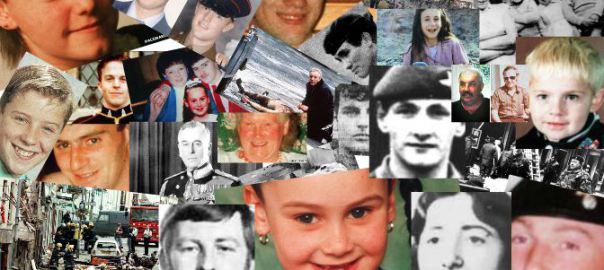




_4r_BAR.PNG)




_insurgents,_Anbar_Province,_Iraq.jpg)


.jpg)








_-_Gassed_-_Google_Art_Project.jpg)


.jpg)


 belfastchildis.com