It was the second-deadliest attack on the British Army in Northern Ireland during the Troubles, after the Warrenpoint ambush of 1979. In the wake of the bombing the British Army began ferrying its troops in and out of the region by helicopter.
Victims
————————————————————–
20 August 1988
Jayson Burfitt, (19) nfNI Status: British Army (BA),
Killed by: Irish Republican Army (IRA) Killed in land mine attack on British Army (BA) coach, Curr, near Ballygawley, County Tyrone
————————————————————–
20 August 1988 Richard Greener, (21) nfNI Status: British Army (BA),
Killed by: Irish Republican Army (IRA) Killed in land mine attack on British Army (BA) coach, Curr, near Ballygawley, County Tyrone.
————————————————————–
20 August 1988
Mark Norsworthy, (18) nfNI Status: British Army (BA),
Killed by: Irish Republican Army (IRA) Killed in land mine attack on British Army (BA) coach, Curr, near Ballygawley, County Tyrone.
————————————————————–
20 August 1988
Stephen Wilkinson, (18) nfNI Status: British Army (BA),
Killed by: Irish Republican Army (IRA) Killed in land mine attack on British Army (BA) coach, Curr, near Ballygawley, County Tyrone.
————————————————————–
20 August 1988
Jason Winter, (19) nfNI Status: British Army (BA),
Killed by: Irish Republican Army (IRA) Killed in land mine attack on British Army (BA) coach, Curr, near Ballygawley, County Tyrone.
————————————————————–
20 August 1988
Blair Bishop, (19) nfNI Status: British Army (BA),
Killed by: Irish Republican Army (IRA) Killed in land mine attack on British Army (BA) coach, Curr, near Ballygawley, County Tyrone.
————————————————————–
20 August 1988 Alexander Lewis, (18) nfNI Status: British Army (BA),
Killed by: Irish Republican Army (IRA) Killed in land mine attack on British Army (BA) coach, Curr, near Ballygawley, County Tyrone.
————————————————————–
20 August 1988
Peter Bullock, (21) nfNI Status: British Army (BA),
Killed by: Irish Republican Army (IRA) Killed in land mine attack on British Army (BA) coach, Curr, near Ballygawley, County Tyrone.
————————————————————–
Background
The Provisional IRA had been attacking British Army patrols and convoys with roadside bombs regularly since the early 1970s. Most of these attacks took place in rural parts of Northern Ireland; especially County Tyrone (where the IRA’s Tyrone Brigade was active) and southern County Armagh (heartland of the South Armagh Brigade). In August 1979, the IRA ambushed a British Army convoy with two large roadside bombs near Warrenpoint, killing eighteen soldiers. This was the deadliest attack on the British Army in Northern Ireland during the Troubles.
In May 1981, five British soldiers were killed when their Saracen APC was ripped apart by a roadside bomb near Bessbrook, County Armagh. In July 1983, four British soldiers were killed when their vehicle struck an IRA landmine near Ballygawley, County Tyrone. In December 1985, the Tyrone IRA launched an assault on the police barracks in Ballygawley, shooting dead two officers and destroying the barracks with a bomb.
In June 1988, six off-duty British soldiers were killed when an IRA bomb exploded underneath their van in Lisburn. It had been attached to the van as they were taking part in a charity marathon.
Attack
On the night of 19/20 August 1988, an unmarked 52-seater bus was transporting 36 soldiers of The Light Infantry from RAF Aldergrove to a military base near Omagh. The soldiers, who came from England, had just finished 18 months of a two-year tour of duty in Northern Ireland and were returning to the base after a short holiday.
As it was driving along the main road from Ballygawley to Omagh, at about 12:30AM, IRA members remotely detonated a roadside bomb containing 200 pounds (91 kg) of semtex. According to police, the bomb had been planted in a vehicle by the roadside and had been detonated by command wire from 330 yards (300 m) away.
The blast hurled the bus 30 metres down the road and threw the soldiers into neighbouring hedges and fields. It left a crater 6 feet (1.8 m) deep and scattered body parts and twisted metal over a wide area. Witnesses described finding dead, dying and wounded soldiers strewn on the road and caught in the wreckage of the bus. Others were walking around, “stunned”.
Some of the first to arrive on the scene and offer help were loyalist bandsmen of the Omagh Protestant Boy’s Band returning from a parade in Portadown, who had also been travelling in buses.
Eight of the soldiers were killed and the remaining 28 were wounded. The soldiers killed were: Jayson Burfitt (19), Richard Greener (21), Mark Norsworthy (18), Stephen Wilkinson (18), Jason Winter (19), Blair Bishop (19), Alexander Lewis (18) and Peter Bullock (21).
This was the single biggest loss of life for the British Army since the Warrenpoint ambush in 1979. An account from one of the survivors was published in Ken Wharton‘s book A Long Long War: Voices from the British Army in Northern Ireland, 1969–98.
An inquest into the attack was told that the road was usually off-limits to military vehicles, due to the threat from the IRA. The driver of the bus, who was also a soldier, claimed he had been directed on to the road by diversion signs. The inquest heard that signs had not been placed by the police or the roads service. The IRA denied placing any signs and said that military buses often used the road. The mother of one of those killed accused the British military of negligence and claimed it was “trying to conceal the truth”.[9]
Aftermath
Shortly thereafter, the Provisional IRA issued a statement claiming responsibility. It said that the attack had been carried out by its Tyrone Brigade and added:
“We will not lay down our arms until the peace of a British disengagement from Ireland”.
The security forces suspected that an informer may have told the IRA of the bus’s route and the time it would pass a specific spot. After the attack the British military decided to start ferrying their troops to and from East Tyrone by helicopter to avoid any future attacks like this.
Tom King, then British Government’s Northern Ireland Secretary, said there was “some evidence” that the explosives used were part of a consignment from Libya (see Provisional IRA arms importation). He also stated that the possibility of reintroducing internment was “under review”. Libyan weaponry enabled the IRA to mount some of its biggest operations during its campaign. The Ballygawley bus bombing is believed to have been one of these attacks.
On 30 August 1988, three IRA members were ambushed and killed by the Special Air Service (SAS) at Drumnakilly, County Tyrone. The men—Gerard Harte, Martin Harte and Brian Mullin—were identified by British intelligence as the perpetrators of the bombing.
Two months after the attack, the British Government introduced the broadcasting ban. It meant that the voices of Sinn Féin and IRA members were not allowed to be broadcast on television or radio. The Ballygawley bus bombing is believed to have influenced the Government’s decision to introduce the ban.
This is simply the story of a boy trying to grow up, survive, thrive, have fun & discover himself against a backdrop of events that might best be described as ‘explosive’, captivating & shocking the world for thirty long years.
Key Events & Deaths on this day in Northern Ireland Troubles
Tuesday 19 August 1969
Representatives of the British and Northern Ireland governments held a meeting in London lasting two days.
A Communique and Declaration was issued at the end of the first day. The declaration affirmed that there would be no change in the constitutional status of Northern Ireland without the consent of the Parliament of Northern Ireland.
[This Joint Declaration became known as the ‘Downing Street Declaration’, a name which was applied to another document on 15 December 1993.]
Wednesday 19 August 1998
Bertie Ahern, then Taoiseach (Irish Prime Minister), announced his governments intention to introduce tough anti-terrorist measures. The proposals would include seizure of land or other property which has been used for storing weapons or making bombs. In addition it was announced that a suspect’s right to silence would be withdrawn. Ahern admitted that the measures could be described as “draconian”.
Sunday 19 August 2001
Catholic bishops in Northern Ireland issued a statement calling on people to support the latest proposals on policing in the region:
“We believe the time is now right for all those who sincerely want a police service that is fair, impartial and representative to grasp the opportunity that is presented and to exercise their influence to achieve such a service.”
Remembering all innocent victims of the Troubles
5 People lost their lives on the 19th August between 1972 – 1997
Today is the anniversary of the follow people killed as a results of the conflict in Northern Ireland
To the innocent on the list – Your memory will live forever
– To the Paramilitaries –
“There are many things worth living for, a few things worth dying for, but nothing worth killing for.
————————————————————–
19 August 1972
James Neill, (44)
Protestant Status: Civilian (Civ),
Killed by: Irish Republican Army (IRA)
Found shot, Elswick Street, off Springfield Road, Belfast.
————————————————————–
19 August 1976
William Creighton, (77)
Protestant Status: Civilian (Civ),
Killed by: Irish Republican Army (IRA)
Shot attempting to stop bomb attack on his garage, Upper Lisburn Road, Finaghy, Belfast.
Killed by: Irish Republican Army (IRA)
Died two months after being shot at his home, Denmark Street, Shankill, Belfast
————————————————————–
19 August 1997 Brian O’Raw, (31) nfNI
Status: Ulster Defence Association (UDA),
Killed by: Ulster Volunteer Force (UVF)
Originally from Scotland. Abducted somewhere in the Dundonald area, County Down. Found beaten to death, Kiltonga nature reserve, off Belfast Road, Newtownards, County Down, on 26 September 1977. Ulster Defence Association (UDA) / Ulster Volunteer Force (UVF) feud
Key Events & Deaths on this day in Northern Ireland Troubles
Wednesday 18 August 1971
Eamon Lafferty (20), a member of the Irish Republican Army (IRA), was shot dead by the British Army (BA) during a gun battle in the Creggan area of Derry. Eamon McDevitt (24), a Catholic civilian who was deaf and dumb, was shot dead by the British Army in Strabane, County Tyrone.
Thursday 19 August 1971
The British Broadcasting Corporation (BBC) was accused of political bias by the then British Minister of Defence, Lord Carrington.
[This was the first of many direct and indirect attempts by successive British governments to influence the way the media reported the conflict in Northern Ireland.]
Wednesday 18 August 1976
Brian Faulkner announced that he would be retiring from active political life.
Tuesday 18 August 1992
Jimmy Brown (36), then a member of the Irish People’s Liberation Organisation (IPLO), was shot dead in Belfast at the start of an internal IPLO feud. [It was later revealed that a new group called the Belfast Brigade of the IPLO was responsible for the killing.]
Thursday 18 August 1994
The Irish Republican Army (IRA) left an incendiary device which exploded in a Protestant public house in Belfast.
Martin Cahill (45), who was alleged to be a leading Dublin criminal, was shot dead by the Irish Republican Army (IRA).
He was killed while driving his car, at the junction of Oxford Road and Charleston Road, Ranelagh, Dublin.
[His nickname was ‘The General’ and his life formed the basis of a film of the same name. A second film called ‘Ordinary Decent Criminal’ also was based on aspects of his life.]
Friday 18 August 1995
Sir Hugh Annesley, then Chief Constable of the Royal Ulster Constabulary (RUC), said that he believed Irish Republican Army (IRA) units were active behind the scenes. However, he believed that the IRA ceasefire would hold.
Monday 18 August 1997
In the Student Union building in Queen’s University of Belfast, signs which were in English and Irish were removed. This was in response to a report which claimed that the Irish language alienated Protestant students by causing a “chill factor”.
[The Student Union had a policy of promoting bilingualism.]
13 Republican prisoners serving sentences in Britain had their security status reduced allowing them to be moved from Special Secure Units to main prison accommodation.
Tuesday 18 August 1998“real” IRA Suspension of Military Actions
The “real” Irish Republican Army (rIRA) announced that “all military operations have been suspended”. The announcement came in a telephone call to the Irish News, a Northern Ireland newspaper, at 11.35 pm and the ‘suspension’ took effect from midnight. Earlier in the day the rIRA had contacted the Dublin office of the Irish News and stated that the organisation was responsible for the Omagh bombing but denied that it had deliberately set out to kill people. During the day people all over Ireland were still coming to terms with the death toll in the Omagh bomb as the first of the funerals took place. Funerals continued for the rest of the week.
Friday 18 August 2000
The Royal Ulster Constabulary (RUC) defused a pipe-bomb in Cullybackey near Ballymena, County Antrim. Police ruled out a sectarian motive for a pipe-bomb attack in which a woman in her 80’s escaped injury. The device was found by a neighbour on the windowsill of the house at Lowtown Terrace in Cullybackey at about 7.30am. The police said the fuse of the bomb had been lit but it did not explode.
Saturday 18 August 2001
The Ulster Defence Association (UDA) held a parade down the Shankill Road in Belfast. The paramilitary march involved an estimated 15,000 members of the organisation. Around 100 masked members of the Ulster Freedom Fighters (UFF), a cover name used by the UDA, together with 16 bands took part in the parade. The event was held to commemorate Jackie Coulter (46) who was shot dead during the Loyalist feud on 21 August 2000.
Remembering all innocent victims of the Troubles
Today is the anniversary of the follow people killed as a results of the conflict in Northern Ireland
To the innocent on the list – Your memory will live forever
– To the Paramilitaries –
“There are many things worth living for, a few things worth dying for, but nothing worth killing for.
11 people lost their lives on the 18th August between 1971 – 1994
————————————————————–
18 August 1971
Eamon Lafferty, (20)
Catholic Status: Irish Republican Army (IRA),
Killed by: British Army (BA)
Shot during gun battle, Kildrum Gardens, Creggan, Derry
————————————————————–
18 August 1971
Eamon McDevitt, (24)
Catholic Status: Civilian (Civ),
Killed by: British Army (BA)
Deaf and dumb man, shot during street disturbances, Fountain Street, Strabane, County Tyrone.
————————————————————–
18 August 1972 Philip Faye, (21)
Catholic Status: Civilian (Civ),
Killed by: Ulster Defence Association (UDA)
Shot at his home, Island Street, Belfast.
————————————————————–
18 August 1972 Leonard Layfield, (24) nfNI Status: British Army (BA),
Killed by: Irish Republican Army (IRA)
Shot by sniper while at British Army (BA) Vehicle Check Point (VCP), junction of Falls Road and Beechmount Avenue, Belfast.
————————————————————–
18 August 1972 Richard Jones, (23) nfNI Status: British Army (BA),
Killed by: Irish Republican Army (IRA)
Shot by sniper while on British Army (BA) mobile patrol, Excise Street, off Grosvenor Road, Belfast.
————————————————————–
18 August 1973
Trevor Holland, (36)
Protestant Status: Civilian (Civ),
Killed by: Irish Republican Army (IRA)
Shot from passing car while standing outside cafe, West Street, Edgarstown, Portadown
————————————————————–
18 August 1976 Robert Walker, (32)
Protestant Status: Ulster Volunteer Force (UVF),
Killed by: Ulster Defence Association (UDA)
Found shot by the side of Flush Road, off Crumlin Road, Belfast. Ulster Defence Association (UDA) / Ulster Volunteer Force (UVF) feud.
————————————————————–
18 August 1988 Michael Laverty, (32)
Catholic Status: Civilian (Civ),
Killed by: Ulster Volunteer Force (UVF)
Shot while renovating house, Cliftonville Road, Belfast.
————————————————————–
18 August 1990 Andrew Bogle, (43)
Protestant Status: Civilian (Civ),
Killed by: Irish Republican Army (IRA)
Killed by booby trap bomb when he entered his workplace, building site, Strabane Road, Castlederg, County Tyrone.
Killed by: Irish People’s Liberation Organisation Belfast Brigade (IPLOBB)
Shot while sitting in his car, Clonard Street, Lower Falls, Belfast. Internal Irish People’s Liberation Oraganisation (IPLO) feud.
————————————————————–
18 August 1994
Martin Cahill, (45) nfNIRI Status: Civilian (Civ),
Killed by: Irish Republican Army (IRA)
Shot, while driving his car, at the junction of Oxford Road and Charleston Road, Ranelagh, Dublin. Alleged criminal.
A man who stood in front of a column of tanks on June 5, 1989, the morning after the Chinese military had suppressed the Tiananmen Square protests of 1989 by force, became known as the Tank Man or Unknown Protester. As the lead tank maneuvered to pass by the man, he repeatedly shifted his position in order to obstruct the tank’s attempted path around him. The incident was filmed and seen worldwide.
Currently, there is no reliable information about the identity or fate of the tank man.
—————————————————————————
1989 Raw Video: Man vs. Chinese tank Tiananmen Square
—————————————————————————
Incident
The incident took place near Tiananmen on Chang’an Avenue, which runs east-west along the north end of Tiananmen Square in Beijing, China, on June 5, 1989, one day after the Chinese government’s violent crackdown on the Tiananmen protests.[4] The man stood in the middle of the wide avenue, directly in the path of a column of approaching Type 59 tanks. He wore a white shirt and black trousers, and he held two shopping bags, one in each hand.[5] As the tanks came to a stop, the man gestured towards the tanks with his bags. In response, the lead tank attempted to drive around the man, but the man repeatedly stepped into the path of the tank in a show of nonviolent action.[6] After repeatedly attempting to go around rather than crush the man, the lead tank stopped its engines, and the armored vehicles behind it seemed to follow suit. There was a short pause with the man and the tanks having reached a quiet, still impasse.
Having successfully brought the column to a halt, the man climbed onto the hull of the buttoned-up lead tank and, after briefly stopping at the driver’s hatch, appeared in video footage of the incident to call into various ports in the tank’s turret. He then climbed atop the turret and seemed to have a short conversation with a crew member at the gunner’s hatch. After ending the conversation, the man descended from the tank. The tank commander briefly emerged from his hatch, and the tanks restarted their engines, ready to continue on. At that point, the man, who was still standing within a meter or two from the side of the lead tank, leapt in front of the vehicle once again and quickly re-established the man–tank standoff.
Video footage shows two figures in blue pulling the man away and disappearing with him into a nearby crowd; the tanks continued on their way.[6] Eyewitnesses are unsure who pulled him aside. Charlie Cole, who was there for Newsweek, said it was the Chinese government PSB (Public Security Bureau),[7] while Jan Wong, who was there for The Globe and Mail, thought that the men who pulled him away were concerned bystanders. In April 1998, Time included the “Unknown Rebel” in a feature titled Time 100: The Most Important People of the Century.[8]
Identity and fate
Little is publicly known of the man’s identity or that of the commander of the lead tank. Shortly after the incident, the British tabloid the Sunday Express named him as Wang Weilin (王维林), a 19-year-old student[9] who was later charged with “political hooliganism” and “attempting to subvert members of the People’s Liberation Army.”[10] However, this claim has been rejected by internal Communist Party of China documents, which reported that they could not find the man, according to the Hong Kong-based Information Center for Human Rights.[11] One party member was quoted as saying, “We can’t find him. We got his name from journalists. We have checked through computers but can’t find him among the dead or among those in prison.”[11] Numerous theories have sprung up as to the man’s identity and current whereabouts.[12]
There are several conflicting stories about what happened to him after the demonstration. In a speech to the President’s Club in 1999, Bruce Herschensohn, former deputy special assistant to PresidentRichard Nixon, reported that he was executed 14 days later; other sources say he was executed by firing squad a few months after the Tiananmen Square protests.[6] In Red China Blues: My Long March from Mao to Now, Jan Wong writes that she believes from her interactions with the government press that they have “no idea who he was either” and that he’s still alive somewhere on the mainland.
The government of the People’s Republic of China has made few statements about the incident or the people involved. In a 1990 interview with Barbara Walters, then-CPC General SecretaryJiang Zemin was asked what became of the man. Jiang first stated (through an interpreter), “I can’t confirm whether this young man you mentioned was arrested or not,” and then replied in English, “I think…never killed” [sic].[13] At the time, the party’s propaganda apparatus referred to the incident as showing the “humanity” of the country’s military.[14]
In a 2000 interview with Mike Wallace, Jiang Zemin said, “He was never arrested.” He then stated, “I don’t know where he is now.” He also emphasized that the tank stopped and did not run the young man down.[15]
International notability and censorship
The intersection in 2014, viewed from a different angle
Internationally, the image of the lone man in front of the tank has come to symbolize the events at Tiananmen Square in 1989[11][16] and is widely considered one of the most iconic images of the 20th century.[1][2][3]
However, a PBS interview of six experts noted that the memory of the Tiananmen Square protests appears to have faded in China, especially among younger Chinese people, due to government censorship.[17] Images of the protest on the Internet have been censored in China.[11] When undergraduate students at Beijing University, which was at the center of the incident, were shown copies of the iconic photograph 16 years afterwards, they “were genuinely mystified.”[18] One of the students said that the image was “artwork.” It is noted in the documentary Frontline: The Tank Man, that he whispered to the student next to him “89”–which led the interviewer to surmise that the student may have concealed his knowledge of the event.
It has been suggested that the “Unknown Rebel,” if still alive, never made himself known as he is unaware of his international recognition due to Chinese media suppression of events relating to government protest.[11]
At and after the events in the square, the PSB treated members of the international press roughly, confiscating and destroying all the film they could find, and forced the signing of confessions to offences such as photography during martial law, punishable by long imprisonment.[19]
Photographic versions
Five photographers (one of whom did not share his material for 20 years) managed to capture the event on film that was not later confiscated by the PSB.[20] On June 4, 2009, the fifth photographer released an image of the scene taken from ground level.[16]
The widest coverage of the event, and one of the best-known photographs of the event, appearing in both Time and Life magazines, was documented by Stuart Franklin. He was on the same balcony as Charlie Cole, and his roll of film was smuggled out of the country by a French student, concealed in a box of tea.[20]
The most-used photograph of the event was taken by Jeff Widener of the Associated Press, from a sixth-floor balcony of the Beijing Hotel, about half a mile (800 meters) away from the scene. Widener was injured and suffering from flu. The image was taken using a Nikon FE2 camera through a Nikkor 400mm 5.6 ED IF lens and TC-301 teleconverter.[21] With Widener running out of film, a friend hastily obtained a roll of Fuji 100 ASA color negative film, allowing him to make the shot.[22] Though he was concerned that his shots were no good, his image was syndicated to many newspapers around the world[20] and was said to have appeared on the front page of all European papers.[22]
Wider shot by Stuart Franklin showing column of tanks.
Charlie Cole, working for Newsweek and on the same balcony as Stuart Franklin, hid his roll of film containing Tank Man in a Beijing Hotel toilet, sacrificing an unused roll of film and undeveloped images of wounded protesters after the PSB raided his room, destroyed the two aforementioned rolls of film and forced him to sign a confession to photography during martial law, an imprisonable offence. Cole was able to retrieve the roll and have it sent to Newsweek.[20]
On June 4, 2009, in connection with the 20th anniversary of the protests, Associated Press reporter Terril Jones revealed a photo he had taken showing the Tank Man from ground level, a different angle from all of the other known photos of the Tank Man. Jones wrote that he was not aware of what he had captured until a month later when printing his photos.[24]
Arthur Tsang Hin Wah of Reuters took several shots from room 1111 of the Beijing Hotel,[25] but only the shot of Tank Man climbing the tank was chosen.[20] It was not until several hours later that the photo of the man standing in front of the tank was finally chosen. When the staff noticed Widener’s work, they re-checked Wah’s negative to see if it was of the same moment as Widener’s. On March 20, 2013, in an interview by the Hong Kong Press Photographers Association (HKPPA), Wah told the story and added further detail. He told HKPPA that on the night of June 3, 1989, he was beaten by students while taking photos and was bleeding. A “foreign” photographer accompanying him suddenly said, “I am not gonna die for your country,” and left. Wah returned to the hotel. When he decided to go out again, the public security stopped him, so he stayed in his room, stood next to the window and eventually witnessed the Tank Man and took several shots of the event.[25]
In addition to the photography, video footage of the scene was recorded and transmitted across the world. Australian Broadcasting Corporation (ABC) cameraman Willie Phua and CNN cameraman Jonathon Schaer appear to be the only two television cameramen who captured the scene.[26][27]ABC correspondents Max Uechtritz and Peter Cave were the journalists reporting from the balcony.[28]
After seeing Chinese tanks crush vehicles and people on June 3, many journalists and photographers believed the protests had already reached their peak, causing many to leave the area before the “tank man” incident occurred.[19][29]
Stuart Franklin (born London, 16 June 1956[1]) is a photographer, a member of Magnum Photos, and a former President of Magnum Photos (2006–2009).[2] He was born at Guys Hospital, London.
Education
Franklin studied drawing under Leonard McComb in Oxford and Whitechapel, London, and from 1976–1979 photography at West Surrey College of Art and Design, where he graduated with a BA. Moreover, between 1995 and 1997, he studied geography at the University of Oxford, first receiving a BA and the Gibbs Prize for geography. He received a doctorate in Geography from the University of Oxford in 2000.[1]
Career
From 1980 until 1985, Franklin worked with Agence Presse Sygma in Paris. During that time he photographed the civil war in Lebanon, unemployed people in Britain, famine in Sudan and the Heysel Stadium disaster.
Joining Magnum Photos in 1985,[2] he became a full member in 1989. In the same year, Franklin photographed the uprising in Tiananmen Square and shot one of the Tank Man photographs, first published in Time Magazine, as well as widely documenting the uprising in Beijing [3][4] earning him a World Press Photo Award.
In 1989 Franklin traveled with Greenpeace to Antarctica. He worked on about twenty stories for National Geographic between 1991 and 2009, subjects including Inca conqueror Francisco Pizarro and the hydro-struggle in Quebec and places such as Buenos Aires and Malaysia.[1] In addition, he worked on book and cultural projects. In October 2008, his book Footprint: Our Landscape in Flux was published by Thames & Hudson. An ominous photographic document of Europe’s changing landscape, it highlights Franklin’s deep ecological concern.
During 2009 Franklin curated an exhibition on Gaza – “Point of No Return” for the Noorderlicht Photo Festival. Since 2009 Franklin has focused on a long term landscape project in Norway published as “Narcissus” in 2013. Recently Franklin has worked on documentary projects on doctors working in Syria, and immigration in Calais. He leads a programme in documentary photography at Høgskulen i Volda, Norway.
Awards
Christian Aid Award for Humanitarian Photography, 1985
Tom Hopkinson Award, 1987
World Press Photo Award, 1989
World Press Photo award for spot news stories, third prize, 1991
Gibbs Prize for geography, University of Oxford, 1997
Franklin was awarded an Honorary Fellowship of The Royal Photographic Society in 2003. These are awarded to distinguished persons having, from their position or attainments, an intimate connection with the science or fine art of photography or the application thereof.
See below for other Iconic Pictures & pictures that changed the world.
The family of John and Janet Stocker paid tribute to the “happiest, most loving couple” after it was confirmed they were killed in the Tunisia beach attack.
In October 2013, a suicide bomber blew himself up in a botched attack on a Sousse beach while security forces foiled another planned attack nearby.[10] The post-Tunisian revolution led to the 2014 parliamentary election in which the principal secularist party gained a plurality but was unable to govern alone, and ultimately formed a national unity government. Secularist Beji Caid Essebsi was elected president in the Tunisian presidential election, 2014.[11] Since the overthrow of Ben Ali, terrorism has increased leading to 60 victims among security and military troops. Other attacks targeted civilians and tourists. Despite this, Tunisia was considered to be a secure country.[12] On 18 March 2015 the Bardo National Museum in Tunis was attacked by three terrorists, leading to the deaths of twenty-two people, including twenty foreigners visiting the museum. Two of the gunmen, Tunisian citizens Yassine Labidi and Saber Khachnaoui, were killed by police, while the third attacker is currently at large.[13] Police treated the event as a terrorist attack.[14][15] The Islamic State of Iraq and the Levant (ISIL) claimed responsibility for the attack, and threatened to commit further attacks.[16] However, the Tunisian government blamed a local splinter group of al-Qaeda in the Islamic Maghreb, called the Okba Ibn Nafaa Brigade, for the attack. A police raid killed nine members on 28 March.[17] After the Bardo attack, the government announced new security measures and declared the country safe again.[18]
Attack
Seifeddine Rezgui
Rot in Helll
Sousse
Sousse within Tunisia
On 26 June 2015 the Spanish-owned five-star Riu Imperial Marhaba Hotel at Port El Kantaoui, a tourist complex situated on the coast about ten kilometres north of Sousse, Tunisia, was hosting 565 guests mainly from Western Europe, 77% of its capacity.[19] Tourists from the hotel as well as from the Soviva Hotel located nearby went to the beach to swim and sunbathe.[20]
At around noon, Seifeddine Rezgui Yacoubi, disguised as a tourist,[21] socialised with others, and then took out a Kalashnikov assault rifle concealed in a beach umbrella and fired at the tourists on the beach. He entered the hotel, shooting at people he came across.[19] He was killed by security forces during an exchange of fire.[4][19][22] All bullets were found to have been fired from the one weapon; the attacker had four magazines of ammunition.[23][24] The attacker had spoken to his father on a mobile telephone which he then threw into the sea just before the attack; it was retrieved.[24]
An Interior Ministry spokesman said that they were sure that others helped, but did not participate directly, providing the Kalashnikov, and helping Rezgui to the scene.[24]
Thirty-eight people were killed, thirty of whom were British.[2][22] Among the fatalities was Denis Thwaites, a former professional footballer for Birmingham City, and his wife, Elaine.[36] Thirty-nine others were wounded.[19][37][38][39]
Perpetrator and associates
The killer, Seifiddine Rezgui Yacoubi, also known as Abu Yahya al-Qayrawani,[40] (born 1992 in Gaafour[41]) was a 23-year-old electrical engineering student at University of Kairouan from Gaafour, in northwest Tunisia.[42] He did not have the typical traits of an extremist: he had a girlfriend, drank alcohol and was a local break-dancing star. He was also believed to be high on cocaine during his rampage.[42][43] He is believed to have been radicalized over such issues as the Libyan Civil War and Western inaction against the savagery of the Assad government during the Syrian Civil War.[44]
Rezgui is thought to have been recruited by Ajnad al-Khilafah,[45] an outgrowth of the Tunisian branch of Ansar al-Sharia, which was founded by Saifallah Ben Hassine, who had lived in the UK in the 1990s and whose mentor during that time was Abu Qatada.[46] High Court papers relating to a control order placed on a British-based suspect state that Ben Hassine “aimed to recruit new members and send them to Afghanistan for training”.[45] The control order documents add that: “Abu Qatada appears as a watermark running through the whole of this case as being the mastermind.”[45]
Ben Hassine is reported to have been killed by the USAF near Adjabiya in eastern Libya on 14 June 2015. The strike was designed to kill Mokhtar Belmokhtar in an Ansar meeting. After the overthrow of Tunisia’s President Zine el-Abedine Ben Ali in 2011, Ben Hassine was released from jail in March 2011 under an amnesty, and later founded Ansar al-Sharia in Tunisia, which resisted proscription until 2013 arguing it was carrying out humanitarian work, even though Ben Hassine personally had led the storming of the US Embassy in Tunis on 14 September 2012, three days after Ansar’s Libyan counterparts killed US ambassador J. Christopher Stevens in Benghazi, Libya. When Ansar was finally outlawed in August 2013, after the murders of two secular leftist MPs, he was listed as a proscribed terrorist by the United States, and he fled to Libya.[47][48]
Qatada wrote in a letter published online in January 2014 that Ben Hassine “is among the best of those I have known in intellect” and “the most knowledgeable of people of my intentions … for he was the closest of people to me”.[45]
Aftermath
Immediately after the attack, the flight JAF5017 on its way to Enfidha-Hammamet International Airport was redirected to Brussels.[19] German tour operator TUI offered German tourists the opportunity to fly back to Germany and to cancel or adjust their bookings in Tunisia.[49] British tour operator Thomson announced that flights to Tunisia will be cancelled until at least 9 July 2015,[50][51] with ten flights departing on the evening of the attacks to bring 2,500 customers in the resort back to the United Kingdom.[52]EasyJet and Thomas Cook announced that customers planning to visit Tunisia would be able to change their travel plans free of charge.[53]First Choice also announced the same.
Hotels were to be targeted in future attacks both to undermine tourism and because they were considered “brothels” by ISIS.[54] Both tourism and the related industries accounted for up to 14.9% of the Tunisian economy in 2014.[55]
Football scarves and shirts were laid as a tribute outside Bescot Stadium, home of Walsall F.C., the team which three of the British victims supported.
On 29 June, the House of Commons chamber observed a minute of silence shortly before the Prime Minister David Cameron announced that a national minute of silence would be held on 3 July 2015 at 12:00 local time to remember the victims, exactly one week on from the attacks.[58] Cameron later led several COBRA meetings.[59] The Foreign Office sent a team to the hotel to support British survivors and know more about the British victims. The Metropolitan PoliceDeputy Assistant Commissioner announced an heightened police presence and security for Armed Forces Day and Pride London events taking place in London over the weekend.[60] On 28 June 2015, Her Majesty The Queen said she and the Duke of Edinburgh were shocked by the attack and also offered their deepest sympathy to the injured.[61]Scotland Yard‘s SO15 Counter Terrorism Command (CTC) launched their largest anti-terrorism investigation since the 7 July 2005 London bombings, involving 600 police officers and support staff.[62] 16 British counter-terrorism police were deployed to Tunisia in the direct aftermath of the attacks, and almost 400 officers were sent to British airports to identify potential witnesses to the attack who had returned home.[63]
On 1 July, the bodies of eight British nationals who were killed in the attacks were flown from Tunisia to RAF Brize Norton.[64] On 2 July, the bodies of a further nine British nationals who were killed in the attacks were flown to RAF Brize Norton[65] and the Prime Minister David Cameron and Defence SecretaryMichael Fallon began making calls for airstrikes in Syria, believing the Sousse attacks to have been coordinated from there.[66] On 3 July, the United Kingdom held a nationwide minute’s silence at 12:00 local time to remember the victims of the attacks as government buildings and Buckingham Palace flew the Union Jack at half mast. A further eight bodies of British victims were repatriated back to RAF Brize Norton.[67] On 4 July, the final five bodies of the British victims were repatriated back to the United Kingdom.[68]
Reactions
Domestic
Tunisia – President Beji Caid Essebsi called for a global strategy against terrorism[69] and visited Sousse with Prime Minister Habib Essid,[22][55] who promised to close 80 mosques within the week.[70][71] The government also plans to crack down on financing for certain associations as a countermeasure against another attack.[72] Essid announced new anti-terrorism measures, including the deployment of reserve troops to reinforce security at “sensitive sites … and places that could be targets of terrorist attacks.” The “exceptional plan to better secure tourist and archaeological sites” will include “deploying armed tourist security officers all along the coast and inside hotels from 1 July,”[10] and that:
“
The country is under threat; the government is under threat. Without the cooperation of everyone and a show of unity, we cannot win this war. We have won some battles and lost others, but our objective is to win the war… Some mosques continue to spread their propaganda and their venom to promote terrorism. No mosque that does not conform to the law will be tolerated.[71]
”
Beji Caid Essebsi also denounced the “cowardly” attacks, promising “painful but necessary” measures to fight extremism in the country. He called for a firm response: “No country is safe from terrorism, and we need a global strategy of all democratic countries,”[71]
On 4 July, Essebsi removed from his post the provincial Governor of Sousse and at least five senior police officers. Among the policemen dismissed were three from Sousse, one from Gaafour (the home city of Rezgui) and one from Kairouan, where Rezgui was studying.[73]
On 22 July, Tunisian MPs began a three day debate on new counter-terrorism legislation. The legislation would allow the courts to impose deaths sentences to those convicted of terrorism related offences. The legislation would also make public support of terrorism a jailable offence. If passed, the bill would allolw law enforcement and security services to tap phone calls of individuals suspected of terrorism.[74]
Affected countries
Belgium – Prime Minister Charles Michel said his “thoughts are with the relatives and victims in Tunisia”.[75]
Germany – Foreign Minister Frank-Walter Steinmeier said that “attempts to knock Tunisia off its courageous path through terrorist attacks such as in Sousse … will not and must not succeed.”[76]
Ireland – Foreign Minister Charlie Flanagan said “I condemn unreservedly the terrorist attacks in Tunisia, Kuwait and France today” and added that “Attacks like these sow fear and prompt revulsion, but they advance no political cause”.[77] In light of the UK’s FCO 8 July change to advice to nationals re travel to Tunisia, Ireland updated its advice to a warning against “all non-essential travel”.[78]
Russia – President Vladimir Putin offered his condolences and the Kremlin said they have “confirmed readiness to cooperate most closely with the Tunisian leadership in fighting terror threat”.[53]
United Kingdom – Prime Minister David Cameron criticised the perpetrators and supported the Tunisian Government following the attack.[19] On 8 July, the Foreign & Commonwealth Office changed the advised status of Tunisia to “Advise against all but essential travel”, resulting from 9 July in the planned return home of the estimated 3,000 British nationals in Tunisia at that time. Habib Essid said the country had “done everything it can” to protect tourists, and that he planned to speak to counterpart David Cameron about the decision. ABTA and travel organisations First Choice, TUI and Thomson’s have stated that they plan to send no further British tourists to Tunisia until post 31 October 2015.[78]
Key Events & Deaths on this day in Northern Ireland Troubles
Monday 17 August 1981
Jackie McMullan, then an Irish Republican Army (IRA) prisoner, joined the hunger strike. [ 1981 Hunger Strike.]
Friday 17 August 1984
Clive Soley, then Labour Party spokesperson on Northern Ireland, called for ‘harmonisation’ of Northern Ireland society to that in the Republic of Ireland in preparation for the reunification of the island.
Wednesday 17 August 1994
The Irish Republican Army (IRA) carried out two bomb attacks on public houses in Belfast. One bomb exploded and badly damaged a bar on York Road. The second bomb in a pub on the Shankill Road was defused. Ian Paisley, then leader of the Democratic Unionist Party (DUP), said that his party would not take part in any fresh round of political talks.
Thursday 17 August 1995
Gerry Adams, then President of Sinn Féin (SF), said that the Republican Movement was ready to make “critical compromises” to achieve peace. He appealed to Unionists to enter all-party talks.
Thursday 17 August 1995
Gerry Adams, then President of Sinn Féin (SF), said that the Republican Movement was ready to make “critical compromises” to achieve peace. He appealed to Unionists to enter all-party talks.
Monday 17 August 1998
The Irish Republican Socialist Party (IRSP) issued a statement calling upon the Irish National Liberation Army (INLA) to announce a ceasefire. The IRSP said that it felt, in the light of the Omagh bombing, that the ‘armed struggle’ could no longer be justified. The IRSP also felt that the INLA would call a ceasefire in the near future.
Tuesday 17 August 1999
Marjorie (Mo) Mowlam, then Secretary of State for Northern Ireland, met the Martin McGuinness, then Vice-President of Sinn Féin (SF), at Stormont. She was seeking further information from US and Irish authorities on the attempt to import arms from Florida and the recent murder in west Belfast of Charles Bennett, before deciding if the Irish Republican Army (IRA) had broken its ceasefire.
Friday 17 August 2001Policing Implementation Plan Published
A number of shots were fired at a house in the Westacres area of Craigavon, County Armagh. Nobody was injured in the attack which happened at around 12.20am (0020BST). A gang of seven or eight masked men broke into a house at Donegore Drive in Antrim shortly after midnight. They were armed with a handgun, a machete, and knives. There were seven people in the house at the time and all were assaulted and injured. The revised proposals for the policing service were published. Entitled ‘The Patten Report | Updated Implementation Plan 2001‘ [PDF document; 366KB] the report was issued by the British government. John Reid, then Secretary of State for Northern Ireland, urged everyone to back the Implementation Plan and said it offered “unprecedented opportunities for a new start, a real partnership to policing”. He set a deadline of midday on Tuesday (21 August 2001) for the political parties to respond to the plan. The Northern Ireland Police Federation welcomed the fact that many of the recommendations in the plan were dependent on an assessment of the security situation. The Democratic Unionist Party (DUP) rejected the plan stating that the measures it contained went far beyond the Patten Report. The Social Democratic and Labour Party (SDLP) said it would consider the plan in detail before responding. [Some of the pro-Agreement political parties had been shown a copy of the plan prior to its publication. Sinn Féin (SF) had rejected the document for not going far enough and the Ulster Unionist Party (UUP) stated that it would not consider the issue of policing without IRA decommissioning.] The Irish government called on the SDLP and SF to support the Implementation Plan and to nominate representatives to the Northern Ireland Policing Board. Nuala O’Loan, then Northern Ireland Police Ombudsman, announced that her office would investigate claims that security sources had prior warning about the Omagh bomb (15 August 1998). The claim was made by former British Army informant who uses the pseudonym Kevin Fulton. Ronnie Flanagan, then Chief Constable of the Royal Ulster Constabulary (RUC), welcomed the investigation but said the claim was “preposterous”.
Friday 17 August 2001Policing Implementation Plan Published
A number of shots were fired at a house in the Westacres area of Craigavon, County Armagh. Nobody was injured in the attack which happened at around 12.20am (0020BST). A gang of seven or eight masked men broke into a house at Donegore Drive in Antrim shortly after midnight. They were armed with a handgun, a machete, and knives. There were seven people in the house at the time and all were assaulted and injured. The revised proposals for the policing service were published. Entitled ‘The Patten Report | Updated Implementation Plan 2001‘ [PDF document; 366KB] the report was issued by the British government. John Reid, then Secretary of State for Northern Ireland, urged everyone to back the Implementation Plan and said it offered “unprecedented opportunities for a new start, a real partnership to policing”. He set a deadline of midday on Tuesday (21 August 2001) for the political parties to respond to the plan. The Northern Ireland Police Federation welcomed the fact that many of the recommendations in the plan were dependent on an assessment of the security situation. The Democratic Unionist Party (DUP) rejected the plan stating that the measures it contained went far beyond the Patten Report. The Social Democratic and Labour Party (SDLP) said it would consider the plan in detail before responding. [Some of the pro-Agreement political parties had been shown a copy of the plan prior to its publication. Sinn Féin (SF) had rejected the document for not going far enough and the Ulster Unionist Party (UUP) stated that it would not consider the issue of policing without IRA decommissioning.] The Irish government called on the SDLP and SF to support the Implementation Plan and to nominate representatives to the Northern Ireland Policing Board. Nuala O’Loan, then Northern Ireland Police Ombudsman, announced that her office would investigate claims that security sources had prior warning about the Omagh bomb (15 August 1998). The claim was made by former British Army informant who uses the pseudonym Kevin Fulton. Ronnie Flanagan, then Chief Constable of the Royal Ulster Constabulary (RUC), welcomed the investigation but said the claim was “preposterous”.
Saturday 18 August 2001
UDA Logo
The Ulster Defence Association (UDA) held a parade down the Shankill Road in Belfast. The paramilitary march involved an estimated 15,000 members of the organisation. Around 100 masked members of the Ulster Freedom Fighters (UFF), a cover name used by the UDA, together with 16 bands took part in the parade. The event was held to commemorate Jackie Coulter (46) who was shot dead during the Loyalist feud on 21 August 2000.
Sunday 19 August 2001
Catholic bishops in Northern Ireland issued a statement calling on people to support the latest proposals on policing in the region: “We believe the time is now right for all those who sincerely want a police service that is fair, impartial and representative to grasp the opportunity that is presented and to exercise their influence to achieve such a service.”
Monday 20 August 2001SDLP Support Policing Plan
The Social Democratic and Labour Party (SDLP) held a meeting to decide on whether or not to accept the ‘Patten Report – Updated Implementation Plan 2001’ that was issued on 17 August 2001. Following the meeting the party announced that it would nominate representatives to the proposed 19 member Policing Board which would oversee the new Police Service of Northern Ireland (PSNI). John Hume, then leader of the SDLP, said: “We will respond positively to an invitation to join the Policing Board and we will be encouraging people from all sections of the community to join the new police service.” The SDLP issued a document outlining its reasons for the change in policy. [The decision represented a historic shift in SDLP policy given that the party had withheld support from the Royal Ulster Constabulary (RUC) since 1970. The decision was welcomed by the Irish government, the British government, the Catholic Church, and the Department of Sate in the United States of America (USA).] There was a gun attack on a house at Mounthill Drive, Cloughmills, County Antrim, at approximately 10.30pm (2230BST). Two shots were fired at a bedroom window of the dwelling but none of the family of five in the house at the time were injured. The estate where the shooting happened was mixed and the house was owned by a Protestant family. [The RUC have not established a motive for the attack.] A ‘paint-bomb’ was thrown at the home of a Protestant man in Hesketh Park, north Belfast. The bottle of paint broke a window and caused paint damage to fittings and furnishings. The man had taken part in a Loyalist stand-off in Ardoyne in June which prevented primary school-children from going to the Catholic Holy Cross Girls’ Primary School. Nelson McCausland, then Democratic Unionist Party (DUP) councillor, accused Republicans of being responsible for the attack. There were two security alerts in west Belfast. One suspect device was thrown at a house in Tullymore Gardens in Andersonstown, while the other device was discovered on the Hannahstown Road. Sinn Féin accused the Ulster Defence Association (UDA) of being responsible for the attacks. The Equality Commission for Northern Ireland published an annual report on the religions composition of the workforce in the region: A Profile of the Workforce in Northern Ireland, Summary of 2000 Monitoring Returns. The report showed that the overall composition of the monitored workforce was 60.4 per cent Protestant and 39.6 per cent Catholic. Other surveys showed that the economically active population is 58 per cent Protestant and 42 per cent Catholic. The imbalance between Catholic and Protestant employment rates has narrowed over the past 10 years. However the last year saw the smallest improvement at 0.1 per cent.
17th August
Key Events & Deaths on this day in Northern Ireland Troubles
Today is the anniversary of the follow people killed as a results of the conflict in Northern Ireland
To the innocent on the list – Your memory will live forever
– To the Paramilitaries –
“There are many things worth living for, a few things worth dying for, but nothing worth killing for.
4 people lost their lives on the 17th August between 1972 – 1991
————————————————————–
17 August 1972
Michael Boddy, (24) nfNI Status: British Army (BA),
Killed by: Irish Republican Army (IRA)
Shot by sniper while on British Army (BA) foot patrol, Selby Street, off Grosvenor Road, Belfast.
————————————————————–
17 August 1978 Robert Miller, Robert (22) nfNI Status: British Army (BA),
Killed by: Irish Republican Army (IRA)
Killed by remote controlled bomb hidden in parked car, detonated when British Army (BA) foot patrol passed, Forkhill, County Armagh.
————————————————————–
17 August 1988
Frederick Otley, (44)
Protestant Status: ex-Ulster Volunteer Force (xUVF),
Killed by: Irish National Liberation Army (INLA)
Shot at his shop, Shankill Road, Belfast.
————————————————————–
17 August 1991
Simone Ware, (22) nfNI Status: British Army (BA),
Killed by: Irish Republican Army (IRA)
Killed in land mine attack on British Army (BA) foot patrol, Carrickrovaddy, near Cullyhanna, County Armagh.
Like the vast majority of Protestants in Northern Ireland apart from my Birthday, Christmas and our family holiday to Ballyferris, the 12th of July was the biggest and most important day of the year. In 1663 the Protestant King Billy defeated the Catholic King James at the Battle of Boyne and changed the course of Irish history forever. Three hundred years later on the 12th of July every year Northern Ireland came to a standstill as the Protestant majority took to the streets and celebrated the most sacred day in the Protestant calendar. As a child I loved the whole 12th experience and counted the days down until the great day arrived. For weeks before the 12th all the children, with the help of adults would gather all sorts of burnable material for the bonfire that would be lit the night before, to signal the beginning of the celebrations. After school we would rush home, have something to eat and head of in the hunt for wood and whatever else we could find that would burn. Sometimes there would be dozens of us going back and forth to the gel carrying whatever we could find and placing it on the ever growing bonfire in the middle of the square. In Glencairn alone there would be about five or six bonfires and it was always very competitive to see which area could collect the most wood and have the biggest bonfire. Competition between the various parts of the estate were fierce and as the eleventh grew closer, the older boys would be allowed to stay out all night with suitable adults and guard the wood from raids from those at the top or bottom of the estate. As the day grew closer, the excitement was almost tangible and in the early evening sunshine we would gather around the ever-growing tower of wood and play until darkness. There was always a hunt, the command centre and if we were lucky the older boys would let us go inside and wait until they returned from another hunt for wood. One day when there was only myself and a few of the other younger children guarding the wood , the boys from the top of the estate came charging through the square in a bare faced raid on our precious wood. There were only about five of us and there was about fifteen of them and they were all older than us and there was little we could do but stand by and watch as they made off with their precious bounty. Taking control I told David to run as fast as he could and find the rest of our gang. Picking up stones from the ground I began pelting the enemy with missiles. The others soon joined in and before long the enemy had to duck and hide as we threw everything we could find at them. But we were well out numbered and it was only a matter of time before they had over powered us and decided to take me prisoner, as I seemed to be in charge.
Panic and terror washed over me as I was lead away to the enemy camp at the top of the estate. To add insult to injury a boy named Y forced me to help him carry a door stolen from our bonfire. I was threatened with a dig in the face if I tried to run away or do anything stupid, so I decided self preservation was the best course of action and was a model prisoner. As we marched in single file towards the top of the estate and the enemy bonfire, I wondered with dread what fate awaited me when we arrived there. A few weeks before John Jackson had also been captured in a raid and when he was finally set free he had a black eye and a busted lip. As I marched on all sorts of thoughts of pain and torture were going through my mind, when suddenly I heard the sound of running feet and raised voices. As I turned I was delighted to see my brother and about ten of our gang running towards us. Panic set into the enemy as they realized what was happening and some of them dropped what they were carrying and fled. Before I knew what was happening my rescuers had caught up with us and a massive fight broke out between the two warring sides. I dropped my end of the door I was carrying and jumped on Y terrorising him with a blood curdling scream that rose from deep within me. I was free! The noise was deafening as the two sides fought a running battle, but reinforcements had arrived from our gang and before long we had beaten the enemy into retreat. When they had all fled, we gathered up our stolen wood and sang as we made our way back to our camp.
I was a hero and that night guarding the bonfire I wallowed as all those present praised my heroic deeds of the day and I now had access to the hut whenever I liked.
As the great day drew closer our house was always in a state of complete chaos. Dad was busy making sure everything was ready for the bands biggest and most important march of the year. There were over forty people in the band and they all had to have uniforms that fitted perfectly and instruments that were at the peak of their working year. While dad got on with that, Granny took us down town and rigged us out with new clothes and shoes for the big day. Image was everything and regardless of how scruffy and dirty we looked the rest of the year, on the 12th of July we would be immaculately turned out. Granny had an old friend called Isaac who lived in Ballysillan and although he was half blind, deaf and always drunk, he had in his day been a competent barber and Granny saw no reason not to continue sending me and David over to Isaac whenever a hair cut was in order, even though he had been retired for over thirty years. Besides he only charged £1.50 and as money was always tight it made perfect sense. Unfortunately for us he would give us a cut that would have shamed a corpse and eventually I came up with the idea that we should cut each other’s hair and pocket the money for ourselves.
These plans went well for a few months until one-day granny give us the money to go and get our hairs cut. When we got back, Granny was stood by the door waiting for us, which was most unusual and asked us had Isaac cut our hair? When we answered yes, she asked us how he was. By now we were both starting to get a bit suspicious and nervously answered ok. How were we to know that he had died the night before from a sudden heart attached and was now in the morgue having the final hair cut of his life. Needless to say Granny went ape and we got a good thumping for the lies. From that day on Granny personally escorted us to the barbers and watched with a critical eye as we had our hairs cut.
————————————————–
The Sash my Father Wore
SHANKILL PROTESTANT BOYS FLUTE BAND, SINGING THE SASH
——————————————————————————————————————–
Growing up in loyalist Belfast every child knew the words to the Sash and it was our national anthem.
————————————————–
Lyrics
So sure l’m an Ulster Orangeman, from Erin’s isle I came,
To see my British brethren all of honour and of fame,
And to tell them of my forefathers who fought in days of yore,
That I might have the right to wear, the sash my father wore!
Chorus:
It is old but it is beautiful, and its colours they are fine
It was worn at Derry, Aughrim, Enniskillen and the Boyne.
My father wore it as a youth in bygone days of yore,
And on the Twelfth I love to wear the sash my father wore.
Chorus
For those brave men who crossed the Boyne have not fought or died in vain
Our Unity, Religion, Laws, and Freedom to maintain,
If the call should come we’ll follow the drum, and cross that river once more
That tomorrow’s Ulsterman may wear the sash my father wore!
Chorus
And when some day, across the sea to Antrim’s shore you come,
We’ll welcome you in royal style, to the sound of flute and drum
And Ulster’s hills shall echo still, from Rathlin to Dromore
As we sing again the loyal strain of the sash my father wore!
————————————————–
As the 12th grew closer and closer there was always an atmosphere of excitement and anticipation whilst everyone counted the days down. The various bonfires were now mountains of burnable material that towered high above the houses and flats that surrounded the area. Apart from the hundreds of bands and orange lodge’s from Northern Ireland that would be marching on the day, dozen’s more would travel over from Scotland, Mainland England and as far afield as Canada & Australia. This was the most sacred day in the Loyalist calendar. Loyalist’s from across the world would make the pilgrimage back to Northern Ireland to celebrate their culture and age old traditions. Even at nine years old I felt a tremendous sense of pride and loyalty and passion at the Protestant culture and traditions that governed my daily life in Loyalist West Belfast. I was no different from any other child from a working class Protestant family in Northern Ireland. Although unlike my peers I had a secret Catholic mother.
Like all other Loyalist areas of Belfast and throughout Northern Ireland Glencairn was awash with Loyalist flags, red, white and blue bunting, murals and countless houses had Union Jacks and Red Hand of Ulster flag’s flying proudly from the front. As the twelfth of July approached this visual proclamation of Protestant pride took on a new meaning and the paving stones would be painted red, white and blue whilst almost every house in the estate flew a Loyalist or Protestant flag of some description. As a child this added to the sense of excitement for me and I took this as a sign of the glorious party that everyone would take part in to celebrate the twelfth.
When the 11th of July finally arrived Granny would come round to our house first thing and sort dad and us all out and make sure we had enough food to see us over the holiday period. We would be almost bursting with excitement and as soon as breakfast was over, David, Shep and I were out the door and heading towards the bonfire, where we would meet up with our mates and spend the day collecting last minute material for the fire and generally playing around. As evening approached adults would gradually start to gather around the bonfire and the celebrations would get in to full swing. Loud Loyalist music would be blaring from various houses around the square and as the night wore on more and more people would gather and the whole square came alive with the sound of laughter and people enjoying themselves. Everybody took part in the celebrations and the whole community mucked in to make sure the occasion was really special and a night to remember. Local women would prepare loads and loads of food for the party and this would be distributed throughout the day to anyone who needed a bite to eat. As the evening wore on the music got louder, the adults would become very loud and funny as the drink kicked in and as darkness engulfed Belfast the time to light the children’s bonfire would arrive. Finally when everyone was in place, to cries of delight from the gathered crowds, an Effie of the pope was placed on the top of the bonfire. On this night more than any other, the two communities of Northern Ireland were divided more than ever, as the Protestant majority noisily celebrated its supremacy over the Catholic minority. Surrounded by all my family and friends I watched in awe as the bonfire was lit and the flames, slowly at first, then faster licked their way up towards the top and the pope. As the flames grew higher and higher and finally reached the pope and engulfed him in flames, screams of joy rang out through the summer’s nights and echoed around the estate and Protestant Northern Ireland. Shouts of encouragement egged the flames on until finally the pope disintegrated in front of our eyes and we all took great joy from the fact the he was obviously suffering a terrible death.
As grew older & wiser my hatred of the Pope and all things Catholic diminished ,but my hatred of Republicans & The IRA is as strong today as it was when I was a Child. I blamed them for the misery & slaughter they unleased in their quest for a United Ireland and the 1000’s of innocent victims now in too early graves.
We had killed and burned to cinders the father of the hated Catholic Church and her people and we sang and yelled with pleasure as the ritual the stirred in us. As the fire burned the crackle of the wood and the spit of the flames filled the air and children would dance round the fire, laughing and singing with the adults until it was time for bed. Eventually Granny would come and find David, Shep and me and bring us home in protest to bed. As soon as we were settled down she would go out into the square again and David and I would climb out of bed and watch from our bedroom window, the antics of the drunken adults as they sang and danced the night away around the burning bonfire.
First thing next morning Granny would be round at the crack of dawn and yell for us to get up as she busied herself making everyone a full Ulster Fry and getting us ready. Before long the house was in complete chaos as Granny washed and fed us and made sure we were smartly turned out for the day. As the morning wore on members of the band would arrive for last minute preparation and before long the whole street was out and about, as the band nervously got in a few last minutes of practice. At about eight thirty the whole band would start to gather outside the shops and take up their places. By now the route out of the estate was lined with hundreds of people, regardless of age or hangovers, who had come to see them off. When everyone was in place dad took up his position at the right of the procession and after one last check shouted, “March” and they would strike up a tune and begin to march. Every year a loyal crowd of followers would fall in beside them and accompany them on the 26 mile march to the field. Much to my annoyance I was too young to be allowed to go with them and I longed for the day when I would be old enough. As we stood on the kerb watching them go my heart was full of pride as I watched dad in his uniform lead them down the Road and out of the estate. When they were out of sight we would all travel down to Ormeau Road, where hundreds of bands and Orange men would meet before making their way to the field. Tens of thousands lined the route and as a child it seemed to me the whole world had gathered to celebrate with 12th of July. Our family always sat outside the garage on the lower Ormeau road and watched as hundred of bands, of all shapes and colours, lead thousands of bowler hatted Orangemen and women to the field.
Throughout Northern Ireland dozens of similar parades were taking place, but the march in Belfast was always by far the biggest and the most important of the day. We watched with mounting excitement as various bands passed and waited with baited breath for dad’s band to come into view, so we could cheer them on.
Each band would be attached to an Orange lodge that marched in front of them all the way to the field. They all had a unique uniform that extinguished them from the other bands marching. The hardcore Loyalist and paramilitary flute bands always got the loudest cheers and when a talented leader came into view everyone watched with nervous anticipation as he done various tricks with his pole, flinging it high into the sky, before catching it on the way down and immediately throwing it over his neck or under his legs before going into an routine.. Although dad’s band was an accordion band and we all took great pride in them being part of the parade, the flute and hardcore Loyalist bands were the crowds favourite and when they played a familiar tune huge cheers arose from the gathered crowd and people would join in and sing a long at the top of their voices until the band passed and another came into view. I always loved the sound of the Lambeg drums as they made their way to where we were standing and their mournful tunes drifted far over our heads and echoed through the streets of Belfast, as a warning to the Catholic people that today was our day and we were the masters of Northern Ireland. A sea of colour washed past as band after band marched by us on their way to the field. Apart from local and famous flute bands getting the loudest cheers , bands from the Shankill Road brought the loudest cheers of encouragement and joy , these were our people, come to our shore to support us in our never ending war against the IRA and Catholic people and we made sure they knew we appreciated their commitment. When dad’s band finally came into sight a huge cheer rang out from all of us and those among the spectators from Glencairn and the surrounding areas. As they passed us we would call dad’s name and when he and the other’s from the band noticed us they would all turn and salute us as they marched past. I almost burst with pride as I watched them move off and disappear in to the distance and always regretted that I was not going with them. The parade took about two hours to pass us and when it was all over, Granny would take us home. Exhausted from shouting and singing after dinner we would while away the time until 17:30, when we would go back to town to cheer them on their homeward journey from the field. When it was all over there would always be lots of parties in the estate as we clung desperately to the day and never wanted it to end. By the time we eventually got to bed I would be counting down the days until next year and the time I was old enough to take part in the parade and go all the way to the mystical field with dad and the rest of the band. Sleep came easily and I dreamt I was the leader of one of the more famous bands and the best leader in the whole wide world.
Every year on the 13th July the entire Chambers clan, aunties, uncles, grandparents, cousin’s, close friends and an assortment of animals would descend on Ballyferris Caravan Park to start the annual holidays. Ballyferris is a small seaside town on the east coast of County Down and like all other aspects of our life it was a Protestant town and a favourite destination for Protestants throughout Belfast and the Shankill road area. It was like a home from home and we all loved and looked forward to our yearly visits there. In the early years we never had a car and would travel down on the bus or train, depending on how much money we had. We must have looked like a Sunday school outing as 9 adults shepherded over a dozen kids through the centre of Belfast towards the train or bus station. When we finally arrived in Ballyferris we would all help unpack the luggage and settle into various caravans that stood side by side looking out towards the sea. There were that many of us that it must have looked as though we had taken over the whole caravan site and the other children always sought us out as they wanted to become part of our massive gang. There was a huge green in the centre of the site and at every opportunity two teams were rustled together and a football match would get under way. I used to love it if I got picked to play on the same side as dad and other members of the family and the rest of the family cheered on from the touchline. I dreamt that I was George Best, playing for Manchester United. When we weren’t playing football or flying our kites David, wee Sam , Pickle and me would go down to the beach in search of crabs and other sea life and if they were lucky to survive being captured , we would bring them up to the green and race them for packets of sweets and crisps etc. Once wee Sam and I got separated from the other as we climbed further and further over the rocks until we were right by the sea’s edge. We lost all sense of time as we cast our crab lines out as far as possible in our quest to catch the biggest crab. Gradually it started to rain and as it began to fall heavier and heavier we decided to pack up and head back to the caravan with our bucket of nervous crabs. As we turned to leave we noticed with mounting panic that the tide had come in and we were completely surrounded by the rising sea water. Our frantic cries finally caught the attention of a man walking his dog on the beach and before long the whole family and most of the other people staying at the caravan site were gathered at the edge of the water telling us not to move and the coastguards were on their way. Panic turned to excitement as a dot appeared in the distance sea and the coast boat came slowly into view. Wee Sam and I were pleased as punch as the boat drew up and the coastguard helped us into the boat. As the boat made its way to the beach we waved like royalty to the gathered crowds on the beachfront. Sadly our joy was short lived as when we arrived on the beach we got a severe ticking off from our parents and any other adult who felt like having a go. Not that we let this spoil our new found fame and at every opportunity for the rest of the holiday we boasted to our peers about our daring rescue by the coast guard from the jaws of certain death.
In the evening if the weather was good we would all gather as much food and drink as we could carry and go down to the beach to have a BBQ or picnic. We would collect wood from the beach and before long we would have a fire going and cook baked potatoes and roast sausages round the edge. As darkness rolled in we would sit around the fire singing Loyalist song and telling stories and before long I would fall asleep on dad’s knee and the next thing I knew I was waking up the next morning, in the caravan to the sounds and smells of Granny making breakfast. The best part of the whole holiday for me and the other children was when we would all be gathered up and went to Millisle , a seaside town about two miles away with a huge funfair. Sometime’s when the weather was really good we would walk to Millisle along the beach front and as it came into view we would race over the sand dunes in a scramble to see who could get there first. The day would be spent going from one ride to another and although I loved it all, I enjoyed the dodgem cars best of all and I drove like a kamikaze pilot as I crashed into dad and anyone else I could catch. Dad always seemed to enjoy our time at the funfair and he took part in loads of different games until he had won us all a present of some description. After exhausting ourselves on the rides we would join our grandparents and others on the beach for a picnic and if we were really lucky we were treated to fish and chips from one of the many chippies along the seas front. After dinner dad and his brothers would go for a pint in one of the local bars and we kids would amuse ourselves by burying each other in the sand and paddling by the water’s edge. It was always with great sadness for me when these days came to an end and I would feel heartbroken as we packed up our things for the bus back to the caravan site. I never wanted these holidays to end and when the day came that we would be travelling back to Belfast I would take long walks along the beach and through the caravan site and considered hiding until everyone else had left and I could stay there forever. Dad and the others were used to my wander lust and a search party was soon despatched to find me and bring me back into the fold. As the bus pulled away from the caravan site, taking us home, I fought to hold back my tears as I said a silent goodbye to Ballyferris and the bright lights of the fun fair.
Years later as a teenager, with my life in tatters and on the brink of suicide, I ran away from home and ended up back in Ballyferris. But this time I was all alone and it was mid winter, snowing, freezing cold and the funfair was in complete darkness. And my beloved father was dead.
The views and opinions expressed in this page and documentaries are soley intended to educate and provide background information to those interested in Sharia Law
They in no way reflect my own opinions and I take no responsibility for any inaccuracies or factual errors.
————————————————————————————————
1- Jihad, defined as “to war against non-Muslims to establish the religion,” is the duty of every Muslim and Muslim head of state (Caliph). Muslim Caliphs who refuse jihad are in violation of Sharia and unfit to rule.
2- A Caliph can hold office through seizure of power meaning through force.
3- A Caliph is exempt from being charged with serious crimes such as murder, adultery, robbery, theft, drinking and in some cases of rape.
4- A percentage of Zakat (charity money) must go towards jihad.
5- It is obligatory to obey the commands of the Caliph, even if he is unjust.
A Muslim woman receiving Sharia justice. She is about to be stoned to death.
6- A caliph must be a Muslim, a non-slave and a male.
7- The Muslim public must remove the Caliph if he rejects Islam.
8- A Muslim who leaves Islam must be killed immediately.
——————————————————————————
Shariah Law – Islamic Justice – Pure Evil.
——————————————————————————
9- A Muslim will be forgiven for murder of: 1) an apostate 2) an adulterer 3) a highway robber. Vigilante street justice and honor killing is acceptable.
10- A Muslim will not get the death penalty if he kills a non-Muslim, but will get it for killing a Muslim.
——————————————————————————
Muslims Enforcing Sharia Law on the streets of London
——————————————————————————
11- Sharia never abolished slavery, sexual slavery and highly regulates it. A master will not be punished for killing his slave.
12- Sharia dictates death by stoning, beheading, amputation of limbs, flogging even for crimes of sin such as adultery.
A Muslim man receiving Sharia justice – a public flogging which more than likely killed him.
13- Non-Muslims are not equal to Muslims under the law.
They must comply to Islamic law if they are to remain safe. They are forbidden to marry Muslim women, publicly display wine or pork, recite their scriptures or openly celebrate their religious holidays or funerals. They are forbidden from building new churches or building them higher than mosques. They may not enter a mosque without permission. A non-Muslim is no longer protected if he leads a Muslim away from Islam.
14- It is a crime for a non-Muslim to sell weapons to someone who will use them against Muslims. Non-Muslims cannot curse a Muslim, say anything derogatory about Allah, the Prophet, or Islam, or expose the weak points of Muslims. But Muslims can curse non-Muslims.
——————————————————————————
London’s Holy Turf War
——————————————————————————
15- A non-Muslim cannot inherit from a Muslim.
16- Banks must be Sharia compliant and interest is not allowed.
A young boy in Iran got caught stealing bread in a market, and this was his punishment…
…having his hand crushed under the wheel of a moving truck….
Is this “justice” to you? Or is it barbaric cruelty? You will notice the man with the microphone on the right, holding the boy’s arm in place while the truck rides over it.
17- No testimony in court is acceptable from people of low-level jobs, such as street sweepers or bathhouse attendants. Women in low level jobs such as professional funeral mourners cannot keep custody of their children in case of divorce.
18- A non-Muslim cannot rule — even over a non-Muslim minority.
19- Homosexuality is punishable by death.
A series of photos from 2005 shows the hanging of two terrified teenage Iranian boys, allegedly for their “crime” of homosexuality. The photos are of Mahmoud Asgari, 16, and Ayaz Marhoni,
20- There is no age limit for marriage of girls. The marriage contract can take place anytime after birth and can be consummated at age 8 or 9.
21- Rebelliousness on the part of the wife nullifies the husband’s obligation to support her, gives him permission to beat her and keep her from leaving the home.
——————————————————————————
BAN SHARIA LAW WORLDWIDE
——————————————————————————
Women who live under Sharia law are not much more than a possession, bound and hidden behind a head to toe mask.
22- Divorce is only in the hands of the husband and is as easy as saying: “I divorce you” and becomes effective even if the husband did not intend it.
——————————————————————————
American Student Brutally Beaten by Muslim Sharia Gang in London
——————————————————————————
23- There is no community property between husband and wife and the husband’s property does not automatically go to the wife after his death.
24- A woman inherits half what a man inherits.
25- A man has the right to have up to 4 wives and none of them have a right to divorce him — even if he is polygamous.
26- The dowry is given in exchange for the woman’s sexual organs.
27- A man is allowed to have sex with slave women and women captured in battle, and if the enslaved woman is married her marriage is annulled.
28- The testimony of a woman in court is half the value of a man.
29- A woman loses custody if she remarries.
30- To prove rape, a woman must have 4 male witnesses.
31- A rapist may only be required to pay the bride-money (dowry) without marrying the rape victim.
32- A Muslim woman must cover every inch of her body, which is considered “Awrah,” a sexual organ. Not all Sharia schools allow the face of a woman exposed.
33- A Muslim man is forgiven if he kills his wife at the time he caught her in the act of adultery. However, the opposite is not true for women, since the man “could be married to the woman he was caught with.”
34-It is obligatory for a Muslim to lie if the purpose is obligatory. That means that for the sake of abiding with Islam’s commandments, such as jihad, a Muslim is obliged to lie and should not have any feelings of guilt or shame associated with this kind of lying. source – WND – Nonie Darwish
——————————————————————————-
Sharia Law
There is not a strictly codified uniform set of laws that can be called Sharia. It is more like a system of several laws, based on the Qur’an, Hadith and centuries of debate, interpretation and precedent.
Sharia Law
Sharia law is the law of Islam. The Sharia (also spelled Shariah or Shari’a) law is cast from the actions and words of Muhammad, which are called “Sunnah,” and the Quran, which he authored.
The Sharia law itself cannot be altered, but the interpretation of the Sharia law, called “figh,” by imams is given some leeway.
As a legal system, the Sharia law covers a very wide range of topics. While other legal codes deal primarily with public behavior, Sharia law covers public behavior, private behavior and private beliefs. Of all legal systems in the world today, Islam’s Sharia law is the most intrusive and strict, especially against women.
According to the Sharia law:
• Theft is punishable by amputation of the right hand (above).
• Criticizing or denying any part of the Quran is punishable by death.
• Criticizing or denying Muhammad is a prophet is punishable by death.
• Criticizing or denying Allah, the moon god of Islam is punishable by death.
• A Muslim who becomes a non-Muslim is punishable by death.
• A non-Muslim who leads a Muslim away from Islam is punishable by death.
• A non-Muslim man who marries a Muslim woman is punishable by death.
• A man can marry an infant girl and consummate the marriage when she is 9 years old.
• Girls’ clitoris should be cut (per Muhammad‘s words in Book 41, Kitab Al-Adab, Hadith 5251).
• A woman can have 1 husband, but a man can have up to 4 wives; Muhammad can have more.
• A man can unilaterally divorce his wife but a woman needs her husband’s consent to divorce.
• A man can beat his wife for insubordination.
• Testimonies of four male witnesses are required to prove rape against a woman.
• A woman who has been raped cannot testify in court against her rapist(s).
• A woman’s testimony in court, allowed only in property cases, carries half the weight of a man’s.
• A female heir inherits half of what a male heir inherits.
• A woman cannot drive a car, as it leads to fitnah (upheaval).
• A woman cannot speak alone to a man who is not her husband or relative.
• Meat to be eaten must come from animals that have been sacrificed to Allah – i.e., be Halal.
• Muslims should engage in Taqiyya and lie to non-Muslims to advance Islam.
• The list goes on.
Which countries use the Sharia law?
Muslims’ aspired Sharia state is Saudi Arabia, the birthplace of Muhammad that has no legal code other than the Sharia and enforces it without mercy (see Sharia law in Saudi Arabia). But as detailed herewith, the Sharia law is also used in full or in part, nationally or regionally in:
** Percent of Muslims who favor making Sharia the official law in their country (source: Pew Forum Research, 2013). In many countries where an official secular legal system exists alongside Sharia, the vast majority of their Muslim citizens favor making Sharia the official law. For example, while the Egyptian military may have blocked the Muslim Brotherhood‘s efforts in this direction, 74% of Egypt’s Muslims still favor it. Even in Jordan, Indonesia and Malaysia – Muslim countries with progressive images – the relatively secular ruling elite sit atop Muslim masses, 71%, 72% and 86% respectively of whom want their countries to be ruled by Sharia. And in Iraq, where the United States shed blood and money for over a decade to try to plant democracy, 91% of its Muslims want to live under Sharia.
The number of countries that adopt (elements of) the Sharia law continues to grow around the world, as does the depth of its penetration in the countries that already use it. This penetration is not by happenstance; it is managed to occur in five phases: see Spread of Islam and how to Stop Islam.
Key Events & Deaths on this day in Northern Ireland Troubles
Monday 16 August 1971
Over 8,000 workers went on strike in Derry in protest at Internment. Joe Cahill, then Chief of Staff of the Provisional Irish Republican Army (IRA), held a press conference during which he claimed that only 30 IRA men had been interned.
Thursday 16 August 1973
Two members of the Irish Republican Army (IRA) died when a mortar bomb exploded prematurely during an attack on the join British Army / Royal Ulster Constabulary (RUC) base in Pomeroy, County Tyrone.
Monday 16 August 1976
Two Catholic civilians were killed in a bomb planted by Loyalist paramilitaries outside the Step Inn, Keady, County Armagh.
Thursday 16 August 1984
Loyalist paramilitaries opened fire on Royal Ulster Constabulary (RUC) officers on the Shankill Road as riots continued in Protestant areas of Belfast.
Friday 16 August 1985
There were more disturbances in Portadown, County Armagh, following a Loyalist band parade. Some shops were looted and set on fire.
Friday 16 August 1991
Thomas Donagh (38), then a Sinn Féin (SF) member, was shot dead by the Ulster Freedom Fighters (UFF), a cover name (pseudonym) used by the Ulster Defence Association (UDA), in Kilrea, County Derry.
Martin O’Prey (28), then a member of the Irish People’s Liberation Organisation (IPLO), was shot dead by the Ulster Volunteer Force (UVF) in the lower Falls area of west Belfast.
[These killings were part of an upsurge in Loyalist violence following the ending of the CLMC ceasefire on the 4 July 1991.]
Monday 16 August 1993
The Irish Republican Army (IRA) carried out a bomb attack in the centre of Strabane, County Tyrone.
Saturday 16 August 1997
An Irish Republican Army (IRA) ‘bomb factory’ was discovered by Garda Síochána (the Irish police) at a farmhouse in Crosskeys, near Cavan. The factory was not believed to have been operational for some weeks.
Sunday 16 August 1998
The 32-County Sovereignty Committee issued a statement denying that the organisation was associated with those responsible for the Omagh bombing.
Thursday 16 August 2001
The body of a man was discovered in west Belfast at 4.30am (0430BST) at the junction of Shankill Road and Lanark Way. The Royal Ulster Constabulary (RUC) said that the man had suffered extensive head wounds.
[Police were trying to establish a motive for the killing.]
A pipe-bomb exploded in the garden of a house belonging to a Catholic family living in Ingledale Park in north Belfast. There were no injuries during the attack.
[Loyalist paramilitaries were thought to have carried out the attack.]
There was a ‘nail-bomb’ attack on the home of a Protestant family in Westland Road in north Belfast. There were no injuries during the attack.
[Republican paramilitaries were thought to have been responsible for the attack.]
At around 11.00pm (2300BST) a gang of four masked men broke into a flat in Maralin Avenue, Lisburn, County Antrim. A man who was in the flat was beaten with wooden batons. He suffered bruising to the arms, legs and body.
Arsonists broke into St Peter’s Catholic Church in Stoneyford, near Belfast, and started a fire. A retired fireman entered the building and brought the fire under control. Loyalists from the Lisburn area were believed to have been responsible for the attack.
John Reid, then Secretary of State for Northern Ireland, announced that he was providing an additional £10 million available for policing which would bring the total buget for the current financial year to £645 million. The additional spending was to cover a short-term deficit.
Bertie Ahern, then Taoiseach (Irish Prime Minister), took a break from his holiday in County Kerry, Republic of Ireland, to travel back to Dublin for a meeting with John Hume, then leader of the Social Democratic and Labour Party (SDLP). The two men were expected to discuss the recent setbacks in the peace process. Before the meeting Hume had called on the Irish Republican Army (IRA) to “restore immediately its contact with General de Chastelain and its commitment to a scheme for resolving the decommissioning issue”.#
16 August 2008
The Continuity IRA (CIRA) fired a rocket-propelled grenade at a police patrol in Lisnaskea, County Fermanagh. Three officers required hospital treatment.
Remembering all innocent victims of the Troubles
Today is the anniversary of the follow people killed as a results of the conflict in Northern Ireland
To the innocent on the list – Your memory will live forever
– To the Paramilitaries –
“There are many things worth living for, a few things worth dying for, but nothing worth killing for.
9 people lost their lives on the 16th August between 1972 – 1991
————————————————————–
16 August 1972
William Spence, (32)
Protestant Status: Civilian (Civ),
Killed by: Ulster Volunteer Force (UVF)
Barman. Shot while in Long Bar, Shankill,
————————————————————–
16 August 1973
Daniel McAnallen, (27)
Catholic Status: Irish Republican Army (IRA),
Killed by: Irish Republican Army (IRA)
Killed when mortar bomb exploded prematurely, during attack on Pomeroy British Army (BA) / Royal Ulster Constabulary (RUC) base, County Tyrone.
————————————————————–
16 August 1973
Patrick Quinn, (18)
Catholic Status: Irish Republican Army (IRA),
Killed by: Irish Republican Army (IRA)
Killed when mortar bomb exploded prematurely, during attack on Pomeroy British Army (BA) / Royal Ulster Constabulary (RUC) base, County Tyrone.
————————————————————–
16 August 1976
Ellizabeth McDonald, (38)
Catholic Status: Civilian (Civ),
Killed by: non-specific Loyalist group (LOY)
Killed when car bomb exploded outside Step Inn, Keady, County Armagh.
————————————————————–
16 August 1976
Gerard McGleenan, (22)
Catholic Status: Civilian (Civ),
Killed by: non-specific Loyalist group (LOY)
Killed when car bomb exploded outside Step Inn, Keady, County Armagh.
————————————————————–
16 August 1980
Colette Meek, (47)
Catholic Status: Civilian (Civ),
Killed by: Irish Republican Army (IRA)
Shot outside her home, during sniper attack on Royal Ulster Constabulary (RUC) mobile patrol, Alliance Avenue, Ardoyne, Belfast.
————————————————————–
16 August 1981
Charles Armstrong, (55)
Catholic Status: Civilian (Civ),
Killed by: Irish Republican Army (IRA)
Abducted shortly after leaving his home, Crossmaglen, County Armagh. His remains eventually found by information supplied anonymously, buried in bogland, Aughrim More, near Inniskeen, County Monaghan, on 29 July 2010.
————————————————————–
16 August 1991
Thomas Donaghy, (38)
Catholic Status: ex-Irish Republican Army (xIRA),
Killed by: Ulster Freedom Fighters (UFF)
Sinn Fein (SF) member. Shot as he arrived at his workplace, Portna Fisheries, Kilrea, County Derry
Burmese Campaign in World War II – The Stilwell Road (1945)
The Burma Campaign in the South-East Asian theatre of World War II was fought primarily between the forces of the British Empire and China, with support from the United States, against the forces of the Empire of Japan, Thailand, and the Indian National Army. British Empire forces peaked at around 1,000,000 land, naval and air forces, and were drawn primarily from British India, with British Army forces, 100,000 East and West African colonial troops, and smaller numbers of land and air forces from several other Dominions and Colonies.[4] The Burmese Independence Army was trained by the Japanese and spearheaded the initial attacks against British Empire forces.
The campaign had a number of notable features. The geographical characteristics of the region meant that factors like weather, disease and terrain had a major effect on operations. The lack of transport infrastructure placed an emphasis on military engineering and air transport to move and supply troops, and evacuate wounded. The campaign was also politically complex, with the British, the United States and the Chinese all having different strategic priorities.
It was also the only land campaign by the Western Allies in the Pacific Theatre which proceeded continuously from the start of hostilities to the end of the war. This was due to its geographical location. By extending from Southeast Asia to India, its area included some lands which the British lost at the outset of the war, but also included areas of India wherein the Japanese advance was eventually stopped.
The climate of the region is dominated by the seasonal monsoon rains, which allowed effective campaigning for only just over half of each year. This, together with other factors such as famine and disorder in British India and the priority given by the Allies to the defeat of Nazi Germany, prolonged the campaign and divided it into four phases: the Japanese invasion which led to the expulsion of British, Indian and Chinese forces in 1942; failed attempts by the Allies to mount offensives into Burma, from late 1942 to early 1944; the 1944 Japanese invasion of India which ultimately failed following the battles of Imphal and Kohima; and, finally, the successful Allied offensive which reoccupied Burma from late-1944 to mid-1945.
Japanese objectives in Burma were initially limited to the capture of Yangon (known at the time as “Rangoon”), the capital and principal seaport. This would close the overland supply line to China and provide a strategic bulwark to defend Japanese gains in British Malaya and the Dutch East Indies. The Japanese Fifteenth Army under Lieutenant General Shōjirō Iida, initially consisting of only two infantry divisions, moved into northern Thailand (which had signed a treaty of friendship with Japan), and launched an attack over jungle-clad mountain ranges into the southern Burmese province of Tenasserim (now Tanintharyi Region) in January 1942.
The Japanese successfully attacked over the Kawkareik Pass, and captured the port of Mawlamyine (formerly Moulmein) at the mouth of the Salween River after overcoming stiff resistance. They then advanced northwards, outflanking successive British defensive positions. Troops of the 17th Indian Infantry Division tried to retreat over the Sittaung River, but Japanese parties reached the vital bridge before they did. On 22 February, the bridge was demolished to prevent its capture, a decision that has since been extremely contentious.
General Archibald Wavell,
The loss of two brigades of 17th Indian Division meant that Yangon could not be defended. General Archibald Wavell, the commander-in-chief of the American-British-Dutch-Australian Command, nevertheless ordered Yangon to be held as he was expecting substantial reinforcements from the Middle East. Although some units arrived, counterattacks failed and the new commander of Burma Army (General Harold Alexander), ordered the city to be evacuated on 7 March after its port and oil refinery had been destroyed. The remnants of Burma Army broke out to the north, narrowly escaping encirclement.
Japanese advance to the Indian frontier
After the fall of Yangon in March 1942, the Allies attempted to make a stand in the north of the country (Upper Burma), having been reinforced by a Chinese Expeditionary Force. The Japanese had also been reinforced by two divisions made available by the capture of Singapore, and defeated both the newly organised Burma Corps and the Chinese force. The Allies were also faced with growing numbers of Burmese insurgents and the civil administration broke down in the areas they still held. With their forces cut off from almost all sources of supply, the Allied commanders finally decided to evacuate their forces from Burma.
The retreat was conducted in very difficult circumstances. Starving refugees, disorganised stragglers, and the sick and wounded clogged the primitive roads and tracks leading to India. Burma Corps managed to make it most of the way to Imphal, in Manipur in India just before the monsoon broke in May 1942, having lost most of their equipment and transport. There, they found themselves living out in the open under torrential rains in extremely unhealthy circumstances. The army and civil authorities in India were very slow to respond to the needs of the troops and civilian refugees.
Due to lack of communication, when the British retreated from Burma, almost none of the Chinese knew about the retreat. Realising that they could not win without British support, some of the X Force committed by Chiang Kai-shek made a hasty and disorganised retreat to India, where they were put under the command of the American General Joseph Stilwell. After recuperating they were re-equipped and retrained by American instructors, the rest of the Chinese troops tried to return to Yunnan through remote mountainous forests and out of these, at least half died.
In accordance with the Thai military alliance with Japan that was signed on 21 December 1941, On 21 March, the Thais and Japanese also agreed that Kayah State and Shan State were to be under Thai control. The rest of Burma was to be under Japanese control.
The leading elements of the Thai Phayap Army crossed the border into the Shan States on 10 May 1942. Three Thai infantry and one cavalry division, spearheaded by armoured reconnaissance groups and supported by the air force, engaged the retreating Chinese 93rd Division. Kengtung, the main objective, was captured on 27 May.
On 12 July, General Phin Choonhavan, the Thai military governor of Shan State, ordered the 3rd Division of the Phayap Army from south of Shan State to occupy Kayah State and expel the Chinese 55th Division from Loikaw. The Chinese troops could not retreat because the routes to Yunnan were controlled by the Thais and Japanese. The Thais captured many Chinese soldiers.
The Japanese did not renew their offensive after the monsoon ended. They installed a nominally independent Burmese government under Ba Maw, and reformed the Burma Independence Army on a more regular basis as the Burma National Army under Aung San. In practice, both government and army were strictly controlled by the Japanese authorities.
On the Allied side, operations in Burma over the remainder of 1942 and in 1943 were a study of military frustration. Britain could only maintain three active campaigns, and immediate offensives in both the Middle East and Far East proved impossible through lack of resources. The Middle East was accorded priority, being closer to home and in accordance with the “Germany First” policy in London and Washington.
The Allied build up was also hampered by the disordered state of Eastern India at the time. There were violent “Quit India” protests in Bengal and Bihar,[14] which required large numbers of British troops to suppress. There was also a disastrous famine in Bengal, which may have led to 3 million deaths through starvation, disease and exposure. In such conditions of chaos, it was difficult to improve the inadequate lines of communication to the front line in Assam or make use of local industries for the war effort. Efforts to improve the training of Allied troops took time and in forward areas poor morale and endemic disease combined to reduce the strength and effectiveness of the fighting units.
Nevertheless, the Allies mounted two operations during the 1942–1943 dry season. The first was a small offensive into the coastal Arakan Province of Burma. The Indian Eastern Army intended to reoccupy the Mayu peninsula and Akyab Island, which had an important airfield. A division advanced to Donbaik, only a few miles from the end of the peninsula but was halted by a small but well entrenched Japanese force. At this stage of the war, the Allies lacked the means and tactical ability to overcome strongly constructed Japanese bunkers. Repeated British and Indian attacks failed with heavy casualties. Japanese reinforcements arrived from Central Burma and crossed rivers and mountain ranges which the Allies had declared to be impassable, to hit the Allies’ exposed left flank and overrun several units. The exhausted British were unable to hold any defensive lines and were forced to abandon much equipment and fall back almost to the Indian frontier.
The second action was controversial. Under the command of Brigadier Orde Wingate, a long-range penetration unit known as the Chindits infiltrated through the Japanese front lines and marched deep into Burma, with the initial aim of cutting the main north-south railway in Burma in an operation codenamed Operation Longcloth. Some 3,000 men entered Burma in many columns. They damaged communications of the Japanese in northern Burma, cutting the railway for possibly two weeks but they suffered heavy casualties. Though the results were questioned the operation was used to propaganda effect, particularly to insist that British and Indian soldiers could live, move and fight as effectively as the Japanese in the jungle, doing much to restore morale among Allied troops.
From December 1943 to November 1944 the strategic balance of the Burma campaign shifted decisively. Improvements in Allied leadership, training and logistics, together with greater firepower and growing Allied air superiority, gave Allied forces a confidence they had previously lacked. In the Arakan, XV Indian Corps withstood, and then broke, a Japanese counterstrike, while the Japanese invasion of India resulted in unbearably heavy losses and the ejection of the Japanese back beyond the Chindwin River.
Allied plans
Lord Louis Mountbatten
Lord Louis Mountbatten, Supreme Allied Commander, seen during his tour of the Arakan Front in February 1944.
SEAC had to accommodate several rival plans, many of which had to be dropped for lack of resources. Amphibious landings on the Andaman Islands (Operation “Pigstick”) and in Arakan were abandoned when the landing craft assigned were recalled to Europe in preparation for the Normandy Landings.
The major effort was intended to be by American-trained Chinese troops of Northern Combat Area Command (NCAC) under General Joseph Stilwell, to cover the construction of the Ledo Road. Orde Wingate had controversially gained approval for a greatly expanded Chindit force, which was given the task of assisting Stilwell by disrupting the Japanese lines of supply to the northern front. Chiang Kai-shek had also agreed reluctantly to mount an offensive from the Yunnan.
Under British Fourteenth Army, the Indian XV Corps prepared to renew the advance in Arakan province, while IV Corps launched a tentative advance from Imphal in the centre of the long front to distract Japanese attention from the other offensives.
Japanese plans
Lieutenant General Kawabe
About the same time that SEAC was established, the Japanese created Burma Area Army under Lieutenant General Masakazu Kawabe, which took under command the Fifteenth Army and the newly formed Twenty-Eighth Army.
The new commander of Fifteenth Army, Lieutenant General Renya Mutaguchi was keen to mount an offensive against India. Burma Area Army originally quashed this idea, but found that their superiors at Southern Expeditionary Army Group HQ in Singapore were keen on it. When the staff at Southern Expeditionary Army were persuaded that the plan was inherently risky, they in turn found that Imperial General Headquarters in Tokyo was in favour of Mutaguchi’s plan.
The Japanese were influenced to an unknown degree by Subhas Chandra Bose, commander of the Indian National Army. This was composed largely of Indian soldiers who had been captured in Malaya or Singapore, and Indians (Tamils) living in Malaya. At Bose’s instigation, a substantial contingent of the INA joined in this Chalo Delhi (“March on Delhi”). Both Bose and Mutaguchi emphasised the advantages which would be gained by a successful attack into India. With misgivings on the part of several of Mutaguchi’s superiors and subordinates, Operation U-Go was launched.[15]
Northern and Yunnan front 1943/44
Stilwell’s forces (designated X Force) initially consisted of two American-equipped Chinese divisions with a Chinese-manned M3 Light Tank battalion and an American long-range penetration brigade known as “Merrill’s Marauders“.
In October 1943 the Chinese 38th Division led by Sun Li-jen began to advance from Ledo, Assam towards Myitkyina and Mogaung while American engineers and Indian labourers extended the Ledo Road behind them. The Japanese 18th Division was repeatedly outflanked by the Marauders and threatened with encirclement.
In Operation Thursday, the Chindits were to support Stilwell by interdicting Japanese communications in the region of Indaw. A brigade began marching across the Patkai mountains on 5 February 1944. In early March three other brigades were flown into landing zones behind Japanese lines by the Royal Air Force and the USAAF established defensive strongholds around Indaw.
Meanwhile, the Chinese forces on the Yunnan front (Y Force) mounted an attack starting in the second half of April, with nearly 40,000 troops crossing the Salween river on a 300 kilometres (190 mi) front. Soon some twelve Chinese divisions of 72,000 men, under General Wei Lihuang, were attacking the Japanese 56th Division. The Japanese forces in the North were now fighting on two fronts in northern Burma.
On 17 May, control of the Chindits passed from Slim to Stilwell. The Chindits now moved from the Japanese rear areas to new bases closer to Stilwell’s front, and were given additional tasks by Stilwell for which they were not equipped. They achieved several objectives, but at the cost of heavy casualties. By the end of June, they had linked up with Stilwell’s forces but were exhausted, and were withdrawn to India.
Also on 17 May, a force of two Chinese regiments, Unit Galahad (Merrill’s Marauders) and Kachin guerrillas captured the airfield at Myitkyina.[16] The Allies did not immediately follow up this success and the Japanese were able to reinforce the town, which fell only after a siege which lasted until 3 August. The capture of Myitkyina airfield nevertheless immediately helped secure the air link from India to Chongqing over the Hump.
By the end of May, the Yunnan offensive, though hampered by the monsoon rains and lack of air support, succeeded in annihilating the garrison of Tengchong and eventually reached as far as Longling. Strong Japanese reinforcements then counterattacked and halted the Chinese advance.
Southern front 1943/44
In Arakan, Indian XV Corps under Lieutenant General Philip Christison renewed the advance on the Mayu peninsula. Ranges of steep hills channelled the advance into three attacks each by an Indian or West African division. The 5th Indian Infantry Division captured the small port of Maungdaw on 9 January 1944. The Corps then prepared to capture two railway tunnels linking Maungdaw with the Kalapanzin valley but the Japanese struck first. A strong force from the Japanese 55th Division infiltrated Allied lines to attack the 7th Indian Infantry Division from the rear, overrunning the divisional HQ.
Sikhs of the 7th Indian Division at an observation post in the Ngakyedauk Pass, February 1944.
Unlike previous occasions on which this had happened, the Allied forces stood firm against the attack and supplies were dropped to them by parachute. In the Battle of the Admin Box from 5 to 23 February, the Japanese concentrated on XV Corps’ Administrative Area, defended mainly by line of communication troops but they were unable to deal with tanks supporting the defenders, while troops from 5th Indian Division broke through the Ngakyedauk Pass to relieve the defenders of the box. Although battle casualties were approximately equal, the result was a heavy Japanese defeat. Their infiltration and encirclement tactics had failed to panic Allied troops and as the Japanese were unable to capture enemy supplies, they starved.
Over the next few weeks, XV Corps’ offensive ended as the Allies concentrated on the Central Front. After capturing the railway tunnels, XV Corps halted during the monsoon.
IV Corps, under Lieutenant-General Geoffrey Scoones, had pushed forward two divisions to the Chindwin River. One division was in reserve at Imphal. There were indications that a major Japanese offensive was building. Slim and Scoones planned to withdraw and force the Japanese to fight with their logistics stretched beyond the limit. However, they misjudged the date on which the Japanese were to attack, and the strength they would use against some objectives.
The Japanese Fifteenth Army consisted of three infantry divisions and a brigade-sized detachment (“Yamamoto Force”), and initially a regiment from the Indian National Army. Mutaguchi, the Army commander, planned to cut off and destroy the forward divisions of IV Corps before capturing Imphal, while the Japanese 31st Division isolated Imphal by capturing Kohima. Mutaguchi intended to exploit the capture of Imphal by capturing the strategic city of Dimapur, in the Brahmaputra River valley. If this could be achieved, the lines of communication to General Stilwell’s forces and the airbases used to supply the Chinese over the Hump would be cut.
The Japanese troops crossed the Chindwin River on 8 March. Scoones (and Slim) were slow to order their forward troops to withdraw and the 17th Indian Infantry Division was cut off at Tiddim. It fought its way back to Imphal with aid from Scoones’s reserve division, supplied by parachute drops. North of Imphal, 50th Indian Parachute Brigade was defeated at Sangshak by a regiment from the Japanese 31st Division on its way to Kohima. Imphal was thus left vulnerable to an attack by the Japanese 15th Division from the north but because the diversionary attack launched by Japanese in Arakan had already been defeated, Slim was able to move the 5th Indian Division by air to the Central Front. Two brigades went to Imphal, the other went to Dimapur from where it sent a detachment to Kohima.
View of the Garrison Hill battlefield, the key to the British defences at Kohima.
By the end of the first week in April, IV Corps had concentrated in the Imphal plain. The Japanese launched several offensives during the month, which were repulsed. At the start of May, Slim and Scoones began a counter-offensive against the Japanese 15th Division north of Imphal. Progress was slow, as movement was made difficult by monsoon rains and IV Corps was short of supplies.
Also at the beginning of April, the Japanese 31st Division under Lieutenant-General Kotoku Sato reached Kohima. Instead of isolating the small British garrison there and pressing on with his main force to Dimapur, Sato chose to capture the hill station. The siege lasted from 5 to 18 April, when the exhausted defenders were relieved. A new formation HQ, the Indian XXXIII Corps under Lieutenant-General Montagu Stopford, now took over operations on this front. The 2nd British Infantry Division began a counter-offensive and by 15 May, they had prised the Japanese off Kohima Ridge itself. After a pause during which more Allied reinforcements arrived, XXXIII Corps renewed its offensive.
By now, the Japanese were at the end of their endurance. Their troops (particularly 15th and 31st Divisions) were starving, and during the monsoon, disease rapidly spread among them. Lieutenant-General Sato had notified Mutaguchi that his division would withdraw from Kohima at the end of May if it were not supplied. In spite of orders to hold on, Sato did indeed retreat. The leading troops of IV Corps and XXXIII Corps met at Milestone 109 on the Dimapur-Imphal road on 22 June, and the siege of Imphal was raised.
Mutaguchi (and Kawabe) continued to order renewed attacks. 33rd Division and Yamamoto Force made repeated efforts, but by the end of June they had suffered so many casualties both from battle and disease that they were unable to make any progress. The Imphal operation was finally broken off early in July, and the Japanese retreated painfully to the Chindwin River.
A view of the 1,100ft Bailey bridge across the Chindwin River as it nears completion, less than 12 hours after the 14th Army captured Kalewa, 2 December 1944.
It was the greatest defeat to that date in Japanese history. They had suffered 50-60,000 dead,[17] and 100,000 or more casualties[18] Most of these losses were the result of disease, malnutrition and exhaustion. The Allies suffered 12,500 casualties, including 2,269 killed.[19] Mutaguchi had already relieved all his divisions’ commanders, and was himself subsequently relieved of command.
During the monsoon from August to November, Fourteenth Army pursued the Japanese to the Chindwin River. While the 11th East Africa Division advanced down the Kabaw Valley from Tamu, the 5th Indian Division advanced along the mountainous Tiddim road. By the end of November, Kalewa had been recaptured, and several bridgeheads were established on the east bank of the Chindwin.
The Allies launched a series of offensive operations into Burma during late 1944 and the first half of 1945. The command on the front was rearranged in November 1944. Eleventh Army Group HQ was replaced by Allied Land Forces South East Asia and NCAC and XV Corps were placed directly under this new headquarters. Although the Allies were still attempting to complete the Ledo Road, it was apparent that it would not materially affect the course of the war in China.
The Japanese also made major changes in their command. The most important was the replacement of General Kawabe at Burma Area Army by Hyotaro Kimura. Kimura threw Allied plans into confusion by refusing to fight at the Chindwin River. Recognising that most of his formations were weak and short of equipment, he withdrew his forces behind the Irrawaddy River, forcing the Allies to greatly extend their lines of communication.
Southern Front 1944/45
British troops in a landing craft make their way ashore on Ramree Island, 21 January 1945.
In Arakan, XV Corps resumed its advance on Akyab Island for the third year in succession. This time the Japanese were far weaker, and retreated before the steady Allied advance. They evacuated Akyab Island on 31 December 1944. It was occupied by XV Corps without resistance on 3 January 1945 as part of Operation Talon, the amphibious landing at Akyab.
After Battle
Landing craft had now reached the theatre, and XV Corps launched amphibious attacks on the Myebon peninsula on 12 January 1945 and at Kangaw ten days later during the Battle of Hill 170 to cut off the retreating Japanese. There was severe fighting until the end of the month, in which the Japanese suffered heavy casualties.
An important objective for XV Corps was the capture of Ramree Island and Cheduba Island to construct airfields which would support the Allies’ operations in Central Burma. Most of the Japanese garrison died during the battle of Ramree Island. XV Corps operations on the mainland were curtailed to release transport aircraft to support Fourteenth Army.
Northern Front 1944/45
NCAC resumed its advance late in 1944, although it was progressively weakened by the flyout of Chinese troops to the main front in China. On 10 December 1944, the 36th British Infantry Division on NCAC’s right flank made contact with units of Fourteenth Army near Indaw in Northern Burma. Five days later, Chinese troops on the command’s left flank captured the city of Bhamo.
NCAC made contact with Chiang’s Yunnan armies on 21 January 1945, and the Ledo road could finally be completed, although by this point in the war its value was uncertain. Chiang ordered the American General Daniel Isom Sultan, commanding NCAC, to halt his advance at Lashio, which was captured on 7 March. This was a blow to British plans as it endangered the prospects of reaching Yangon before the onset of the monsoon, expected at the beginning of May. Winston Churchill, British Prime Minister, appealed directly to American chief of staff George Marshall for the transport aircraft which had been assigned to NCAC to remain in Burma.[20] From 1 April, NCAC’s operations stopped, and its units returned to China and India. A US-led guerrilla force, OSS Detachment 101, took over the remaining military responsibilities of NCAC.
An RAF Hawker Hurricane Mk IIC flies alongside Aya Bridge, which spans the Irrawaddy River near Mandalay, Burma, during a low-level reconnaissance sortie, March 1945.
The Fourteenth Army, now consisting of IV Corps and XXXIII Corps, made the main offensive effort into Burma. Although the Japanese retreat over the Irrawaddy forced the Allies to completely change their plans, such was the Allies’ material superiority that this was done. IV Corps was switched in secret from the right to the left flank of the army and aimed to cross the Irrawaddy near Pakokku and seize the Japanese line-of-communication centre of Meiktila, while XXXIII Corps continued to advance on Mandalay.
Sherman tanks and trucks of 63rd Motorised Brigade advancing on Meiktila, March 1945.
During January and February 1945, XXXIII Corps seized crossings over the Irrawaddy River near Mandalay. There was heavy fighting, which attracted Japanese reserves and fixed their attention. Late in February, the 7th Indian Division leading IV Corps, seized crossings at Nyaungu near Pakokku. 17th Indian Division and 255th Indian Tank Brigade followed them across and struck for Meiktila. In the open terrain of Central Burma, this force outmanoeuvered the Japanese and fell on Meiktila on 1 March. The town was captured in four days, despite resistance to the last man.
The Japanese tried first to relieve the garrison at Meiktila and then to recapture the town and destroy its defenders. Their attacks were not properly coordinated and were repulsed. By the end of March the Japanese had suffered heavy casualties and lost most of their artillery, their chief anti-tank weapon. They broke off the attack and retreated to Pyawbwe.
XXXIII Corps had renewed its attack on Mandalay. It fell to 19th Indian Division on 20 March, though the Japanese held the former citadel which the British called Fort Dufferin for another week. Much of the historically and culturally significant portions of Mandalay were burned to the ground.
Race for Yangon
An M3 Stuart of an Indian cavalry regiment during the advance on Yangon, April 1945
Though the Allied force had advanced successfully into central Burma, it was vital to capture the port of Yangon before the monsoon to avoid a logistics crisis. In the spring of 1945, the other factor in the race for Yangon was the years of preparation by the liaison organisation, Force 136, which resulted in a national uprising within Burma and the defection of the entire Burma National Army to the allied side. In addition to the allied advance, the Japanese now faced open rebellion behind their lines.
XXXIII Corps mounted Fourteenth Army’s secondary drive down the Irrawaddy River valley against stiff resistance from the Japanese Twenty-Eighth Army. IV Corps made the main attack down the “Railway Valley”, which was also followed by the Sittaung River. They began by striking at a Japanese delaying position (held by the remnants of the Japanese Thirty-Third Army) at Pyawbwe. The attackers were initially halted by a strong defensive position behind a dry waterway, but a flanking move by tanks and mechanised infantry struck the Japanese from the rear and shattered them.
From this point, the advance down the main road to Yangon faced little organised opposition. An uprising by Karen guerillas prevented troops from the reorganised Japanese Fifteenth Army from reaching the major road centre of Taungoo before IV Corps captured it. The leading Allied troops met Japanese rearguards north of Bago, 40 miles (64 km) north of Yangon, on 25 April. Heitarō Kimura had formed the various service troops, naval personnel and even Japanese civilians in Yangon into the 105 Independent Mixed Brigade. This scratch formation held up the British advance until 30 April and covered the evacuation of the Yangon area.
Unloading a landing craft of troops and vehicles of the 15th Indian Corps at Elephant Point, south of Yangon at the beginning of operation ‘Dracula’, 2 May 1945.
The original conception of the plan to re-take Burma had envisaged XV Corps making an amphibious assault on Yangon well before Fourteenth Army reached the capital, in order to ease supply problems. This operation, codenamed Operation Dracula, was postponed several times as the necessary landing craft were retained in Europe and finally dropped in favour of an attack on Phuket Island, off the west coast of Thailand.
Slim feared that the Japanese would defend Yangon to the last man through the monsoon, which would put Fourteenth Army in a disastrous supply situation. He therefore asked for Operation Dracula to be re-mounted at short notice. The naval forces for the attack on Phuket were diverted to Operation Dracula, and units of XV Corps were embarked from Akyab and Ramree.
On 1 May, a Gurkha parachute battalion was dropped on Elephant Point, and cleared Japanese rearguards from the mouth of the Yangon River. The 26th Indian Infantry Division landed by ship the next day. When they arrived they discovered that Kimura had ordered Yangon to be evacuated, starting on 22 April. After the Japanese withdrawal, Yangon had experienced an orgy of looting and lawlessness similar to the last days of the British in the city in 1942. On the afternoon of 2 May 1945 the monsoon rains began in full force. The Allied drive to liberate Yangon before the rains had succeeded with only a few hours to spare.
The leading troops of the 17th and 26th Indian divisions met at Hlegu, 28 miles (45 km) north of Yangon, on 6 May.
Following the capture of Yangon, a new Twelfth Army headquarters was created from XXXIII Corps HQ to take control of the formations which were to remain in Burma.
The Japanese Twenty-Eighth Army, after withdrawing from Arakan and resisting XXXIII Corps in the Irrawaddy valley, had retreated into the Pegu Yomas, a range of low jungle-covered hills between the Irrawaddy and Sittang rivers. They planned to break out and rejoin Burma Area Army. To cover this break-out, Kimura ordered Thirty-Third Army to mount a diversionary offensive across the Sittang, although the entire army could muster the strength of barely a regiment. On 3 July, they attacked British positions in the “Sittang Bend”. On 10 July, after a battle for country which was almost entirely flooded, both the Japanese and the Allies withdrew.
The Japanese had attacked too early. Sakurai’s Twenty-Eighth Army was not ready to start the break-out until 17 July. The break-out was a disaster. The British had placed ambushes or artillery concentrations on the routes the Japanese were to use. Hundreds of men drowned trying to cross the swollen Sittang on improvised bamboo floats and rafts. Burmese guerrillas and bandits killed stragglers east of the river. The break-out cost the Japanese nearly 10,000 men, half the strength of Twenty-Eighth Army. British and Indian casualties were minimal.
Fourteenth Army (now under Lieutenant General Miles Dempsey) and XV Corps had returned to India to plan the next stage of the campaign to re-take Southeast Asia. A new corps, the Indian XXXIV Corps, under Lieutenant-General Ouvry Lindfield Roberts was raised and assigned to Fourteenth Army for further operations.
This was to be an amphibious assault on the western side of Malaya codenamed Operation Zipper. The dropping of the atomic bombs forestalled this operation, but it was undertaken post-war as the quickest way of getting occupation troops into Malaya.
Results
East African troops in Burma, 1944. The experience of African soldiers during the war would stimulate early development of African nationalism
The military and political results of the Burma campaign have been contentious on the Allied side. In military terms, the Japanese retained control of Burma until the result of the campaign was irrelevant to the fate of Japan. It was recognised by many contemporary US authorities and later American historians that the campaign was a “sideshow” and (apart from distracting some Japanese land forces from China or the Pacific) did not contribute to the defeat of Japan, although the recovery of Burma was reckoned a triumph for the British Indian Army. After the war ended, a combination of the pre-war agitation among the Burman population for independence and the economic ruin of Burma during the four years’ campaign made it impossible for the former regime to be resumed. Within three years, both Burma and India were independent.
Against these criticisms, the attempted Japanese invasion of India in 1944 was launched on unrealistic premises and resulted in the greatest defeat the Japanese armies had suffered to that date. After the Singapore debacle and the loss of Burma in 1942, the British were bound to defend India at all costs, as a successful invasion by Japanese Imperial forces would have been disastrous. The defence operations at Kohima and Imphal in 1944 have since taken on huge symbolic value as the turning of the tide in British fortunes in the war in the East.
The American historian Raymond Callahan concluded “Slim’s great victory … helped the British, unlike the French, Dutch or, later, the Americans, to leave Asia with some dignity.”[21]
American goals in Burma had been to aid the Nationalist Chinese regime. Apart from the “Hump” airlift, these bore no fruit until so near the end of the war that they made little contribution to the defeat of Japan. These efforts have also been criticised as fruitless because of the self-interest and corruption of Chiang Kai-Shek’s regime.
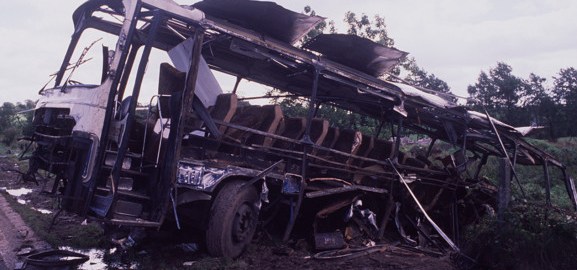


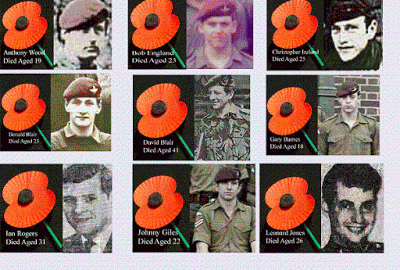

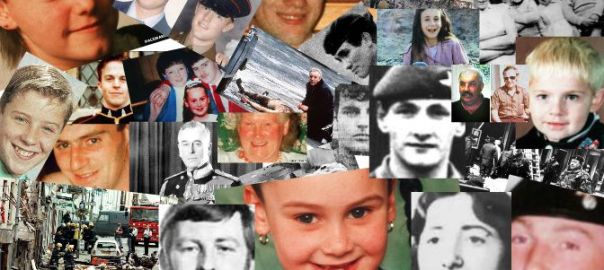


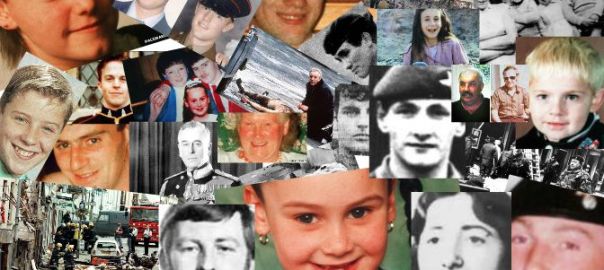



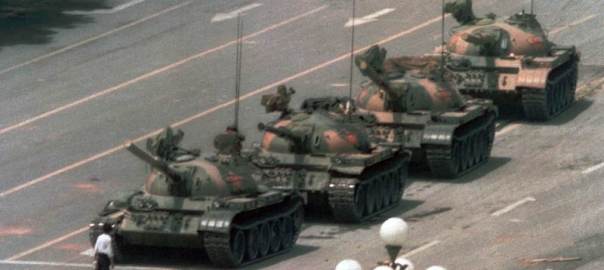


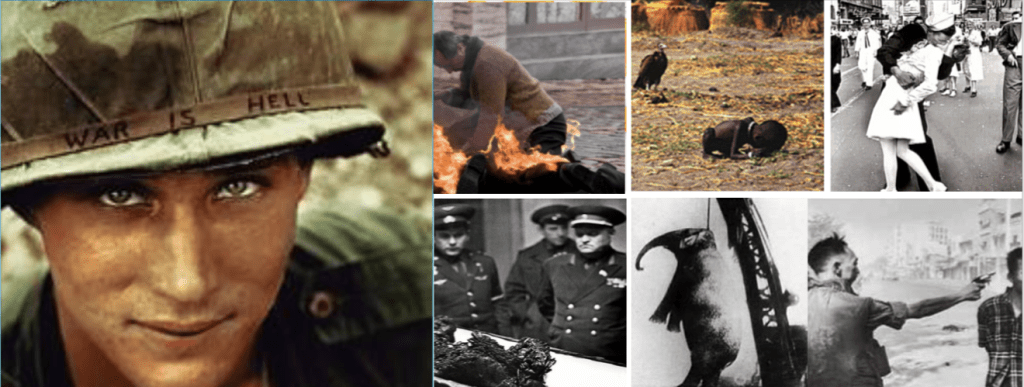

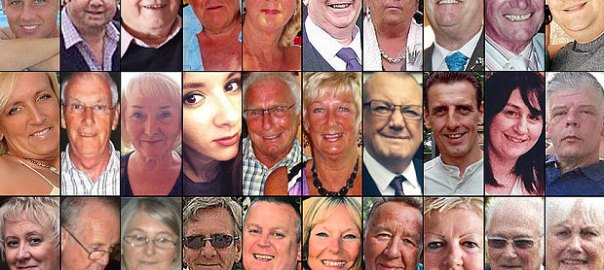


.jpg)




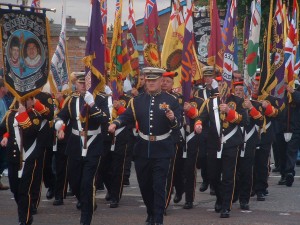
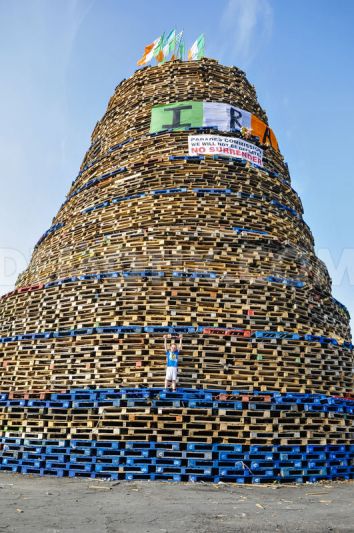
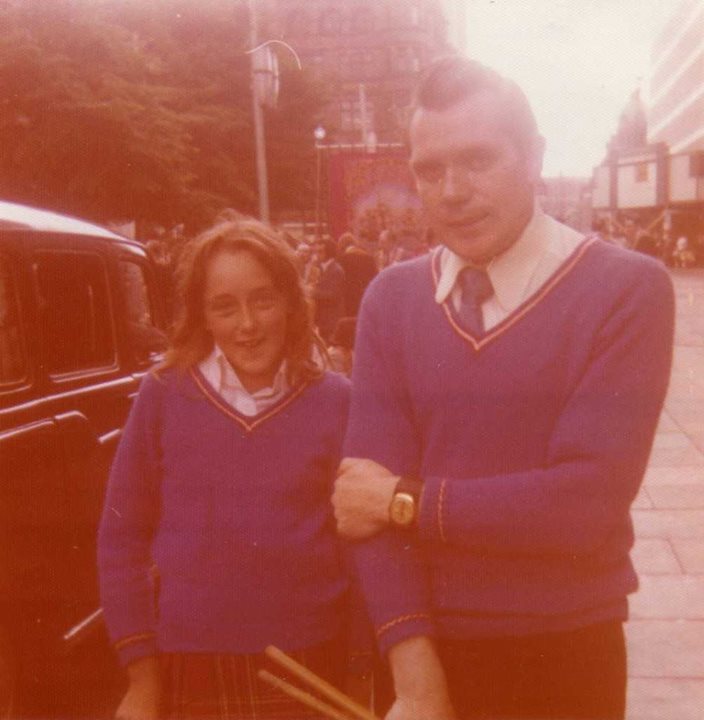

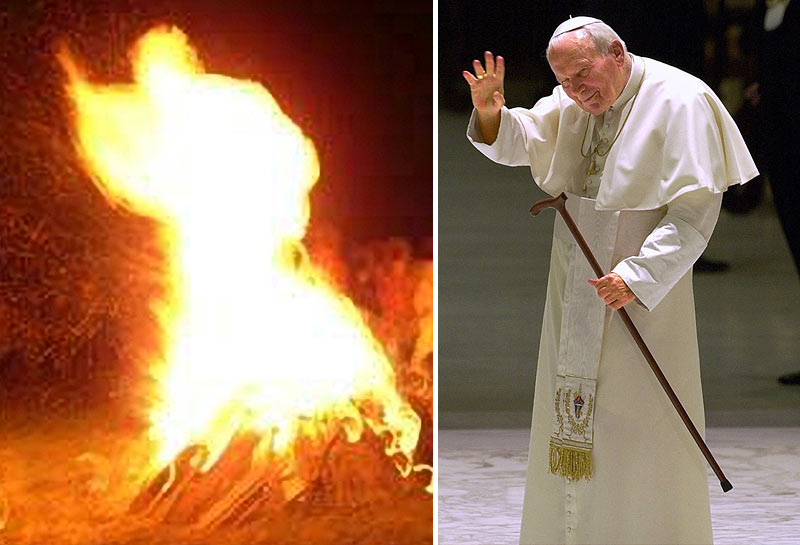


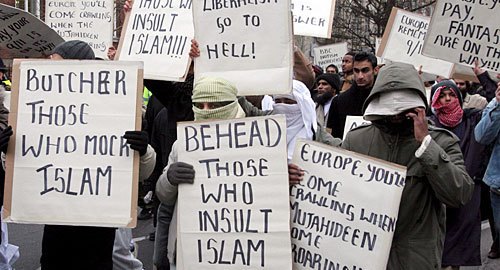


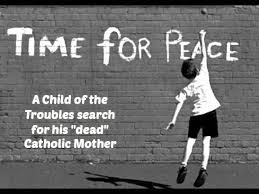


 belfastchildis.com