Source: British Jihadists – Thomas Evans – Life & Death
Tag Archives: Islamic extremist

ISIS executes 73 of its own
ISIS executes 73 of its own militants for evacuating headquarters in Sinjar, Iraq
The terrorist group of ISIS has reportedly executed dozens of its insurgents who fled recent battles with the Kurdish Peshmerga forces in Shingal (Sinjar) district in northern Iraq, official sources reported on Sunday.
“Under the request of the group’s alleged caliph, Abu Bakr al-Baghdadi, some 73 ISIS militants, who apparently fled the fighting with the Peshmerga forces in the Yezidi region of Shingal few days ago, were executed,” the Kurdish official Saeed Mamozini told reporters in Erbil.
He stressed the executions were carried out by firing squad south of Mosul.
Earlier this week, the terror group executed a number of its local Iraqi militants in Anbar province west of the country on charges of high treason and dissidence from the group, an eyewitness said on the condition of anonymity.
The source revealed that the extremist group has recently arrested dozens of its Iraqi members, who were apparently trying to desert the group and flee outside the ISIS-held city of Ramadi.
“The group has executed eight local members in the town of Zankoora, in Anbar province,” the source added.
In the meantime, ISIS foreign members carried out a campaign of arrests against Iraqi members of the group, executing dozens on charges of high treason.
Over the past few days, the terrorist group has faced defeat in both Syria and Iraq. In Syria, ISIS lost control of the key town of al-Hawl in Hasakah province, northeastern Syria.
Share this:

How do you beat Isis & their twisted Ideology ?
“I came to the absolute conviction that it is impossible…impossible…for any human being to read the biography of Mohammed and believe in it, and then emerge a psychologically and mentally healthy person.”
– Syrian Psychiatrist Dr. Wafa Sultan
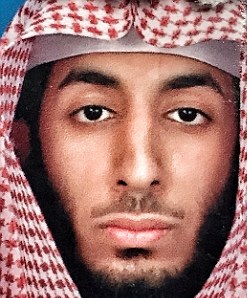
See jihadi John
The execution of Jihad John on Friday give the world something to celebrate and was a hard hitting reminder that although we don’t know exactly what action governments are taking against IS/Islamic extremists , we now know they are capable of a stunning PR strike that sent an evil, sick individual straight to eternal hell and will hopefully have all Jahadi’s scum terrified of their own shadows and of death coming at any moment from the skies.
The Terrorists are being Terrified!

But any joy the world shared at the termination of the evil, vile human was short lived when the streets of Paris were turned into a bloodbath , as the dark shadow of Islamic terrorism wrote another chapter in its endless book of horror.
To date one hundred and twenty nine people have died as a result of this act of terrorism and as the people of Paris begin to try to pick themselves up and comprehend how life can ever return to normal , the rest of the world look on and thank the gods that they had been spared.
For now at least .
For surely this is only a short reprieve and depressing as it is , there will no doubt be other chapters in the bloody rise of extremist Islamic Terrorism . Those deluded enough to follow such an evil, twisted ideology – that glorifies in the slaughter of the innocent and death to all none believers , have nothing else to live for and have committed themselves inextricably to a holy war that can never been won.
But how do you fight against such an enemy and can we ever hope to defeat the diseased ideology of IS and their Islamic caliphate
———————————————————————————————-
The Islamic State (Full Length)
———————————————————————————————-
Its times like this we all try to think about how we can beat those who seem intent not just on murdering innocent people but on attacking our very way of life. The bombing of the Russian plane and terrible events in Paris and Beirut demonstrate that the policy of trying to contain ISIS isn’t working. So here’s what I would do…
1. Accept this is a war, and act accordingly.
2. Invoke Article 5 of the NATO constitution and make every effort to include Russia in a coalition of interests with a single aim – to defeat ISIS militarily. It will mean parking the issue of Assad’s future.
3. Launch a total war on ISIS targets, initially through huge bombing campaigns, but also using ground forces from as many countries as possible, especially Arab ones.
4. Next week David Cameron should introduce an emergency motion in the House of Commons, which, if passed, would give parliamentary approval for military action in Syria alongside the US and France.
5. Drive a stake through ISIS’s heart by taking Raqqa by force in a surprise strike, using thousands of special forces and paratroopers.
6. Britain and other western countries should follow Austria’s lead and ban the foreign funding of mosques. This may mean having to ban foreign funding of all religious institutions, not just mosques. Immediately follow Tunisia’s lead and shut down any mosque linked to extremism. Ban mosques from employing Imams from Saudi Arabia.
7. Theresa May should massively increase the budget of the UK Border Force and immediately recruit several thousand new border guards. US style border checks should be introduced at key locations, but especially Calais and major airports.
8. The Prime Minister should announce an immediate 33% increase in the funding of the security services, giving them an extra billion pounds a year. This should primarily be used to increase surveillance of terror suspects.
9. Confront Saudi Arabia over its overt and covert support for ISIS and Wahabi extremism. If Saudi Arabia fails to act, impose sanctions and make arms sales to the country illegal.
10. Make London a very uncomfortable place for radical extremists and reverse its reputation as ‘Londonistan’.
11. Encourage muslim role models to go into schools and mosques to launch a ‘hearts and minds’ campaign and explain to muslim teenagers why extremism is wrong.
12. Confront head on the myth that western foreign policy and the invasion of Iraq led to the rise of ISIS.
13. Encourage the EU to abandon Schengen and lead moves to reimpose border controls between each EU country.
14. Build refugee camps along the North African coast. Handle asylum application within the camps. Impose high profile EU coordinated naval patrol along the North African coast and turn back the boats.
15. Develop comprehensive plan to deal with Syrian refugees who arrive from Turkey.
16. Develop a Marshall Plan to enable Syria to rebuild following the end of the conflict, and identify other countries which need a similar plan in order to persuade their citizens not to flee, and in the long term designed to persuade them to return.
I realise this is just scratching at the surface in some ways, but we have to recognise that the terms of the debate have changed. Talk of containing ISIS will no longer wash. They and their unique brand of evil needs to be confronted. In the 1930s we had, in the end, to recognise that the only way to beat Hitler was to stand up to him. We are in a similar position now. You can’t sit down and talk to these people. No amount of appeasement will work. Difficult decisions must now be taken in the full recognition that the world order has changed and that further loss of life will inevitably happen. Time will tell if the British people have the stomach for the fight or if we have the politicians who have the courage to impose the measures needed if we are to pull through.
In writing this, I also recognise I will be called a lot of things, no doubt primarily ‘warmonger’. I’ve said right from the start that ISIS need to be taken on and we are at war so at least I am consistent in that. Let’s have the debate and recognise that although there will be differences of view, the debate can at least be conducted in a civil manner. At least in this country we can still have an open debate, unlike in areas controlled by ISIS. Those who disagree with me will have to explain how they would protect the very freedoms that ISIS is seeking to take away from us.
Original Story www.iaindale.com
———————————————————————–
The West Must Realize It Cannot Beat ISIS Without Also Beating Assa
Three hundred thousand dead, four million refugees, nearly eight million internally displaced, 600,000 trapped in starvation sieges and countless others maimed, traumatized and rotting in jails where torture, sexual abuse and starvation are routine. This is the partial bill, to date, for the political survival strategy of a Syrian clan headed by Syrian President Bashar Assad.
Recent reporting of diplomatic discussions about a potential role for Assad in a transitional unity government raises a pertinent question: can the person responsible for this horrific bill be re-packaged as the reliable overseer of security arrangements featuring civilian protection?
For a complete accounting of the consequences of Assad’s tenure, one must include the Islamic State: the criminal-terrorist marriage of al Qaeda in Iraq and Saddam Hussein loyalists that now occupies a major part of Syria courtesy of Assad regime illegitimacy and connivance. The result is a Syria bleeding terrified humanity onto its neighbors; a dying state hosting a deadly political virus spawning infections globally while attracting cells from around the Sunni Muslim world.
The response from the international community to the humanitarian and security catastrophe that is Syria has been wholly inadequate. President Obama seeks to “degrade and destroy” ISIS. Yet single-minded focus on achieving a nuclear agreement with Iran led the West to avert its gaze from the ISIS-abetting, civilian-centric depredations of an Assad regime fully supported by Tehran.
For ISIS, confronting Assad alone — an Assad supported by Iran and ideally the West — would be a recruiting gift of untold value.
Washington’s theory of the case had been that raising Syria with Iran — even in side talks well-removed from the nuclear main event — would provoke Tehran into abandoning the nuclear talks and forgoing a treasure in sanctions relief and foreign direct investment. Apparently, it never occurred to Iran’s Supreme Leader that the leaders of the United States, the United Kingdom, France, Germany and the European Union would be offended in the least by his country’s facilitation of mass murder in Syria and by his support of a family whose actions had made nearly all of eastern Syria safe for ISIS.
While coalition aircraft chase ISIS gunmen with high performance aircraft, anti-regime and anti-ISIS rebels are subjected by the regime to barrel bombs and starvation sieges, creating recruits for ISIS in Syria and around the world. Simultaneously, Shia militiamen imported from Lebanon, Iraq and Afghanistan by Iran battle anti-regime and anti-ISIS Syrian rebels in the parts of western Syria Iran hopes to preserve as a bridge to Hezbollah in Lebanon. Meanwhile, American diplomats chase their Russian counterparts for help in terminating Assad rule: as if Moscow wants Assad gone or can make it happen.
Regime forces and ISIS rarely face one another in combat. Rather, they focus on trying to eliminate Syrian nationalist alternatives to each. Assad and his ISIS counterpart, “Caliph” Abu Bakr al-Baghdadi, share the same objective: each, for his own reason, wants to face the other as one of the last two political forces left standing in Syria. For Assad, facing ISIS alone would be the dream come true: his long-sought opportunity to force the West to choose between him and something so spectacularly bad that some consider it even worse than him: the 21st century’s premier mass murderer. For Baghdadi, confronting Assad alone — an Assad supported by Iran and ideally the West — would be a recruiting gift of untold value. It would bolster his leadership credentials among disaffected Sunni Muslims around the world.
ISIS cannot be beaten from the air while the iron lung pumping oxygen into it — the Assad regime — is left to do its worst.
In Iraq, ISIS has a constituency: Iraqi Sunnis disenfranchised by the Iranian-supported sectarian policies of former Prime Minister Nouri al-Maliki. In Syria, ISIS has no natural constituency. And Assad’s base has been reduced to members of Syria’s minorities and a handful of Sunni supporters, all of whom have been taken hostage by his war crimes and crimes against humanity; all of whom fear retribution for barrel bombs dropped, children starved and women raped. Syria — not Iraq — is the place where ISIS can be handed a decisive, near-term defeat. But it cannot be beaten from the air while the iron lung pumping oxygen into it — the Assad regime — is left to do its worst.
Legitimate governance — not war — is the ultimate cure for a Syrian illness rapidly becoming a regional and global contagion. Yet without an effective, surgical intervention of a kinetic variety, the patient has no hope of surviving. At its present, glacial rate of recruitment, vetting and training, the American enlistment of Syrian rebels to fight ISIS would meet its modest personnel goal perhaps by mid-century. What is needed now is professional ground forces to work with coalition aircraft to kill ISIS in Syria. With all of eastern Syria liberated from ISIS, a governmental alternative to the Assad family business can be established and a basis for eventual political negotiations created. And ISIS in Iraq would be denied a Syrian safe haven and headquarters of incalculable value.
Business as usual will give ISIS time to sink real roots in Syria, with disastrous consequences. Yet killing ISIS in Syria will not keep it dead and will not prevent something even worse from arising unless Assad’s mass atrocities stop. Iran could end them with an order. Can Western statesmen muster the courage to confront Tehran diplomatically on this point? Or will they continue to cower, fearful that Iran might yet walk away from a nuclear deal that would move its weaponization breakout period from two months to 15 years in return for lucrative compensation? Secretary of State John Kerry suggests talks with Iran on Syria may start once the nuclear deal is approved. Why wait? People are dying, and ISIS is benefiting.
Legitimate governance — not war — is the ultimate cure for a Syrian illness rapidly becoming a regional and global contagion.
Syrian political negotiations are impossible while these mass atrocities continue. Yet if Iran chooses to perpetuate its unconditional support for mass murder, a West actually intent on defeating ISIS while seeking a political transition from Assad rule to something civilized will have no choice but to push back. Indeed, if President Barack Obama can demonstrate his willingness and ability to stand up to Iran in the battle against ISIS, he might gain support in Congress for the nuclear deal.
If diplomacy fails, the worst of Assad’s atrocities — the barrel bombs — can be curtailed and even ended by military means far short of invading and occupying Syria. Iran should be given the opportunity to end these abominations with a word. Tehran should also be asked to lift the starvation sieges and permit full access to needy populations by the humanitarian agencies of the United Nations. It probably will not wish to do these things. Yet it should be given a time-limited opportunity to do so.
Pretending to make common cause with Iran against ISIS during the nuclear negotiations may have been someone’s idea of a smart negotiating tactic. In Iraq, however, Iran aids ISIS by promoting Shia militias instead of supporting the Iraqi government. In Syria, Iran’s client has created conditions permitting ISIS to thrive. Iran is no ally of the West in the fight against ISIS. Indeed, chasing ISIS with airplanes while giving a free rein to Assad is as much a losing proposition for the West as it is a sure winner for Iran. Western leaders fully realize that Assad and Baghdadi are two sides of the same debased coin. They should act accordingly if “degrading and defeating” ISIS is more than a slogan.
See Huffington Post for original story
Share this:


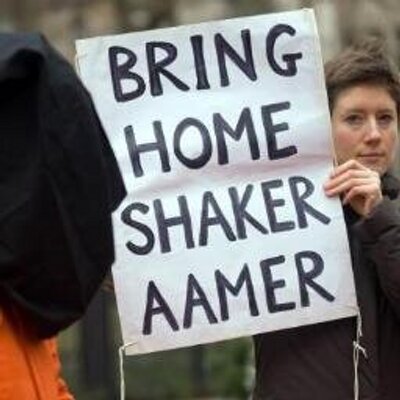
Shaker Aamer – Prisoner Number 239
Shaker Aamer: Last UK Guantanamo Bay detainee released
———————————————————————————————-
Shaker Aamer Released From Guantanamo Bay Jail
———————————————————————————————-

The last British resident to be held in Guantanamo Bay has been released, having been detained there for 13 years, the foreign secretary has said.
Philip Hammond said Shaker Aamer had left the US military base in Cuba and will return to the UK “later today”.

The Saudi national, 48, whose family live in London, has never been charged.
Campaigners say his release was “long overdue”, while a Downing Street spokeswoman said any necessary security measures “will be put in place”.
Number 10 said Prime Minister David Cameron “welcomes” the release of Mr Aamer, who has four children and has permission to live in the UK indefinitely because his wife is British.
Mr Aamer’s father-in-law, Saeed Siddique, said his release was a “miracle”.
A plane carrying Mr Aamer is expected to land at London’s Biggin Hill airport at around 13:00 GMT.
‘Areas of concern’
Downing Street said there were “no plans” to detain him after his arrival.
US authorities first held Mr Aamer in Afghanistan in 2001, alleging he had led a unit of Taliban fighters and had met former al-Qaeda leader Osama Bin Laden.
However, Mr Aamer maintains he was in Afghanistan with his family doing charity work.
Andy Worthington, co-director of the We Stand With Shaker campaign, said Mr Aamer, who is reported to have health problems, will require “psychological and medical care” when he returns to his family in London.
In letters sent to the BBC by his lawyers earlier this month, Mr Aamer described himself as “an old car that has not been to the garage for years”, saying the first thing he wanted once freed was a cup of coffee.
“I have known nothing about the real world for more than 13 years,” he wrote.
———————————————————————————————————–
Shaker Aamer
Shaker Aamer (born 21 December 1966)[1] is a Saudi citizen released on 30 October 2015 from almost 14 years in the Guantanamo Bay detention camps in Cuba.[2] He was seized in Afghanistan by bounty hunters who handed him over to US forces in December 2001. Two months later, the US rendered Aamer to the Guantánamo camp; he has been held there without trial or charge since then.[3][4][5][6] Aamer had been legally resident in Britain for years before his imprisonment; the UK government has repeatedly demanded his release, and many people there have called for him to be released.[7][8]
According to documents published in the Guantanamo Bay files leak, the US military Joint Task Force Guantanamo believed that Aamer had led a unit of fighters in Afghanistan, including the Battle of Tora Bora, while his family was paid a stipend by Osama bin Laden. The file asserts past associations with Richard Reid and Zacarias Moussaoui.[7][8] Aamer denies being involved in terrorist activity and his lawyer, Clive Stafford Smith, said the leaked documents would not stand up in court. He claimed that part of the evidence comes from an unreliable witness and that confessions Aamer made had been obtained through torture.[9][10] Aamer’s father-in-law, Saaed Ahmed Siddique, said: “All of these claims have no basis. If any of this was true he would be in a court now.”[11] The Bush administration acknowledged later that it had no evidence against Aamer.[12]
Aamer has never been charged with any wrongdoing, was never on trial, and his lawyer says he is “totally innocent.”[13][14] He was approved for transfer to Saudi Arabia by the Bush administration in 2007 and the Obama administration in 2009.[15][14] He has been described as a “charismatic leader” who spoke up and fought for the rights of fellow prisoners. Aamer says that he has been subject to torture while in detention.[16] Campaigners allege that the US is refusing to release Aamer because it feared he would expose torture inside the Guantanamo prison.[17]
Aamer’s mental and physical health has been declining over the years, as he has participated in hunger strikes to protest detention condition and been held in solitary confinement much of the time. He claims to have lost 40 per cent of his body weight in captivity, but did not state his weight.[18][19][20] After a visit in November, 2011, his lawyer said, “I do not think it is stretching matters to say that he is gradually dying in Guantanamo Bay.”[21] In 2015, despite Aamer’s deteriorating health, the US denied a request for an independent medical examination.[22] On 25 September 2015 the US government announced that Aamer would be released back to the UK within the following thirty days.[23] He was released to the UK on 30 October 2015.[24]
| Shaker Aamer | |
|---|---|

Aamer in Guantanamo (photo taken before 1 November 2007)
|
|
| Born | (1966-12-21) 21 December 1966 Medina, Saudi Arabia |
| Detained at | Kandahar, Bagram and Guantánamo |
| ISN | 239 |
| Charge(s) | None |
| Penalty | None |
| Status | Released from Guantanamp Bay on 30 October 2015 after 13 years, despite being cleared for release by two US presidents in 2007 and in 2009 |
| Spouse | Zin Siddique |
| Children | Four children |
Family and personal life
Aamer was born on 12 December 1968 and grew up in Medina in Saudi Arabia. He left the country at the age of 17. He lived and traveled in the United States, Europe and the Middle East.[25] Aamer lived and studied in Georgia and Maryland in 1989 and 1990 and during the Gulf War, he worked as a translator for the U.S. Army.[26]
He moved to the United Kingdom in 1996 where he met Zin Siddique, a British woman; they married in 1997 and have four British children. Aamer has never met his youngest son Faris, who was born after he was imprisoned.[27] Aamer had indefinite leave to remain in the UK, and was applying for British citizenship.[23]
Aamer worked as an Arabic translator for London law firms. Some of the solicitors he worked for dealt with immigration cases. In his spare time, Aamer helped refugees find accommodation and offered them advice on their struggles with the Home Office.[25]
Aamer’s family now live in Battersea, South London. His wife Zin Aamer has suffered from depression and mental episodes since his arrest.[20][28][29] Saeed Siddique, Aamer’s father-in-law, said in 2011, “When he was captured, Shaker offered to let my daughter divorce him, but she said, ‘No, I will wait for you.’ She is still waiting.”[30]
Capture and allegations

Aamer with daughter, Johnina (left), and son Michael (photo taken before his capture in 2001, released by his lawyer)
Aamer took his family to Afghanistan in 2001 where he was working for an Islamic charity. He was working for the charity when the U.S. invaded the country later that year.[27] The Northern Alliance took him into custody in Jalalabad on 24 November 2001, and passed him to the Americans. The US routinely paid ransom for Arabs handed over to them.[26] They interrogated Aamer at Bagram Theater Internment Facility and transported him to Guantánamo on 14 February 2002.
According to Joint Task Force Guantanamo assessments from 1 November 2007 the US military believed that Aamer was a “recruiter, financier, and facilitator” for al-Qaeda, based partly on evidence given by the informant Yasim Muhammed Basardah, a fellow detainee.[11] The leaked documents alleged that Aamer had confessed to interrogators that he was in Tora Bora with Osama bin Laden at the time of the US bombing.[8] The documents further note that the Saudi intelligence Mabahith identified Aamer “as a high priority for the government of Saudi Arabia, an indication of his law enforcement value to them.”[31]
In 2010 the Guantanamo Review Task Force released their report of the detainee assessments. In many instances, the Task Force largely agreed with prior threat assessments of the detainees and sometimes found additional information that further substantiated such assessments. In other instances, the Task Force found prior assessments to be overstated. Some assessments, for example, contained allegations that were not supported by the underlying source document upon which they relied. Other assessments contained conclusions that were stated categorically even though derived from uncorroborated statements or raw intelligence reporting of undetermined or questionable reliability. Conversely, in a few cases, the Task Force discovered reliable information indicating that a detainee posed a greater threat in some respects than prior assessments suggested.[32]
Aamer denies being involved in terrorist activity[33] and his attorney, Clive Stafford Smith of Reprieve, said the evidence against his client “would not stand up in court.” He pointed out that part of the evidence comes from Yasim Muhammed Basardah, whom American judges found to be “utterly incredible” and who was tortured and “promised all sorts of things.”[11]
The Bush administration acknowledged later that it had no evidence against Aamer, and he was cleared for transfer in 2007. [12][14] The clearance is for transfer to Saudi Arabia only.[15]
Aamer’s allegations of being tortured in Bagram
In September 2009, Zachary Katznelson, a Reprieve lawyer, said that Aamer had told of suffering severe beatings at the Bagram facility. Aamer said that close to a dozen men had beaten him, including interrogators who represented themselves as officers of MI5, the United Kingdom’s internal counter-terrorism agency. Following one severe beating, he recovered from being stunned to find that all the interrogators had left the room and put a pistol on the table.[34] He did not find out if the pistol was loaded. He said it occurred to him that it had been left either so he could kill himself, or that, if he picked it up, he could be shot and killed on the excuse he was trying to shoot them.[34]
Aamer says that the “MI5” interrogators told him he had two choices: (1) agree to spy on suspected jihadists in the United Kingdom; or (2) remain in US custody.[34] He said that guards/agents repeatedly knocked his head against the wall while an MI5 officer was in the room.
“All I know is that I felt someone grab my head and start beating my head into the back wall – so hard that my head was bouncing. And they were shouting that they would kill me or I would die.”[35]
Other former detainees have alleged similar mistreatment by MI5 and MI6 agents, including torture.[9][36] They filed suit against the British government over their mistreatment and torture. In November 2010, the British government settled the suit, paying the detainees millions of pounds in compensation.[37][38][39][40] Aamer is also on the compensation list and part of the deal, but details are not known as most of the deal is still secret.[41][42]
Guantanamo
Aamer has been described as an unofficial spokesman for the detainees at Guantanamo. He has spoken up for the welfare of prisoners, negotiating with camp commanders and organizing protests against cruel treatment. He organized and participated in a hunger strike in 2005 in which he lost half of his weight. He demanded the prisoners be treated according to the Geneva Convention, allowing the detainees to form a grievance committee. In negotiations, the camp administration promised a healthier diet for the prisoners after he agreed to end the hunger strike.[25][43] His lawyer Stafford Smith said the grievance committee was formed, but that the camp authorities disbanded it after a few days. American spokesmen Major Jeffrey Weir denied that the Americans had ever agreed to any conditions resulting from the hunger strike.
Since then, Aamer has been taking part in further hunger strikes. He has been held in solitary confinement for most of the time. His lawyers describe his solitary confinement as “cruel” and said his health has been affected to a point where they feared for his life. Stafford Smith said Aamer is “falling apart at the seams.”[21][25][44][45]
Given the time involved, the lengthy spells in solitary confinement and the torture allegedly used against him, Shaker Aamer’s plight has been one of the worst of all the detainees held at Guantanamo.
On 18 September 2006, Aamer’s attorneys filed a 16-page motion arguing for his removal from isolation in Guantanamo Bay prison.[47] The motion alleges that Aamer had been held in solitary confinement for 360 days at the time of filing, and was tortured by beatings, exposure to temperature extremes, and sleep deprivation, which together caused him to suffer to the point of becoming mentally unbalanced. The next day Katznelson filed a motion to enforce the Geneva Conventions on his behalf.[48]
In September 2011, Aamer’s lawyer Brent Mickum, who saw him in Guantánamo, alleges that Aamer was repeatedly beaten before their meetings. He said that Aamer’s mental and physical health is deteriorating. “It felt like he has given up: that’s what 10 years, mostly in solitary confinement will do to a person,” he said.[49]
Binyam Mohamed, an Ethiopian prisoner who formerly occupied a cell one door down from Aamer, has said since his release that he knows why Aamer is still in the prison camps.[25]
“I would say the Americans are trying to keep him as silent as they could. It’s not that he has anything. What happened in 2005 and 2006 is something that the Americans don’t want the world to know – hunger strikes, and all the events that took place, until the three brothers who died … insider information of all the events, probably. Obviously, Shaker doesn’t have it, but the Americans think he may have some of it, and they don’t like this kind of information being released.”
Clive Stafford Smith, his lawyer and director of human rights organisation Reprieve, comes to a similar conclusion. He said:[50]
“I have known Shaker for some time, because he is so eloquent and outspoken about the injustices of Guantanamo he is very definitely viewed as a threat by the US. Not in the sense of being an extremist but in the sense of being someone who can rather eloquently criticise the nightmare that happened there.”
Omar Deghayes, a former Guantanamo Detainee who knew Aamer, said of him,
“He was always forward, he would translate for people, he’d fight for them, and if he had any problems in the block he’d shout at the guards… until he would get you your rights. And that’s why he’s still in prison… because he’s very outspoken, a very intelligent person, somebody who would fight for somebody else’s rights.” [51]
At Camp “No” on June 2006
Main article: Guantanamo Bay homicide accusations
Aamer said that he was beaten for hours and subjected to interrogation methods that included asphyxiation on 9 June 2006, the same day that three fellow prisoners died in Guantanamo. Describing the event, Aamer said that he was strapped to a chair, fully restrained at the head, arms and legs. When MPs pressed on pressure points all over his body: his temples, just under his jawline, in the hollow beneath his ears. They bent his nose repeatedly, pinched his thighs and feet. They inflicted pain to his eyes, bent his fingers until he screamed and then they cut off his airway and put a mask over him, so he could not cry out.[52][53]
Please torture me in the old way … Here they destroy people mentally and physically without leaving marks.
Aamer in a letter to The Independent[18]
The law professor Scott Horton published an award-winning article in Harper’s Magazine in 2010. He said that Aamer had been brought to “Camp No,” a secret interrogation black site outside the camp, with the three men who died on the day of the event. Horton described Aamer’s account of having his airways cut off as “alarming” and wrote, “This is the same technique that appears to have been used on the three deceased prisoners.”[52][53] Colonel Michael Bumgarner, the commander of the camps during the incident and identified in Horton’s article as having been present during the interrogations, denied Horton’s claims.[54]
Horton wrote that Aamer’s repatriation was being delayed so that he could not testify about his alleged torture in Bagram or the events on 9 June 2006. He wrote: “American authorities may be concerned that Aamer, if released, could provide evidence against them in criminal investigations.”[52][53]
2013 hunger strike and detention condition
In 2013, Aamer told his attorneys that he is among the growing group of active hunger strikers. He said he has been refusing meals since February 15 and has lost 32 pounds.[26] In previous hunger strikes guards force-fed him with tubes down his nose.[26] His lawyer said Aamer spends 22 hours a day alone in his cell.[26] Aamer is not permitted visitors except his attorneys.[26]
2014 motion for release
In 2014, his lawyers filed a motion on Aamer’s behalf seeking his release on the grounds that his health is “gravely diminished,”. They argue that his various health problems cannot be treated in Guantanamo and “Even if he receives the intensive medical and therapeutic treatment his condition requires, Mr Aamer will take many years, if not a lifetime, to achieve any significant recovery,”. His lawyers argue that both the Geneva Convention and Army Regulation 190-8, requiring the repatriation of chronically ill prisoners.[55][56][57] In 2015 despite Aamer’s deteriorating health the US denied a request for an independent medical examination.[22]
UK release negotiations
The United Kingdom government initially refused to intervene on the behalf of Guantánamo detainees who were legal British residents without being British citizens. In August 2007, Foreign Secretary David Miliband requested the release of Aamer and four other men, based on their having been granted refugee status, or similar leave, to remain in Britain as residents prior to their capture by US forces.[27][43][58][59] With the repatriation of Binyam Mohammed in February 2009, all British citizens and residents other than Aamer had been released.[60][61][62]
The UK government officials have repeatedly raised Aamer’s case with the Americans. On a visit to the United States on 13 March 2009, when asked about Guantánamo captives, Home Secretary Jacqui Smith said that the US administration has said they do not want to return Aamer to the UK William Hague, the Foreign Secretary, raised Aamer’s case again with Hillary Clinton, US Secretary of State, in November 2010,[63] followed by meetings with other US officials. At the time, the US government had reached settlement with former detainees as a resolution for damages due to the use of torture in interrogation.[63]
In September 2011, Foreign Office Minister Alistair Burt said that negotiations are ongoing and confidential.[64] Supporters of Aamer have criticized the UK government for not doing enough on his behalf; they urged the government to step up their efforts.[14] In January 2012, The Independent revealed that the British government has spent £274,345 fighting in court to prevent Aamer’s lawyers from gaining access to evidence which may prove his innocence.[18] The newspaper reported that Aamer has several serious medical complaints from years of “inhumane” detention conditions, and that the UK gave false hope to his family.[44]
Calls for his release
- September 2006, Aamer’s attorneys filed a 16-page motion arguing for his removal from isolation in Guantanamo Bay prison.[65]
- In January 2010, his 12-year-old daughter Johina wrote a letter to Gordon Brown asking for his release.[28][65]
- August, 2010, protesters disrupted a meeting that discussed plans to create a US Embassy near Battersea, the home of Aamer.[65][66]
- On 11 December 2010, hundreds took to the streets in London near the US embassy to demand Aamer’s release.[65][67]
- In February 2011, Amnesty International called Aamer’s ongoing incarceration a “mockery of justice” and denounced the “cruel limbo” he had been left in.[65][68] At the same time The Guardian reported that people had sent 12.000 emails to US Secretary of State Hillary Clinton and UK MPs in support of Aamer.[65][69]
- In her 2011 album In The Current Climate, singer-songwriter Sarah Gillespie sang an imaginary first person song of Aamer entitled How The West was Won. Gillespie devoted the track to Aamer in the CD booklet.[70]
- In May 2011, Students of University of St Andrews protested for the release of Aamer.[65][71]
- In early 2012, approaching Aamer’s completion of ten years’ imprisonment in Guantánamo, campaigners stepped up efforts for his release. Among them, Jane Ellison, Tory MP for Battersea, wrote to Barack Obama to urge Aamer’s release.[65][72]
- February 2012, marking the 10th anniversary of Aamer’s detention, a series of protests took place in England whilst a hunger strike was undertaken in Guantanamo.[65]
- In December 2012, the comedian Frankie Boyle donated £50,000 to Aamer’s legal fund for suits against MI6.[73]
- By April 2013, 117,384 British citizen or UK residents had signed an online petition e-petitions to pressure the UK Government for Aamer’s release.[74]
- In July 2013, Clive Stafford-Smith, Frankie Boyle and Julie Christie went on a sequential hunger strike in support of Shaker Aamer and his release.[75][76]
- In August 2013 the singer PJ Harvey released the song Shaker Aamer describing Aamer’s plight being force fed in restraining chairs and shackles during a month-long hunger strike.[77]
- In March 2015 British lawmaker John McDonnell said “The case of Shaker Aamer is one of the worst cases of a miscarriage of justice in the last three decades at least … He has endured harsh, and brutal and inhuman treatment,” in a debate where members of all major political parties called for Aamer’s release.[78]
- On July 4, 2015 (US Independence Day) 80 prominent Britons including six former cabinet ministers, leading writers, actors, directors and musicians urge Obama to free Aamer.[3]
Share this:


British Jihadists – Jihad John – From British Schoolboy to ISIS Killer
Jihadi John

‘Jihadi John’: US air strike targets Islamic State militant in Syria
US forces have carried out an air strike targeting the Islamic State group militant “Jihadi John”, with a “high degree of certainty” he was hit.
Mohammed Emwazi, the Kuwaiti-born British militant, appeared in videos of the beheadings of Western hostages.
It is believed there was at least one other person in the vehicle targeted in the attack near Raqqa, in Syria.
The UK government said it was “working hand in glove with the Americans” to “hunt down those murdering hostages”.
A US official told the BBC Emwazi had been “tracked carefully over a period of time”.
Another senior military source said there was a “high degree of certainty” he had been killed, while another source said: “It was a great hit.”
A drone was used in the attack, according to a US official quoted by the Associated Press news agency.
A formal statement from the Pentagon stopped short of asserting that Emwazi had definitely been killed, adding that it was assessing the operation.
Prime Minister David Cameron is due to make a statement later on Friday.
“The prime minister has said before that tracking down these brutal murderers was a top priority,” a spokesperson said.
Analysis
by Frank Gardner, BBC security correspondent
As the militant who sadistically murdered Western aid workers and journalists on camera, Mohammed Emwazi became a top target for US and British intelligence agencies, even though he is thought to have played no military role within Islamic State.
After his identity was revealed in February, Emwazi largely stayed out of sight, taking particular care not to leave a digital trail to his whereabouts.
But GCHQ, the UK government’s communications headquarters, has expended enormous efforts to intercept and decipher any encrypted messages that might reveal his location or those of his associates.
Emwazi is believed to have travelled to Syria in 2013 and later joined IS militants.
He first appeared in a video in August last year, when footage was posted online showing the murder of US journalist James Foley.
He was later pictured in the videos of the beheadings of US journalist Steven Sotloff, British aid worker David Haines and UK taxi driver Alan Henning, as well as American aid worker Abdul-Rahman Kassig, also known as Peter, and Japanese journalist Kenji Goto.
He was also seen apparently killing a Syrian soldier during a mass beheading of Syrian troops.
In each of the videos, the militant appeared dressed in a black robe with a black balaclava covering his face.
Initially dubbed “Jihadi John” by the media, he was subsequently named as Emwazi, from west London, in February.
Mohammed Emwazi

- 1988: Born in Kuwait, moves to UK in 1994
- 2009: Completes computing degree at University of Westminster
- 2013: Tries to travel to Kuwait but is stopped. Disappears. Parents report him missing. Police tell family four months later he has entered Syria
Source: Cage, London-based campaign group
Earlier this year, details emerged about how Emwazi made a number of journeys abroad before he left for Syria in 2013.
They included a trip to Tanzania in August 2009, when he is believed to have first became known to security services in the UK.
His naming this year led to a row over the cause of his radicalisation, with British advocacy group Cage suggesting that contact with MI5 may have contributed to it.
However, Downing Street said that suggestion was “completely reprehensible”, with Mr Cameron defending the UK’s security services.
Civil war erupted in Syria four years ago, and now President Bashar al-Assad’s government, IS, an array of Syrian rebels and Kurdish fighters all hold territory. Millions have been displaced and more than 250,000 people killed as a result of the fighting.
IS aims to establish a caliphate over the entire Muslim world, a state ruled by a single political and religious leader according to Islamic law, or Sharia. It already hold control of swathes of land in Syria and Iraq.
The militant group said it was behind twin suicide bombings in the Lebanese capital Beirut that killed at least 41 people on Thursday.
Kurdish forces have meanwhile entered the northern Iraqi town of Sinjar captured by IS last year, while the Iraqi army says it has begun an offensive to retake the key western city of Ramadi.
At least 700 people from the UK have travelled to support or fight for jihadist organisations in Syria and Iraq, British police say.
Security analyst Charlie Winter said that if Emwazi’s death was confirmed, it could affect those wanting to join Islamic State “out of a sense of adventure”.
He added: “They want to go and find a collective group where they can be part of something bigger. But they also don’t want to die.”
Mohammed Emwazi’s movements before heading to Syria

- 1. Aug 2009, refused entry to Tanzania: travels to Tanzania with two friends, but is refused entry at Dar es Salaam. Tanzanian police have denied Emwazi’s name is on their database of suspected foreign criminals detained and deported in 2009, as he had claimed. Emwazi and his friends are put on flight to Amsterdam, where they are questioned. They return to Dover and are questioned again.
- 2. Sept 2009, travels to Kuwait for work: leaves the UK for Kuwait for work.
- 3. May/June 2010, returns to UK for holiday: he returns to the UK for an eight-day visit.
- 4. July 2010, refused re-entry to Kuwait: Emwazi returns to the UK once more for a couple of days. He is stopped at Heathrow on his return to Kuwait and told he cannot travel as his visa has expired.
- 5. 2013, travels to Syria: Emwazi attempts to travel to Kuwait but is stopped and questioned. Three days later, he heads abroad. Police later inform his family he has travelled to Syria.
———————————————————————————-
Video shows ‘Jihadi John’ as a teenager
———————————————————————————-


Emwazi wearing a mask in a video of a killing
———————————————————————-
Hear the voice of ‘Jihadi John’ before ISIS
———————————————————————-
|
|
| Born | Mohammed Emwazi (1988-08-17) 17 August 1988 [1] Al Jahra, Kuwait[2] |
|---|---|
Nationality |
British[3] |
Other names |
“Jihadi John”[4] Mohammed Al-Zuhary[11] |
| Education | BSc (lower second-class honours) in Information Systems with Business Management from the University of Westminster (2009)[12][13] |
| Known for | Involvement in multiple beheadings |
| Religion | Sunni Islam |
| Military career | |
| Allegiance | Al-Nusra Front,[8] then ISIL[8] |
| Years of service | 2013–present[14] |
| Battles/wars | Syria |
———————————————————————-
Jihadi John Face Revealed in ISIS Video
———————————————————————-
Mohammed Emwazi (born Muhammad Jassim Abdulkarim Olayan al-Dhafiri, 17 August 1988) is a Kuwaiti-British man who is thought to be the person seen in several videos produced by the Islamic extremist group ISIL showing the beheadings of a number of captives in 2014 and 2015. A group of his hostages nicknamed him “Jihadi John” since he was part of a four-person terrorist cell with British accents whom they called “The Beatles”.
————————————————————————————————
‘Jihadi John’ Now the Most Wanted Man In the World
————————————————————————————————
Early life

Emwazi was born Muhammad Jassim Abdulkarim Olayan al-Dhafiri[15] on 17 August 1988 in Kuwait[1] to Jassem and Ghaneyah.[14] The family, who were Bedoon of Iraqi origin,[14] moved to the United Kingdom in 1994 when he was six.[16] They settled in inner west London, moving between several properties in Maida Vale,[17] later living in St John’s Wood and finally in Queen’s Park.[17][18] Emwazi attended St Mary Magdalene Church of England primary school, and later Quintin Kynaston School.[3]
In 2006 he went to the University of Westminster, studying Information Systems with Business Management. He secured a lower second-class BSc (Hons) on graduation three years later.[3] At age 21, he worked as a salesman at an IT company in Kuwait and was considered by his boss as the best employee the company ever had.[14]
Nicknames

Emwazi was given the nickname “John” by a group of his hostages. The hostages said that he was part of a terrorist cell they called “The Beatles“, and that he guarded Western hostages while handling communications with their families. The nickname refers to John Lennon of the Beatles, and other members of the cell are known as “George”, “Paul”, and “Ringo”, in reference to the other Beatles. The cell members all had British accents.[19] The nicknames “Jihadi John”, “Jailer John” and “John the Beatle” were created by the press.[4]
Ringo Starr expressed his disgust at the use of his former band’s name in this context, saying: “It’s bullshit. What they are doing out there is against everything the Beatles stood for,” saying that the Beatles had stood for peace and opposed violence.[20]
———————————————–
Jihadi John Apologizes to His Family – but for Beheading Hostages
————————————————————————
Victims
See also: ISIL beheading incidents
Following are reported victims of Jihadi John.
James Foley

Main article: James Foley (journalist)
In a video uploaded to YouTube on 19 August 2014, Foley read a prepared statement criticizing the United States, the recent airstrikes in Iraq, and his brother who serves in the United States Air Force.[21] Emwazi, wearing a mask, also read a prepared statement in which he criticized America and President Barack Obama and made demands to cease the 2014 American-led intervention in Iraq.[21] The masked man then beheaded Foley off-camera, after which he threatened to behead Steven Sotloff if his demands were not met. The FBI and United States National Security Council confirmed that the video, which included footage of Foley’s beheaded corpse, was genuine.[21]
Steven Sotloff

Main article: Steven Sotloff
On 2 September 2014, a video was released reportedly showing American journalist Steven Sotloff‘s beheading by Emwazi.[22] The White House confirmed the video’s authenticity.[23]
David Haines

Main article: David Cawthorne Haines
On 13 September 2014, a video, directed at British Prime Minister David Cameron, was released, showing British hostage aid worker David Haines being beheaded by Emwazi.[24]
Alan Henning

Main article: Alan Henning
On 3 October 2014, a video released by ISIS showing Emwazi beheading British aid worker Alan Henning. Henning, a taxi driver from Salford, Greater Manchester, had volunteered to deliver aid to Syria when he was kidnapped in Ad Dana, an area held by ISIS, on 27 December 2013.[25][26]
Peter Kassig

See also: Peter Kassig
On 16 November 2014 a video was posted by ISIS of Emwazi standing over a severed head, which the White House confirmed was that of Peter Kassig.[27] Kassig’s actual beheading was not shown, and unlike earlier hostage beheading videos he did not make a statement.
Syrian soldiers
The video that ended with a shot of Kassig’s severed head showed the beheadings of 21 Syrian soldiers in gruesome detail, by a group led by a masked Emwazi. It was said by the BBC that, unlike previous videos, this one shows the faces of many of the militants, indicates the location as being Dabiq in Aleppo Province, and that this video “revels in gore.” Unlike previous videos that cut away without showing the killing, Emwazi is shown beheading a victim.[28]
Haruna Yukawa and Kenji Goto

Main articles: Kenji Goto and Haruna Yukawa
Haruna Yukawa, age 42, was captured sometime before August 2014. Kenji Goto, age 47, was captured sometime in October 2014 while trying to rescue Yukawa. In January 2015, they were threatened to be killed unless the Japanese government paid a ransom of $200 million.[29] Haruna was beheaded on 24 January, and Kenji on 31 January 2015.[30]
Hostages
It was claimed in August 2014 that ISIS held more than 20 hostages.[31] Many hostage families chose not to reveal their relatives’ names in order to avoid drawing attention to them and compromising their safety.[citation needed] All or nearly all of the Europeans were ransomed by their countries. However, laws in the US and the UK prohibit payment of ransoms.[32]
John Cantlie

Main article: John Cantlie
Cantlie is a British citizen held hostage who has appeared in a series of ISIL videos. He was kidnapped along with James Foley on 22 November 2012.
Analysis of videos
Official analysis
Officially the FBI and United States National Security Council confirmed that the James Foley video, which ended with footage of a beheaded corpse, was genuine.[21] David Cameron and the British Foreign Office also confirmed the authenticity of the video showing the death of David Haines.[33]
The videos were produced and distributed by Al Hayat Media Center, a media outlet of ISIS that is under the authority of the ISIS’s official propaganda arm, the Al-Itisam Establishment for Media Production, that targets specifically Western and non-Arabic speaking audiences.[34]
Unofficial analysis
An unnamed forensics expert commissioned by The Times to look at the James Foley video said “I think it has been staged. My feeling is that the murder may have happened after the camera was stopped.” The Times concluded that “No one is questioning that the photojournalist James Foley was beheaded, but camera trickery and slick post-production techniques appear to have been used.”[35] Two unnamed video specialists in the International Business Times of Australia claimed that portions of the video appeared to be staged and edited.[36] Dr. James Alvarez, a British-American hostage negotiator, also claimed the James Foley video was “expertly staged”, with the use of two separate cameras and a clip-on microphone attached to Foley’s orange jumpsuit.[21] Jeff Smith, Associate Director of the CU Denver National Center for Media Forensics, said “What’s most interesting is that the actual beheading that takes place in the videos, both of them are staged.”[37]
British analyst Eliot Higgins (Brown Moses) published photographic and video forensic evidence suggesting that the James Foley video was taken at a spot in the hills south of the Syrian city of Raqqa.[38][39][40]
Identification and manhunt
See also: The Beatles (terrorist cell)
See also: United Kingdom and ISIL and Abdel-Majed Abdel Bary
‘Jihadi John’ became the subject of a manhunt by the FBI, MI5, and Scotland Yard.[41][42][43] In his videos, “Jihadi John” concealed his identity by covering himself from head to toe in black, except for tan desert boots, with a mask that left only his eyes visible.[41] Despite this, several facts about ‘Jihadi John’ could be ascertained from both videos. He spoke with an apparent London or southern England accent[41] and appeared to have a skin tone consistent with African or South Asian descent.[21] In both videos, he was seen to sport a pistol in a leather shoulder holster under his left shoulder, typical of right-handed people,[44] but his actions in the videos suggest he is left-handed.[45]
Other factors that could have led to his identification were his height, general physique, the pattern of veins on the back of his hands,[21] his voice and clothes.[21][41] A team of analysts might use the topography of the landscape in the video in an attempt to identify the location.[21] On 24 August 2014, the British Ambassador to the United States, Sir Peter Westmacott, said that Britain was very close to identifying ‘Jihadi John’ using sophisticated voice recognition technology,[46] but when pressed, refused to disclose any other details.[47]
On 20 September 2014, the United States Senate approved a $10 million reward for information that led to the capture of anyone involved in the murders of James Foley, Steven Sotloff and David Cawthorne Haines, which includes ‘Jihadi John’.[48] On November 20, the bill, extending the potential scope of the reward program to any American kidnapped and murdered by a “foreign terrorist organization” and limiting the reward to a maximum of $5 million, was referred to the United States House Committee on Foreign Affairs.[49]
On 14 September British Prime Minister David Cameron confirmed that the identity of ‘Jihadi John’ was known but had yet to be revealed.[50]
On 25 September, FBI Director James Comey told reporters that they had identified the suspect, but did not give information regarding the man’s identity or nationality.[51] “I believe that we have identified him. I’m not going to tell you who I believe it is,” Comey stated.[52] Michael Ryan, an author and scholar from the Middle East Institute speculated “Maybe 98 percent of 95 percent sure is not sure enough to put a man’s name out.”[51]
In August 2014, The Sunday Times reported that Abdel-Majed Abdel Bary (“L Jinny”), 23, a hip-hop musician from West London had “emerged as a key suspect” in the investigation.[53][54] Other sources also stated that Abu Hussain Al-Britani, 20, a computer hacker from Birmingham and Abu Abdullah al-Britani, in his 20s from Portsmouth, were suspects.[54][55]
Mohammed Emwazi

On 26 February 2015, The Washington Post identified the perpetrator as Mohammed Emwazi, a British man then in his mid-20s who was born in Kuwait and grew up in west London.[56][57][58] The Washington Post investigation was undertaken by Souad Mekhennet and Alan Goldman.[56]
Emwazi was born to Iraqi parents who moved to neighboring Kuwait from Iraq. When the Kuwaiti government rejected their application for citizenship, in 1994 they moved to Iraq and then on to Britain.[59] According to his student card from the University of Westminster, Emwazi was born on 17 August 1988.[1]
Scotland Yard and 10 Downing Street declined to comment on the reports.[60] The Counter Terrorism Command of the Metropolitan Police Service released a statement saying: “We are not going to confirm the identity of anyone at this stage or give an update on the progress of this live counter-terrorism investigation.”[61] The security services in the US and UK are believed to have known the identity of ‘Jihadi John’ since September 2014, but have not revealed the name for operational security reasons.[57]
In an interview with The Washington Post, one of Emwazi’s close friends said: “I have no doubt that Mohammed is Jihadi John. He was like a brother to me. … I am sure it is him.” Asim Qureshi, research director at the advocacy group CAGE, who had been in contact with Emwazi before he left for Syria, also identified the man in the videos as Emwazi, stating: “There was an extremely strong resemblance. This is making me feel fairly certain that this is the same person.” U.S. officials declined to comment for the Washington Post report, and Emwazi’s family declined a request for an interview.[56] Qureshi said that Emwazi was “extremely kind, gentle and soft-spoken, the most humble young person I knew”.[57]
The BBC stated that Emwazi is believed to be “an associate of a former UK control order suspect … who travelled to Somalia in 2006 and is allegedly linked to a facilitation and funding network for Somali militant group al-Shabab.”[57] He reportedly prayed on occasion at a mosque in Greenwich.[56] He graduated with a degree in Information Systems with Business Management from the University of Westminster (2009).[12] His final address in the UK before he went abroad was in the Queen’s Park area of north-west London.[16]
The Post reported interviews with Emwazi’s friends indicating that Emwazi was radicalized after a planned safari to Tanzania following his graduation. According to the interviews, Emwazi and two friends, a German convert to Islam named Omar and another man, Abu Talib, never made the safari. Rather, upon landing in Dar es Salaam in May 2009, the three were detained, held overnight by police, and eventually deported. In May 2010, The Independent reported on the episode, identifying Emwazi as Muhammad ibn Muazzam. According to e-mails sent by Emwazi to Qureshi and that were provided to the Post, after leaving Tanzania, Emwazi flew to Amsterdam, where he claimed that an MI5 officer accused him of attempting to go to Somalia, where al-Shabab operates. Emwazi denied attempting to reach Somalia, but a former hostage told the Post that “Jihadi John was obsessed with Somalia” and forced captives to watch videos about al-Shabab.[56] Tanzanian officials have denied that they detained and deported Emwazi at the request of MI5, saying instead that he had been refused entry for being drunk and abusive.[62]
Later, Emwazi and his friends were permitted to return to Britain, where Emwazi met with Qureshi in late 2009. The Post quoted Qureshi as saying that Emwazi was “incensed” at the way he had been treated. Emwazi moved to Kuwait shortly afterward, where (according to emails he wrote to Qureshi), he worked for a computer company. Emwazi returned to London twice, however, and, on the second visit, he made plans to wed a woman in Kuwait.[56]
In June 2010, Emwazi was detained by counter-terrorism officials in Britain, who searched and fingerprinted him, and blocked him from returning to Kuwait. In an email four months later to Qureshi, Emwazi expressed sympathy for Aafia Siddiqui, an al-Qaeda operative who had just been sentenced in U.S. federal court for assault and attempted murder. Qureshi said he last heard from Emwazi when Emwazi sought advice from him in January 2012. Close friends of Emwazi interviewed by the Post said that he was “desperate to leave the country” and one friend stated that Emwazi unsuccessfully tried to travel to Saudi Arabia to teach English in 2012. Sometime after January 2012, Emwazi traveled to Syria, where he apparently contacted his family and at least one of his friends.[56]
In March 2015, following media reports that his mother had recognised Jihadi John’s voice as her son’s,[63] his father denied that this had happened or that Emwazi was Jihadi John.[64]
Reactions
US President Barack Obama condemned the actions of ‘Jihadi John’ and vowed punishment for all the militants responsible behind the videotaped beheadings.[65] Secretary of State John Kerry also called ‘Jihadi John’ a “coward behind a mask” and, echoing Obama, stated that all those responsible would be held accountable by the United States.[65] British officials have also reiterated their commitment to capturing ‘Jihadi John’. Admiral Alan West, a former UK Minister for Security and Counter-terrorism, said that he is a “dead man walking” who will be “hunted down” like Osama bin Laden.[66] David Cameron also stated that he was absolutely certain that Jihadi John would “one way or another, face justice”, he also condemned the actions.[67][68] UK Justice Secretary Chris Grayling, and Secretary General of Interpol Ronald Noble also stated that Jihadi John should be brought to justice.[69]
Reacting to the naming of Emwazi by the media, a spokesman for the family of Steven Sotloff told the BBC that they wanted to see him behind bars.[70] Bethany Haines, daughter of David, said “It’s a good step but I think all the families will feel closure and relief once there’s a bullet between his eyes.”[71]
Lord Carlisle, a former independent reviewer of UK anti-terror laws, said, “Had control orders been in place, in my view there is a realistic prospect that Mohammed Emwazi, and at least two of his associates, would have been the subject of control orders with a compulsory relocation.”[72]
In reaction to the revelation, Emwazi’s father, Jassem, has said that he is ashamed of his son. Previously, when he learned from his son that he was going to Syria “for jihad“, Jassem had told him that he hoped he would be killed.[73] But the day after the naming he issued a statement denying that his son was Jihadi John.[64] An unidentified cousin issued a statement which said, “We hate him. We hope he will be killed soon. This will be good news for our family.”[74]
On 8 March 2015, according to The Sunday Times, Emwazi apologised to his family for “problems and trouble the revelation of his identity has caused” them. The message was conveyed via an unspecified third party.[75]
—————————————————————————————————————
Marked out for Death:
By
Jihad John
Original story by The Daily Mail
- Hostage reveals chilling moment Jihadi John drew sword on face of captive to brand him for beheading
- Marc Marginedas, 46, was held by ISIS militants for six months last year
- He says he was guarded by three men who spoke with British accents
- Group nicknamed The Beatles because they regularly ‘beat’ prisoners
- Jihadi John – later identified as Mohammed Emwazi – was the gang leader
- He would draw on the prisoners heads with a red pen to mark out who he next planned to brutally execute in a filmed beheading
- When his pencil was blunt he would scratch a cross into next victim’s head
Islamic State torturer-in-chief Jihadi John scratched the outline of a sword on the face of one of his victims in order to signify that he was to be beheaded, according to an account by a hostage held by the terrorist group. Spanish journalist Marc Marginedas, 46, who was released a year ago, says he and 18 other hostages were guarded by three terrorists, who all spoke with British accents.
And he reveals that they named them the ‘Beatles’ because they liked ‘beating’ people, not simply because they were British.
The leader of the group, who came to be known as Jihadi John and has since been identified as Kuwaiti-born Londoner Mohammed Emwazi, went on to behead five hostages. The hostages were eventually taken to a prison in Raqqa, northern Syria, where the ‘Beatles’ had a room next to the prisoners, separated only by a broken glass door and a curtain. Mr Marginedas said the three masked ‘Beatles’ liked to burst into their cell shouting and threatening the prisoners, and always ended up ‘beating’ at least one of the hostages.

Prisoner: Marc Marginedas, a seasoned war reporter – was held for six months by Islamic State terrorists
On one occasion he recalls how Jihadi John carried out a savage beating of one of the hostages who had been told to approach the door.
Recalls Mr Marginedas: ‘Once in position, [Jihadi John] took a red pen and began to draw a sword on the [unnamed] hostage’s face, letting him know, in this macabre he would end his days in Syria, beheaded.’
‘The pen tip broke before he finished the sketch, but Jihadi John wanted to finish his work with the rest of sharpened pencil, already cut almost like a knife, tearing the skin of the cheek with a vengeance, and leaving for the following days a visible wound in the face, outlined by the scar.’
Mr Marginedas also claims that the Beatles were only put in charge of the prisoners because Islamic State commanders couldn’t spare hardened fighters from the battlefield.
And he believes this may have been a source of a grievance to them which only served to fuel their cruelty.
Mr Marginedas was captured on the 4th of September 2013 by rebel jihadists, close to the city of Hama, in Western Syria. He had entered the country three days before, through Turkey; accompanied by members of the Free Syrian Army (FSA). According to Mr Marginedas, Jihadi John was a ‘manic-depressive’, similar to that of a serial killer so often depicted in films

Another Spanish journalist, released shortly after Mr Marginedas, has told how the prisoners had to wear orange jumpsuits and had to memorise in Arabic a number written on their back.
Writing in the Sunday Times, Javier Espinosa, described how Emwazi squeezed maximum drama out of the torture and intimidation of the hostages. Espinosa, a journalist for Spanish newspaper El Mundo, said Emwazi liked to carry an antique metre-long sword with a silver handle, of the kind Muslim armies used in the Middle Ages. After enduring a mock execution at the hands of Jihadi John, Mr Espinosa said ‘that encounter confirmed the psychopathic character of my interlocutors.’
Emwazi was among ‘psychotic’ extremists who pillaged the Spaniard’s belongings to put towards a haul of stolen cash apparently so large there were rooms filled with millions of dollars. It was, he continued, one of ‘several episodes of psychological and physical torture, privations and humiliations’ prisoners endured.

Mr Espinosa was snatched with his colleague photographer Ricardo Garcia Vilanova when the pair were working near the Turkish border in 2013.
Alongside American journalists and aid workers including Britons Alan Henning and David Haines, they were locked in ISIS prisons – as Mr Espinosa describes them as ‘elegant mansions’ and the former government headquarters in Raqqa – across the war-ravaged country for months.
Being woken by the screams of other hostages as they were tortured in their cells was commonplace. On one occasion, the Spaniard notes, a young boy was beaten to a pulp after being caught smoking – a forbidden habit under oppressive Sharia law.
The European and American hostages who disappeared had been either freed or moved, Mr Espinosa claims to have been told. Instead they were being picked off one by own, their deaths showcased to the world in barbaric propaganda videos.
Mr Marginedas recounts an incident in February last year when Jihadi John visited the hostages and claimed that he had been wounded in combat:
‘Once, on a February evening, he appeared in the room and began walking in circles to the silent hostages. He seemed limp, and claimed that he had been wounded in combat during the day.
‘He said “I wonder what you would do to me if you were in my position,” hinting that he was aware of the suffering being imposed on innocent and the desire for revenge that may be raising his performance.’
Mr Marginedas says the jihadists’ evil cruelty is further demonstrated by another episode in which the ‘Beatles’ gave the leftovers of their food to half the starving hostages while the remaining hostages were ordered to watch their fellow prisoners eating. This, he says, was designed to sow bad feeling among the prisoners – which it did, with recriminations against those who had played the Beatles’ game by eating the food.

Mr Marginedas was one of the first of the 19 hostages from 11 different countries to be released by IS. He recalls how Jihadi John first told him the good news: ‘Marcos, Marcos [is the name on my passport], are you ready to go? ‘ , he asked in a quiet, mellow voice.
“Yeah, I replied, instinctively looked up by the surprise news that was giving me and forgetting that when we spoke to the ‘Beatles’ I had to keep my eyes focused on the ground, fearing that we might end up identifying these three masked by eye.
‘”Do not look at the eyes!”, he shouted, lifting his hand.
—————————————————————-
Read more:
Former ISIS hostage says ‘Jihadi John’ beat him, forced him to dance Tango
Full Story Foxnews

A Danish photographer who endured months of torture at the hands of Islamic State extremists says the terrorist killer known as “Jihadi John” forced him to stand for days and dance the Tango at a prison in Syria.
Daniel Rye Ottosen, 26– the last ISIS hostage to be released alive last June– revealed details about his experience in captivity in an interview Sunday with Denmark radio network DR.
The identity of “Jihadi John”– the British terrorist infamous for beheading at least 4 hostages—became public last spring. Mohammed Emwazi, 26, was born in Kuwait, raised in London, and graduated from Westminster University before going to Syria in 2013 to fight with ISIS.
He has become the face of several gruesome propaganda videos— wearing a mask and all black, and wielding a knife before decapitating high profile hostages captured by ISIS terrorists.
Ottosen– a freelance photographer from Odense, Denmark —says after being captured, Emwazi forced him into a degrading dance that ended in a brutal beating, Britain’s Telegraph reported Monday.
“‘Do you want to dance?'” he remembers Emwazi asking. “Then he took me up, and we were supposed to dance the Tango together, John and I.”
Days of beatings and torture taught Ottosen and his fellow hostages not to engage with their captors. “At that point, I just looked down at the ground the whole time because I did not want to look at them – if you looked them in the eye you would just get beaten even more.”
“So I had my head down and my arms up and he led me around the prison and then suddenly it just changed and he threw me down and kicked and hit me,” Ottosen said.
“Then they ended by threatening to cut my nose off with side-cutting pliers and such things,” Ottosen added.
Ottosen said that after his arrest he was repeatedly tortured for about two weeks in a cell in Aleppo, as the rebels tried to force him to confess to being a CIA spy.
Emwazi first appeared in an ISIS video in 2014, when he beheaded American freelance journalist James Foley. He later appeared in videos showing the beheadings of American journalist Steven Sotloff, British aid worker David Haines, British taxi driver Alan Henning, and American aid worker Peter Kassig.
“They were very good at torturing. They were well aware of the where the limits lay,” Ottosen said. The most brutal torture involved being forced to stand for days on end.
“One of the tricks they used with me was to hang me up from the ceiling with my arms over my head and my hands handcuffed, hanging from a chain. I could stand with both of my feet on the ground but they left me there for an entire day,”Ottosen recalled.
The unending torture was so agonizing that when the extremists threatened to extend it for another three days, Ottosen broke down and tried unsuccessfully to take his own life to escape.
“I decided that I didn’t want to be a part of this world anymore,” he told DR. “So I took that chain around my neck and actually secured it with my little finger so that it couldn’t just loosen and then I hopped and tried to take my own life.”
Later, he was held in a children’s hospital with Foley. The two would do exercises in their cells to build strength and morale. “James was not so strong with his motor skills so I taught him to stand on one leg with closed eyes,” he remembers.
“We did some partner exercises where you lean against each other and then stand up. Some very basic things, but something that is difficult when you have no energy and when one’s muscles have basically disappeared.”
Ottosen was released in June last year after his family paid a 1.5 million pounds or $3.2 million to ISIS. Much of the ransom came from a Facebook fundraising campaign mounted by Ottomen’s sister, Anita Rye Ottosen.
The payment has been controversial, as Emwazi in the following months went on to behead Ottoman’s fellow captives. Both the American and British governments forbade the hostages’ families from giving in to ISIS demands.
Ottosen is still working through the psychological and physical trauma he experienced in the clutches of ISIS. He has only recently begun to work again as a photographer, after more than a year of healing. He has recounted his ordeal in a new book being released in Denmark Tuesday.
See Sally Anne Jones
See Shamima Begum
See Kadiza Sultana
See Islamic State of Iraq and the Levant

 belfastchildis.com