l
Rathlin Island Massacre July 1575

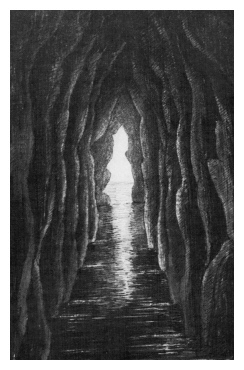
The Rathlin Island massacre took place on Rathlin Island, off the coast of Ireland on 26 July 1575, when more than 600 Scots and Irish were killed.
Sanctuary attacked
Rathlin Island was used as a sanctuary because of its natural defences and rocky shores; when the wind blew from the west, in earlier times it was almost impossible to land.
It was also respected as a hiding place, as it was the one-time abode of St. Columba.Installing themselves in Rathlin Castle, the MacDonnells of Antrim had made Rathlin their base for expanding their control over the north-eastern coast of Ireland in direct conflict with the local Irish and English resulting in several campaigns to expel them from Ireland.
Their military leader, Sorley Boy MacDonnell (Scottish Gaelic: Somhairle Buidhe Mac Domhnaill) and other Scots had thought it prudent to send their wives, children, elderly, and sick to Rathlin Island for safety.
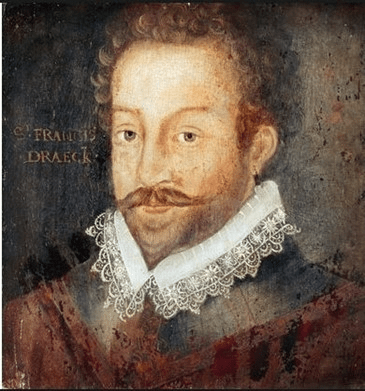
Acting on the instructions of Henry Sidney and the Earl of Essex, Francis Drake and John Norreys took the castle by storm. Drake used two cannons to batter the castle and when the walls gave in, Norreys ordered a direct attack on 25 July, and the Garrison surrendered. Norreys set the terms of surrender, whereupon the constable, his family, and one of the hostages were given safe passage and all other defending soldiers were killed, and on 26 July 1575, Norreys’ forces hunted the old, sick, very young and women who were hiding in the caves.
Despite the surrender, they killed all the 200 defenders and more than 400 civilian men, women and children. Drake was also charged with the task of preventing any Scottish reinforcement vessels reaching the Island.
The entire family of Sorley Boy MacDonnell perished in the massacre Essex, who ordered the killings, boasted in a letter to Francis Walsingham, the Queen’s secretary and spymaster, that Sorley Boy MacDonnell watched the massacre from the mainland helplessly and was:
“like to run mad from sorrow”.
The Haunted Irish Island – Rathlin Island
Aftermath
Norreys stayed on the island and tried to rebuild the walls of the castle so that the English might use the structure as a fortress. As Drake was not paid to defend the island, he departed with his ships. Norreys realised that it was not possible to defend the island without intercepting Scottish galleys and he returned to Carrickfergus in September 1575.
My thoughts ?
Regardless of your political opinion and how you view modern day Ireland and the bloody never-ending consequences of partition and the creation of Northern Ireland, I’m sure we can all agree that our beautiful wee green island has suffered more than its fair share of heartache, misery and political and religious abuse over the centuries.
Whilst many are familiar with recent history and the thirty years of sectarian and political violence we all endured – the seeds of these conflicts had been brewing and stewing for hundreds of years and finally boiled over into “civil ” war in the late 1960s.
From the time when the Vikings first arrived and began raiding in AD 795 to the modern-day Troubles Ireland has never known a lasting peace and our past is littered with the ghosts and memories of countless wars and battles that have left scars and wounds which still fester to this day and are part of our collective ancestral heritage.
In his quest for a United Ireland Brian Boru was arguably the most successful of many leaders who tried previously to bond the warring tribes against the Vikings marauders and those tribes aligned with them. The Battle of Clontarf is one of the greatest battles in Irish history, were an estimate 7,000 – 10,000 men and tribal leaders were killed in the brutal clash that day. Centuries of rule and misrule under various English, Scottish and European parliaments followed until we arrive in the 1960’s and the beginning of the modern Troubles.
I’ve covered the modern Troubles extensively on my blog and if you are interested it has a searchable database of every major event and killing during those dark days. But as a lover of history I thought I would share stories of some of the less well known conflicts and battles that have caught my attention throughout the years and ultimately led to the Ireland, north and south we know and love today.
John Chambers
Don’t forget to subscribe to my blog and follow me on Twitter @bfchild66

Secrets Of Great British Castles – Carrickfergus Castle
See also
See : Wiki Portadown massacre
See: List of massacres in Ireland
See: List of conflicts in Ireland
See: Rathlin Island
See : Battle of the Boyne
See: Siege of Derry
- My Stop-Smoking Diary & cancer scare
 Saturday, July 1966 – Monday, 7 September 2026 The Promise I Made as a BoyI was ten years old when lung cancer took my dad. Watching him die such a horrible, painful death changed the shape of my life forever. It traumatised me. It carved a hole in my heart and soul that has never … Continue reading My Stop-Smoking Diary & cancer scare
 - 100 Belfast & Northern Ireland Slang Phrases & Meaning
 Belfast slang is in a league of its own , so it is, and that’s a big part of the city’s craic. The accent and the banter have been shaped by Irish, Scots, and English influences, so if you’re not from here it can sound a wee bit strange at first and might do yer … Continue reading 100 Belfast & Northern Ireland Slang Phrases & Meaning
 - Update: One foot in the Grave – countdown to my 60th Birthday has begun
 Date 3rd July 2026 Only thirteen days to go until I hit the big 6-0, and I have to admit I’m getting quite excited about my upcoming trip to Belfast and spending time with the people I love and cherish most in the world. At the same time, I’m feeling a little apprehensive. Reaching such … Continue reading Update: One foot in the Grave – countdown to my 60th Birthday has begun
 - I Don’t Like Mondays – the Boomtown Rats: Iconic Songs & the story behind them
 I Don’t Like Mondays The Boomtown Rats 13 July 1979 Iconic Songs & the story behind them “I Don’t Like Mondays” is a song by the Irish new wave band the Boomtown Rats about the Cleveland Elementary School shooting in San Diego. It was released in 1979 as the lead single from their third studio album, The Fine Art of Surfacing. The song was a number-one … Continue reading I Don’t Like Mondays – the Boomtown Rats: Iconic Songs & the story behind them
 - Who do you think I am ?
 Pop culture echoes Trigger warning: ⚠️This post touches on my deep pride and love of my loyalist culture and traditions and if this is not of interest or offends you , please feel free to continue scrolling. Who Do You Think I Am? It’s a question that divides opinion, and I’m acutely aware that many … Continue reading Who do you think I am ?

