The dictator was killed along his mistress , Clara Petacci. Their bodies were taken to Milan from the Lecco district near Lake Como where they were arrested and killed.
According to the Times correspondent in Milan, the corpses of Mussolini, Petacci and 12 Fascists are on display in Piazzale Loreto “with ghastly promiscuity in the open square under the same fence against which one year ago 15 partisans had been shot by their own countrymen”.
Clara Petacci
One woman fired five shots into Mussolini’s body, according to Milan Radio, and shouted: “Five shots for my five assassinated sons!”
Other passers-by spat on the bodies
The executions are the first conspicuous demonstration of mob violence carried out by the partisans who until now have been kept under control by their leaders.
The partisan commander-in-chief General Raffaele Cadorna said such incidents were regrettable but desirable in this case as a way for the public to vent their anger against the former dictator and his cohorts.
Among the bodies were former general secretary of the Fascist Party, Roberto Farinacci and Carlo Scorza, former secretary of the party.
Mussolini was spotted heading towards Switzerland by an Italian customs guard at Dongo, near Lake Como. He was driving a car in a column of other German cars wearing a German greatcoat over his uniform.
Other members of his party were found in neighbouring villages.
It was in Milan that Mussolini founded Europe’s first fascist movement – Fasci di Combattimento – in 1919.
He came to power in 1922 after the so-called March on Rome.
By 1928 Mussolini was absolute dictator and took the title of Duce, leader, and embarked on an expansionist foreign policy taking Ethiopia in 1935 and annexing Albania in 1939. That same year Mussolini signed a Tripartite Pact with Adolf Hitler’s Germany and Imperial Japan.
After defeats in Greece, the Balkans, North Africa and Russia, Mussolini lost popularity. Then on 9 July 1943 the Allies landed in Sicily and Italy was faced with an invasion of its mainland.
Mussolini failed to secure assurances from Germany of adequate support against such an invasion and the Fascist Grand Council turned against him and had him arrested on 25 July.
Marshal Pietro Badoglio was appointed prime minister, dissolved fascist organisations and negotiated an armistice with the Allies.
Six weeks later the Germans launched a dramatic rescue of Mussolini. He was made head of the puppet republic of Salo – also known as the Italian Social Republic – once the Germans had occupied northern Italy in September 1943.
On 11 October 1943 the Badoglio government declared war on Germany
” A dictator is a ruler who wields absolute authority. A state ruled by a dictator is called a dictatorship. The word originated as the title of a magistrate in ancient Rome appointed by the Senate to rule the republic in times of emergency “
WARNING
Please be advised that some of these videos are not for the faint hearted and contain graphic footage of executions.
In fact I only put this together as a request for someone and I must confess I actually felt physically sick whilst researching and selecting the videos to be included in this blog.
I’ve always had a weak stomach and can’t stand the sight of blood.
As to the stars of this post I think I am safe to say that they were among the most vile evil humans ever to grace Gods earth and few will shed tears at the violent ends
As the saying goes …
“What come around goes around “
Samuel Doe
The Execution of former Liberian President Samuel K. Doe
Samuel Kanyon Doe (May 6, 1951 – September 9, 1990) was the leader of Liberia from 1980 to 1990. He served as chairman of the People’s Redemption Council and de facto head of state after staging a violent coup d’etat in 1980 where he killed the previous leader, William R. Tolbert, Jr., and executed many of his supporters. The constitution was disbanded and headed the country’s military junta for the next five years. In 1985 he ordered an election as previously promised and officially became the 21stPresident of Liberia, despite heavy controversy sparked by evidence of election fraud. Nevertheless, he enjoyed decisive support from the United States thanks to the strategic anti-Soviet stance he had taken in the Cold War. He was the first indigenous head of state in Liberian history.
Doe was a member of the rural Krahn tribe from inland Liberia. The Krahn people are a minority ethnic group but, like the majority of Liberians, they are of indigenous descent. Liberians of indigenous descent were historically faced with economic and political marginalization by the Americo-Liberian elites, who were descended from the free-born and formerly enslaved blacks from America who founded Liberia in 1847.
Under Doe, Liberian ports were opened to Canadian, Chinese and European ships, which brought in considerable foreign investment from foreign shipping firms and earned Liberia a reputation as a tax haven.
Doe attempted to legitimize his regime with a new constitution in 1984 and elections in 1985. However, opposition to his rule only increased, especially after the 1985 elections which were declared to be fraudulent by foreign observers, except the US which supported the Doe regime. In the late 1980s, as fiscal austerity took hold in the United States and the threat of Communism declined with the waning of the Cold War, the U.S. became disenchanted with entrenched corruption in Doe’s government and began cutting off critical foreign aid to Doe. This, combined with the popular anger generated by Doe’s favoritism toward his native Krahn tribe, placed him in a very precarious position.
A civil war began in December 1989, when rebels entered Liberia through Côte d’Ivoire with the intent of capturing Doe. He was captured and overthrown on 9 September 1990. Following his capture, he was tortured before being executed.
A member of the Romanian Communist youth movement, Ceaușescu rose up through the ranks of Gheorghe Gheorghiu-Dej‘s Socialist government and, upon the death of Gheorghiu-Dej in 1965, he succeeded to the leadership of Romania’s Communist Party as General Secretary.[3]
After a brief period of relatively moderate rule, Ceaușescu’s regime became increasingly brutal and repressive. By some accounts, his rule was the most rigidly Stalinist in the Soviet bloc.[4] He maintained controls over speech and the media that were very strict even by Soviet-bloc standards, and internal dissent was not tolerated. His secret police, the Securitate, was one of the most ubiquitous and brutal secret police forces in the world. In 1982, with the goal of paying off Romania’s large foreign debt, Ceaușescu ordered the export of much of the country’s agricultural and industrial production. The resulting extreme shortages of food, fuel, energy, medicines, and other basic necessities drastically lowered living standards and intensified unrest. Ceaușescu’s regime was also marked by an extensive and ubiquitous cult of personality, nationalism, a continuing deterioration in foreign relations even with the Soviet Union, and nepotism.
Ceaușescu’s regime collapsed after he ordered his security forces to fire on anti-government demonstrators in the city of Timișoara on 17 December 1989. The demonstrations spread to Bucharest and became known as the Romanian Revolution, which was the only violent removal of a Communist government in the course of the revolutions of 1989.[5] Ceaușescu and his wife, Elena, fled the capital in a helicopter but were captured by the armed forces. On 25 December the couple were hastily tried and convicted by a special military tribunal on charges of genocide and sabotage of the Romanian economy in an approximate one hour long court session.[6] Ceaușescu and his wife were then shot by a firing squad.[7]
Muammar Gaddafi, the deposed dictator of Libya, died on 20 October 2011 during the Battle of Sirte. Gaddafi was found hiding in a culvert west of Sirte and captured by National Transitional Council forces. He was killed shortly afterwards. The NTC initially claimed he died from injuries sustained in a firefight when loyalist forces attempted to free him, although videos of his last moments show rebel fighters beating him before he was shot several times.[2]
As vice president under the ailing General Ahmed Hassan al-Bakr, and at a time when many groups were considered capable of overthrowing the government, Saddam created security forces through which he tightly controlled conflict between the government and the armed forces. In the early 1970s, Saddam nationalized oil and other industries. The state-owned banks were put under his control, leaving the system eventually insolvent mostly due to the Iran–Iraq War, the Gulf War, and UN sanctions.[7] Through the 1970s, Saddam cemented his authority over the apparatuses of government as oil money helped Iraq’s economy to grow at a rapid pace. Positions of power in the country were mostly filled with Sunni Arabs, a minority that made up only a fifth of the population.
Saddam formally rose to power in 1979, although he had been the de facto head of Iraq for several years prior. He suppressed several movements, particularly Shi’a and Kurdish movements, seeking to overthrow the government or gain independence,[8] and maintained power during the Iran–Iraq War and the Gulf War. Whereas some[9] venerated Saddam for his opposition to Israel—which included the use of military force[10]—he was widely condemned in the west for the brutality of his dictatorship.
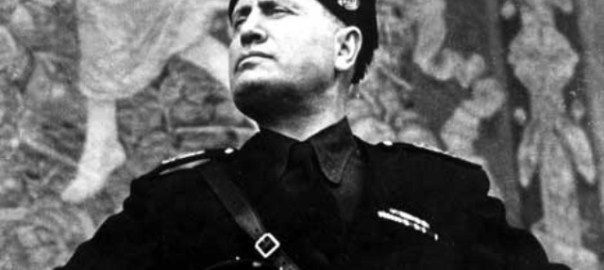
Execution of Benito Mussolini During World War Two
Benito Amilcare Andrea Mussolini (Italian pronunciation: [beˈnito mussoˈlini];[1] 29 July 1883 – 28 April 1945) was an Italian politician, journalist, and leader of the National Fascist Party, ruling the country as Prime Minister from 1922 until his ousting in 1943. He ruled constitutionally until 1925, when he dropped all pretense of democracy and set up a legal dictatorship. Known as Il Duce (“the leader”), Mussolini was one of the key figures in the creation of fascism.[2]
In 1912 Mussolini was the leading member of the National Directorate of the Italian Socialist Party (PSI).[3] Prior to 1914 he was a keen supporter of the Socialist International, starting the series of meetings in Switzerland[4] that organised the communist revolutions and insurrections that swept through Europe from 1917. Mussolini was expelled from the PSI due to his opposition to the party’s stance on neutrality in World War I. Mussolini denounced the PSI, and later founded the fascist movement. Following the March on Rome in October 1922 he became the youngest Prime Minister in Italian history until the appointment of Matteo Renzi in February 2014. After destroying all political opposition through his secret police and outlawing labor strikes,[5] Mussolini and his fascist followers consolidated their power through a series of laws that transformed the nation into a one-party dictatorship. Within five years he had established dictatorial authority by both legal and extraordinary means, aspiring to create a totalitarian state. Mussolini remained in power until he was deposed by King Victor Emmanuel III in 1943. A few months later, he became the leader of the Italian Social Republic, a German client regime in northern Italy; he held this post until his death in 1945.[6]
Since 1939, Mussolini had sought to delay a major war in Europe until at least 1942. Germany invaded Poland on 1 September 1939, starting World War II. On 10 June 1940, Mussolini sided with Germany, though he was aware that Italy did not have the military capacity in 1940 to carry out a long war with France and the United Kingdom.[7] Mussolini believed that after the imminent French armistice, Italy could gain territorial concessions from France and then he could concentrate his forces on a major offensive in Egypt, where British and Commonwealth forces were outnumbered by Italian forces.[8] However the UK refused to accept German proposals for a peace that would involve accepting Germany’s victories in Eastern and Western Europe, plans for a German invasion of the UK did not proceed, and the war continued.
On 24 July 1943, soon after the start of the Allied invasion of Italy, the Grand Council of Fascism voted against him, and the King had him arrested the following day. On 12 September 1943, Mussolini was rescued from prison in the Gran Sasso raid by Germanspecial forces. In late April 1945, with total defeat looming, Mussolini attempted to escape north,[9] only to be quickly captured and summarily executed near Lake Como by Italian partisans. His body was then taken to Milan where it was hung upside down at a service station for public viewing and to provide confirmation of his demise.[10]




 belfastchildis.com