LONDON MAYOR FACES CALLS TO BAN ‘TERRORIST SUPPORTING’ ANTI-ISRAEL MARCH
The views and opinions expressed in this documentary/page are soley intended to educate and provide background information to the subject in question.
They in no way reflect my own opinions and I take no responsibility for any inaccuracies or factual errors
LONDON MAYOR FACES CALLS TO BAN ‘TERRORIST SUPPORTING’ ANTI-ISRAEL MARCH
An online petition calling to cancel the annual ‘Al Quds Day’ rally in the British capital had garnered nearly 8.5 thousand signatures as of Wednesday.
Thousands of advocates have called on London Mayor Sadiq Khan to cancel an upcoming anti-Israel rally in the British capital due to concerns that the march propagates displays of antisemitism and terrorism.
The controversial event is scheduled to be held in the UK on Sunday as part of the annual ‘Al Quds Day,’ which Iran initiated in 1979 to express support for the Palestinians and opposition of Israel’s existence and is held on the last Friday of the holy Muslim month of Ramadan.
As of Wednesday afternoon, an online petition entitled “BAN The Extremist, Terrorist Supporting Al Quds March In London On June 18th” had garnered nearly 8.5 thousand signatures.
The petition was launched by the group North West Friends of Israel, a grassroots pro-Israel organization in Britain that works to counter antisemitism and the BDS movement.
Quds Day (Jerusalem Day; Quds is the Arabic name for Jerusalem), officially called International Quds Day (Persian: روز جهانی قدس), is an annual event held on the last Friday of Ramadan that was initiated by the Islamic Republic of Iran in 1979 to express support for the Palestinians and oppose Zionism and Israel‘s existence, as well as Israel’s control of Jerusalem. Nominally, it exists in opposition to the Jerusalem Day (Yom Yerushalayim) celebration instituted by Israel in May 1968, and which Knesset law changed into a national holiday in 1998.
In Iran, the government sponsors and organizes the day’s rallies, and its celebration in that country has had, down to at least 2012, a decade-long tradition of voicing anti-Semitic attacks. Quds Day is also held in several other countries, mainly in the Arab and Muslim world, with protests against Israel’s occupation of East Jerusalem. Rallies are held in verious cities by both Muslim and non-Muslim communities around the world.
An annual anti-Zionist day of protest was first suggested by Ebrahim Yazdi, the first foreign minister of the Islamic Republic of Iran, and a liberal, to the leader of the Iranian Revolution, Ruhollah Khomeini. The context was one of deepening tensions between Israel and Lebanon at the time. Khomeini took over unacknowledged Yazdi’s idea, and on August 7, 1979, he declared the last Friday of the holy month of Ramadan each year as Quds Day, in which Muslims worldwide would unite in solidarity against Israel and in support of the Palestinians.
Khomeini declared the “liberation” of Jerusalem a religious duty to all Muslims.That day, he stated:
I invite Muslims all over the globe to consecrate the last Friday of the holy month of Ramadan as Al-Quds Day and to proclaim the international solidarity of Muslims in support of the legitimate rights of the Muslim people of Palestine. For many years, I have been notifying the Muslims of the danger posed by the usurper Israel which today has intensified its savage attacks against the Palestinian brothers and sisters, and which, in the south of Lebanon in particular, is continually bombing Palestinian homes in the hope of crushing the Palestinian struggle.
I ask all the Muslims of the world and the Muslim governments to join together to sever the hand of this usurper and its supporters. I call on all the Muslims of the world to select as Al-Quds Day the last Friday in the holy month of Ramadan—which is itself a determining period and can also be the determiner of the Palestinian people’s fate—and through a ceremony demonstrating the solidarity of Muslims world-wide, announce their support for the legitimate rights of the Muslim people. I ask God Almighty for the victory of the Muslims over the infidels.
Iran celebrates the event characteristically by putting on public display poster images of the city of Jerusalem, thematic speeches, art exhibitions reflecting the issue, and folkloric events. In Lebanon, the Hezbollah organization marks the occasion by a substantive military parade organized for the last week of Ramadan. Since 1989, the Hashemite kingdom of Jordan observes the event by hosting academic conferences, whose venue from university to university varies each year. Arab societies generally pay the occasion lip service in order to make a show of solidarity with the cause of Palestinian aspirations for nationhood.
Quds Day has actually become a day for protestors in Iran and in other societies:
“to attack the legitimacy of the state of Israel and threaten the United States”.
The day is also marked throughout Muslim and Arab countries. During the First Intifada in January 1988, the Jerusalem Committee of the Organisation of the Islamic Conference decided that Quds Day should be commemorated in public events throughout the Arab world.[13] In countries with significant Shi’a populations, particularly Lebanon, where Hezbollah organizes Quds Day observances, there is significant attendance at the day’s events. Events are also held in Iraq, the Palestinian Gaza Strip, and Syria. Hamas, and the Islamic Jihad Movement in Palestine endorse Quds Day, and hold ceremonies. Outside of the Middle East and the wider Arab World, Quds Day protests have taken place in the United Kingdom, Germany, Canada, Sweden, France, the United States, as well as some predominantly Muslim countries in east Asia.
According to the BBC, while the idea behind Quds Day originally was to gather all Muslims in opposition to the existence of Israel, the event has not developed beyond an Iranian experience. Apart from rallies, usually funded and organized by Iran itself, in various capital cities, the ritual never took root among Muslims at large.
Quds Day events
Shamshad Haider from the Muslim Congress speaking during the 2015 Quds rally, Chicago.
In Iran, the day’s parades are sponsored and organized by the government. Events include mass marches and rallies. Senior Iranian leaders give fiery speeches condemning Israel, as well as the U.S. government. The crowds respond with chants of:
According to Roger Howard, many Iranians under the age of 30 continue to participate in Quds Day events, though proportionately less than those on the streets. He adds that many Iranian students on campus say in private that the Arab–Israeli conflict has “nothing to do with us.”
1980s
On Quds Day 1985, amid the “war of the cities” of the Iran–Iraq War, Iraqi bombers and long-range missiles struck 14 cities, reportedly killing at least 78 people and wounding 326. According to the Islamic Republic News Agency, the sound of the exploding bombs and missiles in Tehran was drowned out by the crowds chanting:
“War, war until victory 3/8.”
On Quds Day 1987, held shortly after the outbreak of the First Intifada, effigies of U.S. President Ronald Reagan and Israeli leaders were burned in Iran “as a sign of Moslem nations’ revolutionary wrath against Zionism, imperialism and apartheid.” In Tehran, President Ali Khamenei said the Palestinians:
“should resist and fight Zionism. This is the message of the whole Iranian people who chant the ‘Death to Israel’ slogan.”
On Quds Day 1989, Iranian parliament speaker Hashemi Rafsanjani said that Palestinians should kill Americans and other Westerners in retaliation for attacks by the Israeli military in the occupied territories:
“If in retaliation for every Palestinian martyred in Palestine they will kill and execute, not inside Palestine, five Americans or Britons or Frenchmen, they (Israelis) could not continue these wrongs. It is not hard to kill Americans or Frenchman. It is a bit difficult to kill (Israelis). But there are so many (Americans and Frenchman) everywhere in the world.”
1990s
Fearing an Israeli military strike, Hezbollah cancelled its annual Quds Day rallies in 1992 for the first time in the group’s history. 10 days earlier, a suicide bombing in Buenos Aires, Argentina destroyed the Israeli embassy there and killed 29 people injured 242 others. Hezbollah was implicated in the attack.
In 1994, Iranian President Hashemi Rafsanjani told demonstrators,
“Can Israel really remain? In my opinion it cannot. That artificial entity cannot survive.”
In 1998, former Iranian president Hashemi Rafsanjani stated that Israel’s crimes against the Palestinians exceeded those of Adolf Hitler against the Jews. He added,
“The Zionist regime is a fake government and homeland which is shaped with millions of homeless Palestinians and hundreds of thousands of Muslim martyrs… I’m sure that in the future we will have Islamic Palestine. I’m sure nothing will remain as the territory of Israel.”
In 1999, a reported three million people attended Quds Day rallies in Iran. In Tehran, a resolution was read aloud calling for struggle :
“until the aggressor Zionist regime is annihilated.”
Iranian Parliament Speaker Ali Akbar Nateq-Nouri told worshipers at Friday prayers, “There is no country named Israel. There is Palestine, and the thieves who have occupied the houses of Palestinians should be removed from those houses.” In Beirut, Hezbollah leader Hassan Nasrallah told thousands of supporters, “On Al-Quds Day, I reaffirm to you that Israel will be eliminated one day, God willing.” At the Yarmouk Palestinian refugee camp in Syria, protesters carried a banner that read:
“America is the enemy of God.”
2000–2008
Over one million people, with over 100,000 in each of Iran’s eight largest cities, marched in the 2005 Quds Day protests in Tehran and other cities across Iran. Protests were staged throughout the Middle East and the wider Arab World, with over 30,000 Bahrainis marching in Manama, and 6,000 Hezbollah volunteers marching in Beirut.
In 2006, Iranian President Mahmoud Ahmadinejad threatened any country that supports Israel, and said the U.S. and its allies had “imposed a group of terrorists” on the region with their support of the Jewish state. He added that Israel no longer had any reason to exist and would soon disappear:
“This regime, thanks to God, has lost the reason for its existence. Efforts to stabilize this fake (Israeli) regime, by the grace of God, have completely failed… You should believe that this regime is disappearing.”
That year, Hezbollah did not organize a mass rally for Quds Day, stating it was unnecessary because it had recently held a demonstration on September 22 to celebrate what it declared to be its
“victory” over Israel in that summer’s conflict. In the place of a mass event, the day was commemorated with an “invitation-only event in a concert hall [which] featured an orchestra, a choir and several anti-Israel speeches.”
The 2007 Quds Day protest saw millions of Iranians march in support of the Palestinians. During the rallies in Tehran, President Ahmadinejad said that the “creation, continued existence and unlimited (Western) support for this [Zionist] regime is an insult to human dignity.”
The protests also featured signs denouncing the U.S government for its support of Israel.Over 3,000 people marched in Damascus carrying Palestinian flags. Hezbollah organized marches in the city’s Yarmouk refugee camp.
2009 Quds Day
Supporters of Iranian opposition groups used the 2009 Quds Day to stage protests against President Ahmadinejad and the Iranian government in response to the disputed 2009 Iranian presidential election. Estimates put the opposition protest in the tens of thousands, with participants shouting slogans in support of former prime minister Mir-Hossein Mousavi, the candidate who received the most votes in the presidential elections.
Rejecting the government’s support of Palestinian militancy, opposition protesters chanted,
“No to Gaza and Lebanon, I will give my life for Iran.”
There were reports of similar protests in Isfahan, Tabriz, Yazd and Shiraz.
Iranian state TV played down the unrest, and state-funded Press TV reported that millions of Iranians marched for the Palestinian cause in Iran and different countries throughout the Middle East and the world.
Independent sources estimated
“tens of thousands” to over 100,000 in Tehran, many of them bused in by the regime. At least ten anti-government protesters were arrested during the demonstrations. An angry crowd of Ahmadinejad supporters attacked Mousavi’s car while shouting “Death to the hypocrite Mousavi.”
In other cities Basiji militiamen attacked protesters.
As he has done on previous such occasions, Mahmoud Ahmadinejad provoked intense criticism and condemnation from Western governments in particular. He stated,
“The pretext (Holocaust) for the creation of the Zionist regime (Israel) is false … It is a lie based on an unprovable and mythical claim.”
His statements drew immediate condemnation from the governments of the United States, Russia, and the European Union.
In Lebanon, Hassan Nasrallah, the leader of Hezbollah, used the occasion to call for popular resistance to replace the regimes in the Middle East with regimes that are ‘convinced of war in order to send their armies to war.’
At the 2010 Quds Day rally in Tehran, Iranian President Ahmadinejad again predicted the demise of Israel, stating, “If the leaders of the region do not have the guts, then the people of the region are capable of removing the Zionist regime from the world scene.” He dismissed any Israeli military threat to Iran’s nuclear program, declaring,
“The Zionist regime is nothing and even its (Western) masters are too small to conduct any kind of aggression against Iran and the rights of the Iranian people.”
Ahmadinejad also proclaimed new peace talks between Israelis and Palestinians as “stillborn and doomed.
” The tens of thousands of Iranians participating in the rallies continued the regular chants of “Death to America! Death to Israel!”
The day before the rallies, Ayatollah Khamenei tweeted, “Israel Is A Hideous Entity In the Middle East Which Will Undoubtedly Be Annihilated.”
Israeli flags being burnt at the 2011 Quds Day demonstration in Nishapur, northeastern Iran.
Our nation cannot ignore and forget this cause (al-Quds) because it is part of our religion, our religious commitment, our culture, our civilization, our morals and values and our past history . . No one has the right to give up one span of its land, one grain of its sacred sand, one drop of its water, or one letter of its name. Al Quds Day is the day for announcing this ideological, legal, historic true constant position. On this day we make the announcement that neither al-Quds nor even one of its streets nor even a neighbourhood of its neighbourhoods – and not only all of al-Quds -may be an eternal capital for the so called state of Israel. Al Quds is the capital of Palestine, and as we have said in the past, it is the capital of earth and the capital of heaven one way or another.
Protesters against the 2011 Quds Day demonstrations in Berlin.
On 17 August 2012, millions of Iranians commemorated al-Quds Day, where they waved Palestinian flags, chanted “Death to Israel and America,” and burned Israeli and American flags. Iranian President Mahmoud Ahmadinejad called to destroy Israel, which he termed an “insult to all humanity” and called to remove the “Zionist black stain.” Ahmadinejad said that “the Zionist regime is a tool to dominate the Middle East,” as well as that world powers are “thirsty for Iranian blood.” Ahmadinejad stated that “The Zionist regime and the Zionists are a cancerous tumour.
Even if one cell of them is left in one inch of (Palestinian) land, in the future this story (of Israel’s existence) will repeat.” He further stated that:
“The nations of the region will soon finish off the usurper Zionists in the Palestinian land. … A new Middle East will definitely be formed. With the grace of God and help of the nations, in the new Middle East there will be no trace of the Americans and Zionist.”
In Lebanon, Hezbollah Leader Sheik Hassan Nasrallah stated in a televised speech that, in the eventuality of a future Israeli attack on Lebanon, only a few rockets fired by the group’s militia could cause massive casualties, given its well-planned target list, explaining that:
“
“Rockets are ready and directed at these targets. We will not hesitate to use them, if we have to, at any point in time in the course of aggression against our country to protect our people. … Hezbollah cannot destroy Israel but we can transform the lives of millions of Zionists in occupied Palestine into a real hell. We can change the face of Israel.”
“We are committed to the right of return and to liberation of prisoners and resistance against the occupation as long as it is on our land”.
In Bahrain, dozens took part in the protests, which were dispersed by security forces’ tear gas.
2013 Quds Day
On 2 August 2013, Quds rallies were held in “the United Kingdom, Australia, Iran, the United States, and across the Muslim world”. While Iranians were commemorating al-Quds Day, Iranian Students News Agency (ISNA) reported that newly elected President Hassan Rouhani said:
“the Zionist regime is a wound that has sat on the body of the Muslim world for years and needs to be removed,”
although ISNA later retracted the statement. Israeli Prime Minister Benjamin Netanyahu responded by saying “Rouhani’s true face has been exposed earlier than expected,” and warned that despite the election of the so-called moderate, “the objective of the regime – to acquire nuclear weapons to threaten Israel, the Middle East and peace and security throughout the world – has not changed.”
Outgoing Iranian President Ahmadinejad addressed Al-Quds day crowds, warning of an impending regional storm that would uproot Israel. He also said that Israel “has no place in the region.”
Canada
In Toronto, Canada, a crowd of approximately 400 held an Al-Quds Day rally. One of the speakers, Elias Hazineh, a Christian, reportedly elicited cheers from the crowd when he declared an ultimatum to Israelis:
“You have to leave Jerusalem. You have to leave Palestine. When somebody tries to rob a bank the police get in, they don’t negotiate and we have been negotiating with them for 65 years. We say get out or you are dead! We give them two minutes and then we start shooting. And that’s the only way that they will understand.”
Hazineh then concluded his speech by quoting from the Koran: “And prepare against them whatever you are able of power and steeds of war – that’s the only thing that they’ll understand!” A video of the event, including Hazineh’s speech, was later posted online. Those remarks drew swift condemnation.
On 25 July 2014, Iran’s Press TV claimed that millions of people from around the world rallied in a show of support for Palestinians.This year’s rallies were held with a higher turnout as Israel and Hamas began renewed armed conflict on July 8 in Gaza.
Britain
Thousands of British demonstrators joined the rally on international Quds day demanding justice for “killers of Gaza children” in central London. The march ended with a rally outside the US embassy.
Germany
Quds Day 2014 in Berlin
More than a thousand people gathered at Adenauerplatz in Berlin for a demonstration against “zionists” calling for a free Palestine while thousands of police were on alert to avoid possible conflicts between protesters and pro-Israeli groups on Quds Day. Approximately 700 pro-Israel marchers also held a rally according to the German police.
Jurgen Grassmann, the chief organizer of Berlin’s Al-Quds Day March asked the demonstrators not to shout “Allahu Akbar”. He reminded them the fact that they had gathered against Zionism and not Judaism, advising the protestors to “Keep Allah in your heart, but don’t say so out loud.”
Iran
Hundreds of thousands of Iranians in the capital Tehran and more than 770 other towns and cities throughout the country on international Quds day took part in massive rallies to express their support for the Palestinian resistance against Israel.The event took on added significance this year given the ongoing Israel and Hamas conflict in Gaza.
South Africa
Almost 5,000 pro-Palestinian rallied in the streets of Cape Town, to express their support for the people of Palestine. The rally commenced from Keizergracht Street in District Six towards the Parliament. The protestors delivered a memorandum calling the government to take solid measures against the Occupation of Palestine to the Parliament. According to the Voice of the Cape, it called for the expulsion of the Israeli Ambassador and also urged the protesters to boycott local stores which stock products manufactured in the occupied territories of Palestine.
Pakistan
Thousand of people in many cities across Pakistan marched in support of Palestine. The Jamat-e-Islami political party organized rallies in several cities. Popular Shia cleric Syed Jawad Naqvi orchestrated a separate rally in the city of Lahore.
Syria
International al-Quds rally took place in Damascus, starting from he entrance of al-Hamidiyeh market towards the Umayyad Mosque. Popular figures and representatives of Palestinian and Syrian forces accompanied the rally. The demonstrators claimed to support the resistance until Palestinian freedom is achieved.
Nigeria
In Nigeria, the 2014 Quds day procession took place in 24 major cities, mostly in the north of the country. The processions were organized by Nigerian Islamic Movement. The processions were all conducted peacefully except in Zaria, the abode of the leader of the movement, Ibrahim Zakzaky; where the Nigerian Army reportedly opened fire on the participants and killed 35 people, including three (3) biological sons of the head of the movement.
2015 Quds day
A woman participating 2015 Quds day rally, Chicago.
Austria
According to Samuel Laster, the editor-in-chief of the online news outlet Die Jüdische (The Jewish), 700 people participated an anti-Israeli rally in Vienna, while 150 pro-Israel counterprotesters hold a similar event to support Israel.
Britain
In London, a protest was organized by the Islamic Human Rights Commission, which accused the BBC of “bias in their reporting of the situation in Palestine” while sharply criticizing the United States for its “heinous support of Israel.”
Germany
Almost 700 people participated the 2015 Quds Day rally in Berlin, Germany. The participants chanted “Child murderer Israel” and other anti-semitic slogans, according to German media outlets. A counter-rally comprising 250 participants was also held. Several members of Neturei Karta, a Jewish religious group opposing Zionism and calling for a dismantling of the State of Israel, took part in the rally.
Iran
Millions of people hold rallies in 770 cities across Iran chanting “Down with America” and “Death to Israel” on Al-Quds Day.
US
Almost 250 people participated in a Quds Day rally held in Chicago. Besides focusing on the “continuing siege of Gaza”, the speakers “called for the U.S. to end military aid to Israel.” Almost 150 people formed a rally at the CNN center in Atlanta to support the Palestinian people and call for the US government to stop supporting the state of Israel.
2016 Quds day
Britain
Demonstrations in London were organized by the Islamic Human Rights Commission (IHRC) on Sunday, 3 July 2016. The terminus of the demonstration route is the U.S. Embassy at Grosvenor Square. Counter-demonstrations were organized by Suffolk Friends of Israel (SFI).
Iran
Demonstrations took place across Iran on 1 July 2016. According to the Washington Post, “tens of thousands” of people marched in the capital, Tehran. Some protesters trampled on Israeli flags, and some chanted “death to Israel” and “down with the USA.”
At a sermon in Tehran on Al-Quds day, IRGC Deputy Commander Hossein Salami claimed that over 100,000 missiles in Lebanon, as well as thousands more throughout the Islamic world, were ready :
“strike at the heart of the Zionist regime. They will prepare the ground for its great collapse in the new era. … They are just waiting for the command, so that when the trigger is pulled, the accursed black dot will be wiped off the geopolitical map of the world, once and for all.”
North America
Al-Quds Day demonstrations were scheduled for several cities in the United States and Canada. In Toronto, the demonstration route began at Queen’s Park, the provincial legislature, and proceeded to the U.S. Consulate. In Toronto, Calgary, New York City, Chicago, Boston and Los Angeles, the Jewish Defence League organized counter-demonstrations.
James Thomas Duane Ashworth, VC (26 May 1989 – 13 June 2012) was a British soldier and posthumous recipient of the Victoria Cross, the highest award for gallantry in the face of the enemy that can be awarded to British and Commonwealth forces. He was killed in Afghanistan on 13 June 2012 as he led his fire team in an attack on an enemy-held compound. The award was gazetted on 22 March 2013, having been confirmed by the British Army earlier in the week. Ashworth is the 14th recipient of the award since the end of the Second World War.
Ashworth lived and grew up in Corby, Northamptonshire, where he attended Lodge Park Technology College. A keen sportsman, he represented his school at both football and basketball.
In 2006, aged 17, Ashworth joined the British Army following his father who had previously served in the Grenadier Guards.[3]Ashworth trained at the Infantry Training Centre in Catterick before being posted to Nijmegen Company Grenadier Guards, which is focused on public duties and state ceremonial events in London.
He was identified as being capable of becoming a paratrooper and was assigned to the Guards’ Parachute Platoon, which is part of 3rd Battalion, Parachute Regiment. In his three years in the platoon, he took part in Operation Herrick 8 and was deployed to exercises overseas on three occasions. He was deployed to Canada before joining the Reconnaissance Platoon for Operation Herrick 16.
Death
Victoria Cross
Despite the ferocity of the insurgent’s resistance, Ashworth refused to be beaten. His total disregard for his own safety in ensuring that the last grenade was posted accurately was the gallant last action of a soldier who had willingly placed himself in the line of fire on numerous occasions earlier in the attack. This supremely courageous and inspiring action deserves the highest recognition.
Victoria Cross citation for James Ashworth VC
On 13 June 2012, Ashworth was serving as part of the Reconnaissance Platoon, 1st Battalion Grenadier Guards. He was on a patrol in the Nahri Saraj District of Helmand Province, Afghanistan. He was leading a fire-team, clearing out compounds, when his team came under fire from Taliban armed with rifles and rocket-propelled grenades from several mud huts. Ashworth charged the huts, providing cover for his team who followed in single file behind him.
After his fire-team took out most of the insurgents, Ashworth pursued the final remaining member. He crawled forward under cover of a low wall while his team provided covering fire and acted as a diversion. When he got within 5 metres (16 ft) of the enemy, he was killed as he attempted to throw a grenade.
Captain Michael Dobbin, commander of the platoon, who was awarded the Military Cross for repeated courage throughout the operational tour, said about Ashworth,
“His professionalism under pressure and ability to remain calm in what was a chaotic situation is testament to his character. L/Cpl Ashworth was a pleasure to command and I will sorely miss his calming influence on the battlefield. Softly spoken, he stepped up to every task thrown in his direction.”
After his death, his body was taken to Camp Bastion and was then repatriated to the United Kingdom.
On 16 March 2013, British media reported that Ashworth was to be posthumously awarded the Victoria Cross for bravery and this was confirmed by the Ministry of Defence on 18 March 2013.
His citation was read out at the Grenadier Guard barracks in Aldershot. He was only the second person to be awarded the medal during the Taliban insurgency, after Bryan Budd for his actions in 2006. Ashworth is the 14th person to be awarded the Victoria Cross since the end of the Second World War.
The Victoria Cross was first awarded for actions in the Crimean War of 1854–56, and is the highest British military award for bravery.
Lance Corporal James Ashworth (right) with a colleague in Afghanista
Victoria Cross citation
The announcement and accompanying citation for the decoration was published in supplement to the London Gazette on 22 March 2013, reading
St James’s Palace, London SW1
22 March 2013 The Queen has been graciously pleased to approve the award of the Victoria Cross to the under-mentioned:
ARMY
Lance Corporal James Thomas Duane Ashworth, Grenadier Guards, 25228593 (killed in action).
On the 13th June 2012 the conspicuous gallantry under fire of Lance Corporal Ashworth, a section second-incommand in 1st Battalion Grenadier Guards Reconnaissance Platoon, galvanised his platoon at a pivotal moment and led to the rout of a determined enemy grouping in the Nahr-e-Saraj District of Helmand Province.
The two aircraft inserting the Reconnaissance Platoon on an operation to neutralise a dangerous insurgent sniper team, were hit by enemy fire as they came into land. Unflustered, Ashworth – a young and inexperienced noncommissioned officer – raced 300 metres with his fire-team into the heart of the insurgent dominated village. Whilst two insurgents were killed and two sniper rifles recovered in the initial assault, an Afghan Local Police follow-up attack stalled when a patrolman was shot and killed by a fleeing enemy. Called forward to press-on with the attack, Ashworth insisted on moving to the front of his fire team to lead the pursuit. Approaching the entrance to a compound from which enemy machine gun fire raged, he stepped over the body of the dead patrolman, threw a grenade and surged forward. Breaking into the compound Ashworth quickly drove the insurgent back and into an out-building from where he now launched his tenacious last stand.
The village was now being pressed on a number of fronts by insurgents desperate to relieve their prized sniper team. The platoon needed to detain or kill the final sniper, who had been pinned down by the lead fire team, and extract as quickly as possible. Ashworth realised that the stalemate needed to be broken, and broken quickly. He identified a low wall that ran parallel to the front of the outbuilding from which the insurgent was firing. Although only knee high, he judged that it would provide him with just enough cover to get sufficiently close to the insurgent to accurately post his final grenade. As he started to crawl behind the wall and towards the enemy, a fierce fire fight broke out just above his prostrate body. Undaunted by the extraordinary danger – a significant portion of his route was covered from view but not from fire – Ashworth grimly continued his painstaking advance. After three minutes of slow crawling under exceptionally fierce automatic fire he had edged forward fifteen metres and was now within five metres of the insurgent’s position. Desperate to ensure that he succeeded in accurately landing the grenade, he then deliberately crawled out from cover into the full view of the enemy to get a better angle for the throw. By now enemy rounds were tearing up the ground mere centimetres from his body, and yet he did not shrink back. Then, as he was about to throw the grenade he was hit by enemy fire and died at the scene. Ashworth’s conspicuous gallantry galvanised his platoon to complete the clearance of the compound.
Despite the ferocity of the insurgent’s resistance, Ashworth refused to be beaten. His total disregard for his own safety in ensuring that the last grenade was posted accurately was the gallant last action of a soldier who had willingly placed himself in the line of fire on numerous occasions earlier in the attack. This supremely courageous and inspiring action deserves the highest recognition.
Personal life
Ashworth played football both for his regiment, and for a local team near his home. He was a supporter of Tottenham Hotspur. He has two sisters and two brothers, one of whom is also a soldier
I’m sick of every man and his dog slagging off the Unionist Community of Northern Ireland in the wake of the DUP’s sudden rise in profile and politically clout!
Among the many uninformed and out right ridiculous claims I keep hearing about the DUP’s relationship with Loyalist Paramilitaries. Especially from some Labour MP’s , which is laughable in itself…
Hello what about Sinn Fien/IRA ?
They are lead by a bunch of psychopathic killers , drenched in the blood of the innocent and by some fickle twist of fate find themselves in positions of power – oh how the Barman Adams has managed to carved out a good life for himself & a legacy (Bloody) that insures his name will always be associated with my beautiful home town Belfast.
It tortures my soul that Adams and his like have literally got away with mass murder and to rub salt into the wounds – they seem to have benefited from their brutal pasts and in my book that’s wrong!!
Many of my family and friends in Belfast voted for the DUP not because they supported them , but because they where tactically voting against Sinn Fien/IRA and although I have many reservations about some of their policies and hardline views , I am happy to see a Unionist Party in a position of power , where they can hopefully do some good for not just the Loyalist community of Northern Ireland , but for all the people of Northern Ireland.
Believe it or not the mad men (and women) of Islamic State have an evil handbook on how best to terrorise and slaughter their enemies ( pretty much everyone on a planet earth then ) and a strategy for the creation of a new Islamic Sate , otherwise known as the caliphate.
It is a terror manual that describe in gruesome detail how to bring about the caliphate through the use of extreme violence and brutality and Islamic State have followed its twisted instructions with brutal attention to details and unspeakable acts of inhumanity.
This dark jihadist instruction manual that first appeared in 2004 is called The Management of Savagery and offers a template for terrorism and defeat of all infidels.
The author of the book was one Abu Bakr Naji , an Egyptian , who was thought to have been an important al-Qaeda strategist , possible evens its one-time head of external affairs.
Thankfully Karma caught up with this scumbag and Naji was to succumb to a rather hi-tech piece of savagery management himself – when a US drone obliterated the car he was travelling in and sent him straight to the eternal flames hell.
The Management of Savagery – Abu Bakr Naji
Management of Savagery
Management of Savagery: The Most Critical Stage Through Which the Islamic Nation Will Pass (Arabic: إدارة التوحش: أخطر مرحلة ستمر بها الأمة, Idārat at-Tawaḥḥuš: Akhṭar marḥalah satamurru bihā l ‘ummah), also translated as Administration of Savagery, is a book by the Islamist strategist Abu Bakr Naji, published on the Internet in 2004. It aimed to provide a strategy for al-Qaeda and other extremists whereby they could create a new Islamic caliphate.
The real identity of Abu Bakr Naji is claimed by the Al Arabiya Institute for Studies to be Muhammad Khalil al-Hakaymah.His known works are this piece and some contributions to the al-Qaeda online magazine Sawt al-Jihad. National Public Radio has described Naji as a “top al-Qaida insider” and characterized the work as “al-Qaida’s playbook
Theme
Management of Savagery discusses the need to create and manage nationalist and religious resentment and violence in order to create long-term propaganda opportunities for jihadist groups. Notably, Naji discusses the value of provoking military responses from superpowers in order to recruit and train guerilla fighters and to create martyrs. Naji suggests that a long-lasting strategy of attrition will reveal fundamental weaknesses in the ability of superpowers to defeat committed jihadists.
Management of Savagery argues that carrying out a campaign of constant violent attacks (vexation operations) in Muslim states will eventually exhaust their ability and will to enforce their authority, and that as the writ of the state withers away, chaos—or “savagery”—will ensue.
Extreme violence is emphasized.
“One who previously engaged in jihad knows that it is naught but violence, crudeness, terrorism, frightening [others] and massacring — I am talking about jihad and fighting, not about Islam and one should not confuse them”.
Jihadists can take advantage of this savagery to win popular support, or at least acquiescence, by implementing security, providing social services, and imposing Sharia. As these territories increase, they can become the nucleus of a new caliphate.
Naji nominated Jordan, Saudi Arabia, Yemen, North Africa, Nigeria and Pakistan as potential targets, due to their geography, weak military presence in remote areas, existing jihadist presence, and easy accessibility of weapons.
Naji professes to have been inspired by Ibn Taymiyya, the influential 14th-century Islamic scholar and theologian.
Etymology
The word in the title توحش tawaḥḥuš has been translated as “savagery” or “barbarism”.[9] As it is a form V verbal noun derived from the root وحش waḥš “wild animal”, it has also accordingly been translated “beastliness”.
In practice
A number of media outlets have compared the attempts by the Islamic State of Iraq and the Levant to establish territorial control in Iraq and Syria with the strategy outlined in Management of Savagery.
The first issue of the Islamic State’s online magazine, Dabiq, contained discussion of guerrilla warfare and tactics that closely resembled the writings and terminology used in Management of Savagery, although the book was not mentioned directly. Journalist Hassan Hassan, writing in The Guardian, reported an ISIL-affiliated cleric as saying that Management of Savagery is widely read among the group’s commanders and some of its rank-and-file fighters. It was also mentioned by another member of ISIL in a list of books and ideologues that influence the group.
Scholars Brian A. Jackson and Bryce Loidolt argue that Management of Savagery and Mustafa Setmariam Nasar‘s The Global Islamic Resistance Call led al-Qaeda to innovate and shift practices.
The Management of Savagery – Abu Bakr Naji
My autobiography: A Belfast Child is now available to pre-order on Amazon , launch date is 30th April.
Vandal who ransacked Lee Rigby memorial days before fourth anniversary of his murder is fined just £105
Patrick Burke, 66, binned flags and tributes left at site of Fusilier Rigby’s murder
A teddy bear left by Lee’s six-year-old son, Jack, was pulled down and thrown
Burke handed a fine and a conditional discharge at Bromley Magistrates Court
My blood ran cold when I learnt of this outrageous insult to the memory of Lee Rigby and regardless of his age , Mr Burke has gone to far and should be ashamed of himself.
If it wasn’t for Lee and others like him our world would be a lot less safer and I for one am eternally grateful for their service and sacrifice.
A sick vandal who ransacked a memorial to Fusilier Lee Rigby just days before the fourth anniversary of his murder got away with a £105 fine.
Patrick Burke, 66, binned several flags and tributes during a destructive rampage at the monument, which marks the spot where the soldier, 25, was butchered by two terrorists.
During the incident a teddy bear left by Lee’s six-year-old son, Jack, was pulled down and thrown over a nearby wall, Bromley Magistrates Court heard today.
Burke was caught on CCTV targeting the display outside the Royal Artillery Barracks in Woolwich on May 22, 2013.
Burke’s defence solicitor Emma Sackville said the pensioner didn’t think it was ‘appropriate’ to have the memorial outside his block of flats.
Michael Adebowale, 25, and Michael Adebolajo, 32, were jailed for 45 years and life respectively for killing the off-duty soldier near his barracks.
The pair knocked him down with a car before hacking him to death with a meat cleaver and knives in an attack that shocked the world.
Ms Sackville told Bromley Magistrates’ Court today that Burke had pleaded guilty at ‘the first opportunity’.
A Hero who died serving his Country!
She said: ‘He did not mean any disrespect to Lee Rigby by his actions.
‘There is a memorial in a church nearby which is 700 metres away and Mr Burke’s view is that this is a more appropriate place for tributes to be left.
‘And he asked me to say that he did not intend to cause distress to Lee Rigby’s family or anyone else and he does regret it. He is a quiet man who keeps to himself.’
Tomorrow one of the oldest democracies in history will hold a democratic vote and the free people of the UK will decide who will govern for them and who will rule from Downing Street
The Great British people will accept the results of that vote and our great nation will continue to be a shining example to the rest of mankind and off course we will continue to be GREAT!
This is one of the twisted reason’s terrorist’s hate us and why they will NEVER EVER beat us.
The Six-Day War (Hebrew: מלחמת ששת הימים, Milhemet Sheshet Ha Yamim; Arabic: النكسة, an-Naksah, “The Setback” or حرب ۱۹٦۷, Ḥarb 1967, “War of 1967”), also known as the June War, 1967 Arab–Israeli War, or Third Arab–Israeli War, was fought between June 5 and 10, 1967 by Israel and the neighboring states of Egypt (known at the time as the United Arab Republic), Jordan, and Syria.
Territory held by Israel before and after the Six Day War. The Straits of Tiran are circled, between the Gulf of Aqaba to the north and the Red Sea to the south.
Relations between Israel and its neighbours had never fully normalised following the 1948 Arab–Israeli War. In the period leading up to June 1967, tensions became dangerously heightened. Israel reiterated its 1950s statement that the closure of the straits of Tiran to its shipping would be a casus belli and in late May Nasser announced the straits would be closed to Israeli vessels.
Egypt then mobilised its forces along its border with Israel, and on 5 June Israel launched what it claimed were a series of preemptive airstrikes against Egyptian airfields. Claims and counterclaims relating to this series of events are one of a number of controversies relating to the conflict.
The Egyptians were caught by surprise, and nearly the entire Egyptian air force was destroyed with few Israeli losses, giving the Israelis air superiority. Simultaneously, the Israelis launched a ground offensive into the Gaza Strip and the Sinai, which again caught the Egyptians by surprise. After some initial resistance, Egyptian leader Gamal Abdel Nasser ordered the evacuation of the Sinai. Israeli forces rushed westward in pursuit of the Egyptians, inflicted heavy losses, and conquered the Sinai.
Nasser induced Syria and Jordan to begin attacks on Israel by using the initially confused situation to claim that Egypt had defeated the Israeli air strike. Israeli counterattacks resulted in the seizure of East Jerusalem as well as the West Bank from the Jordanians, while Israel’s retaliation against Syria resulted in its occupation of the Golan Heights.
On June 11, a ceasefire was signed. Arab casualties were far heavier than those of Israel: fewer than a thousand Israelis had been killed compared to over 20,000 from the Arab forces. Israel’s military success was attributed to the element of surprise, an innovative and well-executed battle plan, and the poor quality and leadership of the Arab forces. Israel seized control of the Gaza Strip and the Sinai Peninsula from Egypt, the West Bank and East Jerusalem from Jordan, and the Golan Heights from Syria. Israeli morale and international prestige was greatly increased by the outcome of the war and the area under Israeli control tripled.
Israel Defense Forces emblem
However, the speed and ease of Israel’s victory would lead to a dangerous overconfidence within the ranks of the Israel Defense Forces (IDF), contributing to initial Arab successes in the subsequent 1973 Yom Kippur War. The displacement of civilian populations resulting from the war would have long-term consequences, as 300,000 Palestinians fled the West Bank and about 100,000 Syrians left the Golan to become refugees. Across the Arab world, Jewish minority communities were expelled, with refugees going to Israel or Europe.
Background
On 22 May 1967, President Nasser addressed his pilots at Bir Gafgafa airbase in Sinai:
“The Jews are threatening war – we say to them ahlan wa-sahlan (welcome)!”
After the 1956 Suez Crisis, Egypt agreed to the stationing of a United Nations Emergency Force (UNEF) in the Sinai to ensure all parties would comply with the 1949 Armistice Agreements. In the following years there were numerous minor border clashes between Israel and its Arab neighbors, particularly Syria. In early November 1966, Syria signed a mutual defense agreement with Egypt.
Jordanian units that engaged the Israelis were quickly beaten back. King Hussein of Jordan criticized Egyptian President Gamal Abdel Nasser for failing to come to Jordan’s aid, and “hiding behind UNEF skirts”.
In May 1967, Nasser received false reports from the Soviet Union that Israel was massing on the Syrian border. Nasser began massing his troops in two defensive lines in the Sinai Peninsula on Israel’s border (May 16), expelled the UNEF force from Gaza and Sinai (May 19) and took up UNEF positions at Sharm el-Sheikh, overlooking the Straits of Tiran.
Israel reiterated declarations made in 1957 that any closure of the Straits would be considered an act of war, or justification for war, and Nasser declared the Straits closed to Israeli shipping on May 22–23. The U.S. President at the time, Lyndon Johnson, later had this to say about closure of these straits being a cause of the war:
If a single act of folly was more responsible for this explosion than any other, it was the arbitrary and dangerous announced decision that the Straits of Tiran would be closed. The right of innocent, maritime passage must be preserved for all nations.
On May 30, Jordan and Egypt signed a defense pact. The following day, at Jordan’s invitation, the Iraqi army began deploying troops and armoured units in Jordan. They were later reinforced by an Egyptian contingent. On June 1, Israel formed a National Unity Government by widening its cabinet, and on June 4 the decision was made to go to war. The next morning, Israel launched Operation Focus, a large-scale surprise air strike that was the opening of the Six-Day War.
Military preparation
Before the war, Israeli pilots and ground crews had trained extensively in rapid refitting of aircraft returning from sorties, enabling a single aircraft to sortie up to four times a day (as opposed to the norm in Arab air forces of one or two sorties per day). This enabled the Israeli Air Force (IAF) to send several attack waves against Egyptian airfields on the first day of the war, overwhelming the Egyptian Air Force, and allowed it to knock out other Arab air forces on the same day.
This has contributed to the Arab belief that the IAF was helped by foreign air forces (see Controversies relating to the Six-Day War). Pilots were extensively schooled about their targets, and were forced to memorize every single detail, and rehearsed the operation multiple times on dummy runways in total secrecy.
The Egyptians had constructed fortified defenses in the Sinai. These designs were based on the assumption that an attack would come along the few roads leading through the desert, rather than through the difficult desert terrain. The Israelis chose not to risk attacking the Egyptian defenses head-on, and instead surprised them from an unexpected direction.
“In discipline, training, morale, equipment and general competence his [Nasser’s] army and the other Arab forces, without the direct assistance of the Soviet Union, are no match for the Israelis. … Even with 50,000 troops and the best of his generals and air force in Yemen, he has not been able to work his way in that small and primitive country, and even his effort to help the Congo rebels was a flop.”
On May 26, 1967, the CIA estimated:
“The Israelis … If they attack now they … would still be able to drive the Egyptians away from the entrance to the Strait of Tiran, but it would certainly cost them heavy losses of men and materiel.”
On the eve of the war, Israel believed it could win a war in 3–4 days. The United States estimated Israel would need 7–10 days to win, with British estimates supporting the U.S. view.
Armies and weapons
Armies
The Israeli army had a total strength, including reservists, of 264,000, though this number could not be sustained, as the reservists were vital to civilian life.
Against Jordan’s forces on the West Bank, Israel deployed about 40,000 troops and 200 tanks (eight brigades). Israeli Central Command forces consisted of five brigades. The first two were permanently stationed near Jerusalem and were called the Jerusalem Brigade and the mechanized Harel Brigade. Mordechai Gur‘s 55th Paratroopers Brigade was summoned from the Sinai front. The 10th Armored Brigade was stationed north of the West Bank. The Israeli Northern Command provided a division (three brigades) led by Major-General Elad Peled, which was stationed in the Jezreel Valley to the north of the West Bank.
On the eve of the war, Egypt massed approximately 100,000 of its 160,000 troops in the Sinai, including all of its seven divisions (four infantry, two armoured and one mechanized), four independent infantry brigades and four independent armoured brigades. No fewer than a third of them were veterans of Egypt’s continuing intervention into the North Yemen Civil War and another third were reservists. These forces had 950 tanks, 1,100 APCs, and more than 1,000 artillery pieces.
Syria’s army had a total strength of 75,000 and was deployed along the Syrian border.
Emblem of the Jordanian Armed Forces
The Jordanian Armed Forces included 11 brigades, totalling 55,000 troops and equipped with some 300 modern Western tanks, 250 of which were U.S. M48 Pattons. Nine brigades (45,000 troops, 270 tanks, 200 artillery pieces) were deployed in the West Bank, including the elite armoured 40th, and two in the Jordan Valley. They possessed sizable numbers of M113 APCs, a new battalion of mechanized infantry, and a paratrooper battalion trained in the new U.S.-built school.
They also had 12 battalions of artillery and six batteries of 81 mm and 120 mm mortars. The Jordanian Army, then known as the Arab Legion, was a long-term-service, professional army, relatively well-equipped and well-trained. Furthermore, Israeli post-war briefings said that the Jordanian staff acted professionally as well, but was always left “half a step” behind by the Israeli moves. The small Royal Jordanian Air Force consisted of only 24 British-made Hawker Hunter fighters, six transports, and two helicopters. According to the Israelis, the Hawker Hunter was essentially on par with the French-built Dassault Mirage III – the IAF’s best plane.
100 Iraqi tanks and an infantry division were readied near the Jordanian border. Two squadrons of fighter-aircraft, Hawker Hunters and MiG 21s, were rebased adjacent to the Jordanian border.
The Arab air forces were aided by volunteer pilots from the Pakistan Air Force acting in an independent capacity, and by some aircraft from Libya, Algeria, Morocco, Kuwait, and Saudi Arabia to make up for the massive losses suffered on the first day of the war. PAF pilots shot down several Israeli planes.
Weapons
With the exception of Jordan, the Arabs relied principally on Soviet weaponry. Jordan’s army was equipped with American weaponry, and its air force was composed of British aircraft.
Egypt had by far the largest and the most modern of all the Arab air forces, consisting of about 420 combat aircraft, all of them Soviet-built and with a heavy quota of top-of-the-line MiG-21s. Of particular concern to the Israelis were the 30 Tu-16 “Badger”medium bombers, capable of inflicting heavy damage on Israeli military and civilian centers.
Israeli weapons were mainly of Western origin. Its air force was composed principally of French aircraft, while its armoured units were mostly of British and American design and manufacture. Some infantry weapons, including the ubiquitous Uzi, were of Israeli origin.
Egypt, Syria and Iraq used T-34/85, T-54, T-55, PT-76, and SU-100/152 World War II-vintage self-propelled guns. Jordan used M-47, M-48, and M-48A1 Patton tanks. Panzer IV (used by Syria)
M50 and M51 Shermans, M48A3 Patton, Centurion, AMX-13. The Centurion was upgraded with the British 105 mm L7 gun prior to the war. The Sherman also underwent extensive modifications including a larger 105 mm medium velocity, French gun, redesigned turret, wider tracks, more armour, and upgraded engine and suspension.
Dassault Mirage at the Israeli Air Force Museum. Operation Focus was mainly conducted using French built aircraft.
Israel’s first and most critical move was a surprise attack on the Egyptian Air Force. Initially, both Egypt and Israel announced that they had been attacked by the other country.
On June 5 at 7:45 Israeli time, as civil defense sirens sounded all over Israel, the IAF launched Operation Focus (Moked). All but 12 of its nearly 200 operational jets launched a mass attack against Egypt’s airfields. The Egyptian defensive infrastructure was extremely poor, and no airfields were yet equipped with hardened aircraft shelters capable of protecting Egypt’s warplanes. Most of the Israeli warplanes headed out over the Mediterranean Sea, flying low to avoid radar detection, before turning toward Egypt. Others flew over the Red Sea.
Meanwhile, the Egyptians hindered their own defense by effectively shutting down their entire air defense system: they were worried that rebel Egyptian forces would shoot down the plane carrying Field Marshal Abdel Hakim Amer and Lt-Gen. Sidqi Mahmoud, who were en route from al Maza to Bir Tamada in the Sinai to meet the commanders of the troops stationed there. In any event, it did not make a great deal of difference as the Israeli pilots came in below Egyptian radar cover and well below the lowest point at which its SA-2 surface-to-air missile batteries could bring down an aircraft.
Although the powerful Jordanian radar facility at Ajloun detected waves of aircraft approaching Egypt and reported the code word for “war” up the Egyptian command chain, Egyptian command and communications problems prevented the warning from reaching the targeted airfields. The Israelis employed a mixed-attack strategy: bombing and strafing runs against planes parked on the ground, and bombing to disable runways with special tarmac-shredding penetration bombs developed jointly with France, leaving surviving aircraft unable to take off. The runway at the Arish airfield was spared, as the Israelis expected to turn it into a military airport for their transports after the war. Surviving aircraft were taken out by later attack waves. The operation was more successful than expected, catching the Egyptians by surprise and destroying virtually all of the Egyptian Air Force on the ground, with few Israeli losses. Only four unarmed Egyptian training flights were in the air when the strike began.
A total of 338 Egyptian aircraft were destroyed and 100 pilots were killed,although the number of aircraft lost by the Egyptians is disputed.
Among the Egyptian planes lost were all 30 Tu-16 bombers, 27 out of 40 Il-28 bombers, 12 Su-7 fighter-bombers, over 90 MiG-21s, 20 MiG-19s, 25 MiG-17 fighters, and around 32 assorted transport planes and helicopters. In addition, Egyptian radars and SAM missiles were also attacked and destroyed. The Israelis lost 19 planes, including two destroyed in air-to-air combat and 13 downed by anti-aircraft artillery.
One Israeli plane, which was damaged and unable to break radio silence, was shot down by Israeli Hawk missiles after it strayed over the Negev Nuclear Research Center. Another was destroyed by an exploding Egyptian bomber.
The attack guaranteed Israeli air superiority for the rest of the war. Attacks on other Arab air forces by Israel took place later in the day as hostilities broke out on other fronts.
The large numbers of Arab aircraft claimed destroyed by Israel on that day were at first regarded as “greatly exaggerated” by the Western press. However, the fact that the Egyptian Air Force, along with other Arab air forces attacked by Israel, made practically no appearance for the remaining days of the conflict proved that the numbers were most likely authentic. Throughout the war, Israeli aircraft continued strafing Arab airfield runways to prevent their return to usability. Meanwhile, Egyptian state-run radio had reported an Egyptian victory, falsely claiming that 70 Israeli planes had been downed on the first day of fighting.
The Egyptian forces consisted of seven divisions: four armoured, two infantry, and one mechanized infantry. Overall, Egypt had around 100,000 troops and 900–950 tanks in the Sinai, backed by 1,100 APCs and 1,000 artillery pieces. This arrangement was thought to be based on the Soviet doctrine, where mobile armour units at strategic depth provide a dynamic defense while infantry units engage in defensive battles.
Israeli forces concentrated on the border with Egypt included six armoured brigades, one infantry brigade, one mechanized infantry brigade, three paratrooper brigades, giving a total of around 70,000 men and 700 tanks, who were organized in three armoured divisions. They had massed on the border the night before the war, camouflaging themselves and observing radio silence before being ordered to advance.
The Israeli plan was to surprise the Egyptian forces in both timing (the attack exactly coinciding with the IAF strike on Egyptian airfields), location (attacking via northern and central Sinai routes, as opposed to the Egyptian expectations of a repeat of the 1956 war, when the IDF attacked via the central and southern routes) and method (using a combined-force flanking approach, rather than direct tank assaults).
On June 5, at 7:50 a.m., the northernmost Israeli division, consisting of three brigades and commanded by Major General Israel Tal, one of Israel’s most prominent armour commanders, crossed the border at two points, opposite Nahal Oz and south of Khan Yunis. They advanced swiftly, holding fire to prolong the element of surprise. Tal’s forces assaulted the “Rafah Gap”, a seven-mile stretch containing the shortest of three main routes through the Sinai towards El-Qantarah el-Sharqiyya and the Suez Canal.
The Egyptians had four divisions in the area, backed by minefields, pillboxes, underground bunkers, hidden gun emplacements and trenches. The terrain on either side of the route was impassable. The Israeli plan was to hit the Egyptians at selected key points with concentrated armour.
Tal’s advance was led by the 7th Armored Brigade under Colonel Shmuel Gonen. The Israeli plan called for the 7th Brigade to outflank Khan Yunis from the north and the 60th Armored Brigade under Colonel Menachem Aviram would advance from the south. The two brigades would link up and surround Khan Yunis, while the paratroopers would take Rafah. Gonen entrusted the breakthrough to a single battalion of his brigade.
Initially, the advance was met with light resistance, as Egyptian intelligence had concluded that it was a diversion for the main attack. However, as Gonen’s lead battalion advanced, it suddenly came under intense fire and took heavy losses. A second battalion was brought up, but was also pinned down. Meanwhile, the 60th Brigade became bogged down in the sand, while the paratroopers had trouble navigating through the dunes. The Israelis continued to press their attack, and despite heavy losses, cleared the Egyptian positions and reached the Khan Yunis railway junction in little over four hours.
Gonen’s brigade then advanced nine miles to Rafah in twin columns. Rafah itself was circumvented, and the Israelis attacked Sheikh Zuweid, eight miles to the southwest, which was defended by two brigades. Though inferior in numbers and equipment, the Egyptians were deeply entrenched and camouflaged. The Israelis were pinned down by fierce Egyptian resistance, and called in air and artillery support to enable their lead elements to advance. Many Egyptians abandoned their positions after their commander and several of his staff were killed.
The Israelis broke through with tank-led assaults. However, Aviram’s forces misjudged the Egyptians’ flank, and were pinned between strongholds before they were extracted after several hours. By nightfall, the Israelis had finished mopping up resistance. Israeli forces had taken significant losses, with Colonel Gonen later telling reporters that “we left many of our dead soldiers in Rafah, and many burnt-out tanks.” The Egyptians suffered some 2,000 casualties and lost 40 tanks.
Advance on Arish
Israeli reconnaissance forces from the “Shaked” unit in Sinai during the war.
On June 5, with the road open, Israeli forces continued advancing towards Arish. Already by late afternoon, elements of the 79th Armored Battalion had charged through the seven-mile long Jiradi defile, a narrow pass defended by well-emplaced troops of the Egyptian 112th Infantry Brigade. In fierce fighting, which saw the pass change hands several times, the Israelis charged through the position. The Egyptians suffered heavy casualties and tank losses, while Israeli losses stood at 66 dead, 93 wounded and 28 tanks.
Emerging at the western end, Israeli forces advanced to the outskirts of Arish.As it reached the outskirts of Arish, Tal’s division also consolidated its hold on Rafah and Khan Yunis.
The following day, June 6, the Israeli forces on the outskirts of Arish were reinforced by the 7th Brigade, which fought its way through the Jiradi pass. After receiving supplies via an airdrop, the Israelis entered the city and captured the airport at 7:50 am. The Israelis entered the city at 8:00 am. Company commander Yossi Peled recounted that “Al-Arish was totally quiet, desolate. Suddenly, the city turned into a madhouse. Shots came at us from every alley, every corner, every window and house.” An IDF record stated that “clearing the city was hard fighting.
The Egyptians fired from the rooftops, from balconies and windows. They dropped grenades into our half-tracks and blocked the streets with trucks. Our men threw the grenades back and crushed the trucks with their tanks.” Gonen sent additional units to Arish, and the city was eventually taken.
Brigadier-General Avraham Yoffe‘s assignment was to penetrate Sinai south of Tal’s forces and north or Sharon’s. Yoffe’s attack allowed Tal to complete the capture of the Jiradi defile, Khan Yunis. All of them were taken after fierce fighting. Gonen subsequently dispatched a force of tanks, infantry and engineers under Colonel Yisrael Granit to continue down the Mediterranean coast towards the Suez Canal, while a second force led by Gonen himself turned south and captured Bir Lahfan and Jabal Libni.
Further south, on June 6, the Israeli 38th Armored Division under Major-General Ariel Sharon assaulted Um-Katef, a heavily fortified area defended by the Egyptian 2nd Infantry Division under Major-General Sa’adi Nagib, and consisting of some 16,000 troops. The Egyptians also had a battalion of tank destroyers and a tank regiment, formed of Soviet World War II armour, which included 90 T-34-85 tanks, 22 SU-100 tank destroyers, and about 16,000 men. The Israelis had about 14,000 men and 150 post-World War II tanks including the AMX-13, Centurions, and M50 Super Shermans (modified M-4 Sherman tanks).
Two armoured brigades in the meantime, under Avraham Yoffe, slipped across the border through sandy wastes that Egypt had left undefended because they were considered impassable. Simultaneously, Sharon’s tanks from the west were to engage Egyptian forces on Um-Katef ridge and block any reinforcements. Israeli infantry would clear the three trenches, while heliborne paratroopers would land behind Egyptian lines and silence their artillery. An armoured thrust would be made at al-Qusmaya to unnerve and isolate its garrison.
Israeli Armor of the Six Day War: pictured here the AMX 13
As Sharon’s division advanced into the Sinai, Egyptian forces staged successful delaying actions at Tarat Umm, Umm Tarfa, and Hill 181. An Israeli jet was downed by anti-aircraft fire, and Sharon’s forces came under heavy shelling as they advanced from the north and west. The Israeli advance, which had to cope with extensive minefields, took a large number of casualties. A column of Israeli tanks managed to penetrate the northern flank of Abu Ageila, and by dusk, all units were in position.
The Israelis then brought up ninety 105 mm and 155 mm artillery guns for a preparatory barrage, while civilian buses brought reserve infantrymen under Colonel Yekutiel Adam and helicopters arrived to ferry the paratroopers. These movements were unobserved by the Egyptians, who were preoccupied with Israeli probes against their perimeter.
As night fell, the Israeli assault troops lit flashlights, each battalion a different color, to prevent friendly fire incidents. At 10:00 pm, Israeli artillery began a barrage on Um-Katef, firing some 6,000 shells in less than twenty minutes, the most concentrated artillery barrage in Israel’s history.
Israeli tanks assaulted the northernmost Egyptian defenses and were largely successful, though an entire armoured brigade was stalled by mines, and had only one mine-clearance tank. Israeli infantrymen assaulted the triple line of trenches in the east. To the west, paratroopers commanded by Colonel Danny Matt landed behind Egyptian lines, though half the helicopters got lost and never found the battlefield, while others were unable to land due to mortar fire.
Those that successfully landed on target destroyed Egyptian artillery and ammunition dumps and separated gun crews from their batteries, sowing enough confusion to significantly reduce Egyptian artillery fire. Egyptian reinforcements from Jabal Libni advanced towards Um-Katef to counterattack, but failed to reach their objective, being subjected to heavy air attacks and encountering Israeli lodgements on the roads. Egyptian commanders then called in artillery attacks on their own positions. The Israelis accomplished and sometimes exceeded their overall plan, and had largely succeeded by the following day. The Egyptians took heavy casualties, while the Israelis lost 40 dead and 140 wounded.
Yoffe’s attack allowed Sharon to complete the capture of the Um-Katef, after fierce fighting. The main thrust at Um-Katef was stalled due to mines and craters. After IDF engineers had cleared a path by 4:00 pm, Israeli and Egyptian tanks engaged in fierce combat, often at ranges as close as ten yards. The battle ended in an Israeli victory, with 40 Egyptian and 19 Israeli tanks destroyed. Meanwhile, Israeli infantry finished clearing out the Egyptian trenches, with Israeli casualties standing at 14 dead and 41 wounded and Egyptian casualties at 300 dead and 100 taken prisoner.
Other Israeli forces
Emblem of the 8th Brigade
Further south, on June 5, the 8th Armored Brigade under Colonel Albert Mandler, initially positioned as a ruse to draw off Egyptian forces from the real invasion routes, attacked the fortified bunkers at Kuntilla, a strategically valuable position whose capture would enable Mandler to block reinforcements from reaching Um-Katef and to join Sharon’s upcoming attack on Nakhl. The defending Egyptian battalion, outnumbered and outgunned, fiercely resisted the attack, hitting a number of Israeli tanks. However, most of the defenders were killed, and only three Egyptian tanks, one of them damaged, survived. By nightfall, Mendler’s forces had taken Kuntilla.
With the exceptions of Rafah and Khan Yunis, Israeli forces had initially avoided entering the Gaza Strip. Israeli Defense Minister Moshe Dayan had expressly forbidden entry into the area. After Palestinian positions in Gaza opened fire on the Negev settlements of Nirim and Kissufim, IDF Chief of Staff Yitzhak Rabin overrode Dayan’s instructions and ordered the 11th Mechanized Brigade under Colonel Yehuda Reshef to enter the Strip. The force was immediately met with heavy artillery fire and fierce resistance from Palestinian forces and remnants of the Egyptian forces from Rafah.
By sunset, the Israelis had taken the strategically vital Ali Muntar ridge, overlooking Gaza City, but were beaten back from the city itself. Some 70 Israelis were killed, along with Israeli journalist Ben Oyserman and American journalist Paul Schutzer. Twelve members of UNEF were also killed. On the war’s second day, June 6, the Israelis were bolstered by the 35th Paratroopers Brigade under Colonel Rafael Eitan, and took Gaza City along with the entire Strip. The fighting was fierce, and accounted for nearly half of all Israeli casualties on the southern front. However, Gaza rapidly fell to the Israelis.
Meanwhile, on June 6, two Israeli reserve brigades under Yoffe, each equipped with 100 tanks, penetrated the Sinai south of Tal’s division and north of Sharon’s, capturing the road junctions of Abu Ageila, Bir Lahfan, and Arish, taking all of them before midnight. Two Egyptian armoured brigades counterattacked, and a fierce battle took place until the following morning. The Egyptians were beaten back by fierce resistance coupled with airstrikes, sustaining heavy tank losses. They fled west towards Jabal Libni.
The Egyptian Army
Egyptian Air Force emblem
During the ground fighting, remnants of the Egyptian Air Force attacked Israeli ground forces, but took losses from the Israeli Air Force and from Israeli anti-aircraft units. Throughout the last four days, Egyptian aircraft flew 150 sorties against Israeli units in the Sinai.
Many of the Egyptian units remained intact and could have tried to prevent the Israelis from reaching the Suez Canal or engaged in combat in the attempt to reach the canal. However, when the Egyptian Field Marshal Abdel Hakim Amer heard about the fall of Abu-Ageila, he panicked and ordered all units in the Sinai to retreat. This order effectively meant the defeat of Egypt.
President Nasser, having learned of the results of the air strike, decided together with Field Marshal Amer to pull out the troops from Sinai within 24 hours. No detailed instructions were given concerning the manner and sequence of withdrawal.
Next fighting days
As Egyptian columns retreated, Israeli aircraft and artillery attacked them. Israeli jets used napalm bombs during their sorties. The attacks destroyed hundreds of vehicles and caused heavy casualties. At Jabal Libni, retreating Egyptian soldiers were fired upon by their own artillery. At Bir Gafgafa, the Egyptians fiercely resisted advancing Israeli forces, knocking out three tanks and eight half-tracks, and killing 20 soldiers. Due to the Egyptians’ retreat, the Israeli High Command decided not to pursue the Egyptian units but rather to bypass and destroy them in the mountainous passes of West Sinai.
Therefore, in the following two days (June 6 and 7), all three Israeli divisions (Sharon and Tal were reinforced by an armoured brigade each) rushed westwards and reached the passes. Sharon’s division first went southward then westward, via An-Nakhl, to Mitla Pass with air support. It was joined there by parts of Yoffe’s division, while its other units blocked the Gidi Pass. These passes became killing grounds for the Egyptians, who ran right into waiting Israeli positions and suffered heavy losses. According to Egyptian diplomat Mahmoud Riad, 10,000 men were killed in one day alone, and many others died from hunger and thirst. Tal’s units stopped at various points to the length of the Suez Canal.
Israel’s blocking action was partially successful. Only the Gidi pass was captured before the Egyptians approached it, but at other places, Egyptian units managed to pass through and cross the canal to safety. Due to the haste of the Egyptian retreat, soldiers often abandoned weapons, military equipment, and hundreds of vehicles. Many Egyptian soldiers were cut off from their units had to walk about 200 kilometers on foot before reaching the Suez Canal with limited supplies of food and water and were exposed to intense heat. Thousands of soldiers died as a result. Many Egyptian soldiers chose instead to surrender to the Israelis. However, the Israelis eventually exceeded their capabilities to provide for prisoners. As a result, they began directing soldiers towards the Suez Canal and only taking prisoner high-ranking officers, who were expected to be exchanged for captured Israeli pilots.
During the offensive, the Israeli Navy landed six combat divers from the Shayetet 13 naval commando unit to infiltrate Alexandria harbour. The divers sank an Egyptian minesweeper before being taken prisoner. Shayetet 13 commandos also infiltrated into Port Said harbour, but found no ships there. A planned commando raid against the Syrian Navy never materialized. Both Egyptian and Israeli warships made movements at sea to intimidate the other side throughout the war, but did not engage each other. However, Israeli warships and aircraft did hunt for Egyptian submarines throughout the war.
On June 7, Israel began the conquest of Sharm el-Sheikh. The Israeli Navy started the operation with a probe of Egyptian naval defenses. An aerial reconnaissance flight found that the area was less defended than originally thought. At about 4:30 am, three Israeli missile boats opened fire on Egyptian shore batteries, while paratroopers and commandos boarded helicopters and Nord Noratlas transport planes for an assault on Al-Tur, as Chief of Staff Rabin was convinced it was too risky to land them directly in Sharm el-Sheikh.
However, the city had been largely abandoned the day before, and reports from air and naval forces finally convinced Rabin to divert the aircraft to Sharm el-Sheikh. There, the Israelis engaged in a pitched battle with the Egyptians and took the city, killing 20 Egyptian soldiers and taking 8 prisoner. At 12:15 pm, Defense Minister Dayan announced that the Straits of Tiran constituted an international waterway open to all ships without restriction.
On June 8, Israel completed the capture of the Sinai by sending infantry units to Ras Sudar on the western coast of the peninsula.
Several tactical elements made the swift Israeli advance possible: first, the surprise attack that quickly gave the Israeli Air Force complete air superiority over the Egyptian Air Force; second, the determined implementation of an innovative battle plan; third, the lack of coordination among Egyptian troops. These factors would prove to be decisive elements on Israel’s other fronts as well.
West Bank
Jordan was reluctant to enter the war. Nasser used the confusion of the first hours of the conflict to convince King Hussein that he was victorious; he claimed as evidence a radar sighting of a squadron of Israeli aircraft returning from bombing raids in Egypt, which he said was an Egyptian aircraft en route to attack Israel. One of the Jordanian brigades stationed in the West Bank was sent to the Hebron area in order to link with the Egyptians. Hussein decided to attack.
The IDF’s strategic plan was to remain on the defensive along the Jordanian front, to enable focus in the expected campaign against Egypt.
Intermittent machine-gun exchanges began taking place in Jerusalem at 9:30 am, and the fighting gradually escalated as the Jordanians introduced mortar and recoilless rifle fire. Under the orders from General Narkis, the Israelis responded only with small-arms fire, firing in a flat trajectory to avoid hitting civilians, holy sites or the Old City. At 10:00 am on June 5, the Jordanian Army began shelling Israel. Two batteries of 155mm Long Tom cannons opened fire on the suburbs of Tel Aviv and Ramat David Airbase. The commanders of these batteries were instructed to lay a two-hour barrage against military and civilian settlements in central Israel. Some shells hit the outskirts of Tel Aviv.
By 10:30 am, Eshkol had sent a message via Odd Bull to King Hussein promising not to initiate any action against Jordan if it stayed out of the war. King Hussein replied that it was too late, “the die was cast“.
At 11:15 am, Jordanian howitzers began a 6,000-shell barrage at Israeli Jerusalem. The Jordanians initially targeted kibbutzRamat Rachel in the south and Mount Scopus in the north, then ranged into the city center and outlying neighborhoods. Military installations, the Prime Minister’s Residence, and the Knesset compound were also targeted. Israeli civilian casualties totalled 20 dead and about 1,000 wounded. Some 900 buildings were damaged, including Hadassah Ein Kerem Hospital.
At 11:50 am, sixteen Jordanian Hawker Hunters attacked Netanya, Kfar Sirkin and Kfar Saba, killing one civilian, wounding seven and destroying a transport plane. Three Iraqi Hawker Hunters strafed civilian settlements in the Jezreel Valley, and an Iraqi Tupolev Tu-16 attacked Afula, and was shot down near the Megiddo airfield. The attack caused minimal material damage, hitting only a senior citizens’ home and several chicken coops, but sixteen Israeli soldiers were killed, most of them when the Tupolev crashed.
When the Israeli cabinet convened to decide what to do, Yigal Allon and Menahem Begin argued that this was an opportunity to take the Old City of Jerusalem, but Eshkol decided to defer any decision until Moshe Dayan and Yitzhak Rabin could be consulted.Uzi Narkiss made a number of proposals for military action, including the capture of Latrun, but the cabinet turned him down. Dayan rejected multiple requests from Narkiss for permission to mount an infantry assault towards Mount Scopus. However, Dayan sanctioned a number of more limited retaliatory actions.
Initial response
Shortly before 12:30 pm, the Israeli Air Force attacked Jordan’s two airbases. The Hawker Hunters were refueling at the time of the attack. The Israeli aircraft attacked in two waves, the first of which cratered the runways and knocked out the control towers, and the second wave destroyed all 21 of Jordan’s Hawker Hunter fighters, along with six transport aircraft and two helicopters. One Israeli jet was shot down by ground fire.
Israeli aircraft also attacked H-3, an Iraqi Air Force base in western Iraq. During the attack, 12 MiG-21s, 2 MiG-17s, 5 Hunter F6s, and 3 Il-28 bombers were destroyed or shot down. A Pakistani pilot stationed at the base shot down an Israeli fighter and a bomber during the raid. The Jordanian radar facility at Ajloun was destroyed in an Israeli airstrike. Israeli Fouga Magister jets attacked the Jordanian 40th Brigade with rockets as it moved south from the Damiya Bridge. Dozens of tanks were knocked out, and a convoy of 26 trucks carrying ammunition was destroyed. In Jerusalem, Israel responded to Jordanian shelling with a missile strike that devastated Jordanian positions. The Israelis used the L missile, a surface-to-surface missile developed jointly with France in secret.
A Jordanian battalion advanced up Government House ridge and dug in at the perimeter of Government House, the headquarters of the United Nations observers, and opened fire on Ramat Rachel, the Allenby Barracks and the Jewish section of Abu Tor with mortars and recoilless rifles. UN observers fiercely protested the incursion into the neutral zone, and several manhandled a Jordanian machine gun out of Government House after the crew had set it up in a second-floor window. After the Jordanians occupied Jabel Mukaber, an advance patrol was sent out and approached Ramat Rachel, where they came under fire from four civilians, including the wife of the director, who were armed with old Czech-made weapons.
Israeli paratroopers flush out Jordanian soldiers from trenches during the Battle of Ammunition Hill.
Silhouette of Israeli paratroops advancing on Ammunition Hill.
The immediate Israeli response was an offensive to retake Government House and its ridge. The Jerusalem Brigade’s Reserve Battalion 161, under Lieutenant-Colonel Asher Dreizin, was given the task. Dreizin had two infantry companies and eight tanks under his command, several of which broke down or became stuck in the mud at Ramat Rachel, leaving three for the assault. The Jordanians mounted fierce resistance, knocking out two tanks.
The Israelis broke through the compound’s western gate and began clearing the building with grenades, before General Odd Bull, commander of the UN observers, compelled the Israelis to hold their fire, telling them that the Jordanians had already fled. The Israelis proceeded to take the Antenna Hill, directly behind Government House, and clear out a series of bunkers to the west and south.
The fighting, often conducted hand-to-hand, continued for nearly four hours before the surviving Jordanians fell back to trenches held by the Hittin Brigade, which were steadily overwhelmed. By 6:30 pm, the Jordanians had retreated to Bethlehem, having suffered about 100 casualties. All but ten of Dreizin’s soldiers were casualties, and Dreizin himself was wounded three times.
Israeli invasion
During the late afternoon of June 5, the Israelis launched an offensive to encircle Jerusalem, which lasted into the following day. During the night, they were supported by intense tank, artillery and mortar fire to soften up Jordanian positions. Searchlights placed atop the Labor Federation building, then the tallest in Israeli Jerusalem, exposed and blinded the Jordanians. The Jerusalem Brigade moved south of Jerusalem, while the mechanized Harel Brigade and 55th Paratroopers Brigade under Mordechai Gur encircled it from the north.
A combined force of tanks and paratroopers crossed no-man’s land near the Mandelbaum Gate. One of Gur’s paratroop battalions approached the fortified Police Academy. The Israelis used bangalore torpedoes to blast their way through barbed wire leading up to the position while exposed and under heavy fire. With the aid of two tanks borrowed from the Jerusalem Brigade, they captured the Police Academy. After receiving reinforcements, they moved up to attack Ammunition Hill.
The Jordanian defenders, who were heavily dug-in, fiercely resisted the attack. All of the Israeli officers except for two company commanders were killed, and the fighting was mostly led by individual soldiers. The fighting was conducted at close quarters in trenches and bunkers, and was often hand-to-hand. The Israelis captured the position after four hours of heavy fighting. During the battle, 36 Israeli and 71 Jordanian soldiers were killed.
The battalion subsequently drove east, and linked up with the Israeli enclave on Mount Scopus and its Hebrew University campus. Gur’s other battalions captured the other Jordanian positions around the American Colony, despite being short on men and equipment and having come under a Jordanian mortar bombardment while waiting for the signal to advance.
At the same time, the mechanized Harel Brigade attacked the fortress at Latrun, which the Jordanians had abandoned due to heavy Israeli tank fire. The brigade attacked Har Adar, but seven tanks were knocked out by mines, forcing the infantry to mount an assault without armoured cover. The Israeli soldiers advanced under heavy fire, jumping between stones to avoid mines. The fighting was conducted at close-quarters, often with knives and bayonets.
The Jordanians fell back after a battle that left two Israeli and eight Jordanian soldiers dead, and Israeli forces advanced through Beit Horon towards Ramallah, taking four fortified villages along the way. By the evening, the brigade arrived in Ramallah. Meanwhile, the 163rd Infantry Battalion secured Abu Tor following a fierce battle, severing the Old City from Bethlehem and Hebron.
Meanwhile, 600 Egyptian commandos stationed in the West Bank moved to attack Israeli airfields. Led by Jordanian intelligence scouts, they crossed the border and began infiltrating through Israeli settlements towards Ramla and Hatzor. They were soon detected and sought shelter in nearby fields, which the Israelis set on fire. Some 450 commandos were killed, and the remainder escaped to Jordan.
From the American Colony, the paratroopers moved towards the Old City. Their plan was to approach it via the lightly defended Salah al-Din Street. However, they made a wrong turn onto the heavily defended Nablus Road. The Israelis ran into fierce resistance. Their tanks fired at point-blank range down the street, while the paratroopers mounted repeated charges. Despite repelling repeated Israeli charges, the Jordanians gradually gave way to Israeli firepower and momentum. The Israelis suffered some 30 casualties – half the original force – while the Jordanians lost 45 dead and 142 wounded.
Meanwhile, the Israeli 71st Battalion breached barbed wire and minefields and emerged near Wadi Joz, near the base of Mount Scopus, from where the Old City could be cut off from Jericho and East Jerusalem from Ramallah. Israeli artillery targeted the one remaining route from Jerusalem to the West Bank, and shellfire deterred the Jordanians from counterattacking from their positions at Augusta-Victoria. An Israeli detachment then captured the Rockefeller Museum after a brief skirmish.
Afterwards, the Israelis broke through to the Jerusalem-Ramallah road. At Tel al-Ful, the Israelis fought a running battle with up to thirty Jordanian tanks. The Jordanians stalled the advance and destroyed a number of half-tracks, but the Israelis launched air attacks and exploited the vulnerability of the external fuel tanks mounted on the Jordanian tanks. The Jordanians lost half their tanks, and retreated towards Jericho. Joining up with the 4th Brigade, the Israelis then descended through Shuafat and the site of what is now French Hill, through Jordanian defenses at Mivtar, emerging at Ammunition Hill.
An Israeli airstrike near the Augusta-Victoria Hospital
With Jordanian defenses in Jerusalem crumbling, elements of the Jordanian 60th Brigade and an infantry battalion were sent from Jericho to reinforce Jerusalem. Its original orders were to repel the Israelis from the Latrun corridor, but due to the worsening situation in Jerusalem, the brigade was ordered to proceed to Jerusalem’s Arab suburbs and attack Mount Scopus. Parallel to the brigade were infantrymen from the Imam Ali Brigade, who were approaching Issawiya. The brigades were spotted by Israeli aircraft and decimated by rocket and cannon fire. Other Jordanian attempts to reinforce Jerusalem were beaten back, either by armoured ambushes or airstrikes.
Fearing damage to holy sites and the prospect of having to fight in built-up areas, Dayan ordered his troops not to enter the Old City. He also feared that Israel would be subjected to a fierce international backlash and the outrage of Christians worldwide if it forced its way into the Old City. Privately, he told David Ben-Gurion that he was also concerned over the prospect of Israel capturing Jerusalem’s holy sites, only to be forced to give them up under the threat of international sanctions.
The Old City (June 7)
On June 7, heavy fighting ensued. Dayan had ordered his troops not to enter the Old City; however, upon hearing that the UN was about to declare a ceasefire, he changed his mind, and without cabinet clearance, decided to capture it. Two paratroop battalions attacked Augusta-Victoria Hill, high ground overlooking the Old City from the east. One battalion attacked from Mount Scopus, and another attacked from the valley between it and the Old City. Another paratroop battalion, personally led by Gur, broke into the Old City, and was joined by the other two battalions after their missions were complete. The paratroopers met little resistance. The fighting was conducted solely by the paratroopers; the Israelis did not use armour during the battle out of fear of severe damage to the Old City.
In the north, one battalion from Peled’s division was sent to check Jordanian defenses in the Jordan Valley. A brigade belonging to Peled’s division captured the western part of the West Bank. One brigade attacked Jordanian artillery positions around Jenin, which were shelling Ramat David Airbase. The Jordanian 12th Armored Battalion, which outnumbered the Israelis, held off repeated attempts to capture Jenin. However, Israeli air attacks took their toll, and the Jordanian M48 Pattons, with their external fuel tanks, proved vulnerable at short distances, even to the Israeli-modified Shermans. Twelve Jordanian tanks were destroyed, and only six remained operational.
David Rubinger‘s famed photograph of IDF paratroopers at Jerusalem‘s Western Wall shortly after its capture. From left to right: Zion Karasenti, Yitzhak Yifat, and Haim Oshri.
Just after dusk, Israeli reinforcements arrived. The Jordanians continued to fiercely resist, and the Israelis were unable to advance without artillery and air support. One Israeli jet attacked the Jordanian commander’s tank, wounding him and killing his radio operator and intelligence officer. The surviving Jordanian forces then withdrew to Jenin, where they were reinforced by the 25th Infantry Brigade. The Jordanians were effectively surrounded in Jenin.
Jordanian infantry and their three remaining tanks managed to hold off the Israelis until 4:00 am, when three battalions arrived to reinforce them in the afternoon. The Jordanian tanks charged, and knocked out multiple Israeli vehicles, and the tide began to shift. After sunrise, Israeli jets and artillery conducted a two-hour bombardment against the Jordanians. The Jordanians lost 10 dead and 250 wounded, and had only seven tanks left, including two without gas, and sixteen APCs. The Israelis then fought their way into Jenin, and captured the city after fierce fighting.
After the Old City fell, the Jerusalem Brigade reinforced the paratroopers, and continued to the south, capturing Judea and Gush Etzion. Hebron was taken without any resistance. Fearful that Israeli soldiers would exact retribution for the 1929 massacre of the city’s Jewish community, Hebron’s residents flew white sheets from their windows and rooftops, and voluntarily gave up their weapons.
The Harel Brigade proceeded eastward, descending to the Jordan River.
On June 7, Israeli forces seized Bethlehem, taking the city after a brief battle that left some 40 Jordanian soldiers dead, with the remainder fleeing. On the same day, one of Peled’s brigades seized Nablus; then it joined one of Central Command’s armoured brigades to fight the Jordanian forces; as the Jordanians held the advantage of superior equipment and were equal in numbers to the Israelis.
Again, the air superiority of the IAF proved paramount as it immobilized the Jordanians, leading to their defeat. One of Peled’s brigades joined with its Central Command counterparts coming from Ramallah, and the remaining two blocked the Jordan river crossings together with the Central Command’s 10th. Engineering Corps sappers blew up the Abdullah and Hussein bridges with captured Jordanian mortar shells, while elements of the Harel Brigade crossed the river and occupied positions along the east bank to cover them, but quickly pulled back due to American pressure. The Jordanians, anticipating an Israeli offensive deep into Jordan, assembled the remnants of their army and Iraqi units in Jordan to protect the western approaches to Amman and the southern slopes of the Golan Heights.
No specific decision had been made to capture any other territories controlled by Jordan. After the Old City was captured, Dayan told his troops to dig in to hold it. When an armoured brigade commander entered the West Bank on his own initiative, and stated that he could see Jericho, Dayan ordered him back. It was only after intelligence reports indicated that Hussein had withdrawn his forces across the Jordan River that Dayan ordered his troops to capture the West Bank.
According to Narkis:
First, the Israeli government had no intention of capturing the West Bank. On the contrary, it was opposed to it. Second, there was not any provocation on the part of the IDF. Third, the rein was only loosened when a real threat to Jerusalem’s security emerged. This is truly how things happened on June 5, although it is difficult to believe. The end result was something that no one had planned.
Golan Heights
The Battle of Golan Heights, June 9–10.
In May–June 1967, the Israeli government did everything in its power to confine the confrontation to the Egyptian front. Eshkol and his colleagues took into account the possibility of some fighting on the Syrian front.
Syria’s attack
False Egyptian reports of a crushing victory against the Israeli army and forecasts that Egyptian forces would soon be attacking Tel Aviv influenced Syria’s decision to enter the war. Syrian artillery began shelling northern Israel, and twelve Syrian jets attacked Israeli settlements in the Galilee. Israeli fighter jets intercepted the Syrian aircraft, shooting down three and driving off the rest.
In addition, two LebaneseHawker Hunter jets, two of the twelve Lebanon had, crossed into Israeli airspace and began strafing Israeli positions in the Galilee. They were intercepted by Israeli fighter jets, and one was shot down.
A minor Syrian force tried to capture the water plants at Tel Dan (the subject of a fierce escalation two years earlier), Dan, and She’ar Yashuv. These attacks were repulsed with the loss of twenty soldiers and seven tanks. An Israeli officer was also killed. But a broader Syrian offensive quickly failed. Syrian reserve units were broken up by Israeli air attacks, and several tanks were reported to have sunk in the Jordan River.
Other problems included tanks being too wide for bridges, lack of radio communications between tanks and infantry, and units ignoring orders to advance. A post-war Syrian army report concluded:
Our forces did not go on the offensive either because they did not arrive or were not wholly prepared or because they could not find shelter from the enemy’s planes. The reserves could not withstand the air attacks; they dispersed after their morale plummeted.
The Syrians abandoned hopes of a ground attack and began a massive bombardment of Israeli communities in the Hula Valley instead.
Israeli Air Force attacks the Syrian airfields
On the evening of June 5, the Israeli Air Force attacked Syrian airfields. The Syrian Air Force lost some 32 MiG 21s, 23 MiG-15 and MiG-17 fighters, and two Ilyushin Il-28 bombers, two-thirds of its fighting strength. The Syrian aircraft that survived the attack retreated to distant bases and played no further role in the war. Following the attack, Syria realised that the news it had received from Egypt of the near-total destruction of the Israeli military could not have been true.
Israelis debate whether the Golan Heights should be attacked
On June 7 and 8, the Israeli leadership debated about whether to attack the Golan Heights as well. Syria had supported pre-war raids that had helped raise tensions and had routinely shelled Israel from the Heights, so some Israeli leaders wanted to see Syria punished. Military opinion was that the attack would be extremely costly, since it would entail an uphill battle against a strongly fortified enemy. The western side of the Golan Heights consists of a rock escarpment that rises 500 meters (1,700 ft) from the Sea of Galilee and the Jordan River, and then flattens to a gently sloping plateau.
Dayan opposed the operation bitterly at first, believing such an undertaking would result in losses of 30,000 and might trigger Soviet intervention. Prime Minister Eshkol, on the other hand, was more open to the possibility, as was the head of the Northern Command, David Elazar, whose unbridled enthusiasm for and confidence in the operation may have eroded Dayan’s reluctance.
Eventually, the situation on the Southern and Central fronts cleared up, intelligence estimated that the likelihood of Soviet intervention had been reduced, reconnaissance showed some Syrian defenses in the Golan region collapsing, and an intercepted cable revealed that Nasser was urging the President of Syria to immediately accept a cease-fire. At 3 am on June 9, Syria announced its acceptance of the cease-fire. Despite this announcement, Dayan became more enthusiastic about the idea and four hours later at 7 am, “gave the order to go into action against Syria” without consultation or government authorisation.
The Syrian army consisted of about 75,000 men grouped in nine brigades, supported by an adequate amount of artillery and armour. Israeli forces used in combat consisted of two brigades (the 8th Armored Brigade and the Golani Brigade) in the northern part of the front at Givat HaEm, and another two (infantry and one of Peled’s brigades summoned from Jenin) in the center. The Golan Heights’ unique terrain (mountainous slopes crossed by parallel streams every several kilometers running east to west), and the general lack of roads in the area channeled both forces along east-west axes of movement and restricted the ability of units to support those on either flank.
Thus the Syrians could move north-south on the plateau itself, and the Israelis could move north-south at the base of the Golan escarpment. An advantage Israel possessed was the excellent intelligence collected by Mossad operative Eli Cohen (who was captured and executed in Syria in 1965) regarding the Syrian battle positions. Syria had built extensive defensive fortifications in depths up to 15 kilometers, comparable to the Maginot Line.
As opposed to all the other campaigns, IAF was only partially effective in the Golan because the fixed fortifications were so effective. However, the Syrian forces proved unable to put up effective defense largely because the officers were poor leaders and treated their soldiers badly; often officers would retreat from danger, leaving their men confused and ineffective. The Israelis also had the upper hand during close combat that took place in the numerous Syrian bunkers along the Golan Heights, as they were armed with the Uzi, a submachine gun designed for close combat, while Syrian soldiers were armed with the heavier AK-47 assault rifle, designed for combat in more open areas.
Israeli attack: first day
On the morning of June 9, Israeli jets began carrying out dozens of sorties against Syrian positions from Mount Hermon to Tawfiq, using rockets salvaged from captured Egyptian stocks. The airstrikes knocked out artillery batteries and storehouses and forced transport columns off the roads. The Syrians suffered heavy casualties and a drop in morale, with a number of senior officers and troops deserting. The attacks also provided time as Israeli forces cleared paths through Syrian minefields. However, the airstrikes did not seriously damage the Syrians’ bunkers and trench systems, and the bulk of Syrian forces on the Golan remained in their positions.
About two hours after the airstrikes began, the 8th Armored Brigade, led by Colonel Albert Mandler, advanced into the Golan Heights from Givat HaEm. Its advance was spearheaded by Engineering Corps sappers and eight bulldozers, which cleared away barbed wire and mines. As they advanced, the force came under fire, and five bulldozers were immediately hit.
The Israeli tanks, with their maneuverability sharply reduced by the terrain, advanced slowly under fire toward the fortified village of Sir al-Dib, with their ultimate objective being the fortress at Qala. Israeli casualties steadily mounted. Part of the attacking force lost its way and emerged opposite Za’ura, a redoubt manned by Syrian reservists.
With the situation critical, Colonel Mandler ordered simultaneous assaults on Za’ura and Qala. Heavy and confused fighting followed, with Israeli and Syrian tanks struggling around obstacles and firing at extremely short ranges. Mandler recalled that “the Syrians fought well and bloodied us. We beat them only by crushing them under our treads and by blasting them with our cannons at very short range, from 100 to 500 meters.” The first three Israeli tanks to enter Qala were stopped by a Syrian bazooka team, and a relief column of seven Syrian tanks arrived to repel the attackers.
The Israelis took heavy fire from the houses, but could not turn back, as other forces were advancing behind them, and they were on a narrow path with mines on either side. The Israelis continued pressing forward, and called for air support.
A pair of Israeli jets destroyed two of the Syrian tanks, and the remainder withdrew. The surviving defenders of Qala retreated after their commander was killed. Meanwhile, Za’ura fell in an Israeli assault, and the Israelis also captured the ‘Ein Fit fortress.
In the central sector, the Israeli 181st Battalion captured the strongholds of Dardara and Tel Hillal after fierce fighting. Desperate fighting also broke out along the operation’s northern axis, where Golani Brigade attacked thirteen Syrian positions, including the formidable Tel Fakhr position. Navigational errors placed the Israelis directly under the Syrians’ guns. In the fighting that followed, both sides took heavy casualties, with the Israelis losing all nineteen of their tanks and half-tracks.
The Israeli battalion commander then ordered his twenty-five remaining men to dismount, divide into two groups, and charge the northern and southern flanks of Tel Fakhr. The first Israelis to reach the perimeter of the southern approach laid bodily down on the barbed wire, allowing their comrades to vault over them. From there, they assaulted the fortified Syrian positions. The fighting was waged at extremely close quarters, often hand-to-hand.
On the northern flank, the Israelis broke through within minutes and cleared out the trenches and bunkers. During the seven-hour battle, the Israelis lost 31 dead and 82 wounded, while the Syrians lost 62 dead and 20 captured. Among the dead was the Israeli battalion commander. The Golani Brigade’s 51st Battalion took Tel ‘Azzaziat, and Darbashiya also fell to Israeli forces.
By the evening of June 9, the four Israeli brigades had all broken through to the plateau, where they could be reinforced and replaced. Thousands of reinforcements began reaching the front, those tanks and half-tracks that had survived the previous day’s fighting were refueled and replenished with ammunition, and the wounded were evacuated. By dawn, the Israelis had eight brigades in the sector.
Syria’s first line of defense had been shattered, but the defenses beyond that remained largely intact. Mount Hermon and the Banias in the north, and the entire sector between Tawfiq and Customs House Road in the south remained in Syrian hands. In a meeting early on the night of June 9, Syrian leaders decided to reinforce those positions as quickly as possible, and to maintain a steady barrage on Israeli civilian settlements.
Israeli attack: the next day
Throughout the night, the Israelis continued their advance. Though it was slowed by fierce resistance, an anticipated Syrian counterattack never materialized. At the fortified village of Jalabina, a garrison of Syrian reservists, leveling their anti-aircraft guns, held off the Israeli 65th Paratroop Battalion for four hours before a small detachment managed to penetrate the village and knock out the heavy guns.
Meanwhile, the 8th Brigade’s tanks moved south from Qala, advancing six miles to Wasit under heavy artillery and tank bombardment. At the Banias in the north, Syrian mortar batteries opened fire on advancing Israeli forces only after Golani Brigade sappers cleared a path through a minefield, killing sixteen Israeli soldiers and wounding four.
On the next day, June 10, the central and northern groups joined in a pincer movement on the plateau, but that fell mainly on empty territory as the Syrian forces retreated. At 8:30 am, the Syrians began blowing up their own bunkers, burning documents and retreating. Several units joined by Elad Peled’s troops climbed to the Golan from the south, only to find the positions mostly empty. When the 8th Brigade reached Mansura, five miles from Wasit, the Israelis met no opposition and found abandoned equipment, including tanks, in perfect working condition. In the fortified Banias village, Golani Brigade troops found only several Syrian soldiers chained to their positions.
During the day, the Israeli units stopped after obtaining manoeuvre room between their positions and a line of volcanic hills to the west. In some locations, Israeli troops advanced after an agreed-upon cease-fire to occupy strategically strong positions. To the east, the ground terrain is an open gently sloping plain. This position later became the cease-fire line known as the “Purple Line“.
“In an effort to pressure the United Nations into enforcing a ceasefire, Damascus Radio undercut its own army by broadcasting the fall of the city of Quneitra three hours before it actually capitulated. That premature report of the surrender of their headquarters destroyed the morale of the Syrian troops left in the Golan area.”
Conclusion
By June 10, Israel had completed its final offensive in the Golan Heights, and a ceasefire was signed the day after. Israel had seized the Gaza Strip, the Sinai Peninsula, the West Bank of the Jordan River (including East Jerusalem), and the Golan Heights. About one million Arabs were placed under Israel’s direct control in the newly captured territories. Israel’s strategic depth grew to at least 300 kilometers in the south, 60 kilometers in the east, and 20 kilometers of extremely rugged terrain in the north, a security asset that would prove useful in the Yom Kippur War six years later.
Speaking three weeks after the war ended, as he accepted an honorary degree from Hebrew University, Yitzhak Rabin gave his reasoning behind the success of Israel:
Our airmen, who struck the enemies’ planes so accurately that no one in the world understands how it was done and people seek technological explanations or secret weapons; our armoured troops who beat the enemy even when their equipment was inferior to his; our soldiers in all other branches … who overcame our enemies everywhere, despite the latter’s superior numbers and fortifications—all these revealed not only coolness and courage in the battle but … an understanding that only their personal stand against the greatest dangers would achieve victory for their country and for their families, and that if victory was not theirs the alternative was annihilation.
In recognition of contributions, Rabin was given the honour of naming the war for the Israelis. From the suggestions proposed, including the “War of Daring”, “War of Salvation”, and “War of the Sons of Light”, he “chose the least ostentatious, the Six-Day War, evoking the days of creation”.
Dayan’s final report on the war to the Israeli general staff listed several shortcomings in Israel’s actions, including misinterpretation of Nasser’s intentions, overdependence on the United States, and reluctance to act when Egypt closed the Straits. He also credited several factors for Israel’s success: Egypt did not appreciate the advantage of striking first and their adversaries did not accurately gauge Israel’s strength and its willingness to use it.
In Egypt, according to Heikal, Nasser had admitted his responsibility for the military defeat in June 1967.According to historian Abd al-Azim Ramadan, Nasser’s mistaken decisions to expel the international peacekeeping force from the Sinai Peninsula and close the Straits of Tiran in 1967 led to a state of war with Israel, despite Egypt’s lack of military preparedness.
After the 1973 Yom Kippur War, Egypt reviewed the causes of its loss of the 1967 war. Issues that were identified included “the individualistic bureaucratic leadership”; “promotions on the basis of loyalty, not expertise, and the army’s fear of telling Nasser the truth”; lack of intelligence; and better Israeli weapons, command, organization, and will to fight.
Casualties
Between 776 and 983 Israelis were killed and 4,517 were wounded. 15 Israeli soldiers were captured. Arab casualties were far greater. Between 9,800 and 15,000 Egyptian soldiers were listed as killed or missing in action. An additional 4,338 Egyptian soldiers were captured.
Jordanian losses are estimated to be 6,000 killed or missing and 533 captured, though Gawrych cites a number of some 700 killed in action with another 2,500 wounded.The Syrians were estimated to have sustained between 1,000 and 2,500 killed in action. Between 367 and 591 Syrians were captured.
Controversies
Preemptive strike v. unjustified attack
At the commencement of hostilities, both Egypt and Israel announced that they had been attacked by the other country. The Israeli government later abandoned its initial position, acknowledging Israel had struck first, claiming that it was a preemptive strike in the face of a planned invasion by Egypt.
On the other hand, the Arab view was that it was unjustified to attack Egypt. Many commentators consider the war as the classic case of anticipatory attack in self-defense.
Allegations of atrocities against Egyptian soldiers
It has been alleged that Nasser did not want Egypt to learn of the true extent of his defeat and so ordered the killing of Egyptian army stragglers making their way back to the Suez canal zone. There have also been allegations from both Israeli and Egyptian sources that Israeli troops killed unarmed Egyptian prisoners.
Allegations of military support from the US, UK and Soviet Union
There have been a number of allegations of direct military support of Israel during the war by the US and the UK, including the supply of equipment (despite an embargo) and the participation of US forces in the conflict. Many of these allegations and conspiracy theorieshave been disputed and it has been claimed that some were given currency in the Arab world to explain the Arab defeat. It has also been claimed that the Soviet Union, in support of its Arab allies, used its naval strength in the Mediterranean to act as a major restraint on the US Navy.
America features prominently in Arab conspiracy theories purporting to explain the June 1967 defeat. Mohamed Hassanein Heikal, a confidant of Nasser, claims that President Lyndon B. Johnson was obsessed with Nasser and that Johnson conspired with Israel to bring him down. The reported Israeli troop movements seemed all the more threatening because they were perceived in the context of a US conspiracy against Egypt. Salah Bassiouny of the Foreign ministry, claims that Foreign Ministry saw the reported Israeli troop movements as credible because Israel had reached the level at which it could find strategic alliance with the United States.
During the war, Cairo announced that American and British planes were participating in the Israeli attack. Nasser broke off diplomatic relations following this allegation. Nasser’s image of the United States was such that he might well have believed the worst. However Anwar Sadat implied that Nasser used this deliberate conspiracy in order to accuse the United States as a political cover-up for domestic consumption.
Lutfi Abd al-Qadir, the director of Radio Cairo during the late 1960s, who accompanied Nasser to his visits in Moscow, had his conspiracy theory that both the Soviets and the Western powers wanted to topple Nasser or to reduce his influence.
USS Liberty incident
On June 8, 1967, USS Liberty, a United States Navyelectronic intelligence vessel sailing 13 nautical miles (24 km) off Arish (just outside Egypt’s territorial waters), was attacked by Israeli jets and torpedo boats, nearly sinking the ship, killing 34 sailors and wounding 171. Israel said the attack was a case of mistaken identity, and that the ship had been misidentified as the Egyptian vessel El Quseir.
Israel apologized for the mistake, and paid compensation to the victims or their families, and to the United States for damage to the ship. After an investigation, the U.S. accepted the explanation that the incident was friendly fire and the issue was closed by the exchange of diplomatic notes in 1987. Others however, including the then United States Secretary of StateDean Rusk, Chief of Naval Operations at the time, Admiral Thomas Moorer, some survivors of the attack and intelligence officials familiar with transcripts of intercepted signals on the day, have rejected these conclusions as unsatisfactory and maintain that the attack was made in the knowledge that the ship was American.
Aftermath
The political importance of the 1967 War was immense; Israel demonstrated that it was able and willing to initiate strategic strikes that could change the regional balance. Egypt and Syria learned tactical lessons and would launch an attack in 1973 in an attempt to reclaim their lost territory.
After following other Arab nations in declaring war, Mauritania remained in a declared state of war with Israel until about 1999.
The United States imposed an embargo on new arms agreements to all Middle East countries, including Israel. The embargo remained in force until the end of the year, despite urgent Israeli requests to lift it.
Israel and Zionism
Following the war, Israel experienced a wave of national euphoria, and the press praised the military’s performance for weeks afterward. New “victory coins” were minted to celebrate. In addition, the world’s interest in Israel grew, and the country’s economy, which had been in crisis before the war, flourished due to an influx of tourists and donations, as well as the extraction of oil from the Sinai’s wells.
The aftermath of the war is also of religious significance. Under Jordanian rule, Jews were expelled from Jerusalem and were effectively barred from visiting the Western Wall (even though Article VIII of the 1949 Armistice Agreement demanded Israeli Jewish access to the Western Wall).
Jewish holy sites were not maintained, and Jewish cemeteries had been desecrated. After the annexation to Israel, each religious group was granted administration over its holy sites. For the first time since 1948, Jews could visit the Old City of Jerusalem and pray at the Western Wall, the holiest site where Jews are permitted to pray.
Despite the Temple Mount being the most important holy site in Jewish tradition, the al-Aqsa Mosque has been under sole administration of the Jordanian Muslim Waqf, and Jews are barred from praying on the Temple Mount, although they are allowed to visit it.[156][157] In Hebron, Jews gained access to the Cave of the Patriarchs (the second most holy site in Judaism, after the Temple Mount) for the first time since the 14th century (previously Jews were allowed to pray only at the entrance).
Other Jewish holy sites, such as Rachel’s Tomb in Bethlehem and Joseph’s Tomb in Nablus, also became accessible.
The war inspired the Jewish diaspora, which was swept up in overwhelming support for Israel. According to Michael Oren, the war enabled American Jews to
“walk with their backs straight and flex their political muscle as never before. American Jewish organizations which had previously kept Israel at arms length suddenly proclaimed their Zionism.”
Record numbers of Jewish immigrants arrived from Western countries after the war, although many of them would later return to their countries of origin
.Most notably, the war stirred Zionist passions among Jews in the Soviet Union, who had by that time been forcibly assimilated. Many Soviet Jews subsequently applied for exit visas and began protesting for their right to immigrate to Israel. Following diplomatic pressure from the West, the Soviet government began granting exit visas to Jews in growing numbers. From 1970 to 1988, some 291,000 Soviet Jews were granted exit visas, of whom 165,000 immigrated to Israel and 126,000 immigrated to the United States.
Jews in Arab countries-Pogroms and expulsion
In the Arab nations, populations of minority Jews faced persecution and expulsion following the Israeli victory. According to historian and ambassador Michael B. Oren:
Mobs attacked Jewish neighborhoods in Egypt, Yemen, Lebanon, Tunisia, and Morocco, burning synagogues and assaulting residents. A pogrom in Tripoli, Libya, left 18 Jews dead and 25 injured; the survivors were herded into detention centers. Of Egypt’s 4,000 Jews, 800 were arrested, including the chief rabbis of both Cairo and Alexandria, and their property sequestered by the government. The ancient communities of Damascus and Baghdad were placed under house arrest, their leaders imprisoned and fined. A total of 7,000 Jews were expelled, many with merely a satchel.
Antisemitism against Jews in Communist countries
Following the war, a series of antisemitic purges began in Communist countries. Some 11,200 Jews from Poland immigrated to Israel during the 1968 Polish political crisis and the following year.
Peace and diplomacy
Following the war, Israel made an offer for peace that included the return of most of the recently captured territories. According to Chaim Herzog:
On June 19, 1967, the National Unity Government [of Israel] voted unanimously to return the Sinai to Egypt and the Golan Heights to Syria in return for peace agreements. The Golans would have to be demilitarized and special arrangement would be negotiated for the Straits of Tiran. The government also resolved to open negotiations with King Hussein of Jordan regarding the Eastern border.
The June 19 Israeli cabinet decision did not include the Gaza Strip, and left open the possibility of Israel permanently acquiring parts of the West Bank. On June 25–27, Israel incorporated East Jerusalem together with areas of the West Bank to the north and south into Jerusalem’s new municipal boundaries.
The Israeli decision was to be conveyed to the Arab nations by the United States. The U.S. was informed of the decision, but not that it was to transmit it. There is no evidence of receipt from Egypt or Syria, and some historians claim that they may never have received the offer.
In September, the Khartoum Arab Summit resolved that there would be “no peace, no recognition and no negotiation with Israel”. However, as Avraham Sela notes, the Khartoum conference effectively marked a shift in the perception of the conflict by the Arab states away from one centered on the question of Israel’s legitimacy, toward one focusing on territories and boundaries. This was shown on November 22 when Egypt and Jordan accepted United Nations Security Council Resolution 242.
Nasser forestalled any movement toward direct negotiations with Israel. In dozens of speeches and statements, Nasser posited the equation that any direct peace talks with Israel were tantamount to surrender.
After the war, the entire Soviet bloc of Eastern Europe (with the exception of Romania) broke off diplomatic relations with Israel.
The 1967 War laid the foundation for future discord in the region, as the Arab states resented Israel’s victory and did not want to give up territory.
On November 22, 1967, the United Nations Security Council adopted Resolution 242, the “land for peace” formula, which called for Israeli withdrawal “from territories occupied” in 1967 and “the termination of all claims or states of belligerency”. Resolution 242 recognized the right of “every state in the area to live in peace within secure and recognized boundaries free from threats or acts of force.” Israel returned the Sinai to Egypt in 1978, after the Camp David Accords, and disengaged from the Gaza Strip in the summer of 2005. Its army frequently re-enters Gaza for military operations and still retains control of the seaports, airports and most of the border crossings.
Captured territories and Arab displaced populations
There was extensive displacement of populations in the captured territories: of about one million Palestinians in the West Bank and Gaza, 300,000 (according to the United States Department of State) either fled, or were displaced from their homes, to Jordan, where they contributed to the growing unrest.
The other 700,000 remained. In the Golan Heights, an estimated 80,000 Syrians fled. Israel allowed only the inhabitants of East Jerusalem and the Golan Heights to receive full Israeli citizenship, applying its law, administration and jurisdiction to these territories in 1967 and 1981, respectively. The vast majority of the populations in both territories declined to take citizenship. See also Israeli–Palestinian conflict and Golan Heights.
In three villages southwest of Jerusalem and at Qalqilya, houses were destroyed “not in battle, but as punishment … and in order to chase away the inhabitants … contrary to government … policy,” Dayan wrote in his memoirs. In Qalqilya, about a third of the homes were razed and about 12,000 inhabitants were evicted, though many then camped out in the environs. The evictees in both areas were allowed to stay and later were given cement and tools by the Israeli authorities to rebuild at least some of their dwellings.
But many thousands of other Palestinians now took to the roads. Perhaps as many as seventy thousand, mostly from the Jericho area, fled during the fighting; tens of thousands more left over the following months. Altogether, about one-quarter of the population of the West Bank, about 200–250,000 people, went into exile. … They simply walked to the Jordan River crossings and made their way on foot to the East Bank. It is unclear how many were intimidated or forced out by the Israeli troops and how many left voluntarily, in panic and fear. There is some evidence of IDF soldiers going around with loudspeakers ordering West Bankers to leave their homes and cross the Jordan. Some left because they had relatives or sources of livelihood on the East Bank and feared being permanently cut off.
Thousands of Arabs were taken by bus from East Jerusalem to the Allenby Bridge, though there is no evidence of coercion. The free Israeli-organized transportation, which began on June 11, 1967, went on for about a month. At the bridge they had to sign a document stating that they were leaving of their own free will. Perhaps as many as 70,000 people emigrated from the Gaza Strip to Egypt and elsewhere in the Arab world.
On July 2, the Israeli government announced that it would allow the return of those 1967 refugees who desired to do so, but no later than August 10, later extended to September 13. The Jordanian authorities probably pressured many of the refugees, who constituted an enormous burden, to sign up to return. In practice only 14,000 of the 120,000 who applied were allowed by Israel back into the West Bank by the beginning of September. After that, only a trickle of “special cases” were allowed back, perhaps 3,000 in all. (328–29)
In addition, between 80,000 and 110,000 Syrians fled the Golan Heights, of which about 20,000 were from the city of Quneitra. According to more recent research by the Israeli daily Haaretz, a total of 130,000 Syrian inhabitants fled or were expelled from the territory, most of them pushed out by the Israeli army.
Long term
Israel made peace with Egypt following the Camp David Accords of 1978 and completed a staged withdrawal from the Sinai in 1982. However, the position of the other occupied territories has been a long-standing and bitter cause of conflict for decades between Israel and the Palestinians, and the Arab world in general.
Jordan and Egypt eventually withdrew their claims to sovereignty over the West Bank and Gaza, respectively. (The Sinai was returned to Egypt on the basis of the Camp David Accords of 1978.) Israel and Jordan signed a peace treaty in 1994.
After the Israeli conquest of these newly acquired ‘territories’, it launched a large settlement effort in these areas to secure a permanent foothold. There are now hundreds of thousands of Israeli settlers in the West Bank. They are a matter of controversy within Israel, both among the general population and within different political administrations, supporting them to varying degrees. Palestinians consider them a provocation.
A Protestant march against the creation of “no-go” areas in Londonderry has ended in a bloody battle on the Craigavon Bridge.
Soldiers used rubber bullets and water cannon to control the crowd when the so-called “Tartan gangs” at the tail end of the march began to throw bottles and stones at the Army.
The bridge was the centre of the trouble as it joins the Protestant side of the town to the “no-go” Roman Catholic areas of Bogside and Creggan.
Despite pleas from march organisers for the violence to stop it did not end until the Ulster Defence Association stepped in. They formed a human barrier between the protesters and the Army.
The confrontation lasted an hour and resulted in one man being injured but no arrests.
“We are no longer protesting – we are demanding action“
William Craig, Vanguard Movement
A spokesman for the Army said: “Naturally it is regretted that we have to fire rubber bullets but there we are. The only alternative is the Bogside would be invaded by the Protestant marchers.”
The biggest security operation since the start of the Troubles had been set up for the march with soldiers on every corner.
Despite the violence William Craig the leader of the Vanguard Movement, who organised the march, said the marches would go on.
“We are no longer protesting – we are demanding action” he said.
The 10,000 strong march set off from Irish Street at 1500GMT to call for an end to the ‘no-go’ areas on the east bank side of the River Foyle.
In Context
1972 became the bloodiest year of The Troubles. Some 470 people were killed that year, the overwhelming majority of them civilians.
On 31 July 1972 the then Northern Ireland Secretary William Whitelaw ordered 20,000 soldiers to dismantle IRA barricades in the no-go areas of Derry and Belfast.
The “no-go” areas, known as Free Derry, were areas where both the IRA and Provisional IRA could openly patrol, train and open offices with widespread support and without involvement of security services.
Bogside, Creggan and Brandywell made up the area Free Derry, and it is still known by that name despite the barricades no longer being there.
My autobiography:
A Belfast Child is now available to pre-order on Amazon , launch date now is 3rd September… twitter.com/i/web/status/1…— Belfast Child (@bfchild66) March 25, 2020
Spare a thought for the Coptic Christian’s of Egypt & all Christian minority groups throughout the world in these troubled times. Those who live in lands controlled by the Mad Men of Islamic State & their shameful, demonic worldwide Terrorist Franchise are being killed and slaughtered every-single-day. Sadly the world is so busy and overwhelmed by the never ending Terror on our own streets that we hardly seem to notice.
These mad extremists hate us because in their eyes we are “infidels” and they are consumed by their deluded , twisted , evil ideology , built on hate , paranoia and policed by the dark arts of the wicked Sharia Law.
INFIDEL
ˈɪnfɪd(ə)l/
archaic
noun
plural noun: infidels
a person who has no religion or whose religion is not that of the majority.
“a crusade against infidels and heretics”
The events in Manchester this week has shocked and sicken all decent people the world over and the sad fact is we are now living in a new age off Terrorism , where there are no longer ANY Boundaries , both ethically and demographically and the slaughtered of the most vulnerable and young among us is no longer sacred.
Islamic Extremists seem to permeate & engulf our daily lives and sadly they aren’t going to go away any time soon.
Like many I have shed tears for the victims of this unspeakably evil act and watching their families on the TV and their emotional agony breaks my heart every single time.
Saffie Rose Roussos
The beautiful angelic little Saffie Rose Roussos
The family and I have been down every day to pay our respects and silent contemplation
The victims in Egypt are also victims of this modern curse and my thoughts and prayers are with their families.
We are all “Prey” to these Islamic Monsters and someway , somehow we have to destroy this hate filled twisted ideology and eradicate it and all its followers from the history of the mankind.
Coptic Christian attack:
ISIS claims its ‘soldiers’ opened fire on bus killing 29 in Egypt
An Islamic State affiliate released a video Monday vowing that Egyptian Christians are their “favourite prey,” showing images of a suicide bomber who killed nearly 30 people inside a packed Cairo church in December.
“God gave orders to kill every infidel,”
one of the militants carrying an AK-47 assault rifle says in the 20-minute video.
The video shows footage of Egypt’s Coptic Christian Pope, Christian businessmen, judges and priests who either speak of the need to protect the minority or use derogatory terms to refer to Egypt’s Muslim majority. The narrator says Christians were no longer “dhimmis,” a reference to non-Muslims in Islam who enjoy a degree of state protection. Instead, the group describes the Christians as “infidels” who are empowering the West against Muslim nations.
Abu Abdullah al-Masri
The video shows footage of Abu Abdullah al-Masri, a masked militant who blew himself up at the central Cairo church in December, killing 28 people, most of which were women and children. The attack, says a narrator, was “only the beginning.
“Oh worshippers of the cross … the soldiers of the state are watching you,” another masked militant identified as Abu Zubair al-Masri says.
ISIS claimed responsibility for the church bombing, which was its deadliest attack in Egypt outside the Sinai Peninsula, according to Reuters. Prior to the attack, Abu Abdullah al-Masri had been detained for two months in 2014 before joining Wilayat Sinai, the name of the ISIS branch in Sinai, the Egyptian government said.
Wilayat Sinai has claimed responsibility for dozens of suicide bombings and attacks, mainly targeting security forces and military across the country but primarily in Sinai Peninsula, where the army has been leading an anti-terrorism operation for years.
Coptic people are the largest ethno-religious minority in Egypt. The largest Coptic Christian group in Egypt is the Coptic Orthodox Church with a population of at least 7,200,000 and the second is the Coptic Catholic Church with a population of 161,000
Other estimates of the ethnic Coptic population within Egypt range between 9 and 15 million.
History
President Nasser welcomes a delegation of Coptic bishops (1965)
Under Muslim rule, the ethnic Copts were cut off from the mainstream of Christianity, and were compelled to adhere to the Pact of Umar covenant, thus assigned to Dhimmi status. Their position improved dramatically under the rule of Muhammad Ali in the early 19th century. He abolished the Jizya (a tax on non-Muslims) and allowed ethnic Copts to enroll in the army. Pope Cyril IV, 1854–61, reformed the church and encouraged broader Coptic participation in Egyptian affairs. Khedive Isma’il Pasha, in power 1863–79, further promoted the Copts.
He appointed them judges to Egyptian courts and awarded them political rights and representation in government. They flourished in business affairs.
Some ethnic Copts participated in the Egyptian national movement for independence and occupied many influential positions. Two significant cultural achievements include the founding of the Coptic Museum in 1910 and the Higher Institute of Coptic Studies in 1954. Some prominent Coptic thinkers from this period are Salama Moussa, Louis Awad and Secretary General of the Wafd PartyMakram Ebeid.
In 1952, Gamal Abdel Nasser led some army officers in a coup d’état against King Farouk, which overthrew the Kingdom of Egypt and established a republic. Nasser‘s mainstream policy was pan-Arab nationalism and socialism. The ethnic Copts were severely affected by Nasser’s nationalization policies, though they represented about 10–20% of the population.
In addition, Nasser’s pan-Arab policies undermined the Copts’ strong attachment to and sense of identity about their Egyptian pre-Arab, and certainly non-Arab identity which resulted in permits to construct churches to be delayed along with Christian religious courts to be closed.
Pharaonism
Many Coptic intellectuals hold to “Pharaonism,” which states that Coptic culture is largely derived from pre-Christian, Pharaonic culture, and is not indebted to Greece. It gives the Copts a claim to a deep heritage in Egyptian history and culture. Pharaonism was widely held by Coptic and Muslim scholars in the early 20th century, and it helped bridge the divide between those groups. However, some Western scholars today argue that Pharaonism was a late development shaped primarily by Orientalism, and doubt its validity.
Religious freedom in Egypt is hampered to varying degrees by discriminatory and restrictive government policies. Coptic Christians, being the largest religious minority in Egypt, are also negatively affected. Copts have faced increasing marginalization after the 1952 coup d’état led by Gamal Abdel Nasser. Until recently, Christians were required to obtain presidential approval for even minor repairs in churches.
Although the law was eased in 2005 by handing down the authority of approval to the governors, Copts continue to face many obstacles and restrictions in building new churches. These restrictions do not apply for building mosques.
The Coptic community has been targeted by hate crimes resulting in Copts being victims of murder by Islamic extremists. The most significant was the 2000–01 El Kosheh attacks, in which Muslims and Christians were involved in bloody inter-religious clashes following a dispute between a Muslim and a Christian.
“Twenty Christians and one Muslim were killed after violence broke out in the town of el-Kosheh, 440 kilometres (270 mi) south of Cairo”.
International Christian Concern reported that in February 2001, Muslims burned a new Egyptian church and the homes of 35 Christians, and that in April 2001 a 14-year-old Egyptian Christian girl was kidnapped because her parents were believed to be harboring a person who had converted from Islam to Christianity.
In 2006, one person attacked three churches in Alexandria, killing one person and injuring 5–16. The attacker was not linked to any organisation and described as “psychologically disturbed” by the Ministry of Interior.
In May 2010, The Wall Street Journal reported increasing waves of mob attacks by Muslims against ethnic Copts. Despite frantic calls for help, the police typically arrived after the violence was over. The police also coerced the Copts to accept “reconciliation” with their attackers to avoid prosecuting them, with no Muslims convicted for any of the attacks.
In Marsa Matrouh, a Bedouin mob of 3,000 Muslims tried to attack the city’s Coptic population, with 400 Copts having to barricade themselves in their church while the mob destroyed 18 homes, 23 shops and 16 cars.
Members of U.S. Congress have expressed concern about “human trafficking” of Coptic women and girls who are victims of abductions, forced conversion to Islam, sexual exploitation and forced marriage to Muslim men.
Boutros Boutros-Ghali is a Copt who served as Egypt‘s foreign minister under President Anwar Sadat. Today, only two Copts are on Egypt‘s governmental cabinet: Finance Minister Youssef Boutros Ghali and Environment Minister Magued George. There is also currently one Coptic governor out of 25, that of the upper Egyptian governorate of Qena, and the first Coptic governor in a few decades. In addition, Naguib Sawiris, an extremely successful businessman and one of the world’s 100 wealthiest people, is a Copt. In 2002, under the Mubarak government, Coptic Christmas (January 7) was recognized as an official holiday.
However, many Copts continue to complain of being minimally represented in law enforcement, state security and public office, and of being discriminated against in the workforce on the basis of their religion. Most Copts do not support independence or separation movement from other Egyptians.
While freedom of religion is guaranteed by the Egyptian constitution, according to Human Rights Watch,
“Egyptians are able to convert to Islam generally without difficulty, but Muslims who convert to Christianity face difficulties in getting new identity papers and some have been arrested for allegedly forging such documents.”
The Coptic community, however, takes pains to prevent conversions from Christianity to Islam due to the ease with which Christians can often become Muslim. Public officials, being conservative themselves, intensify the complexity of the legal procedures required to recognize the religion change as required by law. Security agencies will sometimes claim that such conversions from Islam to Christianity (or occasionally vice versa) may stir social unrest, and thereby justify themselves in wrongfully detaining the subjects, insisting that they are simply taking steps to prevent likely social troubles from happening.
In 2007, a Cairo administrative court denied 45 citizens the right to obtain identity papers documenting their reversion to Christianity after converting to Islam. However, in February 2008 the Supreme Administrative Court overturned the decision, allowing 12 citizens who had reverted to Christianity to re-list their religion on identity cards, but they will specify that they had adopted Islam for a brief period of time.
The Egyptian Census of 1897 reported the percentage of Non-Muslims in Urban Provinces as 14.7% (13.2% Christians, 1.4% Jews). The Egyptian Census of 1986 reported the percentage of Non-Muslims in Urban Provinces as 6.1% (5.7% Christians, 0% Jews). The decline in the Jewish representation is interpreted through the creation of the state of Israel, and the subsequent emigration of the Egyptian Jews. There is no explanation for a 55% decline in the percentage of Christians in Egypt. It has been suggested that Egyptian censuses held after 1952 have been politicized to under-represent the Christian population.
In August 2013, following the 3 July 2013 Coup and clashes between the military and Morsi supporters, there were widespread attacks on Coptic churches and institutions in Egypt by Sunni Muslims. According to at least one Egyptian scholar (Samuel Tadros), the attacks are the worst violence against the Coptic Church since the 14th century.
USA Today reported that “forty churches have been looted and torched, while 23 others have been attacked and heavily damaged”. The Facebook page of the Muslim Brotherhood’s Freedom and Justice Party was “rife with false accusations meant to foment hatred against Copts”, according to journalist Kirsten Powers. The Party’s page claimed that the Coptic Church had declared “war against Islam and Muslims” and that
“The Pope of the Church is involved in the removal of the first elected Islamist president. The Pope of the Church alleges Islamic Sharia is backwards, stubborn, and reactionary.”
On August 15, nine Egyptian human rights groups under the umbrella group “Egyptian Initiative for Personal Rights”, released a statement saying,
In December … Brotherhood leaders began fomenting anti-Christian sectarian incitement. The anti-Coptic incitement and threats continued unabated up to the demonstrations of June 30 and, with the removal of President Morsi … morphed into sectarian violence, which was sanctioned by … the continued anti-Coptic rhetoric heard from the group’s leaders on the stage … throughout the sit-in.
Events related to Copts
An Egyptian court on February 25, 2016 convicted four Coptic Christian teenagers for contempt of Islam, after they appeared in a video mocking Muslim prayers.
Nearly all Egyptian Christians today are ethnic Copts, adherents of either the Coptic Orthodox Church or other Coptic churches.
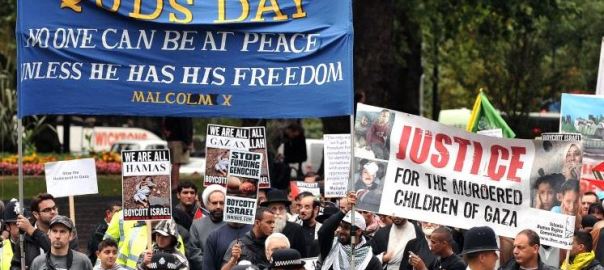


.jpg)


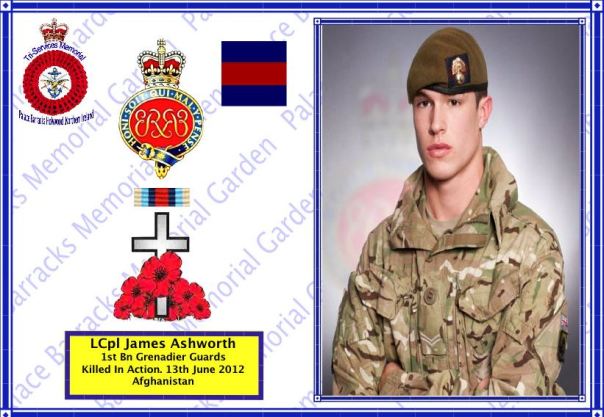


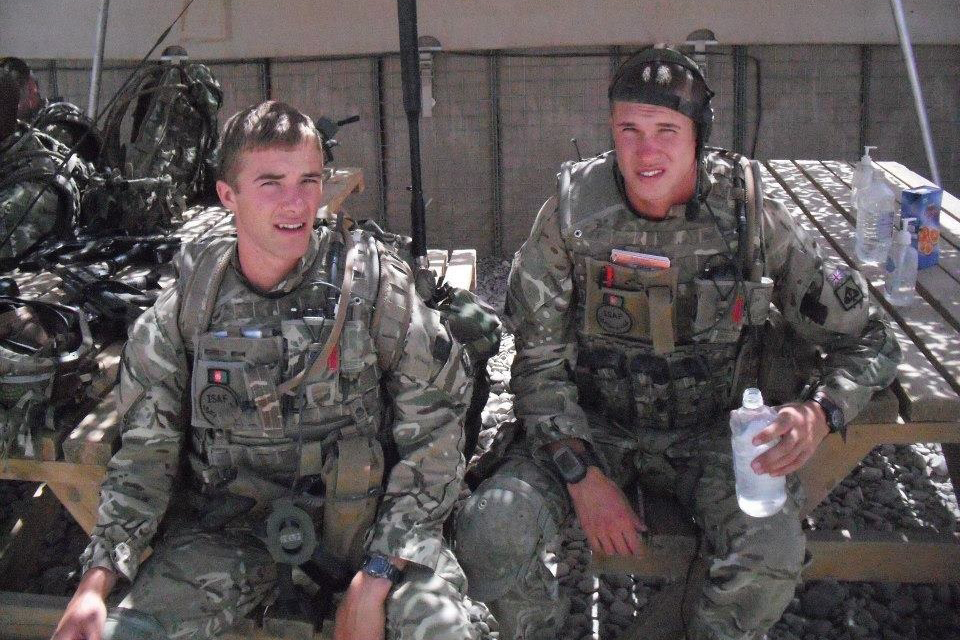

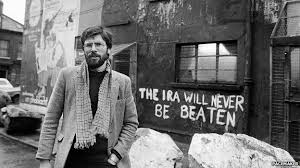












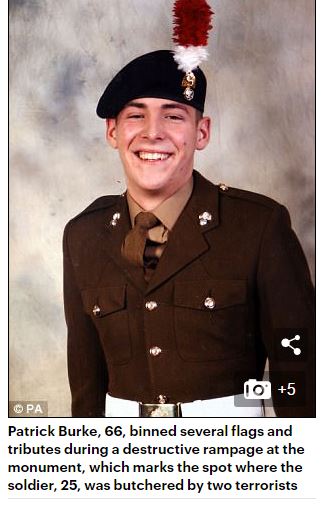


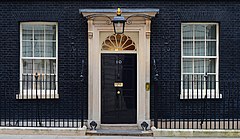


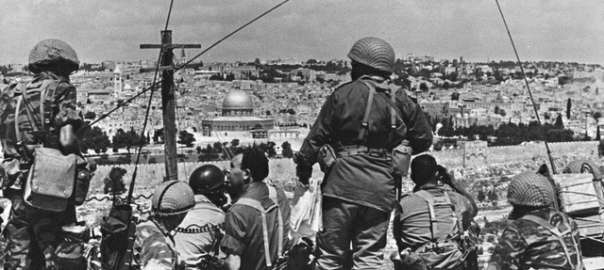
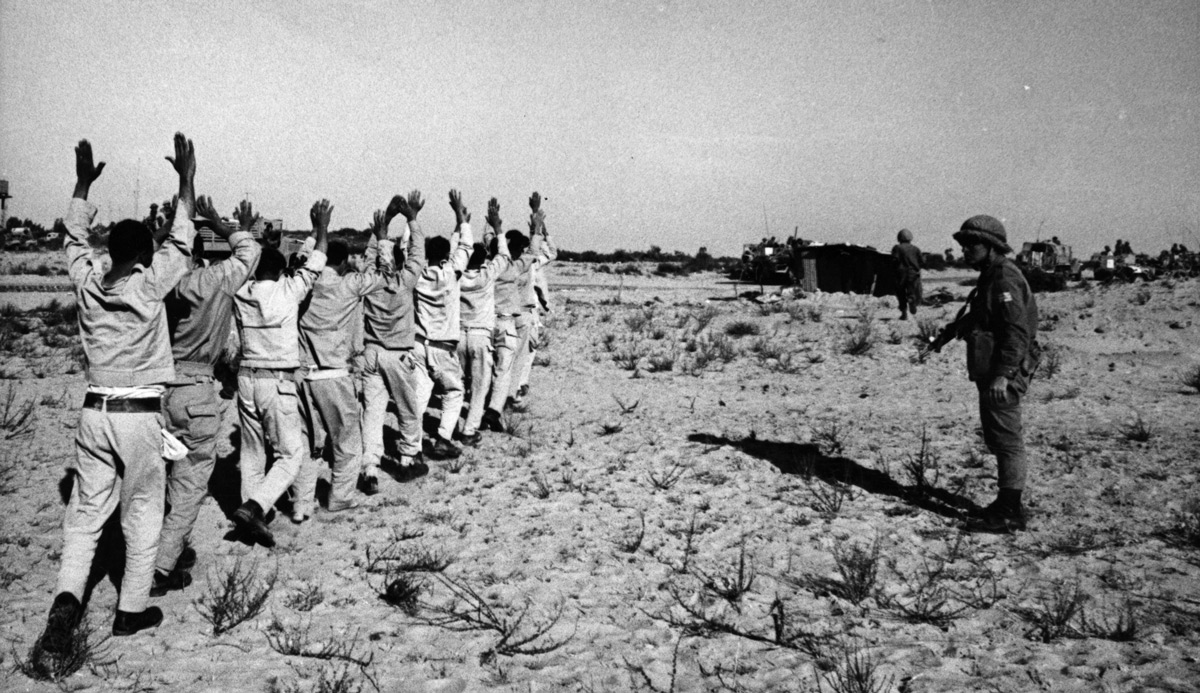


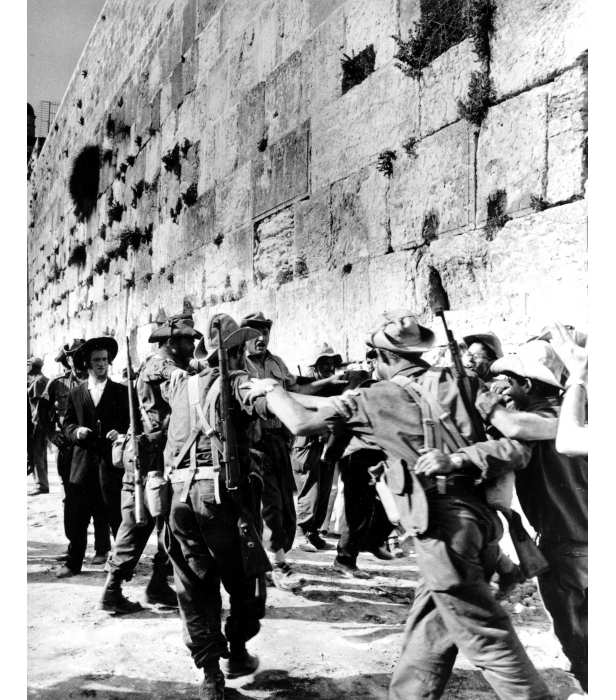

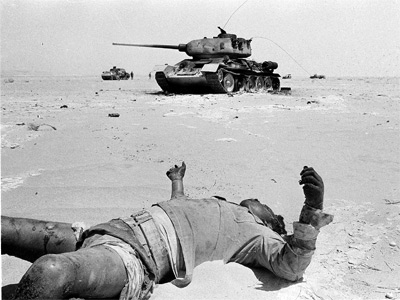


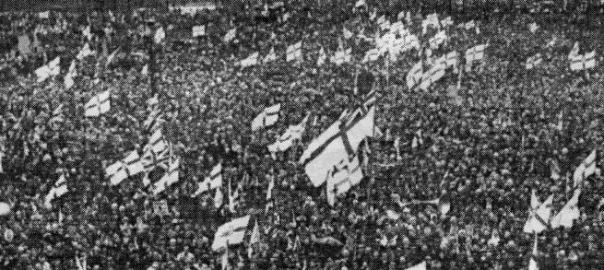


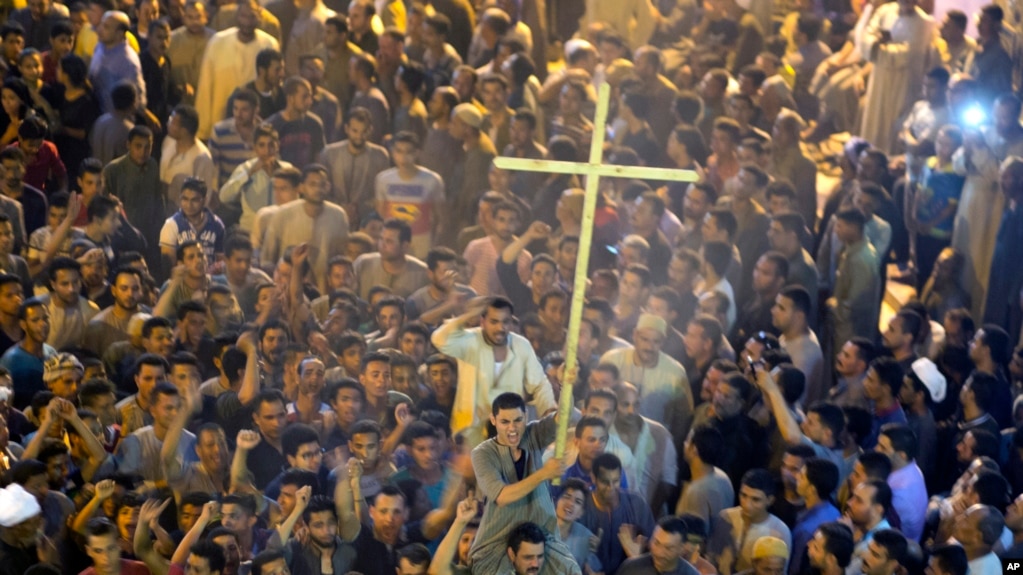



 belfastchildis.com