The Shankill Bomb

Disclaimer – The views and opinions expressed in these documentary are soley intended to educate and provide background information to those interested in the Troubles of Northern Ireland. They in no way reflect my own opinions and I take no responsibility for any inaccuracies or factual errors.

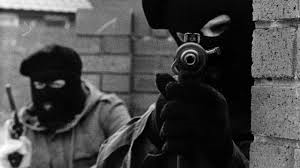
The Shankill Road bombing was carried out by the Provisional Irish Republican Army (IRA) on 23 October 1993 and is one of the most notorious incidents of the Troubles in Northern Ireland. The IRA intended to assassinate loyalist paramilitary leaders, who were to be meeting in a room above Frizzell’s fish shop on Shankill Road, Belfast. Two IRA members were to enter the shop disguised as deliverymen, then force the customers out at gunpoint and plant a time bomb with a short fuse. However, when the IRA members entered the shop with the bomb, it exploded prematurely. One of the IRA members was killed along with a UDA member and eight Protestant civilians.[1] More than fifty people were wounded. Unbeknownst to the IRA, the meeting had been rescheduled.

The loyalist Shankill Road had been the location of other bomb and gun attacks, including the Balmoral Furniture Company bombing in 1971 and Bayardo Bar attack in 1975; but the 1993 bombing had the highest casualties and resulted in a wave of revenge attacks by loyalists. In the week that followed, loyalists killed 14 civilians, almost all of them Irish Catholics. The deadliest attack took place in Greysteel, where UDA members opened fire in a pub frequented by Catholics, killing eight civilians and wounding 13.

Anglo Irish War 3 Short films about the early years of the Troubles

Disclaimer – The views and opinions expressed in these documentary are soley intended to educate and provide background information to those interested in the Troubles of Northern Ireland. They in no way reflect my own opinions and I take no responsibility for any inaccuracies or factual errors

The Dail Eireann is declared illegal and the new IRA fights a guerrilla war around Dublin and in the Irish Countryside in an effort to make Ireland ungovernable for the British

Anglo Irish War  3 Short films about the early years of the Troubles

Anglo Irish War 1

Anglo Irish War 2

Anglo Irish War 3

The Twelfth in Northern Ireland 2013 (BBC Documentary)

Disclaimer – The views and opinions expressed in these documentary are soley intended to educate and provide background information to those interested in the Troubles of Northern Ireland. They in no way reflect my own opinions and I take no responsibility for any inaccuracies or factual errors

Documentary about Loyalists celebrating their culture on their yearly Orange festival. Contains violence and riotous behaviour.

A Short History of Ireland

A concise Irish History Documentary which I hope will be somewhat helpful to Irish History students at all levels

Extreme World – Northern Ireland – Ross Kemp

Disclaimer – The views and opinions expressed in these documentary are soley intended to educate and provide background information to those interested in the Troubles of Northern Ireland. They in no way reflect my own opinions and I take no responsibility for any inaccuracies or factual errors

————————————————————————————————————————————-

Ross Kemp Extreme World travels to Northern Ireland to look at the state of play fifteen years after the Good Friday agreement visiting communities meeting with the people who live in them and speaking with both Loyalists, Republicans and the police as he explores the issues in one of Northern Ireland’s most divided societies.

Belfast Northern Ireland – Danny Dyer’s Deadliest Men

Disclaimer – The views and opinions expressed in these documentary are soley intended to educate and provide background information to those interested in the Troubles of Northern Ireland. They in no way reflect my own opinions and I take no responsibility for any inaccuracies or factual errors .

Danny Dyer’s Deadliest Men

Inside Divided Belfast

Disclaimer – The views and opinions expressed in these documentary are soley intended to educate and provide background information to those interested in the Troubles of Northern Ireland. They in no way reflect my own opinions and I take no responsibility for any inaccuracies or factual errors .

Belfast: Us and Them (2009) – Kilometres of graffiti-daubed concrete walls snake through Belfast. They divide Catholic neighbourhoods from Protestant. But do these Peace Walls keep the hatred and suspicion locked outside or inside?

The consensus among the locals is clear if the walls came down there would be a return to intractable sectarian violence. If you pull that wall down therell be murder, mayhem, therell be blood spilt, says a loyalist resident. The recent killings of two soldiers, a policeman and a Catholic community worker, indicate that trouble is still very close to the surface. Theres walls of prejudice; walls that were built here 300 years ago and they’re still here in legislation, in prejudice and bigotry’, tells Republican Sean McVeigh. ‘So those are the walls that are going to have to come down first. Are the Peace Walls monuments to the past or vital and necessary peacekeepers in the present?

Northern Ireland – Above The Law – Documentary Paramilitary Punishments

Disclaimer –  The views and opinions expressed in these documentary are soley intended to educate and provide background information to those interested in the Troubles of Northern Ireland. They in no way reflect my own opinions and I take no responsibility for any inaccuracies or factual errors .

During the Troubles, over 6,000 men, women and children were victims of so-called paramilitary ‘punishment’ attacks. Despite these brutal punishments, there was widespread support within communities for the paramilitaries’ own form of justice.

In the documentary Above The Law, victims speak, some for the first time, about their experiences.

if you have enjoyed reading my story and daily blogs please consider making a small donation

paypal donation button

Who Won the War? Peter Taylor

Who Won the War ?

—————————————————————————————-
Peter Taylor
A documentary about the conflict in Northern Ireland

—————————————————————————————-

The Battle of Waterloo and Arthur Wesley (later Wellington)

To commemorate the  Battle of Waterloo and the Iron Duke I recommend The Revolution series by the great author Simon Scarrow.  He has written many books on Roman History and these have educated and lead me to a keen interest in ancient Warfare , especially the Romans. If you would like to lose yourself in the history of the Iron Duke &  Emperor Napoleon Bonaparte   these books are fantastic starting point and  track their lives from beginning to end and have some great battle scenes.


1. Young Bloods (2006)

book cover of  Young Bloods

Europe in the late eighteenth century was a tumultuous place, with war and rebellions breaking out on many fronts. Young Arthur Wesley (later Wellington) and Napoleon Bonaparte grow up worlds apart yet immersed from youth in a culture where a military career is a natural choice for men of ambition. While Wellington is blooded in Ireland and Flanders, Napoleon is caught up in the dramas of the French Revolution and war with Prussia, Britain and Holland. None of this is enough to distract Wellington from his pursuit of Kitty Pakenham or Napoleon from his future bride, Josephine, for these men throw themselves into all aspects of life as enthusiastically as they rush to battle. A wonderful, multi-layered introduction to an epic series.

2. The Generals (2007)

book cover of  The Generals

The second in this epic quartet of novels focusing on two giants of European history, Wellington and Napoleon It’s 1796 as THE GENERALS opens, and both Arthur Wellesly (later Wellington) and Napoleon Bonaparte are making their mark as men of military genius. Wellesley, as commander of the 33rd Regiment of Foot, is sent to India, where his skill and bravery make a remarkable impression on his superiors. Napoleon’s role as commander of the Army of Italy leads to success in battle and rapid political progress. By 1804, Napoleon has established himself as Emperor, and has his sights set on conquering all of Europe. The time has come for Wellesly to stand against Napoleon in the confrontation that lies ahead.

3. Fire and Sword (2007)

book cover of  Fire and Sword

The third in this epic quartet of novels focusing on two giants of European history, Wellington and Napoleon.

In the early years of the nineteenth century, Arthur Wellesley (elevated to Viscount Wellington in the course of the novel) and Napoleon Bonaparte are well-established as men of military genius. Wellesley has returned from India, where his skill and bravery made a remarkable impression on his superiors. He faces trials and tribulations on the political scene before becoming embroiled militarily in Copenhagen, then Portugal and finally Spain. Napoleon, established as Emperor, is cementing his control on Europe, intending finally to crush his hated foe across the Channel: Britain. The time is fast approaching when Wellington and Napoleon will come face to face in confrontation and only one man can emerge victorious…

4. The Fields of Death (2010)

book cover of  The Fields of Death

It’s 1810, and both Viscount Wellington and Emperor Napoleon have made great names for themselves as outstanding military commanders. Wellington expands his achievements and enjoys further fame during his years in Spain but knows his most challenging test will be to face Napoleon’s mighty army. But when Wellington invades France in 1814 he gains a swift and certain victory. He indulges in a spell of self-congratulation at Vienna — until news comes of Napoleon’s triumphant return. Napoleon, ambitious as ever, embarks on a Russian campaign which ends in disaster and is then defeated at Leipzig in the biggest battle ever fought in Europe. With Napoleon’s power waning at long last, Wellington must seize the opportunity to crush the tyrant once and for all — and so the two giants face each other for the final time, at Waterloo…
The Wellington and Napoleon Quartet: Young Bloods / The Generals / Fire and Sword / Fields of Death