The Harrods bombing usually refers to the car bomb that exploded outside Harrods department store in central London on Saturday 17 December 1983. Members of the Provisional IRA planted the time bomb and sent a warning 37 minutes before it exploded, but the area was not evacuated. The blast killed three police officers and three civilians, injured 90 people, and caused much damage.
The IRA Army Council claimed it had not authorised the attack and expressed regret for the civilian casualties. The IRA had been bombing commercial targets in England since the early 1970s, as part of its “economic war”. The goal was to damage the economy and cause disruption, which would put pressure on the British government to withdraw from Northern Ireland.
Harrods was the target of a much smaller IRA bomb almost ten years later, in January 1993, which injured four people.
1983 bombing
Following the first Dublin bombings the Provisional IRA decided to take its campaign to Britain. From 1973 the Provisional IRA had carried out waves of bombing attacks in London and elsewhere in England, as part of its campaign. Harrods—a large, upmarket department store in the affluent Knightsbridge district, near Buckingham Palace—had been targeted before by the IRA.
On 10 December 1983, the IRA carried out its first attack in London for some time when a bomb exploded at the Royal Artillery Barracks, injuring three British soldiers.
One week later, on the afternoon of 17 December, IRA members parked a car bomb near the side entrance of Harrods, on Hans Crescent. The bomb contained 25 to 30 lb (14 kg) of explosives and was set to be detonated by a timer.
It was left in a 1972 blue Austin 1300 GT four-door saloon car with a black vinyl roof, registration plate KFP 252K.[4] At 12:44 a man using an IRA codeword phoned the central London branch of the Samaritans charity. The caller said there was a car bomb outside Harrods and another bomb inside Harrods, and gave the car’s registration plate.
However, according to police, he did not give any other description of the car.
——————–
BBC2 News Summary 1983
——————–
The bomb exploded at about 13:21, as four police officers in a car, an officer on foot and a police dog-handler neared the suspect vehicle.
Six people were killed (three officers and three bystanders) and 90 others were injured, including 14 police officers. The blast damaged 24 cars and all five floors on the side of Harrods, sending a shower of glass down on the street.
The police car absorbed much of the blast and this likely prevented further casualties.
Philip Geddes
The bystanders killed were Philip Geddes (24), a journalist who had heard about the alert and went to the scene , Jasmine Cochrane-Patrick (25) and Kenneth Salvesen (28), a US citizen.
The Metropolitan Police officers killed were Sergeant Noel Lane (28); Constable Jane Arbuthnot (22); and Inspector Stephen Dodd (34), who died of his injuries on 24 December. Constable Jon Gordon survived, but lost both legs and part of a hand in the blast.
At the time of the explosion, a second warning call was made by the IRA. The caller said that a bomb had been left in the C&A department store at the east end of Oxford Street. Police cleared the area and cordoned it off but this claim was found to be false.
In the aftermath of the attack, hundreds of extra police and mobile bomb squads were drafted into London. Aleck Craddock, chairman of Harrods, reported that £1 million in turnover had been lost as a result of the bombing.
Despite the damage, Harrods re-opened three days later, proclaiming it would not be:
“no damned Irishman is going to stop me going there”.
The Innocent Victims
—————————
17 December 1983 Noel Lane, (28)
Status: British Police (BP),
Killed by: Irish Republican Army (IRA) Killed by car bomb which exploded outside Harrod’s Department Store, Brompton Road, Knightsbridge, London. Inadequate warning given.
—————————
17 December 1983 Jane Arbuthnot, (22)
Status: British Police (BP),
Killed by: Irish Republican Army (IRA) Killed by car bomb which exploded outside Harrod’s Department Store, Brompton Road, Knightsbridge, London. Inadequate warning given.
FUNERAL JANE ARBUTHNOT, VICTIM OF HARRODS BOMB BLAST
—————————
17 December 1983 Philip Geddes, (24)
Status: Civilian (Civ),
Killed by: Irish Republican Army (IRA) Killed by car bomb which exploded outside Harrod’s Department Store, Brompton Road, Knightsbridge, London. Inadequate warning given.
—————————
17 December 1983 Kenneth Salvesan, (28)
Status: Civilian (Civ),
Killed by: Irish Republican Army (IRA) Killed by car bomb which exploded outside Harrod’s Department Store, Brompton Road, Knightsbridge, London. Inadequate warning given.
—————————
17 December 1983 Jasmin Cochrane-Patrick, (25)
nfNIB Status: Civilian (Civ),
Killed by: Irish Republican Army (IRA) Killed by car bomb which exploded outside Harrod’s Department StoreBrompton Road, Knightsbridge, London. Inadequate warning given
—————————
17 December 1983 Stephen Dodd, (34)
Status: British Police (BP),
Killed by: Irish Republican Army (IRA) Injured by car bomb which exploded outside Harrod’s Department Store, Brompton Road, Knightsbridge, London. Inadequate warning given. He died 24 December 1983
—————————
IRA response
The bombing badly damaged the IRA’s support, due to the civilian deaths and injuries.
In a statement issued the day after, the IRA Army Council admitted that IRA members had planted the bomb, but claimed that it had not authorised the attack:
The Harrods operation was not authorised by the Irish Republican Army. We have taken immediate steps to ensure that there will be no repetition of this type of operation again. The volunteers involved gave a 40 minutes specific warning, which should have been adequate. But due to the inefficiency or failure of the Metropolitan Police, who boasted of foreknowledge of IRA activity, this warning did not result in an evacuation. We regret the civilian casualties, even though our expression of sympathy will be dismissed. Finally, we remind the British Government that as long as they maintain control of any part of Ireland then the Irish Republican Army will continue to operate in Britain.
“The nature of a terrorist organisation is that those in it are not under disciplined control”.
In his book The Provisional IRA in England, author Gary McGladdery says the bombing illustrated one of the problems with the IRA’s cell system, where units:
“could become virtually autonomous from the rest of the organisation and operate at their own discretion”.
The IRA had adopted the system in the late 1970s.
Memorials
There is a memorial at the site of the blast. Yearly prizes in the honour of Philip Geddes are awarded to aspiring journalists attending the University of Oxford. Also, every year the Philip Geddes Memorial Lecture on the theme of the future of journalism is given by a leading journalist.
1993 bombing
On 28 January 1993, Harrods was once again targeted. At 9:14, two telephoned warnings were issued, saying that two bombs had been planted: one outside and one inside Harrods.
The store was due to open at 10:00. Police cordoned off the area and began a search. However, some bystanders ignored the police cordon.
At about 9:40, a package containing 1 lb of Semtex exploded in a litter bin at the front of the store. It injured four people and damaged the shopfront.
The cost of damage and lost sales was estimated at £1 million.
Those responsible were English far left activists associated with the IRA: Jan Taylor, a 51-year-old former corporal who served in the Royal Signals Corps of the British Army, and Patrick Hayes, a 41-year-old computer programmer with a degree in business studies from Central London Polytechnic and a member of Red Action.
In March 1993, police captured them at Hayes’ home in Stoke Newington, north London. They each received prison sentences of 30 years for the January Harrods bombing and for a second attack on a train a month later which caused extensive damage but no casualties. Hayes was also convicted of conspiracy to cause three additional explosions in 1992. Neither men had links to Ireland.
Key Events & Deaths on this day in Northern Ireland Troubles
11th December
Wednesday 11 December 1968
Terence O’Neill, then Northern Ireland Prime Minister, sacked William Craig, then Home Affairs Minister, because of differing opinions on the legality of Westminster intervention on devolved matters.
Saturday 11 December 1971
The Irish Republican Army (IRA) killed four Protestant civilians in a bomb attack on a furniture shop on the Shankill Road in Belfast. Two of those who were killed in the explosion were children.
The dead were: Hugh Bruce (70), Harold King (29), Tracey Munn (2) and Colin Nicholl (1).
Wednesday 11 December 1974
A debate on the reintroduction of capital punishment for acts of terrorism was held in the House of Commons, London. The specific motion came in the form of an amendment which was proposed by a Conservative MP. Following a five-hour debate the amendment was defeated by a free vote of 369 to 217.
While the debate was taking place the Irish Republican Army (IRA) carried out a bomb attack on the Long Bar of the Naval and Military Club in Piccadilly, London. At 6.30pm IRA members threw a small bomb through the window of the bar; no one was injured.
As two IRA members were leaving the scene they were followed by a taxi cab and they fired two shots at the driver; the driver was not injured. Almost at the same time a second group of IRA members carried out a gun attack on the Cavalry Club; again there were no injuries.
Wednesday 11 December 1985
The first meeting of the new Inter-Governmental Conference established under the Anglo-Irish Agreement (AIA) was held.
Protestant workers from a number of firms in Belfast staged walk-outs and marched to Maryfield where the Anglo-Irish Secretariat was based. There were violent clashes between the demonstrators and the Royal Ulster Constabulary (RUC) with 38 officers being injured.
Saturday 11 December 1993
The Irish Times (a Republic of Ireland newspaper) reported the results of a poll on Anglo-Irish relations. Of those questioned 59 per cent were in favour of talks between John Major, then British Prime Minister, and Albert Reynolds, then Taoiseach (Irish Prime Minister). The figure for Catholic respondents was 88 per cent in favour while the figure for Protestants was 37 per cent.
Sunday 11 December 1994
Gary McMichael, then leader of the Ulster Democratic Party (UDP), said it was unrealistic to expect paramilitaries to hand in weapons at this stage.
Monday 11 December 1995
Patrick Mayhew, then Secretary of State for Northern Ireland, announced that £100 million would be redirected from the security budget to other areas of government expenditure over the following three years if the ceasefires held. [£180 million had already been cut from the security budget.]
Wednesday 11 December 1996
Robert Saulters was elected as Grand Master of the Orange Order following the resignation of Martin Smyth. He repeated earlier comments he had made about Tony Blair, then leader of the British Labour Party, being “disloyal” for marrying a “romanist” (Roman Catholic).
Chuck Feeney, an Irish-American businessman, confirmed that he had donated $240,000 to the establishment of Sinn Féin’s (SF) office in Washington.
Thursday 11 December 1997
Sinn Féin Delegation at Downing Street Gerry Adams, then President of Sinn Féin (SF), led a SF delegation into 10 Downing Street, London to meet Tony Blair, then British Prime Minister, and other members of the British government. These were the first talks between a British Prime Minister and leaders of SF at Downing Street for 76 years. The meeting lasted one hour and afterwards Adams said that it was a “good moment in history”.
The Ulster Unionist Party (UUP) criticised the meeting and rejected calls for a direct meeting between David Trimble, then leader of the Ulster Unionist Party (UUP), and Adams. Francie MacKey, then a SF councillor based in Omagh, County Tyrone, called on SF to renounce the Mitchell Principles. MacKey also announced that the would join the 32 County Sovereignty Committee.
Tuesday 11 December 2001
The Saville Inquiry into Bloody Sunday began an appeal in the Court of Appeal in London against a decision that military witnesses should not have to travel to Derry to give their evidence. Soldiers who were on duty in Derry on 30 January 1972 had claimed in the High Court that their lives would be in danger if they were forced to attend the Inquiry in the Guildhall in Derry. The High Court had ruled in their favour and against Lord Saville.
[The appeal lasted two days. The court’s decision was announced on 19 December 2001 when the Court upheld the decision of the High Court that the soldiers would not have to travel to Derry to give evidence.]
John Reid, then Secretary of State for Northern Ireland, announced that he would challenge in the High Court the new rates of pay awarded to Queen’s Councils (QCs) and barristers at the Saville Inquiry into Bloody Sunday. The new daily rate for a senior barrister was set to rise by £250 to £1,750. The barristers can also claim up to £250 per hour, to a maximum of £750 per day, for preparation work and £125 an hour travelling to and from the Guildhall. Junior barristers’ daily fees will rise from £750 to £875, and preparation rates from £100 to £125 an hour. They also receive £62.50 for travelling time.
[The cost of the Inquiry to date has been estimated at £60 million.]
Figures released by the Northern Ireland Statistics and Research Agency (NISRA) showed that the unemployment rate for Catholics (8.8 % in 2000) remained higher than that for Protestants (5.2 %). The gap in the figures had narrowed from 1993 when there was an unemployment rate among Catholics of 18.1 per cent as opposed to 9.4 per cent for Protestants. The report showed that the religious composition of Northern Ireland’s economically active population was 43 per cent Catholic and 57 per cent Protestant, which closely mirrored those in employment at 42 per cent Catholic and 58 per cent Protestant.
However, among the unemployed, the religious composition was 56 per cent Catholic and 44 cent Protestant. There was a higher proportion of Catholics than Protestants who had qualifications above ‘A-Level’. The Audit Office published a report into the financial practices and accounting by government departments in Northern Ireland. The report criticised several departments for poor management of public funds and it showed that in some cases millions of pounds was unaccounted for or had been paid our incorrectly. The biggest loss occurred in the social 8security budget with £50 million being lost through fraud or error. Then Northern Ireland Assembly debated and voted on the budget for the financial year 2003-2004. Of the 108 members of the Assembly, 76 were present and cast votes and of these 49 voted in favour of the budget.
At the Special Criminal Court in Dublin, Republic of Ireland, twin brothers were sentenced to jail for having a “real” Irish Republican Army (rIRA) bomb-making ‘factory’. Alan Patterson was jailed for nine years and his brother Kenneth Patterson received a sentence of seven years. Four men were arrested in the Republic of Ireland after police and customs officers seized a consignment of up to 80 million smuggled cigarettes. The haul, valued at IR£13 million, is thought to be the biggest haul of contraband tobacco in the Irish Republic.
[It was not clear at the time if there were any paramilitary connections with the smuggling.]
———————————
.
———————————————————————————
Remembering all innocent victims of the Troubles
Today is the anniversary of the death of the following people killed as a results of the conflict in Northern Ireland
“To live in hearts we leave behind is not to die
– Thomas Campbell
To the innocent on the list – Your memory will live forever
– To the Paramilitaries –
There are many things worth living for, a few things worth dying for, but nothing worth killing for.
7 people lost their lives on the 11th December between 1971 -1976
————————————————————
11 December 1971 Harold King, (29)
Catholic Status: Civilian (Civ),
Killed by: Irish Republican Army (IRA) Killed in bomb attack on Balmoral Furnishing Company, Shankill Road, Belfast.
————————————————————
11 December 1971 Huge Bruce, (70)
Protestant Status: Civilian (Civ),
Killed by: Irish Republican Army (IRA) Killed in bomb attack on Balmoral Furnishing Company, Shankill Road, Belfast
————————————————————
11 December 1971
Tracey Munn, (2)
Protestant Status: Civilian (Civ),
Killed by: Irish Republican Army (IRA) Killed in bomb attack on Balmoral Furnishing Company, Shankill Road, Belfast
————————————————————
11 December 1971
Colin Nicholl, (0)
Protestant Status: Civilia (Civ),
Killed by: Irish Republican Army (IRA) Killed in bomb attack on Balmoral Furnishing Company, Shankill Road, Belfast
————————————————————
11 December 1972 James Ward, (53)
Catholic Status: Civilian (Civ),
Killed by: British Army (BA) Shot as he walked past North Queen Street Royal Ulster Constabulary (RUC) / British Army (BA) base, Belfast.
————————————————————
11 December 1973
Maurice Rolston, (37)
Protestant Status: Royal Ulster Constabulary (RUC),
Killed by: Irish Republican Army (IRA) Off duty. Killed by booby trap bomb attached to his car outside his home, Newcastle, County Down.
————————————————————
11 December 1976 Howard Edwards, (24)
nfNI Status: British Army (BA),
Killed by: Irish Republican Army (IRA) Shot by sniper while on British Army (BA) foot patrol, Elmwood Road, Bogside, Derry
Key Events & Deaths on this day in Northern Ireland Troubles
7th December
Tuesday 7 December 1971
An off duty member of the Ulster Defence Regiment (UDR) was shot dead by members of the Irish Republican Army (IRA) in County Tyrone.
Friday 7 December 1979
Charles Haughey replaced Jack Lynch as Taoiseach (Irish Prime Minister). The Fiannia Fáil parliamentary party voted by 44 votes to 38 in favour of Haughey.
Tuesday 7 December 1982
The Irish Supreme Court made a ruling which opened up the possibility of extradition between the Republic and the United Kingdom (UK). The court rejected the claim that paramilitary offences were politically motivated.
Wednesday 7 December 1983
Edgar Graham, then a Ulster Unionist Party (UUP) Assembly member, was shot dead by the Irish Republican Army (IRA) at the Queen’s University of Belfast. Graham was also a lecturer in the Faculty of Law at the university
Saturday 7 December 1985
Two Royal Ulster Constabulary (RUC) officers were shot dead during an attack by the Irish Republican Army (IRA) on the RUC base at Ballygawley, County Tyrone.
Wednesday 7 December 1994
The European Commission agreed the funding of a £230 million aid programme for Northern Ireland and also border counties in the Republic of Ireland. The funding was to be spread over the following three years.
Thursday 7 December 1995
The Irish Republican Army (IRA) issued a statement which said that the British government
“has sought only to frustrate movement into inclusive negotiations … there is no question of the IRA meeting the ludicrous demand for a surrender of IRA weapons”.
Sunday 7 December 1997
At Dunloy, County Antrim, a ‘suspect device’ was found near the Orange Order Hall on the outskirts of the village. The device was made safe. Members of the Apprentice Boys of Derry (ABD) held a religious service at the Orange Hall but did not attempt to march through the village. Mary McAleese, then President of the Republic of Ireland, broke new ecumenical ground when she took communion at a Church of Ireland service in Christ Church, Dublin.
[The decision caused a debate in the Catholic church with a number of senior figures criticising the President over the coming days and weeks.]
Monday 7 December 1998
There were reports that members of the “real” Irish Republican Army (rIRA), which was on ceasefire, were offering assistance to the Continuity Irish Republican Army (CIRA) the only Republican paramilitary group not on ceasefire.
Tuesday 7 December 1999
There was a series of walk-outs by pupils at state (Protestant) schools in protest at the appointment of Martin McGuinness as Minister of Education. Protests were held in Carrickergus, Cookstown, Glengormley, Newtownabbey, and the Shankill Road in Belfast.
McGuinness claimed that the Democratic Unionist Party (DUP) was orchestrating the protests. The DUP denied the claim. Gary McMichael, then leader of the Ulster Democratic Party (UDP), denied that there was a split within the Ulster Defence Association (UDA) over whether or not appoint an interlocutor to the Independent International Commission on Decommissioning (IICD).
Thursday 7 December 2000
There were two pipe-bomb attacks on the homes of Catholic families in Coleraine, County Derry. As a result of these attacks, and earlier ones, the Royal Ulster Constabulary (RUC) requested the deployment of British Army (BA) patrols in the town. A 30 year old man was alone in the kitchen of his home on Lilic Avenue when a pipe-bomb exploded in the back garden after bouncing off the kitchen window. The attacks were carried out by Loyalist paramilitaries.
Friday 7 December 2001
John Hume, former leader of the Social Democratic and Labour Party (SDLP), was awarded the Mahatma Ghandi Peace Prize by the India government.
—————————————-
———————————————————————————
Remembering all innocent victims of the Troubles
Today is the anniversary of the death of the following people killed as a results of the conflict in Northern Ireland
“To live in hearts we leave behind is not to die
– Thomas Campbell
To the innocent on the list – Your memory will live forever
– To the Paramilitaries –
There are many things worth living for, a few things worth dying for, but nothing worth killing for.
9 People lost their lives on the 7th December between 1971 – 1993
————————————————————
07 December 1971 Denis Wilson, (31)
Protestant Status: Ulster Defence Regiment (UDR),
Killed by: Irish Republican Army (IRA) Off duty. Shot at his home, Curlagh, near Caledon, County Tyrone.
————————————————————
07 December 1972
Ernest Elliott, (28)
Protestant Status: Ulster Defence Association (UDA), Killed by: Ulster Defence Association (UDA) Found shot in back of abandoned car, off Donegall Avenue, Village, Belfast. Internal Ulster Defence Association dispute.
Killed by: Irish Republican Army (IRA) Abducted from her home, St. Judes Walk, Divis, Belfast. Her remains eventually recovered, on general instructions from the IRA, buried at Shelling Hill beach, near Carlingford, Co. Louth, on 27 August 2003.
Killed by: Irish Republican Army (IRA) Died five days after being injured in premature bomb explosion in house, Crawford Square, Derry.
————————————————————
07 December 1974
John McDaid, (16)
Catholic Status: Irish Republican Army (IRA),
Killed by: Irish Republican Army (IRA) Died in premature bomb explosion in derelict house, Bridge Street, Derry.
————————————————————
07 December 1983
Edgar Graham, (29)
Protestant Status: Civilian Political Activist (CivPA),
Killed by: Irish Republican Army (IRA) Ulster Unionist Party Assembly member. Shot outside his workplace, Queen’s University, University Square, Belfast
————————————————————
07 December 1985
William Clements, (52)
Protestant Status: Royal Ulster Constabulary (RUC),
Killed by: Irish Republican Army (IRA) Shot during gun attack on Ballygawley Royal Ulster Constabulary (RUC) base, County Tyrone
————————————————————
07 December 1985
George Gilliland, (34)
Protestant Status: Royal Ulster Constabulary (RUC),
Killed by: Irish Republican Army (IRA) Shot during gun attack on Ballygawley Royal Ulster Constabulary (RUC) base, County Tyrone.
————————————————————
07 December 1993 Robert McClay, (38)
Catholic Status: Civilian (Civ),
Killed by: Ulster Freedom Fighters (UFF) Shot at his home, Hillview Avenue, Ballyhackamore, Belfast.
This is simply the story of a boy trying to grow up, survive, thrive, have fun & discover himself against a backdrop of events that might best be described as ‘explosive’, captivating & shocking the world for thirty long years.
The Balcombe Street siege was an incident involving members of the Provisional Irish Republican Army (IRA) and the Metropolitan Police Service of London lasting from 6 to 12 December 1975. The siege ended with the surrender of the four IRA paramilitaries and the release of their two hostages. The events were televised and watched by millions.
Background
Scott’s restaurant in 2005, the attack on which preceded the siege
In 1974 and 1975 London was subjected to a 14-month campaign of gun and bomb attacks by the Provisional IRA. Some 40 bombs exploded in London, killing 35 people and injuring many more. In one incident the Guinness Book of Records co-founder and conservative political activist Ross McWhirter was assassinated; he had offered a £50,000 reward to anyone willing to inform the security forces of IRA activity.
———————————
Balcombe Street Siege 1975
Thames News
———————————
The four members of what became known as the “Balcombe Street gang” – Martin O’Connell, Edward Butler, Harry Duggan and Hugh Doherty – were part of a six-man IRA Active Service Unit (ASU) that also included Brendan Dowd and Liam Quinn. Quinn had recently shot dead police constableStephen Tibble in London after fleeing from police officers. The flat he was seen fleeing from was discovered to be a bomb factory used by the unit.
The Balcombe Street siege started after a chase through London, as the Metropolitan Police pursued Doherty, O’Connell, Butler and Duggan through the streets after they had fired gunshots through the window of Scott’s restaurant in Mount Street, Mayfair. They had thrown a bomb through the restaurant window a few weeks before on 12 November 1975, killing one person and injuring 15 others.
The Metropolitan Police Bomb Squad had detected a pattern of behaviour in the ASU, determining that they had a habit of attacking again some of the sites they had previously attacked. In a scheme devised by a young detective sergeant, the Met flooded the streets of London with unarmed plain-clothes officers on the lookout for the ASU. The four IRA men were spotted as they slowed to a halt outside Scotts and fired from their stolen car.
Inspector John Purnell and Sergeant Phil McVeigh, on duty as part of the dragnet operation, picked up the radio call from the team in Mount Street as the stolen Cortina approached their position. With no means of transport readily available, the two unarmed officers flagged down a taxi cab and tailed the men for several miles through London, until the IRA men abandoned their vehicle. Purnell and McVeigh, unarmed, continued the pursuit on foot despite handgun fire from the gang. Other officers joined the chase, with the four IRA men running into a block of council flats in Balcombe Street, adjacent to Marylebone station, triggering the six-day stand-off.
Purnell was subsequently awarded the George Medal for his bravery.[5] Several other police officers were also decorated.
The siege
The four men ended up in a flat at 22b Balcombe Street in Marylebone, taking its two residents, John and Sheila Matthews, hostage. The men declared that they were members of the IRA and demanded a plane to fly both them and their hostages to the Republic of Ireland. Scotland Yard refused, creating a six-day standoff between the men and the police. Peter Imbert, later Commissioner of the Metropolitan Police, was the chief police negotiator.
The men surrendered after several days of intense negotiations between Metropolitan Police Bomb squad officers Detective Superintendent Peter Imbert and Detective Chief Superintendent Jim Nevill, and the unit’s leader Joe O’Connell, who went by the name of “Tom”.
The other members of the gang were named “Mick” and “Paddy”, thereby avoiding revealing to the negotiators precisely how many of them were in the living room of the flat. The resolution of the siege was a result of the combined psychological pressure exerted on the gang by Imbert and the deprivation tactics used on the four men. The officers also used carefully crafted misinformation, through the BBC radio news—the police knew the gang had a radio—to further destabilise the gang into surrender.
———————————
Balcombe Street Gang appear at Sinn Fein Special Conference, May 1998
———————————
Trial
The four were found guilty at their Old Bailey trial in 1977 of seven murders, conspiring to cause explosions, and falsely imprisoning John and Sheila Matthews during the siege. O’Connell, Butler and Duggan each received twelve life sentences, and Doherty eleven. Each of the men was later given a whole life tariff, the only IRA prisoners to receive this tariff.
During their trial they instructed their lawyers to “draw attention to the fact that four totally innocent people were serving massive sentences” for three bombings in Woolwich and Guildford. Despite claiming to the police that they were responsible, they were never charged with these offences and the Guildford Four and Maguire Seven remained in prison for fifteen more years, until it was ruled that their convictions were unsafe.
Who wants… A signed copy of my No.1 best selling book ? Makes a great Xmas gift for book lovers & those interested in the Troubles & the crazy, mad days my generation lived through.
The Droppin Well bombing or Ballykelly bombing occurred on 6 December 1982, when the Irish National Liberation Army (INLA) exploded a time bomb at a disco in Ballykelly, Northern Ireland. The disco, known as the Droppin Well, was targeted because it was frequented by British Army soldiers from nearby Shackleton Barracks. The bomb killed eleven soldiers and six civilians; 30 people were injured.
Attack
The bomb was made by INLA members in nearby Derry. One of those involved later revealed that the INLA unit had carried out reconnaissance missions to the Droppin Well to see if there were enough soldiers to justify the possibility of civilian casualties.
On the evening of Monday 6 December 1982, an INLA operative left a bomb inside the pub. There were about 150 people inside. The Royal Ulster Constabulary (RUC) believed that the bomb, estimated to be 5 to 10 pounds (2.3 to 4.5 kg) of commercial (Frangex) explosives, was small enough to fit into a handbag. It had, however, been left beside a support pillar and, when it exploded at about 23:15, the blast brought down the roof. Many of those killed and injured were crushed by fallen masonry.
———————————-
Dropping well Bomb INLA.
———————————-
Following the blast, it took many hours to pull survivors from the rubble. The last survivor was freed at 04:00, but it was not until 10:30 that the last of the bodies was recovered.
Ultimately, 17 people died (11 soldiers, six civilians) and about 30 were injured, some seriously. Five of the civilians were young women and three (Alan Callaghan, Valerie McIntyre and Angela Maria Hoole) were teenagers. Of the eleven soldiers who died, eight were from the 1st Battalion Cheshire Regiment, two from the Army Catering Corps and one from the Light Infantry. One of those on the scene was Bob Stewart, then a company commander in the Cheshire Regiment. He lost six soldiers from his company and was deeply affected as he tended to the dead and injured.
The Victims
—————————————–
06 December 1982
Stephen Smith, (24)
nfNI Status: British Army (BA),
Killed by: Irish National Liberation Army (INLA) Off duty. Killed by time bomb left in disco at Droppin Well Bar, Ballykelly, County Derry.
—————————————–
06 December 1982 Philip McDonough, (26)
nfNI Status: British Army (BA),
Killed by: Irish National Liberation Army (INLA) Off duty. Killed by time bomb left in disco at Droppin Well Bar, Ballykelly, County Derry.
—————————————–
06 December 1982 Steven Bagshaw, (21)
nfNI Status: British Army (BA),
Killed by: Irish National Liberation Army (INLA) Off duty. Killed by time bomb left in disco at Droppin Well Bar, Ballykelly, County Derry
—————————————–
06 December 1982
Clinton Collins, (20)
nfNI Status: British Army (BA),
Killed by: Irish National Liberation Army (INLA) Off duty. Killed by time bomb left in disco at Droppin Well Bar, Ballykelly, County Derry.
—————————————–
06 December 1982 David Murray, (18)
nfNI Status: British Army (BA),
Killed by: Irish National Liberation Army (INLA) Off duty. Killed by time bomb left in disco at Droppin Well Bar, Ballykelly, County Derry.
—————————————–
06 December 1982 David Stitt, (27)
nfNI Status: British Army (BA),
Killed by: Irish National Liberation Army (INLA) Off duty. Killed by time bomb left in disco at Droppin Well Bar, Ballykelly, County Derry.
—————————————–
06 December 1982 Shaw Williamson, (20)
nfNI Status: British Army (BA),
Killed by: Irish National Liberation Army (INLA) Off duty. Killed by time bomb left in disco at Droppin Well Bar, Ballykelly, County Derry.
—————————————–
06 December 1982 Terence Adams, (20)
nfNI Status: British Army (BA),
Killed by: Irish National Liberation Army (INLA) Off duty. Killed by time bomb left in disco at Droppin Well Bar, Ballykelly, County Derry.
—————————————–
06 December 1982 Neil Williams, (18)
nfNI Status: British Army (BA),
Killed by: Irish National Liberation Army (INLA) Off duty. Killed by time bomb left in disco at Droppin Well Bar, Ballykelly, County Derry
—————————————–
06 December 1982 Paul Delaney, (18)
nfNI Status: British Army (BA),
Killed by: Irish National Liberation Army (INLA) Off duty. Killed by time bomb left in disco at Droppin Well Bar, Ballykelly, County Derry.
—————————————–
06 December 1982
David Salthouse, (23)
nfNI Status: British Army (BA),
Killed by: Irish National Liberation Army (INLA) Off duty. Killed by time bomb left in disco at Droppin Well Bar, Ballykelly, County Derry.
—————————————–
06 December 1982
Ruth Dixon, (17)
Protestant Status: Civilian (Civ),
Killed by: Irish National Liberation Army (INLA) Killed by time bomb left in disco at Droppin Well Bar, Ballykelly, County Derry.
—————————————–
06 December 1982
Carol Watts, (25)
Protestant Status: Civilian (Civ),
Killed by: Irish National Liberation Army (INLA) Killed by time bomb left in disco at Droppin Well Bar, Ballykelly, County Derry.
—————————————–
06 December 1982 Angela Hoole, (19)
nfNI Status: Civilian (Civ),
Killed by: Irish National Liberation Army (INLA) English visitor. Killed by time bomb left in disco at Droppin Well Bar, Ballykelly, County Derry
—————————————–
06 December 1982 Patricia Cooke, (21)
Catholic Status: Civilian (Civ),
Killed by: Irish National Liberation Army (INLA) Injured by time bomb left in disco at Droppin Well Bar, Ballykelly, County Derry. She died 16 December 1982.
—————————————–
06 December 1982 Valerie McIntyre, (21)
Protestant Status: Civilian (Civ),
Killed by: Irish National Liberation Army (INLA) Killed by time bomb left in disco at Droppin Well Bar, Ballykelly, County Derry.
—————————————–
06 December 1982
Alan Callaghan, (17)
Protestant Status: Civilian (Civ),
Killed by: Irish National Liberation Army (INLA) Killed by time bomb left in disco at Droppin Well Bar, Ballykelly, County Derry.
—————————————–
Aftermath
Suspicion immediately fell upon the Provisional Irish Republican Army (IRA), who denied involvement. By 8 December, the British Army was blaming the INLA on grounds that the IRA, in a mixed village, would have made greater efforts not to risk killing civilians.
Shortly afterwards, the INLA issued a statement of responsibility:
We believe that it is only attacks of such a nature that bring it home to people in Britain and the British establishment. The shooting of an individual soldier, for the people of Britain, has very little effect in terms of the media or in terms of the British administration.
The INLA also described the civilian women killed as “consorts“. The attack was criticised by many on both sides of the conflict in Northern Ireland due to the high loss of civilian lives. Soon after the INLA had issued its statement, the government of the Republic of Ireland banned the INLA, making membership punishable by seven years imprisonment.
In an interview after the bombing, INLA leader Dominic McGlinchey said that the Droppin Well’s owner had been warned six times to stop offering “entertainment” to British soldiers. McGlinchey added that the owner, and those who socialised with the soldiers,
“knew full well that the warnings had been given and that the place was going to be bombed at some stage”.
It later emerged that the INLA may also have targeted Ballykelly because it believed that the military base was part of NATO‘s radar and communications network.
Six days after the bombing, RUC officers shot dead INLA members Seamus Grew and Roddie Carroll near a vehicle checkpoint in Armagh. The officers said they believed that the two men were ferrying McGlinchey into Northern Ireland. Neither was armed, nor was McGlinchey in their car.
Convictions
Bomber Anna Moore & Daughter
In June 1986, four INLA members (Anna Moore, Eamon Moore, Helena Semple and Patrick Shotter) received life sentences for the attack. Anna Moore would later marry loyalist Bobby Corry, whilst both were in prison. Another woman was given ten years for manslaughter as the court believed she had been coerced into involvement. All of those convicted were from Derry.
———————————-
Old News
Village marks INLA atrocity
A remembrance service has been held on Sunday to honour 17 people killed in an INLA bomb.This weekend marks the 20th anniversary of the Droppin’ Well bomb in Ballykelly, County Londonderry.
It was one of the worst atrocities of the Troubles.
John Cooke: “We loved spoiling her and she loved us”
Eleven soldiers from a nearby Army base and six civilians died in the explosion, which was claimed by the Irish National Liberation Army.
Sunday’s remembrance service was held at Shackleton barracks in Ballykelly.
On 6 December 1982, the bomb ripped through the Droppin’ Well pub where 150 people were enjoying a night out.
‘Errand’
Most of the victims were crushed under the heavy masonry of the pubs concrete ceiling.
Patricia Cooke, 21, suffered terrible injuries and died in hospital 10 days later.
Her brother – who still owns the pub – left to go on an errand just three minutes before the blast.
She was 25 when she was killed, she was killed instantly
Sharon McClarey Victim’s sister
“She was the baby in the family,” said John Cooke.
“She was spoilt. We loved spoiling her and she loved us.
“One of the comments at the post mortem, the doctor who did it didn’t understand how she lived so long because of the injuries.
“I’m sure part of that was the way she loved us and we loved her. She was trying to hold in there and we wanted her to hold in. It was a sad loss.”
‘Two graves’
Sharon McClarey said every anniversary is very emotional. She lost her sister Carol in the bomb.
Sharon believes the attack eventually cost another sister – Nicola – her life too.
“Carol was married with two children aged six and two,” she said.
“She was 25 when she was killed, she was killed instantly. My other sister Nicola was 19 at the time.
Sharon McClarey: “Every anniversary is very emotional”
“She was very badly injured. The hospital staff told us to get two graves dug because we had lost both of them.
“But she fought. She never enjoyed good health, she suffered badly and was mentally tortured.
“We will never know what Nicola went through or what she experienced. You could nearly say the bomb ended her life.”
The views and opinions expressed in these pages/documentaries are soley intended to educate and provide background information to those interested in the Troubles of Northern Ireland. They in no way reflect my own opinions and I take no responsibility for any inaccuracies or factual errors.
Politics and controversy
Seawright was noted for his fiery rhetoric. He was elected to Belfast City Councilin 1981 and soon developed a following amongst unionists. The following year he was elected as the Democratic Unionist Party (DUP) candidate to the 1982 Northern Ireland Assembly. Seawright, who had initially campaigned for John McQuade before securing his own candidacy, had problems with the party leadership from early on as, he claimed, he was viewed as lacking respectability due to his rough personality, his residence in social housing and the fact that he was in arrears to the Northern Ireland Housing Executive.
Seawright courted controversy throughout his fairly brief career and was criticised for an interview he gave to Nationalism Today, a journal produced in support of the Political Soldier wing of the British National Front (NF). In it, Seawright praised the NF, not only for their support for Ulster loyalism but also for their stance on race and immigration. His younger brother David Seawright was an active member of the NF.
Whiterock leisure centre, the scene of Seawright’s flag raid
In 1984, following the erection of an Irish tricolour on Whiterock leisure centre, Seawright led a group of loyalists wielding legally-held handguns to physically remove it. Despite their efforts two flags were put up to replace it soon afterwards. Following a heated exchange in which People’s Democracy councillor John McAnulty described the British Union Flag as “a butcher’s apron” McAnulty alleged that Seawright delivered a veiled death threat, saying: “I have a soft spot for you Mr McAnulty, it’s in Milltown Cemetery.”
He continued to court controversy when he told a meeting of the Belfast Education and Library Board in 1984 that Irish Catholics who objected to the singing of the British national anthem “are just fenian scum who have been indoctrinated by the Catholic Church. Taxpayers’ money would be better spent on an incinerator and burning the lot of them.
Their priests should be thrown in and burnt as well.” Seawright denied making these comments, although they were widely reported by the press at the time. The comments had been sparked by a debate before the board about building a new incinerator at a Catholic primary school.
He was prosecuted and received a six-month suspended sentence as a result.
DUP withdraw support
Church of God, Conway Street, Shankill Road, where Seawright worshipped after splitting from the Free Presbyterian Church
Following these high-profile political mistakes, the DUP withdrew the party whip from Seawright, although he managed to hold his support base and was returned to the Council in 1985 as an independent under the label ‘Protestant Unionist’. He was shunned by the DUP and UUP city councillors; indeed the only people who would talk to him were Sinn Féin city councillors.
Nonetheless he did not sever his ties with all DUP members and in summer 1985 joined Ivan Foster, Jim Wells and George Graham in a failed attempt to force a banned loyalist march through the mainly nationalist town of Castlewellan. Seawright did however split from the Free Presbyterian Church and instead worshipped at the Shankill Road‘s Church of God.
As a candidate for the Westminster elections, Seawright twice contested the North Belfast constituency. In 1983, as a DUP candidate, Seawright finished second with 8,260 votes behind Cecil Walker of the Ulster Unionists, whilst in 1987 he finished third behind Walker and Alban Maginness (Social Democratic and Labour Party) with 5,671 votes as a Protestant Unionist candidate (although the DUP did not contest the seat due to an electoral pact among Unionist candidates at the time). Seawright took the name Ulster Protestant League, which had been used by an earlier loyalist group, for his largely working-class Evangelical group of supporters even though the name was not used for electoral purposes.
Move to loyalism
In the aftermath of the Anglo-Irish Agreement and his removal from the DUP Seawright moved publicly closer to loyalism. He stated that he felt it would be impossible to resist the Agreement solely through non-violence and further argued that it would be inevitable for loyalists to break from Ian Paisley and Jim Molyneaux as the two leaders of unionism would never publicly endorse a violent response. For Seawright conflict was inevitable, especially with the growing electoral success of Sinn Féin which he argued would harden both communities and bring about civil war.
Seawright further enhanced his notoriety when, on 20 November 1985, he took a leading role in the protests against the visit of the then Secretary of State for Northern IrelandTom King to Belfast City Hall, where King was denounced for his part in the Anglo-Irish Agreement and attacked physically by Seawright and other protestors. For his part in the incident Seawright was sentenced to nine months imprisonment in Magilligan prison in October 1986.
As a result of this jailing, Seawright was forced to vacate his seat on Belfast City Council. The Workers’ Party blocked the co-option of his wife Liz, who nevertheless beat the Workers’ Party by 93% to 7% in the subsequent by-election (in which she also stood under the label of Protestant Unionist). She held the seat in 1989, but lost it in the 1993 local government election.
He courted further controversy in September 1986 when he publicly called for revenge after the killing of John Bingham, a leading UVF member and friend of Seawright, by the IRA. Raymond Mooney, a Catholic civilian, was killed soon after Seawright made the statement.
He made similar remarks the following year when William “Frenchie” Marchant was killed by republicans, stating that he had “no hesitation in calling for revenge and retribution”. Seawright’s North Belfast campaign in 1987 also played up his loyalist image with Seawright dubbing himself “the man who will not be silenced”. He further promised to follow an abstentionist policy if he were elected in protest at the Anglo-Irish Agreement.
Death
Following his release, Seawright made plans to regain his seat, although ultimately he was to be assassinated before the opportunity arrived. Martin Dillon alleged in his book The Dirty War that Seawright met with representatives of the Irish People’s Liberation Organisation (IPLO) in the Europa Hotel, after being informed by the RUC that he was on an IPLO hit list. It was alleged that during the meeting, Seawright agreed to provide low level information to the IPLO in exchange for his safety. Nonetheless, on 19 November 1987 Seawright was shot whilst he waited in a car near a taxi firm on the Shankill Road (for whom he was due to begin working) by the IPLO, dying of the wounds he suffered on 3 December that same year.
According to an internal UDA document investigating claims of collusion with republicans Craig had brought two other members to the car park of the Shankill Road leisure centre on the day Seawright was killed, a location only fifty yards away from the murder scene.[32] The UVF blamed the killing on Martin “Rook” O’Prey, a leading IPLO hitman who was killed by the UVF at his home in 1991.
They questioned Craig about his alleged involvement but decided that he had not played any role in the killing.
This is simply the story of a boy trying to grow up, survive, thrive, have fun & discover himself against a backdro… twitter.com/i/web/status/1…— Belfast Child (@bfchild66) July 23, 2020
The explosion caused the building to collapse, killing fifteen Catholic civilians—including two children—and wounding seventeen more. It was the deadliest attack in Belfast during the Troubles.
————————————–
McGurk’s Bar Bombing: Loss of Innocence
————————————–
Despite evidence to the contrary, the British security forces asserted that a bomb had exploded prematurely while being handled by Irish Republican Army (IRA) members inside the pub, implying that the victims themselves were partly to blame. A report later found that the police (Royal Ulster Constabulary) were biased in favour of this view, and that this hindered their investigation.
The victims’ relatives allege that the security forces deliberately spread disinformation to discredit the IRA. In 1977, UVF member Robert Campbell was sentenced to life imprisonment for his part in the bombing and served fifteen years.
The bombing sparked a series of tit-for-tat bombings and shootings by loyalists and republicans, which would help make 1972 the bloodiest year of the conflict.
McGurk’s Bar bombing
A British soldier surveys the aftermath of the bombing
The views and opinions expressed in these pages/documentaries are soley intended to educate and provide background information to those interested in the Troubles of Northern Ireland. They in no way reflect my own opinions and I take no responsibility for any inaccuracies or factual errors.
McGurk’s (also called the Tramore Bar) was a two-storey public house on the corner of North Queen Street and Great George’s Street, in the New Lodge area to the north of Belfast city centre. This was a mainly Irish nationalist and Catholic neighbourhood, and the pub’s regular customers were from the community.
The pub was owned by Patrick and Philomena McGurk, who lived on the upper floor with their four children.
During 1971, the violence gradually worsened. There were daily bombings and shootings by republicans, loyalists and the security forces. During the first two weeks of December, there were about 70 bombings and about 30 people were killed.
On 2 December, three republican prisoners escaped from Crumlin Road prison, not far from McGurk’s. Security was tightened and there was a heavy RUC and British Army presence in the area over the next two days.
Eyewitnesses asserted that the checkpoints around McGurk’s were removed just an hour before the attack.
The bombing
Plaque near the site of the bombing listing those killed
On the evening of Saturday 4 December 1971, a four-man UVF team met in the Shankill area of Belfast and were ordered to bomb a pub on North Queen Street. According to the only convicted bomber—Robert Campbell—they were told not to return until the job was done. Campbell said that their target had not been McGurk’s, but another pub nearby.
It is believed this was a pub called The Gem, which was allegedly linked to the Official IRA. The 50 pounds (23 kg) bomb was disguised as a brown parcel, which they placed in a car and drove to their target. Campbell says they stopped near The Gem at about 7:30pm, but could not gain access to it because there were security guards outside.
After waiting for almost an hour, they drove a short distance to McGurk’s. At about 8:45pm, one of them placed the bomb in the porch entrance on Great George’s Street and rushed back to the car.
It exploded just moments after they drove off. Campbell implied that McGurk’s had been chosen only because it was:
“the nearest Catholic pub”.
The blast caused the building to collapse. Bystanders immediately rushed to free the dead and wounded from the rubble. Firefighters, paramedics, police and soldiers were quickly on the scene. Fifteen Catholic civilians had been killed—including two children and a further seventeen wounded. The rescue effort lasted many hours.
The Innocent Victims
——————————————–
04 December 1971
Philomena McGurk, (46)
Catholic Status: Civilian (Civ),
Killed by: Ulster Volunteer Force (UVF) Killed in bomb attack on McGurk’s bar, junction of Gt. George’s Street and North Queen Street, New Lodge, Belfast.
——————————————–
04 December 1971
Maria McGurk, (14)
Catholic Status: Civilian (Civ),
Killed by: Ulster Volunteer Force (UVF) Killed in bomb attack on McGurk’s bar, junction of Gt. George’s Street and North Queen Street, New Lodge, Belfast.
——————————————–
04 December 1971
James Cromie, (13)
Catholic Status: Civilian (Civ),
Killed by: Ulster Volunteer Force (UVF) Killed in bomb attack on McGurk’s bar, junction of Gt. George’s Street and North Queen Street, New Lodge, Belfast.
——————————————–
04 December 1971 John Colton, (49)
Catholic Status: Civilian (Civ),
Killed by: Ulster Volunteer Force (UVF) Killed in bomb attack on McGurk’s bar, junction of Gt. George’s Street and North Queen Street, New Lodge, Belfast.
——————————————–
04 December 1971
Thomas McLaughlin, (55)
Catholic Status: Civilian (Civ),
Killed by: Ulster Volunteer Force (UVF) Killed in bomb attack on McGurk’s bar, junction of Gt. George’s Street and North Queen Street, New Lodge, Belfast.
——————————————–
04 December 1971 David Milligan, (53)
Catholic Status: Civilian (Civ),
Killed by: Ulster Volunteer Force (UVF) Killed in bomb attack on McGurk’s bar, junction of Gt. George’s Street and North Queen Street, New Lodge, Belfast.
——————————————–
04 December 1971
James Smyth, (58)
Catholic Status: Civilian (Civ),
Killed by: Ulster Volunteer Force (UVF) Killed in bomb attack on McGurk’s bar, junction of Gt. George’s Street and North Queen Street, New Lodge, Belfast.
——————————————–
04 December 1971
Francis Bradley, (62)
Catholic Status: Civilian (Civ),
Killed by: Ulster Volunteer Force (UVF) Killed in bomb attack on McGurk’s bar, junction of Gt. George’s Street and North Queen Street, New Lodge, Belfast.
——————————————–
04 December 1971
Thomas Kane, (48)
Catholic Status: Civilian (Civ),
Killed by: Ulster Volunteer Force (UVF) Killed in bomb attack on McGurk’s bar, junction of Gt. George’s Street and North Queen Street, New Lodge, Belfast.
——————————————–
04 December 1971
Kathleen Irvine, (53)
Catholic Status: Civilian (Civ),
Killed by: Ulster Volunteer Force (UVF) Killed in bomb attack on McGurk’s bar, junction of Gt. George’s Street and North Queen Street, New Lodge, Belfast.
——————————————–
04 December 1971
Philip Garry, (73)
Catholic Status: Civilian (Civ),
Killed by: Ulster Volunteer Force (UVF) Killed in bomb attack on McGurk’s bar, junction of Gt. George’s Street and North Queen Street, New Lodge, Belfast.
——————————————–
04 December 1971
Edward Kane, (29)
Catholic Status: Civilian (Civ),
Killed by: Ulster Volunteer Force (UVF) Killed in bomb attack on McGurk’s bar, junction of Gt. George’s Street and North Queen Street, New Lodge, Belfast.
——————————————–
04 December 1971
Edward Keenan, (69)
Catholic Status: Civilian (Civ),
Killed by: Ulster Volunteer Force (UVF) Killed in bomb attack on McGurk’s bar, junction of Gt. George’s Street and North Queen Street, New Lodge, Belfast.
——————————————–
04 December 1971
Sarah Keenan, (58)
Catholic Status: Civilian (Civ),
Killed by: Ulster Volunteer Force (UVF) Killed in bomb attack on McGurk’s bar, junction of Gt. George’s Street and North Queen Street, New Lodge, Belfast.
——————————————–
04 December 1971
Robert Spotswood, (38)
Catholic Status: Civilian (Civ),
Killed by: Ulster Volunteer Force (UVF) Killed in bomb attack on McGurk’s bar, junction of Gt. George’s Street and North Queen Street, New Lodge, Belfast.
——————————————–
Within two hours of the blast, a sectarian clash had erupted nearby at the New Lodge–Tiger’s Bay interface. The British Army and RUC moved in and a gun battle developed.
——————————————
Enter a caption
Major Jeremy Snow
In a despicable act the IRA shot Major Jeremy Snow as he attended the scene. He died of his injuries four days later on the 8th December .
Jeremy Snow was at the Royal Fusiliers headquarters a short distance away from the scene of the explosion when the bomb went off. Such was the strength of the blast that the soldiers initially thought that it was their building which had come under attack. Snow began organising the rescue operation but quickly handed this over to Major Mike Dudding who, using a loudhailer, organised a human chain of volunteers to remove the rubble.
At around 10pm a crowd of Protestants began gathering in the New Lodge/Tiger’s Bay area intent on mocking the Catholic victims of the blast. Before long a Catholic crowd of around 100 gathered and the two groups began trading insults and throwing stones at one another. Sensing trouble, Jeremy Snow called up a reserve platoon and, having decided that the crowds were getting out of hand, decided to separate the two groups at North Queen Street. At 10.30pm, as he alighted from his vehicle at Hillman Street a quarter of a mile from the scene of the bombing, he was shot and wounded in the neck by an Irish Republican Army sniper. He was placed on a stretcher and taken by armoured ambulance to the Royal Victoria Hospital. His wife was at his bedside when he died from his wounds four days later.
One of the soldiers from his Company wrote:-
“Major Snow was my company commander. Charlie Company, 2nd Battalion Royal Regiment of Fusiliers. I was with the Major the day of the incident. We were plodding along, like you do, when a civilian asked for directions. As Major Snow crossed the road to go to him, he was gunned down.
He was a lovely bloke, a real gent and we all had the utmost respect for him. We were all gutted when it happened. I met my wife to be at his memorial service and we have been together for 30 years and to this day we do not forget the sacrifice he made. He was one of the many casualties we had to bear to make N.I. the safe and secure place it is today… I salute you Sir…”
He was Mentioned in Despatches for his services in Northern Ireland which was announced by St James’s Palace on the 23rd of May 1972.
—————————————
A British Army officer, Major Jeremy Snow, was shot by the IRA on New Lodge Road and died of his wounds on 8 December. Two RUC officers and five civilians were also wounded by gunfire. Eventually, five companies of troops were sent into the district and they searched almost 50 houses.
Meanwhile, the UVF team had driven to a nearby pickup point where they dumped their car. They walked to the area of St Anne’s Cathedral and were picked up by another. They were driven back to the Shankill and met the man who had ordered the attack in an Orange Hall, telling him that:
“the job has been done”.
Among those killed were Philomena and Maria McGurk, wife and 12-year-old daughter of the pub owner Patrick McGurk. Patrick and his three sons were seriously injured. Shortly after the attack, McGurk appeared on television calling for no retaliation:
“It doesn’t matter who planted the bomb. What’s done can’t be undone. I’ve been trying to keep bitterness out of it.”
This is simply the story of a boy trying to grow up, survive, thrive, have fun & discover himself against a backdrop of events that might best be described as ‘explosive’, captivating & shocking the world for thirty long years.
An IRA informant may have told police about the 1974 Birmingham pub bombs before they exploded, a coroner heard.
Ashley Underwood QC, who represents some of the victims’ families, told a hearing into whether to reopen inquests for the 21 victims there was “reason to believe it’s the case”.
Birmingham and Solihull coroner Louise Hunt is hearing an application to resume inquests into the 1974 atrocity.
It is widely acknowledged the IRA was behind the bombings.
Ms Hunt is hearing three days of submissions for and against the inquests being resumed. A decision is expected in two weeks.
Mr Underwood said West Midlands Police officers may have wrongly prosecuted six men – who became known as the Birmingham Six and whose convictions were quashed in 1991 – knowing they were innocent in order to protect their “mole” and cover up their prior knowledge of the attacks.
“There is reason to believe the gang of murderers had an informant in their ranks and that the police knew in advance.
“And there is reason to believe the police had sufficient time, between the telephone warnings and the first bomb going off, to evacuate – and that the emergency services could have arrived earlier – but that records about those things were falsified.”
Arriving at the hearing, one of the six, Paddy Hill, said: “We’ve had 41 years of nothing but lies. I want the truth as well, we never get justice but the one thing we can get is the thing we deserve the most, and that’s the truth.”
Birmingham Pub Bombings
The Birmingham pub bombings, also known as the Birmingham bombings, were a series of bombings which occurred in public houses in Birmingham, England on 21 November, 1974. The explosions killed 21 people and injured 182 others.
Although the Provisional Irish Republican Army have never officially admitted responsibility for the Birmingham pub bombings, a former senior officer of the organization confessed to their involvement in 2014, with an admission the Birmingham pub bombings
“went against everything we [the Provisional Irish Republican Army] claimed to stand for”.
The Birmingham pub bombings are seen as both one of the deadliest acts of the Troubles and the deadliest act of terrorism to occur in Great Britain between World War II and the 2005 London bombings Moreover, the convictions of the Birmingham Six are seen as one of the worst miscarriages of justice in British legal history.
In 1973, the IRA extended its campaign to mainland Britain, attacking military and symbolically important targets to both increase pressure on the British government, via popular British opinion to concede to their demand to withdraw from Northern Ireland and to maintain morale amongst their supporters. By 1974, mainland Britain saw an average of one attack—successful or otherwise—every three days. These attacks included five explosions which had occurred in Birmingham on 14 July, one of which had occurred at the Rotunda.
Prior to any attack upon civilian targets, a code of conduct was followed in which the attacker or attackers would send an anonymous telephone warning to police, with the caller reciting a confidential code word known only to the IRA and to police, to indicate the authenticity of the threat.
On 14 November, James Patrick McDade, a 28-year-old U.K.-based member of the Provisional Irish Republican Army, was killed in a premature explosion as he attempted to plant a bomb at a telephone exchange and postal sorting office in the city of Coventry. A second man, Raymond McLaughlin, was arrested near the scene of the explosion; he was charged with unlawfully killing McDade and causing an explosion.
In response to the death of McDade, the republican movement in England had initially planned to bury McDade in Birmingham, with the funeral procession conducted with full paramilitary honours; however, these plans were altered in response to the British Home Secretary‘s insistence this proposed funeral, and any associated sympathy marches, would be prevented. Likewise, various councils within the West Midlands chose to ban any processions connected to the death of McDade under the Public Order Act 1936.
James McDade’s body was driven to Birmingham Airport and flown to Ireland on the afternoon of 21 November 1974. Initially, his body had been scheduled to be flown to Belfast Airport; however, upon learning that staff at the airport had refused to handle the coffin, McDade’s body was instead flown to Dublin. All police leave was cancelled on this date, with an extra 1,300 officers drafted into Birmingham to quell any unrest as the hearse carrying McDade’s coffin was driven to the airport. (McDade’s body was subsequently buried in Milltown Cemetery in his birth town of Belfast on 23 November.)
According to a senior figure within the Provisional Irish Republican Army, tensions within the local (Birmingham) IRA unit were “running high” over the disrupted funeral arrangements for James McDade.
———————————-
IRA Bombers (IRA Documentary)
———————————-
The Bombings
In the early evening hours of 21 November, a minimum of three bombs connected to timing devices were planted inside two separate public houses and outside a bank located in and around central Birmingham. It is unknown precisely when these bombs were planted, although if official IRA protocol of preceding attacks upon non-military installations with a 30-minute advance warning to security services was followed, and subsequent eyewitness accounts are accurate, the bombs would have been planted at these locations sometime after 19:30 and shortly before 19:47 in the evening.
According to testimony delivered at the 1975 trial of the six men wrongly convicted of the Birmingham pub bombings, the bomb planted inside the Mulberry Bush was concealed inside either a duffel bag or briefcase, whereas the bomb planted inside the Tavern in the Town was concealed inside a briefcase or duffel bag (possibly concealed within a large, sealed plastic bag) and Christmas cracker boxes.
The remnants of two alarm clocks recovered from the site of each explosion leaves the possibility that two bombs had been planted at each public house, although the actual explosion crater at each location indicates that if two bombs had been planted at each public house, they would each have been placed in the same location and likely the same container.
Reportedly, the individual(s) who planted these bombs then walked to a preselected phone box to telephone the advance warning to security services; however, the phone box had been vandalised, forcing the caller to find an alternate phone box and in so doing, significantly reducing the amount of time police had to clear the locations.
New Street in central Birmingham facing the cylindrical Rotunda. Visible on the right are the sign and doorway of The Yard of Ale; the premises formerly occupied by the Tavern in the Town
At 20:11, an unknown man with a distinct Irish accent telephoned the Birmingham Post newspaper. The call was answered by an operator named Ian Cropper. To Cropper, this individual stated the words:
“There is a bomb planted in the Rotunda and there is a bomb in New Street at the tax office. This is Double X”
before terminating the call. (Double X was a then-used official IRA code word recited to authenticate any warning call.) A similar warning was also sent to the Birmingham Evening Mail newspaper, with the anonymous caller(s) again giving the official IRA code word to indicate the authenticity of these threats, but again failing to specifically name the actual public houses in which the bombs had been planted.
Mulberry Bush
The Rotunda was a 25-storey office block that housed the Mulberry Bush pub on its lower two floors. Within minutes of the anonymous phone threat, the police had arrived at this location and had barely begun to check the upper floors of the building for explosive devices, but had not had sufficient time to clear the crowded pub located street level. At 20:17, just six minutes after the first telephone warning had been delivered to the Birmingham Post, the bomb—which had been concealed inside either a duffel bag or briefcase located close to the rear entrance to the premises—exploded, devastating the pub.
The explosion blew a crater measuring 40 inches in diameter in the concrete floor of the premises, causing a section of the roof to collapse and trapping many casualties beneath girders and concrete blocks. Numerous buildings near the Rotunda were also damaged and passersby in the street were struck by flying glass from shattered windows. Several of the fatalities were killed outright, including two youths who had been walking past the premises at the moment of the explosion.
Ten people were killed in this explosion, with dozens injured, including many who would lose one or more limbs. Several casualties had been impaled by sections of wooden furniture,[ with others having their clothes burned from their bodies.
A paramedic called to the scene of this explosion would later describe the carnage as being reminiscent of a slaughterhouse, whereas one fireman would state that, upon seeing a writhing, “screaming torso”, he had begged police to allow a television crew inside the premises to film the dead and dying at the scene, in the hope the IRA would see the consequences of their actions; however, the police refused this request, fearing the reprisals would be extreme.
One of those injured was a 21-year-old woman named Maureen Carlin, who had received such extensive shrapnel wounds to her stomach and bowel she would later recollect informing her fiancé, Ian Lord (himself badly wounded in the explosion):
“If I die, just remember I love you.”
Carlin was given the last rites, with surgeons initially doubtful she would live, although she would recover from her injuries.
Tavern in the Town
Patrons at the Tavern in the Town—a basement pub on New Street located just 50 yards (46 m) from the Rotunda and directly beneath the New Street Tax Office —had heard the explosion at the Mulberry Bush, but had not associated the sound (described by one survivor as a “muffled thump” ) as sourcing from explosives.
Police had begun attempting to clear the Tavern in the Town when, at 20:27, a second bomb exploded at these premises. The explosion was so powerful that several victims were blown through a brick wall. Their remains were wedged between the rubble and live underground electric cables that supplied the city centre.
One of the first police officers to arrive on the scene, Brian Yates, would later testify that the scene which greeted his eyes was “absolutely dreadful”, with several of the dead stacked upon one another, other fatalities strewn about the ruined pub, and several screaming survivors staggering aimlessly amongst the debris, rubbl and severed limbs. According to one of these survivors, the sound of the explosion was replaced by a deafening silence intermingled with the smell of burnt flesh.
Rescue efforts at the Tavern in the Town were initially hampered as the bomb had been placed at the base of a set of stairs descending from the street which had been destroyed in the explosion, and the premises had been accessible solely via this entrance. The victims whose bodies had been blown through a brick wall and wedged between the rubble and underground electric cables would take up to three hours to recover, as recovery operations would be delayed until the power could be isolated. A passing West Midlands bus was also destroyed in the blast.
This bomb killed a further nine people and injured every person present in the pub—many severely. One of those injured in this explosion, a 28-year-old barman named Thomas Chaytor, would succumb to his injuries on 28 November; another individual, 34-year-old James Craig, would also succumb to his injuries on 10 December.
After the second explosion, police evacuated all public houses and business premises within Birmingham City Centre and commandeered all available rooms in the nearby City Centre Hotel as an impromptu first-aid post.
All bus services into the city centre were halted, and taxi drivers were encouraged to transport those lightly injured in the explosions to hospital. Prior to the arrival of ambulances, rescue workers removed critically injured casualties from each scene upon makeshift stretchers constructed from devices such as tabletops and wooden planks. These severely injured casualties would be placed on the pavement and given first response treatment prior to the arrival of paramedics.
Hagley Road
At 21:15, a third bomb, concealed inside two plastic bags, was found in the doorway of a Barclays Bank on Hagley Road, approximately two miles from the site of the first two explosions. This device consisted of 13.5lbs of Frangex connected to a timer, and was intended to detonate at 23:00. The detonator to this device did activate when a policeman prodded the bags with his truncheon, but the bomb failed to explode. This bomb was destroyed in a controlled explosion early the following morning.
Fatalities
Altogether, 21 people were killed and 182 people were injured in the Birmingham pub bombings, making these attacks the worst terrorist atrocity (in terms of number of fatalities) to occur in mainland Britain throughout the Troubles, and the bombings colloquially referred to by residents of Birmingham as being the “darkest day” in their city’s history.
Many of those wounded were left permanently disabled, including one young man who lost both legs, and a young woman who was rendered blind by shrapnel embedded in her eyes. The majority of the dead and wounded were young people between the ages of 17 and 30, including a young couple on their first date, and two brothers of Irish descent: Desmond and Eugene Reilly (aged 21 and 23 respectively).
The wife of Desmond Reilly would subsequently give birth to his first child four months after his death. One of the victims killed in the second explosion, 18-year-old Maxine Hambleton, had only entered the Tavern in the Town to hand out tickets to friends for her housewarming party. She was killed seconds after entering the pub and had been standing directly beside the bomb when it exploded, killing her instantly. Her friend, 17-year-old Jane Davis, was the youngest victim of the bombings and had herself simply entered the Tavern in the Town to view holiday photographs she had had developed that afternoon.
Mulberry Bush: 20:17 p.m.
Michael Beasley (30)
Stanley Bodman (51)
James Caddick (40)
Paul Davies (20)
Charles Gray (44)
John Jones (51)
Neil Marsh (17)
Pamela Palmer (19)
John Rowlands (46)
Trevor Thrupp (33)
Tavern in the Town: 20:27 p.m.
Lynn Bennett (18)
Thomas Chaytor (28)
James Craig (34)
Jane Davis (17)
Maxine Hambleton (18)
Anne Hayes (19)
Marylin Nash (22)
Desmond Reilly (21)
Eugene Reilly (23)
Maureen Roberts (20)
Stephen Whalley (21)
Initial reaction
The Birmingham pub bombings stoked considerable anti-Irish sentiment in Birmingham, where the 100,000 members of the Irish community were ostracised from public areas and subject to physical assaults, verbal abuse and death threats.
Both in Birmingham and across England, Irish homes, pubs, businesses and community centres were desecrated and attacked, in some cases with firebombs. Staff at thirty factories across the Midlands went on strike in protest at the bombings, while workers at airports across England refused to handle flights bound for Ireland. Bridget Reilly, the mother of the two Irish brothers killed in the Tavern in the Town explosion, was herself refused service in local shops due to her Irish heritage.
Prior to either branch of the IRA issuing a statement confirming or denying their culpability in the atrocities,the responsibility for the attacks was placed upon the Provisional IRA. Because of the anger directed against Irish people in Birmingham after the bombings, the IRA’s Army Council placed the city “strictly off-limits” to IRA active service units.
In Northern Ireland, loyalist paramilitaries committed several revenge attacks on Irish Catholics: Within two days of the Birmingham pub bombings, five Catholic civilians had been shot to death by loyalists.
First IRA statement
Two days after the Birmingham pub bombings, the Provisional IRA issued a formal statement in which they flatly denied any responsibility for the bombings. Although the statement did stress that a detailed internal investigation was underway to determine the possibility of any rogue members’ involvement in the bombings, the Provisional IRA emphasised that the methodology of the attacks contradicted the official IRA code of conduct when attacking non-military targets, whereby adequate warnings would be sent to security services to ensure the safety of civilians.
(Ruairí Ó Brádaigh, then-president of Sinn Féin, did conduct an internal investigation which he stated confirmed the Birmingham pub bombings had not been sanctioned by the IRA leadership.)
The Provisional IRA have never officially admitted responsibility for the Birmingham pub bombings.
Prevention of Terrorism Act of 1974
Within four days of the Birmingham pub bombings, Roy Jenkins, then-Home Secretary of the United Kingdom, formally announced that the Irish Republican Army was to be proscribed within the United Kingdom.
Two days later, on 27 November, Jenkins signed into effect the Prevention of Terrorism Act of 1974; an Act which granted police the right to arrest, detain, and question individuals for a period of up to seven days if they were suspected of the commission or preparation of an act of terrorism within the British mainland, and their subsequent deportation to either Northern Ireland or the Republic of Ireland if culpability was proven. Jenkins is known to have described the measures of this Act as being
“draconian measures unprecedented in peacetime”.
In response to public pressure, a separate debate within the House of Commons as to whether those convicted of terrorist offences should face the death penalty was held on 11 December 1974. This motion drew the support of more than 200 MPs, although the majority of those in Parliament voted against the restoration of the death penalty, in part due to fear that such a move could have encouraged the IRA to use children to plant bombs.
The Prevention of Terrorism Act of 1974 became law on 29 November, and would remain in force within the United Kingdom until the passage of the Terrorism Act in July 2000.
Forensic analysis
An analysis of the recovered remnants of the bombs placed at the Mulberry Bush and the Tavern in the Town revealed these devices had been constructed in a similar manner to the bomb placed at Hagley Road. Each bomb placed inside the public houses would have weighed between 25 and 30lbs, and had contained numerous shards of metal.
Furthermore, this forensic analyst was also able to state that the construction of these devices was very similar to that of seven other bombs and incendiary devices discovered at various locations in Birmingham, Coventry and Wolverhampton in the 16 days prior to the Birmingham pub bombings, and that the explosive material used to construct the bomb discovered at Hagley Road was of a brand solely manufactured in the Irish Republic, which could not legally be imported into Britain.
All these factors led the explosives expert to conclude that all three bombs had been manufactured by the same individual or individuals, and that it was likely that whoever had constructed these bombs had also committed previous IRA attacks. This conclusion was further supported by the actual methodology of the attacks, and the official IRA code word given to the Birmingham Evening Mail and Birmingham Post newspapers minutes prior to the explosions.
At 19:55 on 21 November (scarcely 20 minutes before the first bomb had exploded), five Irishmen—Patrick Hill, Gerard Hunter, Richard McIlkenny, William Power and John Walker—had boarded a train at Birmingham New Street station. These men—who, alongside Hugh Callaghan, would become known as the “Birmingham Six” —were originally from Northern Ireland.
Five of the Birmingham Six hailed from Belfast, whereas John Walker had lived in Derry until age 16. All six men had lived in Birmingham for between 11 and 27 years respectively and, although they had known James McDade and/or his family to varying degrees, each man was adamant they had not known of his IRA affiliations.
When the bombs exploded, the booking clerk from whom the men had purchased tickets informed police that a man with an Irish accent, dressed in a dust-covered purple suit, had purchased a ticket to travel to the coastal village of Heysham, en route to Belfast. This individual had then run onto the train. A spot check on ticket sales that evening revealed that four further tickets to travel to Belfast via Heysham had also been issued.
Within three hours of the bombings, each man had been detained at Heysham Port and taken to Morecambe police station to undergo forensic tests to eliminate them as suspects in the bombings. Each man expressed their willingness to assist in these inquiries, having informed the officers of a half-truth as to the reason they had been travelling to Belfast: that they intended to visit their families (although they also intended to attend the funeral of James McDade).
Between 03:00 and 06:10 the following morning, forensic scientist Dr. Frank Skuse conducted a series of Griess tests upon the hands, fingernails and belongings of the five men arrested at Heysham Port, to determine whether any of the men had handled nitroglycerine (an active ingredient in the manufacture of explosive devices).
Skuse concluded with a 99% degree of certainty that both Patrick Hill and William Power had handled explosives, and remained uncertain as to the test results conducted on John Walker, whose right hand had tested positive, but whose left hand had tested negative. (The test results upon both Hunter and McIlkenny had been negative.)Each man was then ordered to change his clothes.
A search of Walker’s possessions revealed several mass cards printed in reference to the upcoming funeral of James McDade.
Upon discovering these mass cards, two officers led Walker into an adjacent room, where he was repeatedly punched, kicked and, later, burned with a lit cigarette by three officers as his arms were restrained by the two policemen who had escorted him into the room. Similar assaults would be endured by Power, Hunter, Hill and, to a lesser degree, McIlkenny, although the officers who administered these beatings took great care to avoid marking the men’s faces.
At 12:55 on the afternoon of 22 November, while detained at Morecambe police station, William Power signed a false confession admitting his involvement in the Birmingham pub bombings. This confession was extracted after Power had been subjected to extreme physical and psychological abuse, which included repeated kicking in the stomach, head and legs, dragging by the hair, and enduring the stretching of his scrotum.
False confessions
Despite their protestations of innocence, the five men were transferred to the custody of the West Midlands Serious Crime Squad on the afternoon of 22 November.At 22:45 that evening, Hugh Callaghan would be arrested at his home in Birmingham and driven to Sutton Coldfield police station, where he was briefly questioned before being detained in a cell overnight, but intentionally denied sleep. The same evening Callaghan was arrested, the homes of all six men would be extensively—and unsuccessfully—searched for explosives and explosive material.
Following their transfer to the custody of the West Midlands Crime Squad, three other members of the Birmingham Six (Callaghan, McIlkenny and Walker) would sign false confessions on 23 November. In these three further false statements obtained by the West Midlands Crime Squad, Callaghan, McIlkenny and Walker each falsely claimed to be members of the IRA; to have conspired with James McDade to cause explosions prior to his death; and to have planted the bombs at the Mulberry Bush and the Tavern in the Town public houses.
As had been the case with William Power while detained at Morecambe police station, the three men would claim that, prior to and upon their being transferred to Birmingham, officers had coerced them into signing these confessions through severe physical, psychological and emotional abuse. This mistreatment included beatings, deprivation of food and sleep, being subject to mock executions, intimidation, being burned with lit cigarettes, and being forced to stand or squat in various stress positions.
In addition, each man had heard threats directed against their families. Both Hill and Hunter would also state they had been subject to the same mistreatment, and although both men had refused to sign false confessions, police would later claim both men had given verbal confessions as to their guilt.
On 24 November, each man was initially charged with the murder of 17-year-old Jane Davis, who had been killed in the Tavern in the Town explosion. All six were remanded in custody at Winson Green Prison, and each man would only be assigned a solicitor the following day.
Inside Winson Green Prison, all six men were subject to the same mistreatment at the hands of prison officers as they had endured at the hands of police, with one of the men losing four teeth in one assault. At a further court hearing on 28 November, each man was observed to have extensive facial injuries; an examination by a prison doctor revealed each man had received extensive injuries not only to their faces, but across their bodies. (Following an independent investigation into this mistreatment, the British Director of Public Prosecutions recommended that 14 prison warders be charged with assault. These men were suspended from duty in December 1975, although all 14 were found not guilty of 90 separate charges of misconduct and assault on 15 July 1976.)
Second IRA statement
Although Dáithí Ó Conaill (then a member of the IRA’s Army Council), had just four days prior to the Birmingham pub bombings issued a statement declaring that the “consequences of war” would incessantly be felt not only in Northern Ireland, but on the British mainland, until the British government announced their intentions to “disengage from Ireland”, one week after the Birmingham Six had been formally charged with the murder of Jane Davis, Ó Conaill issued a further statement emphasising that none of the Birmingham Six had ever been members of the IRA. In this official statement, Ó Conaill stated:
“
If IRA members had carried-out such attacks, they would be court-martialled and could face the death penalty. The IRA has clear guidelines for waging its war. Any attack on non-military installations must be preceded by a 30-minute warning so that no innocent civilians are endangered.
”
Committal hearing
At a committal hearing in May 1975, each man was formally charged with 21 counts of murder, with additional charges of conspiracy to cause explosions. Due to the wave of public outrage towards the perpetrators of the Birmingham pub bombings within the Midlands, Judge Nigel Bridge conceded to defence motions to move the trial away from the Midlands, and the trial was set to be heard within the Shire Hall and Crown Court of Lancaster Castle the following month. Also to stand trial with the Birmingham Six were three men named Michael Murray (a known member of the Provisional IRA who had previously been convicted of a separate charge of conspiracy to cause explosions), James Kelly and Michael Sheehan. Murray was also charged with conspiracy to cause explosions across the Midlands, with Kelly and Sheehan also charged with possession of explosives.
Prior to the trial, defence lawyers for the Birmingham Six formally applied for their clients to be tried separately from Sheehan, Kelly and, particularly, Murray, stating that their clients’ presumptions of innocence and denials of association with the IRA would be tainted if they were tried alongside an admitted member of the Provisional IRA, who had been convicted of causing explosions. This application was rejected by Judge Bridge, who was to preside over the trial.
On 9 June 1975, the Birmingham Six stood trial at Lancaster Crown Court before Judge Nigel Bridge. Each man was charged with 21 counts of murder and conspiring with the deceased James McDade to cause explosions across the Midlands between August and November, 1974.
Michael Murray, James Kelly and Michael Sheehan were also charged with conspiracy to cause explosions across the Midlands, with Kelly and Sheehan facing the additional charges of possession of explosives.
All six men emphatically maintained their innocence, stating they had never been members of the IRA; that they had not known James McDade had been a member of the Provisional Irish Republican Army until his death; and reiterating their earlier claims of having been subject to intense physical and psychological abuse upon their arrest. Sheehan and Kelly also denied the charges brought against them, with Murray simply refusing to acknowledge or speak throughout the entire proceedings. (No direct evidence was offered to link Murray, Sheehan or Kelly with the Birmingham pub bombings. Nonetheless, the Crown alleged they were part of the same IRA unit as the Birmingham Six, and contended the Birmingham pub bombs may have been planted “in some illogical way” to avenge or commemorate the death of James McDade.)
The primary evidence presented against the Birmingham Six linking them to the Birmingham pub bombings were their written confessions, the Griess tests conducted by Dr. Frank Skuse at Morecambe police station, and circumstantial evidence indicative of Irish republican sympathies which would be supported by character witnesses who were called to testify on behalf of the prosecution.
Dr. Frank Skuse testified as to his conducting Griess tests upon the hands of the six men following their arrest. Skuse testified as to his being 99% certain that both Hill and Power had handled explosive materials, and to a possibility Walker had also done so, although Skuse conceded that he could not rule out the possibility that Walker’s right hand could have been contaminated from his (Skuse’s) own hands, as Walker was the last of the five men to be swabbed at Morecambe police station, and had at first tested negative to the Griess test, before a second swab had revealed faint, positive traces of ammonium and nitrates.
This testimony was refuted by Dr. Hugh Kenneth Black, a former Chief Inspector of Explosives for the Home Office, who testified that a range of innocuous substances and objects one could handle on a daily basis containing nitrocellulose (such as varnishes and paints) would produce a positive result to a Griess test. Moreover, the tests conducted by Dr. Skuse had not succeeded in identifying nitroglycerine as the source of the positive results produced by the Griess tests, and the Crown had earlier conceded that an exhaustive search of the six men’s homes had revealed no traces of nitroglycerine.
Several weeks into the trial, Judge Bridge overruled motions from the defence counsel that the four written confessions obtained from their clients should be omitted from evidence due to their being extorted under extreme physical and mental pressure—instead citing the statements as admissible evidence. These written confessions would be presented in evidence at the trial following an eight-day hearing conducted outside the presence of the jury.
The judge refused to allow the jury to view the written confessions, which would have disclosed not only that each of the four written confessions contradicted details contained within the three other confessions, but that they also contradicted testimony from forensic scientists delivered earlier in the trial as to the devices used to conceal the bombs, and the locations in which they had been placed inside the public houses.
For example, William Power had claimed in his written confession that he had placed the bomb which devastated the Mulberry Bush public house by a jukebox at the foot of a staircase to the premises; whereas a forensic scientist named Douglas Higgs had testified on the fourth day of the trial that the bomb which had detonated within these premises had been left by a wall located towards the rear of the premises.
Conviction
The trial lasted 45 days, and saw one hundred witnesses testify on behalf of the prosecution and defence. On 14 August 1975, the jury retired to consider their verdicts. These deliberations continued until the following day.
On the afternoon of 15 August, having deliberated for over six-and-a-half hours, the jury returned unanimous guilty verdicts in relation to the 21 murder charges against the Birmingham Six. Upon passing sentence, Judge Nigel Bridge informed the defendants:
“You stand convicted of each of 21 counts, on the clearest and most overwhelming evidence I have ever heard, of the crime of murder.”
All six men were sentenced to life imprisonment. None of the Birmingham Six displayed any emotion upon hearing the verdict, although William Power did salute the judge.
At the same trial, Michael Murray and Michael Sheehan were each convicted of conspiracy to cause explosions and sentenced to nine years’ imprisonment. James Kelly was found not guilty of conspiracy to cause explosions, but guilty of the possession of explosives and sentenced to one year’s imprisonment, although his counsel, Edwin Jowett, successfully argued that his client had already served the equivalent of a one-year sentence. Kelly would be released from prison on 23 August.
After sentencing all nine defendants, Judge Bridge summoned the Chief Constable of Lancashire and the Assistant Chief Constable of the West Midlands to hear a final address; both were commended for their collective efforts in interrogating and obtaining the four confessions presented in evidence. In addressing the defendants’ assertions as to physical and psychological abuse while in the custody of both constabularies, Judge Bridge concluded:
“These investigations both at Morecambe and Birmingham were carried out with scrupulous propriety by all your officers”.
Appeals and independent reviews
Following their conviction, the Birmingham Six continued to steadfastly maintain their innocence. All six men did submit an application to appeal their convictions, although this motion was dismissed by the Court of Appeal in March 1976.
Two years later, in November 1978, the Birmingham Six were granted legal aid to sue the Lancashire and West Midlands Police forces, and the Home Office, through the Court of Appeal in relation to the injuries they had suffered in custody. This motion to appeal their convictions on these grounds was challenged by the West Midlands Police, and was formally stricken by Lord Denning in January 1980, thereby thwarting the attempts of the men to find legal redress for their grievances via these grounds. The Birmingham Six were initially refused permission to further appeal against their convictions. The following year, Patrick Hill embarked on a month-long hunger strike in an unsuccessful bid to have his case reopened.
In 1982, Patrick Hill was visited by civil rights lawyer Gareth Peirce, who agreed to act on his behalf. Peirce also encouraged Hill and his co-accused to continue to compile evidence attesting to their innocence and to write to media personnel such as journalist Chris Mullin, and politicians such as Sir John Farr in an effort to garner support for a review of their case. Sir John Farr responded to this correspondence in March 1983, and would later thoroughly review all documents relating to the men’s conviction: Farr concluded the forensic evidence which existed against the Birmingham Six was
“not worth the paper it was written on”.
In 1985, the current affairs programme World in Action presented the first of six episodes focusing upon the Birmingham pub bombings which seriously challenged the validity of the convictions of the Birmingham Six. In this first episode broadcast, two distinguished forensic scientists conducted a series of Griess tests upon 35 separate common substances which the men had likely come into contact within their everyday lives. Each forensic scientist was able to confirm that only those substances containing nitrocellulose produced a positive result, and that the Griess test would only produce a positive reaction to nitrocellulose if conducted in a room with an average room temperature.
When asked to comment on testimony delivered at the trial of the Birmingham Six, in which Dr. Skuse had stated that the temperature in a room in which the Griess test was conducted would need to be heated to 60 °C to produce a false positive reaction to nitrocellulose (and thereby confuse the reading with nitroglycerine), one of the forensic scientists stated, “Frankly, I was amazed.”
Also appearing on this first World in Action episode broadcast was a former West Midlands policeman, who confirmed that each of the Birmingham Six had been subjected to beatings and threats while in the custody of the West Midlands Crime Squad.
In addition, a former IRA Chief of Staff also acknowledged on this programme that IRA members had indeed perpetrated in the Birmingham pub bombings.
In 1986, journalist Chris Mullin published Error of Judgement: Truth About the Birmingham Bombings, which provided further evidence that the men had been wrongly convicted. The book also included anonymous interviews with some of those who claimed to have been involved in the bombings. These individuals claimed the protocol 30-minute warning bomb warning had been delayed because the preselected telephone box had been vandalised, and that by the time another telephone box was found, the advance warning had been significantly delayed.
1987 Court of Appeal hearing
In January 1987, the Home Office referred the conviction of the Birmingham Six to the Court of Appeal. This motion resulted from the findings of forensic scientists working for the Home Office, who had expressed grave concerns as to the reliability of the Griess tests cited as forensic evidence of the defendants’ guilt. In granting this motion, the Home Secretary himself emphasised that he had “little or no confidence” in the reliability of this test.
This appeal was formally heard before three judges of the Court of Appeal in November 1987. At this hearing, the defence counsels argued that the Birmingham Six were victims of a gross miscarriage of justice, that they had been convicted upon unreliable forensic evidence, and that the signed confessions were contradictory and had been obtained under extreme physical and mental duress. The allegations of physical mistreatment were corroborated by a former policeman named Thomas Clarke, who testified as to the defendants’ mistreatment while incarcerated at Winson Green Prison.
This appeal also heard evidence from journalist Chris Mullin, who testified in detail as to the contradictions in the written and verbal confessions obtained from the defendants, both with regards to the actual events of the day, and with regards to the content of the statements made by their fellow defendants—all purported by the Crown to be solid evidence. Mullin also testified as to the fundamental flaws in the forensic tests conducted upon the men’s hands for traces of nitroglycerine.
These allegations were refuted by Mr. Igor JudgeQC, who informed the three judges of the Court of Appeal of the Crown’s contention that the allegations that police had obtained false confessions by subjecting the men to severe physical and emotional abuse was “baseless”, and of his belief that only film footage of the defendants actually planting the bombs would provide stronger evidence than that which already existed against the Birmingham Six.
On 28 January 1988, the Lord Chief Justice again declared the convictions of the Birmingham Six as safe, and upheld their convictions.
Further media exposure
In March 1990, ITV broadcast the Granada Televisiondocumentary drama, Who Bombed Birmingham?; a drama which recounted the events of the arrest of the Birmingham Six, the evidence presented at the trial and the then-ongoing efforts of Chris Mullin to prove Birmingham Six had been the victims of a miscarriage of justice. This documentary drama extensively detailed both the flaws in the forensic evidence against the men, and the extensive physical and psychological abuse to which they had been subjected. The programme formally named four of five members of the Provisional IRA as having organised and committed the Birmingham pub bombings.
One of these men was Michael Murray, who had been tried alongside the Birmingham Six and convicted of conspiracy to cause explosions. Murray was named as the individual who had assisted in the selection of the targets, and had later placed the delayed advance warning call to the Birmingham Post and Birmingham Evening Mail newspapers.
The other three individuals formally named within this documentary were Seamus McLoughlin, whom the programme asserted had also planned the atrocities; James Francis Gavin (a.k.a. James Kelly, who had likewise been tried alongside the Birmingham Six and convicted of the possession of explosives), who had allegedly constructed each of the bombs; and Michael Christopher Hayes, who had planted the bombs at the preselected locations.
The executive producer of Who Bombed Birmingham?, Ray Fitzwalter, has formally stated that those involved in the production of this documentary drama are 100 percent certain that those formally named as the perpetrators of the Birmingham pub bombings had committed the atrocities.
“I don’t complain that we have a legal system that makes mistakes; that can happen anywhere in the world. What I complain about is that we lack the mechanism for owning up to mistakes”.
Chris Mullin, reflecting on the struggle he and others had undertaken to prove the innocence of the Birmingham Six on the day of their release. 14 March, 1991.
Release
On 29 August 1990, as a result of further fresh evidence uncovered following the 1988 dismissal of appeal, the Home Secretary again referred the convictions of the Birmingham Six to the Court of Appeal. This appeal was heard by Lord Justice Lloyd between 4 and 14 March 1991.
At the conclusion of this second appeal, the convictions of the Birmingham Six were quashed upon the bases of police fabrication of evidence, the suppression of evidence, and the unreliability of the scientific evidence presented at their 1975 trial. The tests conducted by Dr. Skuse upon the defendants’ hands for nitroglycerine were deemed by the three Court of Appeal judges as being particularly unreliable and “demonstrably wrong … even by the state of forensic science in 1974”.
The discrediting of this evidence was sufficient for the Crown to dismiss pleas from the prosecution to find the convictions
“unsatisfactory but not unsafe”. On the afternoon on 14 March, Lord Justice Lloyd formally announced his intentions to withdraw the Crown’s case against the defendants. Upon announcing his intention to withdraw the convictions, Lord Justice Lloyd informed the Birmingham Six: “In the light of the fresh evidence which has been made available since the last hearing in this court, your appeals will be allowed and you are free to go.”
Emerging from the Old Bailey to an ecstatic public reception, each of the men addressed the press and public with varying cathartic statements illustrating their disgust and dismay at having been wrongfully convicted, but of their determination not to allow these wrongful convictions to dominate their life
In 2001, each of the Birmingham Six would subsequently receive between £840,000 and £1.2million in compensation.
Wreath laid by the family of Maxine Hambleton at the memorial plaque to the 21 victims of the Birmingham pub bombs.
Ongoing campaign for justice
In 2011, the brother and sister of Maxine Hambleton initiated a campaign called Justice for the 21. The campaign is spearheaded by Brian and Julie Hambleton, who lost their 18-year-old sister, Maxine, in the Tavern in the Town explosion. The stated aims of this ongoing campaign are to highlight and resolve the fact that, although officially an open inquiry, no efforts are being made to actively pursue the perpetrators of the Birmingham pub bombings unless significant new leads are to surface, and to resolve the issue that the families of the 21 victims have never seen true justice for the loss of their loved ones. Justice for the 21 has a collective determination to see the criminal investigation into the bombings formally reopened, and the perpetrators brought to justice or, if deceased, publicly named.
When asked in 2012 why she and her brother had instigated this campaign, Julie Hambleton stated:
“Someone has to fight for them; someone has to speak on their behalf, because they’re not here to do it themselves … It doesn’t matter how much time has passed.”
Campaigners within Justice for the 21 believe they have amassed evidence indicating that a British double agent was part of an IRA unit that had committed the Birmingham pub bombings.
Patrick Hill—who has publicly backed the efforts of the Justice for the 21 campaign—would also later state that, follow their 1991 release from prison, the Birmingham Six had been informed of the names of the true perpetrators of the Birmingham pub bombings, and that their identities are known among the upper echelons of both the IRA and the British Government.
In addition, Hill also states that, following the 1998 Good Friday Agreement, he has been told five members of the Provisional IRA have admitted they had committed the Birmingham pub bombings. Hill also states that the reason for this admission is that one clause of the Good Friday Agreement is an immunity from prosecution. Two of these men have since died; a further two have been promised immunity; whereas a fifth individual has not received any such assurances of immunity from prosecution.
The memorial plaque to the 21 victims of the Birmingham pub bombs within the grounds of St. Philip’s Cathedral
Aftermath
A memorial plaque for the victims stands in the grounds of Birmingham’s Saint Philip’s Cathedral. This plaque is engraved with the names of the 21 fatalities of the Birmingham pub bombings and bears the inscription:
“The people of Birmingham remember them and those who suffered.”
In the weeks and months following the Birmingham pub bombings, Birmingham’s Irish community experienced ostracision, assault and abuse. As a result of these tensions, any public celebrations of Irish culture, including the annual St. Patrick’s Day Parade, were cancelled. The tensions created in the wake of the bombings would take more than a decade to heal.
In 1983, the Director of the Birmingham Irish Welfare and Information Centre, Fr. Joe Taaffe, reinstated Birmingham’s annual St. Patrick’s Day Parade, with a message that the Irish community in Birmingham should again unashamedly celebrate their heritage without fear of reprisal. Birmingham’s annual St. Patrick’s Day Parade is deemed to be the world’s third largest St. Patrick’s Day Parade, with annual attendance figures reaching or surpassing 130,000.
Dr. Frank Skuse, the forensic scientist whose flawed conclusions had been instrumental in securing the convictions of the Birmingham Six, was ordered by the Home Office to retire on the grounds of “limited efficiency” in October 1985. Within a year of his retirement, all 350 cases in which Skuse had provided forensic evidence throughout his career had been reassessed.
Patrick Hill in 2015. He is seen here addressing an audience as to his advocacy in fighting miscarriages of justice
Following his release from prison in 1991, Patrick Joe Hill co-founded of the Miscarriages of Justice Organisation; a group whose dual aims are to provide and improve emotional and physical support for those found to have been wrongly convicted once released from prison, and to provide advocacy for those individuals still inside prison who proclaim their innocence.
Several survivors and relatives of those killed in the Birmingham pub bombings have visited the Glencree Centre for Peace and Reconciliation in the Republic of Ireland in an effort to come to terms with the events of 21 November 1974. The Glencree Centre is a charitable organisation whose stated aim is to promote peace and reconciliation in Britain and Ireland as a response to the Troubles. One of those who has visited the Glencree Centre, Maureen Carlin (who survived the Mulbery Bush bombing), would state in 2009 that she had conversed with two former IRA members who referred to the Birmingham pub bombings as a mistake for which the IRA would never publicly admit responsibility.
The West Midlands Police and then-Director of Public Prosecutions, Barbara Mills, formally reopened their investigation into the Birmingham pub bombings following the release of the Birmingham Six. In April 1994, the Chief Constable of the West Midlands, Sir Ronald Hadfield, publicly stated: “The file, so far as we are concerned is now closed … We have done everything we could possibly have done to bring the perpetrators to justice”. Hadfield then emphasised that the Director of Public Prosecutions had found “insufficient evidence for [criminal] proceedings to be taken”.
At the conclusion of the 1994 investigation, the Director of Public Prosecutions implemented a 75-year public-interest immunity certificate on documents relating to the Birmingham pub bombings—effectively preventing any release of documents relating to the reinvestigation until 2069. This court order forbids the disclosure of this evidence to the public as any disclosure would be deemed as damaging to the public interest.
Following a 2014 meeting held at the West Midlands Police headquarters to discuss the findings of a two-year reassessment of all available evidence connected with the original 1974 inquiry, campaigners within Justice for the 21 were formally told that unless “new and significant information” was forthcoming, there would be no further inquiry into the Birmingham pub bombings. At this meeting, the Chief Constable of the West Midlands did inform the campaigners that 35 pieces of evidence from the original 1974 inquiry were now missing, including the bomb which had been discovered at Hagley Road and safely destroyed in a controlled explosion.
Both Patrick Hill and the families of those killed in the Birmingham pub bombings remain united in their efforts to overturn the 75-year public interest immunity order imposed in 1994, and have publicly demanded the British Government order the release of all government, police, and crown papers related to the case. In reference to the public interest immunity order, a spokeswoman for the Justice for the 21 campaign group commented in 2014:
“
Patrick [Hill] clarified the details of this and the significance of this in relation to the truth being known. With reference to the kind of information that is hidden in these files, it’s anyone’s guess. But, for us, knowing that they [the files relating to the Birmingham pub bombings] have been locked away for so long, only adds weight to our argument that the government and the police do not want this information to be known until we are all dead. Why do you think that might be? What do they have to hide and who are they protecting?
”
In 2004, civil rights campaigner Rev. Denis Faul—who had previously campaigned for the release of the Birmingham Six—officially called on the IRA to both admit their culpability in the Birmingham pub bombings, and to formally apologise. These calls were echoed by Sinn Féin, who stated: “What happened in Birmingham 30 years ago was wrong and should not have happened”, adding
“[if] issues relating to the IRA concerning the Birmingham bombings are still to be addressed, then it is very clearly the Sinn Féin position that this should happen”.
“Nobody ever apologised to us. We done sixteen and a half years. What happened 30 years ago was a disaster. People say 21 people lost their lives that day. What about the six men who went to prison? We lost our lives also. I felt sorry for what happened in Birmingham that night, but people must remember I done sixteen and a half years in prison for something I did not do.”
John Walker of the Birmingham Six, reflecting on the Birmingham pub bombings, 2004.
Richard McIlkenny, one of the six men wrongly convicted of the Birmingham pub bombings, died of cancer on 21 May 2006. He was 73 years old. McIlkenny had returned to Ireland shortly after he was freed from prison, and died in hospital with his family at his bedside. McIlkenny was buried on 24 May in Celbridge, County Kildare. Four other members of the Birmingham Six were present at the Wake and funeral.
Of the five surviving members of the Birmingham Six, Patrick Hill currently resides in Ayrshire; Gerard Hunter in Portugal; John Walker in Donegal; and both Hugh Callaghan and William Power in London.
In 2014, the Birmingham Mail formally named Michael Murray as the mastermind behind the Birmingham pub bombings. Murray was an admitted member of the Provisional IRA who held a high rank within the Birmingham IRA unit; he had been arrested just four days after the Birmingham pub bombings and had stood trial alongside the Birmingham Six, and although charged only with conspiracy to cause explosions, the prosecutor had suggested Murray may have been the mastermind behind the bombings. Prior to his 1975 trial, Murray had been convicted of separate charges of conspiracy to cause explosions and with causing an explosion.
The Birmingham Mail alleges Murray had assisted in the construction of the bombs at a house in Bordesley Green, and had then transported them to the city centre, where he had handed them to another individual, who then placed them in the preselected targets, before he [Murray] telephoned the delayed warning calls to the two Birmingham newspapers. These allegations are supported by Patrick Hill and John Walker, who remain adamant that at one stage during the 1975 trial, Murray had privately admitted being one of the bombers. Murray allegedly told the two men: “I’m very sorry to see yous in here. Nothing went right that night. The first telephone box we got to was out of order” before threatening the two men that if they ever divulged this admission, both they and their families would be attacked.
Michael Murray never formally admitted his alleged involvement in the Birmingham pub bombings. Following his release from prison, he remained active within the Provisional IRA, and would later become a vocal opponent of the decommissioning in Northern Ireland as part of the Northern Ireland peace process. Murray died of a heart attack in County Tipperary in 1999.
In November 2014, the Justice for the 21 campaign implemented a fresh petition to pressurise the British Government to form a new inquiry into the Birmingham pub bombings. This petition was signed by four retired West Midlands Police officers, and by Patrick Hill, who wrote of his desire that a fresh inquiry would
“establish the true circumstances of the 1974 Birmingham pub bombings, and to order the release of all government, police, and Crown papers related to the case in order to bring truth and justice for the 21 innocent people who died, the 182 people who were injured, for the six innocent men who were wrongfully convicted, and for the families of all those affected.”
Kieran Conway, a former senior officer of the Provisional Irish Republican Army, formally admitted that the group had committed the Birmingham pub bombings in 2014, adding that he was “appalled and ashamed” at the attack, and that other senior IRA officials shared his opinion the bombings had been immoral and detrimental to the objectives of the republican movement. Conway disputed allegations that an insufficient warning had deliberately been given to security services due to ill-feeling within the IRA over the disrupted funeral arrangements for James McDade, but claimed the perpetrators had actually tried to use several phone boxes which were either out of order or in use to deliver the protocol 30-minute warning, before finding a free, operable phone box to deliver the warning call.
My autobiography: A Belfast Child is now available to pre-order on Amazon , launch date is 30th April.
Over a 10-year-year period, from 1972 to 1982, the Shankill Butchers gang, led by psychopath Lenny Murphy, terrorized Northern Ireland Catholics, becoming the most prolific group of serial killers in British history.
Hugh Leonard Thompson Murphy, who commonly went by the name Lenny (or Lennie) (2 March 1952 – 16 November 1982), was an Ulster loyalist from Belfast, Northern Ireland. Murphy was a member of the Ulster Volunteer Force (UVF) and leader of the infamous Shankill Butchers gang which became notorious for its torture and murder of Roman Catholic men. Although never convicted of murder, Murphy is thought to have been responsible for many deaths.[1] Murphy spent long periods in custody from late 1972 to July 1982, being free for a total of only thirteen months during that time. He was shot dead by the Provisional IRA in November 1982.
A Protestant, Murphy had a fanatical hatred of Roman Catholics. In his book The Shankill Butchers, Belfast journalist Martin Dillon suggests that Murphy’s visceral loathing of Catholics may have stemmed from his own family being suspected of having recent Catholic ancestry, because of his traditionally Irish surname which is more often associated with the other side of the religious divide in Northern Ireland.[2] After his death, his mother commented: “I don’t honestly believe he was a bad man”; however, an unnamed loyalist from the rival Ulster Defence Association described Murphy as a “typical psychopath”.
Disclaimer
The views and opinions expressed in this post and page are soley intended to educate and provide background information to those interested in the Troubles of Northern Ireland.
They in no way reflect my own opinions and I take no responsibility for any inaccuracies or factual errors
Murphy was the youngest of three sons of Joyce and William Murphy from the loyalist Shankill Road, Belfast. William was originally from Fleet Street, Sailortown in the Belfast docks area. This was where he had met Joyce Thompson, who came from the Shankill. Like his own father (also named William), he worked as a dock labourer.[4]
The Murphy family changed their residence several times; in 1957 they returned to Joyce’s family home in the lower Shankill, at 28 Percy Street. Murphy’s father was reclusive which led to a rumour that he was not the same man and that Joyce was now living with a different ‘William Murphy’, one who was a Catholic. Lenny Murphy did not use his given first name because Hugh was perceived as Catholic-sounding, especially when coupled with the surname Murphy. Prior to the erection of a peace wall in the 1970s, Percy Street ran from the lower Shankill area to the Falls Road. A hoodlum at school (Argyle Primary), where he was known for the use of a knife and had his elder brothers to back him up, Murphy logged his first conviction at the age of twelve for theft. After leaving the Belfast Boys’ Model School at sixteen, he joined the Ulster Volunteer Force and was involved in the rioting that broke out in Belfast in August 1969.
His character was marked by a pathological hatred of Catholics which he brought into all of his conversations, often referring to them as “scum and animals”.[5] He held a steady job as a shop assistant, although his increasing criminal activities enabled him to indulge in a more high profile and flamboyant lifestyle which involved socialising with an array of young women and heavy drinking.[6]
Dillon wrote that it is “incredible to think that Murphy was in fact a murderer at the age of twenty” (1972). There were many people at the time who would have found it hard to believe as physically he did not differ from most young men of his age. Below average height, of slim build and sallow complexion, Murphy was blue eyed and had curly dark brown hair. He sported several tattoos; most of them bearing Ulster loyalist images.[7] He was a flashy dresser, too, often wearing a leather jacket and scarf, and occasionally a pair of leather driving-gloves, such that it reminded one contact of the time of a World War I fighter-pilot.[8]
First Crimes
The Lawnbrook Social Club in Shankill Road‘s Centurion Street, one of Murphy’s drinking haunts. It has since been demolished
According to Dillon, Murphy was involved in the torture and murder of four Catholic men as early as 1972. On 28 September of that year, a Protestant man named William Edward Pavis who had gone bird shooting with a Catholic priest, was killed at his home in East Belfast. Pavis had been threatened by loyalists who accused him of selling firearms to the IRA. Murphy was arrested for this crime along with an accomplice, Mervyn Connor.[9]
During pre-trial investigations, Murphy was placed in a line-up for possible identification by witnesses to Pavis’ shooting. Before the process began formally, he created a disturbance and stepped out of the line-up. However, two witnesses picked him out when order was restored.[9]
Connor and Murphy were held in prison together but, in April 1973, before the trial, Connor died after ingesting cyanide in his cell. He had written a suicide note in which he confessed to the crime and exonerated Murphy. It is believed Connor was forced to write the note and take the cyanide. Murphy was sent to trial for the murder of Pavis in June 1973. Although two witnesses identified him as the gunman, he was acquitted on the basis that their evidence may have been affected by the disturbance during the police line-up inquiry. However, Murphy was re-arrested and jailed for attempted escapes.[10]
By May 1975, Murphy, now aged twenty-three, was back on the streets of Belfast. On 5 May 1973, inside the Crumlin Road prison, he had married 19-year-old Margaret Gillespie, with whom he had a daughter.[11] He moved his wife and child to Brookmount Street in the upper Shankill where his parents also had a new home; however, he spent much of his time drinking in Shankill pubs such as The Brown Bear and Lawnbrook Social Club. He also regularly frequented the Bayardo Bar in Aberdeen Street.[12] Murphy later told a Provisional IRA inmate that on 13 August 1975 he had just left the Bayardo ten minutes before the IRA carried out a gun and bombing attack against the pub which killed a UVF man and four other Protestants and left over 50 injured.[13]
With his brother William he soon formed a gang of more than twenty men that would become known as the Shankill Butchers, one of his lieutenants being William Moore.
Brookmount Street (2009), where Murphy lived close to the top of the Shankill Road
Shankill Butchers murders
The gang shot dead four Catholics (two men and two women) during a robbery at a warehouse in October 1975. Over the next few months Murphy and his accomplices began to abduct, torture and murder random Catholic men they dragged off the streets late at night. Murphy regarded the use of a blade as the “ultimate way to kill”, ending the torture by hacking each victim’s throat open with a butcher’s knife. By February 1976 the gang had killed three Catholic men in this manner. Murphy achieved status though his paramilitary activity and was widely known in the Shankill. Many regarded his crimes as shaming the community but feared the consequences of testifying against him.[14][15] None of the victims had any connection to the IRA, and there was suspicion among some of their families that the murders were not properly investigated because those being killed were Catholics.[14]
The Butchers were also involved in the murder of Noel Shaw, a loyalist from a rival UVF unit, who had shot dead Butcher gang-member Archie Waller in Downing Street, off the Shankill Road, in November 1975. Four days before his death, Waller had been involved in the abduction and murder of the Butchers’ first victim, Francis Crossen. One day after Waller’s death, Shaw was beaten and pistol-whipped by Murphy while strapped to a chair, then shot. His body was later dumped in a back street off the Shankill.[16]
By the end of 1975, the UVF Brigade Staff had a new leadership of “moderates”, but Murphy refused to submit to their authority, preferring to carry out attacks by his own methods. Dillon suggested that whilst some of the Brigade Staff knew about Murphy’s activities (albeit not the precise details), they were too frightened of him and his gang to put a stop to them.[17]
On 10 January 1976, Murphy and Moore killed a Catholic man, Edward McQuaid (25), on the Cliftonville Road. Murphy, alighting from Moore’s taxi in the small hours, shot the man six times at close range.
Imprisonment
Early on 11 March 1976, Murphy shot and injured a young Catholic woman, once again on the Cliftonville. Arrested the next day after attempting to retrieve the gun used, Murphy was charged with attempted murder and remanded in custody for a prolonged period. However, he was able to plea bargain whereby he was allowed to plead guilty to the lesser charge of a firearms offence, and received twelve years’ imprisonment on 11 October 1977. Dillon notes that the police believed Murphy was involved in the Shankill Butcher murders. To divert suspicion from himself Murphy ordered the rest of the gang to continue the cut-throat murders while he was in prison. The Butchers, now under the operational command of William Moore, went on to kill and mutilate at least three more Catholics.
The team of Criminal Investigation Department (CID) detectives investigating the murders was led by Detective Chief Inspector Jimmy Nesbitt who headed C Division based at Tennent Street off the Shankill Road. However the police were overworked during this period and little progress was made in the investigation until one victim, Gerard McLaverty, survived his assault. Detectives were driving him down the Shankill Road on the way to the scene of his abduction when he recognized two of his assailants walking in the street. This identification of Sam McAllister and Benjamin Edwards led to the arrest of much of the gang in May 1977 and, in February 1979, they were imprisoned for long periods. Confessions of gang members had named Murphy as the leader but statements incriminating him were later retracted. He was questioned once again about the Butcher murders but denied involvement.
The total of sentences handed down to the gang at Belfast Crown Court was the longest in legal history in the United Kingdom.
Last months on the Shankill
On completing his sentence for the firearms charge, Lenny Murphy walked out of the Maze Prison on Friday, 16 July 1982. During his term inside, his wife Margaret had initiated divorce proceedings which were being finalised at the time of his death. Murphy returned to his old ways, killing at least four more people over the next four months. He beat to death a partially disabled man one day after returning to the Shankill. Another victim sold him a car and was shot dead after demanding full payment.[18] Murphy also attempted to extort money from local businessmen who had been sympathetic in the past; however, this encroached on other loyalist paramilitaries with established protection rackets.[19]
In late August 1982, Murphy killed a part-time Ulster Defence Regiment soldier from the Lower Shankill area who was closely involved with the UVF in Ballymena and was allegedly an informer. The man’s body was not discovered for almost a year.[1] In mid-October, Murphy and several associates kidnapped a Catholic man who was then tortured and beaten to death in Murphy’s own house (temporally vacated due to renovations). Murphy, who had left the house strewn with the victim’s blood and teeth, was arrested for questioning the next morning but later released. The sadism of the widely publicised killing led to loyalism receiving a great deal of bad publicity, and leading UVF figures concluded that Murphy’s horrific methods had made him too much of a liability.[9]
Death
On 16 November 1982, Murphy had just pulled up outside the rear of his girlfriend’s house in the Glencairn area of the upper Shankill when two Provisional IRA gunmen emerged from a black van nearby and opened fire with an assault rifle and a 9 mm pistol. Murphy was hit by more than twenty rounds and died instantly.[20] Coincidentally, he was gunned down just around the corner from where the bodies of many of the Butchers’ victims had been dumped. A few days after his death the IRA claimed responsibility. According to RUC reports, the UVF had provided the IRA hit team with the details of Murphy’s habits and movements, which allowed them to assassinate him at that particular location. Another line of inquiry ends at UDA leader James Craig,[19] who saw Murphy as a serious threat to his widespread racketeering and provided the IRA with key information on Murphy’s movements. Craig was known to meet IRA commanders to discuss their racketeering activities – he was later killed by his comrades for “treason”.[21]
Murphy was given a large paramilitary funeral by the UVF with a guard of honour wearing the UVF uniform and balaclavas. A volley of three shots was fired over his coffin as it was brought out of his house and a piper played “Abide With Me”. He was buried in Carnmoney Cemetery; on his tombstone the following words were inscribed: “Here Lies a Soldier”.[22] The tombstone was smashed in 1989.[23] His photograph was displayed inside “The Eagle”, the UVF Brigade Staff’s headquarters over a chip shop in the Shankill Road. According to investigative journalist Paul Larkin, it graced the walls as a “fallen officer” up until the late 1990s.[24
Although the IRA carried out a number of Honey Trap killings the despicable murder of the three young off-duty Scottish Soldiers outraged and shocked the UK and all decent people of Northern Ireland. Forty four years after the murders this still ranks of one of countless IRA atrocities that hunt the memory and in my book can never be forgiven.
The three Scottish soldiers’ killings was an incident that took place in Northern Ireland during the Troubles. It happened on 10 March 1971, when the Provisional Irish Republican Army shot dead three unarmed British Army soldiers of the 1st Battalion, Royal Highland Fusiliers. Two of the three were teenage brothers; all three were from Scotland. They were killed off-duty and in civilian clothes having been lured from a city-centre bar in Belfast, driven to a remote location and shot whilst relieving themselves by the roadside. Whilst three British soldiers had been killed prior to this event, all three had been on-duty and killed during rioting.
The deaths led to public mourning and protests against the Provisional IRA. Pressure to act precipitated a political crisis for the government of Northern Ireland, which led to the resignation of Northern Ireland Prime Minister James Chichester-Clark. The British Army raised the minimum age needed to serve in Northern Ireland to 18 in response to this incident. In 2010 a memorial was dedicated to the three soldiers near to where they were killed in north Belfast.
“all-out offensive action against the British occupation”.
Provisional IRA Chief of Staff Seán Mac Stíofáin decided they would “escalate, escalate and escalate” until the British agreed to go.[4] The IRA Army Council sanctioned offensive operations against the British Army at the beginning of 1971. In this year, Robert Curtis was the first British soldier shot and killed by the Provisional IRA, on 6 February 1971, and two more soldiers were killed prior to 10 March.
Dougald McCaughey
Brothers John and Joseph McCaig from Ayr and Dougald McCaughey from Glasgow in Scotland (ages 17, 18 and 23) were privates serving with the 1st Battalion, The Royal Highland Fusiliers, stationed at Girdwood barracks in Belfast.
The shootings occurred on 10 March 1971 after the three soldiers had been granted an afternoon pass which allowed them to leave their base. McCaughey’s younger brother was serving in the same unit but was on duty and unable to join them. The three soldiers were off-duty, unarmed and in civilian clothes.
They were drinking in “Mooney’s”, a Belfast city centre bar in Cornmarket, one of the safer areas of the city for soldiers at this stage in “the Troubles”. The three previous shootings that year had occurred in different circumstances, during rioting. One report said that the three Scottish soldiers were enticed into a car by Republican women who promised them a party.
The three were taken to the White Brae, Squire’s Hill, off the Ligoniel Road in North Belfast. There they were murdered by Provisional IRA members; two were shot in the back of the head and the other in the chest.
John McCaig, Dougald McCaughey, and Joseph McCaig, the three killed Scottish soldiers
The inquest in August 1971 was not able to establish the exact sequence of events. It was established that all three were shot at very close range, probably in a line. All had been drinking, and Joseph was found to be severely intoxicated.
The jury was told that the three were probably shot whilst relieving themselves beside the road. The coroner commented:
“You may think that this was not only murder, but one of the vilest crimes ever heard of in living memory”.
The bodies were heaped on top of each other with two beer glasses lying near to them After failing to return to their barracks by 18:30 the three were listed as AWOL. Their bodies were found by children at 21:30.
Aftermath
Grief: The family of murdered brothers Family John and Joseph McCaig were supported by friends at the funeral
The day after the killings, British Home SecretaryReginald Maudling made a statement in the House of Commons in which he informed the house that security arrangements for off-duty soldiers were being reviewed and suggested that the aim of the killers was to provoke the security forces into reprisals. He said that:
The battle now joined against the terrorists will be fought with the utmost vigour and determination. It is a battle against a small minority of armed and ruthless men whose strength lies not so much in their numbers as in their wickedness.
Belfast Cenotaph, focus of the public mourning in Belfast
The funerals were held in Scotland with John and Joseph McCaig buried together in Ayr. Their older brother, serving with the Royal Marines in Singapore, was flown home for the service. That day, 20,000 people attended rallies in Belfast and Carrickfergus. In Belfast, the cenotaph at the City Hall was the focus of the mourning with 10,000 people attending including workers from factories in a gathering that stopped the traffic in the city centre. Many wept openly.
The Reverend Ian Paisley led the mourners in laying dozens of wreaths. The crowd observed a two-minute silence and sang a hymn and the national anthem.
The deaths lead to a crisis for the government of Northern Ireland with calls for increased security measures. Ian Paisley demanded the Stormont Government’s resignation, saying:
“We can no longer tolerate your weakness. You must go before the whole land is deluged with the blood of innocent men and women.”
The British Army raised the minimum age for serving in Northern Ireland to 18 in response to the death of 17-year-old John McCaig.
No one has been convicted of the killings. The Daily Mirror reported in November 2007 that three Provisional IRA men were responsible for the deaths: Martin Meehan (died 2007), Patrick McAdorey, and a third unnamed man. Meehan was questioned over the killings but was never charged.
McAdorey was shot and killed in August 1971 during a gun battle in the Ardoyne area of Belfast. He was also suspected of the fatal shooting, hours before his own death, of Private Malcolm Hatton of the Green Howards. The case of the three soldiers is one of those being re-examined by the Police Service of Northern Ireland‘s Historical Enquiries Team.
Lest We Forget!
Honey Trap Soldiers memorial in Belfast.
Me & my boy taking time out to pay our respects to the three young soldiers entrapped by evil republican females & slaughter by the IRA. pic.twitter.com/P31snq1Qxv
The mother of the two McCaig brothers visited the site of their deaths in May 1972. She expressed a wish to leave a monument to her sons but was advised that it might well be damaged by vandals. She later said that she was touched by the wreaths and flowers that had been left at the spot.
In 2010 the Royal British Legion Oldpark/Cavehill branch in Belfast raised money from the sale of badges to erect a memorial to the men.
On 28 May 2010, a memorial stone was placed at the site of the killings on Squire’s Hill by the families and former regimental colleagues of the three soldiers. The next day a 15-foot obelisk incorporating carved images of the deceased was dedicated to the soldiers at nearby Ballysillan Avenue. A service of remembrance with regimental drums and colours was then held at Ballysillan leisure centre attended by around 1000 people including Lord Mayor of BelfastNaomi Long and North Belfast MP Nigel Dodds.
Vandalism
The memorial at White Brae, Ligoniel, that marks the place of the killings was vandalised on July 2011. Sectarian graffiti was daubed on the memorial and the stones surrounding the memorial were scattered across the road. The ceremonial ropes were ripped off and the poppy wreaths that had been laid at a recent ceremony on 29 May 2011 to mark the first anniversary of the memorial’s opening were scattered across nearby fields.[24] The memorial has been attacked on numerous occasions since, costing thousands to repair. Memorial vandalised again in hate crime. Since the erection of the memorial, there have been 23 attacks of vandalism.
————————————————————————
Memorial to three Scottish soldiers attacked in north Belfast
Paint was thrown over the memorial in north Belfast
A memorial to three Scottish soldiers murdered by the IRA in north Belfast has been vandalised.
Paint was thrown over the memorial at White Brae on the Ligoniel Road. Police said they are treating it as a hate crime.
Jim Wright of the the Royal British Legion said it was the 10th time the memorial had been attacked in recent years.
He described those responsible as cowards.
“As determined as these faceless thugs are to destroy the memorial, we are doubly determined to ensure that it remains at this site as a reminder to those in the IRA who were responsible for luring three young boys to this spot and murdering them in cold blood,”
he said.
“It is a sad indictment that someone in our society thinks it is OK to desecrate a memorial. I would like to offer my thanks to those responsible for cleaning the memorial.”
North Belfast Sinn Féin councillor Gerry McCabe said it was a “despicable act”.
“I’m saddened to hear that the memorial at the White Brae at Ligoniel to the three soldiers has been defaced by mindless thugs,” he said.
“The actions of those involved in this are not representative of the people of this community.”
Three Scottish soldiers killed in honeytrap remembered
A service took place toremember the three Scottish soldiers, John McCaig, Joseph McCaig and Dougald McCaughey, who were killed by the IRA after being lured to the remote spot from a city centre bar by republican women on March 10, 1971
They were the fourth, fifth and sixth soldiers to be killed during the Troubles and the first to be killed off duty.
Veterans travelled from Scotland at the weekend to take part in a memorial service to the three soldiers at the spot where they were killed.
Dougald’s cousin David, and former platoon sergeant Phineas Sloan were among those who travelled for the service.
David said it made him feel “sick to the stomach” that the memorial to the soldiers has been attacked six times in 18 months.
It cost £1,700 to repair last year, and after it was repaired was almost immediately attacked again.


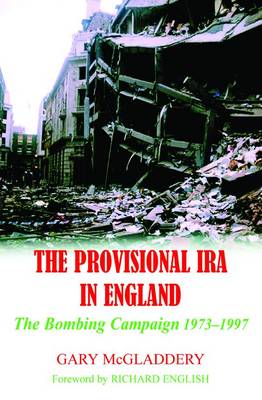


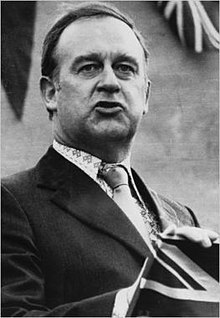
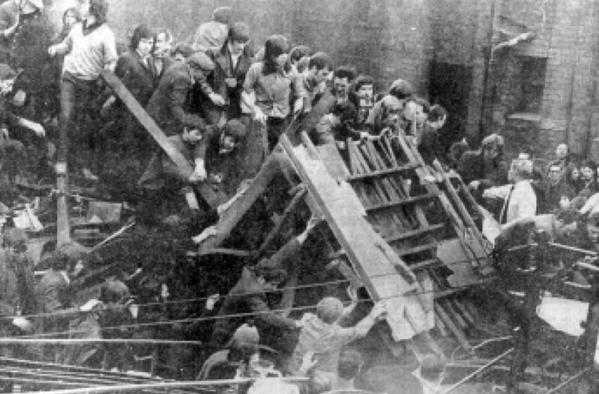
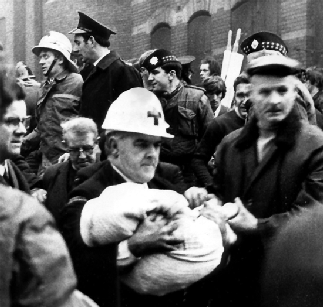
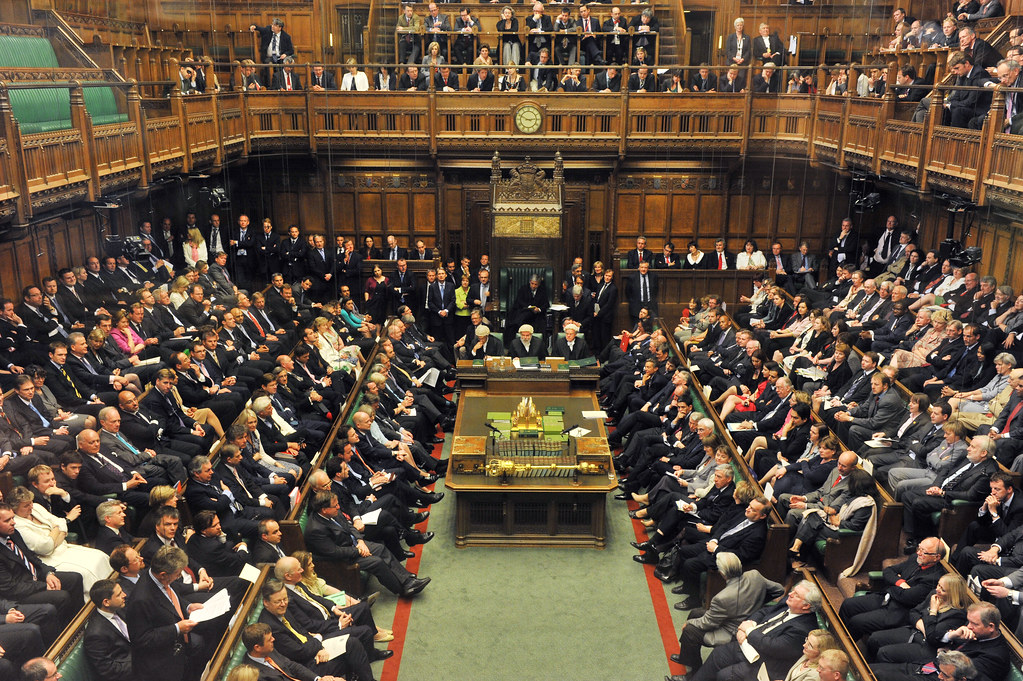



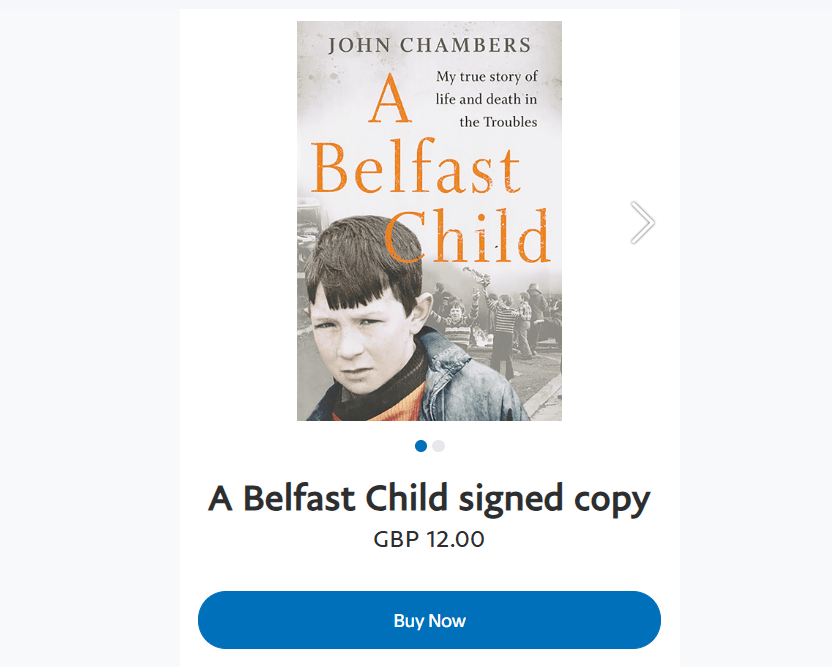


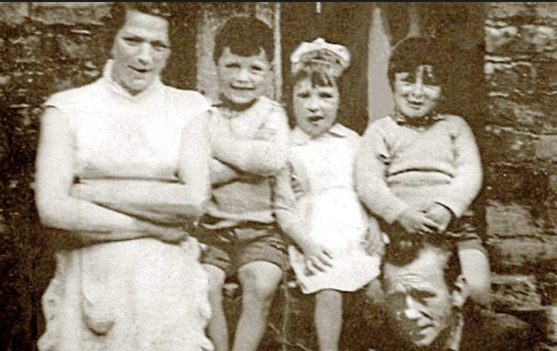


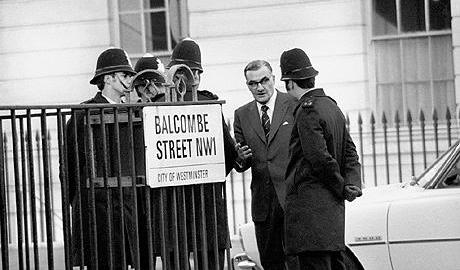


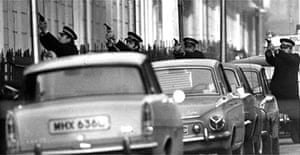

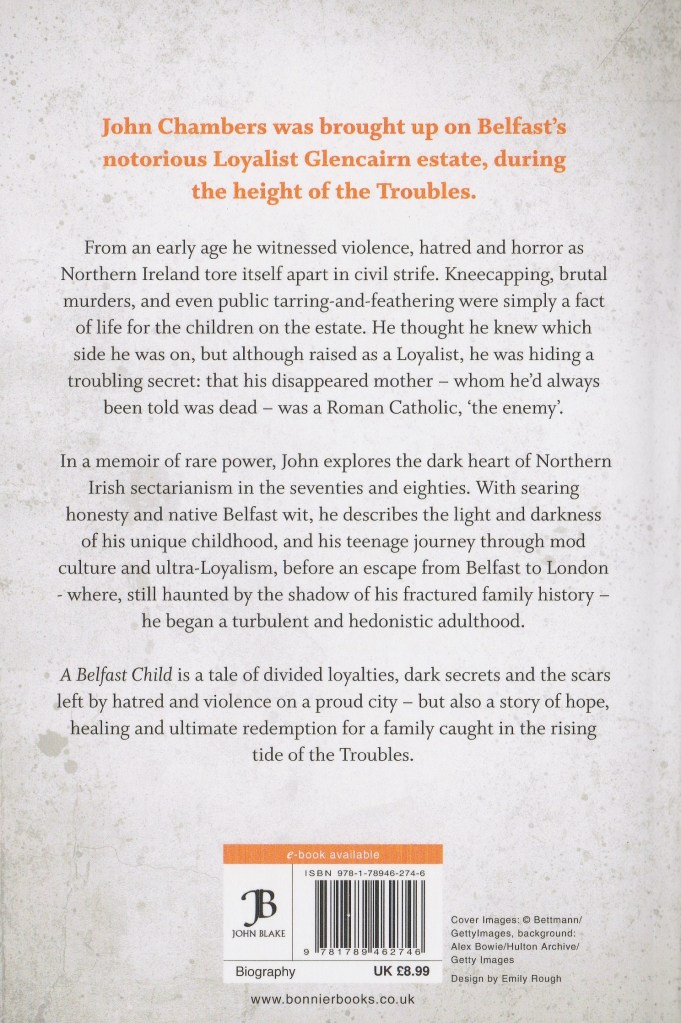

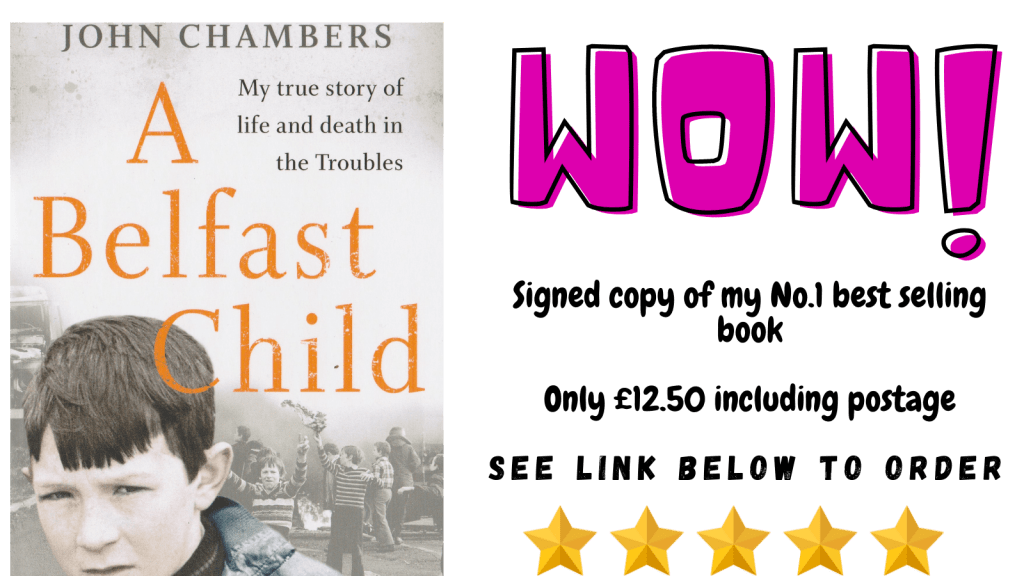

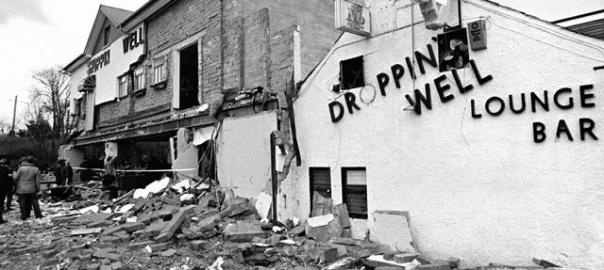


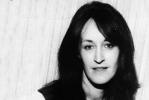


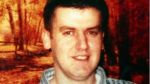

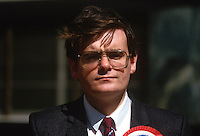


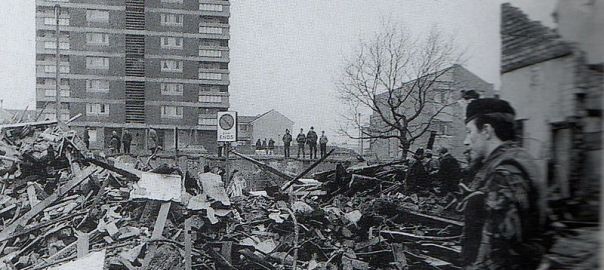


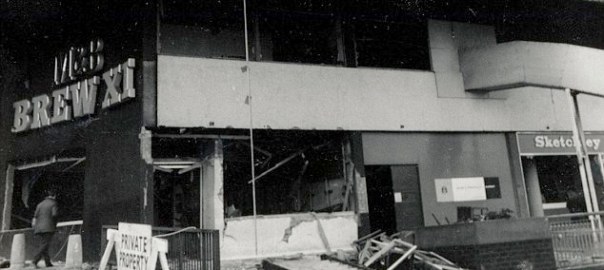


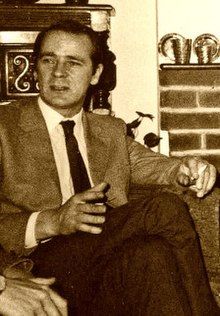










 belfastchildis.com