Key Events & Deaths on this day in Northern Ireland Troubles
22nd January
————————————————
Saturday 22 January 1972
An anti-internment march was held at Magilligan strand, County Derry, with several thousand people taking part. As the march neared the internment camp it was stopped by members of the Green Jackets and the Parachute Regiment of the British Army, who used barbed wire to close off the beach.
When it appeared that the marchers were going to go around the wire, the army then fired rubber bullets and CS gas at close range into the crowd. A number of witnesses claimed that the paratroopers (who had been bused from Belfast to police the march) severely beat protesters and had to be physically restrained by their own officers.
John Hume accused the soldiers of “beating, brutalising and terrorising the demonstrators”. There was also an anti-internment parade in Armagh, County Armagh.
Tuesday 22 January 1974
Eighteen Loyalist protestors were forcefully removed from the front benches of the Assembly. It took eight Royal Ulster Constabulary (RUC) officers to carry Ian Paisley, then leader of the Democratic Unionist Party (DUP), to steps outside the Assembly building.
Harry West succeeded Brian Faulkner as leader of the Ulster Unionist Party (UUP).
Thursday 22 January 1976
Two members of the Royal Ulster Constabulary (RUC) were killed by a booby-trap bomb in Donegall Pass RUC base, Belfast. No group claimed responsibility.
A Catholic civilian was shot dead by Loyalists in Belfast.
A member of the Ulster Defence Regiment (UDR) was shot dead by the IRA near Portglenone, County Derry.
In a case of mistaken identity, a Protestant civilian was shot dead by Loyalists in Belfast.
The IRA shot dead a man alleged to have been an informer in County Tyrone.
Saturday 22 January 1977
Two people were found shot dead in a burning car in the Shankill area of Belfast; they had been killed by Loyalist paramilitaries.
Nelson Pleaded Guilty Brian Nelson, who had operated as a British Army agent and a Ulster Defence Association (UDA) intelligence officer, pleaded guilty to five charges of conspiracy to murder and 14 charges of possessing information useful to terrorists. [Nelson was sentenced to 10 years’ imprisonment. His decision to plead guilty meant that the security services did not have to justify their actions in court.]
Friday 22 January 1993
Patrick Mayhew, then Secretary of State for Northern Ireland, travelled to Dublin for informal talks with Dick Spring, the Tánaiste (deputy Irish Prime Minister and Minister for Foreign Affairs). Mayhew agreed to informal discussions with the Irish government in advance of any new political talks in Northern Ireland.
Sunday 22 January 1995
Dick Spring, then Tánaiste (deputy Irish Prime Minister and Minister for Foreign Affairs), said that the issue of the decommissioning of paramilitary weapons should not be allowed to become an obstacle to all-party talks.
Thursday 22 January 1998
RUC Blame UDA / UFF For Killings Chris McMahon (29), a Catholic civilian, was shot and seriously wounded at the bakery where he worked in Newtownabbey, near Belfast. McMahon was shot at around 6.00pm in a random attack by a Loyalist paramilitary group.
Ronnie Flanagan, then Chief Constable of the Royal Ulster Constabulary (RUC), stated that the Ulster Freedom Fighters (UFF) were involved in the recent killings of three Catholics. This despite the fact that the UFF was supposed to be on ceasefire.
The UFF is a cover name (pseudonym) used by the Ulster Defence Association (UDA). David Adams, then a spokesman for the Ulster Democratic Party (UDP), denied that the UFF were behind the recent killings. There were calls for the UDP to be expelled from the multi-party talks.
The funeral of Larry Brennan took place in Belfast.
The funeral of Jim Guiney, who was a leading member of the Ulster Defence Association (UDA), took place in Lisburn, County Down. Further evidence of the Republic of Ireland’s growing modern technological base was confirmed when Dell Computer announced plans to create 3,000 new jobs in Limerick, County Limerick and Bray, County Wicklow, over the next three years in an £180m. expansion plan.
Friday 22 January 1999
The Royal Ulster Constabulary (RUC) announced that seven security bases along the County Fermanagh border would be closed.
Lindsay Robb, then a Loyalist Volunteer Force (LVF) prisoner and former member of the Progressive Unionist Party (PUP) team that engaged in talks leading to the Good Friday Agreement, was the first LVF prisoner to be given early release.
Tuesday 22 January 2002
Two packages, each containing a single bullet, which were addressed to representatives of Nationalist resident groups were intercepted by postal workers at Mallusk, County Antrim.
Breandan Mac Cionnaith,
The parcels were addressed to Gerard Rice, then representative of the Lower Ormeau Concerned Community in Belfast, and Breandan Mac Cionnaith, then representative of the Garvaghy Road Residents’ Coalition in Portadown, County Armagh. Both men were prominent in protests against Loyal Order parades in their areas.
A suspected pipe-bomb was found outside the home of Alex Maskey (SF), then Member of the Legislative Assembly (MLA). The device was later declared an “elaborate hoax”.
Colin Murphy
Colm Murphy (49) was found guilty at the Special Criminal Court (three judges sitting without a jury) in Dublin, Republic of Ireland, of conspiracy to cause an explosion. He was the first person to be convicted in relation to the Omagh Bombing on 15 August 1998. Murphy was originally from south Armagh but had a home in County Louth, Republic of Ireland.
[Murphy was sentenced on Friday 25 January 2002 to 14 years in prison.]
It was announced that the British Army’s Ebrington Barracks in Derry would close, as would a watchtower near the border in south Armagh. Although the Army stated that troop numbers would not be reduced it was announced that 500 soldiers based at Ebrington would return to England where they would be put on stand-by.
David Trimble, then leader of the Ulster Unionist Party (UUP), travelled to Downing Street, London, for a meeting with Tony Blair, then British Prime Minister. Trimble warned that the peace process was in danger of being undermined. He claimed that the government had “bent the rules” to allow Sinn Féin (SF) Members of Parliament (MPs) office facilities at Westminster.
Trimble also advised Blair against amnesties for Irish Republican Army (IRA) members who were ‘on the run’.
—————————————————————————
Remembering all innocent victims of the Troubles
Today is the anniversary of the death of the following people killed as a results of the conflict in Northern Ireland
“To live in hearts we leave behind is not to die
– Thomas Campbell
To the innocent on the list – Your memory will live forever
– To the Paramilitaries –
There are many things worth living for, a few things worth dying for, but nothing worth killing for.
9 People lost their lives on the 22nd January between 1976– 1990
————————————————————
22 January 1976 Niall O’Neill, (27)
Catholic Status: Civilian (Civ),
Killed by: non-specific Loyalist group (LOY) Shot at his home, Thirlmere Gardens, off Cavehill Road, Belfast.
————————————————————
22 January 1976
John Arrell, (32)
Protestant Status: Ulster Defence Regiment (UDR),
Killed by: Irish Republican Army (IRA) Off duty. Shot while driving his firm’s minibus home from work, Claudy, near Portglenone, County Derry.
————————————————————
22 January 1976
John Morrow, (36)
Protestant Status: Civilian (Civ),
Killed by: Ulster Volunteer Force (UVF) Shot during gun attack on his firm’s van, while travelling along Ballyutoag Road, Ligoniel, Belfast. Assumed to be a Catholic.
————————————————————
22 January 1976 Kieran McCann, (20)
Catholic Status: Civilian (Civ),
Killed by: Irish Republican Army (IRA) Shot at his workplace, Eglish, near Dungannon, County Tyrone. Alleged informer.
————————————————————
22 January 1976
George Bell, (54)
Protestant Status: Royal Ulster Constabulary (RUC),
Killed by: not known (nk) Killed by booby trap bomb hidden in abandoned shotgun which exploded in Donegall Pass Royal Ulster Constabulary (RUC) base, Belfast.
————————————————————
22 January 1976
Neville Cummings, (37)
Protestant Status: Royal Ulster Constabulary (RUC),
Killed by: not known (nk) Killed by booby trap bomb hidden in abandoned shotgun which exploded in Donegall Pass Royal Ulster Constabulary (RUC) base, Belfast.
————————————————————
22 January 1977 Thomas Boston, (45)
Protestant Status: Civilian (Civ),
Killed by: non-specific Loyalist group (LOY) Found shot in burning car, Downing Street, Shankill, Belfast.
————————————————————
22 January 1977 John Lowther, (43)
nfNI Status: Civilian (Civ),
Killed by: non-specific Loyalist group (LOY) Originally from County Mayo. Found shot in burning car, Downing Street, Shankill, Belfast.
————————————————————
22 January 1990
Derek Monteith, (35)
Protestant Status: Royal Ulster Constabulary (RUC),
Killed by: Irish Republican Army (IRA) Off duty. Shot at his home, Kilburn Park, Armagh.
————————————————————
This is simply the story of a boy trying to grow up, survive, thrive, have fun & discover himself against a backdrop of events that might best be described as ‘explosive’, captivating & shocking the world for thirty long years.
Her Majesty’s Prison Maze (previously Long Kesh Detention Centre and known colloquially as the Maze Prison, The Maze, the H Blocks or Long Kesh) was a prison in Northern Ireland that was used to house paramilitary prisoners during the Troubles from mid-1971 to mid-2000.
————————–
The Maze Prison Documentary
————————–
– Disclaimer –
The views and opinions expressed in these pages/documentaries are soley intended to educate and provide background information to those interested in the Troubles of Northern Ireland. They in no way reflect my own opinions and I take no responsibility for any inaccuracies or factual errors.
It was situated at the former Royal Air Force station of Long Kesh, on the outskirts of Lisburn. This was in the townland of Maze, about nine miles (14 km) southwest of Belfast. The prison and its inmates played a prominent role in recent Irish history, notably in the 1981 hunger strike. The prison was closed in 2000 and demolition began on 30 October 2006, but on 18 April 2013 it was announced by the Northern Ireland Executive that the remaining buildings would be redeveloped into a peace centre.[1]
Background
The entrance to Compound 19
Following the introduction of internment in 1971, “Operation Demetrius” was implemented by the Royal Ulster Constabulary (RUC) and British Army with raids for 452 suspects on 9 August 1971. The RUC and army arrested 342 Irish nationalists, but key Provisional Irish Republican Army (IRA) members had been tipped off and 104 of those arrested were released when it emerged they had no paramilitary connections.[2] Those behind Operation Demetrius were accused of bungling, by arresting many of the wrong people and using out-of-date information. Following nationalist protests, some Ulster loyalists were also arrested. By 1972, there were 924 internees and by the end of internment on 5 December 1975, 1,981 people had been detained; 1,874 (94.6%) of whom were Catholic/Irish nationalist and 107 (5.4%) Ulster Protestants/loyalists.[3]
Initially, the internees were housed, with different paramilitary groups separated from each other, in Nissen huts at a disused RAF airfield that became the Long Kesh Detention Centre. The internees and their supporters agitated for improvements in their conditions and status; they saw themselves as political prisoners rather than common criminals. In July 1972, the Secretary of State for Northern Ireland, William Whitelaw introduced Special Category Status for those sentenced for crimes relating to the civil violence. There were 1,100 Special Category Status prisoners at that time.
Special Category Status for convicted paramilitary-linked prisoners gave them the same privileges previously available only to internees. These privileges included free association between prisoners, extra visits, food parcels and the right to wear their own clothes rather than prison uniforms.[4]
However, Special Category Status was short-lived. As part of a new British policy of “criminalisation”, and coinciding with the end of internment, the new Secretary of State for Northern Ireland, Merlyn Rees, ended Special Category Status from 1 March 1976. Those convicted of “scheduled terrorist offences” after that date were housed in the eight new “H-Blocks” that had been constructed at Long Kesh, now officially named Her Majesty’s Prison Maze (HMP Maze). Existing prisoners remained in separate compounds and retained their Special Category Status with the last prisoner to hold this status being released in 1986. Some prisoners changed from being Special Category Status prisoners to being common criminals. Brendan Hughes, an IRA prisoner, had been imprisoned with Special Category Status in Cage 11, but was alleged to have been involved in a fight with warders. He was taken to court and convicted then returned to the jail as a common prisoner and incarcerated in the H-Blocks as an ordinary prisoner, all within the space of several hours.[5]
H-Blocks
Prisoners convicted of scheduled offences after 1 March 1976 were housed in the “H-Blocks” that had been constructed. Prisoners without Special Category Status began protesting for its return immediately after they were transferred to the H-Blocks. Their first act of defiance, initiated by Kieran Nugent, was to refuse to wear the prison uniforms, stating that convicted criminals, and not political prisoners, wear uniforms. Not allowed their own clothes, they wrapped themselves in bedsheets. Prisoners participating in the protest were “on the blanket“. By 1978, more than 300 men had joined the protest. The British government refused to back down. In March 1978, some prisoners refused to leave their cells to shower or use the lavatory, and were provided with wash-hand basins in their cells.[6][7] The prisoners requested that showers be installed in their cells; and when this request was turned down, they refused to use the wash-hand basins.[6] At the end of April 1978, a fight occurred between a prisoner and a prison officer in H-Block 6. The prisoner was taken away to solitary confinement, and rumours spread across the wing that the prisoner had been badly beaten.[6] The prisoners responded by smashing the furniture in their cells, forcing the prison authorities to remove the remaining furniture from the cells, leaving only blankets and mattresses.[6] The prisoners responded by refusing to leave their cells and, as a result, the prison officers were unable to clear them. This resulted in the blanket protest escalating into the dirty protest, as the prisoners could not leave their cells to “slop out” (i.e., empty their chamber pots), and started smearing excrement on the walls of their cells to mitigate the spread of maggots.[8]
Republicans outside the prison took the battle to the media and both sides fought for public support. Inside the prison, the prisoners took another step and organized a hunger strike.
A view along the corridor of one of the wings of H4
On 27 October 1980, seven republican prisoners refused food and demanded political status. The Conservative government led by Margaret Thatcher did not initially give in. In December, the prisoners called off the hunger strike when the government appeared to concede to their demands. However, the government immediately reverted to their previous stance, in the belief that the prisoners would not start another strike. Bobby Sands, the leader of the Provisional IRA prisoners, began a second action on 1 March 1981. Outside the prison, in a major publicity coup, Sands was nominated for Parliament and won the Fermanagh and South Tyrone by-election. But the British government still resisted and on 5 May, after 66 days on hunger strike, Sands died. More than 100,000 people attended Sands’ funeral in Belfast. Another nine hunger strikers (members of both the IRA and the INLA) died by the end of August before the hunger strike was called off in October.
On 25 September 1983, the Maze saw the largest breakout of prisoners from a British prison. Thirty-eight prisoners hijacked a prison meals lorry and smashed their way out. During the breakout, four prison officers were stabbed, including one, James Ferris, who died of a heart attack as a result. Another officer was shot in the head by Gerry Kelly, and several other officers were injured by the escapees.[9] Nineteen of the prisoners were soon recaptured, but the other nineteen escaped.
In March 1997, an IRA escape attempt was foiled when a 40 ft (12 m) underground tunnel was found. The tunnel led from H-Block 7 and was 80 ft (24 m) short of the perimeter wall.
In December 1997, IRA prisoner Liam Averill escaped dressed as a woman during a Christmas party for prisoners’ children.[10] Averill, who was jailed for life after committing two murders, was not recaptured, and was instead given amnesty in early 2001 when he was one of a number of republican escapees to present themselves to the authorities in a two-week period.[11]
Organisation
During the 1980s, the British government slowly introduced changes, granting what some would see as political status in all but name. Republican and loyalist prisoners were housed according to group. They organised themselves along military lines and exercised wide control over their respective H-Blocks. The Loyalist Volunteer Force (LVF) leader Billy Wright was shot dead in December 1997 by two Irish National Liberation Army (INLA) prisoners.[12]
Peace process
H-Block Monument in the Free Derry area of the Bogside, Derry; in memory of the hunger strikers in the H-Block of Long Kesh prison in 1981.
The prisoners also played a significant role in the Northern Ireland peace process. On 9 January 1998, the British Secretary of State for Northern Ireland, Mo Mowlam, paid a surprise visit to the prison to talk to members of the Ulster Defence Association (UDA) including Johnny Adair, Sam McCrory and Michael Stone. They had voted for their political representatives to pull out of talks. Shortly after Mowlam’s visit, they changed their minds, allowing their representatives to continue talks that would lead to the Good Friday Agreement of 10 April 1998. Afterwards, the prison was emptied of its paramilitary prisoners as the groups they represented agreed to the ceasefire. In the two years following the agreement, 428 prisoners were released. On 29 September 2000, the remaining four prisoners at the Maze were transferred to other prisons in Northern Ireland and the Maze Prison was closed.
Future
A monitoring group was set up on 14 January 2003 to debate the future of the 360-acre (1.5 km2) site. With close motorway and rail links, there were many proposals, including a museum, a multi-purpose sports stadium and an office, hotel and leisure village. In January 2006, the government unveiled a masterplan [13] for the site incorporating many of these proposals, including a 45,000 seat national multi-sport stadium for football, rugby and Gaelic games. The Government’s infrastructure organisation, the Strategic Investment Board (SIB), was tasked with taking forward the proposed Stadium idea and appointed one of its senior advisers, Tony Whitehead, to manage the project. The capacity of the proposed Stadium was later adjusted to first 35,000 and then 38,000 and the organising bodies of all three sports – Irish FA, Ulster Rugby and Ulster GAA – agreed in principle to support the integrated scheme.
In October 2006, demolition work started in preparation for construction on the site.
In January 2009, plans to build the new £300 million multi-purpose stadium on the site of The Maze were cancelled, with politicians saying that plans to start the construction of the stadium would not be reconsidered until at least 2012.[citation needed]
Discussion is still ongoing as to the listed status of sections of the old prison. The hospital and part of the H-Blocks are currently listed buildings, and would remain as part of the proposed site redevelopment as a “conflict transformation centre” with support from republicans such as Martin McGuinness and opposition from unionists, who consider that this risks creating “a shrine to the IRA”.[14]
In January 2013, plans were approved by the Northern Ireland environment minister Alex Attwood for the site to be redeveloped as showgrounds as the result of an application by the Royal Ulster Agricultural Society with the objective of relocating Balmoral Show from its current location in Belfast.
– Disclaimer –
The views and opinions expressed in these pages/documentaries are soley intended to educate and provide background information to those interested in the Troubles of Northern Ireland. They in no way reflect my own opinions and I take no responsibility for any inaccuracies or factual errors.
The views and opinions expressed in this documentary/ies and page are soley intended to educate and provide background information to those interested in the Troubles of Northern Ireland.
They in no way reflect my own opinions and I take no responsibility for any inaccuracies or factual errors
In 1974 he was jailed for seven years for the kidnap and torture of a Catholic man, Gerald Higgins, who died several weeks later from his injuries. Nelson served three years. After his release, Nelson resigned from the UDA and left for a construction job in West Germany. In 1985, however, the Intelligence Corps asked Nelson to rejoin and infiltrate the UDA. He rose to become the UDA’s senior intelligence officer while receiving assistance from his handlers. In one instance, IC operatives allegedly organised, streamlined and returned to Nelson a suitcase full of disorganised UDA intelligence.
Stevens Inquiry
In the early 1990s, following the shooting death of Loughlin Maginn, John Stevens was named to investigate allegations of collusion between loyalist paramilitaries and the Royal Ulster Constabulary (RUC). Stevens was able to use advanced fingerprint technology, then unavailable to the RUC. The Inquiry team uncovered Nelson’s fingerprints on some security force documents. The team began an investigation that, despite the obstructions encountered, would lead to Nelson’s arrest.
When the Stevens Inquiry Team arrested and interrogated Nelson, he claimed that he had been acting on behalf on the British government. Stevens spoke to John Deverell, head of MI5 in Belfast, who confirmed that Nelson had worked for Army Intelligence and not the RUC. Sharp disagreements developed between the two security branches as the extent of Nelson’s illegal activities within the Force Research Unit (FRU) was uncovered.
Over a period of two months, Nelson dictated a police statement covering 650 pages. He claimed that he had been tasked by the British Army to make the UDA a more effective killing machine. Using information that should have been confidential to his handlers he produced dossiers or “Intelligence Packages” including backgrounds, addresses, photos and movements on proposed targets, which were passed on to UDA assassins.[6]
Blue card index system
Nelson had a blue card index system whereby he would pick out information on individuals from the mass of information reaching him. The selection of names for the index was Nelson’s alone and Stevens concluded that Nelson was actually choosing the people who were going to be shot. Nelson passed on the names of only ten people to his FRU handlers, claiming he could not remember the others.
Those ten were never targeted. Four others, including solicitor Pat Finucane, were all shot dead. In Stevens’ words “the FRU had been inexcusably careless in failing to protect the four who lost their lives”. Nelson handed out his blue cards, between twenty and fifty at a time, to members of the Ulster Volunteer Force. The FRU had no agents within the UVF and these targeted people were consequently unprotected. Many loyalists never bothered to destroy their blue cards, however, and the Stevens team was able to obtain fingerprint evidence.
Brian Nelson represented as a silhouette holding a placard in a Belfast mural (February 2006).
Trial
At his trial in 1992, the prosecution alleged that he failed to alert his handlers to all the assassination plans of which he was aware. Gordon Kerr (“Colonel J”), a senior officer, who was later investigated himself, testified on Nelson’s behalf.
Kerr claimed that Nelson had warned the Intelligence Corps of more than 200 murder plots by loyalist death squads, including one which targeted Sinn Féin leader Gerry Adams. Kerr claimed that Nelson’s warnings allowed the British Army to prevent all murders but three.
Nelson claimed that, in 1989, he had warned his handlers of UDA plans to murder solicitor Pat Finucane, who had been successfully representing IRA suspects in court. According to Nelson, Finucane was given no warning and was fatally shot in front of his wife and children.
Eventually Nelson pled guilty to 20 charges, including five of conspiracy to murder and was sentenced to 10 years imprisonment. A number of charges, including two counts of first degree murder, were dropped as part of his plea bargain.
Further allegations
Following Nelson’s conviction, the BBC Panorama programme Dirty War, broadcast on 8 June 1992, made new claims about Nelson’s involvement in further murders and conspiracies. One allegation was that, following a tip off from Nelson, the Intelligence Corps kept secret a plot to murder Paddy McGrory, a solicitor representing the families of the Gibraltar Three.
In January 1993, Gerry Adams claimed the British government was fully aware of Nelson’s involvement in Ulster Resistance‘s January 1988 importation of weapons from South Africa including 200 AK47 rifles; 90 Browning pistols; 500 fragmentation grenades and 12 RPG 7 rocket launchers. This, together with the reliance by loyalists on leaked, although often outdated, military and police intelligence files on potential targets, meant that by 1992 loyalists were killing more than the republicans, a situation not seen since 1975.
Jimmy Smyth extradition case
Sir Patrick Mayhew, Northern Ireland Secretary, declared the Nelson affair was dead and buried. However, in May 1993, a San Francisco, California judge, in the extradition case of a Maze prisoner escapee, James Joseph “Jimmy” Smyth, who had used the alias “Jimmy Lynch”, demanded disclosure in court of suppressed reports, including documents on Nelson, or risk having the case dismissed.
The papers were not produced, but Smyth was eventually extradited back to Northern Ireland and to jail on 17 August 1996.
Francisco Notarantonio
Frederico Scappatici
Nelson was accused of setting up the killing of an Irish republican, Francisco Notarantonio, to divert the UDA from targeting Frederico Scappatici, an alleged IRA informer. Loyalist Sam McCrory shot Notarantonio, aged 66, who had been interned in 1971. but had not been active for many years, dead at his home in Ballymurphy, West Belfast on 9 October 1987.
Death
Nelson died, reportedly from a brain haemorrhage, on 11 April 2003, aged 55, after suffering a heart attack a fortnight before his death. Although news reports described Nelson as living in a secret location in England, it was not disclosed whether he had been granted witness protection as part of the supergrass policy.
SergeantLee Clegg is a British Army soldier who was convicted of murder for his involvement in the shooting dead of two teenage joyriders in West Belfast, Northern Ireland. His conviction was later overturned.
Shooting
The shooting took place in West Belfast on 30 September 1990. Clegg, then a private originally from Bradford, England, and his fellow soldiers manning the checkpoint on the Upper Glen Road, fired nineteen bullets into a stolen Vauxhall Astra that passed through their checkpoint travelling at high speed. Clegg fired four of the bullets, the last of which killed 18-year-old passenger Karen Reilly. The driver, 17-year-old Martin Peake, also died at the scene, and the third passenger, Markiewicz Gorman, escaped with minor injuries.
Sentencing
Clegg was sentenced to life imprisonment for murder in 1993, the court having decided that lethal force had been used without a lawful purpose. The fourth bullet was said to have been fired through the back of the car as it was leaving the checkpoint and was therefore no longer a threat to the soldiers. The murder conviction was condemned by unionists and some British newspapers, including the Daily Mail, which began a campaign for Clegg’s release on the grounds that he was just doing his job in difficult circumstances.
Release and aftermath
Clegg was released under licence by then Northern Ireland SecretaryPatrick Mayhew in 1995, which in turn led to rioting in Irish nationalist areas of Belfast. Sinn Féin repeatedly called the decision a “threat to the peace process“. The release followed after a test shooting on another Astra conducted by pathologist Iain West and forensic expert Graham Renshaw on 4 June 1995.[1]
Appeals
A set of appeals to the Court of Appeal and House of Lords led to the quashing of the murder conviction in 1998 and a re-trial in March 1999, on the grounds that new evidence suggested that the fourth bullet entered the side of the car. At the retrial Clegg was cleared of murder, but a conviction for “attempting to wound” the driver of the car, Martin Peake, who also died in the incident, was upheld.
Another appeal, this time at the Northern Ireland Court of Appeal, led to that lesser conviction also being overturned on 31 January 2000 due to uncertainty over the accuracy of evidence that initially suggested Clegg’s final bullet was fired after the vehicle had passed.
The Teebane bombing (or Teebane massacre)[1][2] took place on 17 January 1992 at a rural crossroads between Omagh and Cookstown in County Tyrone, Northern Ireland. A roadside bomb destroyed a van carrying 14 construction workers who had been repairing a British Army base in Omagh. Eight of the men were killed and the rest were wounded. The Provisional Irish Republican Army (IRA) claimed responsibility, saying that the workers were killed because they were “collaborating” with the “forces of occupation”.
———————————
The Victims
———————————
17 January 1992
David Harkness, (23)
Protestant Status: Civilian (Civ),
Killed by: Irish Republican Army (IRA) Killed in land mine attack on firm’s van, returning home from Lisanelly British Army (BA) base, Omagh, at Teebane Crossroads, near Cookstown, County Tyrone.
———————————
17 January 1992
Gary Bleeks, (25)
Protestant Status: Civilian (Civ),
Killed by: Irish Republican Army (IRA) Killed in land mine attack on firm’s van, returning home from Lisanelly British Army (BA) base, Omagh, at Teebane Crossroads, near Cookstown, County Tyrone.
———————————
17 January 1992
Robert Dunseath, (25)
Protestant Status: Civilian (Civ),
Killed by: Irish Republican Army (IRA) Killed in land mine attack on firm’s van, returning home from Lisanelly British Army (BA) base, Omagh, at Teebane Crossroads, near Cookstown, County Tyrone.
———————————
17 January 1992 John McConnell (38)
Protestant Status: Civilian (Civ),
Killed by: Irish Republican Army (IRA) Killed in land mine attack on firm’s van, returning home from Lisanelly British Army (BA) base, Omagh, at Teebane Crossroads, near Cookstown, County Tyrone.
———————————
17 January 1992
James Caldwell, (37)
Protestant Status: Civilian (Civ),
Killed by: Irish Republican Army (IRA) Killed in land mine attack on firm’s van, returning home from Lisanelly British Army (BA) base, Omagh, at Teebane Crossroads, near Cookstown, County Tyrone.
———————————
17 January 1992
Nigel McKee, (22)
Protestant Status: Civilian (Civ),
Killed by: Irish Republican Army (IRA) Killed in land mine attack on firm’s van, returning home from Lisanelly British Army (BA) base, Omagh, at Teebane Crossroads, near Cookstown, County Tyrone.
———————————
17 January 1992
Robert Irons, (61)
Protestant Status: Civilian (Civ),
Killed by: Irish Republican Army (IRA) Killed in land mine attack on firm’s van, returning home from Lisanelly British Army (BA) base, Omagh, at Teebane Crossroads, near Cookstown, County Tyrone.
———————————
17 January 1992 Oswald Gilchrist, (44)
Protestant Status: Civilian (Civ),
Killed by: Irish Republican Army (IRA) Injured in land mine attack on firm’s van, returning home from Lisanelly British Army (BA) base, Omagh, at Teebane Crossroads, near Cookstown, County Tyrone. He died 21 January 1992
Since the beginning of its campaign in 1970, the Provisional IRA had launched frequent attacks on British Army and Royal Ulster Constabulary (RUC) bases in Northern Ireland. In August 1985 it began targeting civilians who offered services to the security forces, particularly those employed by the security forces to maintain and repair its bases. The first to be killed was a Catholic man who was shot dead for selling portable buildings to the RUC.[3] In October 1990, the IRA launched three “proxy bomb” attacks. Three men, who worked for the security forces, were tied into cars loaded with explosives and ordered to drive to British Army checkpoints while their families were held at gunpoint. The bombs were then remotely detonated. Six soldiers and one of the forced drivers were killed in the first two attacks.[4] A third proxy bomb was driven to Lisanelly British Army base in Omagh, but the main bomb failed to explode.[5] An earlier attack had taken place on this barracks in January, when an IRA bomb damaged the perimeter fence.[6] Between August 1985 and January 1992, the IRA killed 23 people who had been working for (or offering services to) the security forces.[7] The IRA also alleged that some of those targeted had links with Ulster loyalist paramilitaries.[7]
Bombing
On the evening of 17 January 1992, the 14 construction workers left work at Lisanelly British Army base in Omagh. They were employees of Karl Construction, based in Antrim.[7] They travelled eastward in a Ford Transit van towards Cookstown.[7] When the van reached the rural Teebane Crossroads, just after 5PM, IRA volunteers detonated a roadside bomb containing an estimated 600 pounds (270 kg) of home-made explosives in two plastic barrels.[8] Later estimates report a 1,500 pounds (680 kg) device.[9] The blast was heard from at least ten miles away. It ripped through one side of the van, instantly killing the row of passengers seated there. The vehicle’s upper part was torn asunder, and its momentum kept it tumbling along the road for 30 yards.[10] Some of the bodies of the dead and injured were blown into the adjacent field and ditch. IRA volunteers had detonated the bomb from about 100 yards away using a command wire.[11]
Seven of the men were killed outright. They were William Gary Bleeks (25), Cecil James Caldwell (37), Robert Dunseath (25), David Harkness (23), John Richard McConnell (38), Nigel McKee (22) and Robert Irons (61). The van’s driver, Oswald Gilchrist (44), died of his wounds in hospital four days later.[12] Robert Dunseath was a British soldier serving with the Royal Irish Rangers.[13] The other six men were badly injured.[14] It was the highest death toll from one incident in Northern Ireland since 1988.[11]
The IRA’s Tyrone Brigade claimed responsibility for the bombing shortly after.[7] It argued that the men were legitimate targets because they were “collaborators engaged in rebuilding Lisanelly barracks” and vowed that attacks on “collaborators” would continue.[7] The IRA’s statement said:
The IRA reiterates its long-standing call to those who continue to provide services or materials to the forces of occupation to desist immediately. Since 1985 the IRA has adopted a policy of taking military action aimed at ending Britain’s cynical use of non-military personnel for the servicing and maintenance of British Crown Forces’ bases and installations … for our part, we in the IRA will not tolerate a situation where military personnel are freed from essential services and maintenance tasks and then deployed where they can carry out wholesale repression within our community.[15]
Both unionist and Irish nationalist politicians condemned the attack.[7]Sinn Féin president Gerry Adams, however, described the bombing as “a horrific reminder of the failure of British policy in Ireland”. He added that it highlighted “the urgent need for an inclusive dialogue which can create a genuine peace process”.[7] British Prime Minister John Major visited Northern Ireland within days and promised more troops, pledging that the IRA would not change government policy.[7]
In his book The Long War, Brendan O’Brien wrote:
In terms of IRA military strategy, the Teebane bomb was a ‘success’. It struck with deadly ferocity and effect and would have been extremely intimidating to others contemplating taking jobs on bombed-out RUC and British Army buildings […] this bomb also served as a warning to loyalist paramilitaries who had carried out a succession of killings in Tyrone.[7]
Less than three weeks later, the Ulster Defence Association (UDA) launched a ‘retaliation’ for the bombing. At 2PM on 5 February, two masked men armed with an automatic rifle and revolver entered Sean Graham’s betting shop on Ormeau Road, Belfast.[16] The shop was in an Irish nationalist/republican area and was packed with customers at the time.[16] The men fired indiscriminately at the customers, killing five Irish Catholic civilians, before fleeing to a getaway car.[16] The UDA claimed responsibility using the covername “Ulster Freedom Fighters”, ending its statement with “Remember Teebane”.[17] After the shootings, a cousin of one of those killed at Teebane visited the betting shop. He said: “I just don’t know what to say but I know one thing – this is the best thing that’s happened for the Provos [Provisional IRA] in this area in years. This is the best recruitment campaign they could wish for”.[15]
The Historical Enquiries Team (HET) conducted an investigation into the bombing and released its report to the families of the victims. It found that the IRA unit had initially planned to carry out the attack on the morning of 17 January as the workers made their way to work but, due to fog, it was put off until the afternoon. Although suspects were rounded up and there were arrests in the wake of the attack, nobody has ever been charged or convicted of the bombing. Survivor Bobby O’Neill, who received serious injuries in the blast, told the RUC that as he lay injured on the ground, he had seen a “bearded man” appear at the scene of the bombing. The man dispassionately walked through the van’s wreckage, showing no compassion or emotion as he gazed upon each of the bodies of the dead and injured and making no attempt to help the wounded. O’Neill believed this man was one of the bombers and the following month, helped the RUC to compile a photo-fit image of him which was then circulated to all RUC divisions, but never released to the public.[18]
Karl Construction erected a granite memorial at the site of the attack[19] and a memorial service is held there each year. In January 2012, on the 20th anniversary of the attack, Democratic Unionist Party (DUP) MLA, Trevor Clarke, whose brother-in-law Nigel McKee at age 22 was the youngest person killed in the bombing, demanded that republicans provide the names of the IRA bombers
This is simply the story of a boy trying to grow up, survive, thrive, have fun & discover himself against a backdrop of events that might best be described as ‘explosive’, captivating & shocking the world for thirty long years.
1441 British armed force personnel died in Operation Banner
During the 38 year operation, 1,441 members of the British armed forces died in Operation Banner. This includes those who were killed in paramilitary attacks as well as those who died as a result of assault, accidents, suicide and natural causes
The main opposition to the British military’s deployment came from the Provisional Irish Republican Army (IRA). It waged a guerrilla campaign against the British military from 1970-97. An internal British Army document released in 2007 stated that, whilst it had failed to defeat the IRA, it had made it impossible for the IRA to win through violence, and reduced substantially the death toll in the last years of conflict
Number of troops deployed
At the peak of the operation in the 1970s, the British Army was deploying around 21,000 soldiers. By 1980, the figure had dropped to 11,000, with a lower presence of 9,000 in 1985. The total climbed again to 10,500 after the intensification of the IRA use of barrack busters toward the end of the 1980s. In 1992, there were 17,750 members of all British military forces taking part in the operation.
The British Army build-up comprised three brigades under the command of a lieutenant-general. There were six resident battalions deployed for a period of two and a half years and four roulement battalions serving six-months tours.
In July 1997, during the course of fierce riots in nationalist areas triggered by the Drumcree conflict, the total number of security forces in Northern Ireland increased to more than 30,000 (including the RUC).
A British Army Ammunition Technical Officer approaches a suspect device in Belfast.
The British military was responsible for about 10% of all deaths in the conflict. According to one study, the British military killed 306 people during Operation Banner, 156 (~51%) of whom were unarmed civilians.
Another study says the British military killed 301 people, 160 (~53%) of whom were unarmed civilians. Of the civilians killed, 61 were children.
Only four soldiers were convicted of murder while on duty in Northern Ireland. All were released after serving two or three years of life sentences and allowed to rejoin the Army. Senior Army officers privately lobbied successive Attorney Generals not to prosecute soldiers, and the Committee on the Administration of Justice says there is evidence soldiers were given some level of immunity from prosecution.
Elements of the British Army also colluded with illegal loyalist paramilitaries responsible for numerous attacks on civilians (see below). Journalist Fintan O’Toole argues that “both militarily and ideologically, the Army was a player, not a referee”.
———————————-
Northern Ireland in the 1960s/1970s Documentary
———————————-
Relationship with the Catholic community
Many Catholics initially welcomed the British Army’s deployment, as Catholic neighbourhoods had been attacked by Protestant loyalists and the Royal Ulster Constabulary (RUC).
However, relations soured between the British Army and Catholics. The British Army’s actions in support of the RUC and the unionist government “gradually earned it a reputation of bias” in favour of Protestants and unionists.
In the British Army’s campaign against the IRA, Catholic areas were frequently subjected to house raids, checkpoints, patrols and curfews that Protestant areas avoided. There were frequent claims of soldiers physically and verbally abusing Catholics during these searches.
In some neighbourhoods, clashes between Catholic residents and British troops became a regular occurrence. In April 1970, Ian Freeland — the British Army’s overall commander in Northern Ireland — announced that anyone throwing petrol bombs would be shot dead if they did not heed a warning from soldiers.
A memorial to those killed by British soldiers during the “Ballymurphy Massacre”
The Falls Curfew in July 1970, was a major blow to relations between the British Army and Catholics. A weapons search in the mainly Catholic Falls area of Belfast developed into a riot and then gun battles with the IRA. The British Army then imposed a 36-hour curfew and arrested all journalists inside the curfew zone.
It is claimed that, because the media were unable to watch them, the soldiers behaved “with reckless abandon”. A large amount of CS gas was fired into the area while hundreds of homes and businesses were forcibly searched for weapons.
The searches caused much destruction and there were scores of complaints of soldiers hitting, threatening, insulting and humiliating residents. The Army also admitted there had been looting by some soldiers. Four civilians were killed by the British Army during the operation and another 60 suffered gunshot wounds.
On 9 August 1971, internment (imprisonment without trial) was introduced in Northern Ireland. Soldiers launched dawn raids and interned almost 350 people suspected of IRA involvement. This sparked four days of violence in which 20 civilians were killed and thousands were forced to flee their homes. Seventeen civilians were killed by British soldiers, 11 of them in the Ballymurphy Massacre.
No loyalists were included in the sweep and many of those arrested were Catholics with no provable paramilitary links. Many internees reported being beaten, verbally abused, threatened, denied sleep and starved. Some internees were taken to a secret interrogation centre for a program of “deep interrogation”.
The operation led to mass protests and a sharp increase in violence over the following months. Internment lasted until December 1975 and during that time 1,981 people were interned.
Banner and crosses carried by the families of the Bloody Sunday victims on the yearly commemoration march
The incident that most damaged the relationship between the British Army and the Catholic community was “Bloody Sunday“, 30 January 1972. During an anti-internment march in Derry, 26 unarmed Catholic protesters and bystanders were shot by soldiers from the 1st Battalion, Parachute Regiment; fourteen died. Some were shot from behind or while trying to help the wounded. The Widgery Tribunal largely cleared the soldiers of blame, but it was regarded as a “whitewash” by the Catholic community.
A second inquiry, the Saville Inquiry, concluded in 2010 that the killings were “unjustified and unjustifiable”.
On 9 July 1972, British troops in Portadown used CS gas and rubber bullets to clear Catholics who were blocking an Orange Order march through their neighbourhood. The British Army then let the Orangemen march into the Catholic area escorted by at least 50 masked and uniformed Ulster Defence Association (UDA) militants.
At the time, the UDA was a legal organization. That same day in Belfast, British snipers shot dead five Catholic civilians, including three children, in the Springhill Massacre. On the night of 3–4 February 1973, British Army snipers shot dead four unarmed men (one of whom was an IRA member) in the Catholic New Lodge area of Belfast.
In the early hours of 31 July 1972, the British Army launched Operation Motorman to re-take Northern Ireland’s “no-go areas“. These were mostly Catholic neighbourhoods that had been barricaded by the residents to keep out the security forces and loyalists. During the operation, the British Army shot four people in Derry, killing a 15-year-old Catholic civilian and an unarmed IRA member.
From 1971–73, a secret British Army unit, the Military Reaction Force (MRF), carried out undercover operations in Belfast. It killed and wounded a number of unarmed Catholic civilians in drive-by shootings. The British Army initially claimed the civilians had been armed, but no evidence was found to support this. Former MRF members later admitted that the unit shot unarmed people without warning, both IRA members and civilians. One member said :
“We were not there to act like an army unit, we were there to act like a terror group”.
At first, many of the drive-by shootings were blamed on Protestant loyalists. Republicans claim the MRF sought to draw the IRA into a sectarian conflict and divert it from its campaign against the state. The MRF was succeeded by the SRU, and later by the FRU.
Over time, the British Army modified its tactics and curbed the worst excesses of its troops in crowd control situations, leading to a gradual reduction in civilian fatalities. By the 1990s, these were a rare occurrence.
In May 1992, there were clashes between paratroopers and Catholic civilians in the town of Coalisland, triggered by a bomb attack which severed the legs of a paratrooper. The soldiers ransacked two pubs, damaged civilian cars and opened fire on a crowd.
Three civilians were hospitalized with gunshot wounds. As a result, the Parachute Regiment was redeployed outside urban areas and the brigadier at 3 Infantry Brigade, Tom Longland, was relieved of his command.
Collusion with loyalist paramilitaries
A republican mural in Belfast with the slogan “Collusion Is Not An Illusion”
In their efforts to defeat the IRA, there were incidents of collusion between the British Army and loyalist paramilitaries throughout the conflict. This included soldiers taking part in loyalist attacks while off-duty, giving weapons or intelligence to loyalists, not taking action against them, and hindering police investigations. The Army also had double agents and informers within loyalist groups who organized attacks on the orders of, or with the knowledge of, their Army handlers.
The De Silva report found that, during the 1980s, 85% of the intelligence that loyalists used to target people came from the security forces. A 2006 Irish Government report alleged that British soldiers also helped loyalists with attacks in the Republic of Ireland.
The Army’s locally-recruited Ulster Defence Regiment (UDR) was almost wholly Protestant. Despite the vetting process, loyalist militants managed to enlist; mainly to obtain weapons, training and intelligence.
A 1973 British Government document (uncovered in 2004), “Subversion in the UDR”, suggested that 5–15% of UDR soldiers then were members of loyalist paramilitaries.
The report said the UDR was the main source of weapons for those groups,although by 1973 weapons losses had dropped significantly, partly due to stricter controls.
By 1990, at least 197 UDR soldiers had been convicted of loyalist terrorist offences and other serious crimes including bombings, kidnappings and assaults. Nineteen were convicted of murder and 11 for manslaughter.
This was only a small fraction of those who served in it, but the proportion was higher than in the regular British Army, the RUC and the civilian population.
————————–
Operation ‘Banner’ 1969 – 2007
————————–
Initially, the Army allowed soldiers to be members of the Ulster Defence Association (UDA). Despite its involvement in terrorism, the UDA was not outlawed by the British Government until 1992. In July 1972, Harry Tuzo (the Army’s GOC in Northern Ireland) devised a strategy to defeat the IRA, which was backed by Michael Carver, head of the British Army.
It proposed that the growth of the UDA:
“should be discreetly encouraged in Protestant areas, to reduce the load on the Security Forces”,
and suggested they “turn a blind eye to UDA arms when confined to their own areas”.
That summer, the Army mounted some joint patrols with the UDA in Protestant areas, following talks between General Robert Ford and UDA leader Tommy Herron.
In November 1972 the Army ordered that a soldier should be discharged if his sympathy for a paramilitary group affects his performance, loyalty or impartiality. Within three years, 171 soldiers with UDA links had been discharged.
In 1977, the Army investigated a UDR battalion based at Girdwood Barracks, Belfast. The investigation found that 70 soldiers had links to the Ulster Volunteer Force (UVF), that thirty soldiers had fraudulently diverted up to £47,000 to the UVF, and that UVF members socialized with soldiers in their mess. Following this, two soldiers were dismissed on security grounds.
The investigation was halted after a senior officer claimed it was harming morale. Details of it were uncovered in 2011.
During the 1970s, the Glenanne gang—a secret alliance of loyalist militants, British soldiers and RUC officers—carried out a string of attacks against Catholics in an area of Northern Ireland known as the “murder triangle”.
It also carried out some attacks in the Republic. Lethal Allies: British Collusion in Ireland claims the group killed about 120 people, almost all of whom were reportedly uninvolved Catholic civilians.
The Cassel Report investigated 76 murders attributed to the group and found evidence that soldiers and policemen were involved in 74 of those. One member, RUC officer John Weir, claimed his superiors knew of the collusion but allowed it to continue.
The Stevens Inquiries found that elements of the British Army had used loyalists as “proxies”.
Through their double-agents and informers, they helped loyalist groups to kill people, including civilians. It concluded that this had intensified and prolonged the conflict.
The Army’s Force Research Unit (FRU) was the main agency involved. Brian Nelson, the UDA’s chief ‘intelligence officer’, was a FRU agent. Through Nelson, FRU helped loyalists target people for assassination. FRU commanders say they helped loyalists target only republican activists and prevented the killing of civilians
The Inquiries found evidence only two lives were saved and that Nelson/FRU was responsible for at least 30 murders and many other attacks – many of them on civilians.One victim was solicitor Pat Finucane. Nelson also supervised the shipping of weapons to loyalists from South Africa in 1988. From 1992–94, loyalists were responsible for more deaths than republicans, partly due to FRU.
Members of the security forces tried to obstruct the Stevens investigation.
Casualties
During the 38 year operation, 1,441 members of the British armed forces died in Operation Banner. This includes those who were killed in paramilitary attacks as well as those who died as a result of assault, accidents, suicide and natural causes.
692 soldiers in the regular British Army were killed as a result of paramilitary violence while another 689 died from other causes.
197 soldiers from the Ulster Defence Regiment were killed as a result of paramilitary violence while another 284 died from other causes.
7 soldiers from the Royal Irish Regiment were killed as a result of paramilitary violence while another 60 died from other causes.
9 soldiers from the Territorial Army were killed as a result of paramilitary violence while another 8 died from other causes.
2 members from other branches of the Army were killed as a result of paramilitary violence.
21 Royal Marines were killed as a result of paramilitary violence while another 5 died from other causes.
8 Royal Navy servicemen were killed as a result of paramilitary violence while another 3 died from other causes.
4 Royal Air Force servicemen were killed as a result of paramilitary violence while another 22 died from other causes.
According to the “Sutton Index of Deaths”, at the Conflict Archive on the Internet (CAIN), the British military killed 305 people during Operation Banner.
156 (~51%) were civilians
127 (~41%) were members of republican paramilitaries, including:
Crossmaglen RUC/Army base, showing a watchtower built during the operation that was later demolished as part of the demilitarisation process. The barracks were handed over to the PSNI in 2007
The operation was gradually scaled down since 1998, after the Good Friday Agreement, when patrols were suspended and several military barracks closed or dismantled, even before the beginning of IRA’s decommissioning.
The process of demilitarisation started in 1994, after the first IRA ceasefire. From the second IRA ceasefire in 1997 until the first act of decommission of weapons in 2001, almost 50% of the army bases had been vacated or demolished along with surveillance sites and holding centers, while more than 100 cross-border roads were reopened.
Eventually in August 2005, it was announced that in response to the Provisional IRA declaration that its campaign was over, and in accordance with the Good Friday Agreement provisions, Operation Banner would end by 1 August 2007.
This involved troops based in Northern Ireland reduced to 5,000, and only for training purposes. Security was entirely transferred to the police. The Northern Ireland Resident battalions of the Royal Irish Regiment — which grew out of the Ulster Defence Regiment — were stood down on 1 September 2006. The operation officially ended at midnight on 31 July 2007, making it the longest continuous deployment in the British Army’s history, lasting over 38 years.
While the withdrawal of troops was welcomed by the nationalist parties Social Democratic and Labour Party and Sinn Féin, the unionist Democratic Unionist Party and Ulster Unionist Party opposed to the decision, which they regarded as ‘premature’. The main reasons behind their resistance were the continuing activity of republican dissident groups, the loss of security-related jobs for the protestant community and the perception of the British Army presence as an affirmation of the political union with Great Britain.
Adam Ingram, the Minister of State for the Armed Forces, has stated that assuming the maintenance of an enabling environment, British Army support to the PSNI after 31 July 2007 was reduced to a residual level, known as Operation Helvetic, providing specialised ordnance disposal and support to the PSNI in circumstances of extreme public disorder as described in Patten recommendations 59 and 66, should this be needed, thus ending the British Army’s emergency operation in Northern Ireland.
Analysis of the operation
In July 2007, under the Freedom of Information Act 2000 the Ministry of Defence published Operation Banner: An analysis of military operations in Northern Ireland, which reflected on the Army’s role in the conflict and the strategic and operational lessons drawn from their involvement.
The paper divides the IRA activity and tactics in two main periods: The “insurgency” phase (1971–1972), and the “terrorist” phase (1972–1997). The British Army claims to have curbed the IRA insurgency by 1972, after Operation Motorman. The IRA then reemerged as a cell-structured organisation.
The report also asserts that the government efforts by the 1980s were aimed to destroy the IRA, rather than negotiate a political solution. One of the findings of the document is the failure of the British Army to tackle the IRA at strategic level and the lack of a single campaign authority and plan.
The paper stops short of claiming that :
“Northern Ireland has achieved a state of lasting peace” and acknowledges that as late as 2006, there were still “areas of Northern Ireland out of bounds to soldiers.”
The report analyses Israeli military theorist Martin van Creveld‘s comments on the outcome of the operation:
“
Martin van Creveld has said that the British Army is unique in Northern Ireland in its success against an irregular force. It should be recognised that the Army did not ‘win’ in any recognisable way; rather it achieved its desired end-state, which allowed a political process to be established without unacceptable levels of intimidation. Security force operations suppressed the level of violence to a level which the population could live with, and with which the RUC and later the PSNI could cope. The violence was reduced to an extent which made it clear to the PIRA that they would not win through violence. This is a major achievement, and one with which the security forces from all three Services, with the Army in the lead, should be entirely satisfied. It took a long time but, as van Crefeld [sic] said, that success is unique.
”
The US military have sought to incorporate lessons from Operation Banner in their field manual
Key Events & Deaths on this day in Northern Ireland Troubles
27th December
Monday 27 December 1982
Patrick Elliott (19), a Catholic civilian, was shot dead by British soldiers as he ran from a fish and chip shop which he had robbed on the Andersonstown Road, Belfast.
Wednesday 27 December 1995
Martin McCrory (30), a Catholic civilian was shot dead at his home, Norglen Parade, Turf Lodge, Belfast. Responsibility for the killing was claimed by Direct Action Against Drugs (DAAD), a cover name (pseudonym) used by the IRA
Billy Wright Shot Dead in Maze Prison Members of the Irish National Liberation Army (INLA) shot and killed Billy Wright (37), then leader of the Loyalist Volunteer Force (LVF), within the Maze Prison. Wright was sitting in a prison van waiting to be driven to the visiting block when three INLA inmates climbed across the roof of a ‘H Block’ and shot him several times. Another LVF prisoner in the van was not attacked.
The shooting took place around 10.00am. The shooting represented a serious breach of security both in the smuggling of a gun into the prison and the attack itself.
[Wright, who was called “King Rat” by the media and security services, was the leader of the LVF. The LVF was composed mainly of former members of the mid-Ulster Brigade of the Ulster Volunteer Force (UVF). Wright was thought to be personally responsible for the sectarian killing of a number of Catholic civilians. He had been under a death threat from former colleagues because he opposed the Combined Loyalist Military Command (CLMC) ceasefire.]
Seamus Dillon (45), a Catholic man, was shot dead by the LVF as he worked as a security guard outside a Dungannon Hotel, in County Tyrone.
Two other security guards and a bar attendant, who was a teenager, were shot and injured. Dillon had served a term of imprisonment as a Republican prisoner but the attack was a random one at a place frequented by Catholics.
[This attack was considered as a retaliation for the killing of Billy Wright. In the coming weeks 10 Catholics were shot dead by the LVF and the Ulster Freedom Fighters (UFF).]
Monday 27 December 1999
Loyalists carried out a paramilitary ‘punishment’ shooting on a 17 year old youth in Ballinahinch, County Down. The young man was shot in the leg.
Supporters of the Loyalist Volunteer Force (LVF) and the Ulster Volunteer Force (UVF) were involved in a fight in the social club of Portadown Football Club. Eleven people were injured in the fight during which baseball bats were used.
A bomb alert disrupted a horse racing meeting at Kempton Park in Surrey. Approximately 20,000 people were evacuated from the course. The Continuity Irish Republican Army (CIRA) were blamed for the incident.
————————————–
——————————————————————————
Remembering all innocent victims of the Troubles
Today is the anniversary of the death of the following people killed as a results of the conflict in Northern Ireland
“To live in hearts we leave behind is not to die
– Thomas Campbell
To the innocent on the list – Your memory will live forever
– To the Paramilitaries –
There are many things worth living for, a few things worth dying for, but nothing worth killing for.
7 People lost their lives on the 27th December between 1972 – 1997
————————————————————
27 December 1972 Eugene Devlin, (22)
Catholic Status: Irish Republican Army (IRA),
Killed by: British Army (BA) Shot during attempted sniper attack on British Army (BA) patrol, Townsend Street, Strabane, County Tyrone.
————————————————————
27 December 1973
Thomas Niedermayer, (45)
nfNI Status: Civilian (Civ),
Killed by: not known (nk) German Manager of Grundig factory. Died in unclear circumstances shortly after being abducted, by the IRA, from his home, Glengoland Gardens, Suffolk, Belfast. His remains eventually found, during excavation work with a mechanical digger, buried in an embankment by Collin River, off Glen Road, Collin, near Belfast, County Antrim, on 11 March 1980
————————————————————
27 December 1980 Heather Pollock, (53)
Protestant Status: Civilian (Civ),
Killed by: Irish Republican Army (IRA) Died three weeks after being shot in her home during sniper attack on Royal Ulster Constabulary (RUC) mobile patrol, Strabane, County Tyrone.
————————————————————
27 December 1982
Patrick Elliott, (19)
Catholic Status: Civilian (Civ),
Killed by: British Army (BA) Shot while running away immediately after robbing fish and chip shop, Andersonstown Road, Belfast.
————————————————————
27 December 1995
Martin McCrory, (30)
Catholic Status: Civilian (Civ),
Killed by: Direct Action Against Drugs (DAAD) Shot, at his home, Norglen Parade, Turf Lodge, Belfast.
————————————————————
27 December 1997
Billy Wright, (36)
Protestant Status: Loyalist Volunteer Force (LVF),
Killed by: Irish National Liberation Army (INLA) Leader of Loyalist Volunteer Force. Shot, while travelling in prison van, inside Long Kesh / Maze prison, County Down.
Key Events & Deaths on this day in Northern Ireland Troubles
22nd December
——————————-
Sunday 22 December 1974
Irish Republican Army (IRA) Ceasefire The Irish Republican Army (IRA) observed a ceasefire between midnight on 22 December 1974 to midnight on 2 January 1975. The ceasefire was called to allow the British government to respond to proposals put by the IRA to Protestant clergymen on 10 December 1974.
[The IRA initially extended this ceasefire, then called it off on 17 January 1975, and then renewed it from 10 February 1975. Government officials also held talks with Sinn Féin (SF) until 17 January 1975. Many commentators felt that an announcement of British withdrawal from Northern Ireland was a possibility at this time.]
The IRA carried out a bomb attack on the home of Edward Heath, a former British Prime Minister, in Wilton Street, Belgravia, London. A small bomb with a short fuse was thrown onto the first-floor balcony of Heath’s flat. The bomb caused extensive damage but Heath was not present and there were no injuries. [Attacks in London ended for the period of the IRA ceasefire but began again on 19 January 1975.]
Monday 22 December 1975
The authorities in the United States of America (USA) foiled an attempt to ship weapons to the Irish Republican Army (IRA).
Tuesday 22 December 1987
John McMichael, then deputy leader of the Ulster Defense Association (UDA), was killed by a booby-trap bomb planted by the Irish Republican Army (IRA). Following his death there were many accusations of collusion between senior UDA members and the IRA in the killing. [This incident was seen by many commentators as part of a process of change in the leadership of the UDA. A younger group of men were to assume the leadership of the organisation and were to introduce a change in the tactics of the UDA.
It was announced that, despite the European Court of Human Rights ruling on detention (on 29 November 1988), Britain would retain a seven-day detention period.
Friday 22 December 1989
The European Community announced a £100 million grant for transportation in Northern Ireland.
Tuesday 22 December 1992
Gerry Adams, then President of Sinn Féin (SF), replied to a speech made by Patrick Mayhew, then Secretary of State for Northern Ireland, on 16 December 1992. Adams proposed a United Nations (UN) and European Community (EC) role in finding a political solution. He also said that SF’s exclusion from political talks was undemocratic.
Wednesday 22 December 1993
John Major, then British Prime Minister, travelled to Northern Ireland and held a series of meetings with the leaders of the main constitutional parties. Ulster Marketing Surveys carried out a poll of opinion in Northern Ireland on the Downing Street Declaration. The poll was conducted on behalf of Independent Television News (ITN). Of those questioned 56 per cent said that they were in favour of the declaration.
Thursday 22 December 1994
Catholic Man Killed by Loyalists Noel Lyness (47), a Catholic civilian, was found beaten to death in an entry, off Ebor Street, Village, Belfast. Lyness who was a mature student at Queen’s University Belfast was the victim of a sectarian attack and had been killed by Loyalists but no paramilitary group claimed responsibility.
[In the following years there were to be a number of Catholics killed by both Loyalists gangs and Loyalist paramilitary groups which were followed by the policy of ‘no claim, no blame’. This meant that if no Loyalist paramilitary group claimed the killing the could be no political sanctions taken against them. In an effort to further hid their identity Loyalists resorted to beating their victims to death, or stabbing with knives, or shooting with shotguns (this method meant there were no bullets for the police to trace).]
The British government granted Christmas parole to 97 paramilitary prisoners.
[All the prisoners returned to jail following the Christmas holiday.]
In the Republic of Ireland 30 paramilitary prisoners were granted Christmas parole and a further nine prisoners were given early releases.
Sunday 22 December 1996
Eddie Copeland, a senior republican figure, was injured when a bomb exploded below his car in the Ardoyne area of Belfast. The Ulster Freedom Fighters (UFF) were thought to be responsible for the attack.
Monday 22 December 1997
Bertie Ahern, then Taoiseach (Irish Prime Minister), had talks with Bill Clinton, then President of the United States of America, while on a visit to Washington. Clinton said that he was encouraged by the way the multi-party talks were progressing.
Wednesday 22 December 1999
Peter Mandelson, then Secretary of State for Northern Ireland, published a paper which set out the British government’s strategy for achieving “normal security and policing”.
——————————
——————————————————————————
Remembering all innocent victims of the Troubles
Today is the anniversary of the death of the following people killed as a results of the conflict in Northern Ireland
“To live in hearts we leave behind is not to die
– Thomas Campbell
To the innocent on the list – Your memory will live forever
– To the Paramilitaries –
There are many things worth living for, a few things worth dying for, but nothing worth killing for.
5 people lost their lives on the 22nd December between 1976 – 1994
————————————————————
22 December 1976
Samuel Armour, (37)
Protestant Status: Royal Ulster Constabulary (RUC),
Killed by: Irish National Liberation Army (INLA) Off duty. Killed by booby trap bomb attached to his car, outside his home, Curragh Road, Maghera, County Derry.
————————————————————
22 December 1979
Stanley Hazelton, (48)
Protestant Status: Royal Ulster Constabulary (RUC),
Killed by: Irish Republican Army (IRA) Off duty. Shot by sniper while driving his car near Glaslough, County Monaghan.
————————————————————
22 December 1987
John McMichael, (38)
Protestant Status: Ulster Defence Association (UDA),
Killed by: Irish Republican Army (IRA) Killed by booby trap bomb attached to his car outside his home, Hilden Court, Hilden, Lisburn, County Antrim.
Killed by: Ulster Freedom Fighters (UFF) Shot during gun attack on Devenish Arms, Finaghy Road North,
————————————————————
22 December 1994 Noel Lyness, (47)
Catholic Status: Civilian (Civ), Killed by: non-specific Loyalist group (LOY) Found beaten to death, in entry, off Ebor Street, Village, Belfast
————————————————————
Who wants… A signed copy of my No.1 best selling book ? Makes a great Xmas gift for book lovers & those interested in the Troubles & the crazy, mad days my generation lived through.
John “Big John” McMichael (9 January 1948 – 22 December 1987) was a leading Northern Ireland loyalist who rose to become the most prominent and charismatic figure within the Ulster Defence Association (UDA) as the Deputy Commander and leader of its South Belfast Brigade. He was also commander of the organisation’s cover name, the “Ulster Freedom Fighters” (UFF), overseeing an assassination campaign against prominent republican figures whose details were included in a notorious “shopping list” derived from leaked security forces documents.
The UDA used the UFF name when it wished to claim responsibility for attacks, thus allowing it to remain a legal paramilitary organisation until August 1992 when it was proscribed by the British Government.
— Disclaimer –
The views and opinions expressed in this post/documentaries are soley intended to educate and provide background information to those interested in the Troubles of Northern Ireland. They in no way reflect my own opinions and I take no responsibility for any inaccuracies or factual errors.
McMichael held political office as leader of the Ulster Democratic Party (UDP) from 1981 until his death. He was killed outside his home by a booby-trap car bomb which was carried out by the Provisional IRA. There were allegations that members within the UDA had colluded with the IRA in his death by passing on vital information about him and his activities, enabling the IRA to target his car.
Ulster Defence Association
John McMichael was born in Lisburn, County Antrim on 9 January 1948, one of the children of John and Annie McMichael. He came from a working-class background and was brought up in the Church of Ireland religion. He had married twice and was the father of two sons, Gary and Saul.
————————–
News footage following murder of John McMichael
————————–
McMichael, who owned and operated the “Admiral Benbow” pub in his native Lisburn initially rose to prominence in the UDA in the 1970s as the commander of the South Belfast Brigade and a member of its Inner Council, where he became known for his belief in the unique identity of UlsterProtestants, as well as his talent as an organiser. He had taken over command of the South Belfast UDA from Sammy Murphy, who had also led the Sandy Row unit. According to McDonald and Cusack, Murphy appeared to have been a commander rather than brigadier.
Described as the UDA’s most “effective and strategic leader”, McMichael helped establish a political think tank called the New Ulster Political Research Group in 1977, and served as its chairman. He also assisted in the composition of a document entitled Beyond the Religious Divide which promoted independence for Northern Ireland along with a constitutional Bill of Rights—acceptable to both nationalists and unionists—as the “only hope of achieving a united Northern Ireland”. This was the first step on the UDA’s road to political development.
He was a supporter of the ideas of Ian Adamson a gynaecologist, and subsequently a Unionist politician, who self-funded a series of books and pamphlets about the alleged ancient origins of Ulster people as a separate ethnic group to the Irish.
By 1979 he had emerged as the leading figure within the UDA and the organisation’s most charismatic senior member. According to the Belfast Telegraph, he drew up a ‘shopping list’ of targets (mostly members of Sinn Féin and other republican groups) that he felt the UDA should eliminate. Information about the individuals had been supplied to the UDA by individuals within the security forces who leaked the information. McMichael hand-picked his own squad for this task and throughout 1980 a number of the targets were assassinated.
The new commando unit, which was known internally in the UDA as the Ulster Defence Force, carried out four murders in 1979, three of which were from the “shopping list”.
Rodney McCormick, a less prominent IRSP member, was killed in Larne soon afterwards before McMichael’s team struck again, killing Ronnie Bunting and his friend Noel Lyttle at Bunting’s Ballymurphy home on 15 October 1980.
However the attacks came to an end in 1981, following an ambush by the Parachute Regiment after a failed attempt by the UFF on the lives of Bernadette McAliskey and her husband, Michael, during which the three-man unit (including Ray Smallwoods who acted as the getaway driver) were captured and later imprisoned. McAliskey, who was shot seven times in front of her children at her home in Coalisland, County Tyrone on 16 January 1981 survived the attack, as did her husband who was also wounded. McMichael himself was arrested in April 1981 in the wake of a Royal Ulster Constabulary (RUC) raid on UDA headquarters. He was brought before the court as it was alleged he and his men had organised the McAliskey shootings.
Raymond Murray in his book SAS in Ireland claimed that McAliskey’s shooting was planned in a room above McMichael’s “Admiral Benbow” pub. Ultimately charges relating to McMichael’s involvement, as well as his possession of classified information in the form of the details of republican activists leaked to him, were dropped along with similar charges against fellow arrestees Sammy McCormick, John McClatchey, Eddie Martin and Bobby McDevitt.
McMichael’s “shopping list” was published in the press soon after the failed assassination attempt on McAliskey, apparently leaked by his internal opponents within the UDA.Michael Farrell was named as the next target, although he moved to Dublin before any attack could occur.[17] The IRA responded to the revelations by killing two prominent Unionist figures, James Stronge and his father Norman at their Tynan Abbey home. The Irish National Liberation Army also retaliated by shooting and wounding Shankill Road UDA activist Sammy Millar, leading a series of tit-for-tat shootings involving the UDA and INLA.
McMichael would return to the idea at later times, and during the mid to late 1980s had Michael Stone working directly under him as a lone gunman with a remit to kill alleged republicans.
Electoral politics
McMichael depicted on a mural in the “Village” area of Donegall Road with the titles of the two documents he was involved in producing
McMichael came to support the ideas of republican Danny Morrison regarding the Armalite and ballot box strategy and felt that the UDA should also build up a political wing to this end. As a result, following the murder of Robert Bradford, he stood as the Ulster Loyalist Democratic Party candidate in the by-election for Bradford’s South Belfast seat and ran the most high profile ULDP campaign ever seen, calling for a long term strategy of negotiated independence for Northern Ireland. Despite fears from mainstream unionists that McMichael might split their vote, he ultimately only captured 576 votes. McMichael’s failure to make any inroads into the popular vote led to the UDA largely abandoning electoral politics outside of the occasional local foray for over a decade.
After the failure of his political strategy, McMichael returned to his work with the UDA and, after the signing of the Anglo-Irish Agreement, he co-wrote another document Common Sense: Northern Ireland – An Agreed Process, which outlined plans for a future political settlement in Northern Ireland. Under the guidance of David Trimble, at the time a law lecturer in Queens University Belfast, the document attempted to set out a legal framework for a power-sharing system under British rule.
McMichael and the UDA’s Supreme Commander Andy Tyrie set up an elite group of men carefully selected from within the UDA; this unit, called the ‘Ulster Defence Force’ (UDF), was formed to make the organisation capable of meeting any “Doomsday” situation (such as a civil war) that might occur as a result of the Anglo-Irish Agreement. The group’s motto was Sans Peur (French for “fearless”.), and the men received training by former British soldiers. McMichael was also allegedly put in charge of a UDA/UFF bombing campaign that was to be waged against the Republic of Ireland.
Ultimately the proposed campaign was unsuccessful. The four incendiary bombs planted in the city centre of Dublin in November 1986 failed to inflict much damage. McMichael himself put the failure down to the lack of bombing expertise in the UDA.
McMichael sat on the Ulster Clubs executive and its security committee. In June 1985, he instructed UDA Intelligence chief Brian Nelson to travel to South Africa to investigate the possibility of obtaining weapons by proposing an exchange of arms. Nelson, who was a British military intelligence agent recruited by the Force Research Unit, made the journey.
When he returned from the trip he reported his findings to McMichael, who had previously received reports regarding Nelson’s unsatisfactory conduct in South Africa.
Four years earlier, McMichael had hoped to draw Catholic support for Beyond the Religious Divide, having made the following statement
“We’ll just continue what we’ve been doing during the past year. It will become more and more obvious that the UDA is taking a very steady line, that we’re not willing to fall into line behind sectarian politicians. It will take time. What people forget is that we also have to sell the idea to Protestants”.[29]
Paul Arthur, professor of politics at the University of Ulster, called him an “astute thinker”.British journalist Peter Taylor, who met McMichael, described him as having been “articulate and tough”, and his son by his first marriage, Gary, said of his father:
“I think it was recognised that my father was no angel. He was a leader in a paramilitary organisation. Perhaps he’d been there and done that and bought the T-shirt. He was a well-respected person within the loyalist community and his credentials were extremely strong. People saw my father as someone who said that loyalism was at war with militant republicanism and he was unashamed about that. At that same time, he was also making a contribution to trying to push not just loyalism but everyone beyond conflict”.[4]
Killing
———————-
Funeral of John McMichael
———————-
McMichael’s name heads a list of South Belfast UDA on this Sandy Row plaque
McMichael was killed by a bomb attached to his car outside his Hilden Court home, in Lisburn’s loyalist Hilden estate on 22 December 1987 shortly before his fortieth birthday. He was on his way to deliver Christmas turkeys to the families of loyalist prisoners.
At 8.20 p.m. after he had turned on the ignition of his car and the vehicle slowly reversed down the driveway, the movement-sensitive switch in the detonating mechanism of the five pound booby-trap bomb attached to its underside was activated, and the device exploded. McMichael lost both legs in the blast and suffered grave internal injuries. He was rushed to Lagan Valley Hospital. On account of his physical strength, he managed to hold onto life for two hours and muttered a few words about his wife and children before he died.
His 18-year-old son, Gary had been attending a Stiff Little Fingers concert in Belfast’s Ulster Hall at the time the bomb detonated. During the performance, a note was passed to the band’s lead singer, Jake Burns, who then made an announcement that Gary McMichael was to phone his home.
McMichael had initially planned to take his two-year-old son Saul with him to deliver the turkeys, but had changed his mind at the last minute. McMichael’s wife, Shirley and son were inside the house at the time of the explosion. She later told the inquest into his death that he had been away from home for two weeks and had returned the day he was killed.
In the hours proceeding McMichael’s funeral the UDA sealed off Dromore to enable a volley of shots to be fired into the air in the town square. The funeral was attended by 5,000 people; among the mourners were many unionist politicians including Rev. Ian Paisley. Representatives from the moderate Social Democratic and Labour Party (SDLP) were also in attendance. A large number of UDA members wearing combat uniforms marched in the procession behind the coffin which was preceded by the RUC and a bagpiper. The local Apprentice Boys of Derry formed a guard of honour with some carrying UDA wreathes as they escorted the coffin which was draped in UDA and Ulster flags.
The UDA’s commander Andy Tyrie was one of the pallbearers along with DUP deputy leader Peter Robinson.The family had wanted a loyalist flute band to lead the cortège but the request was rejected by the police. The funeral was held at the Lambeg Parish Church. At the burial service, Rev. Canon R. H. Lowry eulogised McMichael as:
“a man of great intelligence and ability, and a man of great kindness and one who had been working towards peace”.
Cardinal Tomás Ó Fiaich, Archbishop of Armagh and Primate of Ireland described him as having been “untiring, fresh and constructive and ready to cross the religious divide to find a solution for Northern Ireland”. McMichael was buried at the New Blaris Cemetery in Lisburn.
The People newspaper later summed up his death as having been a “blow to peace hopes in Northern Ireland at the time”.
Allegations
The attack was claimed by the Provisional IRA, and carried out by a unit led by Seán Savage, who would himself be shot dead by the SAS in Gibraltar three months later in “Operation Flavius“. At the time, however, the Royal Ulster Constabulary (RUC) hinted that some within the UDA may have had knowledge that the assassination was about to happen. The UDA backed the killing of racketeer and UDA fund-raiser James Pratt Craig by the Ulster Freedom Fighters (UFF) in 1988, claiming that he had been involved in planning the murder of McMichael. According to author Martin Dillon, McMichael had begun an inquiry into Craig’s racketeering business, and Craig, fearing McMichael would put a stop to his lucrative protection operation, passed on information to the IRA which led to the assassination.
Prior to his death, McMichael had his own personal bodyguard and changed his car every two weeks. McMichael had been warned that the IRA had already made an attempt to kill him just one week before his assassination. McMichael’s son, Gary is firmly convinced that Craig was involved in his father’s killing. Another suspect was West Belfast brigadier Tommy Lyttle, who it was alleged helped set him up under orders by the security forces after it was rumoured McMichael was planning to carry out a bombing campaign against the Irish Republic.
Jackie McDonald
McMichael’s close friend and second-in-command, Jackie McDonald, who was appointed leader of the South Belfast Brigade following his death, opined that it was possible Lyttle had a hand in the killing rather than Craig. However, he added, “We just may never know”.
Later, it emerged that Lyttle was an RUC Special Branch informer. Lyttle in his turn placed the blame on Craig.
In response to a question put to him at a press conference held after McMichael’s killing, Chief Constable of the RUC, Sir John Hermon gave the following statement:
“The murder of John McMichael, whoever caused it, or whoever orchestrated it regardless of who may have committed it, was designed to cause grievous dissention and disruption and to eliminate a threat to whosoever that threat may have existed. I would not wish to take it further than that. But think of my words very carefully.”
Andy Tyrie was not convinced of Craig’s complicity in McMichael’s killing; he instead put the blame on John Hanna, a prison officer in the Maze Prison, who obtained information about McMichael when the latter visited loyalist inmates and then supplied the IRA with the gathered information through Belfast Catholic actress, Rosena Brown with whom Hanna (a Protestant) was reportedly infatuated. Brown was a PIRA intelligence operative.
According to Tyrie, Brown was introduced to McMichael in the “Admiral Benbow”; McMichael was warned he was “being watched”. Tyrie himself narrowly escaped an attempt on his life by a car bomb in March 1988. Shortly after the failed attack, Tyrie tendered his resignation as UDA commander. In an interview with Peter Taylor, Tyrie explained the IRA’s possible motive for assassinating McMichael:
“John was killed because he was the best person we had and the Republican Movement didn’t like him. I didn’t have anybody as astute in politics as he was. They also didn’t like him because he was being listened to and they knew the loss we would incur with John being killed.”
Tyrie said that on another occasion, McMichael, prior to being interviewed, would practice his replies to likely questions in front of a mirror.
John McMichael Centre (Belfast South Community Resources)
McMichael’s eldest son, Gary, followed in his father’s footsteps of trying to build up the Ulster Democratic Party as a strong political wing for the UDA, but following the collapse of the party he dropped out of politics.
His widow, Shirley McMichael (née McDowell) is a member of the Forum For Victims and Survivors, a group established to bring healing to those who were themselves victims or lost loved ones in The Troubles. A community engagement worker for the Northern Ireland Policing Board, she is an adherent of Contemporary Paganism and a member of the Police Pagan Association.
The John McMichael Centre, a community centre in Belfast’s Sandy Row area, is named in honour of McMichael. Its principal organiser is the UDA’s incumbent leader and McMichael’s successor, Jackie McDonald, who for a period had acted as one of McMichael’s bodyguards. In a 2012 interview he recalled McMichael as having been:
“a very, very powerful man…had a great presence and great ideas – far, far ahead of his time”.
As part of a series of events organised to commemorate the 25th anniversary of his death, a John McMichael memorial debate was held in Lisburn on 25 October 2012. It was hosted by Jackie McDonald and the Ulster Political Research Group (UPRG). Unionist politicians and senior republican leaders including Danny Morrison sat on the panel of guests. Among the topics discussed was McMichael’s “Common Sense” document.
Disclaimer – The views and opinions expressed in these documentary are soley intended to educate and provide background information to those interested in the Troubles of Northern Ireland. They … Continue reading The Shankill Bomb→
Who wants… A signed copy of my No.1 best selling book ? Makes a great Xmas gift for book lovers & those interested in the Troubles & the crazy, mad days my generation lived through.
UK orders only – if you live outside the UK email me belfastchildis@googlemail.com and Ill send you a link for ordering outside the UK.
This is simply the story of a boy trying to grow up, survive, thrive, have fun & discover himself against a backdrop of events that might best be described as ‘explosive’, captivating & shocking the world for thirty long years.






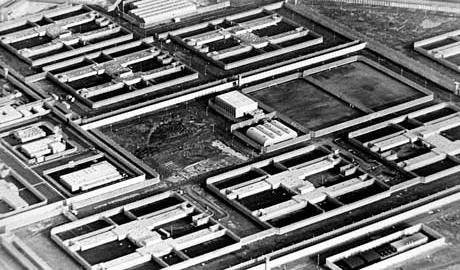




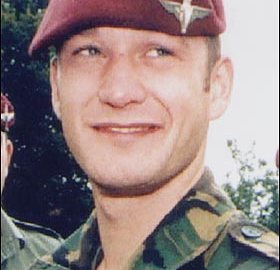


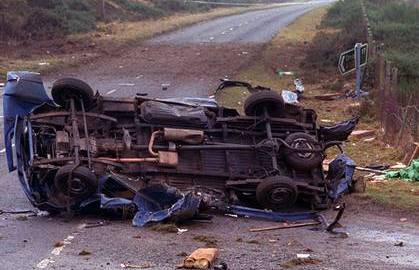


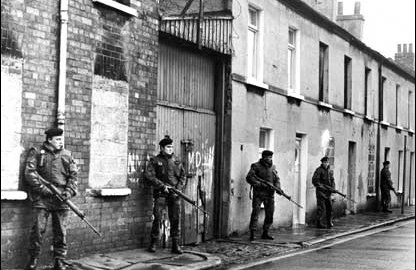


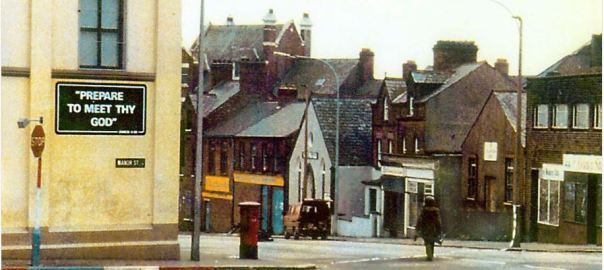


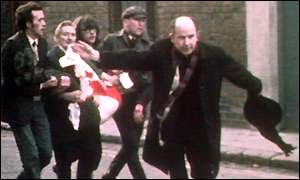
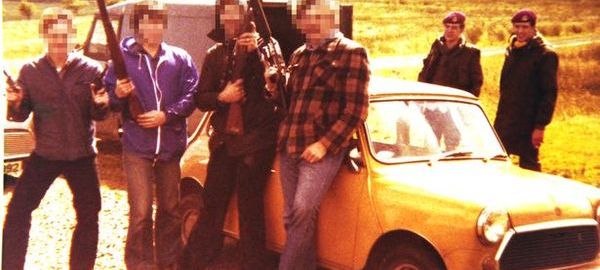

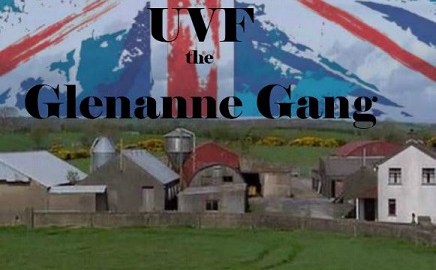


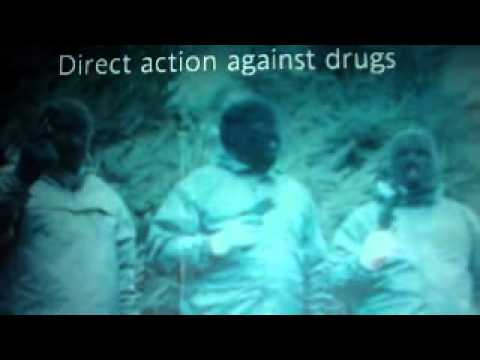




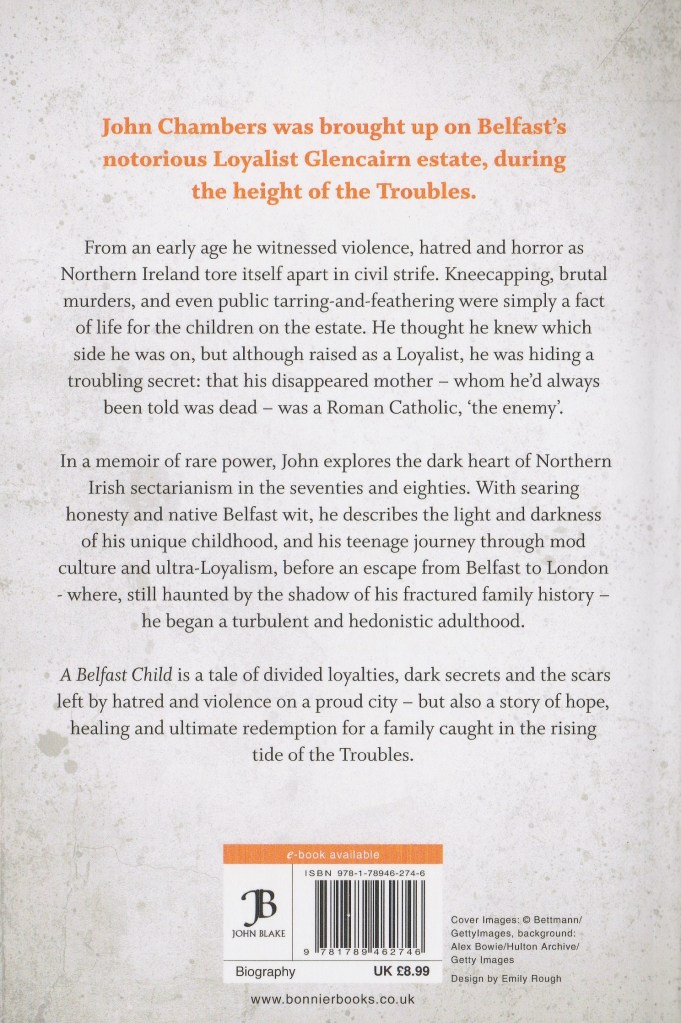

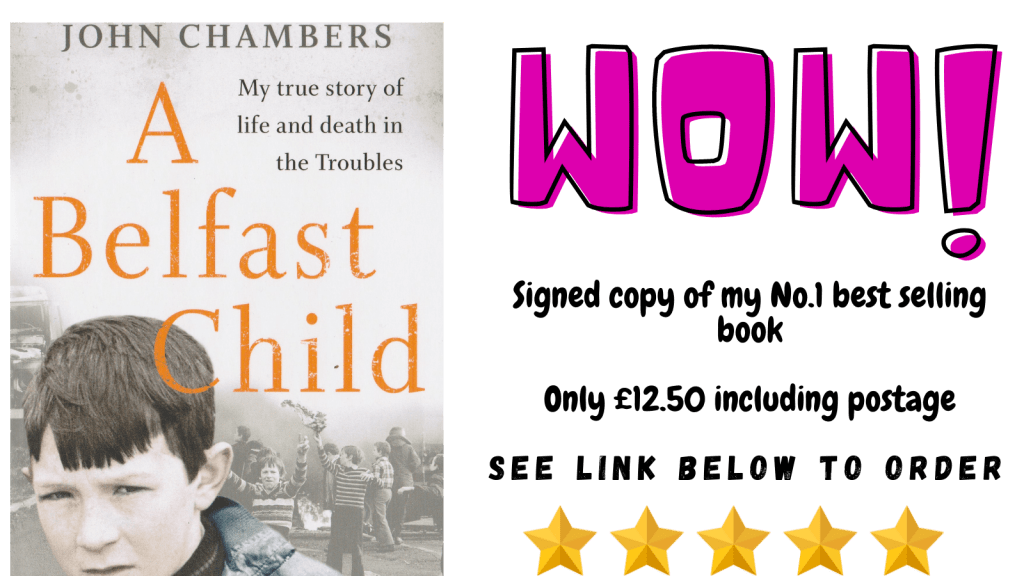

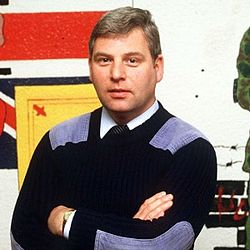


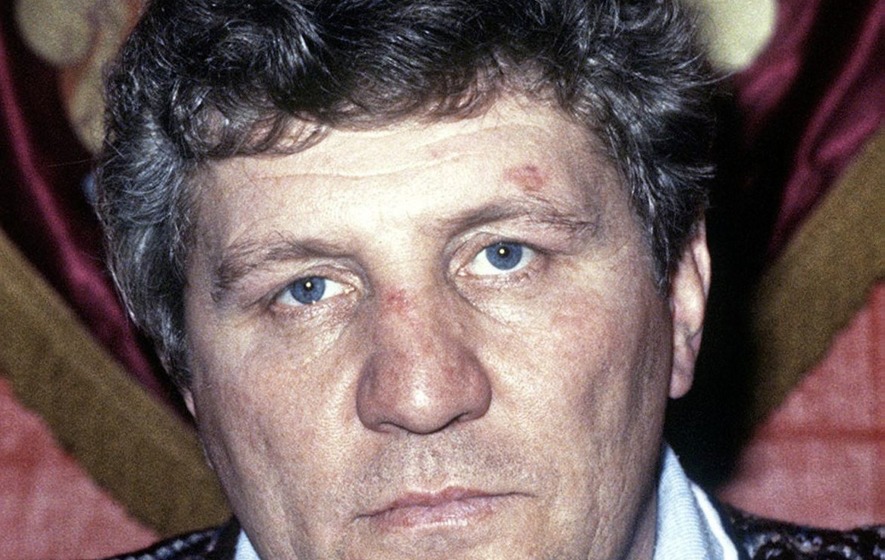


 belfastchildis.com