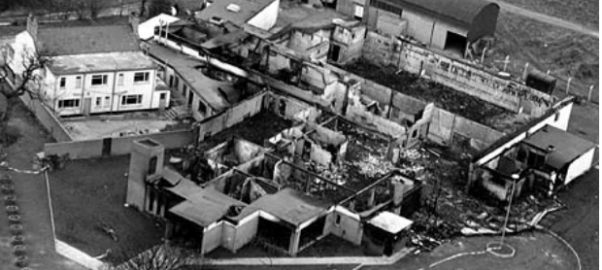
A car packed with explosives blasted the officers’ mess at Aldershot barracks
—————————-
ALDERSHOT BOMB BLAST
—————————-
The Aldershot bombing was an attack by the Official Irish Republican Army (Official IRA) using a car bomb on 22 February 1972 in Aldershot, England. The bomb targeted the headquarters of the British Army‘s 16th Parachute Brigade and was claimed as a revenge attack for Bloody Sunday. Seven civilian staff were killed and nineteen wounded. It was the Official IRA’s largest attack in Britain during “the Troubles” and one of its last major actions before it declared a ceasefire in May 1972.
The views and opinions expressed in these pages/documentaries are soley intended to educate and provide background information to those interested in the Troubles of Northern Ireland. They in no way reflect my own opinions and I take no responsibility for any inaccuracies or factual errors.
The Bombing
The target of the Official IRA bomb was the headquarters of the 16th Parachute Brigade, elements of which had been involved in the Bloody Sunday shootings. Despite warnings, the ‘open’ garrison meant there was no security or controlled access to the camp.
A Ford Cortina car containing a 280 pounds (130 kg) time bomb was left in the car park, deliberately positioned outside the officer’s mess. The bomb exploded at 12:40 pm on 22 February, destroying the officer’s mess and wrecking several nearby Army office buildings.
The soldiers who were the intended targets were not present, as the regiment itself was stationed abroad and most staff officers were in their offices rather than the mess.
Nonetheless, seven civilian staff were killed five female kitchen staff who were leaving the premises, an elderly gardener, and Father Gerard Weston (a Roman Catholic British Army chaplain).
Nineteen people were also wounded by the explosion. Aside from the priest Weston (38), the others who died during the attack were the gardener
John Haslar (58), the cleaner Jill Mansfield (34); a mother of an eight-year-old boy; as well as four other cleaners named Thelma Bosley (44), Margaret Grant (32), Cherie Munton (20) and Joan Lunn (39).
On 23 February, the Official IRA issued a statement claiming that it had carried out the attack in revenge for Bloody Sunday. It added:
“Any civilian casualties would be very much regretted as our target was the officers responsible for the Derry outrages”.
The Official IRA also said that the bombing would be the first of many such attacks on the headquarters of British Army regiments serving in Northern Ireland.
Aftermath
————————————-
Victims
————————————-
—————-
22 February 1972
Padre Gerry E Weston MBE
Gerry Weston, (38)
nfNIB
Status: British Army (BA),
Killed by: Official Irish Republican Army (OIRA)
Catholic chaplain to British Army. Killed in bomb attack on British Army (BA) base, Aldershot, England
—————-
22 February 1972
Joan Lunn, (39)
nfNIB
Status: Civilian (Civ),
Killed by: Official Irish Republican Army (OIRA)
Killed in bomb attack on British Army (BA) base, Aldershot, England. Civilian employed at the British Army (BA) base.
—————-
22 February 1972
Cherie Munton, (20)
nfNIB
Status: Civilian (Civ),
Killed by: Official Irish Republican Army (OIRA)
Killed in bomb attack on British Army (BA) base, Aldershot, England. Civilian employed at the British Army (BA) base.
—————-
22 February 1972
Thelma Bosley, (44)
nfNIB
Status: Civilian (Civ),
Killed by: Official Irish Republican Army (OIRA)
Killed in bomb attack on British Army (BA) base, Aldershot, England. Civilian employed at the British Army (BA) base.
—————-
22 February 1972
Margaret Grant, (32)
nfNIB
Status: Civilian (Civ),
Killed by: Official Irish Republican Army (OIRA)
Killed in bomb attack on British Army (BA) base, Aldershot, England. Civilian employed at the British Army (BA) base.
—————-
22 February 1972
John Haslar, (58)
nfNIB
Status: Civilian (Civ),
Killed by: Official Irish Republican Army (OIRA)
Killed in bomb attack on British Army (BA) base, Aldershot, England. Civilian employed at the British Army (BA) base.
—————-
22 February 1972
Jill Mansfield, (34)
nfNIB
Status: Civilian (Civ),
Killed by: Official Irish Republican Army (OIRA)
Killed in bomb attack on British Army (BA) base, Aldershot, England. Civilian employed at the British Army (BA) base.
—————-
Funeral of Catholic Priest Padre Gerry E Westoon
As the bomb had killed only civilian staff, the Official IRA received harsh and widespread criticism.
On 29 May 1972, the Official IRA’s leadership called a ceasefire and stated that it would only launch future attacks in self-defence. The Aldershot bombing was believed to have been one of the factors that led to this decision. In November 1972, an OIRA volunteer, Noel Jenkinson, was convicted for his part in the bombing and received a lengthy jail term, dying in prison of heart failure four years later.
The remaining conspirators were never captured. Shortly afterwards, many of the parachute regiment battalions were either disbanded and reorganised, leaving Aldershot. The larger and more militant Provisional IRA continued its campaign and also began to attack military and commercial targets in Britain.
The views and opinions expressed in this documentary and page are soley intended to educate and provide background information to those interested in the Troubles of Northern Ireland.
They in no way reflect my own opinions and I take no responsibility for any inaccuracies or factual errors
———————————————
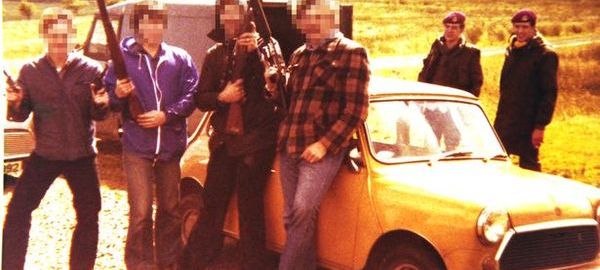
The Military Reaction Force, Military Reconnaissance Force or Mobile Reconnaissance Force (MRF)was a covert intelligence-gathering and counter-insurgency unit of the British Army active in Northern Ireland, during the Troubles/Operation Banner. The unit was formed during the summer of 1971 and operated until late 1972 or early 1973. MRF teams operated in plain-clothes and civilian vehicles, equipped with pistols and sub-machine guns.
They were nominally tasked with tracking down and arresting, or killing, suspected members of the Irish Republican Army (IRA). The MRF also ran double agents within the paramilitary groups and ran a number of front companies to gather intelligence. In October 1972, the Provisional IRA uncovered and attacked two of the MRF’s front companies—a mobile laundry service and a massage parlour—which contributed to the unit’s dissolution. One former member of the unit has described it as a “legalised death squad“.
The MRF was established in the summer of 1971. It appears to have its origins in ideas and techniques developed by British Army Brigadier Sir Frank Kitson, who had created “counter gangs” to defeat the Mau Mau in Kenya. He was the author of two books on counter-insurgency tactics: Gangs & Counter Gangs (1960) and Low Intensity Operations (1971). From 1970 to 1972, Kitson served in Northern Ireland as commander of the 39th Infantry Brigade. It has been claimed that he was responsible for establishing the MRF and that the unit was attached to his Brigade.
The MRF was based at Palace Barracks in the Belfast suburb of Holywood. The MRF’s first commander was Captain Arthur Watchus. In June 1972, he was succeeded as commander by Captain James ‘Hamish’ McGregor. It was split into squads, each of which was led by a Senior NCO who had served in the Special Air Service (SAS), Special Boat Service (SBS), the Royal Marines or the Parachute Regiment. The unit consisted of up to 40 men, handpicked from throughout the British Army. It also included a few women. nAccording to military sources, the MRF would have up to nine soldiers deployed at any one time, with nine more on standby and the others resting.
Modus operandi
In March 1994, the UK’s Junior Defence Minister Jeremy Hanley issued the following description of the MRF in reply to a parliamentary written question: “The MRF was a small military unit which, during the period 1971 to 1973, was responsible for carrying out surveillance tasks in Northern Ireland in those circumstances where soldiers in uniform and with Army vehicles would be too easily recognized”.
Martin Dillon described the MRF’s purpose as being “to draw the Provisional IRA into a shooting war with loyalists in order to distract the IRA from its objective of attacking the Army”.
Many details about the unit’s modus operandi have been revealed by former members. One issued a statement to the Troops Out Movement in July 1978. In 2012–13, a former MRF member using the covername ‘Simon Cursey’ gave a number of interviews and published the book MRF Shadow Troop about his time in the unit. In November 2013, a BBCPanorama documentary was aired about the MRF. It drew on information from seven former members, as well as a number of other sources.
The MRF had both a “defensive” surveillance role and an “offensive” role. MRF operatives dressed like civilians and were given fake identities and unmarked cars equipped with two-way radios. They patrolled the streets in these cars in teams of two to four, tracking down and arresting or killing suspected IRA members.
They were armed with Browning pistols and Sterling sub-machine guns. Former MRF members admitted that the unit shot unarmed people without warning, both IRA members and civilians, knowingly breaking the British Army’s Rules of Engagement. Former MRF members claim they had a list of targets they were ordered to “shoot on sight”, the aim being to “beat them at their own game” and to “terrorise” the republican movement. According to Cursey, the unit was told that these tactics had British Government backing, “as part of a deeper political game”.
He said his section shot at least 20 people:
“We opened fire at any small group in hard areas […] armed or not – it didn’t matter. We targeted specific groups that were always up to no good. These types were sympathisers and supporters, assisting the IRA movement. As far as we were concerned they were guilty by association and party to terrorist activities, leaving themselves wide open to the ultimate punishment from us”.
Cursey mentions two occasions where MRF members visited pubs and “eliminated” IRA members. One member interviewed for the BBC’s Panorama, Soldier F, said “We were not there to act like an army unit, we were there to act like a terror group“.
Soldier H said “We operated initially with them thinking that we were the UVF“, to which Soldier F added: “We wanted to cause confusion”. Another said that their role was “to draw out the IRA and to minimise their activities”. They said they fired on groups of people manning defensive barricades, on the assumption that some might be armed. The MRF member who made a statement in 1978 opined that the unit’s role was one of “repression through fear, terror and violence”. He said that the unit had been trained to use weapons favoured by the IRA.
Republicans argued that the MRF deliberately attacked civilians for two main reasons: firstly, to draw the IRA into a sectarian conflict with loyalists and divert it from its campaign against the state; and secondly, to show Catholics that the IRA could not protect them, thus draining its support.
The MRF’s surveillance operations included the use of front companies (see below) and disguises. Former members claim they posed as road sweepers, dustmen and even homeless meths-drinkers while carrying out surveillance. The MRF is known to have used double agents referred to as ‘Freds’. These were republican or loyalist paramilitaries who were recruited by British Military Intelligence. The Freds would work inside paramilitary groups, feeding back information to the MRF. They were also ferried through Belfast in armoured cars, and through the gunslit would point-out paramilitary individuals of note. Through this method the MRF compiled extensive photographs and dossiers of Belfast militants of both factions.
According to Cursey, the MRF also abducted and interrogated people for information. They used shock treatment on prisoners to force them to give information. This involved immediately breaking one of the suspects’ arms and threatening to break their other arm. Cursey says that they then “dropped them off at the roadside for the uniformed forces to pick up later”.
——————————–
BBC Panorama – Shoot to kill, lethal force
——————————–
Attacks on civilians
In 1972, MRF teams carried out a number of drive-by shootings in Catholic and Irish nationalist areas of Belfast, some of which had been attributed to Ulster loyalist paramilitaries. At least fifteen civilians were shot. MRF members have affirmed the unit’s involvement in most of these attacks. There are also allegations that the unit helped loyalists to carry out attacks.
The explosion caused the building to collapse, killing fifteen Catholic civilians and wounding seventeen more. It was the deadliest attack in Belfast during the Troubles.[ The book Killing For Britain (2009), written by former UVF member ‘John Black’, claims that the MRF organized the bombing and helped the bombers get in and out of the area.
Two days before the bombing, republican prisoners had escaped from nearby Crumlin Road Prison. Security was tightened and there were many checkpoints in the area at the time. However, locals claimed that the security forces helped the bombers by removing the checkpoints an hour before the attack.
One of the bombers—Robert Campbell—said that their original target had been The Gem, a nearby pub that was allegedly linked to the Official IRA. It is claimed the MRF plan was to help the UVF bomb The Gem, and then blame the bombing on the Provisional IRA. This would start a feud between the two IRA factions, diverting them from their fight against the security forces and draining their support. Campbell said that The Gem had security outside and, after waiting for almost an hour, they decided to bomb the nearest ‘Catholic pub’ instead. Immediately after, the security forces claimed that a bomb had accidentally exploded while being handled by IRA members inside McGurk’s.
‘Secret British Army hits’ on IRA Watch extracts from BBC expose
———————————————
Whiterock Road shooting
On 15 April 1972, brothers Gerry and John Conway—both Catholic civilians—were walking along Whiterock Road to catch a bus. As they passed St Thomas’s School, a car stopped and three men leapt out and began shooting at them with pistols. The brothers ran but both were shot and wounded.
Witnesses said one of the gunmen returned to the car and spoke into a handset radio. Shortly after, two armoured personnel carriers arrived and there was a conversation between the uniformed and the plainclothes soldiers. The three vehicles then left, and the brothers were taken by ambulance to the Royal Victoria Hospital. The British Army told journalists that a patrol had encountered two wanted men, that one fired at the patrol and that the patrol returned fire.
In a 1978 interview, a former MRF member claimed he had been one of the gunmen. He confirmed that the brothers were unarmed, but claimed his patrol had mistaken the brothers for two IRA men whom the MRF were ordered to “shoot on sight”.
Andersonstown shootings
On 12 May 1972, the British government announced there would be no disciplinary action against the soldiers involved in Bloody Sunday. That night, MRF teams shot seven Catholic civilians in the Andersonstown area.
Patrick McVeigh
An MRF team in an unmarked car approached a checkpoint manned by members of the Catholic Ex-Servicemen’s Association (CESA) at the entrance to Riverdale Park South. The CESA was an unarmed vigilante organization set up to protect Catholic areas. The car stopped and then reversed. One of the MRF men opened-fire from the car with a sub-machine gun, killing Catholic civilian Patrick McVeigh (44) and wounding four others.
The car continued on, turned, and then drove past the scene of the shooting. All of the men were local residents and McVeigh, who was shot through the back, had stopped to chat to the CESA members as he walked home. He was a married father of six children. The British Army told journalists that gunmen in a passing car had fired indiscriminately at civilians and called it an “apparently motiveless crime”. The car had come from a Protestant area and had returned the same way. This, together with the British Army statement, implied that loyalists were responsible.
An inquest into the attack was held in December 1972, where it was admitted that the car’s occupants were soldiers belonging to an undercover unit known as the MRF. The soldiers did not appear at the inquest but issued statements to it, claiming they had been shot at by six gunmen and were returning fire. However, eyewitnesses said none of the CESA members were armed and this was supported by forensic evidence. The MRF members involved were never prosecuted.
Former MRF member ‘Simon Cursey’ claimed the unit fired on the men because they included IRA members who were on their ‘wanted’ list. However, there is no evidence that any were in the IRA. An MRF member stated in 1978 that the British Army’s intention was to make it look like a loyalist attack, thus provoking sectarian conflict and “taking the heat off the Army”.
Minutes before the shooting at the checkpoint, two other Catholic civilians had been shot nearby by another MRF team. The two young men—Aidan McAloon and Eugene Devlin—had got a taxi home from a disco and were dropped off at Slievegallion Drive. As they began walking along the street, in the direction of a vigilante barricade, the MRF team opened fire on them from an unmarked car. The MRF team told the Royal Military Police that they had shot a man who was firing a rifle. Witnesses said there was no gunman on the street and police forensics experts found no evidence that McAloon or Devlin had fired weapons.
Two weeks later, on 27 May, Catholic civilian Gerard Duddy (20) was killed in a drive-by shooting at the same spot where Patrick McVeigh was killed. His death was blamed on loyalists.
Killing of Jean Smith
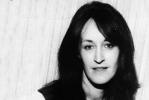
Jean Smith
On the night of 9 June 1972, Catholic civilian Jean Smith (or Smyth) was shot dead on the Glen Road. Jean was a 24-year-old mother of one. She was shot while sitting in the passenger seat of a car at the Glen Road bus terminus. As her male companion turned the car, he heard what he thought was a tyre bursting. When he got out to check, the car was hit by a burst of automatic gunfire. Smith was shot in the head and died shortly after. Her companion stopped a passing taxi and asked the driver to take her to hospital. However, the taxi was then stopped by police and diverted to Andersonstown RUC base, where they were held for several hours.
The security forces blamed the killing on the IRA. In October 1973, however, the Belfast Telegraph published an article suggesting that Smith could have been shot by the MRF. Documents uncovered from the British National Archives reveal that the MRF fired shots in the area that night. They claim to have fired at two gunmen and hit one of them.
The Belfast Telegraph article also suggested that Smith could have been shot by the IRA, who fired on the car thinking it was carrying MRF members. The IRA deny this and claim that it was not in the area at the time of the shooting.
Two weeks after Smith’s killing, the MRF fired on a car at the same spot, wounding four people.
Glen Road shooting
On 22 June 1972, the Provisional IRA announced that it would begin a ceasefire in four days, as a prelude to secret talks with the British Government. That afternoon, MRF members in an unmarked car shot and wounded three Catholic men standing by a car at Glen Road bus terminus. A man in a nearby house was also wounded by the gunfire. Shortly after, the MRF unit’s car was stopped by the Royal Ulster Constabulary (RUC) and they were arrested. Inside was a Thompson sub-machine gun, “for years the IRA’s favourite weapon”.
One of the MRF members—Clive Graham Williams—was charged with attempted murder. He told the court that two of the men had been armed and one had fired at the MRF car. He claimed he was returning fire. Witnesses said that none of the civilians were armed and that it was an unprovoked attack. Police forensics experts found no evidence that the civilians had fired weapons. However, key witnesses were not called to give evidence in person and Williams was acquitted on 26 June 1973.
He was later promoted and awarded the Military Medal for bravery.
St James’s Crescent shooting
On the night of 27 September 1972, the MRF shot dead Catholic civilian Daniel Rooney and wounded his friend Brendan Brennan. They were shot from a passing car while standing on a street corner at St James’s Crescent, in the Falls district. The British Army told journalists that the two men fired at an undercover patrol and that the patrol returned fire. It further claimed that the two men were IRA members. The IRA, the men’s families, and residents of the area denied this, and Rooney’s name has never appeared on a republican roll of honour. An inquest was held in December 1973. The court was told that forensic tests on the men’s hands and clothing found no firearms residue. The six soldiers involved repeated the British Army’s claim, but they did not appear at the inquest. Their statements were read by a police officer and they were referred to by initials. In 2013, former MRF member ‘Simon Cursey’ again claimed that they were returning fire, but said that only one of the men was armed.
New Lodge Six
There are also allegations that the MRF was involved in a drive-by shooting in the Catholic New Lodge area on 3 February 1973. The car’s occupants opened fire on a group of young people standing outside a pub on Antrim Road, killing IRA members James Sloan and James McCann and wounding others. The gunmen drove on and allegedly fired at another group of people outside a takeaway. In the hours that followed, a further four people—an IRA member and three civilians—were shot dead in the area by British snipers. The dead became known as the “New Lodge Six”.
In June 1973, the Northern Ireland Civil Rights Association issued advice on how to behave in the event of being “shot by MRF/SAS squads”, saying for example that people should “pretend to be dead until the squad moves away”.
Front companies
The MRF ran a number of front companies in Belfast during the early 1970s. They included Four Square Laundry (a mobile laundry service operating in nationalist West Belfast) and the Gemini massage parlour on Antrim Road.[36]The MRF also had an office at College Square. All were set up to gather intelligence on the Provisional Irish Republican Army (IRA) and Irish nationalist movement.
A Four Square van visited houses in nationalist West Belfast twice a week to collect and deliver laundry. One “employee” (a young man) drove the van while another (a young woman) collected and delivered the laundry. Both were from Northern Ireland. Four Square initially gathered customers by offering “discount vouchers”, which were numbered and colour-coded by street.
Clothes collected for washing were first forensically checked for traces of explosives, as well as blood or firearms residue. They were also compared to previous laundry loads from the same house—the sudden presence of different-sized clothes could indicate that the house was harbouring an IRA member. Surveillance operatives and equipment were hidden in the back of the van or in a compartment in the roof. Further intelligence was gathered by staff observing and “chatting” to locals whilst collecting their laundry.
Kevin McKee
However, in September 1972 the IRA found that two of its members—Seamus Wright and Kevin McKee—were working for the MRF as double agents. Under interrogation, McKee told the IRA about the MRF’s operations, including the laundry and the massage parlour. The leaders of the Provisional IRA Belfast Brigade ordered that the companies immediately be put under surveillance. This surveillance confirmed that McKee’s information was correct.
Following these revelations, the leaders of the IRA’s Belfast Brigade planned an operation against the MRF, which was to take place on 2 October 1972. The 2nd Battalion would attack the Four Square Laundry van and the office at College Square, while the 3rd Battalion would raid the massage parlour. At about 11:20AM[ on 2 October, IRA volunteers ambushed the Four Square Laundry van in the nationalist Twinbrook area of West Belfast. Four volunteers were involved: one drove the car while three others did the shooting..
They shot dead the driver, an undercover British soldier of the Royal Engineers, and machine-gunned the roof compartment where undercover operatives were thought to be hiding. The other Four Square employee—a female operative from the Women’s Royal Army Corps (WRAC)—was collecting and delivering laundry from a nearby house at the time. The residents, who thought that loyalists were attacking the van, took her into the house and kept her safe. The woman was later secretly invested at Buckingham Palace with an MBE.
About an hour later, the same IRA unit raided College Square but found nobody there. Meanwhile, a unit of the 3rd Battalion made for the room above the massage parlour, which they believed was being using to gather intelligence. They claimed to have shot three undercover soldiers: two men and a woman. According to some sources, the IRA claimed to have killed two surveillance officers allegedly hidden in the laundry van, and two MRF members at the massage parlour.
However, the British military only confirmed the death of the van driver on that day. Brendan Hughes said that the operation “was a great morale booster for the IRA and for the people that were involved”.
The MRF, realising its undercover operations were blown, disbanded the units and was itself disbanded shortly afterwards.Nevertheless, the incident was believed to have prompted the establishment of a new undercover intelligence unit: the 14 Intelligence Company (also known as “The Det”).
Make a small donation
Thank you!
My autobiography: A Belfast Child is now available to pre-order on Amazon , launch date is 30th April.
It took place at the La Mon House hotel/restaurant near Belfast, Northern Ireland. The IRA left a large incendiary bomb, containing a napalm-like substance, outside one of the restaurant’s windows. There were 450 diners, hotel staff and guests inside the building. The IRA members then tried to send warnings by telephone, but were unable to do so until nine minutes before it detonated.
The blast created a fireball, killing twelve people and injuring thirty more, many of whom were severely burnt. Many of the injured were treated in the Ulster Hospital in nearby Dundonald.
Since the beginning of its campaign, the IRA had carried out numerous attacks on economic targets, killing many members of the public in the process. The IRA’s goal was to harm the economy and cause disruption, which would put pressure on the British government to withdraw from Northern Ireland.
Belfast man Robert Murphy received 12 life sentences for the manslaughter of those who died. Murphy was freed from prison on licence in 1995. There are allegations that two of the IRA members involved were British double agents.
The Bombing
Warnings
On 17 February 1978, an IRA unit planted an incendiary bomb attached to petrol-filled canisters on meat hooks outside the window of the Peacock Room in the restaurant of the La Mon House Hotel, located at Gransha, County Down, about 6 miles (9.7 km) southeast of central Belfast.
After planting the bomb, the IRA members tried to send a warning from the nearest public telephone, but found that it had been vandalised. On their way to another telephone they were delayed again when forced to stop at an Ulster Defence Regiment (UDR) checkpoint.
By the time they were able to send the warning, only nine minutes remained before the bomb exploded at 21:00.The Royal Ulster Constabulary (RUC) base at Newtownards had received two further telephone warnings at 20:57 and 21:04.By the time the latter call came in it was too late. When an officer telephoned the restaurant to issue the warning he was told :
“For God’s sake, get out here – a bomb has exploded!”.
Although the bombers tried to warn of the bomb (the IRA often gave bomb warnings when destroying property but never when targeting the police or military), a 2012 news article claimed that the IRA were targeting RUC officers they believed were meeting in the restaurant that night. The article claimed that the IRA had got the wrong date and that the meeting of RUC officers had taken place exactly a week before.
Lilly McDowell suffered severe burns in the attack
————————————–
La Mon Hotel Bombing
————————————–
Explosion and fireball
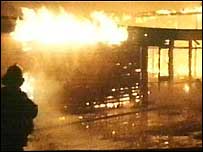
That evening the two main adjoining function rooms, the Peacock Room and Gransha Room, were packed with people of all ages attending dinner dances. Including the hotel guests and staff, there was a total of 450 people inside the building.[3] The diners had just finished their first course when the bomb detonated, shattering the window outside of which it was attached and vaporising the canisters. The explosion created an instantaneous and devastating fireball of blazing petrol, 40 feet high and 60 feet wide, which engulfed the Peacock Room.
Twelve people were killed, having been virtually burnt alive, and a further 30 were injured, many of them critically. Some of the wounded lost limbs, but for the most part received severe burns. One badly burnt survivor described the inferno inside the restaurant as “like a scene from hell”, whilst another who lost her daughter Elizabeth and son-in-law, Ian McCracken, said the blast was “like the sun had exploded in front of my eyes”.
There was further pandemonium after the lights had gone out and choking black smoke filled the room. The survivors, with their hair and clothing on fire, rushed to escape the burning room. It took firemen almost two hours to put out the blaze.
The dead included eleven Protestant civilians and one RUC officer. Half of the victims were young married couples. Most of the dead and injured were members of the Irish Collie Club and the Northern Ireland Junior Motor Cycle Club, which were holding their yearly dinner dances in the Peacock Room and Gransha Room respectively. The former took the full force of the explosion and subsequent fire; many of those who died had been seated closest to the window where the bomb had gone off. Some of the injured were still receiving treatment 20 years later.
The device was a small blast bomb attached to four large petrol canisters, each filled with a home-made napalm-like substance of petrol and sugar. This was designed to stick to whatever it hit, a combination which caused severe burn injuries. The victims were found beneath a pile of hot ash and charred beyond recognition making identity extremely difficult as all their individual human features had been completely burned away.
Some of the bodies had shrunk so much in the intense heat, it was first believed that there were children among the victims. One doctor who saw the remains described them as being like “charred logs of wood”. According to a published account by retired RUC Detective Superintendent Kevin Sheehy, this type of device had already been used by the IRA in more than one hundred attacks on commercial buildings before the La Mon attack.
Aftermath
Gordon & Joan Crothers Killed in the bomb
The day after the explosion, the IRA admitted responsibility and apologised for the inadequate warning. The hotel had allegedly been targeted by the IRA as part of its firebomb campaign against commercial targets; however, the resulting carnage brought quick condemnation from other Irish nationalists, with one popular newspaper comparing the attack to the 1971 McGurk’s Bar bombing.
Sinn Féin president Ruairí Ó Brádaigh also strongly criticised the operation. In consequence of the botched attack, the IRA Army Council gave strict instructions to all units not to bomb buses, trains or hotels.
As all the victims had been Protestant, many Protestants saw the bombing as a sectarian attack against their community. Unionists called for the return of the death penalty.
The same day, about 2,000 people attended a lunchtime service organised by the Orange Order at Belfast City Hall. Belfast International Airport also shut for an hour, while many workers in Belfast and Larne stopped work for a time. Workers at a number of factories said they were contributing a half-day’s pay to a fund for the victims.
Ulster loyalists criticised the then Secretary of State for Northern Ireland, Roy Mason, for his “complacent attitude” to the attack. He claimed that the explosion was “an act of criminal irresponsibility” performed “by remnants of IRA gangs”. He also claimed that the IRA was on the decline.
A team of 100 RUC detectives was deployed in the investigation. As part of the investigation, 25 people were arrested in Belfast, including Gerry Adams.[6] Adams was released from custody in July 1978. Two prosecutions followed. One Belfast man was charged with twelve murders but was acquitted. He was convicted of IRA membership but successfully appealed. In September 1981, another Belfast man, Robert Murphy was given twelve life sentences for the manslaughter of those who died. Murphy was freed on licence in 1995.As part of their bid to catch the bombers, the RUC passed out leaflets which displayed a graphic photograph of a victim’s charred remains.
In 2012, a news article claimed that two members of the IRA bombing team—including the getaway driver—were British double agents working for MI5. According to the article, one of the agents was Denis Donaldson.
That year, Northern Ireland’s Historical Enquiries Team (HET) completed a report on the bombing. It revealed that important police documents, including interviews with IRA members, have been lost.A number of the victims’ families slammed the report and called for a public inquiry. They claimed the documents had been removed to protect certain IRA members. Unionist politician Jim Allister, who had been supporting the families, said:
“There is a prevalent belief that someone involved was an agent and that is an issue around which we need clarity”.
Details
* At the time of the blast there were 450 diners, hotel staff and guests inside the hotel.
* Twelve people were killed when the bomb detonated, and a further 30 were injured. The fatalities included 12 Protestant civilians (see below), including three sets of young married couples.
* The IRA claimed that it had tried to telephone the hotel to warn them about the explosion but, due to various obstacles, was only able to do so nine minutes before detonation.
* The day after the bombing the IRA admitted responsibility and apologised for the inadequate warning.
* In the aftermath of the attack 25 people were arrested, including Gerry Adams, who was released from custody in July 1978 and became president of Sinn Fein two months later.
* In September 1981, Robert Murphy, a native of Belfast, was handed 12 life sentences for the manslaughter of those who died. Murphy was freed from prison on licence in 1995.
Victims
Date
Name and age
Status
17 February 1978
Thomas Neeson (52)
Protestant civilian
17 February 1978
Sandra Morris (27)
Protestant civilian
17 February 1978
Ian McCracken (25)
Protestant civilian
17 February 1978
Elizabeth McCracken (25)
Protestant civilian
17 February 1978
Daniel Magill (37)
Protestant civilian
17 February 1978
Carol Mills (26)
Protestant civilian
17 February 1978
Gordon Crothers (30)
Protestant civilian
17 February 1978
Joan Crothers (26)
Protestant civilian
17 February 1978
Paul Nelson (37)
Protestant civilian
17 February 1978
Dorothy Nelson (34)
Protestant civilian
17 February 1978
Christine Lockhart (33)
Protestant civilian
17 February 1978
Sarah Wilson Cooper (52)
Protestant civilian
here
——————————————————————
First Published 24/08/2013
La Mon bombing
A split second of evil… and then they were orphans.
One night 35 years ago, Andrea and Melanie Nelson’s parents went out to a dinner dance and never came back. They died in the IRA La Mon bombing. For their daughters, the battle to survive without them was just the beginning.
‘She’s had to travel a long and painful road since she and her teenage sister were orphaned by one of the IRA’s most savage bomb attacks 35 years ago but there’s still one journey that Andrea Nelson simply can’t and won’t undertake
And the resolute Dundonald woman, who now lives in Yorkshire, says she will never go anywhere near the La Mon House Hotel in the Castlereagh Hills above Belfast.
For that’s where Andrea and her sister Melanie lost their parents Dorothy and Paul Nelson in the infamous bombing which killed a total of 12 people — seven of them women — on February 17, 1978 when some of the victims were burned beyond recognition.
The Nelsons, who weren’t ones for socialising on a regular basis, had accompanied friends to the hotel for a Friday night dinner dance organised by the Irish Collie Club after ensuring that 13-year-old Melanie and Andrea, who was a year older, were in safe hands back home.
Andrea recalls: “They didn’t go out very often. We were basically a quiet little family unit of four and it was a big thing for mum and dad to attend a function with their chums.”
However, it was a night out which was ruthlessly cut short by one of the most lethal bombs ever assembled by the IRA, one which was later likened to the type of horrific device which might have been seen in the war in Vietnam.
The blast bomb was attached to four large petrol cans, all of them filled with a home-made napalm-like mixture of petrol and sugar which was designed to stick to whatever or whoever it hit
The IRA said they tried to give a warning but claimed a telephone box wasn’t working and shortly afterwards a huge fireball — over 60ft wide and 40ft high — engulfed the guests in La Mon’s Peacock Room, creating a scene of almost unspeakable carnage which still haunts many of the survivors three-and-a-half decades on.
The Nelsons quite simply didn’t stand a chance. Andrea now knows that her parents were seated right beside the huge bomb which had been hung with a meat hook on to a window grille.
One of their friends was also killed. Another member of their party survived. “I think she had just popped out to the toilet,” says Andrea.
Back in 1978 in their house at Brooklands Gardens in Dundonald, the Nelsons’ daughters were blissfully unaware of their parents’ deaths, even though Andrea had seen TV coverage of the atrocity.
“I didn’t know the name of the place they had gone to for their evening out,” says Andrea, who was babysitting for a family next door. “I actually saw the fire on the television news but I didn’t realise my mum and dad were there.”
The Nelsons’ neighbours returned around midnight and Andrea immediately saw that they were upset. “They asked if our parents had got back yet but when we said no, they told us they’d been at the hotel which was wrecked by the explosion”
It was then that the sisters’ happy and secure world started to fall apart. Their minister, the late Rev Roy Magee, was to describe their despair as he addressed mourners at their parents’ funeral in his Presbyterian Church at Dundonald.
Talking directly to the Provisional IRA he said: “Try to picture the scene at 4.30am on Saturday when two young girls were still waiting in vain for their parents to come home. Ponder the agony and heartbreak you have caused to so many families but remember that though you may escape the law of man, you cannot escape the law of God.”
Mr Magee, who became a central figure in moves to persuade loyalist paramilitaries to stop their violence, had gone to Brooklands after the bombing to see if he could help the Nelson sisters.
Andrea says: “In the hours after the blast there was a lot of confusion as relatives tried to find out about their loved ones. Some people were in hospital, some had gone home from La Mon. But we didn’t know what had happened and it was almost like a period of a dawning realisation that our parents weren’t coming back.”
Mr Magee liaised between the families and the police and hospital authorities. Tragically he held out little hope for Andrea and Melanie. Andrea says: “The strange thing was that because our parents didn’t return and because of the ferocity of the bomb there wasn’t any way of identifying them positively for days and days. We had to provide hair brushes and toothbrushes from the house to try and match them with the remains.
“The penny was dropping with us slowly rather than anyone telling us definitively that our parents were dead. There was always the straw to clutch on to that they might have been in hospital somewhere or they might have been wandering around Castlereagh with head injuries, having lost their memories.
“Obviously you want to have any options rather than the one you think is coming towards you.”
It was nearly a week before Andrea and Melanie received confirmation that their parents had perished in the devastation at La Mon. “With the limited techniques 35 years ago, the forensics people had a real challenge giving any certainty. I suppose the advances in DNA would make it all very different nowadays”
The sense of emptiness was now complete for the girls who no longer had “two important members of their little team of four” in their lives, but their relatives rallied around them.
At first they lived with an aunt and uncle in Chester but after the summer of 1978 they returned to Northern Ireland where their grandparents looked after them as they went back to Bloomfield Collegiate on the Upper Newtownards Road.
The sisters, who were always close to each other, became inseparable after the deaths of their parents. “There’s a bond there which will never be broken,” says Andrea.
After leaving school, the girls enrolled in English universities with Andrea studying mechanical engineering and then nursing before working towards a PhD in bio-engineering, while Melanie qualified as a nursery nurse.
The two sisters travelled extensively to further their careers but they’ve now settled 40 minutes from each other near Leeds.
Andrea is a nurse and a professor of wound healing at the University of Leeds and Melanie has just graduated with a degree in sociology and criminology.
And it was Melanie’s successful return to her studies which prompted the sisters to write a letter earlier this week to the Belfast Telegraph — where their mum was a secretary in the Seventies — to thank the people of Northern Ireland for the huge impact they’d made on their lives.
“This letter of thanks is long overdue,” wrote the girls. “But we want to acknowledge our gratitude to everyone who contributed to a public collection in 1978. That generosity has allowed us both to pursue our education.”
The money raised for the La Mon families helped the sisters to buy a small house of their own in London, a place they could call home in the absence of a family base back in Belfast.
“We didn’t have a mum and dad to go home to but we had each other, to have a home for each other. That fund made a real difference to our lives because we were able to go on with our studying rather than having to get a job as we didn’t have our parents to assist us financially,” says Andrea.
The sisters have also thanked their family, friends and schoolteachers at Bloomfield for being their rocks in their crisis years. Andrea says: “We lost a massive part of our lives when we were just ordinary young girls but we’re grateful to so many people who gave us a safe and stable anchor.”
Despite all the trauma and turmoil of the sisters’ youth, Andrea still calls Northern Ireland home and clearly has a deep and abiding affection for the province that she left behind in her quest for a new life in Britain.
She says: “I married a Scotsman and I took him home to show him that Scotland wasn’t a patch on Northern Ireland. We don’t get back as often as I would like but I always visit my parents’ grave at Redburn Cemetery. But I’ve never seen La Mon and I never will. That’s a blank page which I want to remain a blank page.”
The La Mon massacre has been the subject of an investigation by the Historical Enquiries Team and last year the Nelson sisters, like the families of all the victims, received an 81-page report about the killings though many of the documents relating to the original RUC probe were missing.
A number of the La Mon survivors called for a public inquiry after questioning if the disappearance of the files was linked to a bid to protect IRA members now involved in the peace process.
Andrea Nelson prefers to keep her own counsel about the HET inquiry. “They’ve done their bit and they produced a comprehensive narrative of all the information they had but the passage of time from 1978 has meant that there’s no prospect of more cases being brought.
“However, I don’t feel I am able to judge whether or not the investigation was satisfactory.”
Two men were arrested and tried on charges linked to the outrage. Edward Manning Brophy was acquitted and Robert Murphy, who pleaded guilty to 12 counts of manslaughter, was jailed for life in 1981 but freed 14 years later. Both men are now dead.
Neither Andrea nor Melanie have maintained any real contacts with the rest of the La Mon families.
An aunt was closely involved with Iris Robinson and Castlereagh Borough Council as they developed plans for a La Mon memorial but she died around 10 years ago.
An Ulster exile she may be, but Andrea isn’t fixated on what goes on back home.
She accepts that she’s probably moved on in more ways than one.
“I’ve kept my accent but I haven’t kept up my interest in Northern Irish politics,” she says.
Melanie has a 12-year-old daughter but Andrea hasn’t any children. “I’ve been too busy,” she says.
Andrea says she hasn’t allowed herself to think too much about the IRA terrorists who killed her mother and father. “We dwelt instead on surviving and making our parents proud of us,” she says. “We didn’t want to spend all our time being reactive to negative things and not being in charge of our own lives.
“So our determination was that while the bombers took something from us, they weren’t going to take everything. If we had lived our lives according to anger or spite, we would have been the worse off and the people who did it would have moved ahead. The only losers would have been us.”
Factfile
* The restaurant of the La Mon House Hotel, in Gransha, Co Down, was bombed by the IRA on February 17, 1978. The attack was thought to be part of the Provo terror campaign against economic targets.
* At the time of the blast there were 450 diners, hotel staff and guests inside the hotel.
* Twelve people were killed when the bomb detonated, and a further 30 were injured. The fatalities included 11 Protestant civilians and one Royal Ulster Constabulary officer.
* The IRA claimed that it had tried to telephone the hotel to warn them about the explosion but, due to various obstacles, was only able to do so nine minutes before detonation.
* The day after the bombing the IRA admitted responsibility and apologised for the inadequate warning.
* In the aftermath of the attack 25 people were arrested, including Gerry Adams, who was released from custody in July 1978 and became president of Sinn Fein two months later.
* In September 1981 Belfast man Robert Murphy was handed 12 life sentences for the manslaughter of those who died. Murphy was freed from prison on licence in 1995.
S.A.S KILL 4 IRA MEN WHO ATTACK COALISLAND POLICE STATION.
——————————————
The Victims
—————————————————————————
16 February 1992
Kevin O’Donnell,21) Catholic Status: Irish Republican Army (IRA),
Killed by: British Army (BA) Shot by undercover British Army (BA) members, in the car park of St Patrick’s Roman Catholic Church, Dernagh, near Coalisland, shortly after he had been involved in gun attack on Coalisland British Army (BA) / Royal Ulster Constabulary (RUC) base, County Tyrone.
—————————————————————————
16 February 1992
Sean O’Farrell, (23)
Catholic Status: Irish Republican Army (IRA),
Killed by: British Army (BA) Shot by undercover British Army (BA) members, in the car park of St Patrick’s Roman Catholic Church, Dernagh, near Coalisland, shortly after he had been involved in gun attack on Coalisland British Army (BA) / Royal Ulster Constabulary (RUC) base, County Tyrone.
—————————————————————————
16 February 1992
Peter Clancy, (19)
Catholic Status: Irish Republican Army (IRA),
Killed by: British Army (BA) Shot by undercover British Army (BA) members, in the car park of St Patrick’s Roman Catholic Church, Dernagh, near Coalisland, shortly after he had been involved in gun attack on Coalisland British Army (BA) / Royal Ulster Constabulary (RUC) base, County Tyrone.
—————————————————————————
16 February 1992 David Vincent, (20)
Catholic Status: Irish Republican Army (IRA),
Killed by: British Army (BA) Shot by undercover British Army (BA) members, in the car park of St Patrick’s Roman Catholic Church, Dernagh, near Coalisland, shortly after he had been involved in gun attack on Coalisland British Army (BA) / Royal Ulster Constabulary (RUC) base, County Tyrone.
—————————————————————————
– Disclaimer –
The views and opinions expressed in this post / documentary are soley intended to educate and provide background information to those interested in the Troubles of Northern Ireland.
They in no way reflect my own opinions and I take no responsibility for any inaccuracies or factual errors.
From 1985 onwards, the IRA in East Tyrone had been at the forefront of a wide IRA campaign against British military facilities. In 1987, an East Tyrone IRA unit was ambushed and eight of its members killed by the SAS while bombing an RUC base at Loughgall, County Armagh. This was the IRA’s greatest loss of life in a single incident during the Troubles. Despite these losses, the IRA campaign continued unabated; 33 British bases were destroyed and nearly 100 damaged during the next five years.[2] The SAS ambush had no noticeable long-term effect on the level of IRA activity in East Tyrone. In the two years before the Loughgall ambush the IRA killed seven people in East Tyrone and North Armagh, and eleven in the two years following the ambush.[3]
Three other IRA volunteers — Gerard Harte, Martin Harte and Brian Mullin — had been ambushed and killed by the SAS as they tried to kill an off-duty Ulster Defence Regiment soldier near Carrickmore, County Tyrone.[4] British intelligence identified them as the perpetrators of the Ballygawley bus bombing, which killed eight British soldiers. After that bombing, all troops on leave or returning from leave were ferried in and out of East Tyrone by helicopter.[5] Another high-profile attack of the East Tyrone Brigade was carried out on 11 January 1990 near Augher, where a Gazelle helicopter was shot down.[6]
On 3 June 1991, three IRA men, Lawrence McNally, Michael “Pete” Ryan and Tony Doris, died in another SAS ambush at Coagh, where their car was riddled with gunfire. Ryan was the same man who according to Irish journalist and author Ed Moloney had led the mixed flying column in the attack on Derryard checkpoint on the orders of IRA Army Council member ‘Slab’ Murphy two years before. Moloney, who wrote A Secret History of the IRA, reported that the IRA East Tyrone Brigade lost 53 members during the Troubles — the highest of any “Brigade area”.[7] Of these, 28 were killed between 1987 and 1992.[8]
The ambush
On 16 February 1992 at 22:30, a car and a truck carrying a number of IRA members drove into the centre of Coalisland and stopped at the fortified RUC/British Army base. The unit opened fire on the base at point-blank with armour-piercing tracer ammunition. They had mounted a heavy DShK machine-gun on the back of the lorry. The machine-gun was manned by Kevin Barry O’Donnell. The two vehicles then drove up the Annagher hill and drove past the house of Tony Doris, an IRA member killed the previous year. There they spent the last rounds of ammunition firing in the air and shouting, “Up the ‘RA, that’s for Tony Doris!”. The IRA unit was intercepted by the SAS[9] at the car park of St Patrick’s Roman Catholic church in Clonoe. The unit was trying to dump the truck and escape in cars. The roof of the church was accidentally set on fire after a stray round hit a fuel storage tank.[10] Three of the dead were found around the truck, while the fourth was caught in a fence outside the church grounds. The machine-gun had been partially dismantled. At least two IRA men got away from the scene, but the four named above were killed. One SAS soldier was wounded, as was Aidan McKeever, the IRA getaway driver.[11] Several witnesses claimed some of the IRA volunteers were trying to surrender but were summarily executed by the SAS.[1] McKeever was awarded ₤75,000 in damages in 2012 by Mr Justice Treacy of Northern Ireland’s High Court. It is unclear if this decision was appealed or if the damages were ever paid.[12]
Internal IRA criticism
A local IRA source pointed out a number of flaws in the operation that led to the deaths of the volunteers:
The use of a long-range weapon for a point-blank shooting. The DShK could be used up to 2,000 meters from the target, and its armour-piercing capabilities at 1,500 meters are still considerable.
The use of tracer rounds, since the firing location, if not executed from a well-hidden position, is easily spotted.
The escape route was chosen at random, with the machine-gun in full sight and the support vehicle flashing its hazard lights.
The gathering of so many men at the same place after such an attack was another factor in the getaway’s failure.[1]
During the funeral services for O’Donnell and O’Farrell in Coalisland, the parish priest criticised the security forces for what happened at Clonoe church, which led to the deaths of the four men. The priest, Father MacLarnon, then appealed to republicans to replace “the politics of confrontation” with “the politics of cooperation”.[13] While Francis Molloy, a local Sinn Féin councillor, walked out of the church in protest, leading republicans Gerry Adams and Martin McGuinness remained in their seats. There were many armed RUC officers outside the church during the funeral, the RUC having changed its policy after the Milltown Cemetery attack. This show of force was criticised as it “ensured new young recruits to the IRA”.[1]
This was the last time that IRA members were killed by the SAS in Northern Ireland,[14] although growing tension between local nationalists and the British military led to an open confrontation with soldiers of the Parachute Regiment in Coalisland three months later.
Make a small donation
Thank you!
My autobiography: A Belfast Child is now available to pre-order on Amazon , launch date is 30th April.
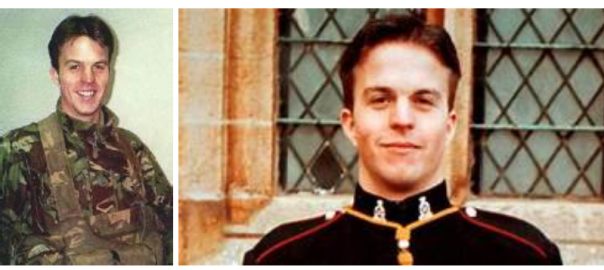
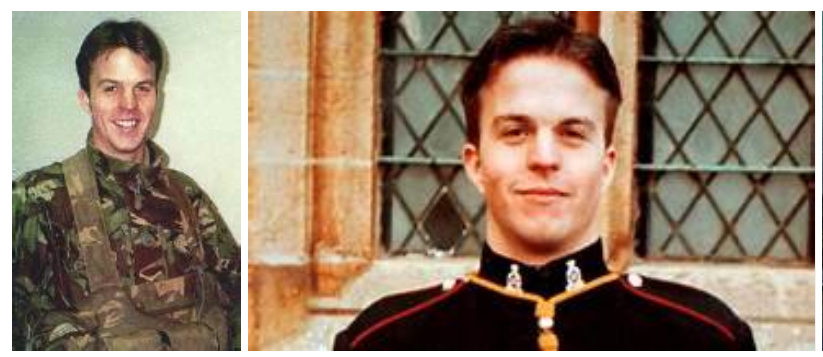
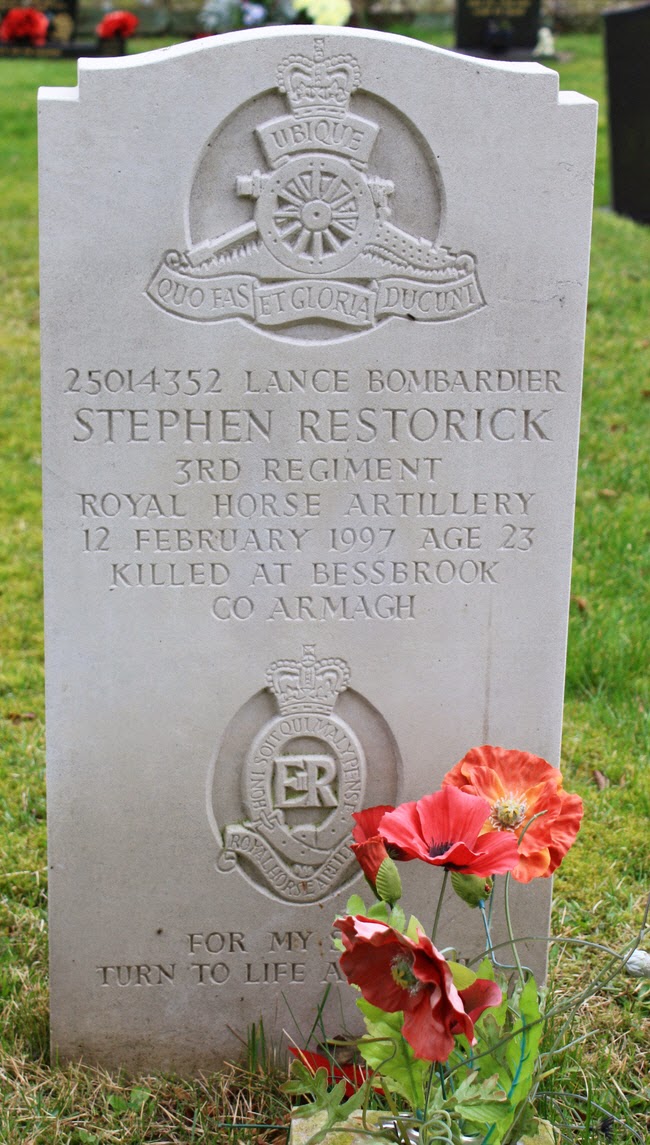
Shot by IRA sniper Bernard McGinn as he manned a checkpoint in Bessbrook, south Armagh, in February 1997 he held the tragic distinction of being the last British soldier to be murdered by paramilitaries in Northern Ireland. Until now.
The 23-year-old, serving with the 3rd Regiment Royal Horse Artillery, was five months into his second tour of duty in the Province when he was shot on Feb 12 1997.
He was manning a checkpoint on the Green Road outside the village when he was hit with single shot fired from a .50 calibre Barrett rifle.
Claims from a former soldier that an SAS team had been on standby ready to intercept the sniper that day but had been ordered…
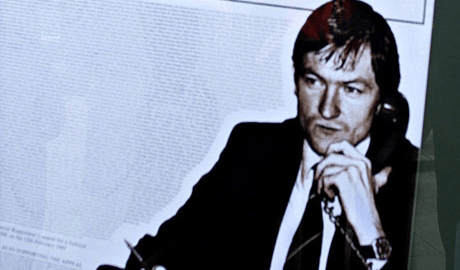
Patrick Finucane (1949 – 12 February 1989) was a Northern Irishhuman rights lawyer killed by loyalist paramilitaries acting in collusion with the British government intelligence service MI5.
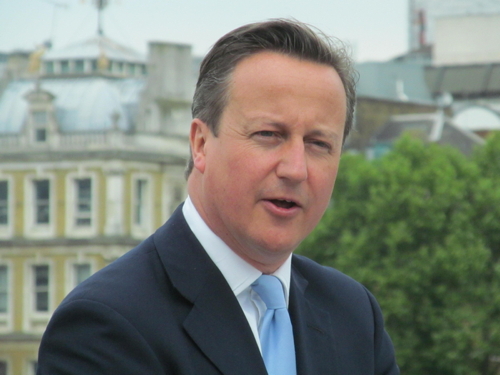
In 2011 British Prime Minister David Cameron met with Pat Finucane’s family and admitted the collusion, although no member of the British security services has yet been prosecuted.
———————————————
– Disclaimer –
The views and opinions expressed in these pages/documentaries are soley intended to educate and provide background information to those interested in the Troubles of Northern Ireland. They in no way reflect my own opinions and I take no responsibility for any inaccuracies or factual errors.
———————————————
Finucane’s killing was one of the most controversial during the Troubles in Northern Ireland. Finucane came to prominence due to successfully challenging the British government in several important human rights cases during the 1980s.
He was shot fourteen times as he sat eating a meal at his Belfast home with his three children and his wife, who was also wounded during the attack.
After much international pressure, the British government eventually announced that an inquiry would be held. This was one result of an agreement made between the British and Irish governments at Weston Park in 2001. The British government said it would comply with the terms agreed by the two governments at Weston Park.
They agreed to appoint an international judge that would review Finucane’s case and if evidence of collusion was found, a public inquiry would be recommended. The British government reneged on this promise to Finucane’s family after the international judge found evidence of collusion.[10]The Daily Telegraph quoted Prime Minister David Cameron saying:
“[there are] people in buildings all around here who won’t let it happen”.
Two public investigations concluded that elements of the British security forces colluded in Finucane’s murder and there have been high-profile calls for a public inquiry. However, in October 2011, it was announced that a planned public inquiry would be replaced by a less wide-ranging review.
This review, led by Desmond Lorenz de Silva, released a report in December 2012 acknowledging that the case entailed:
“a wilful and abject failure by successive Governments”.
Finucane’s family called the De Silva report a “sham
Background
Born into a Catholic family in 1949, Finucane was the eldest child, with six brothers and one sister. He graduated from Trinity College, Dublin in 1973.
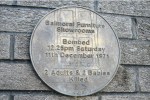
A third brother Seamus was the fiancé of Mairead Farrell, one of the IRA trio shot dead by the Special Air Service (SAS) in Gibraltar in March 1988. Seamus was the leader of an IRA unit in west Belfast before his arrest in 1976 with Bobby Sands and seven other IRA men, during an attempt to destroy Balmoral’s furniture store in south Belfast.
He was sentenced to 14 years’ imprisonment. Finucane’s wife, Geraldine, whom he met at Trinity College, is the daughter of middle-class Protestants; together they had three children.
His uncle Brendan ‘Paddy’ Finucane was an ace fighter pilot praised by Churchill for his heroism.
Finucane was shot dead at his home in Fortwilliam Drive, north Belfast, by Ken Barrett and another masked man using a Browning Hi-Power 9mm pistol and a .38 revolver respectively. He was hit 14 times.
The two gunmen knocked down the front door with a sledgehammer and entered the kitchen where Finucane had been having a Sunday meal with his family; they immediately opened fire and shot him twice, knocking him to the floor. Then while standing over him, the leading gunman fired 12 bullets into his face at close range.
Gerldine Finucane
Finucane’s wife Geraldine was slightly wounded in the shooting attack which their three children witnessed as they hid underneath the table. The Royal Ulster Constabulary (RUC) immediately launched an investigation into the killing.
The senior officer heading the CID team was Detective Superintendent Alan Simpson, who set up a major incident room inside the RUC D Division Antrim Road station. Simpson’s investigation ran for six weeks and he later stated that from the beginning, there had been a noticeable lack of intelligence coming from the other agencies regarding the killing.
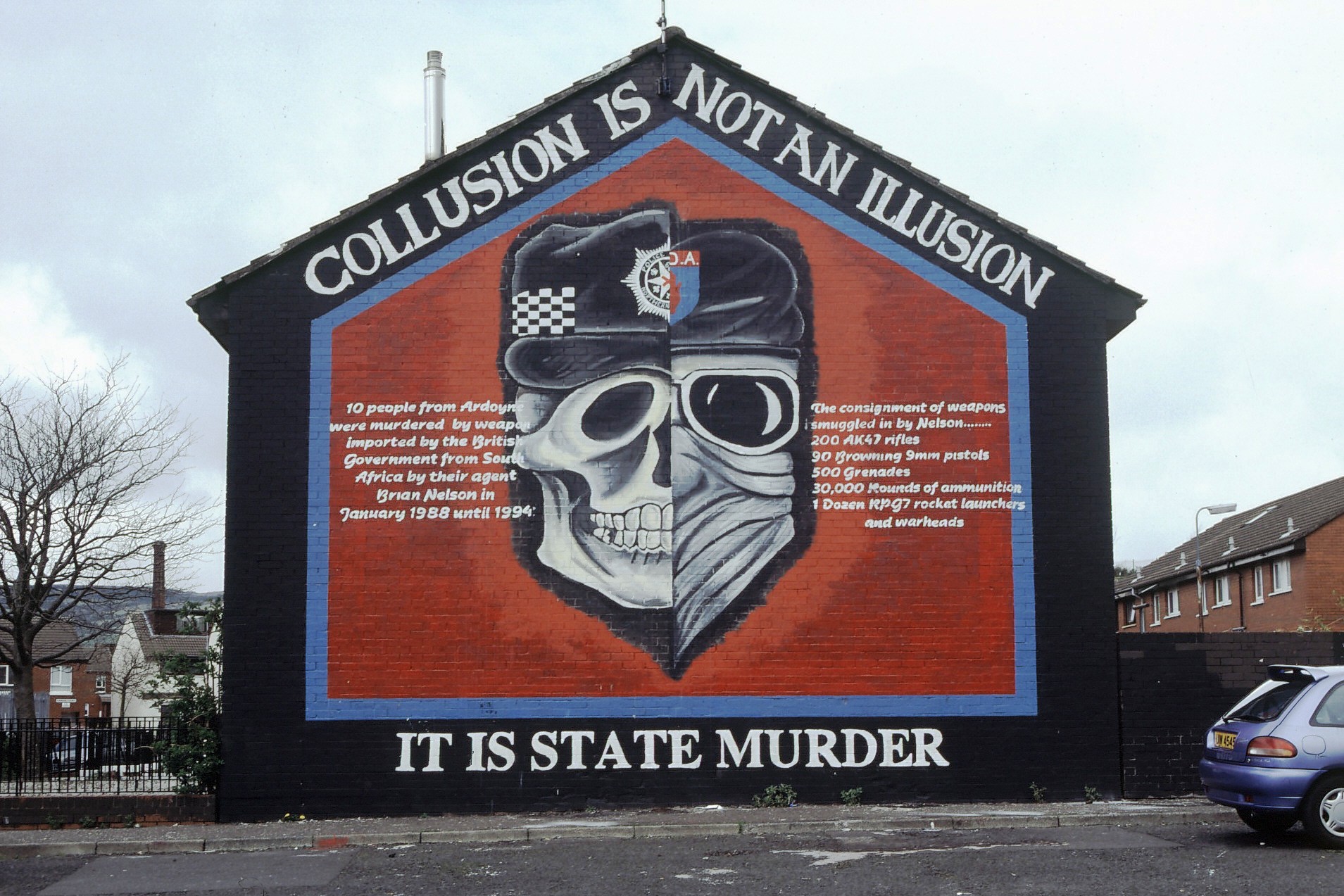
Finucane’s killing was widely suspected by human rights groups to have been perpetrated in collusion with officers of the RUC and, in 2003, the British GovernmentStevens Report stated that the killing was indeed carried out with the collusion of police in Northern Ireland.
The Ulster Defence Association/Ulster Freedom Fighters (UDA/UFF) claimed they killed the 39-year-old solicitor because he was a high-ranking officer in the IRA. Police at his inquest said they had no evidence to support this claim. Finucane had represented republicans in many high-profile cases, but he had also represented loyalists.
Several members of his family had republican links, but the family strongly denied Finucane was a member of the IRA. Informer Sean O’Callaghan has claimed that he attended an IRA finance meeting alongside Finucane and Gerry Adams in Letterkenny in 1980.
However both Finucane and Adams have consistently denied being IRA members.
In Finucane’s case, both the RUC and the Stevens Report found that he was not a member of the IRA. Republicans have strongly criticised the claims made by O’Callaghan in his book ‘The Informer’ and subsequent newspaper articles. One Republican source says O’Callaghan:
“…has been forced to overstate his former importance in the IRA and to make increasingly outlandish accusations against individual republicans.”
———————————————-
Patrick Finucane and State collusion
———————————————-
Later investigations into the murder
In 1999, the third inquiry of John Stevens into allegations of collusion between the security forces and Loyalist paramilitaries concluded that there was such collusion in the murders of Finucane and Brian Adam Lambert.
As a result of the inquiry, RUC Special Branch agent and loyalist quartermaster William Stobie, a member of the Ulster Defence Association was later charged with supplying one of the pistols used to kill Finucane, but his trial collapsed because he claimed that he had given information about his actions to his Special Branch handlers.
The pistol belonged to the UDA, which at the time was a legal organisation under British law. A further suspect, Brian Nelson, was a member of the Army’sForce Research Unit. He had provided information about Finucane’s whereabouts, and also claimed that he had alerted his handlers about the planned killing.
Cory reported in April 2004, and recommended public enquiries be established including the case of the Finucane killing.
In 2004, a former policeman, Ken Barrett, pleaded guilty to Finucane’s murder. His conviction came after a taped confession to the police, lost since 1991, re-surfaced.
In June 2005, the then Irish TaoiseachBertie Ahern told a US Special Envoy to Northern Ireland that “everyone knows” the UK government was involved in the murder of Pat Finucane.
On 17 May 2006, the United States House of Representatives then passed a resolution calling on the British government to hold an independent public inquiry into Finucane’s killing.
Initial investigations
A public inquiry was announced by the British Government in 2007, but it was halted under the Inquiries Act 2005, which empowers the government to block scrutiny of state actions. Finucane’s family criticised its limited remit and announced that they would not co-operate. Judge Peter Cory also strongly criticised the Act.
Amnesty International has reiterated its call for an independent inquiry, and have called on members of the British judiciary not to serve on the inquiry if it is held under the terms of the Act.
Finucane’s widow, Geraldine (born 1950), has written letters repeating this request to all the senior judges in Great Britain, and took out a full-page advertisement in the newspaper The Times to draw attention to the campaign. In June 2007, it was reported that no police or soldiers would be charged in connection with the killing.
On 11 October 2011, members of the Finucane family met with Prime MinisterDavid Cameron in Downing Street. Cameron provided them with an official apology for state collusion into Pat Finucane’s death. Following the meeting, Finucane’s son Michael said that he and the family had been “genuinely shocked” to learn that the Cory recommendation of a public enquiry, previously accepted by Tony Blair, would not be followed, and that a review of the Stevens and Cory casefiles would be undertaken instead.
Geraldine Finucane described the proposal as:
“nothing less than an insult…a shoddy, half-hearted alternative to a proper public inquiry”.
The following day, the official apology was given publicly in the House of Commons by the Secretary of State for Northern Ireland, Owen Paterson.[35]
De Silva report
Sir Desmond de Silva
On 12 December 2012, the government released the Pat Finucane Review, the results of the inquiry conducted by Sir Desmond de Silva.
The report documented extensive evidence of State collaboration with Loyalist gunmen, including the selection of targets, and concluded that “there was a wilful and abject failure by successive governments to provide the clear policy and legal framework necessary for agent-handling operations to take place effectively within the law.”
Prime Minister David Cameron acknowledged “shocking levels of collusion” and issued an apology.
However, Finucane’s family denounced the De Silva report as a “sham” and a “suppression of the truth” into which they were allowed no input.
In May 2013, state documents dated 2011 disclosed through the courts revealed that David Cameron’s former director of security and intelligence, Ciarán Martin, had warned him that senior members of Margaret Thatcher’s government may have been aware of “a systemic problem with loyalist agents” at the time of Pat Finucane’s death but had done nothing about it.
Posthumous
Finucane’s law firm, Madden & Finucane Solicitors, led by Peter Madden, continues to act for those it considers to have been victims of mistreatment by the State, or their survivors. The Pat Finucane Centre (PFC), named in his honour, is a human rights advocacy and lobbying entity in Northern Ireland.
— John Chambers – A Belfast Child (@ABelfastChild1) January 19, 2020
– Disclaimer –
The views and opinions expressed in these pages/documentaries are soley intended to educate and provide background information to those interested in the Troubles of Northern Ireland. They in no way reflect my own opinions and I take no responsibility for any inaccuracies or factual errors.
This is simply the story of a boy trying to grow up, survive, thrive, have fun & discover himself against a backdrop of events that might best be described as ‘explosive’, captivating & shocking the world for thirty long years.
1441 British armed force personnel died in Operation Banner
During the 38 year operation, 1,441 members of the British armed forces died in Operation Banner. This includes those who were killed in paramilitary attacks as well as those who died as a result of assault, accidents, suicide and natural causes
Shot by IRA sniper Bernard McGinn as he manned a checkpoint in Bessbrook, south Armagh, in February 1997 he held the tragic distinction of being the last British soldier to be murdered by paramilitaries in Northern Ireland. Until now.
The 23-year-old, serving with the 3rd Regiment Royal Horse Artillery, was five months into his second tour of duty in the Province when he was shot on Feb 12 1997.
He was manning a checkpoint on the Green Road outside the village when he was hit with single shot fired from a .50 calibre Barrett rifle.
Claims from a former soldier that an SAS team had been on standby ready to intercept the sniper that day but had been ordered to stand down, emerged six years later in the media.
The province’s police ombudsman, Nuala O’Loan, later concluded that the killing could not have been prevented – not because the snipers had not been under surveillance but because not enough resources had been devoted to the task that day, despite a raised threat level.
Within months of his killing, the Provisional IRA announced its second ceasefire, paving the way for the Good Friday Agreement and the road toward arms decommissioning.
In the intervening years his death has been the subject of intense controversy, amid claims that it could have been prevented and that he was deliberately sacrificed to save an informer.
But his parents, John and Rita, from Underwood, Notts, have been staunch supporters of the peace process, even facing criticism for doing so.
That support has been tested to the limit. When Bernard McGinn was convicted of the killing in 1999 he was sentenced to a total of 490 years in prison.
McGinn who has since died was captured by an SAS unit which raided a farmhouse in South Armagh three months after the Restorick murder. He was arrested along with a number of other key members of the Provisonal IRA’s South Armagh brigade during the security operation.
After his arrest McGinn confessed to his role in the IRA’s bombing campaign in England during the late 1980s and early 1990s. He also handed over the names of other IRA members during interrogations with the police.
McGinn admitted to police that he made explosives north and south of the border on an almost daily basis, “like a day’s work”. His information on other PIRA operatives provided vital intelligence for the security forces and caused anger among his former comrades.
———————————–
SOUTH ARMAGH I.R.A SNIPER TEAM JAILED
———————————–
He was sentenced to a total of 490 years in 1999 for 34 separate offences, including the murder of three British soldiers, his involvement in the 1992 bombing of the Baltic Exchange and the 1996 South Quay bombing, and the bombing of Hammersmith bridge later the same year.
However, he was released in 2000 under the Good Friday agreement after the IRA and loyalist paramilitary prisoners were granted a de facto amnesty for all crimes relating to the Troubles before Easter 1998.
He joined the Provisional IRA at the age of 15. His father was a former Sinn Féin councillor and he was the brother-in-law of Sinn Féin politician Caoimhghín Ó Caoláin.
Karma Collects its debt
McGinn was found dead in a house in the Irish Republic on 21st December 2013 , the Garda Síochána has announced. McGinn is believed to have died from natural causes after being discovered at the property in Monaghan town on Saturday.
Soldier’s family on sad pilgrimage
Wednesday 19 March 1997
The parents of a young soldier shot dead by the IRA in Northern Ireland yesterday made a painful pilgrimage to the spot where he died.
John and Rita Restorick fought back tears as they laid flowers by the checkpoint outside the military base at Bessbrook in South Armagh where their son, Stephen, was murdered last month. Clutching each other’s hands tightly, they placed their floral tribute among dozens of others left by local people.
They were accompanied on their journey from Peterborough by their other son, Mark, 26, and eight uncles, aunts and cousins.
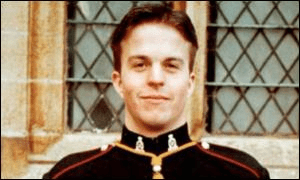
Lance Bombardier Restorick, 23, of the 3rd Battalion Royal Horse Artillery was killed by a single shot fired at long range by a hidden sniper as he manned the checkpoint.
The Restoricks were escorted by their son’s commanding officer, Lt Col Matthew Sykes, and Battery Commander Major Mark Vincent.
Afterwards, inside the heavily-fortified base, they attended a service to dedicate a marble memorial to Stephen.
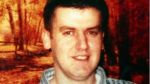
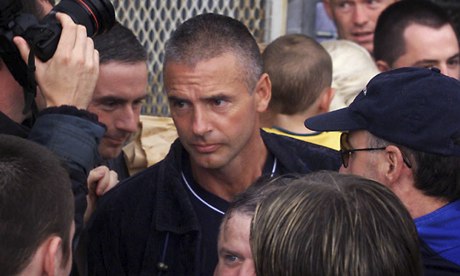
Bernard Henry McGinn (c. 1957 – body discovered 21 December 2013) was a Provisional Irish Republican Army (PIRA) member, specialising in explosives, who was sentenced to a total of 490 years imprisonment in 1999.[1] He was released in 2000 under the terms of the Good Friday Agreement
In 1978 Dessie O’Hare and McGinn killed Thomas Johnston, a former member of the Ulster Defence Regiment (UDR) in Keady, South Armagh. In 1979 McGinn was arrested at a disused farmhouse and charged with possession of explosives. He failed to turn up at his trial and was sentenced to 10 years imprisonment in absentia. After several months on the run, he was arrested in Dundalk following a 27-hour siege, during which he held a family hostage with a pistol and a hand grenade.
McGinn was released from prison in 1987, and joined the IRA’s South Armagh Brigade. Initially viewed as an outsider, within several years he became a trusted member of the brigade, helping assemble bombs used by the IRA in England. He was a member of one of two sniper teams which killed nine members of the security forces between 1992 and 1997, including Lance Bombardier Stephen Restorick, who was killed by a single shot from a Barrett M90 sniper rifle on 12 February 1997, and was among the last British Army soldiers to be killed during The Troubles.
Arrest and trial
McGinn and other members of the sniper team were arrested by the Special Air Service at a farm near Crossmaglen on 10 April 1997, and taken to Gough Barracks in Armagh for questioning. During a week of questioning, McGinn confessed to his role in the IRA bombing campaign, and implicated more than twenty members of the South Armagh Brigade in attacks in Northern Ireland and England. He claimed to have manufactured explosive mixes varying from between 200 lb and 10 tons, and said it was “like a day’s work”.
He laughed at his sentence, knowing that he would be freed, at most, in shortly over a year under the terms of the Good Friday Agreement. Two months after his conviction McGinn was temporarily released on compassionate grounds to visit his sick mother, which caused anger and consternation among unionists.
On 28 July 2000, McGinn was freed from HM Prison Maze, after serving 16 months.
Appeal
On 5 October 2000 McGinn’s convictions for explosives offences and the soldiers’ murders were overturned at the Court of Appeal in Belfast on the grounds that he was not properly cautioned before he confessed. The court, however, dismissed his appeals against convictions for conspiracy to murder and firearms possession for which he received a twenty-year sentence at his original trial
Death
McGinn was found dead at a house in Monaghan Town on 21 December 2013. The cause of death remains unknown, pending a post-mortem examination.
My autobiography: A Belfast Child is now available to pre-order on Amazon , launch date is 30th April.









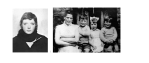










 IRA Killer Bernard McGinn














 belfastchildis.com