Category Archives: History

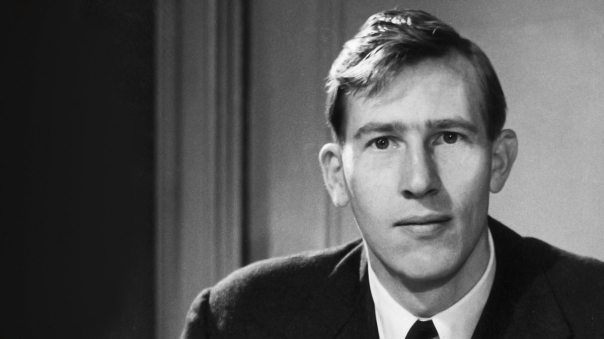
Sir Nicholas George Winton MBE – We Salute You!

Nicholas Winton

Nicholas Winton memorial service honours Holocaust hero

Sir Nicholas Winton

A memorial service is being held for Sir Nicholas Winton, who rescued hundreds of children from the Holocaust in the months before World War Two.

Some 400 people are attending event at London’s Guildhall, including 28 of those he saved and Czech, Slovak and UK government representatives.

Sir Nicholas organised the “Kindertransport” in which 669 mostly Jewish children came to Britain by train from Czechoslovakia in 1939.

He died on 1 July last year, aged 106.

The Kindertransport became public knowledge on BBC TV show That’s Life in 1988 when presenter Esther Rantzen reunited some of those saved with the person who helped them escape the Nazis

See BBC News for full story

———————–

Sir Nicholas Winton, Nicky’s Children, the Czech Kindertransport

———————–

Sir Nicholas George Winton MBE (born Nicholas George Wertheim; 19 May 1909 – 1 July 2015) was a British humanitarian who organized the rescue of 669 children, most of them Jewish, from Czechoslovakia on the eve of the Second World War in an operation later known as the Czech Kindertransport (German for “children transportation”). Winton found homes for the children and arranged for their safe passage to Britain.

The world found out about his work over 40 years later, in 1988. The British press dubbed him the “British Schindler“. On 28 October 2014, he was awarded the highest honour of the Czech Republic, the Order of the White Lion (1st class), by Czech President Miloš Zeman.

Sir
Nicholas Winton
MBE
Nicholas Winton in Prague.jpg

Winton in Prague on 10 October 2007
Born Nicholas George Wertheim
(1909-05-19)19 May 1909
Hampstead, London, England
Died 1 July 2015(2015-07-01) (aged 106)
Wexham Hospital, Slough, Berkshire, England
Other names Nicholas George Wortham[1]
Alma mater Stowe School
Occupation Humanitarian
Years active 1938–2015
Spouse(s) Grete Gjelstrup (m. 1948; d. 1999)
Children 3
Website nicholaswinton.com
Military career
Allegiance  United Kingdom
Service/branch  Royal Air Force
Years of service 1940–1954
Rank Flight lieutenant
Battles/wars Second World War

Early life

Nicholas Winton was born on 19 May 1909 in Hampstead, London, a son of bank manager Rudolph Wertheim and wife Barbara (née Wertheimer). His parents were German Jews who had moved to London two years earlier. The family name was Wertheim, but they changed it to Winton in an effort at integration. They also converted to Christianity, and Winton was baptised.

Stoweschool.jpg

Motto Latin: Persto et Praesto
(“I stand firm and I stand first”)

In 1923, Winton entered Stowe School, which had just opened.  He left without qualifications, attending night school while volunteering at the Midland Bank. He then went to Hamburg, where he worked at Behrens Bank, followed by Wasserman Bank in Berlin. In 1931, he moved to France and worked for the Banque Nationale de Crédit in Paris. He also earned a banking qualification in France. Returning to London, he became a broker at the London Stock Exchange. Though a stockbroker, Winton was also “an ardent socialist who became close to Labour Party luminaries Aneurin Bevan, Jennie Lee and Tom Driberg.” Through another socialist friend, Martin Blake, Winton became part of a leftwing circle opposed to appeasement and concerned about the dangers posed by the Nazis.[11]

At school, he had become an outstanding fencer and he was selected for the British team in 1938. He had hoped to compete in the next Olympics, but the games were cancelled because of the war

Rescue work

Shortly before Christmas 1938, Winton was planning to travel to Switzerland for a skiing holiday. He decided instead to visit Prague and help Martin Blake, who was in Prague as an associate of the British Committee for Refugees from Czechoslovakia,  then in the process of being occupied by Germany, and had called Winton to ask him to assist in Jewish welfare work.

Nazi Swastika

Winton single-handedly established an organization to aid children from Jewish families at risk from the Nazis. He set up his office at a dining room table in his hotel in Wenceslas Square. In November 1938, following Kristallnacht in Nazi-ruled Germany, the House of Commons approved a measure to allow the entry into Britain of refugees younger than 17, provided they had a place to stay and a warranty of £50 was deposited for their eventual return to their own country.

The Netherlands

An important obstacle was getting official permission to cross into the Netherlands, as the children were to embark on the ferry at Hoek van Holland. After Kristallnacht in November 1938, the Dutch government officially closed its borders to any Jewish refugees. The border guards, marechaussees, searched for them and returned any found to Germany, despite the horrors of Kristallnacht being well known.

Winton succeeded, thanks to the guarantees he had obtained from Britain. After the first train, the process of crossing the Netherlands went smoothly.Winton ultimately found homes in Britain for 669 children, many of whose parents would perish in the Auschwitz concentration camp. His mother worked with him to place the children in homes and later hostels. Throughout the summer of 1939, he placed photographs of the children in Picture Post seeking families to accept them. He also wrote to US politicians such as Roosevelt, asking them for haven for more children. He said that two thousand more might have been saved if they had helped but only Sweden took any besides those sent to Britain. The last group of 250, scheduled to leave Prague on 1 September 1939, were unable to depart. With Hitler‘s invasion of Poland on the same day, the Second World War had begun.

Of the children due to leave on that train, only two survived the war.

Winton acknowledged the vital roles of Doreen Warriner (March 16, 1904 – December 17, 1972), Trevor Chadwick (April 22, 1907 – December 23, 1979),  Nicholas Stopford,  Beatrice Wellington (June 15, 1907 – ) Josephine Pike, and Bill Barazetti (1914 – 2000 in Prague who also worked to evacuate children from Europe. Winton was in Prague for only about three weeks before the Nazis occupied the country. He never set foot in Prague Station. As he later wrote, “Chadwick did the more difficult and dangerous work after the Nazis invaded… he deserves all praise

—————————–

Sir Nicholas Winton – BBC Programme

“That’s Life” aired in 1988

—————————–

Notable people saved

Of the 669 children saved from the Holocaust through Winton’s efforts, more than 370 have never been traced. BBC News suggested in 2015 that they may not know the full story of how they survived the war

Second World War

After the outbreak of the Second World War, Winton applied successfully for registration as a conscientious objector and later served with the Red Cross. In 1940, he rescinded his objections and joined the Royal Air Force, Administrative and Special Duties Branch. He was an aircraftman, rising to sergeant by the time he was commissioned on 22 June 1944 as an acting pilot officer on probation.

On 17 August 1944, he was promoted to pilot officer on probation. He was promoted to the rank of war substantive flying officer on 17 February 1945.  He relinquished his commission on 19 May 1954, retaining the honorary rank of flight lieutenant.

Post-war


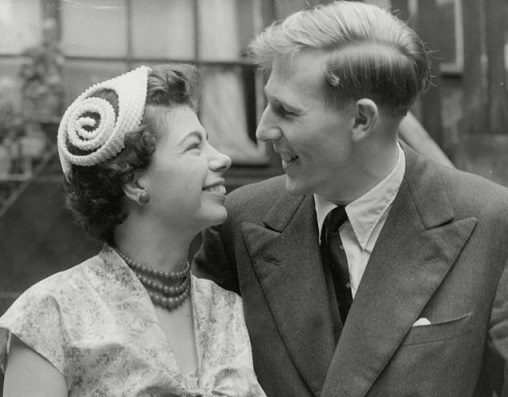
After the war, Winton worked for the International Refugee Organisation and then the International Bank for Reconstruction and Development in Paris, where he met Grete Gjelstrup, a Danish secretary and accountant’s daughter.They married in her hometown of Vejle on 31 October 1948. The couple settled in Maidenhead, England, where they brought up their three children and he stood, unsuccessfully, for the town council in 1954. Winton found work in the finance departments of various companies.

Recognition

It is often wrongly reported that Winton suppressed humanitarian exploits for many years despite mentioning them in his election material while unsuccessfully standing for election to the town council in 1954.  In 1988 his wife found a detailed scrapbook in their attic, containing lists of the children, including their parents’ names and the names and addresses of the families that took them in. She gave the scrapbook to Elisabeth Maxwell, a Holocaust researcher and wife of media magnate Robert Maxwell.

Winton himself could not remember the reason why this was done. Letters were sent to each of these known addresses and 80 of “Winton’s children” were found in Britain.

The wider world found out about his work in February 1988  during an episode of the BBC television programme That’s Life! when he was invited as a member of the audience. At one point, Winton’s scrapbook was shown and his achievements were explained. The host of the programme, Esther Rantzen, asked whether anybody in the audience owed their lives to Winton, and if so, to stand – more than two dozen people surrounding Winton rose and applauded.

100th Birthday


To celebrate his 100th birthday, Winton flew over the White Waltham Airfield in a microlight piloted by Judy Leden, the daughter of one of the boys he saved. His birthday was also marked by the publication of a profile in The Jewish Chronicle


Death

Winton died peacefully in his sleep on the morning of 1 July 2015 at Wexham Park Hospital in Slough from cardio-respiratory failure having been admitted a week earlier following a deterioration in his health. He was 106 years old.

Winton’s death came 76 years to the day after 241 of the children he saved left Prague on a train.[45] A special report from the BBC News on several of the children whom Winton rescued during the war had been published earlier that day.

Honours

In the 1983 Queen’s Birthday Honours, Winton was appointed a Member of the Order of the British Empire (MBE) for his work in establishing the Abbeyfield homes for the elderly in Britain, and in the 2003 New Year Honours, he was knighted in recognition of his work on the Czech Kindertransport.

He met the Queen again during her state visit to Bratislava, Slovakia, in October 2008.In 2003, Winton received the Pride of Britain Award for Lifetime Achievement.  In 2010, Winton was named a British Hero of the Holocaust by the British Government.

Winton was awarded the Order of Tomáš Garrigue Masaryk, Fourth Class, by the Czech President Václav Havel in 1998. In 2008, he was honoured by the Czech government in several ways. An elementary school in Kunžak is named after him,  and he was awarded the Cross of Merit of the Minister of Defence, Grade I.The Czech government nominated him for the 2008 Nobel Peace Prize.

The minor planet 19384 Winton was named in his honour by Czech astronomers Jana Tichá and Miloš Tichý.


Statue at Prague main railway station, by Flor Kent, unveiled on 1 September 2009

A statue of Winton stands on Platform 1 of the Praha hlavní nádraží railway station. Created by Flor Kent, it was unveiled on 1 September 2009 as part of a larger commemoration of the 70th anniversary of the last Kindertransport train (see also Winton train, below).

There are also three memorials at Liverpool Street Station in London, where the Kindertransport children arrived.  In September 2010, another statue of Winton was unveiled, this time at Maidenhead railway station by Home Secretary Theresa May, MP for Maidenhead. Created by Lydia Karpinska, it depicts Winton sitting on a bench and reading a book.

Winton was baptised as a Christian by his parents, but his Jewish ancestry disqualified him from being declared a Righteous Among the Nations by Yad Vashem in Israel. As an adult, he was not active in any particular religion.  In a 2015 interview Winton told Stephen Sackur, he had become disillusioned with religion during the war as he could not reconcile religious movements “praying for victory on both sides of the same war”. Winton went on to describe his personal beliefs,

“I believe in ethics, and if everybody believed in ethics we’d have no problems at all. That’s the only way out; forget the religious side.”

Winton received the Wallenberg Medal on 27 June 2013 in London.The following year, the International Raoul Wallenberg Foundation established a literary competition named after Winton. The contest is for essays by high school students about Winton’s legacy.

Winton was awarded the Freedom of the City of London on 23 February 2015.

Winton train

Main article: Winton Train

The headboard worn by No. 60163 Tornado from Harwich to Liverpool Street station, the final leg of the Winton Train from Prague.

On 1 September 2009, a special “Winton Train” set off from the Prague Main railway station. The train, composed of one or two steam locomotives (out of a set of six) and carriages used in the 1930s, headed to London via the original Kindertransport route. On board were several surviving “Winton children” and their descendants, who were welcomed by Winton in London. The occasion marked the 70th anniversary of the intended last Kindertransport, due to set off on 3 September 1939 but prevented by the outbreak of the Second World War. At the train’s departure, a memorial statue for Winton, designed by Flor Kent, was unveiled at the railway station.

Order of the White Lion

On 19 May 2014, Winton’s 105th birthday, it was announced he was to receive the Czech Republic‘s highest honour, for giving Czech children “the greatest possible gift: the chance to live and to be free”. On 28 October 2014, Winton was awarded the Order of the White Lion (Class I) by Czech President Miloš Zeman,[69] the Czech Defence Ministry having sent a special aircraft to bring him to Prague. The award was made alongside one to Sir Winston Churchill, which was accepted by his grandson Nicholas Soames. Zeman said he regretted the highest Czech award having been awarded to the two personalities so belatedly, but added “better late than never”.

Winton was also able to meet some of the people he rescued 75 years earlier, themselves then in their 80s. He said, “I want to thank you all for this enormous expression of thanks for something which happened to me nearly 100 years ago—and a 100 years is a heck of a long time. I am delighted that so many of the children are still about and are here to thank me.”[68][71]

Popular culture


Winton’s work is the subject of three films by Slovak filmmaker Matej Mináč: the drama All My Loved Ones (1999), in which Winton was played by Rupert Graves, the documentary The Power of Good: Nicholas Winton (Síla lidskosti—Nicholas Winton, 2002), which won an Emmy Award , and the documentary drama Nicky’s Family (Nickyho rodina, 2011). A play about Winton, Numbers from Prague, was performed in Cambridge in January 2011. Winton was featured in the 2000 Warner Brothers documentary written and directed by Mark Jonathan Harris and produced by Deborah Oppenheimer, Into the Arms of Strangers: Stories of the Kindertransport, which received the Academy Award for Best Documentary Feature, and the film’s accompanying book of the same name.

Speaking on BBC Radio 4’s Today programme, on 28 October 2014, Winton said he thought he had “made a difference to a lot of people” and went on to say,

“I don’t think we’ve learned anything… the world today is in a more dangerous situation than it has ever been.”

Memorial

On 20 May 2016 Glen Art  will present a memorial concert celebrating Winton’s life with Jason Isaacs, Rupert Graves and Alexander Baillie, at St John’s, Smith Square. All funds donated will be given to charities supporting Syrian refugee children.

On 22 April 2016, a remembrance quarter peal was rung and a new method named ‘Sir Nicholas Winton Delight’ by bellringers of the Whiting Society of Ringers
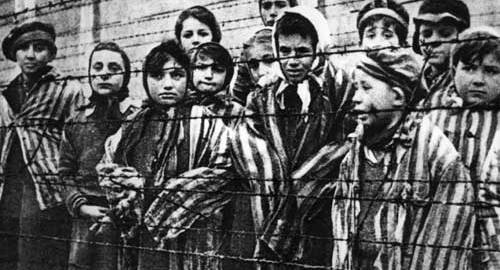
holocaust

See The Holocaust

Dr. Fritz Klein, center, who selected prisoners to be sent to the gas chamber at Bergen-Belsen concentration camp in Germany, was forced to move bodies to a mass grave after the camp was liberated by the British in April, 1945. Sixty thousand prisoners, most of them seriously ill, were found in the camp along with thousands of unburied corpses. Klein was later tried and hanged. (AP Photo)

See Pictures that changed the World – Dr Fritz Klein in a mass grave

See Mossad
mossad 4


Girl Power! Boudica – Warrior Queen

Boudica Warrior Queen Boudica (/ˈbuːdᵻkə/; alternative spellings: Boudicca, Boudicea, also known as Boadicea /boʊdᵻˈsiːə/ and in Welsh as Buddug [ˈbɨ̞ðɨ̞ɡ]) (d. AD 60 or 61) was a queen of the Brit…

Source: Girl Power! Boudica – Warrior Queen

The Siege Of Derry 1689 – What’s it all about?

– Disclaimer – The views and opinions expressed in these documentaries are soley intended to educate and provide background information to those interested in the Troubles of Northern I…

Source: The Siege Of Derry 1689 – What’s it all about?

The Battle of the Boyne -What’s it all about?

belfastchildis's avatar

The Battle of the Boyne 1690

King James II

The Battle of the Boyne (Irish: Cath na BóinneIPA: [ˈkah n̪ˠə ˈbˠoːn̪ʲə]) was a battle in 1690 between the English King James II, and the Dutch Prince William of Orange, who, with his wife, Mary II (his cousin and James’ daughter), had overthrown James in England in 1688.

King Billy
The battle took place across the River Boyne near the town of Drogheda on the east coast of Ireland, and resulted in a victory for William. This turned the tide in James’s failed attempt to regain the British crown and ultimately aided in ensuring the continued Protestant ascendancy in Ireland.

The battle took place on 1 July 1690 in the old style (Julian) calendar. This was equivalent to 11 July in the new style (Gregorian) calendar, although today its…

View original post 7,974 more words

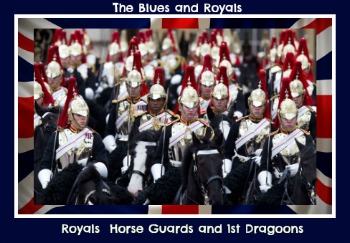
The Blues and Royals (Royal Horse Guards and 1st Dragoons)

The Blues and Royals (Royal Horse Guards and 1st Dragoons) (RHG/D) is a cavalry regiment of the British Army, part of the Household Cavalry. The Colonel-in-Chief is Queen Elizabeth II and the Colonel of the Regiment is Anne, Princess Royal. It is the second-most senior regiment in the British Army.

——————

Blues and Royals

——————

The Blues and Royals
(Royal Horse Guards and 1st Dragoons)
Blues and Royals cap badge.jpg

Badge of the Blues and Royals

Active 23 March 1969–present
Allegiance  United Kingdom
Branch  British Army
Type Horse Guards
Role Armoured reconnaissance/Ceremonial
Size One regiment of three squadrons
Part of Household Cavalry
Garrison/HQ RHQ – London
Regiment – Windsor/London
Nickname(s) The Tin Bellies
Motto(s) Honi soit qui mal y pense
(Evil be to him who evil thinks)
March Quick – Quick March of the Blues and Royals
Slow – Slow March of the Blues and Royals
Trot Past – Keel Row
Commanders
Colonel-in-Chief Queen Elizabeth II
Colonel of
the Regiment
HRH The Princess Royal KG KT GCVO GCStJ QSO
Insignia
Tactical Recognition Flash GuardsTRF.svg
Arm Badge Waterloo Eagle
from Royal Dragoons (1st Dragoons)
Abbreviation RHG/D

———————–

The Band of the Blues & Royals – Marching and Public concert in Solothurn, Switzerland

———————–

History

The Blues and Royals is one of two regiments of the Household Division that can trace its lineage back to the New Model Army, the other being the Coldstream Guards.

Troopers of the Blues and Royals at the Trooping the Colour parade, London, 2007

Formation

The regiment was formed in 1969 from the merger of the Royal Horse Guards, which was known as “the Blues” or “the Oxford Blues”, and the Royal Dragoons, which was known as “the Royals”.

Since then, the new regiment has served in Northern Ireland, Germany, and Cyprus. During the Falklands War of 1982, the regiment provided the two armoured reconnaissance troops. The regiment also had a squadron on operational duty with the United Nations in Bosnia in 1994–95. Most recently, the regiment saw action in the Iraq War and the War in Afghanistan.

Both Prince William, Duke of Cambridge, and Prince Harry joined the regiment as cornets in 2006.

Blues and Royals Trooper

Changing of the guard at Horse Guards

Operational Union

As a result of the Options for Change Review in 1991, the Blues and Royals formed a union for operational purposes with the Life Guards as the Household Cavalry Regiment. However, they each maintain their regimental identity, with distinct uniforms and traditions, and their own colonel. The Blues and Royals currently has two reconnaissance squadrons in Windsor, which are part of the Household Cavalry Regiment, and a mounted squadron in London as part of the Household Cavalry Mounted Regimen.

Regimental traditions

——————————-

Blues and Royals Quick March

——————————-

Instead of being known as the Royal Horse Guards and 1st Dragoons, the regiment is known as the Blues and Royals and is therefore the only regiment in the British Army to be officially known by their nickname as opposed to their full name.

Newly commissioned officers in the Blues and Royals are named Cornets, rather than Second Lieutenants as is the standard in the rest of the British Army. The rank of sergeant does not exist in the Household Cavalry. The equivalent is Corporal of Horse, which also applies to any other ranks with the word sergeant in it, such as Regimental Sergeant Major, which is replaced by Regimental Corporal Major. King Edward VII also declared the rank of Private should be replaced by the rank of Trooper in the cavalry.
This set the precedent for the usage of Trooper instead of Private in other cavalry units, such as those of the modern Royal Armoured Corps.

——————–

The Queens Cavalry – BBC – Full Video

——————–

The Blues and Royals is the only regiment in the British Army that allows troopers and non-commissioned officers, when not wearing headdress, to salute an officer. The custom started after the Battle of Warburg in 1760 by the Marquess of Granby, who commanded both the Royal Horse Guards and the Royal Dragoons, which were separate units at the time. During the battle, the Marquess had driven the French forces from the field, losing both his hat and his wig during the charge. When reporting to his commander, Prince Ferdinand of Brunswick, in the heat of the moment he is said to have saluted without wearing his headdress, having lost it earlier. When the Marquess of Granby became the Colonel of the Blues, the regiment adopted this tradition.

Further, the Blues and Royals and the Life Guards are the only two units in the British forces that are not required to remove their headdress indoors, unless they are inside a church.

When the Household Cavalry mounts an escort to the Sovereign on State occasions, a ceremonial axe with a spike is carried by a Farrier Corporal of Horse. The historical reason behind this is that when a horse was wounded or injured so seriously that it could not be treated, its suffering was ended by killing it with the spike. The axe is also a reminder of the days when the Sovereign’s escorts accompanied royal coaches and when English roads were very bad. Horses often fell, becoming entangled in their harnesses and had to be freed with the cut of an axe. It is also said that, in those times, if a horse had to be put to death, its rider had to bring back a hoof, cut off with the axe, to prove to the Quartermaster that the animal was in fact dead, thereby preventing fraudulent replacement. Today, the axe remains as a symbol of the Farrier’s duties.

Uniform

On ceremonial occasions, the Blues and Royals wear a blue tunic (inherited from the Royal Horse Guards, also known as “the Blues”), a metal cuirass, and a matching helmet with a red plume worn unbound, and against popular belief the regiments farriers wear a red plume like the rest of the regiment but do not wear the metal cuirass. In addition, the Blues and Royals wear their chin strap under their chin, as opposed to the Life Guards, who wear it below their lower lip. On service dress, the Blues and Royals wear a blue lanyard on the left shoulder, as well as a Sam Browne belt containing a whistle. In most dress orders, the Waterloo Eagle is worn on the left arm as part of dress traditions.

The Blues and Royals, as part of the Household Division, does not use the Order of the Bath Star for its officer rank ‘pips,’ but rather the Order of the Garter Star.

Prince Harry wore the uniform at the wedding of his brother, Prince William, to Catherine Middleton.

Battle Honours

The battle honours are:

*Awarded jointly with the Life Guards for services of the Household Cavalry Regiment


The British Empire – History & Background

A new YouGov survey finds that 59% think the British Empire is something to be proud of . I Agree do you? see YouGov for full report   British Empire The British Empire comprised the dominions…

Source: The British Empire – History & Background

On this day in 1954 -Roger Bannister breaks four-minute mile

Sir Roger Bannister

——————————

First Four Minute Mile

——————————

roger-bannister  vvv.jpg

Sir Roger Gilbert Bannister, CBE (born 23 March 1929) is an English former middle-distance athlete, physician and academic, who ran the first sub-four-minute mile.

In the 1952 Olympics in Helsinki, Bannister set a British record in the 1500 metres but finished fourth. This strengthened his resolve to be the first 4-minute miler.

He achieved this feat on 6 May 1954 at Iffley Road track in Oxford, with Chris Chataway and Chris Brasher providing the pacing. When the announcer declared “The time was three…”, the cheers of the crowd drowned out Bannister’s exact time, which was 3 min 59.4 sec.

Bannister’s record lasted just 46 days. He had reached this record with minimal training, while practising as a junior doctor.

Bannister went on to become a distinguished neurologist and Master of Pembroke College, Oxford, before retiring in 1993. When asked whether the 4-minute mile was his proudest achievement, he said he felt prouder of his contribution to academic medicine through research into the responses of the nervous system. Bannister is patron of the MSA Trust. He was diagnosed with Parkinson’s disease in 2011

Early life and education

roger-bannister  young

Bannister was born in Harrow, England. He went to Vaughan Primary School in Harrow and continued his education at City of Bath Boys’ School and University College School, London; followed by medical school at the University of Oxford (Exeter College and Merton College[3]) and at St Mary’s Hospital Medical School (now part of Imperial College London).

Early running career

Bannister was inspired by miler Sydney Wooderson‘s remarkable comeback in 1945. Eight years after setting the mile record and seeing it surpassed during the war years by the great Swedish runners Arne Andersson and Gunder Hägg, Wooderson regained his old form and challenged Andersson over the distance in several races. Wooderson lost to Andersson but set a British record of 4:04.2 in Gothenburg on 9 September.

Like Wooderson, Bannister would ultimately set a mile record, see it broken, and then set a new personal best slower than the new record.

Bannister started his running career at Oxford in the autumn of 1946 at the age of 17. He had never worn running spikes previously or run on a track. His training was light, even compared to the standards of the day, but he showed promise in running a mile in 1947 in 4:24.6 on only three weekly half-hour training sessions.

He was selected as an Olympic “possible” in 1948 but declined as he felt he was not ready to compete at that level. However, he was further inspired to become a great miler by watching the 1948 Olympics. He set his training goals on the 1952 Olympics in Helsinki.

In 1949, he improved in the 880 yards to 1:52.7 and won several mile races in 4:11. Then, after a period of six weeks with no training, he came in third at White City in 4:14.2.

The year 1950 saw more improvements as he finished a relatively slow 4:13 mile on 1 July with an impressive 57.5 last quarter. Then, he ran the AAA 880 in 1:52.1, losing to Arthur Wint, and then ran 1:50.7 for the 800 m at the European Championships on 26 August, placing third. Chastened by this lack of success, Bannister started to train harder and more seriously.

His increased attention to training paid quick dividends, as he won a mile race in 4:09.9 on 30 December. Then in 1951 at the Penn Relays, Bannister broke away from the pack with a 56.7 final lap, finishing in 4:08.3. Then, in his biggest test to date, he won a mile race on 14 July in 4:07.8 at the AAA Championships at White City before 47,000 people. The time set a meet record and he defeated defending champion Bill Nankeville in the process.

Bannister suffered defeat, however, when Yugoslavia‘s Andrija Otenhajmer, aware of Bannister’s final-lap kick, took a 1500 m race in Belgrade 25 August out at near-record pace, forcing Bannister to close the gap by the bell lap. Otenhajmer won in 3:47.0, though Bannister set a personal best finishing second in 3:48.4. Bannister was no longer seen as invincible.

His training was a very modern individualised mixture of interval training influenced by Franz Stampfl with elements of block periodisation, fell running and anaerobic elements of training which were later perfected by Arthur Lydiard.

1952 Olympics

Bannister avoided racing after the 1951 season until late in the spring of 1952, saving his energy for Helsinki and the Olympics. He ran an 880 on 28 May in 1:53.00, then a 4:10.6 mile time-trial on 7 June, proclaiming himself satisfied with the results. At the AAA championships, he skipped the mile and won the 880 in 1:51.5. Then, 10 days before the Olympic final, he ran a ¾ mile time trial in 2:52.9, which gave him confidence that he was ready for the Olympics as he considered the time to be the equivalent of a four-minute mile.

His confidence soon dissipated as it was announced there would be semifinals for the 1500 m (equal to 0.932 miles) at the Olympics, and he knew that this favoured runners who had much deeper training regimens than he did. When he ran his semifinal, Bannister finished fifth and thereby qualified for the final, but he felt “blown and unhappy.”

The 1500 m final on 26 July would prove to be one of the more dramatic in Olympic history. The race was not decided until the final metres, Josy Barthel of Luxembourg prevailing in an Olympic-record 3:45.28 (3:45.1 by official hand-timing) with the next seven runners all under the old record. Bannister finished fourth, out of the medals, but set a British record of 3:46.30 (3:46.0) in the process.

New goal

After his relative failure at the 1952 Olympics, Bannister spent two months deciding whether to give up running. He set himself on a new goal: to be the first man to run a mile in under four minutes. Accordingly, he intensified his training and did hard intervals.

On 2 May 1953, he made an attempt on the British record at Oxford. Paced by Chris Chataway, Bannister ran 4:03.6, shattering Wooderson’s 1945 standard. “This race made me realise that the four-minute mile was not out of reach,” said Bannister.

On 27 June, a mile race was inserted into the programme of the Surrey schools athletic meeting. Australian runner Don Macmillan, ninth in the 1500 m at the 1952 Olympics, set a strong pace with 59.6 and 1:59.7 for two laps. He gave up after 212 laps, but Chris Brasher took up the pace. Brasher had jogged the race, allowing Bannister to lap him so he could be a fresh pace-setter. At ¾ mile, Bannister was at 3:01.8, the record—and first sub-four-minute mile—in reach. But the effort fell short with a finish in 4:02.0, a time bettered by only Andersson and Hägg. British officials would not allow this performance to stand as a British record, which, Bannister felt in retrospect, was a good decision. “My feeling as I look back is one of great relief that I did not run a four-minute mile under such artificial circumstances,” he said.

But other runners were making attempts at the four-minute barrier and coming close as well. American Wes Santee ran 4:02.4 on 5 June, the fourth-fastest mile ever. And at the end of the year, Australian John Landy ran 4:02.0.

Then early in 1954, Landy made some more attempts at the distance. On 21 January, he ran 4:02.4 in Melbourne, then 4:02.6 on 23 February, and at the end of the Australian season on 19 April he ran 4:02.6 again.

Bannister had been following Landy’s attempts and was certain his Australian rival would succeed with each one. But knowing that Landy’s season-closing attempt on 19 April would be his last until he travelled to Finland for another attempt, Bannister knew he had to make his attempt soon.

Sub-4-minute mile

Blue plaque recording the first sub-4-minute mile run by Roger Bannister on 6 May 1954 at Oxford University‘s Iffley Road Track.

This historic event took place on 6 May 1954 during a meet between British AAA and Oxford University at Iffley Road Track in Oxford. It was watched by about 3,000 spectators. With winds up to 25 miles per hour (40 km/h) prior to the event, Bannister had said twice that he favoured not running, to conserve his energy and efforts to break the 4-minute barrier; he would try again at another meet. However, the winds dropped just before the race was scheduled to begin, and Bannister did run. The pace-setters from his major 1953 attempts, future Commonwealth Games gold medallist Chris Chataway from the 2 May attempt and future Olympic Games gold medallist Chris Brasher from the 27 June attempt, combined to provide pacing on this historic day. The race  was broadcast live by BBC Radio and commented on by 1924 Olympic 100 metres champion Harold Abrahams, of Chariots of Fire fame.


—————————–

Chariots of fire – movie, opening scene

—————————–

Bannister had begun his day at a hospital in London, where he sharpened his racing spikes and rubbed graphite on them so they would not pick up too much cinder ash. He took a mid-morning train from Paddington Station to Oxford, nervous about the rainy, windy conditions that afternoon.Being a dual-meet format, there were 7 men entered in the Mile: Alan Gordon, George Dole and Nigel Miller from Oxford University and four British AAA runners – Bannister, his two pacemakers Brasher and Chataway and Tom Hulatt. Nigel Miller arrived as a spectator and he only realised that he was due to run when he read the programme. Efforts to borrow a running kit failed and he could not take part, thus reducing the field to 6.

The race went off as scheduled at 6:00 pm, and Brasher and Bannister went immediately to the lead. Brasher, wearing No. 44, led both the first lap in 58 seconds and the half-mile in 1:58, with Bannister (No. 41) tucked in behind, and Chataway (No. 42) a stride behind Bannister. Chataway moved to the front after the second lap and maintained the pace with a 3:01 split at the bell. Chataway continued to lead around the front turn until Bannister began his finishing kick with about 275 yards to go (just over a half-lap), running the last lap in just under 59 seconds.

roger-bannister-quote.jpg

The stadium announcer for the race was Norris McWhirter, who went on to co-publish and co-edit the Guinness Book of Records. He excited the crowd by delaying the announcement of the time Bannister ran as long as possible:

“Ladies and gentlemen, here is the result of event nine, the one mile: first, number forty one, R. G. Bannister, Amateur Athletic Association and formerly of Exeter and Merton Colleges, Oxford, with a time which is a new meeting and track record, and which—subject to ratification—will be a new English Native, British National, All-Comers, European, British Empire and World Record. The time was three…”

The roar of the crowd drowned out the rest of the announcement. Bannister’s time was 3 minutes, 59.4 seconds.

50th anniversary of Bannister’s four-minute mile, commemorated on a 2004 British fifty pence coin.

The claim that a four-minute mile was once thought to be impossible by informed observers was and is a widely propagated myth created by sportswriters and debunked by Bannister himself in his memoir, The Four Minute Mile (1955). The reason the myth took hold was that four minutes was a round number which was slightly better (1.4 seconds) than the world record for nine years, longer than it probably otherwise would have been because of the effect of the Second World War in interrupting athletic progress in the combatant countries. The Swedish runners Gunder Hägg and Arne Andersson, in a series of head-to-head races in the period 1942–45, had already lowered the world mile record by five seconds to the pre-Bannister record. (See Mile run world record progression.) What is still impressive to knowledgeable track fans is that Bannister ran a four-minute mile on very low-mileage training by modern standards.

Just 46 days later, on 21 June in Turku, Finland, Bannister’s record was broken by his rival Landy with a time of 3 min 57.9 s, which the IAAF ratified as 3 min 58.0 s due to the rounding rules then in effect.

Statue of Bannister and Landy in Vancouver

On 7 August, at the 1954 British Empire and Commonwealth Games in Vancouver, B.C., Bannister, running for England, competed against Landy for the first time in a race billed as “The Miracle Mile”. They were the only two men in the world to have broken the 4-minute barrier, with Landy still holding the world record. Landy led for most of the race, building a lead of 10 yards in the third lap (of four), but was overtaken on the last bend, and Bannister won in 3 min 58.8 s, with Landy 0.8 s behind in 3 min 59.6 s. Bannister and Landy have both pointed out that the crucial moment of the race was that at the moment when Bannister decided to try to pass Landy, Landy looked over his left shoulder to gauge Bannister’s position and Bannister burst past him on the right, never relinquishing the lead. A larger-than-life bronze sculpture of the two men at this moment was created by Vancouver sculptor Jack Harman in 1967 from a photograph by Vancouver Sun photographer Charlie Warner and stood for many years at the entrance to Empire Stadium; after the stadium was demolished the sculpture was moved a short distance away to the Hastings and Renfrew entrance of the Pacific National Exhibition (PNE) fairgrounds. Regarding this sculpture, Landy quipped: “While Lot’s wife was turned into a pillar of salt for looking back, I am probably the only one ever turned into bronze for looking back.”

Bannister went on that season to win the so-called metric mile, the 1500 m, at the European Championships in Bern on 29 August, with a championship record in a time of 3 min 43.8 s. He then retired from athletics to concentrate on his work as a junior doctor and to pursue a career in neurology.

Sports Council and knighthood

He later became the first Chairman of the Sports Council (now called Sport England) and was knighted for this service in 1975. Under his aegis, central and local government funding of sports centres and other sports facilities was rapidly increased, and he also initiated the first testing for use of anabolic steroids in sport.

Personal life

roger bannister wife resized.jpg

Bannister married the artist Moyra Jacobsson, daughter of the Swedish economist Per Jacobsson, who served as Managing Director of the International Monetary Fund.

Legacy

London 2012 Olympics torch relay: Sir Roger Bannister carries flame

On the 50th anniversary of running the sub-4-minute mile, Bannister was interviewed by the BBC‘s sports correspondent Rob Bonnet. At the conclusion of the interview, Bannister was asked whether he looked back on the sub-4-minute mile as the most important achievement of his life. Bannister replied to the effect that no, he rather saw his subsequent forty years of practising as a neurologist and some of the new procedures he introduced as being more significant. His major contribution in academic medicine was in the field of autonomic failure, an area of neurology focusing on illnesses characterised by certain automatic responses of the nervous system (for example, elevated heart rate when standing up) not occurring.

For his efforts, Bannister was also made the inaugural recipient of the Sports Illustrated Sportsman of the Year award in 1955 (he was given the award as the 1954 Sportsman of the Year, but it was awarded in January 1955) and is one of the few non-Americans recognised by the American-published magazine as such.

In a UK poll conducted by Channel 4 in 2002, the British public voted Bannister’s historic sub-4-minute mile as number 13 in the list of the 100 Greatest Sporting Moments.

Bannister is the subject of the ESPN film Four Minutes (2005). This film is a dramatisation, its major departures from the factual record being the creation of a fictional character as Bannister’s coach, who was actually Franz Stampfl, an Austrian, and secondly his meeting his wife, Moyra Jacobsson, in the early 1950s when in fact they met in London only a few months before the Miracle Mile itself took place.

The 50th anniversary of Bannister’s achievement was marked by a commemorative British 50-pence coin. The reverse of the coin shows the legs of a runner and a stopwatch (stopped at 3:59.4).

Bannister, arguably the most famous record-setter in the mile, is also the man who held the record for the shortest period of time, at least since the IAAF started to ratify records.

In 1996, Pembroke College, University of Oxford named the Bannister Building to honour the achievements and memory of Sir Roger, a former Master of the college. The building, an 18th-century townhouse in Brewer Street, was converted to provide accommodation for graduate students. It was extensively refurbished during 2011 and 2012 and now forms part of the building complex surrounding the Rokos Quad, and is inhabited by undergraduates.

In 2012, Bannister carried the Olympic flame at the site of his memorable feat, in the stadium now named after him.

Memorabilia

In the gallery of Pembroke College dining hall there is a cabinet containing over 80 exhibits covering Bannister’s athletic career and including some academic highlights.

St Mary’s Hospital (London), Imperial College School of Medicine have named a lecture theatre after Bannister, with the stopwatch used to time the race on display, stopped at 3:59. Bannister has also given his name to both the trophy presented to the winning team in the annual Imperial College School of Medicine vs Imperial College London athletics Varsity match, as well as the award giving to the graduating doctor of Imperial College School of Medicine who has achieved most in the sporting community.

Girl Power! Boudica – Warrior Queen

Boudica

Warrior Queen

https://i0.wp.com/badassoftheweek.com/images/158183026542/Boudicca_by_ChrisRawlins.jpg

Boudica (/ˈbdkə/; alternative spellings: Boudicca, Boudicea, also known as Boadicea /bdˈsə/ and in Welsh as Buddug [ˈbɨ̞ðɨ̞ɡ]) (d. AD 60 or 61) was a queen of the British Celtic Iceni tribe who led an uprising against the occupying forces of the Roman Empire.

https://i0.wp.com/www.legioviferrata.com/sitebuildercontent/sitebuilderpictures/.pond/boudicamap2.jpg.w300h231.jpg

Boudica’s husband Prasutagus ruled as a nominally independent ally of Rome and left his kingdom jointly to his daughters and the Roman emperor in his will. However, when he died his will was ignored, and the kingdom was annexed. Boudica was flogged, her daughters raped, and Roman financiers called in their loans.

——————————–

Boudicca: Warrior Queen

——————————–

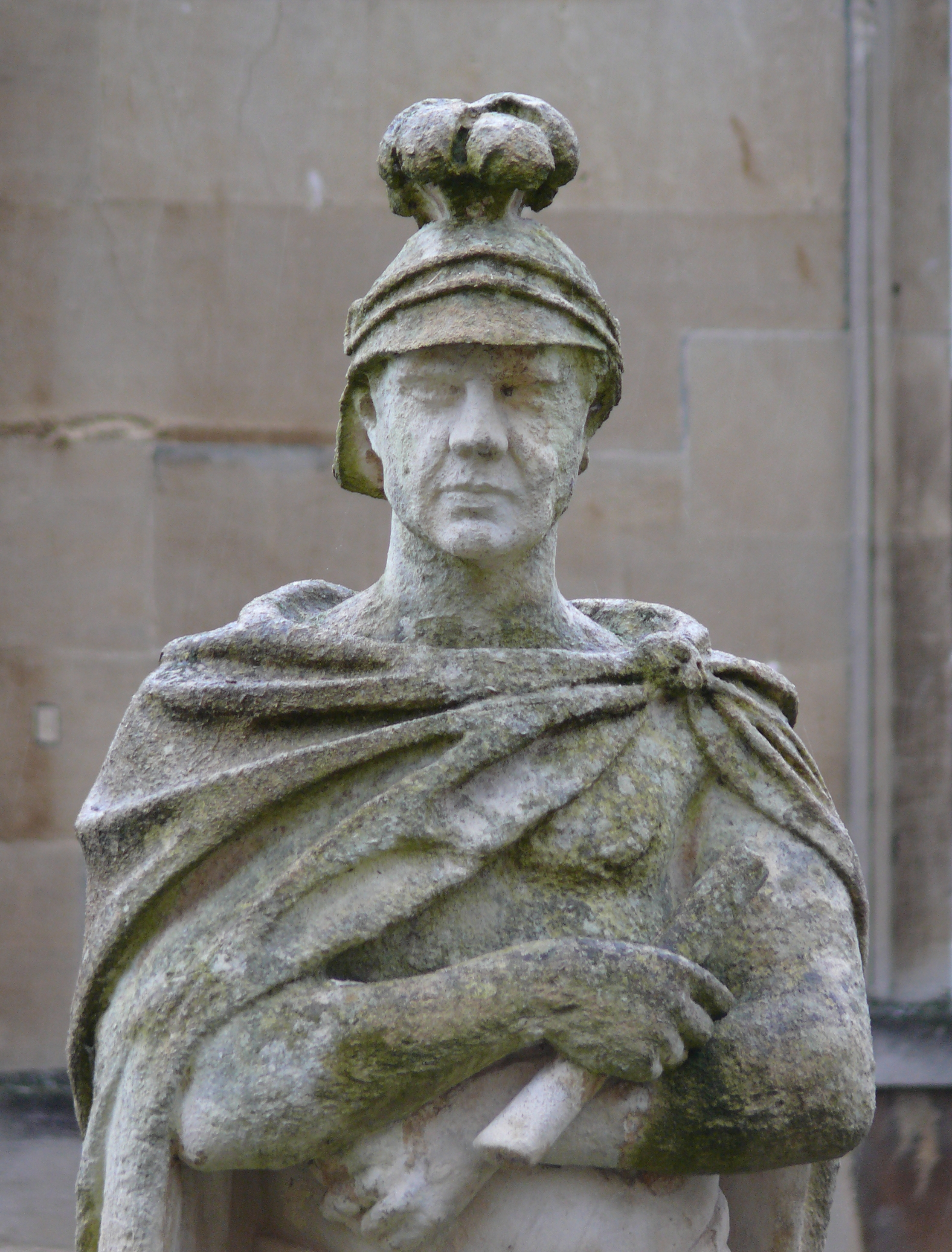
https://upload.wikimedia.org/wikipedia/commons/2/25/Roman_baths_suetonius_paulinus_02.JPG

In AD 60 or 61, when the Roman governor Gaius Suetonius Paulinus was campaigning on the island of Anglesey off the northwest coast of Wales, Boudica led the Iceni, the Trinovantes, and others in revolt. They destroyed Camulodunum (modern Colchester), earlier the capital of the Trinovantes but at that time a colonia, a settlement for discharged Roman soldiers and site of a temple to the former Emperor Claudius. Upon hearing of the revolt, Suetonius hurried to Londinium (modern London), the 20-year-old commercial settlement that was the rebels’ next target.

The Romans, having concluded that they lacked sufficient numbers to defend the settlement, evacuated and abandoned Londinium. Boudica led 100,000 Iceni, Trinovantes, and others to fight Legio IX Hispana, and burned and destroyed Londinium, and Verulamium (modern-day St Albans).

——————————

THE ROMAN EMPIRE – THE CONQUEST OF BRITAIN

——————————

An estimated 70,000–80,000 Romans and British were killed in the three cities by those led by Boudica. Suetonius, meanwhile, regrouped his forces in the West Midlands, and despite being heavily outnumbered defeated the Britons in the Battle of Watling Street.

The crisis caused Nero to consider withdrawing all Roman forces from Britain, but Suetonius’ eventual victory over Boudica confirmed Roman control of the province. Boudica then either killed herself, to avoid capture, or died of illness. The extant sources, Tacitus and Cassius Dio, differ.

Interest in these events revived in the English Renaissance and led to Boudica’s fame in the Victorian era. Boudica has remained an important cultural symbol in the United Kingdom. However, the absence of native British literature during the early part of the first millennium means that knowledge of Boudica’s rebellion comes solely from the writings of the Romans.

——————————–

Boudica Warrior Queen 2003

Full Movie

——————————-

Name

Boudica has been known by several versions of her name. Raphael Holinshed calls her Voadicia, while Edmund Spenser calls her Bunduca, a version of the name that was used in the popular Jacobean play Bonduca, in 1612. William Cowper‘s poem, Boadicea, an ode (1782) popularised an alternative version of the name.

From the 19th century and much of the late 20th century, Boadicea was the most common version of the name, which is probably derived from a mistranscription when a manuscript of Tacitus was copied in the Middle Ages.

Her name was clearly spelled Boudicca in the best manuscripts of Tacitus, but also Βουδουικα, Βουνδουικα, and Βοδουικα in the (later and probably secondary) epitome of Cassius Dio. The name is attested in inscriptions as Boudica in Lusitania, Boudiga in Bordeaux, and Bodicca in Algeria.

Kenneth Jackson concludes, based on later development of Welsh and Irish, that the name derives from the Proto-Celtic feminine adjective *boudīkā, “victorious”, that in turn is derived from the Celtic word *boudā, “victory” (cf. Irish bua (Classical Irish buadh), Buaidheach, Welsh buddugoliaeth), and that the correct spelling of the name in Common Brittonic (the British Celtic language) is Boudica, pronounced [bɒʊˈdiːkaː].

The closest English equivalent to the vowel in the first syllable is the ow in “bow-and-arrow”. The modern English pronunciation is /ˈbdɪkə/, and it has been suggested that the most comparable English name, in meaning only, would be “Victoria”.

History

Background

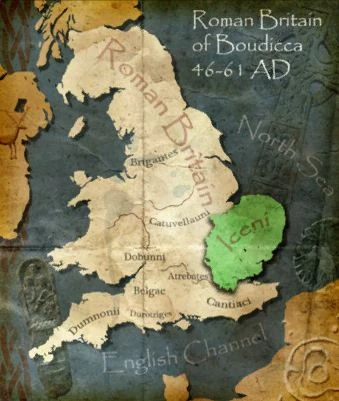
Location of Iceni territory in eastern England; modern county borders are shown.

Tacitus and Cassius Dio agree that Boudica was of royal descent. Dio describes her as “possessed of greater intelligence than often belongs to women.” He also describes her as tall, with tawny hair hanging down to below her waist, a harsh voice and a piercing glare. He notes that she habitually wore a large golden necklace (perhaps a torc), a colourful tunic, and a thick cloak fastened by a brooch.

https://s-media-cache-ak0.pinimg.com/736x/0b/2c/7d/0b2c7d91f4c7ea43ff301358b5fef235.jpg

Boudicca’s husband, Prasutagus, was the king of the Iceni, a people who inhabited roughly what is now Norfolk. The Iceni initially voluntarily allied with Rome following Claudius’s conquest of Southern Britain AD 43. They were proud of their independence, and had revolted in AD 47 when the then Roman governor Publius Ostorius Scapula planned to disarm all the peoples in the area of Britain under Roman control following a number of local uprisings. Ostorius defeated them and went on to put down other uprisings around Britain. The Iceni remained independent. Tacitus first mentioned Prasutagus when he wrote about Boudica’s rebellion. We do not know whether he became the king after the mentioned defeat of the Iceni. We do not have any record as to whether the Iceni at that point were still Roman allies or had become a client kingdom.

Tacitus wrote “The Icenian king Prasutagus, celebrated for his long prosperity, had named the emperor his heir, together with his two daughters; an act of deference which he thought would place his kingdom and household beyond the risk of injury. The result was contrary — so much so that his kingdom was pillaged by centurions, his household by slaves; as though they had been prizes of war.” He added that Boudica was lashed and her two daughters were raped and that the estates of the leading Iceni men were confiscated.

https://belfastchildis.com/wp-content/uploads/2016/05/dfb40-6a00d8341c504553ef0147e30b1509970b-600wi.png

Cassius Dio wrote:

“An excuse for the war was found in the confiscation of the sums of money that Claudius had given to the foremost Britons; for these sums, as Decianus Catus, the procurator of the island maintained, were to be paid back.”

He also said that another reasons was “the fact that Seneca, in the hope of receiving a good rate of interest, had lent to the islanders 40,000,000 sesterces that they did not want, and had afterwards called in this loan all at once and had resorted to severe measures in exacting it.”

Tacitus did not say why Prasutagus’ naming the emperor as his heir as well as his daughters was meant to avert the risk of injury. He did not explain why the Romans pillaged the kingdom, why they took the lands of the chiefs or why Boudica was flogged and her daughters were raped. Cassius Dio did not mention any of this. He said that the cause of the rebellion was the decision of the procurator of Britain (the chief financial officer) and Seneca (an advisor of the emperor Nero) to call in Prasutagus’ debts and the harsh measures which were taken to collect them. Tacitus does not mention these events. However, he wrote: “Alarmed by this disaster and by the fury of the province which he had goaded into war by his rapacity, the procurator Catus crossed over into Gaul.”

It has to be noted that this was happening while the governor of Britain, Gaius Suetonius Paulinus, was away fighting in North Wales. We do not know whether he approved of these actions. We do not know who the centurions who pillaged the kingdom were and who sent them. The text of Cassius Dio seems to suggest that Seneca, who was a private citizen, was responsible for the violence. It is unlikely that a legion was sent to land of the Iceni as two of them were fighting at the island of Anglesey and the other two were stationed at their garrisons. Tacitus said that “It was against the veterans that their hatred was most intense. For these new settlers in the colony of Camulodunum drove people out of their houses, ejected them from their farms, called them captives and slaves …”

Boudica’s uprising

https://s-media-cache-ak0.pinimg.com/736x/56/9f/d7/569fd781696a0201d68a8755d75d292f.jpg

In AD 60 or 61, while the current governor, Gaius Suetonius Paulinus, was leading a campaign against the island of Mona (modern Anglesey) in the north of Wales, which was a refuge for British rebels and a stronghold of the druids, the Iceni conspired with their neighbours the Trinovantes, amongst others, to revolt. Boudica was chosen as their leader. According to Tacitus, they drew inspiration from the example of Arminius, the prince of the Cherusci who had driven the Romans out of Germany in AD 9, and their own ancestors who had driven Julius Caesar from Britain. Dio says that at the outset Boudica employed a form of divination, releasing a hare from the folds of her dress and interpreting the direction in which it ran, and invoked Andraste, a British goddess of victory.

The rebels’ first target was Camulodunum (Colchester), the former Trinovantian capital and, at that time, a Roman colonia. The Roman veterans who had been settled there mistreated the locals and a temple to the former emperor Claudius had been erected there at local expense, making the city a focus for resentment. The Roman inhabitants sought reinforcements from the procurator, Catus Decianus, but he sent only two hundred auxiliary troops. Boudica’s army fell on the poorly defended city and destroyed it, besieging the last defenders in the temple for two days before it fell. Archaeologists have shown that the city was methodically demolished. The future governor Quintus Petillius Cerialis, then commanding the Legio IX Hispana, attempted to relieve the city, but suffered an overwhelming defeat. His infantry was wiped out—only the commander and some of his cavalry escaped.

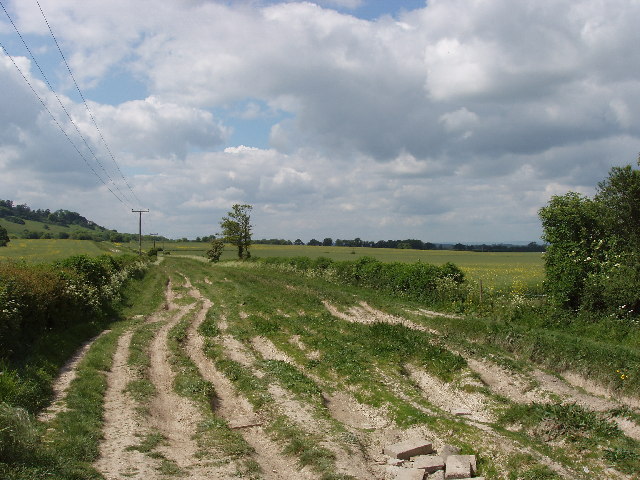
The location of this famous destruction of the Legio IX is now claimed by some to be the village of Great Wratting, in Suffolk, which lies in the Stour Valley on the Icknield Way West of Colchester, and by a village in Essex. After this defeat, Catus Decianus fled to Gaul.

When news of the rebellion reached him, Suetonius hurried along Watling Street through hostile territory to Londinium. Londinium was a relatively new settlement, founded after the conquest of AD 43, but it had grown to be a thriving commercial centre with a population of travellers, traders, and, probably, Roman officials. Suetonius considered giving battle there, but considering his lack of numbers and chastened by Petillius’s defeat, decided to sacrifice the city to save the province.

Alarmed by this disaster and by the fury of the province which he had goaded into war by his rapacity, the procurator Catus crossed over into Gaul. Suetonius, however, with wonderful resolution, marched amidst a hostile population to Londinium, which, though undistinguished by the name of a colony, was much frequented by a number of merchants and trading vessels. Uncertain whether he should choose it as a seat of war, as he looked round on his scanty force of soldiers, and remembered with what a serious warning the rashness of Petilius had been punished, he resolved to save the province at the cost of a single town. Nor did the tears and weeping of the people, as they implored his aid, deter him from giving the signal of departure and receiving into his army all who would go with him. Those who were chained to the spot by the weakness of their sex, or the infirmity of age, or the attractions of the place, were cut off by the enemy.— Tacitus

Londinium was abandoned to the rebels who burnt it down, slaughtering anyone who had not evacuated with Suetonius. Archaeology shows a thick red layer of burnt debris covering coins and pottery dating before AD 60 within the bounds of Roman Londinium; while Roman-era skulls found in the Walbrook in 2013 were potentially linked to victims of the rebels.

Verulamium (St Albans) was next to be destroyed.

In the three settlements destroyed, between seventy and eighty thousand people are said to have been killed. Tacitus says that the Britons had no interest in taking or selling prisoners, only in slaughter by gibbet, fire, or cross.

Dio’s account gives more detail; that the noblest women were impaled on spikes and had their breasts cut off and sewn to their mouths, “to the accompaniment of sacrifices, banquets, and wanton behaviour” in sacred places, particularly the groves of Andraste.

Romans rally

https://i0.wp.com/www.romanempirestore.com/P1060090.jpg

While Boudica’s army continued their assault in Verulamium (St. Albans), Suetonius regrouped his forces. According to Tacitus, he amassed a force including his own Legio XIV Gemina, some vexillationes (detachments) of the XX Valeria Victrix, and any available auxiliaries. The prefect of Legio II Augusta, Poenius Postumus, stationed near Exeter, ignored the call, and a fourth legion, IX Hispana, had been routed trying to relieve Camulodunum,  but nonetheless the governor was able to call on almost ten thousand men.

Suetonius took a stand at an unidentified location, probably in the West Midlands somewhere along the Roman road now known as Watling Street, in a defile with a wood behind him — but his men were heavily outnumbered. Dio says that, even if they were lined up one deep, they would not have extended the length of Boudica’s line. By now the rebel forces were said to have numbered 230,000. However, this number should be treated with scepticism — Dio’s account is known only from a late epitome, and ancient sources commonly exaggerate enemy numbers.

Boudica exhorted her troops from her chariot, her daughters beside her. Tacitus gives her a short speech in which she presents herself not as an aristocrat avenging her lost wealth, but as an ordinary person, avenging her lost freedom, her battered body, and the abused chastity of her daughters. She said their cause was just, and the deities were on their side; the one legion that had dared to face them had been destroyed. She, a woman, was resolved to win or die; if the men wanted to live in slavery, that was their choice.

However, the lack of manoeuvrability of the British forces, combined with lack of open-field tactics to command these numbers, put them at a disadvantage to the Romans, who were skilled at open combat due to their superior equipment and discipline. Also, the narrowness of the field meant that Boudica could put forth only as many troops as the Romans could at a given time.

First, the Romans stood their ground and used volleys of pila (heavy javelins) to kill thousands of Britons who were rushing toward the Roman lines. The Roman soldiers, who had now used up their pila, were then able to engage Boudica’s second wave in the open. As the Romans advanced in a wedge formation, the Britons attempted to flee, but were impeded by the presence of their own families, whom they had stationed in a ring of wagons at the edge of the battlefield, and were slaughtered. This is not the first instance of this tactic — the women of the Cimbri, in the Battle of Vercellae against Gaius Marius, were stationed in a line of wagons and acted as a last line of defence.Ariovistus of the Suebi is reported to have done the same thing in his battle against Julius Caesar. Tacitus reports that “according to one report almost eighty thousand Britons fell” compared with only four hundred Romans.

According to Tacitus in his Annals, Boudica poisoned herself, though in the Agricola which was written almost twenty years prior he mentions nothing of suicide and attributes the end of the revolt to socordia (“indolence”); Dio says she fell sick and died and then was given a lavish burial; though this may be a convenient way to remove her from the story. Considering Dio must have read Tacitus, it is worth noting he mentions nothing about suicide (which was also how Postumus and Nero ended their lives).

Postumus, on hearing of the Roman victory, fell on his sword. Catus Decianus, who had fled to Gaul, was replaced by Gaius Julius Alpinus Classicianus. Suetonius conducted punitive operations, but criticism by Classicianus led to an investigation headed by Nero‘s freedman Polyclitus. Fearing Suetonius’s actions would provoke further rebellion, Nero replaced the governor with the more conciliatory Publius Petronius Turpilianus.The historian Gaius Suetonius Tranquillus tells us the crisis had almost persuaded Nero to abandon Britain.

Location of her defeat

http://vignette2.wikia.nocookie.net/civilization-v-customisation/images/c/c6/Celtmap.jpg/revision/latest?cb=20150530170505

The location of Boudica’s defeat is unknown. Most historians favour a site in the West Midlands, somewhere along the Roman road now known as Watling Street. Kevin K. Carroll suggests a site close to High Cross in Leicestershire, on the junction of Watling Street and the Fosse Way, which would have allowed the Legio II Augusta, based at Exeter, to rendezvous with the rest of Suetonius’s forces, had they not failed to do so. Manduessedum (Mancetter), near the modern town of Atherstone in Warwickshire, has also been suggested, as has “The Rampart” near Messing in Essex, according to legend. More recently, a discovery of Roman artefacts in Kings Norton close to Metchley Camp has suggested another possibility, and a thorough examination of a stretch of Watling Street between St. Albans, Boudica’s last known location, and the Fosse Way junction has suggested the Cuttle Mill area of Paulerspury in Northamptonshire, which has topography very closely matching that described by Tacitus of the scene of the battle.

In 2009 it was suggested that the Iceni were returning to East Anglia along the Icknield Way when they encountered the Roman army in the vicinity of Arbury Bank, Hertfordshire. In March 2010, evidence was published suggesting the site may be located at Church Stowe, Northamptonshire.

Historical sources

Tacitus, the most important Roman historian of this period, took a particular interest in Britain as his father-in-law Gnaeus Julius Agricola served there three times (and was the subject of his first book). Agricola was a military tribune under Suetonius Paulinus, which almost certainly gave Tacitus an eyewitness source for Boudica’s revolt. Cassius Dio’s account is only known from an epitome, and his sources are uncertain. He is generally agreed to have based his account on that of Tacitus, but he simplifies the sequence of events and adds details, such as the calling in of loans, that Tacitus does not mention.

Gildas, in his 6th century De Excidio et Conquestu Britanniae, may have been alluding to Boudica when he wrote “A treacherous lioness butchered the governors who had been left to give fuller voice and strength to the endeavours of Roman rule”.

Cultural depictions

Boudica and King’s Cross

The area of King’s Cross, London was previously a village known as Battle Bridge which was an ancient crossing of the River Fleet. The original name of the bridge was Broad Ford Bridge.

The name “Battle Bridge” led to a tradition that this was the site of a major battle between the Romans and the Iceni tribe led by Boudica. The tradition is not supported by any historical evidence and is rejected by modern historians. However, Lewis Spence‘s 1937 book Boadicea — warrior queen of the Britons went so far as to include a map showing the positions of the opposing armies. There is a belief that she was buried between platforms 9 and 10 in King’s Cross station in London, England. There is no evidence for this and it is probably a post-World War II invention.

History and literature

By the Middle Ages Boudica was forgotten. She makes no appearance in Bede‘s work, the Historia Brittonum, the Mabinogion or Geoffrey of Monmouth‘s History of the Kings of Britain. But the rediscovery of the works of Tacitus during the Renaissance allowed Polydore Vergil to reintroduce her into British history as “Voadicea” in 1534. Raphael Holinshed also included her story in his Chronicles (1577), based on Tacitus and Dio, and inspired Shakespeare’s younger contemporaries Francis Beaumont and John Fletcher to write a play, Bonduca, in 1610. William Cowper wrote a popular poem, “Boadicea, an ode”, in 1782.

It was in the Victorian era that Boudica’s fame took on legendary proportions as Queen Victoria came to be seen as Boudica’s “namesake”, their names being identical in meaning. Victoria’s Poet Laureate, Alfred, Lord Tennyson, wrote a poem, “Boadicea”, and several ships were named after her

——————————-

Iceni

———————————-

THE ROMAN EMPIRE: The ICENI REBELLION – YouTube

———————————-

The Iceni or Eceni were a Brittonic tribe of eastern Britain during the Iron Age and early Roman era. Their territory included present-day Norfolk and parts of Suffolk and Cambridgeshire, and bordered the area of the Corieltauvi to the west, and the Catuvellauni and Trinovantes to the south. In the Roman period, their capital was Venta Icenorum at modern-day Caistor St Edmund.

Julius Caesar does not mention the Iceni in his account of his invasions of Britain in 55 and 54 BC, though they may be related to the Cenimagni, who Caesar notes as living north of the River Thames at that time. The Iceni were a significant power in eastern Britain during Claudiusconquest of Britain in AD 43, in which they allied with Rome. Increasing Roman influence on their affairs led to revolt in 47, though they remained nominally independent under king Prasutagus until his death around AD 60. Roman encroachment after Prasutagus’ death led his wife Boudica to launch a major revolt from 60–61. Boudica’s uprising seriously endangered Roman rule in Britain and resulted in the burning of Londinium and other cities. The Romans finally crushed the rebellion, and the Iceni were increasingly incorporated into the Roman province.

Archaeology

Iceni coin

Archaeological evidence of the Iceni includes torcs — heavy rings of gold, silver or electrum worn around the neck and shoulders. The Iceni began producing coins around 10 BC. Their coins were a distinctive adaptation of the Gallo-Belgic “face/horse” design, and in some early issues, most numerous near Norwich, the horse was replaced with a boar. Some coins are inscribed ECENI, making them the only coin-producing group to use their tribal name on coins. The earliest personal name to appear on coins is Antedios (about 10 BC), and other abbreviated names like AESU and SAEMU follow.

It has been discovered that the name of Antedios’ succeeding ruler Prasutagus appears on the coins as well. H. R. Mossop in his article “An Elusive Icenian Legend” discusses coins that were discovered by D. F. Allen in Joist Fen, Suffolk, and states, “It is the coins Nos. 6 and 7 which give an advance in the obverse reading, confirming Allen’s attractive reading PRASTO, with its implied allusion to Prasutagus” (Mossop and Allen 258).

Sir Thomas Browne, the first English archaeological writer, said of the Roman occupation, Boudica and Iceni coins:

Iceni coin.

That Britain was notably populous is undeniable, from that expression of Caesar. That the Romans themselves were early in no small Numbers, Seventy Thousand with their associates slain by Bouadicea, affords a sure account… And no small number of silver pieces near Norwich; with a rude head upon the obverse, an ill-formed horse on the reverse, with the Inscriptions Ic. Duro.T. whether implying Iceni, Durotriges, Tascia, or Trinobantes, we leave to higher conjecture. The British Coyns afford conjecture of early habitation in these parts, though the city of Norwich arose from the ruins of Venta, and though perhaps not without some habitation before, was enlarged, built, and nominated by the Saxons.

The Icknield Way, an ancient trackway linking East Anglia to the Chilterns, may be named after the Iceni.

John A. Davies and Tony Gregory conducted archaeological surveys of Roman coins that appeared during the period of Roman occupation of Norfolk. Their study showed that the bulk of the coins circulating before AD 60 was Icenian rather than Roman. They speculated that Roman coins were not adapted into the Iceni area until after AD 60. The coin study also showed that there was not a regular supply of Roman coinage from year to year:

The predominance of specific issues at sites across the province and relative scarcity of coins of some emperors illustrates the point that supply was sporadic and that there were periods when little or no fresh coinage was sent to Britain from the imperial mints.

In certain rural regions of Norfolk, Davies and Gregory speculate that the Iceni farmers were impacted very little by the civitas, seeing as there is a scarce presence of coinage and treasures. On the other hand, their surveys found “coin-rich temple sites, which appear to have served as centres for periodic fairs and festivals and provided locations for markets and commercial transactions within their complexes and environs. In such rural areas, producers and consumers would have been attracted to these sites for commerce from afield”

The Roman invasion

The meaning of the name Iceni is unknown. Icenian coins dating from the 1st century AD use the spelling ECEN,: another article by D. F. Allen titled “The Coins of the Iceni,” discusses the difference between coins with the inscription ECE versus coins with ECEN. This difference, Allen posits, tells archeologists and historians when Prasutagus started his reign because the coins did not start reading the name of the tribe until around AD 47. Allen suggests that when Antedios was king of the Iceni, the coins did not yet have the name of the tribe on them but instead the name of its ruler, stating, “If so, the coins suggest that the Prasutagus era commenced only after the events of 47” (Allen 16).

Tacitus records that the Iceni were not conquered in the Claudian invasion of AD 43, but had come to a voluntary alliance with the Romans. However, they rose against them in 47 after the governor, Publius Ostorius Scapula, threatened to disarm them. D. F. Allen explains in further detail, in his article “The Coins of the Iceni,” that Scapula had been “preoccupied with defense against the unconquered Silures in South Wales and Brigantes in Yorkshire.” Allen informs readers that this was how Prasutagus had come to gain full control over the Iceni (Allen 2). The Iceni were defeated by Ostorius in a fierce battle at a fortified place, but were allowed to retain their independence.

The site of the battle may have been Stonea Camp in Cambridgeshire.

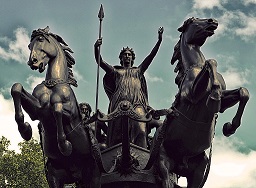
Statue of Boudica by Thomas Thornycroft near Westminster Pier, London, with her two daughters upon a chariot

A second and more serious uprising took place in AD 61. Prasutagus, the wealthy, pro-Roman Icenian king, who, according to a section in the Oxford Dictionary of National Biography titled “Roman Britain, British Leaders”. was leader of the Iceni between AD 43 and 50 (Todd 4), had died. It was common practice for a Roman client king to leave his kingdom to Rome on his death, but Prasutagus had attempted to preserve his line by bequeathing his kingdom — which Allen believes was located in Breckland, near Norwich (Allen 15) — jointly to the Emperor and his own daughters. The Romans ignored this, and the procurator Catus Decianus seized his entire estate. Prasutagus’s widow, Boudica, was flogged, and her daughters were raped. At the same time, Roman financiers called in their loans. While the governor, Gaius Suetonius Paulinus, was campaigning in Wales, Boudica led the Iceni and the neighbouring Trinovantes in a large-scale revolt:

…a terrible disaster occurred in Britain. Two cities were sacked, eighty thousand of the Romans and of their allies perished, and the island was lost to Rome. Moreover, all this ruin was brought upon the Romans by a woman, a fact which in itself caused them the greatest shame…. But the person who was chiefly instrumental in rousing the natives and persuading them to fight the Romans, the person who was thought worthy to be their leader and who directed the conduct of the entire war, was Buduica, a Briton woman of the royal family and possessed of greater intelligence than often belongs to women…. In stature she was very tall, in appearance most terrifying, in the glance of her eye most fierce, and her voice was harsh; a great mass of the tawniest hair fell to her hips; around her neck was a large golden necklace; and she wore a tunic of divers colours over which a thick mantle was fastened with a brooch. This was her invariable attire.

The revolt caused the destruction and looting of Camulodunum (Colchester), Londinium (London), and Verulamium (St Albans) before finally being defeated by Suetonius Paulinus and his legions. Although the Britons outnumbered the Romans greatly, they lacked the superior discipline and tactics that won the Romans a decisive victory. The battle took place at an unknown location, probably in the West Midlands somewhere along Watling Street.  Today, a large statue of Boudica wielding a sword and charging upon a chariot can be seen in London on the north bank of the Thames by Westminster Bridge.

Bronze coins of the Iceni. Museum of London.

The Iceni are recorded as a civitas of Roman Britain in Ptolemy‘s Geographia,[16] which names Venta Icenorum as a town of theirs. Venta, which is also mentioned in the Ravenna Cosmography, and the Antonine Itinerary,  was a settlement near the village of Caistor St. Edmund, some five miles south of present-day Norwich, and a mile or two from the Bronze Age Henge at Arminghall.

Belfast Blitz – April and May 1941

Belfast Blitz

Belfast Under attack

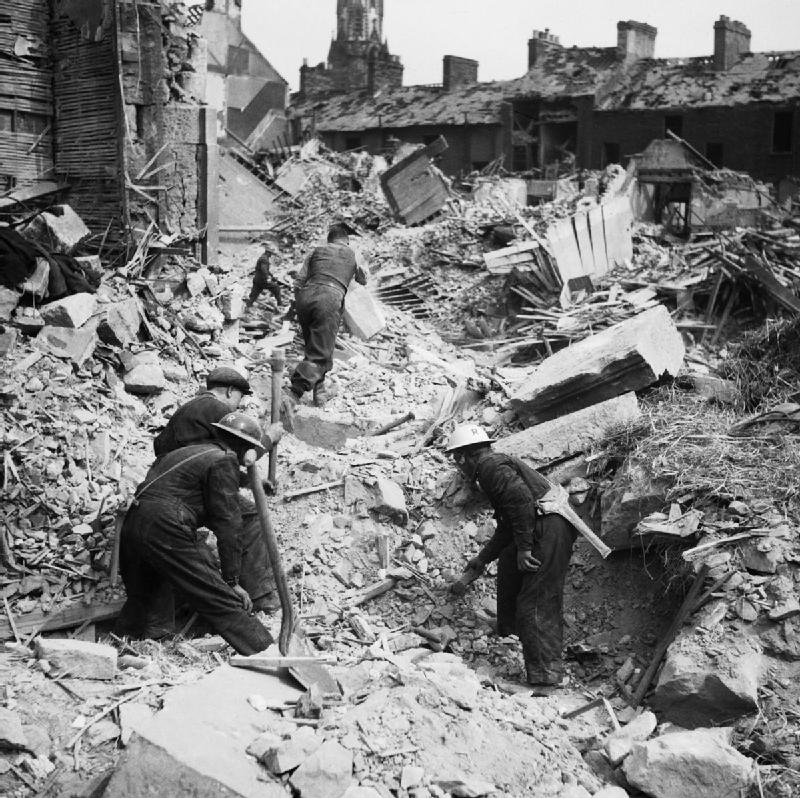
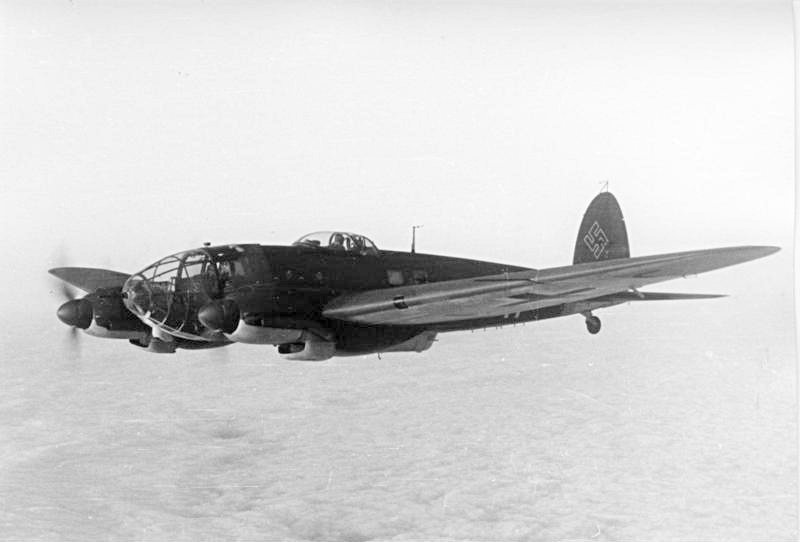
The Belfast Blitz was four attacks of high-casualty German air raids on strategic targets in the city of  Belfast  in Northern island . in April and May 1941 during  World War II. The first was on the night of 7–8 April 1941, a small attack which probably took place only to test Belfast’s defences. The next took place on Easter Tuesday , 15 April 1941. Two hundred  bombers  of the Luftwaffe attacked military and manufacturing targets in the city of Belfast. Some 900 people died as a result of the bombing and 1,500 were injured. High explosive bombs predominated in this raid. Apart from those on London, this was the greatest loss of life in any night raid during the Blitz.


—————————

The Belfast Blitz-narrated

—————————

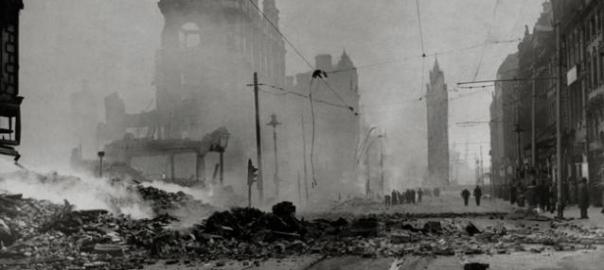
Rescue workers searching through the rubble after an air raid on Belfast


The third raid on Belfast took place over the evening and morning of 4–5 May 1941; 150 were killed. Incendiary bombs predominated in this raid. The fourth and final Belfast raid took place on the following night, 5–6 May.

Background


As the UK was preparing for the conflict, the factories  and shipyards   of Belfast were gearing up. Belfast made a considerable contribution towards the Allied war effort, producing many naval ships, aircraft and munitions; therefore, the city was deemed a suitable bombing target by the Luftwaffe. Meanwhile, unlike Northern Ireland, southern Ireland was no longer part of the UK. Under the leadership of Éamon de Valera, it had declared its  neutrality during the Second World War. Although it arrested German spies that its police and military intelligence services caught, the state never broke off diplomatic relations with Axis nations: the German Legation in Dublin remained open throughout the war.

Government

Junction of Antrim Road and Hillman Street


The Government of Northern Ireland lacked the will, energy and capacity to cope with a major crisis when it came. James Craig, Lord Craigavon, was Prime Minister of Northern Ireland since its inception in 1921 until his death in 1940. Richard Dawson Bates, was the Home Affairs Minister. Sir Basil Brooke, the Minister of Agriculture, was the only active minister. He successfully busied himself with the task of making Northern Ireland a major supplier of food to Britain in her time of need

John Clarke MacDermott, the Minister of Public Security, after the first bombing, initiated the “Hiram Plan” to evacuate the city and to return Belfast to ‘normality’ as quickly as possible.[5] It was MacDermott who sent a telegram to de Valera seeking assistance. There was unease with the complacent attitude of the government, which led to resignations:

  • John Edmond Warnock, the parliamentary secretary at the Ministry of Home Affairs, resigned from the government on 25 May 1940. He said, “I have heard speeches about Ulster pulling her weight but they have never carried conviction.” and “the government has been slack, dilatory and apathetic.”[6]
  • Lieutenant Colonel Alexander Gordon (politician), Parliamentary and Financial Secretary at the Ministry of Finance (i.e. Chief Whip), resigned on 13 June 1940,[7] explaining to the Commons that the government was “quite unfitted to sustain the people in the ordeal we have to face.”

Craigavon died on 24 November 1940. He was succeeded by John Miller Andrews, then 70 years old, who was no more capable of dealing with the situation than his predecessor. On 28 April 1943, six members of the Government threatened to resign, forcing him from office. He was replaced by Sir Basil Brooke on 1 May.[8]

Manufacturing facilities

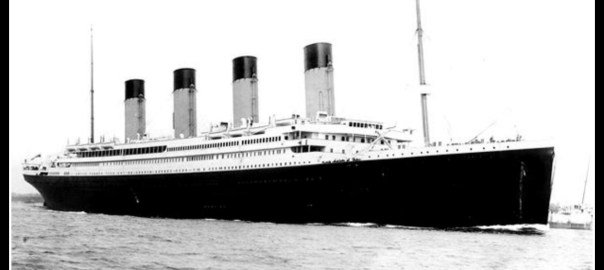
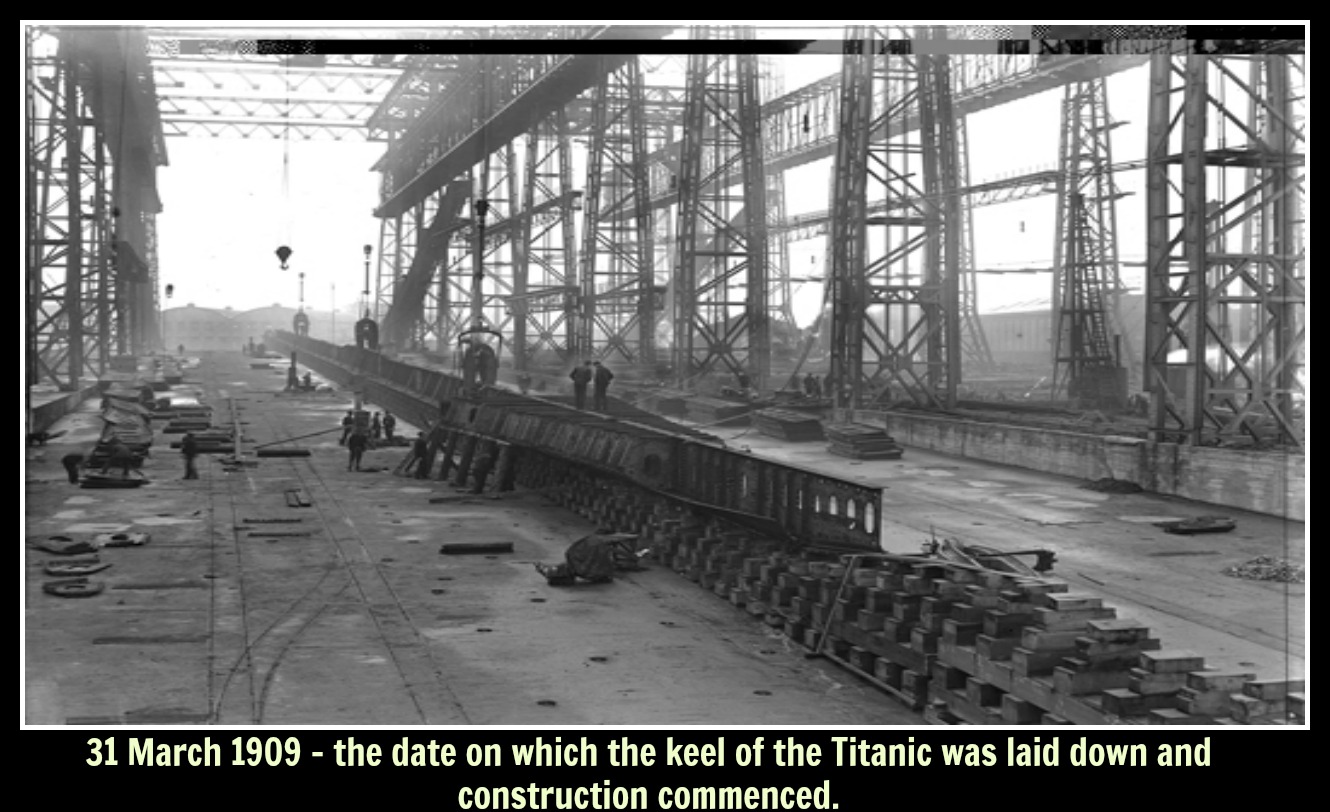
The Titan was built by Harland & Wolff


  • During the war years, Belfast shipyards built or converted over 3,000 navy vessels, repaired more than 22,000 others and launched over half a million tons of merchant shipping – over 140 merchantmen.[10]
  • Short Brothers manufactured aircraft. They are best known for the Sunderland flying boat and the Stirling long-range heavy bomber. Up to 20,000 people were employed. The factory was re-equipping as early as 1936 for the manufacture of 189 Handley Page Hereford bombers
  • James Mackie & Sons were re-equipped in 1938. They were the primary supplier of Bofors anti-aircraft shells.
  • Harland’s Engineering works built tanks. They designed the Churchill.
  • Aero linen for covering aircraft, such as the Hawker Hurricane, and military glider frames was manufactured by a number of Belfast flax spinning mills, such as The York Street Flax Spinning Co.; Brookfield Spinning Co.; Wm. Ewart’s Rosebank Weaving Co.; and the Linen Thread Co.
  • Other Belfast factories manufactured gun mountings, ordnance pieces, aircraft parts and ammunition.

War materials and food were sent by sea from Belfast to Britain, some under the protection of the neutral Irish tricolour. The M.V. Munster, for example, operated by the Belfast Steamship Company, plied between Belfast and Liverpool under the tricolour, until she hit a mine and was sunk outside Liverpool.[11]

Preparation

Sir James Craig, former Prime Minister of Northern Ireland.

Government preparation

There was little preparation for the conflict with Germany. However at the time Lord Craigavon, Prime Minister of Northern Ireland since its inception in 1921, said: “Ulster is ready when we get the word and always will be.” He was asked, in the N.I. parliament: “if the government realized ‘that these fast bombers can come to Northern Ireland in two and three quarter hours’ “. His reply was: “We here today are in a state of war and we are prepared with the rest of the United Kingdom and Empire to face all the responsibilities that imposes on the Ulster people. There is no slacking in our loyalty.”

Dawson Bates, the Home Affairs Minister, simply refused to reply to army correspondence and when the Ministry of Home Affairs was informed by imperial defence experts that Belfast was a certain Luftwaffe target, nothing was done.[13]

Air-raid shelters

Belfast, the city with the highest population density had the lowest proportion of air-raid shelters. Prior to the “Belfast Blitz” there were only 200 public shelters, although 4,000 households had built their own shelters. No searchlights were set up, as they had only arrived on 10 April. There were no night-fighters. On the night of the raid, no Royal Air Force (RAF) aircraft took to the air. There were only 22 anti-aircraft guns, six light, and sixteen heavy. On the night, only seven were operated for a short time. There was no smokescreen ability. There were some barrage balloons. These air-raid shelters were Anderson shelters. They were sheets of corrugated galvanised iron covered in earth. Since most casualties were caused by falling masonry rather than by blast, they provided effective shelter for those who had them.

Children

Few children had been successfully evacuated. The “Hiram Plan” initiated by Dawson Bates, the Home Affairs Minister, had failed to materialise. Fewer than 4,000 women and children were evacuated. There were still 80,000 more in Belfast. Even the children of soldiers had not been evacuated, with calamitous results when the married quarters of Victoria Barracks received a direct hit.


Earlier raids

There had been a number of small bombings, probably by planes that missed their targets over the River Clyde in Glasgow or the cities of the northwest of England. On 24 March 1941, John MacDermott, Minister for Security, wrote to Prime Minister John Andrews, expressing his concerns that Belfast was so poorly protected: “Up to now we have escaped attack. So had Clydeside until recently. Clydeside got its blitz during the period of the last moon. There [is] ground for thinking that the … enemy could not easily reach Belfast in force except during a period of moonlight. The period of the next moon from say the 7th to the 16th of April may well bring our turn.” MacDermott would be proved right.

Heinkel He 111 bomber


The first deliberate raid took place on the night of 7 April. (Some authors count this as the second raid of four). It targeted the docks. Neighbouring residential areas were also hit. Six Heinkel He 111 bombers, from Kampfgruppe 26, flying at 7,000 feet (2,100 m), dropped incendiaries, high explosive and parachute-mines. By British mainland blitz standards, casualties were light. Thirteen lost their lives, including a soldier killed when an anti-aircraft gun, at the Balmoral show-grounds, misfired. The most significant loss was a 4.5-acre (1.8 ha) factory floor for manufacturing the fuselages of Short Stirling bombers. The Royal Air Force announced that Squadron Leader J.W.C. Simpson shot down one of the Heinkels over Downpatrick. The Luftwaffe crews returned to their base in Northern France and reported that Belfast’s defences were, “inferior in quality, scanty and insufficient”.

Easter Tuesday Blitz

William Joyce (known as “Lord Haw-Haw“) announced in radio broadcasts from Hamburg that there will be “Easter eggs for Belfast”.

Junkers Ju-88

On Easter Tuesday, 15 April 1941, spectators watching a football match at Windsor Park noticed a lone Luftwaffe Junkers Ju-88 aircraft circling overhead.

200 Bombers headed to Belfast

That evening up to 200 bombers left their bases in northern France and the Netherlands and headed for Belfast. There were Heinkel He 111s, Junkers Ju 88s and Dorniers. At 10:40 pm the air raid sirens sounded. Accounts differ as to when flares were dropped to light up the city. The first attack was against the city’s waterworks, which had been attacked in the previous raid. High explosives were dropped. Initially it was thought that the Germans had mistaken this reservoir for the harbour and shipyards, where many ships, including HMS Ark Royal were being repaired. However that attack was not an error. Three vessels nearing completion at Harland and Wolff’s were hit as was its power station. Wave after wave of bombers dropped their incendiaries, high explosives and land-mines. When incendiaries were dropped, the city burned as water pressure was too low for effective firefighting.

Public buildings destroyed or badly damaged included Belfast City Hall’s Banqueting Hall, the Ulster Hospital for Women and Children and Ballymacarrett library, (the last two being located on Templemore Avenue). Strand Public Elementary school, the LMS railway station, the adjacent Midland Hotel on York Road, and Salisbury Avenue tram depot were all hit. Churches destroyed or wrecked included Macrory Memorial Presbyterian in Duncairn Gardens; Duncairn Methodist, Castleton Presbyterian on York Road; St Silas’s on the Oldpark Road; St James’s on the Antrim Road; Newington Presbyterian on Limestone Road; Crumlin Road Presbyterian; Holy Trinity on Clifton Street and Clifton Street Presbyterian; York Street Presbyterian and York Street Non-Subscribing Presbyterian; Newtownards Road Methodist and Rosemary Street Presbyterian (the last of which was not rebuilt).

Streets heavily bombed in the city centre included High Street, Ann Street, Callender Street, Chichester Street, Castle Street, Tomb Street, Bridge Street (effectively obliterated), Rosemary Street, Waring Street, North Street, Victoria Street, Donegall Street, York Street, Gloucester Street, and East Bridge Street. In the east of the city, Westbourne and Newcastle Streets on the Newtownards Road, Thorndyke Street off the Albertbridge Road and Ravenscroft Avenue were destroyed or damaged. In the west and north of the city, streets heavily bombed included Percy Street, York Park, York Crescent, Eglinton Street, Carlisle Street, Ballyclare, Ballycastle and Ballynure Streets off the Oldpark Road; Southport Street, Walton Street, Antrim Road, Annadale Street, Cliftonville Road, Hillman Street, Atlantic Avenue, Hallidays Road, Hughenden Avenue, Sunningdale Park, Shandarragh Park, and Whitewell Road. Burke Street which ran between Annadale and Dawson streets in the New Lodge area, was completely wiped off the map with all its 20 houses flattened and all of the occupants killed.

The Hawker Hurricane accounted for the most kills during the Battle of Britain

There was no opposition. In the mistaken belief that they might damage RAF fighters, the seven anti-aircraft batteries ceased firing. But the RAF had not responded. The bombs continued to fall until 5am.

Fifty-five thousand houses were damaged leaving 100,000 temporarily homeless. Outside of London, with some 900 dead, this was the greatest loss of life in a night raid during the Blitz. A stray bomber attacked Derry, killing 15. Another attacked Bangor, killing five. By 4 am the entire city seemed to be in flames. At 4.15am John MacDermott, the Minister of Public Security, managed to contact Basil Brooke (then Agriculture Minister), seeking permission to seek help from the Irish government. Brooke noted in his diary “I gave him authority as it is obviously a question of expediency”. Since 1.45am all telephones had been cut. Fortunately, the railway telegraphy link between Belfast and Dublin was still operational. The telegram was sent at 4.35am,[citation needed] asking the Irish Taoiseach, Éamon de Valera for assistance.

Human cost

Over 900 lives were lost, 1,500 people were injured, 400 of them seriously. Fifty-thousand houses, more than half the houses in the city, were damaged. Eleven churches, two hospitals and two schools were destroyed. These figures are based on newspaper reports of the time, personal recollections and other primary sources, such as:-
Jimmy Doherty, an air raid warden (who later served in London during the V1 and V2 blitz), who wrote a book on the Belfast blitz;
Emma Duffin, a nurse at the Queen’s University Hospital, (who previously served during the Great War), who kept a diary;
and Major Seán O’Sullivan, who produced a detailed report for the Dublin government. There are other diarists and narratives. Brian Barton of Queen’s University, Belfast, has written most on this topic. There is an eye-witness account from John Potter online.

Instructions

There were few bomb shelters. An air raid shelter on Hallidays Road received a direct hit, killing all those in it. Many people who were dug out of the rubble alive had taken shelter underneath their stairs and were fortunate that their homes had not received a direct hit or caught fire. In the New Lodge area people had taken refuge in a mill. Tragically 35 were crushed to death when the mill wall collapsed. In another building, the York Street Mill, one of its massive sidewalls collapsed on to Sussex and Vere Streets, killing all those who remained in their homes.

Major O’Sullivan reported that “In the heavily ‘blitzed’ areas people ran panic-stricken into the streets and made for the open country. As many were caught in the open by blast and secondary missiles, the enormous number of casualties can be readily accounted for. It is perhaps true that many saved their lives running but I am afraid a much greater number lost them or became casualties.”

That night almost 300 people, many from the Protestant Shankill area, took refuge in the Clonard Monastery in the Catholic Falls Road. The crypt under the sanctuary and the cellar under the working sacristy had been fitted out and opened to the public as an air-raid shelter. Prayers were said and hymns sung by the mainly Protestant women and children during the bombing.

Mortuary

The mortuary services had emergency plans to deal with only 200 bodies. 150 corpses remained in the Falls Road baths for three days before they were buried in a mass grave, with 123 still unidentified. Two hundred and fifty-five corpses were laid out in St George’s Market. Many bodies and body parts could not be identified.[19] Mass graves for the unclaimed bodies were dug in the Milltown and City Cemeteries.

Nurse Emma Duffin

Nurse Emma Duffin, who had served in the Great War, contrasted death in that conflict with what she saw:

(Great War casualties) had died in hospital beds, their eyes had been reverently closed, their hands crossed to their breasts. Death had to a certain extent been … made decent. It was solemn, tragic, dignified, but here it was grotesque, repulsive, horrible. No attendant nurse had soothed the last moments of these victims; no gentle reverent hand had closed their eyes or crossed their hands. With tangled hair, staring eyes, clutching hands, contorted limbs, their grey-green faces covered with dust, they lay, bundled into the coffins, half-shrouded in rugs or blankets, or an occasional sheet, still wearing their dirty, torn twisted garments. Death should be dignified, peaceful; Hitler had made even death grotesque. I felt outraged, I should have felt sympathy, grief, but instead feelings of revulsion and disgust assailed me.

Major Seán O’Sullivan

Major Seán O’Sullivan reported on the intensity of the bombing in some areas, such as the Antrim Road, where bombs “fell within fifteen to twenty yards of one another.” The most heavily-bombed area was that which lay between York Street and the Antrim Road, north of the city centre. O’Sullivan felt that the whole civil defence sector was utterly overwhelmed. Heavy jacks were unavailable. He described some distressing consequences, such as how “in one case the leg and arm of a child had to be amputated before it could be extricated.”

In his opinion, the greatest want was the lack of hospital facilities. He went to the Mater Hospital at 2 pm, nine hours after the raid ended, to find the street with a traffic jam of ambulances waiting to admit their casualties. He spoke with Professor Flynn, (Theodore Thomson Flynn, an Australian based at the Mater Hospital and father of actor Errol Flynn), head of the casualty service for the city, who told him of “casualties due to shock, blast and secondary missiles, such as glass, stones, pieces of piping, etc.” O’Sullivan reported: “There were many terrible mutilations among both living and dead – heads crushed, ghastly abdominal and face wounds, penetration by beams, mangled and crushed limbs etc.”. His report concluded with: “a second Belfast would be too horrible to contemplate”.

Refugees

Two hundred and twenty thousand people fled from the city. Many “arrived in Fermanagh having nothing with them only night shirts”. Ten thousand “officially” crossed the border. Over 500 received care from the Irish Red Cross in Dublin. The town of Dromara saw its population increase from 500 to 2,500. In Newtownards, Bangor, Larne, Carrickfergus, Lisburn and Antrim many thousands of Belfast citizens took refuge either with friends or strangers.

Major O’Sullivan reported on a:

continuous trek to railway stations. The refugees looked dazed and horror stricken and many had neglected to bring more than a few belongings… Any and every means of exit from the city was availed of and the final destination appeared to be a matter of indifference.

Train after train and bus after bus were filled with those next in line. At nightfall the Northern Counties Station was packed from platform gates to entrance gates and still refugees were coming along in a steady stream from the surrounding streets … Open military lorries were finally put into service and even expectant mothers and mothers with young children were put into these in the rather heavy drizzle that lasted throughout the evening. On the 17th I heard that hundreds who either could not get away or could not leave for other reasons simply went out into the fields and remained in the open all night with whatever they could take in the way of covering.

Moya Woodside noted in her diary: “Evacuation is taking on panic proportions. Roads out of town are still one stream of cars, with mattresses and bedding tied on top. Everything on wheels is being pressed into service. People are leaving from all parts of town and not only from the bombed areas. Where they are going, what they will find to eat when they get there, nobody knows.”

Dawson Bates informed the Cabinet of rack-renting of barns, and over thirty people per house in some areas.

Newspaper reaction

The Irish Times editorial on 17 April:

Humanity knows no borders, no politics, no differences of religious belief. Yesterday for once the people of Ireland were united under the shadow of a national blow. Has it taken bursting bombs to remind the people of this little country that they have common tradition, a common genius and a common home? Yesterday the hand of good-fellowship was reached across the Border. Men from the South worked with men from the North in the universal cause of the relief of suffering.

Aftermath

Southern reaction

By 6am, within two hours of the request for assistance, 71 firemen with 13 fire tenders from Dundalk, Drogheda, Dublin, and Dún Laoghaire were on their way to cross the Irish border to assist their Belfast colleagues. In each station volunteers were asked for, as it was beyond their normal duties. In every instance, all stepped forward. They remained for three days, until they were sent back by the Northern Ireland government. By then 250 firemen from Clydeside had arrived. Taoiseach Éamon de Valera formally protested to Berlin. He followed up with his “they are our people” speech, made in Castlebar, County Mayo, on Sunday 20 April 1941 (Quoted in the Dundalk Democrat dated Saturday 26 April 1941):

In the past, and probably in the present, too, a number of them did not see eye to eye with us politically, but they are our people – we are one and the same people – and their sorrows in the present instance are also our sorrows; and I want to say to them that any help we can give to them in the present time we will give to them whole-heartedly, believing that were the circumstances reversed they would also give us their help whole-heartedly …

Frank Aiken, the Irish Minister for the Co-ordination of Defensive Measures was in Boston, Massachusetts at the time. He gave an interview saying: “the people of Belfast are Irish people too”.

German response


Initial German radio broadcasts celebrated the raid. A Luftwaffe pilot gave this description “We were in exceptional good humour knowing that we were going for a new target, one of England’s last hiding places. Wherever Churchill is hiding his war material we will go … Belfast is as worthy a target as Coventry, Birmingham, Bristol or Glasgow.” William Joyce “Lord Haw-Haw” announced that “The Führer will give you time to bury your dead before the next attack … Tuesday was only a sample.” However Belfast was not mentioned again by the Nazis. After the war, instructions from Joseph Goebbels were discovered ordering it not to be mentioned. It would appear that Adolf Hitler, in view of de Valera’s negative reaction, was concerned that de Valera and Irish American politicians might encourage the United States to enter the war.

Eduard Hempel, the German Minister to Ireland, visited the Irish Ministry for External Affairs to offer sympathy and attempt an explanation. J.P. Walshe, assistant secretary, recorded that Hempel was “clearly distressed by the news of the severe raid on Belfast and especially of the number of civilian casualties.” He stated that “he would once more tell his government how he felt about the matter and he would ask them to confine the operations to military objectives as far as it was humanly possible. He believed that this was being done already but it was inevitable that a certain number of civilian lives should be lost in the course of heavy bombing from the air”.

Recriminations


The government was blamed by some for inadequate precautions. Tommy Henderson, an Independent Unionist MP in the House of Commons of Northern Ireland, summed up the feeling when he invited the Minister of Home Affairs to Hannahstown and the Falls Road, saying “The Catholics and the Protestants are going up there mixed and they are talking to one another. They are sleeping in the same sheugh (ditch), below the same tree or in the same barn. They all say the same thing, that the government is no good.”

A map showing the location of Belfast Lough

At night Dublin was the only city without a blackout between New York and Moscow, and between Lisbon and Sweden; German bombers often flew overhead to check their bearings using its lights, angering the British. One widespread criticism was that the Germans located Belfast by heading for Dublin and following the railway lines north. In The Blitz: Belfast in the War Years, Brian Barton wrote: “Government Ministers felt with justification, that the Germans were able to use the unblacked out lights in the south to guide them to their targets in the North.” Barton insisted that Belfast was “too far north” to use radio guidance.

Other writers, such as Tony Gray in The Lost Years state that the Germans did follow their radio guidance beams. Several accounts point out that Belfast, standing at the end of the long inlet of Belfast Lough, would be easily located. Another claim was that the Catholic population in general and the IRA in particular guided the bombers. Barton wrote: “the Catholic population was much more strongly opposed to conscription, was inclined to sympathise with Germany”, “…there were suspicions that the Germans were assisted in identifying targets, held by the Unionist population.” This view was probably influenced by the decision of the IRA Army Council to support Germany. However they were not in a position to communicate with the Germans, and information recovered from Germany after the war showed that the planning of the blitz was based entirely on German aerial reconnaissance.

Firemen return south

After three days, sometime after 6pm, the fire crews from south of the border began taking up their hoses and ladders to head for home. By then most of the major fires were under control and the firemen from Clydeside and other British cities were arriving. Some had received food, others were famished. All were exhausted. Two of the crews received refreshments in Banbridge; others were entertained in the Ancient Order of Hibernians hall in Newry. In 1995 on the fiftieth anniversary of the ending of the Second World War an invitation was received by the Dublin Fire Brigade for any survivors of that time to attend a function at Hillsborough Castle and meet Prince Charles. Only four were known still to be alive; one, Tom Coleman, attended to receive recognition for his colleagues’ solidarity at such a critical time.

Second major raid


Soldiers clearing rubble after the May air raid

There was a second massive air raid on Belfast on Sunday 4–5 May 1941, three weeks after that of Easter Tuesday. Around 1am, Luftwaffe bombers flew over the city, concentrating their attack on the Harbour Estate and Queen’s Island. Nearby residential areas in east Belfast were also hit when “203 metric tonnes of high explosive bombs, 80 land mines attached to parachutes, and 800 firebomb canisters containing 96,000 incendiary bombs” were dropped. Over 150 people lost their lives in what became known as the ‘Fire Blitz’.

Casualties were lower than at Easter, partly because the sirens had sounded at 11.45 pm while the Luftwaffe attacked more cautiously from a greater height. St George’s Church in High Street was damaged by fire. Again the Irish emergency services crossed the border, this time without waiting for an invitation. On 31 May 1941, German bombers attacked neutral Dublin in error.

See Battle of Britain -Triple Aces

battle of britain


————————-

The Titanic -The Most Iconic Ship in History – Rare Pictures

The Titanic sank in the North Atlantic Ocean in the early morning of 15 April 1912, after colliding with an iceberg during her maiden voyage from Southampton

belfastchildis's avatar

The Titanic

——————————————

——————————————

History & Background

Facts & Iconic Pictures

Construction of  the keel of Titanic with text

RMS Titanic was a British passenger liner that sank in the North Atlantic Ocean in the early morning of 15 April 1912, after colliding with an iceberg during her maiden voyage from Southampton, UK, to New York City, US. The sinking resulted in the deaths of more than 1,500 passengers and crew, making it one of the deadliest commercial peacetime maritime disasters in modern history. The RMS Titanic, the largest ship afloat at the time it entered service, was the second of three Olympic class ocean liners operated by the White Star Line, and was built by the Harland and Wolff shipyard in Belfast, with Thomas Andrews as her naval architect. Andrews was among those who died in the sinking. On her maiden voyage, she carried 2,224 passengers and crew.

Fact

The RMS Titanic was the world’s largest passenger ship…

View original post 13,680 more words