Category Archives: Deaths in the Troubles

Deaths in Northern Ireland Troubles

10th November – Deaths & Events in Northern Ireland Troubles

Key Events & Deaths on this day in Northern Ireland Troubles

10th November

————————————————————–

Monday 10 November 1975

The ‘incident centre’ in Derry was blown up in a bomb attack carried out by the Irish Republican Army (IRA). The IRA in the city was opposed to the truce.

Monday 10 November 1986

Ulster Resistance Formed Loyalists held a closed meeting at the Ulster Hall in Belfast. The main speakers at the meeting were Ian Paisley, then leader of the Democratic Unionist Party (DUP), Peter Robinson of the DUP, and Ivan Foster. During the meeting a new organisation, Ulster Resistance, was formed to ‘take direct action as and when required’ to end the Anglo-Irish Agreement (AIA). [Ulster Resistance was to take the place of the ‘Ulster Clubs’ that had been formed on 2 November 1985.]

Saturday 10 November 1990

The Irish Republican Army (IRA) shot and killed two members of the Royal Ulster Constabulary (RUC) and two civilians in County Armagh.

Tuesday 10 November 1992

End of Political Talks Unionists withdrew from the political talks (later known as the Brooke / Mayhew talks) and brought the process to an end. Their action was provoked by the restart of work by the Maryfield secretariat for the Anglo-Irish Intergovernmental Conference (AIIC). Patrick Mayhew, then Secretary of State for Northern Ireland, said that informal party contacts would continue.

[The talks had lasted two years and had cost an estimated £5 million.]

Thursday 10 November 1994

Frank Kerr (54), a Catholic civilian who was a Post Office worker in a sorting office, was shot dead during a robbery. The shooting happened in Clanrye Street, Newry, County Down.

[On 20 November 1994 the Irish Republican Army (IRA) admitted that its members had been responsible though it claimed the killing had not been sanctioned by the Army Council of the IRA. Reacting to the killing the Irish government suspended the release of nine Republican prisoners due on 11 November 1994. The prisoners were later released on 22 December 1994.]

Friday 10 November 1995
Garda Síochána (the Irish police) arrested two men after seizing explosives, estimated at 1,500 pounds (700kgs), about one mile from the County Armagh border. [Further bomb making equipment and ammunition were found at a farm near Castleblayney, County Monaghan, in the following week.]

Sunday 10 November 1996

The possibility of an election pact between Sinn Féin (SF) and the Social Democratic and Labour Party (SDLP) was discussed at the SDLP annual conference. It was decided that arrangements could only be entered into after an Irish Republican Army (IRA) ceasefire.

Tuesday 10 November 1998

A delegation from Sinn Féin (SF) travelled to London for talks with Tony Blair, then British Prime Minister, about what they saw as the stalled peace process. On his first official visit to the Republic, the Duke of Edinburgh referred to “these rather artificial divisions between North and South”. [The visit was seen as an attempt to normalise relationships between the Republic of Ireland and Britain and was believed to path the way for a visit by the Queen at some future date.]

Tuesday 9 November 1999

John Paul and Phillip McGroarty appeared at Limavady Courthouse, County Derry, charged with the murder of Jonathon Cairns in Ballykelly, County Derry, in April 1999. The killing of the teenager was not believed to have been sectarian. A crowd of people outside the courthouse tried to attack the accused as they were taken away.

Peter Mandelson, then Secretary of State for Northern Ireland, gave a speech about political developments at a lunch for the Ireland Fund of Great Britain.

Wednesday 10 November 1999

A pipe-bomb with a jar of nails attached to it was discovered on the windowsill of a house in Dromara Street, off the mainly Nationalist lower Ormeau Road in south Belfast. One woman was in the house at the time. The device was later made safe by an Army bomb disposal team. The attack was carried out by Loyalist paramilitaries

Friday 10 November 2000

The Commission of Inquiry into the Dublin and Monaghan bombings wrote a letter to Peter Mandelson, then Secretary of State for Northern Ireland, seeking assistance with matters related to the Inquiry.

See Dublin and Monaghan bombings

[Further correspondence took place throughout 2001 but no information was supplied by the British government until 26 February 2002.]

——————————————————————–

———————————————————————————

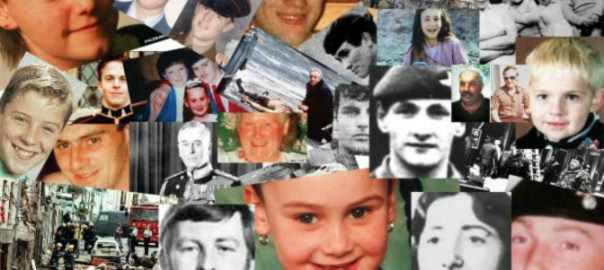
Remembering all innocent victims of the Troubles

Today is the anniversary of the death of the following  people killed as a results of the conflict in Northern Ireland

“To live in hearts we leave behind is not to die

– Thomas Campbell

To the innocent on the list – Your memory will live  forever

– To  the Paramilitaries  –

There are many things worth living for, a few things worth dying for, but nothing worth killing for.

12  People lost their lives on the 10th November between 1972 – 1994

————————————————————

10 November 1972
Ronald Kitchen,  (20)

nfNI
Status: British Army (BA),

Killed by: Irish Republican Army (IRA)
Shot while at British Army (BA) Vehicle Check Point (VCP), Oldpark Road, Belfast.

————————————————————

10 November 1974
John McQuitty,  (41)

Catholic
Status: Civilian (Civ),

Killed by: Ulster Defence Association (UDA)
Shot at his home, Clovelly Street, off Springfield Road, Belfast.

————————————————————

10 November 1975
Joseph Nesbitt,   (53)

Protestant
Status: Ulster Defence Regiment (UDR),

Killed by: Irish Republican Army (IRA)
Shot by sniper, while travelling in his car to Gough British Army (BA) base, Armagh, at Caramoyle, near Keady, County Armagh .

————————————————————

10 November 1981


Charles Neville,  (56)

Protestant
Status: ex-Ulster Defence Regiment (xUDR),

Killed by: Irish Republican Army (IRA)
Shot as he left his workplace, Industrial Estate, Loughgall Road, Armagh.

————————————————————

10 November 1982
Charles Spence,  (44)

Protestant
Status: Ulster Defence Regiment (UDR),

Killed by: Irish Republican Army (IRA)
Off duty. Shot while leaving his workplace, Customs Office, Armagh.

————————————————————

10 November 1983


William Fitzpatrick,  (46)

Catholic
Status: Royal Ulster Constabulary (RUC),

Killed by: Irish Republican Army (IRA)
Off duty. Shot at his home, Ballymartin, near Annalong, County Down.

————————————————————

10 November 1986


Derek Patterson,   (39)

Protestant
Status: Royal Ulster Constabulary (RUC),

Killed by: Irish People’s Liberation Organisation (IPLO)
Off duty. Shot outside friend’s home, Fitzroy Avenue, off Ormeau Road, Belfast.

————————————————————

10 November 1990


David Murphy,   (50)

Protestant
Status: Royal Ulster Constabulary (RUC),

Killed by: Irish Republican Army (IRA)
Off duty. Shot while wildfowling, Castor Bay, near Morrows Point, Lough Neagh, County Armagh.

————————————————————

10 November 1990


Thomas Taylor,   (49)

Protestant
Status: Royal Ulster Constabulary (RUC),

Killed by: Irish Republican Army (IRA)
Off duty. Shot while wildfowling, Castor Bay, near Morrows Point, Lough Neagh, County Armagh.

————————————————————

10 November 1990

Norman Kendall,  (44)

Protestant
Status: Civilian (Civ),

Killed by: Irish Republican Army (IRA)
Shot, while wildfowling, with off duty Royal Ulster Constabulary (RUC) members, Castor Bay, near Morrows Point, Lough Neagh, County Armagh.

————————————————————

10 November 1990


Keith Dowey,   (30)

Protestant
Status: Civilian (Civ),

Killed by: Irish Republican Army (IRA)
Shot, while wildfowling, with off duty Royal Ulster Constabulary (RUC) members, Castor Bay, near Morrows Point, Lough Neagh, County Armagh.

————————————————————

10 November 1994


Frank Kerr,  (54)

Catholic
Status: Civilian (Civ),

Killed by: Irish Republican Army (IRA)
Shot, during armed robbery at his workplace, postal sorting office, Clanrye Street, Newry, County Down.

————————————————————


See below on how to order a copy of my No.1 Bestselling book: A Belfast Child 

9th November – Deaths & Events in Northern Ireland Troubles

Key Events & Deaths on this day in Northern Ireland Troubles

 9th November

———————————————————————–

Saturday 9 November 1968

Major Ronald Terence Bunting

Ian Paisley and Ronald Bunting led a Loyalist march to the Diamond area of Derry.

Tuesday 9 November 1971

A British soldier was shot dead by the Irish Republican Army (IRA) in Derry.

Saturday 9 November 1974

There were a number of attacks by Loyalist paramilitaries on Catholic civilians. Two Catholic civilians were shot dead at their workplace near Templepatrick, Country Antrim, by the Protestant Action Group (PAG), which was a covername for the Ulster Volunteer Force (UVF).

Loyalist Association of Workers

In addition Billy Hull, a former leader of the Loyalist Association of Workers (LAW), and Jim Anderson, a former Ulster Defence Association (UDA) leader, were shot and wounded in attacks by Loyalist paramilitaries.

The Ministry of Defence in London stated that the names of British soldiers killed during the conflict in Northern Ireland would not be added to war memorials. The reason given was that the conflict in Northern Ireland was not classified as a war.

Sunday 9 November 1975

John Kelly (19), then a member of the Official Irish Republican Army (OIRA), was shot dead by the Provisional IRA (PIRA) in the New Lodge area of Belfast. This killing was part of the continuing feud between the two wings of the IRA.

Tuesday 10 November 1981

During a speech in the House of Commons Margaret Thatcher, then British Prime Minister, said that: “Northern Ireland is part of the United Kingdom; as much as my constituency is.”

[This statement was subsequently often quoted as: “Northern Ireland is as British as Finchley”.]

Tuesday 9 November 1982

Garry Ewing (31), an Royal Ulster Constabulary (RUC) officer, and Helen Woodhouse (29), a Protestant civilian, were killed by a booby trap bomb attacked to Ewing’s car by the Irish Republican Army (IRA) at the Lakeland Forum Leisure Centre in Enniskillen, County Fermanagh.

Friday 9 November 1990

Brooke Speech Peter Brooke, then Secretary of State for Northern Ireland, made a major speech on the British position on Northern Ireland to an audience in London. Brooke stated that Britain had no ‘selfish economic or strategic interest’ in Northern Ireland and would accept the unification of Ireland by consent. In a surprise result Mary Robinson was elected as President of Ireland having won on the second count.

Many commentators saw her election as symptomatic of a change in the Republic of Ireland to a more liberal, tolerant society.

Saturday 9 November 1991

Two Catholic civilians, Kathleen Lundy (40) and her son Colin Lundy (16), were burned to death when Loyalists carried out a petrol-bomb attack on their home in Glengormley, County Antrim.

Monday 9 November 1992

Representatives of the Ulster Unionist Party (UUP) presented a series of proposals at the political talks (later known as the Brooke / Mayhew talks) in a last minute attempt to prevent the process from collapsing. Included were proposals for a Bill of Rights for Northern Ireland and provisions for Nationalists to have a ‘meaningful role’ in the government of Northern Ireland.

In return for the Irish government repealing Articles 2 and 3 of its constitution the UUP would consider the establishment of some form of body linking members of any new Northern Ireland Assembly with the Dáil.

Saturday 9 November 1996

Loyalists, who were involved in a weekly picket of the Catholic church in Harryville in Ballymena, injured a six-year old Catholic boy when they threw stones at those leaving the service.

Sunday 9 November 1997

Raymond McCord Killing

Raymond McCord junior in his RAF uniform

The body of Raymond McCord (22), a Protestant civilian, was discovered at Ballyduff quarry, near Belfast. Loyalist paramilitaries were responsible for the killing.

[Raymond McCord (senior) led a high profile campaign to uncover the circumstances of his son’s killing. The matter was investigated by the Police Ombudsman who issued a statement and report on 22 January 2007.]

Nationalist residents of Bellaghy decided to call off a planned protest at the British Legion Remembrance Sunday parade. The residents had objected to the band, Bruce’s True Blues, which was scheduled to lead the parade.

During a radio interview on the tenth anniversary of the Enniskillen bomb which killed 11 people on 8 November 1987, Gerry Adams, then President of Sinn Féin (SF), said he was “deeply sorry about what happened”.

Wednesday 10 November 1999

A pipe-bomb with a jar of nails attached to it was discovered on the windowsill of a house in Dromara Street, off the mainly Nationalist lower Ormeau Road in south Belfast. One woman was in the house at the time. The device was later made safe by an Army bomb disposal team. The attack was carried out by Loyalist paramilitaries

————————————————————

———————————————————————————

Remembering all innocent victims of the Troubles

Today is the anniversary of the death of the following  people killed as a results of the conflict in Northern Ireland

“To live in hearts we leave behind is not to die

– Thomas Campbell

To the innocent on the list – Your memory will live  forever

– To  the Paramilitaries  –

There are many things worth living for, a few things worth dying for, but nothing worth killing for.

13 People lost their lives on the 9th   November between 1971 – 1997

————————————————————

09 November 1971


Ian Curtis   (23)

nfNI
Status: British Army (BA),

Killed by: Irish Republican Army (IRA)
Shot by sniper while on British Army (BA) foot patrol, Foyle Road, Derry.

————————————————————

09 November 1973
William Wallace,  (62)

Protestant
Status: Civilian (Civ),

Killed by: Ulster Volunteer Force (UVF)
Killed during bomb attack on Sunflower Bar, Corporation Street, Belfast. He was a passer-by at the time of the explosion.

————————————————————

09 November 1974
Patrick Courtney,  (29)

Catholic
Status: Civilian (Civ),

Killed by: Protestant Action Group (PAG)
Shot at his garage, Clady Corner, near Templepatrick, County Antrim.

————————————————————

09 November 1974
William Tierney,  (31)

Catholic
Status: Civilian (Civ),

Killed by: Protestant Action Group (PAG)
Shot at his garage workplace, Clady Corner, near Templepatrick, County Antrim.

————————————————————

09 November 1975


John Kelly,   (19)

Catholic
Status: Official Irish Republican Army (OIRA),

Killed by: Irish Republican Army (IRA)
Shot as he walked along Ponsonby Avenue, near to his home, New Lodge, Belfast. Official Irish Republican Army (OIRA) / Irish Republican Army (IRA) feud.

————————————————————

09 November 1976
 James Speers,   (45)

Protestant
Status: Ulster Defence Regiment (UDR),

Killed by: Irish Republican Army (IRA)
Off duty. Shot at his garage, Longfield Road, Desertmartin, County Derry.

————————————————————

09 November 1982


Garry Ewing,  (31)

Protestant
Status: Royal Ulster Constabulary (RUC),

Killed by: Irish Republican Army (IRA)
Off duty. Killed by booby trap bomb attached to his car parked outside Lakeland Forum Leisure Centre, Enniskillen, County Fermanagh.

————————————————————

09 November 1982


Helen Woodhouse,   (29)

Protestant
Status: Civilian (Civ),

Killed by: Irish Republican Army (IRA)
Killed by booby trap bomb attached to her Royal Ulster Constabulary (RUC) member friend’s car, parked outside Lakeland Forum Leisure Centre, Enniskillen, County Fermanagh. She was a passenger in the car.

————————————————————

09 November 1987


Adam Lambert,   (19)

Protestant
Status: Civilian (Civ),

Killed by: Ulster Defence Association (UDA)
Shot at his workplace, a building site, Highview Crescent, Highfield, Belfast. Assumed to be a Catholic.

————————————————————

09 November 1989
Ian Johnston,  (31)

Protestant
Status: Royal Ulster Constabulary (RUC),

Killed by: Royal Ulster Constabulary (RUC)
Undercover Royal Ulster Constabulary (RUC) member. Shot, in error, by other Royal Ulster Constabulary (RUC) member, during raid on house, Upper Meadow Street, New Lodge, Belfast.

————————————————————

09 November 1991


Kathleen Lundy,  (40)

Catholic
Status: Civilian (Civ),

Killed by: non-specific Loyalist group (LOY)
Died in arson attack on her home, Harmin Crescent, Glengormley, near Belfast, County Antrim.

————————————————————

09 November 1991


Colin Lundy,   (16)

Catholic
Status: Civilian (Civ),

Killed by: non-specific Loyalist group (LOY)
Died in arson attack on his home, Harmin Crescent, Glengormley, near Belfast, County Antrim.

————————————————————

09 November 1997


Raymond McCord, (22)

Protestant
Status: Civilian (Civ),

Killed by: Ulster Volunteer Force (UVF)
Found beaten to death in quarry, Ballyduff, Newtownabbey, County Antrim.

————————————————————

See below on how to order a copy of my No.1 Bestselling book: A Belfast Child 
8th November – Deaths & Events in Northern Ireland Troubles

Key Events & Deaths on this day in Northern Ireland Troubles

8th November

——————————————————————————-

Friday 8 November 1968

Londonderry Corporation agreed to a Nationalist request to introduce a points system in the allocation of public sector housing.

Friday 8 November 1974

The Protestant Action Group (PAG), which was a covername for the Ulster Volunteer Force (UVF), claimed responsibility for the killing of a Catholic in Belfast. A member of the Irish Republican Army (IRA) was shot dead by the British Army in Belfast.

Thursday 8 November 1979

Two Catholic civilians were shot dead by Loyalists paramilitaries while they walked along Thompson Street, Belfast.

A Protestant civilian was shot dead by Republican paramilitaries at his workplace in the Short Strand, Belfast.

Tuesday 8 November 1983

Adrian Carroll (24), a Catholic civilian and brother of an Irish National Liberation Army (INLA) member who had been killed by the Royal Ulster Constabulary (RUC) in December 1982, was himself shot dead by the ‘Protestant Action Force’ (PAF).

[The PAF was a cover name used by the Ulster Volunteer Force (UVF). On 2 July 1986 four members of the Ulster Defence Regiment (UDR) were convicted and sentenced for the killing. Three of the ‘UDR Four’ were released on 29 July 1992 when their convictions were quashed.]

Saturday 8 November 1986

The Ulster Freedom Fighters (UFF), a covername used by the Ulster Defence Association (UDA), planted four bombs in the centre of Dublin, Republic of Ireland.

8 November 1987 Enniskillen

See Enniskillen Bomb

enniskillenpoppydayexplosion25thanniv011

Bombing (Remembrance Day Bombing) During the annual Remembrance Day ceremony in Enniskillen, County Fermanagh, a bomb planted by the Irish Republican Army (IRA) exploded at the War Memorial killing 11 people and injuring another 63, many seriously. Among the dead were three married couples: Wesley and Bertha Armstrong; Kit and Jessie Johnston; and William and Agnes Mullan. The others killed were: Edward Armstrong, Samuel Gault, John Megaw, Georgina Quinton, and Marie Wilson. One of the injured, Ronnie Hill, went into a coma a few days after the explosion and died 13 years later on 28 December 2000. Gordon Wilson was injured in the explosion and was with his daughter Marie when she died. Gordon Wilson gave a moving account of his daughter’s death in media interviews but stated that he forgave her killers. [Gordon Wilson’s quiet dignity had a profound effect on many people in Northern Ireland. He was later involved with initiatives to improve community relations in Enniskillen and eventually was appointed to the Senate in the Republic of Ireland. Gordon Wilson died on 27 June 1995 aged 68.]

Friday 8 November 1991

The Equal Opportunities Unit of the Northern Ireland Civil Service produced a report containing information on the religious composition of the Civil Service. The report showed that 57 per cent of civil servants were Protestant, 36 per cent Catholic, and the rest were born outside Northern Ireland. The report also indicated that 21 per cent of senior posts were held by Catholics.

Wednesday 8 November 1995

The act of parliament which returned remission of sentence for paramilitary prisoners from 33 per cent to 50 per cent became law. [Following the change in the law 83 prisoners were released on 17 November 1995. The new rules did not apply to life sentences.] The Social Democratic and Labour Party (SDLP) published a statement which it had wanted both the British and Irish governments to issue. The statement had been given to John Major, then British Prime Minister, in mid-October 1995. The statement contained the suggestion of asking George Mitchell, a former American Senator, to lead an international body to advise on the issue of paramilitary weapons. [The Ulster Unionist Party (UUP) and the Democratic Unionist Party (DUP) rejected the proposals contained in the SDLP statement. Mitchell was asked to do this on 28 November 1995.] John Hume, then leader of the Social Democratic and Labour Party (SDLP), called on the British government to urgently hold all-party talks. Sinn Féin (SF) held a rally at the Ulster Hall in Belfast. [The Ulster Hall was traditionally the venue for Unionist rallies.] Neil Blaney (73), the Independent Fianna Fáil (IFF) Teachta Dáil (TD) for Donegal, died.

Friday 8 November 1996

The Social Democratic and Labour Party (SDLP) held its annual conference. There was some discussion of the effect the events surrounding Drumcree was having on the party’s level of support. Gerry Adams, then President of Sinn Féin (SF), was refused a visa to visit Australia. David Trimble, then leader of the Ulster Unionist Party (UUP), called Dick Spring, then Tánaiste (deputy Irish Prime Minister and Minister for Foreign Affairs), “a cheerleader for a terrorist gang” because he was pressing for the entry of Sinn Féin (SF) into all-party talks.

Saturday 8 November 1997 Robert Kerr (54), formerly a Loyalist paramilitary member, was found dead near Newry, County Down. (??) Republican Sinn Féin (RSF) held its annual conference in Dublin. During the speeches Sinn Féin (SF) was criticised for agreeing to take part in the multi-party talks at Stormont.

Monday 8 November 1999

Relatives of Tom Williams announced that his remains would be buried in the family grave in Milltown Cemetary, Belfast, rather than in the Republican plot in the same cemetery. His remains had been exhumed from Crumlin Road Prison on 21 August 1999. He had been hanged in the prison in 1942. [See 21 August 1999] A delegation from the Ulster Unionist Party (UUP) held a meeting with Peter Mandelson, then Secretary of State for Northern Ireland, to discuss the Patten report. Stephen McClean and Noel McCready pleaded ‘not guilty’ at the beginning of their trial in Belfast for the murder of Phillip Allen (34) and Damien Trainor (26) on 3 March 1998. The two friends were shot dead while having a drink in a bar in Poyntzpass, County Armagh. At the time the attack was believed to have been carried out by the Loyalist Volunteer Force (LVF). Ryan Robley had earlier pleaded guilty to the killings. [David Keys, who was also charged in connection to the attack, was later killed in the UVF wing of the Maze Prison.]

————————————————————


———————————————————————————

Remembering all innocent victims of the Troubles

Today is the anniversary of the death of the following  people killed as a results of the conflict in Northern Ireland

“To live in hearts we leave behind is not to die

– Thomas Campbell

To the innocent on the list – Your memory will live  forever

– To  the Paramilitaries  –

There are many things worth living for, a few things worth dying for, but nothing worth killing for.

23 People lost their lives on the 8th  November between 1971 – 1992

————————————————————

08 November 1972
Irwin Long,   (29)

Protestant
Status: Ulster Defence Regiment (UDR),

Killed by: Irish Republican Army (IRA)
Off duty. Shot while driving his car along Lake Street, Lurgan, County Armagh.

————————————————————

08 November 1973
Francis McCaughey,  (33)

Catholic
Status: Civilian (Civ),

Killed by: Ulster Volunteer Force (UVF)
Died 11 days after being injured when detonated booby trap bomb on his farm, Carnteel, Aughnacloy, County Tyrone.

————————————————————

08 November 1974


Gerard Fennell,  (28)

Catholic
Status: Irish Republican Army (IRA),

Killed by: British Army (BA)
Shot by sniper from concealed British Army (BA) observation post during attempted hijacking of van, Stewartstown Road, Twinbrook, Belfast.

————————————————————

08 November 1974


Paul Armstrong,  (18)

Catholic
Status: Civilian (Civ),

Killed by: Protestant Action Group (PAG)
Found shot in derelict bakery, Byron Street, Lower Oldpark, Belfast.

————————————————————

08 November 1979


Marius O’Neill,  (23)

Catholic
Status: Civilian (Civ),

Killed by: non-specific Loyalist group (LOY)
Shot while walking along Thompson Street, Short Strand, Belfast.

————————————————————

08 November 1979


Paul McCrory,  (22)

Catholic
Status: Civilian (Civ),

Killed by: non-specific Loyalist group (LOY)
Shot while walking along Thompson Street, Short Strand, Belfast.

————————————————————

08 November 1979

Edward McMaster,  (57)

Protestant
Status: Civilian (Civ),

Killed by: non-specific Republican group (REP)
Security man. Shot at his workplace, Sirocco Works, Short Strand, Belfast.

————————————————————

08 November 1981


Trevor Foster,  (17)

Protestant
Status: Civilian (Civ),

Killed by: Irish Republican Army (IRA)
Killed by booby trap bomb attached to his father’s car, outside their home, Lisnadill, near Armagh. His father an Ulster Defence Regiment (UDR) member.

————————————————————

08 November 1983


Adrian Carroll,  (24)

Catholic
Status: Civilian (Civ),

Killed by: Protestant Action Force (PAF)
Shot outside his home, Abbey Street, Armagh.

————————————————————

08 November 1985


Kevin McPolin,  (26)

Catholic
Status: Civilian (Civ),

Killed by: Ulster Freedom Fighters (UFF)
Shot, while sitting in his stationary car, outside his place of work, Drumbeg Drive, Old Warren, Lisburn, County Antrim.

————————————————————

Enniskillen Remembrance Day Bombing

 The Innocent Victims

Princess Diana visits casualty in hospital
Princess Di Visiting Victims

See Enniskillen Bomb

———————————————————

08 November 1987


Edward Armstrong,   (52)

Protestant
Status: Royal Ulster Constabulary (RUC),

Killed by: Irish Republican Army (IRA)
Off duty. Killed by time bomb which exploded near war memorial, during Remembrance Day ceremony, Enniskillen, County Fermanagh.

———————————————————

08 November 1987


Marie Wilson,  (20)

Protestant
Status: Civilian (Civ),

Killed by: Irish Republican Army (IRA)
Killed by time bomb which exploded near war memorial, during Remembrance Day ceremony, Enniskillen, County Fermanagh.

———————————————————

08 November 1987


Samuel Gault,   (49)

Protestant
Status: Civilian (Civ),

Killed by: Irish Republican Army (IRA)
Killed by time bomb which exploded near war memorial, during Remembrance Day ceremony, Enniskillen, County Fermanagh.

———————————————————

08 November 1987

Georgina Quinton,   (72)

Protestant
Status: Civilian (Civ),

Killed by: Irish Republican Army (IRA)
Killed by time bomb which exploded near war memorial, during Remembrance Day ceremony, Enniskillen, County Fermanagh.

———————————————————

08 November 1987


John Megaw,   (68)

Protestant
Status: Civilian (Civ),

Killed by: Irish Republican Army (IRA)
Killed by time bomb which exploded near war memorial, during Remembrance Day ceremony, Enniskillen, County Fermanagh.

———————————————————

08 November 1987


Wesley Armstrong,   (62)

Protestant
Status: Civilian (Civ),

Killed by: Irish Republican Army (IRA)
Killed by time bomb which exploded near war memorial, during Remembrance Day ceremony, Enniskillen, County Fermanagh.

———————————————————

08 November 1987


Bertha Armstrong,   (53)

Protestant
Status: Civilian (Civ),

Killed by: Irish Republican Army (IRA)
Killed by time bomb which exploded near war memorial, during Remembrance Day ceremony, Enniskillen, County Fermanagh.

———————————————————

08 November 1987


William Mullan,   (72)

Protestant
Status: Civilian (Civ),

Killed by: Irish Republican Army (IRA)
Killed by time bomb which exploded near war memorial, during Remembrance Day ceremony, Enniskillen, County Fermanagh.

———————————————————

08 November 1987


Agnes Mullan,   (70)

Protestant
Status: Civilian (Civ),

Killed by: Irish Republican Army (IRA)
Killed by time bomb which exploded near war memorial, during Remembrance Day ceremony, Enniskillen, County Fermanagh.

———————————————————

08 November 1987


Kit Johnston,   (70)

Protestant
Status: Civilian (Civ),

Killed by: Irish Republican Army (IRA)
Killed by time bomb which exploded near war memorial, during Remembrance Day ceremony, Enniskillen, County Fermanagh.

———————————————————

08 November 1987


Jessie Johnston,   (66)

Protestant
Status: Civilian (Civ),

Killed by: Irish Republican Army (IRA)
Killed by time bomb which exploded near war memorial, during Remembrance Day ceremony, Enniskillen, County Fermanagh.

———————————————————

08 November 1987


Ronnie Hill, (68)

Protestant
Status: Civilian (Civ),

Killed by: Irish Republican Army (IRA)
Injured when time bomb exploded near war memorial, during Rememberance Day ceremony, Enniskillen, County Fermanagh. He died 28 December 2000, after being in a coma since the incident.

———————————————————

08 November 1990


Malachy McIvor,  (43)

Catholic
Status: Civilian (Civ),

Killed by: Ulster Volunteer Force (UVF)
Shot at his workplace, a garage, North Street, Stewartstown, County Tyrone

———————————————————

See below on how to order a copy of my No.1 Bestselling book: A Belfast Child 

7th November – Deaths & Events in Northern Ireland Troubles

Key Events & Deaths on this day in Northern Ireland Troubles

7th November

—————————————————————————————

Sunday 7 November 1971

An off duty British soldier was shot dead by the Irish Republican Army (IRA) in an attack in Lurgan, County Armagh. Another soldier was injured in the same attack.

Thursday 7 November 1974

The Irish Republican Army (IRA) killed two British soldiers with a booby-trap bomb near Stewartstown, County Tyrone.

At 10.17pm the IRA threw a bomb through the window of the King’s Arms public house in Woolwich, London, and killed one off-duty British soldier and one civilian. The explosion also injured a further 28 people.

Friday 7 November 1975

A United Ulster Unionist Council (UUUC) report was endorsed by a vote at the Constitutional Convention. The Convention voted by 42 to 31 to submit a draft report to the Secretary of State. The report recommended a return to the ‘majority rule’ system of government for Northern Ireland with the addition of a series of all-party committees to scrutinise the work of departments.

[The Report was published on 20 November 1975.]

Monday 7 November 1983

Garret FitzGerald, then Taoiseach (Irish Prime Minister), travelled to England for a meeting at Chequers with Margaret Thatcher, then British Prime Minister. The meeting was seen as an opportunity for the two leaders to get to know each other and to discuss Northern Ireland.

Friday 7 November 1986

Sammy Wilson, then Lord Mayor of Belfast and Democratic Unionist Party (DUP) councillor, prevented Northern Ireland Office (NIO) ministers from attending the Remembrance Day service at Belfast City Hall. This was in protest at the Anglo-Irish Agreement (AIA).

Saturday 7 November 1992

The ‘Army Council’ faction of the Irish People’s Liberation Organisation (IPLO) that was based in Dublin announced that it was disbanding.

[This followed an internal feud and the intervention of the Irish Republican Army (IRA) on 31 October 1992.]

Sunday 7 November 1993

Approximately 3,000 people attended a peace rally at Greysteel, County Derry, the site of the Greysteel Killings on 30 October 1993.

See Greysteel

See Shankill Bomb

Tuesday 7 November 1995

Royal assent was given to legislation which returned the remission rate on the sentences of paramilitary prisoners from 33 per cent to 50 per cent.

[The change in the law did not apply to life sentence prisoners

Tuesday 7 November 1995

Royal assent was given to legislation which returned the remission rate on the sentences of paramilitary prisoners from 33 per cent to 50 per cent. [The change in the law did not apply to life sentence prisoners.]

Friday 7 November 1997

Adam Ingram, then Security Minister, gave details of ‘punishment’ attacks since 20 July 1997 during a House of Commons answer. He revealed that there had been 44 attacks during the period with 17 attributed to Republicans and 27 to Loyalists.

[During the first six months of the year there had bee 129 ‘punishment’ attacks.]

The Garda Síochána (the Irish police) uncovered 20 kilograms of Semtex explosive at Swords, County Dublin, Republic of Ireland, and arrested two men. This was believed to be an Irish Republican Army (IRA) arms cache.

The British Home Office announce that it was transferring three Irish Republican Army (IRA) prisoners from prisons in Britain to the Maze Prison in Northern Ireland. The men, Patrick Hayes, Denis Kinsella, and Vincent Wood, received prison sentences of 30, 25, and 17 years respectively, for conspiracy to cause explosions and possession of explosives.

Marjorie (Mo) Mowlam, then Secretary of State for Northern Ireland, was heckled by Democratic Unionist Party (DUP) members as she addressed a plenary session of the Northern Ireland Forum.

Sunday 7 November 1999

The Observer (a London based newspaper) reported that David Trimble, then leader of the Ulster Unionist Party (UUP), had personally paid £8,000 towards a £30,000 libel settlement. The case had been brought by Freddie Hall, then Royal Ulster Constabulary (RUC) Assistant Chief Constable, against Gordon Lucey the author of a pamphlet entitled ‘Stand Off’ which was about the 1995 Drumcree Orange Order parade. The pamphlet had been published by the Ulster Society of which Trimble was a company director.

As Lucey was unable to pay, the remainder of the settlement was paid by Northern Whig (£10,000) the printers, and the publishers the Ulster Society (£12,000).

——————————————————————————————-


———————————————————————————

Remembering all innocent victims of the Troubles

Today is the anniversary of the death of the following  people killed as a results of the conflict in Northern Ireland

“To live in hearts we leave behind is not to die

– Thomas Campbell

To the innocent on the list – Your memory will live  forever

– To  the Paramilitaries  –

There are many things worth living for, a few things worth dying for, but nothing worth killing for.

11  People lost their lives on the 7th November between 1972 – 1990

————————————————————

07 November 1971
Paul Genge,  (18)

nfNI
Status: British Army (BA),

Killed by: Irish Republican Army (IRA)
Off duty. Shot from passing car while walking along Tandragee Road, Lurgan, County Armagh.

————————————————————

07 November 1973


Robert McCaffrey,  (18)

Catholic
Status: Civilian (Civ),

Killed by: Ulster Defence Association (UDA)
Shot outside his workplace, Mackie’s Factory, Springfield Road, Belfast.

————————————————————

07 November 1974
 Vernon Rose,   (30)

nfNI
Status: British Army (BA),

Killed by: Irish Republican Army (IRA)
Killed by booby trap bomb at electricity sub station, Aghalarg, near Stewartstown, County Tyrone.

————————————————————

07 November 1974
Charles Simpson,  (35)

nfNI
Status: British Army (BA),

Killed by: Irish Republican Army (IRA)
Killed by booby trap bomb at electricity sub station, Aghalarg, near Stewartstown, County Tyrone

————————————————————

07 November 1974
Richard Dunne,  (42)

nfNIB
Status: British Army (BA),

Killed by: Irish Republican Army (IRA)
Off duty. Killed by bomb thrown through window of King’s Arms public house, Woolwich, London.

————————————————————

07 November 1974
Alan Horsley,  (20)

nfNIB
Status: Civilian (Civ),

Killed by: Irish Republican Army (IRA)
Killed by bomb thrown through window of King’s Arms public house, Woolwich, London.

————————————————————

07 November 1976
Ronald Bond,  (53)

Protestant
Status: Ulster Defence Regiment (UDR),

Killed by: Irish Republican Army (IRA)
Off duty. Died ten days after being shot outside his home, Harding Street, off Abercorn Road, Derry.

————————————————————

07 November 1979


David Teeney,   (25)

Protestant
Status: Civilian (Civ),

Killed by: Irish National Liberation Army (INLA)
Civilian employed by Northern Ireland Prison Service. Shot at bus stop shortly after leaving Crumlin Road Prison, Belfast.

————————————————————

07 November 1983


Stephen Taverner,  (24)

nfNI
Status: British Army (BA),

Killed by: Irish Republican Army (IRA)
Died two weeks after being injured by remote controlled bomb while on British Army (BA) foot patrol, Crossmaglen, County Armagh.

————————————————————

07 November 1990


 Gary Campbell, (21)

Catholic
Status: Civilian (Civ),

Killed by: Ulster bVolunteer Force (UVF)
Shot at his home, Spamount Street, New Lodge, Belfast.

————————————————————

07 November 1992

Donnaa Wilson, (30)

Protestant
Status: Civilian (Civ),

Killed by: Ulster Defence Association (UDA)
Beaten to death at her home, Annadale Flats, Ballynafeigh, Belfast.

————————————————————


Buy Me A Coffee

See below on how to order a copy of my No.1 Bestselling book: A Belfast Child 

Enniskillen Bombing – 10.43am, 8th November 1987 – Shame on the IRA & those that Supported them!

Enniskillen Bombing – Remembrance Day Bombing

floating-poppie-new

Poppy cross
Those who died that day are now remembered at the Cenotaph alongside the names of the war dead they went there to honour

———————————————————————-

The Enniskillen Rememberance Day Massacre

———————————————————————-

The Remembrance Day bombing (also known as the Enniskillen bombing or Poppy Day massacre[1][2]) took place on 8 November 1987 in Enniskillen, County Fermanagh, Northern Ireland. A Provisional Irish Republican Army (IRA) bomb exploded near the town’s war memorial (cenotaph) during a Remembrance Sunday ceremony, which was being held to commemorate British military war dead. Eleven people (ten civilians and a police officer) were killed and 63 were injured. The IRA said it had made a mistake and that its target had been the British soldiers parading to the memorial. The unit who carried out the bombing was disbanded.

People run from explosion
Enniskillen Remembrance Day bomb

The bombing was strongly condemned by all sides and weakened the IRA’s and Sinn Féin‘s support. It also facilitated the passing of the Extradition Act, which made it easier to extradite IRA suspects from the Republic of Ireland to the United Kingdom. Loyalist paramilitaries responded to the bombing with ‘revenge’ attacks on Catholic civilians.

The bombing has been described as a turning point in the Troubles and an incident that shook the IRA “to its core”.

———————————————————————-

IRA – Reign of Terror

Part 1 of 4 The IRA and the Enniskillen Remembrance Day Bombing – Age of Terror

———————————————————————-

Planning

The bombing was thought by the British and Irish security forces to have involved at least two IRA units, from both sides of the border. Although IRA units were given “a degree of operational autonomy” at the time, they believed that such a bombing must have been sanctioned by IRA Northern Command.

However, a high-ranking IRA member said that it was suggested by IRA men at the local level and sanctioned by a “middle level” officer.

Denzil McDaniel, author of Enniskillen: The Remembrance Sunday Bombing, later interviewed security and IRA contacts, putting together an account of the bombers’ movements. He wrote that the 40-pound (18 kg) bomb was made in Ballinamore, County Leitrim and brought to Enniskillen by up to thirty IRA volunteers, moving in relay teams to avoid security patrols. It is thought to have taken over 24 hours to transport the bomb.

On the night of 7 November, the bomb—hidden in a sports bag—was left at the gable wall inside the town’s Reading Rooms, and set to explode at 10:43 AM the next day, minutes before the ceremony was to start.

———————————————–

Enniskillen Rememberance Day Bombing

———————————————————————-

Explosion


The Cenotaph in 2009.


The bomb exploded as a parade of Ulster Defence Regiment (UDR) soldiers was making its way to the memorial and as people waited for the ceremony to begin.  It blew out the wall of the Reading Rooms—where many of the victims were standing—burying them under rubble and hurling masonry towards the gathered crowd.

Bystanders rushed to free those trapped underneath.

Eleven people were killed, including three married couples. The dead were Wesley and Bertha Armstrong, Kitchener and Jessie Johnston, William and Agnes Mullan, John Megaw, Georgina Quinton, Marie Wilson, Samuel Gault and Edward Armstrong. Edward Armstrong was a serving Royal Ulster Constabulary officer and Gault had recently left the force. Gordon Wilson, whose daughter Marie died in the blast and who was himself injured, went on to become a peace campaigner and member of Seanad Éireann.

The twelfth fatality, Ronnie Hill, died after spending 13 years in a coma. Sixty-three people were injured, including thirteen children.  Ulster Unionist politicians Sammy Foster and Jim Dixon were among the crowd; the latter received extensive head injuries but recovered. A local businessman captured the immediate aftermath of the bombing on video camera. His footage, showing the effects of the bombing, was broadcast on international television.

All the victims were Protestant.

A few hours after the blast, the IRA called a radio station and said it had abandoned a 150-pound (68 kg) bomb in Tullyhommon, 20 miles (32 km) away, after it failed to detonate.  That morning, a Remembrance Sunday parade (which included many members of the Boys’ and Girls’ Brigades) had unwittingly gathered near the Tullyhommon bomb.Soldiers and RUC officers had also been there, and the IRA said it triggered the bomb when soldiers were standing beside it.It was defused by security forces and was found to have a command wire leading to a ‘firing point’ across the border.

Reactions

The IRA apologised, saying it had made a mistake and that the target had been the UDR soldiers who were parading to the memorial.

Image result for Denzil McDaniel, author of Enniskillen

Denzil McDaniel, author of Enniskillen: The Remembrance Sunday Bombing, commented:

“I don’t believe the IRA set out to specifically kill civilians. I think they made mistakes, probably with their intelligence on the time-table for the service, but the IRA was reckless about civilian life”.

Image result for RUC Detective Chief Superintendent Norman Baxter

RUC Detective Chief Superintendent Norman Baxter said:

“Their intention was to inflict casualties. The only mistake in the operation was that the bomb went off before the parade arrived”.

Many nationalists were horrified by the bombing and described it as a blow to the republican cause. Sinn Féin’s weekly newspaper, An Phoblacht, criticised the bombing on tactical grounds, calling it a “monumental error” that would strengthen the IRA’s opponents.

The IRA disbanded the unit responsible.

The bombing led to an outcry among politicians in the Republic of Ireland and the United Kingdom. The then British Prime Minister Margaret Thatcher said:

“It’s really desecrating the dead and a blot on mankind”.

The Secretary of State for Northern Ireland, Tom King, denounced the “outrage” in the House of Commons,[8] as did the Irish Minister for Foreign Affairs, Brian Lenihan in Dáil Éireann (the lower house of the Oireachtas, the Irish parliament), while in Seanad Éireann Senator Maurice Manning spoke of people’s “total revulsion”.

Many public figures used terms such as ‘barbarism’ and ‘savagery’ to describe the bombing.

The bombing was seen by many Northern Irish Protestants as an attack on them, and loyalists ″retaliated″ with attacks on Catholic civilians. The day after, five Catholic teenagers were wounded in a shooting in Belfast, and a Protestant teenager was killed by the Ulster Defence Association after being mistaken for a Catholic.

In the week after the bombing, there were 14 gun and bomb attacks on Catholics in Belfast.

Irish band U2 were holding a concert in Denver, Colorado the same day. During a performance of their song “Sunday Bloody Sunday“, singer Bono passionately condemned the bombing, stating “fuck the revolution” in his mid-song speech, as well as criticising the armchair republicanism of many Irish-Americans and stating that the majority of people in the Republic of Ireland did not support the IRA. The footage is included in U2’s rockumentary Rattle and Hum.

Long-term results


The Clinton Centre, which was built in 2002 on the site of the bomb.


At the time, the British and Irish governments were negotiating an Extradition Act that would make it easier to extradite IRA suspects from the Republic to the UK. The Act was to come before the Irish parliament less than a month after the bombing.

The Irish government wanted the British to reform the justice system in Northern Ireland (such as by abolishing “Diplock courts“) before it would pass the Act. Many in the Republic insisted that the Act should only be passed if, and when, the reforms took place. However, after the bombing, opposition to the Act dwindled and it was passed by the Irish government, albeit with some changes.

The bombing harmed Sinn Féin’s electoral support.  In 1989, in the first local elections held in County Fermanagh after the bombing, Sinn Féin lost four of its eight council seats and was overtaken by the SDLP as the biggest Irish nationalist party It was not until 2001, fourteen years after the bombing, that Sinn Féin support returned to its 1985 level.

In 1997, Sinn Féin leader Gerry Adams apologised for the bombing on behalf of the republican movement.

Enniskillen’s Remembrance Day service was re-staged two weeks after the bombing, and attended by about 5,000 people, including British Prime Minister Margaret Thatcher.

The site of the bomb, which was owned by the Catholic Church, was rebuilt as The Clinton Centre, a youth hostel, in 2002. The hostel was opened by and named after former US President Bill Clinton.

 The Innocent Victims

floating-poppie-new

Princess Diana visits casualty in hospital
Princess Di Visiting Victims

———————————————————

08 November 1987


Edward Armstrong,   (52)

Protestant
Status: Royal Ulster Constabulary (RUC),

Killed by: Irish Republican Army (IRA)
Off duty. Killed by time bomb which exploded near war memorial, during Remembrance Day ceremony, Enniskillen, County Fermanagh.

———————————————————

08 November 1987


Marie Wilson,  (20)

Protestant
Status: Civilian (Civ),

Killed by: Irish Republican Army (IRA)
Killed by time bomb which exploded near war memorial, during Remembrance Day ceremony, Enniskillen, County Fermanagh.

———————————————————

08 November 1987


Samuel Gault,   (49)

Protestant
Status: Civilian (Civ),

Killed by: Irish Republican Army (IRA)
Killed by time bomb which exploded near war memorial, during Remembrance Day ceremony, Enniskillen, County Fermanagh.

———————————————————

08 November 1987

Georgina Quinton,   (72)

Protestant
Status: Civilian (Civ),

Killed by: Irish Republican Army (IRA)
Killed by time bomb which exploded near war memorial, during Remembrance Day ceremony, Enniskillen, County Fermanagh.

———————————————————

08 November 1987


John Megaw,   (68)

Protestant
Status: Civilian (Civ),

Killed by: Irish Republican Army (IRA)
Killed by time bomb which exploded near war memorial, during Remembrance Day ceremony, Enniskillen, County Fermanagh.

———————————————————

08 November 1987


Wesley Armstrong,   (62)

Protestant
Status: Civilian (Civ),

Killed by: Irish Republican Army (IRA)
Killed by time bomb which exploded near war memorial, during Remembrance Day ceremony, Enniskillen, County Fermanagh.

———————————————————

08 November 1987


Bertha Armstrong,   (53)

Protestant
Status: Civilian (Civ),

Killed by: Irish Republican Army (IRA)
Killed by time bomb which exploded near war memorial, during Remembrance Day ceremony, Enniskillen, County Fermanagh.

———————————————————

08 November 1987


William Mullan,   (72)

Protestant
Status: Civilian (Civ),

Killed by: Irish Republican Army (IRA)
Killed by time bomb which exploded near war memorial, during Remembrance Day ceremony, Enniskillen, County Fermanagh.

———————————————————

08 November 1987


Agnes Mullan,   (70)

Protestant
Status: Civilian (Civ),

Killed by: Irish Republican Army (IRA)
Killed by time bomb which exploded near war memorial, during Remembrance Day ceremony, Enniskillen, County Fermanagh.

———————————————————

08 November 1987


Kit Johnston,   (70)

Protestant
Status: Civilian (Civ),

Killed by: Irish Republican Army (IRA)
Killed by time bomb which exploded near war memorial, during Remembrance Day ceremony, Enniskillen, County Fermanagh.

———————————————————

08 November 1987


Jessie Johnston,   (66)

Protestant
Status: Civilian (Civ),

Killed by: Irish Republican Army (IRA)
Killed by time bomb which exploded near war memorial, during Remembrance Day ceremony, Enniskillen, County Fermanagh.

———————————————————

08 November 1987


Ronnie Hill, (68)

Protestant
Status: Civilian (Civ),

Killed by: Irish Republican Army (IRA)
Injured when time bomb exploded near war memorial, during Rememberance Day ceremony, Enniskillen, County Fermanagh. He died 28 December 2000, after being in a coma since the incident.

———————————————————

Enniskillen bombing

See BBC News for full story & background information


“‘Daddy, I love you very much’. Those were the exact words she spoke to me, and those were the last words I heard her say”. Gordon Wilson was speaking shortly after the death of his daughter, Marie, who was killed by the Provisional IRA bomb at the Cenotaph in Enniskillen on Sunday 8 November 1987.

As the explosion ripped the heart out of the town, it killed a further ten innocent bystanders. Five of the victims were women, and there were three married couples among the dead. All of those killed were Protestants, and all but one (a police reservist) were civilians.

Sixty-three others were injured in the blast, including thirteen children. A twelfth victim, Ronnie Hill, died in December 2000 after spending 13 years in a coma as a result of injuries sustained in the bombing.

Why?

Situated close to the border with the Republic of Ireland, Enniskillen was an easy target that offered the terrorists a ready escape route. The timing of the attack was also significant, coming in the wake of some major setbacks for the IRA. These included the killing of eight IRA men by the SAS during an attack on a police station in Loughgall and the seizing of a huge arms shipment from Libya.

Condemnation

The bombing was widely condemned. The British Prime Minister, Margaret Thatcher, said that “there should be no hiding place in any country for these people” and described the bombing as “a desecration”, “utterly barbaric” and “a blot on mankind”. The Irish Taioseach, Charles Haughey, stated: “The culprits must be utterly repudiated and brought to justice.”

International condemnation included official statements from Russia and, significantly, Libya. Under the rule of Colonel Gaddafi, Libya had provided the IRA with support and a steady supply of weapons, including the plastic explosive used in the bombing of Enniskillen. A Libyan Press Association statement said: “Libya is aware of the difference between legitimate revolutionary action and terrorism aimed at civilians and innocent people. This action does not belong to the legitimate revolutionary operation.”

The scale of this condemnation prompted the IRA to release a statement the following day expressing their “deep regret” at the results of the blast. At the same time, they claimed the bomb may have been detonated by the army scanning high frequencies in a security operation prior to the Remembrance Day parade. This claim was later admitted to be false.

It also transpired that the IRA had targeted the village of Tullyhommon, 20 miles from Enniskillen, on that Remembrance Sunday. The bomb at Tullyhommon was four times the size of the Enniskillen device. Had it exploded, members of the Boys’ and Girls’ Brigades would have been caught up in the carnage.

Retaliation and reconciliation

Loyalist paramilitaries were intent on retaliation – but were largely dissuaded by the words of Gordon Wilson in an interview broadcast the following day. “I have lost my daughter, and we shall miss her”, he said, “but I bear no ill will. I bear no grudge. Dirty sort of talk is not going to bring her back to life. She was a great wee lassie, she loved her profession, she was a pet. She’s dead, she’s in heaven, and we’ll meet again.”

Some of the victims did not share Gordon Wilson’s sentiments about the bombers and were frustrated that the media focused almost solely on him. Yet Mr Wilson’s words touched many hearts at home and abroad. They also effected a spirit of reconciliation among the people of Enniskillen when fear and confrontation might just have easily taken hold.

A fortnight after the bombing, Prime Minister Margaret Thatcher joined seven thousand others for a second Remembrance Day service at the war memorial in Enniskillen.

Turning point

The IRA lost support worldwide immediately after the Enniskillen bombing. Crucially, the Gadaffi regime in Libya withdrew their support and with it the supply of weapons and ammunition that had been planned to sustain the ‘Long War’. The leadership of Sinn Féin, the political wing of the republican movement in Northern Ireland, sought greater engagement with mainstream politics.

In Enniskillen itself, the Catholic community put pressure on the SDLP (the mainstream nationalist party) to stop its policy of supporting Sinn Féin for the posts of chairman and deputy chairman on the Fermanagh District Council. The SDLP were forced instead to support unionist candidates. The move helped to improve community relations, as did the work of the ‘Enniskillen Together’ group, set up to further the cause of reconciliation in the area.

Perhaps the most significant political consequence of the Enniskillen bombing was the resumption of talks between the SDLP leader John Hume and Gerry Adams. In his role as leader of Sinn Féin, Adams had condemned the bombing and resolved to step up the republican movement’s involvement in electoral politics. Although Hume received little support for the move, it paved the way for formal talks between the two parties and the beginnings of the ‘peace process’ that would eventually lead to the cessation of violence and the Good Friday Agreement

See below on how to order a copy of my No.1 Bestselling book: A Belfast Child 

6th November – Deaths & Events in Northern Ireland Troubles

Key Events & Deaths on this day in Northern Ireland Troubles

6th November

—————————————————————————————————-

Saturday 6 November 1971

Kathleen Thompson (47) was shot dead by British soldiers as she stood in garden in the Creggan area of Derry.

Wednesday 6 November 1974

——————————————————-

IRA 1983 Break Out of the Maze Prison

——————————————————-

33 Republican Prisoners escaped from the Maze Prison through a tunnel. Hugh Coney (24) was shot dead by a sentry during the escape. 32 of the prisoners were captured by the end of the day.

Two British soldiers were shot dead by the Irish Republican Army (IRA) in Crossmaglen, County Armagh.

Thursday 6 November 1975

Freed: Tiede Herrema, accompanied by his wife, Elisabeth, in November 1975,

The siege at the house in Monasterevin, County Kildare, where Tiede Herrema, then a Dutch industrialist, was being held hostage, ended with his safe release.

Saturday 6 November 1976

Two Catholic civilians died as a result of separate shooting incidents carried out by Loyalist paramilitaries in New Lodge, Belfast and Whiteabbey, Belfast.

Friday 6 November 1981

Garret FitzGerald, then Taoiseach (Irish Prime Minister), held talks with Margaret Thatcher, then British Prime Minister, in London. As a result of the meeting it was decided to establish the Anglo-Irish Inter-Governmental Council which would act as forum for meetings between the two governments.

Tuesday 6 November 1984

New measures were announced to try and combat the problem of impersonation during Northern Ireland elections.

[The local phrase of “vote early, vote often” was a reflection of the belief that there was a widespread problem even if it could not be quantified.]

Tuesday 6 November 1990

Cahal Daly was announced as the new Catholic Primate of All Ireland.

Wednesday 6 November 1991

Plans for public expenditure in Northern Ireland for the year 1992 to 1993 were published. Total expenditure was estimated at £7,030 million, which represented an increase of 8.4 per cent on the previous year.

Friday 6 November 1992

The Ulster Freedom Fighters (UFF), a cover name (pseudonym) used by the Ulster Defence Association (UDA), announced that it was extending its campaign to include “the entire Republican community”.

The coalition government in the Republic of Ireland collapsed and a general election was called for 25 November 1992

Saturday 6 November 1993

Gerry Adams, then President of Sinn Féin (SF), rejected the six principles proposed by Dick Spring, then Tánaiste (deputy Irish Prime Minister and Minister for Foreign Affairs), as “the basis for a peace process”.

[Spring had outlined the principles on 27 October 1993.] Albert Reynolds, then Taoiseach (Irish Prime Minister), told the Fianna Fáil (FF) Ard Fheis (annual conference) that peace could begin by the end of the year.

Wednesday 6 November

Gerry Adams, then President of Sinn Féin (SF), was involved in a car accident near Dundalk in the Republic of Ireland, and received hospital treatment for minor injuries.

Peter McMuller, a former member of the British Army’s Parachute Regiment, was sentenced to 14 years imprisonment for his part in a bomb attack on British Army barracks in Yorkshire, England. He was released because of time already spent in jail.

Thursday 6 November 1997

Split in Sinn Féin In Dundalk in the Republic of Ireland around 12 members of Sinn Féin (SF) resigned from the party in protest at SF’s acceptance of the Mitchell Principles.

[There were also media reports that a number of members of the Irish Republican Army (IRA) had left the paramilitary group. A number of commentators considered this to be the most significant split in Republican ranks since 2 November 1986.]

Saturday 6 November 1999

John Hume, then leader of the Social Democratic and Labour Party (SDLP), delivered his 20th annual leader’s address to the party’s annual conference in Belfast. He said SDLP policies of negotiation, partnership and reconciliation had a major influence in bringing about the Good Friday agreement.

The deputy leader, Séamus Mallon, called on Sinn Féin (SF) and the Ulster Unionist Party (UUP) to end their “miserable dispute” over decommissioning and devolution. Peter Mandelson, then Secretary of State for Northern Ireland, also addressed the conference.

The Alliance Party of Northern Ireland (APNI) formally accepted the recommendations of the Patten report. A new pedestrian bridge was lifted into place across the Liffey, in Dublin, between Grattan Bridge and the Ha’penny Bridge. The Millennium Bridge was due to open in late December 1999.

——————————————————–

———————————————————————————

Remembering all innocent victims of the Troubles

Today is the anniversary of the death of the following  people killed as a results of the conflict in Northern Ireland

“To live in hearts we leave behind is not to die

– Thomas Campbell

To the innocent on the list – Your memory will live  forever

– To  the Paramilitaries  –

There are many things worth living for, a few things worth dying for, but nothing worth killing for.

10 People lost their lives on the 6th November between 1971 – 1989

————————————————————

06 November 1971


Kathleen Thompson,  (47)

Catholic
Status: Civilian (Civ),

Killed by: British Army (BA)
Shot in the back garden of her home, Kildrum Gardens, Creggan, Derry.

————————————————————

06 November 1973
John Aikman,  (25)

nfNI
Status: British Army (BA),

Killed by: Irish Republican Army (IRA)
Shot by sniper while on British Army (BA) foot patrol, Newtownhamilton, County Armagh.

————————————————————

06 November 1974


Hugh Coney,  (24)

Catholic
Status: Irish Republican Army (IRA),

Killed by: British Army (BA)
Shot while attempting to escape from Long Kesh Prison, County Down.

————————————————————

06 November 1974


Stephen Windsor,  (26)

nfNI
Status: British Army (BA),

Killed by: Irish Republican Army (IRA)
Shot by sniper while on British Army (BA) foot patrol, Crossmaglen, County Armagh.

————————————————————

06 November 1974


Brian Allen,  (20)

nfNI
Status: British Army (BA),

Killed by: Irish Republican Army (IRA)
Shot by sniper while on British Army (BA) foot patrol, Crossmaglen, County Armagh

————————————————————

06 November 1975


John Bell,  (59)

Protestant
Status: Ulster Defence Regiment (UDR),

Killed by: Irish Republican Army (IRA)
Off duty. Shot while driving home from work, Ballymoyer, near Newtownhamilton, County Armagh.

————————————————————

06 November 1976


 Carol McMenamy, (15)

Catholic
Status: Civilian (Civ),

Killed by: non-specific Loyalist group (LOY)
Died one day after being shot while standing outside friend’s home, Newington Street, New Lodge, Belfast.

————————————————————

06 November 1976


Eugene McDonagh,  (23)

Catholic
Status: Civilian (Civ),

Killed by: Ulster Volunteer Force (UVF)
Barman. Shot outside his workplace, Jordanstown Inn, Whiteabbey, County Antrim.

————————————————————

06 November 1989
Robert Burns,  (49)

Catholic
Status: Civilian (Civ),

Killed by: Irish People’s Liberation Organisation (IPLO)
Shot at his home, Milltown Avenue, Derriaghy, near Belfast, County Antrim.

————————————————————

06 November 1991
Michael Boxall,   (27)

Protestant
Status: Ulster Defence Regiment (UDR),

Killed by: Irish Republican Army (IRA)
Killed in horizontal mortar attack on Ulster Defence Regiment (UDR) mobile patrol, Bellaghy, County Derry.

————————————————————


Buy Me A Coffee

See below on how to order a copy of my No.1 Bestselling book: A Belfast Child 

5th November – Deaths & Events in Northern Ireland Troubles

Key Events & Deaths on this day in Northern Ireland Troubles

5th November

Tuesday 5 November 1968

Civil Rights Campaign

Sunday 5 November 1972

Maire Drumm,

Maire Drumm, then vice-President of Sinn Féin (SF), was arrested in the Republic of Ireland. There is a ministerial re-shuffle of posts at the Northern Ireland Office (NIO).

Friday 5 November 1982

In the United States of America (USA) a court acquitted five men of charges of conspiring to ship arms to the Irish Republican Army (IRA) during 1981. The men used the defence that the Central Intelligence Agency (CIA) had approved the shipment of arms although this was denied.

Tuesday 5 November 1991

At a football match at Windsor Park in Belfast, the Ulster Freedom Fighters (UFF), a cover name (pseudonym) used by the Ulster Defence Association (UDA), threw a grenade at the supporters of the Cliftonville team.

[Supporters of Cliftonville are perceived as being mainly Catholic. The UFF said the attack was in retaliation for the bombing on 2 November 1991.]

Sunday 5 November 1995

Gerry Adams, then President of Sinn Féin (SF), said that the British government had subverted the peace process to the point where it no longer existed.

Tuesday 5 November 1996

Bill Clinton won the American presidential election to secure a second term in office.

Wednesday 5 November 1997

There was a gun attack on the headquarters of Sinn Féin (SF) on Andersontown Road, Belfast. No one was hurt during the attack.

[It was later claimed that Brendan Campbell, an alleged drug dealer had carried out the attack. Campbell was killed by Direct Action Against Drugs (DAAD), which is considered to be a covername used by the Irish Republican Army (IRA), on 10 February 1998.]

Dick Spring, formerly the Tánaiste (deputy Irish Prime Minister and Minister for Foreign Affairs), resigned as leader of the Irish Labour Party.

[Spring had proved a successful leader of the Labour Party and was a key figure in recent initiatives in Northern Ireland. It was believed that one reason for his decision to resign was the poor result achieved by the Labour candidate in the Presidential election on 30 October 1997. Ruairi Quinn was elected as the new leader of the party on 13 November 1997.]

Friday 5 November 1999

The Parades Commission issued a determination which re-routed a planed parade by the Orange Order on Poppy Day. The Orange Order had applied to march through the mainly Nationalist Garvaghy Road in Portadown, County Armagh. Seamus Mallon, then deputy leader of the Social Democratic and Labour Party (SDLP), made a speech at the party’s annual conference in Belfast.

Monday 5 November 2001

A man and a youth were injured in separate paramilitary ‘punishment’ shootings. The man (19) was shot in both legs in an attack in Newtownabbey, County Antrim, at approximately 7.15pm (1915GMT). In the other attack a teenager (16) was shot in one leg at Cavehill Road, north Belfast, at around 9.30pm (2130GMT).

The Northern Ireland Assembly met to debate the motion on the election of David Trimble as First Minister and Mark Durkan as Deputy First Minister. The move followed a series of meetings over the weekend between pro-Agreement parties and John Reid, then Secretary of State for Northern Ireland.

[There was a plan that some MLAs from the Alliance Party of Northern Ireland (APNI) would redesignate from ‘Other’ to ‘Unionist’, for a period of 24 hours, and vote in favour of Trimble and Durkan for the two posts. However, anti-Agreement Unionists used a procedural device (a ‘petition of concern’) to postpone the vote on the two motions although the actual debates could go ahead. The voting on the two motions took place on Tuesday 6 November 2001.]

The Democratic Unionist Party (DUP) took legal action in Belfast High Court against John Reid’s decision not to call fresh elections to the Northern Ireland Assembly. The deadline for the election of a First Minister and a Deputy First Minister had been midnight on Saturday 3 November. The action was dismissed but the DUP returned to the High Court on Thursday 8 November 2001.

Loyalist protesters at the Holy Cross Girls’ Primary School said that they had reached an “understanding” with the Police Service of Northern Ireland (PSNI) over the weekend. As a result of which the police were not wearing full riot gear when the protest took place. The residents had undertaken to stand back from police vehicles. A representative of Catholic parents on the Right to Education Group said: “The police should have sat down with both sides to talk about this”.

—————————————————————————————————————


———————————————————————————

Remembering all innocent victims of the Troubles

Today is the anniversary of the death of the following  people killed as a results of the conflict in Northern Ireland

“To live in hearts we leave behind is not to die

– Thomas Campbell

To the innocent on the list – Your memory will live  forever

– To  the Paramilitaries  –

There are many things worth living for, a few things worth dying for, but nothing worth killing for.

3 People lost their lives on the 5th November between 1975 – 1983

————————————————————

05 November 1975
Stanley Irwin,   (26)

Protestant
Status: Civilian (Civ),

Killed by: non-specific Republican group (REP)
Shot at his farm, Carrowbeg, Benburb, County Tyrone.

————————————————————

05 November 1979


Thomas Gilhooley,   (25)

Protestant
Status: Prison Officer (PO),

Killed by: Irish Republican Army (IRA)
Shot while leaving Crumlin Road Prison, Belfast.

————————————————————

05 November 1983


 John McFadden,  (50)

Protestant
Status: Royal Ulster Constabulary (RUC),

Killed by: Irish Republican Army (IRA)
Off duty. Shot outside his home, Bamford Park, Rasharkin, County Antrim.

————————————————————


Buy Me A Coffee

See below on how to order a copy of my No.1 Bestselling book: A Belfast Child 

4th November – Deaths & Events in Northern Ireland Troubles

Key Events & Deaths on this day in Northern Ireland Troubles

4th November

—————————————————————–

Monday 4 November 1968

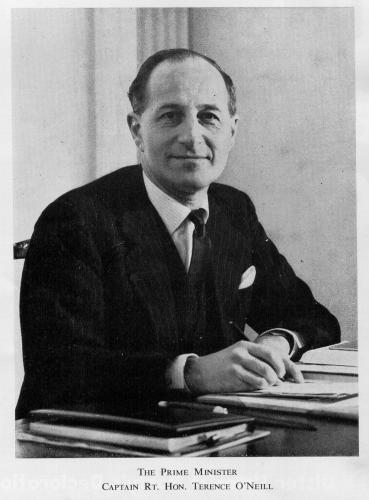
Terence O’Neill, then Northern Ireland Prime Minister, together with William Craig, then Home Affairs Minister, and Brian Faulkner, then Minister of Commerce, met in Downing Street, London, with Harold Wilson, then British Prime Minister, and James Callaghan, then British Home Secretary, for talks about the situation in Northern Ireland.

The British Prime Minister stated that there would be no change in the constitutional position of Northern Ireland without the consent of the Northern Ireland population.

[Wilson is believed to have pressed O’Neill to introduce urgent reforms. A reforms package was announced on 22 November 1968.]

Thursday 4 November 1971

British soldiers shot dead a man in Belfast. A British soldier died seven weeks after being mortally wounded in Belfast.

Brian Faulkner,

Brian Faulkner, then Northern Ireland Prime Minister, went to London for a meeting with Harold Wilson, then leader of the Labour Party, and James Callaghan, then shadow British Home Secretary.

Tuesday 4 November 1975

Merlyn Rees

Merlyn Rees, then Secretary of Sate for Northern Ireland, announced that anyone convicted of terrorist crimes committed after 1 March 1976 would not be accorded special category status.

Saturday 4 November 1978

The Social Democratic and Labour Party (SDLP) annual conference voted that British withdrawal was ‘desirable and inevitable’. The party also called for fresh talks between the British and Irish governments and representatives of the two communities in Northern Ireland.

Thursday 4 November 1982

The Irish coalition government was defeated in a vote of confidence in the Dáil.

Friday 4 November 1983

The Irish Republican Army (IRA) planted a bomb in a lecture room of the (then) Ulster Polytechnic at Jordanstown, County Antrim. The bomb was targeted at a lecture to members of the Royal Ulster Constabulary (RUC) and killed two officers and injured a further 33. [Another officer died from his injuries on 13 August 1984.]

Sunday 4 November 1984

In an article in the Sunday Press it was claimed that Margaret Thatcher, then British Prime Minister, had twice asked her advisors to produce assessments on the possibility of repartition, redrawing the border between Northern Ireland and the Republic of Ireland.

Tuesday 4 November 1986

It was revealed that Margaret Thatcher, then British Prime Minister, had written to Garret FitzGerald, then Taoiseach (Irish Prime Minister), and rejected suggestions by the Irish government that Diplock courts in Northern Ireland should be heard by three judges instead of one.

Saturday 4 November 1989

The Social Democratic and Labour Party (SDLP) held its annual conference in Newcastle, County Down.

Wednesday 4 November 1992

The Northern Ireland Office (NIO) offered to extend 100 per cent capital funding to Catholic (maintained) schools

Thursday 4 November 1993

John Hume

John Hume, then leader of the Social Democratic and Labour Party (SDLP), had a meeting with John Major, then British Prime Minister, in London. Hume later stated that there could be peace within a week if his proposals were adopted. Gordon Wilson revealed that he, along with two other people, had held a meeting with three leaders of Loyalist paramilitaries. The meeting took place earlier in the week.

Friday 4 November 1994

Seamus Mallon, then deputy leader of the Social Democratic and Labour Party (SDLP), called for the Royal Ulster Constabulary (RUC) to be split into four local police forces.

[The idea was dismissed by Sir Hugh Annesley, then Chief Constable of the RUC, on 10 November 1994.]

Wednesday 4 November 1998

The Northern Ireland Office (NIO) revealed that there had been an estimated 1,000 punishment attacks since September 1994. A British Army Review Board decide that the two Scots Guards, who had been convicted of the murder of Peter McBride (18), a Catholic civilian, in Belfast on 4 September 1992, could rejoin their regiment.

Thursday 4 November 1999

David Trimble

David Trimble, then leader of the Ulster Unionist Party (UUP), flew to Washington to brief officials at the White House on the Mitchell Review of the Agreement. Tommy English, a former Ulster Democratic Party (UDP) delegate, was charged along with two other men with aggravated burglary. The charge related to accusations that the three men had caused damage with baseball bats to the Crow’s Nest pub in Belfast.

The Irish Times (a Dublin based newspaper) published the results of an opinion poll which indicated that the Irish Government’s satisfaction rating was at its lowest since the Coalition was formed in 1997. The survey was conducted by MRBI on behalf of the Irish Times.

Sunday 4 November 2001

New Police Service of Northern Ireland (PSNI) The Police Service of Northern Ireland (PSNI) came into being with a change to the name of the Royal Ulster Constabulary (RUC). The powers of the new Northern Ireland Policing Board took effect. The first batch of the 308 recruits to the PSNI, recruited on the basis of 50 per cent Catholic and 50 per cent Protestant, began their training. [The Patten report containing recommendations for the police service in Northern Ireland was published in September 1999 and an ‘Updated Implementation Plan 2001’ was published on 17 August 2001. The report called for sweeping changes to the RUC’s name, badge, structure, ethos, and recruitment procedures.]

——————————————————————————————————–


———————————————————————————

Remembering all innocent victims of the Troubles

Today is the anniversary of the death of the following  people killed as a results of the conflict in Northern Ireland

“To live in hearts we leave behind is not to die

– Thomas Campbell

To the innocent on the list – Your memory will live  forever

– To  the Paramilitaries  –

There are many things worth living for, a few things worth dying for, but nothing worth killing for.

 9  People lost their lives on the 4th November between 1971 – 1992

————————————————————

04 November 1971


Stephen McGuire,   (20)

nfNI
Status: British Army (BA),

Killed by: Irish Republican Army (IRA)
Died seven weeks after being shot by sniper at Henry Taggart British Army (BA) base, Ballymurphy, Belfast.

————————————————————

04 November 1971


Christopher Quinn,   (39)

Catholic
Status: Civilian (Civ),

Killed by: British Army (BA)
Shot while walking along entry by Unity Flats, off Upper Library Street, Belfast.

————————————————————

04 November 1974
Ivan Clayton,  (48)

Catholic
Status: Civilian (Civ),

Killed by: non-specific Loyalist group (LOY)
Security man. Shot at the entrance to Club Bar, University Road, Belfast

————————————————————

04 November 1976


Cornelius McCrory,   (17)

Catholic
Status: Civilian (Civ),

Killed by: non-specific Loyalist group (LOY)
Found shot on the bank of the Forth River, Glencairn, Belfast.

————————————————————

04 November 1981
Arthur Bettice,  (35)

Protestant
Status: Ulster Defence Association (UDA),

Killed by: Ulster Freedom Fighters (UFF)
Shot at his home, Silvio Street, Shankill, Belfast. Alleged informer

————————————————————

04 November 1983


John Martin,  (28)

Protestant
Status: Royal Ulster Constabulary (RUC),

Killed by: Irish Republican Army (IRA)
Killed by time bomb, hidden in ceiling of classroom, which exploded during lecture to Royal Ulster Constabulary (RUC) members, Ulster Polytechnic, Jordanstown, County Antrim.

————————————————————

04 November 1983


Stephen Fyfe,  (28)

Protestant
Status: Royal Ulster Constabulary (RUC),

Killed by: Irish Republican Army (IRA)
Killed by time bomb, hidden in ceiling of classroom, which exploded during lecture to Royal Ulster Constabulary (RUC) members, Ulster Polytechnic, Jordanstown, County Antrim.

————————————————————

04 November 1983


William McDonald,  (29)

Protestant
Status: Royal Ulster Constabulary (RUC),

Killed by: Irish Republican Army (IRA)
Injured by time bomb, hidden in ceiling of classroom, which exploded during lecture to Royal Ulster Constabulary (RUC) members, Ulster Polytechnic, Jordanstown, County Antrim. He died 12th August 1984.

————————————————————

04 November 1992


Michael Gilbride,  (36)

Catholic
Status: Civilian (Civ),

Killed by: Ulster Freedom Fighters (UFF)
Shot outside his parents’ home, Fernwood Street, Ballynafeigh, Belfast.

————————————————————


See below on how to order a copy of my No.1 Bestselling book: A Belfast Child 

3rd November – Deaths & Events in Northern Ireland Troubles

Key Events & Deaths on this day in Northern Ireland Troubles

3rd November

——————————————————————-

November 1975

Monday 3 November 1975

James Fogarty (22), who had been a Republican Clubs member, was shot dead at his home in Ballymurphy, Belfast, by members of the Provisional Irish Republican Army (PIRA). This killing was part of the continuing feud between the two wings of the IRA.

Wednesday 3 November 1976

Two Protestant civilians were killed in separate shooting incidents carried out by Republican paramilitaries in Dundrod, County Antrim and Tiger’s Bay, Belfast.

Saturday 3 November 1979

The Social Democratic and Labour Party (SDLP) held its annual conference. The party rejected calls for talks with the Irish Republican Army (IRA). The party also called for a joint approach by the British and Irish governments to finding a solution to the problems in Northern Ireland.

Tuesday 3 November 1981 s[ Political Developments.]

Friday 3 November 1989

In a speech, Peter Brooke, then Secretary of State for Northern Ireland, said that the Irish Republican Army (IRA) could not be defeated militarily. He also said that he would not rule out talks with Sinn Féin (SF) in the event of an end to violence. [His remarks caused controversy.]

Tuesday 3 November 1992

The ‘Belfast Brigade’ of the Irish People’s Liberation Organisation (IPLO) that it would disband. [This followed an internal feud and the intervention of the Irish Republican Army (IRA) on 31 October 1992.]

Wednesday 3 November 1993

The Irish Congress of Trade Unions (ICTU) organised peace rallies in Belfast and Derry.

Thursday 3 November 1994

Albert Reynolds, then Taoiseach (Irish Prime Minister), said that there would be no change in the constitutional status of Northern Ireland without the consent of the majority of its people.

Friday 3 November 1995

The Northern Ireland Office (NIO) published a document referred to as the ‘Building Blocks’ paper. Copies of the document had been given to the political parties and the Irish and American government during the previous week. The paper suggested that: “all-party preparatory talks and an independent international body to consider the decommissioning issue will be convened in parallel by the two governments”

. Hence the process was to be called the ‘twin-track’ process. Martin McGuinness, then Vice-President of Sinn Féin (SF), held a meeting with Michael Ancram, the Political Development Minister at the NIO, and discussed decommissioning of paramilitary weapons and also all-party talks.

Sunday 3 November 1996

Gerry Adams, then President of Sinn Féin (SF), refused to comment on reports in the Sunday Tribune (a Dublin based newspaper) that the British government had reopened contacts with Sinn Féin (SF). Sean Brady succeeded Cathal Daly and was appointed as Archbishop of Armagh and head of the Catholic church in Ireland.

Wednesday 3 November 1999

The Royal Ulster Constabulary (RUC) conducted a series of raids in County Armagh and County Antrim against Loyalist paramilitaries. Fifty RUC detectives were involved in the operation and three men were arrested and arms and explosives recovered. In one of the raids at Stoneyford Orange Hall, County Antrim, the police held six men for questioning when military documents were uncovered with the personal details of over 300 Republicans from Belfast and south Armagh.

The Orange Order said it was “aghast” at the finds. Sinn Féin (SF) said the documents were evidence of collusion between the security forces and Loyalist paramilitaries. The RUC held three men for questioning about the killing of Pat Finucane, a Belfast solicitor shot dead on 12 February 1989. The arrests were made at the request of the team carrying out an inquiry into the killing. The team was headed by John John Stevens, then Commissioner of the Metropolitan Police. John White, then Ulster Democratic Party (UDP) spokesman, accused the inquiry team of “deliberately harassing Loyalists”.

Saturday 3 November 2001

Saturday (midnight) marked the new deadline for the election of a First Minister and a Deputy First Minister by the parties in the Northern Ireland Assembly (NIA).

[The date represented a period of six weeks since the political institutions were restored to power following their last 24 hour suspension (22 September 2001). John Reid, then Secretary of State for Northern Ireland, allowed the deadline to pass without taking any action. The intention was to try to elect a First Minister and a Deputy First Minister on Monday 5 November 2001. The Democratic Unionist Party (DUP) announced that it would seek a legal challenge to the decision taken by Reid.]

——————————————————————————————


———————————————————————————

Remembering all innocent victims of the Troubles

Today is the anniversary of the death of the following  people killed as a results of the conflict in Northern Ireland

“To live in hearts we leave behind is not to die

– Thomas Campbell

To the innocent on the list – Your memory will live  forever

– To  the Paramilitaries  –

There are many things worth living for, a few things worth dying for, but nothing worth killing for.

  4   People lost their lives on the 3rd November between 1975 – 1991

————————————————————

03 November 1975


 James Fogarty,  (22)

Catholic
Status: Civilian Political Activist (CivPA),

Killed by: Irish Republican Army (IRA)
Former Republican Clubs member. Shot at his home, Rock Grove, Ballymurphy, Belfast. Official Irish Republican Army (OIRA) / Irish Republican Army (IRA) feud.

————————————————————

03 November 1976
Samuel McConnell,  (59)

Protestant
Status: Civilian (Civ), Killed by: non-specific Republican group (REP)
Shot at his farm, Sycamore Road, Dundrod, County Antrim.

————————————————————

03 November 1976


Georgina Strain,   (50)

Protestant
Status: Civilian (Civ),

Killed by: non-specific Republican group (REP)
Shot at her home, Hogarth Street, Tiger’s Bay, Belfast.

————————————————————

03 November 1991


 Gerard Maginn,   (17)

Catholic
Status: Civilian (Civ),

Killed by: Royal Ulster Constabulary (RUC)
Found shot in abandoned stolen car, Glen Road, Andersonstown, Belfast.

————————————————————

See below on how to order a copy of my No.1 Bestselling book: A Belfast Child 

2nd November – Deaths & Events in Northern Ireland Troubles

Key Events & Deaths on this day in Northern Ireland Troubles

 2nd November

———————————————————————————————

Saturday 2 November 1968

There was a march in Derry by the fifteen committee members of the Derry Citizen’s Action Committee (DCAC). The march took place over the route of the banned 5 October 1968 march. Thousands of people walked in support behind the DCAC committee.

[Due to the number of people taking part the Royal Ulster Constabulary (RUC) were unable to prevent the march taking place.] [ Civil Rights Campaign; Law Order. ]

Tuesday 2 November 1971

The Irish Republican Army (IRA) exploded two bombs on the Ormeau Road in Belfast, one at a drapery shop and the other at the Red Lion bar, and killed three Protestant civilians; John Cochrane (67), Mary gemmell (55) and William Jordan (31).

Thursday 2 November 1972

Fianna Fáil, then the goverment of the Republic of Ireland, introduced a bill to the Dáil to remove the special position of the Catholic Church from the Irish Constitution.

Thursday 2 November 1978

[A British Army intelligence document, ‘Northern Ireland: Future Terrorist Trends’, was uncovered. The document contained an assessment of the capacity of the Irish Republican Army (IRA). It noted that the calibre of members was high and that the new ‘cell structure’ that the Active Service Units (ASUs) had adopted made them less vulnerable to informers.]

Tuesday 2 November 1982

Representatives of the Social Democratic and Labour Party (SDLP) held a meeting with James Prior, then Secretary of State for Northern Ireland, and told him that the party would continue its boycott of the Assembly.

Saturday 2 November 1985

Early Ulster Clubs

Loyalists began a campaign to establish ‘Ulster Clubs’ in each District Council area in Northern Ireland. To begin the campaign there was a march through Belfast by an estimated 5,000 members of the United Ulster Loyalist Front (UULF). The main aim of the organisation was to oppose any forthcoming Anglo-Irish agreement.

Sinn Féin began a two day Ard Fheis (annual conference) during which a debate was held on a motion that the party’s “… policy on abstentionism be viewed as a tactic and not as a principle”.

[In essence this proposed that SF should in the future consider taking up, if successful, any seats won by the party in the Dail, the parliament of the Republic of Ireland. After a vote however the motion was defeated by 187 votes to 161. The issue was debated again at the Ard Fheis held on 1-2 November 1986.]

Sunday 2 November 1986

SF End Abstentionism / Split in SF

During the second day of the Sinn Féin (SF) Ard Fheis in Dublin, a majority of delegates voted to end the party’s policy of abstentionism – that of refusing to take seats in Dáil Éireann. The change in policy led to a split in SF and Ruairí Ó Brádaigh, a former President of SF, Dáithí Ó Conaill, a former vice-President of SF, and approximately 100 people staged a walk-out. [Ó Brádaigh and Ó Conaill went on to establish a new organisation called Republican Sinn Féin (RSF).]

Saturday 2 November 1991

The Irish Republican Army (IRA) exploded a bomb at the military wing of Musgrave Park Hospital in Belfast killing two British soldiers. Eighteen people were also injured in the attack.

Tuesday 2 November 1993

John Major, then British Prime Minister, proposed a series of bilateral meetings with the leaders of the four main (constitutional) political parties to try to start a talks process. The Ulster Unionist Party (UUP) and the Democratic Unionist Party (DUP) said that the parties would not talk to the Social Democratic and Labour Party (SDLP) until the Hume-Adams Initiative was ended.

Thursday 2 November 1995

An article by Gerry Adams, then President of Sinn Féin (SF), entitled ‘Peace Process in Very Serious Difficulty‘, was published in An Phoblacht (Republican News). Adams held a meeting with John Bruton, then Taoiseach (Irish Prime Minister), in Dublin.

Monday 2 November 1998

Bertie Ahern, then Taoiseach (Irish Prime Minister), became the first Taoiseach in over 30 years to visit Stormont. Ahern was there to discuss the North-South Ministerial Council.

Tuesday 2 November 1999

Royal Ulster Constabulary (RUC) detectives found a number of pipe-bombs hidden in a hedgerow while conducting a search of the Loyalist Mourneview area of Lurgan, County Armagh.

Martin McGartland
Martin McGartland.

The RUC in Belfast and police in Glasgow, Scotland, arrested two men in a joint operation. The men were held for questioning about the shooting of Martin McGartland. McGartland, formerly a member of the Irish Republican Army (IRA) who turned informer, was shot and injured on 17 June 1999 at his home in Whitley Bay, England. McGartland blamed the IRA for trying to kill him.

[The two men were questioned by police in Northumbria but were released on 4 November 1999.] George Mitchell, then chairman of the Review of the Agreement, indicated that he thought the Review would end within a week. He also announced that he was asking John de Chastelain for an assessment of the impasse over decommissioning.

Friday 2 November 2001

There was a meeting of the Northern Ireland Assembly to try to elect a First Minister and a Deputy First Minister. David Trimble, then leader of the Ulster Unionist Party (UUP), stood for re-election to the post of First Minister.

Mark Durkan (leader in waiting of the Social Democratic and Labour Party; SDLP), then Minister of Finance and Personnel, stood for the post of Deputy First Minister. The Democratic Unionist Party (DUP) opposed the election of Trimble and the party obtained enough Unionist support to prevent his election. Trimble needed 30 ‘Unionist’ votes to secure his re-election but only managed to obtain 29 votes. The motion therefore fell although 72 voted in favour of it as opposed to 30 against. The Northern Ireland Women’s Coalition had earlier won a motion to reduce the 30 days notice required for Members of the Legislative Assembly (MLAs) to re-nominate themselves as ‘Unionist’, ‘Nationalist’, or ‘Other’.

The NIWC then changed the community nomination of its two MLAs from ‘Other’ to one ‘Unionist’ and one ‘Nationalist’. Despite this move Trimble failed to be elected. [John Reid, then Secretary of State for Northern Ireland, faced a decision on what action to take. He could have suspended the Assembly for either an open-ended period and thus re-introduce Direct Rule.

Another option was to call fresh Assembly elections. Another possibility was that the Secretary of State could have suspended the Assembly for one day (this has already been done twice before) which would allow a further six week period in which to find agreement. In the event Reid decided to simply ignore the deadline. The Assembly met again on Monday 5 November 2001 but it was at a meeting on Tuesday 6 November 2001 that Trimble and Durkan were elected.]

—————————————

———————————————————————————

Remembering all innocent victims of the Troubles

Today is the anniversary of the death of the following  people killed as a results of the conflict in Northern Ireland

“To live in hearts we leave behind is not to die

– Thomas Campbell

To the innocent on the list – Your memory will live  forever

– To  the Paramilitaries  –

There are many things worth living for, a few things worth dying for, but nothing worth killing for.

  10  People lost their lives on the 2nd November between 1971 – 1993

————————————————————

02 November 1971
John Cochrane, (67)

Protestant
Status: Civilian (Civ),

Killed by: Irish Republican Army (IRA)
Killed in bomb attacks on drapery shop and Red Lion Bar, either side of Ormeau Road Royal Ulster Constabulary (RUC) base, Belfast. Inadequate warning given.

————————————————————

02 November 1971
Mary Gemmell, (55)

Protestant
Status: Civilian (Civ),

Killed by: Irish Republican Army (IRA)
Killed in bomb attacks on drapery shop and Red Lion Bar, either side of Ormeau Road Royal Ulster Constabulary (RUC) base, Belfast. Inadequate warning given.

————————————————————

02 November 1971
William Jordan,  (31)

Protestant
Status: Civilian (Civ), Killed by: Irish Republican Army (IRA)
Injured in bomb attacks on drapery shop and Red Lion Bar, either side of Ormeau Road Royal Ulster Constabulary (RUC), Belfast. Inadequate warning given. He died on 4 November 1971.

————————————————————

02 November 1974
Lorenzo Sinclair,   (44)

Protestant
Status: Civilian (Civ),

Killed by: non-specific Republican group (REP)
Security man. Shot from passing car, at the entrance to Park Bar, Lawther Street, Tiger’s Bay, Belfast.

————————————————————

02 November 1976

Noel McCabe,   (25)

Protestant
Status: Royal Ulster Constabulary (RUC),

Killed by: Irish Republican Army (IRA)
Undercover Royal Ulster Constabulary (RUC) member. Shot while sitting in civilian type car, junction of Falls Road and Clonard Street, Belfast.

————————————————————

02 November 1977
Walter Kerr,  (34)

Protestant
Status: Ulster Defence Regiment (UDR),

Killed by: Irish Republican Army (IRA)
Off duty. Died one week after being injured when detonated booby trap bomb, attached to his car, outside his home, Magherafelt, County Derry.

————————————————————

02 November 1990
Albert Cooper,   (42)

Protestant
Status: Ulster Defence Regiment (UDR),

Killed by: Irish Republican Army (IRA)
Off duty. Killed by booby trap bomb attached to car at his workplace, a garage, Union Street, Cookstown, County Tyrone.

————————————————————

02 November 1991


Philip Cross,   (33)

nfNI
Status: British Army (BA),

Killed by: Irish Republican Army (IRA)
Killed in time bomb attack on Musgrave Park British Army (BA) hospital base, Belfast.

————————————————————

02 November 1991


Craig Pantry,  (20)

nfNI
Status: British Army (BA),

Killed by: Irish Republican Army (IRA)
Killed in time bomb attack on Musgrave Park British Army (BA) hospital base, Belfast.

————————————————————

02 November 1993


Brian Woods,  (30)

Protestant
Status: Royal Ulster Constabulary (RUC),

Killed by: Irish Republican Army (IRA)
Died two days after being shot by sniper, while at Royal Ulster Constabulary (RUC) Vehicle Check Point (VCP), Upper Edward Street, Newry, County Down.

————————————————————

See below on how to order a copy of my No.1 Bestselling book: A Belfast Child