John Dunlop McKeague (1930 – 29 January 1982) was a prominent Ulster loyalist and one of the founding members of the paramilitary group the Red Hand Commando in 1970. Authors on the Troubles in Northern Ireland have accused McKeague of involvement in the Kincora Boys’ Home scandal but he was never convicted.
The views and opinions expressed in this post/documentaries are soley intended to educate and provide background information to those interested in the Troubles of Northern Ireland. They in no way reflect my own opinions and I take no responsibility for any inaccuracies or factual errors.
Before moving to Belfast he had already been questioned in relation to a sexual assault on two young boys. The charges were dropped after the intervention of some friends who held prominent positions in Northern Irish society.
McKeague split from Paisley in late 1969 under uncertain circumstances. Rumours that a young man with whom McKeague was living was his boyfriend had been rife but McKeague did not discuss the details. He stated only that he had been summoned to a meeting by Paisley where he was told he was an “embarrassment” and would have to leave the Free Presbyterian Church.
Whatever the circumstances, the two became bitter enemies, with McKeague frequently criticising Paisley in print.
Early loyalist involvement
McKeague’s relationship with William McGrath‘s Tara, a partially clandestine organisation that sought to drive Roman Catholicism out of all of Ireland and re-establish an earlier Celtic Christianity which it claimed had existed on the island centuries earlier, has been the subject of some disagreement.
According to Tim Pat Coogan McKeague was a founder-member of Tara of 1966 although he does not eleaborate on the details. Chris Moore, in his investigation into the Kincora scandal, insists that McKeague was never a member of Tara but that he and McGrath had met to discuss trading weapons between their two groups and that following these meetings McKeague had become a regular visitor to Kincora, where he was involved in several rapes of underage boys living at the home.
Although making no comment on his membership or otherwise of the group Jim Cusack and Henry McDonald insist that McKeague shared the far right conspiratorial views advanced by McGrath and UPV leader Noel Doherty.
Martin Dillon also makes no comment on McKeague and Tara but insists that he was one of a number of shadowy figures, along with McGrath, who played a leading role in the formation of the Ulster Volunteer Force (UVF) in 1966 and in helping to direct its strategy for the rest of the 1960s.
In late 1969 Thomas McDowell, a member of the Free Presbyterian Church who held dual membership of the UPV and UVF, was killed after a bungled attempt to blow up the power station at Ballyshannon led to him being electrocuted, suffering severe burns.
Investigations by the Garda Síochána, who found UVF insignia on McDowell’s coat, led them to question his associate Samuel Stevenson who named McKeague as a central figure in a series of UVF explosions that had been carried out at the time, many involving UPV members.
The case went north, where the previous explosions had taken place, and on 16 February 1970 the trial opened. McKeague, along with William Owens (McKeague’s 19-year-old flatmate), Derek Elwood, Trevor Gracey and Francis Mallon, were charged with causing an earlier explosion at Templepatrick.
The case collapsed after serious doubt was cast on the character of Stevenson, whose evidence was the main basis of the prosecution’s case
Shankill Defence Association
In 1968 McKeague became a regular figure amongst groups of locals who every night congregated in large groups in the Woodvale area close to Ardoyne after a series of incidents between loyalists and republicans during which flags from both sides had been forcibly removed.
Having split from the UPV due to its perceived inaction in May 1969, McKeague addressed a meeting of loyalists in Tennent Street Hall at which he called for organisation against Catholic rioters. From this meeting he founded the Shankill Defence Association(SDA), with the proclaimed intention to defend the Shankill Road from Catholic rioters.
He became a notorious figure locally, usually prominent in the rioting, carrying a stick and wearing a helmet.
The violence of the SDA was accompanied by equally violent rhetoric from McKeague as he boasted that the group possessed “hundreds of guns” and vowed that
“We will see the battle through to the end”.
His militant stance won him the public support of Ronald Bunting who, like McKeague had earlier been associated with Paisley but had since broken from him.
In November 1969, McKeague was cleared of a charge of conspiracy to cause explosions. He was however sentenced to three months imprisonment for unlawful assembly.
McKeague’s absence on remand for the initial charges saw his stock fall on the Shankill, where he was already mistrusted due to being from east Belfast and where his reputation had been further blackened by supporters of his former friend Ian Paisley.
Leaving the Shankill he attempted to set up a group similar to the SDA on the Donegall Roadbut was declared persona non grata by the head of an existing local Defence Committee, who was a loyal Paisleyite. This, combined with a rumour that McKeague was a “fruit“, saw him abandon all initiatives in the west and south of the city and concentrate on east Belfast.
The SDA continued in his absence until 1971 when it merged with other like-minded vigilante groups to form the Ulster Defence Association (UDA).
Much of the content of the magazine was of a low-brow nature, containing jokes and cartoons in which Catholics were portrayed as lazy, dirty, stupid and alcoholic or, in the case of women, highly promiscuous.
In 1971 he was tried for incitement to hatred after publishing the controversial Loyalist Song Book. The first man to be tried under the Incitement to Hatred Act, McKeague’s book included the line
“you’ve never seen a better Taig than with a bullet in his head”.
After the jury disagreed at his trial a retrial was ordered at which he and a co-defendant were acquitted. Martin Dillon argues that it was around this time that RUC Special Branch first recruited him as an agent, allegedly using information they had obtained about his paedophile activities to force him to agree. He was handed over to the Intelligence Corps by Special Branch the following year.
Loyalist paramilitarism
John McKeague and mother
His mother, Isabella McKeague, was burned alive on 9 May 1971 when the UDA petrol-bombed the family shop in Albertbridge Road, Belfast. Reporting on her death in Loyalist News, John McKeague claimed she had been….
“murdered by the enemies of Ulster”,
….a common term for republicans.
In fact, the UDA had tired of McKeague both for his loose cannon attitude in launching attacks and starting riots without consulting their leadership and due to his promiscuous homosexuality with teenage partners. According to Ed Moloney a dispute over money had also been central to the schism between McKeague and the UDA.
McKeague broke fully from the UDA and established the Red Hand Commando in the middle of 1972, recruiting a number of young men primarily in east Belfast and North Down.
McKeague had already been involved in organising the “Tartan gangs“, groups of loyalist youths who were involved in rioting and general disorder, and used these as the basis of his new group.
Following various attacks by his paramilitary organisation, in February 1973 he became one of the first loyalist internees and was later imprisoned for three years on an armed robbery charge (a conviction he disputed). He started two hunger strikes in protest against the Special Powers Act and prison conditions while in jail.
In his absence he lost control of the Red Hand Commando, which became an integral part of the UVF. UVF leader Gusty Spence however contended that he had secured McKeague’s agreement that the running of the Red Hand Commando should be taken over by the UVF not long after McKeague established the movement.
According to British military intelligence and police files McKeague was believed to have been behind the sadistic murder of a ten-year-old boy, Brian McDermott, in South Belfast in September 1973.
The killing, which involved dismemberment and the burning of the body in the Ormeau Park, was so gruesome that the local press speculated that it might have been carried out as part of a Satanic ritual. On 3 October 1975, Alice McGuinness, a Catholic civilian, was injured in an IRA bomb attack on McKeague’s hardware shop on the Albertbridge Road. She died three days later. McKeague’s sister was severely injured in the same bombing.
Ulster Nationalism
McKeague became a leading figure in the Ulster Loyalist Central Coordinating Committee (ULCCC), and in 1976 publicly endorsed Ulster nationalism in his capacity as an ULCCC spokesman. The aim of the group, which McKeague chaired, was to co-ordinate loyalist paramilitaries with the aim of founding a unified “Ulster army” although this premise did not prevent a loyalist feud between the UDA and UVF continuing following its foundation.
With John McClure, McKeague contacted Irish republicansRuairí Ó Brádaigh and Joe Cahill to initiate talks in an attempt to find a common platform for an independent Northern Ireland. This collapsed after Conor Cruise O’Brien discovered and revealed the activity.
McKeague met with Gerry Adams briefly to discuss the independence option but the meetings were unproductive and reportedly convinced Adams that such clandestine discussions with loyalist paramilitaries were a waste of time. The contact between McKeague and his allies and the republicans, which was not endorsed by the wider ULCCC, saw the group fall apart as both the UDA and Down Orange Welfare resigned from the co-ordinating body when it came to light.
McKeague was subsequently a leading figure in the Ulster Independence Association, a group active from 1979 in support of an independent Northern Ireland. McKeague served as deputy to George Allport’s leadership of the group.
Death
In January 1982 McKeague was interviewed by detectives investigating Kincora about his involvement in the sexual abuse. Fearful of returning to prison, McKeague told friends that he was prepared to name others involved in the paedophile ring to avoid a sentence.
However on 29 January 1982, McKeague was shot dead in his shop on the Albertbridge Road, East Belfast, reportedly by the INLA.
It has been argued that following McKeague’s threats to go public about all of those involved in Kincora his killing had been ordered by the Intelligence Corps, as many of those who could have named were also agents (often more effective than McKeague, who by that time was highly peripheral in paramilitary circles). To support this suggestion it has been stated by Jack Holland and Henry McDonald that of the two gunmen who shot McKeague one was a known Special Branch agent and the other was rumoured to have military intelligence links.
British government officials ‘knew about loyalist Glenanne Gang’
A member of the notorious loyalist killer group, the Glennan Gang, has told how he believes its leader personally killed more than 100 people and dismissed suggestions that a public inquiry would exposed the truth. In a rare interview from his home in South Africa, John Weir insists that a truth commission is the only way that victims will get closure. Connla Young reports.
Former RUC officer and Glenanne Gang member John Weir. Picture by New Red TV
A FORMER RUC officer and member of the notorious Glenanne gang has claimed the British government was aware of the group’s activities at the very highest level.
John Weir, who held the rank of sergeant, was speaking just weeks after a High Court judge ruled that the PSNI unlawfully frustrated any chance of an effective investigation into suspected state collusion with the sectarian killer gang.
Made up of members of the RUC, UDR and UVF, it operated across the Mid-Ulster area in the mid 1970s.
Based out of a farm owned by former RUC officer, James Mitchell in Glenanne in south Armagh, the gang is believed to have carried out around 120 murders, the majority of which were innocent Catholics.
Now one of its most prominent members, former sergeant John Weir, has said that the establishment of a truth commission and amnesty may be the only way some of the darkest secrets of the Troubles will ever be revealed.
Originally from Co Monaghan, he was a member of the RUC’s Special Patrol Group in Armagh when he became involved in the activities of the Glenanne Gang.
The former policeman gave evidence to the 2003 Barron Report – which examined the 1974 Dublin and Monaghan bombings that claimed the lives of 33 people and an unborn child.
He and another former colleague William ‘Billy’ McCaughey were convicted of taking part in the murder of father-of-seven William Strathearn (39) at his home in Ahoghill, Co Antrim, in April 1977.
The former Derry GAA player and shopkeeper had opened his front door at 2am after the gunmen said they needed aspirin for a sick child.
Convicted in 1980 he was released from prison in 1993 and later went to live in Nigeria.
Now living in South Africa, the former policeman last said that senior officials in Downing Street would have been aware of the group’s activities.
“Of course they would,” he said in an interview with the Irish News.
“How would they not be?
“Right, for example, the army commanders……do you mean to say that those men were not actually feeding information.
“Even they were feeding information direct to government.
“Obviously some of it was going through their senior officers but not all.
“Some of those men, they themselves were connected to parliament.
“And I know that and I also know that they know that even the very bottom of army intelligence, which I don’t think in a way were that capable a lot of them, but they knew all about Glenanne.”
After last month’s court ruling relatives of people killed by the gang demanded an independent inquiry be set up.
The views and opinions expressed in this post/documentaries are soley intended to educate and provide background information to those interested in the Troubles of Northern Ireland. They in no way reflect my own opinions and I take no responsibility for any inaccuracies or factual errors.
Most of its attacks took place in the “murder triangle” area counties Armagh and Tyrone. It also launched some attacks elsewhere in Northern Ireland and in the Republic of Ireland.
Twenty-five British soldiers and police officers were named as purported members of the gang. Details about the group have come from many sources, including the affidavit of former member and RUC officer John Weir; statements by other former members; police, army and court documents; and ballistics evidence linking the same weapons to various attacks. Since 2003, the group’s activities have also been investigated by the 2006 Cassel Report, and three reports commissioned by Irish Supreme Court Justice Henry Barron, known as the Barron Reports.
A book focusing on the group’s activities, Lethal Allies: British Collusion in Ireland, was published in 2013. It drew on all the aforementioned sources, as well as Historical Enquiries Team investigations.
Lethal Allies claims that permutations of the group killed about 120 people – almost all of whom were “upwardly mobile” Catholic civilians with no links to Irish republican paramilitaries. The Cassel Report investigated 76 killings attributed to the group and found evidence that British soldiers and RUC officers were involved in 74 of those. John Weir claimed his superiors knew he was working with loyalist militants but allowed it to continue.
The Cassel Report also said that some senior officers knew of the crimes but did nothing to prevent, investigate or punish. It has been alleged that some key members were double agentsworking for British military intelligence and RUC Special Branch.
Many of the victims were killed at their homes or in indiscriminate attacks on Catholic-owned pubs with guns and/or bombs. Some were shot after being stopped at fake British Army checkpoints, and a number of the attacks were co-ordinated.
When it wished to “claim” its attacks, the group usually used the name “Protestant Action Force“. The name “Glenanne gang” has been used since 2003 and is derived from the farm at Glenanne (near Markethill, County Armagh) that was used as the gang’s main ‘base of operations’.[12][13] It also made use of a farm near Dungannon.
Glenanne Gang
Fields near the farm where the gang was based (Ballylane townland, near Glenanne, County Armagh)
By the mid-1970s the violent ethno-political conflict known as the Troubles had radically transformed the daily lives of people in Northern Ireland; after five years of turbulent civil unrest, the bombings and shootings showed no signs of abating. The armed campaign waged by the Provisional IRA had escalated, with bombings in England and increased attacks on the security forces in Northern Ireland.
The British Army and the Royal Ulster Constabulary (RUC) bore the brunt of IRA violence and many Protestants felt their people to be under attack. Rogue members of the RUC Special Patrol Group (SPG) believed that the situation was rapidly deteriorating and that the IRA were actually ‘winning the war’. As early as the end of 1973, it was suggested that drastic measures had to be taken to defeat the organisation. The SPG was a specialised police unit tasked with providing back-up to the regular RUC and to police sensitive areas.
On 10 February 1975, the Provisional IRA and British government entered into a truce and restarted negotiations. The IRA agreed to halt attacks on the British security forces, and the security forces mostly ended its raids and searches.
However, there were dissenters on both sides. Some Provisionals wanted no part of the truce, while British commanders resented being told to stop their operations against the IRA just when—they claimed—they had the Provisionals on the run.
There was a rise in sectarian killings during the truce, which ‘officially’ lasted until February 1976. Ulster loyalist paramilitaries, fearing they were about to be forsaken by the British government and forced into a united Ireland,
increased their attacks on Roman Catholics and nationalists. Loyalist fears were partially grounded in fact as Secret Intelligence Service officer Michael Oatley had engaged in negotiations with a member of the IRA Army Council during which “structures of disengagement” from Ireland were discussed. This had meant a possible withdrawal of British troops from Northern Ireland.
Loyalists killed 120 Catholics in 1975, the vast majority civilians.They hoped to force the IRA to retaliate in kind and thus hasten an end to the truce.
It was during this exceptionally violent period that a group of loyalist extremists formed a loose alliance that was belatedly in 2003 given the name “Glenanne gang”.The gang, which contained over 40 known members, included soldiers of the British Army’s Ulster Defence Regiment (UDR), rogue elements of the RUC, the Mid-Ulster Brigade of the illegal paramilitary Ulster Volunteer Force (UVF) and some Ulster Defence Association (UDA) members.
This group began to carry out shooting and bombing attacks directed against Catholics and nationalists to retaliate for the IRA’s intensified military campaign. Most of these attacks took place in the area of County Armagh and Mid-Ulster referred to as the “murder triangle” by journalist Joe Tiernan. It also launched attacks elsewhere in Northern Ireland and in the Republic of Ireland.
The name “Glenanne gang” is derived from the farm at Glenanne (near Markethill, County Armagh) that was used as the gang’s arm dump and bomb-making site.
In his 2013 memoirs, Joseph Pearce, a British former white supremacist and senior member of the National Front who later converted to Catholicism and is a writer and academician at Aquinas College (Nashville, Tennessee, USA), revealed what he knew about collusion between the NF, the British Army, and loyalist death squads. According to Pearce,
“In spite of my own unwillingness to become too directly involved in the terrorist operations in Northern Ireland, I was very aware, as were the leaders of the UVF and UDA, that National Front members serving with the Army in Northern Ireland were smuggling intelligence information on suspected IRA members to the Loyalist paramilitaries. This information included photographs of suspected IRA members, the type of car they drove and its registration number, and other useful facts. I have little doubt that this information was used by the UVF and UDA to target and assassinate their enemies.”
Alleged members
The following people, among others, have been implicated by Justice Barron and Professor Douglass Cassel in their respective reports as having been members of the Glenanne gang:
Key figures[
John Oliver Weir (born 1950, County Monaghan, Republic of Ireland) — an officer in the RUC Special Patrol Group (an “anti-terrorist” unit) and UVF volunteer. Weir was the son of a gamekeeper and was brought up on an estate near Castleblaney. He attended a Protestant boarding school in Dublin.
After joining the RUC in 1970, he worked at Strandtown RUC station in Belfast. In 1972, he was transferred to Armagh where he was recruited by the SPG on 1 August 1973. Following the IRA killing of two members of the security forces in 1974 and 1975, he was sent for his own safety to the SPG unit in Castlereagh, Belfast. On an unspecified date between January 1975 and September 1976, he joined the Glenanne gang. Weir then spent six weeks at the Lisanelly Army base in Omagh; in 1976 he was promoted to the rank of sergeant and transferred to Newry RUC barracks.
He claimed to have been directly involved in the bomb attack at Tully’s Bar in Belleek, the attempted bombing of Renaghan’s Bar, Clontibret, County Monaghan, and to have visited the Glenanne farm regularly during the autumn of 1976. In November 1977, he was sent to Newtownhamilton RUC barracks. In 1980, he left the RUC upon his conviction for the 1977 killing of William Strathearn, a Catholic chemist. He was released from prison in 1992. During and after his imprisonment he made a number of allegations incriminating his former associates in the Glenanne gang. His 1999 affidavit was published in the 2003 Barron Report on the Dublin and Monaghan bombings.
Weir also implicated Chief Inspector Harry Breen in having direct knowledge of the gang’s activities in his Affidavit of 3 January 1999.
Among other claims, he stated “In summary, Down Orange Welfare was using RUC officers in Newry RUC station – McBride, Breen, myself – and another RUC officer, Sergeant Monty Alexander from Forkhill RUC station – to supply weapons to the UVF in Portadown. I later learned that these weapons were being manufactured by Samuel McCoubrey in Spa, Co. Down.”
William “Billy” McCaughey (died 2006) — Armagh RUC SPG officer who had acted as a close protection guard for Ulster Unionist Party politician John Taylor and a UVF volunteer. He was a former member of the Ulster Special Constabulary. McCaughey was implicated by his colleague Weir in many Glenanne gang attacks such as the O’Dowd shootings, the assault on the Rock Bar, and he admitted to having kidnapped a Roman Catholic priest.
McCaughey was convicted along with Weir for the killing of William Strathearn and sentenced to 16 years imprisonment. McCaughey received a seven-year sentence for wounding Michael McGrath during the attack on the Rock Bar, was sentenced on explosives and possession charges and was also sentenced to three years’ imprisonment for the kidnapping of Fr Hugh Murphy.
Billy Hanna (c. 1929 – 27 July 1975, Lurgan, County Armagh) — founder of the UVF Mid-Ulster Brigade and its commander until July 1975; he had also served as a sergeant in the C Company, 11th Battalion UDR before being dismissed for providing intelligence to the UVF. He was the gang’s staff instructor. Colin Wallace maintained Hanna had organised the Dublin bombings in May 1974.
Journalist Joe Tiernan alleged that Hanna was an Intelligence Corps agent. He was the person who had approached James Mitchell for permission to use the property as an arms dump and bomb-making site. Hanna was shot dead outside his home in Lurgan in July 1975.
He assumed leadership of the brigade upon the shooting death of Hanna, for which he was said by Tiernan to have been responsible. Weir implicated Robin Jackson in a number of the gang’s killings and has named him as having been a “key figure” in the gang.
Following the 1993 Yorkshire Television programme The Hidden Hand which implicated Jackson in the Dublin bombings but did not mention him by name, he was questioned. He denied involvement in the three car bombings which left 26 people dead.[33] and Miami Showband killings.
He was only convicted once (in 1981), for possession of a .22 pistol, a .38 revolver, a magazine, 13 rounds of ammunition, and hoods; however, he was released after having served two years of a seven-year sentence. Jackson’s fingerprints were found on a home-made silencer attached to a Luger pistol (serial number U 4) retrieved at Ted Sinclair’s farm in 1976.
Jackson’s name appeared on the Garda Síochána suspects list for the Dublin and Monaghan bombings.[34] Jackson was named in court as one of the killers of William Strathern by Weir and McCaughey. The court was told by an RUC officer that Jackson and Kerr were not before the court as part of “operational strategy”.
Jackson died of lung cancer in 1998.
Robert McConnell — a UVF volunteer and 2nd Battalion UDR corporal. The Barron Report lists him as one of the suspects in the Dublin bombings. He allegedly had links to both RUC Special Branch and the Intelligence Corps, and it was claimed he was controlled before and after the bombings by Robert Nairac.
McConnell was named by both Lily Shields and Laurence McClure as being involved in the Donnelly’s Bar killings. Weir states he took part in the John Francis Green shooting along with Robin Jackson and Harris Boyle. He was named by Weir as the leading gunman in the Reavey family shootings.
McConnell was killed by the IRA on 5 April 1976.
Laurence McClure — a UVF volunteer and RUC SPG officer, having joined the Armagh SPG in May 1975. He was a close neighbour of James Mitchell and owned a repair garage adjacent to the farm. McClure was named by Weir as having taken part in several sectarian attacks including those at Donnelly’s Bar and the Rock Bar, the latter for which he was convicted and received a two-year sentence, suspended for three years. Weir alleges that McClure had helped assemble the bombs used in Dublin.
McClure admitted being a getaway driver for those involved in the Donnelly’s Bar bombing and to have waited in the car with Lily Shields; the two acting as a “courting couple”.
McClure was charged with withholding information in relation to the attack on Donnelly’s Bar. The barrister for the UDR and the police … said he had obtained a nolle prosequi sentence, a Latin legal phrase meaning “to be unwilling to pursue” (amounting to “do not prosecute”) against the charge. The only person who can authorise a nolle prosequi is the Attorney General.
James Mitchell (c. 1920 – May 2008) — an RUC Reserve officer and the owner of the Glenanne farm. He joined the RUC Reserve in September 1974 and was stationed at Markethill. He left the force on 1 July 1977 for “personal reasons”.
Weir named him as a UVF member who regularly participated in paramilitary activities.Weir claimed that Mitchell admitted being involved in the Dublin and Monaghan bombings, and went on to claim that he had seen Mitchell mixing home-made ammonium-nitrate-and-fuel-oil explosive in the farmyard on one occasion.
He was convicted for possession of weapons found on his land after an RUC raid in December 1978. In an RUC interview on 9 August 2000, he staunchly denied Weir’s allegations and referred to him as
“a damned liar and convicted murderer”.
Mitchell died, aged 88, in May 2008 at Daisy Hill Hospital, Newry. Willie Frazer attended his funeral and told media
“I’m not saying he was lily–white but he was a decent man”.
Robert John “R.J”. Kerr (c. 1943 – 7 November 1997) — UDA commander. He was charged with having weapons and ammunition in suspicious circumstances in 1972; later found guilty of armed robbery on 10 March 1973. Kerr was sentenced in 1974 in relation to the intimidation and assaulting of two men in 1973 and received 18 months in jail. Kerr was named as one of the killers of William Strathearn by Weir and McCaughey. The court was told by an RUC officer that Jackson and Kerr were not before the court as part of “police strategy”.
He died in a mysterious explosion, his body having been found in the vicinity of a burnt-out boat that was being towed on a trailer on the main Newry to Warrenpoint Road.
Harris Boyle (1953, Portadown – 31 July 1975, Buskhill, County Down) — UDR soldier and UVF volunteer. Boyle was unmarried and worked as a telephone wireman. He was charged with having weapons and ammunition in suspicious circumstances in 1972. Boyle was killed when a bomb he had placed on the Miami Showband bus exploded prematurely.
He was implicated in the Dublin and Monaghan bombings, and the killing of IRA volunteer John Francis Green in County Monaghan. According to submissions received by Mr Justice Barron, the Monaghan bomb was assembled at his home on Festival Road in Portadown’s Killycomain estate.
Wesley Somerville (born County Tyrone – died 31 July 1975, Buskhill, County Down) — UDR soldier and a UVF lieutenant. He was a textile worker by trade. He was killed when a bomb he had placed on the Miami Showband bus exploded prematurely.
Wesley Somerville was also charged along with two others for kidnapping two bread deliverymen. The kidnapping charge was connected to a bomb attack at Mourne Crescent, Dungannon.
Weir named Somerville as having been involved in the 1974 bombing in Monaghan.
Gary Armstrong — RUC sergeant, given a two-year suspended sentence in relation to the kidnapping of a Catholic priest, Father Hugh Murphy, in retaliation for the murder of a policeman. Armstrong was named by Judge Barron as one of the group of RUC members who carried out the gun and bomb attack on the Rock Bar.
Joseph Stewart Young — UVF volunteer from Portadown. His name appears on the Garda suspects list for the Dublin and Monaghan bombings. John Weir claims that Young had been part of the unit that carried out the Monaghan bombing. When questioned, Young denied the allegation. He was also suspected of involvement in the attack on Donnelly’s bar.
Other members
Captain John Irwin — UDR intelligence officer. Weir declares in his affidavit that Irwin provided the explosives for the Dublin and Monaghan bombings and delivered them to Mitchell’s farm, where they were then assembled.
Lance corporal Thomas Raymond Crozier (born 1951, Lurgan, County Armagh) — C Company, 11th Battalion UDR, and UVF volunteer, he worked as a painting contractor. He was convicted in October 1976 in relation to the Miami Showband killings. He was also arrested in 1975 along with Samuel Fulton Neil and Robin Jackson in possession of four shotguns.
Sergeant James Roderick McDowell (from Lurgan, County Armagh) — also C Company, 11th Battalion UDR, and UVF volunteer, he was an optical worker; convicted in October 1976 in relation to Miami Showband killings.
John James Somerville (died January 2015) — former UDR soldier from Moygashel, County Tyrone; brother of Wesley (see above); worked as a lorry-helper; convicted on 9 November 1981 in relation to the Miami Showband killings. Somerville was also charged along with two others with kidnapping two bread deliverymen. The kidnapping charge was also connected to a bomb attack at Mourne Crescent in Dungannon. He was also convicted of an armed robbery on a CIÉ bus in Aughnacloy and causing approximately £12,000 worth of damage to the bus. He was named by Weir as having been involved in the Monaghan bombing.
Sarah Elizabeth “Lily” Shields — Mitchell’s housekeeper. She was named by Weir as having provided the getaway car for those who attacked McArdle’s Bar and Donnelly’s Bar. Charges were later brought against her for withholding information regarding the latter attack. However, the trial judge and DPP brought a nolle prosequi against the charge in April 1981.
Norman Greenlee — UDR soldier and UVF volunteer. The Star pistol (serial number 344164) used in a number of Glenanne gang attacks was found at Greenlee’s farm in Richhill, County Armagh in 1979. A large number of other weapons and ammunition was also found. He subsequently received a seven-year sentence for possessing the weapons and a concurrent four-year sentence for UVF membership.
George Moore was found guilty of the attempted killing of Patrick Turley, assault, and possession of a gun and ammunition.
Gordon Liggett — Ulster Defence Association (UDA) commander. He was found guilty of causing grievous and actual bodily harm to Patrick Turley; as well as armed robbery and possession of a gun and ammunition.
William Ashton Wright — UDR soldier. He was charged with having weapons and ammunition in suspicious circumstances in 1972. He was later found guilty of armed robbery, which had taken place on 10 March 1973. Wright was sentenced in 1974 in relation to the intimidation and assaulting of two men in 1973 and received a six-month suspended sentence.
George Hyde — charged in connection with the attempted murder of Patrick Turley; he was later found beaten to death in prison.
Edward “Ted” Sinclair (from Dungannon) was convicted of possession of a Luger pistol (serial number U 4), a .38 ACP pistol, homemade machine guns, gelignite and ammunition in 1976. He was released in 1979. Sinclair was arrested again in 1980 and charged with possession of a .45 revolver and ammunition. However, charges were withdrawn by the DPP. Sinclair was also charged with the 1976 killings of Peter and Jane McKearney (a married couple mistakenly believed to be the parents of an IRA volunteer with the same surname, Margaret McKearney, although there was no relation).
In 1982 (the following year), these charges were also dropped by the DPP.
Garnet James Busby was convicted of the killings of Peter and Jane McKearney in October 1975 (see above). He was also convicted of the killings of Andrew Small, James McCaughey, Joseph Kelly and Patrick Barnard at the Hillcrest Bar in Dungannon. He planted the bomb at O’Neill’s Bar in Dungannon. During his trial an RUC inspector told the court that the same UVF gang was responsible for the attack on the Miami Showband.
William Parr was convicted of Denis Mullen’s killing.
Billy Corrigan was named as taking part in Denis Mullen’s killing during the trial of William Parr. Corrigan was killed by the IRA in 1976.
Henry Garfield Liggett was convicted of the killing of Patrick McNeice.
Dorothy Mullan was convicted of driving the car to the site of Patrick McNeice’s killing.
Garfield Gerard Beattie was convicted of the killings of Denis Mullan, Jim McLoughlin and Patrick McNeice at the Eagle Bar in Charlemont; also convicted of the attempted killings of other patrons in the Eagle Bar.
David Henry Kane was convicted of the killing of Jim McLoughlin and the attempted killings of the other patrons in the Eagle Bar.
Joey Lutton — UDR soldier convicted of the attacks on the Eagle Bar and Clancy’s Bar in Charlemont.
Samuel Fulton Neill (died 25 January 1976) — brother-in-law of Robin Jackson, arrested in 1975 alongside Jackson and Thomas Crozier in possession of four shotguns. He was fatally shot five times in the head after leaving a Portadown pub, allegedly by Jackson, for having passed on information to the police about the people involved in the Miami Showband attack.
Trevor Barnard was charged along with two others with the kidnapping of two bread deliverymen. The kidnapping charge was also linked to a bomb attack at Mourne Crescent in Dungannon.
Laurence Tate — UDR soldier. He was convicted along with two others of the bombing of an empty bungalow near Dungannon. He was also convicted of the bombing of Killen’s Bar in Dungannon. He was arrested as part of the Miami Showband investigation.
Harold Henry McKay was convicted along with two others of the bombing of an empty bungalow near Dungannon. Also convicted of the bombing of Killen’s Bar in Dungannon. He was arrested as part of the Miami Showband investigation.
John Nimmons was convicted along with two others of the bombing of an empty bungalow near Dungannon. Also convicted of the bombing of Killen’s Bar in Dungannon. He was arrested as part of the Miami Showband investigation.
William Thomas Leonard — UDR soldier convicted of the killings of James and Gertrude Devlin, a married couple. He was also convicted of the bombing of Killen’s Bar in Dungannon, and of the armed robbery of the CIÉ bus in Aughnacloy which caused approximately £12,000 worth of damage to the bus.
Sammy McCoo was named by McClure and Shields as being involved in the attack on Donnelly’s bar. McCoo’s name later appeared on the Garda suspects list for the Dublin and Monaghan bombings.
Ian Mitchell — RUC officer, received a two-year sentence, suspended for three years in relation to the attack on the Rock Bar. Ian Mitchell was one of the investigating officers into the killings of Betty McDonald and Gerald McGleenan at the Step Inn, Keady, County Armagh.
David Wilson — RUC officer, received a one-year sentence, suspended for two years in relation to the attack on the Rock Bar.
Alexander McCaughey — father of Billy McCaughey, given a one-year suspended sentence in relation to the kidnapping of Fr. Murphy.
On The Hidden Hand programme made by Yorkshire Television in 1993, it was claimed that Robin Jackson was controlled by Nairac and 14th Intelligence.
In May 1977, Nairac was kidnapped by the IRA in Dromintee and taken across the border into the Republic where he was interrogated for more than an hour and pistol-whipped in Ravensdale Woods, County Louth. Nairac was then shot dead by Liam Townson.
Pte Ian Leonard Price, 2nd battalion, The Queens Reg Merlyn Rees, Secretary of State for Northern Ireland, lifted the proscription against the UVF on 4 April 1974, but it was made illegal once again on 3 October 1975; therefore, during the period between April 1974 and October 1975, membership of the UVF was not a crime. The largest loyalist paramilitary group in Northern Ireland, the Ulster Defence Association (UDA) was also not proscribed at the time.
Attacks attributed to the Glenanne gang
In 2004, the Pat Finucane Centre asked Professor Douglas Cassel (formerly of Northwestern University School of Law in Chicago) to convene an international inquiry to investigate collusion by members of the British security forces in sectarian killings in Northern Ireland committed during the mid-1970s. The gang’s involvement in the killings was to be investigated in particular.
The panel interviewed victims and their relatives, as well as four members of the security forces. The four members of the security forces were: RUC SPG officers John Weir and Billy McCaughey; psychological warfare operative Colin Wallace and MI6 operative Captain Fred Holroyd. They all implicated the Glenanne gang in the attacks. In seven out of eight cases, ballistic tests corroborated Weir’s claims linking the killings to weapons carried by the security forces. The interviews revealed many similarities in the way the attacks were carried out, while various documents (including the Barron Report) established a chain of ballistic history linking weapons and killings to the gang. Justice Barron commented in reference to the gang:
“This joining of RUC and UDR members with members of Loyalist paramilitary organisations is emphasised by the use of the same or connected guns by intermingled groups of these organisations.”
The Glenanne gang has been linked to the following attacks and/or incidents:
1972 and 1973
4 October 1972: killing of Catholic civilian Patrick Connolly. He was killed and his mother and brother were injured when a grenade was thrown through the window of their house in Portadown, County Armagh. The family were Catholics living in a mixed area of the town. The grenade was of a type manufactured in the United Kingdom “for use by the British Armed Forces”. According to reliable loyalist sources, UVF members were responsible.
20 February 1973: an armed robbery on a CIÉ bus in Aughnacloy, which caused approximately £12,000 worth of damage to the bus.
10 March 1973: attempted murder of Patrick Turley in Portadown.
10 March 1973: armed robbery, for which Glenanne gang members were later jailed.
24 May 1973: bombing of Killen’s Bar in Dungannon, County Tyrone. UDR soldiers Laurence Tate and William Thomas Leonard were convicted, along with two others.
5 August 1973: killing of Catholic civilians Francis and Bernadette Mullen. They were shot dead by two gunmen at their farmhouse in Broughadoey, near Moy, County Tyrone. Their two-year-old son was also wounded by gunfire. The “Ulster Freedom Fighters” claimed responsibility but it is believed UVF members were responsible.
28 October 1973: killing of Catholic civilian Francis McCaughey. He was wounded by a booby-trap bomb at a farm in Carnteel, near Aughnacloy, County Tyrone. He died on 8 November. The “Ulster Freedom Fighters” claimed responsibility but it is believed UVF members were responsible.His brother-in-law, Owen Boyle, was later shot dead by the Glenanne gang.
29 October 1973: killing of Catholic civilian Patrick Campbell. He was shot dead by a gunman who arrived at the door of his house in Banbridge, County Down. The “Ulster Freedom Fighters” claimed responsibility but it later emerged that UVF members had been responsible. Although Robin Jackson was arrested and Campbell’s widow picked him out as the killer at an identity parade, murder charges against him were soon dropped.
1974
17 January 1974: gun attack on Boyle’s Bar in Cappagh, County Tyrone. Two gunmen entered the pub and opened fire indiscriminately on the customers. Catholic civilian Daniel Hughes was killed and three others wounded.
19 February 1974: bomb attack on Traynor’s Bar at Aghinlig, between Blackwatertown and Charlemont, County Armagh. Catholic civilian Patrick Molloy and Protestant civilian John Wylie were killed. Two other civilians were wounded. In 1981 a serving UDR soldier, a former UDR soldier and a former UVF member were convicted of the murders.
7 May 1974: killing of Catholic civilians James and Gertrude Devlin, who were shot dead near their home at Congo Road, near Dungannon, County Tyrone. They were driving home with their 17-year-old daughter. As they neared their house, a man in a military uniform stopped the car and opened fire on them. James and Gertrude were killed outright and their daughter, Patricia, in the back seat, was wounded. UDR soldier William Thomas Leonard was convicted for the killings. His membership in the UDR was withheld from the courts by the police.
3 September 1974: shooting of T.J. Chambers in Mountnorris, County Armagh.
3 September 1974: shooting incident. The 9 mm Luger pistol used in the incident was the same often used in other Glenanne gang attacks, including the murders of the Reavey brothers.
27 October 1974: killing of Catholic civilian Anthony Duffy. His body was found at the back of a farmhouse at Mullantine, near Portadown, County Armagh. He had been beaten, strangled and then shot by UVF members after taking a lift from Lurgan to Portadown, together with a friend who managed to escape.
20 November 1974: gun attack on Falls Bar at Aughamullen, near Clonoe, County Tyrone. Catholic civilian Patrick Falls was killed and another wounded. UDR soldier James Somerville was convicted for the attack.
29 November 1974: attacks in Newry and Crossmaglen, County Armagh. A bomb exploded in a hallway of Hughes’ Bar in Newry, injuring many people. Catholic civilian John Mallon died of his injuries on 15 December. At the inquest an RUC witness said the pub was used by all sections of the community and had no links with any organization. Another bomb exploded in the hallway of McArdle’s Bar, Crossmaglen, injuring six. Catholic civilian Thomas McNamee died from his injuries almost a year later, on 14 November 1975.
According to reliable loyalist sources, UVF members were responsible for both attacks.
1975
January–April
10 January 1975: killing of IRA volunteer John Francis Green, who was found shot dead at a farmhouse in Tullynageer near Castleblayney, County Monaghan. In his statement, Weir claims that the gunmen were Robin Jackson, Robert McConnell, and Harris Boyle.
10 February 1975: gun attack on Hayden’s Bar in Gortavale, near Rock, County Tyrone. A gunman entered the pub and opened fire indiscriminately on the customers. Catholic civilians Arthur Mulholland and Eugene Doyle were killed while four others were wounded.
1 April 1975: killing of Catholic civilian Dorothy Trainor. She and her husband were shot by at least two gunmen as they walked through a park near Garvaghy Road, Portadown. Two of her sons were later killed by loyalists.The “Protestant Action Force” claimed responsibility.
3 April 1975: killing of Catholic civilian Martin McVeigh. He was shot dead near his home at Ballyoran Park, off the Garvaghy Road in Portadown, as he cycled home from work. Robin Jackson was later arrested in possession of the murder weapon, but the RUC did not question or charge him with the murder. The “Protestant Action Force” claimed responsibility.
11 April 1975: killing of Catholic civilian Owen Boyle. Gunmen shot him through the window of his house in Glencull, near Aughnacloy, County Tyrone. He died on 22 April 1975. The “Protestant Action Force” claimed responsibility.
21 April 1975: killing of Catholic civilians Marion Bowen (who was eight months pregnant), and her brothers, Seamus and Michael McKenna, by a booby-trap bomb left in Bowen’s house at Killyliss, near Granville, County Tyrone. Seamus and Michael were renovating the house, which had been unoccupied for almost a year. The “Protestant Action Force” claimed responsibility.
27 April 1975: gun attack on a social club in Bleary, County Down. Gunmen burst into the Catholic-frequented darts club and opened fire indiscriminately. Catholic civilians Joseph Toman, John Feeney and Brendan O’Hara were killed while others were wounded.
The “Protestant Action Force” claimed responsibility.
May–August
24 May 1975: bomb attack on the home of the Grew family in Moy, County Tyrone. Much of the house was destroyed and six children were injured. In 1981 a serving UDR soldier, a former UDR soldier and a former UVF member were convicted of partaking in the attack.
1 August 1975: gun attack on a minibus near Gilford, County Down. The minibus had been travelling from Banbridge to Bleary with nine people on board; all were Catholics and most had been returning from a regular bingo session. Like the Miami Showband attack, gunmen in British Army uniforms stopped the minibus at a fake military checkpoint.
They then opened fire, wounding seven people.Catholic civilian Joseph Toland was killed outright and another Catholic civilian, James Marks, died of his wounds in January 1976. According to reliable loyalist sources,UVF members were responsible.
2 August 1975: shooting at Fane Valley Park, Altnamachin, County Armagh.
22 August 1975: gun and bomb attack on McGleenan’s Bar in Armagh. A masked gunman burst into the crowded pub and opened fire while another planted a bomb. It exploded as they ran to a getaway car, causing the building to collapse. Catholic civilians John McGleenan, Patrick Hughes and Thomas Morris were killed while many others were injured. According to reliable loyalist sources, UVF members were responsible.
24 August 1975: killing of Catholic civilians Colm McCartney and Sean Farmer, who were found shot dead at Altnamachin, near Newtownhamilton, County Armagh. They were driving home from a Gaelic football match in Dublin when they were apparently stopped at a fake military checkpoint by men in British Army uniform.
They were found shot dead a short distance away. Earlier that night, three RUC officers in an unmarked car had been stopped at the same checkpoint but had been allowed through. However, the officers suspected that the checkpoint had been fake. After receiving radio confirmation that there were no authorized checkpoints in the area that night, they reported the incident and requested help from the British Army to investigate it, but no action was taken. The HET said the original police investigation “barely existed”, describing the police’s failure to interview eyewitnesses as “inexplicable”.
Weir claims that an RUC officer confessed to partaking in the attack, alongside a UDR soldier and UVF members. The “Protestant Action Force” claimed responsibility.
September–December
1 September 1975: killing of SDLP member Denis Mullen, who was shot dead by two gunmen who called at the door of his home in Collegeland, County Armagh.
4 September 1975: gun and bomb attack on McCann’s Bar in Ballyhegan, County Armagh. Catholic civilian Margaret Hale died of her wounds on 22 September.
23 October 1975: killing of Catholic civilians Peter and Jane McKearney. They were shot dead by gunmen who arrived at the door of their house in Listamlat, near Moy, County Tyrone. The gunmen may have mistaken the couple for the parents of an IRA member with the same surname — Margaret McKearney — but they were not related. Margaret McKearney was wanted by Scotland Yard and the UVF had threatened to “eliminate” her.
A contemporary newspaper article reported that “Army issue ammunition” was used. Among the first on the scene were neighbours Charles and Teresa Fox, who were both later killed by the UVF in 1992.
19 December 1975: attacks in Dundalk and Silverbridge. At 6:20pm, a car bomb exploded outside Kay’s Tavern in Dundalk, Co Louth on the southern side of the border. Catholic civilians Hugh Watters and Jack Rooney were killed and more than twenty others were injured. Three hours later, gunmen attacked Donnelly’s Bar and filling station in Silverbridge, less than ten miles away on the northern side of the border. They fired at people outside the building, then fired on the customers and threw a bomb inside.
Two Catholic civilians (Patrick and Michael Donnelly) and an English civilian (Trevor Brecknell, married to a local woman) were killed. The “Red Hand Commando” claimed both attacks and it is believed they were co-ordinated. It is believed the Siverbridge attack was carried out by the Glenanne gang while the Dundalk bombing was carried out by other members of the Mid Ulster UVF, probably with some help from Belfast UVF members. RUC officer Laurence McClure admitted involvement in the Silverbridge attack. UDR Corporal Robert McConnell was also involved, according to John Weir and Lily Shields. Credible evidence from the RUC officer who led the investigation indicates that police believed they knew who the killers were and that the killers included RUC and UDR officers.The RUC refused the Garda Síochána access to a key witness in the Dundalk bombing.
Vallely’s pub in Ardress
26 December 1975: bomb attack on Vallelly’s Bar, Ardress, County Armagh. Catholic civilian Seamus Mallon was killed.
1976
4 January 1976: Reavey and O’Dowd killings. At about 6pm, gunmen broke into the Reavey family home in Whitecross, County Armagh. They shot brothers John, Brian and Anthony Reavey. John and Brian were killed outright while Anthony died of a brain hemorrhage less than a month later. Twenty minutes after the shooting, gunmen broke into the O’Dowd family home in Ballydougan, about twenty miles away. They shot dead Joseph O’Dowd and his nephews Barry and Declan O’Dowd. All three were members of the SDLP. Barney O’Dowd was wounded by gunfire. RUC officer Billy McConnell admitted taking part in the Reavey killings and accused RUC Reserve officer James Mitchell of being involved too. According to Weir, UDR Corporal Robert McConnell was the lead gunman in the Reavey killings and Robin Jackson was the lead gunman in the O’Dowd killings. The “Protestant Action Force” claimed responsibility for the two co-ordinated attacks.
7 March 1976: car bomb attack on the Three Star Inn, Castleblayney, County Monaghan. Civilian Patrick Mone was killed. The bomb was placed in a car next to that of Mr Mone’s and was not intended for him. According to Weir, the attack was carried out by RUC officer Laurence McClure and UDR soldier Robert McConnell, using explosives provided by UDR Captain John Irwin and stored beforehand at James Mitchell’s farmhouse. A memorial to Patrick Mone is near the site of the bombing in Castleblayney.
8 March 1976: bomb and gun attack on Tully’s Bar in Belleeks, County Armagh. RUC officer John Weir admitted helping to plan the attack and accused RUC Reserve officer James Mitchell of being the mastermind.
17 March 1976: car bomb attack on Hillcrest Bar in Dungannon on Saint Patrick’s Day. Four Catholic civilians – Joseph Kelly, Andrew Small and 13-year-olds Patrick Bernard and James McCaughey – were killed. Twelve others were injured.
15 May 1976: attacks in Charlemont, County Armagh. Gunmen detonated a bomb in the hallway of Clancy’s Bar, killing three Catholic civilians (Felix Clancy, Sean O’Hagan and Robert McCullough) and injuring many others. They then shot into the nearby Eagle Bar, killing a Catholic civilian, Frederick McLaughlin, and wounding several others. Locals claimed that the UDR had been patrolling the village for a number of nights beforehand, but were absent the night of the attacks. UDR soldier Joey Lutton was later convicted of partaking in both attacks.His s tatus as a member of the security forces was withheld from the courts by the police.
5 June 1976: attack on the Rock Bar near Keady, County Armagh. Gunmen arrived at the pub and shot Catholic civilian Michael McGrath in the street outside. They then fired at customers through the windows and threw a nail bomb inside, but it only partially exploded. The HET said the RUC investigation is “cursory, ineffective and even fails to interview the only witness, who survived being shot down”.
RUC officers William McCaughey, Laurence McClure and Ian Mitchell confessed and were convicted for the attack, while RUC officer David Wilson was convicted for withholding knowledge that the attack was to take place. However, only McCaughey served time in prison. According to the book Lethal Allies, the officers were wearing their police uniforms underneath boiler suits.
25 July 1976: killing of Catholic civilian Patrick McNeice, shot dead at his home in Ardress, County Armagh.
16 August 1976: car bomb attack on the Step Inn, Keady, County Armagh. Catholic civilians Elizabeth McDonald and Gerard McGleenon were killed and others were injured. Ten days before the bombing, the RUC asked the Army to put Mitchell’s farmhouse under surveillance because they had intelligence that a bomb was being stored there. According to Weir, the bomb was to be detonated at Renaghan’s Bar across the border in Clontibret, County Monaghan. On 15 August, Weir scouted the route to the pub but was stopped by Gardaí, who told him they were mounting extra security due to a warning from the RUC. Weir told the rest of the gang and they decided to attack Keady instead. The Army surveillance operation was ended and the bomb attack went ahead. Weir, Mitchell and the others involved were not arrested by the RUC and were allowed to remain in the force.
1977 onward
25 February 1977: killing of Catholic RUC officer Joseph Campbell, who was shot dead outside the RUC base in Cushendall, County Antrim. Weir claims that the killers were alleged RUC Special Branch agent Robin Jackson, RUC officer William McCaughey, and R.J. Kerr.
19 April 1977: killing of Catholic civilian William Strathearn, a chemist, who was shot dead at his shop in Ahoghill, County Antrim. RUC SPG officers John Weir and Billy McCaughey were convicted for the killing.
18 June 1978: kidnapping of Father Hugh Murphy. This was in retaliation for the IRA’s kidnapping and killing of an RUC officer the day before. Murphy was eventually released unharmed after appeals from a number of Protestant ministers, including Ian Paisley. Sergeant Gary Armstrong and Constable Billy McCaughey, both of the RUC (along with the latter’s father, Alexander McCaughey), were convicted for the kidnapping.
29 February 1980: killing of Catholic civilian Brendan McLaughlin, who was killed in a drive-by-shooting on Clonard Street, Belfast. He was killed with the same Sterling submachine gun used in the Miami Showband, O’Dowd family and Devlin family killings.
Glenanne gang weapons linked to attacks
The Glenanne farm and the Dublin and Monaghan bombings
James Mitchell, RUC reserve officer and owner of the Glenanne farm
It is claimed in the Barron Report that Billy Hanna had asked James Mitchell for permission to use his farm as a UVF arms dump and bomb-making site.Information that loyalist paramilitaries were regularly meeting at the farm appeared on British Intelligence Corps documents from late 1972.
According to submissions received by Mr Justice Barron, the Glenanne farm was used to build and store the bombs that exploded in Dublin and Monaghan. The report claims they were placed onto Robin Jackson’s poultry lorry, driven across the border to a carpark, then activated by Hanna and transferred to three allocated cars. These cars exploded almost simultaneously in Dublin’s city centre at about 5.30pm during evening rush hour, killing 26 civilians. Ninety minutes later a fourth car bomb exploded in Monaghan, killing another seven civilians.
Mitchell and his female housekeeper, Lily Shields both denied knowledge that the farm was used for illicit paramilitary activity. They also denied partaking in any UVF attacks. In his affidavit, John Weir affirms that the farmhouse was used as a base for UVF operations that included the Dublin and Monaghan bombings.
Weir also stated that on one occasion an RUC constable gave him two weapons to store at the Glenanne farm:
“He then offered me the two sub-machine guns because he knew about my connection to Loyalist paramilitaries. I accepted them and took them to Mitchell’s farmhouse”.
In his affidavit, Weir recounted when in March 1976 he had gone to the farm where between eight and ten men dressed in camouflage had been parading in the farmyard. Inside he had discussed with Mitchell and others the details of a planned bombing and shooting attack against a nationalist pub, Tully’s in Belleeks. Mitchell had shown him the floor plans of the pub’s interior which he had drawn up highlighting the lack of escape routes for the pub’s patrons. The plan was temporarily called off when it was discovered that the British Army’s Parachute Regiment was on patrol that evening in the area.
Weir returned to Belfast the next day and the attack went ahead that evening, 8 March. There were no casualties, however, as Mitchell’s floor plans had been inaccurate, and the customers had fled into the pub’s living quarters for safety once the shooting had commenced outside, and the bomb only caused structural damage to the building.
Mr. Justice Barron concluded in his report:
“It is likely that the farm of James Mitchell at Glenanne played a significant part in the preparation for the attacks [Dublin and Monaghan bombings]. It is also likely that members of the UDR and RUC either participated in, or were aware of those preparations.”
On 31 July 1975, four days after Hanna’s shooting and Jackson’s assumption of leadership of the Mid-Ulster brigade, the Miami Showband’s minibus was flagged-down outside Newry by armed UVF men wearing British Army uniforms at a bogus military checkpoint. Two UVF men (Harris Boyle and Wesley Somerville) loaded a time delay bomb on the minibus but it exploded prematurely and killed them.
The remaining UVF gunmen then opened fire on the bandmembers, killing three (Brian McCoy, Anthony Geraghty and Fran O’Toole) and wounding two (Stephen Travers and Des McAlea). Two of the three men convicted of the killings and sentenced to life imprisonment were serving members of the UDR, and the third was a former member. The Luger pistol used in the attack was found to have been the same one used to kill Provisional IRA member John Francis Green in January 1975 and was also used in the O’Dowd killings of January 1976.
The following May, the security forces found Jackson’s fingerprints on a home-made silencer attached to a Luger. Although charged, Jackson avoided conviction. A Sterling 9mm submachine gun was also used in the Miami Showband killings. The 2003 Barron Report suggests that the guns were taken from the stockpile of weapons at the Glenanne farm. The Luger pistol used in the Green, Miami Showband, and O’Dowd attacks was later destroyed by the RUC on 28 August 1978.
Liaison officer Captain Robert Nairac has been linked to the Miami Showband killings and the killing of John Francis Green. Miami Showband survivors Stephen Travers and Des McAlea both testified in court that a man with a “crisp, clipped English accent, and wearing a different uniform and beret” had been at the scene of the explosion and subsequent shootings.
Martin Dillon in The Dirty War, however, adamantly states that Nairac was not involved in either attack. The Cassel Report concluded that there was
“credible evidence that the principal perpetrator [of the Miami Showband attack] was a man who was not prosecuted – alleged RUC Special Branch agent Robin Jackson”.
Although Jackson had been questioned by the RUC following the Showband attack, he was released without having been charged.
Reavey and O’Dowd killings and the Kingsmill massacre
The co-ordinated sectarian shootings of the Reavey and O’Dowd families, allegedly perpetrated by the Glenanne gang and organised by Robin Jackson, was followed by the South Armagh Republican Action Force retaliation with a sectarian attack the following day. It stopped a minibus at Kingsmill and shot dead the ten Protestant passengers, after being taken out of their minibus which was transporting them home from their workplace in Glenanne.
In 2001, an unidentified former Glenanne gang member (a former RUC officer who had been sentenced to life imprisonment for his part in the gang’s killings) revealed that the gang had planned to kill at least thirty Catholic schoolchildren as revenge for Kingsmill.
It drew up plans to attack St Lawrence O’Toole Primary School in the South Armagh village of Belleeks. The plan was aborted at the last minute on orders of the UVF leadership, who ruled that it would be “morally unacceptable”, would undermine support for the UVF, and could lead to civil war.
The gang member who suggested the attack was a UDR soldier; he was later shot dead by the IRA. The UVF leadership allegedly suspected that he was working for the British Intelligence Corps, and that military intelligence were seeking to provoke a civil war. In 2004, former gang member McCaughey spoke of the planned retaliation and said that the UVF leadership also feared the potential IRA response.
Convictions
The Cassel Report states that convictions were obtained in only nine of the 25 cases it investigated and that several of those convictions are suspect as erroneous and incomplete. A month before Nairac’s killing, a Catholic chemist, William Strathearn, was gunned down at his home in Ahoghill, County Antrim. SPG officers Weir and McCaughey were charged and convicted for the killing. Weir named Jackson as having been the gunman but Jackson was never interrogated for “reasons of operational strategy”.
The Special Patrol Group was disbanded in 1980 by the RUC after the convictions of Weir and McCaughey for the Strathearn killing.
In December 1978 the authorities raided the Glenanne farm and found weapons and ammunition. This made it necessary for the gang to seek an alternative base of operations and arms dump. James Mitchell was charged and convicted of storing weapons on his land. Northern Ireland’s Lord Chief Justice Robert Lowry presided over his trial on 30 June 1980.
The farm had been under RUC observation for several months before the raid.
On 16 October 1979, Robin Jackson was arrested when he was found with a number of weapons and hoods. In January 1981 he was sentenced to seven years imprisonment for possession of guns and ammunition, but was then released in May 1983.
John Weir stated that the Glenanne gang usually did not use the name “UVF” whenever it claimed its attacks; instead it typically employed the cover names of Red Hand Commando, Red Hand Brigade or Protestant Action Force.
Later developments
A judicial review into the actions of the gang was announced by the High Court in Belfast in February 2015. This review found, in July 2017 that the decision by PSNI Chief Constable Matt Baggott had effectively prevented an “overarching thematic report” into the activities of the Glenanne gang had breached the victims’ families’ rights as defined in Article 2 of the European Convention on Human Rights.
The Court had been told that there was evidence of collusion by elements of the British state in at least three of the cases and Mr. Justice Treacy said that there was a “credible expectation of collusion” in the remaining cases. Therefore, he concluded, the decision of the Chief Constable to end the broader review into the activities of the Glenanne gang and the alleged collusion of elements of the British state in those murders had resulted in a “real risk that this will fuel in the minds of the families the fear that the state has resiled from its public commitments because it is not genuinely committed to addressing the unresolved concerns that the families have of state involvement.”
Mr Justice Treacy gave the parties until the start of September 2017 to try to reach an agreement on the appropriate form of relief.
My autobiography: A Belfast Child is now available to pre-order on Amazon , launch date is 30th April.
Image bel… twitter.com/i/web/status/1…— A Belfast Child (@ABelfastChild1) January 19, 2020
Key Events & Deaths on this day in Northern Ireland Troubles
19th June
——————————————–
Monday 19 June 1972
Desmond Mackin (37), a Catholic civilian, was shot dead by the Provisional Irish Republican Army (PIRA) in the Cracked Cup Social Club, Leeson Street, Lower Falls, Belfast.
Mackin was involved in an altercation with PIRA members, part of a feud between the Official Irish Republican Army (OIRA) and the Provisionals.
Representatives of the Social Democratic and Labour Party (SDLP) held another meeting with William Whitelaw, then Secretary of State for Northern Ireland.
There was a hunger strike at Crumlin Road Jail at the time and Whitelaw conceded ‘special category’ status, or ‘political status’ for paramilitary prisoners.
Wednesday 19 June 1974
Representatives of Loyalist paramilitaries held a ‘conference’ which announced their support for the negotiated independence of Northern Ireland.
Sunday 19 June 1977
Robert Muldoon, then New Zealand Prime Minister, held talks with representatives of the Peace People in Belfast.
One of the items discussed was the possibility of of ex-paramilitaries being allowed to emigrate to New Zealand.
Monday 19 June 1978
Margaret Thatcher, then leader of the Conservative Party, paid a visit to Northern Ireland.
Thursday 19 June 1980
The European Commission on Human Rights rejected a case brought on behalf of Republican prisoners taking part in the ‘blanket protest’ at the Maze Prison.
The Commission found that the conditions were self-inflicted but the Commission also criticised the British government for being inflexible.
Friday 19 June 1992
There was a meeting between representatives of the British and Irish Governments and the Northern Ireland parties to discuss an agenda for Strand Two of the political talks (later known as the Brooke / Mayhew talks).
Wednesday 19 June 1996
The Irish Republican Army (IRA) issued a statement in which it said: “We are still prepared to enhance the democratic peace process”.
Friday 19 June 1998
In a debate in the House of Commons on the Northern Ireland (Sentences) Bill there were divisions over the issue of the release of paramilitary prisoners. David Trimble, then leader of the Ulster Unionist Party (UUP), and John Taylor, then deputy leader of the UUP, abstained from voting but six UUP Members of Parliament (MPs) voted against the bill along with Conservative MPs.
Saturday 19 June 1999
David Trimble, then leader of the Ulster Unionist Party (UUP), invited Jeffrey Donaldson, a critic of the Good Friday Agreement, to rejoin his talks team in preparation for meetings with the British and Irish governments over the 30 June 1999 devolution deadline.
[The move seemed to dispel hopes in London and Dublin that the UUP leader might be persuaded to form the Northern Ireland Executive without a hard and fast agreement on IRA decommissioning.]
Ten men were arrested on both sides of the Border in connection with the bombing of Omagh on 15 August 1998. A further two men were arrested on 21 June 1999.
Tuesday 19 June 2001
School-children Face Loyalist Protest
Royal Ulster Constabulary (RUC) officers had to protect children and parents entering the Catholic Holy Cross Girls’ Primary School in north Belfast after they were attacked by Loyalist stone throwers. Police described the attack as “vicious”.
The school is on the Ardoyne Road next to the Loyalist Glenbryn estate.
Following the incident a blockade of the school developed.
[The blockade was to continue each morning during the remainder of the school term (until 29 June 2001) with Loyalists standing across the road and RUC officers refusing Catholic children and their parents permission to proceed along the road to the school.
Some of the school-children and their parents were forced to enter the building through the grounds of another school. The protests resumed on 3 September 2001 when the school reopened for the new term.]
——————————————
Remembering all innocent victims of the Troubles
Today is the anniversary of the death of the following people killed as a results of the conflict in Northern Ireland
“To live in hearts we leave behind is not to die
– Thomas Campbell
To the innocent on the list – Your memory will live forever
– To the Paramilitaries –
There are many things worth living for, a few things worth dying for, but nothing worth killing for.
8 People lost their lives on the 19th June between 1972 – 1991
——————————————
19 June 1972 Desmond Mackin (37)
Catholic Status: Civilian (Civ),
Killed by: Irish Republican Army (IRA) Shot during altercation with Irish Republican Army (IRA) members in Cracked Cup Social Club, Leeson Street, Lower Falls, Belfast. Official Irish Republican Army (OIRA) / Irish Republican Army (IRA) feud.
——————————————
19 June 1972
Bryan Sodden, (21)
nfNI Status: British Army (BA),
Killed by: Irish Republican Army (IRA) Shot by sniper while on British Army (BA) mobile patrol, Brompton Park, Ardoyne, Belfast.
——————————————
19 June 1975
Francis Bradley (16)
Catholic Status: Civilian (Civ),
Killed by: Protestant Action Force (PAF) Killed by bomb left in oil can at Shamrock Filling Station, Great Patrick Street, Belfast.
——————————————
19 June 1976 William Rankin (32)
Protestant Status: Civilian (Civ),
Killed by: Irish Republican Army (IRA) Shot at his home, Westland Road, Belfast.
——————————————
19 June 1976 Wesley Nicholl (40)
Protestant Status: Ulster Defence Association (UDA),
Killed by: Irish Republican Army (IRA) Shot at his home, Larch Grove, Seymour Hill, Dunmurry, near Belfast, County Antrim
——————————————
19 June 1977 Robert Whitten (73)
Protestant Status: Civilian (Civ),
Killed by: Irish National Liberation Army (INLA) Magistrate. Died three months after being shot from passing car while walking along Thomas Street, Portadown, County Armagh.
——————————————
19 June 1979 John Hannigan (34)
Protestant Status: Ulster Defence Regiment (UDR),
Killed by: Irish Republican Army (IRA) Off duty. Shot while on his way to work, Omagh, County Tyrone.
——————————————
19 June 1991
Anthony Harrison (21)
nfNI Status: British Army (BA),
Killed by: Irish Republican Army (IRA) Off duty. Shot at his girlfriend’s home, Nevis Avenue, Strandtown, Belfast.
——————————————
As I child I learned the stories & legends of the Battle of Boyne & Siege of Derry at my grandfather’s & father’s k… twitter.com/i/web/status/1…— Belfast Child (@bfchild66) June 07, 2020
Key Events & Deaths on this day in Northern Ireland Troubles
15th May
——————————–
Saturday 15 May 1971
William ‘Billy’ Reid, an IRA member, was shot dead by British soldiers in Belfast.
[According to ‘Lost Lives’ Reid was the person who fired the shot which killed Robert Curtis, the first British soldier to be killed in ‘the Troubles’, on 6 February 1971.
Reid is reported as having been killed on Curtis Street near the centre of Belfast.]
The British government introduced the ‘Northern Ireland Constitution Bill’ in parliament in Westminster.
[The bill received its Royal Assent on 18 July 1973.]
Wednesday 15 May 1974
Day 1 of the UWC strike
The initial response to the strike was poor with many workers going to work. However, following meetings held at a number of workplaces, people began to leave work during lunch-time and early afternoon.
By the end of the day the port of Larne, County Antrim, was effectively sealed off. A number of roads had been blocked by hijacked vehicles. Some buses were hijacked in Belfast. Electricity supplies were also disrupted with rotating four-hourly power cuts occurring across the region.
The power cuts forced some factories to close and send workers home.
The Ulster Workers’ Council (UWC) issued a statement [PDF; 8KB] saying that it would ensure that essential services would continue. During the evening there was a meeting at Stormont Castle between Stanley Orme, then Minister of Sate at the Northern Ireland Office (NIO), and three Northern Ireland politicians, three members of the Ulster Workers’ Council (UWC), and three members of Loyalist paramilitary organisations who were present as ‘observers’. (The three paramilitary members took guns with them into this meeting.)
[Public Records 1974 – Released 1 January 2005: Note of the meeting between the Stanley Orme and those representing the Ulster Workers’ Council (UWC).]
Colman Rowntree & Martin McAlinden
Shortly after they were captured two members of the Official Irish Republican Army (OIRA) were shot dead by British soldiers. The OIRA members were in the process of planing a landmine near Newry, County Down. (Sutton; 1994)
Sunningdale; Ulster Workers’ Council Strike.
Saturday 15 May 1976
Five Catholic civilians were killed in two separate bomb attacks carried out by the Ulster Volunteer Force (UVF).
One bomb killed two people at the Avenue Bar, Union Street, Belfast.
The second bomb was at Clancey’s Bar, Charlemont, County Armagh. Many other Catholic
ans were inj
ured in the explosions.
Three Royal Ulster Constabulary (RUC) officers were killed in a landmine attack near Belcoo RUC station, County Fermanagh, carried out by the Irish Republican Army (IRA). Another RUC officer was killed in a gun attack at Warrenpoint, County Down.
Wednesday 15 May 1985
District Council Elections
District Council elections were held across Northern Ireland. [When the votes were counted and seats allocated Sinn Féin (SF) had secured 11.8 per cent of the vote and 59 seats in its first local government election in Northern Ireland.]
Thursday 15 May 1986
There was a series of protests and demonstrations to mark the six-month anniversary of the imposition of the Anglo-Irish Agreement (AIA).
One demonstration took place in Hillsborough, County Down, where the AIA had been signed. In Belfast members of the Democratic Unionist Party (DUP) occupied the switchboard of the parliament buildings at Stormont. There was also a brief strike by power workers at Ballylumford, County Antrim.
Sunday 15 May 1988
The Ulster Volunteer Force (UVF) killed three Catholic civilians and injured nine others in a machine-gun attack on the Avenue Bar, Union Street, in the centre of Belfast.
Tuesday 15 May 1990
The funeral of Tomás Ó Fiaich, who had been a Cardinal and Catholic Primate of All Ireland, took place in Armagh. The presence of Gerry Adams, the President of Sinn Féin (SF), and Martin McGuinness, the Vice-President of SF, at the funeral caused some controversy.
Wednesday 15 May 1991
The leaders of the main Unionist parties refused to accept the deadline imposed in the political talks (later known as the Brooke / Mayhew talks) and instead travelled to London for a meeting with John Major, then British Prime Minister.
Unionist representatives spoke to Major about the issue of the venue and nominations for the role of independent chairman of the talks. In particular they voiced their objection to the nominee of the British government, Lord Carrington, as the independent chair for the Strand Two negotiations, because of comments he had made concerning Northern Ireland politicians in his memoirs.
Monday 15 May 1995
Bertie Ahern, then leader of Fianna Fáil (FF), held a meeting in Belfast with representatives of the Progressive Unionist Party (PUP) and the Ulster Democratic Party (UDP). Seamus Mallon, then deputy leader of the Social Democratic and Labour Party (SDLP), held discussions with Gary McMichael, then leader of the UDP. The International Relations Committee in the United States of America (USA) ruled that the MacBride Principles must be applied to the $30 million given to the International Fund for Ireland (IFI).
Friday 15 May 1998
LVF Ceasefire
The Loyalist Volunteer Force (LVF) announced an “unequivocal ceasefire” which the organisation hoped would encourage people to vote against the Good Friday Agreement. [The LVF was formed in 1996 from disaffected ‘maverick’ members of the mid-Ulster brigade of the Ulster Volunteer Force (UVF).
The organisation first came to prominence when it killed Michael McGoldrick (31), a Catholic civilian, who was shot dead outside Lurgan on 8 July 1996.]
Despite attempts by Tony Blair, then British Prime Minister, and David Trimble, then leader of the Ulster Unionist Party (UUP), to win over Jeffrey Donaldson, then UUP Member of Parliament (MP), Donaldson confirmed that he would be voting ‘No’ in the forthcoming referendum on the Good Friday Agreement.
The decision by Donaldson was seen as giving a significant boost to the ‘No’ campaign. Another poll confirmed that the main reason people were planning to vote ‘No’ was the planned release of paramilitary prisoners under the Agreement.
The Ulster Democratic Party (UDP) held a ‘Yes’ rally in the Ulster Hall in Belfast. [Michael Stone, then a Loyalist prisoner serving a sentence for the murder of three people, was released from the Maze Prison to attend the rally. As in the case of the Sinn Féin (SF) Ard Fheis on 9 May 1998, the scene of celebration that greeted the appearance of Stone resulted in fresh controversy about the policy of releasing prisoners to appear at rallies.]
Saturday 15 May 1999
There was an arson attack on an Orange Hall in Donaghmore, County Tyrone. The hall was damaged as a result of the attack
——————————————
Remembering all innocent victims of the Troubles
Today is the anniversary of the death of the following people killed as a results of the conflict in Northern Ireland
“To live in hearts we leave behind is not to die
– Thomas Campbell
To the innocent on the list – Your memory will live forever
– To the Paramilitaries –
There are many things worth living for, a few things worth dying for, but nothing worth killing for.
17 People lost their lives on the 15th between 1971 – 1994
———————————————–
15 May 1971
William Reid (32)
Catholic Status: Irish Republican Army (IRA),
Killed by: British Army (BA) Shot during gun battle, Academy Street, Belfast.
———————————————–
15 May 1974
Colman Rowntree (24)
Catholic Status: Official Irish Republican Army (OIRA),
Killed by: British Army (BA) Shot shortly after being captured while preparing land mine, Ballyholland, near Newry, County Down.
———————————————–
15 May 1974
Martin McAlinden (23)
Catholic Status: Official Irish Republican Army (OIRA),
Killed by: British Army (BA) Shot shortly after being captured while preparing land mine, Ballyholland, near Newry, County Down
———————————————–
15 May 1976
Henry Keys (29)
Protestant Status: Royal Ulster Constabulary (RUC),
Killed by: Irish Republican Army (IRA) Killed in land mine attack on Royal Ulster Constabulary (RUC) foot patrol searching field, adjoining Belcoo Royal Ulster Constabulary (RUC) base, County Fermanagh
———————————————–
15 May 1976
Francis Kettyles (39)
Protestant Status: Royal Ulster Constabulary (RUC),
Killed by: Irish Republican Army (IRA) Killed in land mine attack on Royal Ulster Constabulary (RUC) foot patrol searching field, adjoining Belcoo Royal Ulster Constabulary (RUC) base, County Fermanagh
———————————————–
15 May 1976
Harry Evans (33)
Protestant Status: Royal Ulster Constabulary (RUC),
Killed by: Irish Republican Army (IRA) Killed in land mine attack on Royal Ulster Constabulary (RUC) foot patrol searching field, adjoining Belcoo Royal Ulster Constabulary (RUC) base, County Fermanagh.
———————————————–
15 May 1976 Francis Heaney (46)
Catholic Status: Civilian (Civ),
Killed by: Ulster Volunteer Force (UVF) Killed in bomb attack on Avenue Bar, Union Street, Belfast.
———————————————–
15 May 1976
Henry McMahon (39)
Catholic Status: Civilian (Civ),
Killed by: Ulster Volunteer Force (UVF) Killed in bomb attack on Avenue Bar, Union Street, Belfast.
———————————————–
15 May 1976
Felix Clancey (54)
Catholic Status: Civilian (Civ),
Killed by: Ulster Volunteer Force (UVF) Killed in bomb attack on Clancey’s Bar, Charlemont, County Armagh.
———————————————–
15 May 1976
Sean O’Hagan (22)
Catholic Status: Civilian (Civ),
Killed by: Ulster Volunteer Force (UVF) Killed in bomb attack on Clancey’s Bar, Charlemont, County Armagh.
———————————————–
15 May 1976
Robert McCullough (41)
Catholic Status: Civilian (Civ),
Killed by: Ulster Volunteer Force (UVF) Killed in bomb attack on Clancey’s Bar, Charlemont, County Armagh.
———————————————–
15 May 1976
James Hunter (33)
Protestant Status: Royal Ulster Constabulary (RUC),
Killed by: Irish Republican Army (IRA) Shot during sniper attack on Royal Ulster Constabulary (RUC) mobile patrol, Warrenpoint, County Down.
———————————————–
Robert Nairac (29)
nfNI Status: British Army (BA),
Killed by: Irish Republican Army (IRA) Undercover British Army (BA) member. Abducted outside Three Step Inn, near Forkhill, County Armagh. Presumed killed. Body never recovered.
Key Events & Deaths on this day in Northern Ireland Troubles
11th April
———————————–
Wednesday 11 April 1979
Two British soldiers died as a result of a gun attack carried out by the Irish Republican Army (IRA) in Ballymurphy, Belfast.
Saturday 11 April 1981
Following the announcement that Bobby Sands had won the Fermanagh / South Tyrone by-election there were celebration parades in many Republican areas across Northern Ireland.
In Belfast, Cookstown and in Lurgan these celebrations ended in rioting.
Monday 11 April 1983
Sentences in First ‘Supergrass’ Trial
In a ‘supergrass’ trial in Belfast 14 Ulster Volunteer Force (UVF) members were jailed for a total of 200 years.
The whole trial was based on the evidence of Joseph Bennett. Bennett was granted immunity from prosecution for the crimes he committed, including involvement in killings, in return for his evidence.
[Following other ‘supergrass’ trials it was revealed that those providing evidence were offered substantial sums of money.]
The Belfast shipyard, Harland and Wolff, announced that there would be a further 700 job losses.
Saturday 11 April 1987
Robert McLean and Frederick Armstrong
The IRA killed two Royal Ulster Constabulary (RUC) officers in Portrush, County Antrim. There were low turnouts at demonstrations on the Unionist ‘Day of Defiance’.
Tuesday 11 April 1989
Restrictions on Sinn Féin (SF) under the ‘Broadcasting Ban’ were lifted for the duration of the local government elections.
Wednesday 11 April 1990
Official Visit by Taoiseach
Charles Haughey, then Taoiseach (Irish Prime Minister), made the first official visit to Northern Ireland by a Taoiseach since that by Seán Lemass in 1965. Haughey addressed a conference organised by the Institute of Directors in Belfast. Four hundred loyalists staged a protest against the visit.
Saturday 11 April 1992
Mayhew Appointed Secretary of State
Patrick Mayhew was chosen to replace Peter Brooke as Secretary of State for Northern Ireland. There were further changes at the Northern Ireland Office (NIO) with Michael Mates becoming deputy Secretary of State and the minister responsible for security.
Sunday 11 April 1993
The secret talks held between John Hume, then leader of the Social Democratic and Labour Party (SDLP), and Gerry Adams, then President of Sinn Féin (SF), became public knowledge follow a report in the Sunday Tribune (a Republic of Ireland newspaper).
[The talks were criticised by a number of parties and individuals.]
Tuesday 11 April 1995
The Irish government granted early release to seven Irish Republican Army (IRA) prisoners.
Friday 11 April 1997
Seven men were arrested by the Royal Ulster Constabulary (RUC).
The RUC also recovered a number of weapons including a Barrett Light .50 rifle which was the type of weapon that had been used in a number of Irish Republican Army (IRA) sniper attacks.
[Some of the men were charged and some released on 17 April 1997.]
The Democratic Unionist Party (DUP) announced that it was withdrawing its candidates from the constituencies of West Tyrone and North Belfast. This move was part of a electoral pact to allow the Ulster Unionist Party (UUP) the opportunity to maximise the Unionist vote in the contest against the Social Democratic and Labour Party (SDLP) and Sinn Féin (SF).
Saturday 11 April 1998
In a “pro” vote, the Good Friday Agreement overcame its first test with 55 members of Ulster Unionist Party Executive voting for it and 23 voting against.
[It had been anticipated that with so many of party’s Members of Parliament (MPs) against the Agreement (including William Ross and William Thompson), the vote would have been much closer.]
Reaction to the Agreement from people and organisations around the world continued to be expressed. There was an overwhelming positive and welcoming response to the news of the Agreement at the multi-party talks in Belfast.
Wednesday 11 April 2001
Grahame Marks (37), a member of the Ulster Volunteer Force (UVF), was shot dead at his home, Tullyhue Park, Tandragee, County Armagh. The Loyalist Volunteer Force (LVF) were responsible for the killing which was part of a feud between the LVF and the UVF.
———————————————
Remembering all innocent victims of the Troubles
Today is the anniversary of the death of the following people killed as a results of the conflict in Northern Ireland
“To live in hearts we leave behind is not to die
– Thomas Campbell
To the innocent on the list – Your memory will live forever
– To the Paramilitaries –
There are many things worth living for, a few things worth dying for, but nothing worth killing for.
10 People lost their lives on the 11th April between 1973 – 2001
———————————————–
11 April 1973
Keith Evans, (20)
nfNI Status: British Army (BA),
Killed by: Irish Republican Army (IRA)
Shot by sniper while on British Army (BA) foot patrol, Westland Street, Bogside, Derry.
———————————————–
11 April 1974 Norman McKenzie, (25)
nfNI Status: British Army (BA),
Killed by: Irish Republican Army (IRA)
Killed in land mine attack on British Army (BA) mobile patrol, Mullynaburtlan, near Lisnaskea, County Fermanagh.
———————————————–
11 April 1974 David Sinnamon, (34)
Protestant Status: Ulster Defence Regiment (UDR),
Killed by: Irish Republican Army (IRA)
Killed by remote controlled bomb, hidden in derelict house, detonated when Ulster Defence Regiment foot patrol passed, Dungannon, County Tyrone.
———————————————–
11 April 1975 Robert Wadsworth, (21)
Protestant Status: Ulster Volunteer Force (UVF),
Killed by: British Army (BA)
Shot by British Army (BA) immediately after being involved in gun and bomb attack on Jubilee Arms, Lavinia Street, off Ormeau Road, Belfast.
———————————————–
11 April 1979 Christopher Shanley, (21)
nfNI Status: British Army (BA),
Killed by: Irish Republican Army (IRA)
Shot by sniper while travelling in British Army (BA) Armoured Personnel Carrier, Glenalina Crescent, Ballymurphy, Belfast.
———————————————–
11 April 1979 Stephen Rumble, (19)
nfNI Status: British Army (BA),
Killed by: Irish Republican Army (IRA)
Shot by sniper while travelling in British Army (BA) Armoured Personnel Carrier, Glenalina Crescent, Ballymurphy, Belfast. He died 19 April 1979.
———————————————–
11 April 1980
Fred Wilson, (43)
Protestant Status: Royal Ulster Constabulary (RUC),
Killed by: Irish Republican Army (IRA)
Off duty reservist. Shot on his way to work, Franklin Street, Belfast.
———————————————–
11 April 1987
Robert McLean, (44)
Protestant Status: Royal Ulster Constabulary (RUC),
Killed by: Irish Republican Army (IRA)
Shot while on Royal Ulster Constabulary (RUC) foot patrol, Main Street, Portrush, County Antrim.
———————————————–
11 April 1987
Frederick Armstrong, (40)
Protestant Status: Royal Ulster Constabulary (RUC),
Killed by: Irish Republican Army (IRA)
Shot while on Royal Ulster Constabulary (RUC) foot patrol, Main Street, Portrush, County Antrim.
———————————————–
11 April 2001 Grahame Marks, (37)
Protestant Status: Ulster Volunteer Force (UVF),
Killed by: Loyalist Volunteer Force (LVF)
Shot at his home, Tullyhue Park, Tandragee, County Armagh. Loyalist Volunteer Force (LVF) / Ulster Volunteer Force (UVF) feud.
———————————————–
My autobiography: A Belfast Child is now available to pre-order on Amazon , launch date is 30th April.
Key Events & Deaths on this day in Northern Ireland Troubles
17th February
—————————————————
Monday 17 February 1969
In the run-up to the election on 24 February 1969 the BBC programme ‘Panorama’ interviewed the main political figures. This programme was broadcast across the UK and was an early instance of viewers in Britain having an opportunity to see the conflict in Northern Ireland being discussed in depth..
Saturday 17 February 1973
William Craig, then leader of Vanguard, address a rally in the Ulster Hall, Belfast. In his speech Craig said: “Much though we wish to maintain the Union we should all be seriously thinking of an independent dominion of Ulster
Sunday 17 February 1974
The British Army shot three members of the Ulster Defence Association (UDA) in riots on the Newtownards Road, Belfast. One man died immediately and another died nine days later.
Friday 17 February 1978
La Mon Restaurant Bombing Twelve people, all Protestant civilians, were killed and 23 badly injured when an incendiary bomb exploded at the restaurant of the La Mon House Hotel, Gransha, near Belfast. The bomb had been planted by the Irish Republican Army (IRA). Canisters of petrol had been attached to a bomb which was left on a window-sill of the restaurant. An inadequate warning had been given and the hotel was being cleared when the bomb exploded. Many of those killed were burnt to death. Seven of the dead were women. There were three married couples among the dead. All those who died were attending the annual dinner-dance of the Irish Collie Club
A British soldier was killed in a helicopter crash in County Armagh.
[The IRA claimed to have shot down the helicopter. For many years the British Army denied the claim before finally acknowledging that the IRA had indeed caused the crash.]
[As the Act needed to be renewed on an annual basis this decision was to lead to continuing friction between Labour and the Conservative government.]
Monday 17 February 1992
Sinn Féin held their annual Ard Fheis (conference) in a community hall in Ballyfermot, Dublin. A document, Towards a Lasting Peace in Ireland (Sinn Féin, 1992), was launched at the Ard Fheis.
Thursday 17 February 1994
RUC Officer and Catholic Civilian Killed
William Beacom
William Beacom (30), an Royal Ulster Constabulary (RUC) officer, was killed and two other officers injured when the Irish Republican Army (IRA) carried out a rocket attack on a police Land Rover in the Markets area of Belfast.
Sean McParland (55), a Catholic civilian, was mortally wounded in a gun attack carried out by the Red Hand Commando (RHC), a cover name used by the Ulster Volunteer Force (UVF), while he was baby-sitting his four grandchildren in north Belfast. He died on 24 February 1994.
Friday 17 February 1995
Patrick Mayhew, then Secretary of State for Northern Ireland, lifted the exclusion orders against 10 people.
[The orders had been imposed to prevent people travelling from Northern Ireland to Britain.]
Following a letter from the Ulster Unionist Party (UUP) on 14 February 1995 John Major, then British Prime Minister, responded that the document on North / South and London / Dublin relationships was neither a “unionist agenda nor a nationalist agenda”.
Monday 17 February 1997
The Garda Síochána (the Irish police) arrested five people following the discovery of detonators near Portlaw, County Waterford. Accusations of a secret deal were made when the Ulster Unionist Party (UUP) abstained in a vote of censure on a Conservative government minister.
Tuesday 17 February 1998
Kevin Conway (30), a Catholic civilian, was taken from his home in Lurgan, County Armagh, by armed men.
[Conway’s body was found on 19 February 1998 in a derelict building with his hands tied behind his back. The Royal Ulster Constabulary (RUC) later said that they believed that Republican paramilitaries were responsible for the killing.]
Wednesday 17 February 1999
Leaders of the Ulster Unionist Party (UUP) and Sinn Féin (SF) met for talks at Stormont.
Sunday 17 February 2002
Security forces discovered a grenade launcher and war head during an operation in Coalisland, County Tyrone. Four men were arrested at the scene. Police officers said that they had foiled “an imminent terrorist attack” and blamed dissident Republican paramilitaries.
During the eight hour security operation a crowd attacked police with stones and bottles. Two men were injured after separate shooting incidents in Larne, County Antrim. Both were shot in the leg. The first incident happened on the Kintyre Road at approximately 8.30pm (2030GMT) when a man (30) was shot at the back of derelict house. At 11.50pm (2350GMT) a man was shot while out walking his dog in the Greenland Crescent area.
The film ‘Bloody Sunday’, directed and written by Paul Greengrass, won the coveted Golden Bear award at the Berlin Film Festival. The film shared the prize with a Japanese animated feature film.
[‘Bloody Sunday’ had previously won the World Cinema Audience Award at the Sundance Film Festival.]
Today is the anniversary of the death of the following people killed as a results of the conflict in Northern Ireland
“To live in hearts we leave behind is not to die
– Thomas Campbell
To the innocent on the list – Your memory will live forever
– To the Paramilitaries –
There are many things worth living for, a few things worth dying for, but nothing worth killing for.
22 People lost their lives on the 17th February between 1972– 1998
—————————————————————————
17 February 1972 Elizabeth English, (65)
Catholic Status: Civilian (Civ),
Killed by: Irish Republican Army (IRA)
Died seven days after being shot during attempted ambush of British Army (BA) foot patrol, Barrack Street, Lower Falls, Belfast.
—————————————————————————
17 February 1973 Francis Taggart, (20)
Catholic Status: Civilian (Civ),
Killed by: non-specific Loyalist group (LOY)
Found shot in his car, Watt Street, off Ravenhill Road, Belfast.
—————————————————————————
17 February 1974 Kirk Watters, (19)
Protestant Status: Ulster Defence Association (UDA),
Killed by: British Army (BA)
Shot during street disturbances, Belvoir Street, off Newtownards Road, Belfast
—————————————————————————
17 February 1974 Gary Reid, (17)
Protestant Status: Ulster Defence Association (UDA),
Killed by: British Army (BA)
Shot during street disturbances, Belvoir Street, off Newtownards Road, Belfast. He died on 25 February 1974
—————————————————————————
17 February 1976 Colin Lynch, (18)
Catholic Status: Civilian (Civ),
Killed by: Ulster Freedom Fighters (UFF)
Shot during gun attack on McLaughlin’s Bar, Claudy, County Derry.
—————————————————————————
17 February 1978
Iain Corden-Lloyd, (39)
nfNI Status: British Army (BA),
Killed by: Irish Republican Army (IRA)
Killed when British Army (BA) helicopter he was travelling in crashed, shortly after being hit by gunfire, near Jonesborough, County Armagh.
—————————————————————————
17 February 1978
Sarah Cooper, (52)
Protestant Status: Civilian (Civ),
Killed by: Irish Republican Army (IRA)
Killed in blast incendiary bomb attack on La Mon House Restaurant, Gransha, near Belfast, County Down. Inadequate warning given.
Killed by: Irish Republican Army (IRA)
Killed in blast incendiary bomb attack on La Mon House Restaurant, Gransha, near Belfast, County Down. Inadequate warning given.
Killed by: Irish Republican Army (IRA)
Killed in blast incendiary bomb attack on La Mon House Restaurant, Gransha, near Belfast, County Down. Inadequate warning given.
Killed by: Irish Republican Army (IRA)
Killed in blast incendiary bomb attack on La Mon House Restaurant, Gransha, near Belfast, County Down. Inadequate warning given.
Killed by: Irish Republican Army (IRA)
Killed in blast incendiary bomb attack on La Mon House Restaurant, Gransha, near Belfast, County Down. Inadequate warning given.
Killed by: Irish Republican Army (IRA)
Killed in blast incendiary bomb attack on La Mon House Restaurant, Gransha, near Belfast, County Down. Inadequate warning given.
Killed by: Irish Republican Army (IRA)
Killed in blast incendiary bomb attack on La Mon House Restaurant, Gransha, near Belfast, County Down. Inadequate warning given.
Killed by: Irish Republican Army (IRA)
Killed in blast incendiary bomb attack on La Mon House Restaurant, Gransha, near Belfast, County Down. Inadequate warning given.
Killed by: Irish Republican Army (IRA)
Killed in blast incendiary bomb attack on La Mon House Restaurant, Gransha, near Belfast, County Down. Inadequate warning given.
Killed by: Irish Republican Army (IRA)
Killed in blast incendiary bomb attack on La Mon House Restaurant, Gransha, near Belfast, County Down. Inadequate warning given.
Killed by: Irish Republican Army (IRA)
Killed in blast incendiary bomb attack on La Mon House Restaurant, Gransha, near Belfast, County Down. Inadequate warning given.
Killed by: Irish Republican Army (IRA)
Killed in blast incendiary bomb attack on La Mon House Restaurant, Gransha, near Belfast, County Down. Inadequate warning given.
Killed by: Irish Republican Army (IRA)
Off duty. Shot outside St Patrick’s Cathedral, Armagh.
—————————————————————————
17 February 1992
Andrew Johnston, (17)
Protestant Status: Civilian (Civ),
Killed by: Irish People’s Liberation Organisation (IPLO)
Shot at his workplace, video shop, Upper Crumlin Road, Belfast.
—————————————————————————
17 February 1994
William Beacom, (30)
Protestant Status: Royal Ulster Constabulary (RUC),
Killed by: Irish Republican Army (IRA)
Killed during horizontal mortar attack on Royal Ulster Constabulary (RUC) mobile patrol, Friendly Street, Markets, Belfast.
—————————————————————————
17 February 1998 Kevin Conway, (30)
Catholic Status: Civilian (Civ),
Killed by: not known (nk)
Found shot, in derelict farmhouse, off Soldierstown Road, near Aghalee, County Antrim.
—————————————————————————
My autobiography: A Belfast Child is now available to pre-order on Amazon , launch date is 30th April.
Key Events & Deaths on this day in Northern Ireland Troubles
1st February
———————————————————-
Thursday 6 February 1969
The New Ulster Movement (NUM) was formed. This pressure group was established to promote moderate and non-sectarian policies and to assist those candidates who supported Terence O’Neill, then Northern Ireland Prime Minister, in the election on 24 February 1969.
Tuesday 1 February 1972
Edward Heath, then British Prime Minister, announced the appointment of Lord Widgery, then Lord Chief Justice, to undertake an inquiry into the 13 deaths on ‘Bloody Sunday’ (30 January 1972).
[The response of the people of Derry to this choice of candidate, was for the most part one of scepticism and a lack of confidence in his ability to be objective. Indeed a number of groups in Derry initially called for non-participation in the tribunal but many were persuaded later to given evidence to the inquiry.]
There was an Opposition adjournment debate in the House of Commons on the subject of ‘Bloody Sunday’. During the debate the then Minister of State for Defence gave an official version of events and went on to say:
“We must also recognise that the IRA is waging a war, not only of bullets and bombs but of words…. If the IRA is allowed to win this war I shudder to think what will be the future of the people living in Northern Ireland.”
The Ministry of Defence also issued a detailed account of the British Army’s version of events during ‘Bloody Sunday’ which stated that:
“Throughout the fighting that ensued, the Army fired only at identified targets – at attacking gunmen and bombers. At all times the soldiers obeyed their standing instructions to fire only in self-defence or in defence of others threatened.”
Harold Wilson, then leader of the Labour Party, said that a United Ireland was the only solution to the conflict in Northern Ireland. William Craig, then Home Affairs Minister, suggested that the west bank area of Derry should be ceded to the Republic of Ireland.
Patrick Heenan (50), a Catholic man, was killed in a grenade attack carried out by the Ulster Freedom Fighters (UFF).
[It was later established that the UFF was a cover name which members of the Ulster Defence Association (UDA) used to claim the responsibility for the killing of Catholics.]
A British soldier was shot dead by the Irish Republican Army (IRA) in Strabane.
Frank King, a Lieutenant-General, succeeded Harry Tuzo as General Officer Commanding (GOC) the British Army in Northern Ireland.
Friday 1 February 1974
Liam Cosgrave, then Taoiseach (Irish Prime Minister), and seven of his ministers flew to Hillsborough, County Down, for a meeting with members of the Northern Ireland Executive. The meeting agreed to establish working groups consisting of civil servants from North and South which would consider which ‘executive functions’ would be given to the Council of Ireland.
[The report from the civil servants recommended that only tourism, conservation, and ‘aspects of animal health’, should come under the control of the Council of Ireland.]
Sunningdale; Ulster Workers’ Council Strike
Monday 1 February 1982
Representatives of the Ulster Unionist Party (UUP) held a meeting with James Prior, then Secretary of State for Northern Ireland, and they told him that they were opposed to his policy of ‘rolling devolution’. Michael Foot, then leader of the Labour Party, began a three day visit to Northern Ireland.
Tuesday 1 February 1983
Peter Barry, then Irish Foreign Minister, held a meeting with James Prior, then Secretary of State for Northern Ireland, in London. Barry expressed his view that the Northern Ireland Assembly would not prove successful.
Friday 1 February 1985
John Hume, then leader of the Social Democratic and Labour Party (SDLP), announced that he was accepting an invitation to a meeting with the Irish Republican Army (IRA). Hume said he would urge the IRA leadership to end the campaign of violence. However he was heavily criticised by Unionists and others.
[The meetining took place on 23 February 1985.]
1 February 1989
Details of the meeting on 14 October 1988 between members of the four main Northern Ireland political parties in Duisburg, West Germany were revealed in a British Broadcasting Corporation (BBC) programme. The parties involved were; Alliance Party of Northern Ireland (APNI), Social Democratic and Labour Party (SDLP), Ulster Unionist Party (UUP) and Democratic Unionist Party (DUP).
Friday 1 February 1991
Gerry Adams, then President of Sinn Féin (SF), described rumours of a possible Irish Republican Army (IRA) ceasefire as being “unfounded speculation”.
Sunday 2 February 1992
During a television interview Peter Brooke, then Secretary of State for Northern Ireland, refused to rule out the possibility of the British government doing a post-election deal with Unionists. He stated that if talks were not successful a solution might be imposed that was more integrationist than devolutionist.
Tuesday 1 February 1994
The Ulster Volunteer Force (UVF) carried out a bomb attack on the home of a Catholic family in Portadown, County Armagh. An Royal Ulster Constabulary (RUC) officer was injured in the explosion.
There was an Irish Republican Army (IRA) mortar attack on a British Army (BA) observation post at Cloghoge, County Armagh.
David McGaughey (Rev.), then Presbyterian moderator-designate, said that he would not take part in ecumenical services.
The National Committee on American Foreign Policy was address in New York by John Hume, then leader of the Social Democratic and Labour Party (SDLP), Gerry Adams, then President of Sinn Féin (SF), and John Alderdice, then leader of the Alliance Party of Northern Ireland (APNI). [The whole of Adams’ visit to the USA was a major publicity coup for SF.]
Wednesday 1 February 1995
The Times (a London based newspaper) published what it claimed to be extracts from the ‘Framework Documents’ which the British and Irish governments had drawn up.
[The two governments launched the documents on 22 February 1995.]
Thursday 1 February 1996
A large number of bullets were fired into the home of a reserve member of the Royal Ulster Constabulary (RUC). No group admitted responsibility. The Irish Times (a Dublin based newspaper) ran a report that Sinn Féin (SF) was unhappy with the final report from the Forum for Peace and Reconciliation, based in Dublin.
Sunday 1 February 1998
A march was held in Derry to mark the 26th anniversary of ‘Bloody Sunday’. A estimated crowd of 30,000 people walked over the same route as the original march from the Creggan estate to the Bogside area of the city.
Some of the relatives of those killed on 30 January 1972 said the announcement of the new inquiry (on 29 January 1998) gave them hope that the truth would be uncovered. Some buses taking people back to Belfast following the march were attacked with stones as they travelled through the mainly Protestant village of Drumahoe, County Derry.
The Sunday Life (a Northern Ireland newspaper) carried a story that the Irish Republican Army (IRA) had acquired a set of confidential British Army intelligence files. The story claimed the files were accidentally dumped when an army barracks was demolished in Kilkeel, County Down.
A survey of opinion reported in the Sunday Independent (a Republic of Ireland newspaper) indicated that almost half of those questioned thought that internment should be introduced on both sides of the border if Loyalist or Republican paramilitaries rejected any agreement and continued violence.
Monday 1 February 1999
An explosive device was discovered at a Catholic church in Antrim. The device was made safe by British Army technical officers.
Unionists on Belfast City Council voted to withdraw funding of £50,000 that was to given to the organising committee of the Saint Patrick’s Day parade on 17 March 1999.
John Kelly, a Christian Brother, was jailed for eight years after pleading guilty to more than 100 charges of sexual assault on 11 boys over a period of 12 years. The assaults took place in Dublin, Waterford, Cork, Wicklow, Kildare and Tipperary.
Thursday 1 February 2001
Two pipe-bomb attacks on Catholic homes in Ballynahinch were condemned as a “blatant attempt at murder”. A family of six was asleep in Loughside Drive when the first device exploded shortly after 2.00am, smashing a window. Around 10 minutes later a second device went off two doors away, near where neighbours had walked past to investigate the first blast. No-one was injured. The attacks were carried out by Loyalist paramilitaries.
Friday 1 February 2002
Loyalist paramilitaries attached a bomb to the bottom of a car belonging to a Catholic family who live near Dungannon, County Tyrone. The family moved from their home when the bomb was discovered following suspicious activity around their home. The police said the bomb would have “caused death or serious injury” if it had exploded.
The British Army discovered guns and ammunition in north Belfast. The weapons were found during a search of an area of wasteland at the back of Braehill Crescent, near Ballysillen Avenue. The weapons included sawn-off shotguns, a rifle and magazines, and 400 rounds of assorted ammunition.
John Hume, former leader of the Social Democratic and Labour Party (SDLP), was presented with the Gandhi Peace Prize, India’s premier prize, at a ceremony in the president’s residence in Delhi. A jury chaired by Atal Behari Vajpayee, then Indian Prime Minister, unanimously decided to confer the award. Hume was described as a man who had been “instrumental in heralding a new era of justice, peace and reconciliation in Ireland”.
—————————————————————————
Remembering all innocent victims of the Troubles
Today is the anniversary of the death of the following people killed as a results of the conflict in Northern Ireland
“To live in hearts we leave behind is not to die
– Thomas Campbell
To the innocent on the list – Your memory will live forever
– To the Paramilitaries –
There are many things worth living for, a few things worth dying for, but nothing worth killing for.
4 People lost their lives on the 1st February between 1972 – 1985
—————————————————————————
01 February 1972 Ian Bramley, (25)
nfNI Status: British Army (BA),
Killed by: Irish Republican Army (IRA)
Shot by sniper while leaving Hastings Street Royal Ulster Constabulary (RUC) / British Army (BA) base, Lower Falls, Belfast.
—————————————————————————
01 February 1973 Patrick Heenan, (50)
Catholic Status: Civilian (Civ),
Killed by: Ulster Defence Association (UDA)
Killed by hand grenade thrown into firm’s bus while travelling to work, Kingsway Park, Tullycarnet, Belfast.
—————————————————————————
01 February 1973 William Boardley, (30)
nfNI Status: British Army (BA),
Killed by: Irish Republican Army (IRA)
Shot by sniper while at British Army (BA) Vehicle Check Point (VCP), Meeting House Street, Strabane, County Tyrone.
—————————————————————————
01 February 1985
James Graham, (39)
Protestant Status: Ulster Defence Regiment (UDR),
Killed by: Irish Republican Army (IRA)
Off duty. Shot while driving school bus, Derrylin, County Fermanagh.
—————————————————————————
This is simply the story of a boy trying to grow up, survive, thrive, have fun & discover himself against a backdrop of events that might best be described as ‘explosive’, captivating & shocking the world for thirty long years.
‘Bloody Sunday’ ‘Bloody Sunday‘ refers to the shooting dead by the British Army of 13 civilans (and the wounding of another 14 people, one of whom later died) during a Civil Rights march in Derry. The Northern Ireland Civil Rights Association (NICRA) march against internment was meant to start at 2.00pm from the Creggan. The march left late (2.50pm approximately) from Central Drive in the Creggan Estate and took an indirect route towards the Bogside area of the city. People joined the march along its entire route.
At approximately 3.25pm the march passed the ‘Bogside Inn’ and turned up Westland Street before going down William Street. Estimates of the number of marchers at this point vary. Some observers put the number as high as 20,000 whereas the Widgery Report estimated the number at between 3,000 and 5,000. Around 3.45pm most of the marchers followed the organisers instructions and turned right into Rossville Street to hold a meeting at ‘Free Derry Corner’. However a section of the crowd continued along William Street to the British Army barricade. A riot developed. (Confrontations between the Catholic youth of Derry and the British Army had become a common feature of life in the city and many observers reported that the rioting was not particularly intense.)
At approximately 3.55pm, away from the riot and also out of sight of the meeting, soldiers (believed to be a machine-gun platoon of Paratroopers) in a derelict building in William Street opened fire (shooting 5 rounds) and injured Damien Donaghy (15) and John Johnston (59). Both were treated for injuries and were taken to hospital (Johnston died on 16 June 1972).
[The most recent information (see, for example, Pringle, P. and Jacobson, P.; 2000) suggests that an Official IRA member then fired a single shot in response at the soldiers in the derelict building. This incident happened prior to the main shooting and also out of sight of Rossville Street.]
Also around this time (about 3.55pm) as the riot in William Street was breaking up, Paratroopers requested permission to begin an arrest operation. By about 4.05pm most people had moved to ‘Free Derry Corner’ to attend the meeting. 4.07pm (approximately) An order was given for a ‘sub unit’ (Support Company) of the 1st Battalion Parachute Regiment to move into William Street to begin an arrest operation directed at any remaining rioters. The order authorising the arrest operation specifically stated that the soldiers were “not to conduct running battle down Rossville Street”
(Official Brigade Log). The soldiers of Support Company were under the command of Ted Loden, then a Major in the Parachute Regiment (and were the only soldiers to fire at the crowd from street level).
At approximately 4.10pm soldiers of the Support Company of the 1st Battalion Parachute Regiment began to open fire on people in the area of Rossville Street Flats. By about 4.40pm the shooting ended with 13 people dead and a further 14 injured from gunshots. The shooting took place in four main places: the car park (courtyard) of Rossville Flats; the forecourt of Rossville Flats (between the Flats and Joseph Place); at the rubble and wire barricade on Rossville Street (between Rossville Flats and Glenfada Park); and in the area around Glenfada Park (between Glenfada Park and Abbey Park).
According to British Army evidence 21 soldiers fired their weapons on ‘Bloody Sunday’ and shot 108 rounds in total.
[Most of the basic facts are agreed, however what remains in dispute is whether or not the soldiers came under fire as they entered the area of Rossville Flats. The soldiers claimed to have come under sustained attack by gunfire and nail-bomb. None of the eyewitness accounts saw any gun or bomb being used by those who had been shot dead or wounded. No soldiers were injured in the operation, no guns or bombs were recovered at the scene of the killing.]
[Public Records 1972 – Released 1 January 2003: Telegram from Lord Bridges to Edward Heath, then British Prime Minister, containing an early report of the killings in Derry.]
Tuesday 30 January 1973
Francis Smith (28), a member of the Ulster Defence Association (UDA), was found shot dead in the Falls area of Belfast. He had been killed by the IRA.
Wednesday 30 January 1974
[ Sunningdale; Ulster Workers’ Council Strike; Law Order. ]
Wednesday 30 January 1975
The Gardiner Report (Cmnd. 5847), which examined measures to deal with terrorism within the context of human rights and civil liberties, was published. The report recommended that special category status for paramilitary prisoners should be ended. The report also recommended that detention without trial be maintained but under the control of the Secretary of State.
30 January 1983
At the annual conference of the Social Democratic and Labour Party (SDLP) the delegates reaffirmed the party’s boycott of the Northern Ireland Assembly.
Monday 30 January 1984
The Prison Governors’ Association and the Prison Officers Association both claimed that political interference in the running of the Maze Prison resulted in the mass escape on 25 September 1983. Nick Scott, then Minister for Prisons, rejected the allegations.
Douglas Hurd, then Secretary of State for Northern Ireland, dismissed demands for the disbandment of the Ulster Defence Regiment (UDR).
Thursday 30 January 1986
Fianna Fáil (FF) said that it welcomed the comments of Harold McCusker, then deputy leader of the Ulster Unionist Party (UUP), who had suggested a conference of British, Irish, and Northern Ireland politicians to discuss the ‘totality of relationships’.
Thursday 30 January 1992
Charles Haughey, then Taoiseach (Irish Prime Minister), announced his resignation as both Taoiseach and leader of Fianna Fáil (FF). [Haughey’s resignation followed the re-emergence of allegations about phone-tapping in 1982.]
Saturday 30 January 1993
There was a rally in Derry to commemorate the 21st anniversary of the killings on ‘Bloody Sunday’ (30 January 1972).
Monday 30 January 1995
Bertie Ahern, then leader of Fianna Fáil (FF), held a meeting with the Ulster Unionist Party (UUP) at its headquarters in Glengall Street, Belfast. Ahern also met with Social Democratic and Labour Party (SDLP) and Sinn Féin (SF) members later in the day.
Tuesday 30 January 1996
Gino Gallagher (33), believed to be the Chief of Staff of the Irish National Liberation Army (INLA), was shot dead in a Social Security Office in the Falls Road, Belfast.
[This killing was to mark the beginning of another feud within the INLA. This particular feud ended on 3 September 1996.]
Gerry Adams, then President of Sinn Féin (SF), held a meeting with Patrick Mayhew, then Secretary of State for Northern Ireland, at Stormont. John Hume, then leader of the Social Democratic and Labour Party (SDLP), met with John Major, then British Prime Minister, in Downing Street, London.
Thursday 30 January 1997
North Report Peter North, then Chairman of the Independent Review of Parades and Marches, launched his report (The North Report) in Belfast and recommended the setting up of an independent commission to review contentious parades. Most Nationalists welcomed the Review but Unionists were against the main recommendations. Patrick Mayhew, then Secretary of State for Northern Ireland, announced that “further consultation” would have to be carried out by the Northern Ireland Office (NIO) before any decisions could be taken. Marjorie (Mo) Mowlam, then Labour Party Spokesperson on Northern Ireland, approved of the report.
Saturday 30 January 1999
Loyalist paramilitaries carried out seven ‘punishment’ beatings against people in Newtownabbey, County Antrim. Republican paramilitaries carried out a ‘punishment’ shooting on a man in Cookstown, County Tyrone. [January had the highest level of paramilitary ‘punishment’ attacks during any month in the past 10 years.]
Wednesday 30 January 2002
Relatives of those killed on Bloody Sunday (30 January 1972), together with some of the surviving injured, and about 2,000 other people, gathered in the Bogside in Derry to mark the 30th anniversary of the killings. A minute’s silence was held at the time when the first shots were fired. Dr Edward Daly, the former Bishop of Derry, rededicated the memorial to the dead. In his address he said he prayed “for victims everywhere – here, in Afghanistan, the Middle East and New York”. He added:
“We identify with all people who have suffered, of whatever race or religion or nation”. The Bloody Sunday Inquiry was adjourned until Monday – the Inquiry does not sit on the anniversary of the killings.
[The Inquiry will resume on Monday when the first Royal Ulster Constabulary (RUC) witnesses are expected to begin giving evidence. It is anticipated that one of the police witnesses will give evidence from behind a screen.]
David Ford, then leader of the Alliance Party of Northern Ireland (APNI), travelled to Downing Street, London, for a meeting with Tony Blair, then British Prime Minister. Ford was there to discuss potential reforms of the voting system used in the Northern Ireland Assembly. David Trimble (UUP), then First Minister, and Mark Durkan (SDLP), then Deputy First Minister, travelled to Brussels for a two day visit. During their first day they opened a new Northern Ireland Executive office in the city which was established to lobby on behalf of Northern Ireland within the European Parliament.
The cost of the office, which was higher than envisaged, came in for criticism. The set up cost was £300,000 and the annual running cost is estimated at £500,000. The Irish National Liberation Army denied that it had threatened Protestant community workers in Glenbryn, north Belfast. The denial was issued through the Irish Republican Socialist Party (IRSP). It described the threats as bogus.
—————————————————————————
Remembering all innocent victims of the Troubles
Today is the anniversary of the death of the following people killed as a results of the conflict in Northern Ireland
“To live in hearts we leave behind is not to die
– Thomas Campbell
To the innocent on the list – Your memory will live forever
– To the Paramilitaries –
There are many things worth living for, a few things worth dying for, but nothing worth killing for.
22 People lost their lives on the 30th January between 1972 – 1996
—————————————————————————
30 January 1972 Robin Alers-Hankey, (35)
nfNI Status: British Army (BA),
Killed by: Irish Republican Army (IRA) Died four months after being shot by sniper during street disturbances, Abbey Street, Bogside, Derry. He was wounded on 2 September 1971.
Killed by: British Army (BA) Shot during anti-internment march in the vicinity of Rossville Street, Bogside, Derry.
—————————————————————————
30 January 1972
Kevin McElhinney, (17)
Catholic Status: Civilian (Civ),
Killed by: British Army (BA) Shot during anti-internment march in the vicinity of Rossville Street, Bogside, Derry
—————————————————————————
30 January 1972
Patrick Doherty, (31)
Catholic Status: Civilian (Civ),
Killed by: British Army (BA) Shot during anti-internment march in the vicinity of Rossville Street, Bogside, Derry
—————————————————————————
30 January 1972
Bernard McGuigan, (41)
Catholic Status: Civilian (Civ),
Killed by: British Army (BA) Shot during anti-internment march in the vicinity of Rossville Street, Bogside, Derry
—————————————————————————
30 January 1972
Hugh Gilmour, (17)
Catholic Status: Civilian (Civ),
Killed by: British Army (BA) Shot during anti-internment march in the vicinity of Rossville Street, Bogside, Derry
—————————————————————————
30 January 1972
William Nash, (19)
Catholic Status: Civilian (Civ),
Killed by: British Army (BA) Shot during anti-internment march in the vicinity of Rossville Street, Bogside, Derry.
—————————————————————————
30 January 1972
Michael McDaid, (20)
Catholic Status: Civilian (Civ),
Killed by: British Army (BA) Shot during anti-internment march in the vicinity of Rossville Street, Bogside, Derry
—————————————————————————
30 January 1972
John Young, (17)
Catholic Status: Civilian (Civ),
Killed by: British Army (BA) Shot during anti-internment march in the vicinity of Rossville Street, Bogside, Derry
—————————————————————————
30 January 1972
Michael Kelly, (17)
Catholic Status: Civilian (Civ),
Killed by: British Army (BA) Shot during anti-internment march in the vicinity of Rossville Street, Bogside, Derry
—————————————————————————
30 January 1972
James Wray, (22)
Catholic Status: Civilian (Civ),
Killed by: British Army (BA) Shot during anti-internment march in the vicinity of Rossville Street, Bogside, Derry
—————————————————————————
30 January 1972
Gerry Donaghy, (17)
Catholic Status: Irish Republican Army Youth Section (IRAF),
Killed by: British Army (BA) Shot during anti-internment march in the vicinity of Rossville Street, Bogside, Derry
—————————————————————————
30 January 1972
Gerald McKinney, (35)
Catholic Status: Civilian (Civ),
Killed by: British Army (BA) Shot during anti-internment march in the vicinity of Rossville Street, Bogside, Derry
—————————————————————————
30 January 1972
William McKinney, (26)
Catholic Status: Civilian (Civ),
Killed by: British Army (BA) Shot during anti-internment march in the vicinity of Rossville Street, Bogside, Derry
—————————————————————————
30 January 1972
John Johnston, (59)
Catholic Status: Civilian (Civ),
Killed by: British Army (BA) Shot during anti-internment march in the vicinity of Rossville Street, Bogside, Derry. He died 16 June 1972.
—————————————————————————
30 January 1973 Francis Smith, (28)
Protestant Status: Ulster Defence Association (UDA),
Killed by: Irish Republican Army (IRA) Found shot in entry, off Rodney Parade, Falls, Belfast.
—————————————————————————
30 January 1974 Thomas Walker, (36)
Protestant Status: Civilian (Civ),
Killed by: non-specific Loyalist group (LOY) Shot at his home, Gosford Place, off McClure Street, Belfast. Alleged informer.
—————————————————————————
30 January 1976
John Smiley, (55)
Protestant Status: Civilian (Civ),
Killed by: Irish Republican Army (IRA) Killed in bomb attack on Klondyke Bar, Sandy Row, Belfast.
—————————————————————————
30 January 1976 Samuel Hollywood, (34)
Protestant Status: Ulster Defence Association (UDA),
Killed by: Ulster Volunteer Force (UVF) Stabbed to death, outside North Star Bar, North Queen Street, Tiger’s Bay, Belfast. Ulster Defence Association (UDA) / Ulster Volunteer Force (UVF) feud.
—————————————————————————
30 January 1984
Mark Marron, (23)
Catholic Status: Civilian (Civ),
Killed by: British Army (BA) Shot while travelling in stolen car, Springfield Road, Belfast.
—————————————————————————
30 January 1992
Paul Moran, (32)
Catholic Status: Civilian (Civ),
Killed by: Ulster Freedom Fighters (UFF) Shot outside newsagent’s shop, while on way to work, Longstone Street, Lisburn, County Antrim.
—————————————————————————
30 January 1996
Gino Gallagher, (33)
Catholic Status: Irish National Liberation Army (INLA),
Killed by: Irish National Liberation Army (INLA) Shot, while inside Department of Health and Social Services office, Falls Road, Belfast. Internal Irish National Liberation Army dispute.
—————————————————————————
This is simply the story of a boy trying to grow up, survive, thrive, have fun & discover himself against a backdrop of events that might best be described as ‘explosive’, captivating & shocking the world for thirty long years.
Key Events & Deaths on this day in Northern Ireland Troubles
17th January
———————————
Sunday 17 January 1971
At an Ard Fheis (party conference) in Dublin the Official Sinn Féin ended the 65 year abstentionist policy and agreed that any elected representative could take their seat at the Dáil, Stormont or Westminster parliaments. It was this issue that caused the split between the Official and Provisional movement in Republicanism.
Monday 17 January 1972
Seven men who were being held as internees escaped from the prison ship HMS Maidstone in Belfast Lough.
Thursday 17 January 1974
Hugh Logue, then a Social Democratic and Labour Party (SDLP) Assemblyman, gave a speech at Trinity College Dublin in which he said that the Council of Ireland was “the vehicle that would trundle Unionists into a united Ireland”.
[ Sunningdale; Ulster Workers’ Council Strike. ]
Friday 17 January 1975
The Irish Republican Army’s (IRA) ceasefire came to an end. Merlyn Rees, then Secretary of State for Northern Ireland, said that he would not be influenced by arguments supported by the bomb and the bullet.
[Public Records 1975 – Released 1 January 2006: Document entitled ‘Terms for Bi-lateral Truce’ which appears to be a list of 12 terms required by the IRA before a bi-lateral truce would be entered into with the British government. The date of the document is uncertain but may have been delivered to the British government sometime between 17 January 1975 and 10 February 1975.]
Saturday 17 January 1976
Two Catholic civilians, Sarah O’Dwyer (47) and James Reid (47), were killed in a bomb attack on Sheridan’s Bar, New Lodge Road, Belfast. The attack was carried out by Loyalist paramilitaries. Seamus O’Brien (25), a Catholic civilian, was shot dead by the Irish Republican Army (IRA) who alleged that he had been an informer. Mark Ashford (19), a British soldier, was shot dead by the IRA at Great James’ Street, Derry.
Thursday 17 January 1980
Three people were killed and two injured when a bomb, being planted by the Irish Republican Army (IRA), exploded prematurely on a train at Dunmurray, near Belfast. One of those who died was a member of the IRA and the other two people were civilians. James Kilfedder, then Member of Parliament (MP) for North Down, launched a new political party called the Ulster Progressive Unionist Party (UPUP).
[The UPUP later changed its name to the Ulster Popular Unionist Party; UPUP.]
Tuesday 17 January 1989
Douglas Hogg, then a British Home Office Minister, made a number of comments to the effect that he was critical of a “number of solicitors in Northern Ireland who are unduly sympathetic to the cause of the IRA”.
[On 12 February 1989 Patrick Finucane, a Belfast solicitor who had represented a number of Republicans, was shot dead by Loyalists.]
Three Ulster Unionist Party (UUP) councillors in North Down joined the ‘Model Conservative Association’.
Thursday 17 January 1991
Peter Brooke, then Secretary of State for Northern Ireland, met with representatives of the Social Democratic and Labour Party (SDLP) at Westminster. The SDLP objected to aspects of the arrangements for proposed talks on the future of Northern Ireland. Specifically the SDLP criticised the fact that Brooke would determine the point in the talks at which representatives of the government in the Republic of Ireland would be invited to attend.
The Irish Republican Army (IRA) exploded a bomb killing eight Protestant civilians who had been travelling in a minibus past Teebane crossroads between Cookstown and Omagh, County Tyrone. The men had been working at a military base in County Tyrone and were travelling home when the attack occurred. Peter Brooke, then Secretary of State for Northern Ireland, appeared on the Late Late Show on Radio Telefis Éireann (RTE) and was persuaded to sing ‘My Darling Clementine’. [Unionists accused Brooke of gross insensitivity in agreeing to sing on the show following the Teebane bombing. Brooke later revealed that he had offered his resignation over the matter.]
Monday 17 January 1994
Sinn Féin (SF) issued a document, ‘Setting the Record Straight’, which contracted British government accounts of contacts between SF and representatives of the government. [The British government was later to retract its account of the meetings.(?)]
Wednesday 17 January 1996
The British and Irish Governments met with Sinn Féin (SF) at Stormont. The meeting was for preparatory talks. Patrick Mayhew, then Secretary of State for Northern Ireland, and Dick Spring, then Tánaiste (deputy Irish Prime Minister and Minister for Foreign Affairs), again said that all-party talks would begin by the end of February 1996
A British television news programme, Channel 4 News, carried a report which presented evidence that soldiers, other than those of the Parachute Regiment, had opened fire on those taking part in the civil rights march on ‘Bloody Sunday’ in Derry on 30 January 1972. It was suggested that members of the Royal Anglian Regiment could have been responsible for the deaths of three of the 14 victims. Relatives of the victims renewed their call for a fresh inquiry into the events of ‘Bloody Sunday’.
Wednesday 17 January 2001
A pipe-bomb was thrown at a Catholic-owned public house in Antrim at about 8.30pm. The Royal Ulster Constabulary (RUC) said that they were treating the attack as sectarian. Police said that a man wearing a hooded top attempted to throw the device through a window. It failed to explode, and was taken away for examination. No-one was injured. In Ballymoney, County Antrim, a Catholic family targeted in a pipe-bomb attack have said they believed the motive was sectarian. The pipe-bomb was discovered in the garden of their house after a telephoned warning. Both attacks were carried out by Loyalist paramilitaries.
Thursday 17 January 2002
A man (19) was shot in the leg in a paramilitary ‘punishment’ attack in the Drumreagh area of Rostrevor, County Down, at approximately 6.30pm (1830GMT). Two men broke into a house and shot the man once. A teenage girl (15) was hit on the head with a baton during the attack. A shotgun was used in an attack on a house in Ballygowan, County Down, at approximately 11.00pm (2300GMT). There were no injuries.
Richard Haass, then a special advisor to the US President, held another round of talks with political representatives during his second day in Belfast. He met representatives of the Social Democratic and Labour Party (SDLP) and held talks with Gerry Adams, then President of Sinn Féin (SF). Haass said that he and Adams had “agreed to disagree” on the issue of policing. An early day motion was signed by 37 Members of Parliament (MPs) representing all the main political parties asking the government to ensure that Sinn Féin (SF) members sign the parliamentary code of conduct and register of members’ interests. Under current rules those MPs who do not take their seats do not have to declare business interests or sign up to the MP’s code of conduct.
A woman (35) was arrested in north London at approximately 8.30am (0830GMT) by British police officers. She was held under the Terrorism Act (2000).
—————————————————————————
Remembering all innocent victims of the Troubles
Today is the anniversary of the death of the following people killed as a results of the conflict in Northern Ireland
“To live in hearts we leave behind is not to die
– Thomas Campbell
To the innocent on the list – Your memory will live forever
– To the Paramilitaries –
There are many things worth living for, a few things worth dying for, but nothing worth killing for.
18 People lost their lives on the 17th January between 1974 – 1993
————————————————————
———————————
17 January 1974 Robert Jameson, (22)
Protestant Status: Ulster Defence Regiment (UDR),
Killed by: Irish Republican Army (IRA) Off duty. Shot while returning home from work, near his home, Trillick, County Tyrone
———————————
17 January 1974 Daniel Hughes, (73)
Catholic Status: Civilian (Civ),
Killed by: non-specific Loyalist group (LOY) Shot during gun attack on Boyle’s Bar, Cappagh, County Tyrone.
———————————
17 January 1976 Mark Ashford, (19)
nfNI Status: British Army (BA),
Killed by: Irish Republican Army (IRA) Shot while at British Army (BA) pedestrian check point, Great James’ Street, Derry
———————————
17 January 1976
Seamus O’Brien, (25)
Catholic Status: Civilian (Civ),
Killed by: Irish Republican Army (IRA) Found shot at junction of Glen Road and Glenside Road, Andersonstown, Belfast. Alleged informer.
———————————
17 January 1976
Sarah O’Dwyer, (47)
Catholic Status: Civilian (Civ),
Killed by: non-specific Loyalist group (LOY) Killed in bomb attack on Sheridan’s Bar, New Lodge Road, Belfast.
———————————
17 January 1976
James Reid, (47)
Catholic Status: Civilian (Civ),
Killed by: non-specific Loyalist group (LOY) Killed in bomb attack on Sheridan’s Bar, New Lodge Road, Belfast.
———————————
17 January 1980 Mark Cochrane, (17)
Protestant Status: Civilian (Civ),
Killed by: Irish Republican Army (IRA) Died in premature bomb explosion while travelling on train between Lisburn and Belfast, County Antrim
———————————
17 January 1980 Abayoni Olorunda, (35)
nfNI Status: Civilian (Civ),
Killed by: Irish Republican Army (IRA) Originally from Nigeria. Died in premature bomb explosion while travelling on train between Lisburn and Belfast, County Antrim.
———————————
17 January 1980 Kevin Delaney, (26)
Catholic Status: Irish Republican Army (IRA),
Killed by: Irish Republican Army (IRA) Died in premature bomb explosion while travelling on train between Lisburn and Belfast, County Antrim.
———————————
17 January 1992
David Harkness, (23)
Protestant Status: Civilian (Civ),
Killed by: Irish Republican Army (IRA) Killed in land mine attack on firm’s van, returning home from Lisanelly British Army (BA) base, Omagh, at Teebane Crossroads, near Cookstown, County Tyrone.
———————————
17 January 1992
Gary Bleeks, (25)
Protestant Status: Civilian (Civ),
Killed by: Irish Republican Army (IRA) Killed in land mine attack on firm’s van, returning home from Lisanelly British Army (BA) base, Omagh, at Teebane Crossroads, near Cookstown, County Tyrone.
———————————
17 January 1992
Robert Dunseath, (25)
Protestant Status: Civilian (Civ),
Killed by: Irish Republican Army (IRA) Killed in land mine attack on firm’s van, returning home from Lisanelly British Army (BA) base, Omagh, at Teebane Crossroads, near Cookstown, County Tyrone.
———————————
17 January 1992 John McConnell (38)
Protestant Status: Civilian (Civ),
Killed by: Irish Republican Army (IRA) Killed in land mine attack on firm’s van, returning home from Lisanelly British Army (BA) base, Omagh, at Teebane Crossroads, near Cookstown, County Tyrone.
———————————
17 January 1992
James Caldwell, (37)
Protestant Status: Civilian (Civ),
Killed by: Irish Republican Army (IRA) Killed in land mine attack on firm’s van, returning home from Lisanelly British Army (BA) base, Omagh, at Teebane Crossroads, near Cookstown, County Tyrone.
———————————
17 January 1992
Nigel McKee, (22)
Protestant Status: Civilian (Civ),
Killed by: Irish Republican Army (IRA) Killed in land mine attack on firm’s van, returning home from Lisanelly British Army (BA) base, Omagh, at Teebane Crossroads, near Cookstown, County Tyrone.
———————————
17 January 1992
Robert Irons, (61)
Protestant Status: Civilian (Civ),
Killed by: Irish Republican Army (IRA) Killed in land mine attack on firm’s van, returning home from Lisanelly British Army (BA) base, Omagh, at Teebane Crossroads, near Cookstown, County Tyrone.
———————————
17 January 1992 Gilchrist Oswald (44)
Protestant Status: Civilian (Civ),
Killed by: Irish Republican Army (IRA) Injured in land mine attack on firm’s van, returning home from Lisanelly British Army (BA) base, Omagh, at Teebane Crossroads, near Cookstown, County Tyrone. He died 21 January 1992
———————————
17 January 1993
Sharon McKenna, (27)
Catholic Status: Civilian (Civ), Killed by:
Ulster Volunteer Force (UVF) Shot while visiting friend’s home, Shore Road, Mount Vernon, Belfast.
This is simply the story of a boy trying to grow up, survive, thrive, have fun & discover himself against a backdrop of events that might best be described as ‘explosive’, captivating & shocking the world for thirty long years.
Key Events & Deaths on this day in Northern Ireland Troubles
26th December
————————————–
There were no significant events on the 26th of December during the 30 years span of the troubles. Unfortunately the brief Xmas peace was over and two people lost their lives on the 26th December between 1973 – 1976
——————————————————————————
Remembering all innocent victims of the Troubles
Today is the anniversary of the death of the following people killed as a results of the conflict in Northern Ireland
“To live in hearts we leave behind is not to die
– Thomas Campbell
To the innocent on the list – Your memory will live forever
– To the Paramilitaries –
There are many things worth living for, a few things worth dying for, but nothing worth killing for.
2 People lost their lives on the 26th December between 1973 – 1976
————————————————————
26 December 1973
George Hyde, (19)
Protestant Status: Ulster Defence Association (UDA),
Killed by: non-specific Loyalist group (LOY) Found beaten to death in Loyalist compound, Long Kesh Prison, County Down. Alleged informer.
————————————————————
26 December 1976 Paul Kerr, (23)
Catholic Status: Civilian (Civ),
Killed by: British Army (BA) Died three days after being shot, while involved in a burglary at a house, Granville Road, Dungannon, County Tyrone.


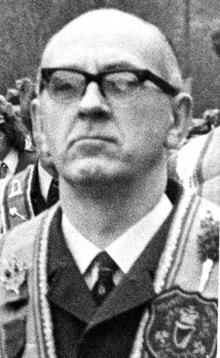
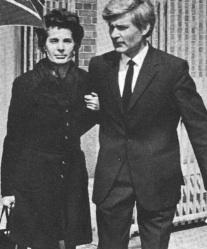


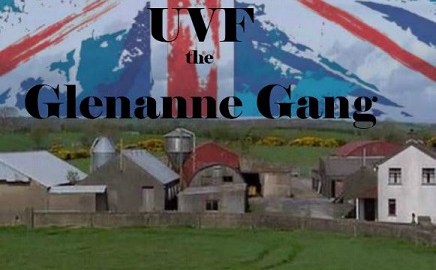
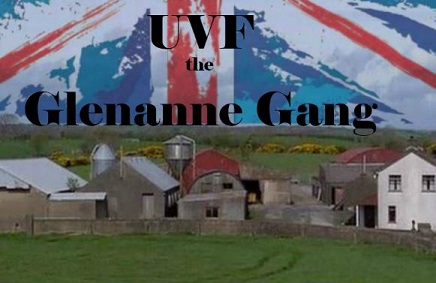


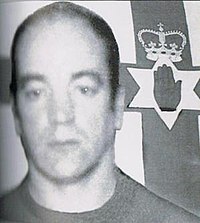
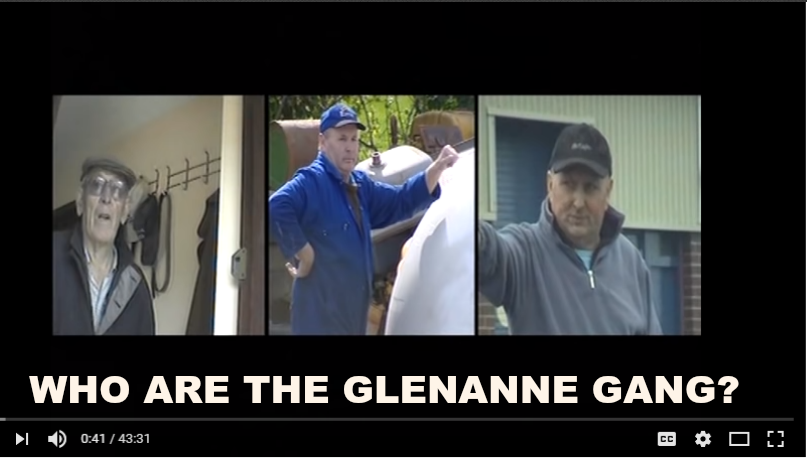


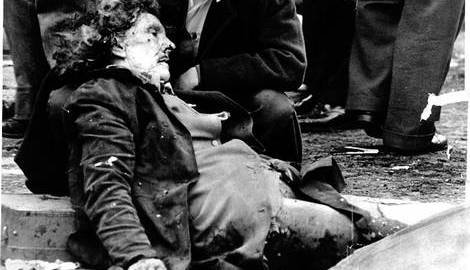
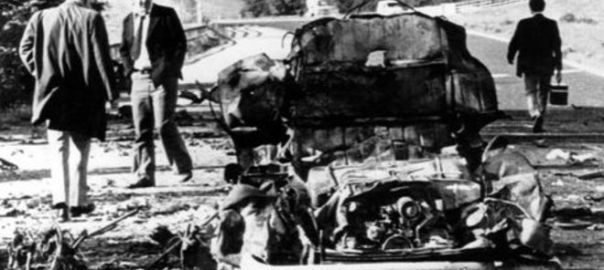






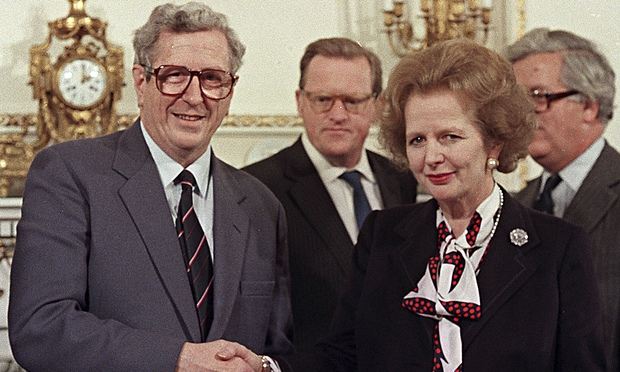
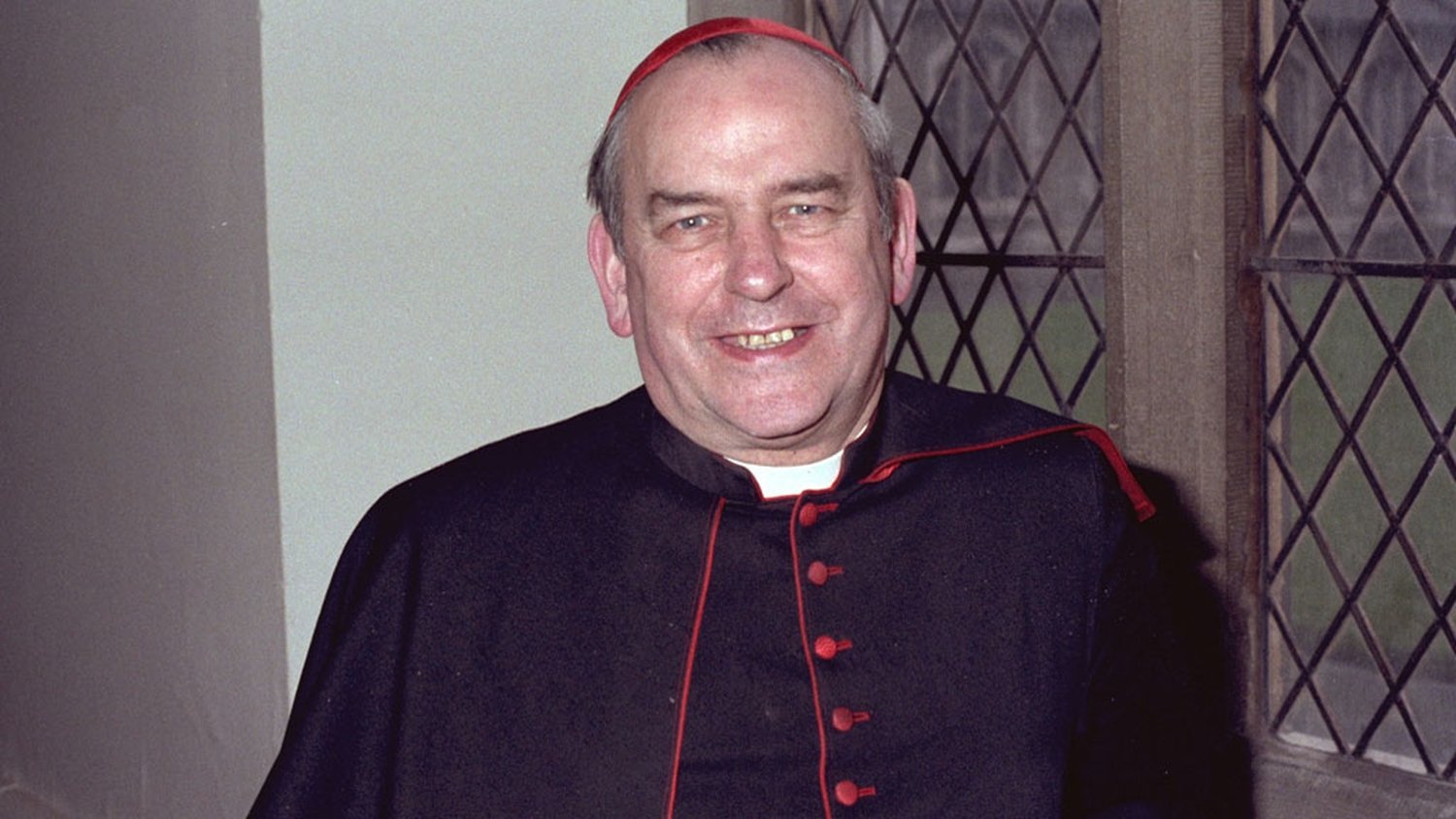


.png)


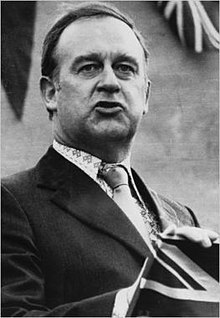




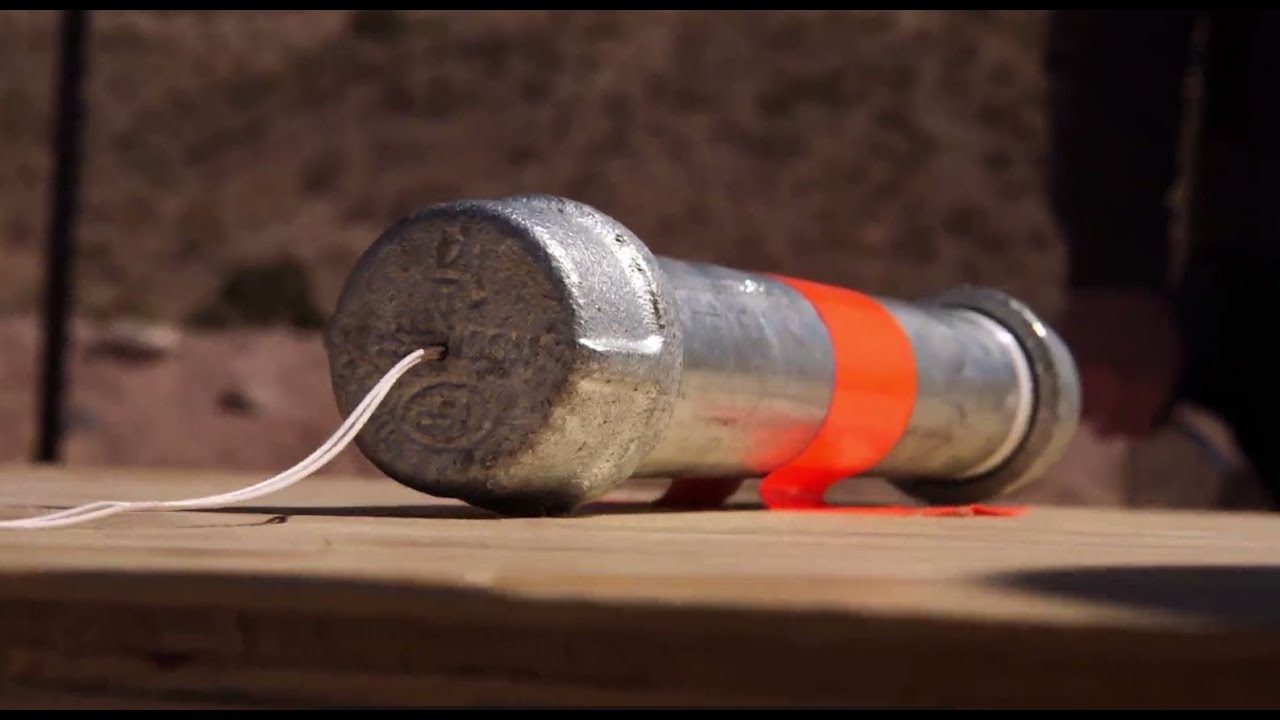


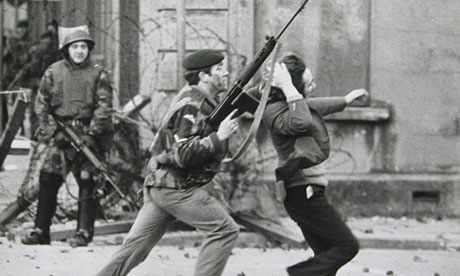





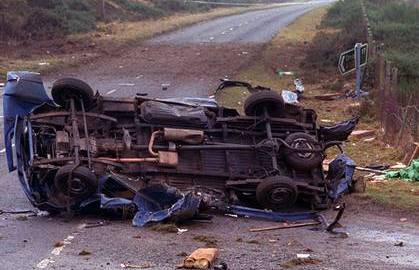


 belfastchildis.com