The last picture of John Lennon, posing with a fan on the day of his death
—————————————————————————–
The Assassination of John Lennon
On the evening of 8 December 1980, English musician John Lennon, formerly of the Beatles, was shot dead in the archway of the Dakota, his residence in New York City. The perpetrator was Mark David Chapman, an American Beatles fan who had travelled from Hawaii.
Chapman stated that he was angered by Lennon’s lifestyle and public statements, especially his much-publicised remark about the Beatles being “more popular than Jesus” and the lyrics of his later songs “God” and “Imagine“. Chapman also said he was inspired by the fictional character Holden Caulfield from J. D. Salinger‘s novel The Catcher in the Rye.
—————————————————————————–
———————————————————
John Lennon – Making of Imagine (song) – from Gimme Some Truth HD
———————————————————
Chapman planned the killing over the course of several months and waited for Lennon at the Dakota on the morning of 8 December. During the evening, he met Lennon, who signed his copy of the album Double Fantasy. Lennon left with his wife, Yoko Ono, for a recording session at Record Plant Studio. Later that night, Lennon and Ono returned to the Dakota. As Lennon and Ono walked towards the archway entrance of the building, Chapman fired five hollow-point bullets from a .38 specialrevolver, four of which hit Lennon in the back. Chapman remained at the scene reading The Catcher in the Rye until he was arrested. Lennon was rushed to hospital in a police car where he was pronounced dead on arrival.
John Lennon signs an autograph for Mark Chapman
A worldwide outpouring of grief ensued on an unprecedented scale. Crowds gathered at Roosevelt Hospital and in front of the Dakota. People in nearby buildings placed lit candles in their windows,[1] and at least three Beatles fans committed suicide. Lennon was cremated at the Ferncliff Cemetery in Hartsdale, New York, on 12 December; the ashes were given to Ono, who requested 10 minutes of silence around the world instead of holding a funeral. Chapman pleaded guilty to murdering Lennon and was given a sentence of 20-years-to-life imprisonment in an Upstate New York prison. He has been denied parole eleven times after he became eligible in 2000.
Events preceding the murder
8 December 1980
Portrait photographer Annie Leibovitz went to the Lennons’ apartment to do a photo shoot for Rolling Stone magazine.
Leibovitz promised them that a photo of the two of them together would make the front cover of the magazine. Leibovitz had taken several photos of John Lennon alone and one was originally set to be on the cover.
Leibovitz said, “Nobody wanted [Ono] on the cover”. Lennon insisted that both he and his wife be on the cover, and after taking the pictures, Leibovitz left their apartment at 3:30. After the photo shoot, Lennon gave what would be his last interview, to San Francisco DJ Dave Sholin, for a music show to be broadcast on the RKO Radio Network.
John and Yoko RKO Interview December 8, 1980
At around 5 p.m., Lennon and Ono, delayed by a late limousine, left their apartment to mix the song “Walking on Thin Ice” (an Ono song featuring Lennon on lead guitar) at the Record Plant Studio
Murder
The Lennons spent several hours at the Record Plant studio before returning to the Dakota at approximately 10:50 p.m. Lennon had decided against dining out so he could be home in time to say goodnight to his son, before going on to the Stage Deli restaurant with Ono.
The Lennons exited their limousine on 72nd Street instead of driving into the more secure courtyard of the Dakota.
The Dakota doorman Jose Perdomo and a nearby taxi driver saw Chapman standing in the shadows by the archway. The Lennons passed Chapman and walked toward the archway entrance of the building. As Ono passed by, Chapman nodded at her. As Lennon passed by, he glanced briefly at Chapman, appearing to recognise him from earlier.
Seconds later, Chapman withdrew a Charter Arms .38 caliber revolver that he had hidden in his coat pocket, took aim directly at the center of Lennon’s back and fired five hollow-point bullets at him in rapid succession, from a distance of about nine or ten feet (about 3 m).
Based on statements made that night by NYPD Chief of Detectives James Sullivan, numerous radio, television, and newspaper reports claimed at the time that, before firing, Chapman called out, “Mr. Lennon”, and dropped into a combat stance.
Later court hearings and witness interviews did not include either “Mr. Lennon” or the “combat stance” description. Chapman has said that he does not remember calling out to Lennon before he fired, and that Lennon did not turn around. He claimed to have taken a “combat stance” in a 1992 interview with Barbara Walters.
Click image to buy this book
One bullet missed Lennon and struck a window of the Dakota building. The other four hit Lennon in the back and shoulder, puncturing his left lung and left subclavian artery. Lennon, bleeding profusely from external wounds and from his mouth, staggered up five steps to the security/reception area where he said,:
“I’m shot! I’m shot!”
He then fell to the floor, scattering cassettes that he had been carrying. Perdomo ran inside and told concierge worker Jay Hastings that the attacker had dropped his gun on the pavement. Hastings first started to make a tourniquet, but upon ripping open Lennon’s blood-stained shirt and realising the severity of the musician’s multiple injuries, he covered Lennon’s chest with his uniform jacket, removed his blood-covered glasses, and summoned the police.
Chapman then removed his coat and hat in preparation for the arrival of police—to show he was not carrying any concealed weapons—and remained standing on West 72nd Street. Underneath his coat, he wore a promotional T-shirt for the musician Todd Rundgren’s album Hermit of Mink Hollow. Perdomo shouted at Chapman,
“Do you know what you’ve done?”,
to which Chapman calmly replied,
“Yes, I just shot John Lennon.”
Officers Steven Spiro and Peter Cullen were the first policemen to arrive at the scene; they were at 72nd Street and Broadway when they heard a report of shots fired at the Dakota. The officers arrived around two minutes later and found Chapman standing very calmly on West 72nd Street. They reported that Chapman had dropped the revolver to the ground and was holding a paperback book, J. D. Salinger‘s The Catcher in the Rye. Later, he claimed,
“If you were able to view the actual copy of The Catcher in the Rye that was taken from me on the night of Dec. 8, you would find in it the handwritten words, ‘This is my statement.'”
They immediately put Chapman in handcuffs and placed him in the back seat of their squad car. Chapman made no attempt to flee nor resist arrest.
Officer Herb Frauenberger and his partner Tony Palma were the second team, arriving a few minutes later. They found Lennon lying face down on the floor of the reception area, blood pouring from his mouth and his clothing already soaked with it, with Hastings attending to him.
Realizing the extent of Lennon’s injuries, the policemen decided not to wait for an ambulance and immediately carried Lennon into their squad car. He was rushed to Roosevelt Hospital on West 59th Street. Officer James Moran said they placed Lennon in the back seat.
Reportedly, Moran asked, “Are you John Lennon?” to which Lennon nodded and replied, “Yes.” According to another account by officer Bill Gamble, Lennon nodded slightly and tried to speak, but could only manage to make a gurgling sound, and lost consciousness shortly thereafter.
Resuscitation attempt
A few minutes before 11:00 p.m., Moran arrived at Roosevelt Hospital with Lennon in his squad car. Moran was carrying Lennon on his back and onto a gurney, demanding a doctor for a multiple gunshot wound victim. When Lennon was brought in, he was not breathing, and had no pulse. Three doctors, a nurse, and two or three other medical attendants worked on Lennon for 10 to 20 minutes in an attempt to resuscitate him.
As a last resort, the doctors cut open Lennon’s chest and attempted manual heart massage to restore circulation, but they quickly discovered that the damage to the blood vessels above and around Lennon’s heart from the multiple bullet wounds was too great.
Lennon had been shot four times at close range with hollow-point bullets
Three of the four bullets that struck Lennon’s back passed completely through his body and out of his chest, while the fourth lodged itself in his aorta beside his heart. One of the exiting bullets from his chest hit and became lodged in his upper left arm. Nearly all of them would have been fatal by themselves, because each bullet had ruptured vital arteries around the heart. Lennon had been shot four times at close range with hollow-point bullets and his affected organs—particularly his left lung and major blood vessels above his heart—were virtually destroyed upon impact.
Information regarding who operated on and attempted to resuscitate Lennon has varied. Many reports credit Stephan Lynn, the head of the Emergency Department at Roosevelt Hospital, with performing Lennon’s surgery. In 2005, Lynn recalled being the one massaging Lennon’s heart and attempting to resuscitate him for 20 minutes, that two other doctors were present, and that the three of them together declared Lennon’s death.
Conversely in 1990, Richard Marks, an emergency room surgeon at Roosevelt Hospital, stated he operated on Lennon, administered a “massive” blood transfusion, and provided heart massage to no avail.
“When I realized he wasn’t going to make it,” said Marks, “I just sewed him back up. I felt helpless.”
In 2015, surgeon David Halleran disputed the accounts of both Marks and Lynn, stating that the two doctors “didn’t do anything.” Halleran also stated that he did not realise who he was operating on initially, and that Lynn only came to assist him when he heard that it was Lennon. At the time, Halleran was a third-year general surgery resident at Roosevelt Hospital.
Lennon was pronounced dead on arrival at 11:15 p.m., but the time of 11:07 p.m. has also been reported.
Witnesses noted that the Beatles song “All My Loving” came over the hospital’s sound system at the moment Lennon was pronounced dead. His body was then taken to the city morgue at 520 First Avenue for an autopsy. The cause of death was reported on his death certificate as “hypovolemic shock, caused by the loss of more than 80% of blood volume due to multiple through-and-through gunshot wounds to the left shoulder and left chest resulting in damage to the left lung, the left subclavian artery, and both the aorta and aortic arch“.
According to the report, even with prompt medical treatment, no person could have lived for more than a few minutes with multiple bullet wounds affecting all of the major arteries and veins around the heart.
Dr. Lynn informed Ono of her husband’s death. According to Lynn, Ono started sobbing and said, “Oh no, no, no, no … tell me it’s not true!” He said that Ono then lay down and began hitting her head against the floor, but calmed down when a nurse gave Lennon’s wedding ring to her.
His account is disputed by two of the nurses who were there. In a 2015 interview, Ono denied hitting her head on a concrete floor and stated that her chief concern at the time was to remain calm and take care of her son Sean. She was led away from Roosevelt Hospital by a policeman and Geffen Records’ president, David Geffen.
This is simply the story of a boy trying to grow up, survive, thrive, have fun & discover himself against a backdrop of events that might best be described as ‘explosive’, captivating & shocking the world for thirty long years.
The Catcher in the Rye is a 1951 novel by J. D. Salinger.[3] A controversial novel originally published for adults, it has since become popular with adolescent readers for its themes of teenage angst and alienation.[4][5] It has been translated into almost all of the world’s major languages.[6] Around 250,000 copies are sold each year with total sales of more than 65 million books.[7] The novel’s protagonist Holden Caulfield has become an icon for teenage rebellion.[8] The novel also deals with complex issues of identity, belonging, loss, and connection.
Holden begins his story at Pencey Preparatory, an exclusive private school (fictional, though based on Salinger’s own experience at Valley Forge Military Academy) in Agerstown, Pennsylvania, on the Saturday afternoon of the traditional football game with rival school Saxon Hall. Holden ends up missing the game. As manager of the fencing team, he loses their equipment on a New York City subway train that morning, resulting in the cancellation of a match. He goes to the home of his history teacher named Mr. Spencer. Holden has been expelled and isn’t to return after Christmas break, which begins the following Wednesday. Spencer is a well-meaning but long-winded middle-aged man. To Holden’s annoyance, Spencer reads aloud Holden’s history paper, in which Holden wrote a note to Spencer so his teacher wouldn’t feel bad about failing him in the subject.
Holden returns to his dorm, which is quiet because most of the students are still at the football game. Wearing the new red hunting cap he bought in New York City, he begins re-reading a book (Out of Africa), but his reverie is temporary. First, his dorm neighbor Ackley disturbs him, although Holden is quite patient about it. Then later, he argues with his roommate Stradlater, who fails to appreciate a composition that Holden wrote for him about Holden’s late brother Allie’s baseball glove. A womanizer, Stradlater has just returned from a date with Holden’s old friend Jane Gallagher. Holden is distressed that Stradlater might have taken advantage of Jane. Stradlater doesn’t appreciate Jane in the manner in which Holden does; he even refers to Jane as “Jean.” They fight; Stradlater wins easily. Holden decides he has had enough of Pencey Prep and catches a train to New York City, where he plans to stay in a hotel until Wednesday, when his parents expect him to return home for New Years vacation.
He checks into the dilapidated Edmont Hotel. After observing the behavior of the “perverts” in the hotel room facing his, he struggles with his own sexuality. He states that although he has had opportunities to lose his virginity, the timing never felt right and he was always respectful when a girl declined. He spends an evening dancing with three tourist women in their 30s from Seattle in the hotel lounge and enjoys dancing with one, but ends up with only the check (to pay). He is disappointed that the women seem unable to carry a conversation. Following an unpromising visit to Ernie’s Nightclub in Greenwich Village, Holden agrees to have a prostitute named Sunny visit his room. His attitude toward the girl changes the minute she enters the room; she seems about the same age as he is. Holden becomes uncomfortable with the situation, and when he tells her that all he wants to do is talk, she becomes annoyed and leaves. Even though he still pays her the right amount for her time, she returns with her pimp Maurice and demands more money. Sunny takes five dollars from Holden’s wallet; Maurice punches Holden in the stomach.
After a short sleep, Holden, lonely and in need of personal connection, telephones Sally Hayes, a familiar date, and they agree to meet that afternoon to attend a play. Holden leaves the hotel, checks his luggage at Grand Central Station and has a late breakfast. He meets two nuns, one an English teacher, with whom he discusses Romeo and Juliet. Holden shops for a special record, “Little Shirley Beans,” for his 10-year-old sister Phoebe. He likes this record and knows Phoebe will enjoy it. He spots a small boy singing “If a body catch a body coming through the rye“, which makes him feel less depressed. The play he sees with Sally features Broadway stars Alfred Lunt and Lynn Fontanne. Afterward Holden and Sally go skating at Rockefeller Center. While drinking Coke, Holden impulsively invites Sally to run away with him to the wilderness. She declines, acts uninterested, and is too arrogant to try and understand Holden’s point of view. Her responses deflate Holden’s mood, prompting him to remark: “You give me a royal pain in the ass, if you want to know the truth.” He regrets it immediately, apologizing many times. Sally won’t accept his apology and doesn’t let him take her home. She states, “No boy ever said that to me in my entire life.” Sally storms off as Holden follows, pleading with her to accept his apology. When she won’t do so and gets angry, Holden finally leaves. After that, Holden sees the Christmas show at Radio City Music Hall, endures a film, and gets very drunk. Throughout the novel, Holden has been worried about the ducks in the lagoon at Central Park. He tries to find them but breaks Phoebe’s record in the process, causing him to almost cry. He feels that he may not be good enough, and the record was the only thing he thought he had to offer to his sister. Exhausted physically, mentally, and financially, Holden heads home to see Phoebe.
Holden recalls the Museum of Natural History, which he often visited as a child. He contrasts his evolving life with the statues of Eskimos in a diorama: whereas the statues have remained unchanged through the years, he and the world have not. Eventually, he sneaks into his parents’ apartment while they are out, to visit his younger sister—and close friend—Phoebe, the only person with whom he seems to be able to communicate his true feelings. Holden shares a selfless fantasy he has been thinking about (based on a mishearing of Robert Burns‘ Comin’ Through the Rye): he pictures himself as the sole guardian of thousands of children playing an unspecified ‘game’ in a huge rye field on the edge of a cliff. His job is to catch the children if, in their abandon, they come close to falling off the brink; to be, in effect, the “catcher in the rye”. Because of this misinterpretation, Holden believes that to be the “catcher in the rye” means to save children from losing their innocence.
When his parents come home, Holden slips out and visits his former and much-admired English teacher, Mr. Antolini, who offers advice on life along with a place to sleep for the night. Mr. Antolini, quoting psychologist Wilhelm Stekel, advises Holden that wishing to die for a noble cause is the mark of the immature man, while it is the mark of the mature man to aspire to live humbly for one. This is at odds with Holden’s ideas of becoming a “catcher in the rye”, symbolically saving children from the evils of adulthood. During the speech on life, Mr. Antolini has a number of cocktails served in highball glasses. Holden is upset when he wakes up in the night to find Mr. Antolini patting his head in a way that he regards as “flitty” (homosexual). It makes Holden feel very uncomfortable and embarrassed. Confused and uncertain, he leaves as dawn is breaking and spends most of Monday morning wandering the city. He questions whether his interpretation of Mr. Antolini’s actions was actually correct, and seems to wonder how much it matters anyway.
Holden makes the decision that he will head out west and live as a deaf-mute. When he explains this plan to Phoebe Monday at lunchtime, she wants to go with him. Holden declines her offer, which upsets Phoebe, so Holden decides not to leave after all. Phoebe was looking forward to acting in a play that Friday. Despite outward frustration, it is clear Holden wants Phoebe to be happy and safe, and he didn’t think she would be if she left with him. “I think I hated her most because she wouldn’t be in that play any more if she went away with me.” He tries to cheer her up by taking her to the Central Park Zoo, and as he watches her ride the zoo’s carousel, he is filled with happiness and joy at the sight of Phoebe riding in the rain.
At the conclusion of the novel, Holden decides not to mention much about later events up to the present day, finding them inconsequential. He alludes to “getting sick” and living in some sort of institution, and mentions he will be attending another school in September; he relates that he has been asked whether he will apply himself properly to his studies this time around and wonders whether such a question has any meaning before the fact. Holden says that he doesn’t want to tell anything more because surprisingly he has found himself missing two of his former classmates, Stradlater and Ackley, and even Maurice, the pimp who punched him. He warns the reader that telling others about their own experiences will lead them to miss the people who shared them.
History
Various older stories by Salinger contain characters similar to those in The Catcher in the Rye. While at Columbia University, J.D. Salinger wrote a short story called “The Young Folks” in Whit Burnett‘s class; one character from this story has been described as a “thinly penciled prototype of Sally Hayes”. In November 1941, Salinger sold the story “Slight Rebellion off Madison,” which featured Holden Caulfield, to The New Yorker, but it wasn’t published until December 21, 1946 due to World War II. The story “I’m Crazy,” which was published in the December 22, 1945, issue of Collier’s, contained material that was later used in The Catcher in the Rye. A ninety-page manuscript about Holden Caulfield was accepted by The New Yorker for publication in 1946, but it was later withdrawn by Salinger.[14]
Writing style
The Catcher in the Rye is narrated in a subjective style from the point of view of Holden Caulfield, following his exact thought processes. There is flow in the seemingly disjointed ideas and episodes; for example, as Holden sits in a chair in his dorm, minor events, such as picking up a book or looking at a table, unfold into discussions about experiences.
Critical reviews agree that the novel accurately reflected the teenage colloquial speech of the time.[15] Words and phrases that appear frequently include:
“Phony” – superficial and pretentious
“That killed me” – I found that hilarious or astonishing
“I got a bang out of that” – I found it hilarious or exciting
“Shoot the bull” – have a conversation containing false elements
“Give her the time” – sexual intercourse
“Chew the fat” – small-talk
Spoken pauses, such as “and all”, “I really did” pepper the narration as well as Holden’s dialogue.
Interpretations
Bruce Brooks held that Holden’s attitude remains unchanged at story’s end, implying no maturation, thus differentiating the novel from young adult fiction.[16] In contrast, Louis Menand thought that teachers assign the novel because of the optimistic ending, to teach adolescent readers that “alienation is just a phase.”[17] While Brooks maintained that Holden acts his age, Menand claimed that Holden thinks as an adult, given his ability to accurately perceive people and their motives. Others highlight the dilemma of Holden’s state, in between adolescence and adulthood.[18][19] Holden is quick to become emotional. “I felt sorry as hell for…” is a phrase he often uses.[18]
Peter Beidler, in his A Reader’s Companion to J. D. Salinger’s “The Catcher in the Rye”, identifies the movie that the prostitute “Sunny” refers to. In chapter 13 she says that in the movie a boy falls off a boat. The movie is Captains Courageous, starring Spencer Tracy. Sunny says that Holden looks like the boy who fell off the boat. Beidler shows (page 28) a still of the boy, played by child-actor Freddie Bartholomew.
Each Caulfield child has literary talent: D. B. writes screenplays in Hollywood; Holden also reveres D. B. for his writing skill (Holden’s own best subject), but he also despises Hollywood industry-based movies, considering them the ultimate in “phony” as the writer has no space for his own imagination, and describes D. B.’s move to Hollywood to write for films as “prostituting himself”; Allie wrote poetry on his baseball glove; and Phoebe is a diarist.[20][not in citation given] This “catcher in the rye” is an analogy for Holden, who admires in kids attributes that he struggles to find in adults, like innocence, kindness, spontaneity, and generosity. Falling off the cliff could be a progression into the adult world that surrounds him and that he strongly criticizes. Later, Phoebe and Holden exchange roles as the “catcher” and the “fallen”; he gives her his hunting hat, the catcher’s symbol, and becomes the fallen as Phoebe becomes the catcher.[21]
In their biography of Salinger, David Shields and Shane Salerno argue that “The Catcher in the Rye can best be understood as a disguised war novel.” Salinger witnessed the horrors of World War II, but rather than writing a combat novel, Salinger, according to Shields and Salerno, “took the trauma of war and embedded it within what looked to the naked eye like a coming-of-age novel.”[22]
Reception
The Catcher in the Rye has been listed as one of the best novels of the twentieth century. Shortly after its publication, writing for The New York Times, Nash K. Burger called it “an unusually brilliant novel,”[23] while James Stern wrote an admiring review of the book in a voice imitating Holden’s.[24]George H. W. Bush called it a “marvelous book,” listing it among the books that have inspired him.[25] In June 2009, the BBC‘s Finlo Rohrer wrote that, 58 years since publication, the book is still regarded “as the defining work on what it is like to be a teenager. Holden is at various times disaffected, disgruntled, alienated, isolated, directionless, and sarcastic.”[26]Adam Gopnik considers it one of the “three perfect books” in American literature, along with Adventures of Huckleberry Finn and The Great Gatsby, and believes that “no book has ever captured a city better than Catcher in the Rye captured New York in the fifties.”[27] Jeff Pruchnic wrote an appraisal of The Catcher in the Rye after the death of J.D. Salinger. In this article, Pruchnic focuses on how the novel continues to be received incredibly well, even after it has aged many generations. Pruchnic describes Holden as a “teenage protagonist frozen midcentury but destined to be discovered by those of a similar age in every generation to come”. [28]
However, not all reception has been positive; the book has had its share of critics. Rohrer writes, “Many of these readers are disappointed that the novel fails to meet the expectations generated by the mystique it is shrouded in. J. D. Salinger has done his part to enhance this mystique. That is to say, he has done nothing.”[26] Rohrer assessed the reasons behind both the popularity and criticism of the book, saying that it “captures existential teenage angst” and has a “complex central character” and “accessible conversational style”; while at the same time some readers may dislike the “use of 1940s New York vernacular” and other things.
Censorship and use in schools
In 1960, a teacher in Tulsa, Oklahoma was fired for assigning the novel in class; however, he was later reinstated.[29] Between 1961 and 1982, The Catcher in the Rye was the most censored book in high schools and libraries in the United States.[30] The book was banned in the Issaquah, Washington, high schools in 1978 as being part of an “overall communist plot”.[31] In 1981, it was both the most censored book and the second most taught book in public schools in the United States.[32] According to the American Library Association, The Catcher in the Rye was the 10th most frequently challenged book from 1990 to 1999.[10] It was one of the ten most challenged books of 2005,[33] and although it had been off the list for three years, it reappeared in the list of most challenged books of 2009.[34]
The challenges generally begin with Holden’s frequent use of vulgar language,[35][36] with other reasons including sexual references,[37]blasphemy, undermining of family values[36] and moral codes,[38] encouragement of rebellion,[39] and promotion of drinking, smoking, lying, and promiscuity.[38] Often the challengers have been unfamiliar with the plot itself.[30] Shelley Keller-Gage, a high school teacher who faced objections after assigning the novel in her class, noted that “the challengers are being just like Holden… They are trying to be catchers in the rye”.[36]A reverse effect has been that this incident caused people to put themselves on the waiting list to borrow the novel, when there were none before.[40]
Early in his career, Salinger expressed a willingness to have his work adapted for the screen.[43] In 1949, a critically panned film version of his short story “Uncle Wiggily in Connecticut” was released; renamed My Foolish Heart and taking great liberties with Salinger’s plot, the film is widely considered to be among the reasons that Salinger refused to allow any subsequent film adaptations of his work.[18][44] The enduring popularity of The Catcher in the Rye, however, has resulted in repeated attempts to secure the novel’s screen rights.[45]
When The Catcher in the Rye was first released, many offers were made to adapt it for the screen, including one from Samuel Goldwyn, producer of My Foolish Heart.[44] In a letter written in the early fifties, J. D. Salinger spoke of mounting a play in which he would play the role of Holden Caulfield opposite Margaret O’Brien, and, if he couldn’t play the part himself, to “forget about it.” Almost fifty years later, the writer Joyce Maynard definitively concluded, “The only person who might ever have played Holden Caulfield would have been J. D. Salinger.”[46]
Salinger told Maynard in the seventies that Jerry Lewis “tried for years to get his hands on the part of Holden,”[46] despite Lewis not having read the novel until he was in his thirties.[40] Celebrities ranging from Marlon Brando and Jack Nicholson to Tobey Maguire and Leonardo DiCaprio have since tried to make a film adaptation.[47] In an interview with Premiere magazine, John Cusack commented that his one regret about turning twenty-one was that he had become too old to play Holden Caulfield. Writer-director Billy Wilder recounted his abortive attempts to snare the novel’s rights:
Of course I read The Catcher in the Rye….Wonderful book. I loved it. I pursued it. I wanted to make a picture out of it. And then one day a young man came to the office of Leland Hayward, my agent, in New York, and said, ‘Please tell Mr. Leland Hayward to lay off. He’s very, very insensitive.’ And he walked out. That was the entire speech. I never saw him. That was J. D. Salinger and that was Catcher in the Rye.[48]
In 1961, Salinger denied Elia Kazan permission to direct a stage adaptation of Catcher for Broadway.[49] More recently, Salinger’s agents received bids for the Catcher movie rights from Harvey Weinstein and Steven Spielberg,[50] neither of which was even passed on to J. D. Salinger for consideration.
In 2003, the BBC television program The Big Read featured The Catcher in the Rye, interspersing discussions of the novel with “a series of short films that featured an actor playing J. D. Salinger’s adolescent antihero, Holden Caulfield.”[49] The show defended its unlicensed adaptation of the novel by claiming to be a “literary review”, and no major charges were filed.
After Salinger’s death in 2010, Phyllis Westberg, who was Salinger’s agent at Harold Ober Associates, stated that nothing has changed in terms of licensing film, television, or stage rights of his works.[51] A letter written by Salinger in 1957 revealed that he was open to an adaptation of The Catcher in the Rye released after his death. He wrote: “Firstly, it is possible that one day the rights will be sold. Since there’s an ever-looming possibility that I won’t die rich, I toy very seriously with the idea of leaving the unsold rights to my wife and daughter as a kind of insurance policy. It pleasures me no end, though, I might quickly add, to know that I won’t have to see the results of the transaction.” Salinger also wrote that he believed his novel was not suitable for film treatment, and that translating Holden Caulfield’s first-person narrative into voice-over and dialogue would be contrived.[52]
Banned fan fiction
In 2009, a year before his death, Salinger successfully sued to stop the U.S. publication of a novel that presents Holden Caulfield as an old man.[26][53] The novel’s author, Fredrik Colting, commented, “call me an ignorant Swede, but the last thing I thought possible in the U.S. was that you banned books”.[54] The issue is complicated by the nature of Colting’s book, 60 Years Later: Coming Through the Rye, which has been compared to fan fiction.[55] Although commonly not authorized by writers, no legal action is usually taken[56] against fan fiction since it is rarely published commercially and thus involves no profit. Colting, however, has published his book commercially. Unauthorized fan fiction on The Catcher in the Rye existed on the Internet for years without any legal action taken by Salinger before his death.[55]
Inside The Mind Of Mark David Chapman, The Man Who Shot John Lennon:
————————————————————————————————-
Mark David Chapman (born May 10, 1955) is an American prison inmate who murdered John Lennon on December 8, 1980. Chapman shot Lennon outside The Dakota apartment building in New York City. Chapman fired at Lennon five times, hitting him four times in the back. Chapman later remained at the crime scene reading J. D. Salinger‘s novel The Catcher in the Rye until the police arrived and arrested him. Chapman repeatedly said that the novel was his statement.
————————————————————————-
Interview With Mark David Chapman John Lennon’s Assassin
————————————————————————-
Chapman’s legal team put forward an insanity defense based on expert testimony that he was in a delusional and possibly psychotic state at the time, but nearing the trial, Chapman instructed his lawyer that he wanted to plead guilty, based on what he had decided was the will of God. The judge allowed the plea change without further psychiatric assessment after Chapman denied hearing voices, and sentenced him to a prison term of twenty years to life with a stipulation that mental health treatment be provided. Chapman was imprisoned in 1981 and has been denied parole eight times amidst campaigns against his release
Personal background
Chapman was born in Fort Worth, Texas in 1955.[1] His father, David Curtis Chapman, was a staff sergeant in the U.S. Air Force, and his mother, Diane Elizabeth (née Pease), was a nurse. His younger sister, Susan, was born seven years later. Chapman stated that as a boy, he lived in fear of his father, who he said was physically abusive towards his mother and unloving towards him. Chapman began to fantasize about having king-like power over a group of imaginary “little people” who lived in the walls of his bedroom. Chapman attended Columbia High School in Decatur, Georgia. By the time he was fourteen, Chapman was using drugs, skipping classes, and he once ran away from home to live on the streets of Atlanta for two weeks. He said that he was bullied at school because he was not a good athlete.[7]
In 1971, Chapman became a born againPresbyterian and distributed Biblical tracts. He met his first girlfriend named Jessica Blankenship. He began work as a YMCA summer camp counselor; he was very popular with the children, who nicknamed him “Nemo”. He won an award for Outstanding Counselor and was made assistant director.[7] Those who knew him in the caretaking professions unanimously called him an outstanding worker.[8] A friend recommended The Catcher in the Rye to Chapman, and the story eventually took on great personal significance for him, to the extent that he reportedly wished to model his life after its protagonist, Holden Caulfield.[7] After graduating from Columbia High School, Chapman moved for a time to Chicago and played guitar in churches and Christian nightspots while his friend did impersonations. He worked successfully for World Vision with Vietnameserefugees at a resettlement camp at Fort Chaffee in Arkansas, after a brief visit to Lebanon for the same work. He was named an area coordinator and a key aide to the program director, David Moore, who later said that Chapman cared deeply for the children and worked hard. Chapman accompanied Moore to meetings with government officials, and PresidentGerald Ford shook his hand.[8]
Chapman joined his girlfriend, Jessica Blankenship, as a student at Covenant College, an evangelicalPresbyterianliberal arts college in Lookout Mountain, Georgia. However, Chapman fell behind in his studies and became obsessed with guilt over having an affair.[9][10] He started having suicidal thoughts and began to feel like a failure. He dropped out of Covenant College, and his girlfriend broke off their relationship soon after. He returned to work at the resettlement camp, but left after an argument. Chapman worked as a security guard, eventually taking a week-long course to qualify as an armed guard. He again attempted college but dropped out. He went to Hawaii and then began contemplating suicide.[9] In 1977, Chapman attempted suicide by carbon monoxide asphyxiation. He connected a hose to his car’s exhaust pipe, but the hose melted and the attempt failed. A psychiatrist admitted him to Castle Memorial Hospital for clinical depression. Upon his release, he began working at the hospital.[11] His parents began divorce proceedings, and his mother joined Chapman in Hawaii.[10]
In 1978, Chapman went on a six-week trip around the world, inspired partly by the film Around the World in Eighty Days, visiting Tokyo, Seoul, Hong Kong, Singapore, Bangkok, Delhi, Beirut, Geneva, London, Paris and Dublin. He began a relationship with his travel agent, a Japanese-American woman named Gloria Abe. They married on June 2, 1979. Chapman went to work at Castle Memorial Hospital as a printer, working alone rather than with staff and patients. He was fired by the Castle Memorial Hospital, rehired, then got into a shouting match with a nurse and quit. He took a job as a night security guard and began drinking heavily.[11] Chapman developed a series of obsessions, including artwork, The Catcher in the Rye, music, and John Lennon. He also started talking with the imaginary ‘little people’ again. In September 1980, he wrote a letter to a friend, Lynda Irish, in which he stated, “I’m going nuts.” He signed the letter, “The Catcher in the Rye”.[12] Chapman had no criminal convictions up to this point.[13]
Plan to murder John Lennon
Chapman allegedly started planning to kill Lennon up to three months prior to the murder.
He had been a big Beatles fan, idolizing Lennon, and played guitar himself, but turned on him after becoming born-again; he was angered at Lennon’s comment that the Beatles were “more popular than Jesus.” In the South, there were demonstrations, album burnings, boycotts, and projectiles were thrown. Some members of Chapman’s prayer group made a joke “It went, ‘Imagine, imagine if John Lennon was dead.'”[10] Chapman’s childhood friend Miles McManushe recalls his referring to the song as “communist”. Jan Reeves, sister of one of Chapman’s best friends, reports that Chapman “seemed really angry toward John Lennon, and he kept saying he could not understand why John Lennon had said it [that the Beatles were more popular than Jesus]. According to Mark, there should be nobody more popular than the Lord Jesus Christ. He said it was blasphemy.”[14]
Chapman had later also been influenced by reading in a library book (John Lennon: One Day at a Time by Anthony Fawcett) about Lennon’s life in New York. According to his wife Gloria, “He was angry that Lennon would preach love and peace but yet have millions [of dollars].” Chapman later said that “He told us to imagine no possessions, and there he was, with millions of dollars and yachts and farms and country estates, laughing at people like me who had believed the lies and bought the records and built a big part of their lives around his music.”[15]
He said that he chose Lennon after seeing him on the cover of The Beatles’ album, Sgt. Pepper’s Lonely Hearts Club Band. He also recalls having listened to Lennon’s John Lennon/Plastic Ono Band album in the weeks before the murder and has stated: “I would listen to this music and I would get angry at him, for saying that he didn’t believe in God… and that he didn’t believe in the Beatles. This was another thing that angered me, even though this record had been done at least 10 years previously. I just wanted to scream out loud, ‘Who does he think he is, saying these things about God and heaven and the Beatles?’ Saying that he doesn’t believe in Jesus and things like that. At that point, my mind was going through a total blackness of anger and rage. So I brought the Lennon book home, into this The Catcher in the Rye milieu where my mindset is Holden Caulfield and anti-phoniness.”[15]
Chapman also said that he had a further list of people in mind, including Johnny Carson, Marlon Brando, Walter Cronkite, Elizabeth Taylor, George C. Scott, and Jacqueline Kennedy Onassis, but that John Lennon seemed to be the easiest to find. He separately said that he was particularly infatuated by Lennon. He also considered committing suicide by jumping from the Statue of Liberty.[16] Chapman’s planning has been described as ‘muddled’.[17] Chapman went to New York in October 1980, intending to kill Lennon.[12] He left for a short while in order to obtain ammunition from his unwitting friend in Atlanta, Dana Reeves, and returned to New York in November.
After being inspired by the film Ordinary People, Chapman returned to Hawaii, telling his wife he had been obsessed with killing Lennon. He showed her the gun and bullets, but she did not inform the police or mental health services. He made an appointment to see a clinical psychologist, but before it occurred he flew back to New York, on December 6, 1980.[10] Chapman says that the message “Thou Shalt Not Kill” flashed on the TV at him, and was also on a wall hanging put up by his wife in their apartment; on the night before the murder, Chapman and his wife discussed on the phone about getting help with his problems by first working on his relationship with God.[15]
On December 7, 1980, the day before the killing, Chapman accosted singer-songwriter James Taylor at the 72nd Street subway station. According to Taylor, “The guy had sort of pinned me to the wall and was glistening with maniacal sweat and talking some freak speak about what he was going to do and his stuff with how John was interested, and he was going to get in touch with John Lennon.”[18] He also reportedly offered cocaine to a taxi driver.[10]
On December 8, 1980, Chapman left his room at the Sheraton Hotel, leaving personal items behind which the police would later find, and bought a copy of The Catcher in the Rye in which he wrote “This is my statement”, signing it “Holden Caulfield“. He then spent most of the day near the entrance to The Dakota apartment building where Lennon and Yoko Ono lived, talking to fans and the doorman. Early in the morning, a distracted Chapman missed seeing Lennon step out of a cab and enter the Dakota. Later in the morning, Chapman met Lennon’s housekeeper who was returning from a walk with their five-year-old son Sean. Chapman reached in front of the housekeeper to shake Sean’s hand and said that he was a beautiful boy, quoting Lennon’s song “Beautiful Boy (Darling Boy)“. Around 5:00 p.m., Lennon and Ono left The Dakota for a recording session at Record Plant Studios. As they walked toward their limousine, Chapman shook hands with Lennon and asked for him to sign a copy of his album, Double Fantasy.[19] Photographer Paul Goresh took a photo of Lennon signing Chapman’s album. Chapman reported that, “At that point my big part won and I wanted to go back to my hotel, but I couldn’t. I waited until he came back. He knew where the ducks went in winter, and I needed to know this” (a reference to The Catcher in the Rye).
Around 10:49 p.m., the Lennons’ limousine returned to the Dakota. Lennon and Ono got out, passed Chapman and walked toward the archway entrance of the building. From the street behind them, Chapman fired five shots from a .38 specialrevolver, four of which hit Lennon in the back and left shoulder. The death certificate[20] gives the following description: “Multiple gunshot wounds of left shoulder and chest; Left lung and left subclavian artery; External and internal hemorrhage. Shock.”
At the time, one newspaper reported that, before firing, Chapman softly called out “Mr. Lennon” and dropped into a crouched position.[21] Chapman said that he does not recall saying anything and that Lennon did not turn around.[22]
Chapman remained at the scene, appearing to be reading The Catcher in the Rye, until the police arrived. The New York City Police Department officers who first responded, recognizing that Lennon’s wounds were severe, decided to transport him to Roosevelt Hospital. Chapman was arrested without incident. In his statement to police three hours later, Chapman stated, “I’m sure the big part of me is Holden Caulfield, who is the main person in the book. The small part of me must be the Devil.”[20] Lennon was pronounced dead by Dr. Stephan Lynn at 11:07 p.m. at St. Luke’s-Roosevelt Hospital Center.
Legal process
Chapman was charged with second degree murder. When asked why he used hollow-pointed bullets, Chapman responded “because they are more deadly” and “to ensure Lennon’s death.”[23]
Gloria Chapman, who had known of Chapman’s preparations for killing Lennon, hired an attorney who stated at a press conference: “Gloria did not do anything or participate in any way in this trip in a knowing way or in a way in which she did consciously in any way lend any support to Mark’s actions”.[24][25]
Mental state assessment
More than a dozen psychologists and psychiatrists studied Chapman in the six months before the scheduled trial – three for the prosecution, six for the defense and several more on behalf of the court – involving batteries of tests and over 200 hours of clinical interviews. None concluded that he was feigning or malingering. In fact, Chapman cooperated more with the prosecution experts than the defense. The court experts who examined Chapman at Bellevue Hospital concluded that he was delusional yet competent to stand trial. However their report stated that he “may continue to have psychotic episodes” and warned of “fluctuations of mood and…cooperation” with his legal counsel.
The six defense experts declared that Chapman was psychotic (five making a diagnosis of paranoid schizophrenia and one of psychotic manic depression) while the three prosecution experts declared that his delusions fell short of psychosis and instead diagnosed various personality disorders.
Chapman was also seen by religious officials, initially by Rev. Charles McGowan, pastor of Chapman’s old church Chapel Woods Presbyterian, which resulted in Chapman renewing his belief in God and Satan. However they fell out when McGowan released personal details to the media, and for the time being Chapman returned to emphasizing The Catcher in the Rye and wanting a trial to publicize it further.[26]
Plea
Lawyer Herbert Adlerberg was assigned to represent Chapman but, amid threats of lynching, withdrew. Police feared that Lennon fans might storm the hospital so they transferred Chapman to Rikers Island.[27]
In January 1981, at the initial hearing, Chapman’s new lawyer, Jonathan Marks, entered a plea of not guilty by reason of insanity. In February, Chapman sent a handwritten statement to The New York Times urging everyone to read The Catcher in the Rye, calling it an “extraordinary book that holds many answers.”[28] The defense team sought to establish witnesses as to Chapman’s mental state at the time of the killing.[29] It was reported they were confident he would be found not guilty by reason of insanity, in which case he would have been committed to a state mental hospital and received treatment.
However, in June, Chapman told Marks he wanted to drop the insanity defense and plead guilty. Marks objected with “serious questions” over Chapman’s sanity, and legally challenged his competence to make this decision. In the pursuant hearing on June 22, Chapman said that God had told him to plead guilty and that he would not change his plea or ever appeal, regardless of his sentence. Marks told the court that he opposed Chapman’s change of plea but that Chapman would not listen to him. Judge Dennis Edwards refused a further assessment, saying that Chapman had made the decision of his own free will, and declared him competent to plead guilty.
Sentencing
On August 24, 1981, the sentencing hearing took place. Two experts gave evidence on Chapman’s behalf. Judge Edwards interrupted Dorothy Otnow Lewis, a research psychiatrist then relatively inexperienced in the courtroom, indicating that the purpose of the hearing was to determine the sentence and that there was no question of Chapman’s criminal responsibility. Lewis has maintained that Chapman’s decision to change his plea did not appear reasonable or explicable, and she implies the judge did not want to allow an independent competency assessment.[32] The district attorney argued that Chapman committed the murder as an easy route to fame. When Chapman was asked if he had anything to say, he rose and read the passage from The Catcher in the Rye, when Holden tells his little sister, Phoebe, what he wants to do with his life:
Anyway, I keep picturing all these little kids playing some game in this big field of rye and all. Thousands of little kids, and nobody’s around – nobody big, I mean – except me. And I’m standing on the edge of some crazy cliff. What I have to do, I have to catch everybody if they start to go over the cliff – I mean if they’re running and they don’t look where they’re going I have to come out from somewhere and catch them. That’s all I do all day. I’d just be the catcher in the rye and all.
The judge ordered psychiatric treatment in prison and sentenced Chapman to 20-years-to-life, 5 years less than the maximum sentence of 25-years-to-life.[33] Chapman was given five years less than the maximum because he pled guilty to second degree murder, thereby avoiding the time and expense of a trial.
Imprisonment
In 1981, Chapman was imprisoned at Attica, outside of Buffalo, New York. After Chapman fasted for 26 days in February 1982, the New York State Supreme Court authorized the state to force feed him. Martin Von Holden, the director of the Central New York Psychiatric Center, said that Chapman still refused to eat with other inmates but agreed to take liquid nutrients.[34] Chapman was confined to a Special Handling Unit (SHU) for violent and at-risk prisoners, in part due to concern that he might be harmed by Lennon’s fans in the general population. There were 105 prisoners in the building who were “not considered a threat to him,” according to the New York State Department of Correctional Services. He had his own prison cell, but spent “most of his day outside his cell working on housekeeping and in the library.”[35]
Chapman worked in the prison as a legal clerk and kitchen helper. He was barred from participating in the Cephas Attica workshops, a charitable organization which helps inmates to adjust to life outside prison. He was also prohibited from attending the prison’s violence and anger management classes due to concern for his safety. Chapman reportedly likes to read and write short stories. At his parole board hearing in 2004, he described his plans; “I would immediately try to find a job, and I really want to go from place to place, at least in the state, church to church, and tell people what happened to me and point them the way to Christ.” He also said that he thought that there was a possibility he could find work as a farmhand or return to his previous trade as a printer.[36] The Daily Mirror reported he wanted to set up a church with his wife.[37]
Chapman is in the Family Reunion Program, and is allowed one conjugal visit a year with his wife,[38] since he accepted solitary confinement. The program allows him to spend up to 42 hours alone with his wife in a specially built prison home. He also gets occasional visits from his sister, clergy, and a few friends. In 2004, James Flateau, a spokesman for the state’s Department of Correctional Services, said that Chapman had been involved in three “minor incidents” between 1989 and 1994 for delaying an inmate count and refusing to follow an order.[39] Chapman was transferred to the Wende Correctional Facility in Alden, New York, which is east of Buffalo, on May 15, 2012.[6]
Parole applications and campaigns
Denied Parole for Seventh Time ABC News
As the result of his sentence of 20 years to life, Chapman first became eligible for parole in 2000, and is entitled to a hearing every two years. Since that time, Chapman has been denied parole eight times by a three-member board. Shortly before Chapman’s first hearing, Yoko Ono sent a letter to the board opposing his release from prison.[40][41] In addition, New York State SenatorMichael Nozzolio, chairman of the Senate Crime Victims, Crime and Correction Committee, wrote to Parole Board Chairman Brion Travis saying: “It is the responsibility of the New York State Parole Board to ensure that public safety is protected from the release of dangerous criminals like Chapman.”[42]
At the 50-minute hearing in 2000, Chapman said that he was not a danger to society. The parole board concluded that releasing Chapman would “deprecate the seriousness of the crime and serve to undermine respect for the law” and that Chapman’s granting of media interviews represented a continued interest in “maintaining your notoriety.” They noted that although Chapman had a good disciplinary record while in prison, he had been in the SHU and didn’t access “anti-violence and/or anti-aggression programming.”[43] Robert Gangi, a lawyer for the Correctional Association of New York, said that he thought it unlikely Chapman would ever be freed because the board would not risk the “political heat” of releasing Lennon’s killer.[44] In 2002, the parole board stated again that releasing Chapman after 22 years in prison would “deprecate the seriousness” of the crime, and that while his behavioral record continued to be positive, it was no predictor of his potential community behavior.[45] The parole board held a third hearing in 2004, and declined parole yet again. One of the reasons given by the board was having subjected Ono to “monumental suffering by her witnessing the crime.” Another factor was concern for Chapman’s safety; several Lennon fans had threatened to kill him if he were released. Ono’s letter opposing his release stated that Chapman would not be safe outside of prison. The board reported that its decision was based on the interview, a review of records and deliberation.[35] Around 6,000 people had signed an online petition against Chapman’s release by this time.[46]
In October 2006, the parole board held a 16-minute hearing and concluded that his release would not be in the best interest of the community or his own personal safety.[47][48] On December 8, 2006, the 26th anniversary of Lennon’s death, Yoko Ono published a one-page advertisement in several newspapers saying that December 8 should be a “day of forgiveness,” and that she was not yet sure if she was ready to forgive Chapman.[49] Chapman’s fifth hearing was on August 12, 2008. He was denied parole “due to concern for the public safety and welfare.”[50] On July 27, 2010, in advance of Chapman’s scheduled sixth parole hearing, Ono said that she would again oppose parole for Chapman stating that her safety, that of John’s sons, and Chapman’s would be at risk. She added, “I am afraid it will bring back the nightmare, the chaos and confusion [of that night] once again.”[51] On August 11, 2010, the parole board postponed the hearing until September, stating that it was awaiting the receipt of additional information to complete Chapman’s record.[52] On September 7, the board denied Chapman’s latest parole application, with the panel stating “release remains inappropriate at this time and incompatible with the welfare of the community.”[5]
It was announced on August 18, 2012, that Chapman would have his seventh parole hearing the week beginning August 20.[53] However, Chapman was denied parole by a three-member board who stated, “Despite your positive efforts while incarcerated, your release at this time would greatly undermine respect for the law and tend to trivialize the tragic loss of life which you caused as a result of this heinous, unprovoked, violent, cold and calculated crime.”[54] Chapman’s eighth parole application was denied in August 2014. At the hearing, Chapman said, “I am sorry for being such an idiot and choosing the wrong way for glory.”[55] “I have peace now in Jesus,” he continued. “He has forgiven me and loves me. He has helped me in my life like you wouldn’t believe.”[citation needed] Chapman’s next scheduled parole hearing will be in August 2016.
Impact
Following the murder, and for the first six years in Attica, Chapman refused all requests for interviews. James R. Gaines interviewed him and wrote a three-part, 18,000-word People magazine series in February and March 1987.[26][56][57] Chapman told the parole board he regretted the interview. Chapman later gave a series of audio-taped interviews to Jack Jones of the Democrat and Chronicle. In 1992 Jones published a book, Let Me Take You Down: Inside the Mind of Mark David Chapman, the Man Who Killed John Lennon.[58]
Also in 1992, Chapman gave two television interviews. On December 4, 1992, 20/20 aired an interview that he gave to Barbara Walters, his first television interview since the shooting.[59] On December 17, 1992, Larry King interviewed Chapman on his program Larry King Live.[60] In 2000, with his first parole hearing approaching, Jack Jones asked Chapman to tell his story for Mugshots, a CourtTV program. Chapman refused to go on camera but, after praying over it, consented to tell his story in a series of audiotapes.
Chapman’s experiences during the weekend on which he committed the murder have been turned into a feature-length movie called Chapter 27, in which he was played by Jared Leto. The film was written and directed by Jarrett Schaefer and is based on the Jones book. The film’s title is a reference to The Catcher in the Rye, which has 26 chapters.[61]Chapter 27 premiered at the Sundance Film Festival in January 2007 and received polarized reactions from critics. The film had a limited release in theaters in the United States in March 2008.[62]Chapter 27 was released widely onto DVD on September 30, 2008. Another film was made before the feature film entitled The Killing of John Lennon starring Jonas Ball as Chapman, which documents Chapman’s life before and up to the murder and portrays Chapman in a somewhat sympathetic light. The film features Ball as Chapman narrating the film and states that all the words are Chapman’s own.
A number of conspiracy theories have been published, based on CIA and FBI surveillance of Lennon due to his left-wing activism, and on the actions of Mark Chapman in the murder or subsequent legal proceedings. Barrister and journalist Fenton Bresler[63] raised the idea in a book published in 1990.[64] Liverpool playwright Ian Carroll, who has staged a drama conveying the theory that Chapman was manipulated by a rogue wing of the CIA, suggests Chapman wasn’t so crazy that he couldn’t manage a long trip from Hawaii to New York shortly prior to the murder.[65] Claims include that Chapman was a Manchurian candidate, including speculation on links to the CIA’s Project MKULTRA. At least one author has argued that forensic evidence proves Chapman did not commit the murder,[66] while others have criticized the theories as based on possible or suspected connections and circumstances.
In 1982, Rhino Records released a compilation of Beatles-related novelty and parody songs, called Beatlesongs. It featured a cover caricature of Chapman by William Stout. Following its release, Rhino recalled the record and replaced it with another cover.[67] New York-based band Mindless Self Indulgence released a track entitled “Mark David Chapman” on their album If. Irish band The Cranberries recorded a song called “I Just Shot John Lennon,” for their 1996 album To the Faithful Departed. It cites events that took place outside the Dakota on the night of Lennon’s murder. The title of the song comes from Chapman’s own words.
Austin, Texas-based art rock band …And You Will Know Us by the Trail of Dead have also released a song called “Mark David Chapman” from their 1999 album Madonna. Julian Cope‘s 1988 album Autogeddon contains a song called “Don’t Call Me Mark Chapman” whose lyrics suggest it is told from the point of view of Lennon’s murderer. Filipino band Rivermaya released a song called “Hangman (I Shot the Walrus)” on their album Atomic Bomb (1997), supposedly written from Mark Chapman’s point of view.[68]
Chapman’s obsession with the central character and message of the The Catcher in the Rye added to controversy about the novel. Some links have been drawn between Chapman’s and the book’s themes of adolescent sensitivity and depression on the one hand, and anti-social and violent thoughts on the other. This connection was made in the play Six Degrees of Separation and its film adaptation by the character played by Will Smith.[69]
Links have sometimes been drawn between Chapman’s actions and those of other killers or attempted killers. John Hinckley, who only months later tried to assassinate President Ronald Reagan, was also associated with The Catcher in the Rye. Further, John Hinckley’s father, John Hinckley, Sr, was president of World Vision, for whom Chapman was employed. More recently, a writer who experienced mental illness in the same city as Jared Loughner has suggested that examples such as Chapman’s show the need to challenge stigma about mental health problems and ensure there are good community mental health services including crisis intervention.
——————————————————————————————————-
Let Me Take You Down
Click image to buy this book
Inside The Mind Of Mark David Chapman, The Man Who Shot John Lennon:
——————————————————————————————————-
This is simply the story of a boy trying to grow up, survive, thrive, have fun & discover himself against a backdrop of events that might best be described as ‘explosive’, captivating & shocking the world for thirty long years.
The Gurkhas (Nepali : गोर्खा) (/ˈɡɜrkə/ or /ˈɡʊərkə/), also spelled as Gorkhas, are soldiers from Nepal. Historically, the terms “Gurkha” and “Gorkhali” were synonymous with “Nepali,” and derived from the hill town and district of Gorkha from which the Kingdom of Nepal expanded.[1][2] Legend has it that the name may be traced to the medieval Hindu warrior-saint Guru Gorakhnath[3] who has a historic shrine in Gorkha.[4] Gurkhas are traditionally recruited from various Nepali hill ethnicities, but do not come from a single group or region in the multi-ethnic country.
Although the Gorkhas found in Himachal are mostly from Nepal, there have been reports of non-Nepalese Gorkhas (such as Thai Gorkhas, Naga Gorkhas and Chinese Gorkhas). There are Gurkha military units in the Nepalese, British and the Indian army (Gorkhas) enlisted in Nepal. Although they meet many of the requirements of Article 47 [5] of Protocol I of the Geneva Conventions regarding mercenaries, they are exempt under clauses 47(e)&(f) similar to the French Foreign Legion.[6]
Gurkhas are closely associated with the khukuri, a forward-curving Nepalese knife and have a well known reputation for their fearless military prowess. The former Indian Army Chief of Staff Field MarshalSam Manekshaw, once stated that[7] “If a man says he is not afraid of dying, he is either lying or is a Gurkha.”
During the Gurkha War (1814–1816) between the Gorkha Kingdom in Nepal and the East India Company the British were impressed by the Gorkhali soldiers which they called Gurkhas.[8] Their war cry was and is to this very day: Jaya Mahakali, Ayo Gorkhali (Nepali: जय महाकाली, आयो गोर्खाली) (Glory to Great Kali, Gorkhas approach!) In the Peace Treaty it was agreed that Gorkhalis could be recruited to serve under contract in the East India Company’s army.
Traditionally, recruitment had been only from the Nepali hill groups such as the, Chhetri (Thakuri), Magar and Gurung. These three castes are the original Gurkhas who fought against British. Brahmin, Sherpa/Tamang were not allowed to be recruited in Gurkha army. Today Gurkhas are from all tribes of Nepal including Gurung, Magar, Chhetri (Thakuri), Rai, limbu, Sherpa, Tamang, Newars, etc.[9] Gurkhas were thought to be a martial race because they were considered to be naturally warlike and aggressive in battle; to possess qualities of courage, loyalty, self-sufficiency, physical strength, resilience, orderliness; to be able to work hard for long periods of time; and to fight with tenacity and military strength.[10]
Professor Sir Ralph Lilley Turner, MC, who served with the 3rd Queen Alexandra’s Own Gurkha Rifles in the First World War, wrote of Gurkhas:
“As I write these last words, my thoughts return to you who were my comrades, the stubborn and indomitable peasants of Nepal. Once more I hear the laughter with which you greeted every hardship. Once more I see you in your bivouacs or about your fires, on forced march or in the trenches, now shivering with wet and cold, now scorched by a pitiless and burning sun. Uncomplaining you endure hunger and thirst and wounds; and at the last your unwavering lines disappear into the smoke and wrath of battle. Bravest of the brave most generous of the generous, never had country more faithful friends than you.”
David Ochterlony and the British political agent William Fraser were among the first to recognize the potential of Gurkha soldiers in British service. During the war the British were keen to use defectors from the Nepalese army and employ them as irregular forces. His confidence in their loyalty was such that in April 1815 he proposed forming them into a battalion under Lieutenant Ross called the Nasiri regiment. This regiment, which later became the 1st King George’s Own Gurkha Rifles, saw action at the Malaun fort under the leadership of Lieutenant Lawtie, who reported to Ochterlony that he “had the greatest reason to be satisfied with their exertions”.
About 5,000 men entered British service in 1815, most of whom were not just Gorkhalis but Kumaonis, Garhwalis and other Himalayan hill men. These groups, eventually lumped together under the term Gurkha, became the backbone of British Indian forces.
During the Indian Rebellion of 1857, Gurkhas fought on the British side, and became part of the British Indian Army on its formation. The 8th (Sirmoor) Local Battalion made a particularly notable contribution during the conflict, and indeed twenty-five Indian Order of Merit awards were made to men from that regiment during the Siege of Delhi.[12] Three days after the mutiny began, the Sirmoor Battalion were ordered to move to Meerut, where the British garrison was barely holding on, and in doing so they had to march up to 48 kilometres a day.[13] Later, during the four-month Siege of Delhi they defended Hindu Rao‘s house, losing 327 out of 490 men. During this action they fought side by side with the 60th Rifles and a strong bond developed.[14][15] Twelve regiments from the Nepalese Army also took part in the relief of Lucknow[16] under the command of Shri Teen (3) Maharaja Maharana Jung Bahadur of Nepal and his older brother C-in-C Ranaudip Singh (Ranodip or Ranodeep) Bahadur Rana (later to succeed Jung Bahadur and become Sri Teen Maharaja Ranodip Singh of Nepal).
After the rebellion the 60th Rifles pressed for the Sirmoor Battalion to become a rifle regiment. This honour was granted then next year (1858) when the Battalion was renamed the Sirmoor Rifle Regiment and awarded a third colour.[17] In 1863 Queen Victoria presented the regiment with the Queen’s Truncheon, as a replacement for the colours that rifle regiments do not usually have.[18]
————————————————
Gurkhas vs French Foreign Legion (HD)
————————————————
British Indian Army (c. 1857–1947)
The Nusseree Battalion later known as the 1st Gurkha Rifles circa 1857
Gurkha Soldiers (1896). The centre figure wears the dark green dress uniform worn by all Gurkhas in British service, with certain regimental distinctions
Between 1901 and 1906, the Gurkha regiments were renumbered from the 1st to the 10th and re-designated as the Gurkha Rifles. In this time, the Brigade of Gurkhas, as the regiments came to be collectively known, was expanded to twenty battalions within the ten regiments.[19]
During World War I (1914–18), more than 200,000 Gurkhas served in the British Army, suffering approximately 20,000 casualties, and receiving almost 2,000 gallantry awards.[20] The number of Gurkha battalions was increased to thirty-three, and Gurkha units were placed at the disposal of the British high command by the Nepalese government for service on all fronts. Many Nepalese volunteers served in non-combatant roles, serving in units such as the Army Bearer Corps and the labour battalions, but there were also large numbers that served in combat in France, Turkey, Palestine, and Mesopotamia.[21] They served on the battlefields of France in the Loos, Givenchy, Neuve Chapelle and Ypres; in Mesopotamia, Persia, Suez Canal and Palestine against Turkish advance, Gallipoli and Salonika.[22] One detachment served with Lawrence of Arabia, while during the Battle of Loos (June–December 1915) a battalion of the 8th Gurkhas fought to the last man, hurling themselves time after time against the weight of the German defences, and in the words of the Indian Corps commander, Lieutenant-General Sir James Willcocks, “… found its Valhalla”.[23] During the ultimately unsuccessful Gallipoli campaign in 1915, the Gurkhas were among the first to arrive and the last to leave. The 1st/6th Gurkhas, having landed at Cape Helles, led the assault during the first major operation to take out a Turkish high point, and in doing so captured a feature that later became known as “Gurkha Bluff”.[24] At Sari Bair they were the only troops in the whole campaign to reach and hold the crest line and look down on the Straits, which was the ultimate objective.[25] The 2nd Battalion of the 3rd Gurkha Rifles (2nd/3rd Gurkha Rifles) was involved in the conquest of Baghdad.
Following the end of the war, the Gurkhas were returned to India and during the inter-war years, they were largely kept away from the internal strife and urban conflicts of the sub-continent, instead being employed largely on the frontiers and in the hills where fiercely independent tribesmen were a constant source of troubles.[26] As such, between the World Wars, the Gurkha regiments fought in the Third Afghan War in 1919 and then participated in numerous campaigns on the North-West Frontier, mainly in Waziristan, where they were employed as garrison troops defending the frontier, keeping the peace amongst the local populace and keeping the lawless and often openly hostile Pathan tribesmen in check. During this time the North-West Frontier was the scene of considerable political and civil unrest and the troops stationed at Razmak, Bannu and Wanna saw an extensive amount of action.[27]
During World War II (1939–45), there were ten Gurkha regiments, with two battalions each making a total of twenty pre-war battalions.[28] Following the Dunkirk evacuation of the British Expeditionary Force in 1940, the Nepalese government offered to increase recruitment to increase the total number of Gurkha battalions in British service to thirty-five.[29] This would eventually rise to forty-three battalions and in order to achieve this, third and fourth battalions were raised for all ten regiments, with fifth battalions also being raised for 1 GR, 2 GR and 9 GR.[28] This expansion required ten training centres to be established for basic training and regimental records across India. In addition five training battalions[30] were raised, while other units[31] were raised as garrison battalions for keeping the peace in India and defending rear areas.[32] Large numbers of Gurkha men were also recruited for non-Gurkha units, and other specialised functions such as paratroops, signals, engineers, and military police.
A total of 250,280[32] Gurkhas served in 40 battalions, plus eight Nepalese Army battalions, plus Parachute, training, garrison, and porter units during the war,[33] in almost all theatres. In addition to keeping peace in India, Gurkhas fought in Syria, North Africa, Italy, Greece and against the Japanese in the jungles of Burma, northeast India and also Singapore.[34] They did so with considerable distinction, earning 2,734 bravery awards in the process[32] and suffering around 32,000 casualties in all theatres.[35]
Gurkha military rank system in the British Indian Army
Gurkha ranks in the British Indian Army followed the same pattern as those used throughout the rest of the Indian Army at that time.[36] As in the British Army itself, there were three distinct levels: private soldiers, non-commissioned officers and commissioned officers. Commissioned officers within the Gurkha regiments held a Viceroy’s Commission, which was distinct from the King’s or Queen’s Commission that British officers serving with a Gurkha regiment held. Any Gurkha holding a commission was technically subordinate to any British officer, regardless of rank.[37]
The 2/5th Royal Gurkha Rifles marching through Kure soon after their arrival in Japan in May 1946 as part of the Allied forces of occupation
British Indian Army and current Indian Army ranks/current British Army equivalents
Viceroy Commissioned Officers (VCOs) up to 1947 and Junior Commissioned Officers (JCOs) from 1947:[38]
British Army officers received Queen’s or King’s Commissions, but Gurkha officers in this system received the Viceroy’s Commission. After Indian independence in 1947, Gurkha officers in regiments which became part of the British Army received the King’s (later Queen’s) Gurkha Commission, and were known as King’s/Queen’s Gurkha Officers (KGO/QGO). Gurkha officers had no authority to command troops of British regiments. The QGO Commission was abolished in 2007.
Jemadars and subedars normally served as platoon commanders and company 2ICs, but were junior to all British officers, while the subedar major was the Commanding Officer’s advisor on the men and their welfare. For a long time it was impossible for Gurkhas to progress further, except that an honorary lieutenancy or captaincy was very rarely bestowed upon a Gurkha on retirement.[37]
The equivalent ranks in the post-1947 Indian Army were (and are) known as Junior Commissioned Officers (JCOs). They retained the traditional rank titles used in the British Indian Army — Jemadar (later Naib Subedar), Subedar and Subedar Major.
While in principle any British subject may apply for a commission without having served in the ranks, Gurkhas cannot. It was customary for a Gurkha soldier to rise through the ranks and prove his ability before his regiment would consider offering him a commission.[37]
From the 1920s, Gurkhas could also receive King’s Indian Commissions, and later full King’s or Queen’s Commissions, which put them on a par with British officers. This was rare until after the Second World War.
Gurkha officers commissioned from the Royal Military Academy – Sandhurst – and Short Service Officers regularly fill appointments up to the rank of major. At least two Gurkhas have been promoted to lieutenant colonel and there is theoretically now no bar to further progression.[37]
After 1948, the Brigade of Gurkhas (part of the British Army) was formed and adopted standard British Army rank structure and nomenclature, except for the three Viceroy Commission ranks between Warrant Officer 1 and Second Lieutenant (jemadar, subedar and subedar major) which remained, albeit with different rank titles Lieutenant (Queens Gurkha Officer), Captain (QGO) and Major (QGO). The QGO commission was abolished in 2007, Gurkha soldiers are currently commissioned as Late Entry Officers (as above).[37]
THE GURKHA
SOLDIER Bravest of the brave, most generous of the generous, never had country more faithful friends than you. Professor Sir Ralph Turner MC[40]
After Indian independence—and the partition of India—in 1947 and under the Tripartite Agreement, the original ten Gurkha regiments consisting of the twenty pre-war battalions were split between the British Army and the newly independent Indian Army.[32] Six Gurkha regiments (twelve battalions) were transferred to the post-independence Indian Army, while four regiments (eight battalions) were transferred to the British Army.[41]
To the disappointment of their British officers the majority of Gurkhas given a choice between British or Indian Army service opted for the latter. The reason appears to have been the pragmatic one that the Gurkha regiments of the Indian Army would continue to serve in their existing roles in familiar territory and under terms and conditions that were well established.[42] The only substantial change was the substitution of Indian officers for British. By contrast the four regiments selected for British service faced an uncertain future in (initially) Malaya—a region where relatively few Gurkhas had previously served. The four regiments (or eight battalions) in British service have since been reduced to a single (two battalion) regiment while the Indian units have been expanded beyond their pre-Independence establishment of twelve battalions.[43]
The principal aim of the Tripartite Agreement was to ensure that Gurkhas serving under the Crown would be paid on the same scale as those serving in the new Indian Army.[44] This was significantly lower than the standard British rates of pay. While the difference is made up through cost of living and location allowances during a Gurkha’s actual period of service, the pension payable on his return to Nepal is much lower than would be the case for his British counterparts.[45]
With the abolition of the Nepalese monarchy, the future recruitment of Gurkhas for British and Indian service has been put into doubt. A spokesperson for the Communist Party of Nepal (Maoist), which is expected to play a major role in the new secular republic, has stated that recruitment as mercenaries is degrading to the Nepalese people and will be banned.[46]
They formed the Brigade of Gurkhas and were initially stationed in Malaya. There were also a number of additional Gurkha regiments including the 69th and 70th Gurkha Field Squadrons, both included in the 36th Engineer Regiment. Since then, British Gurkhas have served in Borneo during the Confrontation with Indonesia, in the Falklands War, and on various peacekeeping missions in Sierra Leone, East Timor, Bosnia and Kosovo.[47]
The Band of Brigade of Gurkhas December 2007
Gurkhas in Hong Kong:
26th Gurkha Brigade (1948–50)
51st Infantry Brigade (disbanded 1976)
48th Gurkha Infantry Brigade (1957–76; renamed Gurkha Field Force 1976–97; returned to old title 1987–ca. 1992)
As of November 2006, the Brigade of Gurkhas in the British Army has the following units:
The Brigade of Gurkhas also has its own clerks and chefs posted among the above-mentioned units. Gurkhas were among the troops who retook the Falklands in 1982 and have served a number of tours of duty in the current War in Afghanistan.[48][49][50]
Indian Army Gorkhas
The 1st Battalion of 1 Gorkha Rifles of the Indian Army take position outside a simulated combat town during a training exercise
Additionally, a further regiment, 11 Gorkha Rifles, was raised. In 1949 the spelling was changed from “Gurkha” to the original “Gorkha”.[51] All royal titles were dropped when India became a republic in 1950.[51]
Since partition, the Gurkha regiments that were transferred to the Indian Army have established themselves as a permanent and vital part of the newly independent Indian Army. Indeed, while Britain has reduced its Gurkha contingent, India has continued to recruit Nepalis into Gorkha regiments in large numbers.[43] In 2009 the Indian Army had a Gorkha contingent that numbered around 42,000 men in forty-six battalions, spread across seven regiments.
Although their deployment is still governed by the 1947 Tripartite Agreement, in the post-1947 conflicts India has fought in, Gorkhas have served in almost all of them, including the wars with Pakistan in 1947, 1965 and 1971 and also against China in 1962.[52] They have also been used in peacekeeping operations around the world.[51] They have also served in Sri Lanka conducting operations against the Tamil Tigers.[53]
Until the abolition (2008) of the monarchy (itself a Gurkha dynasty), the Gorkha units were utilized as palace guards by the King of Nepal, with one battalion always permanently deployed.[54] The Shree Purano Gorakh Battalion was the first major Nepalese contingent deployed on UN Peacekeeping operations, when it was deployed to the Sinai Peninsula in 1974.[55]
Singapore Gurkha Contingent
The Gurkha Contingent (GC) of the Singapore Police Force was formed on 9 April 1949 from selected ex-British Army Gurkhas. It is an integral part of the Police Force and was raised to replace a Sikh unit which had existed prior to the Japanese occupation during the Second World War.[56]
The GC is a well trained, dedicated and disciplined body whose principal role is as riot police. In times of crisis it can be deployed as a reaction force. During the turbulent years before and after independence, the GC acquitted itself well on several occasions during outbreaks of civil disorder. The Gurkhas displayed the courage, self-restraint and professionalism for which they are famous and earned the respect of the society at large.[56]
Recently the GC can be seen patrolling the streets and have replaced local policemen to guard key installations. The most recent deployment of the GC was to provide additional security for the Singapore Airshow, Asia’s largest airshow, and the hunt for the escaped terrorist, Mas Selamat.
Brunei Gurkha Reserve Unit
The Gurkha Reserve Unit is a special guard force in the Sultanate of Brunei. The Brunei Reserve Unit employs about 500 Gurkhas. The majority are veterans of the British Army and the Singaporean Police, who have joined the GRU as a second career.
A considerable number of ex-Gurkhas and their families live in Hong Kong, where they are particularly well represented in the private security profession (G4S Gurkha Services, Pacific Crown Security Service, Sunkoshi Gurkha Security) and among labourers. Ex-Gurkhas left their barracks and moved into the surrounding urban area. There are considerable Nepalese communities in Yuen Long and Kwun Chung.
The United States Navy employs civilian Gurkha contract guards. Some work alongside Army, Air Force and Navy personnel in day-to-day operations, notably as sentries at its base in Naval Support Activity Bahrain and on the US Navy side of the pier at Mina Salman. Others work as security forces at the United States Embassy in Kabul, Afghanistan.
Coalition Forces in Iraq
Gurkha contract guards were used to guard key facilities in Iraq during Operation Iraqi Freedom. The guarded facilities included Baghdad International Airport and the Al Rasheed Hotel.
Other
Ethnic identity
Ethnically, Chhetri (Thakuri), Gurung and Magar were the Gurkha tribes who united Nepal and fought against the British invasions. But today, Gurkhas mostly belong to the Chhetri (Thakuri), Tamang, Gurung, Magar, Rai, Limbu, Newars and Sunuwar, and members of any Nepali tribe can join the Army.[57]
All Gurkhas, regardless of ethnic origin, speak, in addition to their group language, Nepali, also known as Khas Kura or Khas Bhasa. Their large knife, called the kukri, became iconic and is featured in a curved configuration on their emblem.
Life after service
Gurkhas traditionally returned to their homeland of Nepal following their military service, to resume a life of subsistence farming or labour. The country’s poor infrastructure and lack of welfare system led to a high number of ex-Gurkhas facing destitution. When the extent of their hardship came to light in the late 1960s, officers in the British Army established a charity – The Gurkha Welfare Trust – to ensure that all former soldiers would live out their retirement in dignity.
There have been twenty-six Victoria Crosses awarded to members of the Gurkha regiments.[58] The first was awarded in 1858 and the last in 1965.[59] Thirteen of the recipients have been British officers serving with Gurkha regiments, although since 1915 the majority have been received by Gurkhas serving in the ranks as private soldiers or as NCOs.[20] In addition, since Indian independence in 1947, Gurkhas serving in the Indian Army have also been awarded three Param Vir Chakras, which are roughly equivalent.[60]
Of note also, there have been two George Cross medals awarded to Gurkha soldiers, for acts of bravery in situations that have not involved combat.[20]
Treatment of Gurkhas in the United Kingdom
Nick Clegg being presented a Gurkha Hat, by a Gurkha veteran during his Maidstone visit, to celebrate the success of their joint campaign for the right to live in Britain, 2009
The treatment of Gurkhas and their families was the subject of controversy in the United Kingdom once it became widely known that Gurkhas received smaller pensions than their British counterparts.[61] The nationality status of Gurkhas and their families was also an area of dispute, with claims that some ex-army Nepali families were being denied residency and forced to leave Britain. On 8 March 2007, the British Government announced that all Gurkhas who signed up after 1 July 1997 would receive a pension equivalent to that of their British counterparts. In addition, Gurkhas would, for the first time, be able to transfer to another army unit after five years’ service and women would also be allowed to join—although not in first-line units—conforming to the British Army’s policy. The act also guaranteed residency rights in Britain for retired Gurkhas and their families.
Despite the changes, many Gurkhas who had not served long enough to entitle them to a pension faced hardship on their return to Nepal, and some critics derided the Government’s decision to only award the new pension and citizenship entitlement to those joining after 1 July 1997, claiming that this left many ex-Gurkha servicemen still facing a financially uncertain retirement. A pressure group, Gurkha Justice Campaign,[62] joined the debate in support of the Gurkhas.
In a landmark ruling on 30 September 2008 the High Court in London decided that the Home Secretary’s policy allowing Gurkhas who left the Army before 1997 to apply for settlement in the United Kingdom was irrationally restrictive in its criteria, and quashed it. In line with the ruling of the High Court the Home Office pledged to review all cases affected by this decision.[63]
On 29 April 2009 a motion in the House of Commons by the Liberal Democrats that all Gurkhas be offered an equal right of residence was passed by 267 votes to 246. This was the only first day motion defeat for a government since 1978. Nick Clegg, the Liberal Democrat leader, stated that “This is an immense victory […] for the rights of Gurkhas who have been waiting so long for justice, a victory for Parliament, a victory for decency.” He added that it was “the kind of thing people want this country to do”.[64]
On 21 May 2009, the Home Secretary Jacqui Smith announced that all Gurkha veterans who retired before 1997 with at least four years service would be allowed to settle in the UK. The actress Joanna Lumley, daughter of Gurkha corps major James Lumley, who had highlighted the treatment of the Gurkhas and campaigned for their rights, commented: “This is the welcome we have always longed to give”.[65]
A charity, The Gurkha Welfare Trust, provides aid to alleviate hardship and distress among Gurkha ex-servicemen.[66]
On June 9th, 2015, a celebration called the Gurkha 200, held at The Royal Hospital Chelsea and attended by members of the royal family, will commemorate the bicentennial of the Gurkha Welfare Trust by paying tribute to Gurkha culture and military service.[67]
Settlement rights
A 2008 UK High Court decision on a test case in London, R. (On the Application of Limbu) v Secretary of State for the Home Department ([2008] EWHC 2261 (Admin)), acknowledged the ‘debt of honour’ to Gurkhas discharged before 1997. The Home Secretary of State’s policy allowing veterans to apply on a limited set of criteria (such as connection to the United Kingdom) was quashed as being unduly restrictive. The Court found that the Gurkhas had suffered a “historic injustice”, and that the policy was irrational in failing to take into account factors such as length of service or particularly meritorious conduct.[68]
Thinking of Khaled al-Asaad who loved this place and died protecting it from the deluded followers of Islamic State and their twisted , obscene take on Islam. Although to late to save his life and the ancient sites he loved and studied – hopefully he will be looking down from heaven and rejoicing at its recapture and the news that the damage was not as great as first thought.
Rest in peace Khaled – Now with those you loved and studied.
The retaking of Palmyra by the Syrian army ends 10 months of occupation by the so-called Islamic State (IS). It is an important step in the containment and eventual defeat of the jihadist group that has seized swathes of Syria and Iraq.
It may not mean the end for IS, whose heartlands of Raqqa, Deir Ezzor, and Mosul remain safe havens, but it is a step in chipping away at the group’s power base, both geographically and strategically, as well as debasing the myth that the caliphate’s armies are all-conquering and unable to be defeated.
Quite apart from protecting its beauty and historic importance – which IS forces have shown no respect for – reversing the fall of Palmyra is psychologically important.
Al-Asaad was born in Palmyra, Syria, and lived there most of his life.[3] He held a diploma in history and was educated at the University of Damascus.[4] Al-Asaad was the father of eleven children; six sons and five daughters, one of whom was named Zenobia after the well-known Palmyrene queen.[4]
Career
Archeologist
During his career, he engaged in the excavations and restoration of Palmyra. He had become the principal custodian of the Palmyra site for 40 years since 1963.[5] He worked with American, Polish, German, French and Swiss archaeological missions. His achievement is the elevation of Palmyra to a UNESCO World Heritage Site.[4] He was also fluent in Aramaic and regularly translated texts until 2011.[2]
In 2003, he was part of a Syrian-Polish team that uncovered a 3rd-century mosaic which portrayed a struggle between a human and a winged animal. He described it as “one of the most precious discoveries ever made in Palmyra”. In 2001, he announced the discovery of 700 7th-century silver coins bearing images of Kings Khosru I and Khosru II, part of the Sassanid dynasty that ruled Persia before the Muslim conquest.[3][4]
He was a sought-after speaker at conferences, presenting his vigorous and extensive research. Leading academics and researchers spoke warmly of his affection for Palmyra and his mastery of its history.[3] When he retired in 2003, his son Walid took on the mantle of his work at the site of Palmyra. They both were reportedly detained by ISIS in August 2015; the fate of his son is not yet known.[1]
Politics
In 1954 it is believed that he joined the Syrian Ba’ath Party.[4] However, it is not clear whether he was an active supporter of the Syrian government of Bashar al-Assad.[1] According to The Economist, some have said he was a “staunch supporter” of Assad.[6]
Death
In May 2015, Tadmur (the modern city of Palmyra) and the adjacent ancient city of Palmyra came under the control of the Islamic State of Iraq and Syria (ISIS). Al-Asaad helped evacuate the city museum prior to ISIS’s takeover.[4] Al-Asaad was among those captured during this time, and ISIS attempted to get al-Asaad to reveal the location of the ancient artifacts that he had helped to hide.[7] He was murdered in Tadmur on 18 August 2015. The New York Times reported:
After detaining him for weeks, the jihadists dragged him on Tuesday to a public square where a masked swordsman cut off his head in front of a crowd, Mr. Asaad’s relatives said. His blood-soaked body was then suspended with red twine by its wrists from a traffic light, his head resting on the ground between his feet, his glasses still on, according to a photo distributed on social media by Islamic State supporters.[8]
A placard hanging from the waist of his dead body listed al-Asaad’s alleged crimes: being an “apostate,” representing Syria at “infidel conferences,” serving as “the director of idolatry” in Palmyra, visiting “Heretic Iran” and communicating with a brother in the Syrian security services.[8] His body was reportedly displayed in Tadmur and then in the ancient city of Palmyra.[7][8][9][10][11]
In addition to al-Asaad, Qassem Abdullah Yehya, the Deputy Director of the DGAM Laboratories, also protected the Palmyra site. Qassem too was killed by ISIL while on duty on 12 August 2015. He was 37 years old.[12]
Reactions
The Chief of Syrian Antiquities, Maamoun Abdulkarim, condemned al-Asaad’s death, calling him “a scholar who gave such memorable services to the place Palmyra and to history”. He called al-Asaad’s ISIL killers a “bad omen on Palmyra”.[11]
Yasser Tabbaa, a specialist on Islamic art and architecture in Syria and Iraq, said of al-Asaad: “He was a very important authority on possibly the most important archaeological site in Syria.”[8]
UNESCO and its general director Irina Bokova condemned al-Asaad’s murder, saying “They killed him because he would not betray his deep commitment to Palmyra. Here is where he dedicated his life.”[15]
The Aligarh Historians Society has issued a statement expressing hope that the killers would one day be brought to justice. The Society said that “Civilized people, irrespective of country or religion, must unite in their support for all political and military measures designed to achieve this end, especially those being made by the governments of Syria and Iraq.”[16]
Palmyra (/ˌpælˈmaɪrə/; Aramaic: ܬܕܡܘܪܬܐ Tedmurtā ; Arabic: تدمر Tadmor) was an ancient Semitic city in present Homs Governorate, Syria. Archaeological finds date back to the Neolithic, and it was first documented in the early second millennium BC as a caravan stop for travellers crossing the Syrian Desert. The city was noted in the annals of the Assyrian kings, and may have been mentioned in the Hebrew Bible. Palmyra was a part of the Seleucid Empire and prospered after its incorporation into the Roman Empire in the first century.
The city’s wealth enabled the construction of monumental projects. By the third century AD the city was a prosperous metropolis and regional center. Before 273 it enjoyed autonomy for much of its existence. It was attached to the Roman province of Syria and its political organization was influenced by the Greek city-state model during the first two centuries AD. The city was governed by a senate, which was responsible for public works and the military. After becoming a colonia during the third century, Palmyra incorporated Roman governing institutions before adopting a monarchical system in 260. The city received its wealth from trade caravans; the Palmyrenes, renowned merchants, established colonies along the Silk Road and operated throughout the Roman Empire. The Palmyrenes were primarily a mix of Amorites, Arameans and Arabs,[2] with a Jewish minority. The city’s social structure was tribal, and its inhabitants spoke Palmyrene (a dialect of Aramaic); Greek was used for commercial and diplomatic purposes. The culture of Palmyra, influenced by those of the Greco-Roman world and Persia, produced distinctive art and architecture. The city’s inhabitants worshiped local deities and Mesopotamian and Arab gods.
In 260 the Palmyrene king Odaenathus defeated the Persian emperor Shapur I. He fought several battles against the Persians before his assassination in 267. Odaenathus was succeeded by his two young sons under the regency of Queen Zenobia, who rebelled against Rome and began invading its eastern provinces in 270. The Palmyrene rulers adopted imperial titles in 271; the Roman emperor Aurelian defeated the city in 272, destroying it in 273 after a failed second rebellion.
Palmyra was a minor center under the Byzantines, Rashiduns, Ummayads, Abbasids, Mamluks and their vassals. The Palmyrenes converted to Christianity during the fourth century and to Islam in the second half of the first millennium, and the Palmyrene and Greek languages were replaced by Arabic. The city—destroyed by the Timurids in 1400—remained a small village under the Ottomans until 1918, followed by the Syrian kingdom and the French Mandate. In 1929, the French began moving villagers into the new village of Tadmur. The transfer was completed in 1932, with the site abandoned and available for excavations. On 21 May 2015, Palmyra came under the control of the militant group Islamic State of Iraq and the Levant (ISIL).
Location and etymology
The northern Palmyrene mountain belt
Palmyra is 215 km (134 mi) northeast of the Syrian capital, Damascus,[3] in an oasis surrounded by palms (of which twenty varieties have been reported).[4][5] Two mountain ranges overlook the city; the northern Palmyrene mountain belt from the north and the southern Palmyrene mountains from the southwest.[6] In the south and the east Palmyra is exposed to the Syrian Desert.[6] A small wadi (al-Qubur) crosses the area,[7] flowing from the western hills past the city before disappearing in the eastern gardens of the oasis.[8] South of the wadi is a spring, Efqa.[9]Pliny the Elder described the town in the 70s AD as famous for its desert location, the richness of its soil,[10] and the springs surrounding it, which made agriculture and herding possible.[note 1][10]
“Tadmor” is the Semitic, earliest-attested native name of the city, appearing in the first half of the second millennium BC.[12] The word’s etymology is vague; according to Albert Schultens, it derived from the Semitic word for “dates” (tamar,[note 2][14] referring to the palm trees surrounding the city).[note 3][5]
The name “Palmyra” appeared during the early first century AD in the works of Pliny the Elder,[12][15] and was used throughout the Greco-Roman world.[14] It is generally believed that “Palmyra” derives from “Tadmor” as an alteration (supported by Schultens),[note 4][14] or a translation of “Tadmor” (assuming that it meant palm), and derived from the Greek word for palm “Palame” (supported by Jean Starcky).[5][12]
Michael Patrick O’Connor proposed a Hurrian origin of “Palmyra” and “Tadmor”,[12] citing the inexplicability of alterations to the theorized roots of both names (represented in the addition of -d- to tamar and -ra- to palame).[5] According to this theory, “Tadmor” derives from the Hurrian tad (“to love”) with the addition of the typical Hurrian mid vowel rising (mVr) formantmar.[17] “Palmyra” derives from pal (“to know”) using the same mVr formant (mar).[17] Thirteenth-century Syrian geographer Yaqut al-Hamawi wrote that Tadmor, the daughter of one of Noah’s distant descendants, was buried in the city.[18]
Palmyra entered the historical record during the Bronze Age around 2000 BC, when Puzur-Ishtar the Tadmorean agreed to a contract at an Assyrian trading colony in Kultepe.[21][25] It was mentioned next in the Mari tablets as a stop for trade caravans and nomadic tribes, such as the Suteans.[26] King Shamshi-Adad I of Assyria passed the area on his way to the Mediterranean at the beginning of the 18th century BC;[27] by then, Palmyra was the easternmost point of the kingdom of Qatna.[28] The town was mentioned in a 13th-century BC tablet discovered at Emar, which recorded the names of two “Tadmorean” witnesses.[26] At the beginning of the 11th century BC, King Tiglath-Pileser I of Assyria recorded his defeat of the “Arameans” of “Tadmar”.[26]
The Hebrew Bible (Second Book of Chronicles 8:4) records a city by the name “Tadmor” as a desert city built (or fortified) by King Solomon of Israel;[29] Flavius Josephus mentions the Greek name “Palmyra”, attributing its founding to Solomon in Book VIII of his Antiquities of the Jews.[30] Later Islamic traditions attribute the city’s founding to Solomon’s Jinn.[31] The association of Palmyra with Solomon is a conflation of “Tadmor” and a city built by Solomon in Judea and known as “Tamar” in the Books of Kings (1 Kings 9:18).[32] The biblical description of “Tadmor” and its buildings does not fit archaeological findings in Palmyra, which was a settlement during Solomon’s reign in the 10th century BC.[32]
During the Hellenistic period under the Seleucids (between 312 and 64 BC), Palmyra became a prosperous settlement owing allegiance to the Seleucid king.[32][33] In 217 BC, a Palmyrene force led by a sheikh named Zabdibel joined the army of King Antiochus III in the Battle of Raphia which ended in a Seleucid defeat.[note 5][35] In the middle of the Hellenistic era, Palmyra, formerly south of the al-Qubur wadi, began to expand beyond its northern bank.[36] By the late second century BC, the tower tombs in the Palmyrene Valley of Tombs and the city temples (most notably, the temples of Baalshamin, Al-lāt and the Hellenistic temple) began to be built.[32][35][37]
In 64 BC the Roman Republic annexed the Seleucid kingdom, and the Roman general Pompey established the province of Syria.[35] Palmyra was left independent,[35] trading with Rome and Parthia but belonging to neither.[38] The earliest known Palmyrene inscription is dated to around 44 BC;[39] Palmyra was still a minor sheikhdom, offering water to caravans which occasionally took the desert route on which it was located.[40] However, according to Appian Palmyra was wealthy enough for Mark Antony to send a force to conquer it in 41 BC.[38] The Palmyrenes evacuated to Parthian lands beyond the eastern bank of the Euphrates,[38] which they prepared to defend.[39]
Autonomous Palmyrene region
Main shrine of the Temple of Bel
Palmyra’s theatre
Monumental arch in the eastern section of Palmyra’s colonnade
Palmyra became part of the Roman Empire when it was annexed and paid tribute during Tiberius‘ early reign, around 14 AD.[note 6][35][41] The Romans included Palmyra in the province of Syria,[41] and defined the region’s boundaries; a boundary marker laid by Roman governor Silanus was found 75 kilometres (47 mi) northwest of the city at Khirbet el-Bilaas.[42] A marker at the city’s southwestern border was found at Qasr al-Hayr al-Gharbi,[43] and its eastern border extended to the Euphrates valley.[43] This region included numerous villages subordinate to the center such as Al-Qaryatayn (35 other settlements have been identified by 2012).[44][45][46] The Roman imperial period brought great prosperity to the city, which enjoyed a privileged status under the empire—retaining much of its internal autonomy,[35] being ruled by a council,[47] and incorporating many Greek city-state (polis) institutions into its government.[note 7][48]
The earliest Palmyrene text attesting a Roman presence in the city dates to 18 AD, when the Roman general Germanicus tried to develop a friendly relationship with Parthia; he sent the Palmyrene Alexandros to Mesene, a Parthian vassal kingdom.[note 8][50] This was followed by the arrival of the Roman legion Legio X Fretensis the following year.[note 9][52] Roman authority was minimal during the first century AD, although tax collectors were resident,[53] and a road connecting Palmyra and Sura was built in 75 AD.[note 10][54] The Romans used Palmyrene soldiers,[55] but (unlike typical Roman cities) no local magistrates or prefects are recorded in the city.[54] Palmyra saw intensive construction during the first century, including the city’s first walled fortifications and the Temple of Bel (completed and dedicated in 32 AD).[52][56] During the first century Palmyra developed from a minor desert caravan station into a leading trading center,[note 11][40] with Palmyrene merchants establishing colonies in surrounding trade centers.[50]
Palmyrene trade reached its apex during the second century,[58] aided by two factors; the first was a trade route built by Palmyrenes,[10] and protected by garrisons at major locations, including a garrison in Dura-Europos manned in 117 AD.[59] The second was the Roman annexation of the Nabataean capital Petra in 106,[35] shifting control over southern trade routes of the Arabian Peninsula from the Nabataeans to Palmyra.[note 12][35]
In 129 Palmyra was visited by Hadrian, who named it “Hadriane Palmyra” and made it a free city.[61][62] Hadrian promoted Hellenism throughout the empire,[63] and Palmyra’s urban expansion was modeled on that of Greece.[63] This led to new projects, including the theatre, the colonnade and the temple of Nabu.[63] Roman authority in Palmyra was reinforced in 167, when the cavalry Ala I Thracum Herculiana garrison was moved to the city.[note 13][66]
In the 190s, Palmyra was assigned to the province of Phoenice, newly created by the Severan dynasty.[67] Toward the end of the second century, Palmyra began a steady transition from a traditional Greek city-state to a monarchy;[68] urban development diminished after the city’s building projects peaked.[69] The Severan ascension to the imperial throne in Rome played a major role in Palmyra’s transition:[69]
The Severan-led Roman–Parthian War, from 194 to 217, influenced regional security and affected the city’s trade.[70][73]Bandits began attacking caravans by 199, leading Palmyra to strengthen its military presence.[70] The city devoted more energy to protecting the Roman east than to commerce, and its importance increased.[74]
Palmyrene kingdom and Persian wars
Bust, allegedly of Odenaethus
The rise of the Sasanian Empire in Persia considerably damaged Palmyrene trade.[75] The Sasanians disbanded Palmyrene colonies in their lands,[75] and began a war against the Roman empire.[76] In an inscription dated to 252 Odaenathus appears bearing the title of exarchos (lord) of Palmyra.[77][78] The weakness of the Roman empire and the constant Persian danger were probably the reasons behind the Palmyrene council’s decision to elect a lord for the city in order for him to lead a strengthened army.[79] Odaenathus approached Shapur I of Persia to request him to guarantee Palmyrene interests in Persia, but was rebuffed.[80] In 260 the Emperor Valerian fought Shapur at the Battle of Edessa, but was defeated and captured.[80]
Odaenathus formed an army of Palmyrenes, peasants and the remaining Roman soldiers in the region against Shapur.[80] According to the Augustan History, Odaenathus declared himself king prior to the battle.[81] The Palmyrene leader won a decisive victory near the banks of the Euphrates later in 260 forcing the Persians to retreat.[82] One of Valerian’s officers, Macrianus Major, his sons Quietus and Macrianus, and the prefectBalista then rebelled against Valerian’s son Gallienus, usurping imperial power in Syria.[82] In 261 Odaenathus marched against the remaining usurpers in Syria, defeating and killing Quietus and Balista.[82] As a reward, he received the title Imperator Totius Orientis (“Governor of the East”) from Gallienus,[83] and ruled Syria, Mesopotamia, Arabia and Anatolia‘s eastern regions as the imperial representative.[84][85] In 262 Odaenathus launched a new campaign against Shapur,[86] reclaiming the rest of Roman Mesopotamia (most importantly, the cities of Nisibis and Carrhae), sacking the Jewish city of Nehardea,[note 14][87][88] and besieging the Persian capital Ctesiphon.[89] Following his victory, the Palmyrene monarch assumed the title King of Kings.[note 15][92]
After defeating a Persian army in 263 (or 264), Odaenathus crowned his son Hairan as co-King of Kings near Antioch,[93] then marched and besieged Ctesiphon for the second time (in 264).[89][94] Although he did not take the Persian capital, Odaenathus drove the Persians out of all Roman lands conquered since the beginning of Shapur’s wars in 252.[94] A Persian attack on Palmyra was repelled,[95] and they were defeated by Odaenathus in 266 near Ctesiphon.[82] In 267 Odaenathus, accompanied by Hairan, moved north to repel Gothic attacks on Asia Minor.[82] The king and his son were assassinated during their return;[82] according to the Augustan History and John Zonaras, Odaenathus was killed by a cousin (Zonaras says nephew) named in the History as Maeonius.[96] The Augustan History also says that Maeonius was proclaimed emperor for a brief period before being tried and executed by Odaenathus’ widow, Zenobia.[96][97][98] However, no inscriptions or other evidence exist for Maeonius’ reign and he was probably killed immediately after assassinating Odaenathus.[99][100]
Odaenathus was succeeded by his sons: ten-year-old Vaballathus and the younger Herodianus, who died soon after his father.[101][102] Zenobia, their mother, was the de facto ruler and Vaballathus remained in her shadow while she consolidated her power.[101] Gallienus dispatched his prefect Praetorio Heraclian to command military operations against the Persians, but he was marginalized by Zenobia and returned to the West.[94] The queen was careful not to provoke Rome, claiming for herself and her son the titles held by her husband while guaranteeing the safety of the borders with Persia and pacifying the Tanukhids in Hauran.[101] To protect the borders with Persia, Zenobia fortified different settlements on the Euphrates including the citadels of Halabiye and Zalabiye.[103] Circumstantial evidence exist for confrontations with the Sasanians; probably in 269 Vaballathus took the title Persicus Maximus (“The great victor in Persia”) and the title might be linked with an unrecorded battle against a Persian army trying to regain control of Northern Mesopotamia.[104][105]
Zenobia began her military career in the spring of 270, during the reign of Claudius Gothicus.[106] Under the pretext of attacking the Tanukhids, she annexed Roman Arabia.[106] This was followed in October by an invasion of Egypt,[107][108] ending with a Palmyrene victory and Zenobia’s proclamation as queen of Egypt.[109] Palmyra invaded Anatolia the following year, reaching Ankara and the pinnacle of its expansion.[110]
The conquests were made behind a mask of subordination to Rome.[111] Zenobia issued coins in the name of Claudius’ successor Aurelian, with Vaballathus depicted as king;[note 16][111] since Aurelian was occupied with repelling insurgencies in Europe, he permitted the Palmyrene coinage and conferred the royal titles.[112] In late 271, Vaballathus and his mother assumed the titles of Augustus (emperor) and Augusta.[note 17][111]
The following year, Aurelian crossed the Bosphorus and advanced quickly through Anatolia.[116] According to one account, Roman general Marcus Aurelius Probus regained Egypt from Palmyra;[note 18][117] Aurelian entered Issus and headed to Antioch, where he defeated Zenobia in the Battle of Immae.[118] Zenobia was defeated again at the Battle of Emesa, taking refuge in Homs before quickly returning to her capital.[119] When the Romans besieged Palmyra, Zenobia refused their order to surrender in person to the emperor.[110] She escaped east to ask the Persians for help, but was captured by the Romans; the city capitulated soon afterwards.[120][121]
Later Roman and Byzantine periods
Diocletian’s camp
Aurelian spared the city and stationed a garrison of 600 archers, led by Sandarion, as a peacekeeping force.[122] In 273 Palmyra rebelled under the leadership of Septimius Apsaios,[115] declaring Antiochus (a relative of Zenobia) as Augustus.[123] Aurelian marched against Palmyra, razing it to the ground and seizing the most valuable monuments to decorate his Temple of Sol.[120][124] Palmyrene buildings were smashed, residents massacred and the temple of Bel pillaged.[120]
Palmyra was reduced to a village without territory.[125] Aurelian repaired the temple of Bel, and the Legio I Illyricorum was stationed in the city.[125] Shortly before 303 the Camp of Diocletian, a castra in the western part of the city, was built.[125] The 4-hectare (9.9-acre) camp was a base for the Legio I Illyricorum,[125] which guarded the trade routes around the city.[126]
Palmyra became a Christian city in the decades following its destruction by Aurelian.[127] In late 527, Justinian I ordered its fortification and the restoration of its churches and public buildings to protect the empire against raids by Lakhmid king Al-Mundhir III ibn al-Nu’man.[128]
Arab caliphate
Palmyra was annexed by the Rashidun Caliphate after its 634 capture by the Muslim general Khalid ibn al-Walid, who took the city after an 18-day march by his army through the Syrian Desert from Mesopotamia.[129] By then Palmyra was limited to the Diocletian camp,[130] and became part of Homs Province.[131]
Umayyad and early Abbasid periods
Palmyra experienced a degree of prosperity as part of the Umayyad Caliphate,[132] which used part of the Temple of Bel as a mosque.[133] Palmyra was a key stop on the East-West trade route, with a large souq (market) built by the Ummayads, and the city’s population increased.[132][133] During this period, Palmyra was a stronghold of the Banu Kalb tribe.[134] After being defeated by Marwan II during a civil war in the caliphate, Umayyad contender Sulayman ibn Hisham fled to the Banu Kalb in Palmyra, but eventually pledged allegiance to Marwan in 744; Palmyra continued to oppose Marwan until the surrender of Banu Kalb leader al-Abrash al-Kalbi in 745.[135] That year, Marwan ordered the city’s walls demolished.[130][136]
Abbasid power dwindled during the 10th century, when the empire disintegrated and was divided among a number of vassals.[139] Most of the new rulers acknowledged the caliph as their nominal sovereign, a situation which continued until the Mongol destruction of the Abbasid Caliphate in 1258.[140]
In 955 Sayf al-Dawla, the Hamdanid prince of Aleppo, defeated the nomads near the city,[141] and built a kasbah (fortress) in response to campaigns by the Byzantine emperors Nikephoros II Phokas and John I Tzimiskes.[142] After the early-11th-century Hamdanid collapse, Palmyra was controlled by the successor Mirdasid dynasty.[143] Earthquakes devastated the city in 1068 and 1089.[130][144] The Mirdasids were followed in the second half of the 11th century by Khalaf of the Mala’ib tribe, centered in Homs.[145] Starting in the 1070s Syria came under the Seljuk Empire,[146] whose sultan Malik-Shah I expelled the Mala’ib and imprisoned Khalaf in 1090.[147] Khalaf’s lands were given to Malik-Shah’s brother, Tutush I,[147] who gained his independence after his brother’s 1092 death and established a cadet branch of the Seljuk dynasty in Syria.[148]
Fakhr-al-Din al-Maani Castle
During the early 12th century Palmyra was ruled by Toghtekin, the Buridatabeg of Damascus, who appointed his nephew governor.[149] Toghtekin’s nephew was killed by rebels, and the atabeg retook the city in 1126.[149] Palmyra was given to Toghtekin’s grandson, Shihab-ud-din Mahmud,[149] who was replaced by governor Yusuf ibn Firuz when Shihab-ud-din Mahmud returned to Damascus after his father Taj al-Muluk Buri succeeded Toghtekin.[150] The Burids transformed the Temple of Bel into a citadel in 1132, fortifying the city,[151][152] and transferring it to the Bin Qaraja family three years later in exchange for Homs.[152]
During the mid-12th century, Palmyra was ruled by the Zengid dynasty king Nur ad-Din Mahmud.[153] It became part of the district of Homs,[154] which was given as a fiefdom to the Ayyubid general Shirkuh in 1167 and confiscated after his death in 1169.[155][156] Homs was annexed by the Ayyubid sultanate in 1174;[157] the following year, Saladin gave Homs (including Palmyra) to his cousin Nasir al-Din Muhammad as a fiefdom.[158] After Saladin’s death, the Ayyubid realm was divided and Palmyra was given to Nasir al-Din Muhammad’s son Al-Mujahid Shirkuh II (who built the castle of Palmyra known as Fakhr-al-Din al-Maani Castle around 1230).[159][160] Five years before, Syrian geographer Yaqut al-Hamawi described Palmyra’s residents as living in “a castle surrounded by a stone wall”.[18]
Mamluk period
Palmyra was used as a refuge by Sherkoh II’s grandson, Al-Ashraf Musa, who allied himself with Mongol king Hulagu Khan and fled after the Mongol defeat in the 1260 Battle of Ain Jalut against the Mamluks.[161] Al-Ashraf Musa asked the Mamluk sultan Qutuz for pardon and was accepted as a vassal.[161] Al-Ashraf Musa died in 1263 without a heir bringing the Homs district under direct Mamluk rule.[162]
Al-Fadl principality
Palmyra’s gardens
The Al-Fadl clan (a branch of the Tayy tribe) declared its loyalty to the Mamluks,[163][164] and in 1284 prince Muhanna bin Issa of the Al-Fadl was appointed lord of Palmyra by sultan Qalawun.[163] He was imprisoned by sultan Al-Ashraf Khalil in 1293, and restored two years later by sultan Al-Adil Kitbugha.[163] Muhanna declared his loyalty to Öljaitü of the Ilkhanate in 1312 and was dismissed and replaced with his brother Fadl by sultan Al-Nasir Muhammad.[163] Although Muhanna was forgiven by Al-Nasir and restored in 1317, he and his tribe were expelled in 1320 for his continued relations with the Ilkhanate and he was replaced by tribal chief Muhammad ibn Abi Bakr.[163][165]
Muhanna was forgiven and restored by Al-Nasir in 1330; he remained loyal to the sultan until his death three years later, when he was succeeded by his son.[166] Contemporary historian Ibn Fadlallah al-Omari described the city as having “vast gardens, flourishing trades and bizarre monuments”.[167] The Fadl family protected the trade routes and villages from Bedouin raids,[168] raiding other cities and fighting among themselves.[166] The Mamluks intervened militarily several times, dismissing, imprisoning or expelling its leaders.[166] In 1400 Palmyra was attacked by Timur,[169] who took 200,000 sheep and destroyed the city.[170][171] The Fadl prince Nu’air escaped the battle against Timur and later fought Jakam, the sultan of Aleppo.[172] Nu’air was captured, taken to Aleppo and executed in 1406; this, according to Ibn Hajar Al-Asqalani, ended the Fadl family’s power.[172]
Ottoman and later periods
The village, within the temple of Bel, during the early 20th century
Syria became part of the Ottoman Empire in 1516,[173] and Palmyra was incorporated into Damascus Eyalet as the center of an administrative district (Sanjak).[note 19][174] During the Ottoman era, Palmyra was a small village in the courtyard of the temple of Bel.[175] After 1568 the Ottomans appointed the Lebanese prince Ali bin Musa Harfush as governor of Palmyra’s sanjak,[176] dismissing him in 1584 for treason.[177]
In 1630 Palmyra came under the authority of another Lebanese prince, Fakhr-al-Din II,[178] who renovated Sherkoh II’s castle (which became known as Fakhr-al-Din al-Maani Castle).[160][179] The prince fell from grace with the Ottomans in 1633 and lost control of the village,[178] which remained a separate sanjak until it was absorbed by Zor Sanjak in 1857.[180] The village became home to an Ottoman garrison to control the Bedouin in 1867.[181]
Palmyra regained some of its importance at the beginning of the 20th century as a station for caravans, and its revival was aided by the advent of motorized transport.[175] In 1918, as World War I was ending, the Royal Air Force built an airfield for two planes,[note 20][182][183] and in November the Ottomans retreated from Zor Sanjak without a fight.[note 21][184] The Syrian Emirate‘s army entered Deir ez-Zor on 4 December, and Zor Sanjak became part of Syria.[185] In 1919, as the British and French argued over the borders of the planned mandates,[182] British permanent military representative to the Supreme War CouncilHenry Wilson suggested adding Palmyra to the British mandate.[182] However, British general Edmund Allenby persuaded his government to abandon this plan.[182] Syria (including Palmyra) became part of the French Mandate after Syria’s defeat in the Battle of Maysalun in 24 July 1920.[186]
As Palmyra gained importance to French efforts to pacify the Syrian Desert, a base was constructed in the village near the temple of Bel in 1921.[187] In 1929 the general director of antiquities in Syria, Henri Arnold Seyrig, began excavating the ruins and convinced the villagers to move to a new, French-built village next to the site.[188] The relocation was completed in 1932;[189] ancient Palmyra was ready for excavation as its villagers settled into the new village of Tadmur.[45][188]
The Lion of Al-lāt (first century AD), which stood at the entrance of the temple of Al-lāt
As a result of the Syrian Civil War, Palmyra experienced widespread looting and damage by combatants.[190] During the summer of 2012, concerns about looting in the museum and the site increased when an amateur video of Syrian soldiers carrying funerary stones was posted.[191] However, according to France 24‘s report, “From the information gathered, it is impossible to determine whether pillaging was taking place.”[191] The following year the facade of the temple of Bel sustained a large hole from mortar fire, and colonnade columns have been damaged by shrapnel.[190] According to Maamoun Abdulkarim, director of antiquities and museums at the Syrian Ministry of Culture, the Syrian Army positioned its troops in some archaeological-site areas,[190] while Syrian opposition soldiers stationed themselves in gardens around the city.[190]
On 13 May 2015, ISIL launched an attack on the modern town of Tadmur, sparking fears that the iconoclastic group would destroy the adjacent ancient site Palmyra.[192] On 21 May 2015, some artifacts were removed from the Palmyra museum by the Syrian curators and transported in 2 trucks to Damascus. A number of Greco-Roman busts, jewelry, and other objects looted from the Palmyra museum have been found on the international market.[193] The same day, ISIL forces entered the World Heritage Site.[194] According to eyewitnesses, on 23 May the militants destroyed the lion of Al-lāt and other statues.[195] Local residents reported that the Syrian air force bombed the site on 13 June, damaging the northern wall close to the Temple of Baalshamin.[196]
Since at least 27 May 2015, Palmyra’s theatre was used as a place of public executions of ISIL opponents. A video released by ISIL shows the killing of 20 prisoners at the hands of teenaged male executioners, watched by hundreds of men and boys.[197] On 18 August 2015, Palmyra’s retired antiquities chief Khaled al-Asaad was beheaded by ISIL after being tortured for a month to get information about the city and its treasures; al-Asaad refused to give any information to his captors.[198] The militant group destroyed the temple of Baalshamin on 23 August 2015 according to Abdulkarim and activists while the Syrian Observatory for Human Rights claimed that the destruction took place one month earlier.[199][200]
At its height during the reign of Zenobia, Palmyra had more than 200,000 residents.[201] Its earliest known inhabitants were the Amorites in the early second millennium BC,[202] and by the end of the millennium Arameans were mentioned as inhabitanting the area.[203][204]Arabs arrived in the city in the late first millennium BC; Zabdibel’s soldiers, who aided the Seleucids in the battle of Raphia (217 BC), were described as Arabs.[35] The newcomers were assimilated by the earlier inhabitants, spoke their language,[39] and formed a significant segment of the aristocracy.[205][206] The city also had a Jewish community; inscriptions in Palmyrene from the necropolis of Beit She’arim in Lower Galilee confirm the burial of Palmyrene Jews.[207]
During the Umayyad period Palmyra was mainly inhabited by the Kalb tribe.[175]Benjamin of Tudela recorded the existence of 2,000 Jews in the city during the twelfth century,[208] but after the invasion by Timur it was a small village until the relocation in 1932.[189][209][210]
Alphabetic inscription in Palmyrene alphabet
Before 274 AD, Palmyrenes spoke a dialect of Aramaic and used the Palmyrene alphabet.[note 22][212][213] The use of Latin was minimal, but Greek was used by wealthier members of society for commercial and diplomatic purposes,[2] and it became the dominant language during the Byzantine era.[24] After the Arab conquest Greek was replaced by Arabic,[24] from which a Palmyrene dialect evolved.[214]
Palmyra’s society before 273 was a mixture of the different peoples inhabiting the city,[26][215] which is seen in Aramaic, Arabic and Amorite clan names.[note 23][216][217] Palmyra was a tribal community but due to the lack of sources, an understanding of the nature of Palmyrene tribes structure building or maintaining is not possible.[218] Thirty clans have been documented;[219] five of which were identified as tribes (Phyle (φυλή)) comprising several sub-clans.[note 24][220] By the time of Nero Palmyra had four tribes, each residing in an area of the city bearing its name.[221] Three of the tribes were the Komare, Mattabol and Ma’zin; the fourth tribe is uncertain, but was probably the Mita.[221][222] In time, the four tribes became highly civic and tribal lines blurred;[note 25][221] by the second century clan identity lost its importance, and it disappeared during the third century.[note 26][221] Palmyra declined, and was a village of 6,000 inhabitants at the beginning of the 20th century; although surrounded by Bedouin, the villagers preserved their dialect,[214] and maintained the life of a small settlement.[130]
Culture
Loculi (burial chambers)
Palmyra had a distinctive culture,[224] based on a local Semitic tradition,[225] and influenced by Greece and Rome.[note 27][227] The extent of Greek influence on Palmyra’s culture is debated;[228] according to traditional scholarship, the Palmyrenes’ Greek practices were a superficial layer over a local essence.[229] Palmyra’s senate was an example; although Palmyrene texts written in Greek described it as a “boule” (a Greek institution), the senate was a gathering of non-elected tribal elders (a Near-Eastern assembly tradition).[230] Some scholars, such as Fergus Millar, view Palmyra’s culture as a fusion of local and Greco-Roman traditions.[231]
The culture of Persia influenced Palmyrene military tactics, dress and court ceremonies.[232] Palmyra had no large libraries or publishing facilities, and it lacked an intellectual movement characteristic of other Eastern cities such as Edessa or Antioch.[233] Although Zenobia opened her court to academics, the only notable scholar documented was Cassius Longinus.[233]
Interior of Elahbel tomb
Palmyra had a large agora.[note 28] However, unlike the Greek Agoras (public gathering places shared with public buildings), Palmyra’s agora resembled an Eastern caravanserai more than a hub of public life.[235][236] The Palmyrenes buried their dead in elaborate family mausoleums,[237] most with interior walls forming rows of burial chambers (loculi) in which the dead, laying at full length, were placed.[238][239] A relief of the person interred formed part of the wall’s decoration, acting as a headstone.[239]Sarcophagi appeared in the late second century and were used in some of the tombs.[240] Many burial monuments contained fully dressed, bejeweled mummies,[241]embalmed in a method similar to that used in Ancient Egypt.[242]
Art and architecture
Although Palmyrene art was related to that of Greece, it had a distinctive style unique to the middle-Euphrates region.[243] Palmyrene art is well represented by the bust reliefs which seal the openings of its burial chambers.[243] The reliefs emphasized clothing, jewelry and a frontal representation of the person depicted,[243][244] characteristics which can be seen as a forerunner of Byzantine art.[243] According to Michael Rostovtzeff, Palmyra’s art was influenced by the Parthian art.[245] However, the origin of frontality that characterized Palmyrene and Parthian arts is a controversial issue; while Parthian origin has been suggested (by Daniel Schlumberger),[246]Michael Avi-Yonah contends that it was a local Syrian tradition that influenced Parthian art.[247] Little painting, and none of the bronze statues of prominent citizens (which stood on brackets on the main columns of the Great Colonnade), have survived.[248] A damaged frieze and other sculptures from the Temple of Bel, many removed to museums in Syria and abroad, suggest the city’s public monumental sculpture.[248]
Many surviving funerary busts reached Western museums during the 19th century.[249] Palmyra provided the most convenient Eastern examples bolstering an art-history controversy at the turn of the 20th century: to what extent Eastern influence on Roman art replaced idealized classicism with frontal, hieratic and simplified figures (as believed by Josef Strzygowski and others).[248][250] This transition is seen as a response to cultural changes in the Western Roman Empire, rather than artistic influence from the East.[248] Palmyrene bust reliefs, unlike Roman sculptures, are rudimentary portraits; although many have a “striking individual quality”, their details vary little across figures of similar age and gender.[248]
Like its art, Palmyra’s architecture was influenced by the Greco-Roman style,[251] while preserving local elements (best seen in the Temple of Bel).[252] Enclosed by a massive wall flanked with traditional Roman columns,[252][253] Bel’s sanctuary plan was primarily Semitic.[252] Similar to the Second Temple, the sanctuary consisted of a large courtyard with the deity’s main shrine off-center against its entrance (a plan preserving elements of the temples of Ebla and Ugarit).[252][254]
Government
Inscription in Greek and Aramaic honoring the strategos Julius Aurelius Zenobius
From the beginning of its history to the first century AD Palmyra was a petty sheikhdom,[255] and by the first century BC a Palmyrene identity began to develop.[256] During the first half of the first century AD, Palmyra incorporated some institutions of a Greek city (polis);[48] the concept of citizenship (demos) appears in an inscription, dated to 10 AD, describing the Palmyrenes as a community.[257] In 74 AD, an inscription mentions the city’s boule (senate).[48] The tribal role in Palmyra is debated; during the first century, four treasurers representing the four tribes seems to have partially controlled the administration but their role became ceremonial by the second century and power rested in the hands of the council.[258]
The Palmyrene council consisted of about six hundred members of the local elite (such as the elders or heads of wealthy families or clans),[note 29][47] representing the city’s four quarters.[222] The council, headed by a president,[259] managed civic responsibilities;[47] it supervised public works (including the construction of public buildings), approved expenditures, collected taxes,[47] and appointed two archons (lords) each year.[259][260] Palmyra’s military was led by strategoi (generals) appointed by the council.[261][262] Roman provincial authority set and approved Palmyra’s tariff structure,[263] but the provincial interference in local government was kept minimal as the empire sought to ensure the continuous success of Palmyrene trade most beneficial to Rome.[264] An imposition of direct provincial administration would have jeopardized Palmyra’s ability to conduct its trading activities in the East, specially in Parthia.[264]
With the elevation of Palmyra to a colonia around 213-216, the city ceased being subject to Roman provincial governors and taxes.[265] Palmyra incorporated Roman institutions into its system while keeping many of its former ones.[266] The council remained, and the strategos designated one of two annually-elected magistrates.[266] This duumviri implemented the new colonial constitution,[266] replacing the archons.[260] Palmyra’s political scene changed with the rise of Odaenathus family; an inscription dated to 251 describe Odaenathus’ son Hairan as “Ras” (lord) of Palmyra (exarch in the Greek section of the inscription) and another inscription dated to 252 describe Odaenathus with the same title.[note 30][77] Odaenathus was probably elected by the council as exarch,[79] which was an unusual title in the Roman empire and was not part of the traditional Palmyrene governance institutions.[77][267] Whether Odaenathus’ title indicated a military or a priestly position is unknown,[268] but the military role is more likely.[269] By 257 Odaenathus was known as a consularis, possibly the legatus of the province of Phoenice.[268] In 258 Odaenathus began extending his political influence, taking advantage of regional instability caused by Sasanian aggression;[268] this culminated in the Battle of Edessa,[80] Odaenathus’ royal elevation and mobilization of troops, which made Palmyra a kingdom.[80]
The monarchy maintained the council and most civic institutions,[268][270] permitting the election of magistrates until 264.[260] In the absence of the monarch, the city was administered by a viceroy.[271] Although governors of the eastern Roman provinces under Odaenathus’ control were still appointed by Rome, the king had overall authority.[272] During Zenobia’s rebellion, governors were appointed by the queen.[273]
Not all Palmyrenes accepted the dominion of the royal family; a senator, Septimius Haddudan, appears in a later Palmyrene inscription as aiding Aurelian’s armies during the 273 rebellion.[274][275] After the Roman destruction of the city, Palmyra was ruled directly by Rome,[276] and its following states (including the Burids and Ayyubids),[149][277] or by subordinate Bedouin chiefs—primarily the Fadl family, who governed for the Mamluks.[278]
Military
Relief in the Temple of Bel depicting Palmyrene war gods
Due to its military character and efficiency in battle, Irfan Shahîd described Palmyra as the “Sparta among the cities of the Orient”; even Palmyrene gods were depicted in full military uniforms.[279] Palmyra’s army protected the city and its economy, helping extend Palmyrene authority beyond the city walls and protecting the countryside’s desert trade routes.[280] The city had a substantial military;[43] Zabdibel commanded a force of 10,000 in the third century BC,[35] and Zenobia led an army of 70,000 in the Battle of Emesa.[281] Soldiers were recruited from the city and its territories, spanning several thousand square kilometers from the outskirts of Homs to the Euphrates valley.[43] Non-Palmyrene soldiers were also recruited; a Nabatean cavalryman is recorded in 132 as serving in a Palmyrene unit stationed at Anah.[281] Palmyra’s recruiting system is unknown; the city might have selected and equipped the troops and the strategoi led, trained and disciplined them.[282]
The strategoi were appointed by the council with the approval of Rome.[262] The royal army was under the leadership of the monarch aided by generals,[283][284] and was modeled on the Sasanians in arms and tactics.[232] The Palmyrenes were noted archers.[285] They used infantry while a heavily armored cavalry (clibanarii) constituted the main attacking force.[note 31][287][288] Palmyra’s infantry was armed with swords, lances and small round shields;[55] the clibanarii were fully armored (including their horses), and used heavy spears (kontos) 3.65 metres (12.0 ft) long without shields.[288][289]
Dropped the “King of Kings” title in 270, replacing it with the Latinrex (king) and declared emperor in 271.[111] Reigned under the regency of his mother, Zenobia.[296]
Right to left: Bel, Yarhibol, Aglibol and Baalshamin
Baalshamin (center), Aglibol (right) and Malakbel (left)
Palmyra’s gods were primarily part of the northwestern Semiticpantheon, with the addition of gods from the Mesopotamian and Arab pantheons.[304] The city’s chief pre-Hellenistic deity was called Bol,[305] an abbreviation of Baal (a northwestern Semitic honorific).[306] The Babylonian cult of Bel-Marduk influenced the Palmyrene religion and by 217 BC the chief deity’s name was changed to Bel.[305] This did not indicate the replacing of the northwestern Semitic Bol with a Mesopotamian deity, but was a mere change in the name.[306]
The deities worshiped in the countryside were depicted as camel or horse riders and bore Arab names.[45] The nature of those deities is left to theory as only names are known, most importantly Abgal.[313] The Palmyrene pantheon included ginnaye (some were given the designation “Gad”),[314] a group of lesser deities popular in the countryside,[315] who were similar to the Arab jinn and the Roman genius.[316] Ginnaye were believed to have the appearance and behavior of humans, similar to Arab jinn.[316] Unlike jinn, however, the ginnaye could not possess or injure humans.[316] Their role was similar to the Roman genius: tutelary deities who guarded individuals and their caravans, cattle and villages.[307][316]
Although the Palmyrenes worshiped their deities as individuals, some were associated with other gods.[317] Bel had Astarte-Belti as his consort, and formed a triple deity with Aglibol and Yarhibol (who became a sun god in his association with Bel).[310][318] Malakbel was part of many associations,[317] pairing with Gad Taimi and Aglibol,[319][319] and forming a triple deity with Baalshamin and Aglibol.[320] Palmyra hosted an Akitu (spring festival) each Nisan.[321] Each of the city’s four quarters had a sanctuary for a deity considered ancestral to the resident tribe; Malakbel and Aglibol’s sanctuary was in the Komare quarter.[322] The Baalshamin sanctuary was in the Ma’zin quarter, the Arsu sanctuary in the Mattabol quarter,[322] and the Atargatis sanctuary in the fourth tribe’s quarter.[note 33][320]
Palmyra’s paganism was replaced with Christianity as the religion spread across the Roman Empire, and a bishop was reported in the city by 325.[127] Although most temples became churches, the temple of Al-lāt was destroyed in 385 at the order of Maternus Cynegius (the eastern praetorian prefect).[127] After the Arab conquest in 634 Islam gradually replaced Christianity, and the last known bishop of Palmyra was consecrated in 818.[323]
Economy
Palmyra’s Agora; the two front entrances lead to the interior, the city’s marketplace
Palmyra’s economy before and at the beginning of the Roman period was based on agriculture, pastoralism, trade,[10] and serving as a rest station for the caravans which sporadically crossed the desert.[40] By the end of the first century BC, the city had a mixed economy based on agriculture, pastoralism,[324] taxation,[325] and, most importantly, the caravan trade.[326]
Taxation was an important source of revenue for Palmyra.[325] Caravaneers paid taxes in a building known as the Tariff Court,[219] where a tax law dating to 137 was discovered in 1881 by Armenian prince Abamelek Lazarew who was visiting the ruins.[327][328] The law regulated the tariffs paid by the merchants for goods sold at the internal market or exported from the city.[note 34][219][330] Most land was owned by the city, which collected grazing taxes.[324] The oasis had about 1,000 hectares (2,500 acres) of irrigable land,[331] surrounded by the countryside.[332] The Palmyrenes constructed an extensive irrigation system in the northern mountains that consisted of reservoirs and channels to capture and store the occasional rainfall.[46] The countryside was intensively planted with olive, fig, pistachio and barley.[46] However, agriculture could not support the population and food was imported.[332]
After Palmyra’s destruction in 273, it became a market for villagers and nomads from the surrounding area.[333] The city regained some of its prosperity during the Ummayad era, indicated by the discovery of a large Ummayad souq in the colonnade street.[334] Palmyra was a minor trading center until the Timurid destruction,[167][171] which reduced it to a settlement on the desert border whose inhabitants herded and cultivated small plots for vegetables and corn.[335]
Commerce
The Silk Road
Palmyra’s main trade route ran east to the Euphrates, where it connected to the Silk Road.[336] The route then ran south along the river toward the port of Charax Spasinu on the Persian Gulf, where Palmyrene ships traveled back and forth to India.[337] Goods were imported from India, China and Transoxiana,[338] and exported west to Emesa (or Antioch) then the Mediterranean ports,[339] from which they were distributed throughout the Roman Empire.[337] In addition to the usual route some Palmyrene merchants used the Red Sea,[338] probably as a result of the Roman–Parthian Wars.[340] Goods were carried overland from the seaports to a Nile port, and then taken to the Egyptian Mediterranean ports for export.[340] Inscriptions attesting a Palmyrene presence in Egypt date to the reign of Hadrian.[341]
Since Palmyra was not on the Silk Road (which followed the Euphrates),[10] the Palmyrenes secured the desert route passing their city.[10] They connected it to the Euphrates valley, providing water and shelter.[10] The Palmyrene route was used almost exclusively by the city’s merchants,[10] who maintained a presence in many cities, including Dura-Europos in 33 BC,[57]Babylon by 19 AD, Seleucia by 24 AD,[50]Dendera, Coptos,[342]Bahrain, the Indus River Delta, Merv and Rome.[343]
The caravan trade depended on patrons and merchants.[344] Patrons owned the land on which the caravan animals were raised, providing animals and guards for the merchants.[344] The lands were located in the numerous villages of the Palmyrene countryside.[45] Although merchants used the patrons to conduct business, their roles often overlapped and a patron would sometimes lead a caravan.[344] Commerce made Palmyra and its merchants among the wealthiest in the region.[326] Some caravans were financed by a single merchant,[219] such as Male’ Agrippa (who financed Hadrian’s visit in 129 and the 139 rebuilding of the temple of Bel).[61] The primary income-generating trade good was silk, which was exported from the East to the West.[345] Other exported goods included jade, muslin, spices, ebony, ivory and precious stones.[343] For its domestic market Palmyra imported slaves, prostitutes, olive oil, dyed goods, myrrh and perfume.[329][343]
Site
City layout
Valley of Tombs
Underground tomb
Palmyra began as a small settlement near the Efqa spring on the southern bank of Wadi al-Qubur.[346] The settlement, known as the Hellenistic settlement, had residences expanding to the wadi’s northern bank during the first century.[8] Although the city’s walls originally enclosed an extensive area on both banks of the wadi, the walls rebuilt during Diocletian’s reign surrounded only the northern-bank section.[8]
Most of the city’s monumental projects were built on the wadi’s northern bank.[347] Among them is the temple of Bel, on a tell which was the site of an earlier temple (known as the Hellenistic temple).[37] However, excavation supports the theory that the temple was originally located on the southern bank; the wadi’s bed was diverted to incorporate the temple into Palmyra’s new urban organization, which began with its prosperity during the late first and early second centuries.[36]
Palmyra’s landmarks
Also north of the wadi was the Great Colonnade, Palmyra’s 1.1-kilometre-long (0.68 mi) main street,[348] which extended from the temple of Bel in the east,[349] to the Funerary Temple no.86 in the city’s western part.[350][351] It has a monumental arch in its eastern section,[352] and a tetrapylon stands in the center.[353]
The Baths of Diocletian, built on the ruins of an earlier building which might have been the royal palace,[216] were on the left side of the colonnade.[354] Nearby were the temple of Baalshamin,[355] residences,[356] and the Byzantine churches, which include a 1,500-year-old church (Palmyra’s fourth, and believed to be the largest ever discovered in Syria).[3] The church columns were estimated to be 6 metres (20 ft) tall, and its base measured 12 by 24 metres (39 by 79 ft).[3] A small amphitheatre was found in the church’s courtyard.[3]
The temple of Nabu and the Roman theater were built on the colonnade’s southern side.[357] Behind the theater were a small senate building and the large Agora, with the remains of a triclinium (banquet room) and the Tariff Court.[358] A cross street at the western end of the colonnade leads to the Camp of Diocletian,[348][359] built by Sosianus Hierocles (the Roman governor of Syria).[360] Nearby are the temple of Al-lāt and the Damascus Gate.[361]
West of the ancient walls the Palmyrenes built a number of large-scale funerary monuments which now form the Valley of Tombs,[362] a 1-kilometre-long (0.62 mi) necropolis.[363] The more than 50 monuments were primarily tower-shaped and up to four stories high.[364] Towers were replaced by funerary temples as above ground tombs after 128, which is the date of the most recent tower.[350] The city had other cemeteries in the north, southwest and southeast, where the tombs are primarily hypogea (underground).[365][366]
The senate building is largely ruined.[358] It is a small building that consists of a peristyle courtyard and a chamber that has an apse at one end and rows of seats around it.[219]
Much of the Baths of Diocletian are ruined and do not survive above the level of the foundations.[367] The complex’s entrance is marked by four massive Egyptian granite columns each 1.3 metres (4 ft 3 in) in diameter, 12.5 metres (41 ft) high and weigh 20 tonnes.[358] Inside, the outline of a bathing pool surrounded by a colonnade of Corinthian columns is still visible in addition to an octagonal room that served as a dressing room containing a drain in its center.[358]
The Agora of Palmyra was built c. 193.[368] It is a massive 71 by 84 metres (233 by 276 ft) structure with 11 entrances.[358] Inside the agora, 200 columnar bases that used to hold statues of prominent citizens were found.[358] The inscriptions on the bases allowed an understanding of the order by which the statues were grouped; the eastern side was reserved for senators, the northern side for Palmyrene officials, the western side for soldiers and the southern side for caravan chiefs.[358]
The Tariff Court is a large rectangular enclosure south of the agora and sharing its northern wall with it.[369] Originally, the entrance of the court was a massive vestibule in its southwestern wall.[369] However, the entrance was blocked by the construction of a defensive wall and the court was entered through three doors from the Agora.[369] The court gained its name by containing a 5 meters long stone slab that had the Palmyrene tax law inscribed on it.[370]
The Triclinium of the Agora is located to the northwestern corner of the Agora and can host up to 40 person.[371][372] It is a small 12 by 15 metres (39 by 49 ft) hall decorated with Greek key motifs that run in a continuous line halfway up the wall.[373] The building was probably used by the rulers of the city;[371] Seyrig proposed that it was a small temple before being turned into a banqueting hall.[372]
The temple of Nabu is largely ruined.[374] The temple was Eastern in its plan; the outer enclosure’s propylaea led to a 20 by 9 metres (66 by 30 ft) podium through a portico of which the bases of the columns survives.[375] The peristyle cella opened onto an outdoor altar.[375]
The temple of Al-lāt is largely ruined with only a podium, few columns and the door frame remaining.[376] Inside the compound, a giant lion relief (Lion of Al-lāt) was excavated and in its original form, was a relief protruding from the temple compound’s wall.[377][378]
The ruined temple of Baal-hamon is located on the top of Jabal al-Muntar hill which oversees the spring of Efqa.[379] Constructed in 89 AD, it consists of a cella and a vestibule with two columns.[379] The temple had a defensive tower attached to it;[380] a tessera depicting the sanctuary was excavated and it reveled that both the cella and the vestibule were decorated with merlons.[380]
The Funerary Temple no.86 (also known as the House Tomb) is located at the western end of the Great Colonnade.[350][381] It was built in the third century and has a portico of six columns and vine patterns carvings.[382][383] Inside the chamber, steps leads down to a vault crypt.[383] The shrine might have been connected to the royal family being the only tomb inside the city’s walls.[382]
The Tetrapylon was erected during the renovations of Diocletian at the end of the third century.[130] It is a square platform and each corner contains a grouping of four columns.[357] Each column group supports a 150 tons cornice and contains a pedestal in its center that originally carried a statue.[357] Out of sixteen columns, only one is original while the rest are concrete reconstruction carried out in 1963 by the Syrian Directorate-General of Antiquities.[383] The original columns were brought from Egypt and carved out of pink granite.[357]
The city’s current walls were erected during the reign of Diocletian whose fortification of the city enclosed a much smaller area than the original pre-273 city.[384] The Diocletianic walls had protective towers and fortified gateways.[384]
The pre-273 walls were narrow and while encircling the whole city, they do not seem to have provided real protection against an invasion.[384] No signs of towers or fortified gates exist and it can not be proven that the walls enclosed the city as many gaps appears to have never been defended.[384] Those walls seems to have been a tool to protect the city against Bedouins and to provide a costume barrier.[384]
Palmyra’s first excavations were conducted in 1902 by Otto Puchstein and in 1917 by Theodor Wiegand.[189] In 1929, French general director of antiquities of Syria and Lebanon Henri Arnold Seyrig began large-scale excavation of the site;[189] interrupted by World War II, it resumed soon after the war’s end.[189] Seyrig started with the Temple of Bel in 1929 and between 1939 and 1940 he excavated the Agora.[45]Daniel Schlumberger conducted excavations in the Palmyrene northwest countryside in 1934 and 1935 where he studied different local sanctuaries in the Palmyrene villages.[45] From 1954 to 1956, a Swiss expedition organized by UNESCO excavated the temple of Baalshamin.[189] Since 1958, the site has been excavated by the Syrian Directorate-General of Antiquities,[188] and Polish expeditions led by many archaeologists including Kazimierz Michałowski (until 1980) and Michael Gawlikowski (until 2011).[189][386]
The Polish expedition concentrated its work in the Camp of Diocletian while the Syrian Directorate-General of Antiquities excavated the temple of Nabu.[45] Most of the hypogea were excavated jointly by the Polish expedition and the Syrian Directorate,[387] while the area of Efqa was excavated by Jean Starcky and Jafar al-Hassani.[356] The temple of Baal-hamon was discovered by Robert du Mesnil du Buisson in the 1970s.[379] The Palmyrene irrigation system was discovered in 2008 by Jørgen Christian Meyer who researched the Palmyrene countryside through ground inspections and satellite images.[46] Most of Palmyra still remains unexplored especially the residential quarters in the north and south while the necropolis has been thoroughly excavated by the Directorate and the Polish expedition.[356] Excavation expeditions departed Palmyra in 2011 due to the Syrian Civil War.[46]
In 1980, the historic site including the necropolis outside the walls was declared a World Heritage Site by the UNESCO.[388] In November 2010 Austrian media manager Helmut Thoma admitted looting a Palmyrene grave in 1980, stealing architectural pieces for his home;[389] German and Austrian archaeologists protested the theft.[390]
“I will cast terror into the hearts of those who disbelieve. Therefore strike off their heads and strike off every fingertip of them” No reasonable person would interpret this to mean a spiritual struggle.
——————————————————————————
Incredible: Man Survives an ISIS Massacre
——————————————————————————
Quran (8:67) –
“It is not for a Prophet that he should have prisoners of war until he had made a great slaughter in the land…“
“O ye who believe! When ye meet those who disbelieve in battle, turn not your backs to them. (16)Whoso on that day turneth his back to them, unless maneuvering for battle or intent to join a company, he truly hath incurred wrath from Allah, and his habitation will be hell, a hapless journey’s end.”
“Fight against them so that Allah will punish them by your hands and disgrace them and give you victory over them and heal the breasts of a believing people.”
——————————————————————————
Disturbing ISIS Film Shows 10-Year-Old Executing Two Men
“If the hypocrites, and those in whose hearts is a disease, and the alarmists in the city do not cease, We verily shall urge thee on against them, then they will be your neighbors in it but a little while. Accursed, they will be seized wherever found and slain with a (fierce) slaughter.”
“Those who disbelieve follow falsehood, while those who believe follow the truth from their Lord… So, when you meet (in fight Jihad in Allah’s Cause), those who disbelieve smite at their necks till when you have killed and wounded many of them, then bind a bond firmly (on them, i.e. take them as captives)…
——————————————————————————
Exclusive: the jihadi Brit who fought and died in Syria
“There is no blame for the blind, nor is there blame for the lame, nor is there blame for the sick (that they go not forth to war). And whoso obeyeth Allah and His messenger, He will make him enter Gardens underneath which rivers flow; and whoso turneth back, him will He punish with a painful doom.”
Iraqi Christians Fighting Back Against ISIS Well done boys. Get in there boys!
The difference between these dead ISIS Terrorist is that these men were Armed and fighting when they were killed by Iraqi Christians who were fighting back against the ISIS Invasion and what they knew would be their own slaughter if they were captured or surrendered. These men’s bodies were NOT desecrated as ISIS does when they have killed captured or lied to their enemy to coax them into surrendering and then behead then or line them up against a ditch and gun them all down. That is what ISIS does.
War is not a pleasant even, except to the blood thirsty Islamic Terrorists such as ISIS, HAMAS, Al Quida and others who behead non-combatants such as American Journalists who they capture and Woman who are Aid Workers trying to help feed the Iraqi victims of War
—————————————————————————————–
SMH: ISIS Extremists Turned Crybabies after Caught and Slapped Around by Soldiers
—————————————————————————————–
—————————————————————————————–
ISIS prisoners provide a glimpse into militant’s savage world
—————————————————————————————–
—————————————————————————————–
ISIS fighters die from food poisoning after breaking Ramadan fast in Mosul – TomoNews
—————————————————————————————–
—————————————————————————————–
Surreal Scenes of Life Under ISIS in Mosul, Iraq
—————————————————————————————–
—————————————————————————————–
Top ISIS Executioner Has Head Chopped Off… For Smoking?
The views and opinions expressed in this page and documentaries are soley intended to educate and provide background information to those interested in The Chelsea Headhunters. They in no way reflect my own opinions and I take no responsibility for any inaccuracies or factual errors.
MacIntyre Undercover –
————————————————–
Chelsea Headhunters
————————————————–
————————————————–
Cardiff v Chelsea – 2010
————————————————–
————————————————–
England vs Scotland hooligans fighting in London
————————————————–
————————————————–
Chelsea Headhunters Hooligans Firm Top Boys Casuals
They were infiltrated by investigative reporter Donal MacIntyre for a documentary screened on the BBC on 9 November 1999, in which MacIntyre posed as a wannabe-member of the Chelsea Headhunters. He had a Chelsea tattoo applied to himself for authenticity, although the hardcore were surprised he chose the hated “Millwall lion” badge rather than the 1960s Chelsea erect lion one. He confirmed the racism in the Headhunters and their links to Combat 18, including one top-ranking member who had been imprisoned on one occasion for possession of material related to the Ku Klux Klan.[2] The programme led to arrests and several convictions. One member of the Headhunters, Jason Marriner who was convicted and sent to prison as a result of the show, has since written a book, “Stitch-Up For a Blue Sole”, claiming to have been set up by MacIntyre and the BBC. He claims that footage was manipulated to show him committing a small town gypsy massacre and ‘incidents’ were manufactured and they were convicted despite having no footage of them committing crimes.[3]
Nick Love’s film The Football Factory presented the Headhunters in a fictionalized account.[4] The film focuses mainly on the firm’s violent rivalry with the Millwall Bushwackers. Jason Marriner was the subject of a DVD release ‘Jason Marriner – Football Hooligan’ directed by Liam Galvin (Gangster Videos).
Millwall Bushwackers
———————————————————–
West Ham vs Millwall: Hooligan Riots outside Upton Park
———————————————————–
Kevin Whitton, a high-profile member of the firm, was sentenced to life imprisonment on 8 November 1985 for violent assault after being found guilty of involvement in an attack on a pub on Kings Road, which was described as being some[clarification needed] of the worst incidents of football hooliganism ever witnessed in England. After Chelsea lost a match, Whitton and other hooligans stormed into the pub, chanting “War! War! War!”. When they left a few minutes later, with one of them shouting, “You bloody Americans! Coming here taking our jobs”, the bar’s American manager, 29-year-old Neil Hansen, was lying on the floor, close to death.[5] Whitton’s sentence was cut to three years on appeal on 19 May 1986.[6] The fan responsible for the actual assault, Wandsworth man Terence Matthews (aged 25 at the time), was arrested shortly after Whitton’s conviction and remanded in custody to await trial. He was found guilty of taking part in the violence on 13 October 1986 and sentenced to four years in prison.[7] Matthews came to the public attention again in June 2002 when he and his 21-year-old son William received two-year prison sentences after they and another man were convicted of assaulting two police officers in Morden, Surrey.[8]
A more recent incident involving the Headhunters occurred on 13 February 2010, when members of the firm clashed[clarification needed] with the Cardiff CitySoul Crew at the FA Cup fifth-round tie at Stamford Bridge. On 25 March 2011, 24 people were convicted of taking part in the violence, which resulted in several people being injured (including a police officer whose jaw was broken) at IsleworthCrown Court. All of those convicted received banning orders from all football grounds in England and Wales ranging from three years to eight years. Eighteen of them received prison sentences of up to two years.[9]
Headhunters were involved in disturbances in Paris before a UEFA Champions League quarter final between Paris Saint-Germain and Chelsea on 2 April 2014. Around 300 hooligans were involved in pre-planned violence around the city, with hardcore hooligans having avoided police detection by entering France via Belgium.[10][11]
Allies
In 2000, Chelsea Headhunters formed a temporary alliance with other British hooligans supporting Linfield F.C., Cardiff City, Swansea City, Glasgow Rangers and Leeds United led by Arsenal’s junior firm, The Herd, to attackGalatasaray fans in Copenhagen and Heysel Stadium as part of revenge for the 2000 UEFA Cup semi-final stabbing of two Leeds United fans by a Galatasaray fan. Other allies were supporters of Lazio and Hellas Verona.[12] Chelsea Headhunters ‘top boy’ Jason Marriner also appears on a photo alongside Manchester United hooligan Colin Blaney in Blaney’s autobiography The Undesirables with a caption by Blaney commending the Headhunters on being one of the top firms, indicating a mutual respect between the Headhunters and Manchester United’s Inter City Jibbers firm.[13]
Beheading of St. John the Baptist 29th August circa 30 A.D.
The Beheading of Saint John the Baptist (also known as: Decollation of Saint John the Baptist or Beheading of the Forerunner) is a holy day observed by various Christian churches that follow liturgical traditions. The day commemorates the martyrdom by beheading of Saint John the Baptist on the orders of Herod Antipas through the vengeful request of his step-daughter Salome and her mother.
On August 29, 2012, during a televised public audience at the summer palace of Castel Gandolfo, Pope Benedict XVI maintained the discovery of Saint John the Baptist’s fragmented head for the second time attested to the historical veneration of his sanctity dating back to the Apostolic Age.[1] In addition, the Pontiff also noted that the religious feast particularly commemorates the transfer of this relic, now enshrined in the Basilica of San Silvestro in Capite in Rome.
According to the Synoptic Gospels, Herod, who was tetrarch, or sub-king, of Galilee under the Roman Empire, had imprisoned John the Baptist because he reproved Herod for divorcing his wife (Phasaelis) and unlawfully taking Herodias, the wife of his brother Herod Philip I. On Herod’s birthday, Herodias’s daughter (whom Josephus identifies as Salome) danced before the king and his guests. Her dancing pleased Herod so much that in his drunkenness he promised to give her anything she desired, up to half of his kingdom. When the daughter asked her mother what she should request, she was told to ask for the head of John the Baptist on a platter. Although Herod was appalled by the request, he reluctantly agreed and had John executed in the prison.[2]
The Jewish historian Flavius Josephus also relates in his Antiquities of the Jews that Herod killed John, stating that he did so, “lest the great influence John had over the people might put it into his [John’s] power and inclination to raise a rebellion, (for they seemed ready to do any thing he should advise), [so Herod] thought it best [to put] him to death.” He further states that many of the Jews believed that the military disaster that fell upon Herod at the hands of Aretas, his father-in-law (Phasaelis‘ father), was God’s punishment for his unrighteous behavior.[3]
None of the sources gives an exact date, which was probably in the years 28-29 AD (Matthew 14:1-12; Mark 6:14-27; Luke 9:9) after imprisoning John the Baptist in 27 AD (Matthew 4:12; Mark 1:14) at the behest of Herodias his brother’s wife whom he took to be his mistress (Matthew 14:3-5; Mark 6:17-20);[4] and according to Josephus, the death took place at the fortress of Machaerus.
Feast day
The liturgical commemoration of the Beheading of St. John the Baptist is almost as old as that commemorating his birth, which is one of the oldest feasts, if not the oldest, introduced into both the Eastern and Western liturgies to honour a saint.
The Eastern Orthodox and Byzantine Catholic churches also celebrate this feast on August 29. This date in the Julian Calendar, used by the Russian, Macedonian, Serbian and Ethiopian Orthodox Churches, corresponds in the twenty-first century to September 11 in the Gregorian Calendar. The day is always observed with strict fasting, and in some cultures, the pious will not eat food from a flat plate, use a knife, or eat round food on this day.
The Beheading of St John the Baptist by Jan Rombouts
There are two other related feasts observed by Eastern Christians:
First and Second Finding of the Head of St. John the Baptist (February 24). According to church tradition, after the execution of John the Baptist, his disciples buried his body at Sebaste, but Herodias took his severed head and buried it in a dung heap. Later, Saint Joanna, who was married to Herod’s steward,[6] secretly took his head and buried it on the Mount of Olives, where it remained hidden for centuries.
The First Finding occurred in the fourth century. The property on the Mount of Olives where the head was buried eventually passed into the possession of a government official who became a monk with the name of Innocent. He built a church and a monastic cell there. When he started to dig the foundation, the vessel with the head of John the Baptist was uncovered, but fearful that the relic might be abused by unbelievers, he hid it again in the same place it had been found. Upon his death, the church fell into ruin and was destroyed.
The Second Finding occurred in the year 452. During the days of Constantine the Great, two monks on a pilgrimage to Jerusalem reportedly saw visions of John the Baptist, who revealed to them the location of his head. They uncovered the relic, placed it in a sack and proceeded home. Along the way, they encountered an unnamed potter and gave him the bag to carry, not telling him what it was. John the Baptist appeared to him and ordered him to flee from the careless and lazy monks, with what he held in his hands. He did so and took the head home with him. Before his death, he placed it in a container and gave it to his sister. After some time, a hieromonk by the name of Eustathius, an Arian, came into possession of it, using it to attract followers to his teaching. He buried the head in a cave, near Emesa. Eventually, a monastery was built at that place. In the year 452, St. John the Baptist appeared to Archimandrite Marcellus of this monastery and indicated where his head was hidden in a water jar buried in the earth. The relic was brought into the city of Emesa and was later transferred to Constantinople.
Third Finding of the Head of St. John the Baptist (May 25). The head was transferred to Comana of Cappadocia during a period of Muslim raids (about 820), and it was hidden in the ground during a period of iconoclasticpersecution. When the veneration of icons was restored in 850, Patriarch Ignatius of Constantinople (847-857) saw in a vision the place where the head of St. John had been hidden. The patriarch communicated this to the emperorMichael III, who sent a delegation to Comana, where the head was found. Afterwards, the head was again transferred to Constantinople, and here on May 25, it was placed in a church at the court.
A 1742 Tarì coin of the Knights Hospitaller, depicting the head of Saint John the Baptist on a silver round platter.
According to ancient tradition, the burial place of John the Baptist was at Sebaste, near modern-day Nablus in the West Bank, and mention is made of his relics being honored there around the middle of the fourth century. The historians Rufinus and Theodoretus record that the shrine was desecrated under Julian the Apostate around 362, the bones being partly burned. A portion of the rescued relics was carried to Jerusalem, then to Alexandria, where, on 27 May 395, they were laid in the basilica that was newly dedicated to John the Baptist on the former site of the temple of Serapis. The tomb at Sebaste continued, nevertheless, to be visited by pious pilgrims, and St. Jerome bears witness to miracles being worked there. Today, the tomb is housed in the Nabi Yahya Mosque (“John the Baptist Mosque”).
What became of the head of John the Baptist is difficult to determine. Nicephorus[7] and Symeon Metaphrastes say that Herodias had it buried in the fortress of Machaerus (in accordance with Josephus). Other writers say that it was interred in Herod’s palace at Jerusalem; there, it was found during the reign of Constantine and thence secretly taken to Emesa, in Phoenicia, where it was concealed, the place remaining unknown for years, until it was manifested by revelation in 453.
Over the centuries, there have been many discrepancies in the various legends and claimed relics throughout the Christian world. Several different locations claim to possess the severed head of John the Baptist. Among the various claimants are:[8]
In medieval times, it was rumored that the Knights Templar had possession of the head, and multiple records from their Inquisition in the early 14th century make reference to some form of head veneration.[10]
A reliquary at the Residenz in Munich, Germany, is labeled as containing the skull of John the Baptist.[11]
Numerous other relics of John the Baptist are also believed to exist, including the following:
According to tradition, Luke the Evangelist went to the city of Sebaste, from which he took the right hand of the Forerunner (the hand that baptized Jesus) and brought it to Antioch, his home city, where it performed miracles. It is reported that the relic would be brought out and shown to the faithful on the Feast of the Exaltation of the Cross (September 14). If the fingers of the hand were open, it was interpreted as a sign of a bountiful year; if the hand was closed, it would be a poor harvest (September 1 was the beginning of the liturgical year and the harvest season).
On January 7, the Orthodox Church celebrates the Feast of the Transfer of the Right Hand of the Holy Forerunner from Antioch to Constantinople in 956 and the Miracle of Saint John the Forerunner against the Hagarines at Chios.
In 1204, after the Sack of Constantinople by the Crusaders, the Frankish emperor Baldwin gave one bone from the wrist of Saint John the Baptist to Ottonus de Cichon, who in turn gave it to a Cistercian abbey in France.
It is said John the Baptist’s arm and a piece of his skull can be found at the Topkapı Palace in Istanbul, Turkey.
At the time of Mehmed the Conqueror, the skull was held in Topkapı, while after his death, his stepmother Mara Branković, a Serbian princess, brought it to Serbia. It was then kept a while at the Dionisios monastery at Mount Athos, then the skull fragment was sent to a nearby island in order to prevent the outbreak of a plague; however, the Ottoman fleet seized it and delivered it to Hasan Pasha of Algeria, who held it in his home until his death. It was then returned to Topkapı. The skull is kept on a golden plate decorated with gold bands with gems and Old Serbian inscriptions. The plate itself is stored in a 16th-century rock crystal box.[12]
John’s arm was brought from Antioch to Constantinople at the time of Constantine VII. It was kept in the Emperor’s chapel in the 12th century, then in the Church of the Virgin of the Pharos, then in the Church of Peribleptos in the first half of the 15th century. Spanish envoy Clavijo reported that he saw two different arms in two different monasteries while on a visit to Constantinople in 1404. With the Fall of Constantinople, the Ottomans seized possession of it. In 1484, Bayezid II sent it the knights of Rhodes, while they held his brother Cem captive in return. In 1585, Murad III had the arms brought from Lefkosia castle to Constantinople (henceforth known as Istanbul). The arm is kept in a gold-embellished silver reliquary. There are several inscriptions on the arm: “The beloved of God” on the forefinger, “This is the hand of the Baptist” on the wrist, and “belongs to (monk) Dolin Monahu” on the band above the elbow.[12]
In the year 1484, the right hand of the Forerunner was given by the son of SultanBayezid II to the Knights Hospitaller on the island of Rhodes in order to gain their goodwill. The Knights later brought the relic with them when they moved the Order to Malta. When Napoleon conquered Malta in 1798, it was one of the few treasures that Grand Master Ferdinand von Hompesch was permitted to remove from the island.[13] On 12 October 1799, after the resignation of Hompesch, it was presented, together with the other Malta treasures — the icon of the Madonna of Philermos and a splinter of the True Cross — to Russian emperor Paul I, who had been elected the new Grand Master of the Maltese Order, and taken to the chapel of the Priory Palace[14] at Gatchina in Russia. After Paul’s death in 1801, the relic was transferred to the Winter Palace in St. Petersburg and survived the storming of the Winter Palace during the Bolshevik Revolution of 1917, because it was at the church in Gatchina, together with the other relics of the Knights, for a celebration in their honor on October 12.[13] The relic eventually went to the Ostrog monastery in Montenegro and from there to its current location at Cetinje Monastery also in Montenegro.[15]
In July 2010, a small reliquary was discovered under the ruins of a 5th-century monastery on St. Ivan Island, Bulgaria. Local archaeologists opened the reliquary in August and found bone fragments of a skull, a hand and a tooth, which they believe belong to John the Baptist, based on their interpretation of a Greek inscription on the reliquary. The Bulgarian Orthodoxbishop who witnessed the opening speculated that the relics might have been a gift from an 11th-century church on the island possibly dedicated to the saint.[17] The remains have been carbon-dated to the 1st century.[18]
Scenes from the events around the death of John were an extremely common subject in the treatment of John the Baptist in art, initially most often in small predella scenes, and later as a subject for larger independent works. The following list does not attempt completeness but begins with works with their own articles, then includes many of the best-known depictions in chronological order (to see each work, follow the link through the footnote):[20]
Islamic State is a one-way ticket for jihadi brides
—————————————————-
British Jihadi Women Documentary 2015
—————————————————-
Just two out of 600 females who have ran from the West to join the Islamic State (Isis) have returned home from Syria, government figures show.
But walking into the warzone is a one-way-ticket with a small chance of return, with little realising this, with only two of the so-called jihadi brides having escaped home.
In comparison to this, European government officials which monitor these numbers note that almost one-third of male jihadists have escaped the clutches of IS are on their way back from Syria.
According to researchers, many women and girls are unable to escape from the warzone – even if they realise they have made a huge mistake.
The girls who leave the west to join IS are married off straight away, either in Turkey or when they cross into Syria. There are around 20,000 foreign fighters and approximately 5,000 European fighters in Syria, so there is no shortage of men looking for wives. That number is expected to double by the end of 2015.
Sara Khan, a British Muslim whose group Inspire campaigns against the dangers of extremist recruiters, told the Associated Press: “It’s so romanticized, the idea of this utopia. I don’t even think those young girls have necessarily considered that there’s no way back now.”
The women are not allowed to travel without a male, if they do they could face punishment, according to material IS published.
Sterlina Petalo is a Dutch teenager who converted to Islam, and came to known as Aicha. She travelled to Syria in 2014 to marry a Dutch jihadi fighter there and managed to return months later – it is assumed she made her way to Turkey, where her mother picked her up and brought her back to the Netherlands. Back home, she was immediately arrested on suspicion of joining a terror group.
A 25-year-old Briton, who police did not name also made her way back to the UK along with her toddler that she took all the way to Raqqa. She decided she made a mistake and called home, she made her way back to Turkey and called her father there who met her there. In the UK she was detained and charged but is now free on bail.
Currently 60 British women and girls have fled the UK to become jihadi brides, including three girls from Bethnal Green in East London who ran away in February.
Amira Abase, 15, Shamima Begum, 15, and Kadiza Sultana, 16, were captured on CCTV before arriving in Syria. The video was recorded on 17 February, the day the three friends left their homes in East London, after telling their families they would be out for the day.
They are now believed to be living in the IS stronghold Raqqa, however reports suggest that they have been separated and possibly married off to fighters as jihadi brides.
These three girls left the UK on their own free will and are now apparently are being trained for “special missions’ and are likely to die in the Middle East as suicide bombers Um Asmah, a Islamic State commander who is now on the run, told Sky News.
Um Asmah said the girls were “very, very happy” on arrival and had been laughing and smiling, but they were unprepared and had little experience of living permanently veiled and under the strict regime.
Their fate has already been determined by the terror group, she explained, adding: “Everything is already decided for you and you cannot evade it or refuse it. You cannot have a mind of your own,” Asmah told Sky News.
She said the Bethnal Green trio are special to the terror group, but the extremist group has plenty more foreign girls, with more joining each month.
Jihadi bride: Another Briton who left Britain to join ISIS is Lewisham-born Khadijah Dare (left). Here she is pictured alongside her Swedish terrorist
Now on the run, Um Asmah says she will be killed if she is ever caught by IS fighters. “I am a traitor and an unbeliever now,” she said. “I am scared every minute and of everyone I meet.”
This week, Metropolitan Police counter terrorism officers stopped a 16-year-old girl from London travelling to Syria after she was groomed on Twitter to flee to the war zone and marry an IS soldier.
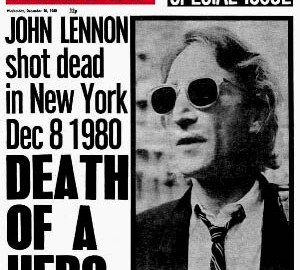


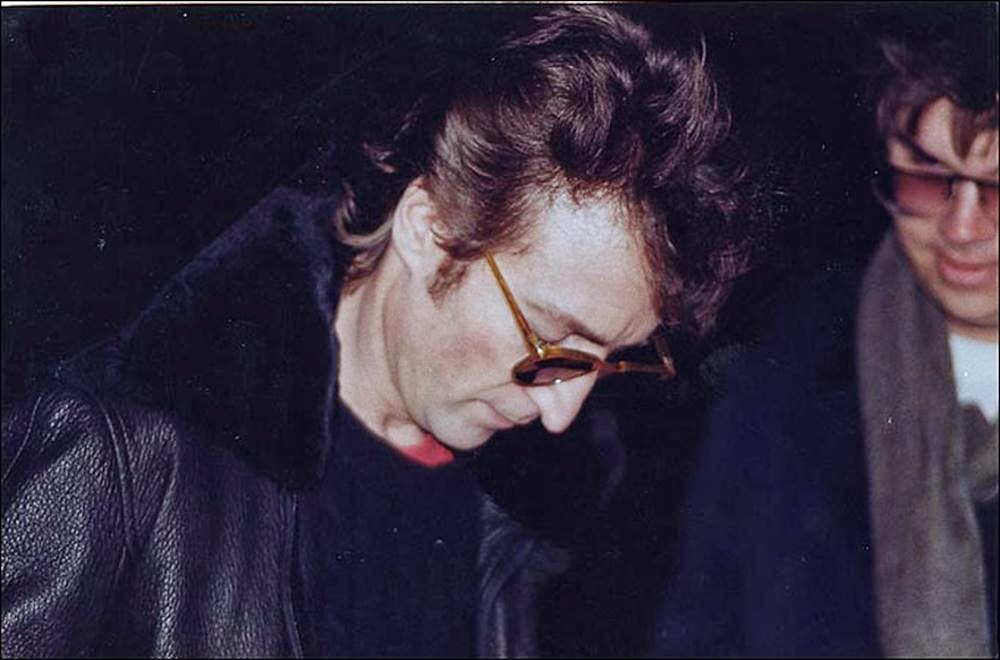
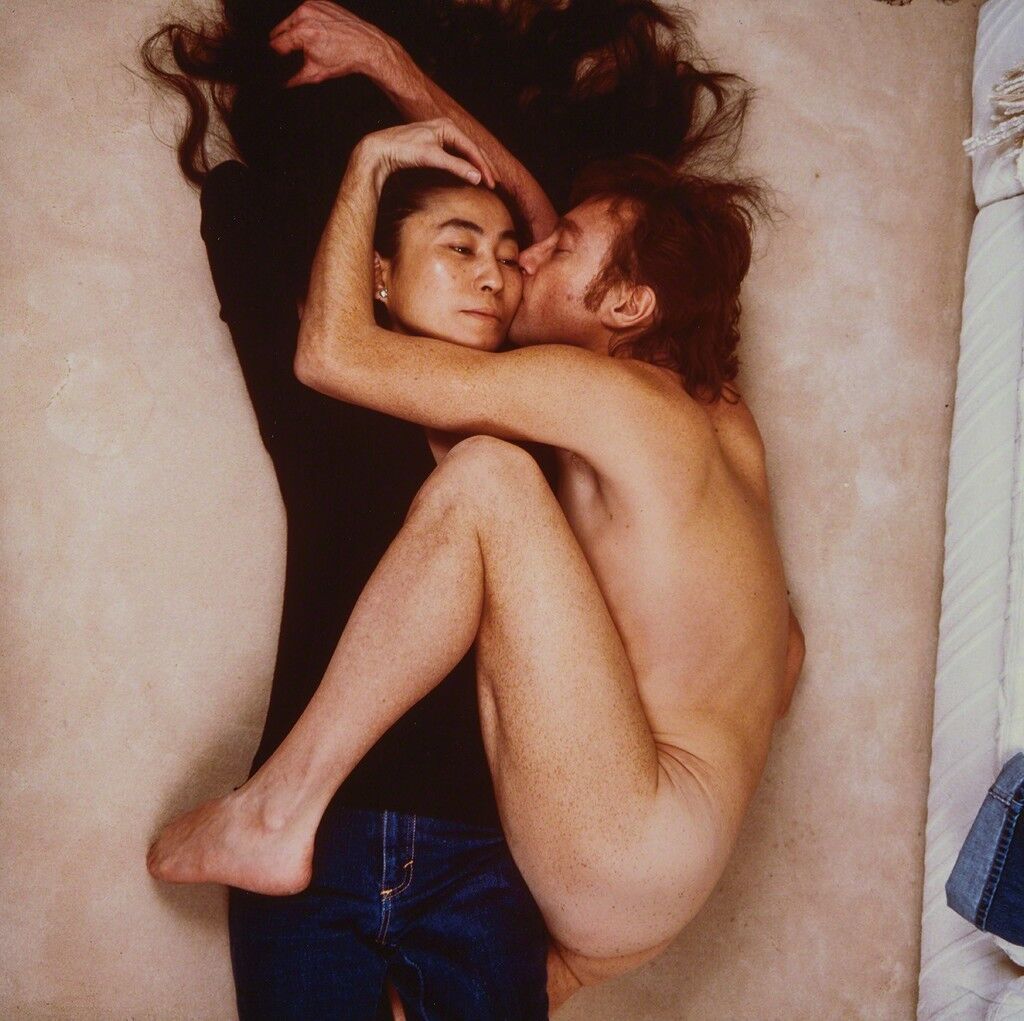


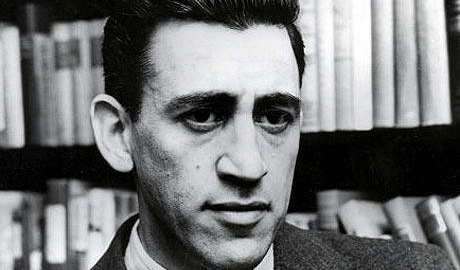


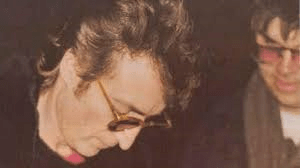


_entrance_by_David_Shankbone.jpg)


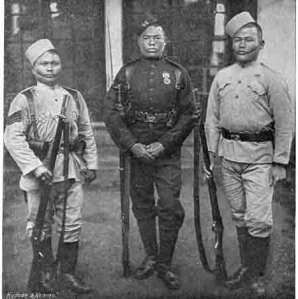




.jpg)

.jpg)
.jpg)


.jpg)


.jpg)


.jpg)









 belfastchildis.com