I have been following and sympathising with these guys for sometime now and their courage and selfless commitment to exposing the “real” ISIS and their brutal treatment of the Raqqa people – has both informed me and filled me with unlimited respect for these brave young men.
Sadly they have paid a heavy price for their brave actions , but without them Raqqa would not only be being slaughtered in silence – but in secret & behind closed doors. One day when justice catches up with IS & their deluded followers ( and that day will come) thanks to these guys we will have a record of their crimes and abuse of Raqqa and its people and the IS madmen will pay for their crimes against humanity in this life or the next.
Because Karma is watching and Karma always collects its debts
Raqqa Is Being Slaughtered Silently (RSS or RBSS) is a citizen journalism effort exposing human rights abuses by Islamic State of Iraq and the Levant (also known as ISIL or DAESH) forces occupying the northern Syrian city of Raqqa. ISIL uses Raqqa as its de facto capital. RSS works to counter the suggestion that citizens of Raqqa have welcomed the presence of ISIL/DAESH.
It has become one of the few reliable sources of information from the city.
Activities
————————
ISIS Most Wanted – Raqqa is being Slaughtered Silently
————————
The group has published first hand accounts, videos and photos of life and war crimes in Raqqa through its Facebook page and website, other social media, and via interviews and furnishing material to media organizations worldwide. As a result, RSS has been cited by international media outlets fairly extensively, and major news outlets have done feature stories on the group. Since no foreign or domestic journalists can operate in Raqqa, the efforts of RSS provide unique insights. The work is dangerous, with ISIL militants searching for, torturing and in at least one case killing, RSS members.
Members
According to an interview with Vice News, there were originally 17 members, who started out opposing the Syrian Government. When ISIL moved in to the city in April 2014 the group started the posting information about ISIL. One member who had fled Raqqa said
“After we launched the campaign and posted a lot of crucifixions and executions on the news and Facebook and Twitter, they made three Friday sermons about us, saying we are infidels and we’re against Allah and “we’ll catch them and we’ll execute them.” “We are 12 inside the city and four outside. Before the 12 inside the city were posting on Twitter and posting on Facebook, and talking to journalists, but it’s very dangerous. So we decided to use a “secret room,” and the people in the city post all the photos, the news, and everything, and the four that are out, we are posting it on the internet, Twitter, and Facebook, and talking to journalists. We hide behind fake names and we don’t trust anyone, so we don’t get captured.”
———————————-
Inside Raqqa: The Raqqa Resistance
———————————-
Al-Moutaz Bellah Ibrahim
Several members of RSS have been executed inside Raqqa. In May 2014 Al-Moutaz Bellah Ibrahim was kidnapped by ISIL and murdered. In July 2015, ISIL released a video showing two men being strung up on trees and shot. Though ISIL claimed the two murdered men had worked with RBSS, one of the founders of RBSS denied they were members. Another friend of the group was similarly executed.
Ibrahim Abdul Qadir & Fares Hamadi
Hamoud al-Mousa, the father of one of the group’s founders, was killed in ISIL custody. On October 30, 2015, RSS activist Ibrahim Abdul Qadir (age 20) and his friend Fares Hamadi were found stabbed and beheaded in Urfa, Turkey. It was the first acknowledged assassination outside of ISIL controlled territory.
Abdalaziz Alhamza acts as a spokesperson. At least 5 members of the group live outside Syria.
Ahmad Mohammed al – Mousa
On December 16, 2015 masked men murdered RSS member Ahmad Mohammed al-Mousa in the rebel held city of Idlib, Syria.
Naji Jerf, the group’s film director and editor-in-chief of the independent monthly Hentah, was killed in Gaziantep, Turkey with a silenced pistol in broad daylight outside a media building in late December 2015. ISIL claimed responsibility on Twitter.
The Scene of Naji Killing
——————–
Inside ISIS capital in Raqqa Syria – Raqqa is Being Slaughtered Silently
——————–
Significant stories
When ISIL banned home internet in Raqqah and forced internet users into cafes where they could be monitored RBSS started releasing unfiltered information about life under ISIL rule.
Soon after the release of a video showing the burning alive of a Jordanian pilot, Muath Al-Kasasbeh, RBSS released Google earth photos they cross referenced to landmarks pinpointing the location of the execution in the southern part of Raqqa near the river. They also reported that videos of the execution were played for the public on large screens throughout the city of Raqqa.
RBSS detailed that the effects of Russian airstrikes in and around Raqqa were targeting mainly civilian targets, and having little effect on ISIL.
Raqqa is Being Slaughtered Silently: the courage of reporting on life in Syria ..
————————————
The group was awarded the International Press Freedom Award in 2015, from the Committee to Protect Journalists. The citation said in part “While RBSS was formed to document the atrocities of [ISIL], its members have also reported critically on the Assad government’s bombings, other rebel forces, and civilian casualties caused by U.S.-led airstrikes”.
Kyle Orton writing for The Independent, said “The risks are extreme. Their bravery quite extraordinary” and wrote “Where [ISIL] presented a functioning, just government, RBSS showed the scarcity and brutality. Not a few foreign fighters … have gone to wage “five-star jihad” … only to be disillusioned… that [ISIL] is reportedly having to kill them to stop them leaving. RBSS’s work, therefore, offers the chance of preventing people inclined toward [ISIL’s] ideology actually going to Syria
The Crusades – Muslims vs Christians The Crusades were military campaigns sanctioned by the Catholic Church in the Middle Ages. Pope Urban II authorized the First Crusade in 1095 with the goa…
St. George’s Day is on the 23rd April and It is England’s national day.
St Georges Day. Nottingham. 23 April 2014
———————————————-
As a protestants from Northern Ireland who has made England his home – I feel appalled and outraged ( just a little) by the fact that St. George’s Day is all but ignored by the rest of the UK and has never been honoured with a Bank Holiday – such as Scotland’s Wee Willie Burns Day and Ireland’s St. Patrick Day Piss-up (he was in fact Roman/English) .
Through the years there have been many calls for St. George’s Day to be made a bank holidays and I’m right behind this cause – Stop neglecting poor St George and give us a Bank Holiday to celebrate England’s long and glorious history.
Do you think St. George’s Day should be a Bank Holiday ?
Vote Below
———————–
For the Kids
Who was St George?
St. George is the patron saint of England and his emblem is a red cross on a white background, which is also the flag of England, and part of the British flag.
St George’s emblem was adopted by Richard The Lion Heart and brought to England in the 12th century. The king’s soldiers wore it on their tunics to avoid confusion in battle
The most famous legend of Saint George is of him slaying a dragon. In the Middle Ages the dragon was commonly used to represent the Devil. The slaying of the dragon by St George was first credited to him in the twelfth century, long after his death. It is therefore likely that the many stories connected with St George’s name are fictitious.
There are many versions of story of St George slaying the dragon, but most agree on the following:
A town was terrorised by a dragon.
A young princess was offered to the dragon
When George heard about this he rode into the village
Saint George never visited the British Isles in his lifetime, but during the Middle Ages he became revered by the English and according to legend fought on their side in the Crusades and the Hundred Years’ War. After the union of England and Scotland in 1707, celebration of the day waned in popularity, but in modern times it remains as a celebration of English culture.
History of celebrating St George in England
References to St George prior to 1066
The earliest documented mention of St George in England comes from the venerable Bede (c. 673–735). His feast day is also mentioned in the Durham Collectar, a ninth-century liturgical work. The will of Alfred the Great is said to refer to the saint, in a reference to the church of Fordington, Dorset.Certainly at Fordington a stone over the south door records the miraculous appearance of St George to lead crusaders into battle.Early (c. 10th century) dedications of churches to St George are noted in England, for example at Fordington, Dorset, at Thetford, Southwark and Doncaster.
1066 (Norman Conquest) – 1707 (Union of the Crowns)
Edward III (1327–1377) put his Order of the Garter (founded c. 1348) under the patronage of St. George. This order is still the foremost order of knighthood in England and St George’s Chapel at Windsor Castle was built by Edward IV and Henry VII in honour of the order. The badge of the Order shows Saint George on horseback slaying the dragon. Froissart observed the English invoking St. George as a battle cry on several occasions during the Hundred Years’ War (1337–1453). Certain English soldiers displayed the pennon of St George. In his play Henry V, William Shakespeare has the title character utter a now-famous invocation of the Saint at Harfleur prior to the battle of Agincourt (1415): “Follow your spirit, and upon this charge Cry ‘God for Harry, England, and Saint George!'” At Agincourt many believed they saw him fighting on the English side.
St. George’s feast day in England was no different from the numerous saints on the liturgical calendar until the Late Middle Ages. In the past, historians mistakenly pointed to the Synod of Oxford in 1222 as elevating the feast to special prominence, but the earliest manuscripts of the synod’s declaration do not mention the feast of St George. The declarations of the Province of Canterbury in 1415 and the Province of York in 1421 elevated the feast to a double major, and as a result, work was prohibited and church attendance was mandatory.
During the Tudor period the celebration of feast of Saint George’s was abolished along with most of the other saints, with them went the tradition of flying saint’s flags in public (to be replaced with royal badges on banners). The one exception was the Cross of Saint George.
1707–1894
The tradition of celebration St George’s day had waned by the end of the 18th century after the union of England and Scotland. The Royal Society of St. George, dedicated to promoting English culture including St George’s Day, was founded in 1894 and famous members have included Sir Winston Churchill.
Modern celebration of St George’s day in England
A crowd celebrates Saint George’s Day at an event in Trafalgar Square in 2010
In recent years the popularity of St George’s Day appears to have been gradually increasing. In March 2002 the London Mayor sparked controversy by announcing plans to spend £100,000 to mark St Patrick’s Day – after refusing to organise a celebration for St George’s Day. He also stated that he would dye the Trafalgar Square fountains green On St George’s Day that year members of the Campaign for an English Parliament (www.thecep.org.uk) protested at the mayor’s lack of support for St George’s Day by dying the fountains in Trafalgar Square red.
Around July of that year the Campaign’s London co-ordinator put the idea to the London Branch that they should set up a company to establish a St George’s Day event in London. Several were in agreement and they pooled their money together.
The ethos of the company was to promote St George’s Day in the face of some lukewarm response both from the London media and of course the mayor’s constant disparaging words about St George. He was reported to have said that there was no call for the day to be celebrated and indeed poo-pooed the idea.
They applied to Westminster Council to hold an event. It was very forthcoming with documents that stood at least 6″ thick. However one member contacted Covent Garden directly, and instantly began a rapport with the management, suddenly the 6″ of paperwork became a ½”. Whilst he was dealing with Covent Garden the others had set the wheels in motion to become a limited company and this was finally completed, ironically, on St.Patrick’s Day 2003.
The relationship with Covent Garden continued and the first event held under the St George’s Day Events company was on April 23rd 2003, although only a small affair it was the beginning of what was to become the London celebrations.
In 2004, they were in touch with the English Folk Dance and Song Society, who gladly appeared at Covent Garden. Although funds were severely limited they continually looked for new acts. In November, they turned to the London Assembly for funding, were given the criteria by the Assembly and with the help of Cross of St George Association a grant of £2500 was to be made to the St George’s Day Events company but as with anything of this nature hurdles were put in their way. The biggest one was that they had to have an advertisement in the London events guide ‘Time Out’, but with 24hrs to go before the printing deadline in the early hours of the morning they were informed of the format the advertisement should be in. Nevertheless the spirit of St George must have been with them because no sooner had a scathing letter to the London Assembly leisure committee been composed, than their graphics artist had manipulated the advertisement to the Assembly liking and thus it went ahead.
The St George’s Day events in Covent Garden 2004 were set up and once again the spirit of St George was with them, they could not have been blessed with better weather, a lovely sunny day with a small breeze to keep the flags flying to attention, the acts included :- Punch and Judy, English Folk Dancers, Mummers Players, Morris Dancers and some good old English folk music, for a group of amateurs the event went without a hitch and was enjoyed by all, a big thanks for Cross of St George Association for help with this event they were magnificent.
St George’s Day in Covent Garden 2005 went very much the same as the previous year but to a bigger audience. The company felt they had re-launched St George’s Day in London and it was now here to stay. During their meetings they often felt that situations and events would overtake them, after all they could not summon up the large amounts of money that were made available to other events.
Fortunately, they were contacted by the Royal Society of St.George as to what they could do to make the event much bigger and indeed better, with the Company’s help and with their clout St George’s Day 2006 was even a bigger success than before. BBC Radio 3 had a full programme of St George’s Day events in 2006, and Andrew Rosindell, ConservativeMP for Romford, has been putting the argument forward in the House of Commons to make St George’s Day a public holiday. In early 2009 Mayor of London Boris Johnson spearheaded a campaign to encourage the celebration of St George’s Day. Today St George’s day may be celebrated with anything English from morris dancing to a Punch and Judy show.
In 2011, a campaign to make St. George’s Day a public holiday in England began on the UK government’s e-petition website. It received 4,266 signatures, not achieving the 100,000 signatures required before the deadline in August 2012 to make a debate of the matter in the House of Commons a possibility.[10]
A traditional custom on St George’s day is to wear a red rose in one’s lapel, though this is no longer widely practised. Another custom is to fly or adorn the St George’s Cross flag, the flag of England, in some way: pubs in particular can be seen on 23 April festooned with garlands of St George’s crosses. It is customary for the hymn “Jerusalem” to be sung in cathedrals, churches and chapels on St George’s Day, or on the Sunday closest to it. Traditional English foods and drink (e.g. afternoon tea) may be consumed.
There is a growing reaction to the recent indifference to St George’s Day. Organisations such as English Heritage, and the Royal Society of Saint George have been encouraging celebrations. There have also been calls from some commentators to replace St George as patron saint of England, on claims that he was an obscure figure who had no direct connection with the country. However, there is no obvious consensus as to whom to replace him with, though names suggested include Edmund the Martyr, Cuthbert of Lindisfarne, or Saint Alban, with the latter having topped a BBC Radio 4 poll on the subject.
British scouting organisations such as The Scout Association celebrate St George’s Day. St George was selected by scouting founder Robert Baden-Powell as the patron saint of the movement. Most scout districts host events on the Sunday closest to St George’s day, often a parade and religious service for their members.
Additional celebrations involve the commemoration of the 23 April as Shakespeare‘s birthday and death. Shakespeare is known to have been baptised on 26 April 1564 and to have died on 23 April 1616. 23 April is widely recognised as his traditional date of birth and commemorated on this day every year in his home Stratford upon Avon and throughout the world.
Other notable anniversaries on St George’s Day
23 April is also the anniversary of the birth of the artist J. M. W. Turner (1775–1851), the death of the Romantic poets William Wordsworth (1770–1850) and Rupert Brooke (1887–1915). It is also notable as the day of death of the following Englishmen: Wihtred, King of Kent (725); King Ethelred of Wessex (871), Ethelred II of England (1016), and the cricketers Jim Laker (1986) and Denis Compton (1997) In addition, on 23 April 871 Alfred became King of Wessex, on 23 April 1348 the English order of knighthood was founded, in 1661 King Charles II of England was crowned in Westminster Abbey and on 23 April 1924 was the first broadcast by an English monarch (King George V at the opening of the British Empire Exhibition at Wembley).
Following the fall of Mosul, the second largest city in Iraq, at the hands of the ISIS, the militants started forcing women to a accept temporary marriage or sexual jihad (jihad al-nikah), under the pretext of implementing the Sharia, and the women face severe punishments if they refuse to submit.
————————————-
Women Under Sharia Law – (Islamic Law) – CNN
————————————–
See Sharia Law
A Kurdistan Democratic Party (KDP) official from Mosul, Said Mamuzini, said that life is too hard for the women in Mosul due to the ISIS strict rules imposed on them. ISIS began selecting women of Mosul and forced them into marrying its militants calling it temporary marriage or sexual jihad (jihad al-nikah) since it has taken control over Mosul, and the women who refused to submit to this practice would be executed.
“At least 250 girls have so far been executed by IS for refusing to accept the practice of sexual jihad, and sometimes the families of the girls were also executed for rejecting to submit to IS’s request” he said.
———————————-
Muslim opinions on Women
———————————-
Ghayas Surchi, a PUK official from Mosul revealed that human rights are being widely violated in all IS-held territories, particularly the womens’ rights as they’re seen as commodities and they have no choice in choosing their spouses.
Surchi added that women are prohibited to go out alone in Mosul and they must be fully covered when they are in public. Girls and boys are also not allowed to see each other and talk, it is, therefore, hard for them to choose their soulmates.
However, there are dealers who secretly organise meetings between boys and girls and they charge a great deal of money.
IS militants took control of Mosul in June 2014, after the fall of Iraqi army in the city and since then it has been executing the residents of the city for various charges to spread fear and push the civilians to obey.
—————————————–
The Miserable Life American Muslim Women Face When They Marry Muslim Men From Abroad
Unashamedly Proud of My Loyalist and British Heritage.
In fact I want the world to know that despite what loony lefties and followers of Corbyn think – its perfectly normal to take pride in our country and celebrate and embrace our long and glorious history.
—————————-
Someone emailed me yesterday after visiting my website and praised me for writing about the history of The Troubles and commemorating the memory of all those who had died during the 30 year conflict.
So far – so good!
And then she asked me………..
“Did I hate Catholic’s and what I thought of a United Ireland ?”.
Well at this stage my antenna went up and I thought ” Here we go again “
Let me explain….
When I set up this blog/website last year my primary objective was to promote my Autobiography Belfast Child and hopefully attract some attention from the publishing world and maybe one day see my book printed and share my story with the world.
That was the objective anyways and the process has been long and full of disappointments – but I am now working with high profile ghost writing Tom Henry to complete the book and his enthusiasm for the subject is feeding my dream.
I have always thought I had an interesting story to tell ( I would wouldn’t I ? ) and within weeks of launching the site I was pleasantly surprised to see that I was receiving a lot of visitors and people were commenting on my story. As of yesterday I have had more 100,000 visitors to the site and this figure is growing and increasing weekly by a few thousand and this I must say surprised me.
It had always been my aim to dedicate the book/my story to the memory of all those killed in the Troubles and off course to the memory of my beloved father John Chambers – who died way to young and left a wound in my soul that can never been healed or soothed.
So with this in mind I decided to use my website to tell the story of the Northern Ireland conflict and include an unbiased (mostly) comprehensive history of all major events and deaths in the Troubles. Due to my loyalist heritage and background this has not always been easy, considering I lived through the worst years of the Troubles among the loyalist communities of West Belfast and like those around me I was on the front-line of the sectarian slaughter and there was no escape from the madness that surrounded and engulfed us.
I blamed the IRA ( and other republican terrorists ) for all the woes of life in Belfast and I hated them with a passion – still do.
Growing up as a protestant in Northern Ireland is unlike life in any other part of the UK or British territories and from cradle to grave our lives are governed by the tenuous umbilical cord that reluctantly connects us to the rest of the UK and Westminster’s corridors of power.
Unlike most other communities throughout the UK we are fanatically proud of our Britishness and we have literally fought for the right to remain part of Britain and have Queen Elizabeth II as the mother of our nation.
Long may she reign
If you have read extracts from my Autobiography Belfast Child ( It’s worth it – promise ) you will know that I was raised within the heartlands of loyalist Northern Ireland – The Glorious Shankill Road.
The UDA ( Ulster Defense Force) and other loyalist paramilitaries governed and controlled our daily lives and lived and operated among us. The loyalist community stood as one against the IRA and other republican terrorists and although there was often war between the various different groups , they were untied in their hatred of Republican’s and pride in the Union.
The definition of loyalist is :
a. A supporter of union between Great Britain and Northern Ireland
b. A person who remains loyal to the established ruler or government, especially in the face of a revolt.
—————————————–
Why Ireland split into the Republic of Ireland & Northern Ireland
—————————————–
A bit of history for you
A very brief outlined of the beginning of the modern troubles
Whilst the Protestants’ clung to their British sovereignty and took pride in the union, our Catholic counterparts felt abandoned and second class citizens in a Unionist run state. The civil rights marches of the 60’s & Republican calls for a United Ireland were the catalyst for the IRA and other Republican terrorist groups to take up arms against the British and feed the paranoia of the loyalist community.
Northern Ireland descended into decades of sectarian conflict & slaughter. An attack on the crown was an attack on the Protestant people of the North and the Protestant paramilitaries took up arms and waged an indiscriminate war against the IRA, the Catholic population and each other. Many innocent Catholic’s and Protestant’s became targets of psychopathic sectarian murder squad’s. Murder was almost a daily occurrence and the killings on both sides perpetuated the hatred and mistrust between the two ever-warring communities. It was a recipe for disaster and Northern stood on the brink of all out civil war.
Growing up in this environment it is hardly surprising to learn that I hated republicans and all they stood for. But that doesn’t mean I hated Catholic’s or Irish people and would wish any harm on them – I don’t and I didn’t.
It means I have a different point of view and democracy is all about freedom of choice and my choice is to maintain the Union with the UK and embrace and celebrate my loyalist culture and tradition. It also means I have the right to take pride in the union with the rest of the UK and I wear my nationality like a badge of honor for all the world to see.
————————————–
Jason Mawer has been warned twice to remove his jacket in case it offends someone
The unique Mod-style jacket in red, white and blue was made a few years ago for a Who convention in London
Pub landlord Jason Mawer has twice been asked in public to remove his treasured Union Jack jacket – for risk of it being ‘offensive’.
He was told to take off his valuable Mod-style Barbour jacket – designed in honour of legendary rock band The Who – by officials who appeared to be council enforcement officers.
On the second occasion the female official warned him: ‘Would you mind removing your coat it might offend somebody.’
In recent years it has become almost politically “incorrect” to show any signs of pride in being British and mad lefties and their deluded disciples are always banging on about offending other religions and communities throughout the UK. The fact that the UK has such a diverse melting pot of different nationalities and religions and is generally accommodating to them – is lost on these do gooders and they ignore our country’s long history of religious and politically tolerance and instead accuse us of being xenophobic and this offends me no end.
Have they forgotten that it was our forefathers who fought and died for our great nation and our democracy is built on their ultimate sacrifice for our freedom – they did not die in vain.
…back to the email
If you had taken the time to have a proper look through my site you would be aware that I commemorate the deaths of all innocent people killed as a direct result of the conflict in Northern Ireland , regardless of political or religious background . I also cover the deaths of paramilitaries from both sides killed “in Action” as my objective to to give a complete picture of the history of the Troubles.
I receive lots of emails and comments about my site and although most of these are positive – a few ( normally from republicans ) accuse me of being a loyalist and somehow responsible for the all the deaths in Northern Ireland’s tortured history. Generally I ignore these emails as they are so far of the mark – if they had taken the time to read my story they would know a bit more about my history and know that I preach love – not hate!
Just because I am proud of the union and my British heritage does not mean I hate Catholics or Irish people or any others for that matter – in fact I judge no man on his colour , creed , religious or political background (apart from Republican Terrorists ).
I judge people on their humanity and empathy towards others and the world around us . Life is for living – so live and let live.
“In spite of everything, I still believe that people are really good at heart.”
― Anne Frank
The Belfast Blitz was four attacks of high-casualty German air raids on strategic targets in the city of Belfast in Northern island . in April and May 1941 during World War II. The first was on the night of 7–8 April 1941, a small attack which probably took place only to test Belfast’s defences. The next took place on Easter Tuesday , 15 April 1941. Two hundred bombers of the Luftwaffe attacked military and manufacturing targets in the city of Belfast. Some 900 people died as a result of the bombing and 1,500 were injured. High explosive bombs predominated in this raid. Apart from those on London, this was the greatest loss of life in any night raid during the Blitz.
—————————
The Belfast Blitz-narrated
—————————
Rescue workers searching through the rubble after an air raid on Belfast
The third raid on Belfast took place over the evening and morning of 4–5 May 1941; 150 were killed. Incendiary bombs predominated in this raid. The fourth and final Belfast raid took place on the following night, 5–6 May.
Background
As the UK was preparing for the conflict, the factories and shipyards of Belfast were gearing up. Belfast made a considerable contribution towards the Allied war effort, producing many naval ships, aircraft and munitions; therefore, the city was deemed a suitable bombing target by the Luftwaffe. Meanwhile, unlike Northern Ireland, southern Ireland was no longer part of the UK. Under the leadership of Éamon de Valera, it had declared its neutrality during the Second World War. Although it arrested German spies that its police and military intelligence services caught, the state never broke off diplomatic relations with Axis nations: the German Legation in Dublin remained open throughout the war.
Government
Junction of Antrim Road and Hillman Street
The Government of Northern Ireland lacked the will, energy and capacity to cope with a major crisis when it came. James Craig, Lord Craigavon, was Prime Minister of Northern Ireland since its inception in 1921 until his death in 1940. Richard Dawson Bates, was the Home Affairs Minister. Sir Basil Brooke, the Minister of Agriculture, was the only active minister. He successfully busied himself with the task of making Northern Ireland a major supplier of food to Britain in her time of need
John Clarke MacDermott, the Minister of Public Security, after the first bombing, initiated the “Hiram Plan” to evacuate the city and to return Belfast to ‘normality’ as quickly as possible.[5] It was MacDermott who sent a telegram to de Valera seeking assistance. There was unease with the complacent attitude of the government, which led to resignations:
John Edmond Warnock, the parliamentary secretary at the Ministry of Home Affairs, resigned from the government on 25 May 1940. He said, “I have heard speeches about Ulster pulling her weight but they have never carried conviction.” and “the government has been slack, dilatory and apathetic.”[6]
Lieutenant ColonelAlexander Gordon (politician), Parliamentary and Financial Secretary at the Ministry of Finance (i.e. Chief Whip), resigned on 13 June 1940,[7] explaining to the Commons that the government was “quite unfitted to sustain the people in the ordeal we have to face.”
Craigavon died on 24 November 1940. He was succeeded by John Miller Andrews, then 70 years old, who was no more capable of dealing with the situation than his predecessor. On 28 April 1943, six members of the Government threatened to resign, forcing him from office. He was replaced by Sir Basil Brooke on 1 May.[8]
During the war years, Belfast shipyards built or converted over 3,000 navy vessels, repaired more than 22,000 others and launched over half a million tons of merchant shipping – over 140 merchantmen.[10]
James Mackie & Sons were re-equipped in 1938. They were the primary supplier of Bofors anti-aircraft shells.
Harland’s Engineering works built tanks. They designed the Churchill.
Aero linen for covering aircraft, such as the Hawker Hurricane, and military glider frames was manufactured by a number of Belfast flax spinning mills, such as The York Street Flax Spinning Co.; Brookfield Spinning Co.; Wm. Ewart’s Rosebank Weaving Co.; and the Linen Thread Co.
Other Belfast factories manufactured gun mountings, ordnance pieces, aircraft parts and ammunition.
War materials and food were sent by sea from Belfast to Britain, some under the protection of the neutralIrish tricolour. The M.V. Munster, for example, operated by the Belfast Steamship Company, plied between Belfast and Liverpool under the tricolour, until she hit a mine and was sunk outside Liverpool.[11]
Preparation
Sir James Craig, former Prime Minister of Northern Ireland.
Government preparation
There was little preparation for the conflict with Germany. However at the time Lord Craigavon, Prime Minister of Northern Ireland since its inception in 1921, said: “Ulster is ready when we get the word and always will be.” He was asked, in the N.I. parliament: “if the government realized ‘that these fast bombers can come to Northern Ireland in two and three quarter hours’ “. His reply was: “We here today are in a state of war and we are prepared with the rest of the United Kingdom and Empire to face all the responsibilities that imposes on the Ulster people. There is no slacking in our loyalty.”
Dawson Bates, the Home Affairs Minister, simply refused to reply to army correspondence and when the Ministry of Home Affairs was informed by imperial defence experts that Belfast was a certain Luftwaffe target, nothing was done.[13]
Air-raid shelters
Belfast, the city with the highest population density had the lowest proportion of air-raid shelters. Prior to the “Belfast Blitz” there were only 200 public shelters, although 4,000 households had built their own shelters. No searchlights were set up, as they had only arrived on 10 April. There were no night-fighters. On the night of the raid, no Royal Air Force (RAF) aircraft took to the air. There were only 22 anti-aircraft guns, six light, and sixteen heavy. On the night, only seven were operated for a short time. There was no smokescreen ability. There were some barrage balloons. These air-raid shelters were Anderson shelters. They were sheets of corrugated galvanised iron covered in earth. Since most casualties were caused by falling masonry rather than by blast, they provided effective shelter for those who had them.
Children
Few children had been successfully evacuated. The “Hiram Plan” initiated by Dawson Bates, the Home Affairs Minister, had failed to materialise. Fewer than 4,000 women and children were evacuated. There were still 80,000 more in Belfast. Even the children of soldiers had not been evacuated, with calamitous results when the married quarters of Victoria Barracks received a direct hit.
Earlier raids
There had been a number of small bombings, probably by planes that missed their targets over the River Clyde in Glasgow or the cities of the northwest of England. On 24 March 1941, John MacDermott, Minister for Security, wrote to Prime Minister John Andrews, expressing his concerns that Belfast was so poorly protected: “Up to now we have escaped attack. So had Clydeside until recently. Clydeside got its blitz during the period of the last moon. There [is] ground for thinking that the … enemy could not easily reach Belfast in force except during a period of moonlight. The period of the next moon from say the 7th to the 16th of April may well bring our turn.” MacDermott would be proved right.
Heinkel He 111 bomber
The first deliberate raid took place on the night of 7 April. (Some authors count this as the second raid of four). It targeted the docks. Neighbouring residential areas were also hit. Six Heinkel He 111 bombers, from Kampfgruppe 26, flying at 7,000 feet (2,100 m), dropped incendiaries, high explosive and parachute-mines. By British mainland blitz standards, casualties were light. Thirteen lost their lives, including a soldier killed when an anti-aircraft gun, at the Balmoral show-grounds, misfired. The most significant loss was a 4.5-acre (1.8 ha) factory floor for manufacturing the fuselages of Short Stirling bombers. The Royal Air Force announced that Squadron Leader J.W.C. Simpson shot down one of the Heinkels over Downpatrick. The Luftwaffe crews returned to their base in Northern France and reported that Belfast’s defences were, “inferior in quality, scanty and insufficient”.
Easter Tuesday Blitz
William Joyce (known as “Lord Haw-Haw“) announced in radio broadcasts from Hamburg that there will be “Easter eggs for Belfast”.
That evening up to 200 bombers left their bases in northern France and the Netherlands and headed for Belfast. There were Heinkel He 111s, Junkers Ju 88s and Dorniers. At 10:40 pm the air raid sirens sounded. Accounts differ as to when flares were dropped to light up the city. The first attack was against the city’s waterworks, which had been attacked in the previous raid. High explosives were dropped. Initially it was thought that the Germans had mistaken this reservoir for the harbour and shipyards, where many ships, including HMS Ark Royal were being repaired. However that attack was not an error. Three vessels nearing completion at Harland and Wolff’s were hit as was its power station. Wave after wave of bombers dropped their incendiaries, high explosives and land-mines. When incendiaries were dropped, the city burned as water pressure was too low for effective firefighting.
Public buildings destroyed or badly damaged included Belfast City Hall’s Banqueting Hall, the Ulster Hospital for Women and Children and Ballymacarrett library, (the last two being located on Templemore Avenue). Strand Public Elementary school, the LMS railway station, the adjacent Midland Hotel on York Road, and Salisbury Avenue tram depot were all hit. Churches destroyed or wrecked included Macrory Memorial Presbyterian in Duncairn Gardens; Duncairn Methodist, Castleton Presbyterian on York Road; St Silas’s on the Oldpark Road; St James’s on the Antrim Road; Newington Presbyterian on Limestone Road; Crumlin Road Presbyterian; Holy Trinity on Clifton Street and Clifton Street Presbyterian; York Street Presbyterian and York Street Non-Subscribing Presbyterian; Newtownards Road Methodist and Rosemary Street Presbyterian (the last of which was not rebuilt).
Streets heavily bombed in the city centre included High Street, Ann Street, Callender Street, Chichester Street, Castle Street, Tomb Street, Bridge Street (effectively obliterated), Rosemary Street, Waring Street, North Street, Victoria Street, Donegall Street, York Street, Gloucester Street, and East Bridge Street. In the east of the city, Westbourne and Newcastle Streets on the Newtownards Road, Thorndyke Street off the Albertbridge Road and Ravenscroft Avenue were destroyed or damaged. In the west and north of the city, streets heavily bombed included Percy Street, York Park, York Crescent, Eglinton Street, Carlisle Street, Ballyclare, Ballycastle and Ballynure Streets off the Oldpark Road; Southport Street, Walton Street, Antrim Road, Annadale Street, Cliftonville Road, Hillman Street, Atlantic Avenue, Hallidays Road, Hughenden Avenue, Sunningdale Park, Shandarragh Park, and Whitewell Road. Burke Street which ran between Annadale and Dawson streets in the New Lodge area, was completely wiped off the map with all its 20 houses flattened and all of the occupants killed.
The Hawker Hurricane accounted for the most kills during the Battle of Britain
There was no opposition. In the mistaken belief that they might damage RAF fighters, the seven anti-aircraft batteries ceased firing. But the RAF had not responded. The bombs continued to fall until 5am.
Fifty-five thousand houses were damaged leaving 100,000 temporarily homeless. Outside of London, with some 900 dead, this was the greatest loss of life in a night raid during the Blitz. A stray bomber attacked Derry, killing 15. Another attacked Bangor, killing five. By 4 am the entire city seemed to be in flames. At 4.15am John MacDermott, the Minister of Public Security, managed to contact Basil Brooke (then Agriculture Minister), seeking permission to seek help from the Irish government. Brooke noted in his diary “I gave him authority as it is obviously a question of expediency”. Since 1.45am all telephones had been cut. Fortunately, the railway telegraphy link between Belfast and Dublin was still operational. The telegram was sent at 4.35am,[citation needed] asking the Irish Taoiseach, Éamon de Valera for assistance.
Human cost
Over 900 lives were lost, 1,500 people were injured, 400 of them seriously. Fifty-thousand houses, more than half the houses in the city, were damaged. Eleven churches, two hospitals and two schools were destroyed. These figures are based on newspaper reports of the time, personal recollections and other primary sources, such as:-
Jimmy Doherty, an air raid warden (who later served in London during the V1 and V2 blitz), who wrote a book on the Belfast blitz;
Emma Duffin, a nurse at the Queen’s University Hospital, (who previously served during the Great War), who kept a diary;
and Major Seán O’Sullivan, who produced a detailed report for the Dublin government. There are other diarists and narratives. Brian Barton of Queen’s University, Belfast, has written most on this topic. There is an eye-witness account from John Potter online.
Instructions
There were few bomb shelters. An air raid shelter on Hallidays Road received a direct hit, killing all those in it. Many people who were dug out of the rubble alive had taken shelter underneath their stairs and were fortunate that their homes had not received a direct hit or caught fire. In the New Lodge area people had taken refuge in a mill. Tragically 35 were crushed to death when the mill wall collapsed. In another building, the York Street Mill, one of its massive sidewalls collapsed on to Sussex and Vere Streets, killing all those who remained in their homes.
Major O’Sullivan reported that “In the heavily ‘blitzed’ areas people ran panic-stricken into the streets and made for the open country. As many were caught in the open by blast and secondary missiles, the enormous number of casualties can be readily accounted for. It is perhaps true that many saved their lives running but I am afraid a much greater number lost them or became casualties.”
That night almost 300 people, many from the Protestant Shankill area, took refuge in the Clonard Monastery in the Catholic Falls Road. The crypt under the sanctuary and the cellar under the working sacristy had been fitted out and opened to the public as an air-raid shelter. Prayers were said and hymns sung by the mainly Protestant women and children during the bombing.
Mortuary
The mortuary services had emergency plans to deal with only 200 bodies. 150 corpses remained in the Falls Road baths for three days before they were buried in a mass grave, with 123 still unidentified. Two hundred and fifty-five corpses were laid out in St George’s Market. Many bodies and body parts could not be identified.[19] Mass graves for the unclaimed bodies were dug in the Milltown and City Cemeteries.
Nurse Emma Duffin
Nurse Emma Duffin, who had served in the Great War, contrasted death in that conflict with what she saw:
(Great War casualties) had died in hospital beds, their eyes had been reverently closed, their hands crossed to their breasts. Death had to a certain extent been … made decent. It was solemn, tragic, dignified, but here it was grotesque, repulsive, horrible. No attendant nurse had soothed the last moments of these victims; no gentle reverent hand had closed their eyes or crossed their hands. With tangled hair, staring eyes, clutching hands, contorted limbs, their grey-green faces covered with dust, they lay, bundled into the coffins, half-shrouded in rugs or blankets, or an occasional sheet, still wearing their dirty, torn twisted garments. Death should be dignified, peaceful; Hitler had made even death grotesque. I felt outraged, I should have felt sympathy, grief, but instead feelings of revulsion and disgust assailed me.
Major Seán O’Sullivan
Major Seán O’Sullivan reported on the intensity of the bombing in some areas, such as the Antrim Road, where bombs “fell within fifteen to twenty yards of one another.” The most heavily-bombed area was that which lay between York Street and the Antrim Road, north of the city centre. O’Sullivan felt that the whole civil defence sector was utterly overwhelmed. Heavy jacks were unavailable. He described some distressing consequences, such as how “in one case the leg and arm of a child had to be amputated before it could be extricated.”
In his opinion, the greatest want was the lack of hospital facilities. He went to the Mater Hospital at 2 pm, nine hours after the raid ended, to find the street with a traffic jam of ambulances waiting to admit their casualties. He spoke with Professor Flynn, (Theodore Thomson Flynn, an Australian based at the Mater Hospital and father of actor Errol Flynn), head of the casualty service for the city, who told him of “casualties due to shock, blast and secondary missiles, such as glass, stones, pieces of piping, etc.” O’Sullivan reported: “There were many terrible mutilations among both living and dead – heads crushed, ghastly abdominal and face wounds, penetration by beams, mangled and crushed limbs etc.”. His report concluded with: “a second Belfast would be too horrible to contemplate”.
Refugees
Two hundred and twenty thousand people fled from the city. Many “arrived in Fermanagh having nothing with them only night shirts”. Ten thousand “officially” crossed the border. Over 500 received care from the Irish Red Cross in Dublin. The town of Dromara saw its population increase from 500 to 2,500. In Newtownards, Bangor, Larne, Carrickfergus, Lisburn and Antrim many thousands of Belfast citizens took refuge either with friends or strangers.
Major O’Sullivan reported on a:
continuous trek to railway stations. The refugees looked dazed and horror stricken and many had neglected to bring more than a few belongings… Any and every means of exit from the city was availed of and the final destination appeared to be a matter of indifference.
Train after train and bus after bus were filled with those next in line. At nightfall the Northern Counties Station was packed from platform gates to entrance gates and still refugees were coming along in a steady stream from the surrounding streets … Open military lorries were finally put into service and even expectant mothers and mothers with young children were put into these in the rather heavy drizzle that lasted throughout the evening. On the 17th I heard that hundreds who either could not get away or could not leave for other reasons simply went out into the fields and remained in the open all night with whatever they could take in the way of covering.
Moya Woodside noted in her diary: “Evacuation is taking on panic proportions. Roads out of town are still one stream of cars, with mattresses and bedding tied on top. Everything on wheels is being pressed into service. People are leaving from all parts of town and not only from the bombed areas. Where they are going, what they will find to eat when they get there, nobody knows.”
Dawson Bates informed the Cabinet of rack-renting of barns, and over thirty people per house in some areas.
Humanity knows no borders, no politics, no differences of religious belief. Yesterday for once the people of Ireland were united under the shadow of a national blow. Has it taken bursting bombs to remind the people of this little country that they have common tradition, a common genius and a common home? Yesterday the hand of good-fellowship was reached across the Border. Men from the South worked with men from the North in the universal cause of the relief of suffering.
Aftermath
Southern reaction
By 6am, within two hours of the request for assistance, 71 firemen with 13 fire tenders from Dundalk, Drogheda, Dublin, and Dún Laoghaire were on their way to cross the Irish border to assist their Belfast colleagues. In each station volunteers were asked for, as it was beyond their normal duties. In every instance, all stepped forward. They remained for three days, until they were sent back by the Northern Ireland government. By then 250 firemen from Clydeside had arrived. TaoiseachÉamon de Valera formally protested to Berlin. He followed up with his “they are our people” speech, made in Castlebar, County Mayo, on Sunday 20 April 1941 (Quoted in the Dundalk Democrat dated Saturday 26 April 1941):
In the past, and probably in the present, too, a number of them did not see eye to eye with us politically, but they are our people – we are one and the same people – and their sorrows in the present instance are also our sorrows; and I want to say to them that any help we can give to them in the present time we will give to them whole-heartedly, believing that were the circumstances reversed they would also give us their help whole-heartedly …
Initial German radio broadcasts celebrated the raid. A Luftwaffe pilot gave this description “We were in exceptional good humour knowing that we were going for a new target, one of England’s last hiding places. Wherever Churchill is hiding his war material we will go … Belfast is as worthy a target as Coventry, Birmingham, Bristol or Glasgow.” William Joyce “Lord Haw-Haw” announced that “The Führer will give you time to bury your dead before the next attack … Tuesday was only a sample.” However Belfast was not mentioned again by the Nazis. After the war, instructions from Joseph Goebbels were discovered ordering it not to be mentioned. It would appear that Adolf Hitler, in view of de Valera’s negative reaction, was concerned that de Valera and Irish American politicians might encourage the United States to enter the war.
Eduard Hempel, the German Minister to Ireland, visited the Irish Ministry for External Affairs to offer sympathy and attempt an explanation. J.P. Walshe, assistant secretary, recorded that Hempel was “clearly distressed by the news of the severe raid on Belfast and especially of the number of civilian casualties.” He stated that “he would once more tell his government how he felt about the matter and he would ask them to confine the operations to military objectives as far as it was humanly possible. He believed that this was being done already but it was inevitable that a certain number of civilian lives should be lost in the course of heavy bombing from the air”.
Recriminations
The government was blamed by some for inadequate precautions. Tommy Henderson, an Independent Unionist MP in the House of Commons of Northern Ireland, summed up the feeling when he invited the Minister of Home Affairs to Hannahstown and the Falls Road, saying “The Catholics and the Protestants are going up there mixed and they are talking to one another. They are sleeping in the same sheugh (ditch), below the same tree or in the same barn. They all say the same thing, that the government is no good.”
A map showing the location of Belfast Lough
At night Dublin was the only city without a blackout between New York and Moscow, and between Lisbon and Sweden; German bombers often flew overhead to check their bearings using its lights, angering the British. One widespread criticism was that the Germans located Belfast by heading for Dublin and following the railway lines north. In The Blitz: Belfast in the War Years, Brian Barton wrote: “Government Ministers felt with justification, that the Germans were able to use the unblacked out lights in the south to guide them to their targets in the North.” Barton insisted that Belfast was “too far north” to use radio guidance.
Other writers, such as Tony Gray in The Lost Years state that the Germans did follow their radio guidance beams. Several accounts point out that Belfast, standing at the end of the long inlet of Belfast Lough, would be easily located. Another claim was that the Catholic population in general and the IRA in particular guided the bombers. Barton wrote: “the Catholic population was much more strongly opposed to conscription, was inclined to sympathise with Germany”, “…there were suspicions that the Germans were assisted in identifying targets, held by the Unionist population.” This view was probably influenced by the decision of the IRA Army Council to support Germany. However they were not in a position to communicate with the Germans, and information recovered from Germany after the war showed that the planning of the blitz was based entirely on German aerial reconnaissance.
Firemen return south
After three days, sometime after 6pm, the fire crews from south of the border began taking up their hoses and ladders to head for home. By then most of the major fires were under control and the firemen from Clydeside and other British cities were arriving. Some had received food, others were famished. All were exhausted. Two of the crews received refreshments in Banbridge; others were entertained in the Ancient Order of Hibernians hall in Newry. In 1995 on the fiftieth anniversary of the ending of the Second World War an invitation was received by the Dublin Fire Brigade for any survivors of that time to attend a function at Hillsborough Castle and meet Prince Charles. Only four were known still to be alive; one, Tom Coleman, attended to receive recognition for his colleagues’ solidarity at such a critical time.
Second major raid
Soldiers clearing rubble after the May air raid
There was a second massive air raid on Belfast on Sunday 4–5 May 1941, three weeks after that of Easter Tuesday. Around 1am, Luftwaffe bombers flew over the city, concentrating their attack on the Harbour Estate and Queen’s Island. Nearby residential areas in east Belfast were also hit when “203 metric tonnes of high explosive bombs, 80 land mines attached to parachutes, and 800 firebomb canisters containing 96,000 incendiary bombs” were dropped. Over 150 people lost their lives in what became known as the ‘Fire Blitz’.
Casualties were lower than at Easter, partly because the sirens had sounded at 11.45 pm while the Luftwaffe attacked more cautiously from a greater height. St George’s Church in High Street was damaged by fire. Again the Irish emergency services crossed the border, this time without waiting for an invitation. On 31 May 1941, German bombers attacked neutral Dublin in error.
The Titanic sank in the North Atlantic Ocean in the early morning of 15 April 1912, after colliding with an iceberg during her maiden voyage from Southampton
The Titanic
——————————————
——————————————
History & Background
Facts & Iconic Pictures
RMS Titanic was a British passenger liner that sank in the North Atlantic Ocean in the early morning of 15 April 1912, after colliding with an iceberg during her maiden voyage from Southampton, UK, to New York City, US. The sinking resulted in the deaths of more than 1,500 passengers and crew, making it one of the deadliest commercial peacetime maritime disasters in modern history. The RMS Titanic, the largest ship afloat at the time it entered service, was the second of three Olympic class ocean liners operated by the White Star Line, and was built by the Harland and Wolff shipyard in Belfast, with Thomas Andrews as her naval architect. Andrews was among those who died in the sinking. On her maiden voyage, she carried 2,224 passengers and crew.
Fact
The RMS Titanic was the world’s largest passenger ship…
A military dog who lost her leg on duty in Afghanistan has received a vet charity’s medal honouring the work of animals in war.
Lucca, a 12-year-old German Shepherd, suffered injuries including the loss of a leg during a search for improvised explosive devices (IEDs) in 2012.
She received the medal at a ceremony at Wellington Barracks in central London.
The Dickin medal, founded in 1943, is awarded by the People’s Dispensary for Sick Animals (PDSA) charity.
Lucca was trained by US Marine Corps as a search dog to sniff out munitions and explosives, and according to the Marines, protected the lives of thousands of allied troops.
On her final patrol Lucca discovered a 30lb (13.6kg) IED and, as she searched for additional explosives, a second device detonated.
RMS Titanic was a British passenger liner that sank in the North Atlantic Ocean in the early morning of 15 April 1912, after colliding with an iceberg during her maiden voyage from Southampton, UK, to New York City, US. The sinking resulted in the deaths of more than 1,500 passengers and crew, making it one of the deadliest commercial peacetime maritime disasters in modern history. The RMS Titanic, the largest ship afloat at the time it entered service, was the second of three Olympic class ocean liners operated by the White Star Line, and was built by the Harland and Wolff shipyard in Belfast, with Thomas Andrews as her naval architect. Andrews was among those who died in the sinking. On her maiden voyage, she carried 2,224 passengers and crew.
Fact
The RMS Titanic was the world’s largest passenger ship when it entered service, measuring 269 metres (882 feet) in length, and the largest man-made moving object on Earth. The largest passenger vessel is now the MS Allure of the Seas, at 362 metres.
Under the command of Edward Smith, the ship’s passengers included some of the wealthiest people in the world, as well as hundreds of emigrants from Great Britain and Ireland, Scandinavia and elsewhere throughout Europe seeking a new life in North America. A high-power radiotelegraph transmitter was available for sending passenger “marconigrams” and for the ship’s operational use. Although Titanic had advanced safety features such as watertight compartments and remotely activated watertight doors, there were not enough lifeboats to accommodate all of those aboard due to outdated maritime safety regulations. Titanic only carried enough lifeboats for 1,178 people—slightly more than half of the number on board, and one-third her total capacity.
Fact
26 months – the length of time it took to build the RMS Titanic, from keel to launch.
After leaving Southampton on 10 April 1912, Titanic called at Cherbourg in France and Queenstown (now Cobh) in Ireland before heading west to New York. On 14 April 1912, four days into the crossing and about 375 miles (600 km) south of Newfoundland, she hit an iceberg at 11:40 p.m. ship’s time. The collision caused the ship’s hull plates to buckle inwards along her starboard side and opened five of her sixteen watertight compartments to the sea; the ship gradually filled with water. Meanwhile, passengers and some crew members were evacuated in lifeboats, many of which were launched only partly loaded. A disproportionate number of men were left aboard because of a “women and children first” protocol followed by some of the officers loading the lifeboats. By 2:20 a.m., she broke apart and foundered, with well over one thousand people still aboard. Just under two hours after Titanic foundered, the Cunard liner RMS Carpathia arrived on the scene of the sinking, where she brought aboard an estimated 705 survivors.
Fact
228 feet – the height (69 metres) of the gantry built over the RMS Titanic and her sister ship Olympic Fittingly, it was the largest gantry in the world at that time.
The disaster was greeted with worldwide shock and outrage at the huge loss of life and the regulatory and operational failures that had led to it. Public inquiries in Britain and the United States led to major improvements in maritime safety. One of their most important legacies was the establishment in 1914 of the International Convention for the Safety of Life at Sea (SOLAS), which still governs maritime safety today. Additionally, several new wireless regulations were passed around the world in an effort to learn from the many missteps in wireless communications—which could have saved many more passengers.
The wreck of Titanic remains on the seabed, split in two and gradually disintegrating at a depth of 12,415 feet (3,784 m). Since her discovery in 1985, thousands of artefacts have been recovered and put on display at museums around the world. Titanic has become one of the most famous ships in history; her memory is kept alive by numerous works of popular culture (e.g., books, folk songs, films, exhibits, and memorials).
Background
The name Titanic was derived from Greek mythology and meant gigantic. Built in Belfast, Ireland, in the United Kingdom of Great Britain and Ireland (as it was then known), the RMS Titanic was the second of the three Olympic-class ocean liners—the first was the RMS Olympic and the third was the HMS Britannic . They were by far the largest vessels of the British shipping company White Star Line’s fleet, which comprised 29 steamers and tenders in 1912.
J.Bruce Ismay
The three ships had their genesis in a discussion in mid-1907 between the White Star Line’s chairman, J. Bruce Ismay, and the American financier J. P. Morgan, who controlled the White Star Line’s parent corporation, the International Mercantile Marine Co. (IMM).
The White Star Line faced an increasing challenge from its main rivals Cunard, which had recently launched the Lusitania and the Mauretania —the fastest passenger ships then in service—and the German lines Hamburg America and Norddeutscher Lloyd. Ismay preferred to compete on size rather than speed and proposed to commission a new class of liners that would be larger than anything that had gone before as well as being the last word in comfort and luxury. The company sought an upgrade in their fleet primarily in response to the Cunard giants but also to replace their oldest pair of passenger ships still in service, being the SS Teutonic of 1889 and SS Majestic of 1890. Teutonic was replaced by Olympic while Majestic was replaced by Titanic. Majestic would be brought back into her old spot on White Star’s New York service after Titanic’s loss.
Fact
How much did the Titanic cost?
At the US inquiry into the sinking, Bruce Ismay stated that the cost of building the Titanic was $7,500,000. This was converted into British Sterling at a rate of $5 to £1, with the cost in sterling being recorded as £1,500,000. Based on inflation and modern-day exchange rates, this would put the cost in 2016 money at something in the region of $166,000,000 (£120,000,000). Interestingly, this is less than the cost of making the 1997 movie Titanic, which was $200,000,000.
The ships were constructed by the Belfast shipbuilders Harland and Wolff, who had a long-established relationship with the White Star Line dating back to 1867.Harland and Wolff were given a great deal of latitude in designing ships for the White Star Line; the usual approach was for the latter to sketch out a general concept which the former would take away and turn into a ship design. Cost considerations were relatively low on the agenda and Harland and Wolff was authorised to spend what it needed on the ships, plus a five percent profit margin. In the case of the Olympic-class ships, a cost of £3 million for the first two ships was agreed plus “extras to contract” and the usual five percent fee.
Fact
14,000 – the number of men typically employed at the Harland & Wolff shipyard.
Harland and Wolff put their leading designers to work designing the Olympic-class vessels. The design was overseen by Lord Pirrie, a director of both Harland and Wolff and the White Star Line; naval architect Thomas Andrews, the managing director of Harland and Wolff’s design department; Edward Wilding, Andrews’ deputy and responsible for calculating the ship’s design, stability and trim; and Alexander Carlisle, the shipyard’s chief draughtsman and general manager. Carlisle’s responsibilities included the decorations, equipment and all general arrangements, including the implementation of an efficient lifeboat davit design.
Fact
Only 16 wooden lifeboats and four collapsible boats were carried, enough to accommodate 1,178 people, only one-third of Titanic’s total capacity, but more than legally required.
On 29 July 1908, Harland and Wolff presented the drawings to J. Bruce Ismay and other White Star Line executives. Ismay approved the design and signed three “letters of agreement” two days later authorising the start of construction. At this point the first ship—which was later to become Olympic—had no name, but was referred to simply as “Number 400”, as it was Harland and Wolff’s four hundredth hull. Titanic was based on a revised version of the same design and was given the number 401.
Dimensions and layout
Titanic in 1912
Titanic was 882 feet 9 inches (269.06 m) long with a maximum breadth of 92 feet 6 inches (28.19 m). Her total height, measured from the base of the keel to the top of the bridge, was 104 feet (32 m).She measured 46,328 gross register tons and with a draught of 34 feet 7 inches (10.54 m), she displaced 52,310 tons.
Fact
8 – The number of construction workers killed during the build, from keel laying to launch.
All three of the Olympic-class ships had ten decks (excluding the top of the officers’ quarters), eight of which were for passenger use. From top to bottom, the decks were:
The Boat Deck, on which the lifeboats were housed. It was from here during the early hours of 15 April 1912 that Titanic‘s lifeboats were lowered into the North Atlantic. The bridge and wheelhouse were at the forward end, in front of the captain’s and officers’ quarters. The bridge stood 8 feet (2.4 m) above the deck, extending out to either side so that the ship could be controlled while docking. The wheelhouse stood directly behind and above the bridge.
The entrance to the First Class Grand Staircase and gymnasium were located midships along with the raised roof of the First Class lounge, while at the rear of the deck were the roof of the First Class smoke room and the relatively modest Second Class entrance. The wood-covered deck was divided into four segregated promenades: for officers, First Class passengers, engineers, and Second Class passengers respectively. Lifeboats lined the side of the deck except in the First Class area, where there was a gap so that the view would not be spoiled.
A Deck, also called the Promenade Deck, extended along the entire 546 feet (166 m) length of the superstructure. It was reserved exclusively for First Class passengers and contained First Class cabins, the First Class lounge, smoke room, reading and writing rooms and Palm Court.
B Deck, the Bridge Deck, was the top weight-bearing deck and the uppermost level of the hull. More First Class passenger accommodation was located here with six palatial staterooms (cabins) featuring their own private promenades. On Titanic, the A La Carte Restaurant and the Café Parisien provided luxury dining facilities to First Class passengers. Both were run by subcontracted chefs and their staff; all were lost in the disaster. The Second Class smoking room and entrance hall were both located on this deck. The raised forecastle of the ship was forward of the Bridge Deck, accommodating Number 1 hatch (the main hatch through to the cargo holds), numerous pieces of machinery and the anchor housings Aft of the Bridge Deck was the raised Poop Deck, 106 feet (32 m) long, used as a promenade by Third Class passengers. It was where many of Titanic‘s passengers and crew made their last stand as the ship sank. The forecastle and Poop Deck were separated from the Bridge Deck by well decks
C Deck, the Shelter Deck, was the highest deck to run uninterrupted from stem to stern. It included both well decks; the aft one served as part of the Third Class promenade. Crew cabins were housed below the forecastle and Third Class public rooms were housed below the Poop Deck. In between were the majority of First Class cabins and the Second Class library.
D Deck, the Saloon Deck, was dominated by three large public rooms—the First Class Reception Room, the First Class Dining Saloon and the Second Class Dining Saloon. An open space was provided for Third Class passengers. First, Second and Third Class passengers had cabins on this deck, with berths for firemen located in the bow. It was the highest level reached by the ship’s watertight bulkheads (though only by eight of the fifteen bulkheads).
E Deck, the Upper Deck, was predominantly used for passenger accommodation for all three classes plus berths for cooks, seamen, stewards and trimmers. Along its length ran a long passageway nicknamed Scotland Road, in reference to a famous street in Liverpool. Scotland Road was used by Third Class passengers and crew members.
F Deck, the Middle Deck, was the last complete deck and mainly accommodated Second and Third Class passengers and several departments of the crew. The Third Class dining saloon was located here, as were the swimming pool and Turkish bath.
G Deck, the Lower Deck, was the lowest complete deck that carried passengers, and had the lowest portholes, just above the waterline. The squash court was located here along with the travelling post office where mail clerks sorted letters and parcels so that they would be ready for delivery when the ship docked. Food was also stored here. The deck was interrupted at several points by orlop (partial) decks over the boiler, engine and turbine rooms.
The Orlop Decks and the Tank Top were on the lowest level of the ship, below the waterline. The orlop decks were used as cargo spaces, while the Tank Top—the inner bottom of the ship’s hull—provided the platform on which the ship’s boilers, engines, turbines and electrical generators were housed. This area of the ship was occupied by the engine and boiler rooms, areas which passengers would not be permitted to see. They were connected with higher levels of the ship by flights of stairs; twin spiral stairways near the bow provided access up to D Deck.
Fact
£2 – the weekly wage of a Harland & Wolff construction worker.
Features
Power
Rudder with central and port wing propellers for scale note the man at bottom of the photo
Titanic was equipped with three main engines—two reciprocating four-cylinder, triple-expansion steam engines and one centrally placed low-pressure Parsons turbine—each driving a propeller. The two reciprocating engines had a combined output of 30,000 hp and a further 16,000 hp was contributed by the turbine. The White Star Line had used the same combination of engines on an earlier liner, the SS Laurentic , where it had been a great success.It provided a good combination of performance and speed; reciprocating engines by themselves were not powerful enough to propel an Olympic-class liner at the desired speeds, while turbines were sufficiently powerful but caused uncomfortable vibrations, a problem that affected the all-turbine Cunard liners Lusitania and Mauretania. By combining reciprocating engines with a turbine, fuel usage could be reduced and motive power increased, while using the same amount of steam.
The two reciprocating engines were each 63 feet (19 m) long and weighed 720 tons, with their bedplates contributing a further 195 tons.They were powered by steam produced in 29 boilers, 24 of which were double-ended and 5 single-ended, which contained a total of 159 furnaces.The boilers were 15 feet 9 inches (4.80 m) in diameter and 20 feet (6.1 m) long, each weighing 91.5 tons and capable of holding 48.5 tons of water.
They were heated by burning coal, 6,611 tons of which could be carried in Titanic‘s bunkers with a further 1,092 tons in Hold 3. The furnaces required over 600 tons of coal a day to be shovelled into them by hand, requiring the services of 176 firemen working around the clock. 100 tons of ash a day had to be disposed of by ejecting it into the sea.The work was relentless, dirty and dangerous, and although firemen were paid relatively generously there was a high suicide rate among those who worked in that capacity.
Exhaust steam leaving the reciprocating engines was fed into the turbine, which was situated aft. From there it passed into a condenser, to increase the efficiency of the turbine and so that the steam could be condensed back into water and reused. The engines were attached directly to long shafts which drove the propellers. There were three, one for each engine; the outer (or wing) propellers were the largest, each carrying three blades of manganese-bronze alloy with a total diameter of 23.5 feet (7.2 m). The middle propeller was slightly smaller at 17 feet (5.2 m) in diameter, and could be stopped but not reversed.
Titanic‘s electrical plant was capable of producing more power than an average city power station of the time.Immediately aft of the turbine engine were four 400 kW steam-driven electric generators, used to provide electrical power to the ship, plus two 30 kW auxiliary generators for emergency use.Their location in the stern of the ship meant that they remained operational until the last few minutes before the ship sank.
Technology
Watertight compartments and funnels
The interiors of the Olympic-class ships were subdivided into sixteen primary compartments divided by fifteen bulkheads which extended well above the waterline. Eleven vertically closing watertight doors could seal off the compartments in the event of an emergency.The ships’ exposed decking was made of pine and teak, while interior ceilings were covered in painted granulated cork to combat condensation.Standing above the decks were four funnels, each painted buff with black tops, (though only three were functional—the last one was a dummy, installed for aesthetic purposes and also for kitchen ventilation)—and two masts, each 155 feet (47 m) high, which supported derricks for working cargo.
Rudder and steering engines
Titanic‘s rudder was large enough—at 78 feet 8 inches (23.98 m) high and 15 feet 3 inches (4.65 m) long, weighing over 100 tons—that it required steering engines to move it. Two steam-powered steering engines were installed though only one was used at any one time, with the other one kept in reserve. They were connected to the short tiller through stiff springs, to isolate the steering engines from any shocks in heavy seas or during fast changes of direction. As a last resort, the tiller could be moved by ropes connected to two steam capstans.The capstans were also used to raise and lower the ship’s five anchors (one port, one starboard, one in the centreline and two kedging anchors).
Water, ventilation and heating
The ship was equipped with her own waterworks, capable of heating and pumping water to all parts of the vessel via a complex network of pipes and valves. The main water supply was taken aboard while Titanic was in port, but in an emergency the ship could also distil fresh water from seawater, though this was not a straightforward process as the distillation plant quickly became clogged by salt deposits. A network of insulated ducts conveyed warm air, driven by electric fans, around the ship, and First Class cabins were fitted with additional electric heaters.
Radio communications
Marconi company receiving equipment for a 5 kilowatt ocean liner station.
Titanic’s radiotelegraph equipment (then known as wireless telegraphy) was leased to the White Star Line by the Marconi International Marine Communication Company, which also supplied two of its employees, Jack Phillips and Harold Bride, as operators. The service maintained a 24-hour schedule, primarily sending and receiving passenger telegrams, but also handling navigation messages including weather reports and ice warnings.
The radio room was located on the Boat Deck, in the Officers’ quarters. A soundproofed “Silent Room”, next to the operating room, housed loud equipment, including the transmitter and a motor-generator used for producing alternating currents. The operator’s living quarters were adjacent to the working office. The ship was equipped with a 5 kilowatt rotary spark-gap transmitter, operating under the radio callsign MGY, and communication was conducted in Morse code. This transmitter was one of the first Marconi installations to use a rotary spark gap, which gave Titanic a distinctive musical tone that could be readily distinguished from other signals. The transmitter was one of the most powerful in the world, with a range of up to 1,000 miles (1,609 km). An elevated T-antenna that spanned the length of the ship was used for transmitting and receiving. The normal operating frequency was 500 kHz (600 m wavelength), however the equipment could also operate on the “short” wavelength of 1000 kHz (300 m wavelength) that was employed by smaller vessels with shorter antennas
Fact
The Grand Staircase on board descended down seven of the ship’s 10 decks and featured oak panelling, bronze cherubs and paintings. Replicas can be found at the Titanic Museum in Branson, Missouri.
Passenger facilities
The passenger facilities aboard Titanic aimed to meet the highest standards of luxury. According to Titanic’s general arrangement plans, the ship could accommodate 833 First Class Passengers, 614 in Second Class and 1,006 in Third Class, for a total passenger capacity of 2,453. In addition, her capacity for crew members exceeded 900, as most documents of her original configuration have stated that her full carrying capacity for both passengers and crew was approximately 3,547. Her interior design was a departure from that of other passenger liners, which had typically been decorated in the rather heavy style of a manor house or an English country house.
Titanic was laid out in a much lighter style similar to that of contemporary high-class hotels—the Ritz Hotel was a reference point—with First Class cabins finished in the Empire style. A variety of other decorative styles, ranging from the Renaissance to Victorian, were used to decorate cabins and public rooms in First and Second Class areas of the ship. The aim was to convey an impression that the passengers were in a floating hotel rather than a ship; as one passenger recalled, on entering the ship’s interior a passenger would “at once lose the feeling that we are on board ship, and seem instead to be entering the hall of some great house on shore”.
Passengers could use an on-board telephone system, a lending library and a large barber shop.The First Class section had a swimming pool, a gymnasium, a squash court, a Turkish bath, an electric bath and a Verandah Cafe. First Class common rooms were adorned with ornate wood panelling, expensive furniture and other decorations, while the Third Class general room had pine panelling and sturdy teak furniture. The Café Parisien was located on a sunlit veranda fitted with trellis decorations and offered the best French haute cuisine for First Class passengers.
Third Class (also commonly referred to as Steerage) accommodations aboard Titanic were not as luxurious as First Class, but even so were better than on many other ships of the time. They reflected the improved standards which the White Star Line had adopted for trans-Atlantic immigrant and lower-class travel. On most other North Atlantic passenger ships at the time, Third Class accommodations consisted of little more than open dormitories in the forward end of the vessels, in which hundreds of people were confined, often without adequate food or toilet facilities.
The White Star Line had long since broken that mould. As seen aboard Titanic, all White Star Line passenger ships divided their Third Class accommodations into two sections, always at opposite ends of the vessel from one another. The established arrangement was that single men were quartered in the forward areas, while single women, married couples and families were quartered aft. In addition, while other ships provided only open berth sleeping arrangements, White Star Line vessels provided their Third Class passengers with private, small but comfortable cabins capable of accommodating two, four, six, eight and ten passengers.
Third Class accommodations also included their own dining rooms, as well as public gathering areas including adequate open deck space, which aboard Titanic included the Forecastle Deck forward, the Poop Deck aft, both well decks and a large open space on D Deck which could be used as a social hall. This was supplemented by the addition of a smoking room for men and a reading room for women, and although they were not as glamorous in design as spaces seen in upper class accommodations, they were still far above average for the period.
Leisure facilities were provided for all three classes to pass the time. As well as making use of the indoor amenities such as the library, smoking rooms, and gymnasium, it was also customary for passengers to socialise on the open deck, promenading or relaxing in hired deck chairs or wooden benches. A passenger list was published before the sailing to inform the public which members of the great and good were on board, and it was not uncommon for ambitious mothers to use the list to identify rich bachelors to whom they could introduce their marriageable daughters during the voyage.
One of Titanic‘s most distinctive features was her First Class staircase, known as the Grand Staircase or Grand Stairway. This descended through seven decks of the ship, from the Boat Deck to E deck in the elegant style depicted in photographs and movies, and then as a more functional and less elegant staircase from there down to F deck.It was capped with a dome of wrought iron and glass that admitted natural light. Each landing off the staircase gave access to ornate entrance halls lit by gold-plated light fixtures.
At the uppermost landing was a large carved wooden panel containing a clock, with figures of “Honour and Glory Crowning Time” flanking the clock face. The Grand Staircase was destroyed in Titanic‘s sinking and is now just a void in the ship which modern explorers have used to access the lower decks. During the filming of James Cameron’s Titanic in 1997, his replica of the Grand Staircase was ripped from its foundations by the force of the inrushing water on the set. It has been suggested that during the real event, the entire Grand Staircase was ejected upwards through the dome.
The gymnasium on the Boat Deck, which was equipped with the latest exercise machines
The famous Grand Staircase, which connected Boat Deck and E Deck
The A La Carte restaurant on B Deck, run as a concession by Italian-born chef Gaspare Gatti
Mail and cargo
La Circassienne au Bain; the most highly valued item of cargo lost on the Titanic.
Although Titanic was primarily a passenger liner, she also carried a substantial amount of cargo. Her designation as a Royal Mail Ship (RMS) indicated that she carried mail under contract with the Royal Mail (and also for the United States Post Office Department). For the storage of letters, parcels and specie (bullion, coins and other valuables) 26,800 cubic feet (760 m3) of space in her holds was allocated. The Sea Post Office on G Deck was manned by five postal clerks, three Americans and two Britons, who worked thirteen hours a day, seven days a week sorting up to 60,000 items daily.
The ship’s passengers brought with them a huge amount of baggage; another 19,455 cubic feet (550.9 m3) was taken up by first- and second-class baggage. In addition, there was a considerable quantity of regular cargo, ranging from furniture to foodstuffs and even motor cars. Despite later myths, the cargo on Titanic‘s maiden voyage was fairly mundane; there was no gold, exotic minerals or diamonds, and one of the more famous items lost in the shipwreck, a jewelled copy of the Rubaiyat of Omar Khayyam, was valued at only £405 (£36,162 today). According to the claims for compensation filed with Commissioner Gilchrist, following the conclusion of the Senate Inquiry, the single most highly valued item of luggage or cargo was a large neoclassical oil painting entitled La Circassienne au Bain by French artist Merry-Joseph Blondel. The painting’s owner, first class passenger Mauritz Håkan Björnström-Steffansson, filed a claim for $100,000 ($2.4 million equivalent in 2014) in compensation for the loss of the artwork.
Titanic was equipped with eight electric cranes, four electric winches and three steam winches to lift cargo and baggage in and out of the hold. It is estimated that the ship used some 415 tons of coal whilst in Southampton, simply generating steam to operate the cargo winches and provide heat and light.
Lifeboats
Main article: Lifeboats of the RMS Titanic
A collapsible lifeboat with canvas sides
Titanic carried a total of 20 lifeboats: 14 standard wooden Harland and Wolff lifeboats with a capacity of 65 people each and four Englehardt “collapsible” (wooden bottom, collapsible canvas sides) lifeboats (identified as A to D) with a capacity of 47 people each. In addition, she had two emergency cutters with a capacity of 40 people each. Olympic herself did not even carry the four collapsibles A–D during the 1911–12 season. All of the lifeboats were stowed securely on the boat deck and, except for collapsible lifeboats A and B, connected to davits by ropes. Those on the starboard side were odd-numbered 1–15 from bow to stern, while those on the port side were even-numbered 2–16 from bow to stern.
The two cutters were kept swung out, hanging from the davits, ready for immediate use, while collapsible lifeboats C and D were stowed on the boat deck (connected to davits) immediately inboard of boats 1 and 2 respectively. A and B were stored on the roof of the officers’ quarters, on either side of number 1 funnel. There were no davits to lower them and their weight would make them difficult to launch by hand. Each boat carried (among other things) food, water, blankets, and a spare life belt. Lifeline ropes on the boats’ sides enabled them to save additional people from the water if necessary.
Titanic had 16 sets of davits, each able to handle 4 lifeboats. This gave Titanic the ability to carry up to 64 wooden lifeboats which would have been enough for 4,000 people—considerably more than her actual capacity. However, the White Star Line decided that only 16 wooden lifeboats and four collapsibles would be carried, which could accommodate 1,178 people, only one-third of Titanic‘s total capacity. At the time, the Board of Trade’s regulations required British vessels over 10,000 tons to only carry 16 lifeboats with a capacity of 990 occupants.
Therefore, the White Star Line actually provided more lifeboat accommodation than was legally required.At the time, lifeboats were intended to ferry survivors from a sinking ship to a rescuing ship—not keep afloat the whole population or power them to shore. Had the SS Californian responded to Titanic’s distress calls, the lifeboats may have been adequate to ferry the passengers to safety as planned.
Building and preparing the ship
Construction, launch and fitting-out
The sheer size of Titanic and her sister ships posed a major engineering challenge for Harland and Wolff; no shipbuilder had ever before attempted to construct vessels this size. The ships were constructed on Queen’s Island, now known as the Titanic Quarter, in Belfast Harbour. Harland and Wolff had to demolish three existing slipways and build two new ones, the largest ever constructed up to that time, to accommodate both ships. Their construction was facilitated by an enormous gantry built by Sir William Arrol & Co., a Scottish firm responsible for the building of the Forth Bridge and London’s Tower Bridge. The Arrol Gantry stood 228 feet (69 m) high, was 270 feet (82 m) wide and 840 feet (260 m) long, and weighed more than 6,000 tons. It accommodated a number of mobile cranes. A separate floating crane, capable of lifting 200 tons, was brought in from Germany.
The construction of Olympic and Titanic took place virtually in parallel, with Olympic‘s hull laid down first on 16 December 1908 and Titanic‘s on 31 March 1909.Both ships took about 26 months to build and followed much the same construction process. They were designed essentially as an enormous floating box girder, with the keel acting as a backbone and the frames of the hull forming the ribs. At the base of the ships, a double bottom 5 feet 3 inches (1.60 m) deep supported 300 frames, each between 24 inches (61 cm) and 36 inches (91 cm) apart and measuring up to about 66 feet (20 m) long. They terminated at the bridge deck (B Deck) and were covered with steel plates which formed the outer skin of the ships.
The 2,000 hull plates were single pieces of rolled steel plate, mostly up to 6 feet (1.8 m) wide and 30 feet (9.1 m) long and weighing between 2.5 and 3 tons. Their thickness varied from 1 inch (2.5 cm) to 1.5 inches (3.8 cm).The plates were laid in a clinkered (overlapping) fashion from the keel to the bilge. Above that point they were laid in the “in and out” fashion, where strake plating was applied in bands (the “in strakes”) with the gaps covered by the “out strakes”, overlapping on the edges. Commercial oxy-fuel and electric arc welding methods, ubiquitous in fabrication today, were still in their infancy; like most other iron and steel structures of the era, the hull was held together with over three million iron and steel rivets, which by themselves weighed over 1,200 tons. They were fitted using hydraulic machines or were hammered in by hand. In the 1990s some material scientists concluded that the steel plate used for the ship was subject to being especially brittle when cold, and that this brittleness exacerbated the impact damage and hastened the sinking. It is believed that, by the standards of the time, the steel plate’s quality was good, not faulty, but that it was inferior to what would be used for shipbuilding purposes in later decades, owing to advances in the metallurgy of steelmaking. As for the rivets, considerable emphasis has also been placed on their quality and strength.
One of the last items to be fitted on Titanic before the ships launch was her two side anchors and one centre anchor. The anchors themselves were a challenge to make with the centre anchor being the largest ever forged by hand and weighing nearly sixteen tons. Twenty Clydesdale draught horses were needed to haul the centre anchor by wagon from the Noah Hingley & Sons Ltd forge shop in Netherton, near Dudley, United Kingdom to the Dudley railway station two miles away. From there it was shipped by rail to Fleetwood in Lancashire before being loaded aboard a ship and sent to Belfast.
The work of constructing the ships was difficult and dangerous. For the 15,000 men who worked at Harland and Wolff at the time,safety precautions were rudimentary at best; a lot of the work was dangerous and was carried out without any safety equipment like hard hats or hand guards on machinery. As a result, deaths and injuries were to be expected. During Titanic‘s construction, 246 injuries were recorded, 28 of them “severe”, such as arms severed by machines or legs crushed under falling pieces of steel. Six people died on the ship herself while she was being constructed and fitted out, and another two died in the shipyard workshops and sheds. Just before the launch a worker was killed when a piece of wood fell on him.
Titanic was launched at 12:15 p.m. on 31 May 1911 in the presence of Lord Pirrie, J. Pierpoint Morgan, J. Bruce Ismay and 100,000 onlookers.22 tons of soap and tallow were spread on the slipway to lubricate the ship’s passage into the River Lagan In keeping with the White Star Line’s traditional policy, the ship was not formally named or christened with champagne. The ship was towed to a fitting-out berth where, over the course of the next year, her engines, funnels and superstructure were installed and her interior was fitted out.
Despite Titanic being virtually similar to the class’s lead ship Olympic, a few changes were made to distinguish both ships. The most noticeable of these was that Titanic (and the third vessel in class Britannic) had a steel screen with sliding windows installed along the forward half of the A Deck promenade. This was installed as a last minute change at the personal request of Bruce Ismay, and was intended to provide additional shelter to first class passengers. These changes made Titanic slightly heavier than her sister, and thus she could claim to be the largest ship afloat. The work took longer than expected due to design changes requested by Ismay and a temporary pause in work occasioned by the need to repair Olympic, which had been in a collision in September 1911. Had Titanic been finished earlier, she might well have missed her collision with an iceberg.
Construction in gantry, 1909–11
Launch, 1911 (unfinished superstructure)
Fitting-out, 1911–12
Sea trials
RMS Titanic leaving Belfast for her sea trials on 2 April 1912
Titanic‘s sea trials began at 6 a.m. on Tuesday, 2 April 1912, just two days after her fitting out was finished and eight days before she was due to leave Southampton on her maiden voyage.The trials were delayed for a day due to bad weather, but by Monday morning it was clear and fair. Aboard were 78 stokers, greasers and firemen, and 41 members of crew. No domestic staff appear to have been aboard. Representatives of various companies travelled on Titanic‘s sea trials, Thomas Andrews and Edward Wilding of Harland and Wolff and Harold A. Sanderson of IMM. Bruce Ismay and Lord Pirrie were too ill to attend. Jack Phillips and Harold Bride served as radio operators, and performed fine-tuning of the Marconi equipment. Francis Carruthers, a surveyor from the Board of Trade, was also present to see that everything worked, and that the ship was fit to carry passengers.
The sea trials consisted of a number of tests of her handling characteristics, carried out first in Belfast Lough and then in the open waters of the Irish Sea. Over the course of about twelve hours, Titanic was driven at different speeds, her turning ability was tested and a “crash stop” was performed in which the engines were reversed full ahead to full astern, bringing her to a stop in 850 yd (777 m) or 3 minutes and 15 seconds. The ship covered a distance of about 80 nautical miles (92 mi; 150 km), averaging 18 knots (21 mph; 33 km/h) and reaching a maximum speed of just under 21 knots (24 mph; 39 km/h).
On returning to Belfast at about 7 p.m., the surveyor signed an “Agreement and Account of Voyages and Crew”, valid for twelve months, which declared the ship seaworthy. An hour later, Titanic left Belfast again—as it turned out, for the last time—to head to Southampton, a voyage of about 570 nautical miles (660 mi; 1,060 km). After a journey lasting about 28 hours she arrived about midnight on 4 April and was towed to the port’s Berth 44, ready for the arrival of her passengers and the remainder of her crew.
Maiden voyage
Both Olympic and Titanic registered Liverpool as their home port. The offices of the White Star Line as well as Cunard were in Liverpool, and up until the introduction of the Olympic, most British ocean liners for both Cunard and White Star, such as Lusitania and Mauretania, sailed out of Liverpool followed by a port of call in Ireland. However, the Olympic class liners were to sail out of the port of Southampton on England’s southern coast. Southampton had many advantages over Liverpool, the first being its closer proximity to London.
In addition, Southampton, being on England’s southern coast, allowed ships to easily cross the English Channel and make a port of call in northern France, usually at Cherbourg. This allowed British ships to pick up clientele from continental Europe before recrossing the channel and picking up passengers in southern Ireland. The Southampton-Cherbourg-New York run would become so popular that most British ocean liners began using the port after World War I. Out of respect for Liverpool, ships continued to be registered there until the early 1960s. Queen Elizabeth 2 was one of the first ships registered in Southampton when introduced into service by Cunard in 1969.
Titanic‘s maiden voyage was intended to be the first of many cross-Atlantic journeys between Southampton in England, Cherbourg in France, Queenstown in Ireland and New York in the United States, returning via Plymouth in England on the eastbound leg. Indeed, her entire schedule of voyages through to December 1912 still exists. The White Star Line intended to operate three ships on that route: Titanic, Olympic and the smaller RMS Oceanic .
Each would sail once every three weeks from Southampton and New York usually leaving at noon each Wednesday from Southampton and each Saturday from New York, thus enabling the White Star Line to offer weekly sailings in each direction. Special trains were scheduled from London and Paris to convey passengers to Southampton and Cherbourg respectively.The deep-water dock at Southampton, then known as the “White Star Dock“, had been specially constructed to accommodate the new Olympic-class liners, and had opened in 1911.
Crew
Titanic had around 885 crew members on board for her maiden voyage.Like other vessels of her time, she did not have a permanent crew, and the vast majority of crew members were casual workers who only came aboard the ship a few hours before she sailed from Southampton. The process of signing up recruits had begun on 23 March and some had been sent to Belfast, where they served as a skeleton crew during Titanic‘s sea trials and passage to England at the start of April.
Fact
Edward Smith, the ship’s captain, also went down with the vessel. His last words were “”Well boys, you’ve done your duty and done it well. I ask no more of you. I release you. You know the rule of the sea. It’s every man for himself now, and God bless you.” A statue of him can be seen in Lichfield, Staffordshire.
Captain Edward John Smith, the most senior of the White Star Line’s captains, was transferred from Olympic to take command of Titanic. Henry Tingle Wilde also came across from Olympic to take the post of Chief Mate. Titanic‘s previously designated Chief Mate and First Officer, William McMaster Murdoch and Charles Lightoller, were bumped down to the ranks of First and Second Officer respectively. The original Second Officer, David Blair, was dropped altogether. The Third Officer was Herbert Pitman MBE, the only deck officer who was not a member of the Royal Naval Reserve. Pitman was the second to last surviving officer.
Titanic‘s crew were divided into three principal departments: Deck, with 66 crew; Engine, with 325; and Victualling (pronounced vi-tal-ling), with 494. The vast majority of the crew were thus not seamen, but were either engineers, firemen, or stokers, responsible for looking after the engines, or stewards and galley staff, responsible for the passengers. Of these, over 97% were male; just 23 of the crew were female, mainly stewardesses. The rest represented a great variety of professions—bakers, chefs, butchers, fishmongers, dishwashers, stewards, gymnasium instructors, laundrymen, waiters, bed-makers, cleaners, and even a printer, who produced a daily newspaper for passengers called the Atlantic Daily Bulletin with the latest news received by the ship’s wireless operators.
Most of the crew signed on in Southampton on 6 April; in all, 699 of the crew came from there, and 40 percent were natives of the town. A few specialist staff were self-employed or were subcontractors. These included the five postal clerks, who worked for the Royal Mail and the United States Post Office Department, the staff of the First Class A La Carte Restaurant and the Café Parisien, the radio operators (who were employed by Marconi) and the eight musicians, who were employed by an agency and travelled as second-class passengers. Crew pay varied greatly, from Captain Smith’s £105 a month (equivalent to £9,375 today) to the £3 10s (£313 today) that stewardesses earned. The lower-paid victualling staff could, however, supplement their wages substantially through tips from passengers.
Passengers
John Jacob Astor IV in 1909. He was the wealthiest person aboard Titanic.
Fact
John Jacob Astor IV was the richest passenger on board, with a net worth of around $85m (approximately $2bn today), and went down with the ship. One legend claims that after the ship hit the iceberg he quipped to a waiter: “I asked for ice, but this is ridiculous”.
Titanic‘s passengers numbered approximately 1,317 people: 324 in First Class, 284 in Second Class, and 709 in Third Class. Of these, 869 (66%) were male and 447 (34%) female. There were 107 children aboard, the largest number of which were in Third Class.The ship was considerably under capacity on her maiden voyage, as she could accommodate 2,566 passengers—1,034 First Class, 510 Second Class, and 1,022 Third Class.
Usually, a high prestige vessel like Titanic could expect to be fully booked on its maiden voyage. However, a national coal strike in the UK had caused considerable disruption to shipping schedules in the spring of 1912, causing many crossings to be cancelled. Many would-be passengers chose to postpone their travel plans until the strike was over. The strike had finished a few days before Titanic sailed; however, that was too late to have much of an effect. Titanic was able to sail on the scheduled date only because coal was transferred from other vessels which were tied up at Southampton, such as SS City of New York and RMS Oceanic , as well as coal Olympic had brought back from a previous voyage to New York, which had been stored at the White Star Dock.
Some of the most prominent people of the day booked a passage aboard Titanic, travelling in First Class. Among them were the American millionaire John Jacob Astor IV and his wife Madeleine Force Astor, industrialist Benjamin Guggenheim, Macy’s owner Isidor Straus and his wife Ida, Denver millionairess Margaret “Molly” Brown, Sir Cosmo Duff Gordon and his wife, couturière Lucy (Lady Duff-Gordon), cricketer and businessman John Borland Thayer with his wife Marian and son Jack, the Countess of Rothes, author and socialite Helen Churchill Candee, journalist and social reformer William Thomas Stead, author Jacques Futrelle with his wife May, and silent film actress Dorothy Gibson, among others. Titanic‘s owner J. P. Morgan was scheduled to travel on the maiden voyage but cancelled at the last minute. Also aboard the ship were the White Star Line’s managing director J. Bruce Ismay and Titanic‘s designer Thomas Andrews, who was on board to observe any problems and assess the general performance of the new ship.
The exact number of people aboard is not known, as not all of those who had booked tickets made it to the ship; about 50 people cancelled for various reasons,and not all of those who boarded stayed aboard for the entire journey.Fares varied depending on class and season. Third Class fares from London, Southampton, or Queenstown cost £7 5s (equivalent to £647 today) while the cheapest First Class fares cost £23 (£2,054 today).The most expensive First Class suites were to have cost up to £870 in high season (£77,682 today).
Collecting passengers
On Wednesday 10 April 1912 Titanic‘s maiden voyage began. Following the embarkation of the crew the passengers began arriving from 9:30 a.m., when the London and South Western Railway’s boat train from London Waterloo station reached Southampton Terminus railway station on the quayside, alongside Titanic‘s berth. The large number of Third Class passengers meant they were the first to board, with First and Second Class passengers following up to an hour before departure. Stewards showed them to their cabins, and First Class passengers were personally greeted by Captain Smith on boarding. Third Class passengers were inspected for ailments and physical impairments that might lead to their being refused entry to the United States – a prospect the White Star Line wished to avoid, as it would have to carry anyone who failed the examination back across the Atlantic. 922 passengers were recorded as having embarked Titanic at Southampton. Additional passengers were picked up at Cherbourg and Queenstown.
Fact
26 of those on board were honeymooning couples.
The maiden voyage began on time, at noon. An accident was narrowly averted only a few minutes later as Titanic passed the moored liners SS City of New York and Oceanic. Her huge displacement caused both of the smaller ships to be lifted by a bulge of water and then drop into a trough. New York‘s mooring cables could not take the sudden strain and snapped, swinging her around stern-first towards Titanic. A nearby tugboat, Vulcan, came to the rescue by taking New York under tow, and Captain Smith ordered Titanic‘s engines to be put “full astern”. The two ships avoided a collision by a matter of about 4 feet (1.2 m). The incident delayed Titanic‘s departure for about an hour, while the drifting New York was brought under control.
After making it safely through the complex tides and channels of Southampton Water and the Solent, Titanic headed out into the English Channel. She headed for the French port of Cherbourg, a journey of 77 nautical miles (89 mi; 143 km). The weather was windy, very fine but cold and overcast.Because Cherbourg lacked docking facilities for a ship the size of Titanic, tenders had to be used to transfer passengers from shore to ship. The White Star Line operated two at Cherbourg, the SS Traffic and the SS Nomadic. Both had been designed specifically as tenders for the Olympic-class liners and were launched shortly after Titanic. (Nomadic is today the only White Star Line ship still afloat.) Four hours after Titanic left Southampton, she arrived at Cherbourg and was met by the tenders. 274 more passengers boarded Titanic, and 24 left aboard the tenders to be conveyed to shore. The process was completed within only 90 minutes and at 8 p.m. Titanic weighed anchor and left for Queenstown with the weather continuing cold and windy.
At 11:30 a.m. on Thursday 11 April, Titanic arrived at Cork Harbour on the south coast of Ireland. It was a partly cloudy but relatively warm day, with a brisk wind.Again, the dock facilities were not suitable for a ship of Titanic’s size, and tenders were used to bring passengers aboard. One hundred thirteen Third Class and seven Second Class passengers came aboard, while seven passengers left. Among the departures was Father Francis Browne, a Jesuit trainee, who was a keen photographer and took many photographs aboard Titanic, including the last-ever known photograph of the ship. A decidedly unofficial departure was that of a crew member, stoker John Coffey, a Queenstown native who sneaked off the ship by hiding under mail bags being transported to shore. Titanic weighed anchor for the last time at 1:30 p.m. and departed on her westward journey across the Atlantic.
Atlantic crossing
Titanic was planned to arrive to New York Pier 54 on the morning of 17 April. After leaving Queenstown Titanic followed the Irish coast as far as Fastnet Rock,a distance of some 55 nautical miles (63 mi; 102 km). From there she travelled 1,620 nautical miles (1,860 mi; 3,000 km) along a Great Circle route across the North Atlantic to reach a spot in the ocean known as “the corner” south-east of Newfoundland, where westbound steamers carried out a change of course. Titanic sailed only a few hours past the corner on a rhumb line leg of 1,023 nautical miles (1,177 mi; 1,895 km) to Nantucket Shoals Light when she made her fatal contact with an iceberg.The final leg of the journey would have been 193 nautical miles (222 mi; 357 km) to Ambrose Light and finally to New York Harbor.
The first three days of the voyage from Queenstown passed without incident. From 11 April to local apparent noon the next day, Titanic covered 484 nautical miles (557 mi; 896 km); the following day, 519 nautical miles (597 mi; 961 km); and by noon on the final day of her voyage, 546 nautical miles (628 mi; 1,011 km). From then until the time of her sinking she travelled another 258 nautical miles (297 mi; 478 km), averaging about 21 knots (24 mph; 39 km/h).
The weather cleared as she left Ireland under cloudy skies with a headwind. Temperatures remained fairly mild on Saturday 13 April, but the following day Titanic crossed a cold weather front with strong winds and waves of up to 8 feet (2.4 m). These died down as the day progressed until, by the evening of Sunday 14 April, it became clear, calm and very cold.
Fact
The ship received six warnings about icebergs during the voyage.
Titanic received a series of warnings from other ships of drifting ice in the area of the Grand Banks of Newfoundland. Nonetheless the ship continued to steam at full speed, which was standard practice at the time.Although the ship was not trying to set a speed record,timekeeping was a priority, and under prevailing maritime practices, ships were often operated at close to full speed, with ice warnings seen as advisories and reliance placed upon lookouts and the watch on the bridge.It was generally believed that ice posed little danger to large vessels. Close calls with ice were not uncommon, and even head-on collisions had not been disastrous. In 1907 SS Kronprinz Wilhelm, a German liner, had rammed an iceberg but still had been able to complete her voyage, and Captain Smith himself had declared in 1907 that he “could not imagine any condition which would cause a ship to founder. Modern shipbuilding has gone beyond that.”
Sinking
Fact
The ship broke in two at around 2.20am on April 15, and sunk, sending all remaining passengers into the ocean. The temperature would have been -2 °C – few would have survived longer than 15 minutes in the water, while around one in five would have died within two minutes from cold shock.
At 11:40 p.m. (ship’s time) on 14 April, lookout Frederick Fleet spotted an iceberg immediately ahead of Titanic and alerted the bridge. First Officer William Murdoch ordered the ship to be steered around the obstacle and the engines to be put in reverse, but it was too late; the starboard side of Titanic struck the iceberg, creating a series of holes below the waterline. Five of the ship’s watertight compartments were breached. It soon became clear that the ship was doomed, as she could not survive more than four compartments’ being flooded. Titanic began sinking bow-first, with water spilling from compartment to compartment as her angle in the water became steeper.
Fact
The iceberg was spotted at 11.40pm on April 14, 1912, by lookout Frederick Fleet, who proclaimed: “Iceberg! Right ahead!” Fleet survived the disaster and was a lookout on the RMS Oceanic during the Twenties, before serving in the Second World War. Pranksters placed a pair of binoculars on his grave in 2012 with a note “sorry they’re 100 years too late”.
Fact
Just 37 seconds elapsed between the sighting of the iceberg and the collision.
Those aboard Titanic were ill-prepared for such an emergency. In accordance with accepted practices of the time, where ships were seen as largely unsinkable and lifeboats were intended to transfer passengers to nearby rescue vessels,Titanic only had enough lifeboats to carry about half of those on board; if the ship had carried her full complement of about 3,339 passengers and crew, only about a third could have been accommodated in the lifeboats. The crew had not been trained adequately in carrying out an evacuation. The officers did not know how many they could safely put aboard the lifeboats and launched many of them barely half-full.Third-class passengers were largely left to fend for themselves, causing many of them to become trapped below decks as the ship filled with water.The “women and children first” protocol was generally followed when loading the lifeboats,and most of the male passengers and crew were left aboard.
Fact
Musicians played for two hours and five minutes as the ship sank.
At 2:20 a.m., two hours and 40 minutes after Titanic struck the iceberg, her rate of sinking suddenly increased as her forward deck dipped underwater, and the sea poured in through open hatches and grates.As her unsupported stern rose out of the water, exposing the propellers, the ship began to break in two between the third and fourth funnels, due to the immense strain on the keel.With the bow underwater, and air trapped in the stern, the stern remained afloat and buoyant for a few minutes longer, rising to a nearly vertical angle with hundreds of people still clinging to it before plunging into the murky depths. For many years it was generally believed the ship sank in one piece; however, when the wreck was located many years later, it was discovered that the ship had fully broken in two. All remaining passengers and crew were immersed into lethally cold water with a temperature of 28 °F (−2 °C).Almost all of those in the water died of cardiac arrest or other bodily reactions to freezing water, within 15–30 minutes.Only 13 of them were helped into the lifeboats, though these had room for almost 500 more people.
Distress signals were sent by wireless, rockets, and lamp, but none of the ships that responded was near enough to reach Titanic before she sank. A nearby ship, the SS Californian, which was the last to have been in contact with her before the collision, saw Titanic’s flares but failed to assist.Around 4 a.m., RMS Carpathia arrived on the scene in response to Titanic‘s earlier distress calls.
About 710 people survived the disaster and were conveyed by Carpathia to New York, Titanic‘s original destination, while 1,500 people lost their lives. Carpathia‘s captain described the place as an ice field that had included 20 large bergs measuring up to 200 feet (61 m) high and numerous smaller bergs, as well as ice floes and debris from Titanic; passengers described being in the middle of a vast white plain of ice, studded with icebergs.
Aftermath of sinking
Arrival of Carpathia in New York
London newsboy Ned Parfett with news of the disaster.
Carpathia took three days to reach New York after leaving the scene of the disaster. Her journey was slowed by pack ice, fog, thunderstorms and rough seas.She was, however, able to pass news to the outside world by wireless about what had happened. The initial reports were confused, leading the American press to report erroneously on 15 April that Titanic was being towed to port by the SS Virginian.
Later that day, confirmation came through that Titanic had been lost and that most of her passengers and crew had died. The news attracted crowds of people to the White Star Line’s offices in London, New York, Montreal, Southampton,Liverpool and Belfast.It hit hardest in Southampton, whose people suffered the greatest losses from the sinking.4 out of every 5 crew members came from this town.
Fact
The RMS Carpathia arrived at 4am and transported the survivors to New York. 40,000 greeted its arrival at Pier 54.
Carpathia docked at 9:30 p.m. on 18 April at New York’s Pier 54 and was greeted by some 40,000 people waiting at the quayside in heavy rain. Immediate relief in the form of clothing and transportation to shelters was provided by the Women’s Relief Committee, the Travelers Aid Society of New York, and the Council of Jewish Women, among other organisations.Many of Titanic‘s surviving passengers did not linger in New York but headed onwards immediately to relatives’ homes. Some of the wealthier survivors chartered private trains to take them home, and the Pennsylvania Railroad laid on a special train free of charge to take survivors to Philadelphia. Titanic‘s 214 surviving crew members were taken to the Red Star Line’s steamer SS Lapland, where they were accommodated in passenger cabins.
Carpathia was hurriedly restocked with food and provisions before resuming her journey to Fiume, Austria-Hungary. Her crew were given a bonus of a month’s wages by Cunard as a reward for their actions, and some of Titanic‘s passengers joined together to give them an additional bonus of nearly £900 (£80,361 today), divided among the crew members.
The ship’s arrival in New York led to a frenzy of press interest, with newspapers competing to be the first to report the survivors’ stories. Some reporters bribed their way aboard the pilot boat New York, which guided Carpathia into harbour, and one even managed to get onto Carpathia before she docked.Crowds gathered outside newspaper offices to see the latest reports being posted in the windows or on billboards.It took another four days for a complete list of casualties to be compiled and released, adding to the agony of relatives waiting for news of those who had been aboard Titanic.
Insurance and aid for survivors
In January 1912, the hulls and equipment of Titanic and Olympic had been insured through Lloyd’s of London. The total coverage was £1,000,000 (£89,289,575 today) per ship. The policy was to be “free from all average” under £150,000, meaning that the insurers would only pay for damage in excess of that sum. The premium, negotiated by brokers Willis Faber & Company (now Willis Group), was 15 s (75 p) per £100, or £7,500 (£669,672 today) for the term of one year. Lloyd’s paid the White Star Line the full sum owed to them within 30 days.
Many charities were set up to help the victims and their families, many of whom lost their sole breadwinner, or, in the case of many Third Class survivors, everything they owned. On 29 April opera stars Enrico Caruso and Mary Garden and members of the Metropolitan Opera raised $12,000 ($292,682.93 in 2014) in benefits for victims of the disaster by giving special concerts in which versions of “Autumn” and “Nearer My God To Thee” were part of the program.In Britain, relief funds were organised for the families of Titanic‘s lost crew members, raising nearly £450,000 (£40,180,309 today). One such fund was still in operation as late as the 1960s.
Investigations into the disaster
Even before the survivors arrived in New York, investigations were being planned to discover what had happened, and what could be done to prevent a recurrence. Inquiries were held in both the United States and Great Britain, the former more robustly critical of traditions and practices, and scathing of the failures involved, and the latter broadly more technical and expert-oriented.
The US Senate’s inquiry into the disaster was initiated on 19 April, a day after Carpathia arrived in New York. The chairman, Senator William Alden Smith, wanted to gather accounts from passengers and crew while the events were still fresh in their minds. Smith also needed to subpoena all surviving British passengers and crew while they were still on American soil, which prevented them from returning to the UK before the American inquiry was completed on 25 May.The British press condemned Smith as an opportunist, insensitively forcing an inquiry as a means of gaining political prestige and seizing “his moment to stand on the world stage”. Smith, however, already had a reputation as a campaigner for safety on US railroads, and wanted to investigate any possible malpractices by railroad tycoon J. P. Morgan, Titanic‘s ultimate owner.
The British Board of Trade’s inquiry into the disaster was headed by Lord Mersey, and took place between 2 May and 3 July. Being run by the Board of Trade who had previously approved the ship, it was seen by some as having little interest in its own or White Star’s conduct being found negligent.
Fact
The SS Californian was criticised for ignoring the Titanic’s distress signals. She was later sunk herself, by a German submarine.
Each inquiry took testimony from both passengers and crew of Titanic, crew members of Leyland Line’s Californian, Captain Arthur Rostron of Carpathia and other experts.The British inquiry also took far greater expert testimony, making it the longest and most detailed court of inquiry in British history up to that time. The two inquiries reached broadly similar conclusions; the regulations on the number of lifeboats that ships had to carry were out of date and inadequate, Captain Smith had failed to take proper heed of ice warnings,the lifeboats had not been properly filled or crewed, and the collision was the direct result of steaming into a dangerous area at too high a speed.
Neither inquiry’s findings listed negligence by IMM or the White Star Line as a factor. The US inquiry concluded that since those involved had followed standard practice the disaster was an act of God. The British inquiry concluded that Smith had followed long-standing practice that had not previously been shown to be unsafe, noting that British ships alone had carried 3.5 million passengers over the previous decade with the loss of just 10 lives, and concluded that Smith had done “only that which other skilled men would have done in the same position”. The British inquiry also warned that “what was a mistake in the case of the Titanic would without doubt be negligence in any similar case in the future”.
The recommendations included strong suggestions for major changes in maritime regulations to implement new safety measures, such as ensuring that more lifeboats were provided, that lifeboat drills were properly carried out and that wireless equipment on passenger ships was manned around the clock.An International Ice Patrol was set up to monitor the presence of icebergs in the North Atlantic, and maritime safety regulations were harmonised internationally through the International Convention for the Safety of Life at Sea; both measures are still in force today.
Role of the SS Californian
The SS Californian, which had tried to warn Titanic of the danger from pack-ice
One of the most controversial issues examined by the inquiries was the role played by SS Californian, which had been only a few miles from Titanic but had not picked up her distress calls or responded to her signal rockets. Californian had warned Titanic by radio of the pack ice that was the reason Californian had stopped for the night, but was rebuked by Titanic‘s senior wireless operator, Jack Phillips.
Testimony before the British inquiry revealed that at 10:10 p.m., Californian observed the lights of a ship to the south; it was later agreed between Captain Stanley Lord and Third Officer C.V. Groves (who had relieved Lord of duty at 11:10 p.m.) that this was a passenger liner.At 11:50 p.m., the officer had watched that ship’s lights flash out, as if she had shut down or turned sharply, and that the port light was now visible.Morse light signals to the ship, upon Lord’s order, were made between 11:30 p.m. and 1:00 a.m., but were not acknowledged. If Titanic were as far from the Californian as Lord claimed, then he knew, or should have known, that Morse signals would not be visible. A reasonable and prudent course of action would have been to awaken the wireless operator and to instruct him to attempt to contact Titanic by that method. Had Lord done so, it is possible that he could have reached Titanic in time to save additional lives.
Captain Lord had gone to the chartroom at 11:00 p.m. to spend the night; however, Second Officer Herbert Stone, now on duty, notified Lord at 1:10 a.m. that the ship had fired five rockets. Lord wanted to know if they were company signals, that is, coloured flares used for identification. Stone said that he did not know and that the rockets were all white. Captain Lord instructed the crew to continue to signal the other vessel with the Morse lamp, and went back to sleep. Three more rockets were observed at 1:50 a.m. and Stone noted that the ship looked strange in the water, as if she were listing. At 2:15 a.m., Lord was notified that the ship could no longer be seen. Lord asked again if the lights had had any colours in them, and he was informed that they were all white.
Californian eventually responded. At around 5:30 a.m., Chief Officer George Stewart awakened wireless operator Cyril Furmstone Evans, informed him that rockets had been seen during the night, and asked that he try to communicate with any ship. He got news of Titanic‘s loss, Captain Lord was notified, and the ship set out to render assistance. She arrived well after Carpathia had already picked up all the survivors.
The inquiries found that the ship seen by Californian was in fact Titanic and that it would have been possible for Californian to come to her rescue; therefore, Captain Lord had acted improperly in failing to do so.
Fact
Only 306 bodies were found. The dead were taken to Halifax, Nova Scotia. Its Maritime Museum has a dedicated section that includes a deckchair recovered from the wreck, mortuary bags, and the shoes of an unknown victim.
The number of casualties of the sinking is unclear, due to a number of factors. These include confusion over the passenger list, which included some names of people who cancelled their trip at the last minute, and the fact that several passengers travelled under aliases for various reasons and were therefore double-counted on the casualty lists. The death toll has been put at between 1,490 and 1,635 people. The tables below use figures from the British Board of Trade report on the disaster.
Fewer than a third of those aboard Titanic survived the disaster. Some survivors died shortly afterwards; injuries and the effects of exposure caused the deaths of several of those brought aboard Carpathia. The figures show stark differences in the survival rates of the different classes aboard Titanic. Although only 3 percent of first-class women were lost, 54 percent of those in third class died. Similarly, five of six first-class and all second-class children survived, but 52 of the 79 in third class perished. The differences by gender were even bigger: nearly all female crew members, first and second class passengers were saved. Men from the First Class died at a higher rate than women from the Third Class.
The last living survivor, Millvina Dean from England, who at only nine weeks old was the youngest passenger on board, died aged 97 on 31 May 2009.A special survivor was crew member Violet Jessop who survived the sinkings of both Titanic and Britannic and was aboard Olympic when she was rammed in 1911.
Retrieval and burial of the dead
Markers of Titanic victims, Fairview Cemetery, Halifax, Nova Scotia
Once the massive loss of life became known, White Star Line chartered the cable ship CS Mackay – Bennett from Halifax, Nova Scotia, Canada, to retrieve bodies. Three other Canadian ships followed in the search: the cable ship Minia,lighthouse supply ship Montmagny and sealing vessel Algerine.Each ship left with embalming supplies, undertakers, and clergy. Of the 333 victims that were eventually recovered, 328 were retrieved by the Canadian ships and five more by passing North Atlantic steamships.
The first ship to reach the site of the sinking, the CS Mackay-Bennett, found so many bodies that the embalming supplies aboard were quickly exhausted. Health regulations required that only embalmed bodies could be returned to port.Captain Larnder of the Mackay-Bennett and undertakers aboard decided to preserve only the bodies of first class passengers, justifying their decision by the need to visually identify wealthy men to resolve any disputes over large estates. As a result, many third class passengers and crew were buried at sea. Larnder identified many of those buried at sea as crew members by their clothing, and stated that as a mariner, he himself would be contented to be buried at sea.
Bodies recovered were preserved for transport to Halifax, the closest city to the sinking with direct rail and steamship connections. The Halifax coroner, John Henry Barnstead, developed a detailed system to identify bodies and safeguard personal possessions. Relatives from across North America came to identify and claim bodies. A large temporary morgue was set up in the curling rink of the Mayflower Curling Club and undertakers were called in from all across eastern Canada to assist.Some bodies were shipped to be buried in their home towns across North America and Europe. About two-thirds of the bodies were identified. Unidentified victims were buried with simple numbers based on the order in which their bodies were discovered. The majority of recovered victims, 150 bodies, were buried in three Halifax cemeteries, the largest being Fairview Lawn Cemetery followed by the nearby Mount Olivet and Baron de Hirsch cemeteries.
In mid-May 1912, RMS Oceanic recovered three bodies over 200 miles (320 km) from the site of the sinking who were among the original occupants of Collapsible A. When Fifth Officer Harold Lowe and six crewmen returned to the wreck site sometime after the sinking in a lifeboat to pick up survivors, they rescued a dozen males and one female from Collapsible A, but left the dead bodies of three of its occupants. After their retrieval from Collapsible A by Oceanic, the bodies were buried at sea.
The last Titanic body recovered was steward James McGrady, Body No. 330, found by the chartered Newfoundland sealing vessel Algerine on May 22 and buried at Fairview Lawn Cemetery in Halifax on June 12.
Only 333 bodies of Titanic victims were recovered, one in five of the over 1500 victims. Some bodies sank with the ship while currents quickly dispersed bodies and wreckage across hundreds of miles making them difficult to recover. By June one of the last search ships reported that life jackets supporting bodies were coming apart and releasing bodies to sink.
Wreck
Titanic was long thought to have sunk in one piece and, over the years, many schemes were put forward for raising the wreck. None came to fruition. The fundamental problem was the sheer difficulty of finding and reaching a wreck that lies over 12,000 feet (3,700 m) below the surface, in a location where the water pressure is over 6,500 pounds per square inch. A number of expeditions were mounted to find Titanic but it was not until 1 September 1985 that a Franco-American expedition led by Robert Ballard succeeded.
The team discovered that Titanic had in fact split apart, probably near or at the surface, before sinking to the seabed. The separated bow and stern sections lie about a third of a mile (0.6 km) apart in a canyon on the continental shelf off the coast of Newfoundland. They are located 13.2 miles (21.2 km) from the inaccurate coordinates given by Titanic‘s radio operators on the night of her sinking, and approximately 715 miles (1,151 km) from Halifax and 1,250 miles (2,012 km) from New York.
Both sections hit the sea bed at considerable speed, causing the bow to crumple and the stern to collapse entirely. The bow is by far the more intact section and still contains some surprisingly intact interiors. In contrast, the stern is completely wrecked; its decks have pancaked down on top of each other and much of the hull plating was torn off and lies scattered across the sea floor. The much greater level of damage to the stern is probably due to structural damage incurred during the sinking. Thus weakened, the remainder of the stern was flattened by the impact with the sea bed.
The two sections are surrounded by a debris field measuring approximately 5 by 3 miles (8.0 km × 4.8 km). It contains hundreds of thousands of items, such as pieces of the ship, furniture, dinnerware and personal items, which fell from the ship as she sank or were ejected when the bow and stern impacted on the sea floor.The debris field was also the last resting place of a number of Titanic‘s victims. Most of the bodies and clothes were consumed by sea creatures and bacteria, leaving pairs of shoes and boots—which have proved to be inedible—as the only sign that bodies once lay there.
Since its discovery, the wreck of Titanic has been revisited numerous times by explorers, scientists, filmmakers, tourists and salvagers, who have recovered thousands of items from the debris field for conservation and public display. The ship’s condition has deteriorated significantly in recent years, partly due to accidental damage caused by submersibles but mainly because of an accelerating rate of growth of iron-eating bacteria on the hull. It has been estimated that within the next 50 years the hull and structure of Titanic will collapse entirely, eventually leaving only the more durable interior fittings of the ship intermingled with a pile of rust on the sea floor.
Many artefacts from Titanic have been recovered from the sea bed by RMS Titanic Inc., which exhibits them in touring exhibitions around the world and in a permanent exhibition at the Luxor Las Vegas hotel and casino in Las Vegas, Nevada.A number of other museums exhibit artefacts either donated by survivors or retrieved from the floating bodies of victims of the disaster.
On 16 April 2012, a day after the 100th anniversary of the sinking, photos were released showing possible human remains resting on the ocean floor. The photos, taken by Robert Ballard during an expedition led by NOAA in 2004, show a boot and a coat close to Titanic’s stern which experts called “compelling evidence” that it is the spot where somebody came to rest, and that human remains could be buried in the sediment beneath them. The wreck of the Titanic falls under the scope of the 2001 UNESCO Convention on the Protection of the Underwater Cultural Heritage. This means that all States party to the convention will prohibit the pillaging, commercial exploitation, sale and dispersion of the wreck and its artefacts. Because of the location of the wreck in international waters and the lack of any exclusive jurisdiction over the wreckage area, the convention provides a state co-operation system, by which States inform each other of any potential activity concerning ancient shipwreck sites, like the Titanic, and co-operate to prevent unscientific or unethical interventions.
Legacy
Safety
An ice patrol aircraft inspecting an iceberg
After the disaster, recommendations were made by both the British and American Boards of Inquiry stating that ships should carry enough lifeboats for all aboard, mandated lifeboat drills would be implemented, lifeboat inspections would be conducted, etc. Many of these recommendations were incorporated into the International Convention for the Safety of Life at Sea passed in 1914. The convention has been updated by periodic amendments, with a completely new version adopted in 1974. Signatories to the convention followed up with national legislation to implement the new standards. For example in Britain, new “Rules for Life Saving Appliances” were passed by the Board of Trade on May 8, 1914 and then applied at a meeting of British steamship companies in Liverpool in June 1914.
Further, the United States government passed the Radio Act of 1912. This act, along with the International Convention for the Safety of Life at Sea, stated that radio communications on passenger ships would be operated 24 hours a day, along with a secondary power supply, so as not to miss distress calls. Also, the Radio Act of 1912 required ships to maintain contact with vessels in their vicinity as well as coastal onshore radio stations. In addition, it was agreed in the International Convention for the Safety of Life at Sea that the firing of red rockets from a ship must be interpreted as a sign of need for help. Once the Radio Act of 1912 was passed it was agreed that rockets at sea would be interpreted as distress signals only, thus removing any possible misinterpretation from other ships.
Finally, the disaster led to the formation and international funding of the International Ice Patrol, an agency of the United States Coast Guard that to the present day monitors and reports on the location of North Atlantic Ocean icebergs that could pose a threat to transatlantic sea traffic. Coast Guard aircraft conduct the primary reconnaissance. In addition, information is collected from ships operating in or passing through the ice area. Except for the years of the two World Wars, the International Ice Patrol has worked each season since 1913. During the period there has not been a single reported loss of life or property due to collision with an iceberg in the patrol area. In 1912, the Board of Trade chartered the barque Scotia to act as a weather ship in the Grand Banks of Newfoundland, keeping a look-out for icebergs. A Marconi wireless was installed to enable her to communicate with stations on the coast of Labrador and Newfoundland.
Cultural
Titanic Belfast, 2012
Titanic has gone down in history as the ship that was called unsinkable. For more than 100 years, she has been the inspiration of fiction and non-fiction. She is commemorated by monuments for the dead and by museums exhibiting artefacts from the wreck. Just after the sinking memorial postcards sold in huge numbers together with memorabilia ranging from tin candy boxes to plates, whiskey jiggers, and even black mourning teddy bears. Several survivors wrote books about their experiences but it was not until 1955 the first historically accurate book A Night to Remember was published.
The first film about the disaster, Saved from the Titanic, was released only 29 days after the ship sank and had an actual survivor as its star—the silent film actress Dorothy Gibson. The British film A Night to Remember (1958) is still widely regarded as the most historically accurate movie portrayal of the sinking.The most financially successful by far has been James Cameron’s Titanic (1997), which became the highest-grossing film in history up to that time, as well as the winner of 11 Oscars at the 70th Academy Awards, including Best Picture and Best Director for Cameron.
The Titanic disaster was commemorated through a variety of memorials and monuments to the victims, erected in several English-speaking countries and in particular in cities that had suffered notable losses. These included Southampton, Liverpool and Belfast in the United Kingdom; New York and Washington, D.C. in the United States; and Cobh (formerly Queenstown) in Ireland. A number of museums around the world have displays on Titanic. In Northern Ireland, the ship is commemorated by the Titanic Belfast visitor attraction, opened on 31 March 2012, that stands on the site of the shipyard where Titanic was built.
RMS Titanic Inc., which is authorised to salvage the wreck site, has a permanent Titanic exhibition at the Luxor Las Vegas hotel and casino in Nevada which features a 22-ton slab of the ship’s hull. It also runs an exhibition which travels around the world. In Nova Scotia, Halifax’s Maritime Museum of the Atlantic displays items that were recovered from the sea a few days after the disaster. They include pieces of woodwork such as panelling from the ship’s First Class Lounge and an original deckchair, as well as objects removed from the victims. In 2012 the centenary was marked by plays, radio programmes, parades, exhibitions and special trips to the site of the sinking together with commemorative stamps and coins.
In a frequently commented-on literary coincidence, Morgan Robertson authored a novel called Futility in 1898 about a fictional British passenger liner with the plot bearing a number of similarities to the Titanic disaster. In the novel the ship is the SS Titan, a four-stacked liner, the largest in the world and considered unsinkable. But like the Titanic, she sinks on her maiden voyage after hitting an iceberg and does not have enough lifeboats.
A military dog who lost her leg on duty in Afghanistan has received a vet charity’s medal honouring the work of animals in war.
Lucca, a 12-year-old German Shepherd, suffered injuries including the loss of a leg during a search for improvised explosive devices (IEDs) in 2012.
She received the medal at a ceremony at Wellington Barracks in central London.
The Dickin medal, founded in 1943, is awarded by the People’s Dispensary for Sick Animals (PDSA) charity.
Lucca was trained by US Marine Corps as a search dog to sniff out munitions and explosives, and according to the Marines, protected the lives of thousands of allied troops.
On her final patrol Lucca discovered a 30lb (13.6kg) IED and, as she searched for additional explosives, a second device detonated.
A U.S. Navy dog handler at the War Dog Memorial in the National War Dog Cemetery at Naval Base Guam.
Belgian machine guns pulled by dogs
————————————-
Military animals
————————————-
25 Animals You Won’t Believe Went To War
————————————-
Military animals are domestic animals that are used in warfare and other combat related activities. As working animals , military animals serve a variety of functions. Dogs , pigs , oxen , camels , horses and other animals are sometimes used for transportation and bomb detection. Elephants , pigeons and rats are also used during wartime, while dolphins , and sea lions are in active use.
Meet the animals Troopers
Anti-tank dogs
Anti-tank dogs were used by the Soviet Union during World War II to fight German tanks. Dogs with explosives harnessed to their backs were trained to seek food under tanks — when the dog was underneath the vehicle a detonator would go off, triggering an explosion. While some Soviet sources claim that about 300 German tanks were damaged by the dogs, many say this is simply propaganda trying to justify the program.
Bomb-sniffing bees
Honeybees are natural-born sniffers with antennae able to sense pollen in the wind and track it down to specific flowers, so bees are now being trained to recognize the scents of bomb ingredients. When the bees pick up a suspicious odor with their antennae, they flick their proboscises — a tubular feeding organ than extends from their mouths.
Honeybees are natural-born sniffers with antennae able to sense pollen in the wind and track it down to specific flowers, so bees are now being trained to recognize the scents of bomb ingredients. When the bees pick up a suspicious odor with their antennae, they flick their proboscises — a tubular feeding organ than extends from their mouths.
Casualty Dogs
This is a casualty dog – they were trained to find wounded or dying soldiers on the battlefield. They carried medical equipment so an injured soldier could treat himself and they would also stay beside a dying soldier to keep him company.
Dolphin spies
Dolphins have been serving in the U.S. Navy for more than 40 years as part of the Navy’s Marine Mammal Program, and they were used during the Vietnam War and Operation Iraqi Freedom. These highly intelligent animals are trained to detect, locate and mark mines — not to mention suspicious swimmers and divers.
Dolphins have been serving in the U.S. Navy for more than 40 years as part of the Navy’s Marine Mammal Program, and they were used during the Vietnam War and Operation Iraqi Freedom. These highly intelligent animals are trained to detect, locate and mark mines — not to mention suspicious swimmers and divers.
Canine Engineers
Laying Telephone Wires
A German war dog, fitted with apparatus for laying telephone wires, walking across muddy ground, 1917.
Messenger Dog
Messenger dog on the Western Front
A dog handler of the Royal Engineers (Signals) reads a message brought to him by a messenger dog, France, 19 May 1918.
Navy Mascot Cat
Togo, the cat mascot of the battleship HMS Dreadnought.
Pack Horse
A Pack horse during the battle of Pilckem Ridge
A pack horse with a gas mask is loaded up with equipment during the Battle of Pilckem Ridge, Belgium, 31 July 1917.
Pigeons
War pigeons
——
————————————
Pigeon hero war pigeons homing pigeons
————————————
Homing pigeons have long played an important role in war. Due to their homing ability, speed, and altitude, they were often used as military messengers. Carrier pigeons of the racing home breed were used to carry messages in World War I and World War II, and 32 such pigeons were presented with the Dickin Medal.
They ceased being used as of 1957.
During the First and Second World Wars, carrier pigeons were used to transport messages back to their home coop behind the lines. When they landed, wires in the coop would sound a bell or buzzer and a soldier of the Signal Corps would know a message had arrived. He would go to the coop, remove the message from the canister, and send it to its destination by telegraph, field phone, or personal messenger.
RAF Fox
There are many stories of animals who became companions to soldiers during World War One. Here is an RAF fox mascot sitting on a plane with the pilot during World War One.
Rat Catchers
Soldiers living in trenches encountered millions of pests during the war including rats. They fed on rotting food because there was no proper way of getting rid of rubbish in the trenches. A little terrier dog shows off its catch after a 15 minute rat hunt in French trenches in September 1916.
Red Cross Dogs
French Red Cross dogs line up for inspection on the Western Front, 1914.
War Elephant
A war elephant was an elephant trained and guided by humans for combat.
The war elephant’s main use was to charge the enemy, breaking their ranks and instilling terror. Elephantry are military units with elephant-mounted troops.[1] They were first employed in India, the practice spreading out across south-east Asia and westwards into the Mediterranean. Their most famous use in the West was by the Greek King Pyrrhus of Epirus and in significant numbers by the armies of Carthage, including briefly by Hannibal.
In the Mediterranean, improved tactics reduced the value of the elephant in battle, while their availability in the wild also decreased. In the east, where supplies of animals were greater and the terrain ideal, it was the advent of the cannon that finally concluded the use of the combat elephant at the end of the 19th century, thereafter restricting their use to engineering and labour roles.
War Horse
Horses carrying ammunition in Flanders,
The first use of horses in warfare occurred over 5,000 years ago. The earliest evidence of horses ridden in warfare dates from Eurasia between 4000 and 3000 BC. A Sumerian illustration of warfare from 2500 BC depicts some type of equine pulling wagons. By 1600 BC, improved harness and chariot designs made chariot warfare common throughout the Ancient Near East, and the earliest written training manual for war horses was a guide for training chariot horses written about 1350 BC. As formal cavalry tactics replaced the chariot, so did new training methods, and by 360 BC, the Greek cavalry officer Xenophon had written an extensive treatise on horsemanship. The effectiveness of horses in battle was also revolutionized by improvements in technology, including the invention of the saddle, the stirrup, and later, the horse collar.
Many different types and sizes of horse were used in war, depending on the form of warfare. The type used varied with whether the horse was being ridden or driven, and whether they were being used for reconnaissance, cavalry charges, raiding, communication, or supply. Throughout history, mules and donkeys as well as horses played a crucial role in providing support to armies in the field




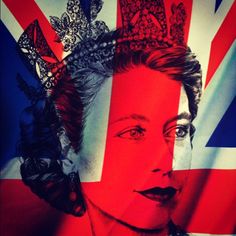
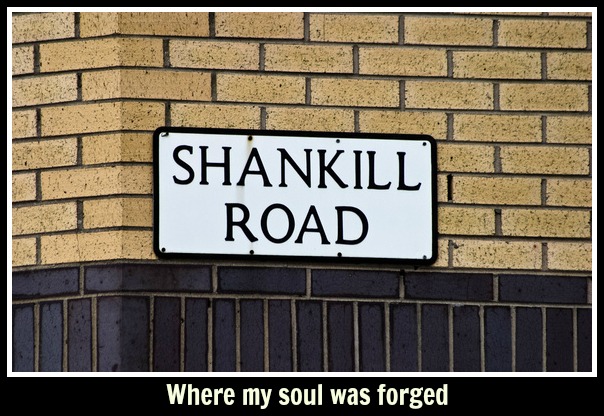
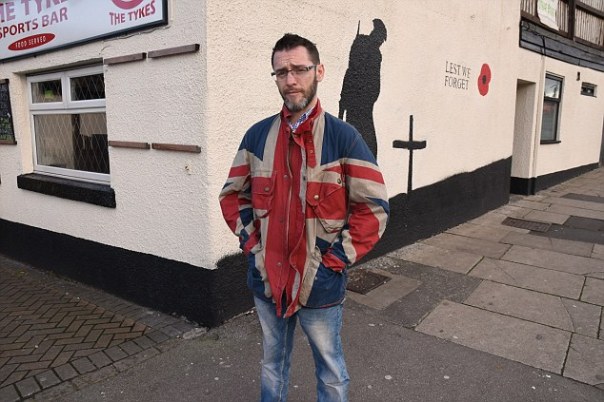


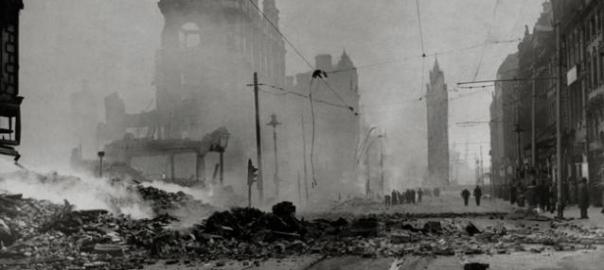
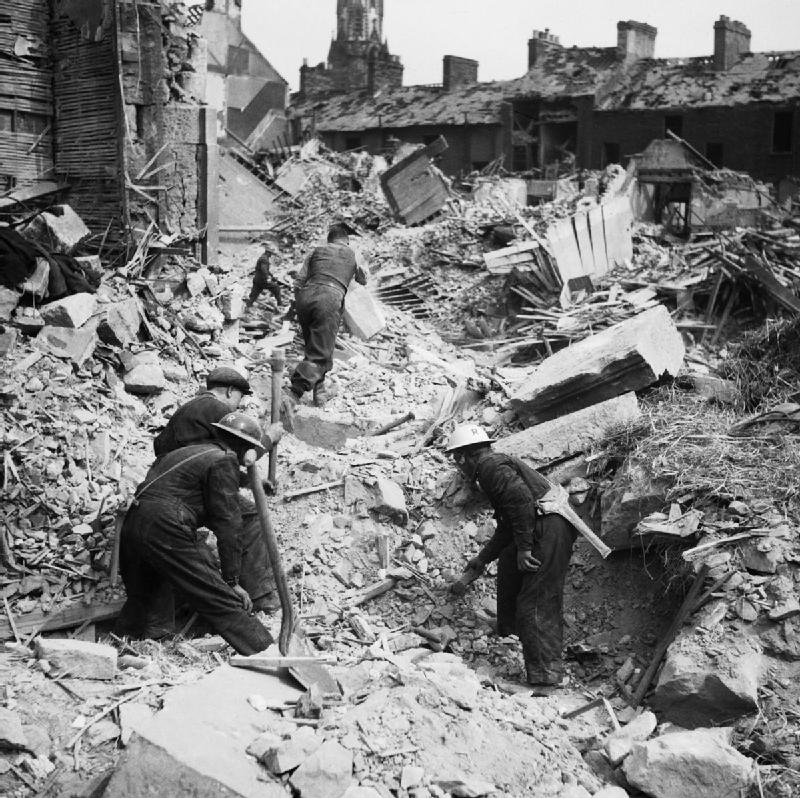


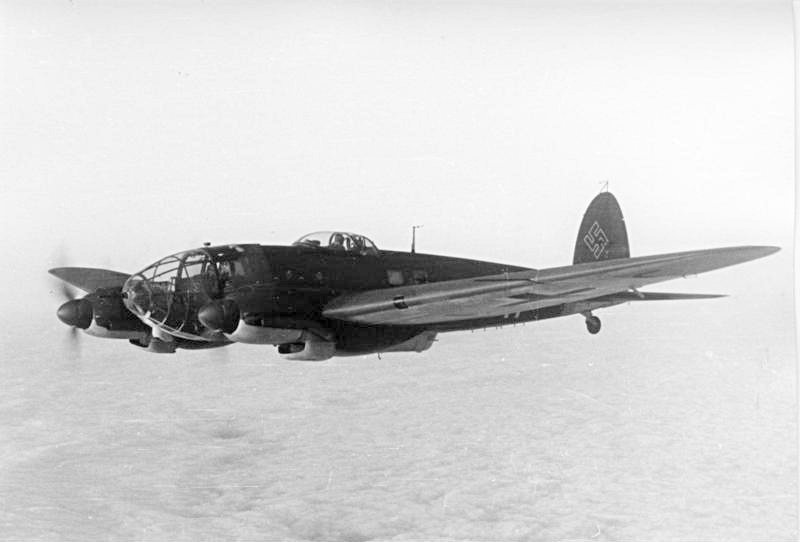


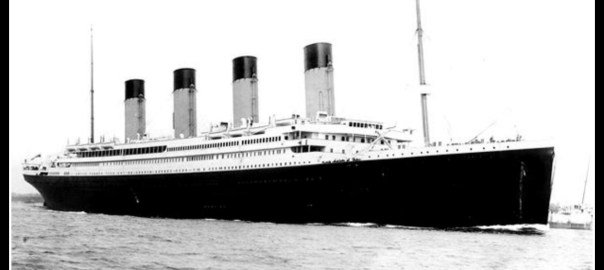

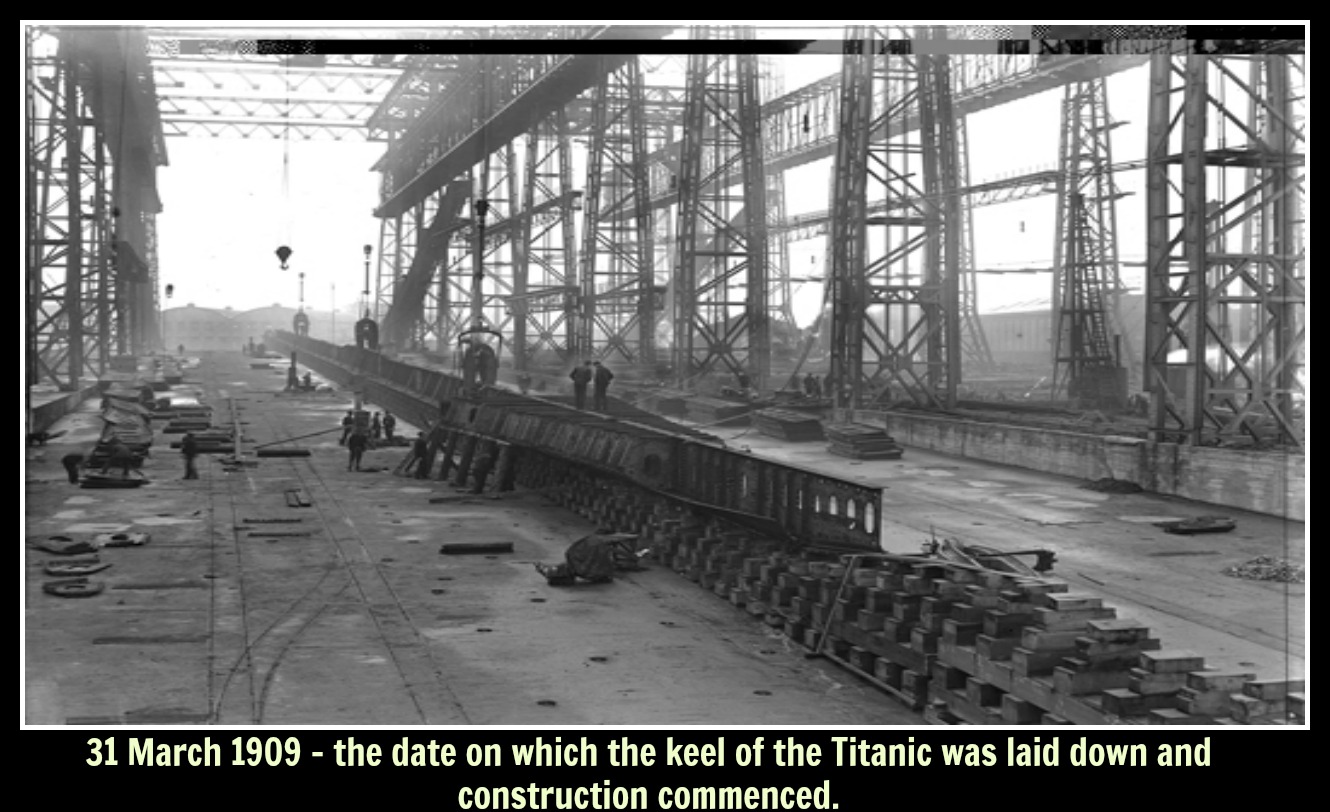

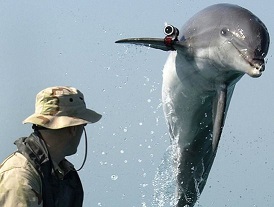

_handler_pets_the_head_of_his_MWD_Rico,_at_the_War_Dog_Cemetery_located_on_Naval_Base_Guam.jpg)

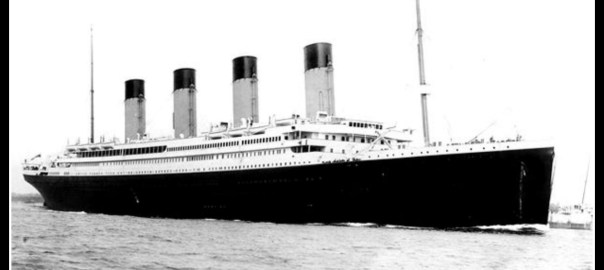
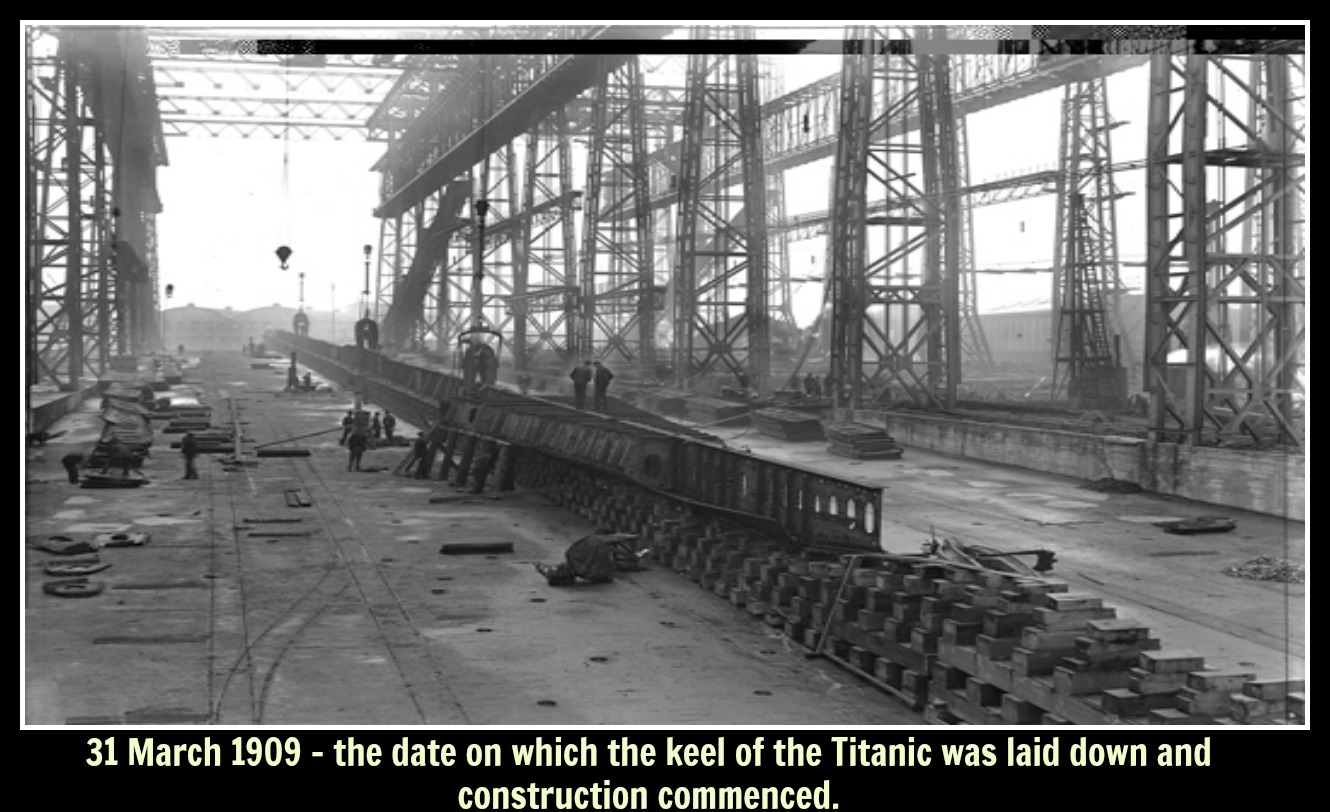


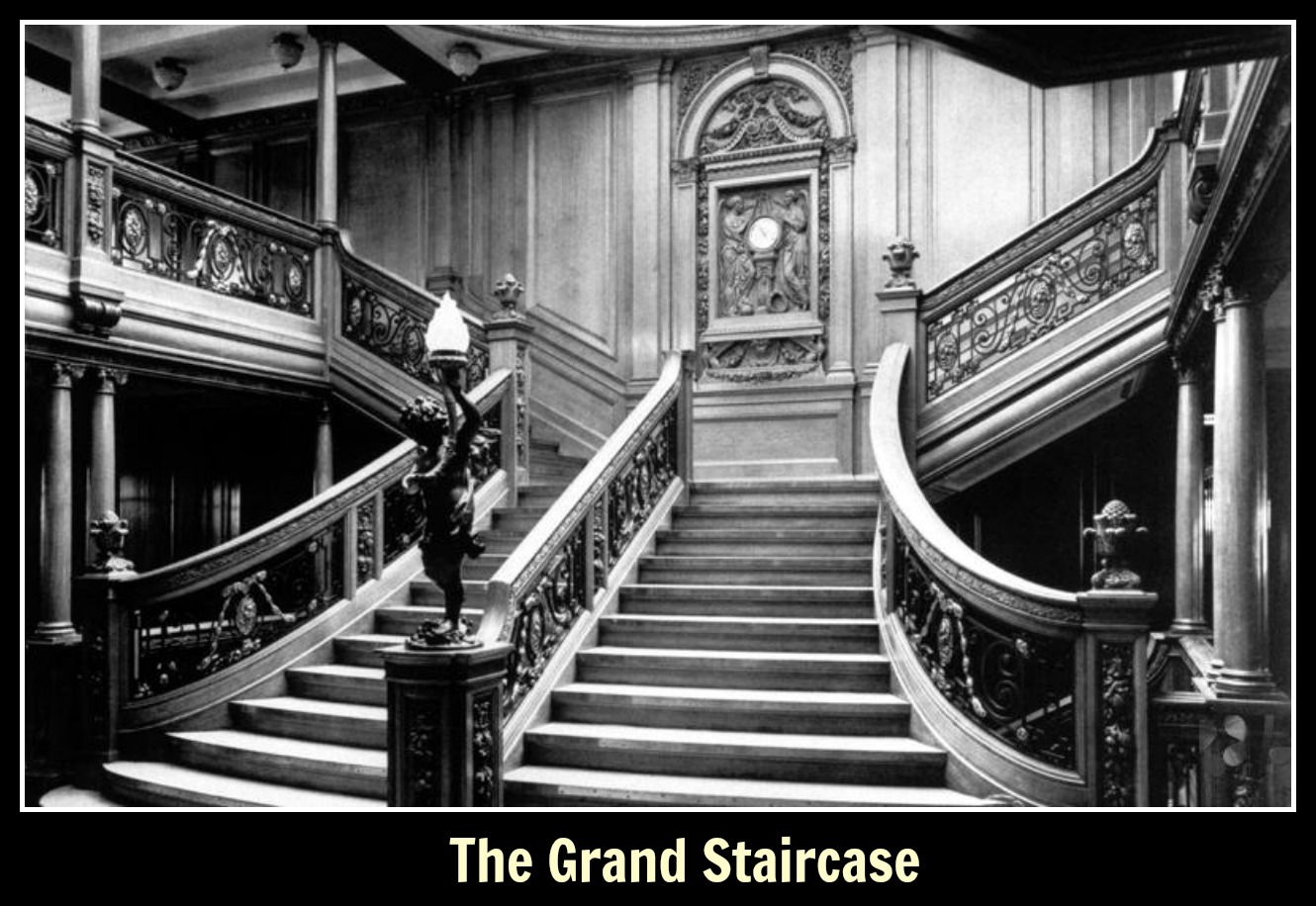


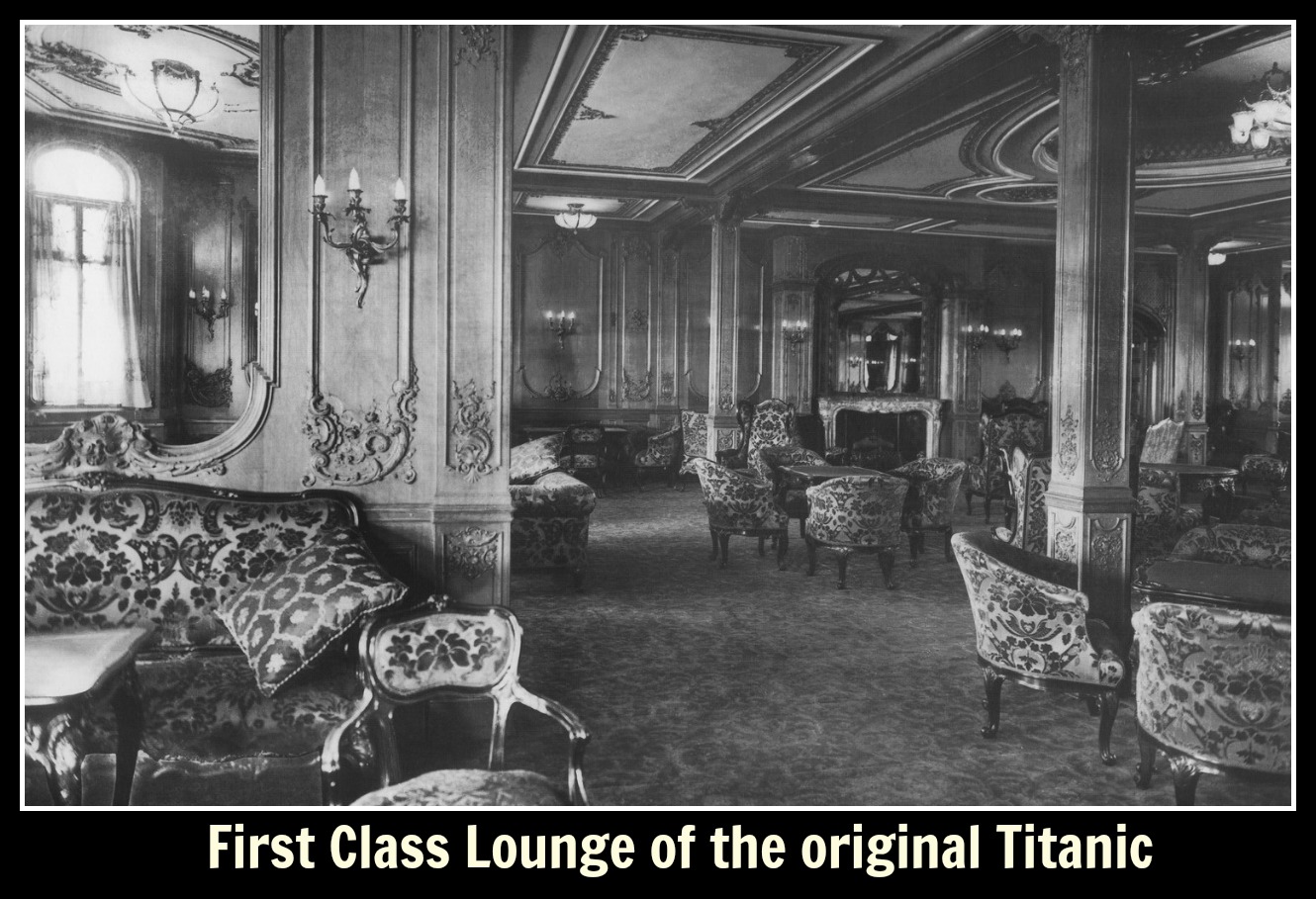


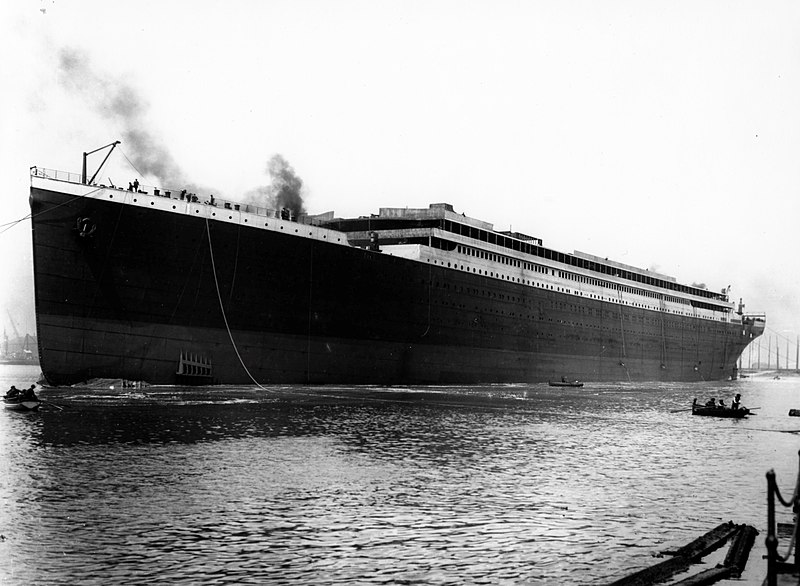
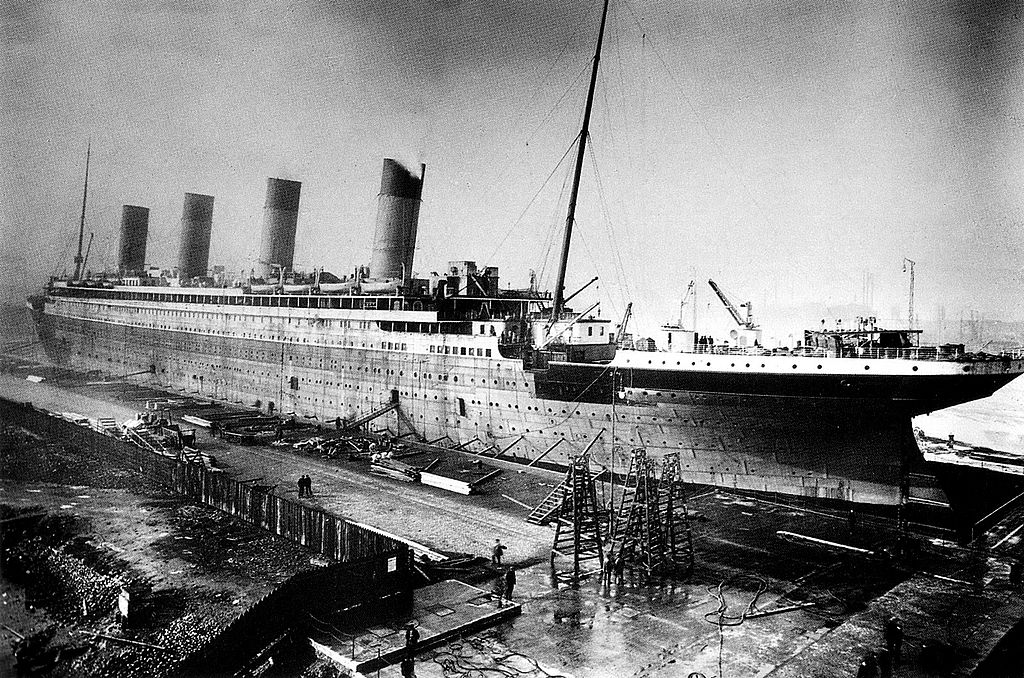


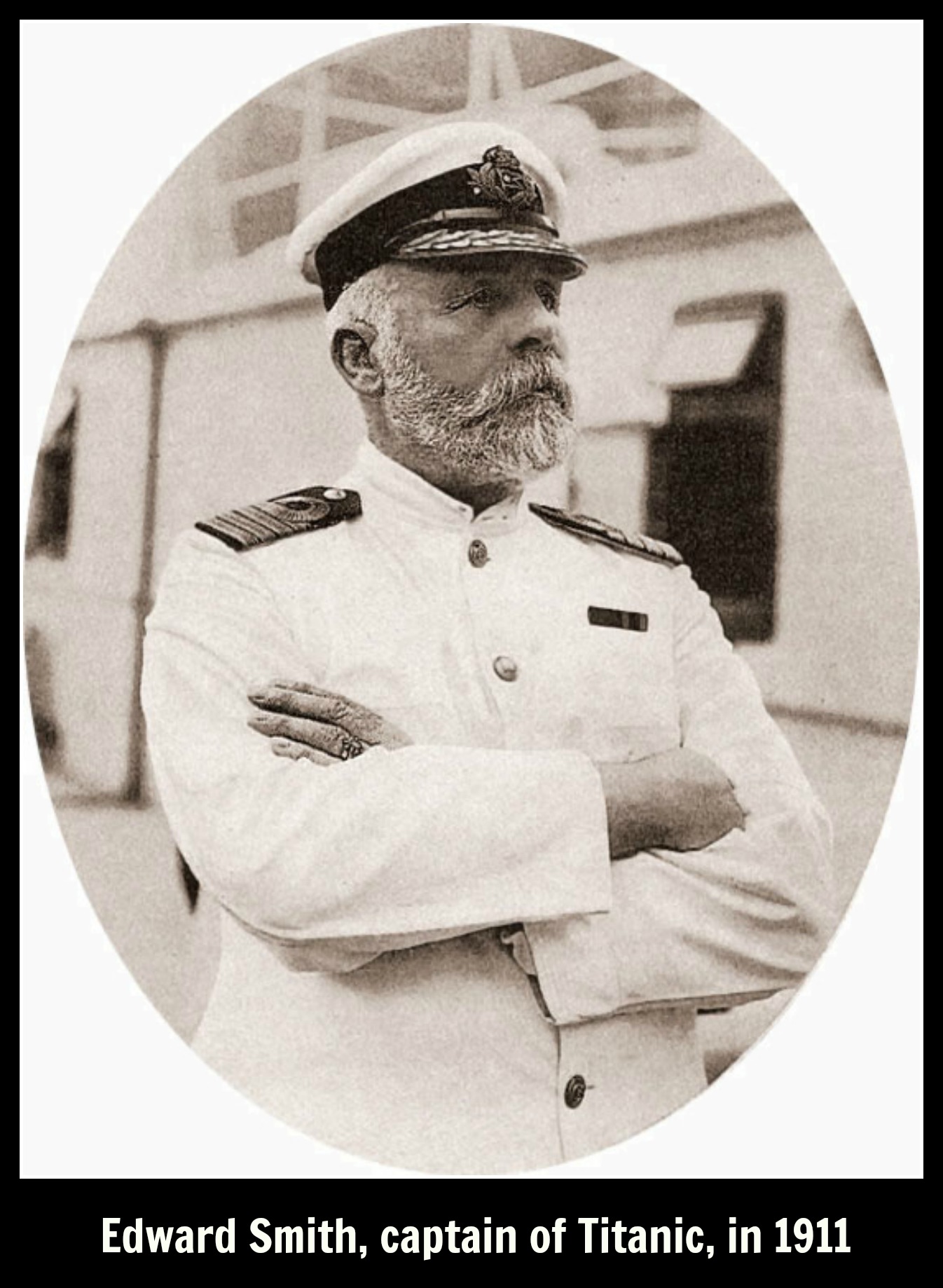


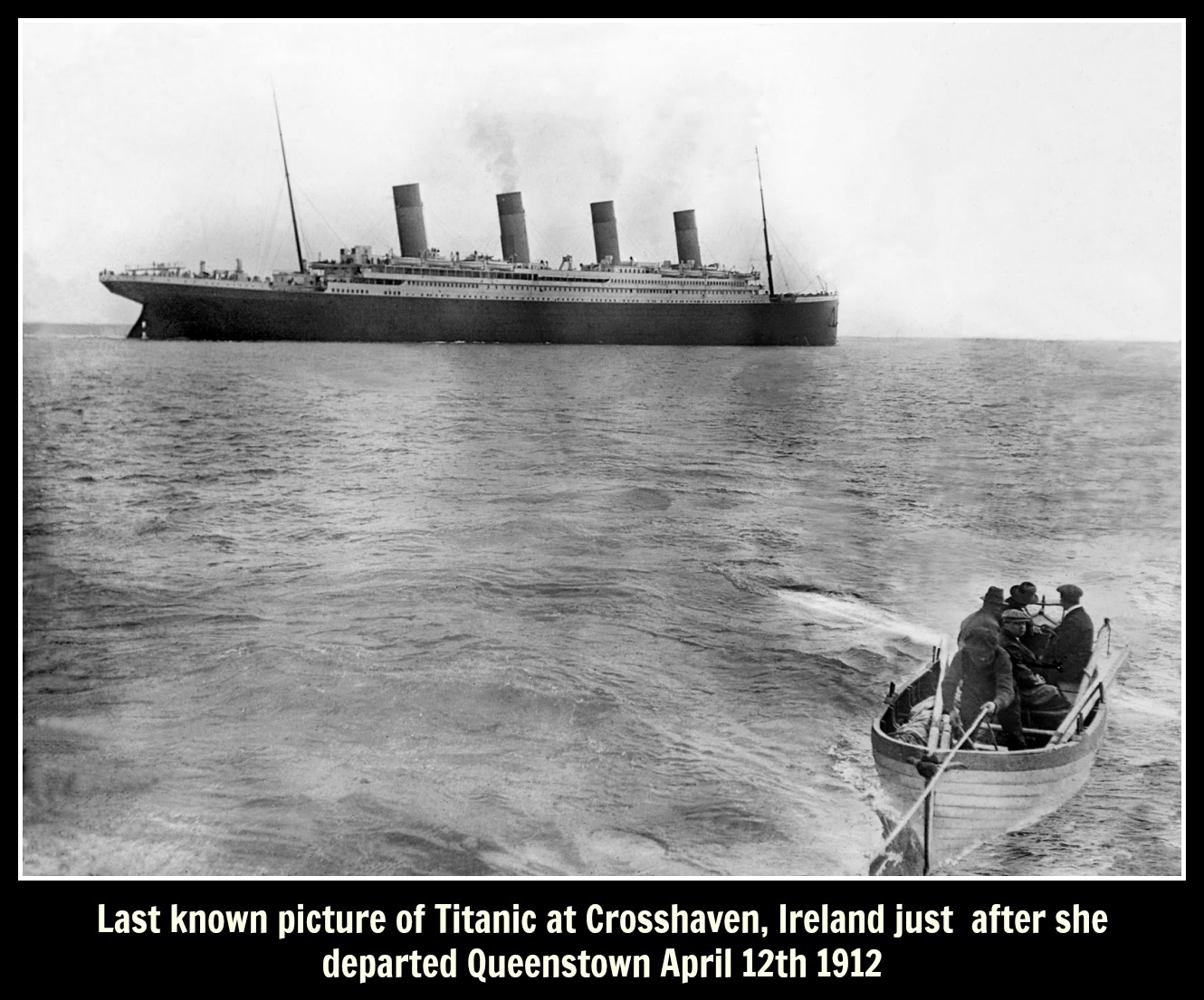
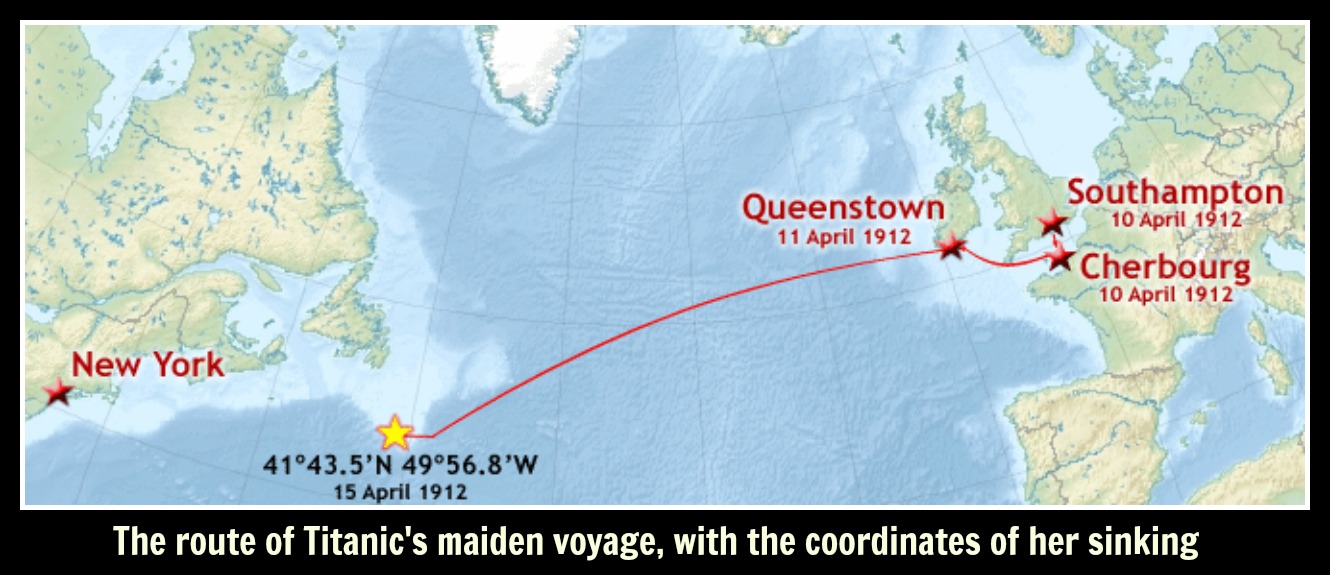
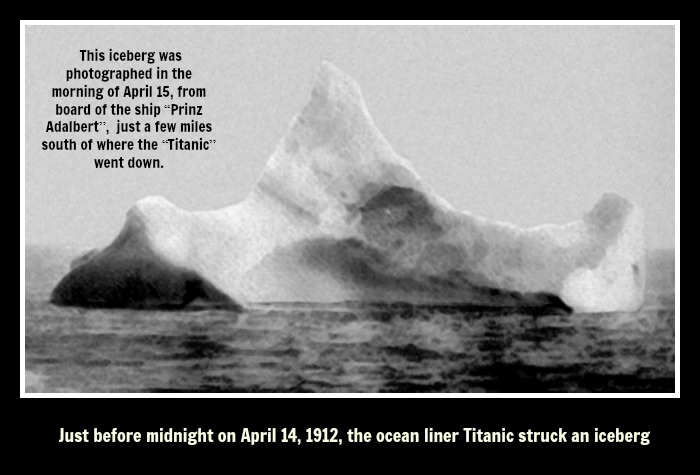
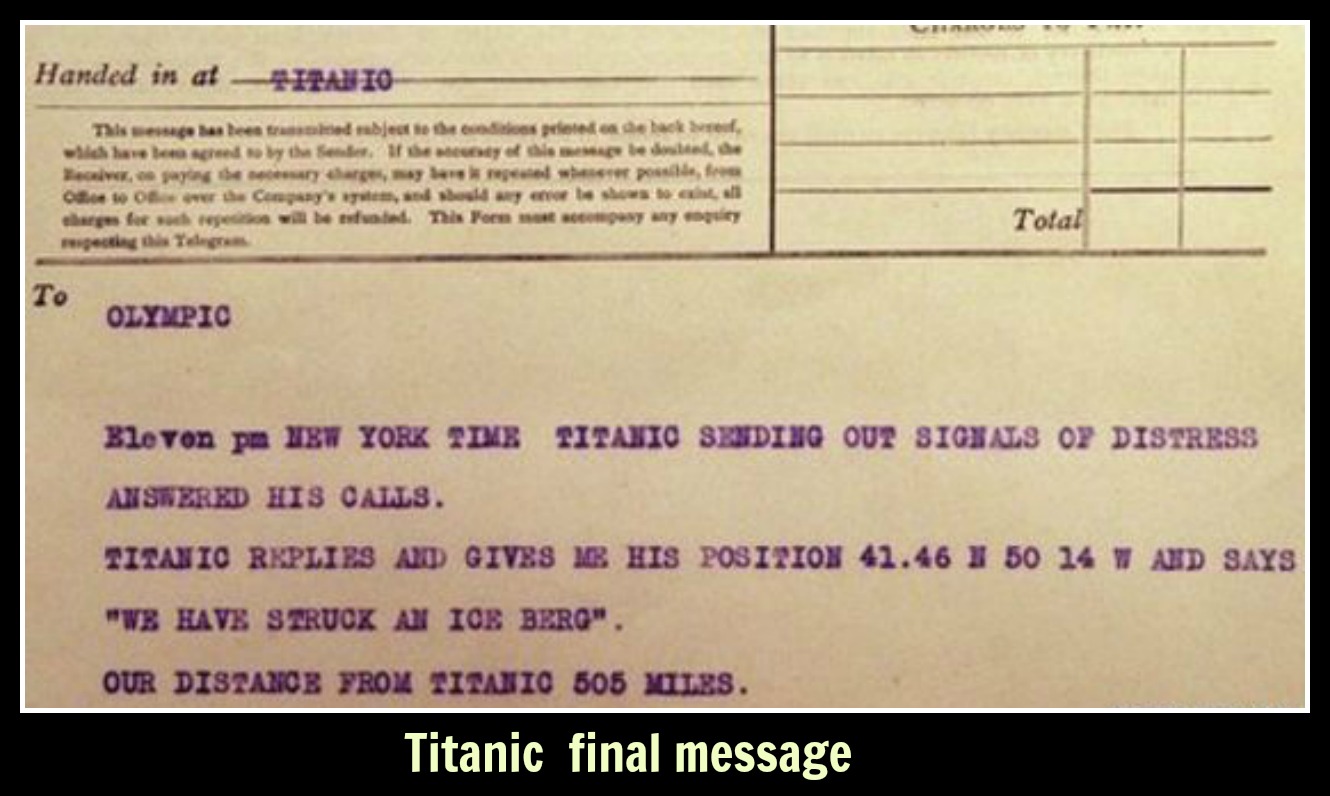

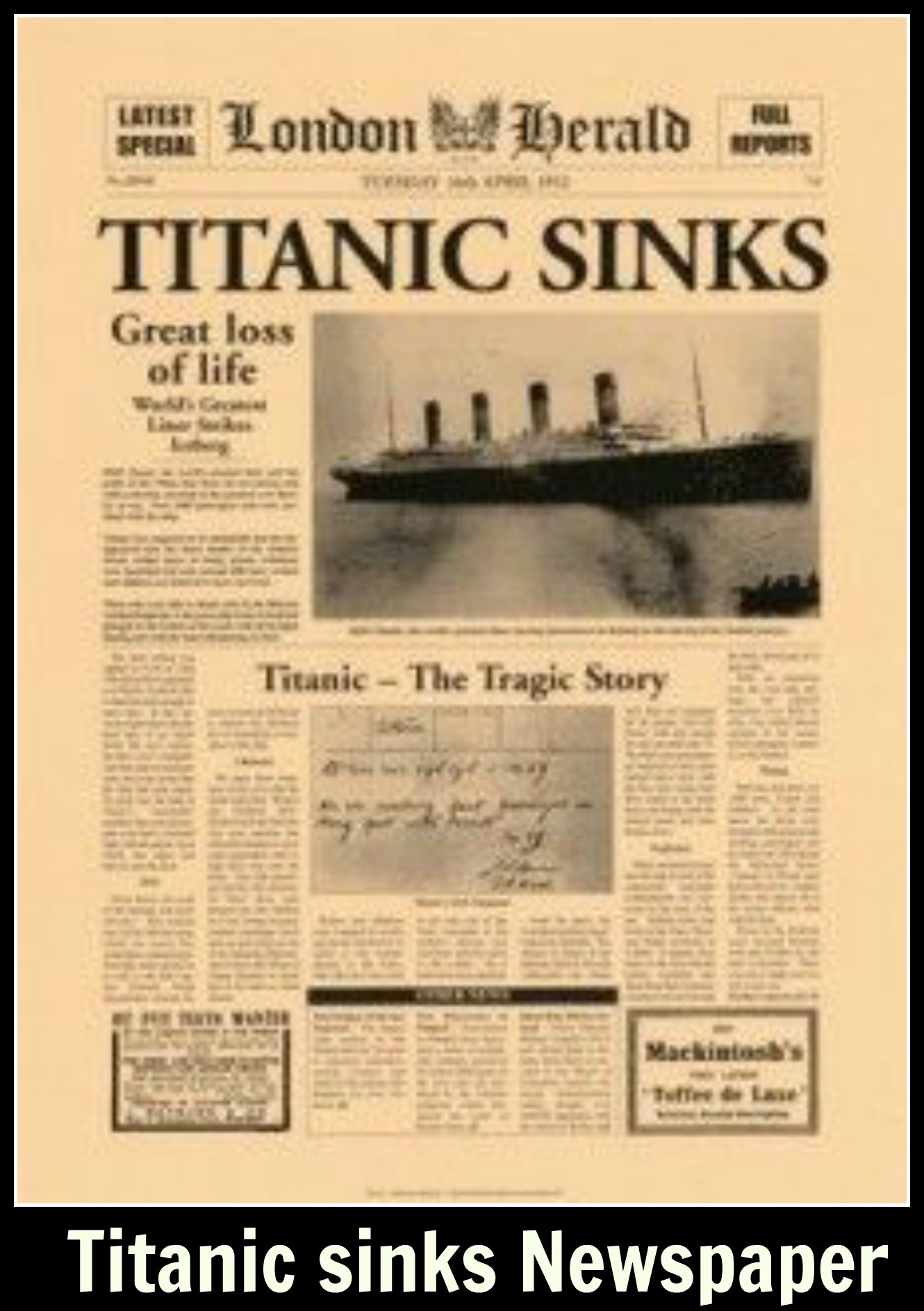
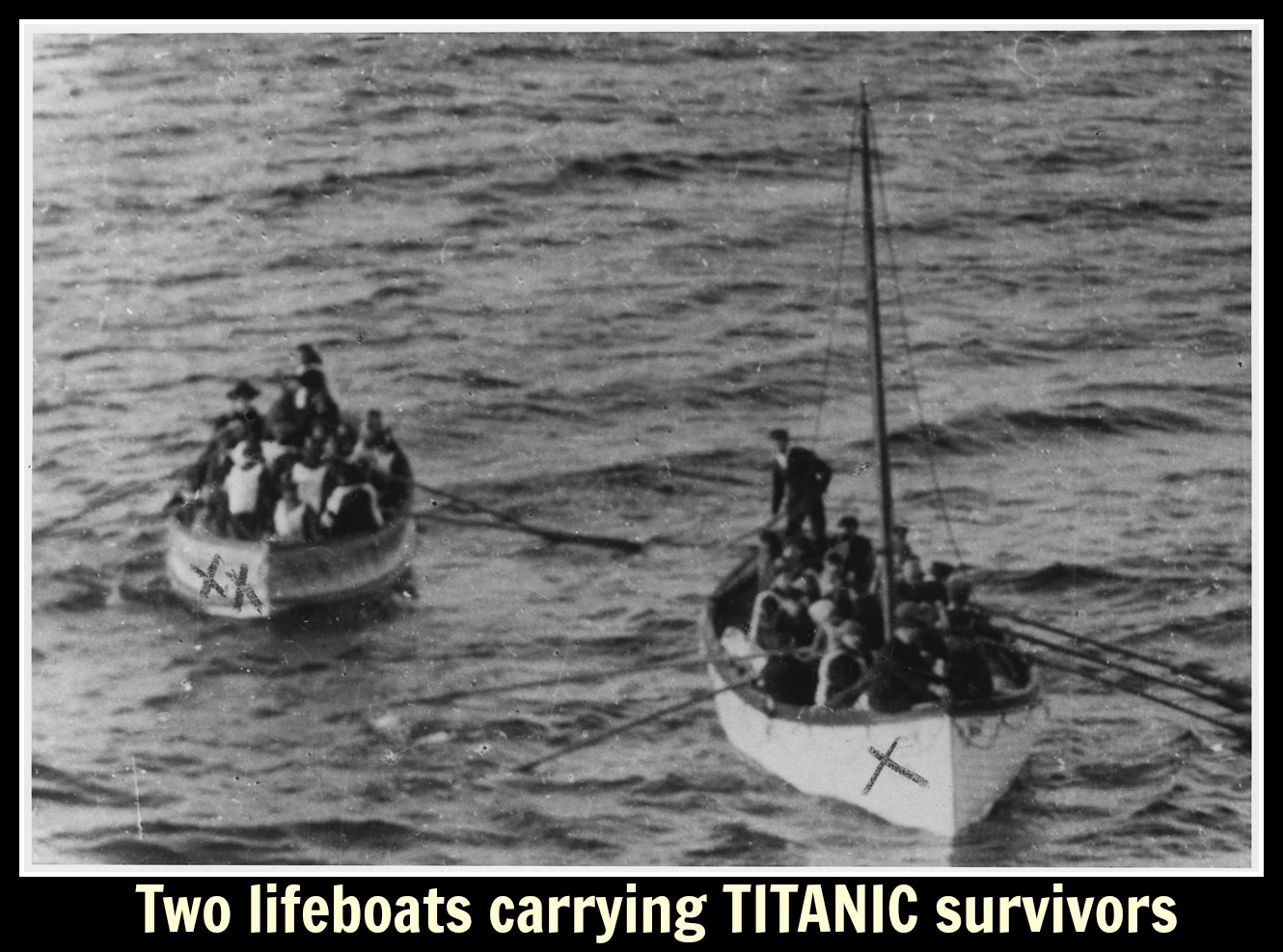


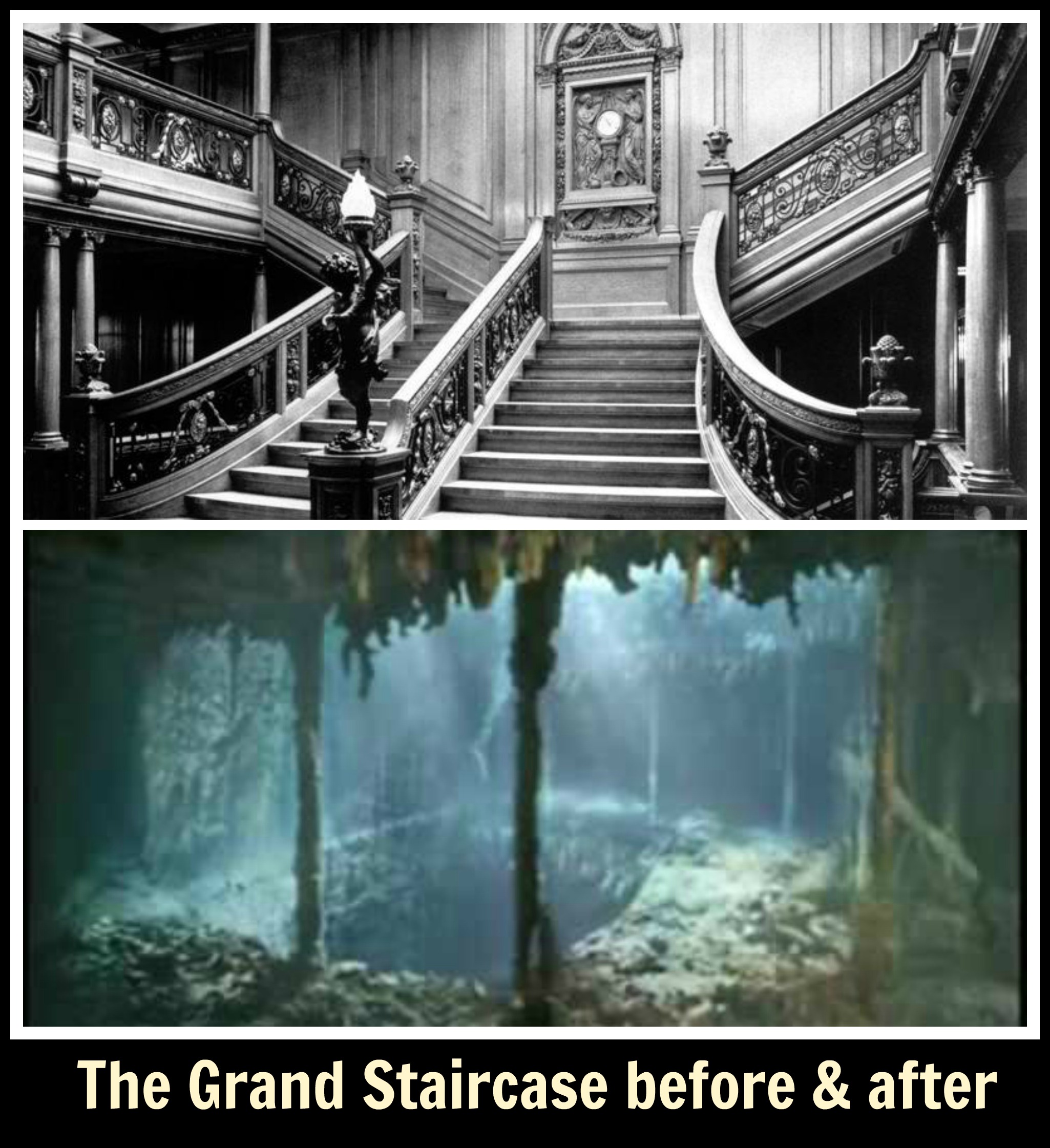





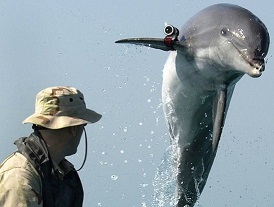


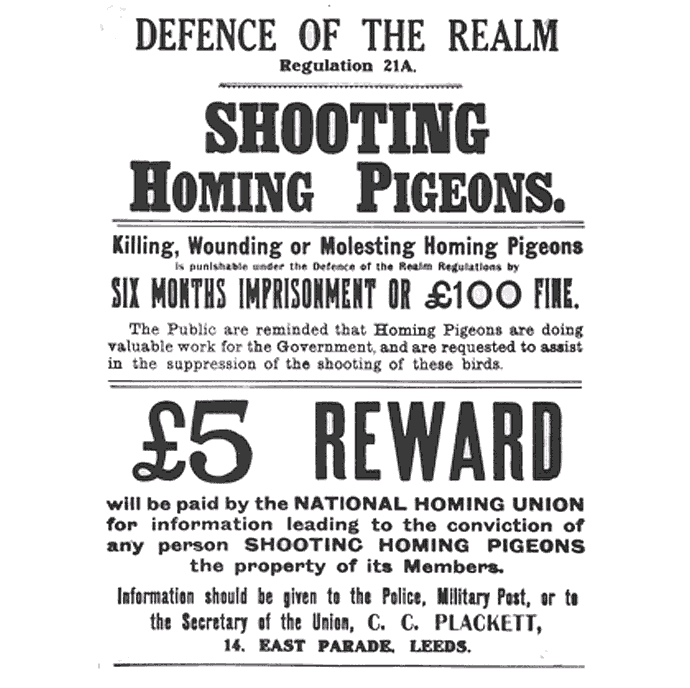


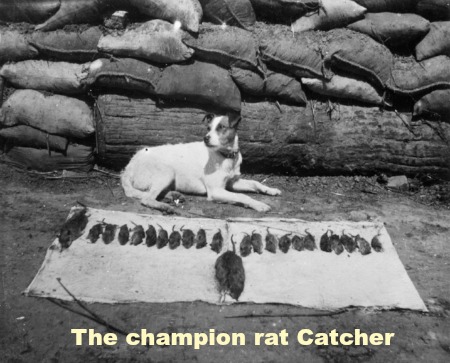


 belfastchildis.com