Yearly Archives: 2016

IRA Lisburn “Fun Run” bombing.1988 Lisburn van bombing

1988 Lisburn van Bombing

IRA Charity Run Slaughter

——————————–

——————————–

On 15 June 1988 an unmarked military van carrying six British Army soldiers was blown up by the Provisional Irish Republican Army (IRA) at Market Place in Lisburn, Northern Ireland. The explosion took place at the end of a charity marathon run in which the soldiers had participated. All six soldiers were killed in the attack – four outright, one on his way to hospital and another later on in hospital.

Lisburn van bombing.jpg

Lisburn is the headquarters of the British Army in Northern Ireland. Four of the dead were from the Royal Corps of Signals regiment whilst the other two were from the Green Howards and Royal Army Ordnance Corps regiments respectively. A booby-trap bomb was hidden under the Ford Transit van in which the soldiers were travelling, and was designed in such a way that the blast went upwards to cause maximum damage to the vehicle. Eleven civilian bystanders were injured, including a two-year-old child and 80-year-old man.

The bombing is sometimes referred to as the Lisburn “Fun Run” bombing.


On Wednesday 15 June 1988 at 8:50pm, an unmarked blue Ford Transit van carrying six off-duty British soldiers in civilian clothes drove off from a leisure centre carpark in Lisburn. The soldiers had just taken part in the “Lisburn Fun Run”, a 13-mile (21 km) charity half marathon held in the town. They had left the van unattended in the carpark, which was the start and finish point for the run.

It was there that an IRA Active Service Unit (ASU), who had been following the van, hid a booby-trap bomb underneath the vehicle. The half marathon and shorter “fun runs” were organised by Lisburn Borough Council, together with the YMCA, to raise funds for the disabled. There were 4,500 participants that day and at least 200 British Army personnel had been given leave to participate in the event.

Nine minutes later, the van stopped at traffic lights at Market Place, in Lisburn’s town centre. As the van moved on, the seven-pound (3.2 kg) booby-trap bomb detonated, turning the van into a massive fireball and instantly killing four of the soldiers as the vehicle disintegrated with the force of the blast. The Semtex device had been designed in a cone shape to channel the blast upwards, thereby causing maximum damage to the vehicle and the soldiers inside.

The area around Market Place was crowded with onlookers, including many teenagers and families with young children, although the biggest crowd was at the carpark. In all, about 10,000 onlookers had attended the charity run. There was pandemonium as frightened parents searched for their children, whilst others rushed to give aid to the dead and dying soldiers before fire engines and ambulances arrived.

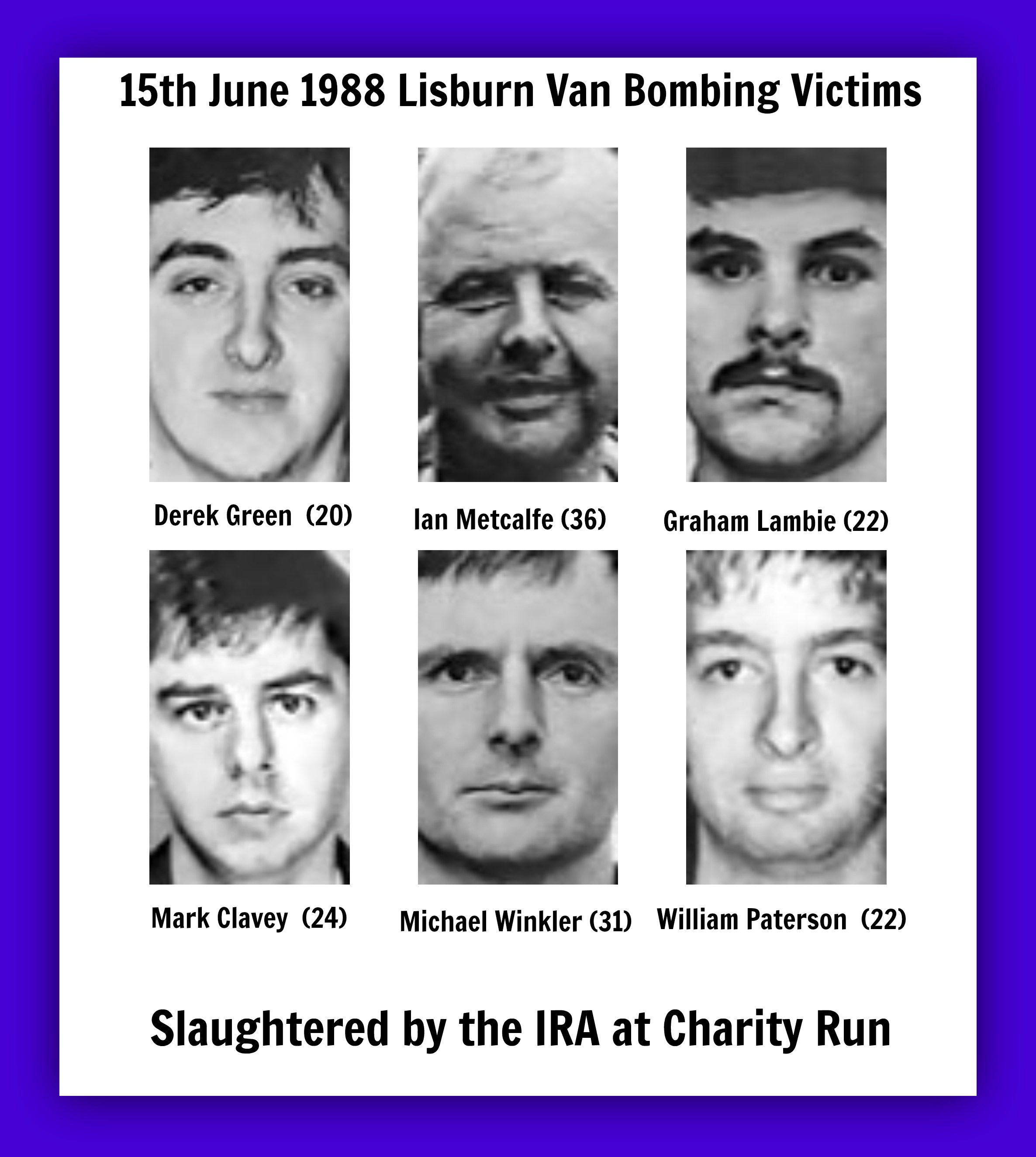
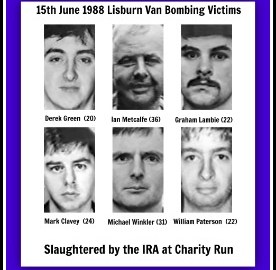
Eleven civilian bystanders were injured in the attack, including a two-year-old child and an 80-year-old man. Another soldier died on the way to hospital whilst a sixth soldier died later that night after undergoing surgery for severe head injuries. The dead soldiers were stationed at Ebrington Barracks in Derry and were returning to base when the bomb went off. Four of the men – Sergeant Michael Winkler (31), Signalman Mark Clavey (24), Lance Corporal Graham Lambie (22), and Corporal William Patterson (22) – were from the Royal Signals regiment, whilst the other two – Corporal Ian Metcalf (36) and Lance Corporal Derek Green (20) – were from the Green Howards and Royal Army Ordnance Corps regiments respectively.

Lisburn is a mainly Ulster Protestant town, 14 miles (23 km) southwest of Belfast. It serves as the garrison headquarters of the British Army in Northern Ireland. Six months before the van bombing, a booby-trap bomb planted by the IRA killed Ulster Defence Association (UDA) leader John McMichael in the town.

The van bombing resulted in the greatest loss of life suffered by the British Army since 11 soldiers were killed in the Droppin Well Disco bombing on 6 December 1982.

In Belfast, on the same day as the Lisburn attack, the IRA shot dead the Ulster Volunteer Force (UVF)’s East Belfast commander, Robert “Squeak” Seymour (33). This was retaliation for the UVF bombing of an Irish nationalist pub in which three Catholics died.

This slideshow requires JavaScript.

Aftermath

On 16 June, the Provisional IRA Belfast Brigade claimed responsibility for the bombing, promising to wage “unceasing war” against the British security forces in Northern Ireland  Sinn Féin president Gerry Adams allegedly said that the IRA’s killing of the six soldiers was “vastly preferable” to killing members of the (locally-recruited) Ulster Defence Regiment (UDR) or Royal Ulster Constabulary (RUC).

The leisure centre was forced to remain shut for a time after the loyalist Protestant Action Force (a covername of the UVF) issued a warning that they regarded Catholic staff working there as “legitimate targets”, inferring that they may have had a hand in the bombing. Lisburn mayor Councillor William Bleakes condemned the threats by the PAF.

That same day, Tom King, then Secretary of State for Northern Ireland, travelled to Lisburn where he held a meeting with Lieutenant General Sir John Waters, the British Army Commander in Northern Ireland, and senior RUC officers. They discussed the attack and proposals for heightened security. The soldiers had failed to follow proper security procedures, as they had left their vehicle unguarded for over two hours and had then driven off without having checked under it beforehand. After the Lisburn meeting, King flew to London where he reported directly to British Prime Minister Margaret Thatcher, who described the attack as a “terrible atrocity”.  However, she rejected demands from Conservative members of Parliament to bring back internment, regarding the proposal as “a very serious step”.

In his statement to the House of Commons, Tom King suggested that there would have been a much higher death toll had the bomb exploded in the carpark, where thousands of people had gathered after the run.

The Republic of Ireland‘s government also strongly condemned the killings and extended its sympathy to the families of the dead soldiers. The bombing was a topic of debate in the Seanad Éireann on 16 June 1988. Bishop Cathal Daly of Down and Connor denounced the bombers and the killings in the “strongest possible terms”.

Questions were raised as to how the IRA knew the soldiers were attending the charity run in Lisburn, how they recognised their unmarked van, and how the unit was able to plant a bomb in the predominantly loyalist town without being spotted, despite the amount of people in the carpark.

The RUC believed that the bombers may have been wearing sports gear as they mingled with the crowd that evening; they appealed to onlookers who had attended the event to hand over any film they may have taken of the “fun run” in an attempt to identify the IRA bombers .

The following Saturday, between 1,000 and 2,000 people gathered in Lisburn town centre to attend a remembrance service for the six soldiers. A book of condolences was also opened



15th June – Deaths & Events in Northern Ireland Troubles


Key Events & Deaths on this day in Northern Ireland Troubles

15th June

—————————-

Sunday 15 June 1969

The Campaign for Social Justice published a second edition of ‘Northern Ireland The Plain Truth’, [PDF; ], which set out the allegations of discrimination against Catholics by Unionists in the region.

Thursday 15 June 1972

Representatives of the Social Democratic and Labour Party (SDLP) met William Whitelaw, then Secretary of State for Northern Ireland, in London and presented the Irish Republican Army (IRA) conditions for a meeting. Whitelaw accepted the proposals.

[The IRA made an announcement about the proposed ceasefire on Thursday 22 June 1972.]

Monday 15 June 1981

Sinn Féin (SF) issued a statement to say that a Republican prisoner would join the hunger strike every week.

[This was seen as a stepping-up of the hunger strike. Paddy Quinn, then an Irish Republican Army (IRA) prisoner joined the strike.]

Tuesday 15 June 1982

The Falkland Islands were recaptured by British forces.

[This brought an end to the Falkands War.]

Friday 15 June 1984

A member of the Irish National Liberation Army (INLA) and a Royal Ulster Constabulary (RUC) officer were killed in an exchange of gunfire after the RUC surrounded a house in Lenadoon Avenue, Belfast.

Monday 15 June 1987

Tom King was reappointed as Secretary for State for Northern Ireland. Nicholas Scott, formerly the Minister for State at the Northern Ireland Office, was replaced by John Stanley.

Sunday 15 June 1988

Lisburn Killings

PicMonkey Collage with text x 3

An Irish Republican Army (IRA) bomb in Lisburn killed six off-duty British Army soldiers.

——————————–

——————————–

See IRA Lisburn “Fun Run” bombing

A member of the Ulster Volunteer Force (UVF) was killed by the IRA in Belfast.

Thursday 15 June 1989

European Elections

Elections to the European Parliament were conducted in Northern Ireland. [The percentage share of the vote was: Democratic Unionist Party (DUP) 29.95%; Social Democratic and Labour Party (SDLP) 25.5%; Ulster Unionist Party (UUP) 21.5%; Sinn Féin (SF) 9.2%; Alliance Party of Northern Ireland (APNI) 5.2%; Ecology Party (EP) 1.2%; Workers Party (WP) 1.1%; Others 1.6%; Turnout 48.3%. (See detailed results.)] Elections took place in the Republic of Ireland to the Dáil. Although Fianna Fáil (FF) gained that largest number of seats the party it did not win sufficient support to form a government.

[FF formed a government with the Progressive Democrat (PD) party on 12 July 1989.]

Friday 15 June 1990

Peter Brooke, then Secretary of State for Northern Ireland, met with representatives of the Social Democratic and Labour Party (SDLP). It was announced that talks would begin after the summer holidays.

Saturday 15 June 1991

(Sir) Ninian Stephen, then an Australian High Court judge and a former Governor-General of Australia, was named as the independent chairman for the strand of the forthcoming talks (later known as the Brooke / Mayhew talks) involving relationships between Northern Ireland and the Republic of Ireland.

Tuesday 15 June 1993

The Standing Advisory Commission on Human Rights (SACHR) argued for changes to the way in which the House of Commons dealt with legislation on Northern Ireland matters.

[Following the introduction of Direct Rule the region was governed under a Temporary Provisions Act, and Northern Ireland legislation was introduce by way of ‘Orders in Council’. The main criticism of this procedure was that the legislation could not be amended in the House of Commons.]

Wednesday 15 June 1994

Albert Reynolds, then Taoiseach (Irish Prime Minister), sent a letter containing ‘clarification’ of the Downing Street Declaration to Gary McMichael, then leader of the Ulster Democratic Party (UDP).

The letter stated: “We do not seek to impose constitutional change by stealth or coercion, whether it be a united Ireland, or joint sovereignty or joint authority. What we seek is a new accommodation between the two traditions on this island …” (Belfast Telegraph, 24 June 1994).

Thursday 15 June 1995

There was a Westminster by-election in the constituency of North Down. The by-election was called following the death on 20 March 1995 of the sitting Member of Parliament James Kilfedder. The election was won by Robert McCartney, of the United Kingdom Unionist Party (UKUP).

[The turnout at 39 per cent was the lowest in the history of Northern Ireland for a parliamentary by-election.]

Saturday 15 June 1996

Manchester Bombing

The Irish Republican Army (IRA) exploded a bomb in Manchester, which destroyed a large part of the city centre and injured 200 people.

The bomb was estimated to have contained one-and-a-half tonnes of home-made explosives. Although a warning of one hour and twenty minutes was received by a local television station injuries were still caused by the sheer scale of the explosion.

In response to the Manchester bomb the Ulster Freedom Fighters (UFF) announced that it was putting its members ‘on alert’.

Niall Donovan (28), a Catholic man, was stabbed to death near Dungannon, County Tyrone.

Tuesday 15 June 1999

In a keynote speech at Stranmillis College in Belfast Tony Blair, then British Prime Minister, said the governments would “have to look for another way forward” if the devolution deadline were missed.

Blair also invited Portadown Orangemen and representatives of the Garvaghy Road Residents’ Coalition (GRRC) to new talks at Stormont in a further attempt to resolve the dispute surrounding the Drumcree parade planned for 4 July 1999.

Bertie Ahern, then Taoiseach (Irish Prime Minister), said the Irish and British governments would “set aside” the Good Friday Agreement and seek alternative means of political progress if a breakthrough was not made by 30 June 1999. Ahern told the Dáil the decommissioning issue had now been “debated to death”.


——————————————

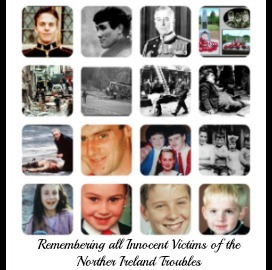
Remembering all innocent victims of the Troubles

Today is the anniversary of the death of the following people killed as a results of the conflict in Northern Ireland

“To live in hearts we leave behind is not to die

– Thomas Campbell

To the innocent on the list – Your memory will live forever

– To the Paramilitaries –

There are many things worth living for, a few things worth dying for, but nothing worth killing for.

15 People lost their lives on the 15th June between 1974 – 1975

——————————————

15 June 1973
Michael Wilson  (18)

Protestant
Status: Ulster Defence Association (UDA),

Killed by: Ulster Defence Association (UDA)
Shot at the home of his relative, Ulster Defence Association leader Tommy Herron, Ravenswood Park, Braniel, Belfast. Internal Ulster Defence Association dispute.

——————————————

15 June 1974


Patrick Cunningham   (26)

Catholic
Status: Civilian (Civ),

Killed by: British Army (BA)
Shot by British Army (BA) foot patrol while in disused graveyard near his home, Benburb, County Tyrone

——————————————

15 June 1982


Hugh Cummings  (39)

Protestant
Status: Ulster Defence Regiment (UDR), Killed by: Irish Republican Army (IRA)
Off duty. Shot near his workplace while walking along Lower Main Street, Strabane, County Tyrone

——————————————

15 June 1984


Michael Todd   (22)

Protestant
Status: Royal Ulster Constabulary (RUC),

Killed by: Irish National Liberation Army (INLA)
Shot during gun battle after Royal Ulster Constabulary (RUC) members surrounded house, Lenadoon Avenue, Belfast.

——————————————

15 June 1984


Paul McCann   (20)

Catholic
Status: Irish National Liberation Army (INLA),

Killed by: Royal Ulster Constabulary (RUC)
Shot during gun battle after Royal Ulster Constabulary (RUC) members surrounded house, Lenadoon Avenue, Belfast

——————————————

15 June 1985


Willis Agnew   (53)

Protestant
Status: Royal Ulster Constabulary (RUC),

Killed by: Irish Republican Army (IRA)
Off duty. Shot while sitting in stationary car outside friend’s home, Gortin Road, Kilrea, County Derry.

——————————————

15 June 1987
Nathaniel Cush   (47)

Protestant
Status: ex-Ulster Defence Regiment (xUDR),

Killed by: Irish Republican Army (IRA)
Killed by booby trap bomb attached to his car outside his workplace, Tomb Street, off Corporation Street, Belfast.

——————————————

15 June 1988
Robert Seymour   (33)

Protestant
Status: Ulster Volunteer Force (UVF),

Killed by: Irish Republican Army (IRA)
Shot at his shop, Woodstock Road, Belfast.

——————————————

15 June 1988


Derek Green  (20)

nfNI
Status: British Army (BA),

Killed by: Irish Republican Army (IRA)
Off duty. Killed by booby trap bomb attached to British Army (BA) minibus, Market Square, Lisburn, County Antrim.

See IRA Lisburn “Fun Run” bombing

——————————————

15 June 1988

Michael Winkler   (31)

nfNI
Status: British Army (BA),

Killed by: Irish Republican Army (IRA)
Off duty. Killed by booby trap bomb attached to British Army (BA) minibus, Market Square, Lisburn, County Antrim.

See IRA Lisburn “Fun Run” bombing

——————————————

15 June 1988


 Mark Clavey   (24)

nfNI
Status: British Army (BA),

Killed by: Irish Republican Army (IRA)
Off duty. Killed by booby trap bomb attached to British Army (BA) minibus, Market Square, Lisburn, County Antrim.

See IRA Lisburn “Fun Run” bombing

——————————————

15 June 1988


Graham Lambie   (22)

nfNI
Status: British Army (BA),

Killed by: Irish Republican Army (IRA)
Off duty. Killed by booby trap bomb attached to British Army (BA) minibus, Market Square, Lisburn, County Antrim.

See IRA Lisburn “Fun Run” bombing

——————————————

15 June 1988


William Paterson   (22)

nfNI
Status: British Army (BA),

Killed by: Irish Republican Army (IRA)
Off duty. Killed by booby trap bomb attached to British Army (BA) minibus, Market Square, Lisburn, County Antrim.

See IRA Lisburn “Fun Run” bombing

——————————————

15 June 1988


Ian Metcalfe  (36)

nfNI
Status: British Army (BA),

Killed by: Irish Republican Army (IRA)
Off duty. Killed by booby trap bomb attached to British Army (BA) minibus, Market Square, Lisburn, County Antrim.

See IRA Lisburn “Fun Run” bombing

——————————————

15 June 1989
Adam Gilbert  (21)

nfNI
Status: British Army (BA),

Killed by: British Army (BA)
Shot in error, by other British Army (BA) member, firing at stolen car, while on BA foot patrol, junction of New Lodge Road and Antrim Road, Belfast.

——————————————


ISIS Freak Show -The Bulldozer & Jihad ” Little ” John

The Bulldozer & Jihad ” Little John ” The Bulldozer ———————————————— ISIS executioner…

Source: ISIS Freak Show -The Bulldozer & Jihad ” Little ” John

Nanking Massacre – Japanese War Crimes

Nanking Massacre -Japanese War Crimes Rape of Nanking The Nanking Massacre The Nanking Massacre or Nanjing Massacre, also known as the Rape of Nanking or Rape of Nanjing, was an episode during the …

Source: Nanking Massacre – Japanese War Crimes

Coleraine Bombing 12th June 1973 – The forgotten massacre of the Troubles

1973 Coleraine bombings On 12 June 1973 On 12 June 1973 the Provisional IRA detonated two carbombs in Coleraine, County Londonderry, Northern Ireland. The first bomb exploded at 3:00 pm on Railway …

Source: Coleraine Bombing 12th June 1973 – The forgotten massacre of the Troubles

Robert “Basher” Bates 12th Dec 1948 – 11th June 1997. Shankill Butcher

Robert William Bates ” Basher ” Robert William Bates (nicknamed “Basher”) (12 December 1948 – 11 June 1997) was an Ulster loyalist from Belfast, Northern Ireland. He was a m…

Source: Robert “Basher” Bates 12th Dec 1948 – 11th June 1997. Shankill Butcher

14th June – Deaths & Events in Northern Ireland Troubles

Key Events & Deaths on this day in Northern Ireland Troubles

14th June

——————————-

Wednesday 14 June 1972

John Hume and Paddy Devlin, both members of the Social Democratic and Labour Party (SDLP), held a meeting with representatives of the Irish Republican Army (IRA) in Derry.

At that meeting the IRA representatives outlined their conditions for talks with the British Government. The conditions were that: there should be no restriction on who represented the IRA; there should be an independent witness at the meeting; the meeting should not be held at Stormont; and ‘political status’ should be granted to republican prisoners.

Thursday 14 June 1973

James Callaghan, then shadow Foreign Secretary, speaking in the House of Commons, said that Britain might reconsider its position with regard to Northern Ireland if the Assembly was ‘sabotaged’.

Monday 14 June 1976

Merlyn Rees, then Secretary of Sate for Northern Ireland, gave details in the House of Commons of a committee which had been set up to see how the Royal Ulster Constabulary (RUC) could be more effective in enforcing law and order in Northern Ireland.

[This was an additional step in the policy of ‘criminalisation’.]

Thursday 14 June 1984

European Parliament Election

The election to the European Parliament took place in Northern Ireland with the whole region treated as a single constituency under a system of proportional representation.

[When the count was completed, Ian Paisley, then leader of the Democratic Unionist Party (DUP), John Taylor, of the Ulster Unionist Party (UUP), and John Hume, then leader of the Social Democratic and Labour Party (SDLP), were elected as MEPs. A total of eight candidates had contested the election]

Friday 14 June 1985

The Irish Republican Army (IRA) exploded a large bomb, estimated at 1,000 pounds, in the centre of Belfast.

Thursday 14 June 1990

The Home Office in London announced that there were irregularities in the forensic evidence that led to the convictions of the Maguire family.

Wednesday 14 June 1995

The Irish Times (a Dublin based newspaper) carried a report of an interview with Gerry Adams, then President of Sinn Féin (SF).

Adams was reported as saying that the decommissioning of Irish Republican Army (IRA) weapons as a precondition to SF entry into political talks was never mentioned by the British government before the IRA’s ceasefire on 31 August 1994. He went on to say that if such a precondition had been raised,

“… it is possible [that] there would have been no IRA cessation on September 1 last year.”

Friday 14 June 1996

The Northern Ireland Forum met for the first time in Belfast. Sinn Féin was excluded because of the absence of an Irish Republican Army (IRA) ceasefire.

There are objections by the Democratic Unionist Party (DUP) and the United Kingdom Unionists (UKU) to the appointment of John Gorman, a Catholic Ulster Unionist Party (UUP) delegate, to the chair of the Forum.

Sunday 14 June 1998

A Protestant family living in a stately home on the outskirts of Derry suffered a third petrol bomb attack. It was believed that Nationalist living in a nearby housing estate were responsible for the attacks.

Monday 14 June 1999

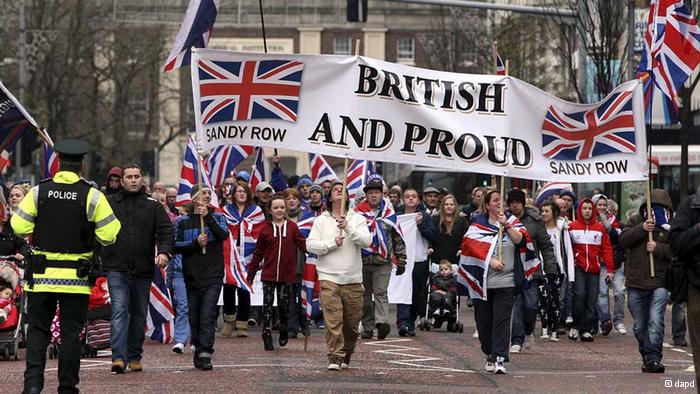
sandy row

Two men escaped injury when shots were fired at then in Sandy Row, south Belfast.

The Progressive Unionist Party (PUP) later stated that “it is more that likely that UVF personnel carried this [attack] out”.

[The shooting was believed to be connected to the killing on 11 June 1997 of Robert ‘Basher’ Bates.]

Robert Basher Bates

See Robert ” Basher” Bates

Counting was completed and the result of the European election was announced. The Methodist Church called for direct talks between the Orange Order and the Garvaghy Road Residents’ Coalition (GRRC).


——————————————

Remembering all innocent victims of the Troubles

Today is the anniversary of the death of the following people killed as a results of the conflict in Northern Ireland

“To live in hearts we leave behind is not to die

– Thomas Campbell

To the innocent on the list – Your memory will live forever

– To the Paramilitaries –

There are many things worth living for, a few things worth dying for, but nothing worth killing for.

3 People lost their lives on the 14th   June between 1974 – 1975

——————————————

14 June 1974
Peter Meaghan  (37)

Catholic
Status: Civilian (Civ),

Killed by: Ulster Freedom Fighters (UFF)
Shot from passing car while walking along Divis Street, Belfast.

——————————————

14 June 1975


Margaret O’Neill  (56)

Catholic
Status: Civilian (Civ),

Killed by: Ulster Defence Association (UDA)
Shot from passing car during gun attack on pedestrians, New Lodge Road, Belfast

——————————————

14 June 1975
Joseph Branagh  (35)

Protestant
Status: Civilian (Civ),

Killed by: non-specific Republican group (REP)
Security man. Shot outside Garden Bar, Meadow Street, Tiger’s Bay, Belfast.

——————————————


David Copeland – “London Nail Bomber”

David Copeland

————————-

David Copeland London Nail Bomber

————————-

David Copeland (born 15 May 1976) is a British Neo-Nazi militant who became known as the “London Nail Bomber” after a 13-day bombing campaign in April 1999 aimed at London’s black, South Asian and gay communities that resulted in three people killed and more than a hundred injured. Widely labelled a terrorist.

Copeland was a former member of two far-right political groups, the British National Party and then the National Socialist Movement.

Copeland with ex-BNP party leader John Tyndall resized

David Copeland with ex-BNP party leader John Tyndall


Over three successive weekends between 17 and 30 April 1999, Copeland placed homemade nail bombs, each containing up to 1,500 four-inch nails, in holdalls that he left in public spaces around London.

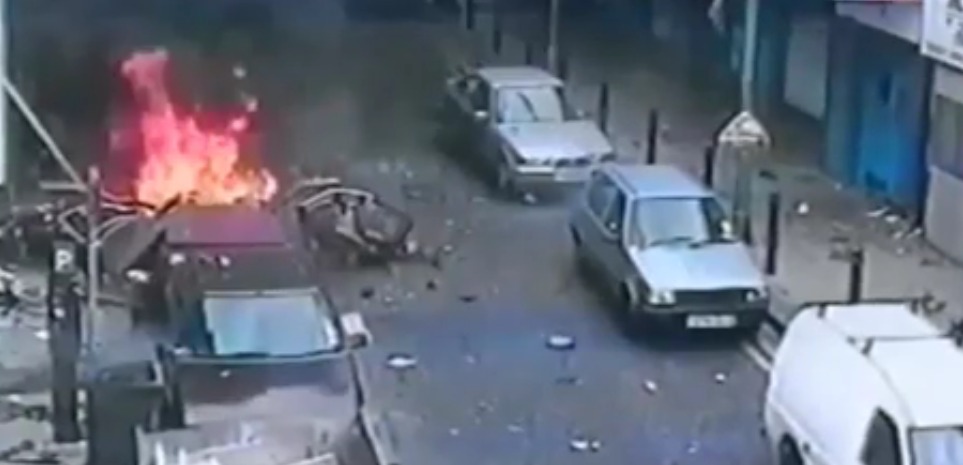
bomb going off

The first bomb was placed outside the Iceland supermarket in Electric Avenue, Brixton, an area of south London with a large black population.

The second was in Brick Lane in the East End of London, which has a large Bangladeshi community.

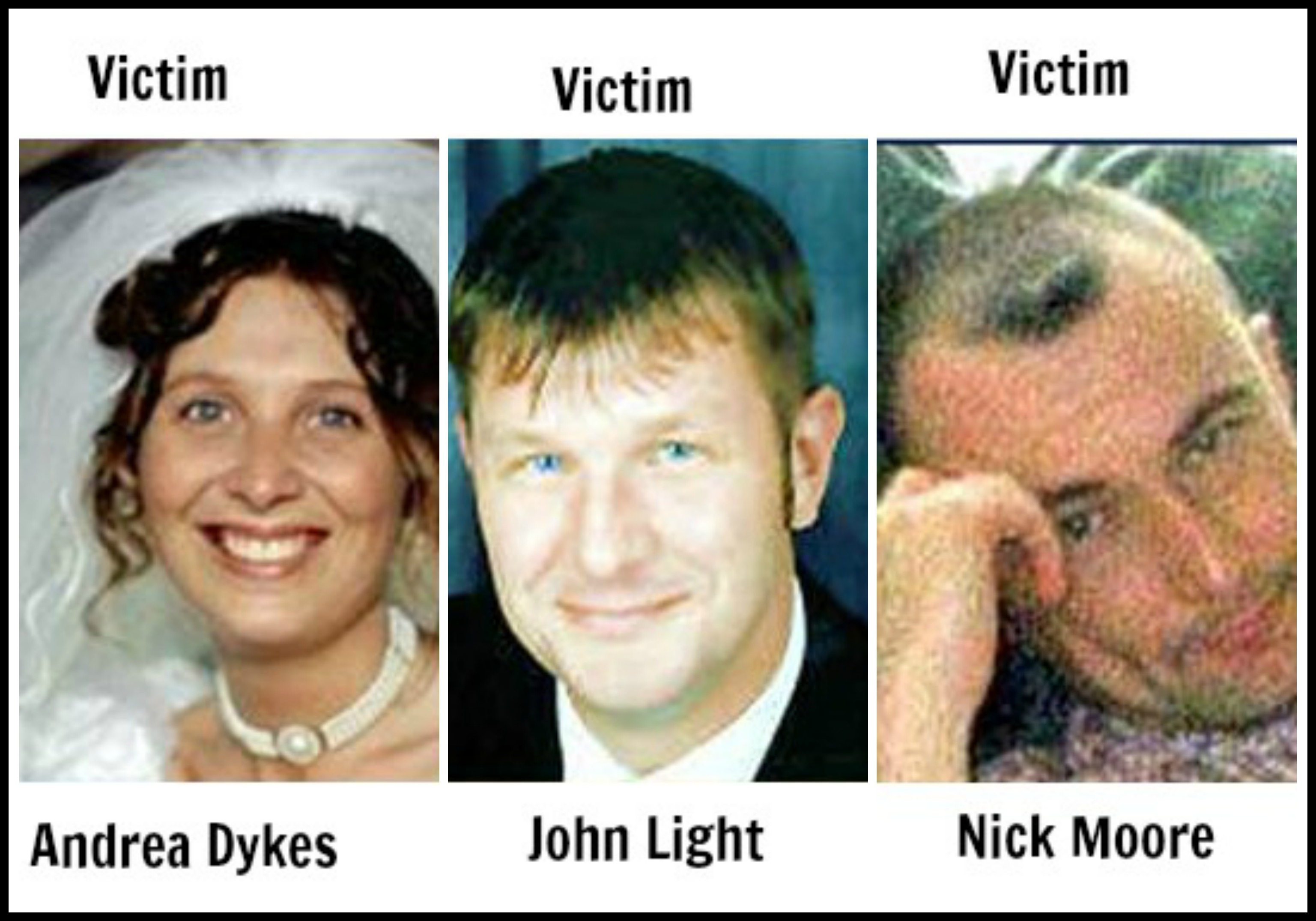
Victim  Collage

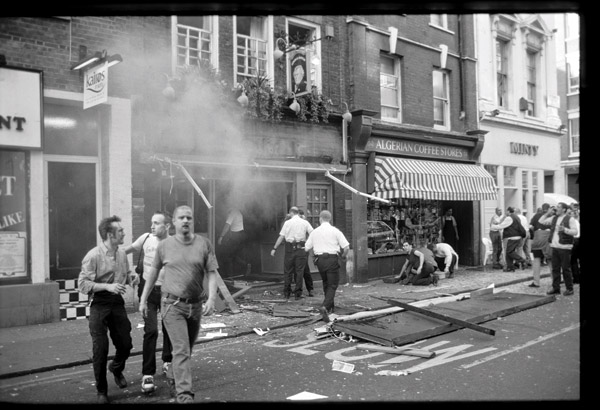
The third was inside the Admiral Duncan pub in Soho‘s Old Compton Street, the heart of London’s gay community. The bombs killed three people, including a pregnant woman, and injured 140, four of whom lost limbs.

Copeland was diagnosed by five psychiatrists as having paranoid schizophrenia, while one diagnosed a personality disorder not serious enough to avoid a charge of murder. His plea of guilty to manslaughter on the grounds of diminished responsibility was not accepted by the prosecution or jury.

He was convicted of murder on 30 June 2000, and given six concurrent life sentences.

In 2007 the High Court ruled that he must serve at least 50 years.

He appealed the ruling, which the Court of Appeal upheld in 2011

David Copeland
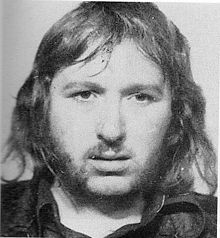
David Copeland.jpg

Photograph of Copeland taken after his arrest in April 1999
Born (1976-05-15) 15 May 1976 (age 40)
Isleworth, London
Nationality British
Other names London Nail Bomber
Occupation Engineer’s assistant
Known for Planting three bombs in public spaces in London in April 1999, killing three and injuring 140
Criminal charge Three counts of murder, three counts of planting bombs.
Criminal penalty Six life sentences, minimum term 50 years


Early life

Copeland was born in Isleworth, in the London Borough of Hounslow. His father was an engineer and his mother was a housewife. He lived for most of his childhood with his parents and two brothers in Yateley, Hampshire, attending Yateley School, where he obtained seven GCSEs before leaving in 1992.

British journalist Nick Ryan writes that, as a teenager, Copeland feared he was homosexual; when his parents sang along to the Flintstones theme on television—”we’ll have a gay old time”—he reportedly believed they were sending him a message.

As an older teenager, he began listening to heavy metal bands and earned himself the nickname “Mr. Angry.” Ryan writes that the staff at his school have no recollection of him during this period. It was as if he had become invisible.

After his arrest in 1999, he told psychiatrists that he had started having sadistic dreams when he was about 12, including dreams or fantasies that he had been reincarnated as an SS officer with access to women as slaves.

He left school to a series of failed jobs, reportedly blaming immigrants for the difficult job market. He became involved in petty crime, drinking, and drug abuse. His father was eventually able to get him a job as an engineer’s assistant on the London Underground.

BNP and NSM

Turnerdiariescover.jpg

He joined the far-right British National Party in May 1997, at the age of 21. He acted as a steward at a BNP meeting, in the course of which he came into contact with the BNP leadership and was photographed standing next to John Tyndall, then leader. It was during this period that Copeland read The Turner Diaries, and first learned how to make bombs using fireworks with alarm clocks as timers, after downloading a so-called terrorists’ handbook from the Web.

He left the BNP in 1998, regarding it as not hardline enough because it was not willing to engage in paramilitary action, and joined the smaller National Socialist Movement, becoming its regional leader for Hampshire just weeks before the start of his bombing campaign. It was around this time that he visited his family doctor and was prescribed anti-depressants after telling the doctor he felt he was losing his mind.

Terrorist attacks

1999 London nail bombings
Copelandnail.jpg

X-rays show a nail from one of Copeland’s bombs embedded in a baby’s brain.
Location Brixton, Brick Lane and Soho areas of London
Date April 17, 1999 (1999-04-17)-
April 30, 1999 (1999-04-30)
Target Black British, British Bengali and Gay populations
Attack type
White supremacist terrorism, bombings, murder
Weapons nail bombs
Deaths 3
Non-fatal injuries
162
Assailants David Copeland
Motive attempt at starting a race war in England

Copeland’s first attack, on Saturday, 17 April 1999, was in Electric Avenue, Brixton. He made his bomb using explosives from fireworks, taping it inside a sports bag before priming it and leaving it at Brixton Market.

The Brixton Market traders became suspicious, and one of them moved the bag to a less crowded area. Two further moves of the bomb occurred by unconvinced traders, including the bomb being removed from the bag, which is when it ended up at the Iceland supermarket.

It detonated just as the police arrived, at 5:25 in the evening. Forty-eight people were injured, many of them seriously because of the four-inch nails Copeland had packed around the bomb.

Copelandnail.jpg

One 23-month-old toddler had a nail driven through his skull into his brain (see right).

His second bomb, on the following Saturday, 24 April, was aimed at Brick Lane, the centre of the Bengali area in the east end of London. There is a famous street market on Sundays, but Copeland mistakenly tried to plant the bomb on Saturday when the street was less busy.

Unwilling to change the timer on the bomb, he left it instead in a black Reebok bag on Hanbury Street. There it was picked up by a man, who brought it to the police station on Brick Lane, which was shut. He had placed it in the boot of his car which was parked outside number 42 Brick Lane, where it exploded.

Thirteen people were injured, but there were no fatalities.

Andrea Dykes, four months pregnant, was killed and her husband Julian seriously injured.


The third and final bomb was planted and detonated on the evening of Friday, 30 April at the Admiral Duncan pub in Old Compton Street, the centre of London’s gay village when the pub and street outside were very crowded because the evening was the start of a Bank Holiday weekend.

admiral duncan old compton street

Andrea Dykes, 27, four months pregnant with her first child, died along with her friends and hosts for the evening, Nick Moore, 31, and John Light, 32, who was to be the baby’s godfather. Andrea’s husband, Julian, was seriously injured.

This slideshow requires JavaScript.

The four friends from Essex had met up in the Admiral Duncan to celebrate Andrea’s pregnancy, when the bomb exploded after being taped inside a sports bag and left near the bar. A total of seventy-nine people were injured, many of them seriously.

Four of the survivors had to have limbs amputated.

This slideshow requires JavaScript.

Arrest and conviction


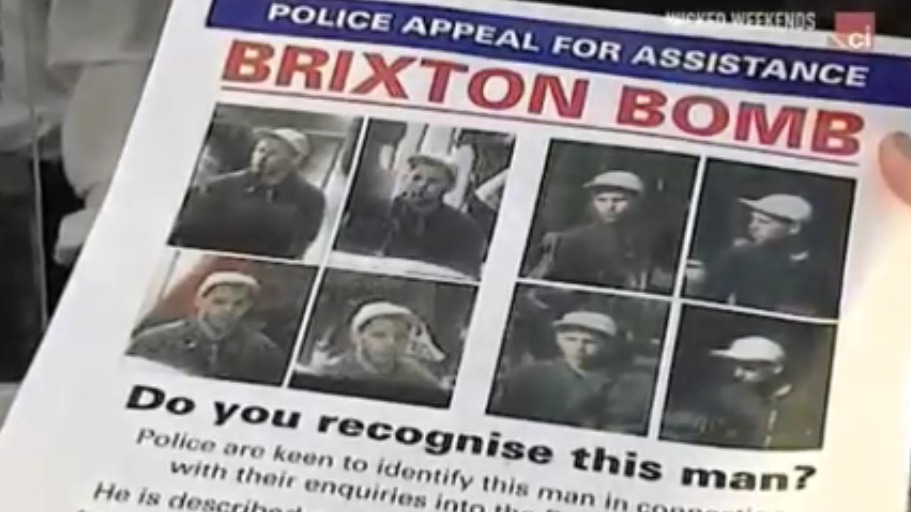
wanted poster cropped

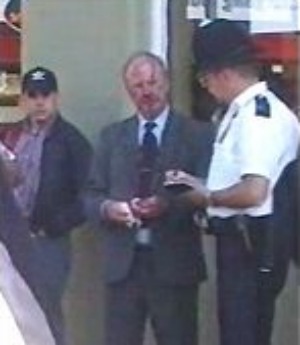
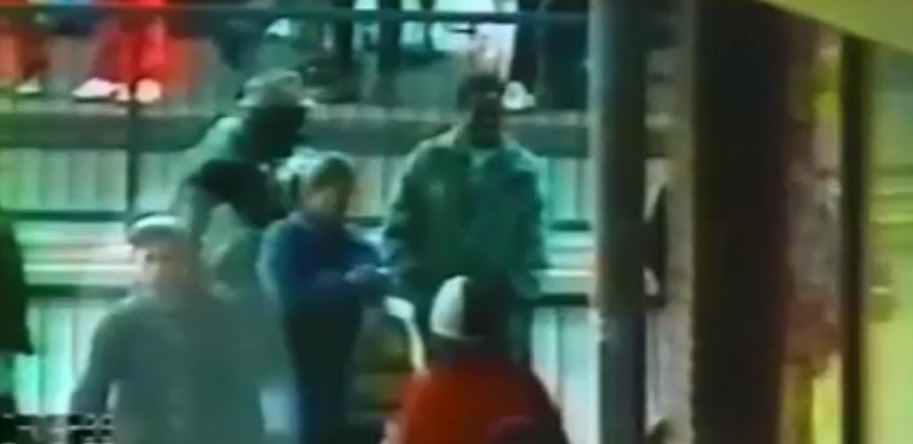
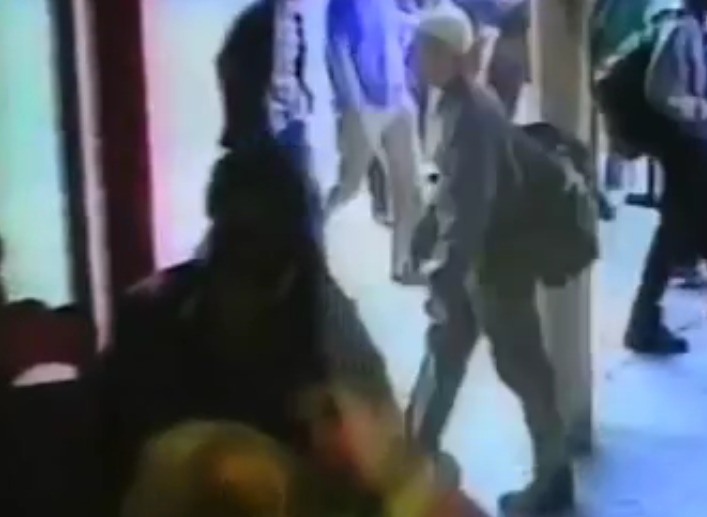
The Metropolitan Police Anti-Terrorist Branch identified Copeland from CCTV footage of Brixton. The image was given wide publicity on 29 April which caused Copeland to bring forward his bombing of the Admiral Duncan to Friday evening.

CCTV footage copeland cropped 2

Paul Mifsud, a work colleague of Copeland, recognised him from the footage and alerted the police about anhour and 20 minutes before the pub bombing. Copeland was arrested that night once the police obtained his address, a rented room in Sunnybank Road, Cove, Hampshire.

CCTV footage copeland cropped

He admitted carrying out the three bombings as soon as he opened the door to the police, telling them, “Yeah, they were all down to me. I did them on my own.” He showed them his room, where two Nazi flags were hanging on a wall, along with a collection of photographs and newspaper stories about bombs.

His mental state was assessed at Broadmoor Hospital. There was no dispute that he was mentally ill, but the extent of it and whether he was unable to take responsibility for his actions became a matter of contention.

Five psychiatrists said he was suffering from paranoid schizophrenia, but prosecutors did not accept a plea of guilty to manslaughter on the grounds of diminished responsibility. A sixth psychiatrist said Copeland had a personality disorder but it did not diminish his responsibility.

The jury convicted him of three murders and three offences of planting bombs, and he was sentenced to six life sentences on 30 June 2000. The trial judge spoke of his doubt that it would ever be safe to release him.

On 2 March 2007, the High Court decided that he should remain in prison for at least 50 years, ruling out his release until 2049 at the earliest, when he would be 73.

Copeland appealed and on 28 June 2011, the Court of Appeal upheld the ruling.

Motivation

Copeland's bedroom was draped in Nazi flags.png

Copeland’s bedroom was draped in Nazi flags

Copeland maintained he had worked alone and had not discussed his plans with anyone. During police interviews, he admitted holding neo-Nazi views, and talked of his desire to spread fear and trigger a race war. He told police,
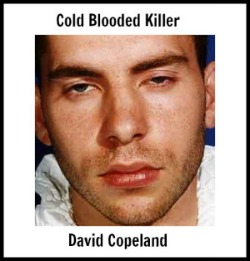
“My main intent was to spread fear, resentment and hatred throughout this country; it was to cause a racial war.”

He said,

“If you’ve read The Turner Diaries, you know the year 2000 there’ll be the uprising and all that, racial violence on the streets. My aim was political. It was to cause a racial war in this country. There’d be a backlash from the ethnic minorities, then all the white people will go out and vote BNP.”


After his arrest, Copeland wrote to BBC correspondent Graeme McLagan, denying that he had schizophrenia, and telling McLagan that the “Zog,” or Zionist Occupation Government, was pumping him full of drugs in order to sweep him under the carpet. He wrote,

“I bomb the blacks, Pakis, degenerates. I would have bombed the Jews as well if I’d got a chance.”


Ryan writes that Copeland’s first idea had been to bomb the Notting Hill Carnival, after seeing images of the 1996 Atlanta Olympics bombing. When asked by police why he had targeted ethnic minorities, he replied,

“Because I don’t like them, I want them out of this country, I believe in the master race.”

While on remand Copeland also wrote to crime writer Bernard O’Mahoney, who posed as a woman called Patsy Scanlon in the hope of duping Copeland into confessing. According to The Independent, the letters helped secure a conviction by giving prosecutors evidence about Copeland’s state of mind.

Further conviction

In June 2014, Copeland attacked a fellow inmate at HM Prison Belmarsh with a shiv – an improvised weapon made from razor blades attached to a toothbrush handle. In October 2015, he pleaded guilty to wounding with intent and was sentenced to a further three years in prison, of which he will serve 18 months

13th June – Deaths & Events in Northern Ireland Troubles

Key Events & Deaths on this day in Northern Ireland Troubles

13th  June

————————————

Sunday 13 June 1971

In defiance of a government ban, members of the Orange Order attempted to march through the mainly Catholic town of Dungiven, County Londonderry.

There was a riot between the marchers and members of the British Army (BA) and the Royal Ulster Constabulary (RUC).

Tuesday 13 June 1972

The Irish Republican Army (IRA) invited William Whitelaw, then Secretary of State for Northern Ireland, to meet them in ‘Free Derry’.

Whitelaw rejected the offer and reaffirmed in a statement the British government’s policy not to “let part of the United Kingdom … default from the rule of law”.

[The offer gave the Social Democratic and Labour Party (SDLP) the opportunity to try to arrange talks between the IRA and the British government. These moves took place over the following days.]

Tuesday 13 June 1978

Amnesty International Report

In a report Amnesty International claimed that people held at Castlereagh Royal Ulster Constabulary (RUC) detention centre on the outskirts of Belfast had been ill-treated. Kenneth Newman, then Chief Constable of the RUC, rejected the claims.

[Later on Roy Mason, then Secretary of State for Northern Ireland, promised an inquiry into the allegations.]

Saturday 13 June 1981

A booby trap bomb was planted on a car being used by Lord Gardiner during a visit to Belfast. The Irish Republican Army (IRA) attack failed when the bomb fell of the car and failed to explode.

Monday 13 June 1983

At the Northern Ireland Office (NIO) Lord Gowrie, and John Patten are replaced by the Earl of Mansfield and Chris Patten.

Friday 13 June 1986

The Loyalist Workers’ Committee ’86 issued a warning to delegates travelling from the Republic of Ireland to the ICTU conference in Belfast to ‘stay at home’

Monday 13 June 1988

Representatives of the Social Democratic and Labour Party (SDLP) and Sinn Féin (SF) met for further talks in Belfast.

Tuesday 13 June 1989

Brian Mawhinney, then Minister for Education, announced reforms which would allow financial support for integrated education.

Wednesday 13 June 1990

Terence O’Neill, Lord of the Maine and a former Northern Ireland Prime Minister, died in Hampshire, England.

Friday 13 June 1997

Martin Gavin (21), a Catholic civilian and a member of the travelling community, was viciously attacked by five Loyalists and left for dead.

Gavin was approached by the men who called him a “Fenian bastard” and then savagely beat him, fracturing his skull, before cutting his throat, his head and his hand. Gavin required 50 stitches in his neck and head.

[This sectarian attack was similar in its manner to those that had been carried out by the Ulster Volunteer Force (UVF) ‘Shankill Butchers’ gang during the 1970s. The attack came a few days after the killing, on Wednesday 11 June 1997, of Robert (‘Basher’) Bates who had been a leading member of the ‘Shankill Butchers’.]

Robert Basher Bates

See Robert “Basher” Bates – Shankill Butcher

The Continuity Irish Republican Army (CIRA) alleged that two of its members had been “abducted and interrogated” by the (provisional) IRA

Sunday 13 June 1999

Paul “Bull” Downey (37)

was shot dead in Newry, County Down. [It was alleged in the media that Downey was a major drugs dealer and there was also speculation that he had been killed by Republican paramilitaries. Unionists blamed the Irish Republican Army (IRA) for the killing.]


——————————————

Remembering all innocent victims of the Troubles

Today is the anniversary of the death of the following people killed as a results of the conflict in Northern Ireland

“To live in hearts we leave behind is not to die

– Thomas Campbell

To the innocent on the list – Your memory will live forever

– To the Paramilitaries –

There are many things worth living for, a few things worth dying for, but nothing worth killing for.

3 People lost their lives on the 13th  June between 1975 – 1999

——————————————

13 June 1975


Michelle O’Connor  (3)

Catholic
Status: Civilian (Civ),

Killed by: non-specific Loyalist group (LOY)
Killed by booby trap bomb attached to her father’s car, outside their home, Ava Crescent, Ballynafeigh, Belfast.

——————————————

13 June 1980
Michael Wright  (25)

Protestant
Status: Ulster Defence Association (UDA),

Killed by: Ulster Defence Association (UDA)
Killed in premature bomb explosion at community centre, Highfield Drive, Highfield, Belfast.

——————————————

13 June 1999
Paul Downey  (37)

Catholic
Status: Civilian (Civ),

Killed by: non-specific Republican group (REP)
Found shot by the side of Carrowmannan Road, near Belleek, County Armagh.

——————————————

Northern Ireland Fans Singing Euro 2016

Come on the GAWA

Northern Ireland Fans Singing Euro 2016

Green and White Army

The Green and White Army are fans that follow the Northern Ireland national football team, noted for their passionate support.

Green and White Army

The support at Windsor Park, the home of the Northern Ireland national football team, is sometimes referred to as the team’s “12th man”.

After Northern Ireland beat England 1-0 at Windsor Park on 7 September 2005, the manager Lawrie Sanchez said:

“The fans were also magnificent and we played with an extra man – they raised the team, they believed in the team and the team gave it back in bundles.”

Despite the backing they give to their own team, the Green and White Army are also renowned for their friendliness. When the Green and White Army visited Poland during the 2006 World Cup Qualifiers, more than 1,000 of them spent time enjoying themselves in the city square in Warsaw. After the match,

“Polish supporters united to clap the Green and White army as they left the ground.”

The Amalgamation of Official Northern Ireland Supporters clubs acts as the recognised voice of the Green and White Army and co-ordinates many activities on their behalf. The Amalgamation of Official Northern Ireland Supporters Clubs promotes and encourages camaraderie between fans, has been at the centre of creating a carnival atmosphere on match days (most notably through the creation of a recognised singing section for member clubs at Windsor Park) and has been instrumental in raising the profile of the Green and White Army in Northern Ireland and across Europe.

In addition, it regularly articulates the views of fans to the Irish Football Association and liaises with other fans groups such as the and FSF. The group was formed in 1999, initially to co-ordinate the activities of the various independent supporters clubs which existed at the time, but has now evolved into a much larger organisation which represents over 60 clubs with over 2,000 members.

The Green and White Army received recognition for its work in promoting “football for all” in Northern Ireland by being awarded the internationally recognised Brussels International Supporters Award.

The award was presented to representatives of the Northern Ireland supporters on 6 September 2006, the same day Northern Ireland played against Spain and won 3-2