Yearly Archives: 2015

Mossad – The National Intelligence Agency of Israel

Institute for Intelligence and Special Operations

 The national intelligence agency of Israel

Mossad is responsible for intelligence collection, covert operations, and counterterrorism, as well as bringing Jews to Israel from countries where official Aliyah agencies are forbidden, and protecting Jewish communities.

Its director reports directly to the Prime Minister.

MOSSAD The Worlds Most Efficient Killing Machine

Mossad (Hebrew: הַמוֹסָד‎, IPA: [ha moˈsad]; Arabic: الموساد‎, al-Mōsād; literally meaning “the Institute”), short for HaMossad leModiʿin uleTafkidim Meyuḥadim (Hebrew: המוסד למודיעין ולתפקידים מיוחדים‎, meaning “Institute for Intelligence and Special Operations”; Arabic: الموساد للاستخبارات والمهام الخاصةal-Mōsād lil-Istikhbārāt wal-Mahāmm al-Khāṣṣah), is the national intelligence agency of Israel. It is one of the main entities in the Israeli Intelligence Community, along with Aman (military intelligence) and Shin Bet (internal security).

Mossad is responsible for intelligence collection, covert operations, and counterterrorism, as well as bringing Jews to Israel from countries where official Aliyah agencies are forbidden, and protecting Jewish communities. Its director reports directly to the Prime Minister.

Organization

Executive offices

The largest department of Mossad is Collections, tasked with many aspects of conducting espionage overseas. Employees in the Collections Department operate under a variety of covers, including diplomatic and unofficial. The Political Action and Liaison Department is responsible for working with allied foreign intelligence services, and nations that have no normal diplomatic relations with Israel.  Additionally, Mossad has a Research Department, tasked with intelligence production, and a Technology Department concerned with the development of tools for Mossad activities.

The Birth of Israel(full length)

History

Mossad was formed on December 13, 1949, as the Central Institute for Coordination at the recommendation of Prime Minister David Ben-Gurion to Reuven Shiloah. Ben Gurion wanted a central body to coordinate and improve cooperation between the existing security services—the army’s intelligence department (AMAN), the Internal Security Service (Shin Bet), and the foreign office’s “political department”. In March 1951, it was reorganized and made a part of the prime minister’s office, reporting directly to the prime minister.

Motto

———————-

History of Israel MOSSAD – Special Elite Forces Documentary

———————-

Mossad’s former motto, be-tachbūlōt ta`aseh lekhā milchāmāh (Hebrew: בתחבולות תעשה לך מלחמה‎) is a quote from the Bible (Proverbs 24:6): “For by wise guidance you can wage your war” (NRSV). The motto was later changed to another Proverbs passage: be-‘éyn tachbūlōt yippol `ām; ū-teshū`āh be-rov yō’éts (Hebrew: באין תחבולות יפול עם, ותשועה ברוב יועץ‎, Proverbs 11:14). This is translated by NRSV as: “Where there is no guidance, a nation falls, but in an abundance of counselors there is safety.”

Counter-terrorist units

The Kidon is described by Yaakov Katz as “an elite group of expert assassins who operate under the Caesarea branch of the espionage organization. Not much is known about this mysterious unit, details of which are some of the most closely guarded secrets in the Israeli intelligence community.” The unit only recruits from “former soldiers from the elite IDF special force units.”

Directors

Operations

Israel started it all war – BBC War Documentary 2015 HD – Third World War

Americas

Argentina


In 1960, Mossad discovered that the Nazi leader Adolf Eichmann was in Argentina.


Eichmann, Adolf.jpg

A team of five Mossad agents led by Shimon Ben Aharon slipped into Argentina and through surveillance, confirmed that he had been living there under the name of Ricardo Klement. He was abducted on May 11, 1960 and taken to a hideout. He was subsequently smuggled to Israel, where he was tried and executed. Argentina protested what it considered as the violation of its sovereignty, and the United Nations Security Council noted that “repetition of acts such as [this] would involve a breach of the principles upon which international order is founded, creating an atmosphere of insecurity and distrust incompatible with the preservation of peace” while also acknowledging that

“Eichmann should be brought to appropriate justice for the crimes of which he is accused”

and that “this resolution should in no way be interpreted as condoning the odious crimes of which Eichmann is accused.”

Mossad abandoned a second operation, intended to capture Josef Mengele.

United States

During the 1990s, Mossad discovered a Hezbollah agent operating within the United States in order to procure materials needed to manufacture IEDs and other weapons. In a joint operation with U.S. intelligence, the agent was kept under surveillance in hopes that he would betray more Hezbollah operatives, but was eventually arrested.

Mossad informed the FBI and CIA in August 2001 that based on its intelligence as many as 200 terrorists were slipping into the United States and planning “a major assault on the United States.” The Israeli intelligence agency cautioned the FBI that it had picked up indications of a “large-scale target” in the United States and that Americans would be “very vulnerable.”. However, “It is not known whether U.S. authorities thought the warning to be credible, or whether it contained enough details to allow counter-terrorism teams to come up with a response,” A month later, terrorists struck at the World Trade Center and the Pentagon.

Uruguay

Mossad assassinated Latvian Nazi collaborator Herberts Cukurs in 1965.

Europe

Austria

Mossad gathered information on Austrian politician Jörg Haider using a mole.

Belgium

Mossad is alleged to be responsible for the killing of Canadian engineer and ballistics expert Gerald Bull on March 22, 1990. He was shot multiple times in the head outside his Brussels apartment. Bull was at the time working for Iraq on the Project Babylon supergun. Others, including Bull’s son, believe that Mossad is taking credit for an act they did not commit to scare off others who may try to help enemy regimes. The alternative theory is that Bull was killed by the CIA. Iraq and Iran are also candidates for suspicion.

Bosnia and Herzegovina

Assisted in air and overland evacuations of Bosnian Jews from war-torn Sarajevo to Israel in 1992 and 1993.

Cyprus

The killing of Hussein Al Bashir in Nicosia, Cyprus, in 1973 in relation to the Munich massacre.

France

Cherbourg Project – Operation Noa, the 1969 smuggling of five Sa’ar 3-class missile boats out of Cherbourg.

The alleged killing of Zuheir Mohsen, a pro-Syrian member of the PLO in 1979.

The alleged killing of Atef Bseiso, a top intelligence officer of the PLO in Paris in 1992. French police believe that a team of assassins followed Atef Bseiso from Berlin, where that first team connected with another team to close in on him in front of a Left Bank hotel, where he received three head-shots at point blank range.

The killing of Yehia El-Mashad, the head of the Iraq nuclear weapons program, in 1980.

The killing of Dr. Mahmoud Hamshari, coordinator of the Munich massacre, with an exploding telephone in his Paris apartment in 1972.

The killing of Dr. Basil Al-Kubaissi, who was involved in the Munich massacre, in Paris in 1973.

The killing of Mohammad Boudia, member of the PFLP, in Paris in 1973.

On April 5, 1979, Mossad agents are believed to have triggered an explosion which destroyed 60 percent of components being built in Toulouse for an Iraqi reactor. Although an environmental organization, Groupe des écologistes français, unheard of before this incident, claimed credit for the blast,  most French officials discount the claim. The reactor itself was subsequently destroyed by an Israeli air strike in 1981.

Mossad allegedly assisted Morocco‘s domestic security service in the disappearance of dissident politician Mehdi Ben Barka in 1965.

Germany

Operation Plumbat (1968) was an operation by Lekem-Mossad to further Israel’s nuclear program. The German freighter “Scheersberg A” disappeared on its way from Antwerp to Genoa along with its cargo of 200 tons of yellowcake, after supposedly being transferred to an Israeli ship.

The sending of letter bombs during the Operation Wrath of God campaign. Some of these attacks were not fatal. Their purpose might not have been to kill the receiver. A Mossad letter bomb led to fugitive Nazi war-criminal Alois Brunner losing 4 fingers from his right hand in 1980.

The alleged targeted killing of Dr Wadie Haddad, using poisoned chocolate. Haddad died on 28 March 1978, in the German Democratic Republic supposedly from leukemia. According to the book Striking Back, published by Aharon Klein in 2006, Haddad was eliminated by Mossad, which had sent the chocolate-loving Haddad Belgian chocolates coated with a slow-acting and undetectable poison which caused him to die severals months later. “It took him a few long months to die”, Klein said in the book.

Mossad discovered that Hezbollah had recruited a German national named Steven Smyrek, and that he was travelling to Israel. In an operation conducted by Mossad, the CIA, the German Internal Security agency Bundesamt für Verfassungsschutz (BfV), and the Israeli Internal Security agency Shin Bet, Smyrek was kept under constant surveillance, and arrested as soon as he landed in Israel.[27]

Mossad is alleged to have been involved in industrial espionage in Germany. In the late 1990s, the head of the BfV reportedly warned his department chiefs that Mossad remained a prime threat in stealing the country’s latest computer secrets.

Greece

The killing of Zaiad Muchasi, Fatah representative to Cyprus, by an explosion in his Athens hotel room in 1973.

Ireland

The assassination of Mahmoud Al-Mabhouh – a senior Hamas military leader – in Dubai, 2010, was suspected to be the work of Mossad, and there were eight Irish passports (six of which were used) fraudulently obtained by the Israeli embassy in Dublin, Ireland for use by apparent Mossad agents in the operation. The Irish government was angered over the use of Irish passports, summoned the Israeli ambassador and expelled the Israeli diplomat deemed responsible from Dublin, following an investigation. One of the passports was registered to a residence on Pembroke Road, Ballsbridge, on the same road as the Israeli embassy. The house was empty when later searched, but there was suspicion it had been used as a Mossad safe house in the past.

Mossad is reported to have a working relationship with Ireland’s national intelligence agency, the Directorate of Military Intelligence, and has previously tipped the Irish authorities off about arms shipments from the Middle East to Ireland for use by dissident republican militants, resulting in their interception and arrests.  Mossad is also believed to cooperate with the British government in combating IRA terrorism, including involvement in Operation Flavius, 1988.

Italy

The killing of Wael Zwaiter, thought to be a member of Black September.

In 1986, Mossad used an undercover agent to lure nuclear whistleblower Mordechai Vanunu from the United Kingdom to Italy in a honey trap style operation where he was abducted and shipped to Israel where he was tried and found guilty of treason because of his role in exposing Israel’s nuclear programme

Malta

The killing of Fathi Shiqaqi. Shiqaqi, a leader of the Palestinian Islamic Jihad, was shot several times in the head in 1995 in front of the Diplomat Hotel in Sliema, Malta.

Norway

Main article: Lillehammer affair

On July 21, 1973, Ahmed Bouchiki, a Moroccan waiter in Lillehammer, Norway, was killed by Mossad agents. He had been mistaken for Ali Hassan Salameh, one of the leaders of Black September, the Palestinian group responsible for the Munich massacre, who had been given shelter in Norway. Mossad agents had used fake Canadian passports, which angered the Canadian government. Six Mossad agents were arrested, and the incident became known as the Lillehammer affair. Israel subsequently paid compensation to Bouchiki’s family.

United Kingdom

Mossad assisted the UK Intelligence organisation MI5 following the 7/7 bombings in London. According to the 2007 edition of a book about Mossad titled Gideon’s Spies, shortly after the 7/7 London underground bombings, MI5 gathered evidence that a senior al-Qaeda operative known only by the alias Mustafa travelled in and out of Britain shortly before the 7/7 bombings.

For months, the real identity of Mustafa remained unknown, but in early October 2005, Mossad told MI5 that this person was, in fact, Azhari Husin, a bomb-making expert with Jemaah Islamiyah, the main al-Qaeda affiliate in Southeast Asia. Husin studied in Britain and reports claim that he met the main 7/7 bomber, Mohammad Sidique Khan, in late 2001 in a militant training camp in the Philippines (see Late 2001). Meir Dagan, the then head of Mossad, apparently also told MI5 that Husin helped plan and recruit volunteers for the bombings. Mossad claimed that Husin may have been in London at the time of the bombings, and then fled to al-Qaeda’s principal haven in the tribal area of Pakistan, where he sometimes hid after bombings. Husin was killed in a shootout in Indonesia in November 2005. Later official British government reports about the 7/7 bombings did not mention Husin.

Switzerland

According to secret CIA and US State Department documents discovered by the Iranian students who took over the U.S. Embassy in Tehran on November 4, 1979:

In Switzerland the Israelis have an Embassy in Bern and a Consulate-General in Zurich which provide cover for Collection Department officers involved in unilateral operations. These Israeli diplomatic installations also maintain close relations with the Swiss on a local level in regard to overt functions such as physical security for Israeli official and commercial installations in the country and the protection of staff members and visiting Israelis.

There is also close collaboration between the Israelis and Swiss on scientific and technical matters pertaining to intelligence and security operations. Swiss officials have made frequent trips to Israel. There is a continual flow of Israelis to and through Switzerland. These visits, however, are usually arranged through the Political Action and Liaison regional controller at the Embassy in Paris directly with the Swiss and not through the officials in the Israeli Embassy in Bern, although the latter are kept informed.

In February 1998, five Mossad agents were caught wiretapping the home of a Hezbollah agent in a Bern suburb. Four agents were freed, but the fifth was tried, found guilty, sentenced to one year in prison, and following his release was banned from entering Switzerland for five years.

Soviet Union/Russia

Mossad was involved in outreach to Refuseniks in the Soviet Union during the crackdown on Soviet Jews in the 50’s, 60’s, 70’s, and 80’s. Mossad helped establish contact with Refuseniks in the USSR, and helped them acquire Jewish religious items, banned by the Soviet government, in addition to passing communications into and out of the USSR. Many rabbinical students from Western countries travelled to the Soviet Union as part of this program in order to establish and maintain contact with refuseniks.

Ukraine

In February 2011, a Palestinian engineer, Dirar Abu Seesi, was allegedly pulled off a train by Mossad agents en route to the capital Kiev from Kharkiv. He had been planning to apply for Ukrainian citizenship, and reappeared in an Israeli jail only 3 weeks after the incident.

Middle East

A report published on the Israeli military’s official website in February, 2014 said that Middle Eastern countries that cooperate with Israel (Mossad) are the United Arab Emirates, Afghanistan, the Republic of Azerbaijan, Bahrain and Saudi Arabia. The report claimed that Bahrain has been providing Israel with intelligence on Iranian and Palestinian organizations. The report also highlights the growing secret cooperation with Saudi Arabia, claiming that Mossad has been in direct contact with Saudi intelligence about Iran’s nuclear energy program.[44][45][46]

Egypt

  • Provision of intelligence for the cutting of communications between Port Said and Cairo in 1956.
  • Mossad spy Wolfgang Lotz, holding West German citizenship, infiltrated Egypt in 1957, and gathered intelligence on Egyptian missile sites, military installations, and industries. He also composed a list of German rocket scientists working for the Egyptian government, and sent some of them letter bombs. After the East German head of state made a state visit to Egypt, the Egyptian government detained thirty West German citizens as a goodwill gesture. Lotz, assuming that he had been discovered, confessed to his cold war espionage activities.
  • After a tense May 25, 1967 confrontation with CIA Tel Aviv station chief John Hadden, who warned that the United States would help defend Egypt if Israel launched a surprise attack, Mossad director Meir Amit flew to Washington, D.C. to meet with U.S. Defense Secretary Robert McNamara and reported back to the Israeli cabinet that the United States had given Israel “a flickering green light” to attack.[47]
  • Provision of intelligence on the Egyptian Air Force for Operation Focus, the opening air strike of the Six-Day War.
  • Operation Bulmus 6 – Intelligence assistance in the Commando Assault on Green Island, Egypt during the War of Attrition.[citation needed]
  • Operation Damocles – A campaign of assassination and intimidation against German rocket scientists employed by Egypt in building missiles.

Iran

Prior to the Iranian Revolution of 1978–79, SAVAK (Organization of National Security and Information), the Iranian secret police and intelligence service was created under the guidance of United States and Israeli intelligence officers in 1957.

After security relations between the United States and Iran grew more distant in the early 1960s which led the CIA training team to leave Iran, Mossad became increasingly active in Iran, “training SAVAK personnel and carrying out a broad variety of joint operations with SAVAK.”

A US intelligence official told The Washington Post that Israel orchestrated the defection of Iranian general Ali Reza Askari on February 7, 2007. This has been denied by Israeli spokesman Mark Regev. The Sunday Times reported that Askari had been a Mossad asset since 2003, and left only when his cover was about to be blown.

Le Figaro claimed that Mossad was possibly behind a blast at the Iranian Revolutionary Guard’s Imam Ali military base, on October 12, 2010. The explosion at the base killed 18 and injured 10 others. Among the dead was also general Hassan Tehrani Moghaddam, who served as the commander of the Revolutionary Guards’ missile program and was a crucial figure in building Iran’s long-range missile program.

The base is believed to store long-range missiles, including the Shahab-3, and also has hangars. It is one of Iran’s most secure military base.

Iranian Intelligence Minister Heydar Moslehi has accused Mossad of assassination plots and killings of Iranian physicists in 2010. Reports have noted that such information has not yet been evidently proven. Iranian state TV broadcast a stated confession from Majid Jamali-Fash, an Iranian man who claimed to have visited Israel to be trained by Mossad.

Mossad has been accused of assassinating Masoud Alimohammadi, Ardeshir Hosseinpour, Majid Shahriari, Darioush Rezaeinejad and Mostafa Ahmadi-Roshan; scientists involved in the Iranian nuclear program. It is also suspected of being behind the attempted assassination of Iranian nuclear scientist Fereydoon Abbasi.

Meir Dagan, who served as Director of Mossad from 2002 until 2009, while not taking credit for the assassinations, praised them in an interview with a journalist, saying “the removal of important brains” from the Iranian nuclear project had achieved so-called “white defections,” frightening other Iranian nuclear scientists into requesting that they be transferred to civilian projects.

In early February 2012, Mossad director Tamir Pardo met with U.S. national security officials in Washington, D.C. to sound them out on possible American reactions in the event Israel attacked Iran over the objections of the United States.

Iraq

MiG-21 at the Israeli Air Force Museum in Hatzerim


Assistance in the defection and rescuing of the family of Munir Redfa, an Iraqi pilot who defected and flew his MiG-21 to Israel in 1966: “Operation Diamond“. Redfa’s entire family was also successfully smuggled from Iraq to Israel. Previously unknown information about the MiG-21 was subsequently shared with the United States.

Operation Sphinx – Between 1978 and 1981, obtained highly sensitive information about Iraq’s Osirak nuclear reactor by recruiting an Iraqi nuclear scientist in France.

Operation Bramble Bush II – In the 1990s, Mossad began scouting locations in Iraq where Saddam Hussein could be ambushed by Sayeret Matkal commandos inserted into Iraq from Jordan. The mission was called off due to Operation Desert Fox and the ongoing Israeli-Arab peace process.

Jordan

In what is thought to have been a reprisal action for a Hamas suicide-bombing in Jerusalem on July 30, 1997 that killed 16 Israelis, Benjamin Netanyahu authorised an operation against Khaled Mashal, the Hamas representative in Jordan. On September 25, 1997, Mashal was injected in the ear with a toxin (thought to have been a derivative of the synthetic opiate Fentanyl called Levofentanyl).  Jordanian authorities apprehended two Mossad agents posing as Canadian tourists and trapped a further six in the Israeli embassy. In exchange for their release, an Israeli physician had to fly to Amman and deliver an antidote for Mashal. The fallout from the failed killing eventually led to the release of Sheik Ahmed Yassin, the founder and spiritual leader of the Hamas movement, and scores of Hamas prisoners. Netanyahu flew into Amman on September 29 to apologize personally to King Hussein, but was met instead by the King’s brother, Crown Prince Hassan.

Lebanon

The provision of intelligence and operational assistance in the 1973 Operation Spring of Youth special forces raid on Beirut.

The sending of letter bombs to PFLP member Bassam Abu Sharif. Sharif was severely wounded, but survived.

The targeted killing of Ali Hassan Salameh, the leader of Black September, on January 22, 1979 in Beirut by a car bomb.

The killing of the Palestinian writer and leading PFLP member Ghassan Kanafani, also by a car bomb, in 1972.

Providing intelligence for the killing of Abbas al-Musawi, secretary general of Hezbollah, in Beirut in 1992.

Allegedly killed Jihad Ahmed Jibril, the leader of the military wing of the PFLP-GC, in Beirut in 2002.

Allegedly killed Ali Hussein Saleh, member of Hezbollah, in Beirut in 2003.

Allegedly killed Ghaleb Awwali, a senior Hezbollah official, in Beirut in 2004.

Allegedly killed Mahmoud al-Majzoub, a leader of Palestinian Islamic Jihad, in Sidon in 2006.

Mossad was suspected of establishing a large spy network in Lebanon, recruited from Druze, Christian, and Sunni Muslim communities, and officials in the Lebanese government, to spy on Hezbollah and its Iranian Revolutionary Guard advisors. Some have allegedly been active since the 1982 Lebanon War. In 2009, Lebanese Security Services supported by Hezbollah’s intelligence unit, and working in collaboration with Syria, Iran, and possibly Russia, launched a major crackdown which resulted in the arrests of around 100 alleged spies “working for Israel”. Previously, in 2006, the Lebanese army uncovered a network that allegedly assassinated several Lebanese and Palestinian leaders on behalf of Israeli intelligence agency Mossad.

Syria

Eli Cohen infiltrated the highest echelons of the Syrian government, was a close friend of the Syrian President, and was considered for the post of Minister of Defense. He gave his handlers a complete plan of the Syrian defenses on the Golan Heights, the Syrian Armed Forces order of battle, and a complete list of the Syrian military’s weapons inventory. He also ordered the planting of trees by every Syrian fortified position under the pretext of shading soldiers, but the trees actually served as targeting markers for the Israel Defense Forces. He was discovered by Syrian and Soviet intelligence, tried in secret, and executed publicly in 1965.

His information played a crucial role during the Six Day War.

On 1 April 1978, 12 Syrian military and secret service personnel were killed by a sophisticated Israeli listening device planted on the main telephone cable between Damascus and Jordan.

The alleged death of General Anatoly Kuntsevich, who from the late 1990s was suspected of aiding the Syrians in the manufacture of VX nerve-gas, in exchange for which he was paid huge amounts of money by the Syrian government. On April 3, 2002, Kuntsevich died mysteriously during a plane journey, amid allegations that Mossad was responsible.

The alleged killing of Izz El-Deen Sheikh Khalil, a senior member of the military wing of Hamas, in an automobile booby trap in September 2004 in Damascus.

The uncovering of a nuclear reactor being built in Syria as a result of surveillance by Mossad of Syrian officials working under the command of Muhammad Suleiman. As a result, the Syrian nuclear reactor was destroyed by Israeli Air Forces in September 2007 (see Operation Orchard), while Suleiman was assassinated by Israel a year later.

The alleged killing of Muhammad Suleiman, head of Syria’s nuclear program, in 2008. Suleiman was on a beach in Tartus and was killed by a sniper firing from a boat.

On July 25, 2007, the al-Safir chemical weapons depot exploded, killing 15 Syrian personnel as well as 10 Iranian engineers. Syrian investigations blamed Israeli sabotage.

The alleged killing of Imad Mughniyah, a senior leader of Hezbollah complicit in the 1983 United States embassy bombing, with an exploding headrest in Damascus in 2008.

The decomposed body of Yuri Ivanov, the deputy head of the GRU, Russia’s foreign military intelligence service, was found on a Turkish beach in early August 2010, amid allegations that Mossad may have played a role. He had disappeared while staying near Latakia, Syria.

United Arab Emirates

Mossad is suspected of killing Mahmoud al-Mabhouh, a senior Hamas military commander, in January 2010 at Dubai, United Arab Emirates. The team which carried out the killing is estimated, on the basis of CCTV and other evidence, to have consisted of at least 26 agents traveling on bogus passports. The operatives entered al-Mabhouh’s hotel room, where Mabhouh was subjected to electric shocks and interrogated.

The door to his room was reported to have been locked from the inside.

Although the UAE police and Hamas have declared Israel responsible for the killing, no direct evidence linking Mossad to the crime has been found. The agents’ bogus passports included six British passports, cloned from those of real British nationals resident in Israel and suspected by Dubai, five Irish passports, apparently forged from those of living individuals, forged Australian passports that raised fears of reprisal against innocent victims of identity theft,  a genuine German passport and a false French passport. Emirati police say they have fingerprint and DNA evidence of some of the attackers, as well as retinal scans of 11 suspects recorded at Dubai airport.  Dubai’s police chief has said “I am now completely sure that it was Mossad,” adding: “I have presented the (Dubai) prosecutor with a request for the arrest of (Israeli Prime Minister Benjamin) Netanyahu and the head of Mossad,” for the murder.

Africa

Morocco

In September 1956, Mossad established a secretive network in Morocco to smuggle Moroccan Jews to Israel after a ban on immigration to Israel was imposed.

In early 1991, two Mossad operatives infiltrated the Moroccan port of Casablanca and planted a tracking device on the freighter Al-Yarmouk, which was carrying a cargo of North Korean missiles bound for Syria. The ship was to be sunk by the Israeli Air Force, but the mission was later called off by Prime Minister Yitzhak Rabin.

Tunisia

The 1988 killing of Khalil al-Wazir (Abu Jihad), a founder of Fatah.

The alleged killing of Salah Khalaf, head of intelligence of the PLO and second in command of Fatah behind Yasser Arafat, in 1991.

Uganda

For Operation Entebbe in 1976, Mossad provided intelligence regarding Entebbe International Airport[91] and extensively interviewed hostages who had been released.

South Africa

In the late 1990s, after Mossad was tipped off to the presence of two Iranian agents in Johannesburg on a mission to procure advanced weapons systems from Denel, a Mossad agent was deployed, and met up with a local Jewish contact. Posing as South African intelligence, they abducted the Iranians, drove them to a warehouse, and beat and intimidated them before forcing them to leave the country.

Sudan

After the 1994 AMIA bombing, the largest bombing in Argentine history, Mossad began gathering intelligence for a raid by Israeli Special Forces on the Iranian embassy in Khartoum as retaliation. The operation was called off due to fears that another attack against worldwide Jewish communities might take place as revenge. Mossad also assisted in Operation Moses, the evacuation of Ethiopian Jews to Israel from a famine-ridden region of Sudan in 1984, also maintaining a relationship with the Ethiopian government.

Asia

Pakistan

In a September 2003 news article, it was alleged by Rediff News that General Pervez Musharaf, the then-President of Pakistan, decided to establish a clandestine relationship between Inter-Services Intelligence (ISI) and Mossad via officers of the two services posted at their embassies in Washington, DC.

North Korea

Mossad may have been involved in the 2004 explosion of Ryongchon, where several Syrian nuclear scientists working on the Syrian and Iranian nuclear-weapons programs were killed and a train carrying fissionable material was destroyed.

Oceania

New Zealand

Further information: Israel-New Zealand relations

In July 2004, New Zealand imposed diplomatic sanctions on Israel over an incident in which two Australian based Israelis, Uriel Kelman and Eli Cara, who were allegedly working for Mossad, attempted to fraudulently obtain New Zealand passports by claiming the identity of a severely disabled man. Israeli Foreign Minister Silvan Shalom later apologized to New Zealand for their actions. New Zealand cancelled several other passports believed to have been obtained by Israeli agents.

Both Kelman and Cara served half of their six-month sentences and, upon release, were deported to Israel. Two others, an Israeli, Ze’ev Barkan, and a New Zealander, David Reznick, are believed to have been the third and fourth men involved in the passport affair but they both managed to leave New Zealand before being apprehended.

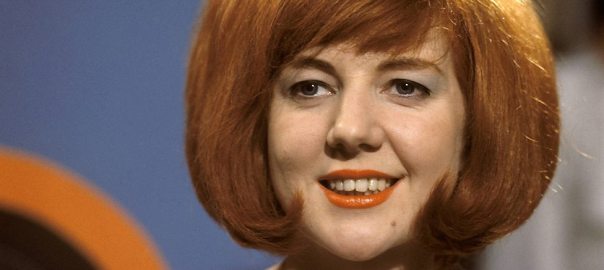
Cilla Black – 27 May 1943 – 2nd August 2015. Rest in Peace Legend

Cilla Black

CILLA BLACK ANYONE WHO HAD A HEART

Cilla Black OBE (born Priscilla Maria Veronica White, 27 May 1943 – 2 August 2015) was an English singer, actress, entertainer and media personality. Championed by The Beatles, she began her career as a singer in 1963, and her singles “Anyone Who Had a Heart” (1964) and “You’re My World” (1964) both reached number one.

Cilla Black – You’re My World

Black had eleven Top Ten hits on the British charts between 1964 and 1971. In May 2010 new research published by BBC Radio 2 showed that her version of “Anyone Who Had a Heart” was the UK’s biggest selling single by a female artist in the 1960s.

“You’re My World” was also a modest hit in the United States, peaking at No. 26 on the Billboard Hot 100, and both songs were among the chart-toppers in Australia.

Along with a successful recording career in the 1960s and early 1970s, Black hosted her own eponymous variety show, Cilla, for the BBC between 1968 and 1976. After a brief time as a comedy actress in the mid-1970s, she became a prominent television presenter in the 1980s and 1990s, hosting hit entertainment shows such as Blind Date (1985–2003) and Surprise Surprise (1984–2001).

In 2013, Black celebrated her 50 years in show business. British television network ITV honoured this milestone with a one-off Entertainment special which aired on 16 October 2013. The show, called The One & Only Cilla Black, featured Black herself and was hosted by Paul O’Grady.

Early life

Black was born in Liverpool, England, on 27 May 1943 and grew up in the Scotland Road area of the city. Her parents were John Patrick White and Priscilla Blythen. Black had a Welsh grandfather, Joseph Henry Blythen, who was born in Wrexham, Wales, and Irish great grandparents on her father’s and mother’s side of the family. She was raised in a Roman Catholic household, and attended St. Anthony’s School. which was behind St. Anthony’s Church in Scotland Road, and Anfield Commercial College, where she studied Shipping Management.

Determined to become an entertainer, Black got a part-time job as a cloakroom attendant at Liverpool’s Cavern Club, best known for its association with the Beatles. Her impromptu performances impressed the Beatles and others. She was encouraged to start singing by a Liverpool promoter, Sam Leach, who gave her her first gig at the Casanova Club, where she appeared as “Swinging Cilla”. She became a guest singer with the Merseybeat bands Rory Storm and the Hurricanes, Kingsize Taylor and the Dominoes and, later, with the Big Three. She was also a waitress at the Zodiac coffee lounge, where she was to meet her future husband Bobby Willis. Black was featured in an article in the first edition of the local music newspaper Mersey Beat; the paper’s publisher, Bill Harry, mistakenly referred to her as Cilla Black, rather than White, and she decided she liked the name, and took it as a stage name.

Music career

CILLA BLACK THE 1960’S

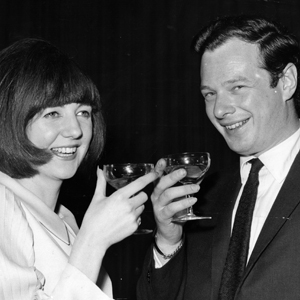
Black signed her first contract with a long-time friend and neighbour, Terry McCann, but this contract was never honoured as it was signed when she was under age and her father subsequently signed her with Brian Epstein.

Epstein had a portfolio of local artists. At first, he showed little interest in Black. She was introduced to Epstein by John Lennon, who persuaded him to audition her. Her first audition was a failure, partly because of nerves, and partly because the Beatles (who supported her) played the songs in their vocal key rather than re-pitching them for Black’s voice. In her autobiography What’s It All About? she writes:

I’d chosen to do “Summertime”, but at the very last moment I wished I hadn’t. I adored this song, and had sung it when I came to Birkenhead with the Big Three, but I hadn’t rehearsed it with the Beatles and it had just occurred to me that they would play it in the wrong key. It was too late for second thoughts, though. With one last wicked wink at me, John set the group off playing. I’d been right to worry. The music was not in my key and any adjustments that the boys were now trying to make were too late to save me. My voice sounded awful. Destroyed—and wanting to die—I struggled on to the end.

But after seeing her another day, at the Blue Angel jazz club, Epstein contracted with Black as his only female client on 6 September 1963. Epstein introduced Black to George Martin who signed her to Parlophone Records and produced her début single, “Love of the Loved” (written by Lennon and McCartney), which was released only three weeks after she contracted with Epstein. Despite an appearance on ABC-TV’s popular Thank Your Lucky Stars, the single peaked at a modest No.35 in the UK, a relative failure compared to début releases of Epstein’s most successful artists (the Beatles, Gerry and the Pacemakers and Billy J. Kramer & the Dakotas).

Black’s second single, released at the beginning of 1964, was a cover of the Burt BacharachHal David composition “Anyone Who Had a Heart“, which had been written for Dionne Warwick. The single beat Warwick’s recording into the UK charts and rose to No.1 in Britain in February 1964 (spending 3 weeks there), selling 800,000 copies in the UK in the process. Her second UK No.1 success, “You’re My World”, was an English language rendition of the Italian popular song “Il Mio Mondo”. She also enjoyed chart success with the song in Australia, New Zealand, Europe, South Africa and Canada. Both songs sold over one million copies worldwide, and were awarded gold discs.

Cilla Black – It’s For You (1964).

Black’s two No. 1 successes were followed by the release of another Lennon–McCartney composition, “It’s for You“, as her fourth UK single. Paul McCartney played piano at the recording session and the song proved to be another major international success for Black, peaking at No. 7 on the UK charts.

Black belonged to a generation of British female singers which included Dusty Springfield, Helen Shapiro, Petula Clark, Sandie Shaw and Lulu. These artists (other than Petula Clark) were not singer-songwriters but interpreters of 1960s contemporary popular music by song writers and producers. Black recorded much material during this time, including songs written by Phil Spector, Randy Newman, Tim Hardin and Burt Bacharach. All were produced by George Martin at Abbey Road Studios.

Cilla Black – “You’ve Lost That Loving Feeling”

Black’s version of “You’ve Lost That Lovin’ Feelin’” (1965) reached No. 2 on the UK charts in the same week that the Righteous Brothers‘s original version of the same song went to No. 1 there (week of 4 February 1965). This was the first of only three occasions in the history of the British Top 40 where the same song, recorded by two different artists, held the top two positions in the chart in the same week. George Martin’s and Parlophone’s attempts to pull off the same trick that they had succeeded at with “Anyone Who Had a Heart”, taking a strong song released by an American artist hitherto unknown to British audiences and giving it to Cilla, did not succeed in the same successful fashion in February 1965 as it had twelve months earlier.

Being so closely associated with the Beatles, Black became one of a select group of artists in the 1964-65 period (the others in the same position being Billy J. Kramer & the Dakotas and Peter and Gordon) to record more than one Lennon–McCartney composition. Black continued to record Lennon-McCartney compositions throughout the period (1963–1973) that she was under contract to EMI‘s Parlophone; Black’s recordings of “Yesterday“, “For No One” and “Across the Universe” were acclaimed critically and became radio favourites. McCartney said Black’s 1972 interpretation of “The Long and Winding Road” represented for him how he always intended the song to be sung.

Cilla Black – The Long and Winding Road 1973

Black’s career in the United States, although begun enthusiastically by Epstein and his PR team, was limited to a few television appearances (The Ed Sullivan Show among them), a 1965 cabaret season at the Plaza Hotel in New York, and success with “You’re My World”, which made it to No. 26 on the Billboard Hot 100. The song was to be her only American chart success, and Elvis Presley had a copy on his personal jukebox at his Graceland home. Black herself recognised that to achieve popular status in the USA she would need to devote much time to touring there. But she was plagued by homesickness and a sense of loneliness and returned to the UK just as she was starting to become popular in the US.

During 1966, Black recorded the Bacharach-David song “Alfie“, written as the signature song to the 1966 feature film, Alfie. While Cher sang “Alfie” on the closing credits of the American release of the film and Millicent Martin on the UK version, Black was the first and only artist to have a hit with the song in the UK (No.9). “Alfie” went on to become a success for both Cher (in 1966) and Dionne Warwick (in 1967) in the States. Black’s version of “Alfie” was arranged and conducted by Bacharach himself at the recording session at Abbey Road. Bacharach insisted on several takes, and Black cited the session as one of the most demanding of her recording career.

For Bacharach’s part, he said “… there weren’t too many white singers around, who could convey the emotion that I felt in many of the songs I wrote but that changed with people like Cilla Black …”

By the end of 1966, Black had been a guest on Peter Cook and Dudley Moore‘s Not Only… But Also; appeared in a Ray GaltonAlan Simpson revue in London’s West EndWay Out in Piccadilly—alongside Frankie Howerd; made notable appearances on The Eamonn Andrews Show and starred in her own television special (the first of its kind to be filmed in colour), Cilla at the Savoy.

Epstein’s attempts to make Black a film actress were less successful. A brief appearance in the “beat” film Ferry ‘Cross the Mersey and a leading role alongside David Warner in the 1968 psychedelic comedy Work Is a Four-Letter Word were largely ignored by film critics. In a 1997 interview with Record Collector magazine, Black revealed she was asked to appear in the 1969 film The Italian Job, playing the part of Michael Caine‘s girlfriend, but negotiations fell through between producers and her management over her fee.

Epstein died of an accidental drug overdose in August 1967, not long after negotiating a contract with the BBC for his only female artist to appear in a television series of her own. Relations between Epstein and Black had somewhat soured during the year prior to his death, due largely to the fact that Epstein was not paying her career enough attention and the fact that Black’s singles “A Fool Am I” (UK No.13, 1966) and “What Good Am I?” (UK No.24, 1967) were not big successes.

Apparently Black was also unhappy with Epstein’s public admission that he had taken LSD. In her autobiography, Black claimed that Epstein had tried to pacify her by negotiating a deal that would see her representing the UK in the 1968 Eurovision Song Contest. However, Black refused on the basis that Sandie Shaw had won the previous year’s contest, and that the chances of another British female artist winning were improbable.

After the death of Epstein, Black’s boyfriend and songwriter Bobby Willis assumed management duties. After the relatively disappointing performance of “I Only Live to Love You” (UK No. 26, 1967), Black hit a new purple patch in her recording career, starting with “Step Inside Love” in 1968 (UK No. 8), which McCartney wrote especially for her as the theme for her new weekly BBC-TV variety series. Other successes followed in 1969: “Conversations” (UK No. 7), “Surround Yourself With Sorrow” (UK No. 3), “If I Thought You’d Ever Change Your Mind” (No. 20). Black had a further big hit with “Something Tells Me (Something’s Gonna Happen Tonight)” (UK No. 3) in 1971.


Black’s association with the Beatles continued. At a Cannes Film Festival during the 1970s, she joined George Harrison, Ringo Starr and popular music singer Marc Bolan to attend a screening of the John LennonYoko Ono experimental film Erection. She also holidayed with Harrison and Starr on a trip aboard a yacht chartered by Starr. “Photograph” was written on this trip—originally intended for Black to record—but Starr decided to record it himself. George Harrison also wrote two songs for Black: “The Light that has Lighted the World” and “I’ll Still Love You (When Every Song is Sung)”. The latter she recorded during 1974 with her then producer David Mackay, but it was not heard publicly until 2003 when it was included on a retrospective collection entitled Cilla: The Best of 1963–78.

In 1993 she released Through the Years, an album of new material featuring a number of duets with Dusty Springfield, Cliff Richard and Barry Manilow. Ten years later, she released the album Beginnings … Greatest Hits and New Songs.

In his 1969 study of popular music history Awopbopaloobop Alopbamboom, the rock music journalist Nik Cohn wrote:

It’s true—the British don’t like their girl singers to be too good, they think it smacks of emancipation, and Cilla at least seemed safe. Obviously, she was quite a nice girl. Also, she was respectable and reliable, very clean and quite unsexy, and she played daughter or maybe kid sister, steady date or fiancée, but she played nobody’s mistress at all. She wasn’t like that. Everyone patronised her like hell, waiting for her to fall, but then she didn’t fall after all, she floated instead and she’s still up there now. She won’t ever come down either—she doesn’t sing much, she still comes on like a schoolgirl but she’s liked like that and she can’t go wrong. Genuinely, she’s warm and she makes people glow. In her time, she will grow into a pop Gracie Fields, much loved entertainer, and she’ll become institutionalised.

Black was the best-selling British female recording artist in the UK during the 1960s and released 15 studio albums and 37 singles in total. During 2006–07, Black’s 1971 single “Something Tells Me (Something’s Gonna Happen Tonight)” was used as the soundtrack to a new British advertising campaign for Ferrero Rocher chocolates.

During the 2008–09 pantomime season, Black returned to live musical performance in the pantomime Cinderella, appearing as the Fairy Godmother. Black was part of an all-Scouse cast assembled in this three-hour stage spectacular to mark the end of Liverpool’s year as European Capital of Culture. The show incorporated a number of Black’s successes, which she performed live, including “You’re My World”, “Something Tells Me (Something’s Gonna Happen Tonight)”, “Step Inside Love” and “Sing a Rainbow”. Black received rave reviews for her singing and overall performance.

On 7 September 2009, a total of 13 original studio albums (the first seven produced by George Martin) recorded by Black between 1963 and 2003 were released for digital download. These albums were all digitally remastered and featured an array of musical genres. Also released by EMI at the same time was a double album and DVD set, The Definitive Collection (A Life in Music), featuring rare BBC video footage; a digital download album of specially commissioned re-mixes Cilla All Mixed Up; a remixed single on digital download of “Something Tells Me (Something’s Gonna Happen Tonight)“.

For the 2010 winter pantomime season, Black appeared in Cinderella at the Waterside Theatre in Aylesbury, Buckinghamshire.

In October 2013, Parlophone Records (the record label which launched her career in 1963) released the career-spanning CD The Very Best Of Cilla Black —containing all 19 of her UK Top 40 singles, new club remixes plus a bonus DVD of her 1966 TV music special Cilla at the Savoy.[17]

Cilla episode 1 full [ITV drama]

————————————-

Cilla Episode 2,

————————————

Cilla Episode 3

———————————–

BAFTA’S 2014 Paul O’Grady Present Cilla Black With Lifetime Achivement Award

———————————————–

Television career

BBC

Black was offered her own show on the BBC by Bill Cotton, then Assistant Head of Light Entertainment. The first series of Cilla was broadcast on Tuesday 30 January 1968. On the first show, her guest was Tom Jones and the two popular music stars sang a duet together. Paul McCartney (without Lennon) wrote the theme tune – another chart success for Black – entitled “Step Inside Love“. This song was later covered by Madeline Bell. The series was very popular and ran for almost a decade, racking up eight seasons (66 episodes) between January 1968 and April 1976.

Although it featured guest appearances by many famous stars of the era (including Cliff Richard, Henry Mancini, Johnny Mathis, Andy Williams, Charles Aznavour, Ringo Starr, Lulu, Matt Monro, Sacha Distel, Donovan, Georgie Fame, Dusty Springfield, Ethel Merman, the Shadows, Phil Everly, Marc Bolan, Jimmy Tarbuck and Ronnie Corbett), most of the episodes (recorded on videotape) were subsequently erased by the BBC.

This success paved the way for a lengthy television career which continued intermittently until 2003. Black began the 1970s by appearing on the BBC’s highly rated review of the sixties music scene Pop Go The Sixties, performing “Anyone Who Had a Heart” live on the show broadcast across Europe and BBC1, on 31 December 1969. Black recorded her performance for this show separately, in a different studio without an audience, although she did sing live.

Like so many of her contemporaries, during the 1970s, Black’s musical career declined, although she toured often. Increasingly thought of as a television “personality”, she found herself experimenting with situation comedy for ITV. Her BBC series, Cilla, continued successfully until 1976, recessing during 1970, 1972 and 1975. The theme songs from the Cilla series were also successful. Step Inside Love opened the series in both the 1968 and 1969 runs and reached number 8 in the UK singles chart on its release. Something Tells Me (Something’s Gonna Happen Tonight) was the theme for the 1971 and 1973 shows, reaching number 3 and becoming Black’s last top ten success. “Baby, We Can’t Go Wrong” was used for the 1974 series and was a minor success, reaching number 36, Black’s last UK chart song until 1993. “It’s Now” was the final theme from the 1976 series and failed to reach the charts, though it was released as a “B” side.

The UK’s Eurovision Song Contest entry selection process was part of the Cilla show in both 1968 and 1973, when her close friend, Cliff Richard was the featured artist performing all the songs shortlisted in the A Song For Europe segment. Black was originally asked to sing for the UK in 1968 and was asked again for the 1970 contest, but declined because she was pregnant at the time.

In 2007, Black took part in the BBC Wales programme Coming Home about her Welsh family history, with roots in Wrexham and Holywell.

Comedy actress

On 15 January 1975, Black performed as the main entertainer of the first of six half-hour situation comedy plays. The series which was broadcast on ITV was entitled Cilla’s Comedy Six[20] and written by Ronnie Taylor. During May 1975, the Writers’ Guild of Great Britain named Black as Britain’s Top Female Comedy Star. The following year, ATV was commissioned to film six more plays as the initial series had accrued healthy viewing figures and remained constantly among the best scoring three shows of the week. During August 1976, Black reprised her role as a comedy-actress in Cilla’s World of Comedy which featured her theme song and new single “Easy in Your Company”.

From 2013 to 2014, Black was set to co-star in a new BBC sitcom Led Astray, alongside Paul O’Grady – the pilot episode was recorded on 31 October 2013. However the show was shelved due to the pair being unable to cope with the long hours of filming.

London Weekend Television

By the beginning of the 1980s, Black was performing mainly in cabaret and concert and absent from television since a 1978 Thames Television special. In 1983, she appeared on the BBC’s Wogan programme. Her appearance on this peak-time talk show was a major success, and her career in television was resurrected. According to Christopher Biggins in his autobiography, she “stormed back into the public consciousness with a barnstorming performance as a guest on Wogan in 1983, proving that we can all have second chances” and after her appearance, people were “desperately trying to find her the right comeback vehicle”.

Black signed a contract with London Weekend Television, becoming the host of two of the most popular and long-running evening entertainment shows of the 1980s and 1990s—Blind Date (1985–2003) and Surprise Surprise (1984–2001). She also presented the game show The Moment of Truth (1998–2001). All programmes were mainstream ratings winners and consolidated her position as the highest-paid female performer on British television.

Les Dawson – Surprise, Surprise – I’ve Got You Babe

Her TV appearances made her spoken mannerisms (“Lorra lorra laughs”, for example) and her habit of referring familiarly to her fellow presenters (“Our Graham”) well known.

Recent television work

Black’s most notable television performances after her resignation from LWT included Parkinson, So Graham Norton, Friday Night with Jonathan Ross, Room 101 and a one off show titled Cilla Live! for Living TV. Black was a judge on the first series of the reality TV series Soapstar Superstar, has featured in an episode of the series Eating with… and has guest presented editions of The Paul O’Grady Show and The Friday Night Project for Channel 4 in 2006 and 2007 respectively.

In 2008, Black filmed a pilot for a dating show for Sky One. Loveland was to be a ten-part “21st century” dating programme for the channel for the next year. Unlike on Blind Date, contestants would not sit in front of a studio audience, but be ‘hidden’ behind real-time animations as they date each other. Each episode concludes with the contestant picking their preferred animated character before meeting that person in real life. Production costs, however, were too high and it was terminated.[25]

In October 2009, Black guest anchored Loose Women and between September 2010 and June 2011, she made guest panellist appearances.

On 28 November 2009, Black appeared on Sky1 to present TV’s Greatest Endings. She also appeared as herself in the first episode of series 4 of ITV’s Benidorm in 2011.[26] She also appeared as the guest host of Never Mind the Buzzcocks on 5 December 2011.

50 years in show business

ITV honoured Black’s 50 years in show business with a one off entertainment special which aired on 16 October 2013. The show, called The One & Only Cilla Black starred Black alongside Paul O’Grady, who hosted the show. The show celebrated Black’s career including a special trip back to Black’s hometown Liverpool, a host of celebrity friends and some surprise music guests. Black paid homage to Blind Date with the return of its most popular contestants and saw her star in a special edition of Coronation Street.

Credits

Year Programme Role
1984–2001 Surprise Surprise Presenter
1985–2003 Blind Date Presenter
1998–2001 The Moment of Truth Presenter
2009, 2010–2011, 2014 Loose Women Regular/Guest Panellist
2007 Room 101 (TV series) Guest
2009 TV’s Greatest Endings Presenter
2011 Never Mind the Buzzcocks Guest Presenter
2013 Your Face Sounds Familiar Guest Judge
The One & Only Cilla Black Herself, co-presenter
2013 Led Astray (pilot) Tanya

Guest appearances[edit]

Cilla (2014 drama series)

See also: Cilla

In 2014, Black was the subject of a three-part television drama series, Cilla, focusing especially on her rise to fame in 1960s Liverpool and her relationship with Bobby Willis. ITV aired the first instalment on 15 September 2014, starring BAFTA-award winning actress Sheridan Smith.

Personal life

Black was married to her manager, Bobby Willis, for more than 30 years until his death from lung cancer on 23 October 1999. They had three sons: Robert (who became her manager, born 1970), Ben (born 1974) and Jack (born 1980). Their daughter, Ellen (born 1975), was born prematurely and suffered lung complications, living for only two hours.

Black was a staunch supporter of the Conservative Party during the 1980s and publicly voiced her admiration of Margaret Thatcher, stating in 1993 that Thatcher “put the Great into Great Britain”.In April 1992 she appeared on stage at a Conservative Party rally and made prominent calls for the party’s re-election under the leadership of John Major. But in an interview in 2004 with The Guardian, Black claimed that she was “apolitical”. The Liverpool Echo also quoted her as saying: “as for the politics thing, I’m not a Conservative.” In August 2014, Black was one of 200 public figures who were signatories to a letter to The Guardian opposing Scottish independence in the run-up to September’s referendum on that issue.

Death

Black died at her home near Marbella, Spain on 2 August 2015. Police are awaiting autopsy results but say that her death was most likely from natural causes.

Record producers

Protestants of Ulster and Protestantism in Ireland

Protestants of Ulster

Protestants of Ulster

——————————————————

Wolfe Tone and the Protestants of 1798 (Documentary)

——————————————————

The Protestants of Ulster are an ethnic or ethnonational group in the province of Ulster, Ireland.[1] They make up almost half the population of Ulster. Some Ulster Protestants are descendants of the Protestant settlers involved in the early 17th century Ulster Plantation, which introduced the first significant numbers of Protestants into the west and centre of the province. These settlers were mostly Lowland Scottish and Northern English people and predominantly from Galloway, the Scottish Borders and Northumberland.[2] Begun privately in 1606, the Plantation became government-sponsored in 1609. Colonising Ulster with loyal British settlers, the vast majority of whom were Protestant, was seen by London as a way to prevent further rebellion in the province, as it had been the region most resistant to English control during the preceding century. There was a total settler population of about 19,000 by 1622,[3] and possibly as many as 80,000 in the 1630s.

Ulster Protestants descend from a variety of lineages, including Scottish people (some of whose descendants consider themselves Ulster Scots people), English people, Irish people, and Huguenots.[4][5] Another influx of an estimated 20,000 Scottish Protestants was a result of the seven ill years in the 1690s.[6] While Presbyterians of Scottish descent and origin had already become the majority of Ulster Protestants by the 1660s (when Protestants still only made up a third of the population), they became an absolute majority in the province by the 1720s.[7]

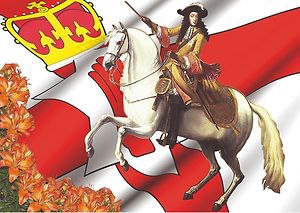
Divisions between Ulster’s Protestants and Irish Catholics have played a major role in the history of Ulster from the 17th century to the present day, especially during the Plantation, the Cromwellian conquest, the Williamite War, the revolutionary period, and the Troubles. Most Ulster Protestants are Presbyterian or Anglican. Scottish colonists were mostly Presbyterian[8] and the English mostly members of the Church of England. Repression of Presbyterians by Anglicans (who followed the Church of Irelandstate religion) intensified after the Glorious Revolution (especially after the 1703 Test Act) and was one reason for heavy emigration to North America by Ulster Presbyterians during the 18th century (see Scotch-Irish American).[9]

Between 1717 and 1775, an estimated 200,000 migrated to what became the United States of America.[10] Some Presbyterians also returned to Scotland during this period. This repression largely ended after the Irish Rebellion of 1798 and the relaxation of the Penal Laws.[11] As Belfast industrialised in the 19th century, it attracted yet more Protestant immigrants from Scotland.[12] After the 1920-22 partition of Ireland, the new government of Northern Ireland launched a campaign to entice Protestants from the rest of Ireland to relocate to the new polity with inducements of state jobs and housing, and “large numbers” accepted.[13] Because of these migrations, Ulster has a lower proportion of Catholics than the other provinces of Ireland.

Most Ulster Protestants speak Ulster English, and some speak one of the Ulster Scots dialects.[14][15][16] The vast majority live in Northern Ireland and tend to support its Union with the rest of the United Kingdom,[17] and are known as unionists. Unionism is a term that has been divided by some into two camps; “Ulster British” who are attached to the United Kingdom and primarily adhere to British values; and “Ulster loyalism“, whose attachment is primarily ethnic, prioritising Ulster Protestantism above British identity.[18][19][20] The Loyal Orders, which include the Orange Order, Royal Black Institution and Apprentice Boys of Derry, are fraternal organisations which originated in Ulster and still have most of their membership there.

About 2% of Ulster Protestants reside in the rest of Ulster in the Republic of Ireland (formed after the breakup of the United Kingdom of Great Britain and Ireland).[21] Some still retain a sense of Britishness, and a small number have difficulty identifying with the independent Irish state.[22][23][24]

Percentage of Protestants in each electoral division in Ulster, based on census figures from 2001 (UK) and 2006 (ROI).
0-10% dark green, 10-30% mid-green,
30-50% light green, 50-70% light orange,
70-90% mid-orange, 90-100% dark orange.

Changes in distribution of Irish Protestants, 1861–2011
—————————————————————————————-
Protestantism in Ireland
Protestantism is a minority Christian denominational family on the island of Ireland. In the 2011 census of the Republic of Ireland, 5% of the population described themselves as Church of Ireland (Anglican) or Presbyterian (93,056 and 14,348 people respectively).[1] In the 2011 census of Northern Ireland, 48% described themselves as Protestant, which was a decline of approximately 5% from the 2001 census.[2][3] Some forms of Protestant Christianity may have existed since the early 16th century. The Church of Ireland was established by King Henry VIII of England.
 ——————————————–
Inside The Court Of Henry VIII Documentary 2015
 ——————————————–

History

The Protestant Reformation in Ireland

During the English Reformation in the 1530s, the Irish parliament was successful in gaining the support of many bishops from across Ireland for royal supremacy, leading to the passing the Act of Supremacy in 1536 which declared Henry VIII as head of the Church of Ireland.[4] In 1539, Henry VIII had the monasteries of Ireland dissolved, of which only Christ Church in Dublin survived after changing from monasticism to a secular constitution based on that of St. Patrick‘s.[5] The introduction of the Reformation to Ireland is regarded as the end of the medieval period in Ireland.[5]

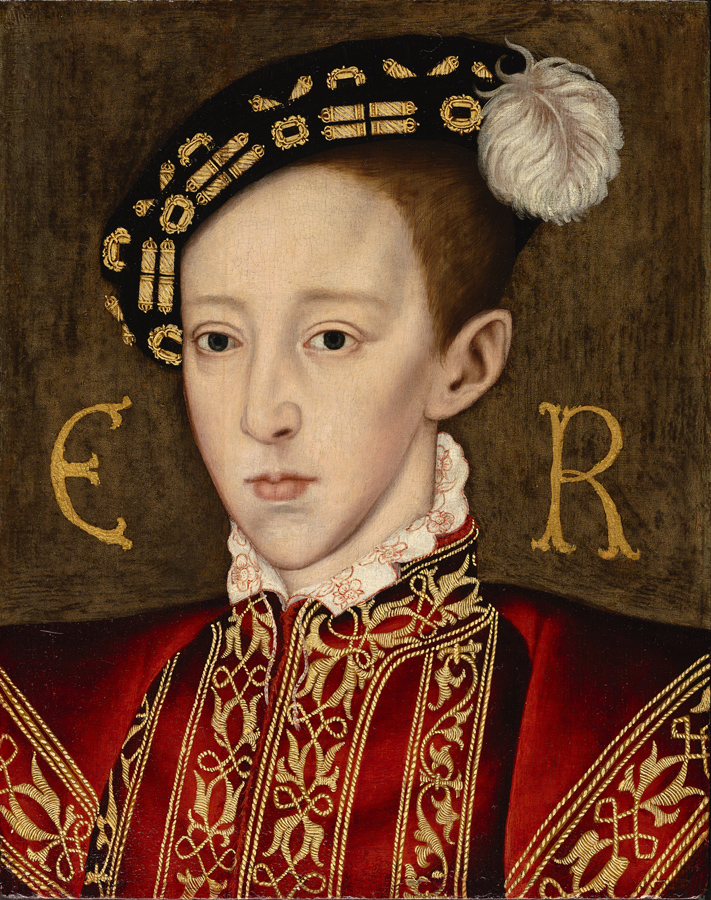
King Edward VI (1537-1553)

It would not be until the reign of Henry VIII’s son, Edward VI, that attempts were made to introduce Protestant liturgy and bishops to Ireland.[4] These attempts were met with hostility from within the church, even by those who had previously conformed.[4] In 1551 during Edward VI’s reign, a printing press established in Dublin, printed a common book of prayer in English.[6]

A return of Catholic supremacy ensued during the reign of Henry VIIIs daughter, Mary in the 1550s, however in 1560, her half-sister and successor Elizabeth I would enact a religious settlement consisting of an Act of Supremacy and Act of Uniformity in an attempt impose Protestantism.[4] Elizabeth also had herself made supreme governor of the Church of Ireland.[4] During Elizabeth’s reign, the bulk of Protestants in Ireland were confined to the ranks of new settlers and government officials, who formed a small minority.[7] Amongst the native Irish and Old English Recusancy pre-dominated and was tolerated by Elizabeth for fear of alienating the Old English further.[7]

It was during Elizabeth’s reign that more attempts were made to boost the Reformation: Trinity College, Dublin was established in 1592 to help produce new ministers to preach the reformed faith;[7] in 1571 a Gaelic printing typeface was created to print documents in the Irish language for the purposes of evangelisation;[6] the first translation of the New Testament into Irish occurred in 1603.[7] Despite this the Reformation would ground to a halt in Ireland and ultimately fail, not helped by a dedicated and vigorous campaign by a plentiful number of Continentally-trained priests, which ensured that Irish heart-and-minds remained with the Catholic faith.[7]

The Reformation in Ireland made little progress due to two main factors: the Old English in Ireland felt increasingly alienated by political developments in regards to English rule in Ireland during Henry’s reign and became less likely to obey edicts that were issued;[8] secondly the native Irish saw the Reformation as just another attempt by the English at conquest and forced Anglicisation.[8]

The dissolution of the monasteries saw many parishes granted to lay people whose main concern was not their parishioners souls, this along with the wars that raged in Ireland throughout the 16th and 17th centuries left many parish churches—now the property of the established church—especially rural ones, in a ruinous state.[9]

17th century

Puritans

During the reigns of Elizabeth I and James I, some Protestants who adhered to forms of Puritanism escaped persecution in England and Scotland by settling in Ireland.[10] Here they were openly welcomed by the state-sponsored Church of Ireland for their strong anti-Catholicism and dedication to preaching, which it highly sought.[10]

Early 17th century

During the reigns of Elizabeth I and James I, several plantations occurred seeing the arrival of British settlers, the majority of which were Protestant.

In 1604, the Scottish Catholic Randal MacDonnell, set about settling his lands in the the Route and Glynnes in County Antrim with Protestants from the Scottish Lowlands.[11] This was followed by the considerably determined private plantation of counties counties Antrim and Down by James Hamilton and Sir Hugh Montgomery, which saw English and Scottish Protestants settling in their estates.[12] In 1606, the notorious Border Reiver clan of the Grahams of Eskdale, Leven and Sark, where invited to settle in County Roscommon.[13]

By 1607 a steady supply of Scottish Protestants where migrating to eastern Ulster, settling in the estates of Hamilton, MacDonnell, and Montgomery.[12] Whilst many Presbyterian Lowlanders fled Kintyre in Scotland for MacDonnell’s lands, Hebridean Catholics migrated as well, ensuring that the Glens of Antrim would remain Catholic as the rest of the county became predominantly Protestant.[11]

That same year, the Flight of the Earls occurred,[14][15] which saw vast tracts of land in Ulster spanning the counties of Armagh, Cavan, Coleraine, Donegal, Fermanagh, and Tyrone, escheated to James I.[16] This was followed by the Plantation of Ulster, which saw Protestant[citation needed] British settlers colonise these counties.[16] In 1610, The Honourable The Irish Society was established to undertake and finance the plantation of the new county of Londonderry (made up of County Coleraine and parts of Antrim, Donegal, and Tyrone) with British Protestant subjects.[17][18] Whilst a substantial number of English and Scottish people did come over and settle during the Plantation of Ulster, they tended to disperse to other parts of the province resulting in those tasked with settling the land having to retain native Irish who remained predominantly Catholic.[18]

James I campaign to pacify the borders resulted in great numbers of Border Reiver families arriving in Ulster.[13] The Border Reiver families were not known for their religiousness and the Reformation had made little impact on them.[13] Once they had settled in Ulster they realised the advantages of becoming Protestants and conformed to the established church.[13]

Between 1615-1620, a policy of “discovery and regrant” was used in various parts of Ireland, however few settlers were attracted to these plantations, resulting basically in new landowners.[19] This policy was used in the counties of Leitrim, Longford, northern Wexford, as well as parts of King’s County and Queen’s County.[19][20]

By the 1630s, Protestant settlers from Great Britain were migrating to Ireland by their own initiative, and helped initiate a colonial spread from the ports they arrived and into the hinterlands of Ulster.[16]

Thomas Wentworth

The Church of Ireland by the 1630s was a broad church that accepted various different Protestant practices and beliefs. As the Presbyterian church was not yet established in Ireland, Presbyterians were more than happy to join the Church of Ireland.[21] Across the island, the predominant doctrine within the Church of Ireland was puritanism, which like Presbyterianism, favoured simple and plain forms of worship and clothing.[20] During the reign of Charles I however, Lord Deputy of Ireland Thomas Wentworth and Archbishop William Laud sought to bring the Irish church into line with that in England by stamping out puritanism,[10] and the anti-episcopal views of the Scottish ministers operating in Ulster.[18] They also sought to replace the preferred form of worship amongst Protestants in Ireland with the more elaborate and orthodox Anglican style favoured by Charles I.[18][20] In an attempt to achieve this, Wentworth and Laud introduced the English Thirty-Nine Articles along with stricter disciplinary canons in 1634.[10] This was followed by puritan ministers who held Presbyterian sympathies being dismissed from the church.[10]

In 1635, Wentworth proposed a plantation of Connacht, which would have seen all Catholic land confiscated and settled with only English Protestants, with the hope of converting the Gaelic and Old-English Catholics to the state religion.[20] This plantation would not see the light of day as Wentworth alienated Protestant and Catholic alike in Ireland,[18][20] and Charles I got into ever more trouble with parliament.[20]

Between 1640 and 1641, Protestants and Catholics alike in the Irish parliament united in opposition to Wentworth, and pushed for the Graces—first arranged in 1628—to be confirmed as well as filing lists of complaints about his behaviour and practices.[18] This union of cause survived until the common denominator, Wentworth, was executed by the English parliamentarians in May 1641.[18]

Rebellion and civil war

By the 1630s, more than a quarter of land in Ireland was owned by Protestants,[18] by the outbreak of the Irish Rebellion of 1641, they held roughly three-fifths.[22]

Cromwellian land settlement

The Act for the Settlement of Ireland 1652 saw Catholics found guilty of disloyalty having their estates confiscated and granted to loyal Protestants.[23] Whilst Protestants also guilty of disloyalty were to lose some of their estates, they ended up been given fines, the majority of which were never paid.[23] The result of this land settlement saw a mass changing of land ownership as Catholic ownership almost disappeared completely east of the River Shannon[23][22] It also greatly increased the number of Protestants in Ireland,[22] and saw them come to dominate both the countryside and urban centers and have near absolute control over politics and trade.[22]

Restoration Ireland

By the 1660s, Catholics owned hardly more than one-fifth of land.[22] Protestant immigration to Ireland had started in earnest in the aftermath of the restoration of the monarchy in Ireland in 1660, helped by acts such as that “to Encourage Protestant Strangers to Settle in Ireland”, passed in 1662.[24] French Protestants, known as Huguenots, escaping persecution in France formed their own small community in Dublin where they became famous for developing poplin and handsome stone buildings called “Dutch Billy’s”.[24][25] Around the same time, Jews—regarded as “foreign Protestants”—settled in Dublin having originally sought refuge in Tenerife.[24] The Plantation of Ulster also finally swung into full motion as a constant stream of English and Scottish families made their way to the north of Ireland.[24]

The death of Charles I in 1649 saw puritanism reach its peak as the Church of Ireland became restricted allowing other Protestant denominations to freely expand.[10] Puritans also went about establishing non-conforming Protestant churches such as Baptist, Quaker, Congregational, as well as Presbyterian.[10] As puritanism refused to conform to the doctrines of the established church it became known as “nonconformity”,[10] with those not adhering to the Church of Ireland being classified as Dissenters.[26]

Williamite era

The revocation of the Edict of Nantes in 1685 saw great numbers of Huguenots flee from France, with as many as 10,000 migrating to Ireland during the 1690s, including veterans from the Huguenot regiments in the army of William III.[25] In total twenty-one Huguenot communities were established the most notable of which was established at Portarlington, Queen’s County.[25] Some Huguenot congregations conformed to the Church of Ireland, though others maintained their own instilling some hostility from the established church.[25]

18th century

German Palatines

In 1709 German Palatines fled persecution to England from the Rhineland in the Holy Roman Empire.[27] Eight hundred and twenty-one families consisting of 3,073 people were resettled in Ireland that year.[27][28] Of 538 families initially taken on by as tenants, 352 are reported to have left their holdings, with many returning back to England.[29] By late 1711 only around 1,200 of the Palatines remained in Ireland.[28] The number of families dwindled to 162 by 1720.[27]

Areas where the Palatines settled included counties Cork, Dublin, Limerick, and Wexford.[27] Despite the exodus of Palatines in the years after their initial arrival in Ireland, a second relocation carried out in 1712 saw the establishment of two successful settlements, one being around Rathkeale, County Limerick, the other around Gorey, County Wexford.[29] Limerick Palatines, despite some conversions to Catholicism, largely remained religiously and culturally endogenous.[27]

The Palatines responded well to the teachings of Methodism, with John Wesley visiting them several times.[27] By the 1820s they became victims of sectarian grief at the hands of Catholic agrarian societies, which further encouraged Palatine emigration from Ireland, resulting in them ceasing to be a separate grouping.[27] Despite this, their distinctive way of life survived long into the 19th century.[29]

The Penal Laws and converts to Protestantism

From 1697 to 1728, various Penal Laws were enacted by the Irish parliament primarily targeting Catholics of the aristocracy, landed and learned classes.[26][30] Some of these laws however also targeted Protestant Dissenters.[26] Under one of these laws, Dissenters could only be married in the Church of Ireland otherwise it was not legal, making their children illegitimate in the eyes of the law.[26] Another law passed in 1704 sought to prevent anyone who did not have communion in the Church of Ireland from holding public office, however as Catholics had already been excluded from public office this primarily targeted Dissenters.[26] Despite being the target of various penal laws, Dissenters remained vocal advocates of those that targeted Catholics so kept their complaints to a courteous tone.[26] Indeed, penal laws similar to those passed by the Irish Parliament, were imposed against Protestants in France and Silesia, but in these cases it was by a majority against a minority, which was not the situation in Ireland.[26]

The Penal Laws did encourage 5,500 Catholics, almost exclusively from the aristocracy and landed gentry to convert to Protestantism.[26][30] In 1703, 14% of land in Ireland was owned by Catholics, however following the conforming of the majority of these landowners by 1780, Catholics only owned 5% despite making up three-quarters of the population of Ireland.[26][30]

Some of these converts were high profile, such as Alexander MacDonnell, 5th Earl of Antrim, whose conversion meant that in the province of Ulster there were no Catholic estates of any note.[26] Others were less so, however made the most of the opportunities that opened up for them, one example being William Conolly.[26] William Conolly was a Gaelic Catholic from Ballyshannon, County Donegal, however in the years following his conversion to Protestantism, he would became the Speaker of the Irish House of Commons as well as Ireland’s richest man despite being the son of an innkeeper.[26]

The Penal Laws ensured that for the next century, Ireland was to be dominated by an Anglican elite composed of members of the Church of Ireland.[26] This elite would become to be known as the Protestant Ascendancy.[26] Ironically, despite attempts by some,[30] the Ascendancy had no real desire to convert the mass of the Catholic population to Protestantism, fearing that it would dilute their own exclusive and highly privileged position,[26] and many of the penal laws were poorly enforced.[30]

Despite the Penal Laws and the domination of an Anglican minority over a country with an overwhelming Catholic majority, open religious violence seems to have been quite rare during most of the 18th century.[31] Not until the Armagh disturbances in the 1780s did sectarian divisions come back to the fore.[31]

19th Century

The Dublin area saw many churches like Saint Stephen’s, built in the Georgian style during the 18th century. When Ireland was incorporated in 1801 into the new United Kingdom of Great Britain and Ireland, the Church of Ireland was also united with the Church of England to form the United Church of England and Ireland. At the same time, one archbishop and three bishops from Ireland (selected by rotation) were given seats in the House of Lords at Westminster, joining the two archbishops and twenty-four bishops from the Church of England.

In 1833, the British Government proposed the Irish Church Measure to reduce the 22 archbishops and bishops who oversaw the Anglican minority in Ireland to a total of 12 by amalgamating sees and using the revenues saved for the use of parishes. This sparked the Oxford Movement[citation needed], which was to have wide repercussions for the Anglican Communion.

As the official established church, the Church of Ireland was funded partially by tithes imposed on all Irish landowners and tenant farmers, irrespective of the fact that it counted only a minority of the populace among its adherents; these tithes were a source of much resentment which occasionally boiled over, as in the Tithe War of 1831/36. Eventually, the tithes were ended, replaced with a lower levy called the tithe rent charge.

The Irish Church Act 1869 (which took effect in 1871) finally ended the role of the Church of Ireland as state church. This terminated both state support and parliament’s role in its governance, but also took into government ownership much church property. Compensation was provided to clergy, but many parishes faced great difficulty in local financing after the loss of rent-generating lands and buildings. The Church of Ireland made provision in 1870 for its own government, led by a General Synod, and with financial management by a Representative Church Body. With disestablishment, the last remnants of tithes were abolished and the Church’s representation in the House of Lords also ceased.

20th century decline to 21st century

Concentration of Protestants in Ireland per county.

In 1991, the population of the Republic of Ireland was approximately 3% Protestant. The figure in the same geographical area was over 10% in 1891, indicating a fall of 70% in the relative Protestant population over the past century.

The Protestant depopulation in the Republic of Ireland during this time was dramatic. In 1861 only the west coast and Kilkenny were less than 6% Protestant. Dublin and two of the border counties were over 20% Protestant. In 1991, however, all but four counties were less than 6% Protestant; the rest were less than 1%. There were no counties in the Republic of Ireland which had experienced a rise in the relative Protestant population over the period 1861 to 1991. Often, the counties which managed to retain the highest proportion of Protestants were the ones which started off with a large proportion. In Northern Ireland, only counties Londonderry, Tyrone and Armagh have experienced a significant loss of the relative Protestant population; in these cases, the change was not as dramatic as in the Republic.

The previous pattern of decline started to change during the 1990’s by the time of 2006 census of the Republic of Ireland, a little over 5% of the state was Protestant. The 2011 census of the Republic of Ireland found that the Protestant population in every county had grown. In 2012 the Irish Independent reported that “Irish Anglicanism is undergoing a quite remarkable period of growth” due to immigration and Irish Catholics converting.[32]

Politics

Prior to the Plantation of Ulster in the opening decades of the 17th century, the Parliament of Ireland consisted of Catholic Old-English and Gaelic Irish MPs.[33] Whilst these MPs had few ideological objections to making Henry VIII head of the Irish church as well as to the establishment of Anglicanism in Ireland under Elizabeth I in 1660, resistance to government policies started to grow.[33] To help tip the balance of power in the parliament in favour of Protestants, Lord-Deputy Chichester established sixteen new corporate towns in Ulster in the 1610s.[16] These towns where little more than villages or planned towns.[33] This resulted in Ulster alone returning 38 MPs to the Irish parliament with the three other provinces altogether contributing 36, giving the government a majority of 32.[33] This majority was reduced upon appeal by the Old-English to six, however under Lord-Deputy Wentworth in 1640, a further sixteen Old-English seats where removed.[33] During 1640 and 1641, the interests of the Old-English and New English combined to seek Wentworth’s removal.[18]

With the drastic decrease in Catholic landowners after the Cromwellian land settlement in the 1640s, by the time of the Restoration parliament in 1661, only one Catholic MP was returned to the Irish parliament, however his election was overturned.[33]

The Protestant interest in Ireland would be no less compliant to English authority than the Old-English had been.[33] The convention of 1660, called after the restoration of the monarchy, saw 137 parliamentary members elected, all of whom were Protestant.[34] It called Charles II to summon a parliament consisting of Protestant peers and commons, as well for the re-establishment of the Church of Ireland.[35] Despite backing the restoration, as well as the system of episcopacy, it also asserted the Irish parliaments legislative superiority over itself and its intent to set and collect its own taxes.[34]

Cultural and literature impact

The Church of Ireland undertook the first publication of the Bible in Irish. The first Irish translation of the New Testament was begun by Nicholas Walsh, Bishop of Ossory, who worked on it until his death in 1585. The work was continued by John Kearny, his assistant, and Dr. Nehemiah Donellan, Archbishop of Tuam; it was finally completed by William O’Domhnuill. Their work was printed in 1602. The work of translating the Old Testament was undertaken by William Bedel (1571–1642), Bishop of Kilmore, who completed his translation within the reign of Charles I, although it was not published until 1680 in a revised version by Narcissus Marsh (1638–1713), Archbishop of Dublin. Bedell had also undertaken a translation of the Book of Common Prayer in 1606. An Irish translation of the revised prayer book of 1662 was effected by John Richardson (1664–1747) and published in 1712.

Denominations[edit]

Marine A – He Fought for Us – Now its Time we Fought for Him

marine a

Sgt Alexander Blackman, of Taunton, was found guilty of murder at a court martial in November 2013 for murdering an insurgent in Afghanistan.

Marine ‘A’ Criminal or Casualty of War BBC Documentary 2014

——————————————————————-

Cover Photo

Join the campaign to Free Marine – A

Visit Website: Free Marine – A

Click here  http://www.facebook.com/justiceformarineA

————————————————————————–

2011 Helmand Province incident

The 2011 Helmand Province incident was the killing, on 15 September 2011,[1] of an injured Taliban insurgent by Royal Marines.[2] Three Royal Marines, known during their trial as Marines A, B, and C, were anonymously tried by court-martial. On 8 November 2013,[1][2][3] Marines B and C were acquitted,[1][4] but Marine A was found guilty of the murder of the Afghan combatant,[1] in contravention of section 42 of the Armed Forces Act 2006.[3] This made him the first British soldier to be convicted of a battlefield murder whilst serving abroad since the Second World War.[5][6]

Later, on 5 December,[3] Lord Chief Justice Lord Thomas and two other High Court judges lifted the existing anonymity order on Marine A, allowing him to be named as Sergeant Alexander Wayne Blackman.[7] On 6 December, Blackman was sentenced to life imprisonment with a minimum term of 10 years,[8] and dismissed with disgrace from the British Armed Forces.[9] On 22 May 2014, the Court of Appeal reduced his minimum term to 8 years.[10]

On 19 December 2013, the anonymity order on Marines B and C was also lifted by the Court, and they were named as Corporal Christopher Glyn Watson and Marine Jack Alexander Hammond.

Event

The incident took place in Helmand Province during Operation Herrick 14,[7] part of the British effort in the War in Afghanistan. Blackman, of 42 Commando, Royal Marines,[12] was part of a Marine patrol that came across an Afghan fighter in a field wounded by Apache Helicopter gunfire.[1][9][5] Blackman ordered the Afghan to be moved out of sight of the British Persistent Ground Surveillance System,[1] a camera on a balloon above British Forward Operating Base Shazad, Helmand, covering the area Blackman’s patrol had been sent to.[10] Video evidence played at the Marines’ subsequent trial shows them dragging the man across the field and then kicking him.[13] Blackman ordered other servicemen to stop administering first aid to the insurgent[1] and eventually shot the man in the chest with a 9 mm pistol,[9][13] saying: “Shuffle off this mortal coil, you cunt. It’s nothing you wouldn’t do to us.”[5][13][14][11] He then added: “I just broke the Geneva Convention.”[3][15]

Criminal trial and sentencing

After the 15 September incident, Blackman continued with his tour of duty, leaving Helmand Province in late October 2011.[7] On 13 October 2012, at the decision of the Service Prosecution Authority, Marines A–E were charged with the murder of the unnamed Afghan insurgent.[1] The lead came after British civilian police discovered suspicious video footage on a serviceman’s laptop.[2] Marines D and E had charges against them dropped on 5 February 2013.[1] Marines A, B and C first appeared in court in August 2013, where they entered a not-guilty plea.[2] The military trial of Marines A, B and C, protected from view in court behind a screen because of an anonymity order,[2] began on 23 October 2013[1] and lasted two weeks.[2] Their court-martial board (equivalent to a jury in the civilian justice system)[1] was seven strong,[3][14] something usually only done for the more serious cases.[16]

The verdict (8 November 2013)[1] and sentence (6 December 2013) were both delivered at the Military Court Centre in Bulford, Wiltshire.[2][3][8] The judge advocate (the civilian judge heading up the panel at a court-martial)[16] was Judge Advocate General Jeff Blackett.[5] The verdict carried with it a mandatory life sentence,[2][9] so it was only in the judge advocate’s and court-martial board’s power to decide on the minimum sentence once the board had found Blackman guilty.[16] He was sentenced to a minimum of 10 years in prison.[8] On 22 May 2014, at the Courts Martial Appeal Court, its most senior judge, Lord Chief Justice Lord Thomas, upheld the life sentence, but reduced Blackman’s minimum term to 8 years.[10]

Anonymity orders

The Law Courts building, housing the High Court, which issued a ruling leading to three of the Marines involved being publicly named

Running in parallel to the Marines’ criminal trial were legal proceedings relating to the anonymity of the defendants. In the autumn of 2012, Judges Advocate Elsom and Blackett issued anonymity orders for the Marine defendants due to the risk that, once named, the defendants would become targets for terrorists.[1][7] The move had been opposed by elements of the UK media.[1] A lawyer for the Press Association argued that anonymity orders should not be issued in this case because, firstly, British military award recipients named in the media had not been previously targeted; and, secondly, that the names of those British service personnel investigated following the death of Baha Mousa had not been similarly protected.[17] The 2012 anonymity orders were upheld at the beginning of the trial in October 2013.[1] The order was lifted for Blackman (hitherto Marine A)[12] on 5 December 2013 by the High Court.[3] The most senior figure involved in that verdict was Lord Chief Justice Lord Thomas.[3][4] The same ruling had it that the identities of Marines B and C also be revealed unless they submit an appeal to the Supreme Court.[11] No such appeal was lodged within the set deadline, and so, on 19 December 2013, Marine B was named as Corporal Christopher Glyn Watson and Marine C was named as Marine Jack Alexander Hammond.[18][11] The anonymity of Marines D and E was upheld on 19 December “pending any further order by the Judge Advocate General“.[18]

Jeff Blackett also restricted public access to the evidence used at the trial, releasing on 8 November stills, audio clips and transcripts from the serviceman’s video that was played to the court-martial board,[13] but ruling that the full video itself not be released,[19][7][13] since doing so “would increase the threat of harm to British service personnel.”[19][13] On 5 December 2013, the Court Martial Appeal Court upheld the earlier decisions prohibiting the release of the video footage of the attack and some of the stills from it.[1] The Court stated, however, that the prohibition was to prevent the material being used for radicalisation, rather than it posing a risk to the life of the defendants.[1]

Reactions

The legal proceedings relating to the Marines garnered widespread British public and media attention.

Reacting to Marine A’s guilty verdict, Royal Marines Brigadier Bill Dunham called the murder a “shocking and appalling aberration” that was “not consistent with the ethos, values and standards of the Royal Marines”, but was nevertheless an “isolated incident”.[2] General Sir Mike Jackson said he was “saddened” by the case.[2]

Marine A’s guilty verdict led to a showing of public support for the Marine, with people creating social media groups and online petitions alternately asking that he be given a lenient sentence and calling for his release.[20][6] The Daily Telegraph supported this movement.[21]

When Blackman was sentenced to 10 years, General Sir Nick Houghton called his actions a “heinous crime” and commented that “murder is murder”.[20] By contrast, Blackman’s commanding officer, Lieutenant Colonel Simon Chapman, 42 Commando, said in a letter read to the court that Blackman had had a “momentary … lapse of judgment” and was “not a bad man”, and added that Blackman had his “full support”.[6] Blackman himself said in a statement that he was “devastated” and “very sorry for any damage caused to the Royal Marines”.[8][6][14]

,,,,,

Alexander Litvinenko – Russian President Vladimir Putin “personally ordered” the killing

Panorama: How to poison a spy

Vladimir Putin ‘ordered killing’,

Russian President Vladimir Putin “personally ordered” the killing of Alexander Litvinenko, the inquiry into the former spy’s death has heard.

Ben Emmerson QC, for Mr Litvinenko’s family, said in his closing statement that Russian state responsibility had been proven “beyond reasonable doubt”.

Mr Litvinenko’s widow Marina said she believed her husband’s “murderers and their paymasters” had “been unmasked”.

But the Kremlin told the BBC it did not trust the inquiry.

‘Tinpot despot’

Dissident Mr Litvinenko, 43, drank tea containing a fatal dose of radioactive polonium during a meeting with suspects Dmitry Kovtun and Andrei Lugovoi in London in 2006.

The Kremlin wanted Mr Litvinenko dead and provided theThe Kremlin used to kill him, Mr Emmerson alleged.

Scientific evidence proves Mr Kovtun and Mr Lugovoi killed the former spy, he added.

Alexander Litvinenko
Alexander Litvinenko “vowed to expose corruption”, his widow said outside court

See What Polonium

Alexander Valterovich Litvinenko

Alexander Valterovich Litvinenko (Russian: Алекса́ндр Ва́льтерович Литвине́нко; IPA: [ɐlʲɪˈksandr ˈvaltərəvʲɪtɕ lʲɪtvʲɪˈnʲɛnkə]; 30 August 1962[2][3] [4 December 1962 by father’s account][4] – 23 November 2006) was a fugitive officer of the Russian FSB secret service who specialised in tackling organised crime.[1][5] In November 1998, Litvinenko and several other FSB officers publicly accused their superiors of ordering the assassination of the Russian tycoon and oligarch Boris Berezovsky. Litvinenko was arrested the following March on charges of exceeding the authority of his position. He was acquitted in November 1999 but re-arrested before the charges were again dismissed in 2000. He fled with his family to London and was granted asylum in the United Kingdom, where he worked as a journalist, writer and consultant for the British intelligence services.

During his time in London, Litvinenko wrote two books, Blowing Up Russia: Terror from Within and Lubyanka Criminal Group, wherein he accused the Russian secret services of staging the Russian apartment bombings and other terrorism acts in an effort to bring Vladimir Putin to power. He also accused Putin of ordering the murder in October 2006 of the Russian journalist Anna Politkovskaya.

On 1 November 2006, Litvinenko suddenly fell ill and was hospitalised in what was established as a case of poisoning by radioactive polonium-210 which resulted in his death on 23 November. He became the first known victim of lethal Polonium 210-induced acute radiation syndrome.[6] The events leading up to this are a matter of controversy, spawning numerous theories relating to his poisoning and death. A British murder investigation pointed to Andrey Lugovoy, a member of Russia’s Federal Protective Service, as the prime suspect. Britain demanded that Lugovoy be extradited, which is against the Constitution of Russia, which directly prohibits[7] extradition of Russian citizens without handing Russia any evidence related to the case. Russia denied the extradition, leading to the cooling of relations between Russia and the United Kingdom.

Early life and career

Alexander Litvinenko was born in the Russian city of Voronezh in 1962.[10] After he graduated from a Nalchik secondary school in 1980 he was drafted into the Internal Troops of the Ministry of Internal Affairs as a Private. After a year of service, he matriculated in the Kirov Higher Command School in Vladikavkaz. In 1981, Litvinenko married Nataliya, an accountant, with whom he had a son, Alexander, and a daughter, Sonia. This marriage ended in divorce in 1994 and in the same year Litvinenko married Marina, a ballroom dancer and fitness instructor, with whom he had a son, Anatoly.[11] After graduation in 1985, Litvinenko became a platoon commander in the Dzerzhinsky Division of the Soviet Ministry of Internal Affairs. He was assigned to the 4th Company, where among his duties was the protection of valuable cargo while in transit.[2][12][13] In 1986 he became an informant when he was recruited by the MVD’s KGB counterintelligence section and in 1988 he was officially transferred to the Third Chief Directorate of the KGB, Military Counter Intelligence.[12] Later that year, after studying for a year at the Novosibirsk Military Counter Intelligence School, he became an operational officer and served in KGB military counterintelligence until 1991.[12][14]

Career in Russian security services

In 1991, Litvinenko was promoted to the Central Staff of the Federal Counterintelligence Service, specialising in counter-terrorist activities and infiltration of organised crime. He was awarded the title of “MUR veteran” for operations conducted with the Moscow criminal investigation department, the MUR.[15] Litvinenko also saw active military service in many of the so-called “hot spots” of the former USSR and Russia.[16] During the First Chechen War Litvinenko planted several FSB agents in Chechnya. Although he was often called a “Russian spy” by western press, throughout his career he was not an ‘intelligence agent‘ and did not deal with secrets beyond information on operations against organised criminal groups.[12][17][18]

Litvinenko met Boris Berezovsky in 1994 when he took part in investigations into an assassination attempt on the oligarch. He later began to moonlight for Berezovsky and was responsible for the oligarch’s security.[3][12] Litvinenko’s employment under Berezovsky and other security services personnel was illegal, but the state somewhat tolerated it to retain staff who were at the time underpaid.[3][12] Thus, Litvinenko’s employment for the controversial businessman and others was not investigated. Often such inquiries in Russia were selective and targeted only at those who had stepped out of line.[12]

In 1997, Litvinenko was promoted to the FSB Directorate of Analysis and Suppression of Criminal Groups, with the title of senior operational officer and deputy head of the Seventh Section.[19] According to Dimitri Simes, the Directorate was viewed as much as a part of organised crime as it was of law enforcement.[20]

Claims against FSB leadership

According to Litvinenko’s widow, Marina, while her husband was employed in the FSB he discovered numerous links among members of the top brass of Russian law enforcement agencies and Russian mafia groups, such as the Solntsevo gang. Berezovsky arranged a meeting for him with the Director of the FSB, Mikhail Barsukov, and the Deputy Director of Internal affairs, Vyacheslav Ovchinnikov, to discuss the alleged corruption problems, with no result. This led him to the conclusion that the entire system was corrupt.[21]

In December 1997 Litvinenko claimed he received an order to kill Berezovsky. He did not inform his part-time employer until 20 March 1998.[12][22] According to his widow, on 25 July 1998, the day on which Vladimir Putin replaced Nikolay Kovalyov as the Director of the Federal Security Service, Berezovsky introduced Litvinenko to Putin. Berezovsky claimed that he had helped Putin to take the Director’s position.[23] According to his widow, Litvinenko reported to Putin on corruption in the FSB, but Putin was unimpressed.[23] According to Litvinenko, Putin was involved with a corrupt military general in the Russian army when Putin was a Deputy for Economic Affairs to the Mayor of St. Petersburg. Litvenenko was doing an investigation into the general and Uzbek drug barons and believed that Putin tried to stall the investigation to save his reputation.[24]

On 13 November 1998, Berezovsky wrote an open letter to Putin in Kommersant. He accused heads of the Directorate of Analysis and Suppression of Criminal Groups Major-General Yevgeny Khokholkov, N. Stepanov, A. Kamyshnikov, N. Yenin of ordering his assassination.[25]

Four days later Litvinenko and four other officers appeared together in a press conference at the Russian news agency Interfax. All officers worked for both FSB in the Directorate of Analysis and Suppression of Criminal Groups and for Boris Berezovsky.[12] They repeated the allegation made by Berezovsky.[12][22] The officers also claimed they were ordered to kill Mikhail Trepashkin who was also present at the press conference, and to kidnap a brother of the businessman Umar Dzhabrailov.[26]

In 2007, Sergey Dorenko provided The Associated Press and The Wall Street Journal with a complete copy of an interview he conducted in April 1998 for ORT, a television station, with Litvinenko and his fellow employees. The interview, of which only excerpts were shown in 1998, shows the FSB officers, who were disguised in masks or dark glasses, claim that their bosses had ordered them to kill, kidnap or frame prominent Russian politicians and businesspeople.

Jim Heintz of the Associated Press opined that although Berezovsky does not appear in the interview, he has an omnipresence in it, given that the officers worked for him, and the interview was taped by Dorenko, a Russian journalist who was an employee of ORT owned in part by Berezovsky.[27]

Dismissal from the FSB

After holding the press conference, Litvinenko was dismissed from the FSB.[28] Later, in an interview with Yelena Tregubova, Putin said that he personally ordered the dismissal of Litvinenko, stating, “I fired Litvinenko and disbanded his unit …because FSB officers should not stage press conferences. This is not their job. And they should not make internal scandals public.”[29] Litvinenko also believed that Putin was behind his arrest. He said, “Putin had the power to decide whether to pass my file to the prosecutors or not. He always hated me. And there was a bonus for him: by throwing me to the wolves he distanced himself from Boris [Berezovsky] in the eyes of FSB’s generals.”[30]

Flight from Russia and asylum in the United Kingdom

In October 2000, in violation of an order not to leave Moscow, Litvinenko and his family travelled to Turkey, possibly via Ukraine.[31] While in Turkey, Litvinenko applied for asylum at the United States Embassy in Ankara, but his application was denied.[31] Henry Plater-Zyberk opined that the denial may have been based on possible American opinions that Litvinenko’s knowledge was of little benefit and that he might create problems.[12] With the help of Alexander Goldfarb, Litvinenko bought air tickets for the Istanbul-London-Moscow flight,[32] and asked for political asylum at Heathrow Airport during the transit stop on 1 November 2000.[33] Political asylum was granted on 14 May 2001,[34] not because of his knowledge on intelligence matters, according to Litvinenko, but rather on humanitarian grounds.[12] While in London he became a journalist for Chechenpress and an author. He also joined Berezovsky in campaigning against Putin’s government.[35] In October 2006 he became a naturalised British citizen with residence in Whitehaven.[36]

Cooperation with MI6

In October 2007, the Daily Mail, citing “diplomatic and intelligence sources,” claimed Litvinenko was paid about £2,000 per month by the UK Secret Intelligence Service (MI6) at the time of his murder. John Scarlett, the head of MI6 (who was once based in Moscow), was allegedly personally involved in recruiting him.[17] In May 2008, The Independent opined that whilst Litvinenko’s co-operation with MI6 would likely never be confirmed, an MI6 retainer that he was reported to have been receiving suggested his systematic co-operation.[37]

Litvinenko’s widow, Marina Litvinenko, has stated that her husband co-operated with the British MI6 and MI5, working as a consultant and helping the agencies to combat Russian organised crime in Europe.[38][39]

In February 2012, Litvinenko’s father, Valter, apologised for what he called his personal “slander campaign” against the Russian government. Before the confession by Marina Litvinenko, he had publicly blamed the Russian security services for his son’s death. In an interview Valter Litvinenko said that if he had known at the time that his son was a British intelligence agent, he would not have made such accusations.[40]

During the public inquiry started in January 2015, it was confirmed that Litvinenko was recruited by MI6 as an informant in 2003, two years after he arrived in London, given an encrypted phone and assigned a minder, “Martin”, who had a meeting with Litvinenko the day before he was poisoned.[41]

Alleged threats against Litvinenko

Mikhail Trepashkin, a former FSB officer, stated that in 2002 he had warned Litvinenko that an FSB unit was assigned to assassinate him.[42] In spite of this, Litvinenko often travelled overseas with no security arrangements, and freely mingled with the Russian community in the United Kingdom, and often received journalists at his home.[12][43] In January 2007, the Polish newspaper Dziennik revealed that a target with a photo of Litvinenko on it was used for shooting practice by the Vityaz Training Centre in Balashikha in October 2002.[44] The centre, run by Sergey Lyusyuk, is not affiliated with the government, and trains bodyguards, debt collectors and private security forces,[45] although in November 2006 the centre was used by the Vityaz for a qualification examination due to their own centre being under renovation.[45] The targets, which Lyusyuk says were bought in the Olympic Market, were also photographed when the chairman of the Federation Council of Russia Sergei Mironov visited the centre and met Lyusyuk on 7 November 2006.[44][45] When asked why the photographs of Mironov’s visit were removed from the centre’s website Lyusyuk stated, “(T)hose Poles are up to something” and added that Mironov didn’t see the targets and knew nothing about them.[45]

Allegations of blackmail activities

A series of newspaper articles by Julia Svetlichnaja and James Heartfield based on interviews that they had conducted with Litvinenko were published, beginning 27 hours after Litvinenko’s death with an article in the Daily Telegraph. Eight days later The Observer published an article in which Svetlichnaja alleged that Litvinenko said he was planning to “blackmail or sell sensitive information about all kinds of powerful people, including oligarchs, corrupt officials and sources in the Kremlin”. She said. “He mentioned a figure of £10,000 that they would pay each time to stop him broadcasting these FSB documents”.[46]

Heartfield was a researcher and writer and Svetlichnaja a researcher in political theory and aesthetics, both at the University of Westminster. Their interviews with Litvinenko were source material for an article ‘The Russian Security Service’s Ethnic Division and the Elimination of Moscow’s Chechen Business Class in the 1990s’, published in Critique.[47]

Conviction in Russia

In 2002 Litvinenko was convicted in absentia in Russia and given a three and a half-year jail sentence for charges of corruption.[48][49]

Allegations

Litvinenko regularly told people about his theories relating to the power structures in Russia, and would bombard his contacts with information relating to his theories.[12][43][50] In a report for the Conflict Studies Research Centre, Henry Plater-Zyberk, a lecturer at the Defence Academy of the United Kingdom and Russian politics expert, described Litvinenko as a one-man disinformation bureau, who was at first guided by Berezovsky but later in possible pursuit of attention for himself. Plater-Zyberk notes that Litvinenko made numerous accusations without presenting any evidence to give credence to his claims, and these claims which became increasingly outlandish were often accepted by the British media without question.[12] According to Michael Mainville, Litvinenko knew the secret to a conspiracy theory is that they are based upon an absence of proof, and that the more outlandish the claim, the harder it is to disprove.[50] This has led to some political analysts dismissing his claims as those of a fantasist.[46]

Armenian parliament shooting

Litvinenko accused the Main Intelligence Directorate of the General-Staff of the Russian armed forces of having organised the 1999 Armenian parliament shooting that killed the Prime Minister of Armenia, Vazgen Sargsyan, and seven members of parliament, ostensibly to derail the peace process which would have resolved the Nagorno-Karabakh conflict, but he offered no evidence to support the accusation.[12][51][52] The Russian embassy in Armenia denied any such involvement, and described Litvinenko’s accusation as an attempt to harm relations between Armenia and Russia by people against the democratic reforms in Russia.[53]

Russian apartment bombings

Litvinenko alleged that agents from the FSB coordinated the 1999 Russian apartment bombings that killed more than 300 people, whereas Russian officials blamed the explosions on Islamic terrorists. This version of events was suggested earlier by David Satter.[54]

Moscow theatre hostage crisis

In a 2003 interview with the Australian SBS TV network, and aired on Dateline, Litvinenko claimed that two of the Chechen terrorists involved in the 2002 Moscow theatre siege—whom he named “Abdul the Bloody” and “Abu Bakar”—were working for the FSB, and that the agency manipulated the rebels into staging the attack.[55] Litvinenko said, “[W]hen they tried to find [Abdul the Bloody and Abu Bakar] among the dead terrorists, they weren’t there. The FSB got its agents out. So the FSB agents among Chechens organized the whole thing on FSB orders, and those agents were released.” This echoed similar claims made by Mikhail Trepashkin.[56] The leading role of an FSB agent, Khanpasha Terkibaev (“Abu Bakar”), was also described by Anna Politkovskaya, Ivan Rybkin and Alexander Khinshtein.[57][58][59][60] In the beginning of April 2003 Litvinenko gave “the Terkibaev file” to Sergei Yushenkov when he visited London, who in turn passed it to Anna Politkovskaya.[29] A few days later Yushenkov was assassinated. Terkibaev was later killed in Chechnya. According to Ivan Rybkin, a speaker of the Russian State Duma, “The authorities failed to keep [the FSB agent] Terkibaev out of public view, and that is why he was killed. I know how angry people were, because they knew Terkibaev had authorization from presidential administration.”[61]

Beslan school hostage crisis

Alexander Litvinenko suggested in September 2004 that the Russian secret services must have been aware of the plot beforehand, and therefore that they must have themselves organised the attack as a false flag operation. He spoke in an interview before his death with Chechenpress news agency, and said that because the hostage takers had previously been in FSB custody for committing terrorist attacks, it is inconceivable that they would have been released and still been able to carry out attacks independently. He said that they would only have been freed if they were of use to the FSB, and that even in the case that they were freed without being turned into FSB assets, they would be under a strict surveillance regime that would not have allowed them to carry out the Beslan attack unnoticed.[62] Ella Kesayeva, co-chair of the group Voice of Beslan, formalised Litvinenko’s argument in a November 2008 article in Novaya Gazeta, noting the large number of hostage takers who were in government custody not long before attacking the school, and coming to the same conclusion that Beslan was a false flag attack.[63]

Support of terrorism worldwide by the KGB and FSB

Litvinenko stated that “all the bloodiest terrorists of the world” were connected to FSB-KGB, including Carlos “The Jackal” Ramírez, Yassir Arafat, Saddam Hussein, Abdullah Öcalan, Wadie Haddad of the Popular Front for the Liberation of Palestine, George Hawi who led the Communist Party of Lebanon, Ezekias Papaioannou from Cyprus, Sean Garland from Ireland, and many others. He said that all of them were trained, funded, and provided with weapons, explosives and counterfeit documents to carry out terrorist attacks worldwide and that each act of terrorism made by these people was carried out according to the task and under the rigid control of the KGB of the USSR.[64] Litvinenko said that “the center of global terrorism is not in Iraq, Iran, Afghanistan or the Chechen Republic. The terrorism infection creeps away worldwide from the cabinets of the Lubyanka Square and the Kremlin”.[65][66]

Alleged Russia-al-Qaeda connection

In a July 2005 interview with the Polish newspaper Rzeczpospolita, Litvinenko alleged that Ayman al-Zawahiri, a prominent leader of al-Qaeda, was trained for half a year by the FSB in Dagestan in 1997 and called him “an old agent of the FSB”.[64][67] Litvinenko said that after this training, al-Zawahiri “was transferred to Afghanistan, where he had never been before and where, following the recommendation of his Lubyanka chiefs, he at once … penetrated the milieu of Osama bin Laden and soon became his assistant in Al Qaeda.”[68] Konstantin Preobrazhenskiy, a former KGB officer and writer, supported this claim and said that Litvinenko “was responsible for securing the secrecy of Al-Zawahiri’s arrival in Russia; he was trained by FSB instructors in Dagestan, Northern Caucasus, in 1996–1997.”[69] He said: “At that time, Litvinenko was the Head of the Subdivision for Internationally Wanted Terrorists of the First Department of the Operative-Inquiry Directorate of the FSB Anti-Terrorist Department. He was ordered to undertake the delicate mission of securing Al-Zawahiri from unintentional disclosure by the Russian police. Though Al-Zawahiri had been brought to Russia by the FSB using a false passport, it was still possible for the police to learn about his arrival and report to Moscow for verification. Such a process could disclose Al-Zawahiri as an FSB collaborator. In order to prevent this, Litvinenko visited a group of highly placed police officers to notify them in advance.” According to Sergei Ignatchenko, an FSB spokesman, al-Zawahiri was arrested by Russian authorities in Dagestan in December 1996 and released in May 1997.[70]

When asked in an interview who he thought the originator of the 2005 bombings in London was, Litvinenko responded saying,[64] “You know, I have spoken about it earlier and I shall say now, that I know only one organization, which has made terrorism the main tool of solving of political problems. It is the Russian special services.”

Danish cartoon controversy

According to Litvinenko, the 2005 controversy over the publication in the Danish newspaper Jyllands-Posten of editorial cartoons depicting the Islamic prophet Muhammad was orchestrated by the FSB to punish Denmark for its refusal to extradite Chechen separatists.[50]

Assassination of Anna Politkovskaya

Two weeks before his poisoning, Alexander Litvinenko accused Vladimir Putin of ordering the assassination of the Russian journalist Anna Politkovskaya and stated that a former presidential candidate, Irina Hakamada, warned Politkovskaya about threats to her life coming from the Russian president. Litvinenko advised Politkovskaya to escape from Russia immediately. Hakamada denied her involvement in passing any specific threats, and said that she warned Politkovskaya only in general terms more than a year ago.[71] It remains unclear if Litvinenko referred to an earlier statement made by Boris Berezovsky, who claimed that Boris Nemtsov, a former Russian Deputy Prime Minister, received word from Hakamada that Putin threatened her and like-minded colleagues in person. According to Berezovsky, Putin uttered that Hakamada and her colleagues “will take in the head immediately, literally, not figuratively” if they “open the mouth” about the Russian apartment bombings.[72]

Allegations concerning Romano Prodi

According to Litvinenko, the FSB deputy chief General Anatoly Trofimov said to him, “Don’t go to Italy, there are many KGB agents among the politicians. Romano Prodi is our man there,”[73][74] meaning Romano Prodi, the Italian centre-left leader, former Prime Minister of Italy and former President of the European Commission. The conversation with Trofimov took place in 2000, after the Prodi-KGB scandal broke out in October 1999 due to information about Prodi provided by Vasili Mitrokhin.[75]

In April 2006, a British Member of the European Parliament for London, Gerard Batten of the United Kingdom Independence Party (UKIP), demanded an inquiry into the allegations.[73][74] According to the Brussels-based newspaper The EU Reporter on 3 April 2006, “Another high-level source, a former KGB operative in London, has confirmed the story.”[76] On 26 April 2006, Batten repeated his call for a parliamentary inquiry, revealing that “former senior members of the KGB are willing to testify in such an investigation, under the right conditions.” He added, “It is not acceptable that this situation is unresolved, given the importance of Russia’s relations with the European Union.”[77] On 22 January 2007, the BBC and ITV News released documents and video footage from February 2006, in which Litvinenko repeated his statements about Prodi.[78][79]

A report by the Conflict Studies Research Centre of the Defence Academy of the United Kingdom from May 2007 noted that Trofimov was never the head of the FSB, which did not oversee intelligence operations, had never worked in the intelligence directorate of the KGB or its successor the SVR, nor had he worked in the counterintelligence department of the intelligence services, nor had he ever worked in Italy, making it difficult to understand how Trofimov would have had knowledge about such a recruitment. Henry Plater-Zyberk, the co-author of the report, suggested that Trofimov was “conveniently dead,” so “could neither confirm nor deny the story,” and noted Litvinenko’s history of making accusations without evidence to back them up.[12]

Cooperation with Spanish authoritie

Shortly before his death Litvinenko tipped off Spanish authorities on several organised crime bosses with links to Spain. During a meeting in May 2006 he allegedly provided security officials with information on the locations, roles, and activities of several “Russian” mafia figures with ties to Spain, including Zahkar Kalashov, Izguilov and Tariel Oniani.[80]

Other allegations

In his book Gang from Lubyanka, Litvinenko alleged that Vladimir Putin during his time at the FSB was personally involved in protecting the drug trafficking from Afghanistan organised by Abdul Rashid Dostum.[81] In December 2003 Russian authorities confiscated over 4000 copies of the book.[82]

Litvinenko commented on a new law that “Russia has the right to carry out preemptive strikes on militant bases abroad” and explained that these “preemptive strikes may involve anything except nuclear weapons.” Litvinenko said, “You know who they mean when they say ‘terrorist bases abroad’? They mean us, Zakayev and Boris and me.”[29] He also said that “It was considered in our service that poison is an easier weapon than a pistol.” He referred to a secret laboratory in Moscow that still continues development of deadly poisons, according to him.[83]

In an article written by Litvinenko in July 2006, and published online on Zakayev’s Chechenpress website, he claimed that Vladimir Putin is a paedophile.[84] Litvinenko also claimed that Anatoly Trofimov and Artyom Borovik knew of the alleged paedophilia.[85] The claims have been called “wild”[43] and “sensational and unsubstantiated”[86] in the British media. Litvinenko made the allegation after Putin kissed a boy on his stomach while stopping to chat with some tourists during a walk in the Kremlin grounds on 28 June 2006. The incident was recalled in a webcast organised by the BBC and Yandex, in which over 11,000 people asked Putin to explain the act, to which he responded, “He seemed very independent and serious… I wanted to cuddle him like a kitten and it came out in this gesture. He seemed so nice. … There is nothing behind it.”[87]

Shortly before his death, Alexander Litvinenko alleged that Vladimir Putin had cultivated a “good relationship” with Semion Mogilevich (head of the Russia mafia) since 1993 or 1994.[88]

Poisoning and death

See What Polonium

Alexander Litvinenko at University College Hospital

On 1 November 2006, Litvinenko suddenly fell ill and was hospitalised. His illness was later attributed to poisoning with radionuclide polonium-210 after the Health Protection Agency found significant amounts of the rare and highly toxic element in his body.

In interviews, Litvinenko stated that he met with two former KGB agents early on the day he fell ill – Dmitry Kovtun and Andrei Lugovoy. Though both denied any wrongdoing, a leaked US diplomatic cable revealed that Kovtun had left polonium traces in the house and car he had used in Hamburg.[89] The men also introduced Litvinenko to a tall, thin man of central Asian appearance called ‘Vladislav Sokolenko’ whom Lugovoy said was a business partner. Lugovoy is also a former bodyguard of Russian ex-Acting Prime minister Yegor Gaidar (who also suffered from a mysterious illness in November 2006). Later, Litvinenko had lunch at Itsu, a sushi restaurant in Piccadilly in London, with an Italian acquaintance and nuclear waste expert, Mario Scaramella, to whom he made the allegations regarding Italy’s Prime Minister Romano Prodi.[90] Scaramella, attached to the Mitrokhin Commission investigating KGB penetration of Italian politics, claimed to have information on the assassination of Anna Politkovskaya, 48, a journalist who was killed at her Moscow apartment in October 2006.

Marina Litvinenko, his widow, accused Moscow of orchestrating the murder. Though she believes the order did not come from Putin himself, she does believe it was done at the behest of the authorities, and announced that she will refuse to provide evidence to any Russian investigation out of fear that it would be misused or misrepresented.[91]

Death and last statement

On 22 November 2006, Litvinenko’s medical staff at University College Hospital reported he had suffered a “major setback” due to either heart failure or an overnight heart attack. He died on 23 November. Scotland Yard stated that inquiries into the circumstances of how Litvinenko became ill would continue.[92]

On 24 November 2006, a posthumous statement was released, in which Litvinenko named Putin as the man behind his poisoning.[93] Litvinenko’s friend Alex Goldfarb, who was also the chairman of Boris Berezovsky‘s Civil Liberties Fund, claimed Litvinenko had dictated it to him three days earlier. Andrei Nekrasov said his friend Litvinenko and Litvinenko’s lawyer had composed the statement in Russian on 21 November and translated it to English.[94]

Litvinenko’s grave at Highgate Cemetery in 2007.

Putin disputed the authenticity of this note while attending a Russia-EU summit in Helsinki and claimed it was being used for political purposes.[95] Goldfarb later stated that Litvinenko, on his deathbed, had instructed him to write a note “in good English” in which Putin was to be accused of his poisoning. Goldfarb also stated that he read the note to Litvinenko in English and Russian and Litvinenko agreed “with every word of it” and signed it.[93]

Litvinenko’s grave in 2014.

His autopsy took place on 1 December at the Royal London Hospital’s institute of pathology. It was attended by three physicians, including one chosen by the family and one from the Foreign Office.[96] Litvinenko was buried at Highgate Cemetery (West side) in north London on 7 December.[97] The police are treating his death as murder, although the London coroner’s inquest is yet to be completed.[98][99] On 25 November, two days after Litvinenko’s death, an article attributed to him was published by The Mail on Sunday entitled “Why I believe Putin wanted me dead”.[100]

In an interview with the BBC broadcast on 16 December 2006, Yuri Shvets said that Litvinenko had created a ‘due diligence‘ report investigating the activities of an unnamed senior Kremlin official on behalf of a British company looking to invest “dozens of millions of dollars” in a project in Russia, and that the dossier contained damaging information about the senior Kremlin official. He said he was interviewed about his allegations by Scotland Yard detectives investigating Litvinenko’s murder.[101] British media reported that the poisoning and consequent death of Litvinenko was not widely covered in the Russian news media.[102]

On 7 December 2006, he was buried at Highgate Cemetery, a Muslim prayer being said by an imam invited by Akhmed Zakayev, contrary to his wife’s wishes of a non-denominational service at the grave.[103]

Theories and investigations into death

UK criminal investigation

On 20 January 2007 British police announced that they had “identified the man they believe poisoned Alexander Litvinenko. The suspected killer was captured on cameras at Heathrow as he flew into Britain to carry out the murder.”[104] The man in question was introduced to Litvinenko as “Vladislav.”

As of 26 January 2007, British officials said police had solved the murder of Litvinenko. They discovered “a ‘hot’ teapot at London’s Millennium Hotel with an off-the-charts reading for polonium-210, the radioactive material used in the killing.” In addition, a senior official said investigators had concluded the murder of Litvinenko was “a ‘state-sponsored’ assassination orchestrated by Russian security services.” The police want to charge former Russian spy Andrei Lugovoy, who met Litvinenko on 1 November 2006, the day officials believe the lethal dose of polonium-210 was administered.[105]

On the same day, The Guardian reported that the British government was preparing an extradition request asking that Andrei Lugovoy be returned to the UK to stand trial for Litvinenko’s murder.[106] On 22 May 2007 the Crown Prosecution Service called for the extradition of Russian citizen Andrei Lugovoy to the UK on charges of murder.[107] Lugovoy dismissed the claims against him as “politically motivated” and said he did not kill Litvinenko.[108]

A British police investigation resulted in several suspects for the murder, but in May 2007, the British Director of Public Prosecutions, Ken Macdonald, announced that his government would seek to extradite Andrei Lugovoy, the chief suspect in the case, from Russia.[109] On 28 May 2007, the British Foreign Office officially submitted a request to the Government of Russia for the extradition of Lugovoy to face criminal charges in the UK.[110]

On 2 October 2011, The Sunday Times published an article wherein the chief prosecutor who investigated the murder of Litvinenko, Lord Macdonald of River Glaven, publicly spoke of his suspicion that the murder was a “state directed execution” carried out by Russia. Until that time, British public officials had stopped short of directly accusing Russia of involvement in the poisoning. “It had all the hallmarks of a state directed execution, committed on the streets of London by a foreign government,” Macdonald added.[111]

In January 2015, it was reported in the UK media that the National Security Agency had intercepted communications between Russian government agents in Moscow and those who carried out what was called a “state execution” in London: the recorded conversations allegedly proved that the Russian government was involved in Litvinenko’s murder, and suggested that the motive was Litvinenko’s revelations about Vladimir Putin’s links with the criminal underworld.[112]

Russian criminal investigation

Many publications in Russian media suggested that the death of Alexander Litvinenko was connected to Boris Berezovsky.[113][114] Former FSB chief Nikolay Kovalyov, for whom Litvinenko worked, said that the incident “looks like the hand of Boris Berezovsky. I am sure that no kind of intelligence services participated.”[115] This involvement of Berezovsky was alleged by numerous Russian television shows. Kremlin supporters saw it as a conspiracy to smear Russian government’s reputation by engineering a spectacular murder of a Russian dissident abroad.[116]

After Litvinenko’s death, traces of polonium-210 were found in an office of Berezovsky.[117] Litvinenko had visited Berezovsky’s office as well as many other places in the hours after his poisoning.[118] The British Health Protection Agency made extensive efforts to ensure that locations Litvinenko visited and anyone who had contact with Litvinenko after his poisoning, were not at risk.[119]

Russian prosecutors were not allowed to investigate the office.[120] Russian authorities have also been unable to question Berezovsky. The Foreign Ministry complained that Britain was obstructing its attempt to send prosecutors to London to interview more than 100 people, including Berezovsky.[121]

On 5 July 2007, Russia officially declined to extradite Lugovoy, citing Article 61 of the Constitution of Russia that prohibits extradition of citizens. Russia has said that they could take on the case themselves if Britain provided evidence against Lugovoy but Britain has not handed over any evidence. The head of the investigating committee at the General Prosecutor’s Office said Russia has not yet received any evidence from Britain on Lugovoy. “We have not received any evidence from London of Lugovoy’s guilt, and those documents we have are full of blank spaces and contradictions.[122] However the British ambassador to Russia, Anne Pringle, claimed that London has already submitted sufficient evidence to extradite him to Britain.[123]

Judicial inquiries

Inquest in London

On 13 October 2011, Dr. Andrew Reed, the Coroner of St. Pancras, announced that he would hold an inquest into Litvinenko’s death, which would include the examination of all existing theories of the murder, including possible complicity of the Russian government.[124] The inquest, held by Sir Robert Owen, a High Court judge acting as the coroner, originally scheduled to start on 1 May 2013, was subject to a series of pre-hearings: firstly, the coroner agreed that a group representing Russian state prosecutors could be accepted as a party to the inquest process; secondly, the British Government submitted a Public Interest Immunity (PII) certificate. Under Public Interest Immunity (PII) claims, the information at the disposal of the UK government relating to Russian state involvement, as well as how much British intelligence services could have done to prevent the death, would be excluded from the inquest.[125]

On 12 July 2013, Sir Robert, who had previously agreed to exclude certain material from the inquest on the grounds its disclosure could be damaging to national security, announced that the British Government refused the request he had made earlier in June to replace the inquest with a public inquiry, which would have powers to consider secret evidence.[8][126] After the hearing, Alex Goldfarb said: “There’s some sort of collusion behind the scenes with Her Majesty’s government and the Kremlin to obstruct justice”; Elena Tsirlina, Mrs Litvinenko’s solicitor, concurred with him.[8][126]

On 22 July 2014, the UK Home Secretary Theresa May, who had previously ruled out an inquiry on the grounds it might damage the country’s relations with Moscow,[9] announced a public enquiry into Litvinenko’s death. The enquiry is chaired by Sir Robert Owen who was the Coroner in the inquest into Litvinenko’s death; its remit stipulated that “the inquiry will not address the question of whether the UK authorities could or should have taken steps which would have prevented the death”.[127][128] The inquiry started on 27 January 2015.[9] New evidence emerged at first hearings held at the end of January 2015.[41]

Litvinenko vs Russian Federation in Strasbourg

In May 2007 Marina Litvinenko registered a complaint against the Russian Federation in the European Court of Human Rights in Strasbourg accusing RF of violating her husband’s right to life, and failing to conduct a full investigation.[129]

After Litvinenko’s death, his widow, Marina, pursued a vigorous campaign on behalf of her husband through the Litvinenko Justice Foundation. In October 2011, she won the right for an inquest into her husband’s death to be conducted by a coroner in London; the inquest was repeatedly set back by issues relating to examinable evidence.[8] A public enquiry began on 27 January 2015.[9]

See What Polonium

Miami Showband Killings – The Day The Music Died

Miami Showband Killing

The Miami Showband killings (also called the Miami Showband Massacre) was an attack by the Ulster Volunteer Force (UVF), a loyalist paramilitary group, on 31 July 1975. It took place on the A1 road at Buskhill in County Down, Northern Ireland. Five people were killed, including three members of The Miami Showband, who were then one of Ireland’s most popular cabaret bands.

The Day The Music Died

The band was travelling home to Dublin late at night after a performance in Banbridge. Seven miles (11 km) north of Newry, their minibus was stopped at what appeared to be a military checkpoint, where gunmen in British Army uniforms ordered them to line up by the roadside. At least four of the gunmen were serving soldiers from the British Army’s Ulster Defence Regiment (UDR) but, unbeknownst to the band, all were members of the UVF. While two of the gunmen (both soldiers) were hiding a time bomb on the minibus, it exploded prematurely and killed them.

It has been suggested that the plan had been for it to explode en route and kill the band, who would be branded IRA bomb smugglers. The other gunmen then opened fire on the dazed band members, killing three and wounding two.

Two serving British soldiers and one former British soldier were found guilty of the murders and received life sentences; they were released in 1998. Allegations of collusion between British military intelligence and the loyalist militants persist. According to former Secret Intelligence Service (SIS) agent Captain Fred Holroyd, the killings were organised by British Army Captain Robert Nairac (a member of 14th Intelligence Company), in collaboration with the UVF’s Mid-Ulster Brigade and its commander Robin “The Jackal” Jackson.

Robin Jackson.jpg

Robin ( The Jackal)  Jackson

The Historical Enquiries Team, which investigated the killings, released their report to the victims’ families in December 2011. It confirmed that Jackson was linked to the attack by fingerprints. There are claims that those involved in the Miami Showband killings belonged to the Glenanne gang; a secret alliance of loyalist militants, rogue police officers and British soldiers.

In a report published in the Sunday Mirror in 1999, Colin Wills called the Miami Showband attack “one of the worst atrocities in the 30-year history of the Troubles”. Irish Times diarist Frank McNally summed up the massacre as “an incident that encapsulated all the madness of the time”

Disclaimer

The views and opinions expressed in this post and page are soley intended to educate and provide background information to those interested in the Troubles of Northern Ireland.

They in no way reflect my own opinions and I take no responsibility for any inaccuracies or factual errors

Background

Political situation in Northern Ireland

UVF-logo123.png

The conflict in Northern Ireland, known as “The Troubles“, began in the late 1960s. The year 1975 was marked by an escalation in sectarian attacks and a vicious feud between the two main loyalist paramilitary groups, the Ulster Volunteer Force (UVF) and the Ulster Defence Association (UDA). On 4 April 1974 the proscription against the UVF had been lifted by Merlyn Rees, Secretary of State for Northern Ireland. This meant that both it and the UDA were legal organisations.

The UVF would be once more banned by the British government on 3 October 1975.

In May 1974 unionists called a general strike to protest against the Sunningdale Agreement – an attempt at power-sharing, setting up a Northern Ireland Executive and a cross-border Council of Ireland, which would have given the Government of Ireland a voice in running Northern Ireland. During that strike on 17 May, the UVF carried out the Dublin and Monaghan car bombings, which killed 33 civilians. The Provisional IRA were suspected by British police of bombing two pubs in the English city of Birmingham the following November, resulting in 21 deaths.

UK Home Secretary Roy Jenkins introduced the Prevention of Terrorism Act, which gave the government unprecedented powers against the liberty of individuals in the United Kingdom in peacetime. At Christmas 1974 the IRA declared a ceasefire, which theoretically lasted throughout most of 1975. This move made loyalists apprehensive and suspicious that a secret accord was being conducted between the British government and the IRA, and that Northern Ireland’s Protestants would be “sold out”.

Their fears were slightly grounded in fact, as the MI6 officer Michael Oatley was involved in negotiations with a member of the IRA Army Council, during which “structures of disengagement” from Ireland were discussed. This had meant the possible withdrawal of British troops from Northern Ireland. The existence of these talks led unionists to believe that they were about to be abandoned by the British government and forced into a united Ireland; as a result, the loyalist paramilitary groups reacted with a violence that, combined with the tit-for-tat retaliations from the IRA (despite their ceasefire), made 1975 one of the “bloodiest years of the conflict”.

In early 1975 Merlyn Rees set up elections for the Northern Ireland Constitutional Convention at which all of Northern Ireland’s politicians would plan their way forward. These were held on 1 May 1975 and the United Ulster Unionist Council (UUUC), which had won 11 out of 12 Northern Irish seats in the February 1974 general election, won a majority again. As the UUUC would not abide any form of power-sharing with the Dublin government, no agreement could be reached and the convention failed, again marginalising Northern Ireland’s politicians and the communities they represented

Robin Jackson and the Mid-Ulster UVF


refer to caption

Ulster Volunteer Force mural.

The UVF’s Mid-Ulster Brigade, led by Robin Jackson, was one of the most ruthless paramilitary groups that operated in the 1970s.

The UVF Mid-Ulster Brigade operated mainly around the Portadown and Lurgan areas. It had been set up in Lurgan in 1972 by part-time Ulster Defence Regiment (UDR) sergeant and permanent staff instructor Billy Hanna, who made himself commander of the brigade. His leadership was endorsed by the UVF’s leader Gusty Spence.

The brigade was described by author Don Mullan as one of the most ruthless units operating in the 1970s. At the time of the attack the Mid-Ulster Brigade was commanded by Robin Jackson, also known as “The Jackal”. Jackson had assumed command of the Mid-Ulster UVF just a few days before the Miami Showband attack, after allegedly shooting Hanna dead outside his home in Lurgan on 27 July 1975.

According to authors Paul Larkin and Martin Dillon, Jackson was accompanied by Harris Boyle when he killed Hanna. Hanna was named by former British Intelligence Corps operative Colin Wallace as having organised and led the 1974 Dublin and Monaghan bombings, along with Jackson.  Journalist Joe Tiernan suggested that Hanna was shot for refusing to participate in the Miami Showband attack and that he had become an informer for the Gardaí in exchange for immunity from prosecution for the Dublin bombings.  Dillon suggested that because a large number of joint UDR/UVF members were to be used for the planned Miami Showband ambush, Hanna was considered to have been a “security risk”, and the UVF decided he had to be killed before he could alert the authorities.

Jackson was an alleged RUC Special Branch agent who was said by Yorkshire Television‘s The Hidden Hand: The Forgotten Massacre programme to have had links to both the Intelligence Corps and Captain Robert Nairac.  A report in the Irish Times implicated Jackson in the Dublin bombings. More than 100 killings have been attributed to him by the Pat Finucane Centre, the Derry-based civil rights group.

The Miami Showband


refer to caption

The Miami Showband in 1975; one of the last photos of the band before the attack
L–R: Tony Geraghty, Fran O’Toole, Ray Millar, Des McAlea (“Des Lee”), Brian McCoy, Stephen Travers

The Miami Showband was a popular Dublin-based cabaret band, enjoying fame and, according to journalist Peter Taylor, “Beatle-like devotion” from fans on both sides of the Irish border. A typical Irish showband was based on the popular six- or seven-member dance band. Its basic repertoire included cover versions of pop songs that were currently in the charts and standard dance numbers. The music ranged from rock and country and western to Dixieland jazz. Sometimes the showbands played traditional Irish music at their performances.

Originally called the Downbeats Quartet, the Miami Showband was reformed in 1962 by rock promoter Tom Doherty, who gave them their new name. With Dublin-born singer Dickie Rock as frontman, the Miami Showband underwent many personnel changes over the years. In December 1972, Rock left the band to be briefly replaced by two brothers, Frankie and Johnny Simon. That same year keyboardist Francis “Fran” O’Toole (from Bray, County Wicklow) had won the Gold Star Award on RTÉ‘s Reach For the Stars television programme.


In early 1973, Billy MacDonald (aka “Billy Mac”) took over as the group’s frontman when the Simon brothers quit the band. The following year, Fran O’Toole became the band’s lead vocalist after Mick Roche (Billy Mac’s replacement) was sacked. O’Toole was noted for his good looks and popularity with female fans.  was described by the Miami Showband’s former bass guitarist, Paul Ashford, as having been the “greatest soul singer” in Ireland. Ashford had been asked to leave the band in 1973, for complaining that performing in Northern Ireland put their lives at risk.

He was replaced by Johnny Brown, who in turn was replaced by Dave Monks until Stephen Travers eventually became the band’s permanent bass player. In late 1974, the Miami Showband’s song Clap Your Hands and Stomp Your Feet (featuring O’Toole on lead vocals) reached number eight in the Irish charts.

The 1975 line-up comprised four Catholics and two Protestants. They were: lead vocalist and keyboard player Fran O’Toole (28, Catholic), guitarist Anthony “Tony” Geraghty (24, Catholic) from Dublin, trumpeter Brian McCoy (32, Protestant) from Caledon, County Tyrone, saxophonist Des McAlea (aka “Des Lee”), 24, a Catholic from Belfast, bassist Stephen Travers (24, Catholic) from Carrick-on-Suir, County Tipperary and drummer Ray Millar (Protestant) from Antrim. O’Toole and McCoy were both married; each had two children. Geraghty was engaged to be married.

Their music was described as “contemporary and trans-Atlantic”, with no reference to the Northern Ireland conflict. By 1975 they had gained a large following, playing to crowds of people in dance halls and ballrooms across the island.The band had no overt interest in politics nor in the religious beliefs of the people who made up their audience. They were prepared to travel anywhere in Ireland to perform for their fans.

According to the Irish Times, at the height of the Irish showband’s popularity (from the 1950s to the 1970s), up to as many as 700 bands travelled to venues all over Ireland on a nightly basis.

Ambush

Bogus checkpoint

refer to caption

Volkswagen Type 2 (T2)
similar to the minibus used by the band


Five members of the Dublin-based band were travelling home after a performance at the Castle Ballroom in Banbridge, County Down on Thursday 31 July 1975. Ray Millar, the band’s drummer, was not with them as he had chosen to go to his home town of Antrim to spend the night with his parents. The band’s road manager, Brian Maguire, had already gone ahead a few minutes earlier in the equipment van. At about 2.30 a.m., when the band was seven miles (11 km) north of Newry on the main A1 road, their Volkswagen minibus (driven by trumpeter Brian McCoy with Stephen Travers in the front seat beside him) reached the townland of Buskhill.

Near the junction with Buskhill Road they were flagged down by armed men dressed in British Army uniforms waving a red torch in a circular motion. During “The Troubles” it was normal for the British Army to set up checkpoints daily, at any time.

Assuming it was a legitimate checkpoint, McCoy informed the others inside the minibus of a military checkpoint up ahead and pulled in at the lay-by as directed by the armed men.

As McCoy rolled down the window and produced his driving licence, gunmen came up to the minibus and one of them said in a Northern Irish accent,

“Goodnight, fellas. How are things? Can you step out of the van for a few minutes and we’ll just do a check”.

The unsuspecting band members got out and were politely told to line up facing the ditch at the rear of the minibus with their hands on their heads.  More uniformed men appeared from out of the darkness, their guns pointed at the minibus. About 10 gunmen were at the checkpoint, according to author and journalist Martin Dillon.

After McCoy told them they were the Miami Showband, one gunman, Thomas Crozier (who had a notebook) asked the band members for their names and addresses, while the others bantered with them about the success of their performance that night.

As Crozier took down the information, a car pulled up and another uniformed man appeared on the scene. He wore a uniform and beret noticeably different from the others. He spoke with an educated English accent and immediately took charge, ordering a man who appeared to have been the leader of the patrol, to tell Crozier to obtain their names and dates of birth instead of addresses.

The jocular mood of the gunmen abruptly ceased. At no time did this new soldier speak to any of the band members nor did he directly address Crozier. He relayed all his instructions to the gunman in command.  Travers, the band’s new bass player, assumed he was a British Army officer; an opinion shared by McCoy. Just after the arrival of this mysterious soldier, McCoy nudged Travers, who was standing beside him, and reassured him by saying “Don’t worry Stephen, this is British Army”.  Travers thought that McCoy, a Protestant from Northern Ireland, was familiar with security checkpoints and had reckoned the regular British Army would be more efficient than the Ulster Defence Regiment (UDR), who had a reputation for unprofessional and unpredictable behaviour especially towards people from the Irish Republic.

McCoy, son of the Orange Order‘s Grand Master for County Tyrone,  had close relatives in the security forces; his brother-in-law was a former member of the B Specials which had been disbanded in 1970. Travers described McCoy as a “sophisticated, father-type figure. Everybody was respectful to Brian”. McCoy’s words, therefore, were taken seriously by the other band members, and anything he said was considered to be accurate.

Explosion


At least four of the gunmen were soldiers from the UDR; a locally recruited infantry regiment of the British Army in Northern Ireland. Martin Dillon suggested, in The Dirty War, that at least five serving UDR soldiers were present at the checkpoint.

All the gunmen were members of the UVF’s Mid-Ulster Brigade, and had been lying in wait to ambush the band having set up the checkpoint just minutes before.

Out of sight of the band members, two of the gunmen placed a ten-pound (4.5 kg) time bomb in the rear of the minibus.  The UVF’s plan was that the bomb would explode once the minibus had reached Newry, killing all on board. However, Martin Dillon alleged that the bomb was meant to go off in the Irish Republic.

He suggested that had all gone according to plan, the loyalist extremists would have been able to clandestinely bomb the Republic of Ireland, yet claim that the band were republican bomb-smugglers carrying explosives on behalf of the IRA. They had hoped to embarrass the Government of Ireland, as well as to draw attention to its under-patrolled border. This would have resulted in the Irish authorities enforcing tighter controls over people crossing the border, thus greatly restricting IRA operations.

Dillon opined that another reason the UVF decided to target the Miami Showband was because the nationalist community held them in high regard; to attack the band was to strike the nationalists indirectly.

Stephen Travers heard the gunmen rummaging in the back of the minibus, where he kept his guitar. Concerned it may be damaged, he approached the two gunmen and told them to be careful. Asked whether he had anything valuable inside the case, Travers replied no. The gunman turned him round, punched him in the back and pushed him on the shoulder back into the line-up.

When the two gunmen closed the rear door, clumsy soldering on the clock used as a timer caused the device to explode prematurely, blowing the minibus apart and killing the gunmen Harris Boyle (aged 22, a telephone wireman from Portadown) and Wesley Somerville (aged 34, a textile worker from Moygashel) instantly. Hurled in opposite directions, they were both decapitated and their bodies dismembered. What little that remained intact of their bodies was burnt beyond recognition; one of the limbless torsos was completely charred.

Shootings

refer to caption

Luger P08 pistol
similar to the one used to kill Brian McCoy

Following the explosion, the remaining gunmen opened fire on the dazed band members, who had all been knocked down into the field below the level of the road from the force of the blast. The order to shoot was given by the patrol’s apparent leader, James McDowell, to eliminate witnesses to the bogus checkpoint and subsequent bombing. Three of the musicians were killed: lead singer Fran O’Toole, trumpeter Brian McCoy, and guitarist Tony Geraghty.

Brian McCoy was the first to die, having been hit in the back by nine rounds from a 9mm Luger pistol in the initial volley of gunfire.  Fran O’Toole attempted to run away, but was quickly chased down by the gunmen who had immediately jumped down into the field in pursuit. He was then machine-gunned 22 times, mostly in the face, as he lay supine on the ground. Tony Geraghty also attempted to escape; but he was caught by the gunmen and shot at least four times in the back of the head and back. Both men had pleaded for their lives before they were shot; one had cried out,

“Please don’t shoot me, don’t kill me”.


Bassist Stephen Travers was seriously wounded by a dum-dum bullet which had struck him when the gunmen had first begun shooting.

He survived by pretending he was dead, as he lay beside the body of McCoy.Saxophone player Des McAlea was hit by the minibus’s door when it was blown off in the explosion, but was not badly wounded. He lay hidden in thick undergrowth, undetected by the gunmen. He also survived. However, the flames from the burning hedge (which had been set on fire by the explosion) soon came dangerously close to where he lay; he was forced to leave his hiding spot. By this time the gunmen had left the scene, assuming everyone else had been killed. Travers later recalled hearing one of the departing gunmen tell his comrade who had kicked McCoy’s body to make sure he was not alive: “Come on, those bastards are dead. I got them with dum-dums”.
McAlea made his way up the embankment to the main road where he hitched a lift to alert the RUC at their barracks in Newry.

Forensic and ballistic evidence


When the RUC arrived at the site they found five dead bodies, a seriously injured Stephen Travers, body parts, the smouldering remains of the destroyed minibus, debris from the bomb blast, bullets, spent cartridges, and the band members’ personal possessions, including clothing, shoes, and a photograph of the group, strewn across the area. They also discovered a stolen white Ford Escort registration number 4933 LZ, which had been left behind by the gunmen, along with two guns, ammunition, green UDR berets and a pair of glasses later traced to James McDowell, the gunman who had ordered the shootings.

One of the first RUC men who arrived at Buskhill in the wake of the killings was scenes of crime officer James O’Neill. He described the scene as having “just the smell of utterly death about the place … burning blood, burning tyres”. He also added that “that bomb was definitely placed there with a view to killing all in that band”.

The only identifiable body part from the bombers to survive the blast (which had been heard up to four miles away) was a severed arm belonging to Wesley Somerville. It was found 100 yards from the site with a “UVF Portadown” tattoo on it.

refer to caption

Sterling submachine gun
similar to the those used in the attack


The RUC’s investigative unit, the Assassination or “A” Squad of detectives, was set up to investigate the crime and to discover the identities of the UVF gunmen who perpetrated the killings.  Afterwards, as Travers recovered in hospital, the second survivor Des McAlea gave the police a description of McDowell as the gunman with a moustache and wearing dark glasses who appeared to have been the leader of the patrol. Some time after the attack, RUC officers questioned Stephen Travers at Dublin Castle. He subsequently stated they refused to accept his description of the different-coloured beret worn by the soldier with the English accent.

The UVF gunmen had worn green UDR berets, whereas the other man’s had been lighter in colour.

The dead bombers were named by the UVF, in a statement issued within 12 hours of the attack.  Harris Boyle and Wesley Somerville were UDR soldiers as well as holding the rank of major and lieutenant, respectively, in the UVF.

In 1993 Boyle was named by The Hidden Hand programme as one of the Dublin car bombers.

The stolen Ford Escort belonged to a man from Portadown, who according to Captain Fred Holroyd, had links with one of the UVF bombers and the driver of the bomb car which had been left to explode in Parnell Street, Dublin on 17 May 1974. He was also one of the prime suspects in the sectarian killing of Dorothy Traynor on 1 April 1975 in Portadown.

Ballistic evidence indicates that the 10-member gang took at least six guns with them on the attack.  An independent panel of inquiry commissioned by the Pat Finucane Centre has established that among the weapons actually used in the killings were two Sterling 9mm submachine guns and a 9mm Luger pistol serial no. U 4. The submachine guns, which had been stolen years earlier from a former member of the B Specials, were linked to prior and later sectarian killings, whereas the Luger had been used to kill leading IRA member, John Francis Green, the previous January.


In a letter to the Independent Commission of Inquiry into the Bombing of Kay’s Tavern dated 22 February 2004, the Northern Ireland Office stated that: “The PSNI [The Police Service of Northern Ireland] have confirmed that a 9mm Luger pistol was ballistically traced both to the murder of John Francis Green and to the Miami Showband murders.”

In May 1976, Robin Jackson’s fingerprints were discovered on the metal barrel of a home-made silencer constructed for a Luger.[53] Both the silencer and pistol – which was later established to have been the same one used in the Miami Showband killings – were found by the security forces at the home of Edward Sinclair. Jackson was charged with possession of the silencer but not convicted, the trial judge having reportedly said: “At the end of the day I find that the accused somehow touched the silencer, but the Crown evidence has left me completely in the dark as to whether he did that wittingly or unwittingly, willingly or unwillingly”. The Luger was destroyed by the RUC on 28 August 1978.[54]

Aftermath

Reactions

Within 12 hours of the attack the UVF’s Brigade Staff (Belfast leadership) issued a statement. It was released under the heading Ulster Central Intelligence Agency – Miami Showband Incident Report:

A UVF patrol led by Major Boyle was suspicious of two vehicles, a minibus and a car parked near the border. Major Boyle ordered his patrol to apprehend the occupants for questioning. As they were being questioned, Major Boyle and Lieutenant Somerville began to search the minibus. As they began to enter the vehicle, a bomb was detonated and both men were killed outright.

At the precise moment of the explosion, the patrol came under intense automatic fire from the occupants of the other vehicle. The patrol sergeant immediately ordered fire to be returned. Using self-loading rifles and sub-machine guns, the patrol returned fire, killing three of their attackers and wounding another. The patrol later recovered two Armalite rifles and a pistol.

The UVF maintains regular border patrols due to the continued activity of the Provisional IRA. The Mid-Ulster Battalion has been assisting the South Down-South Armagh units since the IRA Forkhill boobytrap which killed four British soldiers. Three UVF members are being treated for gunshot wounds after last night but not in hospital.

It would appear that the UVF patrol surprised members of a terrorist organisation transferring weapons to the Miami Showband minibus and that an explosive device of some description was being carried by the Showband for an unlawful purpose. It is obvious, therefore, that the UVF patrol was justified in taking the action it did and that the killing of the three Showband members should be regarded as justifiable homicide. The Officers and Agents of the Ulster Central Intelligence Agency commend the UVF on their actions and tender their deepest sympathy to the relatives of the two Officers who died while attempting to remove the bomb from the minibus.

Harris Boyle and Wesley Somerville were given UVF paramilitary funerals conducted by Free Presbyterian minister William McCrea, a Democratic Unionist Party (DUP) politician.[

The killings shocked both Northern Ireland and Ireland and put a serious strain on Anglo-Irish relations.

The Irish Times reported that on the night following the attack, the British ambassador Sir Arthur Galsworthy was summoned to hear the Government of Ireland’s strong feelings regarding the murder of the three band members. The government held the view that the British Government had not done enough to stop sectarian assassinations in Northern Ireland.

Following the post-mortems, funerals were held for the three slain musicians; they received televised news coverage by RTÉ, Ireland’s public service broadcaster. According to RTÉ,

“Their families were in deep mourning and Ireland mourned with them”.

According to Peter Taylor, the Provisional IRA’s gun and bomb attack on the loyalist Bayardo Bar in Belfast’s Shankill Road on 13 August was in retaliation for the Miami Showband ambush. Four Protestant civilians (two men and two women) and UVF member Hugh Harris were killed in the attack.

Two days later, Portadown disc jockey Norman “Mooch” Kerr, aged 28, was shot dead by the IRA as he packed up his equipment after a show at the Camrick Bar in Armagh. Although not a member of any loyalist paramilitary group, he was a close friend of Harris Boyle and the two were often seen together.


Robert Nairac

See Robert Nairac

The IRA said it killed him because of an alleged association with British Army officer and member of 14th Intelligence Company, Captain Robert Nairac, and claimed it was in possession of his diary, which had been stolen in Portadown.

Altnamachin attack

Less than one month after the Miami Showband massacre, another UVF unit, operating as part of the Glenanne gang, used the same modus operandi on 24 August 1975, at Altnamachin, outside Tullyvallen, close to the border with the Republic of Ireland. Two Gaelic football supporters, Colm McCartney and Sean Farmer, were stopped in their car by a UVF patrol wearing full military combat uniforms at a bogus vehicle checkpoint. The two men were ordered out of the car and then both were shot dead a short distance away. Three RUC men had earlier been stopped in their unmarked car by the same “soldiers”, who let them through upon ascertaining their identity.

The RUC, however, had suspected that the checkpoint had been fake. After receiving radio confirmation that there were no authorised regular army or UDR checkpoints in the area that night, they reported the incident and requested help from the British Army to investigate it, but no action was taken.  UDR corporal Robert McConnell was implicated by RUC Special Patrol Group officer John Weir in this attack.

Convictions

A number of suspects were arrested by the RUC in early August 1975. One of these men, Lance-Corporal Thomas Raymond Crozier (aged 25, a painting contractor from Lurgan) of C Company, 11th Battalion UDR was charged with the Miami killings. It was believed he had been betrayed to the RUC by a member of the gang.

Thomas Crozier recounted that on the night of the killings, he had driven to the grounds of a school in Lurgan where he had picked up two men. He then drove to a lay-by on the Newry-Banbridge dual carriageway and met up with another five men, who were all wearing British Army uniforms. They subsequently set up a roadblock with “all the trappings of a regular military checkpoint”. Crozier told police, and later a court, that he had not played a large part in the attack. He refused to name his accomplices, as he felt that to do so would put the lives of his family in danger.

On 22 January 1976, a second UDR soldier, Sergeant James Roderick Shane McDowell (aged 29, an optical worker, also from Lurgan) was arrested and charged with the Miami killings. He served in C Company, 11th Battalion UDR. The RUC were led to him through his glasses which had been found at the murder scene. Tests done on the glasses, which were eventually traced back to McDowell, revealed that the lenses were of a prescription worn by just 1 in 500,000 of the population.

McDowell’s statement of admission was published in David McKittrick‘s book Lost Lives:

“There was very little planning. I only came into it because of my UDR connection and the fact that I had a uniform. I was given a sub-machine gun but I had never fired it. I passed out when the explosion happened and that was when I lost the gun, the glasses, and a UDR beret”.

On 15 October 1976, Crozier and McDowell both received life sentences for the Miami Showband murders. McDowell had pleaded guilty. Crozier had pleaded not guilty. The judge, by sentencing McDowell and Crozier to 35 years imprisonment each, had handed down the longest life sentences in the history of Northern Ireland; he commented that “killings like the Miami Showband must be stopped”. He added that had the death penalty not been abolished, it would have been imposed in this case.

A third person, former UDR soldier John James Somerville (aged 37, a lorry-helper and the brother of Wesley), was arrested following an RUC raid in Dungannon on 26 September 1980. He was charged with the Miami Showband murders, the attempted murder of Stephen Travers, and the murder of Patrick Falls in 1974. He was given a total of four life sentences (three for the murders of the Miami Showband members and one for the Falls murder) on 9 November 1981;  he had pleaded not guilty.

The three convicted UVF men, although admitting to having been at the scene, denied having shot anyone. None of the men ever named their accomplices, and the other UVF gunmen were never caught. The three men were sent to serve their sentence in the Maze Prison, on the outskirts of Lisburn. Fortnight Magazine reported that on 1 June 1982, John James Somerville began a hunger strike at the Maze to obtain special category status. Crozier, McDowell, and Somerville were released after 1998 under the terms of the Belfast Agreement.

Allegations

A continued allegation in the case has been the presence of Captain Robert Nairac at the scene. Former serving Secret Intelligence Service agent Captain Fred Holroyd, and others, suggested that Nairac had organised the attack in co-operation with Robin Jackson and the Mid-Ulster UVF.  In his maiden parliamentary speech on 7 July 1987, Ken Livingstone MP told the House of Commons,  “it was likely” that Nairac had organised the attack.

Surviving band members Stephen Travers and Des McAlea told police and later testified in court that a British Army officer with a “crisp, clipped English accent” oversaw the Buskhill attack, the implication being that this was Nairac.


In his book The Dirty War, Martin Dillon adamantly dismissed the allegation that Nairac had been present. He believed it was based on the erroneous linkage of Nairac to the earlier murder of IRA man John Francis Green in County Monaghan – the same pistol was used in both attacks. Regarding the soldier with the English accent, Dillon wrote:

it is to say the least highly dubious, if not absurd to conclude from such superficial factors that Nairac was present at the Miami murders. I was told by a source close to “Mr. A” and another loyalist hitman that Nairac was not present at either murder [Miami Showband and John Francis Green].

Travers had described the English-accented man as having been of normal height and thought he had fair hair, but was not certain. Travers was not able to positively identify Nairac, from his photograph, as having been the man at Buskhill . The RTÉ programme Today Tonight aired a documentary in 1987 in which it claimed that former UVF associates of Harris Boyle revealed to the programme’s researchers that Nairac had deliberately detonated the bomb to eliminate Boyle, with whom he had carried out the Green killing.

Emily O’Reilly Senate of Poland.JPG

Journalist Emily O’Reilly noted in the Sunday Tribune that none of the three men convicted of the massacre ever implicated Nairac in the attack or accused him of causing Boyle’s death.

The band’s road manager, Brian Maguire stated that when he drove away from Banbridge in the lead, a few minutes ahead of the band’s minibus, he passed through security barriers manned by the RUC. As Maguire continued ahead, up the by-pass towards Newry, he noticed a blue Triumph 2000 pulling-out from where it had been parked in a lay-by. Maguire recalled that the car first slowed down, then it accelerated, flashing its lights. Two men had been observed acting suspiciously inside the Castle Ballroom during the band’s performance that night, suggesting that the Miami Showband’s movements were being carefully monitored.

Another persistent allegation is the direct involvement of Mid-Ulster UVF leader Robin Jackson. He was one of the men taken in by the RUC in August 1975 and questioned as a suspect in the killings, but was released without charge. The independent panel of inquiry commissioned by the Pat Finucane Centre concluded that there was “credible evidence that the principal perpetrator [of the Miami Showband attack] was a man who was not prosecuted – alleged RUC Special Branch agent Robin Jackson”.

The same panel revealed that about six weeks before the attack, Thomas Crozier, Jackson, and the latter’s brother-in-law Samuel Fulton Neill, were arrested for the possession of four shotguns.  Neill’s car was one of those allegedly used in the Buskhill attack. He was later shot dead in Portadown on 25 January 1976, allegedly by Jackson for having informed the RUC about Thomas Crozier’s participation in the attack.

The panel stated that it was unclear why Crozier, Jackson, and Neill were not in police custody at the time the Miami Showband killings took place. Martin Dillon maintained in The Dirty War that the Miami Showband attack was planned weeks before at a house in Portadown, and the person in charge of the overall operation was a former UDR man, whom Dillon referred to for legal reasons as “Mr. A”. Dillon also opined in God and the Gun: the Church and Irish Terrorism that the dead bombers, Harris Boyle and Wesley Somerville, had actually led the UVF gang at Buskhill.

Journalists Kevin Dowling and Liam Collins in the Irish Independent however, suggested in their respective articles that Jackson had been the leader of the unit.

Former British soldier and writer Ken Wharton published in his book Wasted Years, Wasted Lives, Volume 1, an alternative theory that was suggested to him by loyalist paramilitarism researcher Jeanne Griffin; this was that the ambush was planned by Robin Jackson as an elaborate means of eliminating trumpet player Brian McCoy.

Griffin suggests that McCoy, who originally came from Caledon, County Tyrone and had strong UDR and Orange Order family connections, was possibly approached at some stage by Jackson with a view of securing his help in carrying out UVF attacks in the Irish Republic. When McCoy refused, Jackson then hatched his plan to murder McCoy and his band mates in retaliation, even macabrely choosing Buskhill as the ambush site due to its similarity to Bus-kill. Griffin goes on to add that the bogus checkpoint was set up not only to plant the bomb on board the van but to ensure the presence of McCoy which would have been confirmed when he handed over his driver’s license to the gunmen.

She also thinks that had everything gone to plan once the bomb was planted in the van McCoy would have been instructed to drive through Newry where the bomb would have gone off and the UVF could then afterwards portray the Miami Showband as IRA members on a mission to blow up the local RUC barracks. Griffin based her theory on the nine bullets that were fired from a Luger into McCoy’s body and that Jackson’s fingerprints were found on the silencer used for a Luger.

She furthermore opined that Jackson was the man Travers saw kicking McCoy’s body to make sure he was dead.

The Pat Finucane Centre has named the Miami Showband killings as one of the 87 violent attacks perpetrated by the Glenanne gang against the Irish nationalist community in the 1970s. The Glenanne gang was a loose alliance of loyalist extremists allegedly operating under the command of British Military Intelligence and/or RUC Special Branch. It comprised rogue elements of the British security forces who, together with the UVF, carried out sectarian killings in the Mid-Ulster/County Armagh area. Their name comes from a farm in Glenanne, County Armagh, which was owned by RUC reservist James Mitchell; according to RUC Special Patrol Group officer John Weir, it was used as a UVF arms dump and bomb-making site.

Weir alleged the bomb used in the Miami Showband attack came from Mitchell’s farm. Weir’s affidavit implicating Robin Jackson in a number of attacks including the 1974 Dublin bombings was published in the 2003 Barron Report; the findings of an official investigation into the Dublin and Monaghan bombings commissioned by Irish Supreme Court Judge Henry Barron.

Later years

During the six years from the onset of “The Troubles” until the July 1975 attack, there had never been an incident involving any of the showbands. The incident had an adverse effect on the Irish showband scene, with many of the bands afraid to play in Northern Ireland. The emergence of discos later in the decade meant that ballrooms were converted into nightclubs, leaving the showbands with few venues available in which to perform. By the mid-1980s, the showbands had lost their appeal for the Irish public; although The Miami Showband, albeit with a series of different line-ups, did not disband until 1986.

The Miami Showband reformed in 2008, with Travers, Des McAlea, Ray Millar and other new members. It is fronted by McAlea, who returned to Northern Ireland the same year after living in South Africa since about 1982.

In 1994, Eric Smyth, a former UDR member and the husband of Brian McCoy’s sister, Sheila, was killed by the IRA.

Travers travelled to Belfast in 2006 for a secret meeting with the second-in-command of the UVF’s Brigade Staff, in an attempt to come to terms with the killing of his former colleagues and friends. The meeting was arranged by Rev. Chris Hudson, a former intermediary between the government of Ireland and the UVF, whose role was crucial to the Northern Ireland peace process. Hudson, a Unitarian minister, had been a close friend of Fran O’Toole.

The encounter took place inside Hudson’s church, All Souls Belfast. The UVF man, who identified himself only as “the Craftsman”, apologised to Travers for the attack, and explained that the UVF gunmen had opened fire on the band because they “had panicked” that night.  It was revealed in Peter Taylor’s book Loyalists that “the Craftsman” had been instrumental inbringing about the 1994 Combined Loyalist Military Command (CLMC) ceasefire.

Travers also visited the home of Thomas Crozier, hoping to meet with him, but the latter did not come to the door. He presently resides near Craigavon. James McDowell lives in Lurgan, and John James Somerville became an evangelical minister in Belfast.  The UVF had cut all ties with Somerville after he had opposed the 1994 ceasefire. In January 2015 he was found dead in his Shankill Road flat. Aged 70, he died of cancer of the kidney.

Memorials

refer to caption

Memorial to the three dead band members at Parnell Square, Dublin


A monument dedicated to the dead Miami Showband members was unveiled at a ceremony at Parnell Square North, Dublin, on 10 December 2007. Survivors Stephen Travers and Des McAlea were both present at the unveiling, as was the Taoiseach, Bertie Ahern, who made a tribute. The monument, made of limestone, bronze and granite, by County Donegal sculptor Redmond Herrity, is at the site of the old National Ballroom, where the band often played.

A mural and memorial plaque to Harris Boyle and Wesley Somerville is in the Killycomain Estate in Portadown, where Boyle had lived. The plaque describes them as having been “killed in action”.

In a report on Nairac’s alleged involvement in the massacre, published in the Sunday Mirror newspaper on 16 May 1999, Colin Wills called the ambush “one of the worst atrocities in the 30-year history of the Troubles”.

Irish Times diarist, Frank McNally, summed up the massacre as “an incident that encapsulated all the madness of the time”.  In 2011, Journalist Kevin Myers denounced the attack with the following statement: “in its diabolical inventiveness against such a group of harmless and naïve young men, it is easily one of the most depraved [of the Troubles]”.

A stamp was issued in Ireland on 22 September 2010 commemorating the Miami Showband. The 55-cent stamp, designed with a 1967 publicity photograph of the band, included two of the slain members Fran O’Toole and Brian McCoy as part of the line-up when Dickie Rock was the frontman. It was one of a series of four stamps issued by An Post, celebrating the “golden age of the Irish showband era from the 1950s to the 1970s”.

The HET Report

The Historical Enquiries Team (HET), which was set up to investigate the more controversial Troubles-related deaths, released its report on the Miami Showband killings to the victims’ families in December 2011. The findings noted in the report confirmed Mid-Ulster UVF leader Robin Jackson’s involvement and identified him as an RUC Special Branch agent.

According to the report, Jackson had claimed during police interrogations that after the shootings, a senior RUC officer had advised him to “lie low”. Although this information was passed on to RUC headquarters, nothing was done about it. In a police statement made following his arrest for possession of the silencer and Luger on 31 May 1976, Jackson maintained that a week before he was taken into custody, two RUC officers had tipped him off about the discovery of his fingerprints on the silencer; he also claimed they had forewarned him: “I should clear as there was a wee job up the country that I would be done for and there was no way out of it for me”.

Although ballistic testing had linked the Luger (for which the silencer had been specifically made) to the Miami Showband attack, Jackson was never questioned about the killings after his fingerprints had been discovered on the silencer, and the Miami inquiry team were never informed about these developments.

Robin Jackson died of cancer on 30 May 1998, aged 49.

The families held a press conference in Dublin after the report was released. When asked to comment about the report, Des McAlea replied, “It’s been a long time but we’ve got justice at last”. He did, however, express his concern over the fact that nobody was ever charged with his attempted murder.

Stephen Travers

Stephen Travers offered, “We believe the only conclusion possible arising from the HET report is that one of the most prolific loyalist murderers of the conflict was an RUC Special Branch agent and was involved in the Miami Showband attack”.

The HET said the killings raised “disturbing questions about collusive and corrupt behaviour”.

Loyalists-Why we had to make a stand against IRA murder

The views and opinions expressed in this page and  documentaries are soley intended to educate and provide background information to those interested in the Troubles of Northern Ireland.

They in no way reflect my own opinions and I take no responsibility for any inaccuracies or factual errors.


Extracts from Loyalists to highlight the sectarian murder campaign of the IRA that forced Loyalists to make a stand. We will never surrender to IRA violence. Ulster is Still BRITISH and part of the UK.

Thanks for taking the time to read my story and visiting my world.

If you are feeling generous and would like to make a small (or Large ) donation then please don’t let me stop you.

Make a small donation

paypal donation button

Take care – Be Happy and Come back soon!

Ulster Defence Association ( U.D.A )

The views and opinions expressed in this page and  documentaries are soley intended to educate and provide background information to those interested in the Troubles of Northern Ireland.

They in no way reflect my own opinions and I take no responsibility for any inaccuracies or factual errors.

Ulster Defence Association ( U.D.A )

Men of the UDA

The Ulster Defence Association (UDA) is the largest[5][6] Ulster loyalist paramilitary and vigilante[7] group in Northern Ireland. It was formed in September 1971 and undertook a campaign of almost twenty-four years during The Troubles. Within the UDA was a group tasked with launching paramilitary attacks; it used the covername Ulster Freedom Fighters (UFF) so that the UDA would not be outlawed. The United Kingdom outlawed the “UFF” in November 1973, but the UDA itself was not classified as a terrorist group until 10 August 1992.[8] The UDA/UFF is also classified as a terrorist organisation by the US State Department.[9]

The UDA were responsible for Approximately 260 deaths during The Troubles.

There are a further 250 loyalist killings where it is not yet certain which group was responsible

Loyalists in Northern Ireland – Full Documentary

The UDA’s/UFF’s declared goal was to defend Ulster Protestant loyalist areas[10] and to combat Irish republicanism, particularly the Provisional IRA. However, most of its victims were unarmed civilians.[11] The majority of them were Irish Catholics,[12][13] killed in what the group called retaliation for IRA actions or attacks on Protestants.[14][15] High-profile attacks carried out by the group include the Milltown massacre, the Sean Graham bookmakers’ shooting, the Castlerock killings and the Greysteel massacre. The vast majority of its attacks were in Northern Ireland, but from 1972 onward it also carried out bombings in the Republic of Ireland. The UDA/UFF declared a ceasefire in 1994, although sporadic attacks continued until it officially ended its armed campaign in November 2007.[16]

The Very British Terrorists – Full

The UDA were often referred to by their Ulster Volunteer Force (UVF) rivals as the “Wombles”,[17] derived from the furry fictional creatures, The Wombles, or “Japs”,[18] owing to their mass rallies and marches in combat clothing. Its motto is Quis Separabit, Latin for “Who will separate [us]?”.

History

Beginning

The Ulster Defence Association emerged from a series of meetings during the summer of 1971 of loyalistvigilante” groups called “defence associations”.[19] The largest of these were the Shankill and Woodvale Defence Associations,[20] with other groups based in East Belfast, the Hammer and Roden Street.[21] The first meeting was chaired by Billy Hull, with Alan Moon as its vice-chair. Moon was quickly replaced by Jim Anderson and had left the organisation by the time of its formal launch in September.[22]

By this point, Charles Harding Smith had become the group’s leader, with former British soldier Davy Fogel as his second-in-command, who trained the new recruits in military tactics, the use of guns, and unarmed combat. Its most prominent early spokesperson was Tommy Herron,[19] however Andy Tyrie would emerge as leader soon after.[23] Its original motto was Cedenta Arma Togae (“Law before violence”) and it was a legal organisation until it was banned by the British Government on 10 August 1992.[19]

UDA members marching through Belfast city centre in a massive show of strength, summer 1972

At its peak of strength it held around forty thousand members, mostly part-time.[24][25] During this period of legality, the UDA committed a large number of attacks using the name Ulster Freedom Fighters,[26][27] including the assassination of Social Democratic and Labour Party (SDLP) politician Paddy Wilson in 1973.[28] The UDA was involved in the successful Ulster Workers Council Strike in 1974, which brought down the Sunningdale Agreement—an agreement which some unionists thought conceded too much to nationalist demands. The UDA enforced this general strike through widespread intimidation across Northern Ireland. The strike was led by VUPP Assemblyman and UDA member, Glenn Barr.[29]

The UDA were often referred to as “Wombles” by their rivals, mainly the Ulster Volunteer Force (UVF). The name is derived from the furry fictional creatures The Wombles, and was given to the UDA because many of its members wore fur-trimmed parkas.[17] Its headquarters is in Gawn Street, off the Newtownards Road in east Belfast,[30] and its current motto is Quis Separabit, which is Latin for “Who will separate us?”

Women’s units

The UDA had several women’s units, which acted independent of each other.[31][32] Although they occasionally helped man roadblocks, the women’s units were typically involved in local community work and responsible for the assembly and delivery of food parcels to UDA prisoners. This was a source of pride for the UDA.[33] The first women’s unit was founded on the Shankill Road by Wendy “Bucket” Millar, whose sons Herbie and James “Sham” Millar would later become prominent UDA members.[34] The UDA women’s department was headed by Jean Moore, who also came from the Shankill Road. She had also served as the president of the women’s auxiliary of the Loyalist Association of Workers. Her brother Ingram “Jock” Beckett, one of the UDA’s founding members, had been killed in March 1972 by a rival UDA faction in an internal dispute.[35] Moore was succeeded by Hester Dunn of east Belfast, who also ran the public relations and administration section at the UDA headquarters.[36] Wendy Millar’s Shankill Road group was a particularly active women’s unit, and another was based in Sandy Row, south Belfast, a traditional UDA stronghold. The latter was commanded by Elizabeth “Lily” Douglas.[37] Her teenaged daughter, Elizabeth was one of the members.[38]

The Sandy Row women’s UDA unit was disbanded after it carried out a vicious “romper room” punishment beating on 24 July 1974 which left 32-year-old Ann Ogilby dead. The body of Ogilby, a Protestant single mother who had an affair with the husband of one of the unit’s members, was found in a ditch five days later.[39] The day of the fatal beating Ogilby was abducted and forced upstairs to the first floor of a disused bakery in Sandy Row that had been converted into a UDA club. Two teenage girls, Henrietta Cowan and Christine Smith,[40] acting under Elizabeth Douglas’ orders to give Ogilby a “good rompering”,[41] punched, kicked, then battered her to death with bricks and sticks; the autopsy later revealed that Ogilby had suffered 24 blows to the head and body. The killing, which was carried out within earshot of Ogilby’s six-year-old daughter, caused widespread revulsion throughout Northern Ireland and was condemned by the UDA prisoners serving inside the Maze Prison. None of the other UDA women’s units had consented to or been aware of the fatal punishment beating until it was reported in the news.[32] Douglas, Cowan, and Smith were convicted of the murder and sentenced to imprisonment at Armagh Women’s Jail. Seven other members of the women’s unit and a UDA man were also convicted for their part in the murder.[41][38] The UDA “romper rooms”, named after the children’s television programme, were places where victims were beaten and tortured prior to being killed. This was known as a “rompering”. The “romper rooms” were normally located in disused buildings, lock-up garages, warehouses, and rooms above pubs and drinking clubs.[42] The use of the “romper rooms” was a more common practise among male members of the UDA than their female counterparts.[32]

Paramilitary campaign

Masked and armed UDA/UFF members at a show of strength in Belfast

The flag of the “Ulster Freedom Fighters” with a clenched fist representing the Red Hand of Ulster and the Latin motto Feriens tego, meaning “striking I defend”

Throughout the majority of its period of legality, the UDA’s attacks were carried out under the name “Ulster Freedom Fighters” (UFF). The UDA’s campaign of violence began in 1972. In May of that year, the UDA’s pressured leader Tommy Herron decided that responsibility for acts of violence committed by the UDA would be claimed by the “UFF”. Its first public statements came one month later.[43]

The UDA’s official position during the Troubles was that if the Provisional Irish Republican Army (Provisional IRA) called off its campaign of violence, then it would do the same. However, if the British government announced that it was withdrawing from Northern Ireland, then the UDA would act as “the IRA in reverse.”[44]

Ulster Defence Association – Hunting The IRA (Documentary)

Active throughout the Troubles, its armed campaign gained prominence in the early 1990s through Johnny Adair‘s ruthless leadership of the Lower Shankill 2nd Battalion, C. Company, which resulted in a greater degree of tactical independence for the UFF.[45] C. Company’s hit squad, led by Stephen McKeag, became notorious for a campaign of random murders of Catholic civilians in the first half of the 1990s.[46]

They benefited, along with the Ulster Volunteer Force, and a group called Ulster Resistance (set up by the Democratic Unionist Party), from a shipment of arms imported from Lebanon in 1988.[47] The weapons landed included rocket launchers, 200 rifles, 90 pistols and over 400 grenades.[48] Although almost two–thirds of these weapons were later recovered by the Royal Ulster Constabulary (RUC), they enabled the UDA to launch an assassination campaign against their perceived enemies.

A UFF mural in the Kilcooley estate near Bangor

A UFF mural in the Sandy Row area of South Belfast

North Belfast UDA brigadier Davy Payne was arrested after his “scout” car had been stopped at a RUC checkpoint and large caches of the weaponry were discovered in the boots of his associates’ cars. He was sentenced to 19 years in prison.

In 1992 Brian Nelson, a prominent UDA member convicted of sectarian killings, revealed that he was also a British Army agent. This led to allegations that the British Army and RUC were helping the UDA to target Irish republican activists. UDA members have since confirmed that they received intelligence files on republicans from British Army and RUC intelligence sources.[49]

One of the most high profile UDA attacks came in October 1993, when three masked men attacked a restaurant called the Rising Sun in the predominantly Catholic village of Greysteel, County Londonderry, where two hundred people were celebrating Halloween. The two men entered and opened fire. Eight people, including six Catholics and two Protestants were killed and nineteen wounded in what became known as the Greysteel massacre. The UFF claimed the attack was in retaliation to the IRA’s Shankill Road bombing which killed nine, seven days earlier.

The Shankill Bombing

The Greysteel shootings

According to the Sutton database of deaths at the University of Ulster‘s CAIN project,[50] the UDA/UFF was responsible for 259 killings during the Troubles. 208 of its victims were civilians (predominantly Catholics), 12 were civilian political activists (mainly members of Sinn Fein), 37 were other loyalist paramilitaries (including 30 of its own members), three were members of the security forces and 11 were republican paramilitaries. A number of these attacks were carried out with the assistance or complicity of the British Army, the Royal Ulster Constabulary, or both, according to the Stevens Enquiry, although the exact number of people killed as a result of collusion has not been revealed. The preferred modus operandi of the UDA was individual killings of select civilian targets in nationalist areas, rather than large-scale bomb or mortar attacks.

The UDA employed various codewords whenever they claimed their attacks. These included: “The Crucible”, “Titanic”, and “Ulster Troubles”. The UFF used the codename of “Captain Black”.

Post-ceasefire activities

Its ceasefire was welcomed by the Northern Ireland Secretary of State, Paul Murphy and the Chief Constable of the Police Service of Northern Ireland, Hugh Orde.

A UDA/UFF mural in Belfast

A UFF flag in Finvoy,a rural area of County Antrim

Since the ceasefire, the UDA has been accused of taking vigilante action against alleged drug dealers, including tarring and feathering a man on the Taughmonagh estate in south Belfast.[51][52] It has also been involved in several feuds with the UVF, which led to many killings. The UDA has also been riddled by its own internecine warfare, with self-styled “brigadiers” and former figures of power and influence, such as Johnny Adair and Jim Gray (themselves bitter rivals), falling rapidly in and out of favour with the rest of the leadership. Gray and John Gregg are amongst those to have been killed during the internal strife. On 22 February 2003, the UDA announced a “12-month period of military inactivity”.[53] It said it would review its ceasefire every three months. The UPRG’s Frankie Gallagher has since taken a leading role in ending the association between the UDA and drug dealing.[54]

Following an August 2005 Sunday World article that poked fun at the gambling losses of one of its leaders, the UDA banned the sale of the newspaper from shops in areas it controls. Shops that defy the ban have suffered arson attacks, and at least one newsagent was threatened with death.[55] The Police Service of Northern Ireland began accompanying the paper’s delivery vans.[56][57] The UDA was also considered to have played an instrumental role in loyalist riots in Belfast in September 2005.[58]

On 13 November 2005 the UDA announced that it would “consider its future”, in the wake of the standing down of the Provisional IRA and Loyalist Volunteer Force.[59]

In February 2006, the Independent Monitoring Commission reported UDA involvement in organised crime, drug trafficking, counterfeiting, extortion, money laundering and robbery.[60]

A UDA/UFF mural in Bangor

On 20 June 2006, the UDA expelled Andre Shoukri and his brother Ihab, two of its senior members who were heavily involved in crime. Some see this as a sign that the UDA is slowly coming away from crime.[61] The move did see the southeast Antrim brigade of the UDA, which had been at loggerheads with the leadership for some time, support Shoukri and break away under former UPRG spokesman Tommy Kirkham.[62] Other senior members met with Taoiseach Bertie Ahern for talks on 13 July in the same year.[63]

On 11 November 2007 the UDA announced that the Ulster Freedom Fighters would be stood down from midnight of the same day,[64] with its weapons “being put beyond use” although it stressed that these would not be decommissioned.[65]

Although the group expressed a willingness to move from criminal activity to “community development,” the IMC said it saw little evidence of this move because of the views of its members and the lack of coherence in the group’s leadership as a result of a loose structure. While the report indicated the leadership intends to follow on its stated goals, factionalism hindered this change. Factionalism was, in fact, said to be the strongest hindrance to progress. The report also said the main non-splintered faction remained active, though it was considerably smaller than the resulting party. Individuals within the group, however, took their own initiative to criminal activity. Although loyalist actions were curtailed, most of the loyalist activity did come from the UDA.

The IMC report concluded that the leadership’s willingness to change has resulted in community tension and the group would continue to be monitored, although “the mainstream UDA still has some way to go.” Furthermore, the IMC warned the group to “recognise that the organisation’s time as a paramilitary group has passed and that decommissioning is inevitable.” Decommissioning was said to be the “biggest outstanding issue for loyalist leaders, although not the only one.”[66]

A UDA/UFF South-East Antrim Brigade mural in Newtownabbey

On 6 January 2010, the UDA announced that it had put its weapons “verifiably beyond use”.[67] The decommissioning was completed five weeks before a government amnesty deadline beyond which any weapons found could have been used as evidence for a prosecution.[67] The decommissioning was confirmed by Canadian General John de Chastelain, chairman of the Independent International Commission on Decommissioning, as well as Lord Eames, former Archbishop of Armagh and Sir George Quigley, former top civil servant.[68]

Chastelain stated that the decommissioning included arms, ammunition, explosives and explosive devices and the UDA stated that the arms “constitute the totality of those under their control”.[67] Following the decommissioning the Ulster Political Research Group, the UDA’s political representatives, stated that the “Ulster Defence Association was formed to defend our communities; we state quite clearly and categorically that this responsibility now rests with the Government and its institutions where legitimacy resides”.[68] UDA representative Frankie Gallagher also stated that the group now regretted being responsible for the killing of more than 400 people.[69]

Shaun Woodward, the British Secretary of State for Northern Ireland, stated that this “is a major act of leadership by the UDA and further comprehensive evidence of the success of politics over violence in Northern Ireland” and the act was also welcomed by Sinn Féin and DUP politicians.[70] The President of the Republic of Ireland, Mary McAleese, described the decommissioning as “a very positive milestone on the journey of peace”.[71] US Secretary of State Hillary Clinton also welcomed the move as a step towards lasting peace in Northern Ireland.[72]

South East Antrim breakaway group

The breakaway faction continues to use the “UDA” title in its name, although it too expressed willingness to move towards “community development.” Though serious crime is not prevalent among the members, some who were arrested for drug peddling and extortion were exiled by the Brigade. Although a clear distinction between the factions was not available in the 20th IMC report, as this was the first report to differentiate between the two, future reports would tackle the differences.[66]

Politics

Some UDA leaders supported an independent Northern Ireland in the mid–late 1970s

In the 1970s the group favoured Northern Ireland independence, but they have retreated from this position.[73]

The New Ulster Political Research Group (NUPRG) was initially the political wing of the UDA, founded in 1978, which then evolved into the Ulster Loyalist Democratic Party in 1981 under the leadership of John McMichael, a prominent UDA member killed by the IRA in 1987, amid suspicion that he was set up to be killed by some of his UDA colleagues.

Funeral of John McMichael

In 1987, the UDA’s deputy commander John McMichael (who was then the leader of the UFF) promoted a document titled “Common Sense”, which promoted a consensual end to the conflict in Northern Ireland, while maintaining the Union. The document advocated a power sharing assembly, involving both Nationalists and Unionists, an agreed constitution and new Bill of Rights. It is not clear however, whether this programme was adopted by the UDA as their official policy.[48] However the killing of McMichael that same year and the subsequent removal of Tyrie from the leadership and his replacement with an Inner Council saw the UDA concentrate on stockpiling weapons rather than political ideas.[74]

In 1989, the ULDP changed its name to the Ulster Democratic Party (UDP) and finally dissolved itself in 2001 following very limited electoral success. Gary McMichael, son of John McMichael, was the last leader of the UDP, which supported the signing of the Good Friday Agreement but had poor electoral success and internal difficulties. The Ulster Political Research Group (UPRG) was subsequently formed to give political analysis to the UDA and act as community workers in loyalist areas. It is currently represented on the Belfast City Council.

In early January 1994, the UDA released a document calling for ethnic cleansing and repartition, with the goal of making Northern Ireland wholly Protestant.[75] The plan was to be implemented should the British Army withdraw from Northern Ireland. The vastly Catholic and nationalist areas would be handed over to the Republic, and those left stranded in the “Protestant state” would be “expelled, nullified, or interned”.[75] The story was printed in The Sunday Independent newspaper on 16 January.[76] The “doomsday plan” was based on the work of Dr Liam Kennedy, a lecturer at Queen’s University Belfast.[75] In 1986 he had published a book called Two Ulsters: A Case for Repartition; though it did not call for ethnic cleansing. The UDP’s Raymond Smallwoods said “I wasn’t consulted but the scenario set out is a perfectly plausible one”.[75] The DUP’s Sammy Wilson stated that the plan “shows that some loyalist paramilitaries are looking ahead and contemplating what needs to be done to maintain our separate Ulster identity”.[75]

Links with other groups

In his book Black Sun, Nicholas Goodrick-Clarke claimed that the UDA had links with Neo-Nazi groups in Britain—specifically Combat 18[77] (formed in 1991) and the British National Socialist Movement[78] (formed in 1985). He claims that members of these groups helped to smuggle weapons for the UDA/UFF. Ian S Wood‘s book Crimes of Loyalty: A History of the UDA claims that the UDA has received backing from Combat 18, the British National Front and the British National Party.[79] In 2006, the BBC also reported that the group has links with Combat 18.[80] It is unknown whether these links still exist. The links may not have been politically motivated, but mutually beneficial arms deals. On one occasion the UDA sent Louis Scott, one of a few black members of the UDA, to make the transaction.[81]

The Red Hand Defenders is a cover name used by breakaway factions of the UDA/UFF and the LVF.[1] The term was originally coined in 1997 when members of the LVF carried out attacks on behalf of Johnny Adair‘s “UFF 2nd Battalion, ‘C’ Company (Shankill Road)” and vice versa.[1] The relationship between the UDA/UFF (specifically Adair’s unit, not the wider leadership of the UDA) was initially formed after the death of Billy Wright, the previous leader of the LVF, and Adair’s personal friendship with Mark ‘Swinger’ Fulton, the organisations new chief.

The necessity for a cover name resulted from the need to avoid tensions between the UDA and the UVF, the organisation from which the LVF had broken away. It was perceived that any open co-operation between the UDA and the LVF would anger the UVF, something which proved to be the case in following years and resulted in the infamous ‘Loyalist Feud’.[1] There has been debate as to whether or not the Red Hand Defenders have become an entity in their own right[82] made up of dissident factions from both the UDA and the LVF (both of which have now declared ceasefires whilst the RHD has not), though much intelligence has been based on the claims of responsibility which, as has been suggested,[1] are frequently misleading.

Structure and leadership

The UDA is made up of:

  • the Inner Council
  • the Ulster Freedom Fighters (UFF)—whose role was to carry out attacks on republican and nationalist targets. However, many regard the UFF as merely a covername used when the UDA wished to claim responsibility for attacks.[83]
  • the Ulster Defence Force (UDF)—whose role was to give “specialist military training” to a select group of UDA members. The UDF was initiated by John McMichael[84] (the then UDA/UFF commander) in 1985 as a response to the Anglo-Irish Agreement. The UDF operated training camps in rural parts of Northern Ireland that young loyalists such as Johnny Adair claim to have attended.[84] One reported ‘survival’ training technique was to leave trainees stranded in Dublin with only £1.[84] Some of the training was given by former British Army soldiers and officers. It was described by the UDA as “the nucleus of a new loyalist army at the ready”.[85]
  • the Ulster Young Militants (UYM)—the “youth wing” of the group. Formed in 1973.[86]
  • the Ulster Political Research Group (UPRG)—the UDA’s “political advisory body”. Formed in 1978.[87]

The UDA operated a devolved structure of leadership, each with a brigadier representing one of its six “brigade areas”.[84] Currently, it is not entirely clear whether or not this structure has been maintained in the UDA’s post cease-fire state. The UDA’s six “brigade areas” were:

  • North Belfast
  • East Belfast
  • South Belfast, the UDA’s largest brigade area, covering all of South Belfast down to Lisburn and operating as far away as South County Down, Lurgan and Counties Tyrone and Fermanagh.[88]
  • West Belfast
  • Southeast [County] Antrim
  • North County Antrim & County Londonderry

A wall sign in Dervock showing support for the North Antrim and Londonderry brigade.

In addition to these six core brigades two others may have existed. A seventh Mid-Ulster Brigade is mentioned by Steve Bruce as having existed for part of the UDA’s history[89] although Henry McDonald and Jim Cusack characterise this as a “battalion” rather than a brigade and suggest that its rural location prevented it from fully developing.[90] In the late 1970s a Scottish Brigade was established under the command of Roddy McDonald but this proved short-lived. The security forces infiltrated this brigade almost immediately and in 1979 arrested almost its entire membership, ninety people in all. Six members received particularly lengthy prison sentences for their involvement in UDA activities in Perth and the Scottish Brigade quietly disappeared.[91]

Some of the notable past brigadiers include:

Jackie McDonald

South Belfast (~1980s-present)[92] Resident of the Taughmonagh estate in South Belfast.[92] McDonald was a cautious supporter of the UDA’s ceasefire and a harsh critic of Johnny ‘Mad Dog’ Adair during his final years of membership of the organisation.[92] McDonald remains the only brigadier who did not have a commonly used nickname.

Johnny ‘Mad Dog’ Adair—West Belfast (1990–2002)[84] An active figure in the UDA/UFF, Adair rose to notoriety in the early 1990s when he led the 2nd Battalion, C Company unit in West Belfast which was responsible for one of the bloodiest killing sprees of the Troubles.[84]

Jim ‘Doris Day’ Gray

East Belfast (1992–2005)[84][93] An unlikely figure in Northern Ireland loyalism, the openly bi-sexual[84] Gray was a controversial figure in the organisation until his death on 4 October 2005. Always flamboyantly dressed, Gray was a key figure in the UDA’s negotiations with Northern Ireland Secretary John Reid. It is widely believed that Gray received his nickname from the Royal Ulster Constabulary (RUC) Special Branch.[84]

Jimbo ‘Bacardi Brigadier’ Simpson—North Belfast (Unknown–2002)[84] Simpson is believed to have been an alcoholic, hence his nickname. He was leader of the UDA in the volatile North Belfast area, an interface between Catholics and Protestants in the New Lodge and Tiger’s Bay neighbourhoods.[84]

Billy ‘The Mexican’ McFarland—North Antrim and Londonderry (Unknown–2013)[84] He Earned his nickname because of his moustache and swarthy appearance, and had overall command of the UDA’s North Antrim and Derry brigade at the time of the Good Friday Agreement. He supported the leadership against Johnny Adair and has been associated with the magazine ‘Warrior’, which makes the case for Ulster Independence

Andre ‘The Egyptian’ Shoukri[84]

North Belfast (2002–2005)[84] Initially a close ally of Johnny Adair, Shoukri and his brother Ihab became involved with the UDA in his native North Belfast. The son of an Egyptian father and a Northern Irish mother, he was expelled from the UDA in 2005 following allegations of criminality.

John ‘Grug’ Gregg

South East Antrim (c.1993[94]–2003) John ‘Grug’ Gregg was a man with a fearsome reputation within the loyalist movement, known as a “Hawk” in loyalist circles, and controlled the streets of south east Antrim. On 14 March 1984, he severely wounded Sinn Féin president Gerry Adams in an assassination attempt for which he was jailed. When asked by the BBC in prison if he regretted anything about the shooting, his reply was “only that I didn’t succeed.” He was killed on Belfast’s Nelson Street, along with another UDA member (Rab Carson), while travelling in a taxi from the docks in 2003, and the murder was blamed on supporters of Johnny Adair, who had recently been expelled from the UDA in 2002.

Deaths as a result of activity

UDA South Belfast Brigade memorial plaque in Sandy Row

According to Malcolm Sutton’s Index of Deaths from the Conflict in Ireland (part of the CAIN database), the UDA/UFF was responsible for at least 260 killings during the Troubles, between 1969 and 2001. There are a further 250 loyalist killings where it is not yet certain which group was responsible.[95]

Of those killed by the UDA/UFF:[11]

  • 209 (~80%) were civilians, 12 of whom were civilian political activists
  • 11 (~4%) were members or former members of republican paramilitary groups
  • 37 (~14%) were members or former members of loyalist paramilitary groups
  • 3 (~1%) were members of the British security forces

There were also 91 UDA members and four former members killed in the conflict.[96]

See also

Friendly Lions. In memory of Cecil the Lion. Killed by a disgusting animal called Walter Palmer

Friendly Lions & their love for their keepers

lion 4

Unlike that arsehole Walter Palmer whom is a disgrace to the human race, these people show that lions are gentle , majestic animals, whom can show love and affection to their human “family”

Friendly Lions

Touching scenes that show Lions and their human family .

This lion keeper has an extra special bond with his lion friends 

——————————————————————————

Christian the Lions

Proof That A Lion Never Forgets

In 1969 a young Australian, John Rendall and his friend Ace Bourke, bought a small lion cub from Harrods pet department, which was then legal. ‘Christian’ was kept in the basement of a furniture shop on the Kings Road in Chelsea, the heart of the swinging sixties. Loved by all, the affectionate cub ate in a local restaurant, played in a nearby graveyard, but was growing fast…

A chance encounter with Bill Travers and Virginia McKenna led to a new life for Christian. He came to live in a huge enclosure and to sleep in a caravan at their Surrey home. Then in 1971 he was flown to Kenya, his ancestral home, and returned to the wild by lion-man George Adamson. Nine months later in 1972, John and Ace returned to Kora in Kenya. This clip is of their reunion at that time.

It was an emotional reunion: “He ran towards us, threw himself onto us, knocked us over and hugged us, with his paws on our shoulders.”


A Lioness Adopts a baby antelope


Lioness saves cub


African Lions National Geographic Documentary


A Tribute to Fallen British Armed Forces Personnel

A Tribute to Fallen British Armed Forces Personnel

Since 2001, The war in Afghanistan has claimed the lives of nearly 400 British Armed Forces Personnel.
Whether you agree with the war or not, these heroes have given their lives fighting for freedom.

Please leave your tributes either here or at http://fallenheroes.org.uk/
I would recommend donating to fallenheroes.org.uk to help keep up the good work.