The Christmas truce (German: Weihnachtsfrieden; French: Trêve de Noël) was a series of widespread but unofficial ceasefires along the Western Front around Christmas 1914. In the week leading up to the holiday, German and British soldiers crossed trenches to exchange seasonal greetings and talk. In areas, men from both sides ventured into no man’s land on Christmas Eve and Christmas Day to mingle and exchange food and souvenirs. There were joint burial ceremonies and prisoner swaps, while several meetings ended in carol-singing. Men played games of football with one another, giving one of the most enduring images of the truce. However, the peaceful behaviour was not ubiquitous; fighting continued in some sectors, while in others the sides settled on little more than arrangements to recover bodies.
The following year, a few units arranged ceasefires, but the truces were not nearly as widespread…
The Christmas truce (German: Weihnachtsfrieden; French: Trêve de Noël) was a series of widespread but unofficial ceasefires along the Western Front around Christmas 1914. In the week leading up to the holiday, German and British soldiers crossed trenches to exchange seasonal greetings and talk. In areas, men from both sides ventured into no man’s land on Christmas Eve and Christmas Day to mingle and exchange food and souvenirs. There were joint burial ceremonies and prisoner swaps, while several meetings ended in carol-singing.
Men played games of football with one another, giving one of the most enduring images of the truce. However, the peaceful behaviour was not ubiquitous; fighting continued in some sectors, while in others the sides settled on little more than arrangements to recover bodies.
The following year, a few units arranged ceasefires, but the truces were not nearly as widespread as in 1914; this was, in part, due to strongly worded orders from the high commands of both sides prohibiting fraternisation. Soldiers were no longer amenable to truce by 1916. The war had become increasingly bitter after devastating human losses suffered during the battles of the Somme and Verdun, and the incorporation of poison gas.
—————————
The Christmas Truce of 1914
—————————
The truces were not unique to the Christmas period, and reflected a growing mood of “live and let live“, where infantry in close proximity would stop overtly aggressive behaviour, and often engage in small-scale fraternisation, engaging in conversation or bartering for cigarettes. In some sectors, there would be occasional ceasefires to allow soldiers to go between the lines and recover wounded or dead comrades, while in others, there would be a tacit agreement not to shoot while men rested, exercised, or worked in full view of the enemy.
The Christmas truces were particularly significant due to the number of men involved and the level of their participation – even in very peaceful sectors, dozens of men openly congregating in daylight was remarkable – and are often seen as a symbolic moment of peace and humanity amidst one of the most violent events of human history.
Background
The first five months of World War I had seen an initial German attack through Belgium into France, which had been repulsed outside Paris by French and British troops at the Battle of the Marne in early September 1914. The Germans fell back to the Aisne valley, where they prepared defensive positions. In the subsequent Battle of the Aisne, the Allied forces were unable to push through the German line, and the fighting quickly degenerated into a stalemate; neither side was willing to give ground, and both started to develop fortified systems of trenches.
To the north, on the right of the German army, there had been no defined front line, and both sides quickly began to try to use this gap to outflank one another; in the ensuing “Race to the Sea“, the two sides repeatedly clashed, each trying to push forward and threaten the end of the other’s line. After several months of fighting, during which the British forces were withdrawn from the Aisne and sent north into Flanders, the northern flank had developed into a similar stalemate. By November, there was a continuous front line running from the North Sea to the Swiss frontier, occupied on both sides by armies in prepared defensive positions.[1]
Christmas Cheer
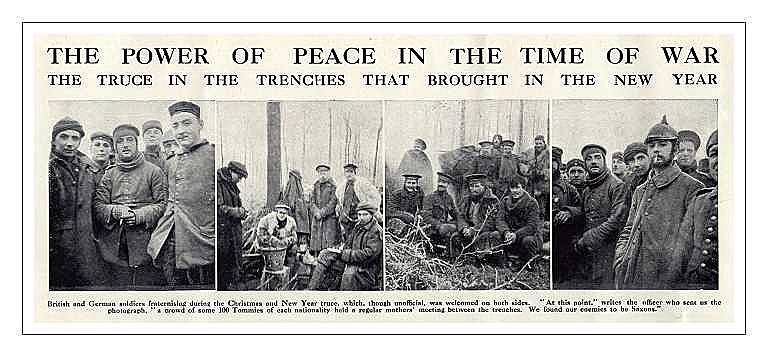
Soldiers of the 5th London Rifle Brigade with German Saxon regimental troops during the truce at Ploegsteert
Fraternisation – peaceful and sometimes friendly interactions between opposing forces – was a regular feature in quiet front-line sectors of the Western Front. In some areas, it manifested simply as a passive inactivity, where both sides would refrain from overtly aggressive or threatening behaviour, while in other cases it extended to regular conversation or even visits from one trench to another.
Truces between British and German units can be dated to early November 1914, around the time opposing armies had begun static trench warfare. At this time, both sides’ rations were brought up to the front line after dusk, and soldiers on both sides noted a period of peace while they collected their food. By 1 December, a British soldier could record a friendly visit from a German sergeant one morning:
“to see how we were getting on”.
Relations between French and German units were generally more tense, but the same phenomenon began to emerge. In early December, a German surgeon recorded a regular half-hourly truce each evening to recover dead soldiers for burial, during which French and German soldiers exchanged newspapers.
This behaviour was often challenged by both junior and senior officers; the young Charles de Gaulle wrote on 7 December of the “lamentable” desire of French infantrymen to leave the enemy in peace, while the commander of 10th Army, Victor d’Urbal, wrote of the
“unfortunate consequences” when men “become familiar with their neighbours opposite”.
Other truces could be enforced on both sides by weather conditions, especially when trench lines flooded in low-lying areas, though these often lasted after the weather had cleared.
The close proximity of trench lines made it easy for soldiers to shout greetings to each other, and this may have been the most common method of arranging informal truces during 1914. Men would frequently exchange news or greetings, helped by a common language; many German soldiers had lived in England, particularly London, and were familiar with the language and the culture. Several British soldiers recorded instances of Germans asking about news from the football leagues, while other conversations could be as banal as discussions of the weather or as plaintive as messages for a sweetheart.
One unusual phenomenon that grew in intensity was music; in peaceful sectors, it was not uncommon for units to sing in the evenings, sometimes deliberately with an eye towards entertaining or gently taunting their opposite numbers. This shaded gently into more festive activity; in early December, E.H.W. Hulse of the Scots Guards wrote that he was planning to organise a concert party for Christmas Day, which would “give the enemy every conceivable form of song in harmony” in response to frequent choruses of Deutschland Über Alles.
Approach to Christmas
In the lead up to Christmas 1914, there were several peace initiatives. The Open Christmas Letter was a public message for peace addressed “To the Women of Germany and Austria“, signed by a group of 101 British women suffragettes at the end of 1914 as the first Christmas of World War I approached.
Pope Benedict XV, on 7 December 1914, had begged for an official truce between the warring governments.
“He asked that the guns may fall silent at least upon the night the angels sang.”
This attempt was officially rebuffed.
Christmas 1914
British and German troops meeting in no man’s land during the unofficial truce (British troops from the Northumberland Hussars, 7th Division, Bridoux-Rouge Banc Sector)
Roughly 100,000 British and German troops were involved in the unofficial cessations of hostility along the Western Front.
The first truce started on Christmas Eve 1914, when German troops decorated the area around their trenches in the region of Ypres, Belgium and particularly in Saint-Yvon (called Saint-Yves, in Plugstreet/Ploegstraat – Comines-Warneton), where Capt. Bruce Bairnsfather described the truce.
The Germans placed candles on their trenches and on Christmas trees, then continued the celebration by singing Christmas carols. The British responded by singing carols of their own. The two sides continued by shouting Christmas greetings to each other. Soon thereafter, there were excursions across No Man’s Land, where small gifts were exchanged, such as food, tobacco and alcohol, and souvenirs such as buttons and hats.
The artillery in the region fell silent. The truce also allowed a breathing spell where recently killed soldiers could be brought back behind their lines by burial parties. Joint services were held. In many sectors, the truce lasted through Christmas night, continuing until New Year’s Day in others.
On the day itself, Brigadier-General Walter Congreve, then commanding 18 Infantry Brigade, stationed near Neuve Chapelle, wrote a letter recalling the Germans initiated by calling a truce for the day. One of his brigade’s men bravely lifted his head above the parapet and others from both sides walked onto no man’s land. Officers and men shook hands and exchanged cigarettes and cigars, one of his Captains
“smoked a cigar with the best shot in the German army”,
the latter no more than 18 years old. Congreve admitted he was reluctant to personally witness the scene of the truce for fear he would be a prime target for German snipers.
I wouldn’t have missed that unique and weird Christmas Day for anything. … I spotted a German officer, some sort of lieutenant I should think, and being a bit of a collector, I intimated to him that I had taken a fancy to some of his buttons. … I brought out my wire clippers and, with a few deft snips, removed a couple of his buttons and put them in my pocket. I then gave him two of mine in exchange. … The last I saw was one of my machine gunners, who was a bit of an amateur hairdresser in civil life, cutting the unnaturally long hair of a docile Boche, who was patiently kneeling on the ground whilst the automatic clippers crept up the back of his neck.
“Dear Mother, I am writing from the trenches. It is 11 o’clock in the morning. Beside me is a coke fire, opposite me a ‘dug-out’ (wet) with straw in it. The ground is sloppy in the actual trench, but frozen elsewhere. In my mouth is a pipe presented by the Princess Mary. In the pipe is tobacco. Of course, you say. But wait. In the pipe is German tobacco. Haha, you say, from a prisoner or found in a captured trench. Oh dear, no! From a German soldier. Yes a live German soldier from his own trench. Yesterday the British & Germans met & shook hands in the Ground between the trenches, & exchanged souvenirs, & shook hands. Yes, all day Xmas day, & as I write. Marvellous, isn’t it?”
Captain Sir Edward Hulse reported how the first interpreter he met from the German lines was from Suffolk where he had left his girlfriend and a 3.5 hp motorcycle. Hulse went on to describe a sing-song which
“ended up with ‘Auld lang syne‘ which we all, English, Scots, Irish, Prussians, Wurttenbergers, etc, joined in. It was absolutely astounding, and if I had seen it on a cinematograph film I should have sworn that it was faked!”
Captain Robert Patrick Miles, King’s Shropshire Light Infantry, who was attached to the Royal Irish Rifles recalled in an edited letter that was published in both the Daily Mail and the Wellington Journal & Shrewsbury News in January 1915, following his death in action on 30 December 1914:
Friday (Christmas Day). We are having the most extraordinary Christmas Day imaginable. A sort of unarranged and quite unauthorized but perfectly understood and scrupulously observed truce exists between us and our friends in front. The funny thing is it only seems to exist in this part of the battle line – on our right and left we can all hear them firing away as cheerfully as ever.
The thing started last night – a bitter cold night, with white frost – soon after dusk when the Germans started shouting ‘Merry Christmas, Englishmen’ to us. Of course our fellows shouted back and presently large numbers of both sides had left their trenches, unarmed, and met in the debatable, shot-riddled, no man’s land between the lines. Here the agreement – all on their own – came to be made that we should not fire at each other until after midnight tonight.
The men were all fraternizing in the middle (we naturally did not allow them too close to our line) and swapped cigarettes and lies in the utmost good fellowship. Not a shot was fired all night.
Of the Germans he wrote:
“They are distinctly bored with the war…In fact, one of them wanted to know what on earth we were doing here fighting them.” The truce in that sector continued into Boxing Day; he commented about the Germans, “The beggars simply disregard all our warnings to get down from off their parapet, so things are at a deadlock. We can’t shoot them in cold blood…I cannot see how we can get them to return to business.”
On Christmas Eve and Christmas Day (24 and 25 December) 1914, Alfred Anderson’s unit of the 1st/5th Battalion of Black Watch was billeted in a farmhouse away from the front line. In a later interview (2003), Anderson, the last known surviving Scottish veteran of the war, vividly recalled Christmas Day and said:
I remember the silence, the eerie sound of silence. Only the guards were on duty. We all went outside the farm buildings and just stood listening. And, of course, thinking of people back home. All I’d heard for two months in the trenches was the hissing, cracking and whining of bullets in flight, machinegun fire and distant German voices. But there was a dead silence that morning, right across the land as far as you could see. We shouted ‘Merry Christmas’, even though nobody felt merry. The silence ended early in the afternoon and the killing started again. It was a short peace in a terrible war.
Nor were the observations confined to the British. French Leutnant Johannes Niemann wrote:
“grabbed my binoculars and looking cautiously over the parapet saw the incredible sight of our soldiers exchanging cigarettes, schnapps and chocolate with the enemy.”
General Sir Horace Smith-Dorrien, commander of the British II Corps, issued orders forbidding friendly communication with the opposing German troops. Adolf Hitler, then a young corporal of the 16th Bavarian Reserve Infantry, was also an opponent of the truce.
In the Comines sector of the front there was an early fraternisation between German and French soldiers in December 1914, during a short truce, and there are at least two other testimonials, from French soldiers, of similar behaviours in sectors where German and French companies opposed each other. Gervais Morillon wrote to his parents: ‘The Boches waved a white flag and shouted “Kamarades, Kamarades, rendez-vous.”
When we didn’t move they came towards us unarmed, led by an officer. Although we are not clean they are disgustingly filthy. I am telling you this but don’t speak of it to anyone. We must not mention it even to other soldiers.’ Gustave Berthier wrote: ‘On Christmas day the Boches made a sign showing they wished to speak to us. They said they didn’t want to shoot … They were tired of making war, they were married like me, they didn’t have any differences with the French but with the English.’
In sections of the front where German and Belgian troops faced each other in December 1914, there was at least one such instance when a truce was achieved at the request of Belgian soldiers who wished to send letters back to their families, over the German-occupied parts of their own country.[28]
Richard Schirrmann, who was in a German regiment holding a position on the Bernhardstein, one of the mountains of the Vosges, wrote an account of events in December 1915: “When the Christmas bells sounded in the villages of the Vosges behind the lines ….. something fantastically unmilitary occurred. German and French troops spontaneously made peace and ceased hostilities; they visited each other through disused trench tunnels, and exchanged wine, cognac and cigarettes for Westphalian black bread, biscuits and ham. This suited them so well that they remained good friends even after Christmas was over.” He was separated from the French troops by a narrow No Man’s Land and described the landscape as: “Strewn with shattered trees, the ground ploughed up by shellfire, a wilderness of earth, tree-roots and tattered uniforms.” Military discipline was soon restored, but Schirrmann pondered over the incident, and whether “thoughtful young people of all countries could be provided with suitable meeting places where they could get to know each other.” He went on to found the German Youth Hostel Association in 1919.[29]
Football Matches
Many accounts of the truce involve one or more football matches played in no-man’s land. This was mentioned in some of the earliest reports, with a letter written by a doctor attached to the Rifle Brigade, published in The Times on 1 January 1915, reported
“a football match… played between them and us in front of the trench.”
A wide range of similar stories have been told over the years, often naming specific units or a precise score. Some accounts of the game bring in elements of fiction by Robert Graves, a British poet and writer who reconstructed the encounter in a story published in 1962; in Graves’s version, the score was 3–2 to the Germans.
However, the truth of the accounts has been disputed by some historians; in 1984, Malcolm Brown and Shirley Seaton concluded that there were probably attempts to play organised matches which failed due to the state of the ground, but that the contemporary reports were either hearsay or refer to ‘kick-about’ matches with ‘made-up footballs’ such as a bully-beef tin.
Chris Baker, former chairman of The Western Front Association and author of The Truce: The Day the War Stopped is also skeptical, but says that although there is little hard evidence, the most likely place that an organised match could have taken place was near the village of Messines:
“There are two references to a game being played on the British side, but nothing from the Germans. If somebody one day found a letter from a German soldier who was in that area, then we would have something credible.”
In fact, there is a German reference. Leutnant Kurt Zehmisch of Germany’s 134th Saxons Infantry Regiment said that the English “brought a soccer ball from their trenches, and pretty soon a lively game ensued. How marvelously wonderful, yet how strange it was.”[34] In 2011, Mike Dash concluded that
“there is plenty of evidence that football was played that Christmas Day—mostly by men of the same nationality, but in at least three or four places between troops from the opposing armies”.
A wide variety of units were reported in contemporary accounts to have taken part in games; Dash listed the 133rd Royal Saxon Regiment pitched against “Scottish troops”; the Argyll and Sutherland Highlanders against unidentified Germans (with the Scots reported to have won 4–1); the Royal Field Artillery against “Prussians and Hanovers” near Ypres; and the Lancashire Fusiliers, based near Le Touquet, with the specific detail of a bully beef ration tin as the “ball”.One recent writer has identified 29 separate reports of football, though does not give substantive details.
Eastern Front
A separate manifestation of the Christmas truce in December 1914 occurred on the Eastern front, where the first move originated from the Austrian commanders, at some uncertain level of the military hierarchy. The Russians responded positively and soldiers eventually met in no man’s land.
Public Awareness
The events of the truce were not reported for a week, in an unofficial press embargo which was eventually broken by the New York Times on 31 December. The British papers quickly followed, printing numerous first-hand accounts from soldiers in the field, taken from letters home to their families, and editorials on “one of the greatest surprises of a surprising war”. By 8 January pictures had made their way to the press, and both the Mirror and Sketch printed front-page photographs of British and German troops mingling and singing between the lines. The tone of the reporting was strongly positive, with the Times endorsing the “lack of malice” felt by both sides and the Mirror regretting that the “absurdity and the tragedy” would begin again.
Coverage in Germany was more muted, with some newspapers strongly criticising those who had taken part, and no pictures published. In France, meanwhile, the greater level of press censorship ensured that the only word that spread of the truce came from soldiers at the front or first-hand accounts told by wounded men in hospitals.
The press was eventually forced to respond to the growing rumours by reprinting a government notice that fraternising with the enemy constituted treason, and in early January an official statement on the truce was published, claiming it had happened on restricted sectors of the British front, and amounted to little more than an exchange of songs which quickly degenerated into shooting.
Later Truces
After Christmas 1914, sporadic attempts were made at seasonal truces; a German unit attempted to leave their trenches under a flag of truce on Easter Sunday 1915, but were warned off by the British opposite them, and later in the year, in November, a Saxon unit briefly fraternised with a Liverpool battalion. In December 1915, there were explicit orders by the Allied commanders to forestall any repeat of the previous Christmas truce. Individual units were encouraged to mount raids and harass the enemy line, whilst communicating with the enemy was discouraged by artillery barrages along the front line throughout the day. The prohibition was not completely effective, however, and a small number of brief truces occurred.
An eyewitness account of one truce, by Llewelyn Wyn Griffith, recorded that after a night of exchanging carols, dawn on Christmas Day saw a “rush of men from both sides … [and] a feverish exchange of souvenirs” before the men were quickly called back by their officers, with offers to hold a ceasefire for the day and to play a football match. It came to nothing, as the brigade commander threatened repercussions for the lack of discipline, and insisted on a resumption of firing in the afternoon. Another member of Griffith’s battalion, Bertie Felstead, later recalled that one man had produced a football, resulting in “a free-for-all; there could have been 50 on each side”, before they were ordered back.[42]
In an adjacent sector, a short truce to bury the dead between the lines led to official repercussions; a company commander, Sir Iain Colquhoun of the Scots Guards, was court-martialled for defying standing orders to the contrary. While he was found guilty and reprimanded, the punishment was annulled by General Haig and Colquhoun remained in his position; the official leniency may perhaps have been because he was related to H. H. Asquith, the Prime Minister.
In the Decembers of 1916 and 1917, German overtures to the British for truces were recorded without any success. In some French sectors, singing and an exchange of thrown gifts was occasionally recorded, though these may simply have reflected a seasonal extension of the live-and-let-live approach common in the trenches.
At Easter 1915 there were recorded instances of truces between Orthodox troops of opposing sides on the Eastern front. The Bulgarian writer Yordan Yovkov, serving as an officer near the Greek border at the Mesta river, witnessed one such truce. It inspired his short story ‘Holy Night’, translated into English in 2013 by Krastu Banaev.
Legacy and historical significance
Although the popular tendency has been to see the December 1914 Christmas Truces as unique and therefore of romantic rather than political significance, they have also been interpreted as part of the widespread non-cooperation with the war spirit and conduct by serving soldiers.
In his book on trench warfare, historian Tony Ashworth describes what he calls the ‘live and let live system.’ Complicated local truces and agreements not to fire at each other were developed by men along the front throughout the war. These often began with agreement not to attack each other at tea, meal or washing times, and in some places became so developed that whole sections of the front would see few casualties for extended periods of time. This system, Ashworth argues, ‘gave soldiers some control over the conditions of their existence.’
The December 1914 Christmas Truces then can be seen as not unique, but as the most dramatic example of non-cooperation with the war spirit that included refusal to fight, unofficial truces, mutinies, strikes, and peace protests.
In the 1933 play Petermann schließt Frieden oder Das Gleichnis vom deutschen Opfer (Petermann makes peace: or, the parable of German sacrifice), written by Nazi writer and World War I veteran Heinz Steguweit(German), a German soldier, accompanied by Christmas carols sung by his comrades, erects an illuminated Christmas tree between the trenches, but is shot dead by the enemy. Later, when the fellow soldiers find his body, they notice in horror that enemy snipers have shot down every single Christmas light from the tree.[49]
The final episode of the BBC television series Blackadder Goes Forth references the Christmas truce, with the main character Edmund Blackadder having played in a football match. He is also seen being annoyed at having had a goal disallowed for offside.[51]
The song “All Together Now” by Liverpool band The Farm took its inspiration from the Christmas Day Truce of 1914. The song has been re-recorded by The Peace Collective for release in December 2014 to mark the centenary of the event.[52]
John McCutcheon‘s song “Christmas in the Trenches,” from his 1984 album Winter Solstice, presents a composite account of attested events of the truce from the perspective of a fictitious English soldier. (Mike Harding‘s song “Christmas 1914”, from his 1989 album Plutonium Alley, and Garth Brooks‘s song “Belleau Wood”, from his 1997 album Sevens, contain similar depictions of the truce.)
The 1992 film A Midnight Clear depicts a Christmas truce loosely based on events from the 1914 truce, although the setting is moved to the end of WWII.[53]
In the intro of the 1995 episode “The River of Stars” of the series Space: Above and Beyond images of the Christmas Truce of 1914 were shown.
In 2008, the truce was depicted on stage at the Pantages Theater in Minneapolis, in the radio musical drama All Is Calm: The Christmas Truce of 1914. It was created and directed by Peter Rothstein, and co-produced by Theater Latté Da and the vocal ensemble Cantus, both Minneapolis-based organizations. It has continued to play at the Pantages Theater each December since its premiere.
Ahead of the centenary of the truce (December 2014), English composer Chris Eaton and singer Abby Scott produced the song, 1914 – The Carol of Christmas, to benefit British armed forces charities. At 5 December 2014 it had reached top of the iTunes Christmas chart.[57]
In 2014 the Northumbria and Newcastle Universities Martin Luther King Peace Committee[58] produced resources to enable schools and churches to mark the December 1914 Christmas Truces. These included lesson plans, hand-outs, worksheets, PowerPoint slide shows, and full plans for assemblies, and carol services/Christmas productions. The authors explained that their purpose was both to enable schoolteachers to help children learn about the remarkable events of December 1914, but also to use the theme of Christmas to provide a counterpoint to the UK government’s glorification of the First World War as heroic. As the Peace Committee argues, “These spontaneous acts of festive goodwill directly contradicted orders from high command, and offered an evocative and hopeful – albeit brief – recognition of shared humanity”[59] – and thereby, they argue, give a rereading of the traditional Christmas message of “on earth peace, good will toward men.”[60]
Monuments
A Christmas truce memorial was unveiled in Frelinghien, France, on 11 November 2008. Also on that day, at the spot where, on Christmas Day 1914, their regimental ancestors came out from their trenches to play football, men from the 1st Battalion, The Royal Welch Fusiliers played a football match with the German Battalion 371. The Germans won 2–1.
Key Events & Deaths on this day in Northern Ireland Troubles
24th December
———————-
Monday 24 December 1973
Monaghan Street , Newry
Two members of the Irish Republican Army (IRA) and a Protestant civilian were killed in a bomb attack on a public house in Monaghan Street, Newry, County Down. The bomb was being planted by the IRA and exploded prematurely.
Saturday 24 December 1983
Margaret Thatcher, then British Prime Minister, paid a six-hour visit to Northern Ireland. During the brief tour Thatcher met Christmas shoppers in Newtownards, County Down, and visited members of the security forces in County Armagh and County Tyrone.
Monday 24 December 1984
The Court of Appeal in Belfast quashed the convictions of 14 men who had been sentenced on the evidence of an Ulster Volunteer Force (UVF) ‘supergrass’ informer Joseph Bennett.
Thursday 24 December 1992
The Irish Republican Army (IRA) called a three-day ceasefire.
Sunday 24 December 1995
The British government paid £38,700 to cover the legal costs of the families of the three unarmed Irish Republican Army (IRA) members killed in Gibraltar by undercover members of the Special Air Service (SAS) on 6 March 1988. The British government was ordered to pay the costs following a decision on 27 September 1995 by the European Court of Human Rights in Strasbourg.
The Sunday Times (a London based newspaper) claimed that Libya had provided the British government with details of its assistance to the Irish Republican Army (IRA). [It was claimed that: over 130 tonnes of arms were shipped from Tripoli to Ireland; £9 million in cash had been handed over; and 20 IRA members had been trained in Libya.]
Friday 24 December 1999
A man who was being held in prison accused of the murder of Charles Bennett on 30 July 1999 was released after charges were withdrawn. No explanation was given for the withdrawal of charges against the man.
————————————————
——————————————————————————
Remembering all innocent victims of the Troubles
Today is the anniversary of the death of the following people killed as a results of the conflict in Northern Ireland
“To live in hearts we leave behind is not to die
– Thomas Campbell
To the innocent on the list – Your memory will live forever
– To the Paramilitaries –
There are many things worth living for, a few things worth dying for, but nothing worth killing for.
5 People lost their lives on the 24th December between 1972 – 1974
————————————————————
24 December 1972 Colin Harker, (23)
nfNI Status: British Army (BA),
Killed by: Irish Republican Army (IRA) Died three months after being shot by sniper, while on British Army (BA) foot patrol, Lecky Road, Derry. He was injured on 14th September 1972.
————————————————————
24 December 1973
Edward Grant, (18)
Catholic Status: Irish Republican Army (IRA),
Killed by: Irish Republican Army (IRA) Died in premature bomb explosion, Clarke’s Bar, Monaghan Street, Newry, County Down
————————————————————
24 December 1973
Brendan Quinn, (17)
Catholic Status: Irish Republican Army (IRA),
Killed by: Irish Republican Army (IRA) Died in premature bomb explosion, Clarke’s Bar, Monaghan Street, Newry, County Down
————————————————————
24 December 1973 Aubrey Harshaw, (18)
Protestant Status: Civilian (Civ),
Killed by: Irish Republican Army (IRA) Died in premature bomb explosion, Clarke’s Bar, Monaghan Street, Newry, County Down.
————————————————————
24 December 1974
Anthony Morgan, (34)
Catholic Status: Civilian (Civ),
Killed by: Ulster Defence Association (UDA) Died over two months after being shot, when he arrived at his building site workplace, Belfast City Hospital, off Lisburn Road, Belfast. He was injured on 8 October 1974
Key Events & Deaths on this day in Northern Ireland Troubles
23rd December
————————
Wednesday 23 December 1970
A Protestant man was shot dead at his home in Belfast
. [‘Lost Lives’ speculated that the incident resulted from an attempted robbery of guns stored in the house.]
Thursday 23 December 1971
Edward Heath, then British Prime Minister, visited Northern Ireland and expressed his determination to end the violence.
Monday 23 December 1974
Edward Heath, then leader of the Conservative Party, paid a visit to Northern Ireland. He said that he believed there was sufficient consensus within the region on power-sharing.
Thursday 23 December 1982
Margaret Thatcher, then British Prime Minister, paid a one day visit to Northern Ireland. She mainly spent the time visiting members of the security forces.
Sunday 23 December 1984
Tomás Ó Fiaich, then Catholic Primate of Ireland, said that Catholics in Northern Ireland felt an ‘unprecedented level’ of alienation.
Tuesday 23 December 1986
Margaret Thatcher, then British Prime Minister, paid a visit to Northern Ireland. During the visit she stated her government’s commitment to the Anglo-Irish Agreement (AIA). She also said that she did not believe a change in government in the Republic of Ireland would affect the Agreement.
The Court of Appeal in Belfast quashed the convictions of 24 men jailed on the evidence of ‘supergrass’ informer Harry Kirkpatirck. The men were freed.
Sunday 23 December 1990
The Irish Republican Army (IRA) announce a three-day ceasefire over the Christmas period. This was the first Christmas ceasefire for 15 years.
Monday 23 December 1991
The Irish Republican Army (IRA) planted a series of incendiary devices at train stations in London and caused disruption to rails services. The IRA later announced that it would be observing a three-day ceasefire over the Christmas period.
Thursday 23 December 1993
Two British Army marines were acquitted of the murder of Fergal Caraher (20) on 30 December 1990. Caraher was a Sinn Féin (SF) member at the time he was killed was shot dead while travelling in a car in Cullyhanna, County Armagh. The marines were acquitted on the grounds of “reasonable doubt”.
The Irish Republican Army (IRA) announced that there would be a three-day ceasefire beginning at midnight.
Tuesday 23 December 1997
The multi-party talks at Stormont broke up for the Christmas holiday without real progress. Parties blamed each other for the lack of progress. George Mitchell, then Chairman of the multi-party talks, said that he remained optimistic that progress would be made in the new year. Despite the booming economy in the Republic of Ireland the Punt (the Irish pound) fell to its lowest level against sterling for almost 10 years when it was traded at 86.7p.
Wednesday 23 December 1998
As part of a regular Christmas parole programme, 170 paramilitary prisoners were release on a temporary basis for the holiday period.
[All the prisoners returned on schedule when the parole was over.]
—————————————-
——————————————————————————
Remembering all innocent victims of the Troubles
Today is the anniversary of the death of the following people killed as a results of the conflict in Northern Ireland
“To live in hearts we leave behind is not to die
– Thomas Campbell
To the innocent on the list – Your memory will live forever
– To the Paramilitaries –
There are many things worth living for, a few things worth dying for, but nothing worth killing for.
1 Person lost their lives on the 23rd December in 1970
————————————————————
23 December 1970
Andrew Jardin, (65)
Protestant Status: Civilian (Civ),
Killed by: not known (nk) Shot at his home, White Gables, Hannahstown, Belfast.
20th Century Battlefields – Gulf War (1991) full video
The Hussein Family From Life To Death – Horrors of Hussein – Full History Documentary
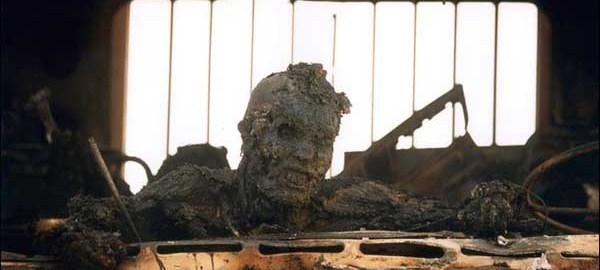
The Gulf War (2 August 1990 – 28 February 1991), codenamed Operation Desert Shield (2 August 1990 – 17 January 1991) for operations leading to the buildup of troops and defense of Saudi Arabia and Operation Desert Storm (17 January 1991 – 28 February 1991) in its combat phase, was a war waged by coalition forces from 34 nations led by the United States against Iraq in response to Iraq’s invasion and annexation of Kuwait.
The war is also known under other names, such as the Persian Gulf War, First Gulf War, Gulf War I, Kuwait War, First Iraq War, or Iraq War[13][14][15][a] before the term “Iraq War” became identified instead with the 2003 Iraq…
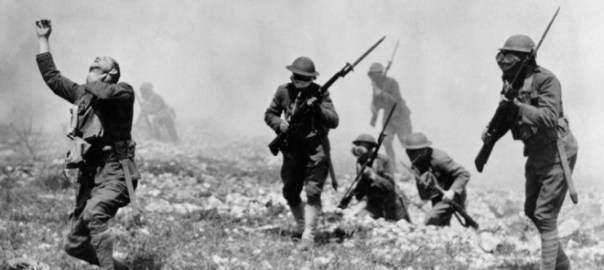
Chemical weapons in World War I were primarily used to demoralize, injure, and kill entrenched defenders, against whom the indiscriminate and generally slow-moving or static nature of gas clouds would be most effective. The types of weapons employed ranged from disabling chemicals, such as tear gas and the severe mustard gas, to lethal agents like phosgene and chlorine. This chemical warfare was a major component of the first global war and first total war of the 20th century. The killing capacity of gas was limited, with four percent of combat deaths caused by gas. Gas was unlike most other weapons of the period because it was possible to develop effective countermeasures, such as gas masks. In the later stages of the war, as the use of gas increased, its overall effectiveness diminished. The…
Key Events & Deaths on this day in Northern Ireland Troubles
22nd December
——————————-
Sunday 22 December 1974
Irish Republican Army (IRA) Ceasefire The Irish Republican Army (IRA) observed a ceasefire between midnight on 22 December 1974 to midnight on 2 January 1975. The ceasefire was called to allow the British government to respond to proposals put by the IRA to Protestant clergymen on 10 December 1974.
[The IRA initially extended this ceasefire, then called it off on 17 January 1975, and then renewed it from 10 February 1975. Government officials also held talks with Sinn Féin (SF) until 17 January 1975. Many commentators felt that an announcement of British withdrawal from Northern Ireland was a possibility at this time.]
The IRA carried out a bomb attack on the home of Edward Heath, a former British Prime Minister, in Wilton Street, Belgravia, London. A small bomb with a short fuse was thrown onto the first-floor balcony of Heath’s flat. The bomb caused extensive damage but Heath was not present and there were no injuries. [Attacks in London ended for the period of the IRA ceasefire but began again on 19 January 1975.]
Monday 22 December 1975
The authorities in the United States of America (USA) foiled an attempt to ship weapons to the Irish Republican Army (IRA).
Tuesday 22 December 1987
John McMichael, then deputy leader of the Ulster Defense Association (UDA), was killed by a booby-trap bomb planted by the Irish Republican Army (IRA). Following his death there were many accusations of collusion between senior UDA members and the IRA in the killing. [This incident was seen by many commentators as part of a process of change in the leadership of the UDA. A younger group of men were to assume the leadership of the organisation and were to introduce a change in the tactics of the UDA.
It was announced that, despite the European Court of Human Rights ruling on detention (on 29 November 1988), Britain would retain a seven-day detention period.
Friday 22 December 1989
The European Community announced a £100 million grant for transportation in Northern Ireland.
Tuesday 22 December 1992
Gerry Adams, then President of Sinn Féin (SF), replied to a speech made by Patrick Mayhew, then Secretary of State for Northern Ireland, on 16 December 1992. Adams proposed a United Nations (UN) and European Community (EC) role in finding a political solution. He also said that SF’s exclusion from political talks was undemocratic.
Wednesday 22 December 1993
John Major, then British Prime Minister, travelled to Northern Ireland and held a series of meetings with the leaders of the main constitutional parties. Ulster Marketing Surveys carried out a poll of opinion in Northern Ireland on the Downing Street Declaration. The poll was conducted on behalf of Independent Television News (ITN). Of those questioned 56 per cent said that they were in favour of the declaration.
Thursday 22 December 1994
Catholic Man Killed by Loyalists Noel Lyness (47), a Catholic civilian, was found beaten to death in an entry, off Ebor Street, Village, Belfast. Lyness who was a mature student at Queen’s University Belfast was the victim of a sectarian attack and had been killed by Loyalists but no paramilitary group claimed responsibility.
[In the following years there were to be a number of Catholics killed by both Loyalists gangs and Loyalist paramilitary groups which were followed by the policy of ‘no claim, no blame’. This meant that if no Loyalist paramilitary group claimed the killing the could be no political sanctions taken against them. In an effort to further hid their identity Loyalists resorted to beating their victims to death, or stabbing with knives, or shooting with shotguns (this method meant there were no bullets for the police to trace).]
The British government granted Christmas parole to 97 paramilitary prisoners.
[All the prisoners returned to jail following the Christmas holiday.]
In the Republic of Ireland 30 paramilitary prisoners were granted Christmas parole and a further nine prisoners were given early releases.
Sunday 22 December 1996
Eddie Copeland, a senior republican figure, was injured when a bomb exploded below his car in the Ardoyne area of Belfast. The Ulster Freedom Fighters (UFF) were thought to be responsible for the attack.
Monday 22 December 1997
Bertie Ahern, then Taoiseach (Irish Prime Minister), had talks with Bill Clinton, then President of the United States of America, while on a visit to Washington. Clinton said that he was encouraged by the way the multi-party talks were progressing.
Wednesday 22 December 1999
Peter Mandelson, then Secretary of State for Northern Ireland, published a paper which set out the British government’s strategy for achieving “normal security and policing”.
——————————
——————————————————————————
Remembering all innocent victims of the Troubles
Today is the anniversary of the death of the following people killed as a results of the conflict in Northern Ireland
“To live in hearts we leave behind is not to die
– Thomas Campbell
To the innocent on the list – Your memory will live forever
– To the Paramilitaries –
There are many things worth living for, a few things worth dying for, but nothing worth killing for.
5 people lost their lives on the 22nd December between 1976 – 1994
————————————————————
22 December 1976
Samuel Armour, (37)
Protestant Status: Royal Ulster Constabulary (RUC),
Killed by: Irish National Liberation Army (INLA) Off duty. Killed by booby trap bomb attached to his car, outside his home, Curragh Road, Maghera, County Derry.
————————————————————
22 December 1979
Stanley Hazelton, (48)
Protestant Status: Royal Ulster Constabulary (RUC),
Killed by: Irish Republican Army (IRA) Off duty. Shot by sniper while driving his car near Glaslough, County Monaghan.
————————————————————
22 December 1987
John McMichael, (38)
Protestant Status: Ulster Defence Association (UDA),
Killed by: Irish Republican Army (IRA) Killed by booby trap bomb attached to his car outside his home, Hilden Court, Hilden, Lisburn, County Antrim.
Killed by: Ulster Freedom Fighters (UFF) Shot during gun attack on Devenish Arms, Finaghy Road North,
————————————————————
22 December 1994 Noel Lyness, (47)
Catholic Status: Civilian (Civ), Killed by: non-specific Loyalist group (LOY) Found beaten to death, in entry, off Ebor Street, Village, Belfast
————————————————————
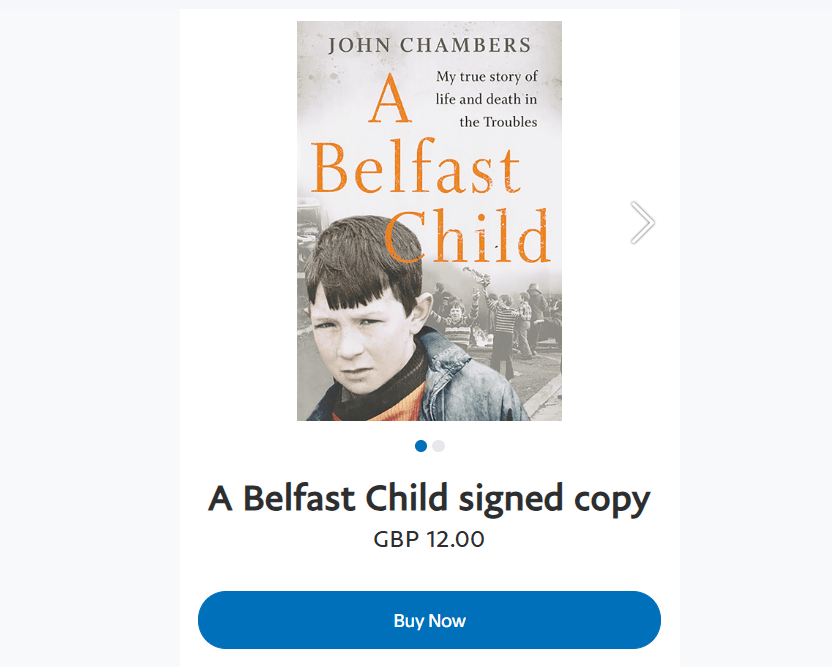
Who wants… A signed copy of my No.1 best selling book ? Makes a great Xmas gift for book lovers & those interested in the Troubles & the crazy, mad days my generation lived through.
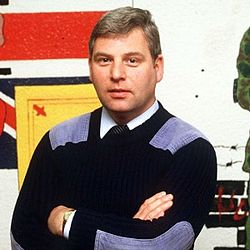
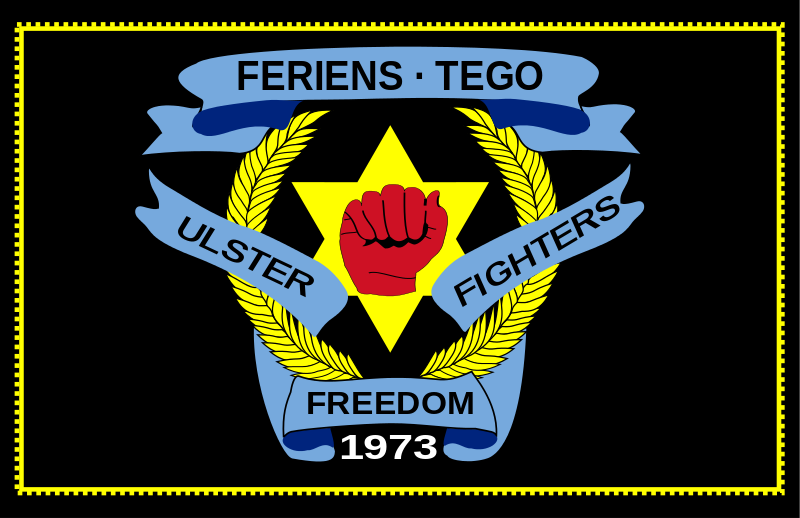
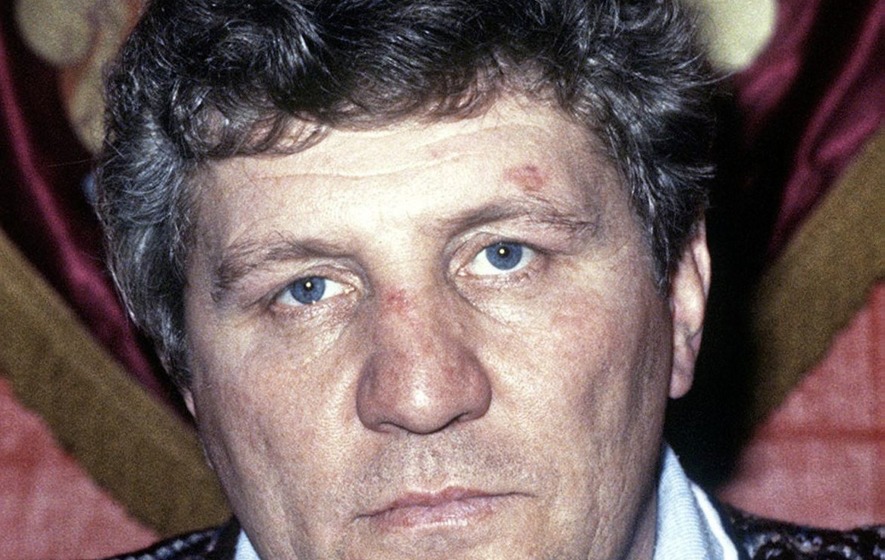
John “Big John” McMichael (9 January 1948 – 22 December 1987) was a leading Northern Ireland loyalist who rose to become the most prominent and charismatic figure within the Ulster Defence Association (UDA) as the Deputy Commander and leader of its South Belfast Brigade. He was also commander of the organisation’s cover name, the “Ulster Freedom Fighters” (UFF), overseeing an assassination campaign against prominent republican figures whose details were included in a notorious “shopping list” derived from leaked security forces documents.
The UDA used the UFF name when it wished to claim responsibility for attacks, thus allowing it to remain a legal paramilitary organisation until August 1992 when it was proscribed by the British Government.
— Disclaimer –
The views and opinions expressed in this post/documentaries are soley intended to educate and provide background information to those interested in the Troubles of Northern Ireland. They in no way reflect my own opinions and I take no responsibility for any inaccuracies or factual errors.
McMichael held political office as leader of the Ulster Democratic Party (UDP) from 1981 until his death. He was killed outside his home by a booby-trap car bomb which was carried out by the Provisional IRA. There were allegations that members within the UDA had colluded with the IRA in his death by passing on vital information about him and his activities, enabling the IRA to target his car.
Ulster Defence Association
John McMichael was born in Lisburn, County Antrim on 9 January 1948, one of the children of John and Annie McMichael. He came from a working-class background and was brought up in the Church of Ireland religion. He had married twice and was the father of two sons, Gary and Saul.
————————–
News footage following murder of John McMichael
————————–
McMichael, who owned and operated the “Admiral Benbow” pub in his native Lisburn initially rose to prominence in the UDA in the 1970s as the commander of the South Belfast Brigade and a member of its Inner Council, where he became known for his belief in the unique identity of UlsterProtestants, as well as his talent as an organiser. He had taken over command of the South Belfast UDA from Sammy Murphy, who had also led the Sandy Row unit. According to McDonald and Cusack, Murphy appeared to have been a commander rather than brigadier.
Described as the UDA’s most “effective and strategic leader”, McMichael helped establish a political think tank called the New Ulster Political Research Group in 1977, and served as its chairman. He also assisted in the composition of a document entitled Beyond the Religious Divide which promoted independence for Northern Ireland along with a constitutional Bill of Rights—acceptable to both nationalists and unionists—as the “only hope of achieving a united Northern Ireland”. This was the first step on the UDA’s road to political development.
He was a supporter of the ideas of Ian Adamson a gynaecologist, and subsequently a Unionist politician, who self-funded a series of books and pamphlets about the alleged ancient origins of Ulster people as a separate ethnic group to the Irish.
By 1979 he had emerged as the leading figure within the UDA and the organisation’s most charismatic senior member. According to the Belfast Telegraph, he drew up a ‘shopping list’ of targets (mostly members of Sinn Féin and other republican groups) that he felt the UDA should eliminate. Information about the individuals had been supplied to the UDA by individuals within the security forces who leaked the information. McMichael hand-picked his own squad for this task and throughout 1980 a number of the targets were assassinated.
The new commando unit, which was known internally in the UDA as the Ulster Defence Force, carried out four murders in 1979, three of which were from the “shopping list”.
Rodney McCormick, a less prominent IRSP member, was killed in Larne soon afterwards before McMichael’s team struck again, killing Ronnie Bunting and his friend Noel Lyttle at Bunting’s Ballymurphy home on 15 October 1980.
However the attacks came to an end in 1981, following an ambush by the Parachute Regiment after a failed attempt by the UFF on the lives of Bernadette McAliskey and her husband, Michael, during which the three-man unit (including Ray Smallwoods who acted as the getaway driver) were captured and later imprisoned. McAliskey, who was shot seven times in front of her children at her home in Coalisland, County Tyrone on 16 January 1981 survived the attack, as did her husband who was also wounded. McMichael himself was arrested in April 1981 in the wake of a Royal Ulster Constabulary (RUC) raid on UDA headquarters. He was brought before the court as it was alleged he and his men had organised the McAliskey shootings.
Raymond Murray in his book SAS in Ireland claimed that McAliskey’s shooting was planned in a room above McMichael’s “Admiral Benbow” pub. Ultimately charges relating to McMichael’s involvement, as well as his possession of classified information in the form of the details of republican activists leaked to him, were dropped along with similar charges against fellow arrestees Sammy McCormick, John McClatchey, Eddie Martin and Bobby McDevitt.
McMichael’s “shopping list” was published in the press soon after the failed assassination attempt on McAliskey, apparently leaked by his internal opponents within the UDA.Michael Farrell was named as the next target, although he moved to Dublin before any attack could occur.[17] The IRA responded to the revelations by killing two prominent Unionist figures, James Stronge and his father Norman at their Tynan Abbey home. The Irish National Liberation Army also retaliated by shooting and wounding Shankill Road UDA activist Sammy Millar, leading a series of tit-for-tat shootings involving the UDA and INLA.
McMichael would return to the idea at later times, and during the mid to late 1980s had Michael Stone working directly under him as a lone gunman with a remit to kill alleged republicans.
Electoral politics
McMichael depicted on a mural in the “Village” area of Donegall Road with the titles of the two documents he was involved in producing
McMichael came to support the ideas of republican Danny Morrison regarding the Armalite and ballot box strategy and felt that the UDA should also build up a political wing to this end. As a result, following the murder of Robert Bradford, he stood as the Ulster Loyalist Democratic Party candidate in the by-election for Bradford’s South Belfast seat and ran the most high profile ULDP campaign ever seen, calling for a long term strategy of negotiated independence for Northern Ireland. Despite fears from mainstream unionists that McMichael might split their vote, he ultimately only captured 576 votes. McMichael’s failure to make any inroads into the popular vote led to the UDA largely abandoning electoral politics outside of the occasional local foray for over a decade.
After the failure of his political strategy, McMichael returned to his work with the UDA and, after the signing of the Anglo-Irish Agreement, he co-wrote another document Common Sense: Northern Ireland – An Agreed Process, which outlined plans for a future political settlement in Northern Ireland. Under the guidance of David Trimble, at the time a law lecturer in Queens University Belfast, the document attempted to set out a legal framework for a power-sharing system under British rule.
McMichael and the UDA’s Supreme Commander Andy Tyrie set up an elite group of men carefully selected from within the UDA; this unit, called the ‘Ulster Defence Force’ (UDF), was formed to make the organisation capable of meeting any “Doomsday” situation (such as a civil war) that might occur as a result of the Anglo-Irish Agreement. The group’s motto was Sans Peur (French for “fearless”.), and the men received training by former British soldiers. McMichael was also allegedly put in charge of a UDA/UFF bombing campaign that was to be waged against the Republic of Ireland.
Ultimately the proposed campaign was unsuccessful. The four incendiary bombs planted in the city centre of Dublin in November 1986 failed to inflict much damage. McMichael himself put the failure down to the lack of bombing expertise in the UDA.
McMichael sat on the Ulster Clubs executive and its security committee. In June 1985, he instructed UDA Intelligence chief Brian Nelson to travel to South Africa to investigate the possibility of obtaining weapons by proposing an exchange of arms. Nelson, who was a British military intelligence agent recruited by the Force Research Unit, made the journey.
When he returned from the trip he reported his findings to McMichael, who had previously received reports regarding Nelson’s unsatisfactory conduct in South Africa.
Four years earlier, McMichael had hoped to draw Catholic support for Beyond the Religious Divide, having made the following statement
“We’ll just continue what we’ve been doing during the past year. It will become more and more obvious that the UDA is taking a very steady line, that we’re not willing to fall into line behind sectarian politicians. It will take time. What people forget is that we also have to sell the idea to Protestants”.[29]
Paul Arthur, professor of politics at the University of Ulster, called him an “astute thinker”.British journalist Peter Taylor, who met McMichael, described him as having been “articulate and tough”, and his son by his first marriage, Gary, said of his father:
“I think it was recognised that my father was no angel. He was a leader in a paramilitary organisation. Perhaps he’d been there and done that and bought the T-shirt. He was a well-respected person within the loyalist community and his credentials were extremely strong. People saw my father as someone who said that loyalism was at war with militant republicanism and he was unashamed about that. At that same time, he was also making a contribution to trying to push not just loyalism but everyone beyond conflict”.[4]
Killing
———————-
Funeral of John McMichael
———————-
McMichael’s name heads a list of South Belfast UDA on this Sandy Row plaque
McMichael was killed by a bomb attached to his car outside his Hilden Court home, in Lisburn’s loyalist Hilden estate on 22 December 1987 shortly before his fortieth birthday. He was on his way to deliver Christmas turkeys to the families of loyalist prisoners.
At 8.20 p.m. after he had turned on the ignition of his car and the vehicle slowly reversed down the driveway, the movement-sensitive switch in the detonating mechanism of the five pound booby-trap bomb attached to its underside was activated, and the device exploded. McMichael lost both legs in the blast and suffered grave internal injuries. He was rushed to Lagan Valley Hospital. On account of his physical strength, he managed to hold onto life for two hours and muttered a few words about his wife and children before he died.
His 18-year-old son, Gary had been attending a Stiff Little Fingers concert in Belfast’s Ulster Hall at the time the bomb detonated. During the performance, a note was passed to the band’s lead singer, Jake Burns, who then made an announcement that Gary McMichael was to phone his home.
McMichael had initially planned to take his two-year-old son Saul with him to deliver the turkeys, but had changed his mind at the last minute. McMichael’s wife, Shirley and son were inside the house at the time of the explosion. She later told the inquest into his death that he had been away from home for two weeks and had returned the day he was killed.
In the hours proceeding McMichael’s funeral the UDA sealed off Dromore to enable a volley of shots to be fired into the air in the town square. The funeral was attended by 5,000 people; among the mourners were many unionist politicians including Rev. Ian Paisley. Representatives from the moderate Social Democratic and Labour Party (SDLP) were also in attendance. A large number of UDA members wearing combat uniforms marched in the procession behind the coffin which was preceded by the RUC and a bagpiper. The local Apprentice Boys of Derry formed a guard of honour with some carrying UDA wreathes as they escorted the coffin which was draped in UDA and Ulster flags.
The UDA’s commander Andy Tyrie was one of the pallbearers along with DUP deputy leader Peter Robinson.The family had wanted a loyalist flute band to lead the cortège but the request was rejected by the police. The funeral was held at the Lambeg Parish Church. At the burial service, Rev. Canon R. H. Lowry eulogised McMichael as:
“a man of great intelligence and ability, and a man of great kindness and one who had been working towards peace”.
Cardinal Tomás Ó Fiaich, Archbishop of Armagh and Primate of Ireland described him as having been “untiring, fresh and constructive and ready to cross the religious divide to find a solution for Northern Ireland”. McMichael was buried at the New Blaris Cemetery in Lisburn.
The People newspaper later summed up his death as having been a “blow to peace hopes in Northern Ireland at the time”.
Allegations
The attack was claimed by the Provisional IRA, and carried out by a unit led by Seán Savage, who would himself be shot dead by the SAS in Gibraltar three months later in “Operation Flavius“. At the time, however, the Royal Ulster Constabulary (RUC) hinted that some within the UDA may have had knowledge that the assassination was about to happen. The UDA backed the killing of racketeer and UDA fund-raiser James Pratt Craig by the Ulster Freedom Fighters (UFF) in 1988, claiming that he had been involved in planning the murder of McMichael. According to author Martin Dillon, McMichael had begun an inquiry into Craig’s racketeering business, and Craig, fearing McMichael would put a stop to his lucrative protection operation, passed on information to the IRA which led to the assassination.
Prior to his death, McMichael had his own personal bodyguard and changed his car every two weeks. McMichael had been warned that the IRA had already made an attempt to kill him just one week before his assassination. McMichael’s son, Gary is firmly convinced that Craig was involved in his father’s killing. Another suspect was West Belfast brigadier Tommy Lyttle, who it was alleged helped set him up under orders by the security forces after it was rumoured McMichael was planning to carry out a bombing campaign against the Irish Republic.
Jackie McDonald
McMichael’s close friend and second-in-command, Jackie McDonald, who was appointed leader of the South Belfast Brigade following his death, opined that it was possible Lyttle had a hand in the killing rather than Craig. However, he added, “We just may never know”.
Later, it emerged that Lyttle was an RUC Special Branch informer. Lyttle in his turn placed the blame on Craig.
In response to a question put to him at a press conference held after McMichael’s killing, Chief Constable of the RUC, Sir John Hermon gave the following statement:
“The murder of John McMichael, whoever caused it, or whoever orchestrated it regardless of who may have committed it, was designed to cause grievous dissention and disruption and to eliminate a threat to whosoever that threat may have existed. I would not wish to take it further than that. But think of my words very carefully.”
Andy Tyrie was not convinced of Craig’s complicity in McMichael’s killing; he instead put the blame on John Hanna, a prison officer in the Maze Prison, who obtained information about McMichael when the latter visited loyalist inmates and then supplied the IRA with the gathered information through Belfast Catholic actress, Rosena Brown with whom Hanna (a Protestant) was reportedly infatuated. Brown was a PIRA intelligence operative.
According to Tyrie, Brown was introduced to McMichael in the “Admiral Benbow”; McMichael was warned he was “being watched”. Tyrie himself narrowly escaped an attempt on his life by a car bomb in March 1988. Shortly after the failed attack, Tyrie tendered his resignation as UDA commander. In an interview with Peter Taylor, Tyrie explained the IRA’s possible motive for assassinating McMichael:
“John was killed because he was the best person we had and the Republican Movement didn’t like him. I didn’t have anybody as astute in politics as he was. They also didn’t like him because he was being listened to and they knew the loss we would incur with John being killed.”
Tyrie said that on another occasion, McMichael, prior to being interviewed, would practice his replies to likely questions in front of a mirror.
John McMichael Centre (Belfast South Community Resources)
McMichael’s eldest son, Gary, followed in his father’s footsteps of trying to build up the Ulster Democratic Party as a strong political wing for the UDA, but following the collapse of the party he dropped out of politics.
His widow, Shirley McMichael (née McDowell) is a member of the Forum For Victims and Survivors, a group established to bring healing to those who were themselves victims or lost loved ones in The Troubles. A community engagement worker for the Northern Ireland Policing Board, she is an adherent of Contemporary Paganism and a member of the Police Pagan Association.
The John McMichael Centre, a community centre in Belfast’s Sandy Row area, is named in honour of McMichael. Its principal organiser is the UDA’s incumbent leader and McMichael’s successor, Jackie McDonald, who for a period had acted as one of McMichael’s bodyguards. In a 2012 interview he recalled McMichael as having been:
“a very, very powerful man…had a great presence and great ideas – far, far ahead of his time”.
As part of a series of events organised to commemorate the 25th anniversary of his death, a John McMichael memorial debate was held in Lisburn on 25 October 2012. It was hosted by Jackie McDonald and the Ulster Political Research Group (UPRG). Unionist politicians and senior republican leaders including Danny Morrison sat on the panel of guests. Among the topics discussed was McMichael’s “Common Sense” document.
Disclaimer – The views and opinions expressed in these documentary are soley intended to educate and provide background information to those interested in the Troubles of Northern Ireland. They … Continue reading The Shankill Bomb→
Who wants… A signed copy of my No.1 best selling book ? Makes a great Xmas gift for book lovers & those interested in the Troubles & the crazy, mad days my generation lived through.
UK orders only – if you live outside the UK email me belfastchildis@googlemail.com and Ill send you a link for ordering outside the UK.
This is simply the story of a boy trying to grow up, survive, thrive, have fun & discover himself against a backdrop of events that might best be described as ‘explosive’, captivating & shocking the world for thirty long years.
























 belfastchildis.com