More than 300,000 households in Lancashire have been told to boil drinking water after contamination with a microbial
Living up North ( Preston ) I am one of the hundreds of thousands of people affected by the discovery of the microbial parasite cryptosporidium found in our local water supply. Most the shops have sold out of bottled water and the cheeky chap in the corner shop has put his prices up by almost half – There always some one trying to cash in on someone else’s misery.
Cryptosporidium is a genus of apicomplexanprotozoans that can cause gastrointestinal illness with diarrhea in humans. Cryptosporidium is the organism most commonly isolated in HIV-positive patients presenting with diarrhea. Treatment is symptomatic, with fluid rehydration, electrolyte correction and management of any pain. Cryptosporidium oocysts are 4-6 µm in diameter and exhibit partial acid-fast staining. They must be differentiated from other partially acid-fast organisms including Cyclospora cayetanensis.
General characteristics
Cryptosporidium causes the diarrheal illness cryptosporidiosis. Other apicomplexan pathogens include the malaria parasite Plasmodium, and the toxoplasmosis parasite Toxoplasma. Unlike Plasmodium, which transmits via a mosquito vector, Cryptosporidium does not use an insect vector, and is capable of completing its lifecycle within a single host, resulting in cyst stages that are excreted in feces and are capable of transmission to a new host.[1]
A number of Cryptosporidium species infect mammals. In humans, the main causes of disease are C. parvum and C. hominis (previously C. parvum genotype 1). C. canis, C. felis, C. meleagridis, and C. muris can also cause disease in humans.[1]
Cryptosporidiosis is typically an acute, short-term infection, but can become severe and nonresolving in children and immunocompromised individuals. In humans, it remains in the lower intestine and may remain for up to five weeks.[1] The parasite is transmitted by environmentally hardy cysts (oocysts) that, once ingested, exist in the small intestine and result in an infection of intestinal epithelial tissue.[1]
The genome of Cryptosporidium parvum, sequenced in 2004, was found to be unusual amongst eukaryotes in that the mitochondria seem not to contain DNA.[2] A closely related species, C. hominis, also has its genome sequence available.[3]
Life cycle
Life cycle of Cryptosporidium spp.
The Cryptosporidiumspore phase (oocyst) can survive for lengthy periods outside a host. It can also resist many common disinfectants, notably chlorine-based disinfectants.[4]
Treatment and detection
Many treatment plants that take raw water from rivers, lakes, and reservoirs for public drinking water production use conventional filtration technologies. Direct filtration, which is typically used to treat water with low particulate levels, includes coagulation and filtration but not sedimentation. Other common filtration processes including slow sand filters, diatomaceous earth filter, and membranes will remove 99% of Cryptosporidium.[5] Membranes and bag- and cartridge-filter products remove Cryptosporidium specifically.
Cryptosporidium is highly resistant to chlorine disinfection;[6] but with high enough concentrations and contact time, Cryptosporidium inactivation will occur with chlorine dioxide and ozone treatment. In general, the required levels of chlorine preclude the use of chlorine disinfection as a reliable method to control Cryptosporidium in drinking water. Ultraviolet light treatment at relatively low doses will inactivate Cryptosporidium. Water Research Foundation-funded research originally discovered UV’s efficacy in inactivating Cryptosporidium.[7][8]
One of the largest challenges in identifying outbreaks is the ability to verify the results in a laboratory. The oocytes may be seen by microscopic examination of a stool sample, but they may be confused with other objects or artifacts similar in appearance.[9] Most cryptosporidia are 3-6 μm in size, although some reports have described larger cells.[9] Real-time monitoring technology is now able to detect Cryptosporidium with online systems versus the spot testing and batch testing methods used in the past.
For the end consumer of drinking water believed to be contaminated by Cryptosporidium, the safest option is to boil all water used for drinking.[10][11]
Exposure risks
The following groups have an elevated risk of being exposed to Cryptosporidium:[citation needed]
People who swim regularly in pools with insufficient sanitation (Certain strains of Cryptosporidium are chlorine-resistant)
Child-care workers
Parents of infected children
People caring for other people with cryptosporidiosis
Backpackers, hikers, and campers who drink unfiltered, untreated water
People, including swimmers, who swallow water from contaminated sources
People handling infected cattle
People exposed to human faeces
Cases of cryptosporidiosis can occur in a city with clean water; cases of cryptosporidiosis can have different origins. Like many fecal-oral pathogens, it can also be transmitted by contaminated food or poor hygiene. Testing of water, as well as epidemiological study, are necessary to determine the sources of specific infections. Cryptosporidium typically does not cause serious illness in healthy people. It may chronically sicken some children, as well as adults exposed and immunocompromised. A subset of the immunocompromised population is people with AIDS. Some sexual behaviours can transmit the parasite directly.[citation needed]
Klein was born in Feketehalom, Austria-Hungary (now Codlea in central Romania).[1] Klein was considered a Volksdeutscher, or ethnic German. He studied medicine at the University of Budapest and completed his military service in Romania, finishing his studies in Budapest after World War I. He lived as a doctor in Siebenbürgen (Transylvania). In 1939 as a Romanian citizen he was drafted into the Romanian army, where after the outbreak of the war with the Soviet Union in 1941 he served as paramedic on the eastern front. In May 1943 Romanian dictator Marshal Antonescu, on a demand from Hitler to release ethnic Germans in the Romanian Army, drafted them into the German army. Hence Klein became a soldier in the Waffen-SS, was listed in the SS-Personalhauptamt, and was posted to Yugoslavia.
Career
On 15 December 1943, he arrived in Auschwitz concentration camp, where at first he served as a camp doctor in the women’s camp in Birkenau. Subsequently he worked as a camp doctor in the Gypsy camp. He also participated in numerous selections (“Selektionen“) on the ramp. In December 1944 he was transferred to Neuengamme concentration camp, from where he was sent to Bergen-Belsen concentration camp in January 1945. He remained at the camp with commandant Josef Kramer and assisted in handing it over to British troops. Klein was imprisoned and required to help bury all unburied corpses in mass graves. The British Fifth Army Film & Photographic Unit photographed Klein standing in a mass grave in a well-known 1945 photo.
When asked how he reconciled his actions with his ethical obligations as a physician, Klein famously stated:
Hanged for atrocities committed at Bergen-Belsen, Auschwitz and other concentration camps
Klein and 44 other camp staff were tried in the Belsen Trial by a British military court at Lüneburg. The trial lasted several weeks from September to November 1945. During the trial Anita Lasker testified that he took part in selections for the gas chamber.[3] He was sentenced to death and hanged at Hamelin jail by Albert Pierrepoint on 13 December 1945.[4][5]
————————————————–
Bergen-Belsen concentration camp
Bergen-Belsen (or Belsen) was a Nazi concentration camp in what is today Lower Saxony in northern Germany, southwest of the town of Bergen near Celle. Originally established as a prisoner of war camp,[1] in 1943, parts of it became a concentration camp. Initially this was an “exchange camp”, where Jewish hostages were held with the intention of exchanging them for German prisoners of war held overseas.[2] The camp was later expanded to accommodate Jews from other concentration camps.
After 1945, the name was applied to the displaced persons camp established nearby, but it is most commonly associated with the concentration camp. From 1941 to 1945, almost 20,000 Sovietprisoners of war and a further 50,000 inmates died there,[3] with up to 35,000 of them dying of typhus in the first few months of 1945, shortly before and after the liberation.[4]
The camp was liberated on April 15, 1945, by the British 11th Armoured Division.[5] The soldiers discovered approximately 60,000 prisoners inside, most of them half-starved and seriously ill,[4] and another 13,000 corpses lying around the camp unburied.[5] The horrors of the camp, documented on film and in pictures, made the name “Belsen” emblematic of Nazi crimes in general for public opinion in many countries in the immediate post-1945 period. Today, there is a memorial with an exhibition hall at the site.
Operation
Prisoner of war camp
In 1935, the Wehrmacht began to build a large military complex close to the village of Belsen, a part of the town of Bergen, in what was then the Province of Hanover.[1] This became the largest military training area in Germany of the time and was used for armoured vehicle training.[1] The barracks were finished in 1937. The camp has been in continuous operation since then and is today known as Bergen-Hohne Training Area. It is used by the NATO armed forces.
The workers who constructed the original buildings were housed in camps near Fallingbostel and Bergen, the latter being the so-called Bergen-Belsen Army Construction Camp.[1] Once the military complex was completed in 1938/39, the workers’ camp fell into disuse. However, after the German invasion of Poland in September 1939, the Wehrmacht began using the huts as a prisoner of war (POW) camp.
The camp of huts near Fallingbostel became known as Stalag XI-B and was to become one of the Wehrmacht ’s largest POW camps, holding up to 95,000 prisoners from various countries.[6] In June 1940, Belgian and French POWs were housed in the former Bergen-Belsen construction workers’ camp. This installation was significantly expanded from June 1941, once Germany prepared to invade the Soviet Union, becoming an independent camp known as Stalag XI-C (311). It was intended to hold up to 20,000 Soviet POWs and was one of three such camps in the area. The others were at Oerbke (Stalag XI-D (321)) and Wietzendorf (Stalag X-D (310)). By the end of March 1942, some 41,000 Soviet POWs had died in these three camps of starvation, exhaustion, and disease. By the end of the war, the total number of dead had increased to 50,000.[6] When the POW camp in Bergen ceased operation in early 1945, as the Wehrmacht handed it over to the SS, the cemetery contained over 19,500 dead Soviet prisoners.
In the summer of 1943, Stalag XI-C (311) was dissolved and Bergen-Belsen became a branch camp of Stalag XI-B. It served as the hospital for all Soviet POWs in the region until January 1945. Other inmates/patients were Italian military internees from August 1944 and, following the suppression of the Warsaw Uprising in October 1944, around 1,000 members of the Polish Home Army were imprisoned in a separate section of the POW camp.[6]
In April 1943, a part of the Bergen-Belsen camp was taken over by the SS Economic-Administration Main Office (SS Wirtschafts-Verwaltungshauptamt; WVHA). It thus became part of the concentration camp system, run by the SS Schutzstaffel but it was a special case.[7] Having initially been designated a Zivilinterniertenlager (“civilian internment camp”), in June 1943 it was redesignated Aufenthaltslager (“holding camp”), since the Geneva Conventions stipulated that the former type of facility must be open to inspection by international committees.[8] This “holding camp” or “exchange camp” was for Jews who were intended to be exchanged for German civilians interned in other countries, or for hard currency.[9] The SS divided this camp into subsections for individual groups (the “Hungarian camp”, the “special camp” for Polish Jews, the “neutrals camp” for citizens of neutral countries and the “Star camp” for Dutch Jews). Between the summer of 1943 and December 1944 at least 14,600 Jews, including 2,750 children and minors were transported to the Bergen-Belsen “holding” or exchange camp.[10]:160 Inmates were made to work, many of them in the “shoe commando” which salvaged usable pieces of leather from shoes collected and brought to the camp from all over Germany and occupied Europe. In general the prisoners of this part of the camp were treated less harshly than some other classes of Bergen-Belsen prisoner until fairly late in the war, due to their perceived potential exchange value.[9] However, only around 2,560 Jewish prisoners were ever actually released from Bergen-Belsen and allowed to leave Germany.[9]
In March 1944, part of the camp was redesignated as an Erholungslager (“recovery camp”),[11] where prisoners too sick to work were brought from other concentration camps. Supposedly, they were in Belsen to recover and then to return to their original camps, and to resume work. However, a large number of them actually died of disease, starvation, exhaustion and lack of medical attention.[12]
In August 1944, a new section was created and this became the so-called “women’s camp”. By November 1944 this camp received around 9,000 women and young girls. Most of those who were able to work stayed only for a short while and were then sent on to other concentration camps or slave-labour camps. The first women interned there were Poles, arrested after the failed Warsaw Uprising. Others were Jewish women from Poland or Hungary, transferred from Auschwitz.[12] Among those who never left Bergen-Belsen were Margot and Anne Frank, who died there in February or March 1945.[13]
In December 1944 SS-HauptsturmführerJosef Kramer, previously at Auschwitz-Birkenau, became the new camp commandant, replacing SS-HauptsturmführerAdolf Haas (de), who had been in post since the spring of 1943.[7] In January 1945, the SS took over the POW hospital and increased the size of Bergen-Belsen. As eastern concentration camps were evacuated before the advance of the Red Army, at least 85,000 people were transported in cattle cars or marched to Bergen-Belsen.[14] Before that the number of prisoners at Belsen had been much smaller. In July 1944 there were just 7,300, by December 1944 the number had increased to 15,000 and by February 1945 it had risen to 22,000. However, it then soared to around 60,000 by April 15, 1945.[7] This overcrowding led to a vast increase in deaths from disease: particularly typhus, as well as tuberculosis, typhoid fever, dysentery and malnutrition in a camp originally designed to hold about 10,000 inmates. At this point also, the special status of the exchange prisoners no longer applied. All inmates were subject to starvation and epidemics.[14]
Außenlager (satellite camps)
Bergen-Belsen concentration camp had three satellite camps. These were located at regional armament works. Around 2,000 female concentration camp prisoners were forced to work there. Those who were too weak or sick to continue with their work were brought to Bergen-Belsen.[10]:204–205
Außenlager Bomlitz-Benefeld at Bomlitz near Fallingbostel was in use from 3 September to 15 October 1944. It was located at the facility of Eibia GmbH, a gunpowder works. Around 600 female Polish Jews were used for construction and production work.[10]:204
Außenlager Hambühren-Ovelgönne (Lager III, Waldeslust) at Hambühren south of Winsen was in use from 23 August 1944 to 4 February 1945. It was an abandoned potash mine, now intended as an underground production site for Bremen plane manufacturer Focke-Wulf. Around 400 prisoners, mostly female Polish or Hungarian Jews, were forced to prepare the facility and to help lay train tracks to it. This was done for the company Hochtief.[10]:204
Außenlager Unterlüß-Altensothrieth (Tannenberglager) east of Bergen was in use from late August 1944 to 13 April 1945. It was located at Unterlüß, where the Rheinmetall-Borsig AG had a large test site. Up to 900 female Polish, Hungarian, Romanian, Yugoslavian and Czech Jews had to clear forest, do construction work or work in munitions production.[10]:204
Prisoners were guarded by SS staff and received no wages for their work. The companies instead reimbursed the SS for the labour supplied. Wage taxes were also levied by local authorities.[10]:204–205
Treatment of prisoners and deaths in the camp
Current estimates put the number of prisoners who passed through the concentration camp during its period of operation from 1943 to 1945 at around 120,000. Due to the destruction of the camp’s files by the SS, not even half of them, around 55,000, are known by name.[10]:269 As mentioned above, treatment of prisoners by the SS varied between individual sections of the camp, with the inmates of the exchange camp generally being better treated than other prisoners, at least initially. However, in October 1943 the SS selected 1,800 men and women from the Sonderlager (“special camp”), Jews from Poland who held passports from Latin American countries. Since the governments of these nations mostly refused to honour the passports, these people had lost their value to the regime. Under the pretext of sending them to a fictitious “Lager Bergau”, the SS had them transported to Auschwitz-Birkenau, where they were sent directly to the gas chambers and killed. In February and May 1944 another 350 prisoners from the “special camp” were sent to Auschwitz. Thus, out of the total of 14,600 prisoners in the exchange camp, at least 3,550 died: over 1,400 of them at Belsen, and around 2,150 at Auschwitz.[10]:187
In the Männerlager (the male section of the “recovery camp”), inmates suffered even more from lack of care, malnourishment, disease and mistreatment by the guards. Thousands of them died. In the summer of 1944, at least 200 men were killed by orders of the SS by being injected with phenol.[10]:196
There were no gas chambers at Bergen-Belsen, since the mass killings took place in the camps further east. Nevertheless, current estimates put the number of deaths at Belsen at more than 50,000 Jews, Czechs, Poles, anti-Nazi Christians, homosexuals, and Roma and Sinti (Gypsies).[7] Among them was Czech painter and writer Josef Čapek (estimated to be in April 1945).
The rate at which inmates died at Belsen accelerated notably after the mass transport of prisoners from other camps began in December 1944. From 1943 to the end of 1944 around 3,100 died. From January to mid-April 1945 this rose to around 35,000. Another 14,000 died after liberation between April 15 and the end of June 1945 (see below).[10]:233
Deaths at Bergen-Belsen concentration camp December 1944 to April 15, 1945[10]:232–233
December 1944
at least 360
January 1945
around 1,200
February 1945
around 6,400
March 1945
at least 18,168
April 1945
around 10,000
After the war, there were allegations that the camp (or possibly a section of it), was “of a privileged nature”, compared to others. A lawsuit filed by the Jewish community in Thessaloniki against 55 alleged collaborators claims that 53 of them were sent to Bergen-Belsen “as a special favor” granted by the Germans.[15]
Liberation
British and German officers finalize the arrangements for the ending of their temporary truce, April 1945
Women survivors in Bergen-Belsen, April 1945
Former guards are made to load the bodies of dead prisoners onto a truck for burial, April 17–18, 1945
Some of the 60 tables, each staffed by two German doctors and two German nurses, at which the sick were washed and deloused, May 1–4, 1945
Dr. Fritz Klein stands amongst corpses in Mass Grave 3
A crowd watches the destruction of the last camp hut
When the British and Canadians advanced on Bergen-Belsen in 1945, the German army negotiated a truce and exclusion zone around the camp to prevent the spread of typhus. On April 11, 1945 Heinrich Himmler (the Reichsführer SS) agreed to have the camp handed over without a fight. SS guards ordered prisoners to bury some of the dead. The next day, Wehrmacht representatives approached the British and were brought to VIII Corps. At around 1 a.m. on April 13, an agreement was signed, designating an area of 48 square kilometers (19 square miles) around the camp as a neutral zone. Most of the SS were allowed to leave. Only a small number of SS men and women, including the camp commandant Kramer, remained to “uphold order inside the camp”. The outside was guarded by Hungarian and regular German troops. Due to heavy fighting near Winsen and Walle, the British were unable to reach Bergen-Belsen on April 14, as originally planned. The camp was liberated on the afternoon of April 15, 1945.[10]:253 The first two to reach the camp were a British Special Air Service officer, Lieutenant John Randall, and his jeep driver, who were on a reconnaissance mission and discovered the camp by chance.[16]
When British and Canadian troops finally entered they found over 13,000 unburied bodies and (including the satellite camps) around 60,000 inmates, most acutely sick and starving. The prisoners had been without food or water for days before the Allied arrival partially due to the allied bombing. In the period immediately preceding and following liberation, prisoners were dying at a rate of around 500 per day, mostly from typhus.[17] The scenes that greeted British troops were described by the BBC’sRichard Dimbleby, who accompanied them:
“
…Here over an acre of ground lay dead and dying people. You could not see which was which… The living lay with their heads against the corpses and around them moved the awful, ghostly procession of emaciated, aimless people, with nothing to do and with no hope of life, unable to move out of your way, unable to look at the terrible sights around them … Babies had been born here, tiny wizened things that could not live … A mother, driven mad, screamed at a British sentry to give her milk for her child, and thrust the tiny mite into his arms, then ran off, crying terribly. He opened the bundle and found the baby had been dead for days.This day at Belsen was the most horrible of my life.[18]
”
Initially lacking sufficient manpower, the British allowed the Hungarians to remain in charge and only commandant Kramer was arrested. Subsequently SS and Hungarian guards shot and killed some of the starving prisoners who were trying to get their hands on food supplies from the store houses.[10] The British started to provide emergency medical care, clothing and food. Immediately following the liberation, revenge killings took place in the satellite camp the SS had created in the area of the army barracks that later became Hohne-Camp. Around 15,000 prisoners from Mittelbau-Dora had been relocated there in early April. These prisoners were in much better physical condition than most of the others. Some of these men turned on those who had been their overseers at Mittelbau. About 170 of these “Kapos” were killed on April 15, 1945.[19]:62 On April 20, four German fighter planes attacked the camp, damaging the water supply and killing three British medical orderlies.[10]:261
Over the next days the surviving prisoners were deloused and moved to a nearby German Panzer army camp, which became the Bergen-Belsen DP (displaced persons) camp. Over a period of four weeks, almost 29,000 of the survivors were moved there. Before the handover, the SS had managed to destroy the camp’s administrative files, thereby eradicating most written evidence.[14]
The British forced the former SS camp personnel to help bury the thousands of dead bodies in mass graves.[14] Some civil servants from Celle and Landkreis Celle were brought to Belsen and confronted with the crimes committed on their doorstep.[10]:262 Military photographers and cameramen of “No. 5 Army Film and Photographic Unit” documented the conditions in the camp and the measures of the British Army to ameliorate them. Many of the pictures they took and the films they made from April 15 to June 9, 1945 were published or shown abroad. Today, the originals are in the Imperial War Museum. These documents had a lasting impact on the international perception and memory of Nazi concentration camps to this day.[10]:243[14] According to Habbo Knoch, head of the institution that runs the memorial today: “Bergen-Belsen […] became a synonym world-wide for German crimes committed during the time of Nazi rule.”[10]:9
Bergen-Belsen concentration camp was then burned to the ground by flamethrowing“Bren gun” carriers and Churchill Crocodile tanks because of the typhus epidemic and louse infestation.[20] As the concentration camp ceased to exist at this point, the name Belsen after this time refers to events at the Bergen-Belsen DP camp.[10]:265
In spite of massive efforts to help the survivors with food and medical treatment, led by Brigadier Glyn Hughes, Deputy Director of Medical Services of 2nd Army, about another 9,000 died in April, and by the end of June 1945 another 4,000 had succumbed (after liberation a total of 13,994 people died).[10]:305
Two specialist teams were dispatched from Britain to deal with the feeding problem. The first, led by Dr A. P. Meiklejohn, included 96 medical student volunteers from London teaching hospitals[21] who were later credited with significantly reducing the death rate amongst prisoners.[22] A research team led by Dr Janet Vaughan was dispatched by the Medical Research Council to test the effectiveness of various feeding regimes.
The British troops and medical staff tried these diets to feed the prisoners, in this order:[23]
Bully beef from Army rations. Most of the prisoners’ digestive systems were in too weak a state from long-term starvation to handle such food.
Skimmed milk. The result was a bit better, but still far from acceptable.
Bengal Famine Mixture. This is a rice-and-sugar-based mixture which had achieved good results after the Bengal famine of 1943, but it proved less suitable to Europeans than to Bengalis because of the differences in the food to which they were accustomed.[24] Adding the common ingredient paprika to the mixture made it more palatable to these people and recovery started.
Some were too weak to even consume the Bengal Famine Mixture. Intravenous feeding was attempted but abandoned – SS Doctors had previously used injections to murder prisoners so some became hysterical at the sight of the intraveneous feeding equipment.[24]
Many of the former SS staff who survived the typhus epidemic were tried by the British at the Belsen Trial. Over the period in which Bergen-Belsen operated as a concentration camp, at least 480 people had worked as guards or members of the commandant’s staff, including around 45 women.[25] From September 17 to November 17, 1945, 45 of those were tried by a military tribunal in Lüneburg. They included former commandant Josef Kramer, 16 other SS male members, 16 female SS guards and 12 former kapos (one of whom became ill during the trial).[26] Among them were Irma Grese, Elisabeth Volkenrath, Hertha Ehlert, Ilse Lothe (de), Johanna Bormann and Fritz Klein. Many of the defendants were not just charged with crimes committed at Belsen but also earlier ones at Auschwitz. Their activities at other concentration camps such as Mittelbau Dora, Ravensbrück, Neuengamme, the Gross Rosen subcamps at Neusalz and Langenleuba, and the Mittelbau-Dora subcamp at Gross Werther were not subject of the trial. It was based on British military law and the charges were thus limited to war crimes.[26] Substantial media coverage of the trial provided the German and international public with detailed information on the mass killings at Belsen as well as on the gas chambers of Auschwitz-Birkenau.[26]
Eleven of the defendants were sentenced to death.[26] They included Kramer, Volkenrath and Klein. The executions by hanging took place on December 13, 1945 in Hamelin.[26] Fourteen defendants were acquitted (one was excluded from the trial due to illness). Of the remaining 19, one was sentenced to life in prison but he was executed for another crime. Eighteen were sentenced to prison for periods of one to 15 years; however, most of these sentences were subsequently reduced significantly on appeals or pleas for clemency.[26] By June 1955, the last of those sentenced in the Belsen trial had been released.[19]:37 Nine other members of the Belsen personnel were tried by later military tribunals in 1946 and 1948.[26]
A memorial stone erected near the ramps where prisoners for Belsen were unloaded from goods trains
Memorial for Margot and Anne Frank at the former Bergen-Belsen site.
Denazification courts were created by the Allies to try members of the SS and other Nazi organisations. Between 1947 and 1949 these courts initiated proceedings against at least 46 former SS staff at Belsen. Around half of these were discontinued, mostly because the defendants were considered to have been forced to join the SS.[19]:39 Those who were sentenced received prison terms of between four and 36 months or were fined. As the judges decided to count the time the defendants had spent in Allied internment towards the sentence, the terms were considered to have already been fully served.[27]
Only one trial was ever held by a German court for crimes committed at Belsen, at Jena in 1949; the defendant was acquitted. More than 200 other SS members who were at Belsen have been known by name but never had to stand trial.[27] No Wehrmacht soldier was ever put on trial for crimes committed against the inmates of the POW camps at Bergen-Belsen and in the region around it,[25] despite the fact that the International Military Tribunal at Nuremberg had found in 1946 that the treatment of Soviet POWs by the Wehrmacht constituted a war crime.[19]:39
Memorial
The area of the former Bergen-Belsen camp fell into neglect after the burning of the buildings and the closure of the nearby displaced persons’ camp in the summer of 1950. The area reverted to heath; few traces of the camp remained. However, as early as May 1945, the British had erected large signs at the former camp site. Ex-prisoners began to set up monuments.[28] A first wooden memorial was built by Jewish DPs in September 1945, followed by one made in stone, dedicated on the first anniversary of the liberation in 1946. On November 2, 1945, a large wooden cross was dedicated as a memorial to the murdered Polish prisoners. Also by the end of 1945 the Soviets had built a memorial at the entrance to the POW cemetery. A memorial to the Italian POWs followed in 1950, but was removed when the bodies were reinterred in a Hamburg cemetery.
One of several mass graves on the site of the former camp. The sign simply reads: Here lie 5,000 dead. April 1945.
The British military authorities ordered the construction of a permanent memorial in September 1945 after having been lambasted by the press for the desolate state of the camp.[19]:41 In the summer of 1946, a commission presented the design plan, which included the obelisk and memorial walls. The memorial was finally inaugurated in a large ceremony in November 1952, with the participation of Germany’s president Theodor Heuss, who called on the Germans never to forget what had happened at Belsen.[19]:41
However, for a long time remembering Bergen-Belsen was not a political priority. Periods of attention were followed by long phases of official neglect. For much of the 1950s, Belsen “was increasingly forgotten as a place of remembrance”.[28] Only after 1957, large groups of young people visited the place where Anne Frank had died. Then, after anti-Semitic graffiti was scrawled on the Cologne synagogue over Christmas 1959, German chancellor Konrad Adenauer followed a suggestion by Nahum Goldmann, president of the World Jewish Congress, and for the very first time visited the site of a former concentration camp. In a speech at the Bergen-Belsen memorial, Adenauer assured the Jews still living in Germany that they would have the same respect and security as everyone else.[19]:42 Afterwards, the German public saw the Belsen memorial as primarily a Jewish place of remembrance. Nevertheless, the memorial was redesigned in 1960–61. In 1966, a document centre was opened which offered a permanent exhibition on the persecution of the Jews, with a focus on events in the nearby Netherlands – where Anne Frank and her family had been arrested in 1944. This was complemented by an overview of the history of the Bergen-Belsen camp. This was the first ever permanent exhibit anywhere in Germany on the topic of Nazi crimes.[19]:42 However, there was still no scientific personnel at the site, with only a caretaker as permanent staff. Memorial events were only organized by the survivors themselves.
In October 1979, the president of the European ParliamentSimone Veil, herself a survivor of Auschwitz and Bergen-Belsen, came to the memorial for a speech which focused on the Nazi persecution of Roma and Sinti. This was the first time that an official event in Germany acknowledged this aspect of the Nazi era.
In 1985, international attention was focused on Bergen-Belsen when the camp was hastily included in Ronald Reagan‘s itinerary when he visited West Germany after a controversy about a visit to a cemetery where the interred included members of the Waffen SS (see Bitburg). Shortly before Reagan’s visit on May 5, there had been a large memorial event on the occasion of the 40th anniversary of the camp’s liberation, which had been attended by German president Richard von Weizsäcker and chancellor Helmut Kohl.[19]:44 In the aftermath of these events, the parliament of Lower Saxony decided to expand the exhibition centre and to hire permanent scientific staff. In 1990, the permanent exhibition was replaced by a new version and a larger document building was opened.
Only in 2000 did the Federal Government of Germany begin to financially support the memorial. Co-financed by the state of Lower Saxony, a complete redesign was planned which was intended to be more in line with contemporary thought on exhibition design.[29] On April 15, 2005, there was a ceremony, commemorating the 60th anniversary of the liberation and many ex-prisoners and ex-liberating troops attended.[30][31] In October 2007, the redesigned memorial site was opened, including a large new Documentation Centre and permanent exhibition on the edge of the newly redefined camp, whose structure and layout can now be traced. Since 2009, the memorial has been receiving funding from the Federal government on an ongoing basis.[32]
The Jewish Memorial at the site of the former camp, decorated with wreaths on Liberation Day, April 15, 2012
The site is open to the public and includes monuments to the dead, including a successor to the wooden cross of 1945, some individual memorial stones and a “House of Silence” for reflection. In addition to the Jewish, Polish and Dutch national memorials, a memorial to eight Turkish citizens who were killed at Belsen was dedicated in December 2012.[33]
Personal accounts
The liberation of Bergen-Belsen, April 1945
The British comedian Michael Bentine, who took part in the liberation of the camp, wrote this on his encounter with Belsen:
We were headed for an airstrip outside Celle, a small town, just past Hanover. We had barely cranked to a halt and started to set up the “ops” tent, when the Typhoons thundered into the circuit and broke formation for their approach. As they landed on the hastily repaired strip – a “Jock” [Scottish] doctor raced up to us in his jeep.
“Got any medical orderlies?” he shouted above the roar of the aircraft engines. “Any K rations or vitaminised chocolate?”
“What’s up?” I asked for I could see his face was grey with shock.
“Concentration camp up the road,” he said shakily, lighting a cigarette. “It’s dreadful – just dreadful.” He threw the cigarette away untouched. “I’ve never seen anything so awful in my life. You just won’t believe it ’til you see it – for God’s sake come and help them!”
“What’s it called?” I asked, reaching for the operations map to mark the concentration camp safely out of the danger area near the bomb line. “Belsen,” he said, simply.
Millions of words have been written about these horror camps, many of them by inmates of those unbelievable places. I’ve tried, without success, to describe it from my own point of view, but the words won’t come. To me Belsen was the ultimate blasphemy.
After VE. Day I flew up to Denmark with Kelly, a West Indian pilot who was a close friend. As we climbed over Belsen, we saw the flame-throwing Bren carriers trundling through the camp – burning it to the ground. Our light Bf 108 rocked in the superheated air, as we sped above the curling smoke, and Kelly had the last words on it.
Leslie Hardman, British ArmyJewishChaplain and Rabbi, was the first Jewish Chaplain to enter the camp, two days after its liberation, and published his account in the collective book Belsen in History and Memory.[36]
Shaul Ladany, who was in the camp as an 8-year-old and later survived the Munich Massacre at the 1972 Summer Olympics recalled:
I saw my father beaten by the SS, and I lost most of my family there… A ransom deal that the Americans attempted saved 2,000 Jews and I was one. I actually went into the gas chamber, but was reprieved. God knows why.[38]
In his book From Belsen to Buckingham PalacePaul Oppenheimer tells of the events leading up to the internment of his whole family at the camp and their incarceration there between February 1944 and April 1945, when he was aged 14–15.[3] Following publication of the book, Oppenheimer personally talked to many groups and schools about the events he witnessed. This work is now continued by his brother Rudi, who shared the experiences.[citation needed]
Describing the concentration camp, Major Dick Williams, one of the first British soldiers to enter and liberate the camp, said: “It was an evil, filthy place; a hell on Earth.”[39]
Abel Herzberg wrote the diary Between Two Streams (Dutch: Tweestromenland) during his internment in Bergen-Belsen[40]
Go on surprise me !
Make a small donation
Thank you!
See below for other Iconic Pictures & pictures that changed the world.
This one photograph earned Kevin Carter Pulitzer as it perfectly summed up the not-so-perfect cruelty of the infamous famine in Sudan. But the photographer could not accept the fame that came with this photograph and sadly he ended his life within 3 months.
Kevin Carter (13 September 1960 – 27 July 1994) was a South Africanphotojournalist and member of the Bang-Bang Club. He was the recipient of a Pulitzer Prize for his photograph depicting the 1994 famine in Sudan. He committed suicide at the age of 33. His story is depicted in the 2010 feature film The Bang-Bang-Club, in which he was played by Taylor Kitsch.
————————————————————
The Bang Bang Club
Kevin Carter
————————————————————
Early life
Kevin Carter was born in Johannesburg, South Africa. Carter grew up in a middle-class, whites-only neighborhood. As a child, he occasionally saw police raids to arrest blacks who were illegally living in the area. He said later that he questioned how his parents, a Catholic, “liberal” family, could be what he described as ‘lackadaisical’ about fighting against apartheid.
After high school, Carter dropped out of his studies to become a pharmacist and was drafted into the army. To escape from the infantry, he enlisted in the Air Force in which he served four years. In 1980, he witnessed a black mess-hall waiter being insulted. Carter defended the man, resulting in him being badly beaten by the other servicemen. He then went AWOL, attempting to start a new life as a radio disk-jockey named “David”. This, however, proved more difficult than he had anticipated. Soon after, he decided to serve out the rest of his required military service. After witnessing the Church Street bombing in Pretoria in 1983, he decided to become a news photographer and journalist[2]
Early work
Carter had started to work as a weekend sports photographer in 1983. In 1984, he moved on to work for the Johannesburg Star, bent on exposing the brutality of apartheid.
Carter was the first to photograph a public execution “necklacing” by black Africans in South Africa in the mid-1980s. Carter later spoke of the images: “I was appalled at what they were doing. But then people started talking about those pictures… then I felt that maybe my actions hadn’t been at all bad. Being a witness to something this horrible wasn’t necessarily such a bad thing to do.”[3]
In March 1993, while on a trip to Sudan, Carter was preparing to photograph a starving toddler trying to reach a feeding center when a hooded vulture landed nearby. Carter reported taking the picture, because it was his “job title”, and leaving. He was told not to touch the children for fear of transmitting disease. He committed suicide three months after winning the Pulitzer Prize.
Sold to The New York Times, the photograph first appeared on 26 March 1993 and was carried in many other newspapers around the world. Hundreds of people contacted the newspaper to ask the fate of the girl. The paper reported that it was unknown whether she had managed to reach the feeding centre. In April 1994, the photograph won the Pulitzer Prize for Feature Photography.
Alternative account of the photograph
João Silva, a Portuguese photojournalist based in South Africa who accompanied Carter to Sudan, gave a different version of events in an interview with Japanese journalist and writer Akio Fujiwara that was published in Fujiwara’s book The Boy who Became a Postcard (絵葉書にされた少年 – Ehagaki ni sareta shōnen).
According to Silva, Carter and Silva travelled to Sudan with the United Nations aboard Operation Lifeline Sudan and landed in Southern Sudan on 11 March 1993. The UN told them that they would take off again in 30 minutes (the time necessary to distribute food), so they ran around looking to take shots. The UN started to distribute corn and the women of the village came out of their wooden huts to meet the plane. Silva went looking for guerrilla fighters, while Carter strayed no more than a few meters from the plane.
Again according to Silva, Carter was quite shocked as it was the first time that he had seen a famine situation and so he took many shots of the suffering children. Silva also started to take photos of children on the ground as if crying, which were not published. The parents of the children were busy taking food from the plane, so they had left their children only briefly while they collected the food. This was the situation for the girl in the photo taken by Carter. A vulture landed behind the girl. To get the two in focus, Carter approached the scene very slowly so as not to scare the vulture away and took a photo from approximately 10 meters. He took a few more photos before chasing the bird away.
Two Spanish photographers who were in the same area at that time, José María Luis Arenzana and Luis DaVilla, without knowing the photograph of Kevin Carter, took a picture in a similar situation. As recounted on several occasions, it was a feeding center, and the vultures came from a manure waste pit .
Death
On 27 July 1994 Carter drove his way to Parkmore near the Field and Study Center, an area where he used to play as a child, and committed suicide by taping one end of a hose to his pickup truck’s exhaust pipe and running the other end to the driver’s side window. He died of carbon monoxide poisoning at the age of 33. Portions of Carter’s suicide note read:
“I’m really, really sorry. The pain of life overrides the joy to the point that joy does not exist… depressed … without phone … money for rent … money for child support … money for debts … money!!! … I am haunted by the vivid memories of killings and corpses and anger and pain … of starving or wounded children, of trigger-happy madmen, often police, of killer executioners … I have gone to join Ken if I am that lucky.”
—————————————————————–
See below for other Iconic Pictures & pictures that changed the world.
The photograph and footage were broadcast worldwide, galvanizing the anti-war movement; Adams won a 1969 Pulitzer Prize for his photograph.
South Vietnamese sources said that Lém commanded a Vietcong death squad, which on that day had targeted South Vietnamese National Police officers, or in their stead, the police officers’ families. Corroborating this, Lém was captured at the site of a mass grave that included the bodies of at least seven police family members. Photographer Adams confirmed the South Vietnamese account, although he was only present for the execution. Lém’s widow confirmed that her husband was a member of the National Liberation Front and she did not see him after the Tet Offensive began. Shortly after the execution, a South Vietnamese official who had not been present said that Lém was only a political operative.
Military lawyers have not agreed whether Loan’s action violated the Geneva Conventions for treatment of prisoners of war (Lém had not been wearing a proper uniform; nor was he, it is alleged, fighting enemy soldiers at the time), where POW status was granted independently of the laws of war; it was limited to National Liberation Front seized during military operations.
Nguyễn Ngọc Loan
Nguyễn Ngọc Loan (11 December 1930 – 14 July 1998) was South Vietnam‘s chief of National Police. Loan gained international attention when he executed handcuffed prisoner Nguyễn Văn Lém, a suspected Việt Cộng member. The photograph was taken on 1 February 1968 in front of Võ Sửu, a cameraman for NBC, and Eddie Adams, an Associated Press photographer. The photo (captioned “General Nguyen Ngoc Loan executing a Viet Cong prisoner in Saigon”) and film would become two famous images in contemporary American journalism.
Prisoner execution
The Story Behind the Famous Saigon Execution Photo
General Nguyen Ngoc Loan Executing a Viet Cong Prisoner in Saigon is a photograph taken by Eddie Adams on 1 February 1968. It shows South Vietnamese National Police Chief Nguyễn Ngọc Loan executing a Việt Cộng captain of a death squad Nguyễn Văn Lém alias Bay Lop in Saigon during the Tet Offensive.
Around 4:30 A.M., Nguyen Van Lem led a sabotage unit along with Viet Cong tanks to attack the Armor Camp in Go Vap. After communist troops took control of the base, Bay Lop arrested Lieutenant Colonel Nguyen Tuan with his family and forced him to show them how to drive tanks. When Lieutenant Colonel Tuan refused to cooperate, Bay Lop killed all members of his family including his 80-year-old mother. There was only one survivor, a seriously injured 10-year-old boy.
Nguyen Van Lem was captured near a mass grave with 34 innocent civilian bodies. Lem admitted that he was proud to carry out his unit leader’s order to kill these people.[3] Having personally witnessed the murder of one of his officers along with that man’s wife and three small children in cold blood, when Lém was captured and brought to him, General Loan summarily executed him using his sidearm, a .38 SpecialSmith & Wesson Model 38 “Airweight” revolver, in front of AP photographer Eddie Adams and NBC News television cameraman Vo Suu. The photograph and footage were broadcast worldwide, galvanizing the anti-war movement.
The photo won Adams the 1969 Pulitzer Prize for Spot News Photography, though he was later said to have regretted its impact. The image became an anti-war icon. Concerning Loan and his famous photograph, Adams wrote in Time:
The general killed the Viet Cong; I killed the general with my camera. Still photographs are the most powerful weapon in the world. People believe them, but photographs do lie, even without manipulation. They are only half-truths. What the photograph didn’t say was, “What would you do if you were the general at that time and place on that hot day, and you caught the so-called bad guy after he blew away one, two or three American soldiers?”[6]
Adams later apologized in person to General Nguyễn and his family for the damage it did to his reputation. When Loan died of cancer in Virginia, Adams praised him:
“The guy was a hero. America should be crying. I just hate to see him go this way, without people knowing anything about him.”
Life after world infamy
A few months after the execution picture was taken, Loan was seriously wounded by machine gun fire that led to the amputation of his leg. Again his picture hit the world press, this time as Australian war correspondent Pat Burgess carried him back to his lines. In addition to his military service, Loan was an advocate for hospital construction.
In 1975, during the fall of Saigon, Loan fled South Vietnam. He moved to the United States, and opened a pizza restaurant in the Washington, D.C. suburb of Burke, Virginia at Rolling Valley Mall called “Les Trois Continents.” In 1991, he was forced into retirement when he was recognized and his identity publicly disclosed. Photographer Eddie Adams recalled that on his last visit to the pizza parlor, he had seen written on a toilet wall,
“We know who you are, fucker”.
Personal life
Nguyễn was married to Chinh Mai, with whom he raised five children. Nguyễn Ngọc Loan died of cancer on 14 July 1998, aged 67, in Burke, Virginia.
Sympathetic treatment of Loan
The 2010 book, This Time We Win: Revisiting the Tet Offensive, offers a detailed, sympathetic picture of Loan, portraying him as a relatively honest and uncorrupted officer, who cleaned up and stabilized a difficult Saigon security situation. He was also a staunch South Vietnamese nationalist, refusing to give Americans special treatment in his jurisdiction.
For example, he rejected the arrest of a Vietnamese mayor by American military police and insisted that only South Vietnamese authorities could arrest and detain South Vietnamese citizens. He also insisted that U.S. civilians, including journalists, fell under South Vietnamese jurisdiction while in Saigon. Loan’s uncompromising stand caused him to be regarded as a troublemaker by the Johnson administration. Loan was also skeptical of the U.S. CIA-backed Phoenix Program to attack and neutralize the clandestine Vietcong infrastructure.
Loan’s men were also involved in the arrest of two NLF operatives, who had been engaged in peace feelers with U.S. officials, behind the back of the South Vietnamese. His stand against such “backdoor” dealing, and his opposition to releasing one of the communist negotiators, reportedly angered the Americans, and forced them to keep both him and the South Vietnamese better informed of diplomatic dealings involving their country. Loan was also an accomplished pilot, leading an airstrike on Việt Cộng forces at Bo Duc in 1967, shortly before he was promoted to permanent brigadier general rank. The Americans were displeased at his promotion, and Loan submitted his resignation shortly thereafter. According to the 2010 book:
“It was widely believed that Loan was being forced out by the Americans for exposing their dealings with the VC or that he was taking a stand on principle because the U.S. was trying to compel the government to release [communist envoy] Sau Ha.”
The South Vietnamese cabinet subsequently rejected Loan’s resignation. The United States under the Nixon administration was to later negotiate a separate deal with the North that left communist troops in good tactical position within South Vietnam, and forced acquiescence by the South Vietnamese. Later action by the U.S. Congress was to cut off aid to South Vietnam during the final northern conquest in 1975.
A Child of the Troubles brought up within the heartlands of Loyalist West Belfast and his life long search for him missing Catholic Mother
Extracts from my Autobiography
Forward
Boarding the Virgin train at London Euston I ignored the day trippers and business travellers and took my seat opposite my brother David and we settled in for the three hour journey north to Preston, in Lancashire. I had been to Preston a few times on business trips previously and to be honest it hadn’t really left an impression on me. But the thought of what or who was waiting for me at the other end now filled me with apprehension and overwhelming anxiety.
I was going to confront the ghosts of my past.
It was mid January and the UK was in the grip of the coldest winter in decades and outside a heavy snow was falling and the landscape was covered in a thick blanket of white. Looking out the window I watched silently as the train gathered speed and the country scenery flashed past in a blurry haze. David was snoring quietly and I was glad of the silence, I had to prepare myself for what was to come.
I took the letter out of my pocket and read the words for the thousandth time.
The letter had been given to my sister back in Belfast and had eventually found its way to me in London.
I had spent most of my life believing my mother was dead and knowing next to nothing about her. But to my amazement when I was a teenager I had learnt that she was in fact not dead, but alive and well, but due to the nature of my parents breakup and my father’s family being ultra Loyalist from the Shankill Road in Loyalist West Belfast she had been denied access to us and her memory and all traces of her had been erased from our lives’.
As I grew older I began trying to find out more about my mother , but this was impossible due to that fact my father’s family refused to discuss her and I was told to let sleeping dogs sleep. When I was in my late teens I began a secret search for mum and I approached the Salvation Army and other agencies who I thought could help me find her, But due to lack of information ( I didn’t even know her maiden name) there was nothing they could do.
When I was sixteen and doing Job experience in The Mater hospital Belfast I met a wonderful lady called Muriel Wilson and after hearing my story she took me under her wing and tried to help me find mum. She was Catholic and up until this stage in my life I had never really spoken to a catholic , as I viewed them all as my enemy. But Muriel taught me that we weren’t so different after all and I started to re-examine my fanatical hatred towards Catholics.
Going against the very fabric of my Loyalist culture Muriel put me in touch with a kind Catholic priest and he also joined the secret hunt for my missing mother. But alas, this , like all other attempts failed as I knew nothing whatsoever about my mother and there was no one I could turn too. I eventually give up the search and had accepted that perhaps I would never find her and as my life moved on my mother’s absence took a back seat to the trivia of day to day living.
Then the letter arrived
Now a year after receiving the letter and speaking with Philomena in Boston I was on train travelling to Preston to meet my mother for the first time in over 25 years and face the ghosts of my past
Hannity to Anjem Choudary: “You’re One Sick Miserable Evil SOB”
Anjem Choudary (Urdu: انجم چودهرى; born 1967) is a British Muslim social and politicalactivist. He was previously a solicitor and served as the chairman of the Society of Muslim Lawyers, and, until it was proscribed, as the spokesman for Islamist group, Islam4UK.
With Omar Bakri Muhammad, he helped form an Islamist organisation, al-Muhajiroun. The group organised several anti-Western demonstrations, including a banned protest march in London for which Choudary was summonsed to appear in court. Al-Muhajiroun was disbanded following the UK government’s decision to ban it. Choudary was present at the launch of its intended successor, Ahlus Sunnah wal Jamaah, and later helped form Al Ghurabaa, which was also banned. He then became the spokesman for Islam4UK.
A critic of the UK’s involvement in the wars in Iraq and Afghanistan, Choudary praised those responsible for the 11 September 2001 and 7 July 2005 attacks. He supports the implementation of Sharia law throughout the UK and marched in protest at the Jyllands-Posten cartoons controversy, following which he was prosecuted for organising an unlawful demonstration. He was investigated, but not charged, for his comments in 2006 regarding Pope Benedict XVI. He receives little support from mainstream UK Muslims and has been largely criticised in the country’s media.
Early life
Born in the UK in 1967, Anjem Choudary is the son of a Welling market trader and is of Pakistani descent.[1][2] He attended Mulgrave Primary School, in Woolwich.[3] He enrolled as a medical student at the University of Southampton, where he was known as Andy, but after excessive partying, failed his first-year exams. Responding to claims that he was a “party animal” who joined his friends in “getting stoned”, in 2014 Choudary commented “I admit that I wasn’t always practising… I committed many mistakes in my life.”[3][4] He switched to law and spent his final year as a legal student (1990–1991) at Guildford, before moving to London to teach English as a second language. He became a lawyer after he found work at a legal firm and completed his legal qualifications.[5] Choudary became the chairman of the Society of Muslim Lawyers, but was removed from the roll of solicitors (the official register of legal practitioners) in 2002.[1]
Choudary first came to public attention in 1999, when The Sunday Telegraph identified him as having played an instrumental role in the recruitment of Muslim trainees leaving Britain to fight abroad. He told the newspaper “before they go abroad to fight for organisations like the IIF, the volunteers are trained in Britain. Some of the training does involve guns and live ammunition.”[6]
Al-Muhajiroun
Choudary embraced Islamism and, with the Islamist militant leader Omar Bakri Muhammed, co-founded al-Muhajiroun.[1] The two men had met at a local mosque, where Bakri was giving a tafsir.[7] In 2002 the group was refused a permit for a rally in London, by the then Mayor of London, Ken Livingstone. Ignoring the ban, they held a rally on 25 August, for which Choudary was summonsed to Bow Street Magistrates’ Court on 14 January 2003, on charges which included “exhibiting a notice, advertisement or any other written or pictorial matter”, “using apparatus for the amplification of sound”, “making a public speech or address”, and “organising an assembly”.[8] In the same year Choudary gave a talk on education at Slough, where he outlined his ideas for a parallel system of Islamic education in the UK. His speech followed a bazaar organised by al-Muhajiroun, advertised by leaflet and word of mouth. Choudary also included elements of the group’s ideology in his lecture.[9]
In 2003 or 2004 he organised an Islamic-themed camping trip, at which Bakri lectured, on the 54-acre (220,000 m2) grounds of the Jameah Islamiyah School in East Sussex. Advertised by word-of-mouth, the trip was attended by 50 Muslim men, most of whom were members of al-Muhajiroun. Bakri later claimed the camp’s activities included lectures on Islam, football and paintballing.[10] In September 2006, following allegations that it was used in the training and recruitment of terrorists, police searched the school. According to testimony from Al Qaeda suspects held at the Guantanamo Bay detainment camp, in 1997 and 1998 Abu Hamza and groups of around 30 of his followers held training camps at the school, which included training with AK47 rifles and handguns, and a mock rocket launcher.[11] No arrests were made, and students and faculty were allowed to return on 23 September 2006, the first day of Ramadan.[12]
The UK government had investigated expelling Bakri even before the terrorist attacks of 11 September 2001, and in July 2003 the headquarters of al-Muhajiroun, and the homes of Bakri and Choudary, were raided by the police.[13] The following year, under new anti-terrorist legislation, the government announced that it wished to ban al-Muhajiroun from operating in the UK. In 2005 Bakri learned that he was at risk of prosecution for his support of the 7 July 2005 London bombers, and in August left the UK for Lebanon, where he claimed that he was on holiday.[14] After leaving a television station where he said “I will not return to Britain unless I want to go there as a visitor or as a tourist”, he was detained by Lebanon’s general security department and held in a Beirut prison.[15] Several days later, Bakri was excluded from returning to Britain by the Home Secretary, Charles Clarke, on the grounds that his presence in Britain was “not conducive to the public good.” Choudary condemned the decision and demanded to know what Bakri had done to justify the ban. He claimed that ministers were inventing rules to ensure that Bakri could not return.[16] In November Choudary was deported from Lebanon, along with three other followers of Bakri, and returned to the UK. Choudary claimed that they were there to help Bakri set up a madrasah, and blamed the Foreign and Commonwealth Office for orchestrating their deportations.[17]
Following his deportation, Choudary attended the launch in London of Ahlus Sunnah wal Jamaah, the intended successor organisation to al-Muhajiroun. Choudary said that Bakri was not on the committee of the new group, but that “we would love for the sheikh to have a role.”[18] The organisation operates mainly through an invitation-only internet forum, to which Choudary contributes under the screen name Abou Luqman.[citation needed] A reporter visiting the site found calls for holy war, and recordings by Osama Bin Laden, Ayman al-Zawahiri, and Omar Bakri Mohammed.[19]
Al-Muhajiroun attempted a relaunch in June 2009 at Conway Hall, in Holborn. Several speakers were invited to share a platform with Choudary, but some later claimed that they had been invited under false pretences. When the group refused to allow women into the meeting, the chairman of the society which runs the hall cancelled the event. He was heckled by many of those in the audience. Choudary took the microphone from the chairman and led chants of “sharia for UK”, saying in reference to the exclusion of women: “Jews and Christians will never make peace with you until you either become like them or adopt their ways.” Outside the hall, Choudary criticised British society, and predicted that Muslims would make up the majority within one or two decades. When asked why, if society was so bad, he lived here, he replied: “We come here to civilise people, get them to come out of the darkness and injustice into the beauty of Islam.”[20]
Al Ghurabaa
Choudary was also a spokesman for Al Ghurabaa, believed to have been an offshoot of al-Muhajiroun. It was proscribed in 2006 by the then Home Secretary John Reid.[21] Choudary was outraged: “The easy option when one is losing an argument is to ban the opposition voice. … We [al-Ghurabaa] are not a military organisation; we have only been vociferous in our views—views concerning everything from the government’s foreign policy in Iraq and Afghanistan to the host of draconian laws, which they’ve introduced against us in this country.”[22]
In November 2008, Choudary organised a meeting of the newly formed Islam4UK, which, according to its website, was “established by sincere Muslims as a platform to propagate the supreme Islamic ideology within the United Kingdom as a divine alternative to man-made law”, and to “convince the British public about the superiority of Islam … thereby changing public opinion in favour of Islam in order to transfer the authority and power … to the Muslims in order to implement the Sharee’ah (here in Britain)”.[23] According to Ed Husain, co-founder of the counter-terrorism think-tank the Quilliam Foundation, Islam4UK was a “splinter group of al-Muhajiroun and Hizb ut-Tahrir, the originators of extremism in Britain.” The meeting, advertised as a conference to “rise to defend the honour of the Muslims”, was held at the Brady Arts and Community Centre in Tower Hamlets. Choudary then announced that Bakri would be speaking, via a video-conference link, although technical problems meant that his address was instead given over a telephone line. When asked by a Muslim woman how the comments of one of the event’s speakers could be justified, with regards to Islam being a religion of peace, Choudary stated, “Islam is not a religion of peace … It is a religion of submission. We need to submit to the will of Allah.”[24]
The rich resources of Afghanistan, its position on the cusp between the Indian sub-continent, Southern Russian, Asia and China and its populations [sic] call for the Shari’ah are the real reasons why the military has sought to establish a permanent role there, no matter what the cost to the lives and wealth of the indigenous people or indeed their own. Pivotal in this is the desire to prevent Muslims from running their own affairs and establishing an Islamic State if they so wish but rather to maintain a puppet in the area (Mr Karzia) to maintain and protect Western interests.
“
”
Anjem Choudary (3 January 2010), open letter published on Islam4UK website and reprinted in The Telegraph[25]
With the announcement by Islam4UK that it planned to hold a protest march through Wootton Bassett (known for the military funeral repatriations of dead British soldiers returning from the war in Afghanistan), Choudary said “You may see one or two coffins being returned to the UK every other day, but when you think about the people of Afghanistan its a huge number [being killed] in comparison […] I intend to write a letter to the parents of British soldiers telling them the reality of what they died for.”[26] Choudary’s open letter was published on 3 January 2010. In it, he explained his reasons for proposing the march, endorsed his religious beliefs, and claimed that UK politicians had been lying about the war. Choudary stated that the proposed march was to “engage the British publics minds on the real reasons why their soldiers are returning home in body bags and the real cost of the war.”[25] In an interview with Sky News, he stated that the location of the proposed march was chosen to effect a level of media attention which “it would not have gained anywhere else”.[27] The proposed march was condemned by the British Prime Minister, Gordon Brown, who said that to offend the families of dead or wounded troops would be “completely inappropriate”,[28] the Minhaj-ul-Quran International UK centre in Forest Gate,[29] and the Muslim Council of Britain, which stated that it “condemns the call by the fringe extremist group Islam4UK for their proposed march in Wootton Bassett.”[30] The planned march was cancelled by the group, on 10 January 2010.[31]
From 14 January 2010, the organisation was proscribed under the Terrorism Act 2000, making membership illegal, and punishable by imprisonment.[32] Choudary condemned the order. In an interview on BBC Radio he said “we are now being targeted as an extremist or terrorist organisation and even banned for merely expressing that. I feel this is a failure of the concept of democracy and freedom.”[33] Following his arrest and subsequent release in September 2014, Choudary claimed he was questioned about his membership of or support for proscribed groups including Islam4UK and Need4Khalifah, both of which the government believes are successors to al-Muhajiroun.[34]
Activism, views and marches
Look, at the end of the day innocent people—when we say ‘innocent people’ we mean Muslims—as far as non-Muslims are concerned they have not accepted Islam and as far as we are concerned that is a crime against God.
Choudary referred to the 11 September terrorists as “magnificent martyrs”, and in 2003 he appeared to endorse terrorist attacks by British Muslims, saying that al-Muhajiroun would “encourage people to fulfil their Islamic duties and responsibilities”. In 2004 he said that a terror attack on British soil was “a matter of time”. He refused to condemn the 7 July 2005 London bombings,[36] but later accused the Muslim Council of Britain (who had condemned both attacks) of “selling their souls to the devil”.[37] He blamed the murder of Lee Rigby, an off-duty British soldier, on British foreign policy.[38]
Choudary has regularly attended public marches, and following a protest march outside the Danish Embassy in London on 3 February 2006, held in response to the Jyllands-Posten Muhammad cartoons controversy, he was a member of a panel of interviewees on the BBC news programme Newsnight. He defended Muslims in Britain, saying that “we live in peace with the host community, we are not allowed to target people here”, and claimed that the police had inspected and allowed the controversial placards used in the demonstration. Choudary was heavily criticised by his fellow panellists, who included Ann Cryer, then MP for Keighley, Humera Khan, of the al-Nisa Muslim Women’s Group (who accused him of demonising Islam), Sayeeda Warsi, the vice-chair of the Conservative Party, Professor Tariq Ramadan (who claimed that Choudary’s actions were designed to evoke a strong response from the media), and Roger Knapman, the leader of the UK Independence Party.[39] On 15 March 2006 he was among five men arrested in connection with the demonstration, which had been organised by al Ghurabaa.[40] He was arrested again on 4 May at Stansted Airport for an alleged breach of bail, and charged with organising the protest without notifying police. He was bailed to appear before Bow Street Magistrates Court on 11 May.[41] On 4 July 2006 he was convicted and fined £500 with £300 court costs.[42]
The following day, at an Al Ghurabaa press conference at the Al Badr centre in Leyton, Choudary claimed that the blame for the London bombings lay with the British government, and said that the then Prime Minister, Tony Blair, had “blood on his hands”. He also urged Muslims to defend themselves against perceived attacks by “whatever means they have at their disposal”, and referred to the 2 June 2006 Forest Gate raid in which Mohammed Abdul Kahar was shot in the shoulder. He encouraged Muslims not to co-operate with the police under any circumstances. Local council leader Clyde Loakes criticised Choudary’s comments, stating “I am sure the vast majority of Waltham Forest residents do not support these views.”[43] Several days later, on 9 June 2006, Choudary organised a demonstration outside the Forest Gate police station in London, to protest against the arrest of the two Forest Gate men. This was actively opposed by the families of the two arrested men, who said that an extremist protest would “only give another opportunity for our community to be portrayed in a negative light”, and sent a statement to more than twenty mosques which was read to worshippers during prayers, urging them to disassociate themselves from the event. About 35 men and 15 women attended the demonstration.[44]
Had we been aware that Al Ghurabaa was booking the hall, we would have refused this request as the values and ethos of Al Ghurabaa do not reflect those of Al Badr, a community-based organisation committed to help promote community harmony.
Choudary has voiced support for the Muslim community in Somalia, who, he claims, have been “violated” by Christian-backed Ethiopians, and has also called for other members to fight jihad.[45] He led an anti-Shia protest in London in May 2013 which turned violent.[46]
Choudary strongly believes in the primacy of Islam over all other faiths, and the implementation of Sharia Law, in its entirety, in the UK. In 2001 he stated that his allegiance is to Islam, and not a country. He believes that, for a true Muslim, “a British passport is no more than a travel document.”[47] In October 2006 he addressed a debate at Trinity College, Dublin, where as spokesman for al-Muhajiroun he spoke against the motion that “This house believes that Islamist violence can never be justified”. Supporting him were Sulayman Keeler, from al-Ghurabaa, and Omar Brooks, leader of the Saviour Sect Group. Among those supporting the motion, the Islamic scholar Sheikh Al Saleh said that “Islam is the heritage of mankind”, and Shaheed Satardian of the Supreme Muslim Council of Ireland criticised “Muslim vigilantes” who had made attempts on his life, and fire-bombed his home in South Africa. Satardian said that his younger brother had been killed by extremists, and told Choudary “I believe violence perpetrated in the name of Islam is a terrible slur on the name of Islam.”[48] In February 2008 the Archbishop of Canterbury, Rowan Williams, commented that “as a matter of fact certain provisions of sharia are already recognised in our society and under our law”.[49] Choudary responded by saying that Sharia “has to be adopted wholesale”, and that “it will come either by embracing Islam because it is the fastest growing religion in the country, or by an Islamic country conquering Britain or by elements embracing Islam and imposing it.”[50]
In 2008 he spoke of the “flag of Sharia” flying over Downing Street by 2020,[nb 2] claimed that some Muslim families in east London were having “10 or 12 children each”, and that hundreds were converting to Islam each day.[37] Choudary has spoken against elements of the Christian faith. In December 2008 he posted a sermon on an Islamic website, in which he stated: “Every Muslim has a responsibility to protect his family from the misguidance of Christmas, because its observance will lead to hellfire. Protect your Paradise from being taken away – protect yourself and your family from Christmas”.[51]
In September 2006 Pope Benedict XVI gave a speech on the question of the “reasonableness” of the Christian faith, to the University of Regensburg in Germany. In the Regensburg lecture he spoke about rationality in faith, and cited comments by the fourteenth-century Byzantine emperorManuel II Palaiologos, who, as the Pope put it, said “show me just what Mohamed brought that was new and there you will find things only evil and inhuman, such as his command to spread by the sword the faith he preached.” The citation attracted severe criticism from Muslims around the world, including the parliament of Pakistan which condemned the Pope for his comments, and which sought an apology from him.[52] Following the speech, on 17 September Choudary led a protest outside Westminster Cathedral, where he told reporters “Whoever insults the message of Mohammed is going to be subject to capital punishment.” The Daily Mail reported him as saying: “I am here [to] have a peaceful demonstration, but there may be people in Italy and other parts that would carry that out.”[53] The Metropolitan Police investigated his comments, but concluded that “no substantive offences” were committed during the demonstration. The Shadow Home Secretary, David Davis, who had called for action to be taken against Choudary, said: “It is quite disgraceful. It sends out a message to Muslim extremists that we, as a country, do not have the moral courage to stand up to them.”[54]
He attempted to enter France to demonstrate against the French government’s decision to ban the burka, but was stopped at the port of Calais. His passport was seized and he was issued documents banning him from France indefinitely.[55][56][57]
In an interview with Iran’s Press TV (which was subsequently posted online on 11 April 2013), Choudary stated “As Muslims, we reject democracy, we reject secularism, and freedom, and human rights. We reject all of the things that you espouse as being ideals … There is nothing called a republic in Islam. When we talk about the shari’a, we are talking about only the shari’a. We are talking about rejecting the U.N., the IMF, and the World Bank.”[58]
On 13 December 2013 Choudary led a march in Brick Lane, organised by the east London-based Sharia Project, demanding a ban on alcohol being sold by Muslim establishments.[59][60][61][62] An East London Mosque official, speaking of the patrols, identified The Shariah Project as “strongly linked” to Anjem Choudary’s banned group Al-Muhajiroun.[63] Abu Rumaysah of The Shariah Project had predicted “hundreds” would join the demonstration, claiming that groups of Muslims would come from as far away as the Midlands to take part.[64] In the event, only a few dozen protesters took part in the march.[59][60] Choudary afterwards explained its purpose: “What we did is we posted a notice to the shop owners saying that under Sharia and under the Koran the sale of alcohol is prohibited and if one were to also drink alcohol, that would be 40 lashes. We were there to teach them that just because they are living among non-Muslims is no excuse because Sharia law will be implemented in Britain, and so they should be aware that just because it is not Sharia today, they can’t just do whatever they like.”[60] Choudary said that the Shariah Project group would be arranging many more such rallies.[60]
In 2013 the British pressure group Hope not Hate presented a report which identified Choudary as “a serious player on the international Islamist scene”, saying that although there was no evidence that he was directly responsible for instigating any terrorist plots, “he helped shape the mindset of many of those behind them” and “through his networks linked them up to terror groups and supporters across the world.”[4][65] Choudary dismissed the claims as “fanciful”, that if they were true, UK security services would have arrested him.[66]
In September 2014, Choudary described Abu Bakr al-Baghdadi, leader of the Islamic State of Iraq and the Levant, as “the caliph of all Muslims and the prince of the believers”.[4] In August 2015, he and another man, Mohammed Rahman, were charged with inviting support for a proscribed organisation, namely Isis, between June 2014 and March 2015.[67]
Criticism
Islam4UK and its leader Anjem Choudary do not represent or speak for Islam or British Muslims but are a “platform” for the extremist movement al-Muhajiroun. There is no room for such kind of people or their organisations in our community or the peaceful religion of Islam.
Choudary has been largely criticised by most UK newspapers, some of whom describe him as an extremist. In January 2010, Guardian contributor Mehdi Hasan wrote: “Is Choudary an Islamic scholar whose views merit attention or consideration? No. Has he studied under leading Islamic scholars? Nope. Does he have any Islamic qualifications or credentials? None whatsoever. So what gives him the right to pontificate on Islam, British Muslims or ‘the hellfire’? Or proclaim himself a ‘sharia judge’?”, and claimed that Choudary was “as unrepresentative of British Muslim opinion, as he is of British anti-war opinion.”[69]
The Conservative Party leader David Cameron said that Choudary “is one of those people who needs to be looked at seriously in terms of the legality of what he’s saying because he strays, I think, extremely close to the line of encouraging hatred, extremism and violence.”[70]
Salma Yaqoob, then leader of the Respect Party, said in 2010 of Choudary: “He is a bigot whose goal in life is to provoke division. He engages in these provocations because he is deeply hostile to any coming together of Muslims and non-Muslims. For him, the fact that a majority of the British people – Muslim and non-Muslim – oppose the war in Afghanistan is not something to be celebrated, but is something to be feared.”[71]Rod Liddle, writing in The Spectator, said: “Anjem Choudray…is one of those thick-as-mince gobby little chancers who could only possibly come from Britain.”[72] Conservatives in the United States have also been critical of Choudary. The Fox News host Sean Hannity called him “one sick, miserable, evil S.O.B.” during a segment on his show discussing the 2011 Egyptian protests.[73]
Choudary has received little support from the mainstream Muslim community.[74] However, in January 2010 Jamie Bartlett, a writer for the Telegraph, speculated that he might have “some” support among the minority of Muslims in the UK who could be considered to hold conservative views.[75]
Tabloid criticism of Islam4UK and Choudary since news of the proposed march first became public has, generally, been vitriolic. The Sun printed an article on 6 January 2010 which claimed that Choudary was in receipt of state benefits in the region of £25,000 and said: “British-born father-of-four Choudary is notoriously vague about whether he works or has other money coming in.” It continued, “He is understood to be employed by a Muslim organisation on a shoestring wage, which allows him to claim income support and free time to spread his hatred.”[76] Choudary had first commented on the matter to the Evening Standard months earlier, stating “I don’t think it’s of any importance”.[77] While generally, follow-up reporting of The Sun’s article was restricted to other tabloid newspapers, on 12 January Choudary was asked to clarify the matter by the ITN reporter Angus Walker. Choudary replied “The money belongs to Allah and if it is given, you can take it. You don’t lie and you don’t cheat – that is what the prophet said. I am not doing anything illegal.”[78] Choudary, appearing on the BBC’s The Daily Politics on 14 January, was asked by its presenter, Andrew Neil, for his opinions on the banning of Islam4UK, before being asked to comment on his financial status, claiming that it was “relevant to our viewers”. Choudary told Neil that his finances were a personal matter, and that he was “doing something, and I don’t want to discuss that with you. I’m not on Jobseeker’s allowance, but at the same time I have family allowance, I have very firmly held views which I’m propagating at the same time.” Responding to the media’s criticism of him, Choudary said “I do believe that people have been whipped up into an anti-Islam anti-Muslim frenzy.”[79]
Personal life
In 1996, Choudary married Rubana Akhtar, who was then 22 years old and had recently joined al-Muhajiroun, which he led at the time. She later became the group’s head of women.[80] The couple have four children.[1]
The Vietnamese monk Thích Quảng Đức sets himself ablaze in protest
against the persecution of Buddhists by the government of President Ngo
Dinh Diem. He performed the act on June 11, 1963 at a busy Saigon road
intersection. After his death, his body was re-cremated, but his heart
remained intact. Thích Quảng Đức’s act increased international pressure on
Diệm and led him to announce reforms with the intention of mollifying the
Buddhists. The self-immolation is widely seen as the turning point of the
Vietnamese Buddhist crisis which helped lead to the change in regime.
Warning Contains Graphic Images
Thích Quảng Đức
Vietnamese Buddhist monk who burned himself to death. 1963
—————————————————————————
Thích Quảng Đức
Background & History
Thích is a Buddhist honorary title and Quảng Đức is descriptive of meritorious attributes: see dharma name.
Thích Quảng Đức (1897 – 11 June 1963, bornLâm Văn Túc), was a VietnameseMahayana Buddhistmonk who burned himself to death at a busy Saigon road intersection on 11 June 1963.[2] Quang Duc was protesting the persecution of Buddhists by the South Vietnamese government led by Ngô Đình Diệm. Photographs of his self-immolation were circulated widely across the world and brought attention to the policies of the Diệm government. John F. Kennedy said in reference to a photograph of Duc on fire,
“No news picture in history has generated so much emotion around the world as that one.”
Quang Duc’s act increased international pressure on Diệm and led him to announce reforms with the intention of mollifying the Buddhists. However, the promised reforms were not implemented, leading to a deterioration in the dispute. With protests continuing, the ARVN Special Forces loyal to Diệm’s brother, Ngo Dinh Nhu, launched nationwide raids on Buddhist pagodas, seizing Quang Duc’s heart and causing deaths and widespread damage. Several Buddhist monks followed Quang Duc’s example, also immolating themselves. Eventually, an Armycoup toppled Diệm, who was assassinated on 2 November 1963.
, “A Buddhist priest burns himself to death. A Buddhist priest becomes a martyr.”
Buddhist monks documentary
BUDDHIST MONKS! Who Are They and What Do They Do?
Biography
Accounts of the life of Quảng Đức are derived from information disseminated by Buddhist organizations. He was born in the village of Hoi Khanh, in Van Ninh District of Khanh Hoa province in central Vietnam as Lâm Văn Túc, one of seven children of Lâm Hữu Ứng and his wife, Nguyễn Thị Nương. At the age of seven, he left to study Buddhism under Hòa thượng Thích Hoằng Thâm, who was his maternal uncle and spiritual master. Thích Hoằng Thâm raised him as a son and Lâm Văn Túc changed his name to Nguyễn Văn Khiết. At age 15, he took the samanera (novice) vows and was ordained as a monk at age 20 under the dharma nameThích Quảng Đức. After ordination, he traveled to a mountain near Ninh Hòa, vowing to live the life of a solitary Buddhism-practicing hermit for three years. He returned in later life to open the Thien Loc pagoda at his mountain retreat.
After his self-imposed isolation ended, he began to travel around central Vietnam expounding the dharma. After two years, he went into retreat at the Sac Tu Thien An pagoda near Nha Trang. In 1932, he was appointed an inspector for the Buddhist Association in Ninh Hòa before becoming the inspector of monks in his home province of Khánh Hòa. During this period in central Vietnam, he was responsible for the construction of 14 temples.
In 1934, he moved to southern Vietnam and traveled throughout the provinces spreading Buddhist teachings. During his time in southern Vietnam, he also spent two years in Cambodia studying the Theravada Buddhist tradition.
After his return from Cambodia, he oversaw the construction of a further 17 new temples during his time in the south. The last of the 31 new temples that he was responsible for constructing was the Quan The Am pagoda in the Phu Nhuan district of Gia Dinh on the outskirts of Saigon. The street on which the temple stands was later renamed Quảng Đức Street by Communists in 1975.
After the temple-building phase, Đức was appointed to serve as the Chairman of the Panel on Ceremonial Rites of the Congregation of Vietnamese Monks, and as abbot of the Phuoc Hoa pagoda, which was the initial location of the Association for Buddhist Studies of Vietnam (ABSV). When the office of the ABSV was relocated to the Xa Loi Pagoda, the main pagoda of Saigon, Đức resigned.
Self-immolation
Man Lights Himself On Fire Near The White House
Warning Very Graphic Video coming up
Religious background
Main article:
A memorial to Quang Duc located on the site of his death
In a country where surveys of the religious composition at the time estimated the Buddhist majority to be between 70 and 90 percent, President Diem was a member of the Catholic minority, and pursued discriminatory policies favoring Catholics for public service and military promotions, as well as in the allocation of land, business arrangements and tax concessions. Diệm once told a high-ranking officer, forgetting that the officer was of Buddhist descent, “Put your Catholic officers in sensitive places. They can be trusted.”
Many officers in the Army of the Republic of Vietnam converted to Roman Catholicism as their military prospects depended on it. Additionally, the distribution of firearms to village self-defense militias saw weapons given only to Roman Catholics, with some Buddhists in the army being denied promotion if they refused to convert to Roman Catholicism.
Some Roman Catholic priests ran their own private armies, and there were forced conversions and looting, shelling, and demolition of pagodas in some areas, to which the government turned a blind eye. Some Buddhist villages converted en masse to receive aid or avoid being forcibly resettled by Diệm’s regime. The “private” status that was imposed on Buddhism by the French, which required official permission to be obtained by those wishing to conduct public Buddhist activities, was not repealed by Diệm.
Catholics were also de facto exempt from corvée labor, which the government obliged all citizens to perform, and United States aid was distributed disproportionately to Catholic majority villages by Diệm’s regime.
The Roman Catholic Church was the largest landowner in the country and enjoyed special exemptions in property acquisition, and land owned by the Roman Catholic Church was exempt from land reform. The white and gold Vatican flag was regularly flown at all major public events in South Vietnam, and Diệm dedicated his country to the Virgin Mary in 1959.
Buddhist discontent erupted following a ban in early May on flying the Buddhist flag in Huế on Vesak, the birthday of Gautama Buddha. Just days before, Catholics had been encouraged to fly the Vatican flag at a celebration for Archbishop Ngo Dinh Thuc of Hue, Diem’s elder brother. A large crowd of Buddhists protested the ban, defying the government by flying Buddhist flags on Vesak and marching on the government broadcasting station. Government forces fired into the crowd of protesters, killing nine people. Diệm’s refusal to take responsibility — he blamed the Viet Cong for the deaths — led to further Buddhist protests and calls for religious equality.
As Diem remained unwilling to comply with Buddhist demands, the frequency of protests increased.
On 10 June 1963, U.S. correspondents were informed that “something important” would happen the following morning on the road outside the Cambodian embassy in Saigon. Most of the reporters disregarded the message, since the Buddhist crisis had at that point been going on for more than a month, and the next day only a few journalists turned up, including David Halberstam of The New York Times and Malcolm Browne, the Saigon bureau chief for the Associated Press.
Đức arrived as part of a procession that had begun at a nearby pagoda. Around 350 monks and nuns marched in two phalanxes, preceded by an AustinWestminster sedan, carrying banners printed in both English and Vietnamese. They denounced the Diệm government and its policy towards Buddhists, demanding that it fulfill its promises of religious equality. Another monk offered himself, but Đức’s seniority prevailed.
The act occurred at the intersection of Phan Đình Phùng Boulevard (now Nguyễn Đình Chiểu Street) and Lê Văn Duyệt Street (now Cách Mạng Tháng Tám Street) a few blocks Southwest of the Presidential Palace (now the Reunification Palace). Duc emerged from the car along with two other monks. One placed a cushion on the road while the second opened the trunk and took out a five-gallon petrol can. As the marchers formed a circle around him, Duc calmly sat down in the traditional Buddhist meditative lotus position on the cushion.
A colleague emptied the contents of the petrol container over Đức’s head. Đức rotated a string of wooden prayer beads and recited the words Nam mô A di đà Phật (“homage to AmitābhaBuddha“) before striking a match and dropping it on himself. Flames consumed his robes and flesh, and black oily smoke emanated from his burning body.
Quang Duc’s last words before his self-immolation were documented in a letter he had left:
Before closing my eyes and moving towards the vision of the Buddha, I respectfully plead to President Ngo Dinh Diem to take a mind of compassion towards the people of the nation and implement religious equality to maintain the strength of the homeland eternally. I call the venerables, reverends, members of the sangha and the lay Buddhists to organize in solidarity to make sacrifices to protect Buddhism.
I was to see that sight again, but once was enough. Flames were coming from a human being; his body was slowly withering and shriveling up, his head blackening and charring. In the air was the smell of burning human flesh; human beings burn surprisingly quickly. Behind me I could hear the sobbing of the Vietnamese who were now gathering. I was too shocked to cry, too confused to take notes or ask questions, too bewildered to even think … As he burned he never moved a muscle, never uttered a sound, his outward composure in sharp contrast to the wailing people around him.[27]
The car in which Quang Duc traveled to his self-immolation; Huế, Thien Mu Pagoda
The spectators were mostly stunned into silence, but some wailed and several began praying. Many of the monks and nuns, as well as some shocked passersby, prostrated themselves before the burning monk. Even some of the policemen, who had orders to control the gathered crowd, prostrated before him.
In English and Vietnamese, a monk repeated into a microphone, “A Buddhist priest burns himself to death. A Buddhist priest becomes a martyr.” After approximately ten minutes, Duc’s body was fully immolated and it eventually toppled backwards onto its back. Once the fire subsided, a group of monks covered the smoking corpse with yellow robes, picked it up and tried to fit it into a coffin, but the limbs could not be straightened and one of the arms protruded from the wooden box as he was carried to the nearby Xá Lợi pagoda in central Saigon. Outside the pagoda, students unfurled bilingual banners which read:
“A Buddhist priest burns himself for our five requests.”
By 1:30 p.m, around one thousand monks had congregated inside to hold a meeting while outside a large crowd of pro-Buddhist students had formed a human barrier around it. The meeting soon ended and all but a hundred monks slowly left the compound. Nearly one thousand monks accompanied by laypeople returned to the cremation site. The police lingered nearby. At around 6:00 p.m, 30 nuns and six monks were arrested for holding a prayer meeting on the street outside Xá Lợi. The police encircled the pagoda, blocking public passage and giving observers the impression an armed siege was imminent by donning riot gear.
Funeral and aftermath
After the self-immolation, the U.S. put more pressure on Diệm to re-open negotiations on the faltering agreement. Diệm had scheduled an emergency cabinet meeting at 11:30 on 11 June to discuss the Buddhist crisis which he believed to be winding down. Following Quang Duc’s death, Diệm canceled the meeting and met individually with his ministers. Acting U.S. Ambassador to South Vietnam William Trueheart warned Nguyen Dinh Thuan, Diệm’s Secretary of State, of the desperate need for an agreement, saying that the situation was “dangerously near breaking point” and expected Diệm would meet the Buddhists’ five-point manifesto. United States Secretary of StateDean Rusk warned the Saigon embassy that the White House would publicly announce that it would no longer “associate itself” with the regime if this did not occur.
The Joint Communique and concessions to the Buddhists were signed on 16 June.
15 June was set as the date for the funeral, and on that day 4,000 people gathered outside the Xá Lợi pagoda, only for the ceremony to be postponed. On 19 June, his remains were carried out of Xa Loi to a cemetery 16 kilometers (9.9 mi) south of the city for a re-cremation and funeral ceremony. Following the signing of the Joint Communique, attendance was limited by agreement between Buddhist leaders and police to approximately 500 monks.
The body was re-cremated during the funeral, but Đức’s heart remained intact and did not burn. It was considered to be holy and placed in a glass chalice at Xa Loi Pagoda. The intact heart relic is regarded as a symbol of compassion. Duc has subsequently been revered by Vietnamese Buddhists as a bodhisattva (Bồ Tát), and accordingly is often referred to in Vietnamese as Bồ Tát Thích Quảng Đức.
On 21 August, the ARVN Special Forces of Nhu attacked Xa Loi and other Buddhist pagodas across Vietnam. The secret police intended to confiscate Duc’s ashes, but two monks had escaped with the urn, jumping over the back fence and finding safety at the U.S. Operations Mission next door. Nhu’s men managed to confiscate Đức’s charred heart.
The location chosen for the self-immolation, in front of the Cambodian embassy, raised questions as to whether it was coincidence or a symbolic choice. Trueheart and embassy official Charles Flowerree felt that the location was selected to show solidarity with the Cambodian government of Prince Norodom Sihanouk. South Vietnam and Cambodia had strained relations: in a speech on 22 May, Sihanouk had accused Diệm of mistreating Vietnamese and ethnic minority Khmer Buddhists.
The pro-Diem Times of Vietnam published an article on 9 June which claimed that Cambodian monks had been encouraging the Buddhist crisis, asserting it was part of a Cambodian plot to extend its neutralist foreign policy into South Vietnam. Flowerree noted that Diem was “ready and eager to see a fine Cambodian hand in all the organized Buddhist actions”.
Diệm reaction
Ngo Dinh Diem
Diệm made a radio address at 19:00 on the day of Đức’s death, asserting that he was profoundly troubled by the event. He appealed for “serenity and patriotism”, and announced that stalled negotiations would resume with the Buddhists. He claimed that negotiations had been progressing well and in a time of religious tension emphasized the role of the Roman Catholic philosophy of personalism in his rule. He alleged that extremists had twisted the facts and he asserted that the Buddhists can “count on the Constitution, in other words, me.”
The Army of the Republic of Vietnam responded to the appeal, putting on a show of solidarity behind Diệm to isolate dissident officers. Thirty high-ranking officers headed by General Le Van Ty declared their resolve to carry out all missions entrusted to the army for the defense of the constitution and the Republic. The declaration was a veneer which masked a developing plot to oust Diệm.
Some of the signatories were to become personally involved in Diệm’s overthrow and death in November. Generals Duong Van Minh and Tran Van Don, the presidential military advisor and the chief of the army who were to lead the coup, were overseas.
Madame Nhu, a Catholic convert from Buddhism and the wife of Diệm’s younger brother and chief adviser Ngo Dinh Nhu, who was regarded as the First Lady of South Vietnam at the time (as Diệm was a bachelor), said she would “clap hands at seeing another monk barbecue show”.[36] Later that month, Diệm’s government charged that Đức had been drugged before being forced to commit suicide..
The regime also accused Browne of bribing Đức to burn himself.
The Vietnam War Explained In 25 Minutes
Political and media impact
Photographs taken by Malcolm Browne of the self-immolation quickly spread across the wire services and were featured on the front pages of newspapers worldwide. The self-immolation was later regarded as a turning point in the Buddhist crisis and a critical point in the collapse of the Diệm regime.
Historian Seth Jacobs asserted that Duc had “reduced America’s Diệm experiment to ashes as well” and that “no amount of pleading could retrieve Diệm’s reputation” once Browne’s images had become ingrained into the psyche of the world public.
Ellen Hammer described the event as having “evoked dark images of persecution and horror corresponding to a profoundly Asian reality that passed the understanding of Westerners.”John Mecklin, an official from the U.S. embassy, noted that the photograph “had a shock effect of incalculable value to the Buddhist cause, becoming a symbol of the state of things in Vietnam.”William Colby, then chief of the Central Intelligence Agency‘s Far East Division, opined that Diệm “handled the Buddhist crisis fairly badly and allowed it to grow. But I really don’t think there was much they could have done about it once that bonze burned himself.”
U.S. President John F. Kennedy said that “no news picture in history has generated so much emotion around the world as that one”
President John F. Kennedy, whose government was the main sponsor of Diệm’s regime, learned of Đức’s death when handed the morning newspapers while he was talking to his brother, Attorney GeneralRobert F. Kennedy, on the phone. Kennedy reportedly interrupted their conversation about segregation in Alabama by exclaiming “Jesus Christ!” He later remarked that “no news picture in history has generated so much emotion around the world as that one.”
In Europe, the photographs were sold on the streets as postcards during the 1960s, and communist China distributed millions of copies of the photograph throughout Asia and Africa as evidence of what it called “US imperialism”. One of Browne’s photographs remains affixed to the sedan in which Đức was riding and is part of a tourist attraction in Huế. For Browne and the Associated Press (AP), the pictures were a marketing success. Ray Herndon, the United Press International (UPI) correspondent who had forgotten to take his camera on the day, was harshly criticized in private by his employer. UPI estimated that 5,000 readers in Sydney, then a city of around 1.5–2 million, had switched to AP news sources.
Diệm’s English language mouthpiece, the Times of Vietnam, intensified its attacks on both journalists and Buddhists. Headlines such as “Xá Lợi politburo makes new threats” and “Monks plot murder” were printed. One article questioned the relationship between the monks and the press by posing the question as to why “so many young girls are buzzing in and out of Xá Lợi early [in the day]” and then going on to allege that they were brought in for sexual purposes for the U.S. reporters.
Browne’s award-winning photograph of Quang Duc’s death has been reproduced in popular media for decades, and the incident has been used as a touchstone reference in many films and television programs. Artist Peter Hopkins (1911–1999) painted an anti-war picture in 1964 incorporating Đức’s self-immolation into a scene which depicts him at the moment of first flame, with U.S. Secretary of Defense Robert McNamara and President Diệm in the background being borne by coolies. The painting, “Ambassador of Goodwill” (C) 1994 M. J. Stutterheim (all rights reserved), can be seen here.
A still photograph of the footage of Quang Duc’s self-immolation (the one taken by Browne) was used for the cover of American rap metal band Rage Against the Machine‘s debut album which came out in 1992, as well as the cover of their single “Killing in the Name“.
Precedents and influence
Despite the shock of the Western public, the practice of Vietnamese monks self-immolating was not unprecedented. Instances of self-immolations in Vietnam had been recorded for centuries, usually carried out to honor Gautama Buddha. The most recently recorded case had been in North Vietnam in 1950. The French colonial authorities had tried to eradicate the practice after their conquest of Vietnam in the nineteenth century, but had not been totally successful. They did manage to prevent one monk from setting fire to himself in Huế in the 1920s, but he managed to starve himself to death instead.
During the 1920s and 1930s, Saigon newspapers reported multiple instances of self-immolations by monks in a matter-of-fact style. The practice had also been seen in the Chinese city of Harbin in 1948 when a monk seated down in the lotus position on a pile of sawdust and soybean oil and set fire to himself in protest against the treatment of Buddhism by the communists of Mao Zedong. His heart remained intact, as did that of Đức.
After Đức, five more Buddhist monks self-immolated up until late October 1963 as the Buddhist protests in Vietnam escalated. On 1 November, the Army of the Republic of Vietnam overthrew Diệm in a coup. Diệm and Nhu were assassinated the next day. Monks have followed Đức’s example since for other reasons.
Roger Allen LaPorte self-immolated outside the United Nations building in New York City on 9 November 1965. Florence Beaumont burned herself to death outside the Federal Building in Los Angeles on 15 October 1967. George Winne, Jr., a student, self-immolated on 10 May 1970 on the campus of the University of California, San Diego and died the following day.
In an apparently non-political case of imitation of Thich Quang Duc, the young son of an American officer based at the U.S. Embassy in Saigon doused himself with gasoline and set himself on fire. He was seriously burned before the fire was extinguished and later could only offer the explanation that “I wanted to see what it was like.”
See below for other Iconic Pictures & pictures that changed the world.
Dambusters pilot Les Munro dies in New Zealand aged 96
The last surviving Dambusters pilot, Les Munro, has died at the age of 96, the New Zealand Bomber Command Association has said.
Sqn Ldr Munro died in hospital in his native New Zealand on Monday following heart problems, the association said.
The legendary World War Two Dambusters operation flew from RAF Scampton, near Lincoln, in 1943 and successfully used “bouncing bombs” to attack German dams.
There are now only two surviving crew members of the Dambusters missions. Out of 133 crew, only 77 returned.
Sqn Ldr Munro’s aircraft was hit by flak, but he made it home after the hit had destroyed communications in his Lancaster bomber over the Netherlands.
Dave Homewood, of the association, described Sqn Ldr Munro as a “down-to-earth man” who was “very modest about what he did during the war”.
Sqn Ldr Munro was one of 77 Dambusters to make it home
“I think he was pretty proud to have been part of the Dambusters, although he was disappointed he never got to drop his weapon.
“He went on to be a flight commander and did a lot of very important operations after the dam raid, although these are often forgotten because the Dambusters were world-renowned.”
Sqn Ldr Munro, who was patron of the NZ Bomber Command, was still flying at the age of 95 and had co-piloted an Avro Anson plane in January, Mr Homewood added.
‘Remarkable life’
New Zealand Prime Minister John Key paid tribute, writing on Twitter: “Really sad to hear of Les Munro’s death, New Zealand has lost a remarkable man who led a remarkable life.”
In an interview with the BBC on the 70th anniversary of the Dambusters raid, Sqn Ldr Munro said he had not worried about the dangers of the mission.
“I approached most operations with a thought: ‘If I’m going to cop it, so be it,'” he said.
Earlier this year, he put his medals up for auction to help pay for the upkeep of the Bomber Command Memorial in London.
A day before the auction, they were bought by British peer Lord Ashcroft for £75,000 ($117,000). He donated them to the Museum of Transport and Technology in Auckland.
While Sqn Ldr Munro was the last living Dambusters pilot, he is survived by two crew members – Canadian former front gunner Fred Sutherland and British former bomb aimer George Johnson.
Dambusters mission
Sqn Ldr Munro’s Lancaster was the second aircraft to take off on the night of the dams raid
On the night of 16 May 1943, 19 bombers left RAF Scampton near Lincoln in three waves
The first headed to the Mohne and the Eder Dams, the second and third to the Sorpe dam
Out of the 133 crew that set off, only 77 returned, including Sqn Ldr Munro, who made it home after flak destroyed the internal and external communications in his Lancaster bomber over the Netherlands
He had been briefed to attack the Sorpe Dam by flying parallel to its wall and releasing the bomb from the lowest possible height, while flying at 180 mph (290 km/h)
The Sorpe Dam was damaged but the Mohne and Eder Dams were destroyed, flooding the Ruhr valley and killing an estimated 1,300 people, mostly civilians
Dambusters Declassified Documentary
———————————————————–
Operation Chastise
Operation Chastise was an attack on German dams carried out on 16–17 May 1943 by Royal Air ForceNo. 617 Squadron, subsequently publicised as the “Dam Busters”,[1] using a specially developed “bouncing bomb” invented and developed by Sir Barnes Wallis. The Möhne and Edersee Dams were breached, causing catastrophic flooding of the Ruhr valley and of villages in the Eder valley; the Sorpe dam sustained only minor damage. Two hydroelectric power stations were destroyed and several more were damaged. Factories and mines were also either damaged or destroyed. An estimated 1,600 German civilians drowned. The damage was mitigated by rapid repairs by the Germans, with production returning to normal in September.
Background
Prior to World War II, the British Air Ministry had identified Germany’s heavily industrialised Ruhr Valley, and especially its dams, as important strategic targets: in addition to providing hydro-electric power and pure water for steel-making, they also supplied drinking water and water for the canal transport system. The methods used to attack the dams had been carefully worked out. Calculations indicated that repeated air strikes with large bombs could be effective, but required a degree of accuracy which Bomber Command had been unable to attain in the face of enemy defences.
Concept
The mission grew out of a concept for a bomb designed by Barnes Wallis and developed by his team at Vickers. Wallis was Assistant Chief Designer at Vickers. He had worked on both the Vickers Wellesley and Vickers Wellington bombers. While working on the Vickers Windsor he had also begun work, with support of the Admiralty, on a bomb designed initially for attacking ships, although dam destruction was soon considered.
Wallis’s initial idea was to drop a 10 long tons (10 t) bomb from an altitude of about 40,000 ft (12,200 m). This idea was part of the earthquake bomb concept. At that time no bomber aircraft was capable of flying at that altitude with such a heavy payload. A much smaller explosive charge would suffice, if it could be exploded directly against the dam wall below the surface of the water, but the major German reservoir dams were protected by heavy torpedo nets to prevent such an attack.
Wallis’s breakthrough overcame this. A drum-shaped bomb — essentially a specially designed, heavy depth charge — spinning backwards at over 500 rpm, dropped at a sufficiently low altitude at the correct speed, would skip for a significant distance over the surface of the water in a series of bounces before reaching the dam wall. Its residual spin would run the bomb down the side of the dam to its underwater base. Using a hydrostatic fuse, an accurate drop could bypass the dam’s defences and enable the bomb to explode against the dam.
Using two spotlights to adjust altitude, a modified Lancaster dropped a backspun drum-bomb which skipped over torpedo nets protecting the dam. After impact the bomb spun down to the dam’s base and exploded.
Remains of the Nant-y-Gro dam breached in July 1942 during testing.
Initial testing of the concept included blowing up a plaster model dam at the Building Research Establishment, Watford in May 1942 and then the breaching of the disused Nant-y-Gro dam in Wales in July 1942. The first full-scale trials were at Chesil Beach in January 1943. This demonstrated that a bomb of sufficient size could be carried by an Avro Lancaster rather than waiting for a larger bomber such as the Windsor to be built. Air Vice-Marshal Francis Linnell at the Ministry of Aircraft Production thought the work was diverting Wallis from the development of the Windsor. Pressure from Linnell via the chairman of Vickers, Sir Charles Worthington Craven, caused Wallis to resign. Sir Arthur Harris, head of RAF Bomber Command from a briefing by Linnell also opposed the allocation of his bombers. Wallis had written to an influential intelligence officer, Group Captain Frederick Winterbotham. Winterbotham ensured that the Chief of the Air Staff, Air Chief Marshal Charles Portal heard of the project. Portal saw the film of the Chesil Beach trials and was convinced.[2] Over-riding Harris, Portal ordered on 26 February 1943 that thirty Lancasters were to be allocated to the mission and the target date was set for May, when water levels would be at their highest and breaches in the dams would cause the most damage. With eight weeks to go, the larger bomb, code-named ‘Upkeep’, that was needed for the mission, and the modifications to the Lancasters had yet to be designed.
The operation was given to No. 5 Group RAF which formed a new squadron to undertake the dams mission. It was initially called Squadron “X”, as the speed of its formation outstripped the RAF process for naming squadrons.
The targets selected were the two key dams upstream from the Ruhr industrial area, the Möhne Dam and the Sorpe Dam, with the Eder Dam on the Eder River, which feeds into the Weser, as a secondary target. While the loss of hydroelectric power was important, the loss of water supply to industry, cities, and canals would have greater effect. Also, there was the potential for devastating flooding if the dams broke.
The aircraft were modified Avro Lancaster Mk IIIs, known as B Mark III Special (Type 464 Provisioning).[3] To reduce weight, much of the internal armour was removed, as was the mid-upper machine gun turret. The size of the bomb with its unusual shape meant that the bomb-bay doors had to be removed, and the bomb itself hung, in part, below the fuselage of the aircraft. It was mounted on two crutches, and before dropping it was spun up to speed by an auxiliary motor.[4]
Preparations
“Upkeep” bouncing bomb mounted under Gibson’s Lancaster B III (Special).
Barnes Wallis and others watch a practice Upkeep bomb strike the shoreline at Reculver, Kent
Bombing from an altitude of 60 ft (18 m), at an air speed of 240 mph (390 km/h), and at a pre-selected distance from the target called for expert crews. Intensive night-time and low-altitude flight training began.
There were also technical problems to solve, the first one being to determine when the aircraft was at optimum distance from its target. Both the Möhne and Eder Dams had towers at each end. A special targeting device with two prongs, making the same angle as the two towers at the correct distance from the dam, showed when to release the bomb. (The BBC documentary Dambusters Declassified (2010) stated that the pronged device was not used due to issues related to vibration and that other methods were employed, including a length of string tied in a loop and pulled back centrally to a fixed point in the manner of a catapult.)
The second problem was determining the aircraft’s altitude, as the barometric altimeters then in use lacked sufficient accuracy. Two spotlights were mounted, one under the aircraft’s nose and the other under the fuselage, so that at the correct height their light beams would converge on the surface of the water. The crews practised at the Eyebrook Reservoir, near Uppingham, Rutland; Abberton Reservoir near Colchester; Derwent Reservoir; and Fleet Lagoon on Chesil Beach. Wallis’s bomb itself was first tested at the Elan Valley Reservoirs.
The squadron took delivery of the bombs on 13 May, after the final tests on 29 April. At 1800 on 15 May, at a meeting in Whitworth’s house, Gibson and Wallis briefed four key officers: the squadron’s two flight commanders, Squadron Leader Henry Maudslay and Sqn Ldr H. M. “Dinghy” Young; Gibson’s deputy for the Möhne attack, Flt Lt John V. Hopgood and; the squadron bombing leader, Flight Lieutenant Bob Hay. The rest of the crews were told at a series of briefings the following day, which began with a briefing of pilots, navigators and bomb-aimers at about midday.
Organisation
The squadron was divided into three formations.
Formation No. 1 was composed of nine aircraft in three groups: (listed by pilot) Gibson, Hopgood and Flt Lt H. B. “Micky” Martin (an Australian serving in the RAF); Young, Flt Lt David Maltby and Flt Lt Dave Shannon (RAAF), and; Maudslay, Flt Lt Bill Astell and Flying Officer Les Knight (RAAF). Its mission was to attack the Möhne; any aircraft with bombs remaining would then attack the Eder.
Formation No. 2, numbering five aircraft, piloted by: Flt Lt Joe McCarthy (an American serving in the RCAF), Pilot Officer Vernon Byers, Flt Lt Bob Barlow (RAAF), P/O Geoff Rice and Flt Lt Les Munro (RNZAF), was to attack the Sorpe.
Formation No. 3 was a mobile reserve consisting of aircraft piloted by: Flight Sergeant Cyril Anderson, Flt Sgt Bill Townsend, Flt Sgt Ken Brown (RCAF), P/O Warner Ottley and P/O Lewis Burpee (RCAF), taking off two hours later on 17 May, either to bomb the main dams or to attack three smaller secondary target dams: the Lister, the Ennepe and the Diemel.
Two crews were unable to make the mission owing to illness.
The Operations Room for the mission was at 5 Group Headquarters in St Vincents Hall, Grantham, Lincolnshire. The mission codes (transmitted in morse) were: Goner, meaning “bomb dropped”; Nigger, meaning that the Möhne was breached and; Dinghy meaning that the Eder was breached. “Nigger” was the name of Gibson’s dog, a black labrador retriever that had been run over and killed on the morning of the attack.[5] “Dinghy” was Young’s nickname, a reference to the fact that he had twice survived crash landings at sea where he and his crew were rescued from the aircraft’s inflatable rubber dinghy.
The attacks
Outbound
The aircraft used two routes, carefully avoiding known concentrations of flak, and were timed to cross the enemy coast simultaneously. The first aircraft, those of Formation No. 2 and heading for the longer, northern route, took off at 21:28 on 16 May.[6] McCarthy’s bomber developed a coolant leak and he took off in the reserve aircraft 34 minutes late.[7]
Formation No. 1 took off in groups of three at 10 minute intervals beginning at 21:39.[6] The reserve formation did not begin taking off until 00:09 on 17 May.[6]
Formation No. 1 entered continental Europe between Walcheren and Schouwen, flew over the Netherlands, skirted the airbases at Gilze-Rijen and Eindhoven, curved around the Ruhr defences, and turned north to avoid Hamm before turning south to head for the Möhne River. Formation No. 2 flew further north, cutting over Vlieland and crossing the IJsselmeer before joining the first route near Wesel and then flying south beyond the Möhne to the Sorpe River.[8]
The bombers flew low, at about 100 ft (30 m) altitude, to avoid radar detection. Flight Sergeant George Chalmers, radio operator on “O for Orange”, looked out through the astrodome and was astonished to see that his pilot was flying towards the target along a forest’s firebreak, below treetop level.[9]
First casualties
The first casualties were suffered soon after reaching the Dutch coast. Formation No. 2 did not fare well: Munro’s aircraft lost its radio to flak and turned back over the IJsselmeer, while Rice flew too low and struck the sea, losing his bomb in the water; he recovered and returned to base. Both Barlow’s and Byers’ Lancasters crossed over the coast around the island of Texel. Byers’ bomber was shot down by flak shortly afterwards, crashing into the Waddenzee. Barlow’s aircraft hit electricity pylons and crashed 5 km east of Rees, near Haldern. The bomb was thrown clear of the crash and was examined intact by Heinz Schweizer.[10] Only the delayed bomber piloted by McCarthy survived to cross the Netherlands. Formation No. 1 lost Astell’s bomber near the German hamlet of Marbeck when he flew his Lancaster into high voltage electrical cables and crashed into a field.[6]
Attack on the Möhne Dam
Möhne Dam after the attack.
Formation No. 1 arrived over the Möhne lake and Gibson’s aircraft (G for George) made the first run, followed by Hopgood (M for Mother). Hopgood’s aircraft was hit by flak as it made its low-level run and was caught in the blast of its own bomb, crashing shortly afterwards when a wing disintegrated. Three crew members successfully abandoned the aircraft, but only two survived. Subsequently Gibson flew his aircraft across the dam to draw the flak away from Martin’s run. Martin (P for Popsie) bombed third; his aircraft was damaged but made a successful attack. Next, Young (A for Apple) made a successful run and after him Maltby (J for Johnny) when, finally, the dam was breached. Gibson, with Young accompanying, led Shannon, Maudslay and Knight to the Eder.[6] In the attack on the Möhne one of the bombers made a running commentary on the attack, relayed to base by an airborne TR. 1142 (Transmitter Receiver) manufactured by GEC, the distance being too great for direct VHF transmission.[11]
Attack on the Eder Dam
Eder Dam on 17 May 1943
Eder Dam in 2004: the destroyed sluice-gate channels on the left were not replaced after the attack.
The Eder Valley was covered by heavy fog but not defended. The tricky topography of the surrounding hills made the approach difficult and the first aircraft, Shannon’s, made six runs before taking a break. Maudslay (Z for Zebra) then attempted a run but the bomb struck the top of the dam and the aircraft was severely damaged in the blast. Shannon made another run and successfully dropped his bomb. The final bomb of the formation, from Knight’s aircraft (N for Nan), breached the dam.[12]
Attacks on the Sorpe and Ennepe Dams
The Sorpe dam was the one least likely to be breached. It was a huge earthen dam, unlike the two concrete-and-steel gravity dams that were attacked successfully. Due to various problems, only three Lancasters reached the Sorpe Dam: Joe McCarthy (in “T for Tommy”, a delayed aircraft from the second wave) and later Brown (“F for Freddie”) and Anderson (“Y for York”), both from the third formation. This attack differed from the previous ones in two ways: the “Upkeep” bomb was not spun, and due to the topography of the valley the approach was made along the length of the dam, not at right angles over the reservoir.
McCarthy’s plane was on its own when it arrived over the Sorpe Dam at 00:15 hours, and realised the approach was even more difficult than expected: the flight path led over a church steeple in the village of Langscheid, located on the hillcrest overlooking the dam. With only seconds to go before the bomber had to pull up, to avoid hitting the hillside at the other end of the dam, the bombardier George Johnson had no time to correct the bomb’s height and heading.
The crew of “T for Tommy”
McCarthy made nine attempted bombing runs before Johnson was satisfied. The ‘Upkeep’ bomb was dropped on the tenth run. The bomb exploded, but when he turned his Lancaster to assess the damage it turned out that only a section of the crest of the dam had been blown off; the main body of the dam itself was still functional.
Meanwhile, three of the reserve aircraft had been directed to the Sorpe Dam. Burpee (“S for Sugar”) never arrived, and it was later determined that the plane had been shot down while skirting the Gilze-Rijen airfield. Brown (“F for Freddy”) reached the Sorpe Dam: in the increasingly dense fog the bomb was dropped hastily and also failed to breach the dam. Anderson (“Y for York”) arrived last, but by then the fog had become too dense for him even to attempt a bombing run. The remaining two bombers were then sent to secondary targets, with Ottley (“C for Charlie”) being shot down en route to the Lister Dam. Townsend (“O for Orange”) eventually dropped his bomb at the Ennepe Dam without harming it.[6]
Possible attack on Bever Dam
There is some evidence that Townsend might have attacked the Bever Dam by mistake rather than the Ennepe Dam.[13] Townsend reported difficulty in finding his dam, and in his post-raid report he complained that the map of the Ennepe Dam was incorrect. The Bever Dam is located only about 5 mi (8 km) southwest of the Ennepe Dam, and its reservoir has a similar topography. The Bever Dam is located on the southern edge of the reservoir while the Ennepe is located on the northern edge of its reservoir. With the foggy mists filling the valleys during the early morning hours, it would be understandable for him to have mistaken the two lakes. The War Diary of the German Naval Staff reported that the Bever Dam had been attacked at nearly the same time that the Sorpe Dam was. In addition, the Wupperverband authority responsible for the Bever Dam is said to have recovered the remains of a “mine”. Paul Keiser, a 19-year-old soldier on leave at his home close to the Bever Dam, also reported a bomber making several approaches to the dam and then dropping a bomb that caused a large explosion and a great pillar of flame.
John Sweetman, author of the book The Dambusters’ Raid, suggests Townsend’s report of the moon’s reflecting on the mist and water is consistent with an attack that was heading to the Bever Dam rather than to the Ennepe Dam, given the moon’s azimuth and altitude during the bombing attacks. Sweetman also points out that the Ennepe-Wasserverband authority was adamant that only a single bomb was dropped near the Ennepe Dam during the entire war, and that this bomb fell into the woods by the side of the dam, not in the water, as in Townsend’s report. Finally, members of Townsend’s crew independently reported seeing a manor house and attacking an earthen dam, which is consistent with the Bever Dam rather than the Ennepe Dam. The main evidence supporting the hypothesis of an attack of the Ennepe Dam is Townsend’s post-flight report that he attacked the Ennepe Dam on a heading of 355 degrees magnetic. Assuming that the heading was incorrect, all other evidence points toward an attack on the Bever Dam.[13]
Return flight
On the way back, flying again at treetop level, two more Lancasters were lost. The damaged aircraft of Maudslay was struck by flak near Netterden and Young’s “A for Apple” was flayed by flak north of IJmuiden. That bomber crashed into the North Sea just off the coast of the Netherlands.[6] On the return flight over the Dutch coast, some German flak targeting the planes was aimed so low that shells were seen to bounce off the sea.[14]
The nine surviving bombers began landing at Scampton at 03:11 hours, with Gibson returning at 04:15. The last of the survivors, Townsend’s bomber, put its wheels on the ground at 06:15.[6] It was the last to land because one of its engines had been shut down after passing the Dutch coast. Air Chief Marshall Harris was among those who came out to greet the last crew to land.[15]
Damaged by anti-aircraft fire over the Dutch coast. Returned without attacking a target.
Third Wave
Y York
Anderson
Sorpe Dam
No
N/A
N/A
Yes
Could not find the target due to mist. Landed at Scampton with an armed mine.
F Freddy
Brown
Sorpe Dam
Yes
Yes
No
Yes
Mine hit the target – no apparent effects.
O Orange
Townsend
Ennepe or Bever Dam
Yes
Yes
No
Yes
Mine hit the target – no apparent effect.
S Sugar
Burpee
N/A
No
N/A
N/A
No
Shot down over the Netherlands outbound.
C Charlie
Ottley
No
N/A
N/A
No
Shot down over Germany outbound. Frederick Tees was the only survivor of the crew
Bomb damage assessment
Bomber Command wanted a complete bomb damage assessment as soon as possible, therefore the CO of 542 Squadron was informed of the estimated time of the attacks. One of the squadron’s photo-reconnaissance Spitfires, piloted by Flying Officer Frank “Jerry” Fray,[16] took off from RAF Benson at 07:30 hours and arrived over the Ruhr River immediately after first light. Photos were taken of the breached dams and the huge floods.[17] The pilot later described the experience:[16]
When I was about 150 miles from the Möhne Dam, I could see the industrial haze over the Ruhr area and what appeared to be a cloud to the east. On flying closer, I saw that what had seemed to be cloud was the sun shining on the floodwaters. I looked down into the deep valley which had seemed so peaceful three days before [on an earlier reconnaissance mission] but now it was a wide torrent. The whole valley of the river was inundated with only patches of high ground and the tops of trees and church steeples showing above the flood. I was overcome by the immensity of it.
After the raid
Memorial to Operation Chastise members at Woodhall Spa, Lincolnshire
Three aircrew from Hopgood’s aircraft bailed out successfully, but one later died from wounds and the others were captured. One of the crew in Ottley’s aircraft survived its crash. In total, therefore, 53 of the 133 aircrew who participated in the attack were killed, a casualty rate of almost 40 percent. Thirteen of those killed were members of the Royal Canadian Air Force, while two belonged to the Royal Australian Air Force.[18]
King George VI speaks to Flight Lieutenant Les Munro while visiting 617 Squadron after the raid, 27 May 1943
Memorial to the dead in Neheim, 7 kilometres (4 mi) from the Möhne dam
Initial German casualty estimates from the floods when the dams broke were 1,294 killed, which included 749 French, Belgian, Dutch and Ukrainian prisoners of war and labourers.[20][21] Later estimates put the death toll in the Möhne Valley at about 1,600, including people who drowned in the flood wave downstream from the dam.
After a public relations tour of America and time spent working in the Air Ministry in London writing the book which was later published as Enemy Coast Ahead, Gibson returned to operations and was killed on a Mosquito operation in 1944.
Following the Dams Raid 617 Squadron was kept together as a specialist unit. The squadron badge was chosen and a motto “Après moi le déluge” (After me the flood). According to Brickhill there was some controversy over the motto, with the original version Après nous le déluge (After us the flood) being rejected by the heralds as having inappropriate provenance (having been coined, reportedly, by Madame de Pompadour), and après moi le déluge having been used by Louis XV in an “irresponsible” context. The motto having been chosen by the King, the latter was finally deemed acceptable.[22]
The squadron went on to drop Wallis’s massive Tallboy and Grand Slam bombs, including an attack on the German battleship Tirpitz, using an advanced bomb sight which enabled the bombing of small targets with far greater accuracy than was routinely obtained with conventional bomb aiming techniques.
In 1977, Article 56 of the Protocol I amendment to the Geneva Conventions, outlawed attacks on dams “if such attack may cause the release of dangerous forces from the works or installations and consequent severe losses among the civilian population”.[23]
The two direct mine hits on the Möhnesee dam resulted in a breach around 250 feet (76 metres) wide and 292 feet (89 metres) deep. The destroyed dam poured around 330 million tons of water into the western Ruhr region. A torrent of water around 32.5 feet (10 metres) high and travelling at around 15 mph (24 km/h) swept through the valleys of the Möhne and Ruhr rivers. A few mines were flooded; 11 small factories and 92 houses were destroyed and 114 factories and 971 houses were damaged. The floods washed away about 25 roads, railways and bridges as the flood waters spread for around 50 miles (80 km) from the source. Estimates show that before 15 May 1943 water production on the Ruhr was 1 million tonnes; this dropped to a quarter of that level after the raid.
The Eder drains towards the east into the Fulda which runs into the Weser to the North Sea. The main purpose of the Edersee was then, as it is now, to act as a reservoir to keep the Weser and the Mittellandkanal navigable during the summer months. The wave from the breach was not strong enough to result in significant damage by the time it hit Kassel (approx. 35 km downstream).
The greatest impact on the Ruhr armaments production was the loss of hydroelectric power. Two power stations (producing 5,100 kilowatts) associated with the dam were destroyed and seven others were damaged. This resulted in a loss of electrical power in the factories and many households in the region for two weeks. In May 1943 coal production dropped by 400,000 tons which German sources attribute to the effects of the raid.[24]
According to an article by German historian Ralf Blank,[25] at least 1,650 people were killed: around 70 in the Eder Valley, and at least 1,579 bodies were found along the Möhne and Ruhr rivers, with hundreds missing. 1,026 of the bodies found downriver of the Möhne Dam were foreign prisoners of war and forced labourers in different camps, mainly from the Soviet Union. Worst hit was the city of Neheim (now part of Neheim-Hüsten) at the confluence of the Möhne and Ruhr rivers, where over 800 people perished, among them at least 493 female forced labourers from the Soviet Union. (Some non-German sources erroneously cite an earlier total of 749 for all foreigners in all camps in the Möhne and Ruhr valleys as the casualty count at a camp just below the Eder Dam.[21])
After the operation Barnes Wallis wrote, “I feel a blow has been struck at Germany from which she cannot recover for several years”, but on closer inspection, Operation Chastise did not have the military effect that was at the time believed. By 27 June, full water output was restored, thanks to an emergency pumping scheme inaugurated the previous year, and the electricity grid was again producing power at full capacity.[citation needed] The raid proved to be costly in lives (more than half the lives lost belonging to Allied POWs and forced-labourers), but was no more than a minor inconvenience to the Ruhr’s industrial output.[26] The value of the bombing can perhaps best be seen as a very real boost to British morale.[citation needed][dubious– discuss]
In his book Inside the Third Reich, Albert Speer acknowledged the attempt: “That night, employing just a few bombers, the British came close to a success which would have been greater than anything they had achieved hitherto with a commitment of thousands of bombers.”[27] He also expressed puzzlement at the raids: the disruption of temporarily having to shift 7,000 construction workers to the Möhne and Eder repairs was offset by the failure of the Allies to follow up with additional (conventional) raids during the dams’ reconstruction, and that represented a major lost opportunity.[28] Barnes Wallis was also of this view; he revealed his deep frustration that Bomber Command never sent a high-level bombing force to hit the Mohne dam while repairs were being carried out. He argued that extreme precision would have been unnecessary and that even a few hits by conventional HE bombs would have prevented the rapid repair of the dam which was undertaken by the Germans.[29]
The effect on food production was more significant, with many square kilometres of arable land being washed away and effectively unusable until the 1950s. There was also a great loss of farm animals bred for food.
Strategic view
The Dams Raid was, like many British air raids, undertaken with a view to the need to keep drawing German defensive effort back into Germany and away from actual and potential theatres of ground war, a policy which culminated in the Berlin raids of the winter of 1943–1944. In May 1943 this meant keeping the Luftwaffe and anti-aircraft defence forces’ effort away from the Soviet Union; in early 1944, it meant clearing the way for the aerial side of the forthcoming Operation Overlord. The very considerable labour and strategic resources committed to repairing the dams, factories, mines and railways could not be used in other ways – the construction of the Atlantic Wall, for example.
The pictures of the broken dams proved to be a propaganda and morale boost to the Allies, especially to the British, still suffering under German bombing that had peaked roughly a year earlier.[16]
An associated, but equally major effect was that Barnes Wallis’s ideas on earthquake bombing, which had been rejected before, now became accepted by ‘Bomber’ Harris. Prior to this raid, bombing practice had been to ‘area bomb’ with many light bombs, in the hope that one would hit the target. Work on the earthquake bomb theory resulted in the Tallboy and Grand Slam weapons, which caused unprecedented damage to German infrastructure in the later stages of the war. They rendered the V-2 assembly building unusable, buried the V-3 guns, sank the Tirpitz and destroyed many bridges and other hardened installations. Notable amongst their successes were the U-boat pens at Brest, where they penetrated 20 ft (6.1 m) thick roofs of reinforced concrete, and the Saumur Tunnel.
This Thursday is the 70th Anniversary of the Atomic Bombings
Atomic Bombings – 6th & 9th of August 1945 Hiroshima and Nagasaki
Effects of a nuclear bomb HD
————————————————————————————-
HOW IT WORKS: The Atomic Bomb
————————————————————————————-
On the 6th of August 1945, during the final stage of the Second World War, the United States dropped atomic bombs on the Japanese cities of Hiroshima and Nagasaki.
The two bombings, which killed at least 129,000 people, remain the only use of nuclear weapons for warfare in history.
In August 1945, during the final stage of the Second World War, the United States dropped atomic bombs on the Japanese cities of Hiroshima and Nagasaki. The two bombings, which killed at least 129,000 people, remain the only use of nuclear weapons for warfare in history.
Hiroshima and Nagasaki atomic bomb documentary
As the war entered its sixth and final year, the Allies had begun to prepare for what was anticipated to be a very costly invasion of the Japanese mainland. This was preceded by an immensely destructive firebombing campaign that obliterated many Japanese cities. The war in Europe had concluded when Nazi Germany signed its instrument of surrender on May 8, 1945, but with the Japanese refusal to accept the Allies’ demands for unconditional surrender, the Pacific War dragged on. Together with the United Kingdom and China, the United States called for the unconditional surrender of the Japanese armed forces in the Potsdam Declaration on July 26, 1945; this was buttressed with the threat of “prompt and utter destruction”.
A uranium gun-type atomic bomb (Little Boy) was dropped on Hiroshima on August 6, 1945, followed by a plutonium implosion-type bomb (Fat Man) on the city of Nagasaki on August 9. Little Boy exploded 2,000 feet above Hiroshima in a blast equal to 12-15,000 tons of TNT, destroying five square miles of the city. Within the first two to four months of the bombings, the acute effects of the atomic bombings killed 90,000–166,000 people in Hiroshima and 39,000–80,000 in Nagasaki; roughly half of the deaths in each city occurred on the first day. During the following months, large numbers died from the effect of burns, radiation sickness, and other injuries, compounded by illness and malnutrition. In both cities, most of the dead were civilians, although Hiroshima had a sizable military garrison.
On August 15, just days after the bombing of Nagasaki and the Soviet Union‘s declaration of war, Japan announced its surrender to the Allies. On September 2, it signed the instrument of surrender, effectively ending World War II. The bombings’ role in Japan’s surrender and their ethical justification are still debated.
Situation of Pacific War by August 1, 1945. Japan still had control of all of Manchuria, Korea, Taiwan and Indochina, a large part of China, including most of the main Chinese cities, and much of the Dutch East Indies
In 1945, the Pacific War between the Empire of Japan and the Allies entered its fourth year. The Japanese fought fiercely, ensuring that U.S. victory would come at an enormous cost. Of the 1.25 million battle casualties incurred by the United States in World War II, including both military personnelkilled in action and wounded in action, nearly one million occurred in the twelve-month period from June 1944 to June 1945. December 1944 saw American battle casualties hit an all-time monthly high of 88,000 as a result of the German Ardennes Offensive.[1] In the Pacific, the Allies returned to the Philippines,[2]recaptured Burma,[3] and invaded Borneo.[4] Offensives were undertaken to reduce the Japanese forces remaining in Bougainville, New Guinea and the Philippines.[5] In April 1945, American forces landed on Okinawa, where heavy fighting continued until June. Along the way, the ratio of Japanese to American casualties dropped from 5:1 in the Philippines to 2:1 on Okinawa.[1]
As the Allied advance moved inexorably towards Japan, conditions became steadily worse for the Japanese people. Japan’s merchant fleet declined from 5,250,000 gross tons in 1941 to 1,560,000 tons in March 1945, and 557,000 tons in August 1945. Lack of raw materials forced the Japanese war economy into a steep decline after the middle of 1944. The civilian economy, which had slowly deteriorated throughout the war, reached disastrous levels by the middle of 1945. The loss of shipping also affected the fishing fleet, and the 1945 catch was only 22% of that in 1941. The 1945 rice harvest was the worst since 1909, and hunger and malnutrition became widespread. U.S. industrial production was overwhelmingly superior to Japan’s. By 1943, the U.S, produced almost 100,000 aircraft a year, compared to Japan’s production of 70,000 for the entire war. By the summer of 1944, the U.S. had almost a hundred aircraft carriers in the Pacific, far more than Japan’s twenty-five for the entire war. In February 1945, Prince Fumimaro Konoe advised the EmperorHirohito that defeat was inevitable, and urged him to abdicate.[6]
Even before the surrender of Nazi Germany on May 8, 1945, plans were underway for the largest operation of the Pacific War, Operation Downfall, the invasion of Japan.[7] The operation had two parts: Operations Olympic and Coronet. Set to begin in October 1945, Olympic involved a series of landings by the U.S. Sixth Army intended to capture the southern third of the southernmost main Japanese island, Kyūshū.[8] Operation Olympic was to be followed in March 1946 by Operation Coronet, the capture of the Kantō Plain, near Tokyo on the main Japanese island of Honshū by the U.S. First, Eighth and Tenth Armies. The target date was chosen to allow for Olympic to complete its objectives, for troops to be redeployed from Europe, and the Japanese winter to pass.[9]
U.S. Army poster prepares the public for the invasion of Japan after ending war on Germany and Italy
Japan’s geography made this invasion plan obvious to the Japanese; they were able to predict the Allied invasion plans accurately and thus adjust their defensive plan, Operation Ketsugō, accordingly. The Japanese planned an all-out defense of Kyūshū, with little left in reserve for any subsequent defense operations.[10] Four veteran divisions were withdrawn from the Kwantung Army in Manchuria in March 1945 to strengthen the forces in Japan,[11] and 45 new divisions were activated between February and May 1945. Most were immobile formations for coastal defense, but 16 were high quality mobile divisions.[12] In all, there were 2.3 million Japanese Army troops prepared to defend the home islands, backed by a civilian militia of 28 million men and women. Casualty predictions varied widely, but were extremely high. The Vice Chief of the Imperial Japanese Navy General Staff, Vice AdmiralTakijirō Ōnishi, predicted up to 20 million Japanese deaths.[13]
A study from June 15, 1945, by the Joint War Plans Committee,[14] who provided planning information to the Joint Chiefs of Staff, estimated that Olympic would result in between 130,000 and 220,000 U.S. casualties of which U.S. dead would be the range from 25,000 to 46,000. Delivered on June 15, 1945, after insight gained from the Battle of Okinawa, the study noted Japan’s inadequate defenses due to the very effective sea blockade and the American firebombing campaign. The Chief of Staff of the United States Army, General of the ArmyGeorge Marshall, and the Army Commander in Chief in the Pacific, General of the Army Douglas MacArthur, signed documents agreeing with the Joint War Plans Committee estimate.[15]
The Americans were alarmed by the Japanese buildup, which was accurately tracked through Ultra intelligence.[16]Secretary of WarHenry L. Stimson was sufficiently concerned about high American estimates of probable casualties to commission his own study by Quincy Wright and William Shockley. Wright and Shockley spoke with Colonels James McCormack and Dean Rusk, and examined casualty forecasts by Michael E. DeBakey and Gilbert Beebe. Wright and Shockley estimated the invading Allies would suffer between 1.7 and 4 million casualties in such a scenario, of whom between 400,000 and 800,000 would be dead, while Japanese fatalities would have been around 5 to 10 million.[17][18]
Marshall began contemplating the use of a weapon which was “readily available and which assuredly can decrease the cost in American lives”:[19]poison gas. Quantities of phosgene, mustard gas, tear gas and cyanogen chloride were moved to Luzon from stockpiles in Australia and New Guinea in preparation for Operation Olympic, and MacArthur ensured that Chemical Warfare Service units were trained in their use.[19] Consideration was also given to using biological weapons against Japan.[20]
While the United States had developed plans for an air campaign against Japan prior to the Pacific War, the capture of Allied bases in the western Pacific in the first weeks of the conflict meant that this offensive did not begin until mid-1944 when the long-ranged Boeing B-29 Superfortress became ready for use in combat.[21]Operation Matterhorn involved India-based B-29s staging through bases around Chengdu in China to make a series of raids on strategic targets in Japan.[22] This effort failed to achieve the strategic objectives that its planners had intended, largely because of logistical problems, the bomber’s mechanical difficulties, the vulnerability of Chinese staging bases, and the extreme range required to reach key Japanese cities.[23]
The early attempts to bomb Japan from the Marianas proved just as ineffective as the China-based B-29s had been. Hansell continued the practice of conducting so-called high-altitude precision bombing, aimed at key industries and transportation networks, even after these tactics had not produced acceptable results.[30] These efforts proved unsuccessful due to logistical difficulties with the remote location, technical problems with the new and advanced aircraft, unfavorable weather conditions, and enemy action.[31][32]
The Operation Meetinghousefirebombing of Tokyo on the night of March 9–10, 1945, was the single deadliest air raid of World War II;[33] with a greater area of fire damage and loss of life than the nuclear bombings of Hiroshima or Nagasaki as single events.[34][35]
Hansell’s successor, Major GeneralCurtis LeMay, assumed command in January 1945 and initially continued to use the same precision bombing tactics, with equally unsatisfactory results. The attacks initially targeted key industrial facilities but much of the Japanese manufacturing process was carried out in small workshops and private homes.[36] Under pressure from USAAF headquarters in Washington, LeMay changed tactics and decided that low-level incendiary raids against Japanese cities were the only way to destroy their production capabilities, shifting from precision bombing to area bombardment with incendiaries.[37]
Like most strategic bombing during World War II, the aim of the USAAF offensive against Japan was to destroy the enemy’s war industries, kill or disable civilian employees of these industries, and undermine civilian morale. Civilians who took part in the war effort through such activities as building fortifications and manufacturing munitions and other war materials in factories and workshops were considered combatants in a legal sense and therefore liable to be attacked.[38][39]
Over the next six months, the XXI Bomber Command under LeMay firebombed 67 Japanese cities. The firebombing of Tokyo, codenamed Operation Meetinghouse, on March 9–10 killed an estimated 100,000 people and destroyed 16 square miles (41 km2) of the city and 267,000 buildings in a single night. It was the deadliest bombing raid of the war, at a cost of 20 B-29s shot down by flak and fighters.[40] By May, 75% of bombs dropped were incendiaries designed to burn down Japan’s “paper cities”. By mid-June, Japan’s six largest cities had been devastated.[41] The end of the fighting on Okinawa that month provided airfields even closer to the Japanese mainland, allowing the bombing campaign to be further escalated. Aircraft flying from Allied aircraft carriers and the Ryukyu Islands also regularly struck targets in Japan during 1945 in preparation for Operation Downfall.[42] Firebombing switched to smaller cities, with populations ranging from 60,000 to 350,000. According to Yuki Tanaka, the U.S. fire-bombed over a hundred Japanese towns and cities.[43] These raids were also very devastating.[44]
The Japanese military was unable to stop the Allied attacks and the country’s civil defense preparations proved inadequate. Japanese fighters and antiaircraft guns had difficulty engaging bombers flying at high altitude.[45] From April 1945, the Japanese interceptors also had to face American fighter escorts based on Iwo Jima and Okinawa.[46] That month, the Imperial Japanese Army Air Service and Imperial Japanese Navy Air Service stopped attempting to intercept the air raids in order to preserve fighter aircraft to counter the expected invasion.[47] By mid-1945 the Japanese only occasionally scrambled aircraft to intercept individual B-29s conducting reconnaissance sorties over the country, in order to conserve supplies of fuel.[48] By July 1945, the Japanese had stockpiled 1,156,000 US barrels (137,800,000 l; 36,400,000 US gal; 30,300,000 imp gal) of avgas for the invasion of Japan.[49] While the Japanese military decided to resume attacks on Allied bombers from late June, by this time there were too few operational fighters available for this change of tactics to hinder the Allied air raids.[50]
The uranium atom was first split by German physicists Otto Hahn and his assistant Fritz Strassmann in 1938, making the development of an atomic bomb a theoretical possibility. Fearing that the German atomic bomb project would develop atomic weapons first, preliminary research in the U.S. began in late 1939.[54] Progress was slow until the arrival of the British MAUD Committee report in late 1941 showed that only 5-10 kilograms, and not 500 tons, of pure uranium was needed. Arthur H. Compton set up the Metallurgical Laboratory in Chicago, where, on December 2, 1942 the first sustained nuclear chain reaction was achieved. Groves appointed J. Robert Oppenheimer to organize and head the project’s Los Alamos Laboratory in New Mexico.
There was a Japanese nuclear weapon program, but it lacked the human, mineral and financial resources of the Manhattan Project, and never made much progress towards developing an atomic bomb.[58]
The 509th Composite Group was constituted on December 9, 1944, and activated on December 17, 1944, at Wendover Army Air Field, Utah, commanded by ColonelPaul Tibbets.[59] Tibbets was assigned to organize and command a combat group to develop the means of delivering an atomic weapon against targets in Germany and Japan. Because the flying squadrons of the group consisted of both bomber and transport aircraft, the group was designated as a “composite” rather than a “bombardment” unit.[60]
Working with the Manhattan Project at Los Alamos, Tibbets selected Wendover for his training base over Great Bend, Kansas, and Mountain Home, Idaho, because of its remoteness.[61] Each bombardier completed at least 50 practice drops of inert or conventional explosive pumpkin bombs and Tibbets declared his group combat-ready.[62]
The “Tinian Joint Chiefs”: Captain William S. Parsons (left), Rear Admiral William R. Purnell (center), and Brigadier General Thomas F. Farrell (right)
The 509th Composite Group had an authorized strength of 225 officers and 1,542 enlisted men, almost all of whom eventually deployed to Tinian. In addition to its authorized strength, the 509th had attached to it on Tinian 51 civilian and military personnel from Project Alberta,[63] known as the 1st Technical Detachment.[64] The 509th Composite Group’s 393d Bombardment Squadron was equipped with 15 Silverplate B-29s. These aircraft were specially adapted to carry nuclear weapons, and were equipped with fuel-injected engines, Curtiss Electric reversible-pitchpropellers, pneumatic actuators for rapid opening and closing of bomb bay doors and other improvements.[65]
The ground support echelon of the 509th Composite Group moved by rail on April 26, 1945, to its port of embarkation at Seattle, Washington. On May 6 the support elements sailed on the SS Cape Victory for the Marianas, while group materiel was shipped on the SS Emile Berliner. The Cape Victory made brief port calls at Honolulu and Eniwetok but the passengers were not permitted to leave the dock area. An advance party of the air echelon, consisting of 29 officers and 61 enlisted men flew by C-54 to North Field on Tinian, between May 15 and May 22.[66]
There were also two representatives from Washington, D.C., Brigadier GeneralThomas Farrell, the deputy commander of the Manhattan Project, and Rear AdmiralWilliam R. Purnell of the Military Policy Committee,[67] who were on hand to decide higher policy matters on the spot. Along with Captain William S. Parsons, the commander of Project Alberta, they became known as the “Tinian Joint Chiefs”.[68]
Choice of targets
The mission runs of August 6 and 9, with Hiroshima, Nagasaki, and Kokura (the original target for August 9) displayed.
General Thomas Handy‘s order to General Carl Spaatz authorizing the dropping of the atomic bombs
In April 1945, Marshall asked Groves to nominate specific targets for bombing for final approval by himself and Stimson. Groves formed a Target Committee chaired by himself, that included Farrell, Major John A. Derry, Colonel William P. Fisher, Joyce C. Stearns and David M. Dennison from the USAAF; and scientists John von Neumann, Robert R. Wilson and William Penney from the Manhattan Project. The Target Committee met in Washington on April 27; at Los Alamos on May 10, where it was able to talk to the scientists and technicians there; and finally in Washington on May 28, where it was briefed by Tibbets and CommanderFrederick Ashworth from Project Alberta, and the Manhattan Project’s scientific advisor, Richard C. Tolman.[69]
The Target Committee nominated five targets: Kokura, the site of one of Japan’s largest munitions plants; Hiroshima, an embarkation port and industrial center that was the site of a major military headquarters; Yokohama, an urban center for aircraft manufacture, machine tools, docks, electrical equipment and oil refineries; Niigata, a port with industrial facilities including steel and aluminum plants and an oil refinery; and Kyoto, a major industrial center. The target selection was subject to the following criteria:
The target was larger than 3 mi (4.8 km) in diameter and was an important target in a large urban area.
The blast would create effective damage.
The target was unlikely to be attacked by August 1945.[70]
These cities were largely untouched during the nightly bombing raids and the Army Air Forces agreed to leave them off the target list so accurate assessment of the weapon could be made. Hiroshima was described as “an important army depot and port of embarkation in the middle of an urban industrial area. It is a good radar target and it is such a size that a large part of the city could be extensively damaged. There are adjacent hills which are likely to produce a focusing effect which would considerably increase the blast damage. Due to rivers it is not a good incendiary target.”[70]
The Target Committee stated that “It was agreed that psychological factors in the target selection were of great importance. Two aspects of this are (1) obtaining the greatest psychological effect against Japan and (2) making the initial use sufficiently spectacular for the importance of the weapon to be internationally recognized when publicity on it is released. Kyoto had the advantage of being an important center for military industry, as well an intellectual center and hence a population better able to appreciate the significance of the weapon. The Emperor’s palace in Tokyo has a greater fame than any other target but is of least strategic value.”[70]
… the only person deserving credit for saving Kyoto from destruction is Henry L. Stimson, the Secretary of War at the time, who had known and admired Kyoto ever since his honeymoon there several decades earlier.[71][72]
On May 30, Stimson asked Groves to remove Kyoto from the target list, but Groves pointed to its military and industrial significance.[73] Stimson then approached PresidentHarry S. Truman about the matter. Truman agreed with Stimson, and Kyoto was temporarily removed from the target list.[74] Groves attempted to restore Kyoto to the target list in July, but Stimson remained adamant.[75][76] On July 25, Nagasaki was put on the target list in place of Kyoto.[76] Orders for the attack were issued to General Carl Spaatz on July 25 under the signature of General Thomas T. Handy, the acting Chief of Staff, since Marshall was at the Potsdam Conference with Truman.[77] That day, Truman noted in his diary that:
This weapon is to be used against Japan between now and August 10th. I have told the Sec. of War, Mr. Stimson, to use it so that military objectives and soldiers and sailors are the target and not women and children. Even if the Japs are savages, ruthless, merciless and fanatic, we as the leader of the world for the common welfare cannot drop that terrible bomb on the old capital [Kyoto] or the new [Tokyo]. He and I are in accord. The target will be a purely military one.[78]
Proposed demonstration
In early May 1945, the Interim Committee was created by Stimson at the urging of leaders of the Manhattan Project and with the approval of Truman to advise on matters pertaining to nuclear energy.[79] During the meetings on May 31 and June 1, scientist Ernest Lawrence had suggested giving the Japanese a non-combat demonstration.[80]Arthur Compton later recalled that:
It was evident that everyone would suspect trickery. If a bomb were exploded in Japan with previous notice, the Japanese air power was still adequate to give serious interference. An atomic bomb was an intricate device, still in the developmental stage. Its operation would be far from routine. If during the final adjustments of the bomb the Japanese defenders should attack, a faulty move might easily result in some kind of failure. Such an end to an advertised demonstration of power would be much worse than if the attempt had not been made. It was now evident that when the time came for the bombs to be used we should have only one of them available, followed afterwards by others at all-too-long intervals. We could not afford the chance that one of them might be a dud. If the test were made on some neutral territory, it was hard to believe that Japan’s determined and fanatical military men would be impressed. If such an open test were made first and failed to bring surrender, the chance would be gone to give the shock of surprise that proved so effective. On the contrary, it would make the Japanese ready to interfere with an atomic attack if they could. Though the possibility of a demonstration that would not destroy human lives was attractive, no one could suggest a way in which it could be made so convincing that it would be likely to stop the war.[81]
The possibility of a demonstration was raised again in the Franck Report issued by physicist James Franck on June 11 and the Scientific Advisory Panel rejected his report on June 16, saying that “we can propose no technical demonstration likely to bring an end to the war; we see no acceptable alternative to direct military use.” Franck then took the report to Washington, D.C., where the Interim Committee met on June 21 to re-examine its earlier conclusions; but it reaffirmed that there was no alternative to the use of the bomb on a military target.[82]
Like Compton, many U.S. officials and scientists argued that a demonstration would sacrifice the shock value of the atomic attack, and the Japanese could deny the atomic bomb was lethal, making the mission less likely to produce surrender. Allied prisoners of war might be moved to the demonstration site and be killed by the bomb. They also worried that the bomb might be a dud since the Trinity test was of a stationary device, not an air-dropped bomb. In addition, only two bombs would be available at the start of August, although more were in production, and they cost billions of dollars, so using one for a demonstration would be expensive.[83][84]
Leaflets
This type of leaflet was dropped on Japan, showing the names of 12 Japanese cities targeted for destruction by firebombing. The other side contained text saying “we cannot promise that only these cities will be among those attacked …”
For several months, the U.S. had dropped more than 63 million leaflets across Japan warning civilians of air raids. Many Japanese cities suffered terrible damage from aerial bombings; some were as much as 97% destroyed. LeMay thought that leaflets would increase the psychological impact of bombing, and reduce the international stigma of area-bombing cities. Even with the warnings, Japanese opposition to the war remained ineffective. In general, the Japanese regarded the leaflet messages as truthful, but anyone who was caught in possession of one was arrested.[85][86] Leaflet texts were prepared by recent Japanese prisoners of war because they were thought to be the best choice “to appeal to their compatriots”.[87]
In preparation for dropping an atomic bomb on Hiroshima, U.S. military leaders decided against a demonstration bomb, and against a special leaflet warning, in both cases because of the uncertainty of a successful detonation, and the wish to maximize psychological shock.[88] No warning was given to Hiroshima that a new and much more destructive bomb was going to be dropped.[89] Various sources give conflicting information about when the last leaflets were dropped on Hiroshima prior to the atomic bomb. Robert Jay Lifton writes that it was July 27,[89] and Theodore H. McNelly that it was July 3.[88] The USAAF history notes eleven cities were targeted with leaflets on July 27, but Hiroshima was not one of them, and there were no leaflet sorties on July 30.[86] Leaflet sorties were undertaken on August 1 and August 4. It is very likely that Hiroshima was leafleted in late July or early August, as survivor accounts talk about a delivery of leaflets a few days before the atomic bomb was dropped.[89] One such leaflet lists twelve cities targeted for firebombing: Otaru, Akita, Hachinohe, Fukushima, Urawa, Takayama, Iwakuni, Tottori, Imabari, Yawata, Miyakonojo, and Saga. Hiroshima was not listed.[90][91][92][93]
Potsdam Declaration
Truman delayed the start of the summit by two weeks in the hope that the bomb could be tested before the start of negotiations with Stalin. The Trinity Test of July 16 exceeded expectations. On July 26, Allied leaders issued the Potsdam Declaration outlining terms of surrender for Japan. It was presented as an ultimatum and stated that without a surrender, the Allies would attack Japan, resulting in “the inevitable and complete destruction of the Japanese armed forces and just as inevitably the utter devastation of the Japanese homeland”. The atomic bomb was not mentioned in the communiqué. On July 28, Japanese papers reported that the declaration had been rejected by the Japanese government. That afternoon, Prime MinisterSuzuki Kantarō declared at a press conference that the Potsdam Declaration was no more than a rehash (yakinaoshi) of the Cairo Declaration and that the government intended to ignore it (mokusatsu, “kill by silence”).[94] The statement was taken by both Japanese and foreign papers as a clear rejection of the declaration. Emperor Hirohito, who was waiting for a Soviet reply to non-committal Japanese peace feelers, made no move to change the government position.[95] Japan’s willingness to surrender remained conditional on the preservation of the imperial institution; that Japan not be occupied; that the Japanese armed forces be disbanded voluntarily; and that war criminals be prosecuted by Japanese courts.[96]
Under the 1943 Quebec Agreement with the United Kingdom, the United States had agreed that nuclear weapons would not be used against another country without mutual consent. In June 1945 the head of the British Joint Staff Mission, Field Marshal Sir Henry Maitland Wilson, agreed that the use of nuclear weapons against Japan would be officially recorded as a decision of the Combined Policy Committee.[97] At Potsdam, Truman agreed to a request from Winston Churchill that Britain be represented when the atomic bomb was dropped. William Penney and Group CaptainLeonard Cheshire were sent to Tinian, but found that LeMay would not let them accompany the mission. All they could do was send a strongly worded signal back to Wilson.[98]
Bombs
The Little Boy bomb, except for the uranium payload, was ready at the beginning of May 1945.[99] The uranium-235 projectile was completed on June 15, and the target on July 24.[100] The target and bomb pre-assemblies (partly assembled bombs without the fissile components) left Hunters Point Naval Shipyard, California, on July 16 aboard the cruiserUSS Indianapolis, arriving July 26.[101] The target inserts followed by air on July 30.[100]
The first plutonium core, along with its polonium–berylliumurchin initiator, was transported in the custody of Project Alberta courier Raemer Schreiber in a magnesium field carrying case designed for the purpose by Philip Morrison. Magnesium was chosen because it does not act as a tamper.[102] The core departed from Kirtland Army Air Field on a C-54 transport aircraft of the 509th Composite Group’s 320th Troop Carrier Squadron on July 26, and arrived at North Field July 28. Three Fat Man high-explosive pre-assemblies, designated F31, F32, and F33, were picked up at Kirtland on July 28 by three B-29s, from the 393d Bombardment Squadron, plus one from the 216th Army Air Force Base Unit, and transported to North Field, arriving on August 2.[103]
Hiroshima
Hiroshima during World War II
The Enola Gay dropped the “Little Boy” atomic bomb on Hiroshima. In this photograph are five of the aircraft’s ground crew with mission commander Paul Tibbets in the center.
At the time of its bombing, Hiroshima was a city of both industrial and military significance. A number of military units were located nearby, the most important of which was the headquarters of Field MarshalShunroku Hata‘s Second General Army, which commanded the defense of all of southern Japan,[104] and was located in Hiroshima Castle. Hata’s command consisted of some 400,000 men, most of whom were on Kyushu where an Allied invasion was correctly anticipated.[105] Also present in Hiroshima were the headquarters of the 59th Army, the 5th Division and the 224th Division, a recently formed mobile unit.[106] The city was defended by five batteries of 7-and-8-centimeter (2.8 and 3.1 in) anti-aircraft guns of the 3rd Anti-Aircraft Division, including units from the 121st and 122nd Anti-Aircraft Regiments and the 22nd and 45th Separate Anti-Aircraft Battalions. In total, over 40,000 military personnel were stationed in the city.[107]
Hiroshima was a minor supply and logistics base for the Japanese military, but it also had large stockpiles of military supplies.[108] The city was a communications center, a key port for shipping and an assembly area for troops.[73] It was also the second largest city in Japan after Kyoto that was still undamaged by air raids,[109] due to the fact that it lacked the aircraft manufacturing industry that was the XXI Bomber Command’s priority target. On July 3, the Joint Chiefs of Staff placed it off limits to bombers, along with Kokura, Niigata and Kyoto.[110]
The center of the city contained several reinforced concrete buildings and lighter structures. Outside the center, the area was congested by a dense collection of small wooden workshops set among Japanese houses. A few larger industrial plants lay near the outskirts of the city. The houses were constructed of wood with tile roofs, and many of the industrial buildings were also built around wood frames. The city as a whole was highly susceptible to fire damage.[111]
The population of Hiroshima had reached a peak of over 381,000 earlier in the war but prior to the atomic bombing, the population had steadily decreased because of a systematic evacuation ordered by the Japanese government. At the time of the attack, the population was approximately 340,000–350,000.[112] Residents wondered why Hiroshima had been spared destruction by firebombing.[113] Some speculated that the city was to be saved for U.S. occupation headquarters, others thought perhaps their relatives in Hawaii and California had petitioned the U.S. government to avoid bombing Hiroshima.[114] More realistic city officials had ordered buildings torn down to create long, straight firebreaks, beginning in 1944.[115] Firebreaks continued to be expanded and extended up to the morning of August 6, 1945.[116]
The bombing
Hiroshima was the primary target of the first nuclear bombing mission on August 6, with Kokura and Nagasaki as alternative targets. Having been fully briefed under the terms of Operations Order No. 35, the 393d Bombardment Squadron B-29 Enola Gay, piloted by Tibbets, took off from North Field, Tinian, about six hours’ flight time from Japan. The Enola Gay (named after Tibbets’ mother) was accompanied by two other B-29s. The Great Artiste, commanded by Major Charles Sweeney, carried instrumentation, and a then-nameless aircraft later called Necessary Evil, commanded by Captain George Marquardt, served as the photography aircraft.[117]
Seizo Yamada’s ground level photo taken approximately 7 km (4.3 mi) northeast of Hiroshima
Picture found in Honkawa Elementary School in 2013 of the Hiroshima atom bomb cloud, believed to have been taken about 30 minutes after detonation from about 10 km (6.2 mi) east of the hypocenter
Special Mission 13, Primary target Hiroshima, August 6, 1945[117][118]
After leaving Tinian the aircraft made their way separately to Iwo Jima to rendezvous with Sweeney and Marquardt at 05:55 at 9,200 feet (2,800 m),[119] and set course for Japan. The aircraft arrived over the target in clear visibility at 31,060 feet (9,470 m).[120] Parsons, who was in command of the mission, armed the bomb during the flight to minimize the risks during takeoff. He had witnessed four B-29s crash and burn at takeoff, and feared that a nuclear explosion would occur if a B-29 crashed with an armed Little Boy on board.[121] His assistant, Second LieutenantMorris R. Jeppson, removed the safety devices 30 minutes before reaching the target area.[122]
During the night of August 5–6, Japanese early warning radar detected the approach of numerous American aircraft headed for the southern part of Japan. Radar detected 65 bombers headed for Saga, 102 bound for Maebashi, 261 en route to Nishinomiya, 111 headed for Ube and 66 bound for Imabari. An alert was given and radio broadcasting stopped in many cities, among them Hiroshima. The all-clear was sounded in Hiroshima at 00:05.[123] About an hour before the bombing, the air raid alert was sounded again, as Straight Flush flew over the city. It broadcast a short message which was picked up by Enola Gay. It read: “Cloud cover less than 3/10th at all altitudes. Advice: bomb primary.”[124] The all-clear was sounded over Hiroshima again at 07:09.[125]
At 08:09 Tibbets started his bomb run and handed control over to his bombardier, Major Thomas Ferebee.[126] The release at 08:15 (Hiroshima time) went as planned, and the Little Boy containing about 64 kg (141 lb) of uranium-235 took 44.4 seconds to fall from the aircraft flying at about 31,000 feet (9,400 m) to a detonation height of about 1,900 feet (580 m) above the city.[127][128][129]Enola Gay traveled 11.5 mi (18.5 km) before it felt the shock waves from the blast.[130]
People on the ground reported seeing a pika or brilliant flash of light followed by a don, a loud booming sound.[134] Some 70,000–80,000 people, of whom 20,000 were soldiers, or around 30% of the population of Hiroshima, were killed by the blast and resultant firestorm,[135][136] and another 70,000 injured.[137]
Events on the ground
Some of the reinforced concrete buildings in Hiroshima had been very strongly constructed because of the earthquake danger in Japan, and their framework did not collapse even though they were fairly close to the blast center. Since the bomb detonated in the air, the blast was directed more downward than sideways, which was largely responsible for the survival of the Prefectural Industrial Promotional Hall, now commonly known as the Genbaku (A-bomb) dome. This building was designed and built by the Czech architect Jan Letzel, and was only 150 m (490 ft) from ground zero. The ruin was named Hiroshima Peace Memorial and was made a UNESCO World Heritage Site in 1996 over the objections of the United States and China, which expressed reservations on the grounds that other Asian nations were the ones who suffered the greatest loss of life and property, and a focus on Japan lacked historical perspective.[138]
The Americans estimated that 4.7 square miles (12 km2) of the city were destroyed. Japanese officials determined that 69% of Hiroshima’s buildings were destroyed and another 6–7% damaged.[139] The bombing started fires that spread rapidly through wood and paper homes. As in other Japanese cities, the firebreaks proved ineffective.[140]
Hiroshima bombing
Hiroshima aftermath
Strike order for the Hiroshima bombing as posted on August 5, 1945
The dark portions of the garments this victim wore during the flash caused burns on the skin
Eizō Nomura was the closest known survivor, who was in the basement of a reinforced concrete building (it remained as the Rest House after the war) only 170 metres (560 ft) from ground zero (the hypocenter) at the time of the attack.[141][142] He lived into his 80s.[143][144] Akiko Takakura was among the closest survivors to the hypocenter of the blast. She had been in the solidly built Bank of Hiroshima only 300 meters (980 ft) from ground-zero at the time of the attack.[145]
Over 90% of the doctors and 93% of the nurses in Hiroshima were killed or injured—most had been in the downtown area which received the greatest damage.[146] The hospitals were destroyed or heavily damaged. Only one doctor, Terufumi Sasaki, remained on duty at the Red Cross Hospital.[140] Nonetheless, by early afternoon, the police and volunteers had established evacuation centres at hospitals, schools and tram stations, and a morgue was established in the Asano library.[147]
Most elements of the Japanese Second General Army headquarters were at physical training on the grounds of Hiroshima Castle, barely 900 yards (820 m) from the hypocenter. The attack killed 3,243 troops on the parade ground.[148] The communications room of Chugoku Military District Headquarters that was responsible for issuing and lifting air raid warnings was in a semi-basement in the castle. Yoshie Oka, a Hijiyama Girls High School student who had been mobilized to serve as a communications officer had just sent a message that the alarm had been issued for Hiroshima and Yamaguchi when the bomb exploded. She used a special phone to inform Fukuyama Headquarters that “Hiroshima has been attacked by a new type of bomb. The city is in a state of near-total destruction.”[149]
Since Mayor Senkichi Awaya had been killed while eating breakfast with his son and granddaughter at the mayoral residence, Field Marshal Hata, who was only slightly wounded, took over the administration of the city, and coordinated relief efforts. Many of his staff had been killed or fatally wounded, including a Korean prince of the Joseon Dynasty, Yi Wu, who was serving as a lieutenant colonel in the Japanese Army.[150][151] Hata’s senior surviving staff officer was the wounded Colonel Kumao Imoto, who acted as his chief of staff. Hiroshima Ujina Harbor was undamaged, and soldiers from there used suicide boats intended to repel the American invasion to collect the wounded, and take them down the rivers to the military hospital at Ujina.[150] Trucks and trains brought in relief supplies and evacuated survivors from the city.[152]
Twelve American airmen were imprisoned at the Chugoku Military Police Headquarters located about 1,300 feet (400 m) from the hypocenter of the blast.[153] Most died instantly, although two were reported to have been executed by their captors, and two prisoners badly injured by the bombing were left next to the Aioi Bridge by the Kempei Tai, where they were stoned to death.[154] Later reports indicated that 8 US prisoners of war held in Hiroshima Castle and executed as part of medical experiments program prior to the bombing were reported by Japanese authorities as having been killed in the atomic blast.[155]
Japanese realization of the bombing
Hiroshima before the bombing.
Hiroshima after the bombing.
The Tokyo control operator of the Japan Broadcasting Corporation noticed that the Hiroshima station had gone off the air. He tried to re-establish his program by using another telephone line, but it too had failed.[156] About 20 minutes later the Tokyo railroad telegraph center realized that the main line telegraph had stopped working just north of Hiroshima. From some small railway stops within 16 km (9.9 mi) of the city came unofficial and confused reports of a terrible explosion in Hiroshima. All these reports were transmitted to the headquarters of the Imperial Japanese Army General Staff.[157]
Military bases repeatedly tried to call the Army Control Station in Hiroshima. The complete silence from that city puzzled the General Staff; they knew that no large enemy raid had occurred and that no sizable store of explosives was in Hiroshima at that time. A young officer was instructed to fly immediately to Hiroshima, to land, survey the damage, and return to Tokyo with reliable information for the staff. It was felt that nothing serious had taken place and that the explosion was just a rumor.[157]
The staff officer went to the airport and took off for the southwest. After flying for about three hours, while still nearly 160 km (99 mi) from Hiroshima, he and his pilot saw a great cloud of smoke from the bomb. In the bright afternoon, the remains of Hiroshima were burning. Their plane soon reached the city, around which they circled in disbelief. A great scar on the land still burning and covered by a heavy cloud of smoke was all that was left. They landed south of the city, and the staff officer, after reporting to Tokyo, began to organize relief measures.[157]
Events of August 7–9
Leaflet AB11,[158] with information on the Hiroshima bomb and a warning to civilians to petition the Emperor to surrender was dropped over Japan beginning on August 9,[158] by the 509th Composite Group on the bombing mission. Although it is not identified by them, an AB11 is in the possession of the Nagasaki Atomic Bomb Museum.[159]
After the Hiroshima bombing, Truman issued a statement announcing the use of the new weapon. He stated, “We may be grateful to Providence” that the German atomic bomb project had failed, and that the United States and its allies had “spent two billion dollars on the greatest scientific gamble in history—and won.” Truman then warned Japan: “If they do not now accept our terms, they may expect a rain of ruin from the air, the like of which has never been seen on this earth. Behind this air attack will follow sea and land forces in such numbers and power as they have not yet seen and with the fighting skill of which they are already well aware.”[160]
The Japanese government did not react. Emperor Hirohito, the government, and the war council considered four conditions for surrender: the preservation of the kokutai (Imperial institution and national polity), assumption by the Imperial Headquarters of responsibility for disarmament and demobilization, no occupation of the Japanese Home Islands, Korea, or Formosa, and delegation of the punishment of war criminals to the Japanese government.[161]
The Soviet Foreign Minister Vyacheslav Molotov informed Tokyo of the Soviet Union’s unilateral abrogation of the Soviet–Japanese Neutrality Pact on August 5. At two minutes past midnight on August 9, Tokyo time, Soviet infantry, armor, and air forces had launched the Manchurian Strategic Offensive Operation.[162] Four hours later, word reached Tokyo of the Soviet Union’s official declaration of war. The senior leadership of the Japanese Army began preparations to impose martial law on the nation, with the support of Minister of War Korechika Anami, in order to stop anyone attempting to make peace.[163]
On August 7, a day after Hiroshima was destroyed, Dr. Yoshio Nishina and other atomic physicists arrived at the city, and carefully examined the damage. They then went back to Tokyo and told the cabinet that Hiroshima was indeed destroyed by an atomic bomb. Admiral Soemu Toyoda, the Chief of the Naval General Staff, estimated that no more than one or two additional bombs could be readied, so they decided to endure the remaining attacks, acknowledging “there would be more destruction but the war would go on.”[164] American Magic codebreakers intercepted the cabinet’s messages.[165]
Purnell, Parsons, Tibbets, Spaatz, and LeMay met on Guam that same day to discuss what should be done next.[166] Since there was no indication of Japan surrendering,[165] they decided to proceed with dropping another bomb. Parsons said that Project Alberta would have it ready by August 11, but Tibbets pointed to weather reports indicating poor flying conditions on that day due to a storm, and asked if the bomb could be readied by August 9. Parsons agreed to try to do so.[167][166]
Nagasaki
I realize the tragic significance of the atomic bomb … It is an awful responsibility which has come to us … We thank God that it has come to us, instead of to our enemies; and we pray that He may guide us to use it in His ways and for His purposes.
The Bockscar and its crew, who dropped the Fat Man atomic bomb on Nagasaki
The city of Nagasaki had been one of the largest seaports in southern Japan, and was of great wartime importance because of its wide-ranging industrial activity, including the production of ordnance, ships, military equipment, and other war materials. The four largest companies in the city were Mitsubishi Shipyards, Electrical Shipyards, Arms Plant, and Steel and Arms Works, which employed about 90% of the city’s labor force, and accounted for 90% of the city’s industry.[169] Although an important industrial city, Nagasaki had been spared from firebombing because its geography made it difficult to locate at night with AN/APQ-13 radar.[110]
Unlike the other target cities, Nagasaki had not been placed off limits to bombers by the Joint Chiefs of Staff’s July 3 directive,[110][170] and was bombed on a small scale five times. During one of these raids on August 1, a number of conventional high-explosive bombs were dropped on the city. A few hit the shipyards and dock areas in the southwest portion of the city, and several hit the Mitsubishi Steel and Arms Works.[169] By early August, the city was defended by the IJA 134th Anti-Aircraft Regiment of the 4th Anti-Aircraft Division with four batteries of 7 cm (2.8 in) anti-aircraft guns and two searchlight batteries.[107]
In contrast to Hiroshima, almost all of the buildings were of old-fashioned Japanese construction, consisting of wood or wood-frame buildings with wood walls (with or without plaster) and tile roofs. Many of the smaller industries and business establishments were also situated in buildings of wood or other materials not designed to withstand explosions. Nagasaki had been permitted to grow for many years without conforming to any definite city zoning plan; residences were erected adjacent to factory buildings and to each other almost as closely as possible throughout the entire industrial valley. On the day of the bombing, an estimated 263,000 people were in Nagasaki, including 240,000 Japanese residents, 10,000 Korean residents, 2,500 conscripted Korean workers, 9,000 Japanese soldiers, 600 conscripted Chinese workers, and 400 Allied prisoners of war in a camp to the north of Nagasaki.[171][172]
The bombing
Responsibility for the timing of the second bombing was delegated to Tibbets. Scheduled for August 11 against Kokura, the raid was moved earlier by two days to avoid a five-day period of bad weather forecast to begin on August 10.[173] Three bomb pre-assemblies had been transported to Tinian, labeled F-31, F-32, and F-33 on their exteriors. On August 8, a dress rehearsal was conducted off Tinian by Sweeney using Bockscar as the drop airplane. Assembly F-33 was expended testing the components and F-31 was designated for the August 9 mission.[174]
Special Mission 16, Secondary target Nagasaki, August 9, 1945[175]
At 03:49 on the morning of August 9, 1945, Bockscar, flown by Sweeney’s crew, carried Fat Man, with Kokura as the primary target and Nagasaki the secondary target. The mission plan for the second attack was nearly identical to that of the Hiroshima mission, with two B-29s flying an hour ahead as weather scouts and two additional B-29s in Sweeney’s flight for instrumentation and photographic support of the mission. Sweeney took off with his weapon already armed but with the electrical safety plugs still engaged.[176]
Strike order for the Nagasaki bombing as posted August 8, 1945
During pre-flight inspection of Bockscar, the flight engineer notified Sweeney that an inoperative fuel transfer pump made it impossible to use 640 US gallons (2,400 l; 530 imp gal) of fuel carried in a reserve tank. This fuel would still have to be carried all the way to Japan and back, consuming still more fuel. Replacing the pump would take hours; moving the Fat Man to another aircraft might take just as long and was dangerous as well, as the bomb was live. Tibbets and Sweeney therefore elected to have Bockscar continue the mission.[177][178]
This time Penney and Cheshire were allowed to accompany the mission, flying as observers on the third plane, Big Stink, flown by the group’s operations officer, Major James I. Hopkins, Jr. Observers aboard the weather planes reported both targets clear. When Sweeney’s aircraft arrived at the assembly point for his flight off the coast of Japan, Big Stink failed to make the rendezvous.[176] According to Cheshire, Hopkins was at varying heights including 9,000 feet (2,700 m) higher than he should have been, and was not flying tight circles over Yakushima as previously agreed with Sweeney and Captain Frederick C. Bock, who was piloting the support B-29 The Great Artiste. Instead, Hopkins was flying 40-mile (64 km) dogleg patterns.[179] Though ordered not to circle longer than fifteen minutes, Sweeney continued to wait for Big Stink, at the urging of Ashworth, the plane’s weaponeer, who was in command of the mission.[180]
Atomic cloud over Nagasaki
After exceeding the original departure time limit by a half hour, Bockscar, accompanied by The Great Artiste, proceeded to Kokura, thirty minutes away. The delay at the rendezvous had resulted in clouds and drifting smoke from fires started by a major firebombing raid by 224 B-29s on nearby Yahata the previous day over Kokura. Additionally, the Yawata Steel Works intentionally burned coal tar, to produce black smoke.[181] The clouds and smoke resulted in 70% of the area over Kokura being covered, obscuring the aiming point. Three bomb runs were made over the next 50 minutes, burning fuel and exposing the aircraft repeatedly to the heavy defenses of Yawata, but the bombardier was unable to drop visually. By the time of the third bomb run, Japanese antiaircraft fire was getting close, and Second Lieutenant Jacob Beser, who was monitoring Japanese communications, reported activity on the Japanese fighter direction radio bands.[182]
After three runs over the city, and with fuel running low because of the failed fuel pump, they headed for their secondary target, Nagasaki.[176] Fuel consumption calculations made en route indicated that Bockscar had insufficient fuel to reach Iwo Jima and would be forced to divert to Okinawa. After initially deciding that if Nagasaki were obscured on their arrival the crew would carry the bomb to Okinawa and dispose of it in the ocean if necessary, Ashworth ruled that a radar approach would be used if the target was obscured.[183]
At about 07:50 Japanese time, an air raid alert was sounded in Nagasaki, but the “all clear” signal was given at 08:30. When only two B-29 Superfortresses were sighted at 10:53, the Japanese apparently assumed that the planes were only on reconnaissance and no further alarm was given.[184]
Nagasaki before and after bombing
A few minutes later at 11:00, The Great Artiste dropped instruments attached to three parachutes. These instruments also contained an unsigned letter to Professor Ryokichi Sagane, a physicist at the University of Tokyo who studied with three of the scientists responsible for the atomic bomb at the University of California, Berkeley, urging him to tell the public about the danger involved with these weapons of mass destruction. The messages were found by military authorities but not turned over to Sagane until a month later.[185] In 1949, one of the authors of the letter, Luis Alvarez, met with Sagane and signed the document.[186]
At 11:01, a last-minute break in the clouds over Nagasaki allowed Bockscar’s bombardier, Captain Kermit Beahan, to visually sight the target as ordered. The Fat Man weapon, containing a core of about 6.4 kg (14 lb) of plutonium, was dropped over the city’s industrial valley at
WikiMiniAtlas
32°46′25″N129°51′48″E / 32.77372°N 129.86325°E / 32.77372; 129.86325. It exploded 47 seconds later at 1,650 ± 33 ft (503 ± 10 m), above a tennis court[187] halfway between the Mitsubishi Steel and Arms Works in the south and the Mitsubishi-Urakami Ordnance Works (Torpedo Works) in the north. This was nearly 3 km (1.9 mi) northwest of the planned hypocenter; the blast was confined to the Urakami Valley and a major portion of the city was protected by the intervening hills.[188] The resulting explosion had a blast yield equivalent to 21 ± 2 kt (87.9 ± 8.4 TJ).[128] The explosion generated heat estimated at 3,900 °C (7,050 °F) and winds that were estimated at 1,005 km/h (624 mph).[189]
Big Stink spotted the explosion from a hundred miles away, and flew over to observe.[190] Because of the delays in the mission and the inoperative fuel transfer pump, Bockscar did not have sufficient fuel to reach the emergency landing field at Iwo Jima, so Sweeney and Bock flew to Okinawa. Arriving there, Sweeney circled for 20 minutes trying to contact the control tower for landing clearance, finally concluding that his radio was faulty. Critically low on fuel, Bockscar barely made it to the runway on Okinawa’s Yontan Airfield. With enough fuel for only one landing attempt, Sweeney and Albury brought Bockscar in at 150 miles per hour (240 km/h) instead of the normal 120 miles per hour (190 km/h), firing distress flares to alert the field of the uncleared landing. The number two engine died from fuel starvation as Bockscar began its final approach. Touching the runway hard, the heavy B-29 slewed left and towards a row of parked B-24 bombers before the pilots managed to regain control. The B-29’s reversible propellers were insufficient to slow the aircraft adequately, and with both pilots standing on the brakes, Bockscar made a swerving 90-degree turn at the end of the runway to avoid running off the runway. A second engine died from fuel exhaustion by the time the plane came to a stop. The flight engineer later measured fuel in the tanks and concluded that less than five minutes total remained.[191]
Following the mission, there was confusion over the identification of the plane. The first eyewitness account by war correspondent William L. Laurence of the New York Times, who accompanied the mission aboard the aircraft piloted by Bock, reported that Sweeney was leading the mission in The Great Artiste. He also noted its “Victor” number as 77, which was that of Bockscar, writing that several personnel commented that 77 was also the jersey number of the football player Red Grange.[192] Laurence had interviewed Sweeney and his crew, and was aware that they referred to their airplane as The Great Artiste. Except for Enola Gay, none of the 393d’s B-29s had yet had names painted on the noses, a fact which Laurence himself noted in his account. Unaware of the switch in aircraft, Laurence assumed Victor 77 was The Great Artiste,[193] which was in fact, Victor 89.[194]
Events on the ground
A photograph of Sumiteru Taniguchi‘s back injuries taken in January 1946 by a U.S. Marine photographer
Although the bomb was more powerful than the one used on Hiroshima, the effect was confined by hillsides to the narrow Urakami Valley.[195] Of 7,500 Japanese employees who worked inside the Mitsubishi Munitions plant, including mobilized students and regular workers, 6,200 were killed. Some 17,000–22,000 others who worked in other war plants and factories in the city died as well.[196] Casualty estimates for immediate deaths vary widely, ranging from 22,000 to 75,000.[197][198][199][200] In the days and months following the explosion, more people died from bomb effects. Because of the presence of undocumented foreign workers, and a number of military personnel in transit, there are great discrepancies in the estimates of total deaths by the end of 1945; a range of 39,000 to 80,000 can be found in various studies.[112][200]
Unlike Hiroshima’s military death toll, only 150 soldiers were killed instantly, including thirty-six from the IJA 134th AAA Regiment of the 4th AAA Division.[107][201] At least eight known POWs died from the bombing and as many as 13 may have died, including a British citizen, Royal Air Force Corporal Ronald Shaw,[202] and seven Dutch POWs.[203] One American POW, Joe Kieyoomia, was in Nagasaki at the time of the bombing but survived, reportedly having been shielded from the effects of the bomb by the concrete walls of his cell.[204] There were 24 Australian POWs in Nagasaki, all of whom survived.[205]
The radius of total destruction was about 1 mi (1.6 km), followed by fires across the northern portion of the city to 2 mi (3.2 km) south of the bomb.[133][206] About 58% of the Mitsubishi Arms Plant was damaged, and about 78% of the Mitsubishi Steel Works. The Mitsubishi Electric Works suffered only 10% structural damage as it was on the border of the main destruction zone. The Mitsubishi-Urakami Ordnance Works, the factory that manufactured the type 91 torpedoes released in the attack on Pearl Harbor, was destroyed in the blast.[207]
Plans for more atomic attacks on Japan
A Japanese report on the bombing characterized Nagasaki as “like a graveyard with not a tombstone standing”
Groves expected to have another atomic bomb ready for use on August 19, with three more in September and a further three in October.[84] On August 10, he sent a memorandum to Marshall in which he wrote that “the next bomb … should be ready for delivery on the first suitable weather after 17 or 18 August.” On the same day, Marshall endorsed the memo with the comment, “It is not to be released over Japan without express authority from the President.”[84] Truman had secretly requested this on August 10. This modified the previous order that the target cities were to be attacked with atomic bombs “as made ready”.[208]
There was already discussion in the War Department about conserving the bombs then in production for Operation Downfall. “The problem now [August 13] is whether or not, assuming the Japanese do not capitulate, to continue dropping them every time one is made and shipped out there or whether to hold them … and then pour them all on in a reasonably short time. Not all in one day, but over a short period. And that also takes into consideration the target that we are after. In other words, should we not concentrate on targets that will be of the greatest assistance to an invasion rather than industry, morale, psychology, and the like? Nearer the tactical use rather than other use.”[84]
Two more Fat Man assemblies were readied, and scheduled to leave Kirtland Field for Tinian on August 11 and August 14,[209] and Tibbets was ordered by LeMay to return to Albuquerque, New Mexico, to collect them.[210] At Los Alamos, technicians worked 24 hours straight to cast another plutonium core.[211] Although cast, it still needed to be pressed and coated, which would take until August 16.[212] Therefore, it could have been ready for use on August 19. However, unable to reach Marshall, Groves ordered on his own authority on August 13 that the core should not be shipped.[208]
Until August 9, Japan’s war council still insisted on its four conditions for surrender. On that day Hirohito ordered Kōichi Kido to “quickly control the situation … because the Soviet Union has declared war against us.” He then held an Imperial conference during which he authorized minister Shigenori Tōgō to notify the Allies that Japan would accept their terms on one condition, that the declaration “does not comprise any demand which prejudices the prerogatives of His Majesty as a Sovereign ruler.”[213]
On August 12, the Emperor informed the imperial family of his decision to surrender. One of his uncles, Prince Asaka, then asked whether the war would be continued if the kokutai could not be preserved. Hirohito simply replied “Of course.”[214] As the Allied terms seemed to leave intact the principle of the preservation of the Throne, Hirohito recorded on August 14 his capitulation announcement which was broadcast to the Japanese nation the next day despite a short rebellion by militarists opposed to the surrender.[215]
In his declaration, Hirohito referred to the atomic bombings:
Moreover, the enemy now possesses a new and terrible weapon with the power to destroy many innocent lives and do incalculable damage. Should we continue to fight, not only would it result in an ultimate collapse and obliteration of the Japanese nation, but also it would lead to the total extinction of human civilization.
Such being the case, how are We to save the millions of Our subjects, or to atone Ourselves before the hallowed spirits of Our Imperial Ancestors? This is the reason why We have ordered the acceptance of the provisions of the Joint Declaration of the Powers.[216]
In his “Rescript to the Soldiers and Sailors” delivered on August 17, he stressed the impact of the Soviet invasion and his decision to surrender, omitting any mention of the bombs.[217] Hirohito met with General MacArthur on September 27, saying to him that “[t]he peace party did not prevail until the bombing of Hiroshima created a situation which could be dramatized.” Furthermore, the “Rescript to the Soldiers and Sailors” speech he told MacArthur about was just personal, not political, and never stated that the Soviet intervention in Manchuria was the main reason for surrender. In fact, a day after the bombing of Nagasaki and the Soviet invasion of Manchuria, Hirohito ordered his advisers, primarily Chief Cabinet SecretaryHisatsune Sakomizu, Kawada Mizuho, and Masahiro Yasuoka, to write up a surrender speech. In Hirohito’s speech, days before announcing it on radio on August 15, he gave three major reasons for surrender: Tokyo’s defenses would not be complete before the American invasion of Japan, Ise Shrine would be lost to the Americans, and atomic weapons deployed by the Americans would lead to the death of the entire Japanese race. Despite the Soviet intervention, Hirohito did not mention the Soviets as the main factor for surrender.[218]
Life among the rubble in Hiroshima in March and April 1946. Film footage taken by Lieutenant Daniel A. McGovern (director) and Harry Mimura (cameraman) for a United States Strategic Bombing Survey project.
During the war “annihilationist and exterminationalist rhetoric” was tolerated at all levels of U.S. society; according to the British embassy in Washington the Americans regarded the Japanese as “a nameless mass of vermin”.[219] Caricatures depicting Japanese as less than human, e.g. monkeys, were common.[219] A 1944 opinion poll that asked what should be done with Japan found that 13% of the U.S. public were in favor of “killing off” all Japanese men, women, and children.[220][221]
After the Hiroshima bomb detonated successfully, Robert Oppenheimer addressed an assembly at Los Alamos “clasping his hands together like a prize-winning boxer”.[222] The Vatican was less enthusiastic; its newspaper L’Osservatore Romano expressed regret that the bomb’s inventors did not destroy the weapon for the benefit of humanity.[223] Nonetheless, news of the atomic bombing was greeted enthusiastically in the U.S.; a poll in Fortune magazine in late 1945 showed a significant minority of Americans (22.7%) wishing that more atomic bombs could have been dropped on Japan.[224][225] The initial positive response was supported by the imagery presented to the public (mainly the powerful images of the mushroom cloud) and the censorship of photographs that showed corpses and maimed survivors.[224]
Wilfred Burchett was the first journalist to visit Hiroshima after the atom bomb was dropped, arriving alone by train from Tokyo on September 2, the day of the formal surrender aboard the USS Missouri. His Morse code dispatch was printed by the Daily Express newspaper in London on September 5, 1945, entitled “The Atomic Plague”, the first public report to mention the effects of radiation and nuclear fallout.[226] Burchett’s reporting was unpopular with the U.S. military. The U.S. censors suppressed a supporting story submitted by George Weller of the Chicago Daily News, and accused Burchett of being under the sway of Japanese propaganda. Laurence dismissed the reports on radiation sickness as Japanese efforts to undermine American morale, ignoring his own account of Hiroshima’s radiation sickness published one week earlier.[227]
The Hiroshima ruins in March and April 1946, by Daniel A. McGovern and Harry Mimura
A member of the U.S. Strategic Bombing Survey, Lieutenant Daniel McGovern, used a film crew to document the results in early 1946.[228] The film crew’s work resulted in a three-hour documentary entitled The Effects of the Atomic Bombs Against Hiroshima and Nagasaki. The documentary included images from hospitals showing the human effects of the bomb; it showed burned out buildings and cars, and rows of skulls and bones on the ground. It was classified “secret” for the next 22 years.[229] During this time in America, it was a common practice for editors to keep graphic images of death out of films, magazines, and newspapers.[230] The total of 90,000 ft (27,000 m) of film shot by McGovern’s cameramen had not been fully aired as of 2009. According to Greg Mitchell, with the 2004 documentary film Original Child Bomb, a small part of that footage managed to reach part of the American public “in the unflinching and powerful form its creators intended”.[228]
Motion picture company Nippon Eigasha started sending cameramen to Nagasaki and Hiroshima in September 1945. On October 24, 1945, a U.S. military policeman stopped a Nippon Eigasha cameraman from continuing to film in Nagasaki. All Nippon Eigasha’s reels were then confiscated by the American authorities. These reels were in turn requested by the Japanese government, declassified, and saved from oblivion. Some black-and-white motion pictures were released and shown for the first time to Japanese and American audiences in the years from 1968 to 1970.[228] The public release of film footage of the city post attack, and some research about the human effects of the attack, was restricted during the occupation of Japan, and much of this information was censored until the signing of the San Francisco Peace Treaty in 1951, restoring control to the Japanese.[231]
Only the most sensitive and detailed weapons effects information was censored during this period. There was no censorship of the factually written accounts. For example, the book Hiroshima written by Pulitzer Prize winner John Hersey, which was originally published in article form in the popular magazine The New Yorker,[232] on August 31, 1946, is reported to have reached Tokyo in English by January 1947, and the translated version was released in Japan in 1949.[233][234][235] The book narrates the stories of the lives of six bomb survivors from immediately prior, to months after, the dropping of the Little Boy bomb.[232]
Film footage taken in Hiroshima in March 1946 showing victims with severe burns
In the spring of 1948, the Atomic Bomb Casualty Commission (ABCC) was established in accordance with a presidential directive from Truman to the National Academy of Sciences – National Research Council to conduct investigations of the late effects of radiation among the survivors in Hiroshima and Nagasaki.[236] One of the early studies conducted by the ABCC was on the outcome of pregnancies occurring in Hiroshima and Nagasaki, and in a control city, Kure, located 18 mi (29 km) south of Hiroshima, in order to discern the conditions and outcomes related to radiation exposure.[237] Dr. James V. Neel led the study which found that the number of birth defects was not significantly higher among the children of survivors who were pregnant at the time of the bombings.[238] The National Academy of Sciences questioned Neel’s procedure which did not filter the Kure population for possible radiation exposure.[239] Among the observed birth defects there was a higher incidence of brain malformation in Nagasaki and Hiroshima, including microencephaly and anencephaly, about 2.75 times the rate seen in Kure.[240][241]
In 1985, Johns Hopkins University human geneticist James F. Crow examined Neel’s research and confirmed that the number of birth defects was not significantly higher in Hiroshima and Nagasaki.[242] Many members of the ABCC and its successor Radiation Effects Research Foundation (RERF) were still looking for possible birth defects or other causes among the survivors decades later, but found no evidence that they were common among the survivors.[243][244] Despite the insignificance of birth defects found in Neel’s study, historian Ronald E. Powaski wrote that Hiroshima experienced “an increase in stillbirths, birth defects, and infant mortality” following the atomic bomb.[245] Neel also studied the longevity of the children who survived the bombings of Hiroshima and Nagasaki, reporting that between 90 and 95 percent were still living 50 years later.[243]
Around 1,900 cancer deaths can be attributed to the after-effects of the bombs. An epidemiology study by the RERF states that from 1950 to 2000, 46% of leukemia deaths and 11% of solid cancer deaths among the bomb survivors were due to radiation from the bombs, the statistical excess being estimated at 200 leukemia and 1,700 solid cancers.[246]
Panoramic view of the monument marking the hypocenter, or ground zero, of the atomic bomb explosion over Nagasaki
The survivors of the bombings are called hibakusha (被爆者?, Japanese pronunciation: [çiβa̠kɯ̥ᵝɕʲa̠]), a Japanese word that literally translates to “explosion-affected people.” As of March 31, 2014[update], 192,719 hibakusha were recognized by the Japanese government, most living in Japan.[247] The government of Japan recognizes about 1% of these as having illnesses caused by radiation.[248] The memorials in Hiroshima and Nagasaki contain lists of the names of the hibakusha who are known to have died since the bombings. Updated annually on the anniversaries of the bombings, as of August 2014[update] the memorials record the names of more than 450,000 hibakusha; 292,325 in Hiroshima[249] and 165,409 in Nagasaki.[250]
Hibakusha and their children were (and still are) victims of severe discrimination in Japan due to public ignorance about the consequences of radiation sickness, with much of the public believing it to be hereditary or even contagious.[251] This is despite the fact that no statistically demonstrable increase of birth defects or congenital malformations was found among the later conceived children born to survivors of Hiroshima and Nagasaki.[252] A study of the long-term psychological effects of the bombings on the survivors found that even 17–20 years after the bombings had occurred survivors showed a higher prevalence of anxiety and somatization symptoms.[253]
Double survivors
On March 24, 2009, the Japanese government officially recognized Tsutomu Yamaguchi as a double hibakusha. He was confirmed to be 3 km (1.9 mi) from ground zero in Hiroshima on a business trip when Little Boy was detonated. He was seriously burnt on his left side and spent the night in Hiroshima. He arrived at his home city of Nagasaki on August 8, the day before Fat Man was dropped, and he was exposed to residual radiation while searching for his relatives. He was the first officially recognized survivor of both bombings.[254] He died on January 4, 2010, at the age of 93, after a battle with stomach cancer.[255] The 2006 documentary Twice Survived: The Doubly Atomic Bombed of Hiroshima and Nagasaki documented 165 nijū hibakusha (lit. double explosion-affected people), and was screened at the United Nations.[256]
Korean survivors
During the war, Japan brought as many as 670,000 Korean conscripts to Japan to work as forced labor.[257] About 20,000 Koreans were killed in Hiroshima and another 2,000 died in Nagasaki. Perhaps one in seven of the Hiroshima victims were of Korean ancestry. For many years, Koreans had a difficult time fighting for recognition as atomic bomb victims and were denied health benefits. Most issues have been addressed in recent years through lawsuits.[258]
Citizens of Hiroshima walk by the Hiroshima Peace Memorial, the closest building to have survived the city’s atomic bombing
The role of the bombings in Japan’s surrender and the U.S.’s ethical justification for them has been the subject of scholarly and popular debate for decades. J. Samuel Walker wrote in an April 2005 overview of recent historiography on the issue, “the controversy over the use of the bomb seems certain to continue.” He wrote that “The fundamental issue that has divided scholars over a period of nearly four decades is whether the use of the bomb was necessary to achieve victory in the war in the Pacific on terms satisfactory to the United States.”[260]
Supporters of the bombings generally assert that they caused the Japanese surrender, preventing casualties on both sides during Operation Downfall. One figure of speech, “One hundred million [subjects of the Japanese Empire] will die for the Emperor and Nation,”[261] served as a unifying slogan, although that phrase was intended as a figure of speech along the lines of the “ten thousand years” phrase.[262] In Truman’s 1955 Memoirs, “he states that the atomic bomb probably saved half a million U.S. lives— anticipated casualties in an Allied invasion of Japan planned for November. Stimson subsequently talked of saving one million U.S. casualties, and Churchill of saving one million American and half that number of British lives.”[263] Scholars have pointed out various alternatives that could have ended the war without an invasion, but these alternatives could have resulted in the deaths of many more Japanese.[264] Supporters also point to an order given by the Japanese War Ministry on August 1, 1944, ordering the execution of Allied prisoners of war when the POW camp was in the combat zone.[265]
Those who oppose the bombings cite a number of reasons for their view, among them: a belief that atomic bombing is fundamentally immoral, that the bombings counted as war crimes, that they were militarily unnecessary, that they constituted state terrorism,[266] and that they involved racism against and the dehumanization of the Japanese people. Another popular view among critics of the bombings, originating with Gar Alperovitz in 1965 and becoming the default position in Japanese school history textbooks, is the idea of atomic diplomacy: that the United States used nuclear weapons in order to intimidate the Soviet Union in the early stages of the Cold War.[267] The bombings were part of an already fierce conventional bombing campaign. This, together with the sea blockade and the collapse of Germany (with its implications regarding redeployment), could also have led to a Japanese surrender. At the time the United States dropped its atomic bomb on Nagasaki on August 9, 1945, the Soviet Union launched a surprise attack with 1.6 million troops against the Kwantung Army in Manchuria. “The Soviet entry into the war”, argued Japanese historian Tsuyoshi Hasegawa, “played a much greater role than the atomic bombs in inducing Japan to surrender because it dashed any hope that Japan could terminate the war through Moscow’s mediation”.[268]
President Franklin D. Roosevelt signs the declaration of war against Japan on Dec. 8, 1941.
(Photo: Franklin D. Roosevelt Presidential Library and Museum)
“No man can tame a tiger into a kitten by stroking it. There can be no appeasement with ruthlessness. There can be no reasoning with an incendiary bomb. We know now that a nation can have peace with the Nazis only at the price of total surrender.”
Reduced to a common time rather than the local times spread across about 6,000 miles and the International Date Line the attacks, from troop landings at Kota Bharu, Malaya to the air attacks ranging geographically from Hong Kong to Pearl Harbor took place within the span of seven hours.
From the standpoint of the defenders, the attack commenced at 7:48 a.m. Hawaiian Time.[14] The base was attacked by 353 Japanese fighter planes, bombers, and torpedo planes in two waves, launched from six aircraft carriers. All eight U.S. Navy battleships were damaged, with four being sunk. All but one (Arizona) were later raised, and six of the eight battleships were returned to service and went on to fight in the war. The Japanese also sank or damaged three cruisers, three destroyers, an anti-aircraft training ship, and one minelayer. 188 U.S. aircraft were destroyed; 2,403 Americans were killed and 1,178 others were wounded.
Important base installations such as the power station, shipyard, maintenance, and fuel and torpedo storage facilities, as well as the submarine piers and headquarters building (also home of the intelligence section) were not attacked. Japanese losses were light: 29 aircraft and five midget submarines lost, and 64 servicemen killed. One Japanese sailor, Kazuo Sakamaki, was captured.
The attack came as a profound shock to the American people and led directly to the American entry into World War II in both the Pacific and European theaters. The following day, December 8, the United States declared war on Japan. Domestic support for non-interventionism, which had been strong, disappeared. Clandestine support of the United Kingdom (e.g., the Neutrality Patrol) was replaced by active alliance. Subsequent operations by the U.S. prompted Germany and Italy to declare war on the U.S. on December 11, which was reciprocated by the U.S. the same day.
Years later several writers alleged that parties high in the U.S. and British governments knew of the attack in advance and may have let it happen (or even encouraged it) with the aim of bringing America into war. However, this advance-knowledge conspiracy theory is rejected by mainstream historians.
There were numerous historical precedents for unannounced military action by Japan. However, the lack of any formal warning, particularly while negotiations were still apparently ongoing, led President Franklin D. Roosevelt to proclaim December 7, 1941, “a date which will live in infamy“. Because the attack happened without a declaration of war and without explicit warning, the attack on Pearl Harbor was judged by the Tokyo Trials to be a war crime.[24][25]
Background to conflict
Pearl Harbor on October 30, 1941, looking southwest
Diplomatic background
The attack on Pearl Harbor was intended to neutralize the U.S. Pacific Fleet, and hence protect Japan’s advance into Malaya and the Dutch East Indies, where it sought access to natural resources such as oil and rubber. War between Japan and the United States had been a possibility of which each nation had been aware (and developed contingency plans for) since the 1920s, though tensions did not begin to grow seriously until Japan’s 1931 invasion of Manchuria. Over the next decade, Japan continued to expand into China, leading to all-out war between those countries in 1937. Japan spent considerable effort trying to isolate China and achieve sufficient resource independence to attain victory on the mainland; the “Southern Operation” was designed to assist these efforts.
From December 1937, events such as the Japanese attack on the USS Panay, the Allison incident, and the Nanking Massacre (the International Military Tribunal of the Far East concluded that more than 200,000 Chinese non-combatants were killed in indiscriminate massacres, though other estimates have ranged from 40,000 to more than 300,000) swung public opinion in the West sharply against Japan. Fearing Japanese expansion,[27] the United States, the United Kingdom, and France provided loan assistance for war supply contracts to the Republic of China.
In 1940, Japan invaded French Indochina in an effort to control supplies reaching China. The United States halted shipments of airplanes, parts, machine tools, and aviation gasoline to Japan, which was perceived by Japan as an unfriendly act. The U.S. did not stop oil exports to Japan at that time in part because prevailing sentiment in Washington was that such an action would be an extreme step, given Japanese dependence on U.S. oil, and likely to be considered a provocation by Japan.
Early in 1941, PresidentFranklin D. Roosevelt moved the Pacific Fleet to Hawaii from its previous base in San Diego and ordered a military buildup in the Philippines in the hope of discouraging Japanese aggression in the Far East. Because the Japanese high command was (mistakenly) certain that any attack on the UK’s Southeast Asian colonies would bring the U.S. into war, a devastating preventive strike appeared to be the only way to avoid U.S. naval interference.
An invasion of the Philippines was also considered necessary by Japanese war planners. The U.S. War Plan Orange had envisioned defending the Philippines with a 40,000-man elite force. This was opposed by Douglas MacArthur, who felt that he would need a force ten times that size, and was never implemented. By 1941, U.S. planners anticipated abandonment of the Philippines at the outbreak of war and orders to that effect were given in late 1941 to Admiral Thomas Hart, commander of the Asiatic Fleet.
The U.S. ceased oil exports to Japan in July 1941, following Japanese expansion into French Indochina after the fall of France, in part because of new American restrictions on domestic oil consumption. This in turn caused the Japanese to proceed with plans to take the Dutch East Indies, an oil-rich territory.[nb 8] On 17 August, Roosevelt warned Japan that the U.S. was prepared to take steps against Japan if it attacked “neighboring countries”.[36] The Japanese were faced with the option of either withdrawing from China and losing face or seizing and securing new sources of raw materials in the resource-rich, European-controlled colonies of Southeast Asia.
Japan and the U.S. engaged in negotiations during the course of 1941 in an effort to improve relations. During these negotiations, Japan offered to withdraw from most of China and Indochina when peace was made with the Nationalist government, adopt an independent interpretation of the Tripartite Pact, and not to discriminate in trade provided all other countries reciprocated. Washington rejected these proposals. Japanese Prime Minister Konoye then offered to personally meet with Roosevelt, but Roosevelt insisted on coming to an agreement before any meeting.
The U.S. ambassador to Japan repeatedly urged Roosevelt to accept the meeting, warning that it was the only way to preserve the conciliatory Konoye government and peace in the Pacific. His recommendation was not acted upon. The Konoye government collapsed the following month when the Japanese military refused to agree to the withdrawal of all troops from China.
Japan’s final proposal, on 20 November, offered to withdraw their forces from southern Indochina and not to launch any attacks in Southeast Asia provided that the U.S., the UK, and the Netherlands ceased aiding China and lifted their sanctions against Japan. The American counter-proposal of 26 November (November 27 in Japan) (the Hull note) required Japan to evacuate all of China without conditions and conclude non-aggression pacts with Pacific powers. However the day before the Hull Note was delivered, on November 26 in Japan, the main Japanese attack fleet left port for Pearl Harbor.
Military planning
Preliminary planning for an attack on Pearl Harbor to protect the move into the “Southern Resource Area” (the Japanese term for the Dutch East Indies and Southeast Asia generally) had begun very early in 1941 under the auspices of Admiral Isoroku Yamamoto, then commanding Japan’s Combined Fleet. He won assent to formal planning and training for an attack from the Imperial Japanese Navy General Staff only after much contention with Naval Headquarters, including a threat to resign his command. Full-scale planning was underway by early spring 1941, primarily by Rear Admiral Ryunosuke Kusaka, with assistance from Captain Minoru Genda and Yamamoto’s Deputy Chief of Staff, Captain Kameto Kuroshima. The planners studied the 1940 British air attack on the Italian fleet at Taranto intensively.
Over the next several months, pilots trained, equipment was adapted, and intelligence collected. Despite these preparations, Emperor Hirohito did not approve the attack plan until November 5, after the third of four Imperial Conferences called to consider the matter. Final authorization was not given by the emperor until December 1, after a majority of Japanese leaders advised him the “Hull Note” would :
“destroy the fruits of the China incident, endanger Manchukuo and undermine Japanese control of Korea.”
By late 1941, many observers believed that hostilities between the U.S. and Japan were imminent. A Gallup poll just before the attack on Pearl Harbor found that 52% of Americans expected war with Japan, 27% did not, and 21% had no opinion.
While U.S. Pacific bases and facilities had been placed on alert on many occasions, U.S. officials doubted Pearl Harbor would be the first target; instead, they expected the Philippines would be attacked first. This presumption was due to the threat that the air bases throughout the country and the naval base at Manila posed to sea lanes, as well as to the shipment of supplies to Japan from territory to the south.They also incorrectly believed that Japan was not capable of mounting more than one major naval operation at a time.
Ever since the Japanese attack, there has been debate as to how and why the United States had been caught unaware, and how much and when American officials knew of Japanese plans and related topics. Several writers, including journalist Robert Stinnett and former United States rear admiral Robert Alfred Theobald, have argued that various parties high in the U.S. and British governments knew of the attack in advance and may even have let it happen or encouraged it in order to force the U.S. into war via the so-called “back door”. However, this Pearl Harbor advance-knowledge conspiracy theory is rejected by mainstream historians.
Objectives
The attack had several major aims. First, it intended to destroy important American fleet units, thereby preventing the Pacific Fleet from interfering with Japanese conquest of the Dutch East Indies and Malaya. Second, it was hoped to buy time for Japan to consolidate its position and increase its naval strength before shipbuilding authorized by the 1940 Vinson-Walsh Act erased any chance of victory.
Finally, it was meant to deliver a severe blow to American morale, one which would discourage Americans from committing to a war extending into the western Pacific Ocean and Dutch East Indies. To maximize the effect on morale, battleships were chosen as the main targets, since they were the prestige ships of any navy at the time. The overall intention was to enable Japan to conquer Southeast Asia without interference.
Striking the Pacific Fleet at anchor in Pearl Harbor carried two distinct disadvantages: the targeted ships would be in very shallow water, so it would be relatively easy to salvage and possibly repair them; and most of the crews would survive the attack, since many would be on shore leave or would be rescued from the harbor. A further important disadvantage—this of timing, and known to the Japanese—was the absence from Pearl Harbor of all three of the U.S. Pacific Fleet’s aircraft carriers (Enterprise, Lexington, and Saratoga). IJN top command was so imbued with Admiral Mahan‘s “decisive battle” doctrine—especially that of destroying the maximum number of battleships—that, despite these concerns, Yamamoto decided to press ahead.
Japanese confidence in their ability to achieve a short, victorious war also meant other targets in the harbor, especially the navy yard, oil tank farms, and submarine base, were ignored, since—by their thinking—the war would be over before the influence of these facilities would be felt.
On November 26, 1941, a Japanese task force (the Striking Force) of six aircraft carriers—Akagi, Kaga, Sōryū, Hiryū, Shōkaku, and Zuikaku—departed northern Japan en route to a position northwest of Hawaii, intending to launch its 408 aircraft to attack Pearl Harbor: 360 for the two attack waves and 48 on defensive combat air patrol (CAP), including nine fighters from the first wave.
The first wave was to be the primary attack, while the second wave was to attack carriers as its first objective and cruisers as its second, with battleships as the third target. The first wave carried most of the weapons to attack capital ships, mainly specially adapted Type 91aerial torpedoes which were designed with an anti-roll mechanism and a rudder extension that let them operate in shallow water.
The aircrews were ordered to select the highest value targets (battleships and aircraft carriers) or, if these were not present, any other high value ships (cruisers and destroyers). First wave dive bombers were to attack ground targets. Fighters were ordered to strafe and destroy as many parked aircraft as possible to ensure they did not get into the air to intercept the bombers, especially in the first wave. When the fighters’ fuel got low they were to refuel at the aircraft carriers and return to combat. Fighters were to serve CAP duties where needed, especially over U.S. airfields.
Before the attack commenced, two reconnaissance aircraft launched from cruisers Chikuma and Tone were sent to scout over Oahu and Maui and report on U.S. fleet composition and location. Reconnaissance aircraft flights risked alerting the U.S., and were not necessary. U.S. fleet composition and preparedness information in Pearl Harbor was already known due to the reports of the Japanese spy Takeo Yoshikawa. A report of the absence of the U.S. fleet in Lahaina anchorage off Maui was received from the fleet submarine I-72.
Another four scout planes patrolled the area between the Japanese carrier force (the Kido Butai) and Niihau, to detect any counterattack.
Submarines
Fleet submarines I-16, I-18, I-20, I-22, and I-24 each embarked a Type Amidget submarine for transport to the waters off Oahu. The five I-boats left Kure Naval District on November 25, 1941. On December 6, they came to within 10 nautical miles (19 km; 12 mi) of the mouth of Pearl Harbor and launched their midget subs at about 01:00 on December 7.
At 03:42Hawaiian Time, the minesweeperCondor spotted a midget submarine periscope southwest of the Pearl Harbor entrance buoy and alerted the destroyer Ward. The midget may have entered Pearl Harbor. However, Ward sank another midget submarine at 06:37 in the first American shots in the Pacific Theater. A midget submarine on the north side of Ford Island missed the seaplane tender Curtiss with her first torpedo and missed the attacking destroyer Monaghan with her other one before being sunk by Monaghan at 08:43.[66]
A third midget submarine, the Ha-19, grounded twice, once outside the harbor entrance and again on the east side of Oahu, where it was captured on December 8. Ensign Kazuo Sakamaki swam ashore and was captured by Hawaii National Guard Corporal David Akui, becoming the first Japanese prisoner of war. A fourth had been damaged by a depth charge attack and was abandoned by its crew before it could fire its torpedoes. Japanese forces received a radio message from a midget submarine at 00:41 on December 8 claiming damage to one or more large war vessels inside Pearl Harbor.
The fifth midget submarine was found in three parts in 1992, 2000 and 2001 by Hawaii Undersea Research Laboratory‘s submarines outside Pearl Harbor within U.S. amphibious warfare debris field. Both torpedoes were missing and their fate correlates to the reports of firing two torpedoes at light cruiser St. Louis at 10:04 at Pearl Harbor entrance and possible torpedo firing at destroyer Helm at 08:21.
The attack took place before any formal declaration of war was made by Japan, but this was not Admiral Yamamoto’s intention. He originally stipulated that the attack should not commence until thirty minutes after Japan had informed the United States that peace negotiations were at an end. The Japanese tried to uphold the conventions of war while still achieving surprise, but the attack began before the notice could be delivered. Tokyo transmitted the 5,000-word notification (commonly called the “14-Part Message”) in two blocks to the Japanese Embassy in Washington, but transcribing the message took too long for the Japanese ambassador to deliver it in time. (In fact, U.S. code breakers had already deciphered and translated most of the message hours before he was scheduled to deliver it.).
The final part of the “14 Part Message” is sometimes described as a declaration of war. While it neither declared war nor severed diplomatic relations, it was viewed by a number of senior U.S government and military officials as a very strong indicator that negotiations were likely to be terminated and that war might break out at any moment.
For decades, conventional wisdom held that Japan attacked without any official warning of a break in relations only because of accidents and bumbling that delayed the delivery of a document hinting at war to Washington. In 1999, however, Takeo Iguchi, a professor of law and international relations at International Christian University in Tokyo, discovered documents that pointed to a vigorous debate inside the government over how, and indeed whether, to notify Washington of Japan’s intention to break off negotiations and start a war, including a December 7 entry in the war diary saying,
“our deceptive diplomacy is steadily proceeding toward success.”
Of this, Iguchi said,
“The diary shows that the army and navy did not want to give any proper declaration of war, or indeed prior notice even of the termination of negotiations … and they clearly prevailed.”
First wave composition
The Japanese attacked in two waves. The first wave was detected by U.S. Armyradar at 136 nautical miles (252 km), but was misidentified as USAAFbombers arriving from the American mainland
Top:
A. Ford Island NAS B. Hickam Field C. Bellows Field D. Wheeler Field
E. Kaneohe NAS F. Ewa MCAS R-1. Opana Radar Station R-2. Kawailoa RS R-3. Kaaawa RS
G. Haleiwa H. Kahuku I. Wahiawa J. Kaneohe K. Honolulu
0. B-17s from mainland 1. First strike group 1-1. Level bombers 1-2. Torpedo bombers 1-3. Dive bombers 2. Second strike group 2-1. Level bombers 2-1F. Fighters 2-2. Dive bombers
Bottom:
A. Wake Island B. Midway Islands C. Johnston Island D. Hawaii
D-1. Oahu 1. USS Lexington 2. USS Enterprise 3. First Air Fleet
The first attack wave of 183 planes was launched north of Oahu, led by Commander Mitsuo Fuchida.[78] Six planes failed to launch due to technical difficulties. It included:
1st Group (targets: battleships and aircraft carriers)
As the first wave approached Oahu, it was detected by the U.S. Army SCR-270radar at Opana Point near the island’s northern tip. This post had been in training mode for months, but was not yet operational. Although the operators, Privates George Elliot Jr. and Joseph Lockard, reported a target, a newly assigned officer at the thinly manned Intercept Center, Lieutenant Kermit A. Tyler, presumed it was the scheduled arrival of six B-17 bombers. The direction from which the aircraft were coming was close (only a few degrees separated the two inbound courses), while the operators had never seen a formation as large on radar; they neglected to tell Tyler of its size, while Tyler, for security reasons, could not tell them the B-17s were due (even though it was widely known).
As the first wave planes approached Oahu, they encountered and shot down several U.S. aircraft. At least one of these radioed a somewhat incoherent warning. Other warnings from ships off the harbor entrance were still being processed or awaiting confirmation when the attacking planes began bombing and strafing. Nevertheless, it is not clear any warnings would have had much effect even if they had been interpreted correctly and much more promptly. The results the Japanese achieved in the Philippines were essentially the same as at Pearl Harbor, though MacArthur had almost nine hours warning that the Japanese had already attacked Pearl Harbor.
The air portion of the attack began at 7:48 a.m. Hawaiian Time (3:18 a.m. December 8 Japanese Standard Time, as kept by ships of the Kido Butai), with the attack on Kaneohe. A total of 353 Japanese planes in two waves reached Oahu. Slow, vulnerable torpedo bombers led the first wave, exploiting the first moments of surprise to attack the most important ships present (the battleships), while dive bombers attacked U.S. air bases across Oahu, starting with Hickam Field, the largest, and Wheeler Field, the main U.S. Army Air Forces fighter base. The 171 planes in the second wave attacked the Army Air Forces’ Bellows Field near Kaneohe on the windward side of the island, and Ford Island. The only aerial opposition came from a handful of P-36 Hawks, P-40 Warhawks, and some SBD Dauntless dive bombers from the carrier USS Enterprise.
A destroyed Vindicator at Ewa field, the victim of one of the smaller attacks on the approach to Pearl Harbor.
Men aboard U.S. ships awoke to the sounds of alarms, bombs exploding, and gunfire, prompting bleary-eyed men to dress as they ran to General Quarters stations. (The famous message, “Air raid Pearl Harbor. This is not drill.”, was sent from the headquarters of Patrol Wing Two, the first senior Hawaiian command to respond.) The defenders were very unprepared. Ammunition lockers were locked, aircraft parked wingtip to wingtip in the open to deter sabotage, guns unmanned (none of the Navy’s 5″/38s, only a quarter of its machine guns, and only four of 31 Army batteries got in action).
Despite this low alert status, many American military personnel responded effectively during the attack. Ensign Joe Taussig Jr., aboard USS Nevada, commanded the ship’s antiaircraft guns and was severely wounded, but continued to be on post. Lt. Commander F.J. Thomas commanded USS Nevada in the captain’s absence and got her under way until the ship was grounded at 9:10 a.m.
One of the destroyers, USS Aylwin, got underway with only four officers aboard, all ensigns, none with more than a year’s sea duty; she operated at sea for 36 hours before her commanding officer managed to get back aboard.
The second planned wave consisted of 171 planes: 54 B5Ns, 81 D3As, and 36 A6Ms, commanded by Lieutenant-CommanderShigekazu Shimazaki. Four planes failed to launch because of technical difficulties.[60] This wave and its targets comprised:
1st Group – 54 B5Ns armed with 550 lb (249 kg) and 132 lb (60 kg) general purpose bombs
27 B5Ns – aircraft and hangars on Kaneohe, Ford Island, and Barbers Point
27 B5Ns – hangars and aircraft on Hickam Field
2nd Group (targets: aircraft carriers and cruisers)
78 D3As armed with 550 lb (249 kg) general purpose bombs, in four sections (3 aborted)
3rd Group – (targets: aircraft at Ford Island, Hickam Field, Wheeler Field, Barber’s Point, Kaneohe)
35 A6Ms for defense and strafing (1 aborted)
The second wave was divided into three groups. One was tasked to attack Kāneʻohe, the rest Pearl Harbor proper. The separate sections arrived at the attack point almost simultaneously from several directions.
American casualties and damages
Ninety minutes after it began, the attack was over. 2,008 sailors were killed and 710 others wounded; 218 soldiers and airmen (who were part of the Army until the independent U.S. Air Force was formed in 1947) were killed and 364 wounded; 109 marines were killed and 69 wounded; and 68 civilians were killed and 35 wounded. In total, 2,403 Americans died and 1,178 were wounded.
Eighteen ships were sunk or run aground, including five battleships. All of the Americans killed or wounded during the attack were non-combatants, given the fact there was no state of war when the attack occurred.
USS Arizona (BB-39) during the attack.
Of the American fatalities, nearly half were due to the explosion of Arizona‘s forward magazine after it was hit by a modified 40 cm (16 in.) shell.
Already damaged by a torpedo and on fire amidships, Nevada attempted to exit the harbor. She was targeted by many Japanese bombers as she got under way and sustained more hits from 250 lb (113 kg) bombs, which started further fires. She was deliberately beached to avoid blocking the harbor entrance.
California was hit by two bombs and two torpedoes. The crew might have kept her afloat, but were ordered to abandon ship just as they were raising power for the pumps. Burning oil from Arizona and West Virginia drifted down on her, and probably made the situation look worse than it was. The disarmed target shipUtah was holed twice by torpedoes. West Virginia was hit by seven torpedoes, the seventh tearing away her rudder. Oklahoma was hit by four torpedoes, the last two above her belt armor, which caused her to capsize. Maryland was hit by two of the converted 40 cm shells, but neither caused serious damage.
Although the Japanese concentrated on battleships (the largest vessels present), they did not ignore other targets. The light cruiserHelena was torpedoed, and the concussion from the blast capsized the neighboring minelayer Oglala. Two destroyers in dry dock, Cassin and Downes were destroyed when bombs penetrated their fuel bunkers. The leaking fuel caught fire; flooding the dry dock in an effort to fight fire made the burning oil rise, and both were burned out. Cassin slipped from her keel blocks and rolled against Downes. The light cruiser Raleigh was holed by a torpedo. The light cruiser Honolulu was damaged, but remained in service. The repair vessel Vestal, moored alongside Arizona, was heavily damaged and beached. The seaplane tenderCurtiss was also damaged. The destroyer Shaw was badly damaged when two bombs penetrated her forward magazine.
This message denotes the first U.S. ship, USS St. Louis (CL49) to clear Pearl Harbor.
(National Archives and Records Administration) (Note that this is in answer to question “Is channel clear?” and faint writing at bottom concerning the answer being held until St. Louis had successfully cleared.)
Of the 402 American aircraft in Hawaii, 188 were destroyed and 159 damaged, 155 of them on the ground. Almost none was actually ready to take off to defend the base. Eight Army Air Forces pilots managed to get airborne during the attack and six were credited with downing at least one Japanese aircraft during the attack: 1st Lt. Lewis M. Sanders, 2nd Lt. Philip M. Rasmussen, 2nd Lt. Kenneth M. Taylor, 2nd Lt. George S. Welch, 2nd Lt. Harry W. Brown, and 2nd Lt. Gordon H. Sterling Jr. Sterling was shot down by Lt. Fujita over Kaneohe Bay and is listed as Body Not Recovered (not Missing In Action). Lt. John L. Dains was killed by friendly fire returning from a victory over Kaawa.
Of 33 PBYs in Hawaii, 24 were destroyed, and six others damaged beyond repair. (The three on patrol returned undamaged.) Friendly fire brought down some U.S. planes on top of that, including five from an inbound flight from Enterprise. Japanese attacks on barracks killed additional personnel.
At the time of the attack, nine civilian aircraft were flying in the vicinity of Pearl Harbor. Of these, three were shot down.
Japanese losses
Fifty-five Japanese airmen and nine submariners were killed in the attack, and one was captured. Of Japan’s 414 available planes, 29 were lost during the battle (nine in the first attack wave, 20 in the second), with another 74 damaged by antiaircraft fire from the ground.
Possible third wave
Several Japanese junior officers including Fuchida and Genda urged Nagumo to carry out a third strike in order to destroy as much of Pearl Harbor’s fuel and torpedo storage, maintenance, and dry dock facilities as possible. Genda, who had unsuccessfully advocated for invading Hawaii after the air attack, believed that without an invasion multiple strikes were necessary to disable the base as much as possible.
The captains of the other five carriers in the formation reported they were willing and ready to carry out a third strike Military historians have suggested the destruction of these would have hampered the U.S. Pacific Fleet far more seriously than the loss of its battleships. If they had been wiped out, “serious [American] operations in the Pacific would have been postponed for more than a year”; according to American Admiral Chester Nimitz, later Commander in Chief of the Pacific Fleet, “it would have prolonged the war another two years.”
Nagumo, however, decided to withdraw for several reasons:
American anti-aircraft performance had improved considerably during the second strike, and two thirds of Japan’s losses were incurred during the second wave.Nagumo felt if he launched a third strike, he would be risking three quarters of the Combined Fleet’s strength to wipe out the remaining targets (which included the facilities) while suffering higher aircraft losses.
The location of the American carriers remained unknown. In addition, the admiral was concerned his force was now within range of American land-based bombers. Nagumo was uncertain whether the U.S. had enough surviving planes remaining on Hawaii to launch an attack against his carriers.
A third wave would have required substantial preparation and turnaround time, and would have meant returning planes would have had to land at night. At the time, only the (British) Royal Navy had developed night carrier techniques, so this was a substantial risk.
Weather had deteriorated notably since the first and second wave launching, and rough seas complicated takeoff and landing for a third wave attack.
The task force’s fuel situation did not permit him to remain in waters north of Pearl Harbor much longer, since he was at the very limit of logistical support. To do so risked running unacceptably low on fuel, perhaps even having to abandon destroyers en route home.
He believed the second strike had essentially satisfied the main objective of his mission—the neutralization of the Pacific Fleet—and did not wish to risk further losses. Moreover, it was Japanese Navy practice to prefer the conservation of strength over the total destruction of the enemy.
At a conference aboard Yamato the following morning, Yamamoto initially supported Nagumo. In retrospect, sparing the vital dockyards, maintenance shops, and oil depots meant the U.S. could respond relatively quickly to Japanese activities in the Pacific. Yamamoto later regretted Nagumo’s decision to withdraw and categorically stated it had been a great mistake not to order a third strike.
Japanese Aichi D3A1 “Val” dive bombers of the second wave preparing for take off. Aircraft carrier Soryu in the background.
An Aichi D3A Type 99 kanbaku (dive bomber) launches from the Imperial Japanese Navy aircraft carrier Akagi to participate in the second wave during the attack on Pearl Harbor, Hawaii.
After a systematic search for survivors, formal salvage operations began. Captain Homer N. Wallin, Material Officer for Commander, Battle Force, U.S. Pacific Fleet, was immediately ordered to lead salvage operations.
“Within a short time I was relieved of all other duties and ordered to full time work as Fleet Salvage Officer”.
Around Pearl Harbor, divers from the Navy (shore and tenders), the Naval Shipyard, and civilian contractors (Pacific Bridge and others) began work on the ships that could be refloated. They patched holes, cleared debris, and pumped water out of ships. Navy divers worked inside the damaged ships. Within six months, five battleships and two cruisers were patched or refloated so they could be sent to shipyards in Pearl Harbor and on the mainland for extensive repair.
Intensive salvage operations continued for another year, a total of some 20,000 man-hours under water.Oklahoma, while successfully raised, was never repaired, and capsized while under tow to the mainland in 1947. Arizona and the target ship Utah were too heavily damaged for salvage, though much of their armament and equipment was removed and put to use aboard other vessels. Today, the two hulks remain where they were sunk, with Arizona becoming a war memorial.
The day after the attack, Roosevelt delivered his famous Infamy Speech to a Joint Session of Congress, calling for a formal declaration of war on the Empire of Japan. Congress obliged his request less than an hour later. On December 11, Germany and Italy, honoring their commitments under the Tripartite Pact, declared war on the United States. The pact was an earlier agreement between Germany, Italy and Japan which had the principal objective of limiting U.S. intervention in any conflicts involving the three nations.Congress issued a declaration of war against Germany and Italy later that same day. The UK actually declared war on Japan nine hours before the U.S. did, partially due to Japanese attacks on Malaya, Singapore and Hong Kong, and partially due to Winston Churchill’s promise to declare war “within the hour” of a Japanese attack on the United States.
The attack was an initial shock to all the Allies in the Pacific Theater. Further losses compounded the alarming setback. Japan attacked the Philippines hours later (because of the time difference, it was December 8 in the Philippines). Only three days after the attack on Pearl Harbor, the Prince of Wales and Repulse were sunk off the coast of Malaya, causing British Prime Minister Winston Churchill later to recollect
“In all the war I never received a more direct shock. As I turned and twisted in bed the full horror of the news sank in upon me. There were no British or American capital ships in the Indian Ocean or the Pacific except the American survivors of Pearl Harbor who were hastening back to California. Over this vast expanse of waters Japan was supreme and we everywhere were weak and naked”.
Throughout the war, Pearl Harbor was frequently used in American propaganda.
One further consequence of the attack on Pearl Harbor and its aftermath (notably the Niihau Incident) was that Japanese American residents and citizens were relocated to nearby Japanese-American internment camps. Within hours of the attack, hundreds of Japanese American leaders were rounded up and brought to high-security camps such as Sand Island at the mouth of Honolulu harbor and Kilauea Military Camp on the island of Hawai
Later, over 110,000 Japanese Americans, including United States citizens, were removed from their homes and transferred to internment camps in California, Idaho, Utah, Arizona, Wyoming, Colorado, New Mexico, Arkansas, and Texas.
The attack also had international consequences. The Canadian province of British Columbia, bordering the Pacific Ocean, had long had a large population of Japanese immigrants. Pre-war tensions were exacerbated by the Pearl Harbor attack, leading to a reaction from the Government of Canada. On February 24, 1942, Order-in-Council P.C. no. 1486 was passed under the War Measures Act allowing for the forced removal of any and all Canadians of Japanese descent from British Columbia, as well as the prohibiting from them returning to the province. The Japanese-Canadians were given a choice: either be moved into internment camps or be deported back to Japan.
Niihau Incident
Petty Officer Shigenori Nishikaichi’s aircraft shown ten days after it crashed
The Japanese planners had determined that some means was required for rescuing fliers whose aircraft were too badly damaged to return to the carriers. The island of Niihau, only 30 minutes flying time from Pearl Harbor, was designated as the rescue point.
The Zero flown by Petty Officer Shigenori Nishikaichi of Hiryu was damaged in the attack on Wheeler, so he flew to the rescue point on Niihau. The aircraft was further damaged on landing. Nishikaichi was helped from the wreckage by one of the native Hawaiians, who, aware of the tension between the United States and Japan, took the pilot’s maps and other documents. The island’s residents had no telephones or radio and were completely unaware of the attack on Pearl Harbor. Nishikaichi enlisted the support of three Japanese-American residents in an attempt to recover the documents. During the ensuing struggles, Nishikaichi was killed and a Hawaiian civilian was wounded; one collaborator committed suicide, and his wife and the third collaborator were sent to prison.
The ease with which the local ethnic Japanese residents had apparently gone to the assistance of Nishikaichi was a source of concern for many, and tended to support those who believed that local Japanese could not be trusted.
Strategic implications
Admiral Hara Tadaichi summed up the Japanese result by saying,
“We won a great tactical victory at Pearl Harbor and thereby lost the war.”
While the attack accomplished its intended objective, it turned out to be largely unnecessary. Unbeknownst to Yamamoto, who conceived the original plan, the U.S. Navy had decided as far back as 1935 to abandon ‘charging’ across the Pacific towards the Philippines in response to an outbreak of war (in keeping with the evolution of Plan Orange).
The U.S. instead adopted “Plan Dog” in 1940, which emphasized keeping the IJN out of the eastern Pacific and away from the shipping lanes to Australia, while the U.S. concentrated on defeating Nazi Germany.
Fortunately for the United States, the American aircraft carriers were untouched by the Japanese attack; otherwise the Pacific Fleet’s ability to conduct offensive operations would have been crippled for a year or more (given no diversions from the Atlantic Fleet). As it was, the elimination of the battleships left the U.S. Navy with no choice but to rely on its aircraft carriers and submarines—the very weapons with which the U.S. Navy halted and eventually reversed the Japanese advance. While six of the eight battleships were repaired and returned to service, their relatively low speed and high fuel consumption limited their deployment, and they served mainly in shore bombardment roles (their only major action being the Battle of Surigao Strait).
A major flaw of Japanese strategic thinking was a belief that the ultimate Pacific battle would be fought by battleships, in keeping with the doctrine of Captain Alfred Thayer Mahan. As a result, Yamamoto (and his successors) hoarded battleships for a “decisive battle” that never happened.
The Japanese confidence in their ability to achieve a short, victorious war meant that they neglected Pearl Harbor’s navy repair yards, oil tank farms, submarine base, and old headquarters building. All of these targets were omitted from Genda’s list, yet they proved more important than any battleship to the American war efforts in the Pacific. The survival of the repair shops and fuel depots allowed Pearl Harbor to maintain logistical support to the US Navy’s operations, such as the Battles of Coral Sea and Midway.
It was submarines that immobilized the Imperial Japanese Navy’s heavy ships and brought Japan’s economy to a virtual standstill by crippling the transportation of oil and raw materials: import of raw materials was down by half what it had been at the end of 1942, “to a disastrous ten million tons”, while oil import “was almost completely stopped”. Lastly, the basement of the Old Administration Building was the home of the cryptanalytic unit which contributed significantly to the Midway ambush and the Submarine Force’s success.
Present day
Photo from USS Missouri, looking towards the USS Arizona memorial
Today, the USS Arizona Memorial on the island of Oahu honors the lives lost on the day of the attack. Visitors to the memorial reach it via boats from the naval base at Pearl Harbor. Alfred Preis is the architect responsible for the memorial’s design. The structure has a sagging center and its ends strong and vigorous. It commemorates “initial defeat and ultimate victory” of all lives lost on December 7, 1941.
Although December 7 is known as Pearl Harbor Day, it is not considered a federal holiday in the United States. The nation does however, continue to pay homage remembering the thousands injured and killed when attacked by the Japanese in 1941. Schools and other establishments in some places around the country lower the American flag to half-staff out of respect.
Fittingly, the very naval vessel where the war ended on September 2, 1945 — the US Navy’s last battleship ever built, the USS Missouri — exists as a museum ship moored in Pearl Harbor, with its bow barely 1,000 feet (300 meters) southwest of the Arizona memorial.


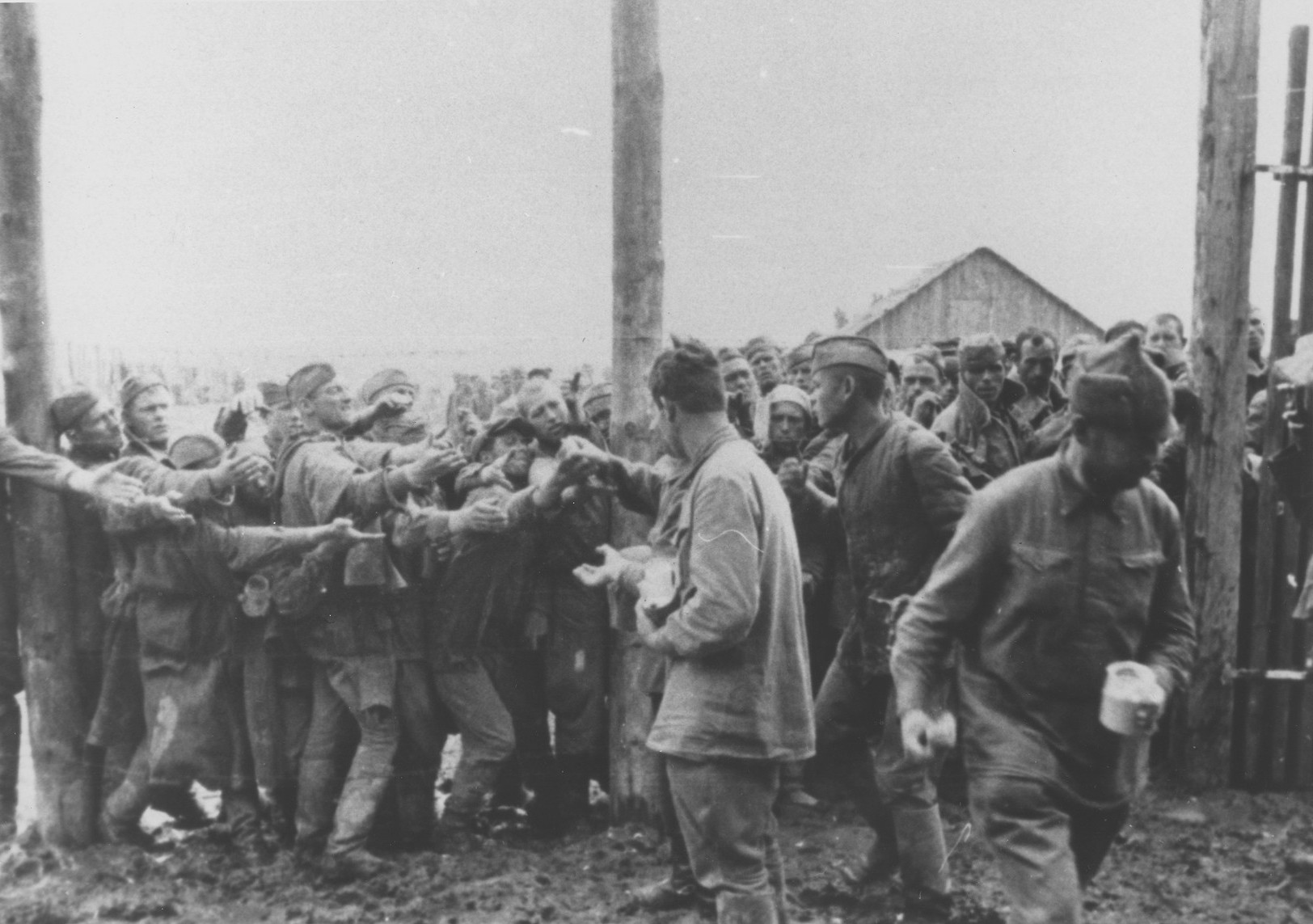


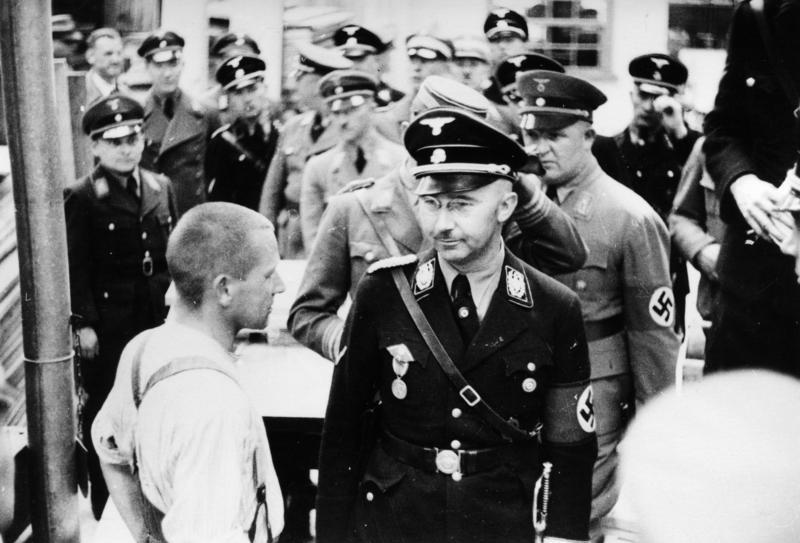



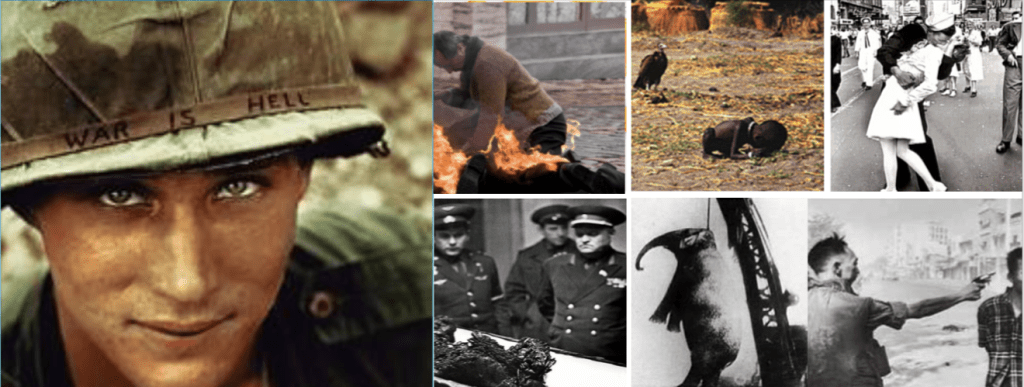




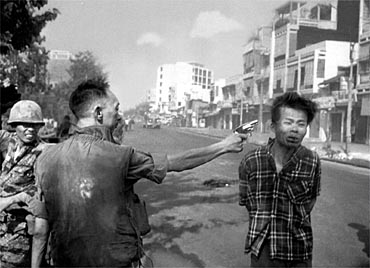


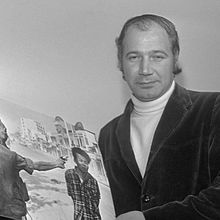

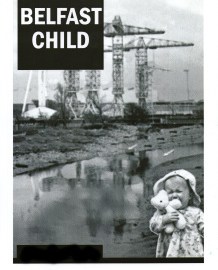




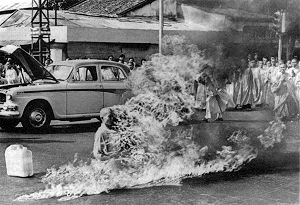




 WikiMiniAtlas






.jpg)




_burning_after_the_Japanese_attack_on_Pearl_Harbor_-_NARA_195617_-_Edit.jpg)


 belfastchildis.com


