Belfast Child. My life growing up in the heart lands of Loyalist West Belfast


Below is the first chapter of my autobiography Belfast Child, which tells the story of my life growing up within the heart lands of Loyalist West Belfast and my life long search for my “dead” Catholic mother. Since the troubles began in the early sixties over 3500 people have been injured and lost their lives and this book is dedicated to all innocent victims of the troubles and those they left behind.

BELFAST CHILD


By JC


CHAPTER ONE

MUM & DAD


My father Samuel was born in 1944 and was the first of five sons and one daughter, born to my grandparents, John and Suzy Moore, who were both hard-core loyalists from the Sandy Row area of Belfast. Dads early years were typical of working class Protestants of the time, high unemployment and poverty dominated the area he lived in and home was in a council house in the heartlands of protestant West Belfast among other hard-core loyalist. Granda was lucky and like other protestant from the area worked in the shipyard, which at the time was controlled by protestant unions and blatant in its discrimination against employing Catholics. To the catholic population of Northern Ireland the shipyard was a symbol of unionist control and a constant reminder they were treated as second-class citizens in a Unionist run state. Being the oldest dad held a special place in both my grandparents hearts and like his siblings he was brought up to practice and respect the protestant culture and traditions, which controlled all aspects of their daily lives. Everything was going well until he met and fell in love with my Mother Sally, a catholic from the heartlands of republican Belfast.


My mother was a catholic from a hard-core republican family from the Falls Road area of Belfast and when her and my father got together both families opposed the relationship from the start. My grandfather disowned my father and both he and mum were ostracised for daring to cross the religious divided. Although tension and paranoia between the two communities was mounting, at this time mixed marriages did take place, but were always controversial and scorned upon by both communities.  Centuries of conflict between the two religions had left scars on both sides and it was always expected that when you got married, you would marry someone from your own religion. It was a marriage doomed from the start and although mum and dad tried their hardest to make it work, it was impossible for them to escape the sectarian conflict rage around them.   It was a marriage doomed from the start.


I was born on the 16th July 1966 and the first three years of my life were spent living in the Grovner Road area in the west of the city , which was one of the few areas of Belfast were Catholics and Protestants could live side by side., in relative harmony. Sadly this was to change within the coming years as the beginning of the modern troubles signalled all out war between the two communities of Northern Ireland and Belfast faced the biggest population shift since the Second World War. Relationships between the two communities of Northern Ireland had reached boiling point and within three years the Troubles reached a point of no return.


I was the third of four children and the first boy. My sister Margaret was born shortly after my parents married in 1962and Jean in December 1964. David the youngest was born in September 1968. In the early days mum and dad tried to shield us from the hatred that surrounded us and in an effort to bridge the gap give Margaret and Gerald catholic names. In the tribal world of Belfast names signified which religious group you came from and my Grandfather was outraged that two of his grandchildren were given catholic names. Hostilities continued between the two families and although my grandparents loved us, they could never accept that we had a catholic mother. Dad’s brothers were all ultra loyalist and there were attacks on my mother’s family, which made it impossible for mum and dad to disassociate them from the sectarian conflict surrounding them.


As if mum and dad didn’t have enough problems it was discovered when I was eighteen month old that I had osteomyelitis, a bone disease which lead to me spending the next two years of my life in hospital undergoing a total of sixteen operations as the doctors fought to save my right leg. Little did I know at the time that I was to spend the rest of my life in and out of hospital having various operations on my leg and a host of other medical problems?


The first five years of my life I spent more time in hospital than at home with the family and was shielded from the violent events that would ultimately lead to the break-up of my parents marriage and our family. My earliest memories are of me at about three in hospital, surrounded by other children, doctors and nurses. When I first went into hospital I missed my family terribly and cried myself to sleep feeling very sorry for myself. But as time went on and I realized that I hadn’t been abandon and mum, dad and other members of the family came to see me almost every day, I began to adapt to my life in the children’s ward. Due to the nature of my disease I had to constantly have plaster of Paris on both my legs and was unable to walk and was confined to my bed unless one of the nurses lifted me up and placed me on a chair or on the floor where I could play with the other children and crawl around until my heart was content. If I was really lucky I would be placed in this little four-wheeled cart and I would push myself around the ward for hours, getting myself into as much mischief as possible.


One day a new student nurse called Brown came to work on the ward and I immediately fell in love with her and decided she could be my foster mother in hospital. I was spending so much time away from my own mother and family that I became confused and cried more when nurse Brown left the ward at the end of her shift, than I did when my own mother left after visiting me. On her days off nurse Brown would come into the ward, get a wheelchair and take me on long walks in the park and hospital surroundings, feeding the birds and watching the squirrels fight.


Sometimes she would take me to her living quarters and make us both sandwiches and tea. I began so attached to Nurse Brown that when I was occasionally aloud home for the weekend to visit my family I would scream the place down and demand to be allowed to stay in the ward with Nurse Brown.


Although I was much too young to understand the complexities of my parents marriage I began to sense that something was not right when dad and mum began visiting me separately, with members of their own families in tow. This went on for some time and I gradually learnt to accept it as normal. Then one weekend when I was due to go home for a visit, mum turned up at the hospital early with one of her sisters and  bundled me into a waiting taxi.  At first I was surprised to find Margaret, Jean and David also in the car, but when mum said we were going on holiday I became excited began asking loads of questions.


“Where are we going? How long are we going for? Where’s dad?


Mum told me that dad would not be coming with us and I thought nothing more of it. Unknown to me dad and mum had finally parted and there was no turning back. The strain of their mixed marriage in the brutal environment of West Belfast had become too much for them to cope with and lead to various arguments and the eventual end of their marriage.


Mum took us straight to the airport and the five of us boarded a plane for London. Once we were in London a friend of mum’s picked us up from the airport and drove us to a flat in Stockwell. As a child I the whole thing very exciting and was blissfully unaware of the significance of it all. Within a few days dad arrived on the doorstep with his brothers to take us back to Belfast. There was nothing mum could do about it and although  we didn’t know it at the time , when we left mum crying after us on the door step that day , it was to be the last time any of us would ever see or have any contact with mum or any of her family again , for the next 25 years. We were told she was dead and never to mention her again.


From that moment onwards mum ceased to exist in our lives and through time we all came to believe she was dead and it was better not to talk about her. We all loved dad hugely and after mum left, he became the centre of our universe and we all worshiped the ground he walked on. Having spent so much time in hospital , I was use to being away from mum and the family and I  think this may have eased the pain of a three year old losing his mother. It must have affected my sisters more, because they were older than me and had a longer time to bond with mum. My brother David was only one at the time and has lived his entire life not knowing what it is like to have a mother and share her love.


Life went on and gradually mum became a distant memory of my first three years on earth and before long I had learnt to live without her in my life. When we arrived back in Belfast I was brought back to hospital to continue my treatment and dad brought the rest of the children home to begin a new life without mum. I was four at the time and having spent so much time away from mum in hospital, for the first few years after she had gone I hardly missed her presence at all, but this was change through time. Bedside’s I had Nurse Browne and all my adopted family in the hospital to keep me company. I used to pretend mum was still at home with the rest of the family and was too busy to visit me. But as I grew older the pain of not having her in my life tore me apart and I missed her terribly. Throughout my childhood and teenage years I tried my hardest to forget mum, but fate was to play havoc with my life and before I reached my tenth birthday my beloved father died and I considered myself an orphan. Little did I know that my mother was alive and well and living in Northern England and one day in the distant future I would be reunited with her.

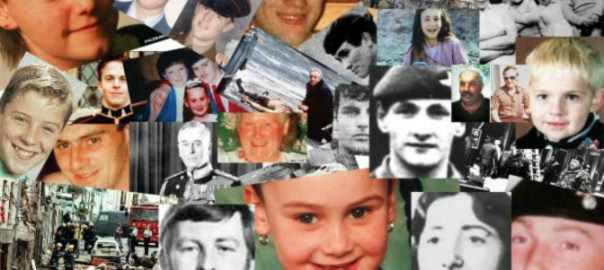
Belfast Child – Here we go, another year, another attempt to have my book and script seen by the right people and hopefully someone out there will see the potential and help me move this forward.

Belfast Child

Belfast Child

Whilst the majority of films about the troubles in Northern Ireland tell the story from the point of view of the IRA and the republican struggle-war against the British government /army, Belfast Child tells the story of a young Loyalist whom is an innocent victim of the prejudice that is ripping Northern Ireland apart.

Set during the brutal sectarian war between the protestant and catholic people of West Belfast the story follows the lives of children and their families caught   up in the conflict and how the day to day atrocities committed by the various paramilitary groups influence their lives and their view of the world around them.

The film tells the story of what it was like to grow up among the hard men of Loyalist West Belfast and life within the tribal community of the Shankill Road.

Although the story deals with the conflict and the fanatical hatred between the two warring communities, there is also humour and laughter and a spot light on what it meant to be a protestant during the troubles. This may seem a contradiction, but the Northern Irish people have always had the ability to accept the madness going on around them and make the best of the lives that fate has thrown at them.

The story reveals the culture and heritage of the protest people of Northern Ireland and shines a light on a people that have been misunderstood and vilified by the world in general through out the troubles. A people that are fanatical about their British ancestry and are literally willing to die for Queen and country…………………………………………

28th October – Deaths & Events in Northern Ireland Troubles


Key Events & Deaths on this day in Northern Ireland Troubles

 28th October

Thursday 28 October 1971

A man was shot and mortally wounded, as he stood at the front door of his house, by a British soldier.

Monday 28 October 1974

The Irish Republican Army (IRA) killed two British soldiers in a bomb attack outside Ballykinlar British Army base, County Down.


Thursday 28 October 1976

Máire Drumm, then Vice-President of Sinn Féin (SF), was shot dead by Loyalist paramilitaries while she was a patient in the Mater Hospital, Crumlin Road, Belfast. An off duty member of the Ulster Defence Regiment (UDR) was shot dead by the IRA near Pomeroy, County Tyrone.

Sunday 28 October 1979

A British Army (BA) soldier and a Royal Ulster Constabulary (RUC) officer died as a result of an Irish Republican Army (IRA) gun attack on a joint BA and RUC mobile patrol at Springfield Road, Belfast.

Tuesday 28 October 1980

Margaret Thatcher, then British Prime Minister, said that the British government would not make any concessions to those on hunger strike.

Friday 28 October 1983

George Terry, a former Sussex Chief Constable, published a report on the scandal at the Kincora boys’ home in Belfast. Terry said that he had found no evidence that civil servants, members of the Royal Ulster Constabulary (RUC), or military intelligence, were involved in homosexual activities at the boys’ home nor had anyone tried to suppress information about the events.

[In spite of a number of investigations into the events surrounding Kincora many people in Northern Ireland remained convinced that some of the allegations were true.]


Thursday 28 October 1993

Two brothers, both Catholic civilians, were shot dead at their home near Lurgan by the Ulster Volunteer Force (UVF).

Friday 28 October 1994

Albert Reynolds, then Taoiseach (Irish Prime Minister), opened the Forum for Peace and Reconciliation in Dublin. The British ambassador to Ireland refused to attend the event because Sinn Féin (SF) representatives were present. The Catholic Reaction Force (CRF) announced a ceasefire.

[The CRF was considered to be a cover name (pseudonym) used by the Irish National Liberation Army (INLA).]

Monday 28 October 1996

The Committee on the Administration of Justice (CAJ) published a report, The Misrule of Law {external_link}, on the action of the Royal Ulster Constabulary (RUC) during the marching season. The report was critical of many aspects of the policing of the Drumcree standoff and its aftermath, particularly the use of plastic bullets. Patrick Mayhew, the then Secretary of State for Northern Ireland, met wit representatives of the Ulster Democratic Party (UDP) and the Progressive Unionist Party (PUP) to discuss the issue of prisoners.

Wednesday 28 October 1998

It became apparent that Donegal Celtic, a Catholic soccer team based in west Belfast, would be playing an Royal Ulster Constabulary (RUC) team in a local cup competition. Sinn Féin (SF) called on Donegal Celtic to pull out of the match.

[Following pressure on the team it reluctantly agreed to drop out of the competition.]

Thursday 28 October 1999

David Trimble and Gerry Adams continued discussions at Castle Buildings, Stormont, seeking a way out of the decommissioning logjam. They had been trying to put together a package of confidence building steps between their two parties to ensure the success of the Mitchell Review.

Saturday 28 October 2000

David Greer (21), a member of the Ulster Defence Association (UDA), was shot dead in Mountcollyer Street in north Belfast following a brawl between members of rival Loyalist paramilitary groups. The Ulster Volunteer Force (UVF) was responsible for the killing. The killing was part of a feud between the UDA and the UVF.

There was another meeting of the Ulster Unionist Council (UUC), the policy-making body of the Ulster Unionist Party (UUP). At the meeting Jeffrey Donaldson, then Lagan Valley MP, put forward a motion calling on David Trimble, then leader of the UUP, to leave the Executive if the Irish Republican Army (IRA) failed to decommission.

Trimble proposed a different motion that would commit him to preventing Sinn Féin (SF) ministers from taking part in the meetings of the cross-border bodies established under the Good Friday Agreement, until the IRA had fully engaged with the Independent International Commission on Decommissioning (IICD). Trimble won the motion by 445 votes to 374. Gerry Adams, then President of Sinn Féin (SF), attacked Trimble for the latest moves.

Sunday 28 October 2001

There was serious rioting in the Limestone Road area of Belfast.

Six blast bombs were thrown at Royal Ulster Constabulary (RUC) officers, 23 of whom were injured. British Army technical experts were called to deal with an unexploded device in nearby North Queen Street. A number of cars were also hijacked and burnt in the same area. There were also two blast bomb attacks in other areas of north Belfast. One person was treated for shock when a blast bomb exploded at a house at Seaview drive, off the Shore Road.

The South Armagh Farmers and Residents Group (SAFRG) together with Sinn Féin (SF) organised a protest at a British Army observation tower at Glassdrummond, near Crossmaglen, County Armagh. Police in riot gear were called to prevent the demonstrators from cutting their way through security fences. Six RUC officers were injured during the disturbances. The protesters called for ‘demilitarisation’ of the south Armagh area.

[An Irishman died in clashes between Colombian troops and the country’s second-largest guerrilla group. The man was believed to be wearing rebel clothing. The Colombian army did not know whether the man was a member of the left-wing National Liberation Army, or ELN, or a guerrilla kidnap victim.]

———————————————————————————


Remembering all innocent victims of the Troubles

Today is the anniversary of the death of the following  people killed as a results of the conflict in Northern Ireland

“To live in hearts we leave behind is not to die

– Thomas Campbell

To the innocent on the list – Your memory will live  forever

– To  the Paramilitaries  –

There are many things worth living for, a few things worth dying for, but nothing worth killing for.

  16 People lost their lives on the 28th October  between 1972 – 2000

————————————————————–

28 October 1972


Thomas McKay,   (29)

nfNI
Status: British Army (BA),

Killed by: Irish Republican Army (IRA)
Shot by sniper while on British Army (BA) mobile patrol, Bishop Street, Derry.

————————————————————–

28 October 1973
Stephen Hall,  (27)

nfNI
Status: British Army (BA),

Killed by: Irish Republican Army (IRA)
Shot by sniper while on British Army (BA) foot patrol, Market Square, Crossmaglen, County Armagh.

————————————————————–

28 October 1973


John Doherty,  (31)

nfNIRI
Status: Royal Ulster Constabulary (RUC), Killed by: Irish Republican Army (IRA)
Originally from County Donegal. Off duty. Shot while visiting his mother’s home, ne

ar Lifford, County Donegal.

————————————————————–

28 October 1974


Michael Swanick,   (20)

nfNI
Status: British Army (BA),

Killed by: Irish Republican Army (IRA)
Killed in van bomb attack outside Ballykinlar British Army (BA) base, County Down.

————————————————————–

28 October 1974


Alan Coughlan,  (22)

nfNI
Status: British Army (BA),

Killed by: Irish Republican Army (IRA)
Killed in van bomb attack outside Ballykinlar British Army (BA) base, County Down

————————————————————–

28 October 1976
Stanley Adams,  (29)

Protestant
Status: Ulster Defence Regiment (UDR),

Killed by: Irish Republican Army (IRA)
Off duty. Shot while delivering mail, Altmore, near Pomeroy, County Tyrone.

————————————————————–

28 October 1976


Maire Drumm,   (56)

See Below for more detains on Maire Drumm

Catholic
Status: Civilian Political Activist (CivPA),

Killed by: non-specific Loyalist group (LOY)
Vice-President of Sinn Fein (SF). Shot while patient in Mater Hospital, Crumlin Road, Belfast

————————————————————–

28 October 1979
David Bellamy,   (31)

nfNI
Status: British Army (BA),

Killed by: Irish Republican Army (IRA)
Shot during gun attack on British Army (BA) / Royal Ulster Constabulary (RUC) mobile patrol leaving Springfield Road Royal Ulster Constabulary (RUC) base, Belfast

————————————————————–

28 October 1979


Gerry Davidson,  (26)

Protestant
Status: Royal Ulster Constabulary (RUC),

Killed by: Irish Republican Army (IRA)
Shot during gun attack on Royal Ulster Constabulary (RUC) mobile patrol leaving Springfield Road British Army (BA) / Royal Ulster Constabulary (RUC) base, Belfast. He died 19 November 1979.

————————————————————–

28 October 1981


Edward Brogan,   (28)

Catholic
Status: Civilian (Civ),

Killed by: Irish National Liberation Army (INLA)
Found shot at rubbish dump, Shantallow, Derry. Alleged informer.

————————————————————–

28 October 1983


John Hallawell,   (35)

Protestant
Status: Royal Ulster Constabulary (RUC),

Killed by: Irish Republican Army (IRA)
Shot shortly after leaving house, Sheelin Park, Ballymagroarty, Derry.

————————————————————–

28 October 1987


Patrick Deery,   (31)

Catholic
Status: Irish Republican Army (IRA),

Killed by: Irish Republican Army (IRA)
Killed in premature bomb explosion while travelling in car, Cromore Gardens, Creggan, Derry.

————————————————————–

28 October 1987


Edward McSheffrey,   (29)

Catholic
Status: Irish Republican Army (IRA),

Killed by: Irish Republican Army (IRA)
Killed in premature bomb explosion while travelling in car, Cromore Gardens, Creggan, Derry.

————————————————————–

28 October 1993


Gerard Cairns, (22)

Catholic
Status: Civilian (Civ),

Killed by: Ulster Volunteer Force (UVF)
Shot at his home, The Slopes, Bleary, near Lurgan, County Down.

————————————————————–

28 October 1993


Rory Cairns, (18)

Catholic
Status: Civilian (Civ),

Killed by: Ulster Volunteer Force (UVF)
Shot at his home, The Slopes, Bleary, near Lurgan, County Down.

————————————————————–

28 October 2000


David Greer,  (21)

Protestant
Status: Ulster Defence Association (UDA),

Killed by: Ulster Volunteer Force (UVF)
Shot while walking along Mountcollyer Street, Tigers Bay, Belfast. Ulster Defence Association (UDA) / Ulster Volunteer Force (UVF) feud.

————————————————————–

Máire Drumm

——————————————————————–


Máire Drumm (22 November 1919 – 28 October 1976) was the vice president of Sinn Féin and a commander in Cumann na mBan. She was killed by Ulster loyalists while recovering from an eye operation in Belfast’s Mater Hospital.[1]

Born in Newry, County Down to a staunchly Irish republican family. Drumm’s mother had been active in the War of Independence and the Civil War. Drumm grew up in the village of Killean, County Armagh, where she played camogie (the female form of hurling). She was active in the republican movement after meeting her husband, a republican prisoner, and became involved in the Northern Ireland Civil Rights Association in the 1960s and worked to rehouse Catholics forced from their homes by loyalist intimidation.

She was jailed twice for ‘seditious speeches’. After she was released from HM Prison Armagh, raids on her house by the security forces escalated, her health began to fail and she was admitted to the Mater Hospital, Belfast.

On 28 October 1976, Maíre Drumm was shot dead in her hospital bed in a joint operation by the Ulster Volunteer Force and the Ulster Defence Association.[2]