Meet Abu Azrael, ‘Iraq’s Rambo’, the most reknown fighter in Iraq
—————————————————————–
—————————————————————–
—————————————————————–
ISIS terrorist strung up, burned alive and then sliced like a KEBAB by the ‘Angel of Death’
A captured ISIS terrorist was suspended over a fire, burned to death and then sliced up like a KEBAB by a rebel fighter nicknamed the ‘Angel of Death’.
Footage released online shows fearsome Abu Azrael, one of ISIS’ most feared enemies and a poster boy for Shi’a militias, committed the sickening act as a warning to his enemies.
The hulking fighter laughs as he cuts the dead ISIS terrorists leg with a curved sword, then turns to the camera and says: “ISIS this will be your fate, we will cut you like shawarma (a method of grilling meat on a spit and then shaving it off)”.
The footage was reportedly taken in the Iraqi city of Baiji.
Azrael is a commander with the the Imam Ali brigade, an Iraqi Shi’a militia group sponsored by Iran.
Angel of Death: Abu Azrael slices up a charred ISIS fighter
—————————————————————————————-
Iraqi Rambo Has Close Call With ISIS “Sniper”
—————————————————————————————-
He is believed to be a 40-year-old former university lecturer who left his home to fight ISIS last June.
Pictures show the bald fighter in his military fatigues, posing with an axe and a heavy machine gun.
His mercilessness – combined with a grim sense of humour – has gained him thousands of fans on social media, as well as the ominous nickname ‘Abu Azrael’.
He wields an axe, a sword and an assault rifle and told news agency AFP that he has been a soldier for a long time, having battled US forces during the invasion of Iraq.
The father-of-five added: “You see me go to school to drop off my children and I am peaceful.
“But I show another face to them (ISIS).”
AFP
Warriror: Abu Azrael poses with Shiite fighters
The militia he fights for uses pictures and video of him to gain support on social media.
He has been photographed jauntily riding a bike, reportedly in an area of intense fighting, while another still shows him grinning, arm casually draped across the cannon of an attack helicopter.
One video shows him mocking ISIS fighters with their own walkie-talkie, most likely taken from a dead soldier.
Al-Alam, a state owned Arabic-language TV station in Iran, reported that he used to be a university PE teacher.
However, the BBC, citing sources in the country, reported that he is actually a highly-trained special forces veteran.
—————————————————————–
Ayyub Faleh al-Rubaie
Ayyub Faleh al-Rubaie, known by his nom de guerre Abu Azrael (Arabic: ابو عزرائيل, literally “Father of Azrael“), also known as the “Angel of Death”, is a commander of the Kataib al-Imam Ali, an Iraqi Shi’a militia group of the Popular Mobilization Forces that is fighting ISIL (Islamic State of Iraq and the Levant) in Iraq. He has become a public icon of resisting ISIL in Iraq with a large following on social media.
His motto and catchphrase is “illa tahin” (إلا طحين), meaning “[nothing remains] but flour”, that is, he would pulverize ISIL militants until nothing remains of them but powder.
Abu Azrael is described in various sources as a 40 year old former university lecturer and a one-time Taekwondo champion, although other sources dispute that and suggest that this back-story may be fabricated.
Reports from March 2015 claimed that Azrael is a father of five, and lives an “ordinary life” when not on the battlefield.
Public image
Abu Azrael has become a public icon of resistance against the Islamic State, although he has also fought against other militant groups. A Facebook page dedicated to him has over 300,000 likes as of March 2015. He has attracted attention in the middle east, but by the Spring of 2015, he had also made front-page appearances on international news websites in England, France and the United States.
He has become a popular public figure, some believe, because his methods and appearance match the brutality associated with the Islamic State (ISIS). For example, he has been shown wielding both axes and swords, in addition to modern military rifles. Moreover, some say that his being a private citizen, his bald head, and his thick black beard give him an aggressive, “dashing” appearance.
On 27 August 2015 a video emerged on YouTube showing Abu Azrael burning a Sunni jihadist man alive and cutting into his charred body with a sword.
Thinking of Khaled al-Asaad who loved this place and died protecting it from the deluded followers of Islamic State and their twisted , obscene take on Islam. Although to late to save his life and the ancient sites he loved and studied – hopefully he will be looking down from heaven and rejoicing at its recapture and the news that the damage was not as great as first thought.
Rest in peace Khaled – Now with those you loved and studied.
The retaking of Palmyra by the Syrian army ends 10 months of occupation by the so-called Islamic State (IS). It is an important step in the containment and eventual defeat of the jihadist group that has seized swathes of Syria and Iraq.
It may not mean the end for IS, whose heartlands of Raqqa, Deir Ezzor, and Mosul remain safe havens, but it is a step in chipping away at the group’s power base, both geographically and strategically, as well as debasing the myth that the caliphate’s armies are all-conquering and unable to be defeated.
Quite apart from protecting its beauty and historic importance – which IS forces have shown no respect for – reversing the fall of Palmyra is psychologically important.
Al-Asaad was born in Palmyra, Syria, and lived there most of his life.[3] He held a diploma in history and was educated at the University of Damascus.[4] Al-Asaad was the father of eleven children; six sons and five daughters, one of whom was named Zenobia after the well-known Palmyrene queen.[4]
Career
Archeologist
During his career, he engaged in the excavations and restoration of Palmyra. He had become the principal custodian of the Palmyra site for 40 years since 1963.[5] He worked with American, Polish, German, French and Swiss archaeological missions. His achievement is the elevation of Palmyra to a UNESCO World Heritage Site.[4] He was also fluent in Aramaic and regularly translated texts until 2011.[2]
In 2003, he was part of a Syrian-Polish team that uncovered a 3rd-century mosaic which portrayed a struggle between a human and a winged animal. He described it as “one of the most precious discoveries ever made in Palmyra”. In 2001, he announced the discovery of 700 7th-century silver coins bearing images of Kings Khosru I and Khosru II, part of the Sassanid dynasty that ruled Persia before the Muslim conquest.[3][4]
He was a sought-after speaker at conferences, presenting his vigorous and extensive research. Leading academics and researchers spoke warmly of his affection for Palmyra and his mastery of its history.[3] When he retired in 2003, his son Walid took on the mantle of his work at the site of Palmyra. They both were reportedly detained by ISIS in August 2015; the fate of his son is not yet known.[1]
Politics
In 1954 it is believed that he joined the Syrian Ba’ath Party.[4] However, it is not clear whether he was an active supporter of the Syrian government of Bashar al-Assad.[1] According to The Economist, some have said he was a “staunch supporter” of Assad.[6]
Death
In May 2015, Tadmur (the modern city of Palmyra) and the adjacent ancient city of Palmyra came under the control of the Islamic State of Iraq and Syria (ISIS). Al-Asaad helped evacuate the city museum prior to ISIS’s takeover.[4] Al-Asaad was among those captured during this time, and ISIS attempted to get al-Asaad to reveal the location of the ancient artifacts that he had helped to hide.[7] He was murdered in Tadmur on 18 August 2015. The New York Times reported:
After detaining him for weeks, the jihadists dragged him on Tuesday to a public square where a masked swordsman cut off his head in front of a crowd, Mr. Asaad’s relatives said. His blood-soaked body was then suspended with red twine by its wrists from a traffic light, his head resting on the ground between his feet, his glasses still on, according to a photo distributed on social media by Islamic State supporters.[8]
A placard hanging from the waist of his dead body listed al-Asaad’s alleged crimes: being an “apostate,” representing Syria at “infidel conferences,” serving as “the director of idolatry” in Palmyra, visiting “Heretic Iran” and communicating with a brother in the Syrian security services.[8] His body was reportedly displayed in Tadmur and then in the ancient city of Palmyra.[7][8][9][10][11]
In addition to al-Asaad, Qassem Abdullah Yehya, the Deputy Director of the DGAM Laboratories, also protected the Palmyra site. Qassem too was killed by ISIL while on duty on 12 August 2015. He was 37 years old.[12]
Reactions
The Chief of Syrian Antiquities, Maamoun Abdulkarim, condemned al-Asaad’s death, calling him “a scholar who gave such memorable services to the place Palmyra and to history”. He called al-Asaad’s ISIL killers a “bad omen on Palmyra”.[11]
Yasser Tabbaa, a specialist on Islamic art and architecture in Syria and Iraq, said of al-Asaad: “He was a very important authority on possibly the most important archaeological site in Syria.”[8]
UNESCO and its general director Irina Bokova condemned al-Asaad’s murder, saying “They killed him because he would not betray his deep commitment to Palmyra. Here is where he dedicated his life.”[15]
The Aligarh Historians Society has issued a statement expressing hope that the killers would one day be brought to justice. The Society said that “Civilized people, irrespective of country or religion, must unite in their support for all political and military measures designed to achieve this end, especially those being made by the governments of Syria and Iraq.”[16]
Palmyra (/ˌpælˈmaɪrə/; Aramaic: ܬܕܡܘܪܬܐ Tedmurtā ; Arabic: تدمر Tadmor) was an ancient Semitic city in present Homs Governorate, Syria. Archaeological finds date back to the Neolithic, and it was first documented in the early second millennium BC as a caravan stop for travellers crossing the Syrian Desert. The city was noted in the annals of the Assyrian kings, and may have been mentioned in the Hebrew Bible. Palmyra was a part of the Seleucid Empire and prospered after its incorporation into the Roman Empire in the first century.
The city’s wealth enabled the construction of monumental projects. By the third century AD the city was a prosperous metropolis and regional center. Before 273 it enjoyed autonomy for much of its existence. It was attached to the Roman province of Syria and its political organization was influenced by the Greek city-state model during the first two centuries AD. The city was governed by a senate, which was responsible for public works and the military. After becoming a colonia during the third century, Palmyra incorporated Roman governing institutions before adopting a monarchical system in 260. The city received its wealth from trade caravans; the Palmyrenes, renowned merchants, established colonies along the Silk Road and operated throughout the Roman Empire. The Palmyrenes were primarily a mix of Amorites, Arameans and Arabs,[2] with a Jewish minority. The city’s social structure was tribal, and its inhabitants spoke Palmyrene (a dialect of Aramaic); Greek was used for commercial and diplomatic purposes. The culture of Palmyra, influenced by those of the Greco-Roman world and Persia, produced distinctive art and architecture. The city’s inhabitants worshiped local deities and Mesopotamian and Arab gods.
In 260 the Palmyrene king Odaenathus defeated the Persian emperor Shapur I. He fought several battles against the Persians before his assassination in 267. Odaenathus was succeeded by his two young sons under the regency of Queen Zenobia, who rebelled against Rome and began invading its eastern provinces in 270. The Palmyrene rulers adopted imperial titles in 271; the Roman emperor Aurelian defeated the city in 272, destroying it in 273 after a failed second rebellion.
Palmyra was a minor center under the Byzantines, Rashiduns, Ummayads, Abbasids, Mamluks and their vassals. The Palmyrenes converted to Christianity during the fourth century and to Islam in the second half of the first millennium, and the Palmyrene and Greek languages were replaced by Arabic. The city—destroyed by the Timurids in 1400—remained a small village under the Ottomans until 1918, followed by the Syrian kingdom and the French Mandate. In 1929, the French began moving villagers into the new village of Tadmur. The transfer was completed in 1932, with the site abandoned and available for excavations. On 21 May 2015, Palmyra came under the control of the militant group Islamic State of Iraq and the Levant (ISIL).
Location and etymology
The northern Palmyrene mountain belt
Palmyra is 215 km (134 mi) northeast of the Syrian capital, Damascus,[3] in an oasis surrounded by palms (of which twenty varieties have been reported).[4][5] Two mountain ranges overlook the city; the northern Palmyrene mountain belt from the north and the southern Palmyrene mountains from the southwest.[6] In the south and the east Palmyra is exposed to the Syrian Desert.[6] A small wadi (al-Qubur) crosses the area,[7] flowing from the western hills past the city before disappearing in the eastern gardens of the oasis.[8] South of the wadi is a spring, Efqa.[9]Pliny the Elder described the town in the 70s AD as famous for its desert location, the richness of its soil,[10] and the springs surrounding it, which made agriculture and herding possible.[note 1][10]
“Tadmor” is the Semitic, earliest-attested native name of the city, appearing in the first half of the second millennium BC.[12] The word’s etymology is vague; according to Albert Schultens, it derived from the Semitic word for “dates” (tamar,[note 2][14] referring to the palm trees surrounding the city).[note 3][5]
The name “Palmyra” appeared during the early first century AD in the works of Pliny the Elder,[12][15] and was used throughout the Greco-Roman world.[14] It is generally believed that “Palmyra” derives from “Tadmor” as an alteration (supported by Schultens),[note 4][14] or a translation of “Tadmor” (assuming that it meant palm), and derived from the Greek word for palm “Palame” (supported by Jean Starcky).[5][12]
Michael Patrick O’Connor proposed a Hurrian origin of “Palmyra” and “Tadmor”,[12] citing the inexplicability of alterations to the theorized roots of both names (represented in the addition of -d- to tamar and -ra- to palame).[5] According to this theory, “Tadmor” derives from the Hurrian tad (“to love”) with the addition of the typical Hurrian mid vowel rising (mVr) formantmar.[17] “Palmyra” derives from pal (“to know”) using the same mVr formant (mar).[17] Thirteenth-century Syrian geographer Yaqut al-Hamawi wrote that Tadmor, the daughter of one of Noah’s distant descendants, was buried in the city.[18]
Palmyra entered the historical record during the Bronze Age around 2000 BC, when Puzur-Ishtar the Tadmorean agreed to a contract at an Assyrian trading colony in Kultepe.[21][25] It was mentioned next in the Mari tablets as a stop for trade caravans and nomadic tribes, such as the Suteans.[26] King Shamshi-Adad I of Assyria passed the area on his way to the Mediterranean at the beginning of the 18th century BC;[27] by then, Palmyra was the easternmost point of the kingdom of Qatna.[28] The town was mentioned in a 13th-century BC tablet discovered at Emar, which recorded the names of two “Tadmorean” witnesses.[26] At the beginning of the 11th century BC, King Tiglath-Pileser I of Assyria recorded his defeat of the “Arameans” of “Tadmar”.[26]
The Hebrew Bible (Second Book of Chronicles 8:4) records a city by the name “Tadmor” as a desert city built (or fortified) by King Solomon of Israel;[29] Flavius Josephus mentions the Greek name “Palmyra”, attributing its founding to Solomon in Book VIII of his Antiquities of the Jews.[30] Later Islamic traditions attribute the city’s founding to Solomon’s Jinn.[31] The association of Palmyra with Solomon is a conflation of “Tadmor” and a city built by Solomon in Judea and known as “Tamar” in the Books of Kings (1 Kings 9:18).[32] The biblical description of “Tadmor” and its buildings does not fit archaeological findings in Palmyra, which was a settlement during Solomon’s reign in the 10th century BC.[32]
During the Hellenistic period under the Seleucids (between 312 and 64 BC), Palmyra became a prosperous settlement owing allegiance to the Seleucid king.[32][33] In 217 BC, a Palmyrene force led by a sheikh named Zabdibel joined the army of King Antiochus III in the Battle of Raphia which ended in a Seleucid defeat.[note 5][35] In the middle of the Hellenistic era, Palmyra, formerly south of the al-Qubur wadi, began to expand beyond its northern bank.[36] By the late second century BC, the tower tombs in the Palmyrene Valley of Tombs and the city temples (most notably, the temples of Baalshamin, Al-lāt and the Hellenistic temple) began to be built.[32][35][37]
In 64 BC the Roman Republic annexed the Seleucid kingdom, and the Roman general Pompey established the province of Syria.[35] Palmyra was left independent,[35] trading with Rome and Parthia but belonging to neither.[38] The earliest known Palmyrene inscription is dated to around 44 BC;[39] Palmyra was still a minor sheikhdom, offering water to caravans which occasionally took the desert route on which it was located.[40] However, according to Appian Palmyra was wealthy enough for Mark Antony to send a force to conquer it in 41 BC.[38] The Palmyrenes evacuated to Parthian lands beyond the eastern bank of the Euphrates,[38] which they prepared to defend.[39]
Autonomous Palmyrene region
Main shrine of the Temple of Bel
Palmyra’s theatre
Monumental arch in the eastern section of Palmyra’s colonnade
Palmyra became part of the Roman Empire when it was annexed and paid tribute during Tiberius‘ early reign, around 14 AD.[note 6][35][41] The Romans included Palmyra in the province of Syria,[41] and defined the region’s boundaries; a boundary marker laid by Roman governor Silanus was found 75 kilometres (47 mi) northwest of the city at Khirbet el-Bilaas.[42] A marker at the city’s southwestern border was found at Qasr al-Hayr al-Gharbi,[43] and its eastern border extended to the Euphrates valley.[43] This region included numerous villages subordinate to the center such as Al-Qaryatayn (35 other settlements have been identified by 2012).[44][45][46] The Roman imperial period brought great prosperity to the city, which enjoyed a privileged status under the empire—retaining much of its internal autonomy,[35] being ruled by a council,[47] and incorporating many Greek city-state (polis) institutions into its government.[note 7][48]
The earliest Palmyrene text attesting a Roman presence in the city dates to 18 AD, when the Roman general Germanicus tried to develop a friendly relationship with Parthia; he sent the Palmyrene Alexandros to Mesene, a Parthian vassal kingdom.[note 8][50] This was followed by the arrival of the Roman legion Legio X Fretensis the following year.[note 9][52] Roman authority was minimal during the first century AD, although tax collectors were resident,[53] and a road connecting Palmyra and Sura was built in 75 AD.[note 10][54] The Romans used Palmyrene soldiers,[55] but (unlike typical Roman cities) no local magistrates or prefects are recorded in the city.[54] Palmyra saw intensive construction during the first century, including the city’s first walled fortifications and the Temple of Bel (completed and dedicated in 32 AD).[52][56] During the first century Palmyra developed from a minor desert caravan station into a leading trading center,[note 11][40] with Palmyrene merchants establishing colonies in surrounding trade centers.[50]
Palmyrene trade reached its apex during the second century,[58] aided by two factors; the first was a trade route built by Palmyrenes,[10] and protected by garrisons at major locations, including a garrison in Dura-Europos manned in 117 AD.[59] The second was the Roman annexation of the Nabataean capital Petra in 106,[35] shifting control over southern trade routes of the Arabian Peninsula from the Nabataeans to Palmyra.[note 12][35]
In 129 Palmyra was visited by Hadrian, who named it “Hadriane Palmyra” and made it a free city.[61][62] Hadrian promoted Hellenism throughout the empire,[63] and Palmyra’s urban expansion was modeled on that of Greece.[63] This led to new projects, including the theatre, the colonnade and the temple of Nabu.[63] Roman authority in Palmyra was reinforced in 167, when the cavalry Ala I Thracum Herculiana garrison was moved to the city.[note 13][66]
In the 190s, Palmyra was assigned to the province of Phoenice, newly created by the Severan dynasty.[67] Toward the end of the second century, Palmyra began a steady transition from a traditional Greek city-state to a monarchy;[68] urban development diminished after the city’s building projects peaked.[69] The Severan ascension to the imperial throne in Rome played a major role in Palmyra’s transition:[69]
The Severan-led Roman–Parthian War, from 194 to 217, influenced regional security and affected the city’s trade.[70][73]Bandits began attacking caravans by 199, leading Palmyra to strengthen its military presence.[70] The city devoted more energy to protecting the Roman east than to commerce, and its importance increased.[74]
Palmyrene kingdom and Persian wars
Bust, allegedly of Odenaethus
The rise of the Sasanian Empire in Persia considerably damaged Palmyrene trade.[75] The Sasanians disbanded Palmyrene colonies in their lands,[75] and began a war against the Roman empire.[76] In an inscription dated to 252 Odaenathus appears bearing the title of exarchos (lord) of Palmyra.[77][78] The weakness of the Roman empire and the constant Persian danger were probably the reasons behind the Palmyrene council’s decision to elect a lord for the city in order for him to lead a strengthened army.[79] Odaenathus approached Shapur I of Persia to request him to guarantee Palmyrene interests in Persia, but was rebuffed.[80] In 260 the Emperor Valerian fought Shapur at the Battle of Edessa, but was defeated and captured.[80]
Odaenathus formed an army of Palmyrenes, peasants and the remaining Roman soldiers in the region against Shapur.[80] According to the Augustan History, Odaenathus declared himself king prior to the battle.[81] The Palmyrene leader won a decisive victory near the banks of the Euphrates later in 260 forcing the Persians to retreat.[82] One of Valerian’s officers, Macrianus Major, his sons Quietus and Macrianus, and the prefectBalista then rebelled against Valerian’s son Gallienus, usurping imperial power in Syria.[82] In 261 Odaenathus marched against the remaining usurpers in Syria, defeating and killing Quietus and Balista.[82] As a reward, he received the title Imperator Totius Orientis (“Governor of the East”) from Gallienus,[83] and ruled Syria, Mesopotamia, Arabia and Anatolia‘s eastern regions as the imperial representative.[84][85] In 262 Odaenathus launched a new campaign against Shapur,[86] reclaiming the rest of Roman Mesopotamia (most importantly, the cities of Nisibis and Carrhae), sacking the Jewish city of Nehardea,[note 14][87][88] and besieging the Persian capital Ctesiphon.[89] Following his victory, the Palmyrene monarch assumed the title King of Kings.[note 15][92]
After defeating a Persian army in 263 (or 264), Odaenathus crowned his son Hairan as co-King of Kings near Antioch,[93] then marched and besieged Ctesiphon for the second time (in 264).[89][94] Although he did not take the Persian capital, Odaenathus drove the Persians out of all Roman lands conquered since the beginning of Shapur’s wars in 252.[94] A Persian attack on Palmyra was repelled,[95] and they were defeated by Odaenathus in 266 near Ctesiphon.[82] In 267 Odaenathus, accompanied by Hairan, moved north to repel Gothic attacks on Asia Minor.[82] The king and his son were assassinated during their return;[82] according to the Augustan History and John Zonaras, Odaenathus was killed by a cousin (Zonaras says nephew) named in the History as Maeonius.[96] The Augustan History also says that Maeonius was proclaimed emperor for a brief period before being tried and executed by Odaenathus’ widow, Zenobia.[96][97][98] However, no inscriptions or other evidence exist for Maeonius’ reign and he was probably killed immediately after assassinating Odaenathus.[99][100]
Odaenathus was succeeded by his sons: ten-year-old Vaballathus and the younger Herodianus, who died soon after his father.[101][102] Zenobia, their mother, was the de facto ruler and Vaballathus remained in her shadow while she consolidated her power.[101] Gallienus dispatched his prefect Praetorio Heraclian to command military operations against the Persians, but he was marginalized by Zenobia and returned to the West.[94] The queen was careful not to provoke Rome, claiming for herself and her son the titles held by her husband while guaranteeing the safety of the borders with Persia and pacifying the Tanukhids in Hauran.[101] To protect the borders with Persia, Zenobia fortified different settlements on the Euphrates including the citadels of Halabiye and Zalabiye.[103] Circumstantial evidence exist for confrontations with the Sasanians; probably in 269 Vaballathus took the title Persicus Maximus (“The great victor in Persia”) and the title might be linked with an unrecorded battle against a Persian army trying to regain control of Northern Mesopotamia.[104][105]
Zenobia began her military career in the spring of 270, during the reign of Claudius Gothicus.[106] Under the pretext of attacking the Tanukhids, she annexed Roman Arabia.[106] This was followed in October by an invasion of Egypt,[107][108] ending with a Palmyrene victory and Zenobia’s proclamation as queen of Egypt.[109] Palmyra invaded Anatolia the following year, reaching Ankara and the pinnacle of its expansion.[110]
The conquests were made behind a mask of subordination to Rome.[111] Zenobia issued coins in the name of Claudius’ successor Aurelian, with Vaballathus depicted as king;[note 16][111] since Aurelian was occupied with repelling insurgencies in Europe, he permitted the Palmyrene coinage and conferred the royal titles.[112] In late 271, Vaballathus and his mother assumed the titles of Augustus (emperor) and Augusta.[note 17][111]
The following year, Aurelian crossed the Bosphorus and advanced quickly through Anatolia.[116] According to one account, Roman general Marcus Aurelius Probus regained Egypt from Palmyra;[note 18][117] Aurelian entered Issus and headed to Antioch, where he defeated Zenobia in the Battle of Immae.[118] Zenobia was defeated again at the Battle of Emesa, taking refuge in Homs before quickly returning to her capital.[119] When the Romans besieged Palmyra, Zenobia refused their order to surrender in person to the emperor.[110] She escaped east to ask the Persians for help, but was captured by the Romans; the city capitulated soon afterwards.[120][121]
Later Roman and Byzantine periods
Diocletian’s camp
Aurelian spared the city and stationed a garrison of 600 archers, led by Sandarion, as a peacekeeping force.[122] In 273 Palmyra rebelled under the leadership of Septimius Apsaios,[115] declaring Antiochus (a relative of Zenobia) as Augustus.[123] Aurelian marched against Palmyra, razing it to the ground and seizing the most valuable monuments to decorate his Temple of Sol.[120][124] Palmyrene buildings were smashed, residents massacred and the temple of Bel pillaged.[120]
Palmyra was reduced to a village without territory.[125] Aurelian repaired the temple of Bel, and the Legio I Illyricorum was stationed in the city.[125] Shortly before 303 the Camp of Diocletian, a castra in the western part of the city, was built.[125] The 4-hectare (9.9-acre) camp was a base for the Legio I Illyricorum,[125] which guarded the trade routes around the city.[126]
Palmyra became a Christian city in the decades following its destruction by Aurelian.[127] In late 527, Justinian I ordered its fortification and the restoration of its churches and public buildings to protect the empire against raids by Lakhmid king Al-Mundhir III ibn al-Nu’man.[128]
Arab caliphate
Palmyra was annexed by the Rashidun Caliphate after its 634 capture by the Muslim general Khalid ibn al-Walid, who took the city after an 18-day march by his army through the Syrian Desert from Mesopotamia.[129] By then Palmyra was limited to the Diocletian camp,[130] and became part of Homs Province.[131]
Umayyad and early Abbasid periods
Palmyra experienced a degree of prosperity as part of the Umayyad Caliphate,[132] which used part of the Temple of Bel as a mosque.[133] Palmyra was a key stop on the East-West trade route, with a large souq (market) built by the Ummayads, and the city’s population increased.[132][133] During this period, Palmyra was a stronghold of the Banu Kalb tribe.[134] After being defeated by Marwan II during a civil war in the caliphate, Umayyad contender Sulayman ibn Hisham fled to the Banu Kalb in Palmyra, but eventually pledged allegiance to Marwan in 744; Palmyra continued to oppose Marwan until the surrender of Banu Kalb leader al-Abrash al-Kalbi in 745.[135] That year, Marwan ordered the city’s walls demolished.[130][136]
Abbasid power dwindled during the 10th century, when the empire disintegrated and was divided among a number of vassals.[139] Most of the new rulers acknowledged the caliph as their nominal sovereign, a situation which continued until the Mongol destruction of the Abbasid Caliphate in 1258.[140]
In 955 Sayf al-Dawla, the Hamdanid prince of Aleppo, defeated the nomads near the city,[141] and built a kasbah (fortress) in response to campaigns by the Byzantine emperors Nikephoros II Phokas and John I Tzimiskes.[142] After the early-11th-century Hamdanid collapse, Palmyra was controlled by the successor Mirdasid dynasty.[143] Earthquakes devastated the city in 1068 and 1089.[130][144] The Mirdasids were followed in the second half of the 11th century by Khalaf of the Mala’ib tribe, centered in Homs.[145] Starting in the 1070s Syria came under the Seljuk Empire,[146] whose sultan Malik-Shah I expelled the Mala’ib and imprisoned Khalaf in 1090.[147] Khalaf’s lands were given to Malik-Shah’s brother, Tutush I,[147] who gained his independence after his brother’s 1092 death and established a cadet branch of the Seljuk dynasty in Syria.[148]
Fakhr-al-Din al-Maani Castle
During the early 12th century Palmyra was ruled by Toghtekin, the Buridatabeg of Damascus, who appointed his nephew governor.[149] Toghtekin’s nephew was killed by rebels, and the atabeg retook the city in 1126.[149] Palmyra was given to Toghtekin’s grandson, Shihab-ud-din Mahmud,[149] who was replaced by governor Yusuf ibn Firuz when Shihab-ud-din Mahmud returned to Damascus after his father Taj al-Muluk Buri succeeded Toghtekin.[150] The Burids transformed the Temple of Bel into a citadel in 1132, fortifying the city,[151][152] and transferring it to the Bin Qaraja family three years later in exchange for Homs.[152]
During the mid-12th century, Palmyra was ruled by the Zengid dynasty king Nur ad-Din Mahmud.[153] It became part of the district of Homs,[154] which was given as a fiefdom to the Ayyubid general Shirkuh in 1167 and confiscated after his death in 1169.[155][156] Homs was annexed by the Ayyubid sultanate in 1174;[157] the following year, Saladin gave Homs (including Palmyra) to his cousin Nasir al-Din Muhammad as a fiefdom.[158] After Saladin’s death, the Ayyubid realm was divided and Palmyra was given to Nasir al-Din Muhammad’s son Al-Mujahid Shirkuh II (who built the castle of Palmyra known as Fakhr-al-Din al-Maani Castle around 1230).[159][160] Five years before, Syrian geographer Yaqut al-Hamawi described Palmyra’s residents as living in “a castle surrounded by a stone wall”.[18]
Mamluk period
Palmyra was used as a refuge by Sherkoh II’s grandson, Al-Ashraf Musa, who allied himself with Mongol king Hulagu Khan and fled after the Mongol defeat in the 1260 Battle of Ain Jalut against the Mamluks.[161] Al-Ashraf Musa asked the Mamluk sultan Qutuz for pardon and was accepted as a vassal.[161] Al-Ashraf Musa died in 1263 without a heir bringing the Homs district under direct Mamluk rule.[162]
Al-Fadl principality
Palmyra’s gardens
The Al-Fadl clan (a branch of the Tayy tribe) declared its loyalty to the Mamluks,[163][164] and in 1284 prince Muhanna bin Issa of the Al-Fadl was appointed lord of Palmyra by sultan Qalawun.[163] He was imprisoned by sultan Al-Ashraf Khalil in 1293, and restored two years later by sultan Al-Adil Kitbugha.[163] Muhanna declared his loyalty to Öljaitü of the Ilkhanate in 1312 and was dismissed and replaced with his brother Fadl by sultan Al-Nasir Muhammad.[163] Although Muhanna was forgiven by Al-Nasir and restored in 1317, he and his tribe were expelled in 1320 for his continued relations with the Ilkhanate and he was replaced by tribal chief Muhammad ibn Abi Bakr.[163][165]
Muhanna was forgiven and restored by Al-Nasir in 1330; he remained loyal to the sultan until his death three years later, when he was succeeded by his son.[166] Contemporary historian Ibn Fadlallah al-Omari described the city as having “vast gardens, flourishing trades and bizarre monuments”.[167] The Fadl family protected the trade routes and villages from Bedouin raids,[168] raiding other cities and fighting among themselves.[166] The Mamluks intervened militarily several times, dismissing, imprisoning or expelling its leaders.[166] In 1400 Palmyra was attacked by Timur,[169] who took 200,000 sheep and destroyed the city.[170][171] The Fadl prince Nu’air escaped the battle against Timur and later fought Jakam, the sultan of Aleppo.[172] Nu’air was captured, taken to Aleppo and executed in 1406; this, according to Ibn Hajar Al-Asqalani, ended the Fadl family’s power.[172]
Ottoman and later periods
The village, within the temple of Bel, during the early 20th century
Syria became part of the Ottoman Empire in 1516,[173] and Palmyra was incorporated into Damascus Eyalet as the center of an administrative district (Sanjak).[note 19][174] During the Ottoman era, Palmyra was a small village in the courtyard of the temple of Bel.[175] After 1568 the Ottomans appointed the Lebanese prince Ali bin Musa Harfush as governor of Palmyra’s sanjak,[176] dismissing him in 1584 for treason.[177]
In 1630 Palmyra came under the authority of another Lebanese prince, Fakhr-al-Din II,[178] who renovated Sherkoh II’s castle (which became known as Fakhr-al-Din al-Maani Castle).[160][179] The prince fell from grace with the Ottomans in 1633 and lost control of the village,[178] which remained a separate sanjak until it was absorbed by Zor Sanjak in 1857.[180] The village became home to an Ottoman garrison to control the Bedouin in 1867.[181]
Palmyra regained some of its importance at the beginning of the 20th century as a station for caravans, and its revival was aided by the advent of motorized transport.[175] In 1918, as World War I was ending, the Royal Air Force built an airfield for two planes,[note 20][182][183] and in November the Ottomans retreated from Zor Sanjak without a fight.[note 21][184] The Syrian Emirate‘s army entered Deir ez-Zor on 4 December, and Zor Sanjak became part of Syria.[185] In 1919, as the British and French argued over the borders of the planned mandates,[182] British permanent military representative to the Supreme War CouncilHenry Wilson suggested adding Palmyra to the British mandate.[182] However, British general Edmund Allenby persuaded his government to abandon this plan.[182] Syria (including Palmyra) became part of the French Mandate after Syria’s defeat in the Battle of Maysalun in 24 July 1920.[186]
As Palmyra gained importance to French efforts to pacify the Syrian Desert, a base was constructed in the village near the temple of Bel in 1921.[187] In 1929 the general director of antiquities in Syria, Henri Arnold Seyrig, began excavating the ruins and convinced the villagers to move to a new, French-built village next to the site.[188] The relocation was completed in 1932;[189] ancient Palmyra was ready for excavation as its villagers settled into the new village of Tadmur.[45][188]
The Lion of Al-lāt (first century AD), which stood at the entrance of the temple of Al-lāt
As a result of the Syrian Civil War, Palmyra experienced widespread looting and damage by combatants.[190] During the summer of 2012, concerns about looting in the museum and the site increased when an amateur video of Syrian soldiers carrying funerary stones was posted.[191] However, according to France 24‘s report, “From the information gathered, it is impossible to determine whether pillaging was taking place.”[191] The following year the facade of the temple of Bel sustained a large hole from mortar fire, and colonnade columns have been damaged by shrapnel.[190] According to Maamoun Abdulkarim, director of antiquities and museums at the Syrian Ministry of Culture, the Syrian Army positioned its troops in some archaeological-site areas,[190] while Syrian opposition soldiers stationed themselves in gardens around the city.[190]
On 13 May 2015, ISIL launched an attack on the modern town of Tadmur, sparking fears that the iconoclastic group would destroy the adjacent ancient site Palmyra.[192] On 21 May 2015, some artifacts were removed from the Palmyra museum by the Syrian curators and transported in 2 trucks to Damascus. A number of Greco-Roman busts, jewelry, and other objects looted from the Palmyra museum have been found on the international market.[193] The same day, ISIL forces entered the World Heritage Site.[194] According to eyewitnesses, on 23 May the militants destroyed the lion of Al-lāt and other statues.[195] Local residents reported that the Syrian air force bombed the site on 13 June, damaging the northern wall close to the Temple of Baalshamin.[196]
Since at least 27 May 2015, Palmyra’s theatre was used as a place of public executions of ISIL opponents. A video released by ISIL shows the killing of 20 prisoners at the hands of teenaged male executioners, watched by hundreds of men and boys.[197] On 18 August 2015, Palmyra’s retired antiquities chief Khaled al-Asaad was beheaded by ISIL after being tortured for a month to get information about the city and its treasures; al-Asaad refused to give any information to his captors.[198] The militant group destroyed the temple of Baalshamin on 23 August 2015 according to Abdulkarim and activists while the Syrian Observatory for Human Rights claimed that the destruction took place one month earlier.[199][200]
At its height during the reign of Zenobia, Palmyra had more than 200,000 residents.[201] Its earliest known inhabitants were the Amorites in the early second millennium BC,[202] and by the end of the millennium Arameans were mentioned as inhabitanting the area.[203][204]Arabs arrived in the city in the late first millennium BC; Zabdibel’s soldiers, who aided the Seleucids in the battle of Raphia (217 BC), were described as Arabs.[35] The newcomers were assimilated by the earlier inhabitants, spoke their language,[39] and formed a significant segment of the aristocracy.[205][206] The city also had a Jewish community; inscriptions in Palmyrene from the necropolis of Beit She’arim in Lower Galilee confirm the burial of Palmyrene Jews.[207]
During the Umayyad period Palmyra was mainly inhabited by the Kalb tribe.[175]Benjamin of Tudela recorded the existence of 2,000 Jews in the city during the twelfth century,[208] but after the invasion by Timur it was a small village until the relocation in 1932.[189][209][210]
Alphabetic inscription in Palmyrene alphabet
Before 274 AD, Palmyrenes spoke a dialect of Aramaic and used the Palmyrene alphabet.[note 22][212][213] The use of Latin was minimal, but Greek was used by wealthier members of society for commercial and diplomatic purposes,[2] and it became the dominant language during the Byzantine era.[24] After the Arab conquest Greek was replaced by Arabic,[24] from which a Palmyrene dialect evolved.[214]
Palmyra’s society before 273 was a mixture of the different peoples inhabiting the city,[26][215] which is seen in Aramaic, Arabic and Amorite clan names.[note 23][216][217] Palmyra was a tribal community but due to the lack of sources, an understanding of the nature of Palmyrene tribes structure building or maintaining is not possible.[218] Thirty clans have been documented;[219] five of which were identified as tribes (Phyle (φυλή)) comprising several sub-clans.[note 24][220] By the time of Nero Palmyra had four tribes, each residing in an area of the city bearing its name.[221] Three of the tribes were the Komare, Mattabol and Ma’zin; the fourth tribe is uncertain, but was probably the Mita.[221][222] In time, the four tribes became highly civic and tribal lines blurred;[note 25][221] by the second century clan identity lost its importance, and it disappeared during the third century.[note 26][221] Palmyra declined, and was a village of 6,000 inhabitants at the beginning of the 20th century; although surrounded by Bedouin, the villagers preserved their dialect,[214] and maintained the life of a small settlement.[130]
Culture
Loculi (burial chambers)
Palmyra had a distinctive culture,[224] based on a local Semitic tradition,[225] and influenced by Greece and Rome.[note 27][227] The extent of Greek influence on Palmyra’s culture is debated;[228] according to traditional scholarship, the Palmyrenes’ Greek practices were a superficial layer over a local essence.[229] Palmyra’s senate was an example; although Palmyrene texts written in Greek described it as a “boule” (a Greek institution), the senate was a gathering of non-elected tribal elders (a Near-Eastern assembly tradition).[230] Some scholars, such as Fergus Millar, view Palmyra’s culture as a fusion of local and Greco-Roman traditions.[231]
The culture of Persia influenced Palmyrene military tactics, dress and court ceremonies.[232] Palmyra had no large libraries or publishing facilities, and it lacked an intellectual movement characteristic of other Eastern cities such as Edessa or Antioch.[233] Although Zenobia opened her court to academics, the only notable scholar documented was Cassius Longinus.[233]
Interior of Elahbel tomb
Palmyra had a large agora.[note 28] However, unlike the Greek Agoras (public gathering places shared with public buildings), Palmyra’s agora resembled an Eastern caravanserai more than a hub of public life.[235][236] The Palmyrenes buried their dead in elaborate family mausoleums,[237] most with interior walls forming rows of burial chambers (loculi) in which the dead, laying at full length, were placed.[238][239] A relief of the person interred formed part of the wall’s decoration, acting as a headstone.[239]Sarcophagi appeared in the late second century and were used in some of the tombs.[240] Many burial monuments contained fully dressed, bejeweled mummies,[241]embalmed in a method similar to that used in Ancient Egypt.[242]
Art and architecture
Although Palmyrene art was related to that of Greece, it had a distinctive style unique to the middle-Euphrates region.[243] Palmyrene art is well represented by the bust reliefs which seal the openings of its burial chambers.[243] The reliefs emphasized clothing, jewelry and a frontal representation of the person depicted,[243][244] characteristics which can be seen as a forerunner of Byzantine art.[243] According to Michael Rostovtzeff, Palmyra’s art was influenced by the Parthian art.[245] However, the origin of frontality that characterized Palmyrene and Parthian arts is a controversial issue; while Parthian origin has been suggested (by Daniel Schlumberger),[246]Michael Avi-Yonah contends that it was a local Syrian tradition that influenced Parthian art.[247] Little painting, and none of the bronze statues of prominent citizens (which stood on brackets on the main columns of the Great Colonnade), have survived.[248] A damaged frieze and other sculptures from the Temple of Bel, many removed to museums in Syria and abroad, suggest the city’s public monumental sculpture.[248]
Many surviving funerary busts reached Western museums during the 19th century.[249] Palmyra provided the most convenient Eastern examples bolstering an art-history controversy at the turn of the 20th century: to what extent Eastern influence on Roman art replaced idealized classicism with frontal, hieratic and simplified figures (as believed by Josef Strzygowski and others).[248][250] This transition is seen as a response to cultural changes in the Western Roman Empire, rather than artistic influence from the East.[248] Palmyrene bust reliefs, unlike Roman sculptures, are rudimentary portraits; although many have a “striking individual quality”, their details vary little across figures of similar age and gender.[248]
Like its art, Palmyra’s architecture was influenced by the Greco-Roman style,[251] while preserving local elements (best seen in the Temple of Bel).[252] Enclosed by a massive wall flanked with traditional Roman columns,[252][253] Bel’s sanctuary plan was primarily Semitic.[252] Similar to the Second Temple, the sanctuary consisted of a large courtyard with the deity’s main shrine off-center against its entrance (a plan preserving elements of the temples of Ebla and Ugarit).[252][254]
Government
Inscription in Greek and Aramaic honoring the strategos Julius Aurelius Zenobius
From the beginning of its history to the first century AD Palmyra was a petty sheikhdom,[255] and by the first century BC a Palmyrene identity began to develop.[256] During the first half of the first century AD, Palmyra incorporated some institutions of a Greek city (polis);[48] the concept of citizenship (demos) appears in an inscription, dated to 10 AD, describing the Palmyrenes as a community.[257] In 74 AD, an inscription mentions the city’s boule (senate).[48] The tribal role in Palmyra is debated; during the first century, four treasurers representing the four tribes seems to have partially controlled the administration but their role became ceremonial by the second century and power rested in the hands of the council.[258]
The Palmyrene council consisted of about six hundred members of the local elite (such as the elders or heads of wealthy families or clans),[note 29][47] representing the city’s four quarters.[222] The council, headed by a president,[259] managed civic responsibilities;[47] it supervised public works (including the construction of public buildings), approved expenditures, collected taxes,[47] and appointed two archons (lords) each year.[259][260] Palmyra’s military was led by strategoi (generals) appointed by the council.[261][262] Roman provincial authority set and approved Palmyra’s tariff structure,[263] but the provincial interference in local government was kept minimal as the empire sought to ensure the continuous success of Palmyrene trade most beneficial to Rome.[264] An imposition of direct provincial administration would have jeopardized Palmyra’s ability to conduct its trading activities in the East, specially in Parthia.[264]
With the elevation of Palmyra to a colonia around 213-216, the city ceased being subject to Roman provincial governors and taxes.[265] Palmyra incorporated Roman institutions into its system while keeping many of its former ones.[266] The council remained, and the strategos designated one of two annually-elected magistrates.[266] This duumviri implemented the new colonial constitution,[266] replacing the archons.[260] Palmyra’s political scene changed with the rise of Odaenathus family; an inscription dated to 251 describe Odaenathus’ son Hairan as “Ras” (lord) of Palmyra (exarch in the Greek section of the inscription) and another inscription dated to 252 describe Odaenathus with the same title.[note 30][77] Odaenathus was probably elected by the council as exarch,[79] which was an unusual title in the Roman empire and was not part of the traditional Palmyrene governance institutions.[77][267] Whether Odaenathus’ title indicated a military or a priestly position is unknown,[268] but the military role is more likely.[269] By 257 Odaenathus was known as a consularis, possibly the legatus of the province of Phoenice.[268] In 258 Odaenathus began extending his political influence, taking advantage of regional instability caused by Sasanian aggression;[268] this culminated in the Battle of Edessa,[80] Odaenathus’ royal elevation and mobilization of troops, which made Palmyra a kingdom.[80]
The monarchy maintained the council and most civic institutions,[268][270] permitting the election of magistrates until 264.[260] In the absence of the monarch, the city was administered by a viceroy.[271] Although governors of the eastern Roman provinces under Odaenathus’ control were still appointed by Rome, the king had overall authority.[272] During Zenobia’s rebellion, governors were appointed by the queen.[273]
Not all Palmyrenes accepted the dominion of the royal family; a senator, Septimius Haddudan, appears in a later Palmyrene inscription as aiding Aurelian’s armies during the 273 rebellion.[274][275] After the Roman destruction of the city, Palmyra was ruled directly by Rome,[276] and its following states (including the Burids and Ayyubids),[149][277] or by subordinate Bedouin chiefs—primarily the Fadl family, who governed for the Mamluks.[278]
Military
Relief in the Temple of Bel depicting Palmyrene war gods
Due to its military character and efficiency in battle, Irfan Shahîd described Palmyra as the “Sparta among the cities of the Orient”; even Palmyrene gods were depicted in full military uniforms.[279] Palmyra’s army protected the city and its economy, helping extend Palmyrene authority beyond the city walls and protecting the countryside’s desert trade routes.[280] The city had a substantial military;[43] Zabdibel commanded a force of 10,000 in the third century BC,[35] and Zenobia led an army of 70,000 in the Battle of Emesa.[281] Soldiers were recruited from the city and its territories, spanning several thousand square kilometers from the outskirts of Homs to the Euphrates valley.[43] Non-Palmyrene soldiers were also recruited; a Nabatean cavalryman is recorded in 132 as serving in a Palmyrene unit stationed at Anah.[281] Palmyra’s recruiting system is unknown; the city might have selected and equipped the troops and the strategoi led, trained and disciplined them.[282]
The strategoi were appointed by the council with the approval of Rome.[262] The royal army was under the leadership of the monarch aided by generals,[283][284] and was modeled on the Sasanians in arms and tactics.[232] The Palmyrenes were noted archers.[285] They used infantry while a heavily armored cavalry (clibanarii) constituted the main attacking force.[note 31][287][288] Palmyra’s infantry was armed with swords, lances and small round shields;[55] the clibanarii were fully armored (including their horses), and used heavy spears (kontos) 3.65 metres (12.0 ft) long without shields.[288][289]
Dropped the “King of Kings” title in 270, replacing it with the Latinrex (king) and declared emperor in 271.[111] Reigned under the regency of his mother, Zenobia.[296]
Right to left: Bel, Yarhibol, Aglibol and Baalshamin
Baalshamin (center), Aglibol (right) and Malakbel (left)
Palmyra’s gods were primarily part of the northwestern Semiticpantheon, with the addition of gods from the Mesopotamian and Arab pantheons.[304] The city’s chief pre-Hellenistic deity was called Bol,[305] an abbreviation of Baal (a northwestern Semitic honorific).[306] The Babylonian cult of Bel-Marduk influenced the Palmyrene religion and by 217 BC the chief deity’s name was changed to Bel.[305] This did not indicate the replacing of the northwestern Semitic Bol with a Mesopotamian deity, but was a mere change in the name.[306]
The deities worshiped in the countryside were depicted as camel or horse riders and bore Arab names.[45] The nature of those deities is left to theory as only names are known, most importantly Abgal.[313] The Palmyrene pantheon included ginnaye (some were given the designation “Gad”),[314] a group of lesser deities popular in the countryside,[315] who were similar to the Arab jinn and the Roman genius.[316] Ginnaye were believed to have the appearance and behavior of humans, similar to Arab jinn.[316] Unlike jinn, however, the ginnaye could not possess or injure humans.[316] Their role was similar to the Roman genius: tutelary deities who guarded individuals and their caravans, cattle and villages.[307][316]
Although the Palmyrenes worshiped their deities as individuals, some were associated with other gods.[317] Bel had Astarte-Belti as his consort, and formed a triple deity with Aglibol and Yarhibol (who became a sun god in his association with Bel).[310][318] Malakbel was part of many associations,[317] pairing with Gad Taimi and Aglibol,[319][319] and forming a triple deity with Baalshamin and Aglibol.[320] Palmyra hosted an Akitu (spring festival) each Nisan.[321] Each of the city’s four quarters had a sanctuary for a deity considered ancestral to the resident tribe; Malakbel and Aglibol’s sanctuary was in the Komare quarter.[322] The Baalshamin sanctuary was in the Ma’zin quarter, the Arsu sanctuary in the Mattabol quarter,[322] and the Atargatis sanctuary in the fourth tribe’s quarter.[note 33][320]
Palmyra’s paganism was replaced with Christianity as the religion spread across the Roman Empire, and a bishop was reported in the city by 325.[127] Although most temples became churches, the temple of Al-lāt was destroyed in 385 at the order of Maternus Cynegius (the eastern praetorian prefect).[127] After the Arab conquest in 634 Islam gradually replaced Christianity, and the last known bishop of Palmyra was consecrated in 818.[323]
Economy
Palmyra’s Agora; the two front entrances lead to the interior, the city’s marketplace
Palmyra’s economy before and at the beginning of the Roman period was based on agriculture, pastoralism, trade,[10] and serving as a rest station for the caravans which sporadically crossed the desert.[40] By the end of the first century BC, the city had a mixed economy based on agriculture, pastoralism,[324] taxation,[325] and, most importantly, the caravan trade.[326]
Taxation was an important source of revenue for Palmyra.[325] Caravaneers paid taxes in a building known as the Tariff Court,[219] where a tax law dating to 137 was discovered in 1881 by Armenian prince Abamelek Lazarew who was visiting the ruins.[327][328] The law regulated the tariffs paid by the merchants for goods sold at the internal market or exported from the city.[note 34][219][330] Most land was owned by the city, which collected grazing taxes.[324] The oasis had about 1,000 hectares (2,500 acres) of irrigable land,[331] surrounded by the countryside.[332] The Palmyrenes constructed an extensive irrigation system in the northern mountains that consisted of reservoirs and channels to capture and store the occasional rainfall.[46] The countryside was intensively planted with olive, fig, pistachio and barley.[46] However, agriculture could not support the population and food was imported.[332]
After Palmyra’s destruction in 273, it became a market for villagers and nomads from the surrounding area.[333] The city regained some of its prosperity during the Ummayad era, indicated by the discovery of a large Ummayad souq in the colonnade street.[334] Palmyra was a minor trading center until the Timurid destruction,[167][171] which reduced it to a settlement on the desert border whose inhabitants herded and cultivated small plots for vegetables and corn.[335]
Commerce
The Silk Road
Palmyra’s main trade route ran east to the Euphrates, where it connected to the Silk Road.[336] The route then ran south along the river toward the port of Charax Spasinu on the Persian Gulf, where Palmyrene ships traveled back and forth to India.[337] Goods were imported from India, China and Transoxiana,[338] and exported west to Emesa (or Antioch) then the Mediterranean ports,[339] from which they were distributed throughout the Roman Empire.[337] In addition to the usual route some Palmyrene merchants used the Red Sea,[338] probably as a result of the Roman–Parthian Wars.[340] Goods were carried overland from the seaports to a Nile port, and then taken to the Egyptian Mediterranean ports for export.[340] Inscriptions attesting a Palmyrene presence in Egypt date to the reign of Hadrian.[341]
Since Palmyra was not on the Silk Road (which followed the Euphrates),[10] the Palmyrenes secured the desert route passing their city.[10] They connected it to the Euphrates valley, providing water and shelter.[10] The Palmyrene route was used almost exclusively by the city’s merchants,[10] who maintained a presence in many cities, including Dura-Europos in 33 BC,[57]Babylon by 19 AD, Seleucia by 24 AD,[50]Dendera, Coptos,[342]Bahrain, the Indus River Delta, Merv and Rome.[343]
The caravan trade depended on patrons and merchants.[344] Patrons owned the land on which the caravan animals were raised, providing animals and guards for the merchants.[344] The lands were located in the numerous villages of the Palmyrene countryside.[45] Although merchants used the patrons to conduct business, their roles often overlapped and a patron would sometimes lead a caravan.[344] Commerce made Palmyra and its merchants among the wealthiest in the region.[326] Some caravans were financed by a single merchant,[219] such as Male’ Agrippa (who financed Hadrian’s visit in 129 and the 139 rebuilding of the temple of Bel).[61] The primary income-generating trade good was silk, which was exported from the East to the West.[345] Other exported goods included jade, muslin, spices, ebony, ivory and precious stones.[343] For its domestic market Palmyra imported slaves, prostitutes, olive oil, dyed goods, myrrh and perfume.[329][343]
Site
City layout
Valley of Tombs
Underground tomb
Palmyra began as a small settlement near the Efqa spring on the southern bank of Wadi al-Qubur.[346] The settlement, known as the Hellenistic settlement, had residences expanding to the wadi’s northern bank during the first century.[8] Although the city’s walls originally enclosed an extensive area on both banks of the wadi, the walls rebuilt during Diocletian’s reign surrounded only the northern-bank section.[8]
Most of the city’s monumental projects were built on the wadi’s northern bank.[347] Among them is the temple of Bel, on a tell which was the site of an earlier temple (known as the Hellenistic temple).[37] However, excavation supports the theory that the temple was originally located on the southern bank; the wadi’s bed was diverted to incorporate the temple into Palmyra’s new urban organization, which began with its prosperity during the late first and early second centuries.[36]
Palmyra’s landmarks
Also north of the wadi was the Great Colonnade, Palmyra’s 1.1-kilometre-long (0.68 mi) main street,[348] which extended from the temple of Bel in the east,[349] to the Funerary Temple no.86 in the city’s western part.[350][351] It has a monumental arch in its eastern section,[352] and a tetrapylon stands in the center.[353]
The Baths of Diocletian, built on the ruins of an earlier building which might have been the royal palace,[216] were on the left side of the colonnade.[354] Nearby were the temple of Baalshamin,[355] residences,[356] and the Byzantine churches, which include a 1,500-year-old church (Palmyra’s fourth, and believed to be the largest ever discovered in Syria).[3] The church columns were estimated to be 6 metres (20 ft) tall, and its base measured 12 by 24 metres (39 by 79 ft).[3] A small amphitheatre was found in the church’s courtyard.[3]
The temple of Nabu and the Roman theater were built on the colonnade’s southern side.[357] Behind the theater were a small senate building and the large Agora, with the remains of a triclinium (banquet room) and the Tariff Court.[358] A cross street at the western end of the colonnade leads to the Camp of Diocletian,[348][359] built by Sosianus Hierocles (the Roman governor of Syria).[360] Nearby are the temple of Al-lāt and the Damascus Gate.[361]
West of the ancient walls the Palmyrenes built a number of large-scale funerary monuments which now form the Valley of Tombs,[362] a 1-kilometre-long (0.62 mi) necropolis.[363] The more than 50 monuments were primarily tower-shaped and up to four stories high.[364] Towers were replaced by funerary temples as above ground tombs after 128, which is the date of the most recent tower.[350] The city had other cemeteries in the north, southwest and southeast, where the tombs are primarily hypogea (underground).[365][366]
The senate building is largely ruined.[358] It is a small building that consists of a peristyle courtyard and a chamber that has an apse at one end and rows of seats around it.[219]
Much of the Baths of Diocletian are ruined and do not survive above the level of the foundations.[367] The complex’s entrance is marked by four massive Egyptian granite columns each 1.3 metres (4 ft 3 in) in diameter, 12.5 metres (41 ft) high and weigh 20 tonnes.[358] Inside, the outline of a bathing pool surrounded by a colonnade of Corinthian columns is still visible in addition to an octagonal room that served as a dressing room containing a drain in its center.[358]
The Agora of Palmyra was built c. 193.[368] It is a massive 71 by 84 metres (233 by 276 ft) structure with 11 entrances.[358] Inside the agora, 200 columnar bases that used to hold statues of prominent citizens were found.[358] The inscriptions on the bases allowed an understanding of the order by which the statues were grouped; the eastern side was reserved for senators, the northern side for Palmyrene officials, the western side for soldiers and the southern side for caravan chiefs.[358]
The Tariff Court is a large rectangular enclosure south of the agora and sharing its northern wall with it.[369] Originally, the entrance of the court was a massive vestibule in its southwestern wall.[369] However, the entrance was blocked by the construction of a defensive wall and the court was entered through three doors from the Agora.[369] The court gained its name by containing a 5 meters long stone slab that had the Palmyrene tax law inscribed on it.[370]
The Triclinium of the Agora is located to the northwestern corner of the Agora and can host up to 40 person.[371][372] It is a small 12 by 15 metres (39 by 49 ft) hall decorated with Greek key motifs that run in a continuous line halfway up the wall.[373] The building was probably used by the rulers of the city;[371] Seyrig proposed that it was a small temple before being turned into a banqueting hall.[372]
The temple of Nabu is largely ruined.[374] The temple was Eastern in its plan; the outer enclosure’s propylaea led to a 20 by 9 metres (66 by 30 ft) podium through a portico of which the bases of the columns survives.[375] The peristyle cella opened onto an outdoor altar.[375]
The temple of Al-lāt is largely ruined with only a podium, few columns and the door frame remaining.[376] Inside the compound, a giant lion relief (Lion of Al-lāt) was excavated and in its original form, was a relief protruding from the temple compound’s wall.[377][378]
The ruined temple of Baal-hamon is located on the top of Jabal al-Muntar hill which oversees the spring of Efqa.[379] Constructed in 89 AD, it consists of a cella and a vestibule with two columns.[379] The temple had a defensive tower attached to it;[380] a tessera depicting the sanctuary was excavated and it reveled that both the cella and the vestibule were decorated with merlons.[380]
The Funerary Temple no.86 (also known as the House Tomb) is located at the western end of the Great Colonnade.[350][381] It was built in the third century and has a portico of six columns and vine patterns carvings.[382][383] Inside the chamber, steps leads down to a vault crypt.[383] The shrine might have been connected to the royal family being the only tomb inside the city’s walls.[382]
The Tetrapylon was erected during the renovations of Diocletian at the end of the third century.[130] It is a square platform and each corner contains a grouping of four columns.[357] Each column group supports a 150 tons cornice and contains a pedestal in its center that originally carried a statue.[357] Out of sixteen columns, only one is original while the rest are concrete reconstruction carried out in 1963 by the Syrian Directorate-General of Antiquities.[383] The original columns were brought from Egypt and carved out of pink granite.[357]
The city’s current walls were erected during the reign of Diocletian whose fortification of the city enclosed a much smaller area than the original pre-273 city.[384] The Diocletianic walls had protective towers and fortified gateways.[384]
The pre-273 walls were narrow and while encircling the whole city, they do not seem to have provided real protection against an invasion.[384] No signs of towers or fortified gates exist and it can not be proven that the walls enclosed the city as many gaps appears to have never been defended.[384] Those walls seems to have been a tool to protect the city against Bedouins and to provide a costume barrier.[384]
Palmyra’s first excavations were conducted in 1902 by Otto Puchstein and in 1917 by Theodor Wiegand.[189] In 1929, French general director of antiquities of Syria and Lebanon Henri Arnold Seyrig began large-scale excavation of the site;[189] interrupted by World War II, it resumed soon after the war’s end.[189] Seyrig started with the Temple of Bel in 1929 and between 1939 and 1940 he excavated the Agora.[45]Daniel Schlumberger conducted excavations in the Palmyrene northwest countryside in 1934 and 1935 where he studied different local sanctuaries in the Palmyrene villages.[45] From 1954 to 1956, a Swiss expedition organized by UNESCO excavated the temple of Baalshamin.[189] Since 1958, the site has been excavated by the Syrian Directorate-General of Antiquities,[188] and Polish expeditions led by many archaeologists including Kazimierz Michałowski (until 1980) and Michael Gawlikowski (until 2011).[189][386]
The Polish expedition concentrated its work in the Camp of Diocletian while the Syrian Directorate-General of Antiquities excavated the temple of Nabu.[45] Most of the hypogea were excavated jointly by the Polish expedition and the Syrian Directorate,[387] while the area of Efqa was excavated by Jean Starcky and Jafar al-Hassani.[356] The temple of Baal-hamon was discovered by Robert du Mesnil du Buisson in the 1970s.[379] The Palmyrene irrigation system was discovered in 2008 by Jørgen Christian Meyer who researched the Palmyrene countryside through ground inspections and satellite images.[46] Most of Palmyra still remains unexplored especially the residential quarters in the north and south while the necropolis has been thoroughly excavated by the Directorate and the Polish expedition.[356] Excavation expeditions departed Palmyra in 2011 due to the Syrian Civil War.[46]
In 1980, the historic site including the necropolis outside the walls was declared a World Heritage Site by the UNESCO.[388] In November 2010 Austrian media manager Helmut Thoma admitted looting a Palmyrene grave in 1980, stealing architectural pieces for his home;[389] German and Austrian archaeologists protested the theft.[390]
From late 2010, Kim Jong-un was viewed as heir apparent to the leadership of the nation, and following his father’s death, he was announced as the “Great Successor” by North Korean state television.[8] At Kim Jong-il’s memorial service, North Korean Chairman of the Supreme People’s AssemblyKim Yong-nam declared that “Respected Comrade Kim Jong-un is our party, military and country’s supreme leader who inherits great comrade Kim Jong-il’s ideology, leadership, character, virtues, grit and courage”.[9] On 30 December 2011, the Politburo of the Workers’ Party of Korea formally appointed Kim as the Supreme Commander of the Korean People’s Army.[1] In April 2012, the 4th Party Conference elected him to the newly created post of First Secretary of the Workers’ Party of Korea.
He was promoted to the rank of marshal of the DPRK in the Korean People’s Army on 18 July 2012, consolidating his position as the supreme commander of the armed forces[10] and is often referred to as Marshal Kim Jong-un or “the Marshal” by state media.[11][12] He obtained two degrees, one in physics at Kim Il-sung University and another as an Army officer at the Kim Il-sung Military University.[13][14] On 9 March 2014 Kim Jong-un was elected unopposed to the Supreme People’s Assembly. At 32 years of age, he is the first North Korean leader born after the country’s founding and the world’s youngest head of state.
Kim was formerly known as Kim Jong-woon or Kim Jung-woon.[16] His name was first reported as 김정운 (Hanja: 金正雲; lit. righteous cloud), possibly as a result of an error in transliteration; the Japanese language does not distinguish between 운 (/un/) and 은 (/ɯn/).[citation needed] The initial source of his name was Kim Jong-il’s former personal chef, known by the pen name Kenji Fujimoto, who was among the few who had access to information about Kim’s household from inside the government. Chinese media had named him as 김정은 (Hanja: 金正恩; lit. righteous grace).[3]
In December 2014, South Korea’s KBS TV revealed that they had obtained an official “administrative order” originally circulated by Kim Jong-il in January 2011 mandating that anyone sharing Kim Jong-un’s name needed to formally change their name. Similar edicts were issued regarding the names of the regime’s previous leaders when they were coming to power. The 2011 document states, “All party organs and public security authorities should make a list of residents named Kim Jong-un … and train them to voluntarily change their names.”[17]
Early life and education
The Liebefeld-Steinhölzli public school in Köniz, Switzerland, which Kim Jong-un is reported to have attended.
No official comprehensive biography on Kim Jong-un has yet been released. Therefore, the only known information on his early life comes from defectors and people who have claimed to witness him abroad, such as during his school attendance in Switzerland. Some of the information has been conflicting and contradictory, perhaps conflating him with his brother Kim Jong-chul, who was also attending school in Switzerland around the same period. Nevertheless, there has been some consensus on information about his early life. North Korean authorities have stated that his birthdate is 8 January 1982, but South Korean intelligence officials believe the actual date is a year later. Dennis Rodman said that the birthdate is 8 January 1983 after meeting Kim in September 2013.[2] Kim Jong-Un was the second of three children Ko Yong-hui bore to Kim Jong-il; his elder brother Kim Jong-chul was born in 1981, while his younger sister, Kim Yo-jong, is believed to have been born in 1987.[18][19]
According to reports first published in Japanese newspapers, he went to school in Switzerland near Bern. First reports claimed he attended the private English-language International School in Gümligen near Bern under the name “Chol-pak” or “Pak-chol” from 1993 until 1998.[20][21][22] He was described as shy, a good student who got along well with his classmates and was a basketball fan.[23] He was chaperoned by an older student, who was thought to be his bodyguard.[24]
Later, it was reported that Kim Jong-un attended the Liebefeld Steinhölzli school in Köniz near Bern under the name “Pak-un” or “Un-pak” from 1998 until 2000 as the son of an employee of the Embassy of North Korea. Authorities of Köniz confirmed that a student from North Korea, registered as the son of a member of the Embassy, attended the school from August 1998 until the autumn of 2000, but were unable to give details about his identity. Pak-un first attended a special class for foreign-language children and later attended the regular classes of the 6th, 7th, 8th, and part of the final 9th year, leaving the school abruptly in the autumn of 2000. He was described as a well-integrated and ambitious student who liked to play basketball.[25] However, his grades and attendance rating are reported to have been poor.[26][27] The ambassador of North Korea in Switzerland, Ri Tcheul, had a close relationship with him and acted as a mentor.[28] One of Pak-un’s classmates told reporters that he had told him that he was the son of the leader of North Korea.[29][30] According to some reports, Jong-un was described by classmates as a shy child who was awkward with girls and indifferent to political issues but who distinguished himself in sports, and had a fascination with the American National Basketball Association and Michael Jordan. One friend claimed that he had been shown pictures of Pak-un with Kobe Bryant and Toni Kukoč.[31]
In April 2012, new documents came to light indicating that Kim Jong-un had lived in Switzerland since 1991 or 1992, earlier than previously thought.[32]
The Laboratory of Anatomic Anthropology at the University of Lyon, France, after comparing the picture of the boy Pak-un taken at the Liebefeld Steinhölzli school in 1999 with a picture of Kim Jong-un from 2012 came to the conclusion that the two faces show a conformity of 95%. The head of the institute, Raoul Perrot, a forensic anthropologist, considers it most likely that the two pictures show the same person.[33][34]
It is believed that the student at the Gümligen International School was not Kim Jong-un but his elder brother Kim Jong-chol. It is not known whether the student known as Pak-un in Liebefeld Steinhölzli lived in Switzerland prior to 1998.[35] All the children of Kim Jong-il are said to have lived in Switzerland, as well as the mother of the two youngest sons, who lived in Geneva for some time. The Kim clan is also said to organize family meetings in Switzerland at Lake Geneva and Interlaken.[28]
Most analysts agree that Kim Jong-un attended Kim Il-sung University, a leading officer-training school in Pyongyang, from 2002 to 2007.[36]
For many years, only one confirmed photograph of him was known outside North Korea, apparently taken in the mid-1990s, when he was eleven.[37] Occasional other supposed images of him surfaced but were often disputed.[38][39][40] It was only in June 2010, shortly before he was given official posts and publicly introduced to the North Korean people, that more pictures were released of Kim, taken when he was attending school in Switzerland.[41][42] The first official image of him as an adult was a group photograph released on 30 September 2010, at the end of the party conference that effectively anointed him, in which he is seated in the front row, two places from his father. This was followed by newsreel footage of him attending the conference.[43]
In 2013, Kim Jong-un was awarded an honorary doctorate in Economics by HELP University, a private Malaysian university.[44]
Succession
Pre-2010 Party Conference speculation
His eldest half-brother, Kim Jong-nam, had been the favorite to succeed, but reportedly fell out of favor after 2001, when he was caught attempting to enter Japan on a fake passport to visit Tokyo Disneyland.[45]
Kim Jong-il’s former personal chef, Kenji Fujimoto, revealed details regarding Kim Jong-un, with whom he had a good relationship,[46] stating that he was favored to be his father’s successor. Fujimoto also claimed that Jong-un was favored by his father over his elder brother, Kim Jong-chul, reasoning that Jong-chul is too feminine in character, while Jong-un is “exactly like his father”.[47] Furthermore, Fujimoto stated that “If power is to be handed over then Jong-un is the best for it. He has superb physical gifts, is a big drinker and never admits defeat.” Also, according to Fujimoto, Jong-un smokes Yves Saint Laurent cigarettes, loves Johnnie Walker whisky and has a Mercedes-Benz 600 Sedan.[48] When Jong-un was 18, Fujimoto described an episode where Jong-un once questioned his lavish lifestyle and asked, “We are here, playing basketball, riding horses, riding Jet Skis, having fun together. But what of the lives of the average people?”[47] On 15 January 2009 the South Korean news agency Yonhap reported that Kim Jong-il had appointed Kim Jong-un to be his successor.[45][49]
On 8 March 2009, the BBC reported rumors that Kim Jong-un was on the ballot for elections to the Supreme People’s Assembly, the rubber stamp parliament of North Korea.[50] Subsequent reports indicate that his name did not appear on the list of lawmakers,[51] but he was later elevated to a mid-level position in the National Defense Commission, which is a branch of the North Korean military.[52] Reports have also suggested that he is a diabetic and suffers from hypertension.[16][53]
From 2009, it was understood by foreign diplomatic services that Kim was to succeed his father Kim Jong-il as the head of the Korean Workers’ Party and de facto leader of North Korea.[54] He has been named “Yŏngmyŏng-han Tongji” (영명한 동지), which loosely translates to “Brilliant Comrade”.[55] His father had also asked embassy staff abroad to pledge loyalty to his son.[53] There have also been reports that citizens in North Korea were encouraged to sing a newly composed “song of praise” to Kim Jong-un, in a similar fashion to that of praise songs relating to Kim Jong-il and Kim Il-sung.[56] Later, in June, Kim was reported to have visited China secretly to “present himself” to the Chinese leadership, who later warned against North Korea conducting another nuclear test.[57] The Chinese Foreign Ministry has strongly denied that this visit occurred.[58][59]
North Korea was later reported to have backed the succession plan, after Kim Jong-il suspended a propaganda campaign to promote his youngest son.[60] His birthday has since become a national holiday, celebrated on 8 January, according to a report by a South Korean website.[61] He was expected to be named on 28 September 2010 as successor to his father as leader of North Korea.[62][63][64]
Former U.S. president Jimmy Carter visited China in early September 2010, and discussed the issue of the North Korean leadership succession with Chinese Premier Wen Jiabao. According to Carter, Kim Jong-il had said to Wen that Kim Jong-un’s prospective promotion to paramount leader of North Korea was “a false rumor from the West”.[65]
Vice Chairman of the Central Military Commission
Kim Jong-un was made a daejang, the equivalent of general in the United States,[66] on 27 September 2010, a day ahead of a rare Workers’ Party of Korea conference in Pyongyang, the first time North Korean media had mentioned him by name and despite his having no previous military experience.[67][68][69] Despite the promotion, no further details, including verifiable portraits of Kim, were released.[70] On 28 September 2010, he was named vice chairman of the Central Military Commission and appointed to the Central Committee of the Workers’ Party, in an apparent nod to become the successor to Kim Jong-il.[71]
On 10 October 2010, alongside his father, Kim Jong-un attended the ruling Workers’ Party’s 65th anniversary celebration. This was seen as fully confirming his position as the next leader of the Workers’ Party. Unprecedented international press access was granted to the event, further indicating the importance of Kim Jong-un’s presence.[72] In January 2011, the regime began purging around 200 protégés of both Jong-un’s uncle-in-law Jang Sung-taek and O Kuk-ryol, the vice chairman of the National Defence Commission of North Korea, by either detention or execution to further prevent either man from rivaling Jong-un.[73] In the following months, Kim Jong-un was given more and more prominence as he accompanied Kim Jong-il during several “guidance tours” and received gifts from foreign delegations and personages, an honor traditionally awarded only to the living supreme leader.
Ruler of North Korea
On 17 December 2011, Kim Jong-il died. Despite the elder Kim’s plans, it was not immediately clear after his death whether Jong-un would in fact take full power, and what his exact role in a new government would be.[74] Some analysts had predicted that when Kim Jong-il died, Jang Sung-taek would act as regent, as Jong-un was too inexperienced to immediately lead the country.[75] On 25 December 2011, North Korean television showed Jang Sung-taek in the uniform of a general in a sign of his growing sway after the death of Kim Jong-il. A Seoul official familiar with North Korea affairs said it was the first time Jang has been shown on state television in a military uniform. His appearance suggested that Jang had secured a key role in the North’s powerful military, which pledged its allegiance to Kim Jong-un.[76]
North Korea’s cult of personality around Kim Jong-un was stepped up following his father’s death. He was hailed as the “great successor to the revolutionary cause of Juche“, “outstanding leader of the party, army and people”[77] and “respected comrade who is identical to Supreme Commander Kim Jong-il”,[78] and was made chairman of the Kim Jong-il funeral committee. The Korean Central News Agency described Kim Jong-un as “a great person born of heaven”, a propaganda term only his father and grandfather had enjoyed,[79] while the ruling Workers’ Party said in an editorial: “We vow with bleeding tears to call Kim Jong-un our supreme commander, our leader.”[80]
He was publicly declared Supreme Commander of the Korean People’s Army on 24 December 2011[81] and formally appointed to the position on 30 December when the Political Bureau of the Central Committee of the Workers’ Party “courteously proclaimed that the dear respected Kim Jong Un, vice-chairman of the Central Military Commission of the WPK, assumed the supreme commandership of the Korean People’s Army”.[1]
On 26 December 2011, the leading North Korean newspaper Rodong Sinmun announced that Kim Jong-un had been acting as chairman of the Central Military Commission,[82] and supreme leader of the country, following his father’s demise.[83]
On 27 March 2012, Kim was elected to the Fourth Conference of the Workers’ Party of Korea, that elected him first secretary, a newly made position, on 11 April. This position replaced the post of general secretary, which was awarded “eternally” to Kim Jong-il. At the conference, Kim Jong-un also took his father’s seats as Politburo Presidium member and Chairman of the Central Military Commission.[85] In a speech made prior to the Conference, Kim Jong-un declared that “Imbuing the whole society with Kimilsungism-Kimjongilism is the highest programme of our Party”. On 13 April 2012, the 5th Session of the 12th Supreme People’s Assembly appointed Kim Jong-un Chairman of the National Defence Commission.
On 15 April 2012, during a military parade to commemorate Kim Il-sung’s centenary, Kim Jong-un made his first public speech.[86] That speech became the basis of “Onwards Toward the Final Victory“, a repeatedly aired propaganda hymn dedicated to him.[87]
During a 26 July 2012 performance marking the 59th anniversary of the armistice of the Korean War, security around Kim reportedly increased dramatically because Kim “is extremely nervous about the possibility of an emergency developing inside North Korea” caused by “mounting opposition to his efforts to rein in the military”.[89]
In November 2012, satellite photos revealed a half-kilometer-long propaganda message carved into a hillside in Ryanggang Province, reading, “Long Live General Kim Jong-un, the Shining Sun!”. The message, located next to an artificial lake built in 2007 to serve a hydroelectric station, is made of Korean syllable blocks measuring 15 by 20 meters, and is located approximately 9 kilometers south of Hyesan near the border with China.[90]
Kim Jong-il’s personal chef Kenji Fujimoto stated, “Stores in Pyongyang were brimming with products and people in the streets looked cheerful. North Korea has changed a lot since Kim Jong-un assumed power. All of this is because of leader Kim Jong-un.”[91]
Model of a Unha-9 rocket on display at a floral exhibition in Pyongyang, 30 August 2013
Officially, Kim Jong-un is part of a triumvirate heading the executive branch of the North Korean government along with Premier Pak Pong-ju and parliament chairman Kim Yong-nam (no relation). Each nominally holds powers equivalent to a third of a president’s powers in most other presidential systems. Kim Jong-un commands the armed forces, Pak Pong-ju heads the government, and Kim Yong-nam handles foreign relations. Nevertheless, it is generally understood that Kim Jong-un, like his father and grandfather before him, exercises absolute control over the government and the country.
In 2013, Kim re-established his grandfather’s style when he made his first New Year’s address, a break from the approach of his father. Kim Jong-il never made televised addresses during his 17 years in power.[93] In lieu of delivering a speech, Kim Jong-il contributed to and approved a New Year’s Day editorial, jointly published by Rodong Sinmun (the daily newspaper of the Korean Workers’ Party), Joson Inmingun (the newspaper of the Korean People’s Army), and Chongnyon Jonwi (the newspaper of the Kim Il-sung Socialist Youth League).[94] At the extraordinary meeting with his top defense and security officials on 26 January 2013, Kim issued orders on preparations for a new nuclear test and introduced martial law in North Korea effective from 29 January.[95][96]
In May 2014, following the collapse of an apartment building in Pyongyang, Kim Jong-un was said to be very upset at the loss of life that resulted. A statement issued by the country’s official news agency the Korean Central News Agency used the rare expression “profound consolation and apology”. An unnamed government official was quoted by the BBC as saying Kim Jong-un had “sat up all night, feeling painful”.[97] While the height of the building and the number of casualties was not released, media reports described it is a 23-story building and indicated hundreds of people may have died in the collapse.
On 9 March 2014, Kim Jong-un was elected to the Supreme People’s Assembly. He was unopposed, but voters had the choice of voting yes or no. There was a record turnout of voters, and according to government officials, all voted yes. The Supreme People’s Assembly subsequently elected him chairman of the National Defense Commission.
Economic policies
In August 2012, Kim Jong-un announced economics reforms similar to China.[98] Kim began to be mentioned by the North Korean state media as “supreme leader” (chego ryongdoja) at this time.
A set of comprehensive economic measures, the “Socialist Corporate Responsible Management System”, were introduced in 2013.[99] The measures increase the autonomy of enterprises by granting them “certain rights to engage in business activities autonomously and elevate the will to labor through appropriately implementing the socialist distribution system”. Another priority of economic policies that year was agriculture, where the pojon (vegetable garden) responsibility system was implemented. The system reportedly achieved a major increase in output in some collective farms.[99]
North Korean media were describing the economy as a “flexible collectivist system” where enterprises were applying “active and evolutionary actions” to achieve economic development.[100] These reports reflect Kim’s general economic policy of reforming management, increasing the autonomy and incentives for economic actors. This set of reforms known as the “May 30th measures” reaffirms both socialist ownership and “objective economic laws in guidance and management” to improve living standards. Other objectives of the measures are to increase the availability of domestically manufactured goods on markets, introduction of defence innovations into the civilian sector and boost international trade.[100]
Nuclear threats
On 7 March 2013, North Korea threatened the United States with a “pre-emptive nuclear attack”,[101] and Kim Jong-un issued a detailed threat to “wipe out” Baengnyeong Island, the scene of previous naval clashes.[102] North Korea has revealed its plans for conducting nuclear strikes on U.S. cities, including Los Angeles, and Washington, D.C.[103]
At a plenary meeting of the WPK Central Committee held on 31 March 2013 in the wake of war threats with South Korea, Kim Jong-un announced that North Korea will adopt “a new strategic line on carrying out economic construction and building nuclear armed forces simultaneously”.[104]
Purges
Ri Yong-ho, Kim Yong-chun, U Tong-chuk and Kim Jong-gak were handpicked to groom the young leader and were close confidants of Kim Jong-il. They have either been demoted or disappeared. One South Korean government official said Kim Jong-un is trying to “erase all traces of his father’s rule” eleven months after stepping into power and “replacing top brass with officers who are loyal to him alone”.[105] By the end of 2013, three defense ministers and four chiefs of the army’s general staff had been replaced and five of the seven men who had escorted his father’s hearse two years earlier had been purged,[106] with his uncle Jang Sung-taek one of the most prominent.[107] Jang Sung-taek is believed to have been executed by machine gun.
Jang Sung-taek
———————————–
Kim Jong Uns Uncle Jang Song Thaek gets publicly arrested
———————————–
———————————–
Execution scene of Jang Sung-taek, North Korea
———————————–
Hyon Yong-Chol
——————————————————
North Korea Defence Chief Hyon Yong-chol ‘executed’
——————————————————
It has been claimed that Kim Jong-un has also put to death members of Jang’s family. According to multiple sources, Kim is attempting to completely destroy all traces of Jang’s existence through “extensive executions” of his family, including the children and grandchildren of all close relatives. Those reportedly killed in Kim’s purge include Jang’s sister Jang Kye-sun, her husband and ambassador to Cuba, Jon Yong-jin, and Jang’s nephew and ambassador to Malaysia, Jang Yong-chol. The nephew’s two sons were also said to have been killed.[108] At the time of Jang’s removal, it was announced that “the discovery and purge of the Jang group… made our party and revolutionary ranks purer…”[109] and after his execution on 12 December 2013 state media warned that the army “will never pardon all those who disobey the order of the Supreme Commander.”[110]
Personality
Kenji Fujimoto, a Japanese chef who used to work as Kim Jong-il’s personal cook, described Kim Jong-un as “a chip off the old block, a spitting image of his father in terms of face, body shape, and personality”.[111]
The Washington Post reported in 2009 that Kim Jong-un’s school friends recalled he “spent hours doing meticulous pencil drawings of Chicago Bulls superstar Michael Jordan.”[112] He was obsessed with basketball and computer games.[113][114] On 26 February 2013, Kim Jong-un met ex-NBA star Dennis Rodman,[115] leading many reporters to speculate that Rodman was the first American that Kim had met.[116] Rodman described his trip to Kim Jong-un’s private island, “It’s like Hawaii or Ibiza, but he’s the only one that lives there.”[117] Kim Jong-un is reportedly a fan of Eric Clapton.[118]
In July 2012, Kim Jong-un showed a change in cultural policy from his father by attending a Moranbong concert. The concert contained several elements of pop culture from the West, particularly the United States. Kim used this event to debut his wife to the public, an unprecedented move in North Korea.[119]
In a 2012 news story, Business Insider reported, “Signs of a rise in luxury goods have been creeping out of North Korea since Kim Jong-un took over as last year. Just recently, Kim’s wife Ri Sol-ju was photographed holding what appeared to be an expensive Dior handbag, worth almost $1,594 — an average year’s salary in North Korea.”[120] According to diplomatic sources, “Kim Jong-un likes to drink and party all night like his father and ordered the [imported sauna] equipment to help him beat hangovers and fatigue.”[121]
During Dennis Rodman’s 26 February 2013 trip to North Korea, Vice Media correspondent Ryan Duffy observed that “the leader was ‘socially awkward’ and didn’t make eye contact when shaking hands”.[122]
According to Cheong Seong-chang of Sejong Institute, Kim Jong-un has greater visible interest in the welfare of his people and engages in greater interaction with them than his father did.[123]
Health
Kim Jong-un did not appear in public for six weeks in September and October 2014. State media reported that he was suffering from an “uncomfortable physical condition”. Previously he had been seen limping.[124][125][126][127][128][129] When he reappeared he was using a walking stick.[130][131]
Human rights violations under the leadership of Kim Jong-il were condemned by the UN General Assembly.[132] Press reports indicate that they are continuing under Kim Jong-un.[133][134][135][136] It is believed by some that Kim Jong-un was involved in the Cheonan sinking[137] and the bombardment of Yeonpyeong[138] to strengthen his military credentials and facilitate a successful transition of power from his father.[139]
The 2013 report on the situation of human rights in North Korea[140] by United Nations Special RapporteurMarzuki Darusman proposed a United Nations commission of inquiry[141] to document the accountability of Kim Jong-un and other individuals in the North Korean government for alleged crimes against humanity.[142] The report of the commission of inquiry[143] was published in February 2014 and recommends to make him accountable for crimes against humanity at the International Criminal Court.[144]
One report by the Japanese Asia Press agency in January 2013 claimed that in North and South Hwanghae provinces more than 10,000 people had died of famine. Other international news agencies have begun circulating stories of cannibalism. One informant, based in South Hwanghae, said: “In my village in May, a man who killed his own two children and tried to eat them was executed by a firing squad.”[145]
Family
Portraits of Kim Jong-un’s father and grandfather (Arirang Festival mass games in Pyongyang)
On 25 July 2012 North Korean state media reported for the first time that Kim Jong-un is married to Ri Sol-ju (리설주).[146][147] Ri, who appears to be in her early 20s, had been accompanying Kim Jong-un to public appearances for several weeks prior to the announcement.[147] The BBC, quoting an analyst who spoke to The Korea Times of South Korea, reported that Kim Jong-il had hastily arranged his son’s marriage after suffering a stroke in 2008. According to some sources, the two married in 2009 and Ri gave birth to a daughter in 2010.[148][149]
Kim Jong-un has one half-brother, one half-sister and an older full-brother (see below). He also has a younger full-sister, Kim Yo-jong, who was believed to be about 23 in 2012. She sometimes accompanies him.[19][150]
Fatherhood
In March 2013, former NBA basketball player Dennis Rodman visited Kim Jong-un in North Korea and on his return reported that Ri had given birth to a daughter named Ju-ae in 2012.[151][151][152][153][154]
Burmese Campaign in World War II – The Stilwell Road (1945)
The Burma Campaign in the South-East Asian theatre of World War II was fought primarily between the forces of the British Empire and China, with support from the United States, against the forces of the Empire of Japan, Thailand, and the Indian National Army. British Empire forces peaked at around 1,000,000 land, naval and air forces, and were drawn primarily from British India, with British Army forces, 100,000 East and West African colonial troops, and smaller numbers of land and air forces from several other Dominions and Colonies.[4] The Burmese Independence Army was trained by the Japanese and spearheaded the initial attacks against British Empire forces.
The campaign had a number of notable features. The geographical characteristics of the region meant that factors like weather, disease and terrain had a major effect on operations. The lack of transport infrastructure placed an emphasis on military engineering and air transport to move and supply troops, and evacuate wounded. The campaign was also politically complex, with the British, the United States and the Chinese all having different strategic priorities.
It was also the only land campaign by the Western Allies in the Pacific Theatre which proceeded continuously from the start of hostilities to the end of the war. This was due to its geographical location. By extending from Southeast Asia to India, its area included some lands which the British lost at the outset of the war, but also included areas of India wherein the Japanese advance was eventually stopped.
The climate of the region is dominated by the seasonal monsoon rains, which allowed effective campaigning for only just over half of each year. This, together with other factors such as famine and disorder in British India and the priority given by the Allies to the defeat of Nazi Germany, prolonged the campaign and divided it into four phases: the Japanese invasion which led to the expulsion of British, Indian and Chinese forces in 1942; failed attempts by the Allies to mount offensives into Burma, from late 1942 to early 1944; the 1944 Japanese invasion of India which ultimately failed following the battles of Imphal and Kohima; and, finally, the successful Allied offensive which reoccupied Burma from late-1944 to mid-1945.
Japanese objectives in Burma were initially limited to the capture of Yangon (known at the time as “Rangoon”), the capital and principal seaport. This would close the overland supply line to China and provide a strategic bulwark to defend Japanese gains in British Malaya and the Dutch East Indies. The Japanese Fifteenth Army under Lieutenant General Shōjirō Iida, initially consisting of only two infantry divisions, moved into northern Thailand (which had signed a treaty of friendship with Japan), and launched an attack over jungle-clad mountain ranges into the southern Burmese province of Tenasserim (now Tanintharyi Region) in January 1942.
The Japanese successfully attacked over the Kawkareik Pass, and captured the port of Mawlamyine (formerly Moulmein) at the mouth of the Salween River after overcoming stiff resistance. They then advanced northwards, outflanking successive British defensive positions. Troops of the 17th Indian Infantry Division tried to retreat over the Sittaung River, but Japanese parties reached the vital bridge before they did. On 22 February, the bridge was demolished to prevent its capture, a decision that has since been extremely contentious.
General Archibald Wavell,
The loss of two brigades of 17th Indian Division meant that Yangon could not be defended. General Archibald Wavell, the commander-in-chief of the American-British-Dutch-Australian Command, nevertheless ordered Yangon to be held as he was expecting substantial reinforcements from the Middle East. Although some units arrived, counterattacks failed and the new commander of Burma Army (General Harold Alexander), ordered the city to be evacuated on 7 March after its port and oil refinery had been destroyed. The remnants of Burma Army broke out to the north, narrowly escaping encirclement.
Japanese advance to the Indian frontier
After the fall of Yangon in March 1942, the Allies attempted to make a stand in the north of the country (Upper Burma), having been reinforced by a Chinese Expeditionary Force. The Japanese had also been reinforced by two divisions made available by the capture of Singapore, and defeated both the newly organised Burma Corps and the Chinese force. The Allies were also faced with growing numbers of Burmese insurgents and the civil administration broke down in the areas they still held. With their forces cut off from almost all sources of supply, the Allied commanders finally decided to evacuate their forces from Burma.
The retreat was conducted in very difficult circumstances. Starving refugees, disorganised stragglers, and the sick and wounded clogged the primitive roads and tracks leading to India. Burma Corps managed to make it most of the way to Imphal, in Manipur in India just before the monsoon broke in May 1942, having lost most of their equipment and transport. There, they found themselves living out in the open under torrential rains in extremely unhealthy circumstances. The army and civil authorities in India were very slow to respond to the needs of the troops and civilian refugees.
Due to lack of communication, when the British retreated from Burma, almost none of the Chinese knew about the retreat. Realising that they could not win without British support, some of the X Force committed by Chiang Kai-shek made a hasty and disorganised retreat to India, where they were put under the command of the American General Joseph Stilwell. After recuperating they were re-equipped and retrained by American instructors, the rest of the Chinese troops tried to return to Yunnan through remote mountainous forests and out of these, at least half died.
In accordance with the Thai military alliance with Japan that was signed on 21 December 1941, On 21 March, the Thais and Japanese also agreed that Kayah State and Shan State were to be under Thai control. The rest of Burma was to be under Japanese control.
The leading elements of the Thai Phayap Army crossed the border into the Shan States on 10 May 1942. Three Thai infantry and one cavalry division, spearheaded by armoured reconnaissance groups and supported by the air force, engaged the retreating Chinese 93rd Division. Kengtung, the main objective, was captured on 27 May.
On 12 July, General Phin Choonhavan, the Thai military governor of Shan State, ordered the 3rd Division of the Phayap Army from south of Shan State to occupy Kayah State and expel the Chinese 55th Division from Loikaw. The Chinese troops could not retreat because the routes to Yunnan were controlled by the Thais and Japanese. The Thais captured many Chinese soldiers.
The Japanese did not renew their offensive after the monsoon ended. They installed a nominally independent Burmese government under Ba Maw, and reformed the Burma Independence Army on a more regular basis as the Burma National Army under Aung San. In practice, both government and army were strictly controlled by the Japanese authorities.
On the Allied side, operations in Burma over the remainder of 1942 and in 1943 were a study of military frustration. Britain could only maintain three active campaigns, and immediate offensives in both the Middle East and Far East proved impossible through lack of resources. The Middle East was accorded priority, being closer to home and in accordance with the “Germany First” policy in London and Washington.
The Allied build up was also hampered by the disordered state of Eastern India at the time. There were violent “Quit India” protests in Bengal and Bihar,[14] which required large numbers of British troops to suppress. There was also a disastrous famine in Bengal, which may have led to 3 million deaths through starvation, disease and exposure. In such conditions of chaos, it was difficult to improve the inadequate lines of communication to the front line in Assam or make use of local industries for the war effort. Efforts to improve the training of Allied troops took time and in forward areas poor morale and endemic disease combined to reduce the strength and effectiveness of the fighting units.
Nevertheless, the Allies mounted two operations during the 1942–1943 dry season. The first was a small offensive into the coastal Arakan Province of Burma. The Indian Eastern Army intended to reoccupy the Mayu peninsula and Akyab Island, which had an important airfield. A division advanced to Donbaik, only a few miles from the end of the peninsula but was halted by a small but well entrenched Japanese force. At this stage of the war, the Allies lacked the means and tactical ability to overcome strongly constructed Japanese bunkers. Repeated British and Indian attacks failed with heavy casualties. Japanese reinforcements arrived from Central Burma and crossed rivers and mountain ranges which the Allies had declared to be impassable, to hit the Allies’ exposed left flank and overrun several units. The exhausted British were unable to hold any defensive lines and were forced to abandon much equipment and fall back almost to the Indian frontier.
The second action was controversial. Under the command of Brigadier Orde Wingate, a long-range penetration unit known as the Chindits infiltrated through the Japanese front lines and marched deep into Burma, with the initial aim of cutting the main north-south railway in Burma in an operation codenamed Operation Longcloth. Some 3,000 men entered Burma in many columns. They damaged communications of the Japanese in northern Burma, cutting the railway for possibly two weeks but they suffered heavy casualties. Though the results were questioned the operation was used to propaganda effect, particularly to insist that British and Indian soldiers could live, move and fight as effectively as the Japanese in the jungle, doing much to restore morale among Allied troops.
From December 1943 to November 1944 the strategic balance of the Burma campaign shifted decisively. Improvements in Allied leadership, training and logistics, together with greater firepower and growing Allied air superiority, gave Allied forces a confidence they had previously lacked. In the Arakan, XV Indian Corps withstood, and then broke, a Japanese counterstrike, while the Japanese invasion of India resulted in unbearably heavy losses and the ejection of the Japanese back beyond the Chindwin River.
Allied plans
Lord Louis Mountbatten
Lord Louis Mountbatten, Supreme Allied Commander, seen during his tour of the Arakan Front in February 1944.
SEAC had to accommodate several rival plans, many of which had to be dropped for lack of resources. Amphibious landings on the Andaman Islands (Operation “Pigstick”) and in Arakan were abandoned when the landing craft assigned were recalled to Europe in preparation for the Normandy Landings.
The major effort was intended to be by American-trained Chinese troops of Northern Combat Area Command (NCAC) under General Joseph Stilwell, to cover the construction of the Ledo Road. Orde Wingate had controversially gained approval for a greatly expanded Chindit force, which was given the task of assisting Stilwell by disrupting the Japanese lines of supply to the northern front. Chiang Kai-shek had also agreed reluctantly to mount an offensive from the Yunnan.
Under British Fourteenth Army, the Indian XV Corps prepared to renew the advance in Arakan province, while IV Corps launched a tentative advance from Imphal in the centre of the long front to distract Japanese attention from the other offensives.
Japanese plans
Lieutenant General Kawabe
About the same time that SEAC was established, the Japanese created Burma Area Army under Lieutenant General Masakazu Kawabe, which took under command the Fifteenth Army and the newly formed Twenty-Eighth Army.
The new commander of Fifteenth Army, Lieutenant General Renya Mutaguchi was keen to mount an offensive against India. Burma Area Army originally quashed this idea, but found that their superiors at Southern Expeditionary Army Group HQ in Singapore were keen on it. When the staff at Southern Expeditionary Army were persuaded that the plan was inherently risky, they in turn found that Imperial General Headquarters in Tokyo was in favour of Mutaguchi’s plan.
The Japanese were influenced to an unknown degree by Subhas Chandra Bose, commander of the Indian National Army. This was composed largely of Indian soldiers who had been captured in Malaya or Singapore, and Indians (Tamils) living in Malaya. At Bose’s instigation, a substantial contingent of the INA joined in this Chalo Delhi (“March on Delhi”). Both Bose and Mutaguchi emphasised the advantages which would be gained by a successful attack into India. With misgivings on the part of several of Mutaguchi’s superiors and subordinates, Operation U-Go was launched.[15]
Northern and Yunnan front 1943/44
Stilwell’s forces (designated X Force) initially consisted of two American-equipped Chinese divisions with a Chinese-manned M3 Light Tank battalion and an American long-range penetration brigade known as “Merrill’s Marauders“.
In October 1943 the Chinese 38th Division led by Sun Li-jen began to advance from Ledo, Assam towards Myitkyina and Mogaung while American engineers and Indian labourers extended the Ledo Road behind them. The Japanese 18th Division was repeatedly outflanked by the Marauders and threatened with encirclement.
In Operation Thursday, the Chindits were to support Stilwell by interdicting Japanese communications in the region of Indaw. A brigade began marching across the Patkai mountains on 5 February 1944. In early March three other brigades were flown into landing zones behind Japanese lines by the Royal Air Force and the USAAF established defensive strongholds around Indaw.
Meanwhile, the Chinese forces on the Yunnan front (Y Force) mounted an attack starting in the second half of April, with nearly 40,000 troops crossing the Salween river on a 300 kilometres (190 mi) front. Soon some twelve Chinese divisions of 72,000 men, under General Wei Lihuang, were attacking the Japanese 56th Division. The Japanese forces in the North were now fighting on two fronts in northern Burma.
On 17 May, control of the Chindits passed from Slim to Stilwell. The Chindits now moved from the Japanese rear areas to new bases closer to Stilwell’s front, and were given additional tasks by Stilwell for which they were not equipped. They achieved several objectives, but at the cost of heavy casualties. By the end of June, they had linked up with Stilwell’s forces but were exhausted, and were withdrawn to India.
Also on 17 May, a force of two Chinese regiments, Unit Galahad (Merrill’s Marauders) and Kachin guerrillas captured the airfield at Myitkyina.[16] The Allies did not immediately follow up this success and the Japanese were able to reinforce the town, which fell only after a siege which lasted until 3 August. The capture of Myitkyina airfield nevertheless immediately helped secure the air link from India to Chongqing over the Hump.
By the end of May, the Yunnan offensive, though hampered by the monsoon rains and lack of air support, succeeded in annihilating the garrison of Tengchong and eventually reached as far as Longling. Strong Japanese reinforcements then counterattacked and halted the Chinese advance.
Southern front 1943/44
In Arakan, Indian XV Corps under Lieutenant General Philip Christison renewed the advance on the Mayu peninsula. Ranges of steep hills channelled the advance into three attacks each by an Indian or West African division. The 5th Indian Infantry Division captured the small port of Maungdaw on 9 January 1944. The Corps then prepared to capture two railway tunnels linking Maungdaw with the Kalapanzin valley but the Japanese struck first. A strong force from the Japanese 55th Division infiltrated Allied lines to attack the 7th Indian Infantry Division from the rear, overrunning the divisional HQ.
Sikhs of the 7th Indian Division at an observation post in the Ngakyedauk Pass, February 1944.
Unlike previous occasions on which this had happened, the Allied forces stood firm against the attack and supplies were dropped to them by parachute. In the Battle of the Admin Box from 5 to 23 February, the Japanese concentrated on XV Corps’ Administrative Area, defended mainly by line of communication troops but they were unable to deal with tanks supporting the defenders, while troops from 5th Indian Division broke through the Ngakyedauk Pass to relieve the defenders of the box. Although battle casualties were approximately equal, the result was a heavy Japanese defeat. Their infiltration and encirclement tactics had failed to panic Allied troops and as the Japanese were unable to capture enemy supplies, they starved.
Over the next few weeks, XV Corps’ offensive ended as the Allies concentrated on the Central Front. After capturing the railway tunnels, XV Corps halted during the monsoon.
IV Corps, under Lieutenant-General Geoffrey Scoones, had pushed forward two divisions to the Chindwin River. One division was in reserve at Imphal. There were indications that a major Japanese offensive was building. Slim and Scoones planned to withdraw and force the Japanese to fight with their logistics stretched beyond the limit. However, they misjudged the date on which the Japanese were to attack, and the strength they would use against some objectives.
The Japanese Fifteenth Army consisted of three infantry divisions and a brigade-sized detachment (“Yamamoto Force”), and initially a regiment from the Indian National Army. Mutaguchi, the Army commander, planned to cut off and destroy the forward divisions of IV Corps before capturing Imphal, while the Japanese 31st Division isolated Imphal by capturing Kohima. Mutaguchi intended to exploit the capture of Imphal by capturing the strategic city of Dimapur, in the Brahmaputra River valley. If this could be achieved, the lines of communication to General Stilwell’s forces and the airbases used to supply the Chinese over the Hump would be cut.
The Japanese troops crossed the Chindwin River on 8 March. Scoones (and Slim) were slow to order their forward troops to withdraw and the 17th Indian Infantry Division was cut off at Tiddim. It fought its way back to Imphal with aid from Scoones’s reserve division, supplied by parachute drops. North of Imphal, 50th Indian Parachute Brigade was defeated at Sangshak by a regiment from the Japanese 31st Division on its way to Kohima. Imphal was thus left vulnerable to an attack by the Japanese 15th Division from the north but because the diversionary attack launched by Japanese in Arakan had already been defeated, Slim was able to move the 5th Indian Division by air to the Central Front. Two brigades went to Imphal, the other went to Dimapur from where it sent a detachment to Kohima.
View of the Garrison Hill battlefield, the key to the British defences at Kohima.
By the end of the first week in April, IV Corps had concentrated in the Imphal plain. The Japanese launched several offensives during the month, which were repulsed. At the start of May, Slim and Scoones began a counter-offensive against the Japanese 15th Division north of Imphal. Progress was slow, as movement was made difficult by monsoon rains and IV Corps was short of supplies.
Also at the beginning of April, the Japanese 31st Division under Lieutenant-General Kotoku Sato reached Kohima. Instead of isolating the small British garrison there and pressing on with his main force to Dimapur, Sato chose to capture the hill station. The siege lasted from 5 to 18 April, when the exhausted defenders were relieved. A new formation HQ, the Indian XXXIII Corps under Lieutenant-General Montagu Stopford, now took over operations on this front. The 2nd British Infantry Division began a counter-offensive and by 15 May, they had prised the Japanese off Kohima Ridge itself. After a pause during which more Allied reinforcements arrived, XXXIII Corps renewed its offensive.
By now, the Japanese were at the end of their endurance. Their troops (particularly 15th and 31st Divisions) were starving, and during the monsoon, disease rapidly spread among them. Lieutenant-General Sato had notified Mutaguchi that his division would withdraw from Kohima at the end of May if it were not supplied. In spite of orders to hold on, Sato did indeed retreat. The leading troops of IV Corps and XXXIII Corps met at Milestone 109 on the Dimapur-Imphal road on 22 June, and the siege of Imphal was raised.
Mutaguchi (and Kawabe) continued to order renewed attacks. 33rd Division and Yamamoto Force made repeated efforts, but by the end of June they had suffered so many casualties both from battle and disease that they were unable to make any progress. The Imphal operation was finally broken off early in July, and the Japanese retreated painfully to the Chindwin River.
A view of the 1,100ft Bailey bridge across the Chindwin River as it nears completion, less than 12 hours after the 14th Army captured Kalewa, 2 December 1944.
It was the greatest defeat to that date in Japanese history. They had suffered 50-60,000 dead,[17] and 100,000 or more casualties[18] Most of these losses were the result of disease, malnutrition and exhaustion. The Allies suffered 12,500 casualties, including 2,269 killed.[19] Mutaguchi had already relieved all his divisions’ commanders, and was himself subsequently relieved of command.
During the monsoon from August to November, Fourteenth Army pursued the Japanese to the Chindwin River. While the 11th East Africa Division advanced down the Kabaw Valley from Tamu, the 5th Indian Division advanced along the mountainous Tiddim road. By the end of November, Kalewa had been recaptured, and several bridgeheads were established on the east bank of the Chindwin.
The Allies launched a series of offensive operations into Burma during late 1944 and the first half of 1945. The command on the front was rearranged in November 1944. Eleventh Army Group HQ was replaced by Allied Land Forces South East Asia and NCAC and XV Corps were placed directly under this new headquarters. Although the Allies were still attempting to complete the Ledo Road, it was apparent that it would not materially affect the course of the war in China.
The Japanese also made major changes in their command. The most important was the replacement of General Kawabe at Burma Area Army by Hyotaro Kimura. Kimura threw Allied plans into confusion by refusing to fight at the Chindwin River. Recognising that most of his formations were weak and short of equipment, he withdrew his forces behind the Irrawaddy River, forcing the Allies to greatly extend their lines of communication.
Southern Front 1944/45
British troops in a landing craft make their way ashore on Ramree Island, 21 January 1945.
In Arakan, XV Corps resumed its advance on Akyab Island for the third year in succession. This time the Japanese were far weaker, and retreated before the steady Allied advance. They evacuated Akyab Island on 31 December 1944. It was occupied by XV Corps without resistance on 3 January 1945 as part of Operation Talon, the amphibious landing at Akyab.
After Battle
Landing craft had now reached the theatre, and XV Corps launched amphibious attacks on the Myebon peninsula on 12 January 1945 and at Kangaw ten days later during the Battle of Hill 170 to cut off the retreating Japanese. There was severe fighting until the end of the month, in which the Japanese suffered heavy casualties.
An important objective for XV Corps was the capture of Ramree Island and Cheduba Island to construct airfields which would support the Allies’ operations in Central Burma. Most of the Japanese garrison died during the battle of Ramree Island. XV Corps operations on the mainland were curtailed to release transport aircraft to support Fourteenth Army.
Northern Front 1944/45
NCAC resumed its advance late in 1944, although it was progressively weakened by the flyout of Chinese troops to the main front in China. On 10 December 1944, the 36th British Infantry Division on NCAC’s right flank made contact with units of Fourteenth Army near Indaw in Northern Burma. Five days later, Chinese troops on the command’s left flank captured the city of Bhamo.
NCAC made contact with Chiang’s Yunnan armies on 21 January 1945, and the Ledo road could finally be completed, although by this point in the war its value was uncertain. Chiang ordered the American General Daniel Isom Sultan, commanding NCAC, to halt his advance at Lashio, which was captured on 7 March. This was a blow to British plans as it endangered the prospects of reaching Yangon before the onset of the monsoon, expected at the beginning of May. Winston Churchill, British Prime Minister, appealed directly to American chief of staff George Marshall for the transport aircraft which had been assigned to NCAC to remain in Burma.[20] From 1 April, NCAC’s operations stopped, and its units returned to China and India. A US-led guerrilla force, OSS Detachment 101, took over the remaining military responsibilities of NCAC.
An RAF Hawker Hurricane Mk IIC flies alongside Aya Bridge, which spans the Irrawaddy River near Mandalay, Burma, during a low-level reconnaissance sortie, March 1945.
The Fourteenth Army, now consisting of IV Corps and XXXIII Corps, made the main offensive effort into Burma. Although the Japanese retreat over the Irrawaddy forced the Allies to completely change their plans, such was the Allies’ material superiority that this was done. IV Corps was switched in secret from the right to the left flank of the army and aimed to cross the Irrawaddy near Pakokku and seize the Japanese line-of-communication centre of Meiktila, while XXXIII Corps continued to advance on Mandalay.
Sherman tanks and trucks of 63rd Motorised Brigade advancing on Meiktila, March 1945.
During January and February 1945, XXXIII Corps seized crossings over the Irrawaddy River near Mandalay. There was heavy fighting, which attracted Japanese reserves and fixed their attention. Late in February, the 7th Indian Division leading IV Corps, seized crossings at Nyaungu near Pakokku. 17th Indian Division and 255th Indian Tank Brigade followed them across and struck for Meiktila. In the open terrain of Central Burma, this force outmanoeuvered the Japanese and fell on Meiktila on 1 March. The town was captured in four days, despite resistance to the last man.
The Japanese tried first to relieve the garrison at Meiktila and then to recapture the town and destroy its defenders. Their attacks were not properly coordinated and were repulsed. By the end of March the Japanese had suffered heavy casualties and lost most of their artillery, their chief anti-tank weapon. They broke off the attack and retreated to Pyawbwe.
XXXIII Corps had renewed its attack on Mandalay. It fell to 19th Indian Division on 20 March, though the Japanese held the former citadel which the British called Fort Dufferin for another week. Much of the historically and culturally significant portions of Mandalay were burned to the ground.
Race for Yangon
An M3 Stuart of an Indian cavalry regiment during the advance on Yangon, April 1945
Though the Allied force had advanced successfully into central Burma, it was vital to capture the port of Yangon before the monsoon to avoid a logistics crisis. In the spring of 1945, the other factor in the race for Yangon was the years of preparation by the liaison organisation, Force 136, which resulted in a national uprising within Burma and the defection of the entire Burma National Army to the allied side. In addition to the allied advance, the Japanese now faced open rebellion behind their lines.
XXXIII Corps mounted Fourteenth Army’s secondary drive down the Irrawaddy River valley against stiff resistance from the Japanese Twenty-Eighth Army. IV Corps made the main attack down the “Railway Valley”, which was also followed by the Sittaung River. They began by striking at a Japanese delaying position (held by the remnants of the Japanese Thirty-Third Army) at Pyawbwe. The attackers were initially halted by a strong defensive position behind a dry waterway, but a flanking move by tanks and mechanised infantry struck the Japanese from the rear and shattered them.
From this point, the advance down the main road to Yangon faced little organised opposition. An uprising by Karen guerillas prevented troops from the reorganised Japanese Fifteenth Army from reaching the major road centre of Taungoo before IV Corps captured it. The leading Allied troops met Japanese rearguards north of Bago, 40 miles (64 km) north of Yangon, on 25 April. Heitarō Kimura had formed the various service troops, naval personnel and even Japanese civilians in Yangon into the 105 Independent Mixed Brigade. This scratch formation held up the British advance until 30 April and covered the evacuation of the Yangon area.
Unloading a landing craft of troops and vehicles of the 15th Indian Corps at Elephant Point, south of Yangon at the beginning of operation ‘Dracula’, 2 May 1945.
The original conception of the plan to re-take Burma had envisaged XV Corps making an amphibious assault on Yangon well before Fourteenth Army reached the capital, in order to ease supply problems. This operation, codenamed Operation Dracula, was postponed several times as the necessary landing craft were retained in Europe and finally dropped in favour of an attack on Phuket Island, off the west coast of Thailand.
Slim feared that the Japanese would defend Yangon to the last man through the monsoon, which would put Fourteenth Army in a disastrous supply situation. He therefore asked for Operation Dracula to be re-mounted at short notice. The naval forces for the attack on Phuket were diverted to Operation Dracula, and units of XV Corps were embarked from Akyab and Ramree.
On 1 May, a Gurkha parachute battalion was dropped on Elephant Point, and cleared Japanese rearguards from the mouth of the Yangon River. The 26th Indian Infantry Division landed by ship the next day. When they arrived they discovered that Kimura had ordered Yangon to be evacuated, starting on 22 April. After the Japanese withdrawal, Yangon had experienced an orgy of looting and lawlessness similar to the last days of the British in the city in 1942. On the afternoon of 2 May 1945 the monsoon rains began in full force. The Allied drive to liberate Yangon before the rains had succeeded with only a few hours to spare.
The leading troops of the 17th and 26th Indian divisions met at Hlegu, 28 miles (45 km) north of Yangon, on 6 May.
Following the capture of Yangon, a new Twelfth Army headquarters was created from XXXIII Corps HQ to take control of the formations which were to remain in Burma.
The Japanese Twenty-Eighth Army, after withdrawing from Arakan and resisting XXXIII Corps in the Irrawaddy valley, had retreated into the Pegu Yomas, a range of low jungle-covered hills between the Irrawaddy and Sittang rivers. They planned to break out and rejoin Burma Area Army. To cover this break-out, Kimura ordered Thirty-Third Army to mount a diversionary offensive across the Sittang, although the entire army could muster the strength of barely a regiment. On 3 July, they attacked British positions in the “Sittang Bend”. On 10 July, after a battle for country which was almost entirely flooded, both the Japanese and the Allies withdrew.
The Japanese had attacked too early. Sakurai’s Twenty-Eighth Army was not ready to start the break-out until 17 July. The break-out was a disaster. The British had placed ambushes or artillery concentrations on the routes the Japanese were to use. Hundreds of men drowned trying to cross the swollen Sittang on improvised bamboo floats and rafts. Burmese guerrillas and bandits killed stragglers east of the river. The break-out cost the Japanese nearly 10,000 men, half the strength of Twenty-Eighth Army. British and Indian casualties were minimal.
Fourteenth Army (now under Lieutenant General Miles Dempsey) and XV Corps had returned to India to plan the next stage of the campaign to re-take Southeast Asia. A new corps, the Indian XXXIV Corps, under Lieutenant-General Ouvry Lindfield Roberts was raised and assigned to Fourteenth Army for further operations.
This was to be an amphibious assault on the western side of Malaya codenamed Operation Zipper. The dropping of the atomic bombs forestalled this operation, but it was undertaken post-war as the quickest way of getting occupation troops into Malaya.
Results
East African troops in Burma, 1944. The experience of African soldiers during the war would stimulate early development of African nationalism
The military and political results of the Burma campaign have been contentious on the Allied side. In military terms, the Japanese retained control of Burma until the result of the campaign was irrelevant to the fate of Japan. It was recognised by many contemporary US authorities and later American historians that the campaign was a “sideshow” and (apart from distracting some Japanese land forces from China or the Pacific) did not contribute to the defeat of Japan, although the recovery of Burma was reckoned a triumph for the British Indian Army. After the war ended, a combination of the pre-war agitation among the Burman population for independence and the economic ruin of Burma during the four years’ campaign made it impossible for the former regime to be resumed. Within three years, both Burma and India were independent.
Against these criticisms, the attempted Japanese invasion of India in 1944 was launched on unrealistic premises and resulted in the greatest defeat the Japanese armies had suffered to that date. After the Singapore debacle and the loss of Burma in 1942, the British were bound to defend India at all costs, as a successful invasion by Japanese Imperial forces would have been disastrous. The defence operations at Kohima and Imphal in 1944 have since taken on huge symbolic value as the turning of the tide in British fortunes in the war in the East.
The American historian Raymond Callahan concluded “Slim’s great victory … helped the British, unlike the French, Dutch or, later, the Americans, to leave Asia with some dignity.”[21]
American goals in Burma had been to aid the Nationalist Chinese regime. Apart from the “Hump” airlift, these bore no fruit until so near the end of the war that they made little contribution to the defeat of Japan. These efforts have also been criticised as fruitless because of the self-interest and corruption of Chiang Kai-Shek’s regime.
Today is the 17th university of the Omagh Bombing when 29 INNOCENT people , including women, children and visitors from other countries were slaughtered by Republican Terrorists on the streets of Omagh.
This was among the worse attacks on Civilians throughout the Troubles and the images of that day are embedded ( along with the Shankill Bomb ) in my soul.
I grew up on the Shankill Road and surrounding areas during the worst years of the Troubles and like many from my generation I have seen more than my fair share of misery and bloodbaths , as Republicans terrorists dragged Northern Ireland to hell and back in their quest for a United Ireland and loyalist paramilitaries waged a sectarian war of soul destroying attrition . I’ve lost count of how many friends and family I have seen destroyed as a direct result of the conflict , either killed, imprisoned or emotionally crippled by the things they have seen and done.
But for some reason The Omagh Bombing struck me hard and has a permanent place in my heart and soul.
Things have moved on and Northern Ireland is painfully, slowly crawling towards a better future.These things take time , but one day in the distant future, when we are all dust in the wind , our children’s grandchildren will wonder what-it-was–all-about and the names of dead and their brutal slaughter will fade into the dark corridors of time .
But we will never forget
The Victims
Some of the Victims
Never Forgotten
————————————————————————
15 August 1998
James Barker, (12) nfNI Status: Civilian (Civ),
Killed by: real Irish Republican Army (rIRA) From County Donegal. Killed in car bomb explosion, Market Street, Omagh, County Tyrone. Inadequate warning given.
————————————————————————
15 August 1998
Fernando Blasco Bacelga, (12) nfNI Status: Civilian (Civ),
Killed by: real Irish Republican Army (rIRA) Spanish visitor. Killed in car bomb explosion, Market Street, Omagh, County Tyrone. Inadequate warning given.
————————————————————————
15 August 1998
Geraldine Breslin, (43)
Catholic Status: Civilian (Civ),
Killed by: real Irish Republican Army (rIRA) Killed in car bomb explosion, Market Street, Omagh, County Tyrone. Inadequate warning given.
————————————————————————
15 August 1998
Debra Ann Cartwright, (20)
Protestant Status: Civilian (Civ),
Killed by: real Irish Republican Army (rIRA) Killed in car bomb explosion, Market Street, Omagh, County Tyrone. Inadequate warning given.
————————————————————————
15 August 1998
Gareth Conway, (18)
Catholic Status: Civilian (Civ),
Killed by: real Irish Republican Army (rIRA) Killed in car bomb explosion, Market Street, Omagh, County Tyrone. Inadequate warning given.
————————————————————————
15 August 1998
Breda Devine, (1)
Catholic Status: Civilian (Civ),
Killed by: real Irish Republican Army (rIRA) Killed in car bomb explosion, Market Street, Omagh, County Tyrone. Inadequate warning given.
————————————————————————
15 August 1998
Oran Doherty, (8) nfNI Status: Civilian (Civ),
Killed by: real Irish Republican Army (rIRA) From County Donegal. Killed in car bomb explosion, Market Street, Omagh, County Tyrone. Inadequate warning given.
————————————————————————
15 August 1998
Adrian Gallagher, (21)
Catholic Status: Civilian (Civ),
Killed by: real Irish Republican Army (rIRA) Killed in car bomb explosion, Market Street, Omagh, County Tyrone. Inadequate warning given.
————————————————————————
15 August 1998
Esther Gibson, (36)
Protestant Status: Civilian (Civ),
Killed by: real Irish Republican Army (rIRA) Killed in car bomb explosion, Market Street, Omagh, County Tyrone. Inadequate warning given
————————————————————————
15 August 1998
Mary Grimes, (65)
Catholic Status: Civilian (Civ),
Killed by: real Irish Republican Army (rIRA) Killed in car bomb explosion, Market Street, Omagh, County Tyrone. Inadequate warning given.
————————————————————————
15 August 1998
Olive Hawkes, (60)
Protestant Status: Civilian (Civ),
Killed by: real Irish Republican Army (rIRA) Killed in car bomb explosion, Market Street, Omagh, County Tyrone. Inadequate warning given.
————————————————————————
15 August 1998
Julia Hughes, (21)
Protestant Status: Civilian (Civ),
Killed by: real Irish Republican Army (rIRA) Killed in car bomb explosion, Market Street, Omagh, County Tyrone. Inadequate warning given
————————————————————————
15 August 1998
Brenda Logue, (17)
Catholic Status: Civilian (Civ),
Killed by: real Irish Republican Army (rIRA) Killed in car bomb explosion, Market Street, Omagh, County Tyrone. Inadequate warning given.
————————————————————————
15 August 1998
Anne McCombe, (48)
Protestant Status: Civilian (Civ),
Killed by: real Irish Republican Army (rIRA) Killed in car bomb explosion, Market Street, Omagh, County Tyrone. Inadequate warning given.
————————————————————————
15 August 1998
Brian McCrory, (54)
Catholic Status: Civilian (Civ),
Killed by: real Irish Republican Army (rIRA) Killed in car bomb explosion, Market Street, Omagh, County Tyrone. Inadequate warning given.
————————————————————————
15 August 1998
Samantha McFarland, (17)
Protestant Status: Civilian (Civ),
Killed by: real Irish Republican Army (rIRA) Killed in car bomb explosion, Market Street, Omagh, County Tyrone. Inadequate warning given.
————————————————————————
15 August 1998
Sean McGrath, (61)
Catholic Status: Civilian (Civ),
Killed by: real Irish Republican Army (rIRA) Injured in car bomb explosion, Market Street, Omagh, County Tyrone. Inadequate warning given. He died 5 September 1998.
————————————————————————
15 August 1998
Sean McLaughlin, (12) nfNI Status: Civilian (Civ),
Killed by: real Irish Republican Army (rIRA) From County Donegal. Killed in car bomb explosion, Market Street, Omagh, County Tyrone. Inadequate warning given.
————————————————————————
15 August 1998
Jolene Marlow, (17)
Catholic Status: Civilian (Civ),
Killed by: real Irish Republican Army (rIRA) Killed in car bomb explosion, Market Street, Omagh, County Tyrone. Inadequate warning given.
————————————————————————
15 August 1998
Avril Monaghan, (30)
Catholic Status: Civilian (Civ),
Killed by: real Irish Republican Army (rIRA) Killed in car bomb explosion, Market Street, Omagh, County Tyrone. Inadequate warning given.
————————————————————————
15 August 1998
Maura Monaghan, (1)
Catholic Status: Civilian (Civ),
Killed by: real Irish Republican Army (rIRA) Killed in car bomb explosion, Market Street, Omagh, County Tyrone. Inadequate warning given.
————————————————————————
15 August 1998
Alan Radford, (16)
Protestant Status: Civilian (Civ),
Killed by: real Irish Republican Army (rIRA) Killed in car bomb explosion, Market Street, Omagh, County Tyrone. Inadequate warning given
————————————————————————
15 August 1998
Rocia Abad Ramos, (23) nfNI Status: Civilian (Civ),
Killed by: real Irish Republican Army (rIRA) Spanish visitor. Killed in car bomb explosion, Market Street, Omagh, County Tyrone. Inadequate warning given.
————————————————————————
15 August 1998
Elizabeth Rush, (57)
Catholic Status: Civilian (Civ),
Killed by: real Irish Republican Army (rIRA) Killed in car bomb explosion, Market Street, Omagh, County Tyrone. Inadequate warning given.
————————————————————————
15 August 1998
Veda Short, (56)
Protestant Status: Civilian (Civ),
Killed by: real Irish Republican Army (rIRA) Killed in car bomb explosion, Market Street, Omagh, County Tyrone. Inadequate warning given.
————————————————————————
15 August 1998
Philomena Skelton, (39)
Catholic Status: Civilian (Civ),
Killed by: real Irish Republican Army (rIRA) Killed in car bomb explosion, Market Street, Omagh, County Tyrone. Inadequate warning given.
————————————————————————
15 August 1998
Fred White, (60)
Protestant Status: Civilian (Civ),
Killed by: real Irish Republican Army (rIRA) Killed in car bomb explosion, Market Street, Omagh, County Tyrone. Inadequate warning given.
————————————————————————
15 August 1998
Bryan White, (26)
Protestant Status: Civilian (Civ),
Killed by: real Irish Republican Army (rIRA) Killed in car bomb explosion, Market Street, Omagh, County Tyrone. Inadequate warning given.
————————————————————————
15 August 1998
Lorraine Wilson , (15)
Protestant Status: Civilian (Civ),
Killed by: real Irish Republican Army (rIRA) Killed in car bomb explosion, Market Street, Omagh, County Tyrone. Inadequate warning given
————————————————————————
—————————————————————————————————————————–
Omagh Bombing – The IRA’s Deadliest Massacre of Civilians
The red Vauxhall Cavalier containing the bomb. This photograph was taken shortly before the explosion; the camera was found afterwards in the rubble. The Spanish man and child seen in the photo both survived.[1]
The Omagh bombing (Irish: Buamáil an Ómaigh) was a car bombing that took place on 15 August 1998 in Omagh, County Tyrone, Northern Ireland.[6] It was carried out by the ‘Real IRA‘, an IRA splinter group who opposed the IRA’s ceasefire and the Good Friday Agreement. The bombing killed 29 people and injured about 220 others.[3][4][5][9] This was the highest death toll from a single incident during the Troubles. Telephoned warnings had been sent about 40 minutes beforehand, but they were inaccurate and police had inadvertently moved people toward the bomb.
It has been alleged that the British, Irish and American intelligence agencies had information which could have prevented the bombing; most of which came from double agents inside the Real IRA.[14] This information was not given to the local police; the Royal Ulster Constabulary (RUC).[14] In 2008 it was revealed that British intelligence agency GCHQ was monitoring conversations between the bombers as the bomb was being driven into Omagh.[15]
A 2001 report by the Police Ombudsman said that the RUC’s Special Branch failed to act on prior warnings and slammed the RUC’s investigation of the bombing.[16] The RUC has obtained circumstantial and coincidental evidence against some suspects, but it has not come up with anything to convict anyone of the bombing.[17]Colm Murphy was tried, convicted, and then released after it was revealed that the Gardaí forged interview notes used in the case.[18] Murphy’s nephew Sean Hoey was also tried and found not guilty.[19] In June 2009, the victims’ families won a £1.6 millioncivil action against four defendants.[20] In April 2014, Seamus Daly was charged with the murders of those
Negotiations to end the Troubles had failed in 1996 and there was a resumption of political violence. The peace process later resumed, and it reached a point of renewed tension in 1998, especially following the deaths of three Catholic children in Orange Order-related riots in mid-July.[22]Sinn Féin had accepted the Mitchell Principles, which involved commitment to non-violence, in September 1997 as part of the peace process negotiations.[23]Dissident members of the Provisional Irish Republican Army (PIRA), who saw this as a betrayal of the republican struggle for a united Ireland, left to form the Real Irish Republican Army (RIRA) in October 1997.[23][24]
The RIRA began its paramilitary campaign against the Agreement with an attempted car bombing in Banbridge, County Down on 7 January 1998, which involved a 300 pounds (140 kg) explosive that was defused by security forces.[24] Later that year, it mounted attacks in Moira, Portadown, Belleek, Newtownhamilton and Newry, as well as bombing Banbridge again on 1 August, which caused thirty-five injuries and no deaths.[24] The attack at Omagh took place 13 weeks after the signing of the Good Friday Agreement, which had been intended to be a comprehensive solution to the Troubles and had broad support both in Ireland and internationally.[25][26]
Omagh had been targeted in 1973 twice:
17 May 1973 – Arthur Place (29), Derek Reed (28), Sheridan Young (26), Barry Cox (28) and Frederick Drake (25), all off duty members of the British Army, were killed by a Provisional Irish Republican Army booby trap bomb while getting into a car, outside the Knock-na-Moe Castle Hotel, Omagh. Drake died on 3 June 1973.
25 June 1973 – Sean Loughran (37), Patrick Carty (26) and Dermot Crowley (18), all Catholics and members of the Provisional Irish Republican Army, were killed in a premature bomb explosion while travelling in a car, Gortin Road, near Omagh.
The attack
Preparation and warnings
Lower Market Street, site of the bombing, 2001. The courthouse is in the background
On 13 August, a maroon Vauxhall Cavalier was stolen from outside a block of flats in Carrickmacross, County Monaghan, in the Republic of Ireland.[27] At that time it bore the County Donegal registration number of 91 DL 2554. The perpetrators replaced its Republic of Ireland number plates with false Northern Ireland plates and the car was loaded with a bomb.[13][27] On the day of the bombing, they drove the car across the Irish border and at about 14:19 parked the vehicle filled with 230 kilograms (510 lb) of fertiliser-based explosives outside S.D. Kells’ clothes shop in Omagh’s Lower Market Street, on the southern side near the crossroads with Dublin Road.[13] They could not find a parking space near the intended target, the Omagh courthouse.[28] The car (with its false registration number MDZ 5211) had arrived from an easterly direction. The two male occupants then armed the bomb and upon exiting the car, walked east down Market Street towards Campsie Road. Some Spanish tourists stopped beside the car, and were photographed. The photographer died in the bombing.
Three phone calls were made warning of a bomb in Omagh, using the same codeword that had been used in the Real IRA’s bomb attack in Banbridge two weeks earlier.[29] At 14:32, a warning was telephoned to Ulster Television saying, “There’s a bomb, courthouse, Omagh, main street, 500lb, explosion 30 minutes.”[29] One minute later, the office received a second warning saying, “Martha Pope (which was the RIRA’s code word), bomb, Omagh town, 15 minutes”. The caller claimed the warning on behalf of “Óglaigh na hÉireann”.[29] The next minute, the Coleraine office of the Samaritans received a call stating that a bomb would go off on “main street” about 200 yards (180 m) from the courthouse.[29] The recipients passed on the information to the Royal Ulster Constabulary (RUC).[29]
The BBC News stated that police “were clearing an area near the local courthouse, 40 minutes after receiving a telephone warning, when the bomb detonated. But the warning was unclear and the wrong area was evacuated”.[9] The warnings mentioned “main street” when no street by that name existed in Omagh, although Market Street was the main shopping street in the town.[27] The nature of the warnings led the police to place a cordon across the junction of High Street and Market Street at Scarffes Entry. They then began to evacuate the buildings and move people down the hill from the top of High Street and the area around the courthouse to the bottom of Market Street where the bomb was placed.[4][9][27][29][30] The courthouse is roughly 400 metres (1,300 ft) from the spot where the car bomb was parked.[30][31]
Explosion
The scene in Market Street minutes after the bomb went off. Survivors are shown helping the injured
The car bomb detonated at about 15:10 BST in the crowded shopping area,[9] killing outright 21 people who had been in the vicinity of the vehicle. Eight more people would die on the way to or in hospital. The deceased victims included a pregnant woman, six children, and six teenagers, most of whom had died on the spot.[12] Those who were killed were James Barker (12), Seán McLaughlin (12) and Oran Doherty (8), from County Donegal, Fernando Blasco Baselga (12) and Rocío Abad Ramos (23) from Spain, Geraldine Breslin (43), Gareth Conway (18), Breda Devine (1), Aidan (or Aiden) Gallagher (21), Mary Grimes (65), Brenda Logue (17), Brian McCrory (54), Seán McGrath (61), Jolene Marlow (17), Avril Monaghan (30; pregnant with twins), Maura Monaghan (1), Elizabeth Rush (57), Philomena Skelton (39), all Catholics,; Deborah-Anne Cartwright (20), Esther Gibson (36), Olive Hawkes (60), Julia Hughes (21), Ann McCombe (48), Samantha McFarland (17), Alan Radford (16), Veda Short (56), Fred White (60), Bryan White (26), Lorraine Wilson (15), all Protestants, were killed. (Seán McGrath died from his injuries on 5 September 1998.) [12][32]
Injured survivor Marion Radford described hearing an “unearthly bang”, followed by “an eeriness, a darkness that had just come over the place”, then the screams as she saw “bits of bodies, limbs or something” on the ground while she searched for her 16-year-old son, Alan. She later discovered he had been killed only yards away from her, the two having become separated minutes before the blast.[27][33]
In a statement on the same day as the bombing, RUC Chief Constable Ronnie Flanagan accused the RIRA of deliberately trying to direct civilians to the bombing site.[31]British government prosecutor Gordon Kerr QC called the warnings “not only wrong but… meaningless” and stated that the nature of the warnings made it inevitable that the evacuations would lead to the bomb site.[34] The RIRA strongly denied that it intended to target civilians.[29][35] It also stated that the warnings were not intended to lead people to the bombing site.[29] During the 2003 Special Criminal Court trial of RIRA director Michael McKevitt, witnesses for the prosecution stated that the inaccurate warnings were accidental.[28]
Aftermath
Tyrone County Hospital, where many of the bomb victims were taken.
The BBC News stated that those “who survived the car bomb blast in a busy shopping area of the town described scenes of utter carnage with the dead and dying strewn across the street and other victims screaming for help”.[9] The injured were initially taken to two local hospitals, the Tyrone County Hospital and the Erne Hospital.[30] A local leisure centre was set up as a casualty field centre, and Lisanelly Barracks, an army base served as an impromptu morgue.[30][31] The Conflict Archive on the Internet project has stated that rescue workers described the scene as “battlefield conditions”.[30]Tyrone County Hospital became overwhelmed, and appealed for local doctors to come in to help.[9][31]
Because of the stretched emergency services, people used buses, cars and helicopters to take the victims to other hospitals in Northern Ireland,[9][31] including the Royal Victoria Hospital in Belfast and Altnagelvin Hospital in Derry.[30] A Tyrone County Hospital spokesman stated that they treated 108 casualties, 44 of whom had to be transferred to other hospitals.[31] Paul McCormick of the Northern Ireland Ambulance Service said that, “The injuries are horrific, from amputees, to severe head injuries to serious burns, and among them are women and children.”[9]
The day after the bombing, the relatives and friends of the dead and injured used Omagh Leisure Centre to post news.[30] The Spanish Ambassador to Ireland personally visited some of the injured[30] and churches across Northern Ireland called for a national day of mourning.[36]Church of IrelandArchbishop of ArmaghRobin Eames stated on BBC Radio that, “From the Church’s point of view, all I am concerned about are not political arguments, not political niceties. I am concerned about the torment of ordinary people who don’t deserve this.”[36]
Reactions
British Prime Minister Tony Blair visited Omagh days after the bombing. This photograph shows Blair addressing a crowd in Armagh several weeks later.
Sinn Féin leader Martin McGuinness said that, “This appalling act was carried out by those opposed to the peace process”.[9] Party president Gerry Adams said that, “I am totally horrified by this action. I condemn it without any equivocation whatsoever.”[10] McGuinness mentioned the fact that both Catholics and Protestants alike were injured and killed, saying, “All of them were suffering together. I think all them were asking the question ‘Why?’, because so many of them had great expectations, great hopes for the future.”[10] Sinn Féin as an organization initially refused to co-operate with the investigation into the attack, citing the involvement of the Royal Ulster Constabulary.[39] On 17 May 2007, Martin McGuinness stated that Irish Republicans would co-operate with an independent, international investigation if one is created.[40]
On 22 August 1998, the Irish National Liberation Army called a ceasefire in its operations against the British government.[30][41][42] The National Consortium for the Study of Terrorism has accused the republican paramilitary organisation of providing supplies for the bombing.[42] The INLA continued to observe the ceasefire although it remains opposed to the Good Friday Agreement. It recently began decommissioning its arms.[42] The RIRA also suspended operations for a short time after the Omagh bombing before returning to violence.[30] The RIRA came under pressure from the Provisional Irish Republican Army after the bombing; PIRA members visited the homes of 60 people connected with the RIRA and ordered them to disband and stop interfering with PIRA arms dumps.[24] The BBC News stated that, “Like the other bombings in the early part of 1998 in places like Lisburn and Banbridge, Omagh was a conscious attempt by republicans who disagreed with the political strategy of Gerry Adams and Martin McGuinness, to destabilise Northern Ireland in that vulnerable moment of hope. It failed—but there is a terrible irony to the way in which the campaign was halted only by the wave of revulsion triggered by the carnage at Omagh.”[3]
Responsibility
Allegations
No group claimed responsibility on the day of the attack, but the RUC suspected the RIRA.[9][31] The RIRA had carried out a car bombing in Banbridge, County Down, two weeks before the Omagh bombing.[31] Three days after the attack, the RIRA claimed responsibility and apologised for the attack.[11][35] On 7 February 2008, a RIRA spokesman stated that, “The IRA had minimal involvement in Omagh. Our code word was used; nothing more. To have stated this at the time would have been lost in an understandable wave of emotion” and “Omagh was an absolute tragedy. Any loss of civilian life is regrettable.”[43]
On 9 October 2000, the BBC’s Panorama programme aired the special Who Bombed Omagh? hosted by journalist John Ware.[27] The programme quoted RUC Chief Constable Ronnie Flanagan as saying, “sadly up to this point we haven’t been able to charge anyone with this terrible atrocity”.[27] The programme alleged that the police on both sides of the Irish border knew the identity of the bombers.[27] It stated that, “As the bomb car and the scout car headed for the border, the police believe they communicated by mobile phone. This is based on an analysis of calls made in the hours before, during and after the bombing. This analysis may prove to be the key to the Omagh bomb investigation.”[27] Using the phone records, the programme gave the names of the four prime suspects as Oliver Traynor, Liam Campbell, Colm Murphy, and Seamus Daly.[27] The police had leaked the information to the BBC since it was too circumstantial and coincidental to be used in court.[17]
Northern Ireland Secretary Peter Mandelson praised the Panorama programme, calling it “a very powerful and very professional piece of work”.[44] Irish TaoiseachBertie Ahern criticised it, saying that “bandying around names on television” could hinder attempts to secure convictions.[44] First Minister David Trimble stated that he had “very grave doubts” about it.[44] Lawrence Rush, whose wife Elizabeth died in the bombing, tried legally to block the programme from being broadcast, saying, “This is media justice, we can’t allow this to happen”.[45]Democratic Unionist Partyassembly member Oliver Gibson, whose niece Esther died in the bombing, stated that the government did not have the will to pursue those responsible and welcomed the programme.[45]
The police believe that the bombing of BBC Television Centre in London on 4 March 2001 was a revenge attack for the broadcast.[46] On 9 April 2003, the five RIRA members behind the BBC office’s bombing were convicted and sentenced for between 16 and 22 years.[47]
On 22 September 1998, the RUC and Gardaí arrested twelve men in connection with the bombing.[40] They subsequently released all of them without charge.[40] On 25 February 1999, they questioned and arrested at least seven suspects.[40] Builder and publican Colm Murphy, from Ravensdale, County Louth, was charged three days later for conspiracy and was convicted on 23 January 2002 by the Republic’s Special Criminal Court.[40] He was sentenced to fourteen years.[18] In January 2005, Murphy’s conviction was quashed and a retrial ordered by the Court of Criminal Appeal, on the grounds that two Gardaí had falsified interview notes, and that Murphy’s previous convictions were improperly taken into account by the trial judges.[18]
On 6 September 2006, Murphy’s nephew Sean Hoey, an electrician from Jonesborough, County Armagh, went on trial accused of 29 counts of murder, and terrorism and explosives charges.[49] Upon its completion, Hoey’s trial found on 20 December 2007 that he was not guilty of all 56 charges against him.[50]
On 24 January 2008, former Chief Constable Ronnie Flanagan apologised to the victims’ families for the lack of convictions in relation to the Omagh bombing.[51] This apology was rejected by some of the victims’ families.[51] After the Hoey verdict, BBC News reporter Kevin Connolly stated that, “The Omagh families were dignified in defeat, as they have been dignified at every stage of their fight for justice. Their campaigning will go on, but the prospect is surely receding now that anyone will ever be convicted of murdering their husbands and brothers and sisters and wives and children.”[3]Police Service of Northern IrelandChief Constable Sir Hugh Orde stated that he believed there would be no further prosecutions.[19]
On 8 June 2009, the civil case taken by victims’ relatives concluded, with Michael McKevitt, Liam Campbell, Colm Murphy and Seamus Daly being found to have been responsible for the bombing.[20] Seamus McKenna was cleared of involvement.[20] The others were held liable for £1.6 million of damages. It was described as a “landmark” damages award internationally.[52] Murphy and Daly appealed and were granted a retrial, but this second trial also found them responsible for the bombing, with the judge describing the evidence as overwhelming.[53]
On 10 April 2014 Daly was charged with murdering the 29 victims of the Omagh bombing and with other offences.[54] Daly lived in Cullaville, County Monaghan, in the Republic of Ireland and was arrested in Newry by police after he crossed the Border into Northern Ireland.[55]
Independent bombing investigation
On 7 February 2008, the Northern Ireland Policing Board decided to appoint a panel of independent experts to review the police’s investigation of the bombing. Some of the relatives of the bombing victims criticised the decision, saying that an international public inquiry covering both the Republic of Ireland and Northern Ireland should be established instead. The review is to determine whether enough evidence exists for further prosecutions. It is also to investigate the possible perjury of two police witnesses made during Sean Hoey’s trial.[56]Sinn Féin Policing Board member Alex Maskey stated that, “Sinn Féin fully supports the families’ right to call for a full cross-border independent inquiry while the Policing Board has its clear and legal obligation to scrutinise the police handling of the investigations.” He also stated that, “We recognise that the board has a major responsibility in carrying out our duty in holding the PSNI to account in the interests of justice for the Omagh families”.[57]
Allegations against the security forces
It has been alleged that the British, Irish and American intelligence agencies had information which could have prevented the bombing. This information was not given to the local police; the Royal Ulster Constabulary (RUC). The RUC’s investigation into the bombing has also been widely criticized.
Police Ombudsman report
Police OmbudsmanNuala O’Loan published a report on 12 December 2001 that strongly criticised the RUC over its handling of the bombing investigation.[16][58][59] Her report stated that RUC officers had ignored the previous warnings about a bomb and had failed to act on crucial intelligence.[31][58][59] She went on to say that officers had been uncooperative and defensive during her inquiry.[59] The report concluded that, “The victims, their families, the people of Omagh and officers of the RUC were let down by defective leadership, poor judgement and a lack of urgency.”[16] It recommended the setting up of a new investigation team independent of the new Police Service of Northern Ireland (PSNI), which had since replaced the RUC, led by a senior officer from an outside police force.[16]
Initially, the Police Association, which represents both senior officers and rank and file members of the Northern Ireland police, went to court to try to block the release of the O’Loan report.[31][59] The Association stated that, “The ombudsman’s report and associated decisions constitute a misuse of her statutory powers, responsibilities and functions.”[59] The group later dropped its efforts.[31][60] RUC Chief Constable Ronnie Flanagan called the report “grossly unfair” and “an erroneous conclusion reached in advance and then a desperate attempt to find anything that might happen to fit in with that.”[16] Other senior police officers also disputed the report’s findings.[58][59] Flanagan issued a 190 page counter-report in response, and has also stated that he has considered taking legal action.[16][61] He argued that the multiple warnings were given by the RIRA to cause confusion and lead to a greater loss of life.[31][62] Assistant Chief Constables Alan McQuillan and Sam Kincaid sent affidavits giving information that supported the report.[59]
The families of the victims expressed varying reactions to the report.[63] Kevin Skelton, whose wife died in the attack, said that, “After the bomb at Omagh, we were told by Tony Blair and the Taoiseach, Bertie Ahern, that no stone would be left unturned … It seems to me that a lot of stones have been left unturned,” but then expressed doubt that the bombing could have been prevented.[63] Lawrence Rush, whose wife also died in the attack, said that, “There’s no reason why Omagh should have happened – the police have been in dereliction of their duty.”[63] Other Omagh residents said that the police did all that they could.[63] The Belfast Telegraph called the report a “watershed in police accountability” and stated that it “broke the taboo around official criticism of police in Northern Ireland”.[58] Upon leaving office on 5 November 2007, Nuala O’Loan stated that the report was not a personal battle between herself and Sir Ronnie, and did not lead to one.[58] She also stated that the “recommendations which we made were complied with”.[58]
Advance warning allegations
Throughout the conflict in Northern Ireland, the security forces used double agents to infiltrate the paramilitary groups. In 1998 the British, Irish and American intelligence agencies had agents connected to the Real IRA.
In 2001, a double agent known as Kevin Fulton claimed he told his MI5handlers three days before the bombing that the RIRA was about to bring a “huge bomb” across the border.[64] Fulton claims he also told them who he believed was making it and where it was being made.[64] He said that MI5 did not pass his information over to the police.[64][65][66] RUC Chief Constable Ronnie Flanagan called the allegations “preposterous” and said the information Fulton gave his handlers was full of “distortions and inaccuracies”.[64] However, Flanagan admitted that some of Fulton’s information was not passed to RUC Special Branch, due to “an administrative error”.[64] In September 2001, British security forces informer Willie Carlin said the Ombudsman had obtained evidence confirming Fulton’s allegations.[65] A spokesman for the Ombudsman neither confirmed nor denied Carlin’s assertion when asked.[65]
David Rupert, an American citizen, was jointly run as an agent by MI5 and the FBI. He worked as a fundraiser for the RIRA. On 11 August 1998, four days before the bombing, Rupert informed his MI5 handlers that the RIRA was planning a car bomb attack in Omagh or Derry. It is not known whether this information was passed to the RUC Special Branch.[67]
The Republic of Ireland’s police force, the Gardaí, also had an agent close to the RIRA at the time. The agent, Paddy Dixon, stole cars for the RIRA, who used them to transport bombs.[64] Days before the bombing, the RIRA had Dixon steal the maroon Vauxhall Cavalier it would use in the attack.[64] Dixon immediately told his handler; Detective Sergeant John White. On 12 August, White passed this on to his superior; Detective Chief Superintendent Dermot Jennings.[64] According to White, Jennings told him that they would let the bomb go through, mainly so that the RIRA would not become suspicious of Dixon.[64] Dixon fled the Republic of Ireland in January 2002. The following year, a transcript of a conversation between Dixon and White was released. In it, Dixon confirms that Gardaí let the bomb go through and says that “Omagh is going to blow up in their faces”.[68] In February 2004, PSNI Chief Constable Hugh Orde called for the Republic of Ireland to hand over Dixon.[31] In March 2006, Chief Constable Orde stated that “security services did not withhold intelligence that was relevant or would have progressed the Omagh inquiry”.[69] He also stated that the dissident republican militants investigated by MI5 were members of a different cell than the perpetrators of the Omagh bombing.[69]
A 2013 independent report concluded that the British, Irish and American intelligence agencies “starved” police in Omagh of intelligence that could have prevented the bombing. The report was commissioned by the victims’ families and produced by Rights Watch (UK).[70]
GCHQ monitoring
A BBC Panorama documentary, named “Omagh: What the police were never told”, was aired in September 2008. It revealed that the British intelligence agency GCHQ was monitoring mobile phone calls between the bombers as the bomb was being driven into Omagh.[71] Ray White, former Assistant Chief of RUC Special Branch, said GCHQ had been monitoring mobile phones at their request. He said he believed GCHQ were listening to the phonecalls ‘live’, rather than merely recording them for later.[71]Panorama’s John Ware also claimed that a listening device had been hidden in the car and that GCHQ had recordings of what was said.[71] None of this information was given to the RUC in Omagh at the time.[71] Transcripts of the phone calls were later handed over to RUC Special Branch.[9]
Victims’ support group
The families of the victims of the bomb created the Omagh Support and Self Help Group after the bombing.[72] The organisation is led by Michael Gallagher, who lost his 21-year-old son Aidan in the attack.[73] Its web site provides over 5000 newspaper articles, video recordings, audio recordings, and other information sources relating to the events leading up to and following the bombing as well as information about other terrorist attacks.[74] The group’s five core objectives are “relief of poverty, sickness, disability of victims”, “advancement of education and protection”, “raising awareness of needs and experiences of victims, and the effects of terrorism”, “welfare rights advice and information”, and “improving conditions of life for victims”.[72] The group also provides support to victims of other bombings in Ireland, as well other terrorist bombings, such as the 2004 Madrid train bombings.[72] The group has protested outside meetings of the 32 County Sovereignty Movement, an Irish republican political activist group opposed to the Good Friday Agreement that the families believe is part of the RIRA.[75]
In April 2000, the group argued that the attack breached Article 57 of the Geneva Convention and stated that they will pursue the alleged bombers using international law.[76] Michael Gallagher told BBC Radio Ulster that, “The republican movement refused to co-operate and those people hold the key to solving this mystery. Because they have difficulty in working with the RUC and Gardaí, we can’t get justice.”[76] In January 2002, Gallagher told BBC News that, “There is such a deeply-held sense of frustration and depression” and called the anti-terrorist legislation passed in the wake of the Omagh bombing “ineffective”.[77] He expressed support for the controversial Panorama programme, stating that it reminded “people that what happened in Omagh is still capable of happening in other towns”.[45] In February 2002, Prime MinisterTony Blair declined a written request by the group to meet with him at Downing Street.[78] Group members accused the Prime Minister of ignoring concerns about the police’s handling of the bombing investigation.[78] A Downing Street spokesman stated that, “The Prime Minister of course understands the relatives’ concerns, but [he] believes that a meeting with the Minister of State at the Northern Ireland Office is the right place to air their concerns at this stage.”[78]
The death of Michael Gallagher’s son along with his and other families’ experiences in the Omagh Support and Self Help Group formed the story of the television film Omagh, a Channel 4–RTÉ co-production.[73] Film-maker Paul Greengrass stated that “the families of the Omagh Support and Self Help Group have been in the public eye throughout the last five years, pursuing a legal campaign, shortly to come before the courts, with far reaching implications for all of us and it feels the right moment for them to be heard, to bring their story to a wider audience so we can all understand the journey they have made.”[73] In promotion for the film, Channel 4 stated that the group had pursued “a patient, determined, indomitable campaign to bring those responsible for the bomb to justice, and to hold to account politicians and police on both sides of the border who promised so much in the immediate aftermath of the atrocity but who in the families’ eyes have delivered all too little.”[73]
Another song inspired by the bombings was “Peace on Earth” by rock group U2.[80] It includes the line, “They’re reading names out over the radio. All the folks the rest of us won’t get to know. Sean and Julia, Gareth, Ann, and Breda.”[80] The five names mentioned are five of the victims from this attack.[80] Another line, “She never got to say goodbye, To see the colour in his eyes, now he’s in the dirt,” was about how James Barker, a victim, was remembered by his mother Donna Maria Barker in an article in the Irish Times after the bombing in Omagh.[80]The Edge has described the song as “the most bitter song U2 has ever written”.[81] The names of all 29 people killed during the bombing were recited at the conclusion of the group’s anti-violence anthem “Sunday Bloody Sunday” during the Elevation Tour; one performance is captured on the concert video U2 Go Home: Live from Slane Castle, Ireland.[82]
Omagh memorial
Omagh Memorial at the bomb site
In late 1999, Omagh District Council established the Omagh Memorial Working Group to devise a permanent memorial to the bombing victims.[7] Its members come from both public and private sectors alongside representatives from the Omagh Churches Forum and members of the victims’ families.[7] The chief executive of the Omagh Council, John McKinney, stated in March 2000 that, “we are working towards a memorial. It is a very sensitive issue.”[83] In April 2007, the Council announced the launch of a public art design competition by the Omagh Memorial Working Group.[7] The group’s goal was to create a permanent memorial in time for the tenth anniversary of the bombing on 15 August 2008.[7][84] It has a total budget of £240,000.[7]
Since space for a monument on Market Street itself is limited, the final memorial was to be split between the actual bombing site and the temporary Memorial Garden about 300 metres away.[85] Artist Sean Hillen and architect Desmond Fitzgerald won the contest with a design that, in the words of the Irish Times, “centres on that most primal yet mobile of elements: light.”[85] A heliostatic mirror was to be placed in the memorial park tracking the sun in order to project a constant beam of sunlight onto 31 small mirrors, each etched with the name of a victim.[84][85] All the mirrors were then to bounce the light on to a heart-shaped crystal within an obelisk pillar that stands at the bomb site.[84][85]
In September 2007, the Omagh Council’s proposed wording on a memorial plaque — “dissident republican car bomb” — brought it into conflict with several of the victims’ families.[84] Michael Gallagher has stated that “there can be no ambiguity over what happened on 15 August 1998, and no dancing around words can distract from the truth.”[84] The Council appointed an independent mediator in an attempt to reach an agreement with those families.[84] Construction started on the memorial on 27 July 2008.[86]
On 15 August 2008, a memorial service was held in Omagh.[87] Senior government representatives from the UK, the Republic of Ireland and the Stormont Assembly were present, along with relatives of many of the victims.[87] A number of bereaved families, however, boycotted the service and held their own service the following Sunday.[87] They argued that the Sinn Féin-dominated Omagh council would not acknowledge that republicans were responsible for the bombing.[87]
The massacre occurred over six weeks starting December 13, 1937, the day that the Japanese captured Nanjing. During this period, soldiers of the Imperial Japanese Army murdered an estimated 40,000 to over 300,000 Chinese civilians and disarmed combatants, and perpetrated widespread rape and looting.
Extremely rare evidence of Nanjing Massacre filmed by US pastor in 1937
Since most Japanese military records on the killings were kept secret or destroyed shortly after the surrender of Japan in 1945, historians have not been able to accurately estimate the death toll of the massacre. The International Military Tribunal for the Far East estimated in 1948 that over 200,000 Chinese were killed in the incident.
China’s official estimate is more than 300,000 dead based on the evaluation of the Nanjing War Crimes Tribunal in 1947. The death toll has been actively contested among scholars since the 1980s.
The event remains a contentious political issue, as aspects of it have been disputed by historical negationists and Japanese nationalists who assert that the massacre has been either exaggerated or fabricated for propaganda purposes.
Sword Killing Contest!!! First To 100 Wins – Death By Cold Steel Report
Military situation
In August 1937, the Japanese army invaded Shanghai where they met strong resistance and suffered heavy casualties. The battle was bloody as both sides faced attrition in urban hand-to-hand combat. By mid-November the Japanese had captured Shanghai with the help of naval bombardment. The General Staff Headquarters in Tokyo initially decided not to expand the war due to heavy casualties and low troop morale. Nevertheless, on December 1, headquarters ordered the Central China Area Army and the 10th Army to capture Nanjing, then-capital of the Republic of China.
Relocation of the capital
After losing the Battle of Shanghai, Chiang Kai-shek knew that the fall of Nanjing was a matter of time. He and his staff realized that they could not risk the annihilation of their elite troops in a symbolic but hopeless defense of the capital. To preserve the army for future battles, most of it was withdrawn. Chiang’s strategy was to follow the suggestion of his German advisers to draw the Japanese army deep into China and use China’s vast territory as a defensive strength. Chiang planned to fight a protracted war of attrition to wear down the Japanese in the hinterland of China.
Leaving General Tang Shengzhi in charge of the city for the Battle of Nanking, Chiang and many of his advisors flew to Wuhan, where they stayed until it was attacked in 1938.
Strategy for the defense of Nanking
In a press release to foreign reporters, Tang Shengzhi announced the city would not surrender and would fight to the death. Tang gathered about 100,000 soldiers, largely untrained, including Chinese troops who had participated in the Battle of Shanghai. To prevent civilians from fleeing the city, he ordered troops to guard the port, as instructed by Chiang Kai-shek. The defense force blocked roads, destroyed boats, and burnt nearby villages, preventing widespread evacuation.
The Chinese government left for relocation on December 1, and the president left on December 7, leaving the fate of Nanking to an International Committee led by John Rabe.
The defense plan fell apart quickly. Those defending the city encountered Chinese troops fleeing from previous defeats such as the Battle of Shanghai, running from the advancing Japanese army. This did nothing to help the morale of the defenders, many of whom were killed during the defense of the city and subsequent Japanese occupation.
Although the massacre is generally described as having occurred over a six-week period after the fall of Nanjing, the crimes committed by the Japanese army were not limited to that period. Many atrocities were reported to have been committed as the Japanese army advanced from Shanghai to Nanjing.
According to one Japanese journalist embedded with Imperial forces at the time,
“The reason that the [10th Army] is advancing to Nanking quite rapidly is due to the tacit consent among the officers and men that they could loot and rape as they wish.”
Novelist Tatsuzō Ishikawa vividly described how the 16th Division of the Shanghai Expeditionary Force committed atrocities on the march between Shanghai and Nanjing in his novel Ikiteiru Heitai (Living Soldiers), which was based on interviews that Ishikawa conducted with troops in Nanjing in January 1938.
Perhaps the most notorious atrocity was a killing contest between two Japanese officers as reported in the Tokyo Nichi Nichi Shimbun and the English language Japan Advertiser. The contest — a race between the two officers to see which could kill 100 people first using only a sword — was covered much like a sporting event with regular updates on the score over a series of days.
In Japan, the veracity of the newspaper article about the contest was the subject of ferocious debate for several decades starting in 1967.
In 2000, a historian concurred with certain Japanese scholars who had argued that the contest was a concocted story, with the collusion of the soldiers themselves for the purpose of raising the national fighting spirit.
In 2005, a Tokyo district judge dismissed a suit by the families of the lieutenants, stating that “the lieutenants admitted the fact that they raced to kill 100 people” and that the story cannot be proven to be clearly false. The judge also ruled against the civil claim of the plaintiffs because the original article was more than 60 years old.
The historicity of the event remains disputed in Japan.
Flight of Chinese civilians
As the Japanese army drew closer to Nanjing, panicked Chinese civilians fled in droves, not only because of the dangers of the anticipated battle but also because they feared the deprivation inherent in the scorched earth strategy that the Chinese troops were implementing in the area surrounding the city.
The Nanjing garrison force set fire to buildings and houses in the areas close to Xiakuan to the north as well as in the environs of the eastern and southern city gates. Targets within and outside of the city walls—such as military barracks, private homes, the Chinese Ministry of Communication, forests and even entire villages—were burnt to cinders, at an estimated value of 20 to 30 million (1937) US dollars.
Establishment of the Nanking Safety Zone
Many Westerners were living in the city at that time, conducting trade or on missionary trips. As the Japanese army approached Nanking, most of them fled the city, leaving 27 foreigners. Five of these were journalists who remained in the city a few days after it was captured, leaving the city on December 16. Fifteen of the remaining 22 foreigners formed a committee, called the International Committee for the Nanking Safety Zone in the western quarter of the city.
German businessman John Rabe was elected as its leader, in part because of his status as a member of the Nazi Party and the existence of the German-Japanese bilateral Anti-Comintern Pact.
The Japanese government had previously agreed not to attack parts of the city that did not contain Chinese military forces, and the members of the Committee managed to persuade the Chinese government to move their troops out of the area.
On December 1, 1937, Nanking Mayor Ma Chao-chun ordered all Chinese citizens remaining in Nanking to move into the “Safety Zone”. Many fled the city on December 7, and the International Committee took over as the de facto government of Nanking.
In a memorandum for the palace rolls, Hirohito singled Prince Yasuhiko Asaka out for censure as the one imperial kinsman whose attitude was “not good”. He assigned Asaka to Nanjing as an opportunity to make amends.
It appears that Hirohito had never learned about, or had refused to admit, Asaka’s role in the ensuing massacre.
On December 5, Asaka left Tokyo by plane and arrived at the front three days later. He met with division commanders, lieutenant-generals Kesago Nakajima and Heisuke Yanagawa, who informed him that the Japanese troops had almost completely surrounded 300,000 Chinese troops in the vicinity of Nanjing and that preliminary negotiations suggested that the Chinese were ready to surrender.
Prince Asaka is alleged to have issued an order to “kill all captives”, thus providing official sanction for the crimes which took place during and after the battle.
Some authors record that Prince Asaka signed the order for Japanese soldiers in Nanking to “kill all captives”.Others assert that lieutenant colonel Isamu Chō, Asaka’s aide-de-camp, sent this order under the Prince’s sign manual without the Prince’s knowledge or assent.
Nevertheless, even if Chō took the initiative, Asaka was nominally the officer in charge and gave no orders to stop the carnage. When General Matsui arrived four days after it had begun, he issued strict orders that resulted in its eventual end.
While the extent of Prince Asaka’s responsibility for the massacre remains a matter of debate, the ultimate sanction for the massacre and the crimes committed during the invasion of China were issued in Emperor Hirohito‘s ratification of the Japanese army’s proposition to remove the constraints of international law on the treatment of Chinese prisoners on August 5, 1937.
Battle of Nanking
Siege of the city
The Japanese military continued to move forward, breaching the last lines of Chinese resistance, and arriving outside the walled city of Nanking on December 9.
Demand for surrender
At noon on December 9, the military dropped leaflets into the city, urging the surrender of Nanking within 24 hours, promising annihilation if refused.
Meanwhile, members of the Committee contacted Tang and suggested a plan for three-day cease-fire, during which the Chinese troops could withdraw without fighting while the Japanese troops would stay in their present position.
General Tang
General Tang agreed with this proposal if the International Committee could acquire permission of Generalissimo Chiang Kai-shek, who had already fled to Hankow to which he had temporarily shifted the military headquarters two days earlier.
John Rabe boarded the U.S. gunboat Panay on December 9 and sent two telegrams, one to Chiang Kai-shek by way of the American ambassador in Hankow, and one to the Japanese military authority in Shanghai. The next day he was informed that Chiang Kai-shek, who had ordered that Nanking be defended “to the last man,” had refused to accept the proposal.
The Japanese awaited an answer to their demand for surrender but no response was received from the Chinese by the deadline on December 10. General Iwane Matsui waited another hour before issuing the command to take Nanking by force. The Japanese army mounted its assault on the Nanking walls from multiple directions; the SEF’s 16th Division attacked three gates on the eastern side, the 6th Division of the 10A launched its offensive on the western walls, and the SEF’s 9th Division advanced into the area in-between.
On December 12, under heavy artillery fire and aerial bombardment, General Tang Sheng-chi ordered his men to retreat. What followed was nothing short of chaos. Some Chinese soldiers stripped civilians of their clothing in a desperate attempt to blend in, and many others were shot by the Chinese supervisory unit as they tried to flee.
On 13 December, the 6th and the 116th Divisions of the Japanese Army were the first to enter the city, facing little military resistance. Simultaneously, the 9th Division entered nearby Guanghua Gate, and the 16th Division entered the Zhongshan and Taiping gates. That same afternoon, two small Japanese Navy fleets arrived on both sides of the Yangtze River.
Pursuit and mopping-up operations
Japanese troops pursued the retreating Chinese army units, primarily in the Xiakuan area to the north of the city walls and around the Zijin Mountain in the east. Although most sources suggest that the final phase of the battle consisted of a one-sided slaughter of Chinese troops by the Japanese, some Japanese historians maintain that the remaining Chinese military still posed a serious threat to the Japanese. Prince Yasuhiko Asaka told a war correspondent later that he was in a very perilous position when his headquarters was ambushed by Chinese forces that were in the midst of fleeing from Nanking east of the city. On the other side of the city, the 11th Company of the 45th Regiment encountered some 20,000 Chinese soldiers who were making their way from Xiakuan.
The Japanese army conducted its mopping-up operation both inside and outside the Nanking Safety Zone. Since the area outside the safety zone had been almost completely evacuated, the mopping-up effort was concentrated in the safety zone. The safety zone, an area of 3.85 square kilometres, was packed with the remaining population of Nanking. The Japanese army leadership assigned sections of the safety zone to some units to separate alleged plain-clothed soldiers from the civilians.
Massacre
Rape of Nanking Part I Atrocities in Asia Nanjing Massacre
Eyewitness accounts of Westerners and Chinese present at Nanking in the weeks after the fall of the city say that, over the course of six weeks following the fall of Nanking, Japanese troops engaged in rape, murder, theft, arson, and other war crimes. Some of these accounts, including the diaries of John Rabe and American Minnie Vautrin, came from foreigners who opted to stay behind to protect Chinese civilians from harm. Other accounts include first-person testimonies of Nanking Massacre survivors, eyewitness reports of journalists (both Western and Japanese), as well as the field diaries of military personnel. American missionary John Magee stayed behind to provide a 16 mm filmdocumentary and first-hand photographs of the Nanking Massacre.
A group of foreign expatriates headed by Rabe had formed the 15-man International Committee on November 22 and mapped out the Nanking Safety Zone in order to safeguard civilians in the city, where the population numbered from 200,000 to 250,000. Rabe and American missionary Lewis S. C. Smythe, secretary of the International Committee and a professor of sociology at the University of Nanking, recorded the actions of the Japanese troops and filed complaints to the Japanese embassy.
Massacre contest
In 1937, the Osaka Mainichi Shimbun and its sister newspaper, the Tokyo Nichi Nichi Shimbun, covered a “contest” between two Japanese officers, Toshiaki Mukai and Tsuyoshi Noda of the Japanese 16th Division.
The two men were described as vying to be the first to kill 100 people with a sword before the capture of Nanking. From Jurong to Tangshan (two cities in Jiangshu Province, China), Mukai had killed 89 people while Noda had killed 78 people. The contest continued because neither had killed 100 people.
By the time they had arrived at Zijin Mountain, Noda had killed 105 people while Mukai had killed 106 people. Both officers supposedly surpassed their goal during the heat of battle, making it impossible to determine which officer had actually won the contest. Therefore (according to journalists Asami Kazuo and Suzuki Jiro, writing in the Tokyo Nichi-Nichi Shimbun of December 13), they decided to begin another contest to kill 150 people.[43] The Nichi Nichi headline of the story of December 13 read “‘Incredible Record’ [in the Contest to] Behead 100 People—Mukai 106 – 105 Noda—Both 2nd Lieutenants Go Into Extra Innings”.
After Japan surrendered, Mukai and Noda were arrested, each charged as a “Civilized Public Enemy”, and executed at gunpoint in Nanking
Rape
Photo taken in Xuzhou, showing the body of a woman who was profaned in a way similar to the teenager described in case 5 of John Magee‘s movie.
Case 5 of John Magee‘s film: on December 13, 1937, about 30 Japanese soldiers murdered all but two of 11 Chinese in the house at No. 5 Xinlukou. A woman and her two teenaged daughters were raped, and Japanese soldiers rammed a bottle and a cane into her vagina.
An eight-year-old girl was stabbed, but she and her younger sister survived. They were found alive two weeks after the killings by an elderly woman shown in the photo. Bodies of the victims can also be seen in the photo.
A large portion of these rapes were systematized in a process in which soldiers would go from door to door, searching for girls, with many women being captured and gang raped. The women were often killed immediately after being raped, often through explicit mutilationor by pentetrating vaginas with bayonets, long sticks of bamboo, or other objects. Young children were not exempt from these atrocities and were cut open to allow Japanese soldiers to rape them.
On 19 December 1937, the Reverend James M. McCallum wrote in his diary:
I know not where to end. Never I have heard or read such brutality. Rape! Rape! Rape! We estimate at least 1,000 cases a night and many by day. In case of resistance or anything that seems like disapproval, there is a bayonet stab or a bullet … People are hysterical … Women are being carried off every morning, afternoon and evening. The whole Japanese army seems to be free to go and come as it pleases, and to do whatever it pleases.
On March 7, 1938, Robert O. Wilson, a surgeon at the American-administered University Hospital in the Safety Zone, wrote in a letter to his family,
“a conservative estimate of people slaughtered in cold blood is somewhere about 100,000, including of course thousands of soldiers that had thrown down their arms”.
Here are two excerpts from his letters of 15 and 18 December 1937 to his family:
The slaughter of civilians is appalling. I could go on for pages telling of cases of rape and brutality almost beyond belief. Two bayoneted corpses are the only survivors of seven street cleaners who were sitting in their headquarters when Japanese soldiers came in without warning or reason and killed five of their number and wounded the two that found their way to the hospital.
Let me recount some instances occurring in the last two days. Last night the house of one of the Chinese staff members of the university was broken into and two of the women, his relatives, were raped. Two girls, about 16, were raped to death in one of the refugee camps. In the University Middle School where there are 8,000 people the Japs came in ten times last night, over the wall, stole food, clothing, and raped until they were satisfied. They bayoneted one little boy of eight who [had] five bayonet wounds including one that penetrated his stomach, a portion of omentum was outside the abdomen. I think he will live.
In his diary kept during the aggression against the city and its occupation by the Imperial Japanese Army, the leader of the Safety Zone, John Rabe, wrote many comments about Japanese atrocities. For 17 December:
Two Japanese soldiers have climbed over the garden wall and are about to break into our house. When I appear they give the excuse that they saw two Chinese soldiers climb over the wall.
When I show them my party badge, they return the same way. In one of the houses in the narrow street behind my garden wall, a woman was raped, and then wounded in the neck with a bayonet. I managed to get an ambulance so we can take her to Kulou Hospital … Last night up to 1,000 women and girls are said to have been raped, about 100 girls at Ginling College. . . alone. You hear nothing but rape. If husbands or brothers intervene, they’re shot. What you hear and see on all sides is the brutality and bestiality of the Japanese soldiers.
There are also accounts of Japanese troops forcing families to commit incestuous acts. Sons were forced to rape their mothers, fathers were forced to rape their daughters. One pregnant woman who was gang-raped by Japanese soldiers gave birth only a few hours later; although the baby appeared to be physically unharmed (Robert B. Edgerton, Warriors of the Rising Sun).
Monks who had declared a life of celibacy were also forced to rape women.
Massacre of civilians
A boy killed by a Japanese soldier with the butt of a rifle because he did not take off his hat.
Following the capture of Nanking, a massacre, which was perpetrated by the Imperial Japanese Army (IJA), led to the deaths of up to 60,000 residents in the city, a figure difficult to precisely calculate due to the many bodies deliberately burnt, buried in mass graves, or deposited in the Yangtze River by the IJA.
Japanese ultra-nationalists have strongly disputed such death tolls, with some stating that only several hundred civilians were killed during the massacre. B. Campbell, in an article published in the journal Sociological Theory, has described the Nanking Massacre as a genocide considering the fact that the residents were still unilaterally killed en masse during the aftermath, despite the successful and certain outcome in battle.
On 13 December 1937, John Rabe wrote in his diary:
It is not until we tour the city that we learn the extent of destruction. We come across corpses every 100 to 200 yards. The bodies of civilians that I examined had bullet holes in their backs. These people had presumably been fleeing and were shot from behind. The Japanese march through the city in groups of ten to twenty soldiers and loot the shops … I watched with my own eyes as they looted the café of our German baker Herr Kiessling. Hempel’s hotel was broken into as well, as [was] almost every shop on Chung Shang and Taiping Road.
On 10 February 1938, Legation Secretary of the German Embassy, Rosen, wrote to his Foreign Ministry about a film made in December by Reverend John Magee to recommend its purchase. Here is an excerpt from his letter and a description of some of its shots, kept in the Political Archives of the Foreign Ministry in Berlin.
During the Japanese reign of terror in Nanking – which, by the way, continues to this day to a considerable degree – the Reverend John Magee, a member of the American Episcopal Church Mission who has been here for almost a quarter of a century, took motion pictures that eloquently bear witness to the atrocities committed by the Japanese … One will have to wait and see whether the highest officers in the Japanese army succeed, as they have indicated, in stopping the activities of their troops, which continue even today.
On December 13, about 30 soldiers came to a Chinese house at #5 Hsing Lu Koo in the southeastern part of Nanking, and demanded entrance. The door was open by the landlord, a Mohammedan named Ha. They killed him immediately with a revolver and also Mrs. Ha, who knelt before them after Ha’s death, begging them not to kill anyone else. Mrs. Ha asked them why they killed her husband and they shot her. Mrs. Hsia was dragged out from under a table in the guest hall where she had tried to hide with her 1 year old baby. After being stripped and raped by one or more men, she was bayoneted in the chest, and then had a bottle thrust into her vagina. The baby was killed with a bayonet. Some soldiers then went to the next room, where Mrs. Hsia’s parents, aged 76 and 74, and her two daughters aged 16 and 14 [were]. They were about to rape the girls when the grandmother tried to protect them. The soldiers killed her with a revolver. The grandfather grasped the body of his wife and was killed. The two girls were then stripped, the elder being raped by 2–3 men, and the younger by 3. The older girl was stabbed afterwards and a cane was rammed in her vagina. The younger girl was bayoneted also but was spared the horrible treatment that had been meted out to her sister and mother. The soldiers then bayoneted another sister of between 7–8, who was also in the room. The last murders in the house were of Ha’s two children, aged 4 and 2 respectively. The older was bayoneted and the younger split down through the head with a sword.
Bodies of Chinese massacred by Japanese troops along a river in Nanjing.
Pregnant women were targeted for murder, as their stomachs were often bayoneted, sometimes after rape. Tang Junshan, survivor and witness to one of the Japanese army’s systematic mass killings, testified:
The seventh and last person in the first row was a pregnant woman. The soldier thought he might as well rape her before killing her, so he pulled her out of the group to a spot about ten meters away. As he was trying to rape her, the woman resisted fiercely … The soldier abruptly stabbed her in the belly with a bayonet. She gave a final scream as her intestines spilled out. Then the soldier stabbed the fetus, with its umbilical cord clearly visible, and tossed it aside.
According to Navy veteran Sho Mitani, “The Army used a trumpet sound that meant ‘Kill all Chinese who run away'”. Thousands were led away and mass-executed in an excavation known as the “Ten-Thousand-Corpse Ditch”, a trench measuring about 300 m long and 5 m wide. Since records were not kept, estimates regarding the number of victims buried in the ditch range from 4,000 to 20,000. However, most scholars and historians consider the number to be more than 12,000 victims.
An elderly Hui man.
The Hui people, a minority Chinese group who are mainly Muslim, also suffered during the massacre, after which one mosque was found destroyed and others found to be “filled with dead bodies”. Hui volunteers and imams buried over 100 Hui following Muslim ritual.
Extrajudicial killing of Chinese prisoners of war
On August 6, 1937, Hirohito had personally ratified his army’s proposition to remove the constraints of international law on the treatment of Chinese prisoners. This directive also advised staff officers to stop using the term “prisoner of war” (POW).
A Chinese POW about to be beheaded by a Japanese officer with a shin gunto during the Nanking Massacre.
Immediately after the fall of the city, Japanese troops embarked on a determined search for former soldiers, in which thousands of young men were captured. Many were taken to the Yangtze River, where they were machine-gunned. What was probably the single largest massacre of Chinese troops occurred along the banks of the Yangtze River on December 18 in the Straw String Gorge Massacre.
Japanese soldiers took most of the morning tying all of the POWs’ hands together; in the dusk, the soldiers divided POWs into four columns and opened fire. Unable to escape, the POWs could only scream and thrash in desperation. It took an hour for the sounds of death to stop and even longer for the Japanese to bayonet each individual. Most were dumped into the Yangtze. It is estimated that at least 57,500 Chinese POWs were killed.
The Japanese troops gathered 1,300 Chinese soldiers and civilians at Taiping Gate and killed them. The victims were blown up with landmines, then doused with petrol before being set on fire. Those who were alive afterward were killed with bayonets.
F. Tillman Durdin and Archibald Steele, American news correspondents, reported that they had seen bodies of killed Chinese soldiers forming mounds six feet high at the Nanking Yijiang gate in the north. Durdin, who was working for The New York Times, toured Nanking before his departure from the city. He heard waves of machine-gun fire and witnessed the Japanese soldiers gun down some two hundred Chinese within ten minutes. Two days later, in his report to The New York Times, he stated that the alleys and street were filled with civilian bodies, including women and children.
According to a testimony delivered by missionary Ralph L. Phillips to the U.S. State Assembly Investigating Committee, he was “forced to watch while the Japs disembowled a Chinese soldier” and “roasted his heart and liver and ate them”.[71]
Theft and arson
One-third of the city was destroyed as a result of arson. According to reports, Japanese troops torched newly built government buildings as well as the homes of many civilians. There was considerable destruction to areas outside the city walls. Soldiers pillaged from the poor and the wealthy alike. The lack of resistance from Chinese troops and civilians in Nanking meant that the Japanese soldiers were free to divide up the city’s valuables as they saw fit. This resulted in the widespread looting and burglary.
On 17 December, chairman John Rabe wrote a complaint to Kiyoshi Fukui, second secretary of the Japanese Embassy. The following is an excerpt:
In other words, on the 13th when your troops entered the city, we had nearly all the civilian population gathered in a Zone in which there had been very little destruction by stray shells and no looting by Chinese soldiers even in full retreat … All 27 Occidentals in the city at that time and our Chinese population were totally surprised by the reign of robbery, raping and killing initiated by your soldiers on the 14th. All we are asking in our protest is that you restore order among your troops and get the normal city life going as soon as possible. In the latter process we are glad to cooperate in any way we can. But even last night between 8 and 9 p.m. when five Occidental members of our staff and Committee toured the Zone to observe conditions, we did not find any single Japanese patrol either in the Zone or at the entrances!
Nanking Safety Zone and the role of foreigners
The Japanese troops did respect the Zone to an extent; until the Japanese occupation, no shells entered that part of the city except a few stray shots. During the chaos following the attack of the city, some were killed in the Safety Zone, but the crimes that occurred in the rest of the city were far greater by all accounts.
The Japanese soldiers committed actions in the Safety Zone that were part of the larger Nanking Massacre. The International Committee appealed a number of times to the Japanese army, with Rabe using his credentials as a Nazi Party member, but to no avail. Rabe wrote that, from time to time, the Japanese would enter the Safety Zone at will, carry off a few hundred men and women, and either summarily execute them or rape and then kill them.
By February 5, 1938, the International Committee had forwarded to the Japanese embassy a total of 450 cases of murder, rape, and general disorder by Japanese soldiers that had been reported after the American, British and German diplomats had returned to their embassies.
“Case 5 – On the night of December 14th, there were many cases of Japanese soldiers entering houses and raping women or taking them away. This created panic in the area and hundreds of women moved into the Ginling College campus yesterday.”
“Case 10 – On the night of December 15th, a number of Japanese soldiers entered the University of Nanking buildings at Tao Yuen and raped 30 women on the spot, some by six men.”
“Case 13 – December 18, 4 p.m., at No. 18 I Ho Lu, Japanese soldiers wanted a man’s cigarette case and when he hesitated, one of the soldier crashed in the side of his head with a bayonet. The man is now at the University Hospital and is not expected to live.”
“Case 14 – On December 16, seven girls (ages ranged from 16 to 21) were taken away from the Military College. Five returned. Each girl was raped six or seven times daily- reported December 18th.”
“Case 15 – There are about 540 refugees crowded in #83 and 85 on Canton Road … More than 30 women and girls have been raped. The women and children are crying all nights. Conditions inside the compound are worse than we can describe. Please give us help.”
“Case 16 – A Chinese girl named Loh, who, with her mother and brother, was living in one of the Refugee Centers in the Refugee Zone, was shot through the head and killed by a Japanese soldier. The girl was 14 years old. The incident occurred near the Kuling Ssu, a noted temple on the border of the Refugee zone …”
“Case 19 – January 30th, about 5 p.m. Mr. Sone (of the Nanking Theological Seminary) was greeted by several hundred women pleading with him that they would not have to go home on February 4th. They said it was no use going home they might just as well be killed for staying at the camp as to be raped, robbed or killed at home. … One old woman 62 years old went home near Hansimen and Japanese soldiers came at night and wanted to rape her. She said she was too old. So the soldiers rammed a stick up her. But she survived to come back.”
It is said that Rabe rescued between 200,000 and 250,000 Chinese people.
Causes
Jonathan Spence writes “there is no obvious explanation for this grim event, nor can one be found. The Japanese soldiers, who had expected easy victory, instead had been fighting hard for months and had taken infinitely higher casualties than anticipated. They were bored, angry, frustrated, tired. The Chinese women were undefended, their menfolk powerless or absent. The war, still undeclared, had no clear-cut goal or purpose. Perhaps all Chinese, regardless of sex or age, seemed marked out as victims.”
Photo in the album taken in Nanjing by Itou Kaneo of the Kisarazu Air Unit of the Japanese Navy
On December 18, 1937, as General Iwane Matsui began to comprehend the full extent of the rape, murder, and looting in the city, he grew increasingly dismayed. He reportedly told one of his civilian aides:
“I now realize that we have unknowingly wrought a most grievous effect on this city. When I think of the feelings and sentiments of many of my Chinese friends who have fled from Nanking and of the future of the two countries, I cannot but feel depressed. I am very lonely and can never get in a mood to rejoice about this victory.”
He even let a tinge of regret flavor the statement he released to the press that morning:
“I personally feel sorry for the tragedies to the people, but the Army must continue unless China repents. Now, in the winter, the season gives time to reflect. I offer my sympathy, with deep emotion, to a million innocent people.”
On New Year’s Day, Matsui was still upset about the behavior of the Japanese soldiers at Nanking. Over a toast he confided to a Japanese diplomat:
“My men have done something very wrong and extremely regrettable.”
End of the massacre
In late January 1938, the Japanese army forced all refugees in the Safety Zone to return home, immediately claiming to have “restored order”.
After the establishment of the weixin zhengfu (the collaborating government) in 1938, order was gradually restored in Nanking and atrocities by Japanese troops lessened considerably.
On February 18, 1938, the Nanking Safety Zone International Committee was forcibly renamed “Nanking International Rescue Committee“, and the Safety Zone effectively ceased to function. The last refugee camps were closed in May 1938.
Recall of Matsui and Asaka
In February 1938 both Prince Asaka and General Matsui were recalled to Japan. Matsui returned to retirement, but Prince Asaka remained on the Supreme War Council until the end of the war in August 1945. He was promoted to the rank of general in August 1939, though he held no further military commands.
Death toll estimates
Estimates of the number of victims vary based on the definitions of the geographical range and the duration of the event.
The extent of the atrocities is debated, with numbers ranging from some Japanese claims of several hundred, to the Chinese claim of a non-combatant death toll of 300,000. Historian Tokushi Kasahara states “more than 100,000 and close to 200,000, or maybe more”, referring to his own book. This estimation includes the surrounding area outside of the city of Nanking, which is objected by a Chinese researcher (the same book, p. 146). Hiroshi Yoshida concludes “more than 200,000” in his book.[Tomio Hora writes of 50,000–100,000 deaths.
Mainstream scholars consider figures from 40,000 to over 300,000 to be an accurate estimate. According to the International Military Tribunal for the Far East, estimates made at a later date indicate that the total number of civilians and prisoners of war murdered in Nanking and its vicinity during the first six weeks of the Japanese occupation was up to 200,000. These estimates are borne out by the figures of burial societies and other organizations, which testify to over 155,000 buried bodies. These figures do not take into account those persons whose bodies were destroyed by burning, drowning or by other means, or whose bodies were interred in mass graves.
“more than 190,000 mass slaughtered civilians and Chinese soldiers killed by machine gun by the Japanese army, whose corpses have been burned to destroy proof. Besides, we count more than 150,000 victims of barbarian acts buried by the charity organizations. We thus have a total of more than 300,000 victims.”
However, this estimate includes an accusation that the Japanese Army murdered 57,418 Chinese POWs at Mufushan, though the latest research indicates that between 4,000 and 20,000 were massacred, and it also includes the 112,266 corpses allegedly buried by the Chongshantang, a charitable association, though today mainstream historians agree that the Chongshantang’s records were at least greatly exaggerated if not entirely fabricated.
Bob Wakabayashi concludes from this that estimates over 200,000 are not credible. Ikuhiko Hata considers the number of 300,000 to be a “symbolic figure” representative of China’s wartime suffering and not a figure to be taken literally.
Some researchers estimate that between 40,000 and 60,000 people were killed, which corresponds to the figures from three sources; one is the Red Army’s official journal of the time, Hangdibao and another is that of Miner Searle Bates of the International Safety Zone Committee, and the third is the aforementioned figure written by John Rabe in a letter.
John Rabe, Chairman of the International Committee and Nanking Safety Zone, estimated that between 50,000 and 60,000 (civilians) were killed However, Erwin Wickert, the editor of The diaries of John Rabe, points out that
“It is likely that Rabe’s estimate is too low, since he could not have had an overview of the entire municipal area during the period of the worst atrocities. Moreover, many troops of captured Chinese soldiers were led out of the city and down to the Yangtze, where they were summarily executed. But, as noted, no one actually counted the dead.”
The casualty count of 300,000 was first promulgated in January 1938 by Harold Timperley, a journalist in China during the Japanese invasion, based on reports from contemporary eyewitnesses. Other sources, including Iris Chang‘s The Rape of Nanking, also conclude that the death toll reached 300,000. In December 2007, newly declassified U.S. government archive documents revealed that a telegraph by the U.S. ambassador to Germany in Berlin sent one day after the Japanese army occupied Nanking, stated that he heard the Japanese Ambassador in Germany boasting that Japanese army killed 500,000 Chinese people as the Japanese army advanced from Shanghai to Nanking. According to the archives research
“The telegrams sent by the U.S. diplomats [in Berlin] pointed to the massacre of an estimated half a million people in Shanghai, Suzhou, Jiaxing, Hangzhou, Shaoxing, Wuxi and Changzhou”.
Range and duration
The most conservative viewpoint is that the geographical area of the incident should be limited to the few km2 of the city known as the Safety Zone, where the civilians gathered after the invasion. Many Japanese historians seized upon the fact that during the Japanese invasion there were only 200,000–250,000 citizens in Nanking as reported by John Rabe, to argue that the PRC’s estimate of 300,000 deaths is a vast exaggeration.
However, many historians include a much larger area around the city. Including the Xiaguan district (the suburbs north of Nanking, about 31 km2 in size) and other areas on the outskirts of the city, the population of greater Nanking was running between 535,000 and 635,000 civilians and soldiers just prior to the Japanese occupation.[93]
Some historians also include six counties around Nanking, known as the Nanking Special Municipality.
The duration of the incident is naturally defined by its geography: the earlier the Japanese entered the area, the longer the duration. The Battle of Nanking ended on December 13, when the divisions of the Japanese Army entered the walled city of Nanking. The Tokyo War Crime Tribunal defined the period of the massacre to the ensuing six weeks. More conservative estimates say that the massacre started on December 14, when the troops entered the Safety Zone, and that it lasted for six weeks.
Historians who define the Nanking Massacre as having started from the time that the Japanese Army entered Jiangsu province push the beginning of the massacre to around mid-November to early December (Suzhou fell on November 19), and stretch the end of the massacre to late March 1938.
Various estimates
Japanese historians, depending on their definition of the geographical and time duration of the killings, give wide-ranging estimates for the number of massacred civilians, from several thousand to upwards of 200,000. The lowest estimate by a Japanese historian is 40,000.
Chinese language sources tend to place the figure of massacred civilians upwards of 200,000.
For example, a postwar investigation by the Nanking District Court put the number of dead during the incident as 295,525, 76% of them men, 22% women and 2% children.
A 42-part Taiwanese documentary produced from 1995 to 1997, entitled An Inch of Blood For An Inch of Land (一寸河山一寸血), asserts that 340,000 Chinese civilians died in Nanking City as a result of the Japanese invasion: 150,000 through bombing and crossfire in the five-day battle, and 190,000 in the massacre, based on the evidence presented at the Tokyo Trials.
War crimes tribunals
Shortly after the surrender of Japan, the primary officers in charge of the Japanese troops at Nanking were put on trial. General Matsui was indicted before the International Military Tribunal for the Far East for “deliberately and recklessly” ignoring his legal duty “to take adequate steps to secure the observance and prevent breaches” of the Hague Convention. Hisao Tani, the lieutenant general of the 6th Division of the Japanese army in Nanking, was tried by the Nanjing War Crimes Tribunal.
Other Japanese military leaders in charge at the time of the Nanking Massacre were not tried. Prince Kan’in, chief of staff of the Imperial Japanese Army during the massacre, had died before the end of the war in May 1945. Prince Asaka was granted immunity because of his status as a member of the imperial family.[97]Isamu Chō, the aide of Prince Asaka, and whom some historians believe issued the “kill all captives” memo, had committed suicide during the defense of Okinawa.[98]
On May 1, 1946, SCAP officials interrogated Prince Asaka, who was the ranking officer in the city at the height of the atrocities, about his involvement in the Nanking Massacre and the deposition was submitted to the International Prosecution Section of the Tokyo tribunal. Asaka denied the existence of any massacre and claimed never to have received complaints about the conduct of his troops.[101] Whatever his culpability may have been, Asaka was not prosecuted before the International Military Tribunal for the Far East at least in part because under the pact concluded between General MacArthur and Hirohito, the Emperor himself and all the members of the imperial family were granted immunity from prosecution.
The prosecution began the Nanking phase of its case in July 1946. Dr. Robert O. Wilson, a surgeon and a member of the International Committee for the Nanking Safety Zone, took the witness stand first.
Other members of the International Committee for the Nanking Safety Zone who took the witness stand included Miner Searle Bates and John Magee. George A. Fitch, Lewis Smythe and James McCallum filed affidavits with their diaries and letters.
Another piece of evidence that was submitted to the tribunal was Harold Timperley’s telegram regarding the Nanking Massacre which had been intercepted and decoded by the Americans on January 17, 1938.
One of the books by Hsü, Documents of the Nanking Safety Zone, was also adduced in court.
According to Matsui’s own diary, one day after he made the ceremonial triumphal entry into the city on December 17, 1937, he instructed the chiefs of staff from each division to tighten military discipline and try to eradicate the sense of disdain for Chinese people among their soldiers.
On February 7, 1938, Matsui delivered a speech at a memorial service for the Japanese officers and men of the Shanghai Expeditionary Force who were killed in action. In front of the high-ranking officers, Domei News Agency reported, he emphasized the necessity to “put an end to various reports affecting the prestige of the Japanese troops.”
The entry for the same day in Matsui’s diary read, “I could only feel sadness and responsibility today, which has been overwhelmingly piercing my heart. This is caused by the Army’s misbehaviors after the fall of Nanking and failure to proceed with the autonomous government and other political plans.”
Matsui’s defense
Matsui’s defence varied between denying the mass-scale atrocities and evading his responsibility for what had happened. Eventually he ended up making numerous conflicting statements.
In the interrogation in Sugamo prison preceding the trial Matsui admitted that he heard about the many outrages committed by his troops from Japanese diplomats when he entered Nanking on December 17, 1937.
In court, he contradicted the earlier testimony and told the judges that he was not “officially” briefed at the consulate about the evildoings, presumably to avoid admitting any contact with the consulate officials such as Second Secretary (later Acting Consul-General) Fukui Kiyoshi and Attaché Fukuda Tokuyasu who received and dealt with the protests filed by the International Committee.
In the same interrogation session before the trial Matsui said one officer and three low-ranking soldiers were court-martialled because of their misbehavior in Nanking and the officer was sentenced to death.
In his affidavit Matsui said he ordered his officers to investigate the massacre and to take necessary action. In court, however, Matsui said that he did not have jurisdiction over the soldiers’ misconduct since he was not in the position of supervising military discipline and morals.
Matsui asserted that he had never ordered the execution of Chinese POWs. He further argued that he had directed his army division commanders to discipline their troops for criminal acts, and was not responsible for their failure to carry out his directives. At trial, Matsui went out of his way to protect Prince Asaka by shifting blame to lower ranking division commanders.[102]
Verdict
In the end the Tribunal convicted only two defendants to the Rape of Nanking.
Matsui was convicted of count 55, which charged him with being one of the senior officers who “deliberately and recklessly disregarded their legal duty [by virtue of their respective offices] to take adequate steps to secure the observance [of the Laws and Customs of War] and prevent breaches thereof, and thereby violated the laws of war.”
Kōki Hirota, who had been the Foreign Minister when Japan conquered Nanking, was convicted of participating in “the formulation or execution of a common plan or conspiracy” (count 1), waging “a war of aggression and a war in violation of international laws, treaties, agreements and assurances against the Republic of China” (count 27) and count 55.
Matsui was convicted by a majority of the judges at the Tokyo tribunal who ruled that he bore ultimate responsibility for the “orgy of crime” at Nanking because, “He did nothing, or nothing effective, to abate these horrors.”
Organized and wholesale murder of male civilians was conducted with the apparent sanction of the commanders on the pretext that Chinese soldiers had removed their uniforms and were mingling with the population. Groups of Chinese civilians were formed, bound with their hands behind their backs, and marched outside the walls of the city where they were killed in groups by machine gun fire and with bayonets. — From Judgment of the International Military Tribunal
Radhabinod Pal, the member of the tribunal from India, dissented from the conviction arguing that the commander-in-chief must rely on his subordinate officers to enforce soldier discipline. “The name of Justice,” Pal wrote in his dissent, “should not be allowed to be invoked only for … vindictive retaliation.”
Sentence
On November 12, 1948, Matsui and Hirota, along with five other convicted Class-A war criminals, were sentenced to death by hanging. Eighteen others received lesser sentences. The death sentence imposed on Hirota, a six-to-five decision by the eleven judges, shocked the general public and prompted a petition on his behalf, which soon gathered over 300,000 signatures but did not succeed in commuting the Minister’s sentence.[103][104]
General Hisao Tani was sentenced to death by the Nanking War Crimes Tribunal.[102]
Memorials
In 1985, the Nanjing Massacre Memorial Hall was built by the Nanking Municipal Government in remembrance of the victims and to raise awareness of the Nanking Massacre. It is located near a site where thousands of bodies were buried, called the “pit of ten thousand corpses” (wàn rén kēng).
In 1995, Daniel Kwan held a photograph exhibit in Los Angeles titled, “The Forgotten Holocaust”.
China and Japan have both acknowledged the occurrence of wartime atrocities. Disputes over the historical portrayal of these events continue to cause tensions between Japan on one side and China and other East Asian countries on the other side.
Cold War
Before the 1970s, China did relatively little to draw attention to the Nanking massacre. In her book Rape of Nanking Iris Chang asserted that the politics of the Cold War encouraged Mao to stay relatively silent about Nanking in order to keep a trade relationship with Japan. In turn, China and Japan occasionally used Nanking as an opportunity to demonize one another.[citation needed]
Debate in Japan
The major waves of Japanese treatment of these events have ranged from total cover-up during the war, confessions and documentation by the Japanese soldiers during the 1950s and 1960s, minimization of the extent of the Nanking Massacre during the 1970s and 1980s, official Japanese government distortion and rewriting of history during the 1980s, and total denial of the occurrence of the Nanking Massacre by some government officials in 1990.[106]
The debate concerning the massacre took place mainly in the 1970s. During this time, the Chinese government’s statements about the event were attacked by the Japanese because they were said to rely too heavily on personal testimonies and anecdotal evidence. Aspersions were cast regarding the authenticity and accuracy of burial records and photographs presented in the Tokyo War Crime Court, which were said to be fabrications by the Chinese government, artificially manipulated or incorrectly attributed to the Nanking Massacre.[107]
During the 1970s, Katsuichi Honda wrote a series of articles for the Asahi Shimbun on war crimes committed by Japanese soldiers during World War II (such as the Nanking Massacre).[108] The publication of these articles triggered a vehement response from Japanese right-wingers regarding the Japanese treatment of the war crimes. In response, Shichihei Yamamoto[109] and Akira Suzuki[110] wrote two controversial yet influential articles which sparked the negationist movement.
In 1984, in an attempt to refute the allegations of war crimes in Nanking, the Japanese Army Veterans Association (Kaikosha) interviewed former Japanese soldiers who had served in the Nanking area from 1937 to 1938. Instead of refuting the allegations, the interviewed veterans confirmed that a massacre had taken place and openly described and admitted to taking part in the atrocities. The results of the survey were published in the association’s magazine, Kaiko, in 1985 along with an admission and apology that read, “Whatever the severity of war or special circumstances of war psychology, we just lose words faced with this mass illegal killing. As those who are related to the prewar military, we simply apologize deeply to the people of China. It was truly a regrettable act of barbarity.”[111]
Apology and condolences by the Prime Minister and Emperor of Japan
On August 15, 1995, the fiftieth anniversary of the Surrender of Japan, the Japanese prime minister Tomiichi Murayama gave the first clear and formal apology for Japanese actions during the war. He apologized for Japan’s wrongful aggression and the great suffering that it inflicted in Asia. He offered his heartfelt apology to all survivors and to the relatives and friends of the victims. That day, the prime minister and the Japanese Emperor Akihito pronounced statements of mourning at Tokyo’s Nippon Budokan. The emperor offered his condolences and expressed the hope that such atrocities would never be repeated. Iris Chang, author of The Rape of Nanking, criticized Murayama for not providing the written apology that had been expected. She said that the people of China “don’t believe that an… unequivocal and sincere apology has ever been made by Japan to China” and that a written apology from Japan would send a better message to the international community.[18]
Denials of the massacre by public officials in Japan
In May 1994, Justice Minister Shigeto Nagano called the Nanjing Massacre a “fabrication”.[112]
On June 19, 2007, a group of around 100 Liberal Democratic Party (LDP) lawmakers again denounced the Nanjing Massacre as a fabrication, arguing that there was no evidence to prove the allegations of mass killings by Japanese soldiers. They accused Beijing of using the alleged incident as a “political advertisement”.[113][114]
On February 20, 2012, Takashi Kawamura, mayor of Nagoya, told a visiting delegation from Nanjing that the massacre “probably never happened”. Two days later he defended his remarks, saying, “Even since I was a national Diet representative, I have said [repeatedly] there was no [Nanjing] massacre that resulted in murders of several hundred thousands of people.”[115][116] On April 1, 2013, Kawamura said his position remained unchanged when the issue came up during an election debate.[117]
On February 24, 2012, Tokyo governor Shintaro Ishihara said that he also believes that the Nanjing massacre never happened. He reportedly claims it would have been impossible to kill so many people in such a short period of time.[118] He believes the actual death toll was 10,000.[119]
On February 3, 2014, Naoki Hyakuta, a member of the board of governors of Japan’s public broadcasting company, NHK, was quoted as saying the massacre never occurred.[120] He said that there were isolated incidents of brutality but no widespread atrocity, and criticized the Tokyo Trials figure of 200,000.[121]
Legacy
Effect on international relations
The memory of the Nanking Massacre has been a stumbling block in Sino-Japanese relations since the early 1970s. Bilateral exchanges on trade, culture and education have increased greatly since the two countries normalized their bilateral relations and Japan became China’s most important trading partner.[122] Trade between the two nations is worth over $200 billion annually. Despite this, many Chinese people still have a strong sense of mistrust and animosity toward Japan that originates from the memory of Japanese war crimes such as the Nanking Massacre. This sense of mistrust is strengthened by the belief that Japan is unwilling to admit to and apologize for the atrocities.[123]
Takashi Yoshida described how changing political concerns and perceptions of the “national interest” in Japan, China, and Western countries have shaped collective memory of the Nanking massacre. Yoshida asserted that over time the event has acquired different meanings to different people.[124]
Many Japanese prime ministers have visited the Yasukuni Shrine, a shrine for dead Japanese soldiers of World War II, including some war criminals of the Nanking Massacre. In the museum adjacent to the shrine, a panel informs visitors that there was no massacre in Nanjing, but that Chinese soldiers in plain clothes were “dealt with severely”. In 2006 former Japanese prime minister Junichiro Koizumi made a pilgrimage to the shrine despite warnings from China and South Korea. His decision to visit the shrine regardless sparked international outrage. Although Koizumi denied that he was trying to glorify war or historical Japanese militarism, The Chinese Foreign Ministry accused Koizumi of “wrecking the political foundations of China-Japan relations”. An official from South Korea said they would summon the Tokyo ambassador to protest.[125][126][127][128]
As a component of national identity
Takashi Yoshida asserts that, “Nanking has figured in the attempts of all three nations [China, Japan and the United States] to preserve and redefine national and ethnic pride and identity, assuming different kinds of significance based on each country’s changing internal and external enemies.”[129]
In Japan, the Nanking Massacre touches upon national identity and notions of “pride, honor and shame”. Yoshida argues that “Nanking crystallizes a much larger conflict over what should constitute the ideal perception of the nation: Japan, as a nation, acknowledges its past and apologizes for its wartime wrongdoings; or … stands firm against foreign pressures and teaches Japanese youth about the benevolent and courageous martyrs who fought a just war to save Asia from Western aggression.”[130] Recognizing the Nanking Massacre as such can be viewed in some circles in Japan as “Japan bashing” (in the case of foreigners) or “self-flagellation” (in the case of Japanese).[citation needed]
The majority of Japanese acknowledge that Japanese troops committed atrocities during the Nanking Massacre. Some Japanese officials and writers have openly denied the incident, claiming it to be propaganda designed to spark an anti-Japan movement. In many ways, how “atrocious” the massacre was is the touchstone of left–right divide in Japan; i.e., leftists feel this is a defining moment of the Imperial Japanese Army; rightists believe Perry’s opening of Japan and the atomic bombings are far more significant events.[citation needed]
The government of Japan believe it can not be denied that the killing of a large number of noncombatants, looting and other acts by Japanese army occurred. However, the actual number of victims is hard to be determined according to government of Japan.[131]
China
The Nanking massacre has emerged as a fundamental keystone in the construction of the modern Chinese national identity.[132] Modern Chinese (including citizens of the PRC, Taiwan, and overseas) will refer to the Nanking Massacre to explain certain stances they hold or ideas they have; this ‘national unifying event’ holds true to middle-school educated peasants and to senior government officials alike.
Although the Japanese government has admitted to the killing of a large number of non-combatants, looting, and other violence committed by the Imperial Japanese Army after the fall of Nanking,[17][18] and Japanese veterans who served there have confirmed that a massacre took place, a small but vocal minority within both the Japanese government and society have argued that the death toll was military in nature and that no such crimes ever occurred. Denial of the massacre and revisionist accounts of the killings have become a staple of Japanese nationalism.[19] In Japan, public opinion of the massacres varies, but few deny outright that it happened.[19]
Please consider making a small or large donation as I am very poor and every donation is most welcome and goes towards the cost of running this blog.
Karamjeet Singh Judge (1923-45) served as a Lieutenant in the 4th Battalion, 15th Punjab Regiment of the British Indian Army in Burma.
His actions on 18th March 1945 during the Battle of Meiktila (Burma Campaign) earned him a place in history as one of many courageous Indians who were awarded Victoria Crosses in recognition of their bravery.
Here’s a bit more about Karamjeet Singh Judge and his sacrifice during the Second World War.
On 18th March 1945 Lieutenant Judge, a Platoon Commander, was ordered to capture a strategically important cotton mill located just outside Myingyan, Burma.
The conditions for an attack were extremely difficult on that day. Lieutenant Judge faced very well defended enemy positions and intense enemy fire. He was supposed to have back up from British tanks but their ability to assist was held back by the unsuitability of the terrain.
Despite the difficult conditions Lieutenant Judge’s platoon spearheaded the British advance in what would come to be known as the Battle of Meiktila. During the battle Lieutenant Judge ‘dominated the entire battlefield by his numerous and successive acts of superb gallantry’ (London Gazette 1945). He continued to inspire his troops, personally leading numerous infantry charges and could always be found at the front with his men.
At one stage whilst leading an infantry attack, Karamjeet was confronted by two Japanese soldiers only 10 yards ahead charging towards him with their bayonets fixed – without hesitation he protected his platoon and fought off the Japanese.
Towards the end of the battle the final pockets of Japanese resistance were proving difficult to clear. The remaining three Japanese defended bunkers began to hold up both the infantry and tank advances. To put an end to this Lieutenant Judge displayed his valour and directed fire from the tanks at the same time as leading a small section in to clear the bunkers.
For what would be the final time, Lieutenant Judge showed the courageous leadership he would later be remembered for. At the same time as directing fire from the tanks he took it upon himself to lead a small section to clear the bunkers. As he approached the first bunk an enemy light machine gun opened fire. This fatally wounded Lieutenant Judge. His death spurred on his section to put an end to the long battle as they attacked and cleared the remaining bunkers. It was a sad day for the Punjab Regiment. They had lost one of their youngest and most courageous officers. However, had it not been for Lieutenant Judge’s action the Battle of Meiktila would have proved much more costly for the British and Indian Forces.
It was this type of commitment and immeasurable courage in putting the cause before self that exemplified the soldiers of the two and a half million strong British Indian Army – the largest volunteer army in history.
———————————————
Battle of Meiktila and Mandalay
The concurrent Battle of Meiktila and Battle of Mandalay were decisive engagements near the end of the Burma Campaign. Collectively, they are sometimes referred to as the Battle of Central Burma. Despite logistical difficulties, the Allies were able to deploy large armoured and mechanised forces in Central Burma, and also possessed air supremacy. Most of the Japanese forces in Burma were destroyed during the battles, allowing the Allies to later recapture the capital, Rangoon, and reoccupy most of the country with little organised opposition.
The Situation in 1945
The Japanese situation
In 1944, the Japanese had sustained several defeats in the mountainous frontier regions of Burma. In particular, at the Battle of Imphal and Battle of Kohima, the Japanese Fifteenth Army had suffered disastrous losses, mainly resulting from disease and starvation.
The heavy Japanese defeat prompted them to make sweeping changes among their commanders and senior staff officers in Burma. On 1 September 1944, Lieutenant General Hyotaro Kimura was appointed commander of the Burma Area Army, succeeding Lieutenant General Masakazu Kawabe whose health had broken down. At this stage of the war, the Japanese were in retreat on most fronts and were concentrating their resources for the defence of the homeland. Kimura had formerly been Vice-Minister for War, and had held other posts with responsibility for mobilising Japanese industry for the war effort. It was hoped that he could use the rice fields, factories and oil wells of Burma to make the Japanese forces there logistically self-sufficient.[1]
Lieutenant General Shinichi Tanaka was appointed to be Kimura’s Chief of Staff, with day-to-day responsibility for operations. He had formerly commanded the 18th Infantry Division in Northern Burma, and had a reputation for inflexible determination. (In a reversal of roles in the aftermath of the Imphal disaster, the former Chief of Staff of the Burma Area Army, Lieutenant General Eitaro Naka, was transferred to command the 18th Division.)[2]
Japanese losses in Burma and India in 1944 had been catastrophic. They were made up with drafts of conscripts, many of whom were not of the best physical categories. Kimura’s staff decreed that their divisions in Burma should have a strength of 10,000 (compared with their paper establishment of nearer 25,000), but most divisions mustered barely half this reduced strength.[3] Furthermore, they lacked anti-tank weapons. To face massed Allied armour, they would be forced to deploy their field artillery in the front line, which would affect their ability to give concentrated fire support to the infantry. Expedients such as lunge mines (an explosive charge on the end of a long pole), or suicide attacks by men wearing explosive charges, were not effective if the enemy tanks were closely supported by infantry.
Other losses handicapped the Japanese. Their 5th Air Division, deployed in Burma, had been reduced to only a few dozen aircraft to face 1,200 Allied aircraft. Their 14th Tank Regiment possessed only 20 tanks.[4]
Kimura accepted that his forces stood little chance against the numerically and materially superior Allies in open terrain. He therefore intended that while the Twenty-Eighth Army defended the coastal Arakan Province, relying on the difficult terrain to slow the Allied advances, and the Thirty-Third Army continued to fight rearguard actions against the American and Chinese forces which were trying to open a land route from India to China, the Fifteenth Army would withdraw behind the Irrawaddy River.[5] He hoped that the Allies would be overstretched trying to overcome this obstacle, perhaps to the point where the Japanese might even attempt a counteroffensive.
The Allied Situation
Series of maps showing the progress of the battles and their relation to the South East Asian theatre of war
The Allied South East Asia Command had begun making plans to reconquer Burma as early as June 1944 (while the Battle of Imphal was still being fought, although its outcome was clear). Three main options were proposed. One was to reoccupy Northern Burma only, to allow the Ledo Road to be completed, thus linking India and China by land. This was rejected, as it could use only a fraction of the available forces and fulfilled only an out-of-date strategic aim. A second option was to capture Rangoon, the capital and main seaport, by a seaborne invasion. This was also impractical, as it would require landing craft and other resources which would not be available until the end of the War in Europe. By default, the plan adopted was for an offensive into Central Burma by the British Fourteenth Army under Lieutenant General William Slim, to reconquer Burma from the north. The operation, originally codenamed Operation Capital, which was intended to capture Mandalay in Central Burma, was renamed Operation Extended Capital to encompass a subsequent pursuit to Rangoon.[6]
In support of Fourteenth Army’s offensive, the Indian XV Corps would advance in the coastal province of Arakan. The corps was also ordered to seize or construct airfields on the coast and on islands just offshore, which could be supplied by sea and which would be used as bases from which aircraft would supply Slim’s troops. The American-led Northern Combat Area Command, consisting mainly of Chinese troops, would continue its advance to link up with Chinese armies attacking from Yunnan province in south-west China and thus complete the Ledo Road linking China and India. It was hoped that XV Corps and the NCAC would distract as many Japanese forces as possible from the decisive front in Central Burma.
The chief problems which Fourteenth Army would face were logistical. The advancing troops would need to be supplied over crude roads stretching for far greater distances than were ever encountered in Europe. Although expedients such as locally constructed river transport and temporary all-weather coverings for roads (made from coarse hessian sacking material impregnated with bitumen and diesel oil) were to be used, transport aircraft were to be vital for supplying the forward units. Disaster threatened as early as 16 December 1944, when 75 American transport aircraft were abruptly transferred to China, where the Japanese Operation Ichi-Go was threatening American airfields.[7] Although aircraft were hastily transferred from the Mediterranean theatre to replace those despatched to China, continuing threats to deprive Fourteenth Army of the support of American transport aircraft were to be a constant concern for Slim during the forthcoming battles.[8]
The Fourteenth Army was supported by 221 Group RAF, which operated B-25 Mitchell bombers, Hawker Hurricane and P-47 Thunderbolt fighters and long-range Bristol Beaufighter fighter-bombers.[9] They could also call upon the B-24 Liberator heavy bombers of the Far Eastern Strategic Air Force. The most important aspect of air support was probably the Combat Cargo Task Force, which included both British and American squadrons of transport aircraft, in particular the ubiquitous C47. Fourteenth Army required 7,000 sorties by transport aircraft every day during the maximum intensity of the fighting.[7]
Most of Slim’s divisions were on a mixed Animal and Mechanical Transport establishment, which allowed them to operate in difficult terrain but restricted their tactical speed of movement to that of marching men or mules. In anticipation of fighting in the open country of Central Burma, Slim reorganised two of his divisions (Indian 5th Division and Indian 17th Division) as partly Motorized infantry and partly Airportable infantry formations.[10]
At this stage of the war, few British infantry reinforcements were available. In spite of expedients such as drafting anti-aircraft gunners into infantry units, the strength of Fourteenth Army’s British formations and of the British units in its Indian formations was dropping, and Indian and Gurkha units were increasingly to bear the brunt of the actions which followed.[11]
Intelligence
In the coming campaign, both the Allies and Japanese were to suffer from lack of intelligence about the enemy, and make incorrect assumptions about their opponent’s intentions.
The Allies had undisputed air superiority. In addition to the results of aerial reconnaissance, they also received reports from behind enemy lines from the reconnaissance units V Force and Z Force and the resistance liaison organisation Force 136. However, they lacked the detailed information available to commanders in Europe through Ultra radio intercepts, partly because Japanese radio security seems to have been good (until near the end of the battle, when their signal and staff arrangements largely collapsed), and partly because Japanese linguists were lacking at all headquarters levels.[12]
On the other hand, the Japanese were almost blind. They had very few aircraft with which to fly air reconnaissance missions, and they would receive little information from the Burmese population which was becoming disillusioned and restive under Japanese military control. Some formations had set up their own intelligence organisations; for example, Twenty-Eighth Army had created a branch of the Hikari Kikan, known as Hayate Tai, whose agents lived deep under cover in the frontier regions of Burma and in some of the remoter regions of Southern Burma.[13] However, these agents could not acquire or report information quickly enough to be tactically useful in a fast-moving mechanised battle.
Opening movements
As the monsoon season ended in late 1944, the Fourteenth Army had established two bridgeheads across the Chindwin River, using prefabricated Bailey bridges. Based on past Japanese actions, Slim assumed that the Japanese would fight in the Shwebo Plain, as far forward as possible between the Chindwin and Irrawaddy Rivers. On 29 November, Indian 19th Division launched British IV Corps‘ attack from the northern bridgeheads at Sittaung and Mawlaik, and on 4 December, Indian 20th Division under Indian XXXIII Corps attacked out of the southern bridgehead at Kalewa.
Both divisions made rapid progress, with little opposition. The 19th Division in particular, under Major General “Pete” Rees was approaching the vital rail centre of Indaw, 80 miles (130 km) east of Sittaung, after only five days. Slim realised at this point that his earlier assumption that the Japanese would fight forward of the Irrawaddy was incorrect. As only one of IV Corps’ divisions had so far been committed, he was able to make major changes to his original plan. The 19th Division was transferred to XXXIII Corps, which was to continue to clear the Shwebo plain and attack towards Mandalay. The remainder of IV Corps, strengthened by Fourteenth Army’s reserve divisions, was switched from the army’s left flank to its right. Its task was now to advance down the Gangaw Valley west of the Chindwin, cross the Irrawaddy near Pakokku and seize the vital logistic and communication centre of Meiktila by a rapid armoured thrust. To persuade the Japanese that IV Corps was still advancing on Mandalay, a dummy corps HQ was set up near Sittaung. All radio traffic to 19th Division was relayed through this installation.
To allow the main body of their divisions to retreat across the Irrawaddy, the Japanese had left rearguards in several towns in the Shwebo Plain. During January, the Indian 19th Division and British 2nd Division cleared Shwebo, while the Indian 20th Division had a hard battle to take Monywa, a major river port on the east bank of the Chindwin. The Japanese rearguards were largely destroyed.[14] The Japanese also retained a foothold in the Sagaing hills, north of the Irrawaddy near Mandalay.
Meanwhile, IV Corps began its advance down the Gangaw Valley. To conceal the presence of heavy units of IV Corps as long as possible, the advance of 7th Indian Infantry Division, which was intended to launch the assault across the Irrawaddy, was screened by the East African 28 Infantry Brigade and the improvised Lushai Brigade. Where these two lightly equipped formations met Japanese resistance at Pauk, the town was heavily bombed by Allied aircraft to soften up the defenders.
The route used by IV Corps required upgrading in several places to allow heavy equipment to pass. At one point, the trail of vehicles stretched from Pauk to Kohima, 350 miles (560 km) to the north by road.[15]
Crossing the Irrawaddy
The 19th Indian Division had slipped units across narrow stretches of the Irrawaddy at Thabeikkyin on 14 January 1945 and Kyaukmyaung 20 miles (32 km) south (and 40 miles (64 km) miles north of Mandalay) the next day. They faced a stiff fight for some weeks against attempts by the reinforced Japanese 15th Division to counter-attack their bridgeheads. The crossings downstream, where the river was much wider, would require more preparation. The assault boats, ferries and other equipment for the task were in short supply in Fourteenth Army, and much of this equipment was worn out, having already seen service in other theatres.
Slim planned for 20th Division of XXXIII Corps and 7th Division of IV Corps to cross simultaneously on 13 February, so as to further mask his ultimate intentions. On XXXIII Corps’ front, 20th Division crossed 20 miles (32 km) west of Mandalay. It successfully established small bridgeheads, but these were counter-attacked nightly for almost two weeks by the Japanese 31st Division. Orbiting patrols of fighter-bombers knocked out several Japanese tanks and guns. Eventually 20th Division expanded its footholds into a single firmly-held bridgehead.[16]
In IV Corps’s sector, it was vital for Slim’s overall plan for 7th Division to seize the area around Pakokku and establish a firm bridgehead quickly. The area was defended by the Japanese 72nd Mixed Brigade and units of the 2nd Division of the Indian National Army, under Shah Nawaz Khan. The 214th Regiment of the Japanese 33rd Division held a bridgehead at Pakokku.
The crossing by Indian 7th Division (which was delayed for 24 hours to repair the assault boats), was made on a wide front. The 28th East African Brigade made a feint towards Yenangyaung to distract the Japanese 72nd Brigade while another brigade attacked Pakokku. However, both the main attack at Nyaungu and a secondary crossing at Pagan (the former capital, and the site of many Buddhist temples) were initially disastrous. Pagan and Nyaungu were defended by two battalions of the INA’s 4th Guerrilla Regiment, with one held in reserve.[17] At Nyaungu, 2/South Lancashire Regiment suffered heavy losses as their assault boats broke down under machine-gun fire which swept the river.[18] Eventually, support from tanks of the 116 Regiment Royal Armoured Corps (formerly the 5th Battalion of the Gordon Highlanders) firing across the river and massed artillery suppressed the INA machine gun positions and allowed 4/15th Punjab Regiment to reinforce a company of the South Lancashire who had established a precarious foothold. The next day, the remaining defenders were sealed into a network of tunnels.[19] At Pagan, 1/11th Sikh Regiment‘s crossing fell into disorder under machine gun fire from the INA’s 9th battalion,[20] but a boat carrying a white flag was seen leaving Pagan. The defenders wished to surrender, and the Sikhs occupied Pagan without resistance.[21]
Slim noted in his memoirs that this action was “the longest opposed river crossing attempted in any theatre of the Second World War.”[17][22] Unknown to the Allies, Pagan was the boundary between the Japanese Fifteenth and Twenty-Eighth Armies. This delayed the Japanese reaction to the crossing.
Starting on 17 February, 255th Indian Tank Brigade and the motorised infantry brigades of 17th Division began crossing into 7th Division’s bridgehead. To further distract Japanese attention from this area, the British 2nd Division began crossing the Irrawaddy only 10 miles (16 km) west of Mandalay on 23 February. This crossing also threatened to be a disaster due to leaky boats and faulty engines, but one brigade crossed successfully and the other brigades crossed into its bridgehead.
Orders of battle
At this point, the Japanese were hastily reinforcing their Central Front with units from the northern front (where the American-led Northern Combat Area Command had largely ceased its operations as its Chinese units were recalled to China) and with reserve units from Southern Burma.
Do you have a family member who served during the Far East campaign? Share your story with us on Facebook or Tweet us @DefenceHQ using #VJDay70.
To find out what is happening to mark VJ Day 70 click here.
As the nation prepares to mark the 70th anniversary of VJ Day on Saturday 15 August, Countess Mountbatten of Burma has urged members of the public to attend and show their support.
Her father, Lord Mountbatten, was the Supreme Allied Commander South East Asia during the Second World War.
Get involved in VJ Day 70
VJ Day commemorations are happening on and around 15 August across the country, with HM Government hosting a ceremony for veterans and their families in London.
VJ Day 70
Her Majesty The Queen and members of The Royal Family will attend a series of events on Saturday 15 August 2015 in London to commemorate the 70th anniversary of VJ Day.
Members of the public are being encouraged to support this anniversary by lining Whitehall in Central London to watch a spectacular flypast of historic and modern military aircraft, view the drumhead service taking place in Horse Guards Parade on big screens, and cheer on the veterans as they parade supported by military bands and current personnel in honour of the role they played in the Second World War.
Visit VJ Day 70 for more information about the event and how you can take part. You can also join the conversation online by following #VJDay70.
Veterans, civilian internees and their descendents
Veterans and civilian internees, along with their descendents and families, can attend a special VJ Day commemorative event at Horse Guards Parade on 15 August.
The event will begin in spectacular style with a flypast of three historic aircraft; a Dakota and Hurricane of the Battle of Britain Memorial Flight and a Royal Navy Swordfish, together with a current RAF Typhoon.
This will be followed by a drumhead service – a church service conducted “in the field” where no altar is available – a wreath-laying ceremony, and a reading of Rudyard Kipling‘s poem ‘The Road to Mandalay’ by famed actor Charles Dance.
Members of the public
London, Whitehall
Big screens will be made available in and around Whitehall so that members of the public can get involved in the Horse Guards ceremony and, and cheer our VJ Day heroes during the parade.
Military bands will also line the route during the parade and the flypast will pass overhead.
VJ Day route map
Staffordshire, National Memorial Arboretum
A service will be held on Saturday 15 August in the Millennium Chapel, followed by a wreath-laying ceremony.
On Sunday 16 August the Far East Prisoner of War Building will be rededicated followed by a wreath-laying at the Far Ear Prisoners of War Grove.
Lichfield, Lichfield Cathedral
A Service of Thanksgiving will be held on Saturday 15 August
Manningtree, Manningtree War Memorial
On Saturday 15 August – The Manningtree and District Royal British Legion Branch will hold a ceremony at the Manningtree War Memorial.
Derbyshire, Hayfield Village War Memorial
Hayfield Royal British Legion Branch will hold a Service of Thanksgiving and commemoration at the village War Memorial on Saturday 15 August.
Portslade, Easthill Park War Memorial
A Far East Prisoners of War Service of Remembrance will be held on Sunday 16 August at the Easthill Park War Memorial in Manor Road, Portslade, near Brighton.
Portsmouth, Guildhall Square
Portsmouth City Council will host a service at the Second World War Memorial, next to the Cenotaph in Guildhall Square on Saturday 15 August. The service will be attended by the Lord Mayor of Portsmouth, veterans, representatives from the Armed Forces and community organisations and will feature readings and a wreath-laying ceremony.
Live coverage of the commemorative events being held in London will also be shown on the Big Screen in Guildhall Square.
On Sunday 16 August a Choral Evensong will be held at Portsmouth Cathedral, High Street, Old Portsmouth.
William Ellis (Bill) Newton, VC (8 June 1919 – 29 March 1943) was an Australian recipient of the Victoria Cross, the highest decoration for gallantry in the face of the enemy that can be awarded to a member of the British and Commonwealth armed forces.
He was honoured for his actions as a bomber pilot in Papua New Guinea during March 1943 when, despite intense anti-aircraft fire, he pressed home a series of attacks on the Salamaua Isthmus, the last of which saw him forced to ditch his aircraft in the sea. Newton was still officially posted as missing when the award was made in October 1943. It later emerged that he had been taken captive by the Japanese, and executed by beheading on 29 March.
Newton served as a flying instructor in Australia before being posted to No. 22 Squadron, which began operating Boston light bombers in New Guinea late in 1942. Having just taken part in the Battle of the Bismarck Sea, he was on his fifty-second mission when he was shot down and captured. Newton was the only Australian airman to receive a Victoria Cross for action in the South West Pacific theatre of World War II, and the sole Australian to be so decorated while flying with an RAAF squadron.
Family, education and sport
Born in the Melbourne suburb of St Kilda on 8 June 1919, Bill Newton was the youngest child of dentist Charles Ellis Newton and his second wife Minnie.[2][3] His three older half-siblings from Charles’ earlier marriage included two brothers, John and Lindsay, and a sister, Phyllis. Bill entered Melbourne Grammar School in 1929, but two years later switched to the nearby St Kilda Park Central School as the family income was reduced through the impact of the Great Depression.
In 1934, aged fifteen, he was able to return to Melbourne Grammar where, despite struggling with his schoolwork, he completed his Intermediate certificate. He gave up further study when his father died suddenly of a heart attack at the age of fifty-one, and began working in a silk warehouse.
He had earlier attempted to enlist when he turned eighteen in 1937, but his mother refused to give her permission; with Australia now at war, she acquiesced. His brothers—dentists by profession, like their father—also enlisted in the armed forces, John as a surgeon lieutenant in the Royal Australian Navy and Lindsay as a Captain in the Army Medical Corps.
In October 1941, Newton transferred to No. 5 Service Flying Training School at Uranquinty. He found instruction frustrating, as he longed for a combat assignment. His fortunes changed in February 1942, when he was selected for the navigation course on Ansons at the General Reconnaissance School based at Laverton. From there he was sent to No. 1 Operational Training Unit at Sale, Victoria, for conversion to Lockheed Hudson twin-engined light bombers during March and April.
Previously equipped with Hudsons, the unit had just begun converting to the more advanced Douglas Boston when Newton arrived. A comrade described him as a:
“big brash, likeable man who could drink most of us under the table, was a good pilot, good at sports, and had a way with girls”
Newton undertook the first of his fifty-two operational sorties on 1 January 1943, under the leadership of his commanding officer, Squadron Leader Keith Hampshire. During February, Newton flew low-level missions through monsoon conditions and hazardous mountain terrain, attacking Japanese forces ranged against Allied troops in the Morobe province.
In early March, he took part in the Battle of the Bismarck Sea, one of the key engagements in the South West Pacific theatre, bombing and strafing Lae airfield to prevent its force of enemy fighters taking off to intercept Allied aircraft attacking the Japanese fleet.
Newton gained a reputation for driving straight at his targets without evasive manoeuvre, and always leaving them in flames; this earned him the nickname “The Firebug”. The Japanese gunners, however, reportedly knew him as “Blue Cap”, from his habit of wearing an old blue cricket cap on operations. In spite of the hazards of the air war in New Guinea, he was quoted as saying,
“The troops on the ground should get two medals each, before any airman gets one”.
Attacks on Salamaua
Douglas Bostons of No. 22 Squadron over New Guinea, c. 1942–43
On 16 March 1943, Newton led a sortie on the Salamaua Isthmus in which his Boston was hit repeatedly by Japanese anti-aircraft fire, damaging fuselage, wings, fuel tanks and undercarriage. In spite of this he continued his attack and dropped his bombs at low level on buildings, ammunition dumps and fuel stores, returning for a second pass at the target in order to strafe it with machine-gun fire.
Newton managed to get his crippled machine back to base, where it was found to be marked with ninety-eight bullet holes. Two days later, he and his two-man crew made a further attack on Salamaua with five other Bostons. As he bombed his designated target, Newton’s plane was seen to burst into flames, raked by cannon fire from the ground.
Attempting to keep his aircraft aloft as long as possible to get his crew away from enemy lines, he was able to ditch in the sea approximately 1,000 yards (910 m) offshore.
The Boston’s navigator, Sergeant Basil Eastwood, was killed in the forced landing but Newton and his wireless operator, Flight Sergeant John Lyon, survived and managed to swim ashore. Several of the other aircraft in the flight circled the area; one returned to base straight away to inform Hampshire, and the remainder were later forced to depart through lack of fuel. Newton and Lyon originally made their way inland with the help of natives, aiming to contact an Australian Coastwatcher, but subsequently returned to the coast. There they were captured by a Japanese patrol of No. 5 Special Naval Landing Force.
The two airmen were taken to Salamaua and interrogated until 20 March, before being moved to Lae where Lyon was bayoneted to death on the orders of Rear Admiral Ruitaro Fujita, the senior Japanese commander in the area. Newton was brought back to Salamaua where, on 29 March 1943, he was ceremonially beheaded with a Samurai sword by Sub-Lieutenant Uichi Komai, the naval officer who had captured him.
Komai was killed in the Philippines soon after, and Fujita committed suicide at the end of the war.
Revelations and reactions
It was initially believed that Newton had failed to escape from the Boston after it ditched into the sea, and he was posted as missing. Squadron Leader Hampshire had immediately dispatched a sortie to recover the pair that were last seen swimming for shore, but no sign of them was found.
Two weeks later, he wrote a letter to Newton’s mother in which he described her son’s courage and expressed the hope that he might yet be found alive. Hampshire concluded:”.
The details of his capture and execution were only revealed later that year in a diary found on a Japanese soldier. Newton was not specifically named, but circumstantial evidence clearly identified him, as the diary entry recorded the beheading of an Australian flight lieutenant who had been shot down by anti-aircraft fire on 18 March 1943 while flying a Douglas aircraft.
The Japanese observer described the prisoner as “composed” in the face of his impending execution, and:
“unshaken to the last”.
After the decapitation, a seaman slashed open the dead man’s stomach, declaring :
“Something for the other day. Take that.”
General Headquarters South West Pacific Area, while releasing details of the execution on 5 October, initially refused to name Newton. Aside from the lack of absolute certainty as to identification, Air Vice Marshal Bill Bostock, Air Officer Commanding RAAF Command, contended that naming him would change the impact of the news upon Newton’s fellow No. 22 Squadron members “from the impersonal to the closely personal” and hence “seriously affect morale”.
News of the atrocity provoked shock in Australia. In an attempt to alleviate anxiety among the families of other missing airmen, the Federal government announced on 12 October that the relatives of the slain man had been informed of his death.
Victoria Cross
Newton was awarded the Victoria Cross for his actions on 16–18 March, becoming the only Australian airman to earn the decoration in the South West Pacific theatre of World War II, and the only one while flying with an RAAF squadron.
The citation, which incorrectly implied that he was shot down on 17 March rather than the following day, and as having failed to escape from his sinking aircraft, was promulgated in the London Gazette on 19 October 1943:
Newton c. 1942–43
Air Ministry, 19th October, 1943.
The KING has been graciously pleased, on the advice of Australian Ministers, to confer the VICTORIA CROSS on the undermentioned officer in recognition of most conspicuous bravery: —
Flight Lieutenant William Ellis NEWTON (Aus. 748), Royal Australian Air Force, No. 22 (R.A.A.F.) Squadron (missing).
Flight Lieutenant Newton served with No. 22 Squadron, Royal Australian Air Force, in New Guinea from May, 1942, to March, 1943, and completed 52 operational sorties.
Throughout, he displayed great courage and an iron determination to inflict the utmost damage on the enemy. His splendid offensive flying and fighting were attended with brilliant success. Disdaining evasive tactics when under the heaviest fire, he always went straight to his objectives. He carried out many daring machine-gun attacks on enemy positions involving low-flying over long distances in the face of continuous fire at point-blank range.
On three occasions, he dived through intense anti-aircraft fire to release his bombs on important targets on the Salamaua Isthmus. On one of these occasions, his starboard engine failed over the target, but he succeeded in flying back to an airfield 160 miles away. When leading an attack on an objective on 16th March, 1943, he dived through intense and accurate shell fire and his aircraft was hit repeatedly. Nevertheless, he held to his course and bombed his target from a low level. The attack resulted in the destruction of many buildings and dumps, including two 40,000-gallon fuel installations. Although his aircraft was crippled, with fuselage and wing sections torn, petrol tanks pierced, main-planes and engines seriously damaged, and one of the main tyres flat, Flight Lieutenant Newton managed to fly it back to base and make a successful landing.
Despite this harassing experience, he returned next day to the same locality. His target, this time a single building, was even more difficult but he again attacked with his usual courage and resolution, flying a steady course through a barrage of fire. He scored a hit on the building but at the same moment his aircraft burst into flames.
Flight Lieutenant Newton maintained control and calmly turned his aircraft away and flew along the shore. He saw it as his duty to keep the aircraft in the air as long as he could so as to take his crew as far away as possible from the enemy’s positions. With great skill, he brought his blazing aircraft down on the water. Two members of the crew were able to extricate themselves and were seen swimming to the shore, but the gallant pilot is missing. According to other air crews who witnessed the occurrence, his escape-hatch was not opened and his dinghy was not inflated. Without regard to his own safety, he had done all that man could do to prevent his crew from falling into enemy hands.
Flight Lieutenant Newton’s many examples of conspicuous bravery have rarely been equalled and will serve as a shining inspiration to all who follow him.
Legacy
Newton’s medals on display at the Australian War Memorial
Buried initially in an unmarked bomb crater in Salamaua, Newton’s body was recovered and re-interred in Lae War Cemetery after Salamaua’s capture by Allied troops in September 1943.
In early 1944, the recently constructed No. 4 Airfield in Nadzab was renamed Newton Field in his honour. For many years, the story of Newton’s death was intertwined with that of an Australian commando, Sergeant Len Siffleet, who had also been captured in New Guinea.
A famous photograph showing Siffleet about to be executed with a katana was discovered by American troops in April 1944 and was thought to have depicted Newton in Salamaua. However, no photograph of the airman’s execution is known to exist.
Newton’s mother Minnie was presented with her son’s Victoria Cross by the Governor-General, the Duke of Gloucester, on 30 November 1945. She donated it to the Australian War Memorial, Canberra, where it remains on display with his other medals.
Newton is also commemorated on Canberra’s Remembrance Driveway. In the 1990s, his friend Keith Miller successfully fought to ensure that the Victoria Racing Club abandoned a plan to rename the William Ellis Newton Steeplechase—run on Anzac Day—after a commercial sponsor. Later in the decade, Miller also publicly questioned Australia Post‘s exclusion of Newton from a series of stamps featuring notable Australians such as cricketer Sir Donald Bradman.
A plaque dedicated to No. 22 Squadron was unveiled at the Australian War Memorial by the Chief of Air Force, Air Marshal Angus Houston, on 16 March 2003, the sixtieth anniversary of Newton’s attack on Salamaua.
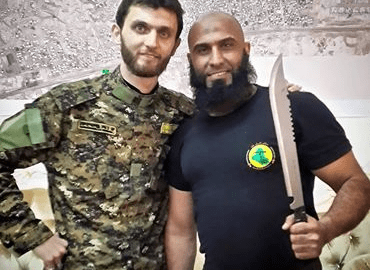


.jpg)

.jpg)
.jpg)


.jpg)


.jpg)


.jpg)


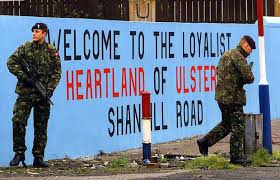


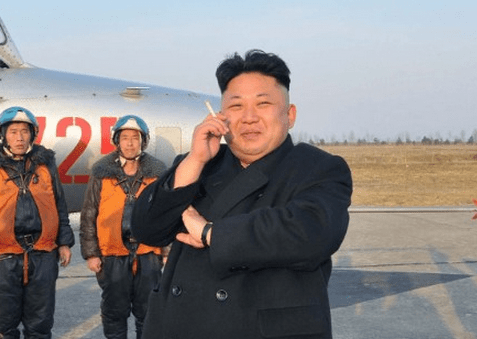


.jpg)


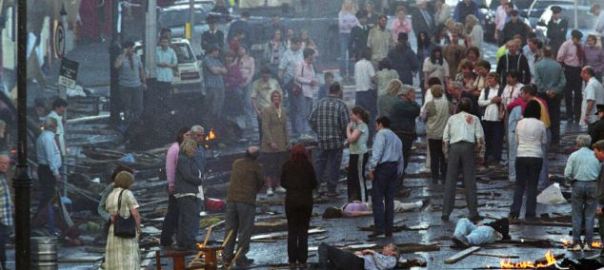


,_January_2010.JPG)




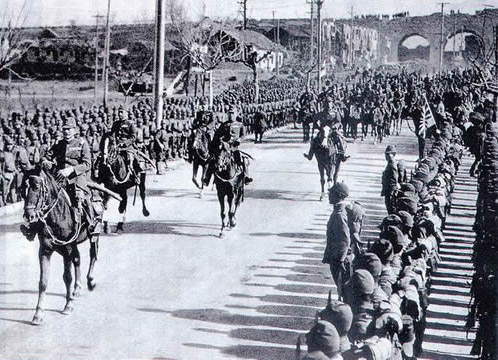
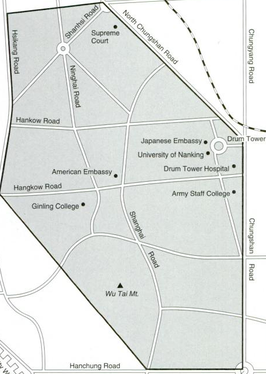




_01.jpg)


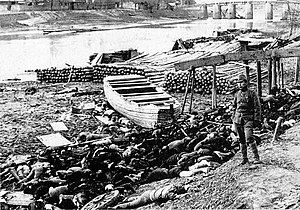

.jpg)









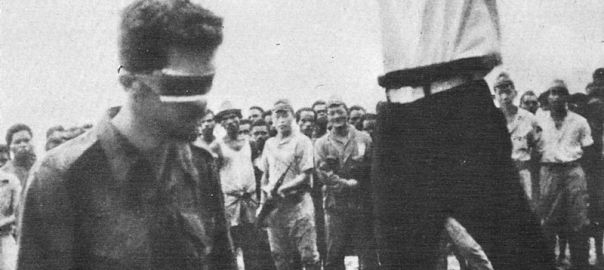

 belfastchildis.com

