Source: The Troubles – History & Background
The Troubles – History & Background
Source: The Troubles – History & Background
Source: The Troubles – History & Background

Source: World War I – Chemical Weapons – History & Background
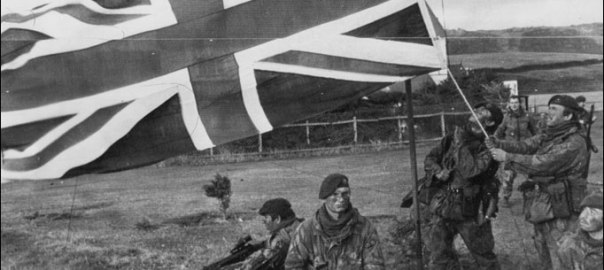

The Falklands War – The Untold Story
The Battle of Goose Green (28–29 May 1982) was an engagement between British and Argentine forces during the Falklands War. Goose Green and its neighbouring settlement Darwin on East Falkland lie on Choiseul Sound on the east side of the island’s central isthmus. They are about 13 miles (21 km) south of the site where the major British amphibious landings took place in San Carlos Water (Operation Sutton) on the night of 21/22 May 1982.

|
|||||||
| Belligerents | |||||||
|---|---|---|---|---|---|---|---|
 Argentina Argentina |
 United Kingdom United Kingdom |
||||||
| Commanders and leaders | |||||||
| Lt. Col. Ítalo Piaggi (POW) Vicecomodoro Wilson Pedrozo |
Lt. Col. Herbert Jones † Maj. Chris Keeble |
||||||
| Strength | |||||||
| 684[4]-871 army 202 airforce 10 navy personnel Total: 896-1083[5] |
690[6] | ||||||
| Casualties and losses | |||||||
| 45[7][8]-55 killed[9][10] 98 army wounded[11] and at least 14 air force personnel wounded.[12] 961[13] captured |
|||||||
——————————————–
The Battle of Goose Green
——————————————–
British forces worked on UTC (Zulu) Time and many reports and sources quote the timing of events based on Zulu time. All times stated in this page are reflected as local, Falkland Island time (UTC−3), the same as Argentine time. On the day of the battle, sunrise was at 08:39 and sunset at 16:58.[17] To avoid confusion between similar company designations, Argentine companies are referred to in the form “Company A” while British forces are referred to as “A Company.”

Map 1: Context map showing location of the Darwin isthmus in relation to the Falkland Islands. Area in red matches the area covered by Map 2
Goose Green and Darwin are on a narrow isthmus connecting Lafonia to Wickham Heights, which together form the large eastern island of the Falkland Islands. The terrain is rolling and treeless and is covered with grass outcrops, areas of thick gorse and peat bogs making effective camouflage and concealment extremely difficult. From May to August, the southern hemisphere winter, the ground is sodden and frequently covered with brackish water, causing movement to be slow and exhausting, especially at night. The isthmus has two settlements, both on the eastern coastal edge with Darwin settlement to the north and Goose Green to the south. The islands have a cold, damp climate and light, drizzly rains occur two out of every three days with continuous winds. Periods of rain, snow, fog, and sun change rapidly, and sunshine is extremely limited, leaving few opportunities for troops to warm up and dry out.[18]
The bulk of the Argentine forces were in positions around Port Stanley about 50 miles (80 km) to the east of San Carlos. The Argentine positions at Goose Green and Darwin were well defended by a force of combined units equipped with artillery, mortars, 35 mm cannon and machine guns.[19] British intelligence indicated that the Argentine force only presented limited offensive capabilities and did not pose a major threat to the landing area at San Carlos. Consequently, Goose Green seemed to have no strategic military value for the British in their campaign to recapture the islands and initial plans for land operations had called for Goose Green to be isolated and bypassed.[20]
After the British landings at San Carlos on 21 May and while the bridgehead was being consolidated, no offensive ground operations had been conducted and activities were limited to digging fortified positions, patrolling and waiting;[21] during this time Argentine air attacks caused significant loss of and damage to British ships in the area around the landing grounds. These attacks, and the lack of movement of the landed forces out of the San Carlos area, led to a feeling among senior commanders and politicians in the UK that the momentum of the campaign was being lost.[22] As a result, British Joint Headquarters in the UK came under increasing pressure from the British government for an early ground offensive of political and propaganda value.[23] There were also fears that the United Nations Security Council would vote for a cease-fire, maintaining current positions. If the Darwin-Goose Green isthmus could be taken prior to such a decision, British forces would control access to the entire Lafonia and thus a significant portion of East Falkland.[24] On 25 May Brigadier Julian Thompson, ground forces commander, commanding 3 Commando Brigade, was again ordered to mount an attack on Argentine positions around Goose Green and Darwin.[22]
The defending Argentine forces, known as Task Force Mercedes, consisted of two companies of Lieutenant-Colonel Italo Piaggi‘s 12th Infantry Regiment (IR12)—his third company (Company B) was still deployed on Mount Kent as Combat Team Solari and was only to re-join the battalion after the first days fighting.[25] The Task Force in 1982 also contained a company of the Ranger-type 25th Infantry Regiment (IR25).[26] Air defence was provided by a battery of six 20 mm Rheinmetall manned by Air Force personnel and two radar-guided Oerlikon 35 mm anti-aircraft guns from the 601st Anti-Aircraft Battalion, that would be employed in a ground support role in the last stages of the fighting. There was also one battery of three OTO Melara Mod 56 105 mm pack howitzers from the 4th Airborne Artillery Regiment. Pucarás based at Stanley, armed with rockets and napalm, provided close air support.[27][28] Total forces under Piaggi’s commanded numbered 1083 men.[29]
Piaggi’s orders required him: (a) to provide a reserve battle group (Task Force Mercedes) in support of other forces deployed to the west of Stanley; (b) to occupy and defend the Darwin isthmus; and (c) to defend Military Air Base Condor located at Goose Green. He assumed an all-round defence posture with Company A, IR12 providing the key to his defence, they being deployed along a gorse hedge running across the Darwin isthmus from Darwin Hill to Boca House.[25] Piaggi deployed his Recce Platoon as an advance screen forward of Company A IR12 towards Coronation Ridge while Company C IR12 were deployed south of Goose Green to cover the approaches from Lafonia. To replace his Company B left on Mount Kent, he created a composite company from headquarters and other staff and deployed them in Goose Green. 1st Lt Carlos Daniel Esteban‘s “Ranger” Company C IR25 provided a mobile reserve and were billeted at the school-house in Goose Green.[25] Elements were also deployed to Darwin settlement, Salinas Beach and Boca House and the air force security cadets together with the anti-aircraft elements were charged with protecting the airfield. Minefields had been laid in areas deemed tactically important (Refer Map 2) to provide further defence against attack.[30]

Argentinian 120mm mortar position (possibly close to Goose Green)
On paper Piaggi had a full regiment, but it consisted of units from three separate regiments from two different brigades, none of whom had ever worked together. IR12 consisted mostly of conscripts from the northern, sub-tropical province of Corrientes, while the IR25 Company was considered an elite formation and well-led. At the start of the battle, the Argentinian forces had about the same number of effective combatants as the British paratroopers.[31] Some elements were well-trained and displayed a high degree of morale and motivation (Company C IR25 and 25 Signal company); one of their officers remarking that: “…we are going to defend something that is ours.”[31] Other companies were less well motivated, with the 12th Regiment chaplain, Padre Santiago Mora writing:
The conscripts of 25th Infantry wanted to fight and cover themselves in glory. The conscripts of 12th Infantry Regiment fought because they were told to do so. This did not make them any less brave. On the whole, they remained admirably calm.[32]
The Argentine positions were well-selected, and officers were well-briefed.[31] In the weeks before the battle British air strikes, poor logistic support and inclement conditions had contributed to the reduction of overall Argentine morale,[33] but it remained strong among the officers, NCOs and conscripts of the 25th Regiment company and 4th Airborne Artillery battery.[34]

Remains of Harrier XZ998, shot down over Goose Green on 27 May 1982.
On 4 May three Royal Navy Sea Harriers operating from HMS Hermes attacked the airfield and installations at Goose Green. During the operation, a Sea Harrier was shot down by Argentine 35mm anti-aircraft fire, killing its pilot.[35] As part of the diversionary raids to cover the British landings in the San Carlos area on 21 May, which involved naval shelling and air attacks, ‘D’ Squadron of the SAS put in a major raid to simulate a battalion-sized attack on the Argentine troops dug in on Darwin Ridge.[36] Argentine forces had also spotted 2 Para reconnaissance parties in the days prior to the attack. Throughout 27 May, Royal Air Force Harriers were active over Goose Green. One of them, responding to a call for help from 2 Para, was lost to 35mm fire while attacking Darwin Ridge.[37][38][39] The Harrier attacks, the sighting of the reconnaissance elements as well as the BBC announcing that the 2nd Battalion of the Parachute Regiment were poised and ready to assault Darwin and Goose Green the day before the assault alerted the Argentine garrison to the impending attack.[40]
Thompson ordered 2nd Battalion of the Parachute Regiment (2 Para) to prepare for and execute the operation as they were the unit closest to Goose Green in the San Carlos defensive perimeter.[41] He ordered Lieutenant-Colonel Herbert ‘H’ Jones, Officer Commanding 2 Para, to “carry out a raid on Goose Green isthmus and capture the settlements before withdrawing in a reserve for the main thrust to the north.” The “capture” component appealed more to Jones than the “raid” component, although Thompson later acknowledged that he had assigned insufficient forces to rapidly execute the “capture” part of the orders.[42]

Milan missile, similar to those used in the battle
2 Para consisted of three rifle companies, one patrol company, one support company and an HQ company. Thompson had assigned three 105 mm artillery pieces with 960 shells from 29 Commando Regiment, Royal Artillery; one MILAN anti-tank missile platoon and Scout helicopters as support elements. In addition, close air support was available from three Royal Air Force Harriers, and naval gunfire support was to be provided by HMS Arrow in the hours of darkness.[43]
SAS reconnaissance had reported that the Darwin – Goose Green area was occupied by one Argentine company. Brigade intelligence reported that enemy forces consisted of three infantry companies (two from IR12 and one from IR25), one platoon from IR8 plus a possible amphibious platoon together with artillery and helicopter support. Jones was not too perturbed by the conflicting intelligence reports and, incorrectly, tended to believe the SAS reports, on the assumption that they were actually “on the spot” and were able to provide more accurate information than the Brigade intelligence staff.[44] Based on this intelligence and the orders from Thompson, Jones planned the operation to be conducted in six phases, as a complicated night / day, silent / noisy attack. C Company was to secure the start line and then A Company was to launch the attack from the start line on the left (Darwin) side of the isthmus. B Company would launch their attack from the start line directly after A Company had initiated contact and would advance on the right (Boca House) side of the isthmus. Once A and B Companies had secured their initial objectives, D Company would then advance from the start line between A and B Companies and were to “go firm” on having exploited their objective. This would be followed by C Company, who were required to pass through D Company and neutralise any Argentine reserves. C Company would then advance again and clear the Goose Green airfield after which the settlements of Darwin and Goose Green would be secured by A and D Companies respectively.[45]
As most of the helicopter airlift capability had been lost with the sinking of the Atlantic Conveyor, 2 Para were required to walk the 13 miles (21 km) from San Carlos to the forming-up place at Camilla Creek House.[46] C Company and the commando engineers moved out from there at 22:00 on 27 May to clear the route to the start line for the other companies. A fire base (consisting of air and naval fire controllers, mortars and snipers) was established by Support Company west of Camilla Creek, and they were in position by 02:00 on the morning of 28 May.[47] The three guns from 8 Battery, their crew and ammunition had been flown in to Camilla Creek House by 20 Sea King helicopter sorties after last light on the evening of 27 May. The attack, to be initiated by A company, was scheduled to start at 03:00, but because of delays in registering the support fire from HMS Arrow, only commenced at 03:35.[48]
—————————————————
20th Century Battlefields – Falklands War
—————————————————

Map 2: Actual course of British attack: Goose Green, 28–29 May 1982
At 03:35 HMS Arrow opened fire (she was to fire a total of 22 star-shell (illumination) and 135 rounds of 4.5″ HE shells in a 90-minute bombardment), signalling the start of the attack.[49] In the ensuing night battle about twelve Argentines were killed.[26] The platoon under Sub-Lieutenant Gustavo Adolfo Malacalza fought a delaying action against the British paratroopers, blooding themselves on Burntside Hill before taking up combat positions again on Darwin Ridge.[26]
Major Philip Neame’s D Company was temporarily halted by the Coronation Ridge position. Two of his men, 24-year-old Lance-Corporal Gary Bingley and 19-year-old Private Barry Grayling darted out from under cover to charge the enemy machine gun nest that was holding up the advance. Both were hit 10 metres (11 yd) from the machine gun, but shot two of the crew before collapsing. Bingley “got hit in the head and I got hit in the hip,” Grayling recalled in an interview published in 2007. “Unfortunately, he didn’t make it.”[50] Bingley was posthumously awarded the Military Medal and Grayling was decorated with the Queen’s Gallantry Medal. With the enemy machine gun out of action, the Paras were able to clear the Argentine platoon position, at the cost of three dead.[26]
Then 2 Para moved on to the south via Darwin Parks. The Argentines made a determined stand along Darwin Ridge. As A and B Companies moved south from Coronation Ridge they were raked by fire from a couple of concealed Argentine FN MAG machine guns. An Argentine senior NCO, Company Sergeant-Major Juan Carlos Cohelo, is credited with rallying the IR12’s A Company remnants falling back from Darwin Parks, and was later awarded the Medal of Valour in Combat. He was seriously wounded later in the day. Another two IR12 NCOs, reported to be sergeants, who had fallen back from the earlier fighting, at great risk to themselves cleared the jammed machinegun of IR25 Private Jorge Oscar Ledesma, allowing him to resume fire at a critical point in the morning battle; Ledesma’s fire killed Colonel Jones, according to 2012 Argentine reports.[51]
The first British assault was broken up by fire from Sub-Lieutenant Ernesto Orlando Peluffo‘s IR12 platoon after the platoon sergeant, Buenaventura Jumilla, warned that the British were approaching. Corporal David Abols later said that an Argentine sniper was mainly responsible for holding up A Company and with shooting several Paras in the morning fighting.[a] Nevertheless, the Paras called on the Argentines to surrender. The death of Lieutenant-Colonel Jones was attributed to a sniper identified as Corporal Osvaldo Faustino Olmos, who was interviewed by the British newspaper “Daily Express” in 1996.[52]Corporal Olmos, of IR25 had refused to leave his foxhole and his section fired at Jones and the five paratrooperss who accompanied him as he moved forward.[b]
At this juncture of the battle, 2nd Para’s advance had become stuck. A Company was in the gorse line at the bottom of Darwin Hill, and against the entrenched Argentines who were looking down the hill at them. As it was now daylight, Jones led an unsuccessful charge up a small gully resulting in the death of the adjutant, Captain Wood, A Company’s second-in-command Captain Dent, and Corporal Hardman.[53]
Shortly thereafter Jones was seen to run west along the base of Darwin Ridge to a small re-entrant, followed by his bodyguard. He checked his Sterling submachine gun, then ran up the hill towards an Argentine trench. He was seen to be hit once, then fell, got up and was hit again from the side. He fell metres short of the trench, hit in the back and the groin, and died within minutes.[53][c]
As Jones lay dying, his men radioed for urgent casualty evacuation. However, the British Scout Helicopter sent to evacuate Jones was shot down by an Argentine FMA IA 58 Pucara ground attack aircraft. The pilot, Lt. Richard Nunn RM was killed and posthumously received the DFC, and the aircrewman, Sgt. Belcher RM badly wounded in both legs.[53] Corporal José Luis Ríos, of the 12th Regiment’s Reconnaissance Platoon who in the opinion of historian Hugh Bicheno had killed Lieutenant-Colonel Jones,[54] was later fatally wounded manning a machine-gun in his trench by Corporal Abols firing a 66 mm rocket.[d]
Jones was posthumously awarded the Victoria Cross.

Remnants of Argentinian defensive positions along gorse hedge on Darwin Hill
By then it was 10.30 am and Major Dair Farrar-Hockley‘s A Company made a third attempt, but this petered out. Eventually the British company, hampered by the morning fog as they advanced up the slope of Darwin Ridge, were driven back to the gulley by the fire of 1st Platoon of IR25’s C Company, under the command of 2nd Lieutenant Roberto Estévez.
During this action Lieutenant Estévez directed Argentine 105 mm artillery and 120 mm mortar fire that posthumously earned him the Argentine Nation to the Heroic Valour in Combat Cross (CHVC). 2 Para’s mortar crews fired 1,000 rounds to keep the enemy at bay, and helped stop the Argentines getting a proper aim at the Paras.[e]
It was almost noon before the British advance resumed. A Company soon cleared the eastern end of the Argentine position and opened the way forward. There had been two battles going on in the Darwin hillocks – one around Darwin Hill looking down on Darwin Bay, and an equally fierce one in front of Boca Hill, also known as Boca House Ruins. Sub-Lieutenant Guillermo Ricardo Aliaga‘s 3rd Platoon of RI 8’s C Company held Boca Hill. The position of Boca Hill was taken after heavy fighting by Major John Crosland’s B Company with support from the MILAN anti-tank platoon. Sub-Lieutenants Aliaga and Peluffo were gravely wounded in the fighting. Crosland was the most experienced British officer and, as the events of the day unfolded, it was later said that Crosland’s cool and calm leadership of his soldiers on the battlefield turned the Boca House section of the front line.
About the time of the victory at the Boca Hill position, A Company overcame the Argentine defenders on Darwin Hill, finally taking the position that had resisted for nearly six hours,[f] with many Argentine and British casualties. Majors Farrar-Hockley and Crosland each won the Military Cross for their efforts. Corporal David Abols was awarded a Distinguished Conduct Medal for his daring charges which turned the Darwin Hill battle.

35mm Oerlikon, similar to the two guns deployed by Argentinean forces at the airfield
After the victory on Darwin Ridge, C and D Companies began to make their way to the small airfield as well as Darwin School, which was east of the airfield, while B Company made their way south of Goose Green Settlement. A Company remained on Darwin Hill. C Company took heavy losses when they became the target of intense direct fire from 35 mm anti-aircraft guns, causing 20 per cent casualties.[55] Private Mark Hollman-Smith, a signaller in the company headquarters, was killed by anti-aircraft guns while trying to recover a heavy machine gun from wounded Private Steve Russell.[56]
Lieutenant James Barry’s No. 12 Platoon, D company, saw some fierce action at the airfield. They were ambushed,[26] by another platoon of the 25th Regiment but one of his men shot dead two of the attackers, and then reported the events to Major Neame.[g] The platoon sergeant charged the attacking enemy with his machine gun, killing four of them. Private Graham Carter won the Military Medal by rallying No. 12 Platoon and leading it forward at bayonet point to take the airfield.[26]
The IR25 platoon defending the airfield fled into the Darwin-Goose Green track and was able to escape. Sergeant Sergio Ismael Garcia of IR25 single-handedly covered the withdrawal of his platoon during the British counterattack. He was posthumously awarded the Argentine Nation to the Valour in Combat Medal. Four Paras of D Company and approximately a dozen Argentines were killed in these engagements. Among the British dead were 29-year-old Lieutenant Barry and two NCOs, Lance-Corporal Smith and Corporal Sullivan, who were killed after Barry’s attempt to convince Sub Lieutenant Juan José Gómez Centurión to surrender, had been rebuffed.[26][h][57][58] C Company had not lost a single man in the Darwin School fighting, but Private Steve Dixon, from D Company, died when a splinter from a 35 mm anti-aircraft shell struck him in the chest.[59] The Argentine 35mm anti-aircraft guns under the command of Second Lieutenant Claudio Oscar Braghini reduced the schoolhouse to rubble after sergeants Mario Abel Tarditti and Roberto Amado Fernandez reported to him that sniper fire was coming from there.[2][3]
At around this time three Harriers made an attack on the Argentine 35mm gun positions; the army radar-guided guns were unable to respond effectively because a piece of mortar shrapnel had earlier struck the generator to the guns and fire-control radar. This greatly lifted morale among the British paras and helped convince Piaggi of the futility of continued resistance. Although it was not known at the time, the Harriers came close to being shot down in their bomb run after being misidentified as enemy aircraft by Lieutenant-Commander Nigel Ward and Flight Lieutenant Ian Mortimer of 801 Squadron.[i]

J Company, 42 Commando, RM arrive in Goose Green as reinforcements on the evening of 28 May after fighting had ceased, but prior to the Argentinian surrender.
By last light, the situation for 2 Para was critical. A Company was still on Darwin Hill north of the gorse hedge, B Company had penetrated much further south and had swung in a wide arc from the western shore of the isthmus eastwards towards Goose Green. They were isolated and under fire from an Argentinian platoon and unable to receive mutual support from the other companies.[60] To worsen their predicament Argentine helicopters—a Puma, a Chinook and six Hueys—landed southwest of their position just after last light, bringing in the remaining Company B of IR12 (Combat Team Solari) from Mount Kent.[61] B company managed to bring in artillery fire on these new reinforcements, forcing them to disperse towards the Goose Green settlement, while some re-embarked and left with the departing helicopters.[62] For C Company, the attack had also fizzled out after the skirmish at the school-house with the company commander injured, no radio contact and the platoons scattered with up to 1,200m between them. The C Company second-in-command was also unaccounted for.[63] D Company had regrouped just before last light, and they were deployed to the west of the dairy; exhausted, hungry, low on ammunition and without water.[64] Food was redistributed to share one ration-pack between two men for A and C Companies, but B and D Companies could not be reached. At this time a British helicopter casualty evacuation flight took place, successfully extracting C Company casualties on the forward slope of Darwin Hill under fire from Argentine positions.[65]
To Keeble, the situation looked precarious: the settlements had been surrounded but not captured, and his companies were exhausted, cold and low on water, ammunition and food. His concern was that the Company B reinforcements dropped by helicopter would either be used in an early morning counter-attack, or used to stiffen the defences around Goose Green. He had seen the C Company assault stopped in its tracks by the AA fire from the airfield, and had seen the Harrier strikes of earlier that afternoon missing their intended targets. In an order group with the A and C Company commanders, he indicated his preference for calling for an Argentine surrender rather than facing an ongoing battle the following morning. His alternative plan, if the Argentines did not surrender, was to “flatten Goose Green” with all available fire-power and then launch an assault with all forces possible, including reinforcements he had requested from Thompson. On Thompson’s orders, J Company of 42 Commando, Royal Marines, the remaining guns of 8 Battery, and additional mortars were helicoptered in to provide the necessary support.[66]

Once Thompson and 3 Brigade had agreed to the approach, a message was relayed by CB radio from San Carlos to Mr. Eric Goss, the farm manager in Goose Green – who in turn delivered it to Piaggi. The call explained the details of a planned delegation who would go forward from the British lines to the Argentine positions in Goose Green bearing a message. Piaggi agreed to receive the delegation.[67] Soon after midnight, two Argentine Air Force warrant officer prisoners of war were sent to meet with Piaggi and to hand over the proposed terms of surrender.[j] On receiving the terms, Piaggi concluded “..The battle had turned into a sniping contest. They could sit well out of range of our soldiers’ fire and, if they wanted to, raze the settlement. I knew that there was no longer any chance of reinforcements from 6th [Compañía ‘Piribebuy’] Regiment’s B Company and so I suggested to Wing Commander [Vice Commodore] Wilson Pedrozo that he talk to the British. He agreed reluctantly.” The next morning, agreement for an unconditional surrender was reached and Pedrozo held a short parade and those on parade then laid down their weapons. After burning the regimental flag, Piaggi led the troops and officers, carrying their personal belongings, into captivity.[68]


Between 45[8][69] and 55 Argentines were killed[10] (32 from IR12, 13 from Company C 25IR, five killed in the Platoon from IR8, 4 Air Force staff and one Navy servicemen)[9] and about 86 wounded.[10] The claim in various British books that the 8th Regiment lost five killed defending Boca House is disputed, with other sources claiming that Corporal Juan Waudrik (supposedly killed at Boca House) was mortally wounded in late May after the tractor he was riding detonated a mine at Fox Bay,[70] and that Privates Simón Oscar Antieco, Jorge Daniel Ludueña, Sergio Fabián Nosikoski and Eduardo Sosa, the four conscripts reportedly killed fighting alongside Waudrik, were killed in the same locality on West Falkland during a naval bombardment on 9 May. In all, the 8IR lost 5 killed during the Falklands War.[citation needed] The remainder of the Argentine force were taken prisoner. Argentine dead were buried in a cemetery to the north of Darwin, and the wounded were evacuated to hospital ships via the medical post in San Carlos. Prisoners were used to clear the battlefield; in an incident involving the moving of artillery ammunition, four IR12 conscripts were involved in a huge explosion that caused two fatalities and two seriously wounded.[14] After clearing the area and assisting with the burying of the dead, the prisoners were marched to and interned in San Carlos.[71] The British lost 18 killed (16 Paras, one Royal Marine pilot and one commando sapper)[14] and 64 wounded. The seriously wounded were evacuated to the hospital ship Uganda.[72]
Lieutenant-Colonel Ítalo Ángel Piaggi surrendered his forces in Goose Green on the Argentinian National Army Day (29 May). After the war he was forced to resign from the army, and faced ongoing trials questioning his competence at Goose Green. In 1986 he wrote a book titled Ganso Verde, in which he strongly defended his decisions during the war and criticised the lack of logistical support from Stanley. In his book he said that Task Force Mercedes had plenty of 7.62mm rifle ammunition left, but had run out of 81mm mortar rounds, and there were only 394 shells left for the 105mm artillery guns.[4] On 24 February 1992, after a long fight in both civil and military courts, Piaggi had his retired military rank and pay reinstated as a full colonel.[73] He died in July 2012.[74]

See Victoria Cross
Lieutenant-Colonel Herbert ‘H’ Jones was buried at Ajax Bay on 30 May; after the war his body was exhumed and transferred to the British cemetery in San Carlos.[75] He was posthumously awarded the Victoria Cross.[76]
Major Chris Keeble, who took over command of 2 Para when Jones was killed, was awarded the DSO for his actions at Goose Green.[77] Keeble’s leadership at Goose Green was one of the key factors which lead to the British victory, in that his flexible style of command and the autonomy he afforded to his company commanders was much more successful than the rigid control and adherence to plan exercised by Jones.[78] Despite sentiment among the soldiers of 2 Para for him to remain in command, he was superseded by Lieutenant-Colonel David Robert Chaundler, who was flown in from Britain to take command of the battalion.[79]
All order of battle data from Fitz-Gibbon (2002), unless otherwise stated[43]
| Argentine Forces (Task Force Mercedes) Lieutenant Colonel I. Piaggi |
British Forces (2 Para Group) Lieutenant Colonel H. Jones |
| The following forces were present at the start of fighting at circa 06:35 on 28 May 1982 | |
| Infantry | |
| HQ Company (-) Infantry Regiment 12 (Lt. Col. Piaggi) | HQ Company (-) 2 Para (Lt. Col H. Jones) |
| Company A, Infantry Regiment 12 (1st Lt. Manresa) | A Company, 2 Para (Maj. D. Farrar-Hockley) |
| Company C, Infantry Regiment 12 (1st Lt. Fernández) | B Company, 2 Para (Maj. J. Crossland) |
| Company C, Infantry Regiment 25 (1st Lt. Esteban) | C (Patrol) Company, 2 Para [two platoons] (Maj. Roger Jenner) |
| 3 Platoon, Company C, Infantry Regiment 8[80] | D Company, 2 Para (Maj. P. Neame) |
| Support Company, 2 Para (Maj. Hugh Jenner)[81] | |
| Recce Platoon (-) Infantry Regiment 12 | NGFO 4, 148 Commando FO Bty[80] |
| 202 air force personnel from Security Coy, Military Aviation School; Pucará Sqn, Malvinas; 1st Naval Attack Sqn [MB-399] and also including 20m AA crews[80] | |
| Engineers | |
| One section, Engineer Company 9 | Recce Troop, 59 Independent Commando Squadron, Royal Engineers |
| Artillery and support fire | |
| 3x 105mm pack howitzer: Troop from Battery A, Airborne Artillery Regiment 4[80] | 3x 105mm light guns from 8 Commando Battery[80] |
| 1x 120mm Mortar | 2x 81mm Mortars |
| NGS from 1x Type 21 frigate (HMS Arrow: dark hours only) | |
| Anti-tank | |
| 1x 105mm recoilless rifle | 3x Milan ATGM detachments from 43 Battery, 32 Guided Weapons Regiment[80] |
| Air defence | |
| 2x 35mm radar controlled AA: 3 Sec, Battery B, GADA 601[80] | 6x Blowpipe detachments: Air Defence Troop, Royal Marines |
| 6x 20mm AA | |
| Close air support | |
| 3x Pucará operated from Stanley airfield[82] | 3x Harrier GR3s from HMS Hermes[83] |
| Reinforcements received during 28 May 1982 | |
| 106 personnel: Company B, Infantry Regiment 12 | |
| Reinforcements received after fighting ceased | |
| J Company, 42 Commando, Royal Marines | |
| Remaining 3x 105mm light guns from 8 Commando Battery | |
| Mortar locating radar | |
| 2x 120mm Mortars | 6x 81mm Mortars |
| Reserves available as of 29 May | |
| None | 1x Type 21 frigate for NGS |
| Harrier close air support | |
| Memorials related to the battle | ||||||||||
|---|---|---|---|---|---|---|---|---|---|---|
|
During the planning of the assault of both Darwin and Goose Green, the Battalion Headquarters were listening in to the BBC World Service. The newsreader announced that the 2nd Battalion of the Parachute Regiment were poised and ready to assault Darwin and Goose Green, causing great confusion with the commanding officers of the battalion. Lieutenant Colonel Jones became furious with the level of incompetence and told BBC representative Robert Fox he was going to sue the BBC, Whitehall and the War Cabinet.[84]
In the years after the battle, Argentine army officers and NCOs were accused of handing out brutal field punishment to their troops at Goose Green (and other locations during the war).[85] In 2009, Argentine authorities in Comodoro Rivadavia ratified a decision made by authorities in Río Grande, Tierra del Fuego. announcing their intention to charge 70 officers and NCOs with inhumane treatment of conscript soldiers during the war.[86] There were claims, however, that false testimonies were used as evidence in accusing the Argentine officers and NCOs of abandonment, and Pablo Vassel who has made the denouncements, had to step down from his post as president of Human Rights Department of Corrientes province.[87] Other veterans are sceptical about the veracity of the accusations with Colonel José Martiniano Duarte, an ex-601 Commando Company officer in the Falklands, saying that it has become fashionable for ex-conscripts to now accuse their superiors of abandonment.[88] Since the 2009 announcement was made, no one in the military or among the retired officers and NCOs has been charged, causing Vassel in April 2014 to comment:
For over two years we’ve been waiting for a final say on behalf of the courts … There are some types of crimes that no state should allow to go unpunished, no matter how much time has passed, such as the crimes of the dictatorship. Last year Germany sentenced a 98-year-old corporal for his role in the concentration camps in one of the Eastern European countries occupied by Nazi Germany. It didn’t take into account his age or rank.[89]
The Falklands War – The Untold Story
See Victoria Cross
……………………………………..


Is There Life On Mars?
will help you start to answer 20 of the most perplexing and fascinating questions about the universe, such as: Why do the planets stay in orbit? Was Einstein right? What is Dark Matter? Are we made from Stardust? Is there cosmological evidence for God? Distilling the wisdom and research of scientists operating at the cutting edge of their field, Stuart Clark’s book is a stimulating and challenging guide to the wonders of the universe.
If like me you are curious by nature and like to question the world ( and Universe ) around you and you spend fruitless hours pondering some of the most mind boggling mysteries of the Universe and beyond , then this is the book for you.
Dr. Stuart Clark’s book covers some of the biggest and most perplexing questions out there and if like me you consider yourself an amateur cosmologist ( the wife just doesn’t understand) , but struggle to get your head round some of the seemingly unfathomable concepts of time and space , particle and theoretical physics etc. , then the good Dr. explains it all in a manner that is condensed and accessible to all and I was gipped from the first page.
In fact I enjoyed this book so much that I have read it three times and I am pleased to announce that my knowledge as an amateur cosmologist is increasing by the day , ( the wife doesn’t care ) although my mind is frazzled trying to get my head around the time scales and distances involved and getting to grips with the ” cosmological distance ladder ” ( page 19) .
Great for amateurs …but experts should already know these things……….
For me it was perfect and for a brief moment in time I lost myself amongst the stars and other wonders of the Universe and never wanted it to end. ( page 269)
Content:
I have highlighted my favourite topics , which was pretty much everything
The human quest to know what’s out there
2. HOW BIG IS THE UNIVERSE?
The cosmological ladder
3. HOW OLD IS THE UNIVERSE?
Cosmology’s age crisis
4. WHAT ARE STARS MADE FROM?
The cosmic recipe
5. HOW DID THE EARTH FORM?
The birth of the planet we call home
6. WHY DO THE PLANETS STAY IN ORBIT?
And why the moon doesn’t fall down
7. WAS EINSTEIN RIGHT?
Gravitational force versus space-time warp
8. WHAT IS A BLACK HOLE?
Gobbling monster, evaporating pin pricks and balls of string
9. HOW DID THE UNIVERSE FORM?
Picturing the Big Bang
10. WHAT WERE THE FIRST CELESTIAL OBJECTS?
The beginnings of the Universe as we know it
11. WHAT IS DARK MATTER?
The debate about what holds the Universe together
12. WHAT IS DARK ENERGY?
The most mysterious substance in the Universe
13. ARE WE MADE FROM STARDUST?
The mystery of how life emerged
14. IS THERE LIFE ON MARS?
The chances of finding we have neighbours
15. ARE THERE OTHER INTELLIGENT BEINGS?
Is anyone out there?
16. CAN WE TRAVEL THROUGH TIME AND SPACE?
The possibility of warp drives and time travel
17. CAN THE LAWS OF PHYSICS CHANGE?
Physics beyond Einstein
18. ARE THERE ALTERNATIVE UNIVERSES?
Schrodinger’s cat and the implications for us all
19. WHAT WILL BE THE FATE OF THE UNIVERSE?
Big crunch, slow heat death or big rip
20. IS THERE COSMOLOGICAL EVIDENCE FOR GOD?
The apparent fine-tuning of the Universe for human life
21. WHY DO THEY COVER JELLY BABIES WITH FLOUR?

Eating my son’s Jelly Babies and I was wondering what that flour like substance that covered them was and why they and no other jelly sweets have it ?
Visit Stuart Clarks website: Stuart Clarks Universe
———————————————-
Reviews
———————————————-


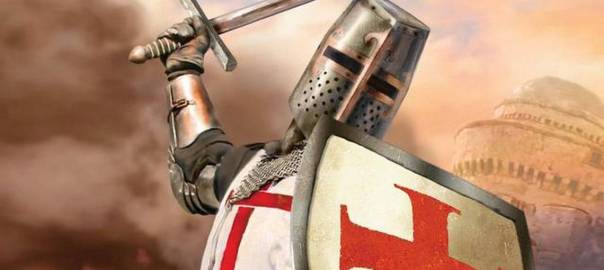
The Crusades – Muslims vs Christians

The Crusades were military campaigns sanctioned by the Catholic Church in the Middle Ages. Pope Urban II authorized the First Crusade in 1095 with the goal of restoring European access to the Holy Land, and an intermittent 200-year struggle ensued. Urban was also seeking to reunite the Catholic Church under his leadership by militarily supporting Emperor Alexios I. After centuries of competitive co-existence with the Arabs following the initial Muslim conquests the Byzantine Empire had been defeated by the Turks in 1071 at the Battle of Manzikert.
As a result, the Byzantines lost the fertile coastal area of Anatolia and were forced into competition with Turks migrating westward
—————————————————————————————
Jihad vs. Crusade – Holy Wars in Comparative Perspective
—————————————————————————————
Hundreds of thousands of Roman Catholics from many different classes and nations of Western Europe became crusaders by taking a public…
View original post 8,745 more words

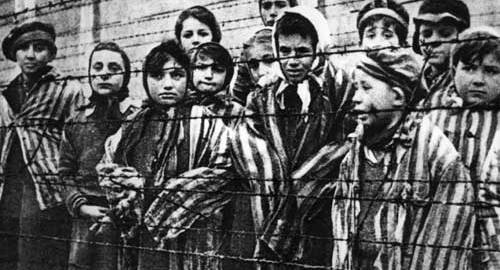
The Holocaust (from the Greek ὁλόκαυστος holókaustos: hólos, “whole” and kaustós, “burnt”),[2] also known as the Shoah (Hebrew: השואה, HaShoah, “the catastrophe”), was a genocide in which approximately six million Jews were killed by Adolf Hitler‘s Nazi regime and its collaborators.[3] Some historians use a definition of the Holocaust that includes the additional five million non-Jewish victims of Nazi mass murders, bringing the total to approximately eleven million. Killings took place throughout Nazi Germany and German-occupied territories.[4]

From 1941 to 1945, Jews were systematically murdered in a genocide, one of the largest in history, and part of a broader aggregate of acts of oppression and killings of various ethnic and political groups in Europe by the Nazi regime.[5] Every arm of Germany’s bureaucracy was involved in the logistics and the carrying out of the genocide, turning the Third Reich into “a genocidal state”.[6] Other victims of Nazi crimes included Romanis, ethnic Poles and other Slavs, Soviet POWs, communists, homosexuals, Jehovah’s Witnesses and the mentally and physically disabled.[7] In total, approximately 11 million people were killed, including approximately one million Jewish children.[8][9] Of the nine million Jews who had resided in Europe before the Holocaust, approximately two-thirds were killed.[10] A network of about 42,500 facilities in Germany and German-occupied territories were used to concentrate victims for slave labor, mass murder, and other human rights abuses.[11] Over 200,000 people are estimated to have been Holocaust perpetrators.[12]
—————————————-
Footprints in the Snow – Holocaust Documentary
—————————————-
The persecution and genocide were carried out in stages, culminating in what was termed the “Final Solution to the Jewish Question” (die Endlösung der Judenfrage), the agenda to exterminate Jews in Europe. Initially the German government passed laws to exclude Jews from civil society, most prominently the Nuremberg Laws of 1935. A network of concentration camps was established starting in 1933 and ghettos were established following the outbreak of World War II in 1939. In 1941, as Germany conquered new territory in eastern Europe, specialized paramilitary units called Einsatzgruppen were used to murder around two million Jews and “partisans”, often in mass shootings. By the end of 1942, victims were being regularly transported by freight trains to specially built extermination camps where, if they survived the journey, most were systematically killed in gas chambers. The campaign of murder continued until the end of World War II in Europe in April–May 1945.
—————————————-
BBC’s World at War- The Final Solution
—————————————-
Overall, Jewish armed resistance was limited. The most notable exception was the Warsaw Ghetto Uprising of 1943, when thousands of poorly-armed Jewish fighters held the Waffen-SS at bay for four weeks. An estimated 20,000 to 30,000 Jewish partisans actively fought against the Nazis and their collaborators in Eastern Europe.[13][14] French Jews were also highly active in the French Resistance, which conducted a guerilla campaign against the Nazis and Vichy French authorities. In total, over a hundred armed Jewish uprisings took place.
The term holocaust comes from the Greek word holókauston, referring to an animal sacrifice offered to a god in which the whole (olos) animal is completely burnt (kaustos).[16]
Writing in Latin, Richard of Devizes, a 12th-century monk, was the first recorded chronicler to use the term “holocaustum” in Britain.[17] Sir Thomas Browne employed the word “holocaust” in his philosophical Discourse Urn Burial in 1658[18] and for centuries, the word was used generally in English to denote great massacres. Since the 1960s, the term has come to be used by scholars and popular writers to refer specifically to the Nazi genocide of Jews.[19] The television mini-series Holocaust is credited with introducing the term into common parlance after 1978.[20]
The biblical word shoah (שואה; also transliterated sho’ah and shoa), meaning “calamity” became the standard Hebrew term for the Holocaust as early as the 1940s, especially in Europe and Israel.[21] Shoah is preferred by some Jews for several reasons including the theologically offensive nature of the word “holocaust” which they take to refer to the Greek pagan custom.[22]
The Nazis used a euphemistic phrase, the “‘Final Solution to the Jewish Question” and the formula “Final Solution” has been widely used as a term for the genocide of the Jews.

Ghettos were established in Europe in which Jews were confined before being shipped to extermination camps.
Every arm of Germany’s bureaucracy was involved in the logistics that led to the genocides, turning the Third Reich into what one Holocaust scholar, Michael Berenbaum, has called “a genocidal state”.[6]
Every arm of the country’s sophisticated bureaucracy was involved in the killing process. Parish churches and the Interior Ministry supplied birth records showing who was Jewish; the Post Office delivered the deportation and denaturalization orders; the Finance Ministry confiscated Jewish property; German firms fired Jewish workers and disenfranchised Jewish stockholders.
The universities refused to admit Jews, denied degrees to those already studying, and fired Jewish academics; government transport offices arranged the trains for deportation to the camps; German pharmaceutical companies tested drugs on camp prisoners; companies bid for the contracts to build the crematoria; detailed lists of victims were drawn up using the Dehomag (IBM Germany) company’s punch card machines, producing meticulous records of the killings. As prisoners entered the death camps, they were made to surrender all personal property which was catalogued and tagged before being sent to Germany to be reused or recycled. Berenbaum writes that the Final Solution of the Jewish question was “in the eyes of the perpetrators … Germany’s greatest achievement.”[23] Through a concealed account, the German National Bank helped launder valuables stolen from the victims.
Saul Friedländer writes that: “Not one social group, not one religious community, not one scholarly institution or professional association in Germany and throughout Europe declared its solidarity with the Jews.”[24] He writes that some Christian churches declared that converted Jews should be regarded as part of the flock, but even then only up to a point. Friedländer argues that this makes the Holocaust distinctive because antisemitic policies were able to unfold without the interference of countervailing forces of the kind normally found in advanced societies such as industry, small businesses, churches, trade unions, and other vested interests and lobby groups.[24]
In many other genocides, pragmatic considerations such as control of territory and resources were central to the genocide policy. Israeli historian and scholar Yehuda Bauer argues that:
The basic motivation [of the Holocaust] was purely ideological, rooted in an illusionary world of Nazi imagination, where an international Jewish conspiracy to control the world was opposed to a parallel Aryan quest. No genocide to date had been based so completely on myths, on hallucinations, on abstract, nonpragmatic ideology—which was then executed by very rational, pragmatic means.[25]
German historian Eberhard Jäckel wrote in 1986 that one distinctive feature of the Holocaust was that:
Never before had a state with the authority of its responsible leader decided and announced that a specific human group, including its aged, its women and its children and infants, would be killed as quickly as possible, and then carried through this resolution using every possible means of state power.[26]
The killings were systematically conducted in virtually all areas of German-occupied territory in what are now 35 separate European countries.[27] It was at its most severe in Central and Eastern Europe, which had more than seven million Jews in 1939. About five million Jews were killed there, including three million in occupied Poland and over one million in the Soviet Union. Hundreds of thousands also died in the Netherlands, France, Belgium, Yugoslavia, and Greece. The Wannsee Protocol makes it clear that the Nazis intended to carry their “final solution of the Jewish question” to Britain and all neutral states in Europe, such as Ireland, Switzerland, Turkey, Sweden, Portugal, and Spain.[28]
Anyone with three or four Jewish grandparents was to be exterminated without exception. This has never happened before, anywhere. Also, the Nazi’s envisioned the extermination of the Jews – where possible – worldwide, not only in Germany proper.[29] Unless their grandparents had converted before 18 January 1871.[30]
——————————————————-
Nazi Concentration and Prison Camps (1945) Nuremberg Trials Documentary_WWII Footages_Full Length
——————————————————-
The use of extermination camps (also called “death camps”) equipped with gas chambers for the purpose of systematic mass extermination of peoples was a unique feature of the Holocaust and unprecedented in history. Never before had there existed places with the express purpose of killing people en masse. These were established at Auschwitz, Belzec, Chełmno, Jasenovac, Majdanek, Maly Trostenets, Sobibór, and Treblinka. The death camps were built to systematically kill millions, primarily by gassing, but also by execution and extreme work under starvation conditions.[31] The idea of mass extermination with the use of stationary facilities built exclusively for that purpose was a result of earlier Nazi experimentation with chemically manufactured poison gas during the secretive Action T4 euthanasia programme against mental patients.[32]
A distinctive feature of Nazi genocide was the extensive use of human subjects in “medical” experiments. According to Raul Hilberg, “German physicians were highly Nazified, compared to other professionals, in terms of party membership.”[33] Some carried out experiments at Auschwitz, Dachau, Buchenwald, Ravensbrück, Sachsenhausen, and Natzweiler concentration camps.[34]
The most notorious of these physicians was Dr. Josef Mengele, who worked in Auschwitz. His experiments included placing subjects in pressure chambers, testing drugs on them, freezing them, attempting to change eye color by injecting chemicals into children’s eyes, and various amputations and other surgeries.[34] The full extent of his work will never be known because the truckload of records he sent to Dr. Otmar von Verschuer at the Kaiser Wilhelm Institute was destroyed by von Verschuer.[35] Subjects who survived Mengele’s experiments were almost always killed and dissected shortly afterwards.
He worked extensively with Romani children. He would bring them sweets and toys and personally take them to the gas chamber. They would call him “Onkel (Uncle) Mengele”.[36] Vera Alexander was a Jewish inmate at Auschwitz who looked after 50 sets of Romani twins:
I remember one set of twins in particular: Guido and Ina, aged about four. One day, Mengele took them away. When they returned, they were in a terrible state: they had been sewn together, back to back, like Siamese twins. Their wounds were infected and oozing pus. They screamed day and night. Then their parents—I remember the mother’s name was Stella—managed to get some morphine and they killed the children in order to end their suffering.[36]
———————————————–
Science and the Swastika :The Deadly Experiment
———————————————–
“The whole problem of the Jews exists only in nation states, for here their energy and higher intelligence, their accumulated capital of spirit and will, gathered from generation to generation through a long schooling in suffering, must become so preponderant as to arouse mass envy and hatred. In almost all contemporary nations, therefore – in direct proportion to the degree to which they act up nationalistically – the literal obscenity of leading the Jews to slaughter as scapegoats for every conceivable public and internal misfortune is spreading.”
Yehuda Bauer and Lucy Dawidowicz maintained that from the Middle Ages onward, German society and culture were suffused with antisemitism, and that there was a direct ideological link from medieval pogroms to the Nazi death camps.[38]
The second half of the 19th century saw the emergence in Germany and Austria-Hungary of the Völkisch movement developed by such thinkers as Houston Stewart Chamberlain and Paul de Lagarde. The movement presented a pseudo-scientific, biologically based racism that viewed Jews as a race locked in mortal combat with the Aryan race for world domination.[39] Völkisch antisemitism drew upon stereotypes from Christian antisemitism but differed in that Jews were considered to be a race rather than a religion.[40]
In a speech before the Reichstag in 1895, völkisch leader Hermann Ahlwardt called Jews “predators” and “cholera bacilli” who should be “exterminated” for the good of the German people.[41] In his best-selling 1912 book Wenn ich der Kaiser wär (If I were the Kaiser), Heinrich Class, leader of the völkisch group Alldeutscher Verband, urged that all German Jews be stripped of their German citizenship and be reduced to Fremdenrecht (alien status).[42] Class also urged that Jews should be excluded from all aspects of German life, forbidden to own land, hold public office, or participate in journalism, banking, and the liberal professions.[42] Class defined a Jew as anyone who was a member of the Jewish religion on the day the German Empire was proclaimed in 1871 or anyone with at least one Jewish grandparent.[42]
The first medical experimentation on humans and ethnic cleansing by Germans took place in the death camps of German South-West Africa during the Herero and Namaqua Genocide. It has been suggested that this was an inspiration for the Holocaust.[43][44]
During the German Empire, völkisch notions and pseudo-scientific racism had become common and accepted throughout Germany,[45] with the educated professional classes of the country, in particular, adopting an ideology of human inequality.[46] Though the völkisch parties were defeated in the 1912 Reichstag elections, being all but wiped out, antisemitism was incorporated into the platforms of the mainstream political parties.[45] The National Socialist German Workers’ Party (Nazi Party; NSDAP) was founded in 1920 as an offshoot of the völkisch movement and adopted their antisemitism.[47] In a 1986 essay, German historian Hans Mommsen wrote about the situation in post–First World War Germany that:
If one emphasizes the indisputably important connection in isolation, one should not then force a connection with Hitler’s weltanschauung [worldview], which was in no ways original itself, in order to derive from it the existence of Auschwitz … Thoughts about the extermination of the Jews had long been current, and not only for Hitler and his satraps. Many of these found their way to the NSDAP from the Deutschvölkisch Schutz-und Trutzbund [German Racial Union for Protection and Defiance], which itself had been called into life by the Pan-German Union.[48]
Tremendous scientific and technological changes in Germany during the late 19th and early 20th centuries together with the growth of the welfare state created widespread hopes that utopia was at hand and that soon all social problems could be solved.[49] At the same time a racist, social Darwinist, and eugenicist world-view which declared some people to be more biologically valuable than others was common.[50] Historian Detlev Peukert states that the Shoah did not result solely from antisemitism, but was a product of the “cumulative radicalization” in which “numerous smaller currents” fed into the “broad current” that led to genocide.[51] After the First World War, the pre-war mood of optimism gave way to disillusionment as German bureaucrats found social problems to be more insoluble than previously thought, which in turn led them to place increasing emphasis on saving the biologically “fit” while the biologically “unfit” were to be written off.[52]

In Germany, Sturmabteilung stormtroopers urge a national boycott of all Jewish businesses on 1 April 1933. These SA stormtroopers are outside Israel’s Department Store in Berlin to deter customers. The signs read: “Germans! Defend yourselves! Don’t buy from Jews.” (“Deutsche! Wehrt Euch! Kauft nicht bei Juden!“)[53] The store was later ransacked during Kristallnacht in 1938, then handed over to a non-Jewish family.
The political situation in Germany and elsewhere in Europe after World War I also contributed to virulent antisemitism. Many Germans did not accept that their country had been defeated in battle, giving rise to the Stab-in-the-back myth. The myth insinuated that it was disloyal politicians, chiefly Jews and Communists, who orchestrated Germany’s surrender. Inflaming the anti-Jewish sentiment espoused by the myth was the apparent overrepresentation of ethnic Jews in the leadership of Communist revolutionary governments in Europe, among them Russian Bolshevik leader Vladimir Lenin, and in Germany itself Ernst Toller as head of a short lived revolutionary government in Bavaria, contributing to the canard of Jewish Bolshevism.[54]
The economic strains of the Great Depression led many in the German medical establishment to advocate the idea of euthanisation of the “incurable” mentally and physically disabled as a cost-saving measure to free up money to care for the curable.[55] By the time the Nazis came to power in 1933, a tendency already existed in the German social policy to save the racially “valuable” while seeking to rid society of the racially “undesirable”.[56]
Although Hitler never wrote that he would exterminate the Jews, he was open about his hatred of them. Although the origin and first expression of Hitler’s anti-Semitism remain a matter of debate.[57] Hitler states in Mein Kampf that he first became an anti-Semite in Vienna.[58] In Mein Kampf, he announced his intention of removing them from Germany’s political, intellectual, and cultural life. From the early 1920s Hitler linked the Jews with bacteria and that they should be dealt with in exactly the same way; in August 1920 he said that resolving “racial tuberculosis” would be solved by the removal of the “causal agent, the Jew”.[59] In Mein Kampf, Hitler wrote: “The nationalization of our masses will succeed only when, aside from all the positive struggle for the soul of our people, their international poisoners are exterminated.”[59] Hitler with the idea of poisoning the poisoners suggested: “If at the beginning of the War and during the War twelve or fifteen thousand of these Hebrew corrupters of the people had been held under poison gas, as happened to hundreds of thousands of our very best German workers in the field, the sacrifice of millions at the front would not have been in vain”.[59] Hitler had by now viewed Marxism as a Jewish doctrine and proclaimed he was fighting against “Jewish Marxism“.[60]
During his time writing Mein Kampf, Hitler reflected on the Jewish Question and concluded that he had been too soft and that in the future only the most severe measures were to be taken if there was any chance of solving it. Hitler believed that the Jewish Question was not only a problem for the German people but for all peoples as “Juda is the world plague”.[61] Ian Kershaw writes that some passages in Mein Kampf are undeniably of an inherently genocidal nature.[59]
In 1922, he allegedly told Major Joseph Hell, at the time a journalist:
Once I really am in power, my first and foremost task will be the annihilation of the Jews. As soon as I have the power to do so, I will have gallows built in rows—at the Marienplatz in Munich, for example—as many as traffic allows. Then the Jews will be hanged indiscriminately, and they will remain hanging until they stink; they will hang there as long as the principles of hygiene permit. As soon as they have been untied, the next batch will be strung up, and so on down the line, until the last Jew in Munich has been exterminated. Other cities will follow suit, precisely in this fashion, until all Germany has been completely cleansed of Jews.[62]
As early as 1933, Julius Streicher was calling for the extermination of the Jews in the Nazi newspaper Der Stürmer.[63] During the war, Streicher regularly authorized articles demanding the annihilation and extermination of the Jewish race.[64]
Mommsen suggested that there were three types of antisemitism in Germany: There was 1) the cultural antisemitism found among German conservatives, especially in the military officer corps as well as in the top members of the civil administration; 2) there was the “volkisch” antisemitism or racism which advocated using violence against the Jews; and 3) the religious anti-Judaism, particularly within the Catholic Church. The cultural antisemitism kept the ruling establishment from distancing itself or opposing the violent, racial antisemitism of the Nazis, and religious antisemitism meant that the religious establishment did not present opposition to racial persecution of the Jews.[65]
With the establishment of the Third Reich, Nazi leaders proclaimed the existence of a Volksgemeinschaft (“people’s community”). Nazi policies divided the population into two categories, the Volksgenossen (“national comrades”), who belonged to the Volksgemeinschaft, and the Gemeinschaftsfremde (“community aliens”), who did not. Nazi policies about repression divided people into three types of enemies, the “racial” enemies such as the Jews and the Gypsies who were viewed as enemies because of their “blood”; political opponents such as Marxists, liberals, Christians and the “reactionaries” who were viewed as wayward “National Comrades”; and moral opponents such as homosexuals, the “work-shy” and habitual criminals, also seen as wayward “National Comrades”.[66] The last two groups were to be sent to concentration camps for “re-education”, with the aim of eventual absorption into the Volksgemeinschaft, though some of the moral opponents were to be sterilized, as they were regarded as “genetically inferior”.[66]
“Racial” enemies such as the Jews could, by definition, never belong to the Volksgemeinschaft; they were to be totally removed from society.[66] German historian Detlev Peukert wrote that the National Socialists’ “goal was an utopian Volksgemeinschaft, totally under police surveillance, in which any attempt at nonconformist behaviour, or even any hint or intention of such behaviour, would be visited with terror”.[67] Peukert quotes policy documents on the “Treatment of Community Aliens” from 1944, which (though never implemented) showed the full intentions of Nazi social policy: “persons who … show themselves [to be] unable to comply by their own efforts with the minimum requirements of the national community” were to be placed under police supervision, and if this did not reform them, they were to be taken to a concentration camp.[68]
Leading up to the March 1933 Reichstag elections, the Nazis intensified their campaign of violence against the opposition. With the co-operation of local authorities, they set up concentration camps for extrajudicial imprisonment of their opponents. One of the first, at Dachau, opened on 9 March 1933.[69] Initially the camp primarily contained Communists and Social Democrats.[70] Other early prisons—for example, in basements and storehouses run by the Sturmabteilung (SA) and less commonly by the Schutzstaffel (SS)—were consolidated by mid-1934 into purpose-built camps outside the cities, run exclusively by the SS. The initial purpose of the camps was to serve as a deterrent by terrorizing those Germans who did not conform to the Volksgemeinschaft.[71] Those sent to the camps included the “educable”, whose wills could be broken into becoming “National Comrades”, and the “biologically depraved”, who were to be sterilized, were to be held permanently, and over time were increasingly subject to extermination through labor, i.e., being worked to death.[71]
Throughout the 1930s, the legal, economic, and social rights of Jews were steadily restricted. The Israeli historian Saul Friedländer writes that, for the Nazis, Germany drew its strength “from the purity of its blood and from its rootedness in the sacred German earth.”[72] On 1 April 1933, there occurred a boycott of Jewish businesses, which was the first national antisemitic campaign, initially planned for a week, but called off after one day owing to lack of popular support. In 1933, the Law for the Restoration of the Professional Civil Service was passed which excluded all Jews and other “non-Aryans” from the civil service. All persons in the civil service had to obtain an Ariernachweis (Aryan certificate) in order to prove their Aryan ancestry. The first antisemitic law passed in the Third Reich; the Physicians’ Law; and the Farm Law, forbidding Jews from owning farms or taking part in agriculture.
Jewish lawyers were disbarred, and in Dresden, Jewish lawyers and judges were dragged out of their offices and courtrooms and beaten.[73] At the insistence of President Paul von Hindenburg, Hitler added an exemption allowing Jewish civil servants who were veterans of the First World War or whose fathers or sons had served, to remain in office, but he revoked this exemption in 1937, after Hindenburg’s death. Jews were excluded from schools and universities (the Law to Prevent Overcrowding in Schools), from belonging to the Journalists’ Association, and from being owners or editors of newspapers.[72] The Deutsche Allgemeine Zeitung of 27 April 1933 wrote:
A self-respecting nation cannot, on a scale accepted up to now, leave its higher activities in the hands of people of racially foreign origin . . . Allowing the presence of too high a percentage of people of foreign origin in relation to their percentage in the general population could be interpreted as an acceptance of the superiority of other races, something decidedly to be rejected.[74]
In July 1933, the Law for the Prevention of Hereditarily Diseased Offspring calling for compulsory sterilization of the “inferior” was passed. This major eugenic policy led to over 200 Hereditary Health Courts (Erbgesundheitsgerichte) being set up, under whose rulings over 400,000 people were sterilized against their will during the Nazi period.[75]

Racial classification chart based on the Nuremberg Laws of 1935.
In 1935, Hitler introduced the Nuremberg Laws, which: prohibited “Aryans” from having sexual relations or marriages with Jews, although this was later extended to include “Gypsies, Negroes or their bastard offspring” (the Law for the Protection of German Blood and German Honor),[76] stripped German Jews of their citizenship and deprived them of all civil rights. At the same time the Nazis used propaganda to promulgate the concept of Rassenschande (race defilement) to justify the need for a restrictive law.[77] Hitler described the “Blood Law” in particular as “the attempt at a legal regulation of a problem, which in the event of further failure would then have through law to be transferred to the final solution of the National Socialist Party”. Hitler said that if the “Jewish problem” cannot be solved by these laws, it “must then be handed over by law to the National-Socialist Party for a final solution”.[78] The “final solution“, or “Endlösung“, became the standard Nazi euphemism for the extermination of the Jews. In January 1939, he said in a public speech: “If international-finance Jewry inside and outside Europe should succeed once more in plunging the nations into yet another world war, the consequences will not be the Bolshevization of the earth and thereby the victory of Jewry, but the annihilation (vernichtung) of the Jewish race in Europe”.[79] Footage from this speech was used to conclude the 1940 Nazi propaganda movie The Eternal Jew (Der ewige Jude), whose purpose was to provide a rationale and blueprint for eliminating the Jews from Europe.[80]
Jewish intellectuals were among the first to leave. The philosopher Walter Benjamin left for Paris on 18 March 1933. Novelist Lion Feuchtwanger went to Switzerland. The conductor Bruno Walter fled after being told that the hall of the Berlin Philharmonic would be burned down if he conducted a concert there: the Frankfurter Zeitung explained on 6 April that Walter and fellow conductor Otto Klemperer had been forced to flee because the government was unable to protect them against the mood of the German public, which had been provoked by “Jewish artistic liquidators”.[81] Albert Einstein was visiting the US on 30 January 1933. He returned to Ostende in Belgium, never to set foot in Germany again, and calling events there a “psychic illness of the masses”; he was expelled from the Kaiser Wilhelm Society and the Prussian Academy of Sciences, and his citizenship was rescinded.[82] When Germany annexed Austria in 1938, Sigmund Freud and his family fled from Vienna to England. Saul Friedländer writes that when Max Liebermann, honorary president of the Prussian Academy of Arts, resigned his position, not one of his colleagues expressed a word of sympathy, and he was still ostracized at his death two years later. When the police arrived in 1943 with a stretcher to deport his 85-year-old bedridden widow, she committed suicide with an overdose of barbiturates rather than be taken.[82]

A synagogue burns on 10 November 1938.
On 7 November 1938, Jewish minor Herschel Grünspan assassinated Nazi German diplomat Ernst vom Rath in Paris.[83] This incident was used by the Nazis as a pretext to go beyond legal repression to large-scale physical violence against Jewish Germans. What the Nazis claimed to be spontaneous “public outrage” was in fact a wave of pogroms instigated by the Nazi Party, and carried out by SA members and affiliates throughout Nazi Germany, at the time consisting of Germany proper, Austria, and Sudetenland.[83] These pogroms became known as Reichskristallnacht (“the Night of Broken Glass”, literally “Crystal Night“), or November pogroms. Jews were attacked and Jewish property was vandalized, over 7,000 Jewish shops and more than 1,200 synagogues (roughly two-thirds of the synagogues in areas under German control) were damaged or destroyed.[84]
The death toll is assumed to be much higher than the official number of 91 dead.[83] 30,000 were sent to concentration camps, including Dachau, Sachsenhausen, Buchenwald, and Oranienburg,[85] where they were kept for several weeks, and released when they could either prove that they were about to emigrate in the near future, or transferred their property to the Nazis.[86] German Jewry was collectively made responsible for restitution of the material damage of the pogroms, amounting to several hundred thousand Reichsmarks, and furthermore had to pay an “atonement tax” of more than a billion Reichsmarks.[83] After these pogroms, Jewish emigration from Germany accelerated, while public Jewish life in Germany ceased to exist.[83]
Before the war, the Nazis considered mass deportation of German (and subsequently the European) Jewry from Europe. Hitler’s agreement to the 1938–9 Schacht Plan, and the continued flight of thousands of Jews from Hitler’s clutches for an extended period when the Schacht Plan came to nothing, indicate that the preference for a concerted genocide of the type that came later did not yet exist.[87]
Nazi bureaucrats also developed plans to deport Europe’s Jews to Siberia.[88] Palestine was the only location to which any Nazi relocation plan succeeded in producing significant results, via an agreement begun in 1933 between the Zionist Federation of Germany (die Zionistische Vereinigung für Deutschland) and the Nazi government, the Haavara Agreement. This agreement resulted in the transfer of about 60,000 German Jews and $100 million from Germany to Palestine, up until the outbreak of World War II.[89]
Plans to reclaim former German colonies such as Tanganyika and South West Africa for Jewish resettlement were halted by Hitler, who argued that no place where “so much blood of heroic Germans had been spilled” should be made available as a residence for the “worst enemies of the Germans”.[90] Diplomatic efforts were undertaken to convince the other colonial powers, primarily the United Kingdom and France, to accept expelled Jews in their colonies.[91] Areas considered for possible resettlement included British Palestine,[92] Italian Abyssinia,[92] British Rhodesia,[93] French Madagascar,[92] and Australia.[94]
Of these areas, Madagascar was the most seriously discussed. Heydrich called the Madagascar Plan a “territorial final solution”; it was a remote location, and the island’s unfavorable conditions would hasten deaths.[95] Approved by Hitler in 1938, the resettlement planning was carried out by Adolf Eichmann’s office, only being abandoned once the mass killing of Jews had begun in 1941. In retrospect, although futile, this plan did constitute an important psychological step on the path to the Holocaust.[96] The end of the Madagascar Plan was announced on 10 February 1942. The German Foreign Office was given the official explanation that due to the war with the Soviet Union, Jews were to be “sent to the east”.[97]
Nazi resettlement schemes entailed taking the necessary measures to prepare the way eastwards. Ethnic Germans required more Lebensraum (living space) according to Nazi doctrine so population displacement (which included murder) and colonial settlement were intrinsically linked.[98] Once the Nazis embarked on their push eastwards through Poland and later into Russia with Operation Barbarossa, there was a radicalization in the speed and brutality of their methods. Winning land from the Russian and Slavic peoples in the east was more than just territorial aggrandizement for Hitler; it was part of the final reckoning with Jewish Bolshevism.[99]

Nazi Germany 1941, including areas annexed from Poland and the General Government area.
Germany’s invasion of Poland in September 1939 increased the urgency of the “Jewish Question”. Poland was home to approximately three million Jews (nearly nine percent of the population), in centuries-old communities, two-thirds of whom fell under Nazi control with Poland’s capitulation.
In September 1939, Himmler appointed Reinhard Heydrich chief of the Reich Main Security Office (Reichssicherheitshauptamt or RSHA). This organization was made up of seven departments, including the Security Service (SD), and the Gestapo.[100] They were to oversee the work of the SS in occupied Poland, and carry out the policy towards the Jews described in Heydrich’s report. The first organized murders of Jews by German forces occurred during Operation Tannenberg and through Selbstschutz units. Heydrich (later the Reichsprotektor of Bohemia and Moravia) recommended concentrating all the Polish Jews in ghettos in major cities, where they would be put to work for the German war industry. The ghettos would be in cities located on railway junctions to furnish, in Heydrich’s words, “a better possibility of control and later deportation.”[101] During his interrogation in 1961, Adolf Eichmann recalled that this “later deportation” actually meant “physical extermination.”[102]
| “ | I ask nothing of the Jews except that they should disappear. | ” |
|
— Hans Frank, Nazi governor for occupied Poland.[103]
|
||
The Jews were later herded into ghettos, mostly in the General Government area of central Poland, where they were put to work under the Reich Labor Office headed by Fritz Sauckel. Here many thousands died from maltreatment, disease, starvation, and exhaustion, but there was still no program of systematic killing. There is little doubt, however, that the Nazis saw forced labor as a form of extermination. The expression Vernichtung durch Arbeit (“destruction through work”) was frequently used.
Although it was clear by late 1941 that the SS hierarchy was determined to embark on a policy of killing all the Jews under German control, there was still opposition to this policy within the Nazi regime, although the motive was economic, not humanitarian. Hermann Göring, who had overall control of the German war industry, and the German army’s Economics Department, argued that the enormous Jewish labor force assembled in the General Government area (more than a million able-bodied workers), was an asset too valuable to waste, particularly with Germany failing to secure rapid victory over the Soviet Union.

Jewish mass grave near Zolochiv, west Ukraine (Nazi occupied USSR). Photo was found by Soviets at former Gestapo headquarters in Zolochiv.
When Germany occupied Norway, the Netherlands, Luxembourg, Belgium, and France in 1940, and Yugoslavia and Greece in 1941, antisemitic measures were also introduced into these countries, although the pace and severity varied greatly from country to country according to local political circumstances. Jews were removed from economic and cultural life and were subject to various restrictive laws, but physical deportation did not occur in most places before 1942. The Vichy regime in occupied France actively collaborated in persecuting French Jews. Germany’s allies Italy, Hungary, Romania, Bulgaria and Finland were pressured to introduce antisemitic measures, but for the most part they did not comply until compelled to do so. During the course of the war some 900 Jews and 300 Roma passed through the Banjica concentration camp in Belgrade, intended primarily for Serbian communists, royalists and others who resisted occupation. The German puppet regime in Croatia, on the other hand, began actively persecuting Jews on its own initiative, so the Legal Decree on the Nationalization of the Property of Jews and Jewish Companies was declared on 10 October 1941 in the Independent State of Croatia.
Though the vast majority of the Jews affected and killed during Holocaust were of Ashkenazi descent, Sephardi and Mizrahi Jews suffered greatly as well.
In the 1930s, the Fascist Italian regime passed anti-Semitic laws barring Jews from government jobs and government schools, and required them to stamp “Jewish race” into their passports.[104] But this was not enough to deter Jews from Libya, as 25% of Tripoli‘s population was Jewish, and it had over 44 synagogues.[105] In 1942, the Nazis occupied Benghazi‘s Jewish Quarter and deported more than 2,000 Jews to Nazi labor camps. By the end of WWII, about one-fifth of those who were sent away had perished.[106] Several forced labor camps for Jews were established in Libya, the largest of which, the Giado camp, held almost 2,600 inmates, of whom 562 died of weakness, hunger, and disease. Smaller labor camps were established in Gharyan, Jeren, and Tigrinna.[106][107]
Tunisia, the only North African country to come under direct Nazi occupation, had 100,000 Jews when the Nazis arrived in November 1942. During their six months of occupation, the Nazis imposed anti-Semitic policies in Tunisia, including forcing Jews to wear the Yellow Star, fines, and property confiscation. Some 5,000 Tunisian Jews were subjected to forced labor, and some were deported to European death camps.[108] More than 2,500 Tunisian Jews died in slave labor camps during the German occupation.[109]
On 28 September 1939, Germany gained control over the Lublin area through the German-Soviet agreement in exchange for Lithuania.[110] According to the Nisko Plan, they set up the Lublin-Lipowa Reservation in the area. The reservation was designated by Adolf Eichmann, who was assigned the task of removing all Jews from Germany, Austria, and the Protectorate of Bohemia and Moravia.[111] They shipped the first Jews to Lublin on 18 October 1939. The first train loads consisted of Jews deported from Austria and the Protectorate of Bohemia and Moravia.[112] By 30 January 1940, a total of 78,000 Jews had been deported to Lublin from Germany, Austria, and Czechoslovakia.[113] On 12 and 13 February 1940, the Pomeranian Jews were deported to the Lublin reservation, resulting in Pomeranian Gauleiter Franz Schwede-Coburg to be the first to declare his Gau (country subdivision) judenrein (“free of Jews”).[114] On 24 March 1940 Göring put the Nisko Plan on hold, and abandoned it entirely by the end of April.[115] By the time the Nisko Plan was stopped, the total number of Jews who had been transported to Nisko had reached 95,000, many of whom had died from starvation.[116]
In July 1940, due to the difficulties of supporting the increased population in the General Government, Hitler had the deportations temporarily halted.[117]
In October 1940, Gauleiters Josef Bürckel and Robert Heinrich Wagner oversaw Operation Bürckel, the expulsion of the Jews into unoccupied France from their Gaues and the parts of Alsace-Lorraine that had been annexed that summer to the Reich.[118] Only those Jews in mixed marriages were not expelled.[118] The 6,500 Jews affected by Operation Bürckel were given at most two hours warning on the night of 22–23 October 1940, before being rounded up. The nine trains carrying the deported Jews crossed over into France “without any warning to the French authorities”, who were not happy with receiving them.[118] The deportees had not been allowed to take any of their possessions with them, these being confiscated by the German authorities.[118] The German Foreign Minister Joachim von Ribbentrop treated the ensuing complaints by the Vichy government over the expulsions in a “most dilatory fashion”.[118] As a result, the Jews expelled in Operation Bürckel were interned in harsh conditions by the Vichy authorities at the camps in Gurs, Rivesaltes and Les Milles while awaiting a chance to return them to Germany.[118]
During 1940 and 1941, the murder of large numbers of Jews in German-occupied Poland continued, and the deportation of Jews to the General Government was undertaken. The deportation of Jews from Germany, particularly Berlin, was not officially completed until 1943. (Many Berlin Jews were able to survive in hiding.) By December 1939, 3.5 million Jews were crowded into the General Government area.
—————————————————
Horrifying pictures from the German death camps of the Nazi holocaust
—————————————————

12 April 1945: Lager Nordhausen, where 20,000 inmates are believed to have died.
The Third Reich first used concentration camps as places of incarceration. And though death rates were high—with a mortality rate of 50%—they were not designed to be killing centers. After 1939, the camps increasingly became places where Jews and POWs were either killed or made to work as slave laborers, undernourished and tortured.[119] By 1942, six large camps were built in Poland solely for mass killing. It is estimated that the Germans established 15,000 camps and subcamps in the occupied countries, mostly in eastern Europe.[120][121] New camps were founded in areas with large Jewish, Polish intelligentsia, communist, or Roma and Sinti populations, including inside Germany. Prisoner transportation was often carried out under horrifying conditions in rail freight cars; many died before reaching their destination.
Extermination through labor was a policy of systematic extermination – camp inmates would literally be worked to death, or worked to physical exhaustion, when they would be gassed or shot.[122] Slave labour was used in war production, for example producing V-2 rockets at Mittelbau-Dora, and various armaments around the Mauthausen-Gusen concentration camp complex.
Some camps tattooed prisoners with an identification number on arrival.[123] Those fit for work were dispatched for 12 to 14-hour shifts. Roll calls before and after could sometimes last for hours; prisoners regularly died of exposure.[124]

A starving child lying in the streets of the Warsaw Ghetto.
After invading Poland, the Nazis established ghettos in the incorporated territories and General Government to confine Jews. The ghettos were formed and closed off from the outside world at different times and for different reasons.[125] Ghettos were intended to be temporary until the Jews were deported. But deportation never occurred. Instead, the ghettos’ inhabitants were sent to extermination camps.
Germany required each ghetto to be run by a Judenrat (Jewish council). The first order establishing a council is contained in a 29 September 1939 letter from Heydrich to the heads of the Einsatzgruppen.[126] Councils were responsible for a ghetto’s day-to-day operations, including distributing food, water, heat, medical care, and shelter. The Germans also required councils to confiscate property, organize forced labor, and, finally, facilitate deportations to extermination camps.[127] The councils’ basic strategy was one of trying to minimise losses, largely by cooperating with Nazi authorities (or their surrogates), accepting the increasingly terrible treatment, bribery, petitioning for better conditions, and clemency.[128] Overall, to try and mitigate still worse cruelty and death, “the councils offered words, money, labor, and finally lives.”[129]
The ultimate test of each Judenrat was the demand to compile lists of names of deportees to be murdered. Though the predominant pattern was compliance with even this final task,[130] some council leaders insisted that not a single individual should be handed over who had not committed a capital crime. Leaders who refused to compile a list, such as Joseph Parnas in Lviv, were shot. On 14 October 1942, the entire council of Byaroza committed suicide rather than cooperate with the deportations.[131] Adam Czerniaków in Warsaw killed himself on 23 July 1942 when he could take no more as the final liquidation of the ghetto got under way.[132] Others, like Chaim Rumkowski, who became the “dedicated autocrat” of Łódź,[133] argued that their responsibility was to save the Jews who could be saved, and that therefore others had to be sacrificed.
The councils’ importance in facilitating Germany’s persecution and murder of ghetto inhabitants was not lost on the Nazis: one official was emphatic that “the authority of the Jewish council be upheld and strengthened under all circumstances”,[134] another that “Jews who disobey instructions of the Jewish council are to be treated as saboteurs.”[135] When cooperation crumbled, as happened in the Warsaw ghetto after the Jewish Combat Organisation displaced the council’s authority, the Germans lost control.[136]
The Warsaw Ghetto was the largest, with 380,000 people; the Łódź Ghetto was second, holding 160,000. They were, in effect, immensely crowded prisons serving as instruments of “slow, passive murder.”[137] Though the Warsaw Ghetto contained 30% of Warsaw’s population, it occupied only 2.4% of the city’s area, averaging 9.2 people per room.[138]
Between 1940 and 1942, starvation and disease, especially typhoid, killed hundreds of thousands. Over 43,000 Warsaw ghetto residents, or one in ten of the total population, died in 1941;[138] in Theresienstadt, more than half the residents died in 1942.[137]
The Germans came, the police, and they started banging houses: “Raus, raus, raus, Juden raus.” … [O]ne baby started to cry … The other baby started crying. So the mother urinated in her hand and gave the baby a drink to keep quiet … [When the police had gone], I told the mothers to come out. And one baby was dead … from fear, the mother [had] choked her own baby.
— Abraham Malik, describing his experience in the Kovno Ghetto[139]
Himmler ordered the start of the deportations on 19 July 1942, and three days later, on 22 July, the deportations from the Warsaw Ghetto began; over the next 52 days, until 12 September 300,000 people from Warsaw alone were transported in freight trains to the Treblinka extermination camp. Many other ghettos were completely depopulated.
The first ghetto uprising occurred in September 1942 in the small town of Łachwa in southeast Poland. Although there were armed resistance attempts in the larger ghettos in 1943, such as the Warsaw Ghetto Uprising and the Białystok Ghetto Uprising, in every case they failed against the overwhelming Nazi military force, and the remaining Jews were either killed or deported to the death camps.[140]
—————————————————-
Emaciated prisoners of a Nazi concentration camp in Ebensee
—————————————————-
A number of deadly pogroms occurred during the Second World War. The Nazis encouraged some and others were spontaneous. Notable are the Iaşi pogrom in Romania on 30 June 1941, in which as many as 14,000 Jews were killed by Romanian residents and police. In the infamous series of Lviv pogroms committed in occupied Poland by nationalists from the Ukrainian People’s Militia in Lwów (now, Ukraine), some 6,000 Polish Jews were murdered in the streets between June 30 and July 29, 1941, on top of 3,000 arrests and mass shootings by Einsatzgruppe C.[141][142] Other pogroms perpetrated by the Ukrainian militia in Polish provincial capitals included Łuck and Tarnopol. During the Jedwabne pogrom of July 1941, in the presence of the Nazi Ordnungspolizei 300 Jews were burned to death in a locked barn by local Poles, which was preceded by German execution of 40 Jewish men at the same location.[a]
—————————————
einsatzgruppen actual footage
—————————————
Germany’s invasion of the Soviet Union in June 1941 opened a new phase in the Holocaust. Even before the invasion of the Soviet Union, German troops had been indoctrinated with anti-Bolshevik, anti-Semitic and anti-Slavic ideology via movies, radio, lectures, books and leaflets.[147] Following the invasion, Wehrmacht officers told their soldiers to target people who were described as “Jewish Bolshevik subhumans”, the “Mongol hordes”, the “Asiatic flood” and the “red beast”.[148] Nazi propaganda portrayed the war against the Soviet Union as both an ideological war between German National Socialism and Jewish Bolshevism and a racial war between the Germans and the Bolsheviks, Jews, Gypsies and Slavic Untermenschen (“sub-humans”).[149] Hitler on 30 March 1941 described the war with the Soviet Union as a “war of annihilation”.[150] The pace of extermination intensified after the Nazis occupied Lithuania, where close to 80% of the country’s 220,000 Jews were exterminated before year’s end.[151] The Soviet territories occupied by early 1942, including all of Belarus, Estonia, Latvia, Lithuania, Ukraine, and Moldova and most Russian territory west of the line Leningrad-Moscow-Rostov, contained about three million Jews at the start of the war.
.jpg)
Executions of Jews by German army mobile killing units (Einsatzgruppen) near Ivanhorod, now Ukraine. The photo was mailed from the Eastern Front to Germany and intercepted by a member of the Polish resistance.
Local populations in some occupied Soviet territories actively participated in the killings of Jews and others.[152] But it was ultimately the Germans who organized and channelled these local efforts.[152] Due to shortage of manpower, an order of February 1943 forbid anyone to characterize the peoples of Eastern Europe as “beasts,” “subhumans” or other derogatory descriptions in order to gain their support in “the struggle against Bolshevism.”[153][154] Many of the collaborators enlisted in the Waffen-SS participated in the killings of Jews.[155] In Lithuania, Latvia, and western Ukraine locals were deeply involved in the murder of Jews from the very beginning of the German occupation.[152] The Latvian Arajs Kommando are an example of an auxiliary unit involved in these killings.[152] And Latvian and Lithuanian units left their own countries to murder Jews in Belarus. To the south, Ukrainians killed approximately 24,000 Jews.[152] Some Ukrainians went to Poland where they served as concentration and death-camp guards.[152] Ustaše militia in Croatian areas also carried out acts of persecution and murder.

Einsatzgruppe A; members execute Jews on the outskirts of Kovno, 1941-1942.
Many of the mass killings were carried out in public, a change from previous practice.[152] German witnesses to these killings emphasized the locals’ participation.[152]
The large-scale killings of Jews in the occupied Soviet territories was assigned to SS formations called Einsatzgruppen (“task groups”), which were under Heydrich’s overall command. These had been used to a limited extent in Poland in 1939, but were organized in the Soviet territories on a much larger scale. Einsatzgruppe A was assigned to the Baltic area, Einsatzgruppe B to Belarus, Einsatzgruppe C to north and central Ukraine, and Einsatzgruppe D to Moldova, south Ukraine, Crimea, and, during 1942, the north Caucasus.[156] The Einsatzgruppen’s commanders were ordinary citizens: the great majority were professionals, most were intellectuals, and they brought to bear all their skills and training in becoming efficient killers.[157]
According to Otto Ohlendorf at his trial, “the Einsatzgruppen had the mission to protect the rear of the troops by killing the Jews, Gypsies, Communist functionaries, active Communists, and all persons who would endanger the security.” In practice, their victims were nearly all defenseless Jewish civilians (not a single Einsatzgruppe member was killed in action during these operations). By December 1941, the four Einsatzgruppen had killed, respectively, 125,000, 45,000, 75,000, and 55,000 people—a total of 300,000 people—mainly by shooting or with hand grenades at mass-killing sites outside the major towns.
The United States Holocaust Memorial Museum provides the account of one survivor of the Einsatzgruppen in Piryatin, Ukraine, when the Germans killed 1,600 Jews on 6 April 1942, the second day of Passover:
I saw them do the killing. At 5:00 pm they gave the command, “Fill in the pits.” Screams and groans were coming from the pits. Suddenly I saw my neighbor Ruderman rise from under the soil … His eyes were bloody and he was screaming: “Finish me off!” … A murdered woman lay at my feet. A boy of five years crawled out from under her body and began to scream desperately. “Mommy!” That was all I saw, since I fell unconscious.[158]

Men forced to dig their own graves by Einsatzgruppe troops, Šiauliai, July 1941.
The most notorious massacre of Jews in the Soviet Union was at a ravine called Babi Yar outside Kiev, where 33,771 Jews were killed in a single operation on 29–30 September 1941.[159] The decision to kill all the Jews in Kiev was made by the military governor Major-General Friedrich Eberhardt, the Police Commander for Army Group South SS-Obergruppenführer Friedrich Jeckeln, and the Einsatzgruppe C Commander Otto Rasch. A mixture of SS, SD, and Security Police, assisted by Ukrainian police, carried out the killings. Although they did not participate in the killings, men of the 6th Army played a key role in rounding up the Jews of Kiev and transporting them to be shot at Babi Yar.[160]
On 29 September Kiev’s Jews gathered by the cemetery as ordered, expecting to be loaded onto trains. The crowd was large enough that most of the men, women, and children could not have known what was happening until it was too late; by the time they heard the machine gun fire, there was no chance to escape. All were driven down a corridor of soldiers, in groups of ten, and shot. A truck driver described the scene:
one after the other, they had to remove their luggage, then their coats, shoes, and outer garments and also underwear … Once undressed, they were led into the ravine which was about 150 meters long and 30 meters wide and a good 15 meters deep … When they reached the bottom of the ravine they were seized by members of the Schutzpolizei and made to lie down on top of Jews who had already been shot … The corpses were literally in layers. A police marksman came along and shot each Jew in the neck with a submachine gun … I saw these marksmen stand on layers of corpses and shoot one after the other … The marksman would walk across the bodies of the executed Jews to the next Jew, who had meanwhile lain down, and shoot him.[161]

From left to right; Heinrich Himmler, Reinhard Heydrich, and Karl Wolff (second from the right) at the Obersalzberg, May 1939. Wolff wrote in his diary that Himmler had vomited after witnessing the mass shooting of 100 Jews.[162]
In August 1941 Himmler travelled to Minsk, where he personally witnessed 100 Jews being shot in a ditch outside the town. Karl Wolff described the event in his diary: “Himmler’s face was green. He took out his handkerchief and wiped his cheek where a piece of brain had squirted up onto it. Then he vomited. After recovering his composure, Himmler lectured the SS men on the need to follow the “highest moral law of the Party” in carrying out their tasks.[163]
Germany usually justified the Einsatzgruppen’s massacres on the grounds of anti-Bolshevik, anti-partisan or anti-bandit operations, but the German historian Andreas Hillgruber wrote that this was merely an excuse for the German Army’s considerable involvement in the Holocaust in Russia. He wrote in 1989 that the terms “war crimes” and “crimes against humanity” were indeed correct labels for what happened.[164] Hillgruber maintained that the slaughter of about 2.2 million defenseless men, women, and children based on a racist ideology cannot possibly be justified for any reason, and that those German generals who claimed that the Einsatzgruppen were a necessary anti-partisan response were lying.[165]
Army co-operation with the SS in anti-Bolshevik, anti-partisan and anti-Jewish operations was close and intensive.[166] In mid-1941, the SS Cavalry Brigade, commanded by Hermann Fegelein, killed 699 Red Army soldiers, 1,100 partisans, and 14,178 Jews during the course of “anti-partisan” operations in the Pripyat Marshes.[166] Before the operation, Fegelein had been ordered to shoot all adult Jews and herd the women and children into the marshes. After the operation, General Max von Schenckendorff, who commanded the rear areas of Army Group Center, ordered that all Wehrmacht security divisions should emulate Fegelein’s example when on anti-partisan duty, and organized a joint SS-Wehrmacht seminar on how best to kill Jews.[166] The seminar ended with the 7th Company of Police Battalion 322 shooting 32 Jews before the assembled officers at a village called Knjashizy as an example of how to “screen” the population for partisans.[167]
As the war diary of the Battalion 322 read:
The action, first scheduled as a training exercise, was carried out under real-life conditions (ernstfallmässig) in the village itself. Strangers, especially partisans could not be found. The screening of the population, however resulted in 13 Jews, 27 Jewish women and 11 Jewish children, of which 13 Jews and 19 Jewish women were shot in co-operation with the Security Service[167]
Based on what they had learned during the Mogilev seminar, one Wehrmacht officer told his men: “Where the partisan is, there is the Jew and where the Jew is, there is the partisan”.[167]
Head of the OKW, Field-Marshal Wilhelm Keitel, in an order on 12 September 1941, declared:
The struggle against Bolshevism demands ruthless and energetic, rigorous action above all against the Jews, the main carriers of Bolshevism.[168]
In Order No. 24 24 November 1941, the commander of the 707th division declared:
Jews and Gypsies:…As already has been ordered, the Jews have to vanish from the flat country and the Gypsies have to be annihilated too. The carrying out of larger Jewish actions is not the task of the divisional units. They are carried out by civilian or police authorities, if necessary ordered by the commandant of White Ruthenia, if he has special units at his disposal, or for security reasons and in the case of collective punishments. When smaller or larger groups of Jews are met in the flat country, they can be liquidated by divisional units or be massed in the ghettos near bigger villages designated for that purpose, where they can be handed over to the civilian authority or the SD.[169]
Jürgen Förster, a leading expert on the Wehrmacht’s war crimes, argued that the Wehrmacht played a key role in the Holocaust. He said it is wrong to describe the Shoah as solely the work of the SS with the Wehrmacht as a passive and disapproving bystander.[170]

The mass murder of 2,749 Jews on the beach near the city of Liepāja, in Latvia, on 15–17 December 1941.
Starting in December 1939, the Nazis introduced new methods of mass murder by using gas.[171] First, experimental gas vans equipped with gas cylinders and a sealed trunk compartment, were used to kill mental-care clients of sanatoria in Pomerania, East Prussia, and occupied Poland, as part of an operation termed Action T4.[171] In the Sachsenhausen concentration camp, larger vans holding up to 100 people were used from November 1941, using the engine’s exhaust rather than a cylinder.[171] These vans were introduced to the Chełmno extermination camp in December 1941, and another 15 of them were used by the Einsatzgruppen in the occupied Soviet Union.[171] These gas vans were developed and run under supervision of the SS-Reichssicherheitshauptamt (Reich Main Security Office) and were used to kill about 500,000 people, primarily Jews but also Romani and others.[171] The vans were carefully monitored and after a month of observation a report stated that “ninety seven thousand have been processed using three vans, without any defects showing up in the machines”.[172]
A need for new mass murder techniques was also expressed by Hans Frank, governor of the General Government, who noted that this many people could not be simply shot. “We shall have to take steps, however, designed in some way to eliminate them.” It was this problem which led the SS to experiment with large-scale killings using poison gas. Christian Wirth seems to have been the inventor of the gas chamber.
|
The dining room of the Wannsee villa, where the Wannsee conference took place. The 15 men seated at the table on 20 January 1942 to discuss the “final solution of the Jewish question“[173] were considered the best and the brightest in the Reich.[174] |
|
Facsimiles of the minutes of the Wannsee Conference. This page lists the number of Jews in every European country. |
|
The railway line leading to the death camp at Auschwitz II (Birkenau). |
|
Empty poison gas canisters used to kill inmates, along with piles of hair shaven from their heads, are stored in the museum at Auschwitz II. |
|
The ruins of the Crematorium II gas chamber at Auschwitz II (Birkenau). Holocaust scholar Robert Jan van Pelt comments that more people lost their lives in this room than in any other room on Earth: 500,000 people.[175] |

The Nazis methodically tracked the progress of the Holocaust in thousands of reports and documents. Pictured is the Höfle Telegram sent to Adolf Eichmann in January 1943, that reported that 1,274,166 Jews had been killed in the four Aktion Reinhard camps during 1942.
Reinhard Heydrich convened the Wannsee Conference on 20 January 1942 in Berlin’s Wannsee suburb. It brought together 15 Nazi leaders, including a number of state secretaries, senior officials, party leaders, SS officers, and other leaders of government departments responsible for policies linked to Jewish issues. The conference’s initial purpose was to discuss plans for a comprehensive solution to the “Jewish question in Europe.” Heydrich intended to “outline the mass murders in the various occupied territories . . . as part of a solution to the European Jewish question ordered by Hitler . . . to ensure that they, and especially the ministerial bureaucracy, would share both knowledge and responsibility for this policy.”[176]

List of Jewish populations by country used at the Wannsee Conference in 1942.
A copy of the minutes drawn up by Eichmann has survived, but on Heydrich’s instructions, they were written in “euphemistic language” so the exact words used at the meeting are not known.[177] But Heydrich announced that the emigration policy was superseded by a policy of evacuating Jews to the east. This was seen to be only a temporary solution leading up to a final solution that would involve some 11 million Jews living not only in territories then controlled by Germany, but in major countries in the rest of the world including the UK and the US.[178] There was little doubt what the solution was: “Heydrich also made it clear what was understood by the phrase ‘Final Solution’: the Jews were to be annihilated by a combination of forced labour and mass murder.”[179]
The officials were told there were 2.3 million Jews in the General Government, 850,000 in Hungary, 1.1 million in the other occupied countries, and up to five million in the USSR, although two million of these were in areas still under Soviet control – a total of about 6.5 million. These would all be transported by train to extermination camps (Vernichtungslager) in Poland, where almost all of them would be gassed at once. In some camps, such as Auschwitz, those fit for work would be kept alive for a while, but eventually all would be killed. Göring’s representative, Dr. Erich Neumann, gained a limited exemption for some classes of industrial workers.[180]
In his 1983 book, Popular Opinion and Political Dissent in the Third Reich, Ian Kershaw examined the Alltagsgeschichte (history of everyday life) in Bavaria during the Nazi period.[181] Describing the attitudes of most Bavarians, Kershaw argued that the most common viewpoint was indifference towards what was happening to the Jews.[182] Kershaw argued that most Bavarians were vaguely aware of the Shoah, but were vastly more concerned about the war than about the “Final Solution to the Jewish Question”.[182] Kershaw made the analogy that “the road to Auschwitz was built by hate, but paved with indifference”.[183]
Kershaw’s assessment that most Bavarians, and by implication most Germans, were indifferent to the Shoah faced criticism from the Israeli historian Otto Dov Kulka, an expert on public opinion in Nazi Germany, and the Canadian historian Michael Kater. Kater maintained that Kershaw downplayed the extent of popular antisemitism, and that though admitting that most of the “spontaneous” antisemitic actions of Nazi Germany were staged, argued that because these actions involved substantial numbers of Germans, it is wrong to see the extreme antisemitism of the Nazis as coming solely from above.[184] Kulka argued that most Germans were more antisemitic than Kershaw portrayed them in Popular Opinion and Political Dissent, and that rather than “indifference”, “passive complicity” would be a better term to describe the reaction of the German people.[185]
In a study focusing only on the views about Jews or Germans opposed to the Nazi regime, the German historian Christof Dipper in his 1983 essay “Der Deutsche Widerstand und die Juden” (translated into English as “The German Resistance and the Jews” in Yad Vashem Studies, Volume 16, 1984) argued that the majority of the anti-Nazi national-conservatives were antisemitic.[184] Dipper wrote that for the majority of the national-conservatives “the bureaucratic, pseudo-legal deprivation of the Jews practiced until 1938 was still considered acceptable”.[184] Though Dipper noted no one in the German resistance supported the Holocaust, he also commented that the national-conservatives did not intend to restore civil rights to the Jews after the planned overthrow of Hitler.[184] Dipper went on to argue that, based on such views held by opponents of the regime, “a large part of the German people … believed that a “Jewish Question” existed and had to be solved …”.[184]
A study conducted in 2012 established that in Berlin alone there were 3,000 camps of various functions, another 1,300 were in Hamburg and its co-researcher concluded that it is unlikely that the German population could avoid knowing about the persecution considering such prevalence.[11] Robert Gellately has argued that the German civilian population were, by and large, aware of what was happening. According to Gellately, the government openly announced the conspiracy through the media and civilians were aware of its every aspect except for the use of gas chambers.[186] In contrast, some historical evidence indicates that the vast majority of Holocaust victims, prior to their deportation to concentration camps, were either unaware of the fate that awaited them or were in denial; they honestly believed that they were to be resettled.[187]
In his 1965 essay “Command and Compliance”, which originated in his work as an expert witness for the prosecution at the Frankfurt Auschwitz Trials, the German historian Hans Buchheim wrote there was no coercion to murder Jews and others, and all who committed such actions did so out of free will.[188] Buchheim wrote that chances to avoid executing criminal orders “were both more numerous and more real than those concerned are generally prepared to admit”,[188] and that he found no evidence that SS men who refused to carry out criminal orders were sent to concentration camps or executed.[189] Moreover, SS rules prohibited acts of gratuitous sadism, as Himmler wished for his men to remain “decent”, and that acts of sadism were taken on the individual initiative of those who were either especially cruel or who wished to prove themselves ardent National Socialists.[188] Finally, he argued that those of a non-criminal bent who committed crimes did so because they wished to conform to the values of the group they had joined and were afraid of being branded “weak” by their colleagues if they refused.[190]
In his 1992 monograph Ordinary Men, the Holocaust historian Christopher Browning examined the deeds of German Reserve Police Battalion 101 of the Ordnungspolizei (Order Police), used to commit massacres and round-ups of Jews as well as mass deportations to the Nazi death camps. The members of the battalion were middle-aged men of working-class background from Hamburg, who were too old for regular military duty. They were given no special training for genocide and at first, the commander gave his men the choice of opting out of direct participation in murder of 1,500 Jews from Józefów if they found it too unpleasant. The majority chose not to exercise that option; fewer than 12 men, out of a battalion of 500 did so on that occasion. Influenced by postwar Milgram experiment on obedience, Browning argued that the men of the battalion killed out of peer pressure, not blood-lust.[191]
The Russian historian Sergei Kudryashov similarly to Browning studied the guards trained at the Trawniki SS camp division (“Trawniki men“), who provided the bulk of personnel for the Operation Reinhard death camps, and performed massacres for Battalion 101. Most of them were former Red Army soldiers who volunteered to join the SS in order to get out of the POW camps.[192] Christopher R. Browning wrote that Hiwis “were screened on the basis of their anti-Communist (and hence almost invariably anti-Semitic) sentiments.”[193] The majority of the “volunteers” were from Ukraine, but also from Latvia and Lithuania (Hilfswillige, or Hiwis).[193] Kudryashov claimed that prior to their capture many had been Communists.[194] The vast majority faithfully carried out the SS’s expectations of how to mistreat Jews.[194] Almost all Trawniki men working as guards in the Operation Reinhard camps personally killed an unknown number of Jews.[195] Following Christopher Browning, Kudryashov argued that the Trawniki men were examples of ordinary people becoming willing killers.[196]
The “Trawniki men” were deployed in all major killing sites of the “Final Solution” – it was their primary purpose of training. They took an active role in the executions of Jews at Belzec, Sobibór, Treblinka II, Warsaw (three times), Częstochowa, Lublin, Lvov, Radom, Kraków, Białystok (twice), Majdanek as well as Auschwitz, not to mention Trawniki itself,[193] and the remaining subcamps of KL Lublin/Majdanek camp complex including Poniatowa, Budzyń, Kraśnik, Puławy, Lipowa, and also during massacres in Łomazy, Międzyrzec, Łuków, Radzyń, Parczew, Końskowola, Komarówka and other locations.[197]
During 1942, in addition to Auschwitz, five other camps were designated as extermination camps (Vernichtungslager) for the carrying out of the Reinhard plan.[217][218] Two of these, Chełmno[219] and Majdanek, were already functioning as, respectively, a labor camp and a POW camp: these now had extermination facilities added to them. Three new camps were built for the sole purpose of killing large numbers of Jews as quickly as possible, at Belzec, Sobibór and Treblinka, but Auschwitz was the most radically transformed in terms of systematic killing.[220] A seventh camp, at Maly Trostinets in Belarus, was also used for this purpose. Jasenovac was an extermination camp where mostly ethnic Serbs were killed.
Extermination camps are frequently confused with concentration camps such as Dachau and Belsen, which were mostly located in Germany and intended as places of incarceration and forced labor for a variety of enemies of the Nazi regime (such as Communists and homosexuals). They should also be distinguished from slave labor camps, which were set up in all German-occupied countries to exploit the labor of prisoners of various kinds, including prisoners of war. In all Nazi camps there were very high death rates as a result of starvation, disease and exhaustion, but only the extermination camps were designed specifically for mass killing.
There was a place called the ramp where the trains with the Jews were coming in. They were coming in day and night, and sometimes one per day and sometimes five per day . . . Constantly, people from the heart of Europe were disappearing, and they were arriving to the same place with the same ignorance of the fate of the previous transport. And the people in this mass . . . I knew that within a couple of hours . . . ninety percent would be gassed.
There were another few “concentration” camps, such as the Mauthausen-Gusen concentration camp in pre-war Austria, which were designed as Extermination through labor camps. These were specifically for the process where very extreme hard labor was deliberately intended to murder. This is in contrast to those concentration camps, where the murder was “incidental” to the extremely harsh conditions.
At the extermination camps with gas chambers all the prisoners arrived by train. Sometimes entire trainloads were sent straight to the gas chambers, but usually the camp doctor on duty subjected individuals to selections, where a small percentage were deemed fit to work in the slave labor camps; the majority were taken directly from the platforms to a reception area where all their clothes and other possessions were seized by the Nazis to help fund the war. They were then herded naked into the gas chambers. Usually they were told these were showers or delousing chambers, and there were signs outside saying “baths” and “sauna.” They were sometimes given a small piece of soap and a towel so as to avoid panic, and were told to remember where they had put their belongings for the same reason. When they asked for water because they were thirsty after the long journey in the cattle trains, they were told to hurry up, because coffee was waiting for them in the camp, and it was getting cold.[221]

Picture of Auschwitz–Birkenau taken by an American surveillance plane, 13 September 1944.
According to Rudolf Höss, commandant of Auschwitz, bunker 1 held 800 people, and bunker 2 held 1,200.[222] Once the chamber was full, the doors were screwed shut and solid pellets of Zyklon-B were dropped into the chambers through vents in the side walls, releasing toxic HCN, or hydrogen cyanide. Those inside died within 20 minutes; the speed of death depended on how close the inmate was standing to a gas vent, according to Höß, who estimated that about one-third of the victims died immediately.[223] Johann Kremer, an SS doctor who oversaw the gassings, testified that: “Shouting and screaming of the victims could be heard through the opening and it was clear that they fought for their lives.”[224] When they were removed, if the chamber had been very congested, as they often were, the victims were found half-squatting, their skin colored pink with red and green spots, some foaming at the mouth or bleeding from the ears.[223]
The gas was then pumped out, the bodies were removed (which would take up to four hours), gold fillings in their teeth were extracted with pliers by dentist prisoners, and women’s hair was cut.[225] The floor of the gas chamber was cleaned, and the walls whitewashed.[224] The work was done by the Sonderkommando, which were work units of Jewish prisoners. In crematoria 1 and 2, the Sonderkommando lived in an attic above the crematoria; in crematoria 3 and 4, they lived inside the gas chambers.[226] When the Sonderkommando had finished with the bodies, the SS conducted spot checks to make sure all the gold had been removed from the victims’ mouths. If a check revealed that gold had been missed, the Sonderkommando prisoner responsible was thrown into the furnace alive as punishment.[227]
At first, the bodies were buried in deep pits and covered with lime, but between September and November 1942, on the orders of Himmler, they were dug up and burned. In early 1943, new gas chambers and crematoria were built to accommodate the numbers.[228]
Another improvement we made over Treblinka was that we built our gas chambers to accommodate 2,000 people at one time, whereas at Treblinka their 10 gas chambers only accommodated 200 people each. The way we selected our victims was as follows: we had two SS doctors on duty at Auschwitz to examine the incoming transports of prisoners. The prisoners would be marched by one of the doctors who would make spot decisions as they walked by. Those who were fit for work were sent into the Camp. Others were sent immediately to the extermination plants. Children of tender years were invariably exterminated, since by reason of their youth they were unable to work. Still another improvement we made over Treblinka was that at Treblinka the victims almost always knew that they were to be exterminated and at Auschwitz we endeavored to fool the victims into thinking that they were to go through a delousing process. Of course, frequently they realized our true intentions and we sometimes had riots and difficulties due to that fact. Very frequently women would hide their children under the clothes but of course when we found them we would send the children in to be exterminated. We were required to carry out these exterminations in secrecy but of course the foul and nauseating stench from the continuous burning of bodies permeated the entire area and all of the people living in the surrounding communities knew that exterminations were going on at Auschwitz.
— Rudolf Höss, Auschwitz camp commandant, Nuremberg testimony.[229]

Jews captured and forcibly pulled out from dugouts by the Germans during the Warsaw Ghetto uprising. The photo is from Jurgen Stroop‘s report to Heinrich Himmler.

Warsaw Ghetto uprising.
In his study, Peter Longerich observes: “On the Jewish side there was practically no resistance.”[230] Hilberg accounts for this compliant attitude by evoking the history of Jewish persecution: as had been the case so many times before down through the centuries, simply appealing to their oppressors, and complying with orders, would hopefully avoid inflaming the situation and so mitigate the damage done to the Jews until the onslaught abated. “There were many casualties in these times of stress, but always the Jewish community emerged once again like a rock from a receding tidal wave. The Jews had never disappeared from the earth.” They were “caught in the straitjacket of their history”, and the realisation that this time was different came too late.[231]
In The Destruction of the European Jews, Raul Hilberg noted:
The reaction pattern of the Jews is characterized by [an] almost complete lack of resistance. In marked contrast to German propaganda, the documentary evidence of Jewish resistance, overt or submerged, is very slight. On a European-wide scale the Jews had no resistance organization, no blueprint for armed action, no plan even for psychological warfare. They were completely unprepared.
… Measured in German casualties, Jewish armed opposition shrinks into insignificance.
… A large component of the entire [destruction] process depended on Jewish participation, from the simple acts of individuals to the organized activity in councils.
… Jewish resistance organizations attempting to reverse the mass inertia spoke the words: “Do not be led like sheep to slaughter.”
… Franz Stangl, who had commanded two death camps, was asked in a West German prison about his reaction to the Jewish victims. He said that only recently he had read a book about lemmings. It reminded him of Treblinka.[232]

Armed members of the Jewish resistance, the Fareynikte Partizaner Organizatsye, active in the Vilnius Ghetto. The motto of the FPO was “We will not allow them to take us like sheep to the slaughter.”[233]
Discussing the case of Warsaw, Timothy Snyder notes in a similar vein that it was only during the three months after the massive deportations of July–September 1942 that general agreement on the need for armed resistance was reached, and lays the passivity emanating from the conservative center of Jewish politics at the door of the overall success the Jewish community had enjoyed by engaging in a quid pro quo with the pre-war Polish government.[234] By the time of the biggest act of armed resistance, the Warsaw Ghetto Uprising of spring 1943, only a small minority of Polish Jews were still alive.[230]
Yehuda Bauer and other historians argue that resistance consisted not only of physical opposition, but of any activity that gave the Jews dignity and humanity in humiliating and inhumane conditions.[235]
In every ghetto, in every deportation train, in every labor camp, even in the death camps, the will to resist was strong, and took many forms. Fighting with the few weapons that would be found, individual acts of defiance and protest, the courage of obtaining food and water under the threat of death, the superiority of refusing to allow the Germans their final wish to gloat over panic and despair.
Even passivity was a form of resistance. To die with dignity was a form of resistance. To resist the demoralizing, brutalizing force of evil, to refuse to be reduced to the level of animals, to live through the torment, to outlive the tormentors, these too were acts of resistance. Merely to give a witness of these events in testimony was, in the end, a contribution to victory. Simply to survive was a victory of the human spirit.
— Martin Gilbert. The Holocaust: The Jewish Tragedy.[236]

Captured members of the Jewish resistance, Warsaw Ghetto, 1943.
Hilberg argued against overstating the extent of Jewish resistance, or using all-encompassing definitions of it like that deployed by Gilbert. “When relatively isolated or episodic acts of resistance are represented as typical, a basic characteristic of the German measures is obscured”, namely that the merciless slaughter of peaceable innocent people is turned into some kind of battle. “The inflation of resistance has another consequence which has been of concern to those Jews who have regarded themselves as the actual resisters. If heroism is an attribute that should be assigned to every member of the European Jewish community, it will diminish the accomplishment of the few who took action.” Finally, the blending of the passive majority with the active few was “not merely a form of dilution, which blurred the multitudinous problems of organizing a defense in a cautious, reluctant Jewish community; it was also a way of shutting off a great many questions about that community, its reasoning and survival strategy.” Without posing these questions, Jewish history could not be written.[237]
The most well known example of Jewish armed resistance was the Warsaw Ghetto Uprising of January 1943, when thousands of poorly armed Jewish fighters held the SS at bay for four weeks before being crushed by overwhelmingly superior forces. According to Jewish accounts, several hundred Germans were killed, while the Germans claimed to have lost 17 dead and 93 wounded. 13,000 Jews were killed, 57,885 were deported and gassed according to German figures. This uprising was followed by the revolt in the Treblinka extermination camp in May 1943, when about 200 inmates escaped from the camp. They overpowered and killed a number of German guards and set the camp buildings ablaze, but 900 inmates were also killed, and out of the 600 who successfully escaped, only 40 survived the war. Two weeks later, there was an uprising in the Białystok Ghetto. The uprising was launched on the night of 16 August 1943 and was the second-largest ghetto uprising organized in Nazi-occupied Poland after the Warsaw Ghetto Uprising of April–May 1943.[238] The revolt began upon the German announcement of mass deportations from the Ghetto. A group of 300 to 500 Jewish insurgents armed with 25 rifles, 100 pistols and home-made Molotov cocktails attacked the overwhelmingly larger German force.
In September, there was a short-lived uprising in the Vilna Ghetto. The armed Jewish resistance group Fareynikte Partizaner Organizatsye (United Partisan Organization), which was one of the first resistance organizations established in the Nazi ghettos during World War II, was formed to defend the ghetto population and sabotage German industrial and military activities. When the Nazis came to liquidate the ghetto in September 1943, members of the FPO fled to the forest and fought with the partisans. In October, 600 Jewish prisoners, including Jewish Soviet prisoners of war, attempted an escape at the Sobibór death camp. The prisoners killed 11 German SS officers and a number of camp guards. However, the killings were discovered, and the inmates were forced to run for their lives under heavy fire. Three hundred of the prisoners were killed during the escape. Most of the survivors either died in the minefields surrounding the camp or were recaptured and executed. About 60 survived and joined the Soviet partisans. On 7 October 1944, 250 Jewish Sonderkommandos (laborers) at Auschwitz attacked their guards and blew up Crematorium IV with explosives that female prisoners had smuggled-in from a nearby factory. Three German guards were killed during the uprising, one of whom was stuffed into an oven. The Sonderkommandos attempted a mass breakout, but all 250 were killed soon afterwards.
.jpg)
Jewish Soviet POW captured by the German Army, August 1941. About 500,000 Jews served in the Soviet Army during World War II.
An estimated 20,000 to 30,000 Jewish partisans (see the list at the top of this section) actively fought the Nazis and their collaborators in Eastern Europe.[13][14] They engaged in guerilla warfare and sabotage against the Nazis, instigated Ghetto uprisings, and freed prisoners. In Lithuania alone, they killed approximately 3,000 German soldiers. As many as 1.4 million Jewish soldiers fought in the Allied armies.[239] including 500,000 in the Red Army, 550,000 in the U.S. Army, 100,000 in the Polish army and 30,000 in the British army.[240] About 200,000 Jewish soldiers serving in the Red Army died in the war.[241] The Jewish Brigade, a unit of 5,000 Jewish volunteers from the British Mandate of Palestine, fought in the British Army. German-speaking Jewish volunteers from the Special Interrogation Group performed commando and sabotage operations against the Nazis behind front lines in the Western Desert Campaign.
In occupied Poland and Soviet territories, thousands of Jews fled into the swamps or forests and joined the partisans, although the partisan movements did not always welcome them. In Lithuania and Belarus, an area with a heavy concentration of Jews, and also an area which suited partisan operations, Jewish partisan groups saved thousands of Jewish civilians from extermination. No such opportunities existed for the Jewish populations of cities such as Budapest. However, in Amsterdam, and other parts of the Netherlands, many Jews were active in the Dutch Resistance.[242] Timothy Snyder wrote that “Other combatants in the Warsaw Uprising were veterans of the ghetto uprising of 1943. Most of these Jews joined the Home Army; others found the People’s Army, or even the antisemitic National Armed Forces. Some Jews (or Poles of Jewish origin) were already enlisted in the Home Army and the People’s Army. Almost certainly, more Jews fought in the Warsaw Uprising of August 1944 than in the Warsaw Ghetto Uprising of April 1943.”[243] Joining the partisans was an option only for the young and the fit who were willing to leave their families. Many Jewish families preferred to die together rather than be separated.
French Jews were also highly active in the French Resistance, which conducted a guerilla campaign against the Nazis and Vichy French authorities, assisted the Allies in their sweep across France, and supported Allied including Free French forces in the liberation of many occupied French cities. Although Jews made up only one percent of the French population, they made up fifteen to twenty percent of the French Resistance.[244] The Jewish youth movement EEIF, which had originally shown support for the Vichy regime, was banned in 1943, and many of its older members formed armed resistance units. Zionist Jews also formed the Armee Juive (Jewish Army), which participated in armed resistance under a Zionist flag, and smuggled Jews out of the country. Both organizations merged in 1944, and participated in the liberation of Paris, Lyon, Toulouse, Grenoble, and Nice.[245]
Many people think the Jews went to their deaths like sheep to the slaughter, and that’s not true—it’s absolutely not true. I worked closely with many Jewish people in the Resistance, and I can tell you, they took much greater risks than I did.
— Pieter Meerburg[246]

SS troops stand near the bodies of Jews who committed suicide rather than be captured, Warsaw Ghetto, 1943.
For the great majority of Jews, resistance could take only the passive forms of delay, evasion, negotiation, bargaining and where possible, bribery of German officials. The Nazis encouraged this by forcing the Jewish communities to police themselves, through bodies such as the Reich Association of Jews (Reichsvereinigung der Juden) in Germany and the Jewish Councils (Judenräte) in the urban ghettos in occupied Poland. They held out the promise of concessions in exchange for each surrender, enmeshing the Jewish leadership so deeply in well-intentioned compromise that a decision to stand and fight was never possible. Holocaust survivor Alexander Kimel wrote: “The youth in the Ghettos dreamed about fighting. I believe that although there were many factors that inhibited our responses, the most important factors were isolation and historical conditioning to accepting martyrdom.”[247]
The historical conditioning of the Jewish communities of Europe to accept persecution and avert disaster through compromise and negotiation was the most important factor in the failure to resist until the very end. The Warsaw Ghetto uprising took place only when the Jewish population had been reduced from 500,000 to 100,000, and it was obvious that no further compromise was possible. Paul Johnson writes:
The Jews had been persecuted for a millennium and a half and had learned from long experience that resistance cost lives rather than saved them. Their history, their theology, their folklore, their social structure, even their vocabulary trained them to negotiate, to pay, to plead, to protest, not to fight.[248]
The Jewish communities were also systematically deceived about German intentions, and were cut off from most sources of news from the outside world. The Germans told the Jews that they were being deported to work camps – euphemistically calling it “resettlement in the East” – and maintained this illusion through elaborate deceptions all the way to the gas chamber doors (which were marked with labels stating that the chambers were for the removal of lice) to avoid uprisings. As photographs testify, Jews disembarked at the railway stations at Auschwitz and other extermination camps carrying sacks and suitcases, clearly having no idea of the fate that awaited them. Rumours of the reality of the extermination camps filtered back only slowly to the ghettos, and were usually not believed, just as they were not believed when couriers such as Jan Karski, the Polish resistance fighter, conveyed them to the western Allies.[249]

Belorussia, 1943. A Jewish partisan group of the brigade named after Valery Chkalov.[250]
A few examples of notable Jewish resistance leaders include:
Reinhard Heydrich was assassinated in Prague in June 1942 by soldiers from Czechoslovakia’s army-in-exile on a clandestine mission codenamed Operation Anthropoid.[251][252] He was succeeded as head of the RSHA by Ernst Kaltenbrunner.[253] With Heydrich’s death, Kaltenbrunner inherited the responsibility of the Gestapo, Sicherheitsdienst, the concentration camps, and the administrative apparatus designed to carry out the Final Solution.[254] During 1943 and 1944, the extermination camps worked at a furious rate to kill the hundreds of thousands of people shipped to them by rail from almost every country within the German sphere of influence.[255] By the spring of 1944, up to 8,000 people were being gassed every day at Auschwitz.[256]
Despite the high productivity of the war industries based in the Jewish ghettos in the General Government, they were liquidated during 1943, and their populations shipped to the camps for extermination.[257] The largest of these operations, the deportation of 100,000 people from the Warsaw Ghetto in early 1943, provoked the Warsaw Ghetto Uprising, which was suppressed with great brutality.[258][259] Approximately 42,000 Jews were shot during the Operation Harvest Festival on 3–4 November 1943.[260] At the same time, rail shipments arrived regularly from western and southern Europe. Few Jews were shipped from the occupied Soviet territories to the camps: the killing of Jews in this zone was left in the hands of the SS, aided by locally recruited auxiliaries.[261] In any case, by the end of 1943 the Germans had been driven from most Soviet territory.

Budapest, Hungary – Hungarian and German soldiers drive arrested Jews into the municipal theatre. October 1944.

Budapest, Hungary – Captured Jewish women in Wesselényi Street, 20–22 October 1944.
Shipments of Jews to the camps had priority on the German railways, and continued even in the face of the increasingly dire military situation after the Battle of Stalingrad at the end of 1942 and the escalating Allied air attacks on German industry and transport. Conducting a global war did not deter the Nazis from directing resources to their killing operations. Confounding as it must have been for military leaders, strategy suffered as additional manpower and material allocations needed to transport Jews took priority and train schedules were adjusted accordingly.[262]
Army leaders and economic managers complained about this diversion of resources and at the killing of irreplaceable skilled Jewish workers; however, Nazi leaders rated ideological imperatives above economic considerations.[263] In fact, many of the industries supporting the war effort using SS slave labor from the east and Jews were more productive when the SS was far removed from their operations;[264] otherwise their brutality and inconsideration for human needs proved counterproductive.
By 1944, it was evident to most Germans not blinded by Nazi fanaticism that Germany was losing the war. Many senior officials began to fear the retribution that might await Germany and them personally for the crimes being committed in their name.[265] But the power of Himmler and the SS within the German Reich was too great to resist, and Himmler could always evoke Hitler’s authority for his demands.
In October 1943, Himmler gave a speech to senior Nazi Party officials gathered in Posen (now Poznań in western Poland). Here he came closer than ever before to stating explicitly that he was intent on exterminating the Jews of Europe:
I am now referring to the evacuation of the Jews, the extermination of the Jewish people. It’s one of those things that is easily said: ‘The Jewish people are being exterminated’, says every party member, ‘this is very obvious, it’s in our program, elimination of the Jews, extermination, we’re doing it, hah, a small matter.’ And then they turn up, the upstanding 80 million Germans, and each one has his decent Jew. They say the others are all swines, but this particular one is a splendid Jew. But none has observed it, endured it. Most of you here know what it means when 100 corpses lie next to each other, when there are 500 or when there are 1,000. To have endured this and at the same time to have remained a decent person — with exceptions due to human weaknesses — has made us tough, and is a glorious chapter that has not and will not be spoken of. Because we know how difficult it would be for us if we still had Jews as secret saboteurs, agitators and rabble-rousers in every city, what with the bombings, with the burden and with the hardships of the war. If the Jews were still part of the German nation, we would most likely arrive now at the state we were at in 1916/17.
The hard decision had to be made that this people should be caused to disappear from earth…Perhaps, at a much later time, we can consider whether we should say something more about this to the German people. I myself believe that it is better for us – us together – to have borne this for our people, that we have taken the responsibility for it on ourselves (the responsibility for an act, not just for an idea), and that we should now take this secret with us to the grave.[266]

Jewish women and children from Carpatho-Ruthenia after their arrival at the Auschwitz death camp. May/June 1944.
The audience for this speech included Admiral Karl Dönitz and Armaments Minister Albert Speer. Dönitz successfully claimed at the Nuremberg trials that he had had no knowledge of the Final Solution. Speer declared at the trial and in a subsequent interview that “If I didn’t see it, then it was because I didn’t want to see it.”[267] The text of this speech was not known at the time of their post-war trials.
The scale of extermination slackened somewhat at the beginning of 1944 once the ghettos in occupied Poland were emptied, but on 19 March 1944, Hitler ordered the military occupation of Hungary, and Eichmann was dispatched to Budapest to supervise the deportation of Hungary’s 800,000 Jews. Hitler had personally complained to the Hungarian regent Admiral Miklós Horthy on the previous day, 18 March 1944, that:
Hungary did nothing in the matter of the Jewish problem, and was not prepared to settle accounts with the large Jewish population in Hungary.[268]
More than half of them were shipped to Auschwitz after the occupation. The commandant, Rudolf Höss, said at his trial that he killed 400,000 Hungarian Jews in three months.[269]
The operation to kill Hungarian Jews met strong opposition within the Nazi hierarchy, and there were some suggestions that Hitler should offer the Allies a deal where they would be spared in exchange for a favorable peace settlement. There were unofficial negotiations in Istanbul between Himmler’s agents, British agents, and representatives of Jewish organizations; at one point an attempt by Eichmann to exchange one million Jews for 10,000 trucks—the so-called “blood for goods” proposal—but there was no real possibility of such a deal being struck on this scale.[270][271] During Eichman’s trial in Jerusalem, he denied having knowledge of this attempt to blackmail the Allies in this manner but the evidence showed otherwise.[272]

Bratislava, June–July 1944. Rudolf Vrba (right) escaped from Auschwitz on April 7, 1944, bringing the first credible news to the world of the mass murder that was taking place there. Arnost Rosin (left), escaped on 27 May 1944.[273]
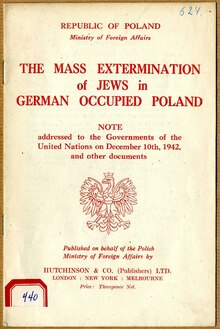
“The Mass Extermination of Jews in German Occupied Poland”, by the Polish government-in-exile addressed to the wartime allies of the then-United Nations, 1942.
Escapes from the camps were few, but not unknown. In 1940, the Auschwitz commandant reported that “the local population is fanatically Polish and … prepared to take any action against the hated SS camp personnel. Every prisoner who managed to escape can count on help the moment he reaches the wall of a first Polish farmstead.”[274] According to Ruth Linn, however, escapees, particularly Jewish ones, could not rely on help from the local population or the Polish underground.[275]
In February 1942, an escaped inmate from the Chełmno extermination camp, Jacob Grojanowski, reached the Warsaw Ghetto, where he gave detailed information about the Chełmno camp to the Oneg Shabbat group. His report, which became known as the Grojanowski Report, was smuggled out of the ghetto through the channels of the Polish underground to the Delegatura, and reached London by June 1942. It is unclear what was done with the report at that point.[204][276][277][278] In the meantime, by 1 February, the United States Office of War Information had decided not to release information about the extermination of the Jews because it was felt that it would mislead the public into thinking the war was simply a Jewish problem.[279]
By at least 9 October 1942, British radio had broadcast news of gassing of Jews to the Netherlands.[280] In December 1942, the western Allies released the Joint Declaration by Members of the United Nations, that described how “Hitler’s oft-repeated intention to exterminate the Jewish people in Europe” was being carried out and which declared that they “condemn in the strongest possible terms this bestial policy of cold-blooded extermination.”[281]
In 1942, Jan Karski reported to the Polish, British and US governments on the situation in Poland, especially the destruction of the Warsaw Ghetto and the Holocaust of the Jews. He met with Polish politicians in exile including the prime minister, as well as members of political parties such as the Socialist Party, National Party, Labor Party, People’s Party, Jewish Bund and Poalei Zion. He also spoke to Anthony Eden, the British foreign secretary, and included a detailed statement on what he had seen in Warsaw and Bełżec.[282] In 1943 in London he met the then-well-known journalist Arthur Koestler. He then traveled to the United States and reported to president Franklin D. Roosevelt. His report was a major factor in informing the West.
In July 1943, Karski again personally reported to Roosevelt, telling him about the situation in Poland and becoming the first eyewitness to tell him about the Jewish Holocaust.[283] During their meeting Roosevelt asked about the condition of horses in Poland,[284] but did not ask one question about the Jews.[285] He also met with many other government and civic leaders in the United States, including Felix Frankfurter, Cordell Hull, William Joseph Donovan, and Stephen Wise. Karski also presented his report to the media, bishops of various denominations (including Cardinal Samuel Stritch) and members of the Hollywood film industry and artists, but without success. Many of those he spoke to did not believe him, or supposed that his testimony was much exaggerated or was propaganda from the Polish government in exile.[286]
News about gassing Jews was also published in illegal newspapers of the Dutch resistance, like in the issue of Het Parool of 27 September 1943. However, the news was so unbelievable that many assumed it was merely war propaganda. The publications were halted because they were counter-productive for the Dutch resistance. Nevertheless, many Jews were warned that they would be murdered, but as escape was impossible for most of them, they preferred to believe that the warnings were false.[287][288]

Auschwitz concentration camp photos of Pilecki (1941).
In September 1940, Captain Witold Pilecki, a member of the Polish underground and a soldier of the Polish Home Army, worked out a plan to enter Auschwitz and volunteered to be sent there, the only person known to volunteer to be imprisoned at Auschwitz. He organized an underground network Związek Organizacji Wojskowej (translation: “Union of Military Organizations”) that was ready to initiate an uprising but it was decided that the probability of success was too low for the uprising to succeed. UMO’s numerous and detailed reports became a principal source of intelligence on Auschwitz for the Western Allies. Pilecki escaped from Auschwitz with information that became the basis of a two-part report in August 1943 that was sent to the Office of Strategic Services (OSS) in London. The report included details about the gas chambers, about “selection”, and about the sterilization experiments. It stated that there were three crematoria in Birkenau able to burn 10,000 people daily, and that 30,000 people had been gassed in one day. The author wrote: “History knows no parallel of such destruction of human life.”[289] When Pilecki returned to Poland after the war the communist authorities arrested and accused him of spying for the Polish government in exile. He was sentenced to death in a show trial and was executed on 25 May 1948.
Before Pilecki escaped from Auschwitz the most spectacular escape took place on 20 June 1942, when Ukrainian Eugeniusz Bendera and three Poles, Kazimierz Piechowski, Stanisław Gustaw Jaster and Józef Lempart made a daring escape.[290] The escapees were dressed as members of the SS-Totenkopfverbände, fully armed and in an SS staff car. They drove out the main gate in a stolen Steyr 220 automobile with a smuggled first report from Witold Pilecki to the Polish resistance about the Holocaust. The Germans failed to recapture any of them.[291]
Rudolf Vrba and Alfred Wetzler, Jewish inmates, escaped from Auschwitz in April 1944, eventually reaching Slovakia. The 32-page document they dictated to Jewish officials about the mass murder at Auschwitz became known as the Vrba-Wetzler report. Vrba had an eidetic memory and had worked on the Judenrampe, where Jews disembarked from the trains to be “selected” either for the gas chamber or slave labor. The level of detail with which he described the transports allowed Slovakian officials to compare his account with their own deportation records, and the corroboration convinced the Allies to take the report seriously.[292]
Two other Auschwitz inmates, Arnost Rosin and Czesław Mordowicz escaped on 27 May 1944, arriving in Slovakia on 6 June, the day of the Normandy landing (D-Day). Hearing about Normandy, they believed the war was over and got drunk to celebrate, using dollars they’d smuggled out of the camp. They were arrested for violating currency laws, and spent eight days in prison, before the Judenrat paid their fines. The additional information they offered the Judenrat was added to Vrba and Wetzler’s report and became known as the Auschwitz Protocols. They reported that, between 15 and 27 May 1944, 100,000 Hungarian Jews had arrived at Birkenau, and had been killed at an unprecedented rate, with human fat being used to accelerate the burning.[293]
The BBC and The New York Times published material from the Vrba-Wetzler report on 15 June,[294] 20 June, 3 July[295] and 6 July[296] 1944. The subsequent pressure from world leaders persuaded Miklós Horthy to bring the mass deportations of Jews from Hungary to Auschwitz to a halt on 9 July, saving up to 200,000 Jews from the extermination camps.[293]
On 14 November 2001, in the 150th anniversary issue, The New York Times ran an article by former editor Max Frankel reporting that before and during World War II, the Times had maintained a strict policy in their news reporting and editorials to minimize reports on the Holocaust.[297] The Times accepted the detailed analysis and findings of journalism professor Laurel Leff, who had published an article the year before in the Harvard International Journal of the Press and Politics, that The New York Times had deliberately suppressed news of the Third Reich’s persecution and murder of Jews.[298] Leff concluded that New York Times reporting and editorial policies made it virtually impossible for American Jews to impress Congress, church or government leaders with the importance of helping Europe’s Jews.[299]

Grave and Memorial in Wodzisław of the most infamous Death march from Auschwitz Birkenau to Wodzisław Śląski.
By mid-1944, the Final Solution had largely run its course. Those Jewish communities within easy reach of the Nazi regime had been largely exterminated, in proportions ranging from about 25 percent in France to more than 90 percent in Poland. On 5 May, Himmler claimed in a speech that “The Jewish question has in general been solved in Germany and in the countries occupied by Germany.”[300] During 1944, in any case, the task became steadily more difficult. German armies were evicted from the Soviet Union, the Balkans and Italy, and German forces—as well as forces aligned with them—were either defeated or were switching sides to the Allies. In June, the western Allies landed in France. Allied air attacks and the operations of partisans made rail transport increasingly difficult, and the objections of the military to the diversion of rail transport for carrying Jews to Poland more urgent and harder to ignore.
At this time, as the Soviet armed forces approached, the camps in eastern Poland were closed down, any surviving inmates being shipped west to camps closer to Germany, first to Auschwitz and later to Gross Rosen in Silesia. Auschwitz itself was closed as the Soviets advanced through Poland. The last 13 prisoners, all women, were killed in Auschwitz II on 25 November 1944; records show they were “unmittelbar getötet” (“killed outright”), leaving open whether they were gassed or otherwise disposed of.[301]
Despite the desperate military situation, great efforts were made to conceal evidence of what had happened in the camps. The gas chambers were dismantled, the crematoria dynamited, mass graves dug up and the corpses cremated, and Polish farmers were induced to plant crops on the sites to give the impression that they had never existed. Local commanders continued to kill Jews, and to shuttle them from camp to camp by forced “death marches” until the last weeks of the war.[302]
Already sick after months or years of violence and starvation, prisoners were forced to march for tens of miles in the snow to train stations; then transported for days at a time without food or shelter in freight trains with open carriages; and forced to march again at the other end to the new camp. Those who lagged behind or fell were shot. Around 250,000 Jews died during these marches.[303]
The largest and best-known of the death marches took place in January 1945, when the Soviet army advanced on Poland. Nine days before the Soviets arrived at Auschwitz, the SS marched 60,000 prisoners out of the camp toward Wodzisław (German: Loslau), 56 km (35 mi) away, where they were put on freight trains to other camps. Around 15,000 died on the way. Elie Wiesel and his father, Shlomo, were among the marchers:
An icy wind blew in violent gusts. But we marched without faltering. . . .
Pitch darkness. Every now and then, an explosion in the night. They had orders to fire on any who could not keep up. Their fingers on the triggers, they did not deprive themselves of this pleasure. If one of us had stopped for a second, a sharp shot finished off another filthy son of a bitch. …
Near me, men were collapsing in the dirty snow. Shots.[304]

A grave inside Bergen-Belsen.
The first major camp to be directly encountered by Allied troops, Majdanek, was discovered by the advancing Soviets on 23 July 1944. Chełmno was liberated by the Soviets on 20 January 1945. Auschwitz was liberated, also by the Soviets, on 27 January 1945;[305] Buchenwald by the Americans on 11 April;[306] Bergen-Belsen by the British on 15 April;[307] Dachau by the Americans on 29 April;[308] Ravensbrück by the Soviets on the same day; Mauthausen by the Americans on 5 May;[309] and Theresienstadt by the Soviets on 8 May.[310] Treblinka, Sobibór, and Bełżec were never liberated, but were destroyed by the Nazis in 1943. Colonel William W. Quinn of the US 7th Army said of Dachau: “There our troops found sights, sounds, and stenches horrible beyond belief, cruelties so enormous as to be incomprehensible to the normal mind.”[311][312]

Starving prisoners in Mauthausen camp liberated on 5 May 1945.
In most of the camps discovered by the Soviets, almost all the prisoners had already been removed, leaving only a few thousand alive—7,600 inmates were found in Auschwitz,[313] including 180 children who had been experimented on by doctors. Some 60,000 prisoners were discovered at Bergen-Belsen by the British 11th Armoured Division,[314] 13,000 corpses lay unburied, and another 10,000 died from typhus or malnutrition over the following weeks.[315] The British forced the remaining SS guards to gather up the corpses and place them in mass graves.[316]
The BBC’s Richard Dimbleby described the scenes that greeted him and the British Army at Belsen:
Here over an acre of ground lay dead and dying people. You could not see which was which . . . The living lay with their heads against the corpses and around them moved the awful, ghostly procession of emaciated, aimless people, with nothing to do and with no hope of life, unable to move out of your way, unable to look at the terrible sights around them . . . Babies had been born here, tiny wizened things that could not live . . . A mother, driven mad, screamed at a British sentry to give her milk for her child, and thrust the tiny mite into his arms . . . He opened the bundle and found the baby had been dead for days. This day at Belsen was the most horrible of my life.[317]
| Victims (enlarged) | Killed | Source |
|---|---|---|
| Jews | 5.93 million | [318] |
| Soviet POWs | 2–3 million | [319] |
| Ethnic Poles | 1.8–2 million | [320][321] |
| Serbs | 300,000–500,000 | [322][323] |
| Disabled | 270,000 | [324] |
| Romani | 90,000–220,000 | [325][326] |
| Freemasons | 80,000–200,000 | [327][328] |
| Slovenes | 20,000–25,000 | [329] |
| Homosexuals | 5,000–15,000 | [330] |
| Jehovah’s Witnesses |
2,500–5,000 | [331] |
| Spanish Republicans | 7,000 | [332] |
The number of victims depends on which definition of “the Holocaust” is used. Donald Niewyk and Francis Nicosia write in The Columbia Guide to the Holocaust that the term is commonly defined as the mass murder of more than five million European Jews.[333] They further state that ‘Not everyone finds this a fully satisfactory definition.’[334] According to British historian Martin Gilbert, the total number of victims is just under six million—around 78 percent of the 7.3 million Jews in occupied Europe at the time.[335] Timothy D. Snyder wrote that “The term Holocaust is sometimes used in two other ways: to mean all German killing policies during the war, or to mean all oppression of Jews by the Nazi regime.”[336]
Broader definitions include the two to three million Soviet POWs who died as a result of mistreatment due to Nazi racial policies, two million non-Jewish ethnic Poles who died due to the conditions of Nazi occupation, 90,000-220,000 Romani, 270,000 mentally and physically disabled killed in Germany’s eugenics program, 80,000–200,000 Freemasons, 20,000–25,000 Slovenes, 5,000–15,000 homosexuals, 2,500–5,000 Jehovah’s Witnesses and 7,000 Spanish Republicans, bringing the death toll to around 11 million. The broadest definition would include six million Soviet civilians who died as a result of war-related famine and disease, raising the death toll to 17 million.[333] A research project conducted by the United States Holocaust Memorial Museum estimated that 15 to 20 million people died or were imprisoned.[11] R.J. Rummel estimates the total democide death toll of Nazi Germany to be 21 million.
| Country | Estimated Pre-War Jewish population |
Estimated killed |
Percent killed |
|---|---|---|---|
| Poland | 3,300,000 | 3,000,000 | 90 |
| Baltic countries | 253,000 | 228,000 | 90 |
| Germany and Austria | 240,000 | 210,000 | 90 |
| Bohemia and Moravia | 90,000 | 80,000 | 89 |
| Slovakia | 90,000 | 75,000 | 83 |
| Greece | 70,000 | 54,000 | 77 |
| Netherlands | 140,000 | 105,000 | 75 |
| Hungary | 650,000 | 450,000 | 70 |
| Byelorussian SSR | 375,000 | 245,000 | 65 |
| Ukrainian SSR | 1,500,000 | 900,000 | 60 |
| Belgium | 65,000 | 40,000 | 60 |
| Yugoslavia | 43,000 | 26,000 | 60 |
| Romania | 600,000 | 300,000 | 50 |
| Norway | 2,173 | 890 | 41 |
| France | 350,000 | 90,000 | 26 |
| Bulgaria | 64,000 | 14,000 | 22 |
| Italy | 40,000 | 8,000 | 20 |
| Luxembourg | 5,000 | 1,000 | 20 |
| Russian SFSR | 975,000 | 107,000 | 11 |
| Denmark | 8,000 | 52 | <1 |
| Total | 8,861,800 | 5,933,900 | 67 |
| Country | Death toll of Jews |
|---|---|
| Germany | 144,000 |
| Austria | 48,767 |
| Luxembourg | 720 |
| France | 76,000 |
| Belgium | 28,000 |
| Netherlands | 102,000 |
| Denmark | 116 |
| Norway | 758 |
| Italy | 5,596 |
| Albania | 591 |
| Greece | 58,443 |
| Bulgaria | 7,335 |
| Yugoslavia | 51,400 |
| Hungary | 559,250 |
| Czechoslovakia | 143,000 |
| Romania | 120,919 |
| Poland | 2,700,000 |
| Soviet Union | 2,100,000 |
Since 1945, the most commonly cited figure for the total number of Jews killed has been six million. The Yad Vashem Holocaust Martyrs’ and Heroes’ Remembrance Authority in Jerusalem, writes that there is no precise figure for the number of Jews killed,[338] but has been able to find documentation of more than three million names of Jewish victims killed,[339] which it displays at its visitors center. The figure most commonly used is the six million attributed to Adolf Eichmann, a senior SS official.[340]
Early calculations range from about 4.2 to 4.5 million in The Final Solution (1953) by Gerald Reitlinger (arguing against higher Russian estimates),[341] and 5.1 million from Raul Hilberg, to 5.95 million from Jacob Lestschinsky. Yisrael Gutman and Robert Rozett in the Encyclopedia of the Holocaust estimate 5.59–5.86 million.[342] A study led by Wolfgang Benz of the Technical University of Berlin suggests 5.29 to 6.20 million.[343][344] Yad Vashem writes that the main sources for these statistics are comparisons of prewar and postwar censuses and population estimates, and Nazi documentation on deportations and murders.[343] Its Central Database of Shoah Victims’ Names currently holds close to three million names of Holocaust victims, all accessible online. Yad Vashem continues its project of collecting names of Jewish victims from historical documents and individual memories.[345]
Hilberg’s estimate of 5.1 million, in the third edition of The Destruction of the European Jews, includes over 800,000 who died from “ghettoization and general privation”; 1,400,000 killed in open-air shootings; and up to 2,900,000 who perished in camps. Hilberg estimates the death toll of Jews in Poland as up to 3,000,000.[346] Hilberg’s numbers are generally considered to be a conservative estimate, as they typically include only those deaths for which records are available, avoiding statistical adjustment.[347]
Martin Gilbert arrived at a “minimum estimate” of over 5.75 million Jewish victims.[348] Lucy S. Dawidowicz used pre-war census figures to estimate that 5.934 million Jews died (see table below).[349]
There were about eight to ten million Jews in the territories controlled directly or indirectly by Germany (the uncertainty arises from the lack of knowledge about how many Jews there were in the Soviet Union). The six million killed in the Holocaust thus represent 60 to 75 percent of these Jews. Of Poland’s 3.3 million Jews, about 90 percent were killed.[350] At the beginning of World War II, the Jewish population of the Baltic States was around 350,000: 250,000 in Lithuania, 95,000 in Latvia, and 4,500 in Estonia.[351] By the end of 1941, close to 230,000 Jews in Latvia and Lithuania had been murdered during the previous six months. [352] Of 4,000 Jews in Estonia before the German invasion, some 3,000 fled to the Soviet Union. The remaining 1,000 were all murdered by the SS killing squads.[353]Of the 750,000 Jews in Germany and Austria in 1933, only about a quarter survived.[citation needed] Although many German Jews emigrated before 1939, the majority of these fled to Czechoslovakia, France or the Netherlands, from where they were later deported to their deaths.
In Czechoslovakia, Greece, the Netherlands, and Yugoslavia, over 70 percent were killed. 50 to 70 percent were killed in Romania, Belgium and Hungary. It is likely that a similar proportion were killed in Belarus and Ukraine, but these figures are less certain. Countries with notably lower proportions of deaths include Bulgaria, Denmark, France, Italy, and Norway. Albania was the only country occupied by Germany that had a significantly larger Jewish population in 1945 than in 1939. About two hundred native Jews and over a thousand refugees were provided with false documents, hidden when necessary, and generally treated as honored guests in a country whose population was approximately 60 percent Muslim.[354] Additionally, Japan, as an Axis member, had its own unique response to German policies regarding Jews; see Shanghai Ghetto.
| Year | Jews killed[355] |
|---|---|
| 1933–1940 | under 100,000 |
| 1941 | 1,100,000 |
| 1942 | 2,700,000 |
| 1943 | 500,000 |
| 1944 | 600,000 |
| 1945 | 100,000 |
| Extermination Camp | Estimate of number killed |
Ref |
|---|---|---|
| Auschwitz-Birkenau | 1,000,000 | [199][356] |
| Treblinka | 870,000 | [215] |
| Belzec | 600,000 | [202] |
| Majdanek | 79,000–235,000 | [209][357] |
| Chełmno | 320,000 | [204] |
| Sobibór | 250,000 | [213] |
This gives a total of over 3.8 million; of these, 80–90% were estimated to be Jews. These seven camps thus accounted for half the total number of Jews killed in the entire Nazi Holocaust. Virtually the entire Jewish population of Poland died in these camps.[318]
In addition to those who died in the above extermination camps, at least half a million Jews died in other camps, including the major concentration camps in Germany. These were not extermination camps, but had large numbers of Jewish prisoners at various times, particularly in the last year of the war as the Nazis withdrew from Poland. About a million people died in these camps, and although the proportion of Jews is not known with certainty, it was estimated to be at least 50 percent.[citation needed] Another 800,000 to one million Jews were killed by the Einsatzgruppen in the occupied Soviet territories (an approximate figure, since the Einsatzgruppen killings were frequently undocumented).[358] Many more died through execution or of disease and malnutrition in the ghettos of Poland before they could be deported.

Jewish Holocaust death toll as a percentage of the total pre-war Jewish population.[citation needed]
In the 1990s, the opening of government archives in Eastern Europe resulted in the adjustment of the death tolls published in the pioneering work by Hilberg, Dawidowicz and Gilbert (e.g. compare Gilbert’s estimation of two million deaths in Auschwitz-Birkenau with the updated figure of one million in the Extermination Camp data box). As pointed out above, Wolfgang Benz has been carrying out work on the more recent data. He concluded in 1999:
The goal of annihilating all of the Jews of Europe, as it was proclaimed at the conference in the villa Am Grossen Wannsee in January 1942, was not reached. Yet the six million murder victims make the holocaust a unique crime in the history of mankind. The number of victims — and with certainty the following represent the minimum number in each case — cannot express that adequately. Numbers are just too abstract. However they must be stated in order to make clear the dimension of the genocide: 165,000 Jews from Germany, 65,000 from Austria, 32,000 from France and Belgium, more than 100,000 from the Netherlands, 60,000 from Greece, the same number from Yugoslavia, more than 140,000 from Czechoslovakia, half a million from Hungary, 2.2 million from the Soviet Union, and 2.7 million from Poland. To these numbers must be added all those killed in the pogroms and massacres in Romania and Transitrien (over 200,000) and the deported and murdered Jews from Albania and Norway, Denmark and Italy, from Luxembourg and Bulgaria.
— Benz, Wolfgang The Holocaust: A German Historian Examines the Genocide[359]
Considering the massive numbers of killed Jews all across Europe, Benz erroneously must have thought that the same would be the case for Denmark and Albania. However, in Albania no Jew was deported, and in Denmark about 1 percent of the Jewish population was deported.[360]

Entrance to Auschwitz-Birkenau, 1945.
Because the significant majority of the Jewish victims of the Holocaust were speakers of Yiddish, the Holocaust had a profound and permanent effect on the fate of the Yiddish language and culture (see Yiddish Renaissance). On the eve of World War II, there were 11 to 13 million Yiddish speakers in the world.[361] The Holocaust led to a dramatic, sudden decline in the use of Yiddish, because the extensive Jewish communities, both secular and religious, that used it in their day-to-day life were largely destroyed. Around five million (85%) of the victims of the Holocaust were speakers of Yiddish.[362]
Of the remaining non-Yiddish speaking population, the Ladino (Judaeo-Spanish) speaking Jewish communities of Greece and the Balkans were also destroyed, which contributed to the near-extinction of this language.

Europe, with pre-World War II borders and showing the extension of the future Generalplan Ost master plan.
Hitler declared in Mein Kampf that the German people needed Lebensraum (“living space”) in Eastern Europe at the expense of the racially inferior Slavs.[363] The Nazis considered the Slavs as Untermenschen (subhumans).[364]
Heinrich Himmler in his secret memorandum “Reflections on the Treatment of Peoples of Alien Races in the East” dated 25 May 1940 expressed his own thoughts and the future plans for the populations in the East.[365] Himmler stated that it was in the German interests to discover as many ethnic groups in the East and splinter them as much as possible, find and select racially valuable children to be sent to Germany to assimilate them and restrict non-Germans in the General Government and conquered territories to four-grade elementary school which would only teach them how to write their own name, count up to 500 and to obey Germans.[365] Himmler believed the Germanization process in Eastern Europe would be complete when “in the East dwell only men with truly German, Germanic blood”.[366]
Himmler’s Generalplan Ost (General Plan East), which was enthusiastically agreed to by Hitler in the summer of 1942, involved exterminating, expelling, or enslaving most or all Slavs from their native lands so as to make living space for German settlers, something that would be carried out over a period of 20–30 years.[367]
Author and historian Doris L. Bergen has written: “Like so much Nazi writing, General Plan East was full of euphemisms. … Nevertheless its intentions were obvious. It also made clear that German policies toward different population groups were closely connected. Settlement of Germans and ethnic Germans in the east; expulsion, enslavement, and decimation of Slavs; and murder of Jews were all parts of the same plan.”[368]
Historian Rudolph Rummel estimates the number of Slav civilians and POWs murdered by the Nazis at 10,547,000.[369]
According to historian William W. Hagen:
Generalplan Ost . . . forecast the diminution of the targeted east European peoples’ populations by the following measures: Poles – 85 percent; Belarusians – 75 percent; Ukrainians – 65 percent; Czechs – 50 percent. These enormous reductions would result from “extermination through labor” or decimation through malnutrition, disease, and controls on reproduction. . . . The Russian people, once subjugated in war, would join the four Slavic-speaking nations whose fate Generalplan Ost foreshadowed.[370]
It is a question of existence, thus it will be a racial struggle of pitiless severity, in the course of which 20 to 30 million Slavs and Jews will perish through military actions and crises of food supply.

A 12-year-old Polish girl in Auschwitz 1942/43. Prisoner identity photographs.

Auschwitz I patch with the letter “P”, required wear for Polish inmates.

Polish civilians executed in Warsaw.

Announcement of death penalty for Poles helping Jews.

Execution of Poles by Einsatzkommando, Leszno, October 1939.
German planners had in November 1939 called for “the complete destruction” of all Poles.[372] “All Poles”, Heinrich Himmler swore, “will disappear from the world”.[373] The Polish state under German occupation was to be cleared of ethnic Poles and settled by German colonists.[374] Of the Poles, by 1952 only about three–four million of them were to be left in the former Poland, and only to serve as slaves for German settlers. They were to be forbidden to marry, the existing ban on any medical help to Poles in Germany would be extended, and eventually Poles would cease to exist. On 22 August 1939, just over a week before the onset of war, Hitler declared that “the object of the war is … physically to destroy the enemy. That is why I have prepared, for the moment only in the East, my ‘Death’s Head’ formations with orders to kill without pity or mercy all men, women, and children of Polish descent or language. Only in this way can we obtain the living space we need.”[375] Nazi planners decided against a genocide of ethnic Poles on the same scale as against ethnic Jews; it could not proceed in the short term since “such a solution to the Polish question would represent a burden to the German people into the distant future, and everywhere rob us of all understanding, not least in that neighbouring peoples would have to reckon at some appropriate time, with a similar fate”.[376]
The actions taken against ethnic Poles were not on the scale of the genocide of the Jews. Most Polish Jews (perhaps 90% of their pre-war population) perished during the Holocaust, while most Christian Poles survived the brutal German occupation.[377] Between 1.8 and 2.1 million non-Jewish Polish citizens perished in German hands during the course of the war, about four-fifths of whom were ethnic Poles with the remaining fifth being ethnic minorities of Ukrainians and Belarusians, the vast majority of them civilians.[320][321] At least 200,000 of these victims died in concentration camps with about 146,000 being killed in Auschwitz. Many others died as a result of general massacres such as in the Warsaw Uprising where between 120,000 and 200,000 civilians were killed.[378][379]
The policy of the Germans in Poland included diminishing food rations, conscious lowering of the state of hygiene and depriving the population of medical services. The general mortality rate rose from 13 to 18 per thousand.[380] Overall, about 5.6 million of the victims of World War II were Polish citizens,[321] both Jewish and non-Jewish, and over the course of the war Poland lost 16 percent of its pre-war population; approximately 3.1 million of the 3.3 million Polish Jews and approximately two million of the 31.7 million non-Jewish Polish citizens died at German hands during the war.[381] According to recent (2009) estimates by the IPN, over 2.5 million non-Jewish Polish citizens died as a result of the German occupation.[382] Over 90 percent of the death toll came through non-military losses, as most of the civilians were targeted by various deliberate actions by Nazi Germany and the Soviet Union.[378]
A few days before the invasion of Poland, on 22 August 1939, Adolf Hitler said to his generals:
Genghis Khan led millions of women and children to slaughter—with premeditation and a happy heart. History sees in him solely the founder of a state. … Our war aim does not consist in reaching certain lines, but in the physical destruction of the enemy. Accordingly, I have placed my death-head formations in readiness—for the present only in the East—with orders to them to send to death mercilessly and without compassion, men, women, and children of Polish derivation and language. Only thus shall we gain the living space (Lebensraum) which we need. Who, after all, speaks today of the annihilation of the Armenians? … Poland will be depopulated and settled with Germans. … As for the rest, gentlemen, the fate of Russia will be exactly the same as I am now going through with in the case of Poland.[383][384]
Other West Slavic populations were persecuted to some extent. By one estimate, 345,000 Czechoslovak citizens were executed or otherwise killed, and hundreds of thousands more of all of these groups were sent to concentration camps and used as forced labor.[385] The villages of Lidice and Ležáky were completely destroyed by the Nazis; all men over 16 years of age from the village were murdered and the rest of the population was sent to Nazi concentration camps where many women and nearly all of the children were killed.
The German ethnic Sorbian population was also persecuted.
In the Balkans, up to 581,000 Yugoslav civilians were killed during World War II in Yugoslavia.[386][387] German forces, under express orders from Hitler, fought with a special vengeance against the Serbs, who were considered Untermenschen (sub-humans).[388] The Ustaše collaborators conducted a systematic extermination of large numbers of people for political, religious or racial reasons. The most numerous victims were Serbs.
Bosniaks, Croats and others were also victims of the Jasenovac concentration camp. According to the US Holocaust Museum:
The Ustaša authorities established numerous concentration camps in Croatia between 1941 and 1945. These camps were used to isolate and murder Serbs, Jews, Roma, Muslims [Bosniaks], and other non-Catholic minorities, as well as Croatian political and religious opponents of the regime.
The United States Holocaust Memorial Museum (USHMM) and Jewish Virtual Library report between 56,000 and 97,000 persons were killed at the Jasenovac concentration camp.[389][390][391] Yad Vashem reports an overall number of over 500,000 murders of Serbs “in horribly sadistic ways” at the hands of the Ustaše.[322]
According to the most recent study, Bošnjaci u Jasenovačkom logoru (“Bosniaks in the Jasenovac concentration camp”) by the author Nihad Halilbegović, at least 103,000 Bosniaks (Bosnian Muslims) perished during the Holocaust at the hands of the Nazi regime and the Croatian Ustaše. According to the study, “unknown is the full number of Bosniaks who were murdered under Serb or Croat alias or national name” and “a large numbers of Bosniaks were killed and listed under Roma populations”, therefore in advance sentenced to death and extermination.[392][393] Excluding Slovenes under Italian rule, between 20,000 and 25,000 Slovenes were killed by Nazis or fascists (counting only civilian victims).[394]
Albanian collaborationists cooperated with the Nazis and what followed was an extensive persecution of non-Albanians (mostly Serbs) by Albanian fascists. Most of the war crimes were perpetrated by the Albanian SS Skenderbeg Division and the Balli Kombëtar. 3,000 to 10,000 Kosovo Serbs were murdered by the Albanians during the war, and another 30,000 to 100,000 were expelled.[395]

Mass murder of Soviet civilians near Minsk, Belarus, 1943.
Soviet civilian populations in the occupied areas were also heavily persecuted (in addition to the barbarity of the Eastern Front frontline warfare manifesting itself in episodes such as the siege of Leningrad in which more than one million civilians died).[396] Thousands of peasant villages across Soviet Russia, Belarus and Ukraine were annihilated by German troops. Bohdan Wytwycky has estimated that as many as one-quarter of all Soviet civilian deaths at the hands of the Nazis and their allies were racially motivated.[333]
The Russian Academy of Sciences in 1995 reported civilian victims in the USSR at German hands, including Jews, totaled 13.7 million dead, 20% of the 68 million persons in the occupied USSR. This included 7.4 million victims of Nazi genocide and reprisals.[397]
In Belarus, Nazi Germany imposed a regime in the country that was responsible for burning down some 9,000 villages, deporting some 380,000 people for slave labour, and killing hundreds of thousands of civilians. More than 600 villages, like Khatyn, were burned along with their entire population and at least 5,295 Belarusian settlements were destroyed by the Nazis and some or all of their inhabitants killed. Tim Snyder states: “Of the nine million people who were on the territory of Soviet Belarus in 1941, some 1.6 million were killed by the Germans in actions away from battlefields, including about 700,000 prisoners of war, 500,000 Jews, and 320,000 people counted as partisans (the vast majority of whom were unarmed civilians.”[398]
The German racists assigned the Slavs to the lowest rank of human life, from which the Jews were altogether excluded. The Germans thus looked upon Slavs as people not fit to be educated, not able to govern themselves, worthy only as slaves whose existence would be justified because they served their German masters. Hitler’s racial policy with regard to the Slavs, to the extent that it was formulated, was “depopulation.” The Slavs were to be prevented from procreating, except to provide the necessary continuing supply of slave laborers.
— Lucy Dawidowicz, The Holocaust and the historians[399]

Naked Soviet POWs in Mauthausen concentration camp. Unknown date.
According to Michael Berenbaum, between two and three million Soviet prisoners-of-war—or around 57 percent of all Soviet POWs—died of starvation, mistreatment, or executions between June 1941 and May 1945, and most of those during their first year of captivity. According to other estimates by Daniel Goldhagen, an estimated 2.8 million Soviet POWs died in eight months in 1941–42, with a total of 3.5 million by mid-1944.[400] The USHMM has estimated that 3.3 million of the 5.7 million Soviet POWs died in German custody—compared to 8,300 of 231,000 British and American prisoners.[401] The death rates decreased as the POWs were needed to work as slaves to help the German war effort; by 1943, half a million of them had been deployed as slave labor.[319]
[T]hey wish to toss into the Ghetto everything that is characteristically dirty, shabby, bizarre, of which one ought to be frightened and which anyway had to be destroyed.
— Emmanuel Ringelblum on the Roma.[402]
Because the Romani are traditionally a private people with a culture based on oral history, less is known about their experience of the genocide than about that of any other group.[403] Yehuda Bauer writes that the lack of information can be attributed to the Romani’s distrust and suspicion, and to their humiliation, because some of the basic taboos of Romani culture regarding hygiene and sexual contact were violated at Auschwitz. Bauer writes that “most [Romani] could not relate their stories involving these tortures; as a result, most kept silent and thus increased the effects of the massive trauma they had undergone.”[404]

Map of persecution of the Roma.
The treatment of the Romani was not consistent in the different areas that Nazi Germany conquered. In some areas (e.g. Luxembourg and the Baltic countries), the Nazis killed virtually the entire Romani population. In other areas (e.g. Denmark, Greece), there is no record of Romanis being subjected to mass killings.[405]
Donald Niewyk and Frances Nicosia write that the death toll was at least 130,000 of the nearly one million Romani in Nazi-controlled Europe.[403] Michael Berenbaum writes that serious scholarly estimates lie between 90,000 and 220,000.[406] A study by Sybil Milton, senior historian at the U.S. Holocaust Memorial Museum, calculated a death toll of at least 220,000 and possibly closer to 500,000, but this study explicitly excluded the Independent State of Croatia where the genocide of Romanies was intense.[325][407] Martin Gilbert estimates a total of more than 220,000 of the 700,000 Romani in Europe.[408] Ian Hancock, Director of the Program of Romani Studies and the Romani Archives and Documentation Center at the University of Texas at Austin, has argued in favour of a much higher figure of between 500,000 and 1,500,000, claiming the Romani toll proportionally equaled or exceeded that of Jewish victims.[326][409]
Before being sent to the camps, the victims were herded into ghettos, including several hundred into the Warsaw Ghetto.[138] Further east, teams of Einsatzgruppen tracked down Romani encampments and murdered the inhabitants on the spot, leaving no records of the victims. They were also targeted by the puppet regimes that cooperated with the Nazis, e.g. the Ustaše regime in Croatia, where a large number of Romani were killed in the Jasenovac concentration camp. The genocide analyst Helen Fein has stated that the Ustashe killed virtually every Romani in Croatia.[410]
In May 1942, the Romani were placed under similar labor and social laws to the Jews. On 16 December 1942, Heinrich Himmler, Commander of the SS and regarded as the “architect” of the Nazi genocide,[411] issued a decree that “Gypsy Mischlinge (mixed breeds), Romani, and members of the clans of Balkan origins who are not of German blood” should be sent to Auschwitz, unless they had served in the Wehrmacht.[412] On 29 January 1943, another decree ordered the deportation of all German Romani to Auschwitz.
This was adjusted on 15 November 1943, when Himmler ordered that, in the occupied Soviet areas, “sedentary Gypsies and part-Gypsies (Mischlinge) are to be treated as citizens of the country. Nomadic Gypsies and part-Gypsies are to be placed on the same level as Jews and placed in concentration camps.”[413] Bauer argues that this adjustment reflected Nazi ideology that the Romani, originally an Aryan population, had been “spoiled” by non-Romani blood.[414]
The number of black people in Germany when the Nazis came to power is variously estimated at 5,000–25,000.[415] It is not clear whether these figures included Asians. According to the United States Holocaust Memorial Museum, Washington, D.C., “The fate of black people from 1933 to 1945 in Nazi Germany and in German-occupied territories ranged from isolation to persecution, sterilization, medical experimentation, incarceration, brutality, and murder. However, there was no systematic program for their elimination as there was for Jews and other groups.”[416] Meanwhile, Afrikaaners, Berbers, Iranians and Pre-Partition Indians were classified as Aryans, so they were not persecuted (see main article). Racial restrictions were relaxed to the extent that Turkic peoples, Arabs and South Asians were recruited by the German military due to the shortage of manpower.[417]

Hitler’s order for Action T4.
Our starting-point is not the individual, and we do not subscribe to the view that one should feed the hungry, give drink to the thirsty or clothe the naked—those are not our objectives. Our objectives are entirely different. They can be put most crisply in the sentence: we must have a healthy people in order to prevail in the world.
— Joseph Goebbels, 1938.[418]
Nazis used the phrase Lebensunwertes Leben (Life unworthy of life) in reference to their victims in an attempt to justify the killings.[419]
In October 1939 Adolf Hitler signed a “euthanasia decree” backdated to 1 September 1939 that authorized Reichsleiter Philipp Bouhler, the chief of his Chancellery,[420] and Dr. Karl Brandt, Hitler’s personal physician, to carry out the programme of involuntary euthanasia (translated as follows):
Reich Leader Bouhler and Dr. Brandt are entrusted with the responsibility of extending the authority of physicians, designated by name, so that patients who, on the basis of human judgment [menschlichem Ermessen], are considered incurable, can be granted mercy death [Gnadentod] after a definitive diagnosis.
— Adolf Hitler[421]
The Action T4 program was established to maintain the racial purity of the German people by killing or sterilizing citizens who were judged to be disabled or suffering from mental disorder.[422]
Between 1939 and 1941, 80,000 to 100,000 mentally ill adults in institutions were killed; 5,000 children in institutions; and 1,000 Jews in institutions.[423] Outside the mental health institutions, the figures are estimated as 20,000 (according to Dr. Georg Renno, the deputy director of Schloss Hartheim, one of the euthanasia centers) or 400,000 (according to Frank Zeireis, the commandant of Mauthausen concentration camp).[423] Another 300,000 were forcibly sterilized.[424] Overall it has been estimated that over 270,000 individuals[324] with mental disorders of all kinds were put to death, although their mass murder has received relatively little historical attention. Along with the physically disabled, people suffering from dwarfism were persecuted as well. Many were put on display in cages and experimented on by the Nazis.[425] Despite not being formally ordered to take part, psychiatrists and many psychiatric institutions took part in the planning and carrying out of controversial practices at every stage, and constituted the connection to the later annihilation of Jews and other deemed undesirable in the Holocaust.[426] After strong protests by the German Catholic and Protestant churches on 24 August 1941 Hitler ordered the cancellation of the T4 program.[427]
The program was named after Tiergartenstraße 4, the address of a villa in the Berlin borough of Tiergarten, the headquarters of the General Foundation for Welfare and Institutional Care,[428] led by Philipp Bouhler, head of Hitler’s private chancellery (Kanzlei des Führer der NSDAP) and Karl Brandt, Hitler’s personal physician.
Brandt was tried in December 1946 at Nuremberg, along with 22 others, in a case known as United States of America vs. Karl Brandt et al., also known as the Doctors’ Trial. He was found guilty and was sentenced to death. He was hanged at Landsberg Prison on 2 June 1948.

The Homomonument in Amsterdam, a memorial to the homosexual victims of Nazi Germany.
Between 5,000 and 15,000 homosexuals of German nationality are estimated to have been sent to concentration camps.[330] James D. Steakley writes that what mattered in Germany was criminal intent or character, rather than criminal acts, and the “gesundes Volksempfinden” (“healthy sensibility of the people”) became the leading normative legal principle.[429] In 1936, Himmler created the Reich Central Office for the Combating of Homosexuality and Abortion.[430] Homosexuality was declared contrary to “wholesome popular sentiment,”[330] and homosexuals were consequently regarded as “defilers of German blood.” The Gestapo raided gay bars, tracked individuals using the address books of those they arrested, used the subscription lists of gay magazines to find others, and encouraged people to report suspected homosexual behavior and to scrutinize the behavior of their neighbors.[330][429]
Tens of thousands were convicted between 1933 and 1944 and sent to camps for “rehabilitation”, where they were identified by yellow armbands[431] and later pink triangles worn on the left side of the jacket and the right trouser leg, which singled them out for sexual abuse.[429] Hundreds were castrated by court order.[432] They were humiliated, tortured, used in hormone experiments conducted by SS doctors, and killed.[330] Steakley writes that the full extent of gay suffering was slow to emerge after the war. Many victims kept their stories to themselves because homosexuality remained criminalized in postwar Germany.[429]
.jpg)
German opponent of Nazism executed at Dachau.
German communists, socialists and trade unionists were among the earliest domestic opponents of Nazism[433] and were also among the first to be sent to concentration camps. Hitler claimed that communism was a Jewish ideology which the Nazis termed “Judeo-Bolshevism“. Fear of communist agitation was used as justification for the Enabling Act of 1933, the law which gave Hitler his original dictatorial powers. Hermann Göring later testified at the Nuremberg Trials that the Nazis’ willingness to repress German communists prompted president Paul von Hindenburg and the German elite to cooperate with the Nazis.[citation needed] MI6 assisted the Gestapo via “the exchange of information about Communism”, and as late as October 1937, the head of the British agency’s Berlin station, Frank Foley, described his relationship with Heinrich Müller‘s so-called communism expert as “cordial”.[434]
Hitler and the Nazis also hated German leftists because of their resistance to the party’s racism. Many leaders of German leftist groups were Jews, and Jews were especially prominent among the leaders of the Spartacist uprising in 1919. Hitler already referred to Marxism and “Bolshevism” as a means of “the international Jew” to undermine “racial purity” and survival of the Nordics or Aryans, as well as to stir up socioeconomic class tension and labor unions against the government or state-owned businesses. Within concentration camps such as Buchenwald, German communists were privileged in comparison to Jews because of their “racial purity”.[435]
Whenever the Nazis occupied a new territory, members of communist, socialist, or anarchist groups were normally to be the first persons detained or executed. Evidence of this is found in Hitler’s infamous Commissar Order, in which he ordered the summary execution of all political commissars captured among Soviet soldiers, as well as the execution of all Communist Party members in German-held territory.[436][437] Einsatzgruppen carried out these executions in the east. Nacht und Nebel (“Night and Fog”) was a directive of Hitler on 7 December 1941 signed and implemented by Chief of Staff of the Armed Forces Wilhelm Keitel, resulting in kidnapping and the disappearance of many political activists throughout Nazi Germany’s occupied territories.
Among the well-known leftist prisoners of the concentration camps were German socialists Hermann Brill, Rudolf Breitscheid, Heinrich Bußmann, Josef Felder, Heinrich Fulda, Ernst Heilmann, and Alfred Schmieder; German communists Emil Carlebach, Ernst Grube, Walter Krämer, Adolf Maislinger, Oskar Müller, Beppo Römer, Werner Scholem, and Ernst Thälmann; Jewish socialist and former French Prime Minister Léon Blum; Slovenian socialist activist Andrej Gosar; Jewish Austrian socialist Robert Danneberg; and Austrian socialist (and later Interior Minister) Franz Olah. Kurt Schumacher, a leading German socialist politician, was imprisoned in various concentration camps for ten years, and left the camps severely ill, leading to the amputation of his leg in 1948 and ultimately his death in 1952; however, during that time he played an instrumental role in re-establishing the Social Democratic Party of Germany.

A memorial for Loge Liberté chérie, founded in November 1943 in Hut 6 of Emslandlager VII (KZ Esterwegen), one of two Masonic Lodges founded in a Nazi concentration camp.
In Mein Kampf, Hitler wrote that Freemasonry had “succumbed” to the Jews: “The general pacifistic paralysis of the national instinct of self-preservation begun by Freemasonry is then transmitted to the masses of society by the Jewish press.”[438] Within the Reich, however, the “threat” posed by Freemasons was not considered serious from the mid-1930s onwards.[439] Heydrich even established a Freemasonry museum—at which Eichmann spent some time early in his SD career[440]—for what he regarded as a “disappeared cult”.[441] Similarly, Hitler was happy to issue a proclamation on 27 April 1938 whose third point lifted restrictions on Party membership for former Freemasons, “provided the applicants had not served with the Lodge as high degree members.”[442] The Führer still maintained Freemasonry within his conspiratorial outlook,[443] but its adherents were not persecuted in a systematic fashion like groups such as the Jews.[439] Those Freemasons who were sent to concentration camps as political prisoners were forced to wear an inverted red triangle.[444]
The United States Holocaust Memorial Museum believes that, “because many of the Freemasons who were arrested were also Jews and/or members of the political opposition, it is not known how many individuals were placed in Nazi concentration camps and/or were targeted only because they were Freemasons.”[445] However, the Grand Lodge of Scotland estimates the number of Freemasons executed between 80,000 and 200,000.[327]
Refusing to pledge allegiance to the Nazi party or to serve in the military, roughly 12,000 Jehovah’s Witnesses were forced to wear a purple triangle and were placed in camps where they were given the option of renouncing their faith and submitting to the state’s authority. Between 2,500 and 5,000 were killed.[331] Historian Detlef Garbe, director of Hamburg’s Neuengamme Memorial, writes that “no other religious movement resisted the pressure to conform to National Socialism with comparable unanimity and steadfastness.”[446]
After losing the Spanish Civil War many republicans fled to France. With the subsequent fall of France, many were sent to concentration camps, particularly the Mauthausen-Gusen concentration camp, where about 7000 died.[332][447]
Dr. Shimon Samuels, director for International Liaison of the Simon Wiesenthal Centre, describes the acrimonious debate that exists between “specifists” and “universalists”. The former fear debasement of the Holocaust by invidious comparisons, while the latter places the Holocaust alongside non-Jewish experiences of mass extermination as part and parcel of the global context of genocide. Dr. Samuels considers the debate, ipso facto, to dishonour the memory of the respective victims of each genocide. In his words, “Each case is specific as a threshold phenomenon, while each also adds its unique memory as signposts along an incremental continuum of horror.”[448] Peter Novick argued, “A moment’s reflection makes clear that the notion of uniqueness is quite vacuous [… and], in practice, deeply offensive. What else can all of this possibly mean except ‘your catastrophe, unlike ours, is ordinary’.”[449]
Adam Jones, professor at the University of British Columbia Okanagan (Canada), believes that claims of uniqueness for the Holocaust have become less common since the 1994 Rwandan genocide.[450] In 1997, the publication of The Black Book of Communism led to further debate on the comparison between Soviet and Nazi crimes; the book argued that Nazi crimes were not very different from the Soviet ones, and that Nazi methods were to a significant extent adopted from Soviet methods;[451] in the course of the debate, the term “Red Holocaust” appeared in discourse.[452] Some scholars strongly dissent from this view.[453] In his controversial book,[454][455] The Holocaust Industry, Norman Finkelstein argues that the uniqueness theory does not figure within scholarship of the Nazi Holocaust.[further explanation needed] He writes that the reason these claims persist is because claims of Holocaust uniqueness also confer “unique entitlement” to Jews, and serve as “Israel’s prize alibi.”[further explanation needed] [456] Steven Katz of Boston University has argued that the Holocaust is the only genocide that has occurred in history, and he defines “Holocaust” to include only “the travail of European Jewry” and not other victims of the Nazis.[further explanation needed][457]

Defendants in the dock at the Nuremberg trials. The main target of the prosecution was Hermann Göring (at the left edge on the first row of benches), considered to be the most important surviving official in the Third Reich after Hitler’s death.
The Nuremberg trials were a series of military tribunals, held by the Allied forces after World War II, most notable for the prosecution of prominent members of the political, military, and economic leadership of Nazi Germany. The trials were held in the city of Nuremberg, Germany. The first, and best known of these trials, described as “the greatest trial in history” by Norman Birkett, one of the British judges who presided over it,[458] was the trial of the major war criminals before the International Military Tribunal (IMT). Held between 20 November 1945 and 1 October 1946,[459] the Tribunal tried 23 of the most important political and military leaders of the Third Reich (except for Adolf Hitler, Heinrich Himmler, and Joseph Goebbels, all of whom had committed suicide several months before).[460]
The International Military Tribunal was opened on November 19, 1945, in the Palace of Justice in Nuremberg.[461][462] The first session was presided over by the Soviet judge, Nikitchenko. The prosecution entered indictments against 24 major war criminals and seven organizations – the leadership of the Nazi party, the Reich Cabinet, the Schutzstaffel (SS), Sicherheitsdienst (SD), the Gestapo, the Sturmabteilung (SA) and the “General Staff and High Command”, comprising several categories of senior military officers.[463] These organizations were to be declared “criminal” if found guilty.
The indictments were for: participation in a common plan or conspiracy for the accomplishment of a crime against peace; planning, initiating and waging wars of aggression and other crimes against peace; war crimes; and crimes against humanity. The Tribunal passed out sentences ranging from acquittal to 10 to 15 years in prison, to life imprisonment, to death by hanging (standard drop method).
There is debate as to whether the Holocaust was a key factor that led to the creation of the state of Israel as a homeland for the Jews. One writer argues that the “…establishment of the State of Israel would have been possible without the Holocaust due to the [actions of the] Zionist movement.”[464] Nevertheless, the “….Holocaust played an important role in the founding and long term visibility of the State of Israel in three respects: The Holocaust motivated large numbers of immigrants to move to the new country, providing the necessary population; secondly, the Holocaust enabled Israel to pressure Germany into supplying the economic base necessary to build infrastructure and support those immigrants; and finally, the Holocaust swayed world opinion so that the United Nations approved the State of Israel in 1948.”[464]
In the immediate aftermath of the Second World War, the Jewish Agency led by Chaim Weizmann submitted to the Allies a memorandum demanding reparations to Jews by Germany but it received no answer. In March 1951, a new request was made by Israel’s foreign minister Moshe Sharett which claimed global recompense to Israel of $1.5 billion based on the financial cost absorbed by Israel for the rehabilitation of 500,000 Jewish survivors. West German Chancellor Konrad Adenauer accepted these terms and declared he was ready to negotiate other reparations. A Conference on Jewish Material Claims against Germany was opened in New York City by Nahum Goldmann in order to help with individual claims. After negotiations, the claim was reduced to a sum of $845 million in direct and indirect compensation to be paid over a period of 14 years.

Railcar manufactured by Maschinenfabrik Esslingen in the old train station of Jerusalem, shortly after delivery as part of the reparations agreement with Germany.
On 1952 Ben Gurion argued that the reparation demand was based on recovering as much Jewish property as possible “so that the murderers do not become the heirs as well”. His other argument was that the reparations were needed to finance the absorption and rehabilitation of the Holocaust survivors in Israel.[465]
In 1988, West Germany allocated another $125 million for reparations.[466] In 1999, many German industries such as Deutsche Bank, Siemens or BMW faced lawsuits for their role in the forced labour during World War II. In order to dismiss these lawsuits, Germany agreed to raise $5 billion of which Jewish forced laborers still alive could apply to receive a lump sum payment of between $2,500 and $7,500.[466] In 2012, Germany agreed to pay a new reparation of €772 million as a result of negotiations with Israel.[467]
In 2014, the SNCF, the French state-owned railway company, was compelled to allocate $60 million to American Jewish Holocaust survivors for its role in the transport of deportees to Germany, a sum equivalent to about $100,000 for each survivor.[468] This is despite the fact that SNCF was forced by German authorities to cooperate in providing transport for French Jews to the border and did not make any profit from this transport, according to Serge Klarsfeld, president of the organization Sons and Daughters of Jewish Deportees from France.[469]
These reparations were sometimes criticized in Israel where they were seen as “blood money”.[466] The American professor Norman Finkelstein wrote The Holocaust Industry to denounce how the American Jewish establishment exploits the memory of the Nazi Holocaust for political and financial gain, as well as to further the interests of Israel.[470] Some of the reparations money was subject to a fraud between 1993 and 2009, in which $57 million was diverted to people who were not eligible.[471]

Robert Burns (25 January 1759 – 21 July 1796), also known as Rabbie Burns, the Bard of Ayrshire and various other names and epithets,[nb 1] was a Scottish poet and lyricist. He is widely regarded as the national poet of Scotland and is celebrated worldwide. He is the best known of the poets who have written in the Scots language, although much of his writing is also in English and a light Scots dialect, accessible to an audience beyond Scotland. He also wrote in standard English, and in these writings his political or civil commentary is often at its bluntest.
He is regarded as a pioneer of the Romantic movement, and after his death he became a great source of inspiration to the founders of both liberalism and socialism, and a cultural icon in Scotland and among the Scottish diaspora around the world. Celebration of his life and work became almost a national charismatic cult during the 19th and 20th centuries, and his influence has long been strong on Scottish literature. In 2009 he was chosen as the greatest Scot by the Scottish public in a vote run by Scottish television channel STV.
As well as making original compositions, Burns also collected folk songs from across Scotland, often revising or adapting them. His poem (and song) “Auld Lang Syne” is often sung at Hogmanay (the last day of the year), and “Scots Wha Hae” served for a long time as an unofficial national anthem of the country. Other poems and songs of Burns that remain well known across the world today include “A Red, Red Rose“, “A Man’s a Man for A’ That“, “To a Louse“, “To a Mouse“, “The Battle of Sherramuir“, “Tam o’ Shanter” and “Ae Fond Kiss“.

The Burns Cottage in Alloway, Ayrshire

Inside the Burns Cottage
Burns was born two miles (3 km) south of Ayr, in Alloway, the eldest of the seven children of William Burnes (1721–1784), a self-educated tenant farmer from Dunnottar in the Mearns, and Agnes Broun (1732–1820), the daughter of a Kirkoswald tenant farmer.[4][5]
He was born in a house built by his father (now the Burns Cottage Museum), where he lived until Easter 1766, when he was seven years old. William Burnes sold the house and took the tenancy of the 70-acre (280,000 m2) Mount Oliphant farm, southeast of Alloway. Here Burns grew up in poverty and hardship, and the severe manual labour of the farm left its traces in a premature stoop and a weakened constitution.
He had little regular schooling and got much of his education from his father, who taught his children reading, writing, arithmetic, geography, and history and also wrote for them A Manual Of Christian Belief. He was also taught by John Murdoch (1747–1824), who opened an “adventure school” in Alloway in 1763 and taught Latin, French, and mathematics to both Robert and his brother Gilbert (1760–1827) from 1765 to 1768 until Murdoch left the parish. After a few years of home education, Burns was sent to Dalrymple Parish School during the summer of 1772 before returning at harvest time to full-time farm labouring until 1773, when he was sent to lodge with Murdoch for three weeks to study grammar, French, and Latin.
By the age of 15, Burns was the principal labourer at Mount Oliphant. During the harvest of 1774, he was assisted by Nelly Kilpatrick (1759–1820), who inspired his first attempt at poetry, “O, Once I Lov’d A Bonnie Lass”. In the summer of 1775, he was sent to finish his education with a tutor at Kirkoswald, where he met Peggy Thompson (b.1762), to whom he wrote two songs, “Now Westlin’ Winds” and “I Dream’d I Lay”.
Despite his ability and character, William Burnes was consistently unfortunate, and migrated with his large family from farm to farm without ever being able to improve his circumstances. At Whitsun, 1777, he removed his large family from the unfavourable conditions of Mount Oliphant to the 130-acre (0.53 km2) farm at Lochlea, near Tarbolton, where they stayed until William Burnes’ death in 1784. Subsequently, the family became integrated into the community of Tarbolton. To his father’s disapproval, Robert joined a country dancing school in 1779 and, with Gilbert, formed the Tarbolton Bachelors’ Club the following year. His earliest existing letters date from this time, when he began making romantic overtures to Alison Begbie (b. 1762). In spite of four songs written for her and a suggestion that he was willing to marry her, she rejected him.
Robert Burns was initiated into masonic Lodge St David, Tarbolton, on 4 July 1781, when he was 22.
In December 1781, Burns moved temporarily to Irvine to learn to become a flax-dresser, but during the workers’ celebrations for New Year 1781/1782 (which included Burns as a participant) the flax shop caught fire and was burnt to the ground. This venture accordingly came to an end, and Burns went home to Lochlea farm. During this time he met and befriended Captain Richard Brown who encouraged him to become a poet.
He continued to write poems and songs and began a commonplace book in 1783, while his father fought a legal dispute with his landlord. The case went to the Court of Session, and Burnes was upheld in January 1784, a fortnight before he died.

Full view of the Naysmith portrait of 1787, Scottish National Portrait Gallery
Robert and Gilbert made an ineffectual struggle to keep on the farm, but after its failure they moved to the farm at Mossgiel, near Mauchline, in March, which they maintained with an uphill fight for the next four years. During the summer of 1784 Burns came to know a group of girls known collectively as The Belles of Mauchline, one of whom was Jean Armour, the daughter of a stonemason from Mauchline.
His first child, Elizabeth Paton Burns (1785–1817), was born to his mother’s servant, Elizabeth Paton (1760–circa 1799), while he was embarking on a relationship with Jean Armour, who became pregnant with twins in March 1786. Burns signed a paper attesting his marriage to Jean, but her father “was in the greatest distress, and fainted away”. To avoid disgrace, her parents sent her to live with her uncle in Paisley. Although Armour’s father initially forbade it, they were eventually married in 1788.[6] Armour bore him nine children, only three of whom survived infancy.
Burns was in financial difficulties due to his want of success in farming, and to make enough money to support a family he took up a friend’s offer of work in Jamaica,[7] at a salary of £30 per annum.[8][9] The position that Burns accepted was as a bookkeeper on a slave plantation. Burns’s egalitarian views were typified by “The Slave’s Lament” six years later, but in 1786 there was little public awareness of the abolitionist movement that began about that time.[10][11]
At about the same time, Burns fell in love with Mary Campbell (1763–1786), whom he had seen in church while he was still living in Tarbolton. She was born near Dunoon and had lived in Campbeltown before moving to work in Ayrshire. He dedicated the poems “The Highland Lassie O”, “Highland Mary”, and “To Mary in Heaven” to her. His song “Will ye go to the Indies, my Mary, And leave auld Scotia’s shore?” suggests that they planned to emigrate to Jamaica together. Their relationship has been the subject of much conjecture, and it has been suggested that on 14 May 1786 they exchanged Bibles and plighted their troth over the Water of Fail in a traditional form of marriage. Soon afterwards Mary Campbell left her work in Ayrshire, went to the seaport of Greenock, and sailed home to her parents in Campbeltown.[8][9]
In October 1786, Mary and her father sailed from Campbeltown to visit her brother in Greenock. Her brother fell ill with typhus, which she also caught while nursing him. She died of typhus on 20 or 21 October 1786 and was buried there.[9]

Title page of the Kilmarnock Edition
As Burns lacked the funds to pay for his passage to the West Indies, Gavin Hamilton suggested that he should “publish his poems in the mean time by subscription, as a likely way of getting a little money to provide him more liberally in necessaries for Jamaica.” On 3 April Burns sent proposals for publishing his Scotch Poems to John Wilson, a local printer in Kilmarnock, who published these proposals on 14 April 1786, on the same day that Jean Armour’s father tore up the paper in which Burns attested his marriage to Jean. To obtain a certificate that he was a free bachelor, Burns agreed on 25 June to stand for rebuke in the Mauchline kirk for three Sundays. He transferred his share in Mossgiel farm to his brother Gilbert on 22 July, and on 30 July wrote to tell his friend John Richmond that, “Armour has got a warrant to throw me in jail until I can find a warrant for an enormous sum … I am wandering from one friend’s house to another.”[12]
On 31 July 1786 John Wilson published the volume of works by Robert Burns, Poems, Chiefly in the Scottish dialect.[13] Known as the Kilmarnock volume, it sold for 3 shillings and contained much of his best writing, including “The Twa Dogs”, “Address to the Deil“, “Halloween“, “The Cotter’s Saturday Night”, “To a Mouse“, “Epitaph for James Smith“, and “To a Mountain Daisy“, many of which had been written at Mossgiel farm. The success of the work was immediate, and soon he was known across the country.
Burns postponed his planned emigration to Jamaica on 1 September, and was at Mossgiel two days later when he learnt that Jean Armour had given birth to twins. On 4 September Thomas Blacklock wrote a letter expressing admiration for the poetry in the Kilmarnock volume, and suggesting an enlarged second edition.[13] A copy of it was passed to Burns, who later recalled, “I had taken the last farewell of my few friends, my chest was on the road to Greenock; I had composed the last song I should ever measure in Scotland – ‘The Gloomy night is gathering fast’ – when a letter from Dr Blacklock to a friend of mine overthrew all my schemes, by opening new prospects to my poetic ambition. The Doctor belonged to a set of critics for whose applause I had not dared to hope. His opinion that I would meet with encouragement in Edinburgh for a second edition, fired me so much, that away I posted for that city, without a single acquaintance, or a single letter of introduction.”[14]

Alexander Nasmyth, Robert Burns (1828).
On 27 November 1786 Burns borrowed a pony and set out for Edinburgh. On 14 December William Creech issued subscription bills for the first Edinburgh edition of Poems, Chiefly in the Scottish dialect, which was published on 17 April 1787. Within a week of this event, Burns had sold his copyright to Creech for 100 guineas.[13] For the edition, Creech commissioned Alexander Nasmyth to paint the oval bust-length portrait now in the Scottish National Portrait Gallery, which was engraved to provide a frontispiece for the book. Nasmyth had come to know Burns and his fresh and appealing image has become the basis for almost all subsequent representations of the poet.[15] In Edinburgh, he was received as an equal by the city’s men of letters—including Dugald Stewart, Robertson, Blair and others—and was a guest at aristocratic gatherings, where he bore himself with unaffected dignity. Here he encountered, and made a lasting impression on, the 16-year-old Walter Scott, who described him later with great admiration:
His person was strong and robust; his manners rustic, not clownish, a sort of dignified plainness and simplicity which received part of its effect perhaps from knowledge of his extraordinary talents. His features are presented in Mr Nasmyth’s picture but to me it conveys the idea that they are diminished, as if seen in perspective. I think his countenance was more massive than it looks in any of the portraits … there was a strong expression of shrewdness in all his lineaments; the eye alone, I think, indicated the poetical character and temperament. It was large, and of a dark cast, and literally glowed when he spoke with feeling or interest. I never saw such another eye in a human head, though I have seen the most distinguished men of my time.
— Walter Scott

Burns statue by David Watson Stevenson (1898) in Bernard Street, Leith
The new edition of his poems brought Burns £400. His stay in the city also resulted in some lifelong friendships, among which were those with Lord Glencairn, and Frances Anna Dunlop (1730–1815), who became his occasional sponsor and with whom he corresponded for many years until a rift developed. He embarked on a relationship with the separated Agnes “Nancy” McLehose (1758–1841), with whom he exchanged passionate letters under pseudonyms (Burns called himself “Sylvander” and Nancy “Clarinda”‘). When it became clear that Nancy would not be easily seduced into a physical relationship, Burns moved on to Jenny Clow (1766–1792), Nancy’s domestic servant, who bore him a son, Robert Burns Clow, in 1788. He also had an affair with a servant girl, Margaret “May” Cameron. His relationship with Nancy concluded in 1791 with a final meeting in Edinburgh before she sailed to Jamaica for what turned out to be a short-lived reconciliation with her estranged husband. Before she left, he sent her the manuscript of “Ae Fond Kiss” as a farewell.
In Edinburgh, in early 1787, he met James Johnson, a struggling music engraver and music seller with a love of old Scots songs and a determination to preserve them. Burns shared this interest and became an enthusiastic contributor to The Scots Musical Museum. The first volume was published in 1787 and included three songs by Burns. He contributed 40 songs to volume two, and he ended up responsible for about a third of the 600 songs in the whole collection, as well as making a considerable editorial contribution. The final volume was published in 1803.

The River Nith at Ellisland Farm.

Ellisland farm in the time of Robert Burns
On his return from Edinburgh in February 1788, he resumed his relationship with Jean Armour and took a lease on Ellisland Farm, Dumfriesshire, settling there in June. He also trained as a gauger or exciseman in case farming continued to be unsuccessful. He was appointed to duties in Customs and Excise in 1789 and eventually gave up the farm in 1791. Meanwhile, in November 1790, he had written “Tam O’ Shanter“. About this time he was offered and declined an appointment in London on the staff of The Star newspaper,[16] and refused to become a candidate for a newly created Chair of Agriculture in the University of Edinburgh,[16] although influential friends offered to support his claims. He did however accept membership of the Royal Company of Archers in 1792.[17]
After giving up his farm, he removed to Dumfries. It was at this time that, being requested to write lyrics for The Melodies of Scotland, he responded by contributing over 100 songs. He made major contributions to George Thomson‘s A Select Collection of Original Scottish Airs for the Voice as well as to James Johnson’s Scots Musical Museum. Arguably his claim to immortality chiefly rests on these volumes, which placed him in the front rank of lyric poets. As a songwriter he provided his own lyrics, sometimes adapted from traditional words. He put words to Scottish folk melodies and airs which he collected, and composed his own arrangements of the music including modifying tunes or recreating melodies on the basis of fragments. In letters he explained that he preferred simplicity, relating songs to spoken language which should be sung in traditional ways. The original instruments would be fiddle and the guitar of the period which was akin to a cittern, but the transcription of songs for piano has resulted in them usually being performed in classical concert or music hall styles.[18]
Thomson as a publisher commissioned arrangements of “Scottish, Welsh and Irish Airs” by such eminent composers of the day as Franz Haydn and Ludwig van Beethoven, with new lyrics. The contributors of lyrics included Burns. While such arrangements had wide popular appeal,[19][20][21][22] Beethoven’s music was more advanced and difficult to play than Thomson intended.[23][24]
Burns described how he had to master singing the tune before he composed the words:

Burns House in Dumfries, Scotland
My way is:
I consider the poetic sentiment, correspondent to my idea of the musical expression, then chuse my theme, begin one stanza, when that is composed—which is generally the most difficult part of the business—I walk out, sit down now and then, look out for objects in nature around me that are in unison or harmony with the cogitations of my fancy and workings of my bosom, humming every now and then the air with the verses I have framed. when I feel my Muse beginning to jade, I retire to the solitary fireside of my study, and there commit my effusions to paper, swinging, at intervals, on the hind-legs of my elbow chair, by way of calling forth my own critical strictures, as my, pen goes.
- —Robert Burns
Burns also worked to collect and preserve Scottish folk songs, sometimes revising, expanding, and adapting them. One of the better known of these collections is The Merry Muses of Caledonia (the title is not Burns’s), a collection of bawdy lyrics that were popular in the music halls of Scotland as late as the 20th century. Many of Burns’s most famous poems are songs with the music based upon older traditional songs. For example, “Auld Lang Syne” is set to the traditional tune “Can Ye Labour Lea”, “A Red, Red Rose” is set to the tune of “Major Graham” and “The Battle of Sherramuir” is set to the “Cameronian Rant”.

The death room of Robert Burns

Robert Burns Mausoleum at St. Michael’s churchyard in Dumfries
Burns’s worldly prospects were perhaps better than they had ever been; but he had become soured, and moreover he had alienated many of his best friends by too freely expressing sympathy with the French Revolution and the then unpopular advocates of reform at home. His political views also came to the notice of his employers and in an attempt to prove his loyalty to the Crown, Burns joined the Royal Dumfries Volunteers in March 1795.[25] As his health began to give way, he began to age prematurely and fell into fits of despondency. The habits of intemperance (alleged mainly by temperance activist James Currie)[26] are said to have aggravated his long-standing possible rheumatic heart condition.[27] His death followed a dental extraction in winter 1795.
On the morning of 21 July 1796, Burns died in Dumfries, at the age of 37. The funeral took place on Monday 25 July 1796, the day that his son Maxwell was born. He was at first buried in the far corner of St. Michael’s Churchyard in Dumfries; a simple “slab of freestone” was erected as his gravestone by Jean Armour, which some felt insulting to his memory.[28] His body was eventually moved to its final location in the same cemetery, the Burns Mausoleum, in September 1817.[29] The body of his widow Jean Armour was buried with his in 1834.[27]
Armour had taken steps to secure his personal property, partly by liquidating two promissory notes amounting to fifteen pounds sterling (about 1,100 pounds at 2009 prices).[30] The family went to the Court of Session in 1798 with a plan to support his surviving children by publishing a four-volume edition of his complete works and a biography written by Dr. James Currie. Subscriptions were raised to meet the initial cost of publication, which was in the hands of Thomas Cadell and William Davies in London and William Creech, bookseller in Edinburgh.[31] Hogg records that fund-raising for Burns’s family was embarrassingly slow, and it took several years to accumulate significant funds through the efforts of John Syme and Alexander Cunningham.[27]
Burns was posthumously given the freedom of the town of Dumfries.[26] Hogg records that Burns was given the freedom of the Burgh of Dumfries on 4 June 1787, 9 years before his death, and was also made an Honorary Burgess of Dumfries.[32]
Through his twelve children, Burns has over 600 living descendants as of 2012.[33]
Burns’s style is marked by spontaneity, directness, and sincerity, and ranges from the tender intensity of some of his lyrics through the humour of “Tam o’ Shanter” and the satire of “Holy Willie’s Prayer” and “The Holy Fair”.

Statue of Burns in Dumfries town centre, unveiled in 1882
Burns’s poetry drew upon a substantial familiarity with and knowledge of Classical, Biblical, and English literature, as well as the Scottish Makar tradition.[34] Burns was skilled in writing not only in the Scots language but also in the Scottish English dialect of the English language. Some of his works, such as “Love and Liberty” (also known as “The Jolly Beggars”), are written in both Scots and English for various effects.[35]
His themes included republicanism (he lived during the French Revolutionary period) and Radicalism, which he expressed covertly in “Scots Wha Hae“, Scottish patriotism, anticlericalism, class inequalities, gender roles, commentary on the Scottish Kirk of his time, Scottish cultural identity, poverty, sexuality, and the beneficial aspects of popular socialising (carousing, Scotch whisky, folk songs, and so forth).[36]
The strong emotional highs and lows associated with many of Burns’s poems have led some, such as Burns biographer Robert Crawford,[37] to suggest that he suffered from manic depression—a hypothesis that has been supported by analysis of various samples of his handwriting. Burns himself referred to suffering from episodes of what he called “blue devilism”. However, the National Trust for Scotland has downplayed the suggestion on the grounds that evidence is insufficient to support the claim.[38]
Burns is generally classified as a proto-Romantic poet, and he influenced William Wordsworth, Samuel Taylor Coleridge, and Percy Bysshe Shelley greatly. His direct literary influences in the use of Scots in poetry were Allan Ramsay and Robert Fergusson. The Edinburgh literati worked to sentimentalise Burns during his life and after his death, dismissing his education by calling him a “heaven-taught ploughman”. Burns influenced later Scottish writers, especially Hugh MacDiarmid, who fought to dismantle what he felt had become a sentimental cult that dominated Scottish literature.

Burns Monument in Dorchester square, Montréal, Québec
Burns had a significant influence on Alexander McLachlan[39] and some influence on Robert Service. While this may not be so obvious in Service’s English verse, which is Kiplingesque, it is more readily apparent in his Scots verse.[40]
Scottish Canadians have embraced Robert Burns as a kind of patron poet and mark his birthday with festivities. ‘Robbie Burns Day’ is celebrated from Newfoundland and Labrador[41] to Nanaimo.[42] Every year, Canadian newspapers publish biographies of the poet,[43] listings of local events[44] and buffet menus.[45] Universities mark the date in a range of ways: McMaster University library organized a special collection[46] and Simon Fraser University‘s Centre for Scottish Studies organized a marathon reading of Burns’ poetry).[47][48] Senator Heath Macquarrie quipped of Canada’s first Prime Minister that “While the lovable [Robbie] Burns went in for wine, women and song, his fellow Scot, John A. did not chase women and was not musical!” [49] ‘Gung Haggis Fat Choy’ is a hybrid of Chinese New Year and Robbie Burns Day, celebrated in Vancouver since the late 1990s.[50][51]
In January 1864, President Abraham Lincoln was invited to attend a Robert Burns celebration by Robert Crawford; and if unable to attend, send a toast. Lincoln composed a toast.[52]
An example of Burns’s literary influence in the U.S. is seen in the choice by novelist John Steinbeck of the title of his 1937 novel, Of Mice and Men, taken from a line in the second-to-last stanza of “To a Mouse“: “The best laid schemes o’ mice an’ men / Gang aft agley.” Burns’s influence on American vernacular poets such as James Whitcomb Riley and Frank Lebby Stanton has been acknowledged by their biographers.[53] When asked for the source of his greatest creative inspiration, singer songwriter Bob Dylan selected Burns’s 1794 song “A Red, Red Rose” as the lyric that had the biggest effect on his life.[54][55] The author J. D. Salinger used protagonist Holden Caulfield’s misinterpretation of Burns’s poem “Comin’ Through the Rye” as his title and a main interpretation of Caulfield’s grasping to his childhood in his 1951 novel The Catcher in the Rye. The poem, actually about a rendezvous, is thought by Caulfield to be about saving people from falling out of childhood.[56]
Burns became the “people’s poet” of Russia. In Imperial Russia Burns was translated into Russian and became a source of inspiration for the ordinary, oppressed Russian people. In Soviet Russia, he was elevated as the archetypal poet of the people. As a great admirer of the egalitarian ethos behind the American and French Revolutions who expressed his own egalitarianism in poems such as his “Birthday Ode for George Washington” or his “Is There for Honest Poverty” (commonly known as “A Man’s a Man for a’ that”), Burns was well placed for endorsement by the Communist regime as a “progressive” artist. A new translation of Burns begun in 1924 by Samuil Marshak proved enormously popular, selling over 600,000 copies.[57] The USSR honoured Burns with a commemorative stamp in 1956. He remains popular in Russia after the fall of the Soviet Union.[58]

Ellisland Farm c. 1900
Burns clubs have been founded worldwide. The first one, known as The Mother Club, was founded in Greenock in 1801 by merchants born in Ayrshire, some of whom had known Burns. The club set its original objectives as “To cherish the name of Robert Burns; to foster a love of his writings, and generally to encourage an interest in the Scottish language and literature.” The club also continues to have local charitable work as a priority.[59]
Burns’s birthplace in Alloway is now a public museum known as Burns Cottage. His house in Dumfries is operated as the Robert Burns House, and the Robert Burns Centre in Dumfries features more exhibits about his life and works. Ellisland Farm in Auldgirth, which he owned from 1788 to 1791, is maintained as a working farm with a museum and interpretation centre by the Friends of Ellisland Farm.
Significant 19th-century monuments to him stand in Alloway, Edinburgh, and Dumfries. An early 20th-century replica of his birthplace cottage belonging to the Burns Club Atlanta stands in Atlanta, Georgia. These are part of a large list of Burns memorials and statues around the world.
Organisations include the Robert Burns Fellowship of the University of Otago in New Zealand, and the Burns Club Atlanta in the United States. Towns named after Burns include Burns, New York, and Burns, Oregon.
In the suburb of Summerhill, Dumfries, the majority of the streets have names with Burns connotations. A British Rail Standard Class 7 steam locomotive was named after him, along with a later Class 87 electric locomotive, No. 87035. On 24 September 1996, Class 156 diesel unit 156433 was named “The Kilmarnock Edition” by Jimmy Knapp, General Secretary of the RMT union, at Girvan Station to launch the new “Burns Line” services between Girvan, Ayr, and Kilmarnock, supported by Strathclyde Passenger Transport (SPT).
Several streets surrounding the Frederick Law Olmsted, Jr.‘s Back Bay Fens in Boston, Massachusetts, were designated with Burns connotations. A life-size statue was dedicated in Burns’s honour within the Back Bay Fens of the West Fenway neighbourhood in 1912. It stood until 1972 when it was relocated downtown, sparking protests from the neighbourhood, literary fans, and preservationists of Olmsted’s vision for the Back Bay Fens.
There is a statue of Burns in The Octagon, Dunedin, in the same pose as the one in Dundee. Dunedin’s first European settlers were Scots; Thomas Burns, a nephew of Burns, was one of Dunedin’s founding fathers.
A crater on Mercury is named after Burns.
In November 2012, Burns was awarded the title Honorary Chartered Surveyor[60] by The Royal Institution of Chartered Surveyors, the only posthumous membership so far granted by the institution.
The oldest statue of Burns is in the town of Camperdown, Victoria.[61] It now hosts an annual Robert Burns Scottish Festival in celebration of the statue and its history.[62]

Burns stamp, USSR 1956
The Soviet Union was the first country in the world to honour Burns with a commemorative stamp, marking the 160th anniversary of his death in 1956.[63]
The Royal Mail has issued postage stamps commemorating Burns three times. In 1966, two stamps were issued, priced fourpence and one shilling and threepence, both carrying Burns’s portrait. In 1996, an issue commemorating the bicentenary of his death comprised four stamps, priced 19p, 25p, 41p and 60p and including quotes from Burns’s poems. On 22 January 2009, two stamps were issued by the Royal Mail to commemorate the 250th anniversary of Burns’s birth.
Burns was pictured on the Clydesdale Bank £5 note from 1971 to 2009.[64][65] On the reverse of the note was a vignette of a field mouse and a wild rose in reference to Burns’s poem “To a Mouse”. The Clydesdale Bank’s notes were redesigned in 2009 and, since then, he has been pictured on the front of their £10 note.[65] In September 2007, the Bank of Scotland redesigned their banknotes to feature famous Scottish bridges. The reverse side of new £5 features Brig o’ Doon, famous from Burns’s poem “Tam o’ Shanter”, and pictures the statue of Burns at that site.[66]
In 1996, the Isle of Man issued a four-coin set of Crown (5/-) pieces on the themes of “Auld Lang Syne”, Edinburgh Castle, Revenue Cutter, and Writing Poems.[67] Tristan da Cunha produced a gold £5 Bicentenary Coin.[68]
In 2009 the Royal Mint issued a commemorative two pound coin featuring a quote from “Auld Lang Syne”.[69]

Engraved version of the Alexander Nasmyth 1787 portrait
In 1976, singer Jean Redpath, in collaboration with composer Serge Hovey, started to record all of Burns’ songs, with a mixture of traditional and Burns’ own compositions. The project ended when Hovey died, after seven of the planned twenty-two volumes were completed. Redpath also recorded four cassettes of Burns’ songs (re-issued as 3 CDs) for the Scots Musical Museum.[70]
In 1996, a musical about Burns’s life called Red Red Rose won third place at a competition for new musicals in Denmark. Robert Burns was played by John Barrowman. On 25 January 2008, a musical play about the love affair between Robert Burns and Nancy McLehose entitled Clarinda premiered in Edinburgh before touring Scotland.[71] The plan was that Clarinda would make its American premiere in Atlantic Beach, FL, at Atlantic Beach Experimental Theatre on 25 January 2013.[72] Eddi Reader has released two albums, Sings the Songs of Robert Burns and The Songs of Robert Burns Deluxe Edition, about the work of the poet.
Alfred B. Street wrote the words and Henry Tucker wrote the music for a song called Our Own Robbie Burns in 1856.

“Great chieftain o’ the puddin-race!” – cutting the haggis at a Burns supper
Burns Night, in effect a second national day, is celebrated on Burns’s birthday, 25 January, with Burns suppers around the world, and is more widely observed in Scotland than the official national day, St. Andrew’s Day. The first Burns supper in The Mother Club in Greenock was held on what was thought to be his birthday on 29 January 1802; in 1803 it was discovered from the Ayr parish records that the correct date was 25 January 1759.[59]
The format of Burns suppers has changed little since. The basic format starts with a general welcome and announcements, followed with the Selkirk Grace. After the grace comes the piping and cutting of the haggis, when Burns’s famous “Address to a Haggis” is read and the haggis is cut open. The event usually allows for people to start eating just after the haggis is presented. At the end of the meal, a series of toasts and replies is made. This is when the toast to “the immortal memory”, an overview of Burns’s life and work, is given. The event usually concludes with the singing of “Auld Lang Syne”.
In 2009, STV ran a television series and public vote on who was “The Greatest Scot” of all time. Robert Burns won, narrowly beating William Wallace.
————————————-
1. Burns is a music legend

Countless singers, from Mariah Carey to Susan Boyle, have covered Robert’s poem, Auld Lang Syne
2. How many statues?

There are more statues of Robert Burns in the world than any other non-religious figure, after Queen Victoria and Christopher Columbus.
In fact, you can’t go anywhere without bumping in to him, with statues in Australia, Canada, America, New Zealand and of course, the UK.
3. He was a womaniser

When he wasn’t busy writing astounding poems, he had a pretty busy schedule in the bedroom too. Burn fathered 12 children from four different mothers.
His last child, Maxwell, was born on the day of his funeral in 1796.
4. Long hair, don’t care
He was also a rebel teenager, growing his hair long and wearing it inn a ponytail
The 18th century equivalent of the middle finger at your parents.
5. No net-worth

Despite being widely regarded as the national poet of Scotland, Burns died a very poor man with approximately £1 to his name.
A net-worth of no more than the cost of two cans of Irn Bru.
6. He was very big headed
According to a plaster cast taken of his skull, Robert Burns had a larger head than the average man.
Now, nothing has been scientifically proven but perhaps that is why so much creative genius would flow from his noggin to paper.
7. Burns is Blowin’ in the Wind

Scotland’s National Bard has been the inspiration to many music legends, including Bob Dylan who cited him as his greatest creative inspiration.
8. He inspired Thriller!

Even if you thought Mr Burns was just a character in The Simpsons, you have probably been listening to songs inspired by his writing.
It is said that Michael Jackson’s smash hit Thriller ’ was inspired by Burn’s ‘Tam o’Shanter’ poem.
9. Michael Jackson loved Rabbie

Jacko’s obsession didn’t stop there; he even created a whole album based on Rabbie Burns’ poems.
He and David Gest collaborated to create a musical about the poet’s life.
10. Fans in high places
U.S president, Abraham Lincoln, could recite Burn’s work by heart. He would regularly break out in to sporadic verse to entertain guests at The White House.
Now that’s a party trick we gotta learn.
11. Coca-Cola bottles

Rabbie’s still making history in the 21st century, appearing on the first ever, commemorative Coca-Cola bottle in 2009.
A big fan of booze, we reckon Robert’s drink would be a whisky and coke if he were around today.
12. Tommy Hilfiger-Burns?

Robert Burn’s creative genius seems to have been passed down generations and even influences what’s on the catwalk today.
Fashion designer, Tommy Hilfiger, claims that he is a direct descendent of Burns.
13. Burns goes all Barrowman on us
John Barrowman played Robert Burns in a musical about his life in Denmark in 1996.
14. Died young
Robert died at the young age of 37. The cause was speculated to be his boozing, unhealthy way of life in his earlier years.
15. Planetary poetry

British born astronaut, Nick Patrick, took a book of Robert Burns poetry on a space mission in 2010.
Rabbie’s poems, quite literally out of this world, have travelled a staggering 5.7 million miles and 217 orbits of the Earth.
——————————
Ballads (1798) in quality and importance.

A traditional Scottish dish most people either love or hate, given its unique list of ingredients. Haggis is usually made by combining sheep’s ‘pluck’ (heart, liver and lungs) with onion, oatmeal, suet, spices, soaked in stock and then boiled in the sheep’s stomach.
Haggis is traditionally served as part of the Burns supper annually on January 25th, when Scotland’s national poet, Robert Burns, is celebrated.
Widely available in supermarkets, however cheaper brands normally come in artificial skins rather than the traditional stomach.
Haggis is traditionally served with neeps and tatties (turnips and potatoes).
Website:
See http://www.robertburns.org

A new YouGov survey finds that 59% think the British Empire is something to be proud of .
I Agree do you?
British Empire
The British Empire comprised the dominions, colonies, protectorates, mandates and other territories ruled or administered by the United Kingdom. It originated with the overseas possessions and trading posts established by England between the late 16th and early 18th centuries. At its height, it was the largest empire in history and, for over a century, was the foremost global power.[1] By 1922 the British Empire held sway over about 458 million people, one-fifth of the world’s population at the time.[2] The empire covered more than 13,000,000 sq mi (33,670,000 km2), almost a quarter of the Earth’s total land area.[3][4] As a result, its political, legal, linguistic and cultural legacy is widespread. At the peak of its power, the phrase “the empire on which the sun never sets” was often used to describe the British Empire, because its expanse around the globe meant that the sun was always shining on at least one of its territories.
————————————-
History of the British Empire
————————————-
During the Age of Discovery in the 15th and 16th centuries, Portugal and Spain pioneered European exploration of the globe, and in the process established large overseas empires. Envious of the great wealth these empires generated, England, France, and the Netherlands began to establish colonies and trade networks of their own in the Americas and Asia.[5] A series of wars in the 17th and 18th centuries with the Netherlands and France left England (and then, following union between England and Scotland in 1707, Great Britain) the dominant colonial power in North America and India.
The independence of the Thirteen Colonies in North America in 1783 after the American War of Independence caused Britain to lose some of its oldest and most populous colonies. British attention soon turned towards Asia, Africa, and the Pacific. After the defeat of France in the Revolutionary and Napoleonic Wars (1792–1815), Britain emerged as the principal naval and imperial power of the 19th century (with London the largest city in the world from about 1830).[6] Unchallenged at sea, British dominance was later described as Pax Britannica (“British Peace”), a period of relative peace in Europe and the world (1815–1914) during which the British Empire became the global hegemon and adopted the role of global policeman.[7][8][9][10] In the early 19th century, the Industrial Revolution began to transform Britain; by the time of the Great Exhibition in 1851 the country was described as the “workshop of the world”.[11] The British Empire was expanded to include India, large parts of Africa and many other territories throughout the world. Alongside the formal control it exerted over its own colonies, British dominance of much of world trade meant that it effectively controlled the economies of many regions, such as Asia and Latin America.[12][13] Domestically, political attitudes favoured free trade and laissez-faire policies and a gradual widening of the voting franchise. During the century, the population increased at a dramatic rate, accompanied by rapid urbanisation, causing significant social and economic stresses.[14] To seek new markets and sources of raw materials, the Conservative Party under Disraeli launched a period of imperialist expansion in Egypt, South Africa, and elsewhere. Canada, Australia, and New Zealand became self-governing dominions.[15]
By the start of the twentieth century, Germany and the United States had challenged some of Britain’s economic lead. Subsequent military and economic tensions between Britain and Germany were major causes of the First World War, during which Britain relied heavily upon its empire. The conflict placed enormous strain on the military, financial and manpower resources of Britain. Although the empire achieved its largest territorial extent immediately after World War I, Britain was no longer the world’s pre-eminent industrial or military power. In the Second World War, Britain’s colonies in South-East Asia were occupied by Japan. Despite the final victory of Britain and its allies, the damage to British prestige helped to accelerate the decline of the empire. India, Britain’s most valuable and populous possession, achieved independence as part of a larger decolonisation movement in which Britain granted independence to most of the territories of the Empire. The political transfer of Hong Kong to China in 1997 marked for many the end of the British Empire.[16][17][18][19] Fourteen overseas territories remain under British sovereignty. After independence, many former British colonies joined the Commonwealth of Nations, a free association of independent states. The United Kingdom is now one of 16 Commonwealth nations, a grouping known informally as the Commonwealth realms, that share one monarch—Queen Elizabeth II.

All areas of the world that were ever part of the British Empire. Current British Overseas Territories have their names underlined in red.

A replica of The Matthew, John Cabot‘s ship used for his second voyage to the New World.
The foundations of the British Empire were laid when England and Scotland were separate kingdoms. In 1496 King Henry VII of England, following the successes of Spain and Portugal in overseas exploration, commissioned John Cabot to lead a voyage to discover a route to Asia via the North Atlantic.[20] Cabot sailed in 1497, five years after the European discovery of America, and although he successfully made landfall on the coast of Newfoundland (mistakenly believing, like Christopher Columbus, that he had reached Asia),[21] there was no attempt to found a colony. Cabot led another voyage to the Americas the following year but nothing was heard of his ships again.[22]
No further attempts to establish English colonies in the Americas were made until well into the reign of Queen Elizabeth I, during the last decades of the 16th century.[23] In the meantime the Protestant Reformation had turned England and Catholic Spain into implacable enemies .[20] In 1562, the English Crown encouraged the privateers John Hawkins and Francis Drake to engage in slave-raiding attacks against Spanish and Portuguese ships off the coast of West Africa[24] with the aim of breaking into the Atlantic trade system. This effort was rebuffed and later, as the Anglo-Spanish Wars intensified, Elizabeth I gave her blessing to further privateering raids against Spanish ports in the Americas and shipping that was returning across the Atlantic, laden with treasure from the New World.[25] At the same time, influential writers such as Richard Hakluyt and John Dee (who was the first to use the term “British Empire”)[26] were beginning to press for the establishment of England’s own empire. By this time, Spain had become the dominant power in the Americas and was exploring the Pacific ocean, Portugal had established trading posts and forts from the coasts of Africa and Brazil to China, and France had begun to settle the Saint Lawrence River area, later to become New France.[27]
Although England trailed behind other European powers in establishing overseas colonies, it had been engaged during the 16th century in the settlement of Ireland with Protestants from England and Scotland, drawing on precedents dating back to the Norman invasion of Ireland in 1169.[28][29] Several people who helped establish the Plantations of Ireland also played a part in the early colonisation of North America, particularly a group known as the West Country men.[30]
In 1578, Elizabeth I granted a patent to Humphrey Gilbert for discovery and overseas exploration.[31] That year, Gilbert sailed for the West Indies with the intention of engaging in piracy and establishing a colony in North America, but the expedition was aborted before it had crossed the Atlantic.[32][33] In 1583 he embarked on a second attempt, on this occasion to the island of Newfoundland whose harbour he formally claimed for England, although no settlers were left behind. Gilbert did not survive the return journey to England, and was succeeded by his half-brother, Walter Raleigh, who was granted his own patent by Elizabeth in 1584. Later that year, Raleigh founded the colony of Roanoke on the coast of present-day North Carolina, but lack of supplies caused the colony to fail.[34]
In 1603, James VI, King of Scots, ascended (as James I) to the English throne and in 1604 negotiated the Treaty of London, ending hostilities with Spain. Now at peace with its main rival, English attention shifted from preying on other nations’ colonial infrastructures to the business of establishing its own overseas colonies.[35] The British Empire began to take shape during the early 17th century, with the English settlement of North America and the smaller islands of the Caribbean, and the establishment of private companies, most notably the English East India Company, to administer colonies and overseas trade. This period, until the loss of the Thirteen Colonies after the American War of Independence towards the end of the 18th century, has subsequently been referred to by some historians as the “First British Empire”.[36]
The Caribbean initially provided England’s most important and lucrative colonies,[37] but not before several attempts at colonisation failed. An attempt to establish a colony in Guiana in 1604 lasted only two years, and failed in its main objective to find gold deposits.[38] Colonies in St Lucia (1605) and Grenada (1609) also rapidly folded, but settlements were successfully established in St. Kitts (1624), Barbados (1627) and Nevis (1628).[39] The colonies soon adopted the system of sugar plantations successfully used by the Portuguese in Brazil, which depended on slave labour, and—at first—Dutch ships, to sell the slaves and buy the sugar.[40] To ensure that the increasingly healthy profits of this trade remained in English hands, Parliament decreed in 1651 that only English ships would be able to ply their trade in English colonies. This led to hostilities with the United Dutch Provinces—a series of Anglo-Dutch Wars—which would eventually strengthen England’s position in the Americas at the expense of the Dutch.[41] In 1655, England annexed the island of Jamaica from the Spanish, and in 1666 succeeded in colonising the Bahamas.[42]

Map of British colonies in North America, 1763–1776.
England’s first permanent settlement in the Americas was founded in 1607 in Jamestown, led by Captain John Smith and managed by the Virginia Company. Bermuda was settled and claimed by England as a result of the 1609 shipwreck there of the Virginia Company’s flagship, and in 1615 was turned over to the newly formed Somers Isles Company.[43] The Virginia Company’s charter was revoked in 1624 and direct control of Virginia was assumed by the crown, thereby founding the Colony of Virginia.[44] The London and Bristol Company was created in 1610 with the aim of creating a permanent settlement on Newfoundland, but was largely unsuccessful.[45] In 1620, Plymouth was founded as a haven for puritan religious separatists, later known as the Pilgrims.[46] Fleeing from religious persecution would become the motive of many English would-be colonists to risk the arduous trans-Atlantic voyage: Maryland was founded as a haven for Roman Catholics (1634), Rhode Island (1636) as a colony tolerant of all religions and Connecticut (1639) for Congregationalists. The Province of Carolina was founded in 1663. With the surrender of Fort Amsterdam in 1664, England gained control of the Dutch colony of New Netherland, renaming it New York. This was formalised in negotiations following the Second Anglo-Dutch War, in exchange for Suriname.[47] In 1681, the colony of Pennsylvania was founded by William Penn. The American colonies were less financially successful than those of the Caribbean, but had large areas of good agricultural land and attracted far larger numbers of English emigrants who preferred their temperate climates.[48]
.jpg)
African slaves working in 17th-century Virginia, by an unknown artist, 1670.
In 1670, Charles II incorporated by royal charter the Hudson’s Bay Company (HBC), granting it a monopoly on the fur trade in the area known as Rupert’s Land, which would later form a large proportion of the Dominion of Canada. Forts and trading posts established by the HBC were frequently the subject of attacks by the French, who had established their own fur trading colony in adjacent New France.[49]
Two years later, the Royal African Company was inaugurated, receiving from King Charles a monopoly of the trade to supply slaves to the British colonies of the Caribbean.[50] From the outset, slavery was the basis of the British Empire in the West Indies. Until the abolition of the slave trade in 1807, Britain was responsible for the transportation of 3.5 million African slaves to the Americas, a third of all slaves transported across the Atlantic.[51] To facilitate this trade, forts were established on the coast of West Africa, such as James Island, Accra and Bunce Island. In the British Caribbean, the percentage of the population of African descent rose from 25 percent in 1650 to around 80 percent in 1780, and in the 13 Colonies from 10 percent to 40 percent over the same period (the majority in the southern colonies).[52] For the slave traders, the trade was extremely profitable, and became a major economic mainstay for such western British cities as Bristol and Liverpool, which formed the third corner of the so-called triangular trade with Africa and the Americas. For the transported, harsh and unhygienic conditions on the slaving ships and poor diets meant that the average mortality rate during the Middle Passage was one in seven.[53]
In 1695, the Scottish Parliament granted a charter to the Company of Scotland, which established a settlement in 1698 on the isthmus of Panama. Besieged by neighbouring Spanish colonists of New Granada, and afflicted by malaria, the colony was abandoned two years later. The Darien scheme was a financial disaster for Scotland—a quarter of Scottish capital[54] was lost in the enterprise—and ended Scottish hopes of establishing its own overseas empire. The episode also had major political consequences, persuading the governments of both England and Scotland of the merits of a union of countries, rather than just crowns.[55] This occurred in 1707 with the Treaty of Union, establishing the Kingdom of Great Britain.

Fort St. George was founded at Madras in 1639.
At the end of the 16th century, England and the Netherlands began to challenge Portugal’s monopoly of trade with Asia, forming private joint-stock companies to finance the voyages—the English, later British, East India Company and the Dutch East India Company, chartered in 1600 and 1602 respectively. The primary aim of these companies was to tap into the lucrative spice trade, an effort focused mainly on two regions; the East Indies archipelago, and an important hub in the trade network, India. There, they competed for trade supremacy with Portugal and with each other.[56] Although England ultimately eclipsed the Netherlands as a colonial power, in the short term the Netherlands’ more advanced financial system[57] and the three Anglo-Dutch Wars of the 17th century left it with a stronger position in Asia. Hostilities ceased after the Glorious Revolution of 1688 when the Dutch William of Orange ascended the English throne, bringing peace between the Netherlands and England. A deal between the two nations left the spice trade of the East Indies archipelago to the Netherlands and the textiles industry of India to England, but textiles soon overtook spices in terms of profitability, and by 1720, in terms of sales, the British company had overtaken the Dutch.[57]
Peace between England and the Netherlands in 1688 meant that the two countries entered the Nine Years’ War as allies, but the conflict—waged in Europe and overseas between France, Spain and the Anglo-Dutch alliance—left the English a stronger colonial power than the Dutch, who were forced to devote a larger proportion of their military budget on the costly land war in Europe.[58] The 18th century saw England (after 1707, Britain) rise to be the world’s dominant colonial power, and France becoming its main rival on the imperial stage.[59]
The death of Charles II of Spain in 1700 and his bequeathal of Spain and its colonial empire to Philippe of Anjou, a grandson of the King of France, raised the prospect of the unification of France, Spain and their respective colonies, an unacceptable state of affairs for England and the other powers of Europe.[60] In 1701, England, Portugal and the Netherlands sided with the Holy Roman Empire against Spain and France in the War of the Spanish Succession, which lasted until 1714.
At the concluding Treaty of Utrecht, Philip renounced his and his descendants’ right to the French throne and Spain lost its empire in Europe.[60] The British Empire was territorially enlarged: from France, Britain gained Newfoundland and Acadia, and from Spain, Gibraltar and Minorca. Gibraltar became a critical naval base and allowed Britain to control the Atlantic entry and exit point to the Mediterranean. Spain also ceded the rights to the lucrative asiento (permission to sell slaves in Spanish America) to Britain.[61]

Robert Clive‘s victory at the Battle of Plassey established the East India Company as a military as well as a commercial power.
During the middle decades of the 18th century, there were several outbreaks of military conflict on the Indian subcontinent, the Carnatic Wars, as the English East India Company (the Company) and its French counterpart, the Compagnie française des Indes orientales, struggled alongside local rulers to fill the vacuum that had been left by the decline of the Mughal Empire. The Battle of Plassey in 1757, in which the British, led by Robert Clive, defeated the Nawab of Bengal and his French allies, left the Company in control of Bengal and as the major military and political power in India.[62] France was left control of its enclaves but with military restrictions and an obligation to support British client states, ending French hopes of controlling India.[63] In the following decades the Company gradually increased the size of the territories under its control, either ruling directly or via local rulers under the threat of force from the British Indian Army, the vast majority of which was composed of Indian sepoys.[64]
The British and French struggles in India became but one theatre of the global Seven Years’ War (1756–1763) involving France, Britain and the other major European powers. The signing of the Treaty of Paris (1763) had important consequences for the future of the British Empire. In North America, France’s future as a colonial power there was effectively ended with the recognition of British claims to Rupert’s Land,[49] and the ceding of New France to Britain (leaving a sizeable French-speaking population under British control) and Louisiana to Spain. Spain ceded Florida to Britain. Along with its victory over France in India, the Seven Years’ War therefore left Britain as the world’s most powerful maritime power.[65]
—————————————–
England’s Greatest Loss : Documentary on How Britain Lost The American Colonies
—————————————–
During the 1760s and early 1770s, relations between the Thirteen Colonies and Britain became increasingly strained, primarily because of resentment of the British Parliament’s attempts to govern and tax American colonists without their consent.[66] This was summarised at the time by the slogan “No taxation without representation“, a perceived violation of the guaranteed Rights of Englishmen. The American Revolution began with rejection of Parliamentary authority and moves towards self-government. In response Britain sent troops to reimpose direct rule, leading to the outbreak of war in 1775. The following year, in 1776, the United States declared independence. The entry of France to the war in 1778 tipped the military balance in the Americans’ favour and after a decisive defeat at Yorktown in 1781, Britain began negotiating peace terms. American independence was acknowledged at the Peace of Paris in 1783.[67]

Surrender of Cornwallis at Yorktown. The loss of the American colonies marked the end of the “first British Empire”.
The loss of such a large portion of British America, at the time Britain’s most populous overseas possession, is seen by some historians as the event defining the transition between the “first” and “second” empires,[68] in which Britain shifted its attention away from the Americas to Asia, the Pacific and later Africa. Adam Smith‘s Wealth of Nations, published in 1776, had argued that colonies were redundant, and that free trade should replace the old mercantilist policies that had characterised the first period of colonial expansion, dating back to the protectionism of Spain and Portugal.[65][69] The growth of trade between the newly independent United States and Britain after 1783 seemed to confirm Smith’s view that political control was not necessary for economic success.[70][71]
Events in America influenced British policy in Canada, where between 40,000 and 100,000[72] defeated Loyalists had migrated from America following independence.[73] The 14,000 Loyalists who went to the Saint John and Saint Croix river valleys, then part of Nova Scotia, felt too far removed from the provincial government in Halifax, so London split off New Brunswick as a separate colony in 1784.[74] The Constitutional Act of 1791 created the provinces of Upper Canada (mainly English-speaking) and Lower Canada (mainly French-speaking) to defuse tensions between the French and British communities, and implemented governmental systems similar to those employed in Britain, with the intention of asserting imperial authority and not allowing the sort of popular control of government that was perceived to have led to the American Revolution.[75]
Tensions between Britain and the United States escalated again during the Napoleonic Wars, as Britain tried to cut off American trade with France and boarded American ships to impress men into the Royal Navy. The US declared war, the War of 1812, and invaded Canadian territory as Britain invaded American territory, but the pre-war boundaries were reaffirmed by the 1814 Treaty of Ghent, ensuring Canada’s future would be separate from that of the United States.[76][77]
—————————————-
The Victorian Era of British History
—————————————-

James Cook‘s mission was to find the alleged southern continent Terra Australis.
Since 1718, transportation to the American colonies had been a penalty for various criminal offences in Britain, with approximately one thousand convicts transported per year across the Atlantic.[78] Forced to find an alternative location after the loss of the 13 Colonies in 1783, the British government turned to the newly discovered lands of Australia.[79] The western coast of Australia had been discovered for Europeans by the Dutch explorer Willem Jansz in 1606 and was later named New Holland by the Dutch East India Company,[80] but there was no attempt to colonise it. In 1770 James Cook discovered the eastern coast of Australia while on a scientific voyage to the South Pacific Ocean, claimed the continent for Britain, and named it New South Wales.[81] In 1778, Joseph Banks, Cook’s botanist on the voyage, presented evidence to the government on the suitability of Botany Bay for the establishment of a penal settlement, and in 1787 the first shipment of convicts set sail, arriving in 1788.[82] Britain continued to transport convicts to New South Wales until 1840.[83] The Australian colonies became profitable exporters of wool and gold,[84] mainly because of gold rushes in the colony of Victoria, making its capital Melbourne the richest city in the world[85] and the largest city after London in the British Empire.[86]
During his voyage, Cook also visited New Zealand, first discovered by Dutch explorer Abel Tasman in 1642, and claimed the North and South islands for the British crown in 1769 and 1770 respectively. Initially, interaction between the indigenous Māori population and Europeans was limited to the trading of goods. European settlement increased through the early decades of the 19th century, with numerous trading stations established, especially in the North. In 1839, the New Zealand Company announced plans to buy large tracts of land and establish colonies in New Zealand. On 6 February 1840, Captain William Hobson and around 40 Maori chiefs signed the Treaty of Waitangi.[87] This treaty is considered by many to be New Zealand’s founding document,[88] but differing interpretations of the Maori and English versions of the text[89] have meant that it continues to be a source of dispute.[90]
————————————-
History The battle of Waterloo
————————————-
Britain was challenged again by France under Napoleon, in a struggle that, unlike previous wars, represented a contest of ideologies between the two nations.[91] It was not only Britain’s position on the world stage that was threatened: Napoleon threatened to invade Britain itself, just as his armies had overrun many countries of continental Europe.

The Battle of Waterloo ended in the defeat of Napoleon.
The Napoleonic Wars were therefore ones in which Britain invested large amounts of capital and resources to win. French ports were blockaded by the Royal Navy, which won a decisive victory over a Franco-Spanish fleet at Trafalgar in 1805. Overseas colonies were attacked and occupied, including those of the Netherlands, which was annexed by Napoleon in 1810. France was finally defeated by a coalition of European armies in 1815.[92] Britain was again the beneficiary of peace treaties: France ceded the Ionian Islands, Malta (which it had occupied in 1797 and 1798 respectively), Mauritius, St Lucia, and Tobago; Spain ceded Trinidad; the Netherlands Guyana, and the Cape Colony. Britain returned Guadeloupe, Martinique, French Guiana, and Réunion to France, and Java and Suriname to the Netherlands, while gaining control of Ceylon (1795–1815).[93]
—————————–
The Story of William Wilberforce
—————————–
With support from the British abolitionist movement, Parliament enacted the Slave Trade Act in 1807, which abolished the slave trade in the empire. In 1808, Sierra Leone was designated an official British colony for freed slaves.[94] The Slavery Abolition Act passed in 1833 abolished slavery in the British Empire on 1 August 1834 (with the exception of St. Helena, Ceylon and the territories administered by the East India Company, though these exclusions were later repealed). Under the Act, slaves were granted full emancipation after a period of 4 to 6 years of “apprenticeship”.[95]
.jpg)
An elaborate map of the British Empire in 1886, marked in the traditional colour for imperial British dominions on maps.
Between 1815 and 1914, a period referred to as Britain’s “imperial century” by some historians,[96][97] around 10,000,000 square miles (26,000,000 km2) of territory and roughly 400 million people were added to the British Empire.[98] Victory over Napoleon left Britain without any serious international rival, other than Russia in central Asia.[99] Unchallenged at sea, Britain adopted the role of global policeman, a state of affairs later known as the Pax Britannica,[8] and a foreign policy of “splendid isolation“.[100] Alongside the formal control it exerted over its own colonies, Britain’s dominant position in world trade meant that it effectively controlled the economies of many countries, such as China, Argentina and Siam, which has been characterised by some historians as “Informal Empire“.[101][102]
British imperial strength was underpinned by the steamship and the telegraph, new technologies invented in the second half of the 19th century, allowing it to control and defend the empire. By 1902, the British Empire was linked together by a network of telegraph cables, the so-called All Red Line.[103]

An 1876 political cartoon of Benjamin Disraeli (1804–1881) making Queen Victoria Empress of India. The caption reads “New crowns for old ones!”
The East India Company drove the expansion of the British Empire in Asia. The Company’s army had first joined forces with the Royal Navy during the Seven Years’ War, and the two continued to co-operate in arenas outside India: the eviction of Napoleon from Egypt (1799), the capture of Java from the Netherlands (1811), the acquisition of Singapore (1819) and Malacca (1824) and the defeat of Burma (1826).[99]
From its base in India, the Company had also been engaged in an increasingly profitable opium export trade to China since the 1730s. This trade, illegal since it was outlawed by the Qing dynasty in 1729, helped reverse the trade imbalances resulting from the British imports of tea, which saw large outflows of silver from Britain to China.[104] In 1839, the confiscation by the Chinese authorities at Canton of 20,000 chests of opium led Britain to attack China in the First Opium War, and resulted in the seizure by Britain of Hong Kong Island, at that time a minor settlement.[105]
During the late 18th and early 19th centuries the British Crown began to assume an increasingly large role in the affairs of the Company. A series of Acts of Parliament were passed, including the Regulating Act of 1773, Pitt’s India Act of 1784 and the Charter Act of 1813 which regulated the Company’s affairs and established the sovereignty of the Crown over the territories that it had acquired.[106] The Company’s eventual end was precipitated by the Indian Rebellion, a conflict that had begun with the mutiny of sepoys, Indian troops under British officers and discipline.[107] The rebellion took six months to suppress, with heavy loss of life on both sides. The following year the British government dissolved the Company and assumed direct control over India through the Government of India Act 1858, establishing the British Raj, where an appointed governor-general administered India and Queen Victoria was crowned the Empress of India.[108] India became the empire’s most valuable possession, “the Jewel in the Crown”, and was the most important source of Britain’s strength.[109]
A series of serious crop failures in the late 19th century led to widespread famines on the subcontinent in which it is estimated that over 15 million people died. The East India Company had failed to implement any coordinated policy to deal with the famines during its period of rule. Later, under direct British rule, commissions were set up after each famine to investigate the causes and implement new policies, which took until the early 1900s to have an effect.[110]

British cavalry charging against Russian forces at Balaclava in 1854.
During the 19th century, Britain and the Russian Empire vied to fill the power vacuums that had been left by the declining Ottoman Empire, Qajar dynasty and Qing Dynasty. This rivalry in Eurasia came to be known as the “Great Game“.[111] As far as Britain was concerned, defeats inflicted by Russia on Persia and Turkey demonstrated its imperial ambitions and capabilities and stoked fears in Britain of an overland invasion of India.[112] In 1839, Britain moved to pre-empt this by invading Afghanistan, but the First Anglo-Afghan War was a disaster for Britain.[113]
When Russia invaded the Turkish Balkans in 1853, fears of Russian dominance in the Mediterranean and Middle East led Britain and France to invade the Crimean Peninsula to destroy Russian naval capabilities.[113] The ensuing Crimean War (1854–56), which involved new techniques of modern warfare,[114] and was the only global war fought between Britain and another imperial power during the Pax Britannica, was a resounding defeat for Russia.[113] The situation remained unresolved in Central Asia for two more decades, with Britain annexing Baluchistan in 1876 and Russia annexing Kirghizia, Kazakhstan, and Turkmenistan. For a while it appeared that another war would be inevitable, but the two countries reached an agreement on their respective spheres of influence in the region in 1878 and on all outstanding matters in 1907 with the signing of the Anglo-Russian Entente.[115] The destruction of the Russian Navy by the Japanese at the Battle of Port Arthur during the Russo-Japanese War of 1904–05 also limited its threat to the British.[116]

The Rhodes Colossus—Cecil Rhodes spanning “Cape to Cairo”.
The Dutch East India Company had founded the Cape Colony on the southern tip of Africa in 1652 as a way station for its ships travelling to and from its colonies in the East Indies. Britain formally acquired the colony, and its large Afrikaner (or Boer) population in 1806, having occupied it in 1795 to prevent its falling into French hands, following the invasion of the Netherlands by France.[117] British immigration began to rise after 1820, and pushed thousands of Boers, resentful of British rule, northwards to found their own—mostly short-lived—independent republics, during the Great Trek of the late 1830s and early 1840s.[118] In the process the Voortrekkers clashed repeatedly with the British, who had their own agenda with regard to colonial expansion in South Africa and with several African polities, including those of the Sotho and the Zulu nations. Eventually the Boers established two republics which had a longer lifespan: the South African Republic or Transvaal Republic (1852–77; 1881–1902) and the Orange Free State (1854–1902).[119] In 1902 Britain occupied both republics, concluding a treaty with the two Boer Republics following the Second Boer War (1899–1902).[120]
In 1869 the Suez Canal opened under Napoleon III, linking the Mediterranean with the Indian Ocean. Initially the Canal was opposed by the British;[121] but once opened, its strategic value was quickly recognised and became the “jugular vein of the Empire”.[122] In 1875, the Conservative government of Benjamin Disraeli bought the indebted Egyptian ruler Isma’il Pasha‘s 44 percent shareholding in the Suez Canal for £4 million (£340 million in 2013). Although this did not grant outright control of the strategic waterway, it did give Britain leverage. Joint Anglo-French financial control over Egypt ended in outright British occupation in 1882.[123] The French were still majority shareholders and attempted to weaken the British position,[124] but a compromise was reached with the 1888 Convention of Constantinople, which made the Canal officially neutral territory.[125]
With French, Belgian and Portuguese activity in the lower Congo River region undermining orderly incursion of tropical Africa, the Berlin Conference of 1884–85 was held to regulate the competition between the European powers in what was called the “Scramble for Africa” by defining “effective occupation” as the criterion for international recognition of territorial claims.[126] The scramble continued into the 1890s, and caused Britain to reconsider its decision in 1885 to withdraw from Sudan. A joint force of British and Egyptian troops defeated the Mahdist Army in 1896, and rebuffed a French attempted invasion at Fashoda in 1898. Sudan was nominally made an Anglo-Egyptian Condominium, but a British colony in reality.[127]
British gains in southern and East Africa prompted Cecil Rhodes, pioneer of British expansion in Africa, to urge a “Cape to Cairo” railway linking the strategically important Suez Canal to the mineral-rich South.[128] During the 1880s and 1890s, Rhodes, with his privately owned British South Africa Company, occupied and annexed territories subsequently named after him, Rhodesia.[129]

Canada‘s major industry in terms of employment and value of the product was the timber trade. Ontario c. 1900.
The path to independence for the white colonies of the British Empire began with the 1839 Durham Report, which proposed unification and self-government for Upper and Lower Canada, as a solution to political unrest there.[130] This began with the passing of the Act of Union in 1840, which created the Province of Canada. Responsible government was first granted to Nova Scotia in 1848, and was soon extended to the other British North American colonies. With the passage of the British North America Act, 1867 by the British Parliament, Upper and Lower Canada, New Brunswick and Nova Scotia were formed into the Dominion of Canada, a confederation enjoying full self-government with the exception of international relations.[131] Australia and New Zealand achieved similar levels of self-government after 1900, with the Australian colonies federating in 1901.[132] The term “dominion status” was officially introduced at the Colonial Conference of 1907.[133]
The last decades of the 19th century saw concerted political campaigns for Irish home rule. Ireland had been united with Britain into the United Kingdom of Great Britain and Ireland with the Act of Union 1800 after the Irish Rebellion of 1798, and had suffered a severe famine between 1845 and 1852. Home rule was supported by the British Prime minister, William Gladstone, who hoped that Ireland might follow in Canada’s footsteps as a Dominion within the empire, but his 1886 Home Rule bill was defeated in Parliament. Although the bill, if passed, would have granted Ireland less autonomy within the UK than the Canadian provinces had within their own federation,[134] many MPs feared that a partially independent Ireland might pose a security threat to Great Britain or mark the beginning of the break-up of the empire.[135] A second Home Rule bill was also defeated for similar reasons.[135] A third bill was passed by Parliament in 1914, but not implemented because of the outbreak of the First World War leading to the 1916 Easter Rising.[136]
———————–
World War 1 Explained
———————–
By the turn of the 20th century, fears had begun to grow in Britain that it would no longer be able to defend the metropole and the entirety of the empire while at the same time maintaining the policy of “splendid isolation“.[137] Germany was rapidly rising as a military and industrial power and was now seen as the most likely opponent in any future war. Recognising that it was overstretched in the Pacific[138] and threatened at home by the Imperial German Navy, Britain formed an alliance with Japan in 1902 and with its old enemies France and Russia in 1904 and 1907, respectively.[139]

Soldiers of the Australian 5th Division, waiting to attack during the Battle of Fromelles, 19 July 1916.
Britain’s fears of war with Germany were realised in 1914 with the outbreak of the First World War. Britain quickly invaded and occupied most of Germany’s overseas colonies in Africa. In the Pacific, Australia and New Zealand occupied German New Guinea and Samoa respectively. Plans for a post-war division of the Ottoman Empire, which had joined the war on Germany’s side, were secretly drawn up by Britain and France under the 1916 Sykes–Picot Agreement. This agreement was not divulged to the Sharif of Mecca, who the British had been encouraging to launch an Arab revolt against their Ottoman rulers, giving the impression that Britain was supporting the creation of an independent Arab state.[140]

A poster urging men from countries of the British Empire to enlist in the British army.
The British declaration of war on Germany and its allies also committed the colonies and Dominions, which provided invaluable military, financial and material support. Over 2.5 million men served in the armies of the Dominions, as well as many thousands of volunteers from the Crown colonies.[141] The contributions of Australian and New Zealand troops during the 1915 Gallipoli Campaign against the Ottoman Empire had a great impact on the national consciousness at home, and marked a watershed in the transition of Australia and New Zealand from colonies to nations in their own right. The countries continue to commemorate this occasion on Anzac Day. Canadians viewed the Battle of Vimy Ridge in a similar light.[142] The important contribution of the Dominions to the war effort was recognised in 1917 by the British Prime Minister David Lloyd George when he invited each of the Dominion Prime Ministers to join an Imperial War Cabinet to co-ordinate imperial policy.[143]
Under the terms of the concluding Treaty of Versailles signed in 1919, the empire reached its greatest extent with the addition of 1,800,000 square miles (4,700,000 km2) and 13 million new subjects.[144] The colonies of Germany and the Ottoman Empire were distributed to the Allied powers as League of Nations mandates. Britain gained control of Palestine, Transjordan, Iraq, parts of Cameroon and Togo, and Tanganyika. The Dominions themselves also acquired mandates of their own: the Union of South Africa gained South-West Africa (modern-day Namibia), Australia gained German New Guinea, and New Zealand Western Samoa. Nauru was made a combined mandate of Britain and the two Pacific Dominions.[145]

British Empire at its territorial peak in 1921.
The changing world order that the war had brought about, in particular the growth of the United States and Japan as naval powers, and the rise of independence movements in India and Ireland, caused a major reassessment of British imperial policy.[146] Forced to choose between alignment with the United States or Japan, Britain opted not to renew its Japanese alliance and instead signed the 1922 Washington Naval Treaty, where Britain accepted naval parity with the United States.[147] This decision was the source of much debate in Britain during the 1930s[148] as militaristic governments took hold in Japan and Germany helped in part by the Great Depression, for it was feared that the empire could not survive a simultaneous attack by both nations.[149] Although the issue of the empire’s security was a serious concern in Britain, at the same time the empire was vital to the British economy.[150]
In 1919, the frustrations caused by delays to Irish home rule led members of Sinn Féin, a pro-independence party that had won a majority of the Irish seats at Westminster in the 1918 British general election, to establish an Irish assembly in Dublin, at which Irish independence was declared. The Irish Republican Army simultaneously began a guerrilla war against the British administration.[151] The Anglo-Irish War ended in 1921 with a stalemate and the signing of the Anglo-Irish Treaty, creating the Irish Free State, a Dominion within the British Empire, with effective internal independence but still constitutionally linked with the British Crown.[152] Northern Ireland, consisting of six of the 32 Irish counties which had been established as a devolved region under the 1920 Government of Ireland Act, immediately exercised its option under the treaty to retain its existing status within the United Kingdom.[153]

George V with the British and Dominion prime ministers at the 1926 Imperial Conference.
A similar struggle began in India when the Government of India Act 1919 failed to satisfy demand for independence.[154] Concerns over communist and foreign plots following the Ghadar Conspiracy ensured that war-time strictures were renewed by the Rowlatt Acts. This led to tension,[155] particularly in the Punjab region, where repressive measures culminated in the Amritsar Massacre. In Britain public opinion was divided over the morality of the event, between those who saw it as having saved India from anarchy, and those who viewed it with revulsion.[155] The subsequent Non-Co-Operation movement was called off in March 1922 following the Chauri Chaura incident, and discontent continued to simmer for the next 25 years.[156]
In 1922, Egypt, which had been declared a British protectorate at the outbreak of the First World War, was granted formal independence, though it continued to be a British client state until 1954. British troops remained stationed in Egypt until the signing of the Anglo-Egyptian Treaty in 1936,[157] under which it was agreed that the troops would withdraw but continue to occupy and defend the Suez Canal zone. In return, Egypt was assisted to join the League of Nations.[158] Iraq, a British mandate since 1920, also gained membership of the League in its own right after achieving independence from Britain in 1932.[159] In Palestine, Britain was presented with the problem of mediating between the Arab and Jewish communities. The 1917 Balfour Declaration, which had been incorporated into the terms of the mandate, stated that a national home for the Jewish people would be established in Palestine, and Jewish immigration allowed up to a limit that would be determined by the mandatory power.[160] This led to increasing conflict with the Arab population, who openly revolted in 1936. As the threat of war with Germany increased during the 1930s, Britain judged the support of the Arab population in the Middle East as more important than the establishment of a Jewish homeland, and shifted to a pro-Arab stance, limiting Jewish immigration and in turn triggering a Jewish insurgency.[140]
The ability of the Dominions to set their own foreign policy, independent of Britain, was recognised at the 1923 Imperial Conference.[161] Britain’s request for military assistance from the Dominions at the outbreak of the Chanak Crisis the previous year had been turned down by Canada and South Africa, and Canada had refused to be bound by the 1923 Treaty of Lausanne.[162][163] After pressure from Ireland and South Africa, the 1926 Imperial Conference issued the Balfour Declaration, declaring the Dominions to be “autonomous Communities within the British Empire, equal in status, in no way subordinate one to another” within a “British Commonwealth of Nations“.[164] This declaration was given legal substance under the 1931 Statute of Westminster.[133] The parliaments of Canada, Australia, New Zealand, the Union of South Africa, the Irish Free State and Newfoundland were now independent of British legislative control, they could nullify British laws and Britain could no longer pass laws for them without their consent.[165] Newfoundland reverted to colonial status in 1933, suffering from financial difficulties during the Great Depression.[166] Ireland distanced itself further from Britain with the introduction of a new constitution in 1937, making it a republic in all but name.[167]

During the Second World War, the Eighth Army was made up of units from many different countries in the British Empire and Commonwealth; it fought in North African and Italian campaigns.
Britain’s declaration of war against Nazi Germany in September 1939 included the Crown colonies and India but did not automatically commit the Dominions of Australia, Canada, New Zealand, Newfoundland and South Africa. All soon declared war on Germany, but the Irish Free State chose to remain legally neutral throughout the war.[168]
After the German occupation of France in 1940, Britain and the empire stood alone against Germany, until the entry of the Soviet Union to the war in 1941. British Prime Minister Winston Churchill successfully lobbied President Franklin D. Roosevelt for military aid from the United States, but Roosevelt was not yet ready to ask Congress to commit the country to war.[169] In August 1941, Churchill and Roosevelt met and signed the Atlantic Charter, which included the statement that “the rights of all peoples to choose the form of government under which they live” should be respected. This wording was ambiguous as to whether it referred to European countries invaded by Germany, or the peoples colonised by European nations, and would later be interpreted differently by the British, Americans, and nationalist movements.[170][171]
In December 1941, Japan launched, in quick succession, attacks on British Malaya, the United States naval base at Pearl Harbor, and Hong Kong. Churchill’s reaction to the entry of the United States into the war was that Britain was now assured of victory and the future of the empire was safe,[172] but the manner in which British forces were rapidly defeated in the Far East irreversibly harmed Britain’s standing and prestige as an imperial power.[173][174] Most damaging of all was the fall of Singapore, which had previously been hailed as an impregnable fortress and the eastern equivalent of Gibraltar.[175] The realisation that Britain could not defend its entire empire pushed Australia and New Zealand, which now appeared threatened by Japanese forces, into closer ties with the United States. This resulted in the 1951 ANZUS Pact between Australia, New Zealand and the United States of America.[170]
Though Britain and the empire emerged victorious from the Second World War, the effects of the conflict were profound, both at home and abroad. Much of Europe, a continent that had dominated the world for several centuries, was in ruins, and host to the armies of the United States and the Soviet Union, who now held the balance of global power.[176] Britain was left essentially bankrupt, with insolvency only averted in 1946 after the negotiation of a $US 4.33 billion loan (US$56 billion in 2012) from the United States,[177] the last instalment of which was repaid in 2006.[178] At the same time, anti-colonial movements were on the rise in the colonies of European nations. The situation was complicated further by the increasing Cold War rivalry of the United States and the Soviet Union. In principle, both nations were opposed to European colonialism. In practice, however, American anti-communism prevailed over anti-imperialism, and therefore the United States supported the continued existence of the British Empire to keep Communist expansion in check.[179] The “wind of change” ultimately meant that the British Empire’s days were numbered, and on the whole, Britain adopted a policy of peaceful disengagement from its colonies once stable, non-Communist governments were available to transfer power to. This was in contrast to other European powers such as France and Portugal,[180] which waged costly and ultimately unsuccessful wars to keep their empires intact. Between 1945 and 1965, the number of people under British rule outside the UK itself fell from 700 million to five million, three million of whom were in Hong Kong.[181]

About 14.5 million lost their homes as a result of the partition of India in 1947.
The pro-decolonisation Labour government, elected at the 1945 general election and led by Clement Attlee, moved quickly to tackle the most pressing issue facing the empire: that of Indian independence.[182] India’s two major political parties—the Indian National Congress and the Muslim League—had been campaigning for independence for decades, but disagreed as to how it should be implemented. Congress favoured a unified secular Indian state, whereas the League, fearing domination by the Hindu majority, desired a separate Islamic state for Muslim-majority regions. Increasing civil unrest and the mutiny of the Royal Indian Navy during 1946 led Attlee to promise independence no later than 1948. When the urgency of the situation and risk of civil war became apparent, the newly appointed (and last) Viceroy, Lord Mountbatten, hastily brought forward the date to 15 August 1947.[183] The borders drawn by the British to broadly partition India into Hindu and Muslim areas left tens of millions as minorities in the newly independent states of India and Pakistan.[184] Millions of Muslims subsequently crossed from India to Pakistan and Hindus vice versa, and violence between the two communities cost hundreds of thousands of lives. Burma, which had been administered as part of the British Raj, and Sri Lanka gained their independence the following year in 1948. India, Pakistan and Sri Lanka became members of the Commonwealth, while Burma chose not to join.[185]
The British Mandate of Palestine, where an Arab majority lived alongside a Jewish minority, presented the British with a similar problem to that of India.[186] The matter was complicated by large numbers of Jewish refugees seeking to be admitted to Palestine following the Holocaust, while Arabs were opposed to the creation of a Jewish state. Frustrated by the intractability of the problem, attacks by Jewish paramilitary organisations and the increasing cost of maintaining its military presence, Britain announced in 1947 that it would withdraw in 1948 and leave the matter to the United Nations to solve.[187] The UN General Assembly subsequently voted for a plan to partition Palestine into a Jewish and an Arab state.
Following the defeat of Japan in the Second World War, anti-Japanese resistance movements in Malaya turned their attention towards the British, who had moved to quickly retake control of the colony, valuing it as a source of rubber and tin.[188] The fact that the guerrillas were primarily Malayan-Chinese Communists meant that the British attempt to quell the uprising was supported by the Muslim Malay majority, on the understanding that once the insurgency had been quelled, independence would be granted.[188] The Malayan Emergency, as it was called, began in 1948 and lasted until 1960, but by 1957, Britain felt confident enough to grant independence to the Federation of Malaya within the Commonwealth. In 1963, the 11 states of the federation together with Singapore, Sarawak and North Borneo joined to form Malaysia, but in 1965 Chinese-majority Singapore was expelled from the union following tensions between the Malay and Chinese populations.[189] Brunei, which had been a British protectorate since 1888, declined to join the union[190] and maintained its status until independence in 1984.

British Prime Minister Anthony Eden‘s decision to invade Egypt during the Suez Crisis ended his political career and revealed Britain’s weakness as an imperial power.
In 1951, the Conservative Party returned to power in Britain, under the leadership of Winston Churchill. Churchill and the Conservatives believed that Britain’s position as a world power relied on the continued existence of the empire, with the base at the Suez Canal allowing Britain to maintain its pre-eminent position in the Middle East in spite of the loss of India. However, Churchill could not ignore Gamal Abdul Nasser‘s new revolutionary government of Egypt that had taken power in 1952, and the following year it was agreed that British troops would withdraw from the Suez Canal zone and that Sudan would be granted self-determination by 1955, with independence to follow.[191] Sudan was granted independence on 1 January 1956.
In July 1956, Nasser unilaterally nationalised the Suez Canal. The response of Anthony Eden, who had succeeded Churchill as Prime Minister, was to collude with France to engineer an Israeli attack on Egypt that would give Britain and France an excuse to intervene militarily and retake the canal.[192] Eden infuriated US President Dwight D. Eisenhower, by his lack of consultation, and Eisenhower refused to back the invasion.[193] Another of Eisenhower’s concerns was the possibility of a wider war with the Soviet Union after it threatened to intervene on the Egyptian side. Eisenhower applied financial leverage by threatening to sell US reserves of the British pound and thereby precipitate a collapse of the British currency.[194] Though the invasion force was militarily successful in its objectives,[195] UN intervention and US pressure forced Britain into a humiliating withdrawal of its forces, and Eden resigned.[196][197]
The Suez Crisis very publicly exposed Britain’s limitations to the world and confirmed Britain’s decline on the world stage, demonstrating that henceforth it could no longer act without at least the acquiescence, if not the full support, of the United States.[198][199][200] The events at Suez wounded British national pride, leading one MP to describe it as “Britain’s Waterloo“[201] and another to suggest that the country had become an “American satellite“.[202] Margaret Thatcher later described the mindset she believed had befallen the British political establishment as “Suez syndrome”, from which Britain did not recover until the successful recapture of the Falkland Islands from Argentina in 1982.[203]
While the Suez Crisis caused British power in the Middle East to weaken, it did not collapse.[204] Britain again deployed its armed forces to the region, intervening in Oman (1957), Jordan (1958) and Kuwait (1961), though on these occasions with American approval,[205] as the new Prime Minister Harold Macmillan‘s foreign policy was to remain firmly aligned with the United States.[201] Britain maintained a military presence in the Middle East for another decade. In January 1968, a few weeks after the devaluation of the pound, Prime Minister Harold Wilson and his Defence Secretary Denis Healey announced that British troops would be withdrawn from major military bases East of Suez, which included the ones in the Middle East, and primarily from Malaysia and Singapore.[206] The British withdrew from Aden in 1967, Bahrain in 1971, and Maldives in 1976.[207]

British decolonisation in Africa. By the end of the 1960s, all but Rhodesia (the future Zimbabwe) and the South African mandate of South West Africa (Namibia) had achieved recognised independence.
Macmillan gave a speech in Cape Town, South Africa in February 1960 where he spoke of “the wind of change blowing through this continent”.[208] Macmillan wished to avoid the same kind of colonial war that France was fighting in Algeria, and under his premiership decolonisation proceeded rapidly.[209] To the three colonies that had been granted independence in the 1950s—Sudan, the Gold Coast and Malaya—were added nearly ten times that number during the 1960s.[210]
Britain’s remaining colonies in Africa, except for self-governing Southern Rhodesia, were all granted independence by 1968. British withdrawal from the southern and eastern parts of Africa was not a peaceful process. Kenyan independence was preceded by the eight-year Mau Mau Uprising. In Rhodesia, the 1965 Unilateral Declaration of Independence by the white minority resulted in a civil war that lasted until the Lancaster House Agreement of 1979, which set the terms for recognised independence in 1980, as the new nation of Zimbabwe.[211]
In the Mediterranean, a guerrilla war waged by Greek Cypriots ended in (1960) an independent Cyprus, with the UK retaining the military bases of Akrotiri and Dhekelia. The Mediterranean islands of Malta and Gozo were amicably granted independence from the UK in 1964, though the idea had been raised in 1955 of integration with Britain.[212]
Most of the UK’s Caribbean territories achieved independence after the departure in 1961 and 1962 of Jamaica and Trinidad from the West Indies Federation, established in 1958 in an attempt to unite the British Caribbean colonies under one government, but which collapsed following the loss of its two largest members.[213] Barbados achieved independence in 1966 and the remainder of the eastern Caribbean islands in the 1970s and 1980s,[213] but Anguilla and the Turks and Caicos Islands opted to revert to British rule after they had already started on the path to independence.[214] The British Virgin Islands,[215] Cayman Islands and Montserrat opted to retain ties with Britain,[216] while Guyana achieved independence in 1966. Britain’s last colony on the American mainland, British Honduras, became a self-governing colony in 1964 and was renamed Belize in 1973, achieving full independence in 1981. A dispute with Guatemala over claims to Belize was left unresolved.[217]
British territories in the Pacific acquired independence in the 1970s beginning with Fiji in 1970 and ending with Vanuatu in 1980. Vanuatu’s independence was delayed because of political conflict between English and French-speaking communities, as the islands had been jointly administered as a condominium with France.[218] Fiji, Tuvalu, the Solomon Islands and Papua New Guinea chose to become Commonwealth realms.
.jpg)
The Hong Kong Convention Centre hosted the ceremony for the Transfer of sovereignty over Hong Kong from Britain to China in 1997, symbolically marking the “end of Empire”.
In 1980, Rhodesia, Britain’s last African colony, became the independent nation of Zimbabwe. The New Hebrides achieved independence (as Vanuatu) in 1980, with Belize following suit in 1981. The passage of the British Nationality Act 1981, which reclassified the remaining Crown colonies as “British Dependent Territories” (renamed British Overseas Territories in 2002)[219] meant that, aside from a scattering of islands and outposts (and the acquisition in 1955 of an uninhabited rock in the Atlantic Ocean, Rockall),[220] the process of decolonisation that had begun after the Second World War was largely complete. In 1982, Britain’s resolve in defending its remaining overseas territories was tested when Argentina invaded the Falkland Islands, acting on a long-standing claim that dated back to the Spanish Empire.[221] Britain’s ultimately successful military response to retake the islands during the ensuing Falklands War was viewed by many to have contributed to reversing the downward trend in Britain’s status as a world power.[222] The same year, the Canadian government severed its last legal link with Britain by patriating the Canadian constitution from Britain. The 1982 Canada Act passed by the British parliament ended the need for British involvement in changes to the Canadian constitution.[18] Similarly, the Constitution Act 1986 reformed the constitution of New Zealand to sever its constitutional link with Britain, and the Australia Act 1986 severed the constitutional link between Britain and the Australian states.[223]
In September 1982, Prime minister Margaret Thatcher travelled to Beijing to negotiate with the Chinese government on the future of Britain’s last major and most populous overseas territory, Hong Kong.[224] Under the terms of the 1842 Treaty of Nanking, Hong Kong Island itself had been ceded to Britain in perpetuity, but the vast majority of the colony was constituted by the New Territories, which had been acquired under a 99-year lease in 1898, due to expire in 1997.[225][226] Thatcher, seeing parallels with the Falkland Islands, initially wished to hold Hong Kong and proposed British administration with Chinese sovereignty, though this was rejected by China.[227] A deal was reached in 1984—under the terms of the Sino-British Joint Declaration, Hong Kong would become a special administrative region of the People’s Republic of China, maintaining its way of life for at least 50 years.[228] The handover ceremony in 1997 marked for many,[16] including Charles, Prince of Wales,[17] who was in attendance, “the end of Empire”.[18][19]

The fourteen British Overseas Territories.
Britain retains sovereignty over 14 territories outside the British Isles, which were renamed the British Overseas Territories in 2002.[229] Some are uninhabited except for transient military or scientific personnel; the remainder are self-governing to varying degrees and are reliant on the UK for foreign relations and defence. The British government has stated its willingness to assist any Overseas Territory that wishes to proceed to independence, where that is an option.[230] British sovereignty of several of the overseas territories is disputed by their geographical neighbours: Gibraltar is claimed by Spain, the Falkland Islands and South Georgia and the South Sandwich Islands are claimed by Argentina, and the British Indian Ocean Territory is claimed by Mauritius and Seychelles.[231] The British Antarctic Territory is subject to overlapping claims by Argentina and Chile, while many countries do not recognise any territorial claims in Antarctica.[232]

Parliament House in Canberra, Australia. Britain’s Westminster System of governance has left a legacy of parliamentary democracies in many former colonies.

Cricket being played in India. British sports continue to be enthusiastically supported in various parts of the former Empire.
Most former British colonies and protectorates are among the 53 member states of the Commonwealth of Nations, a non-political, voluntary association of equal members, comprising a population of around 2.2 billion people.[233] Sixteen Commonwealth realms voluntarily continue to share the British monarch, Queen Elizabeth II, as their head of state. These sixteen nations are distinct and equal legal entities – the United Kingdom, Australia, Canada, New Zealand, Papua New Guinea, Antigua and Barbuda, The Bahamas, Barbados, Belize, Grenada, Jamaica, Saint Kitts and Nevis, Saint Lucia, Saint Vincent and the Grenadines, Solomon Islands and Tuvalu.[234]
Decades, and in some cases centuries, of British rule and emigration have left their mark on the independent nations that arose from the British Empire. The empire established the use of English in regions around the world. Today it is the primary language of up to 400 million people and is spoken by about one and a half billion as a first, second or foreign language.[235]
The spread of English from the latter half of the 20th century has been helped in part by the cultural influence of the United States, itself originally formed from British colonies. Except in Africa where nearly all the former colonies have adopted the presidential system, the English parliamentary system has served as the template for the governments for many former colonies, and English common law for legal systems.[236]
The British Judicial Committee of the Privy Council still serves as the highest court of appeal for several former colonies in the Caribbean and Pacific. British Protestant missionaries who travelled around the globe often in advance of soldiers and civil servants spread the Anglican Communion to all continents. British colonial architecture, such as in churches, railway stations and government buildings, can be seen in many cities that were once part of the British Empire.[237]
Individual and team sports developed in Britain—particularly football, cricket, rugby, lawn tennis and golf—were also exported.[238] The British choice of system of measurement, the imperial system, continues to be used in some countries in various ways. The convention of driving on the left hand side of the road has been retained in much of the former empire.[239]
Political boundaries drawn by the British did not always reflect homogeneous ethnicities or religions, contributing to conflicts in formerly colonised areas. The British Empire was also responsible for large migrations of peoples. Millions left the British Isles, with the founding settler populations of the United States, Canada, Australia and New Zealand coming mainly from Britain and Ireland. Tensions remain between the white settler populations of these countries and their indigenous minorities, and between white settler minorities and indigenous majorities in South Africa and Zimbabwe. Settlers in Ireland from Great Britain have left their mark in the form of divided nationalist and unionist communities in Northern Ireland. Millions of people moved to and from British colonies, with large numbers of Indians emigrating to other parts of the empire, such as Malaysia and Fiji, and Chinese people to Malaysia, Singapore and the Caribbean.[240] The demographics of Britain itself was changed after the Second World War owing to immigration to Britain from its former colonies

One of the world’s most famous railway locomotives, Flying Scotsman, has taken its first public test-run under steam after a decade off the tracks.

The engine, which was retired from service in 1963, has been restored for York’s National Railway Museum (NRM) in a shed in Bury, Greater Manchester.
Low-speed tests have started along the East Lancashire Railway (ELR).
Andrew McLean, NRM head curator, said: “From the dead it becomes something living and breathing again.”
The first test-run saw it move out of its shed and travel a short distance down the track to the heritage line’s Bolton Street station.
It marks the end of a £4.2m restoration project, which began in 2006, by specialist engineers at Riley and Son Ltd, based in Bury
————————————————
————————————————
The LNER Class A3 Pacific steam locomotive No. 4472 Flying Scotsman (originally No. 1472) was built in 1923 for the London and North Eastern Railway (LNER) at Doncaster Works to a design of H.N. Gresley. It was employed on long-distance express trains on the LNER and its successors, British Railways Eastern and North-Eastern Regions, notably on the 10am London to Edinburgh Flying Scotsman train service after which it was named.

Flying Scotsman wearing its British Railways livery and numbering, equipped with double chimney and smoke deflectors
The locomotive set two world records for steam traction, becoming the first steam locomotive to be officially authenticated at reaching 100 miles per hour (160.9 km/h) on 30 November 1934,[1] and then setting a record for the longest non-stop run by a steam locomotive when it ran 422 miles (679 km) on 8 August 1989 while in Australia.[2]
Retired from regular service in 1963 after covering 2,076,000 miles (3,341,000 km),[1][3][4] Flying Scotsman gained considerable fame in preservation under the ownership of, successively, Alan Pegler, William McAlpine, Tony Marchington, and finally the National Railway Museum (NRM). As well as hauling enthusiast specials in the United Kingdom, the locomotive toured extensively in the United States and Canada (from 1969 to 1973)[5] and Australia (from 1988 to 1989).[6] Flying Scotsman has been described as the world’s most famous steam locomotive
————————————————
The Flying Scotsman in Australia
————————————————
The locomotive was completed in 1923, construction having been started under the auspices of the Great Northern Railway (GNR). It was built as an A1, initially carrying the GNR number 1472, because the LNER had not yet decided on a system-wide numbering scheme.[9]
Flying Scotsman was something of a flagship locomotive for the LNER. It represented the company at the British Empire Exhibition at Wembley in 1924 and 1925. Before this event, in February 1924 it acquired its name and the new number of 4472.[10] From then on it was commonly used for promotional purposes.
With suitably modified valve gear, this locomotive was one of five Gresley Pacifics selected to haul the prestigious non-stop Flying Scotsman train service from London to Edinburgh, hauling the inaugural train on 1 May 1928. For this the locomotives ran with a new version of the large eight-wheel tender which held 9 long tons of coal. This and the usual facility for water replenishment from the water trough system enabled them to travel the 392 miles (631 km) from London to Edinburgh in eight hours non-stop. The tender included a corridor connection and tunnel through the water tank giving access to the locomotive cab from the train so that the driver and fireman could be changed without stopping the train.
The following year the locomotive appeared in the film The Flying Scotsman. On 30 November 1934, driven by Bill Sparshatt and running a light test train, 4472 became the first steam locomotive to be officially recorded at 100 mph (160.9 km/h) and earned a place in the land speed record for railed vehicles; the publicity-conscious LNER made much of the fact.[1][11]
The locomotive ran with a corridor tender between April 1928 and October 1936, after which it reverted to the original type; but in July 1938, it was paired with a streamlined non-corridor tender, and ran with this type until withdrawal.[12] On 22 August 1928, there appeared an improved version of this Pacific type classified A3; older A1 locomotives were later rebuilt to conform. On 25 April 1945, A1-class locomotives not yet rebuilt were reclassified A10 to make way for newer Thompson and Peppercorn Pacifics. Flying Scotsman emerged from Doncaster works on 4 January 1947 as an A3, having received a boiler with the long “banjo” dome of the type it carries today. By this time it had been renumbered twice: under Edward Thompson’s comprehensive renumbering scheme for the LNER, it became No. 502 in January 1946; but in May the same year, under an amendment to that plan, it become No. 103.[9] Following nationalisation of the railways on 1 January 1948, almost all of the LNER locomotive numbers were increased by 60000, and No. 103 duly became 60103 in December 1948.[12]

Flying Scotsman wearing its British Railways livery and numbering, equipped with double chimney and smoke deflectors
Between 5 June 1950 and 4 July 1954, and between 26 December 1954 and 1 September 1957, under British Railways ownership, it was allocated to Leicester Central shed on the Great Central, running Nottingham Victoria to London Marylebone services via Leicester Central.
All A3 Pacifics were subsequently fitted with a double Kylchap chimney to improve performance and economy. This caused soft exhaust and smoke drift that tended to obscure the driver’s forward vision; the remedy was found in the German-type smoke deflectors fitted from 1960, which somewhat changed the locomotives’ appearance but solved the problem
————————————————
The Flying Scotsman (1968)
————————————————
In 1962, British Railways announced that they would scrap Flying Scotsman.[14] Number 60103 ended service with its last scheduled run on 14 January 1963.[15]
Proposed to be saved by a group called “Save Our Scotsman”, they were unable to raise the required £3,000, the scrap value of the locomotive. Having first seen the locomotive at the British Empire Exhibition in 1924,[16] in 1961 Alan Pegler had received £70,000 for his share holding when Northern Rubber was sold to Pegler’s Valves, a company started by his grandfather.[17] Pegler stepped in and bought the locomotive outright, with the political support of Harold Wilson.[18] He spent the next few years spending large amounts of money having the locomotive restored at Doncaster Works as closely as possible to its LNER condition: the smoke deflectors were removed; the double chimney was replaced by a single chimney; and the tender was replaced by one of the corridor type with which the locomotive had run between 1928 and 1936. It was also repainted into LNER livery. Pegler then persuaded the British Railways Board to let him run enthusiasts specials, then the only steam locomotive running on mainline British Railways.[18] It worked a number of rail tours, including a non-stop London–Edinburgh run in 1968 – the year steam traction officially ended on BR. In the meantime, the watering facilities for locomotives were disappearing, so in September 1966 Pegler purchased a second corridor tender, and adapted as an auxiliary water tank; retaining its through gangway, this was coupled behind the normal tender.[19]

Flying Scotsman ready for US tour c1969
Pegler had a contract permitting him to run his locomotive on BR until 1972, but following overhaul in the winter of 1968–69 then Prime Minister Harold Wilson agreed to support Pegler via the Trade Department running the locomotive in the United States and Canada to support British exports. To comply with local railway regulations, it was fitted with: a cowcatcher; bell; buckeye couplings; American-style whistle;[20] air brakes; and high-intensity headlamp.

Flying Scotsman at San Francisco’s Fisherman’s Wharf, March 1972
Starting in Boston, Massachusetts,[17] the tour ran into immediate problems, with some states seeing the locomotive as a fire-hazard, and there-by raising costs through the need for diesel-headed-haulage through them. However, the train ran from Boston to New York, Washington and Dallas in 1969; from Texas to Wisconsin and finishing in Montreal in 1970; and from Toronto to San Francisco in 1971 — a total of 15,400 miles (24,800 km).[16]

Flying Scotsman at Carnforth in 1982 with original single chimney and without the later German-style smoke deflectors
However, in 1970 Ted Heath‘s Conservatives ousted Wilson’s Labour Party, and withdrew financial support from the tour; but Pegler decided to return for the 1970 season. By the end of that season’s tour, the money had run out and Pegler was £132,000 in debt, with the locomotive in storage at the US Army Sharpe Depot to keep it away from unpaid creditors.[16] Pegler worked his passage home from San Francisco to England on a P&O cruise ship in 1971, giving lectures about trains and travel; he was declared bankrupt in the High Court 1972.[16][17][18][21]
Fears then arose for the engine’s future, the speculation being that it could take up permanent residence in America or even be cut up. After Alan Bloom made a personal phone call to him in January 1973, William McAlpine stepped in and bought the locomotive for £25,000 direct from the finance company in San Francisco docks. After its return to the UK via the Panama Canal in February 1973, McAlpine paid for the locomotive’s restoration at Derby Works. Trial runs took place on the Paignton and Dartmouth Steam Railway in summer 1973, after which it was transferred to Steamtown (Carnforth), from where it steamed on various tours.[22]

Flying Scotsman at Seymour railway station, Victoria in 1989, equipped with electric lighting and air brakes for operation on Australian railways[23]
In 1988 the organizers of the Aus Steam 88 event were interested in having LNER A4 No 4468 Mallard visit Australia for Australia’s bicentennial celebrations that year. Unfortunately due to 4468’s 50th anniversary of her world record breaking run she was unavailable and 4472 was recommended as her worthy replacement. In October 1988 Flying Scotsman arrived in Australia[24] to take part in that country’s bicentenary celebrations as a central attraction in the Aus Steam ’88 festival. During the course of the next year it travelled more than 45,000 kilometres (28,000 mi) over Australian rails, concluding with a return transcontinental run from Sydney to Perth via Alice Springs in which it became the first steam locomotive to travel on the recently built standard gauge Central Australia Railway.[25] Other highlights included Flying Scotsman double-heading with NSWGR Pacific locomotive 3801, a triple-parallel run alongside broad gauge Victorian Railways R class locomotives, and parallel runs alongside South Australian Railways locomotives 520 and 621. Its visit to Perth saw a reunion with GWR 4073 Class Pendennis Castle, which had been exhibited alongside Flying Scotsman at the 1924 British Empire Exhibition.[26] On 8 August 1989 Flying Scotsman set another record en route to Alice Springs from Melbourne, travelling 679 kilometres (422 mi) from Parkes to Broken Hill non-stop, the longest such run by a steam locomotive ever recorded.[7] The same journey also saw Flying Scotsman set its own haulage record when it took a 735-ton train over the 490-mile (790 km) leg between Tarcoola and Alice Springs.[27]
Flying Scotsman returned to Britain in 1990 and continued working on the mainline until her mainline certificate expired in 1993. 4472 then toured preserved railways and to raise funds for her upcoming overhaul was returned to BR condition with the refitting of the German style smoke deflectors, refitting of the double chimney and repainting of the locomotive into BR Brunswick green. By 1995 it was in pieces at Southall Railway Centre in West London, owned by a consortium that included McAlpine as well as music guru and well-known railway enthusiast Pete Waterman. Facing an uncertain future owing to the cost of restoration and refurbishment necessary to meet the stringent engineering standards required for main line operation, salvation came in 1996 when Dr Tony Marchington, already well known in the vintage movement, bought the locomotive, and had it restored over three years to running condition at a cost of £1 million,[28] a restoration which is still recognised as the most extensive in the locomotive’s history. Marchington’s time with the Flying Scotsman was documented in a documentary, the Channel 4 programme A Steamy Affair: The Story of Flying Scotsman.[29]

Flying Scotsman at Leamington Spa, Warwickshire UK. October 2005
With Flying Scotsman’s regular use both on the VSOE Pullman and with other events on the main line, in 2002, Marchington proposed a business plan, which included the construction of a “Flying Scotsman Village” in Edinburgh, to create revenue from associated branding. After floating on OFEX as Flying Scotsman plc in the same year,[29] in 2003 Edinburgh City Council turned down the village plans, and in September 2003 Marchington was declared bankrupt.[30] At the company’s AGM in October 2003, CEO Peter Butler announced losses of £474,619, and with a £1.5 million overdraft at Barclays Bank and stated that the company only had enough cash to trade until April 2004. The company’s shares were suspended from OFEX on 3 November 2003 after it had failed to declare interim results.[30]
With the locomotive effectively placed up for sale, after a high-profile national campaign it was bought in April 2004 by the National Railway Museum in York,[31] and it is now part of the National Collection. After 12 months of interim running repairs, it ran for a while to raise funds for its forthcoming 10-year major overhaul.

In the NRM Workshop (18 November 2007)
In January 2006, Flying Scotsman entered the Museum’s workshops for a major overhaul to return it to Gresley’s original specification and to renew its boiler certificate; originally planned to be completed by mid 2010 if sufficient funds were raised,[32][33][34] but late discovery of additional problems meant it would not be completed on time.[35][36][37] In October 2012, the Museum published a report examining the reasons for the delay and additional cost.[38] The locomotive was moved in October 2013 to Bury for work to return it to running condition in 2015.[39] On 29 April 2015, Flying Scotsman’s boiler left the National Railway Museum to be reunited with the rest of the locomotive at Riley & Sons E (Ltd) in Bury.[40]
The bay in which the locomotive was being refurbished was on view to visitors to the NRM but the engine was rapidly dismantled to such an extent that the running plate was the only component recognisable to the casual observer. Early in 2009 it emerged that the overhaul would see the loco reunited with the last remaining genuine A3 boiler (acquired at the same time as the locomotive as a spare). The A4 boiler that the loco had used since the early 1980s was sold to Jeremy Hosking for potential use on his locomotive, LNER Class A4 4464 Bittern.[41]

In the Museum’s workshops in 2012 for restoration
Choice of livery is an emotive subject amongst some of those involved in the preservation of historic rolling stock, and Flying Scotsman has attracted more than its fair share[citation needed] due to 40 years continuous service, during which the locomotive underwent several changes to its livery.
Alan Pegler’s preferred option was evidently to return the locomotive as far as possible to the general appearance and distinctive colour it carried at the height of its fame in the 1930s. A later option was to re-install the double Kylchap chimney and German smoke deflectors that it carried at the end of its career in the 1960s, which encouraged more complete combustion, a factor in dealing with smoke pollution and fires caused by spark throwing.[citation needed]
More recently, until its current overhaul it was running in a hybrid form, retaining the modernised exhaust arrangements while carrying the LNER ‘Apple Green’ livery of the 1930s. Some believe that the more famous LNER colour scheme should remain, while others take the view that, to be authentic, only BR livery should be used when the loco is carrying these later additions. The subject is further complicated by the fact that, while she was in Brunswick Green in BR service, the locomotive never ran with its corridor tender.[citation needed]
The National Railway Museum announced on 15 February 2011 that Flying Scotsman will be painted in LNER Wartime Black livery when it undergoes its steam tests and commissioning runs. The letters ‘NE’ appear on the sides of the tender, along with the number ‘103’ on one side of the cab and ‘502’ on the other – the numbers it was given under the LNER’s renumbering system. Flying Scotsman will be repainted in its familiar-look Apple Green livery in the summer, but remained in black for the NRM’s Flying Scotsman Preview Weekend which took place on 28–30 May 2011. Furthermore, during the National Railway Museum‘s ‘railfest’ event on 2–10 June 2012, Flying Scotsman was in attendance, being kept in front of Mallard in a siding, still in its Wartime Black livery.[42] A report on the restoration was published, in redacted form, on 7 March 2013.[43] On 23 January 2015, the NRM announced that as it will retain its smoke deflectors and double chimney and they wish to keep it as historically accurate as possible, Flying Scotsman will be painted in BR Green as No. 60103.[44]
Because of the LNER’s emphasis on using the locomotive for publicity purposes, and then its eventful preservation history, including two international forays, it is one of the UK’s most recognised locomotives. One of its first film appearances was in the 1929 film The Flying Scotsman, which featured an entire sequence set aboard the locomotive.[45]
In 1986, Flying Scotsman appeared in a British Rail TV advert.[citation needed]
Flying Scotsman was featured in The Railway Series books by the Rev. W. Awdry. The locomotive visited the fictional Island of Sodor in the book Enterprising Engines to visit its only remaining brother: Gordon. At this time it had two tenders, and this was a key feature of the plot of one of the stories, “Tenders for Henry”. When the story was filmed for the television series Thomas & Friends, renamed as “Tender Engines” only Flying Scotsman’s two tenders were seen outside a shed.[46] He originally was intended to have a larger role in this episode, but because of budgetary constraints, the modelling crew could not afford to build the entire engine.[47]
Flying Scotsman appeared in the 2000 film 102 Dalmatians preparing to haul the Orient Express.[citation needed]
The locomotive was the first choice for the “Top Gear Race to the North“, though due to an overhaul was unable to attend, so the position went to LNER Peppercorn Class A1 60163 Tornado instead.[48]
A model of the Flying Scotsman appeared in Episode 6 and “The Great Train Race” episodes of James May’s Toy Stories. It was James May‘s personal childhood model and was chosen by him to complete a world record for the longest model railway.[49] The train was meant to travel 7 miles from Barnstaple to Bideford, in North Devon and it failed early in the trip in Episode 6[49] but managed to complete it in “The Great Train Race” which took place on 16 April 2011.[50]
One of the specially produced £5 coins for the 2012 Summer Olympics featured an engraving of the Flying Scotsman on the back.[4]
Flying Scotsman is included as a locomotive in the PC simulation game Microsoft Train Simulator

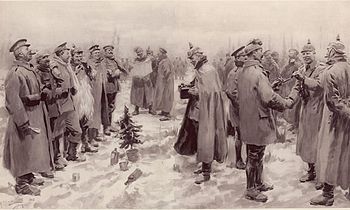

The Christmas truce (German: Weihnachtsfrieden; French: Trêve de Noël) was a series of widespread but unofficial ceasefires along the Western Front around Christmas 1914. In the week leading up to the holiday, German and British soldiers crossed trenches to exchange seasonal greetings and talk. In areas, men from both sides ventured into no man’s land on Christmas Eve and Christmas Day to mingle and exchange food and souvenirs. There were joint burial ceremonies and prisoner swaps, while several meetings ended in carol-singing. Men played games of football with one another, giving one of the most enduring images of the truce. However, the peaceful behaviour was not ubiquitous; fighting continued in some sectors, while in others the sides settled on little more than arrangements to recover bodies.

The following year, a few units arranged ceasefires, but the truces were not nearly as widespread…
View original post 4,795 more words


.JPG)


.jpg)


 belfastchildis.com