Key Events & Deaths on this day in Northern Ireland Troubles
Monday 16 August 1971
Over 8,000 workers went on strike in Derry in protest at Internment. Joe Cahill, then Chief of Staff of the Provisional Irish Republican Army (IRA), held a press conference during which he claimed that only 30 IRA men had been interned.
Thursday 16 August 1973
Two members of the Irish Republican Army (IRA) died when a mortar bomb exploded prematurely during an attack on the join British Army / Royal Ulster Constabulary (RUC) base in Pomeroy, County Tyrone.
Monday 16 August 1976
Two Catholic civilians were killed in a bomb planted by Loyalist paramilitaries outside the Step Inn, Keady, County Armagh.
Thursday 16 August 1984
Loyalist paramilitaries opened fire on Royal Ulster Constabulary (RUC) officers on the Shankill Road as riots continued in Protestant areas of Belfast.
Friday 16 August 1985
There were more disturbances in Portadown, County Armagh, following a Loyalist band parade. Some shops were looted and set on fire.
Friday 16 August 1991
Thomas Donagh (38), then a Sinn Féin (SF) member, was shot dead by the Ulster Freedom Fighters (UFF), a cover name (pseudonym) used by the Ulster Defence Association (UDA), in Kilrea, County Derry.
Martin O’Prey (28), then a member of the Irish People’s Liberation Organisation (IPLO), was shot dead by the Ulster Volunteer Force (UVF) in the lower Falls area of west Belfast.
[These killings were part of an upsurge in Loyalist violence following the ending of the CLMC ceasefire on the 4 July 1991.]
Monday 16 August 1993
The Irish Republican Army (IRA) carried out a bomb attack in the centre of Strabane, County Tyrone.
Saturday 16 August 1997
An Irish Republican Army (IRA) ‘bomb factory’ was discovered by Garda Síochána (the Irish police) at a farmhouse in Crosskeys, near Cavan. The factory was not believed to have been operational for some weeks.
Sunday 16 August 1998
The 32-County Sovereignty Committee issued a statement denying that the organisation was associated with those responsible for the Omagh bombing.
Thursday 16 August 2001
The body of a man was discovered in west Belfast at 4.30am (0430BST) at the junction of Shankill Road and Lanark Way. The Royal Ulster Constabulary (RUC) said that the man had suffered extensive head wounds.
[Police were trying to establish a motive for the killing.]
A pipe-bomb exploded in the garden of a house belonging to a Catholic family living in Ingledale Park in north Belfast. There were no injuries during the attack.
[Loyalist paramilitaries were thought to have carried out the attack.]
There was a ‘nail-bomb’ attack on the home of a Protestant family in Westland Road in north Belfast. There were no injuries during the attack.
[Republican paramilitaries were thought to have been responsible for the attack.]
At around 11.00pm (2300BST) a gang of four masked men broke into a flat in Maralin Avenue, Lisburn, County Antrim. A man who was in the flat was beaten with wooden batons. He suffered bruising to the arms, legs and body.
Arsonists broke into St Peter’s Catholic Church in Stoneyford, near Belfast, and started a fire. A retired fireman entered the building and brought the fire under control. Loyalists from the Lisburn area were believed to have been responsible for the attack.
John Reid, then Secretary of State for Northern Ireland, announced that he was providing an additional £10 million available for policing which would bring the total buget for the current financial year to £645 million. The additional spending was to cover a short-term deficit.
Bertie Ahern, then Taoiseach (Irish Prime Minister), took a break from his holiday in County Kerry, Republic of Ireland, to travel back to Dublin for a meeting with John Hume, then leader of the Social Democratic and Labour Party (SDLP). The two men were expected to discuss the recent setbacks in the peace process. Before the meeting Hume had called on the Irish Republican Army (IRA) to “restore immediately its contact with General de Chastelain and its commitment to a scheme for resolving the decommissioning issue”.#
16 August 2008
The Continuity IRA (CIRA) fired a rocket-propelled grenade at a police patrol in Lisnaskea, County Fermanagh. Three officers required hospital treatment.
Remembering all innocent victims of the Troubles
Today is the anniversary of the follow people killed as a results of the conflict in Northern Ireland
To the innocent on the list – Your memory will live forever
– To the Paramilitaries –
“There are many things worth living for, a few things worth dying for, but nothing worth killing for.
9 people lost their lives on the 16th August between 1972 – 1991
————————————————————–
16 August 1972
William Spence, (32)
Protestant Status: Civilian (Civ),
Killed by: Ulster Volunteer Force (UVF)
Barman. Shot while in Long Bar, Shankill,
————————————————————–
16 August 1973
Daniel McAnallen, (27)
Catholic Status: Irish Republican Army (IRA),
Killed by: Irish Republican Army (IRA)
Killed when mortar bomb exploded prematurely, during attack on Pomeroy British Army (BA) / Royal Ulster Constabulary (RUC) base, County Tyrone.
————————————————————–
16 August 1973
Patrick Quinn, (18)
Catholic Status: Irish Republican Army (IRA),
Killed by: Irish Republican Army (IRA)
Killed when mortar bomb exploded prematurely, during attack on Pomeroy British Army (BA) / Royal Ulster Constabulary (RUC) base, County Tyrone.
————————————————————–
16 August 1976
Ellizabeth McDonald, (38)
Catholic Status: Civilian (Civ),
Killed by: non-specific Loyalist group (LOY)
Killed when car bomb exploded outside Step Inn, Keady, County Armagh.
————————————————————–
16 August 1976
Gerard McGleenan, (22)
Catholic Status: Civilian (Civ),
Killed by: non-specific Loyalist group (LOY)
Killed when car bomb exploded outside Step Inn, Keady, County Armagh.
————————————————————–
16 August 1980
Colette Meek, (47)
Catholic Status: Civilian (Civ),
Killed by: Irish Republican Army (IRA)
Shot outside her home, during sniper attack on Royal Ulster Constabulary (RUC) mobile patrol, Alliance Avenue, Ardoyne, Belfast.
————————————————————–
16 August 1981
Charles Armstrong, (55)
Catholic Status: Civilian (Civ),
Killed by: Irish Republican Army (IRA)
Abducted shortly after leaving his home, Crossmaglen, County Armagh. His remains eventually found by information supplied anonymously, buried in bogland, Aughrim More, near Inniskeen, County Monaghan, on 29 July 2010.
————————————————————–
16 August 1991
Thomas Donaghy, (38)
Catholic Status: ex-Irish Republican Army (xIRA),
Killed by: Ulster Freedom Fighters (UFF)
Sinn Fein (SF) member. Shot as he arrived at his workplace, Portna Fisheries, Kilrea, County Derry
Today is the 17th university of the Omagh Bombing when 29 INNOCENT people , including women, children and visitors from other countries were slaughtered by Republican Terrorists on the streets of Omagh.
This was among the worse attacks on Civilians throughout the Troubles and the images of that day are embedded ( along with the Shankill Bomb ) in my soul.
I grew up on the Shankill Road and surrounding areas during the worst years of the Troubles and like many from my generation I have seen more than my fair share of misery and bloodbaths , as Republicans terrorists dragged Northern Ireland to hell and back in their quest for a United Ireland and loyalist paramilitaries waged a sectarian war of soul destroying attrition . I’ve lost count of how many friends and family I have seen destroyed as a direct result of the conflict , either killed, imprisoned or emotionally crippled by the things they have seen and done.
But for some reason The Omagh Bombing struck me hard and has a permanent place in my heart and soul.
Things have moved on and Northern Ireland is painfully, slowly crawling towards a better future.These things take time , but one day in the distant future, when we are all dust in the wind , our children’s grandchildren will wonder what-it-was–all-about and the names of dead and their brutal slaughter will fade into the dark corridors of time .
But we will never forget
The Victims
Some of the Victims
Never Forgotten
————————————————————————
15 August 1998
James Barker, (12) nfNI Status: Civilian (Civ),
Killed by: real Irish Republican Army (rIRA) From County Donegal. Killed in car bomb explosion, Market Street, Omagh, County Tyrone. Inadequate warning given.
————————————————————————
15 August 1998
Fernando Blasco Bacelga, (12) nfNI Status: Civilian (Civ),
Killed by: real Irish Republican Army (rIRA) Spanish visitor. Killed in car bomb explosion, Market Street, Omagh, County Tyrone. Inadequate warning given.
————————————————————————
15 August 1998
Geraldine Breslin, (43)
Catholic Status: Civilian (Civ),
Killed by: real Irish Republican Army (rIRA) Killed in car bomb explosion, Market Street, Omagh, County Tyrone. Inadequate warning given.
————————————————————————
15 August 1998
Debra Ann Cartwright, (20)
Protestant Status: Civilian (Civ),
Killed by: real Irish Republican Army (rIRA) Killed in car bomb explosion, Market Street, Omagh, County Tyrone. Inadequate warning given.
————————————————————————
15 August 1998
Gareth Conway, (18)
Catholic Status: Civilian (Civ),
Killed by: real Irish Republican Army (rIRA) Killed in car bomb explosion, Market Street, Omagh, County Tyrone. Inadequate warning given.
————————————————————————
15 August 1998
Breda Devine, (1)
Catholic Status: Civilian (Civ),
Killed by: real Irish Republican Army (rIRA) Killed in car bomb explosion, Market Street, Omagh, County Tyrone. Inadequate warning given.
————————————————————————
15 August 1998
Oran Doherty, (8) nfNI Status: Civilian (Civ),
Killed by: real Irish Republican Army (rIRA) From County Donegal. Killed in car bomb explosion, Market Street, Omagh, County Tyrone. Inadequate warning given.
————————————————————————
15 August 1998
Adrian Gallagher, (21)
Catholic Status: Civilian (Civ),
Killed by: real Irish Republican Army (rIRA) Killed in car bomb explosion, Market Street, Omagh, County Tyrone. Inadequate warning given.
————————————————————————
15 August 1998
Esther Gibson, (36)
Protestant Status: Civilian (Civ),
Killed by: real Irish Republican Army (rIRA) Killed in car bomb explosion, Market Street, Omagh, County Tyrone. Inadequate warning given
————————————————————————
15 August 1998
Mary Grimes, (65)
Catholic Status: Civilian (Civ),
Killed by: real Irish Republican Army (rIRA) Killed in car bomb explosion, Market Street, Omagh, County Tyrone. Inadequate warning given.
————————————————————————
15 August 1998
Olive Hawkes, (60)
Protestant Status: Civilian (Civ),
Killed by: real Irish Republican Army (rIRA) Killed in car bomb explosion, Market Street, Omagh, County Tyrone. Inadequate warning given.
————————————————————————
15 August 1998
Julia Hughes, (21)
Protestant Status: Civilian (Civ),
Killed by: real Irish Republican Army (rIRA) Killed in car bomb explosion, Market Street, Omagh, County Tyrone. Inadequate warning given
————————————————————————
15 August 1998
Brenda Logue, (17)
Catholic Status: Civilian (Civ),
Killed by: real Irish Republican Army (rIRA) Killed in car bomb explosion, Market Street, Omagh, County Tyrone. Inadequate warning given.
————————————————————————
15 August 1998
Anne McCombe, (48)
Protestant Status: Civilian (Civ),
Killed by: real Irish Republican Army (rIRA) Killed in car bomb explosion, Market Street, Omagh, County Tyrone. Inadequate warning given.
————————————————————————
15 August 1998
Brian McCrory, (54)
Catholic Status: Civilian (Civ),
Killed by: real Irish Republican Army (rIRA) Killed in car bomb explosion, Market Street, Omagh, County Tyrone. Inadequate warning given.
————————————————————————
15 August 1998
Samantha McFarland, (17)
Protestant Status: Civilian (Civ),
Killed by: real Irish Republican Army (rIRA) Killed in car bomb explosion, Market Street, Omagh, County Tyrone. Inadequate warning given.
————————————————————————
15 August 1998
Sean McGrath, (61)
Catholic Status: Civilian (Civ),
Killed by: real Irish Republican Army (rIRA) Injured in car bomb explosion, Market Street, Omagh, County Tyrone. Inadequate warning given. He died 5 September 1998.
————————————————————————
15 August 1998
Sean McLaughlin, (12) nfNI Status: Civilian (Civ),
Killed by: real Irish Republican Army (rIRA) From County Donegal. Killed in car bomb explosion, Market Street, Omagh, County Tyrone. Inadequate warning given.
————————————————————————
15 August 1998
Jolene Marlow, (17)
Catholic Status: Civilian (Civ),
Killed by: real Irish Republican Army (rIRA) Killed in car bomb explosion, Market Street, Omagh, County Tyrone. Inadequate warning given.
————————————————————————
15 August 1998
Avril Monaghan, (30)
Catholic Status: Civilian (Civ),
Killed by: real Irish Republican Army (rIRA) Killed in car bomb explosion, Market Street, Omagh, County Tyrone. Inadequate warning given.
————————————————————————
15 August 1998
Maura Monaghan, (1)
Catholic Status: Civilian (Civ),
Killed by: real Irish Republican Army (rIRA) Killed in car bomb explosion, Market Street, Omagh, County Tyrone. Inadequate warning given.
————————————————————————
15 August 1998
Alan Radford, (16)
Protestant Status: Civilian (Civ),
Killed by: real Irish Republican Army (rIRA) Killed in car bomb explosion, Market Street, Omagh, County Tyrone. Inadequate warning given
————————————————————————
15 August 1998
Rocia Abad Ramos, (23) nfNI Status: Civilian (Civ),
Killed by: real Irish Republican Army (rIRA) Spanish visitor. Killed in car bomb explosion, Market Street, Omagh, County Tyrone. Inadequate warning given.
————————————————————————
15 August 1998
Elizabeth Rush, (57)
Catholic Status: Civilian (Civ),
Killed by: real Irish Republican Army (rIRA) Killed in car bomb explosion, Market Street, Omagh, County Tyrone. Inadequate warning given.
————————————————————————
15 August 1998
Veda Short, (56)
Protestant Status: Civilian (Civ),
Killed by: real Irish Republican Army (rIRA) Killed in car bomb explosion, Market Street, Omagh, County Tyrone. Inadequate warning given.
————————————————————————
15 August 1998
Philomena Skelton, (39)
Catholic Status: Civilian (Civ),
Killed by: real Irish Republican Army (rIRA) Killed in car bomb explosion, Market Street, Omagh, County Tyrone. Inadequate warning given.
————————————————————————
15 August 1998
Fred White, (60)
Protestant Status: Civilian (Civ),
Killed by: real Irish Republican Army (rIRA) Killed in car bomb explosion, Market Street, Omagh, County Tyrone. Inadequate warning given.
————————————————————————
15 August 1998
Bryan White, (26)
Protestant Status: Civilian (Civ),
Killed by: real Irish Republican Army (rIRA) Killed in car bomb explosion, Market Street, Omagh, County Tyrone. Inadequate warning given.
————————————————————————
15 August 1998
Lorraine Wilson , (15)
Protestant Status: Civilian (Civ),
Killed by: real Irish Republican Army (rIRA) Killed in car bomb explosion, Market Street, Omagh, County Tyrone. Inadequate warning given
————————————————————————
—————————————————————————————————————————–
Omagh Bombing – The IRA’s Deadliest Massacre of Civilians
The red Vauxhall Cavalier containing the bomb. This photograph was taken shortly before the explosion; the camera was found afterwards in the rubble. The Spanish man and child seen in the photo both survived.[1]
The Omagh bombing (Irish: Buamáil an Ómaigh) was a car bombing that took place on 15 August 1998 in Omagh, County Tyrone, Northern Ireland.[6] It was carried out by the ‘Real IRA‘, an IRA splinter group who opposed the IRA’s ceasefire and the Good Friday Agreement. The bombing killed 29 people and injured about 220 others.[3][4][5][9] This was the highest death toll from a single incident during the Troubles. Telephoned warnings had been sent about 40 minutes beforehand, but they were inaccurate and police had inadvertently moved people toward the bomb.
It has been alleged that the British, Irish and American intelligence agencies had information which could have prevented the bombing; most of which came from double agents inside the Real IRA.[14] This information was not given to the local police; the Royal Ulster Constabulary (RUC).[14] In 2008 it was revealed that British intelligence agency GCHQ was monitoring conversations between the bombers as the bomb was being driven into Omagh.[15]
A 2001 report by the Police Ombudsman said that the RUC’s Special Branch failed to act on prior warnings and slammed the RUC’s investigation of the bombing.[16] The RUC has obtained circumstantial and coincidental evidence against some suspects, but it has not come up with anything to convict anyone of the bombing.[17]Colm Murphy was tried, convicted, and then released after it was revealed that the Gardaí forged interview notes used in the case.[18] Murphy’s nephew Sean Hoey was also tried and found not guilty.[19] In June 2009, the victims’ families won a £1.6 millioncivil action against four defendants.[20] In April 2014, Seamus Daly was charged with the murders of those
Negotiations to end the Troubles had failed in 1996 and there was a resumption of political violence. The peace process later resumed, and it reached a point of renewed tension in 1998, especially following the deaths of three Catholic children in Orange Order-related riots in mid-July.[22]Sinn Féin had accepted the Mitchell Principles, which involved commitment to non-violence, in September 1997 as part of the peace process negotiations.[23]Dissident members of the Provisional Irish Republican Army (PIRA), who saw this as a betrayal of the republican struggle for a united Ireland, left to form the Real Irish Republican Army (RIRA) in October 1997.[23][24]
The RIRA began its paramilitary campaign against the Agreement with an attempted car bombing in Banbridge, County Down on 7 January 1998, which involved a 300 pounds (140 kg) explosive that was defused by security forces.[24] Later that year, it mounted attacks in Moira, Portadown, Belleek, Newtownhamilton and Newry, as well as bombing Banbridge again on 1 August, which caused thirty-five injuries and no deaths.[24] The attack at Omagh took place 13 weeks after the signing of the Good Friday Agreement, which had been intended to be a comprehensive solution to the Troubles and had broad support both in Ireland and internationally.[25][26]
Omagh had been targeted in 1973 twice:
17 May 1973 – Arthur Place (29), Derek Reed (28), Sheridan Young (26), Barry Cox (28) and Frederick Drake (25), all off duty members of the British Army, were killed by a Provisional Irish Republican Army booby trap bomb while getting into a car, outside the Knock-na-Moe Castle Hotel, Omagh. Drake died on 3 June 1973.
25 June 1973 – Sean Loughran (37), Patrick Carty (26) and Dermot Crowley (18), all Catholics and members of the Provisional Irish Republican Army, were killed in a premature bomb explosion while travelling in a car, Gortin Road, near Omagh.
The attack
Preparation and warnings
Lower Market Street, site of the bombing, 2001. The courthouse is in the background
On 13 August, a maroon Vauxhall Cavalier was stolen from outside a block of flats in Carrickmacross, County Monaghan, in the Republic of Ireland.[27] At that time it bore the County Donegal registration number of 91 DL 2554. The perpetrators replaced its Republic of Ireland number plates with false Northern Ireland plates and the car was loaded with a bomb.[13][27] On the day of the bombing, they drove the car across the Irish border and at about 14:19 parked the vehicle filled with 230 kilograms (510 lb) of fertiliser-based explosives outside S.D. Kells’ clothes shop in Omagh’s Lower Market Street, on the southern side near the crossroads with Dublin Road.[13] They could not find a parking space near the intended target, the Omagh courthouse.[28] The car (with its false registration number MDZ 5211) had arrived from an easterly direction. The two male occupants then armed the bomb and upon exiting the car, walked east down Market Street towards Campsie Road. Some Spanish tourists stopped beside the car, and were photographed. The photographer died in the bombing.
Three phone calls were made warning of a bomb in Omagh, using the same codeword that had been used in the Real IRA’s bomb attack in Banbridge two weeks earlier.[29] At 14:32, a warning was telephoned to Ulster Television saying, “There’s a bomb, courthouse, Omagh, main street, 500lb, explosion 30 minutes.”[29] One minute later, the office received a second warning saying, “Martha Pope (which was the RIRA’s code word), bomb, Omagh town, 15 minutes”. The caller claimed the warning on behalf of “Óglaigh na hÉireann”.[29] The next minute, the Coleraine office of the Samaritans received a call stating that a bomb would go off on “main street” about 200 yards (180 m) from the courthouse.[29] The recipients passed on the information to the Royal Ulster Constabulary (RUC).[29]
The BBC News stated that police “were clearing an area near the local courthouse, 40 minutes after receiving a telephone warning, when the bomb detonated. But the warning was unclear and the wrong area was evacuated”.[9] The warnings mentioned “main street” when no street by that name existed in Omagh, although Market Street was the main shopping street in the town.[27] The nature of the warnings led the police to place a cordon across the junction of High Street and Market Street at Scarffes Entry. They then began to evacuate the buildings and move people down the hill from the top of High Street and the area around the courthouse to the bottom of Market Street where the bomb was placed.[4][9][27][29][30] The courthouse is roughly 400 metres (1,300 ft) from the spot where the car bomb was parked.[30][31]
Explosion
The scene in Market Street minutes after the bomb went off. Survivors are shown helping the injured
The car bomb detonated at about 15:10 BST in the crowded shopping area,[9] killing outright 21 people who had been in the vicinity of the vehicle. Eight more people would die on the way to or in hospital. The deceased victims included a pregnant woman, six children, and six teenagers, most of whom had died on the spot.[12] Those who were killed were James Barker (12), Seán McLaughlin (12) and Oran Doherty (8), from County Donegal, Fernando Blasco Baselga (12) and Rocío Abad Ramos (23) from Spain, Geraldine Breslin (43), Gareth Conway (18), Breda Devine (1), Aidan (or Aiden) Gallagher (21), Mary Grimes (65), Brenda Logue (17), Brian McCrory (54), Seán McGrath (61), Jolene Marlow (17), Avril Monaghan (30; pregnant with twins), Maura Monaghan (1), Elizabeth Rush (57), Philomena Skelton (39), all Catholics,; Deborah-Anne Cartwright (20), Esther Gibson (36), Olive Hawkes (60), Julia Hughes (21), Ann McCombe (48), Samantha McFarland (17), Alan Radford (16), Veda Short (56), Fred White (60), Bryan White (26), Lorraine Wilson (15), all Protestants, were killed. (Seán McGrath died from his injuries on 5 September 1998.) [12][32]
Injured survivor Marion Radford described hearing an “unearthly bang”, followed by “an eeriness, a darkness that had just come over the place”, then the screams as she saw “bits of bodies, limbs or something” on the ground while she searched for her 16-year-old son, Alan. She later discovered he had been killed only yards away from her, the two having become separated minutes before the blast.[27][33]
In a statement on the same day as the bombing, RUC Chief Constable Ronnie Flanagan accused the RIRA of deliberately trying to direct civilians to the bombing site.[31]British government prosecutor Gordon Kerr QC called the warnings “not only wrong but… meaningless” and stated that the nature of the warnings made it inevitable that the evacuations would lead to the bomb site.[34] The RIRA strongly denied that it intended to target civilians.[29][35] It also stated that the warnings were not intended to lead people to the bombing site.[29] During the 2003 Special Criminal Court trial of RIRA director Michael McKevitt, witnesses for the prosecution stated that the inaccurate warnings were accidental.[28]
Aftermath
Tyrone County Hospital, where many of the bomb victims were taken.
The BBC News stated that those “who survived the car bomb blast in a busy shopping area of the town described scenes of utter carnage with the dead and dying strewn across the street and other victims screaming for help”.[9] The injured were initially taken to two local hospitals, the Tyrone County Hospital and the Erne Hospital.[30] A local leisure centre was set up as a casualty field centre, and Lisanelly Barracks, an army base served as an impromptu morgue.[30][31] The Conflict Archive on the Internet project has stated that rescue workers described the scene as “battlefield conditions”.[30]Tyrone County Hospital became overwhelmed, and appealed for local doctors to come in to help.[9][31]
Because of the stretched emergency services, people used buses, cars and helicopters to take the victims to other hospitals in Northern Ireland,[9][31] including the Royal Victoria Hospital in Belfast and Altnagelvin Hospital in Derry.[30] A Tyrone County Hospital spokesman stated that they treated 108 casualties, 44 of whom had to be transferred to other hospitals.[31] Paul McCormick of the Northern Ireland Ambulance Service said that, “The injuries are horrific, from amputees, to severe head injuries to serious burns, and among them are women and children.”[9]
The day after the bombing, the relatives and friends of the dead and injured used Omagh Leisure Centre to post news.[30] The Spanish Ambassador to Ireland personally visited some of the injured[30] and churches across Northern Ireland called for a national day of mourning.[36]Church of IrelandArchbishop of ArmaghRobin Eames stated on BBC Radio that, “From the Church’s point of view, all I am concerned about are not political arguments, not political niceties. I am concerned about the torment of ordinary people who don’t deserve this.”[36]
Reactions
British Prime Minister Tony Blair visited Omagh days after the bombing. This photograph shows Blair addressing a crowd in Armagh several weeks later.
Sinn Féin leader Martin McGuinness said that, “This appalling act was carried out by those opposed to the peace process”.[9] Party president Gerry Adams said that, “I am totally horrified by this action. I condemn it without any equivocation whatsoever.”[10] McGuinness mentioned the fact that both Catholics and Protestants alike were injured and killed, saying, “All of them were suffering together. I think all them were asking the question ‘Why?’, because so many of them had great expectations, great hopes for the future.”[10] Sinn Féin as an organization initially refused to co-operate with the investigation into the attack, citing the involvement of the Royal Ulster Constabulary.[39] On 17 May 2007, Martin McGuinness stated that Irish Republicans would co-operate with an independent, international investigation if one is created.[40]
On 22 August 1998, the Irish National Liberation Army called a ceasefire in its operations against the British government.[30][41][42] The National Consortium for the Study of Terrorism has accused the republican paramilitary organisation of providing supplies for the bombing.[42] The INLA continued to observe the ceasefire although it remains opposed to the Good Friday Agreement. It recently began decommissioning its arms.[42] The RIRA also suspended operations for a short time after the Omagh bombing before returning to violence.[30] The RIRA came under pressure from the Provisional Irish Republican Army after the bombing; PIRA members visited the homes of 60 people connected with the RIRA and ordered them to disband and stop interfering with PIRA arms dumps.[24] The BBC News stated that, “Like the other bombings in the early part of 1998 in places like Lisburn and Banbridge, Omagh was a conscious attempt by republicans who disagreed with the political strategy of Gerry Adams and Martin McGuinness, to destabilise Northern Ireland in that vulnerable moment of hope. It failed—but there is a terrible irony to the way in which the campaign was halted only by the wave of revulsion triggered by the carnage at Omagh.”[3]
Responsibility
Allegations
No group claimed responsibility on the day of the attack, but the RUC suspected the RIRA.[9][31] The RIRA had carried out a car bombing in Banbridge, County Down, two weeks before the Omagh bombing.[31] Three days after the attack, the RIRA claimed responsibility and apologised for the attack.[11][35] On 7 February 2008, a RIRA spokesman stated that, “The IRA had minimal involvement in Omagh. Our code word was used; nothing more. To have stated this at the time would have been lost in an understandable wave of emotion” and “Omagh was an absolute tragedy. Any loss of civilian life is regrettable.”[43]
On 9 October 2000, the BBC’s Panorama programme aired the special Who Bombed Omagh? hosted by journalist John Ware.[27] The programme quoted RUC Chief Constable Ronnie Flanagan as saying, “sadly up to this point we haven’t been able to charge anyone with this terrible atrocity”.[27] The programme alleged that the police on both sides of the Irish border knew the identity of the bombers.[27] It stated that, “As the bomb car and the scout car headed for the border, the police believe they communicated by mobile phone. This is based on an analysis of calls made in the hours before, during and after the bombing. This analysis may prove to be the key to the Omagh bomb investigation.”[27] Using the phone records, the programme gave the names of the four prime suspects as Oliver Traynor, Liam Campbell, Colm Murphy, and Seamus Daly.[27] The police had leaked the information to the BBC since it was too circumstantial and coincidental to be used in court.[17]
Northern Ireland Secretary Peter Mandelson praised the Panorama programme, calling it “a very powerful and very professional piece of work”.[44] Irish TaoiseachBertie Ahern criticised it, saying that “bandying around names on television” could hinder attempts to secure convictions.[44] First Minister David Trimble stated that he had “very grave doubts” about it.[44] Lawrence Rush, whose wife Elizabeth died in the bombing, tried legally to block the programme from being broadcast, saying, “This is media justice, we can’t allow this to happen”.[45]Democratic Unionist Partyassembly member Oliver Gibson, whose niece Esther died in the bombing, stated that the government did not have the will to pursue those responsible and welcomed the programme.[45]
The police believe that the bombing of BBC Television Centre in London on 4 March 2001 was a revenge attack for the broadcast.[46] On 9 April 2003, the five RIRA members behind the BBC office’s bombing were convicted and sentenced for between 16 and 22 years.[47]
On 22 September 1998, the RUC and Gardaí arrested twelve men in connection with the bombing.[40] They subsequently released all of them without charge.[40] On 25 February 1999, they questioned and arrested at least seven suspects.[40] Builder and publican Colm Murphy, from Ravensdale, County Louth, was charged three days later for conspiracy and was convicted on 23 January 2002 by the Republic’s Special Criminal Court.[40] He was sentenced to fourteen years.[18] In January 2005, Murphy’s conviction was quashed and a retrial ordered by the Court of Criminal Appeal, on the grounds that two Gardaí had falsified interview notes, and that Murphy’s previous convictions were improperly taken into account by the trial judges.[18]
On 6 September 2006, Murphy’s nephew Sean Hoey, an electrician from Jonesborough, County Armagh, went on trial accused of 29 counts of murder, and terrorism and explosives charges.[49] Upon its completion, Hoey’s trial found on 20 December 2007 that he was not guilty of all 56 charges against him.[50]
On 24 January 2008, former Chief Constable Ronnie Flanagan apologised to the victims’ families for the lack of convictions in relation to the Omagh bombing.[51] This apology was rejected by some of the victims’ families.[51] After the Hoey verdict, BBC News reporter Kevin Connolly stated that, “The Omagh families were dignified in defeat, as they have been dignified at every stage of their fight for justice. Their campaigning will go on, but the prospect is surely receding now that anyone will ever be convicted of murdering their husbands and brothers and sisters and wives and children.”[3]Police Service of Northern IrelandChief Constable Sir Hugh Orde stated that he believed there would be no further prosecutions.[19]
On 8 June 2009, the civil case taken by victims’ relatives concluded, with Michael McKevitt, Liam Campbell, Colm Murphy and Seamus Daly being found to have been responsible for the bombing.[20] Seamus McKenna was cleared of involvement.[20] The others were held liable for £1.6 million of damages. It was described as a “landmark” damages award internationally.[52] Murphy and Daly appealed and were granted a retrial, but this second trial also found them responsible for the bombing, with the judge describing the evidence as overwhelming.[53]
On 10 April 2014 Daly was charged with murdering the 29 victims of the Omagh bombing and with other offences.[54] Daly lived in Cullaville, County Monaghan, in the Republic of Ireland and was arrested in Newry by police after he crossed the Border into Northern Ireland.[55]
Independent bombing investigation
On 7 February 2008, the Northern Ireland Policing Board decided to appoint a panel of independent experts to review the police’s investigation of the bombing. Some of the relatives of the bombing victims criticised the decision, saying that an international public inquiry covering both the Republic of Ireland and Northern Ireland should be established instead. The review is to determine whether enough evidence exists for further prosecutions. It is also to investigate the possible perjury of two police witnesses made during Sean Hoey’s trial.[56]Sinn Féin Policing Board member Alex Maskey stated that, “Sinn Féin fully supports the families’ right to call for a full cross-border independent inquiry while the Policing Board has its clear and legal obligation to scrutinise the police handling of the investigations.” He also stated that, “We recognise that the board has a major responsibility in carrying out our duty in holding the PSNI to account in the interests of justice for the Omagh families”.[57]
Allegations against the security forces
It has been alleged that the British, Irish and American intelligence agencies had information which could have prevented the bombing. This information was not given to the local police; the Royal Ulster Constabulary (RUC). The RUC’s investigation into the bombing has also been widely criticized.
Police Ombudsman report
Police OmbudsmanNuala O’Loan published a report on 12 December 2001 that strongly criticised the RUC over its handling of the bombing investigation.[16][58][59] Her report stated that RUC officers had ignored the previous warnings about a bomb and had failed to act on crucial intelligence.[31][58][59] She went on to say that officers had been uncooperative and defensive during her inquiry.[59] The report concluded that, “The victims, their families, the people of Omagh and officers of the RUC were let down by defective leadership, poor judgement and a lack of urgency.”[16] It recommended the setting up of a new investigation team independent of the new Police Service of Northern Ireland (PSNI), which had since replaced the RUC, led by a senior officer from an outside police force.[16]
Initially, the Police Association, which represents both senior officers and rank and file members of the Northern Ireland police, went to court to try to block the release of the O’Loan report.[31][59] The Association stated that, “The ombudsman’s report and associated decisions constitute a misuse of her statutory powers, responsibilities and functions.”[59] The group later dropped its efforts.[31][60] RUC Chief Constable Ronnie Flanagan called the report “grossly unfair” and “an erroneous conclusion reached in advance and then a desperate attempt to find anything that might happen to fit in with that.”[16] Other senior police officers also disputed the report’s findings.[58][59] Flanagan issued a 190 page counter-report in response, and has also stated that he has considered taking legal action.[16][61] He argued that the multiple warnings were given by the RIRA to cause confusion and lead to a greater loss of life.[31][62] Assistant Chief Constables Alan McQuillan and Sam Kincaid sent affidavits giving information that supported the report.[59]
The families of the victims expressed varying reactions to the report.[63] Kevin Skelton, whose wife died in the attack, said that, “After the bomb at Omagh, we were told by Tony Blair and the Taoiseach, Bertie Ahern, that no stone would be left unturned … It seems to me that a lot of stones have been left unturned,” but then expressed doubt that the bombing could have been prevented.[63] Lawrence Rush, whose wife also died in the attack, said that, “There’s no reason why Omagh should have happened – the police have been in dereliction of their duty.”[63] Other Omagh residents said that the police did all that they could.[63] The Belfast Telegraph called the report a “watershed in police accountability” and stated that it “broke the taboo around official criticism of police in Northern Ireland”.[58] Upon leaving office on 5 November 2007, Nuala O’Loan stated that the report was not a personal battle between herself and Sir Ronnie, and did not lead to one.[58] She also stated that the “recommendations which we made were complied with”.[58]
Advance warning allegations
Throughout the conflict in Northern Ireland, the security forces used double agents to infiltrate the paramilitary groups. In 1998 the British, Irish and American intelligence agencies had agents connected to the Real IRA.
In 2001, a double agent known as Kevin Fulton claimed he told his MI5handlers three days before the bombing that the RIRA was about to bring a “huge bomb” across the border.[64] Fulton claims he also told them who he believed was making it and where it was being made.[64] He said that MI5 did not pass his information over to the police.[64][65][66] RUC Chief Constable Ronnie Flanagan called the allegations “preposterous” and said the information Fulton gave his handlers was full of “distortions and inaccuracies”.[64] However, Flanagan admitted that some of Fulton’s information was not passed to RUC Special Branch, due to “an administrative error”.[64] In September 2001, British security forces informer Willie Carlin said the Ombudsman had obtained evidence confirming Fulton’s allegations.[65] A spokesman for the Ombudsman neither confirmed nor denied Carlin’s assertion when asked.[65]
David Rupert, an American citizen, was jointly run as an agent by MI5 and the FBI. He worked as a fundraiser for the RIRA. On 11 August 1998, four days before the bombing, Rupert informed his MI5 handlers that the RIRA was planning a car bomb attack in Omagh or Derry. It is not known whether this information was passed to the RUC Special Branch.[67]
The Republic of Ireland’s police force, the Gardaí, also had an agent close to the RIRA at the time. The agent, Paddy Dixon, stole cars for the RIRA, who used them to transport bombs.[64] Days before the bombing, the RIRA had Dixon steal the maroon Vauxhall Cavalier it would use in the attack.[64] Dixon immediately told his handler; Detective Sergeant John White. On 12 August, White passed this on to his superior; Detective Chief Superintendent Dermot Jennings.[64] According to White, Jennings told him that they would let the bomb go through, mainly so that the RIRA would not become suspicious of Dixon.[64] Dixon fled the Republic of Ireland in January 2002. The following year, a transcript of a conversation between Dixon and White was released. In it, Dixon confirms that Gardaí let the bomb go through and says that “Omagh is going to blow up in their faces”.[68] In February 2004, PSNI Chief Constable Hugh Orde called for the Republic of Ireland to hand over Dixon.[31] In March 2006, Chief Constable Orde stated that “security services did not withhold intelligence that was relevant or would have progressed the Omagh inquiry”.[69] He also stated that the dissident republican militants investigated by MI5 were members of a different cell than the perpetrators of the Omagh bombing.[69]
A 2013 independent report concluded that the British, Irish and American intelligence agencies “starved” police in Omagh of intelligence that could have prevented the bombing. The report was commissioned by the victims’ families and produced by Rights Watch (UK).[70]
GCHQ monitoring
A BBC Panorama documentary, named “Omagh: What the police were never told”, was aired in September 2008. It revealed that the British intelligence agency GCHQ was monitoring mobile phone calls between the bombers as the bomb was being driven into Omagh.[71] Ray White, former Assistant Chief of RUC Special Branch, said GCHQ had been monitoring mobile phones at their request. He said he believed GCHQ were listening to the phonecalls ‘live’, rather than merely recording them for later.[71]Panorama’s John Ware also claimed that a listening device had been hidden in the car and that GCHQ had recordings of what was said.[71] None of this information was given to the RUC in Omagh at the time.[71] Transcripts of the phone calls were later handed over to RUC Special Branch.[9]
Victims’ support group
The families of the victims of the bomb created the Omagh Support and Self Help Group after the bombing.[72] The organisation is led by Michael Gallagher, who lost his 21-year-old son Aidan in the attack.[73] Its web site provides over 5000 newspaper articles, video recordings, audio recordings, and other information sources relating to the events leading up to and following the bombing as well as information about other terrorist attacks.[74] The group’s five core objectives are “relief of poverty, sickness, disability of victims”, “advancement of education and protection”, “raising awareness of needs and experiences of victims, and the effects of terrorism”, “welfare rights advice and information”, and “improving conditions of life for victims”.[72] The group also provides support to victims of other bombings in Ireland, as well other terrorist bombings, such as the 2004 Madrid train bombings.[72] The group has protested outside meetings of the 32 County Sovereignty Movement, an Irish republican political activist group opposed to the Good Friday Agreement that the families believe is part of the RIRA.[75]
In April 2000, the group argued that the attack breached Article 57 of the Geneva Convention and stated that they will pursue the alleged bombers using international law.[76] Michael Gallagher told BBC Radio Ulster that, “The republican movement refused to co-operate and those people hold the key to solving this mystery. Because they have difficulty in working with the RUC and Gardaí, we can’t get justice.”[76] In January 2002, Gallagher told BBC News that, “There is such a deeply-held sense of frustration and depression” and called the anti-terrorist legislation passed in the wake of the Omagh bombing “ineffective”.[77] He expressed support for the controversial Panorama programme, stating that it reminded “people that what happened in Omagh is still capable of happening in other towns”.[45] In February 2002, Prime MinisterTony Blair declined a written request by the group to meet with him at Downing Street.[78] Group members accused the Prime Minister of ignoring concerns about the police’s handling of the bombing investigation.[78] A Downing Street spokesman stated that, “The Prime Minister of course understands the relatives’ concerns, but [he] believes that a meeting with the Minister of State at the Northern Ireland Office is the right place to air their concerns at this stage.”[78]
The death of Michael Gallagher’s son along with his and other families’ experiences in the Omagh Support and Self Help Group formed the story of the television film Omagh, a Channel 4–RTÉ co-production.[73] Film-maker Paul Greengrass stated that “the families of the Omagh Support and Self Help Group have been in the public eye throughout the last five years, pursuing a legal campaign, shortly to come before the courts, with far reaching implications for all of us and it feels the right moment for them to be heard, to bring their story to a wider audience so we can all understand the journey they have made.”[73] In promotion for the film, Channel 4 stated that the group had pursued “a patient, determined, indomitable campaign to bring those responsible for the bomb to justice, and to hold to account politicians and police on both sides of the border who promised so much in the immediate aftermath of the atrocity but who in the families’ eyes have delivered all too little.”[73]
Another song inspired by the bombings was “Peace on Earth” by rock group U2.[80] It includes the line, “They’re reading names out over the radio. All the folks the rest of us won’t get to know. Sean and Julia, Gareth, Ann, and Breda.”[80] The five names mentioned are five of the victims from this attack.[80] Another line, “She never got to say goodbye, To see the colour in his eyes, now he’s in the dirt,” was about how James Barker, a victim, was remembered by his mother Donna Maria Barker in an article in the Irish Times after the bombing in Omagh.[80]The Edge has described the song as “the most bitter song U2 has ever written”.[81] The names of all 29 people killed during the bombing were recited at the conclusion of the group’s anti-violence anthem “Sunday Bloody Sunday” during the Elevation Tour; one performance is captured on the concert video U2 Go Home: Live from Slane Castle, Ireland.[82]
Omagh memorial
Omagh Memorial at the bomb site
In late 1999, Omagh District Council established the Omagh Memorial Working Group to devise a permanent memorial to the bombing victims.[7] Its members come from both public and private sectors alongside representatives from the Omagh Churches Forum and members of the victims’ families.[7] The chief executive of the Omagh Council, John McKinney, stated in March 2000 that, “we are working towards a memorial. It is a very sensitive issue.”[83] In April 2007, the Council announced the launch of a public art design competition by the Omagh Memorial Working Group.[7] The group’s goal was to create a permanent memorial in time for the tenth anniversary of the bombing on 15 August 2008.[7][84] It has a total budget of £240,000.[7]
Since space for a monument on Market Street itself is limited, the final memorial was to be split between the actual bombing site and the temporary Memorial Garden about 300 metres away.[85] Artist Sean Hillen and architect Desmond Fitzgerald won the contest with a design that, in the words of the Irish Times, “centres on that most primal yet mobile of elements: light.”[85] A heliostatic mirror was to be placed in the memorial park tracking the sun in order to project a constant beam of sunlight onto 31 small mirrors, each etched with the name of a victim.[84][85] All the mirrors were then to bounce the light on to a heart-shaped crystal within an obelisk pillar that stands at the bomb site.[84][85]
In September 2007, the Omagh Council’s proposed wording on a memorial plaque — “dissident republican car bomb” — brought it into conflict with several of the victims’ families.[84] Michael Gallagher has stated that “there can be no ambiguity over what happened on 15 August 1998, and no dancing around words can distract from the truth.”[84] The Council appointed an independent mediator in an attempt to reach an agreement with those families.[84] Construction started on the memorial on 27 July 2008.[86]
On 15 August 2008, a memorial service was held in Omagh.[87] Senior government representatives from the UK, the Republic of Ireland and the Stormont Assembly were present, along with relatives of many of the victims.[87] A number of bereaved families, however, boycotted the service and held their own service the following Sunday.[87] They argued that the Sinn Féin-dominated Omagh council would not acknowledge that republicans were responsible for the bombing.[87]
The Dublin and Monaghan bombings of 17 May 1974 were a series of co-ordinated no-warning car bombings in Dublin and Monaghan, Republic of Ireland. Three exploded in Dublin during rush hour and a fourth exploded in Monaghan almost ninety minutes later. They killed 33 civilians and a full-term unborn child, and injured almost 300.
The bombings were the deadliest attack of the conflict known as the Troubles, and the deadliest terrorist attack in the Republic’s history. Most of the victims were young women, although the ages of the dead ranged from five months to 80 years.
The Ulster Volunteer Force (UVF), a loyalist paramilitary group from Northern Ireland, claimed responsibility for the bombings in 1993. It had launched a number of attacks in the Republic since 1969. There are credible allegations that elements of the British state security forces helped the UVF carry out the bombings, including members of the Glenanne gang. Some of these allegations have come from former members of the security forces.
The bombings happened during the Ulster Workers’ Council strike. This was a general strike called by hardline loyalists and unionists in Northern Ireland who opposed the Sunningdale Agreement. Specifically, they opposed the sharing of political power with Irish nationalists, and the proposed role for the Republic in the governance of Northern Ireland. The Republic’s government had helped bring about the Agreement. The strike brought down the Agreement and the Northern Ireland Assembly on 28 May.
No-one has ever been charged with the bombings. A campaign by the victims’ families led to an Irish government inquiry under Justice Henry Barron. His 2003 report criticised the Garda Síochána‘s investigation and said the investigators stopped their work prematurely.
It also criticised the Fine Gael/Labourgovernment of the time for its inaction and lack of interest in the bombings. The report said it was likely that British security force personnel were involved but had insufficient evidence of higher-level involvement. However, the inquiry was hindered by the British government’s refusal to release key documents. The victims’ families and others have continued to campaign for the British government to release these documents.
The views and opinions expressed in this page and documentaries are soley intended to educate and provide background information to those interested in the Troubles of Northern Ireland. They in no way reflect my own opinions and I take no responsibility for any inaccuracies or factual errors
A 2006 view of Talbot Street where a further 14 people died
At about 17:30 on Friday 17 May 1974, without warning, three car bombs exploded in Dublin city centre at Parnell Street, Talbot Street and South Leinster Street during rush hour. The streets all ran east-west from busy thoroughfares to railway stations. There was a bus strike in Dublin at the time, which meant there were more people on the streets than usual.
According to one of the Irish Army‘s top bomb disposal officers, Commandant Patrick Trears, the bombs were constructed so well that 100% of each bomb exploded upon detonation. Twenty-three people died in these explosions and three others died from their injuries over the following few days and weeks. Many of the dead were young women originally from rural towns employed in the civil service. An entire family from central Dublin was killed. Two of the victims were foreign: an Italian man, and a French Jewish woman whose family had survived the Holocaust.
First Bomb
The first of the three Dublin car bombs went off at about 17:28 on Parnell Street, near the intersection with Marlborough Street.
It was in a parking bay outside the Welcome Inn pub and Barry’s supermarket at 93 and 91 Parnell Street respectively, and near petrol pumps. Shop fronts were blown out, cars were destroyed, and people were thrown in all directions. A brown Mini that had been parked behind the bomb was hurled onto the pavement at a right angle. One survivor described
“a big ball of flame coming straight towards us, like a great nuclear mushroom cloud whooshing up everything in its path”
The bomb car was a metallic green 1970 model Hillman Avenger, registration number DIA 4063. It had been facing toward O’Connell Street, Dublin’s main thoroughfare. This car, like the other two bomb cars, had its original registration plates. It had been hijacked in Belfast that morning.
Ten people were killed in this explosion, including two infant girls and their parents, and a World War I veteran. Many others, including a teenaged petrol-pump attendant, were severely injured.
Second Bomb
The second of the Dublin car bombs went off at about 17:30 on Talbot Street, near the intersection with Lower Gardiner Street. Talbot Street was the main route from the city centre to Connolly station, Dublin’s primary railway station. It was parked at 18 Talbot Street, on the north side, opposite Guineys department store. The bomb car was a metallic blue mink Ford Escort, registration number 1385 WZ. It had been stolen that morning in the Docks area of Belfast.
The blast damaged buildings and vehicles on both sides of the street. People suffered severe burns and were struck by shrapnel, flying glass and debris; some were hurled through the windows of shops.
Twelve people were killed outright, and another two died over the following days and weeks. Thirteen of the fourteen victims were women, including one who was nine months pregnant. One young woman who had been beside the bomb car was decapitated; the only clue to her sex was the pair of brown platform boots she was wearing
Several others lost limbs and a man was impaled through the abdomen by an iron bar. Several bodies lay in the street for half an hour as ambulances struggled to get through traffic jams. At least four bodies were found on the pavement outside Guineys. The bodies of the victims were covered by newspapers until they were removed from the scene.
Third Bomb
The third bomb went off at about 17:32 on South Leinster Street, near the railings of Trinity College and not far from Leinster House, the seat of the Oireachtas. Two women were killed outright; they had been very close to the epicentre of the blast. The bomb car was a blue Austin 1800 Maxi registration number HOI 2487; like the Parnell Street car, it had been hijacked in Belfast that same morning from a taxi company.[10] Dental students from Trinity College rushed to the scene to give first-aid to the injured.
Monaghan
Almost ninety minutes later, at about 18:58, a fourth car bomb (weighing 150 pounds) exploded in the centre of Monaghan town, just south of the border with Northern Ireland. It had been parked outside Greacen’s pub on North Road. The car was a green 1966 model Hillman Minx registration number 6583 OZ; it had been stolen from a Portadown car park several hours before.
As in Dublin, no warning had been given. This bomb killed five people outright, and another two died in the following weeks. There is evidence that the car bomb was parked five minutes before the explosion.
The bomb site, which was about 300–400 yards from the Garda station, was preserved by a roster of eight Gardaí from 19:00 on 17 May until 14:30 on 19 May, at which time the technical examination of the area had been complete . Forensic analysis of the metal fragments taken from the site suggested that the bomb had been in a beer barrel or similar container. It has been suggested that the Monaghan bombing was a “supporting attack”; a diversion to draw security away from the border and thus help the Dublin bombers return to Northern Ireland.
Aftermath
Remembering the Victims
——————————-
The Dublin and Monaghan Bombings
——————————-
Victims
33 Innocent People lost their lives
————————————————-
17 May 1974
Marie Butler, (21)
nfNIRI
Status: Civilian (Civ),
Killed by: Ulster Volunteer Force (UVF)
Killed when car bomb exploded Parnell Street, Dublin.
————————————————-
17 May 1974 John Dargle, (80)
nfNIRI
Status: Civilian (Civ),
Killed by: Ulster Volunteer Force (UVF)
Killed when car bomb exploded Parnell Street, Dublin.
————————————————-
17 May 1974
Patrick Fay, (47)
nfNIRI
Status: Civilian (Civ),
Killed by: Ulster Volunteer Force (UVF)
Killed when car bomb exploded Parnell Street, Dublin.
————————————————-
17 May 1974 Elizabeth Fitzgerald, (59)
nfNIRI
Status: Civilian (Civ),
Killed by: Ulster Volunteer Force (UVF)
Injured when car bomb exploded Parnell Street, Dublin. She died 19 May 1974
————————————————-
17 May 1974
Antonio Magliocco, (37)
nfNIRI
Status: Civilian (Civ),
Killed by: Ulster Volunteer Force (UVF)
Italian national. Killed when car bomb exploded Parnell Street,
————————————————-
17 May 1974
John O’Brien, (24)
nfNIRI
Status: Civilian (Civ),
Killed by: Ulster Volunteer Force (UVF)
Killed when car bomb exploded Parnell Street, Dublin.
————————————————-
17 May 1974
Anna O’Brien (22)
nfNIRI
Status: Civilian (Civ),
Killed by: Ulster Volunteer Force (UVF)
Killed when car bomb exploded Parnell Street, Dublin.
————————————————-
17 May 1974
Jacqueline O’Brien, (1)
nfNIRI
Status: Civilian (Civ),
Killed by: Ulster Volunteer Force (UVF)
Killed when car bomb exploded Parnell Street, Dublin
————————————————-
17 May 1974 Anne Marie O’Brien, (0)
nfNIRI
Status: Civilian (Civ),
Killed by: Ulster Volunteer Force (UVF)
Killed when car bomb exploded Parnell Street, Dublin.
————————————————-
17 May 1974
Edward O’Neill, (39)
nfNIRI
Status: Civilian (Civ),
Killed by: Ulster Volunteer Force (UVF)
Killed when car bomb exploded Parnell Street, Dublin.
————————————————-
17 May 1974
Breda Turner, (21)
nfNIRI
Status: Civilian (Civ),
Killed by: Ulster Volunteer Force (UVF)
Killed when car bomb exploded Parnell Street
————————————————-
17 May 1974
Anne Byrne, (35)
nfNIRI
Status: Civilian (Civ),
Killed by: Ulster Volunteer Force (UVF)
Killed when car bomb exploded Talbot Street, Dublin.
————————————————-
17 May 1974
Simone Chetrit, (30)
nfNIRI
Status: Civilian (Civ),
Killed by: Ulster Volunteer Force (UVF)
French national. Killed when car bomb exploded Talbot Street, Dublin.
————————————————-
17 May 1974
Colette Doherty, (21)
nfNIRI
Status: Civilian (Civ),
Killed by: Ulster Volunteer Force (UVF)
Killed when car bomb exploded Talbot Street, Dublin
————————————————-
17 May 1974
Breda Grace, (35)
nfNIRI
Status: Civilian (Civ)
, Killed by: Ulster Volunteer Force (UVF)
Killed when car bomb exploded Talbot Street, Dublin.
————————————————-
17 May 1974
Anna Marren, (20)
nfNIRI
Status: Civilian
(Civ),
Killed by: Ulster Volunteer Force (UVF)
Killed when car bomb exploded Talbot Street, Dublin.
————————————————-
17 May 1974
May McKenna, (55)
nfNIRI
Status: Civilian (Civ),
Killed by: Ulster Volunteer Force (UVF)
Killed when car bomb exploded Talbot Street, Dublin.
————————————————-
17 May 1974
Dorothy Morris, (57)
nfNIRI
Status: Civilian (Civ),
Killed by: Ulster Volunteer Force (UVF)
Killed when car bomb exploded Talbot Street, Dublin.
————————————————-
17 May 1974
Marie Phelan, (20)
nfNIRI
Status: Civilian (Civ),
Killed by: Ulster Volunteer Force (UVF)
Killed when car bomb exploded Talbot Street, Dublin.
————————————————-
17 May 1974
Siobhan Roice, (19)
nfNIRI
Status: Civilian (Civ),
Killed by: Ulster Volunteer Force (UVF)
Killed when car bomb exploded Talbot Street, Dublin.
————————————————-
17 May 1974
Maureen Shields, (46)
nfNIRI
Status: Civilian (Civ),
Killed by: Ulster Volunteer Force (UVF)
Killed when car bomb exploded Talbot Street, Dublin.
————————————————-
17 May 1974
John Walshe, (27)
nfNIRI
Status: Civilian (Civ),
Killed by: Ulster Volunteer Force (UVF)
Killed when car bomb exploded Talbot Street, Dublin.
————————————————-
17 May 1974
Josephine Bradley, (21)
nfNIRI
Status: Civilian (Civ),
Killed by: Ulster Volunteer Force (UVF)
Injured when car bomb exploded Talbot Street, Dublin. She died 20 May 1974
————————————————-
17 May 1974
Concepta Dempsey, (65)
nfNIRI
Status: Civilian (Civ),
Killed by: Ulster Volunteer Force (UVF)
Injured when car bomb exploded Talbot Street, Dublin. She died 11 June 1974.
————————————————-
17 May 1974
Anna Massey, (21)
nfNIRI
Status: Civilian (Civ),
Killed by: Ulster Volunteer Force (UVF)
Killed when car bomb exploded South Leinster Street, Dublin
————————————————-
17 May 1974
Christine O’Loughlin, (51)
nfNIRI
Status: Civilian (Civ),
Killed by: Ulster Volunteer Force (UVF)
Killed when car bomb exploded South Leinster Street, Dublin.
————————————————-
17 May 1974
Patrick Askin, (44)
nfNIRI
Status: Civilian (Civ),
Killed by: Ulster Volunteer Force (UVF)
Killed when car bomb exploded Church Square, Monaghan, County Monaghan
————————————————-
17 May 1974 Thomas Campbell, (52)
nfNIRI
Status: Civilian (Civ),
Killed by: Ulster Volunteer Force (UVF)
Killed when car bomb exploded Church Square, Monaghan, County Monaghan
————————————————-
17 May 1974
John Travers, (28)
nfNIRI
Status: Civilian (Civ),
Killed by: Ulster Volunteer Force (UVF)
Killed when car bomb exploded Church Square, Monaghan, County Monaghan
————————————————-
17 May 1974
Peggy White, (45)
nfNIRI
Status: Civilian (Civ),
Killed by: Ulster Volunteer Force (UVF)
Killed when car bomb exploded Church Square, Monaghan, County Monaghan.
————————————————-
17 May 1974
George Williamson, (72)
nfNIRI
Status: Civilian (Civ),
Killed by: Ulster Volunteer Force (UVF)
Killed when car bomb exploded Church Square, Monaghan, County Monaghan
————————————————-
17 May 1974
Archie Harper, (73)
nfNIRI
Status: Civilian (Civ),
Killed by: Ulster Volunteer Force (UVF)
Injured when car bomb exploded Church Square, Monaghan, County Monaghan. He died 21 May 1974.
————————————————-
17 May 1974
Thomas Croarkin, (36)
nfNIRI
Status: Civilian (Civ),
Killed by: Ulster Volunteer Force (UVF)
Injured when car bomb exploded Church Square, Monaghan, County Monaghan. He died 24 July 1974.
————————————————-
After the blasts, bystanders rushed to help the wounded, and emergency response personnel were on the scene within minutes. Hospitals across Dublin were put on standby to receive casualties. However, rescue operations in Dublin were hampered by heavy traffic due to the bus strike. Rescuers, feeling that help was not coming fast enough, lifted the dead and wounded, wrapped them in coats and bundled them into cars to get them to the nearest hospital. Garda squad cars escorted surgeons through the crowded streets to attend the wounded. Many people, on finding out what had happened, went straight away to offer blood.
Paddy Doyle of Finglas, who lost his daughter, son-in-law, and two infant granddaughters in the Parnell Street explosion, described the scene inside Dublin’s city morgue as having been like a
“slaughterhouse”, with workers “putting arms and legs together to make up a body”.
At 18:00, after all of the dead and injured had been removed, Garda Síochána officers cordoned off the three bomb sites in Dublin. Fifteen minutes earlier, at 17:45, the orders were given to call out ‘national cordons’, to stop the bombers fleeing the state. Garda officers were sent to Connolly Station, Busáras, Dublin Airport, the B&I car ferry port, and the mail boat at Dún Laoghaire.
At 18:28, the Dublin-Belfast train was stopped at Dundalk and searched by a team of 18 Gardaí led by an inspector. During the evening of 17 May, Gardaí from the Ballistics, Photography, Mappings, and Fingerprints section visited the three bomb sites in Dublin and examined the debris.
Some accounts give a total of 34 or 35 dead from the four bombings: 34 by including the unborn child of victim Colette Doherty, who was nine months pregnant; and 35 by including the later still-born child of Edward and Martha O’Neill. Edward was killed outright in Parnell Street.
Martha O’Neill was not caught up in the attack, although two of their children were seriously injured in the bombing; one of them, a four-year-old boy, suffered severe facial injuries. The 22 months-old daughter of Colette Doherty survived the Talbot Street blast; she was found wandering about near the bomb site, relatively unharmed.
Six weeks after the bombings, the elderly mother of Thomas Campbell, who was killed in the Monaghan bombing, allegedly died of the shock she received at the death of her son.
Due to the bombings, the Irish Army withdrew its troops from UNpeacekeeping missions for four years.
“I am very happy about the bombings in Dublin. There is a war with the Free State and now we are laughing at them.”
However, neither the UDA nor UVF admitted responsibility. A ‘Captain Craig’ telephoned the Irish News and Irish Times, claiming responsibility for the bombings on behalf of the ‘Red Hand Brigade’, which is believed to be a covername.
The bombings were condemned by the Irish and British governments, and the Irish government vowed to pursue those responsible. However, there have been complaints from the victims’ families and others about the Irish government’s reaction. The Fine Gael–Labour Partygovernment refused to hold a national day of mourning, because, according to a spokesman from the Government Information Bureau, “More than 1,000 people have now died in the current Troubles”.
The previous government had held a national day of mourning for those killed in the Bloody Sunday shootings in Northern Ireland. A decision was also made not to fly the national flag at half-mast, but this was quickly reversed.
In Leinster House, about 300 metres from the site of the South Leinster Street blast, political leaders commented at the next session of Dáil Éireann. Statements by government ministers appeared to suggest that the bombings were an inevitable result of the IRA campaign.
The blood of the innocent victims of last Friday’s outrage—and of the victims of similar outrages in the North and in England—is on the hands of every man who has fired a gun or discharged a bomb in furtherance of the present campaign of violence in these islands—just as plainly as it is on the hands of those who parked the cars and set the charges last Friday. In our times, violence cannot be contained in neat compartments and justified in one case but not in another.
The opposition leader Jack Lynch, of Fianna Fáil, was “sickened” by the “cruel” events, but also widened the question of blame:
Every person and every organisation which played any part in the campaign of bombing and violence which killed and maimed people and destroyed property in Belfast, Derry or any other part of our country and indeed in Britain over the past five years, shares the guilt and the shame of the assassins who actually placed these bombs on the streets of Dublin and Monaghan last Friday.
In secret memos, the then British Ambassador to the Republic of Ireland, Arthur Galsworthy, noted the reactions in Dublin immediately after the bombings. He said the bombings had hardened attitudes against the IRA:
There is no sign of any general anti-Northern Protestant reaction … The predictable attempt by the IRA to pin the blame on the British (British agents, the SAS, etc) has made no headway at all. … It is only now that the South has experienced violence that they are reacting in the way that the North has sought for so long. … it would be … a psychological mistake for us to rub this point in. … I think the Irish have taken the point.
Responsibility for the bombings
The Ulster Volunteer Force (UVF) claimed responsibility for the bombings in 1993, following a TV documentary on the bombings that named the UVF as the perpetrators, and which alleged that elements of British security forces were involved in the attack.
Hidden Hand: The Forgotten Massacre
Dublin Monaghan Bombings 1974 – First Tuesday -1993
On 7 July 1993, Yorkshire Television broadcast a documentary about the bombings, named Hidden Hand: The Forgotten Massacre. The documentary-makers interviewed former Irish and British security force personnel, as well as former loyalist militants. They were also given access to Irish police documents.
The programme claimed the bombings were carried out by the UVF, with help from members of the British security forces. It named a number of UVF members whom it said were involved, and who had since been killed in the Troubles.
These included Billy Hanna (a sergeant in the British Army’s Ulster Defence Regiment – UDR), Robert McConnell (a UDR corporal), Harris Boyle (also a UDR soldier), and a loyalist referred to as “the Jackal”. He was later identified as former UDR soldier Robin Jackson, who was still alive at the time of broadcast. The documentary claimed that all of these men were working as agents for British Military Intelligence and RUC Special Branch.
“We have evidence from police, military and loyalist sources which confirms […] that in May 1974, he was meeting with these paramilitaries, supplying them with arms and helping them plan acts of terrorism”.
Reference was made to the complexity of the attack and the sophistication of the bombs. Former British Army officer Fred Holroyd, former Garda Commissioner Eamon Doherty, and retired bomb disposal experts Lieutenant Colonel George Styles (British Army) and Commandant Patrick Trears (Irish Army) all suggested the bombs were not characteristic of the UVF and that it could not have mounted the attack without help from the security forces.
It was suggested that elements of the British security forces were using loyalist paramilitaries as proxies. It was said that a significant element within the security forces favoured a military solution to the conflict, and opposed a political solution, which was being pursued by the UK’s Labour government. Merlyn Rees, the British government’s Northern Ireland Secretary, believed that his polices in pursuit of peace in 1974 had been undermined by a faction in British Army Intelligence. The inference was that the bombings were intended to wreck the Sunningdale Agreement and to make both governments take a stronger line against the IRA.
UVF claims responsibility
U.V.F Logo
One week later, on 15 July 1993, the Ulster Volunteer Force confirmed responsibility for the bombings, but also denied that it was aided by British security forces.
The UVF claimed that:
The entire operation was from its conception to its successful conclusion, planned and carried out by our volunteers aided by no outside bodies. In contrast to the scenario painted by the programme, it would have been unnecessary and indeed undesirable to compromise our volunteers anonimity [sic] by using clandestine Security Force personnel, British or otherwise, to achieve [an] objective well within our capabilities. … Given the backdrop of what was taking place in Northern Ireland when the UVF [were] bombing republican targets at will, either the researchers decided to take poetic licence to the limit or the truth was being twisted by knaves to make [a] trap for the fools. … The minimum of scrutiny should have revealed that the structure of the bombs placed in Dublin and Monaghan were similar if not identical to those being placed in Northern Ireland on an almost daily basis. The type of explosives, timing and detonating methods all bore the hallmark of the UVF. It is incredulous [sic] that these points were lost on the Walter Mittys who conjured up this programme. To suggest that the UVF were not, or are not, capable of operating in the manner outlined in the programme is tempting fate to a dangerous degree.
Campaign by victims’ families
In 1996, relatives of the victims of the bombings, Justice for the Forgotten, launched a campaign for a public inquiry The group believed that they had been forgotten by the Irish state and that British forces may have been involved in the bombings.
On 23 July 1997, the group lobbied the European Parliament. MEPs from many countries supported a call for the British government to release its files relating to the bombings. On 27 August that year, however, an Irish court declined to order the release of the file.
In August 1999, Irish Victims Commissioner, John Wilson, reported on the demand for a public inquiry. He proposed a judicial inquiry, held in private. In December 1999, TaoiseachBertie Ahern appointed Mr Justice Liam Hamilton to undertake an inquiry into the bombings. The inquiry began work early in 2000 and in October Mr Justice Henry Barron was appointed to succeed Mr Justice Hamilton.
The Irish Government and others reported that the British Government were slow to co-operate with the inquiry. It wrote to the British Secretary of State for Northern Ireland, John Reid, in November 2000. He replied in February 2002, saying that British documents on the bombings would not be made available due to national security concerns. The ‘Barron Report’ was published in December 2003. The report said it was likely that British security force personnel were involved in the bombings but had insufficient evidence of higher-level involvement. However, the inquiry reported that it was hindered by the British Government’s refusal to release key documents. For details on the Barron Report’s findings.
An Irish government Sub-Committee was then established to consider the Barron Report and make recommendations. These recommendations (which are outlined below) were published in March 2004. It recommended the Irish Government bring a case before the European Court of Human Rights to force the British Government to hold a public inquiry into the bombings. In June 2005, the Irish Government said it would consider bringing the British Government to the European Court of Justice, to force the release the files on the bombings.
Two motions were passed unanimously by the Irish parliament (Dáil Éireann) in 2008 and 2011, urging the British Government to make the documents available to an independent, international judicial figure for assessment. In 2012 and 2013, Justice for the Forgotten met with the British Ambassador to the Republic of Ireland and proposed the documents be assessed in Britain by an agreed assessor. However, a further meeting to move the process forward was cancelled by the British side in November 2013.
On 10 December 2003, Mr Justice Henry Barron’s report on the Dublin and Monaghan bombings was published.The publication of the report caused a sensation in Ireland, as shown by the political and media reaction. It is generally agreed that the report raised more questions than it answered and that it opened up new avenues of inquiry.
Regarding the circumstances and perpetrators of the bombings, it said the following:
The bombings were carried out by two groups of loyalist paramilitaries, one based in Belfast and the other in the Portadown/Lurgan area. Most, though not all of those involved were members of the UVF.
The bombings were a reaction to the Sunningdale Agreement – in particular to the prospect of a greater role for the Irish government in the administration of Northern Ireland.
It is likely that UDR soldiers and RUC officers helped prepare the attack, or were aware of the preparations. It is also likely that the farm of RUC officer James Mitchell at Glenanne played a big part in the preparations. Based on the material available, there is insufficient evidence that senior security force personnel were involved. However, it is possible that UDR/RUC involvement was covered-up at a higher level.
There is no evidence that any branch of the security forces knew of the bombings beforehand. If they did know, it is unlikely there would be any official records.
The Inquiry believes that within a short time of the bombings, the security forces in Northern Ireland had good intelligence to suggest who was responsible. Furthermore, some of the suspects were reliably said to have had relationships with British Intelligence and RUC Special Branch officers.
The Inquiry said it was obstructed by the British authorities in investigating collusion and faced the same problems as the Stevens Inquiry. The British government refused to show the Inquiry intelligence documents, and the Inquiry said this hindered its investigation.
Criticism of the Irish police and government
The Barron Report criticised the Irish police (Garda) investigation into the bombings, and the reaction of the Fine Gael/Labourgovernment of the time.
The Report said that the Garda investigation failed to make full use of the information it had. For example, when the RUC told the Gardaí it had arrested some of the suspected bombers, the Gardaí apparently did not ask their names nor what information led to their arrest. It revealed that there is a great deal of official Garda documentation that is missing. Barron said that Department of Justice files on the Dublin bombings were “missing in their entirety” and that the Department did not give any records to the Inquiry. The Report concluded that the Garda investigation team stopped their work before they should have.The specially-appointed investigation team was disbanded in July 1974, two months after the bombings.
Barron’s report noted that the Fine Gael/Labour government of the time “showed little interest in the bombings” and did not do enough to help the investigation.
“When information was given to them suggesting that the British authorities had intelligence naming the bombers, this was not followed up”.
It failed to put political pressure on the British government to secure better co-operation from the RUC. It was also alleged that the Fine Gael/Labour government caused or allowed the Garda investigation to end prematurely, for fear that the findings would play into the hands of republicans. However, the Inquiry had insufficient evidence the investigation was stopped as a result of political interference.
Sub-Committee recommendations
Following the release of the Barron Report, an Oireachtas Sub-Committee was established to consider the Report and make recommendations. These recommendations were published in March 2004 as a ‘Final Report’.
The Sub-Committee concluded there should be further and extensive investigation into the culprits and claims that British forces colluded with the bombers. It said the information it received has reinforced the suspicion that there was collusion. However, it noted that to investigate this, access to documentation and witnesses in the UK is vital.
Because the documentation and suspects are in the UK, the Sub-Committee said there should be a Public Tribunal of Inquiry in Northern Ireland and/or Britain. It recommended the Irish Government bring a case before the European Court of Human Rights to force the British Government to hold such an inquiry into the bombings.
In 2005, the Irish Government threatened to bring the British government to the European Court of Justice, to force it to release its files on the bombings. British Prime Minister Tony Blair said there was not enough evidence to justify a public inquiry.
Following a recommendation from the Sub-Committee, the Irish Government established a further commission of investigation in May 2005 under Patrick McEntee. The ‘McEntee Inquiry’ was tasked to investigate why the Garda investigation was wound down, why the Garda did not follow-up on some leads, and the missing Garda documents.The report was handed to the Irish government in March 2007 and published shortly thereafter.
At the time of the bombings, Colin Wallace was a senior British Army Intelligence officer at the Army’s Northern Ireland headquarters. Since his resignation in 1975, he has exposed scandals involving the security forces, including state collusion with loyalists. He gave evidence to the Barron Inquiry.
In an August 1975 letter to Tony Stoughton, chief of the British Army Information Service in Northern Ireland, Wallace writes:
There is good evidence the Dublin bombings in May last year were a reprisal for the Irish government’s role in bringing about the [power sharing] Executive. According to one of Craig’s people [Craig Smellie, the top MI6 officer in Northern Ireland], some of those involved – the Youngs, the Jacksons, Mulholland, Hanna, Kerr and McConnell – were working closely with [Special Branch] and [Military Intelligence] at that time. Craig’s people believe the sectarian assassinations were designed to destroy Rees‘s attempts to negotiate a ceasefire, and the targets were identified for both sides by [Intelligence/Special Branch]. They also believe some very senior RUC officers were involved with this group. In short, it would appear that loyalist paramilitaries and [Intelligence/Special Branch] members have formed some sort of pseudo gangs in an attempt to fight a war of attrition by getting paramilitaries on both sides to kill each other and, at the same time prevent any future political initiative such as Sunningdale.
In a further letter of September 1975, Wallace writes that MI5 was backing a group of UVF hardliners who opposed the UVF’s move toward politics. He adds:
I believe much of the violence generated during the latter part of last year was caused by some of the new [Intelligence] people deliberately stirring up the conflict. As you know, we have never been allowed to target the breakaway UVF, nor the UFF, during the past year. Yet they have killed more people than the IRA!
In his evidence to the Barron Inquiry, Wallace argues that the security forces had so thoroughly infiltrated the UVF they would have known such a huge bombing operation was being planned and who was involved. He then noted that the bombing investigation team was disbanded a very short time after the bombings.Barron noted that Wallace’s August 1975 letter was “strong evidence that the security forces in Northern Ireland had intelligence information which was not shared with the Garda investigation team.”
As with Fred Holroyd and John Weir, there were unsuccessful attempts to undermine Colin Wallace. Barron notes that Wallace was targeted by the same security services he had served. He was forced to resign in 1975, ostensibly for trying to pass a classified document to journalist Robert Fisk.
Wallace claims the real reasons for his dismissal were his refusal to continue working on the Clockwork Orange project, and his discovery that the security forces were involved in a child sex abuse ring. After his dismissal, Wallace attempted to expose these scandals, as well as state collusion with loyalists. In 1980, shortly after making some of his allegations, he was arrested and convicted of manslaughter. He was released on parole in 1985 and proclaimed his innocence. Various people have alleged that Wallace was framed.
He later had his conviction overturned and was paid £30,000 compensation for unjust dismissal from government service. His role within the British Army intelligence service had been officially, though belatedly, acknowledged in 1990.[59] Wallace was fully vindicated.[60][61]
John Weir’s claims
John Weir was an officer in the RUC’s Special Patrol Group during the 1970s. In 1980, he and fellow RUC officer Billy McCaughey were convicted of taking part in the murder of a Catholic civilian. Following their convictions, they implicated fellow RUC officers and UDR soldiers in a string of loyalist attacks.
In a sworn affidavit, Weir revealed that he had been part of the ‘Glenanne gang‘ – a secret alliance of UVF members and security force personnel who carried out numerous attacks on the Irish Catholic and Irish nationalist community in the 1970s. Most of its attacks took place in the area of County Armagh and Tyrone referred to as the “murder triangle”, but it also launched some attacks in the Republic. According to Weir, this included the Dublin-Monaghan bombings.
He named people who he said were involved in a number of these attacks. He also named a farm in Glenanne, he claimed was used as a base of operations by the group. Furthermore, he alleged that senior RUC officers knew of, and gave tacit approval to, these activities.
According to Weir, the main organiser of the Dublin-Monaghan bombings was Billy Hanna, a UDR sergeant and UVF ‘brigadier’. He claimed that Hanna, Robin Jackson, Davy Payne and William Marchant carried out the Dublin bombings, while Stewart Young and brothers John & Wesley Somerville (both UDR soldiers) carried out the Monaghan bombing.
He claimed the explosives had been provided by Captain John Irwin, a UDR Intelligence Officer, and that the bombs had been assembled at the Glenanne farm of RUC officer James Mitchell, with help from fellow officer Laurence McClure. Weir claims British Army Intelligence and the RUC knew who the culprits were but did not arrest them.Furthermore, he says it is likely that Army Intelligence/RUC knew about the bombings beforehand, due to its contacts with the Glenanne group.
The RUC furnished the Gardaí with a report that attempted to undermine Weir’s evidence. Barron found this RUC report to be highly inaccurate and lacking credibility.The Barron Inquiry believes that Weir’s evidence is credible, and “agrees with the view of An Garda Siochana that Weir’s allegations regarding the Dublin and Monaghan bombings must be treated with the utmost seriousness”.
The Barron Inquiry found evidence to support Weir’s claims. This included a chain of ballistics history linking the same weapons to many of the attacks Weir outlined.[69] Journalist Susan McKay noted that “The same individuals turn up again and again, but the links weren’t noted. Some of the perpetrators weren’t prosecuted despite evidence against them”.[69]
Fred Holroyd’s claims
Evidence for British security force involvement in the bombings is also supported by British Army Captain Fred Holroyd, who worked for MI6 during the 1970s in Northern Ireland. Holroyd said that “the bombings were part of a pattern of collusion between elements of the security forces in Northern Ireland and loyalist paramilitaries”. He claimed that the main organiser of the bombings, UDR sergeant Billy Hanna, had contact with an intelligence officer who reported to Holroyd.
Holroyd also claimed that elements of the Irish security forces secretly agreed to ‘freeze’ border areas for British forces. This meant Irish forces would leave an area for a given amount of time, primarily so that British forces could cross the border to kidnap IRA members.
Holroyd claimed the Assistant Garda Commissioner, Edmund Garvey, met him and an RUC officer at Garda headquarters in 1975. Holroyd named Garvey and another Garda (codenamed ‘the badger’) as being on the “British side”. Garvey later denied that the meeting took place. However, Barron found: “The visit by Holroyd to Garda Headquarters unquestionably did take place, notwithstanding former Commissioner Garvey’s inability to recall it”.
Garvey was dismissed by the incoming Fianna Fáil Government in 1978, who simply stated it no longer had confidence in him as Garda Commissioner.
The Barron Inquiry found that members of the Gardaí and RUC attempted to unfairly and unjustly undermine Holroyd’s evidence. It says that “Some of the RUC officers interviewed by the Inquiry, in their apparent eagerness to deny Holroyd any credibility whatsoever, themselves made inaccurate and misleading statements which have unfortunately tarnished their own credibility”
Popular Culture References
The Song ‘Raised by Wolves’ by U2, from their 2014 album Songs of Innocence references the Talbot street bombing. The liner notes to the album mention a childhood friend of lead singer Bono who witnessed the aftermath of the bombings: “the scene never left him” and he struggled with addiction.
My autobiography: A Belfast Child is now available to pre-order on Amazon , launch date is 30th April.
Image bel… twitter.com/i/web/status/1…— A Belfast Child (@ABelfastChild1) January 19, 2020
A number of claims have been made about both Nairac’s involvement in the killing of an IRA member and his collusion with loyalist paramilitaries, although he was never charged.
Whilst several men have been imprisoned for his death, the whereabouts of his body remains unknown.
– Disclaimer –
The views and opinions expressed in these blog post/documentary are solely intended to educate and provide background information to those interested in the Troubles of Northern Ireland. They in no way reflect my own opinions and I take no responsibility for any inaccuracies or factual errors
Background
Nairac was born in Mauritius to English parents. His family – long settled in Gloucestershire – had ancestors from the south of Ireland. His family name originates from the Gironde area of France. His father was an eye surgeon who worked first in the north of England and then in Gloucester. He was the youngest of four children, with two sisters and a brother.
This iconic picture of Robert was published in Republican News & was used widely by the IRA in press reports of his “execution” . It was taken by a fellow soldier and was not intended for general release. How the IRA got a hold of a copy is still a mystery.
The guy with the long hair is John Todd , who went on to join and serve time as an IRA terrorist
He read medieval and military history at Lincoln College, Oxford, and excelled in sport; he played for the Oxford rugby 2nd XV and revived the Oxford boxing club where he won four blues in bouts with Cambridge. He was also a falconer, keeping a bird in his room which was used in the film Kes.
In fact he did not attend University of Dublin according to Author Alistair Kerr
Nairac has been described by former army colleagues as “a committed Roman Catholic” and as having “a strong Catholic belief”.
Military career in Northern Ireland
Nairac’s first tour of duty in Northern Ireland was with No.1 Company, the Second Battalion of the Grenadier Guards. The Battalion was stationed in Belfast from 5 July 1973 to 31 October 1973. The Grenadiers were given responsibility first for the ProtestantShankill Road area and then the predominantly Catholic Ardoyne area. This was a time of high tension and regular contacts with paramilitaries. Ostensibly, the battalion’s two main objectives were to search for weapons and to find paramilitaries.
Nairac was frequently involved in such activity on the streets of Belfast. He was also a volunteer in community relations activities in the Ardoyne sports club. The battalion’s tour was adjudged a success with 58 weapons, 9,000 rounds of ammunition and 693 lbs of explosive taken and 104 men jailed.
The battalion took no casualties and had no occasion to shoot anyone. After his tour had ended he stayed on as liaison officer for the replacement battalion, the 1st Battalion of the Argyll and Sutherland Highlanders. The new battalion suffered a baptism of fire with Nairac narrowly avoiding death on their first patrol when a car bomb exploded on the Crumlin Road.
Rather than returning to his battalion, which was due for rotation to Hong Kong, Nairac volunteered for military intelligence duties in Northern Ireland. Following completion of several training courses, he returned to Northern Ireland in 1974 attached to 4 Field Survey Troop, Royal Engineers, one of the three sub-units of a Special Duties unit known as 14 Intelligence Company (14 Int).
Posted to South County Armagh, 4 Field Survey Troop was given the task of performing surveillance duties. Nairac was the liaison officer among the unit, the local British Army brigade, and the Royal Ulster Constabulary.
He also took on duties which were outside his official jurisdiction as a liaison officer – working undercover, for example. He apparently claimed to have visited pubs in republican strongholds and sung Irish rebel songs and acquired the nickname “Danny Boy”. He was often driven to pubs by former Conservative MP Patrick Mercer, who was then an Army officer. Former SAS Warrant Officer Ken Connor, who was involved in the creation of 14 Int, wrote of him in his book, Ghost Force, p. 263:
“
Had he been an SAS member, he would not have been allowed to operate in the way he did. Before his death we had been very concerned at the lack of checks on his activities. No one seemed to know who his boss was, and he appeared to have been allowed to get out of control, deciding himself what tasks he would do.
”
Nairac finished his tour with 14th Int in mid-1975 and returned to his regiment in London. Nairac was promoted to captain on 4 September 1975. Following a rise in violence culminating in the Kingsmill massacre, British Army troop levels were increased and Nairac accepted a post again as a liaison officer back in Northern Ireland.
Nairac on his fourth tour was a liaison officer to the units based at Bessbrook Mill. It was during this time that he was abducted and killed.
BBC Panorama – Bandit Country, South Armagh
Shot by the Provisional IRA
On the evening of 14 May 1977, Nairac arrived at The Three Steps pub in Dromintee, South Armagh, by car, alone. He is said to have told regulars of the pub that his name was Danny McErlaine, a motor mechanic and member of the Official IRA from the republican Ardoyne area in north Belfast. The real McErlaine, on the run since 1974, was killed by the Provisional IRA in June 1978 after stealing arms from the organisation.
Witnesses say that Nairac got up and sang a republican folk song “The Broad Black Brimmer” with the band who were playing that night. At around 11.45 p.m., he was abducted following a struggle in the pub’s car park and taken across the border into the Republic of Ireland to a field in the Ravensdale Woods in County Louth. Following a violent interrogation during which Nairac was allegedly punched, kicked, pistol-whipped and hit with a wooden post, he was shot dead.
He did not admit to his true identity. Terry McCormick, one of Nairac’s abductors, posed as a priest in order to try to elicit information by way of Nairac’s confession. Nairac’s last words according to McCormick were: ‘Bless me Father, for I have sinned’
His disappearance sparked a huge search effort throughout Ireland. The hunt in Northern Ireland was led by Major H. Jones, who as a colonel in the Parachute Regiment was to be awarded a posthumous Victoria Cross in the Falklands War. Jones was Brigade Major at HQ 3rd Infantry Brigade. Nairac and Jones had become friends and would sometimes go to the Jones household for supper. After a four-day search, the Garda Síochána confirmed to the Royal Ulster Constabulary that they had reliable evidence of Nairac’s killing.
An edition of Spotlight broadcast on 19 June 2007, claimed that his body was not destroyed in a meat grinder, as alleged by an unnamed IRA source. McCormick, who has been on the run in the United States for thirty years because of his involvement in the killing (including being the first to attack Nairac in the car park), was told by a senior IRA commander that it was buried on farmland, unearthed by animals, and reburied elsewhere. The location of the body’s resting place remains a mystery.
In May 2000 allegations were made claiming that Nairac had married, and fathered a child with a woman named Nel Lister, also known as Oonagh Flynn or Oonagh Lister. In 2001, her son sought DNA testing himself and revealed the allegations to be a hoax.
Criminal prosecutions
In November 1977, Liam Townson, a 24-year-old IRA member from the village of Meigh outside Newry, was convicted of Nairac’s murder. Townson was the son of an Englishman who had married a County Meath woman. He confessed to killing Nairac and implicated other members of the unit involved. Townson made two admissible confessions to Garda officers. The first was made around the time of his arrest, it started with
“I shot the British captain. He never told us anything. He was a great soldier.”
The second statement was made at Dundalk police station after Townson had consulted a solicitor. He had become hysterical and distressed and screamed a confession to the officer in charge of the investigation.
Townson was convicted in Dublin’s Special Criminal Court of Nairac’s murder and sentenced to life imprisonment. He served 13 years in prison and was released in 1990. He was part of Conor Murphy‘s 1998 election campaign team and as of 2000 he was living in St. Moninna Park, in Meigh.
In 1978, the RUC arrested five men from the South Armagh area. Three of them – Gerard Fearon, 21, Thomas Morgan, 18, and Daniel O’Rourke, 33 -were charged with Nairac’s murder. Michael McCoy, 20, was charged with kidnapping, and Owen Rocks, 22, was accused of withholding information. Fearon and Morgan were convicted of Nairac’s murder. O’Rourke was acquitted but found guilty of manslaughter and jailed for ten years. McCoy was jailed for five years and Rocks for two. Morgan died in a road accident in 1987, a year after his release. O’Rourke became a prominent Sinn Féin member in Drumintee.
Two other men, Terry McCormick and Pat Maguire, wanted in connection with this incident remain on the run. Maguire has been reported as living in New Jersey in the US.
————————
Man charged with murder of undercover British Army officer in 1977
A man has been charged with the murder of Robert Nairac, an undercover British Army officer, in Northern Ireland more than 30 years ago
Crilly was interviewed by detectives in the weeks after the incident but left for the United States before officers could arrest him on suspicion of murderPhoto: PA
5:01PM GMT 11 Nov 2009
Kevin Crilly, 59, from Lower Foughill Road, Jonesborough, Co Armagh, is already facing charges of kidnapping and falsely imprisoning the 29-year-old Grenadier Guardsman near the Irish border in 1977.
The captain, originally from Gloucestershire, was interrogated, tortured and then shot dead by the IRA after being snatched from a pub car park near Jonesborough and driven to a field at Ravensdale, Co Louth. His body has never been found.
Prosecutors laid the murder charge before Crilly as he appeared at Newry Magistrates’ Court for a routine bail hearing on the two lesser counts, with which he was charged last year.
District Judge Austin Kennedy granted Crilly bail; however, he ordered him to remain in custody after Crown lawyers indicated that they may seek to appeal against the decision in the High Court in Belfast.
In the years after Capt Nairac’s disappearance, three men were convicted of his murder, but police have always said they were looking for more suspects.
Crilly was interviewed by detectives in the weeks after the incident but left for the United States before officers could arrest him on suspicion of murder.
Judge Kennedy was told today that the suspect had remained in the US for almost 30 years.
Investigating officer Detective Sergeant Barry Graham said that, when he returned, he took another name, explaining that Crilly was adopted as a child and had assumed his birth name of Declan Parr.
“The only reason he returned to Northern Ireland was because he was in a long-term relationship in America and that relationship had broken down,” he said.
The officer told the judge that he could connect Crilly with the murder charge and the two other counts of kidnapping and false imprisonment.
Crilly, dressed in a black leather jacket, white check shirt and blue jeans, spoke only to acknowledge that he understood the charges that he was facing.
His defence team objected that the prosecution had given them no prior warning that the murder charge would be put to their client or that they would be objecting to his bail.
Noting that Crilly had complied with all bail requirements since his original arrest 18 months ago and pointing out that, at that point, the defendant was aware that the Public Prosecution Service was examining whether there were grounds for charging him with murder, Judge Kennedy rejected the prosecution objection to bail.
The magistrate said any appeal against his decision would have to be lodged within two hours. He ordered that Crilly was held in the cells until the PPS signalled its intentions.
————————
On 20 May 2008, 57-year-old IRA veteran Kevin Crilly of Jonesborough, County Armagh, was arrested at his home by officers of the Police Service of Northern Ireland (PSNI). He had been on the run in the United States but had returned to Northern Ireland under an alias after the 1998 Belfast Agreement. He was charged the following day with the kidnapping and false imprisonment of Nairac.
In November 2009, Crilly was also charged with the murder of Robert Nairac at Newry magistrates’ court during a bail hearing on the two counts on which he had been charged in 2008. Crilly was cleared on all counts in April 2011 as the Judge considered that the prosecution failed to prove intention or prior knowledge on the part of Crilly.
On 13 February 1979 Nairac was posthumously awarded the George Cross.
Captain Nairac’s posthumous George Cross citation reads, in part:
“
[…]On his fourth tour Captain Nairac was a Liaison Officer at Headquarters 3 Infantry Brigade. His task was connected with surveillance operations.
On the night of 14/15 May 1977 Captain Nairac was abducted from a village in South Armagh by at least seven men. Despite his fierce resistance he was overpowered and taken across the border into the nearby Republic of Ireland where he was subjected to a succession of exceptionally savage assaults in an attempt to extract information which would have put other lives and future operations at serious risk. These efforts to break Captain Nairac’s will failed entirely. Weakened as he was in strength – though not in spirit – by the brutality, he yet made repeated and spirited attempts to escape, but on each occasion was eventually overpowered by the weight of the numbers against him. After several hours in the hands of his captors Captain Nairac was callously murdered by a gunman of the Provisional Irish Republican Army who had been summoned to the scene. His assassin subsequently said ‘He never told us anything’.
Captain Nairac’s exceptional courage and acts of the greatest heroism in circumstances of extreme peril showed devotion to duty and personal courage second to none.
”
Collusion allegations
Claims have been made abouts Nairac’s involvement in the killing of an IRA member in the Republic of Ireland and his relationship with Ulster loyalist paramilitaries.
Hidden Hand documentary
Dublin Monaghan Bombings 1974 – First Tuesday -1993
Allegations were made concerning Nairac in a 1993 Yorkshire Television documentary about the Dublin and Monaghan Bombings of 1974 entitled Hidden Hand. The narrator of Hidden Hand states:
“
We have evidence from police, military and loyalist sources which confirms the links between Nairac and the Portadown loyalist paramilitaries. And also that in May 1974, he was meeting with these paramilitaries, supplying them with arms and helping them plan acts of terrorism against republican targets. In particular, the three prime Dublin suspects, Robert McConnell, Harris Boyle and the man called ‘The Jackal’ (Robin Jackson, Ulster Volunteer Force [UVF] member from Lurgan), were run before and after the Dublin bombings by Captain Nairac.
”
According to the documentary, support for this allegation was said to have come from various sources:
It was alleged by a former Secret Intelligence Service operative, Captain Fred Holroyd, that Nairac admitted involvement in the assassination of IRA member John Francis Green on 10 January 1975 to him. Holroyd claimed in a New Statesman article written by Duncan Campbell that Nairac had boasted about Green’s death and showed him a colour Polaroid photograph of Green’s corpse taken directly after his assassination.
The evidence before the Inquiry that the polaroid photograph allegedly taken by the killers after the murder was actually taken by a Garda officer on the following morning seriously undermines the evidence that Nairac himself had been involved in the shooting.
Holroyd’s evidence was also questioned by Barron in the following terms:
The picture derived from this is of a man increasingly frustrated with the failure of the British Authorities to take his claims seriously; who saw the threat to reveal a crossborder SAS assassination as perhaps his only remaining weapon in the fight to secure a proper review of his own case. His allegations concerning Nairac must be read with that in mind.[36]
Barron report
Nairac was mentioned in Justice Henry’ Barron’s inquiry into the Dublin and Monaghan bombings when it examined the claims made by the Hidden Hand documentary, Holroyd and Colin Wallace
Former RUC Special Patrol Group member John Weir, who was also a UVF member, claimed he had received information from an informant that Nairac was involved in the killing of Green:
“
The men who did that shooting were Robert McConnell, Robin Jackson and I would be almost certain, Harris Boyle who was killed in the Miami attack. What I am absolutely certain of is that Robert McConnell, Robert McConnell knew that area really, really well. Robin Jackson was with him. I was later told that Nairac was with them. I was told by… a UVF man, he was very close to Jackson and operated with him. Jackson told [him] that Nairac was with them.
”
In addition, “Surviving Miami Showband members Steve Travers and Des McAlee testified in court that an Army officer with a crisp English accent oversaw the Miami attack” (see Miami Showband killings), the implication being that this was Nairac.[38] Fred Holroyd and John Weir also linked Nairac to the Green and Miami Showband killings. Martin Dillon, however, in his book The Dirty War maintained that Nairac was not involved in either attack.
Colin Wallace, in describing Nairac as a Military Intelligence Liaison Officer (MILO) said “his duties did not involve agent handling”. Nevertheless, Nairac “seems to have had close links with the Mid-Ulster UVF, including Robin Jackson and Harris Boyle”. According to Wallace, “he could not have carried out this open association without official approval, because otherwise he would have been transferred immediately from Northern Ireland”
Wallace wrote in 1975; Nairac was on his fourth tour of duty in 1977.
Robin Jackson was implicated in the Dublin and Monaghan bombings of May 1974, and Harris Boyle was blown up by his own bomb during the Miami Showband massacre.
The Barron Inquiry found a chain of ballistic history linking weapons and killings under the control of a group of UVF and security force members, including RUC Special Patrol Group members John Weir and Billy McCaughey, that is connected to those alleged to have carried out the bombings. This group was known as the “Glenanne gang“. Incidents they were responsible for “included, in 1975, three murders at Donnelly’s bar in Silverbridge, the murders of two men at a fake Ulster Defence Regiment checkpoint, the murder of IRA man John Francis Green in the Republic, the murders of members of the Miami showband and the murder of Dorothy Trainor in Portadown in 1976, they included the murders of three members of the Reavey family, and the attack on the Rock Bar in Tassagh.”
According to Weir, members of the gang began to suspect that Nairac was playing republican and loyalist paramilitaries off against each other, by feeding them information about murders carried out by the “other side” with the intention of “provoking revenge attacks”.
The Pat Finucane Centre stated when investigating allegations of collusion between the security forces and loyalist paramilitaries, that although Nairac has been linked to many attacks, “caution has to be taken when dealing with Nairac as attacks are sometimes attributed to him purely because of his reputation”.
Im reading a great book about Robert Nairac at the moment . I’ll do a review when I’ve completed it. See below:
This is simply the story of a boy trying to grow up, survive, thrive, have fun & discover himself against a backdrop of events that might best be described as ‘explosive’, captivating & shocking the world for thirty long years.
The Miami Showband killings (also called the Miami Showband Massacre) was an attack by the Ulster Volunteer Force (UVF), a loyalist paramilitary group, on 31 July 1975. It took place on the A1 road at Buskhill in County Down, Northern Ireland. Five people were killed, including three members of The Miami Showband, who were then one of Ireland’s most popular cabaret bands.
The Day The Music Died
The band was travelling home to Dublin late at night after a performance in Banbridge. Seven miles (11 km) north of Newry, their minibus was stopped at what appeared to be a military checkpoint, where gunmen in British Army uniforms ordered them to line up by the roadside. At least four of the gunmen were serving soldiers from the British Army’s Ulster Defence Regiment (UDR) but, unbeknownst to the band, all were members of the UVF. While two of the gunmen (both soldiers) were hiding a time bomb on the minibus, it exploded prematurely and killed them.
It has been suggested that the plan had been for it to explode en route and kill the band, who would be branded IRA bomb smugglers. The other gunmen then opened fire on the dazed band members, killing three and wounding two.
Two serving British soldiers and one former British soldier were found guilty of the murders and received life sentences; they were released in 1998. Allegations of collusion between British military intelligence and the loyalist militants persist. According to former Secret Intelligence Service (SIS) agent Captain Fred Holroyd, the killings were organised by British Army Captain Robert Nairac (a member of 14th Intelligence Company), in collaboration with the UVF’s Mid-Ulster Brigade and its commander Robin “The Jackal” Jackson.
Robin ( The Jackal) Jackson
The Historical Enquiries Team, which investigated the killings, released their report to the victims’ families in December 2011. It confirmed that Jackson was linked to the attack by fingerprints. There are claims that those involved in the Miami Showband killings belonged to the Glenanne gang; a secret alliance of loyalist militants, rogue police officers and British soldiers.
In a report published in the Sunday Mirror in 1999, Colin Wills called the Miami Showband attack “one of the worst atrocities in the 30-year history of the Troubles”. Irish Times diarist Frank McNally summed up the massacre as “an incident that encapsulated all the madness of the time”
Disclaimer
The views and opinions expressed in this post and page are soley intended to educate and provide background information to those interested in the Troubles of Northern Ireland.
They in no way reflect my own opinions and I take no responsibility for any inaccuracies or factual errors
UK Home SecretaryRoy Jenkins introduced the Prevention of Terrorism Act, which gave the government unprecedented powers against the liberty of individuals in the United Kingdom in peacetime. At Christmas 1974 the IRA declared a ceasefire, which theoretically lasted throughout most of 1975. This move made loyalists apprehensive and suspicious that a secret accord was being conducted between the British government and the IRA, and that Northern Ireland’s Protestants would be “sold out”.
Their fears were slightly grounded in fact, as the MI6 officer Michael Oatley was involved in negotiations with a member of the IRA Army Council, during which “structures of disengagement” from Ireland were discussed. This had meant the possible withdrawal of British troops from Northern Ireland. The existence of these talks led unionists to believe that they were about to be abandoned by the British government and forced into a united Ireland; as a result, the loyalist paramilitary groups reacted with a violence that, combined with the tit-for-tat retaliations from the IRA (despite their ceasefire), made 1975 one of the “bloodiest years of the conflict”.
In early 1975 Merlyn Rees set up elections for the Northern Ireland Constitutional Convention at which all of Northern Ireland’s politicians would plan their way forward. These were held on 1 May 1975 and the United Ulster Unionist Council (UUUC), which had won 11 out of 12 Northern Irish seats in the February 1974 general election, won a majority again. As the UUUC would not abide any form of power-sharing with the Dublin government, no agreement could be reached and the convention failed, again marginalising Northern Ireland’s politicians and the communities they represented
The brigade was described by author Don Mullan as one of the most ruthless units operating in the 1970s. At the time of the attack the Mid-Ulster Brigade was commanded by Robin Jackson, also known as “The Jackal”. Jackson had assumed command of the Mid-Ulster UVF just a few days before the Miami Showband attack, after allegedly shooting Hanna dead outside his home in Lurgan on 27 July 1975.
According to authors Paul Larkin and Martin Dillon, Jackson was accompanied by Harris Boyle when he killed Hanna. Hanna was named by former British Intelligence Corps operative Colin Wallace as having organised and led the 1974 Dublin and Monaghan bombings, along with Jackson. Journalist Joe Tiernan suggested that Hanna was shot for refusing to participate in the Miami Showband attack and that he had become an informer for the Gardaí in exchange for immunity from prosecution for the Dublin bombings. Dillon suggested that because a large number of joint UDR/UVF members were to be used for the planned Miami Showband ambush, Hanna was considered to have been a “security risk”, and the UVF decided he had to be killed before he could alert the authorities.
The Miami Showband in 1975; one of the last photos of the band before the attack
L–R: Tony Geraghty, Fran O’Toole, Ray Millar, Des McAlea (“Des Lee”), Brian McCoy, Stephen Travers
The Miami Showband was a popular Dublin-based cabaret band, enjoying fame and, according to journalist Peter Taylor, “Beatle-like devotion” from fans on both sides of the Irish border. A typical Irish showband was based on the popular six- or seven-member dance band. Its basic repertoire included cover versions of pop songs that were currently in the charts and standard dance numbers. The music ranged from rock and country and western to Dixieland jazz. Sometimes the showbands played traditional Irish music at their performances.
Originally called the Downbeats Quartet, the Miami Showband was reformed in 1962 by rock promoter Tom Doherty, who gave them their new name. With Dublin-born singer Dickie Rock as frontman, the Miami Showband underwent many personnel changes over the years. In December 1972, Rock left the band to be briefly replaced by two brothers, Frankie and Johnny Simon. That same year keyboardist Francis “Fran” O’Toole (from Bray, County Wicklow) had won the Gold Star Award on RTÉ‘s Reach For the Stars television programme.
In early 1973, Billy MacDonald (aka “Billy Mac”) took over as the group’s frontman when the Simon brothers quit the band. The following year, Fran O’Toole became the band’s lead vocalist after Mick Roche (Billy Mac’s replacement) was sacked. O’Toole was noted for his good looks and popularity with female fans. was described by the Miami Showband’s former bass guitarist, Paul Ashford, as having been the “greatest soul singer” in Ireland. Ashford had been asked to leave the band in 1973, for complaining that performing in Northern Ireland put their lives at risk.
He was replaced by Johnny Brown, who in turn was replaced by Dave Monks until Stephen Travers eventually became the band’s permanent bass player. In late 1974, the Miami Showband’s song Clap Your Hands and Stomp Your Feet (featuring O’Toole on lead vocals) reached number eight in the Irish charts.
The 1975 line-up comprised four Catholics and two Protestants. They were: lead vocalist and keyboard player Fran O’Toole (28, Catholic), guitarist Anthony “Tony” Geraghty (24, Catholic) from Dublin, trumpeter Brian McCoy (32, Protestant) from Caledon, County Tyrone, saxophonist Des McAlea (aka “Des Lee”), 24, a Catholic from Belfast, bassist Stephen Travers (24, Catholic) from Carrick-on-Suir, County Tipperary and drummer Ray Millar (Protestant) from Antrim. O’Toole and McCoy were both married; each had two children. Geraghty was engaged to be married.
Their music was described as “contemporary and trans-Atlantic”, with no reference to the Northern Ireland conflict. By 1975 they had gained a large following, playing to crowds of people in dance halls and ballrooms across the island.The band had no overt interest in politics nor in the religious beliefs of the people who made up their audience. They were prepared to travel anywhere in Ireland to perform for their fans.
According to the Irish Times, at the height of the Irish showband’s popularity (from the 1950s to the 1970s), up to as many as 700 bands travelled to venues all over Ireland on a nightly basis.
Five members of the Dublin-based band were travelling home after a performance at the Castle Ballroom in Banbridge, County Down on Thursday 31 July 1975. Ray Millar, the band’s drummer, was not with them as he had chosen to go to his home town of Antrim to spend the night with his parents. The band’s road manager, Brian Maguire, had already gone ahead a few minutes earlier in the equipment van. At about 2.30 a.m., when the band was seven miles (11 km) north of Newry on the main A1 road, their Volkswagen minibus (driven by trumpeter Brian McCoy with Stephen Travers in the front seat beside him) reached the townland of Buskhill.
Near the junction with Buskhill Road they were flagged down by armed men dressed in British Army uniforms waving a red torch in a circular motion. During “The Troubles” it was normal for the British Army to set up checkpoints daily, at any time.
Assuming it was a legitimate checkpoint, McCoy informed the others inside the minibus of a military checkpoint up ahead and pulled in at the lay-by as directed by the armed men.
As McCoy rolled down the window and produced his driving licence, gunmen came up to the minibus and one of them said in a Northern Irish accent,
“Goodnight, fellas. How are things? Can you step out of the van for a few minutes and we’ll just do a check”.
The unsuspecting band members got out and were politely told to line up facing the ditch at the rear of the minibus with their hands on their heads. More uniformed men appeared from out of the darkness, their guns pointed at the minibus. About 10 gunmen were at the checkpoint, according to author and journalist Martin Dillon.
After McCoy told them they were the Miami Showband, one gunman, Thomas Crozier (who had a notebook) asked the band members for their names and addresses, while the others bantered with them about the success of their performance that night.
As Crozier took down the information, a car pulled up and another uniformed man appeared on the scene. He wore a uniform and beret noticeably different from the others. He spoke with an educated English accent and immediately took charge, ordering a man who appeared to have been the leader of the patrol, to tell Crozier to obtain their names and dates of birth instead of addresses.
The jocular mood of the gunmen abruptly ceased. At no time did this new soldier speak to any of the band members nor did he directly address Crozier. He relayed all his instructions to the gunman in command. Travers, the band’s new bass player, assumed he was a British Army officer; an opinion shared by McCoy. Just after the arrival of this mysterious soldier, McCoy nudged Travers, who was standing beside him, and reassured him by saying “Don’t worry Stephen, this is British Army”. Travers thought that McCoy, a Protestant from Northern Ireland, was familiar with security checkpoints and had reckoned the regular British Army would be more efficient than the Ulster Defence Regiment (UDR), who had a reputation for unprofessional and unpredictable behaviour especially towards people from the Irish Republic.
McCoy, son of the Orange Order‘s Grand Master for County Tyrone, had close relatives in the security forces; his brother-in-law was a former member of the B Specials which had been disbanded in 1970. Travers described McCoy as a “sophisticated, father-type figure. Everybody was respectful to Brian”. McCoy’s words, therefore, were taken seriously by the other band members, and anything he said was considered to be accurate.
Explosion
At least four of the gunmen were soldiers from the UDR; a locally recruited infantry regiment of the British Army in Northern Ireland. Martin Dillon suggested, in The Dirty War, that at least five serving UDR soldiers were present at the checkpoint.
All the gunmen were members of the UVF’s Mid-Ulster Brigade, and had been lying in wait to ambush the band having set up the checkpoint just minutes before.
Out of sight of the band members, two of the gunmen placed a ten-pound (4.5 kg) time bomb in the rear of the minibus. The UVF’s plan was that the bomb would explode once the minibus had reached Newry, killing all on board. However, Martin Dillon alleged that the bomb was meant to go off in the Irish Republic.
He suggested that had all gone according to plan, the loyalist extremists would have been able to clandestinely bomb the Republic of Ireland, yet claim that the band were republican bomb-smugglers carrying explosives on behalf of the IRA. They had hoped to embarrass the Government of Ireland, as well as to draw attention to its under-patrolled border. This would have resulted in the Irish authorities enforcing tighter controls over people crossing the border, thus greatly restricting IRA operations.
Dillon opined that another reason the UVF decided to target the Miami Showband was because the nationalist community held them in high regard; to attack the band was to strike the nationalists indirectly.
Stephen Travers heard the gunmen rummaging in the back of the minibus, where he kept his guitar. Concerned it may be damaged, he approached the two gunmen and told them to be careful. Asked whether he had anything valuable inside the case, Travers replied no. The gunman turned him round, punched him in the back and pushed him on the shoulder back into the line-up.
When the two gunmen closed the rear door, clumsy soldering on the clock used as a timer caused the device to explode prematurely, blowing the minibus apart and killing the gunmen Harris Boyle (aged 22, a telephone wireman from Portadown) and Wesley Somerville (aged 34, a textile worker from Moygashel) instantly. Hurled in opposite directions, they were both decapitated and their bodies dismembered. What little that remained intact of their bodies was burnt beyond recognition; one of the limbless torsos was completely charred.
Following the explosion, the remaining gunmen opened fire on the dazed band members, who had all been knocked down into the field below the level of the road from the force of the blast. The order to shoot was given by the patrol’s apparent leader, James McDowell, to eliminate witnesses to the bogus checkpoint and subsequent bombing. Three of the musicians were killed: lead singer Fran O’Toole, trumpeter Brian McCoy, and guitarist Tony Geraghty.
Brian McCoy was the first to die, having been hit in the back by nine rounds from a 9mm Luger pistol in the initial volley of gunfire. Fran O’Toole attempted to run away, but was quickly chased down by the gunmen who had immediately jumped down into the field in pursuit. He was then machine-gunned 22 times, mostly in the face, as he lay supine on the ground. Tony Geraghty also attempted to escape; but he was caught by the gunmen and shot at least four times in the back of the head and back. Both men had pleaded for their lives before they were shot; one had cried out,
“Please don’t shoot me, don’t kill me”.
Bassist Stephen Travers was seriously wounded by a dum-dum bullet which had struck him when the gunmen had first begun shooting.
He survived by pretending he was dead, as he lay beside the body of McCoy.Saxophone player Des McAlea was hit by the minibus’s door when it was blown off in the explosion, but was not badly wounded. He lay hidden in thick undergrowth, undetected by the gunmen. He also survived. However, the flames from the burning hedge (which had been set on fire by the explosion) soon came dangerously close to where he lay; he was forced to leave his hiding spot. By this time the gunmen had left the scene, assuming everyone else had been killed. Travers later recalled hearing one of the departing gunmen tell his comrade who had kicked McCoy’s body to make sure he was not alive: “Come on, those bastards are dead. I got them with dum-dums”.
McAlea made his way up the embankment to the main road where he hitched a lift to alert the RUC at their barracks in Newry.
Forensic and ballistic evidence
When the RUC arrived at the site they found five dead bodies, a seriously injured Stephen Travers, body parts, the smouldering remains of the destroyed minibus, debris from the bomb blast, bullets, spent cartridges, and the band members’ personal possessions, including clothing, shoes, and a photograph of the group, strewn across the area. They also discovered a stolen white Ford Escort registration number 4933 LZ, which had been left behind by the gunmen, along with two guns, ammunition, green UDR berets and a pair of glasses later traced to James McDowell, the gunman who had ordered the shootings.
One of the first RUC men who arrived at Buskhill in the wake of the killings was scenes of crime officer James O’Neill. He described the scene as having “just the smell of utterly death about the place … burning blood, burning tyres”. He also added that “that bomb was definitely placed there with a view to killing all in that band”.
The only identifiable body part from the bombers to survive the blast (which had been heard up to four miles away) was a severed arm belonging to Wesley Somerville. It was found 100 yards from the site with a “UVF Portadown” tattoo on it.
The RUC’s investigative unit, the Assassination or “A” Squad of detectives, was set up to investigate the crime and to discover the identities of the UVF gunmen who perpetrated the killings. Afterwards, as Travers recovered in hospital, the second survivor Des McAlea gave the police a description of McDowell as the gunman with a moustache and wearing dark glasses who appeared to have been the leader of the patrol. Some time after the attack, RUC officers questioned Stephen Travers at Dublin Castle. He subsequently stated they refused to accept his description of the different-coloured beret worn by the soldier with the English accent.
The UVF gunmen had worn green UDR berets, whereas the other man’s had been lighter in colour.
The dead bombers were named by the UVF, in a statement issued within 12 hours of the attack. Harris Boyle and Wesley Somerville were UDR soldiers as well as holding the rank of major and lieutenant, respectively, in the UVF.
In 1993 Boyle was named by The Hidden Hand programme as one of the Dublin car bombers.
The stolen Ford Escort belonged to a man from Portadown, who according to Captain Fred Holroyd, had links with one of the UVF bombers and the driver of the bomb car which had been left to explode in Parnell Street, Dublin on 17 May 1974. He was also one of the prime suspects in the sectarian killing of Dorothy Traynor on 1 April 1975 in Portadown.
Ballistic evidence indicates that the 10-member gang took at least six guns with them on the attack. An independent panel of inquiry commissioned by the Pat Finucane Centre has established that among the weapons actually used in the killings were two Sterling 9mm submachine guns and a 9mm Luger pistol serial no. U 4. The submachine guns, which had been stolen years earlier from a former member of the B Specials, were linked to prior and later sectarian killings, whereas the Luger had been used to kill leading IRA member, John Francis Green, the previous January.
In a letter to the Independent Commission of Inquiry into the Bombing of Kay’s Tavern dated 22 February 2004, the Northern Ireland Office stated that: “The PSNI [The Police Service of Northern Ireland] have confirmed that a 9mm Luger pistol was ballistically traced both to the murder of John Francis Green and to the Miami Showband murders.”
In May 1976, Robin Jackson’s fingerprints were discovered on the metal barrel of a home-made silencer constructed for a Luger.[53] Both the silencer and pistol – which was later established to have been the same one used in the Miami Showband killings – were found by the security forces at the home of Edward Sinclair. Jackson was charged with possession of the silencer but not convicted, the trial judge having reportedly said: “At the end of the day I find that the accused somehow touched the silencer, but the Crown evidence has left me completely in the dark as to whether he did that wittingly or unwittingly, willingly or unwillingly”. The Luger was destroyed by the RUC on 28 August 1978.[54]
Aftermath
Reactions
Within 12 hours of the attack the UVF’s Brigade Staff (Belfast leadership) issued a statement. It was released under the heading Ulster Central Intelligence Agency – Miami Showband Incident Report:
A UVF patrol led by Major Boyle was suspicious of two vehicles, a minibus and a car parked near the border. Major Boyle ordered his patrol to apprehend the occupants for questioning. As they were being questioned, Major Boyle and Lieutenant Somerville began to search the minibus. As they began to enter the vehicle, a bomb was detonated and both men were killed outright.
At the precise moment of the explosion, the patrol came under intense automatic fire from the occupants of the other vehicle. The patrol sergeant immediately ordered fire to be returned. Using self-loading rifles and sub-machine guns, the patrol returned fire, killing three of their attackers and wounding another. The patrol later recovered two Armalite rifles and a pistol.
The UVF maintains regular border patrols due to the continued activity of the Provisional IRA. The Mid-Ulster Battalion has been assisting the South Down-South Armagh units since the IRA Forkhill boobytrap which killed four British soldiers. Three UVF members are being treated for gunshot wounds after last night but not in hospital.
It would appear that the UVF patrol surprised members of a terrorist organisation transferring weapons to the Miami Showband minibus and that an explosive device of some description was being carried by the Showband for an unlawful purpose. It is obvious, therefore, that the UVF patrol was justified in taking the action it did and that the killing of the three Showband members should be regarded as justifiable homicide. The Officers and Agents of the Ulster Central Intelligence Agency commend the UVF on their actions and tender their deepest sympathy to the relatives of the two Officers who died while attempting to remove the bomb from the minibus.
The killings shocked both Northern Ireland and Ireland and put a serious strain on Anglo-Irish relations.
The Irish Times reported that on the night following the attack, the British ambassador Sir Arthur Galsworthy was summoned to hear the Government of Ireland’s strong feelings regarding the murder of the three band members. The government held the view that the British Government had not done enough to stop sectarian assassinations in Northern Ireland.
Following the post-mortems, funerals were held for the three slain musicians; they received televised news coverage by RTÉ, Ireland’s public service broadcaster. According to RTÉ,
“Their families were in deep mourning and Ireland mourned with them”.
According to Peter Taylor, the Provisional IRA’s gun and bomb attack on the loyalist Bayardo Bar in Belfast’s Shankill Road on 13 August was in retaliation for the Miami Showband ambush. Four Protestant civilians (two men and two women) and UVF member Hugh Harris were killed in the attack.
Two days later, Portadown disc jockey Norman “Mooch” Kerr, aged 28, was shot dead by the IRA as he packed up his equipment after a show at the Camrick Bar in Armagh. Although not a member of any loyalist paramilitary group, he was a close friend of Harris Boyle and the two were often seen together.
The IRA said it killed him because of an alleged association with British Army officer and member of 14th Intelligence Company, Captain Robert Nairac, and claimed it was in possession of his diary, which had been stolen in Portadown.
Altnamachin attack
Less than one month after the Miami Showband massacre, another UVF unit, operating as part of the Glenanne gang, used the same modus operandi on 24 August 1975, at Altnamachin, outside Tullyvallen, close to the border with the Republic of Ireland. Two Gaelic football supporters, Colm McCartney and Sean Farmer, were stopped in their car by a UVF patrol wearing full military combat uniforms at a bogus vehicle checkpoint. The two men were ordered out of the car and then both were shot dead a short distance away. Three RUC men had earlier been stopped in their unmarked car by the same “soldiers”, who let them through upon ascertaining their identity.
The RUC, however, had suspected that the checkpoint had been fake. After receiving radio confirmation that there were no authorised regular army or UDR checkpoints in the area that night, they reported the incident and requested help from the British Army to investigate it, but no action was taken. UDR corporal Robert McConnell was implicated by RUC Special Patrol Group officer John Weir in this attack.
Convictions
A number of suspects were arrested by the RUC in early August 1975. One of these men, Lance-Corporal Thomas Raymond Crozier (aged 25, a painting contractor from Lurgan) of C Company, 11th Battalion UDR was charged with the Miami killings. It was believed he had been betrayed to the RUC by a member of the gang.
Thomas Crozier recounted that on the night of the killings, he had driven to the grounds of a school in Lurgan where he had picked up two men. He then drove to a lay-by on the Newry-Banbridge dual carriageway and met up with another five men, who were all wearing British Army uniforms. They subsequently set up a roadblock with “all the trappings of a regular military checkpoint”. Crozier told police, and later a court, that he had not played a large part in the attack. He refused to name his accomplices, as he felt that to do so would put the lives of his family in danger.
On 22 January 1976, a second UDR soldier, Sergeant James Roderick Shane McDowell (aged 29, an optical worker, also from Lurgan) was arrested and charged with the Miami killings. He served in C Company, 11th Battalion UDR. The RUC were led to him through his glasses which had been found at the murder scene. Tests done on the glasses, which were eventually traced back to McDowell, revealed that the lenses were of a prescription worn by just 1 in 500,000 of the population.
McDowell’s statement of admission was published in David McKittrick‘s book Lost Lives:
“There was very little planning. I only came into it because of my UDR connection and the fact that I had a uniform. I was given a sub-machine gun but I had never fired it. I passed out when the explosion happened and that was when I lost the gun, the glasses, and a UDR beret”.
On 15 October 1976, Crozier and McDowell both received life sentences for the Miami Showband murders. McDowell had pleaded guilty. Crozier had pleaded not guilty. The judge, by sentencing McDowell and Crozier to 35 years imprisonment each, had handed down the longest life sentences in the history of Northern Ireland; he commented that “killings like the Miami Showband must be stopped”. He added that had the death penalty not been abolished, it would have been imposed in this case.
A third person, former UDR soldier John James Somerville (aged 37, a lorry-helper and the brother of Wesley), was arrested following an RUC raid in Dungannon on 26 September 1980. He was charged with the Miami Showband murders, the attempted murder of Stephen Travers, and the murder of Patrick Falls in 1974. He was given a total of four life sentences (three for the murders of the Miami Showband members and one for the Falls murder) on 9 November 1981; he had pleaded not guilty.
The three convicted UVF men, although admitting to having been at the scene, denied having shot anyone. None of the men ever named their accomplices, and the other UVF gunmen were never caught. The three men were sent to serve their sentence in the Maze Prison, on the outskirts of Lisburn. Fortnight Magazine reported that on 1 June 1982, John James Somerville began a hunger strike at the Maze to obtain special category status. Crozier, McDowell, and Somerville were released after 1998 under the terms of the Belfast Agreement.
Allegations
A continued allegation in the case has been the presence of Captain Robert Nairac at the scene. Former serving Secret Intelligence Service agent Captain Fred Holroyd, and others, suggested that Nairac had organised the attack in co-operation with Robin Jackson and the Mid-Ulster UVF. In his maiden parliamentary speech on 7 July 1987, Ken Livingstone MP told the House of Commons, “it was likely” that Nairac had organised the attack.
Surviving band members Stephen Travers and Des McAlea told police and later testified in court that a British Army officer with a “crisp, clipped English accent” oversaw the Buskhill attack, the implication being that this was Nairac.
In his book The Dirty War, Martin Dillon adamantly dismissed the allegation that Nairac had been present. He believed it was based on the erroneous linkage of Nairac to the earlier murder of IRA man John Francis Green in County Monaghan – the same pistol was used in both attacks. Regarding the soldier with the English accent, Dillon wrote:
it is to say the least highly dubious, if not absurd to conclude from such superficial factors that Nairac was present at the Miami murders. I was told by a source close to “Mr. A” and another loyalist hitman that Nairac was not present at either murder [Miami Showband and John Francis Green].
Travers had described the English-accented man as having been of normal height and thought he had fair hair, but was not certain. Travers was not able to positively identify Nairac, from his photograph, as having been the man at Buskhill . The RTÉ programme Today Tonight aired a documentary in 1987 in which it claimed that former UVF associates of Harris Boyle revealed to the programme’s researchers that Nairac had deliberately detonated the bomb to eliminate Boyle, with whom he had carried out the Green killing.
Journalist Emily O’Reilly noted in the Sunday Tribune that none of the three men convicted of the massacre ever implicated Nairac in the attack or accused him of causing Boyle’s death.
The band’s road manager, Brian Maguire stated that when he drove away from Banbridge in the lead, a few minutes ahead of the band’s minibus, he passed through security barriers manned by the RUC. As Maguire continued ahead, up the by-pass towards Newry, he noticed a blue Triumph 2000 pulling-out from where it had been parked in a lay-by. Maguire recalled that the car first slowed down, then it accelerated, flashing its lights. Two men had been observed acting suspiciously inside the Castle Ballroom during the band’s performance that night, suggesting that the Miami Showband’s movements were being carefully monitored.
Another persistent allegation is the direct involvement of Mid-Ulster UVF leader Robin Jackson. He was one of the men taken in by the RUC in August 1975 and questioned as a suspect in the killings, but was released without charge. The independent panel of inquiry commissioned by the Pat Finucane Centre concluded that there was “credible evidence that the principal perpetrator [of the Miami Showband attack] was a man who was not prosecuted – alleged RUC Special Branch agent Robin Jackson”.
The same panel revealed that about six weeks before the attack, Thomas Crozier, Jackson, and the latter’s brother-in-law Samuel Fulton Neill, were arrested for the possession of four shotguns. Neill’s car was one of those allegedly used in the Buskhill attack. He was later shot dead in Portadown on 25 January 1976, allegedly by Jackson for having informed the RUC about Thomas Crozier’s participation in the attack.
The panel stated that it was unclear why Crozier, Jackson, and Neill were not in police custody at the time the Miami Showband killings took place. Martin Dillon maintained in The Dirty War that the Miami Showband attack was planned weeks before at a house in Portadown, and the person in charge of the overall operation was a former UDR man, whom Dillon referred to for legal reasons as “Mr. A”. Dillon also opined in God and the Gun: the Church and Irish Terrorism that the dead bombers, Harris Boyle and Wesley Somerville, had actually led the UVF gang at Buskhill.
Journalists Kevin Dowling and Liam Collins in the Irish Independent however, suggested in their respective articles that Jackson had been the leader of the unit.
Former British soldier and writer Ken Wharton published in his book Wasted Years, Wasted Lives, Volume 1, an alternative theory that was suggested to him by loyalist paramilitarism researcher Jeanne Griffin; this was that the ambush was planned by Robin Jackson as an elaborate means of eliminating trumpet player Brian McCoy.
Griffin suggests that McCoy, who originally came from Caledon, County Tyrone and had strong UDR and Orange Order family connections, was possibly approached at some stage by Jackson with a view of securing his help in carrying out UVF attacks in the Irish Republic. When McCoy refused, Jackson then hatched his plan to murder McCoy and his band mates in retaliation, even macabrely choosing Buskhill as the ambush site due to its similarity to Bus-kill. Griffin goes on to add that the bogus checkpoint was set up not only to plant the bomb on board the van but to ensure the presence of McCoy which would have been confirmed when he handed over his driver’s license to the gunmen.
She also thinks that had everything gone to plan once the bomb was planted in the van McCoy would have been instructed to drive through Newry where the bomb would have gone off and the UVF could then afterwards portray the Miami Showband as IRA members on a mission to blow up the local RUC barracks. Griffin based her theory on the nine bullets that were fired from a Luger into McCoy’s body and that Jackson’s fingerprints were found on the silencer used for a Luger.
She furthermore opined that Jackson was the man Travers saw kicking McCoy’s body to make sure he was dead.
The Pat Finucane Centre has named the Miami Showband killings as one of the 87 violent attacks perpetrated by the Glenanne gang against the Irish nationalist community in the 1970s. The Glenanne gang was a loose alliance of loyalist extremists allegedly operating under the command of British Military Intelligence and/or RUC Special Branch. It comprised rogue elements of the British security forces who, together with the UVF, carried out sectarian killings in the Mid-Ulster/County Armagh area. Their name comes from a farm in Glenanne, County Armagh, which was owned by RUC reservist James Mitchell; according to RUC Special Patrol Group officer John Weir, it was used as a UVF arms dump and bomb-making site.
Weir alleged the bomb used in the Miami Showband attack came from Mitchell’s farm. Weir’s affidavit implicating Robin Jackson in a number of attacks including the 1974 Dublin bombings was published in the 2003 Barron Report; the findings of an official investigation into the Dublin and Monaghan bombings commissioned by Irish Supreme Court Judge Henry Barron.
Later years
During the six years from the onset of “The Troubles” until the July 1975 attack, there had never been an incident involving any of the showbands. The incident had an adverse effect on the Irish showband scene, with many of the bands afraid to play in Northern Ireland. The emergence of discos later in the decade meant that ballrooms were converted into nightclubs, leaving the showbands with few venues available in which to perform. By the mid-1980s, the showbands had lost their appeal for the Irish public; although The Miami Showband, albeit with a series of different line-ups, did not disband until 1986.
The Miami Showband reformed in 2008, with Travers, Des McAlea, Ray Millar and other new members. It is fronted by McAlea, who returned to Northern Ireland the same year after living in South Africa since about 1982.
In 1994, Eric Smyth, a former UDR member and the husband of Brian McCoy’s sister, Sheila, was killed by the IRA.
Travers travelled to Belfast in 2006 for a secret meeting with the second-in-command of the UVF’s Brigade Staff, in an attempt to come to terms with the killing of his former colleagues and friends. The meeting was arranged by Rev. Chris Hudson, a former intermediary between the government of Ireland and the UVF, whose role was crucial to the Northern Ireland peace process. Hudson, a Unitarian minister, had been a close friend of Fran O’Toole.
The encounter took place inside Hudson’s church, All Souls Belfast. The UVF man, who identified himself only as “the Craftsman”, apologised to Travers for the attack, and explained that the UVF gunmen had opened fire on the band because they “had panicked” that night. It was revealed in Peter Taylor’s book Loyalists that “the Craftsman” had been instrumental inbringing about the 1994 Combined Loyalist Military Command (CLMC) ceasefire.
Travers also visited the home of Thomas Crozier, hoping to meet with him, but the latter did not come to the door. He presently resides near Craigavon. James McDowell lives in Lurgan, and John James Somerville became an evangelical minister in Belfast. The UVF had cut all ties with Somerville after he had opposed the 1994 ceasefire. In January 2015 he was found dead in his Shankill Road flat. Aged 70, he died of cancer of the kidney.
Memorials
Memorial to the three dead band members at Parnell Square, Dublin
A monument dedicated to the dead Miami Showband members was unveiled at a ceremony at Parnell Square North, Dublin, on 10 December 2007. Survivors Stephen Travers and Des McAlea were both present at the unveiling, as was the Taoiseach, Bertie Ahern, who made a tribute. The monument, made of limestone, bronze and granite, by County Donegal sculptor Redmond Herrity, is at the site of the old National Ballroom, where the band often played.
A mural and memorial plaque to Harris Boyle and Wesley Somerville is in the Killycomain Estate in Portadown, where Boyle had lived. The plaque describes them as having been “killed in action”.
In a report on Nairac’s alleged involvement in the massacre, published in the Sunday Mirror newspaper on 16 May 1999, Colin Wills called the ambush “one of the worst atrocities in the 30-year history of the Troubles”.
Irish Times diarist, Frank McNally, summed up the massacre as “an incident that encapsulated all the madness of the time”. In 2011, Journalist Kevin Myers denounced the attack with the following statement: “in its diabolical inventiveness against such a group of harmless and naïve young men, it is easily one of the most depraved [of the Troubles]”.
A stamp was issued in Ireland on 22 September 2010 commemorating the Miami Showband. The 55-cent stamp, designed with a 1967 publicity photograph of the band, included two of the slain members Fran O’Toole and Brian McCoy as part of the line-up when Dickie Rock was the frontman. It was one of a series of four stamps issued by An Post, celebrating the “golden age of the Irish showband era from the 1950s to the 1970s”.
The HET Report
The Historical Enquiries Team (HET), which was set up to investigate the more controversial Troubles-related deaths, released its report on the Miami Showband killings to the victims’ families in December 2011. The findings noted in the report confirmed Mid-Ulster UVF leader Robin Jackson’s involvement and identified him as an RUC Special Branch agent.
According to the report, Jackson had claimed during police interrogations that after the shootings, a senior RUC officer had advised him to “lie low”. Although this information was passed on to RUC headquarters, nothing was done about it. In a police statement made following his arrest for possession of the silencer and Luger on 31 May 1976, Jackson maintained that a week before he was taken into custody, two RUC officers had tipped him off about the discovery of his fingerprints on the silencer; he also claimed they had forewarned him: “I should clear as there was a wee job up the country that I would be done for and there was no way out of it for me”.
Although ballistic testing had linked the Luger (for which the silencer had been specifically made) to the Miami Showband attack, Jackson was never questioned about the killings after his fingerprints had been discovered on the silencer, and the Miami inquiry team were never informed about these developments.
Robin Jackson died of cancer on 30 May 1998, aged 49.
The families held a press conference in Dublin after the report was released. When asked to comment about the report, Des McAlea replied, “It’s been a long time but we’ve got justice at last”. He did, however, express his concern over the fact that nobody was ever charged with his attempted murder.
Stephen Travers
Stephen Travers offered, “We believe the only conclusion possible arising from the HET report is that one of the most prolific loyalist murderers of the conflict was an RUC Special Branch agent and was involved in the Miami Showband attack”.
The HET said the killings raised “disturbing questions about collusive and corrupt behaviour”.
My autobiography: A Belfast Child is now available to pre-order on Amazon , launch date is 30th April.
Image bel… twitter.com/i/web/status/1…— A Belfast Child (@ABelfastChild1) January 19, 2020
A loyalist group calling itself the Ulster Volunteer Force (UVF) issued a statement declaring war on the Irish Republican Army (IRA). The group claimed to be composed of “heavily armed Protestants dedicated to this cause”.[7] At the time, the IRA was not engaged in armed action, but Irish nationalists/republicans were marking the 50th anniversary of the Easter Rising. Some unionists and loyalists warned “that a revival of the IRA was imminent”.[6]
May–June
The UVF carried out three attacks on Irish Catholics in Belfast. In the first, a Protestant civilian died when UVF members firebombed the Catholic-owned pub beside her house. In the second, a Catholic civilian was shot dead as he walked home. In the third, the UVF opened-fire on three Catholic civilians as they left a pub, killing one and wounding the others.[6]
1968
20 June
Civil rights activists (including Stormont MP Austin Currie) protested against discrimination in the allocation of housing by illegally occupying a house in Caledon, County Tyrone. An unmarried Protestant woman (the secretary of a local Unionist politician) had been given the house ahead of Catholic families with children. The protesters were forcibly removed by the Royal Ulster Constabulary (RUC).[8]
24 August
Northern Ireland’s first civil rights march was held. Many more marches would be held over the following year. Loyalists attacked some of the marches and organized counter-demonstrations to get the marches banned.[8]
5 October
A civil rights march was to take place in Derry. When the loyalist Apprentice Boys announced its intention to hold a march at the same place and time, the Government banned the civil rights march. When civil rights activists defied the ban, RUC officers surrounded the marchers and beat them indiscriminately and without provocation.[9] Over 100 people were injured, including a number of MPs.[9] This sparked two days of serious rioting in Derry between Catholics and the RUC. Some consider this to be the beginning of the Troubles.[8]
9 October
About 2,000 students from Queen’s University Belfast tried to march to Belfast City Hall in protest against ‘police brutality’ on 5 October in Derry. The march was blocked by loyalists led by Ian Paisley. After the demonstration, a student civil rights group—People’s Democracy—was formed.[8]
1969
4 January
A People’s Democracy march between Belfast and Derry was repeatedly attacked by loyalists. At Burntollet it was ambushed by 200 loyalists and off-duty police (RUC) officers armed with iron bars, bricks and bottles. The marchers claimed that police did little to protect them. When the march arrived in Derry it was broken up by the RUC, which sparked serious rioting between Irish nationalists and the RUC.[10] That night, RUC officers went on a rampage in the Bogside area of Derry; attacking Catholic homes, attacking and threatening residents, and hurling sectarian abuse.[11] Residents then sealed off the Bogside with barricades to keep the police out, creating “Free Derry“.
March–April
Loyalists—members of the UVF and UPV—bombed water and electricity installations in Northern Ireland, blaming them on the dormant IRA and on elements of the civil rights movement. The loyalists intended to bring down the UnionistPrime Minister of Northern Ireland, Terence O’Neill, who had promised some concessions to the civil rights movement. There were six bombings and all were widely blamed on the IRA. As a response, British soldiers were sent to guard installations. Unionist support for O’Neill waned, and on 28 April he resigned as Prime Minister.[12]
17 April
People’s Democracy activist Bernadette Devlin became the youngest woman ever elected to Westminster.
19 April
During clashes with civil rights marchers in Derry, RUC officers entered the house of uninvolved Catholic civilian Samuel Devenny, and beat him along with two of his teenage daughters.[13] One of the daughters was beaten unconscious as she lay recovering from surgery.[14] Devenny suffered a heart attack and died on 17 July from his injuries.
13 July
During clashes with nationalists in Dungiven, RUC officers beat an uninvolved Catholic bystander; Francis McCloskey (67). He died of his injuries the nex day. Many consider this the first death of the Troubles.[15]
Battle of the Bogside – during an Apprentice Boys march, serious rioting erupted in Derry between Irish nationalists and the RUC. RUC officers, backed by loyalists, entered the nationalist Bogside in armoured cars and tried to suppress the riot by using CS gas, water cannon and eventually firearms. The almost continuous rioting lasted for two days.[17]
14–17 August
Northern Ireland riots of August 1969 – in response to events in Derry, Irish nationalists held protests throughout Northern Ireland. Some of these became violent. In Belfast, loyalists responded by attacking nationalist districts. Rioting also erupted in Newry, Armagh, Crossmaglen, Dungannon, Coalisland and Dungiven. Eight people were shot dead and at least 133 were treated for gunshot wounds. Scores of houses and businesses were burnt-out, most of them owned by Catholics. Thousands of families, mostly Catholics, were forced to flee their homes and refugee camps were set up in the Republic.[17]The British Army was deployed on the streets of Northern Ireland, which marked the beginning of Operation Banner.
11 October
Three people were shot dead during street violence in the loyalist Shankill area of Belfast. Two were Protestant civilians shot by the British Army and one was an RUC officer shot by the UVF. He was the first RUC officer to be killed in the Troubles. The loyalists “had taken to the streets in protest at the Hunt Report, which recommended the disbandment of the B Specials and disarming of the RUC”.[18]
October–December
The UVF detonated bombs in the Republic of Ireland. In Dublin it detonated a car bomb near the Garda central detective bureau.[19] It also bombed a power station at Ballyshannon, a Wolfe Tone memorial in Bodenstown, and the Daniel O’Connell monument in Dublin.
December
A split formed in the Irish Republican Army, creating what was to become the Official IRA (OIRA) and Provisional IRA (PIRA).
Battle of Bogside August 1969
During 12–17 August 1969, Northern Ireland was rocked by intense political and sectarian rioting. There had been sporadic violence throughout the year arising from the civil rights campaign, which was demanding an end to discrimination against Irish Catholics. Civil rights marches were repeatedly attacked by both Ulster Protestantloyalists and by the Royal Ulster Constabulary (RUC), a unionist and largely Protestant police force.
The disorder led to the Battle of the Bogside in Derry, a three-day riot in the Bogside district between the RUC and the nationalist/Catholic residents. In support of the Bogsiders, nationalists and Catholics launched protests elsewhere in Northern Ireland. Some of these led to attacks by loyalists working alongside the police. The most bloody rioting was in Belfast, where seven people were killed and hundreds more wounded. Scores of houses, most of them owned by Catholics, as well as businesses and factories were burned-out. In addition, thousands of mostly Catholic families were driven from their homes. In certain areas, the RUC helped the loyalists and failed to protect Catholic areas. Events in Belfast have been viewed by some as a pogrom against the Catholic and nationalist minority.[1][2][3]
The British Army was deployed to restore order and state control and peace lines began to be built to separate the two sides.
The events of August 1969 are widely seen as the beginning of the thirty-year conflict known as the Troubles.
—————————————————————————
1969
The were 16 deaths in 1969 . This would remain the lowest year for deaths until twenty years later in 1999 when there were only 8 deaths . The intervening years saw the slaughter increase substantially and 1972 was by far the worse year for deaths with an incredible 480 murders on the streets of Northern Ireland and mainland Britain.
– 1969 Deaths –
9 Catholic
7 Protestant
Total 16
Annual Killings by Military and Paramilitary Groups 1969
Year
Republican
Loyalist
British
Others
Total
1969
3
3
10
0
16
———————————————————————————
Remembering all Innocent victims of the Troubles
“To live in hearts we leave behind is not to die
– Thomas Campbell
To the innocent on the list – Your memory will live forever
– To the Paramilitaries –
There are many things worth living for, a few things worth dying for, but nothing worth killing for.
16 People lost their lives in 1969
————————————————————
14 July 1969 Francis McCloskey, (67)
Catholic Status: Civilian (Civ),
Killed by: Royal Ulster Constabulary (RUC)
Died one day after being hit on head with batons during street disturbances, Dungiven, County Derry.
————————————————————
17 July 1969
Samuel Devenny, (42)
Catholic Status: Civilian (Civ),
Killed by: Royal Ulster Constabulary (RUC)
Died three months after being badly beaten in his home, William Street, Bogside, Derry. He was injured on 19 April 1969.
————————————————————
14 August 1969 John Gallagher, (30)
Catholic Status: Civilian (Civ),
Killed by: Ulster Special Constabulary (USC)
Shot during street disturbances, Cathedral Road, Armagh.
————————————————————
14 August 1969
Patrick Rooney, (9)
Catholic Status: Civilian (Civ),
Killed by: Royal Ulster Constabulary (RUC)
Shot at his home, during nearby street disturbances, St Brendan’s Path, Divis Flats, Belfast.
————————————————————
15 August 1969 Herbert Roy, (26)
Protestant Status: Civilian (Civ),
Killed by: non-specific Republican group (REP)
Shot while part of Loyalist crowd, during street disturbances, corner of Divis Street and Dover Street, Lower Falls, Belfast.
————————————————————
15 August 1969 Hugh McCabe, (20)
Catholic Status: British Army (BA),
Killed by: Royal Ulster Constabulary (RUC)
On leave. Shot during street disturbances while on the roof of Whitehall Block, Divis Flats, Belfast.
————————————————————
15 August 1969
Samuel McLarnon, (27)
Catholic Status: Civilian (Civ),
Killed by: Royal Ulster Constabulary (RUC)
Shot at his home during nearby street disturbances, Herbert Street, Ardoyne, Belfast.
————————————————————
15 August 1969
Michael Lynch, (28)
Catholic Status: Civilian (Civ),
Killed by: Royal Ulster Constabulary (RUC)
Shot during street disturbances, Butler Street, Ardoyne, Belfast.
————————————————————
15 August 1969
Gerald McAuley, (15)
Catholic Status: Irish Republican Army Youth Section (IRAF),
Killed by: non-specific Loyalist group (LOY)
Shot during street disturbances, Bombay Street, Falls, Belfast.
————————————————————
15 August 1969 David Linton, (48)
Protestant Status: Civilian (Civ),
Killed by: non-specific Republican group (REP)
Shot during street disturbances at the junction of Palmer Street and Crumlin Road, Belfast.
————————————————————
08 September 1969 John Todd, (29)
Protestant Status: Civilian (Civ),
Killed by: non-specific Republican group (REP)
Shot during street disturbances, Alloa Street, Lower Oldpark, Belfast.
————————————————————
11 October 1969 George Dickie, (25)
Protestant Status: Civilian (Civ),
Killed by: British Army (BA)
Shot during street disturbances, at the corner of Shankill Road and Downing Street, Belfast
————————————————————
11 October 1969 Herbert Hawe, (32)
Protestant Status: Civilian (Civ),
Killed by: British Army (BA)
Shot during street disturbances, Hopeton Street, Shankill, Belfast.
————————————————————
11 October 1969
Victor Arbuckle, (29)
Protestant Status: Royal Ulster Constabulary (RUC),
Killed by: non-specific Loyalist group (LOY)
Shot during street disturbances, Shankill Road, Belfast.
————————————————————
21 October 1969 Thomas McDowell, (45)
Protestant Status: Ulster Volunteer Force (UVF),
Killed by: Ulster Volunteer Force (UVF)
Died two days after being injured in premature bomb explosion at hydroelectric power station near Ballyshannon, County Donegal.
————————————————————
01 December 1969
Patrick Corry, (61)
Catholic Status: Civilian (Civ),
Killed by: Royal Ulster Constabulary (RUC)
Died four months after being hit on the head with batons, during altercation between local people and Royal Ulster Constabulary (RUC) patrol, Unity Flats, off Upper Library Street, Belfast. Injured on 2nd August 1969
During the summer of 1969, before the riots broke out, the International Commission of Jurists (ICJ) published a highly critical report on the British government‘s policy in Northern Ireland. The Times wrote that this report “criticised the Northern Ireland Government for police brutality, religious discrimination [against Catholics] and gerrymandering in politics”.[4] The ICJ secretary general said that laws and conditions in Northern Ireland had been cited by the South African government “to justify their own policies of discrimination” (see South Africa under apartheid).[4]The Times also reported that the Ulster Special Constabulary (USC), Northern Ireland’s reserve police force, was “regarded as the militant arm of the Protestant Orange Order“.[4] The Belfast Telegraph reported that the ICJ had added Northern Ireland to the list of states/jurisdictions “where the protection of human rights is inadequately assured”.[5]
Events leading up to the August riots
The first major confrontation between Civil Rights activists and the police occurred in Derry on 5 October 1968, when a NICRA march was baton-charged by the Royal Ulster Constabulary (RUC) police.[6] Disturbed by the prospect of major violence, the Prime Minister of Northern Ireland, Terence O’Neill, promised reforms in return for a “truce”, whereby no further demonstrations would be held.
However the truce was broken in January 1969 when People’s Democracy, a radical left-wing group, staged an anti-government march from Belfast to Derry. Loyalists attacked the marchers a number of times, most determinedly at Burntollet Bridge (about five miles (8 km) outside Derry), and the RUC were accused of not protecting the marchers. This action, and the RUC’s subsequent entry into the Bogside, led to serious rioting in Derry.[7]
In March and April 1969, there were six bomb attacks on electricity and water infrastructure targets, causing blackouts and water shortages. At first the attacks were blamed on the Irish Republican Army (IRA). In fact, it later emerged that members of the loyalist Ulster Protestant Volunteers (UPV) and Ulster Volunteer Force (UVF) had carried out the bombings in an attempt to implicate the IRA, destabilise the Government and halt the reforms demanded by the Civil Rights movement and promised by Terence O’Neill.[7]
There was some movement on reform in Northern Ireland in the first half of 1969. On 23 April the Unionist Parliamentary Party voted by 28 to 22 to introduce universal adult suffrage in local government elections in Northern Ireland. The call for “one man, one vote” had been one of the key demands of the civil rights movement.[7] Five days later, Terence O’Neill resigned as UUP leader and Northern Ireland Prime Minister and was replaced in both roles by James Chichester-Clark. Chichester-Clark, despite having resigned in protest over the introduction of universal suffrage in local government, announced that he would continue the reforms begun by O’Neill.[7]
Street violence, however, continued to escalate. On 19 April there was serious rioting in the Bogside area of Derry following clashes between NICRA marchers, loyalists and the RUC. A Catholic, Samuel Devenny was severely beaten by the RUC and later died of his injuries.[7][8] On 12 July, during the Orange Order‘s Twelfth of July marches, there was serious rioting in Derry, Belfast and Dungiven, causing many families in Belfast to flee from their homes.[7] A Catholic civilian Francis McCloskey (67) died one day after being hit on the head with batons by RUC officers during rioting in Dungiven.[7][8]
Sporadic violence took place throughout the rest of the year between Catholic nationalists, Protestant loyalists and the RUC, and intensified over the summer, during the Orange Order‘s marching season. On 2 August, there was serious rioting in Belfast, when Protestant crowds from the Crumlin Road area tried to storm the Catholic Unity Flats. They were held back with difficulty by the police.
This unrest culminated in a pitched battle in Derry from 12–15 August. The Battle of the Bogside began when violence broke out around a loyalist Apprentice Boys of Derry parade on 12 August. The RUC, in trying to disperse the nationalist crowd, drove them back into the nationalist Bogside area and then tried to enter the area themselves. The Bogside’s inhabitants mobilised en masse to prevent them entering the area and a huge riot ensued between hundreds of RUC personnel and thousands of Bogsiders. On the second day of this confrontation, 13 August, the Northern Ireland Civil Rights Association appealed for demonstrations across Northern Ireland in support of the Bogside, in an effort to draw off police resources from the conflict there. When nationalists elsewhere in Northern Ireland carried out such demonstrations, severe inter-communal violence erupted between Catholics, Protestants and the police.
Rioting in Belfast
A mural in Belfast remembering the 1969 riots
Belfast saw by far the most intense violence of the August 1969 riots. Unlike Derry, where Catholic nationalists were a majority, in Belfast they were a minority and were also geographically divided and surrounded by Protestants and loyalists.[9] For this reason, whereas in Derry the fighting was largely between nationalists and the RUC, in Belfast it also involved fighting between Catholics and Protestants, including exchanges of gunfire and widespread burning of homes and businesses.[10]
On the night of 12 August, bands of Apprentice Boys arrived back in Belfast after taking part in the Derry march. They were met by Protestant pipe bands and a large crowd of supporters. They then marched to Shankill Road waving Union Flags and singing “The Sash My Father Wore” (a popular loyalist ballad).[9]
According to journalists Patrick Bishop and Eamonn Mallie, “Both communities were in the grip of a mounting paranoia about the other’s intentions. Catholics were convinced that they were about to become victims of a Protestant pogrom; Protestants that they were on the eve of an IRA insurrection”.[11]
Wednesday 13 August
The first disturbances in Northern Ireland’s capital took place on the night of 13 August. Derry activists Eamonn McCann and Sean Keenan contacted Frank Gogarty of the Northern Ireland Civil Rights Association to organise demonstrations in Belfast to draw off police from Derry.[12] Independently, Belfast IRA leader Billy McMillen ordered republicans to organise demonstrations, “in support of Derry”.[13]
In protest at the RUC’s actions in Derry, a group of 500 nationalists and republicans assembled at Divis flats and staged a rally outside Springfield Road RUC station, where they handed in a petition.[14]
After handing in the petition, the crowd of 1–2000 people, including IRA members such as Joe McCann,[15] began a protest march along Falls Road and Divis Street to the Hastings Street RUC base.[14] When they arrived, about 50 youths broke away from the march and attacked the RUC base with stones and petrol bombs.[14][16] The RUC responded by sending out riot police[14] and by driving Shorland armoured cars at the crowd.[16] Protesters pushed burning cars onto the road to stop the RUC from entering the nationalist area.[9]
At Leeson Street, roughly halfway between the clashes at Springfield and Hastings Street RUC bases, an RUC Humber armoured car was attacked with a hand grenade and rifle fire.[16][17] At the time, it was not known who had launched the attack, but it has since emerged that it was IRA members, acting under the orders of Billy McMillen. McMillen also authorised members of the Fianna (IRA youth wing) to petrol bomb the Springfield Road RUC base.[15] Shots were exchanged there between the IRA and RUC.[16]
In addition to the attacks on the RUC, the car dealership of Protestant Isaac Agnew, on the Falls Road, was destroyed. The nationalist crowd also burnt a Catholic-owned pub and betting shop.[18] At this stage, loyalist crowds gathered on the Shankill Road but did not join in the fighting.[19]
That night barricades went up at the interface areas between Catholic and Protestant neighbourhoods.
A Shorland armoured car. The RUC used Shorlands mounted with Browning heavy machine-guns during the riots
Thursday 14 August and early hours of Friday 15 August
On 14 August, many Catholics and Protestants living on the edge of their ghettos fled their homes for safety.[9]
The loyalists viewed the nationalist attacks of Wednesday night as an organised attempt by the IRA “to undermine the constitutional position of Northern Ireland within the United Kingdom”.[17]
The IRA, contrary to loyalist belief, was responding to events rather than orchestrating them. Billy McMillen called up all available IRA members for “defensive duties” and sent parties out to Cupar Street, Divis Street and St Comgall’s School on Dover Street. They amounted to 30 IRA Volunteers, 12 women, 40 youths from the Fianna and 15–20 girls. Their arms consisted of one Thompson submachine gun, one Sten submachine gun, one Lee–Enfield rifle and six handguns. A “wee factory” was also set up in Leeson Street to make petrol bombs.[20] Their orders at the outset were to, “disperse people trying to burn houses, but under no circumstances to take life”.[21]
Falls–Shankill interface near Divis Tower
That evening, a nationalist crowd marched to Hastings Street RUC station, which they began to attack with stones for a second night.[22] Loyalist crowds (wielding petrol bombs, bricks, stones, sharpened poles and protective dustbin lids) gathered at neighbouring Dover and Percy Streets.[23] They were confronted by nationalists, who had hastily blocked their streets with barricades. Fighting broke out between the rival factions at about 11:00 pm.[24] The RUC concentrated their efforts on the nationalist rioters, who they scattered with armoured cars.[9] Catholics claimed that USC officers had been seen giving guns to the loyalists,[9] while journalists reported seeing pike-wielding loyalists standing among the RUC officers.[25]
From the nearby rooftop of Divis Tower flats, a group of nationalists would spend the rest of the night raining missiles on the RUC below.[9] A chain of people were passing stones and petrol bombs from the ground to the roof.[26]
Loyalists began pushing into the Falls Road area along Percy Street, Beverly Street and Dover Street. The rioters contained a rowdy gang of loyalist football supporters who had returned from a match.[27] On Dover Street, the loyalist crowd was led by Ulster Unionist PartyMPJohn McQuade.[28] On Percy Street, a loyalist opened fire with a shotgun,[23] and USC officers helped the loyalists to push back the nationalists.[17] As they entered the nationalist ghetto, loyalists began burning Catholic homes and businesses on Percy Street, Beverly Street and Dover Street.
Divis came under heavy machine-gun fire from the RUC, killing two people
Memorial plaque to Patrick Rooney and Hugh McCabe
At the intersection of Dover and Divis Street, an IRA unit[29] opened fire on the crowd of RUC officers and loyalists, who were trying to enter the Catholic area. Protestant Herbert Roy (26) was killed[8] and three officers were wounded.[26] At this point, the RUC, believing they were facing an organised IRA uprising, deployed Shorland armoured cars mounted with heavy Browning machine guns,[17] whose .30 calibre bullets “tore through walls as if they were cardboard”.[30]
In response to the RUC coming under fire at Divis Street, three Shorland armoured cars were called to the scene. The Shorlands were immediately attacked with gunfire, an explosive device and petrol bombs. The RUC believed that the shots had come from nearby Divis Tower.[28] Gunners inside the Shorlands returned fire with their heavy machine-guns. At least thirteen Divis Tower flats were hit by high-velocity gunfire. A nine-year-old boy, Patrick Rooney, was killed by machine-gun fire as he lay in bed in one of the flats. He was the first child to be killed in the violence.[31]
At about 01:00, not long after the shooting of Patrick Rooney, the RUC again opened fire on Divis Tower. The shots killed Hugh McCabe (20), a Catholic soldier who was ‘on leave’.[8] He and another had been on the roof of the Whitehall building (which was part of the Divis complex) and were pulling a wounded man to safety. The RUC claimed he was armed at the time and that gunfire was coming from the roof, but this was denied by many witnesses.[32]
The Republican Labour PartyMP for Belfast Central, Paddy Kennedy, who was on the scene, phoned the RUC headquarters and appealed to Northern Ireland Minister for Home Affairs, Robert Porter, for the Shorlands to be withdrawn and the shooting to stop. Porter replied that this was impossible as, “the whole town is in rebellion”. Porter told Kennedy that Donegall Street police station was under heavy machine-gun fire. In fact, it was undisturbed throughout the riots.[33]
Some time after the killing of Hugh McCabe, some 200 loyalists attacked Catholic Divis Street and began burning houses there.[34] A unit of six IRA volunteers in St Comgall’s School shot at them with a rifle, a thompson machine-gun and some pistols; keeping the attackers back and wounding eight of them.[35] An RUC Shorland then arrived and opened fire on the school.[34] The IRA gunmen returned fire and managed to escape.[17]
Falls–Shankill interface near Clonard Monastery
West of St Comgall’s, loyalists broke through the nationalist barricades on Conway Street and burned two-thirds of the houses. Catholics claimed that the RUC held them back so that the loyalists could burn their homes.[34] The Scarman Report found that RUC officers were on Conway Street when its houses were set alight, but “failed to take effective action”.[17] Journalist Max Hastings wrote that loyalists on Conway Street had been begging the RUC to give them their guns.[34]
Ardoyne
Rioting in Ardoyne, north of the city centre, began in the evening near Holy Cross Catholic church. Loyalists crossed over to the Catholic/nationalist side of Crumlin Road to attack Brookfield Street, Herbert Street, Butler Street and Hooker Street. These had been hastily blocked by nationalist barricades.[9] Loyalists reportedly threw petrol bombs at Catholics “over the heads of RUC officers”,[36] as RUC armoured cars were used to smash through the barricades.[37]
The IRA had little presence in Ardoyne and its defence was organised by a group of ex-servicemen armed with shotguns.[37]
The nationalist gunmen fired the first shots at the RUC, who responded by firing machine-guns down the streets, killing two Catholic civilians (Samuel McLarnon, 27, and Michael Lynch, 28) and wounding ten more.[8][38]
Friday 15 August
The morning of 15 August saw many Catholic families in central Belfast flee to Andersonstown on the western fringes of the city, to escape the rioting. According to Bishop and Mallie, “Each side’s perceptions of the other’s intentions had become so warped that the Protestants believed the Catholics were clearing the decks for a further attempt at insurrection in the evening”.[39]
At 04:30 on Friday 15 August, the Police Commissioner for Belfast asked for military aid.[40] From the early hours of Friday, the RUC had withdrawn to its bases to defend them. The interface areas were thus left unpoliced for half a day until the British Army arrived.[40] The Deputy Police Commissioner had assumed that the British Army would be deployed by 10:00 or 11:00.[40] At 12:25 that afternoon, the Northern Ireland cabinet finally sent a request for military aid to the Home Office in London.[40] However, it would be another nine hours until the British Army arrived at the Falls/Shankill interface where it was needed. Many Catholics and nationalists felt that they had been left at the mercy of loyalists by forces of the state who were meant to protect them.[40]
The IRA, which had limited manpower and weaponry at the start of the riots, was also exhausted and low on ammunition. Its leader Billy McMillen and 19 other republicans were arrested by the RUC early on 15 August under the Special Powers Act.[41]
There was fierce rioting in streets around Clonard Monastery (pictured), where hundreds of Catholic homes were burned
Falls–Shankill interface near Clonard Monastery
On 15 August, violence continued along the Falls/Shankill interface. Father PJ Egan of Clonard Monastery recalled that a large loyalist mob moved down Cupar Street at about 15:00 and was held back by nationalist youths.[42] Shooting began at about 15:45.[40] Egan claimed that himself and other priests at Clonard Monastery made at least four calls to the RUC for help, but none came.[42]
A small IRA party under Billy McKee was present and had two .22 rifles at their disposal. They exchanged shots with a loyalist sniper who was firing from a house on Cupar Street, but failed to dislodge him, or to halt the burning of Catholic houses in the area.[9][43] Almost all of the houses on Bombay street were burned by the loyalists, and many others were burned on Kashmir Road and Cupar Street – the most extensive destruction of property during the riots.[44]
A loyalist sniper shot dead Gerald McAuley (15), a member of the Fianna (IRA’s youth wing),[8] as he helped people flee their homes on Bombay Street.[45]
At about 18:30 the British Army’s The Royal Regiment of Wales was deployed on the Falls Road.[17][40] where they were greeted with subdued applause and cheering.[9] However, despite pleas from locals, they did not move into the streets that were being attacked.[40] At about 21:35 that night, the soldiers finally took up positions at the blazing interface[40] and blocked the streets with barbed-wire barricades. Father PJ Egan recalled that the soldiers called on the loyalists to surrender but they instead began shooting and throwing petrol bombs at the soldiers.[42] The soldiers could only fire back on the orders of an officer when life was directly threatened.[46] The loyalists continued shooting and burned more Catholic-owned houses on Bombay Street,[17] but were stopped by soldiers using tear gas.[9]
Ardoyne
British soldiers were not deployed in Ardoyne, and violence continued there on Friday night. Nationalists hijacked 50 buses from the local bus depot, set them on fire and used them as makeshift barricades to block access to Ardoyne. According to republican activist Martin Meehan, 20 Catholics were wounded by shotgun fire that night.[citation needed] A Protestant civilian, David Linton (48), was shot dead by nationalist gunmen at the Palmer Street/Crumlin Road junction.[8] Several Catholic-owned houses were set alight on Brookfield Street.[17] The Scarman Report found that an RUC armoured vehicle was nearby when Brookfield Street was set alight, but made no move.[17]
Saturday 16 August
On the evening of 16 August the British Army was deployed on Crumlin Road. Thereafter, the violence died down into what the Scarman report called, “the quiet of exhaustion”.[17]
Disturbances elsewhere
Towns and cities where major riots took place
In aid of the Bogsiders, the NICRA executive decided to launch protests in towns across Northern Ireland.[17] The Scarman Report concluded that the spread of the disturbances “owed much to a deliberate decision by some minority groups to relieve police pressure on the rioters in Londonderry”. It included the NICRA among these groups.[17]
On the evening of 11 August a riot erupted in Dungannon after a meeting of the NICRA. This was quelled after the RUC baton charged nationalist rioters down Irish Street. There were claims of police brutality.[17]
On 13 August there were further riots in Dungannon, Coalisland, Dungiven, Armagh and Newry.[17] In Coalisland, USC officers opened fire on rioters without orders but were immediately ordered to stop.[17]
On 14 August riots continued in Dungannon, Armagh and Newry. In Dungannon and Armagh, USC officers again opened fire on rioters. They fired 24 shots on Armagh’s Cathedral Road, killing Catholic civilian John Gallagher and wounding two others.[17][48] In Newry, nationalist rioters surrounded the RUC station and attacked it with petrol bombs. In Crossmaglen on 17 August, the RUC station was attacked with petrol bombs and three hand grenades.[citation needed]
On 13 August, TaoiseachJack Lynch made a television address in which he stated that the Irish Defence Forces would set up “field hospitals” along the border. He went on to say:
It is evident that the Stormont Government is no longer in control of the situation. Indeed the present situation is the inevitable outcome of the policies pursued for decades by successive Stormont Governments. It is clear, also, that the Irish Government can no longer stand by and see innocent people injured and perhaps worse.[7]
On 14 August, Northern Ireland Prime Minister James Chichester-Clark stated in the House of Commons:
This is not the agitation of a minority seeking by lawful means the assertion of political rights. It is the conspiracy of forces seeking to overthrow a Government democratically elected by a large majority. What the teenage hooligans seek beyond cheap kicks I do not know. But of this I am quite certain – they are being manipulated and encouraged by those who seek to discredit and overthrow this Government”.[17]
On 23 August CardinalWilliam Conway, together with the Bishops of Derry, Clogher, Dromore, Kilmore, and Down & Connor, issued a statement which included the following:
The fact is that on Thursday and Friday of last week the Catholic districts of Falls and Ardoyne were invaded by mobs equipped with machine-guns and other firearms. A community which was virtually defenceless was swept by gunfire and streets of Catholic homes were systematically set on fire. We entirely reject the hypothesis that the origin of last week’s tragedy was an armed insurrection.[7]
Effects
The rioting petered out by Sunday, 17 August. By the end of the riots:
The modern “peace line” at Bombay Street in Belfast, seen from the Irish Catholic/nationalist side. This is the view from the back of a house.
The August riots were the most sustained violence that Northern Ireland had seen since the early 1920s. Many Protestants, loyalists and unionists believed the violence showed the true face of the Northern Ireland Catholic civil rights movement – as a front for the IRA and armed insurrection. They had mixed feelings regarding the deployment of British Army troops into Northern Ireland. Eddie Kinner, a resident of Dover Street who would later join the Ulster Volunteer Force (UVF), vividly recalled the troops marching down his street with fixed bayonets and steel helmets. He and his neighbours had felt at the time as if they were being invaded by their “own army”.[52] Catholics and nationalists, on the other hand, saw the riots (particularly in Belfast) as an assault on their community by loyalists and the forces of the state. The disturbances, taken together with the Battle of the Bogside, are often cited as the beginning of the Troubles. Violence escalated sharply in Northern Ireland after these events, with the formation of new paramilitary groups on either side, most notably the Provisional Irish Republican Army in December of that year. On the loyalist side, the UVF (formed in 1966) were galvanised by the August riots and in 1971, another paramilitary group, the Ulster Defence Association was founded out of a coalition of loyalist militants who had been active since August 1969. The largest of these were the Woodvale Defence Association, led by Charles Harding Smith, and the Shankill Defence Association, led by John McKeague, which had been responsible for what organisation there was of loyalist violence in the riots of August 1969. While the thousands of British Army troops sent to Northern Ireland were initially seen as a neutral force, they quickly got dragged into the street violence and by 1971 were devoting most of their attention to combatting republican paramilitaries.
The Irish Republican Army
The role of the IRA in the riots has long been disputed. At the time, the organisation was blamed by the Northern Ireland authorities for the violence. However, it was very badly prepared to defend nationalist areas of Belfast, having few weapons or fighters on the ground.
The Scarman Inquiry, set up by the British government to investigate the causes of the riots, concluded:
Undoubtedly there was an IRA influence at work in the DCDA (Derry Citizens’ Defence Association) in Londonderry, in the Ardoyne and Falls Road areas of Belfast, and in Newry. But they did not start the riots, or plan them: indeed, the evidence is that the IRA was taken by surprise and did less than many of their supporters thought they should have done.[17]
In nationalist areas, the IRA was reportedly blamed for having failed to protect areas like Bombay Street and Ardoyne from being burned out. A Catholic priest, Fr Gillespie, reported that in Ardoyne the IRA was being derided in graffiti as “I Ran Away”.[53] However, IRA veterans of the time, who spoke to authors Brian Hanley and Scott Millar disputed this interpretation. One, Sean O’Hare, said, “I never saw it written on a wall. That wasn’t the attitude. People fell in behind the IRA, stood behind them 100%. Another, Sean Curry recalled, “some people were a bit angry but most praised the people who did defend the area. They knew that if the men weren’t there, the area wouldn’t have been defended.”[54]
At the time, the IRA released a statement on 18 August, saying, it had been, “in action in Belfast and Derry” and “fully equipped units had been sent to the border”. It had been, “reluctantly compelled into action by Orange murder gangs” and warned the British Army that if it, “was used to supress [sic] the legitimate demands of the people they will have to take the consequences” and urged the Irish government to send the Irish Army over the border.[55]
Cathal Goulding, the IRA Chief of Staff, sent small units from Dublin, Cork and Kerry to border counties of Donegal, Leitrim and Monaghan, with orders to attack RUC posts in Northern Ireland and draw off pressure from Belfast and Derry. A total of 96 weapons and 12,000 rounds of ammunition were also sent to the North.[56]
Nevertheless, the poor state of IRA arms and military capability in August 1969 led to a bitter split in the IRA in Belfast. According to Hanley and Millar, “dissensions that pre-dated August [1969] had been given a powerful emotional focus”.[57] In September 1969, a group of IRA men led by Billy McKee and Joe Cahill stated that they would no longer be taking orders from the Dublin leadership of the IRA, or from Billy McMillen (their commander in Belfast) because they had not provided enough weapons or planning to defend nationalist areas. In December 1969, they broke away to form the Provisional IRA and vowed to defend areas from attack by loyalists and the RUC. The other wing of the IRA became known as the Official IRA. Shortly after its formation, the Provisional IRA launched an offensive campaign against the state of Northern Ireland.
The RUC and USC
The actions of the RUC in the August 1969 riots are perhaps the most contentious issue arising out of the disturbances. Nationalists argue that the RUC acted in a blatantly biased manner, helping loyalists who were assaulting Catholic neighbourhoods. There were also strong suggestions that police knew when loyalist attacks were to happen and seemed to disappear from some Catholic areas shortly before loyalist mobs attacked.[49] This perception discredited the police in the eyes of many nationalists and later allowed the IRA to effectively take over policing in nationalist areas. In his study, From Civil Rights to Armalites, nationalist author Niall Ó Dochartaigh argues that the actions of the RUC and USC were the key factor in the worsening of the conflict. He wrote:
From the outset, the response of the state and its forces of law and order to Catholic mobilisation was an issue capable of arousing far more anger and activism than the issues around which mobilisation had begun. Police behaviour and their interaction with loyalist protesters probably did more to politically mobilise large sections of the Catholic community than did any of the other grievances.[58]
The Scarman Inquiry found that the RUC were “seriously at fault” on at least six occasions during the rioting. Specifically, they criticised the RUC’s use of Browning heavy machine-guns in built-up areas, their failure to stop Protestants from burning down Catholic homes, and their withdrawal from the streets long before the Army arrived. However, the Scarman Report concluded that, “Undoubtedly mistakes were made and certain individual officers acted wrongly on occasions. But the general case of a partisan force co-operating with Protestant crowds to attack Catholic people is devoid of substance, and we reject it utterly”.[17] The report argued that the RUC were under-strength, poorly led and that their conduct in the riots was explained by their perception that they were dealing with a co-ordinated IRA uprising. They pointed to the RUC’s dispersal of loyalist rioters in Belfast on 2–4 August in support of the force’s impartiality.
Of the B-Specials (Ulster Special Constabulary or USC), the Scarman Report said:
There were grave objections, well understood by those in authority, to the use of the USC in communal disturbances. In 1969 the USC contained no Catholics but was a force drawn from the Protestant section of the community. Totally distrusted by the Catholics, who saw them as the strong arm of the Protestant ascendancy, they could not show themselves in a Catholic area without heightening tension. Moreover they were neither trained nor equipped for riot control duty.[17]
The report found that the Specials had fired on Catholic demonstrators in Dungiven, Coalisland, Dungannon and Armagh, causing casualties, which, “was a reckless and irresponsible thing to do”. It found that USC officers had, on occasion, sided with loyalists mobs. There were reports that USC officers were spotted hiding among loyalist mobs, using coats to hide their uniforms.[49] Nevertheless, the Scarman Report concluded, “there are no grounds for singling out mobilised USC as being guilty of misconduct”.[17]
The execution of three members of the IRA in Gibraltar set in motion the chain of events that would lead to the killings of David Howes and David Howes
Operation Flavius (also referred to as the “Gibraltar killings“) was a controversial military operation in which three members of the Provisional Irish Republican Army (IRA) were shot dead by the British Special Air Service (SAS) in Gibraltar on 6 March 1988.
The three—Seán Savage, Daniel McCann, and Mairéad Farrell—were believed to be mounting a bombing attack on British military personnel in Gibraltar. SAS soldiers challenged them in the forecourt of a petrol station, then opened fire, killing them.
All three were found to be unarmed, and no bomb was discovered in Savage’s car, leading to accusations that the British government had conspired to murder them. An inquest in Gibraltar ruled that the SAS had acted lawfully, while the European Court of Human Rights held that, although there had been no conspiracy, the planning and control of the operation was so flawed as to make the use of lethal force almost inevitable.
The deaths were the first in a chain of violent events in a fourteen-day period; they were followed by the Milltown Cemetery attack and the corporals killings in Belfast.
Disclaimer
The views and opinions expressed in these documentary are soley intended to educate and provide background information to those interested in the Troubles of Northern Ireland. They in no way reflect my own opinions and I take no responsibility for any inaccuracies or factual errors.
As Stone ran towards the nearby motorway, a large crowd began chasing him and he continued shooting and throwing grenades. Some of them caught him and began beating him, but he was rescued by the police and arrested. Three people had been killed and more than 60 wounded. The “unprecedented, one-man attack” was filmed by television news crews and caused shock around the world.
Three days later, at the funeral of one of Stone’s victims, two non-uniformed British soldiers drove into the funeral procession. Bystanders, who reportedly thought it was a replay of an attack like that carried out by Stone, dragged the soldiers from their car; the two corporals were later shot dead by the IRA.
The Kingsmill massacre occurred on January 5, 1976 when ten Protestant men were killed just outside the village of Kingsmill in south Armagh, Northern Ireland by Irish republicans IRA.
——————————————-
——————————————-
The Kingsmill massacre was one of the worst single incidents in a period of severe sectarian violence during the Troubles, in Northern Ireland.
January 5, 1976, a Ford Transit mini-bus carried Protestant textile workers travelling home from work. The Provisional IRA South Armagh Brigade stopped the van and shot the men in cold blood with Armalite rifles, SLRs, a 9mm pistol and an M1 carbine, a total of 136 rounds were fired in less than a minute. No one was ever charged in relation to the Kingsmill killings.
The Kingsmill massacre took place on 5 January 1976 near the village of Kingsmill in south County Armagh, Northern Ireland.
Gunmen stopped a minibus carrying eleven Protestant workmen, lined them up beside it and then shot them. Only one of them survived, despite having been shot 18 times. A group calling itself the South Armagh Republican Action Force claimed responsibility. It said the shooting was retaliation for a string of attacks on Catholic civilians in the area by Loyalists, particularly the killing of six Catholics the night before.
The Kingsmill massacre was the climax of a string of tit-for-tat killings in the area during the mid-1970s, and was one of the deadliest mass shootings of the Troubles.
A 2011 report by the Historical Enquiries Team (HET) found that members of the Provisional IRA carried out the attack, despite the organisation being on ceasefire. It has been claimed that the IRA members acted without the sanction of the IRA Army Council. The HET report said that the men were targeted because they were Protestants and that, although it was a response to the night before, it had been planned in advance.
The weapons used were linked to 110 other attacks.
Following the massacre, the British government declared County Armagh to be a “Special Emergency Area” and hundreds of extra troops and police were deployed in the area. It also announced that the Special Air Service (SAS) was being moved into South Armagh. This was the first time that SAS presence in Northern Ireland was officially acknowledged.
——————————
The Victims
Alan Black the only survivor of the massacre
——————————
05 January 1976
John McConville, (20)
Protestant Status: Civilian (Civ),
Killed by: Republican Action Force (RepAF) Shot shortly after his firm’s minibus stopped at bogus vehicle check point while travelling home from work, Kingsmills, near Bessbrook, County Armagh.
——————————
05 January 1976
Walter Chapman, (23)
Protestant Status: Civilian (Civ),
Killed by: Republican Action Force (RepAF) Shot shortly after his firm’s minibus stopped at bogus vehicle check point while travelling home from work, Kingsmills, near Bessbrook, County Armagh.
——————————
05 January 1976
Reginald Chapman, (25)
Protestant Status: Civilian (Civ),
Killed by: Republican Action Force (RepAF) Shot shortly after his firm’s minibus stopped at bogus vehicle check point while travelling home from work, Kingsmills, near Bessbrook, County Armagh.
——————————
05 January 1976
Joseph Lemmon, (46)
Protestant Status: Civilian (Civ)
Killed by: Republican Action Force (RepAF) Shot shortly after his firm’s minibus stopped at bogus vehicle check point while travelling home from work, Kingsmills, near Bessbrook, County Armagh.
——————————
05 January 1976
James McWhirter, (58)
Protestant Status: Civilian (Civ),
Killed by: Republican Action Force (RepAF) Shot shortly after his firm’s minibus stopped at bogus vehicle check point while travelling home from work, Kingsmills, near Bessbrook, County Armagh.
——————————
05 January 1976
Kenneth Worton, (24)
Protestant Status: Civilian (Civ),
Killed by: Republican Action Force (RepAF) Shot shortly after his firm’s minibus stopped at bogus vehicle check point while travelling home from work, Kingsmills, near Bessbrook, County Armagh.
——————————
05 January 1976
Robert Chambers, (19)
Protestant Status: Civilian (Civ),
Killed by: Republican Action Force (RepAF) Shot shortly after his firm’s minibus stopped at bogus vehicle check point while travelling home from work, Kingsmills, near Bessbrook, County Armagh.
——————————
05 January 1976
John Bryans, (46)
Protestant Status: Civilian (Civ),
Killed by: Republican Action Force (RepAF) Shot shortly after his firm’s minibus stopped at bogus vehicle check point while travelling home from work, Kingsmills, near Bessbrook, County Armagh
——————————
05 January 1976
Robert Freeburn, (50)
Protestant Status: Civilian (Civ),
Killed by: Republican Action Force (RepAF) Shot shortly after his firm’s minibus stopped at bogus vehicle check point while travelling home from work, Kingsmills, near Bessbrook, County Armagh.
——————————
05 January 1976
Robert Walker, (46)
Protestant Status: Civilian (Civ),
Killed by: Republican Action Force (RepAF) Shot shortly after his firm’s minibus stopped at bogus vehicle check point while travelling home from work, Kingsmills, near Bessbrook, County Armagh.
——————————
Survivor
Alan Black
Background
On 10 February 1975, the Provisional IRA and British government entered into a truce and restarted negotiations. The IRA agreed to halt attacks on the British security forces, and the security forces mostly ended its raids and searches.
However, there were dissenters on both sides. Some Provisionals wanted no part of the truce, while British commanders resented being told to stop their operations against the IRA just when—they claimed—they had the Provisionals on the run.
The security forces boosted their intelligence offensive during the truce and thoroughly infiltrated the IRA.
There was a rise in sectarian killings during the truce, which ‘officially’ lasted until February 1976. Loyalists, fearing they were about to be forsaken by the British government and forced into a united Ireland, increased their attacks on Irish Catholics/nationalists. Loyalists killed 120 Catholics in 1975, the vast majority civilians.
They hoped to force the IRA to retaliate and thus hasten an end to the truce. Under orders not to engage the security forces, some IRA units concentrated on tackling the loyalists. The fall-off of regular operations had caused serious problems of internal discipline and some IRA members, with or without permission from higher up, engaged in tit-for-tat killings. Irish National Liberation Army (INLA) members, and current or former members of the Official IRA, were also involved.
Between the beginning of the truce (10 February 1975) and the Kingsmill massacre, loyalist paramilitaries killed 25 Catholic civilians in County Armagh and just over the border in County Louth.
In that same period, republican paramilitaries killed 14 Protestant civilians and 16 members of the security forces in County Armagh.
On 1 September, five Protestant civilians were killed by masked gunmen at Tullyvallan Orange Hall near Newtownhamilton. The attack was claimed by a group calling itself the “South Armagh Republican Action Force”. This was the first time the name had been used.
On 19 December, loyalists detonated a car bomb at Kay’s Tavern in Dundalk, a few miles across the Irish border. No warning was given beforehand and two civilians were killed. Later that day, three Catholic civilians were killed and six were wounded in a gun and grenade attack on Donnelly’s Bar in Silverbridge. The “Red Hand Commandos” claimed responsibility for both attacks. Royal Ulster Constabulary (RUC) officers investigating the attack said they believed the culprits included an RUC officer and a British soldier from the Ulster Defence Regiment (UDR).
On 31 December, three Protestant civilians were killed in an explosion at the Central Bar, Gilford. The “People’s Republican Army” claimed responsibility. It is believed this was a cover name used by members of the INLA.
Four days later, on 4 January 1976, the UVF Mid-Ulster Brigadeshot dead six Catholic civilians in two co-ordinated attacks. They killed three members of the Reavey family in Whitecross and three members of the O’Dowd family in Ballydougan, within twenty minutes of each other. The Irish News reported that the killings were in revenge for the bombing in Gilford. RUC officer Billy McCaughey admitted taking part and accused another officer of being involved. His colleague, John Weir, said that two police officers and a British soldier were involved.
The HET report found that while the massacre was in “direct response” to the Reavey and O’Dowd killings, the attack was planned before that: “The murderous attacks on the Reavey and O’Dowd families were simply the catalyst for the premeditated and calculated slaughter of these innocent and defenceless men”.
The attack
The bullet-riddled minibus which had been transporting the 11 Protestant workers who were gunned down as they lined up beside the vehicle
On 5 January 1976 just after 5.30 pm, a red Ford Transitminibus was carrying sixteen textile workers home from work in Glenanne to Bessbrook. Five were Catholics and eleven were Protestants. Four of the Catholics got out at Whitecross, while the rest continued on the road to Bessbrook.
As the bus cleared the rise of a hill, it was stopped by a man in British Army uniform standing on the road and flashing a torch. The workers assumed they were being stopped and searched by the British Army. As the bus stopped, eleven masked gunmen with blackened faces and wearing combat jackets emerged from the hedges. A man “with a pronounced English accent” then began talking.
He ordered them to line-up beside the bus and then asked:
“Who is the Catholic?”.
The only Catholic was Richard Hughes. His workmates—now fearing that the gunmen were loyalists who had come to kill him—tried to stop him from identifying himself. However, when Hughes stepped forward the gunman told him to “Get down the road and don’t look back”. The lead gunman then said “Right” and the other armed men immediately opened fire on the workers.
The remaining eleven men were shot at very close range with AR-18 and L1A1 SLRrifles, a 9mmpistol, and an M1 carbine. A total of 136 rounds were fired in less than a minute. The dead and wounded men’s bodies fell on top of each other. When the shooting stopped, one of the gunmen walked amongst the dying men and shot each of them in the head as they lay on the ground.
Ten of them died at the scene; John Bryans, Robert Chambers, Reginald Chapman, Walter Chapman, Robert Freeburn, Joseph Lemmon, John McConville, James McWhirter, Robert Walker and Kenneth Worton.
Alan Black survived despite having eighteen gunshot wounds.
Hughes managed to stop a car and was driven to Bessbrook RUC station, where he raised the alarm. Meanwhile, a man and his wife had come upon the scene of the killings and had begun praying beside the victims. They found Alan Black, who was lying in a ditch and badly wounded. When an ambulance arrived, Black was taken to hospital in Newry, where he was operated on and survived.
A police officer said that the road was “an indescribable scene of carnage”, whilst Johnston Chapman, the uncle of victims Reginald and Walter Chapman, said that the dead men were “just lying there like dogs, blood everywhere”.
At least two of the victims were so badly mutilated by gunfire that immediate relatives were prevented from identifying them. One relative stated that the hospital mortuary “was like a butcher’s shop with bodies lying on the floor like slabs of meat”
Nine of the dead, the textile workers, were from the village of Bessbrook, while the bus driver, Robert Walker (46), was from nearby Mountnorris. Four of the men were members of the Orange Order.
———————————–
Evidence exists to arrest untouchable IRA killers who committed the Kingsmills massacre
———————————–
The perpetrators
The next day, a caller claimed responsibility for the attack on behalf of the South Armagh Republican Action Force. He said that it was retaliation for the Reavey and O’Dowd killings of the night before, and that there would be “no further action on our part” if loyalists stopped their attacks. He added that the group had no connection with the IRA.
The IRA at the time denied responsibility for the killings. It stated on 17 January 1976:
The Irish Republican Army has never initiated sectarian killings… [but] if loyalist elements responsible for over 300 sectarian assassinations in the past four years stop such killing now, then the question of retaliation from whatever source does not arise.
However, a 2011 report by the Historical Inquiries Team (HET) found that Provisional IRA members were responsible and that the “South Armagh Republican Action Force” was merely a covername. It added: “There is some intelligence that the Provisional IRA unit responsible was not well-disposed towards central co-ordination but there is no excuse in that. These dreadful murders were carried out by the Provisional IRA and none other”.
Responding to the report, Sinn Féin spokesman Mitchel McLaughlin said that he did “not dispute the sectarian nature of the killings” but continued to believe “the denials by the IRA that they were involved”. SDLP Assemblyman Dominic Bradley called on Sinn Féin to “publicly accept that the HET’s forensic evidence on the firearms used puts Provisional responsibility beyond question” and cease “deny[ing] that the Provisional IRA was in the business of organising sectarian killings on a large scale”.
According to the account of journalist Toby Harnden, the British Military Intelligence assessment at the time was that the attack was carried out by local IRA members “who were acting outside of the normal IRA command structure”.
He also quoted an alleged South Armagh IRA member, Volunteer M, who said that “IRA members were ordered by their leaders to carry out the Kingsmill massacre”. Furthermore, Harnden reported a contradictory RUC allegation that the attack was planned, and that future Real IRA leader Michael McKevitt was among the IRA members who planned it (at the nearby Road House pub on New Year’s Eve) and took part.
It was alleged by Harnden that IRA Chief of StaffSeamus Twomey, on the suggestion of Brian Keenan, ordered that there had to be a disproportionate retaliation against Protestants in order to stop Catholics being killed by loyalists. According to IRA informer Sean O’Callaghan, “Keenan believed that the only way to put the nonsense out of the Prods [Protestants], was to hit back much harder and more savagely than them”.
However, O’Callaghan reports that Twomey and Keenan did not consult the IRA Army Council before sanctioning the Kingsmill attack. Ruairí Ó Brádaigh claims that he and Twomey only learned of the Kingsmill attack after it had taken place.
Two AR-18 rifles used in the shooting were found by the British Army in 1990 in a wall near Cullyhanna and forensically tested. It was reported that the rifles were linked to 17 killings in the South Armagh area from 1974 to 1990. Further ballistic studies found that guns used in the attack were linked to 37 killings, 22 attempted killings, 19 non-fatal shootings and 11 finds of spent cartridges between 1974 and 1989.
In 2012, a secret Royal Military Police (RMP) document shown to the Sunday World newspaper revealed that the gunman who finished off the dying men could have been arrested five months later. The document says that the man (referred to as ‘P’) was wounded when British soldiers engaged an IRA unit near the Mountain House Inn on the Newry–Newtownhamilton Road on 25 June 1976. He managed to flee over the border and was treated at Louth County Hospital shortly after.
The three other members of the IRA unit were captured within hours. According to the RMP document, two of them named ‘P’ as the fourth member. Four guns were also captured by security forces after the gunfight, including two that had been used in the Kingsmill massacre. The RMP document reveals that both the British Army and RUC knew that ‘P’ was being treated at the hospital but “made no attempt to have him arrested and extradited”. This has led to suspicions that ‘P’ – “who has never been prosecuted despite extensive paramilitary involvement” – was a British agent.
Eugene Reavey had “witnessed the immediate aftermath of the [Kingsmill] massacre, which took place near his home. He was driving to Newry and happened upon it. He and his family were on their way to Daisy Hill hospital to collect the bodies of two of his brothers, John (24) and Brian (22).”
Eugene Reavey “was also going to visit his younger brother, Anthony, who had been badly injured in the attack. The bodies of the murdered workmen were being brought into the mortuary when he arrived. He went into the room where the shattered families were gathering, and wept with them. Alan Black [sole survivor of the Kingsmill massacre] and Anthony Reavey shared a hospital room. Black lived whilst Reavey later died.”
Paisley used parliamentary privilege to name those he believed responsible, including Eugene Reavey, whom he accused of being “a well-known republican” who “set up the Kingsmills massacre”. Paisley claimed to be quoting from what he described as a “police dossier” but what is believed to be an Ulster Defence Regiment intelligence file.
Paisley’s claims were rejected by the sole survivor of the Kingsmill massacre, Alan Black, and also by Reavey himself.
…went straight to the Reaveys’ house in Whitecross, south Armagh. He told Reavey that he knew he was innocent. The PSNI has stated that it had no reason to suspect Reavey of any crime, let alone of masterminding the atrocity … The then Northern Ireland deputy first minister, the SDLP‘s Seamus Mallon, expressed outrage. Reavey went to the chief constable of the RUC, Ronnie Flanagan. Flanagan said he had “absolutely no evidence whatsoever” to connect him with the massacre, and that no police file contained any such allegation.
In May 2010, the HET released a report which exonerated the three Reavey brothers and their family of any links to paramilitarism, leading Eugene Reavey to demand an apology from Ian Paisley for the comments he made in 1999. Paisley died in 2014 without retracting his allegations.
Strong indications of UDR involvement and collusion with the UVF led to a case being taken before the European Court of Human Rights regarding the killings. In November 2007, the court ruled that the RUC had not properly investigated allegations made by John Weir, a former RUC officer and self-confessed former member of the Glennane gang.
Weir has made detailed claims of collusion between high-ranking members of the security forces and paramilitary groups.
Alan Black’s claims
Alan Black
Alan Black, the sole survivor, has claimed that state agents were involved.
Reactions and aftermath
The Kingsmill massacre was the last in the series of sectarian killings in South Armagh during the mid-1970s. According to Willie Frazer of FAIR, this was as a result of deal between the local UVF and IRA groups.
Two days after the massacre, Prime Minister Harold Wilson announced that the Special Air Service (SAS) was being moved into the South Armagh area. This was the first time that SAS presence in Northern Ireland was officially acknowledged.
However, according to historian Richard English, “It seems clear that the SAS had been in the north well before this. According to the Provisionals since 1971; according to a former SAS soldier they had been there even earlier”. Units and personnel under SAS control are alleged to have been involved in loyalist attacks.
Author Toby Harnden places regiment’s B squadron in Belfast as early as 1974.
There were no immediate revenge attacks by loyalist paramilitaries. However, in 2007 it emerged that local UVF members from the “Glenanne gang” had planned to kill at least 30 Catholic school children as retaliation.
This gang had been involved in the Reavey–O’Dowd killings and it included members of the RUC’s Special Patrol Group and the British Army’s Ulster Defence Regiment. Following the Kingsmill shootings, the gang drew-up plans to attack St Lawrence O’Toole Primary School in the South Armagh village of Belleeks.
The plan was aborted at the last minute on orders of the UVF’s Brigade Staff (Belfast leadership), who ruled that it would be “morally unacceptable”, would undermine support for the UVF, and could lead to civil war. One Glenanne gang member said that the UVF leadership also feared the potential IRA response. The gang member who suggested the attack was a UDR soldier. The leadership allegedly suspected that he was working for British Military Intelligence, and that Military Intelligence were seeking to provoke a civil war.
Another UVF gang, the “Shankill Butchers“, also planned retaliation for the massacre. This gang, led by Lenny Murphy, operated in Belfast and was notorious for its late-night kidnapping, torture and murder (by throat slashing) of random Catholic civilians. Within a week of the massacre, Murphy had laid the groundwork for an attack on a lorry that ferried Catholic workmen to Corry’s Timber Yard in West Belfast. The plan was to shoot all of those on board. However, Murphy abandoned the plan after the workers changed their route and transport.[67]
Some loyalists claim the Kingsmill massacre is the reason they joined paramilitary groups. One was Billy Wright, who said:
I was 15 when those workmen were pulled out of that bus and shot dead. I was a Protestant and I realised that they had been killed simply because they were Protestants. I left Mountnorris, came back to Portadown and immediately joined the youth wing of the UVF.[68]
He went on to assume command of the UVF Mid-Ulster Brigade when its leader Robin “the Jackal” Jackson “retired” in the early 1990s; Wright later founded the breakaway Loyalist Volunteer Force (LVF) in 1996. He was suspected of at least 20 sectarian killings of Catholics in the 1980s and 1990s.
Another with similar claims was RUC Special Patrol Group officer Billy McCaughey, who was one of the RUC officers present at the aftermath of the massacre. He told Toby Harnden, “the sides of the road were running red with blood and it was the blood of totally innocent Protestants”. Afterwards, McCaughey says that he began passing RUC intelligence to loyalist militants and also to participate in their operations. McCaughey was convicted in 1980 of one sectarian killing, the kidnapping of a Catholic priest, and one failed bombing.
However, McCaughey had colluded with loyalists before the Kingsmill attack, and later admitted to taking part in the Reavey killings the day before – he claimed he “was at the house but fired no shots”.
McCaughey also gave his view on how the massacre affected loyalists:
I think Kingsmills forced people to ask themselves where they were going, especially the Protestant support base, the civilian support base – the people who were not members of the UVF but would let you use a building or a field. Those people, many of them withdrew. It wasn’t because of anything the UVF did. It was fear of retaliation.[19]
No one was ever charged in relation to the Kingsmill massacre. In August 2003, there were calls for the Police Service of Northern Ireland to reopen the files relating to the massacre.
Republican response
As noted above, the IRA denied involvement in the attack. Although author Toby Harnden and others have alleged that it was ordered by elements of the IRA leadership (Seamus Twomey and Brian Keenan), other republican leaders were reported to be very unhappy about it. According to the informer Sean O’Callaghan, Gerry Adams said in an Army Council meeting, “there’ll never again be another Kingsmill”.
Harnden stated that IRA members in South Armagh who talked to him in the late 1990s generally condemned the massacre. One of them, Volunteer M, was quoted as saying that it was “a gut reaction [to the killing of Catholics] and a wrong one. The worst time in my life was in jail after Kingsmill. It was a dishonourable time”. Another, Volunteer G, was quoted as saying that he “never agreed with Kingsmill”. Republican activist Peter John Caraher said that those ultimately responsible were “the loyalists who shot the Reavey brothers”.
He added, “It was sad that those people [at Kingsmill] had to die, but I’ll tell you something, it stopped any more Catholics being killed”. This view was reiterated by a County Tyrone republican and Gaelic Athletic Association veteran who spoke to Ed Moloney. “It’s a lesson you learn quickly on the football field… If you’re fouled, you hit back”, he said.
Memorial parade controversy
In February 2012, controversy arose when Willie Frazer of FAIR proposed a “March for Justice” in which the victims’ relatives, along with 11 loyalist bands, would follow the route taken by the workmen the night they were killed. This would have meant passing through the mainly nationalist village of Whitecross and past the homes of the Reavey family, where the three brothers had been killed the night before the massacre.
Over 200 people voiced their opposition to the march at a meeting with the Parades Commission in Whitecross. Local SDLP and Sinn Féin representatives also opposed it, saying it would raise sectarian tension in the area. The Parades Commission approved the march on condition that there be no marching bands, flags, banners or placards. Pastor Barrie Halliday, a member of FAIR, received a death threat telling him that he would be shot and his church would be burnt if the march went ahead.
There is a memorial in Beesbrook inscribed ‘The Innocent Victims Murdered at Kingsmills’.
A second memorial, near the site of the attack was vandalised on Friday 30 November 2012 while it was undergoing construction. IRA graffiti was scratched into the plaster of the memorial. Danny Kennedy MLA, who has campaigned on behalf of the families, said he was “absolutely appalled by the attack”. The Ulster Unionist representative also claimed that there was an attempt to “intimidate” construction workers at the memorial site, prior to the graffiti appearing.
In June 2013, Northern Ireland’s SDLP Environment Minister Alex Attwood apologised that his Department has sent a letter to the land owner of the memorial site demanding it be removed as it did not have planning permission. Attwood said: “That letter should not have been issued. How the planning system went off and issued a letter is beyond me. I am not happy.” MLA William Irwin criticised the Department’s action and contrasted it with its inaction over 19 “illegal roadside terrorist memorials”, five of which were in the Newry and Armagh constituency, which similarly had no planning permission
—————————
Alan Black
The sole survivor of the Kingsmill massacre has threatened legal action over the failure to appoint a new coroner to hear a fresh inquest into the murders of 10 Protestant workmen in South Armagh almost 40 years ago
A number of victims’ relatives joined Alan Black in issuing the ultimatum to the Department of Justice on Tuesday.
He was one of 11 textile workers who were ambushed in South Armagh in 1976. Ten of the men died when they were lined up against the minibus they were travelling in and shot.
Northern Ireland’s Senior Coroner John Leckey has been presiding over preliminary proceedings ahead of the new inquest being heard, but he is due to retire in the autumn.
No other coroner has been assigned to the case, despite calls from Mr Leckey for Justice Minister David Ford to find a successor.
During the final preliminary hearing in the case before retirement, a lawyer representing Mr Black and the family of victim John McConville warned judicial review proceedings would be initiated if no action is taken.
Mr Black said the families would not accept a further hold-up in their long battle for an inquest.
“Over the years since we got involved, it has been one obstacle put in our way after the other and all coming from the Department of Justice,” he said.
“They knew for two years that John Leckey was going to go. David Ford wants to kick us into the long grass again, we are not going.
“We’ll do whatever’s necessary with the legal people and hopefully get a result then.”
No one has been convicted of the murders, which were widely blamed on the IRA, although the organisation never admitted responsibility.
Mr Black was hit 18 times but survived the gun attack.
The only Catholic worker was told to flee the scene.
In a statement, a spokesman for the justice minister said: “The Department of Justice fully appreciates the concerns of the families who are awaiting inquests into the deaths of loved ones.
“The Coroners Service currently has three full-time coroners, including the senior coroner.
“The justice minister also recently approved the appointment of an additional county court judge to create additional judicial capacity for legacy cases.
“The assignment of a coroner to hear inquests is currently the responsibility of the senior coroner and will become the responsibility of the Lord Chief Justice when he assumes the Presidency of the Coroners’ Courts.”
The sole survivor of a sectarian massacre of 10 Protestant workmen in Northern Ireland has led a solitary life since the slaughter, a lawyer told an inquest
Alan Black was shot 18 times and left for dead alongside the lifeless bodies of his friends, cut down in a hail of bullets by a South Armagh roadside in 1976, blamed on He has problems trusting people and suffered health issues, a Belfast courtroom was told. The elderly former engineer applied for legal representation in an upcoming coroner’s investigation into a mass killing near the village of Kingsmill, one of the most notorious Troubles shootings.
Barrister Fiona Doherty told the hearing: “He has not been able to work since the shooting and leads a solitary life.”
The textile workers were gunned down after a masked gang stopped their minibus close to Kingsmill as they were travelling home from work.
They were forced to line up alongside the van and ordered to divulge their religion. The only Catholic was told to flee while the 11 remaining were shot.
No-one has ever been convicted of the murders, widely blamed on the IRA even though the organisation never admitted responsibility
Ms Doherty said the only survivor had left school at 15 and worked as a mechanic or engineer until the incident.
She argued that she should be allowed to represent him, alongside relatives of the deceased, during what is expected to be one of the largest inquests in recent times in Northern Ireland.
She claimed it would be nearly impossible for him to properly understand and respond to the evidence and stressed his importance to shed light on what happened.
“He is not simply a witness, he is a survivor.
“He is the only person who can give a first hand account of what happened.”
She told coroner Brian Sherrard it may be only when another witness gave evidence or documents were made available that the value of his input was realised.
“The court should be very slow to disregard that full input and the benefit that you and the inquest get from having that input.”
She argued counsel for the coroner could not adequately replace a dedicated lawyer.
“He needs help and support to come from people he knows and trusts and has built up a rapport with. He has issues with trust stemming from the incident…and he needs help and support to be fully informed.”
She warned the consequences of not granting legal representation could be profound.
“There is a real risk that the inquest will pass him by.”
A barrister for the Police Service of Northern Ireland (PSNI), Peter Coll, asked what purpose would be served.
“What extra element will be brought to the inquest proceedings, what marks Mr Black out as being different from a witness/survivor in any other incident?
“We respectfully say there would be nothing to be gained from it.”
This is simply the story of a boy trying to grow up, survive, thrive, have fun & discover himself against a backdrop of events that might best be described as ‘explosive’, captivating & shocking the world for thirty long years.
The views and opinions expressed in these documentary are soley intended to educate and provide background information to those interested in the Troubles of Northern Ireland. They in no way reflect my own opinions and I take no responsibility for any inaccuracies or factual errors.
In 2000, Stone was released from prison on licence under the Belfast Agreement and subsequently worked as an artist and writer. In November 2006, Stone was charged with (among other offences) the attempted murder of Martin McGuinness and Gerry Adams, having been arrested attempting to enter the parliament buildings at Stormont while armed.[2] Stone was subsequently convicted and sentenced to a further 16 years’ imprisonment
Click to buy or Review this book
——————————————————————————————————
——————————————————————————————————
Early life
Stone was born in Harborne, Birmingham, to English parents Cyril Alfred Stone and his wife Mary Bridget (née O’Sullivan).[4] Mary Bridget walked out on the marriage soon after Stone’s birth and Cyril Alfred enlisted in the Merchant Navy, leaving the infant Michael in the care of John Gregg and his wife Margaret (Cyril’s sister) who lived in Ballyhalbert.[5] Stone has claimed that he suspects his biological mother may have been a Catholic because of her name but added that he was baptised in the Church of Ireland by the Greggs and as such he has always self-identified as Protestant.[6] Cyril Stone subsequently remarried and had two children, Michael Stone’s half-siblings, by his second wife – Tracey and Terence – the latter of whom converted to Buddhism and became a monk in Southeast Asia.[7] The Greggs had five biological children with whom Stone was raised and whom he identifies as siblings, a son John and four daughters, Rosemary, Colleen, Sharon and Shirley.[8]
The Greggs moved to the Braniel estate on the outskirts of Belfast in 1959 due to John Gregg securing employment with Harland and Wolff shipyard.[9] Stone attended Braniel Primary School and Lisnasharragh Secondary School, where fellow pupils included George Best, who was in the same class as Stone’s sister Rosemary Gregg.[10] Stone enrolled in the Army Cadet Force as a fourteen-year-old where he received basic training in firearm use.[11] Stone was expelled from school at fifteen and a half after a series of playground fights and left Lisnasharragh with no formal qualifications.[12] He would find work as a “hammer boy” in the shipyard only a few weeks later.[13] However he got into a fight with another worker and, following a suspension, resigned his position.[14]
Move to loyalism
The UFF East Belfast Brigade of which Stone became a member
In 1970 Stone helped establish a Braniel street gang, which called itself the Hole in the Wall Gang, and which Stone claims included Catholic and Protestant members.[15] Gang members, who adopted a form of uniform consisting of blue jeans and oxblood Dr. Martens and who carried knives, clashed regularly with members of other Braniel gangs as well as those from neighbouring estates in east Belfast.[16] In 1971 Stone joined a “Tartan Gang” that had started up on the Braniel estate and he was soon recognised as “general” of this loyalist group. The gangs were responsible for sectarian violence, which usually took the form of spending Saturday afternoons in Belfast city centre attacking Catholic youths, and vandalising the Catholic repository in Chapel Lane.[17]
Stone met Tommy Herron, commander of the Ulster Defence Association‘s East Belfast Brigade, when Herron moved into the Braniel estate in 1972.[18] According to Stone, Herron took him and three friends to the neighbouring Castlereagh Hills one day and brought a German shepherd dog with them. After the four had played with the dog for around half-an-hour, Herron produced a gun and told them to kill the dog. After his three friends refused Stone shot the animal and was praised by Herron for being ruthless.[19] He was sworn in as a member of the UDA at a ceremony the following week.[20] Stone was trained in weapon use by Herron himself for several months and according to Stone at one point in the training Herron shot him with a blank round from a shotgun.[21]
Stone’s early UDA activity was mostly confined to stealing and in 1972 he was sent to prison for six months for stealing guns and ammunition from a Comber sports shop.[22] He returned to jail soon after his release for stealing a car.[23] Tommy Herron was murdered, probably by colleagues, soon afterwards and the Braniel UDA went into abeyance.[24]
Red Hand Commando
Following Herron’s death, Stone withdrew from the UDA and in January 1974 attached himself to the Red Hand Commando (RHC), a loyalist group that also operated a Braniel unit under Sammy Cinnamond.[25] According to Stone, one of his earliest duties was acting as a bodyguard to Vanguard Unionist Progressive Party leader Bill Craig.[26] In 1978 the UDA encouraged Stone to join the Royal Irish Regiment at Ballymena in order that he could receive training with anti-tank weaponry although he did not receive this training and left after six months.[27] According to Martin Dillon, Stone also held membership of Tara, an anti-Catholic and anti-communist organisation led by William McGrath, a close associate of RHC leader John McKeague.[28] Dillon also argues that Stone had actually joined the RHC at an earlier date and held simultaneous membership of the other groups, Tara and the UDA. Cross-membership of more than one loyalist group was not unheard of in the early days of the Troubles.[29]
Stone became close to John Bingham, the commander of the BallysillanUlster Volunteer Force (UVF, which the RHC was very close to), and the two worked closely on a fund-raising drive for their groups.[30] According to Stone this included a meeting with two members of Mossad who wished to provide funding to the UVF.[31] Stone however was eager to become more closely involved in killing and under Cinnamond that was not on the agenda so he drifted from the RHC.[32]
Return to UDA
In 1984 Stone decided to reactivate his membership of the UDA and contacted Andy Tyrie to receive permission.[33] After a brief period with the near moribund Mid-Ulster Brigade, Stone, who felt he was too well known in east Belfast to rejoin the local brigade, met John McMichael and was soon seconded to his South Belfast Brigade.[34] McMichael soon provided Stone with guns and placed him in a team whose ostensible purpose was to fill McMichael’s hit list, a list of high-profile Irish republican targets the Brigadier wanted killed.[35] His first target was Owen Carron, who actually was a high-profile republican. Stone trailed Carron for several weeks but on the day he was due to kill the Sinn Féin activist, Stone was tipped off that the Royal Ulster Constabulary knew about the plan and were approaching, so the hit was abandoned.[36]
On 16 November 1984 Stone committed his first murder when he shot and killed Catholic milkman Patrick Brady, a man Stone claimed was a member of the Provisional IRA.[37] According to the Conflict Archive on the Internet, although Brady was a member of Sinn Féin, he was not in the IRA.[38] This was followed in 1985 by an attempt to kill another Sinn Féin activist, Robert McAllister, but on this occasion Stone was unsuccessful.[39] He subsequently killed Kevin McPolin in November 1985 and would also face charges for the murder of Dermot Hackett in 1987. Stone would subsequently admit to killing McPolin but has claimed that he did not kill Hackett but confessed to his murder in order that a young UFF member might escape punishment.[40] Both McPolin and Hackett were uninvolved Catholics.
Milltown Cemetery attack
See Below for more details on Milltown Attack
Stone attacked the people attending the funeral which was being held at the Milltown Cemetery for the three IRA members killed 10 days earlier in Gibraltar by the Special Air Service (SAS) in what was termed Operation Flavius. As Danny McCann, Seán Savage, and Mairéad Farrell were being buried, Stone launched a commando-style assault against the mourners with RGD-5 grenades and an semi-automatic pistol. He killed three people, including IRA member Kevin Brady, and injured sixty others. Stone was eventually overpowered by infuriated mourners and was then arrested by members of the Royal Ulster Constabulary (RUC). He still walks with a slight limp as a result of the dislocated thigh bone he received in the aftermath of the attack.[41]
According to Ulster Defence Association (UDA) member Sammy Duddy, two UDA “brigadiers” from two Belfast battalions, fearing IRA reprisals against themselves or the areas they controlled, telephoned the IRA after the Milltown attack, denying knowledge of Stone or his intentions. The two brigadiers both claimed that Stone was a “rogue loyalist” acting without UDA sanction or authorisation.[42] Duddy, however, described Stone as “one of the UDA’s best operators”.[43]
Stone, who apparently objected to the newspapers’ portrayal of him as a mad Rambo-style gunman, also confessed to shooting dead three other Catholics between 1984 and 1987. He claimed the victims were linked to the IRA, although it appears that they were unaligned civilians. At his trial he pleaded not guilty, but refused to offer any defence. Convicted of six murders, he was sentenced to life imprisonment with sentences totalling 684 years, with a recommendation he serve at least thirty years.[44]
While in HM PrisonMaze, Stone became one of the five leaders of the Ulster Defence Association/”Ulster Freedom Fighters” prisoners.[1] Alongside the other four, he met Mo Mowlam during the 1998 negotiations between the government and paramilitaries as part of the peace process. The goal was to get the paramilitaries to come to the negotiation table.[1] He also collaborated with Martin Dillon on a book about his life entitled Stone Cold.[45]
Release
On 24 July 2000, Stone was released from prison after 13 years under the Good Friday Peace Agreement. Stone had been living in East Belfast, London and Spain with his girlfriend Suzanne Cooper until the events of 24 November 2006.[46] In 2001 Stone and Ms Cooper exchanged bullet-proof jackets as Christmas gifts. Stone has nine children from his first two marriages.[47]
Since leaving prison Stone concentrated on work in the community and being an artist, a hobby he began in the Maze. His paintings are vivid and not so much political as topical. They fetch between a few hundred and a few thousand pounds each. Stone published his autobiography titled None Shall Divide Us, in which he claimed that he had received “specialist assistance” from RUC operatives in carrying out the cemetery killings.[48] A second book and the auctioning of the jacket he wore at the Milltown Cemetery at a Scottish loyalist club for £10,000 have brought forward legislation to ban former convicted paramilitaries released through the Northern Ireland Peace Process from profiting from their crimes.
In March 2002 it was reported in the Sunday Life that Stone and Cooper had fled Northern Ireland for France following death threats from loyalists opposed to the peace process. The aim of those behind the threats – reported as being from the Orange Volunteers – was the eventual destruction of the Good Friday Agreement and the end of Northern Ireland’s troubled peace process.[49] Following time in Birmingham, Stone returned to East Belfast.
Stone was featured in the BBC2 television series Facing the Truth mediated by Archbishop Desmond Tutu where he met relatives of a victim of loyalist violence. Sylvia Hackett talked with Stone, who was convicted of murdering her husband Dermot, a Catholic delivery man. Although he previously admitted to the murder, Stone told his victim’s widow that he had no direct responsibility, having been withdrawn after planning the attack. At the end of their meeting she forced herself to walk over to Stone and shake his hand – when he placed a second hand on hers, she recoiled and fled from the room.[50]
On 24 November 2006, at 11.16 am, Stone was arrested for attempting to enter the parliament buildings at Stormont armed with an imitation Beretta 92FS pistol, a knife and a “viable” bomb, after placing 8 “pipe bombs” within the grounds of Stormont.[53] Three civilian security guards disarmed him as he entered the building, by trapping him within the revolving doors of the main lobby entrance. The security guards were injured during the struggle with Stone.[54] Following the security breach, the building was evacuated and an Army Bomb Disposal Unit was called to examine the suspect device. Before entering the building he had scrawled an incomplete graffiti stating “Sinn Féin IRA mur[derers]” on the Parliament building. Later examination from the bomb squad revealed that the bag Stone had been carrying contained between six and eight viable explosive devices. Sir Hugh Orde, the Chief Constable of the Police Service of Northern Ireland, said “their potential for death, destruction and injury is being assessed” but added they were “fairly amateurish”. As a result of Stone’s actions, talks between political parties about power sharing and the election of a First Minister, which had only just resumed, had to be abandoned.[55]
On 19 December 2006, Stone’s defence lawyer, Arthur Harvey, QC, claimed that the Stormont incident was not intended to endanger the life of anyone. “It was, in fact, a piece of performance art replicating a terrorist attack”, claimed Harvey.[56] During his trial in September 2008, on 13 charges including the attempted murder of Gerry Adams and Martin McGuinness, Stone repeated that his actions were “an act of performance art“.[57]
The then Secretary of State for Northern Ireland (Peter Hain) indicated that Stone’s licence for release under the “Good Friday Agreement” would be revoked, and the full 638-year sentence for triple murder, terrorist charges and firearm charges be reimposed on him, in line with his sentencing in 1988. On 25 November 2006, Stone appeared in court in Belfast charged with attempting to murder Sinn Féin leaders Gerry Adams and Martin McGuinness. Stone faced a total of five charges of attempted murder following the incident at Stormont.
Stone was charged with possession of articles for terrorist purposes, possession of an imitation firearm in a public place, assault, grievous bodily harm, possession of an offensive weapon and possession of explosives. The court heard the articles allegedly for terrorist purposes included nailbombs, an axe and a garrotte. He was remanded in custody until 22 December 2006.[44] A letter written by Stone was published in the Belfast Telegraph on 29 November 2006. In the letter dated 24 November 2006, Stone described his “mission to Kill” Adams and McGuinness in detail, giving a description of his intended movements once inside the building.[56]
On 14 November he was found guilty of attempting to murder Adams and McGuinness. The judge said defence evidence that Stone had been taking part in some sort of a “comic parody” was “hopelessly unconvincing” and “self-contradictory”. On 8 December 2008, Stone received a 16-year sentence for his actions at Stormont.[58]
Personal life
Stone married Marlene Leckey in 1976 and had three sons with her. The couple separated in 1978 and divorced in 1983.[26] At the time of his divorce Stone was cohabiting with Leigh-Ann Shaw. Stone and Shaw were subsequently married[26] in 1985. Although the marriage produced two children, it also ended in divorce.[59]
The Milltown Cemetery attack (also known as the Milltown Cemetery killings or Milltown Massacre[2]) took place on 16 March 1988 in Belfast‘s Milltown Cemetery. During the funeral of three Provisional IRA volunteers killed in Gibraltar, an Ulster Defence Association (UDA) volunteer, Michael Stone, attacked the mourners with hand grenades and pistols. As Stone then ran towards the nearby motorway, a large crowd began chasing him and he continued shooting and throwing grenades. Some of them caught him and began beating him, but he was rescued by the police and arrested. Three people had been killed and more than 60 wounded. The “unprecedented, one-man attack”[1] was filmed by television news crews and caused shock around the world.[3]
Three days later, at the funeral of one of Stone’s victims, two non-uniformed British soldiers drove into the funeral procession. Bystanders, who reportedly thought it was a replay of an attack like that carried out by Stone, dragged the soldiers from their car; the two corporals were later shot dead by the IRA.
On 6 March 1988, Provisional IRA members Daniel McCann, Seán Savage and Mairéad Farrell were shot dead by the SAS in Gibraltar. This caused outrage among Irish republicans and their supporters as the three were unarmed and allegedly shot without warning. They were due to be buried in the republican plot at Milltown Cemetery on 16 March. For years, republicans had complained about heavy-handed policing of IRA funerals, which had led to violence. In a change from normal procedure, the British Army and Royal Ulster Constabulary (RUC) decided they would pull back from the funerals of the “Gibraltar Three” and keep watch from the sidelines.[1] This followed negotiations with Catholic church leaders.[4]
Michael Stone’s self-professed mission was “to take out the Sinn Féin and IRA leadership at the graveside”.[5] He told journalist Peter Taylor that his attack was retaliation for the IRA’s Remembrance Day bombing four months earlier. Taylor wrote, “He said it was symbolic: the IRA had attacked a British cenotaph and he was taking revenge by attacking the IRA equivalent”.[6] Stone claimed a “senior member of the UDA” had given him the organisation’s “official” clearance for the attack[7] and claimed he was given a Browning Hi-Power9mm pistol, a Ruger.357 Magnum revolver and seven RGD-5 grenades the night before the funeral.[5]
Attack
The funeral service and requiem mass went ahead as planned, and the cortege made its way to Milltown Cemetery, off the Falls Road. Present were thousands of mourners and top members of the IRA and Sinn Féin, including Sinn Féin’s Gerry Adams and Martin McGuinness.[7] Two RUC helicopters hovered overhead.[8] Stone claimed that he entered the graveyard through the front gate with the mourners.[5] Some eyewitnesses claimed to have seen Stone enter the graveyard from the M1 motorway with three other people (two men and a woman). The others walked across the graveyard and later left on the Falls Road side. As the third coffin was about to be lowered into the ground, Stone threw two grenades—which had a seven-second delay—toward the republican plot and began shooting.[5]
The first grenade exploded near the crowd and about 20 yards (18 m) from the grave.[8] Amid the panic and confusion, people took cover behind gravestones. Stone began jogging toward the motorway, several hundred yards away, chased by dozens of men and youths. He continued shooting and throwing grenades at his pursuers. Three people were killed while pursuing Stone:[1] two Catholic civilians Thomas McErlean (20) and John Murray (26), and a Provisional IRA volunteer, Caoimhín Mac Brádaigh (30). During the attack about 60 people were wounded by bullets, grenade shrapnel and fragments of marble and stone from gravestones. Among those wounded was a pregnant mother of four, a 72-year-old grandmother and a ten-year-old boy.[1]
In the 19 March edition of the Irish Times, columnist Kevin Myers, an opponent of republican paramilitary violence, wrote: “Unarmed young men charged against the man hurling grenades and firing an automatic pistol […] The young men stalking their quarry repeatedly came under fire; they were repeatedly bombed; they repeatedly advanced. Indeed this was not simply bravery; this was a heroism which in other circumstances, I have no doubt, would have won the highest military decorations”.[1]
A memorial in Milltown Cemetery to the ‘Gibraltar Three’ and to the three men killed in the attack on their funeral
A white van that had been parked by the motorway suddenly drove off as Stone fled from the angry crowd. The RUC said the van was part of an uninvolved police patrol.[8] Stone later claimed that a getaway vehicle, driven by a UDA member, was waiting for him on the motorway but the driver “panicked” and left.[5] By the time Stone reached the motorway, he had seemingly ran out of ammunition.[1] He ran out onto the road and tried to stop cars,[8] but was caught by the crowd and beaten unconscious. RUC officers quickly arrived, “almost certainly saving his life”.[1] They arrested him and took him to Musgrave Park Hospital for treatment of his injuries. The whole event had been recorded by television news cameras.
Aftermath
That evening, angry youths in republican districts burnt hijacked vehicles and attacked the RUC.[8] Immediately after the attack, the two main loyalist paramilitaries—the UDA and the Ulster Volunteer Force (UVF)—denied responsibility. The leader of the UDA’s West Belfast Brigade, Tommy Lyttle, said that Stone was a rogue loyalist acting without orders from the UDA, though he did not condemn the attack. Lyttle told other UDA leaders to keep to this line. UDA member Sammy Duddy said: “After Milltown, two UDA brigadiers from two Belfast battalions telephoned the IRA to say they didn’t know Michael Stone […] But Michael was UDA, he was a travelling gunman who went after the IRA and Republicans and he needed no authority for that because that was his job. Those two brigadiers were scared in case the IRA would retaliate against them […] so they disclaimed Michael, one of our best operators”.[7]
Sinn Féin and others “claimed that there must have been collusion with the security forces, because only a small number of people knew in advance of the reduced police presence at the funerals”.[4] Stone later claimed he had assurances that British soldiers and RUC officers would not be deployed in the graveyard. He also claimed to have had detailed information about British Army and RUC movements.[7] Stone wrote that, the night before the attack, he was “given his pick of weapons from an Ulster Resistance cache at a secret location outside Belfast” and was “driven back into the city by a member of the RUC”.[7] According to journalist Martin Dillon, the weapons he used were given to him on the orders of UDA intelligence chief Brian Nelson, who was later revealed to be an undercover agent of the British Army’s Force Research Unit (FRU).[5]
Three days after the Milltown killings, one of Stone’s victims, Caoimhín Mac Brádaigh, was being buried when two plain-clothes British Army Corporals (Derek Wood and David Howes) in an unmarked car drove into the path of the funeral cortège – apparently by mistake. Some of those present, believing the soldiers to be loyalist gunmen, surrounded and attacked their car. Corporal Wood drew his service pistol and fired a shot in the air. The two men were then dragged from the car before being taken away, beaten and shot dead by republicans.[4] The incident is often referred to as the corporals killings and, like the attack at Milltown, much of it was filmed by television news cameras. The Browning pistol Stone used during the killings was stolen by the mob on the day of the attack and was eventually used by an IRA unit to ambush a combined RUC/British Army patrol in Belfast on 13 October 1990. A constable was shot dead and another badly injured.[9]
Many hardline loyalists saw Stone as a hero and he became a loyalist icon.[2] In March 1989, he was convicted for the three murders at Milltown, for three paramilitary murders before, and for other offences. He received sentences totaling 682 years, but was released after serving 13 years as a result of the Good Friday Agreement. Apart from time on remand spent in Crumlin Road Prison, Stone spent all of his sentence in HM Prison Maze. Stone later published an autobiography, None Shall Divide Us, which included an account of the attack, in which he wrote that he deeply regretted the hurt he had caused the families of those he killed, and paid tribute to the bravery of two of the men killed while pursuing him at the cemetery (Murray, Mac Brádaigh). Stone wrote “I didn’t choose killing as a career, killing chose me”.[
In memory of Sergeant Michael Willetts , GC & all other members of HM Armed Forces murdered by Irish Terrorists.
See below for the full story of this brave Hero’s death
————————————–
A short video, set to music, in memory Sergeant Michael G. Willets and all those members of HM Armed Forces murdered by Irish Terrorists.
A True British hero
We salute you all – Your memory will live on forever!
My son loves this song ( he’s 9 ) and it always brings a lump to my throat when I hear it and I feel myself welling up. Its a funny thing being a patriot sometimes , it can fill me with pride and love for my country and culture and other times melancholy flows through my being when I listen too and remember the sacrifice our glorious troops have paid to ensure our freedom and liberty.
Born in 1943 in the Nottinghamshire town of Sutton-in-Ashfield, Michael Willetts entered a local colliery after leaving school but found that he did not suit the job and soon afterwards joined the British Army, serving in the 3rd Battalion of the Parachute Regiment. He married his wife, Sandra and had two children, Dean and Trudy during his time in the army.
After several tours abroad and a promotion to sergeant, Willetts was dispatched with the rest of his regiment to Northern Ireland at the outbreak of violence there between Irish nationalists and the unionistRoyal Ulster Constabulary in 1971. Placed with his squad at Springfield Road police station in Belfast, Willetts engaged in local operations until 25 May 1971, when he was killed in a Provisional IRA bomb attack on the barracks.
Willetts was killed in Springfield Road RUC station by the Provisional IRA. A man in his mid-twenties emerged from a car and threw a suitcase containing a blast bomb into the lobby of the station. Willetts thrust two children and two adults into a corner and stood above them as the 30 lbs of explosives detonated, seriously injuring him.
Seven RUC officers, two British soldiers and eighteen civilians were injured in the attack. Willetts was fatally injured by a chunk of metal from a locker which had struck him in the back of the head. As he was being removed by ambulance, he and the injured officers were jeered by local youths who screamed obscenities at them. Willetts died after two hours on the operating table at Royal Victoria Hospital.
The sacrifice of Sergeant Michael G. Willets, 27, 3 Para.
Some just stared in hatred, and others turned in pain
And the lonely British soldier wished he was back home again
Come join the British Army! Said the posters in his town
See the world and have your fun come serve before the Crown
The jobs were hard to come by and he could not face the dole
So he took his country’s shilling and enlisted on the roll
For there was no fear of fighting, the Empire long was lost
Just ten years in the army getting paid for being bossed
Then leave a man experienced a man who’s made the grade
A medal and a pension some mem’ries and a trade
Then came the call to Ireland as the call had come before
Another bloody chapter in an endless civil war
The priests they stood on both sides the priests they stood behind
Another fight in Jesus name the blind against the blind
The soldier stood between them between the whistling stones
And then the broken bottles that led to broken bones
The petrol bombs that burnt his hands the nails that pierced his skin
And wished that he had stayed at home surrounded by his kin
The station filled with people the soldier soon was bored
But better in the station than where the people warred
The room filled up with mothers with daughters and with sons
Who stared with itchy fingers at the soldier and his gun
A yell of fear a screech of brakes the shattering of glass
The window of the station broke to let the package pass
A scream came from the mothers as they ran towards the door
Dragging children crying from the bomb upon the floor
The soldier stood and could not move his gun he could not use
He knew the bomb had seconds and not minutes on the fuse
He could not run to pick it up and throw it in the street
There were far too many people there too many running feet
Take cover! Yelled the soldier, Take cover for your lives
And the Irishmen threw down their young and stood before their wives
They turned towards the soldier their eyes alive with fear
For God’s sake save our children or they’ll end their short lives here
The soldier moved towards the bomb his stomach like a stone
Why was this his battle God why was he alone
He lay down on the package and he murmured one farewell
To those at home in England to those he loved so well
He saw the sights of summer felt the wind upon his brow
The young girls in the city parks how precious were they now
The soaring of the swallow the beauty of the swan
The music of the turning world so soon would it be gone
A muffled soft explosion and the room began to quake
The soldier blown across the floor his blood a crimson lake
They never heard him cry or shout they never heard him moan
And they turned their children’s faces from the blood and from the bones
The crowd outside soon gathered and the ambulances came
To carry off the body of a pawn lost in the game
And the crowd they clapped and cheered and they sang their rebel songs
One soldier less to interfere where he did not belong
But will the children growing up learn at their mothers’ knees
The story of the soldier who bought their liberty
Who used his youthful body as a means towards an end
Who gave his life to those who called him murderer not friend
Sergeant Michael Willetts, GC– 25 May 1971
At 8.24 pm on the evening of 25 May 1971 a terrorist entered the Springfield Road Police Station in Belfast. He carried a suitcase from which a smoking fuse protruded, dumped it quickly on the floor and fled outside. Inside the room were two adults, two children and several police officers.
The police officers raised the alarm and began to organize the evacuation of the hall past the reception desk, through the reception office and out of the door into the rear passage.
Sergeant Michael Willetts, 3rd Battalion The Parachute Regiment, was on duty in the inner hall. Hearing the alarm, he sent an NCO up to the first floor to warn those above and hastened to the door towards which a police officer was thrusting those in the reception hall and office. He held the door open while all passed safely through and then stood in the doorway, shielding those taking cover.
In the next moment, the bomb exploded with terrible force. Sergeant Willets was mortally wounded.
His duty did not require him to enter the threatened area, his post was elsewhere. He knew well, after four month’s service in Belfast, the peril of going towards a terrorist bomb but he did not hesitate to do so. All those approaching the door from the far side agreed that if they had had to check to open the door they would have perished. Even when those in the room had reached the rear passage, Sergeant Willets waited, placing his body as a screen to shelter them.
By this considered act of bravery, he risked and lost his life for those of the adults and children. His selflessness and courage are beyond praise.
Sergeant Willetts is now buried at St Mary’s Church, Blidworth in Nottinghamshire.
by Paradata Editor
Medal citation
The George Cross was awarded to Sergeant Willett’s widow in June and the citation appeared in the London Gazette at the same time.
The Queen has been graciously pleased to approve the posthumous award of the George Cross to:
2391067 Sergeant Michael WILLETTS, The Parachute Regiment.
At 8.24 p.m. on the evening of 25th May 1971, a terrorist entered the reception hall of the Springfield Road Police Station in Belfast. He carried a suitcase from which a smoking fuse protruded, dumped it quickly on the floor and fled outside. Inside the room were a man and a woman, two children and several police officers. One of the latter saw at once the smoking case and raised the alarm. The Police Officers began to organise the evacuation of the hall past the reception desk, through the reception office and out by a door into the rear passage.
Sergeant Michael Willetts was on duty in the inner hall. Hearing the alarm, he sent an N.C.O. up to the first floor to warn those above and hastened himself to the door towards which a Police Officer was thrusting those in the reception hall and office. He held the door open while all passed safely through and then stood in the doorway, shielding those taking cover. In the next moment, the bomb exploded with terrible force.
Sergeant Willetts was mortally wounded. His duty did not require him to enter the threatened area, his post was elsewhere. He knew well, after 4 months service in Belfast, the peril of going towards a terrorist bomb but he did not hesitate to do so. All those approaching the door from the far side agree that if they had had to check to open the door they would have perished. Even when they had reached the rear passage, Sergeant Willetts waited, placing his body as a screen to shelter them. By this considered act of bravery, he risked – and lost – his life for those of the adults and children. His selflessness, his courage are beyond praise. 22nd June 1971
London Gazette, 21 June 1971
If you would like to read extracts from my autobiography please follow link above.
On the evening of the 25th May 1971 an IRA terrorist entered the reception hall of Springfield Road Police station in Belfast. He carried a suitcase from which a smoking fuse protruded, dumping the case on the floor he fled out-side, inside the room were a man a woman and two children and several police officers. One of the police officers raised the alarm then began organising an evacuation of the hall through the reception office.
Sgt Willetts was on duty in the inner hall, on hearing the alarm he sent an NCO to the first floor to warn those above and hastened himself to the door towards which the police officer was thrusting those in the reception hall and office.
He held the door open while all passed safely through and then stood in the doorway shielding those taking cover.
In the next moment the bomb exploded with terrible force. Sgt Willetts was mortally wounded. His duty did not require him to enter the threatened area. All those people who were approaching the door from the far side agreed that if they had had to check to open the door, They would have perished.
Sgt Willetts waited, placing his body as a screen to shelter them.
By this act of bravery, he risked and lost his life for those of the adults and children.
Sgt Michael Willetts was awarded the George Cross (Posthumous).
Republicans jeered when the ambulance arrived, but Willets had saved Catholic civilians and children. The IRA had no such respect for life.
Don’t forget to read extracts from my Autobiography Belfast Child , which tells the amazing story of my life growing up on the Loyalist Shankill Road and my secret 25 year search for my ” Dead” catholic mother.
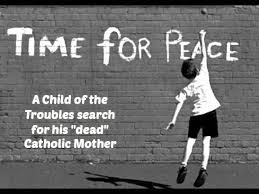


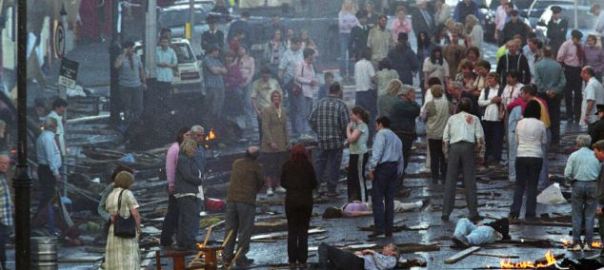


,_January_2010.JPG)


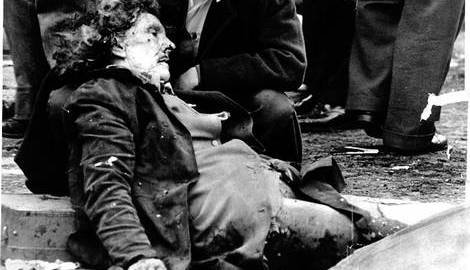
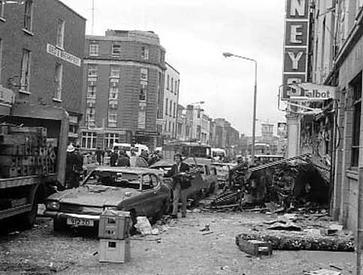

.JPG)




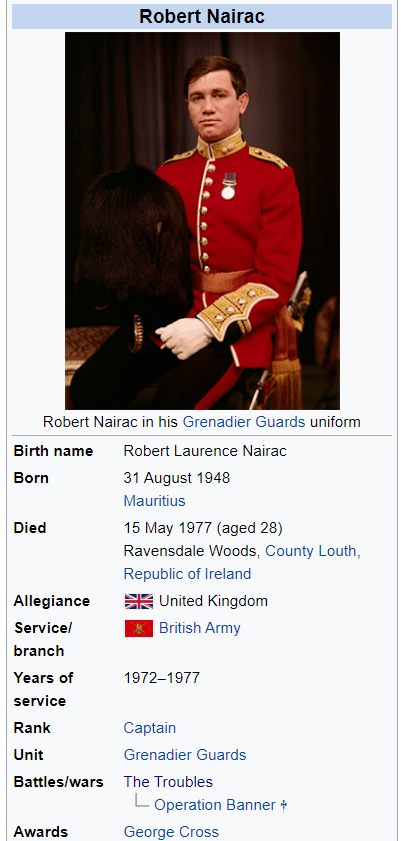


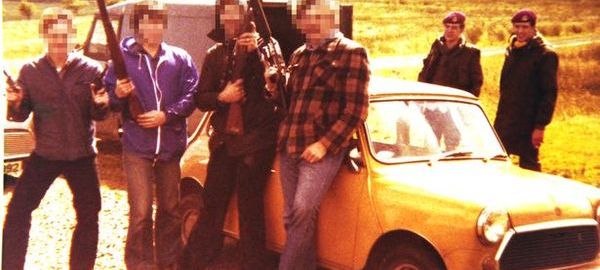


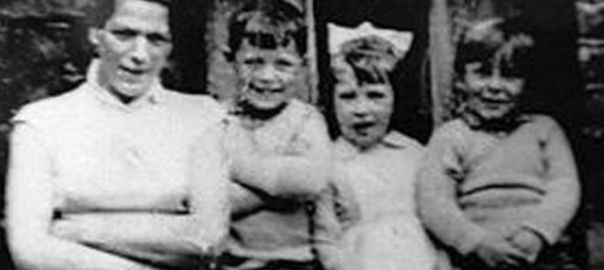


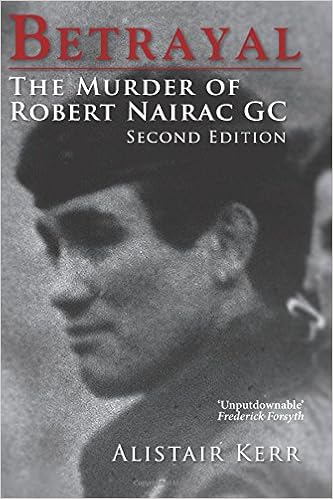



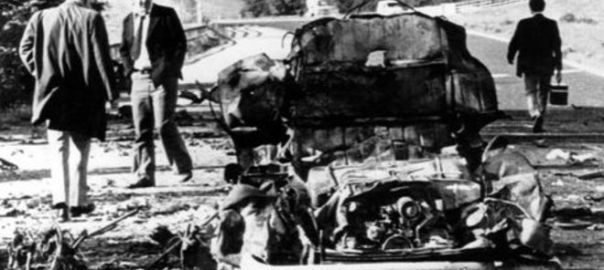
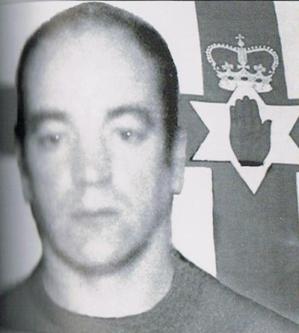


_van_02.jpg)




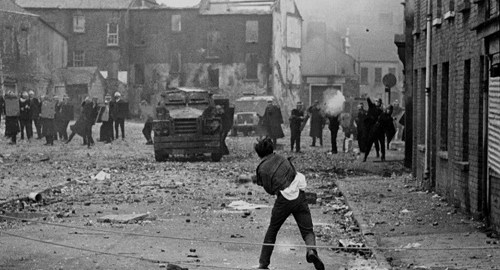


.JPG)


![[icon]](https://en.wikipedia.org/wiki/File:Wiki_letter_w_cropped.svg)






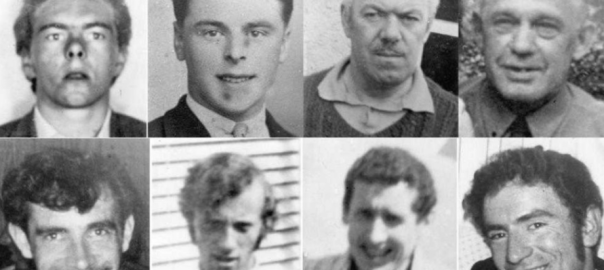
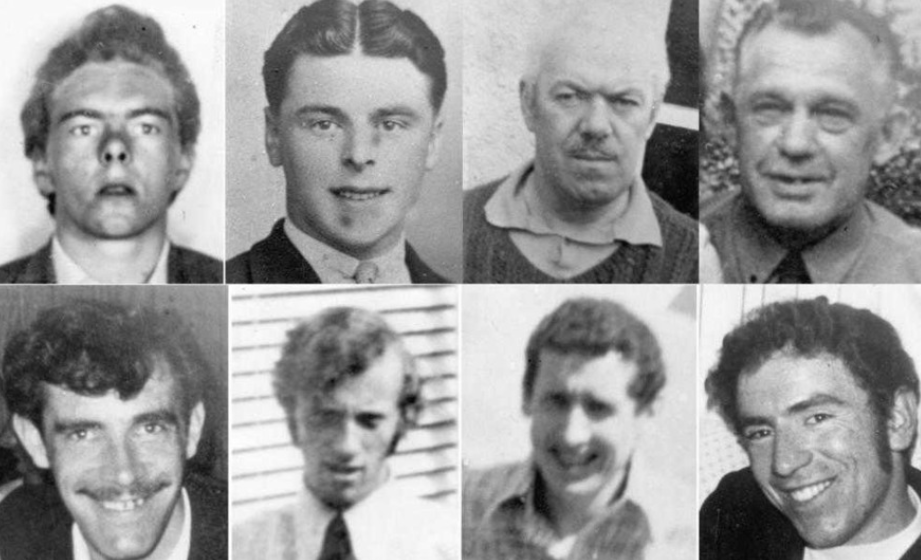






 belfastchildis.com