A new YouGov survey finds that 59% think the British Empire is something to be proud of . I Agree do you? see YouGov for full report British Empire The British Empire comprised the dominions…
Source: The British Empire – History & Background
A new YouGov survey finds that 59% think the British Empire is something to be proud of . I Agree do you? see YouGov for full report British Empire The British Empire comprised the dominions…
Source: The British Empire – History & Background


——————————
First Four Minute Mile
——————————

Sir Roger Gilbert Bannister, CBE (born 23 March 1929) is an English former middle-distance athlete, physician and academic, who ran the first sub-four-minute mile.
In the 1952 Olympics in Helsinki, Bannister set a British record in the 1500 metres but finished fourth. This strengthened his resolve to be the first 4-minute miler.
He achieved this feat on 6 May 1954 at Iffley Road track in Oxford, with Chris Chataway and Chris Brasher providing the pacing. When the announcer declared “The time was three…”, the cheers of the crowd drowned out Bannister’s exact time, which was 3 min 59.4 sec.
Bannister’s record lasted just 46 days. He had reached this record with minimal training, while practising as a junior doctor.
Bannister went on to become a distinguished neurologist and Master of Pembroke College, Oxford, before retiring in 1993. When asked whether the 4-minute mile was his proudest achievement, he said he felt prouder of his contribution to academic medicine through research into the responses of the nervous system. Bannister is patron of the MSA Trust. He was diagnosed with Parkinson’s disease in 2011
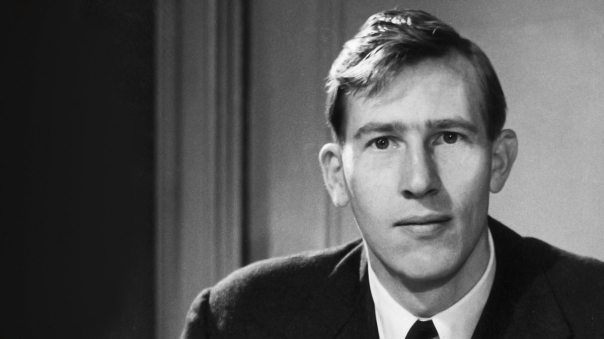
Bannister was born in Harrow, England. He went to Vaughan Primary School in Harrow and continued his education at City of Bath Boys’ School and University College School, London; followed by medical school at the University of Oxford (Exeter College and Merton College[3]) and at St Mary’s Hospital Medical School (now part of Imperial College London).
Bannister was inspired by miler Sydney Wooderson‘s remarkable comeback in 1945. Eight years after setting the mile record and seeing it surpassed during the war years by the great Swedish runners Arne Andersson and Gunder Hägg, Wooderson regained his old form and challenged Andersson over the distance in several races. Wooderson lost to Andersson but set a British record of 4:04.2 in Gothenburg on 9 September.
Like Wooderson, Bannister would ultimately set a mile record, see it broken, and then set a new personal best slower than the new record.
Bannister started his running career at Oxford in the autumn of 1946 at the age of 17. He had never worn running spikes previously or run on a track. His training was light, even compared to the standards of the day, but he showed promise in running a mile in 1947 in 4:24.6 on only three weekly half-hour training sessions.
He was selected as an Olympic “possible” in 1948 but declined as he felt he was not ready to compete at that level. However, he was further inspired to become a great miler by watching the 1948 Olympics. He set his training goals on the 1952 Olympics in Helsinki.
In 1949, he improved in the 880 yards to 1:52.7 and won several mile races in 4:11. Then, after a period of six weeks with no training, he came in third at White City in 4:14.2.
The year 1950 saw more improvements as he finished a relatively slow 4:13 mile on 1 July with an impressive 57.5 last quarter. Then, he ran the AAA 880 in 1:52.1, losing to Arthur Wint, and then ran 1:50.7 for the 800 m at the European Championships on 26 August, placing third. Chastened by this lack of success, Bannister started to train harder and more seriously.
His increased attention to training paid quick dividends, as he won a mile race in 4:09.9 on 30 December. Then in 1951 at the Penn Relays, Bannister broke away from the pack with a 56.7 final lap, finishing in 4:08.3. Then, in his biggest test to date, he won a mile race on 14 July in 4:07.8 at the AAA Championships at White City before 47,000 people. The time set a meet record and he defeated defending champion Bill Nankeville in the process.
Bannister suffered defeat, however, when Yugoslavia‘s Andrija Otenhajmer, aware of Bannister’s final-lap kick, took a 1500 m race in Belgrade 25 August out at near-record pace, forcing Bannister to close the gap by the bell lap. Otenhajmer won in 3:47.0, though Bannister set a personal best finishing second in 3:48.4. Bannister was no longer seen as invincible.
His training was a very modern individualised mixture of interval training influenced by Franz Stampfl with elements of block periodisation, fell running and anaerobic elements of training which were later perfected by Arthur Lydiard.

Bannister avoided racing after the 1951 season until late in the spring of 1952, saving his energy for Helsinki and the Olympics. He ran an 880 on 28 May in 1:53.00, then a 4:10.6 mile time-trial on 7 June, proclaiming himself satisfied with the results. At the AAA championships, he skipped the mile and won the 880 in 1:51.5. Then, 10 days before the Olympic final, he ran a ¾ mile time trial in 2:52.9, which gave him confidence that he was ready for the Olympics as he considered the time to be the equivalent of a four-minute mile.
His confidence soon dissipated as it was announced there would be semifinals for the 1500 m (equal to 0.932 miles) at the Olympics, and he knew that this favoured runners who had much deeper training regimens than he did. When he ran his semifinal, Bannister finished fifth and thereby qualified for the final, but he felt “blown and unhappy.”
The 1500 m final on 26 July would prove to be one of the more dramatic in Olympic history. The race was not decided until the final metres, Josy Barthel of Luxembourg prevailing in an Olympic-record 3:45.28 (3:45.1 by official hand-timing) with the next seven runners all under the old record. Bannister finished fourth, out of the medals, but set a British record of 3:46.30 (3:46.0) in the process.
After his relative failure at the 1952 Olympics, Bannister spent two months deciding whether to give up running. He set himself on a new goal: to be the first man to run a mile in under four minutes. Accordingly, he intensified his training and did hard intervals.
On 2 May 1953, he made an attempt on the British record at Oxford. Paced by Chris Chataway, Bannister ran 4:03.6, shattering Wooderson’s 1945 standard. “This race made me realise that the four-minute mile was not out of reach,” said Bannister.
On 27 June, a mile race was inserted into the programme of the Surrey schools athletic meeting. Australian runner Don Macmillan, ninth in the 1500 m at the 1952 Olympics, set a strong pace with 59.6 and 1:59.7 for two laps. He gave up after 21⁄2 laps, but Chris Brasher took up the pace. Brasher had jogged the race, allowing Bannister to lap him so he could be a fresh pace-setter. At ¾ mile, Bannister was at 3:01.8, the record—and first sub-four-minute mile—in reach. But the effort fell short with a finish in 4:02.0, a time bettered by only Andersson and Hägg. British officials would not allow this performance to stand as a British record, which, Bannister felt in retrospect, was a good decision. “My feeling as I look back is one of great relief that I did not run a four-minute mile under such artificial circumstances,” he said.
But other runners were making attempts at the four-minute barrier and coming close as well. American Wes Santee ran 4:02.4 on 5 June, the fourth-fastest mile ever. And at the end of the year, Australian John Landy ran 4:02.0.
Then early in 1954, Landy made some more attempts at the distance. On 21 January, he ran 4:02.4 in Melbourne, then 4:02.6 on 23 February, and at the end of the Australian season on 19 April he ran 4:02.6 again.
Bannister had been following Landy’s attempts and was certain his Australian rival would succeed with each one. But knowing that Landy’s season-closing attempt on 19 April would be his last until he travelled to Finland for another attempt, Bannister knew he had to make his attempt soon.

Blue plaque recording the first sub-4-minute mile run by Roger Bannister on 6 May 1954 at Oxford University‘s Iffley Road Track.
This historic event took place on 6 May 1954 during a meet between British AAA and Oxford University at Iffley Road Track in Oxford. It was watched by about 3,000 spectators. With winds up to 25 miles per hour (40 km/h) prior to the event, Bannister had said twice that he favoured not running, to conserve his energy and efforts to break the 4-minute barrier; he would try again at another meet. However, the winds dropped just before the race was scheduled to begin, and Bannister did run. The pace-setters from his major 1953 attempts, future Commonwealth Games gold medallist Chris Chataway from the 2 May attempt and future Olympic Games gold medallist Chris Brasher from the 27 June attempt, combined to provide pacing on this historic day. The race was broadcast live by BBC Radio and commented on by 1924 Olympic 100 metres champion Harold Abrahams, of Chariots of Fire fame.
—————————–
Chariots of fire – movie, opening scene
—————————–
Bannister had begun his day at a hospital in London, where he sharpened his racing spikes and rubbed graphite on them so they would not pick up too much cinder ash. He took a mid-morning train from Paddington Station to Oxford, nervous about the rainy, windy conditions that afternoon.Being a dual-meet format, there were 7 men entered in the Mile: Alan Gordon, George Dole and Nigel Miller from Oxford University and four British AAA runners – Bannister, his two pacemakers Brasher and Chataway and Tom Hulatt. Nigel Miller arrived as a spectator and he only realised that he was due to run when he read the programme. Efforts to borrow a running kit failed and he could not take part, thus reducing the field to 6.
The race went off as scheduled at 6:00 pm, and Brasher and Bannister went immediately to the lead. Brasher, wearing No. 44, led both the first lap in 58 seconds and the half-mile in 1:58, with Bannister (No. 41) tucked in behind, and Chataway (No. 42) a stride behind Bannister. Chataway moved to the front after the second lap and maintained the pace with a 3:01 split at the bell. Chataway continued to lead around the front turn until Bannister began his finishing kick with about 275 yards to go (just over a half-lap), running the last lap in just under 59 seconds.

The stadium announcer for the race was Norris McWhirter, who went on to co-publish and co-edit the Guinness Book of Records. He excited the crowd by delaying the announcement of the time Bannister ran as long as possible:
“Ladies and gentlemen, here is the result of event nine, the one mile: first, number forty one, R. G. Bannister, Amateur Athletic Association and formerly of Exeter and Merton Colleges, Oxford, with a time which is a new meeting and track record, and which—subject to ratification—will be a new English Native, British National, All-Comers, European, British Empire and World Record. The time was three…”
The roar of the crowd drowned out the rest of the announcement. Bannister’s time was 3 minutes, 59.4 seconds.

50th anniversary of Bannister’s four-minute mile, commemorated on a 2004 British fifty pence coin.
The claim that a four-minute mile was once thought to be impossible by informed observers was and is a widely propagated myth created by sportswriters and debunked by Bannister himself in his memoir, The Four Minute Mile (1955). The reason the myth took hold was that four minutes was a round number which was slightly better (1.4 seconds) than the world record for nine years, longer than it probably otherwise would have been because of the effect of the Second World War in interrupting athletic progress in the combatant countries. The Swedish runners Gunder Hägg and Arne Andersson, in a series of head-to-head races in the period 1942–45, had already lowered the world mile record by five seconds to the pre-Bannister record. (See Mile run world record progression.) What is still impressive to knowledgeable track fans is that Bannister ran a four-minute mile on very low-mileage training by modern standards.
Just 46 days later, on 21 June in Turku, Finland, Bannister’s record was broken by his rival Landy with a time of 3 min 57.9 s, which the IAAF ratified as 3 min 58.0 s due to the rounding rules then in effect.

Statue of Bannister and Landy in Vancouver
On 7 August, at the 1954 British Empire and Commonwealth Games in Vancouver, B.C., Bannister, running for England, competed against Landy for the first time in a race billed as “The Miracle Mile”. They were the only two men in the world to have broken the 4-minute barrier, with Landy still holding the world record. Landy led for most of the race, building a lead of 10 yards in the third lap (of four), but was overtaken on the last bend, and Bannister won in 3 min 58.8 s, with Landy 0.8 s behind in 3 min 59.6 s. Bannister and Landy have both pointed out that the crucial moment of the race was that at the moment when Bannister decided to try to pass Landy, Landy looked over his left shoulder to gauge Bannister’s position and Bannister burst past him on the right, never relinquishing the lead. A larger-than-life bronze sculpture of the two men at this moment was created by Vancouver sculptor Jack Harman in 1967 from a photograph by Vancouver Sun photographer Charlie Warner and stood for many years at the entrance to Empire Stadium; after the stadium was demolished the sculpture was moved a short distance away to the Hastings and Renfrew entrance of the Pacific National Exhibition (PNE) fairgrounds. Regarding this sculpture, Landy quipped: “While Lot’s wife was turned into a pillar of salt for looking back, I am probably the only one ever turned into bronze for looking back.”
Bannister went on that season to win the so-called metric mile, the 1500 m, at the European Championships in Bern on 29 August, with a championship record in a time of 3 min 43.8 s. He then retired from athletics to concentrate on his work as a junior doctor and to pursue a career in neurology.
He later became the first Chairman of the Sports Council (now called Sport England) and was knighted for this service in 1975. Under his aegis, central and local government funding of sports centres and other sports facilities was rapidly increased, and he also initiated the first testing for use of anabolic steroids in sport.
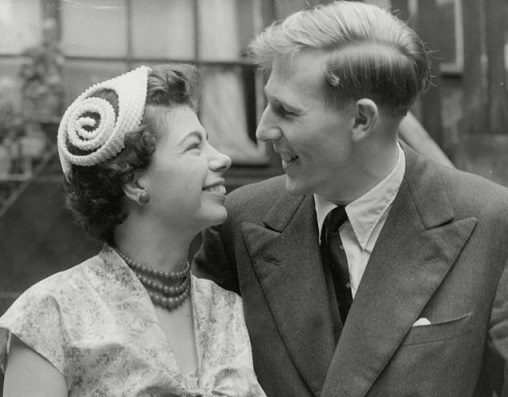
Bannister married the artist Moyra Jacobsson, daughter of the Swedish economist Per Jacobsson, who served as Managing Director of the International Monetary Fund.

London 2012 Olympics torch relay: Sir Roger Bannister carries flame
On the 50th anniversary of running the sub-4-minute mile, Bannister was interviewed by the BBC‘s sports correspondent Rob Bonnet. At the conclusion of the interview, Bannister was asked whether he looked back on the sub-4-minute mile as the most important achievement of his life. Bannister replied to the effect that no, he rather saw his subsequent forty years of practising as a neurologist and some of the new procedures he introduced as being more significant. His major contribution in academic medicine was in the field of autonomic failure, an area of neurology focusing on illnesses characterised by certain automatic responses of the nervous system (for example, elevated heart rate when standing up) not occurring.
For his efforts, Bannister was also made the inaugural recipient of the Sports Illustrated Sportsman of the Year award in 1955 (he was given the award as the 1954 Sportsman of the Year, but it was awarded in January 1955) and is one of the few non-Americans recognised by the American-published magazine as such.
In a UK poll conducted by Channel 4 in 2002, the British public voted Bannister’s historic sub-4-minute mile as number 13 in the list of the 100 Greatest Sporting Moments.
Bannister is the subject of the ESPN film Four Minutes (2005). This film is a dramatisation, its major departures from the factual record being the creation of a fictional character as Bannister’s coach, who was actually Franz Stampfl, an Austrian, and secondly his meeting his wife, Moyra Jacobsson, in the early 1950s when in fact they met in London only a few months before the Miracle Mile itself took place.
The 50th anniversary of Bannister’s achievement was marked by a commemorative British 50-pence coin. The reverse of the coin shows the legs of a runner and a stopwatch (stopped at 3:59.4).
Bannister, arguably the most famous record-setter in the mile, is also the man who held the record for the shortest period of time, at least since the IAAF started to ratify records.
In 1996, Pembroke College, University of Oxford named the Bannister Building to honour the achievements and memory of Sir Roger, a former Master of the college. The building, an 18th-century townhouse in Brewer Street, was converted to provide accommodation for graduate students. It was extensively refurbished during 2011 and 2012 and now forms part of the building complex surrounding the Rokos Quad, and is inhabited by undergraduates.
In 2012, Bannister carried the Olympic flame at the site of his memorable feat, in the stadium now named after him.
In the gallery of Pembroke College dining hall there is a cabinet containing over 80 exhibits covering Bannister’s athletic career and including some academic highlights.
St Mary’s Hospital (London), Imperial College School of Medicine have named a lecture theatre after Bannister, with the stopwatch used to time the race on display, stopped at 3:59. Bannister has also given his name to both the trophy presented to the winning team in the annual Imperial College School of Medicine vs Imperial College London athletics Varsity match, as well as the award giving to the graduating doctor of Imperial College School of Medicine who has achieved most in the sporting community.

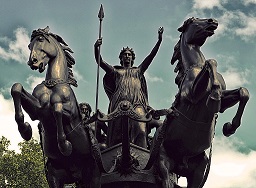

Boudica (/ˈbuːdᵻkə/; alternative spellings: Boudicca, Boudicea, also known as Boadicea /boʊdᵻˈsiːə/ and in Welsh as Buddug [ˈbɨ̞ðɨ̞ɡ]) (d. AD 60 or 61) was a queen of the British Celtic Iceni tribe who led an uprising against the occupying forces of the Roman Empire.

Boudica’s husband Prasutagus ruled as a nominally independent ally of Rome and left his kingdom jointly to his daughters and the Roman emperor in his will. However, when he died his will was ignored, and the kingdom was annexed. Boudica was flogged, her daughters raped, and Roman financiers called in their loans.
——————————–
Boudicca: Warrior Queen
——————————–
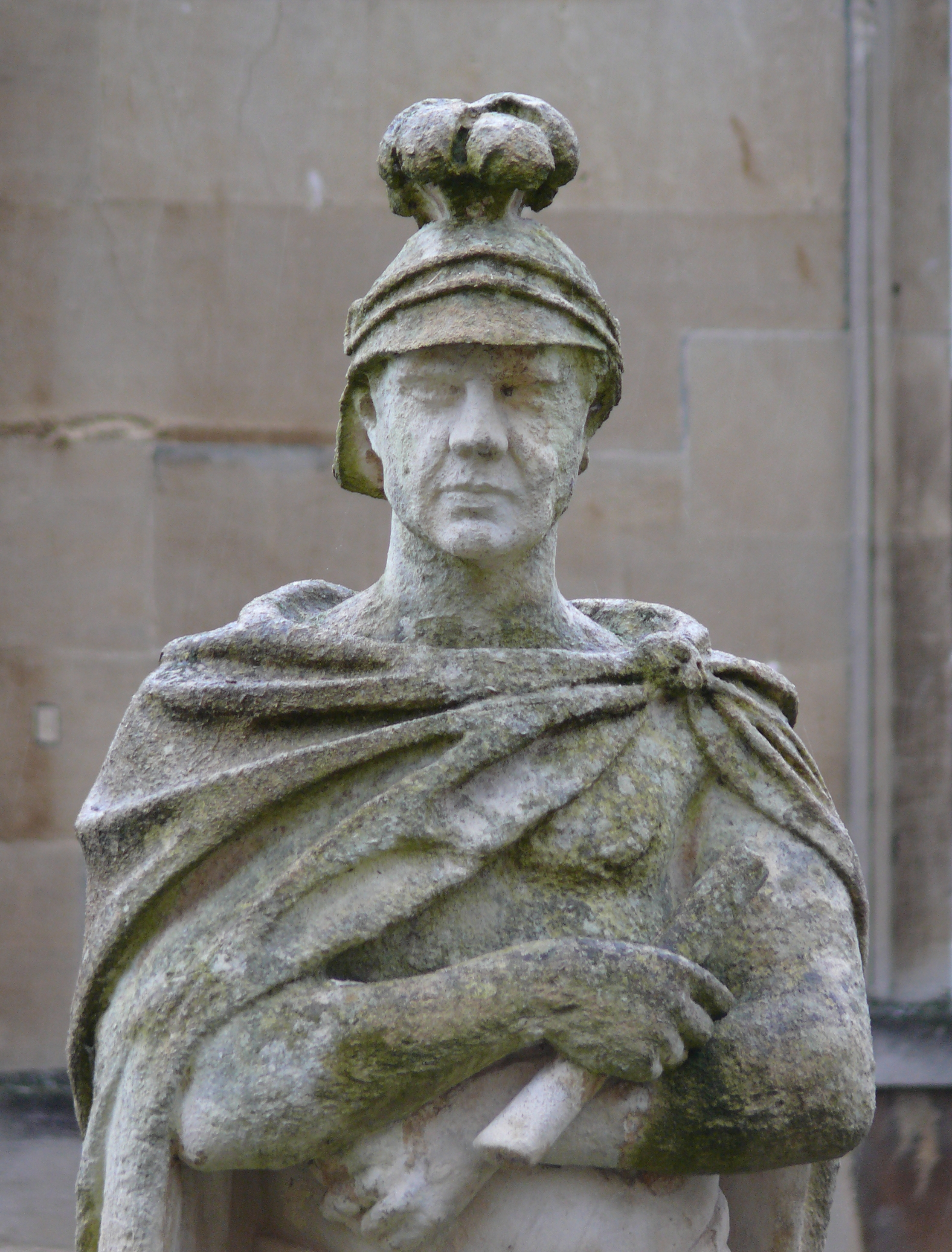
In AD 60 or 61, when the Roman governor Gaius Suetonius Paulinus was campaigning on the island of Anglesey off the northwest coast of Wales, Boudica led the Iceni, the Trinovantes, and others in revolt. They destroyed Camulodunum (modern Colchester), earlier the capital of the Trinovantes but at that time a colonia, a settlement for discharged Roman soldiers and site of a temple to the former Emperor Claudius. Upon hearing of the revolt, Suetonius hurried to Londinium (modern London), the 20-year-old commercial settlement that was the rebels’ next target.
The Romans, having concluded that they lacked sufficient numbers to defend the settlement, evacuated and abandoned Londinium. Boudica led 100,000 Iceni, Trinovantes, and others to fight Legio IX Hispana, and burned and destroyed Londinium, and Verulamium (modern-day St Albans).
——————————
THE ROMAN EMPIRE – THE CONQUEST OF BRITAIN
——————————
An estimated 70,000–80,000 Romans and British were killed in the three cities by those led by Boudica. Suetonius, meanwhile, regrouped his forces in the West Midlands, and despite being heavily outnumbered defeated the Britons in the Battle of Watling Street.
The crisis caused Nero to consider withdrawing all Roman forces from Britain, but Suetonius’ eventual victory over Boudica confirmed Roman control of the province. Boudica then either killed herself, to avoid capture, or died of illness. The extant sources, Tacitus and Cassius Dio, differ.
Interest in these events revived in the English Renaissance and led to Boudica’s fame in the Victorian era. Boudica has remained an important cultural symbol in the United Kingdom. However, the absence of native British literature during the early part of the first millennium means that knowledge of Boudica’s rebellion comes solely from the writings of the Romans.
——————————–
Boudica Warrior Queen 2003
Full Movie
——————————-
Boudica has been known by several versions of her name. Raphael Holinshed calls her Voadicia, while Edmund Spenser calls her Bunduca, a version of the name that was used in the popular Jacobean play Bonduca, in 1612. William Cowper‘s poem, Boadicea, an ode (1782) popularised an alternative version of the name.
From the 19th century and much of the late 20th century, Boadicea was the most common version of the name, which is probably derived from a mistranscription when a manuscript of Tacitus was copied in the Middle Ages.
Her name was clearly spelled Boudicca in the best manuscripts of Tacitus, but also Βουδουικα, Βουνδουικα, and Βοδουικα in the (later and probably secondary) epitome of Cassius Dio. The name is attested in inscriptions as Boudica in Lusitania, Boudiga in Bordeaux, and Bodicca in Algeria.
Kenneth Jackson concludes, based on later development of Welsh and Irish, that the name derives from the Proto-Celtic feminine adjective *boudīkā, “victorious”, that in turn is derived from the Celtic word *boudā, “victory” (cf. Irish bua (Classical Irish buadh), Buaidheach, Welsh buddugoliaeth), and that the correct spelling of the name in Common Brittonic (the British Celtic language) is Boudica, pronounced [bɒʊˈdiːkaː].
The closest English equivalent to the vowel in the first syllable is the ow in “bow-and-arrow”. The modern English pronunciation is /ˈbuːdɪkə/, and it has been suggested that the most comparable English name, in meaning only, would be “Victoria”.

Tacitus and Cassius Dio agree that Boudica was of royal descent. Dio describes her as “possessed of greater intelligence than often belongs to women.” He also describes her as tall, with tawny hair hanging down to below her waist, a harsh voice and a piercing glare. He notes that she habitually wore a large golden necklace (perhaps a torc), a colourful tunic, and a thick cloak fastened by a brooch.

Boudicca’s husband, Prasutagus, was the king of the Iceni, a people who inhabited roughly what is now Norfolk. The Iceni initially voluntarily allied with Rome following Claudius’s conquest of Southern Britain AD 43. They were proud of their independence, and had revolted in AD 47 when the then Roman governor Publius Ostorius Scapula planned to disarm all the peoples in the area of Britain under Roman control following a number of local uprisings. Ostorius defeated them and went on to put down other uprisings around Britain. The Iceni remained independent. Tacitus first mentioned Prasutagus when he wrote about Boudica’s rebellion. We do not know whether he became the king after the mentioned defeat of the Iceni. We do not have any record as to whether the Iceni at that point were still Roman allies or had become a client kingdom.
Tacitus wrote “The Icenian king Prasutagus, celebrated for his long prosperity, had named the emperor his heir, together with his two daughters; an act of deference which he thought would place his kingdom and household beyond the risk of injury. The result was contrary — so much so that his kingdom was pillaged by centurions, his household by slaves; as though they had been prizes of war.” He added that Boudica was lashed and her two daughters were raped and that the estates of the leading Iceni men were confiscated.
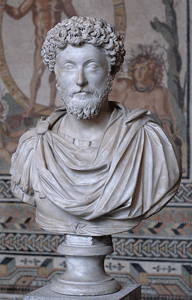
Cassius Dio wrote:
“An excuse for the war was found in the confiscation of the sums of money that Claudius had given to the foremost Britons; for these sums, as Decianus Catus, the procurator of the island maintained, were to be paid back.”
He also said that another reasons was “the fact that Seneca, in the hope of receiving a good rate of interest, had lent to the islanders 40,000,000 sesterces that they did not want, and had afterwards called in this loan all at once and had resorted to severe measures in exacting it.”
Tacitus did not say why Prasutagus’ naming the emperor as his heir as well as his daughters was meant to avert the risk of injury. He did not explain why the Romans pillaged the kingdom, why they took the lands of the chiefs or why Boudica was flogged and her daughters were raped. Cassius Dio did not mention any of this. He said that the cause of the rebellion was the decision of the procurator of Britain (the chief financial officer) and Seneca (an advisor of the emperor Nero) to call in Prasutagus’ debts and the harsh measures which were taken to collect them. Tacitus does not mention these events. However, he wrote: “Alarmed by this disaster and by the fury of the province which he had goaded into war by his rapacity, the procurator Catus crossed over into Gaul.”
It has to be noted that this was happening while the governor of Britain, Gaius Suetonius Paulinus, was away fighting in North Wales. We do not know whether he approved of these actions. We do not know who the centurions who pillaged the kingdom were and who sent them. The text of Cassius Dio seems to suggest that Seneca, who was a private citizen, was responsible for the violence. It is unlikely that a legion was sent to land of the Iceni as two of them were fighting at the island of Anglesey and the other two were stationed at their garrisons. Tacitus said that “It was against the veterans that their hatred was most intense. For these new settlers in the colony of Camulodunum drove people out of their houses, ejected them from their farms, called them captives and slaves …”

In AD 60 or 61, while the current governor, Gaius Suetonius Paulinus, was leading a campaign against the island of Mona (modern Anglesey) in the north of Wales, which was a refuge for British rebels and a stronghold of the druids, the Iceni conspired with their neighbours the Trinovantes, amongst others, to revolt. Boudica was chosen as their leader. According to Tacitus, they drew inspiration from the example of Arminius, the prince of the Cherusci who had driven the Romans out of Germany in AD 9, and their own ancestors who had driven Julius Caesar from Britain. Dio says that at the outset Boudica employed a form of divination, releasing a hare from the folds of her dress and interpreting the direction in which it ran, and invoked Andraste, a British goddess of victory.
The rebels’ first target was Camulodunum (Colchester), the former Trinovantian capital and, at that time, a Roman colonia. The Roman veterans who had been settled there mistreated the locals and a temple to the former emperor Claudius had been erected there at local expense, making the city a focus for resentment. The Roman inhabitants sought reinforcements from the procurator, Catus Decianus, but he sent only two hundred auxiliary troops. Boudica’s army fell on the poorly defended city and destroyed it, besieging the last defenders in the temple for two days before it fell. Archaeologists have shown that the city was methodically demolished. The future governor Quintus Petillius Cerialis, then commanding the Legio IX Hispana, attempted to relieve the city, but suffered an overwhelming defeat. His infantry was wiped out—only the commander and some of his cavalry escaped.
The location of this famous destruction of the Legio IX is now claimed by some to be the village of Great Wratting, in Suffolk, which lies in the Stour Valley on the Icknield Way West of Colchester, and by a village in Essex. After this defeat, Catus Decianus fled to Gaul.
When news of the rebellion reached him, Suetonius hurried along Watling Street through hostile territory to Londinium. Londinium was a relatively new settlement, founded after the conquest of AD 43, but it had grown to be a thriving commercial centre with a population of travellers, traders, and, probably, Roman officials. Suetonius considered giving battle there, but considering his lack of numbers and chastened by Petillius’s defeat, decided to sacrifice the city to save the province.
Alarmed by this disaster and by the fury of the province which he had goaded into war by his rapacity, the procurator Catus crossed over into Gaul. Suetonius, however, with wonderful resolution, marched amidst a hostile population to Londinium, which, though undistinguished by the name of a colony, was much frequented by a number of merchants and trading vessels. Uncertain whether he should choose it as a seat of war, as he looked round on his scanty force of soldiers, and remembered with what a serious warning the rashness of Petilius had been punished, he resolved to save the province at the cost of a single town. Nor did the tears and weeping of the people, as they implored his aid, deter him from giving the signal of departure and receiving into his army all who would go with him. Those who were chained to the spot by the weakness of their sex, or the infirmity of age, or the attractions of the place, were cut off by the enemy.— Tacitus
Londinium was abandoned to the rebels who burnt it down, slaughtering anyone who had not evacuated with Suetonius. Archaeology shows a thick red layer of burnt debris covering coins and pottery dating before AD 60 within the bounds of Roman Londinium; while Roman-era skulls found in the Walbrook in 2013 were potentially linked to victims of the rebels.
Verulamium (St Albans) was next to be destroyed.
In the three settlements destroyed, between seventy and eighty thousand people are said to have been killed. Tacitus says that the Britons had no interest in taking or selling prisoners, only in slaughter by gibbet, fire, or cross.
Dio’s account gives more detail; that the noblest women were impaled on spikes and had their breasts cut off and sewn to their mouths, “to the accompaniment of sacrifices, banquets, and wanton behaviour” in sacred places, particularly the groves of Andraste.

While Boudica’s army continued their assault in Verulamium (St. Albans), Suetonius regrouped his forces. According to Tacitus, he amassed a force including his own Legio XIV Gemina, some vexillationes (detachments) of the XX Valeria Victrix, and any available auxiliaries. The prefect of Legio II Augusta, Poenius Postumus, stationed near Exeter, ignored the call, and a fourth legion, IX Hispana, had been routed trying to relieve Camulodunum, but nonetheless the governor was able to call on almost ten thousand men.
Suetonius took a stand at an unidentified location, probably in the West Midlands somewhere along the Roman road now known as Watling Street, in a defile with a wood behind him — but his men were heavily outnumbered. Dio says that, even if they were lined up one deep, they would not have extended the length of Boudica’s line. By now the rebel forces were said to have numbered 230,000. However, this number should be treated with scepticism — Dio’s account is known only from a late epitome, and ancient sources commonly exaggerate enemy numbers.
Boudica exhorted her troops from her chariot, her daughters beside her. Tacitus gives her a short speech in which she presents herself not as an aristocrat avenging her lost wealth, but as an ordinary person, avenging her lost freedom, her battered body, and the abused chastity of her daughters. She said their cause was just, and the deities were on their side; the one legion that had dared to face them had been destroyed. She, a woman, was resolved to win or die; if the men wanted to live in slavery, that was their choice.
However, the lack of manoeuvrability of the British forces, combined with lack of open-field tactics to command these numbers, put them at a disadvantage to the Romans, who were skilled at open combat due to their superior equipment and discipline. Also, the narrowness of the field meant that Boudica could put forth only as many troops as the Romans could at a given time.
First, the Romans stood their ground and used volleys of pila (heavy javelins) to kill thousands of Britons who were rushing toward the Roman lines. The Roman soldiers, who had now used up their pila, were then able to engage Boudica’s second wave in the open. As the Romans advanced in a wedge formation, the Britons attempted to flee, but were impeded by the presence of their own families, whom they had stationed in a ring of wagons at the edge of the battlefield, and were slaughtered. This is not the first instance of this tactic — the women of the Cimbri, in the Battle of Vercellae against Gaius Marius, were stationed in a line of wagons and acted as a last line of defence.Ariovistus of the Suebi is reported to have done the same thing in his battle against Julius Caesar. Tacitus reports that “according to one report almost eighty thousand Britons fell” compared with only four hundred Romans.
According to Tacitus in his Annals, Boudica poisoned herself, though in the Agricola which was written almost twenty years prior he mentions nothing of suicide and attributes the end of the revolt to socordia (“indolence”); Dio says she fell sick and died and then was given a lavish burial; though this may be a convenient way to remove her from the story. Considering Dio must have read Tacitus, it is worth noting he mentions nothing about suicide (which was also how Postumus and Nero ended their lives).
Postumus, on hearing of the Roman victory, fell on his sword. Catus Decianus, who had fled to Gaul, was replaced by Gaius Julius Alpinus Classicianus. Suetonius conducted punitive operations, but criticism by Classicianus led to an investigation headed by Nero‘s freedman Polyclitus. Fearing Suetonius’s actions would provoke further rebellion, Nero replaced the governor with the more conciliatory Publius Petronius Turpilianus.The historian Gaius Suetonius Tranquillus tells us the crisis had almost persuaded Nero to abandon Britain.
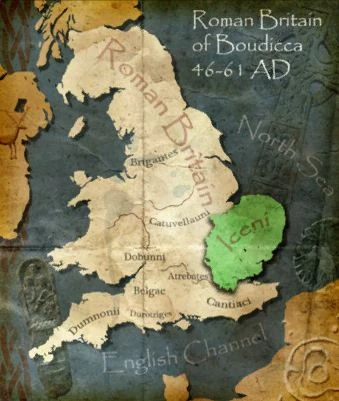
The location of Boudica’s defeat is unknown. Most historians favour a site in the West Midlands, somewhere along the Roman road now known as Watling Street. Kevin K. Carroll suggests a site close to High Cross in Leicestershire, on the junction of Watling Street and the Fosse Way, which would have allowed the Legio II Augusta, based at Exeter, to rendezvous with the rest of Suetonius’s forces, had they not failed to do so. Manduessedum (Mancetter), near the modern town of Atherstone in Warwickshire, has also been suggested, as has “The Rampart” near Messing in Essex, according to legend. More recently, a discovery of Roman artefacts in Kings Norton close to Metchley Camp has suggested another possibility, and a thorough examination of a stretch of Watling Street between St. Albans, Boudica’s last known location, and the Fosse Way junction has suggested the Cuttle Mill area of Paulerspury in Northamptonshire, which has topography very closely matching that described by Tacitus of the scene of the battle.
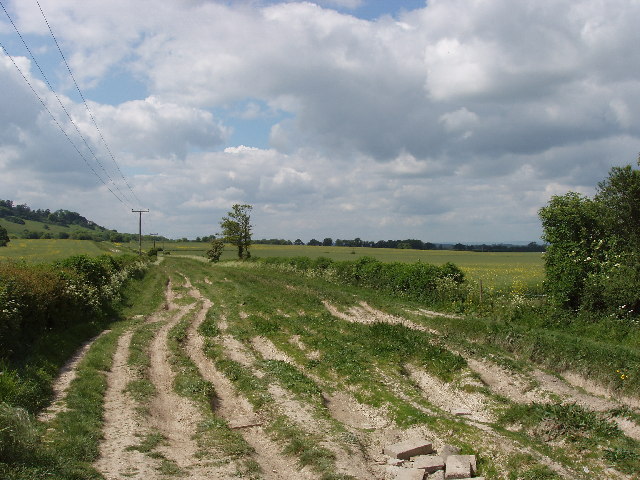
In 2009 it was suggested that the Iceni were returning to East Anglia along the Icknield Way when they encountered the Roman army in the vicinity of Arbury Bank, Hertfordshire. In March 2010, evidence was published suggesting the site may be located at Church Stowe, Northamptonshire.
Tacitus, the most important Roman historian of this period, took a particular interest in Britain as his father-in-law Gnaeus Julius Agricola served there three times (and was the subject of his first book). Agricola was a military tribune under Suetonius Paulinus, which almost certainly gave Tacitus an eyewitness source for Boudica’s revolt. Cassius Dio’s account is only known from an epitome, and his sources are uncertain. He is generally agreed to have based his account on that of Tacitus, but he simplifies the sequence of events and adds details, such as the calling in of loans, that Tacitus does not mention.
Gildas, in his 6th century De Excidio et Conquestu Britanniae, may have been alluding to Boudica when he wrote “A treacherous lioness butchered the governors who had been left to give fuller voice and strength to the endeavours of Roman rule”.
The area of King’s Cross, London was previously a village known as Battle Bridge which was an ancient crossing of the River Fleet. The original name of the bridge was Broad Ford Bridge.
The name “Battle Bridge” led to a tradition that this was the site of a major battle between the Romans and the Iceni tribe led by Boudica. The tradition is not supported by any historical evidence and is rejected by modern historians. However, Lewis Spence‘s 1937 book Boadicea — warrior queen of the Britons went so far as to include a map showing the positions of the opposing armies. There is a belief that she was buried between platforms 9 and 10 in King’s Cross station in London, England. There is no evidence for this and it is probably a post-World War II invention.
By the Middle Ages Boudica was forgotten. She makes no appearance in Bede‘s work, the Historia Brittonum, the Mabinogion or Geoffrey of Monmouth‘s History of the Kings of Britain. But the rediscovery of the works of Tacitus during the Renaissance allowed Polydore Vergil to reintroduce her into British history as “Voadicea” in 1534. Raphael Holinshed also included her story in his Chronicles (1577), based on Tacitus and Dio, and inspired Shakespeare’s younger contemporaries Francis Beaumont and John Fletcher to write a play, Bonduca, in 1610. William Cowper wrote a popular poem, “Boadicea, an ode”, in 1782.
It was in the Victorian era that Boudica’s fame took on legendary proportions as Queen Victoria came to be seen as Boudica’s “namesake”, their names being identical in meaning. Victoria’s Poet Laureate, Alfred, Lord Tennyson, wrote a poem, “Boadicea”, and several ships were named after her
——————————-
———————————-
THE ROMAN EMPIRE: The ICENI REBELLION – YouTube
———————————-
The Iceni or Eceni were a Brittonic tribe of eastern Britain during the Iron Age and early Roman era. Their territory included present-day Norfolk and parts of Suffolk and Cambridgeshire, and bordered the area of the Corieltauvi to the west, and the Catuvellauni and Trinovantes to the south. In the Roman period, their capital was Venta Icenorum at modern-day Caistor St Edmund.
Julius Caesar does not mention the Iceni in his account of his invasions of Britain in 55 and 54 BC, though they may be related to the Cenimagni, who Caesar notes as living north of the River Thames at that time. The Iceni were a significant power in eastern Britain during Claudius‘ conquest of Britain in AD 43, in which they allied with Rome. Increasing Roman influence on their affairs led to revolt in 47, though they remained nominally independent under king Prasutagus until his death around AD 60. Roman encroachment after Prasutagus’ death led his wife Boudica to launch a major revolt from 60–61. Boudica’s uprising seriously endangered Roman rule in Britain and resulted in the burning of Londinium and other cities. The Romans finally crushed the rebellion, and the Iceni were increasingly incorporated into the Roman province.

Archaeological evidence of the Iceni includes torcs — heavy rings of gold, silver or electrum worn around the neck and shoulders. The Iceni began producing coins around 10 BC. Their coins were a distinctive adaptation of the Gallo-Belgic “face/horse” design, and in some early issues, most numerous near Norwich, the horse was replaced with a boar. Some coins are inscribed ECENI, making them the only coin-producing group to use their tribal name on coins. The earliest personal name to appear on coins is Antedios (about 10 BC), and other abbreviated names like AESU and SAEMU follow.
It has been discovered that the name of Antedios’ succeeding ruler Prasutagus appears on the coins as well. H. R. Mossop in his article “An Elusive Icenian Legend” discusses coins that were discovered by D. F. Allen in Joist Fen, Suffolk, and states, “It is the coins Nos. 6 and 7 which give an advance in the obverse reading, confirming Allen’s attractive reading PRASTO, with its implied allusion to Prasutagus” (Mossop and Allen 258).
Sir Thomas Browne, the first English archaeological writer, said of the Roman occupation, Boudica and Iceni coins:

That Britain was notably populous is undeniable, from that expression of Caesar. That the Romans themselves were early in no small Numbers, Seventy Thousand with their associates slain by Bouadicea, affords a sure account… And no small number of silver pieces near Norwich; with a rude head upon the obverse, an ill-formed horse on the reverse, with the Inscriptions Ic. Duro.T. whether implying Iceni, Durotriges, Tascia, or Trinobantes, we leave to higher conjecture. The British Coyns afford conjecture of early habitation in these parts, though the city of Norwich arose from the ruins of Venta, and though perhaps not without some habitation before, was enlarged, built, and nominated by the Saxons.
The Icknield Way, an ancient trackway linking East Anglia to the Chilterns, may be named after the Iceni.
John A. Davies and Tony Gregory conducted archaeological surveys of Roman coins that appeared during the period of Roman occupation of Norfolk. Their study showed that the bulk of the coins circulating before AD 60 was Icenian rather than Roman. They speculated that Roman coins were not adapted into the Iceni area until after AD 60. The coin study also showed that there was not a regular supply of Roman coinage from year to year:
The predominance of specific issues at sites across the province and relative scarcity of coins of some emperors illustrates the point that supply was sporadic and that there were periods when little or no fresh coinage was sent to Britain from the imperial mints.
In certain rural regions of Norfolk, Davies and Gregory speculate that the Iceni farmers were impacted very little by the civitas, seeing as there is a scarce presence of coinage and treasures. On the other hand, their surveys found “coin-rich temple sites, which appear to have served as centres for periodic fairs and festivals and provided locations for markets and commercial transactions within their complexes and environs. In such rural areas, producers and consumers would have been attracted to these sites for commerce from afield”
The meaning of the name Iceni is unknown. Icenian coins dating from the 1st century AD use the spelling ECEN,: another article by D. F. Allen titled “The Coins of the Iceni,” discusses the difference between coins with the inscription ECE versus coins with ECEN. This difference, Allen posits, tells archeologists and historians when Prasutagus started his reign because the coins did not start reading the name of the tribe until around AD 47. Allen suggests that when Antedios was king of the Iceni, the coins did not yet have the name of the tribe on them but instead the name of its ruler, stating, “If so, the coins suggest that the Prasutagus era commenced only after the events of 47” (Allen 16).
Tacitus records that the Iceni were not conquered in the Claudian invasion of AD 43, but had come to a voluntary alliance with the Romans. However, they rose against them in 47 after the governor, Publius Ostorius Scapula, threatened to disarm them. D. F. Allen explains in further detail, in his article “The Coins of the Iceni,” that Scapula had been “preoccupied with defense against the unconquered Silures in South Wales and Brigantes in Yorkshire.” Allen informs readers that this was how Prasutagus had come to gain full control over the Iceni (Allen 2). The Iceni were defeated by Ostorius in a fierce battle at a fortified place, but were allowed to retain their independence.
The site of the battle may have been Stonea Camp in Cambridgeshire.

A second and more serious uprising took place in AD 61. Prasutagus, the wealthy, pro-Roman Icenian king, who, according to a section in the Oxford Dictionary of National Biography titled “Roman Britain, British Leaders”. was leader of the Iceni between AD 43 and 50 (Todd 4), had died. It was common practice for a Roman client king to leave his kingdom to Rome on his death, but Prasutagus had attempted to preserve his line by bequeathing his kingdom — which Allen believes was located in Breckland, near Norwich (Allen 15) — jointly to the Emperor and his own daughters. The Romans ignored this, and the procurator Catus Decianus seized his entire estate. Prasutagus’s widow, Boudica, was flogged, and her daughters were raped. At the same time, Roman financiers called in their loans. While the governor, Gaius Suetonius Paulinus, was campaigning in Wales, Boudica led the Iceni and the neighbouring Trinovantes in a large-scale revolt:
…a terrible disaster occurred in Britain. Two cities were sacked, eighty thousand of the Romans and of their allies perished, and the island was lost to Rome. Moreover, all this ruin was brought upon the Romans by a woman, a fact which in itself caused them the greatest shame…. But the person who was chiefly instrumental in rousing the natives and persuading them to fight the Romans, the person who was thought worthy to be their leader and who directed the conduct of the entire war, was Buduica, a Briton woman of the royal family and possessed of greater intelligence than often belongs to women…. In stature she was very tall, in appearance most terrifying, in the glance of her eye most fierce, and her voice was harsh; a great mass of the tawniest hair fell to her hips; around her neck was a large golden necklace; and she wore a tunic of divers colours over which a thick mantle was fastened with a brooch. This was her invariable attire.
The revolt caused the destruction and looting of Camulodunum (Colchester), Londinium (London), and Verulamium (St Albans) before finally being defeated by Suetonius Paulinus and his legions. Although the Britons outnumbered the Romans greatly, they lacked the superior discipline and tactics that won the Romans a decisive victory. The battle took place at an unknown location, probably in the West Midlands somewhere along Watling Street. Today, a large statue of Boudica wielding a sword and charging upon a chariot can be seen in London on the north bank of the Thames by Westminster Bridge.

The Iceni are recorded as a civitas of Roman Britain in Ptolemy‘s Geographia,[16] which names Venta Icenorum as a town of theirs. Venta, which is also mentioned in the Ravenna Cosmography, and the Antonine Itinerary, was a settlement near the village of Caistor St. Edmund, some five miles south of present-day Norwich, and a mile or two from the Bronze Age Henge at Arminghall.


The butterfly effect refers to a concept that small causes can have large effects. Initially, it was used with weather prediction but later the term became a metaphor used in and out of science.
In chaos theory, the butterfly effect is the sensitive dependence on initial conditions in which a small change in one state of a deterministic nonlinear system can result in large differences in a later state. The name, coined by Edward Lorenz for the effect which had been known long before, is derived from the metaphorical example of the details of a hurricane (exact time of formation, exact path taken) being influenced by minor perturbations such as the flapping of the wings of a distant butterfly several weeks earlier. Lorenz discovered the effect when he observed that runs of his weather model with initial condition data that was rounded in a seemingly inconsequential manner would fail to reproduce the results of runs with the unrounded initial condition data. A very small change in initial conditions had created a significantly different outcome.
The idea, that small causes may have large effects in general and in weather specifically, was used from Henri Poincaré to Norbert Wiener.Edward Lorenz‘s work developed the concept of instability of the atmosphere to a quantitative foundation and linked the concept to the properties of large classes of systems undergoing nonlineardynamics and deterministic chaos theory.
The butterfly effect is exhibited by very simple systems. For example, the randomness of the outcomes of throwing dice depends on this characteristic to amplify small differences in initial conditions—the precise direction, thrust, and orientation of the throw—into significantly different dice paths and outcomes, which makes it virtually impossible to throw dice exactly the same way twice.

A plot of Lorenz’s strange attractor for values ρ=28, σ = 10, β = 8/3. The butterfly effect or sensitive dependence on initial conditions is the property of a dynamical systemthat, starting from any of various arbitrarily close alternative initial conditions on the attractor, theiterated points will become arbitrarily spread out from each other.
Chaos theory and the sensitive dependence on initial conditions were described in the literature in a particular case of the three-body problem by Henri Poincaré in 1890. He later proposed that such phenomena could be common, for example, in meteorology.
In 1898, Jacques Hadamard noted general divergence of trajectories in spaces of negative curvature. Pierre Duhem discussed the possible general significance of this in 1908. The idea that one butterfly could eventually have a far-reaching ripple effect on subsequent historic events made its earliest known appearance in “A Sound of Thunder“, a 1952 short story by Ray Bradbury about time travel (see Literature and print here).
In 1961, Lorenz was running a numerical computer model to redo a weather prediction from the middle of the previous run as a shortcut. He entered the initial condition 0.506 from the printout instead of entering the full precision 0.506127 value. The result was a completely different weather scenario.In 1963 Lorenz published a theoretical study of this effect in a highly cited, seminal paper called Deterministic Nonperiodic Flow (the calculations were performed on a Royal McBee LGP-30 computer).Elsewhere he stated:
One meteorologist remarked that if the theory were correct, one flap of a sea gull‘s wings would be enough to alter the course of the weather forever. The controversy has not yet been settled, but the most recent evidence seems to favor the sea gulls.
Following suggestions from colleagues, in later speeches and papers Lorenz used the more poetic butterfly. According to Lorenz, when he failed to provide a title for a talk he was to present at the 139th meeting of the American Association for the Advancement of Science in 1972, Philip Merilees concocted Does the flap of a butterfly’s wings in Brazil set off a tornado in Texas? as a title. Although a butterfly flapping its wings has remained constant in the expression of this concept, the location of the butterfly, the consequences, and the location of the consequences have varied widely.
The phrase refers to the idea that a butterfly’s wings might create tiny changes in the atmosphere that may ultimately alter the path of a tornado or delay, accelerate or even prevent the occurrence of a tornado in another location. The butterfly does not power or directly create the tornado, but the term is intended to imply that the flap of the butterfly’s wings can cause the tornado: in the sense that the flap of the wings is a part of the initial conditions; one set of conditions leads to a tornado while the other set of conditions doesn’t. The flapping wing represents a small change in the initial condition of the system, which cascades to large-scale alterations of events (compare: domino effect). Had the butterfly not flapped its wings, the trajectory of the system might have been vastly different—but it’s also equally possible that the set of conditions without the butterfly flapping its wings is the set that leads to a tornado.
The butterfly effect presents an obvious challenge to prediction, since initial conditions for a system such as the weather can never be known to complete accuracy. This problem motivated the development of ensemble forecasting, in which a number of forecasts are made from perturbed initial conditions.
Some scientists have since argued that the weather system is not as sensitive to initial condition as previously believed. David Orrell argues that the major contributor to weather forecast error is model error, with sensitivity to initial conditions playing a relatively small role. Stephen Wolfram also notes that the Lorenz equations are highly simplified and do not contain terms that represent viscous effects; he believes that these terms would tend to damp out small perturbations.
| The butterfly effect in the Lorenz attractor | ||
|---|---|---|
| time 0 ≤ t ≤ 30 (larger) | z coordinate (larger) | |
 |
 |
|
| These figures show two segments of the three-dimensional evolution of two trajectories (one in blue, the other in yellow) for the same period of time in the Lorenz attractorstarting at two initial points that differ by only 10−5 in the x-coordinate. Initially, the two trajectories seem coincident, as indicated by the small difference between the zcoordinate of the blue and yellow trajectories, but for t > 23 the difference is as large as the value of the trajectory. The final position of the cones indicates that the two trajectories are no longer coincident at t = 30. | ||
| An animation of the Lorenz attractor shows the continuous evolution. | ||
Recurrence, the approximate return of a system towards its initial conditions, together with sensitive dependence on initial conditions, are the two main ingredients for chaotic motion. They have the practical consequence of making complex systems, such as the weather, difficult to predict past a certain time range (approximately a week in the case of weather) since it is impossible to measure the starting atmospheric conditions completely accurately.
A dynamical system displays sensitive dependence on initial conditions if points arbitrarily close together separate over time at an exponential rate. The definition is not topological, but essentially metrical.
If M is the state space for the map  , then displays sensitive dependence to initial conditions if for any x in M and any δ > 0, there are y in M, with distance d(. , .) such that
  and such that

for some positive parameter a. The definition does not require that all points from a neighborhood separate from the base point x, but it requires one positive Lyapunov exponent.
The simplest mathematical framework exhibiting sensitive dependence on initial conditions is provided by a particular parametrization of the logistic map:

which, unlike most chaotic maps, has a closed-form solution:

where the initial condition parameter  is given by
  . For rational , after a finite number of iterations
  maps into a periodic sequence. But almost all are irrational, and, for irrational , never repeats itself – it is non-periodic. This solution equation clearly demonstrates the two key features of chaos – stretching and folding: the factor 2n shows the exponential growth of stretching, which results in sensitive dependence on initial conditions (the butterfly effect), while the squared sine function keeps folded within the range [0, 1].
The butterfly effect is most familiar in terms of weather; it can easily be demonstrated in standard weather prediction models, for example.
The potential for sensitive dependence on initial conditions (the butterfly effect) has been studied in a number of cases in semiclassical and quantum physics including atoms in strong fields and the anisotropic Kepler problem. Some authors have argued that extreme (exponential) dependence on initial conditions is not expected in pure quantum treatments; however, the sensitive dependence on initial conditions demonstrated in classical motion is included in the semiclassical treatments developed by Martin Gutzwiller and Delos and co-workers.
Other authors suggest that the butterfly effect can be observed in quantum systems. Karkuszewski et al. consider the time evolution of quantum systems which have slightly different Hamiltonians. They investigate the level of sensitivity of quantum systems to small changes in their given Hamiltonians. Poulin et al. presented a quantum algorithm to measure fidelity decay, which “measures the rate at which identical initial states diverge when subjected to slightly different dynamics”. They consider fidelity decay to be “the closest quantum analog to the (purely classical) butterfly effect”. Whereas the classical butterfly effect considers the effect of a small change in the position and/or velocity of an object in a given Hamiltonian system, the quantum butterfly effect considers the effect of a small change in the Hamiltonian system with a given initial position and velocity. This quantum butterfly effect has been demonstrated experimentally. Quantum and semiclassical treatments of system sensitivity to initial conditions are known as quantum chaos.
The butterfly effect has also played a large role in many modern video games. There have been many instances of it being used, where a single/multiple choice(s) throughout gameplay may alter the entire ending of the game. A few examples are Heavy Rain, Beyond Two Souls, Until Dawn, and Life is Strange.
———————————————
Edward Norton Lorenz (May 23, 1917 – April 16, 2008) was an American mathematician, meteorologist, and a pioneer of chaos theory.[3] He introduced the strange attractor notion and coined the term butterfly effect.
Lorenz was born in West Hartford, Connecticut. He studied mathematics at both Dartmouth College in New Hampshire andHarvard University in Cambridge, Massachusetts. From 1942 until 1946, he served as a meteorologist for the United States Army Air Corps. After his return from World War II, he decided to study meteorology.[2] Lorenz earned two degrees in the area from theMassachusetts Institute of Technology where he later was a professor for many years. He was a Professor Emeritus at MIT from 1987 until his death.
During the 1950s, Lorenz became skeptical of the appropriateness of the linear statistical models in meteorology, as mostatmospheric phenomena involved in weather forecasting are non-linear. His work on the topic culminated in the publication of his 1963 paper “Deterministic Nonperiodic Flow” in Journal of the Atmospheric Sciences, and with it, the foundation of chaos theory.
He states in that paper:
Two states differing by imperceptible amounts may eventually evolve into two considerably different states … If, then, there is any error whatever in observing the present state—and in any real system such errors seem inevitable—an acceptable prediction of an instantaneous state in the distant future may well be impossible….In view of the inevitable inaccuracy and incompleteness of weather observations, precise very-long-range forecasting would seem to be nonexistent.
His description of the butterfly effect followed in 1969. He was awarded the Kyoto Prize for basic sciences, in the field of earth and planetary sciences, in 1991, the Buys Ballot Award in 2004, and the Tomassoni Award in 2008. In his later years, he lived inCambridge, Massachusetts. He was an avid outdoorsman, who enjoyed hiking, climbing, and cross-country skiing. He kept up with these pursuits until very late in his life, and managed to continue most of his regular activities until only a few weeks before his death. According to his daughter, Cheryl Lorenz, Lorenz had “finished a paper a week ago with a colleague.” On April 16, 2008, Lorenz died at his home in Cambridge at the age of 90, having suffered from cancer.
Lorenz built a mathematical model of the way air moves around in the atmosphere. As Lorenz studied weather patterns he began to realize that the weather patterns did not always behave as predicted. Minute variations in the initial values of variables in his twelve-variable computer weather model (c. 1960, running on an LGP-30 desk computer) would result in grossly divergent weather patterns.This sensitive dependence on initial conditions came to be known as the butterfly effect (it also meant that weather predictions from more than about a week out are generally fairly inaccurate).
Lorenz went on to explore the underlying mathematics and published his conclusions in a seminal work titled Deterministic Nonperiodic Flow, in which he described a relatively simple system of equations that resulted in a very complicated dynamical object now known as the Lorenz attractor.
Lorenz published several books and articles. A selection:


———————————-
———————————-
The Iranian Embassy siege took place from 30 April to 5 May 1980, after a group of six armed men stormed the Iranian embassy in South Kensington, London. The gunmen took 26 people hostage—mostly embassy staff, but several visitors and a police officer, who had been guarding the embassy, were also held. The hostage-takers, members of an Iranian Arab group campaigning for Arab national sovereignty in the southern region of Khūzestān Province, demanded the release of Arab prisoners from jails in Khūzestān and their own safe passage out of the United Kingdom.
.svg/2000px-Royal_Coat_of_Arms_of_the_United_Kingdom_(HM_Government).svg.png)
The British government quickly resolved that safe passage would not be granted, and a siege ensued. Over the following days, police negotiators secured the release of five hostages in exchange for minor concessions, such as the broadcasting of the hostage-takers’ demands on British television.
By the sixth day of the siege the gunmen had become increasingly frustrated at the lack of progress in meeting their demands. That evening, they killed one of the hostages and threw his body out of the embassy. As a result, the British government ordered the Special Air Service (SAS), a special forces regiment of the British Army, to conduct an assault to rescue the remaining hostages. Shortly afterwards, soldiers abseiled from the roof of the building and forced entry through the windows. During the 17-minute raid, the SAS rescued all but one of the remaining hostages, and killed five of the six terrorists. The soldiers subsequently faced accusations that they unnecessarily killed two of the terrorists, but an inquest into the deaths eventually cleared the SAS of any wrongdoing. The remaining terrorist was prosecuted and served 27 years in British prisons.
———————————
———————————
The hostage-takers and their cause were largely forgotten after the Iran–Iraq War broke out later that year and the hostage crisis in Tehran continued until January 1981. Nonetheless, the operation brought the SAS to the public eye for the first time and bolstered the reputation of Margaret Thatcher, the Prime Minister. The SAS was quickly overwhelmed by the number of applications it received from people inspired by the operation and, at the same time, experienced greater demand for its expertise from foreign governments. The building, having suffered major damage from a fire that broke out during the assault, was not reopened as the Iranian embassy until 1993.

The hostage-takers were members of the Democratic Revolutionary Front for the Liberation of Arabistan (DRFLA)—Iranian Arabs protesting for the establishment of an autonomous Arab state in the southern region of the Iranian province of Khūzestān (also known as Arabistan) which is home to an Arabic-speaking minority. The oil-rich area had become the source of much of Iran’s wealth, having been developed by multi-national companies during the reign of the Shah.
According to Oan Ali Mohammed, suppression of the Arab sovereignty movement was the spark that led to his desire to attack the Iranian Embassy in London—a plan inspired by the Iran hostage crisis in which supporters of the revolution held the staff of the American embassy in Tehran hostage.

Using Iraqi passports, Oan and three other members of the DRFLA arrived in London on 31 March 1980 and rented a flat in Earls Court. They claimed they had met by chance on the flight. The men typically returned to the flat drunk, late at night, and sometimes accompanied by prostitutes. Within a week, the housekeeper asked them to leave. They soon found another flat, where they told their new landlord they were moving because they had been joined by other men and required larger accommodation. Over the following days, the group swelled, with up to a dozen men in the flat on one occasion.
Oan was 27 and from Khūzestān; he had studied at the University of Tehran, where he became politically active. He had been imprisoned by SAVAK, the Shah’s secret police, and bore scars which he said were from torture in SAVAK custody. The other members of his group were Shakir Abdullah Radhil, known as “Faisal”, Oan’s second-in-command who also claimed to have been tortured by SAVAK; Shakir Sultan Said, or “Hassan”; Themir Moammed Hussein, or Abbas; Fowzi Badavi Nejad, or “Ali”; and Makki Hanoun Ali, the youngest of the group, who went by the name of “Makki”.
On 30 April the men informed their landlord that they were going to Bristol for a week and then returning to Iraq, stated that they would no longer require the flat, and arranged for their belongings to be sent to Iraq. They left the building at 09:30 (BST) on 30 April. Their initial destination is unknown, but en route to the Iranian Embassy they collected firearms (including pistols and submachine guns), ammunition and hand grenades. The weapons, predominantly Soviet-made, are believed to have been smuggled into the United Kingdom in a diplomatic bag belonging to Iraq. Shortly before 11:30, and almost two hours after vacating the nearby flat in Lexham Gardens in South Kensington, the six men arrived outside the embassy.

———————————
———————————
The Special Air Service (SAS) is a regiment of the British Army and part of the United Kingdom’s special forces. The regiment was formed by Colonel David Stirling in Africa in 1941, at the height of the Second World War. Its original role was to penetrate enemy lines and strike at airfields and supply lines deep in enemy territory, first in North Africa and later around the Mediterranean and in occupied Europe. Stirling established the principle of using small teams, usually of just four men, to carry out raids—having realised that a four-man team could sometimes prove much more effective than a unit of hundreds of soldiers.
Western governments were prompted to form specialist anti-terrorist units following the “Munich massacre“. During the 1972 Olympic Games, a firefight between a group of hostage-takers and West German police left a police officer and all the hostages dead. The British government, worried that the country was unprepared for a similar crisis in the United Kingdom, ordered the formation of the Counter Revolutionary Warfare (CRW) Wing of the SAS, which became the UK’s primary anti-terrorist and anti-hijacking unit. The SAS had taken part in counter-insurgency operations abroad since 1945, and had trained the bodyguards of influential people whose deaths would be contrary to British interests. Thus, it was believed to be better prepared for the role than any unit in the police or elsewhere in the armed forces. The CRW Wing’s first operational experience was the storming of Lufthansa Flight 181 in 1977, when a small detachment of soldiers were sent to assist GSG 9—the elite West German police unit set up after the events of 1972.

At approximately 11:30 on Wednesday 30 April the six heavily armed members of DRFLA stormed the Iranian Embassy building on Princes Gate, South Kensington. The gunmen quickly overpowered Police Constable Trevor Lock of the Metropolitan Police‘s Diplomatic Protection Group (DPG). Lock was carrying a concealed Smith & Wesson .38-calibre revolver,but was unable to draw it before he was overpowered, although he did manage to press the “panic button” on his radio. Lock was later frisked, but the gunman conducting the search did not find the constable’s weapon. He remained in possession of the revolver, and refused to remove his coat—which he told the gunmen was to “preserve his image” as a police officer—in order to keep it concealed.The officer also refused offers of food throughout the siege for fear that the weapon would be seen if he had to use the toilet and a gunman decided to escort him.
Although the majority of the people in the embassy were captured, three managed to escape—two by climbing out of a ground-floor window and the third by climbing across a first-floor parapet to the Ethiopian Embassy next door. A fourth person, Gholam-Ali Afrouz—the chargé d’affaires and thus the most senior Iranian official present—briefly escaped by jumping out of a first-floor window, but was injured in the process and quickly captured. Afrouz and the 25 other hostages were all taken to a room on the second floor. The majority of the hostages were embassy staff—predominantly Iranian nationals, but several British employees were also captured. The other hostages were all visitors, with the exception of Lock, the British police officer tasked with guarding the embassy. Afrouz had been appointed to the position less than a year before, his predecessor having been dismissed after the revolution. Abbas Fallahi, who had been a butler before the revolution, was appointed the doorman by Afrouz. One of the British members of staff was Ron Morris, from Battersea, who had worked for the embassy in various positions since 1947.
During the course of the siege, police and journalists established the identities of several other hostages. Mustapha Karkouti was a journalist covering the crisis at the US Embassy in Tehran and was at the embassy for an interview with Abdul Fazi Ezzati, the cultural attaché.Muhammad Hashir Faruqi was another journalist, at the embassy to interview Afrouz for an article on the Iranian Revolution. Sim Harris and Chris Cramer, both employees of the BBC, were at the embassy attempting to obtain visas to visit Iran—hoping to cover the aftermath of the 1979 revolution—after several unsuccessful attempts. They found themselves sitting next to Moutaba Mehrnavard, who was there to consult Ahmad Dadgar, the embassy’s medical adviser, and Ali Asghar Tabatabai, who was collecting a map for use in a presentation he had been asked to give at the end of a course he had been attending.
Hostage |
Occupation |
Fate |
|---|---|---|
| Gholam-Ali Afrouz | Embassy Chargé d’affaires | wounded during assault |
| Shirazed Bouroumand | Embassy secretary | |
| Chris Cramer | BBC sound organiser | released prior to assault |
| Ahmad Dadgar | Medical adviser | wounded during assault |
| Abdul Fazi Ezzati | Iranian Cultural Attache | |
| Abbas Fallahi | Embassy doorman | |
| Muhammad Hashir Faruqi | British-Pakistani editor of Impact International | |
| Ali Guil Ghanzafar | Pakistani tourist | released prior to assault |
| Simeon Harris | BBC sound recordist | |
| Nooshin Hashemenian | Embassy secretary | |
| Roya Kaghachi | Secretary to Dr. Afrouz | |
| Hiyech Sanei Kanji | Embassy secretary | released prior to assault |
| Mustapha Karkouti | Syrian journalist | released prior to assault |
| Vahid Khabaz | Iranian student | |
| Abbas Lavasani | Chief Press Officer | killed prior to assault |
| Trevor Lock | Diplomatic Protection Group constable | |
| Moutaba Mehrnavard | Carpet dealer | |
| Aboutaleb Jishverdi-Moghaddam | Iranian attaché | |
| Muhammad Moheb | Embassy accountant | |
| Ronald Morris | Embassy manager and chauffeur | |
| Frieda Mozafarian | Press officer | released prior to assault |
| Issa Naghizadeh | First Secretary | |
| Ali Akbar Samadzadeh | Temporary employee at embassy | killed during assault |
| Ali Asghar Tabatabai | Banker | |
| Kaujouri Muhammad Taghi | Accountant | |
| Zahra Zomorrodian | Embassy clerk |
Police arrived at the embassy almost immediately after the first reports of gunfire, and, within ten minutes, seven DPG officers were on the scene. The officers moved to surround the embassy, but retreated when a gunman appeared at a window and threatened to open fire. Deputy Assistant Commissioner John Dellow arrived nearly 30 minutes later and took command of the operation.m Dellow established a temporary headquarters in his car before moving it to the Royal School of Needlework further down Princes Gate and then to 24 Princes Gate, a nursery school. From his various command posts, Dellow coordinated the police response, including the deployment of D11, the Metropolitan Police’s marksmen, and officers with specialist surveillance equipment. Police negotiators made contact with Oan via a field telephone passed through one of the embassy windows, and were assisted by a negotiator and a psychiatrist. At 15:15 Oan issued the DRFLA’s first demand, the release of 91 Arabs held in prisons in Khūzestān, and threatened to blow up the embassy and the hostages if this were not done by noon on 1 May.
Large numbers of journalists were on the scene quickly and were moved into a holding area to the west of the front of the embassy, while dozens of Iranian protesters also arrived near the embassy and remained there throughout the siege. Shortly after the beginning of the crisis, the British government’s emergency committee COBRA, was assembled. COBRA is made up of ministers, civil servants and expert advisers—including representatives from the police and the armed forces. The meeting was chaired by William Whitelaw, the Home Secretary, as Margaret Thatcher, the Prime Minister, was unavailable. The Iranian government accused the British and American governments of sponsoring the attack as revenge for the ongoing siege of the US Embassy in Tehran. Given the lack of co-operation from Iran, Thatcher—who was kept apprised of the situation by Whitelaw—determined that British law would be applied to the embassy, despite the Vienna Convention, under which the embassy is considered Iranian soil.
At 16:30, the gunmen released their first hostage, Frieda Mozaffarian. She had been unwell since the siege began, and Oan had asked for a doctor to be sent into the embassy to treat her, but the police refused. The other hostages deceived Oan into believing that Mozaffarian was pregnant, and Oan eventually released Mozaffarian after her condition deteriorated.

The COBRA meetings continued through the night and into Thursday. Meanwhile, two teams were dispatched from the headquarters of the Special Air Service (SAS) near Hereford, and arrived at a holding area in Regent’s Park Barracks. The teams—from B Squadron, complemented by specialists from other squadrons—were equipped with CS gas, stun grenades, and explosives and armed with Browning Hi-Power pistols and Heckler & Koch MP5 submachine guns. Lieutenant Colonel Michael Rose, commander of 22 SAS had travelled ahead of the detachment and introduced himself to Dellow, the commander of the police operation. At approximately 03:30 on 1 May, one of the SAS teams moved into the building next door to the embassy, normally occupied by the Royal College of General Practitioners, where they were briefed on Rose’s “immediate action” plan—to be implemented should the SAS be required to storm the building before a more sophisticated plan could be formed.

Early in the morning of 1 May, the gunmen ordered one of the hostages to telephone the BBC‘s news desk. During the call, Oan took the receiver and spoke directly to the BBC journalist. He identified the group to which the gunmen belonged and stated that the non-Iranian hostages would not be harmed, but refused to allow the journalist to speak to any other hostages. At some point during the day, the police disabled the embassy’s telephone lines, leaving the hostage-takers just the field telephone for outside communication. As the hostages woke up, Chris Cramer, a sound organiser for the BBC, became seriously ill and his colleague, Sim Harris, was taken to the field telephone to negotiate for a doctor. The police negotiator refused the request, instead telling Harris to persuade Oan to release Cramer. The ensuing negotiations between Harris, Oan, and the police took up most of the morning, and Cramer was eventually released at 11:15. He was rushed to hospital in an ambulance, accompanied by police officers sent to gather information from him.
As the deadline of noon approached, set the previous day for the release of the Arab prisoners, the police became convinced that the gunmen did not have the capability to carry out their threat of blowing up the embassy, and persuaded Oan to agree to a new deadline of 14:00. The police allowed the deadline to pass, to no immediate response from the gunmen. During the afternoon, Oan altered his demands, requesting that the British media broadcast a statement of the group’s grievances and for ambassadors of three Arab countries to negotiate the group’s safe passage out of the UK once the statement had been broadcast. At approximately 20:00, Oan became agitated by noises coming from the Ethiopian Embassy next door. The noise came from technicians who were drilling holes in the wall to implant listening devices, but PC Trevor Lock, when asked to identify the sound, attributed it to mice. COBRA decided to create ambient noise to cover the sound created by the technicians and instructed British Gas to commence drilling in an adjacent road, supposedly to repair a gas main. The drilling was aborted after it agitated the gunmen, and instead British Airports Authority, owner of London Heathrow Airport, was told to instruct approaching aircraft to fly over the embassy at low altitude.

At 09:30 on 2 May, Oan appeared at the first-floor window of the embassy to demand access to the telex system, which the police had disabled along with the telephone lines, and threatened to kill Abdul Fazi Ezzati, the cultural attaché. The police refused and Oan pushed Ezzati, who he had been holding at gunpoint at the window, across the room, before demanding to speak to somebody from the BBC who knew Sim Harris. The police, relieved to have a demand to which they could easily agree, produced Tony Crabb, managing director of BBC Television News and Harris’s boss. Oan shouted his demands—for safe passage out of the UK, to be negotiated by three ambassadors from Arab countries—to Crabb from the first-floor window, and instructed that they should be broadcast along with a statement of the hostage-takers’ aims by the BBC. The Foreign and Commonwealth Office informally approached the embassies of Algeria, Jordan, Kuwait, Lebanon, Syria and Qatar to ask if their ambassadors would be willing to talk to the hostage-takers. The Jordanian ambassador immediately refused and the other five said they would consult their governments.The BBC broadcast the statement that evening, but in a form unsatisfactory to Oan, who considered it to be truncated and incorrect.
Meanwhile, the police located the embassy caretaker and took him to their forward headquarters to brief the SAS and senior police officers. He informed them that the embassy’s front door was reinforced by a steel security door, and that the windows on the ground floor and first floor were fitted with armoured glass—the result of recommendations made after the SAS had been asked to review security arrangements for the embassy several years earlier. Plans for entering the embassy by battering the front door and ground-floor windows were quickly scrapped and work began on other ideas.

Oan, angered by the BBC’s incorrect reporting of his demands the previous evening, contacted the police negotiators shortly after 06:00 and accused the authorities of deceiving him. He demanded to speak with an Arab ambassador, but the negotiator on duty claimed that talks were still being arranged by the Foreign Office. Recognising the delaying tactic, Oan told the negotiator that the British hostages would be the last to be released because of the British authorities’ deceit. He added that a hostage would be killed unless Tony Crabb was brought back to the embassy. Crabb did not arrive at the embassy until 15:30, nearly ten hours after Oan demanded his presence, to the frustration of both Oan and Sim Harris. Oan then relayed another statement to Crabb via Mustapha Karkouti, a journalist also being held hostage in the embassy. The police guaranteed that the statement would be broadcast on the BBC’s next news bulletin, in exchange for the release of two hostages. The hostages decided amongst themselves that the two to be released would be Hiyech Kanji and Ali-Guil Ghanzafar; the latter was apparently released for no other reason than his loud snoring, which kept the other hostages awake at night.
Later in the evening, at approximately 23:00, an SAS team reconnoitred the roof of the embassy. They discovered a skylight, and succeeded in unlocking it for potential use as an access point, should they later be required to storm the building. They also attached ropes to the chimneys to allow soldiers to abseil down the building and gain access through the windows if necessary.

During the day, the Foreign Office held further talks with diplomats from Arabian countries in the hope of persuading them to go to the embassy and talk to the hostage-takers. The talks, hosted by Douglas Hurd, ended in stalemate. The diplomats insisted they must be able to offer safe passage out of the UK for the gunmen, believing this to be the only way to guarantee a peaceful outcome, but the British government was adamant that safe passage would not be considered under any circumstances. Karkhouti, through whom Oan had issued his revised demands the previous day, became increasingly ill throughout the day and by the evening was feverish, which led to suggestions that the police had spiked the food that had been sent into the embassy. John Dellow, the commander of the police operation, had apparently considered the idea and even consulted a doctor about its viability, but eventually dismissed it as “impracticable”.
The SAS officers involved in the operation—including Brigadier Peter de la Billière, Director Special Forces; Lieutenant Colonel Mike Rose, Commander of 22 SAS; and Major Hector Gullan, commander of the team that would undertake any raid—spent the day refining their plans for an assault.

Oan woke Lock at dawn, convinced that an intruder was in the embassy. Lock was sent to investigate, but no intruder was found. Later in the morning, Oan called Lock to examine a bulge in the wall separating the Iranian embassy from the Ethiopian embassy next door. The bulge had, in fact, been caused by the removal of bricks to allow an assault team to break through the wall and to implant listening devices, resulting in a weakening of the wall. Although Lock assured him that he did not believe the police were about to storm the building, Oan remained convinced that they were “up to something” and moved the male hostages from the room in which they had spent the last four days to another down the hall. Tensions rose throughout the morning and, at 13:00, Oan told the police that he would kill a hostage unless he was able to speak to an Arab ambassador within 45 minutes.
At 13:40, Lock informed the negotiator that the gunmen had taken Abbas Lavasani—the embassy’s chief press officer—downstairs and were preparing to execute him. Lavasani, a devout believer in the Iranian Revolution, had repeatedly provoked his captors during the siege. According to Lock, Lavasani stated that “if they were going to kill a hostage, [Lavasani] wanted it to be him.” At exactly 13:45, 45 minutes after Oan’s demand to speak to an ambassador, three shots were heard from inside the embassy.
Home Secretary Willie Whitelaw, who had been chairing COBRA during the siege, was rushed back to Whitehall from a function he had been attending in Slough, roughly 20 miles (30 km) away, arriving 19 minutes after the shots had been reported. He was briefed on the SAS plan by de la Billière, who told him to expect that up to 40 per cent of the hostages would be killed in an assault. After deliberations, Whitelaw instructed the SAS to prepare to assault the building at short notice, an order that was received by Mike Rose at 15:50. By 17:00, the SAS were in a position to assault the embassy at ten minutes’ notice. The police negotiators recruited the imam from a local mosque at 18:20, fearing that a “crisis point” had been reached, and asked him to talk to the gunmen. Three further shots were fired during the course of the imam’s conversation with Oan. Oan announced that a hostage had been killed, and the rest would die in 30 minutes unless his demands were met. A few minutes later, Lavasani’s body was dumped out of the front door. Upon a preliminary examination, conducted at the scene, a forensic pathologist estimated that Lavasani had been dead for at least an hour—meaning he could not have been killed by the three most recent shots, and leading the police to believe that two hostages had been killed. In fact, only Lavasani had been shot.

After Lavasani’s body had been recovered, Sir David McNee, Commissioner of the Metropolitan Police, contacted the Home Secretary to request approval to hand control of the operation over to the British Army, under the provisions of Military Aid to the Civil Power. Whitelaw relayed the request to Thatcher, and the prime minister agreed immediately. Thus John Dellow, the ranking police officer at the embassy, signed over control of the operation to Lieutenant Colonel Mike Rose at 19:07, authorising Rose to order an assault at his discretion. Meanwhile, the police negotiators began stalling Oan. They offered concessions in order to distract him and prevent him killing further hostages, buying time for the SAS to make its final preparations for the now-inevitable assault.
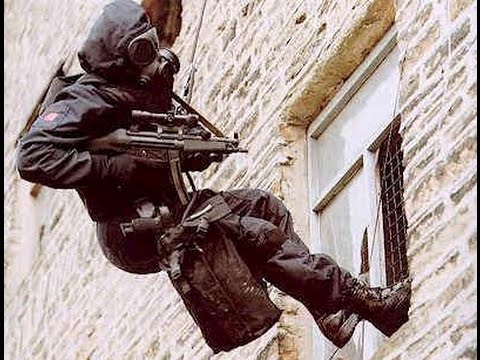
The two SAS teams on-scene—Red Team and Blue Team—were ordered to begin their simultaneous assaults, under the codename Operation Nimrod, at 19:23. One group of four men from Red Team abseiled from the roof down the rear of the building, while another four-man team lowered a stun grenade through the skylight. The detonation of the stun grenade was supposed to coincide with the abseiling teams detonating explosives to gain entry to the building through the second-floor windows. Their descent had not gone according to plan and the staff sergeant leading the abseilers became entangled in his rope. While trying to assist him, one of the other soldiers had accidentally smashed a window with his foot. The noise of the breaking window alerted Oan, who was on the first floor communicating with the police negotiators, and he went to investigate. The soldiers were unable to use explosives for fear of injuring their stranded staff sergeant, but managed to smash their way into the embassy.

After the first three soldiers entered, a fire started and travelled up the curtains and out of the second-floor window, severely burning the staff sergeant. A second wave of abseilers cut him free, and he fell to the balcony below before entering the embassy behind the rest of his team. Slightly behind Red Team, Blue Team detonated explosives on a first-floor window—forcing Sim Harris, who had just run into the room, to take cover. Much of the operation at the front of the embassy took place in full view of the assembled journalists and was broadcast on live television, thus Harris’s escape across the parapet of a first-floor balcony was famously captured on video. As the soldiers emerged onto the first-floor landing, Lock tackled Oan to prevent him attacking the SAS men. Oan, still armed, was subsequently shot dead by one of the soldiers. Meanwhile, further teams entered the embassy through the back door and cleared the ground floor and cellar.The SAS then began evacuating hostages, manhandling them down the stairs towards the back door of the embassy. Two of the terrorists were hiding amongst the hostages—one of them produced a hand grenade when he was identified. An SAS soldier, who was unable to shoot for fear of hitting a hostage or another soldier, pushed the grenade-wielding terrorist to the bottom of the stairs, where two other soldiers shot him dead.
The raid lasted 17 minutes and involved 30–35 soldiers. The terrorists killed one hostage and seriously wounded two others during the raid while the SAS killed all but one of the terrorists. The rescued hostages and the remaining terrorist, who was still concealed amongst them, were taken into the embassy’s back garden and restrained on the ground while they were identified. The last terrorist was identified by Sim Harris and led away by the SAS.


After the end of the siege, PC Trevor Lock was widely considered a hero. He was awarded the George Medal, the United Kingdom’s second-highest civil honour, for his conduct during the siege and for tackling Oan during the SAS raid—the only time during the siege that he drew his concealed side arm. In addition, he was honoured with the Freedom of the City of London and in a motion in the House of Commons. Police historian Michael J. Waldren, referring to the television series Dixon of Dock Green, suggested that Lock’s restraint in the use of his revolver was “a defining example of the power of the Dixon image”, and Maurice Punch noted the contrast between Lock’s actions and the highly aggressive tactics of the SAS.Sergeant Tommy Palmer was awarded the Queen’s Gallantry Medal for his part in the assault, in which he shot dead a terrorist who was apparently about to throw a grenade amongst the hostages. After the operation concluded, the staff sergeant who was caught in his abseil rope was treated at St Stephen’s Hospital in Fulham. He suffered serious burns to his legs, but went on to make a full recovery.
The Iranian government welcomed the end of the siege, and declared that the two hostages killed were martyrs for the Iranian Revolution.They also thanked the British government for “the persevering action of your police force during the unjust hostage-taking event at the Embassy”.
After the assault concluded, the police conducted an investigation into the siege and the deaths of the two hostages and five terrorists, including the actions of the SAS. The soldiers’ weapons were taken away for examination and, the following day, the soldiers themselves were interviewed at length by the police at the regiment’s base in Hereford.
There was controversy over the deaths of two terrorists in the telex room, where the male hostages were held. Hostages later said in interviews that they had persuaded their captors to surrender and television footage appeared to show them throwing weapons out of the window and holding a white flag. The two SAS soldiers who killed the men both stated at the inquest into the terrorists’ deaths that they believed the men had been reaching for weapons before they were shot. The inquest jury reached the verdict that the soldiers’ actions were justifiable homicide (later known as “lawful killing”).
Fowzi Nejad was the only gunman to survive the SAS assault. After being identified, he was dragged away by an SAS trooper, who allegedly intended to take him back into the building and shoot him. The soldier reportedly changed his mind when it was pointed out to him that the raid was being broadcast on live television. It later emerged that the footage from the back of the embassy was coming from a wireless camera placed in the window of a flat overlooking the embassy. The camera had been installed by ITN technicians, who had posed as guests of a local resident in order to get past the police cordon, which had been in place since the beginning of the siege.
Nejad was arrested, and was eventually tried, convicted, and sentenced to life imprisonment for his role in the siege. He became eligible for parole in 2005. As a foreign national, he would normally have been immediately deported to his home country but Article 3 of the European Convention on Human Rights, incorporated into British law by the Human Rights Act 1998, has been held by the European Court of Human Rights to prohibit deportation in cases where the person concerned would be likely to be tortured or executed in his home country. Nejad was eventually paroled in 2008 and granted leave to remain in the UK, but was not given political asylum. The Home Office released a statement, saying “We do not give refugee status to convicted terrorists. Our aim is to deport people as quickly as possible but the law requires us to first obtain assurances that the person being returned will not face certain death”. After 27 years in prison, Nejad was deemed no longer to be a threat to society, but Trevor Lock wrote to the Home Office to oppose his release.
The SAS raid, codenamed “Operation Nimrod”, was broadcast live at peak time on a bank holiday Monday evening and was viewed by millions of people, mostly in the UK, making it a defining moment in British history.Both the BBC and ITV interrupted their scheduled programming to show the end of the siege,which proved to be a major career break for several journalists. Kate Adie, the BBC’s duty reporter at the embassy when the SAS assault began, went on to report from war zones across the world and eventually to become chief news correspondent for BBC News,while David Goldsmith and his team, responsible for the hidden camera at the back of the embassy, were awarded a BAFTA for their coverage.The success of the operation, combined with the high profile it was given by the media, invoked a sense of national pride compared to Victory in Europe Day—the end of the Second World War in Europe.The operation was declared “an almost unqualified success”.

Margaret Thatcher recalled that she was congratulated wherever she went over the following days, and received messages of support and congratulation from other world leaders.However, the incident strained already-tense relations between the UK and Iran following the Iranian Revolution. The Iranian government declared that the siege of the embassy was planned by the British and American governments, and that the hostages who had been killed were martyrs for the Revolution.
——————————
——————————

Operation Nimrod brought the SAS, a regiment that was largely unknown at the time owing to the covert nature of its operations, into the public eye. The regiment was not pleased with its new high profile, having enjoyed its previous obscurity. Nonetheless, the operation vindicated the SAS, which had been threatened with disbandment and whose use of resources had previously been considered a waste.The regiment was quickly overwhelmed by new applicants. Membership of 22 SAS, is open only to individuals currently serving in the Armed Forces (allowing applications from any individual in any service), but the unit also has two regiments from the volunteer Territorial Army (TA)—21 SAS and 23 SAS. Both the TA regiments received hundreds more applications than in previous years, prompting de la Billière to remark that the applicants seemed “convinced that a balaclava helmet and a Heckler & Koch sub-machine gun would be handed to them over the counter, so that they could go off and conduct embassy-style sieges of their own”.All three units were forced to introduce additional fitness tests at the start of the application process.
The SAS also experienced an increased demand for their expertise in training the forces of friendly countries and those whose collapse was considered not to be in Britain’s interest.
The British government’s response to the crisis, and the successful use of force to end it, strengthened the Conservative government of the day and boosted Thatcher’s personal credibility. McNee believed that the conclusion of siege exemplified the British government’s policy of refusing to give in to terrorist demands, “nowhere was the effectiveness of this response to terrorism more effectively demonstrated”.
The embassy building was severely damaged by fire. It was more than a decade before the British and Iranian governments came to an agreement whereby the United Kingdom would repair the damage to the embassy in London and Iran would pay for repairs to the British embassy in Tehran, which had been damaged during the 1979 Iranian Revolution. Iranian diplomats began working from 16 Princes Gate again in December 1993.
The DRFLA was undermined by its links with the Iraqi government after it emerged that Iraq had sponsored the training and equipping of the hostage-takers. The Iran–Iraq War started five months after the end of the siege and continued for eight years. The campaign for autonomy of Khūzestān was largely forgotten in the wake of the hostilities, as was the DRFLA
———————————–

John Thomas “Mac” McAleese, MM (25 April 1949 – 26 August 2011) was a British Army soldier who led an SAS team which stormed the Iranian embassy in London in May 1980 to end the Iranian Embassy siege (Operation Nimrod). He became known for retelling his story on TV and for taking part in the reality show SAS: Are You Tough Enough?.
———————————
———————————
McAleese was born in Stirling and grew up in Laurieston, Stirlingshire.He joined 59 Independent Commando, Royal Engineers, in 1969, aged 20. He moved to Hereford in 1975 after being accepted by the SAS. He was a lance corporal in 1980, serving in Pagoda Troop, B Squadron, 22 SAS Regiment, when he was famously seen with members of his team – Blue Team – on live television placing an explosive charge on the front first floor balcony of the Iranian Embassy prior to the assault on 5 May 1980.
McAleese later took part in the Falklands War in 1982, and was awarded the Military Medal in 1988 for service in Northern Ireland. He also served as a bodyguard for three British prime ministers. He was honourably discharged from the British Army on 8 February 1992 in the rank of staff sergeant.
After that, he worked as a security consultant in Iraq and Afghanistan, and was also an airsoft instructor.
McAleese married twice. In 2009, his elder son, 29-year-old Sergeant Paul McAleese of 2 Battalion The Rifles, was killed on active duty in Afghanistan by a roadside bomb in Helmand Province.

John McAleese suffered a heart attack and died in Thessaloniki, Greece. His funeral was held at Hereford Cathedral. He was survived by his second wife, a daughter by his first marriage, and two children by his second marriage.
—————————
—————————
The SAS sergeant who led the raid on the besieged Iranian Embassy died of a broken heart after his son was killed in Afghanistan, his family said yesterday.
John McAleese, who was in his early sixties, died on Friday in Thessaloniki, Greece, where he was working as a security guard.
He came to symbolise the bravery of the SAS after millions of TV news viewers saw him blast open a window during the storming of the building in 1980.

The Foreign Office confirmed he had died on Friday in Thessaloniki, Greece, where he had been living.
But despite his fearless reputation, he never recovered from the death of Sergeant Paul McAleese, who was killed by a roadside bomb in Helmand two years ago at 29.
Mr McAleese died of a suspected heart attack a day before the second anniversary of his son’s death. As tributes poured in yesterday, Mr McAleese’s family said he never got over the death of his son.


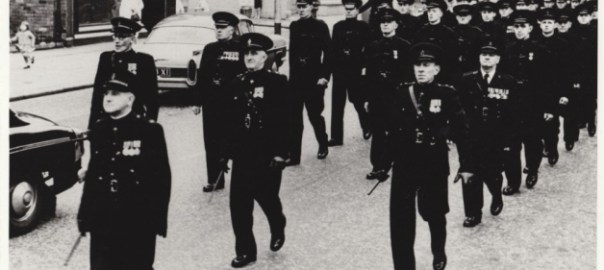
The Ulster Special Constabulary
( commonly called the “B-Specials” or “B Men’)
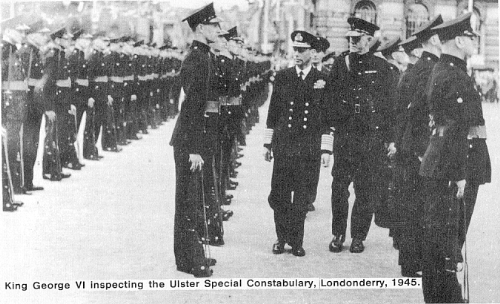
———————————-
B Specials British State Armed Protestant Militia (Bombay Street)
———————————-
The Ulster Special Constabulary (USC; commonly called the “B-Specials” or “B Men'”) was a quasi-military reserve Special constable police force in Northern Ireland. It was set up in October 1920, shortly before the partition of Ireland. It was an armed corps, organised partially on military lines and called out in times of emergency, such as war or insurgency.

It performed this role in 1920–22 during the Irish War of Independence and in the 1950s, during the IRA Border Campaign.
During its existence, 95 USC members were killed in the line of duty. Most of these (72) were killed in conflict with the IRA in the years 1921 and 1922. Another 8 died during the Second World War, in air raids or IRA attacks. Of the remainder, most died in accidents but two former officers were killed during the Troubles in the 1980s.

The force was almost exclusively Ulster Protestant and as a result was viewed with great mistrust by Catholics. It carried out several revenge killings and reprisals against Catholic civilians in the 1920–22 conflict.Unionists generally supported the USC as contributing to the defence of Northern Ireland from subversion and outside aggression.
The Special Constabulary was disbanded in May 1970, after the Hunt Report, which advised re-shaping Northern Ireland’s security forces to attract more Catholic recruits and disarming the police. Its functions and membership were largely taken over by the Ulster Defence Regiment and the Royal Ulster Constabulary

The Ulster Special Constabulary was formed against the background of conflict over Irish independence and the partition of Ireland.

The 1919–1921 Irish War of Independence, saw the Irish Republican Army (IRA) launch a guerilla campaign in pursuit of Irish independence. Unionists in Ireland’s northeast – who were against this campaign and against Irish independence – directed their energies into the partition of Ireland by the creation of Northern Ireland as an autonomous region within the remaining United Kingdom. This was enacted by the British Parliament in the Government of Ireland Act 1920.
Two main factors were behind the formation of the Ulster Special Constabulary. One was the desire of the unionists, led by Sir James Craig (then a junior minister in the British Government, and later the Prime Minister of Northern Ireland), that the apparatus of government and security should be placed in their hands long before Northern Ireland was formally established.
A second reason was that violence in the north was increasing after the summer of 1920. The IRA began extending attacks to Royal Irish Constabulary (RIC) barracks and tax offices in the north and there had been serious rioting between Catholics and Protestants in Derry in May and June and in Belfast in July, which had left up to 40 people dead.
With police and troops being drawn towards combating insurgency in the south and west, unionists wanted a force that would both take on the IRA and also help the under-strength RIC with normal police duties. Furthermore, many unionists did not trust the RIC, which being an all-Ireland force was mostly Catholic. A third aim was to control unionist paramilitary groups, who threatened, in the words of Craig, “a recourse to arms, which would precipitate civil war”.
Craig proposed to the British cabinet a new “volunteer constabulary” which “must be raised from the loyal population” and organised, “on military lines” and “armed for duty within the six county area only”. He recommended that “the organisation of the Ulster Volunteers (UVF, the unionist militia formed in 1912) should be used for this purpose”.[Wilfrid Spender, the former UVF quartermaster in 1913–14, and by now a decorated war hero, was appointed by Craig to form and run the USC. UVF units were “incorporated en masse” into the new USC.

The idea of a volunteer police force in the north appealed to British Prime Minister David Lloyd George for several practical reasons; it freed up the RIC and military for use elsewhere in Ireland, it was cheap, and it did not need new legislation. Special Constabulary Acts had been enacted in 1832 and 1914, meaning that the administration in Dublin Castle only had to use existing laws to create it. The formation of the Ulster Special Constabulary was therefore announced on 22 October 1920.
On 1 November 1920, the scheme was officially announced by the British government.
The composition of the USC was overwhelmingly Protestant and unionist, for a number of reasons. Several informal unionist “constabulary” groups had already been created, for example, in Belfast, Fermanagh and Antrim. The Ulster Unionist Labour Association had established an “unofficial special constabulary,” with members drawn chiefly from the shipyards, tasked with ‘policing’ Protestant areas. In April 1920, Captain Sir Basil Brooke, had set up “Fermanagh Vigilance”, a vigilante group to provide defence against incursions by the IRA.In Ballymacarrett, a Protestant rector named John Redmond had helped form a unit of ex-servicemen to keep the peace after the July riots.
There was a willingness to arm or recognise existing Protestant militias. Wilfrid Spender, head of the Ulster Volunteer Force, encouraged his members to join.There was an immediate and illicit supply of arms available; especially from the Ulster Volunteers. Charles Wickham, Chief of Police for the north of Ireland, favoured incorporation of the Ulster Volunteers into “regular military units” instead of having to “face them down”. A number of these groups were absorbed into the new Ulster Special Constabulary.
Sinn Féin pointed out that the composition of the USC was overwhelmingly Protestant and unionist, and claiming the government was simply arming Protestants to attack Catholics
Efforts were made to attract more Catholics into the force, but it is claimed this was not encouraged by officialdom. Catholic members were more easily targeted by the IRA for intimidation and assassination. The government suggested that, with enough Catholic recruits, special constabulary patrols made up of Catholics only could be extended into Catholic areas. However, the Nationalist Party and Ancient Order of Hibernians discouraged their members from joining.The IRA issued a statement which said that any Catholics who joined the specials would be treated as traitors by them and would be dealt with accordingly.
The USC was initially financed and equipped by the British government and placed under the control of the RIC. The USC consisted of 32,000 men divided into four sections, all of which were armed:
The units were organised on military lines up to company level. Platoons had two officers, a Head Constable, four sergeants and sixty special constables.
The Belfast units were constructed differently from those in the counties. The districts were based on the existing RIC divisions. The constables drew pistols and truncheons before going on patrol and considerable efforts were made to use them only in Protestant areas. This did free regular policemen who were generally more acceptable to Ulster Catholics.
By July 1921, more than 3,500 ‘A’ Specials had been enrolled, and almost 16,000 ‘B’ Specials. By 1922 recruiting had swelled the numbers to: 5,500 A Specials, 19,000 B Specials and 7,500 C1 Specials. Their duties would include combatting the urban guerrilla operations of the IRA, and the suppression of the local IRA in rural areas. In addition they were to prevent border incursion, smuggling of arms and escape of fugitives.
From the outset, the formation of the USC came in for widespread criticism, not only from Irish nationalists, but also from elements of the British military and administrative establishment in Ireland and the British press, who saw the USC as a potentially divisive and sectarian force.

Sir Nevil Macready, General Officer Commanding-in-chief of the British Army in Ireland, along with his supporters in the Irish administration, refused to approve the new force but were overridden; Lloyd George approved of it from the beginning. Macready and Henry Hughes Wilson argued that the concept of a special constabulary was a dangerous one.
Wilson warned that the formation of a partisan unionist constabulary, “would mean; taking sides, civil war and savage reprisals.”. John Anderson, the Under Secretary for Ireland (head of the British Administration in Dublin) shared his fears, “you cannot, in the middle of a faction fight, recognise one of the contending parties and expect it to deal with disorder in the spirit of impartiality and fairness essential in those who have to carry out the order of the Government.”
The Irish nationalist Press was less reserved. The Fermanagh Herald noted the opposition of Irish nationalists:
These “Special Constables” will be nothing more and nothing less than the dregs of the Orange lodges, armed and equipped to overawe Nationalists and Catholics, and with a special object and special facilities and special inclination to invent ‘crimes’ against Nationalists and Catholics… they are the very classes whom an upright Government would try to keep powerless…
Vice Admiral Sir Arthur Hezlet in the official History of the Ulster Special Constabulary, contended that:
“Sinn Fein regarded the Specials as an excuse for arming the Orangemen and an act even more atrocious than the creation of the ‘Black and Tans‘! Their fury was natural as they saw that the Specials might well mean that they would be unable to intimidate and subdue the North by Force. Their skilful propaganda set about blackening the image of Special Constables, trying to identify them with the worst elements of the Protestant mobs in Belfast. They sought to magnify and distort every incident and to stir up hatred of the force even before it started to function.”

1920 Special Constabulary uniform, in the Ulster Museum

B-Specials uniform, in the Free Derry Museum
The standard of training was varied. In Belfast, the Specials were trained in much the same way as the regular police whereas in rural areas the USC was focused on counter-guerilla operations. ‘A Specials’ were initially given six weeks training at Newtownards Camp in police duties, the use of arms, drill and discipline.
Uniforms were not available at the outset so the men of the B Specials went on duty in their civilian clothes wearing an armband to signify they were Specials. Uniforms did not become available until 1922. Uniforms took the same pattern as RIC/RUC dress with high collared tunics. Badges of rank were displayed on the right forearm of the jacket.
The Special Constables were armed with Webley .38 revolvers and also Lee–Enfield rifles and bayonets.By the 1960s Sten and Sterling submachine guns were also used. In most cases these weapons were retained at home by the constables along with a quantity of ammunition. One of the reasons for this was to enable rapid call out of platoons, via a runner from the local RUC station, without the need to issue arms from a central armoury.
‘A Special’ platoons were fully mobile using a Ford car for the officer in charge, two armoured cars and four Crossley Tenders (one for each of the sections).
B Specials generally deployed on foot but could be supplied with vehicles from the police pool.
Deployment of the USC during the Anglo-Irish War provided the Northern Ireland government with its own territorial militia to fight the IRA. The use of Specials to reinforce the RIC also allowed for the re-opening of over 20 barracks in rural areas which had previously been abandoned because of IRA attacks. The cost of maintaining the USC in 1921–22 was £1,500,000.
Their conduct towards the Catholic population was criticised on a number of occasions. In February 1921, Specials and UVF men burned down ten Catholic houses in the County Fermanagh village of Roslea after a Special who lived in the village was shot and wounded.
Following the death of a Special Constable near Newry on 8 June 1921, it was alleged that Specials and an armed mob were involved in the burning of 161 Catholic homes and the death of 10 Catholics. An inquest advised that the Special Constabulary “should not be allowed into any locality occupied by people of an opposite denomination.” The government suggested the recruitment of more Catholics to form “Catholic only” patrols to cover Catholic areas, but this was not acted upon.
After the Truce between the IRA and the British on 11 July 1921, the USC was demobilised by the British and the IRA was given official recognition while peace talks were ongoing. However, the force was remobilised in November 1921, after security powers were transferred from London to the Northern Ireland Government.
Michael Collins planned a clandestine guerilla campaign against Northern Ireland using the IRA. In early 1922, he sent IRA units to the border areas and arms to northern units. On 6 December the Northern authorities ordered an end to the Truce with the IRA.
The Special Constabulary was, as well as an auxiliary to the police, effectively an army under the control of the Northern Ireland administration. By incorporating the former UVF into the USC as the C1 Specials, the Belfast government had created a mobile reserve of at least two brigades of experienced troops in addition to the A and B Classes who, between them, made up at least another operational infantry brigade, which could be used in the event of further hostilities, and were in early 1922.
The USC’s most intense period of deployment was in the first half of 1922, when conditions of a low-intensity war existed along the new Irish border between the Free State and Northern Ireland.
The Anglo-Irish Treaty had agreed the partition of Ireland, between the Irish Free State and Northern Ireland. The IRA, although now split over the Treaty, continued offensive operations in Northern Ireland, with the co-operation of Michael Collins, leader of the Free State, and Liam Lynch, leader of the Anti-Treaty IRA faction. This was despite the Craig-Collins Agreement which was signed by the leaders of Northern Ireland and the Free State on 30 March, and envisaged the end of IRA activity and a reduced role for the USC.
The renewed IRA campaign involved attacking barracks, burning commercial buildings and making a large-scale incursion into Northern Ireland, occupying Belleek and Pettigo in May–June, which was repulsed after heavy fighting, including British use of artillery on 8 June.
The British Army was only used in the Pettigo and Belleek actions. Therefore the main job of counter-insurgency in this border conflict fell to the Special Constabulary while the RIC/RUC patrolled the interior. Forty-nine Special Constables were killed during the period of the “Border War”, out of a total of eighty-one British forces killed in Northern Ireland. Their biggest single loss of life came at Clones in February 1922, when a patrol which entered the Free State refused to surrender to the local IRA garrison and took four dead and eight wounded in a firefight.
In addition to action against the IRA, the USC may have been involved in a number of attacks on Catholic civilians in reprisal for IRA actions, for example, in Belfast, the McMahon Murders of March 1922, in which six Catholics were killed, and the Arnon Street killings a week later which killed another six. On 2 May 1922, in revenge for the IRA killing of six policemen in counties Londonderry and Tyrone, Special Constables killed nine Catholic civilians in the area.
The conflict never formally ended but petered out in June 1922, with the outbreak of the Irish Civil War in the Free State and the wholesale arrest and internment of IRA activists in the North.Collins continued to arrange the supply of arms covertly to the Northern IRA until shortly before his death in August 1922.
Assessments of the USC’s role in this conflict vary. Unionists have written that the Special Constabulary, “saved Northern Ireland from anarchy” and “subdued the IRA”, while nationalist authors have judged that their treatment of the Catholic community, including, “widespread harassment and a significant number of reprisal killings” permanently alienated nationalists from the USC itself and more broadly, from the Northern Irish state.
After the end of the 1920–22 conflict, the Special Constabulary was re-organised. The regular Royal Ulster Constabulary (RUC) took over normal policing duties.
The ‘A’ and ‘C’ categories of the USC were dispensed with, leaving only the B-Specials, who functioned as a permanent reserve force, and armed and uniformed in the same manner as the RUC.
The Special Constabulary were called out during the 12 July period in Belfast in 1931 after sectarian rioting broke out. The B Specials were tasked to relieve the RUC from normal duties, to allow them and the British Army to deal with the disturbances.
During the Second World War, the USC was mobilised to serve in Britain’s Home Guard, which unusually, was put under the command of the police rather than the British Army.
Between 1956 and 1962, the Special Constabulary was again mobilised to combat a guerilla campaign launched by the IRA.
Damage to property during this period was £l million and the overall cost of the campaign was £10 million to the UK exchequer. Historian Tim Pat Coogan said of the USC, “The B Specials were the rock on which any mass movement by the IRA in the North has inevitably floundered.” Six RUC and eleven IRA men (but no Special Constables) were killed in this campaign.
The IRA called off their campaign in February 1962.
The USC were deployed in 1969 to support the RUC in the 1969 Northern Ireland riots. The B Specials’ role in these events led to its disbandment the following year.
Northern Ireland had been destabilised by disturbances arising out of the Northern Ireland Civil Rights Association‘s agitation for equal rights for Catholics. The USC were mobilised when the regular RUC were overstretched by riots in Derry (known as the Battle of the Bogside). The NICRA called for protests elsewhere to support those in Derry, leading to the violence spreading throughout Northern Ireland, especially in Belfast.
The USC were largely held in reserve in July and only hesitantly committed in August. The General Officer Commanding of the British Army in Northern Ireland refused to allow the Army to become involved until the Belfast administration has used “all the forces at its disposal”. This meant that the B Specials had to be deployed, although they were not trained or equipped for public order situations.
The two main centres of disturbance were in Belfast and Derry. A total of 300 Special Constables were also mobilised into the RUC during the disturbances. Some Constables were used to restrain a Protestant crowd in Derry, but others in this area joined in an exchange of petrol bombs and missiles with a Catholic crowd while another group led an attack on the Rossville Street area of the Catholic Bogside on 12 August.
In Belfast ,the USC were successful in restoring order in the predominantly Protestant Shankill area, where they performed their patrol duties unarmed. On one occasion, the Comber Platoon was petrol-bombed by a hostile Protestant crowd at Inglis’s bakery as it tried to protect Catholics who were going to work. They also successfully protected Catholic owned public houses in the area, many of which were looted after they were withdrawn.However, on 14 August they did not hold back Protestants who attacked the Catholic Dover and Percy streets in the Falls/Divis district, and instead “fought back” Catholics there.
The USC’s most controversial conduct in the 1969 riots came in provincial towns, where the Special Constabulary formed the main response to the rioting. The Specials, who were armed and not trained for riot duty, used deadly force on a number of occasions.
The USC shot and wounded a number of people in Dungiven and Coalisland. In Dungannon, they killed one and wounded two. In the following Scarman Tribunal, the findings said “…the Tribunal has been at a loss to find any explanation for the shooting, which it is satisfied was a reckless and irresponsible thing to do.”
When Jack Lynch, the Taoiseach of the Republic of Ireland, moved Irish Army troops up to the border in response to the rioting, platoons of Specials were deployed to guard border police stations.
Arising out the disturbances, the British Prime Minister Harold Wilson announced that the B Specials would be “phased out of their current role”. The British Government commissioned three reports into the policing response to the 1969 riots. These ultimately led to the disbanding of the Ulster Special Constabulary.
Sir John Cameron was requested to submit a report on the disturbances in Northern Ireland.
He found some evidence of cross-membership of the USC and loyalist paramilitary organisations. He reported that in Major Ronald Bunting‘s Ulster Protestant Volunteers (UPV), there was definite evidence of dual membership by Special Constables, of which he said “we consider highly undesirable and not in the public interest”. He also remarked that although “recruitment is open to both Protestant and Roman Catholic: in practice we are in no doubt that it is almost if not wholly impossible for a Roman Catholic recruit to be accepted.”
Cameron recommended that the purposes of the USC as a reserve civilian police force, as well as a counter-insurgency reserve, be properly made known in recruitment and training so that it would be more attractive to Catholics.
The Hon Justice Scarman, in his report on the rioting, was critical of the RUC’s senior officers and of the way the B Specials were deployed into areas of civil disturbance which they had no training to deal with, which in some occasions led to a worsening of the situation. He also pointed out that the B Specials were the only reserve available to the RUC and that he could see no other way of quickly reinforcing the over-stretched RUC in the circumstances. He praised the Specials where he felt it was due.
Scarman concluded in his report on the civil disturbance in the region in 1969 that: “Undoubtedly mistakes were made and certain individual officers acted wrongly on occasions. But the general case of a partisan force co-operating with Protestant mobs to attack Catholic people is devoid of substance, and we reject it utterly.“
Scarman went on to criticise the Command and Control of the RUC for deploying armed Special Constables in areas where their very presence would “heighten tension”, as he was in no doubt that they were “Totally distrusted by the Catholics, who saw them as the strong arm of the Protestant ascendancy”.
Scarman concluded that it would have been very difficult for Catholics to gain membership in 1969, even if they had applied to join.
The abolition of the B Specials was a central demand of the Northern Ireland Civil Rights Movement in the late 1960s.
On 30 April 1970, the USC was finally stood down, as a result of the Hunt Committee Report. Hunt concluded that the perceived bias of the Special Constabulary, whether true or not, had to be addressed. One of his other major concerns was the use of the police force for carrying out military style operations. His recommendations included:
(47) A locally recruited part-time force, under the control of the G.O.C., Northern Ireland, should be raised as soon as possible for such duties as may be laid upon it. The force, together with the police volunteer reserve, should replace the Ulster Special Constabulary (paragraph 171).
The Ulster Special Constabulary was disbanded in May 1970.

A Loyalist poster commemorating the B Specials c 1972
It has been argued that their failure to deal with the 1969 disturbances were due to a failure on behalf of the Northern Ireland government to modernise their equipment, weaponry, training and approach to the job.
On the disbandment of the USC, many of its members joined the newly established Ulster Defence Regiment (UDR), the part-time security force which replaced the B Specials. Unlike the Special Constabulary, the UDR was placed under military control. Other B Specials joined the new Part Time Reserve of the RUC. The USC continued to do duties for a month after the formation of the UDR and RUC Reserve to give both of the new forces time to consolidate.
In the final handover to the Ulster Defence Regiment, the B Specials had to surrender their weapons and uniforms.
Despite the government’s concerns about the handover of weapons and equipment, every single uniform and every single weapon was handed in.
The last night of duties for most B Men was 31 March 1970. On 1 April 1970 the Ulster Defence Regiment began duties.

An Orange Order banner dedicated to the USC, London, June 2007
Since disbandment the USC has assumed a place of “almost mythic proportions” within unionist folklore, whereas in the Nationalist community they are still reviled as the Protestant only, armed wing of the unionist government “associated with the worst examples of unfair treatment of Catholics in Northern Ireland by the police force”. An Orange lodge was formed to commemorate the disbandment of the force called “Ulster Special Constabulary LOL No 1970”.
An Ulster Special Constabulary Association was also set up soon after the disbandment.
Major Kenneth Wiggins Maginnis, Baron Maginnis of Drumglass

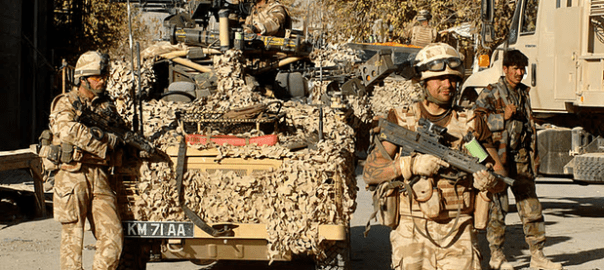
Battle of Musa Qala

Battle of Musa Qala
Part of the War in Afghanistan (2001–present)
Date
7–12 December 2007
Location
Musa Qala, Helmand province, Afghanistan

Result
Coalition victory
Taliban retreat
Belligerents
International Security Assistance Force:
 International Security Assistance Force: Versus
  Taliban insurgents

—————————-
THE BATTLE FOR MUSA QALA
—————————-
The Battle of Musa Qala (also Qaleh or Qal’eh) was a British led military action in Helmand Province, southern Afghanistan, launched by the Afghan National Army and the International Security Assistance Force (ISAF) against the Taliban on 7 December 2007.

After three days of intense fighting, the Taliban retreated into the mountains on 10 December. Musa Qala was officially reported captured on 12 December, with Afghan Army troops pushing into the town centre.
The operation was codenamed snakepit (Pashto: Mar Kardad).
Senior ISAF officers, including U.S. general Dan K. McNeill, the overall ISAF commander, agreed to the assault on 17 November 2007. It followed more than nine months of Taliban occupation of the town, the largest the insurgents controlled at the time of the battle. ISAF forces had previously occupied the town, until a controversial withdrawal in late 2006.
It was the first battle in the War in Afghanistan in which Afghan army units were the principal fighting force. Statements from the British Ministry of Defence (MOD) emphasised that the operation was Afghan-led, although the ability of Afghan units to function without NATO control was questioned during the battle. Military engagement over Musa Qala is part of a wider conflict between coalition forces and the Taliban in Helmand. Both before and after the battle, related fighting was reported across a larger area, particularly in Sangin district to the south of Musa Qala.
——————-
Musa Qala, Helmand Province, Afghanistan
——————-
Background

Musa Qala is a town of around 15,000 to 20,000 people, with another 25,000 in the surrounding area.ISAF forces were first deployed in the town in mid-June 2006, as part of the “platoon house” strategy. This consisted of protecting the district centres of Northern Helmand with small detachments of British ISAF troops, at the request of the provincial governor Mohammed Daoud.
This move met with an unexpectedly fierce resistance from the Taliban and local tribesmen, who used conventional, rather than asymmetric tactics, to drive the coalition from their positions. The isolated British garrison found itself under siege and constant attack for long periods, and their replacements could only be brought in after a full battle group operation, codenamed Snakebite, broke through Taliban lines in early August.
The fighting ended in October 2006 when, in a controversial move, control was ceded to local tribal elders. The deal was intended to see neither British nor Taliban forces in the town in an effort to reduce conflict and civilian casualties. At the time, a British officer commented:
“There is an obvious danger that the Taliban could make the deal and then renege on it.”

The Taliban did renege on the agreement, quickly over-running the town with 200 to 300 troops in February 2007. The Taliban seizure followed a US airstrike that incensed militants; a Taliban commander’s brother and 20 followers were killed in the attack. A confluence of tribal politics, religion, and money from the opium trade helped ensure the uneasy truce would not hold. At the time, the government claimed they could retake the town within 24 hours, but that plan had been postponed to avoid causing civilian casualties.
Musa Qala was the only significant town held by the Taliban at the time of the assault, and they had imposed a strict rule on its inhabitants. Special tribunals were set up, pronouncing sentences of stoning, amputation, or death by hanging against those who were considered enemies, or who contravened a strict interpretation of the Sharia. Four men are known to have been hanged as spies during this period.
The Taliban also levied heavy taxes, closed down schools, and drafted local men into their ranks by force. Other deprivations were reminiscent of previous Taliban rule: men attacked for not wearing beards; music banned and recordings smashed; women punished for not wearing the burqa. The town is situated in a major opium poppy growing area and a BBC correspondent has reported it to be the centre of the heroin trade in Afghanistan.
Battle
Immediate prelude

Coalition military manoeuvres and a build-up of troops and supplies continued for weeks before the assault. On 1 November, British forces started reconnaissance patrols in preparation for the attack In the middle of that month, the MOD reported that troops from 40 Commando Royal Marines and the Right Flank Company of the Scots Guards were patrolling outside the town to confuse the Taliban insurgents and disrupt their supply routes.
In the days before the assault, reconnaissance patrols penetrated as close as a 1.5 miles (2.4 km) to the Musa Qala town centre. Hundreds of families were reported to have fled from the pending assault, after the coalition dropped leaflets in warning.

Furthermore, the coalition secured the defection of a critical tribal leader, Mullah Abdul Salaam, who had been governor of Uruzgan province under Taliban rule.A leader of the Alizai tribe, Salaam was reported to be in negotiation with the coalition as early as October 2007, causing a rift within the Taliban.
His defection was personally sought by Afghan president Hamid Karzai and he brought as many as one third of the Taliban forces defending Musa Qala to the coalition side. However, it is unclear if they fought on the side of the ISAF or simply stayed out of the fight.
Prior to the battle, two thousand militants were reported to be holding the town. A similar claim of 2,050 “fully armed fighters” was made in late November by Enqiadi, a taliban commander. At the time, Enqiadi seemed confident that the whole of Helmand province would fall to the Taliban in the winter of 2007–08.
Subsequent estimates reduced numbers of Taliban fighters, with an ISAF officer suggesting that the maximum strength was closer to two to three hundred.
Main assault

Kandahar Airfield, Afghanistan: Members of the 508th Parachute Infantry Regiment prepare for air assault on Musa Qala.
The main assault on Musa Qala began at 4 pm on 7 December. Several Taliban were reportedly killed in US airstrikes as the attack began. That evening some 600 American soldiers from the 82nd Airborne Division were airlifted to the north of the town in 19 helicopters.
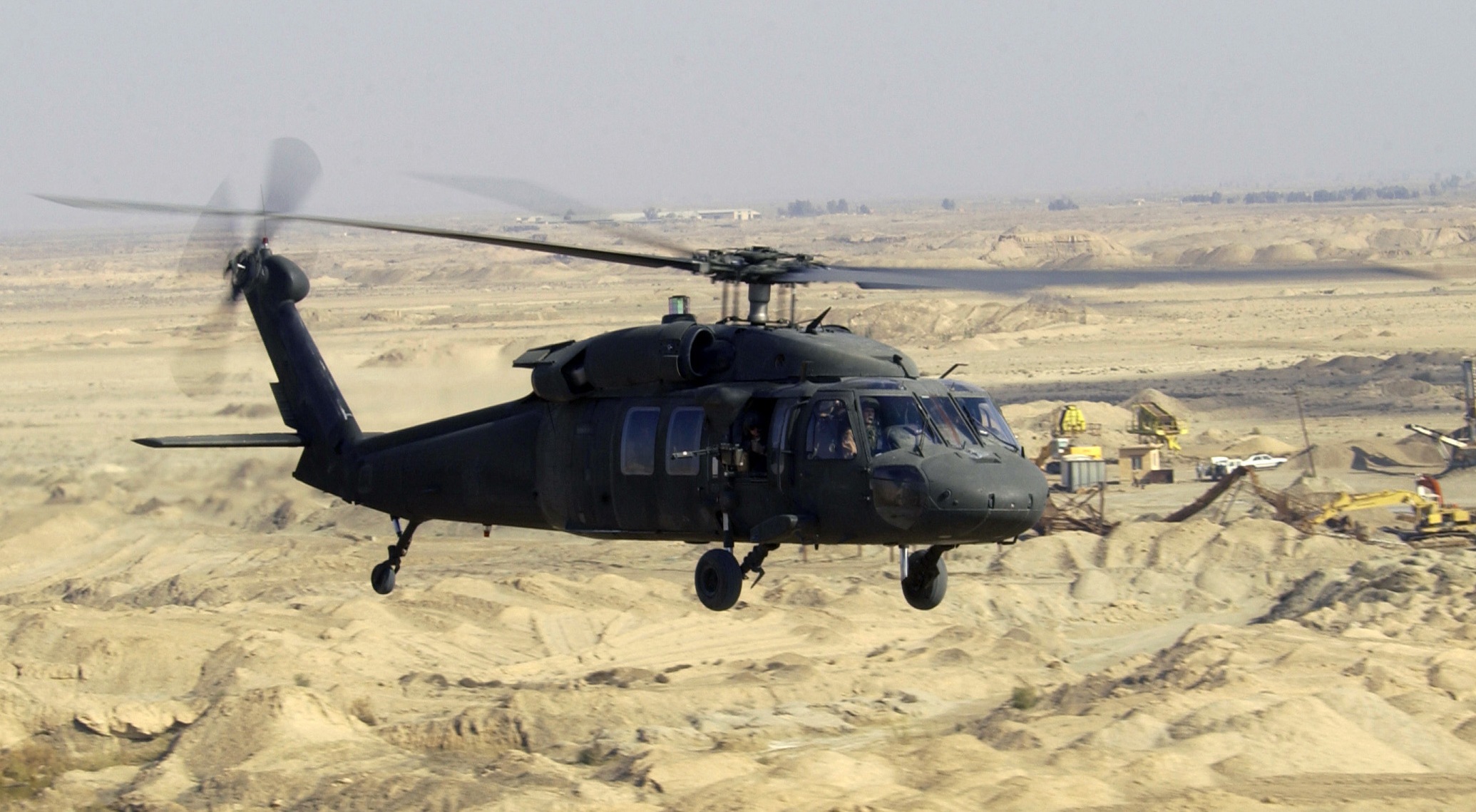
Chinook and Blackhawk troop carriers escorted by Apache attack helicopters were involved in the assault. During the night the paratroopers broke through Taliban trenches to clear the way for further ground troops and then dug defensive positions.

During the attack, an Apache was hit by ground fire and had one engine knocked out but the pilot, CW2 Thomas O. Malone, managed to land safely despite being injured. More than 2,000 British troops of the Helmand Task Force (then under the direction of 52nd Infantry Brigade), including Scots Guards, Household Cavalry, and Royal Marines from 40 Commando, became involved in the operation. British troops set up a cordon around the town to aid the US attack and also began an advance with Afghan troops from the south, west, and east, exchanging gunfire with the Taliban.
At least on the first day of the battle these advances may have served as a feint to divert attention from the main US air assault Danish and Estonian troops were also involved in the initial assault.
Sergeant Lee Johnson
_YR_(RLH).JPG)
Fighting continued on 8 December. As British and Afghan soldiers continued their ground advance, US air forces repeatedly attacked the Taliban, including numerous anti-aircraft positions surrounding the town.
The Taliban defended positions surrounded by minefields, a principal danger to coalition forces. The assault made progress nonetheless, with the Afghan Ministry of Defence reporting that day: “In this operation so far, 12 terrorists were killed, one captured and a number of weapons and ammunitions were seized.”

A British soldier, Sergeant Lee Johnson of the 2nd Battalion (Green Howards) Yorkshire Regiment, was killed shortly after 10 am on the eighth, when his vehicle drove over a mine; another soldier was seriously injured in the blast.
Taliban forces took up new positions to defend the town on 9 December. Taliban sources suggested at the time that militants from nearby areas were entering the town to reinforce its defence. Fighting was on-going through the day and bombs planted by insurgents continued to take a toll on ISAF forces:
An American soldier, Corporal Tanner J O’Leary of the 508th Parachute Infantry Regiment, was killed by the detonation of an improvised explosive device
————————–
US Marine Musa Qala patrol, Afghanistan, Jan 2011
————————–
By 10 December, news outlets reported that the Taliban insurgents had withdrawn north from the area and that Afghan Army and ISAF forces were in control of the town.
The British MOD was more cautious at the time, advising that “steady progress” had been made but that coalition forces remained on the outskirts of Musa Qala. Nevertheless, the Afghan government suggested that the coalition had “completely captured” the town.
NATO announced the town’s capture on the 11th, however at the time the MOD suggested forces were still proceeding cautiously “compound to compound”, only officially confirmed the capture of Musa Qala the next day. Afghan troops were called forward for the final push and by midday on the twelfth were reported to be in the town centre, in a gesture symbolising their ability to fight and defeat the Taliban on their own. Lieutenant Colonel Richard Eaton, spokesman for Task Force Helmand, described the retaking of the town:
The current situation in Musa Qaleh is that it is underneath the Afghan flag … Midmorning today [12 December 2007] our operations to relieve and recapture Musa Qaleh were concluded with the final phase being an assault into Musa Qaleh by the Afghan Army…. The cooperation with the Afghan troops has been very good indeed. General Muhayadan was crucially involved in the planning. He moved his planning team to collocate with Headquarters 52 Brigade in Lashkar Gar.
Brigadier Andrew Mackay, commander of the Helmand Task Force, emphasised that the coalition’s plan encouraged the less committed local fighters—the so-called “tier two” Taliban—to break away from the more ideologically driven militants. This strategy may have been successful; Afghan president Hamid Karzai declared that he had been approached by Taliban members wanting to swap sides after a string of insurgent exactions against civilians.
He said:
“They hanged a boy of 15 from a ceiling and lit two gas canisters under him.”
Precise Taliban casualties were not reported although the Afghan Defence Ministry suggested hundreds killed, detained, or captured. The insurgents claimed 17 Afghan army and ISAF killed, and blamed the British for at least 40 civilians deaths, but their claims may not be reliable.
Although fierce in the first days, the battle did not produce the house-to-house combat that had been feared; the Taliban largely retreated without protracted resistance. Poor weather conditions, including fog, may have allowed them to retreat more easily.
Taliban spokesmen suggested the retreat was designed to avoid continued airstrikes and civilian casualties within the town. By the time the town centre was reached, fighting proved “unremarkable” and according to one senior US officer:
“The urban center of Musa Qala was not significantly opposed, it was not significantly barricaded”.
The final advance into the town’s main bazaar by the Afghan Army was physically led by an Advanced Search Team of the Royal Engineers of the British Army followed by EOD and the main Afghan force who raised their flag for the world’s press.
Relevance to larger campaign
Kajaki Dam, River Helmand
Musa Qala is just one flashpoint in the wider Helmand province campaign, a coalition effort to dislodge the Taliban from the volatile province, largely led by British forces. The battle to retake the town sparked conflict in adjoining areas. In November 2007, when reconnaissance patrols began, “vicious” Taliban attacks were launched in Sangin Valley, Helmand province, to the south, including one which saw Royal Marine Commandos endure two days of rocket and mortar fire.

Just three days before the main assault, on 4 December, British forces suffered a fatality to the north of the village of Sangin, when Trooper Jack Sadler was killed by a roadside bomb.
The week prior to the assault saw a variety of other engagements in Helmand: the British confronted sustained attack near the Kajaki Dam, northeast of Sangin; further west, Estonian, British and American troops were engaged near the town of Nawzad at the center of Nawzad District. Danish forces under British command were attacked in the town of Gereshk.
In the days after the main battle was launched, Lieutenant Colonel Eaton confirmed that the Taliban were attempting to create pressure in other areas but that attacks on British bases had been repulsed. One Taliban commander noted:
“We have launched attacks in Sangin and in Sarwan Kala (Sarevan Qaleh) … We have orders to attack the British everywhere.”
When the principal Taliban retreat from Musa Qala occurred fighting continued elsewhere: on the eleventh and twelfth, retreating Taliban militants attacked a government centre in Sangin. They were repulsed with 50 killed, according to the Afghan Defence Ministry.
American, British, and other NATO special forces were specifically deployed to prevent the Taliban from withdrawing north into Baghran District, and east into Orūzgān Province, their traditional refuge.
Aftermath
The Afghan flag is raised over Musa Qala following its recapture.
British officers expressed satisfaction that Musa Qala had been recaptured without any artillery shells or bombs hitting the town itself. However, they acknowledged that the Taliban had not been definitively defeated and would probably “have another go” in the area.
Taliban fighters were believed to have merged back into the local rural population after the defeat, their traditional dress providing simple cover. In the days after the battle, counter-attacks on the town were considered likely and coalition officials suggested sustained defence would be necessary;
British forces plan to reinforce Musa Qala but have emphasised that future defence of the village will be largely Afghan controlled. The optimistic picture of Afghan capability presented by ISAF command has been challenged. A reporter on the ground, writing for The Times, notes that the Afghan forces “could barely function without NATO’s protection and NATO had to cajole them to move forward”.
British Prime Minister Gordon Brown was in Helmand at the time of the assault, visiting troops at Camp Bastion. He suggested success at Musa Qala would provide a step toward Afghan peace and promised continued reconstruction relief. Coalition and Afghan government plans include the construction of a local mosque, the rebuilding of a district centre, police buildings, schools, and the repair of the electricity infrastructure.
The governor of Helmand, Assadullah Wafa, said a delegation would visit Musa Qala to distribute 5,000 tons of aid to returning civilians in the immediate aftermath of the battle.
On 26 December, engineers from 69 Gurkha Field Squadron, 36 Engineer Regiment moved into Musa Qala and started rebuilding the district centre. Their task includes the construction of a perimeter fence made of Hesco bastions, and sangars (watchtowers) made of sandbags.
Various Taliban supplies were seized by coalition forces following the battle. On 13 December, British and Afghan army units located bomb factories and weapons caches as they moved further into the outskirts of Musa Qala and searched Taliban positions. At the same time, the first civilians started to return to the area, some with reports of Taliban punishments and claims of active Pakistani and Arab jihadis.
A new orientation of British strategy in Helmand is to use military force to curb the influence of local drug barons, whose trade supports the insurgents. On 16 December, British troops burned an estimated £150 to £200 million worth of heroin that had been found in a drug factory and other buildings in Musa Qala.
The strategic purpose of controlling Musa Qala is both to squeeze Taliban operations in south-western Afghanistan and to serve as a symbol of Afghan National Army and ISAF strength; the town had taken on iconic proportions, according to British officials. The Taliban, however, continue to enjoy significant civilian support despite their atrocities and the broader campaign to win over the region remains difficult
Troop shortages have made it difficult for NATO to hold areas seized from the Taliban in southern Afghanistan.
Civilian return to the town was slow, with shops still shuttered on 16 December. Civilian casualty reports were conflicting: one resident claimed 15 dead bodies lay in a single street and another that his family were dead under rubble. The coalition rejected such claims, admitting only that two children had been injured, and possibly killed, when a car driving at high speeds towards ISAF troops during the battle overturned when the driver was shot dead
Coalition and Afghan authorities continued their efforts to win over Taliban sympathizers. However a “miscommunication between authorities” created some tension. In late December, two western diplomats were expelled from Afghanistan. Governor Assadullah Wafa accused them of holding secret talks with the Taliban and proposing bribes to them; the secret talks were denied as a misunderstanding by a UN spokesperson.
In January 2008, Mullah Abdul Salaam was appointed governor of Musa Qala district by the Afghan government, a gesture that was intended to encourage other Taliban commanders to change sides.
Click here for details on The Siege of Musa Qala which took place between July 17 and September 12, 2006 in Afghanistan’s Helmand province
Who wants… A signed copy of my No.1 best selling book ? Makes a great Xmas gift for book lovers & those interested in the Troubles & the crazy, mad days my generation lived through.


Click here to order : https://tinyurl.com/2p9b958v
UK orders only – if you live outside the UK email me belfastchildis@googlemail.com and Ill send you a link for ordering outside the UK.

The plight of the Yazidi people of Northern Iraq and Syria has drifted in and out of the public consciousness over the past few years , as these followers of the ancient religion Yazidism – have been pursued and brutalised by the mad men of Islamic State and their deluded followers.
Their men folk have been killed and women systematically raped and force to act as ” Sex Slaves” to fighters of IS and they have been forced into exile from their ancestral lands in Northern Iraq . Over the past few weeks and months mass graves have been uncovered and the true horror of the persecution of the Yazidis people is yet to be told.

The Yazidi people (also Yezidi, Êzidî; i/jəˈziːdiːz/ yə-ZEE-dees) are an ethno-religious groupindigenous to the northern Mesopotamia (see also Ezidkhan) whose strictly endogamous. And ancient religion Yazidism (or Sharfadin) is not linked to Zoroastrianism but linked to ancient Mesopotamian religions; however Yazidis form a distinct and independent religious community and have their own culture.Yazidis only intermarry with Yazidis. Yazidis who marry with non-Yazidis are expelled from her family and may not even more call themselves Yazidis.. They live primarily in the Nineveh Province of Iraq. Additional communities in Armenia, Georgia, Turkey, Iran, and Syria have been in decline since the 1990s as a result of significant migration to Europe, especially to Germany.[34] In Armenia, the Yazidis are recognized as a distinct ethnic group and generally do not consider themselves to be Kurdish. The United Nations also recognized the Yazidis as a distinct ethnic group. And according to the Human Rights Watch in 2009, the Yazidis are currently undergoing a process of Kurdification
————————
THE Yezidis RELIGION IN English
————————
The Yazidis are monotheists, believing in God as creator of the world, which he has placed under the care of seven holy beings or angels, the chief of whom is Melek Taus, the Peacock Angel. The Peacock Angel, as world-ruler, causes both good and bad to befall individuals, and this ambivalent character is reflected in myths of his own temporary fall from God’s favour, before his remorseful tears extinguished the fires of his hellish prison and he was reconciled with God.
This belief builds on Sufi mystical reflections on Iblis, who refused to prostrate to Adam despite God’s express command to do so. Because of this connection to the Sufi Iblis tradition, some followers of other monotheistic religions of the region equate the Peacock Angel with their own unredeemed evil spirit Satan, which has incited centuries of persecution of the Yazidis as “devil worshippers.” Persecution of Yazidis has continued in their home communities within the borders of modern Iraq, under fundamentalist Sunni Muslim revolutionaries.
Starting in August 2014, the Yazidis were targeted by the Islamic State of Iraq and the Levant in its campaign to “purify” Iraq and neighbouring countries of non-Islamic influences.
————————————-
The Plight of the Yazidis in picture
————————————-
Exodus:
Yazidis flee to safety from Islamic State helped by Kurdish fighters.

See below for more details on persecution from Islamic State & persecution
The Yazidi people speak Kurmanji Kurdish and adhere to the religion Yazidism (see Yazdânism), a religion rooted in Iranian religions blended with elements of pre-Islamic Mesopotamian religious traditions.
Although they speak mostly Kurdish, their ethnicity is obscure.Commentators identify the Yazidis as predominantly Kurds but according to some sources, they tend to regard themselves as distinct from Kurds.Many Yazidis say that Kurds are originally Yazidi who shifted culturally after they adopted Islam.
The United Nations recognizes the Yazidis as a distinct ethnic group. A report from Human Rights Watch (HRW), in 2009, declares that to incorporate disputed territories in northern Iraq-particularly the Nineveh province- into the Kurdish region, KRG and Kurdish authorities have embarked on a two-pronged strategy of inducement and repression. The HRW report also criticizes heavy-handed tactics. According to report: “The goal of these tactics is to push Shabak and Yazidi communities to identify as ethnic Kurds. The Kurdish authorities are working hard to impose Kurdish identity on two of the most vulnerable minorities in Iraq, the Yazidis and the Shabaks“. Their principal holy site is in Lalish, northeast of Mosul. The Yazidis’ own name for themselves is Êzidî or Êzîdî or, in some areas, Dasinî (the latter, strictly speaking, is a tribal name). Some scholars have derived the name Yazidi from Old Iranian yazata (divine being), and some Yazidis themselves believe that their name is derived from the word Yezdan or Êzid “God”, though the current consensus among Western academics support the widespread idea that it is a derivation from Umayyad Caliph Yazid I (Yazid bin Muawiyah), who is revered as Sultan Ezi. The Yazidis’ cultural practices are observed in Kurdish, and all speak Kurdish language. Kurdish language is the language of almost all the orally transmitted religious traditions of the Yazidis.
The religion of the Yazidis, Yazidism, is a kind of Yazdânism and has many influences: Sufi influence and imagery can be seen in the religious vocabulary, especially in the terminology of the Yazidis’ esoteric literature, but much of the theology is non-Islamic. Their cosmogonies apparently have many points in common with those of ancient Persian religions. Early writers attempted to describe Yazidi origins, broadly speaking, in terms of Islam, or Persian, or sometimes even “pagan” religions; however, research published since the 1990s has shown such an approach to be simplistic.

Yazidi man in traditional clothes.
The origin of Yazidism is now usually seen by scholars as a complex process of syncretism, whereby the belief system and practices of a local faith had a profound influence on the religiosity of adherents of the ‘Adawiyya Sufi order living in the Yezidi mountains, and caused it to deviate from Islamic norms relatively soon after the death of its founder, Shaykh ‘Adī ibn Musafir, who is said to be of Umayyad descent. He settled in the valley of Laliş (some 36 miles north-east of Mosul) in the early 12th century. Şêx Adî himself, a figure of undoubted orthodoxy, enjoyed widespread influence. He died in 1162, and his tomb at Laliş is a focal point of Yazidi pilgrimage.
According to the Yezidi calendar, April 2012 marked the beginning of their year 6,762 (thereby year 1 would have been in 4,750 BC in the Gregorian calendar).
During the 14th century, important Yezidi tribes whose sphere of influence stretched well into what is now Turkey (including, for a period, the rulers of the principality of Jazira) are cited in historical sources as Yazidi. According to Moḥammed Aš-Šahrastani,”The Yezidis are the followers of Yezîd bn Unaisa, who [said that he] kept friendship with the first Muhakkama before the Azariḳa” . “It is clear, then, that Aš-Šahrastani finds the religious origin of this interesting people in the person of Yezîd bn Unaisa. … We are to understand, therefore, that to the knowledge of the writer, bn Unaisa is the founder of the Yezidi sect, which took its name from him.” “Now, the first Muhakkamah is an appellative applied to the Muslim schismatics called Al-Ḫawarij. … According to this it might be inferred that the Yezidis were originally a Ḫarijite sub-sect.””Yezid moreover, is said to have been in sympathy with Al-Abaḍiyah, a sect founded by ‘Abd-Allah Ibn Ibaḍ.”
See wikipedia.or/Yazidis for more information
—————————————————————

Genocide of Yazidis by ISIL refers to the genocide of the Yazidi people of Iraq, leading to their expulsion, flight and effectively exiling them from their ancestral lands in North Iraq, the abduction of Yazidi women and massacres of at least 5,000 Yazidi civilians,during what has been called a “forced conversion campaign” being carried out in Northern Iraq by the militant organization the Islamic State of Iraq and the Levant (ISIL or ISIS), starting in 2014.
ISIL’s persecution of the Yazidi gained international attention, and directly led to the American-led intervention in Iraq (2014–present) which started with United States airstrikes against ISIL. Additionally, the US, UK, and Australia made emergency airdrops to Yazidis who had fled to a mountain range (see Sinjar massacre, § Refugee crisis in the Sinjar Mountains), and provided weapons to the Kurdish Peshmerga defending them. ISIL’s actions against the Yazidi population resulted in approximately 500,000 refugees and several thousand killed and kidnapped.
The Yazidis are monotheists who believe in a benevolent peacock angel (Melek Taus) and whose ancient gnosticism faith. The Islamic State of Iraq and the Levant and other extremists tend to view the peacock angel as the malevolent archangel Lucifer or Satan and label the Yazidis as ‘devil worshippers’.
Under Islamic Law as observed by ISIL, Yazidis are officially given the choice to convert to Sunni Islam or die. They are not eligible for the jizya tax taken from “People of the Book” by ISIL that would allow them to continue observing their religion
.

On 3 August 2014, ISIL militants attacked and took over Sinjar in northern Iraq, a Kurdish-controlled town that was predominantly inhabited by Yazidis, and the surrounding area.
Yazidis, and internet postings of ISIL have reported summary executions that day by ISIL militants, leading to 200,000 civilians fleeing Sinjar, of whom around 50,000 Yazidis escaping to the nearby Sinjar Mountains. They were trapped on Mount Sinjar, facing starvation and dehydration.

On 4 August 2014, Prince Tahseen Said, Emir of the Yazidi, issued a plea to world leaders calling for assistance on behalf of the Yazidi facing attack from ISIL.
On 3 August, ISIL killed the men from the al-Qahtaniya area, ten Yazidi families fleeing were attacked by ISIL; and ISIL shot 70 to 90 Yazidi men in Qiniyeh village.
On 4 August, ISIL fighters attacked Jabal Sinjar, killed 30 Yazidi men; 60 more Yazidi men were killed in the village of Hardan. On the same day, Yazidi community leaders stated that at least 200 Yazidis had been killed in Sinjar (see Sinjar massacre), and 60–70 near Ramadi Jabal. According to reports from surviving Yazidi, between 3 and 6 August, more than 50 Yazidi were killed near Dhola village, 100 in Khana Sor village, 250–300 in Hardan area, more than 200 on the road between Adnaniya and Jazeera, dozens near al-Shimal village, and on the road from Matu village to Jabal Sinjar.
On 10 August 2014, according to statements by the Iraqi government and others, ISIL militants buried alive an undefined number of Yazidi women and children in northern Iraq in an attack that killed 500 people, in what has been described as genocide.Those who escaped across the Tigris River into Kurdish-controlled areas of Syria on 10 August gave accounts of how they had seen individuals also attempting to flee who later died.
On 15 August, in the Yazidi village of Kojo, south of Sinjar, after the whole population had received the jihadist ultimatum to convert or be killed, over 80 men were killed. A witness recounted that the villagers were first converted under duress, but when the village elder refused to convert, all of the men were taken in trucks under the pretext of being led to Sinjar, and gunned down along the way. According to reports from survivors interviewed by OHCHR, on 15 August, the entire male population of the Yazidi village of Khocho, up to 400 men, were rounded up and shot by ISIL, and up to 1,000 women and children were abducted; on the same day, up to 200 Yazidi men were reportledy executed for refusing conversion in a Tal Afar prison.
Between 24 and 25 August, 14 elderly Yazidi men were executed by ISIL in the Sheikh Mand Shrine, and the Jidala village Yazidi shrine was blown up. On 1 September, the Yazidi villages of Kotan, Hareko and Kharag Shafrsky were set afire by ISIL, and on 9 September, Peshmerga fighters discovered a mass grave containing the bodies of 14 executed civilians, presumably Yazidis.
According to an OHRCR/UNAMI report on 26 September, by the end of August, 1,600–1,800 or more Yazidis who had been murdered, executed, or died from starvation. In early October, Matthew Barber, a scholar of Yazidi history at the University of Chicago, estimated between 3,000–5,000 Yazidi men had been killed by ISIS.
In October 2014, a UN report revealed that ISIL had massacred 5,000 Yazidi men in northern Iraq in August 2014.
In May 2015, the Yazidi Progress Party released a statement in which they said that 300 Yazidi captives were killed on 1 May by ISIL in the Tal Afar, Iraq.
On 3 August, ISIL abducted women and children from the al-Qahtaniya area, and 450–500 abducted Yazidi women and girls were taken to Tal Afar; hundreds more to Si Basha Khidri and then Ba’aj.
———————-
Yazidi Teen Who Escaped from ISIS Captivity Recounts Her Harrowing Experiences
———————-
On 4 August, ISIL fighters attacked Jabal Sinjar and abducted a number of women in the Yazidi village of Hardan, wives and daughters were abducted; other Yazidi women were abducted in other villages in the area. On 6 August, ISIL kidnapped 400 Yazidi women in Sinjar to sell them as sex slaves. According to reports from surviving Yazidi, between 3 and 6 August, 500 Yazidi women and children were abducted from Ba’aj and more than 200 from Tal Banat. According to a statement by the Iraqi government on 10 August 2014, hundreds of women were taken as slaves in northern Iraq. On 15 August, in the Yazidi village of Kojo, south of Sinjar, over 100 women were abducted, though according to some reports from survivors, up to 1,000 women and children of the Yazidi village of Khocho were abducted. According to an OHRCR/UNAMI report on 26 September, by the end of August up to 2,500 Yazidis, mostly women and children, had been abducted. In early October, Matthew Barber, a scholar of Yazidi history at the University of Chicago, compiled a list of names of 4,800 Yazidi women and children who had been captured (estimating the total number of abducted people to be possibly up to 7,000).
—————————————–
ISIS sex slave survivor: They beat me, raped me, treated me like an animal
—————————————–
The abducted Yazidi women were sold into slave markets with ISIL “using rape as a weapon of war” according to CNN, with the group having gynaecologists ready to examine the captives. Yazidi women were physically observed, including examinations to see if they were “virgins” or if they were pregnant. Women who were found to be pregnant were taken by the ISIL gynaecologists and forced abortions were performed on them.
Haleh Esfandiari from the Woodrow Wilson International Center for Scholars highlighted the abuse of local women by ISIL militants after they have captured an area. “They usually take the older women to a makeshift slave market and try to sell them. The younger girls … are raped or married off to fighters”, she said, adding, “It’s based on temporary marriages, and once these fighters have had sex with these young girls, they just pass them on to other fighters.”
Speaking of Yazidi women captured by ISIS, Nazand Begikhani said in October, “These women have been treated like cattle… They have been subjected to physical and sexual violence, including systematic rape and sex slavery. They’ve been exposed in markets in Mosul and in Raqqa, Syria, carrying price tags.” Yazidi girls in Iraq allegedly raped by ISIL fighters have committed suicide by jumping to their death from Mount Sinjar, as described in a witness statement.
A United Nations report issued on 2 October 2014, based on 500 interviews with witnesses, said that ISIL took 450–500 women and girls to Iraq’s Nineveh region in August where “150 unmarried girls and women, predominantly from the Yazidi and Christian communities, were reportedly transported to Syria, either to be given to ISIL fighters as a reward or to be sold as sex slaves”. Also in October 2014, a UN report revealed that ISIL had detained 5–7,000 Yazidi women as slaves or forced brides in northern Iraq in August 2014.

Defend International reached out to Yazidi refugees in Iraqi Kurdistan, providing humanitarian aid in December 2014
On 4 November 2014, Dr. Widad Akrawi of Defend International said that “the international community should define what’s happening to the Yezidis as a crime against humanity, crime against cultural heritage of the region and ethnic cleansing,” adding that Yazidi females are being “subjected to as systematic gender-based violence and the use of slavery and rape as a weapon of war.” A month earlier, President of Defend International dedicated her 2014 International Pfeffer Peace Award to the Yazidis, Christians and all residents of Kobane because, she said, facts on the ground demonstrate that these peaceful people are not safe in their enclaves, partly because of their ethnic origin and/or religion and they are therefore in urgent need for immediate attention from the global community.[51][52][53][54][55][56][57] She asked the international community to make sure that the victims are not forgotten; they should be rescued, protected, fully assisted and compensated fairly.In November 2014 The New York Times reported on the accounts given by five who escaped ISIL of their captivity and abuse. On 3 November 2014, the horrifying “price list” for Yazidi and Christian females issued by ISIL surfaced online, and Dr. Widad Akrawi and her team were the first to verify the authenticity of the document. On 4 November 2014, a translated version of the document was shared by Dr. Akrawi.
On 4 August 2015, the same document was confirmed as genuine by a UN official.
In its digital magazine Dabiq, ISIL explicitly claimed religious justification for enslaving Yazidi women.
According to The Wall Street Journal, ISIL appeals to apocalyptic beliefs and claims “justification by a Hadith that they interpret as portraying the revival of slavery as a precursor to the end of the world”. In late 2014, ISIL released a pamphlet on the treatment of female slaves. The New York Times said in August 2015 that “[t]he systematic rape of women and girls from the Yazidi religious minority has become deeply enmeshed in the organization and the radical theology of the Islamic State in the year since the group announced it was reviving slavery as an institution.
The ISIL offensive in the Sinjar area of northern Iraq, 3–4 August, caused 30,000–50,000 Yazidis to flee into the Sinjar Mountains (Jabal Sinjar) fearing they would be killed by ISIL. They had been threatened with death if they refused conversion to Islam. A UN representative said that “a humanitarian tragedy is unfolding in Sinjar”.
On 3 and 4 August, 14 or more Yazidi children and some elderly or people with disabilities died of hunger, dehydratation, and heat on Sinjar Mountains. By 6 August, according to reports from survivors, 200 Yazidi children while fleeing to Jabal Sinjar had died from thirst, starvation, heat and dehydratation.
Fifty thousand Yazidis, besieged by ISIL on Mount Sinjar, were able to escape after Kurdish PKK and Peshmerga attacks broke ISIL siege on the mountains. Majority of them were rescued by Kurdish PKK and YPG fighters. Multinational rescue operation involved dropping of supplies on the mountains and evacuation of some refugees by helicopters. During the rescue operation, on 12 August, an overloaded Iraqi Air Force helicopter crashed on Mount Sinjar, killing Iraqi Air Force Major General Majid Ahmed Saadi (the pilot) and injuring 20 people.
On 8 August, PKK was providing humanitarian aid and camps to more than 3,000 Yazidi refugees.
By 20 October, 2,000 Yazidis, mainly volunteer fighters, who had remained behind to protect the villages, but also civilians (700 families who had not yet escaped), were reported as still in the Sinjar area, and were forced by ISIL to abandon the last villages in their control, Dhoula and Bork, and retreat to the Sinjar Mountains.
In an article by The Washington Post, it is stated that there is an estimated 7,000 Yazidis who had been forced to convert to “the Islamic State group’s harsh interpretation of Islam”.
In several villages, local Sunnis were reported to have sided with ISIL, betraying Yazidis for slaughter once ISIL arrived, and even possibly colluding in advance with ISIL to lie to Yazidis, to lure them into staying put until the jihadis invaded; although there was also one report of Sunnis helping Yazidis to escape.
The persecution of the Yazidi people has been viewed as qualifying as genocide by groups such as the Office of the United Nations High Commissioner for Human Rights in a March 2015 report. The organization cited the numerous atrocities such as forced religious conversion and sexual slavery as being parts of an overall malicious campaign.
On 14 March 2016, the United States House of Representatives voted unanimously 393-0 that violent actions performed against Yazidis, Christians, Shia and other groups by ISIL were acts of genocide. Days later on 17 March 2016, United States Secretary of State John Kerry declared that the violence initiated by ISIL against the Yazidis and others amounted to genocide.
Multiple individual human rights activists such as Nazand Begikhani and Dr. Widad Akrawi have also advocated for this view. The term itself first arose in 1944 as the creation of a Polish-Jewish lawyer named Raphael Lemkin, who himself defined the term as reflecting “a coordinated plan of different actions aiming at the destruction of essential foundations of the life of national groups, with the aim of annihilating the groups themselves.”
In January 2015, about 200 Yazidis were released by ISIL. Kurdish military officials believed they were released because they were a burden. On 8 April 2015, 216 Yazidis, with the majority being children and elderly, were released by ISIL after being held captive for about 8 months. Their release occurred following an offensive by US-led air assaults and pressure from Iraqi ground forces who were pushing northward and in the process of retaking Tikrit. According to General Hiwa Abdullah, a peshmerga commander in Kirkuk, those released were in poor health with signs of abuse and neglect visible.
In March 2016, Iraqi security forces managed to free a group of Yazidi women held hostages by ISIL in a special operation behind ISILs lines in Mosul, in a statement issued by the Iraqi defence ministry.
In March 2016, the Kurdistan Workers’ Party managed to free 51 Yazidis held hostages by ISIL in a operation called ‘Operation Vengeance for Martyrs of Shilo’
Three Kurdistan Workers’ Party guerrillas died during the operation.
In April 2016, the Kurdistan Workers’ Party with the Shengal Resistance Units managed to free another 53 Yazidis held hostages by ISIL.

Demonstration in Paris against persecution of Kurds and Yazidis.
On 7 August 2014, U.S. President Obama ordered targeted airstrikes on IS militants and emergency air relief for the Yazidis. Airstrikes began on 8 August. (See American-led intervention in Iraq (2014–present)#Obama authorizes airstrikes.)
On 8 August 2014, the US asserted that the systematic destruction of the Yazidi people by the Islamic State was genocide.
President Barack Obama had authorized the attacks to protect Yazidis but also Americans and Iraqi minorities. President Obama gave an assurance that no troops would be deployed for combat. Along with the airstrikes of 9 August, the US airdropped 3,800 gallons of water and 16,128 MREs. Following these actions, the United Kingdom and France stated that they also would begin airdrops.[115]
On 10 August 2014, at approximately 2:15 a.m. ET, the US carried out five additional airstrikes on armed vehicles and a mortar position, enabling 20,000–30,000 Yazidi Iraqis to flee into Syria and later be rescued by Kurdish forces. The Kurdish forces then provided shelter for the Yazidis in Dohuk.
On 13 August 2014, fewer than 20 United States Special Forces troops stationed in Irbil along with British Special Air Service troops visited the area near Mount Sinjar to gather intelligence and plan the evacuation of approximately 30,000 Yazidis still trapped on Mount Sinjar. One hundred and twenty-nine additional US military personnel were deployed to Irbil to assess and provide a report to President Obama. The United States Central Command also reported that a seventh airdrop was conducted and that to date, 114,000 meals and more than 35,000 gallons of water had been airdropped to the displaced Yazidis in the area.
In a statement on 14 August 2014, The Pentagon said that the 20 US personnel who had visited the previous day had concluded that a rescue operation was probably unnecessary since there was less danger from exposure or dehydration and the Yazidis were no longer believed to be at risk of attack from ISIL. Estimates also stated that 4,000 to 5,000 people remained on the mountain, with nearly half of which being Yazidi herders who lived there before the siege.
Kurdish officials and Yazidi refugees stated that thousands of young, elderly, and disabled individuals on the mountain were still vulnerable, with the governor of Kurdistan’s Dahuk province, Farhad Atruchi, saying that the assessment was “not correct” and that although people were suffering, “the international community is not moving”.
 United Nations – On 13 August 2014, the United Nations declared the Yazidi crisis a highest-level “Level 3 Emergency”, saying that the declaration “will facilitate mobilization of additional resources in goods, funds and assets to ensure a more effective response to the humanitarian needs of populations affected by forced displacements”. On 19 March 2015, a United Nations panel concluded that ISIL “may have committed” genocide against the Yazidis with an investigation head, Suki Nagra, stating that the attacks on the Yazidis “were not just spontaneous or happened out of the blue, they were clearly orchestrated”.
 Arab League – On 11 August 2014, the Arab League accused ISIL of committing crimes against humanity by persecuting the Yazidis.
It’s all clear… ISIL invades your sphere… Yet no one imagines your fear… But don’t worry… Tausi Melek is here… Restoring Lives near…
Dr. Widad Akrawi of Defend International describing the plight of the Yazidis to raise awareness of their struggle to avoid another genocide in war-torn Iraq, September 2014.
Thousands of Yazidis have taken refuge in neighboring Turkey, where they are being sheltered in refugee camps in the city of Silopi.The Turkish Disaster Relief Agency (AFAD) has begun preparations to set up camps for receiving 6,000 refugees from Iraq.The number of Yazidi refugees in Turkey has reached 14 thousand by August 30.
Turkey has also airdropped humanitarian aid to Yazidi refugees within Iraq. However, Kurdish authorities didn’t confirm Turkey’s humanitarian aid.
The 2007 Yazidi communities bombings occurred at around 7:20 pm local time on August 14, 2007, when four co-ordinated suicide bomb attacks detonated in the Yazidi towns of Kahtaniya and Jazeera (Siba Sheikh Khidir), near Mosul. Iraqi Red Crescent‘s estimates say the bombs killed 796 and wounded 1,562 people, making this the Iraq War‘s most deadly car bomb attack during the period of major American combat operations. It was also the second deadliest act of terrorism in history, following only behind the September 11 attacks in the United States.
For several months leading up the attack, tensions had been building up in the area, particularly between Yazidis and Sunni Muslims (Muslims including Arabs and Kurds). Some Yazidis living in the area received threatening letters calling them “infidels”. Leaflets were also distributed denouncing Yazidis as “anti-Islamic” and warning them that an attack was imminent.
The attack might be connected to an incident wherein Du’a Khalil Aswad, a Yazidi teenage woman, was stoned to death. Aswad was believed to have wanted to convert in order to marry a Sunni.Two weeks later, after a video of the stoning appeared on the Internet, Sunni gunmen[145] stopped minibuses filled with Yazidis; 23 Yazidi men were forced from a bus and shot dead.
The Sinjar area which has a mixed population of Kurds, Turkmen and Arabs was scheduled to vote in a plebiscite on accession to the Kurdish region in December 2007. This caused hostility among the neighbouring Arab communities. A force of 600 Kurdish Peshmerga was subsequently deployed in the area, and ditches were dug around Yazidi villages to prevent further attacks.
The blasts targeted a religious minority, the Yazidi. The co-ordinated bombings involved a fuel tanker and three cars. An Iraqi interior ministry spokesman said that two tons of explosives were used in the blasts, which crumbled buildings, trapping entire families beneath mud bricks and other wreckage as entire neighborhoods were flattened. Rescuers dug underneath the destroyed buildings by hand to search for remaining survivors.
“Hospitals here are running out of medicine. The pharmacies are empty. We need food, medicine and water otherwise there will be an even greater catastrophe,” said Abdul-Rahim al-Shimari, mayor of the Baaj district, which includes the devastated villages.
The attacks carry Al-Qaeda’s signature of multiple simultaneous attacks. No group claimed responsibility for the attack. “We’re looking at Al-Qaeda as the prime suspect,” said Lieutenant Colonel Christopher Garver, a United States military spokesman. The group is reported to have distributed leaflets denouncing Yazidis as “anti-Islamic”. Others, including Iraq’s President, Jalal Talabani, blamed the bombings on “Iraqi Sunni Muslim Arab insurgents” seeking to undercut Premier Maliki’s conclave to end political deadlock among the country’s leaders.
On September 3, 2007, the U.S. military reportedly killed the mastermind of the bombings, Abu Mohammed al-Afri.


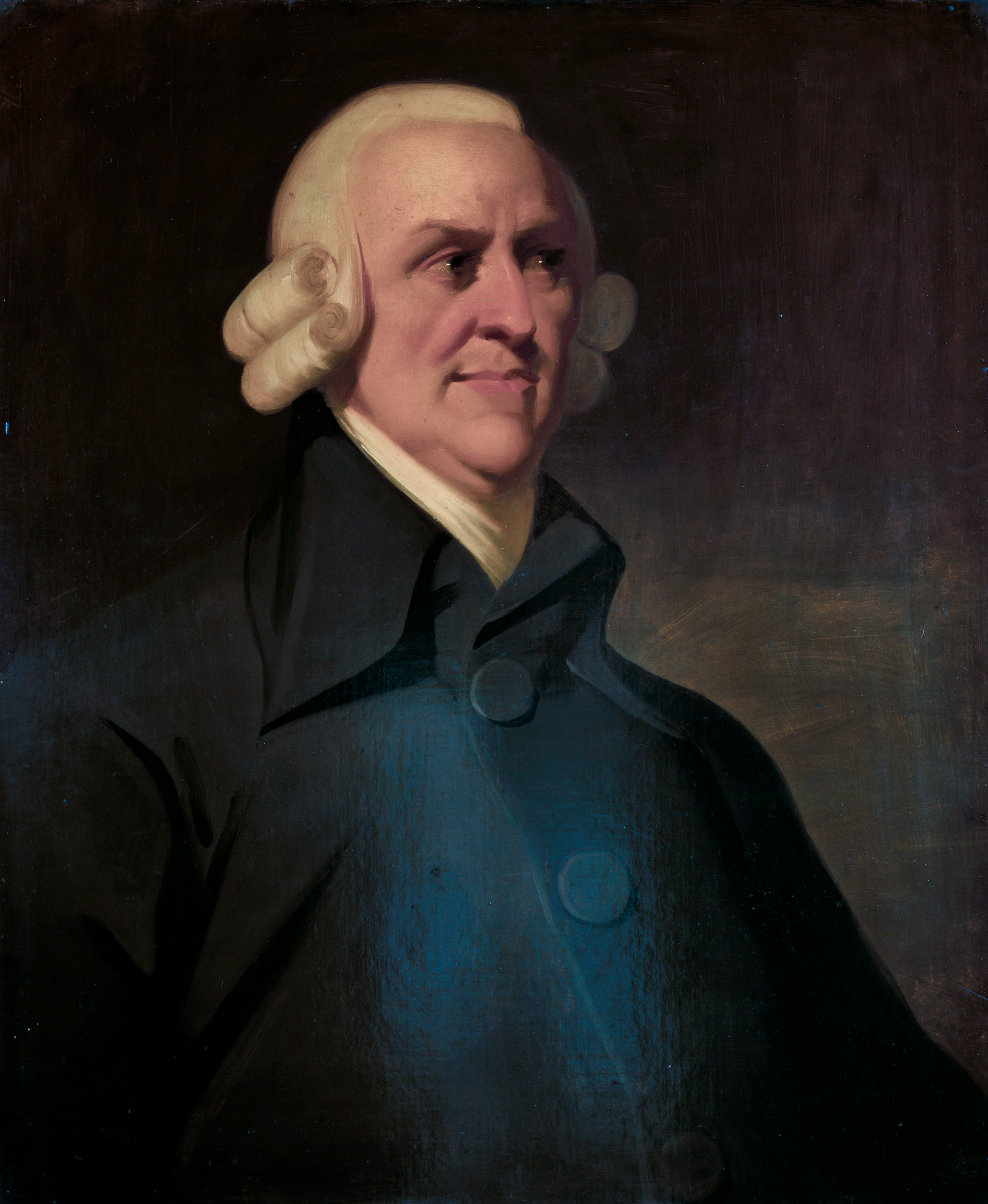
Adam Smith (16 June 1723 NS (5 June 1723 OS) – 17 July 1790) was a Scottish moral philosopher, pioneer of political economy, and a key figure in the Scottish Enlightenment.
And he appears on the UK £20.00 note – but not for much longer.

He is about to be replaced by Artist JMW Turner ,an English Romanticist landscape painter. Turner was considered a controversial figure in his day, but is now regarded as the artist who elevated landscape painting to an eminence rivalling history painting.
Although renowned for his oil paintings, Turner is also one of the greatest masters of British watercolour landscape painting. He is commonly known as “the painter of light”[2] and his work is regarded as a Romantic preface to Impressionism.

Click here for more details on J.M.W. Turner
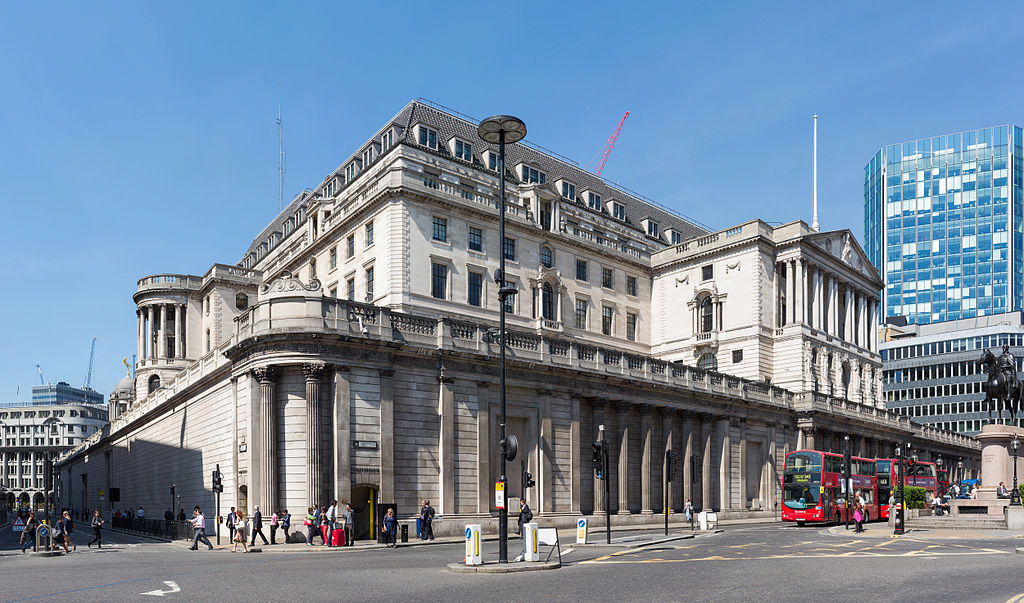
The Bank of England, which is now the Central Bank of the United Kingdom, has issued banknotes since 1694. In 1921 The Bank of England gained a legal monopoly on the issue of banknotes in England and Wales, a process that started with the Bank Charter Act of 1844 when the ability of other banks to issue notes was restricted.
Banknotes were originally hand-written; although they were partially printed from 1725 onwards, cashiers still had to sign each note and make them payable to someone. Notes were fully printed from 1855. Since 1970, the Bank of England’s notes have featured portraits of British historical figures.
Of the eight banks authorised to issue banknotes in the UK, only the Bank of England can issue banknotes in England and Wales, where its notes are legal tender. Bank of England notes are not legal tender in Scotland and Northern Ireland, but are accepted there along with other notes.
£20 note, depicting Adam Smith with an illustration of ‘The division of labour in pin manufacturing’. It also includes enhanced security features. This, the first note from the new Series F, entered circulation on 13 March 2007

£20 notes, in white, appeared in 1725 and continued to be issued until 1943. They ceased to be legal tender in 1945.
After World War II, the £20 denomination did not reappear until 1970, when the new Series D £20 note, predominantly in purple and featuring a statue of William Shakespeare and the balcony scene from Romeo and Juliet on its reverse, was introduced on 9 July. On 5 June 1991 this note was replaced by the first Series E £20 note, featuring the physicist Michael Faraday and the Royal Institution lectures. By 1999 this note had been extensively copied, and therefore it became the first denomination to be replaced on 22 June 1999 by a second Series E design, featuring a bolder denomination figure at the top left of the obverse side, and a reverse side featuring the composer Sir Edward Elgar and Worcester Cathedral. The £20 banknote was known to have suffered from higher cases of counterfeiting (276,000 out of 290,000 cases detected in 2007) than any other denominations.

In February 2006, the Bank announced a new design for the note which featured Scottish economist Adam Smith with a drawing of a pin factory – the institution which supposedly inspired his theory of economics. Smith is the first Scot to appear on a Bank of England note, although the economist has already appeared on Scottish Clydesdale Bank £50 notes. The design of the £20 note was controversial for two reasons: the choice of a Scottish figure on an English note was a break with tradition; and the removal of Elgar took place in the year of the 150th anniversary of the composer’s birth, causing a group of English MPs to table a motion in the House of Commons calling for the new design to be delaye The new note entered circulation on 13 March 2007. The Elgar note ceased to be legal tender on 30 June 2010.[
Adam Smith
Adam Smith (16 June 1723 NS (5 June 1723 OS) – 17 July 1790) was a Scottish moral philosopher, pioneer of political economy, and a key figure in the Scottish Enlightenment.
Smith is best known for two classic works: The Theory of Moral Sentiments (1759), and An Inquiry into the Nature and Causes of the Wealth of Nations (1776). The latter, usually abbreviated as The Wealth of Nations, is considered his magnum opus and the first modern work of economics. Smith is cited as the father of modern economics and is still among the most influential thinkers in the field of economics today.
Smith studied social philosophy at the University of Glasgow and at Balliol College, Oxford, where he was one of the first students to benefit from scholarships set up by fellow Scot, John Snell. After graduating, he delivered a successful series of public lectures at Edinburgh, leading him to collaborate with David Hume during the Scottish Enlightenment. Smith obtained a professorship at Glasgow teaching moral philosophy, and during this time he wrote and published The Theory of Moral Sentiments. In his later life, he took a tutoring position that allowed him to travel throughout Europe, where he met other intellectual leaders of his day.
Smith laid the foundations of classical free market economic theory. The Wealth of Nations was a precursor to the modern academic discipline of economics. In this and other works, he expounded upon how rational self-interest and competition can lead to economic prosperity. Smith was controversial in his own day and his general approach and writing style were often satirised by Tory writers in the moralising tradition of William Hogarth and Jonathan Swift. In 2005, The Wealth of Nations was named among the 100 Best Scottish Books of all time The minor planet 12838 Adamsmith was named in his memory.

Portrait of Smith’s mother, Margaret Douglas
Smith was born in Kirkcaldy, in the County of Fife, in Scotland. His father, also Adam Smith, was a Scottish Writer to the Signet (senior solicitor), advocate, and prosecutor (Judge Advocate) and also served as comptroller of the Customs in Kirkcaldy In 1720 he married Margaret Douglas, daughter of the landed Robert Douglas of Strathendry, also in Fife. His father died two months after he was born, leaving his mother a widow. The date of Smith’s baptism into the Church of Scotland at Kirkcaldy was 5 June 1723, and this has often been treated as if it were also his date of birth, which is unknown. Although few events in Smith’s early childhood are known, the Scottish journalist John Rae, Smith’s biographer, recorded that Smith was abducted by gypsies at the age of three and released when others went to rescue him. Smith was close to his mother, who probably encouraged him to pursue his scholarly ambitions.He attended the Burgh School of Kirkcaldy—characterised by Rae as “one of the best secondary schools of Scotland at that period”—from 1729 to 1737, he learned Latin, mathematics, history, and writing.

A commemorative plaque for Smith is located in Smith’s home town of Kirkcaldy.
Smith entered the University of Glasgow when he was fourteen and studied moral philosophy under Francis Hutcheson. Here, Smith developed his passion for liberty, reason, and free speech. In 1740 Smith was the graduate scholar presented to undertake postgraduate studies at Balliol College, Oxford, under the Snell Exhibition.
Adam Smith considered the teaching at Glasgow to be far superior to that at Oxford, which he found intellectually stifling.In Book V, Chapter II of The Wealth of Nations, Smith wrote: “In the University of Oxford, the greater part of the public professors have, for these many years, given up altogether even the pretence of teaching.” Smith is also reported to have complained to friends that Oxford officials once discovered him reading a copy of David Hume‘s Treatise on Human Nature, and they subsequently confiscated his book and punished him severely for reading it. According to William Robert Scott, “The Oxford of [Smith’s] time gave little if any help towards what was to be his lifework.” Nevertheless, Smith took the opportunity while at Oxford to teach himself several subjects by reading many books from the shelves of the large Bodleian Library. When Smith was not studying on his own, his time at Oxford was not a happy one, according to his letters. Near the end of his time there, Smith began suffering from shaking fits, probably the symptoms of a nervous breakdown. He left Oxford University in 1746, before his scholarship ended.
In Book V of The Wealth of Nations, Smith comments on the low quality of instruction and the meager intellectual activity at English universities, when compared to their Scottish counterparts. He attributes this both to the rich endowments of the colleges at Oxford and Cambridge, which made the income of professors independent of their ability to attract students, and to the fact that distinguished men of letters could make an even more comfortable living as ministers of the Church of England.
Adam Smith’s discontent at Oxford might be in part due to the absence of his beloved teacher in Glasgow, Francis Hutcheson. Hutcheson was well regarded as one of the most prominent lecturers at the University of Glasgow in his day and earned the approbation of students, colleagues, and even ordinary residents with the fervor and earnestness of his orations (which he sometimes opened to the public). His lectures endeavoured not merely to teach philosophy but to make his students embody that philosophy in their lives, appropriately acquiring the epithet, the preacher of philosophy. Unlike Smith, Hutcheson was not a system builder; rather it was his magnetic personality and method of lecturing that so influenced his students and caused the greatest of those to reverentially refer to him as “the never to be forgotten Hutcheson” – a title that Smith in all his correspondence used to describe only two people, his good friend David Hume and influential mentor Francis Hutcheson.
Smith began delivering public lectures in 1748 in Edinburgh, sponsored by the Philosophical Society of Edinburgh under the patronage of Lord Kames. His lecture topics included rhetoric and belles-lettres, and later the subject of “the progress of opulence”. On this latter topic he first expounded his economic philosophy of “the obvious and simple system of natural liberty“. While Smith was not adept at public speaking, his lectures met with success.

David Hume was a friend and contemporary of Smith.
In 1750, he met the philosopher David Hume, who was his senior by more than a decade. In their writings covering history, politics, philosophy, economics, and religion, Smith and Hume shared closer intellectual and personal bonds than with other important figures of the Scottish Enlightenment.
In 1751, Smith earned a professorship at Glasgow University teaching logic courses, and in 1752 he was elected a member of the Philosophical Society of Edinburgh, having been introduced to the society by Lord Kames. When the head of Moral Philosophy in Glasgow died the next year, Smith took over the position. He worked as an academic for the next thirteen years, which he characterised as “by far the most useful and therefore by far the happiest and most honorable period [of his life]”.
Smith published The Theory of Moral Sentiments in 1759, embodying some of his Glasgow lectures. This work was concerned with how human morality depends on sympathy between agent and spectator, or the individual and other members of society. Smith defined “mutual sympathy” as the basis of moral sentiments. He based his explanation, not on a special “moral sense” as the Third Lord Shaftesbury and Hutcheson had done, nor on utility as Hume did, but on mutual sympathy, a term best captured in modern parlance by the twentieth-century concept of empathy, the capacity to recognise feelings that are being experienced by another being.
Following the publication of The Theory of Moral Sentiments, Smith became so popular that many wealthy students left their schools in other countries to enroll at Glasgow to learn under Smith. After the publication of The Theory of Moral Sentiments, Smith began to give more attention to jurisprudence and economics in his lectures and less to his theories of morals. For example, Smith lectured that the cause of increase in national wealth is labour, rather than the nation’s quantity of gold or silver, which is the basis for mercantilism, the economic theory that dominated Western European economic policies at the time.

François Quesnay, one of the leaders of the Physiocratic school of thought
In 1762, the University of Glasgow conferred on Smith the title of Doctor of Laws (LL.D.). At the end of 1763, he obtained an offer from Charles Townshend – who had been introduced to Smith by David Hume – to tutor his stepson, Henry Scott, the young Duke of Buccleuch. Smith then resigned from his professorship to take the tutoring position. He subsequently attempted to return the fees he had collected from his students because he resigned in the middle of the term, but his students refused.
Smith’s tutoring job entailed touring Europe with Scott, during which time he educated Scott on a variety of subjects – such as proper Polish. He was paid £300 per year (plus expenses) along with a £300 per year pension; roughly twice his former income as a teacher. Smith first travelled as a tutor to Toulouse, France, where he stayed for one and a half years. According to his own account, he found Toulouse to be somewhat boring, having written to Hume that he “had begun to write a book to pass away the time”. After touring the south of France, the group moved to Geneva, where Smith met with the philosopher Voltaire.
From Geneva, the party moved to Paris. Here Smith came to know several great intellectual leaders of the time; invariably having an effect on his future works. This list included: Benjamin Franklin, Turgot, Jean D’Alembert, André Morellet, Helvétius, and, notably, François Quesnay, the head of the Physiocratic school. So impressed with his ideas Smith considered dedicating The Wealth of Nations to him – had Quesnay not died beforehand. Physiocrats were opposed to mercantilism, the dominating economic theory of the time. Illustrated in their motto Laissez faire et laissez passer, le monde va de lui même! (Let do and let pass, the world goes on by itself!). They were also known to have declared that only agricultural activity produced real wealth; merchants and industrialists (manufacturers) did not. This however, did not represent their true school of thought, but was a mere “smoke screen” manufactured to hide their actual criticisms of the nobility and church; arguing that they made up the only real clients of merchants.
The wealth of France was virtually destroyed by Louis XIV and Louis XV in ruinous wars, by aiding the American insurgents against the British, and perhaps most destructive (in terms of public perceptions) was what was seen as the excessive consumption of goods and services deemed to have no economic contribution – unproductive labour. Assuming that nobility and church are essentially detractors from economic growth, the feudal system of agriculture in France was the only sector important to maintain the wealth of the nation. Given that the English economy of the day yielded an income distribution that stood in contrast to that which existed in France, Smith concluded that the teachings and beliefs of Physiocrats were, “with all [their] imperfections [perhaps], the nearest approximation to the truth that has yet been published upon the subject of political economy”.The distinction between productive versus unproductive labour – the physiocratic classe steril – was a predominant issue in the development and understanding of what would become classical economic theory.
In 1766, Henry Scott’s younger brother died in Paris, and Smith’s tour as a tutor ended shortly thereafter.Smith returned home that year to Kirkcaldy, and he devoted much of the next ten years to his magnum opus. There he befriended Henry Moyes, a young blind man who showed precocious aptitude. As well as teaching Moyes, Smith secured the patronage of David Hume and Thomas Reid in the young man’s education. In May 1773, Smith was elected fellow of the Royal Society of London, and was elected a member of the Literary Club in 1775. The Wealth of Nations was published in 1776 and was an instant success, selling out its first edition in only six months.
In 1778, Smith was appointed to a post as commissioner of customs in Scotland and went to live with his mother in Panmure House in Edinburgh’s Canongate. Five years later, as a member of the Philosophical Society of Edinburgh when it received its royal charter, he automatically became one of the founding members of the Royal Society of Edinburgh, and from 1787 to 1789 he occupied the honorary position of Lord Rector of the University of Glasgow. He died in the northern wing of Panmure House in Edinburgh on 17 July 1790 after a painful illness and was buried in the Canongate Kirkyard. On his death bed, Smith expressed disappointment that he had not achieved more.
Smith’s literary executors were two friends from the Scottish academic world: the physicist and chemist Joseph Black, and the pioneering geologist James Hutton. Smith left behind many notes and some unpublished material, but gave instructions to destroy anything that was not fit for publication. He mentioned an early unpublished History of Astronomy as probably suitable, and it duly appeared in 1795, along with other material such as Essays on Philosophical Subjects.
Smith’s library went by his will to David Douglas, Lord Reston (son of his cousin Colonel Robert Douglas of Strathendry, Fife), who lived with Smith. It was eventually divided between his two surviving children, Cecilia Margaret (Mrs. Cunningham) and David Anne (Mrs. Bannerman). On the death of her husband, the Rev. W. B. Cunningham of Prestonpans in 1878, Mrs. Cunningham sold some of the books. The remainder passed to her son, Professor Robert Oliver Cunningham of Queen’s College, Belfast, who presented a part to the library of Queen’s College. After his death the remaining books were sold. On the death of Mrs. Bannerman in 1879 her portion of the library went intact to the New College (of the Free Church), Edinburgh.

James Tassie‘s enamel paste medallion of Smith provided the model for many engravings and portraits that remain today.
Not much is known about Smith’s personal views beyond what can be deduced from his published articles. His personal papers were destroyed after his death at his request. He never married, and seems to have maintained a close relationship with his mother, with whom he lived after his return from France and who died six years before his own death.
Smith was described by several of his contemporaries and biographers as comically absent-minded, with peculiar habits of speech and gait, and a smile of “inexpressible benignity”. He was known to talk to himself, a habit that began during his childhood when he would smile in rapt conversation with invisible companions. He also had occasional spells of imaginary illness, and he is reported to have had books and papers placed in tall stacks in his study. According to one story, Smith took Charles Townshend on a tour of a tanning factory, and while discussing free trade, Smith walked into a huge tanning pit from which he needed help to escape. He is also said to have put bread and butter into a teapot, drunk the concoction, and declared it to be the worst cup of tea he ever had. According to another account, Smith distractedly went out walking in his nightgown and ended up 15 miles (24 km) outside of town, before nearby church bells brought him back to reality.
James Boswell who was a student of Smith’s at Glasgow University, and later knew him at the Literary Club, says that Smith thought that speaking about his ideas in conversation might reduce the sale of his books, and so his conversation was unimpressive. According to Boswell, he once told Sir Joshua Reynolds that ‘he made it a rule when in company never to talk of what he understood’

Portrait of Smith by John Kay, 1790
Smith, who is reported to have been an odd-looking fellow, has been described as someone who “had a large nose, bulging eyes, a protruding lower lip, a nervous twitch, and a speech impediment”.Smith is said to have acknowledged his looks at one point, saying, “I am a beau in nothing but my books.” Smith rarely sat for portraits, so almost all depictions of him created during his lifetime were drawn from memory. The best-known portraits of Smith are the profile by James Tassie and two etchings by John Kay.The line engravings produced for the covers of 19th century reprints of The Wealth of Nations were based largely on Tassie’s medallion.
There has been considerable scholarly debate about the nature of Smith’s religious views. Smith’s father had shown a strong interest in Christianity and belonged to the moderate wing of the Church of Scotland. The fact that Adam Smith received the Snell Exhibition suggests that he may have gone to Oxford with the intention of pursuing a career in the Church of England.
Anglo-American economist Ronald Coase has challenged the view that Smith was a deist, based on the fact that Smith’s writings never explicitly invoke God as an explanation of the harmonies of the natural or the human worlds. According to Coase, though Smith does sometimes refer to the “Great Architect of the Universe“, later scholars such as Jacob Viner have “very much exaggerated the extent to which Adam Smith was committed to a belief in a personal God”,a belief for which Coase finds little evidence in passages such as the one in the Wealth of Nations in which Smith writes that the curiosity of mankind about the “great phenomena of nature”, such as “the generation, the life, growth and dissolution of plants and animals”, has led men to “enquire into their causes”, and that “superstition first attempted to satisfy this curiosity, by referring all those wonderful appearances to the immediate agency of the gods. Philosophy afterwards endeavoured to account for them, from more familiar causes, or from such as mankind were better acquainted with than the agency of the gods”.
Some other authors argue that Smith’s social and economic philosophy is inherently theological and that his entire model of social order is logically dependent on the notion of God’s action in nature.
Smith was also a close friend and later the executor of David Hume, who was commonly characterised in his own time as an atheist.The publication in 1777 of Smith’s letter to William Strahan, in which he described Hume’s courage in the face of death in spite of his irreligiosity, attracted considerable controversy.
In 1759, Smith published his first work, The Theory of Moral Sentiments. He continued making extensive revisions to the book, up until his death.Although The Wealth of Nations is widely regarded as Smith’s most influential work, it is believed that Smith himself considered The Theory of Moral Sentiments to be a superior work.
In the work, Smith critically examines the moral thinking of his time, and suggests that conscience arises from dynamic and interactive social relationships through which people seek “mutual sympathy of sentiments.”. His goal in writing the work was to explain the source of mankind’s ability to form moral judgement, given that people begin life with no moral sentiments at all. Smith proposes a theory of sympathy, in which the act of observing others and seeing the judgements they form of both others and oneself makes people aware of themselves and how others perceive their behavior. The feedback we receive from perceiving (or imagining) others’ judgements creates an incentive to achieve “mutual sympathy of sentiments” with them and leads people to develop habits, and then principles, of behavior, which come to constitute one’s conscience.
Some scholars have perceived a conflict between The Theory of Moral Sentiments and The Wealth of Nations; the former emphasises sympathy for others, while the latter focuses on the role of self-interest.In recent years, however, some scholars of Smith’s work have argued that no contradiction exists. They claim that in The Theory of Moral Sentiments, Smith develops a theory of psychology in which individuals seek the approval of the “impartial spectator” as a result of a natural desire to have outside observers sympathise with their sentiments. Rather than viewing The Theory of Moral Sentiments and The Wealth of Nations as presenting incompatible views of human nature, some Smith scholars regard the works as emphasising different aspects of human nature that vary depending on the situation. Otteson argues that both books are Newtonian in their methodology and deploy a similar “market model” for explaining the creation and development of large-scale human social orders, including morality, economics, as well as language. Ekelund and Hebert offer a differing view, observing that self-interest is present in both works and that “in the former, sympathy is the moral faculty that holds self-interest in check, whereas in the latter, competition is the economic faculty that restrains self-interest.”

Later building on the site where Smith wrote The Wealth of Nations
There is disagreement between classical and neoclassical economists about the central message of Smith’s most influential work: An Inquiry into the Nature and Causes of the Wealth of Nations (1776). Neoclassical economists emphasise Smith’s invisible hand, a concept mentioned in the middle of his work – Book IV, Chapter II – and classical economists believe that Smith stated his programme for promoting the “wealth of nations” in the first sentences, which attributes the growth of wealth and prosperity to the division of labour.
Smith used the term “the invisible hand” in “History of Astronomy”referring to “the invisible hand of Jupiter,” and once in each of his The Theory of Moral Sentiments (1759) and The Wealth of Nations (1776). This last statement about “an invisible hand” has been interpreted in numerous ways.
As every individual, therefore, endeavours as much as he can both to employ his capital in the support of domestic industry, and so to direct that industry that its produce may be of the greatest value; every individual necessarily labours to render the annual revenue of the society as great as he can. He generally, indeed, neither intends to promote the public interest, nor knows how much he is promoting it. By preferring the support of domestic to that of foreign industry, he intends only his own security; and by directing that industry in such a manner as its produce may be of the greatest value, he intends only his own gain, and he is in this, as in many other cases, led by an invisible hand to promote an end which was no part of his intention. Nor is it always the worse for the society that it was no part of it. By pursuing his own interest he frequently promotes that of the society more effectually than when he really intends to promote it. I have never known much good done by those who affected to trade for the public good. It is an affectation, indeed, not very common among merchants, and very few words need be employed in dissuading them from it.
Those who regard that statement as Smith’s central message also quote frequently Smith’s dictum:
It is not from the benevolence of the butcher, the brewer, or the baker, that we expect our dinner, but from their regard to their own interest. We address ourselves, not to their humanity but to their self-love, and never talk to them of our own necessities but of their advantages.

The first page of The Wealth of Nations, 1776 London edition
Smith’s statement about the benefits of “an invisible hand” may be meant to answer Mandeville’s contention that “Private Vices … may be turned into Public Benefits”.It shows Smith’s belief that when an individual pursues his self-interest under conditions of justice, he unintentionally promotes the good of society. Self-interested competition in the free market, he argued, would tend to benefit society as a whole by keeping prices low, while still building in an incentive for a wide variety of goods and services. Nevertheless, he was wary of businessmen and warned of their “conspiracy against the public or in some other contrivance to raise prices”. Again and again, Smith warned of the collusive nature of business interests, which may form cabals or monopolies, fixing the highest price “which can be squeezed out of the buyers”.Smith also warned that a business-dominated political system would allow a conspiracy of businesses and industry against consumers, with the former scheming to influence politics and legislation. Smith states that the interest of manufacturers and merchants “…in any particular branch of trade or manufactures, is always in some respects different from, and even opposite to, that of the public…The proposal of any new law or regulation of commerce which comes from this order, ought always to be listened to with great precaution, and ought never be adopted till after having been long and carefully examined, not only with the most scrupulous, but with the most suspicious attention.” Thus Smith’s chief worry seems to be when business is given special protections or privileges from government; by contrast, in the absence of such special political favours, he believed that business activities were generally beneficial to the whole society:
It is the great multiplication of the production of all the different arts, in consequence of the division of labour, which occasions, in a well-governed society, that universal opulence which extends itself to the lowest ranks of the people. Every workman has a great quantity of his own work to dispose of beyond what he himself has occasion for; and every other workman being exactly in the same situation, he is enabled to exchange a great quantity of his own goods for a great quantity, or, what comes to the same thing, for the price of a great quantity of theirs. He supplies them abundantly with what they have occasion for, and they accommodate him as amply with what he has occasion for, and a general plenty diffuses itself through all the different ranks of society. (The Wealth of Nations, I.i.10)
The neoclassical interest in Smith’s statement about “an invisible hand” originates in the possibility to see it as a precursor of neoclassical economics and its General Equilibrium concept. Samuelson’s “Economics” refers 6 times to Smith’s “invisible hand”. To emphasise this relation, Samuelson quotes Smith’s “invisible hand” statement putting “general interest” where Smith wrote “public interest”. Samuelson concluded: “Smith was unable to prove the essence of his invisible-hand doctrine. Indeed, until the 1940s no one knew how to prove, even to state properly, the kernel of truth in this proposition about perfectly competitive market.”
Very differently, classical economists see in Smith’s first sentences his programme to promote “The Wealth of Nations”. Taking up the physiocratical concept of the economy as a circular process means that to have growth the inputs of period2 must excel the inputs of period1. Therefore, the outputs of period1 not used or usable as input of period2 are regarded as unproductive labour as they do not contribute to growth. This is what Smith had heard in France from, among others, Quesnay. To this French insight that unproductive labour should be pushed back to use labour more productively, Smith added his own proposal, that productive labour should be made even more productive by deepening the division of labour. Smith argued that deepening the division of labour under competition leads to greater productivity, which leads to lower prices and thus an increasing standard of living—”general plenty” and “universal opulence”—for all. Extended markets and increased production lead to continuous reorganisation of production and inventing new ways of producing, which lead to further increased production, lower prices, and increased standards of living. Smith’s central message is therefore that under dynamic competition a growth machine secures “The Wealth of Nations”. Smith’s argument predicted Britain’s evolution as the workshop of the world, underselling and outproducing all its competitors. The opening sentences of the “Wealth of Nations” summarise this policy:
The annual labour of every nation is the fund which originally supplies it with all the necessaries and conveniences of life which it annually consumes … . [T]his produce … bears a greater or smaller proportion to the number of those who are to consume it … .[B]ut this proportion must in every nation be regulated by two different circumstances;
- first, by the skill, dexterity, and judgment with which its labour is generally applied; and,
- secondly, by the proportion between the number of those who are employed in useful labour, and that of those who are not so employed [emphasis added].
Smith added, however, that the “abundance or scantiness of this supply too seems to depend more upon the former of those two circumstances than upon the latter.”
Alfred Marshall criticised Smith’s definition of economy on several points. He argued that man should be equally important as money, services are as important as goods, and that there must be an emphasis on human welfare, instead of just wealth. The “invisible hand” only works well when both production and consumption operates in free markets, with small (“atomistic”) producers and consumers allowing supply and demand to fluctuate and equilibrate. In conditions of monopoly and oligopoly, the “invisible hand” fails. Nobel Prize-winning economist Joseph E. Stiglitz says, on the topic of one of Smith’s better known ideas: “the reason that the invisible hand often seems invisible is that it is often not there.”

Smith’s burial place in Canongate Kirkyard
Shortly before his death, Smith had nearly all his manuscripts destroyed. In his last years, he seemed to have been planning two major treatises, one on the theory and history of law and one on the sciences and arts. The posthumously published Essays on Philosophical Subjects, a history of astronomy down to Smith’s own era, plus some thoughts on ancient physics and metaphysics, probably contain parts of what would have been the latter treatise. Lectures on Jurisprudence were notes taken from Smith’s early lectures, plus an early draft of The Wealth of Nations, published as part of the 1976 Glasgow Edition of the works and correspondence of Smith. Other works, including some published posthumously, include Lectures on Justice, Police, Revenue, and Arms (1763) (first published in 1896); and Essays on Philosophical Subjects (1795).
The Wealth of Nations was a precursor to the modern academic discipline of economics. In this and other works, Smith expounded how rational self-interest and competition can lead to economic prosperity. Smith was controversial in his own day and his general approach and writing style were often satirised by Tory writers in the moralising tradition of Hogarth and Swift, as a discussion at the University of Winchester suggests. In 2005, The Wealth of Nations was named among the 100 Best Scottish Books of all time. Former UK Prime Minister Margaret Thatcher, it is said, used to carry a copy of the book in her handbag.
In light of the arguments put forward by Smith and other economic theorists in Britain, academic belief in mercantalism began to decline in Britain in the late 18th century. During the Industrial Revolution, Britain embraced free trade and Smith’s laissez-faire economics, and via the British Empire, used its power to spread a broadly liberal economic model around the world, characterised by open markets, and relatively barrier free domestic and international trade.
George Stigler attributes to Smith “the most important substantive proposition in all of economics”. It is that, under competition, owners of resources (for example labour, land, and capital) will use them most profitably, resulting in an equal rate of return in equilibrium for all uses, adjusted for apparent differences arising from such factors as training, trust, hardship, and unemployment.
Paul Samuelson finds in Smith’s pluralist use of supply and demand as applied to wages, rents, profit a valid and valuable anticipation of the general equilibrium modelling of Walras a century later. Smith’s allowance for wage increases in the short and intermediate term from capital accumulation and invention contrasted with Malthus, Ricardo, and Karl Marx in their propounding a rigid subsistence–wage theory of labour supply.
Joseph Schumpeter criticised Smith for a lack of technical rigor, yet he argued that this enabled Smith’s writings to appeal to wider audiences: “His very limitation made for success. Had he been more brilliant, he would not have been taken so seriously. Had he dug more deeply, had he unearthed more recondite truth, had he used more difficult and ingenious methods, he would not have been understood. But he had no such ambitions; in fact he disliked whatever went beyond plain common sense. He never moved above the heads of even the dullest readers. He led them on gently, encouraging them by trivialities and homely observations, making them feel comfortable all along.”
Classical economists presented competing theories of those of Smith, termed the “labour theory of value“. Later Marxian economics descending from classical economics also use Smith’s labour theories, in part. The first volume of Karl Marx‘s major work, Capital, was published in German in 1867. In it, Marx focused on the labour theory of value and what he considered to be the exploitation of labour by capital. The labour theory of value held that the value of a thing was determined by the labour that went into its production. This contrasts with the modern contention of neoclassical economics, that the value of a thing is determined by what one is willing to give up to obtain the thing.

The Adam Smith Theatre in Kirkcaldy
The body of theory later termed “neoclassical economics” or “marginalism” formed from about 1870 to 1910. The term “economics” was popularised by such neoclassical economists as Alfred Marshall as a concise synonym for “economic science” and a substitute for the earlier, broader term “political economy” used by Smith. This corresponded to the influence on the subject of mathematical methods used in the natural sciences. Neoclassical economics systematised supply and demand as joint determinants of price and quantity in market equilibrium, affecting both the allocation of output and the distribution of income. It dispensed with the labour theory of value of which Smith was most famously identified with in classical economics, in favour of a marginal utility theory of value on the demand side and a more general theory of costs on the supply side.
The bicentennial anniversary of the publication of The Wealth of Nations was celebrated in 1976, resulting in increased interest for The Theory of Moral Sentiments and his other works throughout academia. After 1976, Smith was more likely to be represented as the author of both The Wealth of Nations and The Theory of Moral Sentiments, and thereby as the founder of a moral philosophy and the science of economics. His homo economicus or “economic man” was also more often represented as a moral person. Additionally, economists David Levy and Sandra Peart in “The Secret History of the Dismal Science” point to his opposition to hierarchy and beliefs in inequality, including racial inequality, and provide additional support for those who point to Smith’s opposition to slavery, colonialism, and empire.They show the caricatures of Smith drawn by the opponents of views on hierarchy and inequality in this online article. Emphasised also are Smith’s statements of the need for high wages for the poor, and the efforts to keep wages low. In The “Vanity of the Philosopher: From Equality to Hierarchy in Postclassical Economics”, Peart and Levy also cite Smith’s view that a common street porter was not intellectually inferior to a philosopher, and point to the need for greater appreciation of the public views in discussions of science and other subjects now considered to be technical. They also cite Smith’s opposition to the often expressed view that science is superior to common sense.
Smith also explained the relationship between growth of private property and civil government:
“Men may live together in society with some tolerable degree of security, though there is no civil magistrate to protect them from the injustice of those passions. But avarice and ambition in the rich, in the poor the hatred of labour and the love of present ease and enjoyment, are the passions which prompt to invade property, passions much more steady in their operation, and much more universal in their influence. Wherever there is great property there is great inequality. For one very rich man there must be at least five hundred poor, and the affluence of the few supposes the indigence of the many. The affluence of the rich excites the indignation of the poor, who are often both driven by want, and prompted by envy, to invade his possessions. It is only under the shelter of the civil magistrate that the owner of that valuable property, which is acquired by the labour of many years, or perhaps of many successive generations, can sleep a single night in security. He is at all times surrounded by unknown enemies, whom, though he never provoked, he can never appease, and from whose injustice he can be protected only by the powerful arm of the civil magistrate continually held up to chastise it. The acquisition of valuable and extensive property, therefore, necessarily requires the establishment of civil government. Where there is no property, or at least none that exceeds the value of two or three days’ labour, civil government is not so necessary. Civil government supposes a certain subordination. But as the necessity of civil government gradually grows up with the acquisition of valuable property, so the principal causes which naturally introduce subordination gradually grow up with the growth of that valuable property. (…) Men of inferior wealth combine to defend those of superior wealth in the possession of their property, in order that men of superior wealth may combine to defend them in the possession of theirs. All the inferior shepherds and herdsmen feel that the security of their own herds and flocks depends upon the security of those of the great shepherd or herdsman; that the maintenance of their lesser authority depends upon that of his greater authority, and that upon their subordination to him depends his power of keeping their inferiors in subordination to them. They constitute a sort of little nobility, who feel themselves interested to defend the property and to support the authority of their own little sovereign in order that he may be able to defend their property and to support their authority. Civil government, so far as it is instituted for the security of property, is in reality instituted for the defence of the rich against the poor, or of those who have some property against those who have none at all.” (Source: The Wealth of Nations, Book 5, Chapter 1, Part 2)
Smith’s chapter on colonies in turn would help shape British imperial debates from the mid-nineteenth century onward. The Wealth of Nations would become an ambiguous text regarding the imperial question. In his chapter on colonies, Smith pondered how to solve the crisis developing across the Atlantic among the empire’s thirteen American colonies. He offered two different proposals for easing tensions. The first proposal called for giving the colonies their independence and, by thus parting on a friendly basis, Britain would be able to develop and maintain a free-trade relationship with them, and possibly even an informal military alliance. Smith’s second proposal called for a theoretical imperial federation that would bring the colonies and the metropole closer together through an imperial parliamentary system and imperial free trade.
Smith’s most prominent disciple in nineteenth-century Britain, peace advocate Richard Cobden, preferred the first proposal. Cobden would lead the Anti-Corn Law League in overturning the Corn Laws in 1846, shifting Britain to a policy of free trade and empire “on the cheap” for decades to come. This hands-off approach toward the British Empire would become known as Cobdenism or the Manchester School.By the turn of the century, however, advocates of Smith’s second proposal such as Joseph Shield Nicholson would become ever more vocal in opposing Cobdenism, calling instead for imperial federation As Marc-William Palen notes: “On the one hand, Adam Smith’s late nineteenth and early twentieth-century Cobdenite adherents used his theories to argue for gradual imperial devolution and empire ‘on the cheap’. On the other, various proponents of imperial federation throughout the British World sought to use Smith’s theories to overturn the predominant Cobdenite hands-off imperial approach and instead, with a firm grip, bring the empire closer than ever before.” Smith’s ideas thus played an important part in subsequent debates over the British Empire.

A statue of Smith in Edinburgh‘s High Street, erected through private donations organised by the Adam Smith Institute.
Smith has been commemorated in the UK on banknotes printed by two different banks; his portrait has appeared since 1981 on the £50 notes issued by the Clydesdale Bank in Scotland,[and in March 2007 Smith’s image also appeared on the new series of £20 notes issued by the Bank of England, making him the first Scotsman to feature on an English banknote.[

Statue of Smith built in 1867–1870 at the old headquarters of the University of London, 6 Burlington Gardens.
A large-scale memorial of Smith by Alexander Stoddart was unveiled on 4 July 2008 in Edinburgh. It is a 10 feet (3.0 m)-tall bronze sculpture and it stands above the Royal Mile outside St Giles’ Cathedral in Parliament Square, near the Mercat cross. 20th-century sculptor Jim Sanborn (best known for the Kryptos sculpture at the United States Central Intelligence Agency) has created multiple pieces which feature Smith’s work. At Central Connecticut State University is Circulating Capital, a tall cylinder which features an extract from The Wealth of Nations on the lower half, and on the upper half, some of the same text but represented in binary code. At the University of North Carolina at Charlotte, outside the Belk College of Business Administration, is Adam Smith’s Spinning Top. Another Smith sculpture is at Cleveland State University.He also appears as the narrator in the 2013 play The Low Road, centred on a proponent on laissez-faire economics in the late eighteenth century but dealing obliquely with the financial crisis of 2007–2008 and the recession which followed – in the premiere production, he was portrayed by Bill Paterson.
Adam Smith resided at Panmure house from 1778–90. This residence has now been purchased by the Edinburgh Business School at Heriot Watt University and fundraising has begun to restore it. Part of the Northern end of the original building appears to have been demolished in the 19th century to make way for an iron foundry.

Adam Smith’s Spinning Top, sculpture by Jim Sanborn at Cleveland State University
Smith has been celebrated by advocates of free market policies as the founder of free market economics, a view reflected in the naming of bodies such as the Adam Smith Institute in London, the Adam Smith Society and the Australian Adam Smith Club, and in terms such as the Adam Smith necktie.
Alan Greenspan argues that, while Smith did not coin the term laissez-faire, “it was left to Adam Smith to identify the more-general set of principles that brought conceptual clarity to the seeming chaos of market transactions”. Greenspan continues that The Wealth of Nations was “one of the great achievements in human intellectual history”.P. J. O’Rourke describes Smith as the “founder of free market economics”.
Other writers have argued that Smith’s support for laissez-faire (which in French means leave alone) has been overstated. Herbert Stein wrote that the people who “wear an Adam Smith necktie” do it to “make a statement of their devotion to the idea of free markets and limited government“, and that this misrepresents Smith’s ideas. Stein writes that Smith “was not pure or doctrinaire about this idea. He viewed government intervention in the market with great skepticism…yet he was prepared to accept or propose qualifications to that policy in the specific cases where he judged that their net effect would be beneficial and would not undermine the basically free character of the system. He did not wear the Adam Smith necktie.” In Stein’s reading, The Wealth of Nations could justify the Food and Drug Administration, the Consumer Product Safety Commission, mandatory employer health benefits, environmentalism, and “discriminatory taxation to deter improper or luxurious behavior”
Similarly, Vivienne Brown stated in The Economic Journal that in the 20th century United States, Reaganomics supporters, the Wall Street Journal, and other similar sources have spread among the general public a partial and misleading vision of Smith, portraying him as an “extreme dogmatic defender of laissez-faire capitalism and supply-side economics“.In fact, The Wealth of Nations includes the following statement on the payment of taxes:
“The subjects of every state ought to contribute towards the support of the government, as nearly as possible, in proportion to their respective abilities; that is, in proportion to the revenue which they respectively enjoy under the protection of the state.”
Some commentators have argued that Smith’s works show support for a progressive, not flat, income tax and that he specifically named taxes that he thought should be required by the state, among them luxury goods taxes and tax on rent.Yet Smith argued for the “impossibility of taxing the people, in proportion to their economic revenue, by any capitation” (The Wealth of Nations, V.ii.k.1). Smith argued that taxes should principally go toward protecting “justice” and “certain publick institutions” that were necessary for the benefit of all of society but that could not be provided by private enterprise (The Wealth of Nations, IV.ix.51).
Additionally, Smith outlined the proper expenses of the government in The Wealth of Nations, Book V, Ch. I. Included in his requirements of a government is to enforce contracts and provide justice system, grant patents and copy rights, provide public goods such as infrastructure, provide national defence and regulate banking. It was the role of the government to provide goods “of such a nature that the profit could never repay the expense to any individual” such as roads, bridges, canals, and harbours. He also encouraged invention and new ideas through his patent enforcement and support of infant industry monopolies. He supported partial public subsidies for elementary education, and he believed that competition among religious institutions would provide general benefit to the society. In such cases, however, Smith argued for local rather than centralised control: “Even those publick works which are of such a nature that they cannot afford any revenue for maintaining themselves . . . are always better maintained by a local or provincial revenue, under the management of a local and provincial administration, than by the general revenue of the state” (Wealth of Nations, V.i.d.18). Finally he outlined how the government should support the dignity of the monarch or chief magistrate, such that they are equal or above the public in fashion. He even states that monarchs should be provided for in a greater fashion than magistrates of a republic because “we naturally expect more splendor in the court of a king than in the mansion-house of a doge“. In addition, he allowed that in some specific circumstances retaliatory tariffs may be beneficial:
“The recovery of a great foreign market will generally more than compensate the transitory inconvenience of paying dearer during a short time for some sorts of goods.”
He added, however, that in general a retaliatory tariff “seems a bad method of compensating the injury done to certain classes of our people, to do another injury ourselves, not only to those classes, but to almost all the other classes of them” (The Wealth of Nations, IV.ii.39).
Economic historians such as Jacob Viner regard Smith as a strong advocate of free markets and limited government (what Smith called “natural liberty”) but not as a dogmatic supporter of laissez-faire.
Economist Daniel Klein believes using the term “free market economics” or “free market economist” to identify the ideas of Smith is too general and slightly misleading. Klein offers six characteristics central to the identity of Smith’s economic thought and argues that a new name is needed to give a more accurate depiction of the “Smithian” identity. Economist David Ricardo set straight some of the misunderstandings about Smith’s thoughts on free market. Most people still fall victim to the thinking that Smith was a free market economist without exception, though he was not. Ricardo pointed out that Smith was in support of helping infant industries. Smith believed that the government should subsidise newly formed industry, but he did fear that when the infant industry grew into adulthood it would be unwilling to surrender the government help. Smith also supported tariffs on imported goods to counteract an internal tax on the same good. Smith also fell to pressure in supporting some tariffs in support for national defence.
Some have also claimed, Emma Rothschild among them, that Smith would have supported a minimum wage, although there is no direct textual evidence supporting the claim. Indeed, Smith wrote:
“The price of labour, it must be observed, cannot be ascertained very accurately anywhere, different prices being often paid at the same place and for the same sort of labour, not only according to the different abilities of the workmen, but according to the easiness or hardness of the masters. Where wages are not regulated by law, all that we can pretend to determine is what are the most usual; and experience seems to show that law can never regulate them properly, though it has often pretended to do so.” (Source: The Wealth of Nations, Book 1, Chapter 8)
Smith also noted a rough equality of bargaining power
A landlord, a farmer, a master manufacturer, a merchant, though they did not employ a single workman, could generally live a year or two upon the stocks which they have already acquired. Many workmen could not subsist a week, few could subsist a month, and scarce any a year without employment. In the long run the workman may be as necessary to his master as his master is to him; but the necessity is not so immediate.

Suicide is Forbidden
Although suicide is forbidden in Islam the madmen of Islamic State and their deluded followers choose to ignore this founding concept of Islam and they are masters at twisting and distorting the teachings of The Prophet Muhammad , to align with their own sick , twisted medieval interpretation of the Islamic Faith .
Most of the suicide bombers are lost souls , disillusioned with life and eager to embrace the utopia of an everlasting ” Paradise ” and are mere pawns to the puppet masters who control Islamic State and other extremist Islamic groups.
But at least they have their 72 blue eyed virgins waiting for them in paradise – Don’t they?
Not that I have any sympathy with them , if they choose to blow themselves to bits – that’s fine by me , but when they kill innocent people in the process That’s NOT at all right with me and their very existence sickenings me.
See Jahadi Jake
———————————-
———————————-
 Verses in the Holy Quran Prohibiting Killing of Oneself or Others
Allah, praise to Him, strongly prohibited the killing of oneself (suicide), or anybody else, or children for fear of poverty, as stated in verses 6: 151, 17: 33, 2: 195, and 4: 29 because the killing of one innocent soul is for God equal to the crime of killing all people, as stated in 5: 32.

Shahid and Shaheed (Arabic: شهيد šahīd, plural: شُهَدَاء šuhadāʾ ) originates from the Quranic Arabic word meaning “witness” and is also used to denote a “martyr“. It is used as a honorific for Muslims who have died fulfilling a religious commandment, especially those who die wielding jihad, or historically in the military expansion of Islam. The act of martyrdom is istishhad.
The word shahid in Arabic means “witness”. Its development closely parallels that of Greek martys (Greek: μάρτυς – “witness”, in theNew Testament also “martyr”), the origin of the term martyr. Shahid occurs frequently in the Quran in the generic sense “witness”, but only once in the sense “martyr; one who dies deliberately for his faith”; this latter sense acquires wider use in the hadiths.

The painting by commemorating the martyrdom of Shia Imam Husayn ibn Ali at the Battle of Karbala, 680 AD

In Arabic, a martyr is termed Shahid. Shahid appears in the Quran in a variety of contexts, including witnessing to righteousness, witnessing a financial transaction and being killed, even in an accident as long as it doesn’t happen with the intention to commit a sin, when they are believed to remain alive making them witnesses over worldly events without taking part in them anymore (Quran 3:140).
The word also appears with these various meanings in the hadith, the sayings of Muhammad.
The Greek origin of the word also means ‘witness.’
Islam views a martyr as a man or woman who dies while conducting jihad, whether on or off the battlefield (see greater jihad and lesser jihad). Opinions in the Muslim world vary widely on whether suicide bombers can count as martyrs. Very few Muslims believe that suicide bombing can be justified.
However, in a 2014 Pew Research Center survey conducted in 14 different regions (most of them in or around the Middle East) roughly 1 in 5 (20.71%) of all the Muslims surveyed answered “often” or “sometimes” to the question of if suicide bombings could be justified against civilians targets in order to defend Islam from its enemies.
Where’s my 72 virgins ?
72 Blue eyed, white skinned virgins
________________________________________
________________________________________
In Islam, the concept of 72 virgins (houri) refers to an aspect of Jannah (Paradise). This concept is grounded in Qur’anic text which describe a sensual Paradise where believing men are rewarded by being wed to virgins with “full grown”, “swelling” or “pears-shaped” breasts. Conversly, women will be provided with only one man, and they “will be satisfied with him”
Contemporary mainstream Islamic scholars, for example; Gibril Haddad, have commented on the erotic nature of the Qur’anic Paradise, by saying some men may need ghusl (ablution required after sexual discharge) just for hearing certain verses.
Orthodox Muslim theologians such as al-Ghazali (died 1111 CE) and al-Ash’ari (died 935 CE) have all discussed the sensual pleasures found in Paradise, relating hadith that describe Paradise as a slave market where there will be “no buy and sale, but… If any man will wish to have sexual intercourse with a woman, he will do at once.”
It is quoted by Ibn Kathir, in his Qur’anic Commentary, the Tafsir ibn Kathir, and they are graphically described by Qur’anic commentator and polymath, al-Suyuti (died 1505), who, echoing a hasan hadith from Ibn Majah, wrote that the perpetual virgins will all “have appetizing vaginas”, and that the “penis of the Elected never softens. The erection is eternal“.
The sensual pleasures between believers and houri in Paradise are also confirmed by the two Sahih collections of hadith, namely Sahih Bukhari and Sahih Muslim, where we read that they will be virgins who are so beautiful, pure and transparent that “the marrow of the bones of their legs will be seen through the bones and the flesh”, and that “the believers will visit and enjoy them”.
There are several descriptions related to houri that are found in various Islamic references. Some include:
What will my Virgins Look Like?
Voluptuous/full-breasted
Chaste
With large, round breasts which are not inclined to hang
White skinned
Appetizing vaginas
Modest gaze
libidinous sex organs and he will have an ever-erect penis.’
I could go on but i’m sure you’ve got the message
In addition to Quranic translations of 78:33 specifying the virgins will be voluptuous , Sahih International translates it as“full-breasted [companions] of equal age”. Tafsir al-Jalalayn says “and buxommaidens (kawā‘ib is the plural of kā‘ib) of equal age (atrāb is the plural of tirb)”. Several Islamic scholars explain that they will have “large, round breasts which are not inclined to hang”.

Beautiful
White skinned
60 cubits [27.5 meters] tall
7 cubits [3.2 meters] in width
Transparent to the marrow of their bones
Eternally young
Companions of equal age
Untouched / with hymen unbroken by sexual intercourse
Virgins
Voluptuous/full-breasted
With large, round breasts which are not inclined to hang
Appetizing vaginas
Chaste
Restraining their glances
Modest gaze
Splendid
Pure
Non-menstruating / non-urinating/ non-defecating and childfree
Never dissatisfied
Will sing praise
Whilst there are numerous sources, including the Qur’an, which tell us believing males will be rewarded with virgins, many who are concerned about the authenticity of the 72 virgins concept are under the misconception that there is only one weak (da`if) reference to the exact number of houri given to them. These narrations are in fact found in many hadith collections with varying levels of authenticity, ranging from hasan (good) to sahih (authentic).
For example, in the Sunan Ibn Majah, one of the six major Hadith collections, it states in a hasan (good narration that every male admitted into Paradise will be given eternal erections and wed to 72 wives, all with libidinous sex organs. Similarly in another hadith with multiple narrators that has been graded hasan (good), it states that the martyr (shahid) will be married to seventy-two of al-hoor al-‘iyn.
In the Sunan al-Tirmidhi, another of the six major Hadith collections, it states that the smallest reward for the people of Heaven is an abode with seventy-two houri. Note that this is not a “weak Hadith that has no Sanad (chain of narrators)”, as some have claimed. It has been graded hasan sahih gharib, meaning this hadith is hasan since it has several chains of transmitters, it is sahih as the chains are all authentic and it is gharib in the words that Imam Tirmidhi narrated.
Also reported in Sunan al-Kubra and Musnad Ahmad ibn Hanbal, and declared sahih (authentic) by Ibn Abi Shayba, Ibn Hibban, and al-Hakim is the hadith that states the servant in Paradise will be married with seventy wives and that they’ll be given the sexual strength for a hundred.
Orthodox Muslim theologians have related further hadith that give us the exact number of 72, such as al-Ghazali who wrote, “[The Prophet said] the lowest rank of an inmate of Paradise will have eighty thousand servants and seventy two wives.”

This false myth of “white raisins” originated from Christoph Luxenberg, a modern author writing under a pseudonym.His anti-Islamic claim, which has been accused of having a “Christian apologetic agenda”, is that the Qur’an was drawn from Christian Syro-Aramaic texts in the early 8th century, in order to evangelize the Arabs, and that the Aramaic word ‘hur’ (white raisin) had been mistranslated by later Arab commentators into the Arabic word ‘houri’ (virgin).
The Qur’an describes the physical characteristics of the houri in many places, and a reading of relevant verses show that Luxenberg’s theory regarding heavenly white raisins is in error.
Raisins, which are dried grapes, cannot have large eyes, big breasts, cannot restrain their glances, cannot be described as chaste, or have any of the characteristics listed above. The Qur’an further states that men will be wed to these houri. Men cannot be married to raisins or white grapes.
Additionally, for someone to accept this “72 raisins” theory, they would also have to accept that the Qur’an was not written by Allah or revealed to the Prophet Muhammad in Arabic during the 7th century, but was in fact written by Christian evangelists in Syro-Aramaic during the 8th century.
Suicide is clearly forbidden in Islam, but the permissibility of martyrdom operations (Istishhad) is an altogether different topic, with scholars being split on the issue.
Notable scholars and apologists such as Shaykh Yusuf Al-Qaradawi, the world’s most quoted independent Islamic jurist, and Dr. Zakir Naik, known for his advocacy of “Qur’anic science“, have justified the use of suicide bombing in Islam. Opinion polls have further shown that an extremely large number of Muslims from around the world support the practice.
The Qur’an states that all Muslim males, not only martyrs, will be rewarded with virgins. However, the Qur’an does also mention that those who fight in the way of Allah (jihad) and get killed will be given a “great reward”, and there are also hasan (good) hadith which refer to 72 virgins as one of the “seven blessings from Allah” to the martyr. This has lead to the 72 virgins concept being widely used as a way to entice other Muslims into carrying out “martyrdom operations” for Islam.
This is witnessed in Palestine, where the actions of a mother who sends her son to die as a martyr is sometimes seen as “marrying him off”, and where the concept is used in Friday sermons and music videos, both airing on official television. It has even been used in the United Kingdom, where, in one event, Muslim teens were told to train with Kalashnikov rifles with the promise that the would receive 72 virgins in paradise if they died as religious martyrs.
Contrary to what the Qur’an, hadith, scholars and Muslims themselves say, a western author named Margaret Nydell in a book that “promotes understanding between modern-day Arabs and Westerners”, states that mainstream Muslims regard the belief of 72 virgins in the same way that mainstream Christians regard the belief that after death they will be issued with wings and a harp, and walk on clouds.
The Bible (and more specifically Jesus in the four Gospels) does not discuss the issue of wings and a harp being provided for Christians upon their arrival in Heaven. However, both the Qur’an and Muhammad in the hadith literature do discuss the issue of virgins being provided for Muslim men upon their arrival in Paradise. So the claim made by Margaret Nydell, equating the belief in receiving heavenly virgins to that of believing in receiving heavenly wings and harps, is inaccurate and misleading.
The Qur’anic Paradise is sensual in nature, promising Muslim men voluptuous virgins but does not specify their exact number. This cannot possibly be a mistranslation because raisins do not have large eyes or cannot be wed to men.
Qur’anic text

The hadith literature compliment the Qur’anic text by specifying the exact number of virgins as 72 and providing us with detailed descriptions of their characteristics. These narrations are not weak but vary in strength from good to authentic.
We are also given details on the physical attributes given to men to sustain 72 virgins, namely, ever-erect penises that never soften and the sexual strength to satisfy 100.
Although it does say they will receive a “great reward”,and there are also hasan hadith which refer to 72 virgins as one of the “seven blessings from Allah” to the martyr, the Qur’an does not specify these virgins are a reward for jihadists/martyrs, but rather for any Muslim male who gains admittance to Paradise.
————————–
Lo! We have created them a (new) creation, And made them virgins, Lovers, friends, For those on the right hand;
————————–
Abu Umama narrated: “The Messenger of God said, ‘Everyone that God admits into paradise will be married to 72 wives; two of them are houris and seventy of his inheritance of the [female] dwellers of hell. All of them will have libidinous sex organs and he will have an ever-erect penis.‘
Sunan Ibn Majah, Zuhd (Book of Abstinence) 39
————————–
It was mentioned by Daraj Ibn Abi Hatim, that Abu al-Haytham ‘Adullah Ibn Wahb narrated from Abu Sa’id al-Khudhri, who heard the Prophet Muhammad PBUH saying, ‘The smallest reward for the people of Heaven is an abode where there are eighty thousand servants and seventy-two houri, over which stands a dome decorated with pearls, aquamarine and ruby, as wide as the distance from al-Jabiyyah to San’a
Al-Tirmidhi, Vol. 4, Ch. 21, No. 2687
————————–
Each time we sleep with a Houri we find her virgin. Besides, the penis of the Elected never softens. The erection is eternal; the sensation that you feel each time you make love is utterly delicious and out of this world and were you to experience it in this world you would faint. Each chosen one [i.e. Muslim] will marry seventy [sic] houris, besides the women he married on earth, and all will have appetizing vaginas.
Al-Itqan fi Ulum al-Qur’an, p. 351
————————–
nas said, Allah be well-pleased with him: The Messenger of Allah said, upon him blessings and peace: “The servant in Paradise shall be married with seventy wives.” Someone said, “Messenger of Allah, can he bear it?” He said: “He will be given strength for a hundred.” From Zayd ibn Arqam, Allah be well-pleased with him, when an incredulous Jew or Christian asked the Prophet, upon him blessings and peace, “Are you claiming that a man will eat and drink in Paradise??” He replied: “Yes, by the One in Whose hand is my soul, and each of them will be given the strength of a hundred men in his eating, drinking, coitus, and pleasure.”
Sifat al-Janna, al-`Uqayli in the Du`afa’, and Musnad of Abu Bakr al-Bazzar
————————–
This [Qur’an 78:33] means round breasts. They meant by this that the breasts of these girls will be fully rounded and not sagging, because they will be virgins, equal in age.
Tafsir Ibn Kathir, Abridged, Volume 10 Surat At-Tagabun to the end of the Qur’an, 333-334
Well whatever your view or religion I strongly believe in Karma and Karma always collects its debts and if theres any justice in fate then these Islamic Terrorists and thier deluded followers will burn in the enternall flames of hell and suffer till the end of times itself.
Amen.


 belfastchildis.com
