The Irish Republican Army (IRA) sunk a British coal boat, the St Bedan, in Lough Foyle.
Wednesday 23 February 1983
The Political Committee of the European Parliament took the decision to commission a report on Northern Ireland to see if the (then) European Economic Community (EEC) could help find a solution to the conflict. The Rapporteur was Mr N.J. Haagerup.
The British government opposed what it saw as external interference in its internal affairs.
Saturday 23 February 1985
David Devine Michael Devine, Charles Breslin,
Three members of the Irish Republican Army (IRA) were shot dead by undercover British soldiers in the outskirts of Strabane, County Tyrone.
David Devine
The IRA men were believed to be returning weapons to an arms dump when they were killed. A man alleged to be an informer was shot dead by the IRA in Derry.
[John Hume, then leader of the Social Democratic and Labour Party (SDLP), walked out of a meeting with representatives of the Irish Republican Army (IRA) when it was suggested by the IRA that part of the proceedings be recorded on video. Information on what had occurred only became available some time afer the meeting.]
Monday 23 February 1987
Belfast City Council became the latest in a line of Northern Ireland councils to be fined for failing to conduct normal business. Many Unionist controlled councils had been refusing to conduct council business as part of a protest against the Anglo-Irish Agreement (AIA). The Department of the Environment appointed a commissioner to set a rate in those councils which have refused to do so.
Tuesday 23 February 1988
Ian Thain, a Private in the British Army and the first solder to be convicted of murder (14 December 1984) while on duty in Northern Ireland, was released from a life sentence. He had served 26 months and was allowed to rejoin his regiment.
Thursday 23 February 1989
Hugh Annesley, then Assistant Commissioner at the Metropolitan Police, was appointed by the Northern Ireland Police Authority (NIPA) as the next Chief Constable of the Royal Ulster Constabulary (RUC).
[Hugh Annesley took over the post on 31 May 1989.]
Monday 23 February 1998
A Republican paramilitary group exploded a large car bomb, estimated at 300 pounds, in the centre of Portadown, County Armagh. Many business premises in the centre of the town were severely damaged by the explosion and two buildings were completely demolished by the blast. There were no injuries in the explosion.
[It was thought that the bomb had been planted by the ‘Continuity’ Irish Republican Army (CIRA).]
Tuesday 23 February 1999
Stephen Melrose
Gerry Adams, then President of Sinn Féin (SF), was confronted by the family of a victim of the Irish Republican Army (IRA) as he continued his eight-day visit to Australia. Roy Melrose, the father of Stephen Melrose, a Brisbane lawyer who was mistaken by gunmen for an off-duty British soldier in the Netherlands on 27 May 1990, criticised the way Adams was being feted at a civic champagne reception.
Friday 23 February 2001
An advertising campaign was launched to try to attract a large number of recruits to the new Police Service of Northern Ireland (PSNI). The target was to attract equal numbers of Protestants and Catholics. Nationalists and Republicans argued that they had not yet endorsed the new force which is due to replace the Royal Ulster Constabulary (RUC). Sinn Féin (SF) had attempted in court to stop the adverts.
Saturday 23 February 2002
Police arrested three people in north Belfast following sporadic rioting around the Limestone road. The three are being held charged with riotous behaviour.
A police spokesperson said one officer had to draw his firearm as a crowd wielding iron bars and sticks tried to prevent an arrest of a man in the Newington Street area.
Gerard Brophy, then a Sinn Féin (SF) councillor, said the trouble started when a crowd of up to 60 loyalists armed with bricks, bottles and baseball bats, attacked Nationalist homes. He said the attack was clearly orchestrated and the crowd included members of the neo-Nazi group Combat 18.
These claims were disputed by Loyalist residents.
Twenty children from the Holy Cross Girls’ Primary School in Ardoyne, north Belfast, met Bertie Ahern, then Taoiseach (Irish Prime Minister), during a short visit to Dublin. Ahern said the trip would show support for the children from the people of the Republic.
——————————————————————
Remembering all innocent victims of the Troubles
Today is the anniversary of the death of the following people killed as a results of the conflict in Northern Ireland
“To live in hearts we leave behind is not to die
– Thomas Campbell
To the innocent on the list – Your memory will live forever
– To the Paramilitaries –
There are many things worth living for, a few things worth dying for, but nothing worth killing for.
7 People lost their lives on the 23rd February between 1976– 1985
—————————————————————————
23 February 1976
Francis Rice, (24)
Catholic Status: Civilian (Civ),
Killed by: Ulster Volunteer Force (UVF)
Abducted while walking along Donegall Street, Belfast. Found stabbed to death several hours later, in entry, off Mayo Street, Shankill, Belfast.
—————————————————————————
23 February 1977
Peter Hill, (43)
Protestant Status: Ulster Defence Regiment (UDR)
Killed by: Irish Republican Army (IRA)
Off duty. Shot outside his home, Daphne Gardens, off Limavady Road, Waterside, Derry.
—————————————————————————
23 February 1981
James Burns (33)
Catholic Status: Irish Republican Army (IRA),
Killed by: Ulster Volunteer Force (UVF)
Shot at his home, Rodney Drive, Falls, Belfast.
—————————————————————————
23 February 1985
Michael Devine, (22)
Catholic Status: Irish Republican Army (IRA),
Killed by: British Army (BA)
Shot by undercover British Army (BA) members, while returning arms to dump, in field, off Plumbridge Road, Strabane, County Tyrone.
—————————————————————————
23 February 1985
David Devine (17)
Catholic Status: Irish Republican Army (IRA),
Killed by: British Army (BA)
Shot by undercover British Army (BA) members, while returning arms to dump, in field, off Plumbridge Road, Strabane, County Tyrone.
—————————————————————————
23 February 1985
Charles Breslin, (20)
Catholic Status: Irish Republican Army (IRA),
Killed by: British Army (BA)
Shot by undercover British Army (BA) members, while returning arms to dump, in field, off Plumbridge Road, Strabane, County Tyrone.
—————————————————————————
23 February 1985
Kevin Coyle, (24)
Catholic Status: Civilian (Civ),
Killed by: Irish Republican Army (IRA)
Found shot Corporation Street, Bogside, Derry. Alleged informer.
—————————————————————————
My autobiography: A Belfast Child is now available to pre-order on Amazon , launch date is 30th April.
Key Events & Deaths on this day in Northern Ireland Troubles
22nd February
Tuesday 22 February 1972
Aldershot Barracks Bomb
The Official Irish Republican Army (OIRA) exploded a bomb at Aldershot military barracks, the headquarters of the Parachute Regiment, killing seven people who were mainly ancillary staff. A Catholic padre was among the dead.
[This bomb was thought to be an attempted retaliation against the regiment who had carried out the ‘Bloody Sunday’ (30 January 1972) killings.]
Patrick Trainor (28), a Catholic civilian, was found shot dead on waste ground off Glen Road, Andersonstown, Belfast. Trainor had been killed by the Irish Republican Army (IRA) who alleged that he had been acting as an informer.
Wednesday 22 February 1989
The Fair Employment Agency was criticised when it was revealed that Protestants were under-represented in its senior or operations staff.
Saturday 22 February 1992
Proinsias de Rossa together with five other Workers’ Party Teachta Dáil (TDs) walked out of a party meeting in Dublin.
[The men later announced that they were forming a new organisation. Initially the new party was called New Agenda but the name was changed on 28 March 1992 to Democratic Left. The split occurred when De Rossa failed to get an assurance from the Workers’ Party that the organisation had ended its links with the Official Irish Republican Army (OIRA).]
Monday 22 February 1993
Joe Hendron, then a Social Democratic and Labour Party (SDLP) Member of Parliament (MP), together with his election agent, were found guilty of corrupt and illegal practices by an election court. The action was brought following allegations of misconduct during the 1992 Westminster election in west Belfast. [The court did order a re-run of the election.]
Wednesday 22 February 1995
Framework Documents Published
John Major, then British Prime Minister, and John Bruton, then Taoiseach (Irish Prime Minister), held a press conference in Belfast to launch the Framework Documents: ‘A New Framework For Agreement‘ and ‘A Framework For Accountable Government In Northern Ireland‘. The ‘Framework for Accountable Government’ proposed a single-chamber Assembly elected by proportional representation and containing 90 members.
The ‘Framework for Agreement’ dealt with, among other things, North/South institutions. Major tried to reassure Unionists by referring to the safeguards built into the documents however most Unionists opposed the development.
The Framework Documents were denounced as, “a one-way street to Dublin” by Ian Paisley, then leader of the Democratic Unionist Party (DUP). He claimed it represented, “a common understanding built on the fact that the British Government has no will to keep Ulster in the United Kingdom”. Peter Robinson, then deputy leader of the DUP, said: “Ulster has been served with an eviction notice to leave the United Kingdom. This is not a discussion document, it is a declaration of intent — a joint government programme for Irish unity”.
Saturday 22 February 1997
An Irish Republican Army (IRA) mortar was found by the Royal Ulster Constabulary (RUC) near Caledon, County Armagh, following a car chase during which the driver escaped.
Gerry Adams, then President of Sinn Féin (SF), stated in an article in the Irish Times that any new ceasefire by the Irish Republican Army (IRA) would be “genuinely unequivocal”.
The Ulster Democratic Party (UDP) held its first annual conference during which Gary McMichael, then leader of the UDP, called for a security crackdown on the IRA.
Statements read at the conference on behalf of the Ulster Freedom Fighters (UFF) and the Ulster Defence Association (UDA) prisoners were critical of the politics of the main Unionist parties.
Republican Sinn Féin (RSF) held a conference in Derry. RSF were critical of Sinn Féin’s (SF) desire to enter the Stormont talks and of SF’s tactics during the Drumcree crisis in July 1996.
Sunday 22 February 1998
Patrick Gallagher, a former Dublin based financier, claimed in a newspaper that he had given Charles Haughey, formerly Taoiseach (Irish Prime Minister), £375,000 in 1979.
Monday 22 February 1999
The Northern Ireland Assembly agreed to set its annual running cost at £36.8 million.
Friday 22 February 2002
Series of Loyalist Pipe-Bomb Attacks Security forces were called to deal with 10 explosive devices (pipe-bombs) at a number of locations in County Derry. The Glenshane Pass was closed for nearly three hours during the morning while devices were being dealt with. Security forces also closed the road between Garvagh and Maghera, north of Swatragh, to inspect a device found at a Gaelic Athletic Association (GAA) club, and on the Coleraine Road in Maghera..
There was also another device at a GAA club near Castledawson. One pipe bomb was discovered close to Kilrea police station, it was made safe by British Army (BA) bomb experts at 10.30pm (2230GMT). In Magherafelt, the BA dealt with nine pipe bomb type devices – one of which was declared a hoax.
[On Saturday 22 February 2002 the Assistant Chief Constable said he believed the Ulster Volunteer Force (UVF) was responsible for the attacks.]
A man (20) was beaten and shot in a paramilitary ‘punishment’ attack in Newtownabbey, County Antrim. At approximately 8.00pm (2000GMT) a gang of up to seven masked men entered the man’s home and beat him with iron bars and baseball bats and then shot him in one leg.
——————————————————————
Remembering all innocent victims of the Troubles
Today is the anniversary of the death of the following people killed as a results of the conflict in Northern Ireland
“To live in hearts we leave behind is not to die
– Thomas Campbell
To the innocent on the list – Your memory will live forever
– To the Paramilitaries –
There are many things worth living for, a few things worth dying for, but nothing worth killing for.
11 People lost their lives on the 22nd February between 1972– 1989
—————————————————————————
22 February 1972
Padre Gerry E Weston MBE
Padre Gerry E Weston MBE
Gerry Weston, (38)
nfNIB Status: British Army (BA),
Killed by: Official Irish Republican Army (OIRA)
Catholic chaplain to British Army. Killed in bomb attack on British Army (BA) base, Aldershot, England.
Killed by: Official Irish Republican Army (OIRA)
Killed in bomb attack on British Army (BA) base, Aldershot, England. Civilian employed at the British Army (BA) base.
Killed by: Official Irish Republican Army (OIRA)
Killed in bomb attack on British Army (BA) base, Aldershot, England. Civilian employed at the British Army (BA) base.
Killed by: Official Irish Republican Army (OIRA)
Killed in bomb attack on British Army (BA) base, Aldershot, England. Civilian employed at the British Army (BA) base.
Killed by: Official Irish Republican Army (OIRA)
Killed in bomb attack on British Army (BA) base, Aldershot, England. Civilian employed at the British Army (BA) base.
Killed by: Official Irish Republican Army (OIRA)
Killed in bomb attack on British Army (BA) base, Aldershot, England. Civilian employed at the British Army (BA) base.
Killed by: Official Irish Republican Army (OIRA)
Killed in bomb attack on British Army (BA) base, Aldershot, England. Civilian employed at the British Army (BA) base.
CaptainEric Melrose “Winkle” Brown, CBE, DSC, AFC, Hon FRAeS, RN[2] (21 January 1919 – 21 February 2016) was a British Royal Navy officer and test pilot who flew 487 different types of aircraft, more than anyone else in history.[1][3] He also held the world record for most aircraft carrier landings performed (2,407)[1] and was the Fleet Air Arm‘s most decorated living pilot.[4] He achieved several “firsts” in naval aviation, including the first landings on an aircraft carrier of a twin-engined aircraft, an aircraft with a tricycle undercarriage and a jet-propelled aircraft.
Early life
Brown was born in Leith, near Edinburgh, Scotland. He first flew when he was eight or ten when he was taken up in a Gloster Gauntlet by his father, the younger Brown sitting on his father’s knee.[5]
In 1936, Brown’s father, an ex-Royal Flying Corps pilot, had taken him to see the 1936 Olympics in Berlin. Hermann Göring had recently announced the existence of the Luftwaffe, so Brown and his father met, and were invited to join social gatherings by members of the newly disclosed organisation. It was here that Brown first met Ernst Udet, a former World War I fighter ace.
Brown soon discovered in himself and Udet a shared love of flying and Udet offered to take Brown up with him. Brown eagerly accepted the German’s offer and after his arrival at the appointed airfield at Halle, he was soon flying in a two-seat Bucker Jungmann, which Udet threw around much to Brown’s delight. Udet told Brown he “must learn to fly” and that he “had the temperament of a fighter pilot”. He also told Brown to learn German.
In 1937, Brown left the Royal High School and entered Edinburgh University, studying Modern Languages with an emphasis on German. While there he joined the university’s Air Unit and received his first formal flying instruction. In February 1938 he returned to Germany, where, having been invited to attend the 1938 Automobile Exhibition by Udet, by then a Luftwaffe Major General, he saw the demonstration of the Focke-Wulf Fw 61helicopter flown by Hanna Reitsch before a small crowd inside the Deutschlandhalle. During this visit he met and got to know Reitsch. Brown was later to renew his acquaintance with her after the war, in less pleasant circumstances, she having been arrested after the German surrender in 1945.
In the meantime, Brown had been selected to take part as an exchange student at the Schule Schloss Salem, located on the banks of Lake Constance, and it was while there in Germany that Brown was woken up with a loud knocking on his door one morning in September 1939. Upon opening the door he was met by a woman with the announcement that “our countries are at war“. Soon after, Brown was arrested by the SS. Fortunately, after 3 days incarceration, they merely escorted Brown in his MG Magnette sports car to the Swiss border, saying they were allowing him to keep the car because they “had no spares for it”.[6]
The loss of life was such that 802 Squadron was disbanded until February 1942. On 10 March 1942 he was awarded the Distinguished Service Cross for his service on Audacity, in particular “For bravery and skill in action against Enemy aircraft and in the protection of a Convoy against heavy and sustained Enemy attacks”.[7]
His aptitude for deck landings led to his posting for the testing of carriers’ landing arrangements before they were brought into service. The testing involved multiple combinations of landing point and type of aircraft. with the result that by the close of 1943 he had performed around 1,500 deck landings on 22 different carriers. In six years at RAE, Brown recalls that he hardly ever took a single day’s leave.[8]
In 1943 Brown resumed operational flying, being seconded to Royal Canadian Air Force (RCAF) squadrons flying escort operations to USAAFB-17s over France. His job was to train them in deck-landing techniques, though on airfields.[Note 1] As a form of quid pro quo he joined them on fighter operations.
He also flew several stints with Fighter Command in the air defence of Great Britain. During this time, in the summer of 1944 Brown’s home was destroyed by a V-1 “Doodlebug” cruise missile, concussing his wife and causing serious injury to their cleaner, including the loss of one eye.
After his time operational, again in 1943, he then went back to the RAE, this time to perform experimental flying, almost immediately being transferred to southern Italy to evaluate captured Regia Aeronautica and Luftwaffe aircraft. This Brown did with almost no tuition, information having to be gleaned from whatever documents were available. On completion of these duties, his commander, being impressed with his performance, sent him back to the RAE with the recommendation that he be employed in the Aerodynamics Flight department at Farnborough. During the first month in the Flight, Brown flew thirteen aircraft types, including a captured Focke-Wulf Fw 190.
While at Farnborough as Chief Naval Test Pilot, Brown was involved in the deck landing trials of the Sea Mosquito, the heaviest aircraft yet chosen to be flown from a British carrier. Brown landed one for the first time on HMS Indefatigable on 25 March 1944. This was the first landing on a carrier by a twin-engined aircraft.[9] The fastest speed for deck landing was 86 kts, while the stall speed was 110 kts.[8]
At this time, the RAE was the leading authority on high-speed flight and Brown became involved in this sort of testing, flights being flown where the aircraft, usually a Spitfire, would be dived at speeds of the high subsonic and near transonic region. Figures achieved by Brown and his colleagues during these tests reached Mach 0.86 for a standard Spitfire IX, to Mach 0.92 for a modified Spitfire PR Mk XI flown by his colleague Sqn Ldr Anthony F. Martindale.
Together with Brown and Martindale, the RAE Aerodynamics Flight also included two other test pilots, Sqn Ldr James “Jimmy” Nelson and Sqn Ldr Douglas Weightman.[10]
During this same period the RAE was approached by United States Army Air Forces (USAAF) General Jimmy Doolittle with a request for help, as the 8th Air Force had been having trouble when their Lightning, Thunderbolt and Mustang aircraft, providing top cover for the bombers, dived down onto attacking German fighters, some of the diving US fighters encountering speed regions where they became difficult to control. As a result of Doolittle’s request, early in 1944 the P-38H Lightning, P-51B Mustang and P-47C Thunderbolt, were dived for compressibility testing at the RAE by Brown and several other pilots. The results of the tests were that the tactical Mach numbers, i.e., the manoeuvring limits, were Mach 0.68 for the Lightning, Mach 0.71 for the Thunderbolt and Mach 0.78 for the Mustang. The corresponding figure for both the Fw 190 and Bf 109 was Mach 0.75. The tests flown by Brown and his colleagues resulted in Doolittle being able to argue with his superiors for the Mustang to be chosen in preference to the P-38 and P-47 for all escort duties from then on, which it subsequently was.
Brown had been made aware of the British progress in jet propulsion in May 1941 when he had heard of the Gloster E.28/39 after diverting in bad weather to RAF Cranwell during a flight and had subsequently met Frank Whittle when asked to suggest improvements to the jet engine to make it more suitable for naval use. This resulted in the Gloster Meteor being selected as the Royal Navy‘s first jet fighter, although, as it turned out, few would be used by them. Brown was also selected as the pilot for the Miles M.52supersonic research aircraft programme, and he flew modified aircraft incorporating components intended for the M.52; however, the post-war government later cancelled the project in 1945 with the M.52 almost complete.[6]
During carrier compatibility trials, Brown crash-landed a Fairey Firefly Mk I, Z1844, on the deck of HMS Pretoria Castle on 9 September 1943, when the arrestor hook indicator light falsely showed the hook was in the “down” position. The fighter hit the crash barrier, sheared off its undercarriage and shredded the propeller, but the pilot was unhurt.[11] On 2 May 1944, he was appointed Member of the Order of the British Empire “for outstanding enterprise and skill in piloting aircraft during hazardous aircraft trials.”[12]
A Royal Air Force Hoverfly I of the type flown by Brown from Speke to Farnborough in 1945
In February 1945, Brown learned that the Aerodynamics Flight had been allocated three Sikorsky R-4B Hoverfly/Gadfly helicopters. He had never seen one of these tail-rotor machines, so a trip to Farnborough was arranged and Brown had a short flight as a passenger in one. A few days later, Brown and Martindale were sent to RAF Speke to collect two new R-4Bs. On arrival, they found the American mechanics assembling the machines, and when Brown asked the Master Sergeant in charge about himself and Martindale being taught to fly them, he was handed a “large orange-coloured booklet” with the retort; “Whaddya mean, bud? – Here’s your instructor”. Brown and Martindale examined the booklet and after several practice attempts at hovering and controlling the craft, followed by a stiff drink, they set off for Farnborough. Brown and Martindale managed the trip safely, if raggedly, in formation, although sometimes as much as a couple of miles apart.[13]
On 4 April, Brown added another “first” to his logbook when engaged in trials in relation to the flexible deck concept with HMS Pretoria Castle, in which he was supposed to make a number of landing approaches to the escort carrier in a Bell Airacobra, which had coincidentally been modified with a tail hook. During one of these passes, Brown declared an emergency and was given permission to make a deck landing; a ruse which had previously been agreed with the carrier’s captain, Caspar John. Although the landing was achieved without difficulty, the long take off run required for the Airacobra meant that even with the ship steaming at full speed, there was little margin of error. This was the first carrier landing and take off for any aircraft with a tricycle undercarriage.[14]
Enemy flight
With the end of the European war in sight, the RAE prepared itself to acquire German aeronautical technology and aircraft before it was either accidentally destroyed or taken by the Soviets, and, because of his skills in the language, Brown was made CO of “Enemy Flight”. He flew to Northern Germany; among the targets for the RAE was the Arado Ar 234, a new jet bomber that the Allies, particularly the Americans, were much interested in. A number of the jets were based at an airfield in Denmark, the German forces having retreated there. He expected to arrive at a liberated aerodrome, just after it had been taken by the British Army; however, German resistance to the Allied advance meant that the ground forces had been delayed and the airfield was still an operational Luftwaffe base. Luckily for Brown, the commanding officer of the Luftwaffe airfield at Grove offered his surrender, Brown taking charge of the airfield and its staff of 2,000 men until Allied forces arrived the next day.
Subsequently, Brown and Martindale, along with several other members of the Aerodynamics Flight and assisted by a co-operative German pilot, later ferried twelve Ar 234s across the North Sea and on to Farnborough. The venture was not without risk, as before their capture, the Germans had destroyed all the engine log books for the aircraft, leaving Brown and his colleagues no idea of the expected engine hours remaining to the machines. Because of the scarcity of the special high-temperature alloys for use in their construction, the Junkers Jumo 004 engines had a life of only 25 hours – it was thus not known whether the engines were brand new or just about to expire.[15]
During this period, Brown was asked by Brigadier Glyn Hughes, the Medical Officer of the British 2nd Army[16] occupying the newly liberated Bergen-Belsen concentration camp, to help interrogate the former camp commandant and his assistant. Agreeing to do so, he subsequently interviewed Josef Kramer and Irma Grese, Brown remarking; “Two more loathsome creatures it is hard to imagine” and describing the latter as “… the worst human being I have ever met.” Kramer and Grese were later tried and hanged for war crimes.[6][17]
Postwar
The captured He 177 A-5 in British markings flown by Brown at Farnborough in September 1944
After World War II‚ Brown commanded the Enemy Aircraft Flight, an elite group of pilots who test-flew captured German and Italian aircraft. That experience makes Brown one of the few men qualified to compare both Allied and Axis aeroplanes as they flew during the war. He flight-tested 53 German aircraft, including the Me 163B Komet rocket fighter. His flight test of this rocket plane, apparently the only one by an Allied pilot, was accomplished unofficially: it was deemed to be more or less suicidal due to the notoriously dangerous propellants C-Stoff and T-Stoff. Brown also flight tested all three of the German jet designs to see front-line action in the war: the Messerschmitt Me 262 and the Arado Ar 234, each type powered by Junkers Jumo 004 engines, and the BMW 003-powered Heinkel He 162 turbojet combat aircraft.
Fluent in German, he helped interview many Germans after World War II, including Wernher von Braun and Hermann Göring,[18]Willy Messerschmitt, Dr. Ernst Heinkel[19] and Kurt Tank. Brown was himself using Himmler’s personal aircraft, a specially converted Focke-Wulf Fw 200 Condor that had been captured and was being used by the RAE Flight based at the former Luftwaffe airfield at Schleswig.[20] He was also able to renew acquaintances with German pilot Hanna Reitsch, whom he had met in Germany before the war.
As an RAEtest pilot he was involved in the wartime Miles M.52supersonic project, test flying a Spitfire fitted with the M.52’s all moving tail, diving from high altitude to achieve high subsonic speeds. He was due to fly the M.52 in 1946, but this fell through when the project was cancelled. The all moving tail information, however, supplied upon instruction from the British government ostensibly as part of an information exchange with the Americans (although no information was ever received in return), allowed Bell to modify its XS-1 for the true transsonic pitch controllability, allowing in turn Chuck Yeager to become the first man to exceed Mach 1 in 1947.[21]
In a throwback to his days testing aircraft in high speed dives, while at the RAE Brown performed similar testing of the Avro Tudor airliner. The requirement was to determine the safe limiting speed for the aircraft and to gather data on high-speed handling of large civil aircraft in preparation for a projected four-jet version of the Tudor. Flying from 32,000 ft, in a succession of dives to speeds initially to Mach 0.6, he succeeded in diving the Tudor up to Mach 0.7, an unusual figure for such a large piston-engined aeroplane, this speed figure being dictated by the pilot’s discretion, as pulling the aircraft out of the dive had required the combined efforts of both Brown and his second pilot. However, as an airliner, the Tudor was not a success. The planned jet-version of the Tudor would later become the Avro Ashton.[22]
The high-speed DH 108VW120 that Brown flew. This aircraft later crashed, killing Brown’s successor at the RAE, Sqn Ldr Stuart Muller-Rowland.
In 1946 he test flew a modified (strengthened and control-boosted) de Havilland DH.108 after a crash in a similar aircraft while diving at speeds approaching the sound barrier had killed Geoffrey de Havilland, Jr. Brown initially started his tests from a height of 35,000 ft, rising to 45,000 ft and during a dive from the latter he achieved a Mach number of 0.985. It was only when attempting the tests from the same height as de Havilland, 4,000 ft,that he discovered that in a Mach 0.88 dive from that altitude the aircraft suffered from a high-gpitchoscillation at several hertz (Hz). “the ride was smooth, then suddenly it all went to pieces … as the plane porpoised wildly my chin hit my chest, jerked hard back, slammed forward again, repeated it over and over, flogged by the awful whipping of the plane …”. Remembering the drill he had often practised, Brown managed to pull back gently on both stick and throttle and the motion; “… ceased as quickly as it had started”.[23] He believed that he survived the test flight partly because he was a shorter man, de Havilland having suffered a broken neck possibly due to the violent oscillation.[24] Test instrumentation on Brown’s flight recorded during the oscillations accelerations of +4 and −3g’s at 3 Hz. Brown described the DH 108 as; “A killer. Nasty stall. Vicious undamped longitudinal oscillation at speed in bumps”.[25] All three DH.108 aircraft were lost in fatal accidents.
In 1948 Brown was awarded the Boyd Trophy for his work in trials for the rubber deck landing system.[26] On 30 March 1949 he was granted a permanent Royal Navy commission as a lieutenant, with seniority backdated to his original wartime promotion to the rank.[27]
On 12 August 1949, he was testing the third of three Saunders-Roe SR.A/1 jet-powered flying-boat fighter prototypes, TG271, when he struck submerged debris, the aircraft sinking in the Solent off Cowes, Isle of Wight.[28][29] He was pulled unconscious from the cockpit of the wrecked aircraft, having been knocked out in the crash, by Saunders-Roe test pilot Geoffrey Tyson. He was promoted lieutenant-commander on 1 April 1951,[30]commander on 31 December 1953[31] and captain on 31 December 1960.[32]
In the 1950s during the Korean War, Brown was seconded as an exchange officer for two years to the United States Naval Test Pilot School at Patuxent, Maryland, where he flew a number of American aircraft, including 36 types of helicopter. In January 1952, it was while here that Brown demonstrated the steam catapult to the Americans, flying a Grumman Panther off the carrier HMS Perseus while the ship was still tied up to the dock at the Philadelphia Naval Yard. It had been planned for Brown to make the first catapult launch with the ship under way and steaming into any wind; however, the wind on the day was so slight that British officials decided that, as the new steam catapult was capable of launching an aircraft without any wind, they would risk their pilot (Brown) if the Americans would risk their aircraft. The launch was a success and US carriers would later feature the steam catapult. It was around the same time that another British invention was being offered to the US, the Angled Flight deck, and Brown once again was called upon to promote the concept. Whether due to Brown or not, the first US aircraft carrier modified with the new flight deck, the USS Antietam, was ready less than nine months later.[6]
In 1954 Brown, by then a Commander, became Commander (Air) of the RNAS Brawdy, where he remained until returning to Germany in late 1957, becoming Chief of British Naval Mission to Germany, his brief being to re-establish German naval aviation after its pre-war integration with and subornation to, the Luftwaffe. During this period Brown worked closely with Admiral Gerhard Wagner of the German Naval Staff. Training was conducted initially in the UK on Hawker Sea Hawks and Fairey Gannets, and during this time Brown was allocated a personal Percival Pembroke aircraft by the Marineflieger, which, to his surprise, the German maintenance personnel took great pride in. It was, in fact, the first exclusively naval aircraft the German Navy had owned since the 1930s.[33] Brown led the re-emergence of naval aviation in Germany to the point that in 1960 Marineflieger squadrons were integrated into NATO.
Later Brown enjoyed a brief three-month period as a test pilot for the Focke-Wulf company, helping them out until they could find a replacement after the company’s previous test pilot had been detained due to having relatives in East Germany.[6][34]
In the 1960s, due to his considerable experience of carrier aviation, Brown, while working at the Admiralty as Deputy Director of Naval Air Warfare, was consulted on the flight deck arrangement of the planned new UK class of aircraft carrier, the CVA-01, although the ship was subsequently cancelled while still on the stocks. In September 1967 came his last appointment in the Royal Navy when, as a Captain, he took command of HMS Fulmar, then the Royal Naval Air Station (now RAF), Lossiemouth, until March 1970. He was appointed a Naval Aide de Camp to Queen Elizabeth II on 7 July 1969[35] and promoted to Commander of the Order of the British Empire in the 1970 New Year Honours.[36] He relinquished his appointment as Naval ADC on 27 January 1970 and retired from the Royal Navy later in 1970.[37]
On 24 February 2015 Brown delivered the Edinburgh University Mountbatten Lecture, entitled “Britain’s Defence in the Near Future.” Speaking at the Playfair Library, he warned: “They [the Russians] are playing a very dangerous game of chess. … They are playing it to the hilt. It may develop into that. It is certainly showing the same signs as what caused the Cold War.”[39]
He flew aircraft from Britain, the United States, Germany, Italy and Japan and is listed in the Guinness Book of World Records as holding the record for flying the greatest number of different aircraft. The official record is 487, but includes only basic types. For example, Captain Brown flew fourteen versions of the Spitfire and Seafire and although these versions are very different they appear only once in the list. The list includes only aircraft flown by Brown as ‘Captain in Command’.
Because of the special circumstances involved, he didn’t think that this record would ever be beaten.[40]
He also held the world record for the most carrier landings, 2,407, partly compiled in testing the arrestor wires on more than twenty aircraft carriers during World War II.
Credits
In his book “Wings on my sleeve” (page 157 et seq), Brown records his admiration of a number of erstwhile colleagues who deserve recognition:-
Brown’s last credits mention Lewis Boddington, Dr. Thomlinson, John Noble and Charles Crowfoot whom he records (with “others”) as being responsible for “giving the Royal Navy a technical lead in aircraft carrier equipment which it still holds to this day [1978].”
Brown ends this section with “These men and women were civil servants, but they worked hours, took responsibility, and produced results far beyond what their country paid them for. To me they represent the true measure of Britain’s greatness.”
Books
Brown wrote several books about his experiences, including many describing the flight characteristics of the various aircraft he flew and an autobiography, Wings on My Sleeve, first published in 1961 and considerably up-dated in later editions. He was also the author of dozens of articles in aviation magazines and journals.[41]
His most well-known series of articles is “Viewed from the Cockpit” which was published (and occasionally re-published) in the journal Air International.[41] Flight review highlights in this series have included the following types:
Messerschmitt Bf 109 E (Emil) and G (Gustav) – Brown successfully flew the G-12 Training sub-type from the rear cockpit, a flight that very nearly ended in disaster given the extremely poor visibility afforded the instructor.
Messerschmitt Me 163Komet, Brown was one of few pilots to fly one of these and not come to grief.[43]
“My favourite piston engine (aircraft) is the de Havilland Hornet. For the simple reason it was over-powered. This is an unusual feature in an aircraft, you could do anything on one engine, almost, that you could do on two. It was a ‘hot rodMosquito‘ really, I always described it as like flying a Ferrari in the sky.
“On the jet side I was a great admirer of the F-86 Sabre, but in particular, the Model E (F-86E) which had the flying tail, and this gave me what I call the ‘perfect harmony of control’. If a pilot has this perfect harmony of control you feel you’re part of the aeroplane and you’re bonded with it really. You’ve got into it and the aeroplane welcomes you and says ‘thank God you’ve come, you’re part of me anyway’ and to fly like that is a sheer delight.”[46]
Later life
Brown’s last flight as a pilot was in 1994, but in 2015 was still lecturing and regularly attending the British Rocketry Oral History Programme (BROHP), where the annual presentation of the Sir Arthur Clarke Awards takes place. In 2007 he was the recipient of the Lifetime Achievement Award.
Brown lived, in semi-retirement, at Copthorne, West Sussex,[17] where he was interviewed by BBC Radio 4 in April 2013[47] and in June 2014 he was the subject of the hour-long BBC Two documentary Britain’s Greatest Pilot: The Extraordinary Story of Captain Winkle Brown.[8]
Assessing his achievements Mark Bowman, Chief Test Pilot at BAE Systems, said, “They didn’t have the advantage of high-tech simulators. He just had to look at the aircraft and think what he was going to do with it”, adding that he would have been flying the aircraft with “the benefit of a slide rule, not a bank of computers as we have now.”[48]
Brown received the affectionate nickname “Winkle” from his Royal Navy colleagues. Short for “Periwinkle”, a small mollusc, the name was given to Brown because of his short stature of 5 ft 7 in (1.70 m).[17] Brown has partly attributed his survival, through a number of incidents, to his small stature and his ability to “curl himself up in the cockpit”.[8]
10 March 1942 Temporary Sub-Lieutenant (A) Eric Melrose Brown RNVR of HMS Audacity, is awarded the Distinguished Service Cross (DSC) in particular “For bravery and skill in action against Enemy aircraft and in the protection of a Convoy against heavy and sustained Enemy attacks”.[7]
2 May 1944 Temporary Lieutenant (A) Eric Melrose Brown, DSC, RNVR is appointed Member of the Order of the British Empire (MBE)for outstanding enterprise and skill in piloting aircraft during hazardous flight trials.”[51]
A car packed with explosives blasted the officers’ mess at Aldershot barracks
—————————-
ALDERSHOT BOMB BLAST
—————————-
The Aldershot bombing was an attack by the Official Irish Republican Army (Official IRA) using a car bomb on 22 February 1972 in Aldershot, England. The bomb targeted the headquarters of the British Army‘s 16th Parachute Brigade and was claimed as a revenge attack for Bloody Sunday. Seven civilian staff were killed and nineteen wounded. It was the Official IRA’s largest attack in Britain during “the Troubles” and one of its last major actions before it declared a ceasefire in May 1972.
The views and opinions expressed in these pages/documentaries are soley intended to educate and provide background information to those interested in the Troubles of Northern Ireland. They in no way reflect my own opinions and I take no responsibility for any inaccuracies or factual errors.
The Bombing
The target of the Official IRA bomb was the headquarters of the 16th Parachute Brigade, elements of which had been involved in the Bloody Sunday shootings. Despite warnings, the ‘open’ garrison meant there was no security or controlled access to the camp.
A Ford Cortina car containing a 280 pounds (130 kg) time bomb was left in the car park, deliberately positioned outside the officer’s mess. The bomb exploded at 12:40 pm on 22 February, destroying the officer’s mess and wrecking several nearby Army office buildings.
The soldiers who were the intended targets were not present, as the regiment itself was stationed abroad and most staff officers were in their offices rather than the mess.
Nonetheless, seven civilian staff were killed five female kitchen staff who were leaving the premises, an elderly gardener, and Father Gerard Weston (a Roman Catholic British Army chaplain).
Nineteen people were also wounded by the explosion. Aside from the priest Weston (38), the others who died during the attack were the gardener
John Haslar (58), the cleaner Jill Mansfield (34); a mother of an eight-year-old boy; as well as four other cleaners named Thelma Bosley (44), Margaret Grant (32), Cherie Munton (20) and Joan Lunn (39).
On 23 February, the Official IRA issued a statement claiming that it had carried out the attack in revenge for Bloody Sunday. It added:
“Any civilian casualties would be very much regretted as our target was the officers responsible for the Derry outrages”.
The Official IRA also said that the bombing would be the first of many such attacks on the headquarters of British Army regiments serving in Northern Ireland.
Aftermath
————————————-
Victims
————————————-
—————-
22 February 1972
Padre Gerry E Weston MBE
Gerry Weston, (38)
nfNIB
Status: British Army (BA),
Killed by: Official Irish Republican Army (OIRA)
Catholic chaplain to British Army. Killed in bomb attack on British Army (BA) base, Aldershot, England
—————-
22 February 1972
Joan Lunn, (39)
nfNIB
Status: Civilian (Civ),
Killed by: Official Irish Republican Army (OIRA)
Killed in bomb attack on British Army (BA) base, Aldershot, England. Civilian employed at the British Army (BA) base.
—————-
22 February 1972
Cherie Munton, (20)
nfNIB
Status: Civilian (Civ),
Killed by: Official Irish Republican Army (OIRA)
Killed in bomb attack on British Army (BA) base, Aldershot, England. Civilian employed at the British Army (BA) base.
—————-
22 February 1972
Thelma Bosley, (44)
nfNIB
Status: Civilian (Civ),
Killed by: Official Irish Republican Army (OIRA)
Killed in bomb attack on British Army (BA) base, Aldershot, England. Civilian employed at the British Army (BA) base.
—————-
22 February 1972
Margaret Grant, (32)
nfNIB
Status: Civilian (Civ),
Killed by: Official Irish Republican Army (OIRA)
Killed in bomb attack on British Army (BA) base, Aldershot, England. Civilian employed at the British Army (BA) base.
—————-
22 February 1972
John Haslar, (58)
nfNIB
Status: Civilian (Civ),
Killed by: Official Irish Republican Army (OIRA)
Killed in bomb attack on British Army (BA) base, Aldershot, England. Civilian employed at the British Army (BA) base.
—————-
22 February 1972
Jill Mansfield, (34)
nfNIB
Status: Civilian (Civ),
Killed by: Official Irish Republican Army (OIRA)
Killed in bomb attack on British Army (BA) base, Aldershot, England. Civilian employed at the British Army (BA) base.
—————-
Funeral of Catholic Priest Padre Gerry E Westoon
As the bomb had killed only civilian staff, the Official IRA received harsh and widespread criticism.
On 29 May 1972, the Official IRA’s leadership called a ceasefire and stated that it would only launch future attacks in self-defence. The Aldershot bombing was believed to have been one of the factors that led to this decision. In November 1972, an OIRA volunteer, Noel Jenkinson, was convicted for his part in the bombing and received a lengthy jail term, dying in prison of heart failure four years later.
The remaining conspirators were never captured. Shortly afterwards, many of the parachute regiment battalions were either disbanded and reorganised, leaving Aldershot. The larger and more militant Provisional IRA continued its campaign and also began to attack military and commercial targets in Britain.
Key Events & Deaths on this day in Northern Ireland Troubles
21st February
Monday 21 February 1972
Justice, Lord Widgery
The first session of the Widgery Tribunal was held in Coleraine, County Derry. A total of 17 sessions were held between the 21 February 1972 and the 14 March 1972. 114 witnesses gave evidence. A further three sessions were held at the Royal Courts of Justice in London on the 16, 17 and 20 March.
Four members of the Irish Republican Army (IRA) died when a bomb they were transporting in a car exploded prematurely on the Knockbreda Road, Belfast.
Friday 21 February 1975
Robert Lowry, then Lord Chief Justice of Northern Ireland, was appointed as the Chairman of the Constitutional Convention.
Monday 21 February 1977
Margaret Thatcher, then leader of the Conservative Party, visited Belfast and Derry.
Saturday 21 February 1981
The Irish Republican Army (IRA) carried out a series of fire bomb attacks on eight shops in Belfast and three in Derry which resulted in damage to all 11 stores.
Tuesday 21 February 1984
Two members of the Irish Republican Army (IRA) and a British Army (BA) soldier were killed in a gun battle between an undercover BA unit and the IRA at Dunloy, County Antrim.
Wednesday 21 February 1990
Ian Paisley, then leader of the Democratic Unionist Party (DUP), and William McCrea, then DUP Member of Parliament (MP), hand in a ‘Hands off the Ulster Defence Regiment (UDR)’ petition to Downing Street.
Thursday 21 February 1991
The High Court in Belfast ruled that actions taken by Belfast City Council to try to exclude Sinn Féin (SF) from the business of the Council were illegal.
Monday 21 February 1994
The Irish Republican Army (IRA) carried out a mortar attack on an Royal Ulster Constabulary (RUC) station in Beragh, County Tyrone. The attack caused extensive damage to the police station and to the surrounding village.
In a British Broadcasting Corporation (BBC) television programme Patrick Mayhew, then Secretary of State, confirmed that two “unauthorised” meetings had taken place between representatives of the IRA and British officials in 1993. However, Mayhew stated that no official had been given permission to say that Britain intended to withdraw eventually from Northern Ireland.
Wednesday 21 February 1996
An area of the centre of Belfast was evacuated because of a bomb scare. It is the first bomb scare in Northern Ireland since the Irish Republican Army (IRA) ceasefire.
John Hume, then leader of the Social Democratic and Labour Party (SDLP), and Gerry Adams, then President of Sinn Féin (SF), met with members of the Irish Republican Army (IRA) Council to discuss the ending of the IRA ceasefire.
The Ulster Unionist Party (UUP) published a document outlining proposals for a 90 member elected body to be based in Stormont, Belfast.
Sunday 21 February 1999
Seven people were arrested in Northern Ireland and the Republic of Ireland in connection with the Omagh bombing.
[One man was later charged on 24 February with offences related to the bombing but most of those arrested were released without charge by 25 February 1999.]
Wednesday 21 February 2001
Political Discussions
David Trimble, then leader of the Ulster Unionist Party (UUP), travelled to London for a meeting with Tony Blair, then British Prime Minister, at Downing Street. Trimble stated that the Good Friday Agreement was moving towards a review because of a lack of progress on disarmament.
Blair also held meetings with other pro-Agreement parties. Seamus Mallon, then deputy leader of the Social Democratic and Labour Party (SDLP), said there was a real risk that the Agreement might collapse within a week.
Thursday 21 February 2002
Matthew Burns (26) was shot and killed and his brother Patrick Burns was shot and injured as they sat in a car in Castlewellan, County Down, at approximately 7.00pm (1900GMT). Matthew Burns had survived a bomb attack and a paramilitary punishment attempt within the past two years.
[Sinn Féin later denied claims that the Irish Republican Army (IRA) had killed Burns over alleged drug-dealing.]
A man was shot in the wrist in a paramilitary ‘punishment’ attack in north Belfast. The man was taken from his house and driven to an alleyway off the New Lodge Road he was shot.
There was major traffic disruption when an explosive device (pipe-bomb) was found on the Castledawson to Toomebridge Road, County Antrim.
The Northern Ireland Policing Board (NIPB) held a meeting to discuss the appointment of a successor to Ronnie Flanagan, then Chief Constable of the Police Service of Northern Ireland (PSNI). The NIPB was split on the matter of whether Flanagan should be asked to remain on while a successor was found or whether his Deputy should be asked to fill the post in the interim period. It took the casting vote of the Chairman who supported the former option.
Lawyers representing relatives of the victims of Bloody Sunday began an action at the Court of Appeal to challenge a decision by the High Court in Belfast (on Tuesday 19 February 2002) not to prevent police witnesses being screened when giving evidence at the Inquiry.
[The families said that they were challenging the ruling because they believed it could be followed by applications by soldiers to also give evidence from behind screens.]
Two Irishmen appeared at the Old Bailey in London charged in relation to “real” Irish Republican Army (rIRA) bomb attacks in London and Birmingham during 2001.
[The men were remanded in custody to reappear in court on May 20th. Two other men are in custody charged in connection with the bombs.]
———————————————————————
Remembering all innocent victims of the Troubles
Today is the anniversary of the death of the following people killed as a results of the conflict in Northern Ireland
“To live in hearts we leave behind is not to die
– Thomas Campbell
To the innocent on the list – Your memory will live forever
– To the Paramilitaries –
There are many things worth living for, a few things worth dying for, but nothing worth killing for.
13 People lost their lives on the 21st February between 1972– 1988
—————————————————————————
21 February 1972 Gerard Steele, (27)
Catholic Status: Irish Republican Army (IRA),
Killed by: Irish Republican Army (IRA)
Died in premature bomb explosion while travelling in car along Knockbreda Road, near to Castlereagh Road roundabout, Belfast.
—————————————————————————
21 February 1972 Gerard Bell, (20)
Catholic Status: Irish Republican Army (IRA),
Killed by: Irish Republican Army (IRA)
Died in premature bomb explosion while travelling in car along Knockbreda Road, near to Castlereagh Road roundabout, Belfast.
—————————————————————————
21 February 1972 Joseph Magee, (31)
Catholic Status: Irish Republican Army (IRA),
Killed by: Irish Republican Army (IRA)
Died in premature bomb explosion while travelling in car along Knockbreda Road, near to Castlereagh Road roundabout, Belfast.
—————————————————————————
21 February 1972 Robert Dorrian, (28)
Catholic Status: Irish Republican Army (IRA),
Killed by: Irish Republican Army (IRA)
Died in premature bomb explosion while travelling in car along Knockbreda Road, near to Castlereagh Road roundabout, Belfast.
—————————————————————————
21 February 1973 Michael Doyle, (20)
nfNI Status: British Army (BA),
Killed by: Irish Republican Army (IRA)
Shot while on guard duty outside Fort Pegasus British Army (BA) base, Whiterock Road, Ballymurphy, Belfast.
—————————————————————————
21 February 1973 Leonard Durber, (26)
nfNI Status: British Army (BA),
Killed by: not known (nk)
Died four months after being hit on the head by missile thrown from crowd, during street disturbances, while travelling in British Army (BA) civilian type car, Newtownards Road, Belfast. He was injured on 5 October 1972.
—————————————————————————
21 February 1974 Hugh Devlin, (82)
Catholic Status: Civilian (Civ),
Killed by: Ulster Freedom Fighters (UFF)
Killed in bomb attack on Spa Inn, Spamount Street, New Lodge, Belfast.
—————————————————————————
21 February 1983
Gordon Wilson, (29)
Protestant Status: Royal Ulster Constabulary (RUC),
Killed by: Irish Republican Army (IRA)
Killed by remote controlled bomb, hidden in derelict building, while on Royal Ulster Constabulary (RUC) foot patrol, Lower English Street, Armagh.
—————————————————————————
21 February 1984
Paul Oram, (26)
nfNI Status: British Army (BA),
Killed by: Irish Republican Army (IRA)
Killed in gun battle between undercover British Army (BA) members and Irish Republican Army (IRA) members, Dunloy, near Ballymoney, County Antrim.
—————————————————————————
21 February 1984
Declan Martin, (18)
Catholic Status: Irish Republican Army (IRA),
Killed by: British Army (BA)
Killed in gun battle between undercover British Army (BA) members and Irish Republican Army (IRA) members, Dunloy, near Ballymoney, County Antrim.
—————————————————————————
21 February 1984
Henry Hogan, (21)
Catholic Status: Irish Republican Army (IRA),
Killed by: British Army (BA)
Killed in gun battle between undercover British Army (BA) members and Irish Republican Army (IRA) members, Dunloy, near Ballymoney, County Antrim
—————————————————————————
21 February 1985
Francis Murphy, (30)
Catholic Status: Royal Ulster Constabulary (RUC),
Killed by: Irish Republican Army (IRA)
Shot while driving Royal Ulster Constabulary (RUC) civilian type minibus, Drumsallen, near Armagh
—————————————————————————
21 February 1988
Aidan McAnespie, (24)
Catholic Status: Civilian (Civ),
Killed by: British Army (BA)
Shot while walking past permanent British Army (BA) Vehicle Check Point (VCP), Aughnacloy, County Tyrone
—————————————————————————
My autobiography: A Belfast Child is now available to pre-order on Amazon , launch date is 30th April.
The views and opinions expressed in this documentary and page are soley intended to educate and provide background information to those interested in the Troubles of Northern Ireland.
They in no way reflect my own opinions and I take no responsibility for any inaccuracies or factual errors
———————————————
The Military Reaction Force, Military Reconnaissance Force or Mobile Reconnaissance Force (MRF)was a covert intelligence-gathering and counter-insurgency unit of the British Army active in Northern Ireland, during the Troubles/Operation Banner. The unit was formed during the summer of 1971 and operated until late 1972 or early 1973. MRF teams operated in plain-clothes and civilian vehicles, equipped with pistols and sub-machine guns.
They were nominally tasked with tracking down and arresting, or killing, suspected members of the Irish Republican Army (IRA). The MRF also ran double agents within the paramilitary groups and ran a number of front companies to gather intelligence. In October 1972, the Provisional IRA uncovered and attacked two of the MRF’s front companies—a mobile laundry service and a massage parlour—which contributed to the unit’s dissolution. One former member of the unit has described it as a “legalised death squad“.
The MRF was established in the summer of 1971. It appears to have its origins in ideas and techniques developed by British Army Brigadier Sir Frank Kitson, who had created “counter gangs” to defeat the Mau Mau in Kenya. He was the author of two books on counter-insurgency tactics: Gangs & Counter Gangs (1960) and Low Intensity Operations (1971). From 1970 to 1972, Kitson served in Northern Ireland as commander of the 39th Infantry Brigade. It has been claimed that he was responsible for establishing the MRF and that the unit was attached to his Brigade.
The MRF was based at Palace Barracks in the Belfast suburb of Holywood. The MRF’s first commander was Captain Arthur Watchus. In June 1972, he was succeeded as commander by Captain James ‘Hamish’ McGregor. It was split into squads, each of which was led by a Senior NCO who had served in the Special Air Service (SAS), Special Boat Service (SBS), the Royal Marines or the Parachute Regiment. The unit consisted of up to 40 men, handpicked from throughout the British Army. It also included a few women. nAccording to military sources, the MRF would have up to nine soldiers deployed at any one time, with nine more on standby and the others resting.
Modus operandi
In March 1994, the UK’s Junior Defence Minister Jeremy Hanley issued the following description of the MRF in reply to a parliamentary written question: “The MRF was a small military unit which, during the period 1971 to 1973, was responsible for carrying out surveillance tasks in Northern Ireland in those circumstances where soldiers in uniform and with Army vehicles would be too easily recognized”.
Martin Dillon described the MRF’s purpose as being “to draw the Provisional IRA into a shooting war with loyalists in order to distract the IRA from its objective of attacking the Army”.
Many details about the unit’s modus operandi have been revealed by former members. One issued a statement to the Troops Out Movement in July 1978. In 2012–13, a former MRF member using the covername ‘Simon Cursey’ gave a number of interviews and published the book MRF Shadow Troop about his time in the unit. In November 2013, a BBCPanorama documentary was aired about the MRF. It drew on information from seven former members, as well as a number of other sources.
The MRF had both a “defensive” surveillance role and an “offensive” role. MRF operatives dressed like civilians and were given fake identities and unmarked cars equipped with two-way radios. They patrolled the streets in these cars in teams of two to four, tracking down and arresting or killing suspected IRA members.
They were armed with Browning pistols and Sterling sub-machine guns. Former MRF members admitted that the unit shot unarmed people without warning, both IRA members and civilians, knowingly breaking the British Army’s Rules of Engagement. Former MRF members claim they had a list of targets they were ordered to “shoot on sight”, the aim being to “beat them at their own game” and to “terrorise” the republican movement. According to Cursey, the unit was told that these tactics had British Government backing, “as part of a deeper political game”.
He said his section shot at least 20 people:
“We opened fire at any small group in hard areas […] armed or not – it didn’t matter. We targeted specific groups that were always up to no good. These types were sympathisers and supporters, assisting the IRA movement. As far as we were concerned they were guilty by association and party to terrorist activities, leaving themselves wide open to the ultimate punishment from us”.
Cursey mentions two occasions where MRF members visited pubs and “eliminated” IRA members. One member interviewed for the BBC’s Panorama, Soldier F, said “We were not there to act like an army unit, we were there to act like a terror group“.
Soldier H said “We operated initially with them thinking that we were the UVF“, to which Soldier F added: “We wanted to cause confusion”. Another said that their role was “to draw out the IRA and to minimise their activities”. They said they fired on groups of people manning defensive barricades, on the assumption that some might be armed. The MRF member who made a statement in 1978 opined that the unit’s role was one of “repression through fear, terror and violence”. He said that the unit had been trained to use weapons favoured by the IRA.
Republicans argued that the MRF deliberately attacked civilians for two main reasons: firstly, to draw the IRA into a sectarian conflict with loyalists and divert it from its campaign against the state; and secondly, to show Catholics that the IRA could not protect them, thus draining its support.
The MRF’s surveillance operations included the use of front companies (see below) and disguises. Former members claim they posed as road sweepers, dustmen and even homeless meths-drinkers while carrying out surveillance. The MRF is known to have used double agents referred to as ‘Freds’. These were republican or loyalist paramilitaries who were recruited by British Military Intelligence. The Freds would work inside paramilitary groups, feeding back information to the MRF. They were also ferried through Belfast in armoured cars, and through the gunslit would point-out paramilitary individuals of note. Through this method the MRF compiled extensive photographs and dossiers of Belfast militants of both factions.
According to Cursey, the MRF also abducted and interrogated people for information. They used shock treatment on prisoners to force them to give information. This involved immediately breaking one of the suspects’ arms and threatening to break their other arm. Cursey says that they then “dropped them off at the roadside for the uniformed forces to pick up later”.
——————————–
BBC Panorama – Shoot to kill, lethal force
——————————–
Attacks on civilians
In 1972, MRF teams carried out a number of drive-by shootings in Catholic and Irish nationalist areas of Belfast, some of which had been attributed to Ulster loyalist paramilitaries. At least fifteen civilians were shot. MRF members have affirmed the unit’s involvement in most of these attacks. There are also allegations that the unit helped loyalists to carry out attacks.
The explosion caused the building to collapse, killing fifteen Catholic civilians and wounding seventeen more. It was the deadliest attack in Belfast during the Troubles.[ The book Killing For Britain (2009), written by former UVF member ‘John Black’, claims that the MRF organized the bombing and helped the bombers get in and out of the area.
Two days before the bombing, republican prisoners had escaped from nearby Crumlin Road Prison. Security was tightened and there were many checkpoints in the area at the time. However, locals claimed that the security forces helped the bombers by removing the checkpoints an hour before the attack.
One of the bombers—Robert Campbell—said that their original target had been The Gem, a nearby pub that was allegedly linked to the Official IRA. It is claimed the MRF plan was to help the UVF bomb The Gem, and then blame the bombing on the Provisional IRA. This would start a feud between the two IRA factions, diverting them from their fight against the security forces and draining their support. Campbell said that The Gem had security outside and, after waiting for almost an hour, they decided to bomb the nearest ‘Catholic pub’ instead. Immediately after, the security forces claimed that a bomb had accidentally exploded while being handled by IRA members inside McGurk’s.
‘Secret British Army hits’ on IRA Watch extracts from BBC expose
———————————————
Whiterock Road shooting
On 15 April 1972, brothers Gerry and John Conway—both Catholic civilians—were walking along Whiterock Road to catch a bus. As they passed St Thomas’s School, a car stopped and three men leapt out and began shooting at them with pistols. The brothers ran but both were shot and wounded.
Witnesses said one of the gunmen returned to the car and spoke into a handset radio. Shortly after, two armoured personnel carriers arrived and there was a conversation between the uniformed and the plainclothes soldiers. The three vehicles then left, and the brothers were taken by ambulance to the Royal Victoria Hospital. The British Army told journalists that a patrol had encountered two wanted men, that one fired at the patrol and that the patrol returned fire.
In a 1978 interview, a former MRF member claimed he had been one of the gunmen. He confirmed that the brothers were unarmed, but claimed his patrol had mistaken the brothers for two IRA men whom the MRF were ordered to “shoot on sight”.
Andersonstown shootings
On 12 May 1972, the British government announced there would be no disciplinary action against the soldiers involved in Bloody Sunday. That night, MRF teams shot seven Catholic civilians in the Andersonstown area.
Patrick McVeigh
An MRF team in an unmarked car approached a checkpoint manned by members of the Catholic Ex-Servicemen’s Association (CESA) at the entrance to Riverdale Park South. The CESA was an unarmed vigilante organization set up to protect Catholic areas. The car stopped and then reversed. One of the MRF men opened-fire from the car with a sub-machine gun, killing Catholic civilian Patrick McVeigh (44) and wounding four others.
The car continued on, turned, and then drove past the scene of the shooting. All of the men were local residents and McVeigh, who was shot through the back, had stopped to chat to the CESA members as he walked home. He was a married father of six children. The British Army told journalists that gunmen in a passing car had fired indiscriminately at civilians and called it an “apparently motiveless crime”. The car had come from a Protestant area and had returned the same way. This, together with the British Army statement, implied that loyalists were responsible.
An inquest into the attack was held in December 1972, where it was admitted that the car’s occupants were soldiers belonging to an undercover unit known as the MRF. The soldiers did not appear at the inquest but issued statements to it, claiming they had been shot at by six gunmen and were returning fire. However, eyewitnesses said none of the CESA members were armed and this was supported by forensic evidence. The MRF members involved were never prosecuted.
Former MRF member ‘Simon Cursey’ claimed the unit fired on the men because they included IRA members who were on their ‘wanted’ list. However, there is no evidence that any were in the IRA. An MRF member stated in 1978 that the British Army’s intention was to make it look like a loyalist attack, thus provoking sectarian conflict and “taking the heat off the Army”.
Minutes before the shooting at the checkpoint, two other Catholic civilians had been shot nearby by another MRF team. The two young men—Aidan McAloon and Eugene Devlin—had got a taxi home from a disco and were dropped off at Slievegallion Drive. As they began walking along the street, in the direction of a vigilante barricade, the MRF team opened fire on them from an unmarked car. The MRF team told the Royal Military Police that they had shot a man who was firing a rifle. Witnesses said there was no gunman on the street and police forensics experts found no evidence that McAloon or Devlin had fired weapons.
Two weeks later, on 27 May, Catholic civilian Gerard Duddy (20) was killed in a drive-by shooting at the same spot where Patrick McVeigh was killed. His death was blamed on loyalists.
Killing of Jean Smith
Jean Smith
On the night of 9 June 1972, Catholic civilian Jean Smith (or Smyth) was shot dead on the Glen Road. Jean was a 24-year-old mother of one. She was shot while sitting in the passenger seat of a car at the Glen Road bus terminus. As her male companion turned the car, he heard what he thought was a tyre bursting. When he got out to check, the car was hit by a burst of automatic gunfire. Smith was shot in the head and died shortly after. Her companion stopped a passing taxi and asked the driver to take her to hospital. However, the taxi was then stopped by police and diverted to Andersonstown RUC base, where they were held for several hours.
The security forces blamed the killing on the IRA. In October 1973, however, the Belfast Telegraph published an article suggesting that Smith could have been shot by the MRF. Documents uncovered from the British National Archives reveal that the MRF fired shots in the area that night. They claim to have fired at two gunmen and hit one of them.
The Belfast Telegraph article also suggested that Smith could have been shot by the IRA, who fired on the car thinking it was carrying MRF members. The IRA deny this and claim that it was not in the area at the time of the shooting.
Two weeks after Smith’s killing, the MRF fired on a car at the same spot, wounding four people.
Glen Road shooting
On 22 June 1972, the Provisional IRA announced that it would begin a ceasefire in four days, as a prelude to secret talks with the British Government. That afternoon, MRF members in an unmarked car shot and wounded three Catholic men standing by a car at Glen Road bus terminus. A man in a nearby house was also wounded by the gunfire. Shortly after, the MRF unit’s car was stopped by the Royal Ulster Constabulary (RUC) and they were arrested. Inside was a Thompson sub-machine gun, “for years the IRA’s favourite weapon”.
One of the MRF members—Clive Graham Williams—was charged with attempted murder. He told the court that two of the men had been armed and one had fired at the MRF car. He claimed he was returning fire. Witnesses said that none of the civilians were armed and that it was an unprovoked attack. Police forensics experts found no evidence that the civilians had fired weapons. However, key witnesses were not called to give evidence in person and Williams was acquitted on 26 June 1973.
He was later promoted and awarded the Military Medal for bravery.
St James’s Crescent shooting
On the night of 27 September 1972, the MRF shot dead Catholic civilian Daniel Rooney and wounded his friend Brendan Brennan. They were shot from a passing car while standing on a street corner at St James’s Crescent, in the Falls district. The British Army told journalists that the two men fired at an undercover patrol and that the patrol returned fire. It further claimed that the two men were IRA members. The IRA, the men’s families, and residents of the area denied this, and Rooney’s name has never appeared on a republican roll of honour. An inquest was held in December 1973. The court was told that forensic tests on the men’s hands and clothing found no firearms residue. The six soldiers involved repeated the British Army’s claim, but they did not appear at the inquest. Their statements were read by a police officer and they were referred to by initials. In 2013, former MRF member ‘Simon Cursey’ again claimed that they were returning fire, but said that only one of the men was armed.
New Lodge Six
There are also allegations that the MRF was involved in a drive-by shooting in the Catholic New Lodge area on 3 February 1973. The car’s occupants opened fire on a group of young people standing outside a pub on Antrim Road, killing IRA members James Sloan and James McCann and wounding others. The gunmen drove on and allegedly fired at another group of people outside a takeaway. In the hours that followed, a further four people—an IRA member and three civilians—were shot dead in the area by British snipers. The dead became known as the “New Lodge Six”.
In June 1973, the Northern Ireland Civil Rights Association issued advice on how to behave in the event of being “shot by MRF/SAS squads”, saying for example that people should “pretend to be dead until the squad moves away”.
Front companies
The MRF ran a number of front companies in Belfast during the early 1970s. They included Four Square Laundry (a mobile laundry service operating in nationalist West Belfast) and the Gemini massage parlour on Antrim Road.[36]The MRF also had an office at College Square. All were set up to gather intelligence on the Provisional Irish Republican Army (IRA) and Irish nationalist movement.
A Four Square van visited houses in nationalist West Belfast twice a week to collect and deliver laundry. One “employee” (a young man) drove the van while another (a young woman) collected and delivered the laundry. Both were from Northern Ireland. Four Square initially gathered customers by offering “discount vouchers”, which were numbered and colour-coded by street.
Clothes collected for washing were first forensically checked for traces of explosives, as well as blood or firearms residue. They were also compared to previous laundry loads from the same house—the sudden presence of different-sized clothes could indicate that the house was harbouring an IRA member. Surveillance operatives and equipment were hidden in the back of the van or in a compartment in the roof. Further intelligence was gathered by staff observing and “chatting” to locals whilst collecting their laundry.
Kevin McKee
However, in September 1972 the IRA found that two of its members—Seamus Wright and Kevin McKee—were working for the MRF as double agents. Under interrogation, McKee told the IRA about the MRF’s operations, including the laundry and the massage parlour. The leaders of the Provisional IRA Belfast Brigade ordered that the companies immediately be put under surveillance. This surveillance confirmed that McKee’s information was correct.
Following these revelations, the leaders of the IRA’s Belfast Brigade planned an operation against the MRF, which was to take place on 2 October 1972. The 2nd Battalion would attack the Four Square Laundry van and the office at College Square, while the 3rd Battalion would raid the massage parlour. At about 11:20AM[ on 2 October, IRA volunteers ambushed the Four Square Laundry van in the nationalist Twinbrook area of West Belfast. Four volunteers were involved: one drove the car while three others did the shooting..
They shot dead the driver, an undercover British soldier of the Royal Engineers, and machine-gunned the roof compartment where undercover operatives were thought to be hiding. The other Four Square employee—a female operative from the Women’s Royal Army Corps (WRAC)—was collecting and delivering laundry from a nearby house at the time. The residents, who thought that loyalists were attacking the van, took her into the house and kept her safe. The woman was later secretly invested at Buckingham Palace with an MBE.
About an hour later, the same IRA unit raided College Square but found nobody there. Meanwhile, a unit of the 3rd Battalion made for the room above the massage parlour, which they believed was being using to gather intelligence. They claimed to have shot three undercover soldiers: two men and a woman. According to some sources, the IRA claimed to have killed two surveillance officers allegedly hidden in the laundry van, and two MRF members at the massage parlour.
However, the British military only confirmed the death of the van driver on that day. Brendan Hughes said that the operation “was a great morale booster for the IRA and for the people that were involved”.
The MRF, realising its undercover operations were blown, disbanded the units and was itself disbanded shortly afterwards.Nevertheless, the incident was believed to have prompted the establishment of a new undercover intelligence unit: the 14 Intelligence Company (also known as “The Det”).
Make a small donation
Thank you!
My autobiography: A Belfast Child is now available to pre-order on Amazon , launch date is 30th April.
Key Events & Deaths on this day in Northern Ireland Troubles
20th February
———————————————–
Tuesday 20 February 1973
Cupar Street
Two members of the British Army were shot dead by the Irish Republican Army (IRA) in an attack in Cupar Street, Belfast.
Thursday 20 February 1975
A feud began between the Official Irish Republican Army (OIRA) on one side and the Irish Republican Socialist Party (IRSP) and the Irish National Liberation Army (INLA) on the other.
Hugh Ferguson (19), then chairman of Whiterock IRSP, was shot dead at his place of work in Ballymurphy, Belfast
. It was believed that the OIRA were responsible for this killing.
[There were further incidents on: 25 February 1975, 6 April 1975, 12 April 1975, 28 April 1975, and 5 June 1975, before this particular feud ended.]
A Catholic civilian was shot dead by Loyalists in Belfast.
[Public Records 1975 – Released 1 January 2006: Telegram sent by James Callaghan, then British Foreign Secretary, to the British Ambassador in Dublin.
The telegram contains notes about matters related to Northern Ireland that Callaghan wanted the Ambassador to raise with Liam Cosgrave, then Taoiseach (Irish Prime Minister).]
Tuesday 20 February 1979
‘Shankill Butchers’ Sentenced
A group of 11 Loyalists known as the ‘Shankill butchers’ were sentenced to life imprisonment for 112 offences including 19 murders. The 11 men were given 42 life sentences and received 2,000 years imprisonment, in total, in the form of concurrent sentences.
Lenny Murphy
[The Shankill Butchers had begun killing Catholics in July 1972 and were not arrested until May 1977. The Loyalist gang operated out of a number of Ulster Volunteer Force (UVF) drinking dens in the Shankill Road area of Belfast.
The gang was initially led by Lenny Murphy but it continued to operate following his imprisonment in 1976. The Shankill Butchers got their name because not only did they kill Catholics but they first abducted many of their victims, tortured them, mutilated them with butcher knives and axes, and then finally killed them.]
Patrick Reynolds (24), then an Officer in the Garda Síochána (the Irish police), was shot dead by the Irish National Liberation Army (INLA) when he went to a house in Avonbeg Gardens, Tallaght, Dublin.
Wednesday 20 February 1985
Margaret Thatcher, the then British Prime Minister, travelled to the United States of America (USA) and addressed the US Congress. In her speech she called on Americans not to give money to organisations, such as NORAID (Irish Northern Aid Committee), that were believed to support Republican paramilitaries in Northern Ireland.
Monday 20 February 1989
The Irish Republican Army (IRA) exploded three bombs in British Army barracks at Tern Hill, Shropshire, England.
Tuesday 20 February 1990
John Hume, then leader of the Social Democratic and Labour Party (SDLP), and Peter Brooke, then Secretary of State for Northern Ireland, met to discuss the possibility of political talks.
Sunday 20 February 1994
John Hume, then leader of the Social Democratic and Labour Party (SDLP), called on the British government to provide Sinn Féin (SF) with clarification of the Downing Street Declaration (DSD). Dick Spring, then Tánaiste, said that he believed clarification had already been provided.
Monday 20 February 1995
There were clashes between Republicans and Royal Ulster Constabulary (RUC) officers at the Sinn Féin (SF) offices in Derry. Seven SF members were arrested.
James Molyneaux, then leader of the Ulster Unionist Party (UUP), Ian Paisley, then leader of the Democratic Unionist Party (DUP), and John Hume, then leader of the Social Democratic and Labour Party (SDLP), held a meeting at Westminster, London.
Tuesday 20 February 1996
John Major, then British Prime Minister, held talks with David Trimble, then leader of the Ulster Unionist Party (UUP), in Downing Street, London. Dick Spring, then Tánaiste (deputy Irish Prime Minister and Minister for Foreign Affairs), accepted the offer of talks (issued on 18 February 1996) with David Trimble.
Thursday 20 February 1997
There was a report in the Irish News that a Catholic woman who worked at the Northern Ireland Office (NIO) had received damages for sectarian harassment by an aide of Baroness Denton.
It was revealed that the Catholic woman had been moved from her post while the aide responsible for the harassment had been allowed to remain in her post as Denton’s Private Secretary. This was in clear breach of Fair Employment guidelines on such circumstances.
In an article in the Irish News John Hume, then leader of the Social Democratic and Labour Party (SDLP), said that if the Irish Republican Army (IRA) were not prepared to call a new ceasefire then he would “look elsewhere” for political progress.
The parades committee of the Northern Ireland Forum turned down a request by the Garvaghy Road Residents Coalition to make a submission on the issue of parades and marches in its area. The reason given was that the deadline for submissions had passed.
The ‘Bloody Sunday’ Justice Campaign met with the leaders of the Republic of Ireland government as well the leader of Fianna Fáil (FF).
Edward Heath, former British Prime Minister, was criticised by Nationalists for comments he made about the late Chinese leader Deng Xiaoping and his part in the Tiananmen Square massacre in 1989. Speaking on the British Broadcasting Corporation (BBC) programme Newsnight Heath said that “we can criticise it [the massacre] in exactly the same way as people criticise ‘Bloody Sunday’ in Northern Ireland, but that isn’t, by any means, the whole story.”
Friday 20 February 1998
Sinn Féin Expelled from Talks
The Continuity Irish Republican Army (CIRA) exploded a large car bomb, estimated at 500 pounds, outside the Royal Ulster Constabulary (RUC) station in the centre of Moria, County Down. The bomb caused extensive damage to a number of commercial and private premises in the centre of the village.
Eleven people, mostly RUC officers, received slight injuries in the explosion.
Sinn Féin (SF) were formally expelled from the multi-party talks by the British and Irish governments because of allegations of Irish Republican Army (IRA) involvement in two killings in Belfast on 9 and 10 February 1998. The deadline for the return of SF was set as 9 March 1998.
The British and Irish governments issued a statement setting out the reasons why they had taken the decision to exclude Sinn Féin (SF) from the talks. Gerry Adams, then President of SF, described the expulsion as “disgraceful”. Unionists reacted angrily to the 17 day exclusion considering it too short.
[SF organised a number of street protests over the next few days to highlight its opposition to the decision. SF rejoined the talks on 23 March 1998.]
Wednesday 20 February 2002
There was traffic disruption when an explosive device (pipe-bomb) was found on the Glenshane Road, County Derry. The device had been left by Loyalist paramilitaries.
[This was one of a series of attacks over a four-day period. On Saturday 22 February 2002 the Assistant Chief Constable said he believed the Ulster Volunteer Force (UVF) was responsible for the attacks.]
Four men arrested on Sunday 17 February 2002 appeared at East Tyrone Magistrate’s Court in Cookstown on charges of conspiracy to murder members of the security forces and also possession of a grenade launcher and warhead.
About 50 people, mainly friends and relations of the four men, were involved in scuffles with the police when the men were brought to the court. The men all denied the charges. The men were remanded in custody until 19 March 2002.
Scene of the Omagh Bomb
Groups representing those killed in the Omagh bomb (15 August 1998) met in London to launch a fund-raising campaign to obtain the £2 million required to bring a civil action against those believed to be responsible for the bomb attack.
The meeting was attended by Bob Geldof, musician and Live Aid founder, Barry McGuigan, a former world boxing champion, and Peter Mandelson, former Secretary of State for Northern Ireland.
[The appeal was launched in August 2000 and had raised £800,000. The deadline for raising the funding is August 2002.]
Relatives of those killed in the Omagh bomb wrote a letter to Ronnie Flanagan, then Chief Constable of the Police Service of Northern Ireland (PSNI), asking for “an independent senior investigation officer” to lead the police investigation. Flanagan later stated that he had no intention of removing the current investigating officer.
Today is the anniversary of the death of the following people killed as a results of the conflict in Northern Ireland
“To live in hearts we leave behind is not to die
– Thomas Campbell
To the innocent on the list – Your memory will live forever
– To the Paramilitaries –
There are many things worth living for, a few things worth dying for, but nothing worth killing for.
7 People lost their lives on the 20th February between 1973– 1989
—————————————————————————
20 February 1973 Malcolm Shaw, (23)
nfNI Status: British Army (BA),
Killed by: Irish Republican Army (IRA)
Shot by snipers while on British Army (BA) mobile patrol, Cupar Street, Lower Falls, Belfast.
—————————————————————————
20 February 1973 Robert Pearson, (19)
nfNI Status: British Army (BA),
Killed by: Irish Republican Army (IRA)
Shot by snipers while on British Army (BA) mobile patrol, Cupar Street, Lower Falls, Belfast.
—————————————————————————
20 February 1975 Gerard McKeown, (20)
Catholic Status: Civilian (Civ),
Killed by: non-specific Loyalist group (LOY)
Killed in bomb attack on Railway Bar, Shore Road, Greencastle, Belfast
—————————————————————————
20 February 1975
Hugh Ferguson (19)
Catholic Status: Civilian Political Activist (CivPA),
Killed by: Official Irish Republican Army (OIRA)
Irish Republican Socialist Party (IRSP) member. Shot at his workplace, building site, Whiterock Drive, Ballymurphy, Belfast. Official Irish Republican Army (OIRA) / Irish National Liberation (INLA) Army feud.
—————————————————————————
20 February 1982 Patrick Reynolds, (24)
nfNIRI Status: Garda Siochana (GS),
Killed by: Irish National Liberation Army (INLA)
Shot when called to house, Avonbeg Gardens, Tallaght, Dublin.
—————————————————————————
20 February 1983
Edward Magill, (20)
Protestant Status: Royal Ulster Constabulary (RUC),
Killed by: Irish Republican Army (IRA)
Shot from passing car while standing outside Warrenpoint Royal Ulster Constabulary (RUC) base, County Down.
—————————————————————————
20 February 1989
Patrick Feeny, (32)
Catholic Status: Civilian (Civ), Killed by: Ulster Freedom Fighters (UFF)
Security man. Shot at his workplace, Liddle’s factory, Donaghcloney, near Dromore, County Down.
—————————————————————————
My autobiography: A Belfast Child is now available to pre-order on Amazon , launch date is 30th April.
As a teenager growing up in Glencairn, a bleak loyalist council estate in West Belfast there was little to do apart from joy riding, rioting and fighting with the gangs from the top and bottom of the estate.
I couldn’t drive , was bored of rioting and so like many of my peers I turned to drugs to escape the madness around me and block out the car crash that was my tragic young life.
I was 14 years old and my dad had just died after a long brutal struggle with cancer and I was missing him terribly, I didn’t know if my mum was alive or dead and all around me was death and destruction as Belfast tore itself apart and the paramilitaries waged a brutal sectarian war and the slaughter…
Key Events & Deaths on this day in Northern Ireland Troubles
19th February
———————————————
Wednesday 19 February 1969
People’s Democracy March
Tuesday 19 February 1974
Patrick Moll John Wylie
A Catholic civilian and a Protestant civilian were killed in a bomb attack on Trainor’s public house, near Loughgall, County Armagh.
Thursday 19 February 1981
James Molyneaux
James Molyneaux, then leader of the Ulster Unionist Party (UUP), dismissed as ‘ludicrous’ claims by Ian Paisley, then leader of the Democratic Unionist Party (DUP), that the UUP were conspiring to kill him.
Friday 19 February 1982
The DeLorean Motor Company was put into receivership. [The remaining jobs were lost when the factory in west Belfast closed in May 1982. The government had provided public funds of £80 million, most of these were lost with the collapse of the company.]
Tuesday 19 February 1985
The government in the Republic of Ireland introduced legislation that allowed it to freeze the bank accounts of people believed to be holding funds on behalf of paramilitary organisations.
Thursday 19 February 1987
A general election was held in the Republic of Ireland.
[Fianna Fáil won 81 seats, three short of an overall majority. A minority government was formed on 10 March 1987.]
Monday 19 February 1990
A British Broadcasting Corporation (BBC) programme on the Ulster Defence Regiment (UDR) was shown as part of the ‘Panorama’ series. The programme highlighted the number of members of the UDR who had been convicted of serious offences.
———————————
A tribute to the Ulster Defence Regiment
———————————
[The programme sparked an intense debate on the future of the regiment.]
Wednesday 19 February 1992
Joe Doherty, a former member of the Irish Republican Army (IRA), was deported from the United States of America (USA) to Northern Ireland.
Saturday 19 February 1994
Albert Reynolds, then Taoiseach (Irish Prime Minister), held a meeting with John Major, then British Prime Minister, in Downing Street, London.
Thursday 19 February 1998
The body of Kevin Conway (39), a Catholic civilan from Lurgan, County Armagh, was discovered in a derelict farmhouse near Aghalee, County Antrim.
Conway had been abducted from his home on 17 February 1998 and was shot in the head.
[The Royal Ulster Constabulary (RUC) later blamed local Irish Republican Army (IRA) elements for the killing.]
Two letter bombs were sent to the homes of Nationalists in the Ardoyne area of Belfast, and to the village of Toombridge, County Antrim.
Friday 19 February 1999
A rally in support of the Orange Order’s stand on the Drumcree parade was held in Portadown, County Armagh. Following the rally approximately 100 young people attacked Royal Ulster Constabulary (RUC) officers.
The Northern Ireland Bar Council stated that it supported a United Nations call for a judicial inquiry into the killing of Pat Finucane on 12 February 1989.
Saturday 19 February 2000
David McIlwaine Andrew Robb
Two Protestant men, David McIlwaine (18) and Andrew Robb (19), were found stabbed to death, by the side of the road near Tandregee, County Armagh. The Ulster Volunteer Force (UVF) was believed to have been responsible for the killings.
[There was some speculation in the media at the time that the killings were part of a feud between Loyalist paramilitaries however this turned out not to be the case.]
David Shayler
David Shayler, a former intelligence officer with MI5, alleged that British intelligence services believed that John Lennon, former member of the Beatles, had given funds to the Irish Republican Army (IRA).
Tuesday 19 February 2002
It was announced that Ronnie Flanagan, then Chief Constable of the Police Service of Northern Ireland (PSNI), would be appointed as one of Her Majesty’s Inspectors of Constabulary.
[Flanagan had given notice of his resignation from the PSNI in November and was expected to stand down at the end of February.]
The Ulster Unionist Party (UUP) undertook a reshuffle of its posts at Stormont. Sam Foster (70), then Environment Minister, was replace by Dermot Nesbitt who had been a junior minister in the Office of the First Minster and Deputy First Minister. Nesbitt’s position was filled by James Leslie.
The High Court in Belfast rejected an application to prevent police witnesses from giving evidence to the Bloody Sunday Inquiry from behind screens. The action was taken on behalf of one of the families of those killed was an attempt to change the Inquiry’s decision to allow police evidence to be given from behind a screen.
At a meeting of Fermanagh District Council, Sinn Féin (SF) introduced a motion to have all Royal and military symbols removed from the council offices. The motion was rejected and a Social Democratic and Labour Party (SDLP) amendment to establish a sub-committee to consider ways of creating a neutral environment was accepted instead.
[SF had argued that the best place for the symbols was the local museum.]
As part of a nation-wide protest students in Northern Ireland gathered at the Northern Ireland Assembly building to protest about the continued poverty of those in third level education.
[Student demands included the abolition of tuition fees and the restoration of grants and benefit entitlements.]
———————————————————————
Remembering all innocent victims of the Troubles
Today is the anniversary of the death of the following people killed as a results of the conflict in Northern Ireland
“To live in hearts we leave behind is not to die
– Thomas Campbell
To the innocent on the list – Your memory will live forever
– To the Paramilitaries –
There are many things worth living for, a few things worth dying for, but nothing worth killing for.
9 People lost their lives on the 19th February between 1973– 2000
—————————————————————————
19 February 1973
William Cooke, (29)
Protestant Status: Civilian (Civ),
Killed by: non-specific Loyalist group (LOY)
Found shot Wolfhill Quarry, Ligoniel, Belfast.
—————————————————————————
19 February 1974
Patrick Molloy, (48)
Catholic Status: Civilian (Civ),
Killed by: Ulster Volunteer Force (UVF)
Killed in bomb attack on Trainor’s Bar, Aghinlig, near Loughgall, County Armagh
—————————————————————————
19 February 1974
John Wylie, (49)
Protestant Status: Civilian (Civ),
Killed by: Ulster Volunteer Force (UVF)
Killed in bomb attack on Trainor’s Bar, Aghinlig, near Loughgall, County Armagh
—————————————————————————
19 February 1975
James Breen, (45)
Catholic Status: Civilian (Civ),
Killed by: non-specific Loyalist group (LOY)
Shot at his home, North Circular Road, Lurgan, County Armagh.
—————————————————————————
19 February 1976 Desmond Finney, (25)
Protestant Status: Civilian (Civ),
Killed by: Ulster Volunteer Force (UVF)
Shot as he arrived at his workplace, Manderson Street, off Newtownards Road, Belfast. Assumed to be a Catholic.
—————————————————————————
19 February 1977
Brian Canavan, (35)
Catholic Status: Civilian (Civ),
Killed by: Ulster Defence Association (UDA)
Shot at his home, Clifton Crescent, off Cliftonville Road, Belfast.
—————————————————————————
19 February 1983
Alan Price, (53)
Protestant Status: Civilian (Civ),
Killed by: Irish Republican Army (IRA)
Shot while delivering mail, Arney, near Enniskillen, County Fermanagh. Usual postman, off-duty Ulster Defence Regiment member the intended target.
—————————————————————————
19 February 2000
David McIlwaine, (18)
Protestant Status: Civilian (Civ),
Killed by: Ulster Volunteer Force (UVF)
Found stabbed to death, by the side of Druminure Road, near Tandragee, County Armagh.
—————————————————————————
19 February 2000
Andrew Robb, (19)
Protestant Status: Civilian (Civ),
Killed by: Ulster Volunteer Force (UVF)
Found stabbed to death, by the side of Druminure Road, near Tandragee, County Armagh.
—————————————————————————
My autobiography: A Belfast Child is now available to pre-order on Amazon , launch date is 30th April.



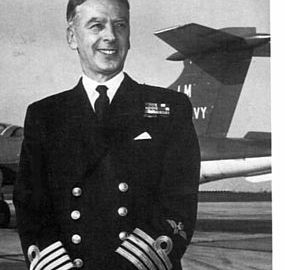


.jpg)


_Ribbon.png)


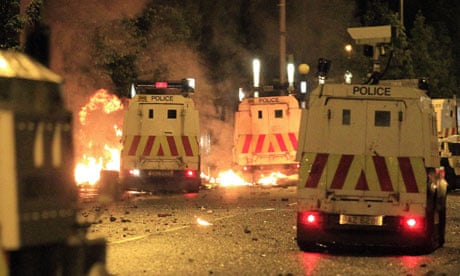
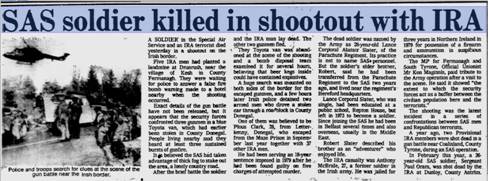

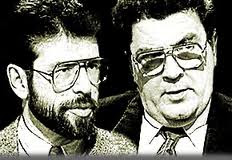


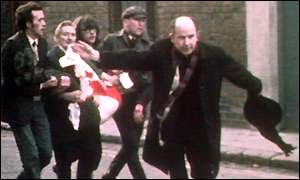


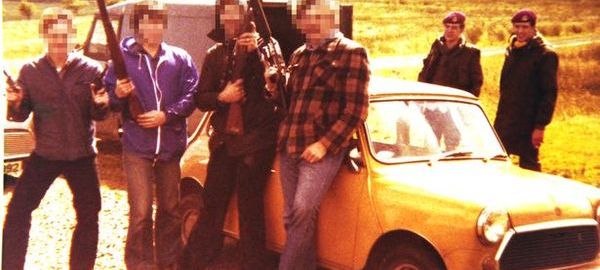



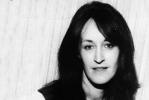


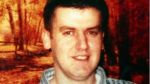

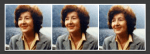

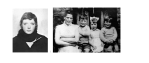
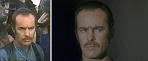
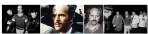

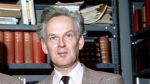
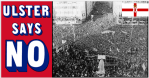
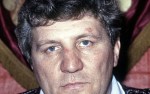



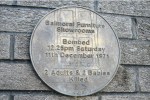
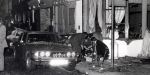


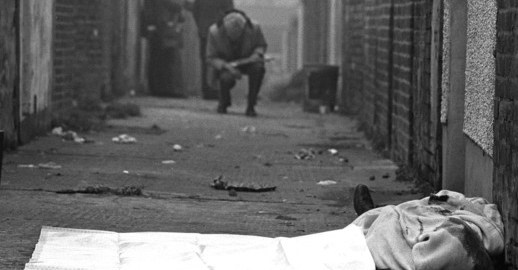
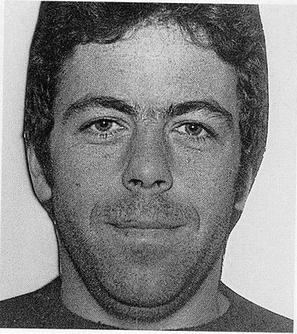


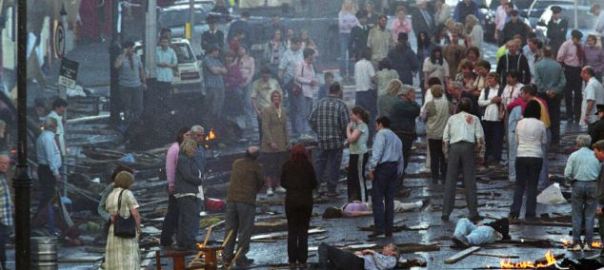


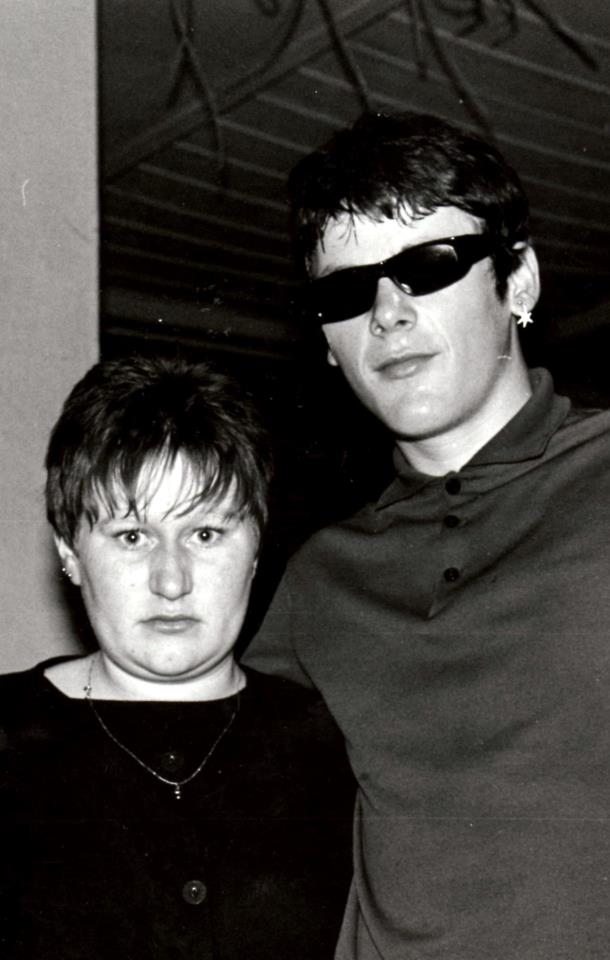 Me and my BFF Jay McFall


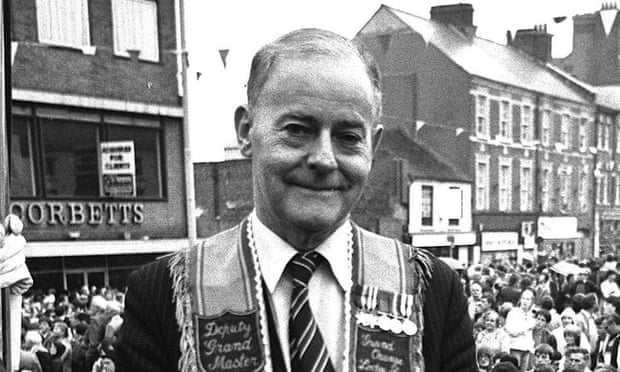




 belfastchildis.com