Monthly Archives: August 2015

Mossad – The National Intelligence Agency of Israel

Institute for Intelligence and Special Operations

 The national intelligence agency of Israel

Mossad is responsible for intelligence collection, covert operations, and counterterrorism, as well as bringing Jews to Israel from countries where official Aliyah agencies are forbidden, and protecting Jewish communities.

Its director reports directly to the Prime Minister.

MOSSAD The Worlds Most Efficient Killing Machine

Mossad (Hebrew: הַמוֹסָד‎, IPA: [ha moˈsad]; Arabic: الموساد‎, al-Mōsād; literally meaning “the Institute”), short for HaMossad leModiʿin uleTafkidim Meyuḥadim (Hebrew: המוסד למודיעין ולתפקידים מיוחדים‎, meaning “Institute for Intelligence and Special Operations”; Arabic: الموساد للاستخبارات والمهام الخاصةal-Mōsād lil-Istikhbārāt wal-Mahāmm al-Khāṣṣah), is the national intelligence agency of Israel. It is one of the main entities in the Israeli Intelligence Community, along with Aman (military intelligence) and Shin Bet (internal security).

Mossad is responsible for intelligence collection, covert operations, and counterterrorism, as well as bringing Jews to Israel from countries where official Aliyah agencies are forbidden, and protecting Jewish communities. Its director reports directly to the Prime Minister.

Organization

Executive offices

The largest department of Mossad is Collections, tasked with many aspects of conducting espionage overseas. Employees in the Collections Department operate under a variety of covers, including diplomatic and unofficial. The Political Action and Liaison Department is responsible for working with allied foreign intelligence services, and nations that have no normal diplomatic relations with Israel.  Additionally, Mossad has a Research Department, tasked with intelligence production, and a Technology Department concerned with the development of tools for Mossad activities.

The Birth of Israel(full length)

History

Mossad was formed on December 13, 1949, as the Central Institute for Coordination at the recommendation of Prime Minister David Ben-Gurion to Reuven Shiloah. Ben Gurion wanted a central body to coordinate and improve cooperation between the existing security services—the army’s intelligence department (AMAN), the Internal Security Service (Shin Bet), and the foreign office’s “political department”. In March 1951, it was reorganized and made a part of the prime minister’s office, reporting directly to the prime minister.

Motto

———————-

History of Israel MOSSAD – Special Elite Forces Documentary

———————-

Mossad’s former motto, be-tachbūlōt ta`aseh lekhā milchāmāh (Hebrew: בתחבולות תעשה לך מלחמה‎) is a quote from the Bible (Proverbs 24:6): “For by wise guidance you can wage your war” (NRSV). The motto was later changed to another Proverbs passage: be-‘éyn tachbūlōt yippol `ām; ū-teshū`āh be-rov yō’éts (Hebrew: באין תחבולות יפול עם, ותשועה ברוב יועץ‎, Proverbs 11:14). This is translated by NRSV as: “Where there is no guidance, a nation falls, but in an abundance of counselors there is safety.”

Counter-terrorist units

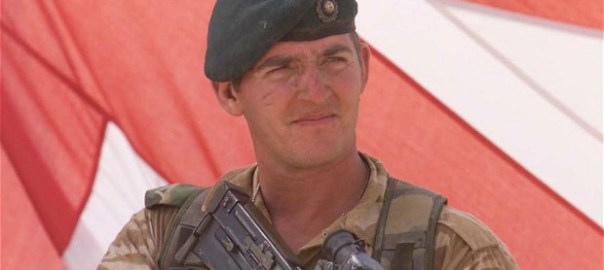
The Kidon is described by Yaakov Katz as “an elite group of expert assassins who operate under the Caesarea branch of the espionage organization. Not much is known about this mysterious unit, details of which are some of the most closely guarded secrets in the Israeli intelligence community.” The unit only recruits from “former soldiers from the elite IDF special force units.”

Directors

Operations

Israel started it all war – BBC War Documentary 2015 HD – Third World War

Americas

Argentina


In 1960, Mossad discovered that the Nazi leader Adolf Eichmann was in Argentina.


Eichmann, Adolf.jpg

A team of five Mossad agents led by Shimon Ben Aharon slipped into Argentina and through surveillance, confirmed that he had been living there under the name of Ricardo Klement. He was abducted on May 11, 1960 and taken to a hideout. He was subsequently smuggled to Israel, where he was tried and executed. Argentina protested what it considered as the violation of its sovereignty, and the United Nations Security Council noted that “repetition of acts such as [this] would involve a breach of the principles upon which international order is founded, creating an atmosphere of insecurity and distrust incompatible with the preservation of peace” while also acknowledging that

“Eichmann should be brought to appropriate justice for the crimes of which he is accused”

and that “this resolution should in no way be interpreted as condoning the odious crimes of which Eichmann is accused.”

Mossad abandoned a second operation, intended to capture Josef Mengele.

United States

During the 1990s, Mossad discovered a Hezbollah agent operating within the United States in order to procure materials needed to manufacture IEDs and other weapons. In a joint operation with U.S. intelligence, the agent was kept under surveillance in hopes that he would betray more Hezbollah operatives, but was eventually arrested.

Mossad informed the FBI and CIA in August 2001 that based on its intelligence as many as 200 terrorists were slipping into the United States and planning “a major assault on the United States.” The Israeli intelligence agency cautioned the FBI that it had picked up indications of a “large-scale target” in the United States and that Americans would be “very vulnerable.”. However, “It is not known whether U.S. authorities thought the warning to be credible, or whether it contained enough details to allow counter-terrorism teams to come up with a response,” A month later, terrorists struck at the World Trade Center and the Pentagon.

Uruguay

Mossad assassinated Latvian Nazi collaborator Herberts Cukurs in 1965.

Europe

Austria

Mossad gathered information on Austrian politician Jörg Haider using a mole.

Belgium

Mossad is alleged to be responsible for the killing of Canadian engineer and ballistics expert Gerald Bull on March 22, 1990. He was shot multiple times in the head outside his Brussels apartment. Bull was at the time working for Iraq on the Project Babylon supergun. Others, including Bull’s son, believe that Mossad is taking credit for an act they did not commit to scare off others who may try to help enemy regimes. The alternative theory is that Bull was killed by the CIA. Iraq and Iran are also candidates for suspicion.

Bosnia and Herzegovina

Assisted in air and overland evacuations of Bosnian Jews from war-torn Sarajevo to Israel in 1992 and 1993.

Cyprus

The killing of Hussein Al Bashir in Nicosia, Cyprus, in 1973 in relation to the Munich massacre.

France

Cherbourg Project – Operation Noa, the 1969 smuggling of five Sa’ar 3-class missile boats out of Cherbourg.

The alleged killing of Zuheir Mohsen, a pro-Syrian member of the PLO in 1979.

The alleged killing of Atef Bseiso, a top intelligence officer of the PLO in Paris in 1992. French police believe that a team of assassins followed Atef Bseiso from Berlin, where that first team connected with another team to close in on him in front of a Left Bank hotel, where he received three head-shots at point blank range.

The killing of Yehia El-Mashad, the head of the Iraq nuclear weapons program, in 1980.

The killing of Dr. Mahmoud Hamshari, coordinator of the Munich massacre, with an exploding telephone in his Paris apartment in 1972.

The killing of Dr. Basil Al-Kubaissi, who was involved in the Munich massacre, in Paris in 1973.

The killing of Mohammad Boudia, member of the PFLP, in Paris in 1973.

On April 5, 1979, Mossad agents are believed to have triggered an explosion which destroyed 60 percent of components being built in Toulouse for an Iraqi reactor. Although an environmental organization, Groupe des écologistes français, unheard of before this incident, claimed credit for the blast,  most French officials discount the claim. The reactor itself was subsequently destroyed by an Israeli air strike in 1981.

Mossad allegedly assisted Morocco‘s domestic security service in the disappearance of dissident politician Mehdi Ben Barka in 1965.

Germany

Operation Plumbat (1968) was an operation by Lekem-Mossad to further Israel’s nuclear program. The German freighter “Scheersberg A” disappeared on its way from Antwerp to Genoa along with its cargo of 200 tons of yellowcake, after supposedly being transferred to an Israeli ship.

The sending of letter bombs during the Operation Wrath of God campaign. Some of these attacks were not fatal. Their purpose might not have been to kill the receiver. A Mossad letter bomb led to fugitive Nazi war-criminal Alois Brunner losing 4 fingers from his right hand in 1980.

The alleged targeted killing of Dr Wadie Haddad, using poisoned chocolate. Haddad died on 28 March 1978, in the German Democratic Republic supposedly from leukemia. According to the book Striking Back, published by Aharon Klein in 2006, Haddad was eliminated by Mossad, which had sent the chocolate-loving Haddad Belgian chocolates coated with a slow-acting and undetectable poison which caused him to die severals months later. “It took him a few long months to die”, Klein said in the book.

Mossad discovered that Hezbollah had recruited a German national named Steven Smyrek, and that he was travelling to Israel. In an operation conducted by Mossad, the CIA, the German Internal Security agency Bundesamt für Verfassungsschutz (BfV), and the Israeli Internal Security agency Shin Bet, Smyrek was kept under constant surveillance, and arrested as soon as he landed in Israel.[27]

Mossad is alleged to have been involved in industrial espionage in Germany. In the late 1990s, the head of the BfV reportedly warned his department chiefs that Mossad remained a prime threat in stealing the country’s latest computer secrets.

Greece

The killing of Zaiad Muchasi, Fatah representative to Cyprus, by an explosion in his Athens hotel room in 1973.

Ireland

The assassination of Mahmoud Al-Mabhouh – a senior Hamas military leader – in Dubai, 2010, was suspected to be the work of Mossad, and there were eight Irish passports (six of which were used) fraudulently obtained by the Israeli embassy in Dublin, Ireland for use by apparent Mossad agents in the operation. The Irish government was angered over the use of Irish passports, summoned the Israeli ambassador and expelled the Israeli diplomat deemed responsible from Dublin, following an investigation. One of the passports was registered to a residence on Pembroke Road, Ballsbridge, on the same road as the Israeli embassy. The house was empty when later searched, but there was suspicion it had been used as a Mossad safe house in the past.

Mossad is reported to have a working relationship with Ireland’s national intelligence agency, the Directorate of Military Intelligence, and has previously tipped the Irish authorities off about arms shipments from the Middle East to Ireland for use by dissident republican militants, resulting in their interception and arrests.  Mossad is also believed to cooperate with the British government in combating IRA terrorism, including involvement in Operation Flavius, 1988.

Italy

The killing of Wael Zwaiter, thought to be a member of Black September.

In 1986, Mossad used an undercover agent to lure nuclear whistleblower Mordechai Vanunu from the United Kingdom to Italy in a honey trap style operation where he was abducted and shipped to Israel where he was tried and found guilty of treason because of his role in exposing Israel’s nuclear programme

Malta

The killing of Fathi Shiqaqi. Shiqaqi, a leader of the Palestinian Islamic Jihad, was shot several times in the head in 1995 in front of the Diplomat Hotel in Sliema, Malta.

Norway

Main article: Lillehammer affair

On July 21, 1973, Ahmed Bouchiki, a Moroccan waiter in Lillehammer, Norway, was killed by Mossad agents. He had been mistaken for Ali Hassan Salameh, one of the leaders of Black September, the Palestinian group responsible for the Munich massacre, who had been given shelter in Norway. Mossad agents had used fake Canadian passports, which angered the Canadian government. Six Mossad agents were arrested, and the incident became known as the Lillehammer affair. Israel subsequently paid compensation to Bouchiki’s family.

United Kingdom

Mossad assisted the UK Intelligence organisation MI5 following the 7/7 bombings in London. According to the 2007 edition of a book about Mossad titled Gideon’s Spies, shortly after the 7/7 London underground bombings, MI5 gathered evidence that a senior al-Qaeda operative known only by the alias Mustafa travelled in and out of Britain shortly before the 7/7 bombings.

For months, the real identity of Mustafa remained unknown, but in early October 2005, Mossad told MI5 that this person was, in fact, Azhari Husin, a bomb-making expert with Jemaah Islamiyah, the main al-Qaeda affiliate in Southeast Asia. Husin studied in Britain and reports claim that he met the main 7/7 bomber, Mohammad Sidique Khan, in late 2001 in a militant training camp in the Philippines (see Late 2001). Meir Dagan, the then head of Mossad, apparently also told MI5 that Husin helped plan and recruit volunteers for the bombings. Mossad claimed that Husin may have been in London at the time of the bombings, and then fled to al-Qaeda’s principal haven in the tribal area of Pakistan, where he sometimes hid after bombings. Husin was killed in a shootout in Indonesia in November 2005. Later official British government reports about the 7/7 bombings did not mention Husin.

Switzerland

According to secret CIA and US State Department documents discovered by the Iranian students who took over the U.S. Embassy in Tehran on November 4, 1979:

In Switzerland the Israelis have an Embassy in Bern and a Consulate-General in Zurich which provide cover for Collection Department officers involved in unilateral operations. These Israeli diplomatic installations also maintain close relations with the Swiss on a local level in regard to overt functions such as physical security for Israeli official and commercial installations in the country and the protection of staff members and visiting Israelis.

There is also close collaboration between the Israelis and Swiss on scientific and technical matters pertaining to intelligence and security operations. Swiss officials have made frequent trips to Israel. There is a continual flow of Israelis to and through Switzerland. These visits, however, are usually arranged through the Political Action and Liaison regional controller at the Embassy in Paris directly with the Swiss and not through the officials in the Israeli Embassy in Bern, although the latter are kept informed.

In February 1998, five Mossad agents were caught wiretapping the home of a Hezbollah agent in a Bern suburb. Four agents were freed, but the fifth was tried, found guilty, sentenced to one year in prison, and following his release was banned from entering Switzerland for five years.

Soviet Union/Russia

Mossad was involved in outreach to Refuseniks in the Soviet Union during the crackdown on Soviet Jews in the 50’s, 60’s, 70’s, and 80’s. Mossad helped establish contact with Refuseniks in the USSR, and helped them acquire Jewish religious items, banned by the Soviet government, in addition to passing communications into and out of the USSR. Many rabbinical students from Western countries travelled to the Soviet Union as part of this program in order to establish and maintain contact with refuseniks.

Ukraine

In February 2011, a Palestinian engineer, Dirar Abu Seesi, was allegedly pulled off a train by Mossad agents en route to the capital Kiev from Kharkiv. He had been planning to apply for Ukrainian citizenship, and reappeared in an Israeli jail only 3 weeks after the incident.

Middle East

A report published on the Israeli military’s official website in February, 2014 said that Middle Eastern countries that cooperate with Israel (Mossad) are the United Arab Emirates, Afghanistan, the Republic of Azerbaijan, Bahrain and Saudi Arabia. The report claimed that Bahrain has been providing Israel with intelligence on Iranian and Palestinian organizations. The report also highlights the growing secret cooperation with Saudi Arabia, claiming that Mossad has been in direct contact with Saudi intelligence about Iran’s nuclear energy program.[44][45][46]

Egypt

  • Provision of intelligence for the cutting of communications between Port Said and Cairo in 1956.
  • Mossad spy Wolfgang Lotz, holding West German citizenship, infiltrated Egypt in 1957, and gathered intelligence on Egyptian missile sites, military installations, and industries. He also composed a list of German rocket scientists working for the Egyptian government, and sent some of them letter bombs. After the East German head of state made a state visit to Egypt, the Egyptian government detained thirty West German citizens as a goodwill gesture. Lotz, assuming that he had been discovered, confessed to his cold war espionage activities.
  • After a tense May 25, 1967 confrontation with CIA Tel Aviv station chief John Hadden, who warned that the United States would help defend Egypt if Israel launched a surprise attack, Mossad director Meir Amit flew to Washington, D.C. to meet with U.S. Defense Secretary Robert McNamara and reported back to the Israeli cabinet that the United States had given Israel “a flickering green light” to attack.[47]
  • Provision of intelligence on the Egyptian Air Force for Operation Focus, the opening air strike of the Six-Day War.
  • Operation Bulmus 6 – Intelligence assistance in the Commando Assault on Green Island, Egypt during the War of Attrition.[citation needed]
  • Operation Damocles – A campaign of assassination and intimidation against German rocket scientists employed by Egypt in building missiles.

Iran

Prior to the Iranian Revolution of 1978–79, SAVAK (Organization of National Security and Information), the Iranian secret police and intelligence service was created under the guidance of United States and Israeli intelligence officers in 1957.

After security relations between the United States and Iran grew more distant in the early 1960s which led the CIA training team to leave Iran, Mossad became increasingly active in Iran, “training SAVAK personnel and carrying out a broad variety of joint operations with SAVAK.”

A US intelligence official told The Washington Post that Israel orchestrated the defection of Iranian general Ali Reza Askari on February 7, 2007. This has been denied by Israeli spokesman Mark Regev. The Sunday Times reported that Askari had been a Mossad asset since 2003, and left only when his cover was about to be blown.

Le Figaro claimed that Mossad was possibly behind a blast at the Iranian Revolutionary Guard’s Imam Ali military base, on October 12, 2010. The explosion at the base killed 18 and injured 10 others. Among the dead was also general Hassan Tehrani Moghaddam, who served as the commander of the Revolutionary Guards’ missile program and was a crucial figure in building Iran’s long-range missile program.

The base is believed to store long-range missiles, including the Shahab-3, and also has hangars. It is one of Iran’s most secure military base.

Iranian Intelligence Minister Heydar Moslehi has accused Mossad of assassination plots and killings of Iranian physicists in 2010. Reports have noted that such information has not yet been evidently proven. Iranian state TV broadcast a stated confession from Majid Jamali-Fash, an Iranian man who claimed to have visited Israel to be trained by Mossad.

Mossad has been accused of assassinating Masoud Alimohammadi, Ardeshir Hosseinpour, Majid Shahriari, Darioush Rezaeinejad and Mostafa Ahmadi-Roshan; scientists involved in the Iranian nuclear program. It is also suspected of being behind the attempted assassination of Iranian nuclear scientist Fereydoon Abbasi.

Meir Dagan, who served as Director of Mossad from 2002 until 2009, while not taking credit for the assassinations, praised them in an interview with a journalist, saying “the removal of important brains” from the Iranian nuclear project had achieved so-called “white defections,” frightening other Iranian nuclear scientists into requesting that they be transferred to civilian projects.

In early February 2012, Mossad director Tamir Pardo met with U.S. national security officials in Washington, D.C. to sound them out on possible American reactions in the event Israel attacked Iran over the objections of the United States.

Iraq

MiG-21 at the Israeli Air Force Museum in Hatzerim


Assistance in the defection and rescuing of the family of Munir Redfa, an Iraqi pilot who defected and flew his MiG-21 to Israel in 1966: “Operation Diamond“. Redfa’s entire family was also successfully smuggled from Iraq to Israel. Previously unknown information about the MiG-21 was subsequently shared with the United States.

Operation Sphinx – Between 1978 and 1981, obtained highly sensitive information about Iraq’s Osirak nuclear reactor by recruiting an Iraqi nuclear scientist in France.

Operation Bramble Bush II – In the 1990s, Mossad began scouting locations in Iraq where Saddam Hussein could be ambushed by Sayeret Matkal commandos inserted into Iraq from Jordan. The mission was called off due to Operation Desert Fox and the ongoing Israeli-Arab peace process.

Jordan

In what is thought to have been a reprisal action for a Hamas suicide-bombing in Jerusalem on July 30, 1997 that killed 16 Israelis, Benjamin Netanyahu authorised an operation against Khaled Mashal, the Hamas representative in Jordan. On September 25, 1997, Mashal was injected in the ear with a toxin (thought to have been a derivative of the synthetic opiate Fentanyl called Levofentanyl).  Jordanian authorities apprehended two Mossad agents posing as Canadian tourists and trapped a further six in the Israeli embassy. In exchange for their release, an Israeli physician had to fly to Amman and deliver an antidote for Mashal. The fallout from the failed killing eventually led to the release of Sheik Ahmed Yassin, the founder and spiritual leader of the Hamas movement, and scores of Hamas prisoners. Netanyahu flew into Amman on September 29 to apologize personally to King Hussein, but was met instead by the King’s brother, Crown Prince Hassan.

Lebanon

The provision of intelligence and operational assistance in the 1973 Operation Spring of Youth special forces raid on Beirut.

The sending of letter bombs to PFLP member Bassam Abu Sharif. Sharif was severely wounded, but survived.

The targeted killing of Ali Hassan Salameh, the leader of Black September, on January 22, 1979 in Beirut by a car bomb.

The killing of the Palestinian writer and leading PFLP member Ghassan Kanafani, also by a car bomb, in 1972.

Providing intelligence for the killing of Abbas al-Musawi, secretary general of Hezbollah, in Beirut in 1992.

Allegedly killed Jihad Ahmed Jibril, the leader of the military wing of the PFLP-GC, in Beirut in 2002.

Allegedly killed Ali Hussein Saleh, member of Hezbollah, in Beirut in 2003.

Allegedly killed Ghaleb Awwali, a senior Hezbollah official, in Beirut in 2004.

Allegedly killed Mahmoud al-Majzoub, a leader of Palestinian Islamic Jihad, in Sidon in 2006.

Mossad was suspected of establishing a large spy network in Lebanon, recruited from Druze, Christian, and Sunni Muslim communities, and officials in the Lebanese government, to spy on Hezbollah and its Iranian Revolutionary Guard advisors. Some have allegedly been active since the 1982 Lebanon War. In 2009, Lebanese Security Services supported by Hezbollah’s intelligence unit, and working in collaboration with Syria, Iran, and possibly Russia, launched a major crackdown which resulted in the arrests of around 100 alleged spies “working for Israel”. Previously, in 2006, the Lebanese army uncovered a network that allegedly assassinated several Lebanese and Palestinian leaders on behalf of Israeli intelligence agency Mossad.

Syria

Eli Cohen infiltrated the highest echelons of the Syrian government, was a close friend of the Syrian President, and was considered for the post of Minister of Defense. He gave his handlers a complete plan of the Syrian defenses on the Golan Heights, the Syrian Armed Forces order of battle, and a complete list of the Syrian military’s weapons inventory. He also ordered the planting of trees by every Syrian fortified position under the pretext of shading soldiers, but the trees actually served as targeting markers for the Israel Defense Forces. He was discovered by Syrian and Soviet intelligence, tried in secret, and executed publicly in 1965.

His information played a crucial role during the Six Day War.

On 1 April 1978, 12 Syrian military and secret service personnel were killed by a sophisticated Israeli listening device planted on the main telephone cable between Damascus and Jordan.

The alleged death of General Anatoly Kuntsevich, who from the late 1990s was suspected of aiding the Syrians in the manufacture of VX nerve-gas, in exchange for which he was paid huge amounts of money by the Syrian government. On April 3, 2002, Kuntsevich died mysteriously during a plane journey, amid allegations that Mossad was responsible.

The alleged killing of Izz El-Deen Sheikh Khalil, a senior member of the military wing of Hamas, in an automobile booby trap in September 2004 in Damascus.

The uncovering of a nuclear reactor being built in Syria as a result of surveillance by Mossad of Syrian officials working under the command of Muhammad Suleiman. As a result, the Syrian nuclear reactor was destroyed by Israeli Air Forces in September 2007 (see Operation Orchard), while Suleiman was assassinated by Israel a year later.

The alleged killing of Muhammad Suleiman, head of Syria’s nuclear program, in 2008. Suleiman was on a beach in Tartus and was killed by a sniper firing from a boat.

On July 25, 2007, the al-Safir chemical weapons depot exploded, killing 15 Syrian personnel as well as 10 Iranian engineers. Syrian investigations blamed Israeli sabotage.

The alleged killing of Imad Mughniyah, a senior leader of Hezbollah complicit in the 1983 United States embassy bombing, with an exploding headrest in Damascus in 2008.

The decomposed body of Yuri Ivanov, the deputy head of the GRU, Russia’s foreign military intelligence service, was found on a Turkish beach in early August 2010, amid allegations that Mossad may have played a role. He had disappeared while staying near Latakia, Syria.

United Arab Emirates

Mossad is suspected of killing Mahmoud al-Mabhouh, a senior Hamas military commander, in January 2010 at Dubai, United Arab Emirates. The team which carried out the killing is estimated, on the basis of CCTV and other evidence, to have consisted of at least 26 agents traveling on bogus passports. The operatives entered al-Mabhouh’s hotel room, where Mabhouh was subjected to electric shocks and interrogated.

The door to his room was reported to have been locked from the inside.

Although the UAE police and Hamas have declared Israel responsible for the killing, no direct evidence linking Mossad to the crime has been found. The agents’ bogus passports included six British passports, cloned from those of real British nationals resident in Israel and suspected by Dubai, five Irish passports, apparently forged from those of living individuals, forged Australian passports that raised fears of reprisal against innocent victims of identity theft,  a genuine German passport and a false French passport. Emirati police say they have fingerprint and DNA evidence of some of the attackers, as well as retinal scans of 11 suspects recorded at Dubai airport.  Dubai’s police chief has said “I am now completely sure that it was Mossad,” adding: “I have presented the (Dubai) prosecutor with a request for the arrest of (Israeli Prime Minister Benjamin) Netanyahu and the head of Mossad,” for the murder.

Africa

Morocco

In September 1956, Mossad established a secretive network in Morocco to smuggle Moroccan Jews to Israel after a ban on immigration to Israel was imposed.

In early 1991, two Mossad operatives infiltrated the Moroccan port of Casablanca and planted a tracking device on the freighter Al-Yarmouk, which was carrying a cargo of North Korean missiles bound for Syria. The ship was to be sunk by the Israeli Air Force, but the mission was later called off by Prime Minister Yitzhak Rabin.

Tunisia

The 1988 killing of Khalil al-Wazir (Abu Jihad), a founder of Fatah.

The alleged killing of Salah Khalaf, head of intelligence of the PLO and second in command of Fatah behind Yasser Arafat, in 1991.

Uganda

For Operation Entebbe in 1976, Mossad provided intelligence regarding Entebbe International Airport[91] and extensively interviewed hostages who had been released.

South Africa

In the late 1990s, after Mossad was tipped off to the presence of two Iranian agents in Johannesburg on a mission to procure advanced weapons systems from Denel, a Mossad agent was deployed, and met up with a local Jewish contact. Posing as South African intelligence, they abducted the Iranians, drove them to a warehouse, and beat and intimidated them before forcing them to leave the country.

Sudan

After the 1994 AMIA bombing, the largest bombing in Argentine history, Mossad began gathering intelligence for a raid by Israeli Special Forces on the Iranian embassy in Khartoum as retaliation. The operation was called off due to fears that another attack against worldwide Jewish communities might take place as revenge. Mossad also assisted in Operation Moses, the evacuation of Ethiopian Jews to Israel from a famine-ridden region of Sudan in 1984, also maintaining a relationship with the Ethiopian government.

Asia

Pakistan

In a September 2003 news article, it was alleged by Rediff News that General Pervez Musharaf, the then-President of Pakistan, decided to establish a clandestine relationship between Inter-Services Intelligence (ISI) and Mossad via officers of the two services posted at their embassies in Washington, DC.

North Korea

Mossad may have been involved in the 2004 explosion of Ryongchon, where several Syrian nuclear scientists working on the Syrian and Iranian nuclear-weapons programs were killed and a train carrying fissionable material was destroyed.

Oceania

New Zealand

Further information: Israel-New Zealand relations

In July 2004, New Zealand imposed diplomatic sanctions on Israel over an incident in which two Australian based Israelis, Uriel Kelman and Eli Cara, who were allegedly working for Mossad, attempted to fraudulently obtain New Zealand passports by claiming the identity of a severely disabled man. Israeli Foreign Minister Silvan Shalom later apologized to New Zealand for their actions. New Zealand cancelled several other passports believed to have been obtained by Israeli agents.

Both Kelman and Cara served half of their six-month sentences and, upon release, were deported to Israel. Two others, an Israeli, Ze’ev Barkan, and a New Zealander, David Reznick, are believed to have been the third and fourth men involved in the passport affair but they both managed to leave New Zealand before being apprehended.

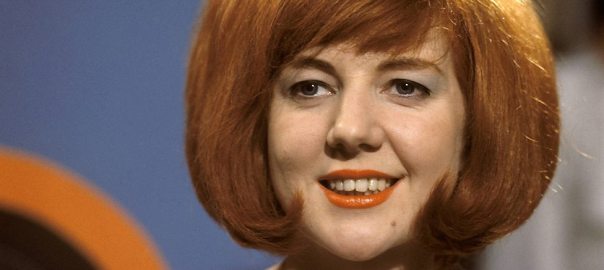
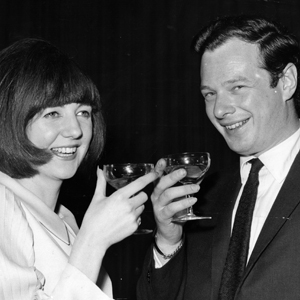
Cilla Black – 27 May 1943 – 2nd August 2015. Rest in Peace Legend

Cilla Black

CILLA BLACK ANYONE WHO HAD A HEART

Cilla Black OBE (born Priscilla Maria Veronica White, 27 May 1943 – 2 August 2015) was an English singer, actress, entertainer and media personality. Championed by The Beatles, she began her career as a singer in 1963, and her singles “Anyone Who Had a Heart” (1964) and “You’re My World” (1964) both reached number one.

Cilla Black – You’re My World

Black had eleven Top Ten hits on the British charts between 1964 and 1971. In May 2010 new research published by BBC Radio 2 showed that her version of “Anyone Who Had a Heart” was the UK’s biggest selling single by a female artist in the 1960s.

“You’re My World” was also a modest hit in the United States, peaking at No. 26 on the Billboard Hot 100, and both songs were among the chart-toppers in Australia.

Along with a successful recording career in the 1960s and early 1970s, Black hosted her own eponymous variety show, Cilla, for the BBC between 1968 and 1976. After a brief time as a comedy actress in the mid-1970s, she became a prominent television presenter in the 1980s and 1990s, hosting hit entertainment shows such as Blind Date (1985–2003) and Surprise Surprise (1984–2001).

In 2013, Black celebrated her 50 years in show business. British television network ITV honoured this milestone with a one-off Entertainment special which aired on 16 October 2013. The show, called The One & Only Cilla Black, featured Black herself and was hosted by Paul O’Grady.

Early life

Black was born in Liverpool, England, on 27 May 1943 and grew up in the Scotland Road area of the city. Her parents were John Patrick White and Priscilla Blythen. Black had a Welsh grandfather, Joseph Henry Blythen, who was born in Wrexham, Wales, and Irish great grandparents on her father’s and mother’s side of the family. She was raised in a Roman Catholic household, and attended St. Anthony’s School. which was behind St. Anthony’s Church in Scotland Road, and Anfield Commercial College, where she studied Shipping Management.

Determined to become an entertainer, Black got a part-time job as a cloakroom attendant at Liverpool’s Cavern Club, best known for its association with the Beatles. Her impromptu performances impressed the Beatles and others. She was encouraged to start singing by a Liverpool promoter, Sam Leach, who gave her her first gig at the Casanova Club, where she appeared as “Swinging Cilla”. She became a guest singer with the Merseybeat bands Rory Storm and the Hurricanes, Kingsize Taylor and the Dominoes and, later, with the Big Three. She was also a waitress at the Zodiac coffee lounge, where she was to meet her future husband Bobby Willis. Black was featured in an article in the first edition of the local music newspaper Mersey Beat; the paper’s publisher, Bill Harry, mistakenly referred to her as Cilla Black, rather than White, and she decided she liked the name, and took it as a stage name.

Music career

CILLA BLACK THE 1960’S

Black signed her first contract with a long-time friend and neighbour, Terry McCann, but this contract was never honoured as it was signed when she was under age and her father subsequently signed her with Brian Epstein.

Epstein had a portfolio of local artists. At first, he showed little interest in Black. She was introduced to Epstein by John Lennon, who persuaded him to audition her. Her first audition was a failure, partly because of nerves, and partly because the Beatles (who supported her) played the songs in their vocal key rather than re-pitching them for Black’s voice. In her autobiography What’s It All About? she writes:

I’d chosen to do “Summertime”, but at the very last moment I wished I hadn’t. I adored this song, and had sung it when I came to Birkenhead with the Big Three, but I hadn’t rehearsed it with the Beatles and it had just occurred to me that they would play it in the wrong key. It was too late for second thoughts, though. With one last wicked wink at me, John set the group off playing. I’d been right to worry. The music was not in my key and any adjustments that the boys were now trying to make were too late to save me. My voice sounded awful. Destroyed—and wanting to die—I struggled on to the end.

But after seeing her another day, at the Blue Angel jazz club, Epstein contracted with Black as his only female client on 6 September 1963. Epstein introduced Black to George Martin who signed her to Parlophone Records and produced her début single, “Love of the Loved” (written by Lennon and McCartney), which was released only three weeks after she contracted with Epstein. Despite an appearance on ABC-TV’s popular Thank Your Lucky Stars, the single peaked at a modest No.35 in the UK, a relative failure compared to début releases of Epstein’s most successful artists (the Beatles, Gerry and the Pacemakers and Billy J. Kramer & the Dakotas).

Black’s second single, released at the beginning of 1964, was a cover of the Burt BacharachHal David composition “Anyone Who Had a Heart“, which had been written for Dionne Warwick. The single beat Warwick’s recording into the UK charts and rose to No.1 in Britain in February 1964 (spending 3 weeks there), selling 800,000 copies in the UK in the process. Her second UK No.1 success, “You’re My World”, was an English language rendition of the Italian popular song “Il Mio Mondo”. She also enjoyed chart success with the song in Australia, New Zealand, Europe, South Africa and Canada. Both songs sold over one million copies worldwide, and were awarded gold discs.

Cilla Black – It’s For You (1964).

Black’s two No. 1 successes were followed by the release of another Lennon–McCartney composition, “It’s for You“, as her fourth UK single. Paul McCartney played piano at the recording session and the song proved to be another major international success for Black, peaking at No. 7 on the UK charts.

Black belonged to a generation of British female singers which included Dusty Springfield, Helen Shapiro, Petula Clark, Sandie Shaw and Lulu. These artists (other than Petula Clark) were not singer-songwriters but interpreters of 1960s contemporary popular music by song writers and producers. Black recorded much material during this time, including songs written by Phil Spector, Randy Newman, Tim Hardin and Burt Bacharach. All were produced by George Martin at Abbey Road Studios.

Cilla Black – “You’ve Lost That Loving Feeling”

Black’s version of “You’ve Lost That Lovin’ Feelin’” (1965) reached No. 2 on the UK charts in the same week that the Righteous Brothers‘s original version of the same song went to No. 1 there (week of 4 February 1965). This was the first of only three occasions in the history of the British Top 40 where the same song, recorded by two different artists, held the top two positions in the chart in the same week. George Martin’s and Parlophone’s attempts to pull off the same trick that they had succeeded at with “Anyone Who Had a Heart”, taking a strong song released by an American artist hitherto unknown to British audiences and giving it to Cilla, did not succeed in the same successful fashion in February 1965 as it had twelve months earlier.

Being so closely associated with the Beatles, Black became one of a select group of artists in the 1964-65 period (the others in the same position being Billy J. Kramer & the Dakotas and Peter and Gordon) to record more than one Lennon–McCartney composition. Black continued to record Lennon-McCartney compositions throughout the period (1963–1973) that she was under contract to EMI‘s Parlophone; Black’s recordings of “Yesterday“, “For No One” and “Across the Universe” were acclaimed critically and became radio favourites. McCartney said Black’s 1972 interpretation of “The Long and Winding Road” represented for him how he always intended the song to be sung.

Cilla Black – The Long and Winding Road 1973

Black’s career in the United States, although begun enthusiastically by Epstein and his PR team, was limited to a few television appearances (The Ed Sullivan Show among them), a 1965 cabaret season at the Plaza Hotel in New York, and success with “You’re My World”, which made it to No. 26 on the Billboard Hot 100. The song was to be her only American chart success, and Elvis Presley had a copy on his personal jukebox at his Graceland home. Black herself recognised that to achieve popular status in the USA she would need to devote much time to touring there. But she was plagued by homesickness and a sense of loneliness and returned to the UK just as she was starting to become popular in the US.

During 1966, Black recorded the Bacharach-David song “Alfie“, written as the signature song to the 1966 feature film, Alfie. While Cher sang “Alfie” on the closing credits of the American release of the film and Millicent Martin on the UK version, Black was the first and only artist to have a hit with the song in the UK (No.9). “Alfie” went on to become a success for both Cher (in 1966) and Dionne Warwick (in 1967) in the States. Black’s version of “Alfie” was arranged and conducted by Bacharach himself at the recording session at Abbey Road. Bacharach insisted on several takes, and Black cited the session as one of the most demanding of her recording career.

For Bacharach’s part, he said “… there weren’t too many white singers around, who could convey the emotion that I felt in many of the songs I wrote but that changed with people like Cilla Black …”

By the end of 1966, Black had been a guest on Peter Cook and Dudley Moore‘s Not Only… But Also; appeared in a Ray GaltonAlan Simpson revue in London’s West EndWay Out in Piccadilly—alongside Frankie Howerd; made notable appearances on The Eamonn Andrews Show and starred in her own television special (the first of its kind to be filmed in colour), Cilla at the Savoy.

Epstein’s attempts to make Black a film actress were less successful. A brief appearance in the “beat” film Ferry ‘Cross the Mersey and a leading role alongside David Warner in the 1968 psychedelic comedy Work Is a Four-Letter Word were largely ignored by film critics. In a 1997 interview with Record Collector magazine, Black revealed she was asked to appear in the 1969 film The Italian Job, playing the part of Michael Caine‘s girlfriend, but negotiations fell through between producers and her management over her fee.

Epstein died of an accidental drug overdose in August 1967, not long after negotiating a contract with the BBC for his only female artist to appear in a television series of her own. Relations between Epstein and Black had somewhat soured during the year prior to his death, due largely to the fact that Epstein was not paying her career enough attention and the fact that Black’s singles “A Fool Am I” (UK No.13, 1966) and “What Good Am I?” (UK No.24, 1967) were not big successes.

Apparently Black was also unhappy with Epstein’s public admission that he had taken LSD. In her autobiography, Black claimed that Epstein had tried to pacify her by negotiating a deal that would see her representing the UK in the 1968 Eurovision Song Contest. However, Black refused on the basis that Sandie Shaw had won the previous year’s contest, and that the chances of another British female artist winning were improbable.

After the death of Epstein, Black’s boyfriend and songwriter Bobby Willis assumed management duties. After the relatively disappointing performance of “I Only Live to Love You” (UK No. 26, 1967), Black hit a new purple patch in her recording career, starting with “Step Inside Love” in 1968 (UK No. 8), which McCartney wrote especially for her as the theme for her new weekly BBC-TV variety series. Other successes followed in 1969: “Conversations” (UK No. 7), “Surround Yourself With Sorrow” (UK No. 3), “If I Thought You’d Ever Change Your Mind” (No. 20). Black had a further big hit with “Something Tells Me (Something’s Gonna Happen Tonight)” (UK No. 3) in 1971.


Black’s association with the Beatles continued. At a Cannes Film Festival during the 1970s, she joined George Harrison, Ringo Starr and popular music singer Marc Bolan to attend a screening of the John LennonYoko Ono experimental film Erection. She also holidayed with Harrison and Starr on a trip aboard a yacht chartered by Starr. “Photograph” was written on this trip—originally intended for Black to record—but Starr decided to record it himself. George Harrison also wrote two songs for Black: “The Light that has Lighted the World” and “I’ll Still Love You (When Every Song is Sung)”. The latter she recorded during 1974 with her then producer David Mackay, but it was not heard publicly until 2003 when it was included on a retrospective collection entitled Cilla: The Best of 1963–78.

In 1993 she released Through the Years, an album of new material featuring a number of duets with Dusty Springfield, Cliff Richard and Barry Manilow. Ten years later, she released the album Beginnings … Greatest Hits and New Songs.

In his 1969 study of popular music history Awopbopaloobop Alopbamboom, the rock music journalist Nik Cohn wrote:

It’s true—the British don’t like their girl singers to be too good, they think it smacks of emancipation, and Cilla at least seemed safe. Obviously, she was quite a nice girl. Also, she was respectable and reliable, very clean and quite unsexy, and she played daughter or maybe kid sister, steady date or fiancée, but she played nobody’s mistress at all. She wasn’t like that. Everyone patronised her like hell, waiting for her to fall, but then she didn’t fall after all, she floated instead and she’s still up there now. She won’t ever come down either—she doesn’t sing much, she still comes on like a schoolgirl but she’s liked like that and she can’t go wrong. Genuinely, she’s warm and she makes people glow. In her time, she will grow into a pop Gracie Fields, much loved entertainer, and she’ll become institutionalised.

Black was the best-selling British female recording artist in the UK during the 1960s and released 15 studio albums and 37 singles in total. During 2006–07, Black’s 1971 single “Something Tells Me (Something’s Gonna Happen Tonight)” was used as the soundtrack to a new British advertising campaign for Ferrero Rocher chocolates.

During the 2008–09 pantomime season, Black returned to live musical performance in the pantomime Cinderella, appearing as the Fairy Godmother. Black was part of an all-Scouse cast assembled in this three-hour stage spectacular to mark the end of Liverpool’s year as European Capital of Culture. The show incorporated a number of Black’s successes, which she performed live, including “You’re My World”, “Something Tells Me (Something’s Gonna Happen Tonight)”, “Step Inside Love” and “Sing a Rainbow”. Black received rave reviews for her singing and overall performance.

On 7 September 2009, a total of 13 original studio albums (the first seven produced by George Martin) recorded by Black between 1963 and 2003 were released for digital download. These albums were all digitally remastered and featured an array of musical genres. Also released by EMI at the same time was a double album and DVD set, The Definitive Collection (A Life in Music), featuring rare BBC video footage; a digital download album of specially commissioned re-mixes Cilla All Mixed Up; a remixed single on digital download of “Something Tells Me (Something’s Gonna Happen Tonight)“.

For the 2010 winter pantomime season, Black appeared in Cinderella at the Waterside Theatre in Aylesbury, Buckinghamshire.

In October 2013, Parlophone Records (the record label which launched her career in 1963) released the career-spanning CD The Very Best Of Cilla Black —containing all 19 of her UK Top 40 singles, new club remixes plus a bonus DVD of her 1966 TV music special Cilla at the Savoy.[17]

Cilla episode 1 full [ITV drama]

————————————-

Cilla Episode 2,

————————————

Cilla Episode 3

———————————–

BAFTA’S 2014 Paul O’Grady Present Cilla Black With Lifetime Achivement Award

———————————————–

Television career

BBC

Black was offered her own show on the BBC by Bill Cotton, then Assistant Head of Light Entertainment. The first series of Cilla was broadcast on Tuesday 30 January 1968. On the first show, her guest was Tom Jones and the two popular music stars sang a duet together. Paul McCartney (without Lennon) wrote the theme tune – another chart success for Black – entitled “Step Inside Love“. This song was later covered by Madeline Bell. The series was very popular and ran for almost a decade, racking up eight seasons (66 episodes) between January 1968 and April 1976.

Although it featured guest appearances by many famous stars of the era (including Cliff Richard, Henry Mancini, Johnny Mathis, Andy Williams, Charles Aznavour, Ringo Starr, Lulu, Matt Monro, Sacha Distel, Donovan, Georgie Fame, Dusty Springfield, Ethel Merman, the Shadows, Phil Everly, Marc Bolan, Jimmy Tarbuck and Ronnie Corbett), most of the episodes (recorded on videotape) were subsequently erased by the BBC.

This success paved the way for a lengthy television career which continued intermittently until 2003. Black began the 1970s by appearing on the BBC’s highly rated review of the sixties music scene Pop Go The Sixties, performing “Anyone Who Had a Heart” live on the show broadcast across Europe and BBC1, on 31 December 1969. Black recorded her performance for this show separately, in a different studio without an audience, although she did sing live.

Like so many of her contemporaries, during the 1970s, Black’s musical career declined, although she toured often. Increasingly thought of as a television “personality”, she found herself experimenting with situation comedy for ITV. Her BBC series, Cilla, continued successfully until 1976, recessing during 1970, 1972 and 1975. The theme songs from the Cilla series were also successful. Step Inside Love opened the series in both the 1968 and 1969 runs and reached number 8 in the UK singles chart on its release. Something Tells Me (Something’s Gonna Happen Tonight) was the theme for the 1971 and 1973 shows, reaching number 3 and becoming Black’s last top ten success. “Baby, We Can’t Go Wrong” was used for the 1974 series and was a minor success, reaching number 36, Black’s last UK chart song until 1993. “It’s Now” was the final theme from the 1976 series and failed to reach the charts, though it was released as a “B” side.

The UK’s Eurovision Song Contest entry selection process was part of the Cilla show in both 1968 and 1973, when her close friend, Cliff Richard was the featured artist performing all the songs shortlisted in the A Song For Europe segment. Black was originally asked to sing for the UK in 1968 and was asked again for the 1970 contest, but declined because she was pregnant at the time.

In 2007, Black took part in the BBC Wales programme Coming Home about her Welsh family history, with roots in Wrexham and Holywell.

Comedy actress

On 15 January 1975, Black performed as the main entertainer of the first of six half-hour situation comedy plays. The series which was broadcast on ITV was entitled Cilla’s Comedy Six[20] and written by Ronnie Taylor. During May 1975, the Writers’ Guild of Great Britain named Black as Britain’s Top Female Comedy Star. The following year, ATV was commissioned to film six more plays as the initial series had accrued healthy viewing figures and remained constantly among the best scoring three shows of the week. During August 1976, Black reprised her role as a comedy-actress in Cilla’s World of Comedy which featured her theme song and new single “Easy in Your Company”.

From 2013 to 2014, Black was set to co-star in a new BBC sitcom Led Astray, alongside Paul O’Grady – the pilot episode was recorded on 31 October 2013. However the show was shelved due to the pair being unable to cope with the long hours of filming.

London Weekend Television

By the beginning of the 1980s, Black was performing mainly in cabaret and concert and absent from television since a 1978 Thames Television special. In 1983, she appeared on the BBC’s Wogan programme. Her appearance on this peak-time talk show was a major success, and her career in television was resurrected. According to Christopher Biggins in his autobiography, she “stormed back into the public consciousness with a barnstorming performance as a guest on Wogan in 1983, proving that we can all have second chances” and after her appearance, people were “desperately trying to find her the right comeback vehicle”.

Black signed a contract with London Weekend Television, becoming the host of two of the most popular and long-running evening entertainment shows of the 1980s and 1990s—Blind Date (1985–2003) and Surprise Surprise (1984–2001). She also presented the game show The Moment of Truth (1998–2001). All programmes were mainstream ratings winners and consolidated her position as the highest-paid female performer on British television.

Les Dawson – Surprise, Surprise – I’ve Got You Babe

Her TV appearances made her spoken mannerisms (“Lorra lorra laughs”, for example) and her habit of referring familiarly to her fellow presenters (“Our Graham”) well known.

Recent television work

Black’s most notable television performances after her resignation from LWT included Parkinson, So Graham Norton, Friday Night with Jonathan Ross, Room 101 and a one off show titled Cilla Live! for Living TV. Black was a judge on the first series of the reality TV series Soapstar Superstar, has featured in an episode of the series Eating with… and has guest presented editions of The Paul O’Grady Show and The Friday Night Project for Channel 4 in 2006 and 2007 respectively.

In 2008, Black filmed a pilot for a dating show for Sky One. Loveland was to be a ten-part “21st century” dating programme for the channel for the next year. Unlike on Blind Date, contestants would not sit in front of a studio audience, but be ‘hidden’ behind real-time animations as they date each other. Each episode concludes with the contestant picking their preferred animated character before meeting that person in real life. Production costs, however, were too high and it was terminated.[25]

In October 2009, Black guest anchored Loose Women and between September 2010 and June 2011, she made guest panellist appearances.

On 28 November 2009, Black appeared on Sky1 to present TV’s Greatest Endings. She also appeared as herself in the first episode of series 4 of ITV’s Benidorm in 2011.[26] She also appeared as the guest host of Never Mind the Buzzcocks on 5 December 2011.

50 years in show business

ITV honoured Black’s 50 years in show business with a one off entertainment special which aired on 16 October 2013. The show, called The One & Only Cilla Black starred Black alongside Paul O’Grady, who hosted the show. The show celebrated Black’s career including a special trip back to Black’s hometown Liverpool, a host of celebrity friends and some surprise music guests. Black paid homage to Blind Date with the return of its most popular contestants and saw her star in a special edition of Coronation Street.

Credits

Year Programme Role
1984–2001 Surprise Surprise Presenter
1985–2003 Blind Date Presenter
1998–2001 The Moment of Truth Presenter
2009, 2010–2011, 2014 Loose Women Regular/Guest Panellist
2007 Room 101 (TV series) Guest
2009 TV’s Greatest Endings Presenter
2011 Never Mind the Buzzcocks Guest Presenter
2013 Your Face Sounds Familiar Guest Judge
The One & Only Cilla Black Herself, co-presenter
2013 Led Astray (pilot) Tanya

Guest appearances[edit]

Cilla (2014 drama series)

See also: Cilla

In 2014, Black was the subject of a three-part television drama series, Cilla, focusing especially on her rise to fame in 1960s Liverpool and her relationship with Bobby Willis. ITV aired the first instalment on 15 September 2014, starring BAFTA-award winning actress Sheridan Smith.

Personal life

Black was married to her manager, Bobby Willis, for more than 30 years until his death from lung cancer on 23 October 1999. They had three sons: Robert (who became her manager, born 1970), Ben (born 1974) and Jack (born 1980). Their daughter, Ellen (born 1975), was born prematurely and suffered lung complications, living for only two hours.

Black was a staunch supporter of the Conservative Party during the 1980s and publicly voiced her admiration of Margaret Thatcher, stating in 1993 that Thatcher “put the Great into Great Britain”.In April 1992 she appeared on stage at a Conservative Party rally and made prominent calls for the party’s re-election under the leadership of John Major. But in an interview in 2004 with The Guardian, Black claimed that she was “apolitical”. The Liverpool Echo also quoted her as saying: “as for the politics thing, I’m not a Conservative.” In August 2014, Black was one of 200 public figures who were signatories to a letter to The Guardian opposing Scottish independence in the run-up to September’s referendum on that issue.

Death

Black died at her home near Marbella, Spain on 2 August 2015. Police are awaiting autopsy results but say that her death was most likely from natural causes.

Record producers

Protestants of Ulster and Protestantism in Ireland

Protestants of Ulster

Protestants of Ulster

——————————————————

Wolfe Tone and the Protestants of 1798 (Documentary)

——————————————————

The Protestants of Ulster are an ethnic or ethnonational group in the province of Ulster, Ireland.[1] They make up almost half the population of Ulster. Some Ulster Protestants are descendants of the Protestant settlers involved in the early 17th century Ulster Plantation, which introduced the first significant numbers of Protestants into the west and centre of the province. These settlers were mostly Lowland Scottish and Northern English people and predominantly from Galloway, the Scottish Borders and Northumberland.[2] Begun privately in 1606, the Plantation became government-sponsored in 1609. Colonising Ulster with loyal British settlers, the vast majority of whom were Protestant, was seen by London as a way to prevent further rebellion in the province, as it had been the region most resistant to English control during the preceding century. There was a total settler population of about 19,000 by 1622,[3] and possibly as many as 80,000 in the 1630s.

Ulster Protestants descend from a variety of lineages, including Scottish people (some of whose descendants consider themselves Ulster Scots people), English people, Irish people, and Huguenots.[4][5] Another influx of an estimated 20,000 Scottish Protestants was a result of the seven ill years in the 1690s.[6] While Presbyterians of Scottish descent and origin had already become the majority of Ulster Protestants by the 1660s (when Protestants still only made up a third of the population), they became an absolute majority in the province by the 1720s.[7]

Divisions between Ulster’s Protestants and Irish Catholics have played a major role in the history of Ulster from the 17th century to the present day, especially during the Plantation, the Cromwellian conquest, the Williamite War, the revolutionary period, and the Troubles. Most Ulster Protestants are Presbyterian or Anglican. Scottish colonists were mostly Presbyterian[8] and the English mostly members of the Church of England. Repression of Presbyterians by Anglicans (who followed the Church of Irelandstate religion) intensified after the Glorious Revolution (especially after the 1703 Test Act) and was one reason for heavy emigration to North America by Ulster Presbyterians during the 18th century (see Scotch-Irish American).[9]

Between 1717 and 1775, an estimated 200,000 migrated to what became the United States of America.[10] Some Presbyterians also returned to Scotland during this period. This repression largely ended after the Irish Rebellion of 1798 and the relaxation of the Penal Laws.[11] As Belfast industrialised in the 19th century, it attracted yet more Protestant immigrants from Scotland.[12] After the 1920-22 partition of Ireland, the new government of Northern Ireland launched a campaign to entice Protestants from the rest of Ireland to relocate to the new polity with inducements of state jobs and housing, and “large numbers” accepted.[13] Because of these migrations, Ulster has a lower proportion of Catholics than the other provinces of Ireland.

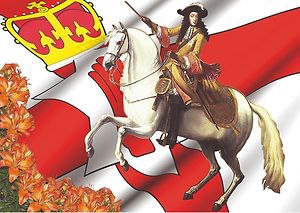
Most Ulster Protestants speak Ulster English, and some speak one of the Ulster Scots dialects.[14][15][16] The vast majority live in Northern Ireland and tend to support its Union with the rest of the United Kingdom,[17] and are known as unionists. Unionism is a term that has been divided by some into two camps; “Ulster British” who are attached to the United Kingdom and primarily adhere to British values; and “Ulster loyalism“, whose attachment is primarily ethnic, prioritising Ulster Protestantism above British identity.[18][19][20] The Loyal Orders, which include the Orange Order, Royal Black Institution and Apprentice Boys of Derry, are fraternal organisations which originated in Ulster and still have most of their membership there.

About 2% of Ulster Protestants reside in the rest of Ulster in the Republic of Ireland (formed after the breakup of the United Kingdom of Great Britain and Ireland).[21] Some still retain a sense of Britishness, and a small number have difficulty identifying with the independent Irish state.[22][23][24]

Percentage of Protestants in each electoral division in Ulster, based on census figures from 2001 (UK) and 2006 (ROI).
0-10% dark green, 10-30% mid-green,
30-50% light green, 50-70% light orange,
70-90% mid-orange, 90-100% dark orange.

Changes in distribution of Irish Protestants, 1861–2011
—————————————————————————————-
Protestantism in Ireland
Protestantism is a minority Christian denominational family on the island of Ireland. In the 2011 census of the Republic of Ireland, 5% of the population described themselves as Church of Ireland (Anglican) or Presbyterian (93,056 and 14,348 people respectively).[1] In the 2011 census of Northern Ireland, 48% described themselves as Protestant, which was a decline of approximately 5% from the 2001 census.[2][3] Some forms of Protestant Christianity may have existed since the early 16th century. The Church of Ireland was established by King Henry VIII of England.
 ——————————————–
Inside The Court Of Henry VIII Documentary 2015
 ——————————————–

History

The Protestant Reformation in Ireland

During the English Reformation in the 1530s, the Irish parliament was successful in gaining the support of many bishops from across Ireland for royal supremacy, leading to the passing the Act of Supremacy in 1536 which declared Henry VIII as head of the Church of Ireland.[4] In 1539, Henry VIII had the monasteries of Ireland dissolved, of which only Christ Church in Dublin survived after changing from monasticism to a secular constitution based on that of St. Patrick‘s.[5] The introduction of the Reformation to Ireland is regarded as the end of the medieval period in Ireland.[5]

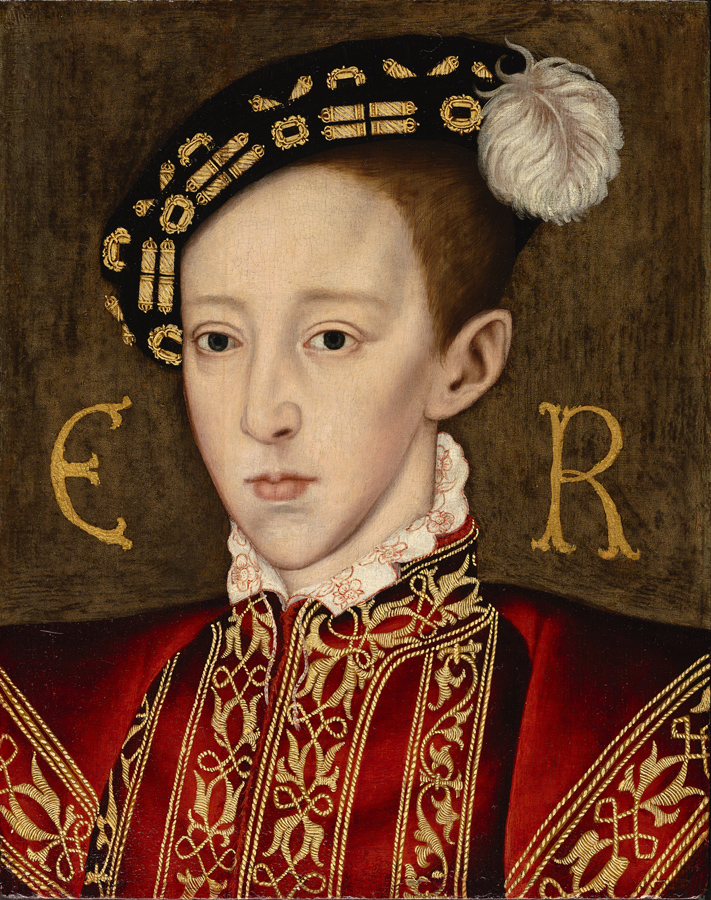
King Edward VI (1537-1553)

It would not be until the reign of Henry VIII’s son, Edward VI, that attempts were made to introduce Protestant liturgy and bishops to Ireland.[4] These attempts were met with hostility from within the church, even by those who had previously conformed.[4] In 1551 during Edward VI’s reign, a printing press established in Dublin, printed a common book of prayer in English.[6]

A return of Catholic supremacy ensued during the reign of Henry VIIIs daughter, Mary in the 1550s, however in 1560, her half-sister and successor Elizabeth I would enact a religious settlement consisting of an Act of Supremacy and Act of Uniformity in an attempt impose Protestantism.[4] Elizabeth also had herself made supreme governor of the Church of Ireland.[4] During Elizabeth’s reign, the bulk of Protestants in Ireland were confined to the ranks of new settlers and government officials, who formed a small minority.[7] Amongst the native Irish and Old English Recusancy pre-dominated and was tolerated by Elizabeth for fear of alienating the Old English further.[7]

It was during Elizabeth’s reign that more attempts were made to boost the Reformation: Trinity College, Dublin was established in 1592 to help produce new ministers to preach the reformed faith;[7] in 1571 a Gaelic printing typeface was created to print documents in the Irish language for the purposes of evangelisation;[6] the first translation of the New Testament into Irish occurred in 1603.[7] Despite this the Reformation would ground to a halt in Ireland and ultimately fail, not helped by a dedicated and vigorous campaign by a plentiful number of Continentally-trained priests, which ensured that Irish heart-and-minds remained with the Catholic faith.[7]

The Reformation in Ireland made little progress due to two main factors: the Old English in Ireland felt increasingly alienated by political developments in regards to English rule in Ireland during Henry’s reign and became less likely to obey edicts that were issued;[8] secondly the native Irish saw the Reformation as just another attempt by the English at conquest and forced Anglicisation.[8]

The dissolution of the monasteries saw many parishes granted to lay people whose main concern was not their parishioners souls, this along with the wars that raged in Ireland throughout the 16th and 17th centuries left many parish churches—now the property of the established church—especially rural ones, in a ruinous state.[9]

17th century

Puritans

During the reigns of Elizabeth I and James I, some Protestants who adhered to forms of Puritanism escaped persecution in England and Scotland by settling in Ireland.[10] Here they were openly welcomed by the state-sponsored Church of Ireland for their strong anti-Catholicism and dedication to preaching, which it highly sought.[10]

Early 17th century

During the reigns of Elizabeth I and James I, several plantations occurred seeing the arrival of British settlers, the majority of which were Protestant.

In 1604, the Scottish Catholic Randal MacDonnell, set about settling his lands in the the Route and Glynnes in County Antrim with Protestants from the Scottish Lowlands.[11] This was followed by the considerably determined private plantation of counties counties Antrim and Down by James Hamilton and Sir Hugh Montgomery, which saw English and Scottish Protestants settling in their estates.[12] In 1606, the notorious Border Reiver clan of the Grahams of Eskdale, Leven and Sark, where invited to settle in County Roscommon.[13]

By 1607 a steady supply of Scottish Protestants where migrating to eastern Ulster, settling in the estates of Hamilton, MacDonnell, and Montgomery.[12] Whilst many Presbyterian Lowlanders fled Kintyre in Scotland for MacDonnell’s lands, Hebridean Catholics migrated as well, ensuring that the Glens of Antrim would remain Catholic as the rest of the county became predominantly Protestant.[11]

That same year, the Flight of the Earls occurred,[14][15] which saw vast tracts of land in Ulster spanning the counties of Armagh, Cavan, Coleraine, Donegal, Fermanagh, and Tyrone, escheated to James I.[16] This was followed by the Plantation of Ulster, which saw Protestant[citation needed] British settlers colonise these counties.[16] In 1610, The Honourable The Irish Society was established to undertake and finance the plantation of the new county of Londonderry (made up of County Coleraine and parts of Antrim, Donegal, and Tyrone) with British Protestant subjects.[17][18] Whilst a substantial number of English and Scottish people did come over and settle during the Plantation of Ulster, they tended to disperse to other parts of the province resulting in those tasked with settling the land having to retain native Irish who remained predominantly Catholic.[18]

James I campaign to pacify the borders resulted in great numbers of Border Reiver families arriving in Ulster.[13] The Border Reiver families were not known for their religiousness and the Reformation had made little impact on them.[13] Once they had settled in Ulster they realised the advantages of becoming Protestants and conformed to the established church.[13]

Between 1615-1620, a policy of “discovery and regrant” was used in various parts of Ireland, however few settlers were attracted to these plantations, resulting basically in new landowners.[19] This policy was used in the counties of Leitrim, Longford, northern Wexford, as well as parts of King’s County and Queen’s County.[19][20]

By the 1630s, Protestant settlers from Great Britain were migrating to Ireland by their own initiative, and helped initiate a colonial spread from the ports they arrived and into the hinterlands of Ulster.[16]

Thomas Wentworth

The Church of Ireland by the 1630s was a broad church that accepted various different Protestant practices and beliefs. As the Presbyterian church was not yet established in Ireland, Presbyterians were more than happy to join the Church of Ireland.[21] Across the island, the predominant doctrine within the Church of Ireland was puritanism, which like Presbyterianism, favoured simple and plain forms of worship and clothing.[20] During the reign of Charles I however, Lord Deputy of Ireland Thomas Wentworth and Archbishop William Laud sought to bring the Irish church into line with that in England by stamping out puritanism,[10] and the anti-episcopal views of the Scottish ministers operating in Ulster.[18] They also sought to replace the preferred form of worship amongst Protestants in Ireland with the more elaborate and orthodox Anglican style favoured by Charles I.[18][20] In an attempt to achieve this, Wentworth and Laud introduced the English Thirty-Nine Articles along with stricter disciplinary canons in 1634.[10] This was followed by puritan ministers who held Presbyterian sympathies being dismissed from the church.[10]

In 1635, Wentworth proposed a plantation of Connacht, which would have seen all Catholic land confiscated and settled with only English Protestants, with the hope of converting the Gaelic and Old-English Catholics to the state religion.[20] This plantation would not see the light of day as Wentworth alienated Protestant and Catholic alike in Ireland,[18][20] and Charles I got into ever more trouble with parliament.[20]

Between 1640 and 1641, Protestants and Catholics alike in the Irish parliament united in opposition to Wentworth, and pushed for the Graces—first arranged in 1628—to be confirmed as well as filing lists of complaints about his behaviour and practices.[18] This union of cause survived until the common denominator, Wentworth, was executed by the English parliamentarians in May 1641.[18]

Rebellion and civil war

By the 1630s, more than a quarter of land in Ireland was owned by Protestants,[18] by the outbreak of the Irish Rebellion of 1641, they held roughly three-fifths.[22]

Cromwellian land settlement

The Act for the Settlement of Ireland 1652 saw Catholics found guilty of disloyalty having their estates confiscated and granted to loyal Protestants.[23] Whilst Protestants also guilty of disloyalty were to lose some of their estates, they ended up been given fines, the majority of which were never paid.[23] The result of this land settlement saw a mass changing of land ownership as Catholic ownership almost disappeared completely east of the River Shannon[23][22] It also greatly increased the number of Protestants in Ireland,[22] and saw them come to dominate both the countryside and urban centers and have near absolute control over politics and trade.[22]

Restoration Ireland

By the 1660s, Catholics owned hardly more than one-fifth of land.[22] Protestant immigration to Ireland had started in earnest in the aftermath of the restoration of the monarchy in Ireland in 1660, helped by acts such as that “to Encourage Protestant Strangers to Settle in Ireland”, passed in 1662.[24] French Protestants, known as Huguenots, escaping persecution in France formed their own small community in Dublin where they became famous for developing poplin and handsome stone buildings called “Dutch Billy’s”.[24][25] Around the same time, Jews—regarded as “foreign Protestants”—settled in Dublin having originally sought refuge in Tenerife.[24] The Plantation of Ulster also finally swung into full motion as a constant stream of English and Scottish families made their way to the north of Ireland.[24]

The death of Charles I in 1649 saw puritanism reach its peak as the Church of Ireland became restricted allowing other Protestant denominations to freely expand.[10] Puritans also went about establishing non-conforming Protestant churches such as Baptist, Quaker, Congregational, as well as Presbyterian.[10] As puritanism refused to conform to the doctrines of the established church it became known as “nonconformity”,[10] with those not adhering to the Church of Ireland being classified as Dissenters.[26]

Williamite era

The revocation of the Edict of Nantes in 1685 saw great numbers of Huguenots flee from France, with as many as 10,000 migrating to Ireland during the 1690s, including veterans from the Huguenot regiments in the army of William III.[25] In total twenty-one Huguenot communities were established the most notable of which was established at Portarlington, Queen’s County.[25] Some Huguenot congregations conformed to the Church of Ireland, though others maintained their own instilling some hostility from the established church.[25]

18th century

German Palatines

In 1709 German Palatines fled persecution to England from the Rhineland in the Holy Roman Empire.[27] Eight hundred and twenty-one families consisting of 3,073 people were resettled in Ireland that year.[27][28] Of 538 families initially taken on by as tenants, 352 are reported to have left their holdings, with many returning back to England.[29] By late 1711 only around 1,200 of the Palatines remained in Ireland.[28] The number of families dwindled to 162 by 1720.[27]

Areas where the Palatines settled included counties Cork, Dublin, Limerick, and Wexford.[27] Despite the exodus of Palatines in the years after their initial arrival in Ireland, a second relocation carried out in 1712 saw the establishment of two successful settlements, one being around Rathkeale, County Limerick, the other around Gorey, County Wexford.[29] Limerick Palatines, despite some conversions to Catholicism, largely remained religiously and culturally endogenous.[27]

The Palatines responded well to the teachings of Methodism, with John Wesley visiting them several times.[27] By the 1820s they became victims of sectarian grief at the hands of Catholic agrarian societies, which further encouraged Palatine emigration from Ireland, resulting in them ceasing to be a separate grouping.[27] Despite this, their distinctive way of life survived long into the 19th century.[29]

The Penal Laws and converts to Protestantism

From 1697 to 1728, various Penal Laws were enacted by the Irish parliament primarily targeting Catholics of the aristocracy, landed and learned classes.[26][30] Some of these laws however also targeted Protestant Dissenters.[26] Under one of these laws, Dissenters could only be married in the Church of Ireland otherwise it was not legal, making their children illegitimate in the eyes of the law.[26] Another law passed in 1704 sought to prevent anyone who did not have communion in the Church of Ireland from holding public office, however as Catholics had already been excluded from public office this primarily targeted Dissenters.[26] Despite being the target of various penal laws, Dissenters remained vocal advocates of those that targeted Catholics so kept their complaints to a courteous tone.[26] Indeed, penal laws similar to those passed by the Irish Parliament, were imposed against Protestants in France and Silesia, but in these cases it was by a majority against a minority, which was not the situation in Ireland.[26]

The Penal Laws did encourage 5,500 Catholics, almost exclusively from the aristocracy and landed gentry to convert to Protestantism.[26][30] In 1703, 14% of land in Ireland was owned by Catholics, however following the conforming of the majority of these landowners by 1780, Catholics only owned 5% despite making up three-quarters of the population of Ireland.[26][30]

Some of these converts were high profile, such as Alexander MacDonnell, 5th Earl of Antrim, whose conversion meant that in the province of Ulster there were no Catholic estates of any note.[26] Others were less so, however made the most of the opportunities that opened up for them, one example being William Conolly.[26] William Conolly was a Gaelic Catholic from Ballyshannon, County Donegal, however in the years following his conversion to Protestantism, he would became the Speaker of the Irish House of Commons as well as Ireland’s richest man despite being the son of an innkeeper.[26]

The Penal Laws ensured that for the next century, Ireland was to be dominated by an Anglican elite composed of members of the Church of Ireland.[26] This elite would become to be known as the Protestant Ascendancy.[26] Ironically, despite attempts by some,[30] the Ascendancy had no real desire to convert the mass of the Catholic population to Protestantism, fearing that it would dilute their own exclusive and highly privileged position,[26] and many of the penal laws were poorly enforced.[30]

Despite the Penal Laws and the domination of an Anglican minority over a country with an overwhelming Catholic majority, open religious violence seems to have been quite rare during most of the 18th century.[31] Not until the Armagh disturbances in the 1780s did sectarian divisions come back to the fore.[31]

19th Century

The Dublin area saw many churches like Saint Stephen’s, built in the Georgian style during the 18th century. When Ireland was incorporated in 1801 into the new United Kingdom of Great Britain and Ireland, the Church of Ireland was also united with the Church of England to form the United Church of England and Ireland. At the same time, one archbishop and three bishops from Ireland (selected by rotation) were given seats in the House of Lords at Westminster, joining the two archbishops and twenty-four bishops from the Church of England.

In 1833, the British Government proposed the Irish Church Measure to reduce the 22 archbishops and bishops who oversaw the Anglican minority in Ireland to a total of 12 by amalgamating sees and using the revenues saved for the use of parishes. This sparked the Oxford Movement[citation needed], which was to have wide repercussions for the Anglican Communion.

As the official established church, the Church of Ireland was funded partially by tithes imposed on all Irish landowners and tenant farmers, irrespective of the fact that it counted only a minority of the populace among its adherents; these tithes were a source of much resentment which occasionally boiled over, as in the Tithe War of 1831/36. Eventually, the tithes were ended, replaced with a lower levy called the tithe rent charge.

The Irish Church Act 1869 (which took effect in 1871) finally ended the role of the Church of Ireland as state church. This terminated both state support and parliament’s role in its governance, but also took into government ownership much church property. Compensation was provided to clergy, but many parishes faced great difficulty in local financing after the loss of rent-generating lands and buildings. The Church of Ireland made provision in 1870 for its own government, led by a General Synod, and with financial management by a Representative Church Body. With disestablishment, the last remnants of tithes were abolished and the Church’s representation in the House of Lords also ceased.

20th century decline to 21st century

Concentration of Protestants in Ireland per county.

In 1991, the population of the Republic of Ireland was approximately 3% Protestant. The figure in the same geographical area was over 10% in 1891, indicating a fall of 70% in the relative Protestant population over the past century.

The Protestant depopulation in the Republic of Ireland during this time was dramatic. In 1861 only the west coast and Kilkenny were less than 6% Protestant. Dublin and two of the border counties were over 20% Protestant. In 1991, however, all but four counties were less than 6% Protestant; the rest were less than 1%. There were no counties in the Republic of Ireland which had experienced a rise in the relative Protestant population over the period 1861 to 1991. Often, the counties which managed to retain the highest proportion of Protestants were the ones which started off with a large proportion. In Northern Ireland, only counties Londonderry, Tyrone and Armagh have experienced a significant loss of the relative Protestant population; in these cases, the change was not as dramatic as in the Republic.

The previous pattern of decline started to change during the 1990’s by the time of 2006 census of the Republic of Ireland, a little over 5% of the state was Protestant. The 2011 census of the Republic of Ireland found that the Protestant population in every county had grown. In 2012 the Irish Independent reported that “Irish Anglicanism is undergoing a quite remarkable period of growth” due to immigration and Irish Catholics converting.[32]

Politics

Prior to the Plantation of Ulster in the opening decades of the 17th century, the Parliament of Ireland consisted of Catholic Old-English and Gaelic Irish MPs.[33] Whilst these MPs had few ideological objections to making Henry VIII head of the Irish church as well as to the establishment of Anglicanism in Ireland under Elizabeth I in 1660, resistance to government policies started to grow.[33] To help tip the balance of power in the parliament in favour of Protestants, Lord-Deputy Chichester established sixteen new corporate towns in Ulster in the 1610s.[16] These towns where little more than villages or planned towns.[33] This resulted in Ulster alone returning 38 MPs to the Irish parliament with the three other provinces altogether contributing 36, giving the government a majority of 32.[33] This majority was reduced upon appeal by the Old-English to six, however under Lord-Deputy Wentworth in 1640, a further sixteen Old-English seats where removed.[33] During 1640 and 1641, the interests of the Old-English and New English combined to seek Wentworth’s removal.[18]

With the drastic decrease in Catholic landowners after the Cromwellian land settlement in the 1640s, by the time of the Restoration parliament in 1661, only one Catholic MP was returned to the Irish parliament, however his election was overturned.[33]

The Protestant interest in Ireland would be no less compliant to English authority than the Old-English had been.[33] The convention of 1660, called after the restoration of the monarchy, saw 137 parliamentary members elected, all of whom were Protestant.[34] It called Charles II to summon a parliament consisting of Protestant peers and commons, as well for the re-establishment of the Church of Ireland.[35] Despite backing the restoration, as well as the system of episcopacy, it also asserted the Irish parliaments legislative superiority over itself and its intent to set and collect its own taxes.[34]

Cultural and literature impact

The Church of Ireland undertook the first publication of the Bible in Irish. The first Irish translation of the New Testament was begun by Nicholas Walsh, Bishop of Ossory, who worked on it until his death in 1585. The work was continued by John Kearny, his assistant, and Dr. Nehemiah Donellan, Archbishop of Tuam; it was finally completed by William O’Domhnuill. Their work was printed in 1602. The work of translating the Old Testament was undertaken by William Bedel (1571–1642), Bishop of Kilmore, who completed his translation within the reign of Charles I, although it was not published until 1680 in a revised version by Narcissus Marsh (1638–1713), Archbishop of Dublin. Bedell had also undertaken a translation of the Book of Common Prayer in 1606. An Irish translation of the revised prayer book of 1662 was effected by John Richardson (1664–1747) and published in 1712.

Denominations[edit]

Marine A – He Fought for Us – Now its Time we Fought for Him

marine a

Sgt Alexander Blackman, of Taunton, was found guilty of murder at a court martial in November 2013 for murdering an insurgent in Afghanistan.

Marine ‘A’ Criminal or Casualty of War BBC Documentary 2014

——————————————————————-

Cover Photo

Join the campaign to Free Marine – A

Visit Website: Free Marine – A

Click here  http://www.facebook.com/justiceformarineA

————————————————————————–

2011 Helmand Province incident

The 2011 Helmand Province incident was the killing, on 15 September 2011,[1] of an injured Taliban insurgent by Royal Marines.[2] Three Royal Marines, known during their trial as Marines A, B, and C, were anonymously tried by court-martial. On 8 November 2013,[1][2][3] Marines B and C were acquitted,[1][4] but Marine A was found guilty of the murder of the Afghan combatant,[1] in contravention of section 42 of the Armed Forces Act 2006.[3] This made him the first British soldier to be convicted of a battlefield murder whilst serving abroad since the Second World War.[5][6]

Later, on 5 December,[3] Lord Chief Justice Lord Thomas and two other High Court judges lifted the existing anonymity order on Marine A, allowing him to be named as Sergeant Alexander Wayne Blackman.[7] On 6 December, Blackman was sentenced to life imprisonment with a minimum term of 10 years,[8] and dismissed with disgrace from the British Armed Forces.[9] On 22 May 2014, the Court of Appeal reduced his minimum term to 8 years.[10]

On 19 December 2013, the anonymity order on Marines B and C was also lifted by the Court, and they were named as Corporal Christopher Glyn Watson and Marine Jack Alexander Hammond.

Event

The incident took place in Helmand Province during Operation Herrick 14,[7] part of the British effort in the War in Afghanistan. Blackman, of 42 Commando, Royal Marines,[12] was part of a Marine patrol that came across an Afghan fighter in a field wounded by Apache Helicopter gunfire.[1][9][5] Blackman ordered the Afghan to be moved out of sight of the British Persistent Ground Surveillance System,[1] a camera on a balloon above British Forward Operating Base Shazad, Helmand, covering the area Blackman’s patrol had been sent to.[10] Video evidence played at the Marines’ subsequent trial shows them dragging the man across the field and then kicking him.[13] Blackman ordered other servicemen to stop administering first aid to the insurgent[1] and eventually shot the man in the chest with a 9 mm pistol,[9][13] saying: “Shuffle off this mortal coil, you cunt. It’s nothing you wouldn’t do to us.”[5][13][14][11] He then added: “I just broke the Geneva Convention.”[3][15]

Criminal trial and sentencing

After the 15 September incident, Blackman continued with his tour of duty, leaving Helmand Province in late October 2011.[7] On 13 October 2012, at the decision of the Service Prosecution Authority, Marines A–E were charged with the murder of the unnamed Afghan insurgent.[1] The lead came after British civilian police discovered suspicious video footage on a serviceman’s laptop.[2] Marines D and E had charges against them dropped on 5 February 2013.[1] Marines A, B and C first appeared in court in August 2013, where they entered a not-guilty plea.[2] The military trial of Marines A, B and C, protected from view in court behind a screen because of an anonymity order,[2] began on 23 October 2013[1] and lasted two weeks.[2] Their court-martial board (equivalent to a jury in the civilian justice system)[1] was seven strong,[3][14] something usually only done for the more serious cases.[16]

The verdict (8 November 2013)[1] and sentence (6 December 2013) were both delivered at the Military Court Centre in Bulford, Wiltshire.[2][3][8] The judge advocate (the civilian judge heading up the panel at a court-martial)[16] was Judge Advocate General Jeff Blackett.[5] The verdict carried with it a mandatory life sentence,[2][9] so it was only in the judge advocate’s and court-martial board’s power to decide on the minimum sentence once the board had found Blackman guilty.[16] He was sentenced to a minimum of 10 years in prison.[8] On 22 May 2014, at the Courts Martial Appeal Court, its most senior judge, Lord Chief Justice Lord Thomas, upheld the life sentence, but reduced Blackman’s minimum term to 8 years.[10]

Anonymity orders

The Law Courts building, housing the High Court, which issued a ruling leading to three of the Marines involved being publicly named

Running in parallel to the Marines’ criminal trial were legal proceedings relating to the anonymity of the defendants. In the autumn of 2012, Judges Advocate Elsom and Blackett issued anonymity orders for the Marine defendants due to the risk that, once named, the defendants would become targets for terrorists.[1][7] The move had been opposed by elements of the UK media.[1] A lawyer for the Press Association argued that anonymity orders should not be issued in this case because, firstly, British military award recipients named in the media had not been previously targeted; and, secondly, that the names of those British service personnel investigated following the death of Baha Mousa had not been similarly protected.[17] The 2012 anonymity orders were upheld at the beginning of the trial in October 2013.[1] The order was lifted for Blackman (hitherto Marine A)[12] on 5 December 2013 by the High Court.[3] The most senior figure involved in that verdict was Lord Chief Justice Lord Thomas.[3][4] The same ruling had it that the identities of Marines B and C also be revealed unless they submit an appeal to the Supreme Court.[11] No such appeal was lodged within the set deadline, and so, on 19 December 2013, Marine B was named as Corporal Christopher Glyn Watson and Marine C was named as Marine Jack Alexander Hammond.[18][11] The anonymity of Marines D and E was upheld on 19 December “pending any further order by the Judge Advocate General“.[18]

Jeff Blackett also restricted public access to the evidence used at the trial, releasing on 8 November stills, audio clips and transcripts from the serviceman’s video that was played to the court-martial board,[13] but ruling that the full video itself not be released,[19][7][13] since doing so “would increase the threat of harm to British service personnel.”[19][13] On 5 December 2013, the Court Martial Appeal Court upheld the earlier decisions prohibiting the release of the video footage of the attack and some of the stills from it.[1] The Court stated, however, that the prohibition was to prevent the material being used for radicalisation, rather than it posing a risk to the life of the defendants.[1]

Reactions

The legal proceedings relating to the Marines garnered widespread British public and media attention.

Reacting to Marine A’s guilty verdict, Royal Marines Brigadier Bill Dunham called the murder a “shocking and appalling aberration” that was “not consistent with the ethos, values and standards of the Royal Marines”, but was nevertheless an “isolated incident”.[2] General Sir Mike Jackson said he was “saddened” by the case.[2]

Marine A’s guilty verdict led to a showing of public support for the Marine, with people creating social media groups and online petitions alternately asking that he be given a lenient sentence and calling for his release.[20][6] The Daily Telegraph supported this movement.[21]

When Blackman was sentenced to 10 years, General Sir Nick Houghton called his actions a “heinous crime” and commented that “murder is murder”.[20] By contrast, Blackman’s commanding officer, Lieutenant Colonel Simon Chapman, 42 Commando, said in a letter read to the court that Blackman had had a “momentary … lapse of judgment” and was “not a bad man”, and added that Blackman had his “full support”.[6] Blackman himself said in a statement that he was “devastated” and “very sorry for any damage caused to the Royal Marines”.[8][6][14]

,,,,,